



Security forces raid university lecturer’s home over donations
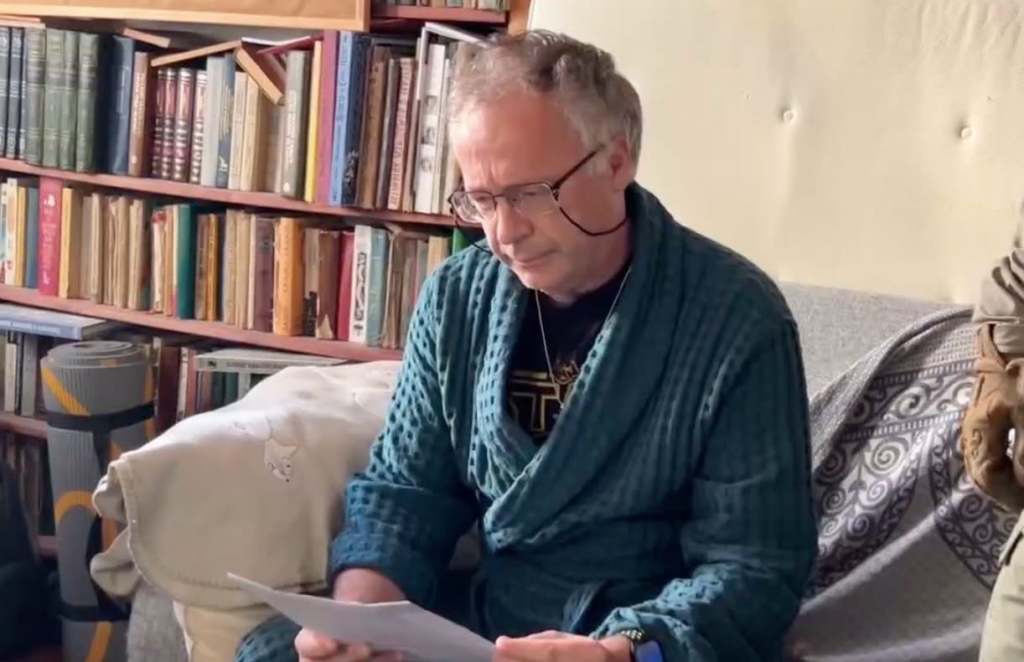
Petersburg police released a video of a search carried out at the home of 58-year-old Igor Zaitsev, a philosophy Ph.D. and lecturer at the European University. He has been charged with “financing extremist activities.”
The grounds for this action were donations totaling 3,500 roubles [approx. 36 euros] to [the late Alexei Navalny’s] Anti-Corruption Foundation. [The foundation, often known by its Russian acronym, FBK] was declared an “extremist organization” and banned by the Russian Federation in 2021. It is now classified as a “terrorist organization.” Zaitsev has been detained pending a remand hearing.
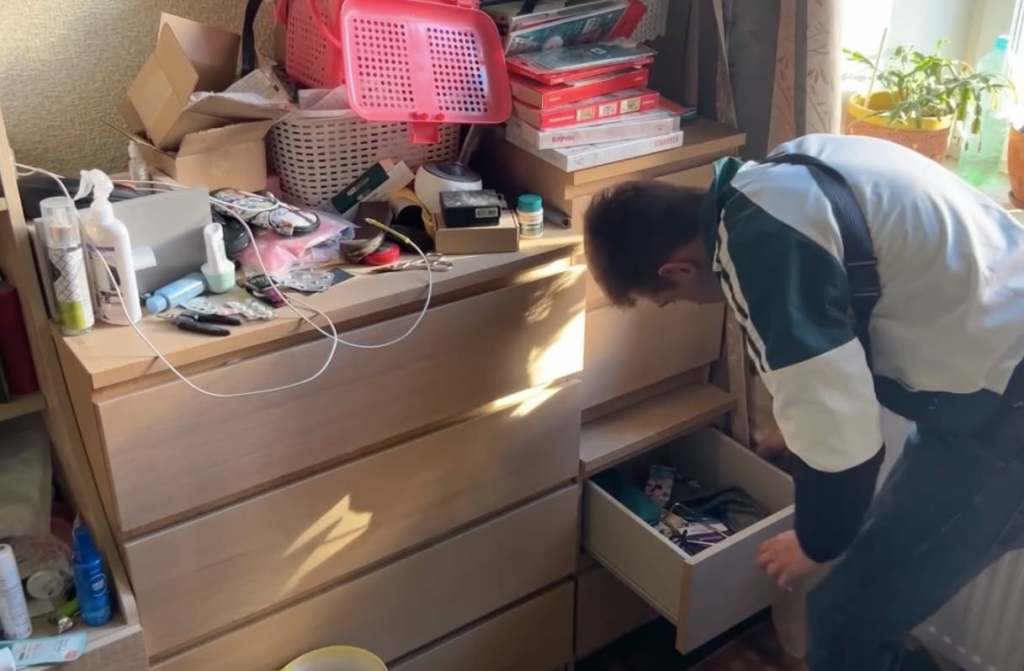
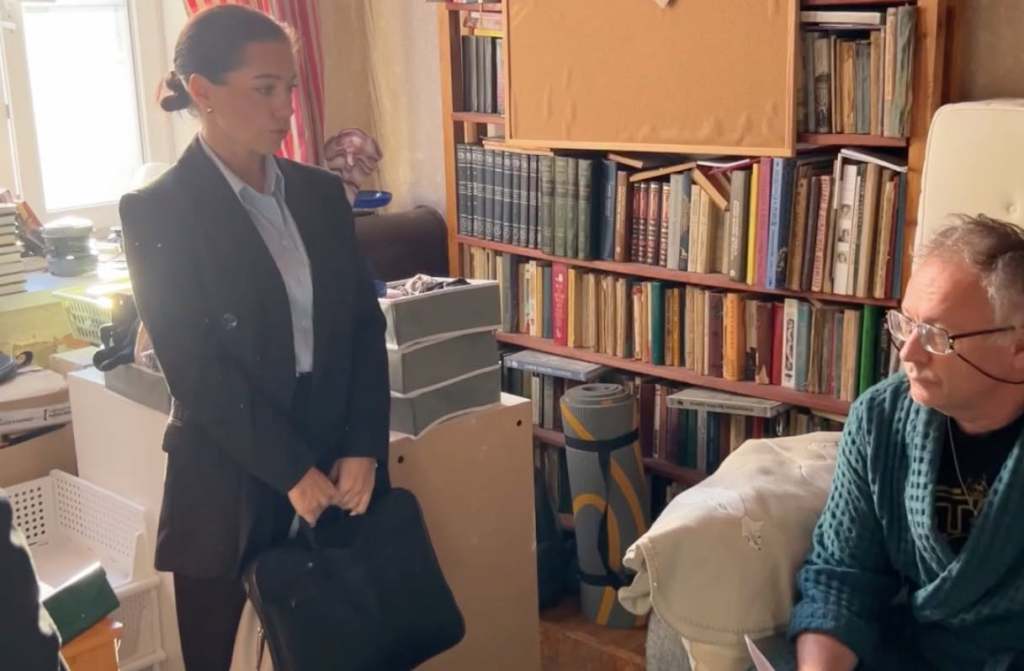
In a video published online, a female investigator, a security officer with his face concealed who handcuffs the lecturer, and at least three men in plain clothes who rummage through his belongings (including an impressive bookshelf) turn up at the Petersburg resident’s flat on Nevsky Prospekt at seven in the morning. Zaitsev admits that he personally supported Navalny. However, Petersburg police edited out the lecturer’s remark that he “considered [Navalny’s] anti-corruption efforts to be a good thing.” This statement appears in another video [see the next item below], which was leaked by the security forces to Baza, a Telegram channel with close ties to the police.
Source: Saint Petersburg Live — The One and Only (Facebook), 12 August 2026. Thanks to DK for the heads-up. Translated by the Russian Reader
Igor Zaitsev, lecturer at European University, detained in Petersburg over donations to Anti-Corruption Foundation (FBK)
⚪ The details. Zaitsev has been charged with “financing terrorism,” according to the Telegram channel Baza. According to the channel, the lecturer is accused of having donated money to the Anti-Corruption Foundation on at least seven occasions between 2021 and 2022. Baza has published a video of Zaitsev’s interrogation. In the recording, Zaitsev states that he donated money to Alexei Navalny’s anti-corruption projects.
Neither the security services nor the university has publicly acknowledged Zaitsev’s arrest.
⚪ Who is he? Igor Zaitsev is a Ph.D. in philosophy and an associate professor at the European University in St. Petersburg. He is fifty-eight years old. He specializes in the history of philosophy, the philosophy of religion, and theology.
⚪ Cases against university faculty. Baza reports that in July, the Investigative Committee opened a criminal case concerning [the dissemination] of “fake” war reports against Mikhail Turchenko, a former associate professor at the European University’s political science department. According to Life.ru, the case was prompted by Turchenko’s post about a Russian missile strike that resulted in the deaths of Ukrainians. Turchenko had fled Russia in 2022. Last August, a complaint was filed against Vladimir Gel’man, a former faculty member at the European University, alleging that he had “discredited” the army.
Source: Novaya Gazeta Europe (Facebook), 12 August 2026. Translated by the Russian Reader
Finland has denied asylum to a Russian man who donated to the late opposition leader Alexey Navalny’s Anti-Corruption Foundation (FBK), with migration authorities ruling that his political activity was not public or extensive enough to have drawn the attention of the Russian authorities.
Valentin Sergienko and his parents were ordered to report to police on 14 August after the Finnish Immigration Service rejected their asylum applications, former St. Petersburg municipal deputy Svetlana Utkina told TV Rain. If the family does not leave the country voluntarily, they could face forced deportation.
The Sergienkos fled Russia in September 2022 after Vladimir Putin’s announcement of mobilisation and initially sought international protection in Germany. Their case was transferred to Finland, where they filed asylum applications in July 2023. The Finnish Immigration Service denied their claims, and an administrative court subsequently rejected their appeal.
Authorities did not dispute that Sergienko had donated to FBK, the human rights group OVD-Info, and other organisations banned in Russia, or that he had taken part in protests. But officials concluded his political activity had not been large-scale or visible enough to put him at risk of persecution by the Russian government.
While the case was pending, Sergienko graduated with honours from Helsinki Business College, completed an internship, and received a job offer, which he was unable to accept as the asylum denial stripped him of his right to work in Finland. His mother is currently undergoing cancer treatment.
According to the independent outlet Mediazona, Russian authorities have opened at least 225 criminal cases over donations to FBK as of April 2026. Courts have handed down 167 convictions, with 24 people sentenced to prison time.
More than 2,300 Russians have applied for asylum in Finland since the start of the full-scale invasion of Ukraine, but only 604 have received the status, according to politician and former political prisoner Andrey Pivovarov. Even so, the Finnish migration service has acknowledged that convictions in politically motivated cases have tripled in Russia.
Source: “Finland denies asylum to Russian Navalny donor, saying his political activity was not public enough,” Novaya Gazeta Europe, 13 August 2026. The emphasis is mine. ||||| trr
