Pickleball, Octopus, Political Prisoner, Putin, Prigozhin, Pretty Girls


The Hustle, “The Economics of Pickleball and the Sport’s Sound Problems”

MBARI, “Scientists solve mystery of why thousands of octopus migrate to deep-sea thermal springs”

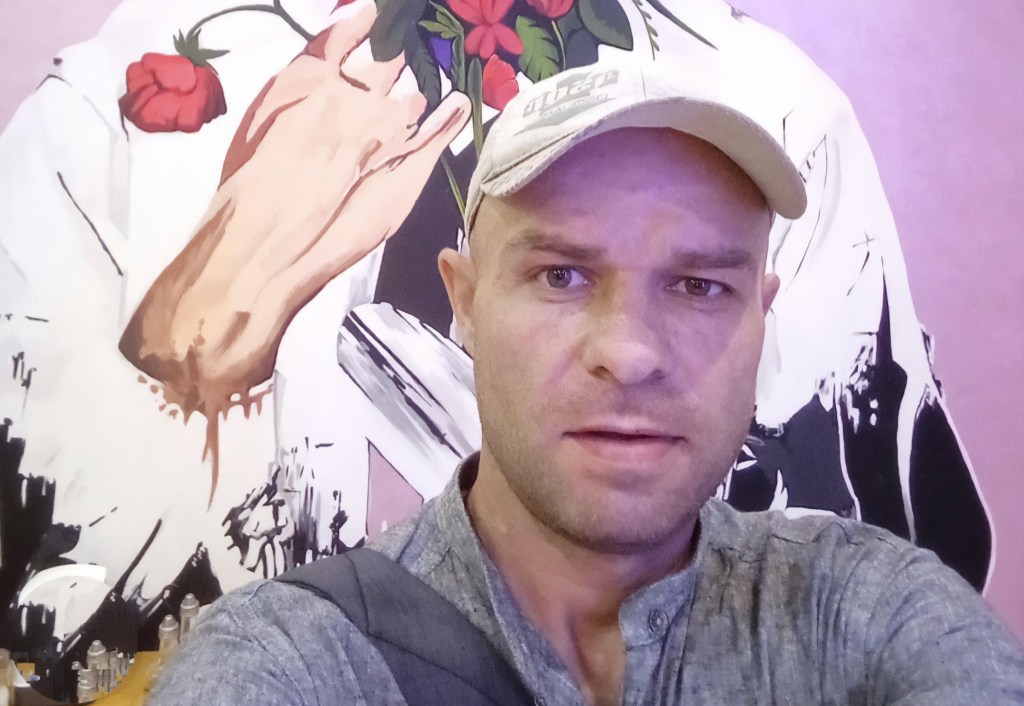
Sergei Okrushko

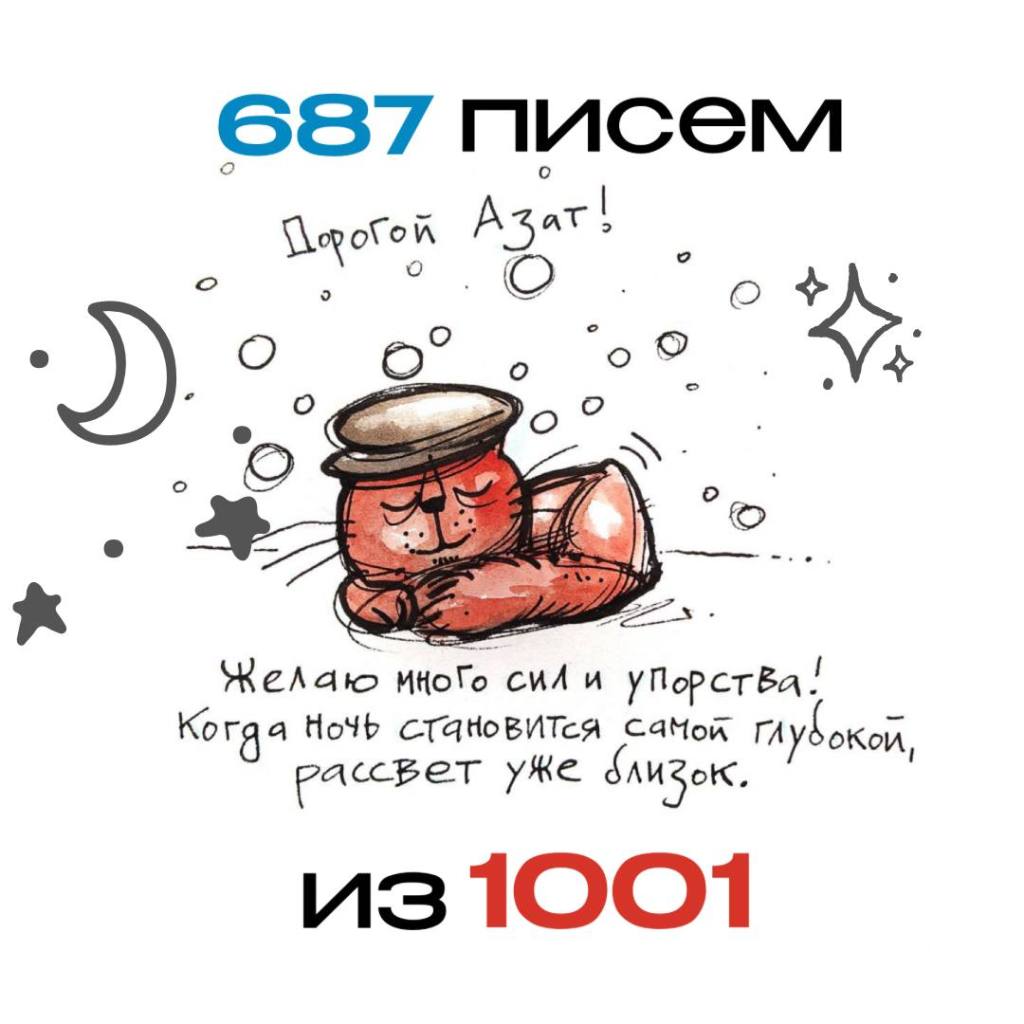
Solidarity Zone has begun supporting Sergei Okrushko

On July 28, an explosion occurred at the Kuibyshev Oil Refinery in Samara. The same day, 42-year-old Sergei Okrushko, who was born in Ukraine and worked as an electrician at the refinery, was detained at the border with Kazakhstan whilst trying to leave Russia. The FSB charged him with “sabotage” (per Article 281 of the Russian Federal Criminal Code of the Russian Federation “Sabotage”, and a court in Samara remanded him in custody to a pretrial detention center.

Okrushko confessed, and at his bail hearing he said that he held anti-war views and committed the action for political reasons.

It also transpired that Okrushko had earlier tried to enter Ukraine, but he was not admitted because of his Russian passport. During his stay in Moldova, he had repeatedly participated in anti-war protests.

No one was injured during the explosion at the refinery. According to the investigation, more than 30 million rubles in physical damage was caused, however.

The Kuibyshev Oil Refinery is the largest enterprise in the Samara Region, processing about seven million tons of oil per year. The plant specializes in the production of fuel for all types of transport from automobiles to ships.

On August 3, Okrushko refused the services of Solidarity Zone-affiliated lawyer Zakhar Lebedev, whom he had agreed to let defend him two days earlier. While Okrushko was writing the waiver of counsel, the lawyer noticed fresh injuries on Okrushko’s body: “I noticed that his left arm, namely most of his shoulder and forearm, was purple. It was clear that these were hematomas, which hadn’t been there on August 1 when I visited him at the pretrial detention center. When I asked Sergei where he had got such bruises, he said, without hesitating, “When they arrested me.” When I asked why they had not been there when I’d visited him at the pretrial detention center, Sergei hesitantly said that they’d shown up only now.”

We believe that the fresh bruises and his sudden and unmotivated waiver of counsel testify to the fact that Sergei Okrushko was tortured between August 1 and August 3.

Subsequently, the authorities stopped admitting any lawyers into the pretrial detention center, except for the court-appointed lawyer Vyacheslav Pavelkin. Later, it transpired that Okrushko was taken to the FSB several times without a lawyer.

Unfortunately, at this stage we have been unable to provide Sergei with defense counsel. But at the very outset of his ordeal, we sent him a care package and books, placed an order at the online Federal Penitentiary Service store, and transferred money to his personal account at the pretrial detention center. We recently learned that Sergei received all these things, which means that we were able to provide him with at least minimal humanitarian support. In the coming days, we will put together another care package for Sergei and continue to support him as much as possible.

Solidarity Zone’s mission is to support people imprisoned for anti-war direct-action protests and not let them face the system alone. We cannot always provide full-fledged support due to interference from the security forces, but we consider any reduction in the harm caused by the actions of the Russian state to be a decent outcome.

If you want to support us, you can find our details here.

💌📦 Address for letters and parcels:

Okrushko Sergei Aleksandrovich (born 01.03.1981)
22 Sadovyi proyezd, SIZO-1
Samara 443021 Russian Federation

You can also send letters via Zonatelecom.

#politicalprisoners #ukrainians #crackdown #torture #fsb #fsblawlessness #solidarity #nowar #wewriteletters #samara

Source: Solidarity Zone (Facebook), 24 August 2023. Translated by the Russian Reader. People living outside of Russia will find it difficult or impossible to send letters to Russian prisons via Zonatelecom or regular mail. In many cases, however, you can send letters (which must be written in Russian or translated into Russian) via the free, volunteer-run service RosUznik. Mr. Okrushko has not yet appeared on their list of supported addressees, however. You can write to me (avvakum@pm.me) for assistance and advice in sending letters to her and other Russian political prisoners.


Putin


Prigozhin


Recommended for ages 16 and up. This production contains sexually suggestive language, references to suicide, and depictions of drug use, extreme physical violence towards humans and animals, and self harm. This production also contains the use of herbal cigarettes, haze, and a brief flash of light.

Punitive Psychiatry: The Case of Russian Anti-War Protester Mikhail Davydov

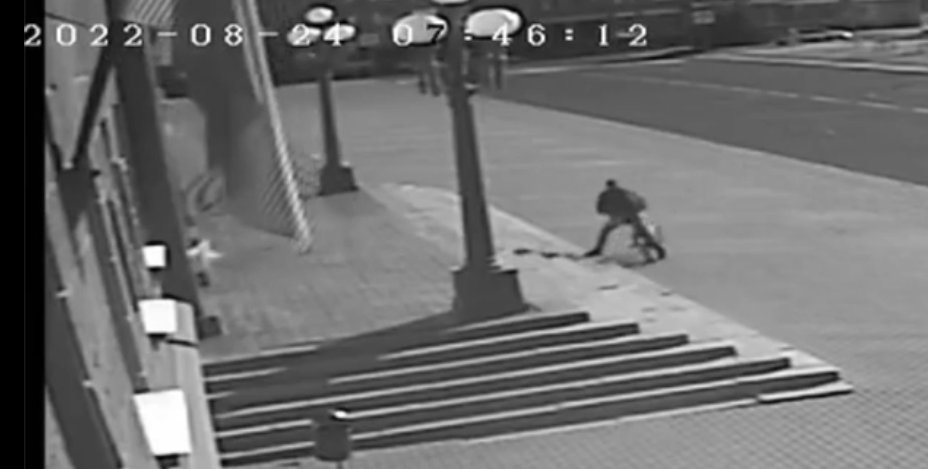
A still from CCTV footage of the attack on Oryol regional government building

Compulsory psychiatric treatment for man alleged to have thrown Molotov cocktails on Ukrainian Independence Day

On 1 August 2023, the 2nd Western District Military Court sentenced 49-year-old Mikhail Davydov to compulsory psychiatric treatment. Davydov had been charged with “terrorism” (per Article 205.1 of the Russian Federal Criminal Code) over Molotov cocktails thrown at the regional administration building in Oryol last year.

The criminal case was launched after an unknown cyclist threw two Molotov cocktails at the front doors of the Oryol regional government building on Ukrainian Independence Day (24 August) last years. The cyclist’s actions were captured by a surveillance camera.

The alleged perpetrator, Mikhail Davydov, was apprehended only a week later, on 31 August 2022. A 48-year-old resident of the region, Davydov was allegedly on the federal wanted list for “refusal to testify” (per Article 308 of the Criminal Code). According to investigators, Davydov had been hiding from the FSB since 22 April 2019. Davydov and his lawyer Larisa Melikhova denied this, however. According to them, Davydov had not been hiding from anyone, “since he had been providing for himself since 2019 and had petitioned the Federal Bailiffs Service for alimony payments, which request was denied. He was not in hiding, but had lived the entire time in the Oryol Region’s Bolkhov District, where he was detained by police officers.”

On 8 September 2022, Davydov was charged with “reckless attempted murder” (per Articles 30.3.e and 105.2 of the Criminal Code of the Russian Federation). The region’s governor, Andrei Klychkov, reported that a regional administration staffer had been wounded during the attack. However, the surveillance footage shows that the cyclist began throwing the Molotov cocktails before the doors opened (that is, they had no intention of killing anyone). In addition, the governor wrote that the employee in question was “doing fine.”

Davydov’s remand in custody at the pretrial detention center was extended several times, each time on the attempted murder charges. Davydov, however, was sent to a psychiatric hospital, apparently in February 2023. At any rate, in March 2023 the court extended his term of detention at a psychiatric hospital.

In June 2023, the case was submitted to the 2nd Western District Military Court, but now on charges of “terrorism.” On 1 August 2023, the court issued a ruling that Davydov be subjected to compulsory medical treatment. According to Kommersant newspaper, “the defendant was declared insane.”

Compulsory psychiatric treatment, unlike imprisonment, is not limited to a fixed term. It ends when a panel of physicians rules that the individual has been “cured,” and the court seconds their ruling. There have been cases in which people were subjected to compulsory psychiatric treatment for many years.

#politicalprisoners #crackdown #punitivepsychiatry #nowar

Source: Solidarity Zone (Facebook), 13 August 2023. Translated by the Russian Reader

Who Is Valeria Zotova?

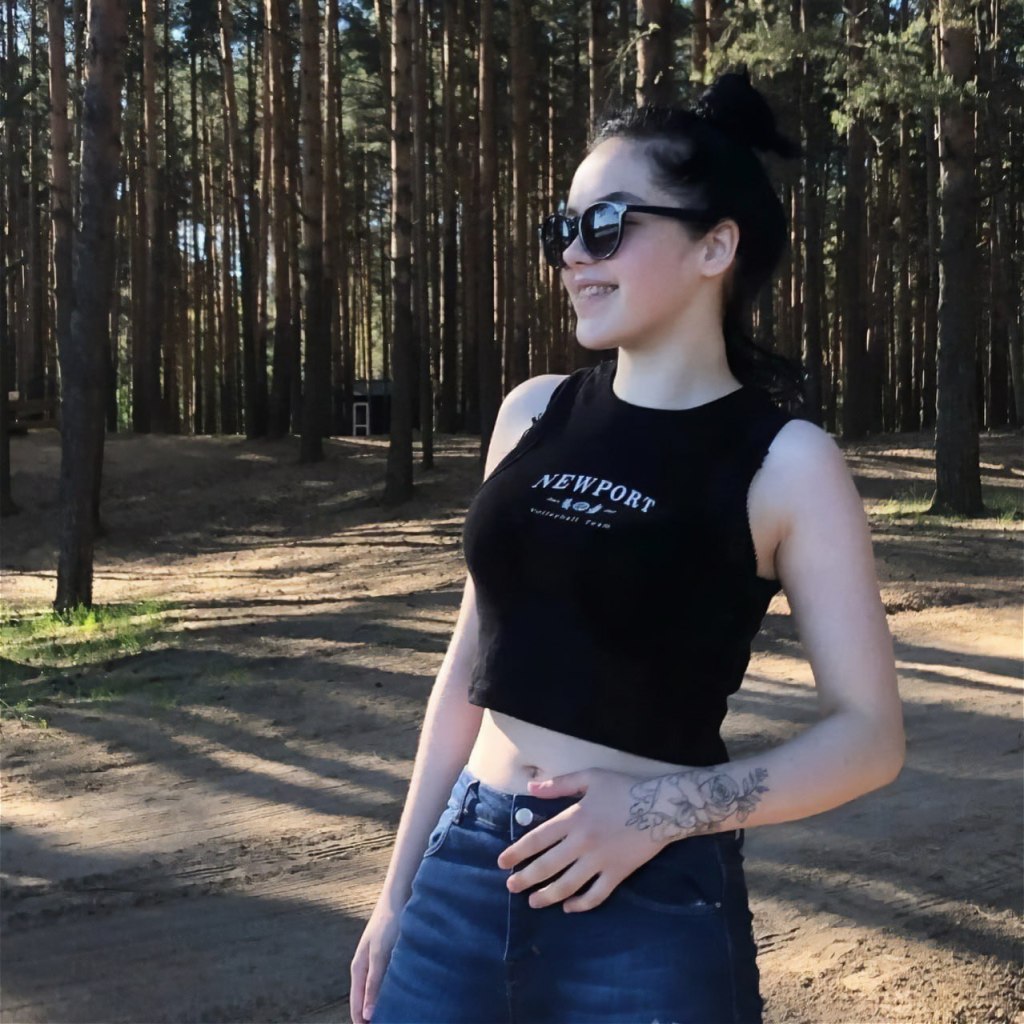
Valeria Zotova
Photo courtesy of Solidarity Zone

Who is Valeria Zotova?

On June 28, Valeria Zotova, a 19-year-old woman from Yaroslavl, was found guilty of “plotting to commit a terrorist act” (per Article 30.1 and Article 205.1 of the Russian Federal Criminal Code). Zotova will spend six years in prison because of the “experiments” that the FSB (the Russian Federal Security Service) conducts on people.

According to police investigators, Zotova wanted to set fire to a warehouse where “aid” was collected for Russian servicemen fighting in the war against Ukraine.

In the video footage of her arrest, Zotova is pulled from the passenger seat of a car by masked men. However, the other people in the car were apparently not touched.

Prior to this, a certain “Andrei” had for a long time been writing to Valeria, claiming that he lived in Ukraine. In the letters, he asked Valeria to perform “missions” for him. She refused and showed the exchanges with “Andrei” to her mother. After some time, Andrei’s “girlfriend” “Karina” started writing to Valeria in VKontakte. According to Valeria’s mother, “Karina” harassed her daughter, constantly writing and calling her, and urging her to commit arson. When Valeria was detained, “Karina” was in the vehicle with her, but “Karina” was not charged in the case.

It transpired that “Andrei’s girlfriend” was an FSB officer and a secret witness. At one of the hearings in Valeria’s trial, “Karina” openly stated that it was all a “crime re-enactment” [sledstvennyi eksperiment, which translates literally as “investigative experiment”—TRR] Although the FSB chose not to conceal its actions, this had no effect on the verdict.

The defense provided the court with obvious evidence of Valeria’s innocence, namely, her correspondence with Karina, in which Valeria repeatedly refuses to commit arson.

Despite the fact that the court did admit this evidence into the case file and “weighed” it, Valeria was found guilty on the charges. Instead of the eight years of imprisonment requested by the prosecutor, the court sentenced Valeria to six years.

Valeria’s lawyer has appealed the verdict, so we can look forward to an appeals hearing in the future.

We wrote recently about why the appeals process is so important.

On the outside, Valeria worked very hard, almost seven days a week. In her spare time, she drew and beaded. In winter, she skated whenever possible. She adores doing crosswords and other such puzzles. She is an extraordinarily upbeat and resilient young woman who always succeeded at whatever she undertook.

A drawing that Valeria Zotova sent from the pretrial detention center in Yaroslavl
Courtesy of Solidarity Zone

Valeria is currently in custody at the Yaroslavl pretrial detention center. You can show your solidarity and support by sending her a letter. She is always glad to get them and expresses her gratitude for all the support.

💌📦 Address for letters and parcels:

Zotova Valeria Igorevna (born 2003)
10 ul. Portovaya nab., SIZO-1
Yaroslavl 150001 Russian Federation

You can also send her letters via FSIN-Pismo and Zonatelecom.

Solidarity Zone is supporting Valeria Zotova.

#wewriteletters

Source: Solidarity Zone (Telegram), 14 August 2023. Thanks to Simon Pirani for the heads-up. Translated by the Russian Reader. People living outside of Russia will find it difficult or impossible to send letters to Russian prisons via the FSIN-Pismo and Zonatelecom services or regular mail. In many cases, however, you can send letters (which must be written in Russian or translated into Russian) via the free, volunteer-run service RosUznik. Ms. Zotova has not yet appeared on their list of supported addressees, however. You can write to me (avvakum@pm.me) for assistance and advice in sending letters to her and other Russian political prisoners.

Alexander Bakhtin: Justice Is Putin Behind Bars

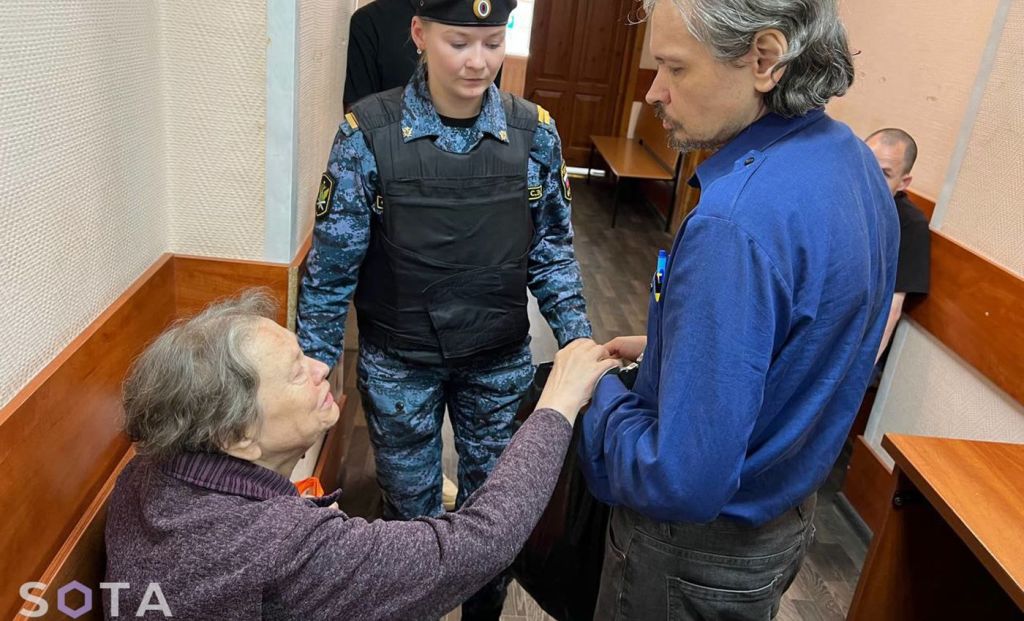
Alexander Bakhtin (right) says farewell to his mother after his trial. Photo: SOTA via Mediazona

Today, the Mytishchi City Court sentenced 51-year-old animal rights activist Alexander Bakhtin to six years in a penal colony. He was charged with disseminating “fake news” about the Russian army over three VKontakte (VK) posts written in the spring of 2022—about the possible blockade of Kyiv, about the murders of civilians in Bucha, and about Ukrainian volunteers who risked their lives saving homeless animals during the war. In addition to the time in the penal colony, the court ordered Bakhtin to undergo compulsory outpatient treatment supervised by a psychiatrist. The prosecution’s expert witness claimed that Bakhtin “could not have been fully cognizant of the actual nature and social danger of his actions and control them.” Mediazona publishes excerpts from Bakhtin’s rebuttal of the charges, which he asked to be entered into the case file before the verdict was announced. After reading these notes, readers will be able to assess for themselves the clarity and consistency of the convicted man’s thoughts.


  • In keeping with the principle of the presumption of innocence, it is not for me to prove that the materials I published are true, but for the prosecution to prove that these materials are “knowingly false.” But it was not proved who exactly committed the [war] crimes, which means it was not ascertained whether my actions constituted a crime.
  • Censorship is prohibited by the Constitution of the Russian Federation, and this Constitution is directly applicable [to my case]. Human rights can be restricted in the Russian Federation only when a nationwide state of emergency and martial law have been declared. But they have not been declared, which means that publishing materials that challenge the stance of the Defense Ministry is not a punishable offense.
  • I committed the actions that I am charged with in order to inform and familiarize my readers with an alternative point of view to the one that was then disseminated in the Russian media. At the same time, realizing that Ukraine’s official media are also an interested party in this conflict, I tried mainly to find information on the internet not in the official Ukrainian media, but as directly reported by local residents of Ukraine on their pages in social networks and online forums. My ultimate goal was to make what contribution I could to stopping this war, because, for example, the First Chechen War in 1996 was, as I believe, halted largely due to Russian society’s negative attitude towards it.
  • If we speak of “hatred and enmity” (as encountered in my posts in the form of harsh epithets directed at the Armed Forces of the Russian Federation), then these epithets do not apply to all [members of] the Armed Forces, but only to those [members] who employed various kinds of violence against civilians in Ukraine, or to those individuals who unleashed this war or called for unleashing it—that is, to war criminals. Perhaps, in terms of “generally accepted” definitions, those negative epithets of mine do apply to all their members, but I do not agree with this interpretation because, as follows from the findings of the forensic psychiatric commission, I am also generally partial to subjectivism, including when employing various definitions. So when I was asked by a psychologist to symbolically depict the concept of “justice,” I drew Putin behind bars. And when the psychologist asked me what that had to with justice, I replied that this was what justice looked liked to me right at that moment.
  • The severity [of a crime] should be defined by its effects. But can the prosecution prove that my publishing these posts produced any specific effects? For example, that they caused someone to lose their faith in the Armed Forces of the Russian Federation and commit an illegal action? At the time of my arrest, I had a little more than sixty friends on VK, and each criminal episode had about 100 views. There are no victims in the case. I myself stopped publishing these posts around the summer of 2022 precisely because they had no effect. By that time, the overwhelming majority of Russian citizens had already made up their minds about this war. Some of them sincerely supported the Russian authorities, while others supported them for opportunistic reasons (in order not to lose their jobs, etc.). Huge numbers of people were intimidated (including by disproportionate punishments meted out for anti-war stances) and kept quiet. Quite a large number of people emigrated from the Russian Federation altogether, while a huge number of Russians decided that this war did not concern them at all. Thus, not only my posts but also anti-war publications in general were unable to change anything, unfortunately. It was only on the battlefield that matters were decided.
  • If my posts are so socially dangerous, then why was my VK page not blocked for such a long time?

You can write a letter to Alexander Bakhtin through the Zonatelecom or FSIN-Pismo, or by regular mail to:

Bakhtin Alexander Sergeyevich (born 1971)
219 ul. Gorval, SIZO-2
Volokalamsk, Moscow Region 143600 Russian Federation

Mediazona thanks Nikita Spivak, a lawyer with OVD Info, for the opportunity to read his client’s manuscript.

Source: Nikita Sologub, “Justice is Putin behind bars: what Alexander Bakhtin, sentenced to six years for three posts about the war, said in court,” Mediazona, 11 August 2023. Translated by the Russian Reader. People living outside of Russia will find it difficult or impossible to send letters to Russian prisons via the FSIN-Pismo and Zonatelecom services or regular mail. In many cases, however, you can send letters (which must be written in Russian or translated into Russian) via the free, volunteer-run service RosUznik. Mr. Bakhtin has not yet appeared on their list of supported addressees, however. You can ask me (avvakum@pm.me) for assistance and advice in sending letters to him and other Russian political prisoners.

Say My Name

Putin’s critics have long noted his obstinate refusal to publicly utter the name of imprisoned opposition politician Alexei Navalny. But on Sunday, when asked by loyalist journalist Andrei Kolesnikov about Moscow theater director Zhenya Berkovich and Moscow leftist Boris Kagarlitsky, both of whom have been arrested on flagrantly trumped-up charges of “condoning terrorism,” Putin claimed never to have heard of them.

Maybe he hadn’t heard of them. But a good deal of progressive humanity has heard of them, not only because of the outrageous charges against them, but also because both of them are minor celebrities. This means that their cases matter enough to the Moscow-centered Russian “liberal” intelligentsia (broadly defined) and to leftist and liberal circles in the west that you will have already heard about them, too, and you will undoubtedly hear much more about them in the weeks and months to come.

What about the other, uncelebrated Russians persecuted for their dissenting views and direct protest actions during wartime? According to OVD Info, 665 criminal cases have been opened against “anti-war dissidents” since February 24, 2022. It would be understandable if the international press had trouble reporting in depth on each of these cases, despite the best efforts of international human rights organizations and projects like this website. But it turns out that the Russian opposition also finds it too troublesome to remember all their names, let alone name them publicly.

“Every day there are more and more [political] prisoners in Russia. Moreover, we do not have time to remember their names, because they are activists from Khabarovsk and Vologda, Murmansk and Perm. We don’t have time to remember these names,” Olga Romanova, the founder and head of Russia Behind Bars told Radio Svoboda at a rally in Berlin yesterday “in support of Vladimir Kara-Murza, Alexei Navalny and other political prisoners in Russia.”

I shouldn’t have been surprised, then, as I prepared a post yesterday about the trial of Petersburg anti-war activist Olga Smirnova, that a Google search for the keywords “Olga Smirnova trial Petersburg” generated the following dismal picture, in which it transpires that this remarkable, incredibly brave grassroots battler has been roundly ignored by the Anglophone world except for the dependable folks at RFE/RL and silly old me.

Several years ago, a Petersburg “artivist” with whom I worked closely for a time became fascinated with the so-called attention economy. I soon realized that the lesson they had learned from their “research” of the topic was that they had to compete even harder for attention to their own projects and causes. Later, I became convinced that nearly the entire Moscow-centric Russian opposition and their target audiences at home and abroad were also practicing “attention economics” to the extent that the political persecution of non-celebrities, regional activists, and social outsiders (Jehovah’s Witnesses, for example) almost never merited their focused and sustained attention.

They thus missed what I thought was the bigger picture, which was that the Putin regime and its repressive apparatus were themselves rehearsing for something “grander,” something that came to fruition on February 24, 2022.

And yet the right-thinking “attention economists” who dominate the Russian opposition and, consequently, the non-Russian Russia watchers whose narratives they help to shape, continue to engage in celebrity worship amid a fascist assault on Ukrainian independence, Ukrainian lives, and Russian grassroots dissent, thus betraying their own deep-seated anti-democratic biases. When people who should know better and should do better feel impelled not to say the names and share the stories of “lesser” political prisoners like Olga Smirnova, they are doing the Russian police state’s work for it. ||| TRR

__________

During a press conference after the Russia-Africa summit on Saturday evening, Kommersant reporter Andrei Kolesnikov asked the President of Russia a question about a number of the arrests that have occurred recently in the country.

Kolesnikov cited to Putin the names of the arrested sociologist Boris Kagarlitsky, against whom “condoning terrorism” charges have been filed for a post about the explosion on the Kerch Bridge, and theater director Yevgenia Berkovich. She has been charged with “condoning terrorism” over a theater production about Russian women recruited by the terrorist group Islamic State. The play is based on real events.

Human rights activists call the cases against Kagarlitsky and Berkovich politically motivated.

“People are arrested for written or spoken words. Is this normal? Well, thank God, it’s not 1937 here! But some people, you know, think that maybe it is 1937,” Kolesnikov asked.

“It’s 2023 here, and the Russian Federation is in a state of armed conflict with its neighbor. I think that there should be a certain attitude towards those people inside the country who harm us,” Putin replied, adding that “in order to achieve success, including in the combat zone, we must all follow certain rules.”

The President stated several times that he did not know about the cases against those whom Kolesnikov cited as an example. “I don’t know who you are talking about. I am hearing these names for the first time and don’t really understand what they did and what was done to them,” Putin said, but immediately added, “In Ukraine, people are shot for this.” As an example of an “execution,” he referred (without naming him by name) to Denis Kireyev, a member of the Ukrainian delegation to peace negotiations with Russia, who was killed in early March last year. “I don’t know what they [Berkovich and Kagarlitsky] did, you will tell me later. Maybe they don’t deserve what has been done to them. I don’t even know how,” Putin concluded his answer.

Putin did not explain how the case of Kireyev, who was [a Russian] agent, according to the Security Service of Ukraine (SBU), and whose death had nothing to do with any of his public statements, was connected with the Berkovich and Kagarlitsky cases. In addition, the case against Berkovich, although she did speak publicly against the war, is not connected with her anti-war statements, according to investigators.

[…]

Source: “Putin responds to question about prosecution of Kagarlitsky and Berkovich,” Radio Svoboda, 30 July 2023. Translated by the Russian Reader

__________

Today, a rally in support of Vladimir Kara-Murza, Alexei Navalny, and other political prisoners in Russia took place in downtown Berlin in front of the Brandenburg Gate. It was held by the organization Russia Behind Bars with the support of other Russophone NGOs in Berlin.

More than two hundred people turned to the rally on a cold July evening. Among them were human rights activists, journalists, and members of the creative intelligentsia, both those who have lived in Berlin for a long time and those who have recently arrived here.

“Every day there are more and more [political] prisoners in Russia. Moreover, we do not have time to remember their names, because they are activists from Khabarovsk and Vologda, Murmansk and Perm. We don’t have time to remember these names,” Olga Romanova, the founder and head of Russia Behind Bars told Radio Svoboda, “but Putin reminded us of something when he said that it was not 1937 in Russia now. He doesn’t know the names of either Boris Kagarlitsky or Zhenya Berkovich, but he firmly knows that they are guilty, and he firmly knows that people like them are ‘shot in Ukraine.’ It is very scary that Russia is ruled by a person with such ‘facts’ in his head and such a set of beliefs. It seems to me that we are here not only to let political prisoners know that we remember them, but also to try to show the rest of the world that not all of Russia is Putin and that perhaps Russia still has a future. There are people in Russia who oppose Putin. They are people who think the same way we do.”

A statement by Vladimir Kara-Murza was read out at the rally. In particular, he argues that Russian citizens who have publicly opposed the brutal, aggressive and unjust war that the Putin regime unleashed against Ukraine occupy a place on this list [sic].

“We are very different people, people of different professions, generations, and outlooks. Among us there are politicians and journalists, priests and soldiers, artists and lawyers, students and pensioners, leftists and rightists. We are united by our rejection of Putin’s criminal war, which the Kremlin is waging on Russia’s behalf . There are millions of people in our country who think like us. Thank you for listening to us and for not believing the Kremlin propaganda tall tales about the alleged universal support for these crimes. I know that the day will come when this darkness will dissipate and another Russia will return to the family of civilized nations, and we will finally be able to create a real united peaceful Europe.”

The words of the Russian politician sentenced to twenty-five years in prison in Russia were heard at the end of the evening rally in Berlin. On the same day, an appeals court in Moscow upheld the sentence against Kara-Murza, whom human rights activists consider a political prisoner.

One of the people attending the rally told Radio Svoboda that he considers it his duty to voice his disagreement with Russia’s criminal full-scale war in Ukraine in any format anywhere in the world. “Individual conscience is what matters. It doesn’t allow us to regard calmly the crimes that Russia is committing on behalf of its citizens,” the rally participant said.

Source: Anna Rose, “Rally in support of Russian political prisoners takes place in Berlin,” Radio Svoboda, 31 July 2023. Translated by the Russian Reader

__________

Say my name
Play my game

I tried to tell you
That you’re up to no good
So I lied to fell you
Just like you knew I would

I made you love me
I was a part of your life
You’d stand above me
Behind the blade of a knife

Return to sender
That’s what it says in the mail
I’ll never end up
Inside the county jail

The look of crystal
Still makes me blue
I’ll load my pistol
And keep my eye on you

Not much for living
But I’m pledging my time
This gift of giving
It perpetrated my crime

Don’t have to like it
So just stay out of my way
Don’t try to fight it
You know the words to say

From Country Hymn, released September 17, 2016
Words by Sumanth Gopinath, music by The Gated Community
Copyright 2016

Sumanth Gopinath: lead vocals, acoustic guitar
Rosie Harris: lead vocals, banjo
Beth Hartman: backing vocals, egg shaker
Teresa Gowan: fiddles
Johnny Becker: mandolin
Cody Johnson: electric bass
Paul Hatlelid: drums

“SOLIDARITY”: At the Olga Smirnova Trial

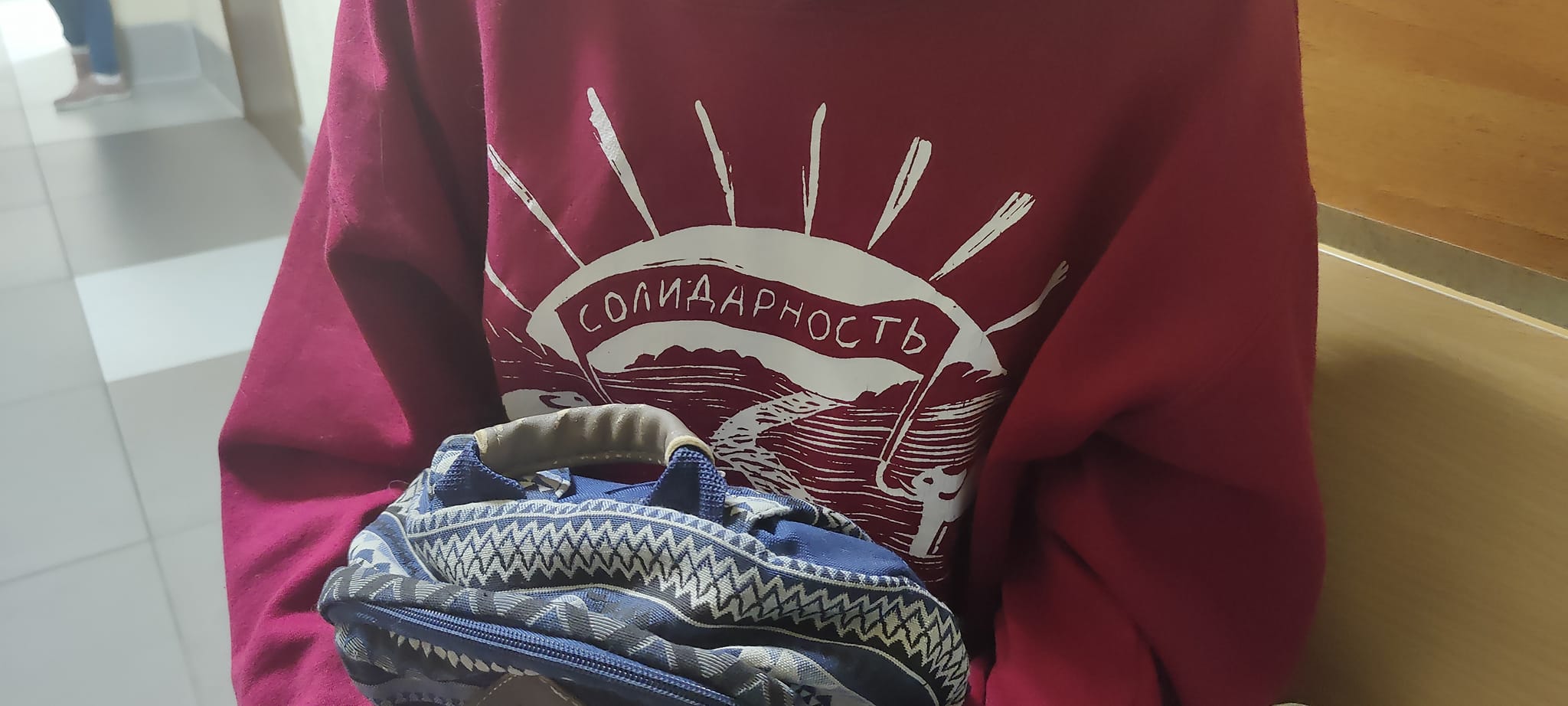
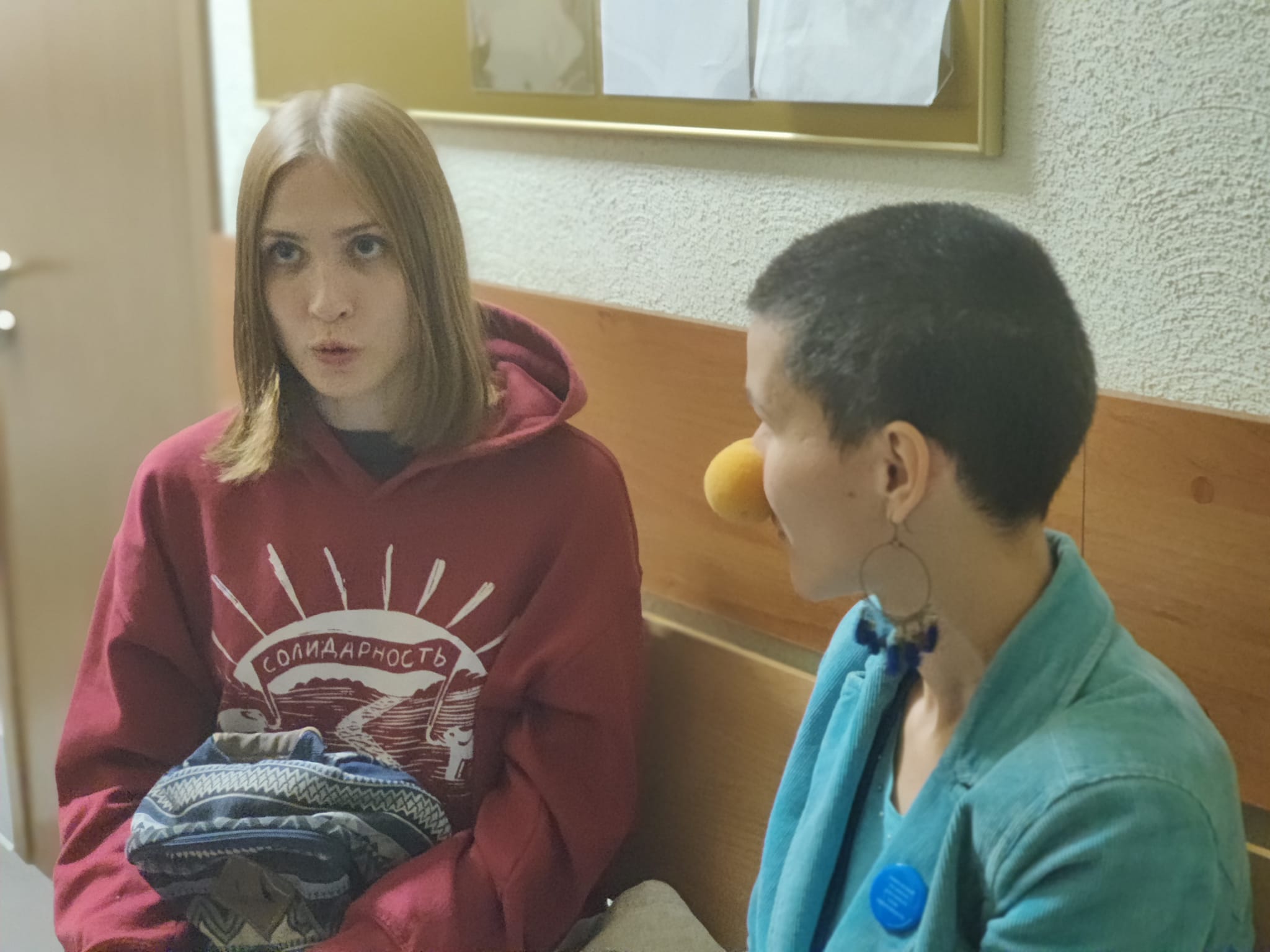
Sonya, the girlfriend of Sasha Skochilenko, came to today’s hearing in the trial of anti-war activist Olga Borisovna Smirnova. Sonya wore a sweatshirt embossed with the word “SOLIDARITY.” It was quite nice to see that there is reciprocity among the support groups of political prisoners.

Sergei Troshin told people about the evening gatherings to write letters to political prisoners that are held at the Yabloko Party’s Petersburg offices.

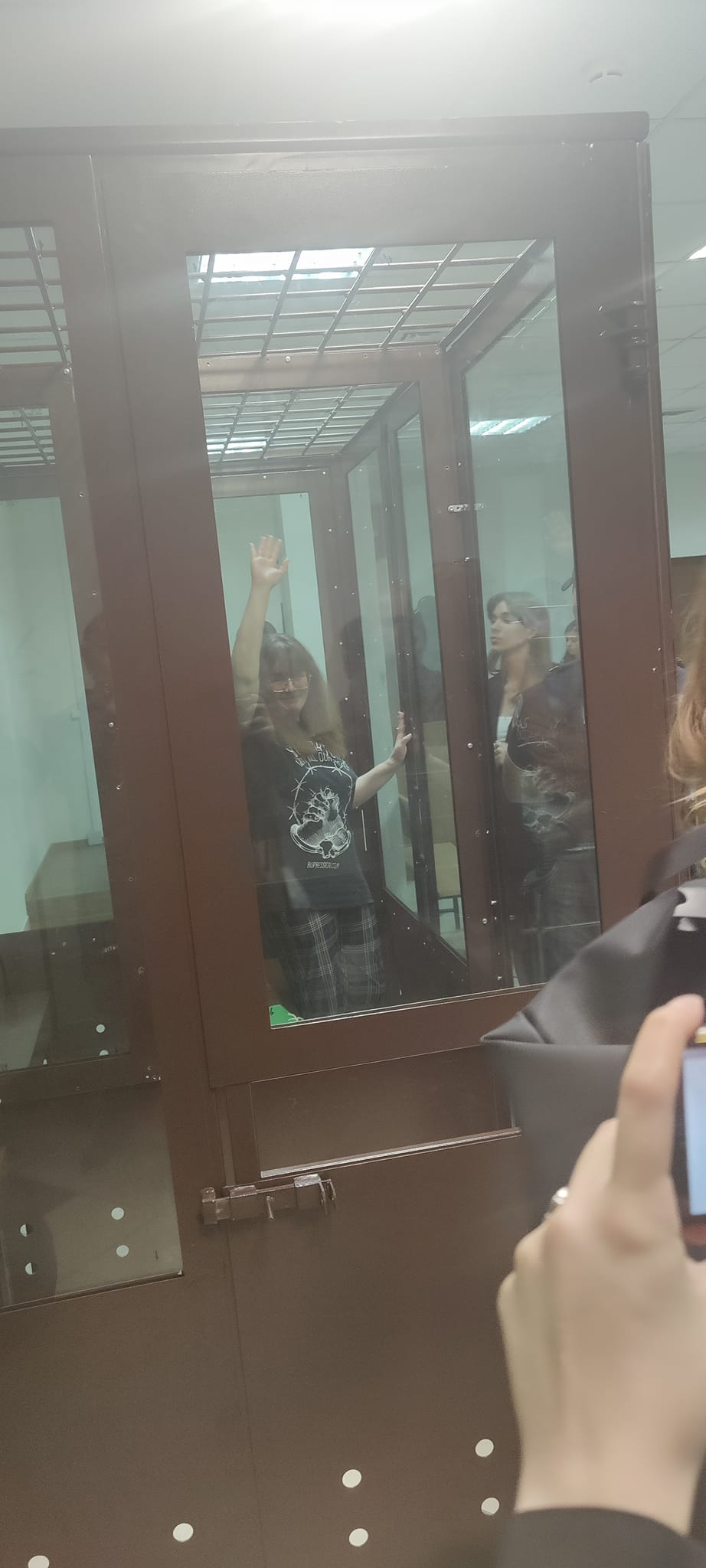
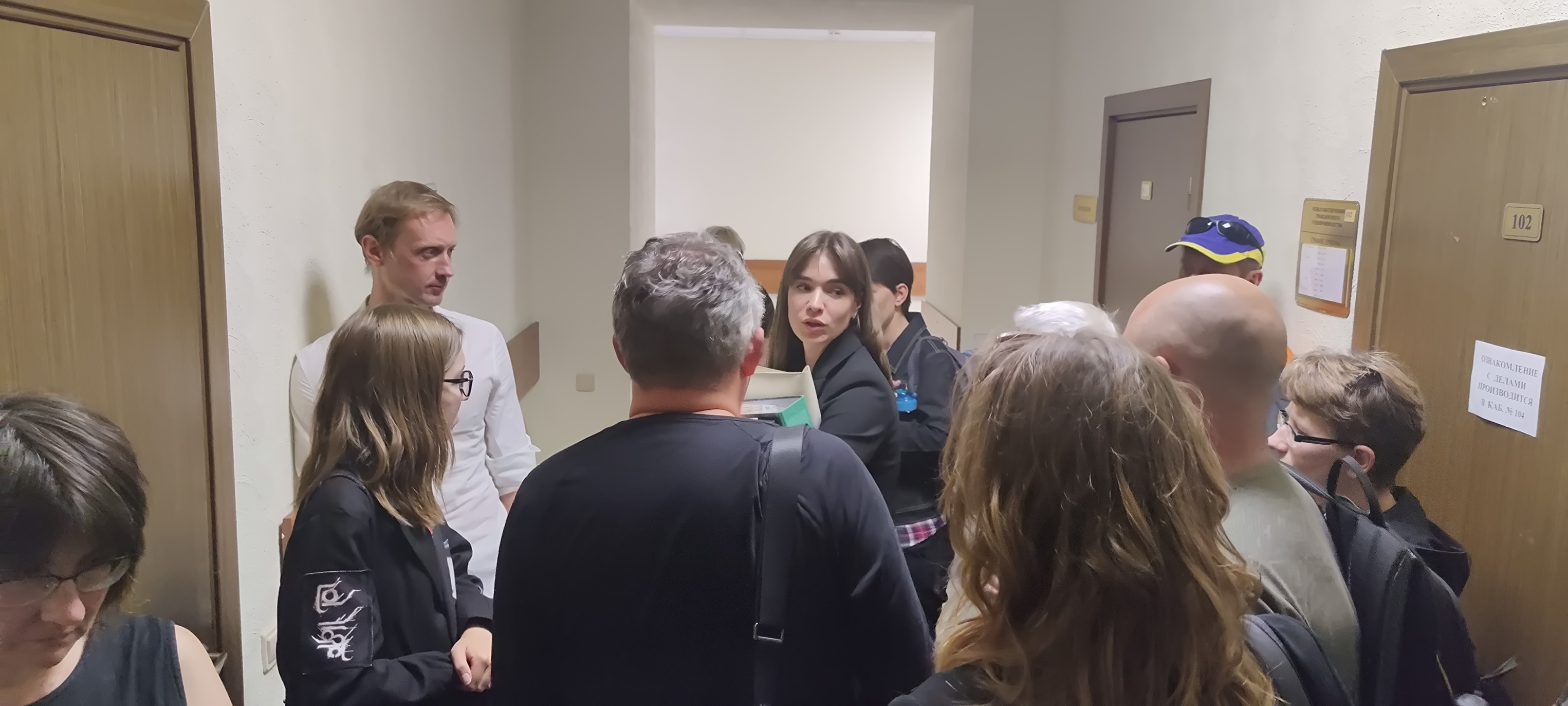
There were twenty [members of the public] in total, all the seats were taken. The trial was again held in the jury room on the ground floor, into which the guards can bring the accused from the courtyard and thus avoid walking them down the corridor amid shouts of support.

The hearing itself left more questions than answers. The judge has obviously begun to hurry in order to finish the trial as quickly as possible. Does she want to wrap things up before her holiday? The hearing itself thus ended around seven in the evening, despite the lawyer’s request to postpone it. The judge behaved nervously, on the verge of rudeness.

The bulk of the hearing was devoted to cross-examining Lebedev, an officer of Center “E” [the “anti-extremism” police]. He came dressed in camouflage, combat boots, a beret, and dark glasses, and he had a beard (which looked fake).

It was [Lebedev] who located and documented the pieces of evidence on which the accusation is based, and also determined them to be “fakes” by comparing them with the websites of the Defense Ministry and the Foreign Ministry and, for some reason, Maria Zakharova’s Telegram channel, “as that of an official authoritative statesman expressing the position of the Foreign Ministry.” He searched for information by dates: if there was something in a post by Olga that was not found on the websites of the relevant authorities, he deemed it a “fake.” He also prepared a search memo stating that there were no special perpetrators [sic] in [Smirnova’s] apartment, and was present during the search.

The cross-examination lasted three hours. It was clear that [Lebedev] considers Olga a “blatant criminal” who disseminates such things “while our boys are getting killed.”

When asked about information from the website of the Israeli Foreign Ministry about Babi Yar, Lebedev replied, “Fortunately, our country has its own independent policy and does not consider it necessary to take into account and react to statements made by the Jewish Foreign Ministry at the slightest pretext.”

He also believes that the information given by Russian officials and state bodies cannot be questioned and is the absolute truth.

To Olga’s question about why he had chosen precisely these entries from her social media page, he replied, “It would be impossible to document everything from the time of Jesus Christ’s birth.”

When asked why the witnesses who inspected the web pages containing the [offending] posts were recruited so far from his place of work, he replied that it is not so easy to find people who agree to serve as witnesses.

“I am sure that these people sitting behind me would have never agreed to come and document Smirnova’s criminal actions as witnesses,” he said.

After the recess, a disk with telephone connections that suddenly appeared in the case file was examined.

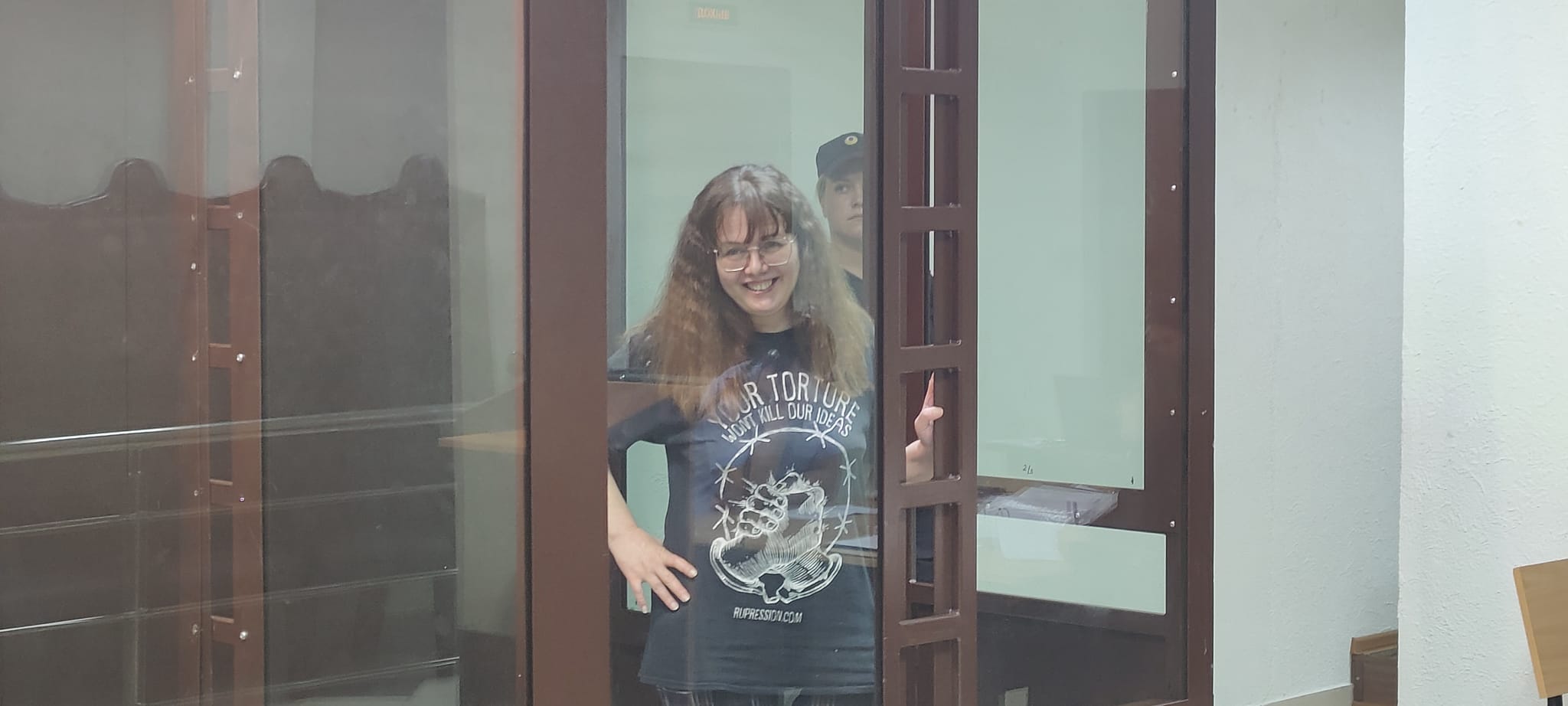
Olga has been holding up well: she smiled a lot and thanked people for their support. The next hearing is scheduled for Monday, August 7, at twelve noon. It was announced that oral arguments would be heard then, although, in my opinion, the defense has not yet finished examining the evidence.

Despite the fact that people in the support group joked a lot, the overall feeling from the trial is quite depressing. It feels as if the judge has already made up her mind, and we are present at a poorly staged theatrical performance. It’s just that the finale is up to ten years in prison…

#FreeOlgaSmirnova

Source: Alexei Sergeyev (Facebook), 31 July 2023. All photos, above, by Mr. Sergeyev. Translated by the Russian Reader. You can send letters— written in Russian or translated into Russian (if you don’t know a competent translator, you can use an online machine translator such as Google Translate)—to Olga Smirnova and other Russian political prisoners via the free, volunteer-run service RosUznik. You may ask me (avvakum@pm.me) for assistance and advice in sending such letters.

¡Me monté en la montaña rusa tres veces!

Hello, Moscow Times readers! This is your weekly newsletter, which will shed light on:

  • a time of rapid price growth in Russia
  • how Africa feels about free Russian cheese grain
  • why Vladimir Putin remained standing.

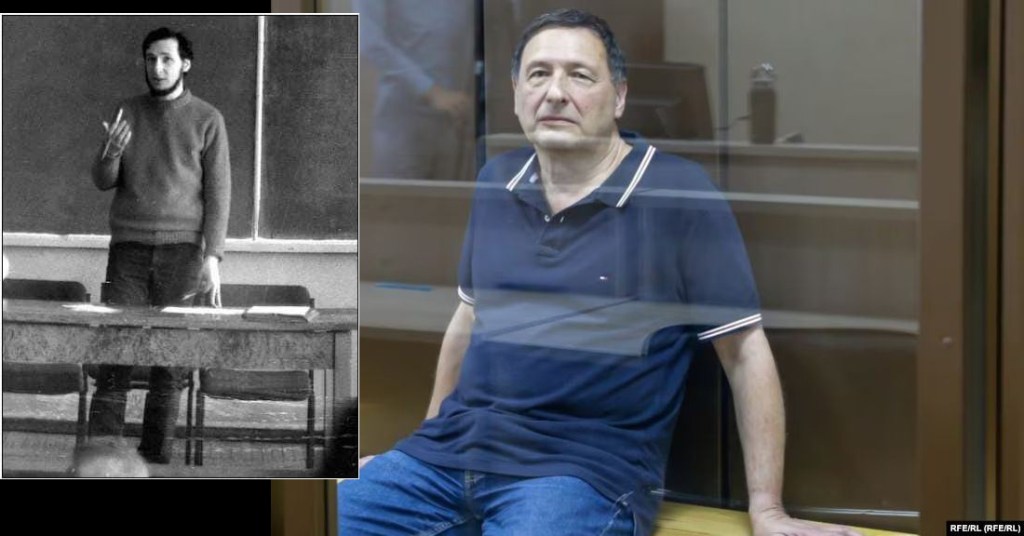
But first we will discuss a seemingly not too high-profile event—the arrest of the Soviet dissident and prominent Russian leftist Boris Kagarlitsky.

Boris Kagarlitsky was jailed by the Soviet regime, and now he’s been jailed by the Putin regime too.

On the face of it, it looks like yet another trumped-up “condoning terrorism” case! Zhenya Berkovich and Svetlana Petriichuk were also arrested under this article and are currently in pretrial detention.

But Boris Kagarlitsky is not a great theater director chockablock with interesting creative ideas. He is a veteran anti–American and anti-globalist. Few people remember how vigorously Kagarlitsky supported Russia’s invasion of Georgia, how he spoke as critically as possible about the Ukrainian Maidan of 2013, and how later he consistently criticized what he saw as Volodymyr Zelensky’s “puppet” government. And he lent his support to the “separatists” in the Donetsk and Luhansk regions.

In other words, Kagarlitsky has generally been an ideological ally of the Russian regime, and his criticism of the Kremlin is based on the argument that the regime has been insufficiently consistent in its anti-Americanism and anti-globalism, in its fight against the global financial monster and its ubiquitous outstretched tentacles.

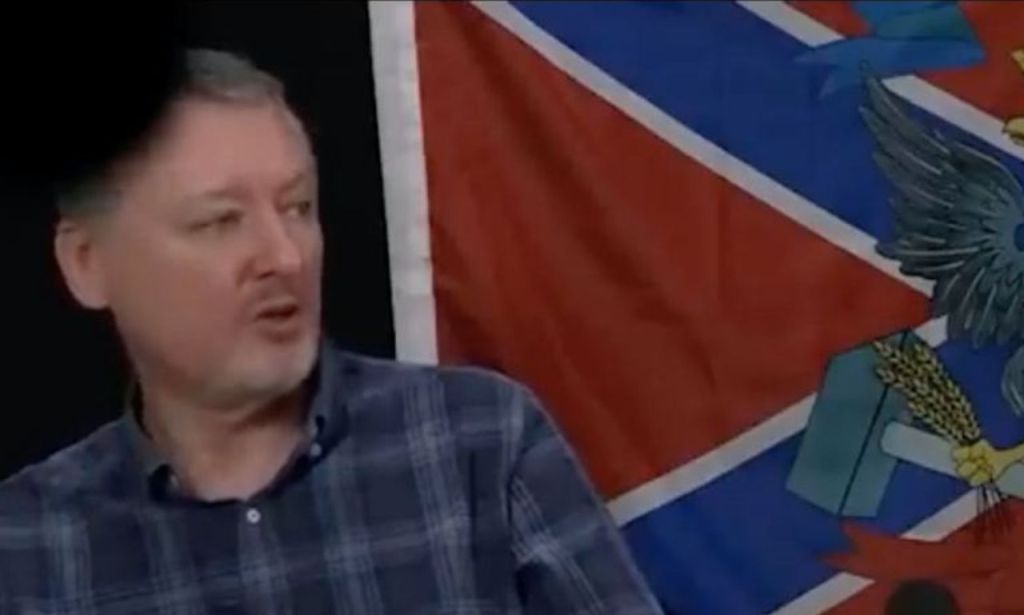
Does that remind you of anyone? That’s right: Igor Girkin-Strelkov. The arrested leader of the so-called Russian World likewise did not just support the Kremlin’s plans for conquering Ukraine. He onstantly stressed the insufficient efforts and inconsistency evinced by the Russian authorities in its “final solution” of the “Ukrainian question.”

Igor Girkin accused Putin of indecisiveness.

Thus, in the wake of Yevgeny Prigozhin’s rebellion (but not necessarily because of it, although this could be the case), the authorities, realizing that liberals no longer pose any danger, have gone after political opponents of a different stripe—after fellow travelers who rabidly dared to tell them what to do. Prigozhin did something similar, but he bit his tongue after his pseudo-mutiny. Unlike Kagarlitsky and Girkin, he stands for no ideology other than self-enrichment, and this stance is is something the Kremlin can comprehend and even adore.

What matters is that Kagarlitsky’s arrest, hard on the heels of Girkin’s arrest, shows that the regime is at a total ideological impasse. Its amorphous anti–western rhetoric has no clear conceptual basis, and hence anyone who espouses something resembling a real concept is an indubitable threat.

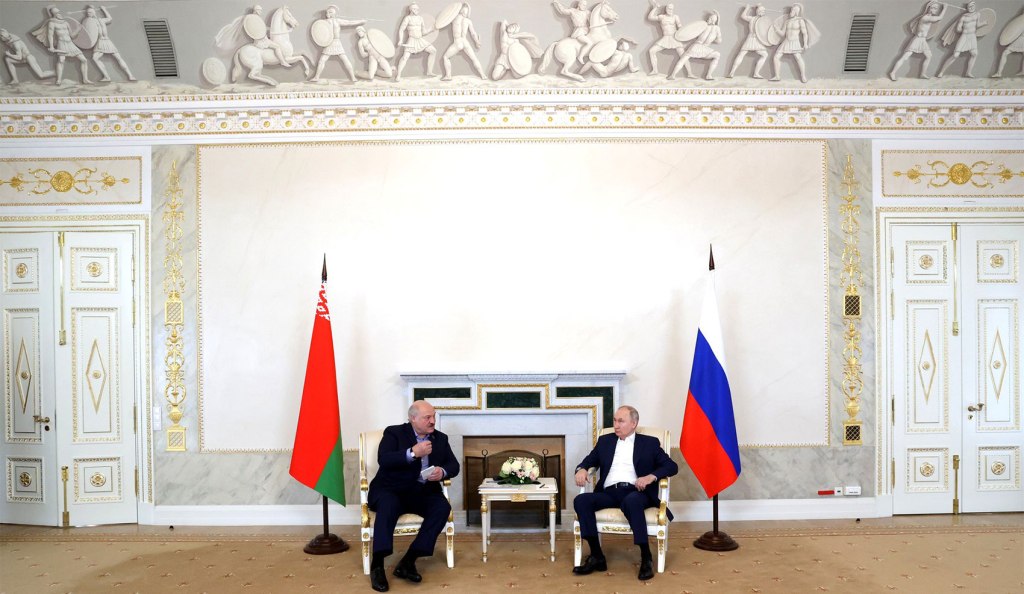
Putin’s only real ideological ally remains Alexander Lukashenko, a politician who has an immense arsenal of ridiculous arguments for explaining away the actions of his aggressive Moscow meal ticket.

The Belarusian pretender always points out where the attack is coming from.

[…]

Alexei Navalny also made a very unexpected public statement. He stood up for Girkin-Strelkov and even counted him among his fellow political prisoners. Note that from a formal point of view, the herald of the Russian World, who has the blood of many people on his hands, cannot be classified as a political prisoner.

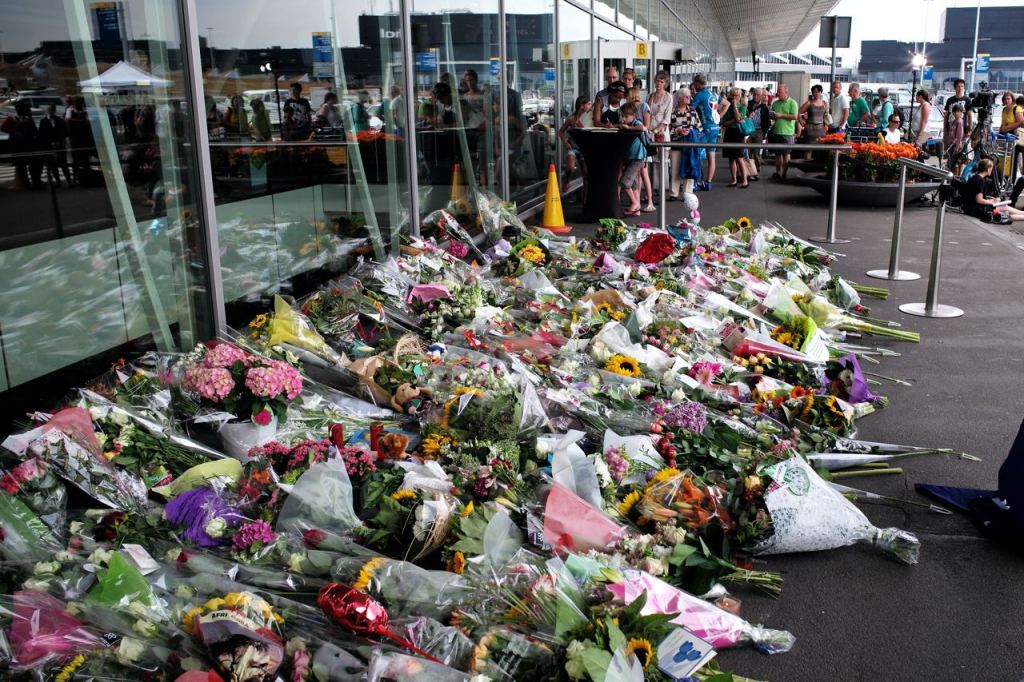
Игорь Гиркин осужден за сбитый Boeing Гаагским судом

[…]

Source: Moscow Times Russian Service weekly newsletter, 30 July 2023. Translated by the Russian Reader. The photos, above, were captioned as such by the authors, not by me. Thanks to SpanishDictionary.com for the quotation that I used as the title of this post.


Vladyslav Starodubtsev, historian – contribution to debate on Boris Kagarlitsky, antiwar activism in Russia and more:

“Its just very hard to agitate for person, who called for occupation of your land and promoted and helped, including monetarly, people who kill your friends. Calling this “a difference of opinions” doesn’t seem a right thing. In 2014 he took huge effort to align far-right and far-left in support of Russian war against Ukraine, and got Presidential grant for it. Had strong connections with both Putinist elite and Russian neo-nazi criminals in Donbass. And before — justifying need to invade Georgia https://rabkor.ru/columns/debates/2008/09/09/debate-53/

“It is not surprising that the Western left, having no illusions about the order prevailing in our country, unanimously supported Russia. The blow inflicted on the United States has global implications and opens up new perspectives for their struggle. It would be naive, to say the least, to maintain power. This is not our government, and it will never be ours. But you need to take advantage of the situation. And if the government nevertheless did something that meets our own requirements, this should be treated as a success, and this success should be developed.

We have always been against NATO, against orientation towards the United States. We have always opposed the WTO. These are our fundamental positions.

It would not only be foolish to miss the chances that history offers us today. That would be criminal!” – Boris Kagarlitsky in times of Russian invasion in Georgia

The person who not only called, but participated in promoting violence and occupation, using millions given directly by Putin’s office, then helping monetarly to occupational forces and using any possible platform to promote campism and pro-Russian views amongst the Western left. He justified terrorism. And he become the architector of his own fate. The power that he critically supported in his nationalist crusade against “The West”, against Georgians and Ukrainians, now consumed him. It seems that he relied that connections with Putinist elite will save him. But after Wagner coup, Russia represses everyone. It doesn’t make these people political prisoners. I won’t agitate for any morally compromised

He by definition is not a political prisoner, so agitate for his release doesn’t make much sense. In the biggest – agitate to his extradiction to Ukrainian court. Organize media campaigns for any of it would be pretty absurd.

“3.3. A person is not to be regarded as a political prisoner, if, under the above circumstances, the person has committed:

a violent offence against persons, except in cases of self-defence or necessity;

a hate crime against a person or property; or the person has called for violent action on national, ethnic, racial, religious or other grounds.”

(https://memohrc.org/…/guidelines-definition-political…)

That is why I never called for release of any nazi in Russia, even if they had the change of heart, either because of elite reshuffle in Putin’s office, and their allies falling down, or because they understood what horrible monstrosity they helped to build and in what they participated, under tens of thousand people were killed by Russia’s full-scale invasion. Why nobody thinks from perspective who Kagarlitsky agitated to roll over on tanks? And yes, it is a part of bigger problem, that all the left is crazy when Russian left-nationalist Kagarlitsky is arrested, after a year of being allowed to criticize Russia, but the genuine activists, who aren’t xenophobic – ignored.”

Source: Maire Kelly (Facebook), 29 July 2023. The spelling and punctuation of the original post have been preserved.


Stand with all antiwar protest -stop Russia – tell the whole story Ukraine Socialist Solidarity Campaign: “Many people on this FB page are familiar with Russian leftist commentator and intellectual Boris Kagarlitsky. He has been a controversial figure for good reason. He supported the annexation of Crimea and the war in Donbass in 2014. He is a friend of Girkiin, the committed war criminal.

For reasons unknown he chose to stay in Russia while many of his colleagues fled. And this week he was detained by the FSB in Moscow, taken to a pre trial detention center where he will stay until the end of September when he will face charges on “justifying terrorism” for his criticisms of Russia’s invasion of Ukraine. A petition is being circulated calling for his freedom, along with other anti war Russians. Supporting Kagarlitsky as a political prisoner does not in any way imply an endorsement of his extremely objectional views. As Ilya Budraitsis writes in the statement below, Kagarlitsky’s arrest is part of a new wave of repression against any critics of the war.

The following statement was released by Russian socialist and anti war dissident Ilya Budraitskis and other comrades. Please see the petition below and sign/share if you support it.

Two days ago in Moscow, FSB officers detained well-known leftist theorist, activist and commentator Boris Kagarlitsky. At present, Boris has been transferred to the pre-trial detention center in Syktyvkar, where he will stay at least until the end of September. Kagarlitsky was charged with “justifying terrorism”, for which he could face up to 7 years in prison. At the same time, in Moscow, Yekaterinburg and Penza, searches were carried out at the homes of Kagarlitsky’s associates on the YouTube channel Rabkor. It is obvious to us that the arrest of Kagarlitsky is part of a new large-scale repressive campaign by the authorities aimed at completely clearing the political space of any critics of the war. Since February 2022, Boris has taken a pronounced anti-war stance, and we are sure that this was the only real reason for his arrest.

Boris’s personal political trajectory began more than 40 years ago and has not always been flawless. In the early 1980s, Kagarlitsky was a member of the underground group of “young socialists” and was subjected to repression by the KGB, and since the early 1990s he played a prominent role in the left opposition, first to the Yeltsin and then to the Putin regime. His numerous books and public speeches had a great influence on several generations of the Russian left, and that is why his responsibility for certain assessments remained exceptionally high. In 2014, Kagarlitsky actively supported the annexation of Crimea and the creation of the so-called. “People’s Republics” in eastern Ukraine. And this support, unfortunately, played a role in disorienting part of the Russian left. These, like many other moments in Kagarlitsky’s activities, are completely unacceptable for the members of the “After” team. And now our fundamental differences have not gone away, and we will certainly discuss them with Boris – but only after his release.

It must also be acknowledged that after the start of the full-scale invasion, Kagarlitsky was one of the few Russian leftists who, while remaining in the country, continued to publicly condemn the war on the part of Russia. It can be assumed that only the wide popularity of Kagarlitsky has kept the authorities from arresting him until now. Now that this has happened, it has become clear that repression is reaching a new level and the number of activists in the immediate risk zone has increased significantly. That is why we call for an international campaign in support of Kagarlitsky and all political prisoners in the Russian Federation”.

Source: Maire Kelly (Facebook), 29 July 2023. The spelling and punctuation of the original post have been preserved.

Em Uyaya’am (Things I Saw, Read and Watched This Week)

Asilomar State Beach, 21 July 2023. Photo by the Russian Reader

Who is Girkin?

Igor Girkin (Strelkov) is an ethno-fascist FSB officer and the warlord who prepared the ground and then launched the war in Donbas in 2014. He stated that without him, “there wouldn’t be any war”. He is also responsible for ordering the execution of numerous civilians, for which he still face justice. He was sentenced to life imprisonment in absentia by the International Criminal Court on November 17, 2022 as perpetrator of the downing of Malaysian Airlines 17 and the murder of 298 people—a war criminal.

[…]

Source: Monique Camarra, “Igor Girkin arrested in Moscow: the Kremlin is clamping down,” EuroFile, 22 July 2023


“The all-clear hasn’t sounded, the fight continues.”

Source: Sergey Abashin (Facebook), 21 July 2023


Stunning drone footage has revealed details of the Batagaika crater, a one-kilometer-long gash in Russia’s Far East that forms the world’s biggest permafrost crater.

In the video two explorers clamber across uneven terrain at the base of the depression, marked by irregular surfaces and small hummocks, which began to form after the surrounding forest was cleared in the 1960s and the permafrost underground began to melt, causing the land to sink.

“We locals call it ‘the cave-in,'” local resident and crater explorer Erel Struchkov told Reuters as he stood on the crater’s rim. “It developed in the 1970s, first as a ravine. Then by thawing in the heat of sunny days, it started to expand.”

Scientists say Russia is warming at least 2.5 times faster than the rest of the world, melting the long-frozen tundra that covers about 65% of the country’s landmass and releasing greenhouse gases stored in the thawed soil.

[…]

Source: “World’s biggest permafrost crater in Russia’s Far East thaws as planet warms,” Reuters, 21 July 2023


“Let’s remember these people”

After the court hearing [in his criminal case], Oleg Orlov read out a long list of names of people convicted of “disseminating fake news” or “discrediting the army.” He mentioned Alexei Gorinov, Dmitry Ivanov, Samiel Vedel (aka Sergei Klokov), Vladimir Kara-Murza, Ilya Yashin, Maxim Lypkan, and many others.

“I am not imprisoned, and I can say what I deem necessary. I can answer your questions. But how many of my and your kindred spirits are deprived of this opportunity,” Orlov reminded. “I consider it my duty to read out the list. These are only some of the people who have been imprisoned for their anti-war stance.”

After reading out the names, Orlov cited data from OVD Info. “634 people from 78 regions [of Russia] have faced criminal charges for anti-war protests, for words and statements,” the human rights activist said. “And 200 of them have already been incarcerated. Let’s remember these people.”

Orlov stressed that he was fighting not only for his own sake. “Both my lawyer Katerina Tertukhina and my public defender Dmitry Muratov — we are fighting like this and trying to prove the nullity of the charges [against him], the nullity of the [prosecution’s] expert witness analysis, because we are trying to fight for all people.”

Video courtesy of SOTA

Source: memorial.hrc (Instagram), 21 July 2023. Translated by the Russian Reader


Crimean Tatar-led underground movement is already active behind Russian lines and hundreds of young Tatar men are ready to take up arms to liberate the occupied peninsula, a veteran community leader has said.

Mustafa Dzemilev, widely seen as the godfather of the Crimean Tatar rights movement, pointed to operations by the Atesh guerrilla group, comprising Crimean Tatars, Ukrainians and Russians, in Crimea and other occupied Ukrainian regions.

Atesh, which means “fire” in Crimean Tatar, was created in September last year, primarily to carry out acts of sabotage from within the ranks of the Russian army. It claims more than 4,000 Russian soldiers have already enrolled in an online course on how to “survive the war” by wrecking their own equipment.

There is no evidence linking the group to the latest attack on the Kerch Bridge, early on Monday morning, but the group has claimed a string of smaller-scale attacks, blowing up Russian checkpoints, assassinating Russian officers, setting fire to barracks and feeding sensitive information to Ukrainian intelligence. It recently accused Russian sappers of laying mines in the Krymskyi Titan chemical works in Armiansk, northern Crimea. An explosion there could spread an ammonia cloud across the land bridge between the peninsula and mainland Ukraine.

“Atesh is very deep underground,” Dzhemilev, 79, told the Guardian in an interview in Kyiv. “There was not a single arrest among Atesh members, but they are working inside Crimea territory blowing up targets.”

[…]

Source: Julian Borger, “The underground Crimean Tatar group taking up arms against Russia,” Guardian, 17 July 2023


Hello! This is Alexandra Prokopenko with your weekly guide to the Russian economy — brought to you by The Bell. In this newsletter we focus on the Kremlin’s decision to seize the Russian assets of two major foreign companies and what it means for the business climate and the other Western businesses who cannot — or will not — leave Russia. We also look at Friday’s interest rate hike and new Western sanctions on Russia.

Nationalization of Western assets heralds broader property redistribution

Finland’s Fortum and Germany’s Uniper saw their Russian assets seized by the Kremlin earlier this year. This week was the turn of France’s Danone and Denmark’s Carlsberg. It feels like we are witnessing the final chapter in the history of Western business in post-Soviet Russia. If the transfer of Fortum and Uniper’s energy assets to external management was explained as a response to the European Union’s treatment of Russian energy companies, there is no such obvious reason for the behavior toward Carlsberg and Danone and it likely reveals the Kremlin’s real intentions. This is direct nationalization — and opens the door to a new distribution of property in Russia.

[…]

Source: Alexandra Prokopenko, “Kremlin asset seizures the new normal,” The Bell, 21 July 2023


This image has an empty alt attribute; its file name is 360096182_6574069839310211_6569062695868766924_n.jpg

“Russia, forward!”

Source: Marina Varchenko (Facebook), 14 July 2023. She writes: “In our hood) Petersburg, Razyezzhaya Street.


The Arkhangelsk Region has allocated 800 million rubles to the occupied Ukrainian city of Melitopol, which will be used to repair the city, which has suffered from Russia’s invasion. However, the region itself does not have enough money to repair its own housing. Arkhangelsk is considered the capital of the Russian North, but has been informally dubbed the “capital of dilapidated housing.” Many people live in substandard housing: the city is chockablock with barracks and crumbling wooden houses. Watch Valeria Ratnikova’s report on how the region copes with a budget deficit while its money is spent on the war.

00:00 Opening 02:15 Ruins, barracks, and crumbling houses 06:00 Brevennik Island: expensive prices and derelict housing 10:56 Natalia Zubarevich about the lack of money in the region 12:04 The campaign against waste haulage to the region 16:18 The authorities are taking revenge on opposition activists opposed to landfills 31:35 Denunciations and criminal cases for statements about the war 33:22 One of the protesters went to the war 36:15 What residents say about the war 38:26 Getting fired for criticizing the war 39:40 A female student fled to Lithuania — the authorities wanted to jail her for talking about the war 46:25 The region’s environmental problems 49:10 Journalists detained during Putin’s visit 51:11 How the war has affected life in the region

Source: “The ruins of Arkhangelsk: how people whose money was given to occupied city live,” TV Rain (YouTube), 16 July 2023. Annotation translated by the Russian Reader

“Russia Isn’t a Fascist State, Because a Fascist State is Totalitarian, While Russia Is Democratic” (At the Sasha Skochilenko Trial)

Sasha Skochilenko, facing ten years in prison for anti-war price tags. Vasileoostrovsky District Court, St. Petersburg, 18 July 2023

Today’s hearing lasted almost nine hours!

It was finally possible to resume the cross-examination of Olga Safonova, on whose linguistic analysis of the price tags the prosecution’s case is largely based. At the last hearing it transpired that Safonova is actually a political science specialist who is brought in to provide linguistic (!) expertise on “political” issues. Moreover, she has already admitted that she cannot judge whether the information on price tags was “knowingly false,” although she wrote just the opposite in her expert analysis.

The cross-examination of Safonova took up most of the hearing, and it involved the lawyers, the independent expert Svetlana Drugoveyko-Dolzhanskaya, Sasha [Skochilenko] herself, and Prosecutor Gladyshev. (The defense requested that Gladyshev be recused for a number of reasons—including because he distorted the facts about Sasha’s income—but the motion was denied.) Safonova had a visibly hard time answering questions about the content of individual price tags and the linguistic terms she employs, and how she was able to identify motives of “political enmity” in the texts she analyzed. In fact, experts cannot assess an author’s motives, but Safonova refused to confirm this outright. “Just stay that this is not within your competence,” the lawyer Novolodsky asked her. “I won’t,” she replied.

Olga Safonova, expert witness for the prosecution. Vasileoostrovsky District Court, St. Petersburg, 18 July 2023

This was not the only occasion for laughter at today’s hearing. During a discussion of the texts on the price tags, Safonova also claimed that Russia is not a fascist state, since “a fascist state is totalitarian, while Russia is democratic.” She also asked that the defense not “examine every word [said or written] by expert witnesses with a magnifying glass, for crying out loud!” (She said this, I would like to remind you, at a criminal trial that could send Sasha to prison for ten years.)

As always, we want to say a huge thank-you to the journalists who have been covering Sasha’s case, and to everyone who came out to support Sasha! The next hearing will be held on September 14, after the judge’s vacation. Safonova will be summoned to court again. In addition, the court ordered the linguist Grishanina, the co-author of the expert analysis, forcibly delivered to the hearing.

P.S. We will have more to say about today’s hearing, so stay with us!

Photos courtesy of Andrei Bok and others

#freesashaskochilenko

Source: Sasha Skochilenko (Facebook), 18 July 2023. Translated by the Russian Reader

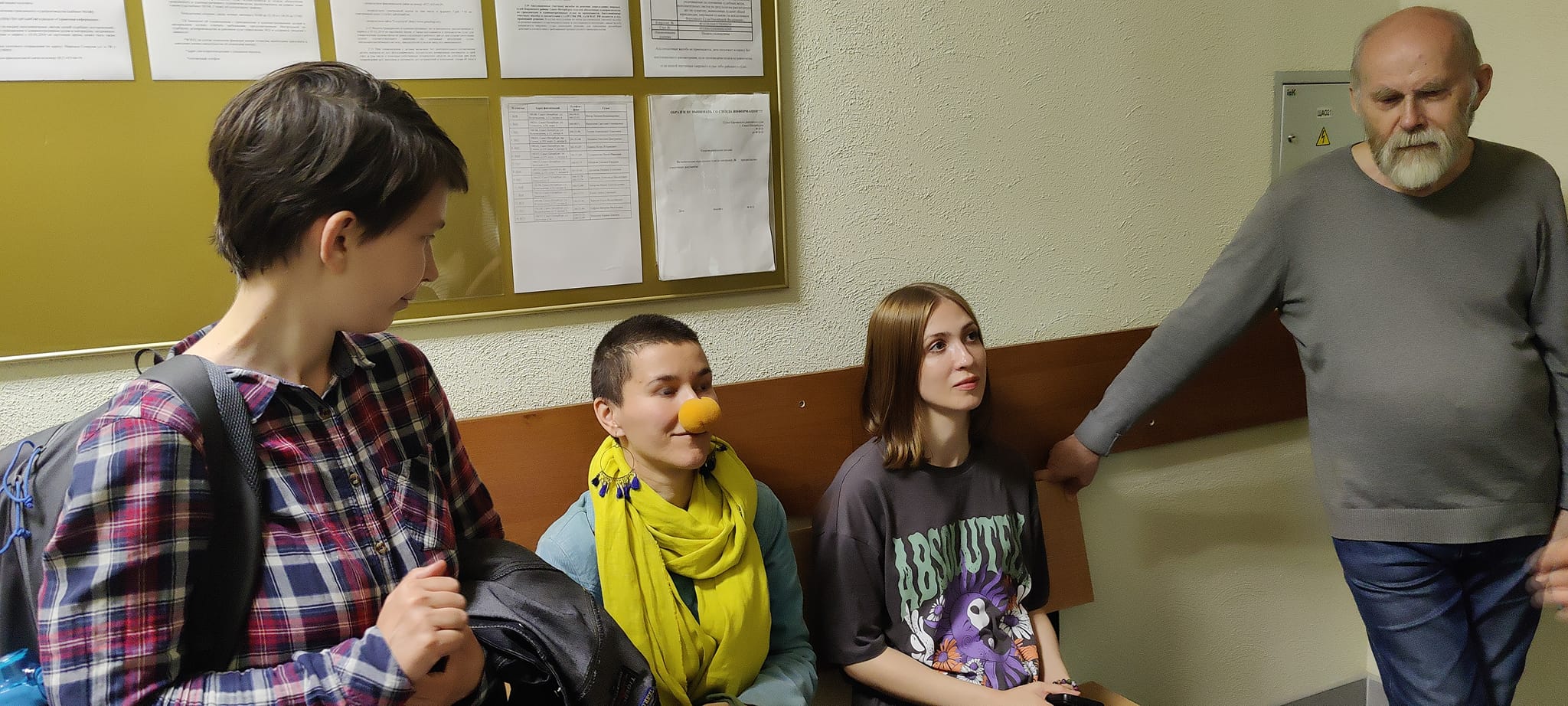
Valeria Zotova: Framed

Valeria Zotova

Defense appeals Valeria Zotova’s verdict

On June 28, the 2nd Western District Military Court sentenced nineteen-year-old Valeria Zotova to six years in prison in a criminal case fabricated by the FSB.

The court has not yet provided a copy of the verdict to either Valeria or her lawyer. Therefore, the lawyer could not prepare a full-fledged appeal. But he did file a brief complaint to meet the deadline: an appeal must be filed within fifteen days of the date of sentencing.

The appeals process is a very important component of legal proceedings. Until the appeals stage has been completed and the sentence comes into force, there is hope that the verdict will be reversed or changed and Valeria will not be sent to a penal colony at this time.

You can always support Valeria by writing her a letter or sending a parcel.

💌📦 Address for letters and parcels:
Zotova Valeria Igorevna (born 2003)
10 ul. Portovaya nab., SIZO-1
Yaroslavl 150001 Russian Federation

Solidarity Zone is supporting Valeria Zotova.

#politicalprisoners#crackdown#solidarity#fsb#fsblawlessness#provocation#yaroslavl#no war#wewriteletters

Source: Solidarity Zone (Facebook), 16 July 2023. Translated by the Russian Reader. People living outside of Russia will find it difficult or impossible to send parcels to Russian prisons or to use the FSIN-Pismo and Zonatelecom services to contact Russian political prisoners. In many cases, however, you can send letters (which must be written in Russian or translated into Russian) via the free, volunteer-run service RosUznik. As of this writing, Ms. Zotova has not appeared on their list of supported addressees. You can also ask me (avvakum@pm.me) for assistance and advice in sending letters to her and other Russian political prisoners.


Valeria Zotova, 19, from Russia’s Yaroslavl has been sentenced to six years behind bars for plotting to set a military aid collection point on fire, Solidarity Zone reports.

The woman was found guilty of attempted “terrorist attack”. The state prosecution wanted eight years in prison for Zotova.

“However, the case materials, correspondence received by the lawyer and Valeria’s own words indicate that the case was a provocation staged by the FSB, whose agents actively persuaded the woman to set the aid collection point for the Russian military ablaze. Zotova may have attracted the attention of the special services due to her anti-war stance,” human rights activists said.

A criminal case against Zotova was opened in February. The woman went for a walk with her friends in mid-February. Later that night, law enforcers showed up at her place for a search without any explanation. During the search, the detainee’s mother was threatened with promises to make her a suspect in her daughter’s case for “participating in anti-war rallies”. She denies these accusations: despite her anti-war views, she did not participate in rallies against the Ukraine war. The news emerged later that Valeria was held in a detention centre in Yaroslavl.

In April, Russian authorities placed Valeria’s mother Svetlana Zotova on the extremist list. The woman had previously been charged with “calls” to commit terrorist and extremist actions. The charges stemmed from comments allegedly posted by Svetlana Zotova on Telegram channels. The woman was prohibited from leaving the country. She could face up to ten years in prison on the charges.

Source: “Russian Valeria Zotova sentenced to six years in prison for attempting to set military aid collection point on fire,” Novaya Gazeta Europe, 28 June 2023