This Saturday, 23 November, at 7 p.m., the last presentation about and fundraiser for Ilya Shakursky will take place at Schwarzmarkt in Hamburg (Kleiner Schäferkamp 46). After the new year, a big update is in store for the project, but in the meantime we look forward to seeing the local public and thank everyone who has supported us this year!
Este sábado 23 de noviembre será la última presentación sobre Ilya Shakursky con posibilidad de donaciones en Hamburg im Schwarzmarkt (Kleiner Schäferkamp 46), después del año nuevo el proyecto espera una gran actualización, pero mientras tanto esperamos al público local y ¡gracias a todos los que nos han apoyado este año!
The story of Zakhar Zaripov, dying of cancer in prison while serving time for a social media post
Prison medicine is not known for its diligence. It can do little to help seriously ill people and plays on the side of the officials who run penal colonies and pretrial detention centres. The story of Zakhar Zaripov is a case in point. For a year doctors delayed doing analyses and making a diagnosis, even as he was writing things like this to his wife: “I feel bad, it hurts, I can’t eat, I can’t sleep, it’s hard for me to breathe, I’m dying.”
Zaripov is indeed dying: he has stage IV salivary gland cancer. According to the law, the authorities are obliged to release him, but the appeals court hearing on the matter has been postponed for over six months, says Zaripov’s defense lawyer Konstantin Bubon.
Zakhar Zaripov was born and lived in Sovetskaya Gavan, a town in the Khabarovsk Territory. He taught maths at evening schools in penal colonies. He was also fond of science fiction and wrote novels about popadantsy (accidental time travelers). Zaripov also wrote about politics at the LiveJournal account scribble_33. As the teacher himself says, many people had access to the account.
On 2 March 2022, a post was published on scribble_33 suggesting that Ramzan Kadyrov oust Putin and make Chechnya independent. It is not known who wrote it; Zaripov says it wasn’t him. Police investigators, citing indirect testimony by the staff at the penal colony where the teacher worked, decided that it was Zaripov.
The court agreed with the findings of the investigators and sentenced Zaripov to five years in a medium security penal colony. The teacher was arrested when his wife was in the last months of being pregnant with their second child. Zaripov has not seen his youngest daughter yet, as he is imprisoned in Khabarovsk, which is far away and expensive to visit. It is unclear whether he will see her at all.
In September 2023, Zaripov discovered a strange tumour in his mouth. He was able to see a surgeon only two months later. The doctors then began doing analyses and ultrasounds on him, but they failed to diagnose him and kept postponing his treatment. Because of the pain, Zaripov stopped sleeping on his right side, and because the tumor in his mouth has grown so large it hurts when he eats.
In July 2024, Zaripov was diagnosed with stage IV salivary gland cancer. But the final case conference did not meet until September. Prison officials plan to hospitalize Zaripov, but it is known whether he will have time to receive any treatment and whether he will be released home.
Russia’s best troops are now concentrated in another country. Moscow and Putin are completely defenseless. Hold back your troops. Do not send your best men to die in Kiev — send them to take Moscow!
Under current conditions, a limited contingent of a few thousand bayonets would easily take control of government buildings in Russia. You would declare that you have taken power, overthrow a dictator already condemned by the entire world, and stop the war.
This would allow Chechnya to gain independence and avenge all the deaths and humiliation inflicted by the Russian authorities over the past twenty-six years.
This is a perfect historical chance. There may not be another one in your lifetime.
Lenin took Russia with 1,500 men personally devoted to him. You have 40,000 top-notch fighters at your disposal. That’s quite enough.
Since the outbreak of Russia’s full-scale war against Ukraine, the country’s repressive apparatus has turned so severe that absolutely anyone can face serious prison time. You can evince complete indifference to events or even support the “special military operation,” but one day it could happen that a family member of yours has been captured by the security forces. Often these family members are minors. They are now being given quite “adult” prison sentences, but they have virtually no chance of being released as part of high-profile prisoner exchanges.
The number of Russians imprisoned for political offenses has been growing, and the situation is unlikely to improve in the near future. We decided to tell the stories of several family members of political prisoners in order to try and answer the simplest questions: why relatives of prisoners often need support themselves, how best to help relatives of political prisoners, what mistakes it is better to avoid making if your relative is detained by law enforcement, and the vital role played by letters to political prisoners. Ivan Astashin, a human rights activist with the project Solidarity Zone and a former political prisoner himself, and two mothers whose sons have been convicted of “terrorism” by the Russian authorities helped us to answer those questions.
Cast of characters:
Anna, Nikita Uvarov’s mother. Nikita Uvarov was a defendant in the high-profile case of the Kansk teens. The three teens charged in the case were detained by law enforcement after posting leaflets on an FSB building and organizing an anarchist “terrorist” group. Uvarov was sentenced to five years in prison.
Tatyana, Yegor Balazeikin’s mother. Yegor Balazeikin, a prep school student, was detained for allegedly throwing a Molotov cocktail at the wall of a military enlistment center in the Leningrad Region which failed to ignite. According to investigators, in February 2023, Balazeikin tried to set fire to military enlistment offices in St. Petersburg and the town of Kirovsk by way of protesting against the military mobilization. He was sentenced to six years in prison.
Ivan Astashin was a political prisoner in the high-profile 2010s criminal case against the so-called Autonomous Combat Terrorist Organization (ABTO). He spent almost ten years in prison. Nowadays, he does human rights work as part of the project Solidarity Zone, which we featured in a previous article.
Arrest and Verdict
Tatyana and Yegor Balazeikin
Tatyana, Yegor Balazeikin’s mother: The telephone rang at 11:40 p.m. on 28 February. It was an unknown number. A woman’s voice said that our son had been detained whilst attempting to torch a military enlistment office in the town of Kirovsk in the Leningrad Region. At the time [of his arrest], Yegor was in the room which we had rented for him [in St. Petersburg]. He stayed there on school days because it was near the prep school he attended. We live in the Leningrad Region, and it was quite complicated to commute there. When I heard what the woman said, I told my husband what happened and that we should get ready to go. We got ready instantly and went there. What were we feeling at that moment? We probably felt that was happening was not real because Yegor had never broken any rules, not at school or kindergarten, not at his sports club, not outside or in public places. We realized that something out of the ordinary must have happened to move him to do what he did.
We were not allowed to see Yegor when we arrived: he was with the police, the FSB, or the Investigative Committee. I don’t know exactly who was in the room with him, as none of those people introduced themselves to us. We talked with the juvenile justice officer, who took our statements. Yegor at that moment was in a separate room with law enforcement officers, and I was let in there to see him only when another juvenile justice officer had taken his statement, which either his father or I was supposed to sign. Only when Yegor had made his statement was I let into the room.
What was the hardest thing for us during the process? There were a lot of hard things, but the hardest thing was understanding that this was an injustice and that we were powerless, that we had no way to fight back and prove that an injustice was taking place. The verdict was one of the hardest stages. And for me it was not the verdict that was the scariest, but the prosecutor’s oral arguments, when he asked the court to sentence Yegor to six years. That was horrible. It was during the trial, and I had a very hard time coping with my emotions. I started crying, taking sedatives, and drinking water, because my oral arguments were next. I had to put myself together and make my speech. These six years requested by the prosecutor were the most terrible thing.
Nikita and Anna Uvarov
Anna, Nikita Uvarov’s mother: It all began on 6 June 2020. Five teens were detained in Kansk around five o’clock in the evening, and my son Nikita was amongst them. Their telephones were immediately confiscated and they were taken to the Investigative Committee. Among them was the Marxist-leaning grandson of the former mayor of Kansk, Nadezhda Kachan, and a guy who associated himself with antifa and had met the other boys online shortly before their arrests. He was the first to be approached by a police detective and asked to set up a meeting. Those two immediately turned witnesses, while Denis, Bogdan and Nikita were identified as suspects, although only two people had pasted up the leaflets. An FSB detective called me and told me that my son had been detained and that I needed to come to the Investigative Committee. When I arrived there, Nikita and five officers were sitting in an office. There, I learned that Nikita and Denis, who had asked to spend the night at our place, on the night of 5 June, after waiting for me to fall asleep, had pasted a leaflet on the treasury building that read “Their luxury guarantees your poverty!” and next to it, on the FSB building, a leaflet that read “Hands off the anarchists — the state is the main terrorist!” and included four photos of political prisoners.
I was told to sign a form giving consent to a search of our apartment and voluntarily hand over leaflets and other items. At the apartment, Nikita turned the leaflets and the sugar substitute (?) over to them, while a detective went through his notebooks and computer, which was then also confiscated. Then there was another interrogation by a detective from the department for combating extremism and terrorism, in which after examining the contents of the phones he began to ask questions about the Molotov cocktail, and Nikita’s reply that they had just been fooling around didn’t satisfy the detective.
Then there was an interrogation involving investigators and a bunch of FSB guys with a readymade record of the interrogation, which even included the date of the alleged bombing of the FSB, or the Interior Ministry. My son and I refused to sign it, and then they began to write up the arrest. It was horrible, as I realized I could do nothing to help Nikita. I couldn’t get my head around what was happening and what would happen next.
And then there was the arraignment, at which the judge read out terrible character references from the school, while the juvenile justice inspector, who had never been to our apartment and never spoken with our neighbors, nevertheless tried to describe our living conditions. After eleven months, my lawyer Vasin and I managed to get the remand in custody changed, and Nikita was free for nine months. But the lawyer immediately said that the sentence would most likely involve actual prison time, so throughout that whole time it was hard and scary for my son. The verdict was the hardest, because I had hoped for a suspended sentence, even if it was minimal, thinking that due to his age they would take pity on him, because there had been no such instances involving actual prison time, it seems, before Nikita, and these kids had already been punished for their views. The case was an obvious frame-up, and I think the judges saw that too, but they didn’t give the defense much room to make its case, and many of its motions were overruled. Still, I thought to myself that now everything would be over and we would be free at last…. The verdict was meant to make an example of my son, because he hadn’t pleaded guilty or asked for mercy.
Problems and Challenges
Ivan Astashin: Of course, it is better to learn about the problems faced by relatives of political prisoners from them. For my part, as a human rights activist, I can emphasize the fact that after a person is arrested, their relatives often either do not know where to turn, or are afraid to go anywhere for help. This is a big problem, as the initial hours and days are crucial in many respects.
Ivan Astashin
Anna, Nikita Ugarov’s mother: My main difficulties now are emotional fatigue and constant worries about Nikita, his health, and the attitudes of both the prison staff and the people serving time with him. After all, prison is a terrible place, and my son should not be in there. He has a good heart: he is not bitter now, and forgave everyone long ago. We are still coping financially: ordinary, caring people help a little, and I am very grateful to them for this. They write to me and support me, which makes me feel better. Nikita receives a lot of letters, which help him a great deal to hold on and not get discouraged. Thank God, I have not encountered bullying or stigmatization from others. No one cares at all here in Kansk. I get mostly sympathy and understanding from neighbors and the people I know, and many of them ask me to send Nikita their regards.
Tatyana, Yegor Balazeikin’s mother: There are a lot of difficulties we have faced along the way, actually. First of all, getting a decent medical examination, to which Yegor is entitled by law, because he has autoimmune hepatitis, because he has a disability, and he is entitled to certain medical care. It is very difficult to make this happen. We have struggled to get this done while he has been in the pretrial detention center in St. Petersburg. I can’t even imagine what will happen when he goes to the penal colony, because every three months he has to take tests to monitor his health.
Looking at all the political prisoners who have health problems, some of whom are already serving time, I assume that this will be very difficult to achieve. It’s probably even impossible. Psychologically, it is quite difficult, because you go through all the stages. First is the denial stage: “No, it can’t be happening, it can’t be happening to us.” Then there is the hatred stage, in which you hate everybody, just not understanding at all how it could have happened. The acceptance stage, I guess, has come to us a little bit, that is, we have accepted this situation, although we don’t agree with it. And then there is the feeling of powerlessness, the feeling that you are just a speck in this world, that you can’t protect your own child, you can’t defend his rights, you can’t prove in court that his actions were not offenses under Criminal Code Article 205 [“committing a terrorist act”], but offenses under Article 167 [“intentional destruction or damage of property under aggravating circumstances”] at most. They don’t even listen to you, because they already have their marching orders from above. And they have to execute these orders, because they have to maintain the picture they want to create—a picture of universal support for the “ruling party” and universal support for the so-called special military operation. And there is no way to fight it.
As for financial challenges, it is quite difficult financially to support a political prisoner, especially a child, given that Yegor shares a cell with boys who are often from orphanages or dysfunctional families, and they do not get care packages. We have been going to the pretrial detention center for fourteen months, and we bring a very large care package every week, which is meant not only for Yegor but also for the other five boys. Because we know that in order for our child to eat one apple from the care package, we need to pack five more apples, so that each of the boys eats an apple, and the same goes for all the other products. They are children. And we can’t feed only our own child and leave the other five hungry, so we certainly bring very large care packages, once a week. Each care package costs about seventeen to twenty thousand rubles [approx. 200 euros], and financially it is quite difficult. So, I think that financial difficulties are not the least of our difficulties either, actually.
Letters to Inmates
Ivan Astashin: Letters and correspondence are first of all personal interactions. A person in prison often does not have a telephone or internet, and is very limited in terms of personal interactions: they have their cellmates (although sometimes people are in solitary confinement) and the prison staff—that’s it. And their lawyer, if they have one, who visits them. Therefore, correspondence should be used first of all as a tool for personal interaction. In the first letter, it is better to tell them a little about yourself and your interests, so that in the future general topics for personal interaction can take shape. You can write almost anything, but the best option is to tell the inmate about your own interests, and ask them what they would be interested in finding out. Often people are interested in the news, and they have interests in a particular area. This should all be taken into account individually. And of course, you shouldn’t write anything that could harm a person by discrediting them or giving additional information to the prosecution
Anna and Nikita Uvarov
Anna, Nikita Ugarov’s mother: I would very much like people to not stop writing letters to Nikita: this aid should be the highest priority. I would advise people who would like to help political prisoners and their families to write letters to political prisoners, and if they want to find a connection with their relatives to communicate with them. Information about political prisoners is available on the Telegram channels Memorial: Supporting Political Prisoners and Solidarity Zone.
Support for Relatives
Ivan Astashin: You have to act differently in different cases. In some cases, the families need financial support to pay a lawyer or spend care packages. In other cases, this is not an issue, but emotional support is needed. I think it is always needed, in fact. In my experience, when you telephone the relatives of political prisoners, those conversations often last longer than is strictly necessary for discussing practical matters. People need to speak their mind, to share their feelings with someone. Often, they do not live in an environment in which they can share, as they are often ordinary people who don’t run inb activist circles. Emotional support is thus quite important.
Anna, Nikita Uvarov’s mother: The support of others is actually quite important, because when a person is left alone with this trouble, they can probably go crazy. I don’t know what would have happened to me if the case had not been publicized. I remember those six months of silence and fear, when there was no one I could tell and with whom I could consult, in order to feel that I was not alone…. And then I felt, I recognized how many of us there were, both those who were in such situations ourselves and people who understood everything we were going through and were willing to help and support us!
You can find information about what support Nikita Uvarov and his family need on the Telegram channel Case of the Kansk Teens.
You can send letters, books and articles to Nikita at the following address:
You can also send letters to Nikita via the online service ZT and the volunteer-run project RosUznik.
Yegor Balazeikin’s parents, wearing t-shirts that say “Common cause.”
Tatyana, Yegor Balazeikin’s mother: The support of others is the most important thing we have. We have the support of our son. You wouldn’t believe it, but he manages to support us whilst he is in prison! We support him in every way we can, and he supports us. He gives us the energy to go on with our lives. But at the same time, the support of the people around you is quite important, because you realize that you are not alone in this fight, and the people around you, they understand how unjust the court’s decision is, how unjust and unfair the sentence they passed is.
In fact, we have not dealt with any direct harassment in the wake of Yegor’s criminal case from family or friends. There are people whom we don’t know who write all sorts of nasty things about both Yegor and us in the feedback chat of Yegor’s Telegram channel, but there hasn’t been any large-scale bullying. Thank God, we’ve managed to avoid that. For the most part, people support Yegor and us. They write messages of support and comments that support Yegor and us.
What advice can I give to people who would like to help? To write letters, of course: it is safe, it is inexpensive, and it can be done from anywhere in the world. And, probably, to provide financial assistance to the families of political prisoners. Because it is quite dangerous to send packages or parcels without vetting them with the families, since a prisoner may not be given a care package that their family planned if someone suddenly sends one without vetting it first. And financial assistance is quite important, because relatives know what they sent in the last care package, what they need to send in the next one, and how many kilograms they have left to send. For the time being, this does not concern Yegor: he is a minor, so there are no restrictions on care packages to him. But on 6 August he will turn eighteen and the number of care packages he can get will be strictly limited. Generally speaking, letters and financial support are absolutely necessary. But nothing should be sent to political prisoners without the consent of their support groups or their families.
You can find information about what support Yegor Balazeikin and his family need on the Telegram channel The Yegor Balazeikin Case.
You can send letters to Yegor at the following address:
Balazeikin Yegor Danielevich (born 06.08.2006) Primorsky rayon, pos. Talagi, d. 112, FKU Arkhangelskaya VK UFSIN Rossii po Arkhangelskoi oblasti Arkhangelsk 163530 Russian Federation
You can also send letters to Yegor via the online service ZT and the volunteer-run project RosUznik.
Mistakes to Avoid
Anna, Nikita Ugarov’s mother: I was shocked when Nikita was detained. You see, when I’d gone to bed, the kids were home and I didn’t even suspect they had done something. I asked the police officers right then and there what would happen to the kids, and they replied that they would get off scot-free since they were minors. This reassured me and so I didn’t bother to do anything, but now I very much regret that I didn’t immediately retain counsel. I was completely stunned, at the arraignment, when they read out the statements by Bogdan and Denis (Ugarov’s “accomplices” in the case — Ed.), in which they requested that Nikita be remanded in custody since they feared for their lives because they were cooperating with the investigation. It was quite hard and hurtful that Nikita was betrayed by people he considered friends. The boys had been pressured by their mothers into signing the statements, and persuaded by the investigators, who had told them that due to their age no one would been punished. They had signed confessions, on which the investigators and FSB officers had worked very hard, running back and forth between interrogation rooms and adjusting the boys’ statements so that they coincided down to the last gramme when one of the boys didn’t know or remember a particular detail. Since Nikita refused to confess, he was made the main villain, and the confessions were the basis of the charges against him. Later, though, the mothers understood the mess they had made. They hired good lawyers and we all started sticking to the same position.
Ivan Astashin: It happens that a family turns down the services of civil rights lawyers, entrusting themselves instead to the court-appointed attorney and the lead case investigator, and naturally this harms the defendant. The case of Ilya Podkamenny is a perfect illustration of this. His mother decided that telling everything straight was the best thing to do. She told the authorities that her son had been storing petrol and was also planning to torch a military recruiting office. Ilya was ultimately charged with two more crimes, including planning to torch the military recruiting office. I don’t know whether Ilya also said anything about this or not, but it’s a fact that you don’t have to say anything, especially since Article 51 of the Constitution gives you the right to refuse to testify not only against yourself but also against your close relatives. You can say nothing at all. As we know, any testimony can be used against you and your relatives.
Or there’s the case of Alexei Rozhkov, who was released on his own recognizance in 2022 and could have left Russia. His relatives were opposed to this and tried to talk him out of it. He ultimately left the country but only a few months later. After he left he had to wait several months in Kyrgyzstan for an entry visa to Europe. Whilst he was waiting he was abducted by the security forces and taken back to Russia. It is hard to talk about what “might have been,” but it is possible that, had he left Russia earlier, he would have been able to leave for Europe more quickly and would not have wound up back in a Russian remand prison. But now he’s facing over twenty years in prison.
The recent prisoner swap has suddenly and quite vividly clarified the emotions and motives of the militant segment of the Russian emigration. Those who did photography in the old days will remember how you would dip a blank sheet of photographic paper into developer and gradually an image would appear on it. At first, the image would be vague, just outlines, but then it would become clearer and clearer, until finally you would pull it out from under the red lamp and hold it up to the white light: wow, you could see everything clearly!
I will avoid beeing politically correct and say everything I think. Emigrants from the so-called liberal crowd went abroad because they were afraid of going to prison in Russia. It’s an understandable fear—a valid reason, one might even say. The issue of personal security, their personal well-being and that of their families, was more important to them than Russian freedom and democracy, about which they spoke with such pathos and fervor at protest rallies, in the independent press, and on the internet. They did not have the guts, and such things happen. There is nothing laudable about it, but nothing catastrophic either. No one obliges them to sacrifice themselves, and they themselves were willing to be heroes on the podiums, but not in a real showdown with the repressive regime. All right, so they left: it’s no great loss. In any case, it is better to leave in time than to spill your guts later during an investigation.
I think most of those who have left Russia feel fine, but a certain segment of the emigration, the most militant and vocal, experiences emotional discomfort. They sense their own political inferiority, especially amidst what has happened in Russia to those who stayed, to those who have been resisting and are now in prison. To prove to themselves and others their insightfulness and to confirm the correctness of their choice to emigrate, they portray those who have remained in Russia as naive fools who don’t understand life. The very existence of political prisoners irritates them. They believe that people have been imprisoned by mistake or because they overestimated themselves. But they themselves didn’t overestimate!
Alexei Navalny’s decision to stay in Russia cut them to the quick. A month before his death, Navalny wrote in a letter from prison camp: “I have my country and my beliefs. I don’t want to give up either my country or my beliefs. I can betray neither the first nor the second. If your beliefs are worth something, you must be ready to stand up for them. And if necessary, to make sacrifices.”
The bombastic Ekaterina Schulmann just doesn’t get it. “The context of events is such that the first thought that comes to mind upon hearing the news is how he could have failed to leave [Russia] after the first [guilty] verdict, and almost the only emotion is amazement at this fact.” She is amazed: isn’t personal well-being the most important thing?
Dmitry Gudkov, a politician who is quite nimble in all respects, was even more definite at the time. “Almost all public figures, including well-known opposition figures, have been allowed to leave. But in case they didn’t get the signal, they go to jail. So if you don’t want to go to jail, you don’t have to wait for mercy from the Investigative Committee—there are flights to Tbilisi and other beautiful cities. At the slightest hint of danger, save yourself. The decision to take care of your life is always the right one.”
Gudkov and Schulmann are simple people, and they write about the benefits of cowardice in a straightforward, uncomplicated manner. But some others feel uncomfortable in such situations. They don’t like to feel as if they are fugitives saving they own skin—they need decent arguments. They want to remain on top, preferably at the heights they commanded in Russia, where everyone listened to them.
And what arguments are these? The most murderous one is that Russia is a lost country and the whole nation supports the fascist regime. As if there were not hundreds of political prisoners in camps and prisons who have chosen resistance rather than escape. As if there had not been rallies and marches throughout Russia, attended by many thousands of people, when such events could still be organized. As if the authorities didn’t have to falsify election results to avoid revealing Putin’s paltry electoral support.
Anna Rose writes about her Russian acquaintances, but it reads as if she is writing about Russians in general: “My Russian acquaintances didn’t show any sympathy for the real victims of aggression. The fact that in Ukraine, due to Russia’s fault and with their own tacit consent, people were being killed every day, that not only only cities were destroyed but also the basis for civic life in a sovereign country, seemed to them a backdrop, not the essence of what was going on.” What to do with such a worthless people? Clearly, run away from them and denounce them in the crudest possible language. And God forbid anyone should think that you are one of them yourself.
Journalist Victoria Ivleva took it a step further by attacking Vladimir Kara-Murza, Ilya Yashin, and Andrei Pivovarov on her Facebook page for talking too little and saying the wrong things about Ukraine at their press conference. “I would very much like to hear a single word of repentance from you, not stories about how Putin is to blame while the nation is wonderful and fresh. Who elected Putin time after time, was it not the nation? The war started by our Motherland has left us all with only one right—to get down on our knees.”
A well-off emigrant, Ivleva expects words of repentance from recent political prisoners who were imprisoned for their anti-war stance! Ivleva herself has nothing to do with it, she has nothing to repent for. It is they, the Russians, who should all fall on their knees as one, while those who left in time are not to blame for anything. But if we are talking about sincere repentance, shouldn’t Ivleva repent for the Soviet Union’s war against Afghanistan? That war was no less bloody than the current one, and Ivleva was then a civic-minded Soviet student and a successful journalist who was published in the Communist Youth Union’s newspaper. She didn’t protest. She didn’t get down on her knees. If we call everyone to repent for the sins of the regime, shouldn’t we turn to ourselves?
No, of course, only the people are to blame, the people who, according to Ivleva, have elected Putin time and time again. That is, the presidential elections, in her opinion, have been fair and transparent time and again: the president was elected by the people, the president is legitimate, and, therefore, the evidence of the people’s worthlessness is clear. And let’s forget about how the ballot rigging has been exposed and pretend that it didn’t happen.
The great thing about collective responsibility is that personal responsibility dissolves into universal responsibility. If everyone is to blame, then no one is to blame. It is a very convenient position. In a debate on Facebook, Konstantin Borovoy denounces the freed political prisoners: “Asking the West to lift sanctions when the regime has gone berserk and the citizens are supporting it is stupid and mean.” To say nothing of playing fast and loose with the facts (they were not talking about lifting sanctions, but about targeting them correctly), claiming that the citizenry supports the brutal regime is a sin against the truth. Some people support it and some don’t. No one knows the exact percentage, but it is certain that millions of people in Russia do not support this regime. Why should we talk about the unity of the party and the people and thus echo Putin’s propaganda? And if we are to blame everyone, shouldn’t we start with ourselves? Borovoy was a member of parliament during the crucial years and had much more sway in politics than the average man on the street. If something has gone wrong in our country, maybe we should think about our place in these processes? Or is everyone else to blame?
The premise of national guilt is not enough for successful self-affirmation. The liberated political prisoners are hysterically pointed to the plight of Ukraine and its prisoners of war in Russia, as if anyone would argue with this. But this generates the illusion that only the political emigrants are concerned about it, while no one in Russia understands any of it and no one in Russia sympathizes with Ukraine. The opinion that there are also Russian problems that require a political solution is jealously disputed: no, today there is only one problem—the war in Ukraine.
Yes, it is true that the war is the most important issue for Ukraine. But for Russia it is not the most important issue. It may be the most painful, but it is not the main one. For Russia, the primary problem is the authoritarian regime, a dictatorship which at a single person’s whim can start a war, murder dissidents, take away all freedoms, and threaten the entire world. The war in Ukraine is a consequence of Russia’s primary problem and this is what the liberated political prisoners were talking about. The fundamental solution to the issues of war and peace depends on the nature of the regime, not on military successes or defeats. Russia’s policy towards other states depends on the kind of regime it has. This is obvious.
Kara-Murza’s and Yashin’s desire to engage primarily in Russian politics and address the interests of Russia’s democratic future is understandable and rational. A democratic Russia will have no need of enemies on its borders or anywhere in Africa. It will return all annexed territories, pay reparations, and atone for and eventually redeem its guilt before Ukraine and the other countries it has attacked.
Opposition politicians must be in Russia to make this all happen. It won’t work otherwise. It’s understandable that this elicits a rabid reaction from political emigrants who label cowardice prudence and prefer glamorously clamoring in emigration to risking resistance in Russia. In my opinion, Kara-Murza explained it all quite clearly to them in an interview which he gave in March of this year while still in prison.
“A politician cannot work remotely. It is not a matter of practical efficacy; for a public figure, it is a question of ethics and responsibility to their fellow citizens. If you are calling on people to oppose an authoritarian regime, you cannot do this from a safe distance—you must share the risks with your community.”
In late July 2024, 39-year-old pianist Pavel Kushnir died in a Birobidzhan pretrial detention center. His musician friends and musicologists have no doubt he was a genius. Many of them had been unaware of his arrest in May 2024 on charges of “publicly calling for terrorist activities.” The grounds for his arrest were his anti-war videos, although his YouTube channel had only five subscribers at the time.
According to close friends, Kushnir himself had wanted to go “far from the capitals,” so he chose Birobidzhan hoping that he would not be forced to perform WWII Victory Day concerts amidst the ongoing war against Ukraine. As soon as the war started, Kushnir wrote social media posts opposing it, posted antiwar leaflets, and staged hunger strikes in protest. Before he was taken to the detention center, he had gone on at least two protest hunger strikes, one of which lasted for over one hundred days.
“He was almost a professional faster, so I don’t think he could have died in the pretrial detention center solely due to that,” his close friend Olga Shkrygunova told Okno.
“We Live in a Fascist Society”
“I am a musician, a pianist, and I graduated from the Moscow Conservatory, where I studied under Victor Merzhanov. I worked as a soloist at the Kursk Regional Philharmonic for seven years, and as a soloist at the Kurgan Philharmonic for three years. I have also tried my hand as a writer, and published an anti-war novel called ‘Russian Mash-Up’” was how Kushnir introduced himself in one of the interviews his friend Olga quoted to Okno.
Kushnir was born in Tambov, where his closest relatives still live. He studied at the music school and the Rachmaninoff Music College in Tambov. After graduating from the Moscow Conservatory, he worked in the Kursk and, later, the Kurgan philharmonic orchestras. In 2023, Kushnir was appointed soloist to the Birobidzhan Regional Philharmonic, and he was arrested in Birobidzhan in May 2024.
The person closest to him, his father Mikhail Borisovich Kushnir, a music school teacher in Tambov and a promoter of musical cognition, died several years before the Russia-Ukraine war started. Many of his friends note that had Kushnir senior lived to see this day, he definitely would not have survived his son’s death.
“They had a very close relationship. Mikhail Borisovich had great faith in him and was proud of him. They laughed a lot together, and he was very supportive of him,” Olga recalls. “The loss of his father was hard for [Pavel].”
Kushnir’s friends invariably call him super-talented, and even more often they call him a brilliant pianist.
“Pasha was just an incredible person. Ever since he was a child, everyone has talked about his incredible ear for music. For me, he was always a genius, both as a person and as a musician. A genius is an idealist who brooks no compromise, who battles on behalf of love, creativity, and freedom. His inexhaustible imagination knew no bounds. He once studied the language of Avatar and wrote a poem in it. He loved the cinema and knew it well, and he read a lot. He loved Vonnegut’s Cat’s Cradle. He wrote an anti-war novel, Russian Mash-Up: it is an original dystopia with references to Russian literature, and the main idea is to denounce the state dictatorship. Pavel was able to send me the manuscript of the new novel by mail. I hope that we friends of his can pool our efforts and publish it soon,” says Olga, who left Russia for Germany in 2012.
It was then, twelve years ago, that Kushnir last visited Shkrygunova in Moscow. In May 2012, he went to Bolotnaya Square to take part in the large-scale protests that were sparked by the fraudulent elections to the State Duma.
Kushnir’s description of his anti-war leafletting in Kurgan.
“He still believed back then that things could be fixed,” Olga says, sighing. “I know that Pavel protested the war in 2018 by going to pickets against the annexation of Crimea and the war in Donbas. When in May 2018 he went to Pushkin Square [in Moscow] holding a placard that said ‘Down with war, freedom for Russia,’ his homemade sign was torn apart [by police]. After the military invasion, he bitterly observed that nowadays [the police] would tear him apart at such a picket. So, he replaced pickets with leaflets, and leaflets with hunger strikes. They were his form of protest against fascism. He didn’t argue that we should give up picketing, but he understood that it required great courage, ‘because we live in a fascist society,'” Olga quotes her friend as saying.
As Kushnir admitted in his letters to friends, “the turning point and epiphany” for him had been Bucha.
“I think that the Bucha massacre is a disgrace to our motherland. Fascism is the death of our motherland. Putin is a fascist. Our motherland sacrificed millions of the best lives so that fascism would not exist, and we will not accept it. The criminal, despicable war which Putin’s fascism has been waging in our name is a challenge to my conscience, to all my personal hopes, to all the best things in me. I am sure I am not alone. For many people of my generation, accepting the war, ignoring the war, is unthinkable. Two nations are dying in this war. It must be stopped as soon as possible,” Olga quoted him as saying.
In 2022, Kushnir produced anti-war leaflets and posted them around Kurgan.
“At night, he put up large A4-sized leaflets, and during the day he put up small ones with peace symbols and biblical quotes in public places,” says Olga.
“Hunger Striking Is a Peaceful Form of Protest”
On 9 May 2023, Kushnir declared his first hunger strike, which was to last twenty days.
By his own admission, Kushnir did not expect a positive response from the authorities, but he hoped that other people would embrace his peaceful form of protest.
“I expect people to think hard about their attitude to the war, to end their silence. I expect a miracle,” he wrote.
According to his friends, Kushnir easily tolerated hunger and scheduled his next hunger strike, which was to last one hundred days, in the winter and spring of 2024.
“He went on and off [hunger strikes] absolutely systematically,” says Olga. “In March, when he had finished, he called us to say that everything was fine, that he felt good. He had been drinking water, apple juice, and coffee. As an illustration of his hunger strike, he suggested we imagine a glass of apple juice. So I don’t think he could have died from the hunger strike alone. I don’t believe it. I can’t rule out that they could have beaten him up in the detention center or in some other way they exacerbated his condition.”
In late May 2024, Kushnir was detained by the FSB. A criminal case was launched against him on charges of “publicly calling for terrorist activities” (per Article 205.2 of the Russian Criminal Code). The community Vkontakte page Atypical Birobidzhan was the first to report Kushnir’s arrest, claiming that four videos posted on Kushnir’s YouTube channel had served as grounds for the charges. It also reported that Kushnir was allegedly found in possession of a “homemade FBI agent’s ID.”
The short anti-war video which Pavel Kushnir posted on his “Foreign Agent Mulder” YouTube channel on 5 January 2024
“Pavel had been running the channel ‘Foreign Agent Mulder’ since 2011, and there are only four videos posted there. All of them criticized the war and the policies of the current Russian government. Before Pavel’s death, the channel had exactly five subscribers,” says one of Kushnir’s friends. “Now there are [507] subscribers.”
Many of his friends first learned of Kushnir’s death in late July and only then that he had been behind bars when he died.
“Unfortunately, Pavel’s arrest has come to light only now. I, for example, do a monitoring of court proceedings in the regions quite often, but I missed the news of Pavel’s hearing… I think this was a case when publicity could have saved the prisoner. I learned about Pavel’s death from Arshak Makichan, with whom I was involved in environmental activism; Arshak later left Russia, but he had known Pavel at the conservatory. I think that the intervention of such well-known activists in the case could have prevented Pavel from taking such a desperate step,” says Marina, an activist who corresponds with political prisoners. “Pavel’s cellmates testify that his death resulted from a dry hunger strike, and there is no reason not to trust them. As I understand it, the family is afraid of publicity, as the Moloch of the political crackdowns may strike them as well, so we don’t really know anything yet. But if you watch Pavel’s interviews and listen to his statements, I think it is clear that he was a man of genius, a talented, brilliant, and sensitive man. Unfortunately, such people do not have the ability to stand up to brute, base force, and the only protest that was available in the pretrial detention center was a hunger strike, apparently. Many anti-war activists—Ivan Kudryashov, Maria Ponomarenko, and dozens of others—have gone on hunger strike. When there is no communication with the outside world, no media contacts, alas, this is all that is left to a person. It’s scary to imagine what Pavel went through. The country has yet to realize who we have lost.”
Anna Karetnikova, a human rights activist who for many years aided prisoners as a member of the Moscow Public Monitoring Commission and, later, as a lead analyst in the Federal Penitentiary Service’s Moscow office, argues that the official cause of Kushnir’s death will not be listed as hunger strike, even if that was the cause. According to her, concealment of the real cause of death is a common practice in the Russian penitentiary system, so there are no statistics for hunger strikes in pretrial detention centers and penal colonies.
Pavel Kushnir’s messenger service announcement of a hunger strike, dated 9 May 2023 (celebrated in Russia as WWII Victory Day): “I’m going on a hunger strike. I demand the liquidation of the fascist regime, cessation of the war in Ukraine, and release of all political prisoners.”
“Pavel Kushnir’s death in the Birobidzhan pretrial detention center has been attributed to his hunger strike, a dry hunger strike in which the detainee refuses not only food, but also water. In my experience, cases of hunger strikes in places of detention are frequent and fall into two main categories: those triggered by criminal cases, and those protesting conditions of detention. They can be both for serious reasons, such as gross violations of human rights, and for trifling reasons, such as an investigating officer refusing to bring an inmates cigarettes. They can also be individual and collective. But dry hunger strikes are quite rare, because most detainees realize that it can eirquickly lead to th death,” says Karetnikova. “The law provides for a detainee’s refusal to eat, but it also stipulates what actions wardens should take in such cases. After receiving a written application for a hunger strike, the wardens at a pretrial detention center must notify the person in charge of the criminal case, as well as the supervising prosecutor. In addition, the hunger striker is entitled to a daily checkup by a doctor, during which their temperature, blood pressure, and weight are measured and recorded, and, if possible, to be placed in a separate cell from which all food has been removed. Every day, they will be brought food, which is left on a table, or on the feeder tray if it is open. Also a mentor will come and try to persuade them to give up this waste of time. Information about hunger strikers in each institution is entered daily into the penitentiary service’s overall statistical summary.”
“Forced feeding of detainees is provided for by law. Most often, in agreement with the hunger striker, they are given glucose drips, possibly with something else added to the mix to support them. If their lives are threatened, they can be force fed through a tube.”
“I don’t think hunger strike was listed as the cause of Kushnir’s death, however. I think that only his relatives and friends and cellmates knew that he was on a hunger strike. Even after the publicity, for example, a medic could be punished if he forgot to perform certain formalities— for example, doing a physical examination and taking the inmate’s temperature. He could be reprimanded and, at worst, dismissed. In a similar case, the head doctor of the hospital at the Matrosskaya Tishina prison in Moscow was fired. Of course, no one explained the reasons for his dismissal, and a different cause of death was listed . But the [inmate] had been quite emaciated, and it was feared that the truth could come out. If it had come out, [the doctor] could have been jailed for negligence, for example, or endangerment.
“Force feeding is not practiced as a matter of principle in Russia, because, for example, in order to force feed Alexander Shestun[the ex-head of the Moscow Region’s Serpukhov District (2003–2018) and chair of its Council of Deputies, Shestun was sentenced to fifteen years in a penal colony on charges of fraud and money laundering, but Memorial listed him as a political prisoner] they contacted headquarters a hundred times, since they could not understand what to do and how to do it. But they didn’t get any reasonable instructions from headquarters either, except ‘do something or we’ll punish you,'” Karetnikova says.
According to Karetnikov, the hunger striker loses weight, their vitals deteriorate, and sometimes they are unable to walk.
“There are stomach pains, different organs can fail, and in the long term, people can become confused and sometimes go crazy. Some people engage in self-harm. This is not the case with dry hunger strikers: I usually was able to convince them to give up, in exchange for my promises to do something to help, promises which I tried to keep,” says Karetnikova. “Some detainees starved for months. The longest well-known hunger strikers included Nadiya Savchenko, Alexander Shestun (who was subjected to force feeding), Sergei Krivov, and many other people who were released, but whom I don’t want to identify here. One of the hunger strikers was a stoma patient. One can live without food for about two months, on average. However, many hunger strikers took week-long breaks that enabled them to go without food for months at a time, and they were also put on IVs while on hunger strike. If you give up water too, you can die within a week.”
“He Played for God”
After Kushnir’s death, it was revealed that that he had long foreseen his own arrest, as evidenced in correspondence with his friends.
“He often wrote ‘I haven’t been jailed yet,’ and he sent me interviews where he openly spoke of the current system in Russia as fascist. I tried to persuade him, especially when he was looking for a new place to work a year ago, to come to Germany. I said we would take him in and he would find a job. He agreed but then immediately refused to write a bio, which is what you have to do if you want to play concerts. Those are laws of the music market, what can you do. But he was uncompromising: ‘I am a musician, my music speaks for me,'” Olga recalls. “Then there was the hope that he would be hired in a remote city, as he had decided to stay in Russia. Basically, he strove to be far from the capitals, so that the political pressure would be minimal. For example, he did not want to be forced to perform those selfsame Victory Day concerts.”
“Maybe I’ll be able to get a job in Russia. Anyway, I had an audition for the Philharmonic, and it seems to have gone well. Anyway, they treated me well, even though I have a ‘no war’ status on my Facebook page… or maybe they just didn’t notice it,” Pavel wrote to Olga at the start of his tenure with the Birobidzhan Philharmonic. “I traveled across the entire country on the Moscow-Vladivostok train, and I looked out the window at the nature, at the people in the parlor car. We have a tragic country, and miserable, predatory people, but so much beauty. We can’t give it to the fascists. Before the audition I ate, so my hunger strike demanding an end to the war was a waste of time. (I had held out for more than twenty days after all.) Probably, a person is free in everything except their own profession. It holds you and doesn’t let you sink, but it also doesn’t let you soar. It’s an anchor of normality.
A letter from Pavel Kushnir to a friend
Kushnir often gave interviews, and the All-Russia State Television and Radio Broadcasting Company even did a story about him. In one of his conversations with journalists, the pianist said that he planned to stay in Birobidzhan: “I had an audition [with another orchestra] but I canceled it. I decided to take a risk to stay and work here for twelve years. If I am not imprisoned, drafted into the army, or fired, I hope I will be with you for the next twelve years.”
“He just wanted to play. Without ingratiating himself to anyone, without making connections, without bending to anyone. Apparently, the ‘plain old’ cities of Russia, unlike Moscow, seemed to him better suited for this. He spoke fondly of Birobidzhan, sent me a map [of the city], and told me that he goes on walks there a lot,” Olga says. “I think he could have been happy there. He could have been happy in any place where you could just say what you think and do what you think. He had a lot of faith in God. He played for God. Maybe now he’s found that place.”
Pavel Kushnir’s concert recordings, even the most amateurish ones, garnered thousands of views, unlike his YouTube channel.
“Pasha Kushnir was in our class,” writes his Moscow Conservatory classmate Julia Wertman.
“We became friends somewhere in the middle of third year, I don’t remember exactly when,” she continues. “We lived in the dormitory, and there was a time when he would often visit my roommate and me for a glass of tea.
“Pasha would recite Brodsky from memory for hours, for days on end. Pasha had a shabby beige overcoat with a bulging pocket. Under the coat he was always dressed in black, and a half-liter bottle of vodka often stuck out of his pocket. (In most cases, it was just there for image. Pasha cultivated the image of a dissident, as if he were Venedikt Yerofeev.)
“Pasha could avoid sleeping, eating, or living, and yet still play absolutely stunningly. There’s an interview with him, linked to in the comments, in which he talks about some genius contemporaries who could prepare for a solo in half an hour under any conditions. As far as I remember, Pasha himself was like that.
“Once, at five in the morning, I went to the dorm kitchen to make breakfast. An incredible scene unfolded before my eyes. Kushnir, as clear-headed as piece of glass, stood at the open window and gazed at Malaya Gruzinskaya Street with a sad, detached look. Before him, a drunken German student with whom he had been living it up way past midnight was crawling on his knees. The German’s speech was so slurred that not even his accent was audible. He was literally sobbing a river of tears.
“‘Brother! Forgive me! Forgive me if you can, for….. Forgive me!’ [he said]. ‘Forgive my grandfather, forgive my great-grandfather, forgive me!!!’
“One Hanukkah, he brought my roommate and me a menorah and candles. I had very little idea at the time what to do with them. I only remember reading on the label: ‘The light of the Hanukkah candles reminds us of G-d’s constant presence in our lives.’
“That was when we nicknamed him ‘Hasid,’ a nickname that stuck.
“‘That’s good,’ Pasha said. ‘Yes, call me that. I think it suits me…’
“Then Hasid showed up at the prom. My favorite person and I were drinking champagne and eating leftover cake. While all the graduates were eating the cake, we danced a waltz somewhere that only we could hear. And G-d knows where Kushnir had been, but he too came have a last piece of cake.
“‘Guys! Be happy! Cheers, guys! [he said]. ‘The main thing now is not to fuck away your diploma!’
“We were only happy for a little while. Hasid went back home to his dad in Tambov, and we went to graduate school. That is, we didn’t fuck away our diplomas. On the contrary, we got PhDs. You basically know what happened after that.
“I tried several times to find the pianist Pavel Kushnir. I found show bills, all of them for concerts in provincial towns. Two years ago, I found out that he was in Birobidzhan. I thought, Well, he’s getting closer to his roots, so maybe he’ll come [to Israel] soon.
“But he didn’t come. Instead, he wound up on on an Israeli news feed, and from there, just now, he came to my attention.
“Was he a rebel? Was he openly calling for some kind of nightmare? I don’t think so.
“He always said what he wanted to say. He didn’t bite his tongue. He wasn’t swayed by stereotypes. He didn’t fit into any system. He lived his own life, thought his own thoughts, and searched his own search. He tried to get to the heart of the matter, like Pasternak. But in all other respects, he was probably more like Vysotsky.
“Hasid, I don’t know what your mother’s name was. Pavel, son of Mikhail, a great pianist, may your memory be blessed.
“And there will be Hanukkah, and there will be light.”
“We will defeat the ogres, and their descendants will ask our forgiveness again.”
Experiencing all of the Tiny Desks this Black Music Month has made many of my dreams come true, and Meshell Ndegeocello’s performance was no exception. For 30 years the Grammy-winning artist’s music has cast an unflinching gaze on love, race, sexuality and religion. Her new album out in August, No More Water: The Gospel of James Baldwin, zooms out to focus on the love of humanity as inspired by the writer and civil rights activist.
Her performance includes three songs from that album, starting with “Travel,” which features Kenita Miller’s swirling whispers alongside Jake Sherman’s organ and Ndegeocello’s bass, which ushers us into her church service. “Thus Sayeth The Lorde” references the writings of Audre Lorde: “If I did not define myself for myself, I’d be crunched into other people’s fantasies for me and eaten alive.” This conviction has been the binding agent of Ndegeocello’s career. Releasing her debut album at a time when many of the women who dominated Black music were singers who adopted an ultra-feminine aesthetic, as a bassist and vocalist she gallantly eschewed that standard for androgyny, fully embracing her queer, two-spirit identity.
“Love” continues this theme, urging you to allow love to take over and accept yourself in the face of existential crisis. The final songs of Ndegeocello’s Tiny Desk Concert are fan favorites. First, we’re sent off into space with the playful “Virgo,” from Ndegeocello’s album The Omnichord Real Book. Then she brings us back to Earth with the yearning “Outside Your Door.”
SET LIST: “Travel,” “Thus Sayeth The Lorde,” “Love,” “Virgo,” “Outside Your Door”
The Kremlin has sent recommendations to state-run and pro-government media outlets on how to cover the prisoner exchange between Russia and the West, Meduza has reported, citing sources close to the Russian presidential administration and a source in a major Russian online media outlet. The presidential administration has not prepared detailed instructions this time, the publication notes.
The mass media have been advised that when mentioning the names of Russian political prisoners, they should cite the crimes of which they were convicted, such as “discrediting” the army, “espionage,” or “treason,” as well as the terms of imprisonment to which the court sentenced them.
The presidential administration thus wants to emphasize that “saboteurs and traitors, their own agents, were handed over to the West,” one of the sources explained to Meduza. “Quote: nothing terrible has happened—we got rid of some unwanted people,” they said. Another of the publication’s sources, a political scientist who gives official comments on state-run and pro-Kremlin media, holds a similar view.
On the contrary, when reporting on those who have been returned to Russia after the prisoner exchange the media have been told to say they are people who “worked for their motherland.” In particular, when discussing Vadim Krasikov—an agent of the Russian security services who murdered former Chechen commander Zelimkhan Khangoshvili in central Berlin in 2019—the mass media are urged to say that he “eliminated the enemy.” One of the publication’s sources suggests that Vladimir Putin will want to make Krasikov a public figure, as he did with Maria Butina and Victor Bout, but so far the presidential administration has not received any such instructions from the president.
A letter from Alexander Chervov, sentenced to seventeen and a half years in prison
Alexander Chervov is a pathologist from Kemerovo. On 4 August 2023, the First Eastern District Military Court in Khabarovsk sentenced Chervov to seventeen and a half years in prison after convicting him on charges of damaging a power line and planning to set fire to a military recruitment office.
We share excerpts from Alexander’s letters, which were sent to us by a subscriber.
‘This episode in my life has actually been brief. Until 24 February 2022, I wasn’t involved in politics, partly because I was lazy, and partly because Moscow’s propaganda worked effectively on me. Just consider my age [42 years old], and you will realize that the period when political views are usually formed overlapped in my case with the beginning of a massive misinformation campaign about the hopelessness of all action and the benefits of a rigid power vertical. I had a worldview that was typical for the Russian Federation until 2019, but the covid epidemic kicked off in the summer of 2019 [sic], and that’s when I saw and felt at my workplace that my responsibility is really mine—it’s not the bosses who decide; and the second thing is how the vertical behaves in emergencies. Without going into details, it has come to the point that the very essence of propaganda is unsuitable for structuring behavior based on conscience, professional pride, and plain common sense. To make myself clearer: if you have crossed paths with Russian medicine, you can understand how it will function if it takes on the additional load of an epidemic, for example, and what the stated outcomes are—for example, (almost) the lowest percentage of mortality among the infected. In short, until it hit me personally, I did not notice obvious problems and obvious discrepancies between stated claims and reality. That’s when the reliability of almost all mass media in the Russian Federation became at least partially clear. I experienced shock (though not in the medical sense). It was not yet enough for me, though, as I still did not get involved in politics. But it was impossible to ignore the onset of open hostilities against a peaceful neighboring country: my conscience kicks into gear in extreme circumstances, and these circumstances were extreme. I don’t know what I was alleged to have done, officially, but I didn’t really commit a terrorist act, while the second part of the accusation was mostly a travesty of justice, although there are some real grounds [to it]. The result was a nearly suicidal antiwar protest. Shit happens. I freaked out. I freaked out to the tune of 17 years’ worth of maximum security, to hear the prosecutor tell it.
[…]
‘As for the news, I wonder what’s really going on, behind the scenes so to speak. There are topics that are actively hyped, that generate buzz, and I know how the [official] news spins them, as there is no other news here [in prison[. So the choice is up to you: [you can write to me] about any hyped topic, only [tell me] the real story, the actual what, where, and how of. But before you write something, I advise that you read the Criminal Code, especially Articles 205 and 280 [which criminalize “public calls for terrorism” and “public calls for extremism,” respectively]. For example, Georgia has now adopted a law on foreign agents, seemingly modeled on the Russian one. But what’s the real story? Who got their hands on Prigozhin’s companies is also interesting, as is how they were divvied up.
‘Subscriptions to newspapers and magazines from the outside won’t work—they’ve already checked that here. You don’t need to send anything: I can receive only one parcel per year, they won’t allow more. I guess that’s it.’
‘I had a court-appointed lawyer. She is practically the only one in Kemerovo in all political cases. In retrospect, I understand that she is needed to keep up appearances. For example, before the trial she didn’t even read the case file, only the indictment, and she got it from me; either she didn’t get a copy herself or she couldn’t open the electronic version. I actually came up with the talking points for her [closing?] argument.’
[…]
‘I’m curious now: what is the real situation with gas supplies from Russia to Europe? Has the percentage of these deliveries actually decreased since 2022, or has it remained the same?’
You can support Alexander by writing him a letter or sending money to his personal account in prison so that he can subscribe to newspapers, among other things.
Address for letters:
Chervov Alexander Yevgenyevich (born 27.02.1982) 11 ul. Dekabristov, T-2 Yeniseysk, Krasnoyarsk Territory 663180 Russian Federation
Source: Solidarity Zone (Facebook), 13 July 2024. Translated by the Russian Reader. Translated by the Russian Reader. People living outside of Russia will find it difficult or impossible to send letters to Russian prisons via F-Pismo, PrisonMail.Online, or regular mail. In many cases, however, you can send letters (which must be written in Russian or translated into Russian) via the free, volunteer-run service RosUznik. Mr. Chervov has not yet appeared on their list of supported addressees, however. You can write to me (avvakum@pm.me) for assistance and advice in sending letters and messages to him and other Russian political prisoners.
Report on Solidarity Zone’s Work: First Half of 2024
The first half of 2024 has passed, and we are reviewing the results of work in that time. We present figures that show the amount of support that we have given to political prisoners.
What did we do?
We successfully completed nine fundraisers for individual prisoners, amounting to €28,540. As a result, we could ensure that defendants had legal support during investigations and at court, and support appeals against conviction lodged by seven prisoners who carried out acts of anti-war resistance.
We supported lawyers who could search for prisoners, make prison visits on an emergency basis, and provide help in cases for which we had not yet organised fundraisers. These were often situations in which there was a real threat that prisoners would be tortured. On this work we spent €7930 of your donations.
We sent foodstuffs and other urgently needed supplies, items of clothing, books and newspapers to 17 prisoners who faced persecution, having been accused of carrying out, or preparing, anti-war actions. On this work we spent €6560 of your donations.
We publicised 20 cases of prisoners to whom we give support of one kind or another, and many other cases of those arrested for undertaking anti-war actions. We wrote more than 400 social media posts.
We spent dozens of hours in telephone calls with lawyers, with prisoners’ families, and with each other, to achieve everything mentioned above.
We took care of our own security and well-being, and did a great deal of other unseen work, without which our activity in support of political prisoners in Russia could not have happened.
We produced hoodies and scarves with original designs, all the proceeds from which go to support the Solidarity Zone collective.
Solidarity Zone is a self-organised, horizontal initiative, and we do not have a regular source of financing. None of this would be possible without the powerful support we received from you! We are very grateful for every single donations, repost and like!
Please support this post with a like, a repost, a comment — so that more people see it. Your comments, too, are a form of support for the Solidarity Zone team.
You can donate to support prisoners in several ways:
To make a donation in USDT via other networks, or in other cryptocurrencies, write to us at solidarity_zone@riseup.net and ask for the necessary details.
You may also subscribe to our Patreon. The money from there goes to support the Solidarity Zone collective.
Independently of whether you are able to give financial support to Solidarity Zone, you can help us by reposting this or circulating information about us in other ways.
Andrei Loshak, “The Age of Dissent 2024” (in Russian, with English subtitles)
The eve of the 2018 presidential election saw the release of Andrei Loshak’s series Age of Dissent, about young supporters of Alexei Navalny who were involved in his election campaign.
The sequel to the series, filmed on the eve of the latest presidential “election,” recounts how the lives of the activists who dreamed together with Navalny of “the wonderful Russia of the future” have changed dramatically in six years. Filming was almost completed when news came Navalny’s death. The movie’s protagonists ask themselves how to live without dreams and hope.
The protagonists of Andrei Loshak’s documentary film Age of Dissent 2024: (clockwise, from upper left corner) Filipp Simpkins, Lilia Chanysheva, Ksenia Fadeeva, Yegor Chernyuk, and Violetta Grudina
On June 3, Current Time hosted the premiere of Russian filmmaker Andrei Loshak’s documentary Age of Dissent 2024. It is a sequel to Age of Dissent, which was filmed on the eve of the 2018 presidential election in Russia and focused on opposition politician Aleksei Navalny and the young supporters who helped him with his unofficial campaign. He was denied registration as a candidate but campaigned as if he was on the ballot.
Fast forward six years, to 2024, and another Russian presidential election, which was held in March and won, again, by Vladimir Putin with what the state said was 87.3 percent of the vote. Loshak’s new film, commissioned by Current Time, RFE/RL’s Russian-language TV and digital network, tells how the lives of the same activists who had dreamed, together with Navalny, of a “beautiful Russia of the future” changed dramatically.
Filming was almost completed when news broke in February of Navalny’s mysterious death in a Russian Arctic prison while serving a 19-year term on charges his supporters and many Western governments considered politically motivated.
On the eve of the film’s premiere, Current Time journalist Ksenia Sokolyanskaya met with Loshak in Tel Aviv.
RFE/RL: Did you think from the very beginning that this story would have some kind of sequel? Or did something happen at a certain moment that made you want to return to these people?
Andrei Loshak: I must say that, probably, this idea was there from the very beginning. After I released the first film, I saw that it kind of took off. People began to tell me that they wondered what would happen to the subjects next. And I thought, yeah, it’s really interesting that it will be a new election cycle six years later.
I had to monitor their fates, so I asked to film some things, although I didn’t know for whom it was to be done or when. But then I realized that they had all left Russia, that their fates had changed very dramatically, and that everything that they had fought for and lived for, all of it was destroyed in these past six years.
Yes, it seemed to me that this was enough to return to them and film what had happened to them. But you have to understand that we finished filming in January and early February [of 2024]. I sat in Tbilisi and thought about what to do with all of this.
What was my idea? To draw attention to Aleksei Navalny, because for me, this was such a serious motivator. There was a moment when he was being transferred to [the Polar Wolf prison in Russia’s Arctic town of] Kharp, and he disappeared, and I was struck by how few people wrote about it. For two weeks, it was not clear whether he was alive or not.
They killed Aleksei on February 16. At that moment, I was simply lost. I didn’t understand what to do with the material.
I think it was important to record the reactions of [the film’s subjects] to the news of that day, before they had time to get used to it. Although, to be honest, I’m still not used to it. It killed me, too.
This is probably the most personal film I’ve made in a long time. Because usually you take the position of an observer and film all sorts of things, but in this film I lived with the subjects — with one dream, one hope — and Aleksei was as important a figure for me as he was for them.
RFE/RL: I read the comments under the teaser for the film, which was posted the other day. People wrote that it was painful to watch, that their hearts were broken. We live in a Russia we don’t want to live in, and Violetta in the film talks about “those traumatized by Russia.”
Loshak: Moreover, a psychotherapist gave them such a diagnosis.
RFE/RL: In the film, a separate theme is the question: How do you live when the main thing you’re living for is taken away? Do you think there is an answer?
Loshak: We are all asking this question now, and few people understand how to overcome all this. This is a recording of this moment, when our homeland rejected us. We found ourselves superfluous and unnecessary there. She needs us, but the circumstances are such that they don’t expect us there, they don’t want us there, they push us out of there.
Hope is such a straw. You still clutch at it. Of course, a few months is not enough time to understand how to live now. I am in this process, and my heroes are in this process of understanding. [In the film,] Oleg says this [phrase] from the point of view of common sense: “We need to stop this, guys.”
RFE/RL: Meaning that political activism is not a profession?
Loshak: Yes. It is possible in some historical cycles, but in others it is impossible. And when you find yourself rejected, uprooted and without a homeland, your plan must change….
That’s why I always look at this whole “opposition movement” with great skepticism. I don’t know who looks at it without skepticism. But on the other hand, I don’t deny it. It’s kind of necessary, because they’re doing the right things, but it’s virtually impossible to influence anything in Russia from [exile]. This must be understood clearly.
This feeling of helplessness with which Violetta says: “What, how, and why?” — the loss of these meanings is very painful. But we always have to say goodbye to something; everything has its own lifespan. And unfortunately, we are now at this point where we need to say goodbye to all this and start something new. The question is: What?
RFE/RL: Do you have faith? In the film people talk a lot about faith, and it ends with Aleksei’s words about the need to believe. Do you have faith that Aleksei’s story can also transform into something that people will watch, and that if they don’t know the story of Jan Palach, they will learn it from your film? (Editor’s Note: On January 16, 1969, 20-year-old university student Jan Palach set himself on fire in Prague to protest the August 1968 invasion of Czechoslovakia by Warsaw Pact troops. He died of his burns three days later.)
Loshak: I’m sure of it. I’m convinced of it. Such sacrifices, heroic deeds of such magnitude, cannot be in vain. I am absolutely sure that this is not a wasted sacrifice and that Aleksei will remain in the history of Russia forever as one of these heroic figures, which, of course, will acquire its own mythology. And in what our grandchildren and great-grandchildren will read about him, we would hardly recognize Aleksei.
There are always few such figures in history. I have never encountered anything like this in my life, such a level of self-sacrifice.
RFE/RL: The scale.
Loshak: Yes, but we also had, of course, our own Jan Palach: [Russian journalist] Irina Slavina, who set herself on fire in Nizhny Novgorod [in 2020], opposite the city police headquarters. (Editor’s Note: Before self-immolating, Slavina wrote on Facebook, “Blame the Russian Federation for my death.” A day earlier, she had written that police had searched her apartment, trying to find evidence linking her with the opposition Open Russia group and confiscated her computers and mobile phone.)
She didn’t do it in vain, either. I’m absolutely sure. Although who remembers her now? This was just a few years ago, before the war [in Ukraine]…. She will also be in this pantheon of heroic people who openly came out against evil.
Of course, Aleksei and what he did, and the way he died — all of this will later inspire people because everyone always needs bright examples, everyone needs these myths. And Aleksei has already become this myth. I can already see how people who never appreciated him during his lifetime — and, in general, I heard little good from them about Navalny — are now writing: “But Navalny would not have said that,” or, “Navalny would not have done that.”
His wings have already grown; he is already soaring over this unfortunate Russia, and he will always soar there from now on. This is actually good because you have to believe in something.
RFE/RL: After Navalny’s death, a discussion appeared in the Russian-speaking, mostly emigrant, community. It seems to me that the impetus was Shura Burtin’s manifesto on Meduza that a “beautiful Russia of the future” will not happen and that hope for some kind of good future is harmful. One of your subjects, Violetta, also talks about how she doesn’t feel joy, that she can’t say she lives, she just exists. Do you think you should actually believe such stories?
Loshak: Believe in what?
RFE/RL: You said Aleksei’s sacrifice was not in vain, but it seems to me that for a large number of people this is not true.
Loshak: That everything is in vain, that evil triumphs over good, and that this has always been the case in Russia? It has always been this way. But it seems to me that everything has its time. Even if we look at the history of Russia, evil has always defeated good, but there have also been moments when good had a chance.
There have always been thaws, rollbacks toward democratization, and liberation from the shackles with which the state always entangles people in Russia. We have always had this chance; we just never took advantage of it.
With Aleksei there was this chance; he gave us this chance throughout his political life, starting in 2017, but this liberal layer of us, so to speak, simply looked at it all with the curiosity of a TV viewer, nothing more.
Then he returned. He returned [to Russia from Germany in January 2021 after being treated for poisoning], realizing that, of course, he would most likely be imprisoned. But he gave us this chance again, and it was as if it was all staged. He returned, his documentary Putin’s Palace was released, which was watched by 100 million people. Then there was a rally, and the usual 20,000 to 40,000 people came out.
We wasted the chances that Navalny gave us.
I really believe that at some point people will understand how important it is to participate in politics, how important it is to be a citizen, and not just to be a resident of this country. One of the subjects in the first part of the documentary in 2017 said to me — I won’t say his name now, because he is in Russia, but he was on the Maidan; by accident, he ended up there — “When 10,000 people come out, it’s nothing. But when 1 million people come out, you can’t do anything about it.”
This is why I endlessly respect Navalny: for the fact that he did everything he could, and more than he could, to give us these chances. And we blew them. And I hope that someday this will become obvious. You see, what is happening to Russia now cannot last forever.
RFE/RL: Why?
Loshak: Because it’s against common sense, it’s against the passage of time. This is an attempt to turn back time, to turn it around….
In general, history is cyclical. Now there is some moment of crisis in which Western civilization finds itself. We see incredible divisions within Western countries. I don’t remember this before. This is also some kind of new sign of the times. But nevertheless, Western societies have gone through many crises, and their strength is that they are democratic, and thanks to this openness they survive them, work through them, and reach a new level.
But Russia is not doing this. Russia is simply driving us into some kind of Middle Ages with its boots. The rhetoric that is heard now is about a “holy war,” about the defense of traditional values. It all comes down to homophobia really. This is the only thing they found as a scarecrow around which they built this whole structure about the “holy war” of the Russian world with Western civilization, which is satanic, because gay people can openly hold each other’s hands and recognizes their marriages. This is complete bulls**t.
For this generation, about which I filmed in 2017, there was no issue of homophobia at all. They had already grown up in this cross-border world of the Internet. They saw that this was normal. This is how all people live, and they are happy.
I subscribe to Russian-language Iranian opposition channels. You’re amazed how much the same is there. It’s just that these grandfathers look more colorful there. Ours are in secular blue jackets, and in Iran there are bearded ones in dressing gowns. But everything is the same. People want to live freely; they want to be happy. It is impossible to be happy when everything is forbidden.
It is impossible to keep these prohibitions all your life because the reverse process is taking place all over the world. People are following the path of gaining more and more freedom, because it is more comfortable to live this way, and at the same time respect the freedom of others….
But at any moment the Russian state can invade your life and tell you how you should behave, how to dress. You have nothing. You owe them everything for some reason, but they don’t owe you anything.
This is such an old patriarchal model of the world order. If you look at all this more broadly, I see it as a rebellion against patriarchy. And what is happening in Russia is the agony of the patriarchy. In Russia, the strong are always right. To the question, “What is strength?” [I answer that] in Russia there is strength in strength. Not in any truth. This is nonsense. What is the truth? The truth was on Aleksei’s side. And where is he? I’m sure [these grandfathers] are becoming decrepit. Time will simply kill them because time is not on their side. And at some point they will simply stop being strong, and then they will be finished.
Arriving at Jan Palach’s grave [in Prague], Oleg tells the story about what happened in 1969. And in 1989, the Velvet Revolution [in Czechoslovakia] began with people coming to his grave. Yes, we had to wait 20 years for this name and this feat to become an impulse and begin to work. But now, it seems to me, time flows faster. I would like to believe that we will not have to wait another 20 years.
RFE/RL: When you invited people to the premiere in Tel Aviv on Facebook, you wrote: “I don’t wish you a pleasant viewing. That would be hypocritical on my part.” As someone who has seen the film twice, I can say it is indeed very difficult to watch. What effect do you, as an auteur, hope for?
Loshak: Due to what happened during the filming — and it was not I who wrote Navalny’s death into the script — I stopped thinking at all about who I was doing it for. It’s just a film that has a lot of my personal pain in it. I did this in order to try to part with this pain. It’s like psychotherapy: You have to work through it and live it in order to move on….
Navalny was important to so many people. This is a figure on a much larger scale than perhaps even we thought. Both importance and value. Still, his presence in Russia, even in prison, in this political landscape was completely incommensurable. We just don’t even understand yet how important. And we will understand gradually more and more. This film is probably for these people.
RFE/RL: You wrote a big post on Facebook about Aleksei and said that you miss him, and that it doesn’t go away. And in the end you say that despondency is a mortal sin, that Russia is a terrible fairy tale with a bad ending. You say that faith is an irrational thing. Do you want to return to Russia?
Loshak: Of course, I want to return to Russia now…. If Putin dies, then, of course, I will return….
Listen, this is our homeland. It’s not that we’re injured. It’s normal to want to live in your homeland with your people. They turned us into some kind of national traitors, although they are the national traitors. But we ourselves even began to get used to it, feeling that we were somehow different, which means we don’t belong there, that this is not our homeland.
But, damnit, this is our homeland, our roots are there, our everything is there. Why shouldn’t we want to go back? It’s normal to want to go back and desire to live in a different country. That is, to want changes in your country, which has simply turned into a fiend of hell, which threatens the whole world with nuclear disaster and is working to split the whole world and plunge it into some kind of abyss of chaos.
What is Western civilization? If we talk about European values, this is democracy, this is human rights, this is freedom — these are normal things. This is the norm. And they declared the norm to be evil. Who are they after that? This is some kind of madness that will end either in a nuclear apocalypse or in the fact that at some point they will simply die, as generally happens in history with villains: At some point, they simply died, and the world sighed freely until a new one was born.
RFE/RL: In an interview, you said you’d like to shoot a film in [the Ukrainian city of] Odesa, which is an important place for you. Did you have in mind a film that is less heavy than the one you have made for Current Time? Something entirely different?
Loshak: I really want to. I am very tired of politics, of Putin — of this creature, this absolutely insignificant bastard, who forces us to follow him all the time. Then we all write about it, film it, and react in horror. We are forced to because we react to abuse, to constant violence against us, because this person mocks us.
I want to film about something more metaphysical. With hope, with faith, with love. There is a lot of love missing.
Tell Gordeeva: “The Yashins: ‘His Sentence Will End When the Regime Ends'” (in Russian; no subtitles)
In February 2022, opposition politician Ilya Yashin openly spoke out against the war while declaring that he would never leave Russia. In December, he was sentenced to eight and a half years in prison on charges of “discrediting” the army. Yashin has been held in a punishment cell over a month (since 17 May 2024), a visit from his parents was canceled, and nothing is known about the state of his health. We talked to Yashin’s parents about their son, whom they are proud of.
Contents: 00:00 Why do the Yashins not keep their son’s letters at home? 2:45 “A person is jailed for 15 days and until the last minute he doesn’t know whether he’ll be released or not” 7:15 “I’ll be the first to tell you’re wrong” 10:16 “Emigrating means admitting that we lost”11:47 “Gorinov doesn’t have it better because Ilya’s in prison” 13:43 “Who will know whether you gave your consent or not?” 17:36 “I guess I’ll have to be in prison for a while. What’s a little bit?” 21:21 How the clerk at the Tushino district court fell in love with Yashin and quit her job 22:36 Does Ilya Yashin have a fiancee? 25:20 How Yashin’s ex-girlfriends attend his court hearings 27:29 “We don’t communicate with Ksenia Sobchak” 31:27 Why didn’t Yashin become an actor? 33:53 “We accidentally met Lyudmila Navalnaya at the trial” 35:31 How Lyudmila Navalnaya taught Tatyana Yashina to put together prison care packages 36:48 Why do shampoo and toothpaste have to be poured into a plastic bag? 39:08 “His sentence will end when the regime ends” 40:46 “Now nothing good will ever happen” — on Navalny’s death 42:52 “Both my friends are dead” — Yashin’s letter after Navalny’s murder 44:55 “There are people who have it worse than we do” 48:53 Yashin’s health problems 52:49 How did Yashin’s parents meet? 54:58 Who taught Ilya to box and why 56:46 “I did everything to make sure Ilya was a momma’s boy” — Valery Yashin on parenting 1:00:28 “We Spartak fans are indomitable!” 1:02:16 Yashin asked for a wash basin in prison 1:06:01 “Ilya lived in a barracks in the tenth grade” 1:11:09 “He’s serving the longest sentence in the penal colony in Smolensk” 1:13:47 How his son has changed in prison, according to his father 1:14:36 …and according to his mother 1:19:19 “It’s him doing, but I’m the one who’s ashamed” — how Yasha’s mom taught her son to be a good deputy 1:25:00 “He went to his first protest rally in the eleventh grade after school”1:28:08 “Yabloko decided to do a deal with the Kremlin”1:31:24 How did Yashin and Nemtsov become friends? 1:33:48 “Even from prison, Ilya manages to send me flowers for my birthday” 1:34:46 “Mom, I’m in a paddy wagon but I’m okay” 1:36:57 The scariest day in Tatyana Yashina’s life 1:42:52 “I don’t consider Putin my enemy” 1:47:21 “Our son really did something wrong, but your son is paying for everyone” — what relatives of other prisoners say to Yashins 1:58:20 “Absolute strangers made care packages for him” — about the prisoner transport to Izhevsk 2:01:05 How did Yashin end up in the Okrestina detention center in Belarus in 2020? 2:03:48 “If you haven’t raised a person who is smarter than you, you’ve wasted your life” 2:05:34 “This is a marathon, and I have no doubt you’ll make it to the finish line” — a three-day visit with Ilya 2:07:05 “I missed your omelettes the most” 2:08:03 Why does Ilya Yashin’s mom not want him to become president? 2:10:13 “Guys, don’t get upset!”
Russian opposition politician Ilya Yashin is currently serving an eight-and-a-half year sentence in prison for spreading “disinformation” about the Russian army after speaking out against the mass murder of civilians in Bucha, Ukraine. Journalist Katerina Gordeeva sat down with his parents, Tatyana and Valery, who still live in Russia, to learn how they’re coping with his incarceration, how they support their son in prison, and what hopes they have for the future. Meduza shares key points from the interview.
On not persuading him to leave Russia
We never pressured him on any issue — neither small ones nor something like this. It’s his life, and he has to make these decisions; we can only help. I always told him, “Ilya, no matter what happens in life, know that you have a strong support system. That doesn’t mean you’ll always be right. And if I think you’re wrong, I’ll be the first to tell you.” The decision [not to leave Russia] came in 2012, after the Bolotnaya Square case. Leaving would mean giving up, admitting that everything was in vain.
He didn’t leave then. And then Boris Nemtsov was killed, and he said, “Now, even more so, I can’t leave. Leaving would mean admitting that we lost. As long as I’m alive, I don’t believe that I’ve lost.” We didn’t try to talk him out of it because I understood how he felt, and I can’t imagine him being abroad now. I think it would have been such an ordeal that what he’s going through now is still much easier.
On an exchange
He himself doesn’t want an exchange. His main argument is: “Even if there are any exchanges, I’m far from being the first in line, and probably I’m the last, because there are people for whom it’s a matter of life and death. Secondly, I’m not ready to be exchanged for a hired killer who will then be free. Thirdly, agreeing to an exchange means leaving the country. I could have left the country right away.” I told him, “Ilya, it’s clear which way everything is going. Maybe if the opportunity arises, you shouldn’t be stubborn and should agree? After all, who will know whether you gave consent [for the exchange] or not?” He said: “I will know. That’s enough.”
On why they themselves stay in Russia
Because our son is here. We use any possible fleeting opportunity to see [him]. If there’s an appeal hearing, and he’ll be there via teleconference, maybe he’ll see us, and we’ll wave to him. And then he’ll see and make a heart. Maybe we’ll be given five minutes to exchange a few words. Letters are one thing, but it’s another when you can see him and understand by his expression, [by the way] he shuffles papers, what state he’s in, what his mood is. That’s why we attend all the court sessions.
On their son’s sentence
I was shocked when the prosecutor requested nine years for Ilya. I thought I’d misunderstood, I had misheard, because it couldn’t be true. Then, after we’d left the courtroom but before the sentence was pronounced, there was a moment when it overwhelmed me a little. But I quickly pulled myself together, and by the time of the sentencing, we took it quite calmly, philosophically: when the regime ends, the term will end. He chose this path, and we’re walking it with him. We are beside him, we are helping, and what will be, will be.
On family life
We never had any secrets. In our family, we made all our decisions collectively, so to speak. Any decisions — important or unimportant — were discussed by the whole family, and we included Ilya in this from a very young age.
On how Ilya has changed in prison
Tatyana: He’s become kinder and less rigid, paradoxical as it may sound. When he was young, he could break off relationships abruptly. Now, he’s more understanding, he doesn’t judge. Some things make him smile wryly — but without judgment.
Valery: He used to have moments where he was very categorical in his judgments. He’d listen, understand, agree, but still stick to his opinion. Now, he’s grown more tolerant. He’s developed [an open-mindedness]; he’s matured and become more resilient.
On people’s support
We were in Smolensk; the court was hearing an appeal on an administrative case for failing to fulfill the so-called duties of a “foreign agent.” And the [train] arrives just on the dot, so we had to take a taxi and rush into the building. When we got there, a journalist who’d arrived earlier called us and said, “They changed the courtroom because there are a lot of people.” And when we walked in, we saw a full hall — Smolensk residents of all ages. […]
And then these people came up to us — there were these guys, a very young man, a student, young women, and a local lawyer. They said, “Come with us, we’ll show you where you can sit, have coffee, eat, and warm up.” It was so touching. Then a charming woman, about our age, maybe a bit younger, came up to us. She said, “I live nearby too, you can always rely on me.” I’ve met a lot of people who say things like, “Hold on, everything will be fine, this will all end.” But no one has ever called my son a traitor or whispered it behind my back.
On the future
During our last visit, which lasted three days and was the first in two years, we could hug and talk about anything. We talked a lot. He said: “What can you do? It’s a marathon.” I told him, “Ilya, I might not make it to the end.” He said: “You’ll make it. I have no doubt.”
Muscovite Ivan Astashin knows firsthand what human rights activism, Russian prisons, and terrorism and arson charges look like. As a young man, he was close to Eduard Limonov’s National Bolsheviks and was arrested as part of the high-profile Autonomous Combat Terrorist Organization (ABTO) case, in which a group of young men were charged with a series of arson and terrorist attacks.
At the turn of the 2000s and 2010s, this story was widely discussed in the media, sparking debates over whether the arson attacks were justified. Astashin was convicted of torching an FSB district office in 2012 and spent over nine years behind bars.
Upon his release, Astashin worked for Andrei Babushkin’s Committee for Civil Rights and was involved in defending the rights of prison inmates. In February 2022, Astashin joined the protests against the invasion of Ukraine and was soon forced to leave Russia.
Astashin is now involved in the campaign Solidarity Zone, which aids Russians who have been arrested for radical anti-war protests.
How did the “Solidarity Zone” come into being?
When full-scale war broke out, large protests took place in many Russian cities, and criminal charges were filed against protesters, both charges of “violence against police officers,” which have been routine at protest rallies (police officers themselves use violence, but they don’t pay for it), and charges that were newish for Russia.
There was Anastasia Levashova, who threw a Molotov cocktail at police officers. There was the case against Anton Zhuchkov and Vladimir Sergeyev: they were detained near Pushkin Square in Moscow on 6 March 2022 on their way to an anti-war rally. A Molotov cocktail was found in Sergeyev’s backpack. The police did not know what they guys were planning, so they were able to accomplish part of what they’d planned. Zhuchkov and Sergeyev had planned to commit suicide publicly at an anti-war rally as a sign of protest—they were so desperate. As they were being detained, they took lethal doses of methadone. The police failed to notice this. They put them in a paddy wagon and beat them up there, but on the way to the station the police realized that their detainees were quite sick and took them to hospital. They were saved in the intensive care unit at the Sklifosovsky Institute.
Zhuchkov and Sergeyev were sent from the intensive care unit to a pretrial detention center after being charged with “attempted disorderly conduct.” According to police investigators, the men had been planning to set fire to empty paddy wagons. When detained, Sergeyev said that they “wanted to torch a couple of paddy wagons,” emphasizing that it was empty vehicles they had intended to target. At first, we wanted to find out the address where we could write to Zhuchkov and Sergeyev at the pretrial detention center, so we asked OVD Info, but we also learned that OVD Info would not defend them, as theirs was not a peaceful protest.
We realized that none of the existing human rights organizations was willing to take on such cases. We decided to take on Zhuchkov and Sergeyev’s case: we published the address to which people could send them letters and found them a lawyer. A little later, the authorities started charging people with arson attacks on military recruitment centers, and so we decided that we should also aid such people. By September 2022, we had launched Solidarity Zone’s social media accounts and expanded our work.
Do I understand correctly that the attitude of OVD Info, Memorial, and other human rights organizations to people engaging in “non-peaceful” anti-war protests has changed? Have their motives become clearer to these human rights organizations?
Yes, their attitude has changed. As I see it, it changed after the military mobilization, when people began setting fire to military recruitment offices en masse in protest. Now it is easier to get announcements of fundraisers for such detainees reposted. But the position of human rights organizations has remained the same.
We had a public discussion with Sergei Davidis, head of Memorial’s Support for Political Prisoners project. He said these people should certainly be supported, that in most cases they have been wrongfully charged with violating Article 205 of the Russian Criminal Code (“terrorism”), but that whereas the criminal code articles on “discrediting” the army and “disseminating fake news” about the army clearly contradict Russian law and international conventions, and people charged with violating these laws can be designated political prisoners without a detailed examination of their cases, then with regard to people who attempt to torch military recruitment centers, Memorial examines the cases in detail and is guided by international criteria. They have designated twenty such people political prisoners, but the number of these cases is many times greater.
All human rights organizations have their own focus. OVD Info deals with cases related to peaceful protest; First Department, with high treason cases; and the Net Freedoms Project, with freedom of expression cases. Our cases do not fit these criteria. Before we started, there was no organization which was willing to support such people.
Is your campaign volunteer-driven? How many people are you assisting now? How do you define the people you support?
We support people who have been arrested for anti-war protests, for radical anti-war actions, although nowadays virtually all anti-war protests are radical. We handle cases where people actually set fire to a military recruitment center or a railroad signal relay box, and cases where they were merely planning to do such things.
Or they weren’t even planning to do such things, but the security services have fabricated a case against them, alleging that they were planning to torch a military recruitment center, as happened to Ivan Kudryashov.
We are currently supporting nineteen political prisoners. In almost all cases we pay their defense lawyers and organize fundraisers to this end, and in many cases we are also involved in arranging for parcels and care packages to be sent to the prisoners and replenishing their personal commissary accounts at their detention facilities. We talk publicly about their cases and similar criminal cases. We did a count in September 2023, and at that time there were around three hundred people in Russia facing criminal charges over radical anti-war protests. There was no further info on half of these people: we could not find out whether they were under arrest or wanted by the police.
We try to cover such cases as much as we can because we are a volunteer organization: we don’t get paid or have permanent funding, although we would certainly like to have such things. We raise money for political prisoners through cryptocurrency and PayPal donations. We also do personal ruble-denominated fundraisers to pay lawyers through the platform Zaodno (“In Cahoots”).
In the first quarter of 2024, we spent 900 thousand rubles (approx. 9,100 euros) paying for care packages and one-off visits by defense lawyers. When lawyers defend our prisoners in court, we organize personal fundraisers. Sometimes we hold events in Europe to raise money, and sometimes other campaigns hold events to raise money for us.
Let’s imagine that a programmer in Tver has been arrested for attempting to set fire to a military recruitment center. His relatives are scared: they are unlikely to want to do business with a volunteer campaign based in Europe. How do you reach out to those accused of anti-war protest?
Actually, we are increasingly being approached by relatives of arrestees as we are becoming famous. We are recommended in various chat rooms dealing with support for political prisoners. Often people contact OVD Info, and they suggest contacting us.
Aftermath of an arson attack on a military recruitment center in Kemerovo
We also search for information on detainees ourselves. If you have at least a first name and a surname, you can find the rest of the information in the public domain. But sometimes you cannot find out which thirty-year-old native of Voronezh has been detained. There are such case, unfortunately. Information can be obtained when a person is added to the list of “terrorists and extremists” via court filing. When a person is in the database, the locale of the pretrial detention center where they are held is identified as well. In many cities there is only one pretrial detention center, so we can dispatch a lawyer there to offer assistance to the arrestee and get their take on the case.
Some argue that publicity is not always beneficial to defendants in political criminal cases given the current conditions. Does Solidarity Zone not take this approach?
Our opinion is that publicity is beneficial in most cases. Despite everything, the security services still don’t like their lawlessness to become public. This still entails inspections, which, although they are formal procedures, are still unpleasant for them.
Publicity is a defense against torture and coercion. Also, you cannot raise money to pay a lawyer if there is no publicity. Without publicity, a person will not receive letters from supporters and well-wishers, but letters are very important. Publicity has practically no effect on the sentence nowadays, neither positively nor negatively.
So the lawyer is the prisoner’s link with the outside world? If a person ends up in this situation, they will still get a brutal sentence of ten, fifteen or twenty years or more, won’t they?
The lawyer is the only person who can visit someone in pretrial detention centers and penal colonies without limits on the number and length of visits. During the investigation phase of a case, relatives usually do not have visitation rights, especially if the individual has not pleaded guilty. So the support of a lawyer is very important.
As time goes on, this is less and less the case, but what the lawyer does can still affect the sentence. If a person has a court-appointed defense lawyer, they often tell them to agree to every deal offered by the prosecution and to sign every paper they ask them to sign, so the sentence will be shorter. Ultimately, however, the investigators and prosecutors add new charges, and the sentence is huge. But if there is a lawyer who really defends their client, they at least make sure that no new charges are filed.
A lawyer can go after the gross violations on the part of the state. Take Ivan Kudryashov: there was no evidence in his case, and so he should have been acquitted. But there are no acquittals in Russia, so he was sentenced to six years for “planning a terrorist act.” This is a short sentence by today’s standards, but his lawyer got it reduced on appeal to four years and ten months.
Although Ilya Baburin was just sentenced to twenty-five years in prison for violating six articles of the Criminal Code. For one incident—planning to torch a military recruitment center—he was charged with violating four different articles, for one and the same thing! And the lawyer could do nothing.
Ilya Baburin in court
There are news stories of phone scammers conning people into torching military enlistment office, of people being offered money on Telegram to torch railway signal relay boxes. Do you handle these cases?
We have been approached about such cases. Those people shouldn’t be in jail, of course. It is doubly cynical that the pensioners who were conned have also been charged with terrorism, although in terrorism cases what matters most is the person’s intent. We have limited resources, however, so we only assist people who take an anti-war stance, which is an important criterion for us.
You also have the criterion that the defendant not testify against anyone else. Whether they pleaded guilty or not doesn’t matter.
What matters is that they didn’t willingly testify against others. Anything can happen under torture.
The number of people who go down the road of torching military recruitment centers and railway relay boxes has not been decreasing, has it? Not all those who oppose the war and Putin have left the country or gone to jail, have they?
On the contrary. Whereas previously we tried to write about all arrests on such charges, we now realize that our small team cannot cover all the arrests because they occur almost daily. Often little is known about the detainees, but the news reports say that the person was on a mission for the Free Russia Legion, meaning that the person has an anti-war stance.
When a person engages in such actions, they seemingly first of all undergo an existential crisis because they live in a quasi-fascist empire that has also attacked its neighbors. Does this person want to do something even though they realize that their life may be in danger?
Yeah, that’s right. In the cases that are well known, the defendants say they wanted to do something, to take radical action by way of protesting.
In 2022, Navalny supporters were often detained for such actions, such as Igor Paskar, who threw a Molotov cocktail at an FSB building, or Vladimir Zolotarev, who set fire to a Russian National Guard building in Komsomolsk-on-Amur. People used to go to protest rallies, but then there were no more protest rallies. Another motive we can observe among such people (Zolotarev and the anarchist Alexei Rozhkov, who set fire to a military recruitment center in March 2022, spoke of it) is that they couldn’t tear themselves away from the news about Ukraine. At some point it was impossible for them to just read all of it: they had to do something as well.
When the military mobilization began, people realized that all of this was not happening somewhere far away, but could affect them. Many people realized that they would go to jail, but they went to commit arson because they thought it was better to go to jail than to go fight a criminal war. Roman Nasryev and Alexei Nuriyev were sentenced to nineteen years each for attempting to set fire to a military registration office in the Chelyabinsk Region. This phrase in Nasryev’s correspondence jumps out: “It’s time to start—or we’ll die as slaves.”
There are now people who are primed for a long-term confrontation with the military machine, for guerrilla actions, and for greater degrees of security. And if you look at the reports of sabotage, not every one leads to the capture of the perpetrators.
It is clear what could have prompted radical action in February 2022. In the autumn of 2022, it was the mobilization. But how can it be that someone tolerated the war for a long time and decides to act only now? Or are these just “guerrillas” who have avoided capture for a long time?
That is a good question, to which I have no answer. We know generally about those detained for radical protests in 2022, but there is still little data even for 2023. We can assume that some people went abroad in 2022, but had to return to Russia because they could not settle down here. Some people may not have resisted in 2022 because they hoped that everything would end quickly, but now they see that nothing ends by itself.
The case of Sergei Okrushko can be cited as an example. He is Ukrainian but has a Russian passport. In 2022, he went to Moldova, whence he wanted to enter Ukraine and work on humanitarian projects. But he was not allowed to enter Ukraine because of his Russian passport. He was forced to return to Russia. He got a job at an oil refinery (as an electrician) and set off an explosion there.
Are you also a wanted man in Russia? What are the charges?
The authorities have not yet responded to inquiries about what the criminal charges are, although my lawyer submitted a request over a month ago.
After this interview was recorded, Moscow’s Cheremushkinsky District Court published information that it had been petitioned to arrest Ivan Astashin in absentia on charges of “condoning terrorism.” Other details of the case are still unknown.
During his closing statement in court today the documentary filmmaker Vsevolod Korolev read a poem by Grigori Dashevsky:
1.
Across the river they’re making chocolate.
Out there the river-ice is breaking up.
And upriver we’re waiting, but for now
no bus comes, only its vacant ghost,
a desolate fleshless light flying ahead
to the engine’s howl
and the clatter of
the ad-slates changing.
We’re not cold, we bide our time.
The sky a deeper blue, the burning streetlights.
2.
To wait for each new minute as for a ghost,
to put on stage-paint for him alone,
to powder your face with light––and poorly it sticks,
but without it there’s nothing
to tell you apart: not from the many
faces—multitudes—
but from the lived-through years
which, like a star, are distant and weightless as smoke.
3.
But from the sweet smoke, the glory of heaven,
look up for a moment,
tear your eyes away as from a book:
As much as a star has its shining
or a factory its smoke,
all things have
their limit: a book’s gilded edges
or a band of cloud.
4.
And turned from weddings not my own, and graves,
not waiting for the end, I rose
and saw an enormous room, a hall,
walls, walls, Moscow, and I asked:
where is the light that lit these pages,
where is the wind that rustled them like leaves?
5.
It’s late to be asking: each person is lit bright,
thrown open to the right dream
for the minutes, like pupils widened,
unscathed, like smoke or sleep:
they fly in, gleam, collect a promise:
Remember, remember (take leave of) me.
“I don’t intend to speak for very long. Your Honor, I am in some sense a colleague of yours, since I’ve worked as a third-tier soccer referee; I understand that you’re in a tough situation, it’s hard to envy someone stuck in the middle of this whole business. But nevertheless I have always believed in people and will continue to do so, even when it makes absolutely no sense. In any case I know this is really hard for you, but I think you’ll figure it out.” (Vsevolod Korolev)
“To ask for ten years when the maximum is ten and given the absence of aggravating circumstances and the evidence of mitigating ones—this goes against the fundamental norms of the criminal code. And this demonstrates for the umpteenth time the invalidity and baselessness of the prosecution’s case.” ([Korolev’s defense] lawyer Maria Zyrianova)
Discourse journalist and documentary filmmaker Vsevolod Korolev has been sentenced to a three-year prison term on charges of “disseminating fake news” about the army.
During the trial on March 18 defense lawyer Maria Zyrianova noted that the case file did not indicate what information in Korolev’s posts had been determined to be knowingly false. Korolev is accused of making two posts on [the Russian social media network] Vkontakte about the mass murders of civilians in the Ukrainian cities of Bucha and Borodianka, as well as about the shelling of Donetsk.
The prosecution requested a nine-year prison sentence for Korolev. This, notedDiscourse, was the longest prison term ever requested by state prosecutors for the charge of disseminating “fake news” about the Russian army.
During the court hearing on March 20, bailiffs at St. Petersburg’s Vyborg District Court recorded the names of those who came to support Korolev, SOTA reports. Earlier, SOTA published a recording of a telephone conversation between the bailiffs, in which they announced their intention to provide the lists of those who came to the trial to Center “E” [the “counter-extremism” police].
The Case of Vsevolod Korolev
Vsevolod Korolev is a documentary filmmaker and poet. He worked as a correspondent for the culture magazine Discourse and made films on social themes — about children with disabilities and political prisoners.
Korolev was detained in July 2022. During the search, his electronic devices were confiscated.
The prosecutors argued that Korolev’s documentaries about the political prisoners Maria Ponomarenko and Alexandra Skochilenko should be deemed an aggravating circumstance.
Linguistic expertise in the case was provided by linguist Alla Teplyashina and political scientist Olga Safonova from the Center for Expertise at St. Petersburg State University.
One of the prosecution’s witnesses later recanted their testimony.
In his closing statement at the trial, Korolev quoted a poem by Grigori Dashevsky: “It’s late to be asking: each person is lit bright, / thrown open to the right dream / for the minutes, like pupils widened, / unscathed, like smoke or sleep: / they fly in, gleam, collect a promise: / Remember, remember (take leave of) me.“
Memorial has designated Korolev a political prisoner.
You can support Vsevolod Korolev by sending him a letter to the following address:
196655 St. Petersburg, Kolpino, Kolpinskaya Street, 9, FKU SIZO-1, Vsevolod Anatolyevich Korolev (born 1987)
Source: “Discourse journalist Vsevolod Korolev sentenced to three years for ‘fakes’ about the army,” DOXA, 20 March 2024. Translated by the Fabulous AM and the Russian Reader. People living outside of Russia will find it difficult or impossible to send letters to Russian prisons via regular mail or using online prison correspondence services such as FSIN-Pismo. In many cases, however, you can send letters (which must be written in Russian or translated into Russian) to Russian political prisoners via the free, volunteer-run service RosUznik. You can also write to me (avvakum@pm.me) for assistance and advice in sending such letters.||| TRR

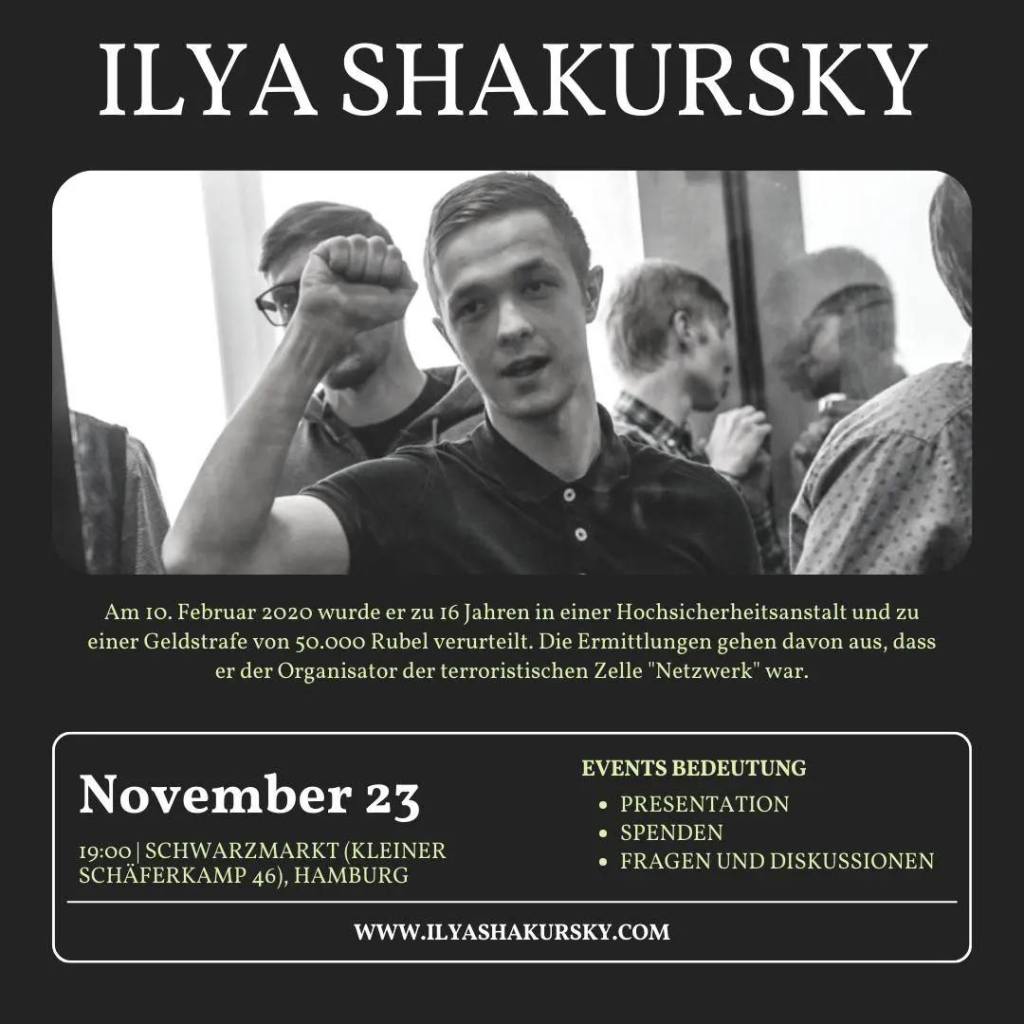


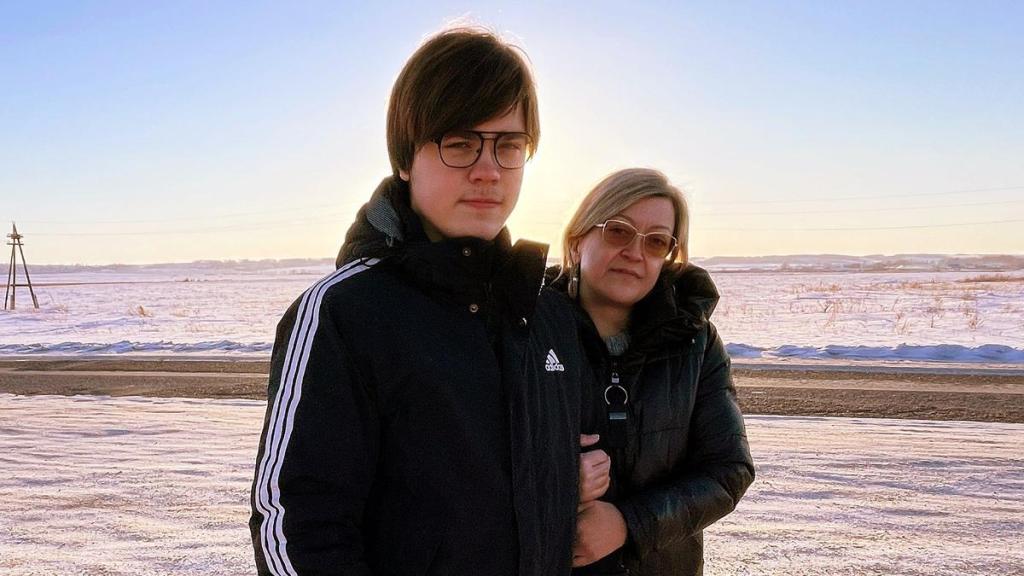
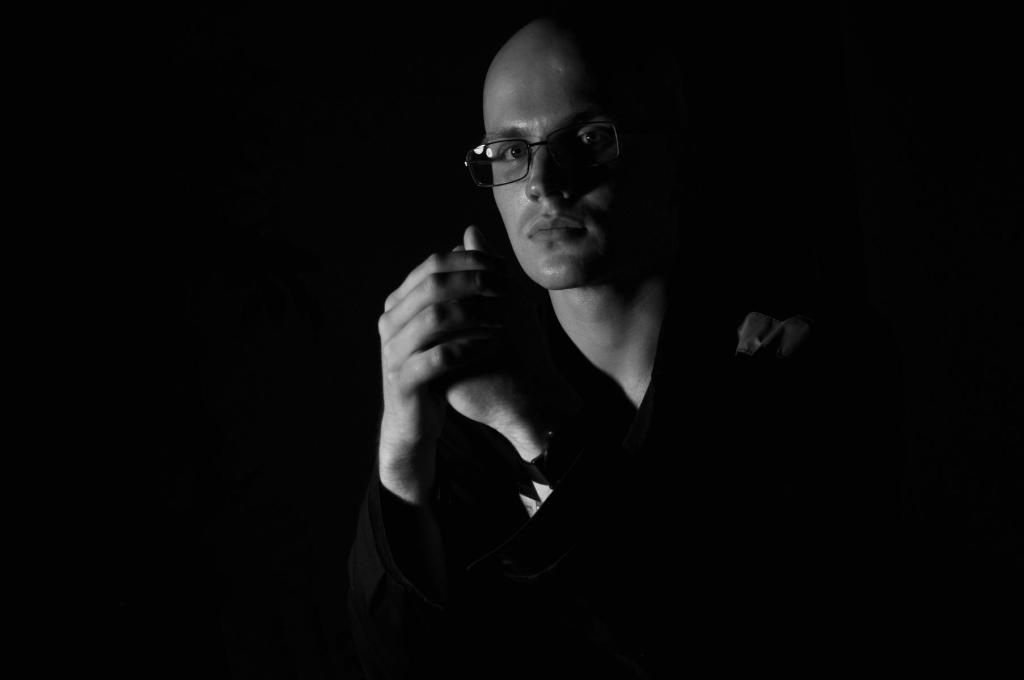


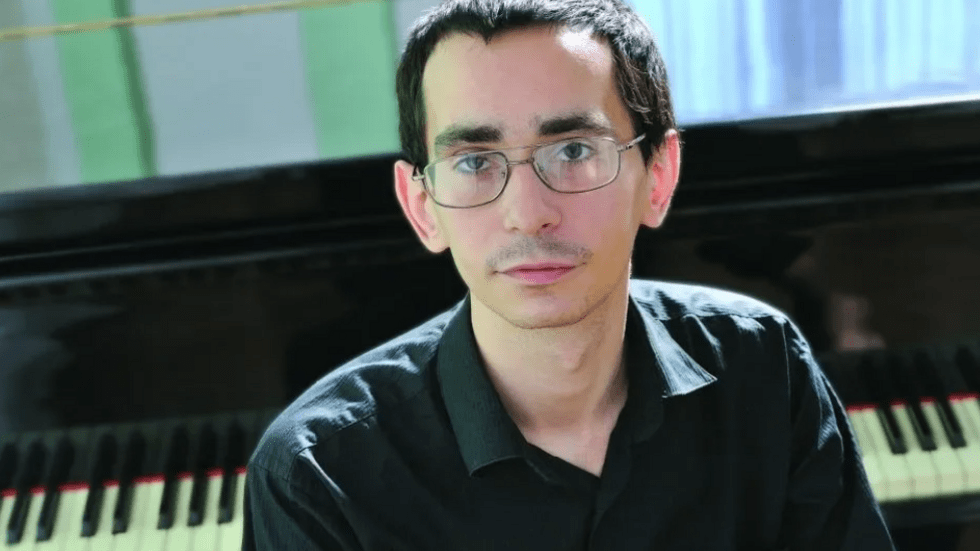
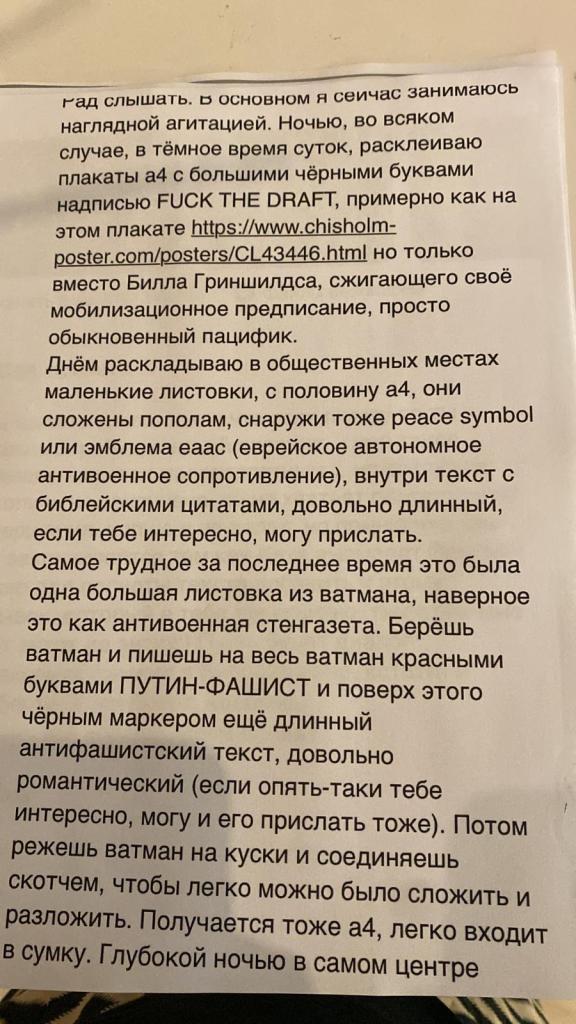
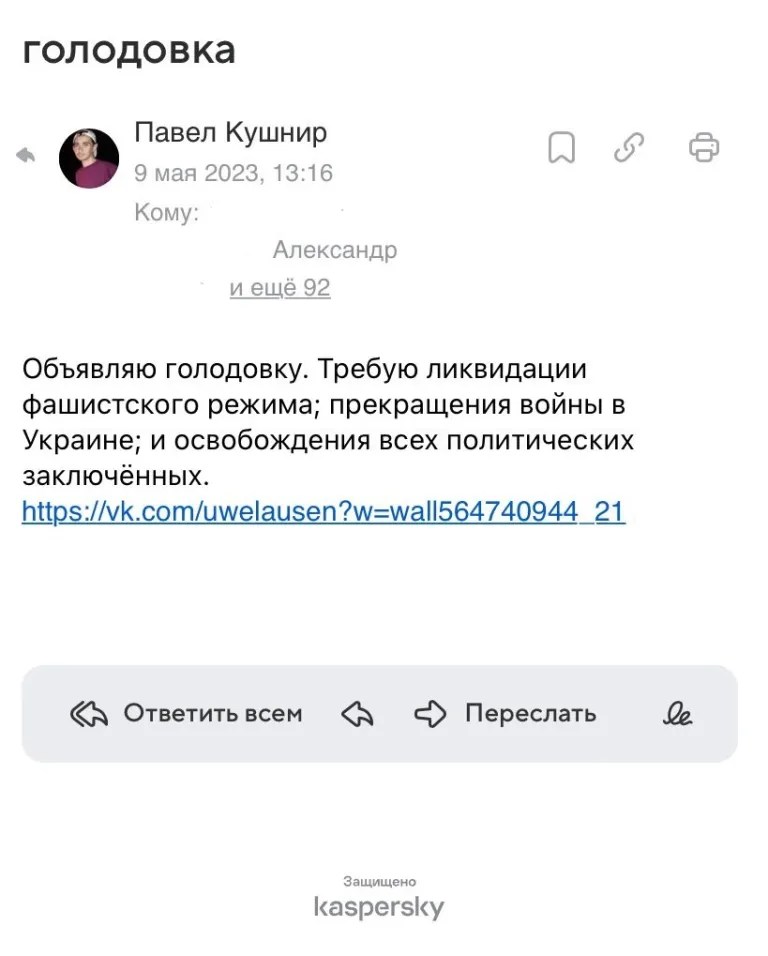
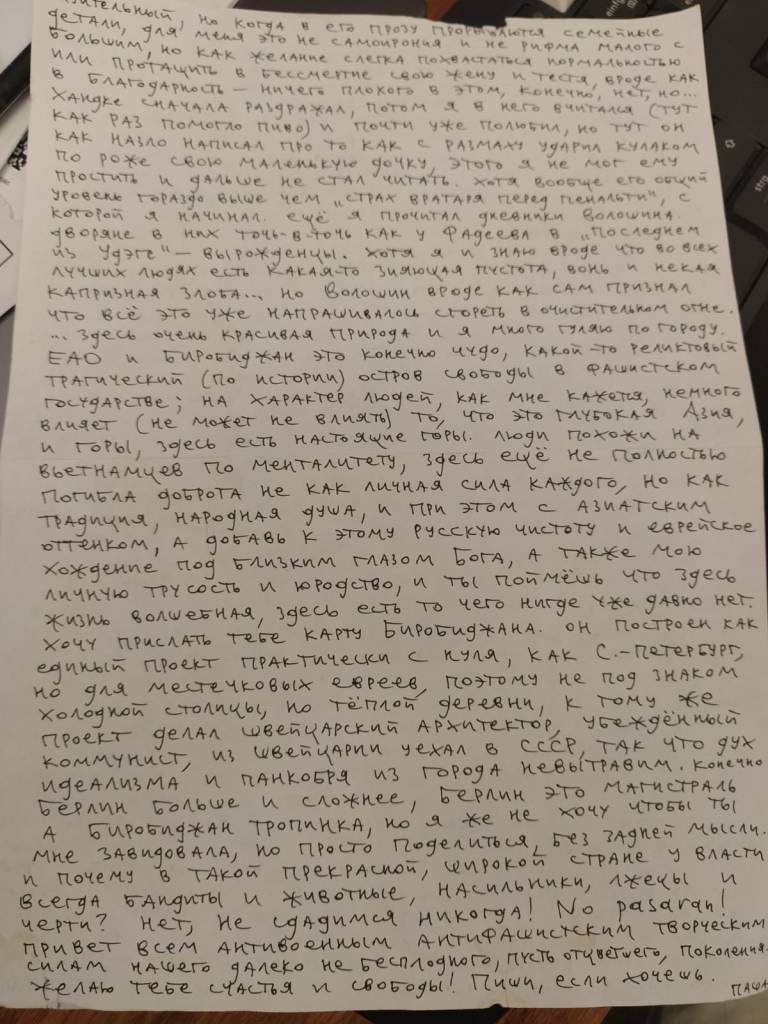


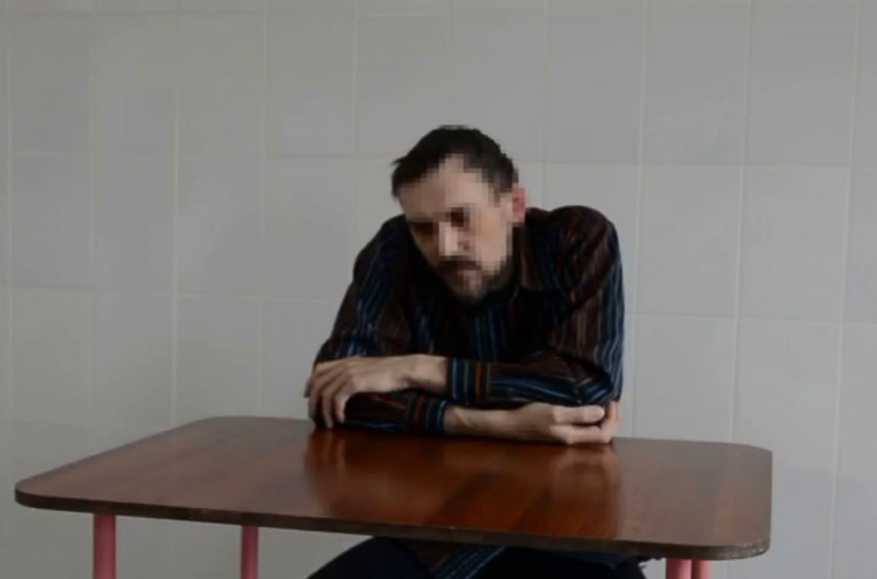
 You can support Alexander by writing him a letter or sending money to his personal account in prison so that he can subscribe to newspapers, among other things.
 Address for letters:
 It is possible to send letters via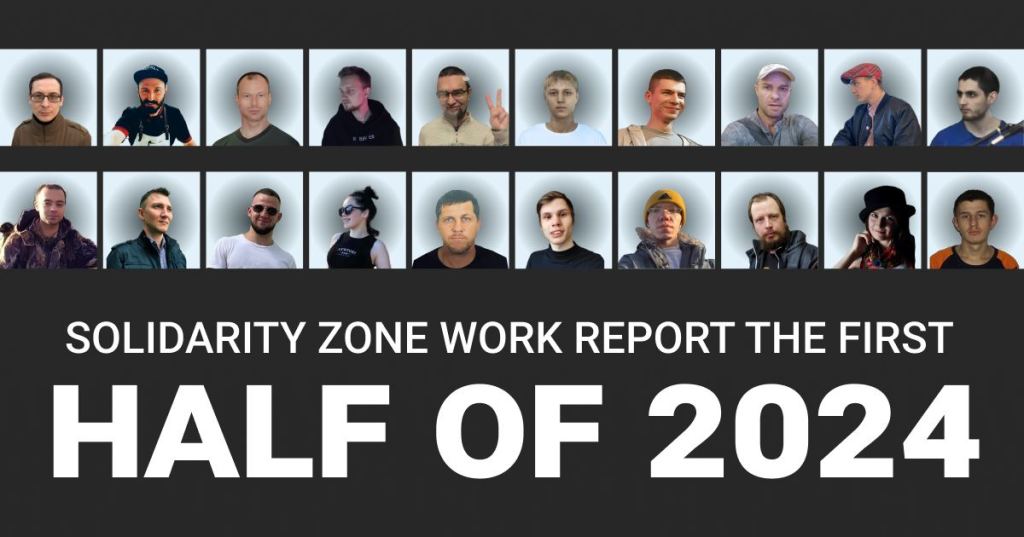
 We successfully completed nine fundraisers for individual prisoners, amounting to €28,540. As a result, we could ensure that defendants had legal support during investigations and at court, and support appeals against conviction lodged by seven prisoners who carried out acts of anti-war resistance.
 Independently of whether you are able to give financial support to Solidarity Zone, you can help us by reposting this or circulating information about us in other ways.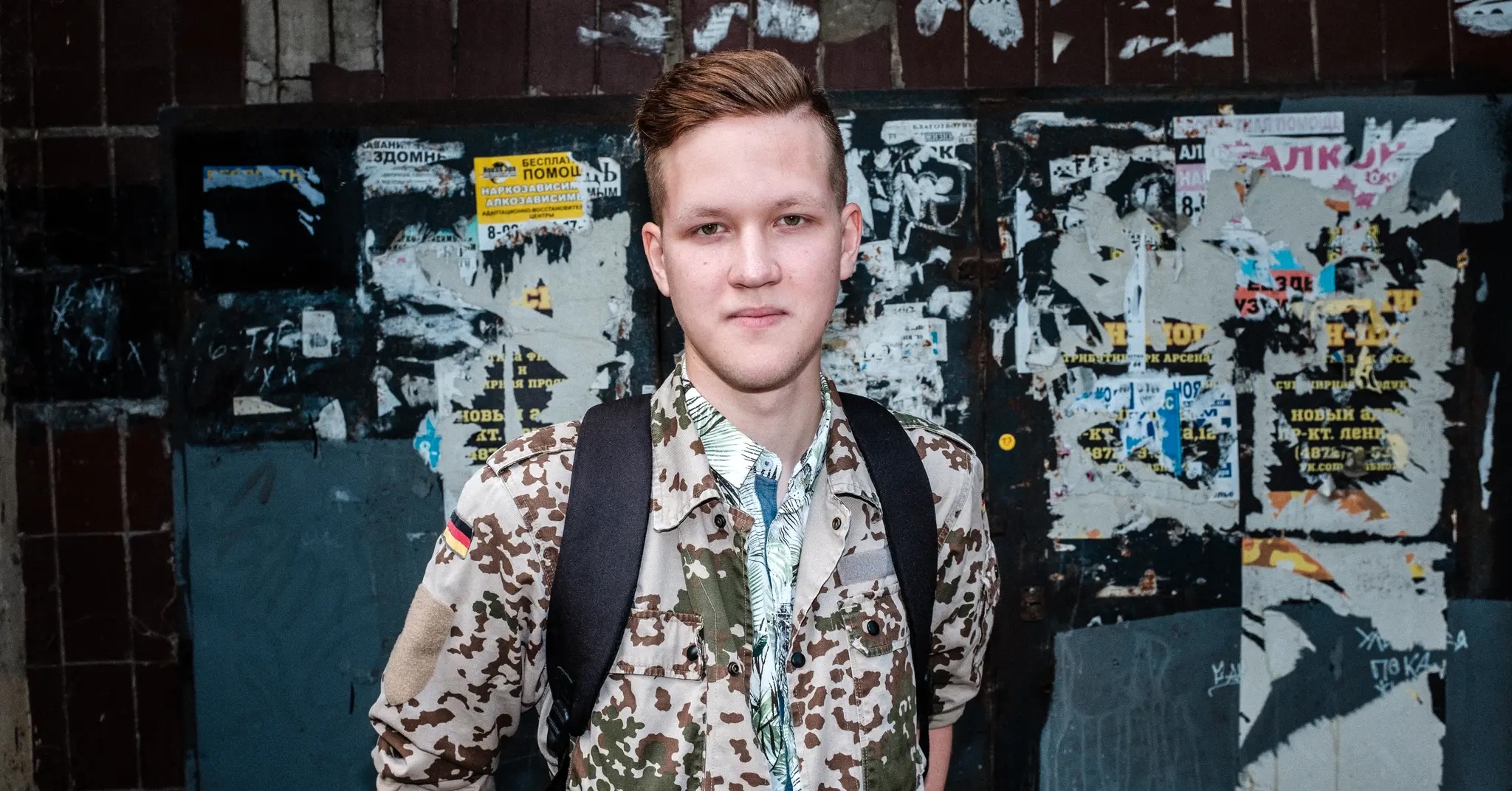
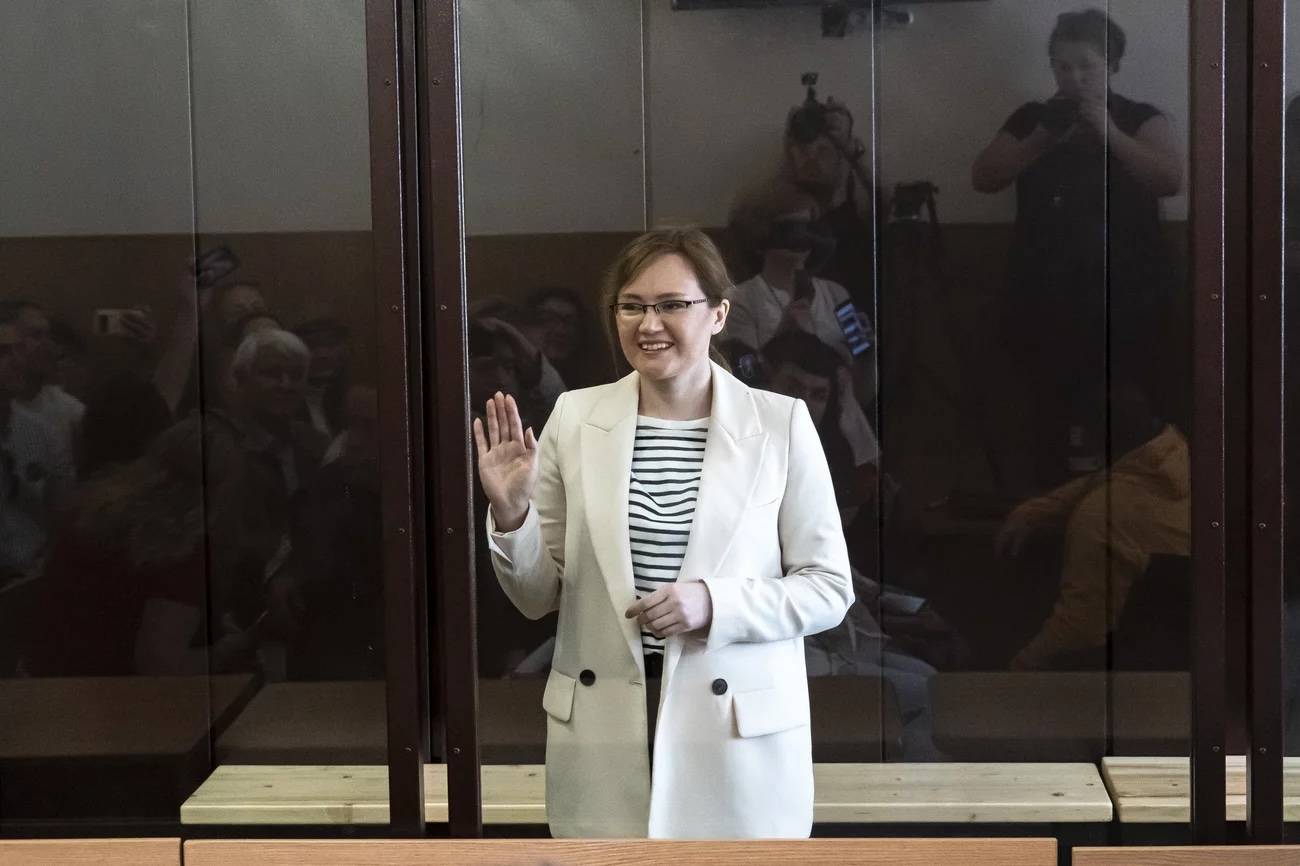
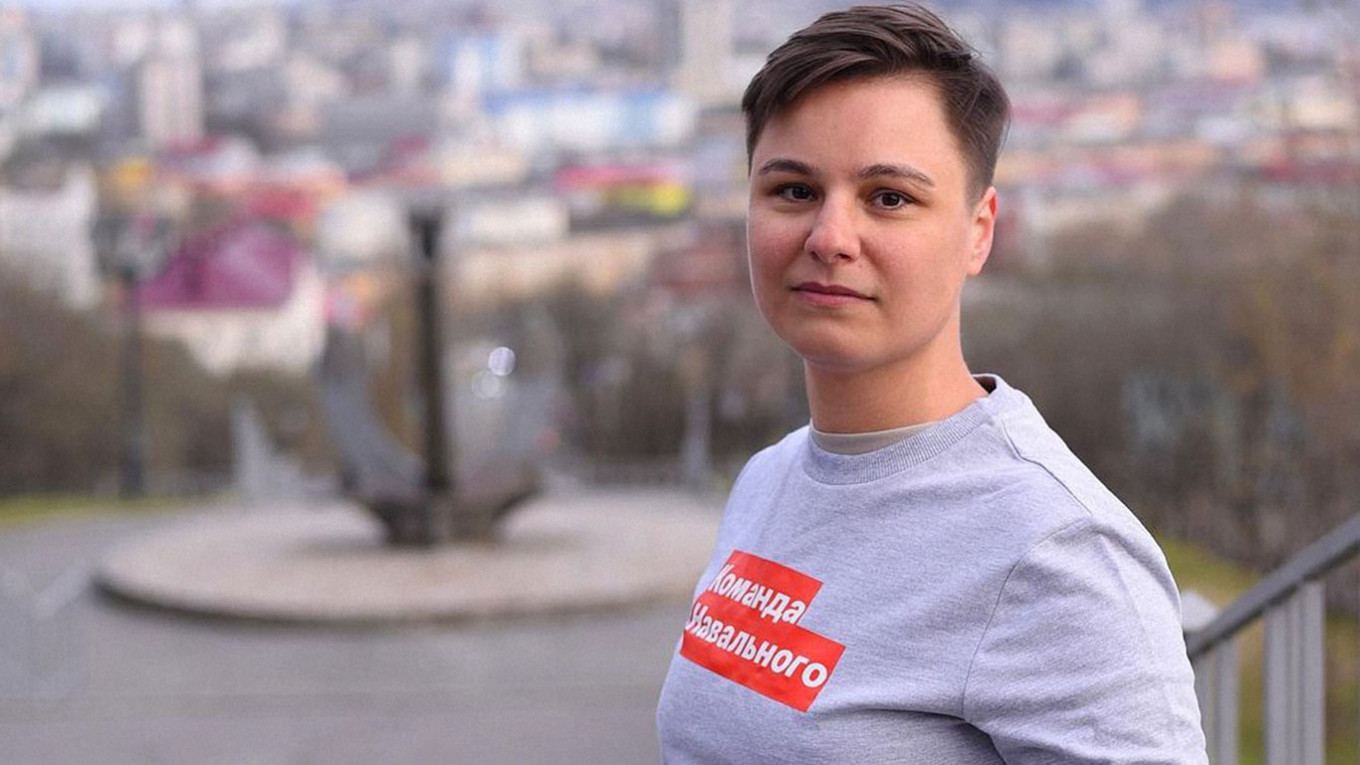
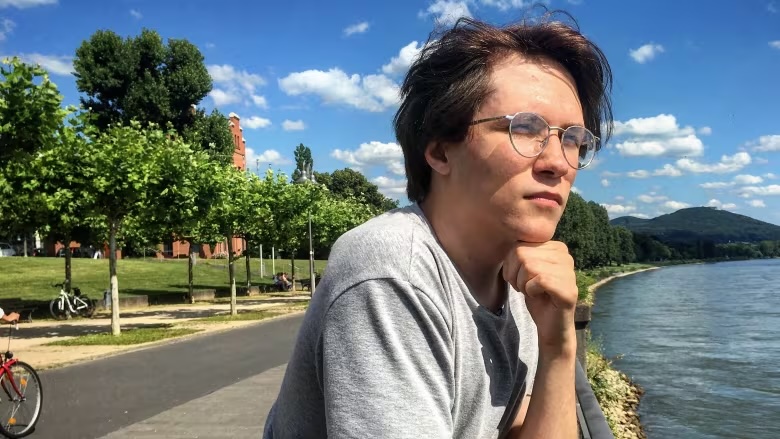
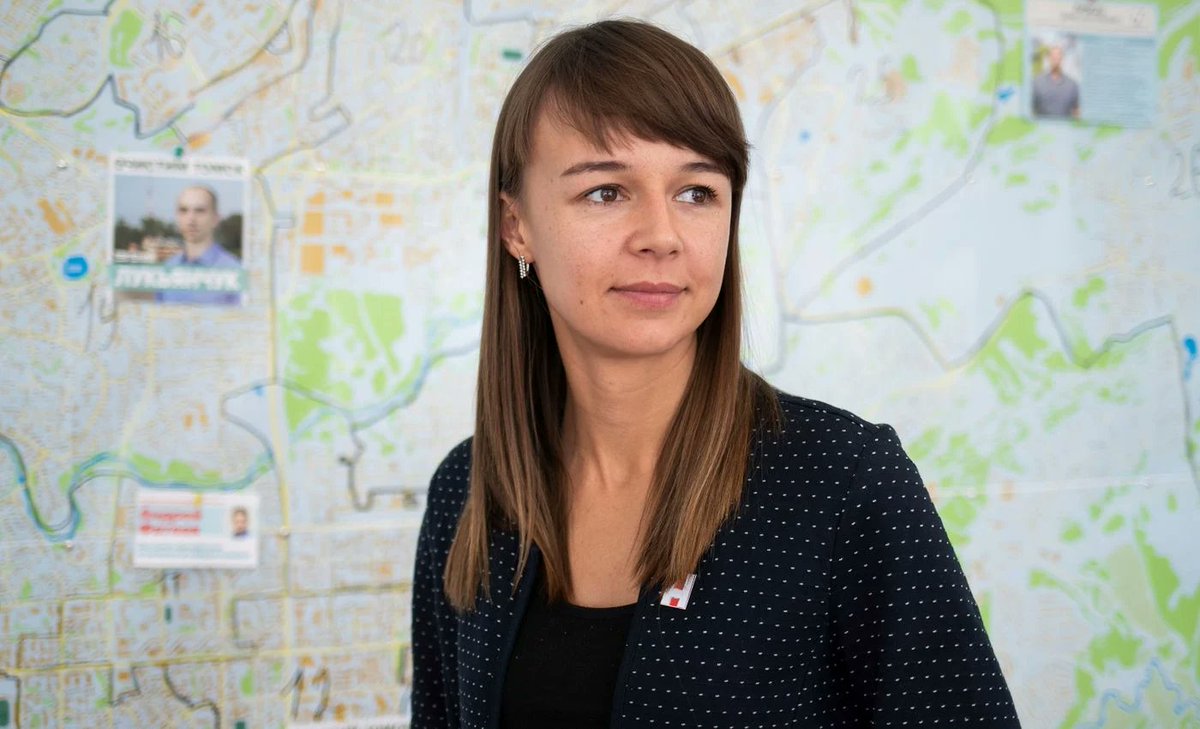
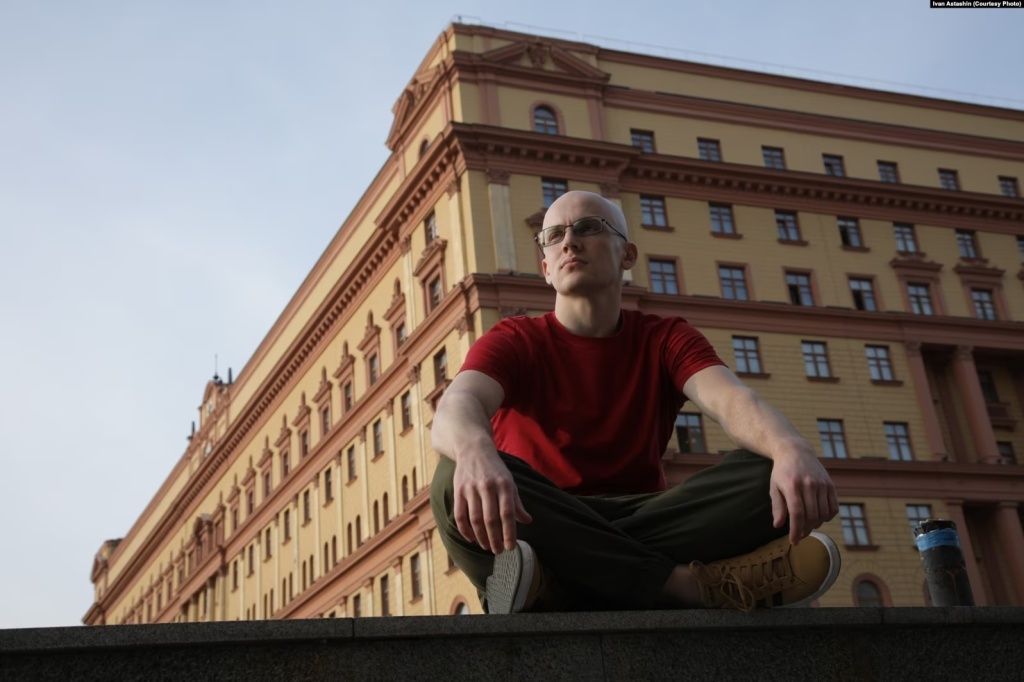
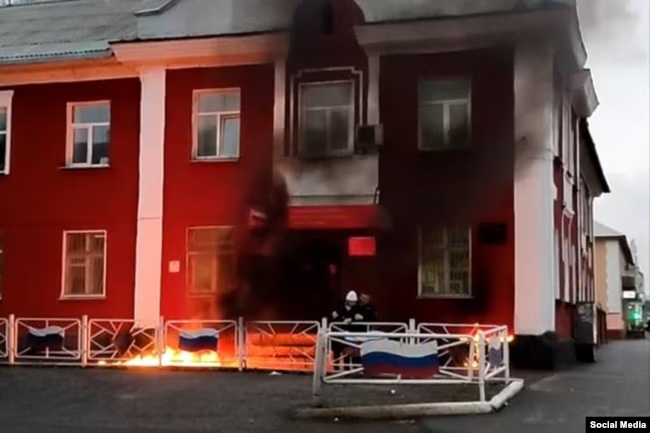
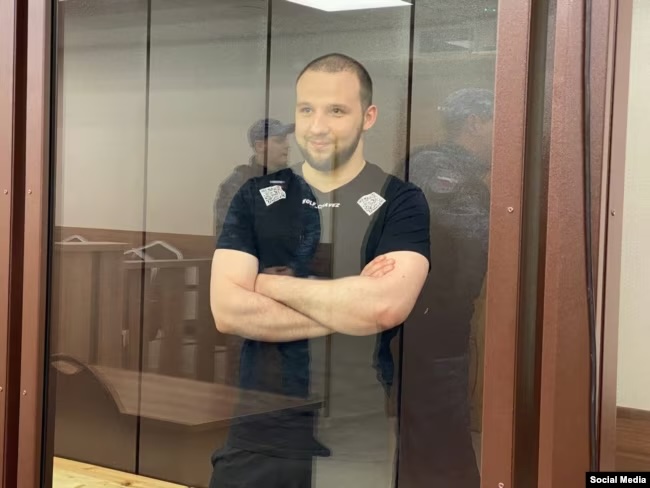
 Vsevolod Korolev