Say My Name

Putin’s critics have long noted his obstinate refusal to publicly utter the name of imprisoned opposition politician Alexei Navalny. But on Sunday, when asked by loyalist journalist Andrei Kolesnikov about Moscow theater director Zhenya Berkovich and Moscow leftist Boris Kagarlitsky, both of whom have been arrested on flagrantly trumped-up charges of “condoning terrorism,” Putin claimed never to have heard of them.

Maybe he hadn’t heard of them. But a good deal of progressive humanity has heard of them, not only because of the outrageous charges against them, but also because both of them are minor celebrities. This means that their cases matter enough to the Moscow-centered Russian “liberal” intelligentsia (broadly defined) and to leftist and liberal circles in the west that you will have already heard about them, too, and you will undoubtedly hear much more about them in the weeks and months to come.

What about the other, uncelebrated Russians persecuted for their dissenting views and direct protest actions during wartime? According to OVD Info, 665 criminal cases have been opened against “anti-war dissidents” since February 24, 2022. It would be understandable if the international press had trouble reporting in depth on each of these cases, despite the best efforts of international human rights organizations and projects like this website. But it turns out that the Russian opposition also finds it too troublesome to remember all their names, let alone name them publicly.

“Every day there are more and more [political] prisoners in Russia. Moreover, we do not have time to remember their names, because they are activists from Khabarovsk and Vologda, Murmansk and Perm. We don’t have time to remember these names,” Olga Romanova, the founder and head of Russia Behind Bars told Radio Svoboda at a rally in Berlin yesterday “in support of Vladimir Kara-Murza, Alexei Navalny and other political prisoners in Russia.”

I shouldn’t have been surprised, then, as I prepared a post yesterday about the trial of Petersburg anti-war activist Olga Smirnova, that a Google search for the keywords “Olga Smirnova trial Petersburg” generated the following dismal picture, in which it transpires that this remarkable, incredibly brave grassroots battler has been roundly ignored by the Anglophone world except for the dependable folks at RFE/RL and silly old me.

Several years ago, a Petersburg “artivist” with whom I worked closely for a time became fascinated with the so-called attention economy. I soon realized that the lesson they had learned from their “research” of the topic was that they had to compete even harder for attention to their own projects and causes. Later, I became convinced that nearly the entire Moscow-centric Russian opposition and their target audiences at home and abroad were also practicing “attention economics” to the extent that the political persecution of non-celebrities, regional activists, and social outsiders (Jehovah’s Witnesses, for example) almost never merited their focused and sustained attention.

They thus missed what I thought was the bigger picture, which was that the Putin regime and its repressive apparatus were themselves rehearsing for something “grander,” something that came to fruition on February 24, 2022.

And yet the right-thinking “attention economists” who dominate the Russian opposition and, consequently, the non-Russian Russia watchers whose narratives they help to shape, continue to engage in celebrity worship amid a fascist assault on Ukrainian independence, Ukrainian lives, and Russian grassroots dissent, thus betraying their own deep-seated anti-democratic biases. When people who should know better and should do better feel impelled not to say the names and share the stories of “lesser” political prisoners like Olga Smirnova, they are doing the Russian police state’s work for it. ||| TRR

__________

During a press conference after the Russia-Africa summit on Saturday evening, Kommersant reporter Andrei Kolesnikov asked the President of Russia a question about a number of the arrests that have occurred recently in the country.

Kolesnikov cited to Putin the names of the arrested sociologist Boris Kagarlitsky, against whom “condoning terrorism” charges have been filed for a post about the explosion on the Kerch Bridge, and theater director Yevgenia Berkovich. She has been charged with “condoning terrorism” over a theater production about Russian women recruited by the terrorist group Islamic State. The play is based on real events.

Human rights activists call the cases against Kagarlitsky and Berkovich politically motivated.

“People are arrested for written or spoken words. Is this normal? Well, thank God, it’s not 1937 here! But some people, you know, think that maybe it is 1937,” Kolesnikov asked.

“It’s 2023 here, and the Russian Federation is in a state of armed conflict with its neighbor. I think that there should be a certain attitude towards those people inside the country who harm us,” Putin replied, adding that “in order to achieve success, including in the combat zone, we must all follow certain rules.”

The President stated several times that he did not know about the cases against those whom Kolesnikov cited as an example. “I don’t know who you are talking about. I am hearing these names for the first time and don’t really understand what they did and what was done to them,” Putin said, but immediately added, “In Ukraine, people are shot for this.” As an example of an “execution,” he referred (without naming him by name) to Denis Kireyev, a member of the Ukrainian delegation to peace negotiations with Russia, who was killed in early March last year. “I don’t know what they [Berkovich and Kagarlitsky] did, you will tell me later. Maybe they don’t deserve what has been done to them. I don’t even know how,” Putin concluded his answer.

Putin did not explain how the case of Kireyev, who was [a Russian] agent, according to the Security Service of Ukraine (SBU), and whose death had nothing to do with any of his public statements, was connected with the Berkovich and Kagarlitsky cases. In addition, the case against Berkovich, although she did speak publicly against the war, is not connected with her anti-war statements, according to investigators.

[…]

Source: “Putin responds to question about prosecution of Kagarlitsky and Berkovich,” Radio Svoboda, 30 July 2023. Translated by the Russian Reader

__________

Today, a rally in support of Vladimir Kara-Murza, Alexei Navalny, and other political prisoners in Russia took place in downtown Berlin in front of the Brandenburg Gate. It was held by the organization Russia Behind Bars with the support of other Russophone NGOs in Berlin.

More than two hundred people turned to the rally on a cold July evening. Among them were human rights activists, journalists, and members of the creative intelligentsia, both those who have lived in Berlin for a long time and those who have recently arrived here.

“Every day there are more and more [political] prisoners in Russia. Moreover, we do not have time to remember their names, because they are activists from Khabarovsk and Vologda, Murmansk and Perm. We don’t have time to remember these names,” Olga Romanova, the founder and head of Russia Behind Bars told Radio Svoboda, “but Putin reminded us of something when he said that it was not 1937 in Russia now. He doesn’t know the names of either Boris Kagarlitsky or Zhenya Berkovich, but he firmly knows that they are guilty, and he firmly knows that people like them are ‘shot in Ukraine.’ It is very scary that Russia is ruled by a person with such ‘facts’ in his head and such a set of beliefs. It seems to me that we are here not only to let political prisoners know that we remember them, but also to try to show the rest of the world that not all of Russia is Putin and that perhaps Russia still has a future. There are people in Russia who oppose Putin. They are people who think the same way we do.”

A statement by Vladimir Kara-Murza was read out at the rally. In particular, he argues that Russian citizens who have publicly opposed the brutal, aggressive and unjust war that the Putin regime unleashed against Ukraine occupy a place on this list [sic].

“We are very different people, people of different professions, generations, and outlooks. Among us there are politicians and journalists, priests and soldiers, artists and lawyers, students and pensioners, leftists and rightists. We are united by our rejection of Putin’s criminal war, which the Kremlin is waging on Russia’s behalf . There are millions of people in our country who think like us. Thank you for listening to us and for not believing the Kremlin propaganda tall tales about the alleged universal support for these crimes. I know that the day will come when this darkness will dissipate and another Russia will return to the family of civilized nations, and we will finally be able to create a real united peaceful Europe.”

The words of the Russian politician sentenced to twenty-five years in prison in Russia were heard at the end of the evening rally in Berlin. On the same day, an appeals court in Moscow upheld the sentence against Kara-Murza, whom human rights activists consider a political prisoner.

One of the people attending the rally told Radio Svoboda that he considers it his duty to voice his disagreement with Russia’s criminal full-scale war in Ukraine in any format anywhere in the world. “Individual conscience is what matters. It doesn’t allow us to regard calmly the crimes that Russia is committing on behalf of its citizens,” the rally participant said.

Source: Anna Rose, “Rally in support of Russian political prisoners takes place in Berlin,” Radio Svoboda, 31 July 2023. Translated by the Russian Reader

__________

Say my name
Play my game

I tried to tell you
That you’re up to no good
So I lied to fell you
Just like you knew I would

I made you love me
I was a part of your life
You’d stand above me
Behind the blade of a knife

Return to sender
That’s what it says in the mail
I’ll never end up
Inside the county jail

The look of crystal
Still makes me blue
I’ll load my pistol
And keep my eye on you

Not much for living
But I’m pledging my time
This gift of giving
It perpetrated my crime

Don’t have to like it
So just stay out of my way
Don’t try to fight it
You know the words to say

From Country Hymn, released September 17, 2016
Words by Sumanth Gopinath, music by The Gated Community
Copyright 2016

Sumanth Gopinath: lead vocals, acoustic guitar
Rosie Harris: lead vocals, banjo
Beth Hartman: backing vocals, egg shaker
Teresa Gowan: fiddles
Johnny Becker: mandolin
Cody Johnson: electric bass
Paul Hatlelid: drums
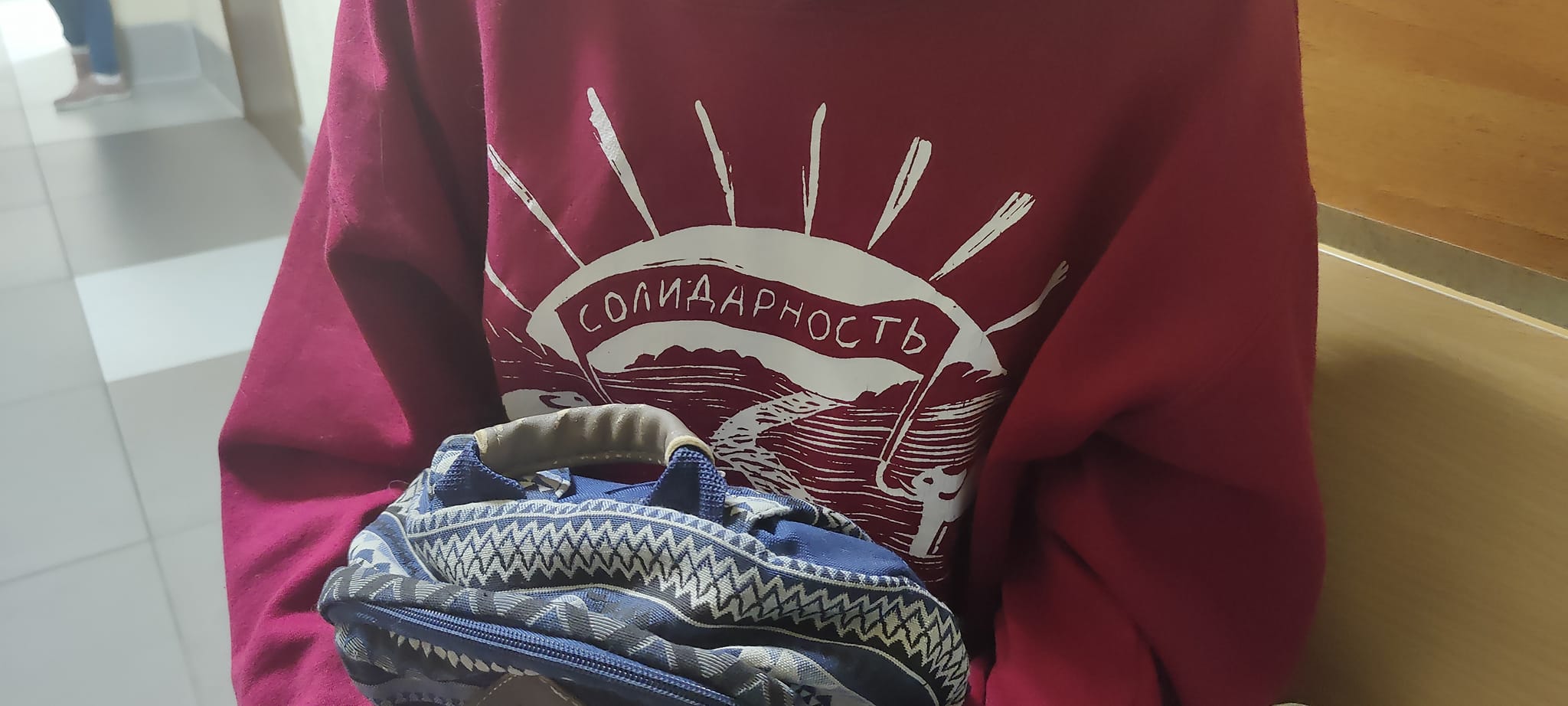
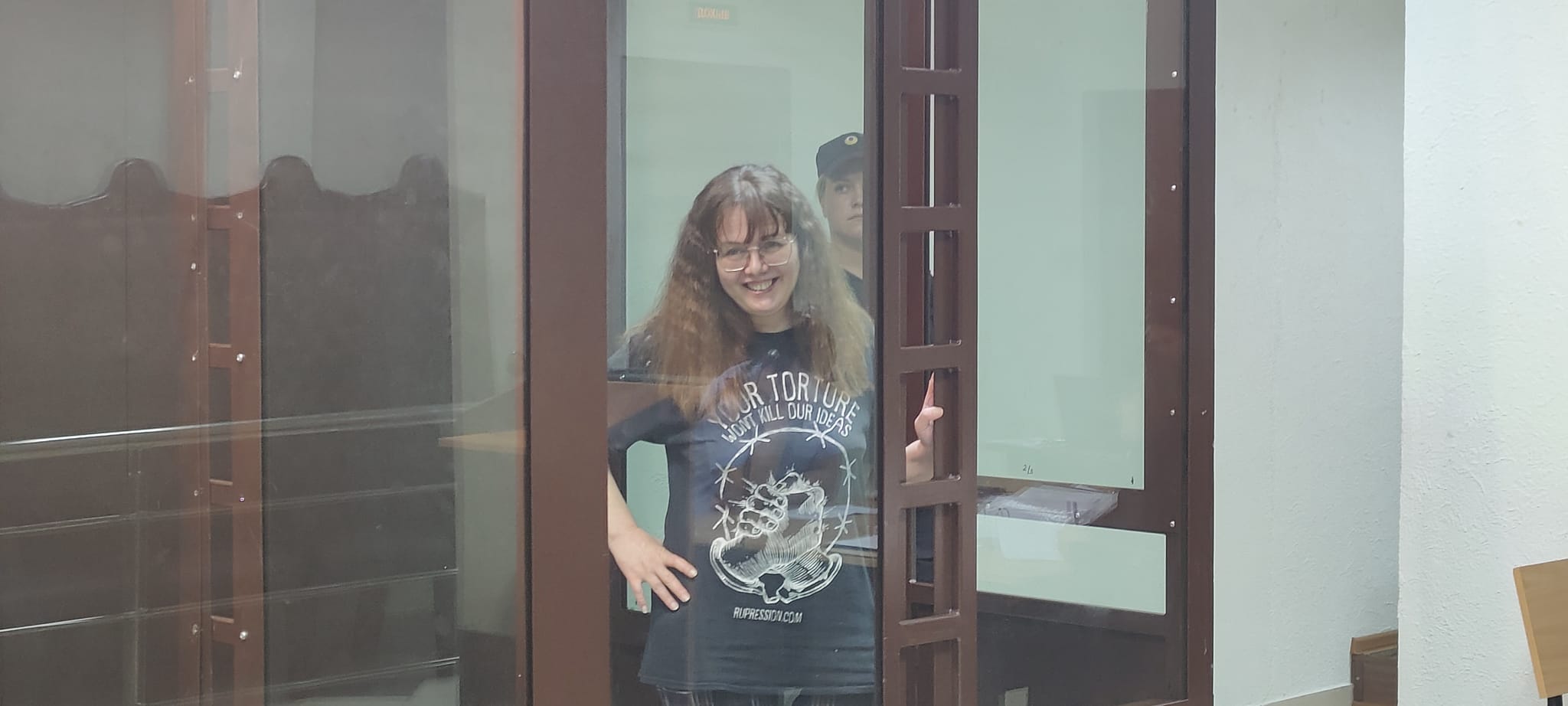
“SOLIDARITY”: At the Olga Smirnova Trial

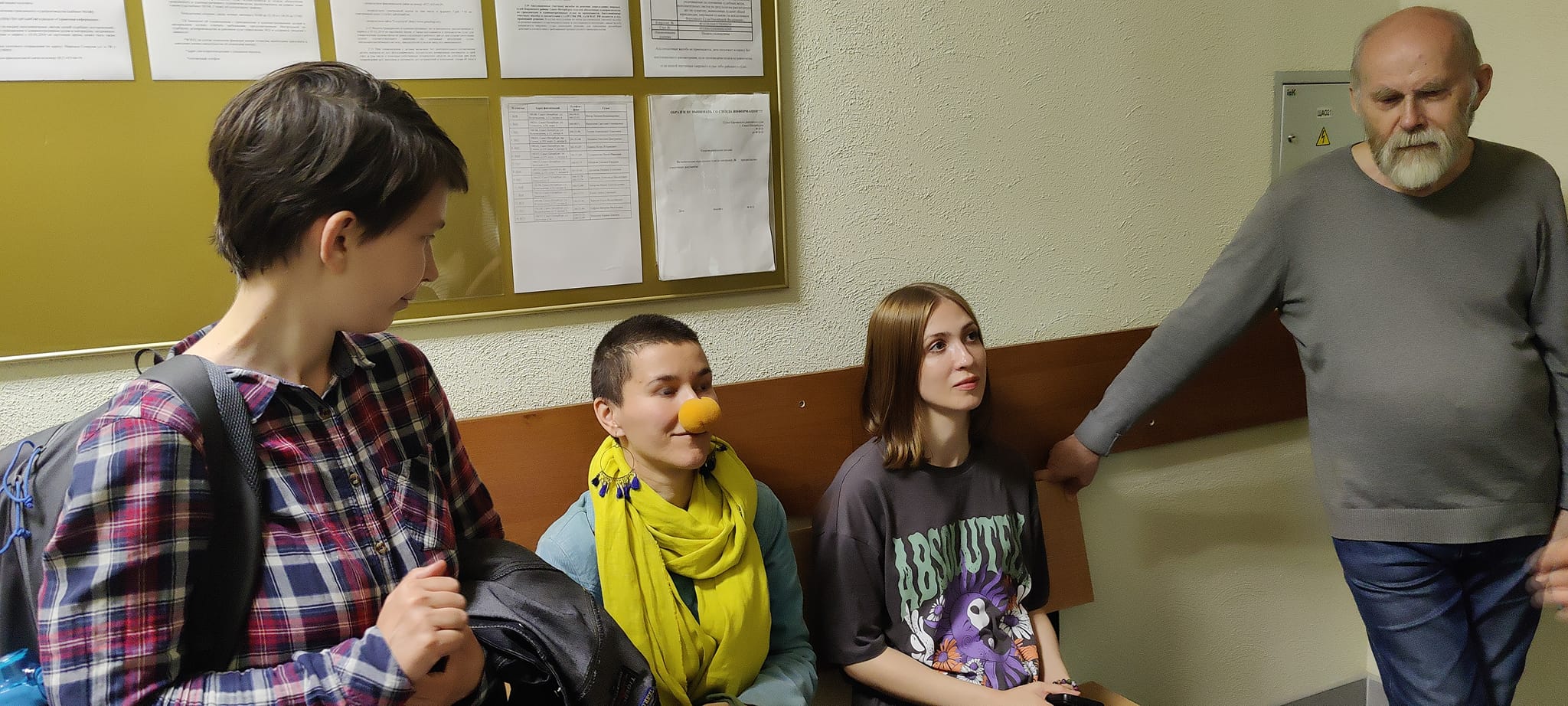
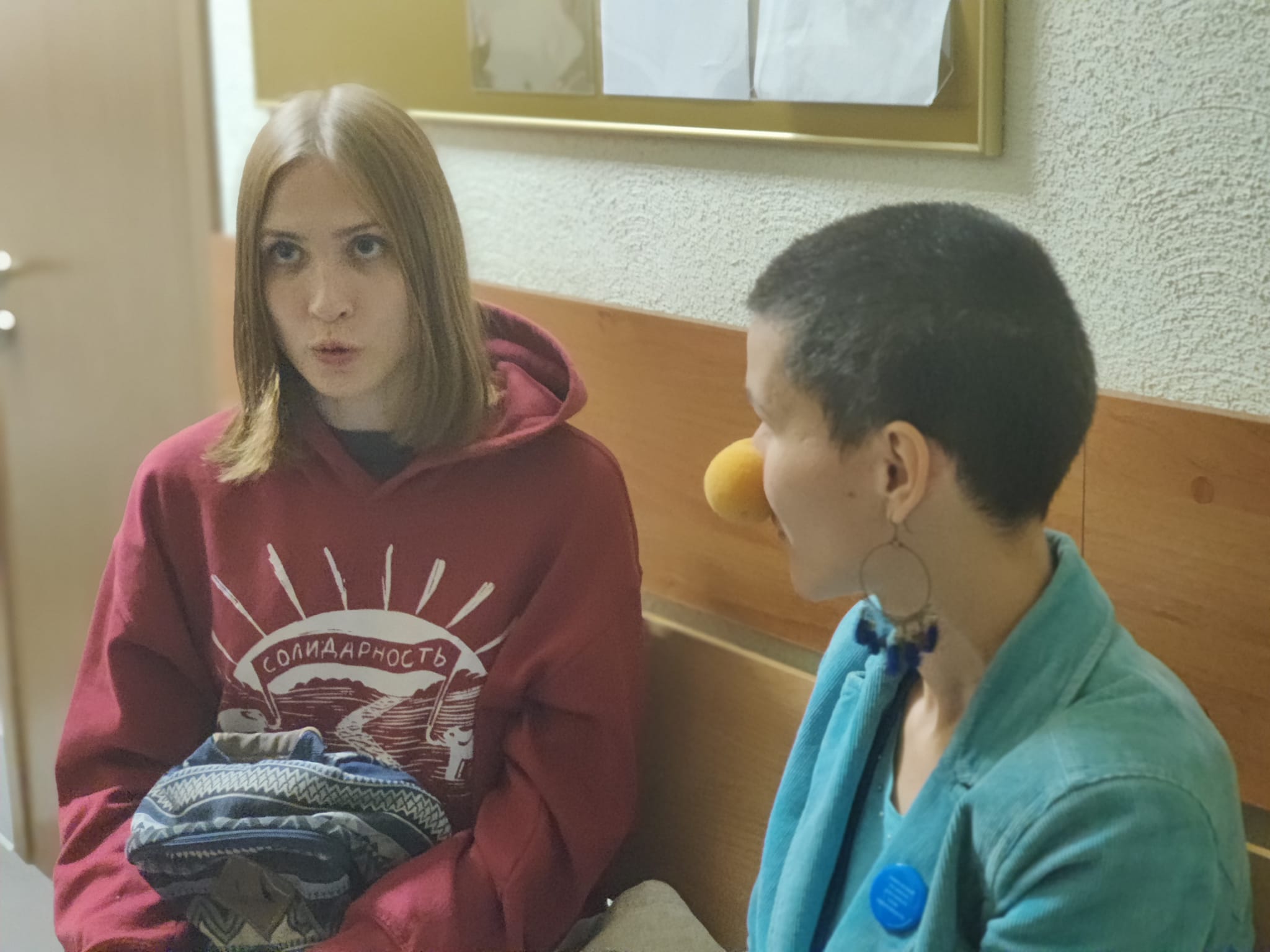
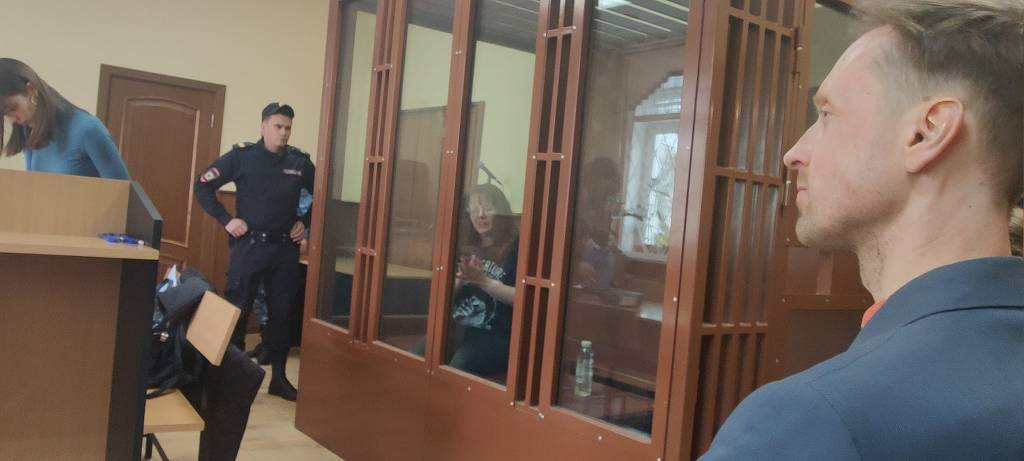
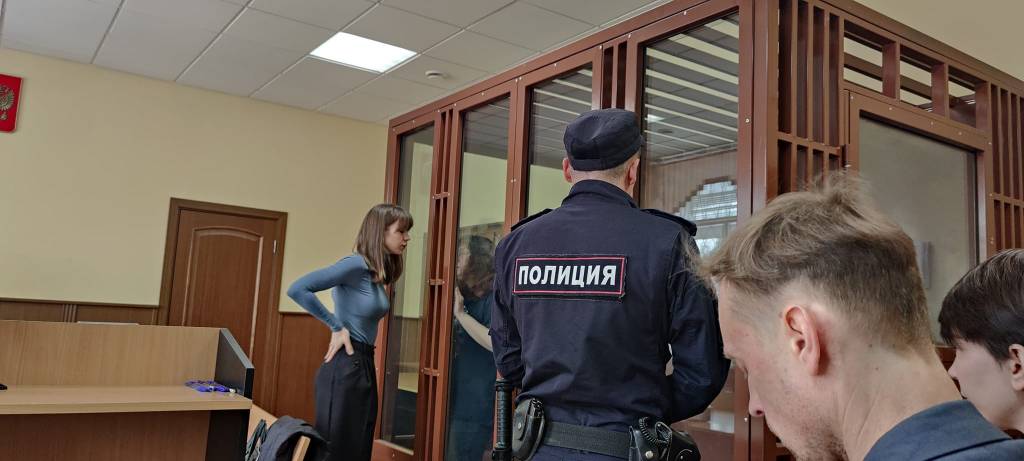
Sonya, the girlfriend of Sasha Skochilenko, came to today’s hearing in the trial of anti-war activist Olga Borisovna Smirnova. Sonya wore a sweatshirt embossed with the word “SOLIDARITY.” It was quite nice to see that there is reciprocity among the support groups of political prisoners.

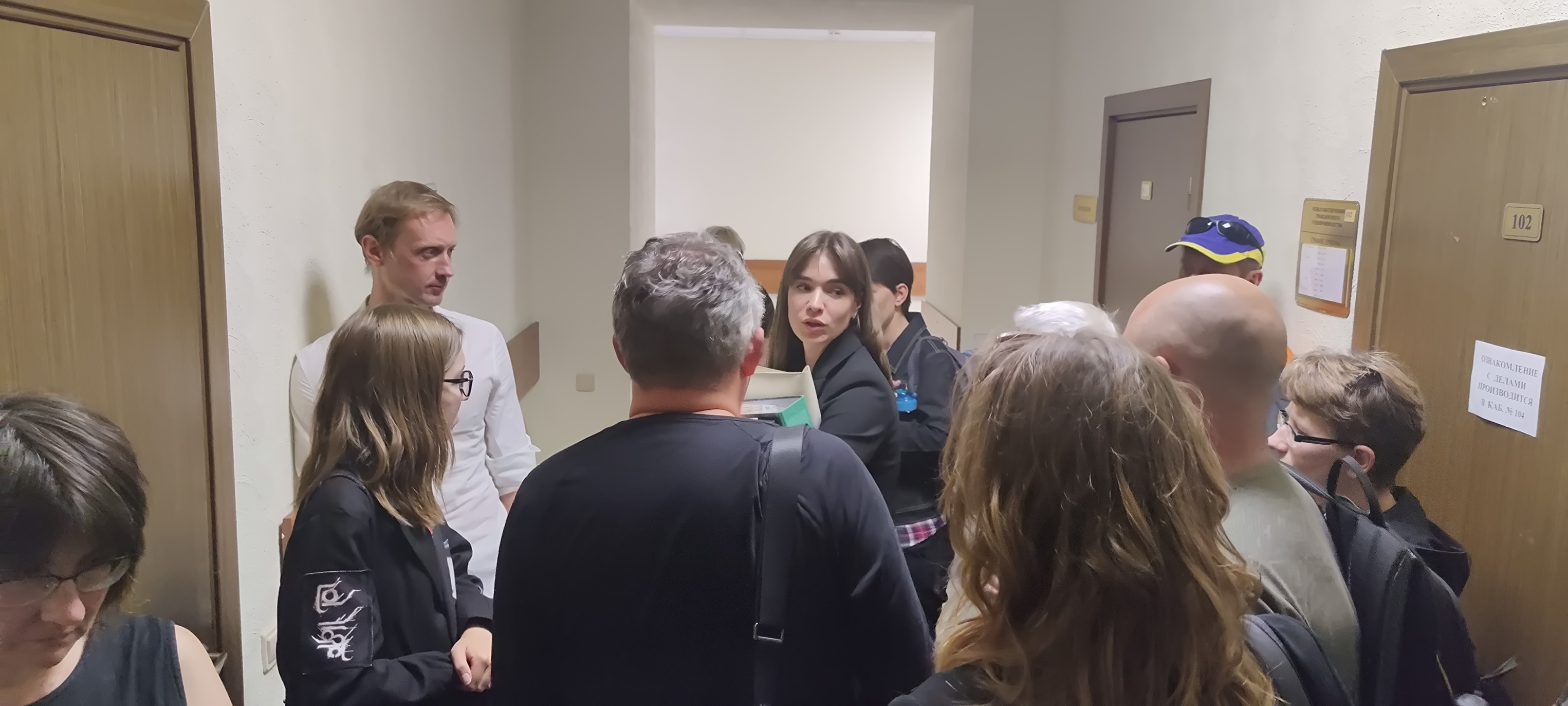
Sergei Troshin told people about the evening gatherings to write letters to political prisoners that are held at the Yabloko Party’s Petersburg offices.

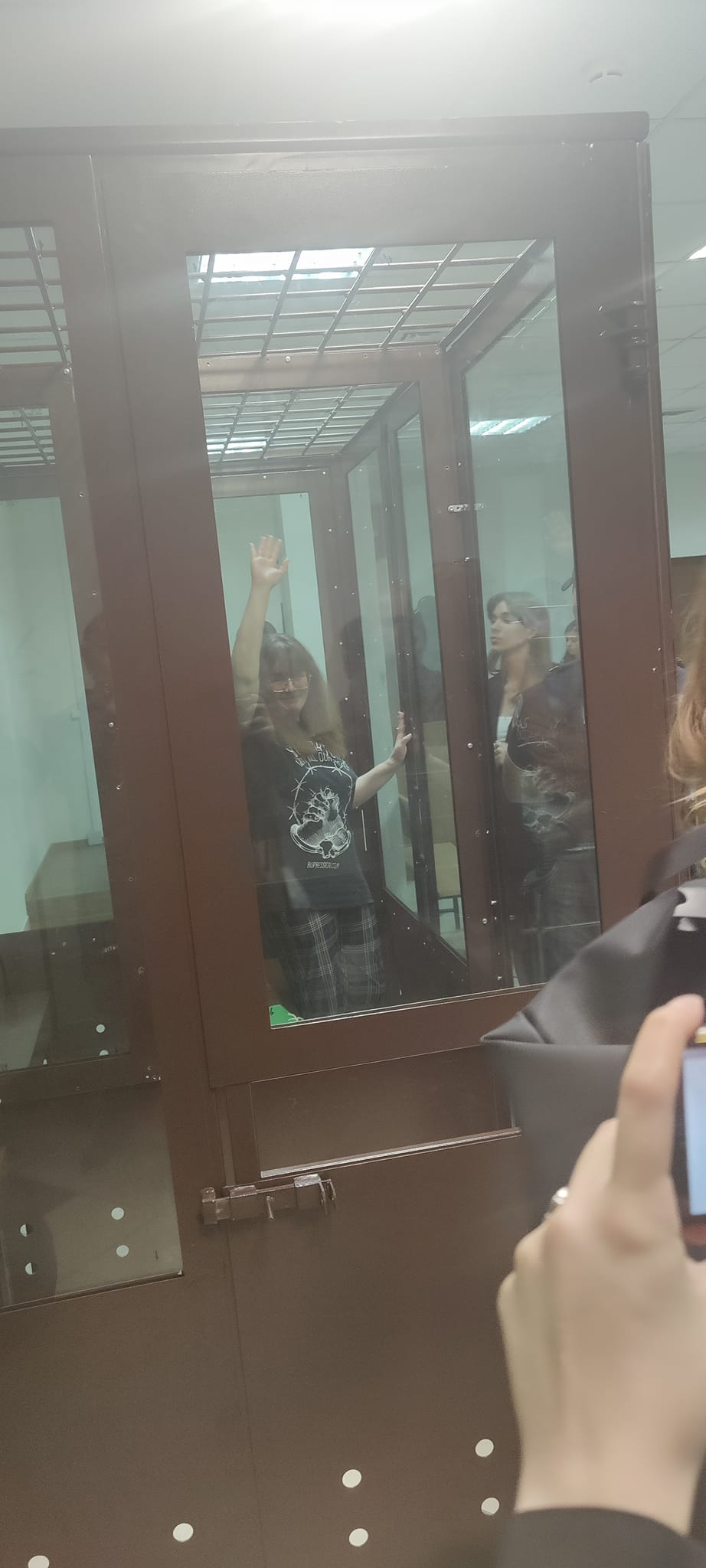
There were twenty [members of the public] in total, all the seats were taken. The trial was again held in the jury room on the ground floor, into which the guards can bring the accused from the courtyard and thus avoid walking them down the corridor amid shouts of support.

The hearing itself left more questions than answers. The judge has obviously begun to hurry in order to finish the trial as quickly as possible. Does she want to wrap things up before her holiday? The hearing itself thus ended around seven in the evening, despite the lawyer’s request to postpone it. The judge behaved nervously, on the verge of rudeness.

The bulk of the hearing was devoted to cross-examining Lebedev, an officer of Center “E” [the “anti-extremism” police]. He came dressed in camouflage, combat boots, a beret, and dark glasses, and he had a beard (which looked fake).

It was [Lebedev] who located and documented the pieces of evidence on which the accusation is based, and also determined them to be “fakes” by comparing them with the websites of the Defense Ministry and the Foreign Ministry and, for some reason, Maria Zakharova’s Telegram channel, “as that of an official authoritative statesman expressing the position of the Foreign Ministry.” He searched for information by dates: if there was something in a post by Olga that was not found on the websites of the relevant authorities, he deemed it a “fake.” He also prepared a search memo stating that there were no special perpetrators [sic] in [Smirnova’s] apartment, and was present during the search.

The cross-examination lasted three hours. It was clear that [Lebedev] considers Olga a “blatant criminal” who disseminates such things “while our boys are getting killed.”

When asked about information from the website of the Israeli Foreign Ministry about Babi Yar, Lebedev replied, “Fortunately, our country has its own independent policy and does not consider it necessary to take into account and react to statements made by the Jewish Foreign Ministry at the slightest pretext.”

He also believes that the information given by Russian officials and state bodies cannot be questioned and is the absolute truth.

To Olga’s question about why he had chosen precisely these entries from her social media page, he replied, “It would be impossible to document everything from the time of Jesus Christ’s birth.”

When asked why the witnesses who inspected the web pages containing the [offending] posts were recruited so far from his place of work, he replied that it is not so easy to find people who agree to serve as witnesses.

“I am sure that these people sitting behind me would have never agreed to come and document Smirnova’s criminal actions as witnesses,” he said.

After the recess, a disk with telephone connections that suddenly appeared in the case file was examined.

Olga has been holding up well: she smiled a lot and thanked people for their support. The next hearing is scheduled for Monday, August 7, at twelve noon. It was announced that oral arguments would be heard then, although, in my opinion, the defense has not yet finished examining the evidence.

Despite the fact that people in the support group joked a lot, the overall feeling from the trial is quite depressing. It feels as if the judge has already made up her mind, and we are present at a poorly staged theatrical performance. It’s just that the finale is up to ten years in prison…

#FreeOlgaSmirnova

Source: Alexei Sergeyev (Facebook), 31 July 2023. All photos, above, by Mr. Sergeyev. Translated by the Russian Reader. You can send letters— written in Russian or translated into Russian (if you don’t know a competent translator, you can use an online machine translator such as Google Translate)—to Olga Smirnova and other Russian political prisoners via the free, volunteer-run service RosUznik. You may ask me (avvakum@pm.me) for assistance and advice in sending such letters.

Scenes from Olga Smirnova’s Show Trial

“Fun times” today at the trial of Olga Borisovna Smirnova. The escort guard pushed the defense lawyer, Zyryanova, and ripped a phone from her hands, injuring her fingers. As soon as the ambulance arrived, the doctors took Olga’s defense attorney downstairs to the vehicle and drove her away.

At the trial itself, the prosecutor read out a bunch of papers for three hours regarding the searches of the homes of Olga’s associates. In each instance the investigator wrote that none of this evidence was entered into the case file, whereas earlier she herself had insisted on urgent searches without a court order, which were carried out.

The only variety in these boilerplate search and inspection reports was provided by the descriptions of apartments and rooms. And, for some reason, the prosecutor always says “kitCHEN table,” with the stress on the second syllable.

But there is nothing [“incriminating” in these reports?] except literature in Ukrainian (the prosecutor reads the title in Ukrainian and then the Russian translation, as supplied by Yandex Translate) and placards whose slogans the prosecutor was occasionally ashamed to read aloud, claiming that the slogan “Free political prisoners” was “obscene,” and the slogan “Putin resign” was “illegible.” What sort of sharp practice is it to fill the criminal case file, under the guise of evidence, with stuff that has nothing to do with the case and even according to the investigator is not evidence? Is the prosecutor trying to generate an overall fogginess?

While there is a break in the trial, people wait in the hallway. More than twenty people have come to hearing, including a group of supporters and journalists.

When Olga is escorted out now, the bailiffs close the door to the stairs, where people are standing, apparently so that they won’t be able to shout out words of support to her.

Source: Alexei Sergeyev (Facebook), 4 April 2023, from Kirovsky District Court in St. Petersburg. Translated by the Russian Reader


As our correspondent reports, at the latest hearing in the trial of activist Olga Smirnova, in the Kirovsky District Court, the prosecution made public the contents of the nine posts on VKontakte which occasioned criminal charges of disseminating “fake news” about the Russian army.

The posts listed by the prosecution were made on the public social media page of the movement Democratic Petersburg.

  • A post with a link to a video titled “We will never be brothers,” in which it is reported that the Russian army is “reducing Ukrainian cities to ruins.”
  • A post with a link to a video that concludes with the words [in Ukrainian], “Glory to Ukraine, glory to the defenders, death to the enemy.”
  • A post with a link to a video titled “We show Russians photos from Ukraine. The reaction of Russians to the war in Ukraine.” In the video, “the assertion is made” that the photos show Ukrainian cities destroyed by Russian shelling.
  • A post featuring a photo of a placard on which “the assertion is made” that the Babyn Yar Holocaust Memorial Center was damaged by Russian bombing.
  • A link to a video titled “No war with Ukraine.”
  • A post titled “Chronicles of the war, March 9,” in which it is reported that over 1,300 civilians were killed in Mariupol, most of whom were Russian-speaking.
  • A post titled “Chronicles of the war, March 9, continued,” which reports that Russian troops continue to bomb Kharkiv’s civilian infrastructure facilities.
  • A post which”sarcastically” reports on a battle between Kadyrovites and Ukrainian National Guardsmen on the premises of the Zaporizhzhia nuclear power plant, claiming that goal of the Kadyrovites is to seize the nuclear power plant in order to “blackmail the whole of Europe with radioactive contamination.”
  • A post titled “Anti-war pickets: greetings and glory to Ukraine,” which reports that supporters of peaceful resistance in Petersburg came out to protest against the criminal war which Russia is waging against Ukraine.

Due to the absence of witnesses, the prosecution moved to postpone the trial until March and the court granted the motion.

Olga Smirnova is a grassroots activist. She is one of the founders of Strategy 18, an ongoing campaign in support of the Crimean Tatars. She is also a a member of the Petersburg movement Peaceful Resistance, which, according to its own description, “spreads the truth about the Russian Federation’s large-scale criminal war against Ukraine.”

Until 2014, Smirnova worked as an architect, but after Crimea was occupied, she devoted herself to grassroots activism. In 2021, her home was searched due to Strategy 18’s protest campaign, as part of a criminal investigation into “condoning the activities of a terrorist organization banned in Russia.”

The Petersburger faces up to ten years in prison if convicted. You can write to Olga Smirnova in jail: Bumaga explains how to do it.

Source: Bumaga, “What posts by Petersburger Olga Smirnova does the prosecution consider ‘fakes’ about the Russian army?” 20 February 2023. Translated by the Russian Reader. You can send letters — written in or translated into Russian (if you don’t know a competent translator, you can use a free online translation service such as Google Translate) — to Olga Smirnova and other Russian political prisoners via the free, volunteer-run service RosUznik. You may ask me (avvakum@pm.me) for assistance and advice in sending such letters.

Happy Birthday, Dmitry Ivanov!

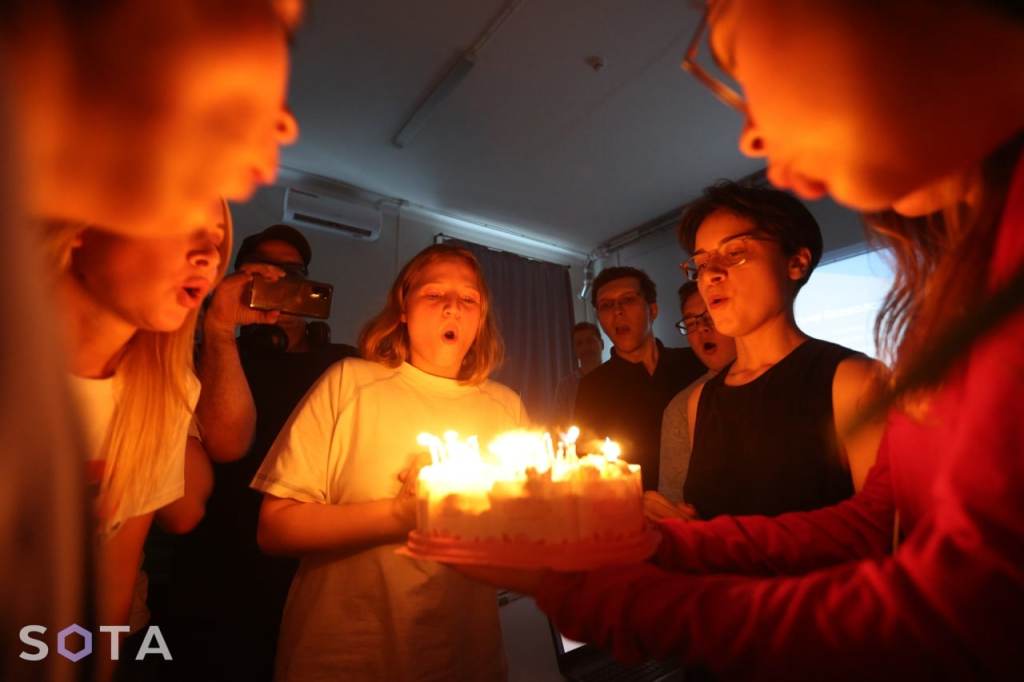
Today, Open Space Moscow celebrated the birthday of a political prisoner Dmitry Ivanov, the editor of the Telegram channel “MSU Protesting,” with cakes, stickers, candles, and merch.

In addition to Ivanov, who is on trial for disseminating “fake news about the army,” the evening’s organizers remembered other people currently jailed under Article 207.3 of the Criminal Code who are not as well known, in particular:

Olga Smirnova, a Petersburg activist with Peaceful Resistance, who has been prosecuted for writing post about the war in Ukraine and burning a cardboard letter Z.

Vladimir Zavyalov, a businessman who hung anti-war price tags in a supermarket.

Ioann Kurmoyarov, a priest who said on YouTube that hell awaits the soldiers who attacked Ukraine.

Igor Baryshnikov, a Kaliningrad activist who wrote about Bucha on Facebook.

Source: SOTA (Telegram), 5 August 2022. Translated by the Russian Reader

“Dima is in jail for words”
A merrymaker at Russian political prisoner Dmitry Ivanov’s birthday party writes him a postcard.