Pskov Region Singer-Songwriter Boris Yakovlev Charged with Calls for Extremism Grani.ru
April 20, 2017
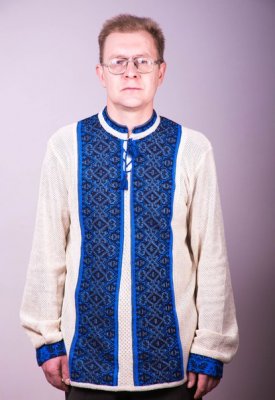
The FSB’s Pskov Region office has charged Boris Yakovlev, a 44-year-old resident of Dno, under Article 280.2 of the Russian Federal Criminal Code (public calls for extremism using the internet). Grani.ru was informed about the case by lawyer Dmitry Dinze, who is representing the musician.
Yakovlev is known for his original songs, which he posts on his YouTube channel.
“Yakovlev has denied his guilt and refused to testify, since the defense needs to analyze the evidence on which the charges are based,” said Dinze. “In addition, a forensic examination of the digital media seized from Yakovlev’s home has now been ordered, and in the near future, the court will order and perform a linguistic forensic examination. The forensic experts are being chosen. The defendant has been released on his own recognizance.”
Besides the recorded songs posted on YouTube, the FSB alleges that between June 20 and June 29, 2016, Yakovlev posted on his personal page on the social network Vkontakte five pieces of writing in which he outlined his ideas about the situation and events in Russia. The texts in question begin with the words “About elections,” “We have already gone over our limit on revolutions,” “Above the dwarf’s head,” “I find it curious,” and “Reading the newswire.”
On March 20, 2017, Senior Lieutenant A. Filippov, a detective in the First Branch of the Department for Protecting the Constitutional Order and Combating Terrorism in the FSB’s Pskov Region office, filed a crime report. He claimed there was evidence of a crime in Yakovlev’s published texts: public calls for extremism on the internet.
In a specially conducted study, Andrei Pominov, an associate professor in education and psychology at Bashkir State University’s Sibai Institute, wrote that Yakovlev’s texts “contain psychological and linguistic means aimed at inducing an unspecified group of persons to carry out extremist actions aimed at forcibly changing the existing state system or seizing power.”
Consequently, Captain of Justice I. Karpenkov, senior investigator in the Investigative Department of the FSB’s Pskov Region office, filed criminal charges against Yakovlev.
Boris Yakovlev, “Confession of an Enemy of the People”
On March 16, Judge Yevgeny Naydenov of Moscow’s Presna District Court fined rapper David Nuriyev (aka Ptakha) 200,000 rubles [approx. 3,300 euros] in an extremism case. Ptakha was found guilty of violating Article 282.1 of the Criminal Code (inciting hatred or enmity toward a group of people united on the grounds that they “assisted law enforcement agencies in locating and apprehending criminals”). The “social group” in the case was the Anti-Dealer Movement, founded by Dmitry Nosov, an ex-LDPR MP and former professional judoka.
The prosecutor had asked the defendant be given a suspended sentence of one and a half years. The musician fully acknowledged his guilt and apologized to Anti-Dealer. The case was tried under a special procedure. The trial consisted of a single hearing.
_______________________________
Boris Yakovlev, “I Want to Be There at the Hour”
I want to be there at the hour When the millions of nationalist riffraff Howl as one: We were opposed! We knew everything!
We pretended deliberately. You understand: work and kids. But deep down we resisted. We don’t want Crimea, please note.
We realized he was a murderer. We don’t want war and death. We really love Ukrainians. We’re innocent, believe us!
We don’t want Lugansk and Donbass. It’s the first we’ve heard about the “Russian world.” Standing in line for rotten meat, That’s what the mouse people will whisper.
I want to look in the eyes of the followers, Those Pharisees of the mob, In whom honor and conscience are vestiges, And who have an ass instead of a head.
Translated by the Russian Reader. A huge thanks to Comrade Koganzon for the heads-up
Hearing of the Justice Ministry’s case against the Jehovah’s Witnesses of Russia in Russian Supreme Court, April 5, 2017, Moscow. Photo courtesy of the Jehovah’s Witnesses of Russia
Supreme Court Refuses to Recognize Jehovah’s Witnesses as Victims of Political Repression Court Examining Justice Ministry’s Suit to Have Organized Declared “Extremist”
Yelena Mukhametshina Vedomosti
April 5, 2017
The Supreme Court has begun its consideration of the Justice Ministry’s suit against the Administrative Center of Jehovah’s Witnesses in Russia. The ministry has asked the organization to be declared extremist, to ban its work, and to close it.
The Administrative Center of Jehovah’s Witnesses in Russia had tried to file a counterclaim, asking that the Justice Ministry’s actions be declared illegal. It also asked the court to rule that the ministry’s actions against the Jehovah’s Witnesses were political repression and to throw out the Justice Ministry’s suit. However, the judge refused to take the counterclaim into consideration.
The Justice Ministry has filed its suit to close not only the Administrative Center but also all of the religious organization’s branches and affiliates in Russia.
“The true goal is political repression against religious organizations, in particular, the Jehovah’s Witnesses,” said a defense counsellor.
He recalled that the Jehovah’s Witnesses were also banned in Soviet times. In the early 1990s, however, the authorities admitted that members of the Jehovah’s Witnesses had been victims of political repression, and they were subsequently rehabilitated.
Three hundred and ninety-five local chapters of the Jehovah’s Witnesses have asked to be named co-defendants, since their work would be stopped if the Administrative Center were deemed an “extremist” organization. Each of these chapters, which could be deemed “extremist,” has the right to ask Justice Ministry officials why they want to ban them, said a defense counsellor. The court turned down the request. They also requested the case files from administrative cases, in particular, cases in which the authorities claimed to have seized “extremist” matter. A defense counsellor said there were witnesses who had seen matter that had previously been recognized as “extremist” planted in places where searches had taken place. This motion was also denied. The next hearing in the case will be on Thursday.
In October of last year, Moscow’s Tverskaya District Court issued a warning to the Administrative Center of Jehovah’s Witnesses in Russia for “extremist” activity. In January of this year, Moscow City Court upheld the legality of the warning. In March, the Justice Ministry filed a lawsuit in the Supreme Court asking that the Administrative Center of Jehovah’s Witnesses in Russia be recognized as an “extreme” organization and that its activities be banned after inspections allegedly revealed violations of anti-“extremist” laws. At the same time, an order was issued to suspend the work of both the Administrative Center and all local chapters until the court had made its final decision. In turn, the Jehovah’s Witnesses indicated the ban would affect four hundred registered local religious organizations and 2,777 religious groups in Russia, amounting to 175,000 followers. The Supreme Court had already upheld the closure of local chapters of the Jehovah’s Witnesses in Oryol, Belgorod, Samara, and other cities.
Today, a trial began whereby the Russian authorities intend to ban the Jehovah’s Witnesses. The whole world understands it is shameful to persecute people for religious beliefs, but not the Russian authorities, who habitually could not care less about their reputation. If we speak in terms of the “public good,” then in the coming years, as terrorist attacks continue, crime rates remain high, and corruption has become total, law enforcement agencies will be busy “interdicting” the religious activities of the organization’s 170,000 active members. (This figure does not included the tens, if not hundreds of thousands of sympathizers, family members, and people involved in some way.)
There is no doubt the entire attack on the Jehovah’s Witnesses has been undertaken by Justice Minister Alexander Konovalov to curry favor with Russian Orthodox Patriarch Kirill. It could be stopped with a single phone call. And yet this ban won’t really help the ROC in any way. Moreover, it will cause it serious problems, which even part of the church leadership understands. However, Kirill and his ideological confederates, having long ago taken the bit between their teeth, are speeding the church’s carriage over bumps and gullies.
Poet Alexander Byvshev. Photo courtesy of OVD Info
New Criminal Charges Filed against Ex-Schoolteacher Alexander Byvshev OVD Info
January 17, 2017
On January 17, 2017, police searched the house of ex-schoolteacher Alexander Byvshev in the village of Kromy, Oryol Region. During the search, law enforcement officers confiscated a computer and other information storage devices. After the search, the suspect was interrogated at the local office of the Russian Investigative Committee.
As Alexander Podrabinekwrote on his Facebook page, Byvshev has again been charged under Criminal Code Article 282 (inciting enmity or hostility, as well as humiliation of human dignity). The charges were filed in connection with Byvshev’s poem “On the Independence of Ukraine,” which was published in February 2015 in several Ukrainian periodicals. As Byvshev himself noted, the poem is a “polemical response” to Joseph Brodsky’s eponymous poem.
On July 13, 2015, the Kromy District Court found Byvshev guilty of inciting ethnic hatred (Criminal Code Article 282.1) and sentenced him to 300 hours of compulsory labor for writing poems supporting Ukraine. He was also forbidden to work as a schoolteacher for two years. In autumn 2014, after one of Byvshev’s poems was declared extremist, Rosfinmonitoring placed Byvshev on its list of terrorists and extremists, and his bank accounts were blocked.
Cossack Exaltation of the Holy Cross Cathedral, St. Petersburg, November 18, 2016. Billboard in foreground reads, “The Pink Bunny, A Store for Fortifying the Family, Ligov Shopping Center.” Photo by the Russian Reader
Everyone shall be guaranteed the freedom of conscience, the freedom of religion, including the right to profess individually or together with other any religion or to profess no religion at all, to freely choose, possess and disseminate religious and other views and act according to them.
—Constitution of the Russian Federation, Chapter 2, Article 28
Police Search Jehovah’s Witness Kingdom Halls in Smolensk and Sochi, Disrupting Services in Both Cases SOVA Center
December 19, 2016
On December 17 in Sochi, police officers and Cossacks came to the Jehovah’s Witness Kingdom Hall, blocked all the doors, drove all the worshippers from the auditorium except two people, and conducted a search. During the search, a publication included in the Federal List of Extremist Literature was confiscated.
According to the worshippers, one of the official witnesses accompanying the police helped them knock down the gate.
On December 18 in Smolensk, police and prosecutors, accompanied by armed riot police, arrived at the Jehovah’s Witness Kingdom Hall, where about sixty people were assembled. A search was also conducted. During the search, an extremist pamphlet was discovered in the toilet.
According to the Jehovah’s Witnesses, the extremist literature was planted by those conducting the searches in both cases. In both cases, the worship services were disrupted.
In addition, on December 18, a search was carried out in a private home in Smolensk where Jehovah’s Witnesses live. According to them, the police officers were rude and used force against women. When one of the Jehovah’s Witnesses felt sick, the law enforcement officers kept them from summoning medics for a long time.
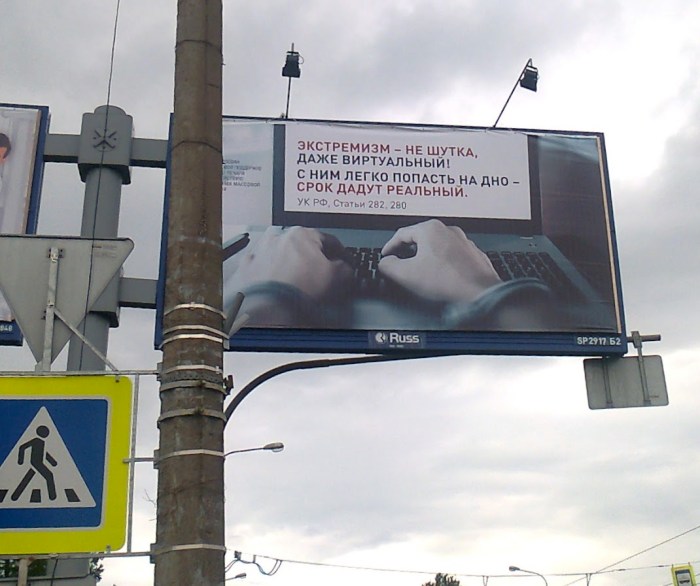
“Extremism is no joke, even virtual extremism. You can easily go down for it, and get a harsh sentece. Russian Federal Criminal Code, Articles 282 and 280.” Public service billboard, Lesnoy Prospekt, Petersburg, August 7, 2016. Photo by the Russian Reader
FSB Detains Schoolboy on Extremism Charges in Perm Territory OVD Info
December 19, 2016
16-year-old Mark R. was detained by FSB officers right in the middle of classes in the village of Uralsky, located in Perm Territory’s Nytva District. The teenager has been charged with calling for extremist actions (Criminal Code 280.2). The local news agency Periskop reported the incident, citing its own sources.
The schoolboy was interrogated at the regional FSB office. Mark has now been released on his recognizance and is attending school.
The charges were filed in connection with a entry made last spring on the social network Vkontakte. During a discussion with Christian friends, the schoolboy had written to them that “churches should be burned down.” Experts from the Interior Ministry office for the Republic of Udmurtia conducted a linguistic forensic examination and concluded the “statement was hortatory in nature and encouraged hostile action.”
“Extremism is no joke, even virtual extremism. You can easily go down for it, and get a harsh sentece. Russian Federal Criminal Code, Articles 282 and 280.” Public service billboard, Lesnoy Prospekt, Petersburg, August 7, 2016. Photo by the Russian Reader
Kaluga Resident Faces Criminal Charges for Two-Year-Old Repost OVD Info
December 19, 2016
On November 17, FSB officers came to Kaluga resident’s Roman Grishin workplace and took him away to an investigator. After being interrogated on camera, Grishin was informed he stood accused of inciting enmity and hatred (Criminal Code Article 282.1) for reposting a video in 2014. Grishin wrote about the incident on Facebook on December 18. He was released on his own recognizance as a suspect in a criminal case.
“A group of FSB officers in balaclavas and special kit showed up in the morning at my work, plunging my coworkers into a considerable stupor,” writes Grishin.
The video is entitled “New Hit from Kharkov! This Is Russism, Baby.” Acccording to Grishin, it is freely accessible on YouTube.
As Grishin told OVD Info by telephone, the main topic of his interrogation by FSB officers was his regular trips to Ukraine. They asked why he had his picture taken on the Maidan. Grishin visits the country as a tourist, stays with friends, and stresses that he does not collaborate with any organizations in Ukraine.
Grishin lives in Kaluga. Educated as a philologist, he works as a proofreader. The FSB’s scrutiny has been a real shock to him.
“I never voiced any appeals [for enmity or hatred]. You could say I’m a couch activist,” he said.
This is not the first case of persecution for publishing the video to Boris Sevastyanov’s song “This Is Russism, Baby.” Previously, however, its posting was the occasion for filing misdemeanor charges of disseminating extremism matter (Administrative Offenses Code Article 20.29). In April 2016, Krasnodar LGBT activist Nina Solovyova was convicted of commmitting a misdemeanor for posting the video and sentenced to ten days in jail. Solovyova told her story to OVD Info in April of this year.
Russian MP Vitaly Milonov. Photo courtesy of @Fake_MIDRF
Chuvashia Resident Fined for Reposting Photo of Milonov
Maria Leiva RBC
November 16, 2016
A member of the board of Open Russia from Chuvashia has been fined 1,000 rubles for reposting a photograph of Russian MP Vitaly Milonov in which he is posed in a t-shirt brandishing a slogan deemed extremist in Russia
A court in Chuvashia has fined Dmitry Semyonov, a member of Open Russia‘s board in the region, 1,000 rubles for reposting a photo of MP Vitaly Milonov in a t-shirt emblazoned with the slogan “Orthodoxy or Death” on the social media network VKontakte. The slogan has been ruled an incitement to sectarian strife and placed on the federal list of extremist matter. Semyonov’s lawyer, Alexei Glukhov, reported the news on his Facebook page.
In another post, he added that the court had reject the defense’s motion to order a forensic examination and summon specialists to confirm the date when the Internet had been monitored.
Last week, Semyonov was summoned by the police over the repost of Milonov’s photograph. As the activist told RBC himself, he was charged in writing with violating Article 20.29 of the Administrative Offense Codes (producing and disseminating extremist matter).
“The charge sheets say that, on November 3, FSB officers suddenly felt like monitoring social media networks and chanced upon my post,” said Semyonov.
He linked the incident to his work as a social and political activist with Open Russia. Semyonov is the organization’s regional coordinator in eight Russian regioins.
In turn, Glukhov told RBC that police in Chuvashia constantly haul in activists for reposts on social media.
In conversation with RBC, Milonov said that last Wednesday he had sent a letter to the Justice Ministry asking them to remove the slogan from the register of extremist matter, but had not yet received a reply.
“As one brother to another, I’ll tell the justice minister, ‘Do you really imagine living outside the faith? So it’s a normal Orthodox slogan, and anyone who thinks otherwise is a bastard,” said the MP.
He was confident the slogan would soon be removed from the list of extremist matter, but promised to study Semyonov’s case more closely, “although membership in Khodorkovsky’s organization deserves attention itself.”
Earlier, Milonov told RBC that he did not consider displaying a photograph in which he posed with the slogan “Orthodoxy or Death” a crime. However, the MP doubted that Semyonov was being prosecuted solely over the photograph.
The Partisans of Suna Karelian pensioners have gone into the woods to save a pine forest from logging
Alexei Vladimirov Fontanka.ru
October 26, 2016
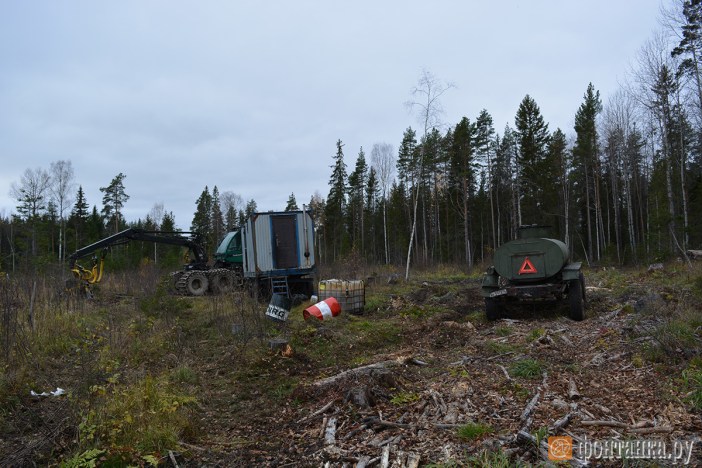
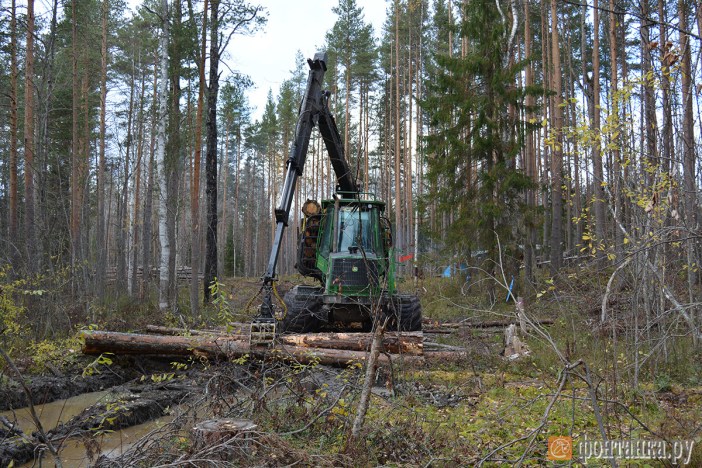
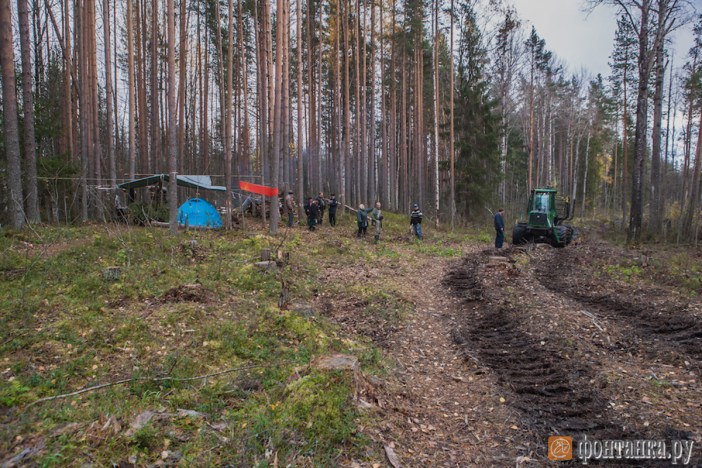
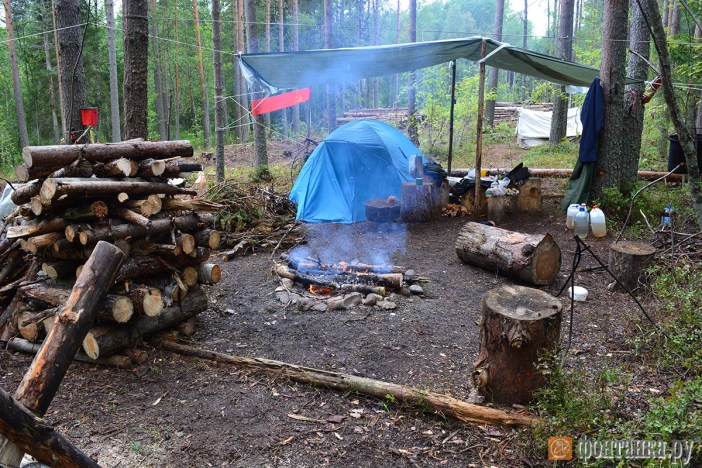
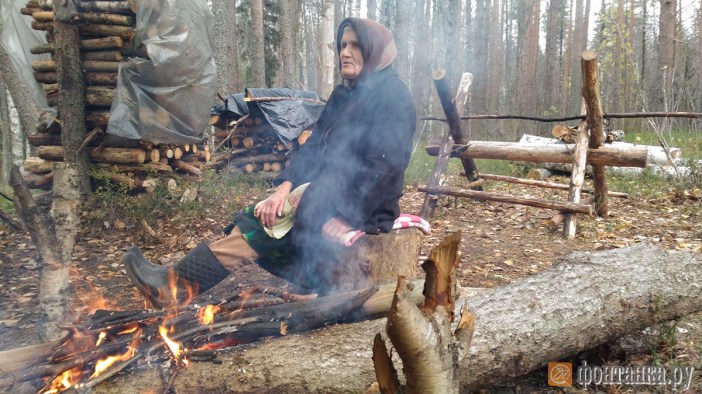
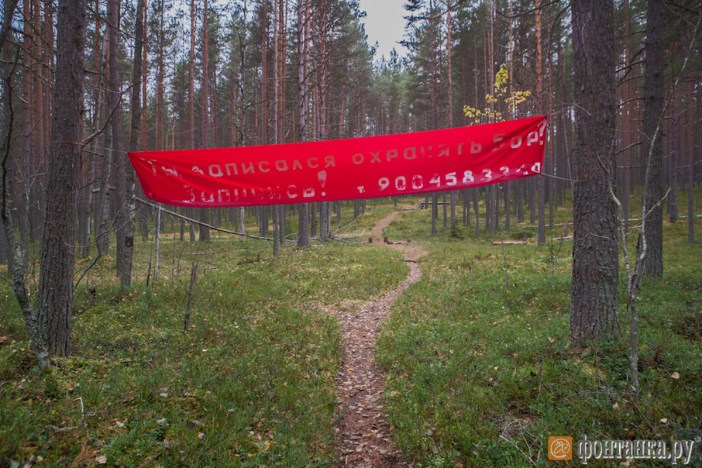
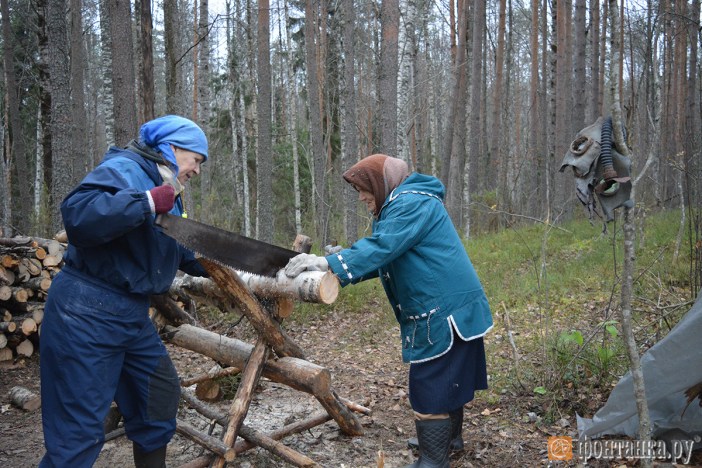
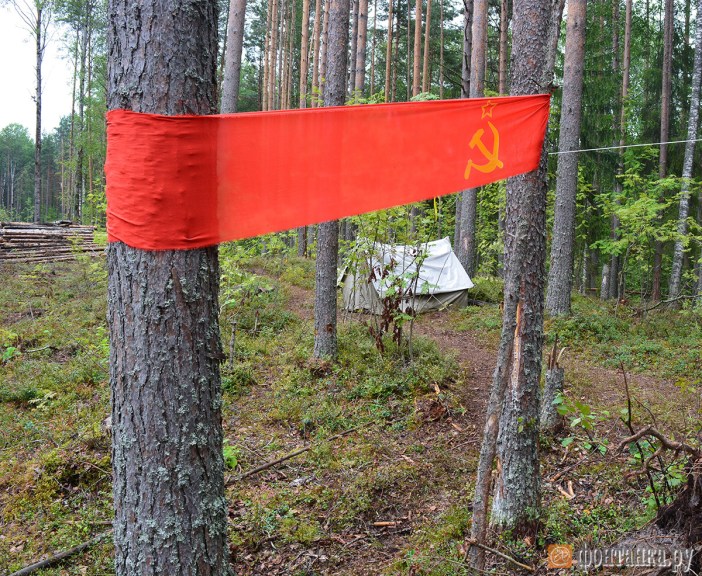
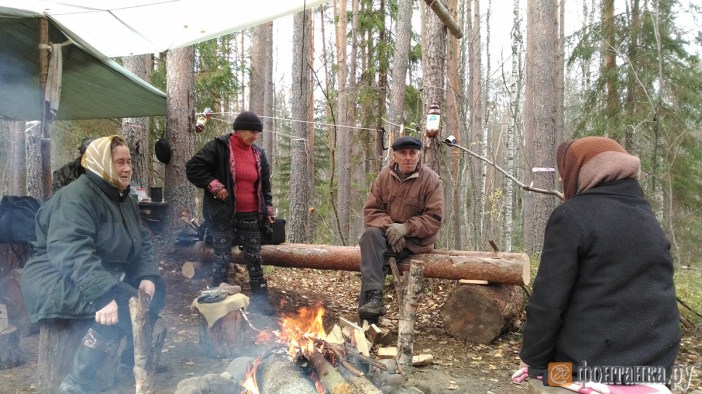
Residents of the small village of Suna in Karelia’s Kondopoga District, mainly pensioners, have rebelled against the authorities, loggers, and a mining company that plans to develop a sand and gravel quarry in the scenic pine wood alongside their village. The area resembles the front lines during a war. The loggers have brought in their equipment, but have been stopped in their tracks by the pensioners, who have set up camp there. The pensioners have been keeping a 24-hour vigil in the woods for four months. Local journalists have dubbed them the “partisans of Suna.”
“Extremist” Pensioners
The conflict flared up much earlier. Saturn Nordstroy, a company specializing in the development of sand and gravel beds in Karelia, had its eye on a plot of land in the vicinity of Suna and decided to open a sand quarry there. The Karelian Nature Management and Ecology Ministry supported the idea. Permissions were received, an auction was held, and the company was awarded a license in 2011 to extract sand and gravel at the site for a period of twenty years. However, neither the officials nor the businessmen suspected they would encounter vigorous resistance from local residents, mainly pensioners, who have strongly opposed the quarry development plan and exercised their inalienable right to a decent life.
There is a pine forest on the site where the businessmen have decided to dig the quarry, the only one in the whole area, a place where the locals harvest berries, mushrooms, and medicinal herbs. The wild plants are a good supplement to their tiny pensions. Once upon a time, the village of Suna was known throughout the Soviet Union for the nearby poultry farm, also called Suna. The farm was considered one of the best in the country, but in the “fat years” of the noughties, it was shut down. This has meant a slow death for the surrounding settlements. Young people have left the area in search of work, while the old people have stayed in the village to live out their lives. The money to index their pensions could not be found, but the prime minister has told them to “hang on.”
The locals learned a quarry would be dug near their village only at the presentation of the development plan. Opponents of the logging of Suna Forest planned to hold a people’s assembly on May 14, but they were forced to abandon the idea. On the eve of the assembly, police visited one resident of Suna, pensioner Nina Shalayeva. According to the elderly woman, the police all but accused her of extremism.
In the autumn of last year, the Center for Extremism Prevention (Center “E”) began investigating the pensioners. One of them had rashly said it would be a good idea to block the Kola Federal Highway, which runs from St. Petersburg to Murmansk, since the village is located a kilometer and a half from the highway. That would get Moscow’s attention right away. Naturally, someone snitched to the proper authorities. Law enforcement and the secret services reacted instantly. The settlements along the Kola Highway were mobbed with large numbers of law enforcement officers, from riot police to the highway patrol. To stop the protest rally in its tracks, the pensioners were threatened with criminal charges for extremism.
“The deputy head of the Kondopoga police was polite. He gave me a warning for extremism and left. I had run into him in the spring, when I had also been accused of organizing an unsanctioned rally. The local beat cop said they had learned we were planning to block the highway, and that I was organizing the whole thing. What kind of organizer am I? There was also an FSB officer from Kondopoga. He asked to talk with me privately. He said flat out that they had specially trained people who did not like to be bothered. They would arrive, break all of us, and imprison us, despite our age,” recounted Nina Shalayeva, an anti-quarry activist.
Then the villagers suddenly had a bit of luck. In the spring of 2015, scientists from Petrozavodsk State University discovered a valuable species of lichen in the Suna Forest, Lobaria pulmonaria. It is listed in the Red Book of Russia as an endangered species: destroying species listed in the Red Book is not only forbidden by law, but is even considered a criminal offense. The scientists’ find occasioned an inspection by the prosecutor’s office in the area of the planned digging. Consequently, the Karelian Interdistrict Environmental Prosecutor’s Office issued a warning to the director of Saturn Nordstroi about the inadmissibility of violating the law while extracting sand and gravel from the South Suna Quarry. The pensioners now had grounds to sue.
Litigation
The plaintiffs demanded “the license issued to Saturn Nordstroy LLC be terminated and the company prohibited from engaging in all exploratory and economic activity that may lead to the destruction of protected plant species and their habitat in the pine forest near the village.” In April of this year, the Petrozavodsk City Court partly granted the claim lodged by the residents of Suna. The company was forbidden from carrying out exploratory and other work detrimental to endangered species discovered in the forest. However, the court could find no grounds for terminating the license for subsoil extraction issued to the company.
However, the Karelian Supreme Court has overturned the Petrozavodsk City Court’s ruling. The case is currently under investigation by the Russian Supreme Court. The pensioners think the case will be heard in December or thereabouts.
The Partisans of Suna
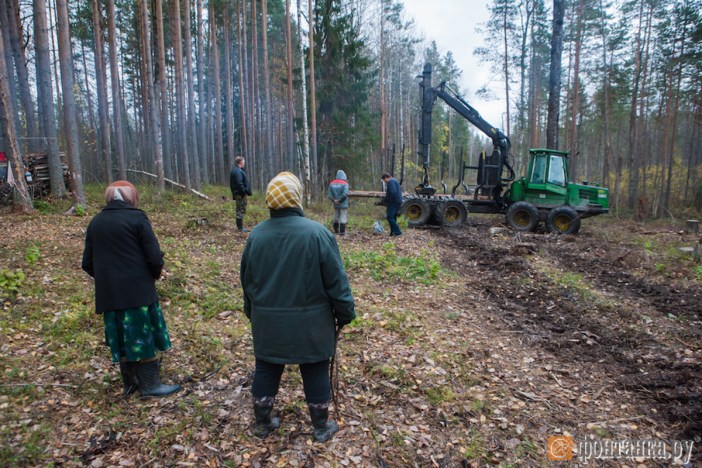
Immediately after the Karelian Supreme Court’s ruling, logging equipment was moved into Suna Forest. People formed a human shield to block the road to the loggers. The whole village came running to see what the noise and fracas were about. The villagers told police, businessmen, and officials of various ranks they would not surrender the forest: they would have to chop them down with it. Arriving on the scene, the police warned the pensioners they would be forced to detain them if they did not leave the logging site, because they were interfering with the work of the loggers. The pensioners set up camp and kicked off a round-the-clock vigil in the forest.
The Partisans of Suna
“Medvedev said we had to be patient. We are patient. Just don’t take away the last thing we have! I don’t know what price we’ll have to pay, but we are not going to give up this forest, because we won’t survive without it. The [Karelian] Supreme Court’s ruling made us sad. However, it is only the latest step in the case, albeit one not in our favor at the moment. We will defend our rights!” said pensioner Tatyana Romakhina.
The logging equipment retreated, and a “pre-election” calm set in until October 7.
On the morning of October 7, the engines of the forestry equipment could again be heard droning in Suna Forest. The first on the scene was Nina Shalyaeva. She stopped the harvester.
“When I went to my shift in the forest, I saw that a harvester was running. I stood in front of their equipment and said that my fellow villagers would be right behind me, and we wouldn’t let them cut down the trees. They promised the police would come and take me to Petrozavodsk. However, after we talked, they stopped logging and drove off the lot,” said Shalyaeva.
Karelia’s Suna Forest has become something like Khimki Forest. District police officer Vitaly Ivanov, summoned by the loggers, interviewed the locals, wrote down their internal passport data, and said that if the actions of the loggers were ruled legal, the defenders of Suna Forest who impeded the logging would be forcibly removed from the allotment. In turn, the pensioners promised the entire village would rise in rebellion. The loggers conversed with the pensioners rather unceremoniously. They demanded to see papers [prohibiting them from doing their work] and told them in harsh tones to go back to the village. Everyone’s nerves were on edge. The loggers were irritated by the annoying, unplanned downtime, while the pensioners were annoyed by police’s actions. They could not understand why the police had asked them to produce their passports, written down the information in them, and tried to drive them out of the woods. In the end, the loggers retreated. Fortunately, things did not come to blows.
The partisans’ campNina Makkoyeva“You’ve signed up to defend the forest!”
Meanwhile, the controversy over the forest has spread beyond Karelia. Major publications and national TV channels have covered the “partisans of Suna.” In Petrozavodsk, a grassroots movement has been organized to help the pensioners. Young people have begun standing watch in the woods along with the old people. Residents of Murmansk Region have sent them a winter-proof tent.
The pensioners are still on watch in the woods and getting ready for winter, while officials and businessmen are looking for ways to resolve the conflict.
An “Artificially Simulated” Conflict?
After a long silence, the Government of Karelia finally organized a round table on the issue. Officials believe the controversy surrounding the Suna Forest has been “artificially simulated.”
“We organized a meeting to discuss the situation with the development of a sand and gravel quarry in the South Suna subsoil resources allotment, and the reasons why the license holder has been hindered from engaging in legal activities, and to work out a solution to the conflict that has emerged. A situation around Suna Forest really has emerged, and it is our job to figure what caused this artificially simulated social conflict. I would like to draw the attention to the people involved in the process that the question of the legality of the license holder’s activities has been considered in court, and the rulings, which have entered into force, were in their favor. Multiple studies have not established evidence that endangered plant species are being destroyed. Thus, the license holder has all legal grounds to engage in their business activities,” Alexei Pavlov, first deputy minister for nature management and ecology in Karelia, said at the outset of the round table.
Igor Fedotov, director of Saturn Nordstroy LLC, was of the same opinion.
“Everything is too seriously organized. When we presented the project in Yanishpole in May of last year, the experts told us someone was stage-managing this drama. Everyone accuses me of wanting to come in, dig everything up, destroy everything, and do nothing [for the area]. So let me do something. I want to do something good for Suna. I can donate the material I am going to be extracting. The district needs it: they do not have good sand. I can help out the local council, which is gasping for breath, just like every district in Karelia. We are building a road to the quarry, and it will still be there [after we are gone]. I am not planning to build anything there. The local residents will be the better for it. And the reforestation of the area will begin,” said Fedotov.
No decisions were made at the round table, however. Talks have been rescheduled for October 26.
All photos courtesy of Alexei Vladimirov and Fontanka.ru. Translated by the Russian Reader. Thanks to Comrade VZ for the heads-up
Chuvash Pensioner Receives Two Years Probation for Repost on VKontakte
Artyom Filipyonok RBC
October 14, 2016
A court in Chuvashia has sentenced a local pensioner to a two-year suspended sentence for reposting printed matter earlier ruled extremist. In May of this year, Andrei Bubeyev, a mechanical engineer from Tver, was convicted of reposting an article by Boris Stomakhin.
Tsivilsk District Court in Chuvashia has sentenced 62-year-old pensioner Nikolai Yegorov, who works as a security guard at a cement factory, to a two-year suspended sentence. He was found guilty of “inciting ethnic hatred” (as punishable under Russian Federal Criminal Code Article 282.1), reports Interfax.
Police investigators claimed that, on May 8, 2014, Yegorov posted an open letter by journalist Boris Stomakhin, which had been ruled extremist, on his page on the VKontakte social network. Lawyer Yevgeny Gubin had previously reported that prosecutors had asked the pensioner be sentenced to 360 hours of compulsory labor.
Yegorov himself claimed he had not posted anything. According to his lawyer, his client’s personal page was accessible to anyone “due to his poor knowledge of the specific features of the Internet.”
Journalist Boris Stomakhin, who supported Chechen separatists, has been convicted of inciting hatred and publicly calling for extremism on three occasions. He is currently serving a sentence for justifying terrorism. In April 2014, he was sentenced to six and a half years in prison.
In May of this year, Andrei Bubeyev, a mechanical engineer from Tver, was convicted for reposting an article by Stomakhin. The sentence was harsher: Bubeyev was sentenced to two years and three months in a work-release prison colony. The Tver man was convicted of “publicly calling for extremism” (as punishable under Russian Federal Criminal Code Article 280.2) and “publicly calling for actions aimed at violating the territorial integrity of the Russian Federation” (as punishable under Russian Federal Criminal Code 280.1.2).
In 2002, the law “On Combating Extremism” beefed up the definition of extremism. Extremism includes such acts as “violent change of the constitutional system and violation of the Russian Federation’s integrity,” “public justification of terrorism and other terrorist activity,” and “incitement of social, racial, ethnic or religious enmity.” Nikolay Mironov, director of the Center for Economic and Political Reform, told RBC that over half of extremism convictions have to do with publications in the Internet and, in particular, on social networks.
They Got Out of Their Tractors
Why the so-called common people are increasingly joining the ranks of the so-called fifth column Gazeta.ru
August 29, 2016
A fifth column of tractors? Photo courtesy of @melnichenko_va/Twitter
The arrest of the people involved in the tractor convoy, as well as new protest rallies in Togliatti after Nikolai Merkushin, governor of Samara Region announced wage arrears would “never” be paid off, are vivid examples of the top brass’s new style of communicating with people. After flirting only four or five years ago with the common people, as opposed to the creacles from the so-called fifth column, the authorities have, in the midst of a crisis, been less and less likely to pretend they care about the needs of rank-and-file Russians. Moreover, any reminders of problems at the bottom provokes irritation and an increasingly repressive reaction at the top.
Previously, top officials, especially in the run-up to elections, preferred to mollify discontent at the local level by promising people something, and from year to year, the president would even personally solve people’s specific problems, both during his televised town hall meetings (during which, for example, he dealt with problems ranging from the water supply in a Stavropol village to the payment of wages to workers at a fish factory on Shikotan) and during personal visits, as was the case in Pikalyovo, where chemical plant workers also blocked a federal highway. Nowadays, on the contrary, the authorities have seemingly stopped pretending that helping the common people is a priority for them.
The people have made no political demands in these cases. Moreover, the main players in these stories almost certainly belong to the hypothetical loyal majority.
The people who took part in the tractor convoy against forcible land seizures even adopted the name Polite Farmers, apparently by analogy with the patriotic meme “polite people,” which gained popularity in Russia after the annexation of Crimea.
In 2011–2012, the authorities used approximately the same people to intimidate street protesters sporting political slogans. That was when the whole country heard of Uralvagonzavod, a tank manufacturer whose workers promised to travel to Moscow to teach the creacles a lesson. Subsequently, the company’s head engineer, Igor Kholmanskih, was unexpectedly appointed presidential envoy to the Urals Federal Distrtict.
Back then, the cultivation of a political standoff between working people from the provinces and slackers, “State Department agents,” and self-indulgent intellectuals from the capitals seemed pivotal, but in the aftermath of Crimea and a protracted crisis, it has almost been nullified.
The people are still important for generating good ratings [via wildly dubious opinion polls — TRR], but it would seem that even rhetorically they have ceased to be an object of unconditional concern on the part of the government.
Nowadays, the authorities regard the requests and especially the demands of the so-called common people nearly as harshly as they once treated the Bolotnaya Square protests.
The government does not have the money to placate the common people, so people have to be forced to love the leadership unselfishly, in the name of stability and the supreme interests of the state. Since politics has finally defeated the economy in Russia, instead of getting down to brass tacks and solving problems with employment and wage arrears, the regime generously feeds people stories about war with the West. During a war, it quite unpatriotic to demand payment of back wages or ask for pension increase. Only internal enemies would behave this way.
“We are not slaves!” Coal Miners on Hunger Strike in Gukovo. Published on August 25, 2016, by Novaya Gazeta. Miners in Gukovo have refused a “handout” from the governor of Rostov Region and continued their hunger strike over unpaid wages. Video by Elena Kostyuchenko. Edited by Gleb Limansky.
So the coal miners in Rostov, who have continued their hunger strike under the slogan “We are not slaves,” have suddenly proven to be enemies, along with the farmers of Krasnodar, who wanted to tell the president about forcible land seizures, and the activists defending Torfyanka Park in Moscow, who were detained in the early hours of Monday morning for, allegedly, attempting to break Orthodox crosses, and the people defending the capital’s Dubki Park, slated for redevelopment despite the opinion of local residents, and the people who protested against the extortionate Plato system for calculating the mileage tolls paid by truckers, and just about anyone who is unhappy with something and plans to make the authorities aware of their dissatisfaction.
Grassroots initiatives, especially if they involve protests against the actions or inaction of the authorities, are not only unwelcome now, but are regarded as downright dangerous, almost as actions against the state. This hypothesis is borne out by the silence of the parliamentary opposition parties. In the midst of an election campaign, they have not even attempted to channel popular discontent in certain regions and make it work to their advantage at the ballot box.
The distinction between the so-called fifth column and the other four has blurred.
Nowadays, the fifth column can be a woman who asks a governor about back wages. Someone who defends a city park. Farmers. Coal miners. Even the workers of Uralvagonzavod, which in recent years has been on the verge of bankruptcy. The contracts the state had been throwing the company’s way have not helped, apparently.
If the authorities, especially local authorities simply afraid to show federal authorities they are incapable of coping with problems, continue to operate only through a policy of intimidation, they might soon be the fifth column themselves, if only because, sooner or later, they will find themselves in the minority.
Translated by the Russian Reader. Thanks to Sean Guillory for the heads-up
________
A surprisingly frank and dead-on editorial from Gazeta.ru, who usually have not struck me as wild-eyed radicals, about how the Russian authorities have increasingly come to behave as if nearly the entire Russian population, including the so-called common people, is a gigantic fifth column arrayed against them.
The reason they have sunk into this black pit of reaction is that the current regime is simply incapable of solving the country’s numerous political, social, and economic crises, because it has directly or indirectly generated nearly all of them, including the utter lawlessness in Krasnodar Territory that was finally too much for a group of farmers who climbed into their tractors and set out for Moscow several days ago. But because even allegedly simple farmers can become a fifth column as soon as they draw attention to their sorry plight and the role of the authorities in it, they got only as far the neighboring Rostov Region on their tractors before the police shut them down.
This editorial is also valuable for its catalogue of similar conflicts, most of which you probably have never heard of because they are not well covered or covered at all by the western press and only marginally better by Russian print and online media. Russian mainstream TV outlets mainly avoid them altogether, as do most of the opposition parties currently contending for seats in the Russian State Duma and regional legislatures, as the editorialists point out.
So the hunger-striking miners in Gukov and their wives are left to their own devices when dealing with their creepy regional governor, no doubt a KGB vet, who all but accuses them of acting on behalf of the CIA, although they just want to get paid for their hard, thankless work.
The only grain of salt one should chew while reading this editorial is the fact that these local grassroots campaigns have been going in rather large numbers across Russia throughout Putin’s 17-year reign. And in many cases the altogether uncommon common people who fought these battles were fifth-columnized (through beatings, murders, and jail time) as badly as the current grassroots campaigners mentioned by the editorialists. During the fat years of the noughties, however, times were much better economically in the Russian capitals for a lot of people than they had been just a few years earlier, so they preferred not to notice too hard what was going on in their midst, much less some part of their country they would never dream of visiting even.
The Putinist state has been waging a cold civil war against the people of Russia for seventeen years whether the media has noticed it or not. But a lot of the common people have noticed. TRR