(Anti)Fascism Tuesday

Federal immigration agents detained three people and deployed chemical agents at multiple locations around E. 34th Street and Park Avenue in Minneapolis’ Powderhorn neighborhood Tuesday morning. At least two were observers and not the target of immigration enforcement operations.

Around 9:40 a.m., community response networks began sending alerts about Immigration and Customs Enforcement (ICE) door-knocking at E. 34th Street and Park Avenue. By 10 a.m., a crowd of over 100 observers had gathered, confronting agents at multiple intersections. 

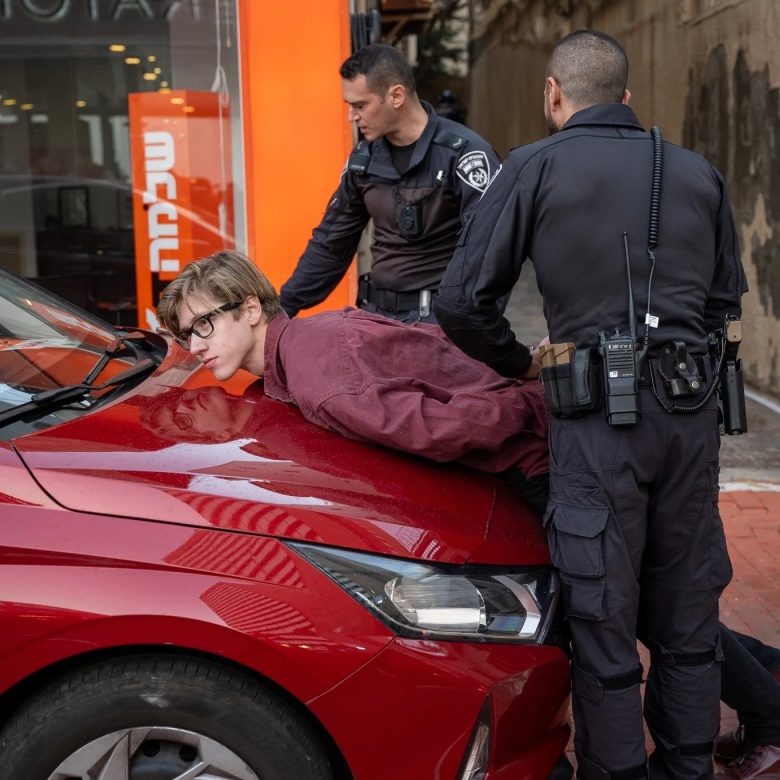
Among the detainees was a woman who was forcibly removed from her vehicle after agents smashed her passenger-side window. 

In a video taken by Sahan Journal, the woman can be seen arguing with agents prior to being grabbed by multiple agents and carried to agents’ vehicle. The woman can be heard shouting that she is disabled and on her way to a doctor’s appointment that ICE was obstructing. Prior to the detention agents had instructed her to drive away.

After being pulled out of a car, a women screams as she’s being arrested by immigrations agents at 34th and Park in Minneapolis on Jan 13, 2026. Credit: Chris Juhn for Sahan Journal

Shortly after, another observer on site was tackled and forcibly put in agents’ vehicle as well. According to state Rep. Aisha Gomez, DFL-Minneapolis, who was present at the scene, agents pushed the man’s head into the concrete prior to carrying him away. Gomez also said that agents were physical with her as well. 

“These officers have obviously not had the basic law enforcement training,” Gomez said. “I was shoved with no verbal communication whatsoever.” 

Andy Larson, a south Minneapolis resident who was out observing ICE activity Tuesday, told Sahan Journal that one protester kicked out the taillight of an ICE vehicle and was tackled to the ground up the road on Park Avenue and E. 36th Street.

“It was a really good kick,” Larson said.

The protester managed to escape ICE agents, Larson said. ICE deployed chemical irritants and shot pepper balls into the crowd and fled the scene.

According to Sahan Journal photojournalist Chris Juhn, a Hispanic man was also visible in the back of one vehicle. It is unclear whether the man was an observer or target of federal operations. ICE did not respond to Sahan’s request for comment on the operations. 

At multiple points during the operation, agents deployed chemical agents at observers. Agents fired pepper balls at observers’ feet and threw canisters of tear gas at the corner of 34th Street and both Park and Oakland avenues prior to leaving the scene. Eyewitness Moses Wolf said there was no singular precipitating event that led to tear gas being deployed on Park Avenue.

“There was a crowd confronting each other telling ICE to get out,” Wolf said. “I didn’t really see any physical altercation happening.” He said it appeared to be a tactic by ICE agents to exit the scene.

Wolf said the confrontation prior to the deployment of tear gas had not escalated beyond what had already been happening. 

“It wasn’t anything crazy,” Wolf said. “I turned around for one second and there was this whole entire cloud of it, and pepper spray came with that.” 

Eyewitness Neph Sudduth said at Oakland Avenue agents used tear gas as they were leaving.

“They were finally leaving, it was the last car of the convoy,” Sudduth said. “They just threw two or three canisters out at us as they left.”

Both Sudduth and Wolf said they witnessed agents using pepper spray out of the windows of their vehicles as they drove off.

“They just wanted to hurt us cause we told them how we felt, and they didn’t like it,” Sudduth said.

The operation in Powderhorn is part of a flood of federal immigration activity in Minnesota. As many as 2,000 federal agents are present in the state according to reporting from the New York Times, with an additional 1,000 set to be deployed. 

For Gomez, the clash with ICE is the new reality of life in the Twin Cities with federal agents present. 

“This is what our streets are like,” Gomez said. “We have these masked, unaccountable unknown to us federal agents, and it’s like they’re the secret police.”

Despite the difficulties, Gomez believes observers should and will continue to show up to meet federal agents in the streets. 

“Our community is undeterred,” she said. “We’re not going to just lay down. You can gas us and mace us all you want, we’re not going to just lay down.”

Sahan Journal reporter Andrew Hazzard contributed to this story.

Source: Nicolas Scibelli, “Crowd of 100 confronts immigration agents door-knocking in south Minneapolis,” Sahan Journal, 13 January 2024


1. Numbers

During the 2024 campaign, Donald Trump promised to deport every illegal immigrant who was a rapist, murderer, or thief. He also promised to deport 20 million immigrants. Some voters believed the first promise; other voters believed the second.

Because people are stupid, that first group of voters believed that there were 20 million undocumented immigrants who have committed felonies. This is not possible. The total number of people in jail in America today—this includes federal, state, local, and tribal land prisons—is just under 2 million. The number of undocumented immigrants who have committed serious crimes cannot be 10x the entire prison population of the United States. If it were, then daily life in America would look like Escape from New York.

So some Trump voters were duped owing to their general ignorance and/or innumeracy.

But others were not. Others signed up for Trump because of his second promise (the 20 million deportations) and viewed the first promise (about deporting only criminals) as the pap necessary to get the suckers onboard.

There are two crucial questions about these two groups. The first is:

What is their relative size? What percentage of Republican voters were tricked into voting for Trump’s immigration policies versus what percentage are getting exactly what they wanted?

Would you like to guess? Go ahead. I promise that whatever you’re thinking, it isn’t dark enough.

Here’s a survey tracking Republican approval of Trump’s immigration policies (the top line, in red) over most of 2025:
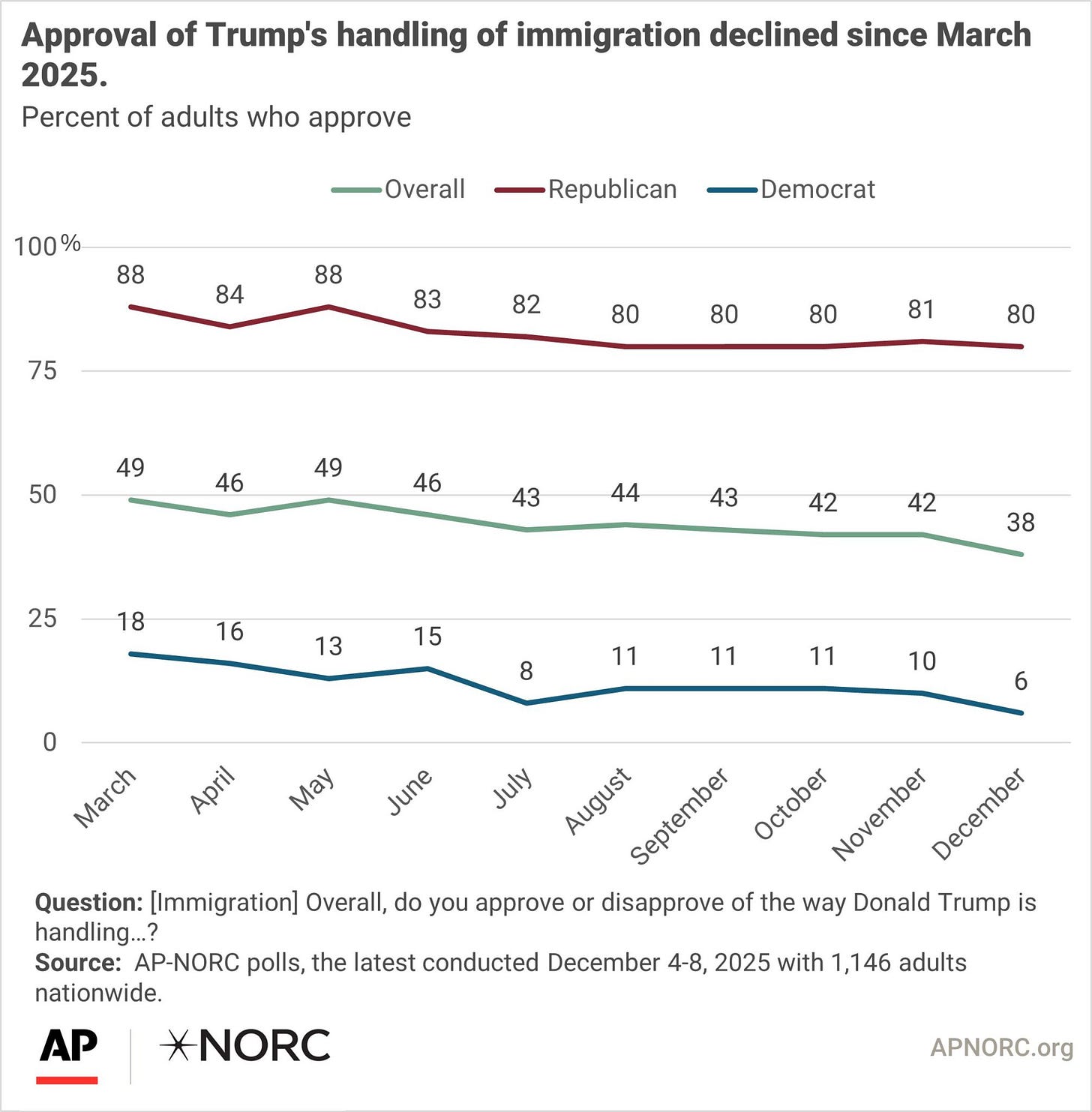
That’s a consistent level of support around 80 percent. Now here is the first poll conducted after the killing of Renee Good:
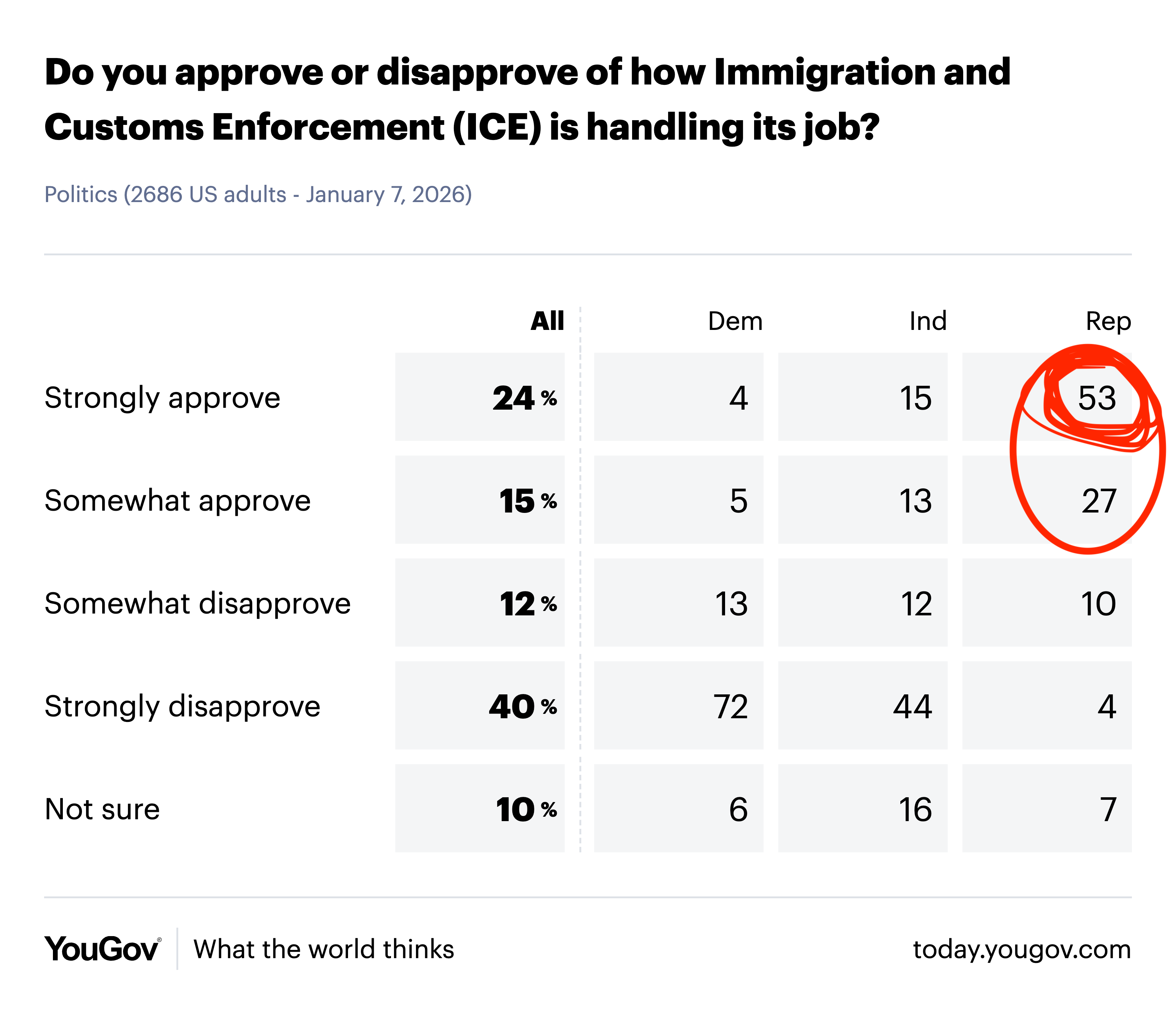
Even after the killing of an unarmed American citizen, a total of 80 percent of Republicans approve of what ICE is doing and 53 percent of Republicans strongly approve.

It seems pretty clear that, at best, one in five Trump voters were duped. The majority of them are getting exactly what they wanted.

Now if Trump were to lose the support of 20 percent of Republicans voters—or even 14 percent—it would be meaningful for Republican electoral prospects. Which is nice.

The problem is that having 80 percent of Republican voters actively supporting a fascist race war is meaningful for our societal prospects.


Which brings us to the second question: How are these groups distributed through the elite positions of power in government? And here it seems that many of the Republicans most invested in a race war have a great deal of power. Like, for instance, Vice President JD Vance, Deputy Chief of Staff Stephen Miller, and Secretary of Homeland Security Kristi Noem.

At the elite levels, even the idea of 20 million deportations is too little. Here’s a tweet from the Department of Homeland Security on New Year’s Eve:
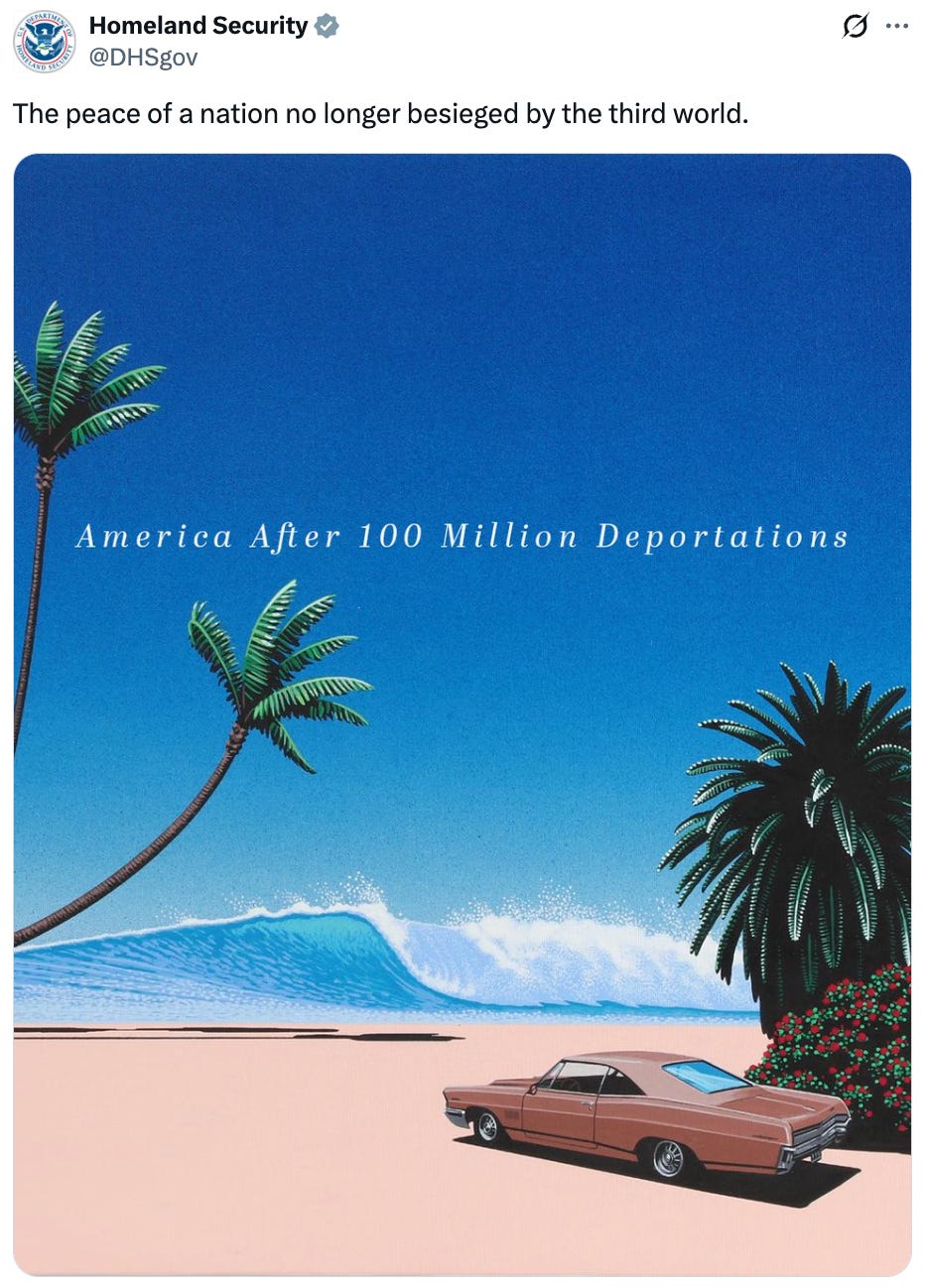
100 million deportations?

There are 43 million foreign-born Americans. Most of them are legal immigrants. In order to perform 100 million deportations, DHS would have to round up every immigrant of any status—even naturalized citizens—and then also snatch 57 million American who are citizens by birth and deport them, too.

Want to guess who those other 57 million Americans might be?

This week the Department of Labor published this:
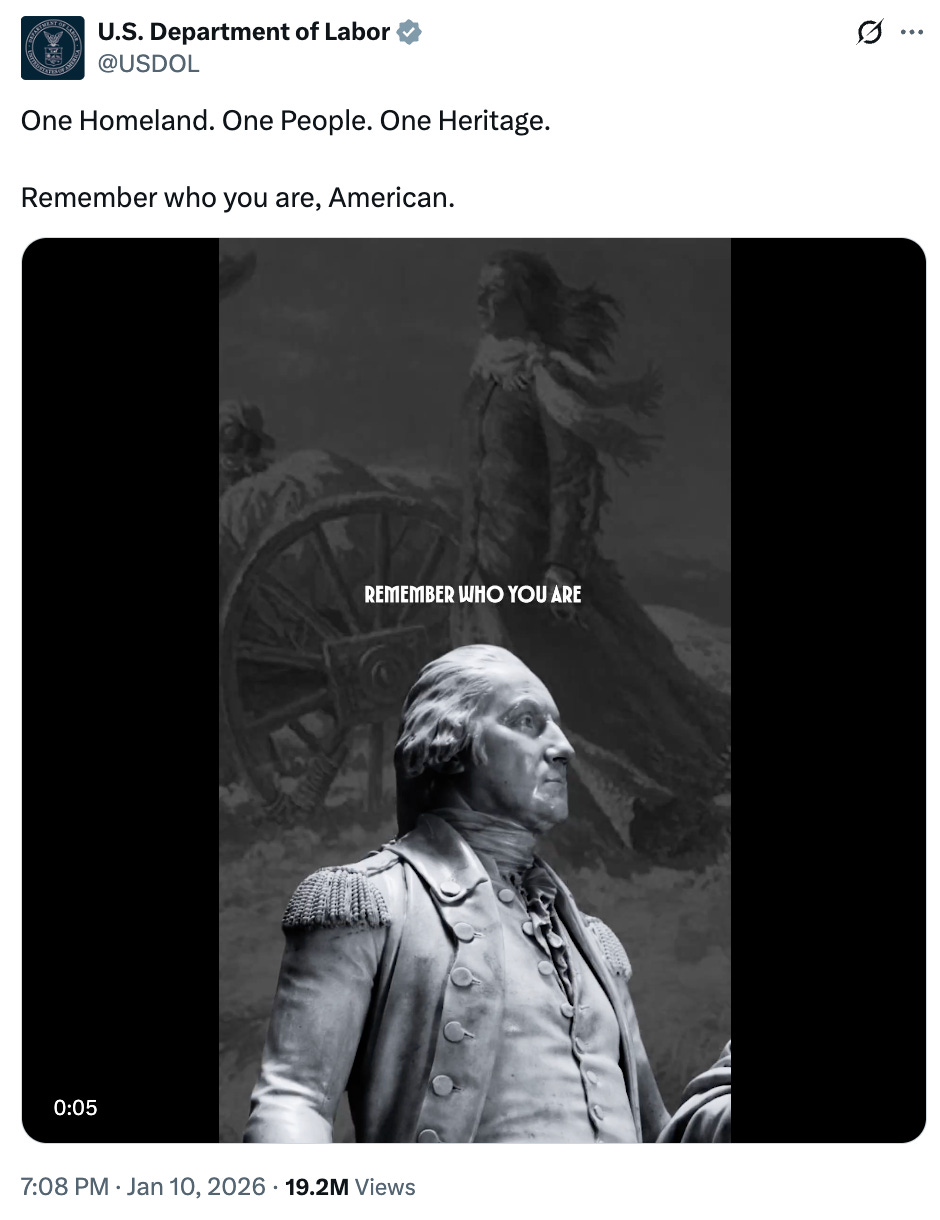
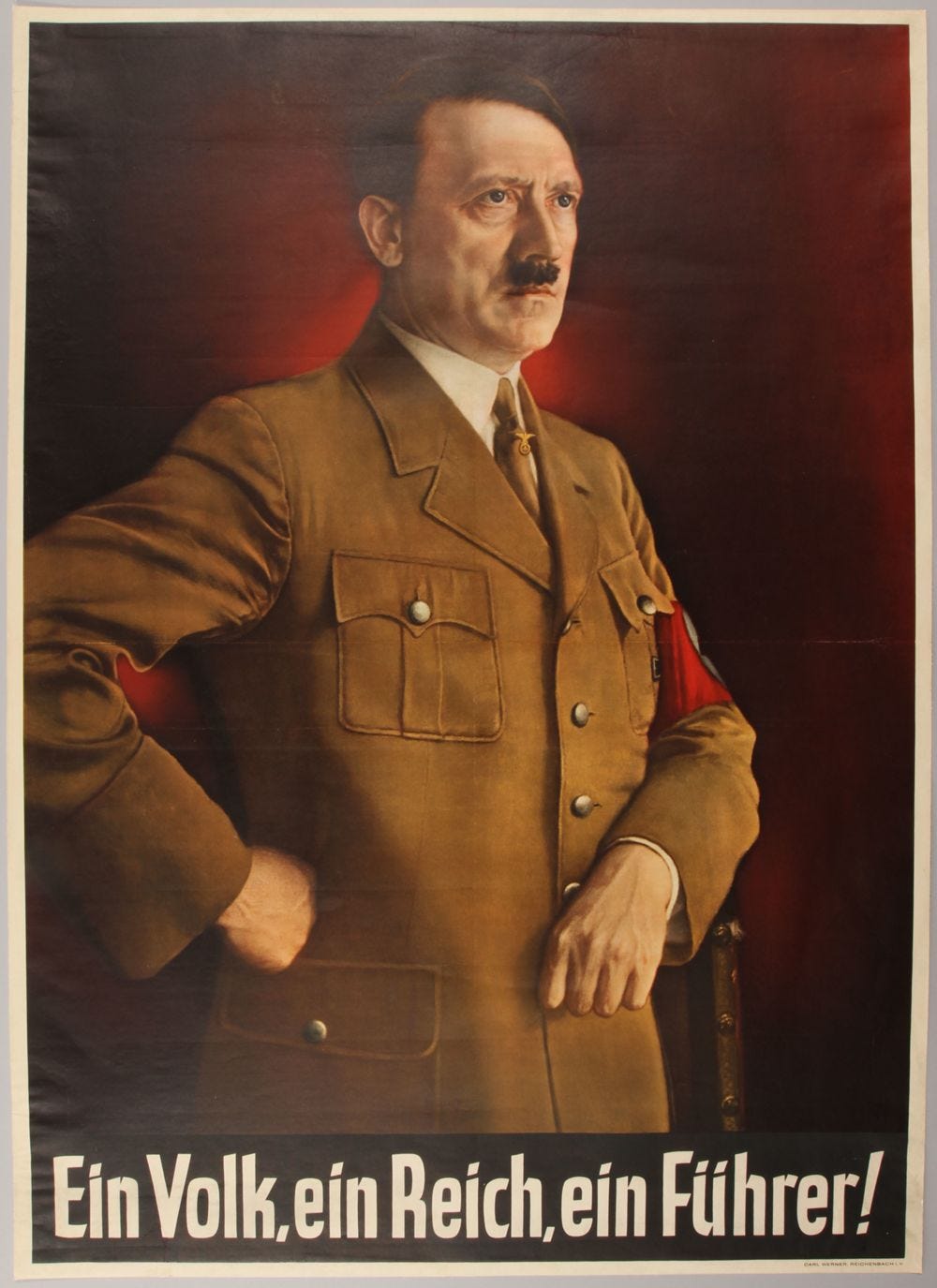
Of course, the slogan sounds better in the original German.
Oh, and don’t forget the Department of Labor’s heroic propaganda posters depicting the American worker in a very specific way.
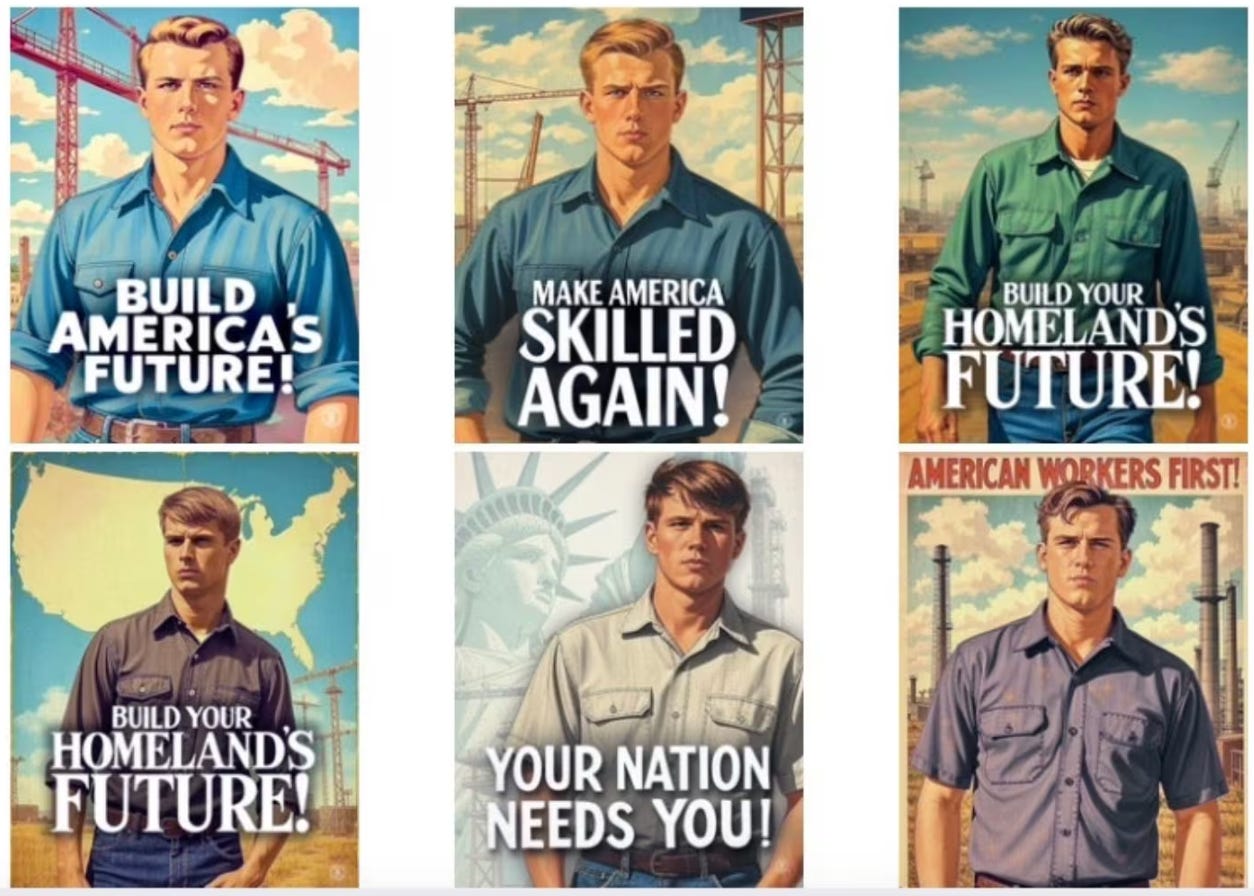
On the one hand, it feels weird to say that the U.S. government is attempting some low-key ethnic cleansing.

On the other hand, the reality is that we have a masked secret police force going door-to-door attempting to kidnap brown people; one government agency publicly daydreaming about deporting 100 million people; and another government agency saying that the ideal worker is a 20-year-old white guy.

2. Demographics

Another tell: This administration is obsessed with America’s falling fertility rate. From the NYT:

Vice President JD Vance last week called falling marriage rates “a big problem.” The deputy secretary of Health and Human Services in December urged his agency to “make America fertile again.” And at a recent conference for young conservatives, Sean Duffy, the transportation secretary, doubled down on the importance of marriage and children, holding out his nine kids as a model for others to follow.

Full disclosure: I am also obsessed with America’s falling fertility rate. Enough that I wrote a book about it.

The problem here is that nearly all of the declines in total fertility rate (TFR) over the last decade have been the result of declining Hispanic fertility.

Here’s the deal: The TFR—the total number of kids the average woman has over the course of her life—has been below the replacement level, but relatively stable, among white and black Americans for the last generation or so. But America’s TFR kept declining anyway. Why?

Because Hispanic Americans—many of whom were recent immigrants—had TFR’s higher than the U.S. average. And their baby-making propped up the nationwide number. The problem is that, as recent immigrants spent time in America, their reproductive behavior began regressing to the mean. The shift has been dramatic:
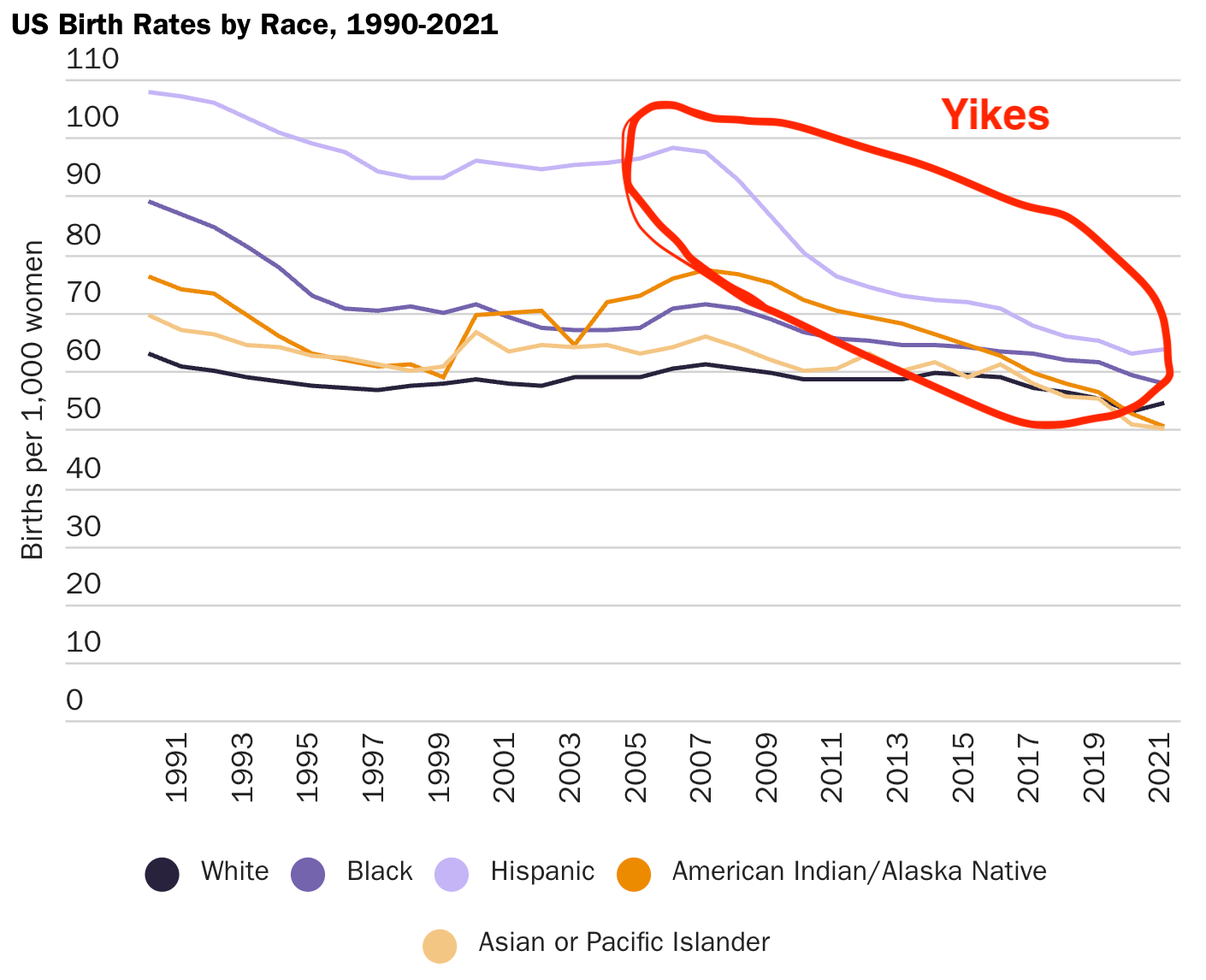
If you were concerned about the fertility rate in America, would you be trying to (a) halt all immigration—since immigrants usually bring with them fertility rates higher than native-born Americans—and (b) deport 100 million people from the ethnic group that has the highest fertility rate?

No.

The only reasonable conclusion is that the concern of people in the Trump administration isn’t about the total fertility rate. It’s about the white fertility rate.

I don’t know how much clearer the regime could be.

So tell me: What does the pie chart look like on Republican voters and race war? What is the percentage of Trump voters in each of these categories:

  • Group A: Sees and understands the administration’s intent and supports it.
  • Group B: Sees and understands, but oppose it.
  • Group C: Do not understand that the regime views its program as part of a race war and thinks it’s all business as usual?

And follow-up question: How big can Group A be for us to retain a functional, liberal society?

I look forward to your discussion.

Source: Jonathan V. Last, “The Nazi Slogans Are Not an Accident,” The Bulwark, 13 January 2026. I subscribe to the Bulwark, and so I have shared this article here as a service to my own readers. ||||| TRR


Forbes Breaking News, “BREAKING NEWS: Robin Kelly Introduces Articles Of Impeachment Against Kristi Noem,” 13 Jan. 2026

[. . .]

“Mr. Speaker, I rise today to announce I will be impeaching Homeland Security Secretary Kristi Noem,” announced Rep. Robin Kelly of Illinois.

“Secretary Noem has violated the Constitution and she needs to be held accountable for terrorizing our communities. Operation Midway Blitz has torn apart the Chicagoland area. President Trump declared war on Chicago and then he brought violence and destruction to our city and our suburbs in the form of immigration enforcement.”

Rep. Kelly then broke down some of the outrageous violence that ICE has visited upon her district.

“In my district, federal agents repelled down from Black Hawk helicopters and burst into an apartment building in the South Shore area. They dragged US citizens and non-citizens alike out of their beds in the middle of the night. They claimed the apartment was infiltrated by members of a Venezuelan gang. I don’t understand this president’s obsession with Venezuela, but they did not arrest a single member from that gang.”

“I visited that apartment building and saw firsthand the destruction those agents left. Doors to people’s homes or apartments were kicked down. Belongings, including little kids’ toys, were strewn about in the hallway. That raid and so many others shook our community, not just immigrants, but everyone. Now, Secretary Noem has brought her reign of terror to Minneapolis after she left Charlotte and Raleigh. We have all seen what happened.”

“ICE officers shot and killed Renee Nicole Good in cold blood. Without knowing any of the facts or an investigation, Secretary Noem lied about what happened. She called [a] beloved 37-year-old mom a domestic terrorist. Secretary Noem and her rogue agents are the ones terrorizing our communities, and she is breaking the law to do so. I will hold her accountable.”

“I’m filing three articles of impeachment against Secretary Noem. Number one, obstruction of Congress. Secretary Noem has denied me and other members of Congress oversight of ICE detention facilities. It is our constitutional duty to find out what’s happening in these centers where people are reportedly being treated like less than animals. Two, violation of public trust.”

“Secretary Noem directed ICE agents to arrest people without warrants, use tear gas against citizens, and ignore due process. She claims she’s taken murderers and rapists off our streets, but none of the 614 people arrested during Operation Midway Blitz has been charged or convicted of murder or rape.”

“Three, self-dealing. Secretary Noem has abused her power for personal benefit. She steered a federal contract to a new firm run by a friend, her friend. Her propaganda campaign to recruit ICE agents cost taxpayers $200 million. She made a video that turned the South Shore raid into something that looked more like a movie trailer. But make no mistake, this is not a movie. This is real life and real people are being hurt and killed. I really have to wonder who are the people behind the mask. These DHS agents have no identifying factor.”

“From all their botched raids and officer-involved shootings, I have to ask, what is their training like? What is the vetting? Is Secretary Noem recruiting January 6th insurrectionists? I was one of the last members of Congress to escape the House Gallery on January 6th. I remember hiding on my hands and knees and running through the hallways to a safe room. Insurrectionists are not fit to serve as law enforcement. I realize that impeachment of Secretary Noem does not bring Renee back.”

“True justice would be Renee alive today at home with her family. Impeachment doesn’t bring back the four other people killed by immigration officers this year, including a man in Chicago. We could not bring them back to their loved ones. What we can do, though, is impeach Secretary Noem. Hold her accountable. Let her know the public is watching. In this country, we do not kill people in cold blood without consequences. These are not policy disagreements.”

“These are violations of her oath of office and she must answer for her impeachable actions.”

[. . .]

Source: Occupy Democrats (Facebook), 13 January 2026


Audience members at the all-ages Minneapolis rock venue Pilllar Forum tussled with ICE agents on the street outside the club on Sunday — prompting that night’s show to be canceled.

The owner of Pilllar Forum, Corey Bracken, said several of his customers and musicians were pepper-sprayed by ICE agents and at least two were hit with batons on the street outside the venue, at 2300 Central Av. NE., where other ICE detainments and community protests have happened in recent days.

“My staff doesn’t feel safe after this, and our artists and customers don’t feel safe,” said Bracken, a dad who expanded his skateboarding store into a music venue and coffee shop in 2023 to bring more live music and art to underage fans.

He is leaving it up to his staff and the bands themselves to decide whether to proceed with upcoming concerts, including several more scheduled this week.

The ruckus started shortly after the 6:30 p.m. showtime for a four-band bill headlined by Pilllar Forum regular Anita Velveeta, a popular trans/queer punk act. Audience members saw ICE agents pull up and detain two individuals outside the neighboring Supermercado Latino market, prompting the club’s young music fans to quickly exit onto the street and protest the agents’ actions.

The Department of Homeland Security didn’t respond to a Star Tribune request for comment. An employee at Supermercado Latino also declined to comment on the incident.

Antonio Carvale, singer/guitarist in one of Sunday’s opening bands, BlueDriver, said he was one of five people at the venue who had to be treated with water and saline solution after being hit with pepper spray. He said agents fired the spray after they pushed a protester who pushed back.

“Honestly, the pain felt brutal, but fortunately the community was prepared and helped treat our eyes,” Carvale said, but he commiserated with a bandmate who was also struck by a baton and “banged up pretty bad.”

The band was disappointed Sunday’s gig then was canceled, but he added, “It would’ve been hard to play when I couldn’t even see the frets.”

One of the audience members who was pepper-sprayed, Jess Roberts of Minneapolis, said she had to go to an urgent care clinic because she was sprayed in the ear, which led to an infection.

The run-in with ICE followed a viral Instagram post by Pilllar Forum that went up Friday and landed 25,000 likes. It showed a peaceful but loud crowd of protesters shouting down ICE agents on Central Avenue, with the message, “And that is how you get it done.”

Minneapolis City Council President Elliott Payne and the new Minnesota state senator representing northeast Minneapolis, Doron Clark, joined Bracken in another social media video posted late Sunday denouncing the incident. Clark called Pilllar Forum “an institution here on Central.”

Payne urged residents, “Stay safe and stay vigilant.”

Twin Cities musicians and music fans offered online support for Pilllar Forum after Sunday’s mayhem.

“Thank you for supporting the community!” veteran rocker Tim Ritter of the band Muun Bato wrote on the venue’s Facebook page.

Bracken did offer refunds to paid attendees of Sunday’s canceled show, proceeds of which were to be donated to families affected by ICE detainments, per headliner Anita Velveeta’s request.

“So far, I haven’t heard from anyone who wants their money back,” Bracken said.

Source: Chris Riemenschneider, “Music fans scuffle with ICE outside all-ages Minneapolis rock venue,” Minnesota Star Tribune, 12 January 2026. I subscribe to the online edition of this newspaper (which I grew up reading as a kid), and so I am just as happy to share its contents here when appropriate. ||||| TRR
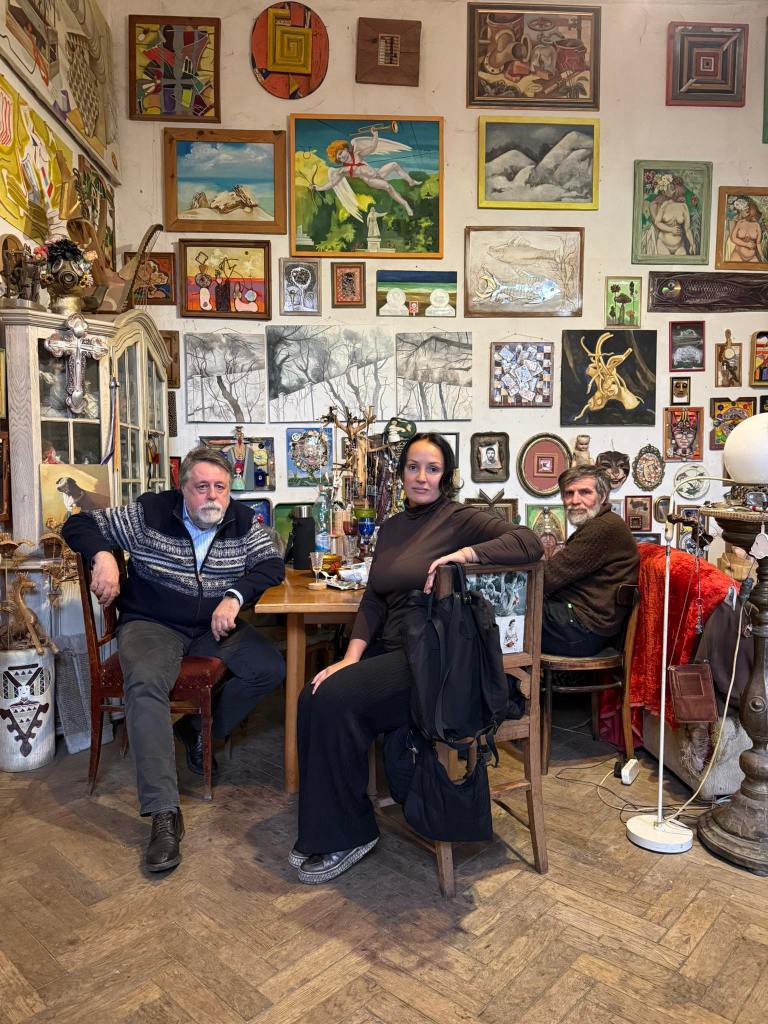
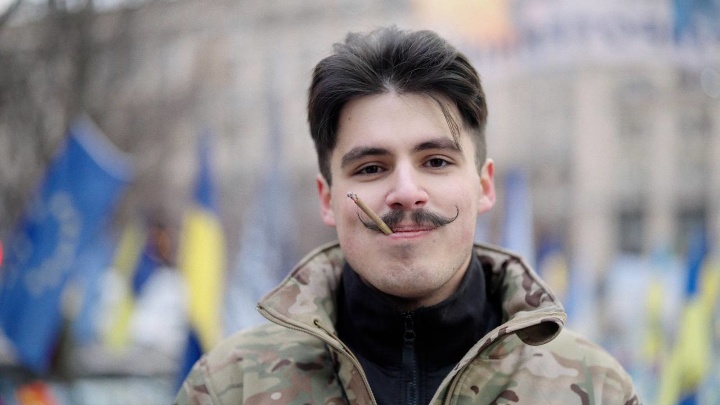
Timofey Anufriev Dies Fighting for Ukraine

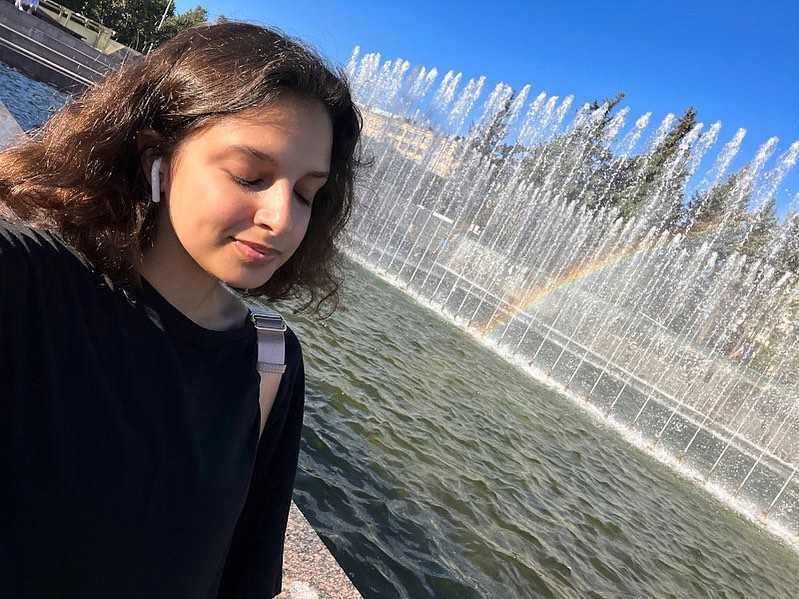
The name of the beautiful young woman in this photo, taken a month ago in Odessa, is Katya, and she is the mother of a wonderful young man, Timofey Anufriev, a Russian passport holder who went to war to defend Ukraine. Today we received news that he has been killed. You can learn more about him in the film to which I’ve linked in the comments. And try to think hard about [the difference between mere] words and real actions… May the memory of the heroes live forever!

Source: Vitaliy Manski (Facebook), 6 January 2026. Translated by the Russian Reader


The Insider, “‘War is like playing chess with death’: Confessions of a philosophy student from the RVC” (in Russian, no subtitles)

Until recently, 21-year-old Timofey Anufriev (son of the renowned artist Sergei Anufriev) was an ordinary university student in Petersburg. For over a year, though, he has been fighting for Ukraine in the ranks of RVC (Russian Volunteer Corps). Our film crew met with him in Kiev. Timofey talks about why he made this decision and about war and death in this report by The Insider.

Source: The Insider (YouTube), 20 March 2025. Annotation translated by the Russian Reader. There is an egregiously machine-translated and machine-dubbed version of this same film which can be viewed here. |||| TRR


Timofey Anufriev

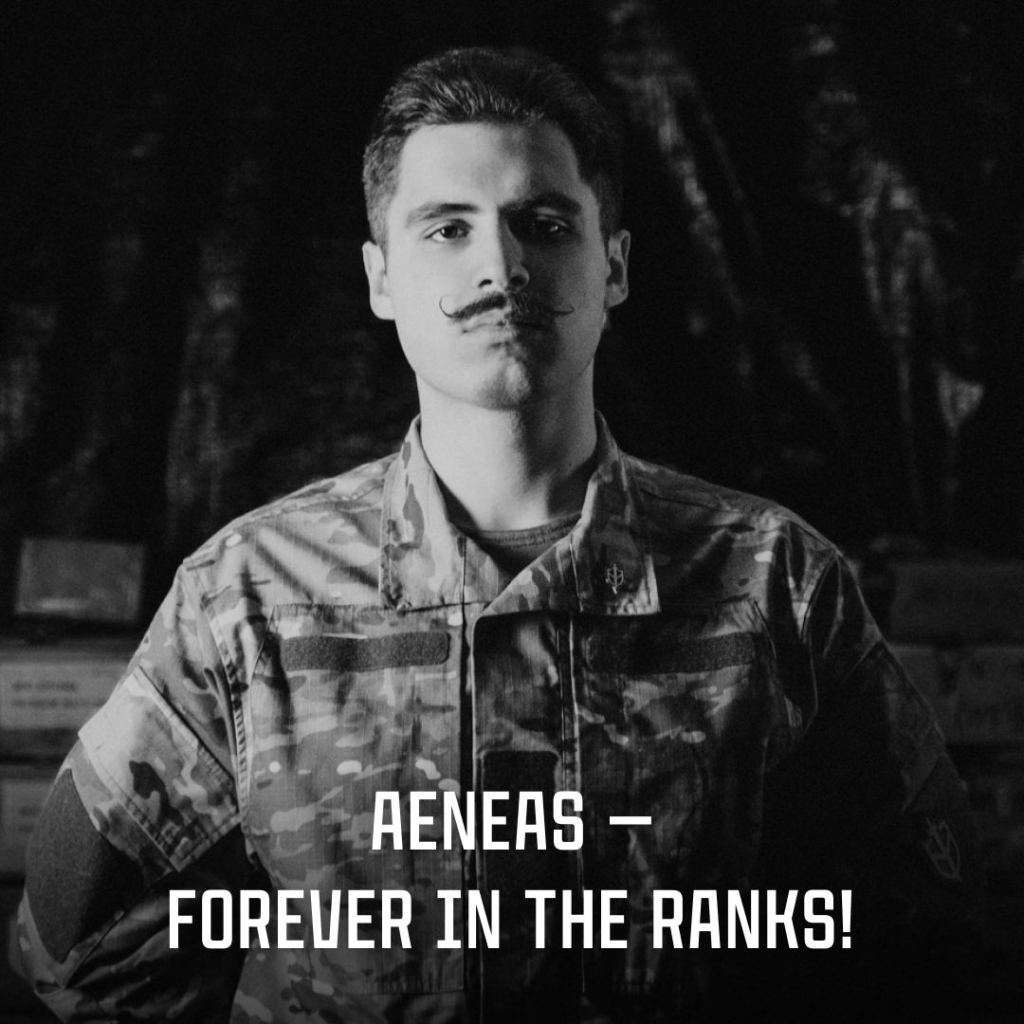
[The] 22-year-old Russian-Ukrainian fighter Timofey ‘Aeneas‘ Anufriev was kіlled in action while defending his second homeland.

“Timofey participated in many of the Corps‘ operations: assaults, cleanups, and capturing prisoners. He lived and dіеd like a true knight and poet, in a blaze of fiery glory! <…> Forever in the RVC, forever in the ranks!” the Corps wrote on its Telegram channel.

Anufriev served as a stormtrooper and had the call sign ‘Enei’ [Aeneas]. He was awarded the medal ‘For Assistance to Military Intelligence of Ukraine.’

“The son of a well-known conceptual artist [Sergei Anufriev], born in Moscow and raised in Odesa, Enei regarded both Ukraine and Russia as countries close to him. Highly intelligent and well-educated, open and kind, he sought to contribute to the Corps not only in combat but also beyond the battlefield.

From an early age, Enei was familiar with the cultural circles of two capitals. Unlike the detached, insular segment of the artistic elite that exists removed from reality, he was deeply concerned about the fate of his people.

The outbreak of the war coincided with his first year at university in Saint Petersburg, where he studied philosophy and planned to become a public intellectual. He was disturbed by the way many around him in Russia pretended that nothing was happening. As a result, he decided first to leave the country and later to join the Russian Volunteer Corps.

“There is always a choice,” Enei believed—and he made one guided by his sense of honor. Throughout his combat service, he served as an assault infantryman, one of the most dangerous roles in war.

He took part in numerous operations, including assaults, clearing operations, and the capture of enemy personnel. He lived—and died—in accordance with his convictions.” wrote RVC on its nocturnal post.

Source: ukrainciaga.international (Instagram), 6 January 2025


The son of a famous conceptual artist, he was born in Moscow and grew up in Odessa. Aeneas considered Ukraine and Russia to be his home countries. An exceptionally intelligent and educated, open and kind person, he sought to benefit the Corps not only in battle, but also beyond it.

From childhood, Aeneas was familiar with the cultural bohemian scene of the two capitals, but he was not part of the abstract and “airy” artistic elite that exists detached from reality. On the contrary, he was deeply concerned about the fate of his people.

The war began during his first year at university in St. Petersburg, where he studied philosophy and planned to become a public philosopher. He was disgusted by the fact that many of his peers in the Russian Federation pretended that nothing was happening. Therefore, he decided to first leave Russia and then join the Russian Volunteer Corps.

“There is always a choice,” Eney believed, and he made a choice dictated by honor. He spent his entire military career as an assault soldier — the most dangerous job in the war.

He participated in many operations of the Corps: he stormed, cleared, and took prisoners. He lived and died like a true knight and poet, in the rays of fiery glory!

He was awarded the medal “For Assistance to Military Intelligence of Ukraine.”

Timofey “Aeneas” Anufriev

Forever in the RVC!
Forever in the ranks!

Source: Russian Volunteer Corps Eng (Telegram), 6 January 2026

Ukraine

Some of Ukraine’s youngest defenders (clockwise from upper lefthand corner): Serhiy Dodurov, Oleksandr Romanuk, Deniz, Ivanna Tsimerman, and Sofiya Yanchevska

As Russia’s full-scale war enters its fourth year, a generation raised under air-raid sirens is now old enough to fight. Despite not yet being subject to conscription, these young Ukrainians are voluntarily joining the military, trading lecture halls for dugouts, or trying to balance both worlds.

Their decision comes at a time when Ukraine is facing mounting pressure to address critical manpower shortages. In 2024, the government lowered the mobilization age from 27 to 25 and later introduced one-year “special contracts” aimed at 18 to 24 year-olds, with Hr 1 million ($24,000) pay and free higher education.

Meanwhile, many young Ukrainians are making another choice — to leave the country — heightening fears of a looming demographic crisis.

The Kyiv Independent spoke to five young Ukrainians about why they enlisted, how they balance study and service, and what they hope for after the war.

Continue reading “Ukraine”

Suffer the Children

LOCAL INSPIRATION of the day. This quilt by Joleigh Kambic is part of a larger quilt titled “Babies in Gaza Who Never Made It To Their First Birthday.” The quilt is composed of smaller quilts created by nearly 40 quilters from across the Monterey Bay, commemorating the children who were killed in the Israel-Hamas war. It is on display through Oct. 3 at the Unitarian Universalist Church of the Monterey Peninsula, 490 Aguajito Road in Carmel.

Source: Monterey County NOW newsletter, 29 September 2025


Special detention center for waifs and “troubled” teens. Moscow, 1988. Photos: Igor Stomakhin

Source: Igor Stomakhin (Facebook), 1 September 2025. The first of September (aka Knowledge Day) is the first day of the school year in Russia and other former Soviet countries.

Continue reading “Suffer the Children”

Andrei Khrzhanovsky: Even Tel Aviv Hipsters Can Commit Genocide

Andrei Khrzhanovsky. Source: social media

Son of the renowned filmmaker Ilya Khrzhanovsky, anthropology graduate and activist Andrei Khrzhanovsky moved to Israel in 2022. He almost immediately adopted a pro-Palestinian stance in the Middle East conflict, dubbing Israel’s actions genocide, and Zionism an ethnically supremacist idea. He says he is fighting for the rights of Palestinians in the West Bank due to his sense of guilt over the war in Ukraine. He spoke with Marina Berdichevskaya about his radical stance and his conflicts with his family.


Andrei Khrzhanovsky, 26, has been living in Israel since 2022. When Russia launched its full-scale invasion of Ukraine, he found himself in Tel Aviv with his entire family, including his famous father, grandfather, and grandmother. When the time came to fly home, there was nowhere to go. On February 24, Ilya Khrzhanovsky had begun circulating a petition, condemning the invasion of Ukraine, among cultural figures. Andrei flew to Georgia and applied there for Israeli citizenship.

Since March 2022, Andrei X, as he likes to be called, has enthusiastically plunged into the weeds of Israeli life and quite quickly chosen a side: he has taken up activism and, so he claims, journalism, on behalf of “the most vulnerable group on Earth at the moment,” the inhabitants of the West Bank. At the same time, Andrei has been doing battle with “the genocide in Gaza” and on this score has found himself at odds with his father, who has repeatedly said that, in the wake of 7 October 2023, he has felt himself to be Israeli first and foremost.

We talked at length and quite emotionally about how the profoundly erudite Khrzhanovsky, who has a degree in anthropology from the University of London, has decided to atone for the collective guilt of generations for world colonialism. Andrei happily juggles concepts and historical facts and is sure that this is the only way to do things: to always stand up for the downtrodden and to never succumb to propaganda. Whether he himself is suspectible to propaganda is an open question. Ah, yes. The opinions expressed here do not necessarily reflect the views of Republic or its editors—nor should they.

“The closer you are to the empire’s center, the greater the blame”

— Let’s begin with where you live. Your Facebook page says you live in Jericho. Is this true?

— Nowadays, I don’t stay anywhere longer than a few days in a row. I rent a flat, but I won’t divulge its location, because I get several death threats a day. I come home once every month and a half for a couple of days and then I hit the road again. Yesterday, I came from Bethlehem.

—  How do people on the West Bank relate to you? Do they understand that you have an Israel passport?

— I’ve never had any problems with this because this is a political conflict, not an ethnic one. I speak with Palestinians deep in Area A (the West Bank is divided into three areas; Area A, which makes up seventeen percent of the West Bank, is wholly controlled by the Palestinian Authority — Republic) whose relatives have been killed, who have done time in prison. Israel fosters the illusion that all Palestinians want to kill all Jews. But this isn’t an ethnic conflict, and not even a religious one at the end of the day.

— In February of last year you said in an interview, “When the war in Ukraine began, I had an enormous sense of guilt that I hadn’t done more [to stop it]. That’s why I’ve thrown myself into all political activism here.” You explained your activism in terms of not wanting to “squander another country.” Where does such a young man come by a sense of personal guilt for what is happening in and with a country? After all, many Russian nationals, especially the remainers, reject the very principle of collective guilt.


Karèn Shainyan, interview with Andrei Khrzhanovsky and Artyom Nikitin (in Russian, with no subtitles)

Today’s episode of Who Am I After This? is very sensitive for me personally. The conversations with its two subjects, leftists and human rights activists, were the hardest and most emotional in the whole project because they both touch on a very painful personal conflict of loyalties for me. This is the only episode where there are two protagonists at once: journalist Andrei Khrzhanovsky and architect Artyom Nikitin. Quite handsome and young, both moved to Israel after the war in Ukraine began, and both travel to the West Bank to support the local Arab [sic] population, even and especially now, when there is a war in [sic] Israel.

Source: Karen Shainyan (YouTube), 2 February 2024


— Before February 2022 we all lived in a magical reality of sorts: there was a dictatorship in Russia, seemingly, but no one was getting killed, as it were; everything was sluggish, we had to tackle corruption and so on. But there was no sense of the disaster that any dictatorship represents. This illusion personally crumbled for me on 24 February 2022. The disaster started then, and then intensified after the genocide in Gaza began. Over the past few years, the feeling has only grown in me that we are all to blame for what is happening; some more, some less. The closer you are to the empire’s center, the greater the blame.

— And when did you personally start counting down that blame?

— If we speak of the entire timeline, there were three moments. The first was 24 February 2022. The second was an article by Yuval Abraham (an Israeli journalist and co-director of the Oscar-winning film No Other LandRepublic), based on conversations with soldiers fighting in Gaza who admitted that they had been tasked with firing on civilian targets. And the third was the morning when I woke up, opened Instagram, and saw the video of a man in Gaza burning alive after an IDF strike on a hospital.

Andrei Khrzhanovsky. Source: social media

— How did you get involved in political activism in Israel?

— I had an approximate, general notion of what was happening here when I turned up here. I grew up in the Russophone media space after all. But when I arrived I realized that I had to figure out what was happening. I started reading books and talking to people. The more I researched, the more horrified I was. Suddenly, I found out about the status of Palestinians in East Jerusalem: their land was annexed, but they weren’t granted [Israeli] citizenship. To get into the Shuafat refugee camp, which the Israelis annexed and surrounded with a wall, Palestinians have to go through a security checkpoint. The sheer number of different methods for constructing a state based on ethnic supremacy is insane.

Continue reading “Andrei Khrzhanovsky: Even Tel Aviv Hipsters Can Commit Genocide”

Turning Her Back on Propaganda: Valeria Zotova

Valeria Zotova

Turning Her Back on Propaganda
What does daily life consist of in a prison camp? It consists of work, of course, work which is dull and exhausting. It consists of sleep, which is fitful, as sometimes there are inspections every two hours. And it consists of spending time with people whom you didn’t choose to spend time with. The wardens make sure to burden convicts so that they have nothing that is theirs alone, so that they have no time to think about anything, so that they are entirely subordinate to the powers that be. The goal of prison camp “re-education” is the same: breaking the will of the prisoners, turning them into obedient robots who obey all the orders of their superiors.

This is especially true for political prisoners—people who think independently and have their own principles. The overarching mission of the wardens is to attain voluntary submission, joyful and proactive submission, from political prisoners. But the wardens rarely succeed in this mission.

They have utterly failed with Valeria Zotova, a political prisoner at Kostroma Penal Colony No. 3. The wardens have insistently offered her a path to redemption, that is, cooperating with the authorities and taking part in “civic life.” Zotova has turned it down.

Recently, the prison camp’s club showed a movie, a Russian propaganda film titled Callsign: Passenger. Here is what Wikipedia says about the movie: “The movie is set in 2015. The movie’s main character is Nikolai Ryabinin, a trendy Moscow writer and carefree party animal. His brother volunteered for the war in Donbass and has gone missing. Nikolai goes looking for his brother and joins a separatist unit, the Aurora Battalion, in which his brother previously served. There, he gets the ironic nickname “Passenger” and under the leadership of the commander (callsign: Trigger) reevaluates his own life and comes to support the separatists.”

It’s an unimaginative piece of propaganda based on Alexander Prokhanov’s novel The Murder of Cities. It’s cheap trash, of course, like the writer himself, but the convicts are obliged to drink this cinematic concoction down to the dregs. All of them are herded into the club. Zotova refuses to go. Ultimately, it’s her right to watch the movie or not. But what do rights matter when it comes to Russian patriotism! Zotova is forcibly escorted into the auditorium. Watch our high art: look what talented filmmakers made it, what actors starred in it! But Lera Zotova turns her back on the screen and looks the other way.

Turning one’s back on propaganda is simple—simple but dangerous. The pressure on Valeria continues unabated. The harassment has been endless. The wardens summoned a friend of Zotova’s and stipulated to either: “Either freedom or Zotova—you choose.” They have been trying to create a vacuum around the political prisoner, depriving her of contact with those who are close to her in any way. The young woman is twenty-one years old, but she has been bullied like a hardened criminal. Because, as prison authorities envision it, she should be like everyone else: obedient, involved in the prison camp’s civic life, acting in plays, fulfilling the production quotas, and not smarting off to her superiors.

Source: Alexander Podrabinek (Facebook), 24 August 2025. Thanks to VA for the heads-up. Translated by the Russian Reader

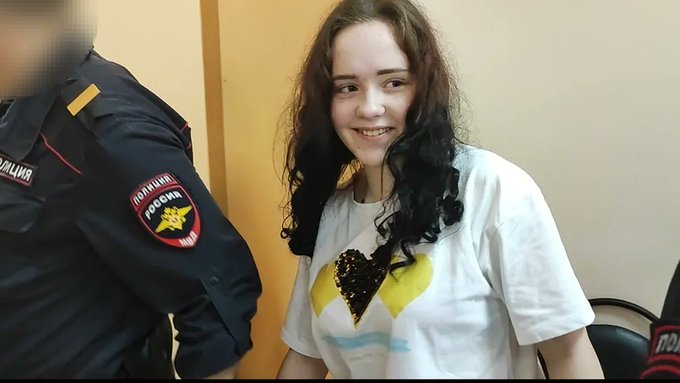
Yulia Moskovskaya, Terrorist

Twenty-two-year-old Yulia Moskovskaya (née Joban) was detained in Petersburg in mid-June. She is suspected of attempting to carry out a terrorist attack against a drone design company employee. She failed to plant an explosive device [sic], according to the press service of the Petersburg municipal courts.

Moskovskaya was remanded in custody to a pretrial detention center. Investigators say that she “espouses a pro-Ukrainian ideology and is hostile to the current Russian government,” and claim that the young woman tried to “impact decision-making” by means of a terrorist attack. Criminal terrorist cases are opened every month, but usually they do not involve harm to specific people. In 2024, seventy-five people, including ten women, were convicted in Russia for carrying out terrorist attacks.

Bumaga has learned that Moskovskaya is not speaking with her family, and that a female friend of her has become her spokesperson. We chatted with this young woman about how the suspect behaved before her arrest, how she got into debt, and when she moved to Petersburg.

The detainee’s family: “Yulia changed her surname: she didn’t want anything to remind her of her kin”

Yulia and I are quite close friends. Her lawyer informed me of her arrest. I was shocked when he contacted me. At first I thought it was some kind of prank. I still can’t believe it has really happened.

I have known Yulia since 2017. We are from different cities and met online in a fan group for our favorite singer. At first, we were pen pals, but then we took our relationship offline and saw each other in person many times.

Yulia wasn’t in touch with many people, so she must have given the lawyer my contact info. She didn’t have many friends. Yulia didn’t speak with her relatives. She has a mother and a younger brother [who live in Moscow], as well as her grandparents, who live in some other city.

Yulia has always had bad relations with her mother. Her mother had a live-in boyfriend who always treated Yulia badly and beat her. Her mother took the boyfriend’s side and didn’t stand up for her daughter.

Yulia Moskovskaya. Source: social media

Yulia’s father died in 2020, and Yulia didn’t have a close relationship with him either. He drank heavily. He regularly brought his drinking buddies home and would get so drunk that he couldn’t stand up. Yulia often escaped to the neighbors when her father, out of his mind, tried to beat her. When we talked on the phone, I could hear her father getting into a fighting mood; he would be saying something to Yulia, and she would scream and run off. The neighbors would even call the police, but they could calm him down only for a while, and only once did take him to the slammer. Yulia essentially had no one to whom she could turn. In difficult situations, she would call the mental health hotline.

As an adult, Yulia changed her surname [from Joban to Moskovskaya]: according to her, she didn’t want anything to remind her of her kin. She sought treatment from psychologists. In the beginning, she had hope that they would help her, but then she just went to them to get things off her chest.

Debts and the move from Moscow to Petersburg: “Creative work was her only stable hobby”

Three times, Yulia enrolled in different [institutions of higher learning]. But she wouldn’t like something about them and would drop out. For a while, she was studying to be a designer. I don’t remember what her other two majors were.

A few years ago, Yulia moved for the first time from Moscow to Petersburg: she had always liked the city. You could say that she flitted between the two capitals.

Yulia originally had her own place to live. After his death, her father left his children an inheritance. Yulia and her brother sold her father’s flat in Moscow and split the money, so she was able to buy her own place in Petersburg. She lived there for a few months, but got bored and bought a flat in another neighborhood. After a while, she went back [to Moscow], buying a flat in the Moscow Region. Soon afterwards she sold her last home and went back to Petersburg, where she lived in a rented flat.

Yulia often changed jobs. The first place she worked was McDonald’s, before it left Russia. She stayed at that job for several years. After that she worked as a courier, then as a consultant in a store. Almost every month she would change jobs if she wasn’t satisfied with something. She didn’t regard any of her jobs as permanent. She said that she would soon leave [Russia] and that she only needed temporary, part-time work.

Yulia Moskovskaya. Source: social media

I know that Yulia had outstanding loans and that she didn’t have enough money to live on. She said that she had been sued by debt collectors. (In May 2025, a Moscow court ruled in favor of debt collectors trying to recover debts from Moskovskaya under a loan agreement — Bumaga.) She had spent the money on surgery [not covered under free public healthcare], and on braces.

Yeah, she’s not a very steady person. She gets bored with things quickly. Creative work was her only stable hobby. (On social media, Moskovskaya followed a lot of literature and Silver Age poetry groups — Bumaga.) She drew and wrote poems. Recently, she had been making her own jewelry and trying to sell it.

Moskovskaya’s views and her abandoned cat: “Before her arrest, she said she wanted to go to the war”

When the war broke out, Yulia immediately supported Ukraine. She said that she didn’t like the regime in Russia. She had a very firm stance. But I wouldn’t say she was always interested in politics. Before the war, I hadn’t noticed that she followed the news. I was surprised when she suddenly became politicized. Moreover, she has no Ukrainian relatives.

Before her arrest — since last summer — she had been saying that she wanted to go to the war. She mentioned that she had visited military enlistment offices and contacted people who could help her get to Ukraine, but everyone, according to her, had turned her down. I tried to warn her about the consequences: what if she died or something? She replied that she didn’t care, that this was her purpose in life and that such a death would be an act of heroism.

All last month, she kept saying that she would be leaving Petersburg for Ukraine and that some people would help her do this.

When Yulia was detained, I was allowed to speak with her for literally several seconds. The only thing she said was that I should go get her cat, which had been temporarily placed in a shelter.

Yulia Moskovskaya’s cat. Source: social media

I had imagined that Yulia would be hysterical, panicked. According to her lawyer, however, she is surprisingly calm.

Source: “‘She attempted to plant explosives under a car’: friend of 22-year-old Yulia, accused of plotting a terrorist attack, speaks of her loneliness and debt,” Bumaga, 30 June 2025. Translated by the Russian Reader

Daily Beasts


“Let’s stand up for the truth.” A military recruiting billboard photographed earlier this summer in Kaluga, promising five million rubles (approx. 56,000 euros) for one year of “contract” (voluntary) military service, a one-time signing bonus of two and a half million rubles, and a monthly salary of 210,000 rubles for service in the “Special Military Operation zone.” Photo: Alexander Gronsky (Facebook). Thanks to Sergei Medvedev for the heads-up.


An American father who moved to Russia to avoid LGBTQ+ “indoctrination” for his kids is being sent to the front line in Ukraine, despite being assured he would serve in a non-combat role.

Derek Huffman, 46, feels he is being “thrown to the wolves” after being told that his job in the military would be as a correspondent or as a welder, his wife, DeAnna, said in a recorded plea for prayers, which has since been removed from her YouTube page.

Huffman has no prior military experience, DeAnna said, adding that his limited training was conducted in Russian. She suggested the language barrier has made her husband particularly unprepared for the horrors of combat.

“Unfortunately, when you’re taught in a different language, and you don’t understand the language, how are you really getting taught?” she pondered. “You’re not. So, unfortunately, he feels like he’s being thrown to the wolves right now, and he’s kind of having to lean on faith, and that’s what we’re all doing.”

Huffman joined the military in the hope of gaining Russian citizenship for his family through an expedited process. He also felt such service would allow him to “earn” the respect of his new countrymen, which is something he once said migrants in the United States refuse to do.

“The point of this act for me is to earn a place here in Russia,” he told Russian state media last month. “If I risk myself for our new country, no one will say that I am not a part of it. Unlike migrants in America who come there just like that, do not assimilate, and at the same time want free handouts.”

Undocumented migrants cannot join the U.S. military during peacetime. A program launched by former President George W. Bush allowed such immigrants to seek citizenship by serving in the military, but that pathway was shuttered during President Donald Trump’s first term.

DeAnna, 42, suggested her husband had been misled during the military recruiting process. She added that, after a month of service, her family had yet to receive any pay.

“When he signed up and had all of that done, he was told he would not be training for two weeks and going straight to the front lines,” she said. “But it seems as though he is getting one more week of training, closer to the front lines, and then they are going to put him on the front lines.”

Huffman moved his family to a village outside Moscow in spring. It was launched by American blogger Tim Kirby—who has lived in Russia for two decades—in 2023 to attract Americans seeking to escape the “liberal gender norm.” That project has been a flop, with United24Media reporting that only two families, including the Huffmans, have moved in.

Huffman, a native Texan, brought his wife, three daughters, and their family Husky, “Baby,” with him to Russia. The couple also have three sons from prior marriages who opted to remain in the United States.

Huffman’s admiration for Russia runs deep. The Russian state-operated news agency RIA Novosti reported last month that the couple honeymooned in Moscow.

“The city charmed us with its rich history, vibrant culture, and welcoming atmosphere,” DeAnna told the outlet. “Before that, we figured out whether moving to Russia would fit our family’s needs and values. However, it wasn’t until we saw Moscow in person that we truly felt a connection.”

DeAnna said that she was not surprised that her husband wanted to volunteer for the Russian military, even as it is in its third year of a bloody war with Ukraine. Ukrainian officials estimated this week that more than 1 million Russian soldiers have died in the conflict, which continues to rage on despite President Trump’s demands for peace.

”It didn’t come as a surprise to me,” she said of his joining the military. “He always spoke so highly of the country, its president, and its people, and he has a strong passion for doing the right thing.”

Source: Josh Fiallo, “Anti-Woke Dad Who Fled With Family to Russia Sent to War Zone,” Daily Beast, 20 July 2025


“I got upset when the doctor told me I had diabetes,” said Yurii. “Because uneaten sweets are waiting for me at home, and we’ve already bought lemonade for New Year’s.”

Yurii is 16 years old, and every day he starts with a long-acting insulin injection. Later throughout the day, ten minutes before each meal, he measures his blood sugar levels, calculates the amount of carbohydrates he will get from food, and injects the appropriate dose of insulin.

Type 1 diabetes is an autoimmune disease that changes your life forever and can be triggered by infections or, as it is in Yurii’s case, by severe stress – especially after what happened to his brother.

Chronic stress has been rising among Ukrainians since the start of Russia’s full-scale invasion, as Moscow continues to shell the country daily. The continuous sleepless nights and the fear of being hit by a drone or missile are affecting both the mental and physical health of the people in Ukraine.

In June 2025, Russians increased the number of drones and missiles launched at Ukraine increased by 60 percent, according to Oleksandr Syrskyi, the Commander-in-Chief of the Armed Forces of Ukraine. In addition, June saw the highest number of civilian deaths since April 2022 as a result of military actions: 232 people.

The invisible effects are compounding: Ukrainian children have begun to experience health conditions that could affect the rest of their lives.

Statistics show a rise in the number of patients with type 1 diabetes in the frontline Kharkiv region, and the number of people diagnosed with diabetes in general is also on the rise across the country.

Before the invasion, Yurii lived with his parents in the central Ukrainian city of Cherkasy. They tried to get out of town every weekend — whether that meant going fishing or mushroom-picking in the forest.

“Children need to breathe fresh air,” Olena, Yurii’s mother, told The Counteroffensive with a nostalgic smile on her face.

She begins the conversation by saying, “I am the mother of two wonderful sons.”

Yurii has a brother, Volodymyr, also known as Vova, who is 10 years older and who looked after Yurii from an early age.

“We walked all over Cherkasy together, went to parks, squares, the Dnipro River, and he treated me to McDonald’s. Vova [a nickname for Volodymyr] always told me, ‘When you grow up, we’ll go out with girls together. ’ And Vova loved everything related to the army,” said Yurii.

When Olena talks about her eldest son, her voice begins to tremble.

Vova died on May 3, 2022, while defending Mariupol at Azovstal, a strategic steel factory that was besieged by Russian forces for almost three months, a famous last stand.

He died after his car rolled onto an enemy mine.

The family only learned about his death six months later.

“One day, Vova’s commander called me, introduced himself, and asked how I was doing. I replied, ‘Do you know where my son is? Wasn’t he in captivity with you?’ He told me that Vova had died on May 3 and asked, ‘Didn’t you know?’ It felt like half my heart had been cut out of my chest at that moment,” remembered Olena.

Volodymyr was only buried in February 2023. After the tragedy, Olena began to have health problems: she constantly felt weak, and eventually doctors had to remove her thyroid gland so that she could get better.

In the fall of 2023, months after Volodymyr’s funeral, the family went to the Carpathians for a break. During the trip, Olena noticed that Yurii, then 14 years old, was drinking more water than usual and had lost a significant amount of weight. Despite being naturally thin and 1.74 meters tall (5 feet 9 inches), he weighed just 45 kilograms (99.2 pounds).

“Yurii took his brother’s death very hard. It wasn’t that he cried a lot, but as if something inside him had burned out,” said Olena.

Yurii and Olena returned to Cherkasy and went to see the doctors. While Olena had developed a problem with her thyroid, everything seemed normal in Yurii.

But when the doctor routinely tested Yurii’s blood sugar levels, they found he had developed type 1 diabetes.

“It felt like I was beaten to death with feet, after all the horror we had already gone through,” said Olena.

Many autoimmune diseases of the endocrine system occur in childhood or young adulthood, as these are periods of active growth and hormonal changes, said Natalia Pogadaeva, head of the endocrinology department at Okhmatdyt, Ukraine’s largest pediatric hospital, which was hit by a missile strike last year.

Genetics plays a significant role in the onset of diabetes, as in other autoimmune diseases. However, the trigger for their onset is usually stress, she added. The following six months after the start of Russia’s invasion of Ukraine, the number of patients with diabetes and other immune diseases surged, she added.

Due to full-scale Russian invasion and the displacement of the Ukrainian population both within Ukraine and abroad, it is very difficult to determine the actual extent of the increase in diabetes, Pogadayeva says.

“Children who lived in Kyiv could have gone abroad and realized they were sick, or vice versa: a child moved from Kherson to Kyiv and is being treated in Kyiv, not where they lived,” she added.

Still, some statistics hint at the broader toll. For example, 398 patients with type 1 diabetes under the age of 18 were registered in the first 9 months of 2023 in the Kharkiv region, a frontline region in the northeast of Ukraine. During the same period in 2024, the number had already increased to 501 patients – a more than 25 percent increase.

According to the Ministry of Health of Ukraine, 531,200 people were diagnosed with different types of diabetes in 2023, the first full year of the full-scale invasion. In 2022, the number was 489,934 – an 8 percent increase.

Many of the children who went to Okhmatdyt to get treated had either survived Russia’s occupation, had experienced the aggression firsthand, or had evacuated from Mariupol or Bakhmut, Pogadaeva said.

“At the beginning of the full-scale invasion, among other things, logistics were also greatly changed,” said Pogadaeva, the head of the endocrinology department at Okhmatdyt.

Children who already had diabetes had a hard time accessing insulin and the supplies needed to measure their blood sugar. As a result, they had to be hospitalized.

Diabetes can have severe complications if not taken care of properly. Uncontrolled blood sugar can damage blood vessels, which are present in every organ of the body. If affected, the kidneys, the limbs, and the eyes are the first to suffer. In the long run, it can lead to kidney failure, loss of sensitivity, loss of vision, and even to the amputation of limbs.

Pogadaeva explains that our bodies have a stress hormone called cortisol, which can be released during periods of prolonged stress, such as experiencing daily shelling, night-time air raid alarms, and lack of sleep — all situations Ukrainian children have been experiencing for the past three years.

The release of cortisol leads to uncontrolled fluctuations in blood sugar levels, she added.

Yurii will start college this year. Olena fears that having to prepare for exams will add to the stress of the war. She said that while at her house, they have adapted to a diet appropriate for the disease.

Yet Yurii’s blood sugar levels are still fluctuating.

They relocated to a village near the regional centre to be closer to nature. There, Yurii has his workshop and chickens, for which he recently built a drinking trough.

The family fondly remembers his older brother, Volodymyr, who was posthumously awarded the Order for Courage, a state award given by the President of Ukraine for heroism shown in emergencies.

“It’s hard to say that anything in our lives has changed significantly because of the illness. Now it’s just a way of our life.

My husband is only sometimes dissatisfied, saying, ‘I don’t want porridge, I don’t want salads. When will we have varenyky [Ukrainian dumplings]?’ But that’s it, if the child can’t have it, then no one can,” Olena said.

Source: Tanya Novakivska, “Surge of childhood diabetes due to wartime stress,” The Counteroffensive, 20 July 2025


A BBC Russian investigation can reveal that at least 240 Russian eighteen-year-olds have been killed fighting in Ukraine in the past two years. Many joined up straight from school taking advantage of new rules allowing them to bypass military service and go straight into the regular army as contract soldiers. Some of those on our list were killed within weeks. BBC Russian has been speaking to bereaved families to find out why school leavers whose lives are only just beginning, are signing up to die in Putin’s brutal war.

On 7 May 2025, pupils at School No. 110 in Chelyabinsk took part in a ceremony to mark the eightieth anniversary of the end of the Second World War.

Dressed in tunics and khaki-coloured shorts, the older children paraded into the school hall waving Russian and Soviet flags. The younger ones followed behind – little girls in knee-high socks and boys in smart shirts. The children were also carrying pictures of former pupils who had gone on to fight in the full-scale war in Ukraine.

One of the pictures was of Aleskandr Petlinsky who joined up two weeks after his eighteenth birthday, and was killed just twenty days later. His mother Elena, and his aunt, Ekaterina stood side by side in the hall, tearfully watching the ceremony.

After a minute’s silence to honour the dead, Ekaterina took to the stage to speak about her nephew.

Sasha, as she called him was a determined and passionate boy who dreamed of a career in medicine and had got a place at the Chelyabinsk Medical College.

“But Sasha had another dream,” Ekaterina added after a pause. “When the special military operation began, Sasha was fifteen. And he dreamed of going to the front.”

She was referring to the full-scale war in Ukraine, which Russia launched in February 2022.

Sasha Petlinksy is one of at least 240 eighteen-year olds killed in Ukraine over the past two years, according to open source information compiled and confirmed by BBC Russian.

How did someone so young and barely out of school end up dead on the frontline, and what does his story tell us about the choices facing young people in Russia today?

Red lines and rule changes

Since the first months of the war in Ukraine, the involvement of very young people in combat has been a subject of debate in Russia.

At first, the focus was on army conscripts.

Vladimir Putin has pledged several times that no young men called up to do their obligatory military service at the age of eighteen would be sent to fight in Ukraine. However, in March 2022, just four days after Putin promised no conscripts were involved in the ‘special military operation’ the Defence Ministry admitted that some had indeed been sent into the combat zone.

The BBC has confirmed the names of at least 81 conscripts killed in Ukraine during the first year of the full-scale war. The Ukrainian authorities claim to have captured “hundreds” more.

The army is no longer sending conscripts to fight in Ukraine, but there are other ways that very young people are being drawn into the conflict.

When Ukrainian troops occupied parts of Russia’s Kursk Region in August 2024, conscripts guarding the border were among the first to come under fire.

But according to data gathered by the BBC the way most eighteen-year-olds end up on the battlefield is by signing up as contract soldiers.

In the spring of 2022, the Russian authorities changed the law in order to actively encourage men of fighting age to join up. And since 2023 regional authorities have been offering big cash payments to new recruits.

Initially young men who wanted to take advantage of the new rules had to have at least three months’ conscript service under their belts. However, in April 2023 this restriction was quietly dropped, despite protests from some MPs, and now any young man who has reached the age of eighteen and finished school can sign up to join the army.

MP Nina Ostanina, who is head of the Duma Committee on Family, Women, and Children, warned that the changes would have dire consequences for vulnerable school leavers.

“Children just out of the classroom who want to earn money today by signing a contract will simply be unprotected,” she said.

“Contract service — a worthy future”

Since the beginning of the full-scale invasion, Russian teachers have been required by law to hold classes dedicated to the ‘special military operation’. And as the war has ground on, it’s become normal for soldiers returning from the front to visit schools and talk about their experiences.

Children are taught how to make camouflage nets and trench candles, and even nursery school pupils are encouraged to send letters and drawings to soldiers on the frontline.

Since eighteen-year olds were allowed to sign contracts to join the army, many Russian independent media outlets have reported that schools are increasing efforts to promote contract service.

There are many examples from across the country.

In Perm, schoolchildren were given leaflets with a photo of a middle-aged man in military uniform hugging his wife and young son, and the slogan: “Contract service — a worthy future!”

In the Khanty-Mansisk Autonomous Region, posters appeared on school noticeboards urging everyone to “Stand shoulder to shoulder for the Motherland”.

In Krasnoyarsk a poster with the slogan “Call now” was put up on a classroom board.

At the start of the new school year on 1 September 2024, a new subject was brought into the curriculum.

In a throwback to the Soviet era, senior students are once again being taught how to use Kalashnikov rifles and hand grenades as part of a course called “The Basics of Safety and Homeland Defence”.

In many regions, military recruiters now attend careers lessons in schools and technical colleges, telling young people how to sign up as contract soldiers after they graduate.

In April 2024, Konstantin Dizendorf, head of the Taseyevsky District in the Krasnoyarsk Region, visited a local technical college to talk to the children about their futures. He singled out one particular student for praise. Eighteen-year-old Aleksandr Vinshu had already announced that he wanted to join the army. Vinshu was held up as local hero and allowed to take his final exams early in order to sign up as soon as possible. Seven months later in November 2024 news came that Vinshu had been killed.

Counting Russia’s young war dead

As part of our ongoing project using open sources to count Russia’s war dead, BBC Russian has looked at casualty figures from April 2023, when the law changed allowing school leavers to skip conscription and sign up to join the army.

We have identified and confirmed the names of 240 eighteen-year-old contract soldiers killed in Ukraine between April 2023 and May 2025.

All were enlisted as contract servicemen and judging from published obituaries, most joined the armed forces voluntarily. However, twenty-one were very recent school leavers who signed contracts while they were doing their military service. Families of some of these young men allege they were pressured to join up by senior officers.

Our data shows that the regions with the highest number of deaths among eighteen-year-olds are all in Siberia or the Russian Far East: We confirmed eleven deaths in Novosibirsk Region, another eleven in Zabaykalsky Region, and ten more in the Altai and Primorsky regions, respectively.

The BBC’s figures are based on open-source information and because not every death is publicly reported, the real losses among eighteen-year-old contract soldiers are likely to be higher.

However, it’s important to note that these losses, devastating as they are for the families concerned, are still dwarfed by the casualty figures for older men signing contracts to join the army.

From the open source data gathered by the BBC since the start of the full-scale invasion we have identified the names of 486 individuals aged 18–20 years who have been killed in Ukraine fighting as contract soldiers. This compares to 3,703 deaths of men aged 48–50.

While older soldiers may face higher fatality rates due to being in poorer physical shape, the stark imbalance likely also reflects a lower willingness among younger men to enlist, even when substantial financial incentives are offered.

This aligns with аn opinion poll conducted by the independent Levada Centre in May 2025, which showed thirty-five per cent of 18–24 year olds supported the war in Ukraine, compared to forty-two per cent of 40–54 year olds, and fifty-four per cent of those aged over fifty-five.

Taken together, these figures suggest that as a whole younger Russians are more reluctant to participate in the conflict and less ideologically aligned with its objectives. However, as the young men featured in this story show, some are still either susceptible to propaganda narratives or to pressure from the authorities.

Shining eyes

According to his friends, Aleksandr Petlinsky was a gentle young man who liked to help others. He loved drawing and was always ready to do sketches of favourite cartoon characters for his friends. He was also an active member of a local youth organisation, collecting books for local libraries, going on visits to local museums, and organising a meeting with a nurse who had worked on the frontline in Ukraine.

Everyone we spoke to told us Aleksandr dreamed of becoming a doctor, but no-one seemed to know why he also dreamed of joining the army and going to fight in Ukraine.

Was his romanticizing of the war a result of the patriotic education he’d been subjected to at school? Did he really understand that he would be involved in killing soldiers of a neighbouring country? Had he given any serious thought to all the peaceful civilian lives being destroyed in the war?

On 31 January 2025, Aleksandr turned eighteen. The first thing he did was to apply to take a year out of college so that he could sign a contract with the Defence Ministry.

“When he submitted the request I asked him what his mother would say,” the college secretary later told local journalists. “He said – what’s it got to do with my mum? It’s my choice. His eyes were shining.”

Just three weeks later Aleksandr had already signed a contract and joined his training unit. Just before he set off, he met up with his friend Anastasia.

The two former classmates sat on a bench talking about drawings. Aleksandr drew a torch with a flame on Anastasia’s wrist as a farewell gift.

It was the last time she would ever see him.

Handcuffed and beaten

The story of how eighteen-year-old Vitaly Ivanov from Irkutsk region in Siberia ended up in the army could not have been more different.

He was born and raised in Tayturka, a small working-class settlement two hours from Irkutsk, with a population of just 5,000 people.

In high school, he and his friend Misha, had worked part-time at a local boiler house and helped dig potatoes in gardens. In the summer, he earned money by taking inflatable bouncy castles round neighbouring villages.

During that time, he met a young woman who we’ll call Alina. They began dating, and Vitaly often visited her. He helped her too—digging potatoes at her dacha and fixing things around the house.

“He used to tell me that I was under his wing, under his protection,” Alina says. But sometimes, when they argued, Vitaly would threaten to leave and sign up for the army. “It was like, I’ll go and I’ll be fine,” Alina remembers.

When he turned sixteen, Vasily left school and got a place as a trainee mechanic in a local college. But he soon dropped out. When he turned eighteen he planned to do his compulsory military service and then go to Kazan to work shifts road building, his friend Misha told the BBC.

But in November 2024 everything changed. There was a robbery at a local shop and when the police looked at the CCTV they decided that one of the perpetrators looked like Vitaly.

Vitaly’s mother Anna told the BBC he was known to the police because the previous year he had been arrested after getting into a fight with someone she says was a local drug dealer. He was charged and sentenced to community service.

Vitaly was summoned to the police station and held there for several hours. When he was finally released he sent his girlfriend a Telegram video message, which she shared with the BBC. In it, Vitaly is crying as tells his girlfriend he was handcuffed and beaten up by the police. “Those devils were so horrible,” he says between sobs. “I was just so fucking shocked.”

Vitaly told his mother and his girlfriend that the police wanted him to confess to the robbery. His mother thinks it was the police who told him to sign a contract to join the army. “It’s understandable, he was scared, he was just eighteen,” she says. “They handcuffed him and beat him for two hours.”

Straight out of the police station Vitaly met Misha and told him he had decided to sign up to join the army. Misha was shocked: “I said, what do you want to do that for?” Come to Kazan with me to do the road building, You’ll be much better off.”

Misha told the BBC another friend also had tried to dissuade him but Vitaly deleted all their messages and cut off contact.

The day before leaving home, Vitaly called his mother, who had left for work.

“Mum, I’m leaving soon.”

“For Kazan? Okay, off you go.”

“No Mum you don’t get it. I’m going to the special military operation.”

Anna says she “cried all night”. “He was so secretive about it all. He didn’t tell me anything. Never complained. And did everything behind my back,” she says.

Alina remembers that during their last meeting Vitaly seemed completely calm. He bid her a restrained goodbye to her and told her not to cry. Then he calmly went home, packed his things, and left for the train station.

On the advice of a friend who had already been to the front, he decided to sign up in Samara Region instead of Irkutsk.

In the autumn of 2024, Samara Region that was offering some of the highest sign-up bonus payments in the country. Vitaly would have received about four million roubles in regional and federal bonus payments — that’s the equivalent of around fifty thousand US dollars, an almost imaginable sum for an eighteen-year-old village boy with little education and even less prospects.

A first and last mission

By their very different routes, and both just turned eighteen, Vitaly and Aleksandr arrived at the front at about the same time — in February 2025.

Alina recalls that while Vitaly was still in training, they stayed in constant contact. “He wrote that he regretted it. That he was having trouble sleeping,” she says.

“Mum, I’ve realized this is no joke,” his mother Anna remembers him telling her. After just two weeks training, Vitaly was assigned to a role in military reconnaissance.

“Son, did you learn anything in training?” Alina asked him.

The answer was not reassuring.

“Mum, to become a real recon soldier, you have to study for three years!” he replied. “I’ve only learned just a little bit.”

The last time Anna heard from Vitaly was on 5 February. He wrote that he was being sent on a combat mission.

“It was his first and last mission,” Anna says.

On 4 March, officials from the military enlistment office called Anna and told her that her son had been killed in action on 11 February 2025. He had served just one week at the frontline.

His body was brought back to Tayturka in a zinc coffin. Several dozen people came to pay their respects and then the coffin was taken to the local cemetery.

Officials from the city administration gave speeches at the funeral.

“They said he gave his life for our homeland, that he was brave and went off to fight. The usual stuff,” says Misha. “But everyone was asking why he did it, and saying it was pointless to go to war at such a young age. Many people still couldn’t believe it – including me.”

Vitaly’s family and friends did not comment on the fact that his participation in the war could have led to the deaths of Ukrainian soldiers or civilians.

Deeply upset

A month after Vitaly’s death, on 9 March, Aleksandr Petlinsky was also killed.

His friends from the local youth movement posted a memorial message online noting that he had “died in the line of military duty during the Special Military Operation”.

“How could he have even been there if he had only just turned eighteen a month before???” someone wrote in the comments underneath.

Aleksandr’s funeral took place in the memorial hall of the Russian Railways hospital in Chelyabinsk. “Everyone cried a lot,” his aunt told the school event. “You could hear the sobbing in the room.”

Officials gave speeches, but Aleksandr’s friends “preferred to stay silent” as one of them told the BBC.

Anastasia says they were all deeply upset by the fact that he had lived less than two months after turning eighteen and had spent just a couple of weeks at war before being killed.

Aleksandr’s mother, Elena, told the BBC: “As a citizen of the Russian Federation, I am proud of my son. But as a mother — I can’t cope with this loss.” She declined to say more.

The BBC was only able to reach Vitaly’s mother, Anna, on the second or third attempt — in the first minutes of the call, she was sobbing and unable to speak. She said keeps replaying her last goodbye with her son in her mind. “It still feels like it happened yesterday.”

Anastasia, Aleksandr’s friend, says that for her, the fact that eighteen-year-olds are signing contracts to join the army is now a very “painful subject”.

“They’re young and naïve, and there’s so much they don’t understand,” she says. “They just don’t grasp the full responsibility of what they’re doing.”

Vitaly’s friend Misha thinks the same. He spoke to the BBC from Kazan where he’s now working on the road-building project he and Vitaly were planning to do together. Asked whether he might decide to sign a contract to join up himself he said: “I don’t even want to think about it.”

“No one’s interested and no one cares”

Although the deaths of Aleksandr and Vitaly have deeply affected their friends and family, the fact that eighteen-year-olds are signing up and getting killed in Ukraine does not so far seem to have had wider resonance in Russian society.

The family of another very young man who joined up from school and was killed very soon after did try to campaign to stop high school graduates being sent to the frontline.

Daniil Chistyakov from Smolensk, was less than two months past his eighteenth birthday when he was killed. Like Aleksandr and Vitaly he had just arrived at the front. His family only found out he was joining the army on the day he signed up.

“I wrote to many agencies, trying to reach someone, to get the law repealed that allows eighteen-year-olds to sign contracts,” one of his relatives told the BBC. “But no one was interested or cared.”

Vitaly’s mother Anna has tried and failed to get the authorities to investigate the police officers who detained her son and who she believes are responsible for his sudden decision to sign up.

In her efforts to “get justice”, she also wrote a long letter about her son’s case to the state TV Channel One talk show Men and Women in Moscow. The letter was sent by recorded mail but no-one from the show ever came to pick it up from the post office.

Source: Anastasia Platonova and Olga Ivshina, “From the classroom to the frontline — the 18-year-old Russians fighting and dying in Ukraine,” BBC News Russian, 17 July 2025. I have lightly copy-edited the original text to make it more readable. ||| TRR


“A volunteer legal observer says she was left bruised after being detained by ICE,” KPBS Public Media

Earlier this week—in a story that reads as a perfect encapsulation of abuses by Trump’s immigration enforcement—masked ICE agents roughed up and detained a 71-year-old U.S. citizen volunteering as a legal observer to monitor them at a federal courthouse in San Diego.

Grandmother Barbara Stone says she was documenting the detention of asylum-seekers with the group “Detention Resistance” at San Diego’s immigration court when she was baselessly accused of pushing an officer. Multiple masked agents then pursued Stone, grabbed and handcuffed her (leaving bruises), confiscated her phone and purse, and detained her for over eight hours, she says.

Once Stone was released, ICE returned her bag but kept possession of her phone. Why? Stone says an ICE agent compared the situation to “a drug bust where they keep a drug dealer’s phone because I had used it in the crime.”

But the only “crime” of which Stone says she’s guilty is documenting immigration enforcement. If this is true, the episode would track with other apparent attempts by ICE agents to avoid accountability of late, for instance, by wearing masks so they can conduct raids and arrests anonymously.

In a statement to a local outlet, ICE accused Stone of assaulting an officer, citing “a 700% increase in assaults” against its agents over the last year (a statistic the agency uses to justify agents concealing their identities, as well).

That 700 percent increase, it should be noted, is a somewhat misleading way to say there have been 79 alleged assaults against ICE agents this year, compared to 10 in the same timeframe last year. Meanwhile, ICE interactions have become dramatically more frequent and aggressive.

ICE’s numbers unfortunately deserve further scrutiny, as the agency has been defining “assault” quite loosely. In another high-profile arrest of a U.S. citizen, for example, ICE last month detained New York City Comptroller Brad Lander for assault—an accusation not unlike when a schoolyard bully accuses his victim of getting in the way of his fist, as Washington Post columnist Philip Bump put it.

One might add, to this list of questionable ICE allegations, its new claims about Stone.

Source: Robert McCoy, “Why Did ICE Agents Arrest and Detain a 71-Year-Old U.S. Citizen?” The New Republic, 11 July 2025. Thanks to Tom Digby for the heads-up.

Clubbing

In the wee hours of Sunday, 4 May, Russian security forces raided concerts in St. Petersburg and Yekaterinburg, at which, among other things, they asked attendees about their attitude to the war, local media have reported.

In Yekaterinburg, law enforcement officers interrupted a concert at the club Syndrome. As the musicians were performing, people in uniform came on stage, halted the concert, and asked the concert organizers to turn on the lights, concertgoers told the Telegram channel Svet. Ekaterinburg.

“People were ordered to stand facing the walls and told that there would be a document check. [The police] checked everyone’s documents, tattoos, and elbows, asked about their attitudes to left-wing radical movements and to the SMO (the war in Ukraine—ed.), and they checked the messenger apps on their phones. After the check, people were taken outside and ordered to scram,” said one of the guests.

Another clubgoers told the news website E1.RU that police locked him in a paddy wagon, confiscated his phone, and checked his contents. Police insulted the detainee and refused to explain the reasons for the check. According to eyewitnesses, police and Russian National Guard officers took part in the raid. Those agencies declined to comment on this report.

Regular raids by law enforcers in Russia

In St. Petersburg, law enforcers raided a rave party at the [underground] club Kontrkult. A source close to the police told Ren TV that the reason for the raid was that the event had not been “sanctioned.” According to the news website 78.ru, partygoers had their documents checked and were searched for banned substances. The publication adds that the event’s organizers were detained. This has not been officially confirmed.

Footage of the raid on Kontrkult, as posted on the Telegram channel SHOT

Similar raids on various establishments have happened regularly in Russia in recent months. Law enforcers have carried out several raids on fitness centers, in which people were issued military conscription board summonses. Similar raids have been carried out against migrant workers, who also had their documents checked and summonses handed to them, along with members of the LGBT community, who have been declared “extremists” in Russia.

Source: Daniil Sotnikov, “Law enforcers raid clubs in St. Petersburg and Yekaterinburg,” Deutsche Welle Russian Service, 4 May 2025. Translated by the Russian Reader


Nizhny Tagil anti-war protester Yekaterina Sergeyenko. Photo: Mezhdu Strok, via Svet.Ekaterinburg

💬 Student from Nizhny Tagil fined 120,000₽ in criminal “defaming” case

In Nizhny Tagil, 21-year-old student Yekaterina Sergeyenko has been sentenced for “defaming” [the Russian army]: she was fined 120,000 roubles [approx. 1,280 euros]. According to the news agency Mezhdu Strok (“Between the Lines”), criminal charges were filed over the young woman’s comments in the “Incident Nizhny Tagil” group on the social network VKontakte.

Vechernye Vedomosti reports that at the time she posted the comments, Sergeyenko had a prior administrative conviction for painting sixteen pacifist slogans on buildings in the city. This fact influenced the decision to file criminal rather than administrative charges against her.

Judge Oksana Belkina of the Tagilstroy District Court found Sergeyenko guilty. Although the verdict has not yet entered into legal force, the fine, according to Mezhdu Strok, has already been paid.

Source: Svet.Ekaterinburg (Telegram), 4 May 2025. Translated by the Russian Reader

Thairie Ritchie: A Santa Cruz Story

Hundreds of community members add flowers, candles and photographs on Sunday to an altar for healing for local civil rights activist Thairie Ritchie at the Black Lives Matter mural in front of Santa Cruz City Hall. Ritchie tried to self-immolate at the site on Jan. 20 just hours after President Donald Trump took his oath of office and the local Martin Luther King Jr. Day march brought hundreds of people past the mural. Ritchie was treated on scene and then airlifted to an out-of-area burn center where he is now being treated. Photo: Shmuel Thaler/Santa Cruz Sentinel

A light, misty rain fell over Santa Cruz Sunday afternoon as hundreds gathered in the downtown area to honor the life and pray for the recovery of a prominent local activist who set himself on fire in front of City Hall less than two weeks prior.

Thairie Ritchie, a well known Santa Cruz community organizer, reportedly self-immolated Jan. 20 atop the Black Lives Matter mural on Center Street in downtown Santa Cruz, only a few yards from the city’s power center. According to police scanner recordings from that day, first responders around the 5 p.m. hour were at the corner of Locust and Center streets in response to a “male who set himself on fire.” The response was triggered only a few hours after the annual Martin Luther King Jr. Day march had finished inside the neighboring Civic Auditorium and President Donald Trump had taken his oath of office for the second time in Washington.

Ritchie’s family, friends and acquaintances quietly poured into the open-air patio of Bike Church Santa Cruz on Sunday, the second day of Black History Month, with many carrying flowers as they embraced one another with tears in their eyes. The smell of incense and burning sage was carried by the crisp winter air as the sun set behind a gray curtain of clouds that covered the more than 300 people that had assembled to collectively process the incident.

Inside space had been cleared to set up a vigil for Ritchie, 29, with photos, candles and seating along with cookies and other snacks. Pens and paper were passed around for visitors to write private notes that many hope he will soon read as his recovery begins.

Ayo Banjo, a friend of Ritchie and the designated media contact for the event, said that Ritchie was awake Sunday and recovering in an intensive care unit. He said “a lot” of Ritchie’s body was covered in burns but declined to share a percentage, adding that the recovery process is estimated to take about six months.

“He (Ritchie) means a lot to us because he was all about community and everybody here from all different walks of life, all different races, all different genders, all different places, come together because we celebrate his representation,” said Banjo. “He is the example of what I think makes America, America. The ability to bring everyone together around issues that are beyond us and bigger than us. And I think that message has to be communicated.”

Continue reading “Thairie Ritchie: A Santa Cruz Story”