It is a tradition in Petersburg to visit the improvised memorial to Timur Kacharava outside the Bukvoyed bookstore on Vosstaniya Street every year on the evening of November 13. Candles and portraits of the antifascist, who was murdered at this spot nineteen years ago, are brought there by his mother and a changing roster of first-time visitors. Last year the memorial was torn down by far-right activists.
Eight people were convicted of the knife attack on the twenty-year-old Timur and his friend Maxim Zgibay (who was wounded but survived the assault), and five of them were sentenced to prison. All of them have been released (the killer was paroled in 2016) and disappeared from the limelight.
Bumaga asked Irina Kacharava about the people she has seen at the memorials over the past nineteen years, how she feels about the release of Timur and Maxim’s assailants, and what life choices her son would have made in today’s Russia.
— How do you usually spend November thirteenth?
— The day before, I always wish it wasn’t happening. I wish it was the twelfth or the fourteenth. I wish I could just forget it, erase it, and be done with it. But I cannot. The thirteenth comes. I spend it at work or at home. Between five and six-thirty my husband and I go to the wall [at the Bukvoyed bookstore] on Vosstaniya Square. We go to the cemetery the day before, of course. We make sure to leave Timur’s favorite flowers, irises, [at his grave].
We hate this day, and we don’t want it to happen. For some reason it’s easy to go to the cemetery, but it’s very hard to go to the wall. But we gave our word that as long as we are alive, as long as we are able, we will go, no matter how hard it is.
We are always surprised that we are not the only ones there. Each year we think that this time round no one will come for sure. People come, and I’m surprised that all of them are young people. I ask them how they even heard about Timur, since they weren’t even alive when it happened. Nineteen years have passed. They say they heard [about Timur] from their moms and dads, and some from their brothers and sisters. That’s surprising.
We dislike this day very much, but we go to the wall, and then we try to start living again.
— Do you meet Timur’s friends? Do you communicate with them on other days?
— For a long time, ten years at least, we kept in very close contact with all of Timur’s friends. We would even get together. That has been winding down now, but it’s normal, I think. So many years have passed, and some have families, while others have left the country.
Mostly strangers or people who have been going for years come to the wall — for example, adults [sic] from the former Memorial.
— Over the years, it has been suggested that a memorial plaque be erected or a street be named in Timur’s honor. Do you think it is still possible?
— MP Nikolai Rybakov(who is the national leader of the Yabloko Party but not an MP — Bumaga) launched the campaign to put up a plaque. He personally approached us at the wall: he said he had made a request to the authorities, and that he was waiting for response. Time has passed, but nothing has happened.
— Would you like it to happen?
— I don’t know: I never thought about it. I don’t believe anyone will ever do it. And I don’t think it could happen at all given the current situation [in Russia].
By the way, there were fewer lads of conscription age [at the yearly memorial] when all these sad events [the war] began. At the beginning of the [military] mobilization, they were afraid to come. Law enforcement agencies are always present there to prevent mayhem.
— How did you react when one of the people involved in the attack, Alexander Zenin, who had been in hiding for twelve years, was detained in 2018?
— I laughed. He had been living in Pesochny the whole time. During that time he had managed to have two children, but the police had been unable to catch him. The trial was hard for me; my husband went to it. The police investigator called us and told us that the case would start to kick off again, that we would have to go to the court hearings again. He said that if we signed a paper that the case could proceed without our presence, then it would be wrapped up in one hearing. So we signed it. It turned out that he just wanted to tick a box and close the case quickly, and so there was no investigation as such. But it didn’t matter by and large. Whether he was caught or not, I wish him well and hope that his children grow up, for God’s sake.
— In 2007, you said about the attackers: “I have no vengeful feelings.” You haven’t had any since then?
— No, it’s not rational to seek revenge.
— Did they try to contact you, to apologize?
— What apologies could there be after I attended the court hearings?! I was alone there without my husband, and our lawyer was away at the time. I was alone against the seven defendants, their parents, and their lawyers. Twenty-one people tried to bite me (figuratively speaking), cut me, and kill me. I had started going to the court hearings to defend Timur. The parents of the defendants felt so angry with me that Timur had crossed their paths and caused their children to suffer.
Zenin sent us fifty thousand rubles in 201. He was apologizing, as it were, so that he would get a big plus [in his character testimony] in court. But I didn’t take the money. I asked the investigator how I could inform the court that I had not taken the money. He told me: “It was the good will of the defendant — he sent the money. Nobody cares whether you took it or not.” (Alexander Zenin was sentenced in 2018 to one and a half years in a medium security penal colony for inciting hatred and enmity.)
— You are employed as a teacher. Do you observe political activism among young children? Have their views been radicalized? Or are their attitudes apolitical?
— I’ll talk about their parents, because everything comes from the family. The parents are completely susceptible to propaganda. Of course, there are children who voice their opinions, but I do not get into these conversations with them due to professional ethics.
There are children who repeat what the TV says, what their parents say. Although there were some pupils whose parents were of the same opinion as me, and, accordingly, their children also think differently. I didn’t discuss things with them, but I was pleased to hear that not everyone was marching in lockstep. Although young people are chewed out, they are decent folk; there are all kinds of different people [among them], just like we were, just like you are. There are always pros and cons. It’s just that now the propaganda is so heavy that it is difficult to analyze the situation and have an opinion.
I can tell you this about the younger children. Whereas before [the war] they played cops and robbers, and no one wanted to be a cop, and everyone wanted to be a robber, now they play terrorists. And for some reason both sides are terrorists.
— What would Timur be doing in Russia in 2024?
— I think he would have left by 2022. He would have gone to Europe: he had his own people there. I would not say that he would have left for political reasons. The most important thing for him was music. He expressed his views through music. That’s where he would have gone. The politics would have been secondary.
— Is life in Russia more dangerous now than it was in 2005?
— Of course. There is no comparison. Despite what happened to our family in 2005, it’s not even up for discussion.
— Would you have been happy if he had left the country, but was safe and doing creative things?
— When children leave home or leave the country, it’s always sad, I guess. I’ve been trying to fool myself all these years (as psychologists have counseled me to do) that he’s alive but has just left the country. But it doesn’t work for me.
Would I have welcomed his leaving? I think it would have been his choice. His father and I would have had to accept that choice. It wouldn’t have mattered much whether we liked it or didn’t like it, whether we were sad or not. And who’s to say he would have been safe there? We don’t know what he would have done there. We would just have had to accept his choices, like we accepted his life choices in 2005.
I was reproached at the trial for not forbidding him from doing all those things. Doing what? Rescuing animals from the streets and feeding homeless people? (Timur Kacharava was a vegan and fed homeless people at Food Not Bombs events — Bumaga.) What were we supposed to forbid him from doing do? I just didn’t realize at the time that it would prove to be so dangerous. We would have just accepted his choice, because he would have had the right to it, as well as the right to make it a reality.
So, it is better that he lived a short, tragic life that was his own life rather than than the long, boring life which we would have dreamt up for him. Of course I would have been sad [had he left]. How could I not have been sad?
“Last night, I stood for a while next to the memorial to Timur outside the Bukvoyed store on Vosstaniya. Suddenly three antifa showed up, one of them sporting a mohawk. They told me that a bonehead [a neo-Nazi skinhead] had just shot at them with a trauma pistol. He had been going to attack one of the antifa, but when he noticed that there were three of them he ran away and fired a parting shot. That’s what they said. E. saw young boneheads at Avtovo that evening. Considering that they now often attack couriers and janitors [i.e., Central Asian migrant workers] in particular, there is partly the same disturbing feeling as before [i.e., during the intense wave of neo-Nazi attacks on ethnic minorities, immigrants, and antifascists in Petersburg in the late 2000s]. That’s on top of everything else.”
She had traveled the world, had ambitious plans in business and finance, and worked on Wall Street at a major US bank, but returned to defend Ukraine side by side with her family.
Ukrainian Victoria Honcharuk graduated from the innovative Minerva University in California. Nowadays, however, she is one hundreds of combat medics at the frontline, saving the lives of wounded soldiers as they try to save us.
Ukrainska Pravda: Life recounts how Victoria’s life, full of hope and plans, changed after the outbreak of the full-scale war and how she made her choice for her homeland.
Life before the full-scale war
Victoria grew up in the small town of Baranivka in the Zhytomyr Region in an ordinary family. Her parents never traveled outside of Ukraine, so at the age of twelve she started earning money on her own because she wanted to study abroad. She admits that she could count only on herself to fulfill this desire.
As a teenager, Victoria won a grant from the U.S. State Department’s FLEX cultural exchange program, on which she studied at a high school in the United States and, after graduation, at a university in Lithuania. However, she studied at that university for only a year. Victoria says she realized that she could not spend four years in one place.
That was when she found out about Ukraine Global Scholars, an organization that helps Ukrainian children get a free education at schools and universities abroad, including in the United States.
“I grew up in a small community, and after I learned English and went to America on the FLEX program, I realized that there were so many interesting things outside of Ukraine. I always thought, We are such a big and free country, why can’t we take our resources and use them to become a country we can be proud of?
“I realized that to do this, we needed to learn from the know-how of other countries. That’s why I had a plan to go study, work for a while, gain experience, return to Ukraine, and make it the best country in the world,” recalls Victoria.
At the age of fifteen, she went to study in Texas on the FLEX program, where she lived for a year, and after studying in Lithuania, she enrolled at Minerva University, which Vika calls her “dream university.”
“It’s a university based in California, but the most interesting thing about it is that you travel and live in different countries every semester,” she says.
During her first year of study, Victoria lived in San Francisco. Later, her geography expanded significantly, and she gained knowledge and experience in South Korea, India, the United Kingdom, Germany, Argentina, Taiwan, and elsewhere.
“I had two majors there: computer science and business and finance statistics. I was most interested in combining and using statistics and data science in business and finance.
“During my last two years, I wrote a research paper on M&A (mergers and acquisitions) at large companies. During my studies, I worked in startups as an investment analyst, data analyst, and financial manager. My two specialties have always been intertwined in my work,” says Honcharuk.
After graduating in 2022, Victoria worked with technology companies in Citigroup’s investment banking department, as well as in the investment banking department of Morgan Stanley, a major holding company.
Victoria traveled the world and worked on Wall Street at a major U.S. bank, but returned to defend Ukraine side by side with her family.
From Wall Street to the frontline
When the full-scale war broke out, Victoria’s entire family—her sister, mother and father—decided to join the ranks of Ukraine’s defenders.
In the early months of the Russian invasion, Victoria was involved in volunteer work, throwing her energy into helping her family and the units in which they served.
“My goal was to provide my family and their units with everything they needed. It turned into small project of mine, then into an NGO registered in Britain. That’s what I was doing before I came back to Ukraine,” she says.
Victoria raised funds and was involved in delivering tactical medicine supplies. Thanks to her sister, who worked in medical evacuation, Vika always knew what to deliver and when and where to deliver. However, she could not stay in the United States for long, so in the winter of 2022, she decided that she had to return to Ukraine and “help with her hands.”
She admits that this decision was a “big leap” for her. Mentally, she readied herself for the worst—that she would live “in the open air in a puddle” and not eat anything. Nevertheless, she stresses that she “didn’t think twice” about leaving her warm New York office to help her family and her country.
“I worked on Wall Street at the largest bank in the country. The day before I went to Ukraine, we had a big gala event for clients, and then I got on a plane the next morning, went to Ukraine, put on my uniform and set off. It was winter, it was cold. A very big contrast.
“I had been preparing myself for this, and it was what I really wanted. As soon as I found the opportunity to be on the frontline, to work with my hands, to be part of the units, everything fell into place,” says Victoria after a year of service as a combat medic.
By the way, she acquired the skills for working as a paramedic by training with the Hospitallers. She learned some things from her sister and other combat medics, and the rest was gained on the frontline.
“As soon as I found the opportunity to be on the frontline, everything fell into place,” says Victoria Honcharuk.
The most difficult choice
Victoria serves in one of the hottest areas of the frontline—Bakhmut. Before that, she worked in Avdiivka. Now she is the leader of her crew. For the last six months she has been working as a paramedic in the brigade where her sister serves as an assault rifleman.
As the combat medic explains, there are two stages of evacuating the wounded: “case evacuation” and “medical evacuation.” Case evacuation is the first stage of evacuation from the frontline, when an armored vehicle or pickup truck enters the most difficult areas and evacuates the wounded from the battlefield to a stabilization center.
A medevac unit is a medical crew that takes the wounded from a casevac unit and evacuates them to the stabilization center. Vika initially worked in casevac, before switching to medevac.
“This person often changes. At first, I had a doctor with too much experience, and he was transferred to a stabilization center, and we were given a third person by the battalions we worked with.
“Broadly, we work like a crew, just like mobilized military medics. We are just an additional team. We arrive on the battlefield, take the wounded, and hand them over to experienced medics,” says the paramedic.
According to Victoria, her team has changed several times during her year of service, as the people who make up the team work on a volunteer basis. Many of them have regular jobs, which they alternate with volunteering at the front.
“They are at work for a month, and with me for a month. Right now, the most stable members of my team are my driver and me. My driver’s cousin was my sister’s commander, who unfortunately was killed in August this year, just as we started working with them. The driver and I found common ground and continue to work together. The third person is a doctor,” says Victoria.
Paramedic Victoria Honcharuk
The paramedic also spoke about the most difficult moments she has had to face during her year at the front. According to her, the most difficult thing is to make decisions in circumstances in which other people’s lives depend on them.
“There were moments when we came under shelling and had to decide what we were going to do: move, find shelter, or not evacuate at all. It was a choice between evacuating the wounded or hiding from the shelling. We needed to weigh the chances that we would get injured or that the injured person would die if we didn’t evacuate them,” says Victoria.
There were situations in which they had to approach the battlefield in an unarmored vehicle. They then had to carefully weigh all the risks.
“We drove an ordinary ambulance to within 500 meters of the contact zone. We were on duty together with an armored car and realized that if something hit within twenty meters of us, we were finished.
“My vehicle still has a broken windshield after one of these collisions from ten meters away. After that, we would have to decide what we were going to do, so it can be stressful,” Victoria admits.
According to Victoria, the hardest part is making decisions in situations in which other people’s lives depend on them.
Amid the challenges she faces today, Vika recalls her studies and experience abroad with gratitude, saying that working on Wall Street toughened her up, because sometimes she had to work hard, to the point of exhaustion. She could not sleep for days or even weeks until she got the job done.
“It’s the same here. If the enemy mounts an assault, we don’t sleep—we work. Sometimes you just have to wait, just like waiting four hours on Wall Street for someone to send you a financial model. Here [on the frontline — ed.] you wait for a challenge. Very transferable skills [in English in the original — TRR],” she says with a smile.
Frequent traveling also played a significant role in her “toughening-up.” Thanks to this, Victoria has all the necessary vaccinations.
“It is a very good thing when you are a combat medic, because I come into contact with blood. When your gloves get torn, you can get infected with something. But I lived in India and Korea, so I have all the vaccinations. I can adapt quickly, and I don’t need much to feel comfortable, so I didn’t need to get used to the minimalist life,” she says.
In addition to her work as a paramedic, Victoria is also involved in military tech projects with Ukrainian developers.
“I consider the development, use, and integration of AI into military operations to be one of my main priorities,” she stresses.
At first, Vika worked in “casevac,” before switching to “medevac.”
“Everyone I want to spend my time with is at war”
According to Victoria, she has short leaves from work, but she lives with her crew. She admits that it is hard to see people in the rear who are “disconnected from the war and think that they will be spared.”
“I have literally two or three friends left. Unfortunately, I don’t even want to talk to them now—all the same, I live with my crew. I need one day to see my parents, another day to eat everything I want to eat, and that’s it, I can go back.
“There is no connection due to this. Everyone I want to spend my time with is at war. We have leave for a couple of days, but we come back to civilian life with the people we live with on the frontline, and we live in our own bubble,” says Victoria.
Given how her life and realities have changed, she underscore that she doesn’t regret any of her choices. When asked what advice she would give to her fifteen-year-old self if she could, Victoria said:
“Well done. I don’t have any regrets. I would have worked harder on my physical fitness. (Laughs.) I would have told her that no matter what your profession and lifestyle is, you need to be strong and in the best shape you can be, because it’s physically hard nowadays.”
“There is nothing I regret,” the paramedic stresses.
Victoria’s experience as a woman in the military
According to Honcharuk, women in the army need to work “a little harder” at their positions, as there are gender biases there, as well as in the broader society.
“Every newcomer has to work hard to gain attention, but women have a little more difficulty due to prejudice. But if you don’t give up and show that you are a good fighter, that you joined up for the right reason, that you will work hard, you will get respect from people.
“I think the problems in the army are the same as the problems in society. It’s just a smaller version [of society],” Vika adds.
Vika is convinced that the fight for Ukraine is not only the duty of men.
And yet, she denies that men treat women in the army badly.
“I often hear that men treat women in the army badly, but this is not entirely true. Many women in Ukraine, unfortunately, position themselves as weak and needing protection. But we have to stand up for ourselves, stand up for Ukraine,” the paramedic argues.
She is convinced that the fight for Ukraine is not the duty of men, but of every citizen.
“Love for Ukraine is nurtured, and not necessarily from an early age. It’s not something you can kill. My sister and I are probably a very good example,” says Honcharuk.
The interview was recorded by Veronika Harmash, communications manager at Ukraine Global Scholars, and adapted by Diana Krechetova, journalist at Ukrainska Pravda: Life. All photos are from Victoria Honcharuk’s personal archive.
Top: “25 Khromov Street.” Left: “Shaman: Victory!” Right: “We are there where we need to be. Serve as a contract soldier in the Russian Army and get a one-time payment starting at one million rubles.”
Source: Caution, Tver! (Telegram), 1 September 2024. Thanks to Andrey Anissimov for the heads-up. “Basurka” is the faux-Russian nonce word I coined for this distressing post. It was suggested to me by our building’s bilingual garbage bin.||| TRR
Many acquaintances from Russia condemn me for calling for the bombing of Russian factories and supporting the Ukrainian army’s Kursk offensive. They genuinely don’t get how one could wish defeat on one’s own country. Some have quietly unfriended me, while others continue to read my posts but are perplexed and perhaps even offended by them.
They are often the same people who “love (their) country no matter what.” This is where you all and I part ways. You REFUSE to look at reality—you turn away from it in order to love your country without breaking a sweat, as if love were a chain and you’ve been chained to a radiator since childhood. It works differently for me. I make my own decision about whether I like this scene or not. And, if my country jumps from one bloody shitstorm to another like a maniac running in circles, it’s not worthy of my love and I rescind its right to be my country. People are another matter, especially the unborn. It makes sense to fight for them. But it’s secondary to me what the country they’ll live in will be called and how big it will be. If they’ll have a better chance for a decent and safe life in a small country, then we should choose a decent and safe life for them.
Russia is an anti-human phenomenon. It is a threat to the entire world and to the people within the country. Like any rabid macaque with a grenade, it must be stopped. Look reality in the eye at last. Don’t look away. It’s happening right now, and you, with your unadulterated love, are a part of it.
Image number one. A fourteen-year-old girl dressed in white sneakers and a white tank top, sitting on a bench in the yard of her house on an ordinary summer day. It all looks ordinary, but there is one catch: the girl is dead. A fragment of a cluster bomb, which the Russians dropped on Kharkiv on 30 August, tore off the child’s head. Everything happened instantly; no one had time to hide. The girl’s body remained seated on the bench. Perhaps her last thoughts were of her father, who had gone missing in action in the war with Russia. The family knows he was killed, but they can’t get his body back. The worst part is that he gave his life thinking he was protecting his daughter. Russia got to her, though, and so the family’s story is over. Father and daughter are not alive because they were born near Russia. Other Kharkiv residents who were killed in that senseless attack are also “guilty” in this sense.
Image number two. A girl again, but from another city. She is fifteen years old and has come to Novosibirsk from the Altai to enroll in the Olympic reserve school. She is quite beautiful, gentle, kind, and has great hopes. She doesn’t understand why her fellow students call her a “dirty, slant-eyed pig.” They secretly pour waste into her backpack and mock her appearance in public. After two years of this terror, which was encouraged by coaches and school officials, the formerly cheerful girl will come to realize that this life is not for her. In her seventeenth year, she will kill herself and leave a suicide note on her Telegram channel. She will say in the note that the unbearable racist bullying was her reason for leaving this life.
The school will then post a touching obituary on their Vkontakte page. They won’t specify the cause of death, of course. All comments expressing outrage over the bullying will be assiduously deleted. Only the wishes of “soft clouds” and broken heart emojis will be left untouched.
Incitement to suicide is a criminal offense, actually. But no one will answer for the death of Ksenia Cheponova because it is not the custom in Russia to punish one’s own kind for a crime against outsiders. “You’re not my brother, black-ass louse,” says the immortalized Russian movie hero. These words are much more than a mere insult: this is how millions of people in Russia understand justice. Moral rightness is not based on your deeds, but on whether you are an insider or an outsider. It doesn’t matter what you did. What matters is whether you are stronger than me at the moment.
Ksenia Cheponova
Image number three. Beslan. September first marked the twentieth anniversary of the mass murder of children by Russian security forces in that ill-fated school. For twenty years, the perpetrators have never been held accountable for lying about “350 hostages.” There were 1,100 hostages, as we know. No one has been held accountable for firing from a tank at the building where the children were. Three hundred and thirty-four people were killed during the assault, including one hundred and eighty children. This terrorist attack might not have happened if Russia hadn’t started a war in Chechnya. The hostages might have lived if the security forces had actually tried to save them. But they were killed and twenty years on their sacrifices are still covered in lies and impunity.
All of those people could have lived if it weren’t for their country, sick with messianism and aggression. And the “it’s like this everywhere” ploy doesn’t work. No country in the world has 60 million lives lost in wars, gulags, and famines under its belt.
The time for saying “no war” has passed. It is clear that where there is a “great Russia,” there will be perpetual war. That’s why we should say no to Russia, and yes to independent Ukraine, Ichkeria, Buryat-Mongolia, and all free nations.
Or is the idea of a united Russia dearer than the lives of your children?
Two ballistic missiles blasted a military academy and nearby hospital Tuesday in Ukraine, killing more than 50 people and wounding more than 200 others, Ukrainian officials said.
The missiles tore into the heart of the Poltava Military Institute of Communication’s main building, causing several stories to collapse. It didn’t take long for the smell of smoke and word of the deadly strike to spread through the central-eastern town.
The strike appeared to be one of the deadliest carried out by Russian forces since the war began more than 900 days ago, with Russia’s Feb. 24, 2022, full-scale invasion.
“People found themselves under the rubble. Many were saved,” Ukrainian President Volodymyr Zelenskyy said in a video posted on his Telegram channel. He ordered an investigation.
Shattered bricks were visible inside the closed gates of the institution, which was off-limits to the media, and small pools of blood could be seen just outside hours later. Field communications trucks were parked along the perimeter. Roads were covered in glass from shattered apartment windows.
“I heard explosions … I was at home at that time. When I left the house, I realized that it was something evil and something bad,” said Yevheniy Zemskyy, who arrived to volunteer his help. “I was worried about the children, the residents of Poltava. That’s why we are here today to help our city in any way we can.”
By Tuesday evening, the death toll stood at 51, according to the general prosecutor’s office.
“My deepest condolences to the families of those killed and injured in the Russian missile attack on Poltava,” Ukraine’s first lady, Olena Zelenska, posted on social media Tuesday. “This is a shocking tragedy for the whole Ukraine.”
Filip Pronin, governor of the region that bears Poltava’s name, announced on Telegram that 219 people were wounded. Up to 18 people may be buried under the rubble, he said.
Ten apartment buildings were damaged, and more than 150 people donated blood, Pronin said.
He called it “a great tragedy” for the region and all of Ukraine, and announced three days of mourning starting Wednesday.
[…]
The academy trains officers in communications and electronics, honing some of the most valued skills in a war where both sides are fighting for control of the electronic battlefield.
“The enemy certainly must answer for all (its) crimes against humanity,” Pronin wrote on Telegram.
The Kremlin offered no immediate comment on the strike. It was not clear whether the dead and wounded were limited to Ukrainian military personnel, such as signal corps cadets, or if they included civilians.
Since it embarked on its full-scale invasion in early 2022, the Russian military has repeatedly used missiles to smash civilian targets, sometimes killing scores of people in a single attack.
Some of the deadliest such assaults included a 2022 airstrike on a theater in Mariupol that killed hundreds of civilians sheltering in the basement and a strike that same year on the train station in Kramatorsk that killed 61. Apartment buildings, markets and shopping centers have also been targeted.
Poltava is about 350 kilometers (200 miles) southeast of Kyiv, on the main highway and rail route between Kyiv and Ukraine’s second-largest city, Kharkiv, which is close to the Russian border.
The attack happened as Ukrainian forces sought to carve out their holdings in Russia’s Kursk border region after a surprise incursion that began Aug. 6 and as the Russian army hacks its way deeper into eastern Ukraine.
The missiles hit shortly after an air-raid alert sounded, when many people were on their way to a bomb shelter, Ukraine’s Defense Ministry said, describing the strike as “barbaric.”
Rescue crews and medics saved 25 people, including 11 who were dug out of the rubble, a Defense Ministry statement said.
The strike came on the day that Russian President Vladimir Putin visited Mongolia. There was no indication that his hosts would heed demands to arrest him on an international warrant for alleged war crimes.
Zelenskyy repeated his appeal for Ukraine’s Western partners to ensure swift delivery of military aid. He has previously chided the U.S. and European countries for being slow to make good on their pledges of help.
He also wants them to ease restrictions on what Ukraine can target on Russian soil with the weapons they provide. Some countries fear that hitting Russia could escalate the war.
“Ukraine needs air defense systems and missiles now, not sitting in storage,” Zelenskyy wrote in English on Telegram.
“Long-range strikes that can protect us from Russian terror are needed now, not later. Every day of delay, unfortunately, means more lost lives,” he said.
Ukraine’s air force said Monday that Russia had launched an overnight barrage of ballistic and cruise missiles and drones at Kyiv as children prepared to return to school. Multiple explosions echoed across the capital early Monday morning as Ukraine’s air defenses shot down many of the weapons, causing damage and fires as the debris fell onto the capital.
Ufa’s Kirov District Court has remanded 20-year-old university student Makar Nikolayev in custody to a pretrial detention center for a month on charges of “promoting terrorism.” The court issued its ruling on 30 August, but it was made public only on Monday, 2 September, as reported by the Telegram channels of Baza and Idel.Realities, who cited sources. The court confirmed Nikolayev’s arrest to news website Ufa1.ru.
In 2020, Nikolayev, then a prep school student, designed an information retrieval method for creating a Russian national archive on the history of the Great Patriotic War. The boy wanted to recover information about his great-grandfather and in the process designed an entire system. His project, “Methodology for Creating a Family Archive,” won the Russian national contest “My Country — My Russia,” one of the projects of the Russia Is a Land of Opportunities presidential platform.
Later, Nikolayev went to Germany to study. According to Idel.Realities, Nikolayev had been studying at a university in Frankfurt am Main in recent years. In August 2024, he came home on holiday to Ufa, where he was detained.
According to police investigators, during his time abroad, Nikolayev wrote comments on social networks supporting Ukraine and urging people to join the Russian Volunteer Corps. The stipulated punishment for violating Russian Federal Criminal Code Article 205.2.2 (“Public calls to carry out terrorist activities; public justification of terrorism or promotion of terrorism, committed using mass media or electronic or telecommunication networks”) is five to seven years in prison.
Since the outbreak of Russia’s full-scale war against Ukraine, the country’s repressive apparatus has turned so severe that absolutely anyone can face serious prison time. You can evince complete indifference to events or even support the “special military operation,” but one day it could happen that a family member of yours has been captured by the security forces. Often these family members are minors. They are now being given quite “adult” prison sentences, but they have virtually no chance of being released as part of high-profile prisoner exchanges.
The number of Russians imprisoned for political offenses has been growing, and the situation is unlikely to improve in the near future. We decided to tell the stories of several family members of political prisoners in order to try and answer the simplest questions: why relatives of prisoners often need support themselves, how best to help relatives of political prisoners, what mistakes it is better to avoid making if your relative is detained by law enforcement, and the vital role played by letters to political prisoners. Ivan Astashin, a human rights activist with the project Solidarity Zone and a former political prisoner himself, and two mothers whose sons have been convicted of “terrorism” by the Russian authorities helped us to answer those questions.
Cast of characters:
Anna, Nikita Uvarov’s mother. Nikita Uvarov was a defendant in the high-profile case of the Kansk teens. The three teens charged in the case were detained by law enforcement after posting leaflets on an FSB building and organizing an anarchist “terrorist” group. Uvarov was sentenced to five years in prison.
Tatyana, Yegor Balazeikin’s mother. Yegor Balazeikin, a prep school student, was detained for allegedly throwing a Molotov cocktail at the wall of a military enlistment center in the Leningrad Region which failed to ignite. According to investigators, in February 2023, Balazeikin tried to set fire to military enlistment offices in St. Petersburg and the town of Kirovsk by way of protesting against the military mobilization. He was sentenced to six years in prison.
Ivan Astashin was a political prisoner in the high-profile 2010s criminal case against the so-called Autonomous Combat Terrorist Organization (ABTO). He spent almost ten years in prison. Nowadays, he does human rights work as part of the project Solidarity Zone, which we featured in a previous article.
Arrest and Verdict
Tatyana and Yegor Balazeikin
Tatyana, Yegor Balazeikin’s mother: The telephone rang at 11:40 p.m. on 28 February. It was an unknown number. A woman’s voice said that our son had been detained whilst attempting to torch a military enlistment office in the town of Kirovsk in the Leningrad Region. At the time [of his arrest], Yegor was in the room which we had rented for him [in St. Petersburg]. He stayed there on school days because it was near the prep school he attended. We live in the Leningrad Region, and it was quite complicated to commute there. When I heard what the woman said, I told my husband what happened and that we should get ready to go. We got ready instantly and went there. What were we feeling at that moment? We probably felt that was happening was not real because Yegor had never broken any rules, not at school or kindergarten, not at his sports club, not outside or in public places. We realized that something out of the ordinary must have happened to move him to do what he did.
We were not allowed to see Yegor when we arrived: he was with the police, the FSB, or the Investigative Committee. I don’t know exactly who was in the room with him, as none of those people introduced themselves to us. We talked with the juvenile justice officer, who took our statements. Yegor at that moment was in a separate room with law enforcement officers, and I was let in there to see him only when another juvenile justice officer had taken his statement, which either his father or I was supposed to sign. Only when Yegor had made his statement was I let into the room.
What was the hardest thing for us during the process? There were a lot of hard things, but the hardest thing was understanding that this was an injustice and that we were powerless, that we had no way to fight back and prove that an injustice was taking place. The verdict was one of the hardest stages. And for me it was not the verdict that was the scariest, but the prosecutor’s oral arguments, when he asked the court to sentence Yegor to six years. That was horrible. It was during the trial, and I had a very hard time coping with my emotions. I started crying, taking sedatives, and drinking water, because my oral arguments were next. I had to put myself together and make my speech. These six years requested by the prosecutor were the most terrible thing.
Nikita and Anna Uvarov
Anna, Nikita Uvarov’s mother: It all began on 6 June 2020. Five teens were detained in Kansk around five o’clock in the evening, and my son Nikita was amongst them. Their telephones were immediately confiscated and they were taken to the Investigative Committee. Among them was the Marxist-leaning grandson of the former mayor of Kansk, Nadezhda Kachan, and a guy who associated himself with antifa and had met the other boys online shortly before their arrests. He was the first to be approached by a police detective and asked to set up a meeting. Those two immediately turned witnesses, while Denis, Bogdan and Nikita were identified as suspects, although only two people had pasted up the leaflets. An FSB detective called me and told me that my son had been detained and that I needed to come to the Investigative Committee. When I arrived there, Nikita and five officers were sitting in an office. There, I learned that Nikita and Denis, who had asked to spend the night at our place, on the night of 5 June, after waiting for me to fall asleep, had pasted a leaflet on the treasury building that read “Their luxury guarantees your poverty!” and next to it, on the FSB building, a leaflet that read “Hands off the anarchists — the state is the main terrorist!” and included four photos of political prisoners.
I was told to sign a form giving consent to a search of our apartment and voluntarily hand over leaflets and other items. At the apartment, Nikita turned the leaflets and the sugar substitute (?) over to them, while a detective went through his notebooks and computer, which was then also confiscated. Then there was another interrogation by a detective from the department for combating extremism and terrorism, in which after examining the contents of the phones he began to ask questions about the Molotov cocktail, and Nikita’s reply that they had just been fooling around didn’t satisfy the detective.
Then there was an interrogation involving investigators and a bunch of FSB guys with a readymade record of the interrogation, which even included the date of the alleged bombing of the FSB, or the Interior Ministry. My son and I refused to sign it, and then they began to write up the arrest. It was horrible, as I realized I could do nothing to help Nikita. I couldn’t get my head around what was happening and what would happen next.
And then there was the arraignment, at which the judge read out terrible character references from the school, while the juvenile justice inspector, who had never been to our apartment and never spoken with our neighbors, nevertheless tried to describe our living conditions. After eleven months, my lawyer Vasin and I managed to get the remand in custody changed, and Nikita was free for nine months. But the lawyer immediately said that the sentence would most likely involve actual prison time, so throughout that whole time it was hard and scary for my son. The verdict was the hardest, because I had hoped for a suspended sentence, even if it was minimal, thinking that due to his age they would take pity on him, because there had been no such instances involving actual prison time, it seems, before Nikita, and these kids had already been punished for their views. The case was an obvious frame-up, and I think the judges saw that too, but they didn’t give the defense much room to make its case, and many of its motions were overruled. Still, I thought to myself that now everything would be over and we would be free at last…. The verdict was meant to make an example of my son, because he hadn’t pleaded guilty or asked for mercy.
Problems and Challenges
Ivan Astashin: Of course, it is better to learn about the problems faced by relatives of political prisoners from them. For my part, as a human rights activist, I can emphasize the fact that after a person is arrested, their relatives often either do not know where to turn, or are afraid to go anywhere for help. This is a big problem, as the initial hours and days are crucial in many respects.
Ivan Astashin
Anna, Nikita Ugarov’s mother: My main difficulties now are emotional fatigue and constant worries about Nikita, his health, and the attitudes of both the prison staff and the people serving time with him. After all, prison is a terrible place, and my son should not be in there. He has a good heart: he is not bitter now, and forgave everyone long ago. We are still coping financially: ordinary, caring people help a little, and I am very grateful to them for this. They write to me and support me, which makes me feel better. Nikita receives a lot of letters, which help him a great deal to hold on and not get discouraged. Thank God, I have not encountered bullying or stigmatization from others. No one cares at all here in Kansk. I get mostly sympathy and understanding from neighbors and the people I know, and many of them ask me to send Nikita their regards.
Tatyana, Yegor Balazeikin’s mother: There are a lot of difficulties we have faced along the way, actually. First of all, getting a decent medical examination, to which Yegor is entitled by law, because he has autoimmune hepatitis, because he has a disability, and he is entitled to certain medical care. It is very difficult to make this happen. We have struggled to get this done while he has been in the pretrial detention center in St. Petersburg. I can’t even imagine what will happen when he goes to the penal colony, because every three months he has to take tests to monitor his health.
Looking at all the political prisoners who have health problems, some of whom are already serving time, I assume that this will be very difficult to achieve. It’s probably even impossible. Psychologically, it is quite difficult, because you go through all the stages. First is the denial stage: “No, it can’t be happening, it can’t be happening to us.” Then there is the hatred stage, in which you hate everybody, just not understanding at all how it could have happened. The acceptance stage, I guess, has come to us a little bit, that is, we have accepted this situation, although we don’t agree with it. And then there is the feeling of powerlessness, the feeling that you are just a speck in this world, that you can’t protect your own child, you can’t defend his rights, you can’t prove in court that his actions were not offenses under Criminal Code Article 205 [“committing a terrorist act”], but offenses under Article 167 [“intentional destruction or damage of property under aggravating circumstances”] at most. They don’t even listen to you, because they already have their marching orders from above. And they have to execute these orders, because they have to maintain the picture they want to create—a picture of universal support for the “ruling party” and universal support for the so-called special military operation. And there is no way to fight it.
As for financial challenges, it is quite difficult financially to support a political prisoner, especially a child, given that Yegor shares a cell with boys who are often from orphanages or dysfunctional families, and they do not get care packages. We have been going to the pretrial detention center for fourteen months, and we bring a very large care package every week, which is meant not only for Yegor but also for the other five boys. Because we know that in order for our child to eat one apple from the care package, we need to pack five more apples, so that each of the boys eats an apple, and the same goes for all the other products. They are children. And we can’t feed only our own child and leave the other five hungry, so we certainly bring very large care packages, once a week. Each care package costs about seventeen to twenty thousand rubles [approx. 200 euros], and financially it is quite difficult. So, I think that financial difficulties are not the least of our difficulties either, actually.
Letters to Inmates
Ivan Astashin: Letters and correspondence are first of all personal interactions. A person in prison often does not have a telephone or internet, and is very limited in terms of personal interactions: they have their cellmates (although sometimes people are in solitary confinement) and the prison staff—that’s it. And their lawyer, if they have one, who visits them. Therefore, correspondence should be used first of all as a tool for personal interaction. In the first letter, it is better to tell them a little about yourself and your interests, so that in the future general topics for personal interaction can take shape. You can write almost anything, but the best option is to tell the inmate about your own interests, and ask them what they would be interested in finding out. Often people are interested in the news, and they have interests in a particular area. This should all be taken into account individually. And of course, you shouldn’t write anything that could harm a person by discrediting them or giving additional information to the prosecution
Anna and Nikita Uvarov
Anna, Nikita Ugarov’s mother: I would very much like people to not stop writing letters to Nikita: this aid should be the highest priority. I would advise people who would like to help political prisoners and their families to write letters to political prisoners, and if they want to find a connection with their relatives to communicate with them. Information about political prisoners is available on the Telegram channels Memorial: Supporting Political Prisoners and Solidarity Zone.
Support for Relatives
Ivan Astashin: You have to act differently in different cases. In some cases, the families need financial support to pay a lawyer or spend care packages. In other cases, this is not an issue, but emotional support is needed. I think it is always needed, in fact. In my experience, when you telephone the relatives of political prisoners, those conversations often last longer than is strictly necessary for discussing practical matters. People need to speak their mind, to share their feelings with someone. Often, they do not live in an environment in which they can share, as they are often ordinary people who don’t run inb activist circles. Emotional support is thus quite important.
Anna, Nikita Uvarov’s mother: The support of others is actually quite important, because when a person is left alone with this trouble, they can probably go crazy. I don’t know what would have happened to me if the case had not been publicized. I remember those six months of silence and fear, when there was no one I could tell and with whom I could consult, in order to feel that I was not alone…. And then I felt, I recognized how many of us there were, both those who were in such situations ourselves and people who understood everything we were going through and were willing to help and support us!
You can find information about what support Nikita Uvarov and his family need on the Telegram channel Case of the Kansk Teens.
You can send letters, books and articles to Nikita at the following address:
You can also send letters to Nikita via the online service ZT and the volunteer-run project RosUznik.
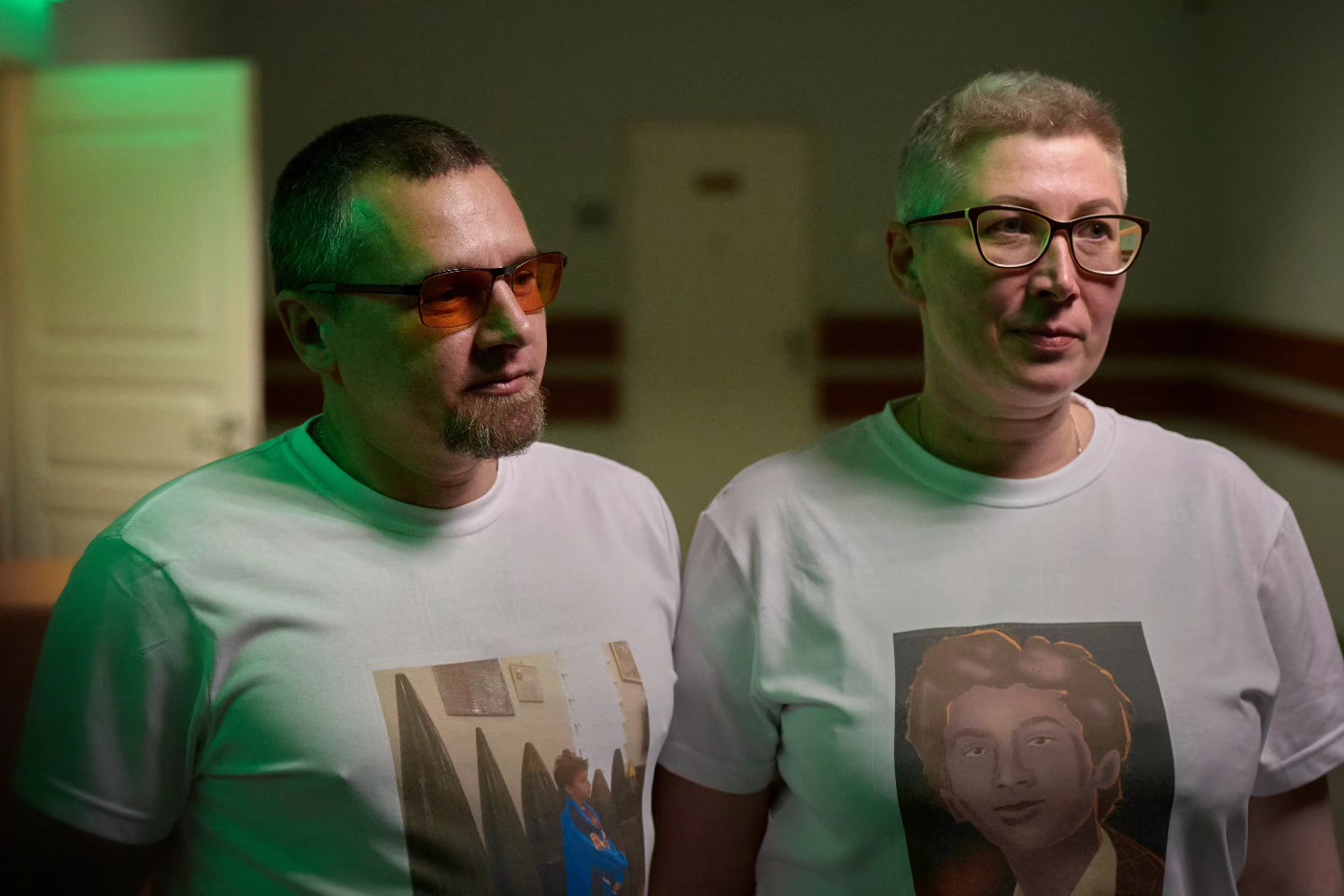
Yegor Balazeikin’s parents, wearing t-shirts that say “Common cause.”
Tatyana, Yegor Balazeikin’s mother: The support of others is the most important thing we have. We have the support of our son. You wouldn’t believe it, but he manages to support us whilst he is in prison! We support him in every way we can, and he supports us. He gives us the energy to go on with our lives. But at the same time, the support of the people around you is quite important, because you realize that you are not alone in this fight, and the people around you, they understand how unjust the court’s decision is, how unjust and unfair the sentence they passed is.
In fact, we have not dealt with any direct harassment in the wake of Yegor’s criminal case from family or friends. There are people whom we don’t know who write all sorts of nasty things about both Yegor and us in the feedback chat of Yegor’s Telegram channel, but there hasn’t been any large-scale bullying. Thank God, we’ve managed to avoid that. For the most part, people support Yegor and us. They write messages of support and comments that support Yegor and us.
What advice can I give to people who would like to help? To write letters, of course: it is safe, it is inexpensive, and it can be done from anywhere in the world. And, probably, to provide financial assistance to the families of political prisoners. Because it is quite dangerous to send packages or parcels without vetting them with the families, since a prisoner may not be given a care package that their family planned if someone suddenly sends one without vetting it first. And financial assistance is quite important, because relatives know what they sent in the last care package, what they need to send in the next one, and how many kilograms they have left to send. For the time being, this does not concern Yegor: he is a minor, so there are no restrictions on care packages to him. But on 6 August he will turn eighteen and the number of care packages he can get will be strictly limited. Generally speaking, letters and financial support are absolutely necessary. But nothing should be sent to political prisoners without the consent of their support groups or their families.
You can find information about what support Yegor Balazeikin and his family need on the Telegram channel The Yegor Balazeikin Case.
You can send letters to Yegor at the following address:
Balazeikin Yegor Danielevich (born 06.08.2006) Primorsky rayon, pos. Talagi, d. 112, FKU Arkhangelskaya VK UFSIN Rossii po Arkhangelskoi oblasti Arkhangelsk 163530 Russian Federation
You can also send letters to Yegor via the online service ZT and the volunteer-run project RosUznik.
Mistakes to Avoid
Anna, Nikita Ugarov’s mother: I was shocked when Nikita was detained. You see, when I’d gone to bed, the kids were home and I didn’t even suspect they had done something. I asked the police officers right then and there what would happen to the kids, and they replied that they would get off scot-free since they were minors. This reassured me and so I didn’t bother to do anything, but now I very much regret that I didn’t immediately retain counsel. I was completely stunned, at the arraignment, when they read out the statements by Bogdan and Denis (Ugarov’s “accomplices” in the case — Ed.), in which they requested that Nikita be remanded in custody since they feared for their lives because they were cooperating with the investigation. It was quite hard and hurtful that Nikita was betrayed by people he considered friends. The boys had been pressured by their mothers into signing the statements, and persuaded by the investigators, who had told them that due to their age no one would been punished. They had signed confessions, on which the investigators and FSB officers had worked very hard, running back and forth between interrogation rooms and adjusting the boys’ statements so that they coincided down to the last gramme when one of the boys didn’t know or remember a particular detail. Since Nikita refused to confess, he was made the main villain, and the confessions were the basis of the charges against him. Later, though, the mothers understood the mess they had made. They hired good lawyers and we all started sticking to the same position.
Ivan Astashin: It happens that a family turns down the services of civil rights lawyers, entrusting themselves instead to the court-appointed attorney and the lead case investigator, and naturally this harms the defendant. The case of Ilya Podkamenny is a perfect illustration of this. His mother decided that telling everything straight was the best thing to do. She told the authorities that her son had been storing petrol and was also planning to torch a military recruiting office. Ilya was ultimately charged with two more crimes, including planning to torch the military recruiting office. I don’t know whether Ilya also said anything about this or not, but it’s a fact that you don’t have to say anything, especially since Article 51 of the Constitution gives you the right to refuse to testify not only against yourself but also against your close relatives. You can say nothing at all. As we know, any testimony can be used against you and your relatives.
Or there’s the case of Alexei Rozhkov, who was released on his own recognizance in 2022 and could have left Russia. His relatives were opposed to this and tried to talk him out of it. He ultimately left the country but only a few months later. After he left he had to wait several months in Kyrgyzstan for an entry visa to Europe. Whilst he was waiting he was abducted by the security forces and taken back to Russia. It is hard to talk about what “might have been,” but it is possible that, had he left Russia earlier, he would have been able to leave for Europe more quickly and would not have wound up back in a Russian remand prison. But now he’s facing over twenty years in prison.
Vladislav Yurchenko, an anarchist from Russia who stood up in defense of the peoples of Ukraine, has died in battle
You may have recently read about an anarchist from Russia with the call sign Pirate who was fighting against Putin’s troops in the ranks of the Siberian Battalion. He is 22-year-old Vladislav Yurchenko. He was killed on 9 August during an amphibious assault on the occupied Kinburn Spit, according to the Telegram channel Anarchist Сombatant.
In July, the Resistance Committee published Vladislav’s remarks about his motives for fighting on the Ukrainian side.
“I have always had a heightened sense of justice. That was why, when Putin launched his imperial war against Ukraine, I decided to take up arms to defend the freedom of the Ukrainian people, and the freedom of Russian citizens and the Indigenous peoples enslaved by Russia.
“When I was 24 years old [Yurchenko changed his age to protect his identity — I.A.] I took an interest in the ideals of anarchism. It was then I realized I was living in a fascist state. I started going to rallies in support of political prisoners, but quite quickly was disillusioned with this way of fighting the regime. I studied a maritime profession and was employed on sea vessels. I had a good salary, and had something to lose, but when the war started, I could not in good conscience continue to lead my ordinary life and turn a blind eye to the crimes committed by the Russian army. That is why I am here,” Yurchenko wrote.
On 9 August 2024, Siberian Battalion soldiers took part with other units in an amphibious assault on the Kinburn Spit, which is occupied by Russian troops. Yurchenko was wounded in the battle. His comrades tried to evacuate him, but his boat was hit by an ATGM (anti-tank guided missile) fired from the Russian side, and Yurchenko was killed.
Yurchenko left behind a letter to be published in the case of his death.
“Hello to all our comrades. My name is Vladislav, call sign ‘Pirate.’ I decided to leave behind this letter in case I perished in the war against the imperial Russian regime, the war against the country in which I was born and grew up, the war against the dictator who usurped power before I was born. I want this letter to remain as a historical document of the involvement of revolutionary anarchists in the Ukrainian people’s resistance to the Russian tyranny. Like all sensible citizens of the Russian Federation, I was shocked by this war’s beginning, by the terrible injustice and crimes committed by the Russian army on Ukrainian soil. From the first days of the full-scale invasion, I thought only about what I could do to combat this injustice, how I could stop the madness that my own people were committing. When I learned that there were military units in the Armed Forces of Ukraine which had begun to sign up Russian nationals, I immediately realized that I must fight for the freedom of the Ukrainian people and our ideals in this way, under arms. And even if I don’t live to see the Ukrainian people’s victory over the occupiers, the bright anarcho-communist future, and justice and freedom for all people on Earth, I still believe. I believe that this future will definitely dawn; as long as our comrades continue to fight, totalitarianism, authoritarianism and fascism will not engulf humanity. I wish my comrades the same confidence in the fight for freedom.
Screenshot of Mediazona infographic, as published here
Russia is losing more and more men in its war against Ukraine.
As of 5 July 2024, Mediazona and its partners in the casualty counting project have ascertained the names of more than 58,000 Russian soldiers killed in action.
The real losses are twice as many, however. Journalists have calculated the actual number of war dead based on information from the probate registry. How they did their work is described in this article by Mediazona. You can read here about how our methodology has been corroborated.
The real losses of the Russian army, including mercenaries, in the war against Ukraine, come to 120,000 dead. The Russian army’s casualties are thus already greater than both the number of US military deaths since the Second World War and all the losses of the Soviet and Russian armies since 1945. Most of the men killed were between the ages of twenty and forty. Those who were younger were usually draftees and prison inmates, while those who were older were “volunteers.”
Seventeen thousand prison inmates recruited by the Wagner Group perished at Bakhmut, according to the mercenary organization’s own documents, as examined by Mediazona. Meanwhile, journalists had estimated that Wagner had lost around sixteen thousand men, which is nearly the same number. Wagner has recruited a total of 48,366 men during the war, meaning that a third of them were killed in the so-called Bakhmut meat grinder.
Prison inmates, “volunteers,” and conscripts, if we judge only by confirmed deaths, have borne the brunt of the losses in the war. At 47.4 percent, they constitute almost half of those who have been killed.
In over two years of war, 3,700 officers of the Russian army and other security forces have been killed, 430 of them in the rank of lieutenant colonel and above.
Between 200 and 250 men are killed every day. This year, the Russian army’s losses have risen dramatically. In 2023, an average of about 120 men were killed every day.
There are two points of view on Russia during the full-scale war. The first is that Russia has turned into a fascist militaristic state in which everyone marches in step and sincerely hates Ukraine. The second is that cynicism and apathy have won the day in Russia: people don’t care about the war as long as it doesn’t affect them personally. Both of these views are mistaken, according to the authors of “We Have to Live Somehow,” a study from the Public Sociology Laboratory (PS Lab).
The researchers traveled to Krasnodar Territory, Buryatia, and the Sverdlovsk Region, living there for a month and interacting closely with the locals. What they tell us does not fit into either of the two common stereotypes about Russians and the war. Here are a few of the tendencies they observed.
The war is invisible in daily urban life. Residents in the Sverdlovsk Region town of Cheryomushkin (whose name was deliberately changed by the researchers) could not recall a single event in support of (or against) the war during the year. In Ulan-Ude, the capital of Buryatia, the pro-war agitprop consisted of a single poster on a Lenin monument. In Krasnodar, pro-war banners still hung on buildings, but people had long ago removed pro-war stickers from their cars. There is no institutional support for the war at the municipal level: such support is the bailiwick of ideological loners and small groups of pro-war volunteers.
Apolitical Russians justify the war, but arguments like “NATO soldiers” and “defending Donbas” are not of primary importance to them. Rather, they simply want to save face themselves, because they take the accusations directed at their country personally. For this reason, Russians have previously been inclined to justify the actions of the state, even when they do not understand or approve them.
The majority of the populace is not opposed to the war. They may disapprove of it in some respects, but they simultaneously defend the state. For example, in the Sverdlovsk Region, women were outraged by the deaths of young soldiers at the front (“They are sending children to fight! Why?!”) while also parroting the propagandists’ arguments about the war against the “collective West” (“Them United States are hammering civilians!”). Non-opponents of the war argue that Russia has been proactive, defending itself rather than attacking (“Now the Luhansk and Donetsk Republics are part of Russia, but our guys aren’t advancing any further—they’re defending all of it”).
Non-opponents of the war regard the residents of Donbas as Ukrainians, not Russians. They scold Ukrainians from the “Donetsk People’s Republic” and the “Luhansk People’s Republic” (“They don’t defend themselves. They’ll be coming here [to Russia], and what, I’ll have to go fight in their place? I don’t want that”) and do not regard these areas as “their own” (“They are not my blood relatives, they are not my own people”).
While opponents and supporters of the war initially had bitter conflicts, solidarity between them has emerged despite their differences of opinion. Those who generally condone the war are increasingly questioning the official version of events, while those who oppose the war are beginning to listen to their opponents (“I have to build a life and continue living with these people”).
Russians try to pretend that the war has not impacted their daily lives in any way, but its signs still permeate their everyday lives and conversations. In the Sverdlovsk Region, a woman is going to “go to great lengths” to prevent her son from serving as a contract serviceman. In Buryatia, a volunteer says mundanely, “I have eight grandchildren, all boys. And it just happened that four more died at the front.” In Krasnodar, a sociologist’s source says he is glad that the city is not being bombed and that the “Wagnerians” did not come their way, but then confesses in a low voice that the future is hazy and “let’s put it this way: things have become a bit tense.”
The big takeaway, however, is that Russians are pushing the war to the back of their minds. And this is bad news for the Kremlin: it has failed to convince the public, over the past two years, that the invasion was launched in pursuit of noble ends. Even as they justify Russia, its citizens don’t understand what good the war does for them personally.
A week ago, a Moscow court sentenced fifteen-year-old Arseny Turbin to five years in prison after convicting him on charges of “involvement in a terrorist organization.” The security forces accused the schoolboy of aiding the Free Russia Legion, which has been officially banned in Russia.
Arseny lived with his mother Irina in the small city of Livny in the Oryol Region. Although he was one of the most successful pupils at the local prep school, he was bullied by his classmates, and yet his teachers did not respond to his complaints. At the war’s outset, Turbin supported the Kremlin’s actions, but later became disillusioned with the government and took an interest in politics, even telephoning [exiled online news channel] TV Rain and telling them that the Conversations about Important Things lessons at school were “utter nonsense.”
In early June 2023, Arseny wrote an email to the Free Russia Legion (an organization we described in detail in a previous newsletter). He wanted to сampaign against the war, but they asked him for too much personal information and he did not send the application form to these strangers. Instead, he started distributing leaflets criticizing the authorities and taking pictures of himself in front of the white-blue-white flag. (The Russian authorities regard this flag as a symbol of the Legion, which has been fighting against Russian forces in Ukraine.)
Meanwhile, a strange thing happened. Turbin made the acquaintance of someone called Maxim, who immediately gave him access to the Telegram channel Occupy Slutophilia 14 (similar names have been used on the Web by the fans of the late Russian neo-Nazi activist Maxim “Tesak” Martsinkevich) and asked him to help with the channel’s content by editing videos. The channel had only a few subscribers, and it featured posts in support of Yevgeny Prigozhin and far-right content revolving around Tesak. Investigators then used Turbin’s involvement in the channel to accuse him of neo-Nazism, despite the fact that the schoolboy’s father was from the UAE, and Turbin himself had been bullied at school due to his dark skin.
At the end of the summer, FSB officers searched the Turbins’ home and summoned Arseny for questioning. It was a very strange conversation: for almost an hour and a half, in different ways, two investigators questioned the schoolboy about his connections with the Free Russia Legion. At the end of the conversation, as Mediazonadiscovered, they assured the teenager that it was “normal” and “not against the law” to send an application to the Legion, which has been declared a “terrorist organization” by the Russian authorities.
The court was not interested in this peculiar circumstance, however. It was interested in Turbin’s statement, allegedly made during the interrogation, that he had sent the application: this was the basis for the charge that he had “joined” the “terrorist organization.” The thing is that Turbin did not say this. Mediazona has in its possession a full transcript of the conversation, and it simply does not contain mention of Turbin’s sending off the application. The investigators inserted it for their own convenience.
Irina Turbina was present at the interrogation. She says that the investigators retyped the statement three times because of mistakes, and suggests that they could have discreetly amended it after lulling her into a false sense of security.
After seeing the transcript, the investigator, Trunov, had even wanted to close the case. In February 2024, however, the investigation was assigned to another investigator, Irina Simonova. She spun the line about Turbin’s alleged neo-Nazi views, obtaining testimony from the boy’s classmates, who assured her that his “idol was the so-called Tesak,” that he had advocated “exterminating the Ukrainians,” and had supported Alexei Navalny. Irina Turbina does not believe this testimony, producing correspondence in which her son called Tesak a “blockhead” and himself a “liberal.” Turbina argues that her son’s classmates testified against him in exchange for “excellent high school diplomas.”
Due to the increased harassment at school, Turbina transferred Arseny to home schooling. He managed to pass his year-nine exams before the verdict was handed down. On 21 June, the court sentenced Arseny to five years in prison, although the prosecution had requested an even longer sentence of eight years. After the sentence was read, he burst into tears, telling his mother, “Mom, I’m sorry—forgive me for letting you down. But I really didn’t know I was violating any laws.”
No one looked for the mysterious Maxim. The court was also uninterested in Turbin’s conversation with the FSB officers who openly provoked the schoolboy and falsified his statement.
PROMPT: Make an illustration on the theme of “Russia’s Fascist Meltdown”
Creating an illustration on the theme “Russia’s Fascist Meltdown” involves capturing the essence of nationalism, authoritarianism, and geopolitical tension. Here’s a description of an illustration:
The illustration features a powerful and imposing figure symbolizing the Kremlin, with a stern-faced leader resembling Vladimir Putin at the forefront. Behind him, the Russian flag waves prominently, but instead of the usual tricolor, it blends with darker hues suggestive of authoritarian control. The background is a stark urban landscape, reminiscent of Moscow’s skyline, but with ominous shadows and smoke rising in the distance.
In the foreground, there are smaller figures representing dissenters and protestors, their faces obscured in shadows or masked to symbolize anonymity and resistance. They hold signs with slogans advocating for freedom and democracy, contrasting sharply with the dominant figure of Putin. The atmosphere is tense, with a palpable sense of division and discord.
To further emphasize the theme of “meltdown,” the illustration includes elements like cracked ice or fire, symbolizing internal turmoil and instability within Russian society. The color palette leans towards shades of red, black, and grey, evoking a sense of danger and crisis.
Overall, the illustration aims to visually convey the complex and contentious dynamics surrounding Russia’s shift towards authoritarian nationalism, capturing both the gravity of the situation and the resilience of those who oppose it.
Open Space is a project that supports grassroots activists. It has two sites, in Moscow and St. Petersburg, with co-working spaces, a human rights center, and a psychological center. The Moscow site is at odds with the pro-government movement SERB, known for its provocations against the opposition. Republic correspondent Nikita Zolotarev is often at Open Space, sometimes as a volunteer. That was how he found himself at the Moscow co-working space last Saturday, where he was detained along with other visitors on the basis of a complaint filed by the “Serbs,” who were assisting the police, and then spent several hours at the Basmannoye police precinct. Here is how it went down.
“It’s showtime,” SERB leader Igor Beketov said on his movement’s video stream before knocking on Open Space’s door. He and another SERB activist, Pyotr Rybakov, were able to get inside after the police arrived.
SERB’s video recap of the SERB-assisted police raid on Open Space Moscow, as posted on their Telegram channel on 19 May 2024
“A circus is about to kick off,” a young woman sitting across from me named Thiya texted a friend at 6:09 p.m. A knock on the door distracted her from solving a strength of materials problem. Nine minutes later, she sent a new message, writing that “the Serbs and the police” had come in.
The [pro-regime] activists walked around filming anything they saw as “extremist propaganda” and drawing the attention of police officers to it. Thus, halting near a painted copy of “The Brotherly Kiss,” the famous photo of Brezhnev kissing [East German leader Erich] Honecker, Pyotr and Igor began explaining something to a policeman. “What does this mean?” Rybakov asked, pointing to the drawing. “Since Soviet leaders could do it, it turns out that…,” he answered his own question uncertainly. The police officer remained expressively silent and photographed the image just in case.
The photograph known as “The Brotherly Kiss” was taken in 1979 at a meeting between Leonid Brezhnev and Erich Honecker in Berlin during the GDR’s thirtieth anniversary celebrations. Source: Regis Bossu/Sygma/Corbis
Then they went looking for members of Left Socialist Action (Levoe sotsialisticheskoe deistvie, or LevSD, for short), having prudently abbreviated the name of the organization to “LSD,” because, after perusing “the page of this movement, [they] saw that it does not smell of any left-wing movement.” What exactly they did not fancy about “LSD” on a day when the latter were holding “an evening of letters from some political prisoners” remains unclear.
“They came and almost broke down the door,” recalls Anastasia, who organized the event. The SERB activists asked her why her movement was holding an event in support of Ukraine, a conclusion at which they arrived after seeing a couple of posts with Ukrainian flags on Lev SD’s Telegram channel. Anastasia tried to persuade them that such “flags are posted after the massive shelling of Ukrainian cities to express condolences.” A brief discussion ensued, whose acme was the following question from Pyotr Rybakov: “Did you see Soviet people publishing posts in support of Germany during the bombing of Dresden?”
This discussion was witnessed by Anastasia’s friend Andrei, a expert on the history of Yugoslavia. He was surprised that Pyotr “probably didn’t know that there was no Telegram back then” and asked what, in Pyotr’s opinion, “equates the Great Patriotic War [World War Two] with current events.” The “Serb” responded by comparing Zelensky’s regime to Hitler’s, dubbing it “absolutely fascist.” After mentioning NATO, they smoothly segued to the bombing of Yugoslavia. This discussion did not last long: Pyotr soon ran out of arguments against the facts Andrei presented. The culmination of their conversation was when Andrei asked whether the SERB activist had read Kurt Vonnegut’s Slaughterhouse Five, to which Pyotr replied that he had “never read Bunin.” Andrei recalls this conversation with a little annoyance: he says that if they had more time, he would have tried to wheedle some “less cannibalistic” information out of this “ideologically charged man” and “make him think.”
SERB leader Igor Beketov (aka Gosha Tarasevich) and his associate Pyotr Rybakov, both wearing black-and-orange scarves. Source: theins.ru.
At 6:32 p.m., a police officer let some of the people who wanted to smoke out by going out with them. It was as if he knew what the visitors were going to experience a little later.
In addition to writing letters to political prisoners event, a session of board games under the auspices of the Libertarian Party of Russia was being held in the basement of the co-working space. As organizer Vladislav tells it, the libertarians were having a quiet time when Open Space volunteer Sasha suddenly appeared and said, “We’ve got a situation: the police have showed up, the ‘Serbs’ have showed, but so far everything is fine.”
“We took note. I won at Jenga: my buddy had happily wrecked the tower,” recalls Vladislav. After that, he went to make coffee on the first floor of Open Space—where he saw the “Serbs” writing a complaint to the police.
At that moment, Andrei, the expert on Yugoslavia, made a terrible blunder for which he repented long afterwards: he offered the provocateurs Roshen caramels, a Ukrainian brand. On the table with the tea bags there was a metal box, where volunteers put sweets that keep for a long time. The ill-fated caramels were in this box on the day in question.
“You can’t get these candies so easily in Moscow—you have to make an effort to find them,” the SERB leader noted.
Forgetting about their complaint to the police, the “Serbs” paced the room talking about Roshen candies. Everyone else in the room was silent, listening attentively to their arguments. But since the entire candy argument consisted of no more than five sentences per two people—Beketov and Rybakov kept repeating the same thing—their listeners could barely contain themselves from laughing. “Sometimes candy is just candy,” Open Space volunteer Sasha finally told them and suggested they taste the caramels, adding that they were delicious. The activists resisted. “Roshen is good quality, no one is arguing about that. But they are Ukrainian candies!” they said. The conversation about candy was interrupted only by the advent of a paddy wagon.
Rybakov and Beketov writing their complaints to the police during the raid on Open Space, 18 May 2024: Source: social media
The people at the board game event hastily made to leave, but a police officer soon came down to them, and, according to Vladislav, “it was clear [we] would spend the next few hours in a less comfortable place.” The moment the policeman stepped away, Vladislav “snuck through a window.” The policeman shouted after him, summoning his partner, but Vladislav managed to escape to a subway station. Not knowing what to do, he wrote on the Libertarian Party’s Telegram channel that the police had begun detaining attendees at their event.
First, the attendees of the two events and several visitors to the space who were just minding their own business were dispatched to the police bus. One of the detainees calmly recalled how she went to the police bus: “Going to the police station isn’t the same as digging a ditch, and I was so tired anyway I wasn’t about to resist. It was a comfortable ride, but it’s a pity they didn’t bring me back.”
Anastasia, who for some reason was transported to the station separately from the others, recalls how she “snapped at the policemen while dying inside.” When asked if she had any sharp objects for stabbing or cutting, she “blurted out that only her tongue was sharp.” The policeman was amused, and a small exchange of pleasantries ensued, but he stopped laughing at her jokes as they neared the Basmannoye precinct.
Ten Open Space visitors went on the first trip to the station. I was among the second batch of six detainees. There were five seats on the Ford Transit bus, not counting the seats reserved for officers, and between the seats was a table, which Thiya occupied by placing the worksheets with the strength of material problems on it.
“More comfortable than in a economy class sleeping car,” said one of the detainees.
The “Serbs” stood by the police vehicle, taking turns proclaiming “Open Space is closed!” They seemed to enjoy the play on words. They too headed to the police station to file their complaint.
The Open Space detainees in the educational classroom at Basmannoye police precinct. Source: social media
We were taken to an educational classroom, where some of the people detained earlier were already located, as well as a couple of people who had been brought to the precinct independently of us—a young man detained for brawling and a woman who had attempted to strangle her sister. Some of the Open Space people were in another office. As transpired later, the officers wanted to take their fingerprints, and several people consented.
As one of the detainees recalls, when the officer “was taking our prints he referred to some order issued by [Interior Minister Vladimir] Kolokoltsev, dated such-and-such a day in July 2023, that all those brought to police precinctd must be fingerprinted.” There is no such order. Moreover, according to Article 13, Paragraph 19 of the Federal Law “On the Police,” an officer has the right to fingerprint a detainee only if their identity cannot be ascertained in any other way. Since almost all the detainees had [their internal] passports with them, they were used to establish their identities. And those detainees who refused to be fingerprinted and later signed statements that they refused to undergo the procedure, left the precinct even earlier than those who had been fingerprinted.
The key question we were all asked by the interrogators was whether we had anything to do with LGBT and whether we were involved in any activities related to this movement. Yevgeny, a lawyer who aid the LevSD detainees, recounted that all the police officers with whom he spoke were convinced that “this was some kind of LGBT gathering, a gay bar and so on.”
“When I told them about the event to aid political prisoners, they started telling me, ‘Come on, stop pitching us a yarn,'” the defense lawyer recalled. In response to the flyer for the event, which Yevgeny showed them, the officers told him, “That’s how they encrypt themselves.”
Around 8 p.m., we were given water and food, and journalists and a support group gathered under the windows of the classroom. At that time we were called out of the classroom to make our statements. It was my turn.
“You’ll tell me all about LGBT. I’ll tell you something too.”
With these words the interrogator started lazily looking for the copy of my passport and preparing a blank form for my statement. At that moment someone called him—probably some supervisor giving additional instructions. The interrogator mostly agreed with what the caller was saying, only at one point he uttered, “They’re mostly came to play board games, that’s all.”
Our conversation flowed smoothly, albeit with a few, brief lyrical digressions.
“What were you doing there?” the interrogator asked in a tired voice.
“I was helping Thiya do her homework, on strength of materials, as it turns out. She still has those strength of materials worksheets with there.”
“No, I forgot most of that stuff a long time ago.”
Another officer passed behind me, and my interrogator seemed to come to life.
“Listen, wait! There should be a broad in red pants out there. You cannot let her go!”
His colleague shared his worries.
“Everyone refuses to be fingerprinted.”
“The hell with them. What matters is the woman in red pants…. Don’t let anyone go at all!”
He was talking about Sasha, the Open Space volunteer.
“Nobody’s going anywhere.”
“That’s fucking great.” After a little silence, he added, drawling his words again, “The journalists haven’t arrived yet for some reason. But never mind.”
“Are you expecting them?” I asked with hope in my voice.
“They already filmed me.”
And then he complained me about how he wanted to get home, how he had already “one foot in [my] slipper, and then your gang arrived.” Suddenly, in an animated voice, he asked the key question of the evening:
“What’s up with LGBT?”
“I don’t know anything, I haven’t seen anything, I don’t belong to LGBT.”
“You getting married soon?”
“I am getting married soon,” I said, and showed him my engagement ring.
Trying to guess what material the ring was made of, he let me read the statement. When I asked him if I could get a copy of it just in case, he waved me off, saying, “Don’t even think about it.” I quotedThe Heart of a Dog, the passage about the “ultimate in certificates,” but it transpired that the interrogator had not “waded through” the novella. And he had not watched he movie version, either, because it was, from his point of view, a “cheesy farce.” He and I parted on these words.
Inside Basmannoye police precinct
While I was giving my statement, an officer came into the educational classroom and asked whether there was a “competent person” among those present, meaning someone legally literate, apparently, someone whou would write a refusal to be photographed and fingerprinted, so that everyone could write their own refusals using his as their model. Such a “competent person” was found, and the question itself provoked laughter among the detainees.
After my return to the “waiting area,” Thiya went to her interview, her strength of materials worksheets in tow. She returned twenty minutes later with a look of bewilderment on her face. The fact is that she is getting married soon—but not to me—and in the process of making her statement, the interrogator, after finding out that Thiya also had nothing to do with LGBT and was also getting married soon, assumed that she was getting married to me. Thiya wasn’t about to argue with him.
The interrogator reread her statement aloud: “I am getting married. I am not inviting the chief of police.”
“The above is an accurate record of my statement,” Thiya added in writing to the end.
One of the detainees who heard this conversation saw my surprised face—I was planning to marry someone else after all—and gave me a piece of advice.
“When questioned later, you answer that it was dark, and that’s why you mixed up [the fiancees].”
“Uh-huh. I was drunk, I don’t remember!” I joked back, and we laughed together.
“Seryoga, did you count the number of [detainees]?” one of the officers asked my interrogator in the meantime.
“I don’t fucking know. How many are there supposed to be? There’s a whole fucking busload of them, a whole fucking classroom of them. Count them as a pack,” Seryoga the interrogator replied. At some point he took the worksheets from detainee Thiya, scrutinized them, and pointed out a flaw in the diagram to her.
Meanwhile, Vladislav the libertarian was walking towards the police station—he wanted to support his comrades. His fellow party member Georgy Belov was signaling to him from the window: fearing that Vladislav would be detained by the police, he waved his hand at him, telling him to get away. One of the officers at the Basmannoye police department did head toward Vladislav, but he managed to escape again. He then went to the store to buy food to give to his fellow party members and, as he put it, “our buddies from LevSD.” Some time later, LevSD and LPR agreed to hold joint events, primarily debates.
At 8:30 p.m., the officers at the station detained Vladislav all the same. When he and the other libertarians at large brought the care package, the policemen noticed him standing under the windows and took him inside.
Vladislav the libertarian is detained outside Basmannoye police station. Source: Rus News
My attention was drawn to a female detainee who at some point started making postcards for political prisoners. She said that she would send them with the note “A postcard from Basmanny police station.” Someone wanted to work, but since there was no free Internet in the department, they were unable to. “I’m giving them a negative rating for not having wi-fi,” a young woman joked.
Anastasia was indignant.
“We are locked up here, a group of people who were not involved in anything criminal at all, while locked up here as well are a young man who was nicked for brawling and a woman who tried to strangled her sister. Instead of dealing with these people, the cops are dealing with political activists.”
This made her so angry that she stopped being afraid.
At some point, all the officers in the precinct left our part of the department. The metal door leading to the officers opens with a key card, so we had no communication with them. For a little over an hour we had “free time.” Everyone socialized, joked, and planned where they would go to drink beer after we were released, while some of the detainees chatted with the support group outside since the windows were open. And if it were not for the bars on those windows, it might have seemed that the detainees had not even left the co-working space.
From Open Space to Basmannoye police precinct. Source: social media
At around 10 p.m., the interrogator and another officer (the head of the department, probably) brought all the paperwork. They caloled the detainees by name, collecting their papers—the copies of their passports, fingerprinting refusals, and statements—and handing back their passports and escorting them to the queue for release.
At first, those who had not been fingerprinted were released, because “the staff had lost their fingers” [sic]. At 10:07 p.m., I found myself outside with a group of detainees. We waited for the others to be released. Journalists taped our commentary for their news dispatches. At that time, Sasha, the Open Space volunteer in the red pants, was driven away by the Basmannoye police officers for an inspection of the “crime scene,” during which they confiscated several stickers and posters. The last detainee, libertarian Georgy Belov, was released at 11:34 p.m.
Activist Alexandra (“Sasha”) Kalistratova on the seizure of stickers and posters in Open Space by law enforcers. Source: Rus News (Telegram)
“I feel like we had an interesting, productive time, but it was complete fucking rubbish per se,” said one of the female detainees. “Saturday night was unforgettable,” concluded Andrei.
Alexandra Karaseva. Photo from social media account via Bumaga
During the three days of the [presidential] election in Russia, the Interior Ministry reports, twenty-one criminal cases were launched over attempts to set fires at polling stations or spoil ballots with brilliant green dye solution. Twenty-one-year-old student Alexandra Karaseva was remanded in custody to a pretrial detention centre after being arraigned on just such charges.
According to police investigators, on 15 March, Karaseva threw a Molotov cocktail at a polling station poster on the porch of School No. 358. No one was injured.
Bumaga explored what we know about Alexandra Karaseva, why she might have committed the arson attack, and what defendants charged with obstructing the work of polling places face.
In St. Petersburg, 21-year-old Alexandra Karaseva was remanded in custody to a pretrial detention centre. Investigators allege that she threw a Molotov cocktail at a polling station
Around three p.m. on the first day of voting, 15 March, a young woman ran up to the porch of School No. 358, in Petersburg’s Moscow District, and threw a Molotov cocktail at the wall, as seen in surveillance footage.
The school housed two election precincts—No. 1395 and No. 1396. The attempted arson only left traces of soot on the upper part of the information sign bearing the elections logo and on the wall of the school. No one was injured and the operation of the polling station was unaffected.
The aftermath of the 15 March arson attempt on the porch of School No. 358 in Petersburg. Photo courtesy of Bumaga
The young woman tried to run away but was immediately detained by one of the witnesses. After the incident, the media and the municipalcourts press service revealed the suspect’s identity: 21-year-old Alexandra Karaseva. According to the media, the young woman told the police that she had been promised payment for the arson, and that she had received the assignment from a certain “Ukrainian Telegram channel.”
Karaseva was charged with “obstructing the exercise of voting rights” and faces up to five years in prison if convicted. According to police investigators, unidentified persons had inveigled Karaseva “into a criminal plan” over the telephone. The arson attack’s goal was to disrupt the work of polling stations, the investigators claim.
The next day, 16 March, Petersburg’s Moscow District Court remanded Karaseva in custody to a pretrial detention centre. The young woman had pleaded guilty, but asked to be placed under house arrest.
She danced, wasn’t interested in politics, and had financial troubles: how Alexandra Karaseva is described by her acquaintances
Karaseva had been dancing from the age of five, and at the university she was actively involved in extracurricular activities, her acquaintances told Bumaga. In the autumn of 2023, [the university’s website]mentioned her as a fourth-year student who was a choreographer for the university’s dance team. She worked on a performance celebrating the fifth anniversary of the National Guard department at the Military Institute’s Logistics Academy.
“We worked together on a student talent show. She was responsible for staging the team’s dance numbers. She led a very active lifestyle and was involved in extracurricular activities. She cared about people who needed help. She used to work as a choreographer for children’s dance groups,” said Alisa, a female university acquaintance of Karaseva’s.
While studying at the University of Economics, Karaseva lived at the Inter-University Student Campus (ISC) near the Park Pobedy metro station and competed in the 2023 Miss and Mister ISC contest. According to another university acquaintance of Karaseva’s (who wished to remain anonymous), Karaseva was often short of money, so she took various part-time jobs.
“Frankly, this situation has been a huge shock to me,” said the acquaintance. “Never in my life would I have believed that Sasha could do such a thing. As long as I have known her, she never raised the topic of politics. I’m pretty sure she didn’t do it out of choice. It was probably out of desperation. She was either conned or had money problems.
A few months ago, Karaseva had transferred to the Herzen Russian State Pedagogical University, according to Channel 78. One of Karaseva’s acquaintances also told Bumaga that Karaseva was no longer enrolled at the University of Economics. Officials at the Herzen toldFontanka.ru that a young woman with the same name had recently been expelled from the pedagogical university for skipping classes.
Karaseva’s immediate family members ignored our requests to comment on the story.
Over three day, twenty-one criminal cases were launched in Russia for arson attempts and the pouring of brilliant green dye solution on ballots at polling stations. Some suspects report they were promised payment
Sixty-one criminal cases relating to the presidential election were launched in Russia over the three days of voting, First Deputy Interior Minister Alexander Gorovoy reported on the evening of 17 March. Twenty-one of these cases involved arson attempts at polling stations and attempts to spoil ballot boxes with brilliant green dye solution: they were charged as “obstruction of voting rights.”
In addition to Karaseva, people in other regions of Russia also brought Molotov cocktails and brilliant green dye solution to polling stations. Most cases were recorded on the first day of voting. Here are just a few of them:
A criminal case was launched against a 58-year-old resident of Kogalym who set fire to her ballot and ballot box at a polling station.
Charges were filed against a resident of Volzhsky, in the Volgograd Region, who poured brilliant green dye solution on a ballot box and the ballots in it. The woman herself said that she had been offered a “monetary reward of thirty [thousand rubles]” for spoiling the ballot box.
20-year-old Alina Nevmyanova, who poured green paint into a ballot box at a polling station in Moscow on 15 March 15, was remanded in custody to a pretrial detention centre. According to Baza, the young woman “had received instructions from someone over the phone.”
A Moscow pensioner by the name of Petrukhina, who suffers from cancer and who, according to Mediazona, set fire to voting booths, was placed under house arrest.
In most cases, the suspects in these criminal cases have repented and admitted their guilt. In some cases, they reported that they did it for the money, while eyewitnesses claim that the defendants were allegedly instructed by phone before attempting arson or spoiling ballots with brilliant green dye solution. The details in many of the incidents are still emerging, however.
No Ukrainian organizations have claimed responsibility for the incidents that took place during the Russian elections.
Since the beginning of the full-scale war in Ukraine, acts of sabotage in Russia have been widespread, and they are often committed for payment or after conversations with phone scammers. In Petersburg, they most often have involved arson attacks on military infrastructures, such as military enlistment offices and railroad relay boxes. According to police investigators, the relay box arsonists have usually been hired by persons unknown through Telegram channels for job seekers. For example, the first person convicted of sabotage in Petersburg, Vyacheslav Zaitsev, who was eighteen at the time of his arrest, agreed to destroy a relay box on the railroad in return for ten thousand rubles [approx. 100 euros]. He was sentenced to eight years in prison.
Zhumagul Kurbanova, a 66-year-old employee of a Pyaterochka convenience store in Petersburg, told police officers that she had received a phone call from a certain “Alexander Fyodorovich,” who convinced her to set fire to the door of the military enlistment office on English Avenue, as there were allegedly fraudsters operating there. Kurbanova was sentenced to ten years in prison.
The State Duma has proposed increasing the punishment for attempts to disrupt elections to eight years in prison. Currently, people who torch and vandalize ballot boxes face a maximum of five years in prison
Shortly after a dozen cases of inept “sabotage” at polling stations were recored in Russia on the first day of the election, State Duma deputies proposed toughening the punishment for attempting to disrupt elections by “generally dangerous means” by up to eight years’ imprisonment. Yana Lantratova (A Just Russia–For Truth), a member of the Duma committee investigating foreign interference in Russia’s internal affairs, reported that a bill to this effect was being drafted.
Currently, Article 141.2 of the Russian Federal Criminal Code—”obstructing the exercise of voting rights or the work of election commissions by conspiring to influence the outcome of the vote”—carries a maximum sentence of five years’ imprisonment. Attempts to set fire to polling stations or pour brilliant green dye solution on ballot boxes most often triggered charges of violating this particular article.
The colossal immersive 3D show The Grinch and the New Year Factory
Palma Mansion (18 Pirogov Lane) Dates: 2.01.2024, 3.01.2024, 4.01.2024, 5.01.2024, 7.01.2024 Time: 11:00, 14:00, 17:00 (daily) We recommend arriving 30 minutes before the start of the event.
New Year is a magical time of miracles and fairy tales! StageMagic Agency has produced a colossal immersive 3D show, The Grinch and the New Year’s Factory, that will entertain children of all ages and even adults! The show can be seen only from January 2 to 7 in the old Palma Mansion!
This New Year’s week will be full of magic, and even the walls of the mansion will come to life as if by magic! No, no, we’re not kidding! Thanks to cutting-edge 3D mapping technologies we will create a Petersburg Disneyland in an old mansion featuring enchanting sets, an incredibly colorful light show, and an exciting performance, including musical numbers performed by the city’s best artists!
Little viewers can look forward to becoming full-fledged participants in a exciting journey through Cartoonland and along with their favorite Disney characters saving the New Year from the insidious Grinch, who decided to spoil the children’s holiday and stole all the gifts from the elves’ magic factory! Elsa, Jack Sparrow, a wizard on a real magic carpet, and many more will come to the aid of the good elves! Will the cartoon characters manage to save the New Year? Will goodness prevail? Come and find out at the main New Year’s celebration in Petersburg, The Grinch and the New Year Factory.
Before the show starts, children will enjoy an exciting welcome program including interactive games with their favorite cartoon characters, a TikTok show, a beauty bar, a magician’s show, and even a photo shoot with adorable husky dogs.
But that’s not all! Every child will receive a 3D gift from Santa Claus, and every adult will receive a welcome cocktail from the owner of the mansion!
All categories of children’s tickets entitle them to receive a gift.
RECOMMENDED FOR CHILDREN BETWEEN 4 AND 10 YEARS OLD ADMISSION WITH PARENTS CHILDREN ARE SEATED IN THE FRONT ROWS BY AGE (YOUNGER CHILDREN IN THE FRONT ROWS, OLDER CHILDREN BEHIND THEM, AND PARENTS BEHIND ALL THE CHILDREN)
There is no such thing as too much magic, StageMagic knows that for sure! See you in the fairy tale!
Duration: 1 hour and 20 minutes We recommend bringing a change of shoes.
Source: Bileter.ru. Translated by the Russian Reader
Dima Zitser. Photo courtesy of Deutsche Welle
Dima Zitser, the well-known educator, writer, and presenter of the weekly program Love Cannot Be Educated, gave a lecture in Berlin in mid-December. Before his “pedagogical standup routine,” as he himself dubs his encounters with audiences, Zitser granted an interview to DW. With Russian schools becoming obedient tools of propaganda, the renowned educator increasingly has to explain to worried parents how to protect their children from the monstrous influence of the government’s lies and manipulation. Zitser told DW how to talk to children about the war, how to teach them to resist propaganda, and how to help them adapt to a new country when they have been forced to move.
DW: Russian parents today often do not know how to talk to their children about the war. They want to protect their children from trauma, but prefer to create an information bubble for them and pretend that nothing is happening. How do you feel about this stance?
Dima Zitser: You cannot avoid talking about the war with your child. You’re forbidden not to talk about it! First of all, it’s tantamount to deception: children are always aware of and know much more about the world around them than we would like them to. If Mom doesn’t talk to it, the child will take its questions to everyone else but Mom. It won’t want to traumatize its mom. It will imagine that this is a painful topic for Mom, that it is not the done thing to talk about it in adult society.
Russian children live in a country that has unleashed a bloodbath. Clearly, we must protect children, and we must choose our words carefully when we talk to them about the subject. But we cannot conceal from them the kind of world they live in. Imagine the level of disenchantment that awaits it when a child bumps its head on this reality. There are no secrets that don’t surface in the end. What do we want our child to grow up to be? A person who doesn’t care about the troubles happening in its midst? It is vital for a person to experience emotional strife.
— Sometimes a child has a hard time coping with the war and even feels ashamed because he or she is Russian. What can parents do in such cases?
You have to explain that it has nothing to do with a people or a nation. Tell your child about the history of Germany, say, which went through its own horror. Tell it about Thomas Mann and Bertolt Brecht, about people who found the strength to stand out. It was hard for them, but if they hadn’t done what they did, the German people would have been finished.
My eldest daughter lives in New York. She does a lot of projects, including ones on behalf of Ukrainians. Her son Yasha is nine years old. [Ukrainians] refused to speak Russian with them in one place. So Yasha asked, “If this language is so hated and it has to do with this war, why do we even speak it?” There is no short answer in this case. Your conversation with your child should start with the fact that the feelings and emotions of people from Ukraine who cannot stand to hear Russian are understandable.
A close friend of mine from Kyiv refused to communicated me after the Russian invasion started, even though I’ve never been a Russian citizen. But later I wrote to her in Ukrainian (my mom and dad are from Ukraine), and we had the most painful conversation for an hour and a half. We met in Europe a month and a half after the war started, and she explained to me that she couldn’t bear to hear Russian being spoke. Although my friend understands that Russian-speaking people may have nothing to do with the war, she feels physically sick and her body hurts when she hears Russian.
I think we need to talk about it. This is what is meant by empathy. We try to understand, albeit incompletely, what is going on with other people.
Dima Zitser, ”Freedom from Education” (TEDx Sadovoe Ring, June 2016, Moscow). With English subtitles
— Suppose a child goes to a Russian school where there is aggressive ideological training, where the war is glorified in “Lessons About What Matters.” Is it enough for the family to talk to the child about what is going on?
I take a very rigid stance in this sense. If people who read DW have these things going on at their child’s school, they have to get the child out of there. There is no other option. If we’re talking about a person around six or seven years old, it believes what adults say without a second thought. It has no sense whatsoever that adults could want to harm it. This, by the way, is the basis of many crimes. The impact of school, propaganda, and indoctrination on this person is enormous! There are absolutely horrible studies on this subject in connection with the Second World War and Nazism.
Get the child out of there! In the Russian law on education, there are different forms of education—for example, homeschooling. Right off the bat tomorrow morning, any family can take their child out of school and start homeschooling it. After that, the technical stuff starts. It will be difficult, but did these people assume that they could live during a war and pretend that there was no war? That they could say things to their child at home, and the child would go to its quasi-Nazi school and everything would be fine? It won’t be fine. It’s a war, guys! It’s a matter of saving our loved ones!
We can’t live in a time of war as if it isn’t happening. We have to make decisions. For example, we can form a study group: parents agree amongst themselves, pool their money, and hire a teacher. This is legal, and there is such a trend in Russia.
If a person is fifteen or sixteen years old, it’s no big deal. Well, they will live amidst doublethink, just as we did when we were growing up. True, it did us no good. There is such an argument amongst adults: “We survived after all.” Like hell we survived! We learned to lie, to be mistrustful, to look for a hidden agenda in everything, to expect the worst. I would prefer to live in a world where people are open and frank.
— Suppose a child has been removed from a Russian school, but other sources of aggressive propaganda continue to harass it. Should children be taught to recognize and combat propaganda?
This is like asking whether a person should be taught critical thinking. Yes, of course they should! We should teach them to seek out alternative sources of information and ask follow-up questions. If someone speaks on behalf of the state, one should immediately question what they say. We must teach children that the phrases “everyone knows,” “anyone would say,” and “there is no doubt” are forms of manipulation.
— In addition to children who have remained in the Motherland, there are thousands of children who have left Russia with their parents. The problems faced by emigrants are often discussed, but what happens to the children is forgotten. How should parents behave so that emigration is less painful for their children?
The most common mistake is to try to maintain the routine you had in place before you left the country. Did you study music? You’ll go to music school here too! Were you studying English? You’ll keep learning English! We played chess on Tuesdays? We’ll do the same thing here!
Not even the best parents are immune to this mistake. They instinctively try to maintain stability at such moments, but they are accomplishing just the opposite. The frame of reference has changed! You can’t live in Berlin as if you were still living in Ryazan! People here are different—they speak differently, look different, behave differently. When we try to stop time, we keep the child from growing.
When we keep a child “packed and ready to go,” it has no chance to grow into the country in which it has arrived. What should it do, pretend it’s in Moscow? Not start speaking a new language? Not make new friends? Not go to the German theater? We are suggesting that these years be excised from its life. It’s a grave mistake.
Children are quite protective of adults, often more protective than adults are of them. They understand that Mom has it rough, and Dad has it rough, so I’ll try not to whine. I’m not very good at it—I get prickly and rude—but I try. Adults are really tempted to say, “What do you know about trauma? You’re only nine years old! What we [adults] are going through, now that’s trauma!” But for all its short nine years, it had lived its little life in familiar conditions, from which it was yanked at the snap of someone’s fingers.
You have to find things to keep yourselves afloat. You have to give yourselves the opportunity to learn things, to be interested in things, to like things. There is a beautiful tree here, a comfortable bench here, a nice store here. You have to establish a new routine: going out to eat delicious ice cream after school, inventing new traditions, having new conversations. Yes, it’s going to be hard, and that’s okay. But we’re together, we’re having lots of experiences, we’re recreating our family bonds. If mom (or dad) doesn’t tell the child that she (or he) is having a hard time, then the child is sure that it doesn’t have the right to say that it is having a hard time either. This is an important point! Sometimes, you have to hug each other and cry on each other’s shoulders. This doesn’t lead to neurosis. It’s a way for the child to realize: I’m normal.
Today, everyone at Samokat is talking about only one thing.
Samokat has been notified that we are being evicted from our little home on Monchegorsk Street in Petersburg. While everyone else is busy with pleasant pre-New Year’s chores, we are being kicked out on the street along with our favorite books and holiday plans. We have just one day to move: tomorrow.
First of all, we appeal to the leadership of St. Petersburg and the Committee for City Property Management. And we hope that the cultural capital is not indifferent to the plight of one of the best bookstores in the city by one of the primary independent children’s publishers in Russia.
Just yesterday we shared a Christmas greeting from Natasha, celebrated our publishing house’s anniversary, showed off our cozy annex, and invited you to our New Year’s workshops. Yes, we share all the news with you. Today, unfortunately, there will be no good news.
Samokat’s annex has become a magnet for our dear readers, a place chockablock with warmth and coziness, and we believe that this warmth amounts to much more than four walls (even if they are the four walls dearest to our hearts). Now we need your help very much.
Tomorrow, our little home at Monchegorsk 8B will be open from 9:00 a.m., and we will be giving away all our books at a thirty-percent discount. Now we basically have nowhere to move the books, and any purchases you make will be a huge support to us. Also, if possible, please pick up confirmed internet orders.
We are looking for volunteers to help us get our little home ready to move. There are only two young women taking care of our little home, Natasha and Polina, and we are confident that you will not leave them in the lurch. If you are willing to help, come to Monchegorsk from 1:00 p.m.
We are urgently looking for a suitable storage facility to temporarily store our books, we have somewhere around 250 boxes of books, furniture and equipment.
And of course, we are looking for a new shelter for our books. We need upwards of 25 square meters for retail space and book events, plus a utility room, in the historical/cultural center of Petersburg.
If you have suggestions and options, please write via Telegram at +7 (921) 809-8519, and Natasha and Polina will be in touch.
On Wednesday, November 22, 17-year-old Yegor Balazeikin was sentenced by a St. Petersburg military court to a harsh six-year prison term. The high school student, profiled by Le Monde in September, was found guilty of “attempting a terrorist act with the aim of destabilizing state institutions.”
He was arrested in February, at the age of 16, when he threw a Molotov cocktail at the gates of the military recruitment office in Kirov, near his village in the St. Petersburg region. According to the prosecution, he had committed a similar act a few weeks earlier in St. Petersburg.
Yegor Balazeikin has never denied responsibility for the first of these two acts. He explained that it was because of his opposition to the war in Ukraine. Since his arrest, he has not relented in the face of the investigators’ attempts to coax him, nor in the face of threats. In a letter to his mother, his sole ambition was to “remain a man,” both in Russia at war and in prison.
The prosecutor had requested a six-year prison sentence, relatively lenient in view of the verdicts handed down by the Russian justice system in recent months. On November 14, for example, a resident of Tolyatti received the same sentence for defacing posters showing “heroes” of the “special military operation” in Ukraine. Three days later, Alexandra Skochilenko, an artist from St. Petersburg, was sentenced to seven years in prison for pasting anti-war tags in a supermarket.
The court considered Yegor Balazeikin’s health status as a mitigating circumstance. The young man, who is passionate about history and karate, has been suffering since the age of eight from autoimmune hepatitis. It is an incurable and serious disease that has worsened since his detention in February.
Another mitigating circumstance is that he has always acknowledged the facts. On Wednesday, he once again explained his actions at the hearing. “I came to the conclusion that I could never approve of the presence of Russian armed forces on Ukrainian territory. I tried to talk about it to those around me, to help people realize this. But I realized that discussions were useless and I wanted to act differently.”
‘I don’t expect to be understood or acquitted here’
In the defiant posture that he has taken throughout the hearings, standing with clenched fists, he pronounced his last words to the court in front of a prosecutor who had fallen asleep, the press reported. “The person closest to me, my mother, would like me to be acquitted,” he said. But I’m not asking for acquittal – my conscience will judge me. Six years, eight years, it doesn’t matter… We’ll settle scores in the after world. […] I’m told to be patient and that everything will be alright in our country. But is that really the case? Two years have gone by and I still don’t see the link between bombed Mariupol and what’s happening in my little house [Egor’s family live in a wooden house that’s close to insalubrity]. And even if all this were to enable us to renovate our towns and open sports halls, would the price be acceptable? Lives… The date of February 24 [2022, the start of the war] has become more important to me than my birthday. I know I’m going to jail, but if I’m guilty of anything, it’s of being indifferent… At first, I didn’t care about any of this, which is the same as supporting [the war].”
Although he never denied his actions, the young man stressed that he had never meant to harm anyone, waiting until evening to throw his projectile against a metal door. It did not catch fire. The public prosecutor, for his part, felt that an agent from the recruitment office could have died.
His parents supported their son from the moment of his arrest. They respected his willingness to take responsibility for his actions and they acted as his spokespeople. His mother took an active part in the trial, doing her utmost to make it as transparent as possible, with publications on a support group on social media. At the hearing, she also pointed out that her son had been affected by the death of his uncle in June 2022. The uncle had been a volunteer on the Ukrainian front. “He betrayed him,” said the prosecutor.
Yegor Balazeikin, who was expecting a long sentence, wants to continue his studies in prison. His mother hopes he will be able to receive treatment there.


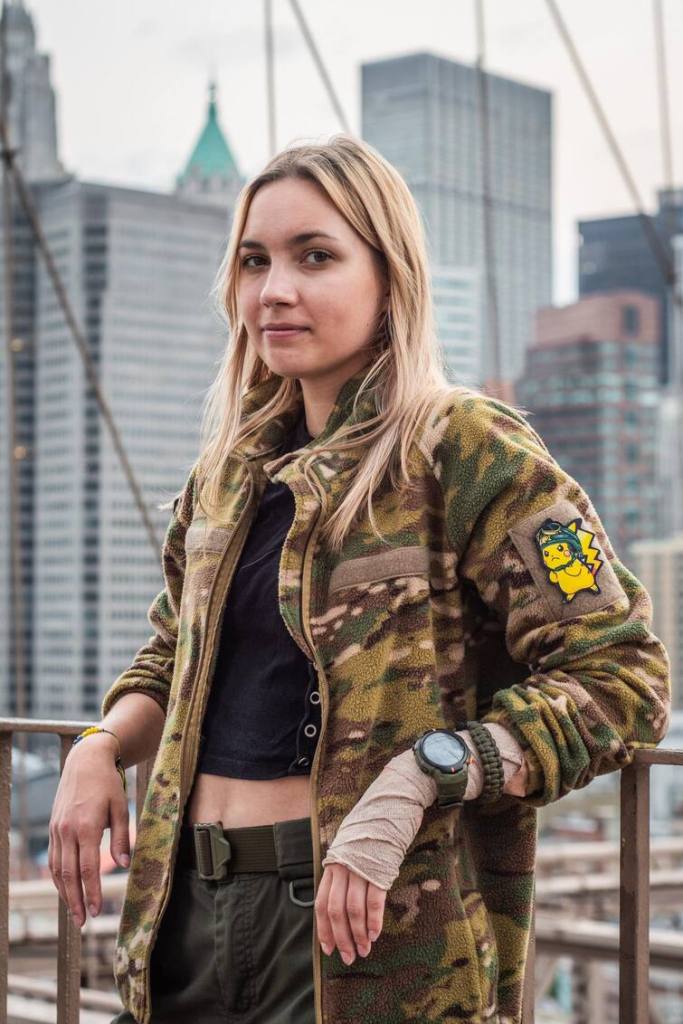

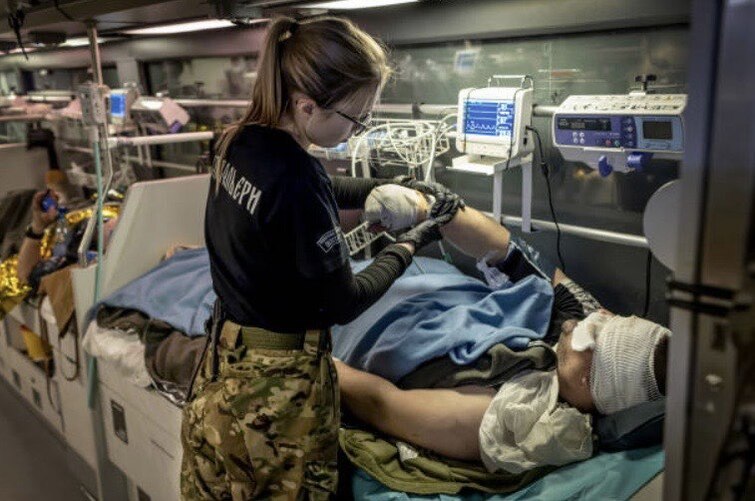

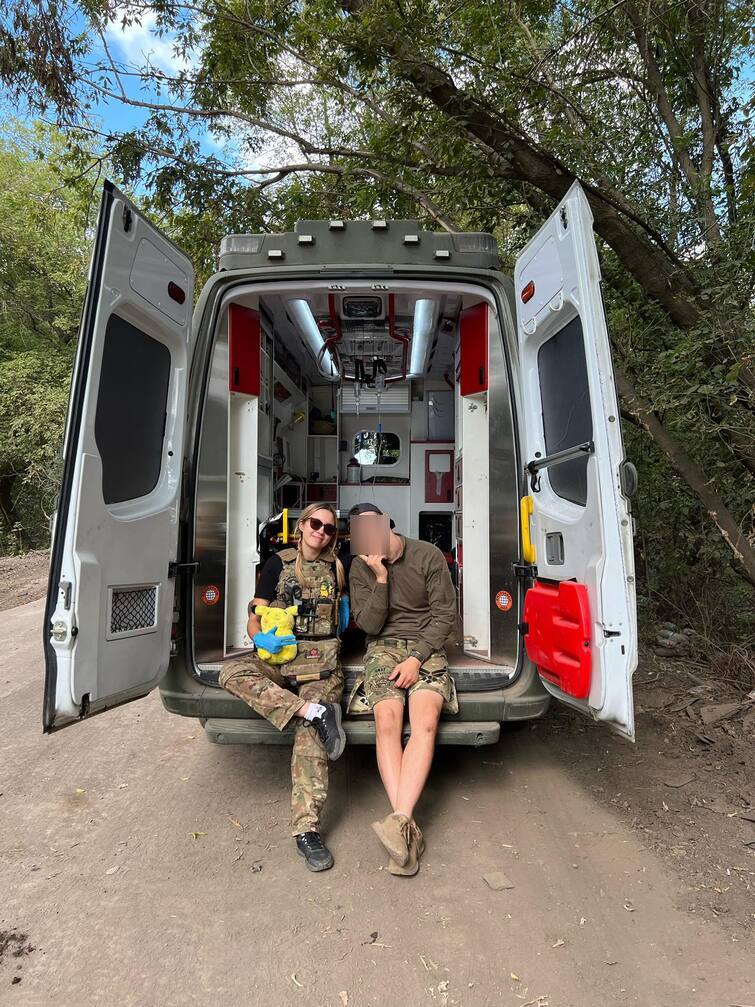

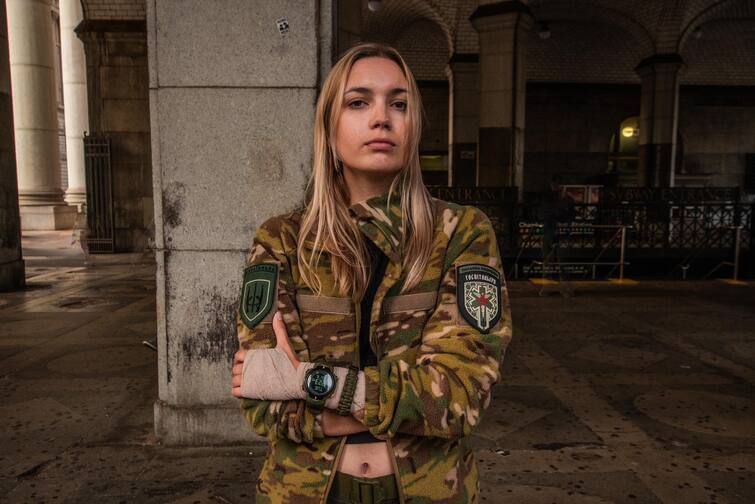

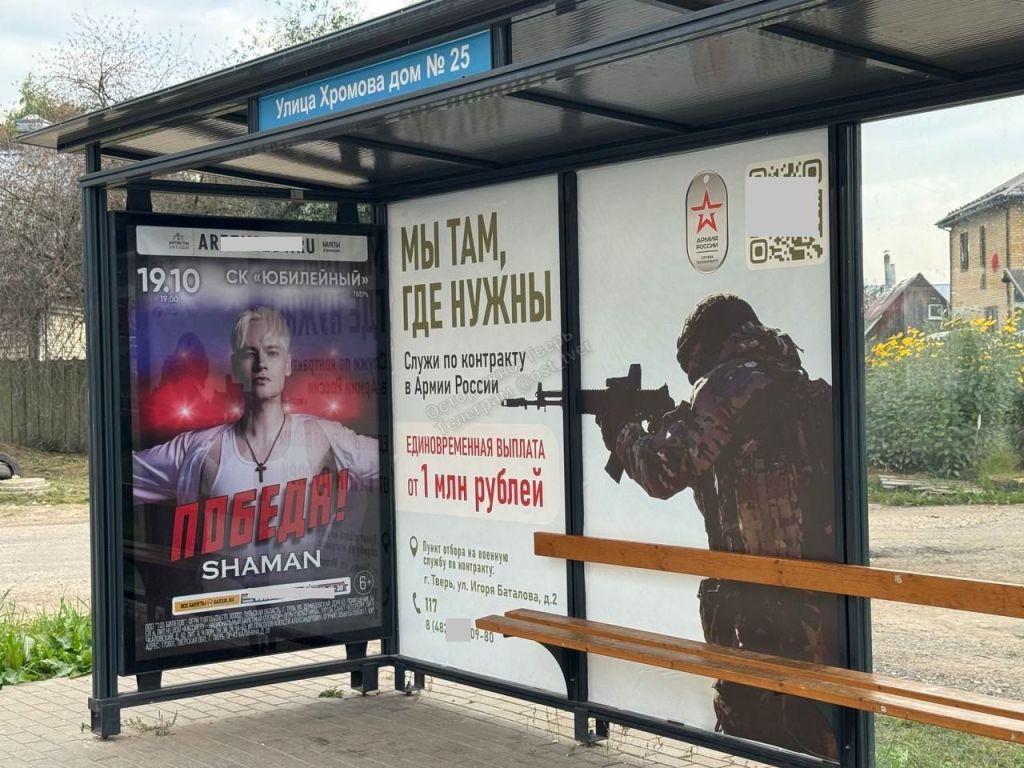

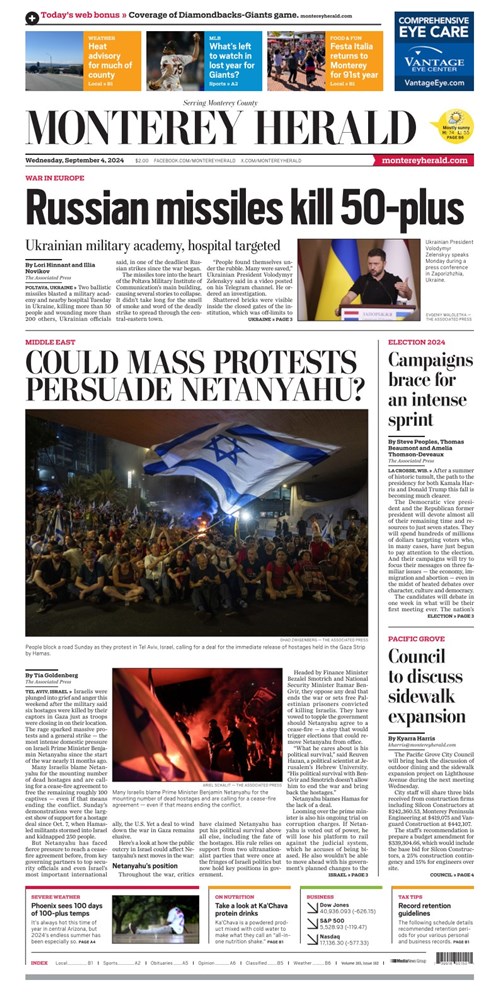

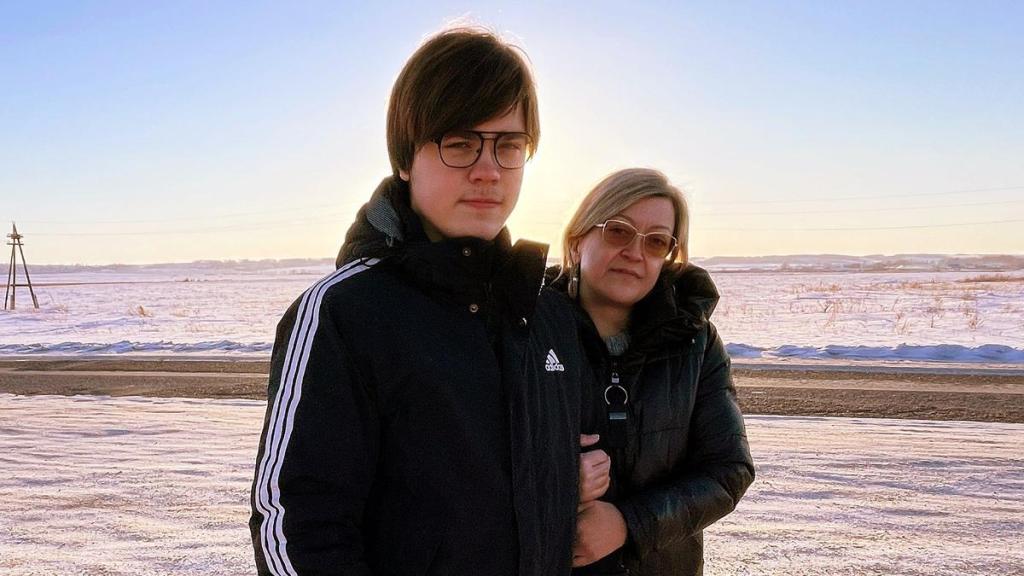
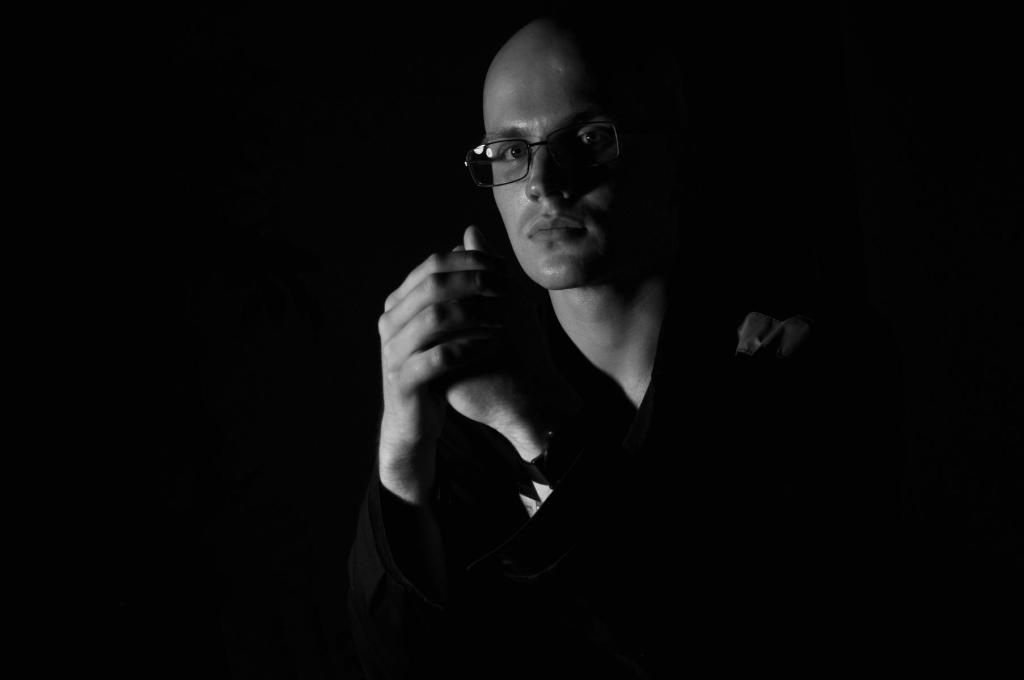


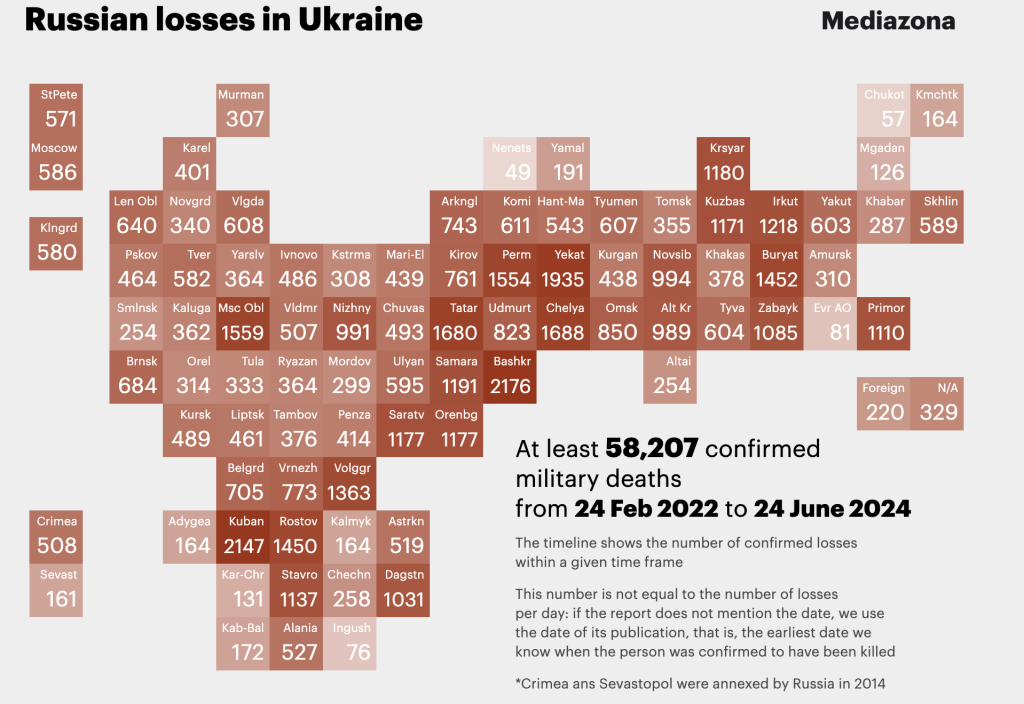

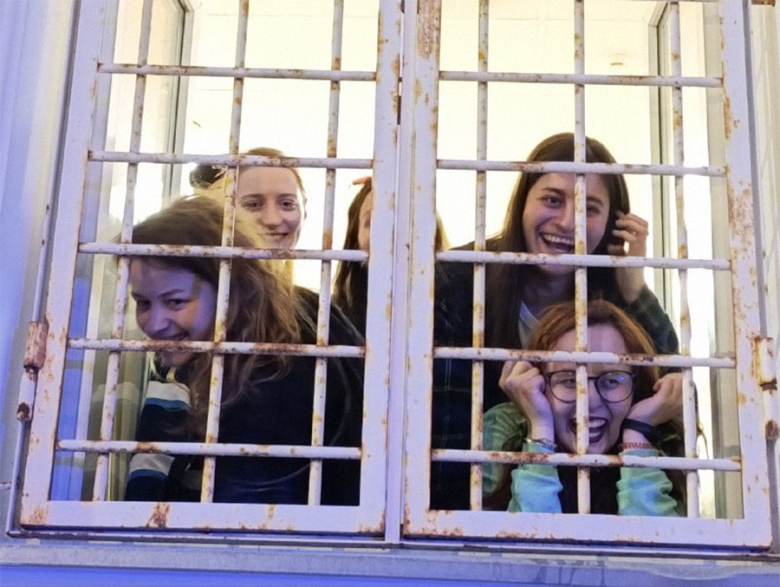
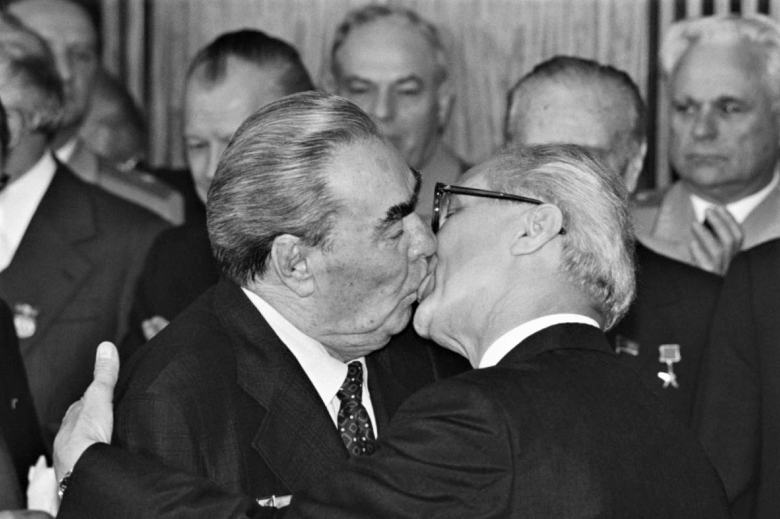
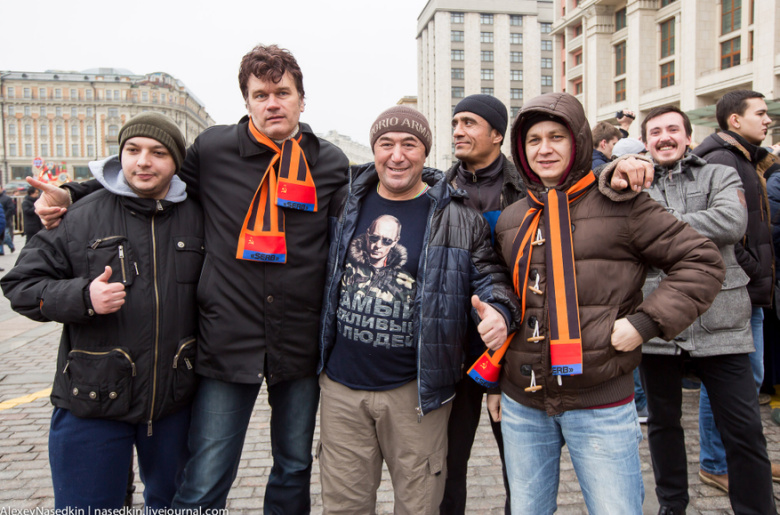
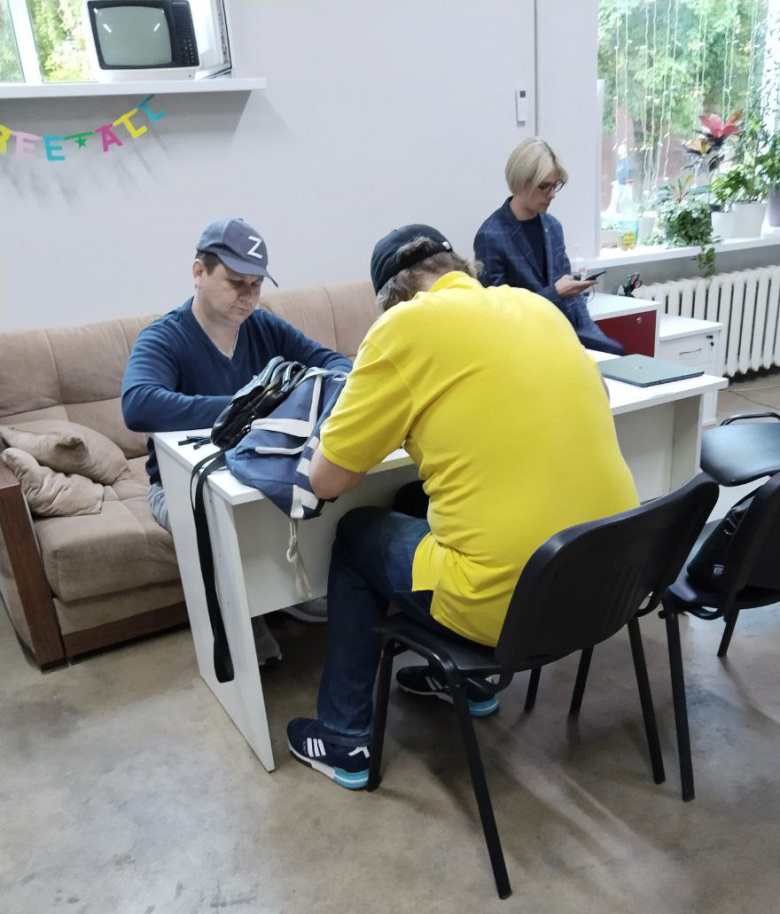
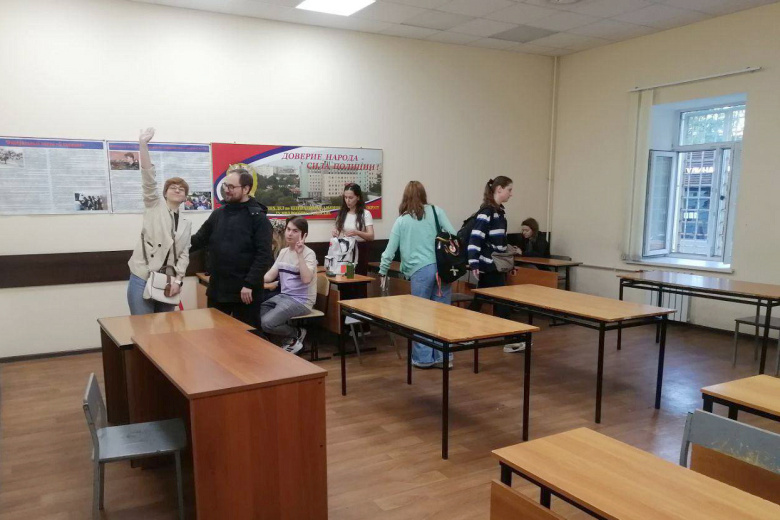
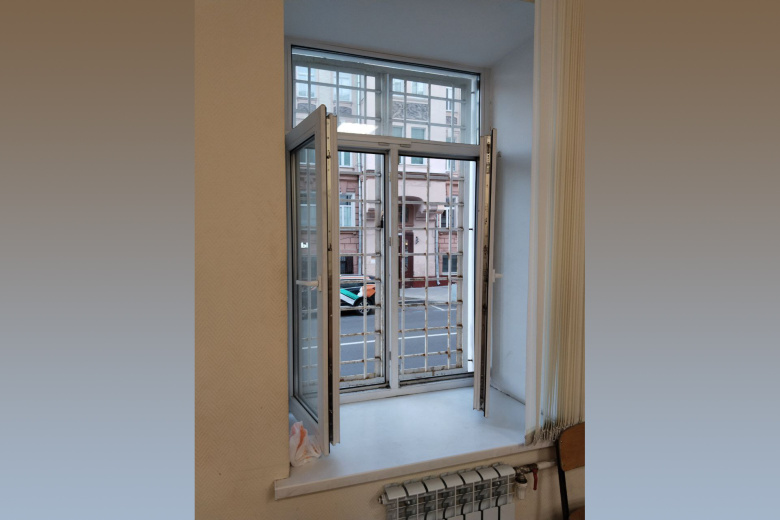
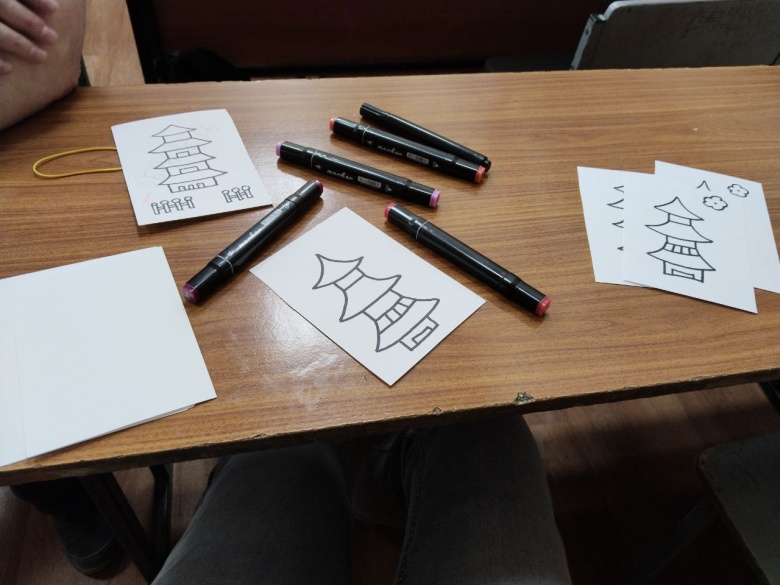
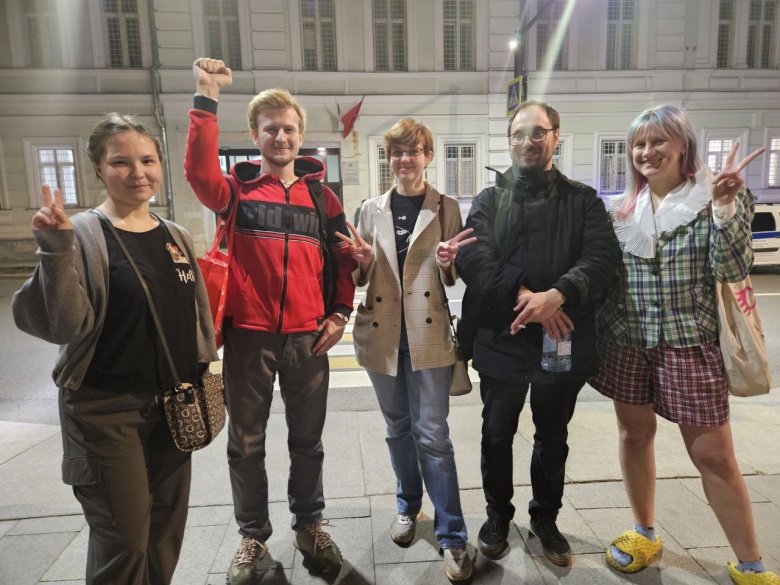




 First of all, we appeal to the leadership of St. Petersburg and the Committee for City Property Management. And we hope that the cultural capital is not indifferent to the plight of one of the best bookstores in the city by one of the primary independent children’s publishers in Russia.
 If you have suggestions and options, please write via Telegram at +7 (921) 809-8519, and Natasha and Polina will be in touch.