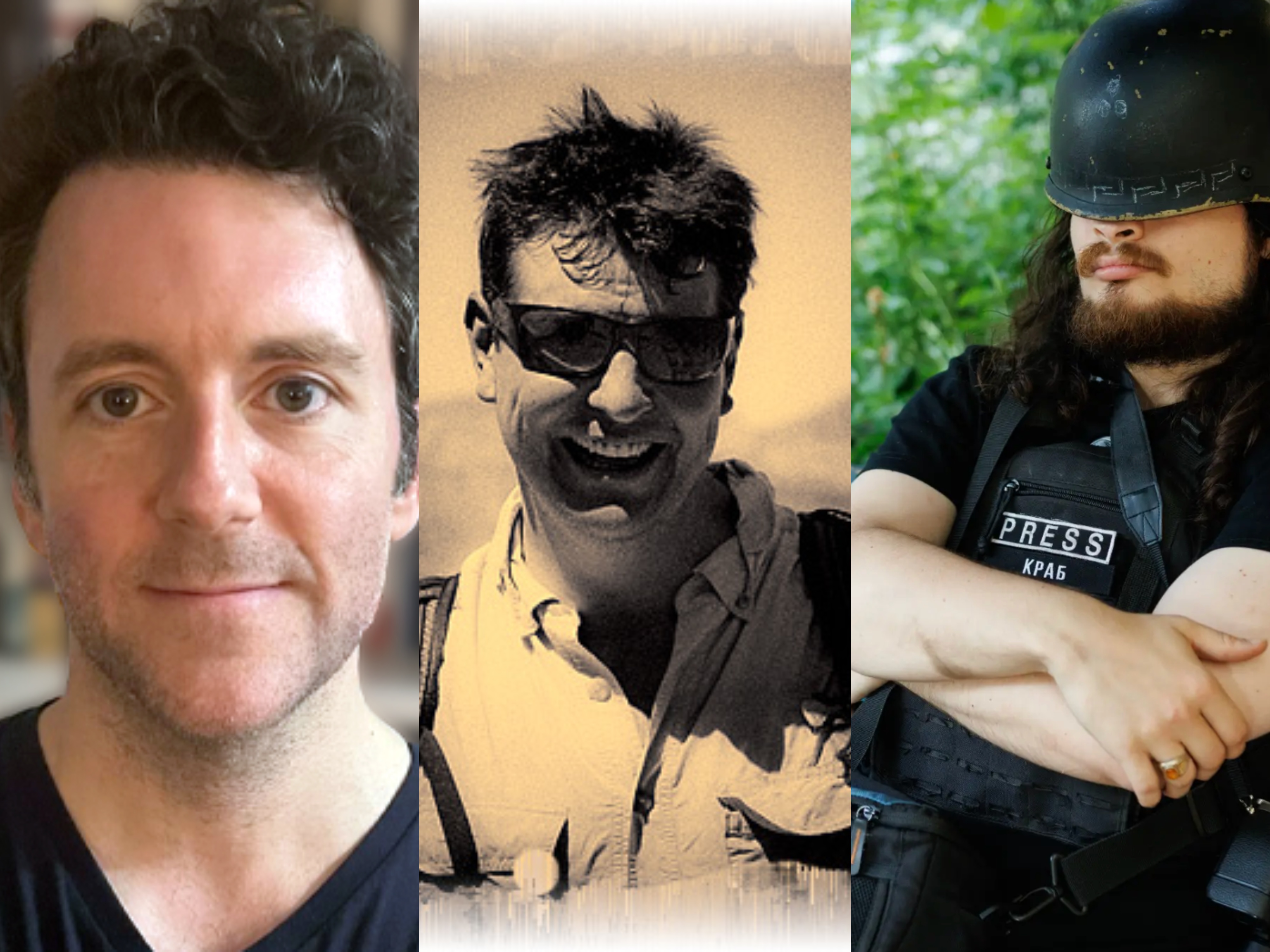
Independent war journalist and streamer Dylan Burns joins hosts Ryan Geddie and Adam Gurri to talk about his experience embedding in Ukraine since the early months of the war. They discuss his journalistic heroes, how radically the battlefield has changed since 2022 (and what it means to be “the most transparent battlefield in history”), the politics of military and foreign policy, and Dylan’s personal and professional history.
Source: Out of the Jaws (Liberal Currents), YouTube, 25 September 2026
Yesterday I had a very interesting discussion with students after class. I wanted to hear their takes on the war and the prospects for peace.
I began with the way a lot of surveys ask whether they would prefer Ukraine to negotiate a ceasefire or keep fighting. Those questions don’t do much unless you specify what “negotiations” and “peace” are supposed to mean, and the students were quick: what do you mean, negotiated ceasefire? Is that actually peace?
Now, these are highly educated kids at one of the best institutions in Ukraine, so I was not surprised they would flag it. By the same token, they are not like the rest of the population so their answers might not be necessarily representative. What they did with the question only made that clearer.
I said, fair enough, let’s make it concrete. The Ukrainian government has proposed an unconditional ceasefire, which would mean freezing the war on the line of contact and leaving Russia in possession of what it has already taken. The Russians have rejected that more than once. But suppose, for some reason, they accepted. Would you support a settlement on those terms?
That is when it got interesting. What followed was about ten minutes of analysis I am not going to reproduce.
The first thing, they said, is that a ceasefire is not necessarily peace. The Russians want more than they have, and so would likely come back for it after they recover. They put that more as a fact than as a forecast. I said we cannot really know what they would do. They said we can, because they have done it more than once already, and lied about not doing it, so they cannot be trusted. They were also very skeptical that Western security guarantees would actually function.
So the question became what happens in the period between a ceasefire and a Russian attempt to finish the job.
Both sides would try to prepare, but on the balance Russia would have the advantage. It could prepare better and faster, and fighting, if it resumed, would start from a worse position for Ukraine than the one it is in now.
I asked them to spell out why they thought a pause would favor Russia.
The Russian economy is larger, and they can produce most of what they need, while Ukraine is very dependent on foreign finance. If there is a ceasefire, sanctions get looser, and Russia can do all of this more successfully than it can during the war. The world is already losing interest in Ukraine — they said that flatly, though you could hear the bitterness under it — and if the war stops, the attention goes with it, the money dries up, and the West starts making deals with Russia again.
Taking the pressure of the war off would also make domestic corruption worse. They already steal, but the necessities of the war still limit them. In a peace, that limit is gone, preparedness gets worse because of it, and although the military would try to keep things from sliding too far, the politicians and the businessmen are a different problem.
They also said this is not the only view they hear. Some people they know just want to go about their lives without getting bombed. Those people favor peace and do not much care where the line ends up.
I said the Russians want to limit the size of the army.
That produced laughter. It was the one thing they seemed sure would not happen, if only because they see the army as the only reason to hope things can still get better.
Still, I said, there is a lot of uncertainty in how any of this would develop. Russia might come out of a ceasefire in worse shape. The Europeans might not just switch back to dealing with it. They might invest a great deal in Ukraine; there would be opportunities for sizeable returns.
True, they said. There is uncertainty, so you cannot be sure. But the Russians have shown they cannot be trusted, we all know how politicians work, and we understand that some people in the West already have an interest in cutting deals with Russia, so on balance they thought the trajectory that does not favor Ukraine was the more likely one.
Since they would not support a ceasefire along the line of control without some serious protection against the war starting again, I said I was guessing they also would not support giving up the rest of Donbas without a fight.
They would not.
But, I said, what if after another year of fighting you lose it anyway? Would it not make more sense to give it up now?
That, they said, is another big uncertainty. Who knows whether they can take it. They have been trying for a while.
So what is the hope, then?
They shrugged.
Don’t know.
That something will change.
I didn’t have a better answer.
Source: Branislav Slantchev (Facebook), 24 September 2026. Thanks to AL for the heads-up.
Marc Polymeropoulos and Michael Weiss examine the growing Russian threat in Europe, separating the real danger of Russian sabotage and state terrorism from the media panic over a potential Russian invasion of NATO territory. They discuss the intelligence briefing that sparked concerns across Europe, how the assessment has since been revised downward, and why Russia’s escalating sabotage campaign could still lead to a dangerous mass-casualty event. They also examine how Europe can respond to Russian aggression, the role of NATO and Article 5, and why Russia may be testing how willing the West is to push back.
Source: The Bulwark (YouTube), 25 September 2026
Images of Michael Weiss, Branislav Slantchev, and Dylan Burns, above, courtesy of Wikipedia, UC San Diego, and Instagram
