

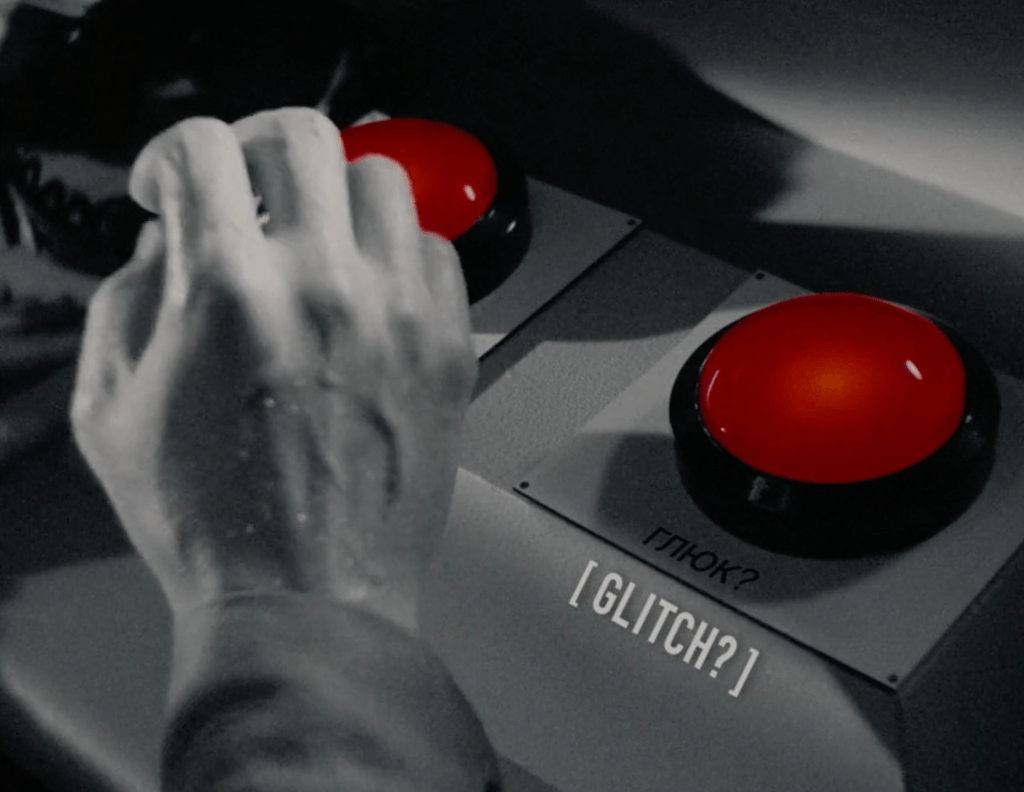
Source: High Potential (TV series), Season 2, Episode 2: “Checkmate”
Every week the headlines blur together: a church in Michigan left in ashes, a North Carolina waterfront bar turned into a war zone, a Catholic school in Minneapolis where children never made it home, an ICE facility in Dallas pierced by sniper fire, a political rally in Utah where a bullet silenced a conservative gun rights activist.
And … and … and …
Different cities. Different motives. Same profile. White. Male. Armed. Deadly.
The news pretends each act is an isolated tragedy: a troubled man, a random eruption, a community blindsided. But line them up side by side and the repetition is too precise to ignore. These aren’t anomalies; they’re a drumbeat. Churches, schools, bars, government buildings. Nothing is sacred. Nobody is immune. The perpetrators are acting out the same choreography and playing variations on a script that ends with bodies on the ground and their names immortalized in headlines.
Humiliation is the through-line.
Strip away the headlines, the manifestos, the mugshots, and what you see is white men who cannot live with being ordinary, ignored, or denied. White masculinity in America was built on the guarantee of centrality, the right to be heard, feared, and obeyed. When that illusion frays, humiliation takes its place. And humiliation, when combined with access to assault rifles and an internet full of cheerleaders becomes combustible.
Enter Donald Trump.
He is not the author of this script, but he is its loudest hype man. He takes that humiliation and translates it into a politics of grievance. He tells white men their despair isn’t failure, it’s theft. He tells them their rage isn’t weakness, it’s patriotism. He baptizes their sense of collapse as a holy war. Trump doesn’t hand them the gun, but he hands them the permission slip to kill. He turns their humiliation into a rallying cry, their despair into his campaign platform, and their death wish into applause lines.
The assassination of Charlie Kirk proves this. Here was no random eruption in a mall or classroom, but a sniper attack staged at a political rally. What we witnessed was violence designed as theater. The accused, Tyler Robinson, was reportedly obsessed with Kirk, surveilled his movements, and turned grievance into spectacle. This wasn’t just about killing one man, it was about sending a message by inscribing grievance onto the national stage. And while Robinson didn’t appear to seek his own death in the same way as other shooters, the logic still holds: collapse turned outward, humiliation converted into performance, violence as a last-ditch claim to visibility. Whether in a schoolyard or at a rally podium, the impulse is the same — make sure the world cannot look away.
That’s why so many of these killings end with the shooter’s own death. Researchers have long noted that mass shooters often carry suicidal intent. Some kill themselves on the spot, others provoke police into finishing the job. Even those who survive often admit they never planned an escape. They weren’t trying to get away with it. They were trying to make sure we all saw them on the way out.
This is suicide turned outward. Instead of a private exit, it is a public performance. It is despair weaponized into punishment. It is a white man who feels invisible deciding that if he must disappear, he will do it in a blaze that makes his enemies, his community, his whole country remember his name. The bullets are not just aimed at bodies, they are aimed at the world that he believes has betrayed him.
And America lets him.
Because while Black and Brown people get beaten, choked, shot, and imprisoned for existing, these white men are given the longest leash. Their rage is rationalized, their humanity over-explained, their grievances gets echoed by politicians and pundits who call them “lone wolves” instead of what they are: domestic terrorists staging a national suicide note.
If these killers were Black or brown, there would already be a state of emergency. Entire neighborhoods would be under occupation. Politicians would demand surveillance, deportations, bans, registries. But when the shooters are white men — again and again and again — the country never declares a national crisis. There are no calls to profile them, no government commissions to investigate the white male mind, no urgent congressional hearings on the threat of humiliated white masculinity. The media wrings its hands, writes humanizing profiles of the shooters, and then moves on.
Why?
Because this country has always needed white men as its blunt instrument. The system doesn’t see them as a threat to America. It sees them as America’s enforcers. The slave patrol became the sheriff’s office. The lynch mob became the jury. The vigilante became the soldier. Violence by white men has never been treated as pathology. No, it has been treated as tradition, as duty, as defense of the nation. That is why the same system that calls a 12-year-old Black boy with a toy gun “a threat” will call a white man with an AR-15 “a troubled loner.”
White America’s violence doesn’t just terrorize everyone else, it devours itself. Most white homicide victims are killed by other white people. That’s not unique because violence is usually intraracial. But only one community has its pain turned into a slur. “Black-on-Black crime” is wielded like a cudgel to shame, stigmatize, and criminalize. Meanwhile, white-on-white crime is never named, never treated as pathology, never held up as proof of cultural failure.
Why?
Because admitting it would collapse the myth of white order. To say “white-on-white crime” would mean confessing that white communities are not immune to the same cycles of violence they project onto everybody else. It would mean admitting that mass shootings, domestic abuse, vigilante justice, and overdoses are all symptoms of a culture unraveling. The system can’t say that. So it scapegoats Black people, immigrants, Muslims, LGBTQ folks, the so-called radical left, anyone but the men actually pulling the triggers.
That projection keeps the story intact: white men are framed as defenders of the nation, while the rest of us are cast as threats. Which is why every time a mass shooting breaks, the first question whispered is whether the shooter was Muslim or undocumented. And when it turns out to be a white man, again and again, the narrative pivots into sympathy: bullied loner, broken veteran, misunderstood son. The violence gets excused because white America cannot indict itself.
Let’s call it what it is. America is reading a suicide note written in the hand of white male grievance. Every fresh slaughter is another paragraph, another punctuation mark. And the country keeps pretending the note doesn’t exist. Until America is ready to read the note for what it is, which is a declaration that white patriarchal supremacy would rather die than share then the funerals will not stop.
And what we’ve seen so far may only be the prelude. If humiliation keeps metastasizing, if guns keep flooding the market, if online echo chambers keep sharpening despair into spectacle, then these massacres are not the ceiling. What looks like isolated spasms of violence could harden into something more organized, more theatrical, more synchronized. Suicide turned outward doesn’t have to stay the act of one man with one rifle. It can mutate into a movement that’s willing to set the whole country freakin’ on fire.
What could this look like?
First, expect the spectacle to intensify. Shooters already livestream their attacks and post manifestos. The next stage is full-on theater: multiple cameras, coordinated streaming, gamified killings designed to go viral in real time.
Second, anticipate a shift from lone wolves to wolf packs. Right now, many attacks are framed as the act of an isolated man. But online spaces are incubating networks of militias, accelerationists, and neo-Nazis who encourage coordinated action. Instead of one man with one rifle, we could start to see small cells staging simultaneous massacres feeding off the other’s notoriety.
Third, look for political synchronization. Trump and his imitators already talk about “retribution” and “taking back the country.” That rhetoric doesn’t stay at the rally. It bleeds into the fantasies of men online who see themselves as soldiers. Violence could increasingly align with election cycles, Supreme Court rulings, or major protests that are staged as “patriotic defense” rather than despair.
Fourth, the targets will broaden. Schools and churches have been hit. But the logic of humiliation doesn’t discriminate. Courthouses, polling places, infrastructure, transit hubs, and entertainment venues are all vulnerable. The more shooters see themselves as part of a movement, the more they’ll pick symbolic sites meant to shake the country.
And finally, there’s the risk of mainstream normalization. The more frequent these massacres become, the more the system absorbs them as background noise and “isolated tragedies” on the news ticker. That numbness is dangerous. It creates cover for escalation. It allows violence to be rebranded as inevitable, unpreventable, even legitimate.
The question is whether we keep letting the humiliated white man’s suicide note be written in blood, or whether we finally answer it. Because this is not just suicide turned outward. It is a threat to us all. It is a demand. It is the last shrill gasp of a dying order that will keep gasping and the rest of us will have to keep living inside of its farewell performance.
If this piece spoke to you, if it sharpened something you’ve been feeling but couldn’t quite put words to, I invite you to become a paid subscriber. Your support doesn’t just keep this work going, it also funds cameras, software, digital equipment and reporting opportunities for HBCU journalism students. Every subscription helps me teach, mentor, and equip the next generation to tell the stories America would rather bury.
One day writing will become too difficult.
translated from the French by Youmna Chamieh
We will no longer be able to think (breathe, words like silence)
Of the too great complication of what it is to live.
The poem will be, more and more blind, nothing but words:
No one will be able to truly hear them.
Something else will come within ruins of time and friendship,
It won’t even be worth saying that we must die,
We will die.
Un jour écrire deviendra trop difficile.
On ne pourra plus penser (respirer, les mots comme du silence)
À la trop grande complication de ce que c’est vivre.
Le poème sera, de plus en plus aveugle, plus rien que des mots :
Personne qui pourra les entendre pour de vrai.
Quelque chose d’autre viendra dans des ruines de temps et d’amitié,
Ce sera même pas la peine de dire qu’il faut mourir,
On mourra.
Source: poets.org. Originally published in Poem-a-Day on 15 September 2025 by the Academy of American Poets.
Source: High Potential (TV series), Season 2, Episode 2: “Checkmate”
