Vox Pop: Do You Support Putin?


To support the channel:
💵 Patreon: https://www.patreon.com/issafourteent…
💵 Buy Me A Coffee: https://www.buymeacoffee.com/1420
Paypal: 💵 https://www.paypal.me/daniil1420
PayPal email: issafourteentwenty@gmail.com
PayPal name: Daniil Orain
Cryptocurrencies:
🪙 ETH: 0x1F7402dE513afDB5906a174eF22C7030D19651DF
🪙 XTZ: tz1TPqCAiUP7X8YGLqWrN2K1LVK9vmeEsrCE
🪙 TRON: THeaev1R5fHLkqJPPnJG561WadH1nAThTu
🪙 BTC: bc1qvns4pkvcs6hzktpcnudvgz5sr06u7phwhej0cg
🧑 Brought to you by: https://www.instagram.com/daniilorain
✉️ Business: hello@1420.today
🧢 1420 clothes and accessories: https://1420.store/

Source: 1420 by Daniil Orain (YouTube), “Do you support Putin? 100 Russians,” 28 January 2023. A huge thanks to Tiina Pasanen and Outi Salovaara for the heads-up.


Source: 1420 by Daniil Orain (YouTube), “Should we give back Karelia to Finland, Kaliningrad to Germany and the Kurils to Japan?” 6 February 2023. Thanks to Tiina Pasanen for the heads-up.


Source: 1420 by Daniil Orain (YouTube), “Have you seen this recent photo of Navalny in jail?” 9 February 2023. Thanks to Tiina Pasanen for the heads-up.
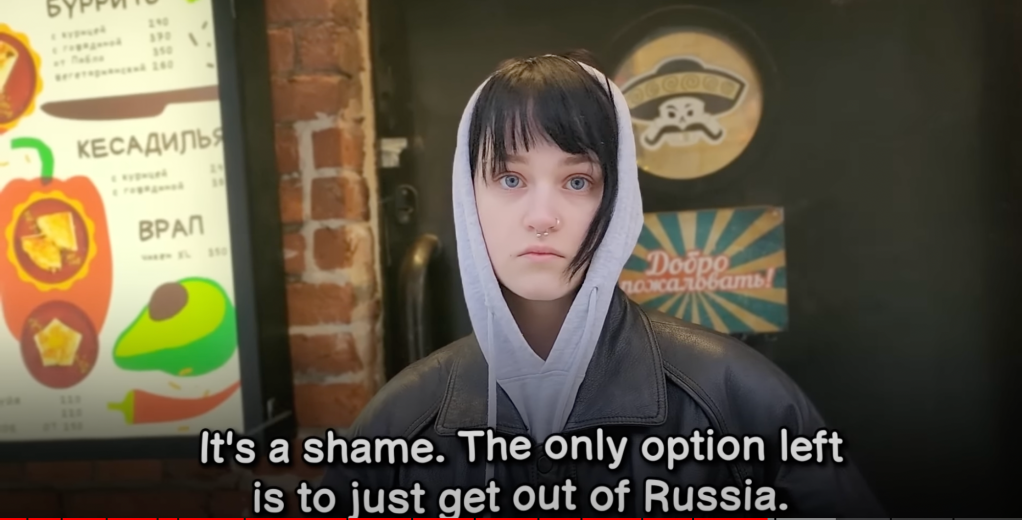

You can support 1420 by buying merch here or donating money via the platforms listed above. ||| TRR


Source: 1420 by Daniil Orain (YouTube), “What young Russians in Saint Petersburg think about Putin?” 10 January 2023. Thanks to Outi Salovaara for the heads-up.


My name is Daniil Orain. I’m a YouTuber from Russia, and I run the channel 1420. In my videos, I try to create a montage of everyday Russians and a transparent representation of what they believe. 

Since the start of the conflict in Ukraine, people from all over the world have come to my channel to try and understand how Russians think.

Before I started the channel about 2 years ago, I had some skewed thoughts about the world.

At the time, I was working as a software engineer with a three-hour commute, and my perspectives changed when I began to watch on-the-street interviews with people in faraway cities during those rides. Those videos showed me how people from different places and cultures thought, and they played a big part in my self-education.

I started to wonder: Why isn’t there something like this on YouTube but with people from Russia, like me? That’s when my friend and I created 1420.

People often ask me for the story behind the channel’s name, but there’s no secret meaning. It’s just the name of the school we went to together. Our whole goal with the channel was to go out on the streets of Moscow and ask people questions that interested us — things like, “Do you believe in God?” or, “What do you think about Americans?” 

When the conflict in Ukraine began, we suddenly saw a huge increase in viewers.

Our increase came from around the world — not just Europe and America, which had been our main audience. With the increase in viewership, I decided to double down and try to publish videos daily. 

I hired some people to help. My team of six includes editors, translators, and someone in Moscow who asks the questions. Recently, we’ve asked things like: “What do you think about Ukrainian President Volodymyr Zelenskyy?” “Do you want Ukraine to become part of Russia?” and “Are you feeling the sanctions now?

To get enough material for a full video, we have to ask a large number of people. Given the nature of our topics at the moment, a lot of people decline to participate.

When shooting the Zelenskyy video, for example, we had 124 people decline to answer. Only 28 people agreed. Even when they do agree, they often hold back from giving their full thoughts. 

Making these videos is risky, but we haven’t had any problems so far.

Unlike with TikTok and Instagram, access to YouTube is still normal in Russia. In the videos, I’ve always muted certain words (but kept the subtitles) to avoid censorship.

For example, you’re not allowed to say “war” when referring to the situation in Ukraine. We have to say “secret operation” instead. So if someone does say “war,” we mute that word.

Some people in the comments have accused me of being a Russian propaganda channel, so I’ve had to find new ways to show that I’m not. For example, in one recent video, we blurred the faces and changed the voices of the people in it so that they could be honest without fear of repercussions. Also, we started showing longer continuous clips of the interviews so that the viewers didn’t think we purposely cut them to tell a certain narrative.

I have seen a change in how people view not only our channel since the war started — but also our participants.

Just recently, the comments on my YouTube videos said things like, “Russians are just like us.” But as the situation in Ukraine has progressed, they now tend to be more like: “Russians are brainwashed.”

I’m glad people are watching the videos because I know from my experience how helpful YouTube can be. We’re lucky to be able to learn online.

You’ll notice that in my videos, there’s a pretty clear divide between the answers coming from people who grew up in Soviet times and the younger people. When the older generations were growing up, they got their education only from books or teachers — they didn’t have access to the world like people my age do. The position that I’m in, running this channel, wouldn’t have even existed back then.

Today, you can learn things from websites, videos, and even comments.

Just last week, on one of my own videos, one viewer wrote: “You are not scared, not because you are fearless, but because you just haven’t been scared yet.”

That blew my mind. I know what I’m doing is risky, but maybe I don’t feel worried about it because I’ve never actually been that worried. But at the same time, I’m just the storyteller. A lot of people direct-message me asking for my opinion on various topics, but I don’t answer them. 

I see my role as being the person who helps tell people’s stories, and I’ll continue to do so to show how and what Russians feel.

Source: Stefano Montali, “I interview everyday Russians on YouTube. Viewers think we’re brainwashed — I’m trying to show we’re not,” Business Insider, 19 April 2022. Since this interview, Mr. Orain has fled the country, apparently, although he was just as apparently still in Russia two or so months ago. In October of last year, Neil’s Commonplace Book profiled Mr. Orain and tried to determine his whereabouts in the wake of the “partial” mobilization. ||| TRR
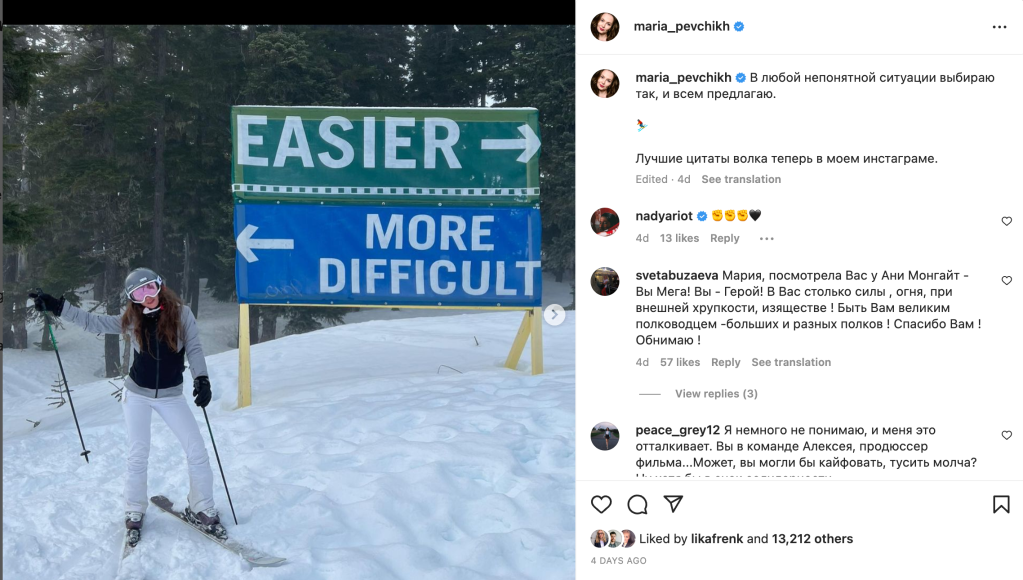
Blessed Are the (Un)Happy

I was at an interview on TV Rain last week. We were supposedly going to discuss the Oscars, but suddenly we touched on what is an important topic, I think — how to behave appropriately during the war and amid everything else that is happening now.

I often read comments about how I smile all the time, but there is a war going on. About how I joke on the air, but now is not the time for jokes — Navalny is in prison. Why did I post this or that photo? It’s too glamorous and frivolous. Now is not the time for such things.

The complaints are understandable, but I totally reject the point they’re trying to make. It seems to me that the most destructive, the most incorrect thing we can do now is to don dark clothes, wring our hands and publicly suffer in front of our audience. By no means am I saying that there is no point in suffering in this situation. There is. The war is the most terrible event that has ever happened to us. It is absolutely incomprehensible how to go on living when your country has attacked and is destroying innocent people and destroying their lives forever as the scumbags on Russian national TV hoot and holler for joy. Everyone who is reading this post has experienced all this, I am sure, and of course you have been suffering. And those whom Putin came up with the idea of bombing with missiles and killing have been suffering even more.

Only one thing remains to us: to take all these terrible emotions, all these experiences, and turn them into concrete actions. Not cry on camera, not get hysterical, but to try and stop this horror as soon as possible. Today is better than tomorrow. Tomorrow is better than the day after tomorrow, etc. Each of us knows best of all what we ourselves are capable of doing and how to do it. The main thing is not to give in to despair. Despondency, despair and indifference are exactly what Putin wants from us. Don’t give him that.

I’ve attached a bit of the interview. And a frivolous photo to boot.

Source: Maria Pevchikh, Instagram, 31 January 2023. Translated by the Russian Reader


[…]

And where you find a hero, you always find tragedy. The hero is always a vehicle for suffering, pain, rupture and tragedy. There are no happy heroes: all heroes are necessarily unhappy. The hero equals misfortune.

Why? Because being both eternal and temporary, dispassionate and suffering, heavenly and earthly is the most unbearable experience for any being. It is a condition that you wouldn’t wish on your enemy.

Ascetics, martyrs, and saints took the place of heroes in Christianity. There are likewise no happy monks or happy saints. All of them are profoundly unhappy as individuals. But according to another heavenly account, they are blessed. Just as those who weep, those who are exiled, those who suffer slander, and those who hunger and thirst are blessed in the Sermon on the Mount. Blessed are the unhappy.

A person is made a hero made by an idea aimed skyward that crashes to the ground. A person is made a hero by suffering and misfortune, which tear him apart, which torment, torture, and harden him, and it has always been thus. This can happen during war or an agonizing death, but it can also happen without war, and without death.

The hero looks for his own war, and if he does not find it, he goes into a monk’s cell, to live as a hermit, and fights there with the real enemy. Because true warfare is spiritual warfare. Arthur Rimbaud wrote about this in Illuminations: “Spiritual combat is as brutal as battle between men.” (Le combat spirituel est aussi brutal que la bataille d’hommes.) He knew what he was talking about.

One hero, as the Neoplatonist Proclus says, is equal to a hundred or even thousands of ordinary souls. He is greater than a human soul because he makes every soul live vertically. This is the heroic dimension to the origins of the theater and, in fact, the ethics of our faith. It is the most important thing, which we should not lose, which we should cherish in others and nurture in ourselves.

Our job is to become deeply, fundamentally and irreversibly unhappy, no matter how scary that sounds. It is the only way we can find salvation.

Source: Alexander Dugin, “The Hero: The Metaphysics of Unhappiness,” Katehon, 3 February 2023. Translated by An Unhappy Translator. Thanks to Pavel Pryanikov for the heads-up


Maria Pevchikh: “In any puzzling situation this is what I choose and suggest that everyone else choose.” Source: Instagram

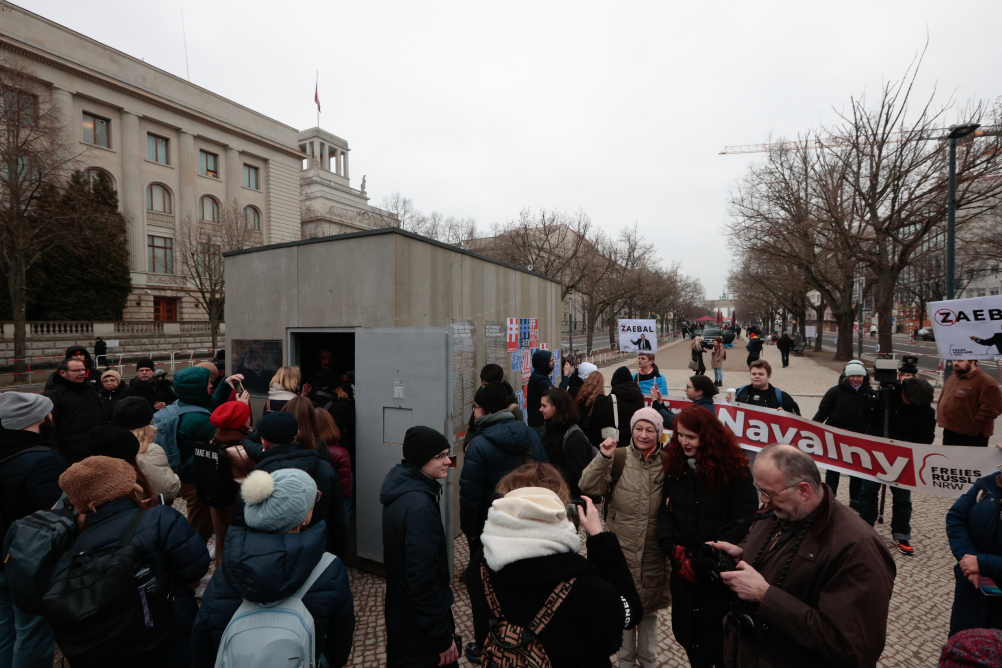
Now every employee of the Russian embassy in Germany has to think about Navalny on their way to work because they will see a replica of the solitary confinement cell where Alexei has been confined for the eleventh time.

Not only embassy employees see this solitary confinement cell. It is seen by Berlin residents, tourists and journalists. It is seen by readers of the world’s major media outlets. Millions of people see it — and thus learn about the torture chamber in which Navalny is being held. Some will tell their friends about the project, others will join the Free Navalny campaign, while still others will put pressure on local politicians contemplating compromise with Putin. Circles radiate all over the world from this one site.

It is in your power to make these circles spread even wider. Help us achieve freedom for Navalny and for the whole of Russia — support our campaign at acf.international/#donate.

Free Navalny!

Thank you for being on our side! 

The Navalny Team

“Navalny has now been in prison for 745 days.”

Source: FBK (Anti-Corruption Foundation) email newsletter, 2 February 2023. Translated by the Russian Reader


Pevchikh: What Corruption Has Done to Russia / vDud
6,370,703 views • Feb 5, 2023
(In Russian, without subtitles in English — for the time being, I imagine)

Maria Pevchikh is an investigator and associate of Alexei Navalny.

0:00 Let’s go! 0:37 Why we met in London 5:13 How the film Navalny is saving Navalny’s life 9:36 Dud in the Internet’s homeland 13:03 How to turn a photo of a hallway into an investigation 16:17 What is going on with Navalny now? 20:26 The second largest house in the UK is owned by a Russian oligarch 25:30 But why can’t a Russian oligarch buy a house in London? 29:48 The UK is fighting Putin but harboring thieves: is that normal? 37:22 Who are you and where are you from? 42:31 Where did you get the money to study in London? 44:02 What’s wrong with Moscow State University’s sociology faculty 47:19 What did your father do for a living? 48:41 A crash course about British universities (eight lectures a week) 53:16 Alexander Dugin was Maria’s thesis advisor: how did that come about? 1:00:03 Does Putin listen to Dugin? 1:03:05 What Medvedev was like thirteen years ago 1:05:20 “My cat was hit by a car, please sort it out”: what British MPs do 1:08:22 Gadaffi’s son was at university with you 1:14:35 Where did you work before becoming an investigator? 1:16:32 Do you have a flat in London? 1:17:47 How did you meet Navalny? 1:22:50 Why didn’t you mention Skabeyeva and Popov’s mortgage? 1:27:28 How are drones able to fly over Putin’s and Medvedev’s residences? (A question from Nikolai Solodnikov) 1:33:14 Where did you get the conductor Gergiev’s bank statements? 1:36:32 Is it okay to pay a bribe to avoid mobilization? 1:40:54 What is your beef with Fridman? 1:48:13 Is Galitsky an accomplice of the regime? 1:57:18 Can we detest someone for being afraid? 1:58:26 Why does Popular Politics have such sensational headlines? 2:04:08 Is it okay to call a program guest a “fat beast”? 2:08:21 The rude tweet about Durov 2:10:21 Does radicalism prevent the Anti-Corruption Foundation from becoming popular? 2:16:09 Roman Abramovich is a master of reinventing himself 2:24:13 How soft power works 2:29:52 If Abramovich had ended the war would you have forgiven him? 2:31:38 The “List of the 6,000” 2:33:59 Why have you called for sanctions against Sobchak? 2:35:35 Why have you called for sanctions against Venediktov? 2:44:00 What did Oleg Kashin do wrong? 2:46:34 Why were the designers of a facial recognition system removed from the “List of the 6,000”? 2:51:01 Is your father an accomplice of the regime? 2:55:49 How do you do your work without Navalny? 2:57:18 Why were your supporters’ data hacked? 3:05:38 “Carry out a mission in the fight against Putin and get points”: what is that about?! 3:07:53 How do people who work for the regime change sides? 3:15:51 Do you see yourself as a politician? 3:19:44 Do you have a plan for Russia’s future? 3:25:09 Won’t the dictatorship in Russia survive without Putin? 3:30:20 Do you have a UK passport? 3:35:51 What exactly have you done over the past year to overthrow Putin? 3:41:21 “Compromisers” 3:52:07 Russia without Putin 3:56:58 What does it mean to be strong?

Source: vDud (YouTube). Annotation translated by the Russian Reader. Thanks to Tiina Pasanen for bringing this remarkable video to my attention and persuading me to watch it despite my initial misgivings. When I assembled the first part of this mash-up, a few days ago, I had no idea that Pevchikh and Dugin were so closely connected in real life. For another perspective on the sociology faculty at Moscow State University during roughly the same period as Pevchikh describes, see Oleg Zhuravlyov and Danail Kondov, “Towards a History of the Conflict in the Moscow State University Sociology Department” (2008). ||| TRR

Speak Speech, Speaker (The Imperialist Mindset)

One day, I hope, someone will explain to me why “progressive” Russians find the English words speak, speaker, speech, etc., so sexy and exciting that they have to incorporate them needlessly into Russian every chance they get.

Do they know that, in English, these words are less evocative than three-day-old bread, duller than dishwater?

In this case, hilariously (and awkwardly, too: “speak” appears after chas, generating an awkward phrase that translates as “hour of speak” or “speak hour,” although it’s supposed to be a play on the idiomatic phrase chas pik, meaning “rush hour”), the word “speak” adorns Sergei Medvedev’s reflections on the “imperialist mindset.”

Indeed.

Thanks to TP for this gem of Rusglish.

Below, you can watch the actual interview (in Russian, not Rusglish — well, almost), which, if for no other reason, is interesting because it was posted almost three months before Russia invaded Ukraine. ||| TRR


Historian and writer Sergei Medvedev is the program’s guest.

In an interview with Nikita Rudakov, he explained:

Why the idea of Russia’s “civilizational superiority” is so popular

Why propaganda encourages the ideological complexes of Russians

How the elite of the 2000s is trying to turn back history.

00:00 Chas Speak: Sergei Medvedev 01:40 The imperialist mindset and the idea of Russia’s greatness 06:10 Is there no place for nationalism in the imperialist mindset? 08:05 “Russia colonized itself” 14:03 The superiority of big ideas: why didn’t the USA become an empire? 21:02 The ideological complexes of Russians 25:41 “We rise from our knees via military achievements and parades on Red Square” 26:50 “Lukashenko does with us what he will”: Russia and Belarus 30:56 “Russia wants to live in the myth of 1945” 34:40 “We were unable to create a nation state”

RTVI News covers all the main events 24/7: https://www.youtube.com/user/myRTVi

Read and watch the news on RTVI’s website: http://www.rtvi.com

Also, see all the most important and interesting items on our Telegram channel: https://t.me/rtvimain

And subscribe to RTVI’s other social media pages:

Facebook: http://facebook.com/myRTVi

VK: http://vk.com/rtvi

Twitter: http://twitter.com/rtvi

Instagram: https://www.instagram.com/rtvichannel/

Classmates: https://ok.ru/rtvi

Source: “Sergei Medvedev: ‘We don’t have a state. We only have an imperialist format’ // Chas Speak,” RTVI Entertainment (YouTube), 9 December 2022. Annotation translated by Thomas Campbell

“Focus”: The Lesson of Shiyes

Dmitry Sekushin. Photo courtesy of 7×7

Hi!

This is the 7×7 team on the line. This newsletter has been written by Oleg Gradov. What inspired the environmental protests at Shiyes and why there is no mass protest nowadays is the subject of our newsletter today.

Approximate reading time: 4 minutes.

I’m sorry if you’re from Moscow and our headline hurts your feelings. No one will be scolding the residents of the capital in this newsletter. The quote “Moscow lost its fucking mind” refers only to the leadership of that city and our country, but we will talk more about this later.

One of the few successful cases of protest in Russia’s recent history is Shiyes. In 2018, the authorities decided to construct a landfill in the Arkhangelsk Region to dispose of the waste produced by residents of the Russian capital. The locals did not like it, they started holding protest rallies, and eventually the landfill project was canceled. For this newsletter, I spoke with Dmitry Sekushin, one of the participants and coordinators of the Shiyes protest movement. Marina Feldt, an ex-staffer with the Navalny organization in Arkhangelsk, spontaneously joined our conversation.

What is Shiyes?

Shiyes is a small railway station in the southeast of the Arkhangelsk Region on the border with the Komi Republic. Protests against the landfill took place between 2018 and 2021. The protests at Shies were heavily supported by residents of the Arkhangelsk Region: [according to a poll by the Levada Center] 95% were opposed to the landfill, while 25% were willing to attend unsanctioned protest rallies. The activists were supported by both Russian and foreign journalists, as well as by residents of thirty Russian regions who were concerned about environmental problems and held protests in their own cities.

“The metropole does what it wants”

Where does such support for a regional protest come from? “The landfill itself would have made only a few people want to fight back,” says Dmitry Sekushin. “You have to understand how people feel about this. In our case, it was the feeling that we are a colony, and the metropole does what it wants with us. The idea that Moscow had lost its fucking mind united people.”

Realizing that you were part of a whole, not a splinter, was an important piece in the protests at Shiyes. People were aware of their responsibility for their native land and were proud of their background. “If someone in 2017 in Arkhangelsk had said that he was a Pomor, people would have thought that he was a freak. But in 2019, everyone was already proud to call themselves Pomors. This does not mean that we want to see Pomorye separated from Russia. It was just a unifying factor,” says Dmitry.

People can unite without becoming a homogeneous mass. The protests at Shiyes were environmental, not political: the activists’ demands had to with the basic human right to a decent environment. “One shouldn’t see the mass of protesters who defended Shiyes as ants,” Dmitry says on this score. “They were completely different people. I don’t see anything surprising about the fact that many of the protesters turned out to be fascists [i.e., they now support the war or are involved in it — 7×7]. They were like that in the first place.”

The goal makes all the difference

An achievable goal defines the methods of protest. “We had a goal — getting the [Shiyes landfill] project canceled. Not overthrowing Putin, not overthrowing Orlov, our [regional] governor. The goal was to shut down the project,” Sekushin emphasizes. Politicizing the protests at Shiyes could have a negative impact on the movement.

However, every day the activists were approached by people who argued that they were “protesting the wrong way.” “Some were dissatisfied with the fact that we did not talk about politics and did not chew out Putin,” says Sekushin.

To preserve the environmental component of the protests, Dmitry had to partly abandon media publicity from the opposition. “In the first few months of our protest, around December 2018, I wrote to Leonid Volkov asking Navalny not to say anything about Shiyes. I understood that the authorities would hold Navalny against us,” he says.

If you hang out on VK, you’ll go down on criminal charges

The activists used social networks to unite the protesters: they ran accounts on Instagram, Twitter, and Facebook, as well as a group page on VK. In Russia’s regions, VK remains one of the primary social networks even now, despite all the security risks. “We used VKontakte for contact with the outside world. It is wildly popular in the Arkhangelsk Region — 85-90% of social media users are on it. But for internal matters, we used only Telegram, which is a more secure network,” says Sekushin.

Nowadays, many activists do not trust Telegram, preferring instead such open-source messaging apps as Signal and Element.

Why are there no mass protests now?

Whereas, during peacetime, activists tried to separate environmental protests from political protests, it is almost impossible to do so now. On 26 February 2022, the Pechora Rescue Committee published a post on its VK group page demanding an end to the hostilities. “Protecting social, environmental and other human and civil rights is impossible in conditions of war,” the activists wrote in their statement. Movements that were originally focused on the environment began to make political demands, and the environmental protest movement was politicized.

Fewer people showed up for the anti-war rallies in 2022 than for the [2021] rallies in support of Alexei Navalny. Dmitry argues that the reason for people’s passive behavior is fear.

“Last year there were no mass protests in Russia because people are afraid,” he says. “Because they’ve learned to be helpless. This is the result of the yearslong destruction of critical thinking and political competition, and the yearslong implicit social contract [between the Putin regime and the Russian people]: ‘You don’t meddle in politics, and we don’t interfere with your lives.’ This agreement is no longer valid, but it’s too late to change anything.”

At this point, Marina Feldt, an ex-staffer at the Navalny organization’s office in Arkhangelsk, joins my conversation with Dmitry. She argues that people in Russia support the war because it gives them positive emotions.

“The main idea of the protests at Shiyes was ‘Moscow is fucked in the head,'” she says. “This is the idea of disconnection: there is Moscow, and and then there is us — Pomorye. But the war in Ukraine is driven by the idea of unification. People in the regions often lack a sense of involvement with the rest of Russia; it seems to them that that they are unwanted. But this war is where people can feel needed by their Motherland. The government has humiliated people so much that now they can rejoice in something that would not be considered decent under normal circumstances.”

Dmitry Sekushin argues that any country can be brought to such a state: “If you propagandized a European country like this for twenty-two years, it too would become fascist.”

If you like this newsletter, subscribe to my Telegram channel.

Source:  Oleg Ogradov, “The idea that Moscow had lost its fucking mind united people,” Focus (an email newsletter produced by the online regional news and analysis magazine 7×7), 28 January 2023. Translated by Thomas Campbell

Responsibility?

In the new episode of the project "The Last Line" Chulpan Khamatova again recites the verse of Alya Khaitlina. In today's poem, she reflects on responsibility, guilt and humility. Already in the first stanza she asks a rhetorical question that many of us have asked and continue to ask ourselves: "Whose fault is it all?"

Read us here - https://spektr.press
You can also find us on:
Telegram - https://t.me/SpektrURGENT
Twitter - https://twitter.com/spektronline
Facebook - https://www.facebook.com/spektr.press
VK - https://vk.com/spektr.press

Chulpan Khamatova's social media pages:
https://instagram.com/chulpanofficial
https://www.facebook.com/aboutchulpan

Alya Khaitlina's social pages:
https://www.facebook.com/alya.khaitlina/
https://t.me/alja_hajtlina

The text:

Until nightfall, until nausea, you think, what should be done?
Bags under your eyes, a mouse in a noose in your fridge.
Whose fault is it all? It’s probably yours.
Someone has to take the rap [responsibility] already, right?

You loved the wrong folk. You sought the wrong ways.
At a party you wrinkled your nose and didn’t finish dessert.
Something like this was bound to happen,
Throwing us back a thousand years.

Let them take me away, let them say it's her,
Let them send me to prison, spit on me and sling mud.
But just let this terrible war stop,
Let it live on only in books — in Cyrillic, in Braille, in frilly fonts.

Let them send me to the back of beyond.
To where hell freezes over, to where nothing ever gets off the ground.
Just let the belligerents stop shooting right now,
Let them all drop off the radar, fizzle out, dissolve.

I’ll be doing time in prison, I’ll be sweeping floors,
And at night, to get to sleep, I’ll look at the flock
Of living, lively children who were saved.
Let them hate me if they will.
But let them grow up.

Source: "'Responsibility.' Chulpan Khamatova, Alya Khaitlina. Last Line Project," Spektr Press (YouTube), 27 January 2023. Translated by the Russian Reader. Ms. Khamatova lives in Riga. Ms. Khaitlina, according to her Facebook page, lives in Munich.

This photo of a Petersburg police officer and patrol van is probably from Zaks.ru’s archives, but it’s what they pinned to this article.

Petersburg law enforcement officers interrupted a solo picket of activist Alevtina Vasilyeva, who took up position facing Gostiny Dvor holding a placard featuring a popular pacifist slogan. This was reported by the human rights project OVD Info, which cited her spouse.

The police took Vasilyeva to the 28th police precinct [a few blocks from my house, which I haven’t seen for four years now].

Apparently, the picketer faces a fine for “discrediting the army” (per Article 20.3.3 of the Administrative Offenses Code). The maximum possible [fine for this offense] is 50 thousand rubles.

UPDATE, 3:35 p.m. Vasilyeva was released from the precinct after being cited for “discrediting the army.”

Source: “Female picketer with pacifist placard detained at Gostiny Dvor,” Zaks.ru, 28 January 2023. Translated by An Otherwise Currently Unemployed Translator Who Could Really Use Your Moral and Financial Support Instead of Your Stony Silence

Running: the Numbers

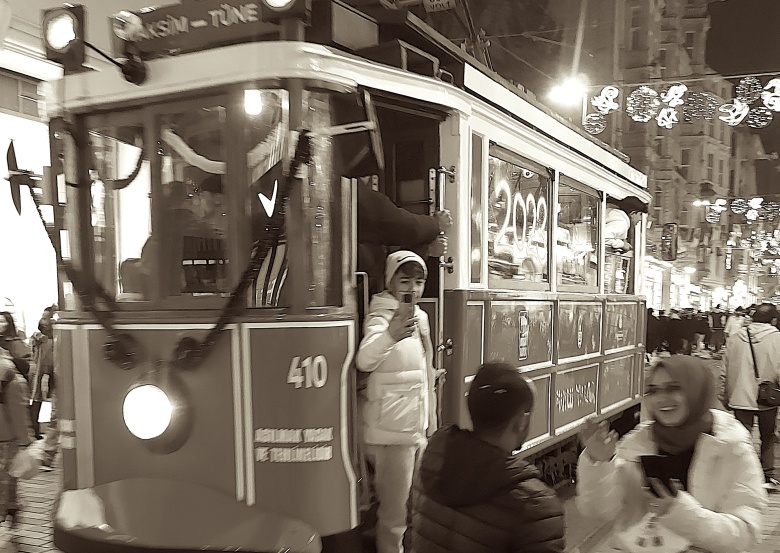
Istanbul, December 2022. Photo courtesy of Republic

[…]

500 vacancies for military registration specialists were advertised from late September to last December last year, according to HeadHunter. Previously, this specialization was considered a rather rare and generally not very sought-after profile in the personnel departments of Russian organizations (private and public). For comparison: only 145 such vacancies were advertised in the whole of 2021. The military mobilization has changed the situation: since September — that is, in just three months — the number of such offers on the labor market has increased by about two and a half times (Superjob’s data also show the same thing). The reasons? One of them (apparently, the main one) is an increase in fines for lapses in paperwork: to avoid them, employers are willing to pay applicants for the popular vacancy 70-80 thousand rubles a month. And this is despite the fact that there is a shortage of a number of other specialists on the labor market (and, presumably, they are no less valuable than SMO-era personnel officers). The number of vacancies on Avito Jobs alone, according to a recent company study, increased by 69% in 2022. Most likely, the trend will continue, serving as a natural continuation of the outflow of people and, ultimately, personnel.

50% — the percentage of last year’s sales of existing housing in the Russian Federation made through a notarized power of attorney. This record figure for the entire observable history of the market, as calculated by investment company Flip, who were commissioned by Kommersant, clearly indicates that the sales trend was primarily shaped by property owners who had emigrated. The high volume of such transactions seems to be an anomalous phenomenon. In 2021, a power of attorney was the basis for sale in no more than 20% of deals. In 2020, this figure was 15%. It was 8% in 2019, and 5% in 2018. You ain’t seen nothing yet, though: the ongoing controversy over whether to confiscate the property of openly anti-war Russians who have left the country must be making an additional contribution to the process of selling apartments and houses, which was gaining momentum as it was.

$81.69 billion — the total amount of deposits by Russian nationals in foreign banks as of the end of November of last year, according to the latest data from the Russian Central Bank. (4.989 trillion rubles were recalculated at the exchange rate in effect on that date.) Over the past eleven months, the amount has more than doubled — and this is even if we rely entirely on the statistics of the Central Bank, which may not have a complete picture of what is happening. (Russian laws oblige citizens to report when they open accounts in foreign banks and move funds in them, but we cannot be absolutely sure that everyone strictly obeys them.) While one part of these funds remains in these bank accounts, the other goes to the purchase of real estate that, for the most part, is also located outside the Russian Federation.

16,300 houses and apartments in Turkey were purchased by Russian nationals in 2022, according to data published by the Turkish Statistical Institute (TurkStat), as studied by RBC. This is not just three times more than in 2021 (when Russian nationals purchased 5,400 housing units in the Turkish Republic), but also more than the total volume of such transactions over the past six years (16,200). It is not surprising that last year, for the first time, Russians took first place among foreigners in buying housing in Turkey, producing almost a quarter of the corresponding demand with their money. Earlier, we wrote that our compatriots purchased two thousand houses and apartments in Turkey in October 2022 alone, overtaking all other foreign home buyers in that country, as reported by TurkStat.

At first glance, the advantages of investing in Turkey are not entire obvious. Inflation in the country, according to TurkStat, exceeded 84% in November, once again breaking records previously established in the autumn of 1998. The Inflation Analysis Group, an independent Turkish entity, estimated that inflation had reached a whopping 170.7% . In addition, prices for real estate, which have rising robustly, can at any moment just as vigorously drop, taking into account, in particular, the rather murky prospects for “Erdonomics,” depending on the results of the upcoming presidential and parliamentary elections. According to Endeksa, in September, the average price for one square meter of housing in Turkey was about 12 thousand Turkish lira (approx. $644), while the average price per housing unit was just over 1.5 million Turkish lira (approx. $83,700). The term of return on investment in housing is estimated at nineteen years, although in the summer this figure was recalculated to seventeen years.

The intense interest on the part of Russian nationals in buying real estate in Turkey is primarily related to the prospect of obtaining Turkish citizenship, Anna Larina, head of the foreign real estate department at NF Group, explained to Republic. (In turn, having a Turkish passport makes it possible to obtain an American E-2 visa, which speeds up the process of immigrating to the United States.) In this sense, it is logical that Russians have become leaders in terms of the number of residence permits issued in Turkey — 153,000, of which, however, as the Turkish Ministry of Migration clarified, 132,000 are short-term tourist residence permits, which are valid for two years.

Turkey is one of the few countries (but not the only country) that is still open to Russian nationals and their private capital. Thus, as 2022 came to a close, Russian citizens took first place among non-residents in buying real estate in Dubai, Bloomberg recently reported, citing figures provided by the brokerage firm Betterhomes.

Withdrawing funds and setting up a new life abroad eloquently testify to the sentiments prevailing among the Russian urban middle class, primarily. Not all people who sell Russian real estate and buy foreign real estate are necessarily irreconcilable opponents of the regime. And yet, it is clear that the vast majority of these people do not want to live and raise children in Putin’s version of the future, which is practically incompatible with modern civilization. In its own way, it is symptomatic that Russians who support the government and dutifully follow it into its deadly adventures are also dissatisfied with what is happening. If it were possible, they would rather return to the past, to a point in time thirty, forty, or fifty years ago.

63% — the percentage of Russians, according to a December poll conducted by the Public Opinion Foundation (FOM), who regret the collapse of the USSR — that is, more than three decades after the event known in Kremlin mythology as “the greatest geopolitical catastrophe of the twentieth century.” Strictly speaking, the current longing for Soviet times cannot be considered a record: after the August 1998 ruble default, there were noticeably more Russians nostalgic for the Soviet Union — 85%. Nevertheless, an important indicator of public attitudes (as recorded, we should underscore, by a quasi-state polling service) is on the rise again, having increased by twelve percentage points since 2011.

It is clear that this sentiment is primarily voiced by the 46–60 age group (88% of whom are “nostalgic”) and to some extent, people aged 31–45 years (79% of whom are “nostalgic”), assuming that a considerable portion of these people associate the late USSR with their happy childhoods and wild youths. However, according to the poll, even today’s Russian youth, that is, people aged 18–30, mostly (64%) consider the Soviet era “generally a good time.” Of course, their judgments are based on the stories of older generations, and most importantly, on the inevitable comparison with what is happening with the largest post-Soviet country right now.

Source: Yevgeny Karasyuk, “Salvation in foreign real estate and a new bout of nostalgia for the USSR: timely numbers from Russia… and a few from Turkey,” Republic, 20 January 2023. Translated by Hambone Brewster, who is still implacably opposed to the Russian “pollocracy” and continues to be surprised that even otherwise smart cookies like Mr. Karasyuk continue to cite Russian “public opinion polls” as reliable sources of real information — rather than, at best, records of sustained trauma and unfreedom.

Armen Aramyan: Russians Are Not Chimpanzees

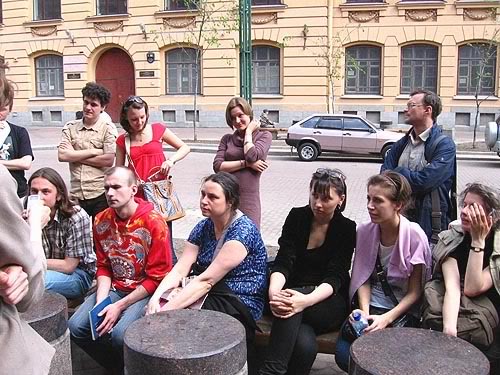
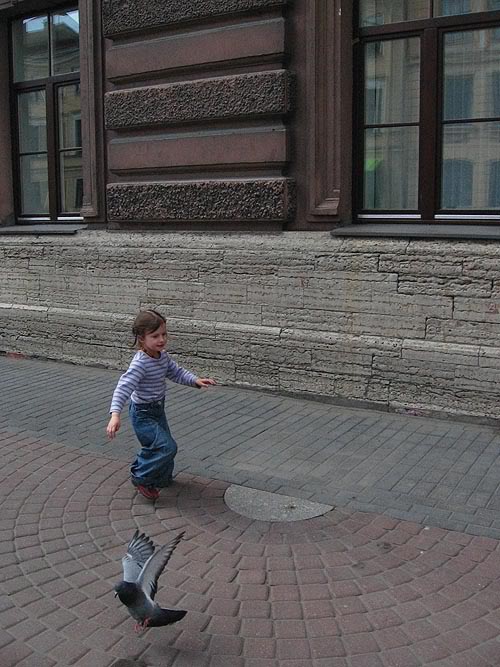
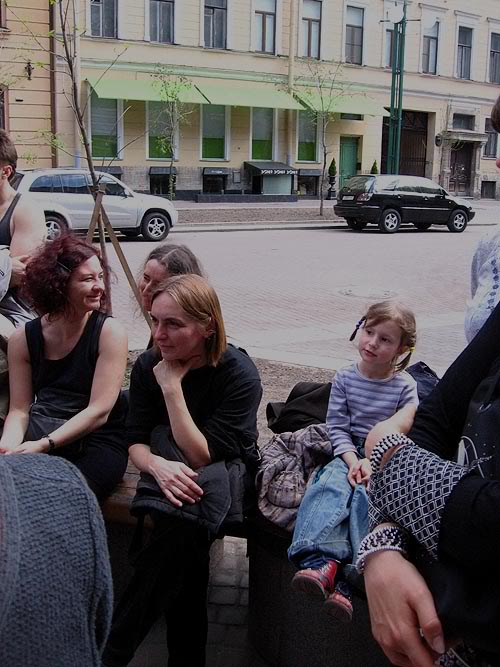
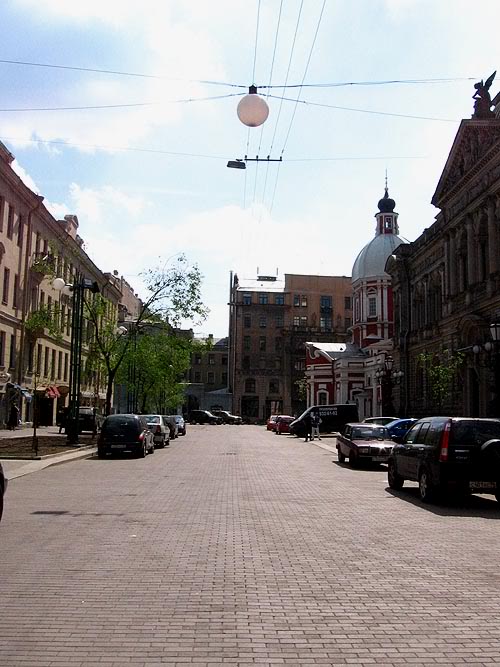
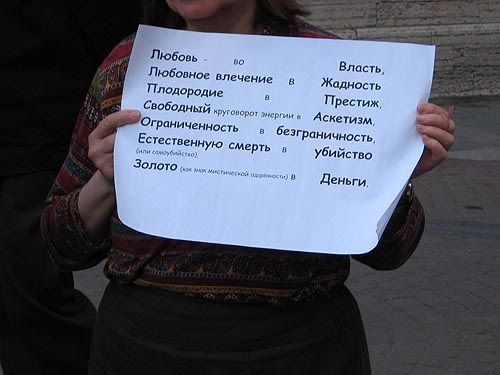
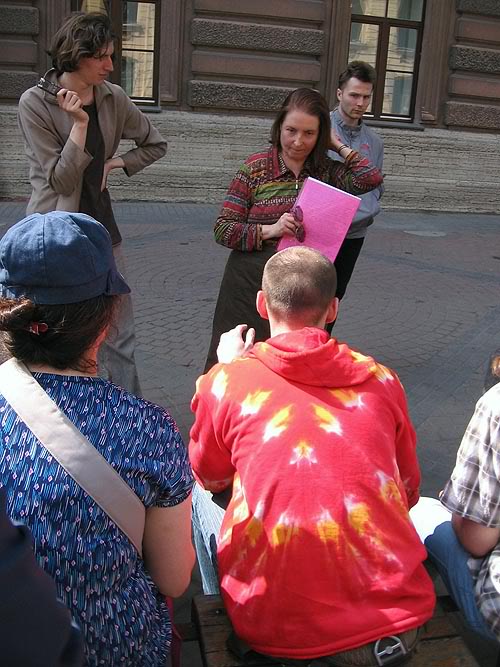
These are scenes from a May 2008 session of Petersburg’s Street University, a grassroots undertaking that I helped launch in response to the Putin regime’s sudden, underhanded shutdown of the nearby European University in February 2008. I unearthed these snapshots from my long-dormant Photobucket account, about whose existence I was reminded by an email from the service that I found by accident in my spam folder whilst working on this post earlier this morning. I think it’s a nice illustration of the point made, below, by Armen Aramyan, who must have been nearly the same age as Tasya, the little girl in the second and third pictures, when I took them. If the war can be stopped and Russian society can be salvaged in the foreseeable future, however, it will require a lot more than creative “sociology,” the right combination of critical theories, the power of (“progressive”) positive thinking, and hypervigilant discursive gatekeeping. At minimum, it will require a massive manifestation. This would be different in kind and magnitude from the current instances of grassroots resistance that Mr. Aramyan enumerates below, which are almost entirely the work of lone individuals, not the actions of a seriously mobilized grassroots or, much less, of a more or less widespread and vigorous “anti-war movement.” ||| TRR


Hi, this is Armen Aramyan!

On Monday, iStories published a column by its editor, Roman Anin, in which he laments the moral degradation that “has engulfed not only the so-called elites, but also society.” He claims that the majority of Russians support military aggression, and that the political system is in such decline that we can make predictions about Russia’s future by invoking the discourse of primatology.

“Human DNA is 99% the same as the DNA of chimpanzees, whose entire polity revolves around the alpha male. While the alpha male is young and strong, he keeps the whole pack at bay, manages the distribution of resources, mates with all the females, and severely punishes those who question his authority. But as soon as the alpha male begins to age and show signs of weakness, a fierce war to take his place ensues. […] In my opinion, the Russian political system today is not much different from the power arrangements in chimpanzee troops.”

There is no grassroots resistance in the Russia about which Anin writes. There is no torching of military enlistment offices, no teachers who refuse to conduct propaganda lessons, no activists who assist Ukrainians in getting out of Russia. There are no people prosecuted for speaking out and acting against the authorities. There are only big shots who divvy up the loot behind closed doors.

But activists and anti-war resistance do exist, and [some] sociologists have claimed that the pro-war segment of Russian society is a small minority that is averse to political action of any kind.

Why do we continue to encounter such remarks?

I would suggest calling the worldview that informs such remarks Naive Anti-Putinism, or NAP.

NAP sees Russia as a fringe country. The processes in it can be explained only through allusions to fantasy novels, such as dubbing Russia “Mordor,” from The Lord of the Rings, or referencing the Harry Potter universe. (Have the images from fantasy novels run out and we are now on the Planet of the Apes?) Russia is so unique that there are processes taking place in it that don’t exist anywhere else (with the possible exception of North Korea). This Russia suffers from a patriarchal regime and a total absence of democratic institutions. (That is, power belongs to individual groups and their leaders, who do not rely on any institutions). The enlightened achievements of European democracies have not yet reached Russia, and so now we are doomed to live amidst an endless Games of Thrones (to invoke yet another fantasy novel comparison). In this system, all that remains for us is to analyze what intrigues the different Kremlin clans are pursuing.

Resistance, grassroots movements, the struggle for democracy, and revolution are impossible in this reality. So, all that naive anti-Putinists are capable of doing is resorting to moral critiques delivered from a superior position and continuing to admonish us that the common folk in Russia are bad, having failed to accept the enlightened achievements of European democracies. If there is no democracy [in Russia], [that is because] the ordinary folk simply don’t want it. That is NAP’s entire explanatory arsenal.

Naive Anti-Putinism does not envision the possibility of change in Russia, much less revolution or the destruction of Putin’s elite. It is a readymade scheme that enables certain groups in society to make peace with reality and continue to watch the new season of Game of Thrones.

For example, if you are a businessman or an IT worker who relocated [to another country] after the war’s outbreak and invested all your resources in adapting to a new place (most likely — quite successfully), you probably don’t really want to figure out how to build democracy in Russia and support the grassroots resistance.

But you can also imagine another situation: you are a researcher who has spent a great deal of time and effort investigating how the power elite throws bags of money around. Probably, at some point, you might imagine that there is nothing else besides this cynical redistribution of the loot.

Alexander Zamyatin, in a discussion of the emigration on the podcast This Is the Base, makes a great point: “You can’t be a gravedigger of the old regime while grieving for its missed opportunities.” We can speculate for a long time about NAP’s origins, and why many members of the anti-war movement espouse this position.

But if we want to end the war and build democracy in Russia, we need to think differently. Even if we imagine that this is impossible right now, do we really think that democracy is altogether impossible in Russia? And if it is possible, what would it look like in reality? What movements would be needed to make it happen? How would they gain power? How would this power be redistributed and how to make sure that it is not abused? These are the questions that should concern all of us members of the anti-war movement on a daily basis.

Centuries of class, colonial, and gender oppression led to the emergence of strong theories elucidating the structure of power in modern societies. The crises of the nineteenth century spurred the elaboration of theories about class and capitalism. Representattives colonized peoples, as well as their allies in the West, formulated theories about how imperialism and colonialism function. Activists and theorists of women’s movements offered accounts of how gender dominance operates in modern societies.

If we reject the entire legacy of critical theory, as many NAPpers do, then we need to propose something else. But this something is definitely not primatology or allusions to Harry Potter. But one might have to read other books to to find this something else.

P. S. But also do not assume that the animal kingdom — and in particular the political systems of primates — is so primitive. Usually, reducing people to animals is a conservative move whose purpose is to show that human relations are grounded in competition and the struggle for survival, in which the strongest win. I recommend reading this essay by the anthropologist David Graeber, in which he argues that this is not at all the case.

Source: Armen Aramyan, DOXA Anti-War Newsletter #313 (10 January 2023). Mr. Aramyan is one of the editors of the online anti-war magazine DOXA. In April 2021, he and three other editors of the then-student magazine were sentenced to two years of “correctional labor” (i.e., community service) over a video questioning whether it was right for teachers to discourage students from attending rallies protesting opposition leader Aleksei Navalny’s incarceration. Translated by the Russian Reader

Fascism with a Human Face

Russian President Vladimir Putin, speaking at a session of the Valdai Discussion Club, acknowledged a decline in the real incomes of our compatriots.

He noted that the issue was being resolved in cooperation with the trade unions, RIA Novosti reports.

This dialogue continues. We see that people’s nominal incomes are growing, but real incomes have become slightly lower. Bearing in mind the state of the Russian economy, we can solve these problems and should do so in accordance with the existing plans of the Russian government.

Vladimir Putin, President of the Russian Federation

The head of state also said that it was necessary to fight for wage increases. At the same time, he addressed his appeal to both Russians and “ordinary citizens” of the United States and Europe.

Since the start of the special operation by Russian troops in Ukraine, people have experienced a loss of income and savings. Putin also noted earlier that many Russians were at risk of layoffs.

Source: Andrei Gorelikov, “Putin urged both Russians and citizens of western countries to fight for higher salaries,” Rabota.ru, 28 October 2022. Translated by the Russian Reader


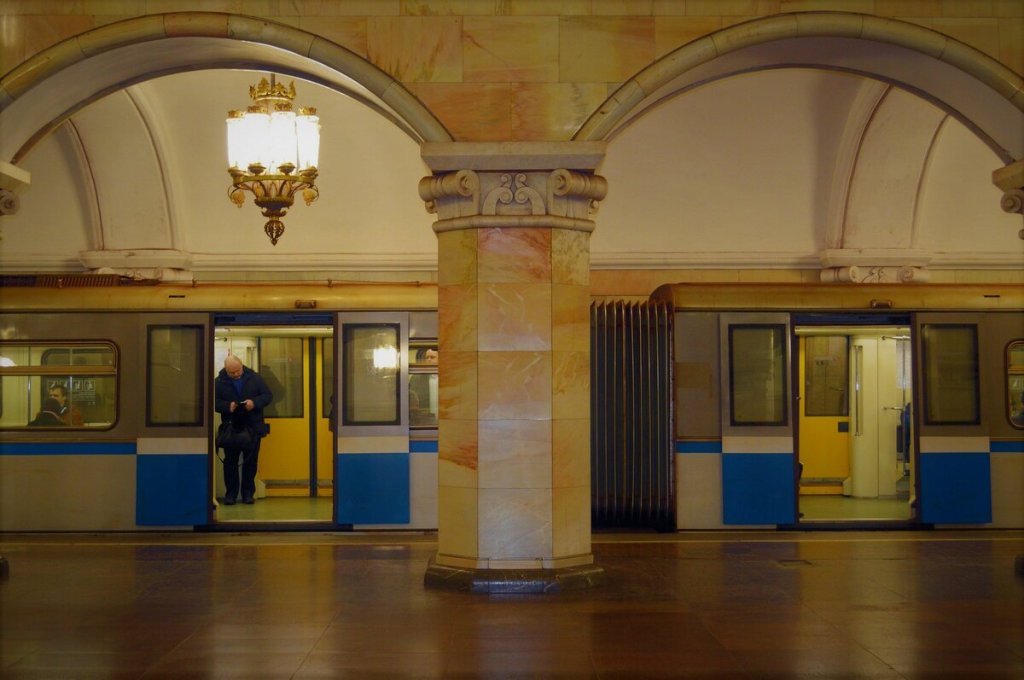
“There are more than 485 air fresheners in operation: they were installed in the air ducts of the climate control system. They spread the fragrance around the car every ten minutes. The fragrance is called ‘Moscow Metro,'” explain the metro’s press service , stressing that all the aromas were safe, hypoallergenic, and complied with regulations.

In 2019, during a vote on the project’s implementation, ninety percent of passengers surveyed said they would prefer an air-freshened carriage to a regular one. Muscovites especially wanted the smell of cherry blossoms in the subway.

Source: “Air fresheneres installed on the Filyovskaya metro line,” Russkii pioner, 3 November 2022. Photo courtesy of Russkii pioner. Translated by the Russian Reader


What attracts people [to the shot bar Fedya, the Wildfowl!]? The irony and the simplicity, but at the same time the pleasant crowd. Here you can meet people who, the day before, dined on sets [sic] of scallops and dill sauce at designer restaurants, but they are glad to eat belyash and kvass at Fedya’s. Every other table orders kebabs (from 325 rubles) and drinks tinctures and macerations. Security guards monitor everything: if you swear loudly, they will politely ask you to leave.

Source: “From brilliant shot bars to giant food halls: 12 Petersburg openings in 2022 — Vitya Bar, Noise Cabaret, Moskovsky Market, and the inclusive Outside Entrance,” The Village, 5 December 2022. Photo courtesy of The Village. Translated by the Russian Reader


The “Fedya, the wildfowl!” scene from the beloved Soviet comic crime caper The Diamond Arm (1969), starring Andrei Mironov and Yuri Nikulin

Down in the Hole

Oleg Grigoriev
Pit

Digging a pit? 
I was.
Fell in the pit?
 I fell.
Down in the pit? 
I am.
Need a ladder? 
I do.
Wet in the pit? 
It's wet.
How's the head? 
Intact.
So you are safe?
I'm safe.
Well, okay then, I'm off!

Original text. Translated by the Russian Reader


Putin last week took part in a meeting with the mothers of soldiers killed in the war in Ukraine. The title “soldiers’ mother” carries a lot of influence in Russia — and Putin was famously humiliated by a group of soldiers’ relatives in his early years as president. Unsurprisingly, Friday’s meeting included only those trusted to meet Putin and the gathering passed off without awkward questions. Putin — who now rarely communicates with anyone outside of his inner circle — once again demonstrated a complete detachment from reality.

  • The Russian authorities have been nervous of organizations of soldiers’ mothers since the mid-1990s. During the first Chechen war (1994-1996), in which the Russian army was humiliated, the Committee of Soldiers’ Mothers was one of the country’s leading anti-war forces and held the state and the military to account.
  • For Putin personally, any encounter with soldiers’ mothers stirs unhappy memories of one of the most dramatic incidents of his first year in the Kremlin. In August 2000, the inexperienced president was subjected to a grilling by the wives and mothers of sailors who died in the Kursk submarine disaster. The transcript of the meeting immediately appeared in the press and a recording was played on Channel One, which was then owned by Kremlin eminence grise Boris Berezovsky. Presenter Sergei Dorenko subsequently claimed that, after the broadcast, Putin called the channel and yelled that the widows were not genuine and that Berezovsky’s colleagues “hired whores for $10.” Ever since that encounter, the Russian president has avoided in-person meetings, favoring stage-managed gatherings with hand-picked members of the public.
  • This time, of course, there were no surprises. The Kremlin carefully selected the soldiers’ mothers who were invited to attend. At least half of those at the meeting turned out to be activists from the ruling United Russia party and members of pro-Kremlin organizations. 
  • The most striking speech at the event was close to parody. It was given by Nina Pshenichkina, a woman from Ukraine’s Luhansk Region whose son was killed in 2019. Pshenchkina later became a member of the Public Chamber of the so-called Luhansk People’s Republic and has attended almost every official funeral and official celebration. She told Putin that her son’s last words were: “Let’s go, lads, let’s crop some dill” (in this context, “dill” is an insulting nickname for Ukrainians).
  • Putin’s speech was also striking. First, he told the assembled mothers that Ukrainians were Nazis because they kill mobilized Russians soldiers who did not wish to serve on the front line. Then he embarked on a long, strange discussion about why we should be proud of the dead. “We are all mortal, we all live beneath God and at some point we will all leave this world. It’s inevitable. The question is how we live… after all, how some people live or don’t live, it’s not clear. How they get away from vodka, or something. And then they got away and lived, or did not live, imperceptibly. But your son lived. And he achieved something. This means he did not live his life in vain,” he said to one of the mothers.

Why the world should care

It would be an error to assume that Putin has completely abandoned rational thought. However, it is instructive to watch him at meetings like this, which provide a window onto the sort of information he consumes. At this meeting with fake soldiers’ mothers he quoted fake reports from his Defense Ministry and, seemingly, took it all seriously.

Source: The Bell & The Moscow Times email newsletter, 28 November 2022. Written by Peter Mironenko, translated by Andy Potts, and edited by Howard Amos. Photo, above, by the Russian Reader

Black Friday

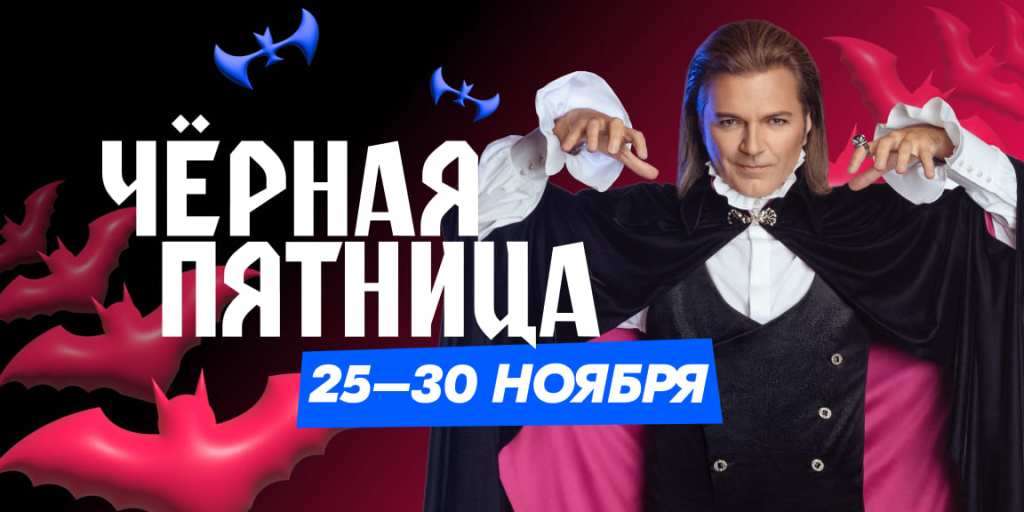
Despite its declared war on “satanic” western values, Putinist Russia continues to slavishly imitate all the worst the mythical west has to offer, including “Black Friday,” as exemplified by this image from an email flyer sent to me earlier today by the major online retailer Ozon, featuring the pop singer Dmitry Malikov. Nor has Putin’s “proxy war” with the west stopped the pidginization of the Russian language, as seen in the second-to-last piece in this grim holiday collage. ||| TRR


The expected tourist flow from Iran may amount to approximately two thousand people a week starting in the spring of 2023, director of the municipal tourist information bureau Yuri Bogdanov said on November 24. According to him, relevant negotiations are underway with air carriers.

“We are negotiating with airlines that want to provide direct flights between Iranian cities and St. Petersburg. We hope that there will be six flights per week with an average number of around 300 seats on board. This is already about two thousand people a week. We expect that, beginning in the spring, these airlines will supply their airplanes,” TASS quoted Bogdanov as saying.

The expert clarified that there were more flights before the pandemic and six thousand tourists used to arrive from Iran every week.

According to Bogdanov, the flow of tourists may return to its pre-covid levels in St. Petersburg by about 2026, but at the same time primarily due to guests from Russia, and not from foreign countries. According to the figures he cited, in 2019, about five million Russians and 5.5 million foreigners visited the Northern Capital, while 6.4 million Russians and 150–200 thousand foreigners visited the city in the first nine months of 2022.

“We have reformatted the priorities for domestic tourism — we want to reach the same 10.5 million tourists a year. There is every ground for this to happen,” Bogdanov opined.

Earlier, the State Duma Budget and Taxes Committee recommended that St. Petersburg be included in the list of regions that charge tourists a resort fee.

Source: “Petersburg expecting two thousand tourists from Iran weekly from spring,” ZakS.ru, 25 November 2022. Translated by the Russian Reader


At least 58 children, some reportedly as young as eight, have been killed in Iran since anti-regime protests broke out in the country two months ago.

According to Human Rights Activists in Iran (HRA), 46 boys and 12 girls under 18 have been killed since the protests began on 16 September, sparked by the death of the 22-year-old Mahsa Amini while in police custody.

In the past week alone, five children were reportedly killed by security forces as violence continued across the country.

Those who died last week include the nine-year-old Kian Pirfalak, who was one of seven people – including a 13-year-old child – killed in the western city of Izeh on Wednesday.

Speaking at Kian’s funeral on Friday, his family said security services had opened fire on the family car, where Kian was sitting next to his father. Iranian security services have denied responsibility for his death, blaming the shooting on “terrorists”.

Iran’s mounting child death toll comes amid escalating violence in cities across the country, with protests showing no sign of abating.

[…]

Young people have been at the forefront of anti-regime protests, which started after Mahsa Amini died in the custody of Iran’s morality police. She had been arrested for not wearing her hijab correctly.

The deaths of two teenage girls, Nika Shakamari and Sarina Esmailzadeh, both allegedly beaten to death by security forces for protesting, provoked further outrage.

Videos of schoolgirls across the country protesting against their killing by removing their hijabs and taking down pictures of Iran’s supreme leaders went viral on social media, leading to raids on schools where children were beaten and detained. According to Iran’s teachers union, another 16-year-old girl, Asra Panahi, died after she was attacked by security forces in her classroom in the north-western town of Ardabil on 18 October.

The attacks on children in schools is continuing, according to Hengaw, which said a 16-year-old girl from Kurdistan is on life support after throwing herself from a school van, having been arrested at her school last week.

HRA says more than 380 protesters have been killed since the protests began and more than 16,000 people have been detained, including children. The figure is disputed by the authorities.

Source: Deepa Parent, Ghoncheh Habibiazad and Annie Kelly, “At least 58 Iranian children reportedly killed since anti-regime protests began,” The Observer, 20 November 2022. Thanks to Sheen Gleeson for the heads-up.


A view of Vokzal 1853 on opening day. Photo: Sergei Yermokhin/Delovoi Peterburg

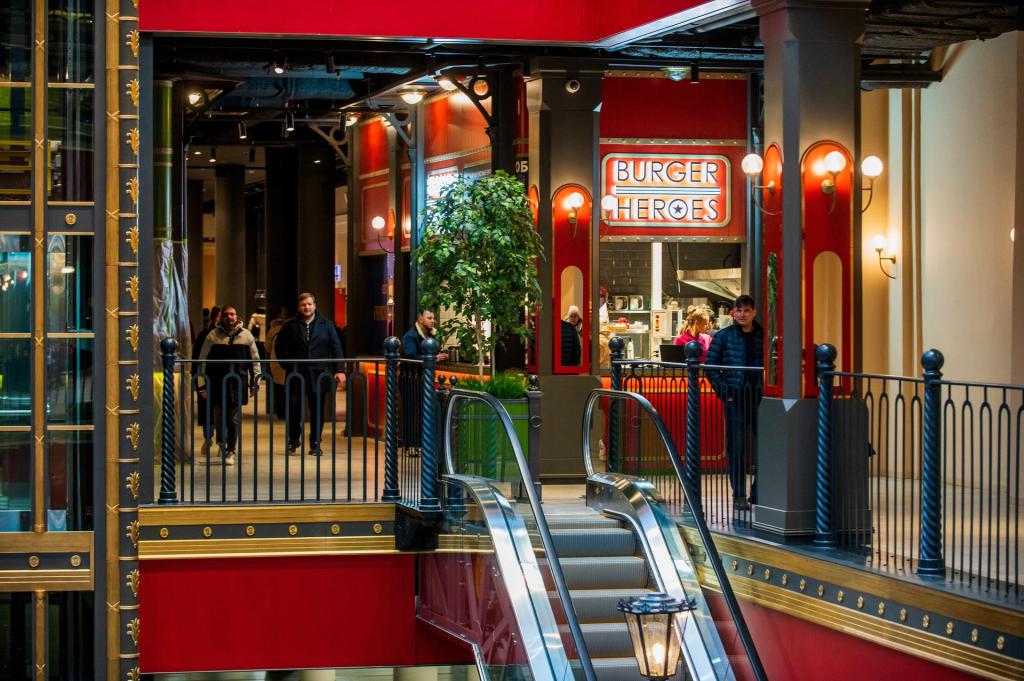
On November 21, the opening of the food hall [fud-kholl] Vokzal 1853 took place in the building of the former Warsaw railway station.

It is the largest gastronomic space in St. Petersburg and, so its creators claim, in Europe.

So far, not all the establishments in the eater have opened — the launch . The event zone [event-zona] is designed for to accommodate 2.5 thousand guests and have 4 thousand seats, while the entrance to the second floor is still closed.

The cost of renovating the former railway station exceeded 1.5 billion rubles. The Vokzal 1853 food hall [fud-kholl] is a project of the Adamant holding company and restaurateur Alexei Vasilchuk. In total, as stated earlier, more than 90 restaurant concepts [restorannykh konseptsii] will await visitors, and the total area of the food hall will be about 34 thousand square meter.

The company plans to open a concert venue, craft [kraftovye] shops, and a coworking [kovorking — sic] in the space.

Earlier, DP reported that its creators had conceived the decoration of the premises to suggest the atmosphere of nineteenth-century railways stations, and visitors would find themselves in the “epicenter of a bustling creative life.”

Source: “The largest food hall in St. Petersburg opens in Warsaw railway station building,” Delovoi Peterburg, 22 November 2022. Translated by the Russian Reader


Ukraine continued to reckon with the fallout from Russia’s air strikes on its energy infrastructure, with much of the country still struggling with blackouts. Residents in Kyiv, the capital, were told to prepare for more attacks. Russian missiles damaged a hospital on the outskirts of Zaporizhia, a Ukrainian-held city not far from Europe’s largest nuclear power plant, controlled by Russia. Meanwhile, Ukraine’s president, Volodymyr Zelensky, said Russia was heavily shelling Kherson, the southern city recaptured by Ukrainian forces in early November. Local officials said that strikes killed seven people in the city on Thursday.

Source: The Economist, “The World in Brief” email newsletter, 25 November 2022


Maxim Katz, “Why Russians don’t protest — answered by an old experiment (English subtitles),”1,108,570 views. Nov 23, 2022. “The lack of mass anti-war rallies in Russia is often explained with some psychological defect of the Russian people. But is it truly so? Today we will talk about a social experiment called the Third Wave, and think about whether it is true that it can all be explained with some unique malleability of Russian society.”

This is a wildly disappointing exercise in sophism and self-deception by the usually much more lucid Maxim Katz. Russia has arrived at its present murderous and self-destructive bad end not through rigorous and ruthless totalitarian indoctrination and psychological manipulation, as suggested by Katz’s invocation of Ron Jones’s 1967 Third Wave experiment in a California high school, but through a chaotic, consistent indulgence of opportunism, consumerism, escapism, ressentiment, hipsterism, “westernism,” capitalism, cynicism, nihilism, and thuggery by the elites and the much of the so-called intelligentsia, thus almost completely overwhelming the decent, democratic, and egalitarian impulses and undertakings of differently minded and empowered “other Russians” from all walks of life and all parts of the country. It has been one of the missions of this website to bear witness to both these tendencies in their extreme and trite manifestations. You’ll find vanishingly little of what Katz describes in my chronicles of the last fifteen years here and on The Russian Reader‘s sister blog Chtodelat News. You will find, however, plenty of stories of brave grassroots resistance and movement building blunted and, ultimately, murdered by a police state whose PR wing has urged Russians to trade their freedom for food courts. ||| TRR