As for sources—sure, we could lace every article with footnotes and hyperlinks, but let’s be real: a name and a citation don’t mean much in a world where half of Washington is reading scripts written by billionaires and lobbyists. Sources can be biased, corrupt, cherry-picked, or outright fabricated, and if you need proof of that, just look at the gibbering circus act that is the modern Republican Party. These are people who think “alternative facts” are a valid concept and that the guy who bankrupted a casino somehow knows how to fix the economy. You think they care about good sourcing?
Besides, bogging our writing down with a mess of citations and academic formalities would wreck the flow faster than a Senate hearing on TikTok. Our job isn’t to hand-hold people through a bibliography—we’re here to tell the story as it is, from the trenches, with all the blood, chaos, and absurdity intact. If you want a research paper, head to JSTOR. If you want the truth with its teeth bared, you’re in the right place.
It’s telling that Closer to the Edge is clueless about the egregious circumstances of Skobov’s actual trial. They paint a vivid picture of Skobov confronting the judges and other shameless Putinist law enforcement officials directly in the courtroom: “On March 21, 2025, the 67-year-old Soviet-era dissident walked into a Russian courtroom, stared down the agents of Vladimir Putin’s dictatorship, and set himself ablaze in words.”
US aid suspension hits Russian independent media and NGOs
The decree by US President Donald Trump’s decree halting American aid to foreign countries and suspending the work of the United States Agency for International Development (USAID) hits exiled Russian media and NGOs hard. For many organizations and publications, grant funding is the sole means they have of ensuring their continued existence.
As soon as the new US administration announced the suspension of all international aid programs, there was panic among the Russian emigrant community. Most exiled Russian NGOs and media rely on grants as their major—and sometimes sole—source of funding, with a significant chunk coming from Washington. The topic has been high on the agenda for Russia’s opposition and anti-war communities— though only behind the scenes. Affected NGOs and media outlets do not want to admit publicly that they receive American funding, as it could lead to criminal prosecution by the Russian authorities. They are also reluctant to publicly discuss financial problems.
Dozens of organizations are under threat from within the Russian-language anti-war diaspora community, including those who help persecuted individuals to leave Russia, try to protect minority rights and bring accurate information about the war to audiences within Russia. According to the Moscow Times, citing a source in Washington, up to 90 organizations have already lost their funding. As one example, The Ark, which offers temporary housing, legal aid, psychological support and other assistance to Russians forced to flee their homeland, immediately lost half its budget.
Former political prisoner Andrei Pivovarov (released in the summer 2024 prisoner exchange) wrote that Trump’s decree would lead to the cancellation of one-off events and the abandonment of long-term projects. “You can cancel a conference, but you can’t, for example, stop paying the rent. You can’t tell your landlord: ‘wait, Trump will work it out’. He’ll just cancel the contract. And many simply do not have the kind of safety net that can pay for these three months, or raise money via crowdfunding,” he explained. “It will be even more difficult with people. There are many countries where residency is tied to a work contract, and if there is no money for that it raises questions about the basis for extending [residency].”
Russian propaganda channels are jubilant. For decades they have been telling Russians that the opposition lives on Western money and carries out orders from abroad. Trump’s decree offers them a great opportunity to say that these claims have now been proven and that “independent” media is nothing of the sort. Of course, nobody on the pro-Kremlin side is bothering to look at the details of how Western grant funding actually works. Maria Zakharova, a representative of Russia’s Foreign Ministry, has already claimed that USAID forced “countless grant-eaters” to remain silent about alleged Ukrainian war crimes.
Not all funding for Russian civil society came from US state grants. Private foundations as well as European governments also support Russian initiatives. But removing perhaps a quarter of the support from Russian journalists and organizations can only lead to ever more fierce competition for the remaining funds—not every project will survive.
Why the world should care
Trump’s radical measures are hitting activists and NGOs around the world. Russian organizations and media outlets, cut off from their homeland, face greater problems than many as they have far fewer sources of alternative funds.
Written by Peter Mironenko, translated by Andy Potts and edited by Jake Cordell
If Russia had a wish list, it would include gutting the DOJ and FBI to eliminate counterintelligence operations and successful prosecutions, crippling U.S. sanctions enforcement by weakening the Treasury Department, fracturing America’s alliances to isolate the U.S. on the global stage, and dismantling USAID to eliminate vital democratic and humanitarian aid programs worldwide. That wish list is now being fulfilled—not by the Kremlin, but by Elon Musk and Trump.
Each of these attacks is a direct blow to U.S. national security and global influence but I’m going to focus on the dismantling of USAID—a move that Russian officials and state media are openly celebrating.
This isn’t just about shutting down an aid agency; it’s about deliberately weakening U.S. power while handing a geopolitical victory to authoritarian regimes in Moscow and Beijing.
Gutting USAID—A Gift to Russia
With Trump’s full backing, Musk has taken aim at USAID, calling it “a criminal organization” that “needs to die,” and branding the agency “a viper’s nest of radical left Marxists who hate America.” Shortly after, he announced that Trump had personally agreed USAID should be shut down.
Now, its funding is frozen, employees are locked out of headquarters in Washington, lawmakers are barred from entering the USAID building, and critical aid programs are being dismantled.
USAID is set to be merged into the State Department, but it will be a shell of its former self—stripped of its resources, workforce, and influence, ensuring it can never have the same impact.
For decades, USAID has been a pillar of American influence abroad, supporting independent journalism, anti-corruption initiatives, election monitoring, and providing critical, life-saving humanitarian assistance across the globe. It has played a key role in countering Russian, Iranian, and Chinese influence, providing a lifeline to civil society organizations resisting authoritarian regimes or strengthening their democracies. Now, that support is disappearing.
Russia’s reaction? Celebration as Kremlin propagandists and state officials are jubilant. And they’re right—USAID has been one of the biggest obstacles to its authoritarian expansion. With its demise, Russia gains a clearer path to spread its influence, undermine democracies, and prop up pro-Kremlin regimes worldwide.
Who Benefits from USAID’s Collapse? Russia and China
The closure of USAID isn’t about cutting spending—it’s about weakening U.S. global influence while empowering our adversaries. With American aid disappearing, nations that once relied on USAID for support will turn to Russia and China for funding.
This is a seismic shift in global power. Russia and China will step into the vacuum left by the U.S., using economic leverage to expand their authoritarian agendas. This is exactly what Moscow and Beijing have wanted for decades—and Trump and Musk are delivering it on a silver platter.
At the same time, Musk is propping up pro-Kremlin far-right parties across Europe—or, as I like to call them, ‘Kremlin projects’—while interfering in the elections and internal affairs of our allies.
Trump and Musk Are Lying—USAID Was Critical
Trump and Musk have claimed USAID was corrupt and ineffective. That’s a lie. USAID has been one of the most scrutinized and audited agencies in the federal government, and their accusations are baseless and an excuse to dismantle a tool that supports democracy, transparency, and independent governance.
The truth is simple: dismantling USAID doesn’t benefit the American people—it benefits authoritarian regimes. Its closure will leave a vacuum that Russia, China, and other adversaries will quickly fill.
Their claims of “fraud” are just a smokescreen for a broader effort to undermine democracy and erase America’s ability to support those fighting for freedom worldwide.
Musk’s Expanding Control Over Federal Systems
Simultaneously, Musk’s influence over the federal government is growing at an alarming rate, giving an unelected, unvetted billionaire, and his unvetted associates unprecedented access to highly sensitive data. His aides have locked career federal workers out of their systems at the U.S. Office of Personnel Management, effectively cutting off access to vital personnel records and personal information.
Meanwhile, his team has gained unauthorized access to General Services Administration systems, deploying AI tools to reshape the agency in ways that remain undisclosed to the public. Adding to these alarming developments, Musk’s handpicked allies—including unvetted college students—have taken over Technology Transformation Services, which manages critical government IT systems, sparking chaos and raising significant security concerns.
Musk and his unvetted, unelected team now have access to everything— our Social Security records, Medicare payments, tax filings, federal employee data, and other sensitive and classified files. Even our children’s information is now in their hands.
What will Musk do with it? Who will he share it with? This isn’t hypothetical—it’s a direct national security threat and threat to all of us and we need immediate answers.
Demand Accountability
We cannot allow this to happen without a fight. Contact your Senators, Representatives, and local officials and demand answers:
Did Trump give direct authorization for Musk to have access to sensitive government systems and all our private data?
What safeguards exist to prevent him from sharing Social Security numbers, tax filings, and federal employee records with foreign actors or private interests?
What steps are being taken to prevent further infiltration in government operations?
Who is ensuring our personal, financial, and national security data isn’t exploited for political or corporate gain?
Flood their phone lines, send emails, and make noise on social media platforms. We need answers because none of us want a billionaire beholden to Russian and Chinese interests to have our private info.
The website of the United States Agency for International Development went dark over the weekend and employees were put on leave, as Elon Musk said Monday that President Donald Trump wanted to shut down the largest disburser of U.S. foreign aid. The remarks were made by Musk during a live stream discussing the work of his government task force, the so-called Department of Government Efficiency, that he was announced to be leading by the president. Media reports meanwhile said that USAID could be absorbed into the State Department while many of the projects its supports – from health to infrastructure and disaster-relief programs – would be slashed significantly. USAID spending equals less than 1 percent of the federal budget.
The United States Agency for International Development, USAID for short, is the biggest dispenser of U.S. foreign aid, according to the federal website Foreignassistance.gov. It disbursed almost $44 billion in the fiscal year of 2023 (latest available), with $16 billion going to Ukraine. The number represents more than 60 percent of all U.S. foreign aid listed on the website. The agency pays out only economic aid, with military aid being handled by the Department of State and the Department of Defense.
After Ukraine, USAID payments were predominantly going to the Middle East and Africa in 2023. Ethiopia, Jordan, Afghanistan and Somalia all received more than $1 billion from USAID that year. U.S. aid recipients are found all over Latin America, Africa, Asia and Eastern Europe. Together with the Department of State/Defense spending, which focuses on the Middle East even more due to military aid components, it is the widest-ranging U.S. foreign aid paid out.
German Chancellor Olaf Scholz criticized U.S. President Donald Trump’s proposal to tie military aid for Ukraine to access to the country’s rare earth resources, calling it “very selfish and self-centered,” Spiegel reported on Feb. 4.
Speaking after an informal meeting of European leaders in Brussels, Scholz reportedly stressed that Ukraine should first be helped to “get back on its feet” and that its resources should be used for reconstruction after the war.
This comes as Trump told reporters on Feb. 3 that he was seeking a deal where Ukraine would “secure what we’re giving them with their rare earths and other things,” though he did not specify which materials Washington is targeting.
A source in the Presidential Office told the Kyiv Independent that sharing Ukrainian resources with allies is already part of President Volodymyr Zelensky’s “victory plan,” which has been presented to foreign leaders, including Trump.
Trump’s remarks come amid uncertainty over the future of the U.S. aid to Ukraine.
The U.S. has provided $65.9 billion in military aid to Ukraine since the start of Russia’s full-scale invasion, with assistance remaining unaffected by the current aid freeze, Zelensky confirmed on Jan. 25. Non-military programs run by the U.S. Agency for International Development (USAID) have lost funding under the new administration.
USAID has provided Ukraine with $2.6 billion in humanitarian aid, $5 billion in development assistance, and over $30 billion in direct budgetary support. In response to the funding cuts, Ukraine’s parliamentary committee on humanitarian and information policy has begun consultations with European partners to temporarily replace U.S. funding.
Under Scholz’s leadership, Germany has become Ukraine’s second-largest military donor after the U.S. However, the chancellor has resisted providing Taurus long-range cruise missiles, citing escalation concerns.
Scholz has also blocked the proposed additional security assistance for Ukraine worth 3 billion ($3.09 billion) euros unless it is covered by additional government borrowing.
The plan, backed by German Foreign Minister Annalena Baerbock and Defense Minister Boris Pistorius, included three additional Iris-T air defense batteries, 10 howitzers, and more artillery ammunition.
A Chechen refugee in front of her destroyed apartment building in downtown Grozny, February 17, 1995. Photo: Reuters (via Julia Khazagaeva)
On the thirtieth anniversary of the storming of Grozny, the liberal Russian media reminded the Russophone audience that there had been such a war—the Chechen War. When I see this title, I don’t even open the movie, I flip through it. A couple of excerpts are basically enough for me to be convinced that these people have still understood nothing after three decades. Even over the three years of the recent, utterly treacherous imperial war in Ukraine, the obvious facts about what Chechnya means to Russia have not became obvious to them.
Almost any decent Russian would point out to you, of course, that bombing towns chockablock with civilians was a bad thing to do and foul play. Carrying out mop-ups in villages and burying the victims in mass graves was also outrageous. But then the exclamation “but!” is sure to follow. They will tell you about Chechen bandits, forged letters of credit, and the intransigent Dudayev. Yes, it was wrong to destroy a third of Chechnya’s population, this notional Russian would lament, but the Chechens were bad eggs themselves and were asking for it.
If you ever do open a Russian [documentary] film reconstructing the events in Chechnya thirty years ago, you will find that it is about the enlisted lads who on New Year’s Eve 1994 were thrown into the epicenter of hell. Not properly trained to shoot or drive a tank, alone against hordes of heavily armed rebels, they were unfortunate sons of the Motherland: may their memory live forever. This artistic device is deployed, for example, by the Maxim Katz-affiliated project Minute by Minute. The [YouTube] channels Current Time and Popular Politics have also recalled this selfsame “Chechen War.”
Minute by Minute, “The New Year’s Eve Storming of Grozny: A Minute by Minute Reconstruction” (December 31, 2024)
Semantically, the construction “Chechen War” operates the same way as the coinage “captive of the Caucasus.” It conceals the aggressor, suggesting we look at the object of the aggression as the aggression’s cause. In this logical trap, Chechnya seems to have gone up in flames by itself. It was its inhabitants who shelled and bombed themselves silly. It was not Russia that invaded the Caucasus, it was the Caucasus which for some reason held Russia’s soldiers in captivity. It is not without reason that when people say “he was killed in Chechnya,” it is the place where he was killed that appears to be the malefactor. The listener is not prompted to wonder what this soldier was doing under arms in a foreign land. It is as if Chechnya had shown up in Samara and killed an innocent tanker.
When we think, write and say “Chechen War,” we automatically interpret it from the point of view of the colonizer and the aggressor. We accept the interpretation imposed by Moscow, which insists that Chechnya is part of Russia, not a sovereign country it attacked. If Russia is not mentioned in the nomenclaturee of this historical event, Chechnya is automatically read as an undeniable part of the empire, and the conflict itself sounds akin to the November Uprising or the Tambov Rebellion.
In fact, it was the Russo-Chechen War which began on December 11, 1994. The war deserves to be identified as such both in terms of the nature of the hostilities and the status of the warring parties, because by the time the Chechen Republic of Ichkeria was invaded by Russian troops, it had been three years since it had legally, by popular vote and a declaration of independence, withdrawn from the USSR on an equal footing with the RSFSR. The Chechens had NOT been part of the newly minted Russian Federation for a single day.
The independent journalist Vadym Zaydman has written about this better and more clearly than anyone else. There is no need to paraphrase him when I can instead quote what he has written:
“At the time of the USSR’s death/colllapse, Chechnya was no longer legally related either to the defunct Soviet empire or to the RSFSR. By that time the Chechen-Ingush ASSR had existed as a Union Republic for over a year. Thus, by definition it could not be a part of the Russian Federation, as proclaimed on December 25, 1991. When the Russian Federation was born, Chechnya was initially not a part of it.
“Russia itself did not regard Chechnya as part of Russia during this period. On March 31, 1992, the Federation Treaty was incorporated into the Russian Constitution. It changed the status of autonomous republics to sovereign republics within the Russian Federation. The treaty was signed by representatives of twenty federal subjects of the Russian Federation. Neither the Chechen-Ingush Republic nor Chechnya was involved in the treaty.
“It was only in the wake of the notorious events of October 1993, when Yeltsin was adopting a new Russian constitution, that he unilaterally incorporated Chechnya into the Russian Federation. In fact, Yeltsin committed a fraud like the one committed by the Russian authorities when, after the Soviet Union’s collapse, they declared Russia a member of the UN Security Council as the USSR’s legal successor, although Russia was not even a rank-and-file member of the UN. Ukraine and Belarus were members of the UN, but Russia aka the Russian Soviet Federative Socialist Republic was not! Having incorporated Chechnya, a year later Russia started to establish ‘constitutional order’ in Chechnya as its own fiefdom! Clever, isn’t it?!”
End quote.
The term “Chechen War” is thus as illegitimate as the use of the term “Ukrainian War” is unacceptable. Ukrainians would not allow the latter, and the entire civilized world would not agree to it. For everyone, the current war is the Russo-Ukrainian War. But the same thing should happen in our minds when describing the war in Chechnya. It is the Russo-Chechen War.
Many Russians would understandably prefer it go down in history in a more modest way—ideally, not as a war at all, but as a “special military operation,” or a “counter-terrorist operation,” for it is the security forces, not the simple folk, who are responsible for such operations. “SMO” and “CTO” sound mundane and localized, like a police “amber alert,” nor are they freighted with collective guilt and responsibility. Most vitally, if correlated with these Putinist terms, western sanctions come to be regarded as an exorbitant and unwarranted punishment, since they make “ordinary people suffer.”
Why do you think various Putinist and anti-Putinist institutions have spent the last three years relentlessly measuring public opinion on whether Russians want war? Yes, it’s simple: because of the sanctions—and Russia’s slightly tarnished image in the eyes of the international community. But if the West is shown the relevant polls quite often and reminded that “public opinion polls don’t work in a totalitarian society,” this mantra will work like a charm the thousandth time. It will then be much easier for Brussels officials to explain to themselves and their electorate why they are lifting restrictions: because they oppress an already “downtrodden” civil society, which in no way wanted war, but which was forced by Putin to want it.
Meanwhile, to answer the question of how much the Russian populace shares its leadership’s imperial mindset, it is enough to take the case of the Russo-Chechen War. From the sociological viewpoint, it is a scientifically pristine experiment. In 1994 (as in 1999, when the second phase of the war began) there was no totalitarianism in Russia. There were no western sanctions, and there were no Russian émigréscriticizing the regime from abroad. U.S. President Bill Clinton expressed “concern” when he learned that civilians were being killed in Chechnya. France supported the establishment of constitutional order on Russia’s own territory. They all thought that the new Russian Czar Yeltsin was better than any Communist, even if he fought like one.
Enjoying the full favor of the international community, Russia razed Grozny to the ground along with the remnants of its civilian population on New Year’s Eve 1994. This did not cause any outcry in Russian society. The first protest rally in Moscow took place on January 10, 1995: organized by Yegor Gaidar, it was a partisan affair and sparsely attended. Noticeable civil protests against the war in Chechnya would not begin until 2001—that is, five years later. [My comrade Antti Rautiainen, who was very much in the thick of things in those years (he was a co-organizer of the first antiwar street protest in Moscow, in November 1999), has pointed out to me (in a comment to Ms. Khazagaeva’s original post in Russian) that the biggest protest in Moscow against the Second Chechen War took place in January 2000, not in 2001 — TRR.] However, even then, according to Radio Svoboda, which interviewed passersby, “Muscovites were in no hurry to join the protesters: everyone was rushing about their business.”
Protests during the first phase of the Russo-Chechen War were isolated and (one might say) personal in nature. From the very first days of the invasion, the Soviet dissident, Russian human rights activist and Russian human rights commissioner Sergei Kovalev traveled to Grozny. He tried to stop the bombing of the city. In March 1995, he was removed from the post of human rights commissioner for supporting the “wrong” side. TV news presenter Svetlana Sorokina took liberties on air: after a commercial break she emotionally remarked that “no laundry detergent can wash clean the conscience of the Russian generals.” Independent Chechnya and its legally elected presidents Dzhokhar Dudayev and Aslan Maskhadov were subsequently supported by Valeria Novodvorskaya. Boris Nemtsov tried to stop the war by circulating a petition [which was allegedly signed by a million Russians—TRR]. But there was no grassroots public outrage in Russia, apart from the campaign led by the mothers of the conscripts, neither in the first phase of the war, much less in the second.
This was how sociologist Yuri Levada described attitudes to the war in Chechnya in 2001: “Sentiments against the war are strong in [Russia], but unfortunately we cannot overestimate their significance. The fact is that many people think that more decisive actions, with greater loss of life, perhaps could have led to success. Disavowing the war does not exclude, for example, approving such savage measures as ‘mop-ups,’ which are now quite difficult for the authorities in Chechnya and Russia to cope with. So, an unwillingness to continue the war is an expression of fatigue, not an expression of conscious, directed protest.”
Sociologist Lev Gudkov described Russians who supported Chechnya’s return to the bosom of the empire as follows: “They are younger and better educated Russians who argue that the Chechens must be crushed at any cost and this problem must be solved by force, that no negotiations with Maskhadov are possible, that he represents no one, and that there is only one solution—the total, crushing defeat [of the Chechens]. On the contrary, those who argue that it is necessary to seek a peaceful resolution however possible, including entering into negotiations with Maskhadov, are people of an older age, somewhat wiser and more experienced, and in this sense more tolerant, inclined to recognize Chechnya’s independence as long as the war is brought an end.”
So when Russian liberals, society’s cream of the crop, write and talk about the “Chechen War,” you now know their attitude toward the empire and its conquests. Were it not for the unprecedented western sanctions for invading the European country of Ukraine, you would be surprised to learn what Russians really think about the war. As a gentleman who left Russia twenty years ago once told me in a private conversation: “I still feel sorry for our guys. After all, the Ukrainians have killed more Russians in this war than the Russians have killed Ukrainians.”
Faithful to its avant-garde nature, Noise Cabaret premieres the immersive series Dialogues, based on the philosophical works of Plato, on December 25. Alexander Khudyakov turns ancient Greek philosophy into a lively, witty and provocative dialogue with the audience.
Along with his partner Ivan Wahlberg, Khudyakov, who not only acts in the project but directs it, will guide the audience through the labyrinths of Plato’s thought. What is justice? Where is the line between existence and non-existence? What is the true nature of love? These and many other fundamental philosophical questions will serve as starting points for reflection and debate.
Dialogues is a series of interactive performances in which each viewer is involved in a philosophical discussion consisting of adapted texts by Plato and actorly improvisation, meaning that the way the performance goes depends on the audience’s involvement. Each new performance is a separate chapter dealing with a specific philosophical problem, so you can join the series at any stage. The first episode deals with the concept of justice.
Noise Cabaret plans to invite Petersburg celebrities to enrich the conversation with the audience with their own opinions and views.
Khudyakov shared the idea behind the project.
“We wanted to do a story related to people talking in a bar. But just people talking to each other is not interesting. There has to be a big focus. When I studied Plato, I was interested in several aspects of his philosophy. It would have been wrong to limit ourselves to a single topic. So the idea to make a series arose: take Plato, read him, and discuss the themes he raises in the Socratic dialogues.
“We plan to produce a new episode every two or three months. There’s no pretense here that we’re serious scholars of Plato’s philosophy: it’s more of an excuse to talk to people about difficult topics, to air the Dialogues and reflect on them. And a bar is a place where you can talk about all sorts of things, including philosophy.”
Russians spent almost 6 billion rubles on Ozempic generics in 2024
Semaglutide-based drugs are commonly used for weight loss
In the first ten months of 2024, Russians spent 5.9 billion rubles [approx. 52 billion euros] on over one million packs of generic versions of the drug Ozempic (semaglutide), according to DSM Group, as reported by Vedomosti.
Among the most popular generics are Geropharm’s Semavic and Promomed’s Quincenta. The original drug Ozempic stopped [sic] official supplies to Russia in December 2023, opening the market to domestic analogues.
2024 was a record year for drugs in this category. By comparison, in 2023, Russians spent only 297 million rubles on Ozempic, buying 20 thousand packs. In 2022, they spent 1.9 billion rubles (256 thousand packs); in 2021, 758 million rubles; and in 2020, 76 million rubles.
Semaglutide-based drugs are used to treat diabetes but have recently been gaining popularity as weight loss drugs, which has also contributed to their sales growth in Russia.
St. Petersburg will open a new metro station this week, Governor Alexander Beglov announced Thursday, marking the former Tsarist capital’s first new metro station in five years.
The Gorny Institute metro station, located on Vasilievsky Island, will extend the fourth (or “orange”) line westward. It will begin operations at 9:00 a.m. on Friday, with its vestibule open for both entry and exit, Beglov said.
“The opening of Gorny Institute is a milestone,” the governor wrote on Telegram, noting that the city had overcome “significant challenges” during the station’s construction.
Beglov thanked President Vladimir Putin, metro builders, engineers and residents of St. Petersburg for their patience and support, calling the station’s completion the “first results” of sustained efforts to advance the city’s metro system.
The station’s opening comes after years of delays. Initially scheduled for completion in 2015, its opening was postponed to 2018 and later to 2022. Construction efforts were further overshadowed by a fatal scaffolding collapse in June 2020 that killed one worker and injured another.
Gorny Institute is the first station to open since 2019, when three others — Prospect Slavy, Dunayskaya, and Shushary — were inaugurated.
St. Petersburg’s metro is currently made up of five lines and 72 stations. However, it has expanded slowly over the years, in stark contrast to Moscow’s burgeoning metro system, which this year opened eight new stations.
In trying to grasp the tonality of the film [Anora], I am reminded of a line from Francis Bacon: “You can be optimistic and totally without hope.” The situation the characters find themselves in, being at the mercy of the rich, is totally without hope. The “hopeful” version of the script would be one in which Vanya does stand up to his parents and runs off with Ani, even at the price of losing his wealth—this is the film’s narrative lure. Or maybe another where the ruthless capitalist mother gains a grudging respect for her tough daughter-in-law, like in the last season of Fargo. But despite its grim closure, the impression the film gives is far from dreary or pessimistic. The hopeless optimism of Baker’s cinema lies in the sheer life that seems to almost burst out of the filmic frame, and, especially, his deep care for his characters, even Vanya.
In the fall of 2023, with the goal of understanding what is really happening with Russian society during wartime, the Public Sociology Laboratory team went on ethnographic research trips to three Russian regions—Sverdlovsk, Krasnodar and Buryatia. Over the course of a month, PS Lab researchers observed how people talk about the war and how it affects daily life in cities and villages. In addition, they recorded sociological interviews with local residents. PS Lab has compiled three detailed ethnographic observation diaries (more than 100,000 words apiece) and conducted 75 in-depth interviews. Overall, it has managed to collect truly unique data that provides an idea of what people say and think about the war in everyday situations, and not only when answering researchers’ questions.
The full text of the report is book-length and written in a book-style format: it consists of seven chapters, introduces many characters, and allows readers to be fully immersed in contemporary wartime Russia. The following summary, meanwhile, highlights the main analytical conclusions.
Russian society remains politically demobilized and deideologized. Despite the prevailing opinion that it is strictly militarized, we see that the war has become routine and therefore a disregarded part of reality. For example, compared to the first years of the war, the amount of prowar symbolism in public spaces has decreased in all three regions. The war has neither become a source of new ideas in the cultural life of cities or villages nor been integrated into familiar and already-established cultural formats. The war is not discussed in public places, including, with rare exceptions, local online communities.
In spontaneous conversations, Russians rarely discuss the overall goals and causes, criminality, or justifications of the war. They are concerned with the impact of the war on their everyday lives. When they talk about the war, they mostly talk about the same things they discussed before the war, for example, everyday difficulties, money, or ethics. Men more often discuss topics that are considered “masculine” in society, such as the technical side of the war, and women usually talk about “feminine” topics, such as how war destroys families.
Participation in various types of prowar volunteering and organized assistance for the military, which are often cited as an example of the mobilization and militarization of Russian society, is rarely motivated by people’s firm support for the “special operation.” It is usually associated with pressure from the administration, community moral norms (concerning mutual assistance), and/ora desire to help loved ones, rather than a wish to make victory for Russia more likely. Observation of volunteers’ activities show that while working, they do not discuss the war or politics, rather choosing topics that are personable and relatable to them: prices, pensions, families, and/or stories related to the volunteer centers.
Despite all these similarities, the war is perceived slightly differently in different regions. The peculiarities of each region’s view owe to factors like the number of military units and penal colonies from which prisoners are recruited, proximity to the combat zone, the prosperity of the region and the availability of decent jobs, the density of social ties, the circulation of news transmitted by friends on the front lines, etc. In other words, the differences in perceptions of the war are attributable mainly to the peculiarities of life in the regions before the invasion of Ukraine.
The conflict between opponents and supporters of the war is gradually subsiding, while the rift between those who stayed in Russia and those who left is growing. This is happening both because the shared experience of living through a difficult situation within the country is becoming more important for many Russians than any differences in viewpoint, and also because people are discussing the war less.
At the same time, the waning conflict between opponents and supporters of the war does not always mean more social cohesion. Since people are trying to live as if the war is nonexistent and the government does not talk about any losses or problems associated with the war, all negative consequences of the war are either normalized or pushed into the realm of “personal problems” that are not discussed with anyone and that everyone must deal with on their own.
Overall, many people do not feel able to influence political decisions. Therefore, they are increasingly distancing themselves from the war. They understand that they cannot change government policy, but they retain at least some control over their private lives—and therefore they are immersed in them. Over time, not only apolitical Russians but even sure opponents of the invasion experience this powerlessness and, as a result, some of them accept the new reality while continuing to condemn the war internally.
Consequently, many Russians are increasingly distrustful of political news from a broad range of sources. Instead, they put their trust in local media. Local problems and news seem much more important and relevant to them. Moreover, they feel that, unlike the war, local issues are at least sometimes within their ability to influence.
At the same time, the war is weighing people’s emotional state. Many of our interlocutors admit that they experience anxiety, tension, uncertainty, fear, even if these things are not usually spoken about openly. The departure of sons and husbands to war makes women “scream at the top of their lungs.” However, people rarely share such emotions with others, and if they do, they do so in groups with close friends.
Many Russians who are not interested in politics may justify or condemn the war depending on the communicative context.
They tend to non-emotionally justify the war through normalization (“there are always wars”) or rationalization (“it was necessary”) when asked about it directly in more formalized settings, such as research interviews.
They are more likely to criticize the war when prompted to think about how it negatively affects them as ordinary Russians. This criticism differs from that of war opponents. For opponents, the war is a moral crime against Ukraine, whereas for apolitical Russians, the war is seen as something that destroys Russian society and harms ordinary people. However, this criticism does not lead apolitical Russians to question the war’s necessity or inevitability, nor does it extend to criticizing the Russian government.
They tend to emotionally justify the war when confronted with traditional anti-war narratives. When Russia is accused of committing moral crimes against the Ukrainian people, they often take such accusations personally and attempt to defend their own dignity.
Some people have experienced a strengthened sense of national identity, and sometimes a demand for greater solidarity arises. It’s important to note that this increased sense of national identity does not lead Russians to adopt the official imperial brand of nationalism. Unlike the Kremlin, ordinary people live in a world of nation states, not in a world of imperial fantasies (according to which Ukraine is not a real state and Ukrainians are an inferior people).
A feeling of uncertainty is what truly unites Russians today. Despite the fact that people choose various strategies to cope with this feeling, it still significantly complicates the ability to plan one’s life and plunges Russians into pessimism.
Thus, on the one hand, the formerly extraordinary nature of the war is giving way to normalization: the war is gradually becoming something ordinary, another unremarkable part of the surrounding world. In a sense, many Russians resist both the Kremlin’s attempts to turn ordinary citizens into ideological supporters and the attempts of the anti-war liberal opposition to force society to actively experience guilt and fight. On the other hand, the war constantly reminds us of its existence, creating new threats, new anxieties, and new reasons for discontent in Russians.
Dear readers! Times are tough, and the key in this case is holding on in every sense. No one says it’s easy. But it’s not so hard either. The other day I asked Vladimir Putin whether he expected anything more from himself in the outgoing year. But I want to ask you: do you expect anything more from yourself in the coming year? We need to expect things. We need to want things. It’s a way of holding on to ourselves. Of looking after ourselves. Of not losing ourselves. And even of finding ourselves. A hard sign (“Ъ”) will never be a soft sign (“Ь”)! Happy incoming New Year! Let’s not be on the defensive!
Andrei Kolesnikov, Special Correspondent, Kommersant Publishing House
Source: Email from Kommersant, 31 December 2024. Translated by the Russian Reader. The so-called hard sign, which the Bolsheviks dropped from the Russian Cyrillic alphabet in 1918, has been the logo of Kommersant since the newspaper’s relaunch in January 1990. Andrei Kolesnikov has been the newspaper’s special Kremlin correspondent — that is, its chief Putinversteher — for many years. Of course he’ll deny it all when push comes to shove and Putin goes, and he’ll point of course to the cynical, jocular (but ultimately loyal) way he’s written about the Russian dictator and war criminal all these years.
This is the second in a series of posts in which I showcase some of the newsletters, blogs, Substacks, and websites — all of them produced by hardworking, passionate lone wolves or tiny, perpetually underfunded grassroots collectives — which inspire me to continue making the Russian Reader and inform me about parts of the world and communities about which otherwise I would be utterly clueless.
Erin Reed describesErin in the Morning as a place to “stay up to date on all of the most important pieces of trans and queer news and legislation for the week. I summarize it all complete with links to source documents. I hope to distill the information that you get from me in other places like @erininthemorn on TikTok and Twitter into a digest so that you can be sure you didn’t miss anything!”
Ms. Reed’s latest post on Erin in the Morning, endorsing Kamala Harris for U.S. president, could not be timelier, of course. More importantly, as a blogger who has chronicled the Putin’s regime ferocious war on Russia’s LGBT community and their rights, I cannot help but be inspired by Ms. Reed’s fierce, fact-driven defense of the transgender community and their rights in the U.S. I hope you’ll consider subscribing to Erin in the Morning and supporting it financially, as I have done. \\\ TRR
As one of America’s leading transgender journalists, I have reported on the wave of anti-transgender legislation sweeping across the United States over the past four years. These laws impact nearly every aspect of our lives: from using restrooms in peace to accessing essential medical care, from seeing our histories taught in schools to expressing our identities through art at Pride parades. I’ve listened to thousands of hours of testimony on these bills. Facing the 2024 election, I can’t stay silent on the dangers a second Trump term would pose to my community. For the long-term safety and dignity of transgender Americans, I believe there is only one viable path forward: electing Kamala Harris this November.
In some of my earliest reporting on anti-trans laws, many Republican elected officials were less fanatical than they are today. For instance, the first bill banning transgender healthcare in Arkansas was vetoed by Republican Governor Asa Hutchinson. In his veto statement, Gov. Hutchinson described the bill as “overbroad and extreme,” noting that it would “create new standards of legislative interference with physicians and parents.” In early 2022, Republican Gov. Spencer Cox vetoed a sports ban, making an impassioned plea: “I want them to live.” Many anti-trans bills failed early on, failing to gather enough Republican votes. Even Republican-nominated justices crossed party lines to side with Democratic-nominated justices, affirming that transgender individuals deserve protection under the constitution.
But soon after, the party began waging a fear campaign, leaving countless people in my community harmed in the process. I watched as one Republican-controlled statehouse after another, spurred on by far-right Freedom Caucus members, voted to enact some of the most draconian laws targeting transgender individuals ever seen. I listened as members of my community were labeled “dangerous,”“an infection,” and even “demons.” Gov. Cox no longer “wanted us to live,” and instead quietly signed the first bathroom ban to cross his desk.
I have seen transgender people forced to flee anti-trans states, seeking new lives in places where they are protected. Some of my earliest work involved families in Texas with transgender children who were targeted by Attorney General Ken Paxton, accused of child abuse simply for supporting their kids. Soon, other states followed with healthcare bans, bathroom bans, and more. I reported on these bills as families begged their state legislators for dignity, only to be ignored. I then helped these families raise funds, and I’m glad to report that many now lead fulfilling lives as valued members of their new communities.
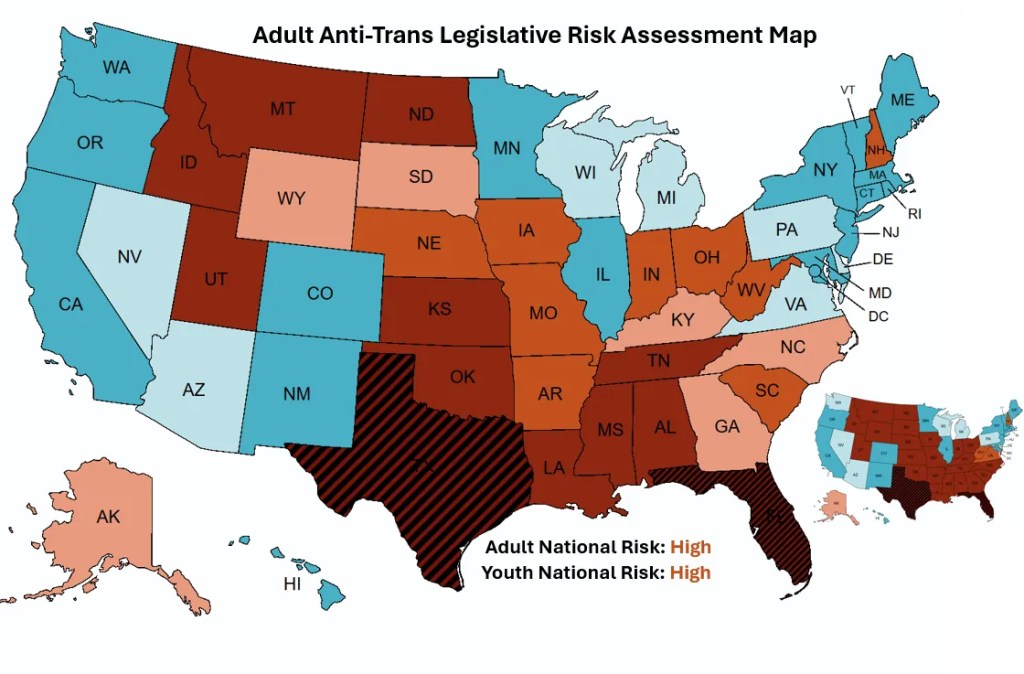
I am keenly aware of which states transgender people are fleeing—and which ones they are fleeing to. Every state enacting extreme anti-trans laws has either a Republican trifecta or a Republican supermajority. Meanwhile, transgender people are finding refuge in states where Democrats have established safe havens. One of those havens is Minnesota, thanks to Governor Tim Walz. I know people whose lives were saved by his actions—people who can now live authentically and freely, without fear of government persecution.
Erin Reed posted the latest edition of this periodically updated map yesterday. It was not included in her endorsement of Ms. Harris, but I’ve inserted it to show what is at stake in the upcoming election.
I have followed this election cycle intently and was among the first to report that transgender people would be a primary target of Trump’s 2024 campaign. In early 2023, Trump released a video outlining a dozen anti-transgender policies he would enact upon taking office, including national bans on trans care for youth, investigations into hormone therapy manufacturers, probes into affirming teachers, and eliminating funding for schools that treat transgender students with dignity and respect. These policies would take the harmful measures I’ve seen in Republican statehouses and nationalize them.
In 2024, it’s clear that the Trump campaign intends to follow through. If you’ve watched any sporting event or turned on the TV in a battleground state, you’ve seen the culmination of this fear campaign against transgender people, now led by Trump himself. Nearly$100million in anti-trans ads have blanketed the nation, with Trump spending more on these ads than on immigration, housing, and the economy combined. I have seen what other Republican leaders do when they center their focus on my community, and I know the end results are not pretty.
When Kamala Harris was chosen as the Democratic nominee, I watched her closely. While the Biden administration was not flawless on transgender rights—and I oftencriticized it for these shortcomings—no federal anti-trans laws passed during his presidency. I reported on the defeat of 50 anti-trans and anti-LGBTQ+ policy riders as Republicans threatened to shut down the entire government over transgender issues, and Biden did not back down. His nominees have overturned anti-trans laws and policies. Thanks to Biden, I was able to change my passport, even though my home state of Louisiana doesn’t allow birth certificate changes. I wanted to see if Harris would continue that commitment.
I’m convinced she will. One of Harris’s first moves that reassured me was selecting Gov. Tim Walz as her choice for vice president, fully aware of the Republican attacks against him for making Minnesota a safe haven for those fleeing anti-trans laws in other states. Walz, who campaigned on his record of starting his high school’s first Gay-Straight Alliance decades ago, has consistently been at the forefront of supporting LGBTQIA+ people. He brought that commitment with him to the Governor’s office, where he governed with a focus on making the state welcoming and inclusive for all.
Then in the final weeks of the campaign, she and Tim Walz were asked no less than three times about transgender people in interviews with Fox News, NBC, and Glennon Doyle’s podcast. I was encouraged to see Harris stand on her record of supporting transgender people when questioned. She had ample opportunity to throw us under the bus—as some other Democrats have done this campaign cycle—but she did not.
On Fox News, she criticized Trump for spending $20 million on ads targeting our community. On NBC, echoing her stance on abortion, she emphasized that transgender care is a decision to be made between doctors and patients. Her framework mirrored the approach used by many Democrats—and even some Republicans—to successfully push back against anti-trans bills in dozens of states. Meanwhile, that same week, Walz passionately defended transgender youth, stating that Donald Trump was attempting to “demonize a group of people for being who they are” and pledging that the administration would appoint justices committed to protecting our rights.
With over 1,000 bills introduced in the past three years targeting trans and queer people, undoing the harm they’ve caused will require sustained and strategic effort. The path forward depends on nominating justices who can help reverse these laws, while also protecting our rights in cities and states that offer refuge. For those living in oppressive states where their care, bodily autonomy, and right to exist freely have been threatened, we will continue organizing, supporting each other through mutual aid, and building the foundation to dismantle these discriminatory laws for good. The future rights of transgender people depend on electing Harris, uplifting Walz’s leadership, and securing the justices their administration will appoint.
If Trump wins a second term, we could be bound by his justices for an entire generation. Many transgender adults may never see the day when his court no longer controls our right to exist peacefully in public. Project 2025 could become a national reality, turning the same hateful bills and rhetoric shaping statehouses across the country into federal law. Schools could be defunded for allowing transgender youth to use restrooms in peace, and our very existence could be labeled obscene. There may be no return from the harm he intends to inflict on our community.
Transgender people are in a fight for our lives, and we are a powerful voting force, with millions of us across the United States. In an election that could come down to a few thousand votes in key swing states, we have the numbers to make a difference. In states like Georgia and Arizona, the transgender population is four times the size of the previous vote margins. We cannot afford complacency this election cycle. There is a path forward from the harm inflicted by Republican policies championed by Trump—a path that depends on us showing up and casting our votes for Kamala Harris.
This is the first in a series of posts in which I showcase a few of the newsletters, blogs, Substacks, and websites — all of them produced by hardworking, passionate lone wolves or tiny, perpetually underfunded grassroots collectives — which inspire me to continue making the Russian Reader and inform me about parts of the world and communities about which I would otherwise be utterly clueless.
Peter Leonard describesHavli as “a Central Asia-themed Substack written by me, Peter Leonard, a former editor at Eurasianet and the one-time Central Asia correspondent for the Associated Press. By drawing on my decades of experience visiting, studying and reporting on the region, I intend to make this newsletter an informative and, fingers crossed, engaging way to keep abreast of developments of note.”
Mr. Leonard’s latest post on Havli dovetails with so many of political and social trends I’ve been tracing over the years that it seems tailor-made for my website. Enjoy! I hope you’ll consider subscribing to Havli and supporting it financially. \\\ TRR
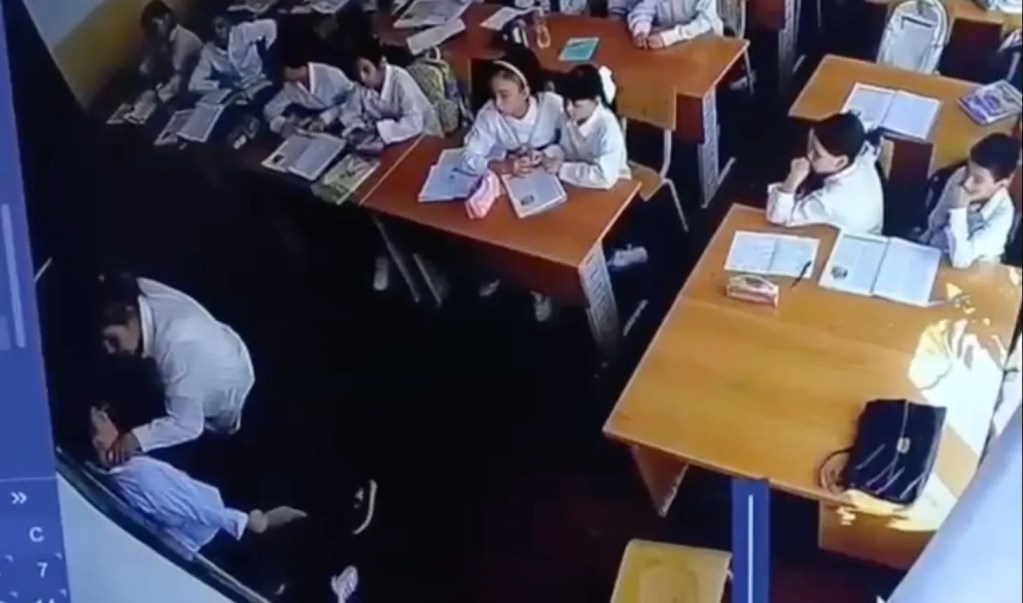
Closed-circuit television footage showing a teacher at a Tashkent school grabbing a pupil by the neck.
In the worst-case scenario, giving a teacher lip usually ends with the offending pupil visiting the headmaster’s office.
Things have to get pretty bad for a classroom kerfuffle to provoke a diplomatic incident.
A teacher at a school in Uzbekistan’s capital, Tashkent, managed to do just that this week by manhandling a pupil who complained that she was conducting her Russian language class entirely in Uzbek. Closed-circuit television footage obtained by the boy’s parents shows the teacher grabbing the child by the neck, and then slapping and screaming at him.
The video images quickly circulated on social media, eliciting howls of protest from self-avowed Russian patriots indignant at this alleged case of maltreatment of their ethnic kinfolk.
“You can just imagine what a racket there would be if a similar thing happened in Russia with a migrant. And it is not like Uzbekistan is confronting a wave of ethnic crime from Russia; you don’t get murderers, thugs, drug dealers, and Wahhabis going there from our country,” wrote the author of a Telegram account that disseminated the footage.
The spokeswoman for the Foreign Ministry in Moscow was quick to demand an investigation.
“If it is justified, action must be taken against the perpetrator of this cruel treatment against the child,” Maria Zakharova said. “We are monitoring this situation closely.”
The response from Uzbekistan was swift. Alisher Kadyrov, the deputy speaker of parliament, suggested that Russia “mind its own internal business.”
“The rights of this child are being violated in a school in Uzbekistan, the offence was committed against a child of an Uzbek citizen, and measures will be taken on the basis of laws adopted on behalf of the people of Uzbekistan,” he wrote on Telegram.
Uzbek Foreign Minister Bakhtiyor Saidov delivered the same message in person, albeit more obliquely, to his Russian counterpart on the sidelines of the ongoing United Nations General Assembly, noting that their meeting “underscored the importance of commitment of states to the principle of non-interference to each other’s internal affairs.”
Following this outcry, news emerged that the teacher at the Tashkent school assaulted another pupil in an unrelated incident and has since been sentenced to serve seven days in jail.
Moscow shows every sign of relishing the opportunity to make hay of this episode.
Claims of Central Asia’s allegedly spiralling Russophobia problem have been wielded with increasing readiness by surrogates for the Russian authorities since the start of the invasion of Ukraine. The Kremlin perceives the region’s rulers as more or less loyal, but it worries that the general public is not as reliably slavish. The nightmare scenario for Moscow is that a groundswell of anti-Russia sentiment across parts of Central Asia could eventually force a gradual shift in diplomatic stances.
The concern looks overblown at present, but it is not fully unjustified.
Older generations, especially the shrinking cohort with vivid memories of the Soviet Union, are typically more sympathetic to Russia and its bellicose conduct. Younger people whose media diet does not consist of consuming Russian state propaganda are more hostile.
Russian chauvinists are alarmed that the increasingly exclusive use of local languages in Central Asia is weakening their ability to project their message.
Research by Central Asia Barometer, an attitudes-surveying think tank, suggests that there is some association between language use and views on the war in Ukraine. Russian speakers in countries like Kazakhstan and Kyrgyzstan are more likely to justify the invasion of Ukraine than those who speak their own languages.
Fears that the status of Russian is slipping leads at times to comically petty whining.
Earlier this year, famous Russian TV presenter Tina Kandelaki complained in a Telegram post that Kazakhstan was poised to rename a number of train stations to make them sound less Russian. She cast this move — which comprised in the event of changing names like Railway Siding No. 13 to Akshi Railway Siding — as the start of a slippery slope that would end with the closure of Russian schools, the banning of the Russian language and “[Russian] pensioners getting kicked out into the cold.”
Historians in Central Asia crafting narratives that highlight the negative aspects of Russian and Soviet rule are another trigger. The mere suggestion that the region owes its civilisation to an era pre-dating the arrival of the Russians is enough to irk some.
In August, scholars from all over the region assembled at the Eurasian National University in Astana for the first-ever edition of the Forum of Historians of Central Asian States. “It is important for us to begin to rethink our common history,” Kazakh Science and Higher Education Minister Sayasat Nurbek told the scholars.
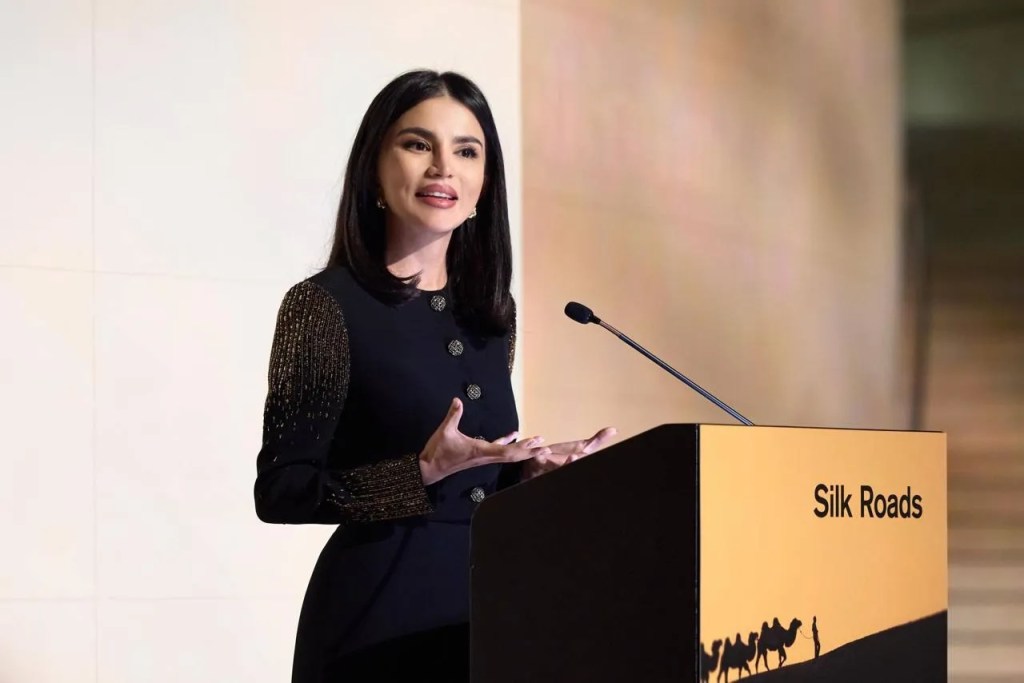
Mirziyoyeva is taking a leading role in lobbying for a vision of Uzbekistan’s history that looks beyond the role of the Russians and the Soviet Union.
The political elite has taken the lead on this. Saida Mirziyoyeva, a senior advisor to her father, Uzbek President Shavkat Mirziyoyev, in August delivered a speech in Kazakhstan that strongly signals what areas of the official narrative on recent history will be emphasised going forward. She alluded in her talk to a pair of reformist and softly nationalist movements that emerged in what are today Uzbekistan and Kazakhstan as having been thwarted by Soviet oppressors.
“At the beginning of the 20th century, both the Jadids and representatives of the Alash movement fought for a single goal: the liberation of the people, for the development of their motherlands. But they were not given the opportunity to realise their dreams,” she said.
Russian critics of this kind of talk smell a rat.
They point to the content of one history textbook in Uzbekistan as evidence of dangerous revisionism. A passage from a book cited by outraged Russian patriots talks of how the “Soviet regime subordinated Uzbekistan’s economy to the interests of the centre, turning it into a raw materials appendage.” This is loathsome ingratitude designed to demonise Russians, they grumble.
Kyrgyzstan and Tajikistan are far more economically dependent on Russia than either Kazakhstan or Uzbekistan, but they too have in their own small ways worked to forge narratives that are gently but implicitly critical of the legacy of Muscovite rule. In July, Kyrgyz President Sadyr Japarov officially recognized five victims of Soviet repression as founders of the modern statehood of Kyrgyzstan. All the men were executed in 1930s during waves of Stalinist repressions against perceived nationalist movements.
That anti-nationalist campaign was the same one that crushed the Jadidist and Alash movements referenced by Mirziyoyeva.
Central Asian leaders periodically try to soothe the nerves of Russians eager to winkle out evidence of xenophobia in the region.
In his address to the nation earlier this month, Kazakhstan’s President Kassym-Jomart Tokayev reprised a tried-and-tested Astana mantra.
“In Kazakhstan, there is no — and cannot be any — space for discrimination on linguistic, religious, ethnic or social grounds,” he said. “Incidents and provocations do sometimes occur, but these happen because of the thoughtlessness and ignorance of individual citizens. When these things happen, they are dealt with — and will [always] be dealt with — by law enforcement agencies.”
The large community of vocal Russian revanchists monopolising the public conversation inside their country do not buy it. And they are seizing on any excuse to make their point heard.
A map of Russia showing the number of people killed by returning Ukraine war vets in each region. The leaders are the Kostroma Region, Moscow and the Moscow Region, and the Rostov Region. Source: Vyorstka
Since the outset of the war in Ukraine, Russian servicemen returning from the front have killed 242 people and seriously injured another 227, according to a count made by the online news outlet Vyorstka based on court records and media reports. This brings the total number of victims to at least 469. The victims of these crimes resided in eighty different Russian regions.
A total of 350 criminal cases have been launched in connexion with these incidents. Of these, 114 cases, involving 139 victims, have resulted in charges of murder (per Article 105 of the Criminal Code). Eighty-five Russians were victims of seventy-five former inmates recruited for the war from penal colonies, while another fifty-four died at the hands of thirty-nine [ordinary] servicemen.
Other fatal crimes include sixty-four cases of grievous bodily harm (per Article 111 of the Criminal Code; sixty-four fatalities), twenty traffic violations (per Article 264 of the Criminal Code; thirty-one fatalities), five cases of involuntary manslaughter (per Article 109 of the Criminal Code; five fatalities), two cases of inducement to use drugs (per Article 230 of the Criminal Code; two underage victims) and one case of murder caused by excessive self-defense (per Article 108 of the Criminal Code).
Most of the offenses were committed by 246 former prisoners recruited to the front. The victims were also more often women. Another 180 defendants were ordinary servicemen. Of the 125 pardoned and paroled war veterans who murdered or caused injuries resulting in death, fifty-four had previous convictions for similar offenses, while another three had been convicted of rape.
The majority of the crimes were domestic crimes and occurred due to alcohol consumption. The victims of the Ukraine war veterans are more often people from their surroundings: relatives, neighbors, and acquaintances. The most “widespread” crime was voluntary grievous bodily harm. The journalists at Vyorstka tallied at least 220 such crimes, which resulted in sixty-four deaths and 158 injuries, including disabilities. The sentences in such cases for soldiers recruited in the penal colonies have ranged from four to twelve years in a maximum security penal colony, and from four to ten years in a maximum security penal colony for the other soldiers.
A further sixty-six victims who survived were severely injured due to attempted murder, excessive self-defense, attempted involuntary manslaughter, and traffic violations by war veterans.
One third of all the victims have been women, including minors: thirty-two out of eighty-five (thirty eight percent) were killed by ex-prisoners, and seventeen out of fifty-five (thirty-one percent) were killed by military personnel. Five of the seventeen women killed in the fire at the Kostroma nightclub Polygon were not intentional but accidental victims of serviceman Stanislav Ionkin, who set the blaze.
The sentences of the ex-convicts have ranged from six to fourteen years in a maximum security penal colony, while the sentences for the ordinary military men range from seven to ten years in maximum security. Some “veterans of the SMO” have been handed severe sentences, including life imprisonment. For example, ex-prisoner Viktor Budin was sentenced to nineteen years in a maximum security facility for murdering two retired neighbors, while the first life sentence was given to Grigory Starikov, who killed three acquaintances.
Out of 292 sentences made public, judges did not consider involvement in the war a mitigating circumstance in only fifteen percent of cases. It was even mentioned by the judge who sentenced Starikov. In addition, “state honors,” “involvement in the activities of the RF Armed Forces,” and “unlawful behavior on the part of the victims” were taken into account in some cases. For example, ex-servicemen have usually received minimum or suspended sentences for negligent homicide or in cases where the victims survived.
On the other hand, courts most often ignored alcohol as an aggravating circumstance in their verdicts. For both pardoned convicts and military personnel, it was taken into account in less than a third of the cases.
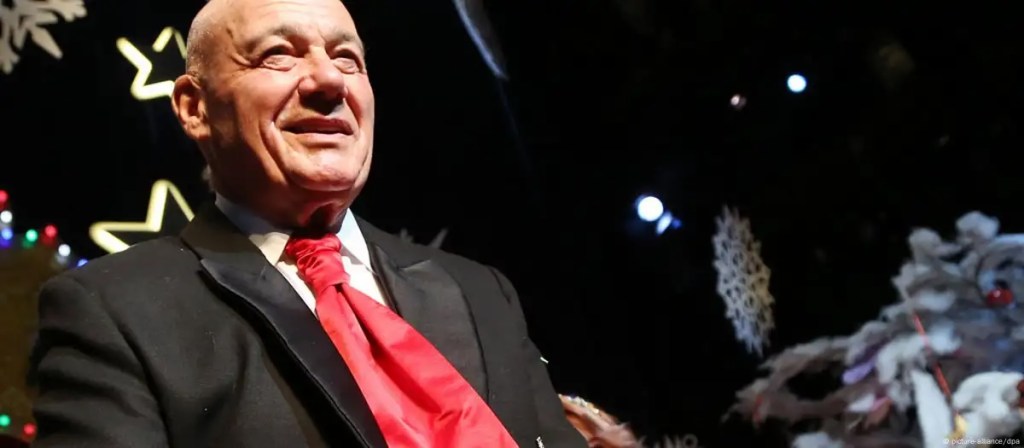
A multifaceted portrait of lifelong Kremlin propagandist and relentless self-promoter Vladimir Pozner in his ninetieth year, with guest appearances from several useful idiots.
Vladimir Pozner. Photo: picture-alliance/dpa, courtesy of DW
The director general of Russia’s Channel One, Konstantin Ernst, announced on Wednesday, 18 September, the return of TV presenter Vladimir Pozner to the air after a long break with a new show called Turkish Notebook. Pozner’s eponymous program stopped airing on Channel One after the start of Russia’s full-scale invasion of Ukraine.
On 12 September, in an interview with Forbes, the journalist said that he had been offered jobs by western TV channels, but declined because he had been asked to “speak out about Putin and politics in a certain way.” After the interview, Putin’s spokesman Dmitry Peskov called Pozner “a staunch patriot of his country.”
Pozner first spoke out about Russia’s war against Ukraine in February 2023 at an online conference at the U.S.-based Ubiquity University. At the time, he acknowledged the Russian president’s responsibility for invading Ukraine, but also accused the west of seeking to expand NATO and said that U.S. President Joe Biden had allegedly been “seeking a conflict” with Vladimir Putin.
This Summit on Ukraine is being convened on the first anniversary of the Russian military operation into Ukraine to secure a land bridge to Crimea which was launched Feb 24, 2022. The Ukraine war has actually been going on since 2014 when the United States staged a coup in Ukraine to overthrow a regime maintaining Ukraine as a neutral nation and replacing it with a regime that was anti-Russian and pro-US which immediately began waging war against the Donbas region in eastern Ukraine where the population is 80% Russian. In response, the Russians armed the local populations and seized Crimea. Military conflict has been going on since then and continues to the present day.
What is distinctive about the war in Ukraine is that it is between the two superpowers — The [sic] US and Russia — both of which are armed with nuclear weapons and both of which have threatened to use them. The world is thus in the most dangerous period since the Cuban missile crisis of 1962 when the US and Russia almost went to nuclear war. What is also distinctive is that the war is being conducted as the world faces runaway climate change and there is an urgent necessity for the US to be working with the Russians to solve critical global challenges.
This Summit is being co-sponsored with Code Pink, a feminist grassroots organization working to end U.S. warfare and imperialism, support peace and human rights initiatives, and redirect resources into healthcare, education, green jobs and other life-affirming programs.
Moderators:
Jim Garrison, Convener of Humanity Rising, with Jodie Evans, Co-Founder of Code Pink
Special Guests:
Vladimir Posner [sic] is a veteran journalist, bestselling author, and documentary filmmaker. He is the host of the top-rated weekly current affairs program on Channel One, Russia’s largest television network. Named the “Voice of Moscow” by CNN, Pozner is a regular commentator on Russia and the history of the Cold War in Western media. Mr. Pozner has won multiple Soviet, Russian, and American awards, including three Emmy certificates, ten TEFY [sic] awards (the Russian equivalent of the Emmy) and several international awards. He is internationally recognized and ranks among the most respected people in the television profession in Russia today.
Veteran Soviet-Russian journalist Vladimir Pozner is set to return to state television more than two years after his long-running program was taken off the air following Russia’s full-scale invasion of Ukraine, Russian media reported Wednesday.
Pozner, 90, had hosted his weekly interview show “Pozner” on Channel One since 2008, but it was canceled shortly after the February 2022 invasion. He later claimed Channel One pulled the program in order to make room for war coverage.
Although Pozner has not publicly taken a stance on Russia’s invasion, he has suggested that western refusal to block Ukraine’s NATO ambitions played a role in the conflict’s escalation.
Channel One head Konstantin Ernst announced Monday that the network’s fall season lineup would include Pozner’s new show, “Turkish Notebook,” as reported by the RBC business news outlet.
Pozner said in an interview with Forbes Russia last week that his production team completed an eight-episode documentary series on Turkey, which they submitted for Ernst’s approval.
Unlike his former interview program, which had featured guests from former U.S. Secretary of State Hillary Clinton to current Russian Security Council Head Dmitry Medvedev, Pozner’s new project appears to steer clear of political issues, similar to his live events across Europe this year, co-hosted by former late-night talk show host Ivan Urgant.
In the Forbes interview, Pozner said he had received offers to work abroad if he denounced President Vladimir Putin and spoke out on Russian politics. He declined, stating that such actions “are not journalism, but something else entirely.”
Pozner gained international recognition during the Cold War for his TV appearances, where he often explained Soviet policies and viewpoints to Western audiences. During perestroika, he hosted televised discussions between audiences in the Soviet Union and the U.S. together with American journalist Phil Donahue, who passed away last month.
AMSTERDAM — A live event headlined by two Russian television celebrities has sparked controversy in the Netherlands, with critics decrying the presence of what they call Russian propagandists on European stages during Moscow’s war on Ukraine.
Veteran Channel One host Vladimir Pozner and late-night talk show host Ivan Urgant’s European tour, called “The Travels of Pozner and Urgant,” kicked off in Amsterdam on Tuesday and will be followed by stops in Zurich, Berlin and Frankfurt.
The show is described as an evening with the two men, who co-hosted several travel shows, as they reflect on stories from their trips around the world.
Though billed as an apolitical event, politics has overshadowed much of the discussion surrounding it.
Critics have slammed the Amsterdam theater for hosting “Russian propagandists” and allowing them to profit by performing in Europe, calling it a “stab in the back” of the tens of thousands of Ukrainians who fled to the Netherlands because of Moscow’s invasion.
Others say that banning events based on politics would be stooping to the level of the Kremlin, which has silenced independent journalists, activists and artists inside Russia.
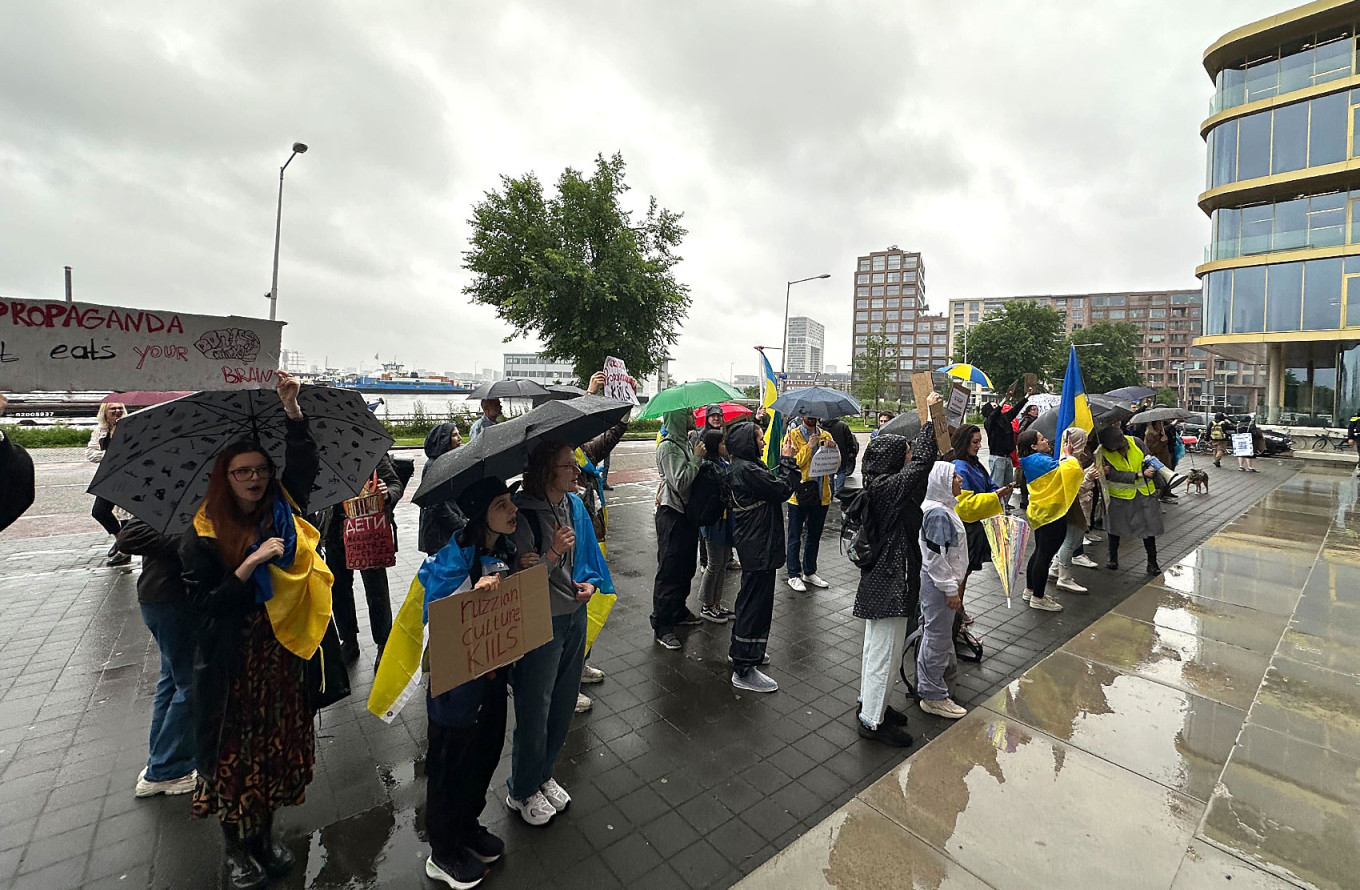
Around 25 protesters, several of whom wore Ukrainian flags around their shoulders, stood outside Theater Amsterdam in the rain as attendees arrived, shouting slogans like “Shame on you,” “Russians go home,” “Russia is a terrorist state” and “Russian propaganda kills.”
“I think you can hear why,” said Anna, a young woman from Ukraine who has been living in the Netherlands for two years, when asked why she was at the protest.
“We have to stop… Russian propaganda because it’s dangerous,” she said. “It’s important not only for Ukraine, but it’s important for everybody. Because it’s a really abusive country.”
Pro-Ukrainian protesters outside the Amsterdam venue of Pozner and Urgant’s stage show earlier this year. Photo: Moscow Times
In the theater lobby before the sold-out show, some attendees took photos of protesters through the glass windows. Others could be heard discussing the news over glasses of sparkling wine.
“I was surprised at how our [fellow attendees] reacted — they looked away [from the protesters]. I looked right at them,” said Alisa, a Russian emigre who was going to the show with her friend.
“Many of the people who came to the show do not support the war, and we have a negative view of the war, of course,” she said. “The aggression in the crowd was frightening. We had fingers pointed at us and such. It’s good that there are police here.”
On the first day of Russia’s full-scale invasion of Ukraine, Urgant, who is often likened to U.S. late-night talk show host Jimmy Kimmel, posted a black square to his Instagram account with the caption “Fear and pain. No to war.”
Although his show was taken off the air almost immediately afterward, he has since remained silent about the war. He did not respond to the Moscow Times’ request for comment.
Pozner, meanwhile, rose to fame in the West during the Cold War for his television appearances where he would explain the Soviet Union’s views and policies, a role he would later describe as “propaganda.”
His interview show on Channel One, which was watched by millions and often compared to “Larry King Live,” stopped airing after the invasion of Ukraine. He later said this was a move by the channel to make room for coverage of the war.
In a 2016 debate with Kremlin critic Alexei Navalny, Pozner said: “Yes, censorship exists [in Russia]. And I accepted it. I could have slammed the door [closed the show] and done nothing at all. But I believe that I am doing something useful for society. I’m making people think.”
Though he has neither criticized nor supported the war in public, Pozner has suggested that the West bore responsibility for Moscow’s invasion because it refused Russia’s demand to block Ukraine’s path to NATO membership.
When asked about the protesters outside the venue, Pozner told the Moscow Times that it was “their right” to express their opinion but declined to comment further.
Theater Amsterdam declined to comment for this story, instead referring the Moscow Times to a May 24 statement published on its LinkedIn page.
In its statement, the theater said it “stands for freedom of speech, creative expression and a safe environment for everyone who embraces the arts.”
“These performers have indicated that their program has nothing to do with the war and want to share their performance in an atmosphere of peace and freedom,” the theater said, noting that its staff had received threats and intimidation over the event.
Inside the theater sat Olga — a woman from Lviv, a Ukrainian city near the Polish border described by the Kremlin and Russian propagandists as an alleged hub of “Russophobia” — who moved to Amsterdam because of the war.
Speaking in Russian, she told the Moscow Times that she felt “embarrassed” to be at the event.
“I’ve been following Urgant and Pozner for about 15 years and I wanted to see them in person,” she said.
“Only here did I find out that Pozner supported the war,” she continued. “If I had known [beforehand], there’s no way I would have come.”
“I dream of it happening, but I don’t think it will happen,” is how Vladimir Pozner responded when we asked him whether admits the possibility of returning to the television airwaves. In an interview with “Forbes Talk,” the journalist and TV presenter, whose eponymous program on Channel One has not been broadcast since the beginning of the “special operation,”* confessed that he misses this work very much. He told us why (with one exception) he has remained silent and not spoken about politics since 2022, what he has been doing all this time, and what he fears nowadays.
Vladimir Pozner’s full interview with Forbes Russia is much more interesting than its quoted highlights, below, but even more interesting, to me, were the inserted ads, which say a lot about the magazine and its readership. \\\ TRR
Vladimir Pozner is a Soviet and Russian journalist and TV presenter. He was born in Paris to a Russian immigrant and a Frenchwoman. In 1952, he moved to the Soviet Union, where he worked as a secretary for [the famed children’s poet] Samuil Marshak. He began his journalistic career as a commentator on the Soviet State Committee for Radio and Television’s North American service. Pozner became famous thanks to his debut on TV: in the 1980s, he and his U.S. colleague Phil Donahue co-hosted the “space bridges” between Leningrad and Seattle and, later, Leningrad and Boston. In the 90s, Pozner presented several original programs on U.S. television. He then returned to Moscow, where he did the political talk show Vremena (“The Times”) and the eponymous program Pozner. Several of his series about different countries have also been broadcast, including such programs, co-presented with Ivan Urgant, as England in Generaland in Particular and Single-StoreyAmerica.
Why Pozner remains silent
“The fact that you have me today [for an interview] is an absolute violation of my rules. It happened only because I owe you a debt, and I am used to repaying debts: I promised that I would give you an interview, and here I am giving it. I’m not going to talk anymore; I’ve made this decision for myself: no interviews, no statements, no comments, and so on. With rare exceptions, if I suddenly feel that there is some use in it, that it’s really worth doing, that it might be useful.
“I just decided for myself that the circumstances are such that I had better abstain for the time being. Especially since I am ninety years old, a time when people are usually long retired, and nobody asks [them], ‘Why are you retired?’ So I’m kind of retired.”
What he’s been doing for the last two and a half years
‘I’ve been thinking; I’ve been writing. I am writing a book. You know, Tolstoy once said, ‘If you can’t write, don’t write.’ That’s quite right, and a lot of people should have followed that advice. And I was not writing, but when I felt that I couldn’t help but write, I started writing. Don’t ask me what this book is about—I don’t like to talk about that at all.
“I’ve written a lot of books, but I reckon I’ve [actually] written [only] one [real book]. My very first one is Parting with Illusions, which is a serious work. The others have amused me and been enjoyable to me, and maybe to the reader, but I don’t consider them serious literature. This [new] book is definitely a serious book, and I don’t know how well it will turn out. Writing is quite difficult and painful for me personally. You weigh every word, but then the next day you read what you have written, and you are horrified. Sometimes you are happy [with what you’ve written], but very rarely.
“In addition, our team shot a large eight-part film about Turkey. It is good to go. We submitted it to Channel One, where it was approved, and now we are waiting on Mr. Ernst’s judgement (Konstantin Ernst, CEO of Channel One — Forbes).
“That’s what I’ve been doing. Well, and I have done [other] little things. I have done speeches, and I have been invited to talk to different, rather closed audiences. And then, of course, quite unexpectedly, there has been the duet with my close friend Ivan Urgant, in which we decided to reminisce about how we shot [our television travel series]. We did test runs in Dubai first and somewhere else. The success was tremendous, which, frankly speaking, amazed me, because we don’t do anything so spectacular: I don’t sing, and Vanya doesn’t dance. And then we started doing it seriously, because there were offers. We performed in Amsterdam, Frankfurt, Berlin, and Geneva. It was a triumph: people gave us standing ovations. So now we have fifteen more shows booked. A whole tour, or as they used to say, a ‘stint.’”
Is it hard for Pozner not to be on TV?
‘The word ‘hard’ is so [strong], but I do miss it a lot. I love it very much—it’s my thing. Pardon my immodesty, but I think I’m very good at it. And of course I wish I could [be on television], but that’s just the way it is. It’s a very hard question [whether it will be possible to return to television]. Generally speaking, I dream of it happening, but I don’t think it will happen. That’s the only answer I can give.
“The thing is that I made my first memorable appearance on Soviet TV screens at the age of fifty-nine, you know? [Other] people [my age] were getting ready to retire, but that was when I was debuting. I think that maybe that is why I still have this drive, this desire. I want [to work on air], but you know, you can’t always get everything you want. You have to make some compromises sometimes, or even admit defeat.
“There were offers [of work from western television channels]. I won’t name specific names, but they came from more than one country. But there was a condition! And the condition was this: ‘You must first speak out about Putin and about politics,’ and in a particular way. I said, ‘Look, that is not journalism; that is something else.’ They said, ‘Those are the terms.’ I said, ‘No. Thank you very much, but my answer is no.’”
“This society is [sic] held together by fear and faith”
“I was brought up by my quite pro-Soviet father and had a lot of faith in those ideas. I was almost nineteen years old when I arrived in the Soviet Union, and I became convinced that what my father had told me and the reality were different things. But I tried to persuade myself that it’s not a pure experiment, after all, that it’s not a laboratory experiment. It was a complex country with a complex history, and you had to understand that, you had to make concessions, and so on and so forth.
“This went on for quite a long time. I was a propagandist, not a journalist. I was a propagandist in the purest sense, trying to prove this was the right system and the best system. The first blow to my ideological edifice, a serious blow, came in ‘68 [when the USSR invaded Czechoslovakia]. And although I came up with an argument as to why [the invasion] was necessary, in my heart I realized that something was wrong.
“Gradually, my faith began to demand proof (although faith doesn’t require proof), but I failed to find it. By about the mid-1970s, I had come to the firm conclusion that this society is [was] held together by two things: it was held together by fear and by faith, which are like epoxy glue. That glue held it together, but not very well, and if it stopped holding it together the thing would fall apart. And this thing—I mean the Soviet Union—did in fact fall apart, and not because of Reagan; that’s nonsense. It was because people stopped being afraid and people stopped believing, and it was much more vital that they had stopped believing.
“That was completely unexpected to me. I guess I thought it would happen, but not as quickly as it did happen.”
What he fears at ninety
“I’m afraid of going blind: I can’t imagine how I’ll live in the world blind. I’m afraid of going mad without knowing I’m mad, that I’ll be taken somewhere and locked up, that I’ll think I’m normal and everyone will think I’m crazy. That is what I’m afraid of; there is that fear. I’ve had cancer twice: I’m not afraid of it. But I am afraid of [madness], and I’ve been afraid of it for a long time, not because I’m ninety years old. I am afraid of sharks, as you know, regardless of my age.
“But [what am I afraid of] because I’m ninety? The only thing that’s already happening, and it’s hard—you know, you have to pay for everything, nothing is free—you get older and you lose loved ones, you outlive them. You live longer than your close friends, and so now Phil [Donahue] is gone. And Phil isn’t the only one. I’m quite afraid that more and more very close people will pass away and I’ll live on. It’s horrible.
“You know, this was what I thought: if it happens that I realize I’m not interested [in life] anymore, then I’ll find a way to end this stupidity. But I’m very, very interested.”
* When they publish materials about the special operation in eastern Ukraine, all Russian media outlets are required by Roskomnadzor to use information only from official Russian federal sources. We cannot publish materials which refer to the ongoing operation as an “attack,” “invasion,” or “declaration of war,” unless these are direct quotations (per Article 57 of the Federal Law on Mass Media). If a media outlet violates this requirement, it may be fined five million rubles, and its website may be blocked.
Crimea’s Tatars: “They drive us from our homes, just as they did to our grandparents 80 years ago”
By Katya Aleksander, who interviewed activists supporting more than 100 Crimean Tatar political prisoners. First published in Russian by Important Stories (Vazhnye Istorii)on 18 May, the 80th anniversary of the deportation of the Crimean Tatars.
On 18 May 1944, eighty years ago, the Soviet government accused an entire people of “collaboration with the Nazis” and “betraying the fatherland” – and deported the Tatars from the Crimean peninsula. It took the Crimean Tatars more than forty years of constant struggle to return to Crimea. But in 2014 the peninsula was annexed by Russia. The war began, and, with it, repression by the new authorities on a massive scale.
Political prisoners Tofik Abdulgaziev, Vladlen Abdelkadyrov, Izzet Abdullaev, Medzhit Abdurakhmanov and Bilial Adilov, among those falsely accused of “terrorism” and “preparation to seize state power” in 2019, and sentenced to 12-14 years’ imprisonment. Abdullaev’s T-shirt says, “the truth can not be imprisoned, killed or hidden”. Photo by Crimea Solidarity
On the anniversary of that tragedy, which Ukraine demands be categorised as genocide, Important Stories spoke with Crimean Tatars who continue the struggle to live freely in their historic homeland.
Every Crimean Tatar family has its stories of deportation. They all start in the same way. On 18 May 1944, at five o’clock in the morning, soldiers burst in to the house and gave people 5-10 minutes to collect their belongings and go to the nearest train station. No explanations. At dawn, everyone was forced into cattle wagons and taken away.
It was all over by 4:00 pm on 20 May: one of the fastest deportations in world history. All the deportees’ property passed to the Soviet state.
“Many people thought they were being taken away to be shot. The Soviet Union was an atheist regime, and many Crimean Tatars were of Islamic faith”, said Azime (her name has been changed), the wife of a present-day Crimean Tatar political prisoner. Her family were deported to Uzbekistan.
“They put everyone in cattle wagons, with no windows and locked doors. There was no sanitation. No water, no food. People died from hunger, thirst and dysentery. The soldiers just threw their bodies out at the train stations. Some people were able to hide their relatives’ bodies: those families hoped that they would soon arrive somewhere and be able to bury their loved ones like human beings.”
The transport took 2-3 weeks. About 80 per cent were taken to Uzbekistan, and the rest were sent to special places of exile in other parts of the Soviet Union.
“Part of my family was deported to Uzbekistan, part perished in those cattle wagons, and my grandfather was taken to the Urals”, said Ismail (his name has been changed), who today acts as a defence lawyer for Crimean Tatars. “Grandad said that, while he and his mother tried to find accommodation, they could not go to work for two days. And so [for breaking the labour laws] his mother was sent to prison for five years.”
Soviet propaganda prepared local people to receive the deportees. Uzbeks were advised to keep well away from the newcomers, who were “cyclops” and “cannibals”. In exile, Crimean Tatars faced hunger, dangerously unsanitary conditions and an absence of health services. Between 18 May 1944 and January 1946, about 200,000 Crimean Tatars lost their lives, according to estimates by the National movement.
The struggle to return home
People could not return to Crimea. Until 1956 the Crimean Tatars had the status of “special settlers” with limited civil rights. They had to report regularly to police commandant’s offices. They were permitted to move to a different region only by invitation from close relatives. Attempts to leave without permission were punished by up to ten years’ imprisonment.
Although their language was banned, the Crimean Tatars preserved their culture and traditions. Parents told children what their home looked like, and how to get there, so that they could find their way to it when they returned.
“Everyone lived with thoughts of going back”, Ismail said, telling his family’s story. “My uncle somehow found a way to travel to Crimea. My grandmother asked him to bring a bottle of water from home: she wanted to drink Crimean water. When my uncle got back from his trip, he realised that he had forgotten about the water. He took a bottle, filled it from the tap, and took it to Grandma [telling her it was from Crimea]. She cried. For her, that bottle was almost sacred. She kept it, and never drank a drop.”
In the 1960s, the Crimean Tatars began independently to collect information about the victims of the deportation. They demanded that the Soviet authorities revoke the slander that they were traitors, and allow them to return home. That is how the Crimean Tatar national movement was born.
On 5 September 1967, after many attempts to secure justice, came a decree of the Presidium of the Supreme Soviet of the Union of Soviet Socialist Republics (USSR), which revoked all accusations against the Crimean Tatars and allowed them to live in any part of the country. But to return to Crimea, they had to secure a residence permit, and find work. [Residence permits, linked to employment, were used to discipline labour in the Soviet Union.]
By the end of September 1967, about 2000 Crimean Tatars had already returned to the peninsula. But the majority of them could neither get a residence permit, nor any chance of work, from Crimea’s new inhabitants. Many were deported again, and brought to court for breaches of the internal passport regulations.
Azime’s family was one of the first that returned to Crimea and found a way to stay there. “My grandfather, an activist of the national movement, left behind all that he had worked for in Uzbekistan, took his four children, and went home. We are not even talking about returning to his own village, where his grandparents were buried – only returning to somewhere on the peninsula where the family would be allowed to stay. They found a place in Dzhankoi district, where several other [Crimean Tatar] families also moved in. The street was named International Street, because we, the non-Russians, lived there.”
Azime was born at the end of the 1980s, already back in Crimea. Among people of her age, that is very unusual, she said. “I know literally two other people [of her age] who were born back there [on the peninsula].”
[In the 1970s and 80s] the Crimean Tatars had to build their homes all over again. The homes from which their families had been deported now belonged to other people. The work they could find was always the hardest. The attitude of the new local population was hostile: they continued to accuse them of treachery.
“Our grandparents were often dismissed from work”, Azime remembers. “They were constantly searching for new jobs, in order not to be deported again. My mum went to school in Crimea: when the family returned, she was eleven years old. She was admitted to university only on the fourth or fifth attempt. The dean of Simferopol medical school told her father outright that he would not accept Crimean Tatar students, not for any amount of money.
“My mum was the only Crimean Tatar woman in her university. [When her fellow students and teachers learned that she was a Crimean Tatar], she was told to her face that she had no business being there. Many teachers simply marked her work down. Our people felt everywhere that Crimean Tatars were strangers in their own land.”
The Crimean Tatar national movement had already taken shape, and its activists fought for the right to live in Crimea and for the freedom of those imprisoned for breaches of the internal passport regulations. They monitored attacks on human rights, and took part in hunger strikes and other forms of protest. In 1978 the activist Musa Mamut burned himself to death as an act of protest: this became one of the symbols of Crimean Tatar resistance.
But even twenty years after the decree of 5 September 1967, the situation had hardly changed. “The mechanisms to obstruct the Crimean Tatars’ return had been so finely tuned by the Crimean authorities, that I never heard of a single instance of a new Crimean Tatar family buying a house”, the Crimean Tatar activist Bekir Umerov wrote in his memoirs. His family was also prevented from returning to Crimea: in the 1980s they moved to the Krasnodar region [of southern Russia], to be nearer to home.
After the beginning of perestroika [the reform of the Soviet system started under Mikhail Gorbachev, from 1986] in the spring of 1987, the Crimean Tatars gathered in Tashkent [in Uzbekistan] for their first All-Union Assembly. They agreed on a document that called on Mikhail Gorbachev, then the general secretary [of the Communist Party of the Soviet Union] to meet a delegation. This call went unanswered, and so on 18 May, the anniversary of the Crimean Tatars’ deportation, the activist Bekir Umerov announced a hunger strike in protest.
This met with a powerful response, and not only among Crimean Tatars. The scientist and human rights defender Andrei Sakharov mentioned the action in his call to Gorbachev to resolve the problem of Crimean Tatars being able to return home. Umerov ended his protest a month later, when the Second All-Union Assembly of Crimean Tatars elected him to a delegation that travelled to Moscow. But the Kremlin refused to meet the Crimean Tatars, as it had done before.
The activists then began protests at the Lenin mausoleum [on Red Square], at the building of the CPSU Central Committee, at the Kremlin. Each day the number of participants grew. One of the biggest rallies was held on Red Square in the middle of July 1987. The Crimean Tatars staged a peaceful sit-down protest, and the police held back from using force. A week later, on 26 July, more than 1000 Crimean Tatars took part. This time the police blocked the way to Red Square and so the demonstrators went along Vasilevsky Spusk, sat on the ground, raised their placards and shouted: “Crimea! Our homeland!” The action went on for 26 hours.
Many of the participants were arrested and deported from Moscow to the places where they lived. No official documents sanctioning a return to Crimea were issued by the authorities – but there were fewer obstructions.
The Crimean Tatar protests continued through the whole perestroika period.
Occupation of the peninsula
Many families could return to their homeland only after the collapse of the USSR. The move was difficult, even without the authorities interfering. “For more than 20 years, the Crimean Tatars had been finding their feet in the places to which they were deported. They had settled down. And now they had to leave everything again, return home empty-handed, and again start to get on their feet”, Azime explained.
“After all that had happened to our people [as a result of deportation], we stuck closer together and helped each other. My parents told me about how someone had got land in Crimea, gathered 30-40 families and built a house on it together. And then they built another. We are not just a people, we are one big family”, Ismail, the human rights defender, said.
“In general the Crimean Tatars are Muslims. This means a sense of collectivism, which means brotherhood, giving moral support to each other, good neighbourliness. These are traditions going back to the [Crimean] khanate [of the 15th-18th centuries]. The Prophet says, ‘if you laid down to sleep well-fed, and your neighbour was hungry, you will not sense the scent of paradise’. And it makes no difference whether your neighbour is Muslim or not.”
The Crimean Tatars were only able to live a relatively quiet life in their historical homeland for a little more than twenty years.
“It turned out that my generation was the only one, in the past century, who could spend their early years at home, living in peace”, Azime said. “I just recently said to my children that I could not now myself imagine how carefree those years were. We just lived, and did not think that things could be different.”
That life changed at the beginning of 2014. “I was then pregnant with my third child”, Azime recalled. “I was already preparing for the birth when I heard on the news that the Russian [armed forces] were coming. I knew that for decades Russia had imprisoned Muslims simply for professing their faith. I can not tell you how terrified I was, for my child, for my husband, for all of us. Then tanks appeared on the streets, and men in uniform, and the occupation began.”
Some Crimean Tatars decided to move to Ukrainian-controlled territory. Azime and her husband also discussed that, but decided to stay. “We both agreed that here is our home, our land, for which our parents had fought. Why should we leave? It was they who came to us, no-one asked the Russians to come here. We decided that we would not allow Russia to drive us from our homes a second time.”
Most of the Crimean Tatars were against the occupation, and boycotted the “referendum” [of March 2014, on joining the Russian Federation]. Consequently, after the annexation, the Russian authorities took repressive measures: Crimean Tatars were arrested, kidnapped, and accusations under the laws on terrorism were fabricated en masse. People were accused of membership of [the transnational Muslim organisation] Hizb ut-Tahrir, which is banned in Russia. As proof, “secret witnesses” were produced, together with the fact that the accused professed the Islamic faith.
“We did not know what to do”, Ismail remembers. “We did not know the new legal code, or what to do when three brothers by faith were falsely accused of terrorism. From the start, the new ‘authorities’ were determined to show that they would liquidate anyone who opposed Russia. They only wanted people loyal to them in Crimea.”
Ismail himself suffered intimidation and harassment. In 2015 an officer of the Federal Security Service (FSB) planted drugs on him [and he was arrested]. When being questioned, he was asked about Crimean Tatar affairs. They tried to convince him to work for the security services. Thanks to the prominent Crimean Tatar lawyer Emil Kuberdinov, the case did not go any further than the prosecutor’s office.
“At that time the Russians were still trying to work out the extent to which their hands were tied in Crimea”, Ismail said. “But I already understood what was on its way. Crimean Tatar lawyers came on the scene, not only helping people who were arrested, but also support political prisoners’ families, explaining how to send parcels to prison, what to do on prison visits and so on.”
In 2016, Crimean Tatar activists, together with lawyers, formed the Crimea Solidarity organisation.
In 2017, about one hundred Crimean Tatars across peninsula simultaneously staged one-person pickets against Russian repression. About 60 people were served with administrative summonses, for breaching the regulations on picketing (Article 20.2 Part 5 of the code on administrative offences [similar to civil law]). The hearings were all arranged on the same day, in different districts. As well as Crimea Solidarity’s lawyers, the interests of the accused were represented by civil society activists. One of these was Ismail. “People began to offer support to Crimea Solidarity. I did so myself. We had no legal education, but the lawyers helped us to prepare. So the Crimean Tatars continue to help each other.”
Repression under occupation
Criminal cases under terrorism laws have become the main instrument of repression against Crimean Tatars. Military courts deal with these cases in closed hearings that even close relatives can not attend. The sentences under these laws are 10-20 years’ imprisonment.
The Russian security forces have conducted searches at mosques, arrested clerics, cases have been put together alleging failure to inform on “terrorist groups”. Family members of political prisoners have also been subject to surveillance and harassment.
Every arrest and raid becomes a matter for the whole community. People gather at any time of day or night, often bringing children along, to support families who have been singled out for searches. Azime, along with her elder sons, has often gone to support her neighbours. She tells her children not to fear people in uniform, that those people’s fear is even greater.
Azime also prepared the family for the fact that they might be raided at home. Her husband Rinat (his name has been changed) is an activist in the national movement, has written a great deal about the repression of the Crimean Tatars, and has spoken out openly against repression and against the occupation. He had been arrested on administrative charges several times, and the family understood that sooner or later he could face criminal charges. Some time ago Azime started to sleep wearing her clothes and a hijab [expecting a raid].
The security forces came for Rinat at 6:00 in the morning, but he was not at home.
“Before sunrise every day we read prayers. My mother asked me in Tatar (in the family we use our native language) how she would be able to perform ablutions. I told her not to be afraid and to stay calm. The armed men told us that we could not speak in Tatar. That was offensive to me, as a woman and as a mother. They insulted our faith: they said that instead of ‘beating the floor’ five times a day, which should behave like normal people.”
Protesters and Russian armed forces in Crimea, 2014. Photo by Krym.Realii/RFE-RL
During the raid, Azime’s three children were much calmer than she had expected them to be. “I tried to stay confident and not to fear these men and their automatic weapons, hoping that that would also help the children to stay calm. Only my daughter was crying, at the start when she first saw the guns, she is the youngest.
“When I woke up, the room was dark, but I could see floodlights being shone from the street directly into our windows. The shadows were dancing around the courtyard. I understood that it had started. Then wild knocking at the door”, Azime recalled. “I asked my mum to dress and open the door. A big crowd of armed men in masks ran in, shouting. They turned the shelves upside down, everything from outer clothes to underwear. They paid closest attention to the books.
“My sons are still in primary school, I don’t think they understood exactly what was going on. For them it was like something out of a fairy tale, where we needed to defy evil. They did not sit in the corner like mice, but walked between these people with the automatic rifles, as though everything was OK. The men did not touch them. Just once, they tried to find out [from the children] the password for my phone, which I refused to unblock. I did not want them to see photographs of me unveiled.”
It only became clear later how stressful the children had found the raid. “For years afterward, my elder son started to fear the whole world that surrounds him. He thought that the FSB was everywhere, he saw all people as a threat. When we went into town, he would stick close by me and say, ‘I am afraid that they are going to take me away’. For a year or two, my daughter developed a nervous tic. She works with a psychotherapist, but still fears me falling asleep before her, fears being alone.
“At least the children didn’t see how their father was set upon and thrown to the ground with an automatic pointed at his temple. That’s a rare thing for a Crimean Tatar family nowadays. I have talked with the children many times, I saw to them that the Almighty is with us, and that his wisdom also oversees what is happening with their dad”, Azime said.
Wives of Crimean Tatar political prisoners
Azime’s husband was beaten, and arrested, when he travelled to Rostov to deliver parcels to other Crimean Tatar political prisoners being held there. While Rinat’s case was in court, Azime could at least see him at the hearings. But when the sentence was announced, neither Rinat’s wife nor other Crimean Tatars were admitted to court. Rinat was sentenced to nearly 20 years in a maximum security facility, under two Articles of the criminal code: “organisation of the activity of a terrorist group” and “preparation for a violent seizure of power”.
Azime said: “My husband is big, kindly man, like a bear in a cartoon. He went out to work, went to court hearings [of other arrestees], publicised the repression of our people, and always found time for our family. I lived like a princess. And now all that has finished. A new life has begun: I have to survive, and to try to understand what comes next.
“At night I cry into the pillow, so that the children can not hear. I have to learn to do things in the household that were previously done by my husband: what documents have to go where, how to pay for the electricity, how to read the meters. I have had to give up studying and my teaching work. Before all this, I had more time for the children: now I often have to leave them to look after each other.”
Azime’s health has suffered as a result of all that has happened, and she has had two operations. She is supported not only by her family but by the community. “There was a knock at the door, and a woman I don’t know was standing there, offering me eggs and cheese. She said: ‘That’s for you, my dear. You don’t know me, but your husband gave court support to my son.’ Around here there are already many women with the same, bitter experience. I turn to them for advice, about where to buy things for prison parcels, where to send documents for this and that. I am walking along a well-trodden road.”
It is now five years since Rinat’s conviction. In that time, Azime has not been able to meet her husband once. Her only contact with him is through letters, that are passed on by his lawyer. In prison, Rinat has continued to write about the repression against the Crimean Tatars. Azime receives his articles, retypes them electronically, publishes them and sends them out. “My husband constantly writes to me, thanking the Almighty for the fact that his wife is here. He says, ‘when my book comes out, that will be your doing – you are my censor, editor, proof-reader and publisher!’
“Like the wives of other Crimean Tatars, I have chosen to continue the fight taken up by my husband. Up until 2022, we used to travel, to explain what is happening to our people. We were in Kyiv, Kherson and Mariupol. We continue to campaign now, but we can not travel anywhere. Our husbands have been deprived of free speech. Who, if not us, will speak about their cases and convey their arguments? They, also, became activists not by choice. And now we stand in their place.
“In our letters to our husbands, we sound very strong, like stone, their bastion. I always write to my husband, ‘this is your challenge from the Almighty. If you meet it, you will earn yourself a place in paradise’. It’s at night-time that I cry in my pillow. I feel sorry for my husband, and it is hard for me too. I have to be both mother and father to my children; I have to support my husband; and be an activist. But you cry, and you keep going – and that’s how I earn a place in paradise too.”
The all-out war
With the Russian army’s all-out invasion of Ukraine in Feburary 2022], many Crimean Tatars were again forced to leave their homes. The biggest exodus took place when military mobilisation was announced. According to the Mejlis of the Crimean Tatar people [the national representative council, now based outside Crimea], since September 2022 between six and eight thousand Crimean Tatars have left the peninsula. Azime said that Crimean Tatar families that have sons of conscription age try to leave Crimea. “Everyone fears that their sons will be taken by force to the war.”
Ismail said: “Many people have left because they do not want to fight on Russia’s side – although the mobilisation turned out to be more a moral pressure than a physical one. Of those who have been sent to the front from Crimea, only about 5 per cent are Tatars. I reckon that, of those who did go to the front in autumn of 2022, 60-70 per cent have already returned.”
Those who have moved to territory controlled by Ukraine can not return to Crimea, due to the risk of repressive action. In 2023 the Crimean Tatar Leniye Umerova tried to get to Crimea to see her father, who was very ill. She travelled from Ukraine via Georgia. She was arrested at the border on suspicion of spying. Umerova has already spent a year behind bars in Russia. The case will be heard in secret and she is threatened with 20 years’ imprisonment.
Since 2022, repression against Crimean Tatars has been stepped up. The Russian authorities have conducted at least 71 searches, and there have been at least 110 convictions – more than in the preceding eight years. In the autumn of 2022 a second pre-trial detention centre (SIZO) was opened in Crimea: Crimean Tatars, and Ukrainians kidnapped in the occupied territories, are sent there. Since the all-out war began, there have been a much greater number of cases, compared to the previous eight years, related to the “voluntary Noman Chelebidzhikhan battalion of Crimean Tatars”, that has been fighting on the Ukrainian side since 2014.
There was also a wave of repressive measures against Crimean Tatars when parts of Kherson and Zaporizhzhya regions were occupied: about 100 people have been arrested there. Some cases have been initiated by informers who write on the Krymsky SMERSH telegram channel that was set up in 2022.
“Informing has become a big thing in Crimea”, Ismail says. “Someone says something at the market, and that’s it, you get a knock on the door. The regional authorities have acquired an extra repressive tool against the peninsula’s citizens: the Article [in the code on administrative offences] on discrediting the army. There have been many administrative cases as a result, some for people writing comments on social media.”
Azime said: “Today, deportation of Crimean Tatar people takes a hybrid form. Now it’s not in cattle wagons: people are taken away in prison transport vans. From many families they have taken all the menfolk: for example they will take the husband, son and father. I have a neighbour who is 75, they have taken both her sons. Every time I see her she says, ‘my dream is just to be able to hug them once more in this life’.”
Azime has decided to stay on the peninsula, as long as possible. “In our lives we have seen hundreds, perhaps thousands, of families that have been broken up, which fought for so long to be able to return home. I have decided for myself that I will never leave our homeland. We understand that the repression will intensify, that whatever has to happen, will happen.
“What’s the point of cowering like a mouse, of living in fear? If they succeed in shutting our mouths, that would be a betrayal of our people who have suffered so much. We must not stay silent. As long as our husbands are imprisoned, and as long as they continue to try to destroy the Crimean Tatar people, we won’t stop fighting.”
Ismail, too, has no intention of leaving the peninsula. He continues to support Crimean Tatars in court. “I have decided for myself to take this position. I see how the families of my close friends are punished and repressed, how people are imprisoned. As a Crimean Tatar and a Muslim, how should I react? Do I sit here and say, ‘it’s nothing to do with me’ – or give some help. For me, this is a test from God.
“The best example to me in this situation is the Prophet Muhammad. Yasir’s family was taken to the desert and tortured by infidels for their religion. What did the Prophet do? He did not sit at home saying a prayer; he did not stand to one side. He went there, where Yasir’s family was under attack, and gave his support. That shows how we, today, faced with this repressive machine, need to react.
“It does not depend on us, whether they imprison a person or not. But it depends on us what we do, what support we give. Can we help the defence in court? Then we’ll go to court. Can we help the family? Then we will visit their home, bring things that they need, and money, and help with the children.
“For the Crimean Tatars it is very important to preserve our spirit of unity. We have faced many trials. When a person is left to face a problem on their own, that is very hard to bear. If someone just sits down for coffee with that person, and says, ‘you are not alone, we will help you, we are right alongside you’, this helps to deal with tragedy.
“I was recently in touch with the mother, and aunt, of a Crimean Tatar who was sentenced to ten years, in a case related to the ‘voluntary Noman Chelebidzhikhan battalion of Crimean Tatars’. They kept telling me how people had come to visit them, to help and support them, how they felt the support of our people. Without this, they said, they would have been broken.
“Russia is trying to give the appearance that everything is fine in Crimea, and now they don’t lay a finger on anybody. That is a lie. We can show the world that we have already had ten years of this. We understand, of course, that the repressive machine pays little heed to laws, let alone to moral and humanitarian values. If an instruction comes down to lock someone up, they do it, no matter what defence is presented in court.
“But we continue to go to court, to record videos showing how Crimean Tatars face harassment and intimidation. We continue to fight. We don’t keep quiet or swallow all this silently. We will take a stand and say, ‘we are not guilty’. I think that if we had not done this, if we had sat quiet, then Crimea would already have been turned into another Chechnya.”
The links in the article are from the original Russian version, to sources in Ukrainian and Russian. Web sites in English include the Mejlis of the Crimean Tatar people; Crimea Platform, recently launched by the Ukrainian government; the Crimea Human Rights Group; and Crimea SOS. Reports on human rights abuses have been published this year and last by the UN and the Council of Europe. A history of the Crimean Tatars, ‘A Seditious and Sinister Tribe’: the Crimean Tatars and their Khanate, by Donald Rayfield, has just been published, and reviewed. There are more than 100 political prisoners listed (Russian only) on the Crimea Solidarity web site currently detained.
Source: People and Nature, 16 August 2024. Thanks to Simon Pirani for translating this important overview of the Crimean Tatars’ struggle and for permitting me to reprint his translation here.
The Russian Justice Ministry has once again designated Republic a “foreign agent.” This happened for the first time in 2021, but at that time a legal entity with which we soon severed ties was placed on the register of foreign agents. Now the publication itself has been put on the register. We are charged with “shaping a negative image of the Russian Federation,” as well as publishing “inaccurate information about the decisions taken by Russian federal officials and the policies they pursue.” I would like to remind you that Republic has always been financed solely by subscriptions, and Justice Ministry’s unjust ruling is a great reason to subscribe (if you are not subscribed already) or to renew your subscription.
And now, as usual on Saturdays, here are links to our latest articles and the best stories of the past week.
In “Power,” Ivan Davydov attempts to explain the psychology of Russians who have taken a position neither for nor against the war, but are “unopposed” to it. They probably make up the majority, but what explains their stance? A habitual mindset that regards political power as a force of nature, with which nothing can be done and which is better to ride out. “This stance is ethically vulnerable, but it is warranted by the know-how of several generations and supported by the self-preservation instinct,” argues Davydov.
[…]
Dmitry Kolezev, Editor-in-Chief, Republic
P.S. This is my last newsletter as editor-in-chief of Republic. I am leaving the post of my own free will. I announced my resignation a week ago: it has nothing to do with the Justice Ministry’s decision. I thank the authors, editors, and readers of Republic for the three years we have spent together. As they say in such cases, take care of Republic. And take care of yourselves, too.
Source: Republic Saturday newsletter, 1 June 2024. Translated by the Russian Reader, who has (mostly) happily subscribed to Republic for several years running. I will definitely be renewing my subscription later today to show them my support.
A “For Victory!” banner on the facade of the Contemporary, a long-shuttered movie house in Ivanovo, Russia. Photo: Ivan Davydov/Republic
Since the death of public opinion polling, people who are professionally obliged to speculate about Russian politics and make predictions about the future have been looking for signs literally everywhere, gradually turning from analysts into soothsayers.
For example, a respected opposition political scientist based in Europe recently wrote that “General Popov’s arrest may generate serious friction between society and the authorities.” By the way, this same political scientist has also been trying to gauge the mindset of Russians by counting the poop (excuse me!) and other unpleasant emojis that Russians (presumably) post as comments on the Telegram channels of Russian government officials and pro-regime propagandists.
He is an optimist, of course, confident that the regime is about to collapse. Poop emojis don’t lie!
Another political scientist, a pessimistic lady, on the contrary, gazes at Russia from her distant American vantage point, but does not even condescend to comment—she simply reposts a photo from a certain bookstore where Darya Dugina’s works are displayed on a separate shelf.
And really, what good are words? One glance at the photo is enough to get the whole point, to forget forever about terrible present-day Russia and wave it goodbye.
Nor am I an insider, alas. I’m not endowed with secret knowledge, and it has been a long time since I perused the “real polls” said to be commissioned by the presidential administration and other important agencies. Frankly speaking, I’m not even sure that such studies are still being conducted.
But there are still some advantages to being a participant observer, a person looking at Russia from the inside. In any case, I will risk sharing my own observations.
Has the Russian state been expanding into the cultural realm (since we mentioned bookstores)? Does it seek to reshape culture for propaganda needs? Yes, undoubtedly. It would be foolish to deny the obvious. And it has been invading more and more realms, where, until recently, it seemed one could sit back and wait out the storm. It has finally gone after “bad” books in a big way, it seems. Museums have also been toeing the line. Right now, for example, there are two exhibitions related to the special military operation underway in Moscow: Behind the Lines, a large-scale project at the Russian State Historical Museum, in whose launch [pro-war TV presenter] Vladimir Solovyov personally had a hand; and War Correspondents, at Zaryadye Park, in which the work of today’s TV correspondents is shown as a continuation of the work of journalists during the Second World War, in full compliance with the basic propaganda narratives. Regional museums have not been lagging behind the capital’s museums either.
Although television has indeed reduced the number of programs dealing with the ins and outs of the special military operation, even now they take up most of the airtime on the major channels.
The information warriors have been firing all guns. The only question is their firepower’s effectiveness.
In February and March 2022, the special military operation was undoubtedly the main topic of all conversations, from television studios to kitchens. Emotions were voiced in a variety of ways (and I wouldn’t say that enthusiastic support prevailed in the kitchens and subways), but rather quickly it all shifted to the outskirts of public opinion. There has been a “normalization” (that’s the accepted term, it seems) that has equally outraged both the vocal pacifists and the supporters of an immediate nuclear strike on Washington, the latter, perhaps, even more so. Complaints that no one on the home front cares about the war front are the leitmotif of many posts on the social media channels of the Zeds [Russian pro-war activists].
The zed (since we are on the subject of signs) is also an important sign. Nowadays you can find this letter in ordinary Russian cities, but it is no longer as prolific as it once was. There is, as a rule, one, big, main zed (Z) somewhere on a government building in the city center, but that’s all. And even that one is faded, mounted there long ago and thus overly familiar to the point of invisibility.
There are, of course, the Defense Ministry posters for recruiting contract soldiers. But they seem out of context as it were, speaking as they do about the chance to “join up with people just like you,” solve your financial and social problems, and, ultimately, rake in hefty paychecks. They are outside of time and devoid of specifics, of references to reality. We see a rugged-looking man in soldier’s kit, the Russian tricolor flag, tantalizing numbers….
If we speak, as is fashionable, of the current Russian regime as restorationist, we can argue that the country’s masters have succeeded in restoring only one thing—total depoliticization, the leadership’s fear of any doings that might be unwieldy and thus regarded as political. This was typical of the late-period Soviet Union (and ended overnight, we should note, when Gorbachev loosened the screws a bit). Cities that are like enclaves, people who are like atoms, the plight of the Russian opposition in the twenty-teens, and the isolated (yes, as yet isolated) crackdowns have vividly reminded the doubters what happens to eager beavers.
In this sense, nothing has changed in recent years. Perhaps the intensifying propaganda shows that the authorities have new ideas in this regard, that they have decided to make their words about the nation’s unprecedented unity mean something. It is unclear why, though: the regime will get nothing but problems by politicizing the populace. So far all these efforts have failed, however. The Master and Margarita and 1984, not the works of the Dugin family, are still atop the Russian bestseller lists. Brought to museums by their teachers, schoolchildren yawn and poke at their smartphones, while adults are almost absent. The escalating propaganda makes people neurotic rather than political, but since Soviet times the populace has had a remedy—an effective remedy—for countering this neuroticization.
It’s all the business of the folks in power. As long as it doesn’t directly concern you, don’t make a move, nothing good will come of your flailing. Political power is a force of nature, an element beyond human control, so try to have as little contact with it as possible. When asked whether you are for or against something, answer evasively, “I’m unopposed to it.” Better yet, hang up immediately if pollsters call you. The times are such that they can be even more dangerous than bank fraudsters.
Talking to crooks may make you poorer, but it certainly won’t get you sent to prison.
This stance is ethically vulnerable, but it is warranted by the know-how of several generations and supported by the self-preservation instinct. This stance poses obvious problems for the future—for any future, both the one cherished by fans of rights and freedoms and the one imagined by armchair slayers of Washington.