
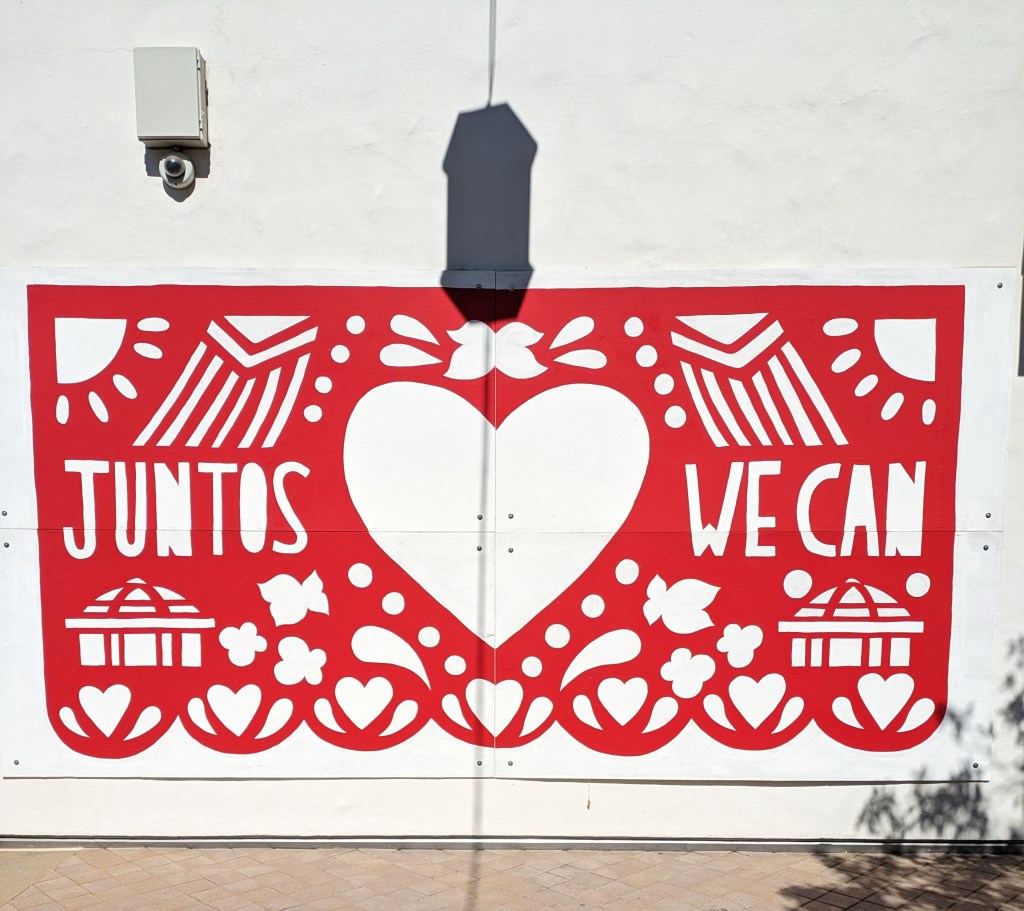
While the emergence and flowering of Spanglish in the US is no surprise, the fact that Rusglish has taken root in Russia itself should give us pause for thought. The affliction is particularly fierce among the country’s creatives and journalists.
“Запускать свой бизнес в ритейле — задача не из лёгких. Особенно если нет релевантного опыта. Отличным решением может стать развитие бизнеса в партнёрстве с более опытным игроком по модели франчайзинга“.
“Launching your business in retail is not an easy task. Especially if there is no relevant experience. A great solution could be to develop a business in partnership with a more experienced player on the franchise model.”
Source: Emailed invitation to a “business breakfast” from the business daily Delovoi Peterburg, 23 October 2023. All the bolded words are in Rusglish in the original.
Sixteen years ago today, I launched this website by translating and posting the artist and writer Pavel Pepperstein’s reflections on “post-socialism” as “ecosocialism.” They are cheeky and provocative and non-intuitive and thus, in retrospect, emblematic of the stories and viewpoints from today’s Russia that I knew were roundly ignored in English-language media and that I wanted badly to make available to the wider world.
I had no idea, then, that this adventure would last sixteen years or that, as of today, this blog would balloon to 2,500 entries. I did, however, have more than a presentiment that things were going badly in the Motherland and would probably get much, much worse. While I have never tried to avoid staring into this burgeoning (and, now, almost total) political darkness, I also have always been determined to focus on the anti-Putinist, non-Putinist, and “a-Putinist” side of public opinion, cultural production, and politics.
What this has meant, practically speaking, is that even sixteen years later and amidst a terrible war that has, seemingly, riveted the world’s attention to the Russian regime and its enemies, I am often the only English-language media outlet to cover certain stories from the deep Russian grassroots in the so-called provinces, especially stories involving non-violent and direct action anti-regime and anti-war protests. I have commented many times in the past why such stories are ignored.
Whatever the case, though, my focus on extraordinary “ordinary” Russian battlers from the back of beyond, that is, on people who are remote from the Moscow-Petersburg opposition elites (even when they might even live in one of the two capitals) has meant that, sixteen years later, I’m still struggling to get over the million-views hump, and my admittedly modest attempts at fundraising have mostly fallen flat. There is not much place for people like me and my Russian heroes in a profoundly anti-democratic and celebrity-mad world like ours.
This is not a preface to a tearful farewell. Although changes in my paid-work life mean that, for the immediate future, I won’t be posting here as often as I’d like, the value of the Russian Reader as an archive of a Russia that, perhaps, will never come to be, is still enough that I plan to keep it here and available to you all for as long as I’m able.
But it has become increasingly hard for me to report stories like the one below about Olga Nazarenko, an incredibly fierce anti-war protester from Ivanovo who died under extremely murky circumstances two weeks ago. What is hardest of all is the now almost overwhelming sense I have that these stories matter to almost no one, neither inside Russia nor outside of it. ||| TRR
A Russian anti-war protester who became a symbol of resistance to the Kremlin has died following a mysterious fall.
Local media said Olga Nazarenko died in hospital after a “fall from a height” two weeks ago that was described as an accident.
Several Kremlin opponents have been killed in falls and an anti-war activist in Rostov, southern Russia, also died this year in police custody from alleged torture.
On Facebook, tributes blamed Ms Nazarenko’s enemies for her death.
“Cursed are the cannibals who devour our finest,” one person wrote. Another said: “Our unbending Olga. Did they kill you?”
Friends also speculated she had fallen from a tree.
Ms Nazarenko was well-known for her stubborn anti-war protests and had featured in several opposition media reports and videos.
She had staged weekly one-person protests, despite being regularly detained by the police. She had also been attacked in the street and had lost her job as an associate professor at a local medical university because of her protests.
Hundreds of thousands of Russians have fled since the Kremlin banned anti-war protests but Ms Nazarenko, who was married with an adult daughter and a young son, told the US-funded Radio Free Europe/Radio Liberty that she felt it was her duty to stay.

Well, they matter to some folks, even Americans utterly unfamiliar with Russia, who appreciate the use of “a-“ term. Thank you.