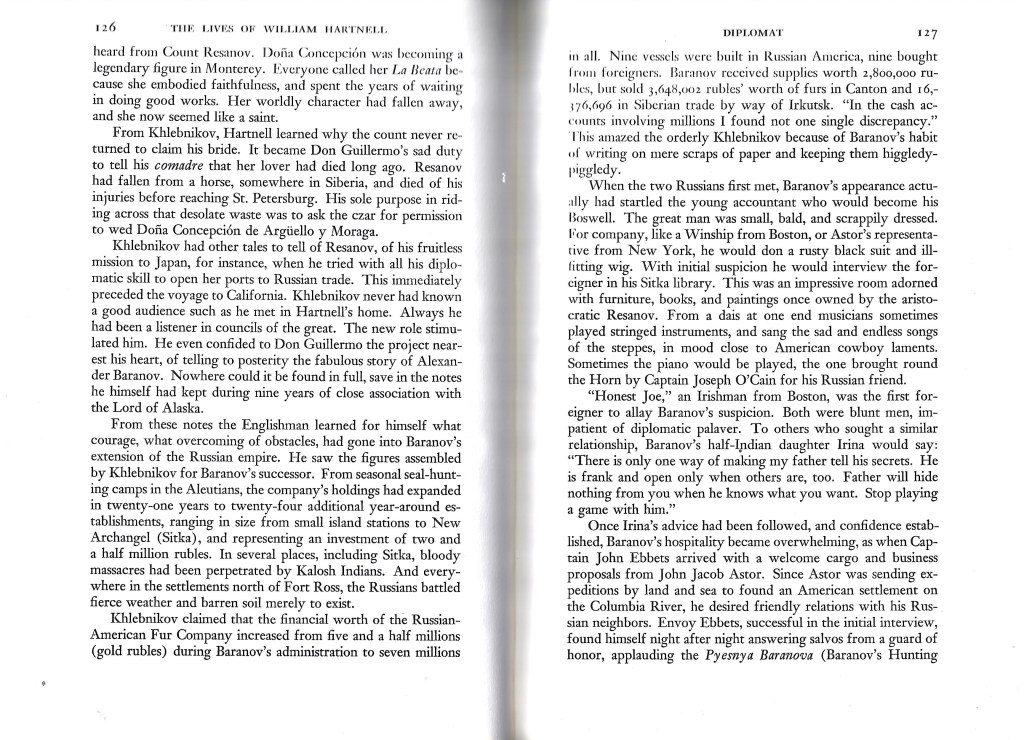
A Russian National Guard serviceman checks residency documents during a raid outside the Apraksin Dvor clothing market, in St. Petersburg, Russia, Friday, July 4, 2025. (AP Photo/File)
The immigrant worker from Uzbekistan entered the bank in Moscow, but when he reached the teller, she refused to serve him and she wouldn’t say why.
For him and others from impoverished countries across Central Asia who seek better lives in Russia, such hostility is woven into everyday life. Sometimes it bursts into outright violence.
“Mostly you notice it when you go to the hospital, a clinic, a government office: You stand in line and everyone shoots you dirty looks,” said the man, who spoke to the Associated Press on condition of anonymity because he feared repercussions.
Such xenophobia clashes with economic realities at a time when Russia has a labor shortage, primarily due to its war in Ukraine. In the first quarter of 2025, over 20% of Russian businesses said they were hindered by a lack of workers, according to the Central Bank.
But rather than welcoming laborers, Russian officials are fomenting anti-migrant sentiment and increasing restrictions on immigrants, which the government says number 6.1 million, but is probably higher. The government is tracking their movement, clamping down on their employment and impeding their children’s rights to education.
A massacre and a backlash
The continued crackdown comes as a trial began this month for four Tajik nationals who are accused of the shooting and arson attack at a Moscow concert hall in March 2024 that killed 149 people. The four were arrested within hours of the attack and appeared in court with signs of being severely beaten. An Islamic State group claimed responsibility but Russia sought to blame Ukraine for the bloodshed.
Anti-migrant rhetoric had been growing in Russia since the early 2020s. But the massacre in particular launched a wave of “terrible violence” against immigrants, said lawyer Valentina Chupik, who has worked with the immigrant community for over 20 years. In the eight days after the killings, she received 700 reports of injuries to immigrants, including “faces smashed against the doors of police stations,” she said.
Parliament speaker Vyacheslav Volodin captured the public mood after the massacre, saying “migration control is extremely important” to ensure foreign nationals carrying out “illegal activity” could be deported without a court order.
The violence drew concern from human rights groups.
“Central Asian migrants seeking work in Russia due to dire economic conditions in their countries of origin today face ethnic profiling, arbitrary arrests, and other harassment by police in Russia,” Human Rights Watch said in a report on the anniversary of the attack.
“The heinous massacre cannot justify massive rights abuses against Central Asian migrants in Russia,” said its author, Syinat Sultanalieva.
Raids, roundups and restrictions
While some violence has subsided, it hasn’t disappeared. In April, police raided a Kyrgyz-run bathhouse in Moscow with video showing masked men forcing half-naked bathers to crawl across the floor and deliberately stepping on them before covering the lens of a security camera.
Police also reportedly rounded up immigrants in raids on warehouses, construction sites and mosques, then coerced them into joining the military to fight in Ukraine. Some are threatened with having their residency documents withheld, while others are recently naturalized citizens who failed to register for military service. In such cases, serving in the military is presented as the only alternative to prison or deportation. For others, a fast track to Russian citizenship is offered as an incentive for enlisting.
Speaking in St. Petersburg in May, Alexander Bastrykin, head of Russia’s Investigative Committee, said “20,000 ‘young’ citizens of Russia, who for some reason do not like living in Uzbekistan, Tajikistan (and) Kyrgyzstan” were serving in Ukraine.
Those immigrants who have avoided violence still are subject to new anti-migrant laws. Much of this is targeted specifically toward workers from Central Asia.
In 2024, 13 Russian regions banned immigrants from certain jobs, including in hospitality, catering and finance, and even as taxi drivers. A pilot program starting in September in the Moscow region requires migrants who enter Russia without a visa to be tracked via an app. Those failing to comply are added to a police watchlist, impeding access to services like banking, and subjecting them to a possible cutoff of cellphone and internet connectivity.
A nationwide law banned children of immigrants from attending school unless they could prove they could speak Russian. Less than six weeks after the law came into force, officials told local media that only 19% of children who applied for the language test were able to take it, and the most common reason for rejection was incomplete or inaccurate documents.
Another man from Uzbekistan who has worked in Russia for almost two decades and lives in St. Petersburg said he’s had to wait in line for over seven hours to get needed residency documents. The man, who also spoke to AP on condition of anonymity for fear of reprisals, hopes to stay in Russia but says the climate has worsened.
“It’s hard to get paperwork,” he said. “There just isn’t the time.”
The oppressive laws sometimes force immigrants to resort to paying bribes. Chupik, the lawyer, believes that Russia’s system results in “violations that cannot be avoided.”
“This is exactly what this mass regulation is striving for: not for all migrants to be here legally, but for everyone to be illegal,” she said. “That way, they can extract bribes from anyone at any moment and deport anyone who resists.”
Encouraging anti-migrant sentiment
Anti-migrant sentiment is unlikely to diminish anytime soon, mostly because it’s encouraged by authorities like the Investigative Committee’s Bastrykin, who said immigrants “physically occupy our territory, not just with their ideology but with specific buildings” — referring to sites such as mosques.
Ultra-nationalist lawmaker Leonid Slutsky said foreign workers “behave aggressively, causing conflicts and potentially dangerous situations.”
Migrants are an easy scapegoat for many social ills, and not just in Russia, said Caress Schenk, an associate professor of political science at Nazarbayev University in Kazakhstan.
“Closing borders, conducting migrant raids and tightening policies are all tools that are easy go-tos for politicians the world over,” she said. “It goes in cycles that are sensitive to geopolitical pressures, as we’re seeing now, but also things like election campaigns and domestic political rivalries.”
A surge of “anti-migrant propaganda” has dwarfed previous rhetoric of recent years, according to the Moscow-based Uzbek immigrant who was ignored by the bank teller.
“If every person paying attention to the TV, the radio, the internet is only told that migrants are ‘bad, bad, bad,’ if they only show bad places and bad people, of course, that’s what people are going to think,” he said.
Such anti-migrant rhetoric has become part of the nationalist narrative from President Vladimir Putin and others used to justify the 2022 invasion of Ukraine — that Russia is under constant threat.
“Russia has started lumping together all of ‘the external enemies’ that it’s created over the years for itself: the migrants, the Ukrainians, the West,” said Tajik journalist Sher Khashimov, who focuses on migration, identity and social issues. “It all becomes this part of this single narrative of Russia being this castle under siege, and Putin being the only person who is on the lookout for ordinary Russians.”
The Uzbek immigrant in Moscow said Russia has created conditions “supposedly to help people, to help migrants.”
“But the rules do not work,’ he added. ”Special barriers are created that migrants cannot pass through on their own.”
A prominent nonviolent activist from Moroccan-occupied Western Sahara has been detained by federal immigration officers. Jamal Fadel was seized by masked ICE agents at Manhattan’s notorious federal building at 26 Federal Plaza on August 25 after a routine immigration hearing — an arrest that was caught on video.
Fadel is from the occupied city of Boujdour in Western Sahara. He’s been protesting nonviolently against Morocco’s occupation since he was a high school student, and was threatened by Moroccan authorities so many times that he left to seek political asylum in the United States.
Fadel is currently being held by ICE at the Moshannon Valley Processing Center in Pennsylvania. His attorney expects ICE will move for an expedited removal hearing. If deported, Fadel faces lengthy imprisonment, torture — or worse.
I spotted some of the Trump administration’s wanted men on Tuesday, the day after the U.S. Supreme Court granted immigration agents virtually unchecked permission to continue the “largest Mass Deportation Operation” in America’s history.
The wanted stood outside of a U-Haul truck rental outlet in the San Gabriel Valley. They polished other people’s BMWs and Range Rovers at a Pasadena car wash. I saw the wanted women too, walking to jobs as nannies and housekeepers.
They looked suspicious, all right, by the definition outlined Monday by Supreme Court Justice Brett M. Kavanaugh. They were natives of Mexico and Central America, seeking “certain kinds of jobs, such as day labor, landscaping, agriculture, and construction.”
They were suspect to many Californians too, but only of wanting to work, wanting to earn a little cash, wanting to pay their bills and feed their families. One hundred and seventy five years to the day after land that once belonged to Mexico became the 31st American state, California felt to many people Tuesday like it had reverted to a kind of frontier justice, where racial profiling had become the law of the land.
“I am just working hard and paying taxes,” said Mario, 50, between sips of coffee on the sidewalk outside the U-Haul station. Even before the Immigration and Customs Enforcement raids began three months ago, the Honduran immigrant said, life for street-corner workers was not easy.
“People are just looking for work. Some of them are even homeless,” said Mario, who declined to give his last name. “But some people are showing them hate, sometimes even hitting or kicking the homeless. We see it out on the street.”
At the Pasadena car wash where six workers were carted away in late August, those left behind continued their buffing and polishing Tuesday.
“It feels like we have come down low, really low,” said Cesar, between checking in customers. Though he was born just blocks away at Pasadena’s Huntington Hospital, he said he does not feel immune from the raids.
“If now they are just going to judge you by how you look, or maybe how you talk, I can get pulled over. Anyone can get pulled over,” said Cesar, who did not give his last name. “It’s gonna be harder for people to live a normal life. They’re gonna just have to deal with harassment. That’s not something I would want anyone to have to go through.”
Earlier raids by Trump immigration agents have spread far beyond snagging the criminals and drug traffickers the president and his allies claimed to be after. With 10 million Latinos living in the seven Southern California counties covered by the court’s order, a rights group said the high court’s action cleared the way for “an extraordinarily expansive dragnet, placing millions of law-abiding people at imminent risk of detention by federal agents.”
“We should not have to live in a country where the Government can seize anyone who looks Latino, speaks Spanish, and appears to work a low wage job,” Justice Sonia Sotomayor wrote. “Rather than stand idly by while our constitutional freedoms are lost, I dissent.”
The action offered portentous echoes of the mistreatment and greater violence unleashed on Chinese immigrants in the late 1800s. Today, it had U.S.-born citizens, such as The Times’ Gustavo Arellano, feeling they will have to carry their passports to prove their citizenship.
Outside the U-Haul, Mario said he holds a green card. So he will continue waiting on the sidewalk for his next job.
“I believe in God,” he said. “We might think different things, but we all have the same heart. There should be the same heart for everyone. Everyone.”
The United States deported 39 Uzbek nationals on a charter flight to Tashkent, the U.S. Embassy confirmed in what it described as part of ongoing efforts to remove migrants without legal status. Earlier this year, more than 100 Central Asians, mostly Uzbeks, were repatriated in a similar U.S.-funded operation. The deportations attest to close cooperation between Washington and Tashkent on migration enforcement. That partnership has been accompanied by political overtures. Last week, Presidents Shavkat Mirziyoyev and Donald Trump held a phone call in which they pledged to broaden their strategic partnership ahead of an expanded dialogue session this autumn. U.S. officials have pointed to investment opportunities in Uzbekistan, particularly in critical minerals, while both sides also highlight cooperation on security and migration.
Yesterday’s news made me think about when I was little and went on road trips with my family. My parents always insisted on preparing and eating Korean food at rest areas along the way. This was before Korean food became more well-known and I remember that if there were people nearby who could smell our food, they often made faces and comments about the smell. Eating kimchi in public was always an interesting experience back then. This was just embarrassing, but does the new Supreme Court ruling mean that in this scenario, it is now something much more ominous we should be worried about?
Now someone could call ICE on a foreign-looking family eating foreign-smelling food in a rest area. When ICE shows up we now would have to show papers to prove we are citizens based on a racially motivated tip, is that our reality? Also, remembering that my mother never became a citizen but had a green card and probably speeding tickets so she would have been deportable under the current regime? What if I can’t prove my citizenship because I don’t carry my passport or naturalization papers, I am detained until I can prove my citizenship and they have the legal authority to do all of this now?
Lawyers, please help me understand. Is this our reality now? Is eating kimchi in public while Korean enough to get ICE called on us?
And I want to add that racial profiling has always been used against Black Americans and to a lesser degree other less white adjacent communities forever in this country, whether it was deemed constitutional or not. This is not new for Black Americans and others and something I have to acknowledge.
Jade Bird, “American Pie” (Don McLean cover). Thanks to the amazing Dick Gregory for the heads-up.
Nearly 3 million Americans identify as transgender, including one in 30 of those aged 13 to 17, according to a new report. But data on the country’s trans community may soon be hard to come by, its authors warned, as the Trump Administration and a number of GOP-led states seek to limit the recognition, and rights, of transgender people.
The UCLA Williams Institute has been publishing reports about transgender Americans since 2011, tracking information such as the race, ethnicity, age, regional location, and mental health of transgender individuals.
Trans adults and youth make up 1% of Americans aged 13 and older and 3.3% of 13-to 17-year-olds, according to the institute’s Wednesday report. Researchers found that younger adults, those aged 18 to 34, were more likely to identify as transgender than their older counterparts, making up more than 50% of the country’s transgender population.
For its initial 2011 report, the institute relied on just two state-level population surveys. Researchers noted that they have since been able to access broader and higher-quality data through the Centers of Disease Control and Prevention (CDC): To generate the most recent findings, they used data from the CDC 2021-2023 Behavior Risk Factor Surveillance System and 2021 and 2023 Youth Risk Behavior Survey. The report authors noted that the Youth Risk Behavior Survey in particular “currently provides the best available data for our estimates of the size and characteristics of youth who identify as transgender in the U.S.”
But the agency will no longer collect information on transgender people in compliance with President Donald Trump’s Executive Order calling for federal recognition of only two biological sexes.
Since Trump returned to office in January, information regarding trans people and health resources for LGBTQ+ people has been quietly removed or modified on federal websites. And the Department of Health and Human Services (HHS) has stepped away from its previous practice of supporting gender-affirming-care, in spite of numerous statements from all major medical associations in the U.S., including the American Medical Association and the American Academy of Pediatrics, declaring the care as best practice. In May, HHS called for “exploratory therapy” or psychotherapy to treat individuals with gender dysphoria instead of the medically recommended care.
Multiple states have also sought to restrict access to gender-affirming care, particularly for minors, amid broader global efforts to target such care for trans youth. A June Supreme Court decision upholding a Tennessee state-level ban on gender-affirming-care for youth delivered a heavy blow to the U.S. LGBTQ+ community, permitting similar bans that have been enacted across the country and presenting a significant obstacle to future efforts to challenge restrictions in the courts.
Amid the current political climate, the authors of Wednesday’s Williams Institute report say they are unsure whether survey respondents will accurately respond to questions regarding their gender identity moving forward. In addition to the uncertain future of data on the U.S. transgender population, they wrote, “It is also unclear whether individuals’ willingness to disclose on surveys that they identify as transgender will remain unchanged in the years to come.”
Despite those looming challenges in gathering information, however, the authors noted it is already clear that younger people are more likely to identify as transgender and they anticipate that to continue being true.
“This has implications for institutions in our society, including educational institutions, the U.S. Armed Forces, civilian workplaces, health care settings, and other areas, regarding how to meet the needs of and provide opportunities for current youth and future generations,” they said.
Jade Bird, “I’ve Been Everywhere” (Johnny Cash cover)
In the Central Coast, where my father farmed strawberries, the land is mostly flat for miles in every direction so it was easy to spot the green vans and trucks of the Immigration and Naturalization Service heading our way in the distance, kicking up a cloud of dust in their wake. It was the late ‘70s and raids were an occasional part of working in the ag industry.
When the trucks were spotted — most often by a worker — a loud call would go out: “La Migra, la migra.” That’s when immigrant workers without legal status would drop what they were doing and sprint away, either for a nearby riverbed or over a set of raised railroad tracks adjacent to the fields. The immigration raids on my father’s strawberry fields fascinated me when I was a boy. It wasn’t until I was older that I understood the impact on the workers who were rounded up and deported, as well as the effects on the families left behind. I now recall them in a more somber light.
My father worked as a sharecropper in the Central Coast. He oversaw several acres of strawberries and managed up to a dozen workers for Driscoll Inc., the berry company headquartered in my hometown of Watsonville.
From the time I was about 6 or 7 years old until I was 16, I spent my summers and most weekends in the fall in my dad’s strawberry fields. It was backbreaking work. I have the chiropractor invoices to prove it.
Immigration raid methods have changed. The toll they take has not
The ICE raids of the past few months across Southern California reignited my boyhood memories of the strawberry field raids.
What has not changed is the impact on the immigrant families, especially the children. Children of immigrants sustain deep emotional scars from immigration raids.
A study published last month on Psychiatry News said immigrant children or children of mixed-status parents endure serious trauma when their parents are deported.
“Forced family separations, particularly those resulting from immigration enforcement (e.g., detention, deportation), introduce acute psychological risks,” according to the study, which list the results as an “elevated risk of suicidal ideation, externalizing behavior and alcohol use.”
Even living under the threat of having a parent deported is traumatizing to children.
“These fears have been shown to lead to school absenteeism, academic disengagement, and heightened emotional distress,” the study says.
Even as a boy, the fear and desperation were palpable
When I worked in the fields, the raids came about once or twice a summer. I didn’t witness this myself, but the family lore includes the story of a worker who was so desperate to escape the INS that he jumped into a nearby port-a-potty — hiding among the feces and urine in the holding tanks — until the INS agents departed.
Each summer, two or three of my father’s workers would be deported, only to return the following season. That was more common back in the ‘70s than it is today. My dad tried to help his workers without green cards by connecting them with legal aid groups or lawyers so they could straighten out their legal status. Not all of them did and some who had green cards ran at the sight of INS trucks anyway.
In a recent conversation with my younger brother, Peter, he recalled panicking during the first raids he witnessed. He said he asked my older siblings if he should run from the agents, too.
“No, you’re an American. Just shut up,” they told him.
Jade Bird, “Grinnin’ in Your Face” (Son House cover)
[…]
A lost white race of Bible giants—literally bigger, stronger, and whiter than everyone else—fashioned as a symbol of everything conservatives wanted to remake America into, is an all-too-convenient bit of lore for the conspiracy-besotted right. (Never mind that the Nephilim were technically the villains in Genesis!) And the Smithsonian was, if anything, a useful foil for a fringe movement looking for an enemy to accuse of suppressing the truth.
Soon enough, claims that the Smithsonian intentionally hid the bones of Bible giants went mainstream, presaging the country’s own rightward shift. By the 2010s, the Smithsonian’s secret giants appeared in popular paranormal books, on late-night radio shows, in multiple cable TV documentaries (including at least two separate History Channel shows), and across a network of evangelical and far-right media outlets.
Among the most popular of these were the Christian DVDs and later podcasts produced by Steve Quayle and his Nephilim-hunting partner, Timothy Alberino. Quayle, an archconservative, blamed Bible giants for “teaching” men to be gay. He and Alberino were regulars on the right-wing podcast circuit in the 2010s, often appearing with figures like Alex Jones and Jim Bakker so Quayle could hawk their merch, attack Democratic politicians as demonic, and advocate for a targeted genocide of Nephilim-controlled liberals.
Burlinson told Blaze TV that he had been radicalized against the Smithsonian through Alberino’s podcasts and videos. In his podcasts, Alberino has described Bible giants as a “superior race society.”
In recent years, Alberino has made moves to go more mainstream. He has appeared on Ancient Aliens, the History Channel show advocating historical conspiracies, where David Childress is a featured star. That same show also hosted Tucker Carlson, Tennessee Republican Representative Tim Burchett, and others to peddle conspiracies about government cover-ups of space aliens, interdimensional beings, demons, and more.
For the far right, the E.T.s of Ancient Aliens—the same ones Congress is currently hunting in various UFO hearings—are actually angels and demons, and those demons are the souls of the giants who died in the Flood, according to a nonbiblical text Alberino endorses. Burlinson said in 2023 that he thinks UFOs could be angels, and more recently he promised that a congressional UFO hearing to be held on September 9 would feature witnesses who “handled the bodies” of these beings.
Conspiracies about Bible giants are basically the Christian version of UFOs and aliens, and it’s no wonder there is significant cross-pollination between believers in the two camps, even in Congress, where several representatives like Burlinson and Burchett have publicly discussed their belief in both. In fact, both conspiracies give pride of place to the Nephilim narrative from Genesis 6:4 as proof of either fallen angels or alien intervention.
It would be laughable if the Smithsonian conspiracy theory and tales of Bible giants now being spread on Blaze TV, on Joe Rogan’spodcast, and across right-wing media, were not a kind of Trojan horse to soften up the public to accept political propaganda in place of history and complete the assault on America’s museums that failed in the 1990s. But the conspiracists continue to spread their lore, and mainstream conservative politicians continue to escalate their attacks on the Smithsonian—a far-right pincer movement directed at an institution that is both the nation’s premier repository of historical fact and a potent bolsterer of America’s civic fabric. And that is no laughing matter.
THE BIZARRE TWISTS AND TURNS of Donald Trump’s Ukraine peacemaking project continue: Just three days after the president announced in a triumphant Truth Social post that Vladimir Putin was willing to meet with Volodymyr Zelensky—either one on one or in a trilateral summit with Trump—and to accept an arrangement in which NATO countries would provide postwar security guarantees for Ukraine, the Putin regime has unequivocally shot down both proposals. Russian foreign minister Sergei Lavrov (last seen sporting a “USSR” sweatshirt on his trip to Alaska) has made it clear that there won’t be a meeting with Zelensky until “all the issues” have been resolved—including the question of Zelensky’s legitimacy as president, given that Ukrainian elections have been put on hold on account of the war—and that Russia will not accept the presence of foreign troops, presumably other than its own, on Ukrainian soil.
Trump’s stormy bromance with Putin seems to be off again, too: in social media posts on Thursday, he criticized “crooked and grossly incompetent” Joe Biden for not allowing Ukraine to strike back at Russia and (speciously) compared his chummy-seeming interaction with Putin in Alaska with Richard Nixon’s confrontation with Nikita Khrushchev in Moscow in 1959.
It’s impossible to tell whether Trump’s social-media posturing will translate into action. There is still no word, for instance, on whether the administration is greenlighting Ukraine’s proposal, unveiled after the Monday White House meeting, for $100 billion in U.S. arms shipments to Ukraine (with the Europeans footing the bill) and an additional $50 billion project for joint U.S.-Ukrainian drone production. Nor is there any word on whether or when new sanctions will kick in.
WHILE THE CIRCUS PLAYS ON in Washington and Moscow, the war on the ground—and in the air—continues in Ukraine, and sometimes in Russia. Ukraine is in an undeniably tough position, though nowhere near the desperate predicament imagined both by haters and by worriers who keep predicting an imminent “collapse” of its defenses. On August 12, just before the Alaska summit, many thought they saw a sign of such collapse in a Russian “breakthrough” not far from the long-contested city of Pokrovsk (Donetsk region), near the former coal-mining town of Dobropillia, where Russian forces managed to make rapid advances past severely undermanned Ukrainian lines, move about nine miles forward, seize three villages (now mostly deserted, though some residents who have not been able to get out still remain there), and cut off a vital supply route for Ukrainian troops. These gains appeared to augur the fall of Pokrovsk itself, a prospect that has been discussed since late last year.
But a few days later, the supposed catastrophic defeat turned into an impressive Ukrainian victory thanks to the quick deployment of new units from the Armed Forces of Ukraine and the National Guard, which retook two of the captured villages as well as four previously occupied settlements and cleared the area of Russian troops, reportedly inflicting significant losses. As for Pokrovsk itself, there have been some clashes inside the city, with incursions by small Russian units; but observers such as expatriate Russian military expert Yuri Fedorov think it’s extremely unlikely that the city will fall before inclement weather forces the Russian offensive to wind down.
It is true that momentum is on Russia’s side, in the sense that only Russia is currently conducting offensive operations. But Russian forces’ progress is snail-paced and intermittent, with the Ukrainians often successful in pushing them back (and using drones to make up for manpower and ammunition shortages). The result, more often than not, is a ghastly tug-of-war over small patches of devastated land—contests in which a “win” may consist of planting a flag in a ghost settlement.
Overall, analysts agree that Russia has no chance of capturing the entirety of the Donetsk region—as it has tried to do since the start of Putin’s covert war in Eastern Ukraine in 2014—anytime in the foreseeable future; doing so would require taking heavily fortified urban areas, and even the most cavalier willingness to sacrifice men may not accomplish that goal without several more years of costly fighting. Hence Russian demands for Ukraine to surrender the remainder of the region without a fight.
Ukraine also continues to score successes in its aerial war on strategic Russian targets such as oil refineries, arms and ammunition depots and factories, and trains carrying weapons and fuel to the frontlines. (Russian troops aren’t the only ones feeling the effects: there are reported miles-long lineups for gasoline in parts of Russia.) And, Western arms deliveries aside, Ukraine is making strides in developing its own weaponry, like the new Flamingo long-range cruise missile capable of hitting targets more than 1,800 miles away; Zelensky has said that it could be mass-produced by February.
In other words: Ukraine is still not losing. But there is no question that it is exhausted—and that the enemy’s continuing terrorism against its civilian population is taking its toll. On Wednesday night, Russia launched one of its heaviest assault waves yet: 574 drones and 40 missiles, with targets located as far away from the frontlines as Lviv and Transcarpathia. Most were intercepted by Ukrainian defenses, but one person was killed and over a dozen wounded.
Was this a deliberate middle finger to Trump over his supposed peace effort? It sure looks like it, especially considering the bombing of an American factory in the Transcarpathian city of Mukachevo—the premises of Flex Ltd., a manufacturer of civilian electronic goods. At the very least, it shows that Russia is not de-escalating. Likewise, it’s unclear whether the incursion of a Russian drone that crashed and burned in a rural area in eastern Poland during the overnight attack on Ukraine was a deliberate provocation, as the Polish government charged. But it certainly doesn’t tell us that Putin wants peace.
He can still be forced into it, however. A scenario in which Ukraine drives Russian troops and occupation forces out of its territory is as impossible as one in which Russia makes major territorial gains in Ukraine; but there may come a point, perhaps soon, when the war’s economic and political burdens for the Putin regime become too heavy. Even with rigged elections and a thoroughly owned population, Putin still cannot afford too much discontent among the Russian middle class—or among the elites. There is a reason he has not undertaken another round of mobilization since 2022. But right now, recruitment is dropping, soldiers recovering from wounds or suffering from serious physical and mental health problems are being forced into combat, and mobilization may be the only way to keep the war going. The war will end when Putin starts to see its costs as too high and the chances of achieving his aims, stated and unstated, as too low.
U.S. policy could be instrumental in making that happen. But for that, the Trump administration would have to commit to a firm and consistent pro-Ukraine policy. For starters, the president’s promises of “very severe consequences” if Putin stands in the way of peace should mean something more than memes and empty talk. (And the vice president shouldn’t keep fawning about the “soft-spoken” Kremlin dictator who “looks out for the interests, as he sees it, of Russia.” Sorry, JD, but you sound like a jackass.)
Yet here we are, with Putin doing everything to sabotage any meaningful peace talks but put up an “I ♥ WAR” neon sign on the Kremlin walls—and what is Trump’s response? Another deadline: this time, he says, we’ll know whether a deal can be made “within two weeks”—famously, Trump’s “placeholder” unit of time. No doubt they’re quaking in their boots in the Kremlin.
The Trump administration has quietly rescinded long-standing guidance that directed schools to accommodate students who are learning English, alarming advocates who fear that schools will stop offering assistance if the federal government quits enforcing the laws that require it.
The rescission, confirmed by the Education Department on Tuesday, is one of several moves by the administration to scale back support for approximately 5 million schoolchildren not fluent in English, many of them born in the United States. It is also among the first steps in a broader push by the Trump administration to remove multilingual services from federal agencies across the board, an effort the Justice Department has ramped up in recent weeks.
The moves are an acceleration of President Donald Trump’s March 1 order declaring English the country’s “official language,” and they come as the administration is broadly targeting immigrants through its deportation campaign and other policy changes. The Justice Department sent a memorandum to all federal agencies last month directing them to follow Trump’s executive order, including by rescinding guidance related to rules about English-language learners.
Since March, the Education Department has also laid off nearly all workers in its Office of English Language Acquisition and has asked Congress to terminate funding for the federal program that helps pay for educating English-language learners. Last week, education advocates noticed that the guidance document related to English learning had a new label indicating it was rescinded and remains online “for historical purposes only.”
On Tuesday, Education Department spokeswoman Madi Biedermann said that the guidance for teaching English learners, which was originally set forth in 2015, was rescinded because it “is not in line with Administration policy.” A Justice Department spokesman responded to questions by sending a link to the July memorandum and said he had no comment when asked whether the guidance would be replaced.
For decades, the federal government has held that failing to provide resources for people not proficient in English constitutes discrimination based on national original under Title VI of the Civil Rights Act.
In rescinding the guidance, the Trump administration is signaling that it may stop enforcing the law under that long-standing interpretation. The Education and Justice departments have been responsible for enforcing the law.
In the July memorandum, Attorney General Pam Bondi cited case law that says treating people, including students, who aren’t proficient in English differently does not on its face amount to discrimination based on national origin.
Other guidance related to language access for people using services across the federal government is also being suspended, according to the memo, and the Justice Department will create new guidance by mid-January to “help agencies prioritize English while explaining precisely when and how multilingual assistance remains necessary.” The aim of the effort, Bondi said in a statement published alongside the memo, is to “promote assimilation over division.”
The consequences for school districts were not immediately clear, but advocates worry that rescinding the 2015 guidance could open the door for weaker instruction for English learners and upend decades of direction from the federal government to provide English-language services to students who need them.
“The Department of Education and the Department of Justice are walking away from 55 years of legal understanding and enforcement. I don’t think we can understate how important that is,” said Michael Pillera, an attorney who worked at the Office for Civil Rights for 10 years and now directs the Educational Opportunities Project at the Lawyers Committee for Civil Rights.
Without pressure from the federal government to comply with the law, it is possible that some school districts will drop services, Pillera said, particularly as many districts struggle with financial pressures.
“It’s going to ripple quickly,” he predicted. “Schools were doing this because the Office for Civil Rights told them they had to.”
Many districts will probably not change their services, but rescinding the guidance opens the door, said Leslie Villegas, an education policy analyst at New America, a think tank. Advocates may watch for changes in districts that previously had compliance problems or those that had open cases with the Office for Civil Rights related to English-language instruction, she noted.
“The rescission of this guidance may create the mentality that no one’s watching,” Villegas said.
In recent months, the Justice Department notified at least three school districts — in Boston; Newark; and Worcester, Massachusetts — that the government was releasing them from government monitoring that had been in place to ensure they offered services to English-language learners.
Officials in Worcester said they expected the action even before Trump took office. But in Boston, some parent advocates questioned why the monitoring had ended, the Boston Globe reported.
Supporters of immigration restrictions argued that relieving pressure on schools to provide these services might be helpful, especially given the costs to districts.
“If you devote all these resources to these kids coming in [to school] completely unprepared, inevitably it will diminish the quality of education others are getting,” said Ira Mehlman, spokesman for the Federation for American Immigration Reform.
Todd DuBois, communications director for U.S. English, a group that advocates for English as the official and common language, said some education is needed to help “bridge the gap” for students who do not speak English, but the group is concerned that multilingualism “gets in the way of teaching English literacy earlier in life.”
The requirement to serve English-language learners in school is based on two federal statutes. The first is Title VI of the Civil Rights Act, which bars discrimination based on national origin, among other traits. Alandmark 1974 Supreme Court case, Lau v. Nichols, interpreted this law to include a mandate for English-language services in schools.
The second federal law at issue is the 1974 Equal Educational Opportunities Act, which requires public schools to provide for students who do not speak English. A 1981 case decided in federal appeals court, Castañeda v. Pickard, laid out a test to determine whether schools were properly providing services to English learners in school.
In 2015, the Justice and Education departments published their 40-page guidance document, explaining how schools can properly comply with these laws and avoid potential federal investigations and penalties.
“For a teacher, it was kind of like the Bible,” said Montserrat Garibay, who headed the Office of English Language Acquisition under the Biden administration. “If, in fact, we want our students to learn English, this needs to be in place.”
In her memorandum, Bondi said that in addition to cutting back on multilingual services the administration deems “nonessential,” federal agencies would be tasked with boosting English education and assimilation.
“Instead of providing this office with more capacity and more resources to do exactly what the executive order says — to make sure that everybody speaks English — they are doing the total opposite,” Garibay said.
Mark Krikorian, executive director of the Center for Immigration Studies, which supports immigration enforcement measures, suggested the federal government should not direct how school districts offer services. But he also said that teaching children English is consistent with efforts to make sure people living in the United States speak English.
“I’m all for English-language education. We probably need to do even more of that,” he said. “If you’re going to let people in who don’t speak English, then you want them to be acquiring English as soon as possible.”
Sean Trischka, “Something I Learned Today” (Hüsker Dü cover)
Marxism did not make many inroads in Indian thought in North America – as opposed to its adoption by Indigenous thinkers elsewhere in the Americas – until the Second World War. Six decades before theories of settler colonialism were developed by Maxime Rodinson for Israel and, in their current academic configuration, by Patrick Wolfe for Anglo-settler states, Karl Kautsky refined the distinction between ‘work’ colonies, where Europeans settled and conducted extermination, and ‘exploitation’ colonies, where the aims were more purely extractive and relied on local labour. But the importance of radical politics for Native American thinkers wasn’t merely abstract. Lenin’s policies on safeguarding Indigenous cultures in the Soviet Union were looked on by many Native Americans as preferable to the forced assimilation initiatives of the US Bureau of Indian Affairs. When Native nations petitioned to attend the Versailles Peace Conference, the Wilson administration dismissed them out of hand.
In 1932, the Marxist Nez Perce anthropologist Archie Phinney travelled from Idaho to the Soviet Union. He completed a doctorate at the Leningrad Academy of Science in which he favourably contrasted Soviet management of minority peoples with US federal Indian policy. As Benjamin Balthaser has noted, of particular interest to Phinney was the way that – in theory, if not in practice – the Indigenous peoples of Russia maintained dual identities as Soviet citizens and custodians of their cultures, which retained the right to outright self-determination. Phinney acknowledged the necessity of the developmentalism imposed by the US state but pointed out that it was hardly in Indian interests to become proletarians at the same level as the poorest people in the country. ‘The US government,’ he wrote, ‘feels compelled to rehabilitate [the Niimíipu] and bring them up “to the level equal to that of the average rural white family”. Yet that “average rural white family” is itself in need of a strong dose of “rehabilitation”.’ He argued instead for reforging traditions of common ownership on reservations into democratic co-operatives which would allow Indians to pursue – and exhibit to the rest of the country – alternative paths towards social transformation.
Native-Soviet mutual admiration reached its zenith in 1942, when Chief Fallen Tree of the Mohawk nation presented an Indian war bonnet to a representative of Stalin, whom the Indian Confederation of America voted ‘warrior of the year’. But the rest of the decade saw radicalism weaken dramatically. The interest in Marxism vanished with the Cold War consensus, as figures such as Luther Standing Bear – who starred as an Indian gardener in the Red Scare film Bolshevism on Trial – became a standard bearer for the ‘progressive’ Indian cultural movement of the 1940s and 1950s. More materially, 45,000 Indigenous soldiers had enlisted in the Second World War (the US military relied on code based on the Navajo language). But there were good reasons for Indigenous activists to think that the US state was starting to move in their favour. Roosevelt’s New Deal had included an ‘Indian New Deal’, in the form of the Indian Reorganisation Act, which counteracted some of the measures that had divided Indian lands. His administration closed down Indian boarding schools and other vehicles of violent assimilation, and also sought to re-sovereignise Native lands, including by means of legal jurisdiction. The Reorganisation Act went so far as to include provisions for the state to buy land and restore it to Indian reservations. As a further counter-thrust legal advocates for Natives such as Felix Cohen sought to bring the states back into submission by, for instance, suing them in federal court for withholding welfare payments to tribes. In the following decade, Roosevelt’s Indian New Deal was undermined by Western senators who sought to terminate the status – and take over the territorial holdings – of tribes by using the language of civil rights to insist on their members becoming fully integrated citizens of the nation.
One of Roosevelt’s more enduring reforms was the policy of hiring Native Americans to work at the Bureau for Indian Affairs. Many of the leading Indian activists of the postwar decades held jobs at the bureau, transforming it into a laboratory for reform. They conceived of their mission as preserving New Deal gains and their particular foe was the postwar drive for ‘termination’, by which politicians sought to cut off federal land grants to tribes deemed sufficiently assimilated. The 1956 Indian Relocation Act accelerated this process by moving Indians into cities en masse. The result was predictable: a new revolutionary movement of Native Americans who channelled their sense of dislocation into a new wave of activism known as Red Power.
Leningrad, 1987. Donald Trump and his first wife, Ivana Zelníčková.
The businessman visited the USSR with his wife hoping to make real estate deals, but was confronted by Soviet laws which did not permit foreigners to own more than a 49% stake in a business venture.
So, no deals were made, and Trump was left disappointed by the Soviet system. But he was impressed by the architecture.
Tomorrow, the current U.S. president and Vladimir Putin will meet in Alaska, formerly Russian territory.
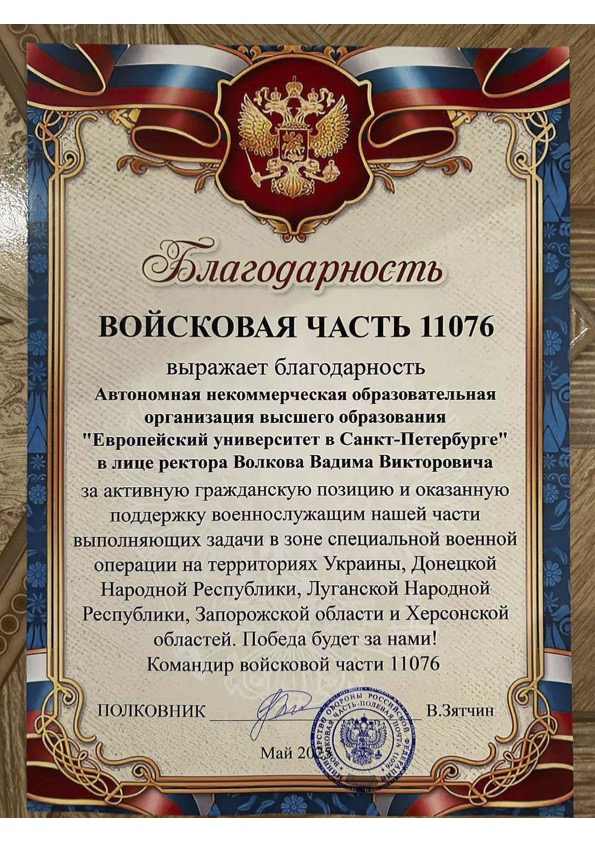
The European University at St. Petersburg has purchased and dispatched a UAZ vehicle to the war in Ukraine “for transporting the wounded in the combat zone,” the university’s press service has reported.
It notes that the vehicle was sent to Military Unit No. 11076, which was formed from mobilized residents of St. Petersburg, the Leningrad, Murmansk, and Arkhangelsk regions, and the Komi Republic.
The university’s press service posted a commendation to university rector Vadim Volkov from the unit’s commander, who praised Volkov for his “social activism” and support of the military “as it carries out missions in the special military operation zone in Ukraine, the Donetsk People’s Republic, the Luhansk People’s Republic, the Zaporizhzhia region, and the Kherson region.”
“Military Unit No. 11076 expresses gratitude to the autonomous noncommercial higher education organization ‘European University at St. Petersburg’ in the person of Vadim Viktorovich Volkov for social activism and support rendered to the soldiers of our unit as they carry out missions in the special military operation zone in Ukraine, the Donetsk People’s Republic, the Luhansk People’s Republic, Zaporizhzhia Region, and Kherson Region. Victory will be ours! Military Unit No. 11076’s commander, Colonel V. Zyatchin, May 2025.”
The European University is a private university founded in St. Petersburg in 1994. The university was funded by grants from American and European NGOs. In 2016, the university was stripped of its accreditation for a year after an audit undertaken by the Prosecutor’s Office and Rosobrnadzor [the Russian federal education watchdog], after which such audits became routine.
In 2023, the Russian authorities audited the European University “for extremism,” and the university was also fined over books in its library published by “undesirable” organizations. Rector Volkov reported in an interview with RBC on June 24 that the prosecutor’s office had audited ninety-eight programs at the university and twelve master’s theses, after which the university had amended the programs and made changes to its academic advising process based on the recommendations of the authorities.
In March 2024, the European University fired Ivan Kurilla, an Americanist who taught in its political science and sociology departments. Kurilla opposed the Russian invasion of Ukraine and was among the signatories of an open letter against the war by Russian academics and science journalists.
Where are you from? And where are you now? Doing what?
I am from Aarhus, Denmark, and have lived in Kyiv for almost 20 years. I own a software company, Livatek, which works with clients in Northern Europe.
As a foreigner working and living in Ukraine for many years, what is the best and the worst thing about Ukraine?
The worst thing about Ukraine is that nothing is possible. The best about Ukraine is that everything in the end is possible.
How has the war changed your life? Has the war changed you personally?
With the start of the war, my brother Morten and I reactivated a Danish initiative called “Biler til Ukraine” – “Cars for Ukraine”—which had already helped a Ukrainian NGO bring SUVs to the front for medical evacuation during the war in Donbas. Within a week of the full-scale invasion in 2022, we were back in Ukraine with the first three cars.
Since then, we have scaled up tremendously and delivered more than 400 vehicles to the Ukrainian military for logistics and tactical purposes, including 75 buses for personnel transports. These days, we are managing more than one car per day. All in all, as a rough estimate, the value of these cars is somewhere close to $2 million. The money comes from absolutely average, normal Danes and private companies. I am often surprised by people’s generosity. They often donate their car and even drive it with us to Ukraine!
Growing a business has become more difficult with the war. With “Cars for Ukraine,” I have found another outlet for my professional energy to defend Ukraine. It has allowed me to work with some unique people in Denmark and Ukraine. Their strength and dedication inspire me.
What has surprised you most about Ukrainians these past couple of years? Good or bad?
I was not surprised to see the tenacity of the Ukrainians as they resisted Russia’s efforts to eradicate their culture. On the negative side—and here I am probably a bit naïve—I can still be disappointed by corruption. I know it is good news that corruption and the people who commit it are discovered and prosecuted, but I would prefer things to be nipped in the bud instead of cracked down afterward.
What are your plans?
I think I am like most Ukrainians in that “the future” does not exist anymore. We have a war to fight and win—after that, there is a future—and it is bright and open.
How do you see the war ending and Ukraine returning to a normal life?
Forces at play now do not point to a happy-end scenario for Ukraine. The dynamics need to change. Specifically, more political leaders of the West must do “a Macron” — to understand that Ukraine is fighting for every country of the liberal, Western world. (French President Emmanuel Macron underwent a radical change in his view on Russia’s war from dovish to hawkish and insisting on Russia’s defeat.) Because, honestly, for Ukraine to have a normal future, Russia not only needs to be beaten back to within its borders. It needs such an educational wacking that it will give up on its aggressive ways – and never again even consider attacking Ukraine or other states.
Tell us one thing people abroad do not know about Ukraine but they really should.
For too many centuries, Russian culture has defined itself as being unique, and outside rules and measures apply only to other countries. The mere existence of an independent Ukraine is a challenge to that myth. And, when Russia is attacking its neighbor, it is fighting its own demons and inferiority complexes.
You can learn more about the work of “Cars for Ukraine” (in Danish “Biler til Ukraine”) here.
Man repeatedly detained at protest rallies in Perm deported from U.S. to Russia
Today, 25 July, Perm activist Leonid Melekhin, who had been wanted by law enforcement authorities for several years and is on the Russian federal list of “terrorists and extremists,” was remanded to custody in a pretrial detention center, Properm.ru’s correspondent has learned. Melekhin had attempted to emigrate to the U.S. via Mexico, a process about which his friends had written extensively on social media.
Melekhin tried to cross the border between Mexico and America in August last year and spent several months in detenshen (immigration prison in the U.S.), but lost his legal bid to remain in America. This entire time he was wanted by the Russian authorities for his cooperation with the Navalny Headquarters (an organization deemed “extremist” that has been banned in Russia).
According to our correspondent, Melekhin was turned over to the Russian authorities [sic!] before being deported to Russia and detained on suspicion of “condoning terrorism.”
As their source at Perm’s Lenin District Court confirmed to our correspondent, Judge Oksana Korepanova today granted the motion filed by an FSB investigator and remanded Melekhin to a pretrial detention center until 25 September.
Before leaving Russia in late 2023, Melekhin was repeatedly detained by the police for his involvement in unauthorized protests.
“Let’s stand up for the truth.” A military recruiting billboard photographed earlier this summer in Kaluga, promising five million rubles (approx. 56,000 euros) for one year of “contract” (voluntary) military service, a one-time signing bonus of two and a half million rubles, and a monthly salary of 210,000 rubles for service in the “Special Military Operation zone.” Photo: Alexander Gronsky (Facebook). Thanks to Sergei Medvedev for the heads-up.
An American father who moved to Russia to avoid LGBTQ+ “indoctrination” for his kids is being sent to the front line in Ukraine, despite being assured he would serve in a non-combat role.
Derek Huffman, 46, feels he is being “thrown to the wolves” after being told that his job in the military would be as a correspondent or as a welder, his wife, DeAnna, said in a recorded plea for prayers, which has since been removed from her YouTube page.
Huffman has no prior military experience, DeAnna said, adding that his limited training was conducted in Russian. She suggested the language barrier has made her husband particularly unprepared for the horrors of combat.
“Unfortunately, when you’re taught in a different language, and you don’t understand the language, how are you really getting taught?” she pondered. “You’re not. So, unfortunately, he feels like he’s being thrown to the wolves right now, and he’s kind of having to lean on faith, and that’s what we’re all doing.”
Huffman joined the military in the hope of gaining Russian citizenship for his family through an expedited process. He also felt such service would allow him to “earn” the respect of his new countrymen, which is something he once said migrants in the United States refuse to do.
“The point of this act for me is to earn a place here in Russia,” he told Russian state media last month. “If I risk myself for our new country, no one will say that I am not a part of it. Unlike migrants in America who come there just like that, do not assimilate, and at the same time want free handouts.”
Undocumented migrants cannot join the U.S. military during peacetime. A program launched by former President George W. Bush allowed such immigrants to seek citizenship by serving in the military, but that pathway was shuttered during President Donald Trump’s first term.
DeAnna, 42, suggested her husband had been misled during the military recruiting process. She added that, after a month of service, her family had yet to receive any pay.
“When he signed up and had all of that done, he was told he would not be training for two weeks and going straight to the front lines,” she said. “But it seems as though he is getting one more week of training, closer to the front lines, and then they are going to put him on the front lines.”
Huffman moved his family to a village outside Moscow in spring. It was launched by American blogger Tim Kirby—who has lived in Russia for two decades—in 2023 to attract Americans seeking to escape the “liberal gender norm.” That project has been a flop, with United24Media reporting that only two families, including the Huffmans, have moved in.
Huffman, a native Texan, brought his wife, three daughters, and their family Husky, “Baby,” with him to Russia. The couple also have three sons from prior marriages who opted to remain in the United States.
Huffman’s admiration for Russia runs deep. The Russian state-operated news agency RIA Novosti reported last month that the couple honeymooned in Moscow.
“The city charmed us with its rich history, vibrant culture, and welcoming atmosphere,” DeAnna told the outlet. “Before that, we figured out whether moving to Russia would fit our family’s needs and values. However, it wasn’t until we saw Moscow in person that we truly felt a connection.”
DeAnna said that she was not surprised that her husband wanted to volunteer for the Russian military, even as it is in its third year of a bloody war with Ukraine. Ukrainian officials estimated this week that more than 1 million Russian soldiers have died in the conflict, which continues to rage on despite President Trump’s demands for peace.
”It didn’t come as a surprise to me,” she said of his joining the military. “He always spoke so highly of the country, its president, and its people, and he has a strong passion for doing the right thing.”
“I got upset when the doctor told me I had diabetes,” said Yurii. “Because uneaten sweets are waiting for me at home, and we’ve already bought lemonade for New Year’s.”
Yurii is 16 years old, and every day he starts with a long-acting insulin injection. Later throughout the day, ten minutes before each meal, he measures his blood sugar levels, calculates the amount of carbohydrates he will get from food, and injects the appropriate dose of insulin.
Type 1 diabetes is an autoimmune disease that changes your life forever and can be triggered by infections or, as it is in Yurii’s case, by severe stress – especially after what happened to his brother.
Chronic stress has been rising among Ukrainians since the start of Russia’s full-scale invasion, as Moscow continues to shell the country daily. The continuous sleepless nights and the fear of being hit by a drone or missile are affecting both the mental and physical health of the people in Ukraine.
In June 2025, Russians increased the number of drones and missiles launched at Ukraine increased by 60 percent, according to Oleksandr Syrskyi, the Commander-in-Chief of the Armed Forces of Ukraine. In addition, June saw the highest number of civilian deaths since April 2022 as a result of military actions: 232 people.
The invisible effects are compounding: Ukrainian children have begun to experience health conditions that could affect the rest of their lives.
Statistics show a rise in the number of patients with type 1 diabetes in the frontline Kharkiv region, and the number of people diagnosed with diabetes in general is also on the rise across the country.
Before the invasion, Yurii lived with his parents in the central Ukrainian city of Cherkasy. They tried to get out of town every weekend — whether that meant going fishing or mushroom-picking in the forest.
“Children need to breathe fresh air,” Olena, Yurii’s mother, told The Counteroffensive with a nostalgic smile on her face.
She begins the conversation by saying, “I am the mother of two wonderful sons.”
Yurii has a brother, Volodymyr, also known as Vova, who is 10 years older and who looked after Yurii from an early age.
“We walked all over Cherkasy together, went to parks, squares, the Dnipro River, and he treated me to McDonald’s. Vova [a nickname for Volodymyr] always told me, ‘When you grow up, we’ll go out with girls together. ’ And Vova loved everything related to the army,” said Yurii.
When Olena talks about her eldest son, her voice begins to tremble.
Vova died on May 3, 2022, while defending Mariupol at Azovstal, a strategic steel factory that was besieged by Russian forces for almost three months, a famous last stand.
He died after his car rolled onto an enemy mine.
The family only learned about his death six months later.
“One day, Vova’s commander called me, introduced himself, and asked how I was doing. I replied, ‘Do you know where my son is? Wasn’t he in captivity with you?’ He told me that Vova had died on May 3 and asked, ‘Didn’t you know?’ It felt like half my heart had been cut out of my chest at that moment,” remembered Olena.
Volodymyr was only buried in February 2023. After the tragedy, Olena began to have health problems: she constantly felt weak, and eventually doctors had to remove her thyroid gland so that she could get better.
In the fall of 2023, months after Volodymyr’s funeral, the family went to the Carpathians for a break. During the trip, Olena noticed that Yurii, then 14 years old, was drinking more water than usual and had lost a significant amount of weight. Despite being naturally thin and 1.74 meters tall (5 feet 9 inches), he weighed just 45 kilograms (99.2 pounds).
“Yurii took his brother’s death very hard. It wasn’t that he cried a lot, but as if something inside him had burned out,” said Olena.
Yurii and Olena returned to Cherkasy and went to see the doctors. While Olena had developed a problem with her thyroid, everything seemed normal in Yurii.
But when the doctor routinely tested Yurii’s blood sugar levels, they found he had developed type 1 diabetes.
“It felt like I was beaten to death with feet, after all the horror we had already gone through,” said Olena.
Many autoimmune diseases of the endocrine system occur in childhood or young adulthood, as these are periods of active growth and hormonal changes, said Natalia Pogadaeva, head of the endocrinology department at Okhmatdyt, Ukraine’s largest pediatric hospital, which was hit by a missile strike last year.
Genetics plays a significant role in the onset of diabetes, as in other autoimmune diseases. However, the trigger for their onset is usually stress, she added. The following six months after the start of Russia’s invasion of Ukraine, the number of patients with diabetes and other immune diseases surged, she added.
Due to full-scale Russian invasion and the displacement of the Ukrainian population both within Ukraine and abroad, it is very difficult to determine the actual extent of the increase in diabetes, Pogadayeva says.
“Children who lived in Kyiv could have gone abroad and realized they were sick, or vice versa: a child moved from Kherson to Kyiv and is being treated in Kyiv, not where they lived,” she added.
Still, some statistics hint at the broader toll. For example, 398 patients with type 1 diabetes under the age of 18 were registered in the first 9 months of 2023 in the Kharkiv region, a frontline region in the northeast of Ukraine. During the same period in 2024, the number had already increased to 501 patients – a more than 25 percent increase.
According to the Ministry of Health of Ukraine, 531,200 people were diagnosed with different types of diabetes in 2023, the first full year of the full-scale invasion. In 2022, the number was 489,934 – an 8 percent increase.
Many of the children who went to Okhmatdyt to get treated had either survived Russia’s occupation, had experienced the aggression firsthand, or had evacuated from Mariupol or Bakhmut, Pogadaeva said.
“At the beginning of the full-scale invasion, among other things, logistics were also greatly changed,” said Pogadaeva, the head of the endocrinology department at Okhmatdyt.
Children who already had diabetes had a hard time accessing insulin and the supplies needed to measure their blood sugar. As a result, they had to be hospitalized.
Diabetes can have severe complications if not taken care of properly. Uncontrolled blood sugar can damage blood vessels, which are present in every organ of the body. If affected, the kidneys, the limbs, and the eyes are the first to suffer. In the long run, it can lead to kidney failure, loss of sensitivity, loss of vision, and even to the amputation of limbs.
Pogadaeva explains that our bodies have a stress hormone called cortisol, which can be released during periods of prolonged stress, such as experiencing daily shelling, night-time air raid alarms, and lack of sleep — all situations Ukrainian children have been experiencing for the past three years.
The release of cortisol leads to uncontrolled fluctuations in blood sugar levels, she added.
Yurii will start college this year. Olena fears that having to prepare for exams will add to the stress of the war. She said that while at her house, they have adapted to a diet appropriate for the disease.
Yet Yurii’s blood sugar levels are still fluctuating.
They relocated to a village near the regional centre to be closer to nature. There, Yurii has his workshop and chickens, for which he recently built a drinking trough.
The family fondly remembers his older brother, Volodymyr, who was posthumously awarded the Order for Courage, a state award given by the President of Ukraine for heroism shown in emergencies.
“It’s hard to say that anything in our lives has changed significantly because of the illness. Now it’s just a way of our life.
My husband is only sometimes dissatisfied, saying, ‘I don’t want porridge, I don’t want salads. When will we have varenyky [Ukrainian dumplings]?’ But that’s it, if the child can’t have it, then no one can,” Olena said.
A BBC Russian investigation can reveal that at least 240 Russian eighteen-year-olds have been killed fighting in Ukraine in the past two years. Many joined up straight from school taking advantage of new rules allowing them to bypass military service and go straight into the regular army as contract soldiers. Some of those on our list were killed within weeks. BBC Russian has been speaking to bereaved families to find out why school leavers whose lives are only just beginning, are signing up to die in Putin’s brutal war.
On 7 May 2025, pupils at School No. 110 in Chelyabinsk took part in a ceremony to mark the eightieth anniversary of the end of the Second World War.
Dressed in tunics and khaki-coloured shorts, the older children paraded into the school hall waving Russian and Soviet flags. The younger ones followed behind – little girls in knee-high socks and boys in smart shirts. The children were also carrying pictures of former pupils who had gone on to fight in the full-scale war in Ukraine.
One of the pictures was of Aleskandr Petlinsky who joined up two weeks after his eighteenth birthday, and was killed just twenty days later. His mother Elena, and his aunt, Ekaterina stood side by side in the hall, tearfully watching the ceremony.
After a minute’s silence to honour the dead, Ekaterina took to the stage to speak about her nephew.
Sasha, as she called him was a determined and passionate boy who dreamed of a career in medicine and had got a place at the Chelyabinsk Medical College.
“But Sasha had another dream,” Ekaterina added after a pause. “When the special military operation began, Sasha was fifteen. And he dreamed of going to the front.”
She was referring to the full-scale war in Ukraine, which Russia launched in February 2022.
Sasha Petlinksy is one of at least 240 eighteen-year olds killed in Ukraine over the past two years, according to open source information compiled and confirmed by BBC Russian.
How did someone so young and barely out of school end up dead on the frontline, and what does his story tell us about the choices facing young people in Russia today?
Red lines and rule changes
Since the first months of the war in Ukraine, the involvement of very young people in combat has been a subject of debate in Russia.
At first, the focus was on army conscripts.
Vladimir Putin has pledged several times that no young men called up to do their obligatory military service at the age of eighteen would be sent to fight in Ukraine. However, in March 2022, just four days after Putin promised no conscripts were involved in the ‘special military operation’ the Defence Ministry admitted that some had indeed been sent into the combat zone.
The BBC has confirmed the names of at least 81 conscripts killed in Ukraine during the first year of the full-scale war. The Ukrainian authorities claim to have captured “hundreds” more.
The army is no longer sending conscripts to fight in Ukraine, but there are other ways that very young people are being drawn into the conflict.
When Ukrainian troops occupied parts of Russia’s Kursk Region in August 2024, conscripts guarding the border were among the first to come under fire.
But according to data gathered by the BBC the way most eighteen-year-olds end up on the battlefield is by signing up as contract soldiers.
In the spring of 2022, the Russian authorities changed the law in order to actively encourage men of fighting age to join up. And since 2023 regional authorities have been offering big cash payments to new recruits.
Initially young men who wanted to take advantage of the new rules had to have at least three months’ conscript service under their belts. However, in April 2023 this restriction was quietly dropped, despite protests from some MPs, and now any young man who has reached the age of eighteen and finished school can sign up to join the army.
MP Nina Ostanina, who is head of the Duma Committee on Family, Women, and Children, warned that the changes would have dire consequences for vulnerable school leavers.
“Children just out of the classroom who want to earn money today by signing a contract will simply be unprotected,” she said.
“Contract service — a worthy future”
Since the beginning of the full-scale invasion, Russian teachers have been required by law to hold classes dedicated to the ‘special military operation’. And as the war has ground on, it’s become normal for soldiers returning from the front to visit schools and talk about their experiences.
Children are taught how to make camouflage nets and trench candles, and even nursery school pupils are encouraged to send letters and drawings to soldiers on the frontline.
Since eighteen-year olds were allowed to sign contracts to join the army, many Russian independent media outlets have reported that schools are increasing efforts to promote contract service.
There are many examples from across the country.
In Perm, schoolchildren were given leaflets with a photo of a middle-aged man in military uniform hugging his wife and young son, and the slogan: “Contract service — a worthy future!”
In the Khanty-Mansisk Autonomous Region, posters appeared on school noticeboards urging everyone to “Stand shoulder to shoulder for the Motherland”.
In Krasnoyarsk a poster with the slogan “Call now” was put up on a classroom board.
At the start of the new school year on 1 September 2024, a new subject was brought into the curriculum.
In a throwback to the Soviet era, senior students are once again being taught how to use Kalashnikov rifles and hand grenades as part of a course called “The Basics of Safety and Homeland Defence”.
In many regions, military recruiters now attend careers lessons in schools and technical colleges, telling young people how to sign up as contract soldiers after they graduate.
In April 2024, Konstantin Dizendorf, head of the Taseyevsky District in the Krasnoyarsk Region, visited a local technical college to talk to the children about their futures. He singled out one particular student for praise. Eighteen-year-old Aleksandr Vinshu had already announced that he wanted to join the army. Vinshu was held up as local hero and allowed to take his final exams early in order to sign up as soon as possible. Seven months later in November 2024 news came that Vinshu had been killed.
Counting Russia’s young war dead
As part of our ongoing project using open sources to count Russia’s war dead, BBC Russian has looked at casualty figures from April 2023, when the law changed allowing school leavers to skip conscription and sign up to join the army.
We have identified and confirmed the names of 240 eighteen-year-old contract soldiers killed in Ukraine between April 2023 and May 2025.
All were enlisted as contract servicemen and judging from published obituaries, most joined the armed forces voluntarily. However, twenty-one were very recent school leavers who signed contracts while they were doing their military service. Families of some of these young men allege they were pressured to join up by senior officers.
Our data shows that the regions with the highest number of deaths among eighteen-year-olds are all in Siberia or the Russian Far East: We confirmed eleven deaths in Novosibirsk Region, another eleven in Zabaykalsky Region, and ten more in the Altai and Primorsky regions, respectively.
The BBC’s figures are based on open-source information and because not every death is publicly reported, the real losses among eighteen-year-old contract soldiers are likely to be higher.
However, it’s important to note that these losses, devastating as they are for the families concerned, are still dwarfed by the casualty figures for older men signing contracts to join the army.
From the open source data gathered by the BBC since the start of the full-scale invasion we have identified the names of 486 individuals aged 18–20 years who have been killed in Ukraine fighting as contract soldiers. This compares to 3,703 deaths of men aged 48–50.
While older soldiers may face higher fatality rates due to being in poorer physical shape, the stark imbalance likely also reflects a lower willingness among younger men to enlist, even when substantial financial incentives are offered.
This aligns with аn opinion poll conducted by the independent Levada Centre in May 2025, which showed thirty-five per cent of 18–24 year olds supported the war in Ukraine, compared to forty-two per cent of 40–54 year olds, and fifty-four per cent of those aged over fifty-five.
Taken together, these figures suggest that as a whole younger Russians are more reluctant to participate in the conflict and less ideologically aligned with its objectives. However, as the young men featured in this story show, some are still either susceptible to propaganda narratives or to pressure from the authorities.
Shining eyes
According to his friends, Aleksandr Petlinsky was a gentle young man who liked to help others. He loved drawing and was always ready to do sketches of favourite cartoon characters for his friends. He was also an active member of a local youth organisation, collecting books for local libraries, going on visits to local museums, and organising a meeting with a nurse who had worked on the frontline in Ukraine.
Everyone we spoke to told us Aleksandr dreamed of becoming a doctor, but no-one seemed to know why he also dreamed of joining the army and going to fight in Ukraine.
Was his romanticizing of the war a result of the patriotic education he’d been subjected to at school? Did he really understand that he would be involved in killing soldiers of a neighbouring country? Had he given any serious thought to all the peaceful civilian lives being destroyed in the war?
On 31 January 2025, Aleksandr turned eighteen. The first thing he did was to apply to take a year out of college so that he could sign a contract with the Defence Ministry.
“When he submitted the request I asked him what his mother would say,” the college secretary later told local journalists. “He said – what’s it got to do with my mum? It’s my choice. His eyes were shining.”
Just three weeks later Aleksandr had already signed a contract and joined his training unit. Just before he set off, he met up with his friend Anastasia.
The two former classmates sat on a bench talking about drawings. Aleksandr drew a torch with a flame on Anastasia’s wrist as a farewell gift.
It was the last time she would ever see him.
Handcuffed and beaten
The story of how eighteen-year-old Vitaly Ivanov from Irkutsk region in Siberia ended up in the army could not have been more different.
He was born and raised in Tayturka, a small working-class settlement two hours from Irkutsk, with a population of just 5,000 people.
In high school, he and his friend Misha, had worked part-time at a local boiler house and helped dig potatoes in gardens. In the summer, he earned money by taking inflatable bouncy castles round neighbouring villages.
During that time, he met a young woman who we’ll call Alina. They began dating, and Vitaly often visited her. He helped her too—digging potatoes at her dacha and fixing things around the house.
“He used to tell me that I was under his wing, under his protection,” Alina says. But sometimes, when they argued, Vitaly would threaten to leave and sign up for the army. “It was like, I’ll go and I’ll be fine,” Alina remembers.
When he turned sixteen, Vasily left school and got a place as a trainee mechanic in a local college. But he soon dropped out. When he turned eighteen he planned to do his compulsory military service and then go to Kazan to work shifts road building, his friend Misha told the BBC.
But in November 2024 everything changed. There was a robbery at a local shop and when the police looked at the CCTV they decided that one of the perpetrators looked like Vitaly.
Vitaly’s mother Anna told the BBC he was known to the police because the previous year he had been arrested after getting into a fight with someone she says was a local drug dealer. He was charged and sentenced to community service.
Vitaly was summoned to the police station and held there for several hours. When he was finally released he sent his girlfriend a Telegram video message, which she shared with the BBC. In it, Vitaly is crying as tells his girlfriend he was handcuffed and beaten up by the police. “Those devils were so horrible,” he says between sobs. “I was just so fucking shocked.”
Vitaly told his mother and his girlfriend that the police wanted him to confess to the robbery. His mother thinks it was the police who told him to sign a contract to join the army. “It’s understandable, he was scared, he was just eighteen,” she says. “They handcuffed him and beat him for two hours.”
Straight out of the police station Vitaly met Misha and told him he had decided to sign up to join the army. Misha was shocked: “I said, what do you want to do that for?” Come to Kazan with me to do the road building, You’ll be much better off.”
Misha told the BBC another friend also had tried to dissuade him but Vitaly deleted all their messages and cut off contact.
The day before leaving home, Vitaly called his mother, who had left for work.
“Mum, I’m leaving soon.”
“For Kazan? Okay, off you go.”
“No Mum you don’t get it. I’m going to the special military operation.”
Anna says she “cried all night”. “He was so secretive about it all. He didn’t tell me anything. Never complained. And did everything behind my back,” she says.
Alina remembers that during their last meeting Vitaly seemed completely calm. He bid her a restrained goodbye to her and told her not to cry. Then he calmly went home, packed his things, and left for the train station.
On the advice of a friend who had already been to the front, he decided to sign up in Samara Region instead of Irkutsk.
In the autumn of 2024, Samara Region that was offering some of the highest sign-up bonus payments in the country. Vitaly would have received about four million roubles in regional and federal bonus payments — that’s the equivalent of around fifty thousand US dollars, an almost imaginable sum for an eighteen-year-old village boy with little education and even less prospects.
A first and last mission
By their very different routes, and both just turned eighteen, Vitaly and Aleksandr arrived at the front at about the same time — in February 2025.
Alina recalls that while Vitaly was still in training, they stayed in constant contact. “He wrote that he regretted it. That he was having trouble sleeping,” she says.
“Mum, I’ve realized this is no joke,” his mother Anna remembers him telling her. After just two weeks training, Vitaly was assigned to a role in military reconnaissance.
“Son, did you learn anything in training?” Alina asked him.
The answer was not reassuring.
“Mum, to become a real recon soldier, you have to study for three years!” he replied. “I’ve only learned just a little bit.”
The last time Anna heard from Vitaly was on 5 February. He wrote that he was being sent on a combat mission.
“It was his first and last mission,” Anna says.
On 4 March, officials from the military enlistment office called Anna and told her that her son had been killed in action on 11 February 2025. He had served just one week at the frontline.
His body was brought back to Tayturka in a zinc coffin. Several dozen people came to pay their respects and then the coffin was taken to the local cemetery.
Officials from the city administration gave speeches at the funeral.
“They said he gave his life for our homeland, that he was brave and went off to fight. The usual stuff,” says Misha. “But everyone was asking why he did it, and saying it was pointless to go to war at such a young age. Many people still couldn’t believe it – including me.”
Vitaly’s family and friends did not comment on the fact that his participation in the war could have led to the deaths of Ukrainian soldiers or civilians.
Deeply upset
A month after Vitaly’s death, on 9 March, Aleksandr Petlinsky was also killed.
His friends from the local youth movement posted a memorial message online noting that he had “died in the line of military duty during the Special Military Operation”.
“How could he have even been there if he had only just turned eighteen a month before???” someone wrote in the comments underneath.
Aleksandr’s funeral took place in the memorial hall of the Russian Railways hospital in Chelyabinsk. “Everyone cried a lot,” his aunt told the school event. “You could hear the sobbing in the room.”
Officials gave speeches, but Aleksandr’s friends “preferred to stay silent” as one of them told the BBC.
Anastasia says they were all deeply upset by the fact that he had lived less than two months after turning eighteen and had spent just a couple of weeks at war before being killed.
Aleksandr’s mother, Elena, told the BBC: “As a citizen of the Russian Federation, I am proud of my son. But as a mother — I can’t cope with this loss.” She declined to say more.
The BBC was only able to reach Vitaly’s mother, Anna, on the second or third attempt — in the first minutes of the call, she was sobbing and unable to speak. She said keeps replaying her last goodbye with her son in her mind. “It still feels like it happened yesterday.”
Anastasia, Aleksandr’s friend, says that for her, the fact that eighteen-year-olds are signing contracts to join the army is now a very “painful subject”.
“They’re young and naïve, and there’s so much they don’t understand,” she says. “They just don’t grasp the full responsibility of what they’re doing.”
Vitaly’s friend Misha thinks the same. He spoke to the BBC from Kazan where he’s now working on the road-building project he and Vitaly were planning to do together. Asked whether he might decide to sign a contract to join up himself he said: “I don’t even want to think about it.”
“No one’s interested and no one cares”
Although the deaths of Aleksandr and Vitaly have deeply affected their friends and family, the fact that eighteen-year-olds are signing up and getting killed in Ukraine does not so far seem to have had wider resonance in Russian society.
The family of another very young man who joined up from school and was killed very soon after did try to campaign to stop high school graduates being sent to the frontline.
Daniil Chistyakov from Smolensk, was less than two months past his eighteenth birthday when he was killed. Like Aleksandr and Vitaly he had just arrived at the front. His family only found out he was joining the army on the day he signed up.
“I wrote to many agencies, trying to reach someone, to get the law repealed that allows eighteen-year-olds to sign contracts,” one of his relatives told the BBC. “But no one was interested or cared.”
Vitaly’s mother Anna has tried and failed to get the authorities to investigate the police officers who detained her son and who she believes are responsible for his sudden decision to sign up.
In her efforts to “get justice”, she also wrote a long letter about her son’s case to the state TV Channel One talk show Men and Women in Moscow. The letter was sent by recorded mail but no-one from the show ever came to pick it up from the post office.
“A volunteer legal observer says she was left bruised after being detained by ICE,” KPBS Public Media
Earlier this week—in a story that reads as a perfect encapsulation of abuses by Trump’s immigration enforcement—masked ICE agents roughed up and detained a 71-year-old U.S. citizen volunteering as a legal observer to monitor them at a federal courthouse in San Diego.
Grandmother Barbara Stone says she was documenting the detention of asylum-seekers with the group “Detention Resistance” at San Diego’s immigration court when she was baselessly accused of pushing an officer. Multiple masked agents then pursued Stone, grabbed and handcuffed her (leaving bruises), confiscated her phone and purse, and detained her for over eight hours, she says.
Once Stone was released, ICE returned her bag but kept possession of her phone. Why? Stone says an ICE agent compared the situation to “a drug bust where they keep a drug dealer’s phone because I had used it in the crime.”
But the only “crime” of which Stone says she’s guilty is documenting immigration enforcement. If this is true, the episode would track with other apparent attempts by ICE agents to avoid accountability of late, for instance, by wearing masks so they can conduct raids and arrests anonymously.
In a statement to a local outlet, ICE accused Stone of assaulting an officer, citing “a 700% increase in assaults” against its agents over the last year (a statistic the agency uses to justify agents concealing their identities, as well).
That 700 percent increase, it should be noted, is a somewhat misleading way to say there have been 79 alleged assaults against ICE agents this year, compared to 10 in the same timeframe last year. Meanwhile, ICE interactions have become dramatically more frequent and aggressive.
ICE’s numbers unfortunately deserve further scrutiny, as the agency has been defining “assault” quite loosely. In another high-profile arrest of a U.S. citizen, for example, ICE last month detained New York City Comptroller Brad Lander for assault—an accusation not unlike when a schoolyard bully accuses his victim of getting in the way of his fist, as Washington Post columnist Philip Bump put it.
One might add, to this list of questionable ICE allegations, its new claims about Stone.
In love, Cancer? The Russian-American Company’s logo (RAK) on signage at Fort Ross State Historic Park in Sonoma County, California. Photo by the Russian Reader
Is it true that not only Alaska, but other huge territories of the American continent were Russian? Yes, its stretched all the way down to Northern California. And Fort Ross, Russian fortress and settlement of the early 19-th century, which still located 90 miles north of San Francisco, on the banks of Russian river at that time marked the southern border of the Russian Empire. At the peak of its power Russia suddenly abandoned its colonies. Why? What happened? In our days, an international TV crew arrived at Fort Ross National [sic] Historic Park to make a documentary. Dmitry-Russian reporter already famous in his country, Margo, long legged sound engineer, very pretty, and very independent American girl in her twenties, and videographer Jeff, the guy from Brighton Beach, Brooklyn, same age as Margo-meet in New York and soon became friends. As a result of the mysterious anomaly, Dmitry was thrown into the past. Into the Fort Ross of 1820s, where he saw a thriving international community of the colonists: Russians, Aleuts, Native Americans, Spaniards. Ripening field of rye, peach orchards, vineyards, flocks of sheep and herds of cattle. In the bay, merchant’s ships at anchor, waiting for the goods to be loaded-paradise and nothing else. To his surprise, he found out that his ability to travel in Time happened because of the strange malfunctioning of his iPhone. How great it would be to take a few real historical shoots from the past! However, soon he will realize that what they have in their hands is much more serious than just an opportunity to make an unprecedented documentary footage. Why not try to change the Future itself? But in favor of what country, Russia or America? It’s not an easy question to answer. Dmitry, taken aback by this unknown to him chapter of Russian history, sees the new opportunities for Mother Russia. Margo, as an American, is very disturbed. She, who has an Indian blood in her veins, knows pretty well what awaits her people. On the other hand, she fascinated by the peaceful coexistence of Russians and local Kashaya tribe. As for Jeff, he is just torn apart between his pledge to his new homeland, his Russian origin, his new friend and his new love for Margo. Not being able to resolve all these issues at once, friends decided to disguise themselves as Franciscan friars and Margo as an Indian girl, and go for the brief exploration into the Past. And return to modern time, as quickly as possible. But Fate had other plans for them. This description may be from another edition of this product.
Native American reaction to the establishment of Ross appears to have been favorable in the initial years of occupation. In 1811, Kuskov arranged for the construction of the settlement adjacent to the Kashaya village of Mettini. Apparently, the Russians purchased rights to the Ross vicinity from a local chief, Pana-cuc-cux, for three blankets, three pairs of trousers, two axes, three hoes, and some beads, although K[i]rill Khlebnikov noted that the Pomo village at Ross was called Mad-shui-nui, and that the chief who ceded it to the Russians was named Chu-chu-san. […] In 1817, Lieutenant Captain Leontii Hagemeister visited Ross in order to extend and formalize the agreement with the Pomo. A number of prominent Pomo and Coast Miwok headmen, including the chiefs Chu chu-san and Vale-lie-lie, met with Hagemeister and agreed to the Russian’s request for a formal agreement. The arrangement that resulted from this effort represents one of the few official treaties ever made by a Euro-American power with a California Indian tribe. In 1825, Governor Muravyov visited Ross and met with Mannel, a local Pomo chief, in order to reconfirm the Russian treaty. The Russians also arranged an agreement with the Bodega Miwok in order to develop Port Rumyantsev on Bodega Bay. Rights to Bodega Bay were purchased from the Bodega chief, Iollo, for an Italian-style cape, a coat, trousers, shirts, arms, three hatchets, five hoes, three files, sugar, and beads.
Source: E. Breck Parkman, “Fort and Settlement: Interpreting the Past at Fort Ross State Historic Park,” California History, 75.4 (Winter 1996/1997), p. 359
Source: Kan, S. (1991). The Khlebnikov Archive: Unpublished Journal (1800-1837) and Travel Notes (1820, 1822, and 1824). Edited, with introduction and notes, by Leonid Shur. American Indian Culture and Research Journal, 15.4. http://dx.doi.org/10.17953
As Mission Santa Cruz developed following its establishment in 1791, the coastal terrace lands to the north as far as Point Año Nuevo became the mission’s main livestock grazing lands. Rancho Arroyo del Matadero (“Stream of the Slaughtering Ground Ranch”) was one of four mission cattle ranches strung along the coast. In 1839, the former ranch lands were granted to the three Castro sisters: María Candida, Jacinta, and María de los Angeles Castro. The three were daughters of José Joaquín Castro (1768–1838), deceased grantee of Rancho San Andrés. Candida Castro married José Antonio Bolcoff in 1822.
José Antonio Bolcoff (1794–1866) was born Osip Volkov in Petropavlovsk-Kamchatsky, Siberia. Working for a Russian fur trading company, Bolcoff deserted a Russian ship at Monterey in 1815. After arriving in California he quickly assimilated into the Spanish culture, using the Spanish name José Antonio Bolcoff. Bolcoff acted as an interpreter for Governor Pablo Vicente de Solá. In 1822, Bolcoff settled in Branciforte and was alcalde in 1833. In 1833, Bolcoff was granted Rancho San Agustin, which he sold to Joseph Ladd Majors (1806–1868) in 1839. Majors married Bolcoff’s sister-in-law, María de los Angeles Castro (1818–1903). Jacinta Castro lived with the Bolcoff family before joining the convent at Monterey. In 1839, Bolcoff replaced Francisco Soto as administrator of Mission Santa Cruz.
Bolcoff’s name is not mentioned in the original grant, but he took control of Rancho Refugio in 1841. Bolcoff transferred the title to Rancho Refugio to his two sons, Francisco Bolcoff and Juan Bolcoff.
With the cession of California to the United States following the Mexican-American War, the 1848 Treaty of Guadalupe Hidalgo provided that the land grants would be honored. As required by the Land Act of 1851, a claim for Rancho Refugio was filed with the Public Land Commission in 1852, and the grant was patented to Francisco and Juan Bolcoff in 1860. A claim by Joseph Ladd Majors and his wife, María de los Angeles Castro, for one-third of Rancho Refugio filed with the Land Commission in 1852 was rejected.
Here we must name the people on the Ilmena who were captured along with Elliot and who were mentioned in the journal: Fyodor Sokolov, Dmitry Shushkov, Pyotr Druzhinin, “the American-Bostonian Lisa Cole,” Osip Volkov, and Afanasy Klimovsky. Klimovsky was obviously the future famous explorer of Alaska. As for Osip (aka Joseph and José) Volkov, he was a well-known figure in California, where he found his second home and lived a long life (he died in 1866). The Russian administration ultimately took a lenient view of Volkov’s sojourn in California, where he could be useful to the RAK. Governor Yanovsky, using Volkov’s case as a pretext for Khlebnikov’s visit to Monterey in 1820, enabled Volkov to be issued a “residence permit.” The report in the journal refutes the widespread misconception that Volkov jumped a Russian ship.
Elliot reports that “Afanasy and Osip” lived in Lieutenant Gomez’s house. The order in which Antipater Baranov lists the captured prisoners may indicate their ethno-social status: first come the Russians, then the American, and then Klimovsky and Volkov, both Creoles. The fact that Volkov was a “Creole” who also had a poor command of Russian (“little knowledge of the Russian language”) is reported by L[eonty] Hagemeister, who spoke with him directly during a visit to San Francisco in 1817.
Russian court ignores abduction and torture, increasing huge sentence against Ukrainian for trying to rescue his mother (Kharkiv Human Rights Protection Group,June 19th)
Russia sentences 19-year-old Ukrainian to 8 years for ‘spying for Ukraine’ as a young boy (Kharkiv Human Rights Protection Group,June 19th)
New legislation formalizes Russia’s brutal isolation of Crimean Tatar and other Ukrainian political prisoners (Kharkiv Human Rights Protection Group,June 17th)
How Putin rules in occupied Ukraine (Workers Liberty, June 16th)
Thursday, June 26th, from 7:30 to 9:00 PM GMT, online. Report back from solidarity visits to Ukraine. Speakers: Mike Kearney (NEU Ukraine Solidarity Network); Rui Palma (Ukraine Solidarity Campaign Steering Committee). Register for Zoom link.
If you are one of the few who still believe that the Russian dictator Vladimir Putin is interested in peace, please watch a few of the video clips from his performance at the St. Petersburg International Economic Forum last week.
Vladimir Putin at the 2025 St. Petersburg International Economic Forum. With English subtitles. Source: Michael Rossi
And then you will know the truth.
Here is Vladimir Putin summed up in 6 lies, all delivered within 48 hours last week.
LIE 1: “All of Ukraine belongs to Russia.”
FACT: Just go read international law, please. It really is that simple. Or ask the Ukrainians. End of discussion.
Putin’s words, the laughing and applause in the audience, the admiring smile of the ‘interviewer’ — three and a half years into the invasion — everything screams ‘red flag, attacking dictator!’ Not least because Putin’s words this week are simply a continuation of his ‘history thesis’ published in the Summer of 2021, six months before he invaded Ukraine; claiming that Russians and Ukrainians are one, and should live together within one state. Russia.
As we now know, in February 2022, Putin went on to show his ‘love’ for Ukrainians in a rather abusive way: something a la ‘you agree with me, my dear brothers and sisters, that we are one – or I will invade, murder, torture, rape and kill you, and then you will realize that we are one.’
This is, as they say in Russian, a man who is going ‘va-bank’ – for broke (‘ва-банк’).
LIE 2: Putin says that he wants to end the war as soon as possible.
“Believe me, we also want to end the war, and as soon as possible. And better – peacefully, if we could agree,” Putin said in St Petersburg.
FACT: This one is simple. The Russian dictator has broken no less than 26 ceasefires since he first invaded Ukraine in 2014. That’s every single one that has ever been agreed in 11 years.
In St. Petersburg, Putin was asked directly about the large-scale Russian offensive towards the city of Sumy in North-Eastern Ukraine. Ukraine says that Russia has amassed 60,000 troops less than 30 km from the city and all through May and June, village after village north of the city has fallen to the Russian army, edging still closer to Sumy itself.
“We have no objective to take Sumy,” Putin answered, “but in principle I do not rule it out…” Does that sound to you like a man who is keen on ending the war?
As it happens, last week marked 100 days since Ukraine accepted Trump’s proposal of an unconditional ceasefire. Putin still has not. 100 days. Instead, the Russian dictator has used those 100 days to increase the bombardment of residential areas in Ukrainian cities, often sending 4-500 drones with bombs per night. Most nights that kills 6 or 8 people, but every so often, like this past Tuesday in Kyiv, the human toll is even bigger: a drone and bomb onslaught in the early hours of Tuesday, 30 people died in their beds and 170 were injured.
That is all you need to know about Putin wanting to end the war. Or not.
LIE 3: Putin says that the Russian strikes are not on residential areas but on defense industry targets.
“The strikes were not on residential areas but precision strikes on military-industrial facilities,” Putin explained this week about the bombing of Kyiv that killed 30 people and injured 170. He has repeated such ‘explanations’ dozens and dozens of times after other horrific terror bombings.
FACT: All you need to do is watch the video.
You do not need to be a military expert to see that the Russian drone/bomb goes straight into a residential block of flats, not a military-industrial facility.
You do need to be an idiot to believe that this is not on purpose. In fact, the only person I have heard explaining such attacks as not being on purpose is — you guessed it — the U.S. President. On Easter Sunday, Russia bombed the central market square in the town of Sumy, in north-eastern Ukraine — using cluster ammunition and hitting church-goers and people on their way to celebrate Easter with their families. As a result, 31 people died. But Donald Trump explained that he had been informed that Russia had simply made a “a mistake”.
All independent experts agree that over the past months, Russia has increasingly targeted playgrounds, market squares, hospitals and residential neighborhoods. Hell, all you need to do is watch the videos being published every single morning of killed and injured Ukrainians being carried out from the rubble in their pajamas and nightgowns.
Trump’s own envoy to Ukraine, retired general Keith Kellogg tweeted is in no doubt.
LIE 4: Putin says that he is ready to meet Zelensky
“We are ready to meet… I am ready to meet with everyone, including Zelensky,” Putin said in St. Petersburg.
FACT: Putin has several times shied away from meeting the Ukrainian President, most recently in Istanbul in May where Zelensky challenged Putin to a face-to-face meeting: “There is no point in prolonging the killings. And I will be waiting for Putin in Türkiye on Thursday. Personally.”
But Putin decided not to meet his much younger counterpart — who has lots of hair, no belly, no botox, dynamic, and great international press and sympathy.
LIE 5: Putin questions Zelensky’s legitimacy
“Why am I saying this?” Putin wondered aloud in St. Petersburg. “We don’t care who is negotiating, even if it’s the current head of the regime. I’m ready to meet – but only if it’s the final stage. The signature must come from a legitimate government. Otherwise, the next government will just throw it all in the trash.”
FACT: Where does one start on this one? A brutal, corrupt dictator who has been in power in Russia since 1999, and during that period has killed all signs of democracy, free expression and media, not to say most of his political opponents … accuses a popularly-elected president (Zelensky got 73% of the vote in 2019) of being illegitimate. Because he postponed elections that were supposed to have taken place in 2024, but couldn’t – because said dictator had invaded his country.
In other words, Putin will negotiate with Zelensky, he claims, but then retain the right afterwards to negate the agreement as illegitimate.
Alternatively, Putin wants to force elections in Ukraine — which would lead to instability. Of course. That is exactly why Putin wants elections. The logistics and security challenges would be insurmountable: This is a country and population in the middle of the most traumatic period in its history, with one-third of the population (12–14 million people) having been forced to flee their homes, 20% of their country occupied and hundreds of thousands of people killed and injured. Imagine running a political campaign and elections under such circumstances. Forced upon them by their invading neighbor and the country the Ukrainians thought was their main ally.
There is nothing surprising in an old KGB-hand like Putin trying this one, he has nothing to lose. The surprising thing is that Trump and several members of his administration agree with the Russian dictator that Zelensky is illegitimate and must hold elections before a peace deal can be signed. Why, oh why would you say something like that, Donald, if you really wanted to see peace in Ukraine?
LIE 6: Putin calls the Ukrainian revolution 2014 “a coup”
FACT: Sorry, Vova, I was there on the square in 2013–14, pretty much every single day for several months. There is no polite way of saying this – you are full of shit. Не пизди, Вова!
This was a true, popular uprising, involving millions of Ukrainians all over the country. The proof is in the pudding: 11 years later, it is easy to find Ukrainians who were on the Maidan during those months who today are disappointed with the outcome of the revolution. Too many of the old fat cats stayed in power, the fight against corruption has been too slow. But none of these people – millions – who saw what happened, who actually participated, call it “a coup”.
They were there. They did it. They know.
The fact is that today, 11 years after Putin invaded Ukraine for the first time, and three years and four months after he invaded Ukraine for the second time, it is difficult to find anybody who believes in his lies. Unless they are paid by the Kremlin.
Ukrainian officials have reacted with outrage to comments made by Vladimir Putin on Friday in which he told delegates to the St Petersburg International Economic Forum that “all of Ukraine is ours”.
Addressing the annual showcase for Russia’s economic development in St. Petersburg, Putin threatened a Russian nuclear response should Kyiv deploy a so-called “dirty bomb” — despite admitting that there was no evidence it was considering doing so — and portrayed the ongoing invasion of Ukraine as a defensive necessity.
Bluntly denying Ukraine’s sovereignty, Putin repeated the long-standing Kremlin narrative that Ukrainians and Russians were “one people,” a claim that has been repeatedly rejected both by Ukraine and the international community.
Putin went on to confirm that Russian forces were carving out a 10–15 kilometre buffer zone inside Ukraine’s Sumy region, following a seven-month-long incursion into Russia’s neighbouring Kursk region by the Armed Forces of Ukraine. Though he denied that Russia planned to occupy the city of Sumy itself, Putin added pointedly that he didn’t “rule it out”.
Raising the spectre of nuclear escalation, Putin warned of a devastating Russian response should Ukraine deploy a so-called “dirty bomb”, which combines conventional explosives with radioactive material, despite the fact that Ukraine is not known to possess such a device — a fact Putin himself acknowledged.
Such an attack “would be a colossal mistake on the part of those we call neo-Nazis in today’s Ukraine,” he said, adding that it “might be their last mistake”.
“Our nuclear doctrine states that we always respond to threats in kind. Therefore, our retaliation would be extremely harsh — and most likely catastrophic for both the neo-Nazi regime and Ukraine itself,” Putin continued.
Responding to the comments in his nightly address to the nation on Friday, Ukrainian President Volodymyr Zelensky said that they proved Putin had no intention of negotiating a ceasefire and that “Russia wants to continue the war,” adding that Ukrainian forces were successfully repelling Russian attacks in the Sumy region
Other Ukrainian officials also condemned Putin’s remarks, with Foreign Minister Andrii Sybiha describing his statement as “deranged” and saying that the Russian leader had shown “complete disdain for US peace efforts.”
“While the United States and the rest of the world have called for an immediate end to the killing, Russia’s top war criminal discusses plans to seize more Ukrainian territory and kill more Ukrainians,” Sybiha wrote on X.
Despite Russia’s continuing international isolation, Putin also claimed that the country’s economy remained strong, noting that GDP had grown by more than 4% annually over the past two years, poverty had dropped to 7.2%, and that unemployment had fallen to a historic low of 2.3%.





 Leningrad, 1987. Donald Trump and his first wife, Ivana Zelníčková.