Petersburg: Where Fascists Roam the Streets at Will

NODite who assaulted Petersburg reporter David Frenkel yesterday in plain sight of several witnesses, including policemen standing nearby. Photo courtesy of David Frenkel

David Frenkel
Facebook
December 12, 2016

I read in the news what happened to me today [Sunday]. I was surprised by a lot of what I read and decided to write my own account.

I had been taking pictures of an unauthorized LGBT march in support of social and labor protests on Nevsky Prospect. The march ended in the Catherine Garden. After it was over, some of the activists, who had folded up their banners and placards, and the journalists crossed the street to Malaya Sadovaya, where the National Liberation Movement (NOD) were holding a rally. The NODites and activists got into a war of words, and I pulled out my my camera. In particular, I photographed a colorful NODite in a fur hat who immediately hit my camera before kicking me several times (One of the blows was captured on Arseniy Vesnin’s video). The NODites also shouted that I was a “little Yid.”

The NODites often insult other people and let their fists and feet do the talking (the most striking example was the attack on Arseniy Vesin himself), and I asked the policemen standing nearby whether they could do something about the assailant. They refused to register my complaint, and so I called for a police patrol to come to the scene. They arrived very quickly, but they refused either to detain the assailant or even check his papers. Instead, they checked my papers. After I asked them repeatedly, they finally gave me a pen and paper so I could file a complaint.

When I had finished writing the complaint, it transpired the NODite had already escaped. I was told I could go to the police precinct [to file the complaint] whenever I liked. I stepped away to discuss with Arseniy whether it was worth going to the precinct right then. The police came over to me and said one of the female NODites had filed a complaint against me for attempting to disrupt their authorized rally. The police took me to the 78th precinct, on Chekhov Street.

At the station, the police almost immediately drew up papers stating I had been delivered to the precinct, and then I went to give testimony about my own complaint. Initially, everything was cool, only they kept asking me questions about the LGBT rally. How had I found out about it? How had I met with them? Where had been going?

I refused to answer these questions. The police responded by asking me whether I was in my right mind. Then the deputy commander of the precinct showed up. First, he demanded I turned off my phone (I refused), and then he came down hard on me, saying I was not a journalist, that I could not prove I worked for Kommersant.  (I really did not have my ID on me, but I had contacted the editors, and I knew they had telephoned the precinct and confirmed my testimony.)

The deputy commander kept “poking” me, saying I had no respect for the authorities, elders, and the police. I agreed with this, reminding that my assailant had not been detained. When our argument turned more emotional, he threatened to call an ambulance brigade to check my mental competence. Then he left.

The police finished taking my testimony and left me to wait, god knows for what. The whole time Varya Mikhailova and my dad were at the front desk. They were told I had not been detained, but delivered to the police station, and that I would be released any minute now. Arseniy Vesnin, who had testified that the NODite had assaulted me and had tried to give his video to the police, was also at the station.

For a while, nothing happened. Then suddenly an ambulance brigade showed up. They immediately grabbed my papers from the table. When I protested, they told me to move to another chair. I had been sitting right under the surveillance camera and for my own safety I didn’t want to move to another chair, which I told them. So they tried to move me by force. When I resisted, the doctor attempted to strangle me, and two orderlies twisted my fingers and tried to tie my hands with a tourniquet. Yet they could not manage to move me to another chair. I stayed where I was. They also tried to confiscate my camera bag, which I held onto with my elbows. I said they would take it away from me over my dead body.

“No problem,” they replied.

The whole time I was shouting and calling for help, but the police were laughing and filming the incident on video.

Meanwhile, the orderlies whispered in my ear that they would “fuck [me] up” and “kick [me] in the balls.” Just like the NODites, the medics made fun of the fact I was Jewish. They asked me something about the “Christmas seder” (?) and made several jokes about circumcision.

As I learned later, the deputy precinct commander was chatting with my father while this was going in. The policeman was trying to persuade Dad I was a “difficult boy.” He asked him something about fights, alcohol, and drugs. He said I was behaving inappropriately: I was, allegedly, sitting hunched up and constantly making phone calls. The doctor later told my father that I had not been taken away to the insane asylum only because he, my father, had turned up at the precinct.

After half an hour of “conversing” with the medics, the sense of which I still have not figured out, I was untied and released from the precinct. The misdemeanor charges filed against me by the female NODite were dropped.

At the trauma bay, the bruises on my neck and arms, and the scrapes and scratches on my fingers were photographed and registered.

Such is the work of a journalist. I’ll post the report from the march a bit later.

Translated by the Russian Reader

Farewell to Matyora

imag2621

Experts Predict the Closure of All Rural Hospitals by 2023 
Ilya Nemchenko
RBC
December 9, 2016

If the number of social welfare institutions continues to decrease at the same pace, there will be no hospitals in rural areas within seven years. Experts argue that all rural schools and medical clinics could be closed within seventeen to twenty years.

Due to “optimization” processes, over the past twenty years, rural areas have lost much of their social infrastucture, experts at the Center for Economic and Political Reform (CEPR) have concluded. In report entitled “Russia, Land of Dying Villages,” they note the numbers of hospitals, schools, and clinics in rural areas will continue to decline in the coming years. RCB has a copy of the report.

Based on Rosstat’s data, the CEPR has calculated that, over the past fifteen to twenty years, the number of rural schools had shrunk by nearly 1.7 times (from 45,100 in 2000 to 25,900 in 2014), the number of rural hospitals by four times (from 4,300 to 1,060), and the number of rural clinics by 2.7 times (from 8,400 to 3,060).

The upshot is that all rural hospitals could close in seven years, while all rural schools and clinics could close in seventeen to twenty years, claims the report.

“It is clear that this is not possible and that all ‘optimizations’ have their limits. However, there are fears that social welfare institutions will continue to close in the countryside in the coming years, albeit at a much less impressive pace,” write the report’s authors.

The optimization of schools and hospitals is often justified by decreases in population, although it is socio-economic problems that facilitate flight to the cities. The experts argue the government has deliberately pursued a policy of depopulating rural areas and has deprived the countryside of its “last hope for the future.” They call the current circumstances a vicious circle. Optimization of social welfare facilities has proceeded at a much faster rate than rural depopulation and the abandonment of villages.

According to the report, the rural population has been in constant decline over the past twenty years. This has happened due both to migration outflows and the fact that the death rate has exceeded the birth rate. The number of deserted villages increased by more than six thousand from 2002 to 2010, to 19,500. Moreover, less than one hundred people live in more than half of all rural settlements.

The experts note that while the number of depopulated villages has continued to grow in Central Russia and the north, rural areas have been developing vigorously in the south. In 2016, the North Caucasus Federal District had the largest population in terms of percentages (50.9%), while the Northwest Federal District had the lowest (15.8%).

The study underscores that the main causes of depopulation in the countryside are social and economic problems. The standard of living is low in rural areas, while unemployment is relatively high, and this has spurred a growth in the crime rate. The experts note that prices in rural areas are high, so country dwellers spend more money on food than city dwellers do.

Population outflow has also been due to the poor quality of utilities and housing. According to the CEPR, only 57% of rural housing stock is supplied with running water, while only 33% of houses have hot water. The condition of the water mains in the countrsyide has constantly grown worse: only 54.7% of residents are supplied with safe drinking water. The experts note that only 5% of villagers have sewers. (This figure has not changed since 1995.) However, the provision of natural gas is relatively better. According to Rosstat, approximately 75% of the rural housing stock is supplied with pipeline or liquefied gas.

The CEPR’s researchers write that the government policy has concentrated capital, jobs, and people in the large cities, while attempts to maintain the rural population have failed, because there are no conditions for developing the villages. The experts believe that comprehensive socio-economic reforms are needed to solve the problem. Otherwise, the number of deserted villages will have increased by the time of the next census.

Translation and photo by the Russian Reader

See some of my previous posts on life in the Russian countryside:

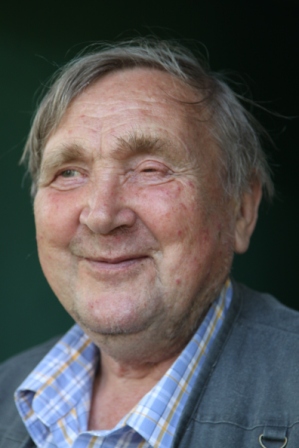
Sergey Khakhayev, 1938-2016

Sergey Khakhayev. Photo by Irina Flige

Sergey Khakhayev Has Died
Cogita.ru
December 5, 2016

Sergey Khakhayev, co-chair of St. Petersburg Memorial, died today, December 5, 2016. His funeral will take place on Friday, December 9.

Petersburg Memorial regretfully announces that Sergey Dmitryevich Khakhayev, co-chair of its board of directors, has passed away. Sergey Dmitryevich was admitted to Alexandrovsky Hospital with a massive stroke on November 13, 2016. This morning, we received word of his death. He never came out of the coma caused by the stroke. Sergey Dmitryevich was seventy-nine years old.

[…]

Sergey Khakhayev was born in Leningrad on September 24, 1938. He graduated from the city’s Technological Institute in 1960 with a degree in chemical engineering, and worked at the Krylov Shipbuilding Research Institute (Krylov State Research Center). Khakhayev was a leader of the Union of Communards, an underground Marxist group (aka the Kolokol Group, the Kolokol Magazine Group, and the Kolokolchiki) and co-authored the group’s program, “From a Dictatorship of the Bureaucracy to a Dictatorship of the Proletariat,” with Valery Ronkin. On November 26, 1965, Leningrad City Court sentenced Khakhayev to seven years in a labor camp and three years in exile. He served his sentence in Dubravlag and his exile in Ust-Abakan. Released in 1975, he was involved in the Soviet civil rights movement. Khakhayev served as co-chair of Petersburg Memorial, as well as on the Petersburg Human Rights Council and the Commission for the Restoration of Rights of Rehabilitated Victims of Political Repression in St. Petersburg and Leningrad Region.

Kolokolchiki, 1965-2015 (in Russian, with English subtitles)

The film’s co-director, Yevgenia Kulakova, wrote the following today:

“Sergey Dmitryevch Khakhayev died today. It is hard to believe he is no longer with us, because he was always in Memorial, and it seemed like he would be there forever. I cannot recall him ever missing a single event, rally, meeting or telephone call. I recently wrote about how, a couple of years ago, I went to the site of Timur Kacharava’s murder on November 13, quite late in evening. No one was left there except Sergey Dmitryevich. He stood there and stood there and would not leave. I was really struck by this. This year, Sergey Dmitryevich did not go to Bukvoyed bookstore [where Kacharava was stabbed to death by neo-Nazis in 2005]. When we got there, we learned from Irina [Flige] that he was in hospital.

“Sergey Dmitryevich was one of the Kolokolchiki. Getting to know them and working with them last year was an important event in my life. Here I’d like to quote part of our interview with Sergey Dmitryevich:

‘The fact is that when a person is still young, he has a thirst for justice. With age, the thirst goes away, but it exists in youth, at any rate, amongst a significant part of the populace. Some people could not care less from the get-go: nothing interests them except a half liter of vodka. But many people want justice, and they react badly to any setbacks and try to fight for justice, locally and more generally. Communist ideas are perennial ideas in this sense. Because this is the fundamental principle: the desire to make the world more just. When push comes to shove you use what comes to hand. Marx was what came to hand in our case.’

“The Kolokolchiki were born in 1962, when Sergey Khakhayev and Valery Ronkin, Communist Youth League members, public order volunteers, and Technology Institute graduates, wrote the pamphlet ‘From a Dictatorship of the Bureaucracy to a Dictatorship of the Proletariat.’ The pamphlet opened as follows: ‘The first thing that strikes a person entering adult life in socialist society is the enormous amount of lies and hypocrisy that have permeated our reality.’ This was followed by leaflets handed out among volunteers traveling to work in the Virgin Lands Campaign, at a rally of camping enthusiasts, and at Leningrad University. Then there were two issues of the magazine Kolokol. The third issue was never published: the manuscript was arrested along with the Kolokolchiki. Khakhayev and Ronkin got the worst of it: seven years in labor camps and three years in exile. Sergey Dmitryevich served his sentence in Mordovia, and his exile in Ust-Abakan in Krasnoyarsk Territory. He was joined in exile by Valeria Chikatuyeva, who had been released earlier. They were married, got a dog, and lived for three years in a tiny eleven-meter-square house. They and the dog moved to Luga, which was located beyond the 101st kilometer restriction zone around Leningrad. I could probably tick off on my fingers the number of times I met with them when the two of them were not together. They were always together. It was in Luga that Khakhayev and Ronkin wrote their last joint article, ‘Socialism’s Past and Future.’ Then came perestroika, and Memorial, with which Khakhayev was involved until his final days.

I see the Kolokolchiki as exemplars of camaraderie, friendship, love, and a zest for life. The way they talk about one another in interviews, the way they call each other on Skype from thousands of kilometers away, the way they miss and talk about their comrades who have already passed away. It is hardest for them right now. Hang in there, my dear friends.”

[…]

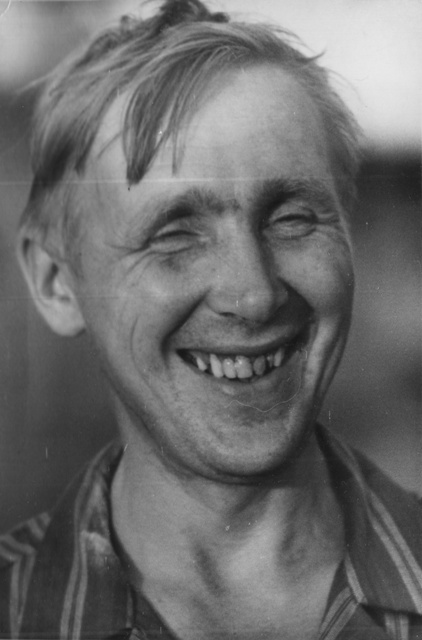
Sergey Khakhayev on a work brigade (before his arrest)
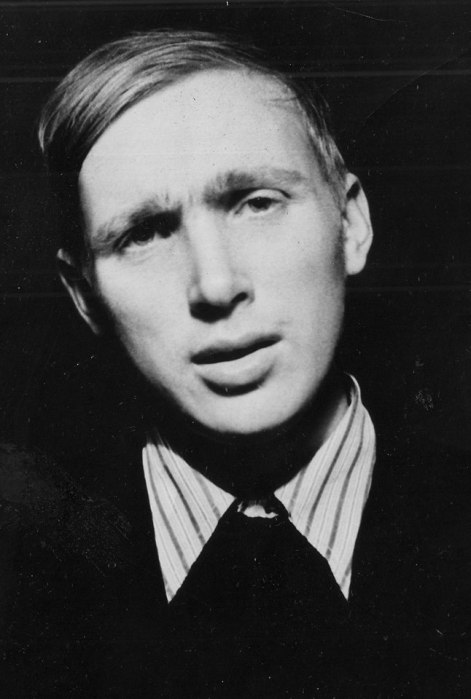
Sergey Khakhayev, 1960s
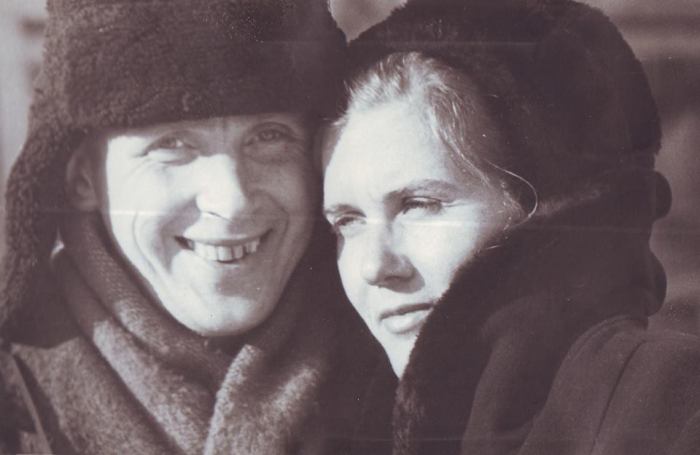
Sergey Khakhayev and his wife Valeria Chikatuyeva, Ust-Abakan, 1970s
Valery Ronkin and Sergey Khakhayev, Leningrad, 1976

[…]

Translated by the Russian Reader. All photos courtesy of Cogita.ru


Yekaterina Chatskaya: Saving Mental Healthcare in Moscow

Campaign Opposing Closures of Moscow Psychiatric Hospitals Kicks Off
Yekaterina Chatskaya
Action Trade Union
December 6, 2016

Psychiatric Hospital No. 15, Moscow. Photo courtesy of Action Trade Union

Moscow has been witnessing another round of “optimization” of public healthcare. This time, officials have targeted the mental healthcare system. At present, Psychiatric Hospital No. 12 (Kannabikh Hospital), Psychiatric Hospital No. 14, and Psychiatric Hospital No. 15 are endangered. Experts and relatives of patients have been sounding the alarm. The actions of the “optimizers” will harm patients and generate a new threat to society. In addition, hundreds of qualified specialists will lose their jobs. Yekaterina Chatskaya, a Moscow physician and co-chair of the Action Interregional Healthcare Workers Trade Union, has summarized the information the trade union has collected on the “optimization” of the psychiatric clinics.

The authorities have dubbed the virtual closure of three hospitals “reorganization measures.” In particular, the Moscow City Government has already issued a decree on the reorganization of Psychiatric Hospital No. 12 (Kannabikh Hospital). It will be merged with the Solovyov Neuropsychiatric Research and Treatment Center. The reorganization of the hospital, staffed, until recently, by approximately 300 people, has come amidst psychological pressure on employees and their “voluntary” resignations or, at best, their resignation by mutual agreement and payment of two months’ worth of salary. Management has been concealing from staff the fact that severance pay in the amount of two months’ average salary is owed to employees in the event of dismissal on grounds of redudancy. Moreover, employees retain their old jobs for at least two months from the date they were officially notified of layoffs.

Psychiatric Hospital No. 15, which employs more than a thousand people, has also been threatened with mass layoffs as part of reorganization. The Moscow Health Department plans to convert it into a neuropsychiatric residential care facility. G.P. Kostyuk, Moscow’s chief psychiatrist and deputy head of the municipal health department, announced these plans at a meeting with hospital employees. However, 16 doctors and 102 nurses will remain on staff at the residential care facility. The health department could provide no written guarantees that salary levels would be maintained or other staff members would be provided with jobs.

We already know there are plans to convert Psychiatric Hospital No. 14 into a hospital for patients with chronic mental illnesses. The Moscow City Government, however, has yet to pass decrees on the reorganization of Hospital No. 14 and Hospital No. 15.

At the meeting with the employees of Hospital No. 15, officials said the decision to close the hospital had been taken personally by Deputy Mayor Alexei Khripun. However, officials provided no other weighty arguments for the decisions, and the arguments they made were patently absurd. In particular, the officials claimed that the hospital, located near Kashirskaya subway station, is unable to serve patients from the city’s Northwest Administrative District, although the hospital has in fact been serving patients from northern and northwestern Moscow for fifty years. The officials were unable to provide specific calculations showing why this had suddenly become unfeasible. Nor did they respond to doctors who argued that a residential care facility would be unable to replace the shuttered hospital. By the way, residential care facilities, unlike hospitals, are part of the social welfare system, not the healthcare system.

It is telling that reforms of such a socially significant area of medical care in Moscow as psychiatry should be launched without broad public discussion. The only document on the topic I could find in the public domain was “The Development Concept of the Moscow Municipal Psychiatric Service: Expert Comments by the Moscow Health Department’s Research Institute for Healthcare Organization and Medical Management.” It was published on November 29, that is, after people had begun to be fired and information about the reorganization had gone public.

Fifteen years ago, the Russian Federal Health Ministry announced a policy of “decentralizing inpatient psychiatric care, strengthening its outpatient component, and employing inpatient-substitution techniques” (Russian Federal Health Ministry Decree No. 98, dated March 27, 2002, “On s Sector-Wide Program for Reorganizing the Psychiatric Care Network in the Russian Federation, 2003–2008”). Most experts agree that shifting some of the burden from inpatient facilities to the outpatient component is warranted. However, even supporters of the policy recognize that Russia’s outpatient and day patient facilities can hardly offset a reduction in the number of beds at psychiatric hospitals and hospital closures. In particular, in November 2010, Valery Krasnov, director of the Moscow Psychiatric Research Institute, told the 15th Russian Psychiatric Congress that “2010 was marked by a decrease in the number of neuropsychiatric treatment centers and a deficit of social workers.” The resolution of the 16th Russian Psychiatric Congress, which took place in 2015, stated, “During the period between 2005 and 2014, a significant decrease in the number and capacity of psychiatric institutions, both outpatient and inpatient, occurred.” In other words, there has been no shift of institutional capacity towards the outpatient component, but a reduction of all components of mental healthcare.

The Action Interregional Healthcare Workers Trade Union believes that in order to decide the future of these hospitals a working group involving members of the Moscow City Government and employees of the affected hospitals should be organized. Public hearings on the matter where all interested parties could speak their minds should be held. In addition, there is no doubt that healthcare workers who are being laid off should have written guarantees they will be given new jobs at the same pay grade.

The union warns that attempts to make employees resign “voluntarily” are unlawful. Under current labor laws, reorganization cannot be grounds for terminating someone’s employment. Employees may refuse to sign letters of resignation without fear of the legal consequences. Even when employees are promised transfers to other institutions, they should not sign letters of resignation. Transfers are effected through a supplementary agreement to existing work contracts. Otherwise, employers are freed from the obligation to maintain the same working conditions and wages at the new workplace.

Furthermore, even if an employer claims dismissal is due to downsizing, we must remember that downsizing of this sort is legally possible only after the reorganization (the merger of hospitals) has been completed. After the reorganization, the employer must notify employees of possible dismissal at least two months before layoffs and offer them all available vacant positions. After dismissal, employees are entitled to payment in the amount of the average monthly salary for two months, or three months, if they have registered with the employment bureau.

The plans to close the hospitals have sparked outrage. The first petitions against the closures of Hospital No. 12 and Hospital No. 15 were posted on the web in mid November.

On December 1, a pressure group of healthcare workers from the three “optimized” hospitals, relatives of patients, and leaders of the Action Interregional Healthcare Workers Trade Union held a joint meeting. They founded a temporary Committee for the Defense of Healthcare in Moscow and decided to launch a campaign. Today, December 6, relatives of patients will kick off a series of solo pickets outside the Moscow Health Department. A full-fledged picket outside the department has been announced for November 9 at noon. A protest rally has been scheduled for December 18 on Suvorov Square from one to four p.m. City authorities are now reviewing applications for the rally as part of the approval procedure.

Translated by the Russian Reader. Thanks to the Confederation of Labor of Russia (KTR) for the heads-up

#police #abuse #absurdity (Petersburg Police Abduct Alyona Romanova)

Alyona Romanova. Photo courtesy of Boris Romanov

Boris Romanov
Facebook
12:15 a.m., December 7, 2016

At 5:00 p.m., on December 6, police detained Alyona Romanova near her home. They have charged her with misdemeanors. Allegedly, Alyona did not carry out the police’s orders and did not obey their instructions to get in their car. Alyona is currently in the 59th police precinct station at 27 Yesenin Street.

The desk sergeant’s telephone is +7 (812) 517 5902.

If you can, please call the desk sergeant and ask how she is feeling.

I was at the precinct an hour ago. I brought her warm clothes and food. She has been put in solitary confinement. There is nothing in her cell: no blanket or pillow. We were not allowed to see each other. She is quite upset, of course.

This is a new tactic on the part of the police. Apparently, as the year comes to an end, they have to turn in reports and fill their quotas of closed cases. So they have already cobbled together one case.

There will be a court hearing on December 7. It might take place at the Vyborg District Court at 3 Santiago de Cuba Street.

I don’t know exactly what time it will take place. The lawyer said that will be decided at nine or ten in the morning.

#police #abuse #absurdity — with Elena Romanova.

Translated by the Russian Reader

Refugees

“Everything There Is like a Horror Film Now”:
Young Refugees Talk about War, Fleeing Home, and Living in Russia

Filippo Valoti-Alebardi
Furfur
October 19, 2016

Armed conflicts in the Middle East and instability in parts of Africa and South Asia have led to one of the largest immigrant crises since the Second World War. According to Frontex, 1.82 million refugees arrived in Europe in 2015, and another 173,761 people arrived in Europe by sea in the first part of 2016. Russia has found itself on the sidelines in terms of most migrant flows. Only one route, which runs through Russia’s land borders with Norway and Finland, was used for the transit to Europe. According to RIA Novosti, around 6,000 people traversed this route between October and December 2015.

The Russian Federal Migration Service (FMS) claims there are very few people with refugee status in Russia, less than eight hundred. Basically, people who seek refuge here can count only on temporary refugee status, which is valid for one year. But if a person manages to obtain it, no one can guarantee it will be renewed in the future. Furfur met with four young refugees and wrote down their stories of fleeing their home countries and living in hiding in Russia.

hasan

Hasan, a 20-year-old refugee from Syria

I left Aleppo three years ago. In 2012, the civil war came to our city. All the state institutions closed, except for some hospitals. I stopped going to school and almost never left my house. Everything was topsy-turvy in Aleppo then: government troops might be in one district, while the opposition was in the next. Life was hard but bearable. The financial crisis was not as bad as now, and my family had some savings. We were bombed, but not like during the Islamic State’s offensive. The electricity didn’t work, but we had a generator. The water was severely rationed, but it was enough.

Almost as soon as fighting broke out, I was forbidden to leave the house. I was not yet threatened with conscription, but my parents feared I could be recruited, killed or kidnapped, since I was the oldest son in the family. The other members of the family also tried not to leave our flat without a very good reason. We just sat at home and waited for it to all be over.

In the summer of 2013, an acquaintance of my father’s helped me get a work visa to Russia, and I left Syria. The person worked here in a sewing factory where there were many Syrians. He met me at the airport and took me to Losino-Petrovsky, where I still live. I immediately started worked in the sewing workshop. My father had been a tailor, so I already had some skills.

During the fifth month of my stay in Russia, I applied for refugee status. The [UNHCR] helped me prepare the papers for the FMS, where I had to have an interview. I was asked about my family’s financial state, whether I had served in the army, and about my political stance. A few months later, I received temporary refugee status, but it lasted for only a year.

I lived in Moscow Region and worked in the workshop. I tried to keep in touch with my family and friends. One day, a friend called me and said our house had been bombed and everyone had been killed. So only two members of my family, which had consisted of eleven people, have survived: my sister, who got married and lives in Istanbul, and I.

When my refugee status ended, I went to the FMS and asked for an extension. This time round, my case was handled by a different officer. He also asked me questions about my origins, financial state, and political stance, but then he asked why I had not gone to Iran, Turkey or Europe. I said I liked it here. I also told him that, over the past year, my mother,  brother, and all my brothers and sisters had died, except one. I was given a certificate, valid for one month, and then I was turned down. I was told the situation in Syria had normalized, that I was in no danger and could return home safely. But I had nowhere to return: my home and family were gone.

I was given three months to appeal against the refusal. I made four attempts to appeal it, but to no avail. Finally, I went to a Syrian man who said he had friends with pull. He promised to help me for 70,000 rubles [approx. 1,000 euros]. Ultimately, however, I was turned down once more, and never saw the guy again. Now I am in Russian illegally, and for the time being I have managed to avoid problems.

The police often stop me under the pretext of checking my papers, but they have a pretty good attitude to Syrians. Previously, when my papers were in order, they would haul me down to the precinct and take my fingerprints before letting me go. The situation has now become more complicated, and I often have to bribe them. It is usually not in Moscow where the police check my papers, but in Losino-Petrovsky itself. The local police are well aware of where the migrants live and work. They know our routes and when we get off work. So at least one or twice a month they detain one of us.

I rarely leave my own neighborhood. I work six days a week, twelve hours a day, and have almost no free time. But when I have the time and energy, I go play football with my friends, either in Noginsk or Moscow. I speak almost no Russian. At work, I get by with Arabic and a few words in Russian, since I work with Syrians, Tajiks, and Uzbeks. I sometimes chat on the phone with my sister in Turkey and with friends who have left Syria and gone to Turkey and Europe. I used to really miss my family and my home in Syria, but not anymore. I have lost my family and simply see no point in life. I even think it would have been better had I been with my family the day the bomb fell on my house. It would have been better to die with them than to hear about their deaths over the telephone.

yasmin

Yasmin, an 18-year-old refugee from Yemen

This is the second war my parents have fled. My father is half Vietnamese, half Yemeni. My mother is a Vietnamese Muslim. When the war between the US and Vietnam ended, they found themselves in a refugee camp in Yemen, which is where they met. My mom was seventeen then, the same age I was when I came to Russia.

Life in Yemen had always been hard for our family. Because my father speaks Arabic poorly and cannot write it, he could never count on a good job. On the streets, people would always point at us and say, “Look! There go the Chinese.” Everything got complicated after the 2011 revolution. Some government offices ceased to function, and foreign companies gradually left the country. A year later, the German firm for which my father worked as a driver closed its office, and he lost his job. It was hard to find another job. Ultimately, my older brother had to quit school to support us. He spoke the best Arabic in our family.

War broke out in Yemen in 2014, but we were affected by it only in 2015, when the heavy bombardment began. We lived in the city of Taiz, but our house was not far from a rebel camp, so the planes targeted our neighborhood. We took our things and left for Sanaa, the Yemeni capital, to stay with relatives. It was much safer there, and we livef peacefully for two weeks or so, but then the bombing recommenced.

In Sanaa, we lived near the Russian Embassy. After one of the bombing raids, we went there to ask for help. The embassy officials told us a Russian Emergencies Ministry (MChS) plane would be leaving [soon]. They explained where to go and when, but they did not promise we would be taken aboard. On the right day, we arrived at the appointed time at the airport, where we saw a team of [Russian] rescuers. They put our family on the plane. We had no visas, but we had passports. All the others who wanted to go had no papers and were left behind.

There were lots of Russian citizens on the plane with us, but there were also Yemenis, Syrians, and even a few Americans. We made a stopover in Djibouti, and there we were given the right to choose: stay behind or fly on to Russia. Since we had no family in Djibouti or other countries, we decided to fly to Russia. First, we were taken to a military airport, and then to a civil airport, where we had to wait for a consul. He gave us ten-day entry visas and ran off.

We did not know a word of Russian or English, we had no money, and we were hungry.  I don’t know what we would have done if it had not been for the Syrian who was on the plane with us. He spoke Russian and interpreted for us. Then he gave us two hundred dollars and ordered us a taxi to the Yemeni embassy. For some reason, the taxi driver took us to the Egyptian embassy, not the Yemeni embassy, and on top of that he made us pay him fifty dollars, not thirty dollars, as we had agreed. But it was a good thing the guard at the embassy spoke Arabic, since it was cold and we had no idea where we were. He called us a cab to take us to our embassy, and the next driver, an Egyptian, did not even charge us.

At the embassy, we were given a room where we lived for approximately two months. During this time we put together papers for obtaining refugee status, which we applied for at the [UNHCR] offices and the FMS. Later, the Vietnamese ambassador came to see us. He helped us get a room at the Hanoi Moscow Hotel, where we have been living ever since.

Our application for refugee status has been turned down twice. We have appealed the decision and are now awaiting the outcome. We need the status in order to be able to work and somehow organize our lives in a new place, because for over a year we have been living solely due to support from the Vietnamese. We have nowhere else to go. The war and bombing are still going on in Yemen, and there is almost nothing left of our home and neighborhood in Taiz. Everything there is like a horror film now.

didie

Didier, a 23-year-old refugee from the Democratic Republic of the Congo

Before leaving Congo, I lived in Kinshasa, our country’s capital, and was studying psychology. I left not because I was starving, but because I feared for my life. When my father died, I could not even go home to mourn and bury him. Instead, I am here, but I don’t know how much time I have left in Russia.

In 2015, I attended a rally against changes to the electoral system that would have enabled the president to serve another term. It was a major protest rally, for which a thousand and a half students and staff from my university showed up. The authorities responded by sending in the army, police, and large army trucks to kettle the protesters. The police and soldiers shot to kill. At some point, we were herded into a corner where nothing was visible, everything was covered in flames. Twelve people were killed between January 19 and January 25. Two of them were my friends. We were at university together.

The best thing that happened to many people involved in the protests was that they simply disappeared. I managed to hide from the police at the place of some acquaintances. I could not go back home or to the university, because secret service officers were surveilling the demonstrators. They were especially interested in the people who had incited university students and staff to take part in the protests. I was a ringleader, and at the time I was already a member of Congo’s second largest opposition party.  I did not want to leave the country, but my parents insisted. They were worried about me, since a lot of people were disappearing at the time.

Why did I leave for Russia? I knew people who had friends with connections and helped me get the necessary papers. This took a while, but the situation got worse and I had to leave urgently. I left Congo on a night flight after convincing the police I was somewhere else. In Russia, I had the contacts of the people who had helped me get a student visa. The first six months, I lived in the place of a friend who had gone home, and then I lived at the People’s Friendship University, where I met a lot of people and was advised to go to the Civic Assistance Committee. They helped me obtain temporary refugee status, which is issued for a year, and now I am trying to extend it.

There is a small Congolese diaspora in Moscow, but I do not communicate with them. I do not want to disseminate information about myself. I deliberately limit my dealings with other people, and I do not maintain contact with people from the Congolese opposition movement. I know that people in the Russian opposition are also detained, and I am scared my country’s authorities might send an official extradition request. In Congo, I would definitely go to prison.

Russia is a “white” Africa. People here live in greater safety than back at home, but you are also unable to assemble and protest. You fear the police, who help implement the policy of dictatorship. Nevertheless, in Russia, you can find a job easily, you can buy a flat, and get a loan. The government thinks about its people at least a little, but not in Africa. The regime has complete forgotten about people. The president works only to benefity his own family. He stuffs his pockets and takes holidays in the States and Canada, while the populace suffers. Only officials, the people who stuff his pockets, live well. They should all be in prison. God needs to descend and free my people.

People in my country continue to protest, but they are few and the police arrest them, including members of our party, which they are trying to bleed to death. Some of my comrades have left the country, while many have been arrested.

I would like to go back to Congo to fight for human rights and give people back freedom of speech and the right to vote. I want to give them the ability to speak their own mind freely. I can tell you that right now in Congo women are being raped, people’s heads are being cut off in markets, and people are being shot at.

More than ten million people have been killed in my country to date. It is the most dangerous country in the world for women: there are a huge number of rapes, and war is going on almost all the time. But if you dare talk about it, you are lost. Most of the people who can talk about it are in Europe. They upload short videos to the Internet and talk about the atrocities occurring in Congo, but if they went home they would be detained immediately.

And that is why I would like to tell Mr. Putin personally what is actually going on there. Our situation resembles the one in Syria right now, if it is not worse, but everyone talks only about Syria, and not about Congo. You white people in Russia, Europe, and the States, you are well aware of what is happening in Africa, but your governments would rather not doing anything about it. They only support the criminal regimes that rule our countries, getting money from them or investing in them. The whole world buys our diamonds: France, Belgium, and the US. Even you Russians are involved in diamond mining in Congo, which is always accompanied by war. Many people are afraid to talk about it, because they are afraid of disappearing. But I am not one of those people. I like telling the truth.
muhamed

Muhammad, 28-year-old refugee from Syria

I am from the city of Kobanî, on the border with Turkey.  I am a Kurd, and I left Syria five years ago, in 2011. I had just finished my military service when opposition rallies took place in Syria. It was all quite peaceful, and the situation in Kobanî was calm, but I sensed something serious was going to happen and decided it would be better to leave the country. I worked in the clothing industry, and a friend of mine invited me to Russia. I got help getting a yearlong business visa: that was how I ended up at the fabric in Noginsk. Initially, I came just to sit things out, but it has dragged on for five years, and there is no telling how much longer it will last. The first year I lived on a visa, and then I went to Egypt  to extend it. Subsequently, Egypt changed the rules of entry for Syrians, and I was unable to do the same thing a second time.

‏Meanwhile, Syria has shifted into a state of war. One of my little brothers was captured by Islamic State when he was traveling with other schoolchildren to take exams. He was freed several days later, but I lost contact with my relatives when fighting broke out in the Kobanî area. There were heavy battles near the city, and my family were forced to flee to Turkey. Some of my second and third cousins stayed behind to fight Islamic State. Ten of them were killed, and my brother was seriously injured.

‏All this time, I was working and living in Russia, trying to formalizing my status as a refugee, but I was not having any luck. I would come somewhere with papers, but I would be sent first one place, and then another. An appointment would be made for me, but then it would be postponed: I would be told to come back in fifteen days, and then in ten days. I was once told to come at nine in the morning. I came half an hour early, but to no avail. I was told the queue was already too long and I had better come the next day. But they could not see me the next day, since I had been in the previous day’s queue and had not shown up, allegedly. They toyed with me like this for several months. I decided to ask the [UNHCR] for help, but nothing changed. During the nine months I was going to the FMS, I was unable to file an application for refugee status. Finally, I gave up and stayed on illegally. ‏

I met a Lebanese man who promised to help solve the problems with my papers if I went to work for him at a construction site. I went, but my problems were not solved. Instead, the police caught us. They beat us up right at the construction site. There were even some reporters with policemen, but they were told to turn their cameras off. We were thrown on the ground and beaten on the feet. They beat us so badly I could not walk normally for five days or so. They wanted us to sign some papers. We did not know what was in the papers, because they were in Russian, but we were forced to sign. After that, they stopped beating us and took us to court. We were not provided with an interpreter and so we did not understand most of the proceedings. I do remember, however, that the judge tried to find out what was up with us. He could see we were in a bad way. But we were unable to tell him what had happened, and the policemen told the judge that we were just tired from working.

‏After that, I returned to the factory and started working night shifts, since there are fewer chances the police will catch you. However, I am still sometimes detained on the streets anyway. I always try and have money with me to pay the police off. Usually, I take a five-hundred-ruble note with me: that way they cannot take too much. But I rarely go outside. I work almost seven days a week, and I have no energy to do anything else after a shift of twelve to fifteen hours. I only sleep and work, and the money I send to my family: they need it more. I would like to be near them, but we Syrians now need visas to get into Turkey, and I cannot get one anywhere. Nor can I return to Syria. I have no one in Kobanî, and there is almost nothing left of the city.

Furfur thanks the Civic Assistance Committee and translators Igor Farafonov, Alexander Khodunov, and Muhammad Haled for their help with this article. Translated by the Russian Reader. Thanks to Sergey Abashin for the heads-up

Read more about the treatment of Syrian and other refugees in Russia:
Kotlas: Russia’s Bankruptcy Capital

A City of Bankrupts
Vladimir Ruvinsky
Kommersant Dengi
November 28, 2016

Kotlas, a district center in Arkhangelsk Region, will be one hundred years old in 2017. During the first half of the twentieth century, it was one of the main transit centers for political prisoners, but nowadays it is the capital of individual bankruptcies. There is no work in the city, which over the past ten years has become a local consumer’s paradise, and every fourth resident is up to their ears in debt.

In 2012, Kotlas resident Tatyana and her entire family, including her husband, daughter, and brother, took out a total of five million rubles in loans from banks. She asked we not reveal her surname, since her husband is unaware their daughter also took out a loan. As Tatyana says, they took out the loans not for themselves, but for a friend.

“I worked for two female entrepreneurs who sold clothing. We had known each other for something like twenty years. We would visit each other’s homes, go to each other’s birthday parties, and attend the weddings of each other’s children,” Tatyana recalls. “One of them, in fact, asked me to take out the loans because otherwise, she said, they would have to borrow at an interest rate of eight percent on the black market.”

Tatyana borrowed 1.7 million rubles at Trust, Tinkoff Bank, Home Credit, and OTP Bank.

“I worked for my friends selling luxury clothing. The turnover was good so I was not particularly afraid,” she explains.

Soon afterwards, her friends persuaded to take out additional loans for them. Her husband, daughter, and brother agreed to do this, borrowing 900,000 rubles, 1.8 million rubles, and 700,000 rubles, respectively. The deal was based on trust. Tatyana’s family handed the loan agreements over to the female entrepreneurs, and they paid back the loans themselves. This went on for two years.

“In 2014, the police came and searched our workplace. It turned out the women had been running something like a pyramid. They had been borrowing money on paper to purchase goods. They had not been buying anything, however, but had been cashing out the loans,” say Tatyana. “That is how we got in trouble, although we had not taken out the loans for ourselves.”

The banks demanded repayment of the loans. At first, Tatyana admits, she felt like hanging herself.

“But that is no solution. A woman I know hung herself over a loan. Someone shot himself. Well, if I hung myself, the debt would have been passed on to my relatives. So I got up and went to work.” Continue reading “Kotlas: Russia’s Bankruptcy Capital”

Back to Beirut

A Toilet for the Investigator
Tatyana Voltskaya
Radio Svoboda
November 30, 2016

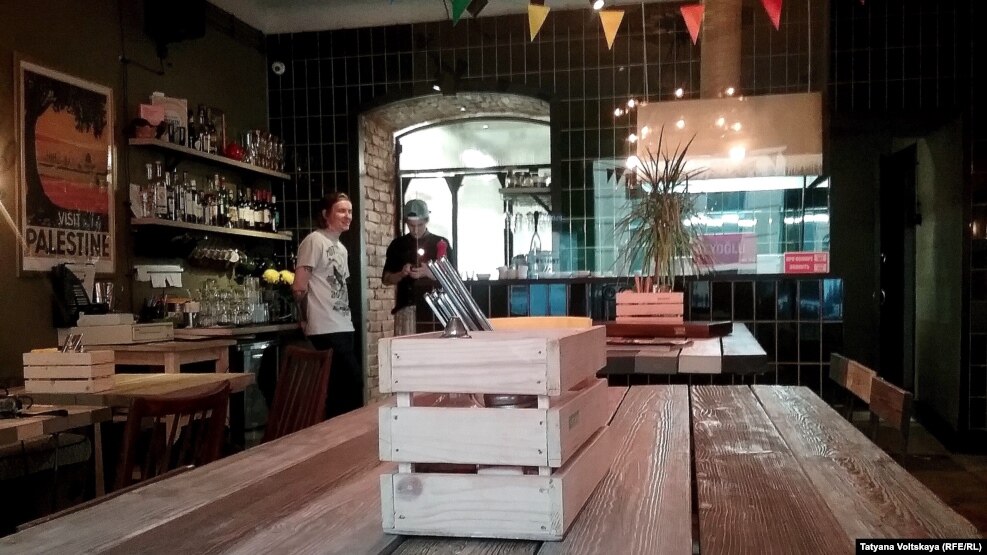
Inside the Café Beirut. Photo courtesy of Tatyana Voltskaya/RFE/RL

Criminal charges have been brought against the co-owner of the Café Beirut in Petersburg; on November 29, police searched her home. In September and October, the café was searched on several occasions by Investigative Committee, Rospotrebnadzor, and Emergencies Ministry officers.

The café believes the only cause of its woes is a casual patron who tried to use the establishment’s toilet last summer, but was turned away.

There is generally nothing wrong about popping into a café to use the toilet. The employees of the Café Beirut say they would never turn away polite, friendly visitors. But when an individual makes noise, swears, and might make a less than pleasant impression on diners, they do not see fit to let him in. Thus, this past July, they turned away a young man who, they say, behaved just this way.

On September 7, investigators, Rospotrebnadzor inspectors, and Emergencies Ministry officers raided the café and searched it. An employee recognized the young investigator leading the raid as the same young man who had unsuccessfully tried to use the Beirut’s toilet in summer.

Another search took place on September 23, resulting in the completely undocumented confiscation of the establishment’s cash register, computer server, order terminal, and charter documents, meaning everything they needed to stay in business. The café was closed for a whole week, but then it opened again, having suffered considerable losses, of course.

But that was not the end of the matter. On November 29, police searched the home of the café’s co-owner Elizaveta Izvozchikova, who has been charged with violating Article 238 of the Criminal Code (“Production, storage, transport or sale of goods and products, works or services that do not meet safety requirements”). According to Izvozchikova, the female investigator who led the search rang at her apartment at seven in the morning.

“She came to my apartment accompanied by an officer of the economic crimes department district office and two official witnesses. They served me with a search warrant, which made it clear to me that criminal charges had been filed against me under Article 238. The article says nothing about harming anyone, only about providing poor-quality services. To file charges under this article, it is sufficient to record violations of some kind, say, sanitation rules. We quickly fixed all the violations for which we had been cited and submitted a report to the Investigative Committee. After all, we opened just recently, in late February of this year. We did a major overhaul and replaced all the plumbing, sewerage, and electrical wires. The basement was in bad shape. Then we restored the historic storefront, made high-quality repairs inside, and installed new equipment in the kitchen. We wanted to do something good for people, feed them tasty food and give them good service. I am a designer by education, and I really wanted to make the café pretty. I am a responsibe person, so I tried to make sure everything was in order: that the fire extinguisher was certified, that the kitchen was clean, that we followed all the rules. But on September 7 we had our first inspection. The investigator from the Investigative Committee forced everyone outside and demanded we sign papers of some of kind without reading them. Otherwise, he threatened us with immediate closure and put a lot of pressure on my manager, who is fairly young.”

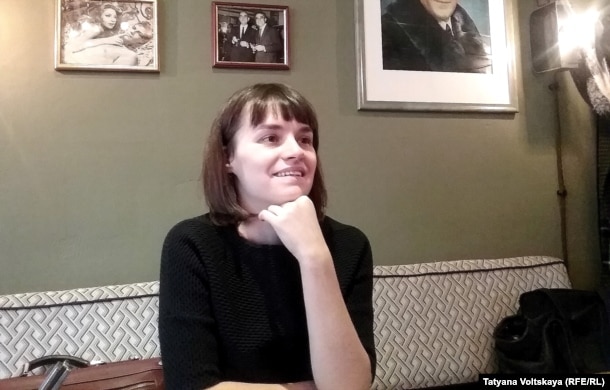
Café Beirut co-owner Elizaveta Izvozchikova. Photo courtesy of Tatyana Voltskaya/RFE/RL

I asked what the reason for the first inspection was.

“My internal investigation revealed that our manager had seen the young man who turned out to be an investigator: he had not let him use our toilet. We had guests, he had demanded to use the toilet in a rude way, waving his arms and cursing, so he was not allowed to use the toilet. The second inspection, headed by this investigator, took place on September 23. He confiscated the cash register and a bunch of other things. The investigation was then terminated. Later, however, the decision to terminate the investigation was annulled, the case file was submitted for an additional investigation, and another inspection was organized. Rospotrebnadzor and the Emergencies Ministry cited us for four violations. We immediately fixed two of the problems: we installed a missing washbasin and a germicidal lamp. But the other two violations were simply nonexistent. We were told our doors had to be at least one meter wide, and we had to have a second emergency exit. According to fire safety rules, however, wide doors and a second exit are obligatory only for premises larger than one hundred square meters, and if there are over fifty evacuees, but our place seats only thirty people. We explained everything to them and attached documents to our reports, including the cadastral passport, which shows we have only sixty-three square meters of space. We also requested that everything they had confiscated be returned to us, as they had nothing to do with the inspection. Instead of a response, however, criminal charges have been filed. The charges are based on those same two violations, turned up by the Emergencies Ministry, but I do not believe that the Emergencies Ministry officer was unfamiliar with the rules in question. The third violation consisted in the fact that, according to Rospotrebnadzor, we had no right to worked with unpeeled root vegetables; this requires a separate bath or even a whole room. So we ordered peeled root vegetables, meaning we started using prepared food, which we immediately reported to the authorities. But it made no difference at all. I was summoned for interrogation on November 29, but I refused to answer the questions in order to better familiarize myself with the charge sheet. So I will be going to the Investigative Committee on Monday, December 5. While the inspections were going on, we made huge losses. We were closed for an entire week, and many of our clients even now think we are still closed. Nothing like this has ever happened to any of my colleagues, and I continue to hope for justice. We have not violated any law. We are conscientious taxpayers and entrepreneurs who are trying to run a small business, and we do no harm to anyone,” says Elizaveta Izvozchikova.

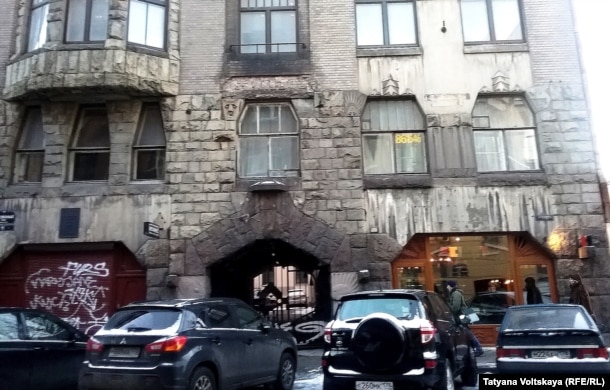
Restored historical storefront at the Café Beirut (right). Photo courtesy of Tatyana Voltskaya/RFE/RL 

Lawyer Boris Gruzd argues that criminal prosecution has not been used for its intended purpose in this case.

“I think that criminal charges are sometimes filed on insufficient grounds and used for other purposes, as a means of revenge, for dealing with undesirable persons. I think this is one of those cases. It often happens that, even when criminal law has seemingly been violated, it is extremely hard to file criminal charges. An enormous amount of effort is made to turn even obvious crimes into criminal cases. But here criminal charges have been filed out of thin air, so to speak. Because, when criminal charges are filed, aside from violation of the law, another important element is danger to the public. In this case, however, they have found fault with a telegraph pole, as the saying goes. I am sure you could find a dozen such violations in any small business and major state company. What public good has been violated that it is necessary to resort to criminal prosecution? It is a last resort that should be used very selectively and carefully, when other tools do not work. This is a classic case of ‘nightmarizing business.'”

I asked Gruzd whether there was any hope of punishing those who spin such cases out of thin air.

“It is necessary to take steps in this direction. It produces a particularly sharp contrast with the notorious case of the women who was murdered although she called the police because her [ex-]partner had threatened her. But the dispatcher, the best beat cop in the city, told her that if and when she was killed, they would come and describe her corpse. Here, the Investigative Committee, whose remit is grave and especially grave crimes, has pounced on a café. So they have the time and the energy to deal with this nonsense?” notes Gruzd.

Alexander Kobrinsky, a member of the fifth convocation of the St. Petersburg Legislative Assembly, says the persecution of the Café Beirut’s co-owner is not something out of the ordinary in Russia.

“Recently, everyone watched the video in which security guards tried to keep a drunk man, who turned out to be a police officer, from entering a café. A while later, the riot cops arrived and detained the security guards, who were just doing their jobs. But the situation is understandable, because law enforcement officers consider themselves a superior caste, endowed with special rights, including the right to cook up criminal cases as a means of personal revenge. It is quite widespread, since the law allows them to file criminal charges, suspend business operations, and confiscate tools, computers, whatever. Maybe the charges will be dropped a year from now, but getting a business back up on its feet after such shocks is not always possible. That is why, by the way, prohibiting the detention of people involved in commerce and seizure of their property has now been actively discussed. What point have we reached to openly admit that the vast majority of criminal charges filed against businessmen in Russia is based on mercenary motives and revenge! Clearly there are thieves and con men, but it turns out that they constitute the minority of defendants in such cases. Such is the system and such is the law. We see that a completely peculiar set of circumstances has been established in Russia. I don’t know, maybe Putin was speaking sincerely about the investment climate, but there is no longer any way of manually managing hundreds of thousands of these minor strongmen. In Russia, every police capitan, assistant investigator, and junior assistanct prosecutor is a low-level power broker. They are used to living this way: they have been living this way for a quarter of a century. And they do not want to live any other way, no matter what Putin has said,” argues Kobrinsky.

According to Kobrinsky, this mindset—that I am a landlord, and you are my slaves—is very difficult to eradicate. One has the impression that the head of state seemingly has no leverage over Russia’s law enforcement system, that it must be completely dismantled and reassembled anew.

On November 29, Elizaveta Izvozchikova was released on her own recognizance.

Translated by the Russian Reader