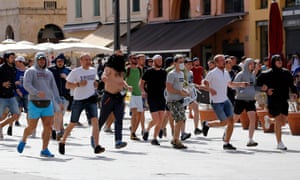
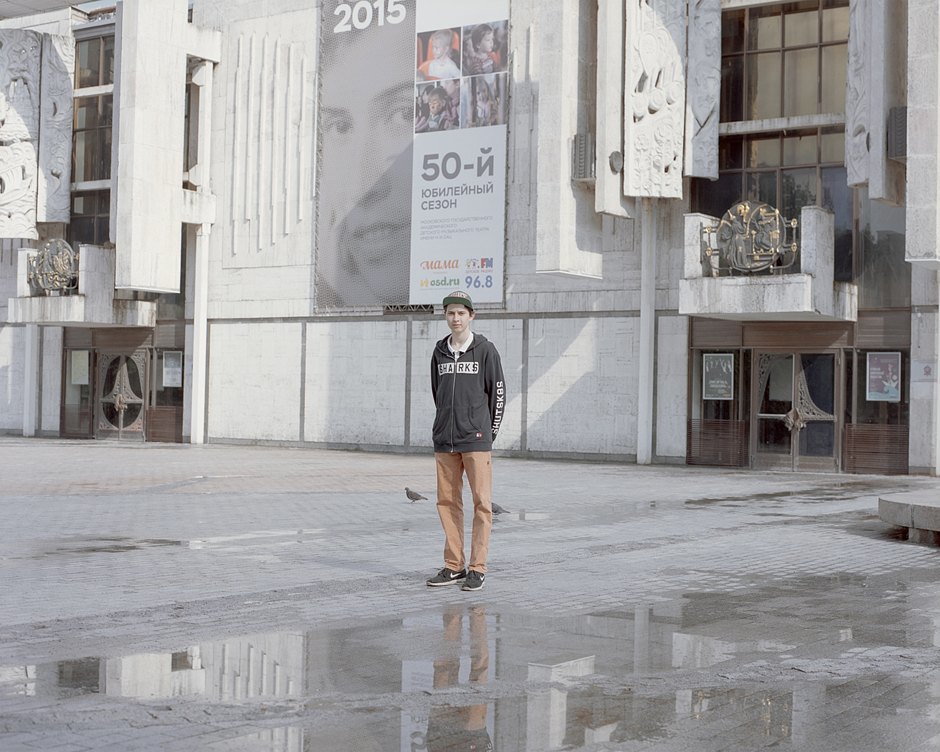
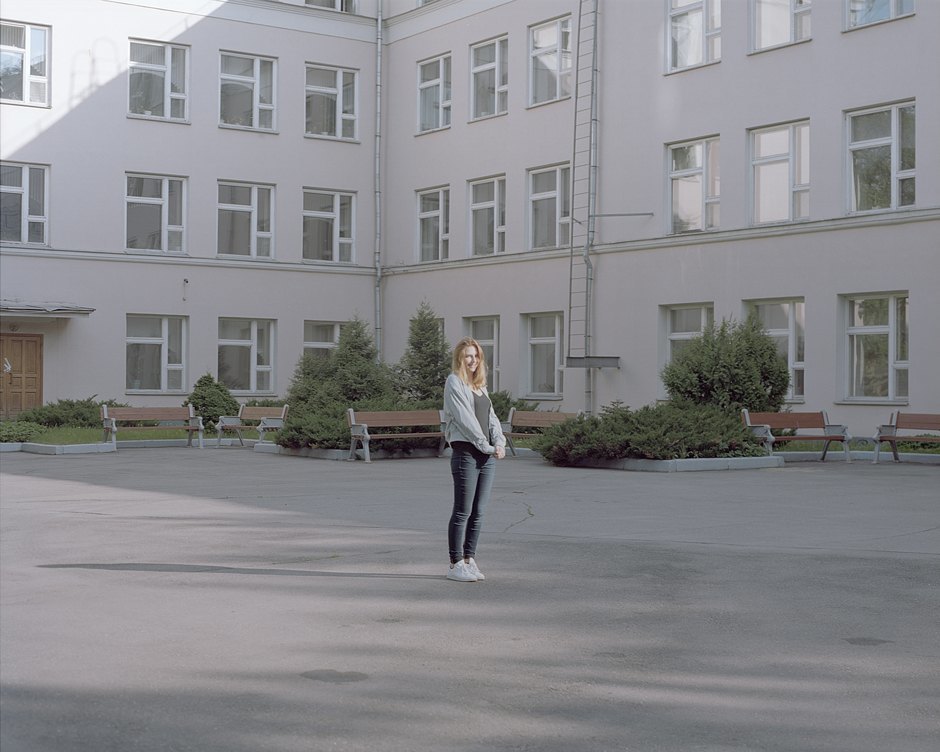
Young Russian football fans at the European Championships in France. The youngster on the far left, draped in a Russian flag, is a wearing a t-shirt that says, “You’re all fucked. T-14 Armata.” The T-14 Armata is a new Russian battle tank that made its debut during the 2015 Victory Day parade in Moscow. Photo courtesy of Andrei Malgin
It’s not cheap entertainment, especially during a crisis, to travel to France. And well, well, people who are far from poor arrived there and made a bloody mess. This is how the Russian elite has a good time now, fueled by alcohol and Great Russian chauvinism, with encouragement from Russian TV.
—Alina Kluchevskaya, June 12, 2016 (Facebook)
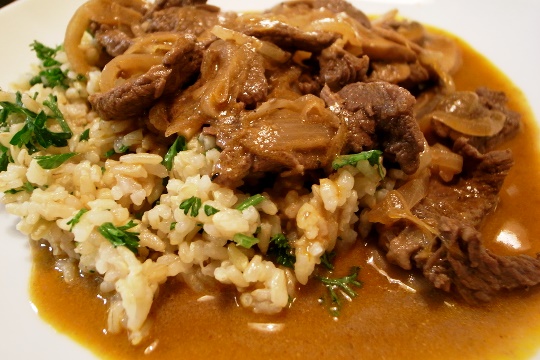
“But People Cannot, Excuse My Expression, Chow Down Normally” The Russian government concludes beef too expensive for Russians
Irina Shcherbak Znak
June 9, 2016
“Due to a shift in demand for cheaper produce, beef will taken on the characteristics of an expensive niche product, so massive support of this segment is inexpedient,” says the report.
The report likewise notes that the anti-sanctions have had no negative consequences. On the whole, however, “downward trends in the quality of consumption have been observed, including in response to the population’s falling real incomes.” This, the authors of the report argue, takes the shape of “switching to goods in a lower price segment.”
“The situation in the economy does not allow for a quick recovery of demand in produce markets, which will be accompanied both by a further shift in demand towards the cheaper segment in each segment [sic] and by a shift in demand from fish to meat, as well as the revival of significant subsistence production for personal consumption in the fruit and vegetable sectors,” says the report.
“We got up off our knees and have been threatening the west. We are in a confrontation with America, you see. We are paying for the restoration of Palmyra. 30% of the budget goes to defense spending. But people cannot, excuse my expression, chow down normally. In the next report, the government will probably recommend moving beef to the desserts and sweets section,” commented opposition politician Alexei Navalny.
According to a recent study by the Analytical Rating Agency, consumers currently are showing a marked preference for bread, potatoes, and dairy products over vegetables, fruits, fish, seafood, and alcohol.
“In the future, a further shift in consumer preferences towards cereals, flour, oil, seasonal vegetables, and sugar is possible,” the analysts predicted.
The Russian food embargo was introduced in August 2014 in response to sanctions against Russia [sic] by western countries. A ban on the import of beef, pork, fruits and vegetables, poultry, fish, cheese, milk, and most dairy products from the US, the EU, Canada, Australia, and Norway was imposed. Subsequently, Russia has combated the re-export of banned European produce, introducing restrictions on imports from Belarus and Serbia. In addition, on May 1, 2015, the import of peanuts and, on May 26, 2015, live poultry from the US was banned. On June 4, 2015, imports of canned fish from Latvia and Estonia were banned.
On June 24, 2015, Vladimir Putin signed a decree extending the food embargo until August 5, 2016.
Translated by the Russian Reader. Thanks to Valentin Urusov for the heads-up
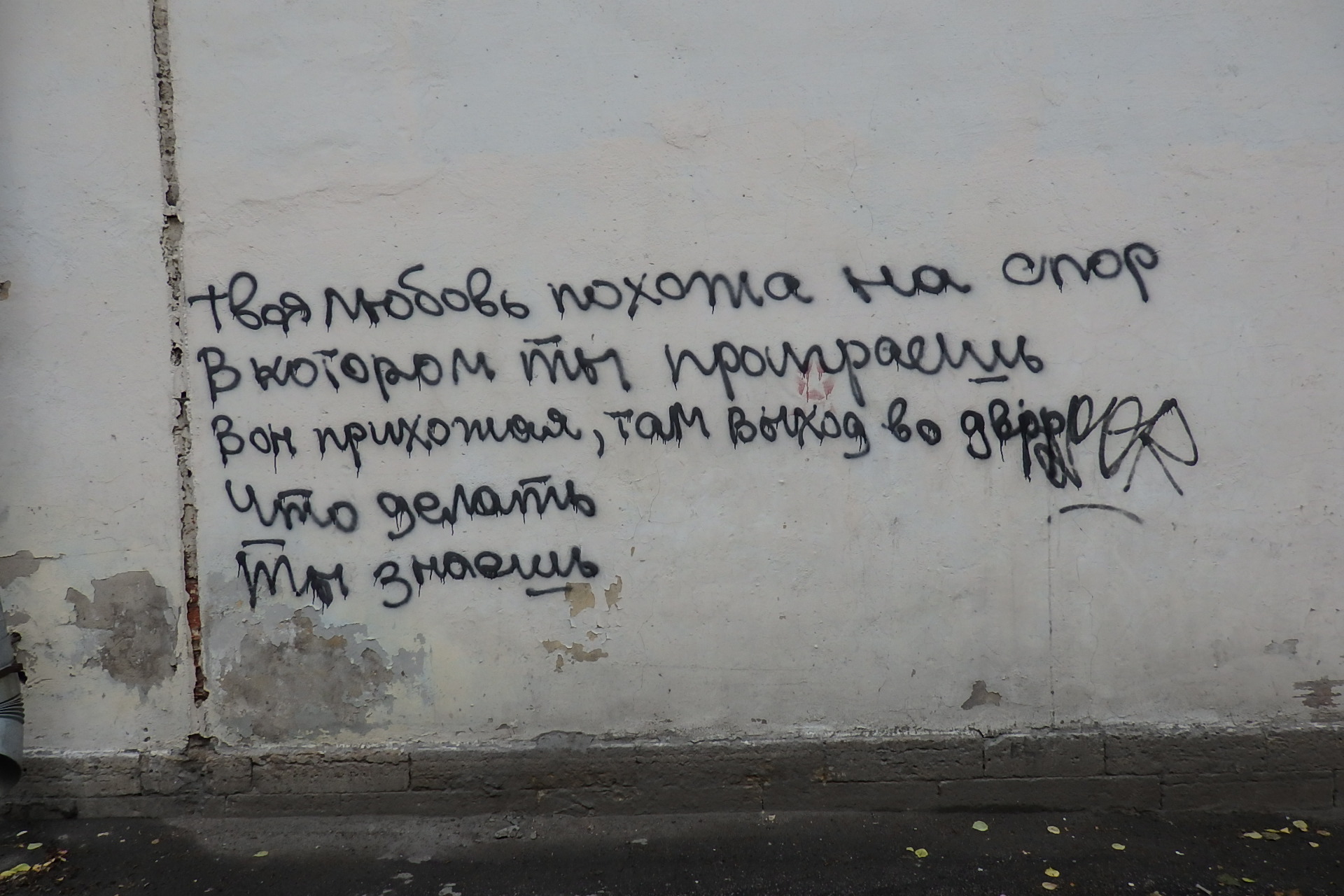
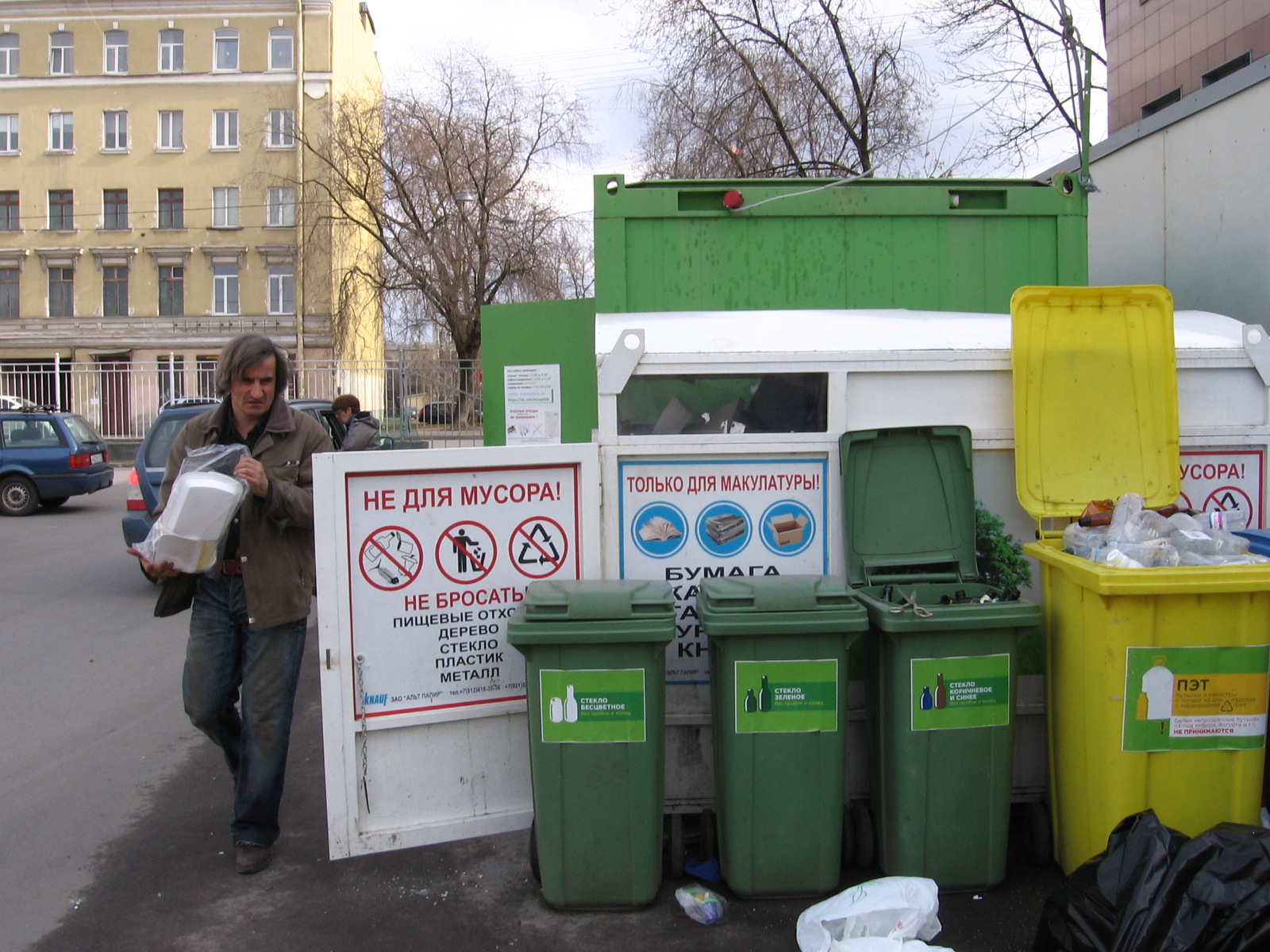
“Your love is a like an argument, / in which you lose. / The hallway is over yonder, the exit into the yard is there. / You know / what to do.” Petrograd, June 5, 2016. Photo by the Russian Reader
Trampled by the Madding Herd
Darina Shevchenko 16-year-old Gleb Astafiev is being tortured in a psychiatric hospital because of his picket in support of Pyotr Pavlensky Radio Svoboda
June 11, 2016
In late May, Gleb Astafiev, a 16-year-old resident of the village of Ketovo in Kurgan Region, held a solo picket in defense of artist Pyotr Pavlensky, then on trial in Moscow for setting fire to the doors of FSB headquarters. The young man sewed his mouth shut, grabbed a placard on which he had written the inscription “Pyotr Pavlensky’s action was a replay of Varg Vikernes‘s famous gesture,” and stood next to a store in downtown Kurgan. This was a reference to Pyotr Pavlensky’s first action, Seam (July 23, 2012), in which the artist sewed his mouth shut and took to the streets of Petersburg with a placard that read, “Pussy Riot’s action was a replay of the famous action by Jesus Christ.”
Astafiev was taken to a police station, and then sent to the Kurgan Regional Neuropsychiatric Hospital.
On the day Pavlensky was released, Astafiev was able to access the Internet for the first time during the thirteen days of his incarceration at the mental hospital and contact the outside world. He told Radio Svoboda how he had wound up in the hospital and what was happening to him.
Gleb, who sent you to the psychiatric hospital?
After the police detained me when the picket was over, my mother talked for two hours with them. I think they did a number on Mom, because she came back for me accompanied by an ambulance crew, and I was hauled off to the looney bin. My mom thinks I am crazy. She is convinced that normal people don’t sew their mouths shut and take to the streets bearing placards. Mom is a simple woman, and she doesn’t understand my action was an artistic metaphor. The closed mouth is a symbol of the absence of freedom of speech in Russia. My mom watches TV too much, so her mind has been warped by propaganda. It’s very hard to explain the message of my action to her. Mother did not support my creative experiments, but after the action she got angry at me. She doesn’t even bring food to the hospital. Grandmother, on the contrary, has been treating me better since the action. Now she sympathizes with me. The relatives are not planning to spring me from the nuthouse for the time being. The doctors have not said anything to me about the subject.
You sound very calm and confident. How do you feel? Have you been forced to take meds?
They tried to vegetate me with pills, but I spit them out. The first five days I was held in the special supervision ward. They tossed me in with the worst crazies, but I was forbidden to leave the ward. I was in there with eight oldsters. Three of them rarely showed any signs of life. The other five screamed at night, beat the floor with their fists, and raved. They tried to force me to kowtow: to wash the floor and clean up. I refused. I am currently under routine supervision, but I cannot leave the wing.
Do you know that Pyotr Pavlensky has been released? Do you regret you wound up in the mental hospital because of your action in support of the artist?
Of course not. I am very glad for Pavlensky! Maybe it was thanks to the support of different people, including me, that he was released. The regime really doesn’t like people like Pavlensky, because a real actionist is a free spirit and openly declares it. I think I did my bit for free speech with my action, which was, of course, a reference to Pavlensky’s actions.
What were your feelings when you were standing there alone holding a placard, surrounded by strangers who were probably aggressive to you? Did anyone support you during the action?
I thought up and did the whole thing myself. My action was entitled F.P.P. (an abbreviation for “Free Peter Pavlensky”). Passersby reacted differently. Mainly, people were surprised. There were lots of riffraff there. One creep swore at me at the top of his lungs for twenty minutes. Some people came up to me and had their pictures taken. There was an old couple who stood next to me the whole time. Once, the old woman came up to me and said, “You’re a fool. One man does not make an army.” The old man periodically yelled loudly, “Look, people! He is holding opposition placards!” I ignored all of it.
Around thirty minutes after I started the action, two grown louts in black vests (security guards, apparently) came out of the Pushkin Shopping and Entertainment Center. One of them jumped me and tried to grab the placard. I wouldn’t give it up. A dude who was around twenty saw the scene from the window of his car. The fellow jumped out of his ride and told the guard to leave me alone. It’s a pity that many people don’t understand the difference between art and hooliganism and madness. Actionism is lovely! I really love actionism, especially Viennese actionism.
Why are you able to see the difference?
Hard to say. I’m an ordinary schoolboy from a simple family. I read a lot, especially science fiction. I think a lot about what’s going on with my own head. I want to have a vivid, interesting life, not a life like the majority’s: home, work, and television. I can’t talk anymore. I see the medical staff coming.
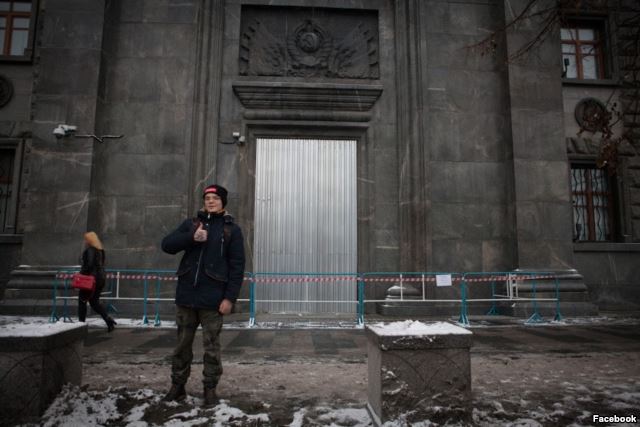
Gleb Astafiev standing next to the door at FSB headquarters that Pyotr Pavlensky set on fire
Gleb Astafiev’s action has sparked a fierce debate among Kurgan Region residents on social media. Some Internet users have admired the young actionist’s audacity and honesty. Others have written that Astafiev is as abnormal as Pavlensky. Astafiev has said he is uninterested in the negative feedback of philistines. He is suffering from a lack of communication most of all now. A girlfriend has been visiting Gleb at the hospital. She asked that her name not be printed, because she did not want to attract any public attention.
“That hospital is a hellish place: closed, stuffy, and miserable. Gleb is now all alone there. He is very depressed: almost no one comes to visit him. He doesn’t even have anything to read. Gleb asked me to buy him science fiction books. Gleb’s pupils are dilated: apparently, they are medicating him. I don’t know Gleb that well. Before his incarceration in the hospital, we had seen each other only five times. We met by chance at a concert by a local band. He wanted to have his picture taken with me and my ex-boyfriend. Then Gleb seemed like a cheerful, carefree, very dear and open boy, a young idealist with a dream. He and my ex-boyfriend then traveled to a Krovostok concert. A bit later, I realized that Gleb was very independent and intelligent, and had a very strong spirit for his age. Even today at the hospital he didn’t complain and didn’t ask for anything special except a couple of books and a bit of food. I know nothing about Pavlensky, but Gleb had the right to support him. I am surprised his mother sent Gleb to the hospital, but he is definitely not a whacko, as the majority thinks. The opinion of the herd is often wrong.”
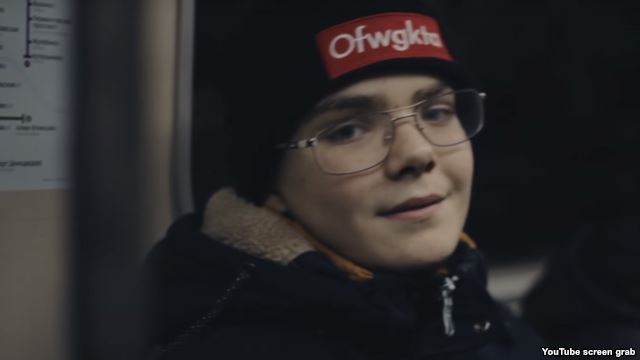
Pyotr Pavlensky is not the only artist whom Astafiev has tried to support. In November of last year, the team at the news website Mediazona shot a documentary film about Astafiev. The reporters there were touched by the story of a young man who had borrowed money to travel from his village to the trial of the band Krovostok. In November 2015, Yaroslavl Regional Court considered rescinding a district court’s decision to ban the group’s songs and block its website. The trial resembled a comedy with a happy ending: the court took the side of the musicians. The members of Krovostok liked Astafiev so much that when the trial was over they took him along with them to Moscow for a big concert.
Margarita Filippova, photo and video editor, Mediazona:
“We were making a series of documentaries about the Krovostok trial. I noticed a long commentary by Gleb on Instagram. He wanted to know when the next hearing was and whether he could come to Yaroslavl to get the autographs of the guys in Krovostok. The photographs in Instagram initially made him look too eccentric. But when we saw him at the train station, we realized he was a very modest, friendly guy. That was when it occurred to me to show this absurd trial through the eyes of a touching 16-year-old boy who made the long trip from Kurgan to support his idols. Gleb is like a kid from another world, a world distant from our reality where we lazily follow insane trials on our iPhones, sighing and voicing our dissent, at best, on Twitter.
“Gleb sees the world like an artist, but at the same time he has a very rational attitude to reality. He has a good sense of the country in which he lives, and he really wants to change his life. I’m sure it will work out for him. Gleb feels responsible and concerned about other people. When I was sixteen I wasn’t worried about protesting artists, and I sure didn’t know what a court trial was.”
Zarina Kodzayeva, camera woman, Mediazona:
“Gleb is a very independent and open person. It seemed to me that Gleb didn’t have a drop of the infantilism you would expect from a teenager. He argues things sensibly and behaves like an adult. He and I chatted a lot when we were shooting the film. I found it very interesting to listen to him. Gleb writes things himself. When he speaks, you can tell he loves the Russian language. I got the sense this kid believed in the power of deeds. It really was important to him to support Krovostok and Pavlensky. One of the most important questions in documentary filmmaking is who can be a main character, the hero, and who cannot. Aside from the context, which might turn into a story, there is always an intuitive understanding that probably has to do with a person’s energy. I think Gleb is an absolute hero. And now he continues to prove it with his actions.”
Translated by the Russian Reader. Thanks to Comrade AM for the heads-up. Photos courtesy of Radio Svoboda
“You’re a Future Warrior!” Gender Stereotypes in School
Afisha Daily talked with teenagers from different cities who disagree with traditional gender roles Afisha Daily
June 1, 2016
Lena, 16, Perm Territory
I started thinking hard about violations of rights a couple of years ago when I accidentally happened on a [social network] group featuring the stories of young women. The things they told about were horrifying: rape and domestic violence. But the criminals had not been punished because the police had found no evidence of crimes or no one had believed the young women. I wondered what had happened to justice if such egregious crimes went unpunished.
Since then, I have noticed more often the swinish behavior of males towards females, which is apparently considered the norm in our country. Men whistle at young women as they walk by, and they grope them just because they feel like it. Young women usually just put up with this.
I recently faced a similar situation myself. I like to dress nicely: not for anyone else, but for myself. One fine day, when I was walking downtown in a short skirt and high heels, an unpleasant elderly man touched my leg. My first reaction was shock. Nothing like that had happened to me before. I could not even react, and the man was able to get away. The outrage I had thus not been able to express swirled round in my head for the rest of the day. But it was a lesson to me. From now on, I will know how to behave in such circumstances. If something like that happens, I will try and stop the person from doing it, and then reason with him.
I often notice the unequal treatment of boys and girls at vocational school. We have only three boys in our group, but usually only one of them comes to class. There have been times when I was the only one to raise my hand to answer a questions, but the boy was picked to “take the rap for everyone,” because “the stronger sex must protect us.” During geography class, we learned about the unequal salaries of men and women for the same work. Someone shouted, “Serves them right!” The others laughed. In our nearly entirely female group no one voiced her disagreement. Was I really the only one who thought it was unfair? Back in high school, I was amazed when female teachers would say the main thing for girls was finding a good husband, while doing good in school was another matter.
I have also encountered injustice in the social networks. For example, there was a survey question: who should be the head of the family? The possible answers were “the man” and “both spouses are equal.” “The woman” was not even considered as an option, and more than half the people who responded voted for “the man.”
I am quite glad my parents really are equals in our family. Neither of them orders the other one round, and there is certainly no use of force. But I recently had an unpleasant conversation with Mom. It was explained to me that I would be a woman, and I would have to find a better half of the male sex (that was obligatory!) and have children, because it was, supposedly, my destiny. When I asked for arguments, I was told that was the way things were.
You cannot escape from the patriarchal mindset. We live in a country where ordinary life is closely bound up with the church and traditions. It is as if everyone has forgotten that ours is a secular country. I have the sense that our authorities judge people according to the Domostroi, which says you can beat your wife.
Some young women do not respect each other. As long as men see this, they will go on thinking they can treat them disrespectfully.
Mark, 17, Ivanovo
When I got fired up by feminism, many people thought it was really strange, because I was a boy. My outlook today is that I am against discrimination on any grounds. A lot of things have changed about me, but very little has budged in my environment.
It’s silly to deny the “adult” world is dominated by gender inequality. But things are worse in the world of kids, who have stereotypes and attitudes foisted on them. We are brought up on the standard system, which says that boys must be strong and are not allowed to shed tears, while girls must be dainty princesses.
School often abuses its right to educate children. It all starts with the school uniform. Your appearance, one of the most accessible forms of self-expression, is strictly regulated by other people. Then there is the division into “M” and “F.” Girls are taught to cook in home economics, while boys learn to be carpenters in shop class. Personally, I found it terribly offensive I was unable to learn to cook something tasty, although I consider it a wonderful occupation. Instead, I had to do stupid work that nowadays is done by wage workers for money. In physical education classes, we were divided into strong kids and weak kids. The boys, of course, were automatically the strong kids, so the physical education teacher would always be screaming at us, “Don’t give up! You’re a future warrior! Who is going to protect your wife?”
I felt less of this pressure in high school. Maybe it was because the teachers thought we had turned out “right” by then?
It is a touchy situation with friends. They have been brainwashed: the stereotypes are deeply rooted. They don’t want to see the framework into which they have been driven. They snap at me when I try to take into account the opinion of both boys and girls. As if our personal lives were already prescribed by someone in advance, and everyone follows these instructions.
Things are different at home. Everyone is family, and there is no one to fight with. My parents, who were raised in the seventies, project their gender attitudes onto me and my brothers. But can you blame them for this? My father sees us as future businessmen, entrepreneurs, and holders of high office.
Some might say that only in this way can we save humankind and a normal society. But who defined these standards, and why can’t we violate them? Nowadays, people have suddenly taken it into their heads to preserve certain truths. But if you take a look a history, you find that the “truths” have always been different.
I see feminist and similar ideas as a way out. I think activists should bring these ideas to the schools. Education has to be changed, not radically, but gradually. That is the only possible way to educate a society in which there will be no inequality.
Maria, 17, Transbaikal Territory
I live in a military town where nearly all the families consist of a wife and a husband in the military. The head of such families is the husband. He is considered the protector, and the woman is obliged to stay at home and do all the household chores. There are not so many jobs here nor any chances for self-improvement, either. These families have not even heard about equality. If the topic comes up, the conclusion is always the same. The husband is the breadwinner. The wife stays at home, meaning she doesn’t get tired, so she has no reason to pretend she is oppressed.
Having seen their fill of this, half of the boys definitely want to go into the military. It isn’t hard for them to achieve this goal. These fellows make it known to their girls right away that they should wait for them to come home from obligatory military service. And then, at the drop of a hat, they will have to give up their studies and their jobs and move with them to a godforsaken town to start their new careers as maids.
I have been trying to convey to others (including at school) that this is abnormal. Everyone takes it as a joke. The worse thing is that the girls have the same reaction as the guys. It’s a mystery to me why women don’t recognize this oppression.
I think that women’s rights are systematically violated just because feminism is a secret club spoken about in whispers, and even then not everyone gets to hear them. If all the stories about rape, abduction, and beatings were made public, everything would be a lot better. Women would give a lot more thought to the fact that such a number of crimes is not just a coincidence.
Nastya, 17, Minsk
When I was thirteen or fourteen, I wondered about all the gender stereotypes around me. I couldn’t understand at all why people encouraged this, and I fought back against equality, not even knowing what feminism was. When I found out there was such a movement I immediately supported it.
School is full of gender stereotypes, and that is sad. School should be a place where not only maths and history are taught but also respect. Even the teachers support inequality, to say nothing of the students.
Recently, our biology teacher told us, “If a girl says no, she means yes. Girls are all like that.”
And our home room teacher, a women, ended a public lesson on the bravery of Belarusian women during the war years by saying, “The point of a woman’s life is to have a family and raise children.”
She is a fairly religious woman. She is always saying that girls must be weak and bestow their beauty only on their husbands.
Once, in class, I said women were not obliged to have kids.
A male classmate replied, “If a woman doesn’t have kids, then what is she good for?”
The whole thing is sad.
Anton, 17, Moscow
Until the tenth form or so, I was dead set against modern feminism. I thought it was a total profanation and perversion of the suffragette movement. I changed my mind after meeting feminists and realizing the movement for equal rights was still relevant today as a means of combating domestic violence, rape, and discrimination.
Some girls might make fun of the reluctance of male classmates to go and serve in the army. They might voice incomprehension and ridicule. Personally, I haven’t witnessed such instances. What I saw has been limited to friendly teasing.
Teachers can sometimes have the gall to say boys should do physics, while girls have no need of it. That is a matter for their own conscience. Especially delusional persons have demanded that schoolgirls wear high heels, but that has led to nothing.
The stories my female classmates have told me have once again convinced me of society’s narrow-mindedness. Everyone already knows the list of stereotypes: hysterics and demands to “give us grandkids,” restrictions on socializing with the opposite sex, and insults based on a person’s sexual orientation.
Disrespect for one’s own children, students, and simply people, the rejection of any opinion except one’s own own, and fear of new things are just a short list of the ailments that have afflicted our society.
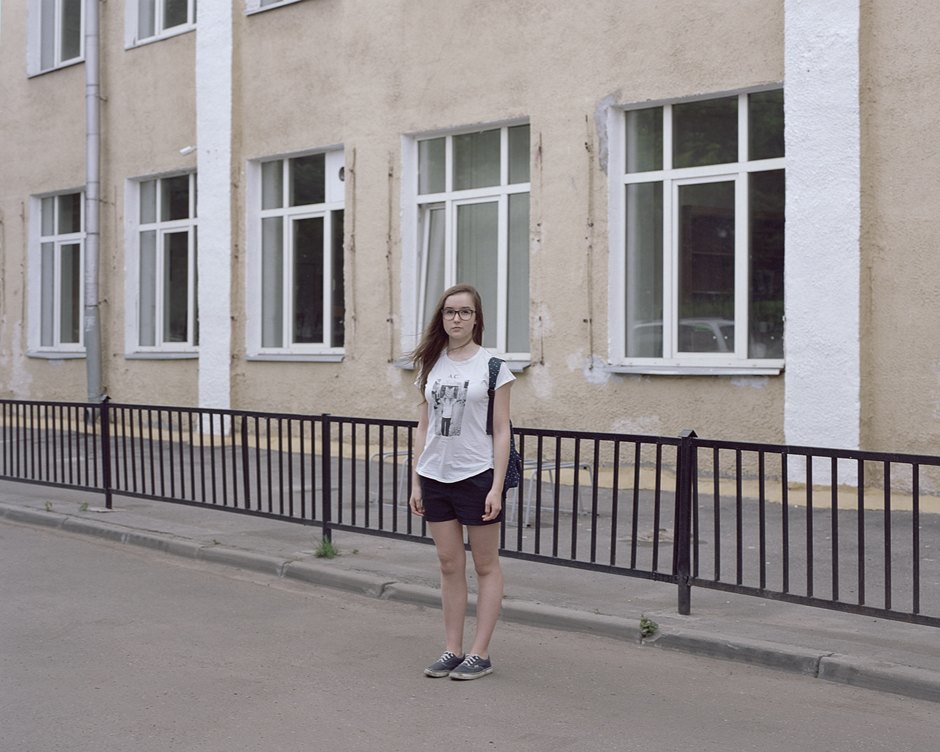
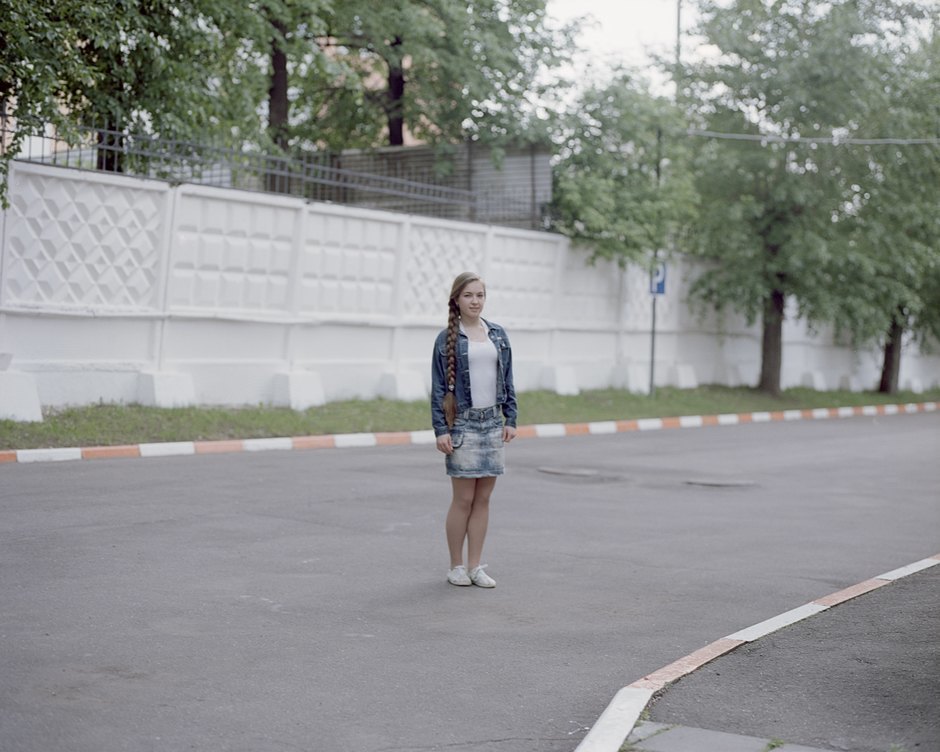
Translation and photo by the Russian Reader. See my previous posts in this occasional series on young people in Russia today and the moral panics generated around them by the media, politicians, and the public.
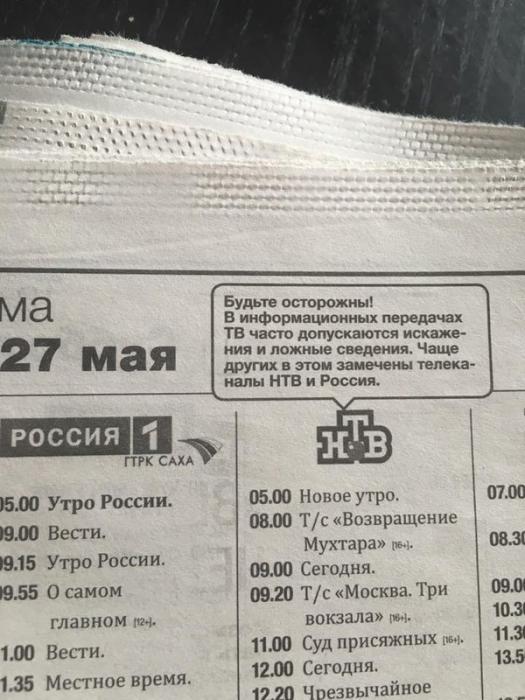
Warning in TV listing next to NTV logo: “Be careful! TV news programs often commit distortions and false information. This tendency has been most often been remarked on the channels NTV and Rossiya.” Photo courtesy of mstrok.ru
Hygienic Modification Regional newspapers warn readers about “false information on NTV” Grani.ru
June 8, 2016
Beginning June 8, up to a hundred regional newspapers, most of them members of the Alliance of Independent Regional Newspapers (ANRI), will publish in their TV listings a warning next to the logo of TV channel NTV that it spreads false information. Valery Bezpyatykh, editor-in-chief of City News, a newspaper published in Redva, Sverdlovsk Region, and one of the organizers of the protest, explained their plans to TV Rain.
According to Bezpyatykh, he vetted the text of the appeal to ANRI members with lawyers before sending the letter, in which he asked members to note in their TV listings for NTV that the channel broadcasts “distorted information or propaganda” under the guise of journalism.
Bezpyatykh estimated that between twenty and forty newspapers could join the protest this week, but by the next week the number could grow to one hundred.
The protest was inspired by the newspaper Evening Yakutsk, which in late May printed a note next to NTV’s logo, warning that the channel committed “distortions and false information” on the air. The note appeared in the newspaper after the film Debtors of the State Department, which claimed the newspaper received funds from foreign sources linked to the US State Department, was aired. The film also mentioned other media outlets, including Tula News Agency, the Tomsk channel TV2, and Chelyabinsk Worker newspaper.
Excerpt from the TV listings in the June 8, 2016, edition of the Redva City News. The warning read, “Be careful! You might get distorted information or propaganda in the guise of journalism on NTV. Details on page 2.” Image courtesy of redva-info.ru
The Public Board on Complaints against the Press has labeled the NTV film a “mendacious denunciation” in which “manipulative techniques for impacting the minds of viewers” were used. The board supported the view of expert Svetlana Shaikhitdinova, who argued the NTV film was an “information product created by spin doctors in order to discredit the directors of Russia’s regional media.”
NTV has repeatedly broadcast made-for-TV films attempting to expose the Russian opposition. The most controversial were Anatomy of a Protest and Anatomy of a Protest 2, shot in 2012. Russian law enforcement authorities filed criminal charges based on claims made in Anatomy of a Protest 2.
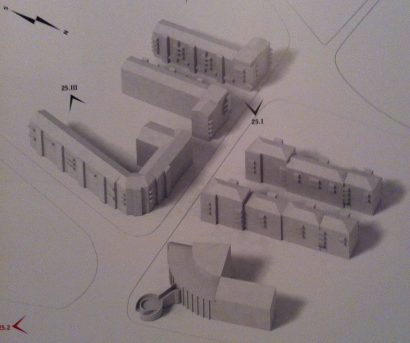
A scale model of the Pogodinskaya Quarter. Courtesy of Archnadzor
Moscow Municipal District Deputies Opposed to Demolition of Pogodinskaya Quarter Beaten Radio Svoboda
June 6, 2016
Pogodinskaya was built in the 1920s and has been recognized as a constructivist landmark.
On Monday, municipal district council deputies Alexandra Parushina and Andrei Voronkov were beaten in Moscow’s Khamovniki District while trying to prevent the demolition of several buildings in the Pogodinskaya Quarter, a recognized constructivist landmark. Radio Svoboda got the news from Parushina herself. She was forced to seek medical attention after the assault: her leg had been injured.
Khamovniki Municipal District Council Deputies Alexandra Parushina and Andrei Voronkov. Courtesy of mo-hamovniki.ru
Parushina said the demolition of the buildings in the Pogodinskaya Quarter had begun on Monday without warning. According to here, when the deputies arrived at the scene and demanded that the company carrying out the works show them permits for the demolitions, they were assaulted by security guards.
At the same time, the demolition continued “literally right over the heads” of the deputies, Parushina added.
The authorization for demolition of the Pogodinskaya Quarter, built in the 1920s in the constructivist style by architects V.I. Bibikov and Ya.E. Ostrovsky, and engineer A.N. Volkov, was issued in late 2015. Donstroi plans to build luxury housing on the site. In January, architectural preservationists from Archnadzor demanded the authorization be rescinded.
___________
Vandalism’s Next Address: Pogodinskaya Street Archnadzor
May 11, 2016
There has been a strange media buzz around the constructivist Pogodinskaya Quarter (Pogodinskaya Street 2/3, blgs. 1–4). It is obvious Moscow public opinion is being prepared for the quarter’s demolition.
Articles about a shelter for homeless people and asocial elements having suddenly arisen in Pogodinskaya have been published one after another in the media and blogosphere, and the articles have all followed the same pattern. According to their authors, there is only one means of solving the problem: a speedy demolition and a foundation pit in place of the constructivist buildings. For some reason there is no talk about how it would make more sense to fix up the buildings and at least provide for their normal conservation, just as there as is no talk about a “flophouse” somehow emerging on premises strictly guarded by the developer, premises that journalists could not even infiltrate. If a landmark is turned into a trash heap, it is not the landmark’s fault.
The widespread practice of conversion, successful examples of which exist in Moscow as well (in particular, the recent and current restoration projects of the constructivist complexes on Suvorovskaya Street, Matrosskaya Tishina, and Preobrazhensky Val) show that constructivist residential developments can and should be saved. Where there’s a will there’s a way.
In January 2016, despite the decision by the Moscow Municipal Commission on Urban Development in Conservation Areas (the so-called Demolition Commission), recognizing Pogodinskaya’s historical and architectural value and disallowing its demolition, the developer was suddenly issued authorization to prepare for the quarter’s demolition. Due to public outcry, a quick demolition did not come off. The Moscow Department of Cultural Heritage confirmed that the commission’s decision remained in force.
The issue of Pogodinskaya’s conservation status has not resolved yet. We hope the decision will take into account the opinion of the members of Department of Cultural Heritage’s Research and Methodology Council, and the negative verdict on the Taganskaya Automatic Telephone Exchange building will not be repeated, a verdict publicly contested by the presidium of this esteemed advisory body.
As long as the houses at Pogodinskaya 2/3 are not declared landmarks, they could be demolished in the near future, demolished despite the decision of the Commission on Urban Development in Conservation Areas, which can no longer reaffirm its verdict, as it was itself abolished by city authorities in early 2016, demolished due to the lack of venue for discussion in Moscow where the issue of historical architectural preservation could examined openly and with invited experts. In the legal vacuum formed in the wake of the Demolition Commission’s disbanding, destruction of Soviet avant-garde buildings, of which demolition of the Taganskaya Automatic Telephone Exchange was a flagrant instance, will proceed apace.
The Taganskaya Automatic Telephone Exchange was destroyed despite the protests of residents and experts. There was no dialogue among the authorities, the developer, and residents. This scenario must not be repeated in the case of Pogodinskaya. It is not possible to continue deciding the continue of whether to preserve or destroy historic buildings at the closed sessions of the Urban Planning and Land Commission. We need an open dialogue in which all stakeholders would be able to voice their arguments. The example of Saint Petersburg, which managed to resolve the issue of preserving the so-called Siege Substation, shows that such dialogue is possible as part of the Heritage Council.
Archnadzor calls on the Moscow authorities to execute the president’s instructions and establish a Moscow Mayoral Council for the Preservation of Cultural Heritage, thus ensuring an open dialogue and discussion of the most important urban development issues, including the problem of preserving Moscow constructivism, with the broad involvement of experts on historical preservation. A similar appeal was made by leading experts and architects, outraged by the demolition of the Taganskaya Automatic Telephone Exchange. We fully share their position.
Veronika Madyarova Sorting the Trash Snob.ru
June 3, 2016
Plastic: burn it or throw it away? A hundredweight of cast iron: turn it in for money or just leave it? And what do Jews have to do with anything? On the eve of World Environment Day, Snob introduces you to people involved in something quite unusual in Russia: waste sorting.
Blaming the Jews Again
Petersburg has five million residents. Four of them are involved in waste sorting. That would be us, Collection Point [Tochka sbora], and our several thousand customers.
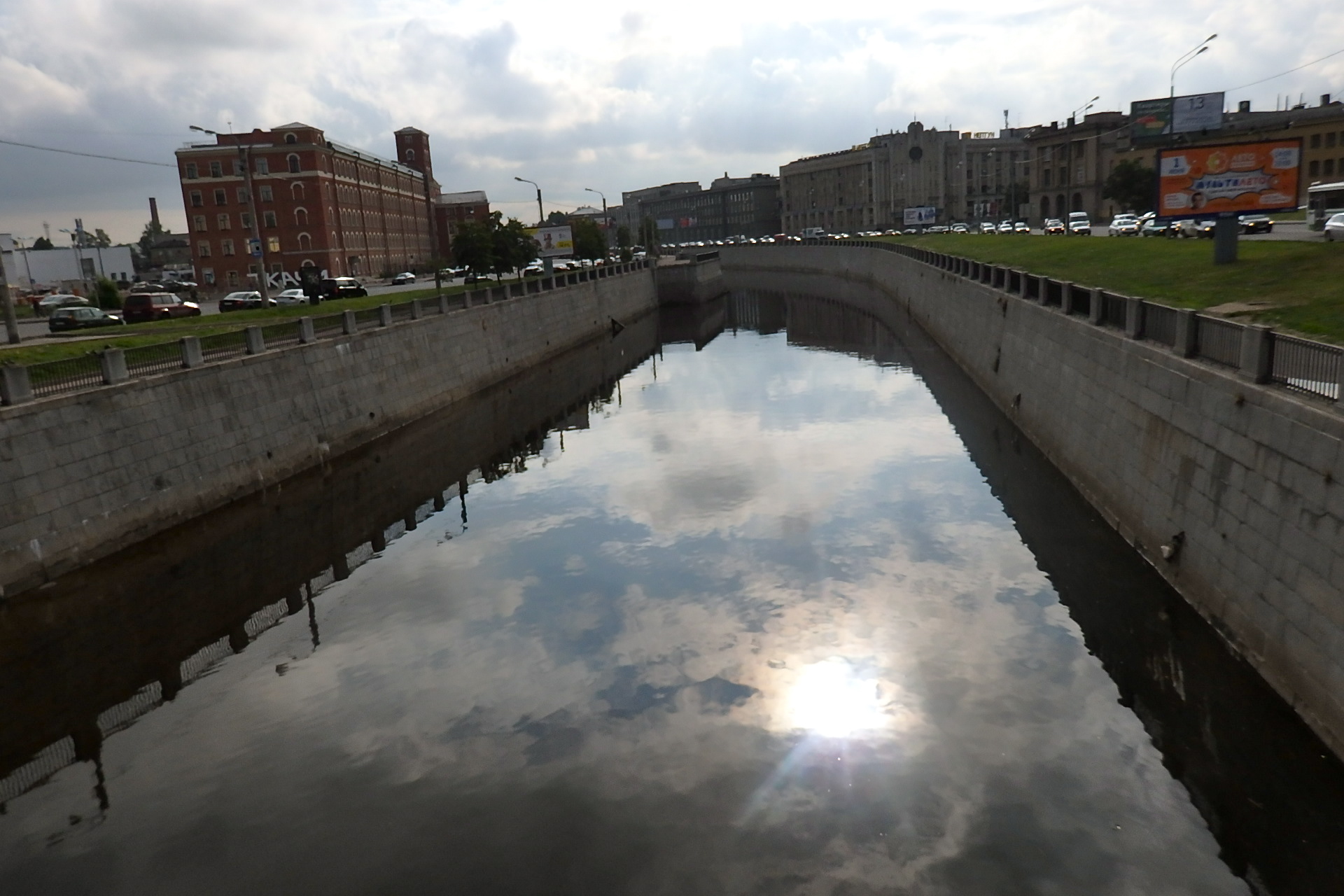
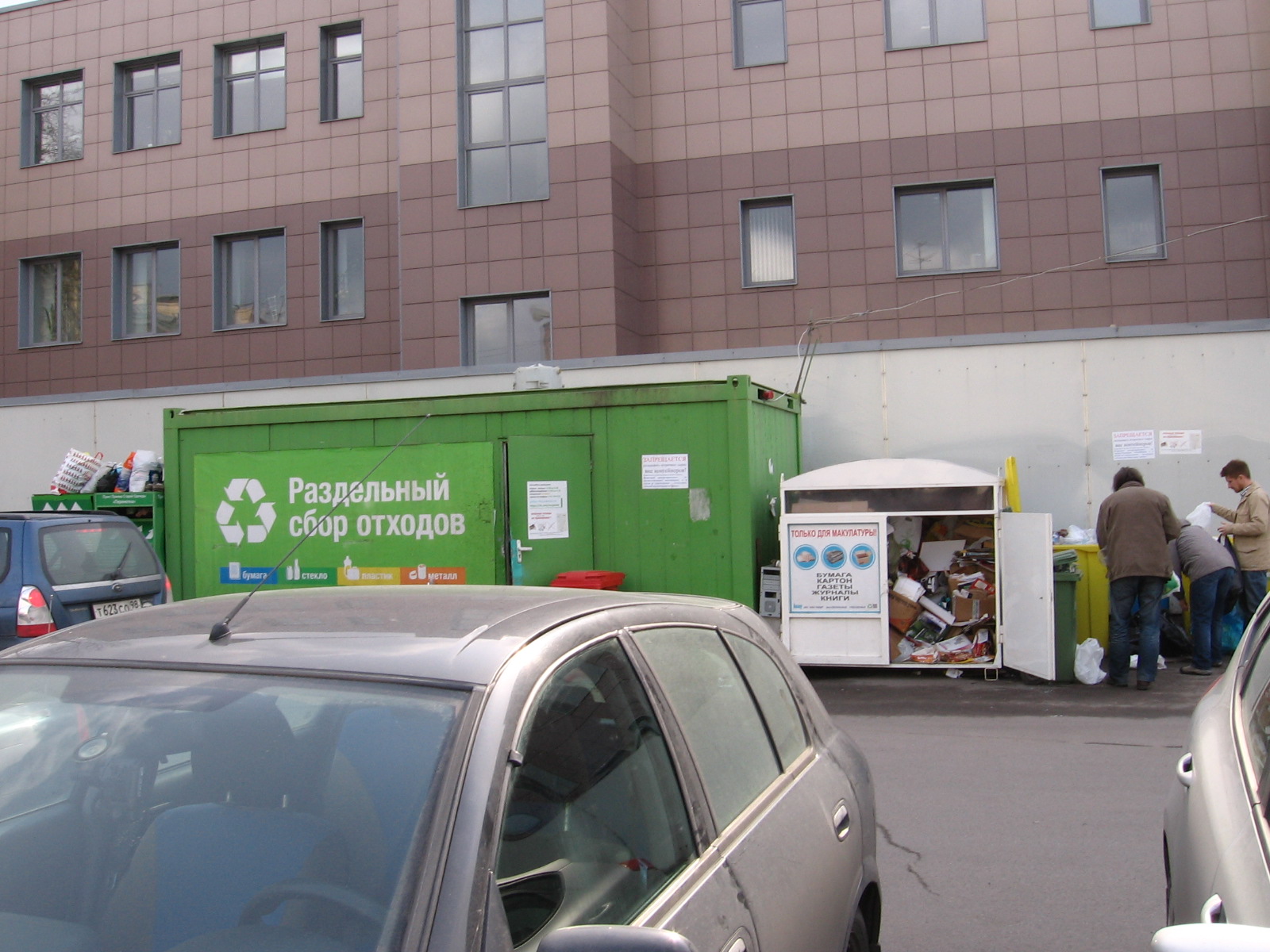
We put our green trailer in a supermarket parking lot south of the Obvodny Canal. We accept almost anything recyclable.
Obvodny Canal, Petersburg, May 27, 2016. Photo by the Russian Reader
If you could see the people who bring us their trash.
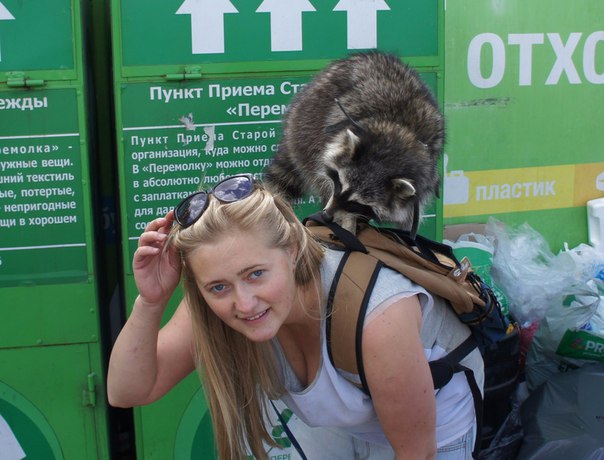
A handsome young deaf man who looks like DiCaprio. A young woman with a pet raccoon. Little old grannies who tell us nothing should go to waste. University lecturers whose courses we once attended. Lena, a rural agronomist, who comes from Leningrad Region once a month with a trunk full of garbage. Darya, a ballerina and biker who collects broken dishes all over the city and makes mosaics from them. We help her out.
Enthusiastic recycler Masha and her pet raccoon. Photo: Ilya Snopchenko. Courtesy of Collection Point
There is also the middle-aged woman in a beret who brings us newspapers and empty kefir bottles, and pushes her theory on us every time she comes.
“My neighbor says he won’t turn things in for nothing. If it’s for money, then he will do it. You know why he is that way? Because he’s Jewish!”
“I’m Jewish too. And so is our director, who thought all this up.”
She freezes, her mouth twisted to one side. In a couple of weeks, however, she will be back again with her bottles, and the conversation will be repeated.
They say you can earn big money on recycling. Certain types of waste are actually worth something, such as waste paper or metal. But the collection and recycling of everything else, such as glass and especially petroleum-based plastics, are subsidized the world over as a long-term investment that will bring future environmental benefits.
We accept everything free of charge. The profit from the metal and paper covers (or, should cover) the losses from handling the non-valuable types of waste. We are making a go of it. But so far a lot of independent action is demanded of our customers, for example, washing and sorting plastics into four categories, and remembering what we take and when we take it. The most amazing thing is that they do it.
A Plastic Icon: Burn it or Throw it Away?
Two priests, one younger, one older, often stop by. The young priest, Father Sergius, skips along: he is overflowing with the joy of life. He once shared a moral and ecological dilemma with us. His parishioners often drag cheap plastic icons to church. You cannot really throw them away, can you? The only dignified way of disposing of sacred items is burning them. But burning plastic is bad for the environment. For the time being he has been piling them up because he cannot decide what to do.
Father Vladislav carefully cuts the labels off of bottles of Sacred Spring brand mineral water. I tell him not to bother. We take them as they are, with the labels on or off. It turns out he collects the labels separately and burns them, because the spring is sacred, after all. But it wasn’t this that impressed me about him, but the expression on his face when I told him there had been a fire at the collection point. The only other person I have seen with a face like that was a psychotherapist. It expressed not just compassion, but an absolute willingness to delve into the problem, to hear me out and draw me out, and to do it as necessary and as long as necessary. It was a professional reflex.
Collection Point’s green trailer, April 5, 2015. Photo by the Russian Reader
Another regular customer is Svetlana, a veterinarian and former top model. Having conquered the modeling business, she has switched to saving kittens. She catches them, treats them, sterilizes them, and finds them a home. For every cat she treats and gets adopted, there are ten more cats that end up on the streets and multiply wildly.
Svetlana cares about the environment. She lives according the zero waste principle, recycling everything she can. Once she crawled into a basement to save kittens that had got stuck there. She somehow managed to tear off the metal grating covering the basement window. She telephoned me to ask whether I knew where there was a scrap metal collection point nearby. She wanted to recycle the grating.
She dragged it there and turned it in. She got four rubles for it.
We have more female customers than male customers. Many women get it after having kids. They think hard about the place where heir children are going to be living and what they will be breathing. Fumes from waste incineration plants? There is a special category of customer we have dubbed “the wife sent him.” Women often send us their husbands or boyfriends with the recycling. The men promise to take care of everything, but in fact they toss their bags any which where, making more work for us. And some men just toss the recycling in the nearest dumpster. We try and warn gals with environmental impulses that they had better rely only on themselves.
The Customer Is Always Right
They say the customer is always right, because he or she brings in the profits and can go to your competitors. That works in stores and restaurants, only not in our business. We have no competitors, and there is no question of making a profit, only of surviving. But we also get our share of customers who are always right.
For example, we do not accept light bulbs or plastics that are hard to process, such as polystyrene packaging and polyvinyl chloride.
Collection Point’s home in the parking lot of the Auchan supermarket on Borovaya Street in central Petersburg, April 5, 2015. Photo by the Russian Reader
Some people react strangely.
“You are obliged to take everything I have brought! I have connections, and you will be out of here in twenty-four hours!”
Or there was this.
“And I am also supposed to be helping you earn money?”
This was my favorite.
“I have a university education, and you dare to tell me what to do?!”
Exactly. It is people who have achieved nothing in life who work with trash. Why should successful people even listen to them?
Fortunately, we have other customers. For example, Alexander, the plumber at the Institute of the Arctic and Antarctica. He brings his own trash and always stays around to help. He and I once spent several hours in a row breaking down and flattening a large number of boxes.
By the way, in the midst of heavy physical work, people always switch to the informal “thou” [ty] form of the second-person pronoun. It just somehow happens of its own accord. When the work is over, they switch back to the polite “you” [vy] form.
That same plumber also bought us recycling collection bags at a time when we were having to choose between buying the bags and eating dinner. He also once hired us to sort through piles of junk in the basement of the institute, which spared us the choice for a couple of weeks. Thank you, Sasha!
Why People Are Not That Way
I have already said there are four of us. We are Collection Point, a tiny firm consisting of four people. The guy who started it all is Igor Babanin, the founder of Greenpeace’s Petersburg office and designer of an experiment in waste sorting that covered nearly the entire city in the noughties, but then fizzled out. Nowadays, Igor has shouting matches with building janitors, ships waste paper, does our miserable books, and in his rare spare moments pens vicious neo-Malthusian texts.
Dmitry Kuznetsov is professional ecologist, and works for us as a driver and loader. It is a total mystery how Dmitry’s GAZelle van is still running. Life-threatening breakdowns somehow fix themselves.
Dmitry used to work as an environmental inspector. He met a femme fatale on a fishing vessel. Between kisses, the beauty queen tried to persuade Dmitry to permit her to use a bottom trawling net, an infernal bit of fishing tackle that is dragged along the bottom of the sea, destroying everything in its path.
Dmitry refused to give her permission. Now he works with us. But he still remembers the beautiful woman.
Andrei Madyarov is a chemist by training, a builder by profession, co-founder of the RazDeln’nyi Sbor [Separate Collection] movement, and a near-legend in environmentalist circles. And he impressed me so much I even married him.
And there is me, too.
A member of the Collection Point team at work, April 5, 2015. Photo by the Russian Reader
Separate waste collection is a popular topic. Yeah, it would be a good thing. Yeah, the landfills are growing. Yeah, recycling is much better for the environment. But what are we to do if our government is the way it is, and we ourselves are lopsided? In Europe, however . . .
There is no legal framework for what we do. We do not have the support of a core business, and however much we would like to do it, we are not going to make everyone happy by doing separate waste collection. We do what we can. And, despite the difficulties, it would seem we have done the impossible. On a daily basis we see people taking responsibility for their own waste, meaning they are gaining control of their own consumption and their own lives.
If a person has once thought hard about the resources spent on producing goods and what happens to the things thrown into the trash, no advertisement will ever get to her again.
Basically, our provisionally commercial organization is supported by the commitment and awareness of these very same people.
It is a model of the green economy, which, allegedly, cannot be built, because “people are not that way.” Our people are that way.
Translated by the Russian Reader. Thanks to Comrade VZ for the heads-up.
“Putin Has Been in Power My Whole Life” On the occasion of International Children’s Defense Day, The Village spoke with 16-year-olds about Vladimir Putin, social networks, and future plans
Lena Vereshchagina The Village
June 1, 2016
Vladimir Putin has been in power, as president and prime minister, for over sixteen years. During this long period, a whole generation of people has come of age who never lived in the “pre-tandem” era and have a faint idea of what political succession is and why it is necessary. On the occasion of International Children’s Defense Day, the Village met with four 16-year-old schoolchildren and talked with them not only about politics and the permanent leader but also about social networks, the Soviet Union, and their priorities in life.
Vasya, 16. Photograph by Ivan Vanyutin
I am in the tenth grade at a French-language magnet school. I studied for six months in the US in the ninth grade. Things are definitely different there. I wound up at a private school where everything revolves around providing a full-fledged education. There was virtually no free time, and the schedule was quite hard. Under those circumstances, it is probably easier to find yourself. I remember I was invited to attend charcoal drawing lessons. They had everything to make them happen: a wonderful studio with huge windows and an unlimited supply of charcoal pencils. The atmosphere at my school in Russia is less creative.
Now I am in the physics and mathematics stream. Mom influenced my choice of specialization. She said the hard sciences were a good occupation for men. I am interested in programming. I would like my job to jibe wholly with my personal interests, for my profession to be my mission in life. At the same time, Mom has advised me to seek work abroad. Russia is going to stay put, after all, and working abroad can be a very rewarding experience.
We have not had a TV at home since 2006. When wired Internet became available, we immediately began using it alone. I try and spend as little time on the web as possible. I am aware that the flow of information from the social networks is unlimited. You read one thing, you get distracted by another thing, and you look through something else. You can fritter away your whole life like that. I try and be on the Internet for short periods of times. Sometimes, when I am riding the subway to practice, I get on the web and look at something.
I read voraciously. When I have free time and want to read a book, I read it without stopping. I can not pick up a book for two weeks, but then come home from school and blaze through the entire second volume of War and Peace in three hours. It took me two or three hours to read it. I read fairly quickly. I read it when I was ill, and then I immediately grabbed the third volume. Besides what is in the school curriculum, I read books Mom recommends. She gave me, for example, Yuri Lotman’s Conversations on Russian Culture and Vladimir Nabokov’s Lectures on Russian Literature.
I imagine the Soviet Union as a strict regime. I know that people could not just go abroad in those days. You could not just pick up and go to England or France. People had fewer opportunities.
The main principle I saw abroad was that power must change hands. But we have had the same president for sixteen years. Vladimir Putin has personally done nothing bad to me, and I wish him all the best. But I realize it is beneficial for him to hold this office, and profitable for his friends. Power does not change hands, and accordingly society makes no progress in any direction. I think it is good when there is at least elementary competition. Some people in my class do not care about this. They are happy about the annexation of Crimea and believe it was legal. Some have never been abroad, but think the US and Europe have been behaving aggressively towards Russia, and now we are going to get up off our knees and show them all. Due to this, I have no desire to socialize a lot with my classmates.
My grandmother and grandfather live in Smolensk. They watch a lot of TV, and everything shown on TV is the unquestionable truth to them. It is really hard to talk with them about politics, so we have agreed not to touch the topic. Mom and I do not discuss politics, because we get home late and try and talk about peaceful topics.
Nika, 16. Photograph by Ivan Vanyutin
I am a pupil in the Higher School of Economic’s magnet school in the liberal arts stream. I study literature, philosophy, cognition theory, and subjects related to philology. In the future, I plan on applying to the HSE and majoring in philology.
I read everything I can get my hands on, because for now I am only learning to distinguish good literature from bad. For example, I read the stories for teenagers Mom buys me, the things on the reading list at school, and beyond that. Right now, I am reading Leo Tolstoy’s novella Family Happiness. I also love Iain Banks and Richard Bach. I read about four books a month.
In my free time, I hang out and watch movies. What kind of movies? Everything under the sun. I like something simple. I watch a lot of TV series, even more than movies. They are somehow easier to process. My favorites include TheBig Bang Theory, Friends, How I Met Your Mother, and Game of Thrones. I never watch TV. Only occasionally do I watch morning cartoons with my little brother.
My friends and I often discuss plans for the future, important world events, life at school, and other kids. I think the life of modern schoolchildren would be impossible without social networks. Many of our teachers also have accounts on them, and they often put our homework assignments on VKontakte to simplify things. I don’t spend more time on the social networks than anyone else: a few hours a day.
Some of the classes in my school are taught by teachers who are only twenty-five or so. In fact, we are not so different from them. They also spend time on social networks and socialize with their friends in a similar way.
I imagine the Soviet Union the way it is shown in old movies, meaning there are jolly schoolchildren and ice cream, it is always a beautiful time of year, and there are lots of tyrannical adults who tell the young people what to do. The 1990s, in my opinion, were really cool. You could easily get what you wanted without hassle. Without making any effort, you could make a fortune.
I don’t understand anything about Russian politics. I just know that Vladimir Putin runs the country, and some reforms should be implemented, but they are not being implemented. Or they are being implemented, but not in the way many people would like. But I cannot make heads or tails of it. At home, we do not touch on the topic, because my mom is not interested in politics. At school, if someone talks about it, I just listen and draw my own conclusions.
Putin has been in power my whole life. It is funny. I just don’t how it could be otherwise. I think everything is okay, and there have been no visible changes in my life over the past ten years. I think Putin has done a good job as president: no wonder he has been in power for such a long time. Meaning he has experience and knowledge that he can draw on. He is fairly influential, and the whole nation listens to him, so I think he is okay. The other politicians whose names come to mind are Dmitry Medvedev, Vladimir Zhirinovsky, Sergei Shoigu, and Vitali Klitschko.
Arina, 16. Photograph by Ivan Vanyutin
I go to an English-language magnet school and am in the engineering stream. My favorite subjects are English, Russian, mathematics, and probably physics.
In the second grade, we went on a tour, and the guide asked us, “Who wants to be president?” No one replied, but I thought, “Why not?” I said out loud I wanted to be president. Since then the idea has stuck in my head. Now I am involved in youth politics and am a member of the Young Guard of United Russia. I have learned a lot of things about politics there. I have been growing personally, and meeting and socializing with lots of interesting people from this area. I don’t know what way life will turn, but maybe in the future I will be able to join the party, and if I don’t become president, I can simply be involved in politics. Politics attracts me, because I feel I can change things. I like situations in which there are business-like relationships, turns of events, excitement and competition, socializing with interesting people, and the possibility of taking responsibility and making important decisions.
I communicate with people on social networks, but I cannot say I hang out there. Sometimes, I make a point of not going on Vkontakte to read the news so I can get more done in real life, not in virtual life. I think life was more interesting before the advent of the Internet. Children were more focused, more interesting in learning and growing. But now the Internet does everything for them.
I don’t have much time to read. We are assigned a lot in school, so mainly I have to study the literature in the curriculum. My favorite Russian writer is Alexander Pushkin.
We are different from the generation of 25-year-olds. We have more technology, information, and stress. I look at children younger than me, remember what I was like at their age, and realize I didn’t know the words they know and couldn’t do the things they are able to do. I think 25-year-olds think the same thing about us.
It is a pity the Soviet Union collapsed. It was a good time. I cannot say that people lived very badly then. After all, the country was developing its industries, and the factories were working. But now, when practically none of it is left, it is hard to recover.
If you believe the stories, films, and history lessons, the 1990s were a time of bandits. Money and connections reigned then, and there were many murders. I have nothing more to add.
My classmates and I mainly take about our classes at school and the events we have there. I discuss politics with Dad. He enjoys talking about it.
I am fine with the fact that Vladimir Putin has been in power so long. After all, for anything to change, something like fifteen to twenty years have to pass. If any reforms are taking place, they include plans for the future. Such reforms are taking place right now. Of course, there are downsides to Vladimir Vladimirovich’s policies, but they are not overwhelming.
Putin is a strong and worthy president for our country. In the current circumstances, another leader would have done worse or would have been crushed. But not Vladimir Vladimirovich. I respect him.
Masha, 16. Photograph by Ivan Vanyutin
I go to the Physical and Mathematical Lyceum, but I am in the socio-economic stream. I love social studies, history, and English, and mathematics, too. I hate physics and computer science.
I have also been studying German so that in the future I can go to university in Germany, a plan my parents have really been encouraging. I would not even think about leaving Russia were it not for them. I think students suffer in our country, and lecturers are not at all amenable to them. In Europe, on the contrary, they try to help and support students, and if they don’t get something, they explain it to them. I would like to work in the social sphere, for example, as a psychologist in some company, but for the time being it is just a dream.
My classmates and I often discuss the news, but not political news. Rather, we gab about what is happening in the world. And of course we gossip.
Throughout the day, I periodically log onto the social networks to reply to messages and read what friends have posted. But now I have been conducting an experiment. I deleted my page on VKontakte, and I try to use the phone only in cases of real need. Then I started reading a book, and real life became more dynamic.
I read a lot, but I am rarely manage to read what I want. I spend a lot of time reading what is in the school curriculum. I have very little free time: every day there are tutoring sessions, extra classes, and evening courses. But when I get a free minute, I spend time with friends or alone, read, watch movies or play the guitar.
My parents and I have a tradition: we often watch TV series in the evening together, sometimes Russian series, sometimes American. But I don’t watch TV at all. There is simply no time for it.
I think people who lived in the Soviet Union had it very hard, simply because there was no freedom of choice. There were things you had to do, and things you could not do. Joseph Stalin was a very controversial person. Although maybe he was doing the best he could. I can believe this was what he thought.
I know that there was perestroika in the 1990s. According to Dad, things were very hard, because there lots of bandits.
I know quite a lot about current politics. My parents are ardently in the opposition. Since I was little, I have been hearing from them how bad Vladimir Putin is and how horrible Russia is. Of course, I discount half of what they say, and I keep track of events in the country myself. I don’t like everything, of course, but I try to be nonjudgemental.
The accession of Crimea is one of the most significant political changes of recent times, of course. I think everything in Russia changed dramatically in the aftermath. Those two viewpoints: Crimea is ours or Crimea is not ours; I think everything went wrong then. One also immediately recalls Nemtsov’s murder. It is unclear why a leader of the Russian opposition was murdered on the street.
I have lots of thoughts about Putin. I said that Stalin, perhaps, had good intentions, but for some reason I am certain that Putin doesn’t have them. He says one thing, and then does the complete opposite, at least when it comes to fighting corruption. Corruption is well developed in Russia, but Putin tries not to do anything about it. There have also been reports (I don’t know whether they have been confirmed or not) that he has bought houses in Italy and Spain.
It is hard to imagine anyone else in Putin’s place, because he has been president my whole life. I even get a bit scared that he will never resign. Things are also complicated by the fact that I don’t see any other candidates for the job.
I am not sure that things will be better if someone takes his place. I think it depends not on the government, but on society itself. He has not just been sitting there for so many years. People have voted for him.
Translated by the Russian Reader. Photos courtesy of The Village. See my previous posts in this occasional series on young people in Russia today and the moral panics generated around them by the media, politicians, and the public.
Whipping Bear: Why the President Needs a “Bad” Prime Minister
Nikolay Mironov Moskovsky Komsomolets
June 1, 2016
Remember the Soviet joke about the plumber who comes to an apartment to fix a leaky radiator?
“The entire system is rotten here: the entire system has to be changed!” he concludes.
The joke is as topical now as it was then, because the system, it seems, has hit rock bottom. But the nation is clearly of two minds. It is seemingly aware of what has been happening in the country, but at the same time it maintains its loyalty to the regime that has brought us to this pass.
On the one hand, we see a president with a huge rating. On the other hand, we see a rapidly failing economy, a deteriorating social sphere, and, consequently, a high degree of public dissatisfaction with the regime. How can it be that as the foundation crumbles, the president manages to maintain his popularity?
The logic of this social attitude was, I think, nicely expressed by a cabbie who recently gave me a lift.
“Putin is going like gangbusters: the West, America, Syria, Donbas. And Medvedev is supposed to be taking care of the economy instead of fiddling with his iPhone.”
And right then and there he served me up a helping of bad news. He has been getting less work. Prices are rising. Who knows where the hell we are headed.
The taxi driver in fact reproduced the classic propaganda formula he hears every day on the TV. Aside from America, bad officials and liberals are the root of our troubles. The government is clearly underperforming, while the president is terribly busy with foreign policy and lifting Russia from its knees. He is the country’s sacred patron, its guardian angel, and the shortcomings of officials do not stick to him.
If you are thinking straight, cognitive dissonance must kick in, of course. The president has a huge number of powers. He appoints the government, and he could, if he felt like it, sack any minister, including the prime minister, without consulting with anyone. He has the power to kickstart any reforms via presidential decrees. And the Duma is at his beck and call, for United Russia holds the majority of seats there. Why does Putin not appoint a good team, dismiss corrupt officials, and announce a policy shift for the country? How will he lift the country from its knees if the economy tanks? If he is weak and incapable of doing it, why should we support him? If he just does not want to do it, that is another strike against him. But the nation, which has a weak grasp of political institutions and sees no credible alternative in sight, is willing to believe that “Putin has it rough,” that “he is fighting,” and that “they are getting in his way.”
The massive brainwashing on this point allows the regime to keep a tight lid on the system and change nothing fundamental about it, thus preserving the current inertial scenario, which is favorable to the elites. It is favorable to them because, were the government to decide to undertake economic reforms, the economic interests of the elites would inevitably take a hit, forcing them to surrender some of their comforts and excess profits.
However, while the costs of the crisis are primarily borne by the masses, somebody has to be made the fall guy, the virtual whipping boy. With the exception of defense minister Sergei Shoigu and foreign minister Sergei Lavrov, the cabinet has been appointed to this role along with abstract liberal circles, who, allegedly, have a behind-the-scenes influence on officials.
It is obvious that today the head of state cannot officially support the current course, which has resulted in rampant poverty among the population. Equating this policy with the president would be, if not tantamount to suicide, then certainly a powerful blow to his popularity. But Putin has no intention to change course for the reason given above: the interests of the elites. For this reason, on the eve of the election campaigns, the plan is to deliberately unhook the domestic agenda from the president and hang it on Medvedev and his government. Consequently, the prime minister will no longer be the number two man in Russia, but an expendable, a scapegoat.
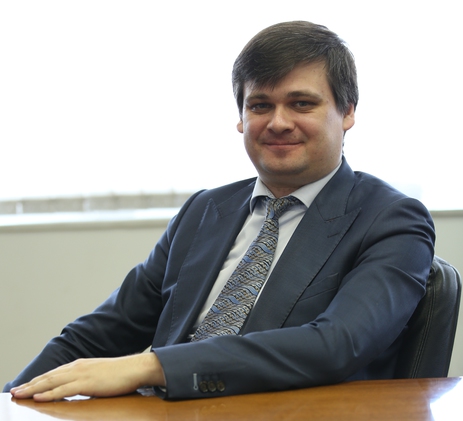
Nikolay Mironov. Photo courtesy of the Center for Economic and Political Reform (Moscow)
Moreover, we should not identify Medvedev with United Russia. Their identities are not blurred in the propaganda, and this is no accident. All the negativity towards officials and the head of the government must not devolve on the party tasked with winning a majority in the Duma in September. United Russia members have thus even been criticizing government ministers, pretending that they and the executive branch are different animals, despite the fact they have the same leader (Medvedev) and a majority in parliament, allowing them to make any and all political appointments and legislative decisions.
This is a quite important part of the spectacle. Medvedev has to be a lightning rod for Putin, and yet United Russia, which Medvedev chairs, has to make it successfully through the campaign for the new seating of the Duma. Since this is the task at hand, the regime will do its utmost to control the volume of criticism leveled at the prime minister, including criticism voiced by opposition parties. As for attacks by forces close to the regime (e.g., the Russian People’s Front’s usual philippics against bureaucrats), they will most likely come down to a matter of tweaking the picture to help the president avoid the impact of potential criticism for the current situation. But the propagandists will avoid belittling the government excessively during the election period. “Local officials” will bear the brunt of the negativity. The government, moreover, will be given carte blanche to spend budgetary funds for populist purposes and to mitigate the crisis, including through a temporary increase in dividends paid out by large corporations. (The figures currently quoted range between 300 and 400 billion, which should be quite enough to get through the summer.)
Thus, during the Duma campaign, Medvedev will draw fire upon himself. So-called managed democracy, however, will ensure this fire will not turn into a conflagration and burn the regime and the elites. The president must remain unharmed, since his main play strategically is the 2018 presidential election, a key election for the elites.
The next act in the political spectacle will be Medvedev’s premiership after the Duma elections in September and in the run-up to 2018. Here, too, he will function as a whipping boy and political expendable, readying the way for the launch of Putin’s next presidential campaign.
After the election, the prime minister, having received formal carte blanche from the voters, can undertake unpopular measures. (Unless, of course, the oil price suddenly rises miraculously.) It is inevitable. Someone has to pay for the crisis, and, apparently, the elites are still not this someone. In any case, it is Medvedev who will have to make ends meet in the 2016 budget, with its whopping 14.7% deficit on the expenditures side, and then rob Peter to pay Paul when drafting the 2017 and 2018 budgets.
If the situation gets ugly, and the populace’s complaints attain a critical mass, Putin can dismiss Medvedev on the eve of the presidential election, appointing him to some cushy post. And he will again profit from the decision, because in the eyes of the electorate, the president will be seen as a virtual national savior. Having dampened tensions in society this way, he will be re-elected to another six-year term as president, winning an acceptable percentage of the vote. The opposition will again be confounded, and someone like Alexei Kudrin can become prime minister. This will nicely symbolize the compromise between “liberals” and “conservatives,” while also functioning as a nod to the west, whose cheap money we need desperately.
The alpha and omega of all this complicated maneuvering is preserving the system, and thus preserving the privileges and assets of the supreme elites, their lifestyle, and their ability to peaceably transfer their wealth to their children. They will be able to breathe a sigh of relief and once again enjoy the sunsets on the French Riviera and in Italy.
Only time and economic conditions will tell what comes next. If the country’s currency reserves run out, and the oil price does not increase, intrigues around choosing Putin’s successor will kick off. Or a new scapegoat will be found, and so on ad infinitum. Generally speaking, the current regime just does not plan that far ahead.
Only one question remains. What is in all of this for Medvedev himself? Does he enjoy being expendable? Here it is like the line from the classic Soviet comedy film The Pokrovsky Gate: “Life is lived not for pleasure’s sake, but for the sake of conscience.”
I think the answer that immediately comes to mind is also the most likely to be the right answer. Medvedev does his job and is loyal to his boss. He cannot imagine himself outside the system, much less as the creator of a new system.
Another joke comes to mind in this connection. President Medvedev wakes up in a sweat. His wife asks what the matter is.
“I dreamt I fired Putin,” Medvedev replies.
2011 clearly showed that staging a revolution or even serious reforms was beyond the prime minister’s scope. Medvedev’s political career consists of brief ascents followed by a series of humiliations. However, his job has numerous upsides, too. Is it so bad being prime minister of such a rich country as Russia for a whole six years?