Are These the Bad Old Days?

Source: Ekaterina Reznikova and Alexey Korostelev, “2024: A study into repression under Putin,” Proekt, 22 February 2024


Russia jails dissident once targeted by Putin at KGB for 16 years

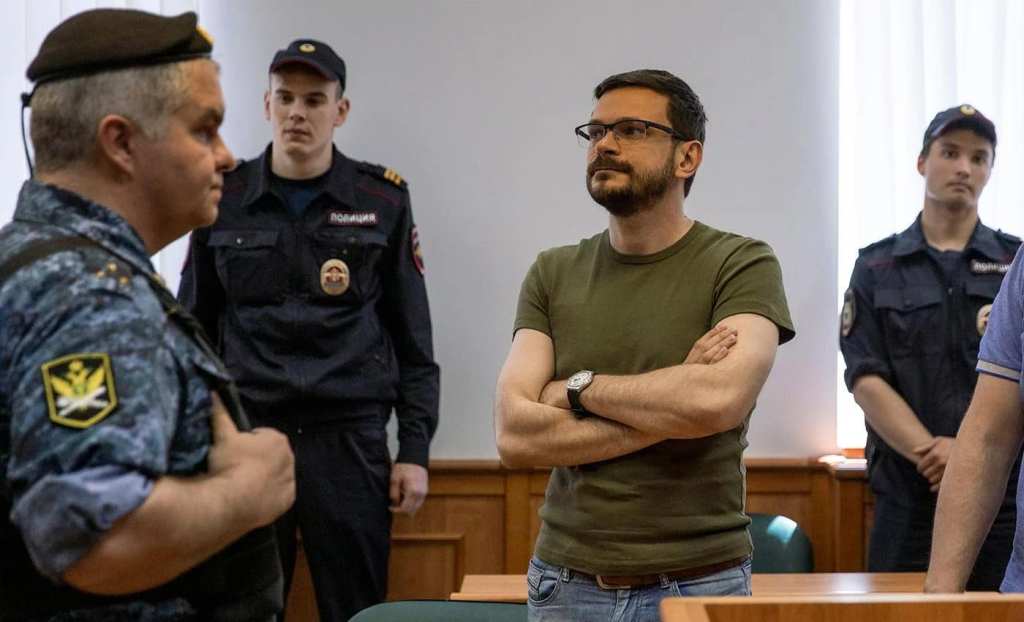
A court in St. Petersburg has sentenced Alexander Skobov, a 66-year-old Soviet dissident and activist, to 16 years in jail on charges of justifying terrorism and joining a terrorist group. Skovov was first arrested more than four decades ago and Vladimir Putin was among the KGB officers who worked on his case. Prosecutors said Skobov justified terrorist attacks on Russian territory and supported the Freedom of Russia legion, which Russia has deemed a terrorist organisation for fighting alongside Ukrainian forces.

  • Skobov will spend the first three years of his sentence in prison (typically reserved for highly dangerous criminals such as kidnappers and terrorists and repeat offenders), with the rest in a high-security penal colony. He will be 80 by the time he can be released, although it is questionable whether he will survive that long in Russia’s harsh prison system. The activist has many health problems, including diabetes, hepatitis C, asthma and glaucoma.
  • At the court hearing, Skobov made clear that he did not believe he was facing a fair trial. He refused to answer questions and did not stand when the judge addressed him. “Today they will ask me again – do I plead guilty? Well, now I’m the one asking,” he said in his closing statement. “It’s me asking the servants of Putin’s regime who are present here, who are small cogs in his repressive regime: do you plead guilty to complicity in Putin’s crimes? Do you repent of your complicity?”
  • In the USSR, Skobov was repeatedly charged with “anti-Soviet” offenses. He was first arrested in 1978 on charges of distributing anti-Soviet leaflets and was sentenced to two years in a psychiatric hospital (punitive psychiatry was widespread in the Soviet Union and used as one of the main tools of repression in the 1960s, 70s and 80s). Skobov was forcibly hospitalized again in 1982 for daubing anti-Soviet graffiti on the walls of a building and then released in 1985. 
  • Vladimir Putin, who worked in the Fifth Department of the KGB that was tasked with combating “ideological sabotage,” was among the KGB officers that handled his original cases, independent media and rights groups reported.

Why the world should care

This is far from the first instance when somebody in Russia has been imprisoned for a post on social media. Since 2010, prosecutors have opened more than 1,000 such criminal cases. But a 16-year sentence for an elderly activist in frail health stands out as particularly punitive. It’s safe to say that treatment of dissidents in modern Russia is growing far tougher than it was in the post-Stalin Soviet Union. 

Source: “THE BELL WEEKLY: Billion-dollar loss for Russia’s Facebook,” The Bell, 25 March 2025


“Illinois Governor JB Pritzker (D-IL) Speaks at the 2025 HRC Los Angeles Dinner,” Human Rights Campaign (YouTube)

The Trump administration and his Republican lackeys in Congress are looking to reverse every single victory this community has won over the last 50 years. And right now, it’s drag queens reading books and transgender people serving in the military. Tomorrow, it’s your marriage license and your job they want to take. Bending to the whims of a bully will not end his cruelty. It will only embolden him. The response to authoritarianism isn’t acquiescence. Bullies respond to one thing, and one thing only, a punch in the face.

But you see, that starts with fully acknowledging what is happening. The meme lords and the minions in the White House are intentionally breaking the American system of government so they can rebuild it in their own image. They’ve shut down cancer research and HIV prevention. They’ve eliminated drinking water and clean air regulations and upended the lives of veterans. They’ve said that a recession that Trump is likely to cause will be worth it, which is an assessment worthy of Trump University.

At its core, what Elon Musk and Donald Trump are doing isn’t about efficiencies or cost savings. It’s about giving their wealthy friends a tax break and making the middle class and veterans and public school kids pay for it. It’s a few idiots trying to figure out how to pull off the scam of their lives.

Meanwhile, the scariest part is that they’re using the power of the presidency to try to delight their base by targeting vulnerable people, people they think can’t fight back, calling them domestic enemies or claiming they’ll ruin American culture. Remember their slogan, “Make America Great Again.” Authoritarians target vulnerable minority communities first because they think that if they can conquer those that they deem weak, and they can show everyone else who’s boss, which is why we can’t sit back right now and wait to see what happens. If we wait, I guarantee you the battle will have already been lost.

Donald Trump cannot take anything from us that we don’t choose to give him. He and his henchmen don’t want people to realize that. But now is the time for us to wake up. The good news is every day I’m seeing more and more people across this country realize that they don’t want to give him much at all.

The question I get asked most right now is, “So what can I do? What can I do?” And I’m going to be blunt about this. Never before in my life have I called for mass activism, but this is the moment. Take to the streets, protest, show up at town halls. Jam the phone lines in Congress, 202-224-3121, and afford not a moment of peace to any elected representatives who are aiding and abetting Musk and Trump’s illegal power grab. This is not a drill, folks. This is the real thing.

Seize every megaphone you have. Go online and make a donation to the legal funds fighting Trump, to HRC, and to the candidates for Congress that vow to take this country backward. And don’t limit your voice to the traditional political channels. Be like Lucy Welch. When JD Vance went to vacation at the Sugarbush Resort in Warren, Vermont, Lucy, who writes the Sugarbush Daily Snow Report, used her report to defend her diverse and wonderful community, ending by saying, “I am using my relative platform as a snow reporter to be disruptive. What we do or don’t do matters.”

What we do and don’t do matters. It matters right now more than it ever has before. When my future grandkids look back on this moment, I want them to know that my voice was one of the loudest in the room, screaming for justice and fighting against tyranny.

And in the midst of this existential fight, this battle that seems to consume everything, well, let’s not take the soul-sucking path of sacrificing the most persecuted for that which we deem to be most popular. I know that there are transgender children right now looking out at this world and wondering if anyone is going to stand up for them and for their simple right to exist. Well, I am. We are. We will.

I know that amidst the ongoing assault on our institutions, it is easy for people to fall into despair about our democratic system. But I love this country too much not to fight for it. You’re here tonight because you do too. And when I think about that love, I think back to all the times in our history when our ancestors had to fight back against tyrants and racists and those who couldn’t understand that freedom and justice are our foundational promises in this country.

That group of people, that small group of people that got together in Chicago to found this country’s first known gay rights organization. Well, it was called the Society for Human Rights. It was 1924 and the flicker of light was brief. It only lasted a matter of months before social persecution and criminal prosecution bankrupted the promise of the group’s charter. But oh, that flicker ignited something. By whisper and by word of mouth, folks around the country started to catch wind of the idea. And eventually, it ended up in the ears of a man here in California who later said the idea of gay people getting together at all was an eye-opener for him.

Well, that man’s name was Harry Hay. And a couple of decades later, he went on to found the Mattachine Society right here in Los Angeles. It was the first sustained gay rights organization in the United States. Harry said that he was first told about the Chicago group as a warning that the idea was too dangerous and nobody should try to pull anything off like that ever again. How lucky the world is that Harry didn’t listen.

When we say history repeats itself, it’s not because the villains and battles don’t evolve with the ages. They do. But the fight itself remains elemental. It’s always men who would be king, blaming the suffering of the masses on those who look different or sound different or live differently. And since the dawn of time, the triumph of good over evil has relied on those who believe in empathy and kindness, summoning the steel spine needed to defend those values that by their nature leave us vulnerable to attack. This community knows that. You have lived and breathed this fight for generations. Our hope, our hope lies in this room.

The fact that we are still here today means that we have the faith and courage that we will win the battles that really matter. Now, when I first ran for governor in 2018, I started every single stump speech by saying, and this will tell you why Donald Trump doesn’t like me very much. I said at the beginning of every stump speech, everything we care about is under siege by a racist, misogynist, homophobic, xenophobic Donald Trump.

Source: Parker Molloy, “Watch Illinois Governor JB Pritzker Reject the Politics of Trans Abandonment,” The Present Age, 24 March 2025. Thanks to Rebecca Solnit for the heads-up.

Claude Malhuret: A French Lesson

Brut America, “French Senator criticizes Trump,” YouTube, 7 March 2025

French politician Claude Malhuret critiqued the United States’ shifting stance on Ukraine and targeted President Donald Trump in his remarks during a general session of the French Senate on Tuesday.

Source: YouTube. Thanks to Olga Klymenko and Nancy Ries for the heads-up.


Monsieur le Président,

Monsieur le Premier ministre,

Mesdames et Messieurs les Ministres,

Mes chers Collègues,

L’Europe est à un tournant critique de son histoire. Le bouclier américain se dérobe, l’Ukraine risque d’être abandonnée, la Russie renforcée.

Washington est devenu la cour de Néron, un empereur incendiaire, des courtisans soumis et un bouffon sous kétamine chargé de l’épuration de la fonction publique.

C’est un drame pour le monde libre, mais c’est d’abord un drame pour les États-Unis. Le message de Trump est que rien ne sert d’être son allié puisqu’il ne vous défendra pas, qu’il vous imposera plus de droits de douane qu’à ses ennemis et vous menacera de s’emparer de vos territoires tout en soutenant les dictatures qui vous envahissent.

Le roi du deal est en train de montrer ce qu’est l’art du deal à plat ventre. Il pense qu’il va intimider la Chine en se couchant devant Poutine, mais Xi Jinping, devant un tel naufrage, est sans doute en train d’accélérer les préparatifs de l’invasion de Taïwan.

Jamais dans l’histoire un président des États-Unis n’a capitulé devant l’ennemi. Jamais aucun n’a soutenu un agresseur contre un allié. Jamais aucun n’a piétiné la Constitution américaine, pris autant de décrets illégaux, révoqué les juges qui pourraient l’en empêcher, limogé d’un coup l’état-major militaire, affaibli tous les contre-pouvoirs et pris le contrôle des réseaux sociaux.

Ce n’est pas une dérive illibérale, c’est un début de confiscation de la démocratie. Rappelons-nous qu’il n’a fallu qu’un mois, trois semaines et deux jours pour mettre à bas la République de Weimar et sa Constitution.

J’ai confiance dans la solidité de la démocratie américaine et le pays proteste déjà. Mais en un mois, Trump a fait plus de mal à l’Amérique qu’en quatre ans de sa dernière présidence. Nous étions en guerre contre un dictateur, nous nous battons désormais contre un dictateur soutenu par un traître.

Continue reading “Claude Malhuret: A French Lesson”

Ilya Yashin: The Basics

Ilya Yashin

Our strange post-truth era turns everything upside down and paints black as white. It is vital that we remember the basics and not lose our bearings to avoid going crazy.

So I just want to remind you that:

  1. Vladimir Putin is a dictator, murderer, and war criminal.
  2. It is immoral and outrageous to work on Putin’s behalf and aid him.
  3. The Russian army’s invasion of Ukraine is unlawful and unwarranted.
  4. Ukraine is the victim of aggression.
  5. Russia is a police state: it stifles dissent and persecutes its citizens for dissenting.
  6. Any individual who resists Putin’s regime deserves our encouragement.
  7. Alexei Navalny and Boris Nemtsov are Russian heroes.
  8. There should be a regular transition of power in all countries.
  9. Human rights are universal.
  10. Human life is priceless.

Source: Ilya Yashin (Facebook), 6 March 2025. Translated by the Russian Reader

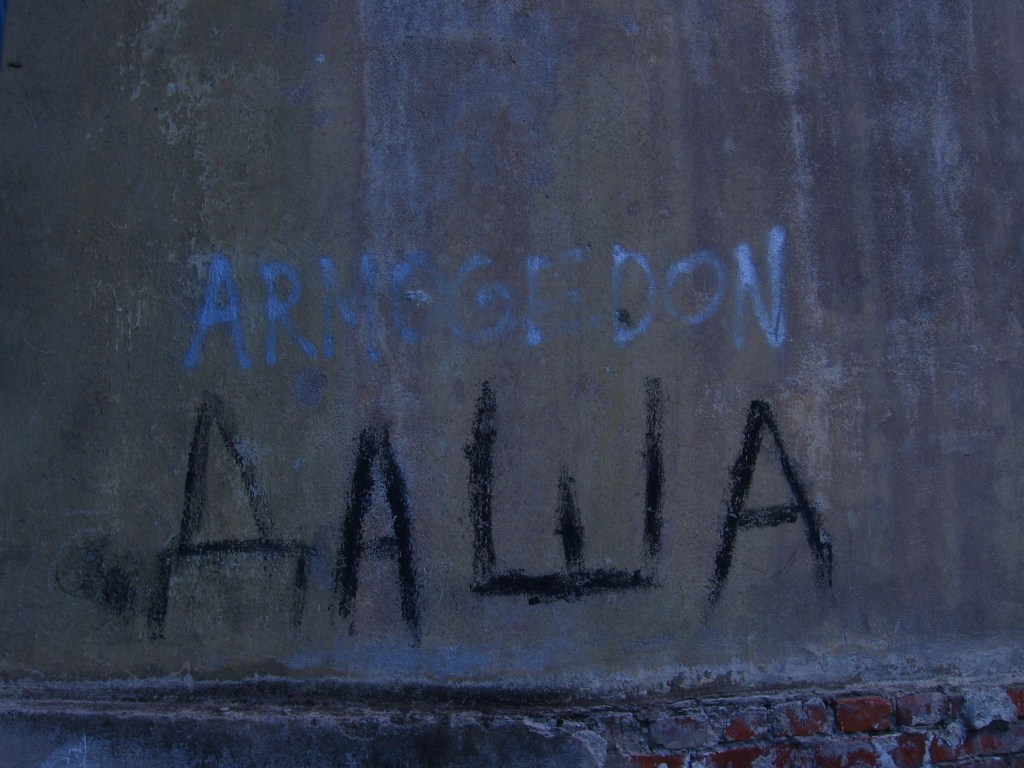
Armogedon Dasha

“Armogedon Dasha,” Kronstadt, Russia, summer 2006. Photo by the Russian Reader

If one starts from the premise that the United States was engaged in a peace process, then what we saw Americans do yesterday makes no sense. The same goes if we begin from the assumption that present American leadership is concerned about peace generally, or cares about American interests as such. But it is not hard to see another logic in which yesterday’s outrages do come into focus.

It would go like this: It has been the policy of Musk-Trump from the beginning to build an alliance with Russia. The notion that there should be a peace process regarding Ukraine was simply a pretext to begin relations with Russia. That would be consistent with all of the publicly available facts. Blaming Ukraine for the failure of a process that never existed then becomes the pretext to extend the American relationship with Russia. The Trump administration, in other words, ukrainewashed a rapprochement with Russia that was always its main goal. It climbed over the backs of a bloodied but hopeful people to reach the man that ordered their suffering. Yelling at the Ukrainian president was most likely the theatrical climax to a Putinist maneuver that was in the works all along.

This, of course, might also seem illogical, and at an even higher level. The current American alliance system is based upon eighty years of trust and a network of reliable relationships, including friendships. Supporting Russia against Ukraine is an element of trading those alliances for an alliance with Russia. The main way that Russia engages the United States is through constant attempts to destabilize American society, for example through unceasing cyberwar. (It is telling that yesterday the news also broke that the United States has lowered its guard against Russian cyber attacks.) Russian television is full of fantasies of the destruction of the United States. Why would one turn friends into rivals and pretend that a rival is a friend? The economies of American’s present allies are at least twenty times larger than the Russian economy. And Russian trade was never very important to the United States. Why would one fight trade wars with the prosperous friends in exchange for access to an essentially irrelevant market? The answer might be that the alliance with Russia is preferred for reasons that have nothing to do with American interests.

In the White House yesterday, those who wished to be seen as strong tried to intimidate those they regarded as weak. Human courage in defense of freedom was demeaned in the service of a Russian fascist regime. American state power was shifted from the defense of the victim to the support of the aggressor. All of this took place in a climate of unreason, in which actual people and their experiences were cast aside, in favor of a world in which he who attacks is always right. Knowledge of war was replaced by internet tropes, internalized to the point that they feel like knowledge, a feeling that has to be reinforced by yelling at those who have actually lived a life beyond social media. A friendship between Donald Trump and Vladimir Putin, a masculine bond of insecurity arising from things that never happened, became more important than the lives of Ukrainians or the stature of America.

There was a logic to what happened yesterday, but it was the logic of throwing away all reason, yielding to all impulse, betraying all decency, and embracing the worst in oneself on order to bring out the worst in the world. Perhaps Musk, Trump, and Vance will personally feel better amidst American decline, Russian violence, and global chaos. Perhaps they will find it profitable. This is not much consolation for the rest of us.

Excerpted from: Timothy Snyder, “The War Trump Chooses,” Thinking about…, 1 March 2025


⚡️ Foreign Ministry Spokeswoman Maria Zakharova’s comment on Zelensky’s voyage to Washington, D.C. (March 1, 2025)

💬 Leader of the neo-Nazi regime Zelensky’s visit to Washington D.C. on February 28 is an epic political and diplomatic failure of the Kiev regime.

The Russian Side has repeatedly made it clear at all levels that Zelensky is a corrupt individual who lost his grip on reality and is unable to reach and honour agreements.

❗️ The Kiev regime refused to continue talks on a political and diplomatic settlement in the spring of 2022, using lies and fake claims to justify continued hostilities and keep receiving Western military and financial aid.

With his outrageously rude behaviour during his stay in Washington, Zelensky re-affirmed his status of the most dangerous threat to the international community as an irresponsible figure that can stir up a big war. It must be clear to everyone that this kind of attacks coming from a terrorist leader are quite unambiguous.

This cynical individual will stoop to anything in pursuit of his goals and is obsessed with preserving the power he has usurped. That is why he:

🔻 has destroyed the opposition,

🔻 built a totalitarian state,

🔻 ruthlessly sending millions of his fellow citizens to death.

Under the increasingly deteriorating political situation, this figure is unable to show a sense of responsibility and is therefore obsessed with continuing the war and rejects peace, which means death to him.

Unprecedented in history of international politics and diplomacy, a dressing down given to Zelensky by the US president in the White House is also indicative of the political weakness and extreme moral degradation of the European leaders who continue to support the maniac head of the Nazi regime who has lost touch with reality.

As before, we continue to operate on the premise that a truly just and durable peace is not possible unless the root causes of the Ukraine crisis are completely eliminated.

The main ones among them include:

🔻 the West breaking its promises not to expand NATO and the alliance’s absorption of Europe’s entire geopolitical space all the way up to Russia’s borders,

🔻 the Kiev regime’s systematic elimination of everything about Russia, including language, culture, and church, just like the German Nazis did in the past.

The demilitarisation and denazification of Ukraine, as well as recognition of existing realities on the ground remain Russia’s unchanged objectives.

☝️ The sooner Kiev and the European capitals come to realise this, the closer to a peaceful settlement of the Ukraine crisis we will be.

Source: Russian Foreign Ministry (Facebook), 1 March 2025


Rick Wilson: “And I truly believe that Donald Trump will very soon offer military aid to Russia. I believe this in my heart of hearts. I want every single one of you people who think, ‘Oh, this was such a brave moment of diplomacy,’ when Donald Trump starts offering Russia intelligence, and weapons, and support, and protection, I want you to tell me if you think you still live in the America you voted for.”

Source: The Lincoln Project, “Trump and Vance ATTACK Zelenskyy in Oval Office and Align U.S. with PUTIN,” YouTube, 28 February 2025. Thanks to Mark Teeter for encouraging me to re-watch this video and note its stark conclusion.

This Deadly Love

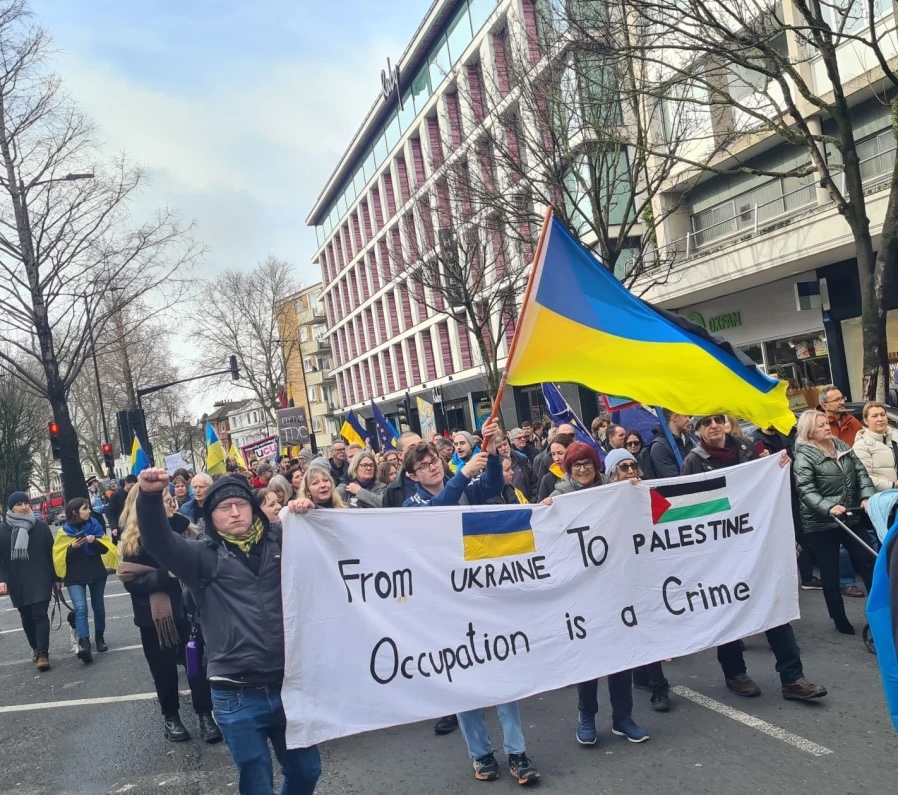
Source: Arkadiy Kurta (Facebook), 25 February 2025. Mr. Kurta posted this photo among a set of photos he took at yesterday’s pro-Ukrainian demonstration in Berlin on the Facebook public group Street Photography.


— I read about your wedding to Yana last year. Tell me, are you happy?

— Yes. But happy in what sense? I don’t feel like I’m in a happy period in my life as a human being. But I’m very happy with Yana. We didn’t even plan to get married: we just had to get married for the paperwork. We are now traveling a lot between countries and applying for visas, and it’s much easier to explain why Yana has to travel with me and I with her by showing them a marriage certificate than by telling them a long story about how we’re from Russia, where gay marriage doesn’t exist. Anyway, we got married, and it as if nothing has changed in our lives: we love each other just as much, and we have the same joint budget.

But the morning after the wedding, I woke up and looked at Jana and realized that she really drives me crazy.

And then Yana woke up and started looking at me funny. Basically, we went around for a week looking daggers at each other, and then we went to psychotherapists, each to her own, and found out that, despite the fact that getting married was a purely formal act to us, it meant a lot to our subconscious minds. That’s why all kinds of shit had started to come out of our heads, which had been building up there all our lives, as it transpired.

For example, after we got married, Yana suddenly moved from the category of “my lady love” to the category of “my family.” I have completely different requirements for my family. Yana looked at me and thought, “I never wanted to get married. Marriage is a trap, it’s the worst thing that can happen.” Because of her family history, she had come to the opinion that there was basically nothing worse than marriage. When we realized what was coming out of us, we just talked to each other and calmed down. Everything fell into place. Now my therapist says we should definitely learn to fight because it’s a good way to find a new common ground, to talk about things, to release emotions. We just haven’t fought yet.

— How many years have you been together?

— Three years. We’ve argued, we’ve been pissed at each other sometimes, but we’ve never really fought. My therapist says this is potentially the weakest point in our marriage, because people in real families should fight and yell at each other periodically. I agree with her. My sister and I or my mom and I sometimes yell at each other so hard that glass shatters. So now we’re learning how to fight.

— Don’t you think that the very fact that you were able to get married is a privilege for people from Russia?

— Of course I do. There is a huge number of people living in Russia who are no less deserving than me and who cannot get married because of their orientation. Of course, it’s very unfair. I’m aware of that, and I’m very grateful to the people who have given their lives, among other things, to make it possible for me to have a same-sex marriage in the United States and for that marriage to be recognized around the world by countries which agree on the simple fact that all people are equal and all people have the right to a family.

— You don’t feel guilty about that?

— No, because I remember that my goal hasn’t changed.

My goal is to get married on Red Square.

I believe that it will happen sooner or later. Every person should have the right to a family, every person should have the right to call their loved one a relative. This, by the way, should not necessarily be bound up with sexual orientation or gender identity. I think a lot about single women or men for whom the most important person in their life is a male or female friend with whom they would like to share a household, bequeath property to them, and identify them as their nearest and dearest. That is, the very mechanism of civil partnerships would be useful not only for LGBT people.

— In interviews you gave long ago, you said that people in Russia generally didn’t care who you slept with. Has propaganda succeeded in turning LGBTQ+ people into enemies?

— I’m not in Russia at the moment, so I can’t see what is happening there now. But I am glad that for every snitch and provocateur who goes to a gay club to turn people in to the cops, there are hundreds of people who know that their friends, brothers and sisters, and coworkers are not hetero- or cisgender people, and yet do not go to the authorities and snitch on them. But of course this is a very difficult time, because, pardon the expression, all sorts of scum who derive power and joy from the fact that they can take away another person’s life feel quite free and easy in Russia now, because a group of people with whom they can do as they pleased has been pointed out to them, and the state will only pat them on the heads for doing it.

Source: Konstantin Shavlovsky, “‘It hurts, hurts, hurts to love now’: a long conversation with Elena Kostyuchenko,” Republic, 12 January 2025. Excerpted and translated by the Russian Reader.


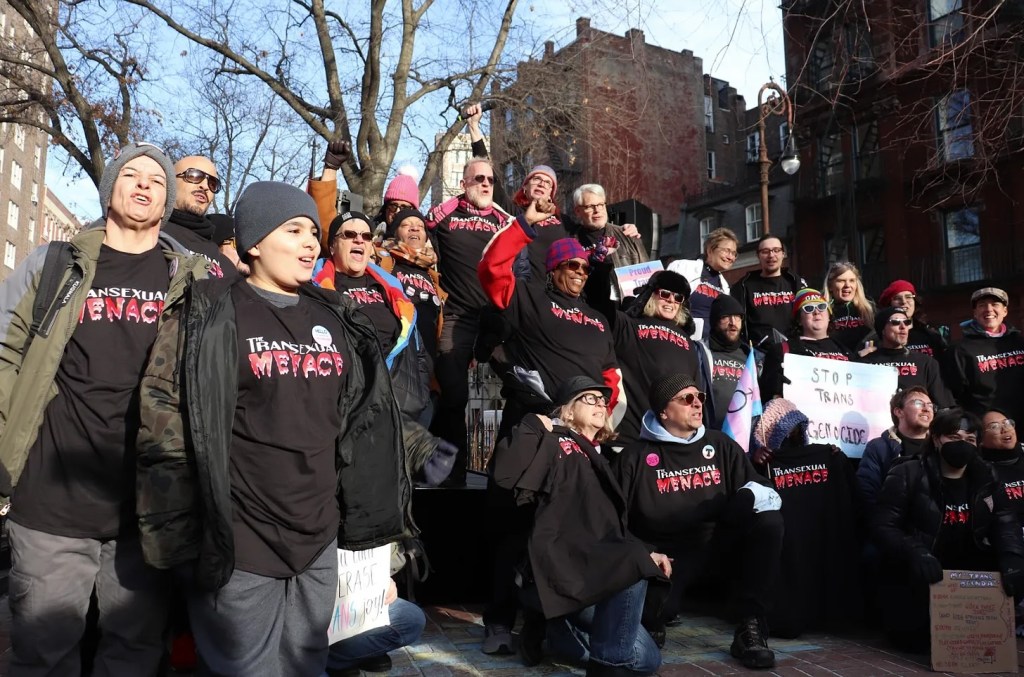
Protestors at Christopher Street Park pose for a photo. Photo: S. Baum/Erin in the Morning

This weekend at Stonewall, trans pasts and trans futures collided. The crowd of over 300 people at Christopher Street Park cheered on as the two kids took the stage, all smiles as they were wrapped in the pink, white and blue. They were led by Denise Norris, co-founder of The Transexual Menace, a direct action group which began organizing against trans exclusion in 1993.

In 1969, the Stonewall uprising spilled out from the iconic gay bar and into the streets — including that same park, a small patch of pavement and grass across the road. Many see this as the birthplace of the LGBTQ liberation movement as we know it today.

Now, a new generation has joined the fight.

“Even in our middle school, which supposedly accepts everyone, we face hate from many of our classmates,” one of the kids told the crowd.

They passed the mic to their friend. “They’re saying, ‘Oh, this school is progressive. And we don’t stand up for hate, and homophobia, and transphobia,’” the other youngster added. “Well, maybe they should do something about it.”

Donald Trump’s second term as president has wrought an unprecedented wave of anti-trans vitriol. The administration has effectively sought to ban trans and intersex people — or likely anyone suspected of being trans or intersex —from joining the militaryusing the correct bathroomsplaying on sports teamsaccessing life-saving medical care, and acquiring state IDs that acknowledge their existence, to name just a few of the provisions’ effects. Trans youth, especially, have been targeted. Meanwhile, politicians and pundits have condemned transness as “toxic,” a “virus” and “a fad”.

But Saturday’s rally was living proof of trans histories, resilience and joy. One protestor held a sign reading: “We are older than your laws and we will outlive them. There are queer and trans kids, adults and elders in the future.”

People gathered at Christopher Street Park in New York City to protest the Trump Administration’s repression of trans people on Feb. 22, 2025. Photo: S. Baum/Erin in the Morning

The area in and around Stonewall, including the park, was incorporated into the National Parks Service in 2016 as a historical monument of the West Village enclave where trans, queer and gender nonconforming youth made their home for decades. But after Trump’s return to office, even the NPS webpage for Stonewall saw the word “transgender” removed.

“Before the 1960s, almost everything about living openly as a lesbian, gay, bisexual (LGB) person was illegal,” the new website now reads, the “T” conspicuously missing. “The Stonewall Uprising on June 28, 1969 is a milestone in the quest for LGB civil rights.”

Norris spoke about organizing the event within her own intergenerationally trans family, including her nephew, Garrett. Now in his twenties, Garrett is working with his aunt to cultivate a national network, encouraging trans people and their allies everywhere to take autonomous action.

“If you don’t want to be transgressive, if you’re not here to make the systemic change that we need in this society so trans people have space to be equal — not merely acceptable — you might as well be the ‘transgender happy friends,’” Norris told Erin in the Morning at the rally. “The battle is not about if we are going to be passable or acceptable to the oppressor. It doesn’t matter if you’re ‘passing,’ they’re still going to come for you.”

The Transexual Menace, whose blood-stained logo is a campy, tongue-in-cheek nod to “The Rocky Horror Picture Show,” cut its teeth mobilizing against trans exclusion from queer spaces and causes in the 1990s. Where some gay and lesbian organizations sought to align themselves with more white, heteronormative, upper class sensibilities, the Transexual Menaces — “Stone Butch Blues” author Leslie Feinberg among them — refused to center respectability politics in their actions, Norris said.

At the rally, speakers showcased a tour de force of trans life spanning generations. Dr. Carla Smith, CEO of The NYC LGBT Community Center, told the crowd how she brought along her wife and grandchild. Jay Walker, a founding member of groups like the Reclaim Pride Coalition and Gays Against Guns, led the protestors in chants. Bernie Wagenblast, the much-beloved voice of New York City subways, was also spotted among the masses.

Angelica Torres, an actress and activist on the board of directors for The Stonewall Inn Gives Back Initiative, spoke passionately about trans histories, referencing the mass slaughter of gender nonconforming people by world powers like colonial Spain and Nazi Germany.

“We’re criminalizing trans people for existing and decriminalizing those that commit actual crimes, like Donald Trump and his 1,500 insurrectionists,” Toress said in her speech.

She could be heard from outside the metal gates of Christopher Street Park, which are adorned with archival images of trans and gender nonconforming youth — smiling, hugging, protesting. It was these street queens and butches of color that are said to have “thrown the first brick at Stonewall,” a common phrase used to characterize the much-mythologized riots. Protestors left bricks beneath the photographs in their honor.

Source: S. Baum, “‘We Will Outlive Them’: At Stonewall, Resistance Flares,” Erin in the Morning, 24 February 2025. The Russian Reader has been a proud subscriber of Erin in the Morning for over a year and encourages his readers to subscribe to it as well in this time of peril and resistance.

Three Years Later: Standing with Ukraine Against International Fascism

How bad can it get? When we strip away US president Donald Trump’s insults and temper fits, what can he actually do?

First, he can withdraw US military aid to Ukraine – which he has been talking about doing since long before the US presidential election. If the European states got their act together, which is possible, the effects of this would be constrained.

At the “Russian troops out” march in London, 22 February 2025

US diplomats have reportedly threatened to block Ukraine’s access to the Starlink communication system on which its drones rely, potentially giving asymmetrical advantage to Russia.

Second, Trump can cancel sanctions. The latter would bring him into conflict with the Countering America’s Adversaries Through Sanctions Act of 2017, which was specifically designed to compel the president to lift sanctions only with Congress approval. Of course Trump could play fast and loose with the law, which he has done and is doing in other respects, and/or Congress could go along with him.

The cancellation of sanctions would be bad. But let’s not lose sight of the fact that the sanctions were never very effective, in large part because previous US governments, under both Trump and Biden, sought to limit their effect on the oil market and the world economy.

Third, Trump can shift narratives. I broadly agree with people who say we should judge Trump and his cohorts by their actions, not by the constant stream of often incoherent words. Yes, but. Nazi salutes normalise Nazism; speculation about expelling the Palestinian population from Gaza normalises ethnic cleansing; and slandering the Ukrainian president as a “dictator” who started the war in his country reinforces Russian propaganda.

On the third anniversary of Russia’s all-out invasion – and the eleventh year of its military attack on Ukraine, and the long chains of suffering it has caused – these are real dangers. It’s not clear how they will play out.

Continue reading “Three Years Later: Standing with Ukraine Against International Fascism”

Ukraine (The Betrayal)

Source: “The World in Brief,” The Economist, 15 February 2025


Today, there was one happy man in the Kremlin. Vladimir Putin banked his legacy on an all-out war that, at one point, looked all but lost for him. But he waited long enough to see the tides change in his favor.

Three years in and hundreds of thousands of deaths after, the U.S. president is calling Putin, offering peace talks on Russia’s terms.

Hi, my name is Oleksiy Sorokin, I’m the deputy chief editor of the Kyiv Independent, and this is the latest issue of our Russia-themed newsletter.

Today we will talk about how Russia is about to win the war.

It’s a topic of debate when authoritarian Russia began morphing into a totalitarian state, but Feb. 24, 2022, is a point that finalized this transformation. A point of no return.

The all-out war was supposed to be quick. It was supposed to be a victory of a new world order and of a new Russia, once again a force that would decide the fate of the world, a force that people would fear.

Taking Kyiv, installing a new Russian-controlled government, and forcing Ukraine to recognize Crimea, Donetsk, and Luhansk as Russian was to be achieved within months, if not days.

The country Putin attempted to subjugate, however, was fiercely resisting. Something that Russian political and military leadership didn’t expect and didn’t prepare for.

Yet, over and over, Russian President Putin was bailed out by the West.

In 2022, Russia was making fortunes on selling off its energy resources to the West. When Russian troops were murdering civilians of Mariupol and nearing Kyiv, Moscow’s war chest was being replenished by Europeans.

The slow phasing out of Russian energy resources in the West allowed Russia to iron out its pivot to the East, building a formidable shadow fleet to transport its energy resources to anyone willing to buy.

When Russia began to lose ground and prepare for a Ukrainian counteroffensive, the U.S. was slowing down military shipments, giving Moscow further breathing room.

Seeing that the West was unwilling to support Ukraine to the fullest and was willing to allow Russia to continue, Russia, well, continued.

Russian leadership doubled down, increasing attacks on Ukraine, making committing war crimes a state policy, and simultaneously choking all forms of dissent at home.

Ukrainian civilians and prisoners of war were tortured and often murdered, and children from occupied territories were abducted.

Domestically, Russia outlawed speaking against the war, with people receiving hefty prison terms for criticising the invasion.

For the majority, however, the state made sure their economic well-being and daily routines remained unchanged, allowing ignorance to flourish. The Russian economy was doing fine.

All this made Putin confident. He knew that time played in his favor. The U.S. would surrender, and Europe would be in no position to object. He was right.

While on the campaign trail, Donald Trump had made it clear that he has little interest in continuing to support Ukraine’s fight against Russia.

His comments of ending the war in “24 hours” were a figure of speech, but it was clear that some sort of peace plan would be presented by the incoming administration.

Russia listed its demands, Ukraine listed theirs. Both waited. The fighting went on along the front line.

Russia was in a better position to negotiate. The West’s unwillingness to truly stop Russia, especially if it meant causing any sort of inconvenience at home, allowed it to regroup and begin a major offensive, ongoing to this day.

What came next was too good to be true… for Russia.

On Feb. 11, U.S. Defense Secretary Pete Hegseth began his European tour. Off the bat, he made public the U.S. position concerning the upcoming peace talks.

Hegseth said, “Returning to Ukraine’s pre-2014 borders is an unrealistic objective,” and that NATO membership for Ukraine is not an option, effectively agreeing with Russia’s demands.

Then, Trump called Putin.

“We both reflected on the great history of our nations and the fact that we fought so successfully together in World War II, remembering that Russia lost tens of millions of people,” said Trump following the call, parroting the Kremlin’s favorite line of the huge sacrifice Russia undertook in a war that ended 80 years ago, and how it is for whatever reason relevant today.

“As we both agreed, we want to stop the millions of deaths taking place in the war with Russia/Ukraine. President Putin even used my very strong campaign motto of ‘common sense’,” Trump added.

“We agreed to work together, very closely, including visiting each other’s nations. We have also agreed to have our respective teams start negotiations immediately, and we will begin by calling President Zelensky of Ukraine, to inform him of the conversation,” he went on.

The next day, Trump proposed to return Russia to G7, the intergovernmental political forum of the most developed democratic countries from which Moscow was kicked out following the start of its war in 2014.

Russian officials and pro-war public figures were openly excited about Trump’s moves.

“The movement that has begun is the result of the heroic work of our fighters and the principled position of Vladimir Putin, who speaks of openness to negotiations but firmly defends Russia’s national interests,” said lawmaker Evgeniy Revenko, deputy head of Putin’s United Russia party.

“Zelensky’s days are numbered, and Trump’s arrival at the Victory Parade in Moscow no longer seems like a fantasy,” he added.

“The phone call between Putin and Trump will go down in the history of world politics and diplomacy. It is not a breakthrough yet, but perhaps the first step towards one. I am sure that in Kyiv, Brussels, Paris, and London, they read Trump’s lengthy commentary on his conversation with Putin with horror and cannot believe their eyes,” said Russian Senator Aleksey Pushkov.

I can’t believe I’m saying this, but I agree with Mr. Pushkov.

Following the call, the Kremlin said, “We, of course, understand that our main counterpart in this process is Washington.”

And here we are today. It took three years, but Russia is where it wanted to be from the start — at a table with the U.S. deciding the fate of the world without the world’s consent.

Putin will push for more, seeking to squeeze the most out of Washington, and give nothing in return.

Russia would demand to keep the territories it controls, and most likely try to take the ones it doesn’t. According to Russia’s new constitution, Russia sees Ukrainian Crimea, and four oblasts — Donetsk, Luhansk, Zaporizhzhia and Kherson — as its own. Russia doesn’t have full control of any of the four.

With NATO off the table, other demands might be thrown at Trump, reducing Kyiv’s army or legalizing Russian language and influence in Ukraine.

Whether the U.S. will agree, and most importantly, whether Kyiv and the EU will go by the agreements that Moscow and Washington are set to achieve behind their backs, remains to be seen. There’s a strong chance that they won’t.

But overall, the sun is now much brighter for Putin than it was just a few days ago.

Eleven years of fighting against Ukraine, three years of all-out war and thousands of war crimes committed, Putin isn’t a pariah anymore. His worldview is on track to become mainstream, and it’s the leader of the free world who is leading him back to the table.

Source: Oleksiy Sorokin, “WTF is wrong with Russia” (newsletter), Kyiv Independent, 13 February 2025


In this week’s bulletin: Russia used US banks to dodge sanctions/ Private military companies at war/ Crimean 2024 human rights report/ Further evidence of Russian tortureexecution of prisoners, fabrication of evidence and withholding of medical aid in occupied areas/ New wave of detentions in Crimea

News from the territories occupied by Russia:  

Young people who have quit the occupied areas: “It’s like being freed from a horrible stench” (Ukrainska Pravda, 9 February)

Stadiums under occupation: sports facilities in Donbas today (Ukrainska Pravda, 7 February)

Russia uses medical torture to fabricate its ‘trial’ of disabled 74-year-old Volodymyr Ananiev (Kharkiv Human Rights Protection Group, February 7th)

Russians refuse to sell insulin and other vital medicines to Ukrainians without Russian passports, reports Ukrainian intelligence (Ukrainska Pravda, February 7th)

How can Ukraine solve the problem of documents from the occupied territories? Human rights defenders share their vision with international partners (Zmina, February 7th)

A janitor, a cook, an informer — who is being tried for collaborating with the enemy? (Kharkiv Human Rights Protection Group, February 6th)

Russian FSB carry out new terror raids and arrests by quota in occupied Crimea (Kharkiv Human Rights Protection Group, February 6th)

Human rights and humanitarian legal norms: 2024 review (Crimea Human Rights Group, 5 February)

Viktor Dzytsiuk was almost tortured to death in occupied Donbas. Now Russia is continuing his torment (Kharkiv Human Rights Protection Group, February 5th)

ZMINA took part in a discussion on the cultural decolonisation of Crimea (Zmina, February 4th)

Russian FSB uses shoddily faked video to charge 63-year-old woman abducted from occupied Ukraine with ‘terrorism’ (Kharkiv Human Rights Protection Group, February 3rd)

First prosecution in Crimea for “childfree propaganda” (Crimea Human Rights Group, 2 February)

The situation at the front:

Russian forces advance on Pokrovsk (Meduza, 5 February)

News from Ukraine – general:  

Support for war victims: human rights defenders presented new roadmap of draft laws (Zmina, February 5th)

Defying Odds In Ukraine  (They Said So, February 4th)

Ukrainian Holocaust survivor: Hitler wanted to kill me as a Jew. Putin is trying to kill me because I’m Ukrainian (Kharkiv Human Rights Protection Group, February 3rd)

How Ukraine lost faith in the Red Cross and UN (Kyiv Independent, January 22nd)

Ukraine: Bikis, our feminist year (Europe Solidaire Sans Frontières, January 20th)

Ukraine: And yet he remained a human  (Europe Solidaire Sans Frontières, January 4th)

War-related news from Russia:

Draft exemptions as Russians know them are ending (Meduza, 6 February)

Rebranding private military companies for the war in Ukraine (Posle.media, 5 February)

Support fundraisers for Solidarity Zone’s recipients in court (Solidarity Zone, 5 February)

Russia used US banks to send billions to Turkey, dodging sanctions (Kyiv Independent, February 3rd)

The Russian far right: “an affinity for violence brings them together” (Posle.media, 29 January)

Analysis and comment:

US Aid, Russia and Ukraine (The Russian Reader, 4 February)

A girl from the burnt village: the story of Maria Nevmerzhytska (Commons.com.ua, 3 February) 

Statement by human rights organisations: another wave of searches and detentions of Crimean Tatars (Crimean Human Rights Group, 2 February) 

Research of human rights abuses:

Prison medicine: ways to humanize it (Kharkiv Human Rights Protection Group, February 7th)

UN monitors report sharp increase in executions of Ukrainian POWs, and point to Russian officials’ effective incitement to kill (Kharkiv Human Rights Protection Group, February 7th)

The Centre for Civil Liberties Participated in the First World Congress on Enforced Disappearances  (Centre for Civil Liberties, February 6th)

“I Urge You to Make Every Effort to Release Ukrainian Prisoners of War And Unlawfully Detained Civilians ” Maksym Butkevych at the UN Security Council (Centre for Civil Liberties, February 6th)

“Crimes Against Peaceful Civilians Warrant Your Action” The Center for Civil Liberties Appealed to PACE Members  (Centre for Civil Liberties, February 6th)

Upcoming events:

Saturday 15 February, 11.0 am — 4.0 pm, Conference: End the Russian invasion and occupation. National Education Union, Mabledon Place, London, WC1H 9BD. Register here.

Saturday 15 February, 11.0 am – Palestine solidarity demo. To join the Ukraine-Palestine solidarity contingent, with our banner, “From Ukraine to Palestine – Occupation is a crime”, meet outside Banqueting Hall, corner of Whitehall and Horseguard Avenue, London SW1A

Saturday 22 February, 12.00 , Demonstrate at the Russian embassyAssemble 12 noon – St Volodymyr statue, W11 3QY Rally 1pm – Russian embassy, W8 4QP. Flyers are available for distribution – email info@ukrainesolidaritycampaign.org and ask for them.

==

This bulletin is put together by labour movement activists in solidarity with Ukrainian resistance. To receive it by email each Monday, email us at 2022ukrainesolidarity@gmail.com. To stop the bulletin, reply with the word “STOP” in the subject field. More information at https://ukraine-solidarity.org/. We are also on twitterBlueskyFacebook and Substack, and the bulletin is stored online here

Source: News from Ukraine Bulletin 133 (10 February 2025)


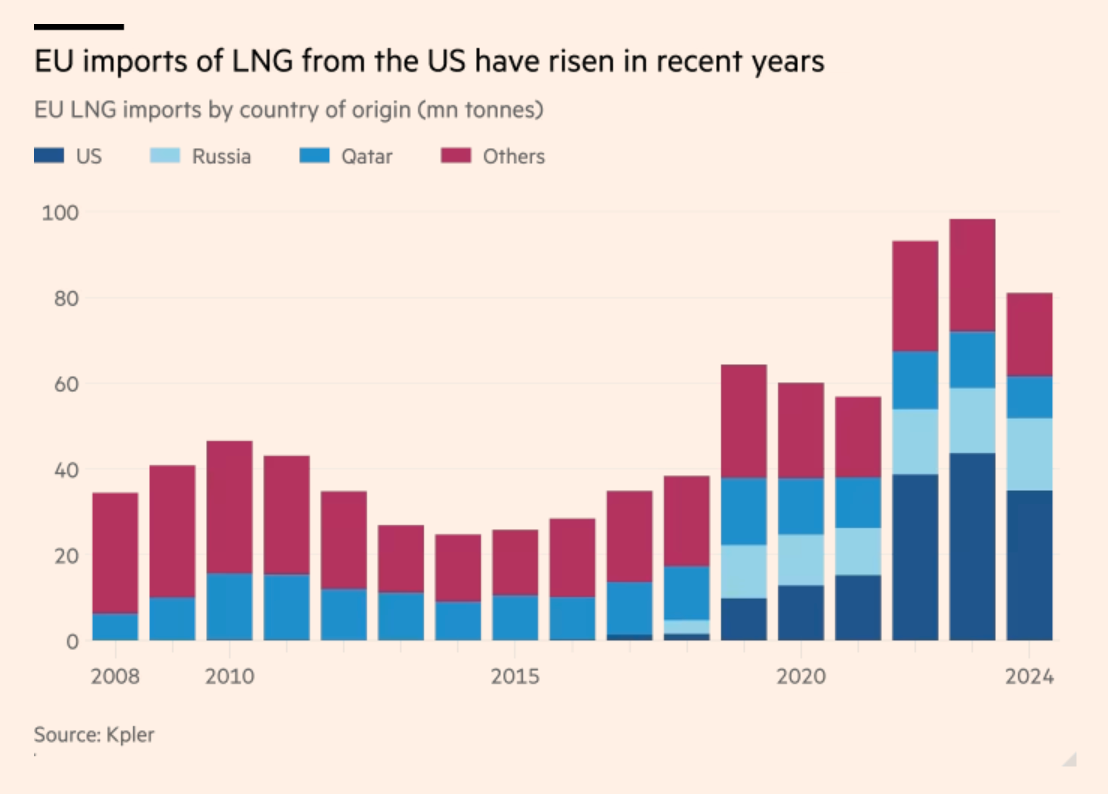
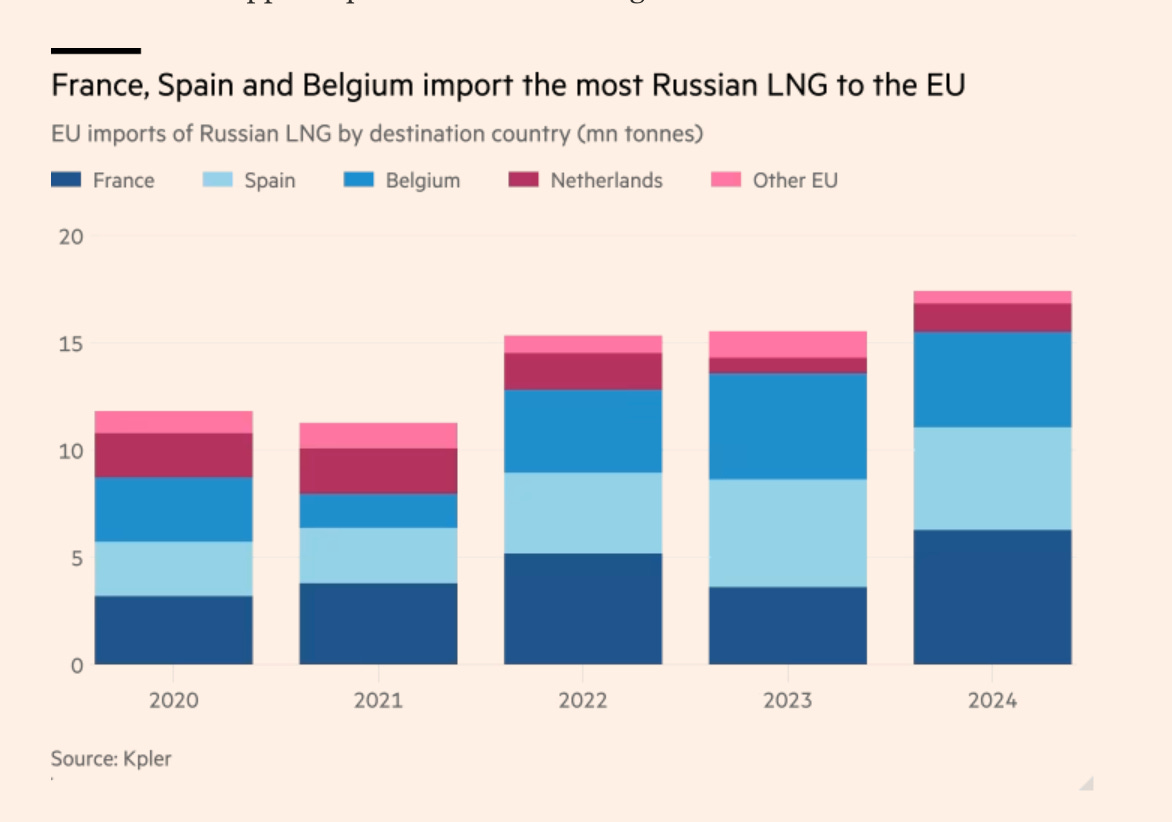
Europeans still like cheap Russian LNG

France, Spain and Belgium are the biggest buyers

Source: FT

Source: Adam Tooze, “Why Europe and India are still buying Russian energy. Friedman and Schwartz disaggregated. Cuba in Africa and the decline of the all-nighter,” Chartbook, 15 February 2025


Russia’s full-scale invasion of Ukraine in 2022 prompted a refugee crisis in Europe. News footage showed people piling onto trains and into cars, desperate to escape the threat of bombs and Russian occupation. In Kharkiv, a taxi driver named Sergii told me how in those chaotic early days of war, he had helped evacuate people as Russian missiles turned his bustling neighbourhood of Saltivka into a ghost town.

“I survived by praying to God,” Sergii said, pointing to the icon of the Virgin Mary dangling from his cab’s rearview mirror. “I helped people with no money get out of Saltivka, because people with money had already left.” He narrowly avoided death himself, he added, explaining a rocket had destroyed his apartment as he went out to his cab to retrieve the mobile phone he’d left on the front seat.

Nearly seven million people have now fled Ukraine. The majority have settled in European countries, many of which responded to the war by waiving visa requirements for Ukrainian refugees. Around 250,000 came to the UK, which decided not to fully lift restrictions but to instead introduce two emergency visas: the Ukraine Family Scheme and the Homes for Ukraine scheme.

At their outset, both visas granted Ukrainian nations the right to live, work and study in the UK for up to three years. Now, as the third anniversary of Russia’s invasion rolls around, anybody who arrived in the early days of the war is about to see their right to remain expire.

Yet this week, many Ukrainians faced the prospect that they may never be able to return to their homes. US President Trump announced he had spoken to his Russian counterpart, Vladimir Putin, to begin peace negotiations that risk handing over occupied regions of Ukraine to Russian control.

Residents of Ukrainian towns and cities previously liberated from Russian control, such as Bucha and Izium, have spoken about the reign of terror and cruelty they endured under occupation, including torture, rape, summary executions and false imprisonment. Should the peace deal go ahead on Putin’s terms, Ukrainian refugees in the UK face an increasingly uncertain future, with those whose homes are in the occupied territories potentially unable to return.

But even before the announcements from the White House and the Kremlin, the UK’s visa schemes have long presented problems for the vulnerable Ukrainians they are supposed to support.

“Before the full-scale invasion, I had a normal life,” Nastya*, aged 24, told openDemocracy “I worked in a supermarket and a fabric factory. Everything was absolutely good. And then on 22 February 2022, the war started.”

At the time, Nastya lived in Uzhorod, a city near the Slovakian border. As missiles battered the country’s major cities and the Russian forces occupied cities such as Izium and Mariupol, committing war crimes in Bucha and Irpin, she decided to flee with her husband.

“It was a stressful time,” she admitted. “I did not know what the future would be and my family were scattered around the world, some in England, some in Germany and some in Ukraine.”

Nastya and her then-husband travelled to Germany, where her mother was living, before coming to the UK on the Ukraine Family Scheme in August 2022. “It was hard to get a job in Germany, especially as I don’t speak German,” she explained. “I didn’t want to live on benefits, I wanted to support myself and live independently. I had heard in the UK there were opportunities for work, so I relocated.”

Nastya and her husband’s visas took only a few days to be approved, and the pair moved in with her sister-in-law in Leeds, where Nastya found a job in a local factory. “The work was hard and physical with lots of heavy lifting but I was earning some money which is good,” she said.

After three months in the UK, Nastya discovered she was pregnant with her first child. It was happy news, but it came as her marriage was falling apart. “It was quite difficult,” she said. ‘My husband was very sad and there were a lot of horrible moments. I decided to separate from him and go to Germany to be with my mother to have the baby.”

Nastya gave birth to a beautiful baby girl, who shares her bright brown eyes and dark hair. While she had wanted to be with her own mother during the birth, as a newly single mum Nastya was keen to return to the UK, where her father and grandmother were living, to get a job, support her daughter, and start a new life.

She had assumed that as she had the right to live and work in the UK, her daughter would be able to join her on the same family visa scheme.

But what Nastya did not realise is that while she was caring for her newborn in Germany, the Conservative government had been quietly restricting Ukrainians’ right to enter the UK. The family visa scheme had been closed and Ukrainians were no longer allowed to sponsor fellow refugees to arrive on the Homes for Ukraine visa.

Now, if Nastya wanted to come to the UK, she would have to leave her daughter behind.

War in Europe

When the Homes for Ukraine scheme was launched in 2022, members of the British public could open their homes to Ukrainian refugees in exchange for an initial monthly payment of £350 from their local council, while Ukrainians who successfully applied for the scheme were granted the right to live, study and work in the UK for three years.

But in February 2024, the then-Tory government brought in a series of changes. It halved the length of time a new Ukrainian applicant would be able to stay in the UK to 18 months, and amended the rules so that only people with British citizenship can sign up to become hosts. At the same time, it cancelled the family visa scheme, meaning Ukrainian nationals living in the UK can no longer sponsor family members to join them.

These changes have effectively made it impossible for Ukrainian nationals in the UK to help loved ones to settle here to escape the war. Now, Ukrainians wanting to come to the UK are reliant on there being an available British citizen who will take them in. But this, too, has suffered changes that have made it a less appealing prospect for many hosts.

In November, the Labour government announced all British citizens signed up to the Homes for Ukraine scheme will be paid £350 a month, regardless of how long they have been hosting. Households who have been hosting for more than a year are currently paid £500 a month.

Even before this announcement, the number of hosts was in decline, according to openDemocracy’s analysis of government data. In the third quarter of 2023, 100,061 households in England received the monthly ‘thank you’ payment, but by the third quarter of Q3 2024, this had fallen to 48,533 households, the lowest number since the full-scale war began.

This decrease in hosts was also apparent in our review of Homes for Ukraine Facebook pages. While at the start of the war, posts from Ukrainians looking for sponsors received multiple comments from potential hosts, these days they often garner no responses or are met with ‘jokes’, with one commenter saying: “I’d rather be in Mykolaiv than London”. Others respond telling those who wish to relocate to the UK from another European country, like Nastya, that the scheme is not for them: “People in the UK would prefer to sponsor people who are in Ukraine and need to be saved from war.”

“Instead of putting more and more administrative barriers in front of people fleeing war, the UK government must show it can match the solidarity and empathy shown by the people of the UK,” said Alena Ivanova, committee member of the Ukraine Solidarity Campaign, which is organising a march to the Russian embassy in London to mark the third anniversary of the full-scale invasion.

“We know that the vast majority of Ukrainians in the UK are vulnerable women, small children and elderly people who carry significant trauma as a result of Russia’s brutal war. The least we as a country can do is not put them further at risk and increase their anxiety but help them settle and rebuild their lives,” Ivanova added.

Those who arrived in the UK through either the Homes for Ukraine or Ukraine Family Visa scheme in the early days of the war are about to see their right to remain expire. But with the conflict ongoing, they can extend their visas via the Ukraine Permission Extension Scheme.

While this extension is undoubtedly needed, the process for obtaining it is fraught – and may put vulnerable people at risk of falling out of the system.

People needing an extension can apply only when they have 28 days or less left on their right to remain, which may impact their ability to work or be housed, with landlords and employers nervous about accepting Ukrainians who may not have the legal right to be in the country. Those who miss the extension window are at risk of becoming undocumented and therefore will be considered to be in the UK illegally. Although the war means it is unlikely these people will be deported, they would be unable to work or access housing, and are at risk of being removed in the future.

And applications for extensions can only be made from within the UK – a problem for women like Nastya in Germany, or for anyone visiting family in Ukraine.

Polling by the Office for National Statistics found that while the majority of Ukrainians are aware of the visa changes and the need to apply for an extension, a small minority of mainly vulnerable refugees, such as the elderly or young, are not.

Uncertainty is also built into the extension scheme. People will be able to extend their right to stay in the UK by only 18 months, half the three years they were initially granted. If they stay for the full term, a Ukrainian refugee’s total residency in the UK will have been four and a half years – six months short of the five years that a person must have continuously lived here to be eligible for the right to settle permanently.

There is also uncertainty for those British nationals hosting Ukrainians. If their guest is granted an extension, their host will need to reapply for thank you payments.

openDemocracy asked the UK government how it plans to deal with the temporary nature of the visas should the conflict continue for another 18 months. We also asked what plans they have in place should a peace deal cede Ukrainian territory to Russia, with those fleeing the occupied regions unable to return home. They did not respond.

‘I feel loneliness’

Nastya had always planned to return from Germany to the UK with her daughter. Here, she could work and have her own home where she, her daughter and her new partner, who is also Ukrainian, could live as a family.

Now, the changes to the visa schemes have cut her and her daughter off, leaving her living in limbo. She and her daughter face a choice: living in Germany where she struggles to find work and faces eviction from her refugee accommodation in the coming year, or returning to Ukraine which endures daily bombardment by Russian bombs and drones.

“In Germany, I face going into a refugee camp, which is no place to raise a child,” Nastya warned. “My mother lives in a separate city and so we cannot see each other regularly.”

Worse, the heartbreak of being separated from her father and grandmother has been devastating.

“They have never had the chance to meet their granddaughter and great-granddaughter,” she said, the pain of separation clear in her voice. “I have not been in touch with them face to face, and they would really like to meet. I want to see my father and grandmother and it is impossible.”

The changes to the visa schemes have left women like Nastya experiencing a double displacement. First, the full-scale invasion forced them from their homes in Ukraine. Now, changing government policy has separated them from family members in the UK.

“I have cried a lot,” said Nastya. “I feel loneliness, it is so hard that I can’t put it into words. I am crying a lot but I don’t want to blame anyone. If I would receive a visa for my daughter it would be really nice and I would be able to meet my family.”

Nastya has some hope. Last month, the Labour government partially reversed the changes made by the previous administration, allowing Ukrainians to bring their children to join them in the UK, a change described as a “welcome step in the right direction,” by Mubeen Bhutta, British Red Cross director of policy, research and advocacy. The charity has supported Nastya and her family.

“Our teams have supported people who had been unable to reunite with young children,” she said. “We’ve seen their pain and suffering and know this will mean a lot to families who have been torn apart. However, even with these changes many family members will remain separated.

“It is still very difficult for displaced Ukrainians to help elderly parents or partners find safety in the UK. It is vital that the government addresses these obstacles and helps more Ukrainians reunite with their loved ones.”

Nastya, who has a legal right to be in the UK, can now apply for an extension and for her daughter to join her. Her partner, however, must find a British national to sponsor him.

“It is really hard to be a refugee,” she said. “It is impossible to see a future for Ukraine. It would be really nice to go to the UK to work, to rent a flat, to pay taxes. This is what I need, simple things to be satisfied. I want my daughter to be happy, to have a good education.”

*Names have been changed to protect identity

Source: Sian Norris, “Harsh UK visa schemes leave Ukrainian families in limbo and torn apart,” openDemocracy, 14 February 2025

El lector ruso: El espíritu del año nuevo


“Devuelve el espíritu del año nuevo”: Igor Stomajin, Moscú, 2024

Fiel a su naturaleza vanguardista, el Noise Cabaret estrena, el 25 de diciembre, la serie inmersiva Diálogos, basada en la obra filosófica de Platón. Aleksander Judiakov transforma la antigua filosofía griega en una animada, ingeniosa y provocativa charla con la audiencia. 

Junto a su compañero, Ivan Wahlberg, Judiakov, quien no sólo actúa sino que también dirige el proyecto, guiará a la audiencia a través del laberíntico  pensamiento de Platón: ¿qué es la justicia?, ¿dónde está la línea entre lo existente y lo no existente?, ¿cuál es la naturaleza del amor? Estas y muchas otras fundamentales preguntas filosóficas servirán de punto de partida para reflexionar y debatir. 

Diálogos es una serie de performances interactivas en la que cada espectador toma parte en discusiones filosóficas que consisten en textos de Platón adaptados e improvisados de forma histriónica, lo que significa que el desarrollo de la sesión depende de la participación de la audiencia. Cada nueva performance es un capítulo aparte que trata un problema filosófico específico, de forma que el espectador puede unirse a la serie en cualquier momento. El primer episodio está dedicado al concepto de la justicia.   

El Noise Cabaret planea invitar a celebridades de San Petersburgo para enriquecer la conversación con la audiencia con sus propias opiniones y perspectivas. 

Judiakov ha compartido la idea básica del proyecto:

“Quisimos crear una historia acerca de gente que conversa en un bar. Pero, gente que habla sólo entre ellos no es interesante, tiene que haber algo primordial. Cuando estudié a Platón, me interesé en muchos aspectos de su filosofía, sería un error limitarnos a un solo tópico. Así nació la idea de crear una serie: tomar a Platón, leerle y discutir los temas que él refiere en los diálogos socráticos. 

Planeamos producir una nueva sesión cada dos o tres meses. No pretendemos ser estudiosos serios de la filosofía platónica, sino que esta es más bien una excusa para hablar con el público acerca de temas difíciles, exponer los Diálogos y reflexionar acerca de estos. Y un bar es un lugar donde podemos hablar de todo tipo de cosas, incluso de filosofía”.

Fuente: Fontanka.ru, 23 de diciembre del 2024. Traducción original The Russian Reader. Traducción al español por Hugo Palomino.


Los rusos han gastado casi 6 000 millones de rublos en Ozempic genéricos el 2024

Los medicamentos basados en semaglutida se usan habitualmente para perder peso. 

En los primeros diez meses del 2024, los rusos gastaron 5,9 000 millones de rublos (aproximadamente 52 000 millones de euros) en más de un millón de envases de versiones genéricas del medicamento Ozempic (semaglutido), de acuerdo al DSM Group, según un reporte de Vedomosti.

Entre los genéricos más populares se encuentran el Semavic de Geropharm y el Quincenta de Promomed. El Ozempic original dejó de exportarse a Rusia en diciembre del 2023, abriendo el mercado a otros equivalentes locales. 

2024 ha sido un año récord para medicamentos en esta categoría. En comparación, el 2023 los rusos gastaron sólo 297 millones de rublos en Ozempic al adquirir 20 mil dosis. El 2022 gastaron 1,9 mil millones de rublos (en 256 mil dosis); el 2021, 758 millones de rublos; y el 2020, 76 millones de rublos.

Los medicamentos basados en la semaglutida son usados en el tratamiento de diabetes, pero recientemente han ganado popularidad como fármacos  adelgazantes, lo que ha contribuido a su crecimiento de ventas en Rusia.  

Fuente: ASTV.ru, 21 de diciembre del 2024. Traducción original The Russian Reader. Traducción al español por Hugo Palomino.


La ciudad de San Petersburgo inaugurará una nueva estación de metro esta semana. Así lo anunció, el jueves, el gobernador Alexander Beglov, en la que será la primera estación de metro en abrir en cinco años.

La estación Gorny Institute de la isla Vasílievski, extenderá la cuarta línea (naranja) hacia el oeste. Esta comenzará a operar el viernes (27 de diciembre) a las 9 de la mañana, cuando su vestíbulo se abra tanto al ingreso como a la salida, dijo Beglov.

“La apertura de la estación Gorny Institute es un hito”, escribió el gobernador en Telegram, haciendo notar que la ciudad ha superado “retos importantes” durante la construcción de la misma.

Beglov agradeció al presidente Vladimir Putin, a los constructores del metro, a ingenieros y residentes de San Petersburgo por su paciencia y apoyo, calificando la finalización de la estación el “primer resultado” de los constantes esfuerzos para mejorar el sistema de metro urbano.

La inauguración de la estación se produce tras años de retrasos. Inicialmente programada para el 2015, su apertura se pospuso primero al 2018 y luego al 2022. El trabajo de construcción fue empañado por la fatal caída de un andamio en junio del 2020, incidente en el que falleció un trabajador y otro resultó herido.   

Gorny Institute es la primera estación en abrir desde el 2019, cuando otras tres estaciones, Prospect Slavy, Dunayskaya y Shushary fueron inauguradas.

El metro de San Petersburgo está compuesto en la actualidad por cinco líneas y 72 estaciones. Sin embargo, su expansión se ha ralentizado con el tiempo, en claro contraste con el pujante sistema de metro de Moscú, que este último año inauguró ocho nuevas estaciones.  

Fuente: Moscow Times, 26 de diciembre del 2024. Traducción al español por Hugo Palomino para The Russian Reader.


Al tratar de comprender la tonalidad del film (Anora), se me viene a la memoria una frase de Francis Bacon: “Uno puede ser optimista y no tener esperanza alguna”. La situación en la que los protagonistas se ven envueltos, a merced de los ricos, es totalmente desesperanzadora. La versión optimista del guión mostraría a un Vanya que encararía a sus padres para huir con Ani, aún cuando así perdiera su fortuna –lo que constituye la trampa de la película. O quizás, la madre despiadada y capitalista podría sentir respeto a regañadientes por su tenaz nuera, como ocurrió en la última temporada de Fargo. Aún con su siniestro  desenlace, la impresión que deja la película  se aleja de lo penoso o pesimista. El optimismo desesperanzado del cine de Baker se sostiene en lo extraordinario de la vida que parece escapar de la pantalla y, especialmente, su cuidado por los personajes, incluso Vanya.  

Fuente: Aaron Schuster, “The Ethical Dignity of Anora,” e-flux Notes, 20 de noviembre del 2024. Traducción al español por Hugo Palomino para The Russian Reader.


Durante el otoño del 2023, con el objeto de entender qué ocurre con la sociedad rusa en tiempos de guerra, el equipo del Laboratorio Sociológico Público (Public Sociology Laboratory en inglés) realizó una serie de viajes de investigación etnográfica a tres regiones rusas: Sverdlovsk, Krasnodar y Buriatia. En el transcurso de un mes los investigadores del Laboratorio observaron cómo la gente aborda el tema de la guerra y sus efectos en la vida diaria de pueblos y ciudades. Grabaron también  entrevistas sociológicas con residentes locales. El Laboratorio ha compilado tres detallados diarios de observación (de más de 100 mil palabras cada uno) y ha conducido 75 entrevistas exhaustivas. Más importante aún, ha recolectado datos realmente invaluables que proporcionan una idea de lo que dice y piensa la gente acerca de la guerra en su vida cotidiana, más allá de sus respuestas a las interrogantes de los investigadores.  

El texto completo del reporte es de la envergadura de un libro, escrito también como uno: en siete capítulos se introducen  muchos personajes, permitiendo así a los lectores sumergirse por completo en los tiempos de la guerra contemporánea en Rusia. El siguiente sumario destaca las principales conclusiones del análisis.

●      La sociedad rusa permanece políticamente desmovilizada y sin ideología. Aún cuando predomina la opinión de que es una sociedad estrictamente militarizada, vemos que la guerra se ha convertido en una rutina y por ende en una parte ignorada de la realidad. Por ejemplo, comparado con el primer año del conflicto, la cantidad de simbología a favor de la guerra en espacios públicos ha disminuido en las tres regiones. La guerra no se ha convertido ni en fuente de nuevas ideas en la vida cultural de pueblos y ciudades ni se ha integrado en el ámbito familiar o en el ámbito cultural establecido. La guerra no se discute en espacios públicos, incluso, salvo raras excepciones, en comunidades locales en línea.    

●      En conversaciones espontáneas, los rusos raramente discuten los objetivos generales, causas, criminalidad o justificaciones de la guerra. Están más preocupados por el impacto del conflicto en sus vidas cotidianas. Cuando hablan acerca de la guerra, usualmente vuelven sobre tópicos que ya discutían antes de la conflagración, por ejemplo, problemas cotidianos, dinero o ética. Los hombres discuten más a menudo temas que son considerados “masculinos” en la sociedad, como aspectos técnicos de la guerra; mientras las mujeres se dedican a temas más “femeninos” como el efecto destructor del conflicto en las familias.

●      La participación de diversos tipos de voluntariado a favor de la guerra y asistencia organizada a la milicia, que generalmente es tomada como referencia y ejemplo de la movilización y militarización de la sociedad rusa, raramente está  motivada por un firme aval del público a la “operación especial”. Está, más bien, asociada con la presión de la administración, las normas morales de la comunidad (sobre el apoyo mutuo) y/o por el deseo de ayudar a sus seres queridos, en lugar del deseo de propiciar una victoria rusa. La observación de actividades de voluntarios muestra que estos no discuten de guerra o política en el trabajo, sino que prefieren temas  con los que pueden relacionarse personalmente: precios, pensiones, familias y/o historias vinculadas a centros voluntarios. 

●      A pesar de todas las similitudes, la guerra es percibida de forma diferente en diferentes regiones. Las peculiaridades de la perspectiva  de cada región se debe a factores como el número de unidades militares y colonias penitenciarias desde donde se reclutan presos, la proximidad a la zona de combate, la prosperidad de la región y el acceso a puestos de trabajo decentes, la compenetración de los lazos sociales, la circulación de noticias que llegan de amistades en el frente de batalla, etc. En otras palabras, las diferencias en las percepciones de la guerra pueden atribuirse principalmente a las peculiaridades de la vida en las regiones previas a la invasión rusa de Ucrania.

●      El conflicto entre opositores y simpatizantes de la guerra está perdiendo fuerza gradualmente, mientras el cisma entre aquellos que permanecen en Rusia y quienes se marcharon crece. Ambos casos se dan porque la experiencia compartida de vivir a través de una situación difícil dentro del país se está convirtiendo en algo más importante que cualquier diferencia de puntos de vista para muchos rusos y también porque la gente discute cada vez menos acerca de la guerra.

●      Al mismo tiempo, el menguante conflicto entre opositores y simpatizantes de la guerra no siempre implica una mayor cohesión social. Ya que la sociedad está intentando vivir como si la guerra no estuviera ocurriendo y el gobierno no menciona ninguna pérdida o problema relacionado con la guerra, todas las consecuencias negativas del conflicto se han normalizado o han sido apartados al ámbito de los “problemas personales” que no son discutidos con otros y que todos deben lidiar por sí mismos.

●      En general, muchos no se sienten capaces de influir en las decisiones políticas. Por consiguiente, se distancian cada vez más de la guerra. Ellos entienden que no pueden cambiar la política del gobierno pero retienen, al menos, algún control sobre sus vidas privadas, por lo que se refugian en estas. Con el tiempo, no solo los rusos apolíticos sino incluso opositores declarados de la invasión  sienten esta impotencia y, como resultado, algunos de ellos aceptan la nueva realidad, mientras siguen condenando la guerra para sus adentros.  

●      Consecuentemente, muchos rusos desconfían cada vez más de noticias políticas provenientes de un rango diverso de fuentes. En cambio ponen su confianza en medios locales. Los problemas locales en las noticias les parecen más importantes y relevantes. Más aún, sienten que, a diferencia de la guerra, al menos tienen la capacidad de influenciar en asuntos locales. 

●      Al mismo tiempo, la guerra está influyendo en el estado emocional de la gente. Muchos de nuestros interlocutores admiten haber experimentado ansiedad, tensión, incertidumbre, miedo incluso cuando no hablan de estas emociones  abiertamente. La partida de hijos y maridos a la guerra hace que las mujeres “griten a todo pulmón”. Sin embargo, raramente comparten estos sentimientos con otros y si lo hacen es en círculos de amistades cercanas. 

●      Muchos rusos sin interés en la política pueden justificar o condenar la guerra dependiendo del contexto comunicativo.

  1. Tienden a justificar la guerra de forma no emocional a través de la normalización (“siempre ha habido guerras”) o la racionalización (“era necesario”) cuando se les pregunta directamente en contextos formales como en las entrevistas de investigación.
  2. Tienden más a criticar la guerra cuando se les sugiere pensar en los efectos negativos de esta sobre la gente ordinaria. Este criticismo difiere del de los opositores al conflicto. Para los opositores, la guerra es un crimen moral contra Ucrania, mientras que para los rusos apolíticos, la guerra es vista como algo que destruye la sociedad rusa y daña a la gente común. Sin embargo, este criticismo no lleva a los rusos apolíticos a cuestionarse la necesidad o inevitabilidad de la guerra ni a extender sus críticas hacia el gobierno.
  3. Tienden a justificar la guerra emocionalmente cuando son confrontados con narrativas tradicionales contrarias al conflicto. Cuando Rusia es acusada de cometer crímenes morales contra la gente de Ucrania, suelen tomar tales acusaciones de manera  personal e intentan defender su propia dignidad.

Algunos experimentan un fortalecimiento del sentimiento de identidad nacional y, a veces, esto incrementa la demanda de una mayor solidaridad. Es importante dejar constancia que este incremento de la identidad nacional no guía a los rusos a adoptar el signo imperial del nacionalismo. A diferencia del Kremlin, la gente común y corriente vive en un mundo de estados-nación, no en un mundo de fantasías imperiales (según estas fantasías, Ucrania no es un estado real y los ucranianos son gente inferior). 

Una sensación de duda es lo que realmente une a los rusos hoy en día. A pesar de que la gente usa diferentes estrategias para hacer frente a esa sensación, esta complica significativamente la habilidad de planificar sus vidas y hunde a los rusos en el pesimismo.

Así, por una parte, lo que antes era la  naturaleza singular de la guerra, está dando paso a la normalización: gradualmente la guerra se está convirtiendo en algo ordinario, un elemento más del mundo que les rodea. De alguna manera, muchos rusos se resisten a los intentos del Kremlin de convertir ciudadanos ordinarios en partidarios ideológicos y a los intentos de la oposición liberal, que se manifiesta contra la guerra, de forzar a la sociedad a experimentar un sentimiento de culpa y participación activa. Por otra parte, la guerra constantemente nos recuerda su presencia al crear nuevas amenazas, nuevas ansiedades y nuevas razones para tener a los rusos descontentos.

Fuente: Public Sociology Laboratory (Programa ruso), diciembre del 2024. Traducción al español por Hugo Palomino para The Russian Reader.


¡Queridos lectores!

Estos tiempos son difíciles, la clave en este caso es persistir en todo sentido.

Nadie dijo que fuese sencillo.

Pero no es tan duro tampoco.

El otro día le pregunté a Vladimir Putin si él esperaba algo más de sí mismo en el año que acababa.

Pero quiero preguntarte, lector, ¿esperas algo más de ti mismo el año que viene?

Necesitamos esperar algo. Necesitamos querer algo. Es una forma de aferrarnos a nosotros mismos. De cuidar de nosotros mismos. Incluso de encontrarnos a nosotros mismos.

¡Un signo duro (“Ъ”) nunca será un signo blando (“Ь”)!

¡Feliz nuevo año por llegar!

¡No nos quedemos a la defensiva!  

Andrei Kolesnikov, Corresponsal especial,  Editorial Kommersant.

Fuente: correo electrónico de Kommersant, 31 de diciembre del 2024. Traducción original The Russian Reader. Traducción al español por Hugo Palomino. El llamado signo duro, que los bolcheviques eliminaron del alfabeto cirílico ruso en 1918, ha sido el logotipo de Kommersant desde que el periódico fue relanzado en enero de 1990. Andrei Kolesnikov ha sido el corresponsal especial del medio en el Kremlin, es decir el jefe Putinversteher* del diario, por muchos años. Por supuesto, él lo negará cuando las cosas se pongan difíciles y Putin se marche, y dirá que ha sido siempre la forma cínica y jocosa, aunque siempre leal, en la que ha escrito acerca del dictador ruso y criminal de guerra durante todos estos años.   

* Término derivado del alemán versteher, persona con conocimiento de un tema en particular, usado aquí de forma peyorativa, algo así como un “Putinologo” en el peor sentido de la palabra.

Alexander Skobov: Closing Statement at Trial

Alexander Skobov’s closing statement at trial:

I was brought up in the Soviet Union to believe that when a malicious, cruel aggressor attacks civilians, you have to take up arms and go do battle with him, and that if you cannot bear arms, you help the people who are doing battle and call on others to do the same.

All my work as a political commentator has been about calling on people to go do battle with the aggressor which has attacked Ukraine, to assist Ukraine with weapons and ammunition.

No one had attacked or threatened Russia.

It was Putin’s Nazi regime which attacked Ukraine, only because of the megalomania of the regime’s ringleaders, because of their inhuman thirst for power over all they survey.

Murdering hundreds of thousands of people is their way of bolstering their self-esteem. They are degenerates, scum, and Nazi riffraff.

The guilt of Putin’s Nazi dictatorship in plotting, unleashing, and waging a war of aggression is obvious and does not need to be proven. We also do not need to prove our right to offer armed resistance to this aggression on the battlefield and in the aggressor’s rear. It would be laughable to expect this right to be acknowledged by a regime which tosses people in prison for morally condemning its aggression out loud. All legal means of protesting Putinist Russia’s aggression have been eliminated.

My calls to resist the aggressor’s regime with armed force have caused me to be charged with terrorism.* I won’t deign to argue with the aggressor’s officials even if they claim my actions constitute pedophilia. Russia’s courts have long ago shown themselves to be appendages of the Nazi tyranny and seeking justice from them is pointless. I will never stand up before these people, who are the lackeys of murderers and scoundrels.

I see no point in arguing with puppets of the dictatorship about how conscientiously they execute their own laws. In any case, these laws are the laws of a totalitarian state and their aim is to stifle dissent. I do not recognize these laws and I will not obey them.

I also have no intention of appealing any rulings made by or actions taken by representatives of the Nazi regime.

The Putinist dictatorship may murder me, but it cannot force me to stop fighting against it. Wherever I find myself, I will keep calling on honest Russians to join the Ukrainian Armed Forces. I will keep calling for airstrikes on military facilities deep in Russian territory. I will keep calling on the civilized world to inflict a strategic defeat on Nazi Russia. I will keep trying to prove that the new Hitler’s regime must be routed militarily.

Putin is the new Hitler, a vampire driven insane by impunity and drunk on blood. I shall never grow tired of saying, “Crush the viper!”

Death to the murder, tyrant and scoundrel Putin!

Death to the Russian fascist invaders!

Glory to Ukraine!


[Grani.Ru:] Thanks to Alexander Valeryevich’s dedicated wife Olga Shcheglova (pictured above). Thanks to SotaVision for filming at the Petersburg military court (Skobov is participating in the trial via video link from Syktyvkar). Thanks to those who didn’t unsubscribe from Grani.Ru after it closed. It’s as if Skobov timed his brave deed to coincide with the final moral collapse of numerous media brands. And yet he will be heard by a handful of his contemporaries. But he has already gone down in history.

* Skobov has been charged with “publicly calling for terrorism,” “publicly condoning terrorism or promoting terrorism using the mass media, including the internet” and “organizing a terrorist community and participating in it.” If Skobov is convicted on these charges, he faces a maximum penalty of ten to fifteen years in prison and fines of up to one million rubles (approx. 9,500 euros) — TRR.

Source: Grani.Ru (Facebook), 15 January 2025. Translated by Thomas Campbell (aka the Russian Reader)

Thе New Year Spirit


Faithful to its avant-garde nature, Noise Cabaret premieres the immersive series Dialogues, based on the philosophical works of Plato, on December 25. Alexander Khudyakov turns ancient Greek philosophy into a lively, witty and provocative dialogue with the audience.

Along with his partner Ivan Wahlberg, Khudyakov, who not only acts in the project but directs it, will guide the audience through the labyrinths of Plato’s thought. What is justice? Where is the line between existence and non-existence? What is the true nature of love? These and many other fundamental philosophical questions will serve as starting points for reflection and debate.

Dialogues is a series of interactive performances in which each viewer is involved in a philosophical discussion consisting of adapted texts by Plato and actorly improvisation, meaning that the way the performance goes depends on the audience’s involvement. Each new performance is a separate chapter dealing with a specific philosophical problem, so you can join the series at any stage. The first episode deals with the concept of justice.

Noise Cabaret plans to invite Petersburg celebrities to enrich the conversation with the audience with their own opinions and views.

Khudyakov shared the idea behind the project.

“We wanted to do a story related to people talking in a bar. But just people talking to each other is not interesting. There has to be a big focus. When I studied Plato, I was interested in several aspects of his philosophy. It would have been wrong to limit ourselves to a single topic. So the idea to make a series arose: take Plato, read him, and discuss the themes he raises in the Socratic dialogues.

“We plan to produce a new episode every two or three months. There’s no pretense here that we’re serious scholars of Plato’s philosophy: it’s more of an excuse to talk to people about difficult topics, to air the Dialogues and reflect on them. And a bar is a place where you can talk about all sorts of things, including philosophy.”

Source: Fontanka.ru, 23 December 2024. Translated by the Russian Reader


Russians spent almost 6 billion rubles on Ozempic generics in 2024

Semaglutide-based drugs are commonly used for weight loss

In the first ten months of 2024, Russians spent 5.9 billion rubles [approx. 52 billion euros] on over one million packs of generic versions of the drug Ozempic (semaglutide), according to DSM Group, as reported by Vedomosti.

Among the most popular generics are Geropharm’s Semavic and Promomed’s Quincenta. The original drug Ozempic stopped [sic] official supplies to Russia in December 2023, opening the market to domestic analogues.

2024 was a record year for drugs in this category. By comparison, in 2023, Russians spent only 297 million rubles on Ozempic, buying 20 thousand packs. In 2022, they spent 1.9 billion rubles (256 thousand packs); in 2021, 758 million rubles; and in 2020, 76 million rubles.

Semaglutide-based drugs are used to treat diabetes but have recently been gaining popularity as weight loss drugs, which has also contributed to their sales growth in Russia.

Source: ASTV.ru, 21 December 2024. Translated by the Russian Reader


St. Petersburg will open a new metro station this week, Governor Alexander Beglov announced Thursday, marking the former Tsarist capital’s first new metro station in five years.

The Gorny Institute metro station, located on Vasilievsky Island, will extend the fourth (or “orange”) line westward. It will begin operations at 9:00 a.m. on Friday, with its vestibule open for both entry and exit, Beglov said.

“The opening of Gorny Institute is a milestone,” the governor wrote on Telegram, noting that the city had overcome “significant challenges” during the station’s construction.

Beglov thanked President Vladimir Putin, metro builders, engineers and residents of St. Petersburg for their patience and support, calling the station’s completion the “first results” of sustained efforts to advance the city’s metro system.

The station’s opening comes after years of delays. Initially scheduled for completion in 2015, its opening was postponed to 2018 and later to 2022. Construction efforts were further overshadowed by a fatal scaffolding collapse in June 2020 that killed one worker and injured another.

Gorny Institute is the first station to open since 2019, when three others — Prospect Slavy, Dunayskaya, and Shushary — were inaugurated.

St. Petersburg’s metro is currently made up of five lines and 72 stations. However, it has expanded slowly over the years, in stark contrast to Moscow’s burgeoning metro system, which this year opened eight new stations.

Source: Moscow Times, 26 December 2024


[…]

In trying to grasp the tonality of the film [Anora], I am reminded of a line from Francis Bacon: “You can be optimistic and totally without hope.” The situation the characters find themselves in, being at the mercy of the rich, is totally without hope. The “hopeful” version of the script would be one in which Vanya does stand up to his parents and runs off with Ani, even at the price of losing his wealth—this is the film’s narrative lure. Or maybe another where the ruthless capitalist mother gains a grudging respect for her tough daughter-in-law, like in the last season of Fargo. But despite its grim closure, the impression the film gives is far from dreary or pessimistic. The hopeless optimism of Baker’s cinema lies in the sheer life that seems to almost burst out of the filmic frame, and, especially, his deep care for his characters, even Vanya.

Source: Aaron Schuster, “The Ethical Dignity of Anora,” e-flux Notes, 20 November 2024


In the fall of 2023, with the goal of understanding what is really happening with Russian society during wartime, the Public Sociology Laboratory team went on ethnographic research trips to three Russian regions—Sverdlovsk, Krasnodar and Buryatia. Over the course of a month, PS Lab researchers observed how people talk about the war and how it affects daily life in cities and villages. In addition, they recorded sociological interviews with local residents. PS Lab has compiled three detailed ethnographic observation diaries (more than 100,000 words apiece) and conducted 75 in-depth interviews. Overall, it has managed to collect truly unique data that provides an idea of what people say and think about the war in everyday situations, and not only when answering researchers’ questions.

The full text of the report is book-length and written in a book-style format: it consists of seven chapters, introduces many characters, and allows readers to be fully immersed in contemporary wartime Russia. The following summary, meanwhile, highlights the main analytical conclusions.

  • Russian society remains politically demobilized and deideologized. Despite the prevailing opinion that it is strictly militarized, we see that the war has become routine and therefore a disregarded part of reality. For example, compared to the first years of the war, the amount of prowar symbolism in public spaces has decreased in all three regions. The war has neither become a source of new ideas in the cultural life of cities or villages nor been integrated into familiar and already-established cultural formats. The war is not discussed in public places, including, with rare exceptions, local online communities.
  • In spontaneous conversations, Russians rarely discuss the overall goals and causes, criminality, or justifications of the war. They are concerned with the impact of the war on their everyday lives. When they talk about the war, they mostly talk about the same things they discussed before the war, for example, everyday difficulties, money, or ethics. Men more often discuss topics that are considered “masculine” in society, such as the technical side of the war, and women usually talk about “feminine” topics, such as how war destroys families.
  • Participation in various types of prowar volunteering and organized assistance for the military, which are often cited as an example of the mobilization and militarization of Russian society, is rarely motivated by people’s firm support for the “special operation.” It is usually associated with pressure from the administration, community moral norms (concerning mutual assistance), and/ora desire to help loved ones, rather than a wish to make victory for Russia more likely. Observation of volunteers’ activities show that while working, they do not discuss the war or politics, rather choosing topics that are personable and relatable to them: prices, pensions, families, and/or stories related to the volunteer centers.
  • Despite all these similarities, the war is perceived slightly differently in different regions. The peculiarities of each region’s view owe to factors like the number of military units and penal colonies from which prisoners are recruited, proximity to the combat zone, the prosperity of the region and the availability of decent jobs, the density of social ties, the circulation of news transmitted by friends on the front lines, etc. In other words, the differences in perceptions of the war are attributable mainly to the peculiarities of life in the regions before the invasion of Ukraine.
  • The conflict between opponents and supporters of the war is gradually subsiding, while the rift between those who stayed in Russia and those who left is growing. This is happening both because the shared experience of living through a difficult situation within the country is becoming more important for many Russians than any differences in viewpoint, and also because people are discussing the war less.
  • At the same time, the waning conflict between opponents and supporters of the war does not always mean more social cohesion. Since people are trying to live as if the war is nonexistent and the government does not talk about any losses or problems associated with the war, all negative consequences of the war are either normalized or pushed into the realm of “personal problems” that are not discussed with anyone and that everyone must deal with on their own.
  • Overall, many people do not feel able to influence political decisions. Therefore, they are increasingly distancing themselves from the war. They understand that they cannot change government policy, but they retain at least some control over their private lives—and therefore they are immersed in them. Over time, not only apolitical Russians but even sure opponents of the invasion experience this powerlessness and, as a result, some of them accept the new reality while continuing to condemn the war internally.
  • Consequently, many Russians are increasingly distrustful of political news from a broad range of sources. Instead, they put their trust in local media. Local problems and news seem much more important and relevant to them. Moreover, they feel that, unlike the war, local issues are at least sometimes within their ability to influence.
  • At the same time, the war is weighing people’s emotional state. Many of our interlocutors admit that they experience anxiety, tension, uncertainty, fear, even if these things are not usually spoken about openly. The departure of sons and husbands to war makes women “scream at the top of their lungs.” However, people rarely share such emotions with others, and if they do, they do so in groups with close friends.
  • Many Russians who are not interested in politics may justify or condemn the war depending on the communicative context.
  1. They tend to non-emotionally justify the war through normalization (“there are always wars”) or rationalization (“it was necessary”) when asked about it directly in more formalized settings, such as research interviews.
  2. They are more likely to criticize the war when prompted to think about how it negatively affects them as ordinary Russians. This criticism differs from that of war opponents. For opponents, the war is a moral crime against Ukraine, whereas for apolitical Russians, the war is seen as something that destroys Russian society and harms ordinary people. However, this criticism does not lead apolitical Russians to question the war’s necessity or inevitability, nor does it extend to criticizing the Russian government.
  3. They tend to emotionally justify the war when confronted with traditional anti-war narratives. When Russia is accused of committing moral crimes against the Ukrainian people, they often take such accusations personally and attempt to defend their own dignity.
  • Some people have experienced a strengthened sense of national identity, and sometimes a demand for greater solidarity arises. It’s important to note that this increased sense of national identity does not lead Russians to adopt the official imperial brand of nationalism. Unlike the Kremlin, ordinary people live in a world of nation states, not in a world of imperial fantasies (according to which Ukraine is not a real state and Ukrainians are an inferior people).
  • A feeling of uncertainty is what truly unites Russians today. Despite the fact that people choose various strategies to cope with this feeling, it still significantly complicates the ability to plan one’s life and plunges Russians into pessimism.

Thus, on the one hand, the formerly extraordinary nature of the war is giving way to normalization: the war is gradually becoming something ordinary, another unremarkable part of the surrounding world. In a sense, many Russians resist both the Kremlin’s attempts to turn ordinary citizens into ideological supporters and the attempts of the anti-war liberal opposition to force society to actively experience guilt and fight. On the other hand, the war constantly reminds us of its existence, creating new threats, new anxieties, and new reasons for discontent in Russians.

Source: Public Sociology Laboratory (The Russia Program), December 2024


Dear readers!
Times are tough, and the key in this case is holding on in every sense.
No one says it’s easy.
But it’s not so hard either.
The other day I asked Vladimir Putin whether he expected anything more from himself in the outgoing year.
But I want to ask you: do you expect anything more from yourself in the coming year?
We need to expect things. We need to want things. It’s a way of holding on to ourselves. Of looking after ourselves. Of not losing ourselves. And even of finding ourselves.
A hard sign (“Ъ”) will never be a soft sign (“Ь”)!
Happy incoming New Year!
Let’s not be on the defensive!

Andrei Kolesnikov, Special Correspondent, Kommersant Publishing House

Source: Email from Kommersant, 31 December 2024. Translated by the Russian Reader. The so-called hard sign, which the Bolsheviks dropped from the Russian Cyrillic alphabet in 1918, has been the logo of Kommersant since the newspaper’s relaunch in January 1990. Andrei Kolesnikov has been the newspaper’s special Kremlin correspondent — that is, its chief Putinversteher — for many years. Of course he’ll deny it all when push comes to shove and Putin goes, and he’ll point of course to the cynical, jocular (but ultimately loyal) way he’s written about the Russian dictator and war criminal all these years.