NUMB3RS (Wages of War)

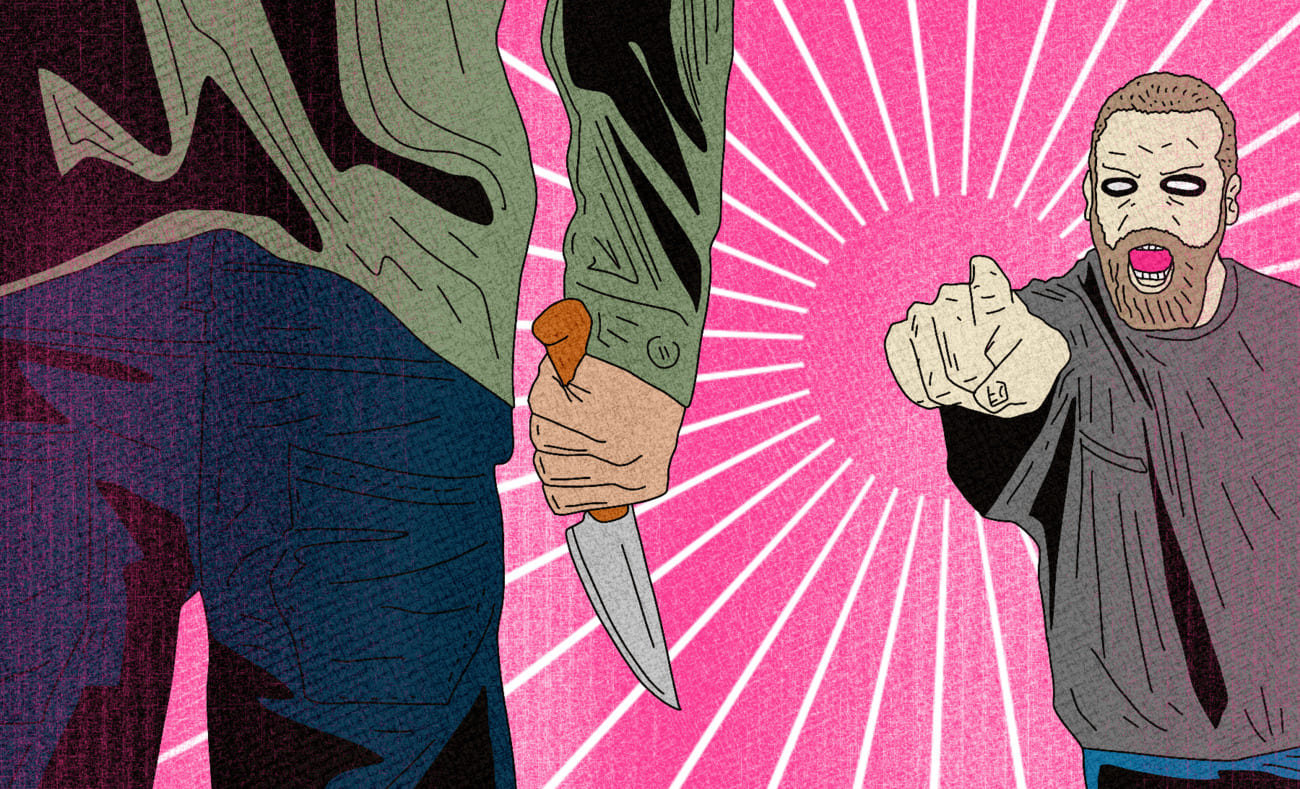
Illustration by Danny Berkovskii for Mediazona. Source: New Tab

Aided by a team of volunteers, journalists at Mediazona and the BBC’s Russian Service have identified 41,731 Russian soldiers killed in the war in Ukraine using open sources. This number includes employees of the Wagner mercenary group, but it does not include those who fought on Russia’s side in military units fielded by the self-proclaimed Donetsk and Luhansk “people’s republics,” the BBC noted in an article published on Friday, 12 January.

According to the article, more than 1,100 Russian military personnel killed in the war were under 20 years of age. Since the State Duma approved amendments to the relevant laws, in April 2023, thus permitting 18-year-old high school graduates to sign military service contracts, 48 Russians born in 2004 and five born in 2005 (who were thus “barely 18 years old” when they enlisted) have perished in the war.

As of 11 January, 2,377 airborne troops, 913 marines, 537 members of the Russian National Guard’s special forces, 450 members of the GRU’s special forces, 206 military pilots, and 77 FSB and FSO officers have been killed in combat operations.

The BBC points out that the number of casualties among those who voluntarily signed a contract to serve in the Russian armed forces has increased in recent months. Thus, volunteers, prisoners, and private mercenary company “recruits” now account for 37 percent of all confirmed losses 0n the Russian side. Another 12 percent of the identified casualties were draftees (of whom 5,005 died in Ukraine and 62 in Russia).

Source: Yevgeny Zhukov, “Journalists have confirmed the deaths of 41,700 Russian soldiers in Ukraine,” Deutsche Welle Russian Service, 13 January 2024. Translated by the Russian Reader


According to Ukrainian intelligence, the Russian forces in Ukraine currently consist of 462,000 military and 35,000 National Guard troops, responsible for the functioning of the occupation regime. This number of troops allows the Russians to carry out rotation — to withdraw units and subdivisions and bring them to the front line.

Source: Monique Camarra, “Jan 13: E-Stories,” EuroFile, 12 January 2024


When looking for a new advertising/PR agency in Ukraine in autumn 2023, PepsiCo made it a condition for a potential partner to exclude any mention of the war, or support for Ukraine and its army in future communications, according to a brief seen by B4Ukraine.

“NO: mention of war, hostilities, aggression, military personnel (from Brand side), Armed Forces of Ukraine. NO: support Ukraine and the army. NO: negative connotation, creating a feeling of ‘unsafe,’” states the “Pepsi restrictions” section of the brief.

The B4Ukraine Coalition contacted Pepsi offices in Ukraine and the US to ask for comment on this article but at the time of publication had not received any response.

In the meantime, the October 17 message on PepsiCo’s Instagram page announced that “PepsiCo volunteers distributed food kits to 1,200 families in the city of Borodyanka, whose homes were destroyed.” The message does not specify who exactly brutally destroyed the homes of these people.

Perhaps because PepsiCo’s Russia net profit increased by 333% to $525 million last year and the company paid about $115 million in taxes to the Kremlin? Treating such contributions as support for the economy of the aggressor state, Ukraine’s National Agency on Corruption Prevention (NACP) in September included PepsiCo in the list of international sponsors of war.

PepsiCo produces soft drinks, juices, chips, snacks, dairy products and other food products under the main brands Chester’s, Chipsy, Lay’s, Mirinda, Pasta Roni, Pepsi, Propel, Sandora, 7Up, Simba, Snack a Jacks, Sonric’s, Tropicana, etc.

The company has 19 factories, about 20,000 employees, 40,000 agricultural workers, and 600 open vacancies in Russia, according to the NACP.

The company announced the cessation of advertising activities and the production of some beverages in Russia in March 2022, while still allowing other products, such as infant formula and baby food to be sold, in order, as PepsiCo put it, “stay true to the humanitarian aspect of its business.” Yet in fact, the company continues the production and distribution of chips, snacks, and soft drinks. According to Bloomberg, PepsiCo’s revenue rose 16% in Russia and profits quadrupled, and the soda maker said operations in Russia accounted for 5% of consolidated net revenue for 2022, up from 4% a year earlier.

Now the iconic Pepsi cola is sold under the Evervess-Cola brand, although regular Pepsi Cola is still easy easily purchasable in Russian supermarkets due to the so-called parallel imports, when goods are imported without the manufacturer’s permission.

At the beginning of September last year, PepsiCo came under fire over its Russian business when the firm’s products were dropped by the Finnish parliament and Scandinavian Airlines’ operator SAS, and already on September 21, ironically, [a] Russian missile damaged a PepsiCo plant near Ukraine’s capital Kyiv.

A global [c]oalition of civil society organizations, B4Ukraine, is calling on PepsiCo to exit Russia ASAP and for the US government to issue a business advisory, warning US businesses of the growing legal, reputational, and financial risks of doing business under military control in Russia.

Source: “‘No support for Ukraine and its army’: PepsiCo restricts mentions of war in its PR,” B4Ukraine. Thanks to Monique Camarra (EuroFile) for the heads-up.


The war has markedly changed the Russian economy. Moscow has had to adjust its policy to fund its armed conflict against Kyiv, maintaining its military apparatus and police force, and integrating the territories it has annexed from Ukraine. These priorities have necessitated significant spending commitments that collectively threaten Russia’s economic stability. The Kremlin will spend six percent of GDP (more than eight percent when combined with spending on national security) on the war in 2024. This is more than the 3.8 percent of GDP that the United States spent during the Iraq war, although it falls short of the prodigious sums the Soviet Union allocated during the years of stagnation and its invasion of Afghanistan (18 percent of GDP).

Military spending has even eclipsed social spending—currently less than five percent of GDP—for the first time in Russia’s post-Soviet history. This pivot toward a militarized economy threatens social and developmental needs. The four annexed regions of Ukraine have already received the equivalent of $18 billion, and in 2024 almost $5 billion is expected to be transferred from the federal budget to regional budgets. No other regions in Russia receive this level of investment, which only increases interregional inequality. Rather than restore dilapidated housing in Russia, the Kremlin prefers to spend money on building houses and roads in annexed territories, to replace the houses and roads that Russian troops destroyed during their brutal invasion.

Russian industry has been transformed, with defense sectors now overshadowing civilian industries. The defense sector’s enterprises are now operating at a fever pitch and, as a consequence, any surge in demand is likely to force prices to rise because of the sector’s inability to increase supply. The military sector is receiving a disproportionately high amount of government spending, and it is also siphoning off labor from the civilian workforce, leading to an abnormally low unemployment rate of 2.9 percent. Before the war, Russia’s unemployment rate typically stood at around four to five percent. The military and public sectors now employ 850,000 more people than in late 2022–23. The invasion of Ukraine also prompted about 500,000 Russians to emigrate in 2022, driving shortages of qualified specialists and blue-collar workers.

Meanwhile, living standards have risen across Russia, and the percentage of Russians living below the poverty line has dropped to 9.8 percent, the lowest since 1992. Naturally, there are regional variations, and areas that have sent a significant number of their men to fight in Ukraine—including Altai Krai, the Altai Republic, Buryatia, Chechnya, and Dagestan—have witnessed the fastest income growth in low-income groups. This relative increase in prosperity can be expected to continue as Moscow disburses funds to the families of the deceased and wounded.

Overall, the Kremlin wishes to maintain an illusion of normality and even increasing prosperity for its citizens. The distortions in the labor market have pushed up salaries in military industry, as well as in civilian manufacturing, because of the need to compete to attract workers from well-paying military plants. Moscow is, meanwhile, making high payments to soldiers and people mobilized to fight in Ukraine, which are driving consumption. At the same time, thanks to a supply of cheap credit, the government is handing out subsidized mortgages, that are, for the moment, shielding families from economic reality.

Source: Alexandra Prokopenko, “Putin’s Unsustainable Spending Spree: How the War in Ukraine Will Overheat the Russian Economy,” Foreign Affairs, 8 January 2024


Elsewhere there are signs that the invasion of Ukraine may have disrupted the Russian economy more severely than the frothy party scene suggests. The Olivier salad, a mayonnaise-drenched confection of root vegetables, sausage and boiled eggs, is a staple at every table during the holidays. This winter the price of eggs suddenly rocketed (no one is quite sure why, but it may have been because farms were short of labour since so many workers have been conscripted or left the country). In some regions people cannot afford a box of six eggs and have to buy them individually. One pensioner even raised this with Putin during the president’s annual end-of-year call-in with the public. Putin promised to look into it.

Source: Kate de Pury, “Gucci is cheap and eggs are pricey in Russia’s surreal economy: War spending has Russians partying like it’s 2021. But some are also stockpiling dollars,” 1843 Magazine (The Economist), 10 January 2024


In the two years that have passed since the start of Russia’s large-scale invasion of Ukraine, residents of Ukraine have become less likely to use the Russian language, according to a press release on the outcome of research done by the Ludwig Maximilian University of Munich in cooperation with the University of Bath and the Technical University of Munich, which was published on Wednesday, 10 January.

Language plays a leading role in the identity of post-Soviet Ukraine, the authors of the study say. Many Ukrainians are fluent in both Ukrainian and Russian. And yet, only a few years ago, 50 to 60 percent of the country’s residents called Ukrainian their principal language of communication. After the Maidan protests in late 2013, sparked by then-Ukrainian President [Viktor] Yanukovych’s refusal to sign an association agreement with the EU, and Russia’s subsequent  annexation of Crimea in 2014, more Ukrainians abandoned Russian.

[…]

The researchers explore this trend in a study published in the journal Communications Psychology. Using artificial intelligence and statistical analysis, they examined more than four million messages posted by 63,000 Ukrainian users on the social network X (formerly Twitter) between January 2020 and October 2022.

According to the study’s authors, users began switching from Russian to Ukrainian even before the large-scale Russian invasion, but this trend increased dramatically after the war began. In their opinion, this change in user behavior was a political reaction to events. Users wanted to distance themselves from both support for the war and Russia as such, so they started using Ukrainian en masse.

Source: Sergei Gushcha, “Ukrainians use Russian less since war began,” Deutsche Welle Russian Service, 10 January 2024. Translated by the Russian Reader


The full-scale war in Ukraine, which began almost two years ago, has led to increased violence in Russia itself. Military personnel with PTSD and criminals recruited into combat return from the front and maim and kill people in civilian life. Sometimes conversations about the war even end in violence. Mediazona and New Tab have uncovered over thirty criminal convictions for assaults and murders that occurred during quarrels about the “special military operation.” (The courts use the official wording for the war as mandated by the authorities.)

In Berdsk, Novosibirsk Region, draftee Khuler Mongush stabbed Nikolai Berezutsky, a passerby. The latter had asked Mongush why he was going to Ukraine. Saying that he was going there “to defend the Motherland,” the mobilized man attacked Berezutsky. Mongush was sentenced to eight years in prison for murder.

In the Irkutsk Region, farmer Maxim Khalapkhanov was drinking with an acquaintance, who began ridiculing the state of the Russian army during the war. Khalapkhanov eventually got angry and killed the acquaintance with a knife, whose handle was decorated in the colors of the Russian flag, and drew the letter Z on his stomach with a fireplace poker. Khalapkhanov was sentenced to seven years in a high-security penal colony.

Anton Rakov, a resident of Orenburg, was drinking with a new acquaintance. They began arguing about the war. Rakov did not like what his interlocutor was saying and killed him. While his victim breathed his final breaths, Rakov recorded a video with the dying man in the background, shouting, “This is what will happen to anyone who disagrees with me!”

Viktor Konnov of Zlatoust beat up a friend who said something nice about Ukraine, while Ivanovo resident Mikhail Vitruk received two and a half years in a penal colony for beating up his girlfriend, who allegedly called him a “Nazi” while they were watching the news.

In 2020, Mikhail Taskin attempted to shoot three people over a parking space and was sentenced to nine years in a penal colony, whence he was freed by the Wagner Group. Taskin spent several months in combat, where he lost a leg, eventually returning to his native village of Nerchinskiy Zavod in the Transbaikal Territory. In August 2023, he got into a fight at a local cafe. Taskin mocked the waitresses and promised to “hump all of them.” The incident ended in a brawl, and the police detained five people, but not Taskin was not among them. His sister and the local authorities argued that the disabled man had been assaulted by “opponents of the war.” But the news website Regnum discovered that two of the detainees were certainly not against the war because they had been involved in patriotic campaigns in the region.

It is not only drinking buddies and casual acquaintances who quarrel and fight over the war. Mediazona and New Tab turned up no less than seven court rulings in cases where the defendants and the victims were members of the same family. Vladimir Tofel from Petropavlovsk-Kamchatsky killed his nephew during an argument about the war. Yuri Makarkin stabbed his son, while Anna Cheremnova, a resident of the Altai Territory, stabbed her husband.

The experts asked for comment by Mediazona and New Tab argue that these are signs of a deep split within society, and the policy of the authorities does not help society to overcome this fissure. On the contrary, the hysterical rhetoric of propaganda only heightens the degree of intolerance, and people are increasingly willing to maim and kill each other.

Source: WTF (Mediazona) newsletter, 10 January 2024. Translated by the Russian Reader
They Have Nothing Better to Do

Dmitry Gudkov
Facebook
January 9, 2021

I understand that Russians there is no problem more important than Trump’s showdown with Twitter. The precedent of blocking a social network account is not a very good one, of course, but the folks in the US will cope without us. I would venture to throw out a different topic for discussion.

On Monday, January 11, the verdict in the case of Azat Miftakhov will be read out in the Golovinsky District Court in Moscow. Trump was banned on Twitter, but Azat, a graduate student in mathematics from Moscow State University, has been locked up in for allegedly breaking a window at United Russia party office. He has been in a pretrial detention center for two years, although there is no evidence of his guilt.

If you’re worried about freedom of speech, Azat’s case is also cause for worry. At the last court hearing in the case, people who came to support Azat were not only not allowed into the court building. They were simply locked up in the courtyard of the building. A paddy wagon was brought  in and shipped them out of there. The detainees included two journalists, with press cards, but that means nothing to our authorities.

If the Miftakhov case were given at least 1% of the attention that has been spent on Trump in Russia, the case would not have happened. And we’re not taking about a ban on Twitter here, but arrest, torture, and a [possible] imprisonment in a penal colony.

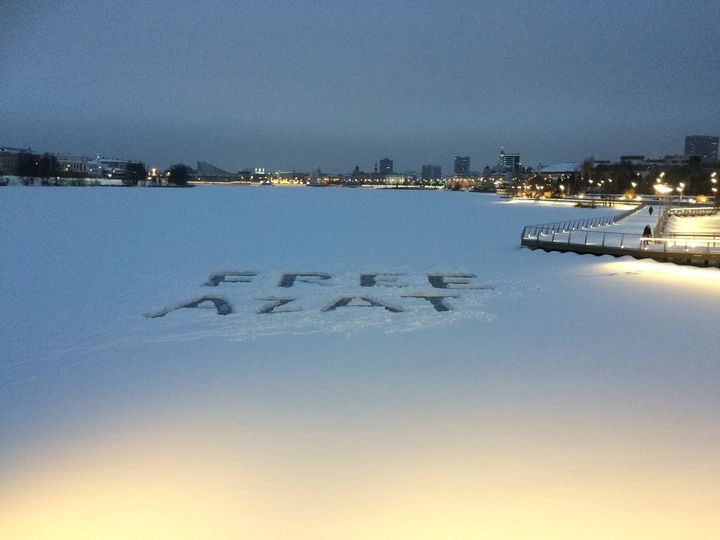
Today, someone spelled out the message “FREE AZAT” on Lake Kaban in Kazan. This was protest action in support of mathematician and anarchist Azat Miftakhov. On January 11, at 12:00 p.m., the Golovinsky District Court will announce the verdict. The prosecution has asked for six years in prison for the young academic. If you have the opportunity, be sure to come to the hearing!

Boris Vishnevsky
Facebook
January 9, 2021

In our country, Roskomnadzor can block any media outlet or website that tells truths that the authorities find unpleasant.

But this does not cause popular outrage.

In our country, people are put in jail for reposting things on the internet.

But this does not cause popular outrage.

In our country, hundreds of political prisoners are being held on falsified charges, starting with Yuri Dmitriev and ending with the defendants in the Ingush protest movement trial.

But this does not cause popular outrage, and rallies and pickets in support of these people attract almost no attention.

In our country, anyone who disagrees with the authorities can be declared a foreign agent.

But this does not cause popular outrage.

In our country, the president has been given lifelong immunity from prosecution for any and all crimes, and he does not even need to pardon himself in advance.

But this does not cause popular outrage.

But what an explosion of indignation there has been over the blocking of Trump’s Twitter account. It has been the main topic of discussion in Russia!

As long as this is the case, the Kremlin can rest easy.

__________________

Sergey Abashin
Facebook
January 9, 2021

It’s stunning. Russia has hundreds of political prisoners, political assassinations and political persecution, two ongoing wars involving tens of thousands of dead and the occupation of territory in several [foreign] countries, a personal dictatorship that has been de facto and legally established, and laws that permit total censorship in the mainstream media. And yet Russian intellectuals are hotly debating whether it is right or wrong to block the American president’s Twitter account two weeks before the end of his official term.

Translated by the Russian Reader

Three Years in Prison for Touching a Policeman’s Helmet

fullscreen-1qel
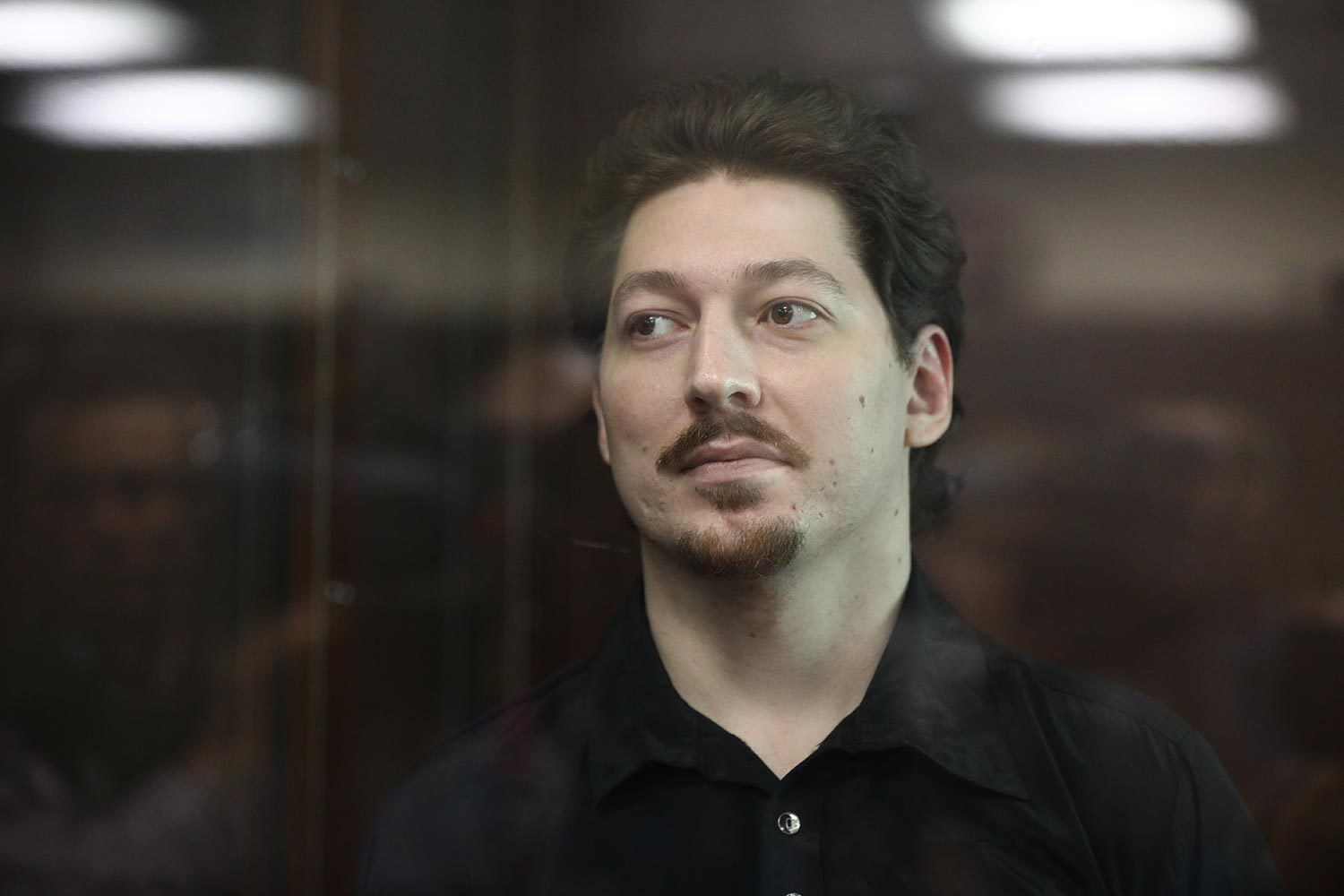
Kirill Zhukov was sentenced to three years in prison for touching a Russian National Guardsman’s helmet. Photo by Yevgeny Razumny. Courtesy of Vedomosti

Number of Guilty Verdicts in the Moscow Case Reaches Five
Anastasia Kornya and Svetlana Bocharova
Vedomosti
September 5, 2019

On July 27, 2019, during an “unauthorized” rally in support of independent candidates to the Moscow City Duma, Kirill Zhukhov raised the visor of a helmet worn by a Russian National Guardsman. Yesterday, September 4, he was found guilty of violence towards a government official, as punishable under Article 318.1 of the Russian Criminal, and sentenced to three years in a medium-security prison colony. The verdict said that Zhukov, acting intentionally and fully aware he was dealing with a government official who was performing his duties, struck him a single blow to the head with his left hand in an attempt to tear off the helmet, causing the victim physical pain.

State investigators conducted a special forensic test establishing, allegedly, that even a slight, upward blow with the hand to the helmet’s visor causes the head to tilt back and the strap to make full contact with the skin in the chin area [sic].

Zhukhov, on the contrary, tried to prove he had only waved his hand in front of the guardsman’s visor since he wanted to draw his attention to a woman injured during the rally. But the court reacted to his testimony “critically.” As the judge explained, Zhukhov’s purpose in testifying in this way had been to mitigate the severity of his crime.

On Wednesday, the Meshchansky District Court sentenced Yevgeny Kovalenko to three and a half years in a medium-security prison colony. He was found guilty of violence against two law enforcement officers. Allegedly, he pushed one of the officers and threw a garbage can at the other.

“Fully cognizant that the man before him, Tereshchenko, was performing his duties, [Kovalenko] pushed him on the right side of the torso with both hands, causing him to lose balance and fall from the height of his own height [sic] on the granite steps and experience physical pain,” the verdict stated.

Continuing to act with criminal intent, Kovalenko grabbed National Guardsman Maxim Saliyev by the body armor with both hands, abruptly pulling him and dragging him towards himself and thus causing him physical pain. After Tereshchenko pushed Kovalenko away, Kovalenko grabbed a trash receptacle and threw it at the guardsmen, hitting Saliyev in the lower back. According to the verdict, the guardsman experienced not only physical pain when falling but also emotional suffering since, at that moment, he remembered he had to perform his duties [sic].

During the trial, Kovalenko explained he had not intended any harm. He had only tried to frighten off policemen who were beating up protesters. However, the judge said the court was skeptical of his claims. They were refuted by the evidence in the case file and were an attempt to avoid punishment.

“The court notes the consistent and purposeful nature of the defendant’s actions, testifying to his criminal intent to employ violence,” the verdict stated.

The judge emphasized that arguments about police misconduct could not be considered during the trial and were not evidence of the defendant’s innocence.

Kovalenko’s defense counsel Mansur Gilmanov pointed out that the crime with which his client had been charged was a crime against the normal functioning of government. It thus followed that beating up peaceful protesters was one way in which the government normally functioned, he argued.

Svetlana Bayturina, Zhukov’s lawyer, called the sentence handed down to her client unprecedentedly severe: usually, such cases had resulted in fines for defendants or, at most, suspended sentences. The speed with which the case was investigated and tried was also unprecedented: the investigation took three days; the trial, one. Bayturina promised the defense would appeal the verdict and intended to take the case all the way to the European Court of Human Rights in Strasbourg.

This was the second “judgment day” for arrested protesters. The day before, blogger Vladislav Sinitsa was sentenced to five years in prison for posting a tweet the prosecution had described as a call to harm the children of law enforcement officers. Technician Ivan Podkopayev was sentenced to three years in prison for spraying pepper spray in the direction Russian National Guardsmen, while businessman Danila Beglets was sentenced to two years in prison for grabbing a policeman’s arm. Their cases were tried under the special procedure: neither man denied his guilt.

Gilmanov noted there was no significant difference between the sentences given to defendants who made deals with the prosecution and those handed down to defendants who pleaded not guilty. This testified to the fact the verdicts were political. The sentences were decided by more senior officials and legal nuances did not matter much, he argued.

Protesters arrested and charged under Article 318.1 after a similar “unauthorized” rally in Moscow on March 26, 2017, were given much lighter prison sentences, between eight months and two and a half years. For example, Stanislav Zimovets, convicted of throwing a brick that hit a riot police commander in the back, was sentenced to two years and six months in prison, while Dmitry Krepkin, who kicked a riot policemen’s hip or his billy club, was sentenced to eighteen months in prison. Only Andrei Kosykh, convicted of punching one policeman’s helmet and kicking another policeman in the neck and lower jaw, was sentenced to three years and eight months in prison, but he was convicted under Article 318.2, which covers violence that could result in death or grievous bodily harm.

The sentences in the so-called Moscow case have been roughly the same as those handed out in the Bolotnaya Square Case in 2012, only this time the protesters had not resisted law enforcement officers at all, political commentator Alexei Makarkin noted. According to him, the sentences in the current cases were dictated by the new rules of the game.

“Whereas before if someone hit a policemen in the teeth and damaged the enamel, he would do hard time, now people are getting similar, slightly shorter sentences for lifting the visors on riot policemen’s helmets, while people who grabbed a policemen by the arms are getting two years in prison,” Makarkin said.

In the Bolotnaya Square Case, the official charges looked more serious, Makarkin argues. The confrontation on the square was much rougher. In some ways, it harked back to the 1990s, when people fought with policemen without incurring such long sentences, he noted.

“The Bolotnaya Square Case marked a new phase. We realized the state had made it a rule that if you raised your hand against a police officer, you would go to jail. If a policeman raised a hand against you, he would be commended,” Makarkin said.

This time, the security forces also wanted to punish a certain number of people, but they failed to put together a new Bolotnaya Square case.

“So they decided anyone who had raised their hand and somehow touched a policeman should go to jail. But since they failed to dig up anything serious, they chose from what they had to work with,” Makarkin said.

Translated by the Russian Reader

Five Years in Prison for a Tweet

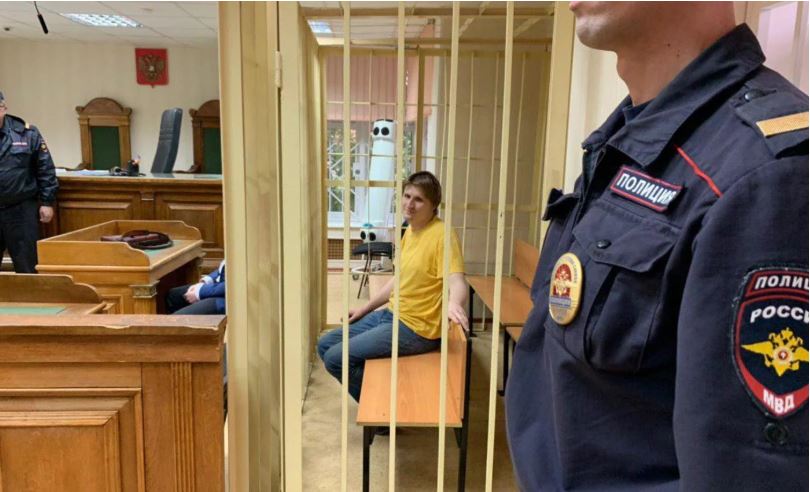
sinitsa in dockVladislav Sinitsa in the cage during his custody hearing on August 5. Photo courtesy of Mediazona
Court Sentences Vladislav Sinitsa to Five Years in Prison for Tweet about Children of Security Forces Officers
Mediazona
September 3, 2019

Moscow’s Presna District Court has sentenced Vladislav Sinitsa, a financial manager from the Moscow Region, to five years in a medium-security penal colony for a tweet about the children of security forces officers, reports the Moscow News Agency.

Judge Elena Abramova found Sinitsa guilty of inciting hatred with the threat of violence (punishable under Article 282.2.a of the Russian Criminal Code). The prosecutor had asked her to sentence Sinitsa to six years in prison.

The court handed down the verdict on the second day of the trial per se.

The court questioned two witnesses: Russian National Guardsmen Alexander Andreyev and Artyom Tarasov, who, allegedly, saw Sinitsa’s tweet.

Andreyev said he regarded the tweet as a call to “kidnap the children of National Guardsmen and slaughter them.” However, he was unable to tell the court his own username on Twitter. He claimed he saw the tweet after searching for “Max Steklov,” which is Sinitsa’s username.

Tarasov also said he took the tweet as a threat.

After the witnesses were questioned, the prosecutor summarized the two volumes of the case file, including the findings of forensic experts from the Center for Socio-Cultural Forensic Testing [sic]. They found evidence in the tweet of calls for violent action against the security forces, and signs of threats and incitement of hatred towards them.

It has transpired that the people who performed the forensic examination for the prosecution had no specialized education in the field.

In turn, the defense questioned forensic experts who had examined Sinitsa’s tweets at its request: Elena Novozhilova, a linguist from the nonprofit Independent Forensic Testing Center, and Maria Kulikova, an analyst with the Center for Forensic Examination and Research.

Kulikova harshly criticized the forensic examination commissioned by the prosecution. Both experts spoke of its poor quality.

Mediazona has written at length abut the criminal case against Sinitsa.

On July 31, Sinitsa supplied his own answer to the question of whether it was a good idea to publish the identities of security forces officers in a tweet published under the username “Max Steklov.”

The tweet was quoted on national TV channels.

Later, on August 3, the Russian Investigative Committee opened a criminal investigation. Two days later, the Presna District Court remanded Sinitsa in custody.

Sinitsa has insisted he was not calling on anyone to do anything but had implied popular unrest could arise if the security forces continued beating protesters.

Translated by the Russian Reader

How You Can Support This Blog

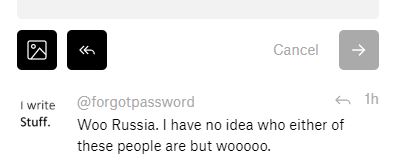
An entity identified as “@forgotpassword” just had the following to say about my last post, about filmmaker Vladimir Bortko’s sudden withdrawal from the gubernatorial election in Saint Petersburg, the sixth or seventh largest city in Europe (depending on whether you consider Istanbul a European city) and the second largest in Russia, the world’s largest country, and its former capital.

woo russia

It is hard being a bad cop in a world that loves only good cops, but ignorance is nothing to celebrate, much less throw in the face of someone like me who has spent the last twelve years writing about politics, culture, and grassroots resistance in Russia.

What have I accomplished over the last twelve years? I have published 2,256 posts about these important subjects on two blogs, the Russian Reader and Chtodelat News. These posts have been viewed 671,693 times.

The number of views could have been a lot greater, but despite everything I have done to promote my work, there is a lot that does not depend on me. This website can only be successful if readers share what I do here with their friends, coworkers, family members, and social media followers. This means they actually have to take the ten seconds or forty seconds or whatever it takes to publish links to my posts on their social media accounts.

When readers do that, they help me a lot more than if they pester me with disparaging or hostile comments like the one above. Such comments really make me want to call it quits. Unfortunately, the world nowadays is such, I guess, that I get this kind of feedback much more enough than I get support of any kind, verbal or financial.

The second way to support the Russian Reader is by making a donation to me via PayPal or buying me a coffee on Ko-fi. You will find buttons for these services on the left side of this page.

You might have noticed that, recently, I started letting WordPress publish ads on this site. I thought it could be a way of making a little money to support my work. Despite the shockingly large number of ads viewed, supposedly, over the last four or five months, the amount of money I have earned (but not been paid yet) is so tiny as to be laughable. I will probably make this site ad-free again in the very near future.

You can also get updates from this blog on Facebook, Ello, Twitter, Tumbler, and Telegram, not to mention subscribing to it via email by clicking the “Follow” button on the left side of this page.

So, it is really easy to show support for the work I have done over the last twelve years, work I would like to keep doing. In fact, it is much easier than taking the effort to denounce me or, like “@forgotpassword,” tell me in the glibbest, snidest way that I have been wasting my time. // TRR

Hell in a Handbasket

532280048_hell20in20a20handbasket

Leonid Volkov
Facebook
July 30, 2019

Everything has gone to hell in a handbasket.

I cannot recall such a concentration of news.

In the last thirty minutes:

  • The authorities disqualified Sergei Tsukasov in Moscow’s 14th Borough. He won the primaries held there by local activists, collected the necessary number of signatures, and was registered to run as a candidate, apparently because he is not well known to the general public and the mayor’s office did not regard him as dangerous. But after he took part in protest rallies along with the candidates who were barred from running, he was disqualified for the dash he put instead of the phrase “I do not have” in his foreign real estate declaration after a sham candidate filed a complaint against him.
  • On the other hand, the Moscow City Elections Commission, as if it were having a laugh, recommended putting Sergei Mitrokhin back on the ballot in the 43rd Borough, despite the fact we caught red-handed the factory that had been forging signatures for prospective candidates, including Mitrokhin.
  • Mikhail Svetov was detained by police right in the Moscow mayor’s office. He had gone there to negotiate (!) a permit for the August 3 protest rally. The crazed crooks in the mayor’s office invited Svetov to the negotiations themselves, and then they helped detain the libertarian themselves, an inconceivable crime against lawfulness anywhere at any time.

Events are unfolding at incredible speed.

Something big is going to happen.

• • • • • • • • • • • • • • •

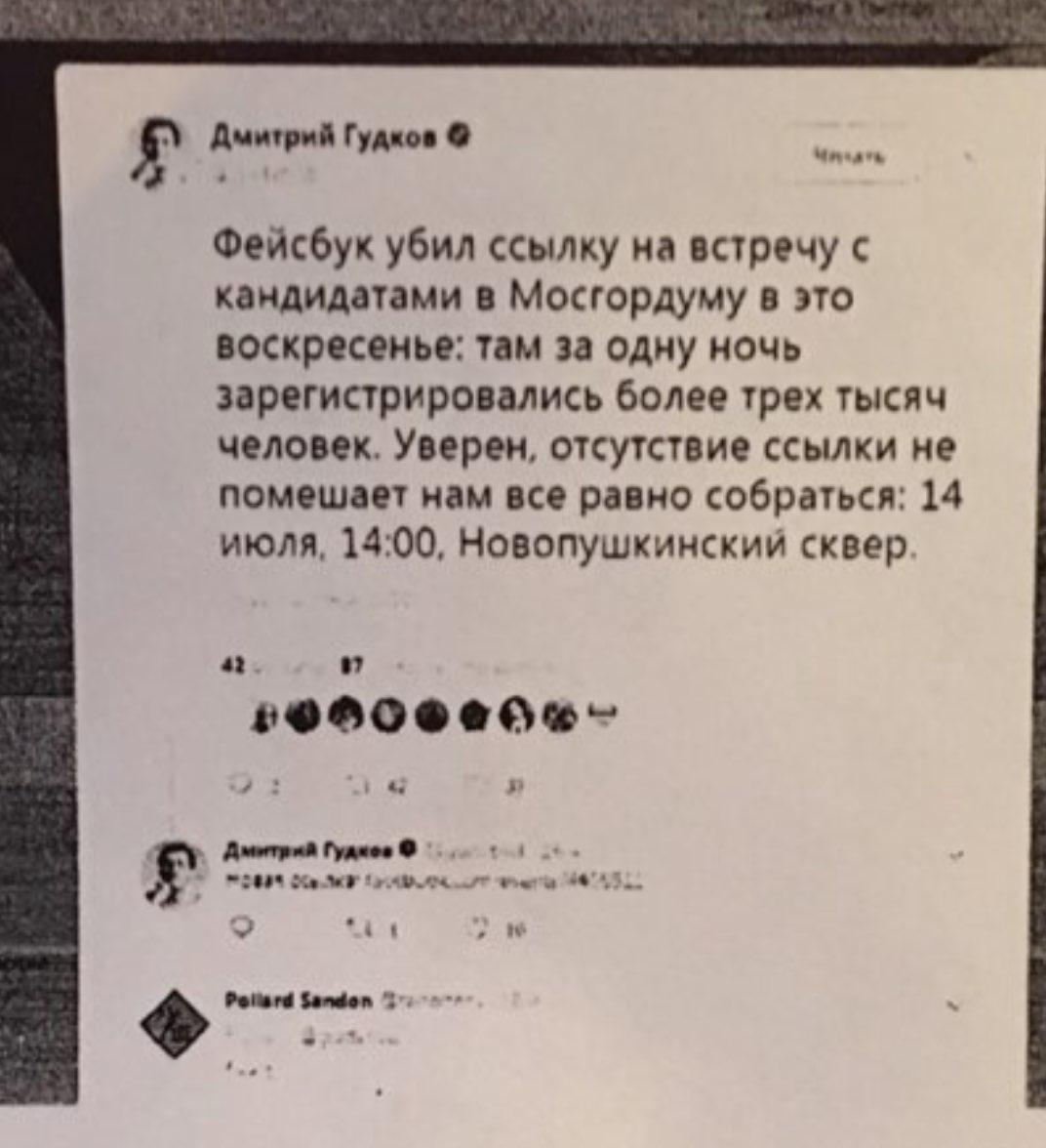
gudkov-tweet.jpgScreenshot of the tweet that got ex-MP Dmitry Gudkov thirty (!) days in jail: “Facebook killed the link to the meeting with Moscow City Duma candidates this Sunday: over 3,000 people had signed up overnight. I’m confident a missing link cannot prevent us from gathering all the same: 2:00 p.m., July 14, Novopushkinsky Square.”

⚡️Tverskoi District Court sentenced Dmitry Gudkov to thirty (30) days in jail for a tweet about the July 14 meet-the-candidates protest event. He was again convicted (under Article 20.2.8 of the Administrative Offenses Code) as the organizer of an “unauthorized” event.

The court dismissed all motions made by Pravozashchita Otkrytki lawyer Oksana Oparenko. She petitioned the court to let her question the police officer who examined Gudkov’s Twitter page and watch the video, shot at campaign headquarters, confirming Gudkov was not at the rally himself.

Source: Pravozashchita Otkrytki, 30 July 2019

Translated by the Russian Reader. Lead image courtesy of The Closet Liberal


Russia and China: Together Forever!

china russia brothers forever“May the unbreakable friendship and cooperation of the Soviet and Chinese peoples flourish and strengthen!  // Always together!” Images courtesy of quora.com
If you are suffering from a post-National Unity Day hangover, the cure might be a little dose of Sino-Soviet friendship, as provided by Alexei Volin, Russia’s deputy communications minister.

There are lots of funny things in Russian officialdom’s latest rant against the evil west, not the least of which is the revival of the perennial cognitive disorder known as Sino-Russian friendship. I could be wrong, but Russia has as many good reasons not to cooperate with China and slavishly emulate its “success” as it does to turn around and run hard in the other direction.

This is not to mention the withering hatred of the Chinese among a good number of ordinary Russians, a hatred you can witness up close by reading the horrifying things Petersburg tour guides say, and Petersburg magazines and newspapers write about the Chinese tourists on which the city’s tourist economy has become increasingly dependent.

Finally, there is the nonsense, touted by Deputy Minister Volin, about the alleged lack of “alternative” social networks in Russia. Could it be that the good deputy doesn’t know the Russian government stole VK from its founder, Pavel Durov, just so it could have a social network its secret services surveil at will? Is it any coincidence that almost all of the utterly ordinary people the Russian security forces have lately charged with posting or, more often, reposting, “extremist” online have been caught doing it on VK? Hence, Facebook’s stable popularity and Telegram’s growing popularity among social and political activists, and people who merely want a safe space to say to other people what they think. {TRR}

________________________

Communications Ministry Says Creation of Alternative Social Networks and Instant Messaging Services Possible
Novaya Gazeta
November 4, 2018

Due to “unfair competition” faced by Russian and Chinese media, Russia could create alternative social networks and instant messaging services, said Alexei Volin, deputy minister of the Russian Ministry of Digital Development, Communications and Mass Media.

“If Twitter, YouTube or Facebook continue down the path of throwing Russian and Chinese media out of their environment, we will have no choice but to create new distribution channels, and to think about alternative social networks and instant messaging services. Although we really hope it does not come to this, we certainly should be ready for it,” said Volin.

Volin made this statement during the Fourth China-Russia Media Forum, in Shangai. According to Volin, Russia and China should develop means aimed “not at discriminating against mass media from neighboring countries, but aimed at delivering our viewpoint and our content to other regions and other people.”

Earlier, Volin said the authorities would eventually have to give up banning information, since such methods were becoming ineffective.

“Sooner or later, they will have to be abandoned, because more and more people are getting around them without even noticing they are dealing with technology allowing them to bypass [sic] blocked content,” he said.

As examples of ineffective blocking, Volin cited the instant messaging services Telegram and WhatsApp, which operate in China despite being officially banned.

Telegram was banned in Russia in April 2018 by decision of the Tagansky District Court in Moscow. The ruling was based on Telegram’s refusal to hand over the [nonexistent] keys for decrypting correspondence among its users to the Russian Federal Security Service (FSB). Despite the ban, most Russian users have continued to have access to Telegram.

Translated by the Russian Reader

Opinion Leaders Are Losers

The other day, I closed my Facebook accounts and pages, I hope for good.

Part of the reason I closed them was that a New York City writer whose books and opinions I admire greatly, and who has a huge following on Facebook, wrote a mean-spirited and divisive post on Facebook condemning “the Heartland,” meaning the middle part of the United States.

She labeled the place “heartless” and “dangerous” on the basis of her cursory perusal of an “interactive” map of the 2016 US presidential election results, published in the New York Times.

While the map she cited is certainly worth studying and full of surprises, I imagine the writer saw only red, literally and figuratively, and blew a fuse.

I doubted out loud, in the comments, whether the writer knew much about the “heartless, dangerous” Heartland. On the contrary, I know a great deal about it, since I was born and grew up there.

She did not respond to my petty, eminently ignorable objections nor did most of her thousands of self-satisfied, bien-pensant followers, certain that the “heartless, dangerous” (and completely imaginary) “Heartland” had irrevocably damaged their beautiful souls and beautiful lives in Clintonia.

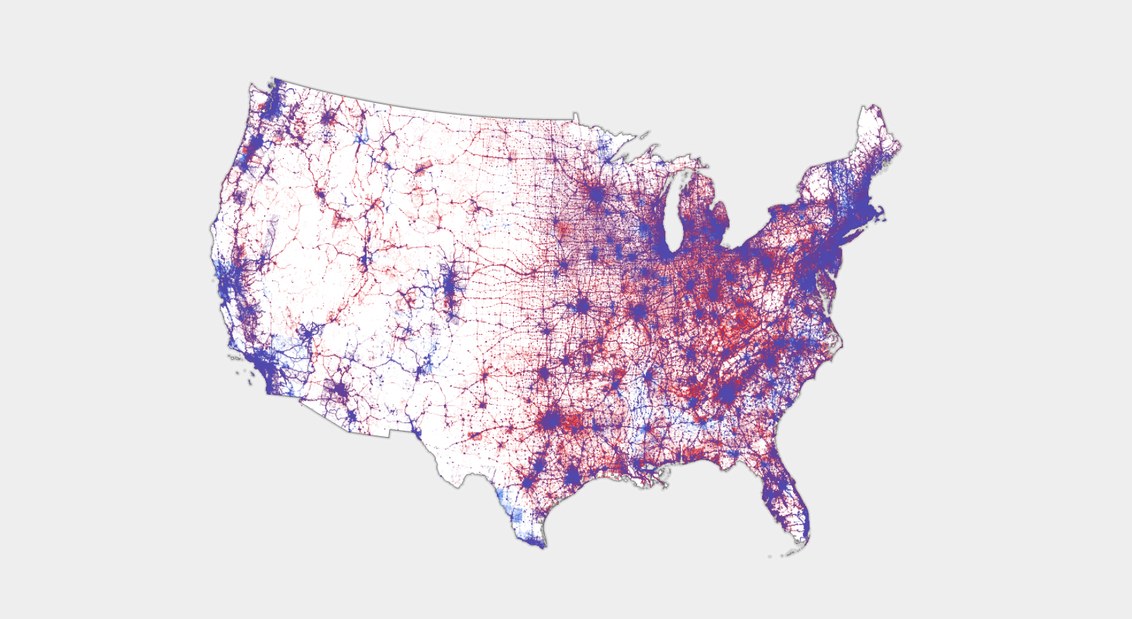
But as reporter Issie Lapowsky and map expert Ken Field argue in an article published on July 26 by WIRED (“Is the US Leaning Red or Blue? It All Depends on Your Map”), there are maps, and then there are maps. For example, there is this map, devised by Mr. Field.

Dasymetric-Dot-Density-wKen Field, “Presidential election 2016: dasymetric dot density.” Courtesy of WIRED

To Field, there’s no such thing as a totally comprehensive map, but he says, “Some are more truthful than others.” The so-called dasymetric dot density map is one of them. The term “dasymetric” refers to a map that accounts for population density in a given area. Instead of filling an entire state or county with the color red or blue to indicate which party won, Field uses red and blue dots to represent every vote that was cast. On this particular map from 2016, there are roughly 135 million dots. Then, rather than distributing the dots evenly around a county, he distributes them proportionally according to where people actually live, based on the US government’s National Land Cover Database. That’s to avoid placing lots of dots in, say, the middle of a forest, and to account for dense population in cities.

Taken together, Field says, these methods offer a far more detailed illustration of voter turnout than, say, the map in Yingst’s tweet. That map uses different shades of red and blue to indicate whether candidates won by a wide or slim margin. But by completely coloring in all the counties, it gives counties where only a few hundred votes were cast the same visual weight as counties where hundreds of thousands of votes were cast. So, the map looks red. But on the dasymetric dot density map, it’s the blue that stands out, conveying the difference between the popular vote, which Clinton won, and the electoral college vote, which Trump won.

Why do I bring this sad business up on a website dealing with “news and views from the other Russias”?

Over the last several years, I have been fighting a similarly invidious myth about Russia and Russians. To wit, Vladimir Putin is incredibly popular, as conclusively shown, allegedly, by dicey “public opinion polls” and rigged elections, and his “base” is in the “Russian heartlands,” which are, apparently, just as “heartless” and “dangerous” and stupid as the US “Heartland,” and similarly prone to throw their electoral weight behind a tyrant, unlike, we are meant to imagine, the smart sets in Russia’s two capitals, Moscow and Petersburg.

I have been at great pains to show a discursive apparatus I have dubbed the “pollocracy” produces the results that both Putin’s quasi-fascist supporters and faux-liberal detractors need to cling to their respective security blankets. In the case of the so-called liberals, the security blanket consists in the notion that the world’s largest country is largely inhabited by woefully ignorant yahoos who have laid waste to any chance at building a democracy in the Motherland. As viewed by their opponents, the fake “patriots” in Putin’s camp, the same heartland yahoos are the country’s “pious,” “conservative” core and the source of the Putin’s ruling elite’s self-produced mandate to rule the country till kingdom come and particularly badly.

Seventy percent of why I do this website is to show that Russia actually consists of lots of other Russians and lots of other Russias that belie the dodgy “findings” of pollsters and the lazy clichés reproduced ad nauseam by Russian and international reporters, “Russia experts” (nearly all of them resident somewhere other than Russia), politicos, and spin doctors to prove a self-serving conclusion they arrived at long ago without bothering to find out whether it was true or not.

It’s not true. Just as it is emphatically not true the US “Heartland” is “heartless” and “dangerous.” Or maybe it and its mythical Russian counterpart, the “Russian heartlands,” are heartless and dangerous part of the time, but not all of the time and everywhere and on the part of every single woman, child, man, dog, and cat who live there. Nor, vice versa, are the alleged oases of high intellect and liberalism where pollsters, reporters, and opinion leaders (such as the well-known New York writer who, railing and trembling like the Prophet Jeremiah, condemned the place where I was born and grew up to the fires of hell) congregate, cities like New York, Los Angeles, Moscow, and Petersburg, utterly free of meanness, menace, vice, crime, bad governance, popular indifference, ignorance, and support for tyrants.

What does this have to do with abandoning Facebook? First, I spent an inordinate amount of time trying to produce a quasi blog there that would complement and promote this website. Since I am nobody, however, more or less nobody was interested in what I wrote.

They did, however, hang on every word written by people like the New York writer, who, having achieved a modicum of fame, felt no compunction about compounding a rank prejudice about a huge part of her own country and all the people who live there.

So, I have found Facebook an incredibly dispiriting place to try get out my word, a word very few of my so-called friends, real and virtual, wanted to hear, much more wanted to share and spread with their own friends.

Second, the continuing crackdown on bloggers and social media users in Russia has meant that fewer and fewer Russians are willing to write anything interesting on Facebook and its Russian ripoff, VK. Judging by my own real friends, more and more of them have either been observing total radio silence or retreating into the little cubbyholes known as Telegram channels, where they are invisible and inaudible to all the world except their own clique. Since one important feature on this website has been translations of the pithy, thought-provoking things Russian activists and just plain Russians have posted publicly on Facebook and other social media, I was left staring at a once-overflowing well going drier by the minute.

Third, WordPress gives its bloggers some crude but decent tools to see where their readers are finding out about their blogs and blog posts. Over the last two years, as my readership here as continued to climb, the share of those readers who were turned onto my website or particular posts through Facebook has shrunk, meaning that my own friends, real and virtual, have been less likely to share my posts with their friends than complete strangers have been to look up Russia-related topics on the internet and find their way here.

So, rather than continue to pine for support from actually hostile liberal and leftist opinion leaders whose only interest in my Facebook posts and blog posts was to scavenge them for news and ideas they would instantly pass off as their own thoughts and finds without crediting me, I have decided to live without them in order to more fully embrace you, my anonymous, ever more numerous, faithful readers.

In any case, this website will continue to be promoted on Twitter, Google+, Tumblr, and Ello, as before, so it is not as if I am doing a disappearing act. I just wanted to stop pretending I had friends in places where I did not have them. {TRR}