French Kiss

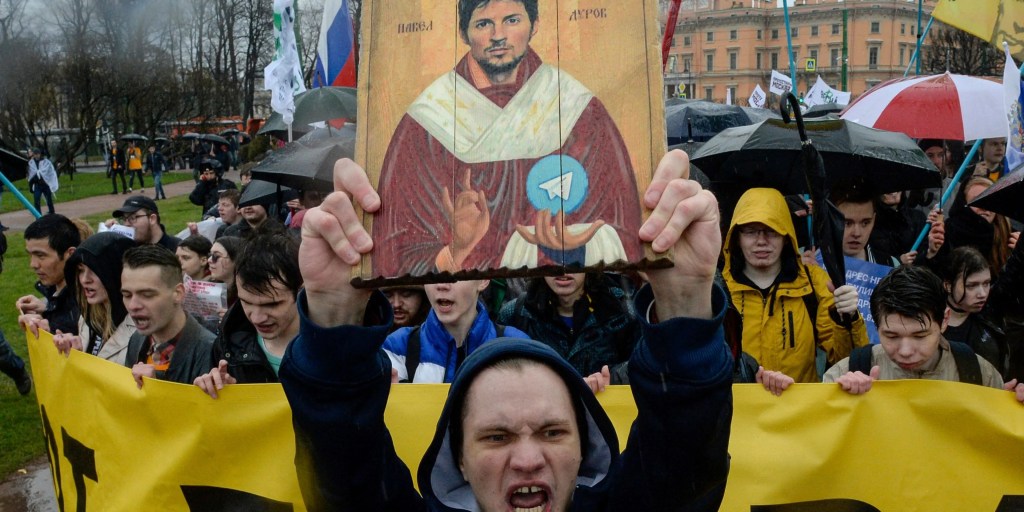
Saint Pavel? A scene from a march protesting the blocking of Telegram, St. Petersburg, 1 May 2018.
Photo: Olga Maltseva/AFP, via Important Stories

French Kiss is an enchanting cabaret show in the style of the Moulin Rouge, as performed by the world-famous Bize Lisu Show Ballet.

The ballet dancers have already conquered the whole world with their performances. They have garnered roaring applause at the birthday of the Prince of Monaco and in the Kremlin Palace, at Europe’s oldest theaters in Malta and the largest modern concert halls in China.

The unique hand-sewn costumes, the sensual dances, the expressive vocals and the compère’s unsurpassed humor are all part of the grandiose performance.

Duration: 2 hours (with 1 intermission)
Age limit: 18+

Performers:
Bize Lisu Show Ballet
Vocals – Yana Radion, Maria Mantrova, Anastasia Radion
Compère – Denis Groshev

*Seat numbers 200 to 220, at the buffet tables in the second row of the balcony.

“French Kiss, the Show”

The venue
The show French Kiss will take place in one of the most entrancing places in St. Petersburg— the cultural space Gaika Space. And it will be held in LUXURY format [sic], in which the audience is able to choose festive board tables for two to four people.

The original menu, featuring delicious appetizers and exquisite drinks from the bar, will help you not only to enjoy the show, but will plunge you into a world of gastronomic discoveries. Our show will make your evening unforgettable!

Secure free parking is provided to guests of the show for the entire duration of the performance.

Source: Bileter.ru. Translated by the Russian Reader


A very cold welcome awaited Pavel Durov in France, but it increasingly seems this is exactly what Durov was aiming for.

Did he come clean? No, it’s just business

Only a week into the discussion of the Pavel Durov case did commentators begin recalling what kind of person he was, and several stories emerged about his life, which, incidentally, has involved support (including financial support), from the “authoritative” Petersburg entrepreneur Mikhail Mirilashvili. Without this support, Durov’s main business venture, the social network VKontakte, might perhaps not have taken off. (Formally, Mikhail’s son, Vyacheslav, was involved in the business, but the money belonged to Mirilashvili père.) To complete the picture, it should be remembered that Mikhail Mirilashvili “developed” (as they say) Petersburg’s casinos, for licensing of which the then-deputy mayor of St. Petersburg Vladimir Putin was responsible.

Vladimir Putin (left) and Mikhail Mirilashvili (right)

Vkontakte rose and flourished on pirated content, which is still abundant on the network, despite the fierce efforts to combat it. Business journalists relish recalling how Durov fought for Vkontakte—not in the sense of freedom of speech, but in the sense of the value of his stake in the social network—and won, pocketing 400 million dollars.

For an interpretation of Durov’s arrest and persecution by the French authorities, see Baruch Taskin and Aaron Lea’s column. I would like to reiterate that Durov is first and foremost a businessman, and a very cynical one at that. It suffices to recall [the time Durov threw money out of a window] in Petersburg and Durov’s reaction [to the crowd’s reaction and the public and media backlash]. He laughed, before summarizing his mockery in philosophical terms:

“We refuse to accept a world where people can betray their humanity for money. If there are people who agree to do it, their behavior should be severely ostracized.”

We know nothing about Durov’s involvement with the FSB—all our assumptions are based on circumstantial evidence—but the left-wing albeit decent newspaper Liberation has written about his cooperation with the French security services, quoting Durov’s own statements.

Pavel Durov (center) may even benefit from his arrest in France:
the court ruling will be an excuse for Telegram’s transition from a media platform to a crypto-business.

Source: Moscow Times Russian Service weekly newsletter, 1 September 2024. All images and captions were included in the original publication. Translated by the Russian Reader


“Pavel Durov launched money from a window (Vesti report)”

Pavel Durov launched paper airplanes with five-thousand ruble bills on board into a crowd on 26 May 2012, which was St. Petersburg City Day. How the crowd lunged for the five-thousand ruble bills can be seen on the footage recorded by the Kazan Cathedral superview webcam. About ten banknotes were thrown, after which the crowd finally became furious and the amusement was stopped.

The webcam continues to follow the events as bloggers give Pavel Durov a bloody nose on 31 May at 6pm (GMT+4). Watch http://vpiter.com/web-camera-kazan/ for the live stream.

Source: Mobotix Webcams Russia (YouTube), 29 May 2012


The webcam is installed on Nevsky Prospekt. The webcam offers a view of the Kazan Cathedral. On the left in the frame is the house of the Singer company. On the days of city holidays, Nevsky Prospekt in this section becomes pedestrian. Live 24/7 we broadcast the life of our metropolis.

Kazan Cathedral (Cathedral of the Kazan Icon of the Mother of God) is one of the largest churches in St. Petersburg. It was built on Nevsky Prospekt in 1801–1811 by architect Andrey Voronikhin in the style of Russian classicism to store a revered list of the miraculous icon of the Mother of God of Kazan. After the Patriotic War of 1812, it acquired the significance of a monument of Russian military glory. In 1813, the commander Mikhail Illarionovich Kutuzov was buried here and the keys to the captured cities and other military trophies were placed.

Source: Taxi Crew (YouTube), accessed 1 September 2024. Happening upon this livestream of Kazan Cathedral and environs, the neighborhood where I lived for my first two years in Petersburg, was oddly reassuring, and so I left it on in the background as I worked on this “collage” of news and views and images. It was only now, as I was finishing the piece, that I realized that Kazan Cathedral itself is a monument to the centuries-long profound misunderstanding, sometimes tawdry, sometimes violent, that goes by the name of “Franco-Russian relations” in polite society. ||| TRR

Support The Moscow Times!

Dear friend,

Life in Russia changed forever on February 24th 2022 — and The Moscow Times has felt this to its core. As the Russia-Ukraine conflict continues, sinking Russia further into isolation not seen since the Soviet era, it is more important than ever to keep independent reporting alive.

The Moscow Times has operated from Moscow for the past 30 years. As Russia’s oldest independent English-language media, we have always worked to give the world an unbiased perspective on Russian life and politics.

But as Russia has tightened its grip on the free press — punishing those who call the war “war” with prison — our team has had to leave the country.

Amid the crackdown as well as a flood of disinformation exacerbated by hundreds of journalists fleeing Russia, it is more important than ever to provide the global community with accessible and informative stories about the region and offer a nuanced view free of stereotypes and prejudices.

Despite the unprecedented challenges, The Moscow Times continues to cover Russia – but we need your support.

We hope you will support us on this difficult journey!

Support The Moscow Times

Source: Moscow Times email newsletter, 17 March 2022. Please consider pressing the link to the newspaper’s donations page, above, to support their vital mission. You can use a credit card or PayPal to make your donation. I used the latter, and it took me less than a minute to donate. To remind you of the great work they do, I’ve attached a recent story to this blog — as I’ve done several times over the last fifteen years on this post, especially when their now-defunct sister newspaper in Petersburg was still operating. ||| TRR

________________

She Signed an Open Letter Calling for Peace. Then Got Fired.
Russians who signed petitions against Russia’s war in Ukraine are losing their jobs.
Jake Cordell
The Moscow Times
March 3, 2022

Yekaterina Dolinina. Photo: Facebook/Moscow Times

Like many people around the world, Yekaterina Dolinina woke up on Feb. 24 to a barrage of notifications and messages on her phone.

“I couldn’t immediately figure it all out. It probably took about 15 minutes to process everything,” the 29-year-old director of two central Moscow cinemas told The Moscow Times.

“But then I realized what it meant. Then the pain came immediately. I felt scared and anxious.”

Russian President Vladimir Putin had just given a pre-dawn address to the nation announcing the start of a “special operation” in Ukraine — an aggressive war on Russia’s pro-European neighbor that has killed thousands, including civilians and children, in its first week.

“I didn’t understand what to do next. How could I go to work like nothing had happened? How could I carry on living my life,” Dolinina said.

The next day, she added her name to an anti-war petition — one of dozens of open letters from different professional spheres addressing Putin and calling for him to back down. Dolinina signed one circulating among cultural and artistic professionals. Similar letters were signed by economists, teachers, doctors and a number of other groups in what has grown into a sizable show of opposition to the war.

On Monday, she was hauled into an early-morning meeting by her employers — the MosKino cinema hall — and given a choice. Make a public statement saying that your name was added by mistake, or quit. If she refused to go of her own accord, she said, her bosses threatened to make her dismissal “very unpleasant.”

MosKino did not respond to a request to comment.

“I didn’t waver over signing it and I don’t regret it. But I didn’t expect that it would result in forced dismissal,” Dolinina said in an interview.

“I knew, as somebody working in a cultural institute connected to the government, that if I was detained at a protest or posted something aggressive on social media I could get fired. But I never guessed it would happen for signing an open letter calling for peace.”

“But that’s a sign of the new world we’re all living in now.”

While the Russian military wages war abroad, the government has stepped up a campaign of censorship and repression at home. Independent media outlets are threatened with being blocked or fined from calling Russia’s war in Ukraine a “war” or “invasion.” Russia’s media watchdog blocked the websites of two leading independent broadcasters — radio station Ekho Moskvy and the Dozhd television channel — for flouting those rules.

A law under consideration in Russia’s parliament — that could be passed as early as Friday — would make publishing what the Russian government deems “fake information” a criminal offense, punishable by up to 15 years’ imprisonment.

On the streets, anti-war protesters have been met with a tough police resistance, with almost 7,000 people detained in a week of small-scale rallies and demonstrations in cities across the country.

“They said that it wasn’t their choice, that they had tried to protect me. But the order came from above. They couldn’t do anything about it,” Dolinina said of her forced resignation.

In text messages seen by The Moscow Times, her employers wrote in a company-wide chat later that day: “Dear colleagues. Please refrain from making posts about political topics on Facebook, and do not add flags to your profile picture.”

In Russia, forced dismissals are not a new tactic as retribution for political dissent. Last year, the Moscow metro reportedly fired dozens of workers for signing a petition in favor of jailed Kremlin critic Alexei Navalny.

And amid the current war, Dolinina’s case is not unique. Many Russians — especially in the arts and cultural space — have reported being forced to resign in recent days from their work after coming out publicly against the war in Ukraine.

Others are resigning and packing up of their own accord, unwilling to stay in a country at war and facing a devastating economic crisis and unprecedented international isolation.

“I thought about leaving,” said Dolinina. “But even though it hurts to follow what’s happening in our country at the moment, this is a place where I’ve invested lots of love and energy.”

How to Be a Useful Idiot

DSCN5264

1.  Jump on the “Putin is genuinely popular” bandwagon.

“Putin will eventually leave power, but it is not Washington’s place to facilitate this, nor is it an inherently desirable outcome. No one knows what will follow in Putin’s wake, or who could fill his role after nearly two decades and counting in the Kremlin. And no one doubts that Putin is genuinely popular, although support for him in the capital and among younger educated Russians has slipped.”

Putin is not genuinely popular. As in other pseudo-populist dictatorships and autocracies, the alleged popularity of Russia’s president for life is the product of a thoroughgoing war against all dissenters, dissidents, and free thinkers, and an ever-evolving personality cult, produced by carpet bombing the populace with TV, radio, social media, and print propaganda twenty-four hours a day seven days a week.

The mental carpet bombing is periodically punctuated by two rituals, designed to confer “popular legitimacy” on the rampantly undemocratic regime: massively rigged, unfair “elections,” and plainly hokey and methodologically unreliable “public opinion polls.”

Nor is there any empirical evidence that “young educated Russians” are more critical of Putin than cranky old ladies in Petrozavodsk and Perm. My educated guess would be that, in fact, the opposite is true.

Finally, it is sheer insanity to argue that Putin’s departure is not an “inherently desirable outcome.” Every day Putin is in power is a decisive step backwards in the country’s political and social progress.

Not even the most milquetoast progressive reforms have been possible while Putin and his clique have been in power (i.e., the last eighteen years), and there is every sign that, during his next term, things will go from very bad to incomparably worse.

By the way, why is the writer so certain “Putin will eventually leave power”? If he means Putin is a mere mortal, like the rest of us, and will die sooner or later, this is a factually correct but politically vacuous claim. If the writer means Putin is planning to leave office in the foreseeable future, he must have psychic gifts that most of us do not have. There is no evidence whatsoever Putin is planning to go anywhere in the next twenty years.

But it is easy to engage in free verse exercises like this one when you live and work in Brooklyn. You just make up the facts as you go along, because you will never have to face the consequences of your irresponsible, shambolic analysis.

2. Blame the US government for everything that has gone sour or wrong in Russia, the world’s largest country, a land blessed with natural resources and human resources beyond measure, and thus certainly capable of making its own fortunes and forging its own destiny, which nothing whatsoever prevents from being democratic and progressive except the current regime and its mostly pliable satraps and timeservers. “Genuine popular support” for Putin would vanish in a second if his regime were ever challenged by a strong, broad-based, grassroots democratic movement determined to remove him from office and steer the country towards a different path.

“Putin will eventually leave power, but it is not Washington’s place to facilitate this, nor is it an inherently desirable outcome. No one knows what will follow in Putin’s wake, or who could fill his role after nearly two decades and counting in the Kremlin. And no one doubts that Putin is genuinely popular, although support for him in the capital and among younger educated Russians has slipped.

“The United States should not ignore human-rights abuses in Russia. But principled criticism is only undermined by the perception that civil-society groups in Russia serve as fronts for US intelligence, and Russia has become increasingly hostile to such groups. The next administration should make clear that the United States is not trying to bring Putin down, and that its support for human rights is genuine. It should be wary of directly supporting opposition figures, who are easily tarred as American puppets. And it should lead by example and hold its allies accountable for their human-rights abuses and elite corruption as well.

“Ultimately, the best way the United States can help civil society in Russia is by normalizing relations enough that private civil-society groups from the United States and other countries can more effectively work in tandem with Russian counterparts. It is hard to argue that the US-Russia tensions following the failure of Obama’s reset have done Russian civil society any favors.”

What real evidence is there that civil society groups in Russia serve as “fronts for US intelligence”?

None.

Who has actually been working day and night to generate this “perception”?

The Putin regime and its media propaganda outlets.

Why has “Russia” become “increasingly hostile to such groups”?

Because the Kremlin perceives them as direct threats to its authoritarian rule. It has thus declared them “enemies,” “national traitors,” “foreign agents,” and “undesirables,” and gone to war against them. This blog has published numerous articles detailing this “cold civil war” between Moscow and Russian civil society.

What evidence is there that any US administration has “[tried] to bring Putin down”?

There is no such evidence.

What Russian opposition figures have US administrations “directly supported”?

None.

Aren’t civil society groups “private” by definition?

Yes.

Was Obama’s so-called reset the only or even the primary reason that tensions between the US and Russia increased?

No. Even before Putin went ballistic, invading Crimea, Eastern Ukraine, and Syria, shooting down passenger planes (e.g., Flight MH17) and gunning down opposition leaders right outside the Kremlin (i.e., Boris Nemtsov), his minions were harassing the then-US ambassador to Moscow, Michael McFaul, the co-author of the miserable “reset,” whose purpose was to decrease tensions with Russia, not stoke them. There was no chance of this happening, however, when the Kremlin had long ago made rabid anti-Americanism the centerpiece of its public foreign policy.

Why do I call it “public” foreign policy? Because nearly everyone in the Russian ruling elite has made numerous junkets and trips to the US and other western countries over the years and has lots of personal and business connections to their boon enemies. They have extensive real estate holdings in the west. They educate their children in the west. They park their ill-gotten lucre in the west. In some cases, their families live in the west permanently, while they shuttle between the west and Moscow like some less fortunate people commute between Gary, Indiana, and Chicago.

The Russian elite’s anti-Americanism and anti-westernism, therefore, is a put-on, a hypocritical pose mostly meant for public consumption.

Has the Putin regime done Russian civil society “any favors”?

No, it has done its utmost best to destroy independent Russian civil society and co-opt the remnants it has not killed off. If you want some of the particulars, read what I’ve been posting on this blog for the last six years and, before that, on Chtodelat News, for five years.

Why did the guy who wrote the passage quoted above write what he did?

It is hard to say. The article is a very clever whitewash job for the Putin regime, all of whose high crimes and misdemeanors against the Russian Constitution and the Russian people are passed off as understandable reactions to the alleged predations of the US government against the Putin regime.

Where was this article published?

In The Nation, of course. Who else would print such crypto-Putininst tripe with a straight face?

Why all the needless hyphens, e.g. “civil-society groups,” “human-rights abuse”?

Sheer snobbery, meant to intimate to the magazine’s hapless readers they are dealing with real smart cookies, not tiresome neo-Stalinist windbags.

3. Publish wholly misleading articles about Russia, like the one quoted above. If you cannot manage that (because your readership would notice), publish wholly misleading headlines. They are even more effective than longwinded articles in The Nation, a pro-Putin magazine no one in their right mind has read in the last ten years or so.

People scan headlines, however. It is much easier than reading the fine print.

“US Drastically Reduces Visa Services in Russia after St. Petersburg Consulate’s Closure”

This is exactly the headline Russian Foreign Minister Sergei Lavrov would want to appear in the Moscow Times, because it places the onus for his government action’s and his own actions on the US government.

How could visa services not be drastically reduced if the Russian Foreign Ministry closed the US consulate in Petersburg and gutted the staff at the US embassy in Moscow once again?

But let us by all means imply, because this IS the message the Putinist tyranny wants its own people to hear, that the US did everything on its own as a way of punishing ordinary Russians. Sadly, a fair number of Russians will believe this.

4. Join a so-called leftist group in the west. Most of them behave as if the Comintern still existed and they were taking their orders from the Kremlin.

Most western so-called leftists these days are boring, uneducated morons. The most boring thing about them is their unshakeable reverence for the Soviet Union, a country about which they do not have the slightest clue, and for its woebegone “successor,” the Russian Federation, which has literally nothing in common with the long-dead Soviet Union.

So, they are just as defensive of Putin’s shambolic hypercapitalist despotism as they are of the country that killed off socialism once and for all by going on a murderous rampage in the 1930s.

The really hilarious thing is that most of them manage to maintain these cultish attitudes without ever having set foot in either country and without speaking a word of Russian. Star Wars fans have a more down-to-earth and coherent ideology than the post-Stalinists who pop up to crush you with their Anand Sheela-like rhetorical flourishes (i.e., truckloads of vehement slander and furious personal insults) if you so much as mention as their imaginary Motherland in a slightly untoward light.

I want to live long enough to see the influence of these dead-enders on progressive, anti-capitalist, anti-imperialist politics die off altogether. That would make me really happy, if not genuinely popular, like Vladimir Putin. ||| TRR

Photo by the Russian Reader