“Our Family Is Dead”: The Story of Yegor Balazeikin, the Prep School Boy Suspected of Torching a Military Enlistment Office

Yegor Balazeikin. Photo courtesy of RFE/RL

Yegor Balazeikin is sixteen years old. In late February, he was detained in Kirovsk, a town in the Leningrad Region: according to police investigators, he wanted to set fire to a military enlistment office, and now he stands accused of “attempted terrorism.” Later, a second criminal case was launched against the schoolboy, also for allegedly attempting to torch a military enlistment office, this time in Petersburg. Our correspondent found out how a teenager who had supported the war in Ukraine a year ago changed his views one hundred eighty degrees and how this has impacted his entire family.

After Yegor was detained, he admitted that he had in fact tossed homemade Molotov cocktails at a military enlistment office, but none of them had started a fire or caused other serious damage. Now the teenager is at risk of going to prison and spending as many years there as the time he has already spent on earth. His family are convinced that the security forces want to ruin the boy’s life. His parents and his lawyer have been forbidden from sharing information about the case with third parties.

Yegor turned sixteen last August. He loves the humanities, especially history and social studies. After finishing school, he wanted to enroll in the law school or economics faculty at [St. Petersburg State U]niversity. His parents had transferred him to School No. 166, one of the leading liberal arts prep schools in St. Petersburg.

“Yegor has always done very well at school. He passed the OGE (the basic state exam taken by pupils after they complete the ninth grade) with flying colors. It was decided to apply to several Petersburg schools at once, and School No. 166 was among them. His parents spent a long time talking it over. They were prepared for the fact that Yegor would have a long commute, since they lived in a single-family dwelling in Otradnoye [forty kilometers east of Petersburg]. Consequently, Yegor’s knowledge so impressed the headmaster at the 166th (who is a historian, by the way) that Yegor was unconditionally accepted into the tenth grade,” says Natalia Krylova, a friend of Yegor’s mother. (Her name has been changed to protect her identity.)

Natalia is close to Yegor’s family. She has know the boy since he was four. She is aware of the details of his life and had tutored him in English. According to her, Yegor’s father, Daniel, was quite supportive of his passion for Russian history.

“He was especially interested in military history and studied all the wars. When Yegor was still a little boy, he got interested in the history of weaponry at his father’s suggestion. I remember his getting books about tanks for New Year’s. He’s just such a dogged young fellow — if he starts doing something, he goes all the way. He knew all the places connected with the Great Patriotic War, he went several times to historical sites near Petersburg, and he often visited military museums,” says Natalia.

Yegor’s interest in military history was also encouraged by his uncle Dmitry, Daniel’s older brother. Dmitry [was] a professional military man with combat experience. He had always been an authority for Yegor when it came to complex historical matters.

When Yegor had just started school, he began having health problems. His mother, Tatiana Balazeikina, took him to the doctors, and they discovered that the boy had a serious disease — autoimmune hepatitis.

“To put it simply, his immune system attacks the liver cells for some reason. Maybe there is some kind of pathogen or virus hidden there, and so the immune system went crazy and began attacking its own tissues in an attempt to get this virus. It is a serious problem, especially if the liver is involved,” says Natalia.

The disease proved to be hereditary: Yegor’s mother also has an autoimmune disease, only it affects a different organ in her body.

“His parents spent so much time with Yegor at all kinds of hospitals trying to understand what was happening to their child that there was practically nothing left in his life except medical tests. He was even classified as a disabled person, a status that was later rescinded,” Natalia recalls. “When he was ten, they had to do something to prevent him from seeing himself as disabled. That’s why they signed him up for kyokushin, a style of Japanese karate.”

Yegor lucked out with his coaches and grew quite fond of this difficult, harsh style of karate. He took part in competitions, often winning, and the Balazeikin home was chockablock with martial arts trophies and medals. After emerging victorious at regional championships, Yegor often judged children’s competitions himself.

But Yegor had to give up his promising sporting career due to his transfer to the new school and having to study for the state exams. His disease eventually went into persistent remission, but he still has to visit a hematologist every three months, have a comprehensive physical once a year, and constantly take life-saving medications.

When Yegor transferred to the new school, his load seriously increased: his classes were harder, and every day he had to spend several hours traveling to the prep school and back. His parents eventually rented him a room directly opposite the school. The family had no extra money for this. Tatiana, who worked as an English teacher, had to go into business as freelance tutor, although there were few lessons to be had, mostly with the children of friends and acquaintances. The family’s main source of income are the wages that Daniel earns as an electrician.

“The child was dying from fatigue, from the huge workload, but his studies were important to him. After arriving home, it would happen that he would fall asleep in the hallway with his coat and shoes still on. Can you imagine how tired he was? Yegor would stay the night at this [rented] room [in the city] when he realized that he could not make it home after school. He would spend all weekends at home. The media has written that his mother left her son to live alone, but this is a lie. He did very well at the new school. Although it was difficult, he got excellent marks. He was looking at several fields to go into. For a long time he dreamed of becoming a diplomat and started studying English in depth, but then he settled on studying history, law, and economics,” says Natalia.

According to Yegor’s new classmates, he is a very kind and intelligent boy. He unfailingly attended all outings, electives, and lectures, and not only always took a clear stance on historical issues, but also knew how to argue his point well.

“Yegor is not terribly talkative, and he didn’t hang out a lot with many people, but he always gave the impression of being a decent, good person. It is a pity that he is in such circumstances now,” a female classmate told our correspondent.

His teachers and the parents of his classmates spoke well of Yegor.

“My son spoke very positively of Yegor. He is a very good boy. It would be a pity to ruin the young fellow’s life,” says one of the parents.

According to Yegor’s relatives, the family had always respected his right to his own opinion and position, and always gave him the opportunity to choose. With the support of his parents, he had grown up to be an individual interested in the history of his country.

When the war in Ukraine began, life in the Balazeikin family changed a great deal. At first there were no disagreements between the parents and the teenager: they all fully supported Vladimir Putin’s decisions.

“I found it strange, but we never quarreled about it, because we are adults who can share their own opinions in the spirit of friendship and grant the other person the right to be different. At first, Yegor was like everyone in his family, like his mom, his dad, his grandmother and, especially, his father’s brother, his uncle, a professional military man. But Uncle Dima was killed almost at the outset of the special military operation. And after his uncle was killed, Yegor’s position began to change,” recalls Natalia Krylova.

It was early April. Dmitry Balazeikin, Yegor’s uncle, volunteered to go to Ukraine as part of an army reserve unit (BARS). He was no longer of military service age, but had a lot of experience. He had served in hot spots, and his relatives called him a “real officer.”

“He didn’t say anything to anyone — he just went off to the front. And he was almost immediately killed near Izyum, where there were terrible battles and heavy losses last March and April,” says Natalia. “He died with dignity, as Tanya told me: he was a platoon commander and was defending his soldiers. But it happened that it was at the beginning of the special military operation, when everything was still unorganized, and he was a volunteer, so his funeral was quite difficult to arrange, including financially. His body had to be claimed and all the paperwork done. Tanya took care of this, since Dima’s mother was completely unable to do it. Besides, she was in Kazakhstan. Dima’s two ex-wives, who have children to care for, couldn’t handle it either.”

It so happened that it was Yegor’s parents who took on most of the chores associated with Dmitry’s funeral, and Yegor watched the whole difficult process unfold.

“It was the first funeral in the family for him. Some time before, his paternal grandfather had died from covid. But Yegor was not involved in any funeral-related events at that time: the covid restrictions were still in effect, and only his father flew to the funeral. The funeral of his uncle, who had been killed, was bound to leave a mark on him,” says Natalia.

“At first, the intensity of his emotions was off the scale. It seems to me that he felt quite conflicted. His uncle had been killed, but you go on the internet and there’s hoople. It’s the same thing on TV. At school, Yegor’s class was studying the First World War, it seems. If it had been me, I really wouldn’t have been able to handle it. It’s a lot of stress at sixteen. I remember when Tanya and I were talking about what was happening in our families, she spoke in great detail about how Yegor was having a rough time processing events, that he was against people getting killed on either side. I thought the right thing to do would be to advise her to take Yegor to a therapist, because it’s a little odd that a child of his age is not interested in girls and friends, but is all tense like a coiled spring. You see, he steered almost all conversations to a single topic, to how Russia was doing wrong. I think everything overlapped so terribly, both this war and his inner emotions,” Natalia says, sighing.

On the evening of February 28, Yegor’s mother received a call from the police informing her of her son’s arrest. According to Russian National Guard officers, it was Yegor who had thrown the Molotov cocktail at the military enlistment office in Kirovsk. The bottle “had broken, but nothing had caught on fire.”

“That day, I received a message from Tanya. It opened with the words, ‘Our family is dead.’ Later, she told me that Yegor had taken his arrest calmly. Perhaps he had anticipated it. He hadn’t tried to break free or run from the police. So far, he has been behaving absolutely calmly, as far as I know. It’s quite strange. I can’t understand it. Apparently, he had thought through all the options, including this one. A person who has decided to carry out a protest like that must be mentally prepared for such an outcome,” Natalia says.

Before she was forbidden to talk about the case, Tatyana Balazeikina managed to tell the media that, immediately after her son’s arrest, she was able to have a short conversation with him, during which he said, “If I hadn’t done what I did, I would probably have hanged myself, because I can’t go around with this weight in my heart, seeing how many people are getting killed.” Yegor was first charged with arson, but later charged with attempted terrorism. According to his mother, during the interrogation, “the investigators very clearly pushed” the teenager to say what they wanted to hear. As was reported on the Telegram channel in support of Yegor, FSB officers threatened that he would be raped in the pretrial detention center and sent to a mental hospital, to which Yegor said, “Do with me what you wish, I will not change my position.”

The 12 March 2023 broadcast of the TV Rain program “Here and Now.” The interview with Tatiana Balazeikina begins at the 48:02 mark.

Yegor is currently in custody at Pretrial Detention Center No. 5. His relatives and other people directly involved in the case have been forced to sign an agreement not to disclose any information about it. His mother was able to deliver to him the medicines and textbooks he needed, along with warm clothes, because it is cold at the detention center. According to Natalia, Yegor has been trying to work out in his spare time and has been thinking a lot about what is happening in the country.

“No one takes into account the age of the offender. There are different circumstances, different life experiences, different motives, and different people. Why can’t he be put under house arrest? He’s just a kid! My only hope and all my prayers are that the criminal code article under which has been charged will be changed. Initially, when he was detained, he was under investigation for violating a completely different article. Now [if he is convicted] he will be imprisoned for ten to fifteen years — at the age of sixteen. This is neither education nor social adaptation. It is a very deep trauma, so many years of isolation. Our state does not value human life as much as it does its own peace of mind,” says Natalia, indignantly.

“Despite their differences over the war, Yegor’s dad has supported his son,” she says. “What has happened has very much brought the family together. Such tragedies either break up families, or, on the contrary, people become even closer to each other. In their case, the second has happened. I think Yegor’s father blames himself for what happened, no less than his mother. Tanya said, ‘Did we bring him up wrong? But how? I really did want him to be a good person…’ I can say that he is in fact a good person. After all, bad deeds don’t always make you a bad person. Everyone can make mistakes. It is a life experience for which you bear responsibility.”

His relatives and human rights activists have launched a Telegram channel in support of Yegor on which they report on his condition. According to Natalia, he really wants people to write him letters.

Petersburg lawyer Leonid Krikun, who is known for having defended a number of activists and public figures, is confident that the court will return a guilty verdict and the length of the sentence it hand downs will depend directly on the defendant’s admission or non-admission of guilt in court.

“With a full confession, the extent of punishment may be smaller. If there is no confession, judges give close to the maximum [sentence] within the scope mandated by the criminal code. The current regime is aware of the populace’s discontent with the mobilization and has been doing everything to stop attempts to prevent it from implementing the mobilization. If criminal cases are launched against disapproving social media posts about mobilization, then for direct actions aimed at disrupting the mobilization, the authorities would have people shot if they could,” Krikun argues. ” The authorities punish assaults on ‘sacred thing’ to the fullest extent of the law, which changes at any time at their discretion.”

Without reliable information about an arsonist’s objectives, the investigating authorities are free to launch criminal proceedings in cases of arson under various articles in the Criminal Code, but after receiving testimony from the suspect, the article under which they are charged may be changed..

Krikun notes that the strictest form of pretrial restriction — detention in a remand prison — is mandated for “undesirables,” and [their lawyers and loved ones] are prohibited from disclosing the investigation’s preliminary findings. The general public thus has no information about the civil rights violations committed by police investigators. Meanwhile, the security forces do not even take into consideration who exactly they are dealing with, even when the suspect is a teenage boy, a young woman, or an elderly lady.

“This is how the authorities intimidate detainees in these cases in order to persuade them to make a full confession of guilt and to repent, and to present them to society not as opposition activists, but as lost sheep who have realized that their own behavior was mistaken,” the lawyer argues.

Source: Yelizaveta Dobrovinskaya, “‘Our Family Is Dead’: The Story of Yegor Balazeikin, Suspected of Torching a Military Enlistment Office,” Sever.Realii (Radio Svoboda), 22 March 2023. Translated by the Russian Reader. If you don’t want the Russian Reader to turn into a chatbot, or for it to be switched off altogether, show your support today by liking, commenting, sharing, or donating. I have to see that there are other human beings out there reacting tangibly to my unpaid labor of love, which is now in the middle of its sixteenth year. I have received only $117 in donations so far in 2023. That’s not enough financial support for me for to keep doing this much longer, considering that last year, for example, my overhead costs alone were $1,620 (for internet, hosting, and subscriptions to online independent Russian media), against only $1,403 in reader donations on the year. ||| TRR
Down the Rabbit Hole of Late-Stage Putinism

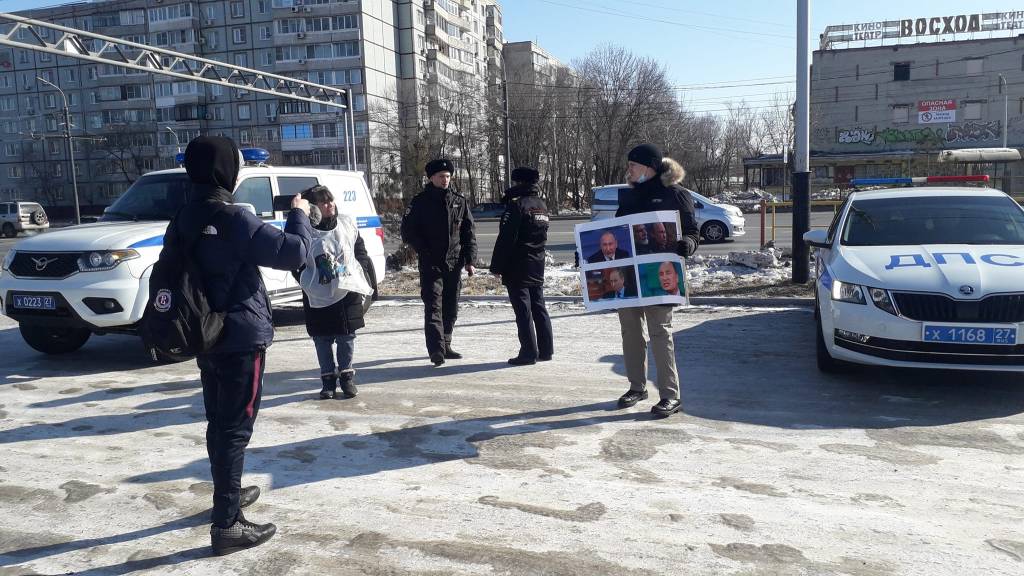
On February 23, Nikolai Zodchii was detained by police in Khabarovsk for appearing in public with these images of Vladimir Putin, which had originally appeared in broadcasts on state-run Channel One. Thanks to the indomitable VB for the snapshot and the heads-up, and for his personal fortitude in dismal circumstances. ||| TRR


When contacted by the media, the Kommunalnik health resort, located in the Omsk Region, refused to comment on reports of the death of a female Russian national during a speed pancake-eating contest.

Earlier, it was reported that a female contestant at a speed pancake-eating competition in the Omsk Region had choked to death. Currently, the exact cause of death is unknown, but the contestant’s death has been confirmed by law enforcement agencies. The 38-year-old female Russian national [rossiyanka] died before the ambulance arrived.

The celebration at which the pancake-eating competition took place was held at the Kommunalnik health resort in the Omsk Region on Saturday, February 25.

A spokesperson for the health resort refused to comment on reports of the death of the female Russian national and the absence of an ambulance team at the competition site.

In December 2022, it was reported that a 61-year-old resident of the Moscow Region had died after choking on a pancake.

Russians had been warned against overeating pancakes during Shrovetide. According to specialist Boris Mendelevich, overeating pancakes cooked with large amounts of oil is harmful to the body. In addition, heavy food can cause complications in the gastrointestinal tract.

Source: Anna Bondarenko, “Health resort reacts to reports of death at pancake-eating contest,” Kartoteka, 26 February 2023. Translated by TRR


Russia must ensure its security and maintain strategic stability.

President Vladimir Putin said this in an interview for the program “Moscow. Kremlin. Putin” on the TV channel Rossiya 1.

Source: Oleg Zubritsky, “Putin talks about the need to preserve the country and its security,” Kartoteka, 26 February 2023. Translated by TRR. Believe it or not, that was the entire article, which earned its author a well-deserved byline. See the last patch in this crazy quilt, below, for more detail about what Putin said.


Riot police officers in St. Petersburg detained 131 teenagers over a mass brawl that occurred in the Galereya shopping center, the media reports.

The publication [sic], citing police sources, indicated that the PMC Redan teenage subculture was involved in the incident.

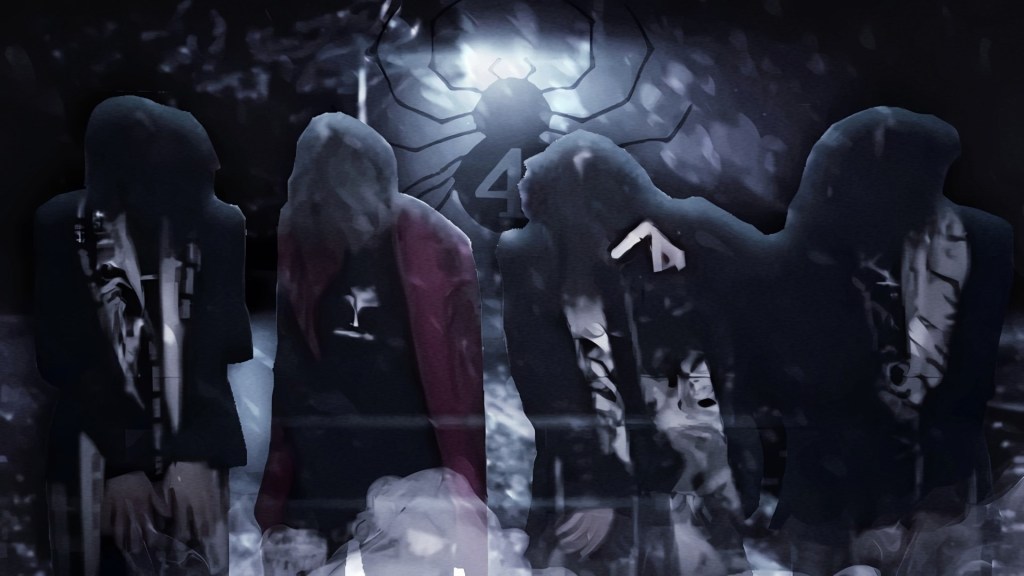
It is reported that other minors attacked a teenager in clothes embossed with a spider, which is the symbol of PMC Redan. One teenager was injured during the brawl.

Riot police arrived at the scene and detained 131 individuals. The Galereya shopping center was closed for entry, and shoppers were released only after police checked them.

Earlier, it was reported that Novosibirsk law enforcement officers had staged a dragnet to detain teenagers devotees of the PMC Redan subculture. The raid took place in the eponymous [sic] Galereya shopping center.

Source: Roman Konev, “Riot police detain over one hundred teenagers in Petersburg shopping center,” Kartoteka, 26 February 2023. Translated by TRR


According to the head of the Safe Internet League, PMC Redan (as well as anime in general) is a “depressive-aggressive subculture,” and animeshniks themselves espouse violence and are willing to use it.

Such subcultures emerge, [Ekaterina] Mizulina argues, because teenagers have too much free time, as well as due to the manipulations of irresponsible bloggers and provocateurs who are encouraged by foreign states to engage in them.

In this regard, Mizulina suggests that “it is interesting to package the right meanings for children,” ideologically attack “all these spiders”, and also introduce control over social networks and the media — namely, to prohibit the coverage of “such topics.”

“No one has done more to popularize this local phenomenon than the media and social networks. […] Redan cells are growing like mushrooms after rain from Vladivostok to Kaliningrad,” Mizulina writes.

At the same time, it has been the state-run media that has written most about the activities of the so-called PMC Redan. Before them, information about teenage animeshniks strolling through shopping malls in telltale clothes appeared mainly on local community social media pages.

Source: Alexei Paramonov, “Ekaterina Mizulina urges media ban on PMC Redan,” Kartoteka, 26 February 2023. Translated by TRR. Fontanka.ru published this long, strange tirade-cum-report about the clash between riot police and teenagers at the Galereya shopping center in Petersburg (which is a stone’s throw from our house), on the one hand, and between “redans” and “ofniks,” on the other. If you donate one hundred dollars to this website, I’ll translate and publish that article here, although it left me hardly less befuddled about what happened in my old neighborhood this past weekend than before I’d read it.


The Cheryomushkinsky Court of Moscow placed house arrest on the leader of the Redan youth group

The Cheryomushkinsky Court of Moscow sent one of the leaders of the youth informal group “PMC Redan” under house arrest, reports TASS.

He is accused of attacking a teenager in the metropolitan metro – under part 2 of article 213 of the Russian Criminal Code (Hooliganism with the use of weapons or objects used as weapons), the court noted. The maximum penalty is imprisonment for up to seven years.

According to the agency, initially the investigators demanded that the accused be sent to a pre-trial detention center, but the court did not agree with this. Earlier, the Cheryomushkinsky court sent three more accomplices to the crime under house arrest.

On February 23, a teenager who was a member of the PMC Redan was beaten at the Lubyanka metro station. Teenagers wear long dark hair and spider badges on their clothes. They were inspired by the Genea Redan gang from the Hunter x Hunter manga. The symbol of this group is a spider with the number four. It is specified that young people oppose football fans, natives from the Caucasus and migrants.

Source: admin_l6ma5gusk, “The court appointed house arrest to the leader of ‘PMC Redan,'” Pledge Times, 25 February 2023. I have reprinted this and the following two items as I found them, with no editorial retouching on my part.


PMC REDAN apologizes for the recent events, we had no intention to touch someone’s feelings or oppress someone.

At the moment, all the negativity comes from people who are not far away, PMC REDAN does not spread any calls for action or oppression.

Once again, we apologize to the entire administration.

People who are now insulting someone’s religion, nationality, do not belong to our community.

Source: PMC Redan Ryodan (VK), 24 February 2023


Russian President Vladimir Putin has acknowledged the possibility of Russia facing a breakup in the future, with its population to be divided into separate nations, the country’s news agency TASS reported on Feb. 26.

Putin’s interview with Rossiya 1 TV channel marks the first time that the Russian dictator has publicly commented on the potential disintegration of Russia.

According to him, “if the West manages to make the Russian Federation collapse and to assume control of its fragments,” the Russian people may not survive as a nation.

“If we go down this path (of Russia’s collapse — ed.), I think that the fate of many peoples of Russia, and first of all, of course, the Russian people, may change drastically,” Putin said.

“I even doubt that such an ethnic group as the Russian people will survive as it is today, with some Muscovites, Uralian and others remaining instead.”

In addition, the Russian president claimed that “these plans are set out on paper.”

“But it’s all there, it’s all written, it’s all on a piece of paper,” Putin said.

“Well, now that their attempts to reshape the world exclusively for themselves after the collapse of the USSR have led to this situation, well, of course, we’ll have to respond to this.”

“They have one goal of liquidating the former Soviet Union and its main part, the Russian Federation. And later, [after liquidating Russia] they will probably admit us to the so-called family of civilized peoples, but only by parts, each part separately,” he said.

Ukraine’s National Security and Defense Council Secretary Oleksiy Danilov earlier said that the West has not yet made a final decision on what to do with Russia and does not understand how the full-scale war unleashed by Russia against Ukraine should end. However, the world should prepare for the collapse of Russia.

Previously, Ukrainian Defense Minister Oleksii Reznikov said that after the war is over, Russia will disintegrate into separate statelets, while Ukraine will retain its sovereignty and independence.

Source: “Putin unexpectedly mentions the risk of Russia’s collapse,” New Voice of Ukraine, 26 February 2023. Thanks to Boycott Russia Today for the heads-up.

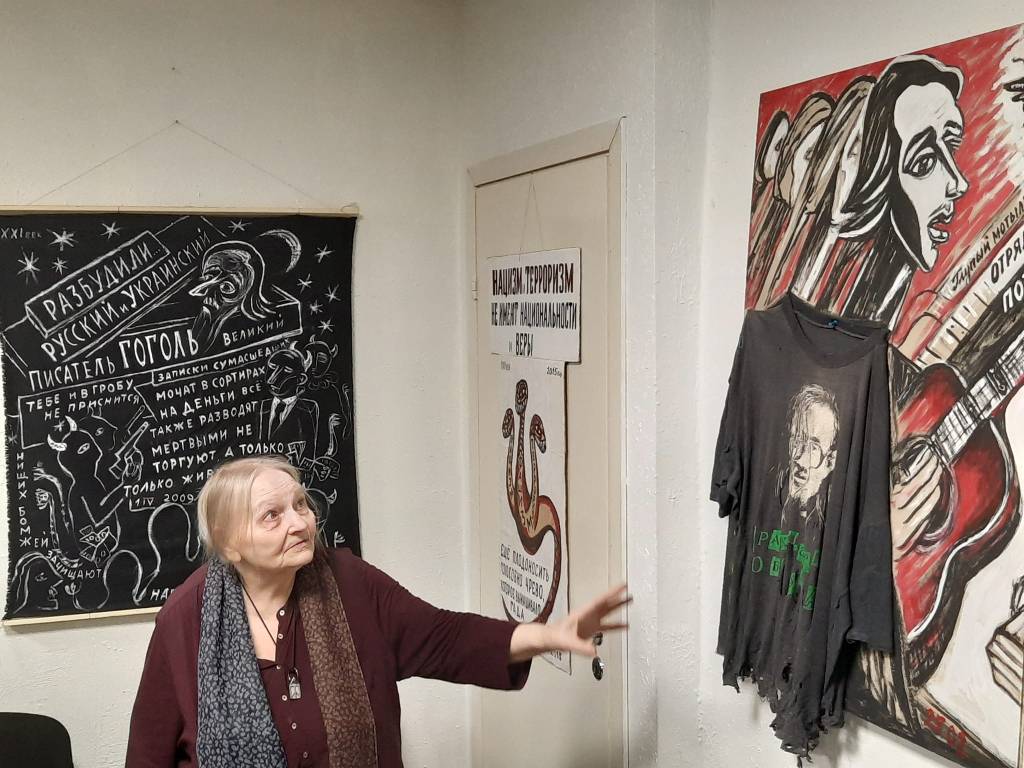
Yelena Osipova at Yabloko in Petersburg

Source: Galina Artemenko (Facebook), 31 January 2023. Captions by TRR. Yesterday (1 February 2023), Ms. Artemenko wrote that the security forces were removing Ms. Osipova’s posters from the Petersburg offices of the opposition Yabloko party. So, her exhibition there lasted all of one day. ||| TRR


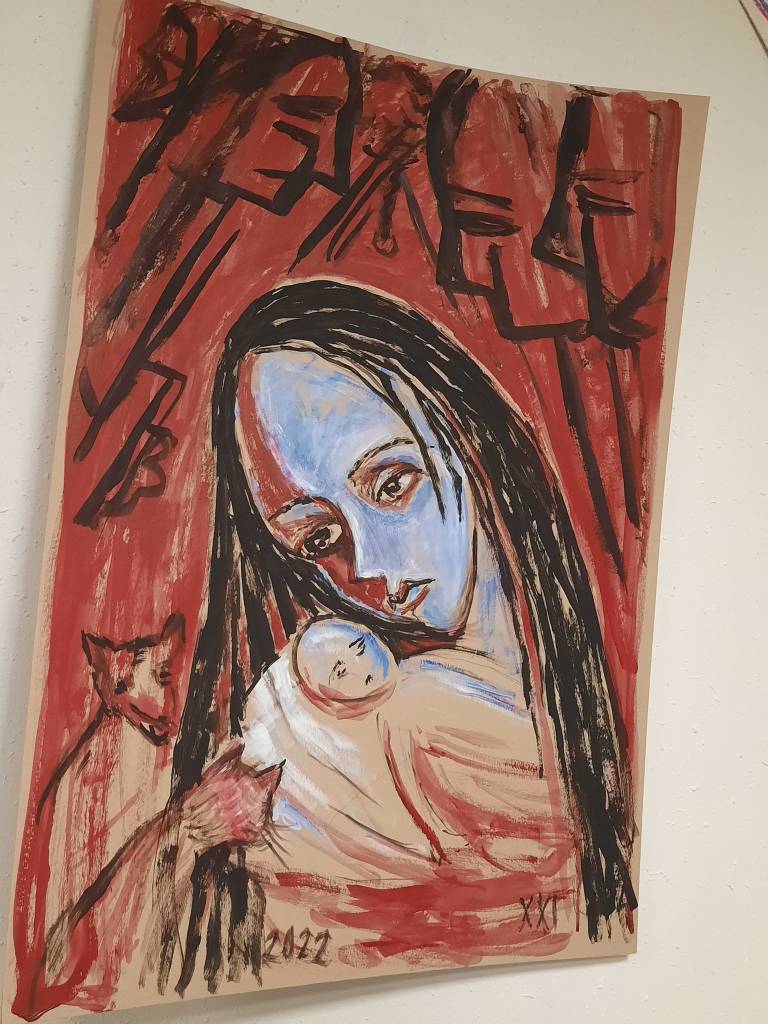
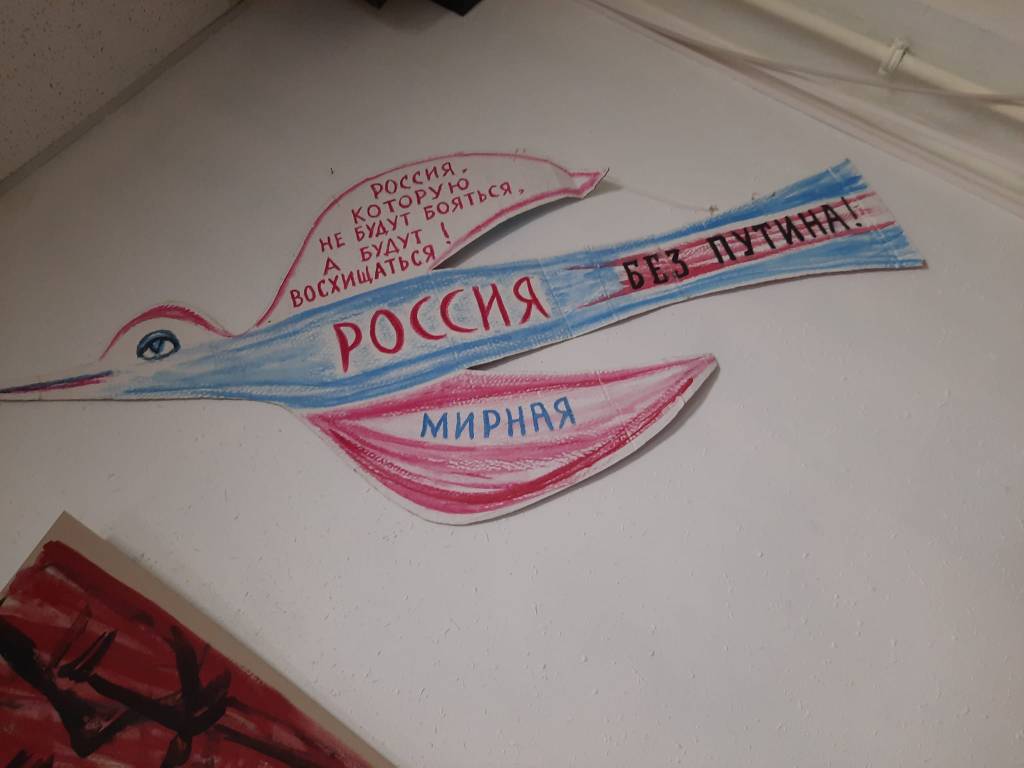
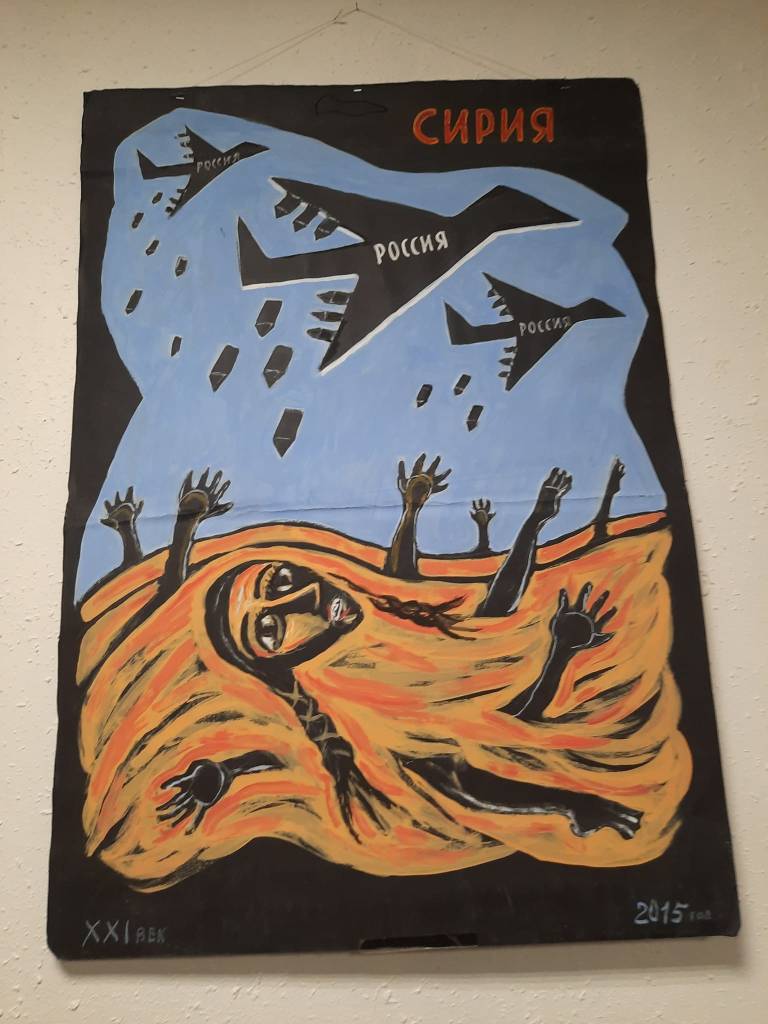
Police seized anti-war paintings by 77-year-old artist Yelena Osipova from an exhibition that had opened the night before at the offices of the Yabloko party. Interior Ministry officers came allegedly because they had received a call that a bomb had been planted in the building, and as a result they took all Osipova’s work. The ministry wants to check whether the posters discredit the Russian army. The artist herself is very upset and is afraid that her paintings will not be returned.

Source: “Police raid anti-war exhibition in Petersburg,” Sever.Realii (YouTube), 1 February 2023. Annotation translated by the Russian Reader

How to Win Friends and Influence People

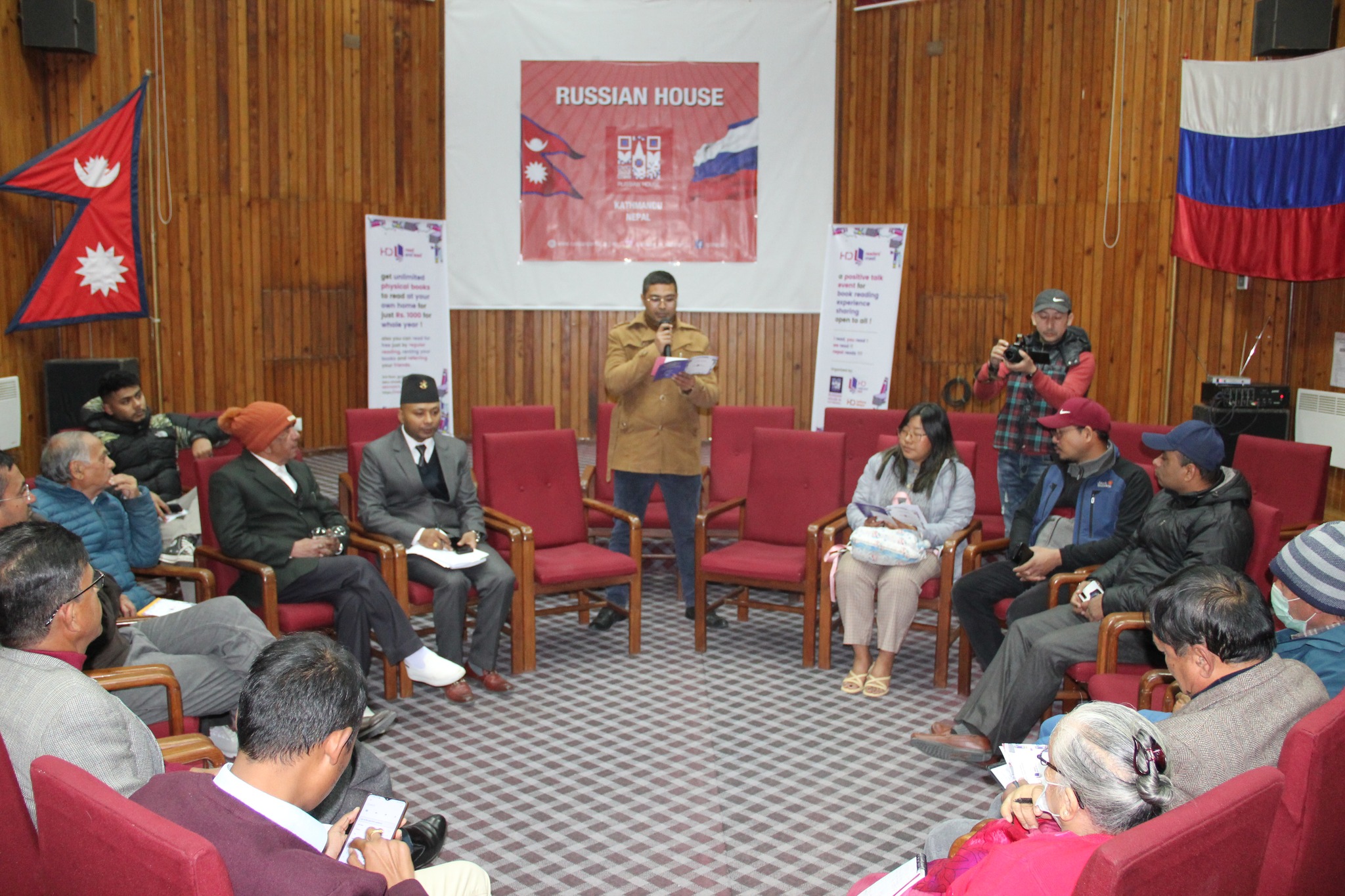
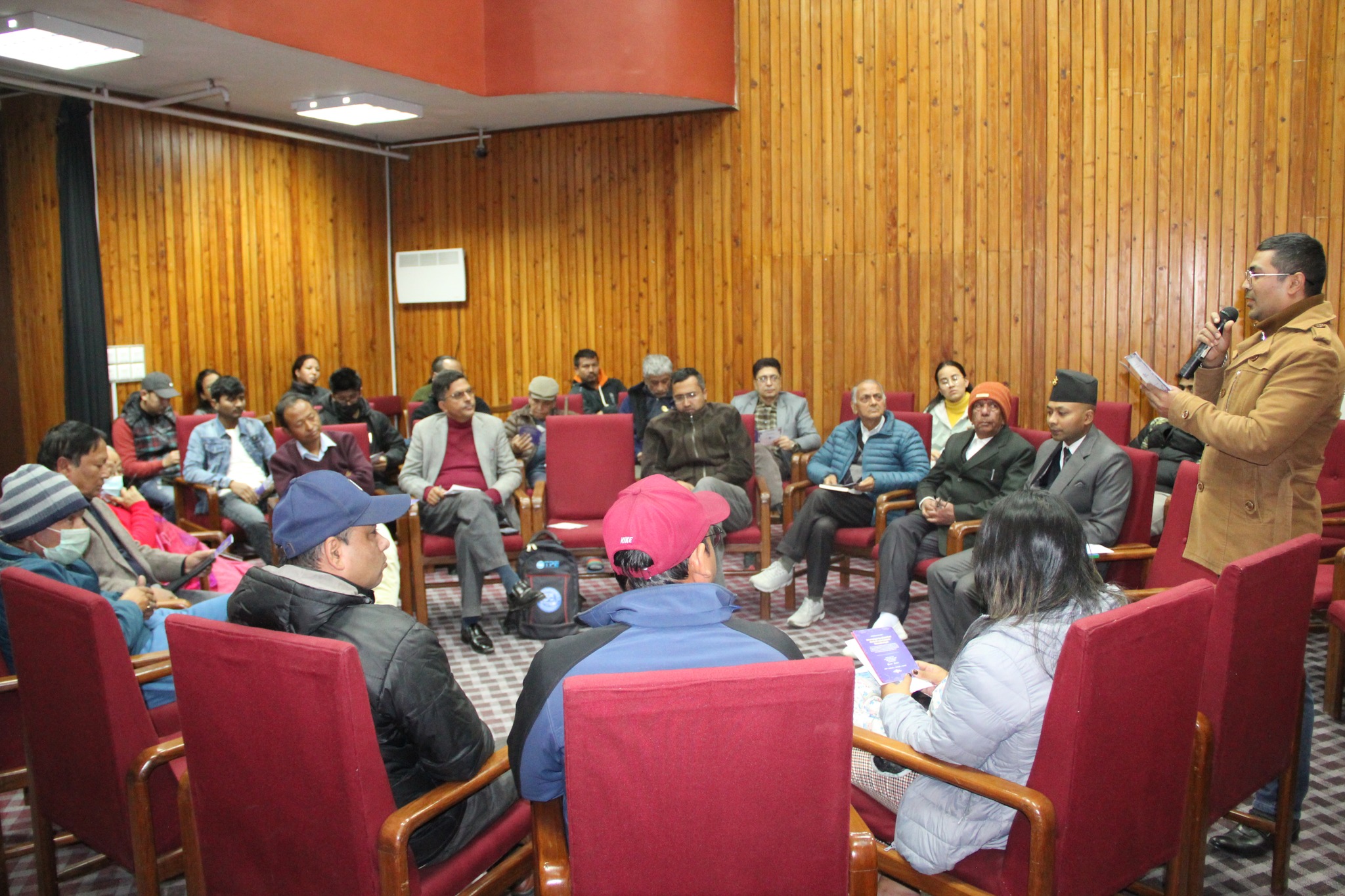
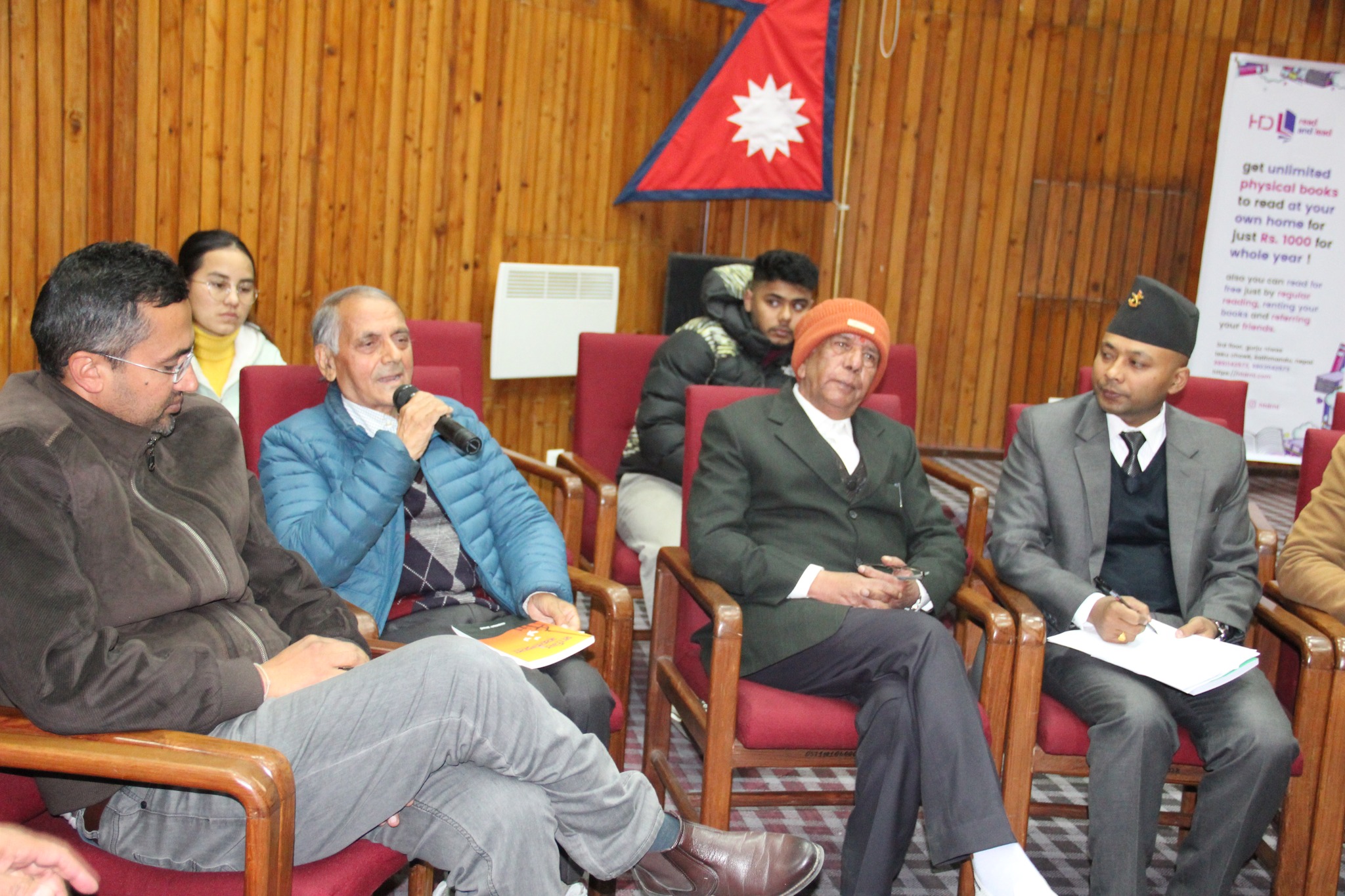
Book reading and experience sharing program at Russian House

On December 29 Russian House in Kathmandu conducted a book reading and experience sharing program in collaboration with Half Tone Design Private Limited.

The event featured an interactive group discussion program with a brief introduction of the Russian library, books, authors, quotes, and poem recitation. There were over 40 people: authors, students, poets, and professors. The main purpose of the program is to build reading habits and share experiences. In the program, many of the audience suggested their favorite books, which are as follows:

1. How to win friends and influence people — Dale Carnegie, and Bhagwat Gita by Mr. Indra Prasad Adhikari.

2. Ramcharitra Manas. By Mr. Rudra Dulal.

3. Jeevan Yatra by Mr. Bhola Shrestha.

4. Muna Madan, Aamai and Paheli by Mrs. Goma Banjade.

5. Mother – Maxim Gorky by Ms. Mira Pokherel.

6. Guna Ratna Mala by Mr. Narayan Thapa.

Source: Russian House in Kathmandu, Facebook, 29 December 2022


Ukrainian officials said that over 120 Russian missiles had been launched at the country’s cities. Explosions were heard in the capital Kyiv, Kharkiv, Lviv, Odessa and Zhytomyr. The mayor of Kyiv said that three people had been taken to hospital, and that 16 missiles were destroyed in flight by the city’s air defences. On the southern front Ukrainian officials urged residents of Kherson, which they liberated just six weeks ago, to evacuate their city as Russian forces escalated mortar and artillery attacks.

Source: The Economist, “The World in Brief” email newsletter, 29 December 2022


Mikhail [Lobanov] telephoned. He says that he has been charged under Article 19.3 of the Administrative Offenses Code.*

Mikhail managed to convey that during the search he was beaten in the face and chest. There was blood on the floor of the apartment.

* “Disobeying the lawful order of a police officer, a serviceman, an officer of the Federal Security Service, an officer of state security bodies, an officer of bodies exercising federal state control (oversight) in the field of migration, or an officer of a body or institution of the penal enforcement system, or an officer of the Russian Federal National Guard,” as amended on 19 December 2022.

Source: Mikhail Lobanov, Facebook, 29 December 2022. Translated by TRR


The home of Mikhail Lobanov was searched today. Mikhail’s [legal] status and the article of the criminal code [which he is being charged with or suspected of violating] are not yet known.

Mikhail was taken to the Ramenka police department.

During the search, the investigator mentioned the name Ponomarev (probably referring to Ilya Ponomarev), with whom Lobanov is not acquainted and is not connected in any way. All electronic devices were removed from the home.

The security forces quickly sawed down the door and talked with Lobanov in the apartment for more than three hours. They did not allow him to contact a lawyer, demanded that he sign some papers, and behaved heavy-handedly, Mikhail’s wife Alexandra Zapolskaya reports.

Source: Mikhail Lobanov, Facebook, 29 December 2022. Translated by TRR

The Extremist Community: Nine More Years in a Penal Colony for Left Resistance Founder Darya Polyudova

Darya Polyudova, holding a placard that reads, “Ukraine, we’re with you.” Photo courtesy of The Insider

The founder of the Left Resistance movement, Darya Polyudova, has been sentenced to nine years in a penal colony on charges of “creating an extremist community.” Polyudova was already serving time on another charge, and had three years left to go in her sentence.

The Second Western District Military Court has handed down the new sentence to the activist. It agreed with the prosecution’s arguments that the Left Resistance, as created by Polyudova, was an “extremist community.” And yet, at the moment there is no such organization listed in the Russian Justice Ministry’s registry of “extremist organizations.”

In addition to “creating an extremist community” (Article 282.1.1 of the Russian Federal Criminal Code), the court found the activist guilty on two counts of “condoning terrorism” (Article 205.2.2 of the Russian Federal Criminal Code) over posts published on the movement’s social media page.

The sentence took into account Polyudova’s previous sentence of six years, which she received in 2021, writes Mediazona.

Polyudova was the first person in Russia charged under the criminal code article outlawing “calls for separatism” (Article 280.1). This accusation was brought against her in 2014 for trying to hold a “March for the Federalization of the Kuban” in Krasnodar.

One charge after another

Polyudova began her career as a political activist in Novorossiysk, where she organized Strategy 31 protests. Due to constant arrests and dismissals from work, Polyudova was forced to move to Krasnodar, and later to Moscow.

She went on pickets in support of Ukrainian and Crimean Tatar political prisoners, and the defendants in the Moscow Case and the Network Case, against the construction of a landfill in Shiyes, and against plans to build a church on a city square in Yekaterinburg.

In 2017, Polyudova was released from a work-release penal colony where she spent two years on charges of calling for separatism, and founded the Left Resistance. The description of the movement on its VK page stated that it “stands against the oppressor capitalists and for all the oppressed and the power of the working people.” The movement’s members attended protest pickets and distributed leaflets.

In January 2020, Polyudova was arrested again on charges of calling for separatism — this time for a solo picket where the activist stood holding a placard that read, “Kuriles, stop feeding Moscow! Long live the Far Eastern Republic!”

She was also charged with publicly condoning terrorism over a repost of a message about the Chechen field commander Shamil Basayev.

The calling for separatism charge against Polyudova was eventually dropped due to the liberalization of Article 280.1 of the Russian Federal Criminal Code. However, in September 2020, the activist, who by that time had been in remand prison for more than six months, was charged with a new offense.

The FSB regarded her statements about Yevgeny Manyurov, who opened fire at the FSB headquarters on the Lubyanka in December 2019, as grounds for charging Polyudova with “condoning terrorism.” Later, this charge was reduced to a charge of calling for separatism.

In May 2021, Polyudova was sentenced to six years in a penal colony on charges of publicly condoning terrorism and calling for extremism.

Polyudova was presented with new charges of “creating an extremist community” in December 2021, while she was in remand prison awaiting an appeal against the previous sentence.

Source: “Activist Darya Polyudova sentenced to nine years — this is her third prison sentence,” BBC News Russian Service, 23 December 2022. Translated by TRR


Left Resistance founder Darya Polyudova has been sentenced to nine years in a penal colony, while Left Resistance activist Kirill Kotov has been sentenced to three years probation, the Telegram channel Free Kirill Zhukov reports.

Polyudova’s sentence incorporates the previous verdict against her and will run from January 2020, when the young woman was remanded to a pretrial detention center in a previous criminal case, her lawyer Leonid Solovyov told OVD Info.

The prosecution had requested just this sentence for Polyudova, but had asked that Kotov be sentenced to three years in a penal colony.

Polyudova was accused of “creating an extremist community” (per Article 282.1.1 of the Criminal Code), while Kotov was accused of involvement in an “extremist community.” Polyudova was also charged on two counts of public calls for terrorism or “condoning terrorism” (per Article 205.2.2 of the Criminal Code).

According to the FSB, Polyudova created the Left Resistance to “plan and commit crimes, […] namely, public vindication of terrorism and public calls for extremist activity.” Investigators argued that the “extremist community” engaged in holding pickets and making posts on social media.

In addition to Kotov, four other activists have been charged with involvement in the extremist community: Sergei Kirsanov, Alyona Krylova, Igor Kuznetsov, and Andrei Romanov.

On 18 November 2021, the FSB searched two addresses as part of the case against the Left Resistance, including the house where Kotov used to live. The criminal charges against the movement were made public on 3 December 2021. Tomsk opposition activist and RusNews journalist Igor Kuznetsov was already in remand prison in connection with the case of the Telegram channel Chto-Delat! Andrei Romanov and Alyona Krylova were not in Russia, while Sergei Kirsanov and Kirill Kotov were released on their own recognizance. By this time, Polyudova had already been sentenced to six years in a penal colony in a previous case.

Polyudova was charged under the article criminalizing calls for terrorism over posts made in 2019 on the Left Resistance’s social media page, including a post entitled “Execute the traitor Putler for treason!” Forensic experts detected “calls for the violent seizure of power” and “use of violence against the security forces” in these posts. Another criminal count was based on posts made on anniversary of the annexation of Crimea and pickets in support of defendants charged with involvement in Hizb ut-Tahrir.

[…]

Polyudova founded the Left Resistance movement in 2017. Its activists said that the new left-wing organization’s purpose was to replace the “opportunistic Communist Party” and “defend genuine communist ideas.”

In May 2021, the court sentenced Polyudova to six years in a penal colony. She was found guilty on two counts: “condoning terrorism” (per Article 205.2.2 of the Criminal Code) in connection with a repost on VK, and “calling for extremist activity” (per Article 280.1 of the Criminal Code) for statements about the actions of the shooter outside the FSB headquarters building on the Lubyanka.

In 2014–2015, Polyudova was accused of calling for extremism and separatism. She was then sentenced to two years in a work-release (i.e., minimum security) penal colony.

Source: “Left Resistance founder Darya Polyudova sentenced to nine years in a penal colony,” OVD Info, 23 December 2022. Translated by TRR

The Subversive Community

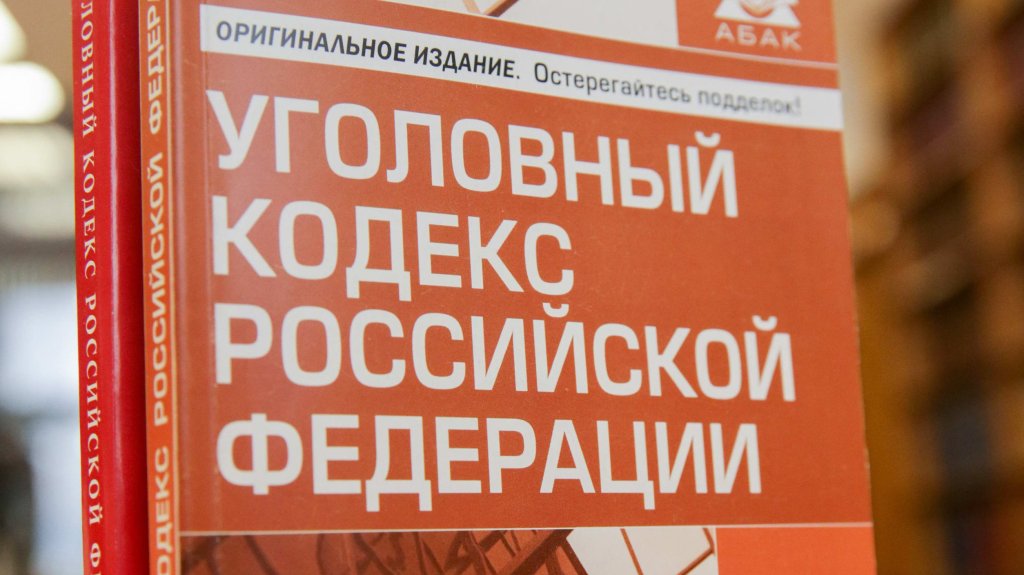
The Russian Federal Criminal Code: “Original edition: Beware of fakes!” Image courtesy of the Russian State Duma’s website

The State Duma adopted in their third and final reading amendments to the Criminal Code that stipulate life sentences for “subversive activities,” reports the lower house’s website.

There was already an article in the Criminal Code that outlawed sabotage. It stipulated a life sentence only if someone was killed as a result (per Article 281.3).

The deputies decided to add three new articles (281.1, 281.2 and 281.3) to the Criminal Code. They have introduced such crimes as “creating a subversive community” and being involved in such a community, “facilitating subversive activities” and “training” to commit sabotage, and “promoting” and “condoning” sabotage.

As punishment, prison terms of eight to twenty years or life sentences are stipulated in all cases, except for aiding and abetting sabotage.

As in the case of the other articles in the Criminal Code dealing with terrorism and extremism, exemption from criminal liability is stipulated if an individual informs the authorities or “otherwise contributes” to the prevention of sabotage and “subversive activities.”

The deputies also included “promoting,” “condoning,” or “supporting” sabotage in the list of aggravating circumstances in the commission of other crimes (per Article 63 of the Criminal Code).

Other bills in this raft of legislation would allow the authorities to place people suspected or accused of violating the new articles on Rosfinmonitoring’s financial watch list and block their bank accounts, as well as enable the authorities to block websites containing instructions for “making ammunition for firearms.”

The set of four bills was introduced on December 8 by a group of more than 380 deputies. [There are 450 seats in the State Duma.] The first reading was held on December 14, and the text of the bills had not been amended as of the second reading on December 20.

Source: “State Duma passes law on life sentences for ‘facilitating’ sabotage,” Mediazona, 21 December 2022. Translated by TRR


I can’t stand it, I know you planned it
I’m gonna set it straight, this Watergate
I can’t stand rocking when I’m in here
‘Cause your crystal ball ain’t so crystal clear
So while you sit back and wonder why
I got this fucking thorn in my side
Oh my God, it’s a mirage
I’m tellin’ y’all, it’s a sabotage

So, so, so, so listen up ’cause you can’t say nothin’
You’ll shut me down with a push of your button?
But you, I’m out and I’m gone
I’ll tell you now, I keep it on and on

‘Cause what you see you might not get
And we can bet, so don’t you get souped yet
You’re scheming on a thing that’s a mirage
I’m trying to tell you now, it’s sabotage

Why

Our backs are now against the wall?
Listen all y’all, it’s a sabotage

I can’t stand it, I know you planned it
I’m gonna set it straight, this Watergate
Lord, I can’t stand rockin’ when I’m in this place
Because I feel disgrace because you’re all in my face
But make no mistakes and switch up my channel
I’m Buddy Rich when I fly off the handle
What could it be? It’s a mirage
You’re scheming on a thing, that’s sabotage

Source: Musixmatch. Song written by Michael Louis Diamond, Adam Nathaniel Yauch and Adam Horovitz

“Murderers, You Bombed It to Smithereens”

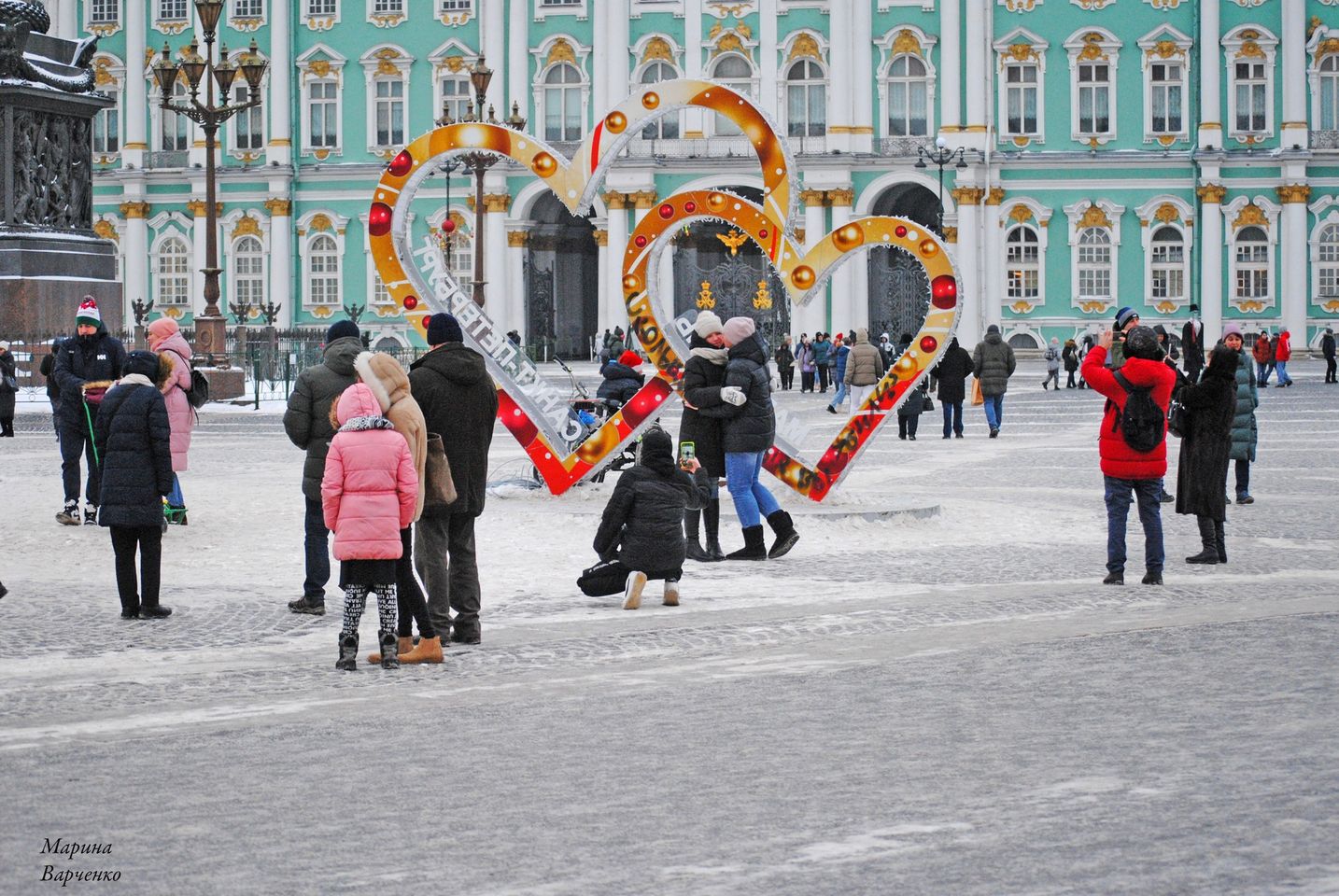
Of course, as a true masochist, I went to Palace Square to look at those hearts, small and large, supposedly symbolizing the sister cities of Petersburg and Mariupol. It is clear whose heart is the small one, and whose the big one, in the imperial capital. My thoughts about this are unprintable, so I’ll omit them.

But I went for curiosity’s sake: how many people would be getting their pictures taken in front of the hearts? As I’d supposed, it was a lot of people.

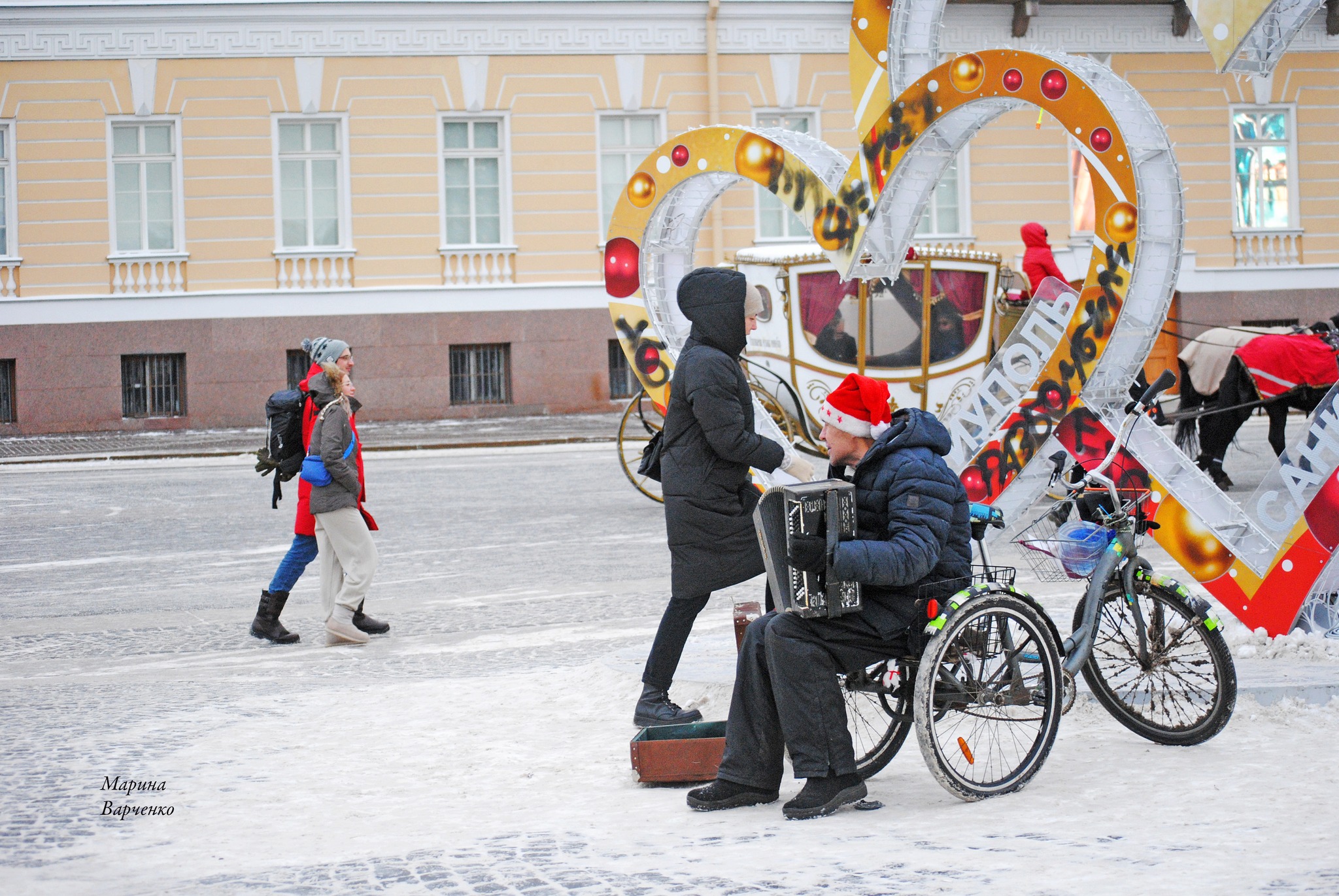
I saw much more than I’d expected. It was a total trash fest. There were the hearts, people taking fotochki, as they say now, frozen Peter the Greats walking around, carriages circling the square, and a drunk-looking little dude playing the accordion right there.

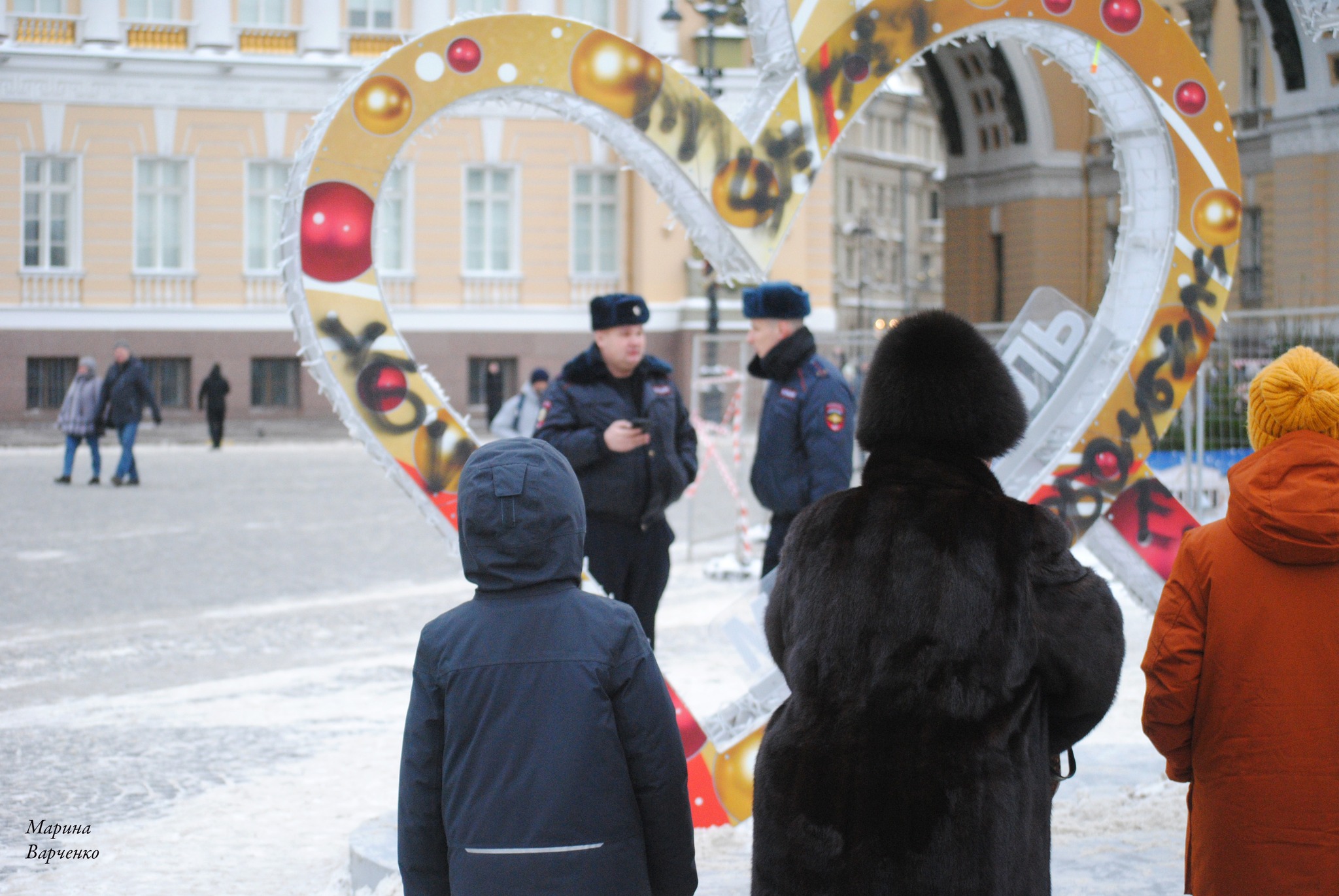
But no one seemed to be paying attention to the unauthorized inscription on the heart — black and large and truthful. (See the last two photos.)

While I was standing there, however, both citizens and law enforcement agencies finally noticed it. And they will call it vandalism, of course.

Source: Marina Varchenko, Facebook, 18 December 2022. Translated by TRR


A Petersburg woman detained on Palace Square has been charged with “discrediting” the army, the press service of the Interior Ministry’s Petersburg office has informed Bumaga.

Earlier, city media reported that the inscription “Murderers, you bombed it to smithereens. Traitors” had appeared on an installation dedicated to the sister-city relationship between Mariupol and Petersburg, and that a juvenile female had been detained.

When Bumaga asked it whether these reports were true, the press service of the Interior Ministry’s Petersburg office replied that on the afternoon of December 18, the police had detained seventeen-year-old girl on Palace Square “for committing illegal actions.” She was charged with an administrative offense for public actions aimed at “discrediting” the Armed Forces of the Russian Federation (per Article 20.3.3 of the Russian Federal Administrative Offenses Code).

The installation appeared on Palace Square on December 12. Rotunda reported that the Petersburg authorities ordered it back in September. According to the contract, the city spent 1.05 million rubles on the installation.

On December 18, an inscription appeared on the installation, after which the structure was partially disassembled. Workers told our correspondent that the installation would remain on the square, but would spend the next few days without cladding until the inscription was removed from it.

Source: Bumaga, 19 December 2022. Translated by TRR


Dec 19 (Reuters) – President Vladimir Putin on Monday ordered the Federal Security Services to step up surveillance of Russian society and the country’s borders to prevent risks from abroad and traitors at home.

Speaking ahead of Tuesday’s Security Services Day — widely celebrated in Russia [sic] — Putin said the “emergence of new threats” increases the need for greater intelligence activity.

“Work must be intensified through the border services and the Federal Security Service (FSB),” Putin said.

“Any attempts to violate it (the border) must be thwarted quickly and effectively using whatever forces and means we have at our disposal, including mobile action units and special forces.”

Putin instructed the FSB to maximise their “use of the operational, technical and personnel potential” to tighten control of the society.

The FSB, the main successor to the Soviet-era KGB, has already been operating in Russia as an expansive surveillance and censorship apparatus and Moscow’s invasion in Ukraine has involved a large swathe of the security services.

“Maximum composure, concentration of forces is now required from counterintelligence agencies, including military intelligence,” Putin said, according to transcript of his speech provided by the Kremlin and translated by Reuters.

“It is necessary to severely suppress the actions of foreign special services, quickly identify traitors, spies and saboteurs.”

The FSB, headed by Putin ally Alexander Bortnikov, will also increase oversight of mass gatherings, strategic facilities and energy infrastructure.

Since the start of the war, demonstrations and dissent have been swiftly quelled in Russia, with more than 1,300 detained in September at protests denouncing Putin’s military mobilisation of 300,000.

[…]

Source: Lidia Kelly and Ronald Popeski, “Putin orders FSB to step up surveillance of Russians and borders,” Reuters, 19 December 2022

Environmental Movement 42 (Is a “Foreign Agent”)

Hi!

It’s the 7X7 team on the line. Today we’re going talk about the environmental movement 42 and why it suddenly became a “foreign agent.”

Approximate reading time: 4 minutes.

Some people look forward to Friday to go drinking after the work week, but we look forward to Friday to learn the names of the new “foreign agents,” as designated by the Russian Justice Ministry. Their updates to the registry of “foreign agents” are like a new episode of a TV series, the release of a long-awaited game, or a new song by a favorite artist. Russian officials know how to put on a show, you can’t take that away from them.

This week, The Bell, ex-What? Where? When? contestant Rovshan Askerov, TV Rain journalist Mikhail Fishman, philosopher Ruben Apresyan, and the Environmental Movement 42 were added to the registry. We’re going to tell you about 42, an eco-movement based in Arkhangelsk.

What does 42 do?

Article 42 of the Russian Constitution states: “Everyone has the right to a favorable environment.” The movement named itself after this article. 42’s activists run online seminars on eco-education, talk on social media about the Arkhangelsk Region’s unique sites, and organize subbotniks.

Everyone can lead an eco-friendly lifestyle. You can start by sorting and recycling garbage. So, the 42 team, together with the Ecomobile project, accepts glass, plastic, metal, and paper for recycling. And for convenience, once a month a real ecomobile drives around Arkhangelsk, staffed with activists to whom residents can hand over their recyclables.

“Foreign agent”

42 is this environmental organization’s second incarnation. They used to be called Aetas, but in 2017 the Justice Ministry designated the organization a “foreign agent.” The reason they were put on the registry was their cooperation with the Norwegian activist group Natur og Ungdom, which financed some of Aetas’s events, including free children’s camps, expeditions, and Ecobattle, an annual championship for collecting recyclables.

After they were put on the foreign agents registry, the activists founded a new movement, 42, in February 2018. But it was also designated a “foreign agent” this past Friday, December 9. Will there be a third incarnation and a second reincarnation? We’ll see.

Organizations and individuals are place on the “foreign agents” registry for a reason. You have to consistently and vigorously mess with the state’s attempts to generate tyranny and speak out against it. But how did people trying to organized segregated waste collection deserve the new designation? One can never say for sure, but there is speculation that the reason they were placed on the registry is that they have called for locals to participate in public discussions about the construction of a new waste sorting complex in the village of Kholmogory.

Friends in misery

Someone may think that the title of “foreign agent” is a seal of excellence. Perhaps this is partly true, but it is also a heavy burden for any organization, especially if it is located in Russia. Foreign agents have to submit additional reports, indicate their foreign agent status on any public platforms, and cannot receive state grants.

In 2022, the Russian government has been pressuring activists from environmental protest groups more vigorously than usual, but most often not for environmentalism, but for anti-war statements. On December 9, Elena Kalinina, one of the participants of the protests in Shiyes, was ordered by a court to refrain from certain activities due to her alleged “repeated discrediting of the army.” Ivan Ivanov, chairman of the Pechora Rescue Committee, was fined by a court in June for appealing to Putin to stop the war. And Arshak Makichyan of Fridays for Future and his family members were stripped of their Russian passports altogether: officials claimed that they had suppled false information when they applied for them in the early noughties after moving from Armenia.

Life goes on

Fines, bans, and denaturalization. But is there any good news? Of course there is! And we at 7×7 are just the people to find it for you.

Greenpeace opened its first branch in the USSR in 1992 [sic: the Soviet Union dissolved in December 1991]. The money for opening this branch was raised from the sales of a charity album called Greenpeace Breakthrough. Songs for the album were recorded by U2, Sting, Talking Heads, Dire Straits, and others.

Thirty years later, a collection called Greenpeace Breakthrough 3.0 has been released in Russian. The songs on it were recorded by Samsara, Electrophoresis, Neschatsnyi Sluchai, Nogu Svelo, and other Russian-speaking artists. The artists will transfer the money received from the auditions to environmental organizations in Russia.

In its group description on VK, 42 writes: “We are safeguarding nature in Russia until better times.” Indeed, garbage recycling and subbotniks may seem unimportant now, but this is not the case. The war will end, and the country and its nature will still be a concern for inhabitants of the regions.

Take care of yourself. Thank you for sticking with us.

Source: “Focus” email newsletter, 7X7, 12 December 2022. Translated by the Russian Reader


THIS IS THE LAST POST

Today, the Russian Justice Ministry placed the Environmental Movement 42 on its registry of foreign agents. It should be noted that the persons listed as members of an association are not deemed “individual foreign agents.” This bit of misinformation has been widely repeated. 😡

❗About the law

The Law on Foreign Agents has been in force in Russia since 2012. At that time, you to had to engage in political activity and receive foreign funding to earn a spot on the registry. Despite the fact that “activities for the protection of flora and fauna” are excluded from the law as forms of political activity, thirty-four environmental organizations have been placed on the registry to date. Ten years later, on December 1, a new law on foreign influence went into force. Its implications are unclear. You are probably reading this post on a smartphone manufactured somewhere other than Russia. You listen to foreign music, watch foreign movies, and go on holiday to Turkey. Under the new law all these things can be deemed “foreign influences.”

❗Our opinion

Naturally, we do not agree with our inclusion on this registry. If we are “agents,” we are only agents of nature. Our families have lived in the Arkhangelsk Region for several generations. We are rooted to this land, and so our principal mission is safeguarding nature and the well-being of future generations. This is reflected in our name: 42 is the number of the article in the Russian Constitution that states that everyone has the right to a favorable environment. We doubt that the people who put us on this registry have the same love for our region and our people as we do, that they understand the connection between environmental mistakes and people’s health and safety.

We are not surprised by this turn of events. Unfortunately, this is the trend — to drown out the public’s voice. Why do you think we were included in the registry? Just a few days ago, we published information about public hearings on the proposed construction in Kholmogory of a municipal solid waste processing facility with a capacity of 275 thousand tons. There was clearly an attempt by the authorities to hold the hearings quietly and unnoticed; even local council members didn’t know about them. Due to the attention they attracted, the administration has had to hold a second round of hearings, which now will be going on until January 7. But again, the project documentation has not been made available, although it is topic of discussion. Why all these secrets? Why the pressure on us?

❗What’s next?

We do not know what we’ll do next, because the law is quite harsh and imposes numerous burdens, including financial ones, which we simply cannot afford. We are consulting with lawyers about this. It is very easy to break the “rules,” the fines are large, and there is a risk of criminal liability for us. The safety of the people who selflessly protect nature under 42’s auspices is important to us.

We will be glad of any support on your part. You can also like, comment, and share information here as before (the lawyers explained that it is safe). This is our last post without the ugly boilerplate [indicating “foreign agent” status], which from tomorrow we will be obliged to put in all our informational materials. 🤕

* The photo, above, shows members of 42 after they arrived in Shiyes for a week-long vigil on the eve of 8 March 2019.

Source: Environmental Movement 42, VK, 9 December 2022. Translated by the Russian Reader


The Arkhangelsk-based Ecological Movement “42” is one of the first to be listed after Russia on December 1 drastically expanded the oppressive foreign agent legislation. The eco-group was started after Aetas environmental organization in 2017 was declared foreign agents and shut down.

“The only agents we are, are agents of nature,” the group wrote at its site on VKontakte when it became known that the Ministry of Justice in Moscow declared them so-called foreign agents.

“Naturally, we do not agree with the inclusion of us in the register.”

The foreign agent law itself was adopted in 2012 and said that registered organizations could be listed if they conducted political activities and got funding from abroad.

Later, successive amendments in 2017 and 2019 expanded the law to include media, individuals and non-registered associations.

The latest expansion of the law, adopted in July and entering force on December 1, says individuals, organizations, legal entities, or groups without official registration, receiving foreign support, or are “under foreign influence” and conduct activities that authorities would deem to be political would be listed as foreign agents.

The definition of “foreign influence” and “political” could be endlessly broad.

In Arkhangelsk, the Ecological Movement “42” says they don’t know for what reasons it is included on the list.

“Preservation of nature, and hence the preservation of the well-being of future generations, is our main goal and task.”

42 points to the article in the Russian Constitution stating that everyone has the right to a favorable environment.

“We doubt that those people who included us in the register have the same love for our region, for our people, understand the connection of errors with the health and safety of people,” the group says.

The eco-group has over the last years worked actively worked to stop the plans to establish a huge dump field for household waste from Moscow in Shiyes, far north in the taiga forest in the borderland between Arkhangelsk Oblast and the Komi Republic.

Ecological Movement “42” was started by former members of Aetas, another youth eco-group that in 2017 had to shut down after being labeled as “foreign agents.”

The group is only for members under the age of 30. It is member of the Russian Social Ecological Union, the Climate Action Network and the Stop Shiyes Coalition.

Since 2012, 34 environmental organizations in Russia have been included in the foreign agent register.

The foreign agent law was also used to shut down the human rights group Memorial that last weekend was given the Nobel Peace Price for 2022 in Oslo.

The “foreign agents” designation, which carries negative Soviet-era connotations, burdens subjects with strict labeling and auditing requirements.

Many independent journalists, activists and civil society figures have been added to the registry in recent years amid a sweeping crackdown on non-Kremlin-aligned voices.

Source: Thomas Nilsen, “Rebranded ecological youth group declared foreign agent,” Barents Observer, 12 December 2022

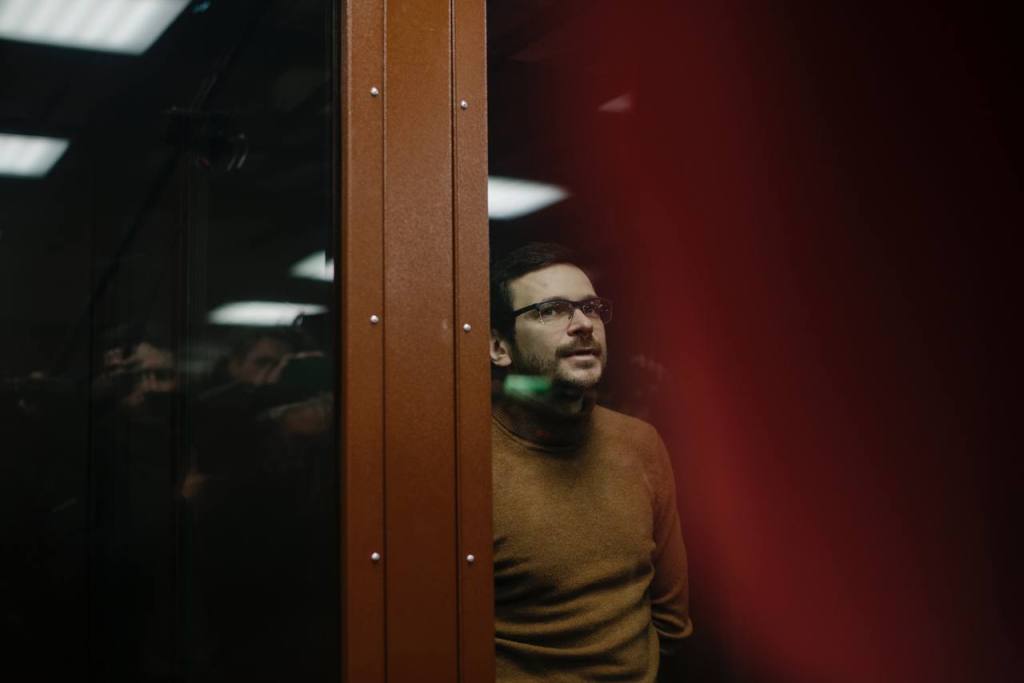
Ilya Yashin: Closing Statement in Court

This is a translated excerpt from Russian opposition politician Ilya Yashin’s closing statement, which he delivered at his show trial in Moscow earlier today. Charged with “spreading false information about the Russian military,” Yashin faces up to ten years in prison if convicted, which he almost certainly will be. ||| TRR


Ilya Yashin

Taking advantage of this podium, I would also like to address Russian President Vladimir Putin, the person who is responsible for this massacre, who signed the law on military censorship, and by whose will I am in prison.

Vladimir Vladimirovich!

Seeing the consequences of this monstrous war, you have probably already understand yourself what a grave mistake you made on February 24. Our army has not been greeted with flowers. We are called executioners and occupiers.

The words “death” and “destruction” are now firmly associated with your name.

You have brought terrible misfortune to the Ukrainian people, who will probably never forgive us. But you are waging war not only against Ukrainians, but also against your compatriots.

You have sent hundreds of thousands of Russians into the inferno of battle. Many of them will never return home, turned into dust. Many will be crippled and go crazy from what they have seen and experienced. For you, they are just casualty statistics, numbers in columns. But many families the face unbearable pain of losing husbands, fathers and sons.

You have deprived Russians of their home.

Hundreds of thousands of our fellow citizens have left their homeland because they do not want to kill and be killed. People are running away from you, Mr. President. Haven’t you noticed that?

You have undermined the foundations of our economic security. By putting industry on a war footing, you have sent our country back in the wrong direction. Tanks and guns are again a priority, and poverty and disenfranchisement are again our realities. Have you forgotten that such a policy has already led our country to collapse before?

Although my words might sound like a voice crying in the wilderness, I urge you, Vladimir Vladimirovich, to stop this madness immediately. You must acknowledge that the policy towards Ukraine has been mistaken, withdraw troops from its territory, and proceed to settle the conflict diplomatically.

Remember that every new day of war means new victims. Enough is enough.

Source: Ilya Yashin, Facebook, 5 December 2022. Photo by Zlata Milyavskaya. Translated by the Russian Reader

“Face the Wall, Don’t Look Down”: Solidarity Becomes a Criminal Act in Moscow

A view of the entrance to Open Space Moscow. Photo courtesy of Mediazona

On the evening of November 24, masked security forces officers broke into Open Space in Moscow, where fifty people had gathered to support the anarchists arrested in the Tyumen Case and write postcards to political prisoners. The security forces, who were probably commanded by a colonel from Center “E”, made the visitors lie down on the floor or stood them facing the wall and held them for several hours, beating some of them. They didn’t let a lawyer inside.

On November 24, an evening of solidarity for the defendants in the Tyumen Case took place in Open Space, a co-working space for activists in Moscow’s Basmanny District. Six anarchists from Tyumen, Surgut and Yekaterinburg have been arrested and charged with organizing a “terrorist community,” and all of them have said they were tortured.

The event was open to the public and had been advertised, for example, by the online magazine DOXA. (Recently, State Duma deputies demanded that the magazine be designated an “extremist organization.”)

The event started around six o’clock, and about forty to fifty people were in attendance, says one of the participants. Some eyewitnesses say that before the security forces arrived, they signed postcards in support of political prisoners, while others said that they recited or listened to poetry. In any case, when an intermission was announced, the guests went outside to smoke — and at that moment a paddy wagon drove up to the building, and masked security forces officers stormed the venue.

Video footage of the beginning of the raid, which the SOTAvision journalist Ksenia Tamurka managed to shoot before she was detained, shows that the masked security forces officers behaved in a demonstratively rough manner. They shouted, kicked over furniture, and knocked the phone out of the correspondent’s hands. After the phone falls, the sounds of blows and shouts are audible in the footage: “Hands behind your head!”, “Legs wider!”, “Face the wall, don’t look down!”

The security forces officers forced some of the young people to lie down on the floor, while they made the rest of them, including the young women, stand facing the wall, forbidding them to move. A young woman who had left the event during the break and unhappily returned to retrieve a tote bag she had forgotten told SOTA that she stood facing the wall for about an hour.

“When I turned my head, I was told to keep facing the wall. An hour later, they apparently took out my passport from my tote bag and summoned me to another room, where most everyone was lying face down on the floor. I sat down and we waited further. Then after, I don’t know, thirty minutes, I was summoned by other Russian National Guard officers. They asked me where my phone was, and I showed them. They asked me to unlock it, but I said no, citing Article 23 [of the Russian Constitution, which enshrines the right to privacy]. They were like no, you’re going to unlock it. And when I had already sat down, there was already a young female journalist after me, and she refused to show them her phone. They dragged her by the hair and she screamed,” the young woman said.

After what she saw, the young woman agreed to unlock the phone, and the security forces wrote down its IMEI. Another woman, who attended event with a child, said that the security forces officers demanded that she show them her Telegram chats and latest bank transfers to find out “whether she sponsored terrorism.”

The young woman who was screaming was SOTA journalist Ksenia Tamurka. The media outlet has not yet published the commentary of the journalist herself. One of the detainees recounted the assault on Tamurka as told by another eyewitness; another young man heard the journalist screaming, although he was in another room.

He said that the security forces treated the young men in various ways: in his opinion, it largely depended on the length of their hair. The young man pointed out that the security forces also detained members of Narcotics Anonymous, whose meeting was going on in the next room. “And when they were asked what they were doing there, they said, We are drug addicts, we don’t know anyone here! Then they were taken away from where we were, and [the police] talked to them separately,” he recalled.

At some point, the security forces perhaps began to behave a little less harshly. In video footage recorded a few hours after the start of the search, it is clear that the detainees were no longer pressed against the wall, but were simply looking at it. The security forces did not detain the journalists who shot the video, but, according to a Sota correspondent, they did drag a passerby inside the building after he looked in the window.

The security forces did not let the lawyer Leysan Mannapova, who arrived at the scene of the raid, inside the building, claiming that her warrant was incorrectly executed. A man who came to rescue his fourteen-year-old brother also failed to get inside the building.

The detainees were loaded into the paddy wagon only a few hours later, and the minors among them were released along the way. The rest were brought to the Basmanny police department.

One of them said that she and four young men were beaten at the station. According to the young woman, the security forces officers “struck her when she was lying on the floor.” One detainee was “beaten with a baton and a book,” and another young man was “thrown on a chair and kicked.” According to her, the police found a balaclava, an emergency hammer from a bus, and a traumatic pistol, which he had a permit to carry, on one of the men who was beaten.

Another young woman could not recall beatings and said only that the detainees wrote statements at the police department “about what they actually did.” Alexei Melnikov, a member of the Public Monitoring Commission who was recently appointed to the Presidential Human Rights Council, went inside the department and saw the detainees while they were making their statements, but also made no mention of possible violence.

The detainees were released from the department around two o’clock in the morning. None of them reported that they were forced to sign any documents other than their statements. Tamurka left the department last, around four in the morning.

Golos coordinator Vladimir Yegorov identified the colonel from Center “E” in video footage of the security forces escorting the detainees to the paddy wagon. According to Yegorov, he was beaten during a search of the Golos office on October 5 on the colonel’s orders. Yegorov does not know the policeman’s name, because it was not listed in the search report. According to SOTA, the masked security officers accompanying the colonel at Open Space serve in the second field regiment of the Interior Ministry’s Moscow Main Directorate.

Correction (7 p.m., November 25): The article originally stated that the journalist Ksenia Tamurka left the police department along with the other detainees around two o’clock in the morning. SOTAvision later clarified that she came out last, around four o’clock in the morning.

Source: Nikita Sologub, “‘Face the wall, don’t look down’: security forces raid solidarity event for defendants in Tyumen Case,” Mediazona, 25 November 2022. Translated by the Russian Reader. This is the second part of a two-part feature on the 24 November raid on Open Space Moscow. You can read part one — journalist Ksenia Tamurka’s first-person account of the incident — here.