On This Day, or, Cyka Blyat

Don’t turn off your TV set. Keep watching the “most exciting World Cup ever.” While you do that, actual Russians and some non-Russians (i.e., Oleg Sentsov) are suffering horribly for the near-absolute power Russia’s Emperor of Ice Cream and his retinue have acquired over the last twenty years.

It was this same power (and the money that comes with it) that made it possible for the Emperor of Ice Cream and his pals to buy off FIFA’s bid committee and win the right to host the 2018 World Cup. They invoked this same power to spend more on preparations for the World Cup than any other host country has ever spent.

But instead of doing what enlightened despots have been known to do on such occasions — declaring amnesties, pardons, and ceasefires during Olympic Games and other such celebrations and great sporting events — the Emperor of Ice Cream’s repressive and imaginative secret services have seemingly notched up their civil war against their own people while you stay glued to your TV set, pretending it is possible to separate sports from politics.

Tell that to Yuri Dmitriev, rearrested and recharged for a crime for which he had recently been acquitted. Tell that to the Penza-Petersburg “terrorists,” all of them tortured by the FSB (KGB) into forcing them to give the testimony the FSB wanted to hear, never mind that it is total nonsense, the sick fantasies of the FSB itself, which sees or, rather, pretends to see a “terrorist” hiding under every rock. Tell that to Oleg Sentsov, a Ukrainian filmmaker and resident of Crimea, sentenced to 20 years in a maximum security correctional facility in Russia’s Far North for the thought crime of opposing Russia’s occupation of Crimea.

Source: Thomas Campbell (Facebook), 29 June 2018


“The amount of pollution caused by idling cars is incredible.”

Nigel Havers, “PM,” BBC Radio 4, 29.06.17

Source: Thomas Campbell (Facebook), 29 June 2017. As a blogger quoted on Dictionary.com notes, ‘While there is no exact English translation, the Russian phrase cyka blyat (сука блять in the Russian alphabet) is roughly equivalent to the English “fucking shit” or “bitch whore.” Cyka means “bitch” while blyat is a multifunctional vulgarity along the lines of “shit” or “fuck.” Together, cyka blyat is used to express uncontrollable anger, similar to dropping a series of F-bombs in English.’


It’s frightening how “natural” absolutely neo-Nazi-like racialism has come to seem to so many folks in the Former East. It really beggars the imagination. What went wrong?

And it’s all reproduced and disseminated, whether in private conversation or more impersonal forums like Facebook, with such aplomb and confidence, as if literally no else in the world has thought or could think otherwise. Even broaching, in the most primitive way possible, the idea that races are a “construct” used to dominate some “races” while advantaging others, not something “natural,” will only expose you to instant derision.

What “race” is this bird? Is it white or black? In fact, it’s black, white, and several shades in between. Obviously, this is an absurd conversation, since we superior beings don’t attribute “race” to birds.

But we do attribute it to each other, missing somehow that the whole point, the only point, is power. Natural’s not in it.

Source: Thomas Campbell (Facebook), 29 June 2017


One of the keys to successfully translating contemporary Russian avant-garde poetry into English is having absolutely no sense of colloquial English. The translations should sound leaden, awkward, and dull, as if they had been written by a manager in the Flint, Michigan, water department trying to justify his criminal negligence in an impenetrable and evasive letter to the EPA, to wit:

I feel fear.

I am afraid of something, but I don’t know what.

Wherever you were, you must get

from wherever it was

to the place from which you left.


Why do you assume that your toothache corresponds to the fact

that you hold your cheek.

“Try our Piter Burger”

Source: Thomas Campbell (Facebook), 29 June 2016


A mace in the backseat of someone’s decked out ride.

Source: Thomas Campbell (Facebook), 29 June 2016


I’m totally wired.

Source: Thomas Campbell (Facebook), 29 June 2016


Russia’s cultural capital, where nice young men like this one are beat up in broad daylight by fascists, and the police protect the fascists.

Photo by Sergey Chernov

Source: Thomas Campbell (Facebook), 29 June 2013


More fascists at today’s LGBT Pride event in Petersburg, as photographed by the intrepid Sergey Chernov. He reports that a few of the fascists brought small children with them so that it would be possible to charge the LGBT activists with violating Petersburg’s fascist-inspired law against “gay propaganda” amongst minors.
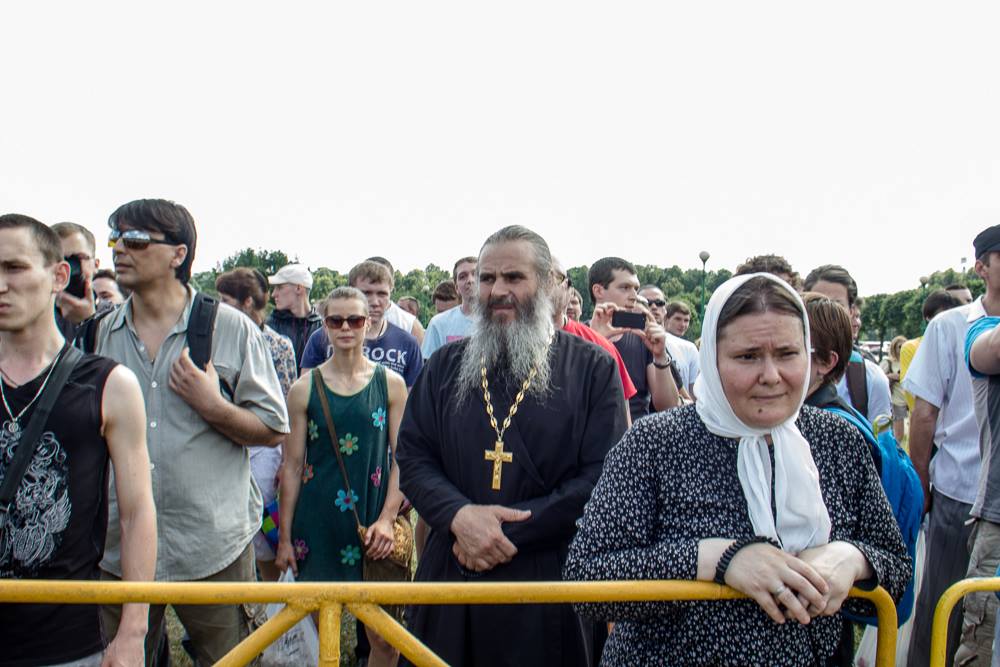
Photo by Sergey Chernov

Source: Thomas Campbell (Facebook), 29 June 2013


Fascists posing as “Cossacks” at today’s LGBT Pride event in downtown Petersburg, where all the gay activists were arrested by the police, unlike the 200 or 300 fascists, who apparently enjoy near or complete immunity for crimes that would get anyone else arrested. Photo by one of the few faithful friends of freedom left in Petersburg, Sergey Chernov.

Photo by Sergey Chernov: “St. Petersburg LGBT Pride event: fascists.”

Source: Thomas Campbell (Facebook), 29 June 2013
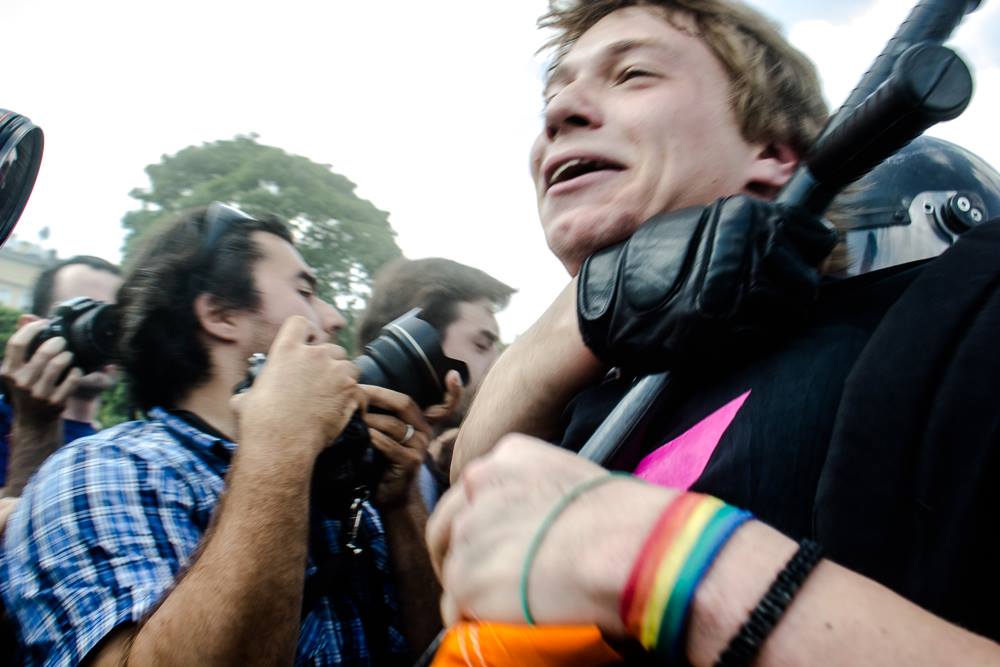

Photo by Sergey Chernov: “St. Petersburg annual LGBT Pride event: stoned, beaten and arrested. Central St. Petersburg, today.”

Source: Thomas Campbell (Facebook), 29 June 2013

The Price of “Treason” Is 2,500 Rubles: The Case of Tamara Parshina

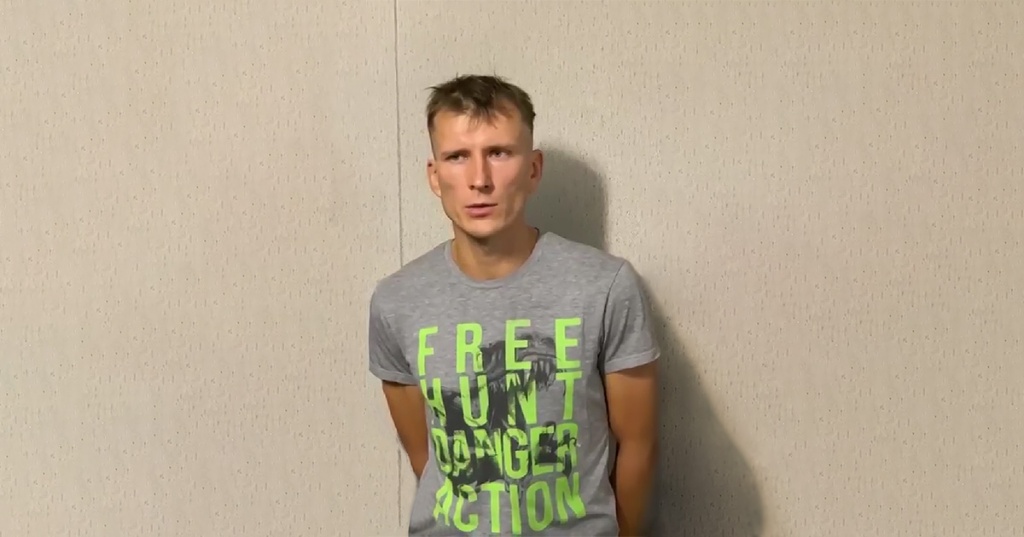
Tamara Parshina
Photo courtesy of the BBC via Activatica

A Khabarovsk woman, detained in March on suspicion of treason for financing the Ukrainian armed forces, has been identified by BBC journalists as twenty-three-year-old Tamara Parshina. Parshina’s initials and surname appeared in a judicial database in late April, when her term of detention was extended at the FSB’s request.

Parshina graduated from the Far Eastern State University of Railway Engineering (DVGUPS) with a degree in information systems and information technologies. Prior to that, the accused studied at the prep school on Leningrad Street, which was also where she was detained. The young woman was employed at the Khabarovsk Regional Compulsory Health Insurance Fund.

After Parshina’s arrest, there were rumors that she was an activist in the I Am/We Are Furgal movement. However, the regular attendees of the pickets in support of ex-regional governor Sergei Furgal said that no one they knew had been arrested in the case. Furgal’s headquarters called the claim that the detainee was an activist in the movement an attempt to discredit it.

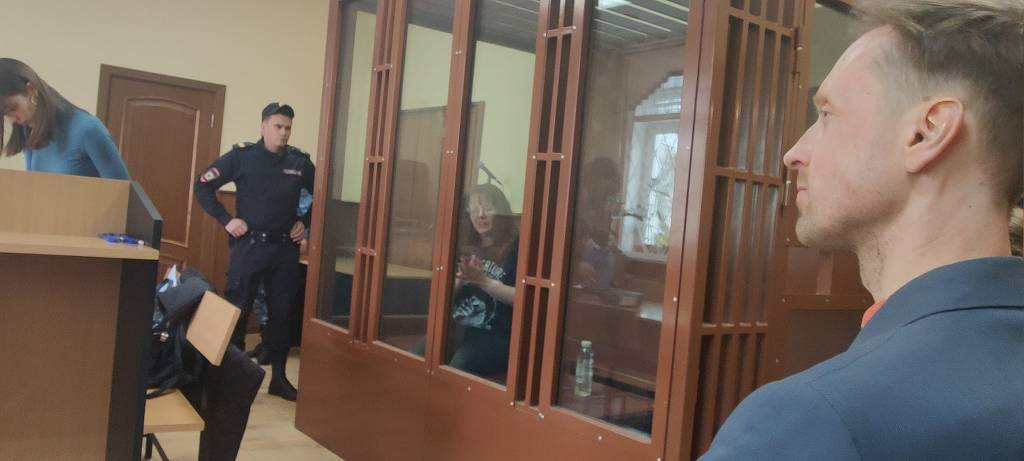
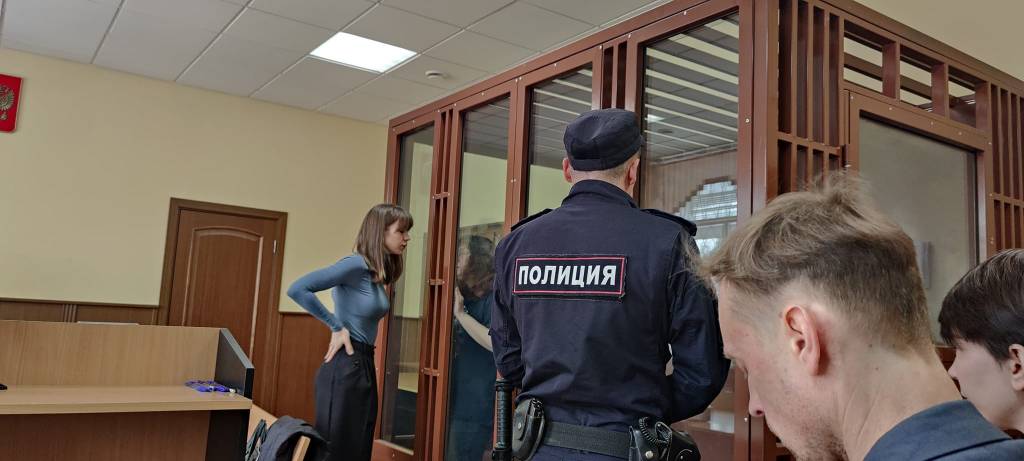
The attorney Kaloy Akhilgov reported that Parshina had donated a total of 2,500 rubles [approx. 29 euros] in small amounts to various Ukrainian charitable foundations. She is currently in custody at Moscow’s Lefortovo remand prison.

Parshina is the youngest person so far detained on suspicion of treason in Russia. She faces up to twenty years in prison if convicted. The toughening of the punishment for treason occurred after Parshina’s arrest. Also, women are not given life sentences in Russia: the maximum sentence for women is twenty-five years.

Source: “Khabarovsk woman arrested for treason identified,” Activatica, 13 May 2023. Translated by the Russian Reader. Thanks to Olga Mazurova for the heads-up.


“The FSB has detained a Khabarovsk woman, an activist in the I Am/We Are Furgal movement, on suspicion of treason for financing the Ukrainian armed forces, the FSB’s public relations office has told us. Criminal charges have been filed. Video footage courtesy of Russian Federal Security Service Public Relations Office.” Source: TASS (Telegram), 13 March 2023

In March, the FSB began accusing Russians of providing financial assistance to the Ukrainian armed forces and charging them with treason. The BBC has discovered that 36-year-old Nina Slobodchikova from Novosibirsk was the first to be detained, followed by 23-year-old Tamara Parshina from Khabarovsk (who is the youngest Russian woman so far accused of treason). Both women were employed in the IT field before their arrests. One of them has relatives in Ukraine.

Two men in camouflage walk briskly, skirting snowdrifts, down a snow-covered sidewalk. They chase down and grab a young woman in a light-colored down jacket carrying a small bag. Her face has been blurred: only a strand of hair that has escaped from under her cap is visible. She is confused and crying. Something falls from her hands to the ground; one of the men picks it up and says, “Calm down.” The girl is bundled into a black minibus with tinted windows.

This is video footage shot by the FSB. In the next scene, the detainee, now carrying a backpack, enters the FSB’s Khabarovsk Territory offices, escorted by security forces officers. She is then seen being led up the gangway of an Aeroflot Boeing 777 named in honor of Marshal of the USSR Vasily Chuikov. The sign above the airport reads “Khabarovsk.” At the end of the video, the young woman disembarks from the plane at Moscow’s Sheremetyevo airport. In the final shots, she is led through the courtyard of Lefortovo remand prison. Her hands are cuffed behind her back.

The video appeared in the media on March 13, the same day the FSB reported that it had detained a Khabarovsk woman on suspicion of treason for financially aiding the Ukrainian army. The BBC was told by the Lefortov court that pretrial restraints had been imposed on Parshina on March 9 in Khabarovsk. According to information obtained on the website Flightradar24, the Chuikov Boeing flew to Moscow around three o’clock in the afternoon on March 9.

[…]

The BBC tracked down classmates and acquaintances of 23-year-old Tamara Parshina on social media. One of them recognized the young woman in the video released by FSB. “Those are her sneakers,” she said. “And she seems to be sobbing too. I remember because she often cried at school. The hair is curly, like hers. She also wore glasses.” Her description matches photos of Parshina on social media.

Parshina’s friends do not know the exact nature of the charges against her. “It seems that she donated money last spring [in 2022] to some organization that helps someone in Ukraine,” an acquaintance of the young woman wrote to the BBC. Parshina’s mother declined to speak with the BBC about her daughter.

The FSB reported that the young woman was detained on Leningrad Street in Khabarovsk “near the train station.” According to a friend, [that was a coincidence]: she merely lived in the neighborhood. Leningrad Street is also the location of the prep school that Parshina attended and where she won academic competitions. [I was unable to access this link from my computer — TRR.]

In 2021, Parshina graduated from the Far Eastern State University of Railway Engineering (DVGUPS) with a degree in information systems and information technologies. “Novice web developer […] looking for remote work, but would also consider relocating,” she wrote about herself on LinkedIn.

After graduating from university, the young woman worked at the Khabarovsk Regional Compulsory Health Insurance Fund, said a former university classmate.

Friends of Parshina with whom the BBC spoke had lost contact with her in the winter. “[In February] some friend of hers wrote to me: he was also looking for her. I wrote to her wherever I could, but she didn’t reply to me,” one of them said. Another friend of Parshina from a group in which they played board games together claims that Parshina had not been in touch with him since late January.

The FSB alleged that Parshina was “an activist in the ‘I Am/We Are Furgal’ movement.” With this as their slogan, thousands of the region’s residents protested in support of ex-governor Sergei Furgal after his arrest [on murder charges] in the summer of 2020. In February of this year, Furgal was sentenced to 22 years in prison. According to the FSB, the Khabarovsk woman, motivated, allegedly, by “political hatred and enmity,” donated money to the Ukrainian armed forces for the purchase of weapons, ammunition, and uniforms. Now she is housed in the same Moscow prison as Furgal.

Parshina’s friends were not aware of her protest activities. “To be honest, I don’t think she was involved in that,” a former university classmate told the BBC. “I know that she was subscribed to various environmental activists and feminists on Instagram.”

Six months before his arrest, Furgal paid a visit to DVGUPS, where Parshina was studying at that time. There were many students in attendance, and the Khabarovsk Territory government published a report about the visit on its website. [This website seems to be blocked to users outside Russia — TRR.] Parshina is not in any of the photos of this event.

On March 13, Khabarovsk regional MP Sergei Bezdenezhnykh, a Furgal ally, wrote on his Telegram channel that “none of the I Am/We Are Furgal activists recognized the detainee.”

“As a member of the Furgal team, I can say that she has nothing to do with us. I have the sense that certain forces want to link financing of the Armed Forces of Ukraine with the ex-governor’s name. The movement is not official, it is not registered anywhere. First and foremost, it is an indefinitely large group of people,” Bezdenezhnykh wrote. The Furgal team, he claims, supports Russia, not Ukraine.

The FSB alleges that Parshina donated “personal funds” to the Armed Forces of Ukraine on grounds of “political hatred and enmity,” without specifying at whom these feelings of hers were directed.

It was this motive that the Khabarovsk Regional Court had previously ruled an aggravating circumstance in another treason case. In the autumn of 2022, it sentenced Vyacheslav Mamukov to twelve and a half years in a maximum-security penal colony for, allegedly, attempting to sell information on the design of thirty Russian bridges to the Ukrainian special services.

[…]

Source: Sergei Goryashko and Ksenia Churmanova, “‘I want peace, to hug my mother, and to walk around Kyiv’: two stories of Russian women accused by FSB of financing the Ukrainian army,” BBC News Russian Service, 11 May 2023. Translated by the Russian Reader

Zhenya Berkovich: “Rate This Year in Terms of Its Nineteenthirtysevenness”

Zhenya Berkovich
Open Telegram and keep up with the news.
Rate this year in terms of its nineteenthirtysevenness.
Take a look at it, at its wooden hands,
At its iron cheeks, splotched with new partings.
This is a theater being demolished, a theater in which there is neither audience nor actors.
This is a theater being demolished, a theater in which there are only fishes and corpses.
Take a look at it and set aside your New Year's fun.
Rate the extent of this city's Stalingraditude.
Wave to the harlequins, dragons, and princesses,
And look at it, monitor the process without blinking.
Hang on to it: it will be both lamentation and reward.
Preserve its shadow if you like.
On second thought, forget it.
The Mariupol Drama Theater

Source: “A work by theater director Zhenya Berkovich about the Mariupol Drama Theater, which was first bombed with people inside, and now is being demolished by the occupiers,” Salidarnast, 23 December 2022. Thanks to Imaginary Island for the suggestion. The images, above, were part of the original article. Translated by the Russian Reader


A video of a read-through of “Finist the Brave Falcon,” the play for which Russian theatrical director and poet Zhenya Berkovich was detained in Moscow earlier today on suspicion of “condoning terrorism.” Here is a link to a website where you can download the (Russian) text of the play, by Svetlana Petriichuk, who was also detained today. Thanks to Sergey Abashin for the heads-up.

Many have nearly forgotten the criminal case against the theater director Kirill Serebrennikov and his colleagues, who were tried several years ago. That affair was dubbed the Theater Case. Apparently, there will be another Theater Case in Russia: director Zhenya Berkovich (a former student of Serebrennikov’s, by the way) and playwright Svetlana Petriichuk have been detained in Moscow.

The criminal investigation is centered on the theatrical production Finist the Brave Falcon, which premiered in 2020. The play was staged as part of the theater project SOSO Daughters, which is run by Berkovich. It is based on the criminal trials of [Russian] women who married radical Islamists. They came to know the men online and, having never met them in person, went to live with them in Syria.

“Zhenya Berkovich’s staging of Svetlana Petriichuk’s provocative, documentary style play, tells the story of a Russian woman who befriends and is seduced by a member of an Islamic radical sect online, goes to Syria, marries him, and upon her eventual return to Russia is tried as a terrorist. In recent years, there have been hundreds, if not thousands of such cases in Russia, Kazakhstan and Uzbekistan. From what are these women running? What is driving them to abandon their friends, relatives, universities and workplaces for the promise of some shadowy paradise? All this takes place in the metaphysical space of the Russian fairy tale “Finist the Brave Falcon,” in which the heroine Maryushka seeks and cannot find her betrothed, the mysterious hero, whose face she has never seen and will never see, but is ready to sacrifice everything in order to meet him.”
[This annotation has been edited slightly to make it more readable.]

The Investigative Committee claims that the production “publicly justified terrorism,” which is a criminal offense per Article 205.2 of the Criminal Code and punishable by up to seven years in prison. The details of the case are still unknown. Berkovich and Petriichuk spent the entire day undergoing interrogation as witnesses in the case, and it had seemed that they might be released, but as of evening both were still in police custody.

Last year, Finist the Brave Falcon won two Golden Mask Awards—for best playwright and for best costumes. Costume designer Ksenia Sorokina handed over her award to Petersburg artist Sasha Skochilenko, who has been in jail since April 2022, charged with disseminating “fake news” about the Russian army. (Skochilenko is alleged to have replace price tags in a grocery store with information about the war.)

Zhenya Berkovich has also not made a secret of her anti-war views, including in her poetry. A collection of her poems was published in Israel earlier this month.

“Open Telegram and keep up with the news. / Rate this year in terms of its nineteen-thirty-seven-ness,” one of them begins.

According to Berkovich, her grandmother, the 88-year-old writer Nina Katerli, was worried about her granddaughter, even going so far as to tell her, “Zhenya, be quiet for a while.” Actually, the director explained that she had decided to stay in Russia, no matter what, because she had to take care of her sick grandmother.

“It is to a large extent a necessity, due to all sorts of family obligations,” Berkovich said in December. “If it were now a question of going to prison or taking care of my grandmother, then of course I would leave, because I wouldn’t be able to take care of my grandmother from prison. But right now this is not the choice I’m facing.”

“Zhenya Berkovich: Why I have stayed in Russia and how to go on living”:
Berkovich interviewed by journalist Liza Lazerson, as posted in on YouTube in December 2022 (in Russian)

This morning, the security forces searched Berkovich’s grandmother’s apartment. Berkovich and Petriichuk will spend the night at a temporary detention facility, and tomorrow a court will decide whether to remand them in custody or subject them to other restrictions.

Source: I Don’t Get It email newsletter (Mediazona), 4 May 2023. Translated by the Russian Reader

A Letter from Oleg Belousov

On March 29, Oleg Belousov was the first person in St. Petersburg to be convicted on charges of disseminating “fake news” about the Russian army. Judge Eva Gunter sentenced him to five and a half years in a medium-security penal colony.

Formally, Belousov was charged for comments he made on the community social media page “St. Petersburg Diggers.” The case was launched after Belousov was denounced to the authorities by Sergei Chmyhun, another person involved in the community page. The court handed down a guilty verdict despite the fact that Belousov has a third-class disability and a disabled son as a dependent.

Bumaga wrote to Oleg. We have published his slightly abridged reply below. Oleg writes about his health problems, his love for his son, and his gratitude to the people who supported him.

Oleg Belousov, amateur archaeologist, member of the MIA searchers movement, and political prisoner.
Photo by Andrei Bok for Bumaga

Thank you so much for informing readers and following my case as it unfolded. As many people as possible should find out about this regime’s mendaciousness, about phrases taken out of context, and the trumped-up case. Before my arrest, I still had some doubts about whether I had been mistaken about something, whether I was wrong. But after seeing all the dirt and lies, my doubts were dispelled!

For health reasons. I received ointment for dermatitis of the eyelids: my sister looked for one [kind?], and a young woman from the support group (unfortunately, I don’t know her name) looked for the other one. The medical worker muttered [my] last name and asked, “Who sent it?” I replied that I was a political prisoner and anyone could have sent it, not only relatives. I get letters from all over Russia, and not only from Russia.

Would that I [had received the ointment] right away, but I had to suffer for three months—you won’t get medical help in here. My sister also sent two bottles of [eye]drops, but to get them, you have to go through a whole quest. To begin with, you get an appointment with a doctor, then the doctor has to make a note in your medical record and file an application to be allowed to send it, and then there’s the sending and receiving…

Due to numbness in my right arm and left leg, I do exercises for the cervical spine and the joints. It’s all based on the body’s internal forces, there is no osteopath in her.

Everything is alright, I can’t be broken. I’m more worried about my son. There were a lot of things that I hadn’t done for him yet, that I didn’t teach him to do. He is a disabled child: he suffers from a residual organic lesion of the central nervous system. He certainly lacks my help. He has problems with work too: it’s no so easy for him to find a job. My sister, my niece, and her husband also have health problems. So I’m more worried about them. But me, I’ll get stronger, I’ll toughen up. I’m not afraid of challenges. They won’t shut my mouth, I have a right to my own opinion.

Since I’ve been behind bars, I’ve seen my son only at the court hearings. He worries, of course. When I was arrested, he hugged me and said, “How am I going to live without you?” I will never leave him, of course, and when I get out, I will help him as long as I live.

I now see how many good, honest, decent people there are in Russia who are not afraid to express their opinions. I feel their support, and it gives me strength.

As for the verdict, it was expected, so I took it calmly. How else [could the case have ended]? You can’t expect anything else from liars. It would be smarter for them not to instigate such cases, not to disgrace themselves before the whole world, but they think with a different part of their bodies.

About the provocateur/informer. I had thought earlier that he was a fool, a narrow-minded man. After his denunciation — well, the bastard turned out to be a repeat of 1937. But for every scoundrel, there are thousands of people in Russia who are responsive and ready to help. So what can I say about my feelings for this [person]? It’s like stepping in shit. It’s better not to meet such “people.”

Thanks so much to everyone who writes letters, sends food parcels, and worries about me, my son, and my loved ones! Don’t be afraid to speak the truth, to voice your stance publicly! What kind of freedom is it if you are forced to remain silent? All my cellmates and all the prison employees see and understand the whole situation and what is happening.

Nothing’s gone to change me. I have been an honest, decent person, and I will come out one too! Be kind! May the skies above your head be peaceful!

Source: “‘I have been an honest, decent person, and I will come out one too’: a letter from Petersburger Oleg Belousov, sentenced to five and half years in a penal colony for ‘fake news about the army,'” Bumaga, 27 April 2023. The emphasis (in bold) was in the original article. Translated by the Russian Reader

Vladimir Kara-Murza: Closing Statement in Court

After two decades spent in Russian politics, after all that I have seen and experienced, I was sure that nothing can surprise me any more. I must admit that I was wrong.

I’ve been surprised by how far my trial, in its secrecy and contempt for legal norms, has surpassed even the “trials” of Soviet dissidents in the 1960s and 1970s. And that’s not even to mention the harsh sentence requested by the prosecution or the talk of “enemies of the state”. In this respect, we’ve gone beyond the 1970s – all the way back to the 1930s.

As a historian, for me this is an occasion for reflection.

At one point during my testimony, the presiding judge reminded me that one of the extenuating circumstances [in my case] was “remorse for what [the accused] has done”. And although there is little that’s funny about my current situation, I couldn’t help but smile: A criminal, of course, must repent of his deeds. I’m in jail for my political views. For speaking out against the war in Ukraine. For many years of struggle against Vladimir Putin’s dictatorship. For facilitating the adoption of personal international sanctions under the Magnitsky Act against human rights violators.

Not only do I not repent of any of this, I am proud of it. I am proud that [assassinated opposition politician] Boris Nemtsov brought me into politics. And I hope that he is not ashamed of me. I support every word that I have spoken and every word of which I have been accused by this court. I blame myself for only one thing: that over the years of my political activity I have not managed to convince enough of my compatriots and enough politicians in the democratic countries of the danger that the current regime in the Kremlin poses for Russia and for the world. Today this is obvious to everyone, but at a terrible price – the price of war.

In their last statements to the court, defendants usually ask for an acquittal. For a person who has not committed any crimes, acquittal would be the only fair verdict. But I do not ask this court for anything. I know the verdict. I knew it a year ago when I saw people in black uniforms and black masks running after my car in the rear view mirror. Such is the price for speaking up in Russia today.

But I also know that the day will come when the darkness over our country will evaporate. When black will be called black and white will be called white; when it will be officially recognised that two times two is still four; when a war will be called a war, and a usurper a usurper; and when those who fostered and unleashed this war will be recognised as criminals, rather than those who tried to stop it.

This day will come as spring comes after even the coldest winter. And then our society will open its eyes and be horrified by what terrible crimes were committed on its behalf. Through this realisation, through this reflection, the long, difficult but vital path toward Russia’s recovery and restoration begins, its return to the community of civilised countries.

Even today, even in the darkness surrounding us, even sitting in this cage, I love my country and believe in our people. I believe that we can walk this path.

Source: Thomas Rowley, “Poignant final defence speech of jailed Russian opposition politician: Vladimir Kara-Murza gave this speech to a Russian court before receiving his 25-year sentence for ‘treason’ and other charges,” openDemocracy, 17 April 2023


A Russian court sentenced opposition politician Vladimir Kara-Murza to 25 years in prison on charges of treason and “fake news” Monday, capping a high-profile trial of one of the country’s most defiant anti-war voices.

Moscow City Court found Kara-Murza, 41, guilty of treason, “false information about the Russian army,” and affiliation with an “undesirable organization,” Interfax reported.

“Russia will be free, tell everyone,” Kara-Murza said after the verdict, according to the independent news site Avtozak.info.

Russia has witnessed a widespread wartime crackdown on dissent, but the severity of Kara-Murza’s sentence marks a new record as the Kremlin seeks to muzzle any criticism of its ongoing invasion of Ukraine.

The Western-educated politician was detained in April 2022 on charges of “spreading false information about the Russian army” in an address to U.S. state legislators a month earlier.

Kara-Murza was later accused of being affiliated with an “undesirable organization” for participating in a conference in support of political prisoners. His treason charges came in October over anti-war comments made at three public events abroad.

Prosecutors had requested a prison sentence of 25 years — the maximum possible jail term — for Kara-Murza.

“My self-esteem even went up [on the prosecutors’ request]. I realized I was doing everything right,” Kara-Murza’s lawyer Maria Eismont recounted her client as saying.

“Twenty-five years is the highest score I could get for what I did, what I believe in as a citizen, as a patriot, as a politician,” Eismont quoted him as saying, adding that he greeted the verdict “with a smile.”

His trial was held behind closed doors.

Monday’s hearing was attended by several Kara-Murza supporters and foreign diplomats including a U.S. embassy official named David Bernstein, according to the Mediazona news site.

The Kremlin declined to comment on Kara-Murza’s prison sentence, which his supporters and Western governments slammed as politically motivated.

U.S. Ambassador Lynne Tracy called Russia’s criminal prosecution of Kremlin critics “a symbol of weakness, not strength,” while Canadian Ambassador Alison LeClaire said Kara-Murza’s sentence marked a “dark turn” in Russia’s post-Soviet history.

The British Ambassador in Moscow Deborah Bronnert denounced the court ruling and called for the “immediate” release of Kara-Murza, a dual British-Russian citizen.

“The British government expresses solidarity with Vladimir Kara-Murza and his family,” Bronnert told journalists from the steps of the courthouse.

A Russian citizen by birth, Kara-Murza received British citizenship after moving to the United Kingdom with his mother when he was 15.

Russia’s Ambassador in London Andrei Kelin was summoned by the U.K. Foreign Office, which condemned Kara-Murza’s sentence as a violation of his right to a fair trial under international law.

The European Union denounced Kara-Murza’s sentence as “outrageously harsh” and called on Russia to provide access to health care for the ailing Kremlin critic.

The opposition activist suffers from a nerve condition called polyneuropathy which his lawyers say was due to poisoning attempts in 2015 and 2017. 

The condition has worsened in prison, and he was too unwell to attend some of his hearings, his lawyers said.

Kara-Murza says he was poisoned twice because of his political activities, but he continued to spend long periods of time in Russia.

Kara-Murza has said he stands by all of his political statements, including those opposing the Ukraine offensive.

“I subscribe to every word that I have said, that I am incriminated for today,” Kara-Murza said in his final address to court last week, highlighting his fight against the Ukraine offensive and President Vladimir Putin. 

“Not only do I not repent for any of it — I am proud of it,” he said.

Germany condemned the “shocking level repression” in Russia on Monday, and Latvia announced it had banned 10 Russian nationals from traveling to the Baltic country in retaliation to the court ruling.

Source: “Kremlin critic Kara-Murza sentenced to 25 years in prison,” Moscow Times, 17 April 2023

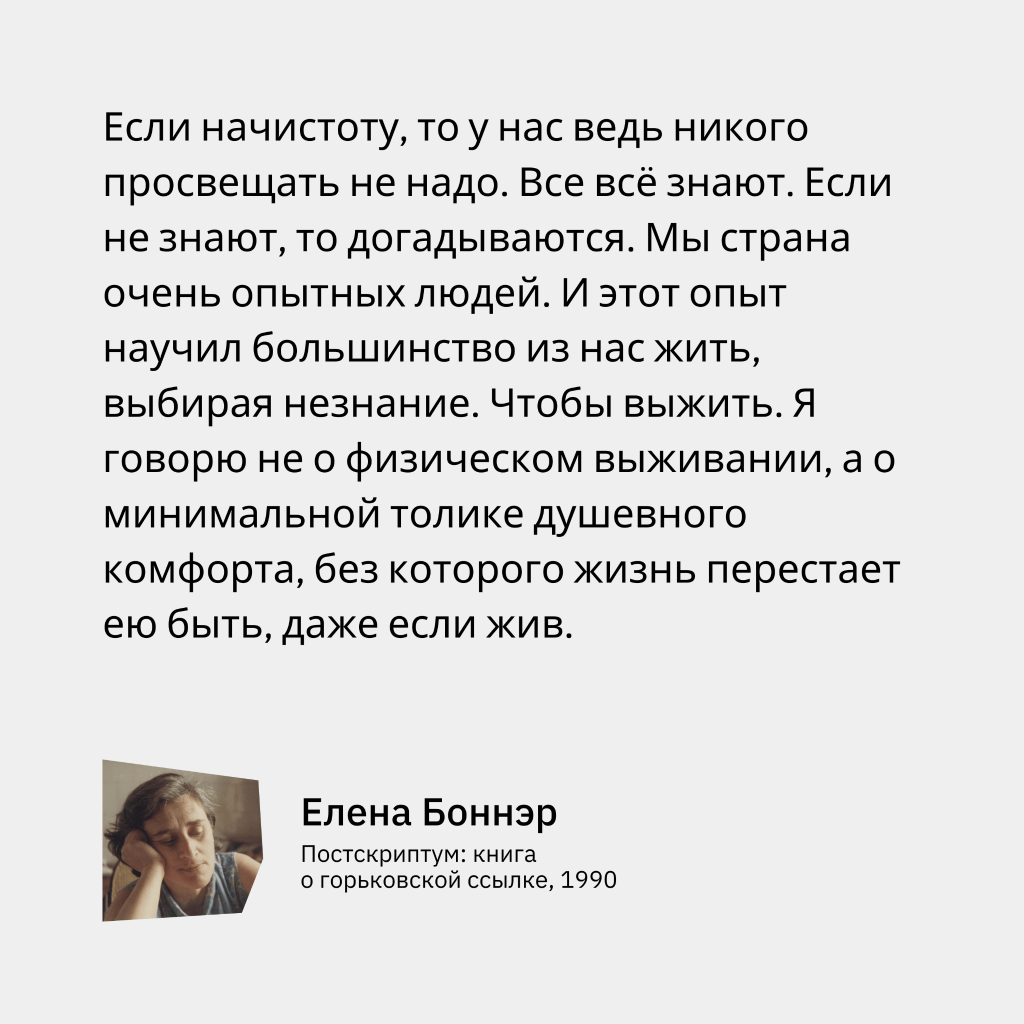
Everybody Knows Everything

“To be honest, we don’t need to educate anyone. Everyone knows everything. If they don’t know, they have a hunch. We are a country of very experienced people, and this experience has taught most of us to live by choosing ignorance — in order to survive. I’m not talking about physical survival, but about the minimum amount of mental comfort without which life ceases to be life, even if one is alive.” ||| Yelena Bonner, Postscript: A Book about the Exile in Gorky (Moscow: Interbruk, 1990), p. 247

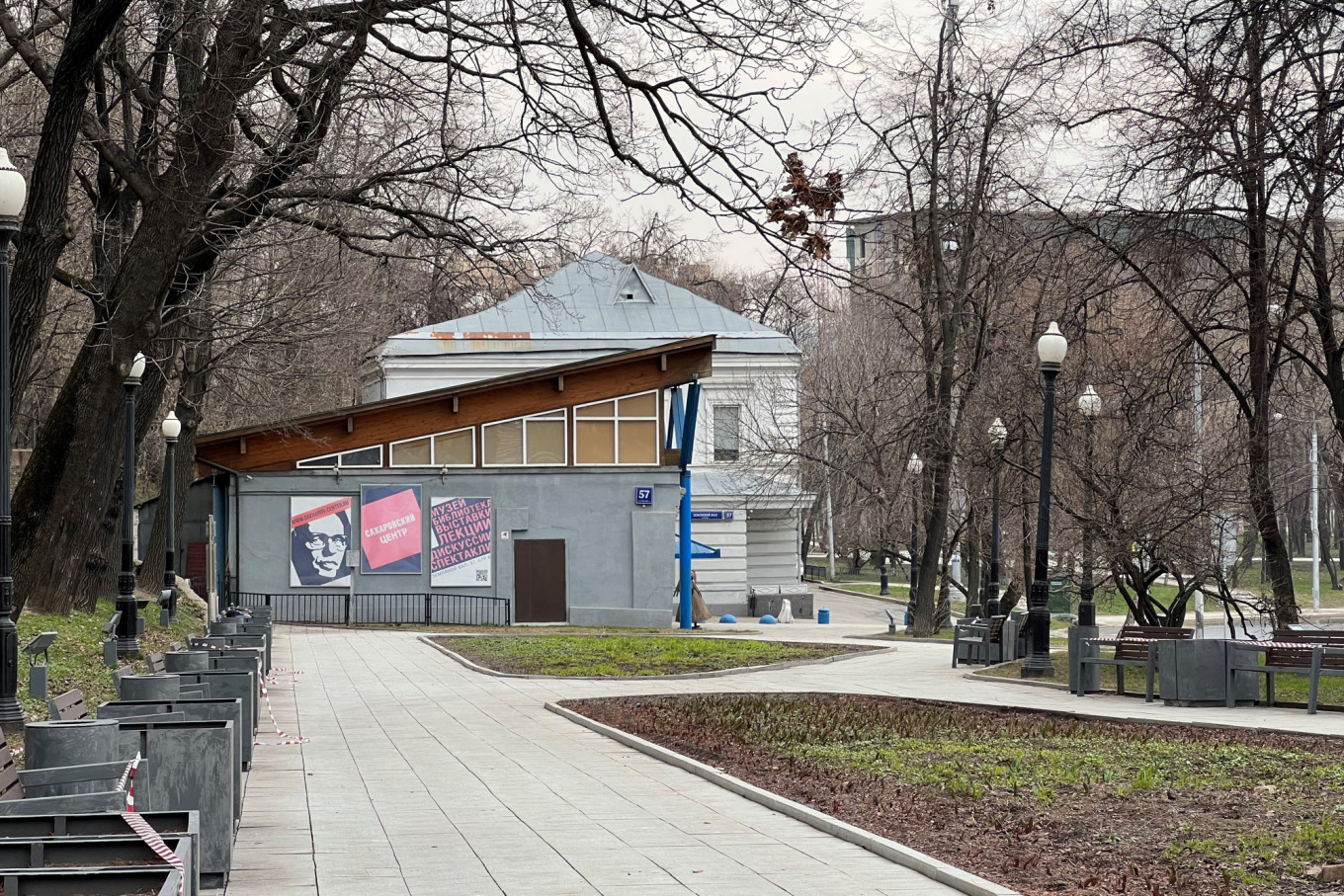
Very soon — this Sunday — our current exhibition will wrap up, and the Sakharov Center will close its doors.

THIS MATERIAL (INFORMATION) WAS PRODUCED AND/OR DISTRIBUTED BY A FOREIGN AGENT, THE SAKHAROV CENTER, OR CONCERNS THE ACTIVITIES OF A FOREIGN AGENT, THE SAKHAROV CENTER. 18+

Coincidentally, our final exhibition is dedicated to Yelena Georgiyevna Bonner, who founded the center. Eviction, of course, does not mean at all that we are ceasing operations. This year we expect to launch a website in honor of Yelena Georgiyevna, produce a podcast, and do a lot more. And yet, it is clear that an important period in the center’s history is coming to an end.

Source: Sakharov Center (Facebook), 14 April 2023. Translated by TRR


The headquarters of Russian human rights group the Sakharov Center, a rare island of free debate in the Russian capital, will close its doors to the public this weekend in response to an eviction order from local authorities as Russia’s wartime drive to suppress dissent shows no sign of ending. 

Opened in 1996 to honor the memory of Soviet dissident and Nobel Peace Prize winner Andrei Sakharov, the center has been an iconic location for talks, exhibitions, funerals and discussions about human rights. 

“Without these two buildings, we are no longer a public center,” said Vyacheslav Bakhmin, a veteran human rights activist and the chairman of the board of the Sakharov Center.

“It makes any activity extremely difficult.”  

The eviction comes as the few human rights groups still operating inside Russia face intensifying state pressure in the wake of the Kremlin’s decision to invade Ukraine. 

The country’s oldest human rights organization, the Moscow Helsinki Group, was closed down by a court order in January, while eight top members of shuttered rights group Memorial, which was jointly awarded the 2022 Nobel Prize last year, were targeted in police raids last month. 

The Sakharov’s Center’s final exhibition at its headquarters on the banks of the Yauza River in downtown Moscow was devoted to Yelena Bonner, the wife of Andrei Sakharov and a major Soviet dissident in her own right. 

“We did not plan this symbolism, it just happened this way — they started closing us down on the eve of Bonner’s centenary,” curator Natalia Samover told The Moscow Times. 

“This center is filled with her name,” she said, standing amid the exhibition that included some of Bonner’s photos and video interviews as well as her desk, notebooks and letters opposing Russia’s 1990s war in the North Caucasus republic of Chechnya. 

Bonner was involved in founding the Moscow Helsinki Group in the 1970s and worked tirelessly to raise Sakharov’s profile when he was exiled to Gorky (now Nizhny Novgorod) by the Soviet authorities. 


					The Sakharov Center.					 					MT
The Sakharov Center. Photo by The Moscow Times

Following Sakharov’s death in 1989, Bonner established the Sakharov Center — gifted rent-free by the Moscow authorities — and opened the Sakharov archives to the public. 

On a recent visit by a Moscow Times reporter to the Bonner exhibition, there were a handful of visitors. 

“The center is definitely a significant place — it’s important to have different points of view as well as places where these different points of view can be discussed,” said Artemy, an IT specialist, who decided to visit because he knew that the center was due to close.

“I think that everyone can be represented in the public field,” said another visitor, Stanislav, who admitted that he wasn’t aware of “the history of the center.”

The closure of the Bonner exhibition — titled “Life Was Typical, Tragic and Wonderful” — marks the end of the Sakharov Center’s long tradition of public engagement. 

Employees earlier this month dismantled the center’s permanent exhibition on the legacy of Sakharov and victims of Soviet-era repression and its final public event — dedicated to Bonner — will take place Sunday evening.  

According to the eviction notice, the center must be fully vacated by April 28. 

Formally, the authorities’ decision to deprive the Sakharov Center of its Moscow home was a result of the organization’s designation as a “foreign agent” in 2014 — Russian law forbids “foreign agent” organizations from receiving any state support.  

But the Sakharov Center has said it believes the order was really motivated by the Kremlin’s desire to destroy “independent organizations that defend the public interest.”

For the moment, the Sakharov Center does not have any new premises lined up and is planning to continue its activities online. 

In addition, it is undergoing an unscheduled inspection by the Justice Ministry this month, board chairman Bakhmin told The Moscow Times.  

“The results will make it clear whether and how we can continue,” Bakhmin said.

The eviction is just the latest example of official pressure on the Sakharov Center. 

Russia’s Prosecutor General’s Office declared the Andrei Sakharov Foundation — a group opened by Bonner in the U.S. — as an “undesirable” organization in January, a designation that means any association with the group could result in criminal charges in Russia. 

That means the Russia-based Sakharov Center now avoids any cooperation with its U.S. counterpart.

The current state of human rights in Russia is “unprecedented,” according to Tatiana Lokshina, a Europe and Central Asia expert at Human Rights Watch, which was forced to close its own Moscow office last year. 

“While Russia is fighting against Ukraine, it is also fighting against any critical actors within the country. This is a real war with dissenting opinions,” she told The Moscow Times. 

Over the years, the Sakharov Center, which describes itself as “a place uniting thousands of Russian citizens who are not indifferent to the fate of the country,” has hosted a number of landmark events — including the unofficial lying-in-state for Soviet dissident Valeria Novodvorskaya and murdered Kremlin critic Boris Nemtsov

Despite the loss of a physical presence in central Moscow, Bakhmin remains optimistic that the Sakharov Center will survive and the current crackdown will be reversed. 

“The situation [in Russia] will change again — the reality we live in right now has no future,” Bakhmin told The Moscow Times.

“There is always hope.” 

Source: “After 27 Years of Rights Activism, Moscow’s Sakharov Center Prepares to Close Its Doors,” Moscow Times, 14 April 2023

In the (Solidarity) Zone

Russia: 19-year sentences for anti-war arson protest

Report by Solidarity Zone

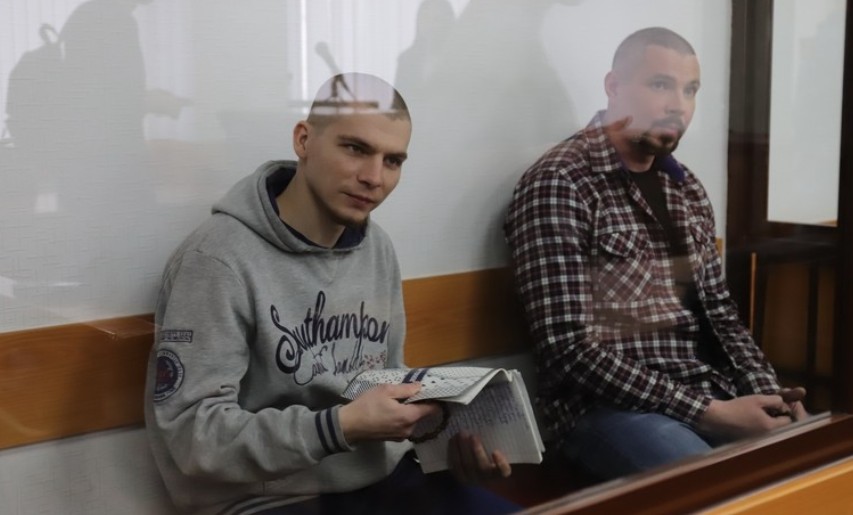
The Central District Military Court at Yekaterinburg, in Russia, yesterday (10 April) handed down 19-year prison sentences to Roman Nasryev and Aleksei Nuriev, for firebombing an administrative office building where a military registration office is based.

Roman Nasryev (left) and Aleksei Nuriev in court. Photo from The Insider

Roman and Aleksei will have to spend the first four years in prison, and the rest in a maximum-security penal colony.

This is the most severe sentence handed down so far for anti-war arson.

Roman and Aleksei received this long term of imprisonment because their actions were defined as a “terrorist act” (Article 205.2 of the criminal code of the Russian Federation) and “undergoing training for the purpose of undertaking terrorist activity” (Article 205.3). The latter Article carries a minimum term of 15 years.

The arson attack that Roman and Aleksei carried out – in reaction to the mlitary mobilisation, and to express their opposition to the invasion of Ukraine – was no more than symbolic. A female security guard was able to put out the fire, with a blanket and a few litres of water. There was damage to a window and some linoleum.

In court Roman Nasryev said:

I decided to carry out this action, because I did not agree with the [military] mobilisation, the “Special Military Operation” and the war as a whole. I simply wanted to show, by my actions, that in our city there is opposition to mobilisation and the “Special Military Operation”. I wanted in this way to make clear my opposition; I wanted my voice to be heard.

Solidarity Zone believes that this type of anti-war arson is not terrorism. That definition is politically motivated, and directly linked to the fact that the Russian government has unleashed a war of aggression against Ukraine.

□ Translated from Solidarity Zone’s Telegram feed. The original asks people to send letters and parcels to Roman and Aleksei in prison. If you are not a Russian speaker and you want to send them a message, there is no point in sending it directly. You can send messages to peoplenature@protonmail.com and I hope to be able to pass them.

More on Russian political prisoners

□ Who is Roman Nasryev? – The Russian Reader

□ “Azat means free.” – Posle Media

□ “We are few and we can’t cope with the stream of repression” – Avtonom.org

□ Solidarity Zone translations on The Russian Reader

□ Happy birthday, Kirill Butylin – People & Nature. (This includes links to more information about Solidarity Zone and Russian political prisoners in English.)

Source: People & Nature, 11 April 2023. Thanks to Simon Pirani for permitting me to reprint this post here. ||| TRR


Pavel Korshunov

The case of Pavel Korshunov, accused of “terrorism” over anti-war arson, sent to trial

Pavel Korshunov was detained in the city of Togliatti, Samara Region, as if he were a particularly dangerous criminal — a large number of Interior Ministry special forces soldiers were involved in his capture. But, according to investigators, all that Pavel did was set try and set fire to the Togliatti city administration building the day after the mobilization was announced. In a video posted online by the security forces, Korshunov states that he wanted to impede the mobilization.

Before his arrest, Pavel worked at a boathouse. Citing sources in the security forces, the media also write that Korshunov had previously taken part in protests.

Pavel has been charged with “committing a terrorist act” (per Article 205.2.b of the Russian Federal Criminal Code) and “vandalism” (per Article 214.2 of the Russian Federal Criminal Code). He faces from twelve to twenty years in prison if convicted.

On April 7, his case was submitted to the Central District Military Court in Samara. It will be tried by a three-judge panel chaired by Igor Belkin. There is not yet any information about exact trial dates on the court’s website.

Source: Solidarity Zone (Facebook), 9 April 2023. Translated by TRR


Boris Goncharenko

Help a teacher from Krasnodar accused of terrorism!

On the night of October 6, persons unknown set fire to the military enlistment office in the city of Goryachy Klyuch, Krasnodar Territory. The next day, the security forces detained two suspects — Bogdan Abdurakhmanov, a 27-year-old native of Minsk, and Boris Goncharenko, a 34-year-old man from Krasnodar.

Abdurakhmanov and Goncharenko were initially charged with “attempted destruction of property” (per Article 30.3 and Article 167.3 of the Russian Federal Criminal Code) and thus faced no more than three years and nine months of imprisonment if convicted. The FSB intervened in the case, however, and the charge was changed to “committing a terrorist act” (per Article 205.2 of the Russian Federal Criminal Code). Bogdan and Boris now face from twelve to twenty years in prison.

Goncharenko graduated from Kuban State University. After graduating, he taught history, social studies, and philosophy at various educational institutions. At one time he worked as a manager for the Garant and Konsultant Plus legal information portals.

Boris does not support Russia’s aggression in Ukraine, and after the outbreak of the full-scale war, he was very worried about the fate of the conscripts, including his former and current students.

Goncharenko does not consider himself guilty of “committing a terrorist act.”

Why torching military enlistment offices is not terrorism

Solidarity Zone has found a lawyer to defend Boris Goncharenko and made a down payment on their fee so that they may begin working. On March 29, we announced a campaign to raise the 250 thousand rubles necessary to pay the lawyer’s fees in full during the investigation phase of the case. To date, less than one fifth of the amount of money needed has been raised.

We urge you to support our fundraiser with donations and reposts!

💳 Sberbank card:
2202 2025 4750 6521 (Vasily)

🪙 PayPal: solidarity_zone@riseup.net (mark it “for Goncharenko” and designate the payment in euros if possible)

🥷 Cryptocurrency (be sure to email us at solidarity_zone@riseup.net if you transfer cryptocurrency to support Boris Goncharenko):

Monero:4B1tm6boA5ST6hLdfnPRG2Np9XMHCTiyhE6QaFo46QXp6tZ7Y6nJjE43xBBTwHM84bWwexR8nS4KH36JHujjc1kC8j2Mx5e
Bitcoin: bc1qn404lrshp3q9gd7852d7w85sa09aq0ch28s3v4
Ethereum: 0x7CE361fA7dAb77D028eaEF7Bbe2943FDF0655D3E
USDT (TRC20): TRcCUHKSMY7iLJPvbDxLc6ZnvAud72jTgj
Other altcoins: https://nowpayments.io/donation/solidarityzone

You are not violating any Russian laws by participating in the fundraiser. We have not been deemed “foreign agents” or an “extremist” or “terrorist” organization by the authorities, and raising money to pay a lawyer’s fees is not prohibited in Russia yet. ☺️

Source: Solidarity Zone (Telegram), 6 April 2023. Translated by TRR

Ilya Shakursky’s 27th Birthday

Ilya Shakursky. Photo courtesy of Elena Shakurskaya

Today, April 10, my son Ilya turns 27. This is the sixth birthday he has celebrated behind bars. But every year I wait, believe, and hope that he be released from captivity and be near us. I naively believe in justice and truth. A miracle must happen sometime and Goodness will triumph!

My son, the best in the world, I lovingly congratulate you on your birthday! You are a part of me, and from the bottom of my heart I want to wish you incredibly beautiful days and nights, the most wonderful emotions, and fulfillment of ambitious plans! You deserve everything wonderful; may sincere Faith, pure and devoted Love, and optimistic Hope always remain with you! I wish my son the brightest road today. After all, you are all I have. My mother’s heart very often worries about you. It hurts for every trial you go through. It hurts for everything! Know, son, that you are everything to me. You are my only man, for whom I am not sorry to give my life. You’re my rock.

Ilya’s payphones have been turned off, and at the moment there is no connection with him. Today the weather is as warm and sunny as it was in 1996 [on the day he was born]. May the sun’s rays give hope, faith, kindness, and most importantly freedom to Ilya and to all political prisoners!

Source: Elena Shakurskaya (Facebook), 10 April 2023. Translated by Thomas H. Campbell. In February 2020, Ilya Shakursky was convicted and sentenced to 16 years in prison as part of the notorious Network Case, in which the Russian Federal Security Service (FSB) tortured and framed a dozen anti-fascists in Penza and Petersburg for, allegedly, “organizing a terrorist community.” I have posted extensively on the case and its aftermath over the last five years.

Scenes from Olga Smirnova’s Show Trial

“Fun times” today at the trial of Olga Borisovna Smirnova. The escort guard pushed the defense lawyer, Zyryanova, and ripped a phone from her hands, injuring her fingers. As soon as the ambulance arrived, the doctors took Olga’s defense attorney downstairs to the vehicle and drove her away.

At the trial itself, the prosecutor read out a bunch of papers for three hours regarding the searches of the homes of Olga’s associates. In each instance the investigator wrote that none of this evidence was entered into the case file, whereas earlier she herself had insisted on urgent searches without a court order, which were carried out.

The only variety in these boilerplate search and inspection reports was provided by the descriptions of apartments and rooms. And, for some reason, the prosecutor always says “kitCHEN table,” with the stress on the second syllable.

But there is nothing [“incriminating” in these reports?] except literature in Ukrainian (the prosecutor reads the title in Ukrainian and then the Russian translation, as supplied by Yandex Translate) and placards whose slogans the prosecutor was occasionally ashamed to read aloud, claiming that the slogan “Free political prisoners” was “obscene,” and the slogan “Putin resign” was “illegible.” What sort of sharp practice is it to fill the criminal case file, under the guise of evidence, with stuff that has nothing to do with the case and even according to the investigator is not evidence? Is the prosecutor trying to generate an overall fogginess?

While there is a break in the trial, people wait in the hallway. More than twenty people have come to hearing, including a group of supporters and journalists.

When Olga is escorted out now, the bailiffs close the door to the stairs, where people are standing, apparently so that they won’t be able to shout out words of support to her.

Source: Alexei Sergeyev (Facebook), 4 April 2023, from Kirovsky District Court in St. Petersburg. Translated by the Russian Reader


As our correspondent reports, at the latest hearing in the trial of activist Olga Smirnova, in the Kirovsky District Court, the prosecution made public the contents of the nine posts on VKontakte which occasioned criminal charges of disseminating “fake news” about the Russian army.

The posts listed by the prosecution were made on the public social media page of the movement Democratic Petersburg.

  • A post with a link to a video titled “We will never be brothers,” in which it is reported that the Russian army is “reducing Ukrainian cities to ruins.”
  • A post with a link to a video that concludes with the words [in Ukrainian], “Glory to Ukraine, glory to the defenders, death to the enemy.”
  • A post with a link to a video titled “We show Russians photos from Ukraine. The reaction of Russians to the war in Ukraine.” In the video, “the assertion is made” that the photos show Ukrainian cities destroyed by Russian shelling.
  • A post featuring a photo of a placard on which “the assertion is made” that the Babyn Yar Holocaust Memorial Center was damaged by Russian bombing.
  • A link to a video titled “No war with Ukraine.”
  • A post titled “Chronicles of the war, March 9,” in which it is reported that over 1,300 civilians were killed in Mariupol, most of whom were Russian-speaking.
  • A post titled “Chronicles of the war, March 9, continued,” which reports that Russian troops continue to bomb Kharkiv’s civilian infrastructure facilities.
  • A post which”sarcastically” reports on a battle between Kadyrovites and Ukrainian National Guardsmen on the premises of the Zaporizhzhia nuclear power plant, claiming that goal of the Kadyrovites is to seize the nuclear power plant in order to “blackmail the whole of Europe with radioactive contamination.”
  • A post titled “Anti-war pickets: greetings and glory to Ukraine,” which reports that supporters of peaceful resistance in Petersburg came out to protest against the criminal war which Russia is waging against Ukraine.

Due to the absence of witnesses, the prosecution moved to postpone the trial until March and the court granted the motion.

Olga Smirnova is a grassroots activist. She is one of the founders of Strategy 18, an ongoing campaign in support of the Crimean Tatars. She is also a a member of the Petersburg movement Peaceful Resistance, which, according to its own description, “spreads the truth about the Russian Federation’s large-scale criminal war against Ukraine.”

Until 2014, Smirnova worked as an architect, but after Crimea was occupied, she devoted herself to grassroots activism. In 2021, her home was searched due to Strategy 18’s protest campaign, as part of a criminal investigation into “condoning the activities of a terrorist organization banned in Russia.”

The Petersburger faces up to ten years in prison if convicted. You can write to Olga Smirnova in jail: Bumaga explains how to do it.

Source: Bumaga, “What posts by Petersburger Olga Smirnova does the prosecution consider ‘fakes’ about the Russian army?” 20 February 2023. Translated by the Russian Reader. You can send letters — written in or translated into Russian (if you don’t know a competent translator, you can use a free online translation service such as Google Translate) — to Olga Smirnova and other Russian political prisoners via the free, volunteer-run service RosUznik. You may ask me (avvakum@pm.me) for assistance and advice in sending such letters.

Never Speak of Him

The Second District Military Court in Moscow has fined Lilia Zhlobitskaya 300 thousand rubles [approx. 3,600 euros] for publishing poems about her nephew Mikhail Zhlobitsky, who blew himself up at the FSB’s Arkhangelsk regional offices. She herself reported this news to OVD Info.

A criminal case against Zhlobitskaya was launched in December. She was released on her own recognizance after being charged with “publicly condoning terrorism,” per Article 205.2.2 of the Criminal Code. The charge was triggered by posts she had made in November and December 2019 on VKontakte. Among them are reposts of poems from the website stihi.ru, as well as two reposts from the group page of the People’s Self-Defense with information about the bomb blast at the FSB.

According to the prosecution’s expert witnesses, Mikhail Zhlobitsky’s actions in the posts in question were deemed “correct, worthy of support and imitation,” and he himself was characterized as a “good guy.”

17-year-old student Mikhail Zhlobitsky detonated a homemade bomb in the lobby of the FSB’s Arkhangelsk directorate on [October 31,] 2018, killing himself and injuring three security forces officers. A few minutes before the blast, a warning about the attack from Zhlobitsky appeared in the chat of the Telegram channel “A Rebel’s Speech.” The message said that his act, in particular, was motivated by the fact that the FSB had been fabricating criminal cases.

Source: “Aunt of Mikhail Zhlobitsky, Who Blew Himself Up in Arkhangelsk FSB Offices, Fined for Publishing Poems About Her Nephew,” Mediazona, 27 March 2023. Lilia Zhlobitskya is the latest in a long list of Russians who have been investigated or prosecuted for, allegedly, “exonerating” or “condoning” the apparent suicide bombing by Mikhail Zhlobitsky on October 31, 2018. Other victims of this bizarre witch hunt include Yevgeny GavrilovSergei ArbuzovAlexander MerkulovAlexei ShibanovSvetlana ProkopyevaNadezhda BelovaLyudmila StechOleg NemtsevIvan LyubshinAnton AmmosovPavel ZlomnovNadezhda RomasenkoAlexander DovydenkoGalina GorinaAlexander SokolovYekaterina Muranova15-year-old Moscow schoolboy Kirill, and Vyacheslav Lukichev. Translated by the Russian Reader