Kirill Medvedev & Oleg Zhuravlev: Russia’s (Post)War Future

“A Russia without profanity. The word mom is sacred! Speak without swearing.” Photo: Igor Stomakhin, Moscow, 2025

What can serve as the basis for new Russian post-war identity? What sort of patriotism can there be in a country which has lived through an aggressive war? Of what should the people of this country be proud? What should they associate themselves with? Republic Weekly presents a programmatic text by the sociologist Oleg Zhuravlev and the poet and activist Kirill Medvedev on how the so-called Russian nation came to 2022 and what its prospects are in 2025.

How can Russia get beyond being either an embryonic nation-state or a vestigial empire? People have been talking about this for three decades now. Does it require years and years of peaceful development? A national idea painstakingly formulated by spin doctors in political science labs? A bourgeois revolution? Or maybe just a small victorious war? The so-called special military operation in Ukraine, which has grown into a global military and political conflict, poses these questions in a new light.

In our view, large-scale social changes are happening inside Russia today, changes which could help shape a new national project.

These changes are not always so easy to spot.

According to the social critique prevalent in the independent media, wartime Russian society is organized roughly as follows. Its freedom-loving segment has been crushed and disoriented, while its loyalist segment is atomized and under the thumb of government propaganda, which preaches xenophobia, imperialism and cynicism. Society is fragmented and polarized, suspended somewhere between apathy and fascism. But these tendencies, which are certainly important — and therefore visible to the naked eye, as well as exaggerated by the liberal discourse — are nevertheless not absolute and probably are not even the most important. Society lives its own life, meaning that different groups within it live their own lives and move in their own directions. When you analyze the trajectories of that movement you get a better sense of the major pathways along which these groups might in the future coalesce into a new nation. 

Despite the official rhetoric about unity during the war years, the regime has not managed to consolidate a nation, but it has laid the groundwork for its formation in the future. This has been significantly aided by the west’s anti-Putin policies and the information war waged by the new Russian emigration’s radical wing, which speaks of the collective guilt of all Russians, of their culture and language. Consequently, the only alternative to Putinism and war has seemed to be the disenfranchisement of all Russianness, and the only alternative to official government patriotism has been the “fall of the empire.” Meanwhile, there have been and continue to exist images of the country and modes of attachment to it which cannot be reduced to either of these two options. 

THE NEW RUSSIAN PATRIOTISM

The idea of a new Russian identity was expressed succinctly by Boris Yeltsin on 22 August 1991, when he said that the attempted coup had targeted “Russia, her multi-ethnic people” and her “stance on democracy and reform.” The new modern Russian identity was supposed to be the result of choosing Europe, overcoming the archetypes of slavery and subjugation, and transcending the legacies of the October Revolution, interpreted as a criminal conspiracy and lumpenproletarian revolt, and of the Soviet nation as a grim community of “executioners and victims.”

Ultimately, though, it was the reforms themselves, along with the trauma of losing a powerful state, that generated Soviet nostalgia and a new version of Stalinism. [Yeltsin’s] shelling of the [Russian Supreme Soviet] in 1993 and the dubious 1996 presidential election, which many initially regarded as a triumph for the liberal project, proved to be its doom.

Despite the fact that advocates of the radical anti-liberal revanche were momentarily defeated and exited the scene, widespread disappointment and depoliticization was a barrier for further democratization through people’s involvement in politics. The story of 1991 spoke clearly about what the new Russians could take pride in: victory over the revanchists, for which they had taken to the streets and sacrificed the lives of three young men. Subsequently, amid the chaos and bloodshed of 1993, two ideological projects of Russian identity took shape which were mostly in competition with each other, splitting civil society in the period that followed.

LIBERALS VS. THE RED-BROWN COALITION

Vladimir Putin was nominated to strengthen the new capitalism and prevent a “Soviet revanche.” But his most successful project, as was quickly revealed, actually lay in the Soviet legacy’s partial rehabilitation. Putin managed to bridge the gap of 1993: he drew in part of the pro-Soviet audience (by using patriotic rhetoric, bringing back the Soviet national anthem, and taking control of the Communist Party) and drove the most intransigent liberals and democrats into the marginal opposition. The grassroots yearning for a revival of statism, which had taken shape in the early 1990s, was gradually incorporated into the mainstream. Many years later, this enabled things that would have been impossible to imagine even during the Brezhnev era, let alone during perestroika: the erecting of monuments to Stalin, the creeping de-rehabilitation of Stalinism’s victims, the normalization of political crackdowns as the state’s defense mechanism, and, consequently, a greater number of political prisoners than during the late-Soviet period.

Today’s ideal Russians, in Putin’s eyes, are those who identify themselves with all of Russian history from Rurik to the present, see that history as one of continuous statehood, and regard the periods of turmoil (the early sixteenth century, post-revolutionary Russia, the 1990s) as instances of outside meddling which should never be repeated.

The ideological struggle over Russia’s image during the Yeltsin and Putin years was thus rooted in the opposition between the liberal narrative (based on Yeltsin’s reforms) and the Stalinist great power narrative. Putinism, which is institutionally rooted in the Yeltsin legacy, acted as a kind of arbiter in the argument between the Shenderovich and Prokhanov factions, but gradually dissolved 1993’s great power Stalinist and White Russian imperial legacy into semi-official rhetoric.

But was this semi-official rhetoric part of the national identities of ordinary Russians? Or were their national identities not so thoroughly ideologized?

Did most of the country’s citizens even have national identities during early Putinism, which deliberately atomized and depoliticized society?  

THE ESCALATION OF NORMALITY

Amid the relative prosperity, socio-economic progress, and apoliticality of the 2000s we see the emergence of a new, rather de-ideologized, “normal” everyday patriotism, involving a decent life, good wages, and an image of the country which made one proud rather than ashamed. Research by the sociologist Carine Clement has shown that this brand of patriotism could be socially critical and emerge from the lower classes (who criticized the authorities for the fact that far from everyone enjoyed good wages), but could also be more loyal to officialdom and come from the middle classes (who believed that the country had on the whole achieved a good standard of living, or had created conditions for those who actually wanted to achieve it).

In any case, early Putinism depoliticized and individualized society, neutralizing the civic conflict between the liberals and the “red-brown coalition,” but one outcome of this ideological neutralization was that it brought into focus something given to citizens by default: their connection to the motherland. This connection is not conceptualized through belonging to one ideological camp or another. It is grasped through one’s sense of the value possessed by a normal, decent life, a life which all the country’s citizens deserve individually and collectively.

This value was politicized after 2011. The Bolotnaya Square protests launched a peculiar mechanism: the escalation of normality. One author of this article recently decided to go back and re-analyze the interviews PS Lab did with people who protested in support of Navalny in 2021. The analysis showed something interesting: the most “radical” protesters, the people most willing to be detained and arrested, who wanted to go all the way and topple Putin, turned out to be the most “normal.” They were middle-class people whose demands were measured and respectable.

They did not dream of building utopias or radically restructuring society, but of a parliamentary republic and combating corruption. Both the Bolotnaya Square and post-Bolotnaya Square democratic movements, including the Navalny supporters, transformed the reasonable demand for a normal, bourgeois, prosperous country into the battle standard of a heroic revolutionary struggle against the Putin regime. Navalnyism, meanwhile, also integrated a measured social critique of inequality into its agenda.

The “normal patriotism” of the lower and middle classes thus became a stake in a fierce political struggle.

The new patriotic pride might have said something like this: “We can expose and vote out corrupt officials, push back against toxic waste dumps and insane development projects, vote in solidarity, and hit the streets to protest for the candidates we support whom Moscow doesn’t like. We have people who look to the west, people who miss the USSR, and people who defended the White House in 1991 and in 1993. We face Putin’s truncheons and paddy wagons together, and together we demand democratic freedoms and social justice.” This was how a civil society made up of Navalny fans, radical communists, and regional movements might have fought together for a “normal” country, how they might have shaped the political project of a vigorous nation pursuing solidarity. They might have done it, but they didn’t have time. They did manage to piss off the Kremlin, though.

In response, the regime launched its own escalation of normality. On the one hand, it responded to the protests with radically conservative counterrevolutionary propaganda and crackdowns. On the other hand, behind the façade of radical conservativism, Putinism erected its own edifice of “normality,” which would prove to be truly durable. Beginning in 2011, the Kremlin appropriated part of the Bolotnaya Square agenda not only in its slogans but also in practice by improving the quality of the bureaucracy, raising living standards, technocratically upgrading public amenities, and advancing technological progress. Sobyanin’s Moscow was the testing ground and façade of a new normalization which involved no democracy at all.

But the real escalation of normality on the Putin regime’s part occurred when the special military operation kicked off in 2022.

WAR, (AB)NORMALITY, AND PATRIOTISM

The war has been something profoundly abnormal for many people. It has meant a break with normal life and with any hopes for a normal country. This is what the war has meant for many people, but not for all of them.

PS Lab’s research has shown that a segment of the Russian populace, the middle-class economic beneficiaries of the new wartime economic policy, argue that Russia is now approaching the image of a normal country, even if they do not support the war. According to them, it is not the war per se but the concomitant economic progress (visible, for example, in the growth of wages and the creation of jobs) and the strengthening of national identity which have finally put paid to the period of crisis and launched a stage of growth.

Their argument goes like this. They do not know the reasons behind the tragic special military operation, which has taken tens of thousands, maybe hundreds of thousands of lives, but in trying to cope with this tragedy, they have strengthened the Russian economy and become more patriotic.

What matters is that the idea of growth is firmly separated, in the minds of such people, from the official “goals and objectives” of the special military operation and its ideological framework. It transpires that heavyweight official patriotism is digested by a significant part of society in a milder form. PS Lab’s respondents claim that they do not support violent methods of resolving foreign policy conflicts and are indifferent to the annexation of new territories, but that it has been a good thing that they have begun to think more about the motherland.

Wartime Putinism has two faces, in other words. On the one hand, we see war, increasing crackdowns, and spasms of neo-imperialist ideology. On the other, Russians are not overly fond of those things. They value other things more, such as economic growth and the strengthening of national identity, which unites the segment of society who feel alienated by the state’s ideological and foreign policy projects. When thinking about their own patriotism, many Russians underscore the fact that it is not defined by imperialist ideology. The country is going through a difficult moment, so would it not be better for Russia to take care of itself, rather than worry about acquiring new lands? This has been a leitmotif in many interviews done by PS Lab.

Economic nationalism in the guise of military Keynesianism and the sense of community experienced by citizens going through trials (in their everyday lives, not in terms of ideology) have thus laid the foundations less for an imperial project, and more for the formation of a “normal” nation-state.

Nor is the issue of democracy off the table: it has been missed not only by the opponents but also by the supporters of the special military operation. We welcome the growth of a sovereign economy, but if Putin strangles civil society and lowers the Iron Curtain, we will be opposed to it, say the quasi-pro-war volunteers. For them, however, Putin remains the only possible guarantor of a “normal” future. Many Russians who want an end to the war and a future life without upheaval have pinned their hopes on the president for years.

This focus on gradually developing and civilizing the country is nothing new. Since the 1990s, part of the intelligentsia and, later, the new middle class, pinned their hopes first on the reforms of the pro-market technocrats, then on the successes of a then-still-liberal Putinism, then on Kudrin’s systemic liberals, then on Sobyanin’s policies, and so on.

Something went wrong, and many of these people are now in exile, but it is quite natural that images of a normal life and a normal country, albeit in radically altered circumstances, continue to excite Russians. Normality can be politicized, however, as it was between 2011 and 2022.

The social movements and the independent opposition which emerged after the Bolotnaya Square uprising have been virtually destroyed by the regime: the last bright flashes of this tradition faded before our eyes at the 2022 anti-war rallies. Nevertheless, the tradition of democratic protest continues. As before the war, the latter can grow from the demand for normalcy.

Moreover, the demand for normalcy can sound particularly radical in wartime.

The hardships of war have given rise to movements such as The Way Home, whose activists, wives of mobilized military personnel, have evolved from human rights loyalism to collective protest as they have demanded a return to normal life. Starting with individual demands for the protection and return of their loved ones from the front, they then arrived at a national agenda of fighting for a “normal” and even “traditional” country in which every family should have the right to a dignified, happy and peaceful life.

After a period of struggle between the two versions of patriotism born in the 1990s, liberal and neo-Soviet, the time for everyday “normal” patriotism has thus dawned. Initially, it existed as a public mood which was not fully articulated, but subsequently we witnessed a mutual escalation of normality on the part of warring protesters and the Kremlin.

The “post-Bolotnaya” opposition, led by Navalny, launched a revolutionary struggle with the regime over the project for a “normal” bourgeois country, attempting to create a broad movement that would reach far beyond the former liberal crowd. In response, the Kremlin unveiled its neo-imperialist militarist project with one hand, while with the other hand it satisfied the public demand for normality on its own after the opposition had been defeated.

TWO SCENARIOS FOR A NORMAL RUSSIA

The above-mentioned contradictions of the Putinist discourse and the complex realities of wartime (and the postwar period?) allow us to imagine two scenarios for society’s growth, the realization of two images of Russian patriotism. In other words, we see two scenarios for a socio-political dynamic which could culminate in the creation of a new nation.

Military Putinism, contrary to its radically imperialist image, has in terms of realpolitik and public sentiment put down certain foundations for the formation of a nation-state in Russia.

If economic growth, redistributive policies, and the strengthening of everyday patriotism continue after the end of the war and captivate the majority or at least a significant segment of society, the project of turning Russia into a nation-state from above will have a chance.

Whether it materializes depends on many unknowns. Will the government be able to maintain economic dynamism after dismantling the wartime economy? Will everyday patriotism turn into a solid ideological edifice? Will the end of the war be followed by a liberalization of political life? (Is this possible at all?) Will the current pro-war and anti-war volunteerism serve as the basis for an industrious, widespread civil society? Will there be a change of elites?

Russia’s transformation into a nation-state under these circumstances would constitute a serious paradox. It would thus emerge not after a lost imperialist war or a war of national liberation, but in the wake of a partly successful war, which evolved from an imperialist war into a nationalist war. What would hold such a society together?

It is easiest to envision an identity based on Russia’s opposition to the west on the basis of geopolitical confrontation or economic and technological competition, especially if a fierce struggle between newly emerging geopolitical blocs lies ahead. This confrontation with the west, which we allegedly have pulled off with dignity (even if we are willing to recognize the special military operation itself as a dubious event), will be accompanied by various practices and emblems of cultural uniqueness.

But will this new nation be capable of producing a powerful culture, as in the nineteenth and twentieth centuries? Or will this future Russia be doomed to cultural and intellectual degradation as presaged by Dugin’s philosophy and pro-war poetry?

There are serious doubts that the grounds listed above would be sufficient for a multi-ethnic and multicultural entity like the Russian Federation to turn into a national community united by an understanding of a common destiny and values. The USSR as a community was based on the complex mix of the new Soviet individual and Russocentrism that took shape in the Stalinist period. The roles of this dynamic duo are currently played by the adjective rossiyskiy, which is a designation of civic membership in a multi-ethnic community, and the similar-sounding adjective russkiy, which is a grab bag of several easily manipulated meanings.

Putin is responsible for regular messages about multi-ethnicism, while numerous actors in the government and the loyalist media are charged with sending signals about Russian ethnicism. In this bizarre system, ethnic Russians, on the one hand, constitute a “single nation” with Belarusians and Ukrainians; on the other hand, they vouchsafe the coexistence of hundreds of other ethnic communities, supposedly united by “traditional values” (and, no matter how you look at it, the most important of these values is the rejection of homosexuality); while, on the third hand, they have a special message for the world either about their own humility, or about the fact that they will soon “fuck everyone over” again.

This complex edifice has been looking less and less persuasive. The zigzags and wobbles of the political top brass — Russia has swerved from alliances with North Korea and China to newfound friendship with the United States; from casting itself as a global hegemon to posing as an aggrieved victim — do nothing to help Russians understand who we are. They have, however, stimulated the growth of local, regional, ethnic narratives and identities which are much more reliable and comfortable. Ethnic brands, music and art projects involving folkloric reconstructions, the vogue for studying the languages of the peoples of the Russian Federation, and the plethora of Telegram channels about ethnic cultures and literatures are all outward signs of the new ethnic revival. Although they do not seem as provocative as the forums of radical decolonizers, they correspond less and less with a vision in which ethnic Russianness is accorded a formative role, while “multi-ethnicity” is relegated to a formal and ceremonial role.

When we draw parallels with the Soviet identity, we should remember that it was based not simply on a set of ideological apparatuses (as the current fans of censored patriotic cinema and literature imagine), but on a universal idea of the future, on the radical Enlightenment project of involving the masses and nations in history (including through “nativization” and the establishment of new territorial entities). The project had many weaknesses from the outset, and it was radically undermined by the deportation of whole ethnic groups and the anti-Semitic campaign (for which the current regime has less and less desire to apologize), but as the British historian Geoffrey Hosking has argued, the fundamental reason for the Soviet Union’s collapse was the lack of civil institutions in which the emerging inter-ethnic solidarity could find expression.

If an ethnic cultural and regional revival really awaits us amid war trauma, confusion, possible economic problems, and the deficit of a common identity, how would Moscow handle it? Would it try to control or guide the process? Or maybe it would focus on loyal nationalists and fundamentalists in a replay of the Chechen scenario? This may turn out to be a prologue to disintegration, or it may serve as the field for establishing new community. The radical democratic opposition, once it has a chance, would simply have to combine local, regional, and ethnic cultural demands with general social and democratic ones.

It is for the sake of this that we must rethink the imperial legacy, the Soviet project with its complex mix of colonialism, federalism and modernization, the way communities have lived together for centuries on this land, sometimes fighting and competing, sometimes suffering from each other and from Moscow, sometimes evolving, and sometimes coming together to fight the central government (as during the Pugachev Rebellion).

This combination of civil struggle and intellectual reflection can not only generate a fresh political counter-agenda but also reanimate the worn-out leitmotifs and narratives of Russian culture.

It can reintroduce the productive tension and contradiction, the universality inherent in a great culture, which the regime, while oppressing and exiling critical voices, has been trying to replace with an emasculated, captive patriotism.

***

We want a quiet private life without upheaval, the life which generations of Russians have dreamed of; we want to be independent, stick to our roots and remain who we are, says one group of our compatriots.

We want to overcome dictatorship, political oppression, inequality, corruption and war; we want to live in a society based on freedom and solidarity, says another group of our compatriots.

Interestingly, both of these scenarios are revolutionary. The first scenario, despite its adoration of technocracy and the petit bourgeois lifestyle, is the result of an anti-democratic revolution from above, during which the authoritarian regime has been transformed from a predominantly technocratic to a counter-revolutionary one and has challenged both the world order and the domestic political order. The abrupt transition to a redistributive military Keynesian macroeconomic policy, which was unthinkable ten years ago, and which fuels the current workaday patriotism, has emerged as part of the war. The war itself has been the decisive event of Putin’s counterrevolution, which, like any counterrevolution, always bears certain revolutionary traits.

But while the first scenario (albeit with a new, rather sinister twist) epitomizes the long-standing dream of a bourgeois life based on comfort and tradition, the second draws on a more grassroots and rebellious vision of social progress and related practices. It hearkens back to the defenders of the Russian White House in 1991 and 1993, the protesters against the monetization of benefits and the Marches of the Dissenters, the radical segment of the Bolotnaya Square movement, and the street movements in support of Navalny and Sergei Furgal. History, including Russian history, knows many such examples of new national communities emerging in radical joint struggles for democracy and justice.

Both scenarios could be generated by the current catastrophic reality, and both are fraught with fresh dangers: the first with the threat of a new descent into fascism, the second with violent civil conflicts. In our opinion, though, it is these two scenarios which shape the field for analyzing, discussing and imagining the country’s future.

Source: Kirill Medvedev and Oleg Zhuravlev, “The Russian nation’s (post)war future,” Republic, 9 March 2025. Translated by the Fabulous AM and the Russian Reader

El lector ruso: Los que se van vs. los que se quedan

anatrrra, en Arbat, diciembre del 2024

Kirill Medvedev*, poeta, editor e integrante de la banda Arkady Kots, dejó Rusia en 2023 y retornó hacia el final del 2024. A pedido de la “Republic Weekly”, él nos explica su sinuoso andar, como luce Moscú después de una ausencia prolongada y que tienen que decir los que se quedaron acerca de los que se van.

Tras un año y medio viviendo en el extranjero por motivos personales (políticos, por supuesto), llevo ya varios meses en Moscú. A pesar de los evidentes riesgos, realmente no deseo marcharme y me aterroriza pensar en todo lo que hay que hacer cuando se vive en el exilio. Estoy dispuesto a hablar en alegorías o incluso a permanecer completamente en silencio, si es necesario, para poder vivir en mi ciudad natal. Aunque, claro, ¿qué podría ser más importante que despertarse por la mañana y puñetear al régimen de Putin en la cara sin andarse con rodeos?

Todo en Moscú es familiar y acogedor. Me son indiferentes los trabajos de renovación de Sobyanin. Las cosas han mejorado en algunas partes, en otras, todo lo contrario. Lugares medio abandonados han emergido súbitamente, incluso en barrios caros, como si repentinamente el dinero se hubiera evaporado. Estoy seguro de que eso es lo que ha ocurrido, literalmente.

No veo ningún festín privado en medio de la plaga, pero creo que aún no doy con los lugares indicados. Toda Moscú se ha vuelto desolada y salvaje. Cuando la capital finalmente se mude a Siberia, la Moscú que conozco y amo se verá aún mejor. Pero, por ahora, es lo que es: un disparatado patchwork al caótico estilo euroasiático que absorbe millones de tonos ostentosos y pobres del país entero y de alrededor, mientras nos tienta con nuevas revoluciones en alguna de sus plazas y patios traseros.

Toda Rusia puede encontrarse en Moscú, y aún así, como todos saben, Moscú no es toda Rusia. Debido a esta rareza, los moscovitas pueden amar a todo el país más fácilmente que cualquier otro, aunque este país sea imaginario e insondable, hecho a partir de retazos. “Estoy de pie como frente a un acertijo eterno, / ante una gran y fabulosa tierra”, cantaba un famoso moscovita. Repito una línea de otro poeta acerca de otra ciudad y pienso que amar la ciudad capital y el país es un privilegio enorme, complicado. “Que no sea mi suerte / morir tan lejos de ti”.

Los hábitos de comunicación pública en línea han cambiado mucho por los riesgos que implican. Ahora ya no parece que tu evento no hubiese existido si no tiene publicaciones en internet, ni si dejaste de publicar fotos tuyas con un alegre grupo de asistentes.

Ahora hay (más) canales de comunicación personales con comunidades y más boca a boca. La gente reacciona de forma más reservada en público y más emocional entre amigos. Discúlpenme por ser sentimental pero nada se compara a los abrazos reales de amigos y familia en una ciudad llena de recuerdos, tuyos y de otros.

Por supuesto, hay muchos nuevos problemas y prefiero lidiar con algún tipo de adicción al internet que con la pesadilla a la que todos nos enfrentamos ahora. Aún así, existe la idea de que la guerra se ha hecho camino en la degradación de todas las formas de vivir en Rusia. Esto no es cierto. Los seres humanos son criaturas muy creativas e ingeniosas. Los golpes violentos no acaban con la vida, sino que la impulsan a nuevas formas. Un detalle: ninguna forma de vivir y crear puede justificar el asesinato en masa de gente que no volverá a despertar. Comunidades culturales, activistas, educaciones y otras que persisten y cambian, a pesar de la semi clandestinidad, a pesar del costo del riesgo o compromiso, incrementan nuestras posibilidades de transicionar a una forma diferente de vivir en nuestro país en el futuro. Mientras más aliados tengamos en casa ahora, más posibilidades de que estén en el lugar correcto, a la hora correcta, esto si los primeros vuelos en los que nuestros amigos han sido expulsados del país se demoran un poco.

Es evidente la ironía o irritación contra quienes han salido (de Rusia) por una u otra razón entre quienes se han quedado, a excepción de los que planean partir. Una de las quejas usuales es “ellos se fueron para vivir tranquilos e hicieron bien, pero no deberían hacerlo pasar por un acto político”.

Es cierto, aunque con muchos peros. Por supuesto, bravo por los activistas que han ayudado a muchos a emigrar y adaptarse a vivir en el extranjero. Bravo por los periodistas que se han mudado a lugares relativamente seguros desde donde pueden continuar con sus obligaciones profesionales para con sus conciudadanos. Noticias regulares, aunque serias, mostradas con respeto a la audiencia y a ellos mismos, sin brutalidad innecesaria (“para poder compartirlas con la abuela”) son desesperadamente indispensables, casi todos coinciden en esto. Pero el pesimismo y animosidad contra la vida en el país por parte de los ciudadanos emigrados está completamente fuera de lugar. Claramente, los exilios autoterapéuticos, a la vieja usanza, deben tratarse de forma privada. 

Mientras la demanda por información alternativa es grande (también muchos en la URSS escuchaban La voz de América, sin ser necesariamente antisoviéticos), se puede notar el escepticismo o falta de interés en los emigrados políticos. ¿Por qué? Al parecer son muchos los ejemplos en los que, a su regreso, son los emigrados políticos quienes se involucran en grandes transformaciones e incluso las lideran. Escapar de una prisión rusa, huir al extranjero, brindar por el éxito de la aventura con camaradas en Génova mientras se discuten futuras estrategias en atmósferas relajadas y retornar para trabajar clandestinamente, era la trayectoria típica de los demócratas radicales rusos de principios del siglo veinte. 

Los tiempos han cambiado desde entonces, aún cuando muchos viajan de ida y vuelta. Podemos dialogar largamente acerca de las dificultades de la emigración con quienes se quedaron en Rusia, ellos estarán de acuerdo y simpatizarán con nosotros, especialmente si estuvimos en riesgo aquí, en casa. Pero la mayoría aún ve en alguien que se muda al exterior una mejora de su vida privada.

Renunciar a tu vida pasada es, automáticamente, como renunciar a tu comunidad del pasado. La propaganda, por supuesto, hace su mejor esfuerzo para inflamar el resentimiento, pero no es sólo la propaganda. La emigración es una experiencia de constante autonegación. Especialmente ahora, cuando a los emigrados rusos se les recuerda (gentilmente y no tan gentilmente) que deben cancelarse a ellos mismos en términos de su ciudadanía, pasado, lenguaje, identidad e incluso su bandera. Es más, el reanimado discurso ético religioso de la guerra fría, con su confrontación entre el bien y el mal a escala global, ha jugado un rol considerable en todo esto.

El campo en el que debería tomar lugar el diálogo entre los que se van y los que se quedan, así como entre los opositores moderados y los leales dubitativos, ha sido arrasado por moralizadores de proverbiales abrigos blancos y patriotas rabiosos. Ellos son quienes dividen y conquistan.

Quienes se van generalmente argumentan en términos de libertad negativa –libertad de la censura, de la represión política, de la movilización militar, de financiar indirectamente la guerra y a quienes la defienden. Quienes se quedan lo hacen porque no encuentran cómo superarse en el extranjero, al menos no sin un esfuerzo sobrehumano y el convencimiento de que les atemoriza más la amenaza del arresto o la autocensura. Estos generalmente hablan de deberes, hacia sus parientes mayores, estudiantes, pacientes, votantes, prisioneros políticos, las tumbas de sus familiares, hacia la patria, etc. Y muchas veces obtienen como réplica que es inmoral ser parte de la vida normalizada de la Rusia actual. El conflicto ético es evidente.

Me imagino a los Pokrovas y a los Ordynkas pensando de dónde sacarán dinero para pagar las cuentas y las deudas. Hay afiches en los que se llama a los hombres a enlistarse en el ejército. De alguna forma, no me siento más respetable que quienes matan por dinero. Definitivamente no lo haría, pero esto no es motivo para elevar mi autoestima. Pienso en algún viejo camarada, perecido en la “operación militar especial”. Sus deudas, su bajo nivel social y su resentimiento izquierdista antioccidental convertidos en enajenación imperialista. Me siento en un café, pienso en mis planes. La gente a mi alrededor habla de diversas cosas mientras los habitantes de un país vecino son bombardeados en nuestro nombre.

Soy bueno alejando lo desagradable. Todos lo somos.

Al estar aquí y disolverme en esta vida, es difícil sentirse como un miembro de un comité de ética. Es sencillo darse cuenta que todos somos básicamente iguales, que no hay diferencias insuperables entre nosotros. Todas nuestras acciones (ya sean ordinarias, vergonzosas o magnificentes), toda la pasividad de las masas, todas las revueltas de las naciones, son manifestaciones del mismo principio humano en diferentes circunstancias históricas. La forma en que mi propia humanidad se manifiesta en ellas es de lo más interesante de observar. Vale, eso ya ha quedado claro.

No, por supuesto, hay una gran diferencia entre la oposición a la crueldad, la no participación pasiva, y la complicidad. Los propagandistas putinistas han estado desvaneciendo la distinción entre estas para despolitizar y degradar moralmente a la sociedad. Sabemos eso y no nos pueden engañar. Tanto en entornos seculares y cristianos, una persona siempre tiene una elección y una responsabilidad que deviene de esta. No debemos ver al individuo como una reticente víctima de la carencia y la propaganda. También es verdad que, aún si creemos haber tomado la elección moralmente supercorrecta definitiva y juzgamos incesantemente a nuestro vecino o creemos que está hecho de algo diferente, o caemos en la tentación de culparle de complicidad colectiva sin un juicio, sería hacer lo mismo que hacen varios líderes espirituales y políticos en nuestro país.

La maldad política no se combate con la virtud personal, ni mucho menos con el postureo moralista, sino con la ética política o cívica. En ese sentido, nuestro país tiene un gran problema.

Todos los debates entre los que se van y los que se quedan, entre los lema “paz ya” y “guerra hasta que caiga la dictadura”, sobre si Navalni debió o no retornar a Rusia, giran alrededor de una pregunta sin respuesta: ¿qué es aquello por lo que estamos dispuestos a arriesgar nuestras vidas privadas, nuestros ideales colectivos?

Ciertamente, no tengo una respuesta clara. Rusia ha dejado atrás los heroicos tiempos del liberalismo y el socialismo, cuando la gente creía que el heroísmo cívico no era una debilidad mental o una temeridad, sino un deliberado y maduro paso hacia un futuro mejor. El deseo del pueblo de tomar las calles contra la guerra y la dictadura es imposible sin la convicción de que se está en el lado correcto de la historia, de que estamos en un movimiento que coincide y trasciende nuestro interés privado.

Los bolcheviques creyeron en el arribo inevitable del comunismo a escala global y fueron capaces de convencer a muchos de que esto pasaría, lo que les significó la victoria. En 1991, los rusos creían que al defender la Casa blanca (rusa) y enfrentarse a los tanques de los conspiradores golpistas, encaminaban a Rusia por el camino del progreso, por el que todas las naciones democráticas estaban transitando. Querrámoslo o no, Rusia no está lista para seguir ningún camino conocido. Es más, ya no hay camino alguno: el camino ha de ser empedrado desde cero (estoy contando con esto).

Hoy, vemos una tenue luz de esperanza en el republicanismo y su concepción de que el espíritu comunitario no es un premio consuelo para gente sin realizamiento profesional ni felicidad personal. Este no se puede reducir a una virtud profesional o personal y no es una profesión en sí misma.

Cualquiera que se atreva a unirse a otros para oponerse a la tiranía y trabaje cada día para prevenir que esta se repita, es capaz de demostrar valor cívico. Y mientras más brillante, resuelto y constructivo sea alguien en su compromiso con su trabajo, mientras más use su potencial profesional, creativo o de otro tipo, mayor será su autoridad en su comunidad y mayor será la posibilidad de que quede en la memoria comunitaria. Esto suena bien como motivación pero si la ética republicana es posible, entonces es realizable en campañas en pequeños y medianos espacios alrededor de edificios residenciales, patios, vecindarios y (la mayoría de) ciudades, donde es posible encontrar analogías con las antiguas plazas griegas en las que la gente sostenía reuniones.

Una comunidad nacional es imaginaria, sin importar cómo la pensemos, se basa en una vaga situación histórica y en la memoria colectiva. Si no queremos que esta sea la memoria de como “todos nos temían”, debería entonces ser la memoria de como sobrevivimos y resistimos juntos –secreta y explícitamente, pasiva y activamente– la exterminación de otros y nuestra propia exterminación, de como construimos lazos, nos comprometimos con la “cultura”, educamos a los niños, apoyamos a los prisioneros políticos y ayudamos a las víctimas de los bombardeos y a quienes se quedaron sin hogar.

Esta es la base de la comunidad, una base alimentada no por la superioridad moral, ni por la negación de uno mismo y sus raíces, ni por marcar diferencias. Se nutre, en cambio, de la responsabilidad de la gente que está o ha estado con nosotros en las mismas plazas y en las mismas filas, de la gente que camina las mismas calles, de quienes fueron a las mismas escuelas, de quienes comparten las mismas esperanzas por el futuro.

Si estamos de acuerdo en esto, entonces tiene sentido tomar el riesgo y poner nuestro corazón en algo, juntos.

* Medvedev ha sido incluido en el registro de “agentes extranjeros” del ministerio de justicia ruso.

Fuente: Kirill Medvedev, “I Returned to Moscow from Exile and I Don’t Want to Leave,” Republic, 5 January 2024. Traducción al español por Hugo Palomino para The Russian Reader.

Leavers vs. Remainers, Vol. 1

anatrrra, On the Arbat, December 2024

Kirill Medvedev,* a poet, publisher, and member of the band Arkady Kots, left Russia in 2023 and returned in late 2024. At Republic Weekly’s request, he explains his winding road, what Moscow looks like when one hasn’t seen it from the inside for a long time, and what remainers have to say about leavers.

After a year and a half of living in other countries for personal (but, of course, political) reasons, I have been living in Moscow for several months now. Despite certain risks, I really don’t want to leave, and I am terrified of everything having to do with living in exile. I’m willing to speak in allegories or even to keep silent altogether just to be able to live in my hometown. Although what could be more important than waking up in the morning and smacking the Putin regime in the face without pulling your punches?

Everything in Moscow is still familiar and homely. I am indifferent to Sobyanin’s renovations. Things have improved in some places, while in other places it’s the reverse. Half-abandoned spots have suddenly emerged even in the most expensive neighborhoods, as if the money had suddenly been hoovered out of them. I’m certain that’s literally what happened.

I don’t see any particular feasting amid a plague, but I guess I’m just not hitting the right spots. Moscow has become more desolate and wild on the whole. When the capital is finally moved to Siberia, the Moscow I know and love will look even better. But for now, it is still what it is: a crazy quilt fashioned from Eurasian chaos, absorbing a million shades of the glitz and poverty of the entire country and its neighbors, and tempting us with new revolutions somewhere in its squares and back alleys.

All of Russia can be found in Moscow, and yet, as everyone knows, Moscow is not Russia. Thanks to this fun fact, it is easier for Muscovites than for anyone else to love the entire country, albeit an imaginary and unfathomable country, shaped from different scraps. “I stand as before an eternal riddle, / Before a great and fabulous land,” sang one remarkable Muscovite. I repeat another poet’s line about another city, thinking that love for one’s capital city and one’s country is an enormous, complicated privilege: “May it not be my lot / To die far away from you.”

Online public communication habits have actually changed a lot because of the risks involved. It no longer feels like your event didn’t happen if it wasn’t written up online and if you didn’t post a photo of yourself with a crowd of happy spectators.

There are [now] more personal channels of communication within communities and more word of mouth. Reactions are more reserved in public and more emotional among friends. Pardon my sentimentality, but there is little to compare with physical hugs with friends and family in a city charged with your own and other people’s memories.

Of course, there are a lot of new problems, and I’d rather deal with some variety of internet addiction than the nightmare in which everyone has found themselves. And yet there is the perception that the war has ushered in the degradation of all ways of living in Russia. This is not true. Humans are ultra-creative and crafty creatures. Violent shocks do not neutralize life but propel it into new forms. A caveat: no new ways of living and creating can justify the mass murder of people who will never wake up to life again. But cultural, activist, educational, and other communities who persist and change, albeit semi-clandestinely, albeit at the cost of compromise or risk, increase our chances of transitioning to a different way of living in this country in the future. The more allies we have here at home now, the more likely they are to be in the right place at the right time—that is, if the first flights our friends who have been shoved out of the country plan to take are delayed a bit.

Irony or irritation towards the people who have left [Russia] for one reason or another is evident among almost all those who have stayed, except for those who are definitely planning to leave. One of the frequent complaints is “They left to live in safety, and they did the right thing—they just shouldn’t pass it off as a political act.”

That is true, though with many caveats. Bravo, of course, to the activists who have been helping people who have to leave to get out of the country and to adapt to life abroad. Bravo to the journalists who have moved to relatively safe places and continue to fulfill their professional obligation to their fellow citizens. Regular albeit serious news, reported with respect for themselves and the audience, without unnecessary harshness (“so that you can send it to your grandmother”) is needed desperately: almost everyone talks about it. But pessimism and aggression about life inside the country on the part of fellow citizens who have left the country is completely out of place. It is clearly old-fashioned exile self-therapy and should be practiced in private.

While the demand for alternative information is great (many people in the USSR who were not necessarily anti-Soviet also listened to Voice of America), one can see skepticism or simply a lack of interest in émigré politics. Why is this the case? There seem to be many examples in history when political émigrés came back home, were involved in great transformations, or even spearheaded them. Escaping from prison in Russia, making one’s way abroad, drinking to a successful adventure with comrades in Geneva, discussing future strategies in a relaxed atmosphere, and soon returning home to work underground was a typical trajectory for Russia’s radical democrats in the early twentieth century.

Things have changed since then, although today many also travel back and forth. You can talk at length to those who have stayed in Russia about the hardships of emigration, and they will agree and sympathize with you, especially if you were actually in danger here at home.

For the most part, though, people still see someone else’s moving abroad as their means of upgrading their private existence.

By renouncing your past life, it is as if you automatically renounce your past community. The propaganda, of course, does its best to inflate the resentment, but it’s not just propaganda at work. Emigration is indeed an experience of constant self-denial. Especially today, when Russian emigrants are so evidently prodded (gently and not so gently) to cancel themselves in terms of of their citizenship, background, language, identity, or even flag. Moreover, the reanimated ethical-religious discourse of the Cold War, with its confrontation between good and evil on a global scale, has played a considerable role in this.

The field where dialogue should have taken place between leavers and remainers, as well as between moderate oppositionists and hesitant loyalists, has been overrun by moralizers in proverbial white coats and rabid patriots. They are the dividers and conquerors.

The leavers more often argue in terms of negative freedom—freedom from censorship, political crackdowns, and military mobilization, from having to indirectly finance the war or live among its supporters. The remainers stay because they do not see how they can realize themselves abroad, at least not without the sort of superhuman effort and self-denial that many of them find more frightening than living under the threat of arrest or self-censorship. They often speak of duty—to elderly relatives, students, patients, voters, political prisoners, the graves of relatives, the homeland, etc. And they often hear in response that it is immoral to be involved in the normalized life in today’s Russia. The ethical conflict is evident.

I wander the Pokrovkas and the Ordynkas, thinking about where I can get money to pay the bills and pay off my debts. There are posters calling for men to sign up for the army. Somehow I don’t feel more upstanding than the guys who go off to kill for money. I would definitely not go to do that, but this certainty does not raise my moral self-esteem. I think of an old comrade who perished in the “special military operation.” His debts, low social status, and leftist anti-western ressentiment had blossomed into imperialist obfuscation.

I sit in a cafe, thinking about my plans. The people around me talk about different things, while people in a neighboring country are bombed in our name.

I’m good at displacing unpleasant things. We all are good at it.

Being here, dissolving into this life, it is difficult to feel like a member of an ethics committee. It’s easier to realize that all people are basically the same, that there are no insuperable differences between them. All our actions (whether ordinary, shameful, or magnificent), all the passivity of the masses, all the revolts of nations, are manifestations of the same human principle in different historical circumstances. The way humanness manifests itself in our present circumstances, the way my own humanness manifests itself in them, is the most interesting thing to observe. Okay, we’ve established that.

No, of course, there is a huge difference between opposition to evil, passive non-participation, and complicity in it. Putin’s propagandists have been blurring the distinction between the first, second and third to depoliticize and morally degrade society. We know this, and you can’t fool us. In both the secular and Christian systems, a person always has a choice and a responsibility for it. We should not see the individual as a unwilling victim of want and propaganda. But something else is also true: even if you believe that you have made your own super-correct moral choice once and for all, endlessly judging your neighbor, or believing they are made of some qualitatively different stuff than you, or finding them complicit in collective guilt without trial is also a quite devilish temptation, akin to the temptations proffered today in our country by various spiritual and political leaders.

Political evil is countered not by personal virtue, and even less by moralistic posturing. It is countered by political or civic ethics, but our country has a huge problem with that.

All the debates between the leavers and the remainers, all the debates over the slogans “peace now” vs. “war until the dictatorship’s defeat,” all the debates about whether Navalny should have returned to Russia, revolve around the missing answer to the ethical (aka political) question: for what are we willing to risk our private lives, for what collective ideals?

I certainly don’t have a clear answer. Russia is long past the heroic times of liberalism and socialism, when people believed that civic heroism was not weak-mindedness or recklessness, but a deliberate, mature step toward a better future. Popular willingness to take to the streets against war and dictatorship is impossible without the conviction that we are on the right side of history, that we are in a movement that both overlaps with and transcends our private interests.

The Bolsheviks believed in communism’s inevitable advent on a global scale, and were able to convince many people this would happen, which was why they won. In 1991, Russians believed that by defending the [Russian] White House and confronting the coup plotters’ tanks, they were leading Russia onto the road of progress which all democratic nations were already rolling down. Whether we like it or not, Russia is not ready to follow any well-trodden path. There is no single road anymore: the road is just going to have to be paved anew. (I’m reckoning on this.)

Today we see a faint glimmer of hope in republicanism, with its idea that community spirit is not a consolation prize for people who lack professional fulfillment and personal happiness. It is not reducible to a professional or personal virtue and is not a profession itself.

Anyone willing to stand with others to oppose tyranny and then work every day to prevent it from happening again is capable of demonstrating civic valor. And the brighter, bolder and more constructively a person commits to this work, the more they make use of their professional, creative and other kinds of potential, the greater their authority in the community will be and the more likely they will remain in the community’s memory. This sounds good as a motivation, but if the republican ethic is realizable, then it is realizable in the small and medium-size spaces of campaigns around residential buildings, courtyards, neighborhoods, and (at most) cities, where it is possible to find analogues of the ancient Greek square for people to hold meetings.

A national community is imaginary, no matter how you look at it, and it is based on a rather sketchy common historical plight and collective memory. If we do not want it to be the memory of how “everyone was afraid of us,” it should be the memory of how we survived together and resisted—secretly and explicitly, passively and actively—the extermination of others and self-extermination, of how we built ties, engaged in “culture,” taught children, supported political prisoners, and helped the bombing victims and the homeless.

This is the ground of community, a ground not nourished by moral superiority, by denying oneself and one’s roots, or by essentializing differences. It is nourished by responsibility for the people who stand or have stood next to you in the same squares and the same queues, for the people who walk the same streets, who went to the same schools, who share the same hopes for the future.

If we indeed stand on this ground, then it makes sense for us to challenge and set our hearts on something together.

* Medvedev has been placed on the Russian Justice Ministry’s registry of “foreign agents.”

Source: Kirill Medvedev, “I Returned to Moscow from Exile and I Don’t Want to Leave,” Republic, 5 January 2024. Translated by the Russian Reader


Yosif [sic] Brodsky, “Stanzas to the City,” trans. Nicholas Zissermann, Landfall 20, 2 (1966): 152. You can read the original poem in Russian here.

Made in the USSR (May Day 2023)

A man sporting a “Made in the USSR” tattoo, Liteiny Prospect, Petersburg, May 1, 2023.
Photo by Vadim F. Lurie, reproduced here with his kind permission

Victory Day is a memorable holiday for every citizen of St. Petersburg! During the celebration of the Great Victory, each of us remembers the heroic deeds of our grandfathers. In keeping with a long-established tradition, many musicians dedicate their concerts to this important date.

On May 15, the Lensovet Palace of Culture will host “Echo of Victory,” a soulful solo musical performance by Dmitry Pevtsov and the Pevtsov Orchestra.

Dmitry Pevtsov, “Echo of Victory,” 15 May, Lensovet Palace of Culture

“Echo of Victory” is a new themed concert in which poems and songs of the war years and the best songs of Soviet and modern composers will be performed. The program will feature such songs as “Airplanes First of All,” “From Dawn to Dawn,” and, of course, everyone’s favorite song, which has become a symbol of the celebration of May 9—”Victory Day”!

We invite everyone to the “Echo of Victory” concert on May 15 at the Lensovet Palace of Culture. Let’s remember the great songs of that heroic time and once again feel proud of our great nation!

Directed by Denis Isakov

Duration 1 hour 40 minutes (without intermission)

Source: Bileter.ru. Translated by the Russian Reader


The Russian authorities and Russian propagandists have been competing with each other to recreate something outwardly similar to the Soviet system in our country. The message to Russian society is simple: we are different, we have a different path, don’t look anywhere else, this is our destiny — to be unlike everyone in the world. And yet there are more and more traits of our country’s yesterday in its tomorrow.

For some reason, the speakers at the Knowledge educational forum, starting with Prime Minister Mikhail Mishustin, called directly for Russia’s self-isolation. Mishustin demanded that we achieve independence from foreign designs in the information sphere. The word “independence” has been increasingly used to mean isolation and breaking ties.

Deputies in the State Duma have proposed re-establishing the mandatory three-year “repayment through job placement” for university graduates, and prohibiting those who have not served in the army from working in the civil service.

With Ella Pamfilova, head of the Russian Central Elections Commission, on hand as a friendly observer, Uzbekistan held a referendum on April 30 to decide whether to adopt a new constitution that would grant the current president, Shavkat Mirziyoyev, the right to de facto lifelong rule by lengthening presidential terms from five to seven years and nullifying Mirziyoyev’s previous terms. The ballot, which involved digital technologies, produced a turnout of 84.54%, and according to preliminary data, 90.21% of voters said yes to the amendments, which would change two-thirds of the Constitution, while 9.35% of voters voted no, and 0.49% of the ballots were disqualified. Although democratic procedures were seemingly followed, Uzbekistan is moving away from democracy.

Something makes us see Pamfilova’s visit to Uzbekistan not only as a trip “to strengthen friendship and cooperation,” but also as a completely practical exchange of know-how in organizing such referendums. Only by adopting a new constitution can the first and second chapters of the current Russian Constitution be amended, and it is the second chapter that enshrines civil rights and freedoms, we should recall.

Alexander Bastrykin, the prominent human rights activist and chair of the Russian Investigative Committee, has proposed adopting a new Russian constitution that would enshrine a state ideology, completely eliminate international law’s precendence over domestic law, and re-envision human rights as an institution alien and hostile to Russia, as something encroaching on its sovereignty. Uzbekistan’s know-how in voting on a new constitution will come in handy for the Russian Central Election Commission.

At seven o’clock this evening live on Citizen TV, we will talk about why, exactly, the Russian authorities are so enthusiastic about Soviet political practice and the Soviet style, and where such intentions can lead our country.

Source: Citizen TV (YouTube), 1 May 2023. Translated by the Russian Reader


Russian President Vladimir Putin agreed with the need [for Russia] to develop its own communication protocols instead of foreign TCP/IP to ensure the country’s technological sovereignty and independence.

On Thursday, the head of state held an event at the Rudnevo Industrial Park during which the specifics of the development of domestic unmanned aerial systems were discussed. In this context, Alexander Selyutin, board chair of the Technojet group, spoke about the “Internet from Russia” project.

After listening to the proposals, Putin turned to his aide Maxim Oreshkin.

“Maxim Stanislavovich, talk to your colleagues, then report back to me separately, we need to help. This is obligatory, because if you have advanced proposals, your own, of course, we need to do everything to support them. It means technological sovereignty, and better competitiveness, and independence. […] We will definitely help,” the president said.

Source: “Putin supports creation of Russian communication protocols as alternative to foreign ones: head of state held event at Rudnevo Industrial Park where specifics of developing domestic unmanned aerial systems were discussed,” TASS, 27 April 2023. Translated by the Russian Reader. Thanks to Lev Schlosberg for the heads-up.


Those wishing to take part in a virtual LDPR rally at the monument to Vladimir Zhirinovsky created in Minecraft have overloaded the server. The number of applications exceeded twelve thousand, LDPR’s press service informed us.

As Andrei Svintsov, a member of the LDPR faction [in the State Duma], noted, this is only the first such event. The Liberal Democrats plan to continue using [Minecraft] and other gaming platforms to communicate with voters and attract new supporters, becoming in fact “Russia’s first digital party.”

The MP also recalled that experts continue to work on the “Cyber Zhirinovsky” political algorithm, which was previously announced by the party’s current leader Leonid Slutsky.

Photo: Official LDPR Telegram channel

Source: TASS (Telegram), 1 May 2023. Translated by the Russian Reader


In late April, Judge Yevgenia Nikolayeva closed a court hearing at which it was decided how much time to give Alexei Navalny to examine the 196 volumes of the latest criminal case against him. According to the police investigator, this was necessary in order to protect investigatory privilege.

Navalny’s case is not unique. There have been other such decisions recently. Judges closed a court hearing on the killing of the blogger Vladlen Tatarsky, decided the fates of conscientious objectors without witnesses present, ruled on pretrial restrictions in absentia for journalist Ilya Krasilchik, and extended the arrest of politician Vladimir Kara-Murza.

Over the past five years, judges in Russia have increasingly closed court hearings to observers, journalists, and even relatives of defendants. Because of this, defense lawyers cannot inform the public about what happens in these proceedings. Mediazona reviewed the judicial statistics and discovered that, in 2022, judges ruled 25,587 times to hear cases in closed chambers. This was almost twice as often as in 2018, when judges decided 13,172 times to hear cases without outsiders present.

The Constitution actually guarantees that your case should be heard in open court, but there are exceptions. The principal exceptions are cases involving state secrets (which is why all treason and espionage trials are closed), cases against defendants under sixteen years of age, and cases involving sexual offenses. The statistics for all such cases have not changed much in recent years.

But there is one more exception — a trial can be closed to “ensure the safety” of the people involved in the proceedings and their loved ones. This extremely vague wording allows judges to close any court hearing. Judges make vigorous use of it, especially when hearing high-profile cases.

Here’s another example. In September, the Moscow City Court closed the hearing of an appeal against the verdict in the “fake news” trial of municipal district council deputy Alexei Gorinov, who had been sentenced to seven years in prison for an argument over a children’s drawing contest in which he had said that children were dying in the war in Ukraine The judge alleged that the court had received threats, and said that the hearing would have to be closed for the safety of the parties to the proceedings.

Russian judges may be following the lead of their Belarusian colleagues, who have learned how to conduct political trials without outside scrutiny. They cite covid regulations, or fill the gallery with persons unknown, or don’t let anyone except the relatives of the defendants in the courtroom. Russian courts have begun to use many of these methods. And the Belarusian courts can declare a hearing closed without explaining the reasons at all.

The authorities do not want people to know about political trials, to monitor these trials, or to support the accused. That is why, on the contrary, it is important for society today to talk about political prisoners and help them.

Source: I Don’t Get It email newsletter (Mediazona), 1 May 2023. Translated by the Russian Reader


A Russian version of the song by the French left-wing chansonnier Georges Moustaki. Translation: Kirill Medvedev. Guitar: Oleg Zhuravlev. Video: Nikolay Oleynikov

Don’t ask what her name is, she’s
Beloved and tender, but fickle
Very spunky, she’ll wake up and go forward
To a new life that shines and sings

Bullied and branded
Tortured and executed
Well, how much can she suffer!
And she rises up and strikes,
And spends many, many years in prison,
Yes, we betrayed her
But we only love her more and more
And so we want to follow her
Right to the end

What her name is, don’t ask, my friend,
She’s just a mayflower and a wild fruit
She sprouts anywhere, like grass
Her path will take her wherever she wishes

Don’t ask what her name is, she’s
Sometimes beloved, sometimes persecuted, but faithful
This girl that everyone is waiting for
Permanent revolution is her name

Original song by Georges Moustaki

Source: Arkady Kots Group (YouTube), 1 May 2023. Translated by the Russian Reader

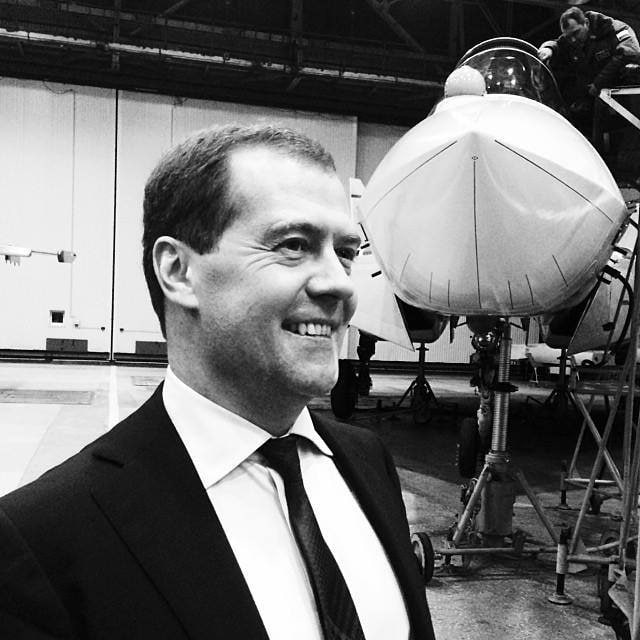
“Why Our Cause Is Just”: Medvedev’s National Unity Day Telegram

Dmitry Medvedev. Photo courtesy of his Telegram channel

WHY OUR CAUSE IS JUST
Answers to simple questions on National Unity Day

What are we fighting for? Russia is a huge, rich country. We don’t need foreign territories; we have plenty of everything. But there is our land, which is sacred to us, on which our ancestors lived and on which our people live today. And which we will not surrender to anyone. We are defending our people. We are fighting for all of our own people, for our land, for our thousand-year history.

Who is fighting against us? We are fighting against those who hate us, who ban our language, our values, and even our faith, who spread hatred towards the history of our Fatherland.

A part of the dying world is against us today. It consists of a bunch of crazy Nazi drug addicts, the common people they have drugged and intimidated, and a large pack of barking dogs from the western kennel. They are joined by motley pack of grunting piggies and narrow-minded philistines from the disintegrated western empire with saliva running down their chins due to degeneration. They have no faith and ideals, except for the harmful vices they have contrived and the standards of doublethink they impose, which deny the morality bestowed on normal people. Therefore, by rising up against them, we have gained sacred power.

Where are our former friends? We have been abandoned by some frightened partners — and I could not give a flying crap about them. That means they were not our friends, but just random fellow travelers, clingers, and hangers-on.

Cowardly traitors and greedy defectors have bugged out for the back of beyond — may their bones rot in a foreign land. They are not among us, but we have become stronger and purer.

Why were we silent for a long time? We were weak and devastated by hard times. And now we have shaken off the sticky sleep and dreary gloom of the last decades, into which the death of the former Fatherland had plunged us. Other countries have been waiting for our awakening, countries raped by the lords of darkness, slaveholders and oppressors who dream of their monstrous colonial past and long to preserve their power over the world. Many countries have long disbelieved their nonsense but are still afraid of them. Soon they will wake up once and for all. And when the rotten world order collapses, it will bury all its arrogant priests, bloodthirsty adepts, mocking henchmen, and tongue-tied mankurts under the multi-ton pile of its own debris.

What is our weapon? There are various weapons. We have the capacity to dispatch all our enemies to a fiery hell, but that is not our mission. We listen to the Creator’s words in our hearts and obey them. These words give us a sacred purpose. The goal is to stop the supreme ruler of hell, no matter what name he uses – Satan, Lucifer, or Iblis. For his goal is destruction. Our goal is life.

His weapon is an elaborate lie.

But our weapon is the Truth.

That is why our cause is just.

That is why the victory will be ours!

Happy Holidays!

Source: Dmitry Medvedev, Telegram, 4 November 2022. Mr. Medvedev, the former Russian president, has 910,612 subscribers on Telegram. For reactions to his National Unity Day post, see Asya Rudina, “‘Iblis crept up unnoticed’: Bloggers on Dmitry Medvedev’s creative work,” Radio Svoboda, 7 November 2022 (in Russian). Translated by Your Answer Needs Demented Examples Xavier, with a little assistance from the Russian Reader. For an alternative vision of Russian patriotism, also prompted by the November 4 National Unity Day holiday, see Kirill Medvedev (no relation), “‘If There Is No People, There Is No Left Either’: Progressive History and Patriotism from Below,” Posle, 2 November 2022. I can endorse neither of these visions, alas. ||| TRR

Internationalism à la russe

Kirill Medvedev

At the moment I’m worried by the sense that there is no way out of the situation at the regional level—the war between Russia and Ukraine can go on indefinitely long. Continuing within the pre-established framework of geopolitical nationalism, Russia wants to expand its borders or fortify them with new puppet buffer entities; Ukraine wants to preserve existing territories and get back lost ones; other countries in the region are concerned about preserving themselves as nation-states; and finally, there are territories that someone hopes become new nation-states. We understand some of the above while condemning others, but all of it together is a nationalistic impasse in globalization from which there is no global way out.

A sensible global response to the crisis will emerge only if the situation (no matter how scary this is to say) actually escalates into a global confrontation, into a Third World War. And then those who abstractly and dogmatically insist today that everyone is to blame for the new insane war and the new arms race—Putin, NATO, Ukrainian and European elites—will be proven right. Because the global war, which has been going on for a long time and has lost even a semblance of meaning, naturally provokes peoples and nations who are worse off to ask questions of elites who are still well off or even better off than they were before.

Apparently, this is the only way the one big question to the world order of the last thirty years can be posed and give rise to a big answer—in the form of a new global anti-war, anti-imperialist, redistributive, climate, human rights, unifying federalist, etc., agenda, which would be articulated by new international bodies fueled by genuinely widespread grassroots discontent.

It would be just terrible if different parts of humanity had to kill and maim each other even more in order to feel unity again, embrace common challenges, and suggest common responses.

[Comments]

Hanna Perekhoda Here the Western left has been looking and looking for an anti-war movement on the Russian left. They have searched high and low, wondering how to help them and guessing that those poor people are thinking how to stop the war and undoubtedly need support. With your permission, I will show them this post as an illustration of the ardent zeal on the Russian left to accelerate the defeat of its own fascist regime and stop the war in Ukraine.

Hanna Perekhoda I reread [this post] and was even more gobsmacked. Has helplessness really crushed your brain so much that you are practicing at imagining exactly how the Third World War would solve problems that you no longer have the courage to try and solve, let alone to think about normally? Have even basic moral and ethical principles fallen by the wayside? This is the living end, and a pathetic one at that. No fucking war indeed. Game over.

Source: Kirill Medvedev, Facebook, 11 July 2022. Translated by the Russian Reader


In an existential crisis and looking to solve a cold case, Max checks into a secretive hotel with elaborate assisted suicide fantasies. He uncovers a disturbing truth, questioning the nature of life, death, and his perception of reality.

Source: IMDb


Mindfulness has never been more important.

[…]

“There used to be diasporas, now there are communities,” say newcomers in Kas. Some of them organize traditional guided tours, some are in charge of taxi services jointly with locals or are developing food delivery companies.

Maksim Zaikin creates co-living spaces for people with similar habits and values by subletting villas. Maksim, a mentor for several projects in Moscow and St. Petersburg, creator of Co eco-system, arrived in Kas in November 2020 to pass the winter. He first organized a party in the neighboring town of Kalkan attended by 45 people mostly from Kas. Maksim then realized that it’s better to move there.

“All people that I am talking to here say that it’s a sort of place of power,” he says. “Kas gives you energy and helps you grow. Everyone in my circle can feel it. I was meeting people that I knew through Facebook but never had personal contacts with when Russians were arriving here in big numbers. Now, the trend has reversed — people stayed in Turkey for the officially allowed 90 days and decided to move back home or change the location.”

“We often see people leave, realise what they really want and come back. In the time of war, Kas has become not just an isle of calmness but also a space for development.”

At their peak, Maksim and his business partner Nikita had 6 villas on the peninsula and apartments in the centre. Prices start from $1,000 per month for a double room outside of the tourist season. When it gets hotter, prices go up as well to at least $1,700. Coworking spaces that host events, lectures and workshops are also available. It has essentially transformed into a home for the community or a culture centre. “It’s very easy for us to find speakers, they themselves come looking because Kas is a place with a lot of fantastic people.”

The team is planning to set up camps with experts on their villas and launch educational programs for kids. Maksim himself has two, 8- and 10-year-olds, they are currently studying online. But the entrepreneur is dreaming of creating an offline program for education.

Many Russians come with kids but the nearest school offering education in Russian is located in Antalya.

“I am not thinking of going back to Russia,” Maksim concludes. “I want to create a lifestyle where I can move between hubs: Kas, Bali, Portugal. We go where there’s a market for it, where Russians go. I want to live on the planet, not in a country.”

Source: Olga Grigoryeva, “Russians in Kas: A small town in southern Turkey turned into a hub of Russian intellectuals,” Novaya Gazeta. Europe, 14 July 2022

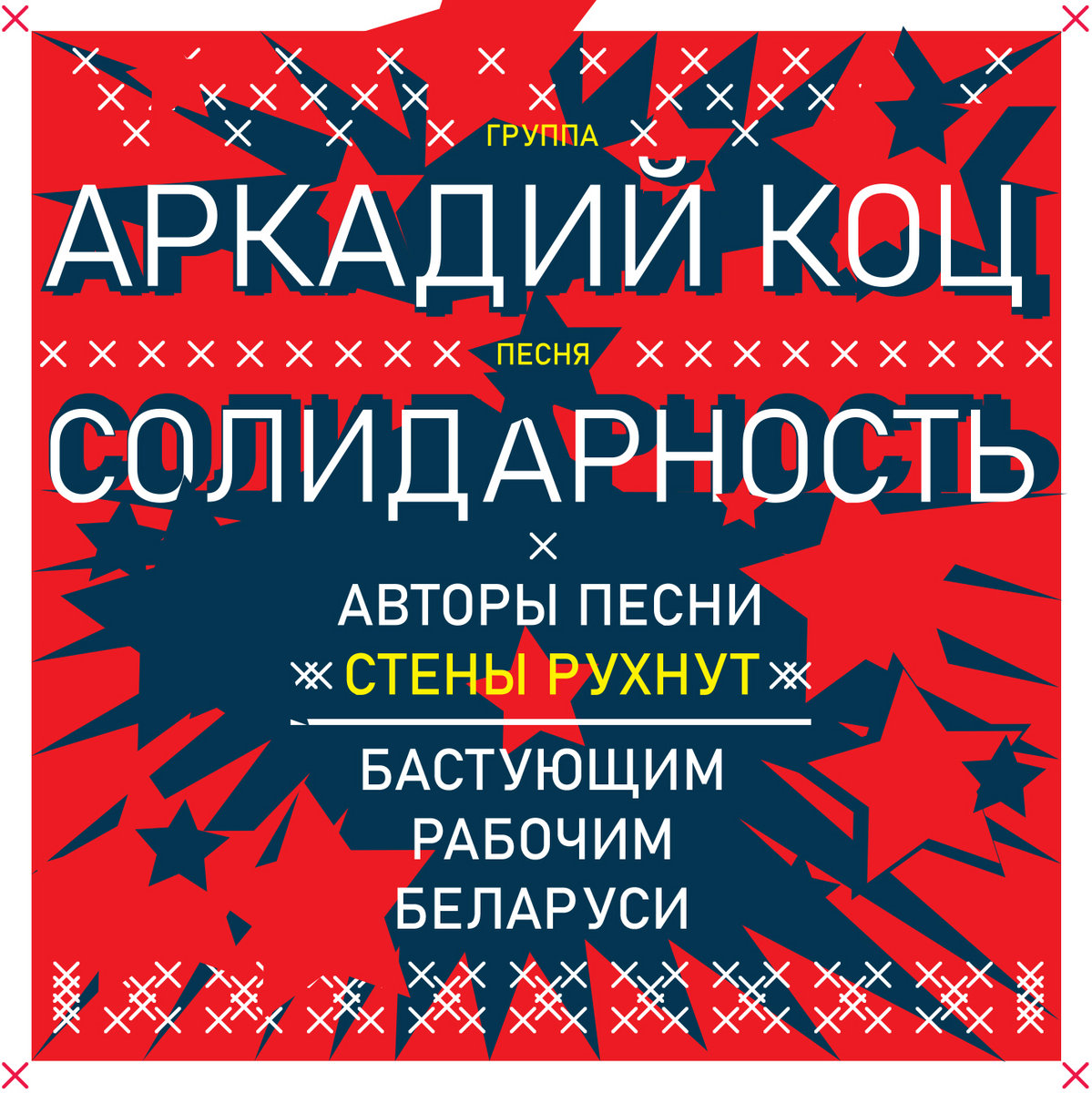
Arkady Kots: We Will Have to Fight for the Future

Arkady Kots, The Belarusian Collection
Dec 28, 2020

We support rebellious Belarus. We hope that Belarusian workers, “social parasites,” women, students, pensioners, and the entire Belarusian nation wrest power from the bat-brained dictator and don’t surrender it to anyone.

00:00 – Solidarity
03:20 – Bella Ciao
06:28 – Walls
10:11 – Prison Song
13:01 – Song of the Jewish Partisans (“Zog nit keyn mol”)
19:22 – There Is Power in a Union
22:56 – Women’s Song (“L’hymne des femmes”)
25:19 – Counterattack
29:19 – Lusya
33:06 – Forest Song
35:55 – Peramozham
38:53 – Fog
41:10 – Who Shoots at Workers
44:44 – Nothing Works Without Love

#ArkadyKots #Walls #BelarusianCollection

_______________________________

“We Will Have to Fight for the Future!”
Arkady Kots premieres an album in support of Belarusian protesters on the Novaya Gazeta website
Yan Shenkman
Novaya Gazeta
December 28, 2020

Nikolay Oleynikov, musician, artist, and soloist in the group Arkady Kots:

We have been following the protests in Belarus from the outset. We were happy when our song “Walls” became one of the main [protest] songs there. And we were about to go to Minsk, everything was ready, but then the guys who invited us and promised to organize several concerts at factory gates wrote: “Stand down, all the factory gates have been occupied by the police.”

It is a pity that we were not able [to do the concerts], but it increased our desire to help Belarusians from here.

We saw that our government basically supports Lukashenko, and we thought it important to sing on behalf of those Russians who are unequivocally against the rout of the elections, against the savage crackdown, who support an independent Belarus, a country near and dear to us. Both our new songs and old ones gradually formed a statement that eventually turned into The Belarusian Collection.

First we understood how to make a Russian version of a song we had been trying to do for a long time—“Solidarity,” by the English punk band Angelic Upstarts, written in the 80s in support of the Polish trade unions. It has this interesting moment, atypical for protest songs, especially leftist ones—a reference to religion. “And we’ll pray for our nation through its darkest times,” they sing in the original. Sincere faith can drive a protest very far: priests played a big role in the Polish Solidarity  movement of the 70s and 80s. That victory, by the way, has shown its flip side today. The conservatives [in Poland] are trying to deprive women of the right to abortion, the right is in power, and the system is clearly distant from what the trade unionists fought for back in the day against the regime and the bureaucracy. But when we see how the priests in Minsk have been supporting the protesters, hiding them from the riot police in churches, this is what we want to sing.

Well, and then there are the workers who came to the forefront of the political struggle in Belarus at some point: that’s another great story, of course, and, I hope, it’s a story that hasn’t ended. Without the workers, a revolution is doomed: new elites seize power and continue to exploit people under new slogans.

We saw how our friends from the leftist party A Just World were bullied and imprisoned: two years ago, we recorded our version of the famous Chilean anthem “Venceremos” in Belarusian (“Peramozham”) for them. Masha Shakuro, who is from the Minsk group Boston Tea Party and, simultaneously, the captain of the Belarusian national rugby team, spent two weeks in prison. Two years ago, she and her band to Moscow for our festival Punk Against Electroshock Torture.

We were involved in PartiZan Fest, which, due to the pressure the authorities put on the clubs, could not be held live. Consequently, the festival was broadcast on TV Rain, and they managed to raise $30,000 for victims of the crackdown in Belarus.

In parallel, we have been recording with European musicians. The Partisan Album features anti-fascist songs from the Second World War, which, of course, included the Belarusian “Forest Song” (“Birches and Pines”), as well as our version of “Bella Ciao,” which contains a reference to the Belarusian partisans. Then there are two completely new tracks that you will hear in this anthology: “Jewish Song” by Hirsch Glick, a poet of the Vilna Ghetto, and the experimental composition “Counterattack,” set to a poem by the Warsaw Ghetto poet Władysław Szlengel, who died during the Uprising. The video for “Counterattack” was made by the Belarusian artist and historian Aliaksandra Osipova, who is from Pinsk. Although she realized that she was taking a risk, Aliaksandra agreed to direct a short film for this track. “The main idea was to combine the moving masses of color and the masses of people, to show the tension between the universality of the struggle and the concreteness of the gestures of resistance and defiance,” she says.

It is interesting how at such moments non-obvious connections and identities are actualized, and it turns out that you have many friends with Belarusian roots. Guys from the diaspora have given us “honorary Belarusians” certificates. I sing in Belarusian as a sign of anti-imperial solidarity, while Kirill Medvedev recalls his great-grandfather Semyon Ilyushenko from near Vitebsk, who fought in the Red Army under Frunze, and then created Soviet jet fuel in a sharashka.

In this covid year, it is as if the old map of Europe has been redrawn for us. New lines are emerging, Soviet and non-Soviet roots are connecting into something new, into a future for which we will still have to fight, and not only with songs.

Speaking of fascism. The other day, our bandmate Oleg Zhuravlev, a sociologist and co-founder of Arkady Kots, was brutally beaten and robbed by the cops in Petersburg, after which he was kept out in the cold all night in a cage with the window wide open. And yesterday exactly the same thing happened to the Petersburg historian Pavel Demchenko, in the very same 28th police precinct on Marat Street [in downtown Petersburg]. Now the guys are combining their cases, and communicating with lawyers to make as big a dent as possible in police lawlessness. The Russian police have recently been rapidly rushing down the road to hell, trying to compete with Lukashenko’s police, apparently.

In the meantime, I want to congratulate everyone on the passing year, a year of many terrible deaths, extreme violence and heroism. I hope the future will be peaceful and beautiful. Listen to The Belarusian Collection!

Translated by the Russian Reader. Image (below) courtesy of the Arkady Kots Bandcamp page

Solidarity? (The Case of the Penza and Petersburg Antifascists)

fil_0Viktor Filinkov, Petersburg antifascist, torture victim and political prisoner
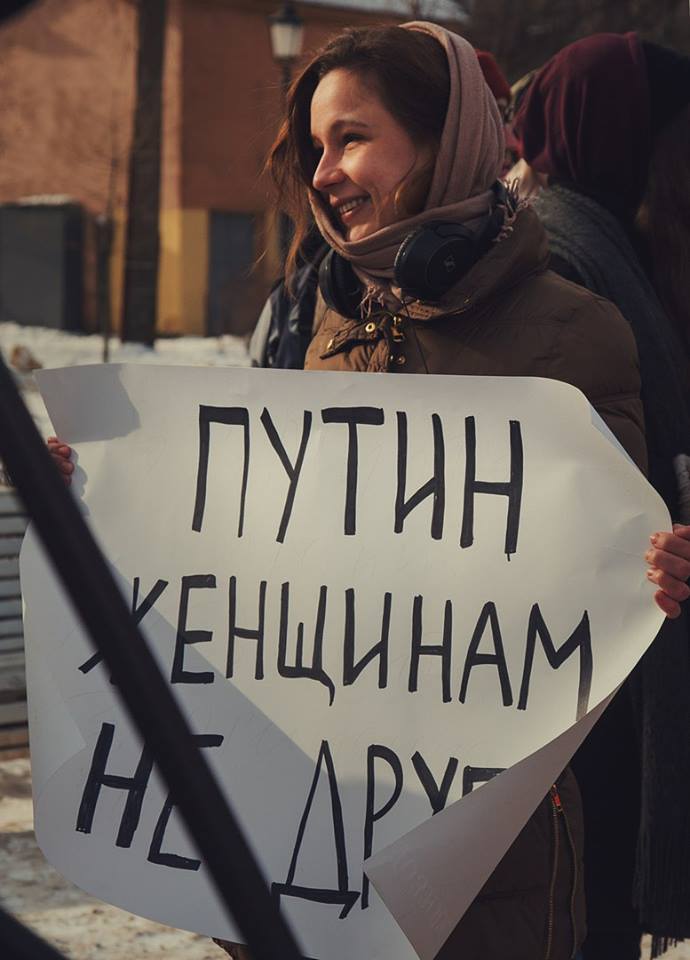
Solidarity? No, They Haven’t Heard about It
The Security Services Are Using the Case of the Antifascists to Test Society: If We Keep Silent, the Torture and Arrests Will Continue
Yan Shenkman
Novaya Gazeta
March 22, 2018

On Election Day, March 18, which was simultaneously Paris Commune Day and Political Prisoner Day, Theater.Doc in Moscow staged a performance entitled Torture 2018, a reading of the interrogation transcripts and diaries from the Penza-Petersburg “terrorism” case.

The case has disappeared amid the flood of political and election campaign news, so I should briefly summarize it.

In October 2017, a group of young antifascists was detained by the Russian Federal Security Service (FSB) in Penza. They were accused of organizing a terrorist community code-named The Network. They were allegedly tortured. Nearly all of them confessed to the charges, telling the FSB what the FSB wanted them to say.

Recently, for the first time in history, FSB officers admitted they used electric shockers when interrogating Petersburg antifascist Viktor Filinkov. In their telling, however, it was not torture, but a necessity: the detainee allegedly tried to escape.

The arrestees are kindred souls of Stanislav Markelov and Anastasia Baburova, murdered by neo-Nazis in downtown Moscow in January 2009. A march to honor their memory has been held on the Boulevard Ring every year since then.

Less than ten years have passed since their deaths and we are confronted by a relapse, an attack on antifascists by the Russian state.

The harsh language of the interrogation protocol is more expressive than any op-ed column. Dmitry Pchenlintsev was tortured day after day: he was hung upside down and different parts of his body were shocked with electrical current. Vasily Kuksov was badly beaten: his face was a bloody pulp, his clothes torn and blood stained. Doctors in Petersburg discovered a fracture to the lower wall of Igor Shiskin’s eye socket, as well as multiple abrasions and bruises. They noted numerous injuries, including burns from an electric shocker. FSB officers took Ilya Kapustin to the woods, tortured him with an electric shocker, and threatened to break his legs.

We heard similar reports from Chechnya and Donbass, but this is the first time something like this has occurred in the middle of Russia and on such a scale.

The young arrestees in Penza, none of whom is over thirty (the oldest is twenty-nine) played airsoft, listened to independent music, and read anarchist books, like thousands of other young people. Now, given the will, any of them can be arrested on terrorism charges.

Alexei Polikhovich, who spent three years in prison as part of the Bolotnaya Square case, and produced the performance at Theater.Doc, did not have to make up anything, no monologues or dialogues. What has happened in reality is not something you would make up.

“I was panicking,” leftist activist and former political prisoner Alexei Sutuga says, reading Viktor Filinkov’s statement aloud. “I said I didn’t understand anything, and that is when they shocked me the first time. It was unbearably painful. I screamed and my body went straight as a board. The man in the mask ordered me to shut up and stop twitching. He alternated shocks to my leg with shocks to my handcuffs. Sometimes, he shocked me in the back or the nape of the neck. It felt as if I was being slapped upside the head. When I screamed, they would clamp my mouth shut or threaten to gag me. I didn’t want to be gagged, so I tried not to scream, which wasn’t always possible.”

“It’s probably the worst thing happening now in Russia,” Polikhovich told me after the performance. “But we have no means of putting pressure on them. Complaints filed against the FSB are redirected to the FSB, meaning they are supposed to keep tabs on themselves. Naturally, they are not about to do this. The only thing that can save the guys is public pressure.”

“But for several months there were no attempts to pressure the FSB. Why?” I asked.

“Location is vital in this case,” replied Polikhovich. “There are tried and tested support methods in Petersburg and Moscow. There are independent journalists and human rights activists. There is nothing of the sort in Penza. The environment also makes a difference. The Bolotnaya Square case, in which many leftists were sent to prison, meant something to the entire liberal democratic opposition. It was a story the average Moscow reporter could understand.”

“In this case, however,” Polikhovich continued, “the accused have been charged with very serious crimes. They are not liberals. They are not Moscow activists. We have to break through the prejudice towards them.”

While Moscow was silent, brushing the case aside by mentioning it in a few lines of column inches, the case, which originated in Penza, had spread to Petersburg, then to Chelyabinsk, and finally, in March, to the capital itself. Several people were detained after a protest action in support of the Penza antifascists. (OVD Info reports that nine people were detained.)

“They put a bag over my head. Then they shocked me, constantly increasing the intensity and duration of the electric charge, and demanding I make a confession,” Moscow anarchist Svyatoslav Rechkalov, released on his own recognizance, told Novaya Gazeta.

The protests against the FSB’s use of torture in this case have mainly followed ideological lines: anarchists and antifascists have been doing the protesting. Solidarity protests have been held in Copenhagen, Toronto, Berlin, and New York. Finnish anarchists and antifascists held a demo outside the Russian embassy in Helsinki. In Stockholm, the way from the subway to the Russian embassy was hung with Filinkov’s diary and posters bearing the hashtag #stopFSBtorture.

A concert in support of the arrested antifascists was held at a small bar in Petersburg. The organizers were able to collect 42,500 rubles in donations. By way of comparison, a year ago, at a similar concert in support of Ildar Dadin, who was tortured in a Karelian penal colony, organizers collected 29,000 rubles in donations. But there no incidents at that event, while there was an incident at the Petersburg concert. Ultra-rightwing thugs burst into the bar and started a brawl.

In Moscow, the riot police or the security services would have telephoned the club’s owner and insisted he cancel the event, as happened with the anti-war Deserter Fest. In Petersburg, however, the rightists showed up.

“The situation has come to resemble the mid-noughties,” said Maxim Dinkevich, editor of the music website Sadwave, “when every other punk rock show was attacked.”

Pickets in support of the antifascists have been held both in Moscow and Petersburg, and there will probably be more pickets to come. But this story has not yet made a big splash. The public is more interested in discussing the falling out between Sobchak and Navalny, while anarchists draw a blank.

This case is not about anarchism or antifascism, however. It is about the fact that tomorrow they could come for you for any reason. Electric shockers do not discriminate.

The regime has been testing us, probing the limits of what is possible and what is not. If we keep silent now, if we do not stand up for each other, it will mean they can continue in the same vein. It is clear already that the case of the antifascists will expand. The arrests will stop being local, becoming large scale. We have no methods for pressuring law enforcement agencies that torture people, no authorities that could slap them on the wrists. The only methods we have are maximum publicity and public pressure. They are the only ways to deter the security service from making more arrests and keeping up the torture.

There is a group page on Facebook entitled Project No. 117, named for the article in the Russian Criminal Code that outlaws the use of torture. It is a clearinghouse for news about the Penza case and other anti-antifascist cases. It also features six videtaped messages in support of the arrested men, as recorded by the well-known Russian cultural figures Dmitry Bykov, Andrei Makarevich, Dmitry Shagin, Kirill Medvedev, Artyom Loskutov, and Artemy Troitsky.

I would like to believe that, in the very near future, there will be six thousand such messages, not six. Otherwise, we will be crushed one by one.

Dmitry Bykov (writer)

“Absolutely Gulag-like scenes of strangulation, beating, and abduction. Stories like this have become frighteningly more frequent. The return to the practice of torture is a relapse into the roughest, darkest period of Russian history.”

Andrei Makarevich (musician)

“If the authorities are trying to pass young antifascists off as terrorists, it begs the question of who the authorities are themselves. Have you lost your minds, guys?”

Dmitry Shagin (artist)

“I experience this as torture myself. By torturing these young men, they are torturing all of us.”

Kirill Medvedev (poet, political activist, musician)

“The Russian authorities have been posing as the most antifascist regime in the world for several years now, and yet they are cracking down on antifascists. Is this not hypocrisy?”

Artyom Loskutov (artist, political activist)

“If you arrested me and tortured me with an electric shocker, I would confession to terrorism, satansim, and anything whatsoever. And if the FSB officers were tortured, they would also confess to anything. Antifascism is not a crime, nor is anarchism a crime. But torture is a crime, a very serious crime indeed.”

Artemy Troitsky (writer, music critic and promoter)

“Torture is a sure sign the case doesn’t hold water. If they have evidence, they wouldn’t torture the suspects.”

Translated by the Russian Reader. Photo courtesy of Autonomous Action. Videos courtesy of Project No. 117 and Novaya Gazeta. If you have not heard about the Penza-Petersburg “terrorism” case, you can read the following articles and spread the word to friends, comrades, and journalists.

No Tulips and No Fear: International Women’s Day in Petersburg

hDs70j4DMl4

“March 8. I Choose Feminism.” Banner courtesy of the VK event page for the International Women’s Day rally in Petersburg

Russian Socialist Movement
Facebook
May 9, 2018

No Tulips and No Fear: March 8 in Petersburg
International Women’s Day in Petersburg. Unlike last year, this year’s rally was cleared with the authorities. It attracted several hundred women and men, and touched on all aspects of gender inequality, from discrimination in paying women’s labor, harassment, and domestic violence to attempts criminalize abortion. Female socialists from the Russian Socialist Movement (RSD) in Petersburg and other leftist organizations played an important role in organizing the event, assembling a coalition of women from various women’s pressure groups. Despite the fact that Russian women today are not in the mood for fun, those who attended the rally sang (the songs included the first performance of RSD activist Kirill Medvedev’s Russian translation of “L’hymne des femmes”), laughed, and chanted slogans. A samba band played, and there were many striking, creative slogans. After the rally, around two hundred people took part in an improvised stroll down Nevsky Prospect. The marchers sang protest ditties accompanied by an accordion, and unfurled scarves and plaid throws emblazoned with anti-sexist slogans.

Photos courtesy of Moi Rayon, LeftFem, and Marx Was Right.

#marcheighth #feminism #leftists

29026030_189873954952831_306116518347800576_n.jpg“Putin is no friend to women.”

28958936_189873331619560_3156760705831534592_n“Bread and Roses”

28796136_189874098286150_6047749999322726400_n

“A woman has two choices: either she’s a feminist or a masochist. — Gloria Steinem”

28870464_189875584952668_571633668624220160_nMarching down Nevsky Prospect

_________________

Hymne du MLF (“L’hymne des femmes”)
sur l’air du Chant des marais

Nous, qui sommes sans passé, les femmes,
Nous qui n’avons pas d’histoire,
Depuis la nuit des temps, les femmes,
Nous sommes le continent noir.

Refrain:
Debout femmes esclaves
Et brisons nos entraves
Debout! debout!

Asservies, humiliées, les femmes,
Achetées, vendues, violées,
Dans toutes les maisons, les femmes,
Hors du monde reléguées.

Refrain

Seule dans notre malheur, les femmes,
L’une de l’autre ignorée,
Ils nous ont divisées, les femmes,
Et de nos sœurs séparées.

Refrain

Reconnaissons-nous, les femmes,
Parlons-nous, regardons-nous,
Ensemble on nous opprime, les femmes,
Ensemble révoltons-nous.

Refrain

Le temps de la colère, les femmes,
Notre temps est arrivé,
Connaissons notre force, les femmes,
Découvrons-nous des milliers.

Russian Translation by Kirill Medvedev

Нет у нас прошлого, женщины.
Нет у нас истории, нет.
В темное время, женщины,
Мы как черный континент

Рабыни, восставайте
И цепи разбивайте.
Вперед, вперед

Куплены, проданы женщины.
Загнаны, изнасилованы,
Заперты дома женщины,
Прочь из мира изгнаны.

Рабыни, восставайте
И цепи разбивайте.
Вперед

В чем наше горе, женщины?
Каждая сама по себе.
Нас разделяют, женщины.
Не поможет сестра сестре.

Подруги, восставайте
И цепи разбивайте

Встанем же рядом, женщины.
Будем всем видны и слышны.
Вместе страдаем, женщины.
Вместе мы восстать должны

Работницы, вставайте
И цепи разбивайте

Время для гнева, женщины
Наконец наступил наш час
Чувствуем силу, женщины,
Много нас, миллионы нас.

Рабыни, восставайте
И цепи разбивайте.

The Closing of the Russian Mind: Four Snapshots

Here are four reasons why, despite my affection for Kirill Medvedev’s work, I found his recent appeal to the “intelligentsia,” the “youth,” and all other Russians of good will a little odd. He should be honest enough to know he is appealing to what is, increasingly, thin air. Fifteen years of Putinism have decimated “public discourse” and intellectual life in Russia, and now it seems the regime wants to finish the once-mighty Russian mind off once and for all.

Which is not to say that the pro-Putin “euphoria” described in the first two snapshots is not a stage-managed affair to a huge degree, as obliquely suggested by the fourth snapshot.

1.
According to a survey published this week by the respected independent pollster Levada Centre, 82% of Russians believe MH17 was brought down by either a Ukrainian army fighter plane or missile. Just 3% thought the insurgents were to blame. Given these kind of figures, the prospect of Putin facing a backlash of public anger over suspected weapons supplies to separatist gunmen is virtually zero. Ironically, Putin probably faces more danger from Russians disappointed by his failure to provide more assistance to the rebels. “Many people feel cheated by his refusal to use military force [in east Ukraine],” Alexander Dugin, an ultranationalist thinker whose ideas are reported to have influenced recent Kremlin policy, told me recently.

Western officials may be hoping economic sanctions will force Russians to rethink their support for Putin, but in reality such measures will achieve little more than an entrenchment of a growing fortress mentality. State media’s routine and increasingly vitriolic attacks on the west’s “decadent” morals mean Russians are likely to accept any economic and social hardships brought about by US and European sanctions. Tellingly, in another Levada Centre poll this week, 61% of Russians said they were unconcerned by the threat of sanctions, while 58% were similarly unfazed by the looming possibility of political isolation over the Kremlin’s stance on Ukraine.

These head-in-the-sand attitudes are bolstered by what the director of Levada Centre, Lev Gudkov, calls a “patriotic and chauvinistic euphoria”rooted in the almost bloodless annexation of Crimea in March, which was popular among Russians across the political spectrum. It’s alsoworth noting that many “ordinary” Russians are uninterested in politics and have only scant knowledge of the issues at hand.

source: The Guardian

2.
MOSCOW, July 31 (RIA Novosti) – Life satisfaction and social optimism indices in Russia skyrocketed, reaching all-time highs despite political challenges according to polls conducted by the Russian Public Opinion Research Center (VCIOM).

“Within the last three months, indices of social well-being have shown unprecedented growth, stabilizing at extremely high levels. In June the satisfaction index reached its all-time high of 79 points and the indices of financial self-assessment and social optimism, now at 76 and 77 points respectively, have also risen and stabilized at new highs,” says the poll.

The economic sanctions imposed by the US and EU over the crisis in Ukraine seem to have little effect on Russians. According to the polls, Russians are now far less concerned with the future of their country than they were last year.

The number of Russians who have not ruled out the possibility of a war with neighboring countries is now 23 percent of the population, up from just 10 percent last year. However, the number of those concerned about a Western military threat has held steady at 13 percent for the past eight years.

The VCIOM opinion poll was conducted in 2014, interviewing 1,600 respondents in 130 communities in 42 regions of Russia. Data are weighted by gender, age, education, working status and type of settlement. The polls have margins of error of no more than 3.4%.

source: RIA Novosti

3.
It’s bad news for Russian bloggers, then, that starting today, anyone who attracts more than 3,000 daily readers to his blog is considered a de facto journalist and must register. (In a largely symbolic gesture, LiveJournal has already stopped reporting blog subscribers beyond the 2,500 mark.) Registration entails turning over your personal details to the government—including, of course, your name, meaning anonymous blogging is now illegal for many. (By the way, the law applies to any blog written in Russian for Russians; a post you write from a Brooklyn cafe could face censorship from Moscow.) Bloggers will also be held liable for any alleged misinformation they publish, even in comments written by somebody else. And, insult to injury, bloggers aren’t even allowed to use profanity; a single naughty word would put them in violation of the law. Failure to comply results in a $280 to $1,400 fine as well as a ban on your blog.

The new legislation represents a rather obvious attempt by the Russian government to shut down all criticism of the Kremlin, particularly from the left. The government has already granted itself the authority to shut down any website and used this power to crush popular left-leaning news sites. With this next step, the Kremlin clearly hopes to scare the smaller fish into complying with the official party line. And Russia’s insane Internet crackdown won’t stop with blogs: Starting in 2016, all websites that store data on Russian citizens will have to move their servers to Russian soil—a blatant attempt to assert control over social networks and search engines.

source: Slate.com

orthofascists

4.
The application of [the new law on compulsory registration of NGOs receiving foreign funding as “foreign agents”] against scientific institutions, in fact, constitutes a professional ban on sociologists. Sociology that does not affect public opinion (directly or indirectly) is nonsense. Sociology that does not raise sensitive issues or suggest original answers that run counter to public opinion is intellectually bankrupt. Sociology that does not affect management decisions is as defective as governance that does not use the opportunities of independent social research. Sociology that is deprived of critical analysis of different “policies” loses connections with social science and turns into political technology. Sociology that does not succeed in the competitiveinternational research grant market is devoid of incentives for growth and is doomed to extinction.

In the modern world, any science that exists in isolation from the global context loses its ability to develop. All attempts to control global processes of scientific exchange only lead to the bureaucratization of science, the flourishing of pseudoscientific theories, and talented and open-minded scholars leaving the country. The persecution of independent researchers and research organizations puts an end to the development of a full-fledged scientific community and leads to the degradation of the humanities in Russia, which will ultimately result in a deficit of ideas and strategies for the future of our country.

The law on “foreign agents” is not the only sign of the long-standing crisis of the Russian administrative and political system. It is embedded in a series of decisions that aim to expand state control over various aspects of society and their submission to the bureaucratic logic of the “vertical” power. We can see this in the introduction of censorship and persecution of disloyal media, financial and administrative pressure on public (and especially human rights) organizations, the sterilization of historical memory (pressure on the “Memorial” and ”Perm 36”), criminal and administrative persecution for political reasons and independent (not controlled by the state) activism, dismissal of leading high school teachers for being disloyal touniversity superiors and many other cases. Self-censorship is booming in this society, for which survival has become the main motivation for its members. Overt or non-obvious subjection of one’s own activity to the goals of the “vertical” power is turning into the most effective model of behavior.

It is obvious for us that an independent social science is crucial for a society whose interests are not limited to maintaining stability and “unity” at any costs. An authoritarian state does not need reflection that a professional independent research can provide. It is satisfied with VCIOM polls and various ratings that allow the maintenance of “vertical” tension and promotion of “patriotism”. Such a regime will inevitably degrade and become obsolete, but during its heyday it manages to destroy much of what came before it and exists in spite of it.

We believe that the lack of interest towards the professional opinion of independent sociological community, which often oppose bureaucratic perspectives, points to the incompetence of the Russian administration. The pressure exerted on NGOs and non-governmental scientific centers indicates that the political administration of our country no longer needs feedback and has no interest in the actual state of affairs in Russia. This means it condemns our country to the harsh effects of unreasoned political and economic decisions.

source: Centre for Independent Social Research