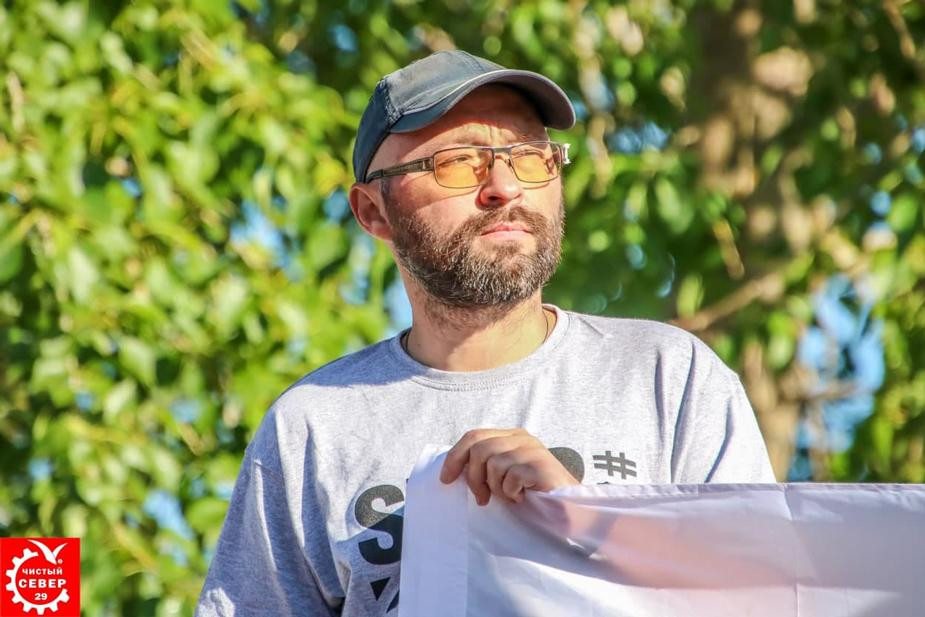
Andrei Khristoforov aka Drevarkh the Enlightened. Photo courtesy of Mr. Khristoforov’s social media page via Mediazona
Fifty-nine-year-old environmental activist and Shiyes defender Andrei Khristoforov, also known as Drevarkh the Enlightened, has died in Arkhangelsk. The news was reported on his page on the Russian social media network VKontakte.
In late April, Khristoforov said that he had been admitted to hospital with severe cirrhosis of the liver.
In Arkhangelsk, Drevarkh was involved in environmentalism and was the leader of the Plant Your Own Tree movement. He wore white wings and a tree-shaped cap during his protest actions.
In 2022, the Ust-Vymsky District Court in the Komi Republic sentenced Khristoforov to a year of probation on charges of “violence against a law enforcer” (per Article 318.1 of the Criminal Code). Police investigators claimed that, in the summer of 2019, Drevarkh had attacked a policeman who was filing a report on him because he had, allegedly, pulled the emergency stop of a train at the Shiyes railway station, where protests against the construction of a landfill were underway.
Drevarkh said that the police officers had themselves beaten him during the arrest. Video footage of the arrest was posted online by other Shiyes activists: it shows police officers shocking Khristoforov several times with a stun gun.
Video footage of police detaining and electrocuting Drevarkh the Enlightened in 2019
After charges were filed against him, Drevarh was sent to a psychiatric hospital in Arkhangelsk for a forensic medical examination. The psychiatrists concluded that Khristoforov suffered from borderline personality disorder, but during the scuffle on the train he “would have been aware of the danger posed by his actions” and did not need compulsory medical treatment. Drevarkh then hurriedly left for Ukraine, where, according to him, he also planted trees. In the summer of 2021, however, he decided to return to Russia.
Upon arrival, the activist was placed under house arrest, and then released on his own recognizance. “The Creator thus sent me feedback via the Russian Investigative Committee, for which I am grateful to the former and the latter,” explained Drevarkh. Police investigators had written to Drevarkh via social media, after which he bought tickets home.
In May 2019, Drevarkh was fined for taking part in a protest march against the Shiyes landfill. He was later detained for ripping the epaulettes off a policeman’s uniform during one of the rallies. “When the brothers started pushing me back, the epaulettes flew off them. But they blamed me for the whole thing, saying that I was the one who had conjured it up. It’s like leaves falling off a poplar tree, that’s how the epaulettes fell off,” the activist said at the time.
That same month, “after firing several warning shots in the air,” Khristoforov shot his own urine at private security guards using a toy automatic rifle and smeared feces on the porch of a temporary police station. After he was detained by police, the activist dubbed the contents of his toy gun a “Drevarhh cocktail” and complained that “the [gun’s] clip was too small.”
In June 2020, Arkhangelsk Regional authorities announced the closure of the project, promising to terminate the agreement with Technopark. The investor announced the final abandonment of construction only in October 2020, promising to return the land where the works took place to its original state.
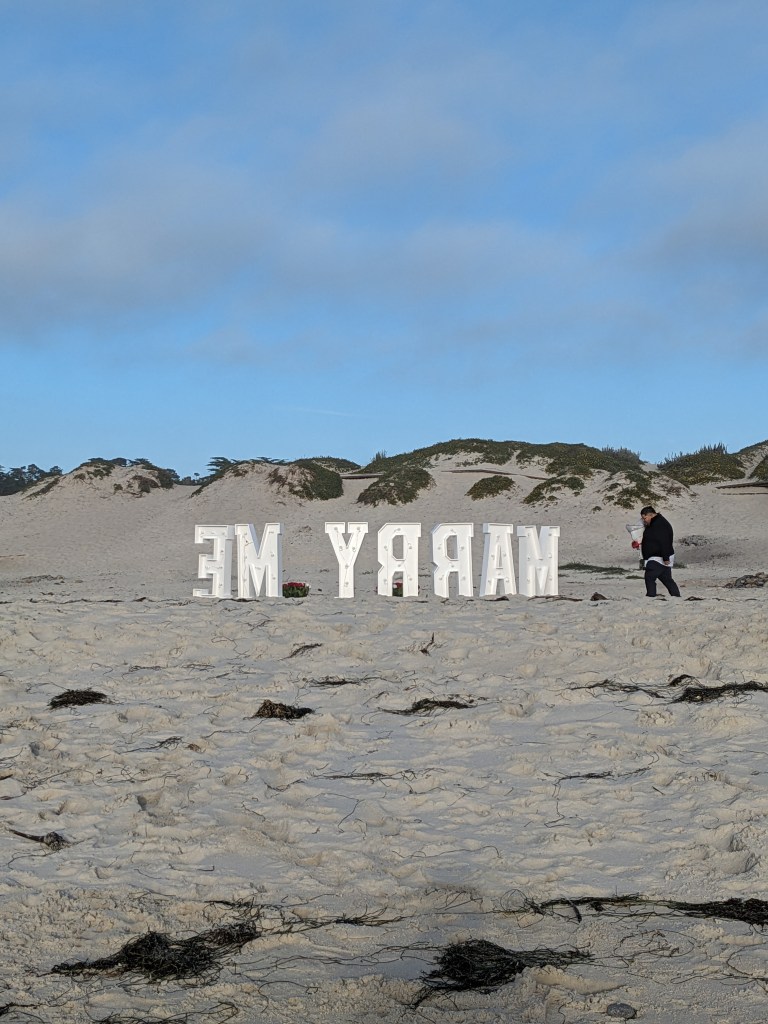
Asilomar State Beach, 21 July 2023. Photo by the Russian Reader
Who is Girkin?
Igor Girkin (Strelkov) is an ethno-fascist FSB officer and the warlord who prepared the ground and then launched the war in Donbas in 2014. He stated that without him, “there wouldn’t be any war”. He is also responsible for ordering the execution of numerous civilians, for which he still face justice. He was sentenced to life imprisonment in absentia by the International Criminal Court on November 17, 2022 as perpetrator of the downing of Malaysian Airlines 17 and the murder of 298 people—a war criminal.
Stunning drone footage has revealed details of the Batagaika crater, a one-kilometer-long gash in Russia’s Far East that forms the world’s biggest permafrost crater.
In the video two explorers clamber across uneven terrain at the base of the depression, marked by irregular surfaces and small hummocks, which began to form after the surrounding forest was cleared in the 1960s and the permafrost underground began to melt, causing the land to sink.
“We locals call it ‘the cave-in,'” local resident and crater explorer Erel Struchkov told Reuters as he stood on the crater’s rim. “It developed in the 1970s, first as a ravine. Then by thawing in the heat of sunny days, it started to expand.”
Scientists say Russia is warming at least 2.5 times faster than the rest of the world, melting the long-frozen tundra that covers about 65% of the country’s landmass and releasing greenhouse gases stored in the thawed soil.
After the court hearing [in his criminal case], Oleg Orlov read out a long list of names of people convicted of “disseminating fake news” or “discrediting the army.” He mentioned Alexei Gorinov, Dmitry Ivanov, Samiel Vedel (aka Sergei Klokov), Vladimir Kara-Murza, Ilya Yashin, Maxim Lypkan, and many others.
“I am not imprisoned, and I can say what I deem necessary. I can answer your questions. But how many of my and your kindred spirits are deprived of this opportunity,” Orlov reminded. “I consider it my duty to read out the list. These are only some of the people who have been imprisoned for their anti-war stance.”
After reading out the names, Orlov cited data from OVD Info. “634 people from 78 regions [of Russia] have faced criminal charges for anti-war protests, for words and statements,” the human rights activist said. “And 200 of them have already been incarcerated. Let’s remember these people.”
Orlov stressed that he was fighting not only for his own sake. “Both my lawyer Katerina Tertukhina and my public defender Dmitry Muratov — we are fighting like this and trying to prove the nullity of the charges [against him], the nullity of the [prosecution’s] expert witness analysis, because we are trying to fight for all people.”
Crimean Tatar-led underground movement is already active behind Russian lines and hundreds of young Tatar men are ready to take up arms to liberate the occupied peninsula, a veteran community leader has said.
Mustafa Dzemilev, widely seen as the godfather of the Crimean Tatar rights movement, pointed to operations by the Atesh guerrilla group, comprising Crimean Tatars, Ukrainians and Russians, in Crimea and other occupied Ukrainian regions.
Atesh, which means “fire” in Crimean Tatar, was created in September last year, primarily to carry out acts of sabotage from within the ranks of the Russian army. It claims more than 4,000 Russian soldiers have already enrolled in an online course on how to “survive the war” by wrecking their own equipment.
There is no evidence linking the group to the latest attack on the Kerch Bridge, early on Monday morning, but the group has claimed a string of smaller-scale attacks, blowing up Russian checkpoints, assassinating Russian officers, setting fire to barracks and feeding sensitive information to Ukrainian intelligence. It recently accused Russian sappers of laying mines in the Krymskyi Titan chemical works in Armiansk, northern Crimea. An explosion there could spread an ammonia cloud across the land bridge between the peninsula and mainland Ukraine.
“Atesh is very deep underground,” Dzhemilev, 79, told the Guardian in an interview in Kyiv. “There was not a single arrest among Atesh members, but they are working inside Crimea territory blowing up targets.”
Hello! This is Alexandra Prokopenko with your weekly guide to the Russian economy — brought to you by The Bell. In this newsletter we focus on the Kremlin’s decision to seize the Russian assets of two major foreign companies and what it means for the business climate and the other Western businesses who cannot — or will not — leave Russia. We also look at Friday’s interest rate hike and new Western sanctions on Russia.
Nationalization of Western assets heralds broader property redistribution
Finland’s Fortum and Germany’s Uniper saw their Russian assets seized by the Kremlin earlier this year. This week was the turn of France’s Danone and Denmark’s Carlsberg. It feels like we are witnessing the final chapter in the history of Western business in post-Soviet Russia. If the transfer of Fortum and Uniper’s energy assets to external management was explained as a response to the European Union’s treatment of Russian energy companies, there is no such obvious reason for the behavior toward Carlsberg and Danone and it likely reveals the Kremlin’s real intentions. This is direct nationalization — and opens the door to a new distribution of property in Russia.
The Arkhangelsk Region has allocated 800 million rubles to the occupied Ukrainian city of Melitopol, which will be used to repair the city, which has suffered from Russia’s invasion. However, the region itself does not have enough money to repair its own housing. Arkhangelsk is considered the capital of the Russian North, but has been informally dubbed the “capital of dilapidated housing.” Many people live in substandard housing: the city is chockablock with barracks and crumbling wooden houses. Watch Valeria Ratnikova’s report on how the region copes with a budget deficit while its money is spent on the war.
00:00 Opening 02:15 Ruins, barracks, and crumbling houses 06:00 Brevennik Island: expensive prices and derelict housing 10:56 Natalia Zubarevich about the lack of money in the region 12:04 The campaign against waste haulage to the region 16:18 The authorities are taking revenge on opposition activists opposed to landfills 31:35 Denunciations and criminal cases for statements about the war 33:22 One of the protesters went to the war 36:15 What residents say about the war 38:26 Getting fired for criticizing the war 39:40 A female student fled to Lithuania — the authorities wanted to jail her for talking about the war 46:25 The region’s environmental problems 49:10 Journalists detained during Putin’s visit 51:11 How the war has affected life in the region
This is the 7×7 team on the line. This newsletter has been written by Oleg Gradov. What inspired the environmental protests at Shiyes and why there is no mass protest nowadays is the subject of our newsletter today.
Approximate reading time: 4 minutes.
I’m sorry if you’re from Moscow and our headline hurts your feelings. No one will be scolding the residents of the capital in this newsletter. The quote “Moscow lost its fucking mind” refers only to the leadership of that city and our country, but we will talk more about this later.
One of the few successful cases of protest in Russia’s recent history is Shiyes. In 2018, the authorities decided to construct a landfill in the Arkhangelsk Region to dispose of the waste produced by residents of the Russian capital. The locals did not like it, they started holding protest rallies, and eventually the landfill project was canceled. For this newsletter, I spoke with Dmitry Sekushin, one of the participants and coordinators of the Shiyes protest movement. Marina Feldt, an ex-staffer with the Navalny organization in Arkhangelsk, spontaneously joined our conversation.
What is Shiyes?
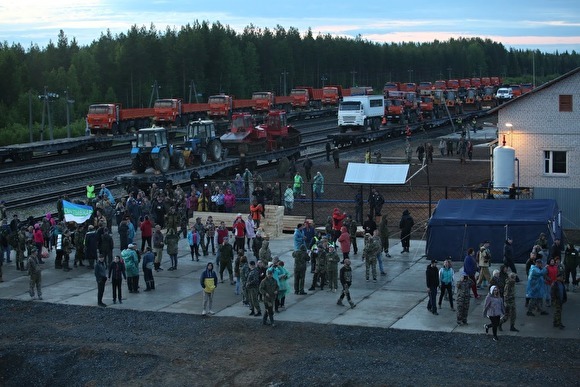
Shiyes is a small railway station in the southeast of the Arkhangelsk Region on the border with the Komi Republic. Protests against the landfill took place between 2018 and 2021. The protests at Shies were heavily supported by residents of the Arkhangelsk Region: [according to a poll by the Levada Center] 95% were opposed to the landfill, while 25% were willing to attend unsanctioned protest rallies. The activists were supported by both Russian and foreign journalists, as well as by residents of thirty Russian regions who were concerned about environmental problems and held protests in their own cities.
“The metropole does what it wants”
Where does such support for a regional protest come from? “The landfill itself would have made only a few people want to fight back,” says Dmitry Sekushin. “You have to understand how people feel about this. In our case, it was the feeling that we are a colony, and the metropole does what it wants with us. The idea that Moscow had lost its fucking mind united people.”
Realizing that you were part of a whole, not a splinter, was an important piece in the protests at Shiyes. People were aware of their responsibility for their native land and were proud of their background. “If someone in 2017 in Arkhangelsk had said that he was a Pomor, people would have thought that he was a freak. But in 2019, everyone was already proud to call themselves Pomors. This does not mean that we want to see Pomorye separated from Russia. It was just a unifying factor,” says Dmitry.
People can unite without becoming a homogeneous mass. The protests at Shiyes were environmental, not political: the activists’ demands had to with the basic human right to a decent environment. “One shouldn’t see the mass of protesters who defended Shiyes as ants,” Dmitry says on this score. “They were completely different people. I don’t see anything surprising about the fact that many of the protesters turned out to be fascists [i.e., they now support the war or are involved in it — 7×7]. They were like that in the first place.”
The goal makes all the difference
An achievable goal defines the methods of protest. “We had a goal — getting the [Shiyes landfill] project canceled. Not overthrowing Putin, not overthrowing Orlov, our [regional] governor. The goal was to shut down the project,” Sekushin emphasizes. Politicizing the protests at Shiyes could have a negative impact on the movement.
However, every day the activists were approached by people who argued that they were “protesting the wrong way.” “Some were dissatisfied with the fact that we did not talk about politics and did not chew out Putin,” says Sekushin.
To preserve the environmental component of the protests, Dmitry had to partly abandon media publicity from the opposition. “In the first few months of our protest, around December 2018, I wrote to Leonid Volkov asking Navalny not to say anything about Shiyes. I understood that the authorities would hold Navalny against us,” he says.
If you hang out on VK, you’ll go down on criminal charges
The activists used social networks to unite the protesters: they ran accounts on Instagram, Twitter, and Facebook, as well as a group page on VK. In Russia’s regions, VK remains one of the primary social networks even now, despite all the security risks. “We used VKontakte for contact with the outside world. It is wildly popular in the Arkhangelsk Region — 85-90% of social media users are on it. But for internal matters, we used only Telegram, which is a more secure network,” says Sekushin.
Nowadays, many activists do not trust Telegram, preferring instead such open-source messaging apps as Signal and Element.
Why are there no mass protests now?
Whereas, during peacetime, activists tried to separate environmental protests from political protests, it is almost impossible to do so now. On 26 February 2022, the Pechora Rescue Committee published a post on its VK group page demanding an end to the hostilities. “Protecting social, environmental and other human and civil rights is impossible in conditions of war,” the activists wrote in their statement. Movements that were originally focused on the environment began to make political demands, and the environmental protest movement was politicized.
“Last year there were no mass protests in Russia because people are afraid,” he says. “Because they’ve learned to be helpless. This is the result of the yearslong destruction of critical thinking and political competition, and the yearslong implicit social contract [between the Putin regime and the Russian people]: ‘You don’t meddle in politics, and we don’t interfere with your lives.’ This agreement is no longer valid, but it’s too late to change anything.”
At this point, Marina Feldt, an ex-staffer at the Navalny organization’s office in Arkhangelsk, joins my conversation with Dmitry. She argues that people in Russia support the war because it gives them positive emotions.
“The main idea of the protests at Shiyes was ‘Moscow is fucked in the head,'” she says. “This is the idea of disconnection: there is Moscow, and and then there is us — Pomorye. But the war in Ukraine is driven by the idea of unification. People in the regions often lack a sense of involvement with the rest of Russia; it seems to them that that they are unwanted. But this war is where people can feel needed by their Motherland. The government has humiliated people so much that now they can rejoice in something that would not be considered decent under normal circumstances.”
Dmitry Sekushin argues that any country can be brought to such a state: “If you propagandized a European country like this for twenty-two years, it too would become fascist.”
It’s the 7X7 team on the line. Today we’re going talk about the environmental movement 42 and why it suddenly became a “foreign agent.”
Approximate reading time: 4 minutes.
Some people look forward to Friday to go drinking after the work week, but we look forward to Friday to learn the names of the new “foreign agents,” as designated by the Russian Justice Ministry. Their updates to the registry of “foreign agents” are like a new episode of a TV series, the release of a long-awaited game, or a new song by a favorite artist. Russian officials know how to put on a show, you can’t take that away from them.
This week, The Bell, ex-What? Where? When? contestant Rovshan Askerov, TV Rain journalist Mikhail Fishman, philosopher Ruben Apresyan, and the Environmental Movement 42 were added to the registry. We’re going to tell you about 42, an eco-movement based in Arkhangelsk.
What does 42 do?
Article 42 of the Russian Constitution states: “Everyone has the right to a favorable environment.” The movement named itself after this article. 42’s activists run online seminars on eco-education, talk on social media about the Arkhangelsk Region’s unique sites, and organize subbotniks.
Everyone can lead an eco-friendly lifestyle. You can start by sorting and recycling garbage. So, the 42 team, together with the Ecomobile project, accepts glass, plastic, metal, and paper for recycling. And for convenience, once a month a real ecomobile drives around Arkhangelsk, staffed with activists to whom residents can hand over their recyclables.
“Foreign agent”
42 is this environmental organization’s second incarnation. They used to be called Aetas, but in 2017 the Justice Ministry designated the organization a “foreign agent.” The reason they were put on the registry was their cooperation with the Norwegian activist group Natur og Ungdom, which financed some of Aetas’s events, including free children’s camps, expeditions, and Ecobattle, an annual championship for collecting recyclables.
After they were put on the foreign agents registry, the activists founded a new movement, 42, in February 2018. But it was also designated a “foreign agent” this past Friday, December 9. Will there be a third incarnation and a second reincarnation? We’ll see.
Organizations and individuals are place on the “foreign agents” registry for a reason. You have to consistently and vigorously mess with the state’s attempts to generate tyranny and speak out against it. But how did people trying to organized segregated waste collection deserve the new designation? One can never say for sure, but there is speculation that the reason they were placed on the registry is that they have called for locals to participate in public discussions about the construction of a new waste sorting complex in the village of Kholmogory.
Friends in misery
Someone may think that the title of “foreign agent” is a seal of excellence. Perhaps this is partly true, but it is also a heavy burden for any organization, especially if it is located in Russia. Foreign agents have to submit additional reports, indicate their foreign agent status on any public platforms, and cannot receive state grants.
In 2022, the Russian government has been pressuring activists from environmental protest groups more vigorously than usual, but most often not for environmentalism, but for anti-war statements. On December 9, Elena Kalinina, one of the participants of the protests in Shiyes, was ordered by a court to refrain from certain activities due to her alleged “repeated discrediting of the army.” Ivan Ivanov, chairman of the Pechora Rescue Committee, was fined by a court in June for appealing to Putin to stop the war. And Arshak Makichyan of Fridays for Future and his family members were stripped of their Russian passports altogether: officials claimed that they had suppled false information when they applied for them in the early noughties after moving from Armenia.
Life goes on
Fines, bans, and denaturalization. But is there any good news? Of course there is! And we at 7×7 are just the people to find it for you.
Greenpeace opened its first branch in the USSR in 1992 [sic: the Soviet Union dissolved in December 1991]. The money for opening this branch was raised from the sales of a charity album called Greenpeace Breakthrough. Songs for the album were recorded by U2, Sting, Talking Heads, Dire Straits, and others.
Thirty years later, a collection called Greenpeace Breakthrough 3.0 has been released in Russian. The songs on it were recorded by Samsara, Electrophoresis, Neschatsnyi Sluchai, Nogu Svelo, and other Russian-speaking artists. The artists will transfer the money received from the auditions to environmental organizations in Russia.
In its group description on VK, 42 writes: “We are safeguarding nature in Russia until better times.” Indeed, garbage recycling and subbotniks may seem unimportant now, but this is not the case. The war will end, and the country and its nature will still be a concern for inhabitants of the regions.
Take care of yourself. Thank you for sticking with us.
Source: “Focus” email newsletter, 7X7, 12 December 2022. Translated by the Russian Reader
THIS IS THE LAST POST
Today, the Russian Justice Ministry placed the Environmental Movement 42 on its registry of foreign agents. It should be noted that the persons listed as members of an association are not deemed “individual foreign agents.” This bit of misinformation has been widely repeated.
About the law
The Law on Foreign Agents has been in force in Russia since 2012. At that time, you to had to engage in political activity and receive foreign funding to earn a spot on the registry. Despite the fact that “activities for the protection of flora and fauna” are excluded from the law as forms of political activity, thirty-four environmental organizations have been placed on the registry to date. Ten years later, on December 1, a new law on foreign influence went into force. Its implications are unclear. You are probably reading this post on a smartphone manufactured somewhere other than Russia. You listen to foreign music, watch foreign movies, and go on holiday to Turkey. Under the new law all these things can be deemed “foreign influences.”
Our opinion
Naturally, we do not agree with our inclusion on this registry. If we are “agents,” we are only agents of nature. Our families have lived in the Arkhangelsk Region for several generations. We are rooted to this land, and so our principal mission is safeguarding nature and the well-being of future generations. This is reflected in our name: 42 is the number of the article in the Russian Constitution that states that everyone has the right to a favorable environment. We doubt that the people who put us on this registry have the same love for our region and our people as we do, that they understand the connection between environmental mistakes and people’s health and safety.
We are not surprised by this turn of events. Unfortunately, this is the trend — to drown out the public’s voice. Why do you think we were included in the registry? Just a few days ago, we published information about public hearings on the proposed construction in Kholmogory of a municipal solid waste processing facility with a capacity of 275 thousand tons. There was clearly an attempt by the authorities to hold the hearings quietly and unnoticed; even local council members didn’t know about them. Due to the attention they attracted, the administration has had to hold a second round of hearings, which now will be going on until January 7. But again, the project documentation has not been made available, although it is topic of discussion. Why all these secrets? Why the pressure on us?
What’s next?
We do not know what we’ll do next, because the law is quite harsh and imposes numerous burdens, including financial ones, which we simply cannot afford. We are consulting with lawyers about this. It is very easy to break the “rules,” the fines are large, and there is a risk of criminal liability for us. The safety of the people who selflessly protect nature under 42’s auspices is important to us.
We will be glad of any support on your part. You can also like, comment, and share information here as before (the lawyers explained that it is safe). This is our last post without the ugly boilerplate [indicating “foreign agent” status], which from tomorrow we will be obliged to put in all our informational materials.
* The photo, above, shows members of 42 after they arrived in Shiyes for a week-long vigil on the eve of 8 March 2019.
Source: Environmental Movement 42, VK, 9 December 2022. Translated by the Russian Reader
The Arkhangelsk-based Ecological Movement “42” is one of the first to be listed after Russia on December 1 drastically expanded the oppressive foreign agent legislation. The eco-group was started after Aetas environmental organization in 2017 was declared foreign agents and shut down.
“The only agents we are, are agents of nature,” the group wrote at its site on VKontakte when it became known that the Ministry of Justice in Moscow declared them so-called foreign agents.
“Naturally, we do not agree with the inclusion of us in the register.”
The foreign agent law itself was adopted in 2012 and said that registered organizations could be listed if they conducted political activities and got funding from abroad.
Later, successive amendments in 2017 and 2019 expanded the law to include media, individuals and non-registered associations.
The latest expansion of the law, adopted in July and entering force on December 1, says individuals, organizations, legal entities, or groups without official registration, receiving foreign support, or are “under foreign influence” and conduct activities that authorities would deem to be political would be listed as foreign agents.
The definition of “foreign influence” and “political” could be endlessly broad.
In Arkhangelsk, the Ecological Movement “42” says they don’t know for what reasons it is included on the list.
“Preservation of nature, and hence the preservation of the well-being of future generations, is our main goal and task.”
42 points to the article in the Russian Constitution stating that everyone has the right to a favorable environment.
“We doubt that those people who included us in the register have the same love for our region, for our people, understand the connection of errors with the health and safety of people,” the group says.
The eco-group has over the last years worked actively worked to stop the plans to establish a huge dump field for household waste from Moscow in Shiyes, far north in the taiga forest in the borderland between Arkhangelsk Oblast and the Komi Republic.
The group is only for members under the age of 30. It is member of the Russian Social Ecological Union, the Climate Action Network and the Stop Shiyes Coalition.
Since 2012, 34 environmental organizations in Russia have been included in the foreign agent register.
The foreign agent law was also used to shut down the human rights group Memorial that last weekend was given the Nobel Peace Price for 2022 in Oslo.
The “foreign agents” designation, which carries negative Soviet-era connotations, burdens subjects with strict labeling and auditing requirements.
Many independent journalists, activists and civil society figures have been added to the registry in recent years amid a sweeping crackdown on non-Kremlin-aligned voices.
Shiyes Railway Station. Photo courtesy of Znak.com
Arkhangelsk Authorities Announce Closure of Shiyes Landfill Project Znak.com
June 9, 2020
The Arkhangelsk regional government has unilaterally terminated its agreement with Technopark LLC on overseeing the investment project for the construction of a landfill at Shiyes. The decision was announced on June 9 by the press service of the region’s governor and the regional government.
The project has lost the preferential granted to priority investment projects in the region, including tax incentives and special conditions for leasing land plots. Arkhangelsk authorities had earlier asked Technopark to terminate the contract by mutual agreement, but the company did not respond, officials explain.
“Alexander Tsybulsky, the acting governor of Arkhangelsk Region, ordered the regional government to terminate the Shiyes Ecotechnopark project,” said Yevgeny Avtushenko, the regional government’s deputy chair. “The decision to remove it from the register of priority investment projects in the Arkhangelsk Region was the next stage in this process.”
Construction on the landfill near Shiyes railroad station in Arkhangelsk Region began in 2018. The plan was to bring about half a million tons of waste annually from Moscow and Moscow Region over twenty years. Technopark LLC invested in the construction project. Residents of the region strongly opposed the dump, and environmental activists set up a camp near Shiyes station and declared an indefinite protest campaign. In 2019, there was a series of clashes between opponents of the landfill and security forces.
Construction of the landfill was supported by the now-former governor of Arkhangelsk Region, Igor Orlov, who called environmental activists “riffraff.” Orlov was forced to resign in early 2020. Alexander Tsybulsky, who took his place, had criticized the landfill.
Construction work at Shiyes was suspended in June 2019 due to protests, and a few months later Shiyes was excluded from the list of places where authorities planned to ship Moscow’s garbage. In January 2020, the Arkhangelsk Regional Arbitration Court ruled the permanent buildings on the site of the future landfill illegal, ordering the investor to demolish them. The lawsuit, which took almost a year, was filed by officials in the neighboring village of Urdoma with the support of the local population. Environmental activists hailed the court’s decision as a historic victory.
Translated by the Russian Reader. If you’d like a sense of what the struggle in Shiyes looked like before the court and local authorities took the side of the protesters, read “Shiyes: The Cost of Solidarity” and “Neocolonialism.”
In the Arkhangelsk Region, the security forces have launched an offensive against the camp in Shiyes, where an indefinite protest against construction of a landfill for Moscow’s garbage has been going on for over a year. The Russian National Guard has cordoned off the station, blocked the nearest village, Urdoma, and destroyed one of the posts manned by activists. The railway connection with the station was closed in the summer, and the only way to get to Shiyes is the ferry across the Vychegda River.
On the eve of the siege, the vocalists from the group Arkady Kots, composers of the song “Walls,” which has been adopted as the protest camp’s anthem, traveled to Shiyes to boost their morale.
Directed by Anna Moiseyenko and Alexandra Matveyeva (Moscow, 2019)
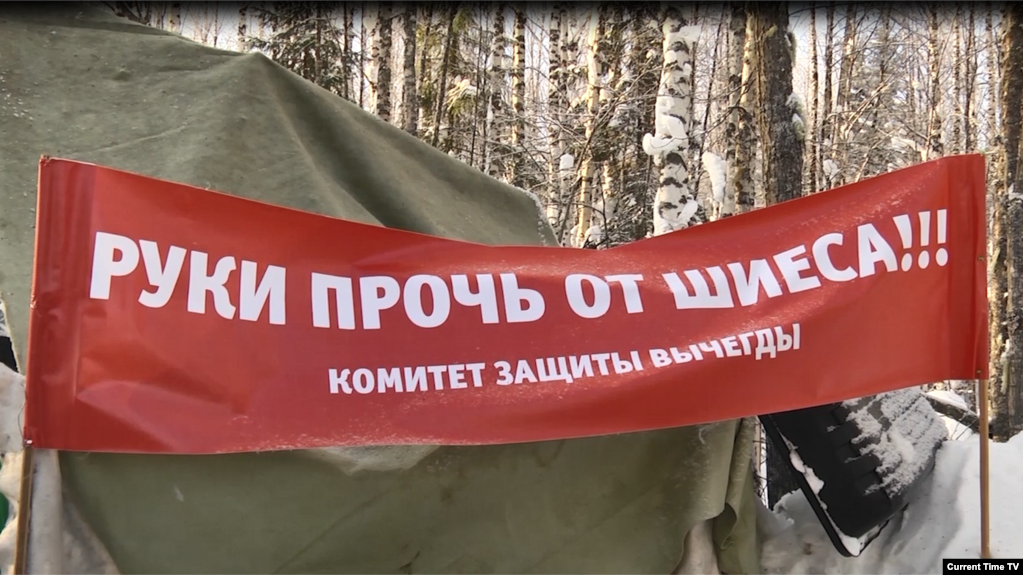
A banner in the activist camp at Shiyes station: “Hands off Shiyes! Vychegda Defense Committee.” Photo courtesy of Current Time TV and Sever.Realii
Anti-Shiyes Activists in Arkhangelsk Region Laid Off After Several Warnings Sever.Realii (Radio Svoboda)
November 1, 2019
Employees at the Viled Tourist Information Center in the Arkhangelsk Region have received pink slips after their managers warned them they should not publish posts about Shiyes on social networks and attend rallies against construction of a waste landfill there. Sever.Realii was told about this by Tatyana Regush, who received one such pink slip.
The Viled Center is a branch of the Vilegodsk District Ethnographic Museum. Three people are employed at the center, and Regush officially holds the position of deputy director of the museum. On October 31, the center’s employees received notices they were being laid off. Sever.Realii has copies of the notices.
“They want to eliminate our entire branch: all of us are activists here. I requested a copy of the resolution, issued by the district head, which states that the work of the tourist information center has been deemed ineffective and, in order to optimize costs, our center has been shut down. Our salaries will be transferred to other cultural institutiosn,” Regush explained.
One of the center’s employees resigned shortly before the dismissal notices were sent, while a second employee, Alexander Zhelezko, has also received a pink slip. The district head’s resolution does not specify exactly how the center was inefficient.
Regush attributes the redudancies to her activist stance on the construction of of the waste landfill next to Shiyes station.
“There were warnings. We found out about the problems in Shiyes in late 2018 and began attending protest rallies and speaking at them. I am a lawyer: I would take the microphone and try to provide a legal assessment of what was happening. In May 2019, the district head and the center itself warned me my activism was undesirable since our stance was at odds with the governor’s official position. They told us the government gave us jobs and that as municipal employees we should adhere to the official line. We do not agree with that. The district head warned that the dismissals of activists had already begun,” Regush said.
Regush said she was unlikely to challenge the dismissal and the resolution in court. She has already been offered another job.
We were unable to get a comment from the museum’s management: Olga Ilyina, the museum’s director, was not at work when we contacted them.
Moscow authorities have been building a landfill for waste from Moscow in the village of Shiyes in the Arkhangelsk Region. There will be no recycling or processing at the facility. The residents of the region are opposed to the landfill. They argue it will harm the enviroment and cause an ecological disaster. For more than a year, local residents, environmentalists, and activists have been holding protest actions and rallies.
To set Russia apart from the pack, Putin is leaning on a unique pitch: that only Russian support can help protect the sovereignty of African countries.
“We see how an array of Western countries are resorting to pressure, intimidation and blackmail of sovereign African governments,” Putin told TASS on Monday in an interview ahead of the summit, adding that Russia was ready to provide help without “political or other conditions.”
“Our country played a significant role in the liberation of the continent, contributing to the struggle of the peoples of Africa against colonialism, racism, and apartheid,” he said. Although ties deteriorated after the collapse of the Soviet Union in 1991, traces remain: the Mozambique flag, for instance, carries the Kalashnikov rifle. —Evan Gershkovich, “At Russia’s Inaugural Africa Summit, Moscow Sells Sovereignty, Moscow Times, 26 October 2019
________________________________
It’s amazing to read nonsense like this some ten or so years after an unbelievable wave of neo-Nazi terror in Petersburg, Moscow, and other Russian cities that targeted, among others, the country’s African community and African students.
I remember going, back then, to a community event where I was told, by one person after another, that none of them went out in Petersburg after dark except by car or taxi.
This is not to mention the fact that all the African leaders lining up for aid from Russia want to know nothing, apparently, about the Putin regime’s attitude to the Russian people, which differs very little from that of colonizers to the colonized. Just look at what is happening right now in Shiyes, for example. [TRR]
________________________________
OMON Forces Move to Cut Off Shiyes Protesters from Outside World
Paul Goble Window on Eurasia
October 29, 2019
Staunton, October 25 — In an ominous move, some 30 OMON officers two days ago blocked the railroad station near where the Shiyes anti-trash dump protesters have made their camp as well as the roads leading to and from it, electric power there and in neighboring villages, and Internet connections with the outside world.
The protesters and their supporters are not sure whether this is the first step towards the closing of their camp or simply another feint in that direction designed to keep them nervous and off balance.
But one thing many of them are sure of is that Vladimir Putin is behind the move and that this is yet another case in which he has made much-covered public promises to defer to the population and follow the rule of law only to move in another direction when attention shifts.
Obviously, there is still some communication between the protesters and journalists; but the ring is being tightened. And as the weather gets worse, it will become far more difficult for the protesters to get the supplies and support they need to continue their protest against the largest trash dump in Europe, one not for their own wastes but for those of Moscow.
Imagine that you live in the Arkhangelsk Region. You are strong, independent people, descendants of Russians who were untouched by the Tatar-Mongol yoke and serfdom.
You are not office clerks or anyone’s employees, the more so since there is really nowhere to work. Your native land—its forest and rivers—feeds you. You live off the land and for the land. It is your place in life.
And now the brazen Moscow scumbags who have made billions of rubles from garbage have turned their fat mugs towards your part of the world. After making a bloody mess of the Moscow Region and its neighbors, they have taken a look at your land and licked their chops, deciding to build a landfill there. Your land suits them because it is not so far from Moscow, but it is sparsely populated and invisible from the capital. Your land suits the scumbags.
They have dubbed their future garbage dump, where they intend to transport nearly all the trash from Moscow, an “environmental industrial estate,” but whatever they call it, a garbage dump—a gigantic garbage dump—is still a garbage dump.
The bastards could not care less that the land is yours and gives you life: they have decided to fuck it up, too. They could not care less that it is a buffer zone for sources of drinkable water, that the land is swampy and runoff from the garbage dump will poison the soil, plants, and forests that sustain you and your children, that first the Vychegda River will be polluted and then the Northern Dvina, that previously pristine places will be destroyed.
But the scumbags have run into an unexpected obstacle: you decided to resist. There are not many of you, but you are human beings.
At first, you tried to appeal to the authorities, but you soon realized the scumbags attempting to spoil your land are the authorities.
And so then you simply have tried to keep the scumbags out. You have set up a tent city: you have guarded your land, preventing them from building their landfill. And the station of Shiyes, the place around which these events have unfolded, has become iconic throughout Russia, a place where people have resisted the lawlessness of the authorities.
Honestly, though, it is not just about the garbage dump. The fact of the matter is that you are human beings and you do not want to surrender your land to scumbags. It is a matter of fairness, of justice.
At first, even the local police were on your side, but then the scumbags recruited squads of goons from all over the country to try and handle you. This was what happened during the spring and summer.
But then fall came, and the scumbags realized the time is now. The political storms in Moscow have subsided, winter is on its way, and it will be harder and harder for you to resist.
So the bastards have stepped it up. They have used the Russian National Guard to break your blockade, and they have turned off the lights and the internet in the houses where your children live so the country won’t find about what is happening.
The bastards really want money and if they had their druthers they would kill you and bury you in the northern soil. The only thing holding them back, ever so slightly, is the possible bad publicity.
The bastards have the authorities and the Russian National Guard at their backs. There are only a handful of you.
Can you imagine this?
That is exactly what is happening now in Shiyes, where construction of a landfill has turned into a military special operation, a special operation so important, that martial law, a state of siege, has been imposed in the neighboring village of Urdoma. The special operation has been coordinated by the president’s plenipotentiary representative in the Northwest Federal District, Alexander Gutsan, who recently flew to Syktyvkar. It is so important that Viktor Polonikov, the interior minister of the Republic of Komi, personally visited Shiyes.
This is a real occupation, a war waged against the region’s inhabitants for the sake of huge profits.
The defenders of Shiyes are brave people, but they cannot cope with the Russian National Guard, with the Interior Ministry, with the steamroller of the regime alone.
We should all go to Shiyes and take our stand against the occupiers, but we cannot do this: we are not ready, we are weak.
But we can make it known to the entire country. We can spread the news, and this is also a way of helping, something that is in our power to do.
Tell everyone about what is happening in Shiyes. Write about it: do not be silent!
Today, they are cracking down on the defenders of Shiyes. Tomorrow, they will come for you.
Vera Afanasyeva is a former professor in the philosophy department at Saratov State University and a writer. Thanks to Valery Dymshits for the heads-up. Photo of Shiyes courtesy of Vera Afanasyeva. Translated by the Russian Reader
“Really Frightening”: Trees Dry Up and Toadstools Vanish in Karelia After Explosion near Severodvinsk Guberniya Daily
August 22, 2019
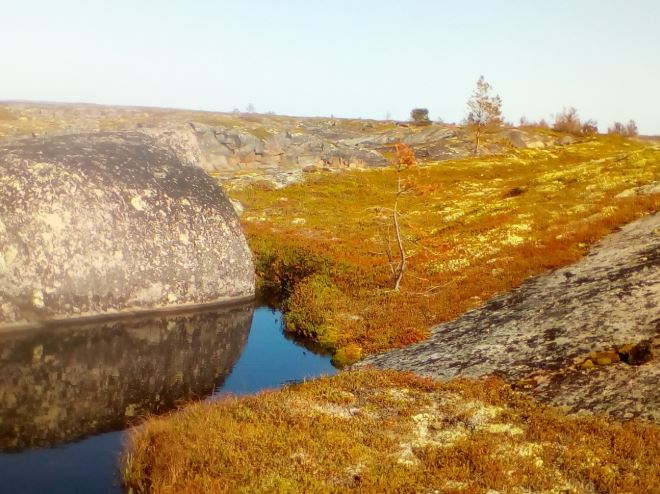
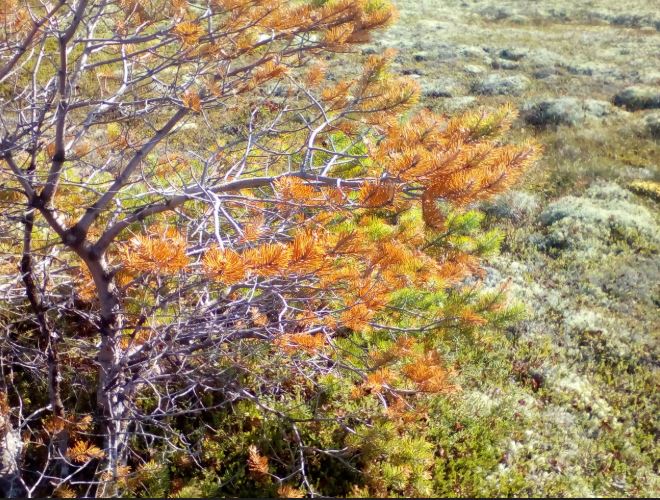
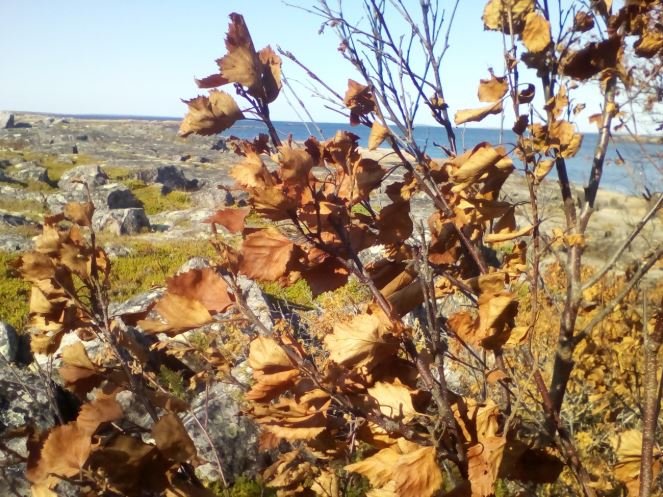
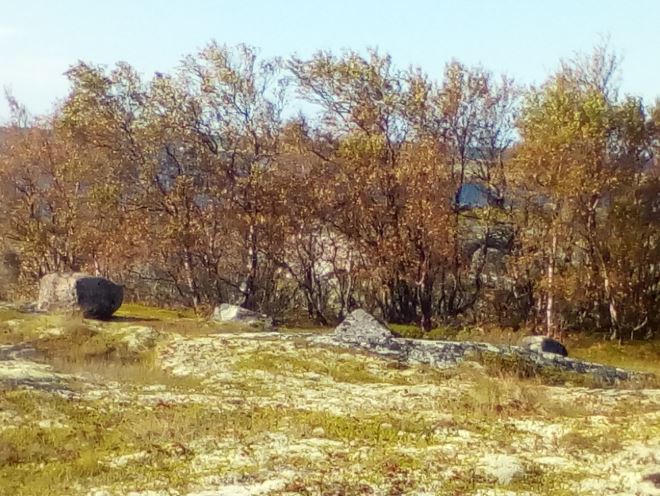
Residents of Karelia’s Kem District have sounded the alarm. Tree in the district have turned yellow and mushrooms have disappeared after the explosion near Severodvinsk, they claim.
“Ten days after [the accident], the vegetation on the islands in the White Sea near the settlement of Rabocheostrovsk took on a very unhealthy appearance. I get the impression the trees, grass, and moss burned flamelessly. Even toadstools and fly agaric, habitues of these locales, have disappeared on the islands. I would like you to clarify whether any tests will be made, what the republic’s government plans to do in general in response to this issue, and how people’s health will be affected,” a user identified as “Irina Kudryashova” wrote in a letter to Karelian Governor Arthur Parfenchikov, which she also posted on the VK wall “City of Kem Public Oversight.“
In the same thread, someone identified as “Galina Ivankova” wrote that she was “really frightened.”
“Some men from Belomorsk went out to sea, but when they got to Shuyiretskoye there were warships at anchor there and a yellow cloud overhead. They got turned back: they weren’t allowed to go out into the sea. So welcome to Chernobyl Karelia. Thanks to the mad nuclear scientists,” a person identified as “Oleg Bachanov” wrote in another discussion on the same wall.
“The situation is the same on Yak Island: everything withered and dried in no time. In recent years, especially after 2009, I have noticed that, from the north and the northeast, all the woods and grass on the islands look as if they have been covered in brown paint. There are no berries or mushrooms in these patches,” replied a user identified as “Sandro Avtushenko.”
On August 8, a liquid rocket propulsion system exploded during testing on an offshore platform in the Arkhangelsk Region. Eight Rosatom employees [sic] were hurt; five of them were killed. Fearing radiation, residents of Severodvinsk and Arkhangelsk made a run on iodine in pharmacies.
After the explosion, radiation levels were sixteen times higher than normal in Severodvinsk. Higher levels of background radiation were also recorded in Norway a week after the blast.
Translated by the Russian Reader. NB. The original text was heavily edited to reflect the fact that the claims cited in the article were made by four discrete users on a VK community wall in Kem, Republic of Karelia, not by an indefinitely large number of “residents.”
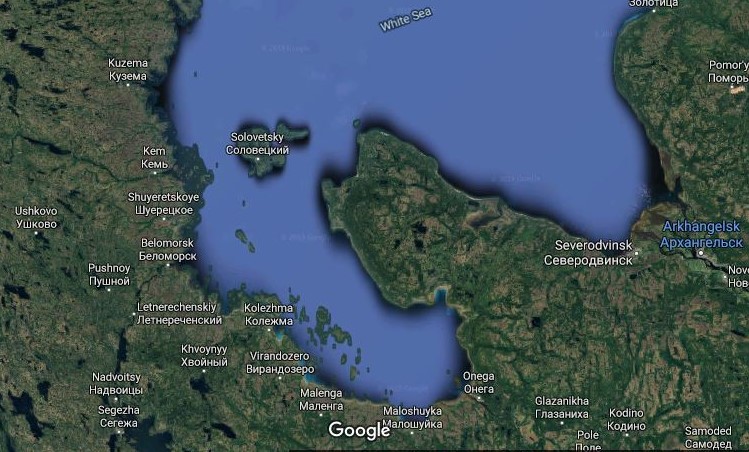
The area of Northwest Russia, encompassing parts of the Republic of Karelia and Arkhangelsk Region, discussed in the article. Image courtesy of Google Maps
Russian President Vladimir Putin insisted Wednesday that a recent deadly explosion at a military testing site in northwestern Russia hasn’t posed any radiation threat, but he remained coy about the circumstances of the mysterious incident.
Speaking after talks in Helsinki with Finnish President Sauli Niinisto, Putin emphasized that neighboring nations haven’t recorded any spike in radioactivity.
“These are the objective data,” he said. “These things can be tracked.”
The Aug. 8 incident at the Russian navy’s range in Nyonoksa on the White Sea killed two servicemen and five nuclear engineers. It was followed by a brief rise in radiation levels in nearby Severodvinsk, but the authorities insisted the recorded levels didn’t pose any danger to local residents.
Russian officials’ changing and contradictory accounts of the incident drew comparisons to Soviet attempts to cover up the 1986 explosion and fire at the Chernobyl nuclear power plant in Ukraine, the world’s worst nuclear disaster.
The Russian Defense Ministry at first denied any radiation leak in the incident even as the authorities in nearby Severodvinsk reported a brief rise in radiation levels and advised residents to stay indoors and close the windows. Frightened residents rushed to buy iodine, which can help reduce risks from exposure to radiation.
Russia’s state weather and environmental monitoring agency said the peak radiation reading in Severodvinsk on Aug. 8 was 1.78 microsieverts per hour in just one neighborhood, about 16 times the average. Peak readings in other parts of Severodvinsk varied between 0.45 and 1.33 microsieverts.
The announced peak levels were indeed lower than the cosmic radiation that plane passengers are exposed to on longer flights or doses that patients get during some medical scans.
No detail on weapon tested
The Comprehensive Nuclear Test Ban Treaty Organization (CNTBTO) said earlier this week that several Russian radiation monitoring stations went silent shortly after the explosion in Nyonoksa. Lassina Zebro, the organization’s executive secretary, said Tuesday that the two Russian stations reported to be offline were back in operation and are now backfilling the data.
Observers said that several stations coming offline at the same time appeared to reflect a coordinated effort to conceal the radiation data, which could help identify the technology that was being tested at the time of the explosion.
Putin hailed the victims, saying they were doing “very important work for the nation’s security,” but kept mum on what type of weapon they were testing.
Russia’s state nuclear corporation Rosatom said the explosion occurred on an offshore platform during tests of a “nuclear isotope power source” for a rocket engine, a statement that led some experts to conclude that the weapon undergoing tests was the Burevestnik (Storm Petrel), a prospective nuclear-powered cruise missile first mentioned by Putin in 2018 that was code-named Skyfall by NATO.
U.S. President Donald Trump has backed that theory in a tweet, saying that the U.S. is “learning much” from the deadly explosion. In a tweet, he said, “The Russian Skyfall explosion has people worried about the air around the facility, and far beyond. Not good!”
The U.S. worked to develop a nuclear-powered missile in the 1960s under Project Pluto, but abandoned the technology as too unstable and risky.
Yevgeny Barthold was an artist and traveler. Author of A Guide to Karelia and the Kola Peninsula, Barthold hiked these places up and down on his own feet and drew them with his own hands.
A work by Barthold, currently in the collection of the Murmansk Museum
If you dip into the guide, it is obvious how in love he was with northern landscapes, how he wanted to share their beauty with readers and prepare them for their pitfalls and dangers.
When you read the Guide, published in 1935, and look at the pastels he made in the north in 1936-37, you wonder whether Barthold could have imagined that in 1938 he would travel to his beloved north not as a traveler but as a prisoner of the Oneglag camp, where he would work logging trees and building a narrow-gauge railway, and that in 1942 he would die of “cardiac paralysis.”
The Mekhrenga River in Arkhangelsk Region. In 1939, Barthold was transferred to a camp station here.
Barthold’s last address was 75 8th Line, Vasilyevsky Island, Leningrad.
You can read more about Barthold’s life and death (in Russian) on the Last Address website.
Barthold’s Guide to Karelia and the Kola Peninsula has been digitized and posted online.
Photographs and images courtesy of Jenya Kulakova. Translated by Thomas Campbell
Climate change demonstrations took place in many cities around the world today.
Schoolchildren and adults took to the streets to demand implementation of the Paris Agreement, which primarily aims to counter global warming.
Maybe you have heard of Greta Thunberg, the Swedish schoolgirl who organized the movement #fridaysforfuture by skipping classes at school every Friday and picketing the Swedish parliament instead.
It makes sense. What is the point of going to school if the future is threatened? Humankind has killed off 70% of wild animals in the past four years. The oceans contain more discarded plastic than fish. And the list goes on.




 About the law
 Shiyes Railway Station. Photo courtesy of Znak.com
 A banner in the activist camp at Shiyes station: “Hands off Shiyes! Vychegda Defense Committee.” Photo courtesy of Current Time TV and Sever.Realii
 To set Russia apart from the pack, Putin is leaning on a unique pitch: that only Russian support can help protect the sovereignty of African countries.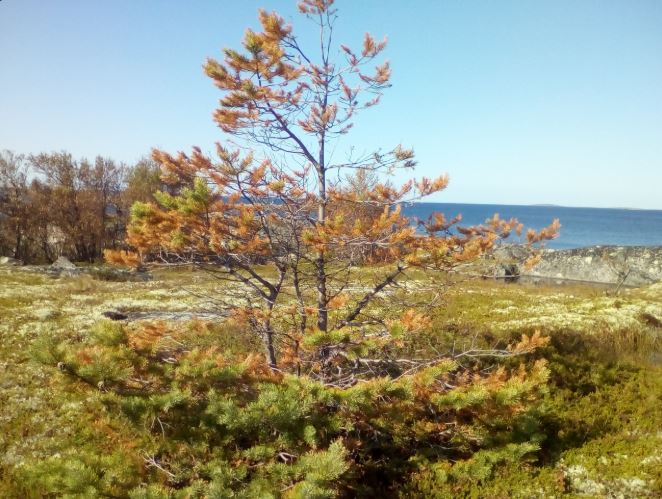

 The area of Northwest Russia, encompassing parts of the Republic of Karelia and Arkhangelsk Region, discussed in the article. Image courtesy of
  Yevgeny Barthold, A Guide to Karelia and the Kola Peninsula (Moscow: OGIZ, 1935)
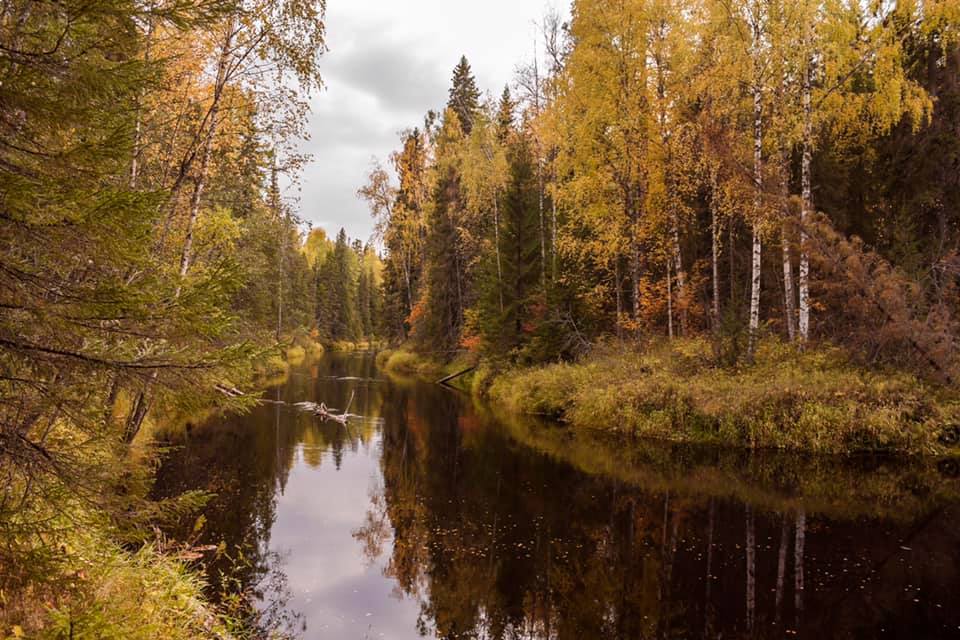 The Mekhrenga River in Arkhangelsk Region. In 1939, Barthold was transferred to a camp station here.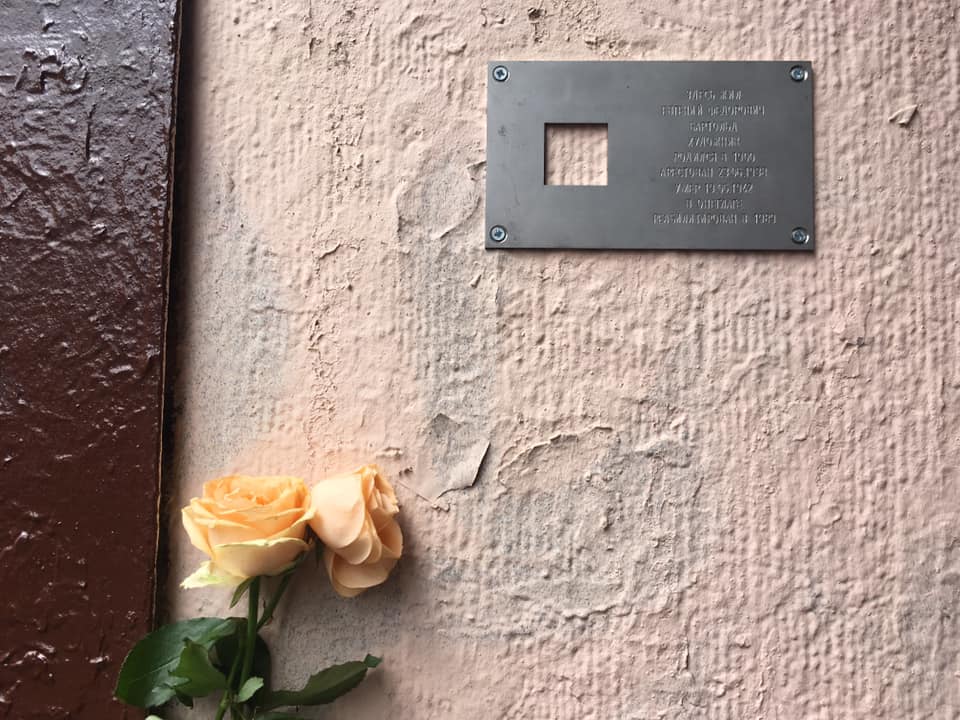
 Denis Shtroo. Photo courtesy of