Dummy ammo at Petersburg’s Udelny flea market. Photo: Anton Vaganov/Delovoi Peterburg
A Petersburg district court has ordered schools in the city’s Nevsky District to outfit themselves with dummy Kalashnikov assault rifles and copies of military regulations and of the Constitution of the Russian Federation, the consolidated press service of the municipal courts reports.
The Petersburg prosecutor’s office had motioned the Nevsky District Court to oblige schools No. 331, 323 and 339 to purchase the required equipment for their health and safety classrooms. The administrations of these educational institutions were also required to purchase manuals on the basics of shooting, dummies of the Kalashnikov assault rifle and the upgraded Kalashnikov assault rifle, and fifteen copies each of the Constitution, of the law “On Military Duty and Military Service,” and the of presidential decree “On Authorization of the General Military Regulations of the Armed Forces of the Russian Federation.”
“Counsel for the defendants acknowledged the claims made under the lawsuits. They explained that they were ready to equip the classrooms as required,” the municipal courts press service reports.
On September 15, the court ruled in favor of the plaintiffs in all three suits.
A similar ruling was made by Petersburg’s Kuibyshev District Court on 12 February 2023. Then, the court ordered School No. 294 in the the city’s Central District to purchase the gear for its health and safety classroom that it lacked: equipment for studying traffic regulations, first aid tools, and manuals and dummy weapons to be used for basic military training (NVP).
Since September 1, basic military training and labor education have been introduced as subjects in all Russian schools. DP took a look at how the uniform standards changed school education.
Veterans of the special military operation and combat veterans will be able to teach the new subject “Fundamentals of the Security and Defense of the Motherland” in schools after undergoing retraining at the State University of Education (GOOP), according to Education Minister Sergei Kravtsov, who was speaking at a plenary session during the Russian national pedagogical forum “Memory Is Sacred.”
“A center for retraining veterans of the special military operation and combat veterans as teachers was created this year at GOOP to implement a new subject area with a priority on practical training in the new subject ‘Fundamentals of the Security and Defense of the Motherland,'” Kravtsov said.
According to the minister, the basic military training module would be enhanced in this subject, which is being implemented as part of the “Fundamentals of Health and Safety” curriculum. The new subject would be trialed this year, and it would be taught in schools beginning in the next academic year, he added.
On June 30, Kravtsov said that, as part of the subject, schoolchildren would gain knowledge of the “role the defense of the country plays in its peaceful socio-economic development and the current complexion of our our Armed Forces.” Schoolchildren would be introduced to concepts such as “military duty” and “military service.” The minister emphasized that the load on schoolchildren would not increase—the number of classroom hours would remain the same.
GOOP’s acting rector Irina Kokoyeva told Vedomosti that the Apex Center for Military-Patriotic Education had been operating at the university since September 1. One of the center’s focus areas is the professional development and retraining of special operation veterans as coordinators of military-patriotic clubs and teachers of the subject “Fundamentals of the Security and Defense of the Motherland.” “We plan to recruit a pilot group in this focus area. Information about the conditions and criteria for recruitment will be posted on the university’s official website in the near future,” she added.
Tuition for veterans of the special operation will be free, Olga Kazakova, head of the State Duma’s education committee, told Vedomosti. According to her, the program at the training center will help veterans who don’t have the requisite knowledge in the fields of child psychology or pedagogy. The deputy also recalled that it was the education committee’s initiative to establish the center. “Together with the State Duma’s defense committee, we are forming a working group on the teaching of this subject. And, of course, we will be directly involved in the process of preparing the curriculum, teachers, and the facilities and resources for these lessons,” she added.
All people, regardless of whether they were involved in the special operation, must undergo special psychological tests to be cleared to work with children, says clinical psychologist Ilya Gavin. “It is good practice to check any category of people working with children. People come in all shapes and sizes, including those with PTSD [post-traumatic stress disorder],” the expert said.
Per the Health Ministry’s standing order No. 342n, all teaching staff are required, as of 1 September 2022, to undergo a psychiatric examination to be cleared to work with children. Previously, teachers were only required to undergo an annual medical examination, as well as an examination when applying for a job. Prior to 2022, employees of educational institutions underwent psychiatric examination at least once every five years.
According to Gavin, the time it takes to recover from PTSD and return to everyday life directly depends on the severity of the disorder, because it can also be accompanied by the emergence of addictions. “The rehabilitation period can vary from three months to a year. The PTSD treatment protocol also includes ten to fifteen sessions of work with a psychologist once a week,” Gavin concluded.
GENEVA, June 15 (Reuters) – A group of U.N. experts said on Thursday they had written to Moscow raising concerns about the use of torture by Russian military forces on Ukrainian civilians and prisoners of war.
The U.N. experts said in a statement the torture included electric shocks, hoodings and mock executions and had been carried out to extract intelligence, force confessions or in response to alleged support for Ukraine’s forces.
It had resulted in damage to internal organs, cracked bones and fractures, strokes and psychological traumas, they said.
A spokesperson for Russia’s diplomatic mission in Geneva did not immediately respond to a request for comment. Moscow has previously denied torturing or mistreating prisoners of war and says it does not deliberately target civilians in Ukraine.
While torture allegations have previously been levelled against both sides in the 15-month conflict, the team of U.N. independent experts said Russian forces’ methods may be “state-endorsed”.
The consistency and methods of alleged torture suggested “a level of coordination, planning and organisation, as well as the direct authorisation, deliberate policy or official tolerance from superior authorities”, according to U.N. Special Rapporteur on Torture Alice Jill Edwards, who sent the letter on 12 June alongside several other independent experts.
“Obeying a superior order or policy direction cannot be invoked as justification for torture, and any individual involved should be promptly investigated and prosecuted by independent authorities,” she said.
Under the U.N. system, a government has 60 days to give a formal response.
Professor Ryan mentions the events of May 13, 1985. On that day, about 500 police officers arrived at a row house at 6221 Osage Avenue in West Philadelphia to serve arrest warrants against several members of the militant black anarcho-primitivist group MOVE which has been called a terrorist organization by city officials and which had been in conflict with neighbors. After refusing to surrender to police, officers lobbed tear gas into the house and fired more than ten thousand rounds of ammunition in the house with residents returning gunfire. After a long standoff, the police commissioner ordered that the compound be bombed, in part because of fear there was a fortified gun bunker on the roof of the building. Six adults and five children died in the fire that followed.
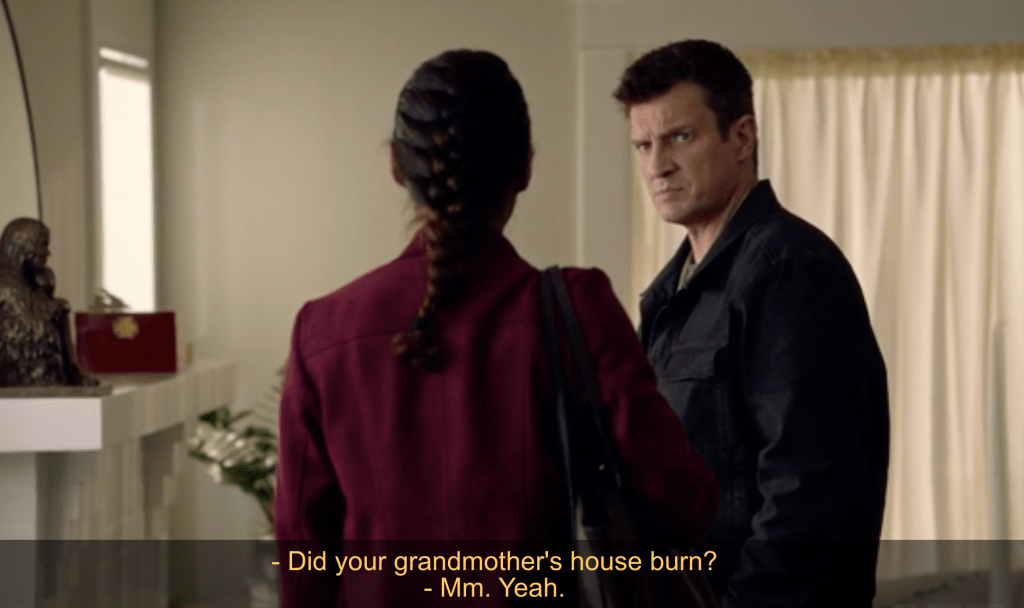
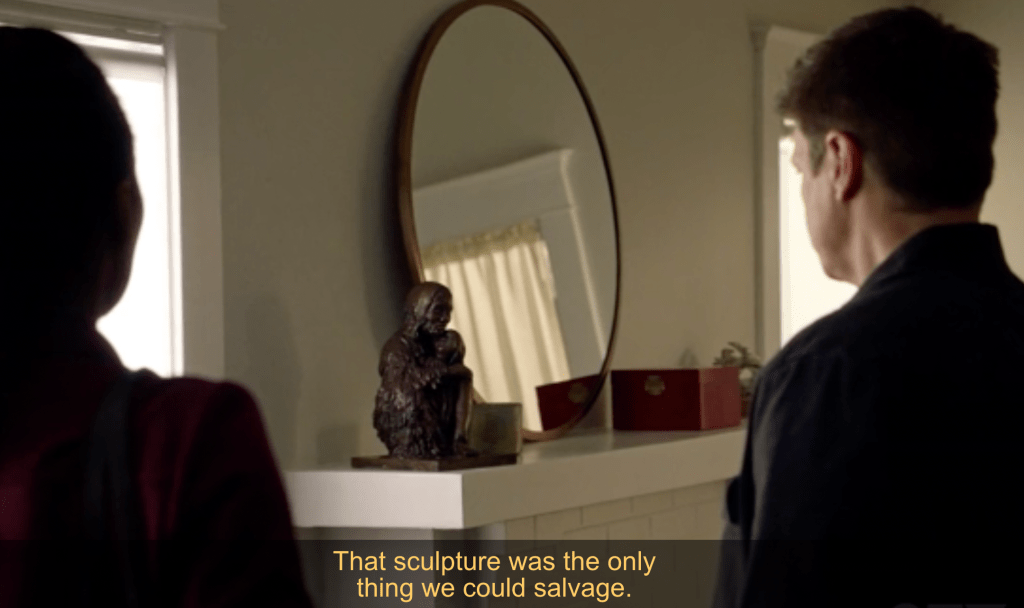
In the aftermath of the bombing, the police and fire department let fires burn out of control for almost one and a half hours at the order of the Mayor which destroyed sixty-five houses in the neighborhood. Professor Ryan mentions that her grandmother’s house was one of those that was destroyed by these fires.
A commission instituted to investigate the events found that dropping a bomb on an occupied row house was unconscionable. While no one involved was criminally prosecuted, the city was later ordered to pay $1.5 million to the survivors of the bombing and $12.83 million to other residents displaced by the bombing and the fires. In November 2020, the Philadelphia City Council approved a resolution to formally apologize for the MOVE bombing.
Daniil Bazel, candidate for the Zaporizhzhia regional Duma in Russian-occupied eastern Ukraine Social media photo via Important Stories
The Russian authorities plan to hold “elections” in the parts of Ukraine they have annexed—the parts of Kherson and Zaporizhzhia regions held by Russia, and the so-called people’s republics of Donetsk and Luhansk—on September 8–10. The “lawmakers” elected to the parliaments thus formed will appoint the heads of the regions and municipalities. Local residents will play no part in this process.
The “elections” will be held on the basis of party lists, which Important Stories and the Conflict Intelligence Team (CIT) perused together. On those lists we found collaborators, acting members of the Russian State Duma, corrupt officials, and even mobilized men. For example,
One of the candidates is State Duma member Igor Kastyukevich, who is running as United Russia’s number two candidate in the elections in the Kherson region. Kastyukevich has been implicated in the deportation of Ukrainian children to Russia. A year ago, he recounted how he had assisted in moving over fifty children from the Kherson Children’s Home to Crimea.
Roman Batrshin, the appointed head of the Zaporozhzhia regional court, is running for the Zaporizhzhia regional duma. Previously, Batrshin was acting head of the Smolensk court. He became a “local” in the occupied region quite recently.
When our correspondent called Batrshin’s number, the voice on the other end of the line sounded like Batrshin’s. When asked about the elections he said, “It’s not me you’re talking to. He’s not here.”
Among them is Daniil Bazel, a 23-year-old mobilized soldier. In Moscow, he worked in the one of the arms of the Russian National Guard, but is now trying his hand at entering the Zaporizhzhia regional “parliament.”
“I’ve decided to run because I’ve come to like the region a lot,” Bazel told Important Stories. “It has to be developed. I myself am a mobilized soldier. I spent eleven months in Zaporizhzhia and and now I am directly performing tasks related to the service in the Zaporozhzhia region [sic]. I saw it all from the inside and I wanted to help fix everything.”
It is apparent from the candidate lists that the main problem faced by the organizers of the “elections” was finding people willing to run. Thus, 27% of LDPR’s candidates are pensioners and housewives far removed from politics, while such people make up nearly half of the candidates on the CPRF and A Just Russia lists.
LDPR is also running several serial candidates, that is, people who have run in dozens of elections at various levels but who have never once been elected. But there is one federal politician on the LDPR list—party chair Leonid Slutsky, who is running simultaneously in all four occupied regions.
The General Radio Frequency Center, which is subordinate to Roskomnadzor, and the company Crib Room, which develops solutions for locating and analyzing destructive content on the internet, have drafted a white paper entitled “Russia’s Gaming Industry.” The authorities see online gaming communities as a channel for communicating with young people and “a tool for state information influence on society.” According to the paper, the state can use games “to promote political ideas, brands and attitudes among young people,” which may require the development of technological tools for working with gaming communities.
Market participants note that the authorities’ growing interest in the industry creates problems for companies negotiating with foreign studios to launch games in Russia. Foreign companies do not want to deal with excessive regulation and censorship. “The Russian market is already small in global terms, and foreign studios were beginning to restore a cautious interest in it, but [the Russian authorities] are trying to regulate it rigidly, while the economic feasibility of such an approach is not broached by the people behind the initiative,” stresses Vasily Ovchinnikov, CEO of VIDO [the Videogame Industry Development Organization].
On June 28, Valeria Zotova, a 19-year-old woman from Yaroslavl, was found guilty of “plotting to commit a terrorist act” (per Article 30.1 and Article 205.1 of the Russian Federal Criminal Code). Zotova will spend six years in prison because of the “experiments” that the FSB (the Russian Federal Security Service) conducts on people.
According to police investigators, Zotova wanted to set fire to a warehouse where “aid” was collected for Russian servicemen fighting in the war against Ukraine.
In the video footage of her arrest, Zotova is pulled from the passenger seat of a car by masked men. However, the other people in the car were apparently not touched.
Prior to this, a certain “Andrei” had for a long time been writing to Valeria, claiming that he lived in Ukraine. In the letters, he asked Valeria to perform “missions” for him. She refused and showed the exchanges with “Andrei” to her mother. After some time, Andrei’s “girlfriend” “Karina” started writing to Valeria in VKontakte. According to Valeria’s mother, “Karina” harassed her daughter, constantly writing and calling her, and urging her to commit arson. When Valeria was detained, “Karina” was in the vehicle with her, but “Karina” was not charged in the case.
It transpired that “Andrei’s girlfriend” was an FSB officer and a secret witness. At one of the hearings in Valeria’s trial, “Karina” openly stated that it was all a “crime re-enactment” [sledstvennyi eksperiment, which translates literally as “investigative experiment”—TRR] Although the FSB chose not to conceal its actions, this had no effect on the verdict.
The defense provided the court with obvious evidence of Valeria’s innocence, namely, her correspondence with Karina, in which Valeria repeatedly refuses to commit arson.
Despite the fact that the court did admit this evidence into the case file and “weighed” it, Valeria was found guilty on the charges. Instead of the eight years of imprisonment requested by the prosecutor, the court sentenced Valeria to six years.
Valeria’s lawyer has appealed the verdict, so we can look forward to an appeals hearing in the future.
On the outside, Valeria worked very hard, almost seven days a week. In her spare time, she drew and beaded. In winter, she skated whenever possible. She adores doing crosswords and other such puzzles. She is an extraordinarily upbeat and resilient young woman who always succeeded at whatever she undertook.
A drawing that Valeria Zotova sent from the pretrial detention center in Yaroslavl Courtesy of Solidarity Zone
Valeria is currently in custody at the Yaroslavl pretrial detention center. You can show your solidarity and support by sending her a letter. She is always glad to get them and expresses her gratitude for all the support.
Address for letters and parcels:
Zotova Valeria Igorevna (born 2003)
10 ul. Portovaya nab., SIZO-1
Yaroslavl 150001 Russian Federation
You can also send her letters via FSIN-Pismo and Zonatelecom.
Solidarity Zone is supporting Valeria Zotova.
#wewriteletters
Source: Solidarity Zone (Telegram), 14 August 2023.Thanks to Simon Pirani for the heads-up.Translated by the Russian Reader.People living outside of Russia will find it difficult or impossible to send letters to Russian prisons via the FSIN-Pismo and Zonatelecom services or regular mail. In many cases, however, you can send letters (which must be written in Russian or translated into Russian) via the free, volunteer-run service RosUznik. Ms. Zotova has not yet appeared on their list of supported addressees, however. You can write to me (avvakum@pm.me) for assistance and advice in sending letters to her and other Russian political prisoners.
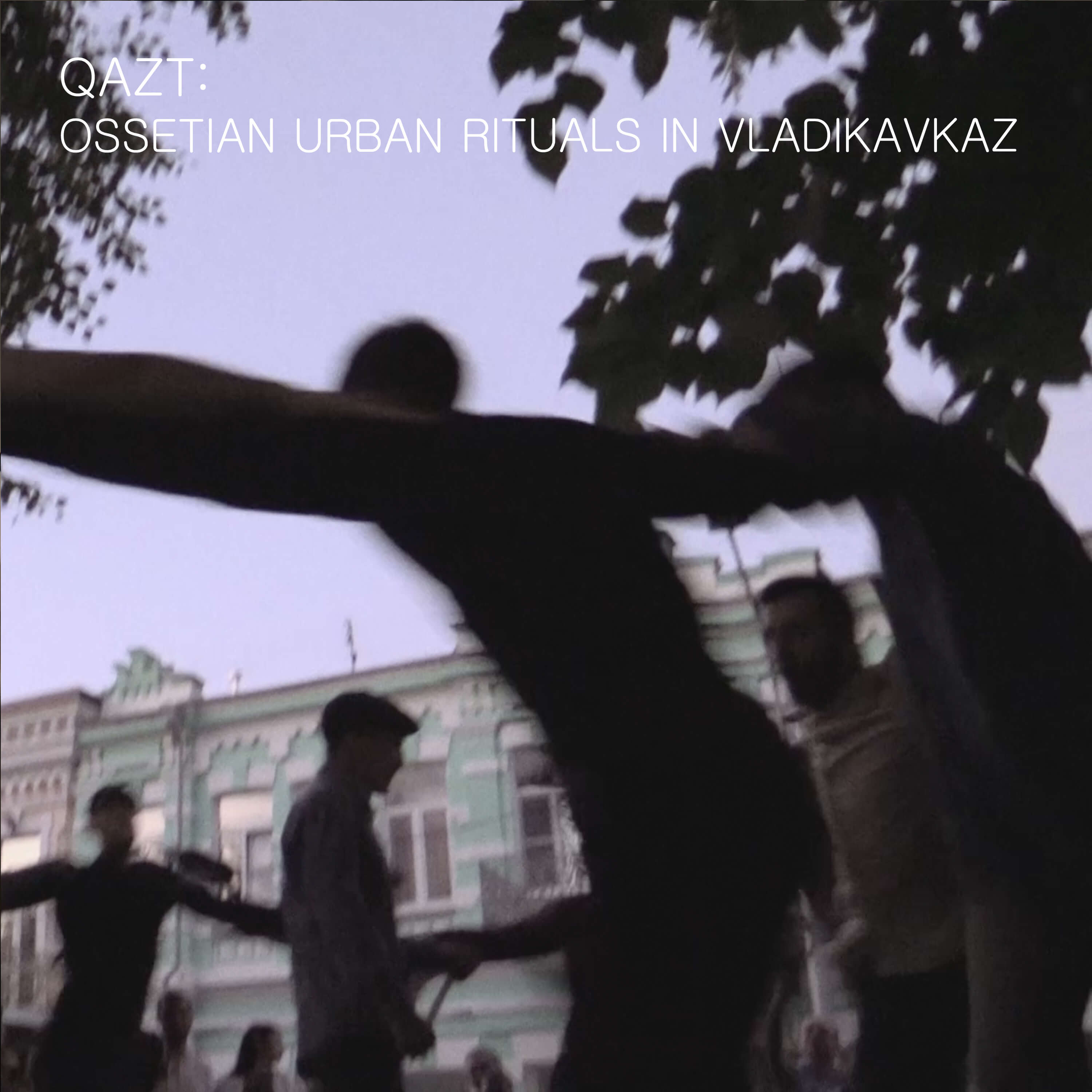
Today is my birthday, and I can think of no better birthday present than Qazt: Ossetian Urban Rituals in Vladikavkaz, a 46-minute documentary film released earlier today by Tbilisi-based Ored Recordings, whose remit is “traditional and local music from the Caucasus and beyond.” The film comes hot on the heels of Ored’s release of the eponymous album a week ago.
Nothing would make me happier today than if you watched the film and listened to the album, which I’ve pasted into this post, below. If you like what you hear, see, and read, support Ored’s vital mission by sending them what you money can afford and downloading the Qazt digital album or any of the other releases in the label’s growing back catalogue. Thanks! ||| TRR
Qazt is a traditional game among the Ossetians. It is a ritualistic, musical, dance, and social space that forms on various festive occasions. During the qazt, young people would socialize, boys would showcase their courage, and they would compete in various heroic and joyful activities. In 2020, we traveled to Vladikavkaz to explore the urban qazts, make a documentary film, and issue this release. We were interested in qazt as a new cultural phenomenon, an event of urban culture, and a modern form of Ossetian self-organization.
Qazt is a traditional game among the Ossetians. It is a ritualistic, musical, dance, and social space that forms on various festive occasions.
During the qazt, young people would socialize, boys would showcase their courage, and they would compete in various heroic and joyful activities.
Analogues of qazt can be found among other peoples in the Caucasus. For example, among the Circassians, such festive dances are called dzhagu. The semantics of the Ossetian word “qazt” and the Circassian “dzhagu” are even the same — “game.”
In 2020, we traveled to Vladikavkaz to explore the urban qazts, make a documentary film, and issue this release. We were interested in qazt as a new cultural phenomenon, an event of urban culture, and a modern form of Ossetian self-organization.
During the pandemic years, traditional dances on the streets of Vladikavkaz became a noticeable event — qazts were covered by Caucasian media and Ossetian bloggers. We were invited to film the event by Alik Pukhaev, the author of the Rajdian blog.
In 2020, qazts seemed to be a growing initiative. This youth movement had it all: a vibrant cultural component, moderate protest, and an orientation towards the future, rather than a romantic desire to return to the past, where everything was considered better, purer, more authentic, and more national.
The qazts were organized not by officials who often do things formally, nor by the elderly, who are used to scolding the youth and imposing what they consider to be the authentic traditions of their people. No, this new cultural movement was led by young people who equally loved Ossetian culture and some global elements — like rock music or hip-hop. What was even more important is that the organizers did not draw boundaries between their local and global identities, between the traditional and the modern.
Qazts in the center of Vladikavkaz became part of urban culture, something that not only ethnographers but also urbanists from fancy magazines would write about in the future. The urban dances and songs struck a balance between preserving Ossetian culture and Caucasian solidarity. Initially, Ossetian students were inspired by Circassian festivities in Nalchik and decided to create something of their own.
It is important to note that at weddings in North Ossetia, Circassian and Chechen dances are very popular. According to Ossetian cultural activists, sometimes they are even too popular. Despite their desire to build horizontal connections with their neighbors and avoid getting trapped in provincial ethno-patriotism, the organizers of the qazts noticed that foreign cultural elements were becoming more popular than local ones, and many traditional dances were being forgotten.
Therefore, their project had specific rules: only Ossetian songs were allowed to be performed, and only Ossetian dances were allowed to be danced. All the other variety was appreciated but could be done on another occasion.
They also had a dress code: men were not allowed to dance in shorts, and women were not allowed to wear trousers. Some people criticized this approach on social media. Working with traditional culture is often associated with conservatism, so some viewed the effort to dress the audience in a certain way as backward.
On the other hand, one could compare this practice to dress codes at raves. It would be unfair to label a Berghain bouncer as a backward traditionalist if they don’t let someone in for not adhering to the techno dress code.
“It’s not a return to the past; we were creating a new culture for ourselves and others. We were trying not only to introduce Ossetian songs and dances into the urban environment but also to rethink our own culture. In the past, each dance had its context, which might not be understood in Vladikavkaz today. That’s why it’s important to come up with new meanings,” explained one of the qazt initiators, Tamu Berozti.
People of different generations – from children to grandparents – attended the qazts and embraced what the youth offered them. These evening gatherings in the city park or on the central avenue of Vladikavkaz provided many with an answer as to why all these songs about past heroes and dances with strange meanings were important. Or rather, the question “why?” did not arise because qazt had become a natural form of uniting people with similar identities.
The youth didn’t just bring culture to the public sphere, where people literally encountered Ossetian language and music while strolling through the city. For a while, the qazts managed to break the monopoly that academic and exemplary song, and dance ensembles had built. Qazt deliberately distanced itself from a staged show. It was not choreography for the audience, but a way to spend time together and, in the long run, negotiate with each other.
Since the release was recorded and the film was shot, three years have passed. In 2020, the main concern was the pandemic, which forced people to seek new ways of living together and uniting. Today, the main context in which the North Caucasus and other regions included in the Russian space live is war. The issues of preserving identity, culture, and solidarity have become even more acute.
It’s difficult to say why the qazts didn’t become a new driving force, a space for reflection, or simply a viable cultural phenomenon. They emerged brightly, attracted attention, and slowly faded away.
Perhaps the general fatigue of the main participants played a role: in the North Caucasus, musicians often expect overwhelming success and recognition after their first successful events, but over time, they lose enthusiasm and feel discouraged.
Maybe some tensions among the main organizers contributed to it – it was evident that they had disagreements on various issues. Or against the backdrop of a general depressive atmosphere in the region after 2022, they all became tired and engaged in other projects. More intimate and with clear structure – like the Ragon traditional music ensemble and the Uatsamonga choir.
In any case, there was no cultural revolution, and the qazt remained a ghost of a possible future.
However, its influence is still felt. Street concerts with Ossetian-language indie music in Vladikavkaz have increased. The Ragon group is releasing its second album and actively performing at festivals.
In the Rajdian blog, there was a post about a tweet from a dissatisfied Ossetian from the diaspora in Turkey:”Cultural youth is not the necessary generation for the continuity of ethnic identity. We need a political youth,” commented a descendant of migrants.
Many active young people in the North Caucasus share this view, perceiving music and dances as entertainment and distraction from problems. While we dance and sing approved songs joyfully, our languages are disappearing, and social problems are increasing more and more.
Initiatives like the Vladikavkaz qazts could have become an example of music aimed not only at entertainment but also at solidarity.
And the fact that our new release is once again about something from the past proves that cultural identity without a civic position is insufficient for gradual and confident development.
Film by Tamerlan Vasiliev will be out soon
Recorded on August 2020 in Vladikavkaz
Sound and mixing: Timur Kodzoko
Cover photo: Tamerlan Vasilyev
Cover art: Milana Khalilova
Liner notes: Bulat Khalilov
Translation: Bella Mirzoeva
Petersburg is getting ready to welcome groups of visa-free travelers from Iran. It could increase the tourist flow to the city by as much as eight percent.
The Economic Development Ministry reported that Russia has completed the procedure of exchanging lists of tourist organizations with China and Iran for the early launch of bilateral intergovernmental agreements on visa-free group tourist trips. In preparation for this, the St. Petersburg Tourism Development Committee and representatives of the hospitality industry held a series of “Welcome to St. Petersburg!” field presentations in the largest cities of the Islamic Republic of Iran—Tehran, Isfahan, and Shiraz. The events were attended by over 250 professionals from the country’s tourism industry.
“The people of Iran love to travel. The interest of the citizens of this country in Petersburg has been growing noticeably lately. The field events, realized as part of the national project ‘Tourism and the Hospitality Industry,’ provide Petersburg tourism industry professionals with a unique opportunity to establish new contacts with Iranian colleagues and, of course, increase interest in our city,” says Sergei Korneyev, chair of the St. Petersburg Tourism Development Committee Sergey Korneev.
On May 26, St. Petersburg welcomed the first passenger flight from Tehran, operated by Meraj Airlines, and on June 1, a direct flight from Iranian capital to St. Petersburg was made by Russia’s Nordwind Airlines. “Previously, when there were direct flights from Iran only to Moscow, trips were planned to the two cities at once. Now that direct flights have been established, tourists from Iran will be able to go straight to Petersburg and its suburbs,” says Yana Kozhevnikova, a partners and agencies specialist at tour operator Bon Tour.
Next year, Petersburg is planning to send a cultural and business mission to its Iranian sister city of Isfahan. Hossein Nasr, head of the Isfahan Association of Tour Operators, spoke of the need for vigorous development of tourism between the two cities. “Events where new connections can be established are very important to us. Representatives of the relevant companies in our city held constructive talks with their Petersburg colleagues, and this is a good foundation for strengthening relations and mutually increasing the tourist flow in the future,” he said.
Dmitry Tyurin, head of the commercial department at the international transfer ordering service I’way, argues that cooperation in the field of tourism between Iran and Petersburg opens up significant prospects for both sides. “This cooperation will bring many benefits both to the city and to business. An increase in the number of tourists will lead to an increase in the load on infrastructure facilities, thus contributing to the growth of profits and the development of the city’s economy. And the variety of needs and preferences among Iranian tourists will generate new opportunities for entrepreneurs involved in the hotel business, restaurants, souvenir shops, and travel agencies. In addition, the development of cooperation with Iran can contribute to the strengthening of diplomatic and cultural ties between the countries. The influx of Iranian tourists will enable local residents and entrepreneurs to better understand Iranian culture,” he says.
According to political scientist Inna Litvinenko, the willingness of Iranian tour operators to send tourists to Petersburg points to large-scale prospects for developing the tourism sector and related sectors of the city’s economy.
“First of all, it will affect the hotel and restaurant business, airlines, and tourist agencies. The growing interest in visiting Petersburg is explained by the Northern Capital’s rich historical legacy, its geographical location, and the concentration of business flows. Visa-free agreements with Iran will increase the tourist flow by 5–8%, and the word-of-mouth effect on neighboring Islamic states will also kick in, making it possible to achieve a 12–15% increase in tourists by the end of 2024. Another obvious plus will be the influx of investments into actively developing industries—construction, the hotel and restaurant business, and the service sector,” predicts Litvinenko.
I was just flying from Leningrad to Istanbul, and the coach of an Iranian football team was seated next to me. I had this feeling like I was in the movie Cabaret. On the other hand, if I had said to him, ‘Well, how’s it going with the ayatollahs?’ he could have said to me, ‘And how’s it going with Putin?’ He got up in the middle of the flight and handed out our poor northern apples to his players while I drank white wine. We caught each other’s eye and smiled at each other. For the last hour, he studied English on his phone using an Iranian app. The good guys will beat the bad guys.
The Russian state is keen to foster loyal young people. We have already recounted how the authorities have clamped down on liberal universities and brought them to heel, rewritten school history textbooks, and shut down independent educational projects. But this is just the tip of the iceberg.
Today, the website Protocol and the YouTube channel RZVRT claimed that college students in Tatarstan’s Alabuga Special Economic Zone have been made to assemble [Iranian] kamikaze drones. They face expulsion and a fine of 1.5 million rubles if they refuse to do it. Students also have to play paintball, and the losers are forced to dig trenches and are “executed” with paintball guns. Two cases of suicide have already been reported. In addition, the college management tricks female students from African countries into doing the dirtiest menial labor.
“‘Alabuga: producing death with the hands of death.’ The second part of Protocol and RZVRT’s joint investigation of Alabuga. We talk about how students are forced to dig trenches and assemble Iranian Shahed drones, about how students from African countries were lured into applying to the college through Tinder, and about how the leadership of the special economic zone treats students.” Protocol (YouTube), 24 July 2023 (in Russian)
This is not the only such case. The authorities in Russia have recently been inspired by the idea of free child labor, including for the needs of the army fighting in Ukraine.
Thus, on July 20, the State Duma immediately passed in its second and third readings a bill on “community service” for schoolchildren. Children will now have to clean classrooms, plant trees at school, and help in the library on a “voluntary-compulsory” basis. Permission from parents will no longer be required for this. Commenting on the new law, State Duma Speaker Vyacheslav Volodin said that “only through labor can one cultivate an attitude to many issues that [the child] will later need to solve. The child will grow up different. Harmony will come.”
“Community service” goes hand in hand with the militarization of schools. During “basic training” lessons, children will learn how to pilot drones. “Today’s army is not only the Kalashnikov assault rifle, but also advanced unmanned vehicles,” said Federation Council member Artyom Sheinin.
From September 1, military training will be introduced for pupils in grades ten and eleven. Among other things, children will practice military greetings, drilling, handling small arms, combat actions, and first aid during hostilities.
There are also serious changes to the history curriculum. In September, high school students will get new textbooks featuring chapters about the “special military operation.” They will be told that:
Kiev “secretly colluded with NATO.”
Peace in Crimea was preserved by the “polite people”, that is, by the unidentified Russian soldiers who seized the peninsula in March 2014.
Ukraine wanted to get its hands on nuclear weapons.
The war, which was the Kremlin’s only option, has “consolidated society.”
There is a “fake news industry” in the world that allegedly lies about the Russian army’s actions in Ukraine.
Schoolchildren will also be made to read excerpts from Putin’s speeches and look at a map of Russia that includes the occupied territories in Ukraine.
The refusal of State Duma deputies to raise the lower limit of the draft age from 18 to 21 is part and parcel of the same series of initiatives for turning schoolchildren into propagandized soldiers. Deputies claims that there are a lot of young people who want to go to serve right after leaving school. Meanwhile, universities are raising tuition fees, effectively introducing income barriers to higher education.
Children must learn in advance how to shoot, assemble deadly drones, pilot them, and love the Motherland. The Russian state doesn’t seem to need anything else from them.
The St. Petersburg State University Ethics Commission has ruled that a statement made by Alexandra Zaitseva, a first-year student and editor of the student media outlet Studen, was “incompatible with the prestige of a university student.” Another student media outlet, Lupa and Pupa, has publicized the incident.
The Details. Zaitseva was summoned to appear before the commission on July 7. Initially, the hearing was supposed to be held online, but the university subsequently changed the format to in-person and refused to change it back. According to Zaitseva, this was done so that she would be unable to record the hearing.
The Reasons. In June, an anonymous denunciation of Alexandra Zaitseva was posted in St. Petersburg State University’s virtual guestbook. The author of the denunciation did not like Zaitseva’s post on VKontakte about the expulsion of Mikhail Belousov’s students from the university’s history faculty.
“In this publication, she talks about the ‘vile and unjust expulsion,’ in her opinion, ‘of the students implicated in the sensational Belousov affair.’ In addition, she publicly insults other students (‘a bunch of bastards shouting goida on PUNK at night’) while obviously demeaning and voicing disdain for the patriotic citizens of our country,” the denunciation reads.
St. Petersburg State University replied that they had contacted “law enforcement agencies” and called a hearing of their ethics commission.
The Decision. “We consider A.N. Zaitseva’s behavior incompatible with the prestige of a St. Petersburg State University student,” the St. Petersburg State University Ethics Commission ruled.
Zaitseva told Bumaga that she believes she will be expelled. “I guess the outcome is pretty obvious. Although, I can’t say for sure—no order has been issued yet,” the student said.
The ethics commission members did not like the fact that Zaitseva had given a comment to TV Rain. According to them, in this way the young woman “once again displayed her openly negative attitude towards the university of which she is a student.”
Just prior to the hearing, St. Petersburg State University had banned university employees from giving comments and interviews to “foreign agent” media outlets.
The commission ruled that Zaitseva had violated the second and third paragraphs of the University Student’s Code, i.e., “To represent the university in extracurricular settings with dignity” and “To honor teachers, respect colleagues and students, maintain friendly relations both inside and outside the University, [and] contribute to the creation of an environment of mutual understanding and cooperation.”
“Apparently, the authors really don’t fancy the idea that someone might have principles: this is the only explanation why such a large piece of the text is devoted to them, and not to an analysis of my post,” Zaitseva said in reaction to the commission’s decision.
The leadership of St. Petersburg State University (SPBGU) has fired Mikhail Belousov, a professor at the university’s History Institute, for committing an “immoral act” by speaking out against Russia’s invasion of Ukraine. The university posted its decision on its website.
The university’s decision followed an investigation, during which university leadership confirmed that Belousov had circulated materials “discrediting” the Russian army, and “insulting the memory of those killed while fulfilling their military duty.”
“Belousov’s behavior violates the university’s moral traditions and generally accepted ethical norms, his actions are out of keeping with his and the university’s prestigious positions,” the document detailing the university’s decision says.
Petersburg publication Rotundasays the university began investigating Belousov and his students after Russian official and social media channels circulated screenshots of messages, allegedly written by the professor and his students, openly criticizing the war in Ukraine while the university was mourning one of its students, Fyodor Solomonov, who was killed in Ukraine.
Seven students of the previously dismissed associate professor Mikhail Belousov were expelled from the Faculty of History of St. Petersburg State University, Bumagareports, citing sources at the university. They were among the ten people who were previously called to the ethics commission. The remaining three will have “some kind of meeting with the vice-rector for educational work.”
One of the expelled students told the publication that he would challenge the decision of the university.
At the end of May, Z-channels circulated screenshots with messages in which Belousov allegedly condemned the “internal” symbolism and said that “a direct and open approval of rashism is disgusting.” It was alleged that the associate professor wrote all this in the context of discussing the death of St. Petersburg University student Fyodor Solomonov in the war in Ukraine.
On June 3, Belousov was fired, and a group of his students were summoned to the ethics committee, which ruled that they “considered it appropriate to make fun of” Solomonov’s death instead of “showing normal human feelings.” It was also decided that the students’ actions were “incompatible with the status of a student at St. Petersburg State University.”
In October last year, associate professor Denis Skopin was fired from the same university for participating in a rally against mobilization, calling it an “immoral act.”
On June 28, the 2nd Western District Military Court sentenced nineteen-year-old Valeria Zotova to six years in prison in a criminal case fabricated by the FSB.
The court has not yet provided a copy of the verdict to either Valeria or her lawyer. Therefore, the lawyer could not prepare a full-fledged appeal. But he did file a brief complaint to meet the deadline: an appeal must be filed within fifteen days of the date of sentencing.
The appeals process is a very important component of legal proceedings. Until the appeals stage has been completed and the sentence comes into force, there is hope that the verdict will be reversed or changed and Valeria will not be sent to a penal colony at this time.
You can always support Valeria by writing her a letter or sending a parcel.
Address for letters and parcels:
Zotova Valeria Igorevna (born 2003)
10 ul. Portovaya nab., SIZO-1
Yaroslavl 150001 Russian Federation
Source: Solidarity Zone (Facebook), 16 July 2023. Translated by the Russian Reader. People living outside of Russia will find it difficult or impossible to send parcels to Russian prisons or to use the FSIN-Pismo and Zonatelecom services to contact Russian political prisoners. In many cases, however, you can send letters (which must be written in Russian or translated into Russian) via the free, volunteer-run service RosUznik. As of this writing, Ms. Zotova has not appeared on their list of supported addressees. You can also ask me (avvakum@pm.me) for assistance and advice in sending letters to her and other Russian political prisoners.
Valeria Zotova, 19, from Russia’s Yaroslavl has been sentenced to six years behind bars for plotting to set a military aid collection point on fire, Solidarity Zone reports.
The woman was found guilty of attempted “terrorist attack”. The state prosecution wanted eight years in prison for Zotova.
“However, the case materials, correspondence received by the lawyer and Valeria’s own words indicate that the case was a provocation staged by the FSB, whose agents actively persuaded the woman to set the aid collection point for the Russian military ablaze. Zotova may have attracted the attention of the special services due to her anti-war stance,” human rights activists said.
A criminal case against Zotova was opened in February. The woman went for a walk with her friends in mid-February. Later that night, law enforcers showed up at her place for a search without any explanation. During the search, the detainee’s mother was threatened with promises to make her a suspect in her daughter’s case for “participating in anti-war rallies”. She denies these accusations: despite her anti-war views, she did not participate in rallies against the Ukraine war. The news emerged later that Valeria was held in a detention centre in Yaroslavl.
In April, Russian authorities placed Valeria’s mother Svetlana Zotova on the extremist list. The woman had previously been charged with “calls” to commit terrorist and extremist actions. The charges stemmed from comments allegedly posted by Svetlana Zotova on Telegram channels. The woman was prohibited from leaving the country. She could face up to ten years in prison on the charges.
Schoolchildren from Mariupol will be able to learn new professions in Petersburg. The beginning of the third session at Camp Friendly, where 400 children will relax until July 21, was announced on July 15 by Petersburg city hall’s press service.
“We will tell them about the opportunities that our vast country, including Petersburg, has to offer. We will make sure to take care of the health of our young guests and provide treatment if necessary,” said [Petersburg governor] Alexander Beglov.
The camp’s theme is “Childtown: Territory of Masters.” The children will have the opportunity to try their hand at such professions such as blogger, actor, artist, and architect.
On June 1, 2022, St. Petersburg and Mariupol became sister cities. Since then, Petersburg city hall has has been actively involved in restoring the city, which was destroyed during the special military operation.
The Russian authorities do not talk about the casualties its forces have sustained in the war with Ukraine. The last time the Ministry of Defense reported on them was in September 2022, and even then the official figures diverged considerably from estimates by independent researchers. The Kremlin now says that they trust only the figures from the Defense Ministry. The trouble is that there are no figures from the Defense Ministry.
So how many Russians have been killed since the start of the full-scale war with Ukraine in February 2022?
A new investigation by Mediazona, Meduza, and Dmitry Kobak (who teaches machine learning at the University of Tübingen) provides at least approximate figures.
Journalists at Mediazona and the BBC have been counting losses by monitoring obituaries in local media, posts on social media, and new gravestones in cemeteries. They have compiled a list of names, and while it certainly does not reflect the entire state of affairs, it does give us a rough idea of the number of the casualties sustained by the Russian army and Russian PMCs.
But there is another source of data on deaths in Russia—the registry of inheritance cases, in which notaries register all information about deceased Russians who have left behind an inheritance. Since last year, the number of inheritance cases involving deceased men, especially young men, has increased dramatically. Inheritances cases do not account for everyone killed in the war, but even this increase makes it possible to ascertain the real figures for excess male mortality—that is, the actual number of war dead. The authors of the investigation describe in detail how they have unearthed this data.
The tally takes into account the mortality of men under fifty years of age. There are no women at the front, just as there are almost no servicemen much older than fifty there. The journalists also compared their estimates with obituaries: it turned out that the increase in the number of entries in the register and the number of deaths correlate with each other. Moreover, Rosstat’s information about mortality for 2022 also matches these data. (Rosstat have not yet published any information about mortality rates for 2023.)
So, around 25,000 Russian men under the age of fifty perished in the war in 2022. At the same time, the discrepancy that thus arises with Rosstat’s data on excess mortality is only four percent, which is within the margin of error.
Between 24 February 2022 and 27 May 2023, approximately 47,000 Russian men under the age of fifty were killed in the war.
This figure accounts only for servicemen, mercenaries, and convicts killed. It is impossible to count the number of those killed in the DPR and LPR.
The Russian army has also sustained other casualties, for example, men have been wounded, some of them seriously wounded, which are irretrievable losses.
The number of seriously wounded men has been estimated approximately, and the approximate proportion of them to men who have been killed is one to one-point-seven. This means that, in total, at least 125 thousand Russian servicemen have either been killed or seriously wounded during the full-scale war with Ukraine. This is greater than the losses sustained by the Soviet and Russian armies in all the other wars they have fought, from Korea to Chechnya, since the Second World War.”





















 Address for letters and parcels: