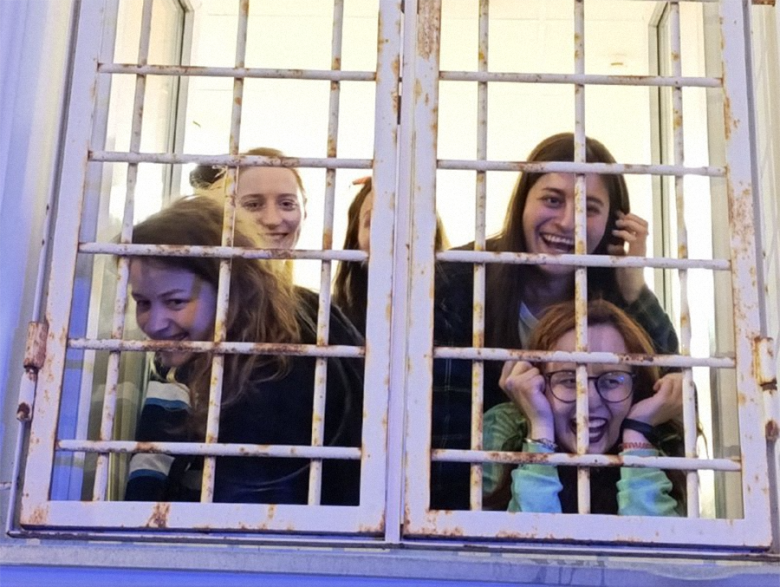
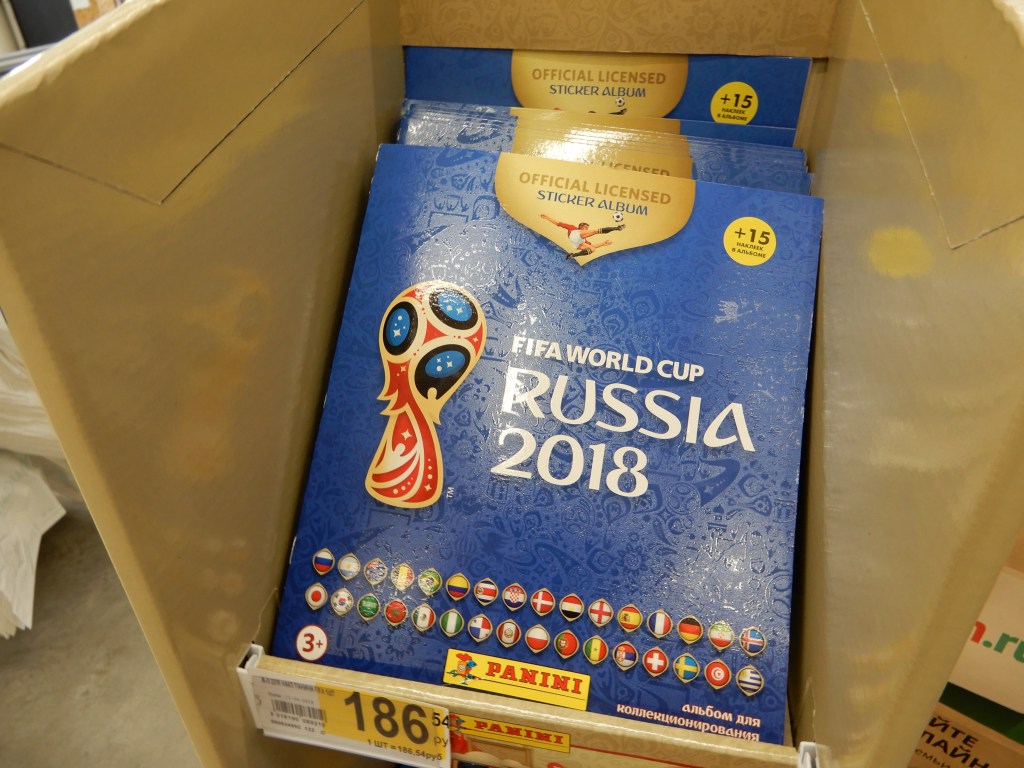
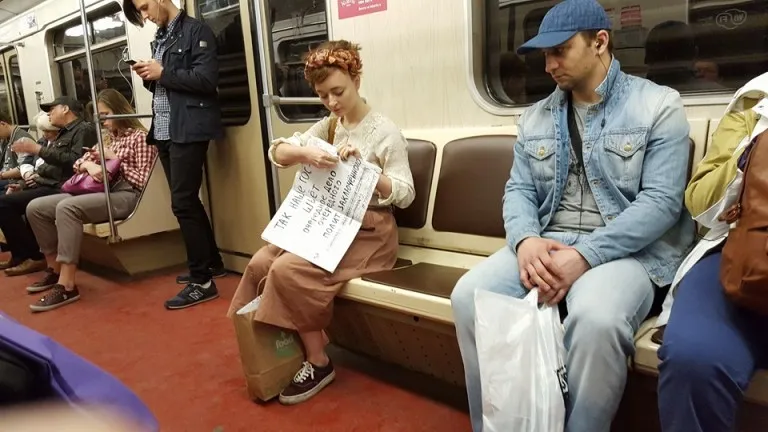
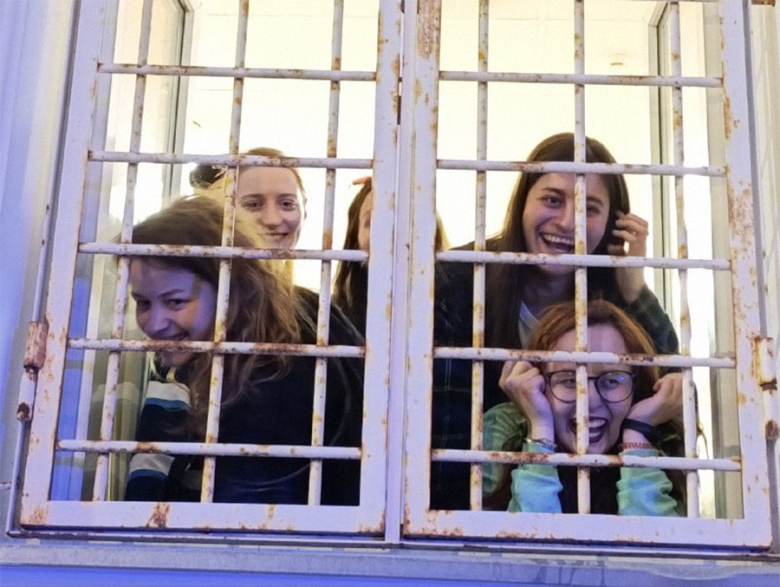
Six snapshots of what the Russian Reader was reading on May 27 in years past.
2024
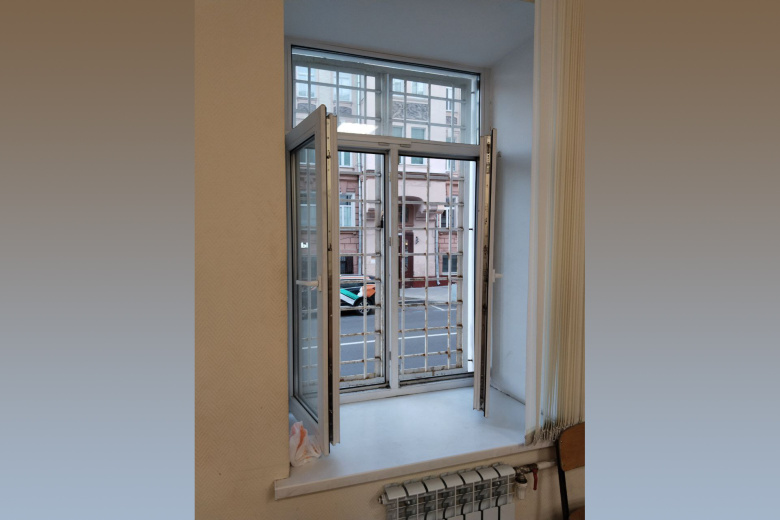
“It’s Showtime”: Open Space Moscow vs. SERB. Open Space is a project that supports grassroots activists. It has two sites, in Moscow and St. Petersburg, with co-working spaces, a human rights center, and a psychological center. The Moscow site is at odds with the pro-government movement SERB, known for its provocations against the opposition. Republic correspondent Nikita Zolotarev is often at Open Space, sometimes as a volunteer. That was how he found himself at the Moscow co-working space last Saturday, where he was detained along with other visitors on the basis of a complaint filed by the “Serbs,” who were assisting the police, and then spent several hours at the Basmannoye police precinct. Here is how it went down.
2022
“To Become White in the Eyes of Whites”: Astrakhan Kazakhs and the War in Ukraine. According to official statistics, ethnic Kazakhs [so-called Astrakhan Kazakhs] make up 16% of population of the Astrakhan Region. At the same time, 80% of the region’s residents who have been killed in the war in Ukraine and whose deaths have been publicly acknowledged by relatives or the authorities, are members of this particular ethnic group. Idel.Realii talked to several Astrakhan residents to understand why this is the case and what reaction it causes in the local community.
2020
Facebook Is Not Your Friend. “This message violates our community standards on spam” was the message from Facebook informing Petersburg news website MR7.ru that the world’s mightiest social network was blocking the public’s access to the website’s articles on the city’s battle with the coronavirus—and the battle of Petersburg doctors and other healthcare workers with a corrupt, mendacious regime.
2018
The Policemen’s Ball. At €2.50, the official licensed sticker album of the 2018 World Cup is a steal. Russian officials also plan to steal the civil rights of their own citizens during the month-long tournament.
Daria Serenko’s Quiet Picket. Quiet Picket, a recent initiative by Daria Serenko, teeters on the verge of artistic intervention and protest action. Every day, Serenko boards public transport (often, the subway) bearing a new placard inscribed with an extensive message. Its purpose is to invite people to engage in a discussion. Serenko thus explores the space of communication itself: the distance between placard and recipient, and how potential interlocutors navigate the distance. So far she has produced fifty-four placards, gone through six markers, and directly communicated with ninety-three people. Marina Simakova spoke with Serenko about the background of the action and its effects.
Open Space is a project that supports grassroots activists. It has two sites, in Moscow and St. Petersburg, with co-working spaces, a human rights center, and a psychological center. The Moscow site is at odds with the pro-government movement SERB, known for its provocations against the opposition. Republic correspondent Nikita Zolotarev is often at Open Space, sometimes as a volunteer. That was how he found himself at the Moscow co-working space last Saturday, where he was detained along with other visitors on the basis of a complaint filed by the “Serbs,” who were assisting the police, and then spent several hours at the Basmannoye police precinct. Here is how it went down.
“It’s showtime,” SERB leader Igor Beketov said on his movement’s video stream before knocking on Open Space’s door. He and another SERB activist, Pyotr Rybakov, were able to get inside after the police arrived.
SERB’s video recap of the SERB-assisted police raid on Open Space Moscow, as posted on their Telegram channel on 19 May 2024
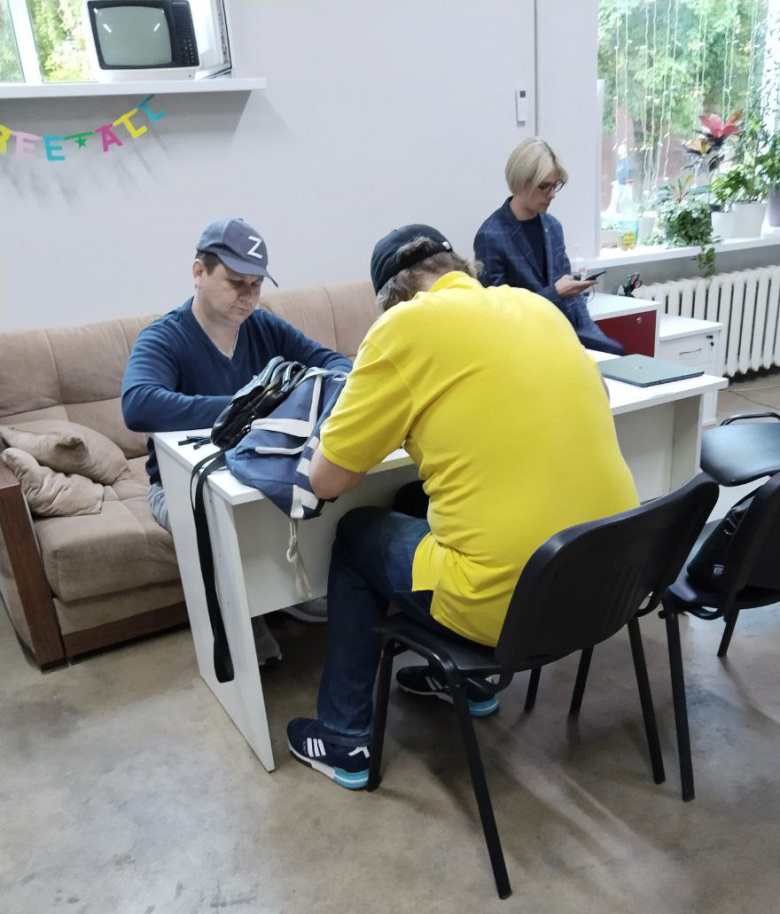
“A circus is about to kick off,” a young woman sitting across from me named Thiya texted a friend at 6:09 p.m. A knock on the door distracted her from solving a strength of materials problem. Nine minutes later, she sent a new message, writing that “the Serbs and the police” had come in.
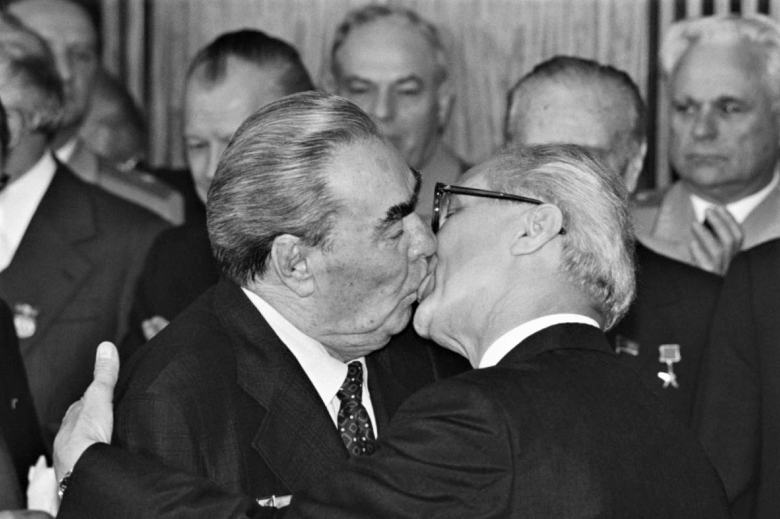
The [pro-regime] activists walked around filming anything they saw as “extremist propaganda” and drawing the attention of police officers to it. Thus, halting near a painted copy of “The Brotherly Kiss,” the famous photo of Brezhnev kissing [East German leader Erich] Honecker, Pyotr and Igor began explaining something to a policeman. “What does this mean?” Rybakov asked, pointing to the drawing. “Since Soviet leaders could do it, it turns out that…,” he answered his own question uncertainly. The police officer remained expressively silent and photographed the image just in case.
The photograph known as “The Brotherly Kiss” was taken in 1979 at a meeting between Leonid Brezhnev and Erich Honecker in Berlin during the GDR’s thirtieth anniversary celebrations. Source: Regis Bossu/Sygma/Corbis
Then they went looking for members of Left Socialist Action (Levoe sotsialisticheskoe deistvie, or LevSD, for short), having prudently abbreviated the name of the organization to “LSD,” because, after perusing “the page of this movement, [they] saw that it does not smell of any left-wing movement.” What exactly they did not fancy about “LSD” on a day when the latter were holding “an evening of letters from some political prisoners” remains unclear.
“They came and almost broke down the door,” recalls Anastasia, who organized the event. The SERB activists asked her why her movement was holding an event in support of Ukraine, a conclusion at which they arrived after seeing a couple of posts with Ukrainian flags on Lev SD’s Telegram channel. Anastasia tried to persuade them that such “flags are posted after the massive shelling of Ukrainian cities to express condolences.” A brief discussion ensued, whose acme was the following question from Pyotr Rybakov: “Did you see Soviet people publishing posts in support of Germany during the bombing of Dresden?”
This discussion was witnessed by Anastasia’s friend Andrei, a expert on the history of Yugoslavia. He was surprised that Pyotr “probably didn’t know that there was no Telegram back then” and asked what, in Pyotr’s opinion, “equates the Great Patriotic War [World War Two] with current events.” The “Serb” responded by comparing Zelensky’s regime to Hitler’s, dubbing it “absolutely fascist.” After mentioning NATO, they smoothly segued to the bombing of Yugoslavia. This discussion did not last long: Pyotr soon ran out of arguments against the facts Andrei presented. The culmination of their conversation was when Andrei asked whether the SERB activist had read Kurt Vonnegut’s Slaughterhouse Five, to which Pyotr replied that he had “never read Bunin.” Andrei recalls this conversation with a little annoyance: he says that if they had more time, he would have tried to wheedle some “less cannibalistic” information out of this “ideologically charged man” and “make him think.”
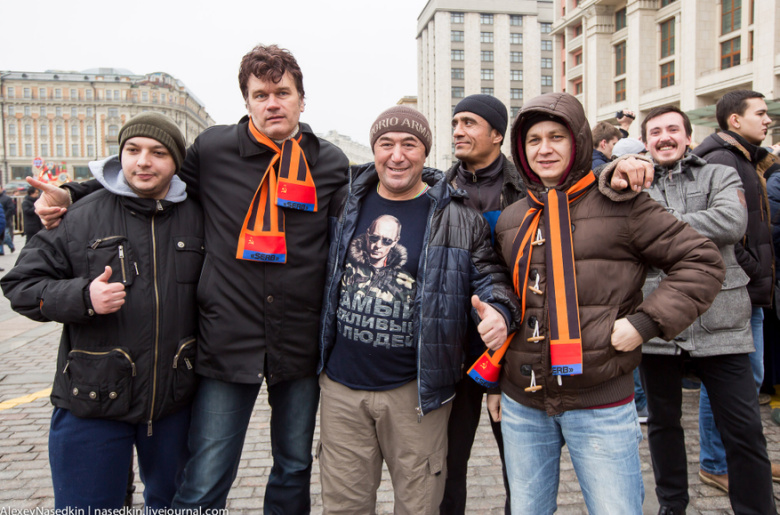
SERB leader Igor Beketov (aka Gosha Tarasevich) and his associate Pyotr Rybakov, both wearing black-and-orange scarves. Source: theins.ru.
At 6:32 p.m., a police officer let some of the people who wanted to smoke out by going out with them. It was as if he knew what the visitors were going to experience a little later.
In addition to writing letters to political prisoners event, a session of board games under the auspices of the Libertarian Party of Russia was being held in the basement of the co-working space. As organizer Vladislav tells it, the libertarians were having a quiet time when Open Space volunteer Sasha suddenly appeared and said, “We’ve got a situation: the police have showed up, the ‘Serbs’ have showed, but so far everything is fine.”
“We took note. I won at Jenga: my buddy had happily wrecked the tower,” recalls Vladislav. After that, he went to make coffee on the first floor of Open Space—where he saw the “Serbs” writing a complaint to the police.
At that moment, Andrei, the expert on Yugoslavia, made a terrible blunder for which he repented long afterwards: he offered the provocateurs Roshen caramels, a Ukrainian brand. On the table with the tea bags there was a metal box, where volunteers put sweets that keep for a long time. The ill-fated caramels were in this box on the day in question.
“You can’t get these candies so easily in Moscow—you have to make an effort to find them,” the SERB leader noted.
Forgetting about their complaint to the police, the “Serbs” paced the room talking about Roshen candies. Everyone else in the room was silent, listening attentively to their arguments. But since the entire candy argument consisted of no more than five sentences per two people—Beketov and Rybakov kept repeating the same thing—their listeners could barely contain themselves from laughing. “Sometimes candy is just candy,” Open Space volunteer Sasha finally told them and suggested they taste the caramels, adding that they were delicious. The activists resisted. “Roshen is good quality, no one is arguing about that. But they are Ukrainian candies!” they said. The conversation about candy was interrupted only by the advent of a paddy wagon.
Rybakov and Beketov writing their complaints to the police during the raid on Open Space, 18 May 2024: Source: social media
The people at the board game event hastily made to leave, but a police officer soon came down to them, and, according to Vladislav, “it was clear [we] would spend the next few hours in a less comfortable place.” The moment the policeman stepped away, Vladislav “snuck through a window.” The policeman shouted after him, summoning his partner, but Vladislav managed to escape to a subway station. Not knowing what to do, he wrote on the Libertarian Party’s Telegram channel that the police had begun detaining attendees at their event.
First, the attendees of the two events and several visitors to the space who were just minding their own business were dispatched to the police bus. One of the detainees calmly recalled how she went to the police bus: “Going to the police station isn’t the same as digging a ditch, and I was so tired anyway I wasn’t about to resist. It was a comfortable ride, but it’s a pity they didn’t bring me back.”
Anastasia, who for some reason was transported to the station separately from the others, recalls how she “snapped at the policemen while dying inside.” When asked if she had any sharp objects for stabbing or cutting, she “blurted out that only her tongue was sharp.” The policeman was amused, and a small exchange of pleasantries ensued, but he stopped laughing at her jokes as they neared the Basmannoye precinct.
Ten Open Space visitors went on the first trip to the station. I was among the second batch of six detainees. There were five seats on the Ford Transit bus, not counting the seats reserved for officers, and between the seats was a table, which Thiya occupied by placing the worksheets with the strength of material problems on it.
“More comfortable than in a economy class sleeping car,” said one of the detainees.
The “Serbs” stood by the police vehicle, taking turns proclaiming “Open Space is closed!” They seemed to enjoy the play on words. They too headed to the police station to file their complaint.
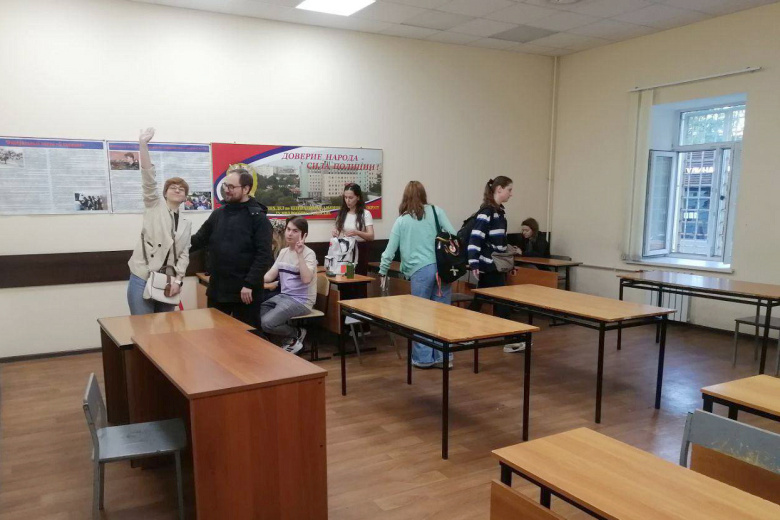
The Open Space detainees in the educational classroom at Basmannoye police precinct. Source: social media
We were taken to an educational classroom, where some of the people detained earlier were already located, as well as a couple of people who had been brought to the precinct independently of us—a young man detained for brawling and a woman who had attempted to strangle her sister. Some of the Open Space people were in another office. As transpired later, the officers wanted to take their fingerprints, and several people consented.
As one of the detainees recalls, when the officer “was taking our prints he referred to some order issued by [Interior Minister Vladimir] Kolokoltsev, dated such-and-such a day in July 2023, that all those brought to police precinctd must be fingerprinted.” There is no such order. Moreover, according to Article 13, Paragraph 19 of the Federal Law “On the Police,” an officer has the right to fingerprint a detainee only if their identity cannot be ascertained in any other way. Since almost all the detainees had [their internal] passports with them, they were used to establish their identities. And those detainees who refused to be fingerprinted and later signed statements that they refused to undergo the procedure, left the precinct even earlier than those who had been fingerprinted.
The key question we were all asked by the interrogators was whether we had anything to do with LGBT and whether we were involved in any activities related to this movement. Yevgeny, a lawyer who aid the LevSD detainees, recounted that all the police officers with whom he spoke were convinced that “this was some kind of LGBT gathering, a gay bar and so on.”
“When I told them about the event to aid political prisoners, they started telling me, ‘Come on, stop pitching us a yarn,'” the defense lawyer recalled. In response to the flyer for the event, which Yevgeny showed them, the officers told him, “That’s how they encrypt themselves.”
Around 8 p.m., we were given water and food, and journalists and a support group gathered under the windows of the classroom. At that time we were called out of the classroom to make our statements. It was my turn.
“You’ll tell me all about LGBT. I’ll tell you something too.”
With these words the interrogator started lazily looking for the copy of my passport and preparing a blank form for my statement. At that moment someone called him—probably some supervisor giving additional instructions. The interrogator mostly agreed with what the caller was saying, only at one point he uttered, “They’re mostly came to play board games, that’s all.”
Our conversation flowed smoothly, albeit with a few, brief lyrical digressions.
“What were you doing there?” the interrogator asked in a tired voice.
“I was helping Thiya do her homework, on strength of materials, as it turns out. She still has those strength of materials worksheets with there.”
“No, I forgot most of that stuff a long time ago.”
Another officer passed behind me, and my interrogator seemed to come to life.
“Listen, wait! There should be a broad in red pants out there. You cannot let her go!”
His colleague shared his worries.
“Everyone refuses to be fingerprinted.”
“The hell with them. What matters is the woman in red pants…. Don’t let anyone go at all!”
He was talking about Sasha, the Open Space volunteer.
“Nobody’s going anywhere.”
“That’s fucking great.” After a little silence, he added, drawling his words again, “The journalists haven’t arrived yet for some reason. But never mind.”
“Are you expecting them?” I asked with hope in my voice.
“They already filmed me.”
And then he complained me about how he wanted to get home, how he had already “one foot in [my] slipper, and then your gang arrived.” Suddenly, in an animated voice, he asked the key question of the evening:
“What’s up with LGBT?”
“I don’t know anything, I haven’t seen anything, I don’t belong to LGBT.”
“You getting married soon?”
“I am getting married soon,” I said, and showed him my engagement ring.
Trying to guess what material the ring was made of, he let me read the statement. When I asked him if I could get a copy of it just in case, he waved me off, saying, “Don’t even think about it.” I quotedThe Heart of a Dog, the passage about the “ultimate in certificates,” but it transpired that the interrogator had not “waded through” the novella. And he had not watched he movie version, either, because it was, from his point of view, a “cheesy farce.” He and I parted on these words.
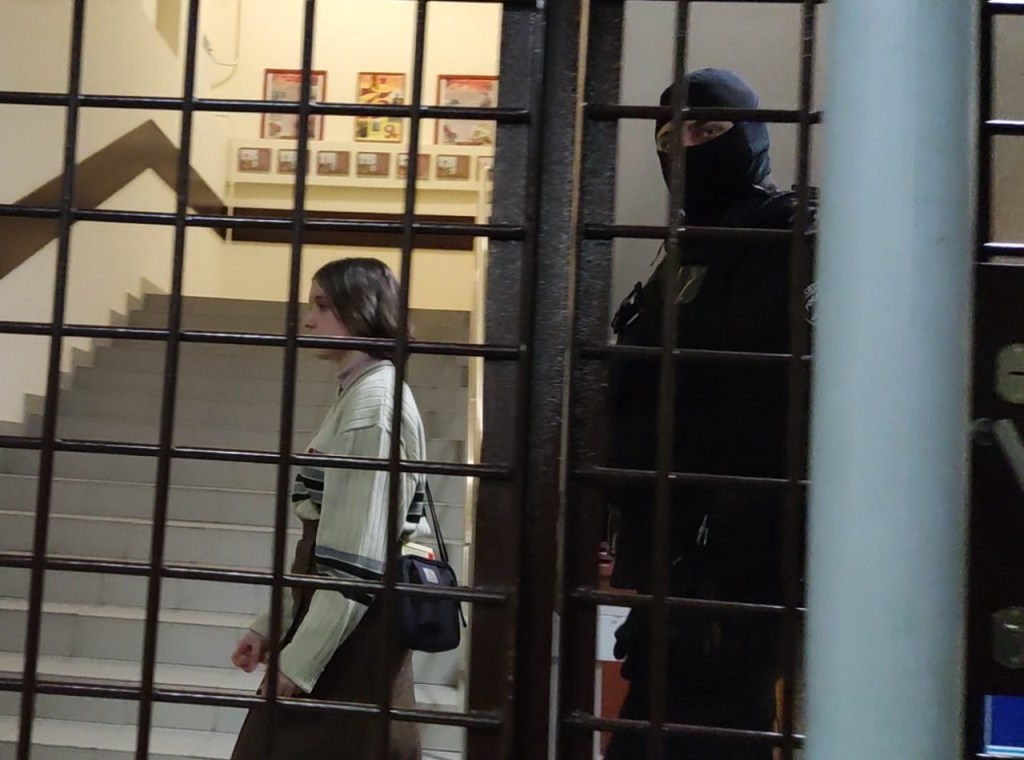
Inside Basmannoye police precinct
While I was giving my statement, an officer came into the educational classroom and asked whether there was a “competent person” among those present, meaning someone legally literate, apparently, someone whou would write a refusal to be photographed and fingerprinted, so that everyone could write their own refusals using his as their model. Such a “competent person” was found, and the question itself provoked laughter among the detainees.
After my return to the “waiting area,” Thiya went to her interview, her strength of materials worksheets in tow. She returned twenty minutes later with a look of bewilderment on her face. The fact is that she is getting married soon—but not to me—and in the process of making her statement, the interrogator, after finding out that Thiya also had nothing to do with LGBT and was also getting married soon, assumed that she was getting married to me. Thiya wasn’t about to argue with him.
The interrogator reread her statement aloud: “I am getting married. I am not inviting the chief of police.”
“The above is an accurate record of my statement,” Thiya added in writing to the end.
One of the detainees who heard this conversation saw my surprised face—I was planning to marry someone else after all—and gave me a piece of advice.
“When questioned later, you answer that it was dark, and that’s why you mixed up [the fiancees].”
“Uh-huh. I was drunk, I don’t remember!” I joked back, and we laughed together.
“Seryoga, did you count the number of [detainees]?” one of the officers asked my interrogator in the meantime.
“I don’t fucking know. How many are there supposed to be? There’s a whole fucking busload of them, a whole fucking classroom of them. Count them as a pack,” Seryoga the interrogator replied. At some point he took the worksheets from detainee Thiya, scrutinized them, and pointed out a flaw in the diagram to her.
Meanwhile, Vladislav the libertarian was walking towards the police station—he wanted to support his comrades. His fellow party member Georgy Belov was signaling to him from the window: fearing that Vladislav would be detained by the police, he waved his hand at him, telling him to get away. One of the officers at the Basmannoye police department did head toward Vladislav, but he managed to escape again. He then went to the store to buy food to give to his fellow party members and, as he put it, “our buddies from LevSD.” Some time later, LevSD and LPR agreed to hold joint events, primarily debates.
At 8:30 p.m., the officers at the station detained Vladislav all the same. When he and the other libertarians at large brought the care package, the policemen noticed him standing under the windows and took him inside.
Vladislav the libertarian is detained outside Basmannoye police station. Source: Rus News
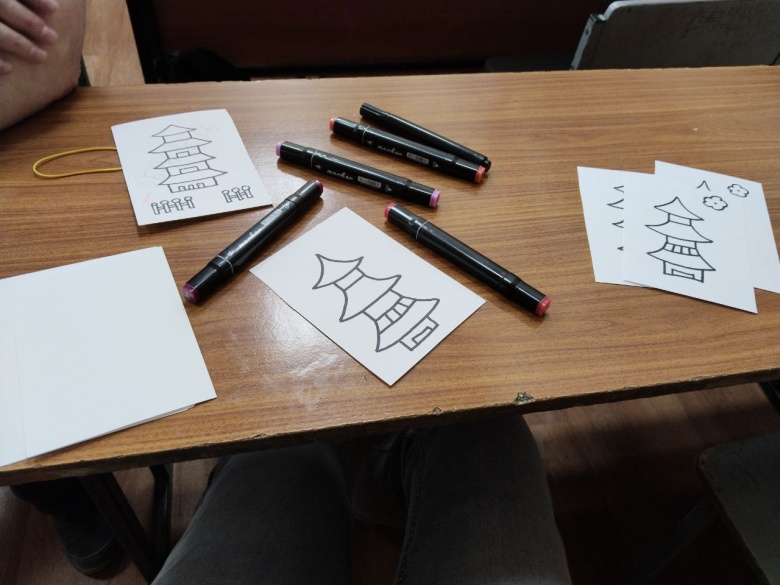
My attention was drawn to a female detainee who at some point started making postcards for political prisoners. She said that she would send them with the note “A postcard from Basmanny police station.” Someone wanted to work, but since there was no free Internet in the department, they were unable to. “I’m giving them a negative rating for not having wi-fi,” a young woman joked.
Anastasia was indignant.
“We are locked up here, a group of people who were not involved in anything criminal at all, while locked up here as well are a young man who was nicked for brawling and a woman who tried to strangled her sister. Instead of dealing with these people, the cops are dealing with political activists.”
This made her so angry that she stopped being afraid.
At some point, all the officers in the precinct left our part of the department. The metal door leading to the officers opens with a key card, so we had no communication with them. For a little over an hour we had “free time.” Everyone socialized, joked, and planned where they would go to drink beer after we were released, while some of the detainees chatted with the support group outside since the windows were open. And if it were not for the bars on those windows, it might have seemed that the detainees had not even left the co-working space.
From Open Space to Basmannoye police precinct. Source: social media
At around 10 p.m., the interrogator and another officer (the head of the department, probably) brought all the paperwork. They caloled the detainees by name, collecting their papers—the copies of their passports, fingerprinting refusals, and statements—and handing back their passports and escorting them to the queue for release.
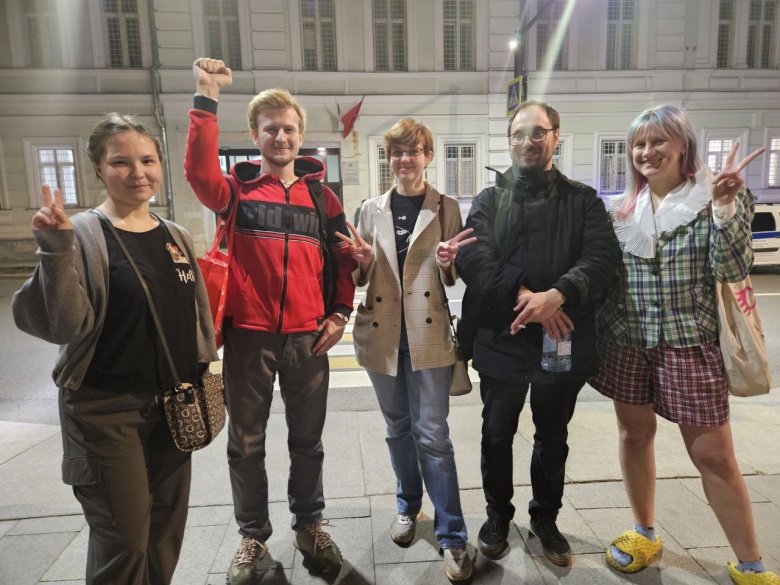
At first, those who had not been fingerprinted were released, because “the staff had lost their fingers” [sic]. At 10:07 p.m., I found myself outside with a group of detainees. We waited for the others to be released. Journalists taped our commentary for their news dispatches. At that time, Sasha, the Open Space volunteer in the red pants, was driven away by the Basmannoye police officers for an inspection of the “crime scene,” during which they confiscated several stickers and posters. The last detainee, libertarian Georgy Belov, was released at 11:34 p.m.
Activist Alexandra (“Sasha”) Kalistratova on the seizure of stickers and posters in Open Space by law enforcers. Source: Rus News (Telegram)
“I feel like we had an interesting, productive time, but it was complete fucking rubbish per se,” said one of the female detainees. “Saturday night was unforgettable,” concluded Andrei.
A view of the entrance to Open Space Moscow. Photo courtesy of Mediazona
On the evening of November 24, masked security forces officers broke into Open Space in Moscow, where fifty people had gathered to support the anarchists arrested in the Tyumen Case and write postcards to political prisoners. The security forces, who were probably commanded by a colonel from Center “E”, made the visitors lie down on the floor or stood them facing the wall and held them for several hours, beating some of them. They didn’t let a lawyer inside.
On November 24, an evening of solidarity for the defendants in the Tyumen Case took place in Open Space, a co-working space for activists in Moscow’s Basmanny District. Six anarchists from Tyumen, Surgut and Yekaterinburg have been arrested and charged with organizing a “terrorist community,” and all of them have said they were tortured.
The event was open to the public and had been advertised, for example, by the online magazine DOXA. (Recently, State Duma deputies demanded that the magazine be designated an “extremist organization.”)
The event started around six o’clock, and about forty to fifty people were in attendance, says one of the participants. Some eyewitnesses say that before the security forces arrived, they signed postcards in support of political prisoners, while others said that they recited or listened to poetry. In any case, when an intermission was announced, the guests went outside to smoke — and at that moment a paddy wagon drove up to the building, and masked security forces officers stormed the venue.
Video footage of the beginning of the raid, which the SOTAvision journalist Ksenia Tamurka managed to shoot before she was detained, shows that the masked security forces officers behaved in a demonstratively rough manner. They shouted, kicked over furniture, and knocked the phone out of the correspondent’s hands. After the phone falls, the sounds of blows and shouts are audible in the footage: “Hands behind your head!”, “Legs wider!”, “Face the wall, don’t look down!”
The security forces officers forced some of the young people to lie down on the floor, while they made the rest of them, including the young women, stand facing the wall, forbidding them to move. A young woman who had left the event during the break and unhappily returned to retrieve a tote bag she had forgotten toldSOTA that she stood facing the wall for about an hour.
“When I turned my head, I was told to keep facing the wall. An hour later, they apparently took out my passport from my tote bag and summoned me to another room, where most everyone was lying face down on the floor. I sat down and we waited further. Then after, I don’t know, thirty minutes, I was summoned by other Russian National Guard officers. They asked me where my phone was, and I showed them. They asked me to unlock it, but I said no, citing Article 23 [of the Russian Constitution, which enshrines the right to privacy]. They were like no, you’re going to unlock it. And when I had already sat down, there was already a young female journalist after me, and she refused to show them her phone. They dragged her by the hair and she screamed,” the young woman said.
After what she saw, the young woman agreed to unlock the phone, and the security forces wrote down its IMEI. Another woman, who attended event with a child, said that the security forces officers demanded that she show them her Telegram chats and latest bank transfers to find out “whether she sponsored terrorism.”
The young woman who was screaming was SOTA journalist Ksenia Tamurka. The media outlet has not yet published the commentary of the journalist herself. One of the detainees recounted the assault on Tamurka as told by another eyewitness; another young man heard the journalist screaming, although he was in another room.
He said that the security forces treated the young men in various ways: in his opinion, it largely depended on the length of their hair. The young man pointed out that the security forces also detained members of Narcotics Anonymous, whose meeting was going on in the next room. “And when they were asked what they were doing there, they said, We are drug addicts, we don’t know anyone here! Then they were taken away from where we were, and [the police] talked to them separately,” he recalled.
At some point, the security forces perhaps began to behave a little less harshly. In video footage recorded a few hours after the start of the search, it is clear that the detainees were no longer pressed against the wall, but were simply looking at it. The security forces did not detain the journalists who shot the video, but, according to a Sota correspondent, they did drag a passerby inside the building after he looked in the window.
The detainees were loaded into the paddy wagon only a few hours later, and the minors among them were released along the way. The rest were brought to the Basmanny police department.
One of them said that she and four young men were beaten at the station. According to the young woman, the security forces officers “struck her when she was lying on the floor.” One detainee was “beaten with a baton and a book,” and another young man was “thrown on a chair and kicked.” According to her, the police found a balaclava, an emergency hammer from a bus, and a traumatic pistol, which he had a permit to carry, on one of the men who was beaten.
Another young woman could not recall beatings and said only that the detainees wrote statements at the police department “about what they actually did.” Alexei Melnikov, a member of the Public Monitoring Commission who was recently appointed to the Presidential Human Rights Council, went inside the department and saw the detainees while they were making their statements, but also made no mention of possible violence.
The detainees were released from the department around two o’clock in the morning. None of them reported that they were forced to sign any documents other than their statements. Tamurka left the department last, around four in the morning.
Golos coordinator Vladimir Yegorov identified the colonel from Center “E” in video footage of the security forces escorting the detainees to the paddy wagon. According to Yegorov, he was beaten during a search of the Golos office on October 5 on the colonel’s orders. Yegorov does not know the policeman’s name, because it was not listed in the search report. According to SOTA, the masked security officers accompanying the colonel at Open Space serve in the second field regiment of the Interior Ministry’s Moscow Main Directorate.
Correction (7 p.m., November 25): The article originally stated that the journalist Ksenia Tamurka left the police department along with the other detainees around two o’clock in the morning. SOTAvision later clarified that she came out last, around four o’clock in the morning.
Shops are full of food, but no Nespresso capsules (I still have some for a couple of months).
Stores are still selling printers, but not ink cartridges (I had to re-fill the used one last week).
There is clothes in shopping centers, but stores I used to go to are closed.
European countries still formally issue visas, but not really, although they might, but probably not, and getting there by air costs the same as becoming a space tourist.
Some countries are still open, but flights abroad are few and expensive and airbnb doesn’t accept payments from Russia, so I have to ask my son living in Germany to pay for our Summer trip.
Speaking of my son, I still can transfer money to him, but sometimes it takes weeks and sometimes they never get through, though sometimes they do, and you never know.
Speaking of the money, I still get my salary, but sometimes it is delayed because transferring money to the right bank account in the right currency in time makes our financial team prematurely gray-haired.
Speaking of the salary, our high-tech company is still working, but neither electronic components, nor equipment, nor people can cross borders, although sometimes they can, and then they don’t, and you never know when and why, and nobody knows it.
I keep reading and watching Youtube videos about the war every day, although it has all become a routine, and I hate myself for that, and I did protest but stopped because it’s all pointless and dangerous, though it isn’t, but it is, and we are all cowards, but it doesn’t matter, though it does.
I want Ukraine to win this war, and I don’t feel as if I am betraying my country but rather that my country is betraying me and itself, and this is probably the only crystal-clear thing in my life.
Yes, life is still normal in Russia.
91.7K views • 6,390 upvotes • 32 shares • Answer requested by Emirey Jackson
“Blue Eyes,” who physically assaulted Ksenia Tamurka, escorts her around the police station. Photo courtesy of SOTA
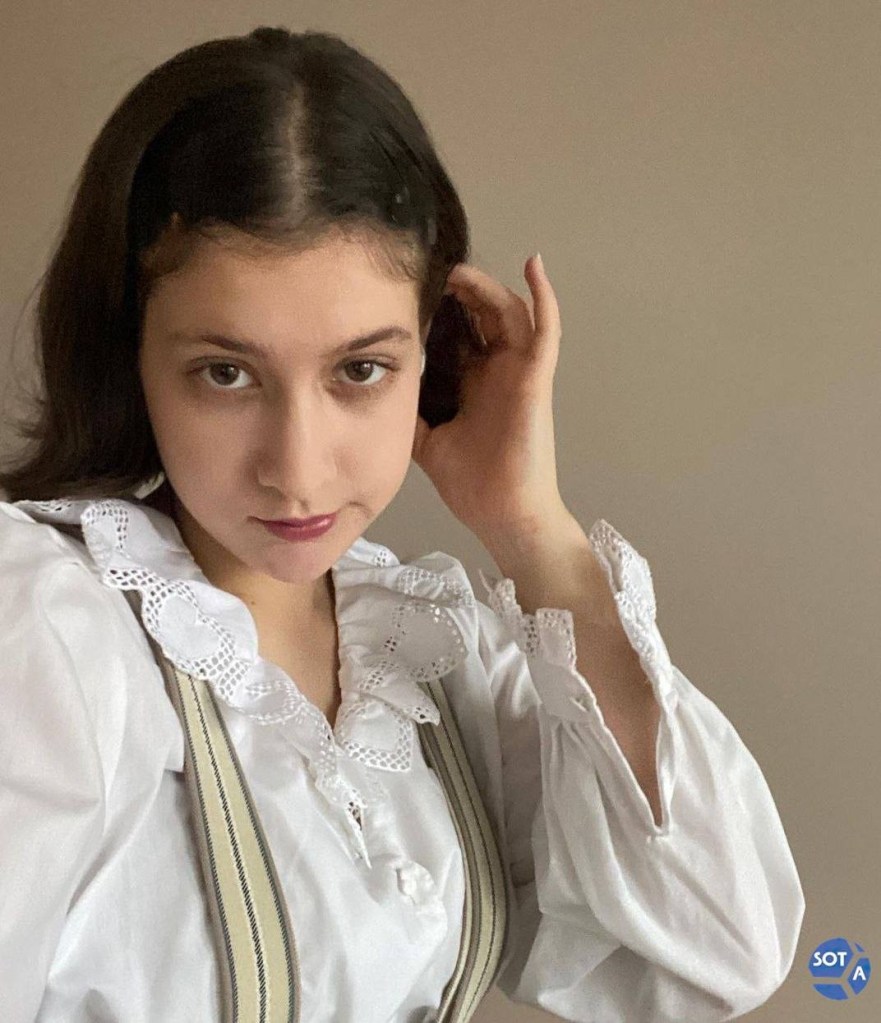
SOTA correspondent Ksenia Tamurka was detained along with the other attendees of a solidarity event for the defendants in the so-called Tyumen Case. The event was held at Open Space, an activist co-working space in Moscow The journalist was beaten when she refused to show her phone to men who had their faces covered. Despite this, Tamurka did not succumb to pressure and for several hours defended her rights to police officers. We publish this monologue by our correspondent, from which you can learn how to talk to the security forces and what you must do for your own safety.
Masked security forces officers [siloviki] burst into Open Space, and I started filming. I was either knocked down with a chair, or I tripped over it when I was pushed. I dropped my phone, and they put me face to the wall — they told me to stand like that. People around me were knocked down and thrown on the floor. They were not allowed to turn their heads; they could only look at the floor or at the wall. A Narcotics Anonymous meeting was being held in the basement of the premises, and one of the [recovering drug addicts] was asked what he used and how long he had been going there. They found some kind of book on LGBT topics in his possession and the siloviki read it aloud. In the process, they made nasty jokes about the guy. They said that there was no such thing as a former drug addict, and reproached him for being so young and already hooked. They collected everyone’s phone and papers, including mine and my press pass.
One guy begged them to let him call his mom. When these masked me with no insignia on their black uniforms had broken in, he thought it was a terrorist attack and had written to his family about it. The boy was very afraid that his mother would be worried, but the siloviki laughed, saying, Come on, how could you confuse us with terrorists? Why are you scaring your mother?
Then one of the Center “E” officers [eshnik] — the nastiest, most weaselly one — called me over because he thought I was hiding something when I was tucking in my sweater. He asked me to be a good girl and give him what I had allegedly hid; otherwise they would search me and stick their hands in my underpants. I said that I hadn’t hidden anything, that I was a journalist and had come there on assignment. He asked me strange questions, but I answered reluctantly. I said that I would only answer an investigator’s questions. For this, I was “punished” — I was made to stand with my face to the wall, although the others were sitting. When the siloviki nearby suggested that I sit down too, this eshnik said, “No, she’s being punished. She will stand.”
A couple of hours later I was summoned again. “Point your finger at your phone. Come on, unlock it,” they said. I refused because the request was illegal. Those men in uniform saw that I had Face ID, and they brought my phone close to my face, but I closed my eyes and looked away. The eshnik said all sorts of nasty things to me, getting angry and shouting. One of the masked siloviki, a man with blue eyes, grabbed me by the hair. Someone else hit me in the face and tried to open my eyes with his fingers. I was surrounded by five masked men. I screamed and cried and screwed up my face. I was very afraid to glance lest my phone be unlocked, god forbid. They dragged me back and forth by the hair. They shouted, “A drama queen! Ah, what a drama queen!” The police officers threatened to take me to the Moscow Region and talk to me in a basement.
At Open Space there is a mailbox for postcards designed to look like the bars in a jail. They punished me again by forcing me to stand looking at this box, like I was serving a prison sentence. Every police offer who walked by me thought I was backing away from it and pushed me closer. When one policeman passed by, he snapped his fingers before my eyes. When he was passing by, another policeman inserted a postcard with a beautiful picture in the box and said, “Let’s change the view — gaze at this.” Almost everyone passing by noted the pulled out hair on my clothes. Then that eshnik came up to me and tried to persuade me to unlock my phone. He asked whether I was tired, offered to deal with me “the normal way,” and said that I was delaying everything and would be the last to leave. “Just say the password, just enter it,” he said, but I wouldn’t enter it. They offered to give me a chair, to which I replied, “I’m not going to bargain with you. And bring a high chair.” They brought it. I sat down: I was comfortable, it was great, I looked at the wall. The blue-eyed man who had pulled my hair came up to me. I told him, “You beat me,” and pointed out that it was illegal, but he was like, “I don’t care.” The siloviki also tried to scare me by saying that my mobile phone would be entered into evidence and returned a year later, at the earliest, if we didn’t resolve everything on the spot.
The men in uniform constantly asked the organizers and participants why they supported terrorists and wrote postcards to them, and why the slogans on their walls were so filthy.
The siloviki asked everyone to tell them the PINs to their phones first, and then, if the person refused, they put the device in their hands and told them to enter it personally. They asked them to show their Telegram chats and film rolls and enter some other commands, like they were checking whether the mobile phone was stolen. When I asked what it all meant and why they needed my phone, they replied that they suspected me of theft, that there was a criminal complaint and even an APB out on me. I asked them to show them me and asked whether all those lying and sitting at Open Space had APBs out on them too. The siloviki replied that they would not show me anything because it was official information, and they stopped talking to me.
Everyone was photographed and searched, and their documents were photographed too — illegally, of course. They also took a picture of my father’s library card and public transport pass, although I didn’t consent to this. I was told that I was not in a position to forbid them to do anything. All the time I heard the same conversation: “We are checking your phone for theft, we are checking your phone for theft, enter the IMEI.” And almost everyone agreed to do it! Very few refused — and they were beaten, in my opinion. In any case, they were not treated very pleasantly. The eshnik asked me who I worked with at SOTA, who gave me the assignment, who I knew. He asked me about books and suggested that I read 1984. I told him to read Zamyatin’s We.
Th eshnik tried to make friends with me. He kept asking how I was feeling and complimented me, calling me a “persistent lady.” He even took my number and suggested that we discuss books later. He was constantly trying to get me to talk about “opposition” literature, bragging about his knowledge and telling me about Orwell. This man then invited me to take a stroll with him, but when he saw my face, he wimped out himself. “Well, you don’t want to walk with such scum, do you?” he said.
Ksenia Tamurka. Photo courtesy of SOTA
When I had already lost track of time, the intercessions on my behalf were conveyed to me. I was so glad when I found out that journalists had already gathered [outside], that my colleagues were there too! I was relieved because I had been very worried that I couldn’t contact anyone.
A man who did not agree to unblock his phone was beaten quite hard, judging by the sounds. We were forbidden to turn and look. One boy was whipped on his legs — the police officer made him spread his legs wider and thrashed him with all his might. It was so loud and scary.
They also promised that they would talk to me separately — I was afraid that they would just start torturing me, because I asked the policemen about it, and they either jokingly or seriously answered that yes, they would. There was a moment when everyone was really led away, and I thought, Well, that’s it — it’s about to start. But no, I was just sent to a paddy wagon.
At the station, I realized that everyone was pretty sick of me, judging by the comments that came my way. They called me a dumb broad and a pest. They said that I should be beaten with a rod. Later, in the department, they suggested that I should be “whipped with an officer’s belt in a dark room.” It also transpired that I was a dumb broad because no one was fucking me. They said disgusting things about me. I wrote down everything they said and all sorts of atmospheric details in the blank spaces in the book I had with me, [Vladimir] Sorokin’s Sugar Kremlin. The police saw it and tried to take a peek. Then the blue-eyed duded just stole it from me. They read all my notes in front of me and laughed in my face: “What? Who beat you? No one touched you. Why are you making things up?” But one of them added that I could still be beaten, because there was no other way to make me understand.
I was held separately and constantly harassed. And yet, when I asked to make a phone call, they said that it was specifically forbidden to me. When I asked to let a lawyer in to see me, that was also forbidden to me. I wanted to go to the toilet, but that too was specifically forbidden to me, while everyone else was allowed to go. They lied to me that there was no one waiting for me outside, that no one had any use for me and no one was waiting for me, although I knew that a crowd had already gathered at the station. The policemen discussed my breasts in front of me. Then they asked me my size — I cited Article 51 [of the Russian Constitution] and refused to testify.
When everyone else had already been released, they continued to drag their feet with me. The policemen kept their promise. I had to prove to them that the phone was mine for some reason. But if they had confiscated it from me, they should have known whose phone it was! It was their problem that they didn’t follow the legal procedures and forced me to deal with the consequences of their negligence! Moreover, my phone was the last one. The cunning eshnik and the blue-eyed devil finally decided to punish me too for my perseverance and entered the wrong password many times so that my phone would be blocked.
While we were waiting for the on-duty officer, the fool who dragged me by the hair ran out through another exit. Today I will file a complaint regarding the theft of my book and the actions of those police officers. I also went to the emergency room — I feel that it hurts me to touch it [sic]. I had the assault and battery documented there. The trauma specialist told me that it was an “industrial” injury because I had been on the job.
By the way, the slogan “The people’s trust is the police’s strength” was written on the wall of the police department.
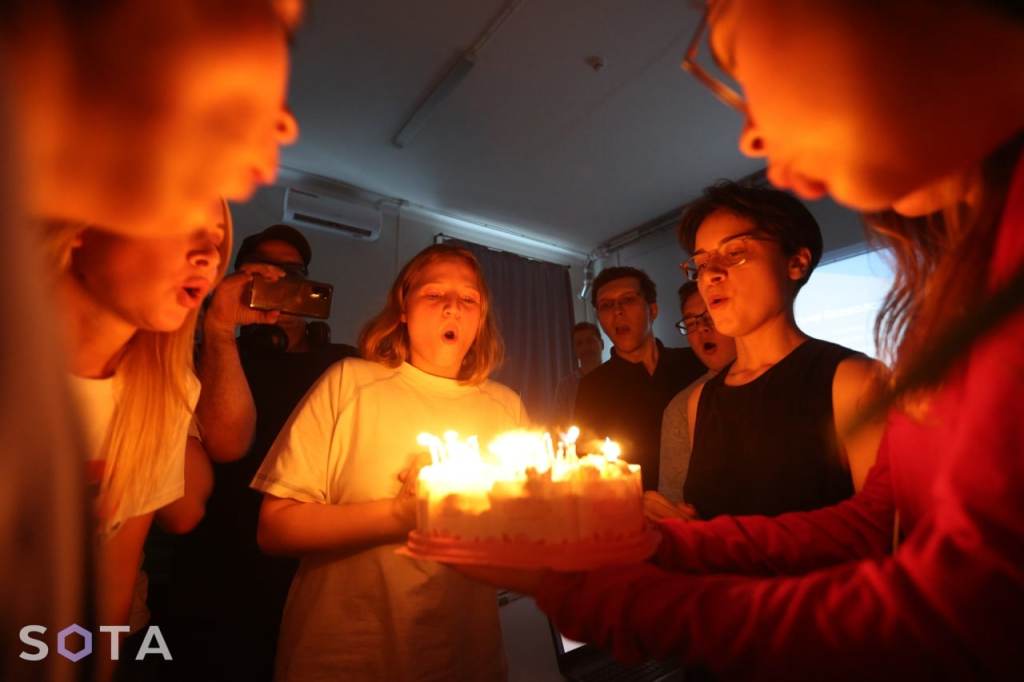
Today, Open Space Moscow celebrated the birthday of a political prisoner Dmitry Ivanov, the editor of the Telegram channel “MSU Protesting,” with cakes, stickers, candles, and merch.
In addition to Ivanov, who is on trial for disseminating “fake news about the army,” the evening’s organizers remembered other people currently jailed under Article 207.3 of the Criminal Code who are not as well known, in particular:
Olga Smirnova, a Petersburg activist with Peaceful Resistance, who has been prosecuted for writing post about the war in Ukraine and burning a cardboard letter Z.
Vladimir Zavyalov, a businessman who hung anti-war price tags in a supermarket.
Ioann Kurmoyarov, a priest who said on YouTube that hell awaits the soldiers who attacked Ukraine.
Igor Baryshnikov, a Kaliningrad activist who wrote about Bucha on Facebook.
Source: SOTA (Telegram), 5 August 2022. Translated by the Russian Reader
“Dima is in jail for words” A merrymaker at Russian political prisoner Dmitry Ivanov’s birthday party writes him a postcard.