Ored Recordings: May 21st, Again (Abkhazian and Circassian Music from Turkey)

May 21st. Again.

For several years now, almost every May 21st, we release a statement that speaks more clearly about memory, colonialism, defiance against repressive mechanisms, and resistance to assimilation.

For the Circassians, this day is a day of mourning, marking the end of the Russo-Caucasian War in 1864, the loss of independence, and the mass expulsion from their historical homeland.

Alongside the Adyghe, the Abkhazians also mourn on this day, having faced similar displacement. The Ubykhs, who lived in what is now Krasnodar Krai, are believed to have disappeared entirely, save for their descendants, who scarcely remember their language and cultural heritage. Most of them now identify as Circassians.

Open sources provide general information on these events, and the descriptions of past May releases cover our stance on the Circassian genocide.

The situation regarding how federal authorities in Russia and regional authorities in Kabardino-Balkaria, Karachay-Cherkessia, Adygea, and Krasnodar Krai address the history of the Circassians and the Caucasus, as well as their reactions to contemporary issues, remains unchanged. It is consistently disheartening, and one could reread our texts from previous years to find that everything stays on the same trajectory. We’ve even expressed this very thought a few years ago.

However, there is a positive stability — Circassian society continues to calmly and confidently speak about their problems and historical traumas while striving to build their future. Those engaged in linguistic activism, genetic and archaeological research, history, music, or contemporary Circassian art in recent years are unlikely to seriously hope for systemic changes, official acknowledgment of past mistakes, or a shift in the offensive or bland rhetoric of officials, such as “we brought you culture.” Yet, the realization that self-education and self-driven work are essential has dawned on many, if not all.

Xexes — The Diaspora
One visible result of the Russo-Caucasian War was the creation of a massive Circassian diaspora in Syria, Jordan, the United States, Europe, and especially Türkiye. Today, there are more Adyghe in these countries than in the Caucasus (various sources estimate between 3 and 5-6 million). These are the descendants of the muhajirs, forced migrants of the 19th century.

They have their own context, their own struggles, and even their own intonations in music and culture. In Türkiye, all North Caucasians — Balkars, Karachays, Ossetians, Dagestanis, Chechens, Ingush, Abazins, and Abkhazians — are collectively referred to as Circassians.

For a long time, the Turkish government prohibited muhajirs and their descendants from speaking their native languages, using native names and surnames, or naming villages in their native languages. Consequently, Caucasians in Türkiye carry two surnames: an official Turkish one and their “real” native one.

There was no systematic direct communication between the diaspora and the homeland for a long time. Since the early 20th century, muhajirs have returned home with exciting projects (e.g., Adyghe educator Nuri Tsagov/Tsağe Nuri). Or the North Caucasian political figures or abrek warriors who became heroes at home left for Türkiye and Europe (e.g., Kabardian abrek Murat Ozov/Wazi Murat or the founders of the Mountain Republic), but these were exceptions rather than the rule.

In the context of fragmentation and separation from each other, the Adyghe and Abkhazians have preserved and developed their music differently depending on the region. In the diaspora, songs and melodies that are no longer remembered in the Caucasus have been preserved, but those still remembered at home have been lost.

For example, neither Türkiye, Syria, nor Jordan have preserved the violins (shichepshins), but the accordion has developed unique features. Each diaspora has created its own style, which did not exist in the homeland. In this sense, diaspora life has gifted diversity to our people. However, the Circassians and Abkhazians in the diaspora retain a romantic and even sacred perception of the homeland (Hequ for the Circassians) as a pure, untouched, and genuine place.

This presents a danger — any information from the Caucasus is perceived as an unquestionable truth, and any style coming from Hequ is considered the most authentic. Consequently, young musicians sometimes ignore their local characteristics and strive to sound like Kabardian pop music. As a label, this disheartens us.

Nevertheless, the desire for unity and strong ties between the diasporas and the Caucasus is generally positive. Perhaps we should view fragmentation not as a problem but as a feature that makes us more global and mobile.

Düzce and Sakarya
This album includes recordings from a major expedition across Türkiye in 2017. Some of these materials have been released in previous years. This release features songs and tunes we collected in two neighboring provinces: Sakarya and Düzce.

In Sakarya, we visited the Abkhazian family ensemble Azar, which folklorist Madina Pashtova and our friend Erhan Turkav recommended to us before the expedition. Erhan, a Circassian from Türkiye, knew almost all the elderly and young musicians in Sakarya and Düzce.

The rare recordings we found on Facebook from compilations promised a meeting with an old style, free from academic or pop influences. Expeditions in Abkhazia showed that such music is almost gone there. The Soviet influence was very strong — choirs in Sukhumi, Pitsunda, and even villages often sounded like ensembles from radio committees or cultural centers. This, of course, is also interesting, but we wanted to find performers who had either not been influenced by this or had somehow overcome it.

Thus, we were looking forward to our trip to the villages of Sakarya, perhaps even more so than other meetings in Türkiye. It seemed our informants were just as eager to meet us. From the doorstep, we were greeted by elderly Abkhazians keen to show us their hospitality — the table was full of homemade food, and people were ready for well-wishes and toasts (though we only drank tea there).

During the long feast, we learned that the ensemble had faced difficult times — one of the main vocalists and experts in traditional Abkhazian songs, Nezhmettin Anashba, had recently passed away, making it harder for the group to maintain the style of Abkhazian polyphony. It was also sad that there seemed to be no replacements among the younger generation. Azar was regarded as the last bastion of Abkhazian table singing. As is often the case, people were more focused on preserving the image of the last and most valuable bearers of tradition than on acquiring their knowledge and skills.

Fortunately, Tolat Sadzba was still alive — an elder who still remembered the song lyrics and was willing to sing them. That day, after several dishes and traditional blessings, we managed to record only two songs. A heroic ballad from the Russo-Caucasian War about Ajgerei-ipa Kuchuk (about whom there are both Circassian and Ossetian songs) and a song-melody for choral dances — “Aurasha.”

Perhaps we could have recorded more, but the informants were more interested in talking and asking about the homeland (both Abkhazia and the Circassian republics) than in singing songs. The first expedition is often introductory, where we establish contact, and the main part of the material is recorded during the second visit when people are no longer trying to impress us with their hospitality. We left Sakarya firmly believing we would return later and record the rest. But just a few months after our recording, Tolat Sadzba passed away. Thus, these two incredible songs became our only recording of the legendary Azar.

Recording in Düzce
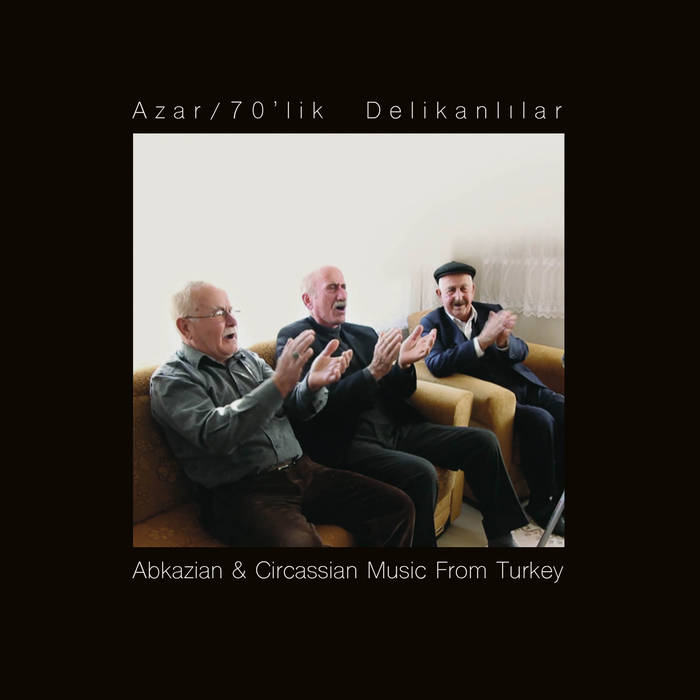
Erhan also organized the recording in Düzce. There, elders (mostly Shapsugs and a few Abkhazians) formed a home ensemble with the ironic name “70-Year-Old Youth” (70’lik Delikanlılar). This joke not only accurately described the participants’ age and enthusiasm but also the music played by the unofficial group — wedding music for games — dzhegu.

The lively elders passed the accordion, played the melodies from hand to hand, sang dance refrains in chorus, and used large wooden benches as percussion instruments, hitting them with wooden sticks (called pkhachag here).

The musicians energized each other, getting into a groove and creating a festive atmosphere for themselves. However, this was not a real wedding but a recording session, so the “70-Year-Old Youth” quickly grew tired and switched to having tea with guests from Nalchik. We managed to record a few very bright but too short tunes. If it had been a real wedding, the release would have consisted of many hours of melodies. Even so, the release conveys an atmosphere of joy and musical festivity.

Hope Instead of Despair
We cannot find reasons for joy or even for optimistic forecasts regarding the attitude of official institutions towards Circassian and Abkhazian history. The situation is either stagnating or worsening, with less space for free discussion of colonialism. Circassians march in mourning despite unjustified bans, and Abkhazians fight against the distribution of their lands and the pressure on civil activists. Instead of developing and striving for the future, our people are forced to defend basic things.

Nevertheless, it is fundamentally important for us to release something every May 21st that speaks not only of mourning but more about hope. Yes, Tolat Sadzba is no longer with us, but his voice and the voices of his friends are preserved in digital formats. These people sang songs and found reasons for joy in the harshest conditions. What they preserved, new generations can take and infuse this music with new meanings and moods.

The joy lies in the fact that there are people for whom these recordings are made. There are those for whom these songs can be sung.

Дызэкъуэтымэ – дылэщщ.

Sound: Timur Kodzoko
Sound editing: Timur Kodzoko
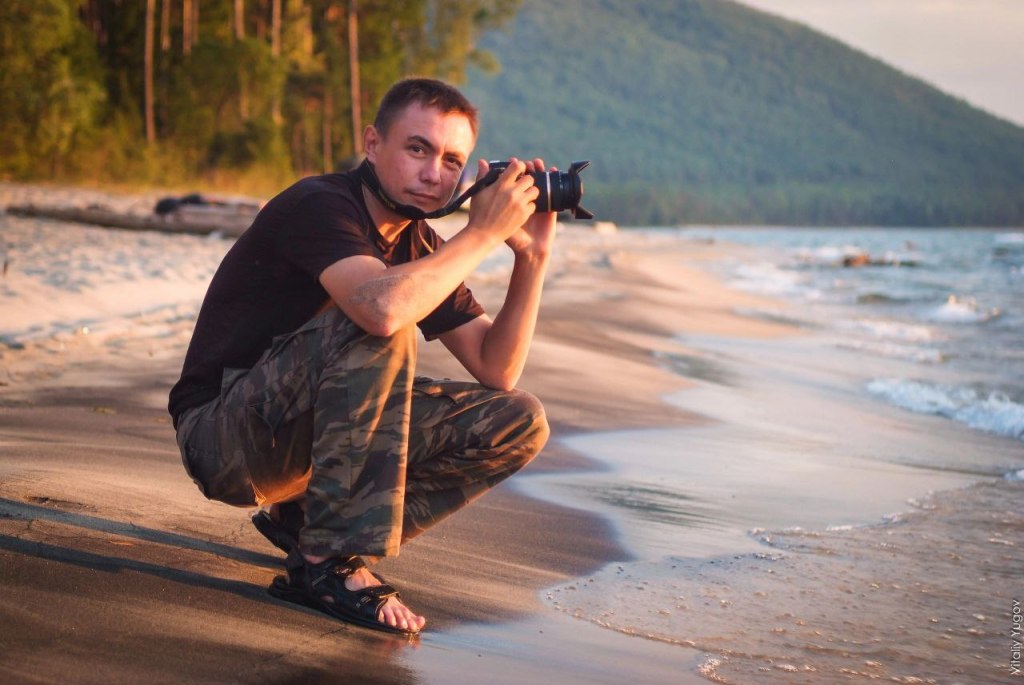
Cover image: Timur Kodzoko
Cover art: Milana Khalilova
Notes: Bulat Khalilov, Sergey Zotov and Bella Mirzoeva
Special thanks to Erhan Turkaw for organization and Fatih Ersem for contacts. Also we want to thank Aslanbek Nacho for his financial support.

Recorded in Sakarya and Düzce, Turkey, November 2017

Source: Ored Recordings (Bandcamp). I would strongly encourage all my readers to buy and download this digital album (paying as much as you wish) and thus support the unique, vital mission of Ored Recordings. |||TRR
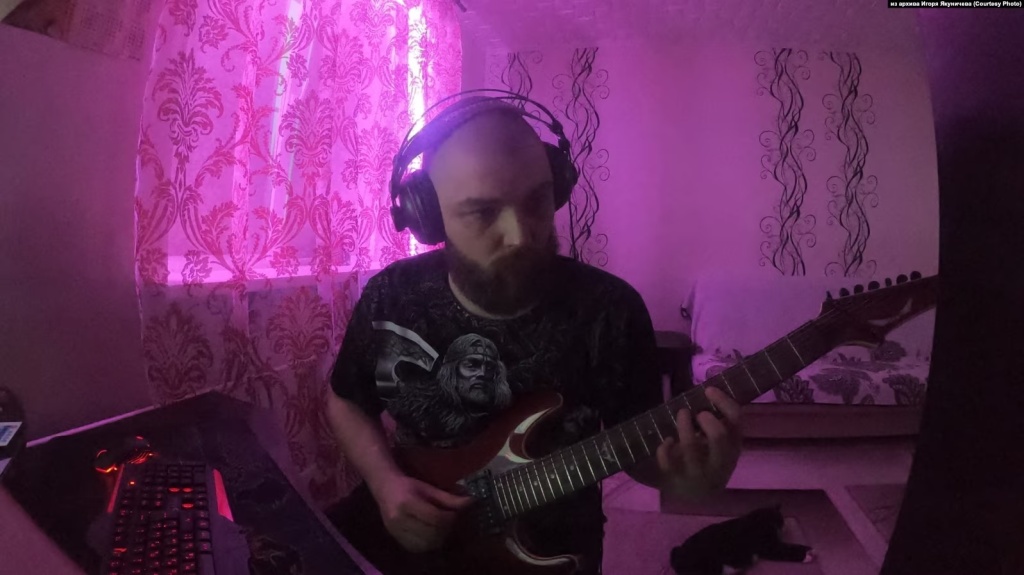
Punitive Psychiatry for a Dissident Janitor in Northern Russia: The Case of Igor Yakunichev

Igor Yakunichev

Five criminal cases have been launched against Igor Yakunichev, a resident of the Yamalo-Nenets Autonomous District. In addition to three cases on charges of “disseminating fake news” about the Russian army and “condoning terrorism,” the security services added two more cases on the same charges. On 1 April, Yakunichev, who started the YouTube channel Infinity Is Not the Limit (about the lawlessness of the police and the courts), was forcibly hospitalized in a psychiatric clinic in the Tyumen Region.

Yakunichev’s relatives are convinced that he has been subjected to punitive psychiatry because of his consistent criticism of the current regime. For more than a year, investigators in Yamalia have tried to put Yakunichev in jail on charges of “disseminating fake news” about the military and “condoning terrorism.” However, even a court-appointed defense lawyer could not induce the 35-year-old Yakunichev to “admit everything and mitigate his plight” When the criminal cases began to fall apart, the defendant, who had no psychiatric diagnoses, was shipped off to a mental hospital.

“The police broke into our house twice”

The police started calling Igor Yakunichev and coming to his home (he lived with his mother and father in Pangody, a settlement in Yamalia with a population of 11,000) in early 2023.

Pangody, a village in Yamalia. Photo courtesy of Igor Yakunichev and Radio Svoboda

“They would bring a ‘warning’ for him to sign, or they would summon him for an ‘interrogation’ and question him about his videos and posts. He started the [YouTube] channel when his family was cheated out of their housing,” says Igor’s relative Tatyana (whose name has been changed for security reasons). “Mother and father and son had lived for many years in two rooms in a barracks. Under the dilapidated housing resettlement program they were given a one-room flat. Igor fought against this lawlessness for many years, and he and his mother traveled many kilometers going to the courts. All to no avail. Then he began not only to take an interest in the state system but also to make and post videos about what is going on in Yamalia. He had come head to head with the injustice of the system back in 2015, when he worked at the property management company Our House. Another property management company controlled by them, Garant, was going bankrupt at the time, but for some reason all the employees at Our House were forced to apply to work shorter days (apparently, the whole business was being optimized). Igor refused [to sign], and after three months they up and fired him. He sued them and was reinstated, but he was pressured into leaving anyway.”

The local administration disliked the fact that Yakunichev fought for his own and other people’s rights. Consequently, despite his specialized secondary education, he could only find work as a janitor.

“He helped other residents get their cases through the courts. He became very adept in these matters: he knew all the laws well, especially the Housing Code. But there was no work in Pangody. (Yakunichev graduated from a technical college and worked as a mechanic — Sibir.Realii.) He was promised a job at Gazprom—he is a good mechanic—but then they admitted that they had hired ‘one of their own people,’ meaning somebody’s relative. And that’s how everything goes here. At the time, the cronyism made Igor quite angry, not the fact that he didn’t get the job: his janitor’s salary was enough for him. And in fact, he was already a blogger: he had bought a good camera and set up a studio for editing,” says Tatyana.

All of the Yakunichevs’ expensive electronic equipment was taken away by the police during their first “hard visit.”

“In the summer of 2023, [the police] broke into [the Yakunichevs’ flat] for real and slammed Igor onto the floor. His mother screamed, ‘His spine is broken! Don’t throw him on the floor!’ But what they did care, they hit him as hard as they could. Igor has had an implant instead of one vertebra since he was a student. When he was studying at Omsk University, he lost his keys and climbed through the window in the dormitory. The balcony was dilapidated: it broke off and he fell on his back. Since then he has had a bunch of diagnoses: cervical, thoracic and lumbar osteochondrosis. And when he is worried, he can have a seizure, and it’s like impossible for him to breathe. And so they wrestled this very unwell man, who is practically disabled, and threw him on the floor. Interestingly, the camera that Igor turned on continued to record even after his fall and almost the whole ‘wrestling match’ was captured. Igor later returned from the police station, restored the recording, and posted it on [his YouTube] channel. It made the police squeal to the high heavens!” says his buddy Ivan (whose name has been changed for his own safety). “In the background you can hear them yelling wildly, ‘Hands! Hands on your head!’ Who are they yelling at? A disabled man. And [you hear] Igor asking, ‘The cats! Watch out for the cats!’ so they don’t trample his pets. It’s just brutal!

Igor Yakunichev’s video of the police raid on his family’s flat

After the police’s visit, Yakunichev learned that a criminal case on charges of “disseminating fake news” about the Russian army (per Article 207.3.1 of the Russian Federal Criminal Code) had been launched against him as early as late March 2023. He has published his first social media posts against the war at the very beginning of the war in February 2022.

“He reacted very harshly when someone would voice support for the war in his presence. He would not get into a fight, but he could try and persuade [the person] and talk [to them] until he achieved understanding or until he got tired himself. He was one of those people who never got used to the war. He understood the risks, but he still would stick his neck out. He vented everything to the policeman after [the latter] accused him of disturbing the peace at the [Russia Day] celebrations in June 2023. After [he said] these words about the unjust war with Ukraine, which he threw directly in the face of the ‘representative of the authorities,'” they targeted him specifically,” says Ivan. “They accused him of spreading ‘fake news’ about the army, threatening him with fifteen years in prison for posts on VKontakte about the Russian military’s crimes in Bucha. He and his mother filed complaints about the violations [of his civil rights], about how he had been roughed up during the arrest, how all their electronic equipment, even his mother’s computer and phone, had been cleaned out. Can you imagine, they still haven’t returned it!

As part of the first criminal case, the court banned Yakunichev from performing certain actions. In early March 2024, this case came to court. That was when it transpired that at least four more criminal cases had been launched against Yakunichev. Even prior to this, in the summer of 2023, Igor had been charged with an administrative offense for “discrediting” the army and fined thirty thousand rubles [approx. 300 euros]. Yakunichev and his family were notified about it.

“The grounds [for the charges] were ‘funny’: a video about a memorial featuring a T-54 tank in the village of Pangody. Local vatniks had drawn the letter Z on it. And Igor said in the video[‘s annotation] that it violated the law on the protection of cultural heritage objects,” says Tatyana.

Igor Yakunichev’s silent video condemnation of a WWII memorial in Pangody turned into a pro-war Victory Day display.

Then, in November and December 2023, according to Tatyana, two more criminal cases were brought against Yakunichev under the same article of the Criminal Code (Article 205.2.2, “condoning terrorism”). He faces up to seven years in prison if convicted on these charges.

“The grounds [for the charges] were videos about the Free Russia Legion ([in which a Legionnaire expresses] gratitude for donations in the fight against ‘Putinist Russia’) and about the Kakhovka hydroelectric power plant. They weren’t even his own videos, but reposts of other media on his VKontakte page,” says Tatyana. “Later, we learned of the case launched under the article on repeated ‘discrediting’ of the army (Article 207.3.1), and then they seemingly merged it with one of the cases under Article 205 into a single proceeding. But the number of cases is frightening, don’t you agree? He regularly received notifications that one video or another had been removed from his page ‘by decision of the prosecutor’s office.’ He did not restore them: although he is a principled man, he was just tired and fed up.”

Free Russia Legion, “The Legion Returns Home” (2023)

His relatives are certain that Igor was deliberately driven to distraction with the interrogations and the notifications so that he would “blurt something out.”

“In June, the local beat cop showed up and made a completely delusional accusation. Allegedly, at the celebrations of Russia Day in June, [Igor] had been seen drunken in a public place and a complaint was filed against him. (That day, by the way, many people had seen him and testified that he was sober and orderly, so eventually the prosecutor’s office canceled this humiliating fine.) He videotaped this wannabe policeman, but he did not hold back and said everything he thought about this unjust war against Ukraine,” says a relative of Yakunichev’s. “I believe that this cop was the one who contributed testimony against him in the first case. Now it has gone to court, and Igor has been put away in a mental institution. Because they couldn’t put him under arrest: there was too little evidence of his guilt and ‘danger to society.’ But for some reason [the police] can take him to the madhouse themselves and obtain the court ruling retroactively. His mother has worn herself out filing complaints about such violations. It is urgent to replace the court-appointed lawyer with a normal one. Although [his mother] works as a cleaner, she is ready to pay all the money she has to a decent lawyer. Because the current one is a disaster: he hasn’t even been able to obtain a meeting with Igor once all month. [His family] receive paperwork about the cases against Igor months later, so they don’t know anything about the new cases against Igor.”

Igor Yakunichev’s confrontation with the local beat cop who showed up at his home to hassle him.

According to relatives, Yakunichev’s family is disappointed with the work of the court-appointed defense lawyer and now fears that Igor’s testimony will be extracted from him by torture in the psychiatric clinic, located in the village of Vinzili, Tyumen Region, a thousand kilometers from home.

“Read the reviews of the institution: former patients write such things it makes your hair stand on end—abuse and ill treatment by staff, medication administered without explaining to family and friends what the drug is and what it is used for,” says Ivan. “I think we need to get him out of there as soon as possible. Only a normal lawyer will help. By the way, this is not the first time [the authorities] have tried to subject him to punitive psychiatry. After his anti-war reposts, they were going to mobilize Igor. Yes, with his twisted spine and numbness in his chest! [Yakunichev’s family] went to the courts, got an independent forensics report, confirmed all the diagnoses, and it seemed to go away. And now this. I’m really afraid [the authorities] are not going to give up on this psychiatric hospitalization thing.”

Yakunichev’s relatives fear that the forensic psychological examination at the psychiatric clinic in the Tyumen Region will not be limited to the case and Igor will be kept there “indefinitely”.

The evidence in the last two criminal cases against Igor Yakunichev (on charges of violating Articles 280.1 and 207.3.2 of the Criminal Code) have still not been made available to his family.

“We found out from independent human rights activists—we don’t really know what he’s accused of,” says the relative. “Now they can’t even send you copies of previous cases, because during the search in April [the police] cleaned the Yakunichevs out: [they confiscated] their computer, which his mother had replaced, the telephone, even the TV set! They virtually robbed them so that they could do nothing at all, neither find a lawyer, nor send an electronic complaint.

Source: “Five criminal cases against a janitor: how the security services have been putting pressure on a dissident in northern Russia,” Sibir.Realii (Radio Svoboda), 30 April 2024. Translated by the Russian Reader. Thanks to Comrade Koganzon for the heads-up. Thanks also to Nanny Kim for generously continuing to support this website with her monthly donations.

Drevarkh the Enlightened Dies in Arkhangelsk

Andrei Khristoforov aka Drevarkh the Enlightened. Photo courtesy of Mr. Khristoforov’s social media page via Mediazona

Fifty-nine-year-old environmental activist and Shiyes defender Andrei Khristoforov, also known as Drevarkh the Enlightened, has died in Arkhangelsk. The news was reported on his page on the Russian social media network VKontakte.

In late April, Khristoforov said that he had been admitted to hospital with severe cirrhosis of the liver.

In Arkhangelsk, Drevarkh was involved in environmentalism and was the leader of the Plant Your Own Tree movement. He wore white wings and a tree-shaped cap during his protest actions.

In 2022, the Ust-Vymsky District Court in the Komi Republic sentenced Khristoforov to a year of probation on charges of “violence against a law enforcer” (per Article 318.1 of the Criminal Code). Police investigators claimed that, in the summer of 2019, Drevarkh had attacked a policeman who was filing a report on him because he had, allegedly, pulled the emergency stop of a train at the Shiyes railway station, where protests against the construction of a landfill were underway.

Drevarkh said that the police officers had themselves beaten him during the arrest. Video footage of the arrest was posted online by other Shiyes activists: it shows police officers shocking Khristoforov several times with a stun gun.

Video footage of police detaining and electrocuting Drevarkh the Enlightened in 2019

After charges were filed against him, Drevarh was sent to a psychiatric hospital in Arkhangelsk for a forensic medical examination. The psychiatrists concluded that Khristoforov suffered from borderline personality disorder, but during the scuffle on the train he “would have been aware of the danger posed by his actions” and did not need compulsory medical treatment. Drevarkh then hurriedly left for Ukraine, where, according to him, he also planted trees. In the summer of 2021, however, he decided to return to Russia.

Upon arrival, the activist was placed under house arrest, and then released on his own recognizance. “The Creator thus sent me feedback via the Russian Investigative Committee, for which I am grateful to the former and the latter,” explained Drevarkh. Police investigators had written to Drevarkh via social media, after which he bought tickets home.

In May 2019, Drevarkh was fined for taking part in a protest march against the Shiyes landfill. He was later detained for ripping the epaulettes off a policeman’s uniform during one of the rallies. “When the brothers started pushing me back, the epaulettes flew off them. But they blamed me for the whole thing, saying that I was the one who had conjured it up. It’s like leaves falling off a poplar tree, that’s how the epaulettes fell off,” the activist said at the time.

That same month, “after firing several warning shots in the air,” Khristoforov shot his own urine at private security guards using a toy automatic rifle and smeared feces on the porch of a temporary police station. After he was detained by police, the activist dubbed the contents of his toy gun a “Drevarhh cocktail” and complained that “the [gun’s] clip was too small.”

Residents of the Arkhangelsk Region fought against the construction of a landfill near the Shiyes railway station for over two years. The company Technopark planned to haul waste from Moscow to the region. The project sparked outrage in the region, and local residents organized a 24-hour watch at the railway station and blocked the roads leading to it. The defenders of Shiyes were regularly detained by police. Andrei Borovikov, an activist and head of Navalny’s local team, was sentenced to 400 hours of compulsory labor under Article 212.1 of the Criminal Code, the so-called Dadin law.

In June 2020, Arkhangelsk Regional authorities announced the closure of the project, promising to terminate the agreement with Technopark. The investor announced the final abandonment of construction only in October 2020, promising to return the land where the works took place to its original state.

Source: “Drevarkh the Enlightened, environmentalist and Shiyes defender, dies in Arkhangelsk,” Mediazona, 3 May 2024. Translated by the Russian Reader, who also recommends reading Wikipedia’s rich and detailed account (in Russian) of the late Drevarkh the Enlightened’s astounding life and career.

Sergei Chernyshov: “It Is Impossible to Run a Normal College in an Abnormal Country”

Novocollege, a private educational institution in Novosibirsk, will close, its founder Sergey Chernyshov announced in a video posted on YouTube on Saturday, 27 April. According to him, the college and its subsidiary projects—Novoschool and Inotext Foreign Language School—will close in July 2024, immediately after the academic year is over and all paperwork has been completed.

Explaining the motives behind the decision, Chernyshov said that the college remained the only educational institution in Russia where “there had never been a single propaganda event” and where “[people] spoke openly about their attitude to what was happening.”

“I believed and still believe that my colleagues [at other colleges and schools — editor, DW] bear a huge blame for normalising the war in our country: for [holding] Important Conversations, [making students write] letters to the front, handing out [military draft] summonses, for engaging in propaganda and celebrating former murderers and rapists as heroes. None of this has ever occurred at Novocollege,” he said.

A screenshot of Novocollege’s website

“It is impossible to run a normal college in an abnormal country”

According to Chernyshov, over the past year the college has been subjected to constant inspections from various government agencies, which have made it almost impossible to keep the college running. Meanwhile, many of the college’s lecturers and students would be willing to take part in “patriotic” events in exchange for accreditation and state-issued diplomas, the former head of the institution said.

Under such conditions, Chernyshov sees only two options for Novocollege. The first is to turn it into “a typical Russian college with propaganda that is ingratiating to officials, a beautiful cover, and what they want to hear from it.” The second is to recognise that “it is impossible to run a normal college in an abnormal country.”

In June 2023, Novocollege was denied government accreditation, despite the fact that the college had scored the necessary number of points and fulfilled other formal requirements. Chernyshov himself was placed on the list of so-called foreign agents by the Justice Ministry in May of last year, after which he resigned his administrative duties at the educational institution.

Source: Jean Roffe, “Novosibirsk’s Novocollege announces closure,” Deutsche Welle, 28 April 2024. Translated by the Russian Reader


Sergei Chernyshov, “‘It’s impossible to run a normal college in an abnormal country’:
Novocollege is shutting down” (in Russian; no subtitles)

For a modern and free college to run well, modern and free people are a vital prerequisite.

If we now polled the students and teachers at [Novocollege] about whether they would be willing to hold Important Conversations, invite veterans of the so-called special military operation to visit, applaud the speeches of propaganda ministers, and march to patriotic songs in exchange for accreditation and government-minted diplomas, how many people would vote in favour? I am quite bitter to admit it, but I think it would be a majority.

We acknowledge that it is impossible to run a normal college in an abnormal country. Neither I nor my colleagues (many of whom have left [Russia] due to the threat of mobilisation or arrest; many of whom have had family and friends arrested or killed) can pretend that everything is normal. No, everything is not normal. Even if all our colleagues in education pretend that things are normal, I repeat: no, things are not normal.

Therefore, I am announcing that Novocollege, Novoschool, and Inotext Foreign Language School will cease operations as of July 2024, immediately after the end of the academic year, graduation, and [completion of] all paperwork.

And yet, there are unique teams of students and teachers at Novocollege who have voiced their willingness to continue working, knowing that the external pressure will only increase, that the college will increasingly not resemble the country in which it operates, and that there will most likely never be any accreditation. They are primarily at the Tomsk branch and in the distance learning department. Perhaps there will be other teachers and their students who are willing to continue to live and study with a team of free normal people—and we will help them organise their work.

Source: Sergei Chernyshov (YouTube), 27 April 2024. Annotation translated by the Russian Reader

On Her Knees

This security footage of apparent ballot stuffing at a polling station in Petersburg was released by the Petersburg [Elections] Observers movement on their Telegram channel on 20 March. The polling station was later identified as No. 5, housed in School No. 260 in the city’s Admiralty District. The women shown doing their patriotic duty to prolong Russia’s current fascist regime were identified by another source as school teachers.

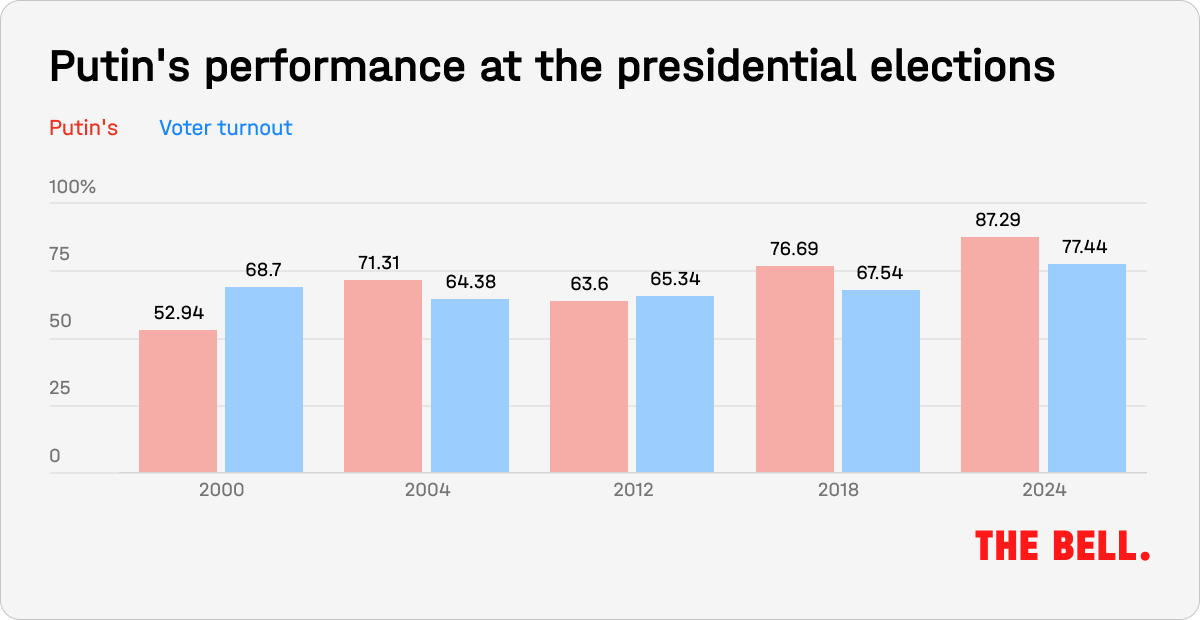
Vladimir Putin was re-elected as Russian president. Officially it’s his fifth term in the Kremlin — although in practice it’s six if we include his stint pulling the strings as prime minister. The official results have Putin polling even higher than predicted, taking 87% of the vote. That figure looks utterly implausible and places Putin among the likes of Asian, Middle Eastern and Central Asian autocrats. The election itself went ahead against a tense background, with Ukrainian shelling and attempted incursions into Russia’s border regions along with on-going drone attacks on Russian oil refineries.

The official election result is already out — Vladimir Putin secured 87.28% on a turnout of 77.44%. Both those numbers are record highs since the collapse of the Soviet Union. And both are about 10 percentage points up on 2018 (when Putin polled 76.8% on a 67% turnout). This suggests that the Kremlin’s political managers were tasked with delivering a significant increase in Putin’s popularity. That in itself is not surprising: in the current circumstances an autocrat needs to demonstrate how his people have rallied around the flag.

Initial research by journalists and independent experts suggests the vote could have been the most heavily falsified in the history of post-Soviet Russia. Analysis by IStories and Ivan Shukshin, a researcher and activist with the Golos vote monitoring NGO, estimated that around 22 million of the 76.3 million votes cast for Putin were “anomalous.” In other words, almost a third of Putin’s official tally could have been false. 

Their methodology is based on analyzing the turnout and vote shares at individual polling stations, using the central election commission’s official data. Districts with higher turnouts also have larger vote shares for Putin — a fact which suggests ballot-stuffing since the two shouldn’t be strongly correlated. IStories and Shukshin didn’t include results in Moscow, where online voting makes the analysis trickier. A third report by Novaya Gazeta Europe said as many as 31.6 million votes — almost half of Putin’s total — could have been fake.

Many experienced observers of Russian politics (1,2) believe that election organizers in provincial Russia “overdid it” this time round. Most pre-election leaks of the Kremlin’s vote strategy featured more modest targets. In spring 2023, for instance, RBC wrote that the Kremlin wanted to secure 75% of the vote on a 70% turnout. A few months later, Meduza wrote that regional authorities were advised that they should secure at least 80% of the vote for Putin. The final pre-election opinion polls conducted by state pollster VTsIOM (which also represent indirect instructions to regional election officials for polling day) showed Putin’s result was at the initial target level of 75%.

The record result places Putin firmly among his fellow autocrats. In free democratic elections, it’s a rare anomaly for a candidate to poll even at 60-70%. Only once, in extreme circumstances, have we seen more than 80% in a democratic country — a huge protest vote that gave France’s Jacques Chirac 82% in a presidential run-off against Jean-Marie le Pen in 2002, the BBC reported. In Russian history, Putin still has something to aim for if we look back to Soviet times. The turnout in 2024 was slightly higher than when Boris Yeltsin was voted president of the Russian Soviet Federative Socialist Republic in 1991, but there is still some way to go to match the Stalin era of 100% turnout in votes to appoint new deputies.

Since Putin was re-elected in 2018, voting in Russia has become even less transparent, and offered greater opportunities for fraud. Remote electronic voting was conducted in 29 Russian regions. Some 70% of the 4.7 million voters registered to vote online apparently cast their votes on the first of the three-day poll. Monitoring violations at physical polling stations is an almost impossible task. The Central Electoral Commission stopped broadcasting live footage from monitoring cameras in polling stations after the pictures from 2018 had depicted numerous violations and led observers to conclude that the scale of ballot stuffing was so great that the real result could not be determined in at least 11 regions. 

The 2024 poll also differed from Putin’s two most recent victories in the selection of candidates who ran against the Kremlin leader. In 2012, political strategists allowed businessman Mikhail Prokhorov to stand, proposing that Russia’s marginal liberal opposition would consolidate around him. And in 2018, that same role went to TV presenter Ksenia Sobchak. But this time round there was no acceptable liberal candidate. Even the little-known politician Boris Nadezhdin, who timidly spoke out against the war in Ukraine, was denied registration. On the ballot were only Putin’s “rivals” from the systemic opposition parties. All of them have been equally supportive of Russia’s repressive turn, backing various crackdown measures that have come before the State Duma in recent years.

The extras in the 2024 race — Communist Nikolai Kharitonov, Vladislav Davankov of New People, and Leonid Slutsky of the LDPR — polled less than 12% combined. That’s slightly less than communist candidate Pavel Grudinin managed on his own in 2018. The 75-year-old Kharitonov’s 4.3% was better than the youthful Davankov’s 3.8%, while Slutsky, the unsuccessful heir to charismatic populist Vladimir Zhirinovsky, trailed in last with 3.2%.

Source: “‘Record’ victory cements Putin’s autocrat status,” The Bell, 19 March 2024


Despite intimidation by the authorities, many Russians went to polling stations across the country and abroad at noon on 17 March as part of the Noon Against Putin protest, which was conceived as one of the few safe ways for Russians to voice their dissent. After all, it is hard to punish people for going to a polling station on election day and queueing.

The protest was the brainchild of Maxim Reznik, a former member of St. Petersburg’s legislative assembly, and it was endorsed by Alexei Navalny. After the opposition politician was murdered in a Russian penal colony, his supporters and other Kremlin opponents urged Russians to take part in Midday Against Putin.

This time round the last day of the election fell on the end of Shrovetide, and the powers that be tried to take advantage of it. For example, in Tomsk, they organized Shrovetide festivities at one of the polling stations to generate “hustle and bustle.” In Arkhangelsk, local restaurants were forced to cook pancakes for free distribution at the polling stations. Festivities were also organized, for example, in Moscow Region, Perm, Chuvashia, Murmansk Region, and Kamchatka.

Investigative journalist Andrei Zakharov quoted an anonymous agitator who, along with his colleagues, was tasked with “inviting people to a Shrovetide party in a park while also suggesting they take their [internal] passports with them in order to vote. It’s not far to the polling station.”

Those who decided to take part in the noonday protest were intimidated by fake mailings. As early as 13 March, some users in Russia received messages purporting to be from Navalny supporters postponing the Noon Against Putin protest to late Sunday. On Saturday, some Muscovites got messages accusing them of supporting “extremist ideas” and demands to vote “without waiting in line.”

There was also intimidation from actual law enforcers. The Moscow Prosecutor’s Office issued three warnings about the danger of the protest and possible criminal chargers against the protesters.

In spite of this, people in Russia and around the world came to the polling stations at noon on 17 March.

The huge queues abroad attracted a lot of media attention. Just look at the number of people at [Russia’s] diplomatic missions in Almaty and Bishkek. In European countries, people stood in line for many hours.

The long waits at polling stations abroad were sometimes caused by the deliberately slow work of the election commissions. For example, in Riga, voters were let in two at a time, although there were six voting booths and four polling station officials available. Voting was also delayed because many embassies and consulates banned cell phones, searched voters as they entered, and made them temporarily surrender their belongings.

In Russia, people were also searched in many polling places after dozens of incidents of attempted arson and spoiling ballot boxes with paint (the handiwork of phone scammers) took place. “First, two policemen search the bags [of voters] very thoroughly outside. I even had to show them my deodorant stick,” a reader of Dmitry Kolezev’s Telegram channel from Moscow wrote.

Due to the [long] queues in Riga, Vienna and Yerevan, for example, the polls were kept open for at least another hour [after they were to have been closed]. But in Berlin, the embassy was immediately closed, prompting the people gathered there to stage an impromptu protest. One of the staffers at the diplomatic mission danced a little jig as they shouted “Shame!”

But the principal queues were in Russia.

The first lines formed at precincts in Siberia and the Urals — for example, in Perm and Yekaterinburg, Novosibirsk and Akademgorodok. In the last place, by the way, Putin lost to [Vladislav] Davankov, a rare case for electoral precincts in Russia itself.

The queues were de facto protest rallies. People lined up outside polling stations in Moscow, St. Petersburg, Arkhangelsk, and Sochi. Officials tried to persuade them to cast their votes on electronic terminals — it is easier to rig the vote that way — but people took paper ballots and either voted for someone other than Putin or defaced them by writing on them such things as “Love is stronger than hate,” or “You have the blood of Ukrainians on your hands, scumbag” (the latter remark was addressed to Vladimir Putin).

As it turned out, nobody interfered with the queues; the police were not violent and did not detain anyone. Most of the detentions that did occur were of independent observers and members of elections commissions who had tried to prevent violations. According to OVD Info, 17 March was “relatively calm.”

The election’s outcome surprised no one in a country where wartime censorship has virtually been introduced. Vladimir Putin took more than 87% of the vote according to the official count — a result almost like that of Central Asian dictators, and greater than that of [Belarusian dictator Alexander] Lukashenko.

The main outcome was that many Russians took advantage of the procedure as one of the few remaining opportunities to safely speak out against Putin and his policies. And they saw that they were not alone.

Source: “What the Noon Against Putin queues showed,” WTF? newsletter (Mediazona), 18 March 2024. Translated by the Russian Reader


In a third video, another man detained by law enforcement agents identified himself as Rajab Alizadeh.

A man off camera asked him: “When you fled from Moscow, you had weapons. Where did you throw them? There or here?”

Alizadeh, whose face and shirt were covered in blood and whose head was wrapped in medical gauze, said “somewhere along the road,” but could not recall exactly where he and his accomplices left their weapons.

An unverified graphic video shared online showed what was said to be Alizadeh lying face down on the ground as Russian law enforcement agents cut off his ear, which, if confirmed, could explain why the man’s head was wrapped in bandages in the interrogation video. 

Source: “Russian State Media Release Interrogation Videos of Concert Attack Suspects,” Moscow Times, 23 March 2024

The Late Photographer Dmitry Markov’s Final Instagram Post

Photographer Dmitry Markov’s final post on Instagram, filed from the town of Alexandrov in Russia’s Vladimir Region

We met Andrei when we were walking in Alexandrov’s bedroom district. He had gone out to get a bottle of vodka from a taxi driver and bumped into us on the narrow snow-covered path at the entrance to his two-storey apartment building.

“You should stop digging for drug stashes here, there’s nothing to find.”

We explained that we were tourists and asked whether we could visit his house. It transpired that Andrei had come home from the special military operation but was planning to go back. He was a drinker. He offered us buckwheat, sausages and tea and told us we couldn’t say no. First he took care of us. He heated the food, boiled water, and served us a simple lunch. Only then did he sit down, open the bottle, and pour himself some vodka.

“Aren’t you scared of dying?” I asked him.

He was silent for a long time before replying.

“I’m scared of watching people die.”

And then he wept.

Source: Dmitry Markov (Instagram), 6 February 2024. Translated by the Russian Reader

The Case Against Mikhail Babintsev, Photographer and “Terrorist”

Military court of appeal to consider the case of photographer Mikhail Babintsev

In October, Mikhail Babintsev, a resident of Buryatia, was sentenced to thirteen years in prison: the investigation argued and the court ruled that his attempt to set fire to the military recruitment center in the village of Mukhorshibir was a a “terrorist act.” Mikhail disagrees with this ruling and has appealed the verdict. With support from you, we aided the prisoner’s family in paying the defense lawyer’s fees during the appeals phase.

Mikhail Babintsev

On 17 January, the Military Court of Appeal in Vlasikha (Moscow Region) will hear the defence’s appeal of the verdict.

Solidarity Zone argues that treating arsons of military recruitment centres as violations of Article 205 of the Russian Federal Criminal Code (“Terrorist Act”) is unreasonable and politically motivated. The same conclusion has been reached by Memorial’s Political Prisoners Support Project, for example, in the case of Roman Nasryev and Alexei Nuriyev.

The Military Court of Appeal is located in a closed military town in the Moscow Region. The headquarters of the Strategic Missile Forces is also located there. Therefore, no one is allowed to enter the court or the town itself, but a live broadcast of the court hearings will be arranged at the security checkpoint on the edge of the town.

Come follow the trial and support Mikhail with your presence!

🕙 10:00 a.m., 17 January 2024

📍 Military Court of Appeal, 25 Solnechnaya Street, Vlasikha, Odintsovo District, Moscow Region, Security Checkpoint 1

To travel by public transport from Moscow, you can use one of the following options:

  • from the Kievsky railway station by bus No. 477 to the Vlasikha security checkpoint;
  • from the Belorussky railway station (or from Fili or Kuntsevskaya metro stations) by train to Odintsovo station, then by minibus No. 46 to the Vlasikha security checkpoint.

☎️ We recommend that you call the court in advance at 8(495)598-74-29 and tell them that you wish to attend the court hearing so that the broadcast is definitely organised.

#political prisoners #crackdowns #no war #solidarity #arson attack #buryatia #court

Source: Solidarity Zone (Facebook), 12 January 2024. Translated by the Russian Reader

All the Tabs Open in Chrome


Yekaterina Duntsova, who wants to run for president, said the Kremlin should end the conflict in Ukraine, free political prisoners and undertake major reform to halt the slide towards a new era of “barbed wire” division between Russia and the West.

Nearly 32 years since the 1991 fall of the Soviet Union stoked hopes that Russia would blossom into an open democracy, Duntsova, 40, said she was afraid as she spoke to Reuters in Moscow.

Source


In opinion polls, Russians voice support for the Putin regime’s action in Ukraine. And yet, many Russia would like the war to end, and the dynamics of recruiting “contract” soldiers does not demonstrate that a large number of people are ready to rise up “to fight the West in Ukraine.” What are the real sentiments of Russians? What do they think about the war and how do they justify it?

  • Lev Gudkov, deputy director, research director, Levada Center, “The war and collective identity,” (online)
  • Andrei Kolesnikov, senior researcher at the Carnegie Russia Eurasia Center in Berlin, “A semi-mobilized society in a hybrid totalitarian regime” (online)
  • Svetlana Erpyleva, Humboldt Fellow, Research Center for Eastern European Studies at the University of Bremen; researcher, Public Sociology Lab and the Centre for Independent Sociological Research, “Accepting the inevitable: how Russians justify the war in Ukraine”

Source. Annotation translated by the Russian Reader


Viktor Filinkov, convicted in the Petersburg portion of the high-profile Network Case, turned twenty-nine in early November. It was his third birthday in the penal colony, and for the first time he was not given any special “gift” there. Previously, surprises had been waiting for him that were even hard to imagine—for example, a new uniform with a piece of razor inside it. Filinkov has been imprisoned for six years total. During this time, he has seen a lot, including being threatened with dispatch to a war zone, but he quickly put a stop to such “jokes.” Now he is housed in the high-security wing along with other “repeat offenders.” And he constantly files suits against the penal colony. We talked to his girlfriend and public defender Yevgenia Kulakova, who loves him with all her heart and helps defend his rights behind bars.

Source. Excerpt translated by the Russian Reader, who looks forward to the day when he can see his friend and heroine Jenya Kulakova again and meet his hero Viktor Filinkov in person.


Putin noted that visitors from Tajikistan can stay in Russia for an extended period—fifteen days—without registering with the immigration authorities. They can also apply for a work permit that is valid for up to three years.

In addition, Putin announced the expansion of the quota for university students and postgraduates from Tajikistan—from 900 to 1,000 individuals.

The head of the Russian Federation added that the state would allocate 200 million rubles annually from this year for purchasing textbooks for Russian-speaking schools in Tajikistan.

Various regions of Russia have recently imposed restrictions on migrant labor. There have also been proposals to introduce such bans everywhere for visitors from countries where the Russian language is not recognized at the state level. In Tajikistan, Russian is enshrined in the constitution as the language of interethnic communication.

Due to the unstable financial situation, migrant workers have been leaving Russia. Up to a third of Tajik and Uzbek nationals may leave the country.

Source. Translated by the Russian Reader


As of February 24, 2022, Russian President Vladimir Putin declared the beginning of what he dubbed the “special military operation” and the Russian Armed Forces invaded Ukrainian territory. What the Russian authorities assumed would be a swift operation soon became a drawn-out, full-fledged war. Many events occurred over the course of the first year of war, keeping Russians in suspense, forcing them to detach themselves from the situation, giving them hope, and then driving them to despair. When we conducted our first interviews in spring 2022, many thought the war would not last long.

Since then, it has become clear that the war will be with us for a while. The daily life of Russian citizens has been invaded time and again by dramatic events. The Russian retreat from the occupied territories, the annexation of new regions, the bombing of Kiev, the first Crimean Bridge explosion, and the “partial mobilization”— to name just a few. Have these events changed the average Russian’s view of the war, and if so, how? How did residents of the Russian Federation perceive the “special military operation” more than half a year later? These questions are the focus of the report you see before you.

There are several research teams monitoring changes in Russian perceptions of the war through opinion polls (for example, Russian Field and Chronicles). The work they are doing is very important. However, like any research method, surveys have their drawbacks—there are some things they simply will not show. For example, surveys do not always allow us to understand a respondent’s attitude towards sensitive or hot-button topics, as sometimes people have a tendency to hide their true views. But more importantly, for Russians largely removed from the political process, perceptions of such politically-charged issues as the “special military operation,” war, and military conflict do not fit neatly into the standardized set of coherent positions that a survey is capable of capturing. These perceptions may be complex and contradictory, and in this case, in-depth interviews and long conversations with people allow us to better understand the idiosyncrasies of each viewpoint. To our knowledge, we are the only team that systematically monitors Russian perceptions of the war using qualitative (interview) rather than quantitative (survey) methods.

We released our first analytical report in September 2022. You can read it here (in Russian) and here (in English). In it, we presented the results of our qualitative study through interviews conducted over several months after the start of the war, in March, April, and May 2022. Our interviewees held a variety of opinions on the military conflict—there were those who supported the hostilities in one way or another (war supporters), those who condemned military aggression (war opposers), and those who tried to avoid giving any explicit assessment of the situation (undecided). We compared these three groups of respondents with each other: how they perceive the armed conflict, what emotions they associate with it, and how they consume information, assess the victims of the conflict, discuss the situation with loved ones, reflect on the consequences of the war, and so on. We have also published the results of this research in analytical media outlets, a few examples of which can be found here, here, and here, as well as in scientific journals, such as those found here (in Russian) and here.

The paper you are currently reading is the second analytical report we have published and a continuation of this research. It is based on qualitative sociological interviews with Russian citizens conducted in fall 2022, from 7 to 9 months after the outbreak of the war. We wanted to determine how Russian perceptions of the war had changed during this period. This time, we excluded subjects who consistently opposed the war from the sample and decided to focus our study on the specifics of perceptions held by Russian citizens who did not have an unambiguous anti-war stance.

Source


In audio intercepts from the front lines in Ukraine, Russian soldiers speak in shorthand of 200s to mean dead, 300s to mean wounded. The urge to flee has become common enough that they also talk of 500s — people who refuse to fight.

As the war grinds into its second winter, a growing number of Russian soldiers want out, as suggested in secret recordings obtained by The Associated Press of Russian soldiers calling home from the battlefields of the Kharkiv, Luhansk and Donetsk regions in Ukraine.

The calls offer a rare glimpse of the war as it looked through Russian eyes — a point of view that seldom makes its way into Western media, largely because Russia has made it a crime to speak honestly about the conflict in Ukraine. They also show clearly how the war has progressed, from the professional soldiers who initially powered Vladimir Putin’s full-scale invasion to men from all walks of life compelled to serve in grueling conditions.

“There’s no f—— ‘dying the death of the brave’ here,” one soldier told his brother from the front in Ukraine’s Kharkiv region. “You just die like a f—— earthworm.”

The prospect of another wave of mobilization lingers, even as Moscow has been trying to lure people into signing contracts with the military. Russia’s annual autumn conscription draft kicked off in October, pulling in some 130,000 fresh young men. Though Moscow says conscripts won’t be sent to Ukraine, after a year of service they automatically become reservists — prime candidates for mobilization.

Source


Twenty months ago, after Vladimir Putin had launched his full-scale invasion of Ukraine, many high-ranking Russians believed that the end was near. The economy faced disaster, as they saw it, and the Putin regime was on the brink of collapse.

Today, the mood has changed dramatically. Business leaders, officials and ordinary people tell me that the economy has stabilized, defying the Western sanctions that were once expected to have a devastating effect. Putin’s regime, they say, looks more stable than at any other time in the past two years.

Restaurants in Moscow are packed. “The restaurant market is growing, not only in Moscow, but throughout Russia, facilitated by the development of domestic tourism,” said a top Russian restaurateur. “And the quality of food is also changing for the better. Sure, panic struck the industry in early 2022, but it quickly passed.”

Source


Due to Helsinki’s decision to temporarily close the border with Russia, Finnish resident Yevgeny doesn’t know when he will be able to see his father again. He and other Russian-speaking residents of Finland are trying to get through to the authorities to convince them to open at least one border crossing.

Source. Annotation translated by the Russian Reader


Unprecedented dragnets for conscripts have been taking place in Moscow. The capital’s military enlistment offices have launched a large-scale “single-day” conscription campaign, dispatching people with serious illnesses and visitors from other regions to the army. The Russian conscripts have not yet been sent to Ukraine for full-scaled combat. But the number of lawsuits against draft commissions has tripled compared to 2022 and is approaching a thousand cases. The BBC tells how conscription is taking place in the Russian capital, which lawyers describe as lawlessness.

Source. Excerpt translated by the Russian Reader


Maria Andreeva, whose husband has been fighting in Ukraine for more than a year, is also waging a battle in Moscow: to get him home.

She is not alone.

A growing movement of Russian women is demanding the return from the front of their husbands, sons and brothers who were mobilised after a decree by President Vladimir Putin in September last year.

Initially, the movement pledged loyalty to what the Kremlin calls its “special military operation” (SVO) but what they regard as the perfunctory response they have received is hardening some of their opinions.

Source


The Udege language is so phonetically rich that linguists have devised several Cyrillic-based alphabets for it in an attempt to capture this wealth. Udege has both an inclusive and exclusive first-person plural pronoun (“we”), and the terms describing spatial relationships have parallel meanings in the home and beyond its confines. The language of the Udege people reflects their idea of the equality of time and space, and the starting point for the speaker is either a river or a hearth. Linguist Elena Perekhvalskaya acquaints us with the Udege language.

Source. Excerpt translated by the Russian Reader, who was told the other day by a prominent Udege civil rights activist that the number of native speakers of Udege is now eleven.


In reality, as the testimony of numerous witnesses shows, the armed conflicts between the Russian state and the subjugated peoples of Siberia demonstrate that Russian colonization differs little from European colonialism in Africa, Asia, and the Americas. The only apparent difference was how the colonizers treated the people they conquered. While the Spanish Conquistadors committed large-scale massacres in their pursuit of gold, the Siberian Cossacks were more interested in extracting lucrative tributes from locals. These tributes, paid in the form of furs collected by the legendary hunters of the conquered peoples, became a major source of wealth for the tsars. The legend that indigenous peoples were such expert hunters they could “shoot a squirrel in the eye” persists to this day.

Source


Irina Gurskaya, a human rights activist and volunteer, arrived in Cologne from Penza a year ago. More precisely, she did not come willingly but fled to Germany on a humanitarian visa. At the age of sixty, the pensioner had to leave her home, fearing for her life. The reason for Irina’s intimidation and harassment by the security forces in Penza was that she had helped Mariupol residents taken to Penza to return to their homeland or leave for safe countries.

Source. Excerpt translated by the Russian Reader


We don’t know whether there will be a stalemate on the battlefield moving into 2024, or more dramatic changes in the frontline like we saw in May and November 2022. It remains to be seen whether a more ambitious mobilization campaign will be attempted after the presidential elections in March 2024. It would face the same problems as those I have described here. Utter lack of capacity and resources among the commissariat, informal institutionalized ways of avoiding or undoing the will of the centre to recruit. Massive labour shortages which make industry hostile. A counter-productive administrative system of coercive command. Active and passive agency of the vast majority to avoid the draft. There are various indirect signs that the authorities collectively fear the results of having to implement further mobilization.

The botched first mobilization created an atmosphere of bitterness, fear and hostility to the state’s conduct regarding the war. It would be a mistake to say that mobilization in 2022 broke the social contract between state and people, because there was none to begin with. If the war continues, Russian society will become ‘insurgent’. Not literally, but figuratively, people will become more actively resistant to recruitment to the meatgrinder. No monetary offers, nor spreadsheet autocracy will be effective.

Source


Despite decades under Putin’s rule, it is too simplistic to assert that authoritarianism in Russia has eliminated activism, especially in relation to everyday life. Instead, we must build an awareness of diverse efforts to mobilize citizens to better understand how activism is shaped by and, in turn, shapes the regime.
 
Varieties of Russian Activism focuses on a broad range of collective actions addressing issues from labor organizing to housing renovation, religion, electoral politics, minority language rights, and urban planning. Contributors draw attention to significant forms of grassroots politics that have not received sufficient attention in scholarship or that deserve fresh examination. The volume shows that Russians find novel ways to redress everyday problems and demand new services. Together, these essays interrogate what kinds of practices can be defined as activism in a fast-changing, politically volatile society.
 
An engaging collection, Varieties of Russian Activism unites leading scholars in the common aim of approaching the embeddedness of civic activism in the conditions of everyday life, connectedness, and rising society-state expectations.

Source


The Bolshoy Kinel River flows among the forests of the Orenburg Region. Its name derives from the Bulgar word kin, meaning “wide.” When the ancient Bulgars first encountered it, they saw a wide, full-flowing river and decided to settle there. But nowadays the river is gradually disappearing: the banks have shoaled, the bottom is silted up, and the springs that feed it are clogged. And yet, the Bolshoy Kinel is only source of water for several towns. Its tributaries are also drying up. In 2021, the Turkhanovka River, which flows through the entire length of the city of Buguruslan, completely disappeared. It was a tragedy for the townspeople. The local residents joined together and together cleared the river of debris—and the water returned. It transpired that there are many people living in the town who feel a great love for their land. I spoke with them. And, as I gathered their stories, I saw how everyone’s small deeds, like rivulets, combine into one big, important cause—just as the Turkhanovka River flows into the Bolshoy Kinel, the Bolshoy Kinel into the Samara, the Samara into the Volga, and the Volga into the Caspian Sea.

Source. Excerpt translated by the Russian Reader. Photo by Darya Aslanyan for Takie Dela


There’s an idea about how children learn to read that’s held sway in schools for more than a generation — even though it was proven wrong by cognitive scientists decades ago. Teaching methods based on this idea can make it harder for children to learn how to read. In this podcast, host Emily Hanford investigates the influential authors who promote this idea and the company that sells their work. It’s an exposé of how educators came to believe in something that isn’t true and are now reckoning with the consequences — children harmed, money wasted, an education system upended.

Source


Both sides of the author’s family were remarkable. His maternal grandfather, Alfred Wiener, was a prominent German Jew who created the most extensive archives documenting the Holocaust; Alfred’s wife and daughters were deported to a concentration camp. The author’s paternal grandmother was transported to a gulag in Siberia. A tale of survival, eloquently told.

Source


A lyrical excavation of trauma and healing in the midst of early motherhood – the debut work of an endlessly inventive poet whose work ‘fizzes with energy, physicality, and the levitating openness of song’.

Source


It was snowing heavily when Yulia walked across the only open border between Ukraine and Russia last month, carrying her two cats and dragging a large suitcase behind her.

She had left her village on the edge of Russian-occupied Melitopol, a city in Ukraine’s Zaporizhzhia region, more than 24 hours earlier, paying a Russian ‘carrier’ with a minivan around $250 (nearly £200) to take her to the border-crossing in Ukraine’s northern Sumy region.

Walking across the two-kilometre no-man’s land was the final step in a long journey that is not without risk. Just two weeks earlier, a Russian volunteer who was transporting Ukrainians to the Sumy checkpoint was detained and tortured by Russian security personnel.

It was Yulia’s second attempt at the crossing. The first time, in early autumn, she was turned back at the border because she did not have a Russian passport and her name was flagged in a Russian state database as she had been questioned by the security services twice: once for tearing down Russian propaganda posters and then for arguing with a neighbour about life during the Soviet Union.

Source


If you’d like to see any of the Russian-language articles excerpted here translated in full and published on this website, make a donation in any amount to me via PayPal, indicating which article you’d like me to translate, and I’ll make it happen. ||| TRR

Maxim Chishkovsky: 11 Years in Prison for “Terrorism”

Unlike the dozens of celebrity Russian “anti-war exiles” profiled and lauded in periodicals like the New York Times, Maxim Chishkovsky’s courageous direct-action anti-war protest is utterly invisible to the so-called international community.

“I finally decided to demonstrate my civic stance and commit arson”: a letter from Maxim Chishkovsky

On the night of 28 September 2022, a person unknown shattered the window of a military registration and enlistment office in Vladivostok with a hammer and threw a Molotov cocktail through it. The media wrote that the window sill and window frame caught fire as a result, but the fire was extinguished by persons on the scene without contacting firefighters.

Forty-three-year-old Maxim Chishkovsky was later arrested on suspicion of the arson. In April of this year, he was sentenced to eleven (11) years in prison for “terrorism” (per Article 205.1 of the Russian Federal Criminal Code). His sentence has been upheld on appeal.

A penpal of Maxim’s shared his letter to her with us, excerpts from which we publish below.

There’s nothing special I can tell you about myself—work, home, family. I worked as a construction manager, would go skiing in the winter, would dive into an ice hole on Epiphany, once used to ride bike in the summer, had an interest in motocross, and studied the Polish language. Someday after my release I’m thinking of changing my occupation. I’ll be an estimator: the work is not dirty, and your weekends are free.

In 2014, I was against the “Ukro-Nazis,” and was glad that Crimea was Russia’s again. But when the LPR and DPR “stopped short” of joining Russia, doubts crept into my mind about whether the objective was to aid a fraternal people and who really benefited from the domestic turmoil in Ukraine. I did not take a public stand except for comments on Instagram: I was not at all opposed to what was happening. I regularly watched Channels 1 and 2, and conscientiously voted for Putin, but one day I realized that TV was all propaganda and stopped watching. And after the pension reforms and the amendments to the Constitution, I came across a video from 2004, in which [Putin] said that “brains need to be changed, not the Constitution.” And, basically, I still adhere to this opinion, but I cannot explain what has happened except in terms of insanity. I thus regarded the special military operation extremely negatively, but I did not take part in protests, although I wanted to, but I was afraid of trouble at work, fines, and arrests. And, having taken the stance that it was no business of mine, I simply followed the situation on Telegram. I saw reports about the torching of military registration and enlistment offices, and it seemed to me that this was a good way of taking a public stand, better than holding protest rallies.🙂

When the military mobilization began, I felt that now I was affected too. Amidst all the confusion of those days over uniforms, equipment, salaries for the mobilized, and, basically, the lack of understanding of what would happen to my family if something happened and why I should go off and kill people for some reason, I experienced absolutely no increase in “patriotism.” When the [conscription] summons was delivered, I was not at home, but I figured that if not today, then the next day it would be hand-delivered to me, and I was not going to run and hide. I finally decided to take a public stand and commit arson. Of course, to a greater extent, it was a protest action, but if my son’s personal file had been burned, that would have been a good outcome. I also knew that, sitting in the trenches, I would regret that I had not done it. Considering that, in the near future, I would be mobilized anyway, when I went out to do what I did, I didn’t take great pains to conceal my identity, which now, after I’ve received a prison sentence of eleven years, of course, I regret. But I think that such sentences aren’t handed out for nothing, which means that I did wasn’t in vain, and at least I somehow delayed the second wave [of mobilization].🙂

I am interested in the history of Poland, both medieval and more modern. I would like to read books in Polish. And I would like news that is different from the news provided by Komsomolskaya Pravda and Vesti FM. My cellmate was getting the prison newsletter, but the local [prison] administration banned it: they didn’t seem to like the pictures.

💌📦 Address for letters to Maxim:

Chishkovsky Maxim Sergeyevich (born 21.05.1980)
28B Partizansky proyezd, SIZO-1
Vladivostok, Maritime Territory 690106 Russian Federation

📧 You can also send letters via Zonatelecom.

❌ We ask you not to send parcels, since the verdict has entered into legal force and Maxim is now under restrictions.

#politicalprisoners #crackdown #torture #solidarity #torchingofmilitaryenlistmentoffices #wewriteletters

Source: Solidarity Zone (Facebook), 28 November 2023. Translated by the Russian Reader. People living outside of Russia will find it difficult or impossible to send letters to Russian prisons via Zonatelecom or regular mail. In many cases, however, you can send letters (which must be written in Russian or translated into Russian) via the free, volunteer-run service RosUznik. Mr. Chishkovsky has not yet appeared on their list of supported addressees, however. You can write to me (avvakum@pm.me) for assistance and advice in sending letters and messages to him and other Russian political prisoners.

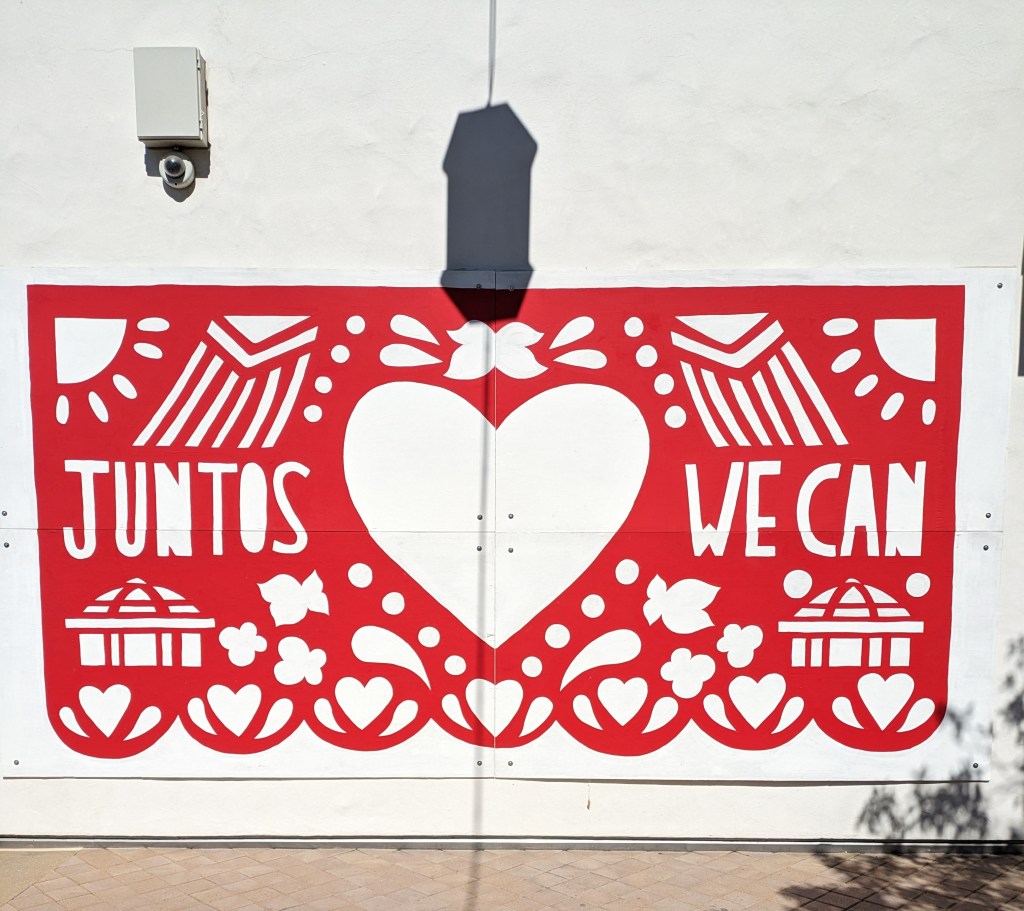
Together

“[Together] we can”: a mural at San Diego State University, 21 October 2023. Photo by the Russian Reader

While the emergence and flowering of Spanglish in the US is no surprise, the fact that Rusglish has taken root in Russia itself should give us pause for thought. The affliction is particularly fierce among the country’s creatives and journalists.


“Запускать свой бизнес в ритейле — задача не из лёгких. Особенно если нет релевантного опыта. Отличным решением может стать развитие бизнеса в партнёрстве с более опытным игроком по модели франчайзинга“.

“Launching your business in retail is not an easy task. Especially if there is no relevant experience. A great solution could be to develop a business in partnership with a more experienced player on the franchise model.”

Source: Emailed invitation to a “business breakfast” from the business daily Delovoi Peterburg, 23 October 2023. All the bolded words are in Rusglish in the original.


Sixteen years ago today, I launched this website by translating and posting the artist and writer Pavel Pepperstein’s reflections on “post-socialism” as “ecosocialism.” They are cheeky and provocative and non-intuitive and thus, in retrospect, emblematic of the stories and viewpoints from today’s Russia that I knew were roundly ignored in English-language media and that I wanted badly to make available to the wider world.

I had no idea, then, that this adventure would last sixteen years or that, as of today, this blog would balloon to 2,500 entries. I did, however, have more than a presentiment that things were going badly in the Motherland and would probably get much, much worse. While I have never tried to avoid staring into this burgeoning (and, now, almost total) political darkness, I also have always been determined to focus on the anti-Putinist, non-Putinist, and “a-Putinist” side of public opinion, cultural production, and politics.

What this has meant, practically speaking, is that even sixteen years later and amidst a terrible war that has, seemingly, riveted the world’s attention to the Russian regime and its enemies, I am often the only English-language media outlet to cover certain stories from the deep Russian grassroots in the so-called provinces, especially stories involving non-violent and direct action anti-regime and anti-war protests. I have commented many times in the past why such stories are ignored.

Whatever the case, though, my focus on extraordinary “ordinary” Russian battlers from the back of beyond, that is, on people who are remote from the Moscow-Petersburg opposition elites (even when they might even live in one of the two capitals) has meant that, sixteen years later, I’m still struggling to get over the million-views hump, and my admittedly modest attempts at fundraising have mostly fallen flat. There is not much place for people like me and my Russian heroes in a profoundly anti-democratic and celebrity-mad world like ours.

This is not a preface to a tearful farewell. Although changes in my paid-work life mean that, for the immediate future, I won’t be posting here as often as I’d like, the value of the Russian Reader as an archive of a Russia that, perhaps, will never come to be, is still enough that I plan to keep it here and available to you all for as long as I’m able.

But it has become increasingly hard for me to report stories like the one below about Olga Nazarenko, an incredibly fierce anti-war protester from Ivanovo who died under extremely murky circumstances two weeks ago. What is hardest of all is the now almost overwhelming sense I have that these stories matter to almost no one, neither inside Russia nor outside of it. ||| TRR


A Russian anti-war protester who became a symbol of resistance to the Kremlin has died following a mysterious fall.

Local media said Olga Nazarenko died in hospital after a “fall from a height” two weeks ago that was described as an accident.

Several Kremlin opponents have been killed in falls and an anti-war activist in Rostov, southern Russia, also died this year in police custody from alleged torture.

On Facebook, tributes blamed Ms Nazarenko’s enemies for her death.

“Cursed are the cannibals who devour our finest,” one person wrote. Another said: “Our unbending Olga. Did they kill you?”

Friends also speculated she had fallen from a tree.

Ms Nazarenko was well-known for her stubborn anti-war protests and had featured in several opposition media reports and videos.

She had staged weekly one-person protests, despite being regularly detained by the police. She had also been attacked in the street and had lost her job as an associate professor at a local medical university because of her protests.

Hundreds of thousands of Russians have fled since the Kremlin banned anti-­war protests but Ms Nazarenko, who was married with an adult daughter and a young son, told the US-funded Radio Free Europe/Radio Liberty that she felt it was her duty to stay.

Source: James Kilner, “Kremlin gets blame as anti-war activist Olga Nazarenko dies after mystery fall,” Irish Independent (msn.com), 22 October 2023