The story of Zakhar Zaripov, dying of cancer in prison while serving time for a social media post
Prison medicine is not known for its diligence. It can do little to help seriously ill people and plays on the side of the officials who run penal colonies and pretrial detention centres. The story of Zakhar Zaripov is a case in point. For a year doctors delayed doing analyses and making a diagnosis, even as he was writing things like this to his wife: “I feel bad, it hurts, I can’t eat, I can’t sleep, it’s hard for me to breathe, I’m dying.”
Zaripov is indeed dying: he has stage IV salivary gland cancer. According to the law, the authorities are obliged to release him, but the appeals court hearing on the matter has been postponed for over six months, says Zaripov’s defense lawyer Konstantin Bubon.
Zakhar Zaripov was born and lived in Sovetskaya Gavan, a town in the Khabarovsk Territory. He taught maths at evening schools in penal colonies. He was also fond of science fiction and wrote novels about popadantsy (accidental time travelers). Zaripov also wrote about politics at the LiveJournal account scribble_33. As the teacher himself says, many people had access to the account.
On 2 March 2022, a post was published on scribble_33 suggesting that Ramzan Kadyrov oust Putin and make Chechnya independent. It is not known who wrote it; Zaripov says it wasn’t him. Police investigators, citing indirect testimony by the staff at the penal colony where the teacher worked, decided that it was Zaripov.
The court agreed with the findings of the investigators and sentenced Zaripov to five years in a medium security penal colony. The teacher was arrested when his wife was in the last months of being pregnant with their second child. Zaripov has not seen his youngest daughter yet, as he is imprisoned in Khabarovsk, which is far away and expensive to visit. It is unclear whether he will see her at all.
In September 2023, Zaripov discovered a strange tumour in his mouth. He was able to see a surgeon only two months later. The doctors then began doing analyses and ultrasounds on him, but they failed to diagnose him and kept postponing his treatment. Because of the pain, Zaripov stopped sleeping on his right side, and because the tumor in his mouth has grown so large it hurts when he eats.
In July 2024, Zaripov was diagnosed with stage IV salivary gland cancer. But the final case conference did not meet until September. Prison officials plan to hospitalize Zaripov, but it is known whether he will have time to receive any treatment and whether he will be released home.
Russia’s best troops are now concentrated in another country. Moscow and Putin are completely defenseless. Hold back your troops. Do not send your best men to die in Kiev — send them to take Moscow!
Under current conditions, a limited contingent of a few thousand bayonets would easily take control of government buildings in Russia. You would declare that you have taken power, overthrow a dictator already condemned by the entire world, and stop the war.
This would allow Chechnya to gain independence and avenge all the deaths and humiliation inflicted by the Russian authorities over the past twenty-six years.
This is a perfect historical chance. There may not be another one in your lifetime.
Lenin took Russia with 1,500 men personally devoted to him. You have 40,000 top-notch fighters at your disposal. That’s quite enough.
Distinguished teachers awarded for their many years of work and achievements
On October 5, the country and the Bryansk Region celebrate Teachers’ Day. This is the day when our teachers are thanked and given flowers, and concerts and matinees are organized in their honor.
Celebrations were also held at Prep School No. 27 in the Bryansk Region’s Fokino District. District head Alexander Gavrilov, Department of Education director Alevtina Andreyeva, and others made welcoming speeches.
All of them noted the importance of pedagogical labor, and the huge role which educators and teachers play in the life of every individual. Distinguished teachers were given awards for their many years of work and for their achievements.
A warm atmosphere and positive emotions reigned at the event. The festive mood was supplied by artists from the Railroaders Cultural Center and the village of Belye Berega.
On October 3, on the eve of Teachers’ Day, a festive event was held in Bryansk to honor the region’s pedagogical workers — teachers, educators, master trainers, and continuing education instructors. The event was held at the Yuri Gagarin Bryansk Regional Governor’s Palace of Children’s and Youth Creativity. Among the honored guests were Valentin Subbot, chair of the Bryansk Regional Duma, and Alexander Bogomaz, head of the region, as well as representatives of the government, trade unions and educational organizations.
Teachers’ Day is a holiday celebrated in Russia on October 5, coinciding with World Teachers’ Day. The quality of education is annually improved, innovative technologies are introduced, new schools are built, and modern educational centers are opened annually in the Bryansk Region. These achievements have been recognized at the federal level and generate favorable conditions for teachers and students.
In his address to the teachers, Governor Alexander Bogomaz, who himself grew up in a family of teachers, emphasized the importance of their profession. He noted that, thanks to the supreme professionalism and wisdom of teachers, patriots ready to serve their Motherland were being brought up in the Bryansk Region.
The Governor also touched upon the issue of awarding teachers. Seven years ago, the law on awarding the title “Honored Educational Worker of the Bryansk Region” was adopted, but only three such titles are awarded per year. The head of the region proposed increasing this number to ten, taking into account the difficult conditions in which teachers work, especially in border areas. This decision would be a well-deserved recognition of their contribution to the development of education in the region.
Prices for flowers have skyrocketed in Bryansk in the run-up to Teachers’ Day. This holiday, like March 8, is one of the key days for the flower business. The same picture is observed throughout the country.
According to Izvestia, the average check for a bouquet for Teachers’ Day comes to about three thousand rubles (approx. 28 euros), while the demand for flowers has increased by thirty percent. They note an increase in flower sales on online platforms as well.
The newspaper writes that consumers are increasingly choosing more expensive and complex arrangements, including original bouquets and mono bouquets.
A “teacher’s” bouquet in Bryansk will cost between two and three thousand roubles, on average. Roses, especially bush roses and peonies, as well as chrysanthemums and lilies are traditionally popular on Teachers’ Day.
Earlier, we reported that the Governor of Bryansk Region had proposed amending the regional law on awarding the honorary title “Honored Educational Worker of the Bryansk Region.” The head of the region said that he considers it fair to increase the number of awards to ten per year, as the teachers of the region do a tremendous job.
The Russian government has submitted a draft federal budget for 2025 and budget projections through 2027 to the State Duma. Although it is called a “draft” budget, no major changes will be made to it, of course. Budget revenues are supposed to increase by 11.6%, while expenditures will rise by only 5.2%. However, before this happens, both revenues and expenditures will grow, especially expenditures: up to 39.4 trillion rubles, against the planned 36.7 trillion.
A year ago, approximately the same people in the government were determined to curb military expenditures in 2025, hoping to end the war in Ukraine. Now it is clear that the war may not end in 2025 either, so the projections for the next two years do not provide for a significant reduction in defense spending. In 2025, 32.4% of Russia’s money will be blown up, buried, shot, crushed, pulverized, etc.: 13.49 trillion rubles! In last year’s forecast, defense spending also took a huge chunk — 29.4% (10.77 trillion rubles) — but it was still not that much.
Projected Russian federal budget expenditures for 2025, in trillions of rubles. “National defense” tops the list, at 13.49 trillion rubles (approx. 128 billion euros), while education (ОБРАЗОВАНИЕ) warrants a meager 1.58 trillion rubles (approx. 15 billion euros). Source: Kommersant, via the Moscow Times Russian Service
Economist Igor Lipsits argues that it will be quite difficult for the financial authorities to cope with this task. It’s not that they won’t find the money; it’s that the conditions under which they find the money will hurt the populace. But the populace is no stranger to that!
As they say, to buy something you don’t need, you have to give something up. The list of things that will have to be given up includes support for Russia’s regions, and money for them has in fact been cut. Although they won’t get any money, they will have their budget debts canceled. The Jesuitic twist here is that they probably wouldn’t pay them back anyway. That’s the practice. In other words, that’s how the federal government supports the regions.
Another funny thing is that the funding for civilian drones has been cut. On the one hand, this is understandable: what do they need civilian drones for? They need military drones! On the other hand, this money has been partially used to finance “voluntary” designs, which subsequently, again in a voluntary fashion, make their way to the front and play a quite significant role there.
If we return to the revenue part of the budget, as usual, almost a third of it derives from oil and gas revenues. Oil and gas analyst Mikhail Krutikhin explains that not all is rosy with these revenues; they may even go downhill. The fact that some of the most unprofitable Russian companies are state-owned gives some insight into what the prospects for taxing Russian business might look like. And when analysts speak about dividends from oil companies, they argue that they will decrease. The trend, as described by oil and gas experts, is that prices will decline in 2025.
Brent Oil Futures, March2024–October 2024. Source: Investing.com, via Moscow Times Russian Service
Prices probably would have continued to fall, but then Israel launched a war against Hezbollah, and oil reacted sensitively, triggering a rise in futures prices.
Source: Moscow Times Russian Service, weekly newsletter, 6 October 2024. Translated by the Russian Reader
The percentage of schoolchildren in the Russian Federation studying in native tongues other than Russian halved between 2016 and 2023. Instruction in thirty-eight languages ceased altogether. Experts argue that this situation was caused by a whole slew of problems, including a downturn in interest in native languages, a decrease in the number of lessons taught in them, a shortage of teachers, and an estrangement from foreign partners due to sanctions.
Pupils at a rural school during a Yakut literature lesson. Photo: Alexander Ryumin/TASS
According to the Institute of Linguistics of the Russian Academy of Sciences, there are 155 living languages in the Russian Federation, thirty-seven of which have the status of official languages in the republics, meaning that they should be used in those regions on an equal footing with Russian. In Russia’s comprehensive education system, native languages are studied in three forms: as separate subjects, as electives, or as complete substitutes for Russian in all classes.
Based on data from the Ministry of Education, Takie Dela has calculated that between 2016 and 2023, the percentage of schoolchildren who study entirely in their native languages fell from 1.98 to 0.96 — the lowest figure for this period. The number of such pupils fell from 292,000 to 173,500, although the number of children in school increased by 3.2 million over those same seven years.
The share of those who studied native languages at clubs decreased from 0.7 to 0.4 percent. During the same period, the share of pupils who were taught their native languages as a separate subject increased from 10.41 to 10.56 percent. But the overall engagement of children in learning their native tongues decreased from 13.08 to 11.92 percent.
During the same period, instruction in thirty-eight languages, including Altai, Buryat, and Ingush, ceased completely. In 2016, there were still children in Russia who studied general subjects in those languages. There were no more such pupils left by 2023.
“Where the language is spoken at home, it provides an opportunity to master the written norms. This is vital to preserving people’s identity, to making them feel comfortable in society,” says sociolinguist Vlada Baranova.
According to the law, learning a native language in Russia is voluntary, so it is up to parents to decide how exactly it will be taught to their children and whether it will be taught at all.
Margarita Kilik, chair of the Association of Teachers of Native Languages of Kamchatka, argues that the decrease in the number of pupils studying their own languages is due to the desire of parents. “Fewer and fewer people are staying in the region,” she says. “They are leaving to study in the big cities, in Moscow and St. Petersburg. So there is simply no need for mother tongues.”
Which languages Russian schoolchildren studied as mother tongues in 2023. Drag your cursor arrow over each circle to see the total number of children who were studying that particular language as a native language. By clicking the “cog” icon in the lower righthand corner, you can access two sets of toggles that alter the map: 1) Форма изучение (“Form of instruction”), which shows whether a language was taught as a separate subject (pink) or used as a language of instruction (powder blue); and 2) Сколько детей узучают язык (“How many children study the language”), which alters the map to visualize the relative weight of the numbers and percentages of children who studied languages other than Russian in 2023. Source: Ministry of Education of the Russian Federation/Takie Dela.
And yet, interest in mother languages persists and often awakens with age, when it is more difficult to learn them, Kilik concedes. Natalia Antonova, editor-in-chief of the Karelian-language newspaper Vedlozero Windows, agrees with her. “It is difficult to get schoolchildren interested in something, especially studying minority languages. Often people who have already matured, whose parents have passed away, have regrets that they have been left without a linguistic thread linking them,” she says.
According to census data cited by the To Be Accurate project, the number of speakers of all of the Russian Federation’s official languages except Russian, Chechen, Tatar, and Tuvan declined between 2002 and 2020. But many textbooks of minority languages are designed for children who can speak them, even though the textbooks themselves have not been updated for a long time.
“Children who don’t know their native languages enter school. There are good textbooks structured to teach [these] languages as foreign languages, but these are more exceptions,” says Baranova.
In the Russian Federation, native languages are studied mainly in elementary and middle schools, while in grades 10 and 11 most teenagers switch to Russian, according to statistics from the Ministry of Education. “Graduates need to sit for the Unified State Exam, and general subjects taught in native languages won’t help them much,” says Vladislav Savelyev, a former Yakutia Education Ministry official.
Initiatives by the regions to produce a Unified State Exam in their native languages were never adopted. Meanwhile, the number of hours allocated for studying native languages at school has been reduced, activists have pointed out. “These issues are regulated by the federal educational standards, and, of course, the number of hours for teaching Yakut has been reduced in favor of priority subjects, such as mathematics,” says Savelyev.
Instruction in native languages in the Russian Federation. The numbers of children who studied in 2016–2023 in their native languages is indicated by the lavender bars, while their percentage within the overall school population is shown by the pink line and dots. Source: Ministry of Education of the Russian Federation/Takie Dela.
Savelyev also notes that schools are switching to a five-day school week and “optional” subjects like mother tongues are the first to have their hours cut from school schedules.
Another reason why the languages of Russia’s peoples may eventually disappear is the shortage of teachers specializing in them. According to data from the Institute for Statistical Research and Knowledge Economics at the Higher School of Economics, the number of native language teachers in Russian schools fell from 22,000 in 2009 to 15,500 in 2023. There are even fewer who can teach mathematics and history in languages other than Russian. “Seventy percent of the school teachers in the Koryak Autonomous District are from other regions. How can they know our languages? The situation is the same in many other regions,” Kilik points out.
The circumstances surrounding the teaching the official languages of the republics and the languages of minority Indigenous peoples differ greatly, however.
“We have several such languages in the Kamchatka Territory, and some of them even belong to different [linguistic] groups. A significant number of the teachers of these languages, as well as the speakers, are at least fifty-five to sixty years old. Who will teach the languages when they retire?” wonders Kilik.
Some languages, such as Aleut, have disappeared altogether in Kamchatka: Russia’s last speaker of the language, Gennady Yakovlev, died in 2022. Russian Aleuts used to cooperate with American Aleuts in preserving their language and culture, but this has now become impossible. “There are obstacles on both sides: our side says that America is an enemy country, while their side imposes sanctions on Russia,” says Kilik.
The situation is similar in Karelia, the only republic in the Russian Federation where the language of the titular nation does not have official language status. This is due to the fact that the Karelian alphabet is based on the Latin alphabet, while official languages in Russia must be written in the Cyrillic script alone.
According to official statistics, less than 500 children study the Karelian language at school, while 340 children study Vepsian. Instruction in these languages has been preserved only at specialized university departments and partly in kindergartens, says Antonova. “There are a couple of dozen kindergartens where the native language is learnt. But it’s more about the showy aspect of the language used in songs, costumes, and festivals,” she adds.
Since the Soviet Union collapsed, Russian Karelians have been assisted by Finnish Karelians in studying and preserving the Karelian language: textbooks have been published jointly, and language courses have been held jointly. “The break with Finnish organizations will certainly affect the opportunities for learning the Karelian language. Although it is not so noticeable yet, because little time has passed,” Antonova explains.
According to Antonova, Karelian is currently studied in clubs and courses at libraries, language centers and NGOs. Some of these organizations even receive state support, she adds.
Russian lawobliges the state to preserve the languages of the peoples living in the Russian Federation and to promote their study.
‘This is a very divergent movement, and the situation depends very much on the region. In some places the authorities support languages, while in other places, on the contrary, they see their widespread use as going hand in glove with ethno-nationalism. But the policy is generally more aimed at Russification and reducing the use of minority languages,” explains Baranova.
Baranova notes that there is a downside to the fact that studying mother tongues is voluntary, as stipulated by law. In villages inhabited by speakers of endangered languages it is often possible to muster only one first grade class, and it will always be a Russian-speaking class.
“Because there will always be parents who want their child to be taught in Russian, and this is also their free choice. You can, of course, try to defend your position and demand that the school provide for another first grade class in the other language, but you’ll come across as suspicious and dangerous,” says Baranova.
Antonova also says that it has become more difficult to assert one’s linguistic rights.
“If campaigning for language revival was a common trend in the nineties, nowadays you can be accused of extremism and separatism, and the authorities will regard you with suspicion.”
Despite all this, there are ways to study native languages in Russia, says Baranova.
“Other forms and grassroots initiatives that get children and adults involved in using the language in different areas are also effective. They turn out to be a good way to keep the language alive.”
DINARA RASULEVA & TATSIANA ZAMIROVSKAYA “Lost Tongues, Found Voices, Decolonizing Languages: A Multilingual Reading and Conversation” Wednesday, October 2, 6:30 pm Hunter College CUNY Elizabeth Hemmerdinger Center (706 Hunter East Bldg) Free and open to the public
Join Belarusian writer Tatsiana Zamirovskaya and Tatar poet_ess Dinara Rasuleva for a discussion on the loss and revival of languages. Dinara will talk about why languages of indigenous peoples colonized by Russia fade and how they are being brought back, sharing her translingual poems from the Lostlingual research series. Tatsiana will talk about why some Belarusian writers write in Russian, while still remaining Belarusian-identified authors, about her experience writing in a mix of Russian and Belarusian, and the challenges of translating colonized voices accurately. Both writers will reflect on the intersections of language and identity in their lives and works.
Dinara Rasuleva (she/they) is a poet_ess based in Berlin and born in Kazan, Tatarstan. She writes in Tatar, Russian, English and German — the languages she uses everyday. Dinara’s poetry was described and analyzed as decolonial and feminist writing, as expressionist poetry and performance poetry. In 2020 Dinara started a feminist writing laboratory for russian-speaking immigrant FLINTA community. In 2022 their first book of poems Su was published by Babel publishing house. Since 2022 Dinara started the Lostlingual Project, an investigation of the loss of her native Tatar language through translingual abstract poetry. In 2023, in collaboration with Berlin library Totschka, Dinara started TEL:L laboratories: writing in native forgotten or stolen languages.
Tatsiana Zamirovskaya is a Belarusian author who moved to Brooklyn in 2015. She writes metaphysical sci-fi about memory, ghosts, hybrid identities and borders between empires and languages. She is the author of three collections of short stories and a novel Deadnet, published in Moscow in 2021, receiving great critical acclaim and shortlisted for several Russophone literary awards. She is a recipient of fellowships from Macdowell, Djerassi and VCCA. Currently Tatsiana is finishing her new collection of short stories about women going through unbearable events and how these events influence language and perception. She currently writes in belarusified Russian, russified Belarusian and broken English.
Directions: At the reception desk of the Hunter West Building, please present your ID to get a pass. From there, take the escalator to the 3rd floor, turn right and walk across the sky bridge to the Hunter East Building, then take the elevator to the 7th floor. Hemmerdinger Center is at the end of the hallway past the turnstiles.
Tamizdat Project is a 501(c)(3) not-for-profit organization with a tax-exempt status: donations and gifts are deductible to the extent allowable by the IRS. You can donate online, via Venmo (@Tamizdat-Project), PayPal or Zelle using our email tamizdatproject@gmail.com, or by check. Please don’t hesitate to contact us, and thank you for your support!
Source: Tamizdat Project newsletter, 21 September 2024
A map of Russia showing the number of people killed by returning Ukraine war vets in each region. The leaders are the Kostroma Region, Moscow and the Moscow Region, and the Rostov Region. Source: Vyorstka
Since the outset of the war in Ukraine, Russian servicemen returning from the front have killed 242 people and seriously injured another 227, according to a count made by the online news outlet Vyorstka based on court records and media reports. This brings the total number of victims to at least 469. The victims of these crimes resided in eighty different Russian regions.
A total of 350 criminal cases have been launched in connexion with these incidents. Of these, 114 cases, involving 139 victims, have resulted in charges of murder (per Article 105 of the Criminal Code). Eighty-five Russians were victims of seventy-five former inmates recruited for the war from penal colonies, while another fifty-four died at the hands of thirty-nine [ordinary] servicemen.
Other fatal crimes include sixty-four cases of grievous bodily harm (per Article 111 of the Criminal Code; sixty-four fatalities), twenty traffic violations (per Article 264 of the Criminal Code; thirty-one fatalities), five cases of involuntary manslaughter (per Article 109 of the Criminal Code; five fatalities), two cases of inducement to use drugs (per Article 230 of the Criminal Code; two underage victims) and one case of murder caused by excessive self-defense (per Article 108 of the Criminal Code).
Most of the offenses were committed by 246 former prisoners recruited to the front. The victims were also more often women. Another 180 defendants were ordinary servicemen. Of the 125 pardoned and paroled war veterans who murdered or caused injuries resulting in death, fifty-four had previous convictions for similar offenses, while another three had been convicted of rape.
The majority of the crimes were domestic crimes and occurred due to alcohol consumption. The victims of the Ukraine war veterans are more often people from their surroundings: relatives, neighbors, and acquaintances. The most “widespread” crime was voluntary grievous bodily harm. The journalists at Vyorstka tallied at least 220 such crimes, which resulted in sixty-four deaths and 158 injuries, including disabilities. The sentences in such cases for soldiers recruited in the penal colonies have ranged from four to twelve years in a maximum security penal colony, and from four to ten years in a maximum security penal colony for the other soldiers.
A further sixty-six victims who survived were severely injured due to attempted murder, excessive self-defense, attempted involuntary manslaughter, and traffic violations by war veterans.
One third of all the victims have been women, including minors: thirty-two out of eighty-five (thirty eight percent) were killed by ex-prisoners, and seventeen out of fifty-five (thirty-one percent) were killed by military personnel. Five of the seventeen women killed in the fire at the Kostroma nightclub Polygon were not intentional but accidental victims of serviceman Stanislav Ionkin, who set the blaze.
The sentences of the ex-convicts have ranged from six to fourteen years in a maximum security penal colony, while the sentences for the ordinary military men range from seven to ten years in maximum security. Some “veterans of the SMO” have been handed severe sentences, including life imprisonment. For example, ex-prisoner Viktor Budin was sentenced to nineteen years in a maximum security facility for murdering two retired neighbors, while the first life sentence was given to Grigory Starikov, who killed three acquaintances.
Out of 292 sentences made public, judges did not consider involvement in the war a mitigating circumstance in only fifteen percent of cases. It was even mentioned by the judge who sentenced Starikov. In addition, “state honors,” “involvement in the activities of the RF Armed Forces,” and “unlawful behavior on the part of the victims” were taken into account in some cases. For example, ex-servicemen have usually received minimum or suspended sentences for negligent homicide or in cases where the victims survived.
On the other hand, courts most often ignored alcohol as an aggravating circumstance in their verdicts. For both pardoned convicts and military personnel, it was taken into account in less than a third of the cases.
Elections observer who left message on ballot jailed for 5 days
Marina Popova served as an observer during the elections in St. Petersburg. On Sunday, she decided to vote herself. Prior to this, she specially had herself reassigned to Polling Station No. 2213 on Lomonosov Street [where she was working as an elections observer].
Popova told Rotunda that two other people voted after her. A police officer then noticed a ballot in the ballot box on which a pacifist message [“No war!”] had been written. According to Popova, a polling board member wrote out a statement saying that it was Popova who had dropped the ballot with the message into the ballot box.
Consequently, Popova was detained and taken to the police station. There, she was charged with “petty hooliganism” and, later, “discrediting the army.” The first charge sheet says that Popova disturbed the peace because she wrote a pacifist message in large letters in bright blue ink that was seen by people at the polling station.
Popova was taken to the police station on Sunday morning and never returned to the polling station. She was taken to court on Tuesday. When her detention period expired, she went home. She was taken back to court in handcuffs—the police collected her from her home.
At the court hearing, Popova’s lawyer Alyona Skachko told Rotunda, polling board members claimed that the ballot was state property, which the observer had spoiled. As a result, Popova was fined 30,000 rubles [approx. 300 euros] and jailed for five days.
📌 Marina’s husband Dmitry Popov and two people from the United Russia party were the only observers left at the polling station on Lomonosov Street after it closed on the last day of voting. During the vote tally, Popov was forcibly restrained by persons unknown who, as he claimed, tried to strangle him. Eventually, however, the police arrived and detained Popov. At the police station, he was charged with “petty hooliganism.” It is alleged that he used foul language.
Residents of 81 federal subjects of Russia will vote in regional and municipal elections starting Friday.
The elections mark the second time this year that Russians are heading to the polls following the March presidential election. That vote, which saw Vladimir Putin win a fifth term virtually unchallenged, was marred by widespread reports of vote tampering, restrictions on monitors and pressure on voters.
But unlike the presidential campaign, Russian media coverage of this year’s regional elections has been scarce — likely the result of a deliberate government strategy of decreasing voter turnout to a bare minimum of loyal voters, an analysis published by independent election watchdog Golos suggests.
Golos analysts believe that the Kremlin is betting on mobilizing a relatively small number of voters working in the government sector and demotivating all the rest to ensure a smooth victory for its candidates.
To help you understand what else is expected in the upcoming September elections, the Moscow Times has gathered everything known about the vote so far[.]
What will the voting look like?
Multi-day voting, which was first introduced across Russia during the Covid-19 pandemic, will be implemented in most regions for the September 2024 elections. The majority of voters will have two or three days to cast their ballots depending on the region.
Some regional electoral commissions, including in the republics of Chechnya, Tatarstan and Sakha (Yakutia), have chosen to hold voting on one day on Sunday.
Twenty-five regions will allow residents to vote online via the state portal Gosuslugi, while election officials in Moscow have scrapped paper ballots altogether in favor of online voting.
Independent observers have long argued that extended voting periods and online voting make voter fraud more likely, as it becomes harder for independent monitors and poll workers to do their jobs.
Meanwhile, the CEC advised authorities in six southern Russian regions near Ukraine and in occupied Crimea to limit access to online broadcasts from polling stations, citing public safety concerns.
G[ubernatorial] elections
Residents of 21 regions, including the city of St. Petersburg, will vote for their governors.
The ruling United Russia party has struggled to secure strong wins for its candidates in these regions in the past and incumbents hoping for reelection remain largely unpopular among local populations and elites, according to Golos.
The Urals republic of Bashkortostan will also be under the Kremlin’s close watch as Moscow-backed incumbent Radiy Khabirov stands for reelection in the wake of the January protests in support of jailed activist Fayil Alsynov.
Coupled with high numbers of war casualties in Ukraine and a slew of recent corruption scandals involving Khabirov’s inner circle, those protests forced the incumbent’s approval ratings to plummet.
But as in most other regions, the Kremlin mitigated the possibility of a potential blow in Bashkortostan by not allowing a single independent candidate on the ballot.
Regional parliament elections
Members of regional parliaments will be chosen across 11 regions, including the capital Moscow, the republics of Tatarstan and Tyva and the Khabarovsk region.
This year’s election will see the participation of a record-low number of political parties with an average of 6.2 parties represented on the ballot, according to Golos.
Golos said this worrying statistic is a direct result of an unprecedented scale of repression faced by independent politicians regardless of their political views.
“[A politician] can be declared a foreign agent or convicted of extremism to be removed from the elections,” Golos wrote in an analytical report published last month.
“And if they still [manage to] register and win, there is…the possibility of being declared a foreign agent and deprived of his mandate a couple of weeks after the elections,” the watchdog said.
Municipal elections
Elections for city mayors and city parliaments will take place across 22 regions.
Abakan, the capital of the Siberian republic of Khakassia, and Anadyr, the capital of the Chukotka autonomous district, are two of only four Russian cities where mayors are still chosen through direct election.
Mayoral elections had also been set for Ulan-Ude, the capital of the Siberian republic of Buryatia, but the region’s parliament scrapped the procedure in favor of the council electors system in March.
In St. Petersburg, where 1,560 seats in the city’s [municipal district councils] are up for grabs, candidates running from so-called “systemic opposition” parties — namely the Communist Party (CPRF) and the social-liberal Yabloko party — were barred from registering en masse.
And while CPRF managed to get 25% of its original pool of candidates onto the ballot, Yabloko will not have any representation in this year’s [m]unicipal [c]ouncil[s] race.
Occupied Ukrainian and Russian territories
In annexed Crimea, Kremlin-installed head Sergei Aksyonov will stand for reelection and members of the regional parliament and the legislative assembly of the Crimean port city of Sevastopol — its own federal subject — will be voted in.
The Kremlin refused to cancel voting in the Kursk border region, where Ukrainian forces have been carrying out a bold incursion for more than a month, and where Putin appointee Alexei Smirnov is seeking to secure his mandate as governor.
The CEC instead extended the voting period to 10 days and is supplying local election officials with bulletproof vests and helmets.
Kursk regional authorities announced Thursday that nearly 27% of eligible voters [had] already cast their ballots in the [gubernatorial] election.
GROSS: So Trump recently spoke to the Fraternal Order of Police, and he urged them to watch out for voter fraud. Let’s hear what he said.
(SOUNDBITE OF ARCHIVED RECORDING)
DONALD TRUMP: You’re in serious trouble if you get caught trying to find out what are the real results of an election. It’s an amazing thing. Do you ever see that? They go after the people that are looking at the crime, and they do terrible things to them. But the people that committed the voter fraud and everything, they can do whatever they want to do. It’s so crazy. And I hope you, as the greatest people – just as great as there is anybody in our country – I hope you watch for voter fraud.
So it starts early. You know, it starts in a week, but I hope you can watch, and you’re all over the place. Watch for the voter fraud because we win. Without voter fraud, we win so easily. Hopefully, we’re going to win anyway, but we want to keep it down. You can keep it down just by watching because, believe it or not, they’re afraid of that badge. They’re afraid of you people. They’re afraid of that.
GROSS: Nick, is that voter intimidation? He’s telling the police that these fraudulent voters are afraid of police, implying that the police should use that fear to find voter fraud so that Trump can win.
CORASANITI: I think it – certainly, were it to be carried out – would be challenged by voting rights groups, Democrats and probably even some Republicans – that that would amount to voter intimidation. It’s also pretty important to note that a couple states have very specific laws that, you know, outlaw uniformed police officers having a kind of patrolling presence in – at polling places during elections.
And, you know, there’s a very dark history in the Jim Crow South about uniformed police officers and voter suppression within the Black community. So a combination of history and state laws and then the kind of instruction that the former president was giving to these police officers could certainly amount to voter intimidation or possibly even more unlawful behavior.
“People to people. Let’s come together to help victims in the Kursk Region. 500 ₽. 500 ₽. Ozon Electronic Certificate of Assistance (500). Buy.”
OZON
Let’s come together to help the people of the Kursk Region
Hello, Thomas!
We have issued an Ozon electronic certificate in the amount of 500 rubles [slightly less than 5 euros, at current exchange rates] to help victims from the Kursk Region.
By buying this certificate, you help residents of the Kursk Region: we will send it to one of those who are now in difficult straits.
After paying, you will receive an email confirming that the certificate has been issued and sent to a victim.
Only the recipient will have access to the certificate’s activation code — no one else will be able to use it. If the certificate is not activated in 21 days, we will refund the money to your card.
Next month, post purchase, we will write about the results of the campaign to everyone who took part: we will tell you how many people were helped and how much money was sent.
Source: Personal(ized) email from Ozon, 25 August 2024. Translated by the Russian Reader. (UPDATED, 26 August 2024) The email also included the following visual inducements (all linked to Ozon’s website) to buy goods and use the company’s other paid services.
KYIV, Aug 26 (Reuters) – Russia launched about 200 missiles and drones at Ukraine on Monday, killing five people and striking energy facilities nationwide, Kyiv said, while neighbouring NATO member Poland reported a drone had probably entered its airspace.
Power cuts and water supply outages were reported in many areas, including parts of Kyiv, as officials said the attack – 2-1/2 years into Russia’s full-scale invasion – targeted power or other critical infrastructure in at least 10 regions.
Russia dramatically stepped up its strikes on the Ukrainian power grid in March in what Kyiv has said looked like a concerted effort to degrade the system ahead of next winter when people need electricity and heating most.
Monday’s missile and drone salvo was Russia’s most intense in weeks, coming as Ukraine is claiming new ground in a major cross-border incursion into Russia’s southern Kursk region while Russian forces steadily inch forward in Ukraine’s east, closing in on the transport hub of Pokrovsk.
“It was one of the biggest combined strikes. More than a hundred missiles of various types and about a hundred Shahed drones. And like most previous Russian strikes, this one is just as sneaky, targeting critical civilian infrastructure,” President Volodymyr Zelenskiy said on Telegram.
In late July 2024, 39-year-old pianist Pavel Kushnir died in a Birobidzhan pretrial detention center. His musician friends and musicologists have no doubt he was a genius. Many of them had been unaware of his arrest in May 2024 on charges of “publicly calling for terrorist activities.” The grounds for his arrest were his anti-war videos, although his YouTube channel had only five subscribers at the time.
According to close friends, Kushnir himself had wanted to go “far from the capitals,” so he chose Birobidzhan hoping that he would not be forced to perform WWII Victory Day concerts amidst the ongoing war against Ukraine. As soon as the war started, Kushnir wrote social media posts opposing it, posted antiwar leaflets, and staged hunger strikes in protest. Before he was taken to the detention center, he had gone on at least two protest hunger strikes, one of which lasted for over one hundred days.
“He was almost a professional faster, so I don’t think he could have died in the pretrial detention center solely due to that,” his close friend Olga Shkrygunova told Okno.
“We Live in a Fascist Society”
“I am a musician, a pianist, and I graduated from the Moscow Conservatory, where I studied under Victor Merzhanov. I worked as a soloist at the Kursk Regional Philharmonic for seven years, and as a soloist at the Kurgan Philharmonic for three years. I have also tried my hand as a writer, and published an anti-war novel called ‘Russian Mash-Up’” was how Kushnir introduced himself in one of the interviews his friend Olga quoted to Okno.
Kushnir was born in Tambov, where his closest relatives still live. He studied at the music school and the Rachmaninoff Music College in Tambov. After graduating from the Moscow Conservatory, he worked in the Kursk and, later, the Kurgan philharmonic orchestras. In 2023, Kushnir was appointed soloist to the Birobidzhan Regional Philharmonic, and he was arrested in Birobidzhan in May 2024.
The person closest to him, his father Mikhail Borisovich Kushnir, a music school teacher in Tambov and a promoter of musical cognition, died several years before the Russia-Ukraine war started. Many of his friends note that had Kushnir senior lived to see this day, he definitely would not have survived his son’s death.
“They had a very close relationship. Mikhail Borisovich had great faith in him and was proud of him. They laughed a lot together, and he was very supportive of him,” Olga recalls. “The loss of his father was hard for [Pavel].”
Kushnir’s friends invariably call him super-talented, and even more often they call him a brilliant pianist.
“Pasha was just an incredible person. Ever since he was a child, everyone has talked about his incredible ear for music. For me, he was always a genius, both as a person and as a musician. A genius is an idealist who brooks no compromise, who battles on behalf of love, creativity, and freedom. His inexhaustible imagination knew no bounds. He once studied the language of Avatar and wrote a poem in it. He loved the cinema and knew it well, and he read a lot. He loved Vonnegut’s Cat’s Cradle. He wrote an anti-war novel, Russian Mash-Up: it is an original dystopia with references to Russian literature, and the main idea is to denounce the state dictatorship. Pavel was able to send me the manuscript of the new novel by mail. I hope that we friends of his can pool our efforts and publish it soon,” says Olga, who left Russia for Germany in 2012.
It was then, twelve years ago, that Kushnir last visited Shkrygunova in Moscow. In May 2012, he went to Bolotnaya Square to take part in the large-scale protests that were sparked by the fraudulent elections to the State Duma.
Kushnir’s description of his anti-war leafletting in Kurgan.
“He still believed back then that things could be fixed,” Olga says, sighing. “I know that Pavel protested the war in 2018 by going to pickets against the annexation of Crimea and the war in Donbas. When in May 2018 he went to Pushkin Square [in Moscow] holding a placard that said ‘Down with war, freedom for Russia,’ his homemade sign was torn apart [by police]. After the military invasion, he bitterly observed that nowadays [the police] would tear him apart at such a picket. So, he replaced pickets with leaflets, and leaflets with hunger strikes. They were his form of protest against fascism. He didn’t argue that we should give up picketing, but he understood that it required great courage, ‘because we live in a fascist society,'” Olga quotes her friend as saying.
As Kushnir admitted in his letters to friends, “the turning point and epiphany” for him had been Bucha.
“I think that the Bucha massacre is a disgrace to our motherland. Fascism is the death of our motherland. Putin is a fascist. Our motherland sacrificed millions of the best lives so that fascism would not exist, and we will not accept it. The criminal, despicable war which Putin’s fascism has been waging in our name is a challenge to my conscience, to all my personal hopes, to all the best things in me. I am sure I am not alone. For many people of my generation, accepting the war, ignoring the war, is unthinkable. Two nations are dying in this war. It must be stopped as soon as possible,” Olga quoted him as saying.
In 2022, Kushnir produced anti-war leaflets and posted them around Kurgan.
“At night, he put up large A4-sized leaflets, and during the day he put up small ones with peace symbols and biblical quotes in public places,” says Olga.
“Hunger Striking Is a Peaceful Form of Protest”
On 9 May 2023, Kushnir declared his first hunger strike, which was to last twenty days.
By his own admission, Kushnir did not expect a positive response from the authorities, but he hoped that other people would embrace his peaceful form of protest.
“I expect people to think hard about their attitude to the war, to end their silence. I expect a miracle,” he wrote.
According to his friends, Kushnir easily tolerated hunger and scheduled his next hunger strike, which was to last one hundred days, in the winter and spring of 2024.
“He went on and off [hunger strikes] absolutely systematically,” says Olga. “In March, when he had finished, he called us to say that everything was fine, that he felt good. He had been drinking water, apple juice, and coffee. As an illustration of his hunger strike, he suggested we imagine a glass of apple juice. So I don’t think he could have died from the hunger strike alone. I don’t believe it. I can’t rule out that they could have beaten him up in the detention center or in some other way they exacerbated his condition.”
In late May 2024, Kushnir was detained by the FSB. A criminal case was launched against him on charges of “publicly calling for terrorist activities” (per Article 205.2 of the Russian Criminal Code). The community Vkontakte page Atypical Birobidzhan was the first to report Kushnir’s arrest, claiming that four videos posted on Kushnir’s YouTube channel had served as grounds for the charges. It also reported that Kushnir was allegedly found in possession of a “homemade FBI agent’s ID.”
The short anti-war video which Pavel Kushnir posted on his “Foreign Agent Mulder” YouTube channel on 5 January 2024
“Pavel had been running the channel ‘Foreign Agent Mulder’ since 2011, and there are only four videos posted there. All of them criticized the war and the policies of the current Russian government. Before Pavel’s death, the channel had exactly five subscribers,” says one of Kushnir’s friends. “Now there are [507] subscribers.”
Many of his friends first learned of Kushnir’s death in late July and only then that he had been behind bars when he died.
“Unfortunately, Pavel’s arrest has come to light only now. I, for example, do a monitoring of court proceedings in the regions quite often, but I missed the news of Pavel’s hearing… I think this was a case when publicity could have saved the prisoner. I learned about Pavel’s death from Arshak Makichan, with whom I was involved in environmental activism; Arshak later left Russia, but he had known Pavel at the conservatory. I think that the intervention of such well-known activists in the case could have prevented Pavel from taking such a desperate step,” says Marina, an activist who corresponds with political prisoners. “Pavel’s cellmates testify that his death resulted from a dry hunger strike, and there is no reason not to trust them. As I understand it, the family is afraid of publicity, as the Moloch of the political crackdowns may strike them as well, so we don’t really know anything yet. But if you watch Pavel’s interviews and listen to his statements, I think it is clear that he was a man of genius, a talented, brilliant, and sensitive man. Unfortunately, such people do not have the ability to stand up to brute, base force, and the only protest that was available in the pretrial detention center was a hunger strike, apparently. Many anti-war activists—Ivan Kudryashov, Maria Ponomarenko, and dozens of others—have gone on hunger strike. When there is no communication with the outside world, no media contacts, alas, this is all that is left to a person. It’s scary to imagine what Pavel went through. The country has yet to realize who we have lost.”
Anna Karetnikova, a human rights activist who for many years aided prisoners as a member of the Moscow Public Monitoring Commission and, later, as a lead analyst in the Federal Penitentiary Service’s Moscow office, argues that the official cause of Kushnir’s death will not be listed as hunger strike, even if that was the cause. According to her, concealment of the real cause of death is a common practice in the Russian penitentiary system, so there are no statistics for hunger strikes in pretrial detention centers and penal colonies.
Pavel Kushnir’s messenger service announcement of a hunger strike, dated 9 May 2023 (celebrated in Russia as WWII Victory Day): “I’m going on a hunger strike. I demand the liquidation of the fascist regime, cessation of the war in Ukraine, and release of all political prisoners.”
“Pavel Kushnir’s death in the Birobidzhan pretrial detention center has been attributed to his hunger strike, a dry hunger strike in which the detainee refuses not only food, but also water. In my experience, cases of hunger strikes in places of detention are frequent and fall into two main categories: those triggered by criminal cases, and those protesting conditions of detention. They can be both for serious reasons, such as gross violations of human rights, and for trifling reasons, such as an investigating officer refusing to bring an inmates cigarettes. They can also be individual and collective. But dry hunger strikes are quite rare, because most detainees realize that it can eirquickly lead to th death,” says Karetnikova. “The law provides for a detainee’s refusal to eat, but it also stipulates what actions wardens should take in such cases. After receiving a written application for a hunger strike, the wardens at a pretrial detention center must notify the person in charge of the criminal case, as well as the supervising prosecutor. In addition, the hunger striker is entitled to a daily checkup by a doctor, during which their temperature, blood pressure, and weight are measured and recorded, and, if possible, to be placed in a separate cell from which all food has been removed. Every day, they will be brought food, which is left on a table, or on the feeder tray if it is open. Also a mentor will come and try to persuade them to give up this waste of time. Information about hunger strikers in each institution is entered daily into the penitentiary service’s overall statistical summary.”
“Forced feeding of detainees is provided for by law. Most often, in agreement with the hunger striker, they are given glucose drips, possibly with something else added to the mix to support them. If their lives are threatened, they can be force fed through a tube.”
“I don’t think hunger strike was listed as the cause of Kushnir’s death, however. I think that only his relatives and friends and cellmates knew that he was on a hunger strike. Even after the publicity, for example, a medic could be punished if he forgot to perform certain formalities— for example, doing a physical examination and taking the inmate’s temperature. He could be reprimanded and, at worst, dismissed. In a similar case, the head doctor of the hospital at the Matrosskaya Tishina prison in Moscow was fired. Of course, no one explained the reasons for his dismissal, and a different cause of death was listed . But the [inmate] had been quite emaciated, and it was feared that the truth could come out. If it had come out, [the doctor] could have been jailed for negligence, for example, or endangerment.
“Force feeding is not practiced as a matter of principle in Russia, because, for example, in order to force feed Alexander Shestun[the ex-head of the Moscow Region’s Serpukhov District (2003–2018) and chair of its Council of Deputies, Shestun was sentenced to fifteen years in a penal colony on charges of fraud and money laundering, but Memorial listed him as a political prisoner] they contacted headquarters a hundred times, since they could not understand what to do and how to do it. But they didn’t get any reasonable instructions from headquarters either, except ‘do something or we’ll punish you,'” Karetnikova says.
According to Karetnikov, the hunger striker loses weight, their vitals deteriorate, and sometimes they are unable to walk.
“There are stomach pains, different organs can fail, and in the long term, people can become confused and sometimes go crazy. Some people engage in self-harm. This is not the case with dry hunger strikers: I usually was able to convince them to give up, in exchange for my promises to do something to help, promises which I tried to keep,” says Karetnikova. “Some detainees starved for months. The longest well-known hunger strikers included Nadiya Savchenko, Alexander Shestun (who was subjected to force feeding), Sergei Krivov, and many other people who were released, but whom I don’t want to identify here. One of the hunger strikers was a stoma patient. One can live without food for about two months, on average. However, many hunger strikers took week-long breaks that enabled them to go without food for months at a time, and they were also put on IVs while on hunger strike. If you give up water too, you can die within a week.”
“He Played for God”
After Kushnir’s death, it was revealed that that he had long foreseen his own arrest, as evidenced in correspondence with his friends.
“He often wrote ‘I haven’t been jailed yet,’ and he sent me interviews where he openly spoke of the current system in Russia as fascist. I tried to persuade him, especially when he was looking for a new place to work a year ago, to come to Germany. I said we would take him in and he would find a job. He agreed but then immediately refused to write a bio, which is what you have to do if you want to play concerts. Those are laws of the music market, what can you do. But he was uncompromising: ‘I am a musician, my music speaks for me,'” Olga recalls. “Then there was the hope that he would be hired in a remote city, as he had decided to stay in Russia. Basically, he strove to be far from the capitals, so that the political pressure would be minimal. For example, he did not want to be forced to perform those selfsame Victory Day concerts.”
“Maybe I’ll be able to get a job in Russia. Anyway, I had an audition for the Philharmonic, and it seems to have gone well. Anyway, they treated me well, even though I have a ‘no war’ status on my Facebook page… or maybe they just didn’t notice it,” Pavel wrote to Olga at the start of his tenure with the Birobidzhan Philharmonic. “I traveled across the entire country on the Moscow-Vladivostok train, and I looked out the window at the nature, at the people in the parlor car. We have a tragic country, and miserable, predatory people, but so much beauty. We can’t give it to the fascists. Before the audition I ate, so my hunger strike demanding an end to the war was a waste of time. (I had held out for more than twenty days after all.) Probably, a person is free in everything except their own profession. It holds you and doesn’t let you sink, but it also doesn’t let you soar. It’s an anchor of normality.
A letter from Pavel Kushnir to a friend
Kushnir often gave interviews, and the All-Russia State Television and Radio Broadcasting Company even did a story about him. In one of his conversations with journalists, the pianist said that he planned to stay in Birobidzhan: “I had an audition [with another orchestra] but I canceled it. I decided to take a risk to stay and work here for twelve years. If I am not imprisoned, drafted into the army, or fired, I hope I will be with you for the next twelve years.”
“He just wanted to play. Without ingratiating himself to anyone, without making connections, without bending to anyone. Apparently, the ‘plain old’ cities of Russia, unlike Moscow, seemed to him better suited for this. He spoke fondly of Birobidzhan, sent me a map [of the city], and told me that he goes on walks there a lot,” Olga says. “I think he could have been happy there. He could have been happy in any place where you could just say what you think and do what you think. He had a lot of faith in God. He played for God. Maybe now he’s found that place.”
Pavel Kushnir’s concert recordings, even the most amateurish ones, garnered thousands of views, unlike his YouTube channel.
“Pasha Kushnir was in our class,” writes his Moscow Conservatory classmate Julia Wertman.
“We became friends somewhere in the middle of third year, I don’t remember exactly when,” she continues. “We lived in the dormitory, and there was a time when he would often visit my roommate and me for a glass of tea.
“Pasha would recite Brodsky from memory for hours, for days on end. Pasha had a shabby beige overcoat with a bulging pocket. Under the coat he was always dressed in black, and a half-liter bottle of vodka often stuck out of his pocket. (In most cases, it was just there for image. Pasha cultivated the image of a dissident, as if he were Venedikt Yerofeev.)
“Pasha could avoid sleeping, eating, or living, and yet still play absolutely stunningly. There’s an interview with him, linked to in the comments, in which he talks about some genius contemporaries who could prepare for a solo in half an hour under any conditions. As far as I remember, Pasha himself was like that.
“Once, at five in the morning, I went to the dorm kitchen to make breakfast. An incredible scene unfolded before my eyes. Kushnir, as clear-headed as piece of glass, stood at the open window and gazed at Malaya Gruzinskaya Street with a sad, detached look. Before him, a drunken German student with whom he had been living it up way past midnight was crawling on his knees. The German’s speech was so slurred that not even his accent was audible. He was literally sobbing a river of tears.
“‘Brother! Forgive me! Forgive me if you can, for….. Forgive me!’ [he said]. ‘Forgive my grandfather, forgive my great-grandfather, forgive me!!!’
“One Hanukkah, he brought my roommate and me a menorah and candles. I had very little idea at the time what to do with them. I only remember reading on the label: ‘The light of the Hanukkah candles reminds us of G-d’s constant presence in our lives.’
“That was when we nicknamed him ‘Hasid,’ a nickname that stuck.
“‘That’s good,’ Pasha said. ‘Yes, call me that. I think it suits me…’
“Then Hasid showed up at the prom. My favorite person and I were drinking champagne and eating leftover cake. While all the graduates were eating the cake, we danced a waltz somewhere that only we could hear. And G-d knows where Kushnir had been, but he too came have a last piece of cake.
“‘Guys! Be happy! Cheers, guys! [he said]. ‘The main thing now is not to fuck away your diploma!’
“We were only happy for a little while. Hasid went back home to his dad in Tambov, and we went to graduate school. That is, we didn’t fuck away our diplomas. On the contrary, we got PhDs. You basically know what happened after that.
“I tried several times to find the pianist Pavel Kushnir. I found show bills, all of them for concerts in provincial towns. Two years ago, I found out that he was in Birobidzhan. I thought, Well, he’s getting closer to his roots, so maybe he’ll come [to Israel] soon.
“But he didn’t come. Instead, he wound up on on an Israeli news feed, and from there, just now, he came to my attention.
“Was he a rebel? Was he openly calling for some kind of nightmare? I don’t think so.
“He always said what he wanted to say. He didn’t bite his tongue. He wasn’t swayed by stereotypes. He didn’t fit into any system. He lived his own life, thought his own thoughts, and searched his own search. He tried to get to the heart of the matter, like Pasternak. But in all other respects, he was probably more like Vysotsky.
“Hasid, I don’t know what your mother’s name was. Pavel, son of Mikhail, a great pianist, may your memory be blessed.
“And there will be Hanukkah, and there will be light.”
“We will defeat the ogres, and their descendants will ask our forgiveness again.”
A letter from Alexander Chervov, sentenced to seventeen and a half years in prison
Alexander Chervov is a pathologist from Kemerovo. On 4 August 2023, the First Eastern District Military Court in Khabarovsk sentenced Chervov to seventeen and a half years in prison after convicting him on charges of damaging a power line and planning to set fire to a military recruitment office.
We share excerpts from Alexander’s letters, which were sent to us by a subscriber.
‘This episode in my life has actually been brief. Until 24 February 2022, I wasn’t involved in politics, partly because I was lazy, and partly because Moscow’s propaganda worked effectively on me. Just consider my age [42 years old], and you will realize that the period when political views are usually formed overlapped in my case with the beginning of a massive misinformation campaign about the hopelessness of all action and the benefits of a rigid power vertical. I had a worldview that was typical for the Russian Federation until 2019, but the covid epidemic kicked off in the summer of 2019 [sic], and that’s when I saw and felt at my workplace that my responsibility is really mine—it’s not the bosses who decide; and the second thing is how the vertical behaves in emergencies. Without going into details, it has come to the point that the very essence of propaganda is unsuitable for structuring behavior based on conscience, professional pride, and plain common sense. To make myself clearer: if you have crossed paths with Russian medicine, you can understand how it will function if it takes on the additional load of an epidemic, for example, and what the stated outcomes are—for example, (almost) the lowest percentage of mortality among the infected. In short, until it hit me personally, I did not notice obvious problems and obvious discrepancies between stated claims and reality. That’s when the reliability of almost all mass media in the Russian Federation became at least partially clear. I experienced shock (though not in the medical sense). It was not yet enough for me, though, as I still did not get involved in politics. But it was impossible to ignore the onset of open hostilities against a peaceful neighboring country: my conscience kicks into gear in extreme circumstances, and these circumstances were extreme. I don’t know what I was alleged to have done, officially, but I didn’t really commit a terrorist act, while the second part of the accusation was mostly a travesty of justice, although there are some real grounds [to it]. The result was a nearly suicidal antiwar protest. Shit happens. I freaked out. I freaked out to the tune of 17 years’ worth of maximum security, to hear the prosecutor tell it.
[…]
‘As for the news, I wonder what’s really going on, behind the scenes so to speak. There are topics that are actively hyped, that generate buzz, and I know how the [official] news spins them, as there is no other news here [in prison[. So the choice is up to you: [you can write to me] about any hyped topic, only [tell me] the real story, the actual what, where, and how of. But before you write something, I advise that you read the Criminal Code, especially Articles 205 and 280 [which criminalize “public calls for terrorism” and “public calls for extremism,” respectively]. For example, Georgia has now adopted a law on foreign agents, seemingly modeled on the Russian one. But what’s the real story? Who got their hands on Prigozhin’s companies is also interesting, as is how they were divvied up.
‘Subscriptions to newspapers and magazines from the outside won’t work—they’ve already checked that here. You don’t need to send anything: I can receive only one parcel per year, they won’t allow more. I guess that’s it.’
‘I had a court-appointed lawyer. She is practically the only one in Kemerovo in all political cases. In retrospect, I understand that she is needed to keep up appearances. For example, before the trial she didn’t even read the case file, only the indictment, and she got it from me; either she didn’t get a copy herself or she couldn’t open the electronic version. I actually came up with the talking points for her [closing?] argument.’
[…]
‘I’m curious now: what is the real situation with gas supplies from Russia to Europe? Has the percentage of these deliveries actually decreased since 2022, or has it remained the same?’
You can support Alexander by writing him a letter or sending money to his personal account in prison so that he can subscribe to newspapers, among other things.
Address for letters:
Chervov Alexander Yevgenyevich (born 27.02.1982) 11 ul. Dekabristov, T-2 Yeniseysk, Krasnoyarsk Territory 663180 Russian Federation
Source: Solidarity Zone (Facebook), 13 July 2024. Translated by the Russian Reader. Translated by the Russian Reader. People living outside of Russia will find it difficult or impossible to send letters to Russian prisons via F-Pismo, PrisonMail.Online, or regular mail. In many cases, however, you can send letters (which must be written in Russian or translated into Russian) via the free, volunteer-run service RosUznik. Mr. Chervov has not yet appeared on their list of supported addressees, however. You can write to me (avvakum@pm.me) for assistance and advice in sending letters and messages to him and other Russian political prisoners.
Report on Solidarity Zone’s Work: First Half of 2024
The first half of 2024 has passed, and we are reviewing the results of work in that time. We present figures that show the amount of support that we have given to political prisoners.
What did we do?
We successfully completed nine fundraisers for individual prisoners, amounting to €28,540. As a result, we could ensure that defendants had legal support during investigations and at court, and support appeals against conviction lodged by seven prisoners who carried out acts of anti-war resistance.
We supported lawyers who could search for prisoners, make prison visits on an emergency basis, and provide help in cases for which we had not yet organised fundraisers. These were often situations in which there was a real threat that prisoners would be tortured. On this work we spent €7930 of your donations.
We sent foodstuffs and other urgently needed supplies, items of clothing, books and newspapers to 17 prisoners who faced persecution, having been accused of carrying out, or preparing, anti-war actions. On this work we spent €6560 of your donations.
We publicised 20 cases of prisoners to whom we give support of one kind or another, and many other cases of those arrested for undertaking anti-war actions. We wrote more than 400 social media posts.
We spent dozens of hours in telephone calls with lawyers, with prisoners’ families, and with each other, to achieve everything mentioned above.
We took care of our own security and well-being, and did a great deal of other unseen work, without which our activity in support of political prisoners in Russia could not have happened.
We produced hoodies and scarves with original designs, all the proceeds from which go to support the Solidarity Zone collective.
Solidarity Zone is a self-organised, horizontal initiative, and we do not have a regular source of financing. None of this would be possible without the powerful support we received from you! We are very grateful for every single donations, repost and like!
Please support this post with a like, a repost, a comment — so that more people see it. Your comments, too, are a form of support for the Solidarity Zone team.
You can donate to support prisoners in several ways:
To make a donation in USDT via other networks, or in other cryptocurrencies, write to us at solidarity_zone@riseup.net and ask for the necessary details.
You may also subscribe to our Patreon. The money from there goes to support the Solidarity Zone collective.
Independently of whether you are able to give financial support to Solidarity Zone, you can help us by reposting this or circulating information about us in other ways.
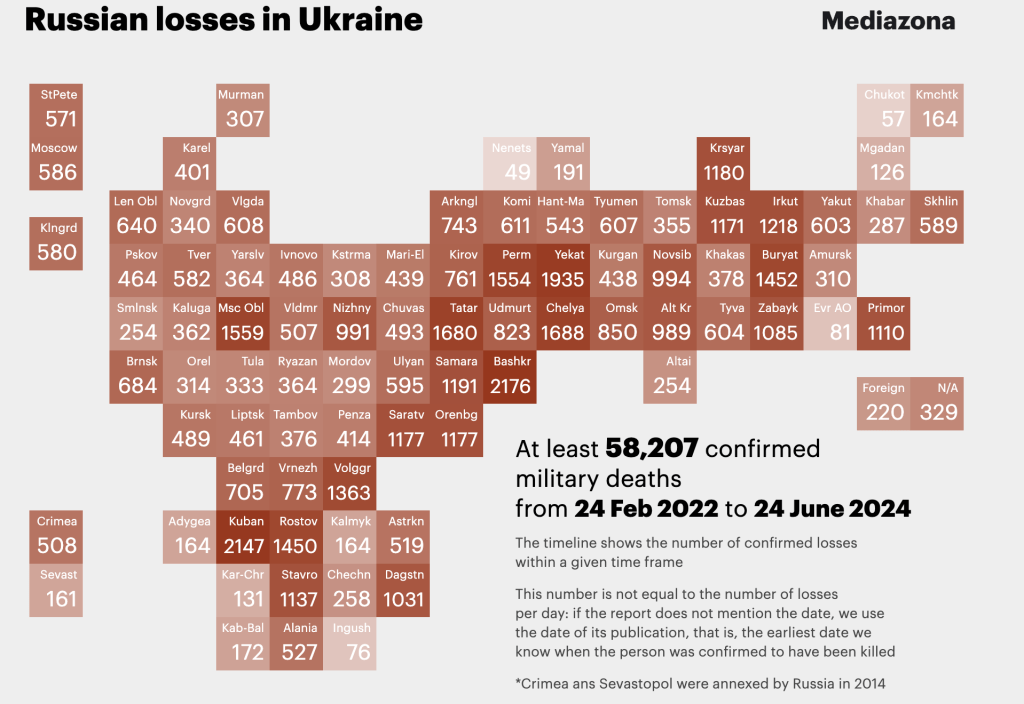
Screenshot of Mediazona infographic, as published here
Russia is losing more and more men in its war against Ukraine.
As of 5 July 2024, Mediazona and its partners in the casualty counting project have ascertained the names of more than 58,000 Russian soldiers killed in action.
The real losses are twice as many, however. Journalists have calculated the actual number of war dead based on information from the probate registry. How they did their work is described in this article by Mediazona. You can read here about how our methodology has been corroborated.
The real losses of the Russian army, including mercenaries, in the war against Ukraine, come to 120,000 dead. The Russian army’s casualties are thus already greater than both the number of US military deaths since the Second World War and all the losses of the Soviet and Russian armies since 1945. Most of the men killed were between the ages of twenty and forty. Those who were younger were usually draftees and prison inmates, while those who were older were “volunteers.”
Seventeen thousand prison inmates recruited by the Wagner Group perished at Bakhmut, according to the mercenary organization’s own documents, as examined by Mediazona. Meanwhile, journalists had estimated that Wagner had lost around sixteen thousand men, which is nearly the same number. Wagner has recruited a total of 48,366 men during the war, meaning that a third of them were killed in the so-called Bakhmut meat grinder.
Prison inmates, “volunteers,” and conscripts, if we judge only by confirmed deaths, have borne the brunt of the losses in the war. At 47.4 percent, they constitute almost half of those who have been killed.
In over two years of war, 3,700 officers of the Russian army and other security forces have been killed, 430 of them in the rank of lieutenant colonel and above.
Between 200 and 250 men are killed every day. This year, the Russian army’s losses have risen dramatically. In 2023, an average of about 120 men were killed every day.
There are two points of view on Russia during the full-scale war. The first is that Russia has turned into a fascist militaristic state in which everyone marches in step and sincerely hates Ukraine. The second is that cynicism and apathy have won the day in Russia: people don’t care about the war as long as it doesn’t affect them personally. Both of these views are mistaken, according to the authors of “We Have to Live Somehow,” a study from the Public Sociology Laboratory (PS Lab).
The researchers traveled to Krasnodar Territory, Buryatia, and the Sverdlovsk Region, living there for a month and interacting closely with the locals. What they tell us does not fit into either of the two common stereotypes about Russians and the war. Here are a few of the tendencies they observed.
The war is invisible in daily urban life. Residents in the Sverdlovsk Region town of Cheryomushkin (whose name was deliberately changed by the researchers) could not recall a single event in support of (or against) the war during the year. In Ulan-Ude, the capital of Buryatia, the pro-war agitprop consisted of a single poster on a Lenin monument. In Krasnodar, pro-war banners still hung on buildings, but people had long ago removed pro-war stickers from their cars. There is no institutional support for the war at the municipal level: such support is the bailiwick of ideological loners and small groups of pro-war volunteers.
Apolitical Russians justify the war, but arguments like “NATO soldiers” and “defending Donbas” are not of primary importance to them. Rather, they simply want to save face themselves, because they take the accusations directed at their country personally. For this reason, Russians have previously been inclined to justify the actions of the state, even when they do not understand or approve them.
The majority of the populace is not opposed to the war. They may disapprove of it in some respects, but they simultaneously defend the state. For example, in the Sverdlovsk Region, women were outraged by the deaths of young soldiers at the front (“They are sending children to fight! Why?!”) while also parroting the propagandists’ arguments about the war against the “collective West” (“Them United States are hammering civilians!”). Non-opponents of the war argue that Russia has been proactive, defending itself rather than attacking (“Now the Luhansk and Donetsk Republics are part of Russia, but our guys aren’t advancing any further—they’re defending all of it”).
Non-opponents of the war regard the residents of Donbas as Ukrainians, not Russians. They scold Ukrainians from the “Donetsk People’s Republic” and the “Luhansk People’s Republic” (“They don’t defend themselves. They’ll be coming here [to Russia], and what, I’ll have to go fight in their place? I don’t want that”) and do not regard these areas as “their own” (“They are not my blood relatives, they are not my own people”).
While opponents and supporters of the war initially had bitter conflicts, solidarity between them has emerged despite their differences of opinion. Those who generally condone the war are increasingly questioning the official version of events, while those who oppose the war are beginning to listen to their opponents (“I have to build a life and continue living with these people”).
Russians try to pretend that the war has not impacted their daily lives in any way, but its signs still permeate their everyday lives and conversations. In the Sverdlovsk Region, a woman is going to “go to great lengths” to prevent her son from serving as a contract serviceman. In Buryatia, a volunteer says mundanely, “I have eight grandchildren, all boys. And it just happened that four more died at the front.” In Krasnodar, a sociologist’s source says he is glad that the city is not being bombed and that the “Wagnerians” did not come their way, but then confesses in a low voice that the future is hazy and “let’s put it this way: things have become a bit tense.”
The big takeaway, however, is that Russians are pushing the war to the back of their minds. And this is bad news for the Kremlin: it has failed to convince the public, over the past two years, that the invasion was launched in pursuit of noble ends. Even as they justify Russia, its citizens don’t understand what good the war does for them personally.
A week ago, a Moscow court sentenced fifteen-year-old Arseny Turbin to five years in prison after convicting him on charges of “involvement in a terrorist organization.” The security forces accused the schoolboy of aiding the Free Russia Legion, which has been officially banned in Russia.
Arseny lived with his mother Irina in the small city of Livny in the Oryol Region. Although he was one of the most successful pupils at the local prep school, he was bullied by his classmates, and yet his teachers did not respond to his complaints. At the war’s outset, Turbin supported the Kremlin’s actions, but later became disillusioned with the government and took an interest in politics, even telephoning [exiled online news channel] TV Rain and telling them that the Conversations about Important Things lessons at school were “utter nonsense.”
In early June 2023, Arseny wrote an email to the Free Russia Legion (an organization we described in detail in a previous newsletter). He wanted to сampaign against the war, but they asked him for too much personal information and he did not send the application form to these strangers. Instead, he started distributing leaflets criticizing the authorities and taking pictures of himself in front of the white-blue-white flag. (The Russian authorities regard this flag as a symbol of the Legion, which has been fighting against Russian forces in Ukraine.)
Meanwhile, a strange thing happened. Turbin made the acquaintance of someone called Maxim, who immediately gave him access to the Telegram channel Occupy Slutophilia 14 (similar names have been used on the Web by the fans of the late Russian neo-Nazi activist Maxim “Tesak” Martsinkevich) and asked him to help with the channel’s content by editing videos. The channel had only a few subscribers, and it featured posts in support of Yevgeny Prigozhin and far-right content revolving around Tesak. Investigators then used Turbin’s involvement in the channel to accuse him of neo-Nazism, despite the fact that the schoolboy’s father was from the UAE, and Turbin himself had been bullied at school due to his dark skin.
At the end of the summer, FSB officers searched the Turbins’ home and summoned Arseny for questioning. It was a very strange conversation: for almost an hour and a half, in different ways, two investigators questioned the schoolboy about his connections with the Free Russia Legion. At the end of the conversation, as Mediazonadiscovered, they assured the teenager that it was “normal” and “not against the law” to send an application to the Legion, which has been declared a “terrorist organization” by the Russian authorities.
The court was not interested in this peculiar circumstance, however. It was interested in Turbin’s statement, allegedly made during the interrogation, that he had sent the application: this was the basis for the charge that he had “joined” the “terrorist organization.” The thing is that Turbin did not say this. Mediazona has in its possession a full transcript of the conversation, and it simply does not contain mention of Turbin’s sending off the application. The investigators inserted it for their own convenience.
Irina Turbina was present at the interrogation. She says that the investigators retyped the statement three times because of mistakes, and suggests that they could have discreetly amended it after lulling her into a false sense of security.
After seeing the transcript, the investigator, Trunov, had even wanted to close the case. In February 2024, however, the investigation was assigned to another investigator, Irina Simonova. She spun the line about Turbin’s alleged neo-Nazi views, obtaining testimony from the boy’s classmates, who assured her that his “idol was the so-called Tesak,” that he had advocated “exterminating the Ukrainians,” and had supported Alexei Navalny. Irina Turbina does not believe this testimony, producing correspondence in which her son called Tesak a “blockhead” and himself a “liberal.” Turbina argues that her son’s classmates testified against him in exchange for “excellent high school diplomas.”
Due to the increased harassment at school, Turbina transferred Arseny to home schooling. He managed to pass his year-nine exams before the verdict was handed down. On 21 June, the court sentenced Arseny to five years in prison, although the prosecution had requested an even longer sentence of eight years. After the sentence was read, he burst into tears, telling his mother, “Mom, I’m sorry—forgive me for letting you down. But I really didn’t know I was violating any laws.”
No one looked for the mysterious Maxim. The court was also uninterested in Turbin’s conversation with the FSB officers who openly provoked the schoolboy and falsified his statement.
PROMPT: Make an illustration on the theme of “Russia’s Fascist Meltdown”
Creating an illustration on the theme “Russia’s Fascist Meltdown” involves capturing the essence of nationalism, authoritarianism, and geopolitical tension. Here’s a description of an illustration:
The illustration features a powerful and imposing figure symbolizing the Kremlin, with a stern-faced leader resembling Vladimir Putin at the forefront. Behind him, the Russian flag waves prominently, but instead of the usual tricolor, it blends with darker hues suggestive of authoritarian control. The background is a stark urban landscape, reminiscent of Moscow’s skyline, but with ominous shadows and smoke rising in the distance.
In the foreground, there are smaller figures representing dissenters and protestors, their faces obscured in shadows or masked to symbolize anonymity and resistance. They hold signs with slogans advocating for freedom and democracy, contrasting sharply with the dominant figure of Putin. The atmosphere is tense, with a palpable sense of division and discord.
To further emphasize the theme of “meltdown,” the illustration includes elements like cracked ice or fire, symbolizing internal turmoil and instability within Russian society. The color palette leans towards shades of red, black, and grey, evoking a sense of danger and crisis.
Overall, the illustration aims to visually convey the complex and contentious dynamics surrounding Russia’s shift towards authoritarian nationalism, capturing both the gravity of the situation and the resilience of those who oppose it.
Pensioners Irina Nippolainen and Anna Trusova, friends and residents of the small Karelian town of Segezha, fled Russia in the spring of 2023 after the FSB came to search their homes. Anna and Irina were forced to make a long trek to Azerbaijan via Belarus before making their way to Germany, where they now have residence permits and social housing, and where they hope to find work. Meanwhile, back in their home country their relatives have been summoned for questioning in the criminal investigation against them. Journalists at the website Okno tell the story of the two women, who chose forced emigration over unfreedom.
ESCAPE
On 20 March 2023, 60-year-old Irina and 58-year-old Anna said goodbye after taken a stroll and went home. A few minutes later, Irina called Anna and told her that the FSB had come to see her. Anna rushed to her house after Irina’s call.
“As soon as I rang Irina’s doorbell, I immediately turned on the video on my phone to put the squeeze on them: Who the hell are you guys? The FSB guys saw that I was filming on my phone and immediately called someone, saying, ‘She’s here, come over.’ Anyway, it transpired that they had come for both of us.”
During the search, the FSB officers confiscated their phones and computers from the two pensioners. The search warrant stated that the searches were part of a criminal investigation into “public calls to engage in activity threatening state security.” Anna and Irina guessed that the case had been triggered by a denunciation. They both had written many posts on their VKontakte pages about their opposition to war, and in response had received a “barrage of hatred” from those who had read the posts.
“It was stressful. I lost eight kilograms during that time: I was so worried, I didn’t eat, and I didn’t know what would happen. I knew that people in Russia are sent to pretrial detention centers at any age even for sneezing at the authorities, and I did not know what exactly the law enforcers would find in the devices they confiscated and how they would interpret what they found. As soon as we were searched, my children immediately got involved in the problem, checking out everything they could: internet sites, their acquaintances, and then their acquaintances who had left the country. They decided how we should proceed—where and how to get asylum or other options. After analyzing everything, they decided that a humanitarian visa was the best option. We had to decide where to go, where to stay, and what to take with us,” says Irina.
They considered fleeing to two countries—Finland and Germany—but decided on the latter because it was easier to get a visa there.
But first Irina and Anna went to St. Petersburg, because they had to get papers for Anna’s dog Ramona. They stayed with an acquaintance of Anna’s, but the woman was very afraid that she would be “prosecuted for her connection” with the fugitive opposition activists, so they had to move out.
Irina, Ramona, and Anna
“Our children, who were assisting us, gave us the contact information for a man who did not know us at all but who wrote, ‘Come and stay as long as you want’. He helped us out and fed us, and we spent all that time while we were taking care of business at his house,” they explain.
Anna and Irina stayed in St. Petersburg for a week before departing for Azerbaijan.
They did not travel to Baku directly. For security reasons, they got themselves new cell phones, discussed the route, decided not to buy plane tickets in Russia, but to do it in Belarus, and went to Belarus by cab, paying 20,000 rubles [approx. 200 euros] for the fare.
“We took everything into account because we didn’t know how quickly they would come for us. In fact, we were very surprised that they didn’t nab us right away. We also chose Belarus because the dog was with us, and we felt bad about putting her in the luggage hold. Belavia is one of the few airlines that allow passengers to transport small animals in a carrier on a seat in the passenger cabin,” says Irina.
Irina and Anna flying from Minsk to Baku
After taking a cab to Minsk, they immediately went to the airport, bought tickets, and flew to Azerbaijan at night. In Baku, Irina and Anna initially settled in a small hotel.
“I was in such a state that my hair stood on end. For Anna, it was like an adventure, but for me it was like a misfortune, because I had left my home, my husband, and my pets. I didn’t want to leave my home or my country. That’s why I was very anxious. I even reached out to a psychologist from an aid organization, but she didn’t help me much,” Irina says.
Anna’s mood was a little different.
“I’m generally a traveler, but I hadn’t been able to travel lately. First there was the pandemic, then this whole thing happened. Not that I was freaking out about it, of course; I was freaking out for other reasons. But when it happened, I put three bathing suits in my suitcase—Ira makes fun of me—and went to the airport. I assumed I might have difficulties in Russia due to my intemperate tongue: I supposed that I would have to leave. I have a daughter in the Czech Republic, but the Czech Republic has a very bad attitude towards Russians, and they wouldn’t give me a visa. I thought that I would go to India, it’s quiet and peaceful there. My suitcase was initially packed with summer clothes. Of course, I was a bit nervous about the dangers. But basically, I always try to stay positive and hope for the best,” says Anna.
Anna, Ramona and Irina on the beach in Baku
Irina and Anna ultimately stayed in Baku for four months. They submitted the paperwork for humanitarian visas to Germany quite quickly, and had been approved by early June. But due to the local and the German bureaucracies they had to wait a long time for their papers. During this time, the pensioners already had their own circle of contacts—their landlady, their neighbors, and other refugees from Russia.
“And while there was uncertainty as to whether we would be granted a visa or not, we were already considering Azerbaijan as a place to live, because we could have lived there on our pensions. We had already found some channels for cashing money there, because our bank cards didn’t work there anyway. But still, we didn’t consider ourselves safe there,” Irina explains.
“GOD, HOW DID YOU BEAR IT ALL?”
In July, all their papers were in hand, so Irina and Anna began packing for Germany. They decided to make their way to Georgia first, since it was cheaper to fly to Germany from Tbilisi than from Baku. They went to Georgio by bus, stayed in Tbilisi for a couple of days before flying to Germany.
“When we arrived in Germany, I was already on VKontakte recounting all our adventures. And people wrote, “God, how did you bear it all?” Because there were a lot of hard moments. Personally, I was constantly stressed out, but it had become a way of life, you know. Anya is fine, she’s easygoing, but I can’t improvise when it comes to serious matters, I have to prepare and think things over. If I hadn’t followed all those rules, maybe we could have flown to Germany more easily, who knows. I’m a thorough person, I don’t want to lose money and end up stranded at the airport not knowing what to do. That is, I was preparing, I was checking out all the chat rooms and websites, seeing what papers we needed to get and where to go. There was a lot of preparation just for the dog. Without the dog, we would have done it all ten times easier, if not more. Because in different countries there are particular papers and certain vaccinations you have to have, and the airlines have certain requirements for the carrier. Ramona is a basically a ‘homeowner’—she had three portable houses,” Irina says.
“The atmosphere is cool”
“For the first time in her life, probably, when leaving Baku, Irina took sedatives because the dog in its carrier had to be placed in the trunk of the bus. And I was so worked up that even I took them too,” Anna remarks.
Anna and Irina flew to Frankfurt, where they were met by a friend of Irina’s who had lived in Germany for a long time. They had to get to their initial placement site, the town of Suhl in Thuringia, which is a three-hour drive from Frankfurt.
“But when we arrived there, we were told that pets were not permitted. Ukrainians used to bring pets there with them, but since now there are few Ukrainians in this camp and mostly Muslims, who have a bad attitude to dogs and are afraid of them, it is prohibited. So we urgently began looking for help on the chat rooms. A Ukrainian family agreed to take Ramona in for a while. They lived right next to the camp, and so we would go to their house to walk the dog. But then this young woman found out she had allergies, so Ana’s daughter quickly came from the Czech Republic and took Ramona away,” Irina explains.
A room in a German dormitory for refugees
The refugee camp where the pensioners were initially placed was a complex of five buildings, mostly inhabited by people from Arab countries.
“It was a bit scary to live in such an unfamiliar environment, given that the doors to the room in which we were put were unlocked. The police even came once because of a conflict in the building. We also had our passports taken from us and there was a risk that we would be processed in a different status—as refugees, even though we had ‘humanitarian visa’ stamped on our papers. We wrote everywhere, because they said that if we were registered as refugees, we could change this status only through the courts, and the courts could take years. That was scary. I said that we could not even return to Russia without a passport. Basically, it was a massive problem. I’d only recently been released, and I had put on two or three kilograms, because one thing or another was causing stress, but there was no getting around it,” Irina recounts.
Everything worked out well, ultimately. After a week, they were moved to the town of Greiz, a two-hour drive from Suhl. There they were allocated a social apartment, started to receive an allowance, were insured, and were issued social security numbers. By October, Anna and Irina had received residence permits for three years. During all this time, however, the pensioners had to confront the famous German bureaucracy more than once.
“They have an algorithm, as it were. But the human factor often gets in the way. People who work in this system, they do not know all the laws, or often they do things just to check off the boxes. But our case was quite peculiar for them: we are Russian pensioners, we have humanitarian visas, and they probably have a million other refugees here. Things were difficult, but when you look back, you think, What was there to worry about?” said Anna and Irina.
After the paperwork was completed, the friends moved again, but not far—to the city of Gera, thirty kilometers from Greiz. Each of them found rented accommodation there, which is paid for by the municipality. The apartments there are rented empty, with no furniture or appliances.
“When we moved from one place to another, they stopped paying us in the old place, but here they hadn’t started paying us yet, and it took two months to process the registration. So for two months we were without money or furniture,” Irina explains.
Since she had not yet been discharged from social housing, they could still live there together legally for some time and work on furnishing their new homes.
“The Ukrainians who live here have set up a help chat room and chat rooms for selling different things. I bought a bed and a chest of drawers from Ukrainians. I got some things for free. Germans often sell things they don’t need for very cheap. For example, I bought a complete kitchen set for only 100 euros, which is practically nothing. Now I’m looking for a bigger refrigerator,” Irina says.
Irina’s apartment after she furnished it
Anna, on the other hand, found an app similar to the Russian website Avito, where used furniture was sold, and bought almost everything she needed at wholesale prices.
“The only thing I was left without was a kitchen. I didn’t have a stove, but I got a microwave, and I could survive with a microwave. I bought a kettle. And that’s how I lived for the first few months,” she said.
The pensioners were at pains to point out that no one refused to help them. People who had also immigrated to Germany, some twenty years earlier and others two years earlier, offered them bedding, dishes, and household supplies. When Irina and Anna had settled in, they passed some of these things on to a family from Ukraine.
Expiring products are given to immigrants for next to nothing
People who have been granted humanitarian visas in Germany can choose not to work and live on benefits. But they can try to find a job if they want. Before they retired, Anna was involved in marketing cosmetics, while Irina helped animals. After ten years at the official municipal animal shelter, she ran a mini-shelter for five dogs, one of which she ultimately adopted. Finding a job in Germany is still difficult for them.
“We don’t speak German, so the opportunities to find work are few and far between for the time being. I am registered at the job center, while Irina is now registered with the Sozialamt, and she can live on her pension in peace, but I will only go on 31 July to test the level of my German. God willing, I will test out at A1, since I almost got A’s in German back in school. After taking this test, I do not know when I will be able to take German-language classes. Many emigrants take these courses two or three times. Then again, I’m old, so things don’t stick in my head nowadays. Of course, I would like somehow to learn the language faster and integrate faster,” Anna says, laughing.
Irina says that she has not been assigned to an integration course, so for the time being she is also living without knowledge of the German language and therefore jobless. While she was still living in Greiz, she worked a two-hour trial day as a seamstress in a local factory . Irina liked it very much. When she moved to Gera, she also wrote to one of the factories there, but was told that German was required. Getting a job is likewise important to Irina because she wants to invite her husband, who stayed behind Russia, to join her in Germany, which is impossible to do if she is unemployed. Irina’s husband would also need to know German, but how and where he can learn it and pass the test for the simplest level is still unclear. Irina herself attends German language courses, but they are run by volunteers and thus unofficial.
Anna and Irina say that even without jobs they have enough to do—they have traveled all over the area.
“We have been traveling a lot since day one. While we didn’t have papers, we used to walk, and then we got the chance to buy transit passes that enable us to travel by rail, buses, trams, and subways,” says Irina, who has also been to travel to Finland to visit her children, and to Stockholm and Copenhagen to meet friends.
Anna has bought a sewing machine and begun sewing.
“I used to do needlework, but in recent years things had not been coming together. Now I have started knitting curtains, and I will start weaving; I want to do a lot of things. I knitted myself a sweater. I bought brushes and paints and started drawing a bit, but have given it up for the time being. Mostly, I want to walk more. We are from Karelia and have a tradition of walking as the first thing one needs to do. And I had a dog then. Here I bought a bicycle as soon as I got the furniture: I jumped on the bike and went riding. You have to see everything around you. It takes a lot of time to see everything, to photograph it, to edit it, to upload it to the internet. So there is not enough time,” she explains.
By the way, both pensioners are each on their third VKontakte page: their previous pages had been blocked by the Russian authorities.
“DID THEY WRITE ABOUT BUCHA?”
Karelian law enforcement never forgot Irina and Anna.
In April 2024, it transpired that a criminal case had been opened against the two émigrés on charges of disseminating “fake news” about the Russian army. They found out about it because Irina’s husband was summoned to testify, for some reason, in the criminal investigation against Anna. Only when he met with the investigator, it transpired that Irina was also being prosecuted on the same charge. The husband refused to answer the investigator’s questions, invoking Article 51 of the Constitution (which permits an individual not to testify against themself or their spouse). Anna’s sister was then summoned for questioning in the same investigation. A little later, it transpired that both Anna and Irina had been put on the federal wanted list. And shortly before this interview, a person unknoiwn, who introduced himself as a policeman, wrote to Anna via WhatsApp and asked her where she was.
How many criminal “fake news” cases have been launched in Russia
In March 2022, after invading Ukraine, Russia adopted laws that criminalized disseminating “fake news” about the Russian army and “discrediting:” its actions. As of February 2024, 402 such cases had been brought. Dozens of Russians have been sentenced to lengthy prison terms for allegedly violating the law. According to human rights activists, this is tantamount to military censorship.
It is still unknown why the criminal case was launched. The relatives were asked during questioning what Irina and Anna had written on their first VKontakte pages. They made a special point of asking, “Did they write about Bucha?”
“It’s no fun feeling like a criminal. Although we all know what it means now in this [sic] country. In short, the crackdown continues: you are on the right side, and they are on the wrong side. They have to do something: there’s probably no one left in Karelia to sink their claws into anymore, but they need fulfill quotas. It’s a crackdown for its own sake. I feared for my relatives, because way back in 1938 there were so-called enemies of the people, and children, wives, and husbands of enemies of the people. I’m afraid lest it come to this,” Irina says.
The human rights activists consulted by Anna and Irina have advised them not to return to Russia before the regime changes, otherwise they will be sentenced to hard time in prison.
“FOR THREE DAYS I BAWLED LIKE A BELUGA”
Both émigrés follow the news from Russia closely. They argue that the country is “hurtling into an abyss.”
“What is happening is simply absurd. It feels like the country exists in a kind of distorted reality in which good is evil, and black is white. They are engaged in such insanity, frankly, and you don’t understand how it is possible to support all of this. And then there are the people who have gone crazy on a nationwide scale and who think everything is fine there, that it’s the way it should be. I worked at a polling place for many years and I used to say all the time that when we socialize only with our own kind, we don’t see what the rest of the people are like, but I saw all kinds of people at the polling station. I know that might sound kind of arrogant, but I saw how massively ignorant people were. I’ve always been skeptical of the claim that the Soviet Union had the best education system. I don’t know how it was the best if it didn’t teach people to think, and if people blindly trust the authorities. The authorities are king and god to them, as this whole situation has shown. Basically, you get the feeling that all people have come down with insanity, and some are immune. The analogy with Hitler’s Germany immediately comes to mind, where the people were fooled in the same way, gulled by propaganda. Maybe there is still hope that if the regime changes and they tell folks on TV how it really was, then…. We are now like spectators looking at Russia from the outside, and it’s scary to watch what is happening there,” Irina says.
When asked how they reacted to the news of politician Alexei Navalny’s death, Anna is unable to reply. She immediately starts crying.
“That’s how we reacted,” Irina explains, crying too.
“It’s good that my daughter was here that day: we went to Munich with her. I spent the whole day with them. But in the evening they went to a concert, and I got on the Munich chat rooms and found out that there would be a rally on Freedom Square and went there,” says Anna.
Alexei Navalny’s Death
The news of Alexei Navalny’s death came on 16 February 2024. He had been serving a nineteen-year sentence for “extremism,” after being convicted on seven criminal charges, including “creating an extremist community.” During his imprisonment, he was sent to a punishment cell twenty-seven times, spending almost 300 days there. After the politician’s death, pickets to mourn his passing were held in Russian cities, and the picketers were detained by the police en masse. The authorities refused to hand over his body to his relatives for a long time, demanding that they bury him in secret. Navalny’s associates argue that he was murdered and blame President Vladimir Putin for his death.
“I bawled like a beluga for three days. I still can’t even look at the photos of him calmly,” Irina adds.
“In the past, Ira, you used to say, ‘Navalny will be released and I’ll go home,'” her friend remarks.
Irina doesn’t make any predictions now that she has emigrated.
“I don’t make any predictions and I don’t listen to them. My motto now is: do what must be done and what will be will be. And I would also add: do what you have to do and what you are able to do. What matters most is saving yourself and your loved ones. We don’t know how long this will last. Analyzing things even as they stand now, I can confidently say that nothing good is going to happen…. Well, how should I put it? Nothing good is going to happen quickly. But I’m not ruling out either possibility: that I’ll stay here, or that I’ll go back there. I’ll go home as soon as I can. If nothing changes there, I’ll stay here.”
Anna, however, says that she has almost no one left in Russia: her daughter emigrated to the Czech Republic back in 2016, and she hardly communicates with her relatives who stayed behind in Russia.
“I will be better off here anyway. As long as they don’t kick me out, I’ll stay here,” she adds.
The pensioners nevertheless try to keep involved in Russian politics. They traveled to Leipzig to sign a petition supporting Boris Nadezhdin’s presidential candidacy and then to Berlin to vote in the presidential election.
Irina signing a petition in support of Boris Nadezhdin’s presidential bid
“There was such a huge queue. Because we were afraid of missing the train, we cut the queue a bit. A lot of people could not vote because, I think, only two polling stations were open in Germany—in Berlin and in Bonn. There were a lot of people who wanted to vote. We stood in line there with Yulia Navalnaya. And I talked to Mikhail Khodorkovsky, and we had our pictures taken with Ekaterina Schulmann. There were so many celebrities, and the queue itself was very cool. There were a lot of young people, all chanting “Russia without Putin.” But there were also a few pro-Putin people who have lived in Germany for twenty years and go vote for Putin, and we trolled them a little bit. But this is life, this is reality,” says Irina.
Irina Navalnaya, Kira Yarmysh, and Mikhail Khodorkovsky
What do Anna and Irina dream of?
“Grandchildren!” Anna answers immediately. “And first of all, of course, that the war end!”
“The first thing I wish for is that the war end. And the second is for me to go home,” says Irina.


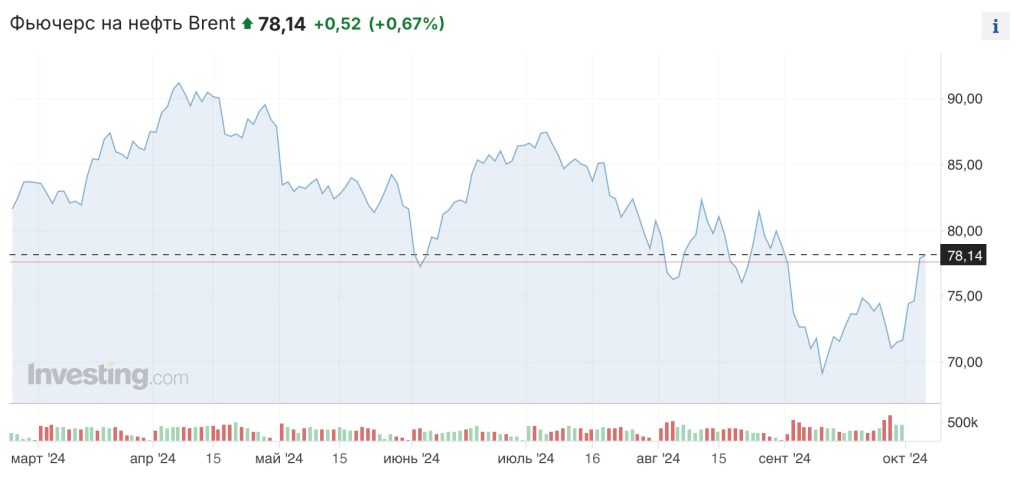
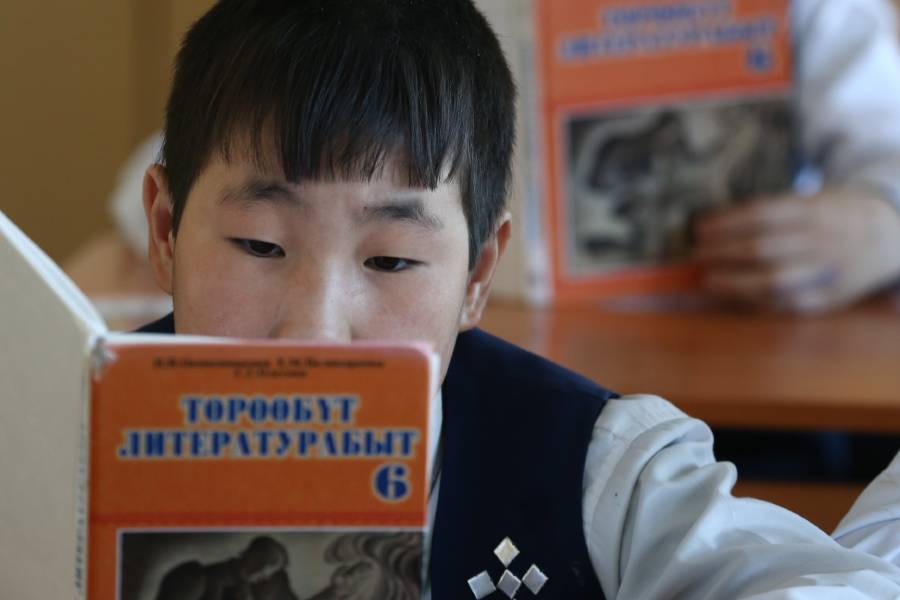
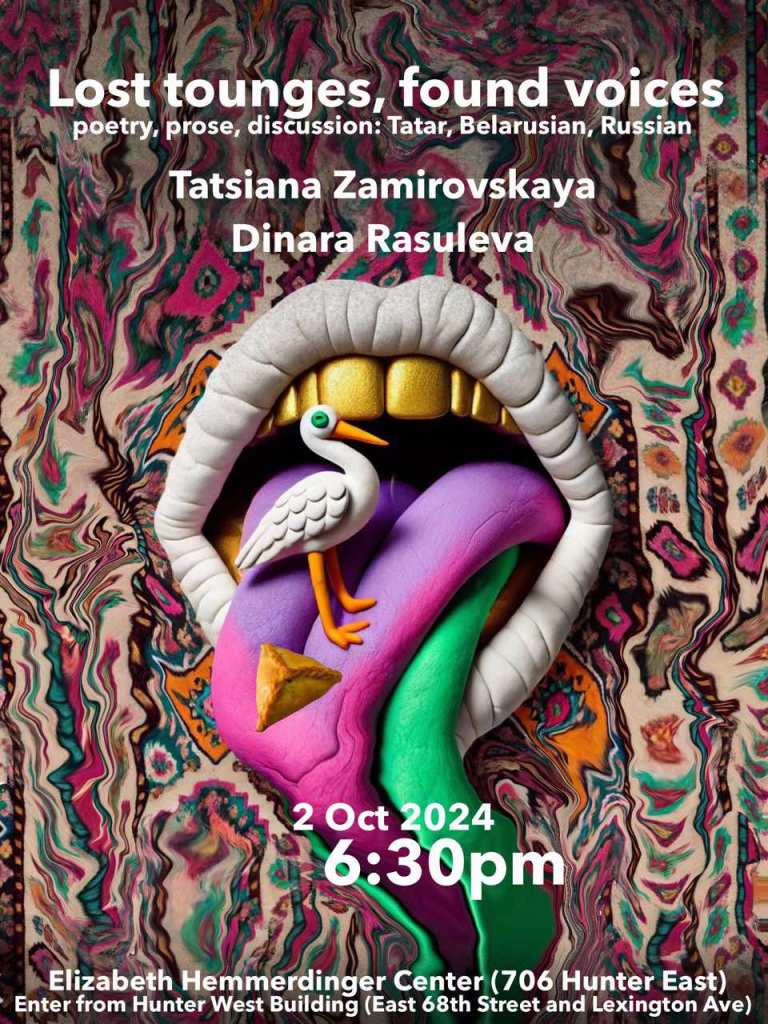




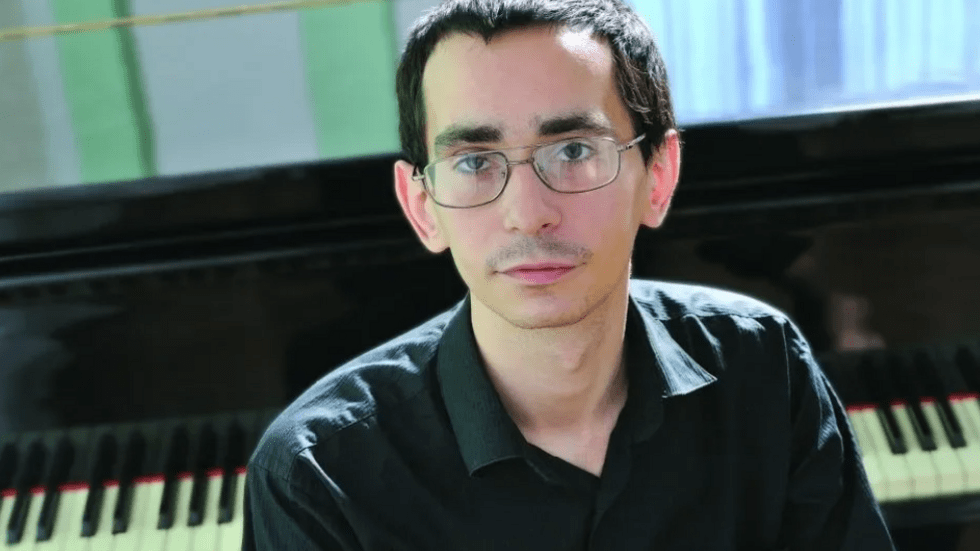
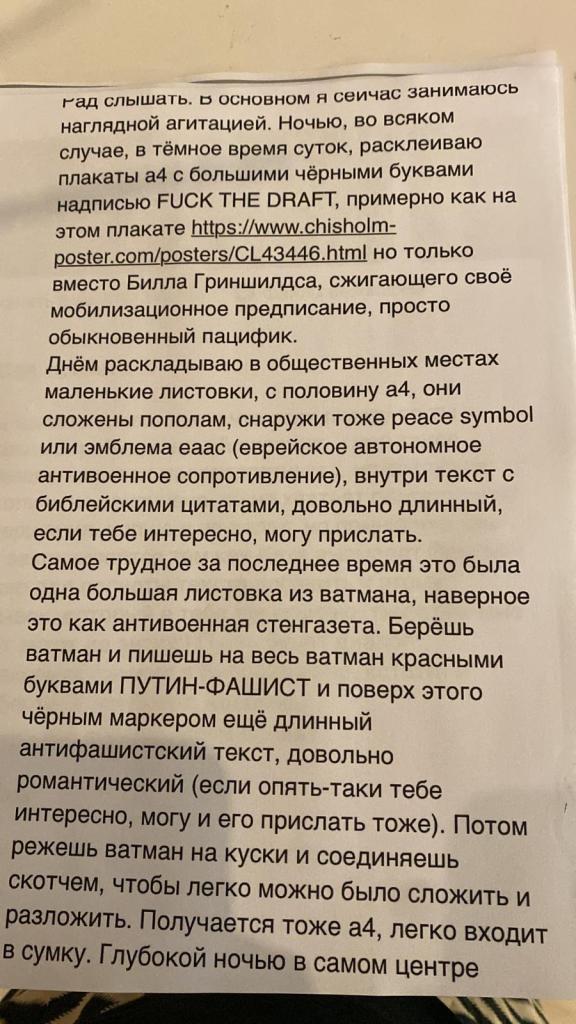
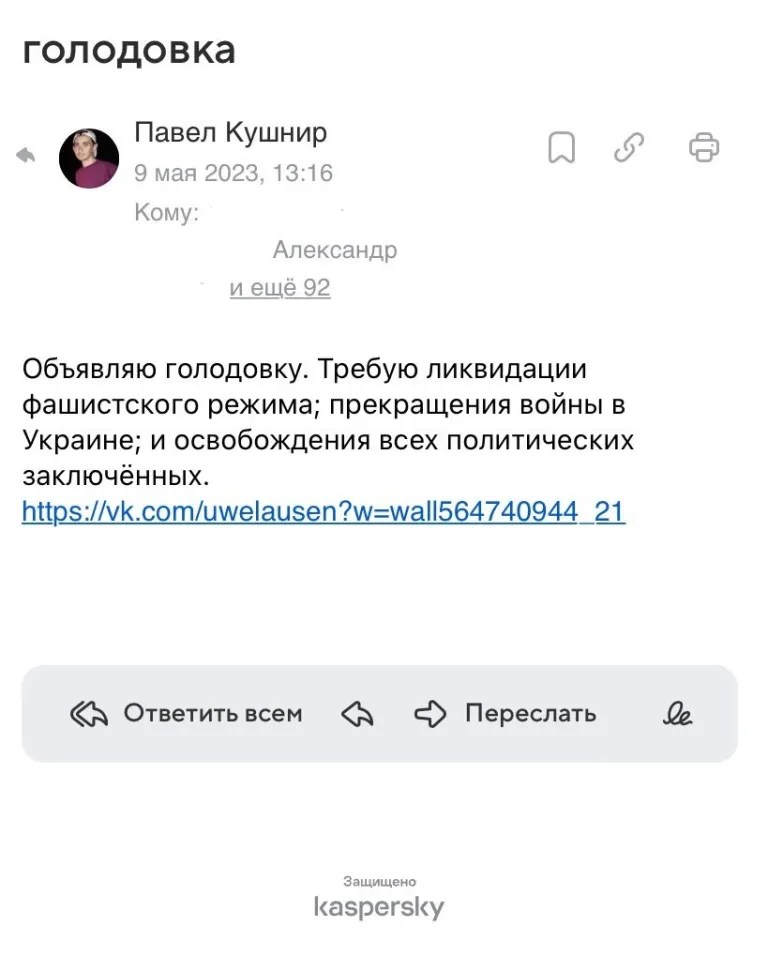
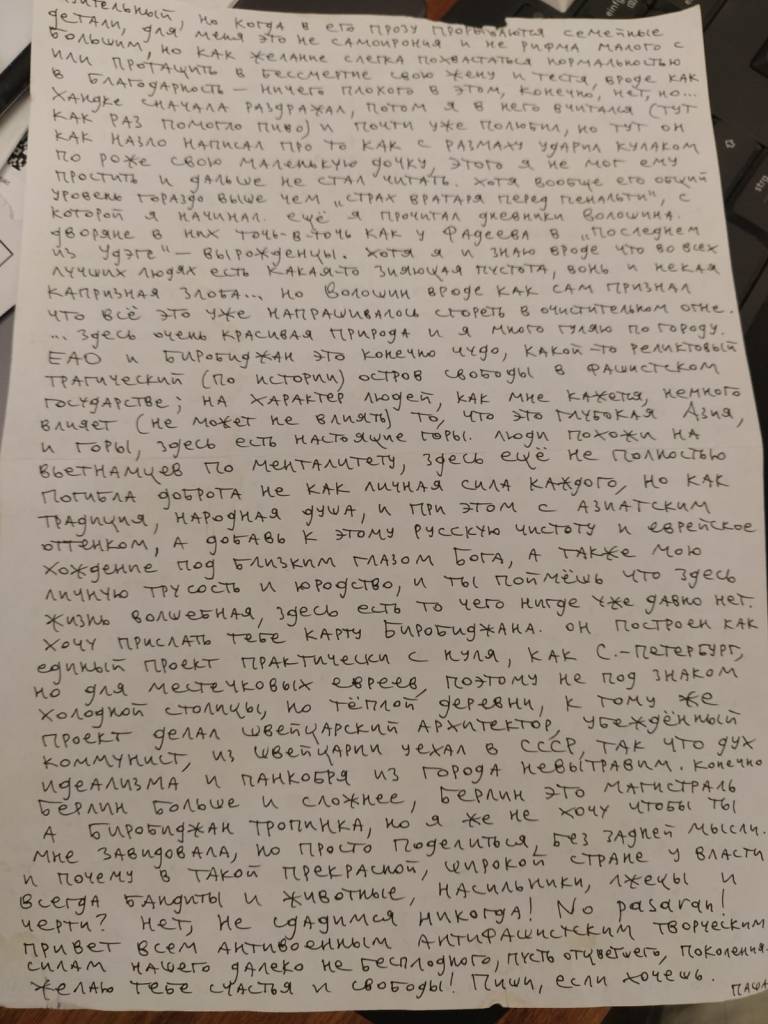
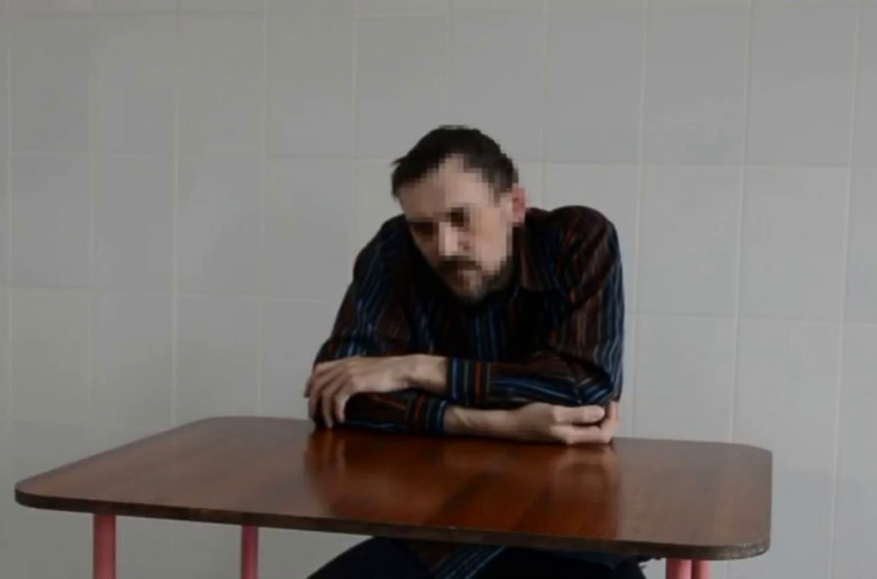
 You can support Alexander by writing him a letter or sending money to his personal account in prison so that he can subscribe to newspapers, among other things.
 Address for letters:
 It is possible to send letters via
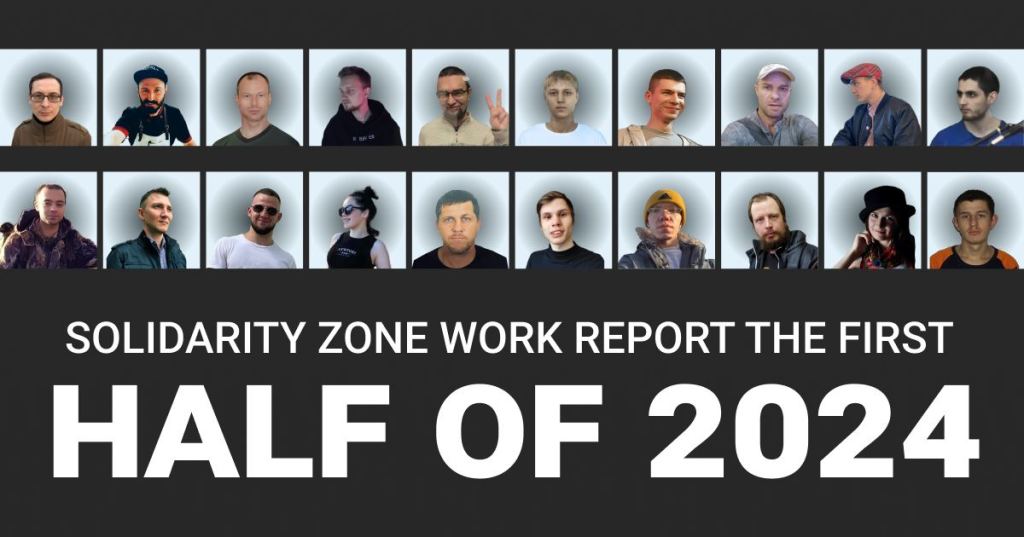
 We successfully completed nine fundraisers for individual prisoners, amounting to €28,540. As a result, we could ensure that defendants had legal support during investigations and at court, and support appeals against conviction lodged by seven prisoners who carried out acts of anti-war resistance.
 Independently of whether you are able to give financial support to Solidarity Zone, you can help us by reposting this or circulating information about us in other ways.