Vladimir Putin speaking with a group of Russian war widows. English subtitles by Julia Khazagaeva
Death as the national idea. Look at the faces of these women who lost their men in the war against Ukraine. They glow with newfound meaning. “I am a mom of four children and, recently, a widow…. Thank you, Vladimir Vladimirovich,” ”I lost my brother in the SVO [special military operation], but my three sons are growing up to be future defenders. Thank you,” they say to the killer of their kin. The Russian existential vacuum has finally been filled. Life has a purpose that redeems existence’s meaninglessness. Losing your life in war confers valor and honor. Nothing in the old life, in peacetime, guaranteed it. A contract [to serve in the army] turns a man into a hero. He is no longer a bastard in the eyes of the women who matter to him.
So the million lives taken by the war do not particularly faze anyone [in Russia]. All the sacrifices and victims are worthwhile as long as they are converted into national pride in the minds of Russians. They won’t spare three million people or more if it comes to it. And it doesn’t matter who they kill, whether they are Ukrainians, Estonians, or Poles. War is a drug. As long as war is underway, the harsh comedown is postponed. This is bad news for the world, especially for those who imagine that it is Putin who is waging the war, while Russians themselves want peace.
P.S. I made English subtitles for the video. You can download it from my Telegram channel. Show it to everyone seeking to understand l’âme russe mystérieuse.
“Tatiana Sokolova will never hear her son call her ‘mom’ again. He heroically fell in the special military operation zone,” began a news broadcast in the Chelyabinsk region about International Women’s Day celebrations for the mothers of Russian soldiers.
This event, which saw flowers handed to soldiers’ mothers, was organized by the United Russia Women’s Movement, a group affiliated with the ruling party.
It was just one of many celebrations focusing on the mothers and wives of soldiers fighting in Ukraine — as well as the widows and families of those killed — ahead of International Women’s Day this year.
International Women’s Day is one of Russia’s most significant holidays, celebrating women’s contributions to society, science and the workforce. It has deep roots in Soviet history, when it was promoted as a symbol of gender equality.
But since the full-scale invasion of Ukraine, Russian officials and state media have upheld a different ideal: being the wife or mother of a soldier.
“With the militarization of society, the education system and the economy, and with the ‘ideal citizen’ — the male soldier — being placed at the center, authorities are actively promoting the image of the soldier’s wife as his counterpart,” gender researcher Sasha Talaver told the Moscow Times.
“The portrayal of women in times of war and state crisis always emerges as a key point for political imagination,” Talaver said.
This Women’s Day, members of the United Russia party and pro-Kremlin activists have been delivering flowers, organizing literary events and visiting military families with gifts and food.
“We are proud of the women who raised the heroes of the special operation and the young men who have signed up as contract soldiers,” Senator Daria Lantratova, co-chair of the United Russia Women’s Movement, said this week.
The movement this week launched the “Flowers for the Mothers of Heroes” campaign to deliver presents and flowers to soldiers’ relatives, which has spread to 40 regions.
A resident of the Murmansk region who lost her son in the war was given a meat grinder for March 8 by the United Russia party. Photo: social media
In perhaps the most shocking Women’s Day event, mothers of fallen soldiers were gifted meat grinders from local United Russia officials in the Murmansk region.
The news sparked a wave of criticism, as the kitchen appliance has become a grim symbol of the Russian military’s high-casualty assaults in Ukraine.
After the story went viral in Russian and Ukrainian media, one mother of a deceased soldier recorded a video statement in which she said she had been planning to buy a meat grinder herself, but United Russia “gifted it to her just in time.”
“I actually asked you for it,” the elderly woman said.
In Cheboksary, a city in the republic of Chuvashia, officials organized an event exclusively for the widows and mothers of fallen soldiers.
“May grief soon turn into pride!” declared local deputy Yevgeny Kadyshev. The women were given bouquets and gift bags labeled “Happiness and Joy.”
Russian authorities, including the United Russia party, promote the image of a military wife or mother as the ideal of femininity, gender studies researcher Ella Rossman told the Moscow Times.
The United Russia Women’s Movement was founded in the months following the invasion of Ukraine in 2022 “as a clear response to feminist anti-war activism,” Rossman said, referring to groups like Feminist Anti-War Resistance and movements of mobilized soldiers’ wives and mothers.
“Right now, the most visible female archetype in the public sphere is the woman waiting for her soldier to return from the front,” Rossman said. “But this is not the only image. There are completely opposing narratives, like that of military women themselves.”
Rossman pointed to an article in a pro-Kremlin tabloid about a woman from Rostov who signed a military contract and went to war.
“She is a mother who left her daughter to fight, has already lost a leg in combat and tells journalists that as soon as she recovers, she will go back to the battlefield,” Rossman said.
Local television stations have been covering Women’s Day events for soldiers’ mothers and wives, while also highlighting women assisting the war effort or fighting on the front lines.
After these official celebrations, politicians sometimes invite the women for tea. In Stavropol, a table was set for the mothers and wives of soldiers following a concert at a veterans’ hospital.
“Some of them are waiting for their sons to return home. Others, unfortunately, have lost their defenders who gave their lives for the Motherland,” Senator Daria Lantratova, representing occupied Luhansk, wrote on social media.
United Russia activists also delivered flowers to soldiers’ mothers in occupied Donetsk.
“Your son is a hero. We congratulate you on this holiday and wish you well. We hope this war will end and peace will come,” a United Russia Women’s Movement activist told an elderly woman. After hearing the word “hero,” the woman teared up.
“Don’t cry,” the United Russia activist told the older woman as they parted.
Russian soldiers fighting in Ukraine also sent video messages to military mothers and widows ahead of the holiday.
“Heroes are born in families. Women give birth to us. Women raise us in kindergartens and schools. The making of any hero is thanks to the great women in his life,” Leonid Lapin, a soldier who fought as a sniper platoon commander in Ukraine, said in a video message.
Putin meets with Olga Chebnyova, widow of ‘Hero of Russia’ Sergei Chebnyov. Photo: kremlin.ru
United Russia has even involved children with disabilities in the celebrations. In the Yamalo-Nenets autonomous district, mothers from a center for parents of children with mental and physical disabilities — along with their children — made greeting cards for soldiers’ relatives.
“This is not just a good initiative. Seeing how children with special needs get involved, how their eyes light up, you realize we are on the right path,” said United Russia member Alexei Komarevtsev.
In an interview with a local news channel, he described the craft project as “socialization” for children with disabilities. Some of the cards, he added, will be sent to the front lines, “because there are also girls serving there.”
In some regions, such as Tula, soldiers’ wives and mothers received a one-time payment of 10,000 rubles (about $100) for Women’s Day. Elsewhere, gifts included makeup sets or tickets to the philharmonic.
In the Moscow region, United Russia organized a makeup seminar for soldiers’ wives, saying such initiatives “help strengthen family values and improve quality of life in society.”
“War disrupts social norms and the way of life,” Rossman said. “But war also imposes constraints on the very possibility of a rigid binary between male and female roles, even though war seems to fit that binary perfectly.”
That is likely why the authorities have been working overtime to reinforce the Kremlin’s idea of “traditional” values since the start of the war, she said.
“Russian authorities are forced to declare and reinforce traditional values [because] many families that were once intact before the war have now lost their fathers,” Rossman said. “There are also military women — doctors, for example — and women who have voluntarily gone to war. Ignoring these women is impossible. They, too, are a target audience from a propaganda standpoint.”
As the war drags on and Russia’s battlefield losses mount, authorities are forced to balance different ideals of femininity in their propaganda messaging, Rossman said.
“They are constantly having to create different female archetypes for different audiences,” she said.
“A Russia without profanity. The word mom is sacred! Speak without swearing.” Photo: Igor Stomakhin, Moscow, 2025
What can serve as the basis for new Russian post-war identity? What sort of patriotism can there be in a country which has lived through an aggressive war? Of what should the people of this country be proud? What should they associate themselves with? Republic Weekly presents a programmatic text by the sociologist Oleg Zhuravlev and the poet and activist Kirill Medvedev on how the so-called Russian nation came to 2022 and what its prospects are in 2025.
How can Russia get beyond being either an embryonic nation-state or a vestigial empire? People have been talking about this for three decades now. Does it require years and years of peaceful development? A national idea painstakingly formulated by spin doctors in political science labs? A bourgeois revolution? Or maybe just a small victorious war? The so-called special military operation in Ukraine, which has grown into a global military and political conflict, poses these questions in a new light.
In our view, large-scale social changes are happening inside Russia today, changes which could help shape a new national project.
These changes are not always so easy to spot.
According to the social critique prevalent in the independent media, wartime Russian society is organized roughly as follows. Its freedom-loving segment has been crushed and disoriented, while its loyalist segment is atomized and under the thumb of government propaganda, which preaches xenophobia, imperialism and cynicism. Society is fragmented and polarized, suspended somewhere between apathy and fascism. But these tendencies, which are certainly important — and therefore visible to the naked eye, as well as exaggerated by the liberal discourse — are nevertheless not absolute and probably are not even the most important. Society lives its own life, meaning that different groups within it live their own lives and move in their own directions. When you analyze the trajectories of that movement you get a better sense of the major pathways along which these groups might in the future coalesce into a new nation.
Despite the official rhetoric about unity during the war years, the regime has not managed to consolidate a nation, but it has laid the groundwork for its formation in the future. This has been significantly aided by the west’s anti-Putin policies and the information war waged by the new Russian emigration’s radical wing, which speaks of the collective guilt of all Russians, of their culture and language. Consequently, the only alternative to Putinism and war has seemed to be the disenfranchisement of all Russianness, and the only alternative to official government patriotism has been the “fall of the empire.” Meanwhile, there have been and continue to exist images of the country and modes of attachment to it which cannot be reduced to either of these two options.
THE NEW RUSSIAN PATRIOTISM
The idea of a new Russian identity was expressed succinctly by Boris Yeltsin on 22 August 1991, when he said that the attempted coup had targeted “Russia, her multi-ethnic people” and her “stance on democracy and reform.” The new modern Russian identity was supposed to be the result of choosing Europe, overcoming the archetypes of slavery and subjugation, and transcending the legacies of the October Revolution, interpreted as a criminal conspiracy and lumpenproletarian revolt, and of the Soviet nation as a grim community of “executioners and victims.”
Ultimately, though, it was the reforms themselves, along with the trauma of losing a powerful state, that generated Soviet nostalgia and a new version of Stalinism. [Yeltsin’s] shelling of the [Russian Supreme Soviet] in 1993 and the dubious 1996 presidential election, which many initially regarded as a triumph for the liberal project, proved to be its doom.
Despite the fact that advocates of the radical anti-liberal revanche were momentarily defeated and exited the scene, widespread disappointment and depoliticization was a barrier for further democratization through people’s involvement in politics. The story of 1991 spoke clearly about what the new Russians could take pride in: victory over the revanchists, for which they had taken to the streets and sacrificed the lives of three young men. Subsequently, amid the chaos and bloodshed of 1993, two ideological projects of Russian identity took shape which were mostly in competition with each other, splitting civil society in the period that followed.
LIBERALS VS. THE RED-BROWN COALITION
Vladimir Putin was nominated to strengthen the new capitalism and prevent a “Soviet revanche.” But his most successful project, as was quickly revealed, actually lay in the Soviet legacy’s partial rehabilitation. Putin managed to bridge the gap of 1993: he drew in part of the pro-Soviet audience (by using patriotic rhetoric, bringing back the Soviet national anthem, and taking control of the Communist Party) and drove the most intransigent liberals and democrats into the marginal opposition. The grassroots yearning for a revival of statism, which had taken shape in the early 1990s, was gradually incorporated into the mainstream. Many years later, this enabled things that would have been impossible to imagine even during the Brezhnev era, let alone during perestroika: the erecting of monuments to Stalin, the creeping de-rehabilitation of Stalinism’s victims, the normalization of political crackdowns as the state’s defense mechanism, and, consequently, a greater number of political prisoners than during the late-Soviet period.
Today’s ideal Russians, in Putin’s eyes, are those who identify themselves with all of Russian history from Rurik to the present, see that history as one of continuous statehood, and regard the periods of turmoil (the early sixteenth century, post-revolutionary Russia, the 1990s) as instances of outside meddling which should never be repeated.
The ideological struggle over Russia’s image during the Yeltsin and Putin years was thus rooted in the opposition between the liberal narrative (based on Yeltsin’s reforms) and the Stalinist great power narrative. Putinism, which is institutionally rooted in the Yeltsin legacy, acted as a kind of arbiter in the argument between the Shenderovich and Prokhanov factions, but gradually dissolved 1993’s great power Stalinist and White Russian imperial legacy into semi-official rhetoric.
But was this semi-official rhetoric part of the national identities of ordinary Russians? Or were their national identities not so thoroughly ideologized?
Did most of the country’s citizens even have national identities during early Putinism, which deliberately atomized and depoliticized society?
THE ESCALATION OF NORMALITY
Amid the relative prosperity, socio-economic progress, and apoliticality of the 2000s we see the emergence of a new, rather de-ideologized, “normal” everyday patriotism, involving a decent life, good wages, and an image of the country which made one proud rather than ashamed. Research by the sociologist Carine Clement has shown that this brand of patriotism could be socially critical and emerge from the lower classes (who criticized the authorities for the fact that far from everyone enjoyed good wages), but could also be more loyal to officialdom and come from the middle classes (who believed that the country had on the whole achieved a good standard of living, or had created conditions for those who actually wanted to achieve it).
In any case, early Putinism depoliticized and individualized society, neutralizing the civic conflict between the liberals and the “red-brown coalition,” but one outcome of this ideological neutralization was that it brought into focus something given to citizens by default: their connection to the motherland. This connection is not conceptualized through belonging to one ideological camp or another. It is grasped through one’s sense of the value possessed by a normal, decent life, a life which all the country’s citizens deserve individually and collectively.
This value was politicized after 2011. The Bolotnaya Square protests launched a peculiar mechanism: the escalation of normality. One author of this article recently decided to go back and re-analyze the interviews PS Lab did with people who protested in support of Navalny in 2021. The analysis showed something interesting: the most “radical” protesters, the people most willing to be detained and arrested, who wanted to go all the way and topple Putin, turned out to be the most “normal.” They were middle-class people whose demands were measured and respectable.
They did not dream of building utopias or radically restructuring society, but of a parliamentary republic and combating corruption. Both the Bolotnaya Square and post-Bolotnaya Square democratic movements, including the Navalny supporters, transformed the reasonable demand for a normal, bourgeois, prosperous country into the battle standard of a heroic revolutionary struggle against the Putin regime. Navalnyism, meanwhile, also integrated a measured social critique of inequality into its agenda.
The “normal patriotism” of the lower and middle classes thus became a stake in a fierce political struggle.
The new patriotic pride might have said something like this: “We can expose and vote out corrupt officials, push back against toxic waste dumps and insane development projects, vote in solidarity, and hit the streets to protest for the candidates we support whom Moscow doesn’t like. We have people who look to the west, people who miss the USSR, and people who defended the White House in 1991 and in 1993. We face Putin’s truncheons and paddy wagons together, and together we demand democratic freedoms and social justice.” This was how a civil society made up of Navalny fans, radical communists, and regional movements might have fought together for a “normal” country, how they might have shaped the political project of a vigorous nation pursuing solidarity. They might have done it, but they didn’t have time. They did manage to piss off the Kremlin, though.
In response, the regime launched its own escalation of normality. On the one hand, it responded to the protests with radically conservative counterrevolutionary propaganda and crackdowns. On the other hand, behind the façade of radical conservativism, Putinism erected its own edifice of “normality,” which would prove to be truly durable. Beginning in 2011, the Kremlin appropriated part of the Bolotnaya Square agenda not only in its slogans but also in practice by improving the quality of the bureaucracy, raising living standards, technocratically upgrading public amenities, and advancing technological progress. Sobyanin’s Moscow was the testing ground and façade of a new normalization which involved no democracy at all.
But the real escalation of normality on the Putin regime’s part occurred when the special military operation kicked off in 2022.
WAR, (AB)NORMALITY, AND PATRIOTISM
The war has been something profoundly abnormal for many people. It has meant a break with normal life and with any hopes for a normal country. This is what the war has meant for many people, but not for all of them.
PS Lab’s research has shown that a segment of the Russian populace, the middle-class economic beneficiaries of the new wartime economic policy, argue that Russia is now approaching the image of a normal country, even if they do not support the war. According to them, it is not the war per se but the concomitant economic progress (visible, for example, in the growth of wages and the creation of jobs) and the strengthening of national identity which have finally put paid to the period of crisis and launched a stage of growth.
Their argument goes like this. They do not know the reasons behind the tragic special military operation, which has taken tens of thousands, maybe hundreds of thousands of lives, but in trying to cope with this tragedy, they have strengthened the Russian economy and become more patriotic.
What matters is that the idea of growth is firmly separated, in the minds of such people, from the official “goals and objectives” of the special military operation and its ideological framework. It transpires that heavyweight official patriotism is digested by a significant part of society in a milder form. PS Lab’s respondents claim that they do not support violent methods of resolving foreign policy conflicts and are indifferent to the annexation of new territories, but that it has been a good thing that they have begun to think more about the motherland.
Wartime Putinism has two faces, in other words. On the one hand, we see war, increasing crackdowns, and spasms of neo-imperialist ideology. On the other, Russians are not overly fond of those things. They value other things more, such as economic growth and the strengthening of national identity, which unites the segment of society who feel alienated by the state’s ideological and foreign policy projects. When thinking about their own patriotism, many Russians underscore the fact that it is not defined by imperialist ideology. The country is going through a difficult moment, so would it not be better for Russia to take care of itself, rather than worry about acquiring new lands? This has been a leitmotif in many interviews done by PS Lab.
Economic nationalism in the guise of military Keynesianism and the sense of community experienced by citizens going through trials (in their everyday lives, not in terms of ideology) have thus laid the foundations less for an imperial project, and more for the formation of a “normal” nation-state.
Nor is the issue of democracy off the table: it has been missed not only by the opponents but also by the supporters of the special military operation. We welcome the growth of a sovereign economy, but if Putin strangles civil society and lowers the Iron Curtain, we will be opposed to it, say the quasi-pro-war volunteers. For them, however, Putin remains the only possible guarantor of a “normal” future. Many Russians who want an end to the war and a future life without upheaval have pinned their hopes on the president for years.
This focus on gradually developing and civilizing the country is nothing new. Since the 1990s, part of the intelligentsia and, later, the new middle class, pinned their hopes first on the reforms of the pro-market technocrats, then on the successes of a then-still-liberal Putinism, then on Kudrin’s systemic liberals, then on Sobyanin’s policies, and so on.
Something went wrong, and many of these people are now in exile, but it is quite natural that images of a normal life and a normal country, albeit in radically altered circumstances, continue to excite Russians. Normality can be politicized, however, as it was between 2011 and 2022.
The social movements and the independent opposition which emerged after the Bolotnaya Square uprising have been virtually destroyed by the regime: the last bright flashes of this tradition faded before our eyes at the 2022 anti-war rallies. Nevertheless, the tradition of democratic protest continues. As before the war, the latter can grow from the demand for normalcy.
Moreover, the demand for normalcy can sound particularly radical in wartime.
The hardships of war have given rise to movements such as The Way Home, whose activists, wives of mobilized military personnel, have evolved from human rights loyalism to collective protest as they have demanded a return to normal life. Starting with individual demands for the protection and return of their loved ones from the front, they then arrived at a national agenda of fighting for a “normal” and even “traditional” country in which every family should have the right to a dignified, happy and peaceful life.
After a period of struggle between the two versions of patriotism born in the 1990s, liberal and neo-Soviet, the time for everyday “normal” patriotism has thus dawned. Initially, it existed as a public mood which was not fully articulated, but subsequently we witnessed a mutual escalation of normality on the part of warring protesters and the Kremlin.
The “post-Bolotnaya” opposition, led by Navalny, launched a revolutionary struggle with the regime over the project for a “normal” bourgeois country, attempting to create a broad movement that would reach far beyond the former liberal crowd. In response, the Kremlin unveiled its neo-imperialist militarist project with one hand, while with the other hand it satisfied the public demand for normality on its own after the opposition had been defeated.
TWO SCENARIOS FOR A NORMAL RUSSIA
The above-mentioned contradictions of the Putinist discourse and the complex realities of wartime (and the postwar period?) allow us to imagine two scenarios for society’s growth, the realization of two images of Russian patriotism. In other words, we see two scenarios for a socio-political dynamic which could culminate in the creation of a new nation.
Military Putinism, contrary to its radically imperialist image, has in terms of realpolitik and public sentiment put down certain foundations for the formation of a nation-state in Russia.
If economic growth, redistributive policies, and the strengthening of everyday patriotism continue after the end of the war and captivate the majority or at least a significant segment of society, the project of turning Russia into a nation-state from above will have a chance.
Whether it materializes depends on many unknowns. Will the government be able to maintain economic dynamism after dismantling the wartime economy? Will everyday patriotism turn into a solid ideological edifice? Will the end of the war be followed by a liberalization of political life? (Is this possible at all?) Will the current pro-war and anti-war volunteerism serve as the basis for an industrious, widespread civil society? Will there be a change of elites?
Russia’s transformation into a nation-state under these circumstances would constitute a serious paradox. It would thus emerge not after a lost imperialist war or a war of national liberation, but in the wake of a partly successful war, which evolved from an imperialist war into a nationalist war. What would hold such a society together?
It is easiest to envision an identity based on Russia’s opposition to the west on the basis of geopolitical confrontation or economic and technological competition, especially if a fierce struggle between newly emerging geopolitical blocs lies ahead. This confrontation with the west, which we allegedly have pulled off with dignity (even if we are willing to recognize the special military operation itself as a dubious event), will be accompanied by various practices and emblems of cultural uniqueness.
But will this new nation be capable of producing a powerful culture, as in the nineteenth and twentieth centuries? Or will this future Russia be doomed to cultural and intellectual degradation as presaged by Dugin’s philosophy and pro-war poetry?
There are serious doubts that the grounds listed above would be sufficient for a multi-ethnic and multicultural entity like the Russian Federation to turn into a national community united by an understanding of a common destiny and values. The USSR as a community was based on the complex mix of the new Soviet individual and Russocentrism that took shape in the Stalinist period. The roles of this dynamic duo are currently played by the adjective rossiyskiy, which is a designation of civic membership in a multi-ethnic community, and the similar-sounding adjective russkiy, which is a grab bag of several easily manipulated meanings.
Putin is responsible for regular messages about multi-ethnicism, while numerous actors in the government and the loyalist media are charged with sending signals about Russian ethnicism. In this bizarre system, ethnic Russians, on the one hand, constitute a “single nation” with Belarusians and Ukrainians; on the other hand, they vouchsafe the coexistence of hundreds of other ethnic communities, supposedly united by “traditional values” (and, no matter how you look at it, the most important of these values is the rejection of homosexuality); while, on the third hand, they have a special message for the world either about their own humility, or about the fact that they will soon “fuck everyone over” again.
This complex edifice has been looking less and less persuasive. The zigzags and wobbles of the political top brass — Russia has swerved from alliances with North Korea and China to newfound friendship with the United States; from casting itself as a global hegemon to posing as an aggrieved victim — do nothing to help Russians understand who we are. They have, however, stimulated the growth of local, regional, ethnic narratives and identities which are much more reliable and comfortable. Ethnic brands, music and art projects involving folkloric reconstructions, the vogue for studying the languages of the peoples of the Russian Federation, and the plethora of Telegram channels about ethnic cultures and literatures are all outward signs of the new ethnic revival. Although they do not seem as provocative as the forums of radical decolonizers, they correspond less and less with a vision in which ethnic Russianness is accorded a formative role, while “multi-ethnicity” is relegated to a formal and ceremonial role.
When we draw parallels with the Soviet identity, we should remember that it was based not simply on a set of ideological apparatuses (as the current fans of censored patriotic cinema and literature imagine), but on a universal idea of the future, on the radical Enlightenment project of involving the masses and nations in history (including through “nativization” and the establishment of new territorial entities). The project had many weaknesses from the outset, and it was radically undermined by the deportation of whole ethnic groups and the anti-Semitic campaign (for which the current regime has less and less desire to apologize), but as the British historian Geoffrey Hosking has argued, the fundamental reason for the Soviet Union’s collapse was the lack of civil institutions in which the emerging inter-ethnic solidarity could find expression.
If an ethnic cultural and regional revival really awaits us amid war trauma, confusion, possible economic problems, and the deficit of a common identity, how would Moscow handle it? Would it try to control or guide the process? Or maybe it would focus on loyal nationalists and fundamentalists in a replay of the Chechen scenario? This may turn out to be a prologue to disintegration, or it may serve as the field for establishing new community. The radical democratic opposition, once it has a chance, would simply have to combine local, regional, and ethnic cultural demands with general social and democratic ones.
It is for the sake of this that we must rethink the imperial legacy, the Soviet project with its complex mix of colonialism, federalism and modernization, the way communities have lived together for centuries on this land, sometimes fighting and competing, sometimes suffering from each other and from Moscow, sometimes evolving, and sometimes coming together to fight the central government (as during the Pugachev Rebellion).
This combination of civil struggle and intellectual reflection can not only generate a fresh political counter-agenda but also reanimate the worn-out leitmotifs and narratives of Russian culture.
It can reintroduce the productive tension and contradiction, the universality inherent in a great culture, which the regime, while oppressing and exiling critical voices, has been trying to replace with an emasculated, captive patriotism.
***
We want a quiet private life without upheaval, the life which generations of Russians have dreamed of; we want to be independent, stick to our roots and remain who we are, says one group of our compatriots.
We want to overcome dictatorship, political oppression, inequality, corruption and war; we want to live in a society based on freedom and solidarity, says another group of our compatriots.
Interestingly, both of these scenarios are revolutionary. The first scenario, despite its adoration of technocracy and the petit bourgeois lifestyle, is the result of an anti-democratic revolution from above, during which the authoritarian regime has been transformed from a predominantly technocratic to a counter-revolutionary one and has challenged both the world order and the domestic political order. The abrupt transition to a redistributive military Keynesian macroeconomic policy, which was unthinkable ten years ago, and which fuels the current workaday patriotism, has emerged as part of the war. The war itself has been the decisive event of Putin’s counterrevolution, which, like any counterrevolution, always bears certain revolutionary traits.
But while the first scenario (albeit with a new, rather sinister twist) epitomizes the long-standing dream of a bourgeois life based on comfort and tradition, the second draws on a more grassroots and rebellious vision of social progress and related practices. It hearkens back to the defenders of the Russian White House in 1991 and 1993, the protesters against the monetization of benefits and the Marches of the Dissenters, the radical segment of the Bolotnaya Square movement, and the street movements in support of Navalny and Sergei Furgal. History, including Russian history, knows many such examples of new national communities emerging in radical joint struggles for democracy and justice.
Both scenarios could be generated by the current catastrophic reality, and both are fraught with fresh dangers: the first with the threat of a new descent into fascism, the second with violent civil conflicts. In our opinion, though, it is these two scenarios which shape the field for analyzing, discussing and imagining the country’s future.
25 years ago, on March 26, 2000, Vladimir Putin won the Russian presidential election, making him the official successor of Boris Yeltsin, who had resigned three months earlier. Putin, who was prime minister at the time and had served as acting president after Yeltsin’s resignation, won 53.4 percent of the vote in what is widely considered the last truly competitive presidential election in Russia to date. Over the next 25 years, Putin would only tighten his grip on power. To comply with the constitutional limit of two consecutive terms, he switched to the role of prime minister in 2008 while his ally Dmitry Medvedev occupied the presidency. After amending the constitution to extend presidential terms from four to six years starting in 2012, Medvedev made way for Putin to run in the 2012 presidential election. Putin won 63.6 percent of the vote, securing a third term in Russia’s highest office.
After winning re-election again in March 2018, Putin once again faced hitting the constitutional term limit in 2024. To address what became widely known as “the 2024 problem”, Putin proposed wide-ranging amendmen[t]s to the constitution in January 2020, which included a change to presidential term limits. While making the rules stricter on paper by limiting Russian citizens to two presidential terms in their lifetime — disallowing the shuffling between positions that Putin had employed in 2008 and 2012 — the amendmen[t] was designed to disregard past or current terms, effectively erasing Putin’s first four terms. The new rule paved the way for Putin to run again in 2024 and to seek re-election in 2028 if he so chooses, which could keep him in power until 2036.
If Putin remains in power beyond 2030, he would become Russia’s longest-serving leader, surpassing Joseph Stalin, who led the Soviet Union for 29 years between 1922 and his death in 1953.
Tequilajazzz frontman Evgeny Fedorov explains to Konstantin Eggert, the presenter of DW’s #Trendy, why Putin is a genuinely grassroots president, what Fedorov’s wealthy fans asked him to play at company parties, and how Russian chanson masqueraded as Russian rock.
Konstantin Eggert: You and I are speaking in Vilnius, where your manager had to look for quite a long while for a venue for your gig because many people turned him down. Does this bother you?
Evgeny Fedorov: Of course it makes me sad. We realize that, in our case, it is unfair. There are artists playing both sides of the fence who are traveling around the world to make money. We are vocal opponents of the war and everything that has been happening in Russia. So it’s a little bit offensive to us, but we realize that this is the price the times make us pay and nothing can be done about it.
— It’s gotten harder. I can’t say that we were a big box-office band. Our music is specific: we’ve always had a fairly modest audience, and we’re used to it. Business wise, we are now cut off from the Russian market and can’t tour Siberia and the Far East. It’s not a big deal, because on 25 February 2022 I personally announced on social media that we would stop doing concerts in the Russian Federation. It was a deliberate (not hysterical) step on our part. We have been coping with these difficulties. We have a small but very loyal, attentive, smart fan base. As it turned out, a significant number of them left the country with us, and so I see in the audience the same people who used to come out for our concerts in St. Petersburg and Moscow.
— In one interview, you spoke about the muteness that overcame you when the full-scale invasion began. Is that muteness completely gone now?
— No, it’s not gone. It has become obvious that I have to reinvent myself, to devise a new language, both creatively and literally. It’s just inappropriate even to remember now some of the things I wrote songs about. I have to change a lot, and this applies to all areas of my life.
Konstantin Eggert interviews musician Evgeny Fedorov, Deutsche Welle Russian Service, 26 March 2025 (in Russian)
— What do you mean that you have to change? You once said that writing protest songs wasn’t your thing.
— I’m not good at it. I tried to voice my rage and grief, all the emotions that were overwhelming me, but it sounded stupid and unnatural. Despite the fact that they were my emotions, I couldn’t express them adequately in songs. We wrote only one [protest] song, “A Machine Full of Evil.” These were the first lines I wrote down in a notebook after the war started. I was watching a war newsreel from Ukraine, and this line came to my mind: “A machine full of evil was crawling.” It’s the only song on the subject where it’s quite obvious to everyone what it’s about. We don’t use any Aesopian language in it.
— Do you think that most people in Russia are just running this “evil machine”?
— No, of course not. I see a huge number of people who were not able to leave [Russia] for various reasons. Some of them deliberately stayed behind to try and destroy the system and to help each other survive. But I’m still horrified to see what a humungous number of people wholeheartedly support this crap.
Tequilajazzz, “A Machine Full of Evil” (2023)
— Among them are people with whom you have collaborated — [Vyacheslav] Butusov, [Konstantin] Kinchev, and a considerable portion of today’s Z-patriots from the cultural realm. Did you already feel at that time that this could happen? Or are those people just interested in the money?
— Almost none of them was a surprise to me. They had obviously been drifting in that direction. You could see that they were going over to that side, they had got their own personal confessors. […] The guys were fusing with the regime, it was out in the open for everyone to see, and nobody surprised me. You know, I had a dream a couple of times that Putin and I were in an office. He says, “Zhenka, sit down, I’m going to take care of business and then we’ll go fishing.” Something like that. I remember the nasty delight I felt in the dream. How cool, I’m hanging out with Putin himself! That courtier’s joy of being near power. I woke up, horrified to discover that I had it in me too, that no one was immune.
The more popular an artist is, the more often they are in the regime’s domain. I have friends who played at ex-President Medvedev’s dacha. I realize that if my music had suddenly appealed to Putin and I had been invited, I cannot rule out that a metamorphosis would have happened to me, and that I would suddenly have been possessed by this despicable joy of being around powerful people. I thank God and our firmness, which we have maintained all these years, and our aesthetic commitments and our ethical commitments, too, that we escaped the danger.
We played company parties three times in our lives. Each time it was a former fan of ours who, as a university student, used to pogo at our gigs, but then had struck it very rich, and so for his birthday or for his company’s birthday he had engaged our band and asked us to play our most hardcore alternative songs. It was always quite funny, because it was obviously the wrong music for a company party. It was just that the guy had bought himself the kind of hardcore show which he couldn’t permit himself to attend now, because he was a “big man,” surrounded by security guards, and so on. But God spared us from all those parties organized by the presidential administration and all those people who were trying to craft the new imperialist mindset.
— Is Putin a people’s president?
— I wish I could joke about it, but I look at people, how they relate to him, and everything that is happening now, and it seems that he is in fact a people’s president, because this type of president did not “go viral” for nothing and enjoys such popularity. It means that he resonates with the people, so that means he is a people’s president.
— What resonates?
— The jokes, the quips, the anecdotes. The man thinks in memes from Soviet movies. He knows how to speak this language and this appeals to people. I remember that my normal, sane friends, when Putin started making all those jokes, squealed with delight: “What a great joke he made!” I said, Guys, what’s wrong with you, it’s a purely cop joke, filled with contempt for people and the belief that no one is without sin, that “everyone shits somewhere,” that everyone is dirty, and if they aren’t, they should be made dirty. I think his practice is based on that.
— And even the war, all the Cargo 200s coming home, doesn’t change that?
— Those people are certain they are fighting for a just cause, they have been convinced of it. We all grew up completely convinced we were the kindest and most generous [people in the world], that we couldn’t be wrong. It’s a very cozy room from which it’s hard to escape and realize that we [do not do] the most magnanimous things. And when we save nations, we are just saving a lane for business.
— In January 2000, when Radio Liberty journalist Andrei Babitsky was abducted in Chechnya, I realized the new regime were the enemies of the media, and therefore the enemies of everything else that was decent. Did you have a moment when you realized that this was a catastrophe?
— September 1999, the apartment building bombings. It was quite obvious this was regime change, that [the bombings] had been necessary to bring that person to power. I lived with that horror for twenty years, trying to resist, not allowing myself to flirt with Russian chanson, with underworld things, with what Russian rock later turned into — this fusion of the guitars, the image, and the courtyard songs of Russian chanson with all the paraphernalia of chthonic values — with vodka, herring, the banya, and so on.
— You once said that the need for protest songs ended in the 90s and the bourgeois era of just being creative dawned. Was it a good time for you?
— It’s generally normal for people to do creative work and sing love songs. The need to write protest songs is not normal. We liked the fact that rock and roll was no longer a genre persecuted by the KGB and that it was safe to play. We sang about ugly things, often without delving into lofty matters. Our music is about different aspects of human life, both lofty and absolutely ordinary, even shameful. That’s normal. What is happening now is not normal.
— If you look at the last thirty years, what Russian music, literature or cinema has stuck with you?
— A few Boris Grebenshchikov albums for sure. Now I’m just cut off. I can’t listen to anything that I liked three years ago. I turn on my favorite album and realize I can’t listen to it because it takes me back to a life which no longer exists. I’ve become an “anti-old fart.” Because old farts listen to the music of their youth and choose to stay in their time bubble. My bubble has burst. I’m listening to the stuff teenagers and young adults listen to, to weird experimental stuff that doesn’t sound like what I used to enjoy.
I’m reading a lot of hundred-year-old émigré prose right now, which has suddenly become timely. It’s interesting to compare [my experiences with] the experiences of people who left [Russia] between 1918 and 1920. There is this sense of horror at the darkness that surfaced and deluged everything, the mundane details, the executions, the horror at this outbreak of self-righteous darkness, spewing saliva, blood, and shit… The horror is quite comparable.
— Let’s imagine that tomorrow Putin falls, we make peace with Ukraine and give them back the occupied territories, and the political prisoners are released. Would you be willing to go home?
— I don’t want to see those mugs. Where will all these cops, FSO officers, and the people who are in league with them go? A huge number of my friends in Russia are in a terrible situation. What is it like for those people who are on our side, but who are [in Russia]? How do they survive? How do they each struggle in their own way, often just on an aesthetic level? I have a quite pessimistic view of the future. I don’t believe that any of this will change quickly, if it didn’t change in the few years of freedom that Russia had, which people didn’t savor, but decided to go back to the Brezhnev-era twilight.
Tequilajazz, One Hundred Fifty Billion Steps (LP, 1999)
Evgeny Fedorov is a Russian musician, composer, and producer. Having played and composed music from a young age, he is a well-known and highly regarded figure in the Russian alternative rock scene. Since late August 2024, he has been in ICORN residence in Stockholm after openly criticising Russia’s war in Ukraine.
Evgeny Fedorov joined his first band Объект Насмешек (‘Object of Ridicule’) in 1986 and became very popular in the final years of communism, touring and performing across the USSR until the band broke up in 1991.
In 1993, Fedorov formed another band Tequilajazzz for which he continues to be the lead singer and bass player. The band has recorded and released numerous critically acclaimed albums and has toured all over the world.
In addition to Tequilajazzz, Fedorov has been involved in several other music projects, including Optimystica Orchestra and Zorge, and has composed music for Russian films and TV series.
After openly criticising Russia’s full-scale invasion of Ukraine in February 2022, Fedorov was harassed and threatened with legal action by the Russian government. He was publicly condemned on state-controlled Russian television.
At the end of August 2024, Evgeny Fedorov began an ICORN residency in Stockholm. He continues his work from Kulturhuset Stadsteatern.
Stockholm ICORN City of Refuge
Stockholm has hosted writers and artists at risk since 1998 and has been an ICORN City of Refuge since the network was established in 2006. Since 2012, Kulturhuset Stadsteatern has been managing Stockholm’s ICORN programme, so far hosting 12 ICORN residents, including Faraj Bayrakdar, Arya Aramnejad, and Zahra Hussaini.
Currently, Stockholm offers three ICORN residences simultaneously. Alongside Evgeny Fedorov, music artist Mun Mun from Myanmar and poet and short story writer Raafat Hekmat from Syria are also continuing their work from Stockholm and Kulturhuset Stadsteatern.
Russia ranks poorly in transparency, corruption, and democracy in many international indexes. Researchers at The Economist ranked it 150th out of 167 countries in its Democracy Index last year, highlighting the country’s lack of political diversity and frequent election manipulation. Russia also received a worrying score for corruption in NGO Transparency International’s most recent annual report, where it ranked 154th out of 180.
The Kremlin regime’s repression and journalistic censorship are also reflected in a ranking on global press freedom, with Reporters Without Borders placing the country 183rd out of 208 last year—a score that is hardly surprising, considering that Russia still regularly imprisons journalists, including on the grounds of “espionage.” The government also restricts access to the internet and critical content online.
Today, the 1st Western District Military Court sentenced 67-year-old dissident Alexander Skobov to 16 years in prison and fined him 300,000 rubles (just over $3,500). Skobov, who first faced criminal prosecution in the USSR, was convicted under charges of “participation in the activities of a terrorist community” (for his involvement with the Free Russia Forum, a Russian opposition conference abroad) and “justification of terrorism” (for his social media posts and articles). Mediazona publishes Skobov’s closing statement from today’s trial—a passionate speech in which he continues to openly support Ukraine, defies persecution and denounces judges as accomplices of Putin’s war crimes.
I will not dwell on the fact that the investigation has branded the organisation I have the honour of belonging to, the Free Russia Forum, as a terrorist community. There has been no official ruling from any government body recognising the Free Russia Forum as such. For now, it is merely an “undesirable organization.”
But I have little interest in all this petty mumbling. I prefer to speak about what truly matters. What matters here is the platform of the Free Russia Forum, a platform I was directly involved in shaping, and one that distinguishes the Free Russia Forum from most other opposition organisations.
Let me remind you that this platform is built on three principles. First: we stand for the unconditional return to Ukraine of all its internationally recognised territories occupied by Russia, including Crimea. Yes, Крим це Україна. [Crimea is (part of) Ukraine — TRR.]
Second. We support all those who are fighting to achieve these goals—including citizens of the Russian Federation who have voluntarily joined the Armed Forces of Ukraine.
And third. We recognise any form of war against Putin’s tyranny inside Russia, including armed resistance. Of course, we are deeply disgusted by the methods of ISIS, when innocent people are targeted, as was the case in Crocus City.
But are the Kremlin’s war propagandists a legitimate target? The Free Russia Forum has not formally debated this issue or adopted any resolutions on it, so what I say next reflects my personal position alone.
I believe that propagandists such as TV host Vladimir Solovyov deserve the same fate as Hitler’s chief propagandist Julius Streicher, who was hanged by the Nuremberg Tribunal. Until these outcasts of the human race are brought before a new Nuremberg Tribunal—and as long as this war continues—they remain legitimate military targets.
For me, the comparison between Putin’s and Hitler’s propagandists is not mere rhetoric. Much of my public writings has been devoted to proving the inherently Nazi nature of Putin’s regime—a regime with which peaceful coexistence is fundamentally impossible.
I appeal now, as I have before, first and foremost to Europe, which should remember the origins of the current European system. Since 1945, Europe has been building a world in which predators no longer prevailed, a world based on the principles of law, justice, freedom, and humanity. Europe had achieved much on this path and seemed to have rid itself of massacres and territorial redistributions forever.
Europe once believed that this safe and prosperous world was securely protected by a great powerful ally across the ocean. Today, this world is being torn to splinters by two scoundrels on both sides: the Kremlin and Washington. People with pro-fascist values have come to power in the United States.
We are witnessing a disgusting attempt at a purely imperialist collusion between two predators. An even more despicable collusion than the Munich Betrayal of 1938. If Putin’s annexations are legalised, it will spell disaster for civilization. Europe, you have been betrayed. Wake up and go fight for your world!
Death to the Russian fascist invaders! Death to Putin, the new Hitler, murderer and scoundrel! Glory to Ukraine! Glory to the heroes!
I usually end my speeches with these words. But today I will be further asked whether I plead guilty.
Well, I am the accuser here.
I accuse Putin’s corpse-stinking clique of planning, unleashing, and waging an aggressive war. Of committing war crimes in Ukraine. Of orchestrating political terror in Russia. Of corrupting my people.
And now, I ask the servants of Putin’s regime present here, mere cogs in the repressive machine: do you find yourselves guilty of complicity in Putin’s crimes? Do you repent?
A Russian military court sentenced Soviet-era dissident Alexander Skobov to 16 years in prison on charges of justifying terrorism and being a member of a terrorist organization, the exiled news outlet Mediazona reported Friday.
Skobov, 67, was arrested in April on allegations that he justified an attack on the Russian-built Crimea Bridge in an online post and was a member of the Lithuania-based liberal opposition platform Free Russia Forum, which Russian authorities have outlawed as “undesirable.”
A military court in St. Petersburg convicted Skobov on both charges and sentenced him to serve his time in a maximum-security prison.
Prosecutors had requested an 18-year sentence for Skobov, whose health had deteriorated significantly during pre-trial detention.news
In a defiant last statement in court, Skobov condemned both Russian and U.S. leaders as “predators” engaged in an “imperialist conspiracy” in Ukraine.
“Death to the Russian fascist invaders! Death to Putin, the new Hitler, the murderer and scoundrel! Glory to Ukraine!” Mediazona quoted Skobov as saying.
“I’m the one blaming you here. I accuse Putin’s ruling clique, which stinks of corpses, of preparing, unleashing and waging an aggressive war,” Skobov added.
Russia’s Justice Ministry designated Skobov as a “foreign agent” in March 2024. He is among the few outspoken critics of Russia’s full-scale invasion of Ukraine to remain inside the country despite the risk of facing criminal charges under wartime censorship laws.
A dissident since the late 1970s, Skobov was convicted twice and subjected to punitive psychiatric treatment for “anti-Soviet propaganda.”
The complete text of Alexander Skobov’s speech during closing arguments at his trial today (18 March 2025). Video: SOTAvision
Those who have been following my trial will certainly have noticed that the position of my lawyers and my position are not quite the same. We have emphasized different things, and we have slightly different objectives. My lawyers have sought to draw attention to a problem that is identified in the reports of international organizations as the abuse of anti-terrorist legislation to restrict the freedom of expression, the freedom of speech.
This problem does exist, and in some quite decent countries, particularly the European countries. The European approach to this problem has differed from the American one. The United States of America has the First Amendment of the Constitution, which expressly prohibits any limitations on freedom of speech. In the wake of the severe trauma wrought by the Second World War, the European countries took a somewhat different path. They introduced measures to restrict the dissemination of ethnic hatred, ethnic superiority, and ethnic inferiority — all the ideas associated with Nazism. A whole system of restricting freedom of speech has arisen out of this. Europe has sought a reasonable balance between freedom of speech and its restriction.
I do not regard this experiment as successful. Freedom of speech either exists or it doesn’t exist. Any restrictions on it will always lead to abuse, no matter how well intentioned. The very idea of prohibiting people from condoning anything or anyone is flawed in principle. It means forbidding people from thinking and feeling. Lawyers have the inalienable right to seek to condone their client any way they can, but so does any human being.
Only this whole story has nothing to do with us. There is no abuse of anti-terrorist legislation in Putin’s Nazi Russia. There is legislation explicitly aimed at quashing all expression of disagreement with the authorities. Under this legislation, a theatrical production about the horrible fate of women who were tricked by ISIS fighters into joining their war as their wives is deemed “condoning terrorism.” Those complicit in the guilty verdict against Yevgenia Berkovich and Svetlana Petriichuk have no souls, they are undead, but the law itself is worded in such a way that it can be interpreted this way. Can we speak the language of law with a state which has adopted a law like this and deploys it in this way? Of course we cannot.
My case is fundamentally different from the case against Berkovich and Petriichuk, as well as from the numerous cases against people who limited themselves to voicing moral condemnation of Russia’s aggression against Ukraine. My case is not about freedom of speech, its limitations, and the abuses of these limitations. My case is about the right of a citizen in a country waging an unjust war of aggression to utterly and completely take the side of the victims of the aggression. It is about the right and duty of a citizen in a country waging such a war.
This right is covered by the category of natural law because it cannot, in principle, be regulated by legal norms. All warring states regard going over to the side of their armed enemy as treason. And the aggressor never recognizes himself as the aggressor and calls the robbery and plunder in which they engage “self-defense.” Can we prove legally to the aggressor that they are the aggressor? Of course not.
But Putin’s Nazi dictatorship is an aggressor of a special kind. Having legislatively declared a war a “non-war,” it regards all armed opposition to its aggression as “terrorism.” It does not recognize the existence of a legitimate armed opponent at all. The obligatory reports of the Russian high command persistently refer to the Ukrainian army as “militants.” Does this have anything to do with law? Of course not. But war, in principle, is not compatible with law. By its very nature, the law is a constraint on violence, while war is violence without restraint. When the guns talk, the law is silent.
My case has to do with my involvement in the armed resistance to Russian aggression, even if only as a propagandist. The goal of all my public statements has been to achieve a radical expansion of military assistance to Ukraine, up to and including the direct involvement of the armed forces of NATO countries in combat operations against the Russian army. For the sake of this goal I refused to emigrate and deliberately went to prison. What I say carries more weight and resounds more loudly when I say it here.
Borrowing the wording of the so-called Criminal Code of the so-called Russian Federation, all these actions constitute assistance to a unfriendly foreign power in generating threats to the national security of the Russian Federation, as described in the current Criminal Code’s article on high treason. Why was I not charged with violating this article, nor with violating the many other political articles in the current Criminal Code, charges which should have been brought against me for my publications? The most important of my publications were never included in the indictment, although I had the opportunity to make sure that the investigation was acquainted with them. In addition, the investigation was aware that I had made personal donations to purchase lethal weapons for the Ukrainian army and publicly encouraged others to follow my example. This is the kind of thing for which the authorities now automatically charge people with high treason.
Why didn’t they do it? I think that they didn’t do it not only due to the overloaded repressive apparatus, human laziness, and the typical aversion of Russian authorities to legal norms in general, including their own legal norms. They are our legal norms, they would say. We do what we want with them, we enforce them when and if we want to enforce them. We call the shots.
But there is another reason. Even among the people who have morally condemned the Russian aggression and risked going to prison for it, there are not many who have dared to take the side of the victims of the aggression. The dictatorship is afraid that there will be more such people, and it is afraid of “bad” examples. So it has had a stake in not amplifying my voice too much and not mentioning the specifics of my case, which I have just mentioned. I have tried to focus the public’s attention on these selfsame peculiarities.
Unlike my lawyers, I really have not tried to prove to the aggressor that they are an aggressor who has violated all internationally recognized legal norms. It makes as much sense as discussing human rights with Hitler’s regime or with Stalin’s similar regime. By the way, maybe the judge can recall which article of the Criminal Code criminalizes equating Stalin’s regime with Hitler’s.
But my lawyers and I are unanimous that my case cannot be considered outside the context of the ongoing war. It is a part of this war. And my lawyers’ attempts to speak the language of law with the aggressor’s authorities only illustrate once more that when the guns do the talking, the law is silent.
Free speech is not the issue in my case. In this war, speech is also a weapon that also kills. The Ukrainians write my name on the shells annihilating Putin’s lowlife who have invaded their land. Death to the Russian fascist invaders, death to Putin, the new Hitler, a murderer and scoundrel! Glory to Ukraine, glory to the heroes! I rest my case.
Prosecutors have requested an 18-year prison sentence for Russian dissident Alexander Skobov, whose trial on charges of justifying terrorism over a social media post he wrote about the Ukrainian bombing of the Crimean Bridge is coming to an end in St. Petersburg, independent news outlet Bumaga reported on Tuesday.
Requesting Skobov be given a six-year sentence for justifying terrorism, as well as a 12-year sentence for “involvement with a terrorist community”, prosecutors also asked the court to ban Skobov from administering websites or Telegram channels for four years and to fine him 400,000 rubles (€4,500). Having openly criticised the regime of Vladimir Putin and opposed both Russia’s 2014 annexation of Crimea and its 2022 full-scale invasion of Ukraine, Skobov was arrested in April over a social media post he wrote about the Ukrainian bombing of the Crimean Bridge, which connects Russia to the annexed peninsula.
Skobov had previously said that the destruction of the bridge was “extremely important from a military-political standpoint” and called a failed Ukrainian attempt to destroy it a “shame”. He had also been fined for his links to the pro-democracy Free Russia Forum, an organisation deemed “undesirable” and thus effectively outlawed in Russia. The Free Russia Forum condemned his detention, calling it “arbitrary”, and demanding his immediate release.
Now 68, Skobov is a well known Soviet-era dissident who was part of the New Leftists opposition movement in the late 1970s. He was forced to spend two three-year stints in a psychiatric hospital, a common fate for political dissidents at the time, for publishing the anti-government magazine Perspectives and for participating in protest actions.
Having been deemed a “foreign agent” by the authorities, Skobov nevertheless refused to leave Russia, despite pleas from his family to leave. While in pretrial detention, Skobov’s health in general, and eyesight in particular, have deteriorated rapidly.
Brut America, “French Senator criticizes Trump,” YouTube, 7 March 2025
French politician Claude Malhuret critiqued the United States’ shifting stance on Ukraine and targeted President Donald Trump in his remarks during a general session of the French Senate on Tuesday.
Source: YouTube. Thanks to Olga Klymenko and Nancy Ries for the heads-up.
Monsieur le Président,
Monsieur le Premier ministre,
Mesdames et Messieurs les Ministres,
Mes chers Collègues,
L’Europe est à un tournant critique de son histoire. Le bouclier américain se dérobe, l’Ukraine risque d’être abandonnée, la Russie renforcée.
Washington est devenu la cour de Néron, un empereur incendiaire, des courtisans soumis et un bouffon sous kétamine chargé de l’épuration de la fonction publique.
C’est un drame pour le monde libre, mais c’est d’abord un drame pour les États-Unis. Le message de Trump est que rien ne sert d’être son allié puisqu’il ne vous défendra pas, qu’il vous imposera plus de droits de douane qu’à ses ennemis et vous menacera de s’emparer de vos territoires tout en soutenant les dictatures qui vous envahissent.
Le roi du deal est en train de montrer ce qu’est l’art du deal à plat ventre. Il pense qu’il va intimider la Chine en se couchant devant Poutine, mais Xi Jinping, devant un tel naufrage, est sans doute en train d’accélérer les préparatifs de l’invasion de Taïwan.
Jamais dans l’histoire un président des États-Unis n’a capitulé devant l’ennemi. Jamais aucun n’a soutenu un agresseur contre un allié. Jamais aucun n’a piétiné la Constitution américaine, pris autant de décrets illégaux, révoqué les juges qui pourraient l’en empêcher, limogé d’un coup l’état-major militaire, affaibli tous les contre-pouvoirs et pris le contrôle des réseaux sociaux.
Ce n’est pas une dérive illibérale, c’est un début de confiscation de la démocratie. Rappelons-nous qu’il n’a fallu qu’un mois, trois semaines et deux jours pour mettre à bas la République de Weimar et sa Constitution.
J’ai confiance dans la solidité de la démocratie américaine et le pays proteste déjà. Mais en un mois, Trump a fait plus de mal à l’Amérique qu’en quatre ans de sa dernière présidence. Nous étions en guerre contre un dictateur, nous nous battons désormais contre un dictateur soutenu par un traître.
Our strange post-truth era turns everything upside down and paints black as white. It is vital that we remember the basics and not lose our bearings to avoid going crazy.
So I just want to remind you that:
Vladimir Putin is a dictator, murderer, and war criminal.
It is immoral and outrageous to work on Putin’s behalf and aid him.
The Russian army’s invasion of Ukraine is unlawful and unwarranted.
Ukraine is the victim of aggression.
Russia is a police state: it stifles dissent and persecutes its citizens for dissenting.
Any individual who resists Putin’s regime deserves our encouragement.
Alexei Navalny and Boris Nemtsov are Russian heroes.
There should be a regular transition of power in all countries.
“Armogedon Dasha,” Kronstadt, Russia, summer 2006. Photo by the Russian Reader
If one starts from the premise that the United States was engaged in a peace process, then what we saw Americans do yesterday makes no sense. The same goes if we begin from the assumption that present American leadership is concerned about peace generally, or cares about American interests as such. But it is not hard to see another logic in which yesterday’s outrages do come into focus.
It would go like this: It has been the policy of Musk-Trump from the beginning to build an alliance with Russia. The notion that there should be a peace process regarding Ukraine was simply a pretext to begin relations with Russia. That would be consistent with all of the publicly available facts. Blaming Ukraine for the failure of a process that never existed then becomes the pretext to extend the American relationship with Russia. The Trump administration, in other words, ukrainewashed a rapprochement with Russia that was always its main goal. It climbed over the backs of a bloodied but hopeful people to reach the man that ordered their suffering. Yelling at the Ukrainian president was most likely the theatrical climax to a Putinist maneuver that was in the works all along.
This, of course, might also seem illogical, and at an even higher level. The current American alliance system is based upon eighty years of trust and a network of reliable relationships, including friendships. Supporting Russia against Ukraine is an element of trading those alliances for an alliance with Russia. The main way that Russia engages the United States is through constant attempts to destabilize American society, for example through unceasing cyberwar. (It is telling that yesterday the news also broke that the United States has lowered its guard against Russian cyber attacks.) Russian television is full of fantasies of the destruction of the United States. Why would one turn friends into rivals and pretend that a rival is a friend? The economies of American’s present allies are at least twenty times larger than the Russian economy. And Russian trade was never very important to the United States. Why would one fight trade wars with the prosperous friends in exchange for access to an essentially irrelevant market? The answer might be that the alliance with Russia is preferred for reasons that have nothing to do with American interests.
In the White House yesterday, those who wished to be seen as strong tried to intimidate those they regarded as weak. Human courage in defense of freedom was demeaned in the service of a Russian fascist regime. American state power was shifted from the defense of the victim to the support of the aggressor. All of this took place in a climate of unreason, in which actual people and their experiences were cast aside, in favor of a world in which he who attacks is always right. Knowledge of war was replaced by internet tropes, internalized to the point that they feel like knowledge, a feeling that has to be reinforced by yelling at those who have actually lived a life beyond social media. A friendship between Donald Trump and Vladimir Putin, a masculine bond of insecurity arising from things that never happened, became more important than the lives of Ukrainians or the stature of America.
There was a logic to what happened yesterday, but it was the logic of throwing away all reason, yielding to all impulse, betraying all decency, and embracing the worst in oneself on order to bring out the worst in the world. Perhaps Musk, Trump, and Vance will personally feel better amidst American decline, Russian violence, and global chaos. Perhaps they will find it profitable. This is not much consolation for the rest of us.
Foreign Ministry Spokeswoman Maria Zakharova’s comment on Zelensky’s voyage to Washington, D.C. (March 1, 2025)
Leader of the neo-Nazi regime Zelensky’s visit to Washington D.C. on February 28 is an epic political and diplomatic failure of the Kiev regime.
The Russian Side has repeatedly made it clear at all levels that Zelensky is a corrupt individual who lost his grip on reality and is unable to reach and honour agreements.
The Kiev regime refused to continue talks on a political and diplomatic settlement in the spring of 2022, using lies and fake claims to justify continued hostilities and keep receiving Western military and financial aid.
With his outrageously rude behaviour during his stay in Washington, Zelensky re-affirmed his status of the most dangerous threat to the international community as an irresponsible figure that can stir up a big war. It must be clear to everyone that this kind of attacks coming from a terrorist leader are quite unambiguous.
This cynical individual will stoop to anything in pursuit of his goals and is obsessed with preserving the power he has usurped. That is why he:
has destroyed the opposition,
built a totalitarian state,
ruthlessly sending millions of his fellow citizens to death.
Under the increasingly deteriorating political situation, this figure is unable to show a sense of responsibility and is therefore obsessed with continuing the war and rejects peace, which means death to him.
Unprecedented in history of international politics and diplomacy, a dressing down given to Zelensky by the US president in the White House is also indicative of the political weakness and extreme moral degradation of the European leaders who continue to support the maniac head of the Nazi regime who has lost touch with reality.
As before, we continue to operate on the premise that a truly just and durable peace is not possible unless the root causes of the Ukraine crisis are completely eliminated.
The main ones among them include:
the West breaking its promises not to expand NATO and the alliance’s absorption of Europe’s entire geopolitical space all the way up to Russia’s borders,
the Kiev regime’s systematic elimination of everything about Russia, including language, culture, and church, just like the German Nazis did in the past.
The demilitarisation and denazification of Ukraine, as well as recognition of existing realities on the ground remain Russia’s unchanged objectives.
The sooner Kiev and the European capitals come to realise this, the closer to a peaceful settlement of the Ukraine crisis we will be.
Rick Wilson: “And I truly believe that Donald Trump will very soon offer military aid to Russia. I believe this in my heart of hearts. I want every single one of you people who think, ‘Oh, this was such a brave moment of diplomacy,’ when Donald Trump starts offering Russia intelligence, and weapons, and support, and protection, I want you to tell me if you think you still live in the America you voted for.”
Up to nearly a half of Russian casualties in the war against Ukraine could be men who had few or tenuous links to Russia, or were living on the margins of society, according to new research by the BBC. Their deaths are largely ‘unseen’ by ordinary Russians.
Alongside the independent media outlet Mediazona, and with the help of a network of volunteers, BBC Russian uses open source data to chart the names of Russian soldiers killed in the war. To date, we have confirmed the names of more than 95,000 of them – implying a true death toll of up to 235,000.
This figure doesn’t include those who were killed serving in the militia of the self-proclaimed Donbass republics which we estimate to be between 21,000 and 23,500 fighters.
BBC Russian, independent media group Mediazona and volunteers have been counting deaths since February 2022.
Today, there was one happy man in the Kremlin. Vladimir Putin banked his legacy on an all-out war that, at one point, looked all but lost for him. But he waited long enough to see the tides change in his favor.
Three years in and hundreds of thousands of deaths after, the U.S. president is calling Putin, offering peace talks on Russia’s terms.
Hi, my name is Oleksiy Sorokin, I’m the deputy chief editor of the Kyiv Independent, and this is the latest issue of our Russia-themed newsletter.
Today we will talk about how Russia is about to win the war.
It’s a topic of debate when authoritarian Russia began morphing into a totalitarian state, but Feb. 24, 2022, is a point that finalized this transformation. A point of no return.
The all-out war was supposed to be quick. It was supposed to be a victory of a new world order and of a new Russia, once again a force that would decide the fate of the world, a force that people would fear.
Taking Kyiv, installing a new Russian-controlled government, and forcing Ukraine to recognize Crimea, Donetsk, and Luhansk as Russian was to be achieved within months, if not days.
The country Putin attempted to subjugate, however, was fiercely resisting. Something that Russian political and military leadership didn’t expect and didn’t prepare for.
Yet, over and over, Russian President Putin was bailed out by the West.
In 2022, Russia was making fortunes on selling off its energy resources to the West. When Russian troops were murdering civilians of Mariupol and nearing Kyiv, Moscow’s war chest was being replenished by Europeans.
The slow phasing out of Russian energy resources in the West allowed Russia to iron out its pivot to the East, building a formidable shadow fleet to transport its energy resources to anyone willing to buy.
When Russia began to lose ground and prepare for a Ukrainian counteroffensive, the U.S. was slowing down military shipments, giving Moscow further breathing room.
Seeing that the West was unwilling to support Ukraine to the fullest and was willing to allow Russia to continue, Russia, well, continued.
Russian leadership doubled down, increasing attacks on Ukraine, making committing war crimes a state policy, and simultaneously choking all forms of dissent at home.
Ukrainian civilians and prisoners of war were tortured and often murdered, and children from occupied territories were abducted.
Domestically, Russia outlawed speaking against the war, with people receiving hefty prison terms for criticising the invasion.
For the majority, however, the state made sure their economic well-being and daily routines remained unchanged, allowing ignorance to flourish. The Russian economy was doing fine.
All this made Putin confident. He knew that time played in his favor. The U.S. would surrender, and Europe would be in no position to object. He was right.
While on the campaign trail, Donald Trump had made it clear that he has little interest in continuing to support Ukraine’s fight against Russia.
His comments of ending the war in “24 hours” were a figure of speech, but it was clear that some sort of peace plan would be presented by the incoming administration.
Russia listed its demands, Ukraine listed theirs. Both waited. The fighting went on along the front line.
Russia was in a better position to negotiate. The West’s unwillingness to truly stop Russia, especially if it meant causing any sort of inconvenience at home, allowed it to regroup and begin a major offensive, ongoing to this day.
What came next was too good to be true… for Russia.
On Feb. 11, U.S. Defense Secretary Pete Hegseth began his European tour. Off the bat, he made public the U.S. position concerning the upcoming peace talks.
Hegseth said, “Returning to Ukraine’s pre-2014 borders is an unrealistic objective,” and that NATO membership for Ukraine is not an option, effectively agreeing with Russia’s demands.
Then, Trump called Putin.
“We both reflected on the great history of our nations and the fact that we fought so successfully together in World War II, remembering that Russia lost tens of millions of people,” said Trump following the call, parroting the Kremlin’s favorite line of the huge sacrifice Russia undertook in a war that ended 80 years ago, and how it is for whatever reason relevant today.
“As we both agreed, we want to stop the millions of deaths taking place in the war with Russia/Ukraine. President Putin even used my very strong campaign motto of ‘common sense’,” Trump added.
“We agreed to work together, very closely, including visiting each other’s nations. We have also agreed to have our respective teams start negotiations immediately, and we will begin by calling President Zelensky of Ukraine, to inform him of the conversation,” he went on.
The next day, Trump proposed to return Russia to G7, the intergovernmental political forum of the most developed democratic countries from which Moscow was kicked out following the start of its war in 2014.
Russian officials and pro-war public figures were openly excited about Trump’s moves.
“The movement that has begun is the result of the heroic work of our fighters and the principled position of Vladimir Putin, who speaks of openness to negotiations but firmly defends Russia’s national interests,” said lawmaker Evgeniy Revenko, deputy head of Putin’s United Russia party.
“Zelensky’s days are numbered, and Trump’s arrival at the Victory Parade in Moscow no longer seems like a fantasy,” he added.
“The phone call between Putin and Trump will go down in the history of world politics and diplomacy. It is not a breakthrough yet, but perhaps the first step towards one. I am sure that in Kyiv, Brussels, Paris, and London, they read Trump’s lengthy commentary on his conversation with Putin with horror and cannot believe their eyes,” said Russian Senator Aleksey Pushkov.
I can’t believe I’m saying this, but I agree with Mr. Pushkov.
Following the call, the Kremlin said, “We, of course, understand that our main counterpart in this process is Washington.”
And here we are today. It took three years, but Russia is where it wanted to be from the start — at a table with the U.S. deciding the fate of the world without the world’s consent.
Putin will push for more, seeking to squeeze the most out of Washington, and give nothing in return.
Russia would demand to keep the territories it controls, and most likely try to take the ones it doesn’t. According to Russia’s new constitution, Russia sees Ukrainian Crimea, and four oblasts — Donetsk, Luhansk, Zaporizhzhia and Kherson — as its own. Russia doesn’t have full control of any of the four.
With NATO off the table, other demands might be thrown at Trump, reducing Kyiv’s army or legalizing Russian language and influence in Ukraine.
Whether the U.S. will agree, and most importantly, whether Kyiv and the EU will go by the agreements that Moscow and Washington are set to achieve behind their backs, remains to be seen. There’s a strong chance that they won’t.
But overall, the sun is now much brighter for Putin than it was just a few days ago.
Eleven years of fighting against Ukraine, three years of all-out war and thousands of war crimes committed, Putin isn’t a pariah anymore. His worldview is on track to become mainstream, and it’s the leader of the free world who is leading him back to the table.
Russians refuse to sell insulin and other vital medicines to Ukrainians without Russian passports, reports Ukrainian intelligence (Ukrainska Pravda, February 7th)
How can Ukraine solve the problem of documents from the occupied territories? Human rights defenders share their vision with international partners (Zmina, February 7th)
A janitor, a cook, an informer — who is being tried for collaborating with the enemy? (Kharkiv Human Rights Protection Group, February 6th)
Russian FSB carry out new terror raids and arrests by quota in occupied Crimea (Kharkiv Human Rights Protection Group, February 6th)
Human rights and humanitarian legal norms: 2024 review (Crimea Human Rights Group, 5 February)
Viktor Dzytsiuk was almost tortured to death in occupied Donbas. Now Russia is continuing his torment (Kharkiv Human Rights Protection Group, February 5th)
ZMINA took part in a discussion on the cultural decolonisation of Crimea (Zmina, February 4th)
Russian FSB uses shoddily faked video to charge 63-year-old woman abducted from occupied Ukraine with ‘terrorism’ (Kharkiv Human Rights Protection Group, February 3rd)
Ukrainian Holocaust survivor: Hitler wanted to kill me as a Jew. Putin is trying to kill me because I’m Ukrainian (Kharkiv Human Rights Protection Group, February 3rd)
How Ukraine lost faith in the Red Cross and UN (Kyiv Independent, January 22nd)
Prison medicine: ways to humanize it (Kharkiv Human Rights Protection Group, February 7th)
UN monitors report sharp increase in executions of Ukrainian POWs, and point to Russian officials’ effective incitement to kill (Kharkiv Human Rights Protection Group, February 7th)
The Centre for Civil Liberties Participated in the First World Congress on Enforced Disappearances (Centre for Civil Liberties, February 6th)
“I Urge You to Make Every Effort to Release Ukrainian Prisoners of War And Unlawfully Detained Civilians ” Maksym Butkevych at the UN Security Council (Centre for Civil Liberties, February 6th)
Saturday 15 February, 11.0 am — 4.0 pm, Conference: End the Russian invasion and occupation. National Education Union, Mabledon Place, London, WC1H 9BD. Register here.
Saturday 15 February, 11.0 am – Palestine solidarity demo. To join the Ukraine-Palestine solidarity contingent, with our banner, “From Ukraine to Palestine – Occupation is a crime”, meet outside Banqueting Hall, corner of Whitehall and Horseguard Avenue, London SW1A
This bulletin is put together by labour movement activists in solidarity with Ukrainian resistance. To receive it by email each Monday, email us at 2022ukrainesolidarity@gmail.com. To stop the bulletin, reply with the word “STOP” in the subject field. More information at https://ukraine-solidarity.org/. We are also on twitter, Bluesky, Facebook and Substack, and the bulletin is stored online here.
Russia’s full-scale invasion of Ukraine in 2022 prompted a refugee crisis in Europe. News footage showed people piling onto trains and into cars, desperate to escape the threat of bombs and Russian occupation. In Kharkiv, a taxi driver named Sergii told me how in those chaotic early days of war, he had helped evacuate people as Russian missiles turned his bustling neighbourhood of Saltivka into a ghost town.
“I survived by praying to God,” Sergii said, pointing to the icon of the Virgin Mary dangling from his cab’s rearview mirror. “I helped people with no money get out of Saltivka, because people with money had already left.” He narrowly avoided death himself, he added, explaining a rocket had destroyed his apartment as he went out to his cab to retrieve the mobile phone he’d left on the front seat.
Nearly seven million people have now fled Ukraine. The majority have settled in European countries, many of which responded to the war by waiving visa requirements for Ukrainian refugees. Around 250,000 came to the UK, which decided not to fully lift restrictions but to instead introduce two emergency visas: the Ukraine Family Scheme and the Homes for Ukraine scheme.
At their outset, both visas granted Ukrainian nations the right to live, work and study in the UK for up to three years. Now, as the third anniversary of Russia’s invasion rolls around, anybody who arrived in the early days of the war is about to see their right to remain expire.
Yet this week, many Ukrainians faced the prospect that they may never be able to return to their homes. US President Trump announced he had spoken to his Russian counterpart, Vladimir Putin, to begin peace negotiations that risk handing over occupied regions of Ukraine to Russian control.
Residents of Ukrainian towns and cities previously liberated from Russian control, such as Bucha and Izium, have spoken about the reign of terror and cruelty they endured under occupation, including torture, rape, summary executions and false imprisonment. Should the peace deal go ahead on Putin’s terms, Ukrainian refugees in the UK face an increasingly uncertain future, with those whose homes are in the occupied territories potentially unable to return.
But even before the announcements from the White House and the Kremlin, the UK’s visa schemes have long presented problems for the vulnerable Ukrainians they are supposed to support.
“Before the full-scale invasion, I had a normal life,” Nastya*, aged 24, told openDemocracy “I worked in a supermarket and a fabric factory. Everything was absolutely good. And then on 22 February 2022, the war started.”
At the time, Nastya lived in Uzhorod, a city near the Slovakian border. As missiles battered the country’s major cities and the Russian forces occupied cities such as Izium and Mariupol, committing war crimes in Bucha and Irpin, she decided to flee with her husband.
“It was a stressful time,” she admitted. “I did not know what the future would be and my family were scattered around the world, some in England, some in Germany and some in Ukraine.”
Nastya and her then-husband travelled to Germany, where her mother was living, before coming to the UK on the Ukraine Family Scheme in August 2022. “It was hard to get a job in Germany, especially as I don’t speak German,” she explained. “I didn’t want to live on benefits, I wanted to support myself and live independently. I had heard in the UK there were opportunities for work, so I relocated.”
Nastya and her husband’s visas took only a few days to be approved, and the pair moved in with her sister-in-law in Leeds, where Nastya found a job in a local factory. “The work was hard and physical with lots of heavy lifting but I was earning some money which is good,” she said.
After three months in the UK, Nastya discovered she was pregnant with her first child. It was happy news, but it came as her marriage was falling apart. “It was quite difficult,” she said. ‘My husband was very sad and there were a lot of horrible moments. I decided to separate from him and go to Germany to be with my mother to have the baby.”
Nastya gave birth to a beautiful baby girl, who shares her bright brown eyes and dark hair. While she had wanted to be with her own mother during the birth, as a newly single mum Nastya was keen to return to the UK, where her father and grandmother were living, to get a job, support her daughter, and start a new life.
She had assumed that as she had the right to live and work in the UK, her daughter would be able to join her on the same family visa scheme.
But what Nastya did not realise is that while she was caring for her newborn in Germany, the Conservative government had been quietly restricting Ukrainians’ right to enter the UK. The family visa scheme had been closed and Ukrainians were no longer allowed to sponsor fellow refugees to arrive on the Homes for Ukraine visa.
Now, if Nastya wanted to come to the UK, she would have to leave her daughter behind.
War in Europe
When the Homes for Ukraine scheme was launched in 2022, members of the British public could open their homes to Ukrainian refugees in exchange for an initial monthly payment of £350 from their local council, while Ukrainians who successfully applied for the scheme were granted the right to live, study and work in the UK for three years.
But in February 2024, the then-Tory government brought in a series of changes. It halved the length of time a new Ukrainian applicant would be able to stay in the UK to 18 months, and amended the rules so that only people with British citizenship can sign up to become hosts. At the same time, it cancelled the family visa scheme, meaning Ukrainian nationals living in the UK can no longer sponsor family members to join them.
These changes have effectively made it impossible for Ukrainian nationals in the UK to help loved ones to settle here to escape the war. Now, Ukrainians wanting to come to the UK are reliant on there being an available British citizen who will take them in. But this, too, has suffered changes that have made it a less appealing prospect for many hosts.
In November, the Labour government announced all British citizens signed up to the Homes for Ukraine scheme will be paid £350 a month, regardless of how long they have been hosting. Households who have been hosting for more than a year are currently paid £500 a month.
Even before this announcement, the number of hosts was in decline, according to openDemocracy’s analysis of government data. In the third quarter of 2023, 100,061 households in England received the monthly ‘thank you’ payment, but by the third quarter of Q3 2024, this had fallen to 48,533 households, the lowest number since the full-scale war began.
This decrease in hosts was also apparent in our review of Homes for Ukraine Facebook pages. While at the start of the war, posts from Ukrainians looking for sponsors received multiple comments from potential hosts, these days they often garner no responses or are met with ‘jokes’, with one commenter saying: “I’d rather be in Mykolaiv than London”. Others respond telling those who wish to relocate to the UK from another European country, like Nastya, that the scheme is not for them: “People in the UK would prefer to sponsor people who are in Ukraine and need to be saved from war.”
“Instead of putting more and more administrative barriers in front of people fleeing war, the UK government must show it can match the solidarity and empathy shown by the people of the UK,” said Alena Ivanova, committee member of the Ukraine Solidarity Campaign, which is organising a march to the Russian embassy in London to mark the third anniversary of the full-scale invasion.
“We know that the vast majority of Ukrainians in the UK are vulnerable women, small children and elderly people who carry significant trauma as a result of Russia’s brutal war. The least we as a country can do is not put them further at risk and increase their anxiety but help them settle and rebuild their lives,” Ivanova added.
Those who arrived in the UK through either the Homes for Ukraine or Ukraine Family Visa scheme in the early days of the war are about to see their right to remain expire. But with the conflict ongoing, they can extend their visas via the Ukraine Permission Extension Scheme.
While this extension is undoubtedly needed, the process for obtaining it is fraught – and may put vulnerable people at risk of falling out of the system.
People needing an extension can apply only when they have 28 days or less left on their right to remain, which may impact their ability to work or be housed, with landlords and employers nervous about accepting Ukrainians who may not have the legal right to be in the country. Those who miss the extension window are at risk of becoming undocumented and therefore will be considered to be in the UK illegally. Although the war means it is unlikely these people will be deported, they would be unable to work or access housing, and are at risk of being removed in the future.
And applications for extensions can only be made from within the UK – a problem for women like Nastya in Germany, or for anyone visiting family in Ukraine.
Polling by the Office for National Statistics found that while the majority of Ukrainians are aware of the visa changes and the need to apply for an extension, a small minority of mainly vulnerable refugees, such as the elderly or young, are not.
Uncertainty is also built into the extension scheme. People will be able to extend their right to stay in the UK by only 18 months, half the three years they were initially granted. If they stay for the full term, a Ukrainian refugee’s total residency in the UK will have been four and a half years – six months short of the five years that a person must have continuously lived here to be eligible for the right to settle permanently.
There is also uncertainty for those British nationals hosting Ukrainians. If their guest is granted an extension, their host will need to reapply for thank you payments.
openDemocracy asked the UK government how it plans to deal with the temporary nature of the visas should the conflict continue for another 18 months. We also asked what plans they have in place should a peace deal cede Ukrainian territory to Russia, with those fleeing the occupied regions unable to return home. They did not respond.
‘I feel loneliness’
Nastya had always planned to return from Germany to the UK with her daughter. Here, she could work and have her own home where she, her daughter and her new partner, who is also Ukrainian, could live as a family.
Now, the changes to the visa schemes have cut her and her daughter off, leaving her living in limbo. She and her daughter face a choice: living in Germany where she struggles to find work and faces eviction from her refugee accommodation in the coming year, or returning to Ukraine which endures daily bombardment by Russian bombs and drones.
“In Germany, I face going into a refugee camp, which is no place to raise a child,” Nastya warned. “My mother lives in a separate city and so we cannot see each other regularly.”
Worse, the heartbreak of being separated from her father and grandmother has been devastating.
“They have never had the chance to meet their granddaughter and great-granddaughter,” she said, the pain of separation clear in her voice. “I have not been in touch with them face to face, and they would really like to meet. I want to see my father and grandmother and it is impossible.”
The changes to the visa schemes have left women like Nastya experiencing a double displacement. First, the full-scale invasion forced them from their homes in Ukraine. Now, changing government policy has separated them from family members in the UK.
“I have cried a lot,” said Nastya. “I feel loneliness, it is so hard that I can’t put it into words. I am crying a lot but I don’t want to blame anyone. If I would receive a visa for my daughter it would be really nice and I would be able to meet my family.”
Nastya has some hope. Last month, the Labour government partially reversed the changes made by the previous administration, allowing Ukrainians to bring their children to join them in the UK, a change described as a “welcome step in the right direction,” by Mubeen Bhutta, British Red Cross director of policy, research and advocacy. The charity has supported Nastya and her family.
“Our teams have supported people who had been unable to reunite with young children,” she said. “We’ve seen their pain and suffering and know this will mean a lot to families who have been torn apart. However, even with these changes many family members will remain separated.
“It is still very difficult for displaced Ukrainians to help elderly parents or partners find safety in the UK. It is vital that the government addresses these obstacles and helps more Ukrainians reunite with their loved ones.”
Nastya, who has a legal right to be in the UK, can now apply for an extension and for her daughter to join her. Her partner, however, must find a British national to sponsor him.
“It is really hard to be a refugee,” she said. “It is impossible to see a future for Ukraine. It would be really nice to go to the UK to work, to rent a flat, to pay taxes. This is what I need, simple things to be satisfied. I want my daughter to be happy, to have a good education.”

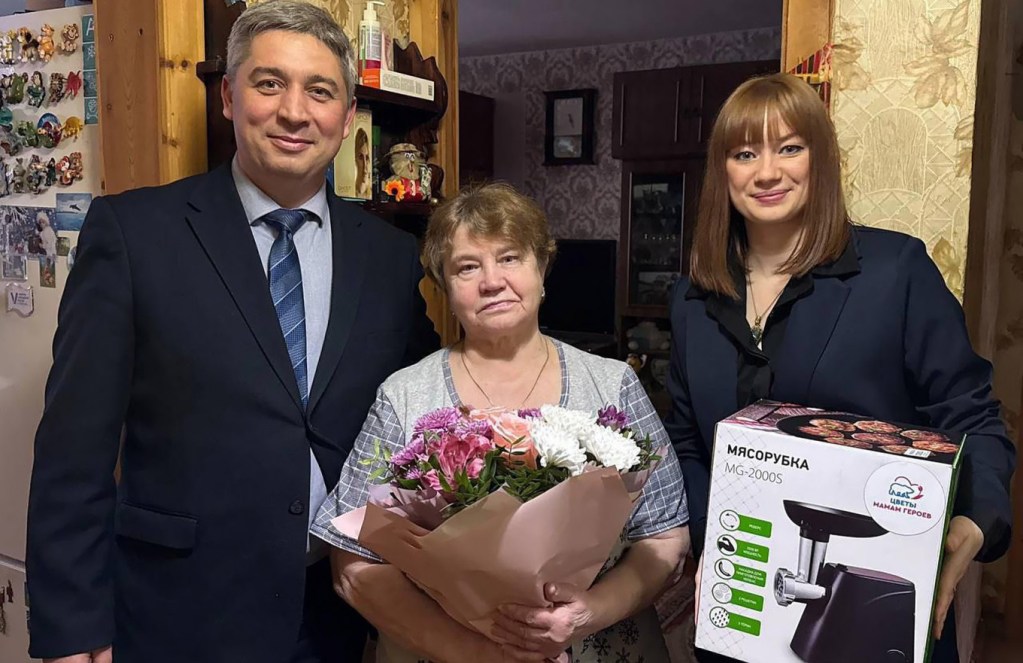


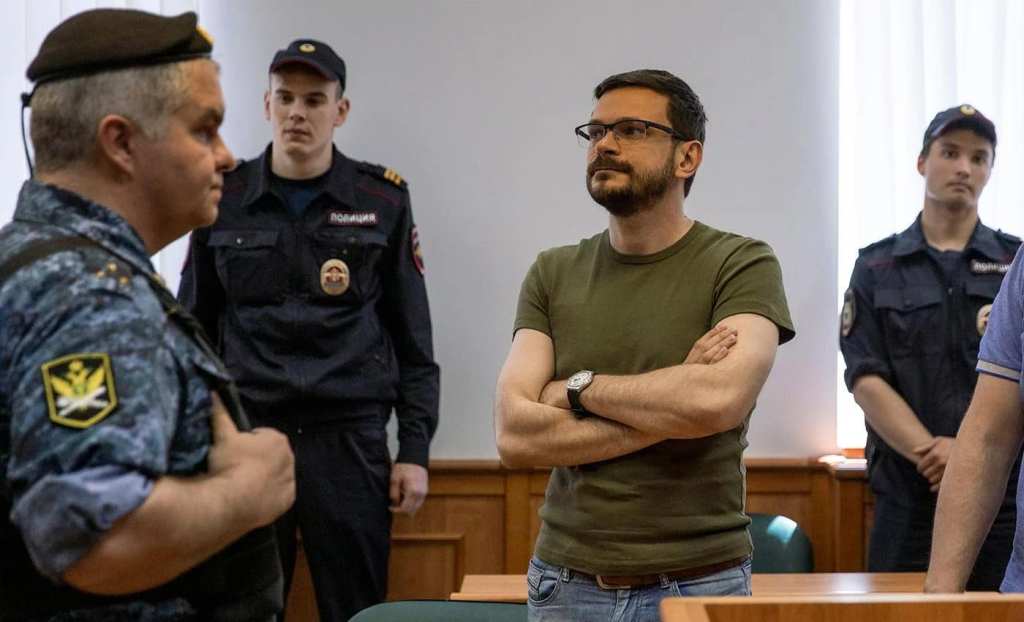
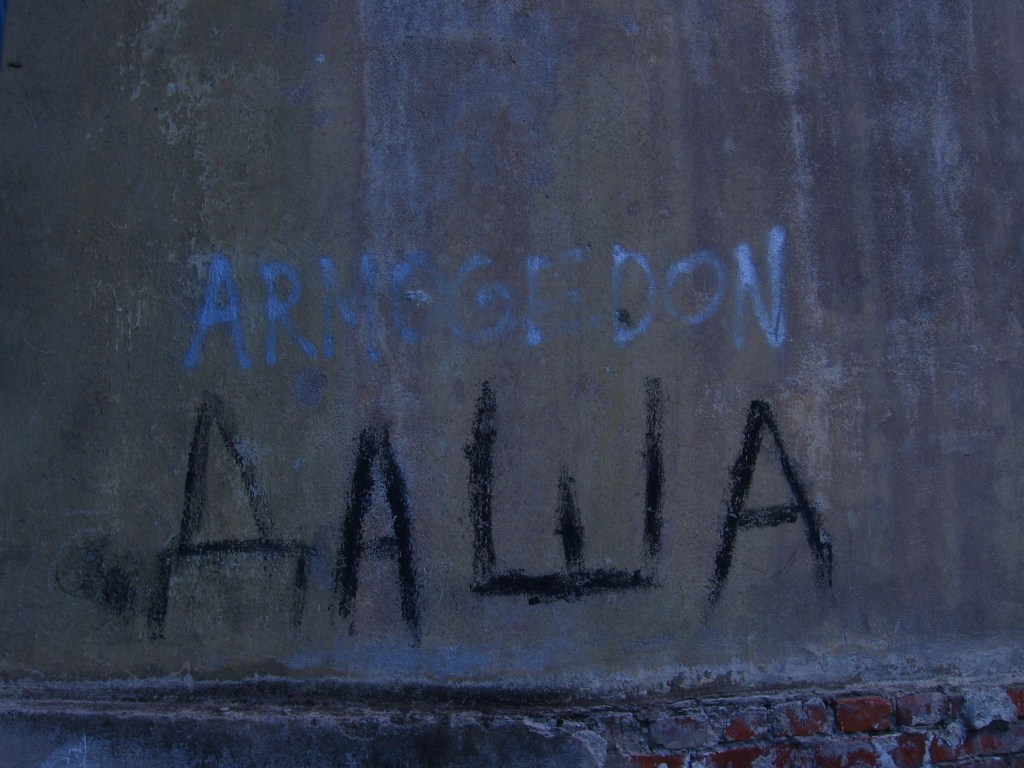
 Foreign Ministry Spokeswoman Maria Zakharova’s comment on Zelensky’s voyage to Washington, D.C. (March 1, 2025)
 Leader of the neo-Nazi regime Zelensky’s visit to Washington D.C. on February 28 is an epic political and diplomatic failure of the Kiev regime.
 The Kiev regime refused to continue talks on a political and diplomatic settlement in the spring of 2022, using lies and fake claims to justify continued hostilities and keep receiving Western military and financial aid.
 has destroyed the opposition,
 The sooner Kiev and the European capitals come to realise this, the closer to a peaceful settlement of the Ukraine crisis we will be.