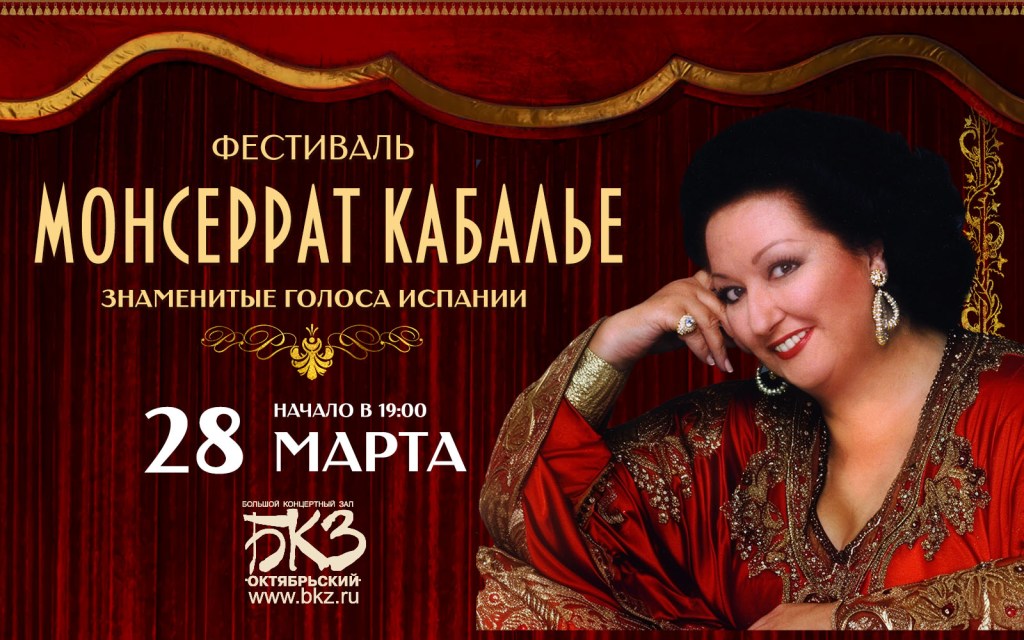
Performers: MONTSERRAT MARTÍ CABALLE (soprano), OSCAR ENCINAS (tenor), LUCÍA GARCÍA (soprano), CARLOS COSÍAS (tenor), OLGA PUDOVA
A Russian premiere!
THE MONSERRAT CABALLÉ FESTIVAL
On 28 March 2025, the Oktyabrsky Concert Hall will host a magnificent musical celebration, the first Monserrat Caballé Festival, dedicated to the great Spanish opera singer.
Specially for this event, renowned artists from Spain — relatives, friends, and students of the legendary opera diva — will come to Russia for one evening only! For their one and only performance they have chosen the beautiful St. Petersburg, our country’s musical capital, and the Oktyabrsky Concert Hall, where a distinct atmosphere always reigns.
Monserrat Caballé, whose name has come to symbolize impeccable vocals and subtle artistry, has left an indelible mark on world culture. Having performed over 100 opera roles and almost 1,000 different musical works, she has forever remained in the hearts of not only connoisseurs of exquisite classical music but also fans of musicals and fans of pop rock for performances like the title song from the album Barcelona, the international mega hit she recorded with Queen lead signer Freddie Mercury. Monserrat adored Russia and often visited our country to give concerts. The Caballé family thus decided to hold the first music festival named after her in our country.
The Monserrat Caballé Festival is meant to preserve the superstar’s historical legacy and introduce the public to today’s talents, the most popular performers continuing the Spanish school of opera’s rich traditions.
Among the performers are the great singer’s daughter, MONTSERRAT MARTÍ CABALLÉ (soprano), and the famous Spanish voices OSCAR ENCINAS (tenor), LUCÍA GARCÍA (soprano), and CARLOS COSÍAS (tenor). OLGA PUDOVA, a guest soloist at the Bolshoi and Mariinsky theaters, a phenomenal coloratura soprano who has already conquered Europe’s principal opera stages, is a special guest from Russia.
The artists will be accompanied by OLGA PUDOVA, well known to Russian and international audiences, and the famous conductor MIKHAIL GOLIKOV, People’s Artist of Kabardino-Balkaria. Creative teams from St. Petersburg and Moscow will also be involved in the concert.
The Monserrat Caballe Festival is not only a tribute to the legendary singer but also a grand exuberant celebration, aimed at a wide range of spectators and embracing all generations and the most varied musical tastes.
Don’t miss the opportunity to gift yourself an unforgettable evening full of vivid emotions, beautiful melodies and Spanish passion!
Source: Bileter.ru. Translated by the Russian Reader
On 20 October 2012, during her tour in Russia, Caballé suffered a stroke in Yekaterinburg and was quickly transferred to the Hospital de Sant Pau in Barcelona.
In his Literary Life, [Joseph] Brodsky’s friend Lev Loseff explained the background of “A Halt in the Desert,” a poem about the destruction of a beautiful old building: “One night Brodsky watched the first stages in the razing of the Greek Orthodox church from the apartment of his friends, two sisters from a Tatar family,” and called the poem “a meditation on the symbolic significance of what has just happened: Russia has broken with its Christian and Hellenistic cultural heritage.” Brodsky writes:
So few Greeks live in Leningrad today that we have razed a Greek church, to make space for a new concert hall, built in today’s grim and unhappy style. . . . it is sad that from this distance now we see, not the familiar onion domes, but a grotesquely flattened silhouette.
The deliberately created “fresh ruins” and “open altar wounds” recall the recent wartime devastations. The biblical allusion in “Thou who doest sow” suggests the threat of retribution in Hosea 8:7, “they have sown the wind and they shall reap the whirlwind.” Brodsky concludes by hopelessly asking:
What lies ahead? Does a new epoch wait for us? And if it does, what duty do we owe?– What sacrifices must we make for it?
Loseff claimed that Brodsky condemns “the collective guilt of a nation that produced this regime, that refused to accept the historical alternative, the heritage of Greece and Greek democracy.” But the Russians did not refuse to accept the heritage of Greece. They were not consulted and had no choice. An atheistic Communist system had been imposed on them by deadly force after the Revolution of 1917 and brutally maintained by all successive regimes. It was now the poet’s responsibility to preserve this culture.
Tomorrow in Ukraine, Russian soldiers will attack Ukrainians. Russian drones and bombs and rockets will target Ukrainian homes. A criminal war of aggression will continue.
Tomorrow in Saudi Arabia, Russian officials will discuss the future of Ukraine with a handful of Americans, delegated by a president who sympathizes with the Russian view of the war. The Russians will have the luxury of talking about Ukraine without the presence of Ukrainians.
The headlines are about “peace negotiations.” But what is really going on? How should we think about this unusual encounter in Saudi Arabia?
Here are ten suggestions, drawn from years on working on relations among the three countries, and from some recent personal observations at the Munich Security Conference.
1. Be critical of the words on offer. Question the word “peace.” The term used in the media is “peace negotiations.” The United States and Russia are not at war. Russia is at war with Ukraine, but Ukraine is not invited to these talks. Russian authorities, for their part, do not generally speak of peace. They present the talks with the United States as a geopolitical coup, which is not the same thing. The highest Russian officials have repeatedly stated that their war aims in Ukraine are maximalist, including the destruction of the country. Informed observers generally take for granted that Russia would use a ceasefire to distract the United States and Europe, demobilize Ukraine, and attack again. This is not a plan that the Russians are working very hard to disguise. It is a simple point, but always worth making: there could indeed be peace tomorrow in Ukraine, if Russia simply removed its invasion force.
“Due to circumstances beyond our or Polina Osetinskaya’s control, the festival will not take place,” the organizers said. The pianist had planned to perform pieces by Bach, Debussy, and Desyatnikov.
In its social media post, Fontanka 69 also said that the festival had been conceived by its director Denis Rubin as a way of financially supporting Osetinskaya. “Live performances are the main source of Polina’s livelihood,” emphasized the organizers.
The pub’s post also says that the tickets purchased for the festival could be returned and refunded on the ticket seller’s website. “We would be grateful if you would be willing to hold on to your tickets and support the artist in this way,” the authors of the post emphasized, however.
This is not the first time Osetinskaya’s concerts have been canceled in St. Petersburg. In September 2022, the pianist was not able to perform on stage at the Great Hall of the St. Petersburg Philharmonic. Instead, Eugene Izotov played a concert organized by the Employment Promotion Fund.
Osetinskaya spoke out against the special [military] operation on social media on 24 February 2022. Later, as a trustee of the Oxygen Foundation, she signed an appeal by Russian NGOs to stop the SMO.
Polina Osetinskaya performs the first two movements of Leonid Desyatnikov’s Reminiscences of the Theater (1985) at 142 Throckmorton Theatre, Mill Valley, California, 4 June 2006
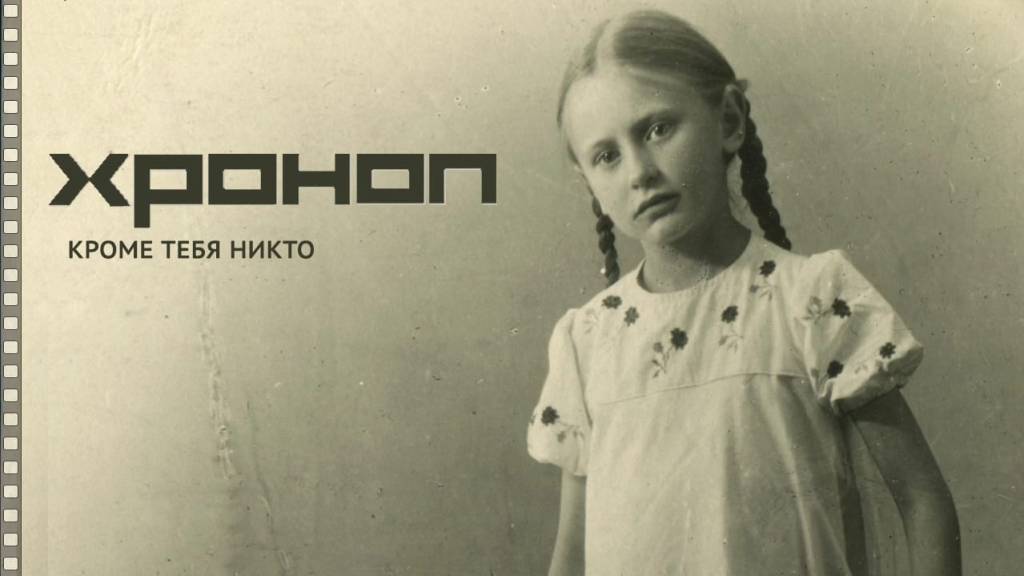
Here is Hronop‘s amazing music video “Nobody But You.” I had never heard such anti-war songs before. When Vadim, Hronop’s frontman, sent me the link, I didn’t even open it at first, to be honest, because I thought I already knew what it would be like. Vadim is an extraordinary musician and a complicated poet. I thought the song would be something tricky, in 13/7 time, with lyrics for fans of Borges.
It’s pointless, I thought. People are being killed, and we need something else.
But I opened the link. And there…
…was a sweet, flowing melody, intimate vocals, a flute playing, old family photos…. It’s a prayer to Mama is what it is.
“I’m glad you didn’t see it… Nobody but you can save the tattered world… Mom, shoot down the rocket… The enemy is innumerable, but you’re alone in the sky.”
Vadim has taken an angle which, in my opinion, no one had taken before. I didn’t ask him what the story behind the song was, but it was obviously a real story, since you don’t write songs like that just for the heck of it.
It doesn’t matter. What matters is that it’s touching and disturbing.
Mama blue runs through the sky Mama blue runs through the sky Amid the Airbuses and flocks of ducks As if she wants to catch the last tram Mama blue is in tears of amber And beneath her lie minefields Kulikovo Field and Borodino But her blood is like holy wine to me Mama, your temple was burnt down by our rocket I’m glad you didn’t see it I’m now thirteen years older than you were Nobody but you can save this tattered world Mama blue, the sun between your legs Mama blue, a stocking that’s slipped Everything is runninbg through the sky, there’s no peace in my soul Like Brienne of Tarth, like the Sugar Plum Fairy Mama, shoot down the rocket that’s going round and round Mama, shoot down the rocket with a wave of your hand There’s a voice in the left heart and silence in the right. The enemy is innumerable, but you’re alone in the sky
Vadim Demidov – voice, acoustic guitar, song Andrei Malykh – flute Alex Repyev – guitar, bass, keyboards, drums, backing vocals, recording, mixing, producing, video editing
There are about 600,000 Kazakhs living in Russia, and they are the tenth [largest ethnic group in] the country in terms of population. Most of the Russian Kazakhs are indigenous to the regions located along the Russia-Kazakhstan border. This border is the second longest in the world after the US-Canada border.
In the Adamovsky District of the Orenburg Region, Kazakhs make up a third of the total population. “Young Flowers” is a translation of “Zhas Gulem” (“Jas Gülim” in correct modern Kazakh Latin), the name of an ensemble from the district center led by Amanzhol Ismukhambetov. The group and other local musicians mainly interpret common Kazakh folk songs.
Performers (on the album cover photo from top to bottom left to right): Amanzhol Ismukhambetov (apart from the ensemble) — tracks 7, 8, 10 Turebek Makashev (Belopolye village) — 5, 11–14 Mukhtar Tulkubaev — 10 Raziya Zhakupova — 1 Zhas Gulem Ensemble — 4, 6, 9 Kusem Village Choir — 2, 3
A charity concert has been held in Paris in tribute to the pianist Pavel Kushnir, who died in detention in Russia. The funds raised were donated to the Paris-based Atelier des artistes en exil (Agency of Artists in Exile), which aids artists who have fled their countries due to war, persecution, and discrimination.
The concert was held at Salle Cortot in Paris. World-renowned pianists Grigory Sokolov and Sergei Babayan performed a program of pieces by Frederic Chopin, Robert Schumann, Franz Schubert, Franz Liszt, and Sergei Rachmaninoff. Tickets for the concert were sold out almost instantly.
“As musicians, we want to voice our support for artists around the world who are persecuted and sometimes forced to leave their native country. Pavel Kushnir chose internal emigration and bravely and unreservedly spoke out against the war. He paid for this with his life. We wholeheartedly support Grigory Sokolov and Sergei Babayan’s November 18 concert in Paris and join them in paying tribute to Pavel, as well as in voicing our solidarity with all artists who are suffering from repression today,” reads a letter in support of the concert, which was signed by Martha Argerich, Daniel Barenboim, Gidon Kremer, Anne-Sophie Mutter, Semyon Bychkov, Paavo Järvi, and many other famous musicians of our time.
“Music can be used for good as well as for ill. Pavel Kushnir always used it for good. Let us honor his memory and follow his example,” says pianist Evgeny Kissin, who also signed the letter.
“I am honored to pay tribute to the memory of a young artist who gave his life for the truth. Pavel Kushnir clearly understood that there can be no happiness and, in fact, no real art when one country causes another country untold suffering, and the truth about this crime is not heard. The deeply inhuman nature of the regime responsible for his death is underscored by the fact that he, a young artist living far from the capital, posed no danger to the continuation of its criminal rule. He made a beautiful recording of Rachmaninoff’s Preludes, and for that reason I wanted to play Rachmaninoff for him. I would have loved to have met Pavel, who was undoubtedly a beautiful, exceptionally sincere young soul. My thoughts are with Pavel Kushnir, his family, and all the victims of the enemies of freedom and truth,” said Sergei Babayan, explaining his involvement in the concert and the works selected for it.
The proceeds from the concert, as well as the donations raised, will be given to the Paris-based Atelier des artistes en exil, which has aided many hundreds of artists during the seven years of its existence.
“When we left Russia, we had heard nothing about Atelier, and it was not clear where we would put down roots,” says composer Dmitry Kurlyandsky, who turned down Russia’s Golden Mask national theater prize, which he was awarded for the music he wrote for Perm-based Theater-Theater’s production of the play Katerina Izmailova. He called the award “antics on the part of a system which is destroying the theater.”
“But on the second day,” Kurlyandsky says, “I had already found out about Atelier. We called them and they invited us to a meeting. It was the very beginning of the wave of emigration from Russia, and Atelier had more capacity to accommodate refugees. We lucked out. Thanks to Atelier we stayed for eight months for free in a hotel in downtown Paris, and during this time we were able to get our papers sorted and find a place to live.”
Judith Depaule
Judith Depaule, founder and head of Atelier des artistes en exil, sat down for an interview with Radio Svoboda.
— How did you find out about Pavel Kushnir’s tragic story?
— From Russian acquaintances. I also read about it in the French press. There wasn’t that much coverage of Kushnir’s plight, but there were some articles nevertheless. Many artists at Atelier talked about it.
It’s all quite frightening, of course. I have been studying the history of theater in the Gulag for a long time. I see Kushnir’s tragedy as a repetition of what already happened, of things with which we are all very familiar. I’m always amazed at how much history can repeat itself. I wonder why it repeats itself, despite everything we know about our past. How is it that people are dying again just for freely expressing themselves! I find it scary, because the right to freedom of expression is what matters most.
— You said that you said that you studied theater in the Gulag. Tell us a little more about that.
— It so happened that as part of my studies I researched the work of the Futurist theater director Igor Terentiev, who was arrested and sent to work on the White Sea Canal. We know a lot about his life on the White Sea Canal because he was photographed by the legendary Alexander Rodchenko. It was a shock to me that the theater could exist in the Gulag. I researched the topic. I went to the Memorial Society, and I was able to interview many former prisoners. I even traveled to Magadan and Vorkuta. So I am an expert on the history of the theater in the Gulag.
— Whose idea was Pavel Kushnir memorial concert? Why were Grigory Sokolov and Sergei Babayan involved in it?
— It was the artists at Atelier who took the initiative. To make the event respectable, they decided to invite famous musicians. We approached Sokolov and Babayan, and they immediately agreed.
— Yes, Sokolov and Babayan are certainly musicians of the highest order. Babayan is also a renowned teacher. Was the concert program solely Sokolov’s and Babayan’s choice? Or did they discuss it with you as well?
— No, they decided themselves what to play in memory of Kushnir. It was their own choice; we didn’t discuss it with them. It was important to us that the program included pieces which they loved and were willing to perform.
— I think any classical music lover would dream of going to such a concert. It’s just a pity that the occasion is so tragic. There was also a letter in support of the concert, signed by a plethora of classical music stars. The letter claimed that Pavel Kushnir had chosen internal emigration, internal exile. Do you agree with this? If so, how do you understand this term?
— I would imagine that Pavel did not want to be the center of attention, but simply wanted to feel freer. This did not work out for him, alas. I think that, while living under a dictatorship, Pavel was trying to find a place where he could at least breathe freely and do what he loved doing. Because Russia is so vast, you could say that it really was internal exile. This again takes us back to the past. When people tried to disappear from the Kremlin’s sight, they left the major cities to feel at least a little bit freer.
— Atelier des Artistes en Exile deals with a wide range of creative genres, not just music or theater, for example. How did you decide to take on such a serious challenge?
— I founded Atelier in 2017 as a response to the migration crisis in Europe, which peaked in September 2015. There were so many Syrian migrants in Paris. I was working in a small cultural center at the time. We just decided to shelter migrants; it wasn’t about artists at the time. Gradually we began helping immigrants and put together a festival that was dedicated to Syria. I often talked to exiled artists, and they always said the same thing: “We were professional artists before we left. We had a profession. What are we supposed to do now? We don’t understand how French society works, we don’t understand its cultural traditions.” And so on. I decided that something had to be done to help performers and artists in exile. Gradually, this idea began to develop, and I set up this agency in early 2017. At the time there was no talk at all about Russian artists and performers, back then it was mostly Sudan and Syria. Atelier has grown because it helps everyone who leaves their country, whatever the reason, whether dictatorship or discrimination. The world is now in a state in which there are wars, dictatorships, and illegal imprisonment everywhere. So performers and artists have started arriving in France much more often.
— What kind of assistance do you provide? Do you help with accommodation, visas, and jobs, or do you support cultural projects?
— For those who are still in their home countries but want to come to France, we help them get visas and explain how to get here. When people are already in France, we help them with long-term visas and residence permits, so that they are staying in France legally. We help them with social services — medical insurance and so on. We provide a place to work, because that is super important. If you don’t have a place to work, you are no longer an artist or a performer. We offer French language courses, and we have put together a program for artists to learn French through art. We help them understand how French society is organized and learn the peculiarities of French culture. We explain to them what rights they have, what benefits they can claim, how they should fill out their income tax declarations, and so on. We also organize cultural events.
— Who supports Atelier des artistes en exil itself?
— It is supported by the French Ministry of Culture, which sponsors various programs. Private foundations also help out. We are constantly looking for resources. The Pavel Kushnir memorial concert also includes a fundraising campaign to support the Atelier. This involves the money from ticket sales and donations, which we need very much, as we have a large team helping hundreds of people — 350-400 people a year.
— How can people who decide to come to you for help prove that they are artists?
— You have to show us what you have done up to this point: a portfolio, internet links, an account of your past work. It is not difficult to check whether a person is actually an actor, musician, or artist. It is immediately clear what kind of experience they have, where they studied, with whom they worked. Then we decide whether or not to work with them.
— Given that there is a full-scale war on in Ukraine, do you prioritize Ukrainian artists who have fled the hostilities when you’re choosing whom to help?
— Because there are many ongoing wars in the world, we don’t prioritize anyone. We just assist people who find themselves in a dangerous situation. If we talk about relevance, we are most often contacted by people from Gaza and Lebanon, who can be killed at any moment and who ask us how they can leave and what they need to do to leave. We are always watching what is happening in the world. It was not that everything was fine in the world when we started, but there were not so many conflicts. After the pandemic, there were immediate problems in Myanmar and Afghanistan, there was the war in Ukraine, there was the brutal crackdown against the women’s rights movement in Iran. And so on and so forth. More and more performers and visual artists have been turning to us because they don’t know how to go on living.
— Has the number of Russians who seek your assistance increased recently?
— It has been a constant flow which doesn’t stop. The current wave of émigrés from Russia is even greater than the very first one, whom we call White Russian émigrés.
— Let us return to the fate of Pavel Kushnir. I have read that famous musicians who learned about this tragedy and then listened to Pavel’s recordings and read what he wrote, voiced regret that they had not known about him or his talent earlier. Do you think there are many such unknown talents in the world? If so, how can we help the world learn about them not only after their tragic deaths, as happened with Kushnir?
— Pavel’s fate mirrors the history of art in many ways. Many great talents have been discovered after their death. There are so many musicians, actors, and artists for whom creating and making art is what matters most, not being famous. It doesn’t matter to them that they are not in the public eye. We can’t know about everyone, of course. I can’t suggest any way of remedying ths; it’s just the way the world works. There are people who will always be in the limelight, and there are people who will go on modestly pursuing what they love. Sometimes they are more talented than the artists we know well. When we discover a great talent after their death, sometimes a hundred years later, we ask ourselves how come we hadn’t heard anything about them until now, how we had missed them. But there’s hardly anything we can do about it.
Jimmy Kimmel Live, “Jimmy Kimmel Reacts to Donald Trump Winning the Presidential Election”
Last night we had the choice between a prosecutor and a criminal and we chose the criminal, more than half of the country voted for Donald Trump, it turns out the election wasn’t rigged even though he said it was while people were in line voting, Jimmy’s kids were very upset at the news, Jimmy received a lot of texts from anxious friends and family members, President Biden watched all of the action from the White House and he called Trump today to congratulate him, Kamala Harris also called Donald Trump to concede and she gave a speech at her alma mater Howard University, the voting itself went relatively smoothly despite a number of bomb threats that were sent into heavily democratic precincts, it was a terrible night for so many in America, Jimmy offers some thoughts about how we move forward, Cousin Micki shares something positive, and we head out to Hollywood Blvd to ask people if they voted in the election today (even though it was yesterday).
Natalia Corazza and Raven Cook, “Young Readers’ Reverie,” 2023. Acrylic paint on cement. Monterey (CA) Public Library. “If you can read this, thank a teacher, a parent, and your local library.”
International politics have reached Carmel. Carmel Music Society canceled a November concert featuring Russian pianist Valentina Lisitsa [lisitsa means “vixen” in Russian], who had performances scrubbed in recent years due to her perceived pro-Russia views. Agata Popęda here, the Weekly’s Slavic expert-in-chief, with at least a part of the story.
Lisitsa comes with quite a background. Of mixed Russian-Ukrainian-Polish heritage, she was discovered as a talented pianist by a YouTube audience while living in North Carolina in 2013. The same year, she was described as “the classical pianist with 55 million YouTube hits,” then signed to a label in May, which released her London concert debut—at the Royal Albert Hall—a month later.
While her YouTube videos and most Facebook posts show her life as a musician, Lisitsa mostly uses Twitter (now X) to share her political views. Posts start in the time of the pro-Western Maidan protests in Ukraine, which resulted in the ouster of the country’s pro-Russia president in 2014.
But soon her tweets and retweets became more provoking. “If people are really interested in digging deeper, they can see that I am not pro-Putin, I’m not pro-Russian. I’m an equal-opportunity slanderer,” she said in an interview. She also tweeted: “In a new European Ukraine, the camps will give the subhumans [ethnic Russians] condemned to the gas chambers an opportunity to offset their carbon footprint.”
In 2015, her concert with the Toronto Symphony Orchestra was canceled after controversial comments she made about the conflict in eastern Ukraine. Since then, many venues and organizations have done the same.
In early 2022, when Russia invaded Ukraine, Lisitsa expressed her opposition to what she considered Western interference within Ukraine. On May 9, 2022 she played a concert in Mariupol, Ukraine in commemoration of its control by Russia.
It’s unknown if her Carmel cancellation was directly related to her posts—Carmel Music Society declined to comment on the situation, while Lisitsa had not responded to a request for comment as of press time.
Naturally, this story also presents a free speech issue, and when and where free speech ends. On X? On the streets? In a concert hall? And then, we have questions about artists as political individuals. Do they owe us moral decency because they are in the spotlight?
After embracing Russia’s war on Ukraine, Valentina Lisitsa, a Kyiv-born classical pianist and the self-styled “Queen of Rachmaninoff,” has seen her concerts canceled around the world. But not in Bulgaria’s capital, where the 53-year-old pianist is expected to play twice in April.
The move is sparking backlash and calls for her planned performances to be canceled. Amelia Licheva, a professor of literature in Sofia, told RFE/RL’s Bulgarian Service that she wants recently installed Bulgarian Culture Minister Nayden Todorov, an accomplished musician and conductor who has performed with Lisitsa and still directs the Sofia Philharmonic, to exclude Lisitsa from the April 20 and 23 concerts to celebrate 150 years since the birth of Russian composer Sergei Rachmaninoff.
“The thesis that we should judge the creator by their art and not by their personality is fundamentally important, but not always effective,” Licheva said, calling the Sofia Philharmonic’s invitations “shameful and immoral.” In a time of war, she said, “art must give way to morality.”
Lisitsa’s troubles started in 2015, when her concert with the Toronto Symphony Orchestra was canceled after controversial comments she made about the conflict in eastern Ukraine. Lisitsa lashed out on social media, accusing “haters” of trying to “silence me as a musician.”
Controversial Statements
Among other controversial statements, Lisitsa described Ukraine’s situation after 2014 as a “civil war” and repeated pro-Kremlin talking points such as the prevalence of “neo-Nazi” elements in Ukraine. She touted herself as having become adept at “unmasking fakes published by Western media.”
A few months after the Kremlin’s full-scale invasion of Ukraine in February 2022, Lisitsa performed under Russian occupation in the devastated southern Ukrainian city of Mariupol. A video clip of her playing and her purported rendition of “Victory Day” were used by Russian-backed separatists and pro-Kremlin state media to propagandize for Russian “liberation.” The clip’s timing, May 9, appeared to be symbolic as it fell on the day that Russia marks its victory in World War II over Nazi Germany, further infuriating Ukraine’s defenders on social media.
In May 2022, Budapest’s Margitsziget Theater canceled a planned performance by Lisitsa, citing the Mariupol appearance and, in December of the same year, an invitation to play at the legendary La Fenice opera house in Venice was withdrawn by the organizers.
Born to a Ukrainian father and a mother of Russian and Polish descent, Lisitsa grew up speaking Russian. After graduating from the conservatory in Kyiv she moved to the United States in 1991 with her partner, fellow pianist Aleksei Kuznetsov, whom she later married. A biography on Lisitsa’s website said in 2019-20 that she was splitting her time living between Moscow and Rome.
In 2007, she posted her first video on YouTube of herself playing the piano; by 2012, she was the most popular pianist on the video-sharing platform, with her clips getting millions of views.
The Washington Post’s chief classical-music critic in 2013 hailed Lisitsa as salvaging a “tanking” career to become “a growing star with a big-label recording contract and concert dates with the big orchestras and in the big recital halls of the world.”
Lisitsa has defended some of her social-media posts. “If you wish, please take the time to read my tweets. You may find some of them offensive — maybe. Satire and hyperbole are the best literary tools to combat lies,” she wrote in a 2015 Facebook post.
Despite the other cancellations, the concerts in Sofia appear to be going ahead. Lisitsa last made a guest appearance for the Sofia Philharmonic Orchestra in October 2021, notably performing under Culture Minister Todorov’s baton in a guest appearance.
‘It’s Shameful’
Critics have praised the efforts of Todorov, who was named culture minister in February, to expand the list of guest soloists and collaborators after he took over the Sofia Philharmonic in 2017. It is unclear when the Sofia Philharmonic extended its invitations to Lisitsa for the upcoming concerts and neither the philharmonic nor the Culture Ministry responded to RFE/RL inquiries for this article.
Addressing Todorov, Licheva wrote on Facebook that “inviting her several years ago was possible, today it is not!” Licheva, who teaches at Sofia University’s St. Kliment Ohridski, said that the events “should be canceled urgently; it’s shameful!”
Speaking to RFE/RL, Licheva acknowledged Lisitsa’s talent but said that, by siding with an undemocratic aggressor, “she becomes the object of another type of assessment.” The appeal to around 4,600 Facebook followers sparked more than 170 likes and dozens of comments, but seemingly failed to attract widespread support.
Bulgaria is a member of the European Union and NATO with a history of close ties to Russia. Against a backdrop of institutional political crisis, Bulgarians have grappled with a unified response to Russia’s invasion of Ukraine.
Regarding public perceptions of Russia in Bulgaria, Dimitar Bechev, a visiting scholar at Carnegie Europe and a lecturer at Oxford University, told RFE/RL in October 2022 that “sociological surveys have indicated that one-quarter to one-third of the electorate holds strong pro-Kremlin views,” although adding “that’s about the same percentage of the staunch pro-Western Bulgarians.”
Lisitsa is not the only musician to face repercussions for supporting Putin or failing to criticize Russia’s war on Ukraine. Conductor and Kremlin-loyalist Valery Gergiyev was fired in March 2022 from his position as chief conductor of the Munich Philharmonic. A Kremlin-friendly Russian pianist, Denis Matsuyev, faced cancellations in Austria, the Czech Republic, and Italy, along with Russian opera singers, Ildar Abdrazakov and Anna Netrebko.
Written by Andy Heil based on reporting by RFE/RL Bulgarian Service correspondent Dilyana Teoharova in Sofia
Era yo una chiquilla todavÌa Cuando tú, casualmente me encontraste Y a merced de tus artes de mundano De mi honra el perfume te llevaste Lo hiciste con migo lo que todos Los que son como tu con las mujeres Por lo tanto no extrañes que yo ahora En tu cara te diga lo que eres
Mal hombre. Tan ruin es tu alma que no tiene nombre Eres un canalla, eres un malvado Eres un, mal hombre
A mi triste destino abandonada Entablé fiera lucha con la vida Ella recia y cruel me torturaba Yo, mas débil, al fin caí vencida
Tu supiste a tiempo mi derrota Mi espantoso calvario conociste Te dijeron algunos que a salvarle Y probando quien eres, te reiste
Mal hombre Tan ruin es tu alma que no tiene nombre Eres un canalla eres un malvado Eres un, mal hombre
Poco tiempo después en el arroyo Entre sombras mi vida dependÌa Una noche con otra tú pasaste Y al mirarme oí que te decía: “¿Quien esa mujer, tú la conoces?” Y a la vez, respondiste: “¡una cualquiera!” Al oír de tus labios tal ultraje Demostrabas también lo que tú eras
Mal hombre Tan ruin es tu alma que no tiene nombre Eres un canlla, eres un malvado Eres un, mal hombre
Yesterday we learned from a forthcoming book by veteran journalist Bob Woodward that in 2020, while he was president, Trump secretly shipped Covid-19 testing equipment to Russian president Vladimir Putin for his own personal use at a time when Americans could not get it. To be clear, this equipment was not the swabs we now use at home, but appears to be what at the time was a new point-of-care machine from Abbott Laboratories that claimed to be the fastest way to test for Covid-19.
Journalist Karly Kingsley points out that at the time, central lab testing to diagnose Covid-19 infections took a long time, causing infections to spread. Machines like Abbott’s were hard to get. Trump chose to send them to Putin—not to charge him for them, or to negotiate for the release of Paul Whelan and Trevor Reed, two Americans being held by Russia at the time and later released under the Biden administration, but to give them to him—rather than keeping them for Americans.
It’s hard to overstate just what an astonishing story this is. In 2016, Republicans stood firm against Putin and backed the arming of Ukraine to stand against Russia’s 2014 invasion of Crimea. But that summer, at Trump’s urging, the party changed its platform to weaken its support of Ukraine. In 2020, it appears, Trump chose to give lifesaving equipment to Putin rather than use it for Americans. And in 2024, Trump’s willingness to undermine the United States to cozy up to an adversary his own party stood against less than a decade ago does not appear to be a deal breaker for Republicans.
As Senator Chris Murphy (D-CT) put it: “What has this country come to if the revelation that Trump secretly sent COVID testing machines to Putin while thousands of Americans were dying, in part because of a shortage of testing machines here, doesn’t disqualify him to be President?” He continued: “Donald Trump helped keep Putin alive during the pandemic and let Americans die. This revelation is damning. It’s disqualifying. He cannot be President of the United States.”
Increasingly, Trump’s behavior seems to parrot the dictators he appears to admire.
After 60 Minutes called him out for breaking a fifty-year tradition of both candidates talking to 60 Minutes and backing out of an interview to which he had agreed, Trump today accused the producers of 60 Minutes of cutting Vice President Kamala Harris’s answers to make her look good. He suggested that such cuts were “illegal” and possibly “a major Campaign Finance violation” that “must be investigated, starting today!” “The public is owed a MAJOR AND IMMEDIATE APOLOGY!” he wrote. Trump is trying to cover for his own failure by attacking CBS in an echo of dictators determined to control the media.
In a post on his social media site tonight, Trump appears to have declined to appear at another presidential debate with Vice President Harris. After declaring he had won the previous debate with Harris and rehashing many of his grievances, he wrote: “THERE WILL BE NO REMATCH!”
As Beth Reinhard of the Washington Post recounted yesterday, a report from Senator Sheldon Whitehouse (D-RI), who sits on the Senate Judiciary Committee, revealed that the Trump White House prevented a real investigation into sexual misconduct allegations against Trump’s second Supreme Court nominee, Brett Kavanaugh. More than 4,500 calls and electronic messages about Kavanaugh sent to the FBI tip line went directly to the White House, where they were never investigated, and the FBI was told not to pursue corroborating evidence of the accusations by Christine Blasey Ford and Deborah Ramirez although lawyers for the women presented the names of dozens of people who could testify to the truth of their allegations.
A number of senators said the lack of corroborating evidence convinced them to vote in favor of Kavanaugh’s confirmation. As Steve Benen of MSNBC recalled, Senator Susan Collins (R-ME) said at the time that it appeared to be “a very thorough investigation,” while the late Senator Dianne Feinstein (D-CA) said that the 2018 FBI report “looks to be a product of an incomplete investigation that was limited perhaps by the White House.”
After he left office, Trump told author Michael Wolff that he had gone to bat for Kavanaugh, saying: “I…fought like hell for Kavanaugh—and I saved his life, and I saved his career.” Kavanaugh was the crucial vote for Trump’s right-wing agenda, including ending the federal recognition of abortion rights by overturning the 1973 Roe v. Wade decision.
Ken Bensinger reported in the New York Times today that Trump’s team has refused to participate in preparations for a transition to a potential Trump presidency. Normally, the nonpartisan transition process, dictated by the Presidential Transition Act, has candidates setting up teams as much as six months before the election to begin vetting and hiring political appointees and working with the administration in office to make sure the agencies continue to run smoothly.
With the election less than a month away, Trump has neither signed the required agreements nor signed the transition’s ethics plan that would require him to disclose private donors to the transition and limit them to contributions of no more than $5,000. Without that agreement, there are no limits to the money the Trump transition can take. Trump has also refused to sign an agreement with the White House requiring that anyone receiving classified information have a security clearance. Currently, his aides cannot review federal records.
Trump ignored the traditional transition period in 2016, cutting off communications with President Barack Obama’s team. He refused to allow incoming president Joe Biden access to federal agencies in 2020, hampering Biden’s ability to get his administration in place in a timely fashion. Now it’s possible that Trump sees no need for a normal transition because Project 2025, on which he appears to be relying, has been working on one for many months.
It calls for him to fire most federal employees, reinstating the policy he started at the end of his term. To fill their positions, the Heritage Foundation has been vetting loyalists now for months, preparing a list of job candidates to put in place a new, right-wing agenda.
Yesterday, on California’s KFI radio station, Trump told host John Kobylt that Tom Homan of Project 2025, who as director of U.S. Immigration and Customs Enforcement oversaw the family separation policy at the southern border, will be “coming on board” a new Trump administration.
This afternoon, Trump told an audience in Scranton, Pennsylvania, that he expects to put former rival Vivek Ramaswamy into an important position in his administration. On October 7, 2024, Ramaswamy suggested on social media that he wants to get rid of Social Security and Medicare. He wrote: “Shut down the entitlement state & you solve most of the immigration problem right there. We need to man up & fix the root cause that draws migrants here in the first place: the welfare state. But no one seems to want to say that part out loud, because too many native-born Americans are addicted to it themselves.”
Trump has expressed frustration with the independence of the Federal Reserve, expressing a desire to make it answer to the president. In an interview with Barron’s, one of his advisors, Scott Bessent, has floated the idea of creating a shadow Fed chair until the term of the current chair, Jerome Powell, ends, thus undercutting him without facing a fight over firing the Fed chair.
This agenda is not a popular one in the U.S., but Trump is getting a boost as Russian operatives work to swing downballot races toward the Republicans. In a briefing on Monday, October 7, experts from the Office of the Director of National Intelligence (ODNI) told reporters that China and Iran are trying to influence the upcoming election and that “Moscow is leveraging a wide range of influence actors in an effort to influence congressional races, particularly to encourage the U.S. public to oppose pro-Ukraine policies and politicians. Russian influence actors have planned, and likely created and disseminated, content, particularly over social media, intended to encourage the election of congressional candidates that Moscow assesses will oppose aid to Ukraine.”
Russia, an ODNI spokesperson said, uses “influence-for-hire firms, or commercial firms with expertise in these type[s] of activities.” It also coopts “witting and unwitting Americans to work on Russia’s behalf,” to “launder their influence narratives through what are perceived as more authentic U.S. voices.”
Not all of Trump’s supporters appear eager to stick around to see if Trump will win another term. Today news broke that Patrick M. Byrne, the former chief executive officer of OverStock, who became a fervent advocate of the idea that Trump was the true winner of the 2020 presidential election, has left the country, apparently permanently, to live in Dubai. Dominion Voting Systems is suing Byrne, as is President Biden’s son Hunter. The younger Biden sued Byrne for defamation last November after Byrne claimed Hunter Biden sought a bribe from Iran.
In September, Biden’s lawyers were trying to schedule a date for Byrne’s deposition when his lawyer abruptly “claimed for the first time that Defendant has moved his residence to Dubai and if Plaintiff wanted to take his in-person deposition counsel would have to fly to Dubai to do so, to which Plaintiff responded with various related inquiries to try to resolve this matter and defense counsel stated Defendant would not be returning to the United States for the foreseeable future.”
Byrne claimed to have fled the U.S. because the Venezuelan government has put a bounty on him, but as Biden’s lawyers note, “the Defendant’s truthfulness is directly at issue.”
Lydia Mendoza, interviewed by Professor Gene Bluestein and Professor Manuel Pena at CSU, Fresno, before performing “Mal hombre.” Courtesy of the UNC Chapel Hill Folk Archives.
I was but a young girl when, by chance, you found me and with your worldly charm you crushed the flower of my innocence. Then you treated me like all men of your kind treat women, so don’t be surprised now that when I tell you to your face what you really are.
Bad man your soul is so vile it has no name you are despicable, you are evil, you are a bad man.
Abandoned to a sad fate, my life became a fierce struggle suffering the harshness and cruelty of the world I was weak and was defeated. In time you learned of my downfall how my life had become a road to hell. Some people advised you, “You can help her,” but being who you are, you just laughed.
Bad man your soul is so vile it has no name you are despicable, you are evil, you are a bad man.
Shortly after in a gully among shadows I defended my life. One night you passed by with another woman and on seeing me I heard her ask you: Who is that woman? Do you know her? And looking at me you answered: She’s a nobody and when I heard adultery from your lips you demonstrated again what you are.
Bad man your soul is so vile it has no name you are despicable, you are evil, you are a bad man.
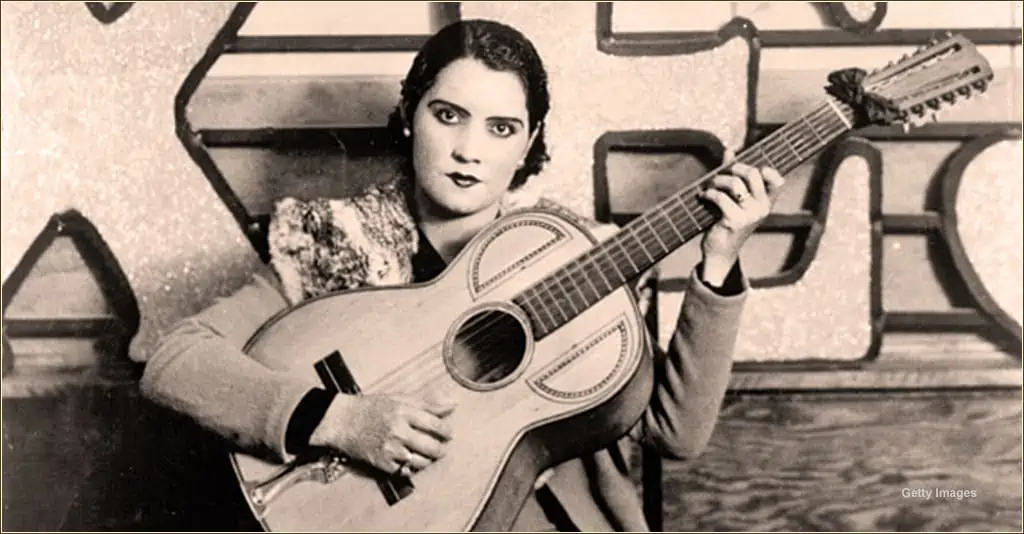
Lydia Mendoza (May 31, 1916–December 20, 2007) was born in Houston, Texas, to musically inspired Mexican parents. During Mendoza’s first ten years the family migrated back and forth between Texas and the Mexican city of Monterrey in the state of Nuevo León, as part of her father’s work with the railroad. In the 1920s, when Lydia Mendoza’s father left the railroad, the Mendoza family eked out a living doing musical performance, first in the lower Rio Grande Valley, and then singing for pennies and nickels on the streets of downtown San Antonio, Texas. The ten year-old Lydia Mendoza began her recording career—singing and playing mandolin—in the 1920s and 1930s with the Mendoza family who recorded for the OKeh, Odeon, and Bluebird labels. As a teenager in 1934, Lydia Mendoza did her first solo recording. The recording she made that day was of the song “Mal hombre” (“Evil Man”), which she popularized, and which became closely identified with her throughout her long singing career. In her later years, she recorded with DLB Records (San Antonio) and, in 2001, issued her last concert recording as part of her published life story, Lydia Mendoza’s Life in Music.
Mendoza’s performance career stands as one of the longest in American music history, spanning from the 1920s to the 1980s when a stroke ended her performing life. Following upon her early success with “Mal hombre,” Mendoza continued to tour with her family as an itinerant performance unit that offered a variety of acts. They followed the agricultural labor routes where most of the Mexican American population worked: north to Michigan, back south to the Rio Grande Valley, later to California. Her closeness to her audiences earned her two epithets—“La cancionera de los pobres” (“The Singer of the Poor”) and “La alondra de la frontera” (“Lark of the Border”). As a grassroots idol, she was loved for her ability to articulate a working-class sentimiento (sentiment and sentience) through song and through the breathtaking visual spectacle of her flashy hand-sequined, hand-beaded performance attire whose symbolic designs announced her ancient cultural roots in the Americas. She publicly marked the enduring presence of indigenous Mexican culture even throughout historical periods (from the 1930s to the 1960s) in which public displays of Mexicanness targeted you for governmental harassment and/or deportation by Euro-American officials. Along the migrant agricultural worker routes, she affirmed and celebrated Mexicanness during those decades when eating establishments regularly featured signs that read “NO DOGS, NO MEXICANS.” Lydia Mendoza manifests the social powers of music: her natural speech-like voice, her striking physical presence, and her songs, so beloved among the communities she sang for, symbolically reclaimed and remapped a Mexican America. Mendoza always enacted a space of popular collective expression, an audible Mexican American homeland.
Throughout her performance career Lydia Mendoza adhered to the oral traditional practice of singing by popular demand: she sang what her audiences requested. That traditional practice meant that audience members called out each song and they tended to call out traditional songs associated both with that singer and with the broader norteño cultural matrix. The repertoire of songs was not unchanging, and “Mal hombre” is testament to that. Once Lydia Mendoza recorded the song—a song not originating in the US-Mexico borderlands, nor of a borderlands rhythmical style—audiences welcomed it into the changing body of “traditional songs.” Thus “Mal hombre,” whose rhythm and cadences mark its origins in distant Argentinian tango or milonga repertoires, became one of Lydia Mendoza’s signature songs; audiences requested it from her throughout her performance life. It should, however, be noted that in the course of the several decades of repeated performance, Mendoza indigenized the “foreign” rhythmed “Mal hombre” into the borderlands rhythms of the canción Mexicana. Still, after Mendoza’s performance life ended, “Mal hombre” also vanished from the borderlands circle of songs and has not been recorded by any borderlands singer since then.
“Mal hombre” was, from the onset, something of an anomaly within the Mexican borderlands musical landscape. The early sound media—recordings, radio, and later television—as well as the Euro-colonization process of the last 200 years, introduced music from far-flung places to the borderlands. There were various waves that swept through the Texas-Mexican landscape: tango, foxtrot, big band, polka, bolero, country, canción, cumbia, and more. The Mendoza family repertoire of recorded songs manifests that rich variety of song genres: ranging from the deeply rooted norteño song forms to the more fad-oriented recent arrivals. Along those same lines, Lydia Mendoza performed and recorded a rich variety of genres from the oral tradition accompanied by the full gamut of Mexican borderlands instrumentations—including the button-accordion conjunto, mariachi, guitar trio, and more. Yet Mendoza’s mainstay ultimately became her performance as a solo singer self-accompanied with her 12-string guitar.
Mendoza notably self-designated as a “norteña” (a Northerner) and as a “Mexicana,” marking her musical cultural geo-regional roots as spanning not only the northern Mexican states of Nuevo León, Tamaulipas, Coahuila, Sonora, and Chihuahua, but also what was, until 1848, the northern half of Mexico, today’s southwest United States. As a mature artist, the mainstays of her song repertoire were the hugely popular canción ranchera (ranch song) and corridos (narrative ballads). The canción ranchera genre represents an evolution of the older Mexican canción. In the ranchera evolution, the love song often tends to be infused with imagery, customs, and symbols from the deep cultural matrix of Mesoamerica. During her last concert tour in 1986-87, Mendoza sang almost exclusively rancheras and corridos. She offered for sale her most recent cassette recording “Corridos,” which included, for example, “The Ballad of Joaquín Murrieta” (1829–1853). That corrido (narrative ballad) recounts the heroic acts of an iconic California freedom fighter that organized an army to protect Indians and Mexicans against the Gold Rush invasion. There is some common ground between such historic narrative ballads and the appeal of “Mal hombre”: they are songs from underdogs who face powerful odds against them. Singers such as Lydia Mendoza carried the voices of underdogs and thus impart the life lessons they embody.
“Mal hombre” (“Evil Man”) offers a life narrative in the voice of a woman underdog who at a very young age is seduced by an evil man’s “worldly arts.” The narrative voice in the song describes various stages of sexual exploitation: her seduction as a young girl, her abandonment by the lover, her life-and-death struggle, and her eventual downfall. The song’s popularity can only be understood in the context of the rampant sexual violence inherent of our patriarchal society institutionalized since colonialism. One of “Mal hombre’s” most notable features, however, is its beautiful poetics. No sexual act is described per se. Nor does the narrator offer any realism-based specifics of her demise. In the song, a great deal is left to the listener’s imagination, such as when she references “mi espantoso calvario” (“my horrific cavalry”). The female narrative voice of “Mal hombre” embodies a protracted life struggle, a feature shared by many classical corrido underdog heroes. The redemptive quality of this song, however, has to do with the victim rising to sing, with her strong indictment of the Evil Man, and with the fact that she has the last word in the matter, hurling loaded terms at the Evil Man with this refrain:
Tan ruin es tu alma
que no tiene nombre
Eres un canalla
Eres un malvado
Eres un mal hombre
Your soul is so vile
It is deplorable.
You are a scoundrel
You are a malicious man
You are an evil man
Through songs such as “Mal hombre,” Lydia Mendoza defies the subordination of women of color. She takes a womanist self-affirming stance in a number of her signature songs, such as “Mujer paseada” (“Experienced Woman”) or “Celosa” (“Jealous Woman”). Mendoza’s traditional corridos similarly praise the deeds of collectively cherished and remembered anti-colonial historical figures omitted from mainstream history books. At all times, Lydia Mendoza expressed in song her existential ties to her people.
In 1982, Mendoza became the first Texan named a NEA National Heritage Fellow. She performed for President Jimmy Carter at the Kennedy Center in Washington in 1975. She was inducted into the Tejano Music Hall of Fame in 1984 and into the Conjunto Music Hall of Fame in 1991. In 1999, she received the National Medal of the Arts from President Clinton. Lydia Mendoza passed away on December 20, 2007, at the age of 91.
Yolanda Broyles-González is appointed University Distinguished Scholar at Kansas State University where she serves as head of the American Ethnic Studies Department. She is a Yaqui elder of the Tucson, Arizona Barrio Libre tribal community. Her book publications include El Teatro Campesino: Theater in the Chicano Movement (UT Press); Lydia Mendoza’s Life in Music/La Historia de Lydia Mendoza (Oxford); and Earth Wisdom: California Chumash Woman (Univ. of Arizona Press).
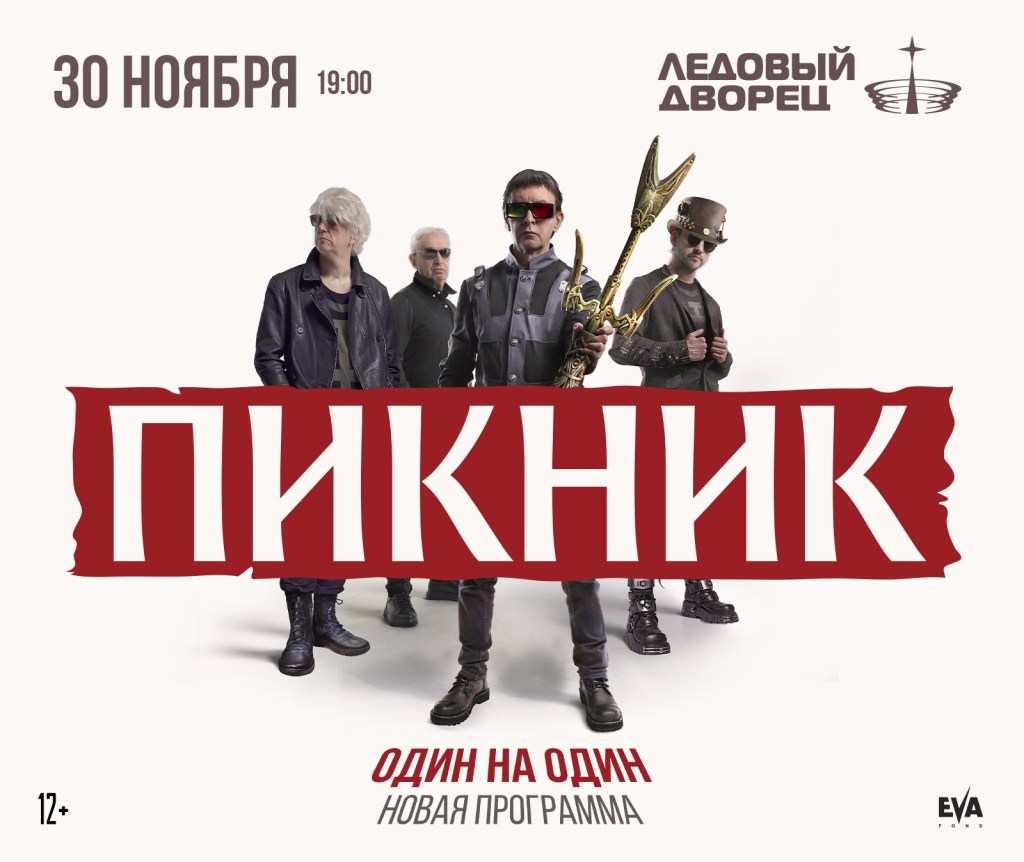
The band Picnic’s new concert program is entitled “One on One.”
Imagine a magic crystal with three facets. The first one is the eponymous new album. The second is video sequences and a laser show. And the third is the band’s musical calling cards: “The Egyptian,” “Kingdom of Curves,” “The Shining,” and others.
Since “the show must go on” (as the famous song says), it must go on not just any old way. The best minds from Kaliningrad to Vladivostok have been working on how to amaze you. Those who attended our concerts during The Future Awaits Us tour probably know already that Picnic’s bold claims are no empty threat. Of course, we will pull back the veil of secrecy, but only at the concert will all our secrets be revealed.
Both of these stances, however, involve a lack of agency, a factor that is borne out in other research we have conducted. Indeed, reviewing nearly 100,000 substantive war-related texts from across six Telegram channels—including three generally pro-war and three anti-war channels—suggests that a lack of agency is common both to supporters and opponents of the war.
On the pro-war channels—which were dominated by reports from the front and patriotic rallying cries, but also included a number of discussions of mobilization and ways out avoiding military service—attribution of “credit” for the war was mixed. Often, the war was highly personalized: something was ordered by Putin, said by his spokesman Dmitry Peskov, or carried out by (then) Defense Minister Sergei Shoigu.
When discussing mobilization, the discussion was dry and procedural, with no discernible consideration of justice or fairness (or the irony of pro-war channels discussing ways of avoiding the fight). Almost never did commentators use the first person: things were done, said or thought by others, but not by them.
On the anti-war channels, the war was largely de-personalized. To the extent blame was attributed to Putin, it was mostly implicit: because it was Putin’s war, his role appeared to require little overt discussion. Perhaps surprisingly, discussion of military mobilization, similarly to the pro-war channels, focused on procedural consideration[s] and avoided issues of justice and fairness. Unlike in the pro-war channels, however, there was considerable use of the first person, but predominantly the first person singular, as commentators discussed their own thoughts and experiences. Use of the first person plural—“we”, with connotations of collective responsibility and action—were rare.
Given the roles played both by “system justification” and “agreeableness” among war supporters—psychological motivations that encourage people to get in line and discourage difference—the lack of a sense of agency is not surprising. Even those who write openly of their support for the war on Telegram don’t tend to see the war as something over which they have any control; while the war may be prosecuted with their support, it is prosecuted without their involvement.
It is perhaps somewhat more jarring that this lack of agency seems to extend to much of the anti-war community, however. To be certain, anti-war Russians clearly claim responsibility for their own lives and, in many cases, for assisting Ukrainian refugees, for example. Moreover, there are individuals and small groups who have attempted acts of resistance ranging from anti-war graffiti and solitary protests to outright sabotage. But there is little discussion of any potential agency over the war itself, or the idea that, if they acted, Russian citizens might be able to bring the war to an end.
In the first half of 2024, the average bill for entertainment tickets (excluding movies) amounted to 3,400 rubles [approx. 35 euros], which is 18.8% higher than a year earlier, reported Yandex Afisha. According to the service, this economic indicator rose by 14% last year. The largest increase in the average bill was recorded in theaters, which rose by almost a quarter, up to 3,800 rubles. The average price of concert tickets on Kassir.ru[a online ticket purchasing service] increased by 20% compared to last year, and the total price increase for the first six months of the year amounted to 16%. Market participants say the increase in ticket prices has been caused by the growing costs of organizing events, as well as by increased demand for performances by domestic artists after the departure of many foreign performers. This has led to an increase in the fees sought by Russian artists and, consequently, to an increase in ticket prices.
But the continued damage to Putin’s authority after a catastrophic war and repeated shocks does not translate to an internal threat to his power. Nor is there a risk his regime might collapse in the foreseeable future, according to analysts.
Stanovaya said that many Russians, particularly members of the elite, had come to expect the worst in the war but realized that there was no alternative to Putin in Russia’s repressive political system.
“They are so used to shocking events. They’re so used to living in a very unpredictable situation, so it’s very difficult to surprise them. And they are also used to the feeling that they don’t have the power to affect anything, and they are helpless,” she said.
The crisis, she continued, had certainly undermined Putin’s authority — without necessarily undermining his grip on power.