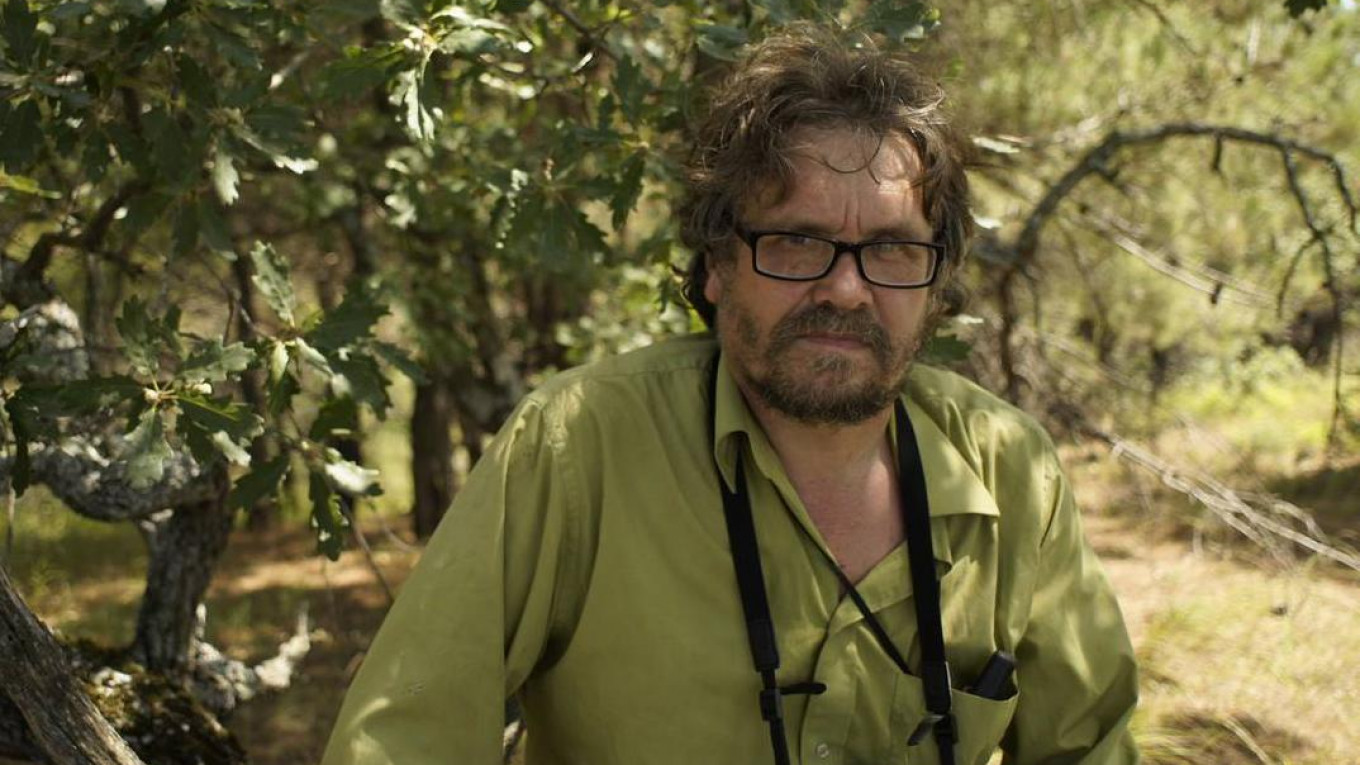
Andrei Rudomakha, Russia’s Most Famous Environmentalist

rudomakhaAndrei Rudomakha. Photo courtesy of his Facebook page and the Moscow Times

On the Watch: The Story of Andrei Rudomakha, Russia’s Most Famous Environmentalist
Vladimir Prikhodko and Angelina Davydova
Proekt
October 2, 2019

Protests against waste landfills, the clearcutting of parks, and illegally enclosed forests—the environment has been a frequent topic of regional protests in Russia. Persecution by the authorities, criminal cases, beatings, and even murders are everyday risks for environmental activists. Proekt tells the story of the persecution of the head of Environmental Watch of the North Caucasus (EcoWatch), which has been going on for almost forty years.

They go to bed late in the private house on Kerchenskaya Street in Krasnodar. The place resembles a commune. This is the home and office of Andrei Rudomakha and Environmental Watch of the North Caucasus aka EcoWatch, perhaps the most famous grassroots environmental organization in Russia. Rudomakha has led EcoWatch for fifteen years.

At 5:55 a.m. on July 30, everyone was asleep. At that moment, Investigative Committee investigator Sergei Kalashnikov and an unidentified FSB officer in a mask rang the doorbell. Not waiting for the homeowner to open the door, they ordered Emergencies Ministry officers to break down the gate. Within a couple of minutes, officers in masks had flooded the house, and two masked men with automatic rifles had thrown Rudomakha to the floor. When Rudomakha attempted to get up, the officer holding the activist pepper-sprayed him in the face.

Enemies of the State
This was the fifth search at EcoWatch in less than three years, and the second in the last four months.

“That morning, I was supposed to go to court in Maykop to face charges that we allegedly broke the law on ‘undesirable organizations’ by linking to Open Russia’s website on our sites and social media pages. My trip was canceled because of the search, and no one from our group was at the court hearing. Naturally, we lost the case,” says Rudomakha, meeting with our correspondent at the selfsame commune-like house.

EcoWatch was the first nonprofit organization in Russia to be found guilty of collaborating with Mikhail Khodorkovsky’s Open Russia.

In recent years, the number of environmental protests in various regions of Russia has certainly grown—from campaigns against waste landfills in parts of European Russia to protests against coal dust in the port of Nakhodka, in the country’s Far East, says Svyatoslav Zabelin, coordinator for the International Socio-Ecological Union. The most turbulent environmental protests of the past summer were in the village of Shiyes in Arkhangelsk Region, where the authorities wanted to transport garbage from Moscow. It was in the village of Loginovskaya in Arkhangelsk Region where Rudomakha was born fifty-five years ago.

rud-2
A 2018 protest rally in Severodvinsk against the Shiyes landfill. Source: activatica.org

“My father was a descendant of Kuban Cossacks. My mother is from Perm. That is where my parents met when they were at university. After their studies, they were assigned to work in the taiga in Arkhangelsk Region, on one of the local farms. Shortly after, we all moved to my father’s native land, the Taman Peninsula. I was still a very young child when my parents divorced. My mother raised me on her own. She worked for more than forty years in the village of Oktyabrsky in the Seversky District, where we relocated. The test fields of the Tobacco, Shag, and Tobacco Products Research Institute were located there.”

At the age of sixteen, Andrei set out for Cuba. He went to Moscow, supposedly to matriculate at the university, and along the way, he hopped a freight train in order to leave the Soviet Union—but he was found by frontier guards at the Romanian border.

“During the interrogation, the KGB guys thought long and hard about what to do with me,” Rudomakha says with a laugh. “After all, I had said to them, ‘Send me to Cuba, to a school for revolutionaries.’ The KGB officers reacted to this with their peculiar sense of humor and sent me to the Kishinev Mental Hospital. I was retrieved from there by my mother. From that point on I’ve never been out of the sight [of the authorities].”

rud-3
Andrei Rudomakha and his mother

This was how the secret services, rebellion, and forests came into Rudomakha’s life.

“A military coup occurred in Chile in 1973. All of the news contrasted sharply with the reality in which I lived. Oktyabrsky was a very boring place. Books were my salvation. And the forest. I rather quickly got keen on hikes in the woods. Che Guevara was my idol and hero.”

Rudomakha studied Spanish and Greek, began playing guitar and formed a band. He calls his mid-1980s self a “rocker.” In 1987, immediately after his army service, Andrei was offered a job at the Krasnodar House of Young Pioneers, in the Candle Amateur Song Club.

The Rocker
Peaceful and troubled
Troubled and easy
What infuses the air
In the meadows around Pseushkho?

These are lines from a poem by the bard poet Vladimir “Berg” Lantzberg. In the 1980s, he was living in Tuapse, putting together amateur song festivals and establishing the first communes. It was then that Rudomakha first encountered the communard scene, whose principles he would later adopt. The Pseushkho of which Lantzberg sang is a mountain with an Adyghe name in Krasnodar Territory’s Tuapse District. In 2019, Rudomakha would protest against the construction of a limestone quarry there.

In the 1980s, however, the Kuban was fighting another construction project. A nuclear power plant was slated to be built in the Energetiki district of the village of Mostovskaya. In its waning years, the Soviet Union had planned to build dozens of such plants, from Crimea to the Ural Mountains.
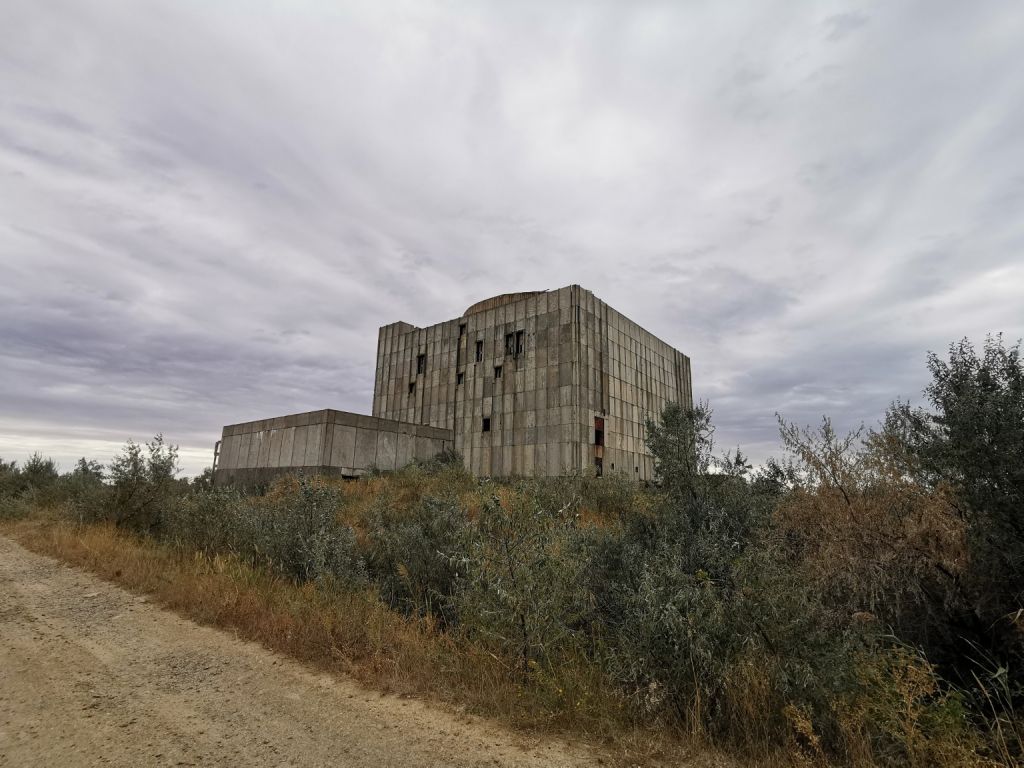
rud-4Several Soviet nuclear plants whose construction was begun in the late 1970s and early 80s were not completed. After the breakup of the USSR, one of those stations, Krymskaya, came in handy anyway—not, however, for the nuclear energy industry, but for purveyors of electronic music: it became the venue for the Republic of KaZantip festival of electronic dance music.

“Back in the early 80s, the mammoth construction of a power plant similar to Chernobyl began. In 1988, I was one of the people behind a protest rally. We organized it near Goryachy Klyuch on Lysaya Gora.  I remember how we went underground and hid from the KGB. It was then that I first crossed paths with the Nature Conservation Brigades (DOPs), which had been organized at the universities,” recounts Rudomakha.

During perestroika, university students were often certified as conservation, fishing, and hunting inspectors; these groups were then dispatched into the forests to arrest poachers. Later, alumni of the DOPs would become the backbone of the Russian branches of the WWF and Greenpeace.

Like nearly all the nuclear power plants whose construction kicked off at the turn of the 70s and 80s, construction at the Krasnodar plant was soon frozen. But Rudomakha’s career as a music teacher also came to a screeching halt: KGB officers showed up at the Young Pioneers House, and Rudomakha lost his job. His employment at the Candle Club would be the only entry in his official work record book.

The Communard
Over the last nine years, four criminal cases have been brought against Rudomakha, and seven police searches conducted. He has been jailed on misdemeanor convictions more than fifty times. In the end, EcoWatch was even declared a “foreign agent,” although the decision was reconsidered last year.

In recent years, the growing physical and legal pressure on environmental activists has been as big a trend as the increase in the number of environmental protest rallies. Among the main methods of pressure are forcible dispersal of protests by police, pressure on activists at work, threats to relatives, court cases, straightforward violence, and even murder. In March 2019, environmental activist Denis Shtroo was murdered in Kaluga while participating in, among other things, a campaign against the building of a waste landfill near the village of Mikhali.

______________________________________________________________

Intimidation of Russian Environmental Activists in the First Five Months of 2019
According to information from the Russian Socio-Ecological Union

rud-5Denis Shtroo

1  activist murdered. In March 2019, environmentalist Denis Shtroo died of stab wounds in Kaluga. He was involved in a campaign against the construction of a waste landfill in the village of Mikhali.

5 cases of criminal prosecution.

7 attacks on activists, attacks on dwellings, property damage, and police searches.

110 cases of administrative prosecution. The total in fines has amounted to more than a million rubles [approx. 12,000 euros].

In 2019, cases of intimidation against environmentalists were most often recorded in Shiyes, Arkhangelsk Region, where illegal construction of a landfill for Moscow’s solid household waste is underway; in Yekaterinburg, where activists were defending the city’s green spaces; and, as in years past, against activists from Stop GOK, in Chelyabinsk, and EcoWatch.

______________________________________________________________

When the New Russia of the early 90s dawned, Rudomakha was in the woods.

“I decided to build a commune at Kisha Station in the Caucasus Nature Reserve. It is a secluded place in Adygea’s Maykop District. Later, our base moved to Ust-Sakhray. In 1988, for a ridiculously small amount of money (the cost of a Zaporozhets car), we bought a house there. It was an area of abandoned villages that people were trying to leave, but we were doing the opposite. I lived in Ust-Sakhray until 1995. I won’t mention the names of the comrades with whom I started out. Many have their own lives and families now,” he says.

Andrei has his own way of viewing everyday life. Remembering those days, he says with regret that the communes fell apart because people started romantic relationships and left.

“We had a lot of ideas: we wanted to transform all of Sakhray and build a public school. My first daughter was born there, and my wife left — she preferred me to another. All of our ideas were shattered by the internal conflicts and disagreements that arose among the settlers. And, basically, I regret that we sat out perestroika in the mountains. It would have been better, of course, in the city,” he says.

The New Russia brought big money to the Kuban. With its sea, mountains, forests, and springs, the southern region attracted businessmen and politicians from Moscow. Some businessmen began to cut down wood on the unique Bolshoi Thach Mountain and haul it out with helicopters.

“And I came out of the woods. The times had drastically changed, as it turned out. Grassroots organizations were on the upswing,” Rudomakha says.

Soon Rudomakha would turn up in Maykop, where he lived in a small house at a weather station run by Vladimir Karatayev, leader of the Union of the Slavs of Adygea. There a branch of the Socio-Environmental Union would be opened, the first environmental organization founded by Rudomakha.
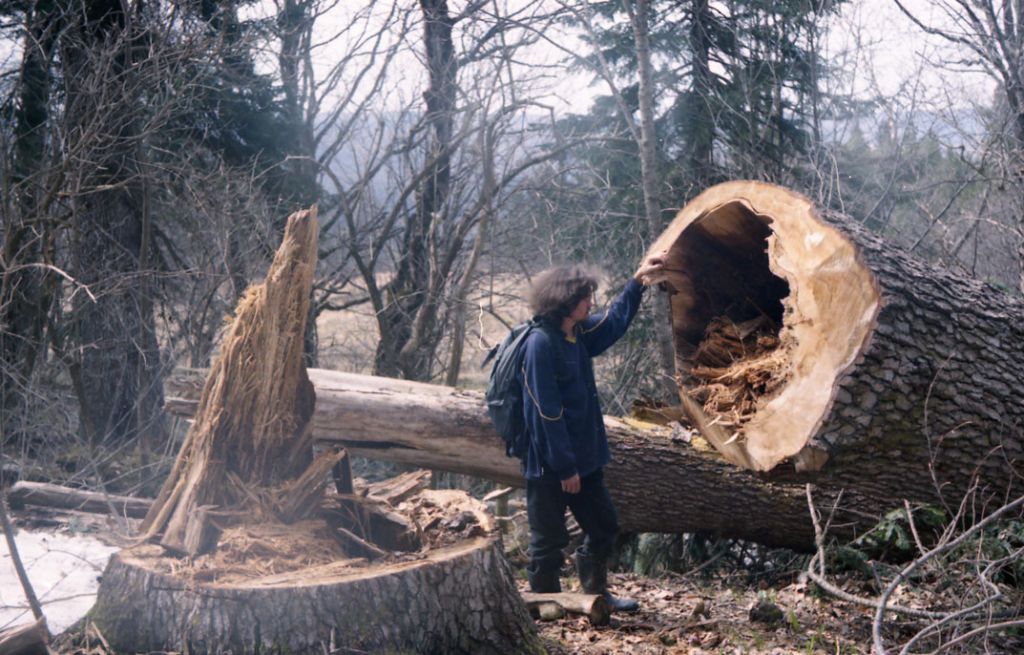
rud-6Rudomakha examines a forest clearcutting in the Caucasus Nature Reserve

“With money from western foundations, we bought a computer and a modem—and things took off. We organized protest rallies, spiked tree trunks, and stopped clearcutting. And, as a result, Bolshoi Thach was made part of the Western Caucasus UNESCO World Heritage Site,” Rudomakha explains.

Pandora’s Box
The planet in Ursula K. Le Guin’s cult science fiction novella The Word for World Is Forest is called Athshe. This planet would become the prototype for Pandora in the movie Avatar, and would also give its name to Rudomakha’s 1990s commune, from which EcoWatch arose. Le Guin grew up in leftist Berkeley and was interested in anarchism and environmental movements. In her novella, the kind forest inhabitants, called “creechies” by earthlings, defend their planet from the “yumens.” Athshe Commune was also focused on environmental protests. Commune members took names from the novella’s characters.

Today, activists would be jailed for many of the protest actions carried out then. Rudomakha’s commune took part in many of them alongside the Federal Anarchists of Kuban (FAK) and radical environmentalists from the Keepers of the Rainbow.

“We were always blocking or blockading something,” Rudomakha recalls. “There were tragedies, too. In 1997, we locked ourselves together with metal chains and blocked the road to Sochi. A crazy trucker drove at us, who knows why, and Anya Koshikovaya’s hand was torn off. In the late 90s, this sort of thing brought palpable results. We seriously considered the idea of creating a guerrilla environmental army, to waste everyone. The forests here are wonderful—one could be guerrillas endlessly. Theoretically, if the necessary contingent of people were found, all this would be quite feasible. To do that you would need to break with your usual life and go rogue. Basically, I’ve been ready for that since childhood. If I could find five people just as mad as me!”

rud-7An environmental protest involving Rudomakha, 1990s

In the finale of Le Guin’s novella, the creechies surround and kill almost all the earthlings. They are especially keen to hunt down the women to prevent new generations of humans from taking over their forests.

Palace Coup
“Sanya [i.e., Alexander] is a thief”: in November 2011, Rudomakha’s comrades in arms spray-painted this graffiti, among others, on the fence of a luxurious estate on the Black Sea shore in Blue Bay, not far from Tuapse. The estate was officially called the Agrocomplex JSC Recreation Center, and it was owned by the family of Alexander Tkachov, former Krasnodar Territory governor and former Russian federal agriculture minister. For all of 2011, enviro-activists battled against this dacha, on whose premises rare trees were presumably being clearcut and access to the sea was illegally fenced. A protest action in November, during which one section of the fence fell, was the last for many activists. Agrocomplex soon filed criminal charges for property damage. Rudomakha’s comrade in arms Suren Gazaryan left the country after receiving political asylum in Estonia. (He now lives in Germany.) Yevgeny Vitishko, another EcoWatchman, was given a three-year suspended sentence, with two years of probation; in December 2013, the suspended sentence was replaced with a real one, and Vitishko served more than a year in a work-release penal colony near Tambov. Amnesty International recognized the activist as a prisoner of conscience.

rud-8“Sanya is a thief”: graffiti on the illegally erected fence in Blue Bay

“The constitution is in a noose, Vitishko is in prison,” Pussy Riot sang at the time. And, in fact, environmental protests against palaces owned by high-ranking officials and the upcoming Sochi Winter Olympics were perhaps the main public issue in southern Russia in the early 2010s.

EcoWatch had taken on palaces practically from its official founding in 2004. There was good reason to work on the issue—the Kuban had become a favorite spot for both officials and businessmen.

______________________________________________________________

rud-9Putin’s palace on Cape Idokopas. Source: navalny.com

The Kuban—Homeland of Palaces: Vladimir Putin’s Palace

In 2010, businessman Sergei Kolesnikov told the world about the construction of a luxurious palace for the Russian president. The site was located in the Kuban, not far from Praskoveyevka on Cape Idokopas. In 2006, the land plot was transferred from the Russian Federation to the Tuapse Vacation House of the Office of Presidential Affairs, and then to the Indokopas Company in 2010.

According to EcoWatch, during construction of the residence and the roads leading up to it, more than forty-five hectares of forest were clearcut; among them, parcels harboring the threatened Pitsunda Pine (Pinus pityusa) were destroyed. According to the calculations of EcoWatch and Greenpeace, the damage from illegal clearcutting came to more than 2.7 billion rubles. Inquiries to the authorities from EcoWatch about the illegal cutting on the palace territory went unanswered.

[Note: the original article in Russian also has short briefs on the Kuban “dachas” of Dmitry Medvedev, Yevgeny Prigozhin, Alexander Tkachov, Alexander Remezkov, Patriarch Kirill, and Anatoly Serdyukov. — TRR]

______________________________________________________________

“Lots of federal officials have dachas on the coast. And basically, we don’t care who owns them. We’d like for those people not to behave like swine. It doesn’t matter whose they are,” says Rudomakha.

The first and perhaps most well-known victory was scored in 2009 when the Watchmen halted construction of a proposed dacha for Dmitri Medvedev in the tiny town of Utrish.

The campaign against environmental violations in the runup to the Olympics brought Rudomakha and EcoWatch international fame: foreign journalists flocked to them in droves. Rudomakha is now certain that the series of refusals by European cities to bid to host the Olympic games (for example, when residents of Munich voted no in a referendum on the city’s bidding for the 2022 Olympics) came about precisely because “we succeeded in creating an image of the Sochi Olympics as the most anti-environmental, expensive, and absurd in the entire history of the Olympic movement.”

“It was then that the authorities started to vigorously persecute us,” Rudomakha says about the time. “I understood that serious ‘winds of change’ had begun to blow. They no longer tried to sit down at the negotiating table with us, and cops chased us around the woods. It was kind of funny.”

The Autocrat
“Andrei’s authoritarianism has always been my number one problem,” Yevgeny Vitishko now recounts. In 2016, he and another well-known EcoWatch alumnus, Suren Gazaryan, left the organization.

“From the outside, the Watch looked quite democratic, but in fact everything revolved around one person. His leadership style can be described in sociological terms as narcissistic,” says Gazaryan.

Vitishko and Rudomakha have since reconciled. However, for many, the head of EcoWatch remains a fanatic with autocratic manners.

For several years, local and even national media have been publishing stories about Rudomakha hinting that he is guilty of everything from pedophilia to cooperating secretly with officials. Rudomakha calls the reports nonsense, saying that the regional government is behind them.

rud-9“Gazprom is a murderer” / “Stop Blue Stream”: Kuban environmentalists protesting against Gazprom 

Rudomakha does not separate the personal from his work life: he admits that his activism has not affected his family’s fortunes in the best of ways. The first floor of the rented house on Kerchenskaya is used as an office, while the second floor is home to Rudomakha and his second daughter, who, in the wake of her parents’ divorce, enrolled in university in Krasnodar and moved in with her father. Rudomakha had once hoped that his daughter would also become an environmentalist, but now he has lost that hope.

“I am quite pessimistic when I assess the evolution of Russia’s environmental movement,” says Rudomakha. “The population is very inert and severely intimidated, and the level of passionarity among people is at a minimum. People rise up, for the most part, only when they are personally affected. If there were organizations like ours in every region, it would be possible to change the situation in this arena and in the country as a whole. After all, a large number of such organizations would naturally make it necessary for them to unite.”

“I haven’t seen an influx of new people into EcoWatch,” notes Rudomakha’s former colleague Gazaryan. “Andrei’s lifestyle and views are on the fringe, and his office is also his residence. It’s hard to work in this environment. And there is no [broad environmental] movement in Russia. There are separate organizations and local groups, but they have no coordination or goals. They are not represented on the political level, and fall apart after a problem is solved,” Gazaryan says, but after thinking about it, he adds that he could be mistaken. “I haven’t lived in Russia for a long time.”

* * *

Late in the evening of December 28, 2017, Rudomakha, his colleague Viktor Chirikov, and journalist Vera Kholodnaya had just arrived at the commune house on Kerchenskaya. Rudomakha had just exited the car when three men ran up to him. Dousing him in the eyes with pepper spray, they knocked him down to the ground and kicked him repeatedly. He lost consciousness. Chirikov was beaten less, and Kholodnaya was only “blinded” by the pepper spray. After that, the attackers took several cameras and a GPS navigator from the car. The entire incident lasted no more than two minutes.

Doctors diagnosed Rudomakha with broken bones in his face and nose, a concussion, and pneumocephalus—the leakage of air into his cranial cavity. He spent three weeks in the hospital.

An investigation into the attack yielded no results. But the enviro-activists have their own theory. They had returned that day from a trip to the area around the village Krinitsa, a small resort in Gelendzhik. There, in the forest, construction had begun on a site resembling a wine-making chateau—such was EcoWatch’s assessment. A prefabricated chapel had also been erected there by order of Axis Investment JSC.  The owner of this firm is Alexei Toth, a business partner of Nikolai Yegorov, who is a well-known Petersburg lawyer and a personal friend of Vladimir Putin.

Translated by Mary Rees. Except where noted, all photos courtesy of Proekt.

People and Nature

283128_106538682780432_4198293_n

I can recommend no blog more highly than People and Nature. Whether you’re interested in climate change and the environment, energy, Russia, Syria, Ukraine, the UK, labor and social movements, international solidarity campaigns or history, Gabriel Levy has written so many incise, supremely well-grounded articles and interventions on these subjects since 2011 that it would take a month of Sundays to take all of them in. But since you’ll undoubtedly learn more about our world by reading People and Nature than by subjecting yourself to the endless eardrum buzz of media and social media, this is exactly what you should do.

♦♦♦♦♦♦♦♦♦♦♦♦♦♦

I hope, dear readers, you get time for reflection, rejuvenation and relaxation in the midwinter holidays. If you find yourself reaching for your phone for something to read – then, rather than winding yourself up with news of Boris Johnson’s vileness, go a level more thoughtful: look at those People & Nature articles you missed out on first time round. Here is some stuff that has stood the test of time. Thanks for your interest, and see you all (virtually or really) in the 2020s.

Image courtesy of People and Nature

Ekaterina Vasilyeva: On the Neva

A River for People: What Makes the Neva Tick?
Ekaterina Vasilyeva
Republic
November 29, 2019

All my photo projects are somehow connected with nature, with long walks and studying the environment. I think that without a clear understanding of nature’s role in our lives, we to some extent deprive ourselves of support.

My project The Neva: A River for People, People for the River is an attempt to find a balance between harmony and destruction in the relationship between humans and nature. The role of nature is played by the Neva River, thanks to which my hometown of St. Petersburg was built over three hundred years ago.

Nature has always only been raw material for the builders of cities, and the Neva’s resources were used at the expense of its gradual destruction. In accounts of the city’s history, the Neva has served as an inert backdrop for heroic conquest. For ordinary people, however, the river has always symbolized the individual’s path in life, her destiny. In my project, the Neva is a metaphorical life line for St. Petersburg and the three towns situated along its 74-kilometer course—Shlisselburg, Kirovsk, and Otradnoye.

The importance of rivers and canals for the city used to be strongly underscored. Russians were instilled with a love of water. Under Peter the Great, every householder was obliged to have a boat, and every home on the waterfront had to have a pier. Even the scanty trade by which many boatsmen in old Petersburg supported themselves—the extraction of firewood, logs, and boards for subsequent sale or use—was practiced with gratitude to the Neva as a benefactress. In old Petersburg, these accidental finds had their own name: “gifts of the Neva.”

People nowadays have an ever more aggressive and consumerist attitude to the Neva. On the other hand, there is no doubt the people who live in the Neva basin love their river. This contradiction is one of the subjects of my project.

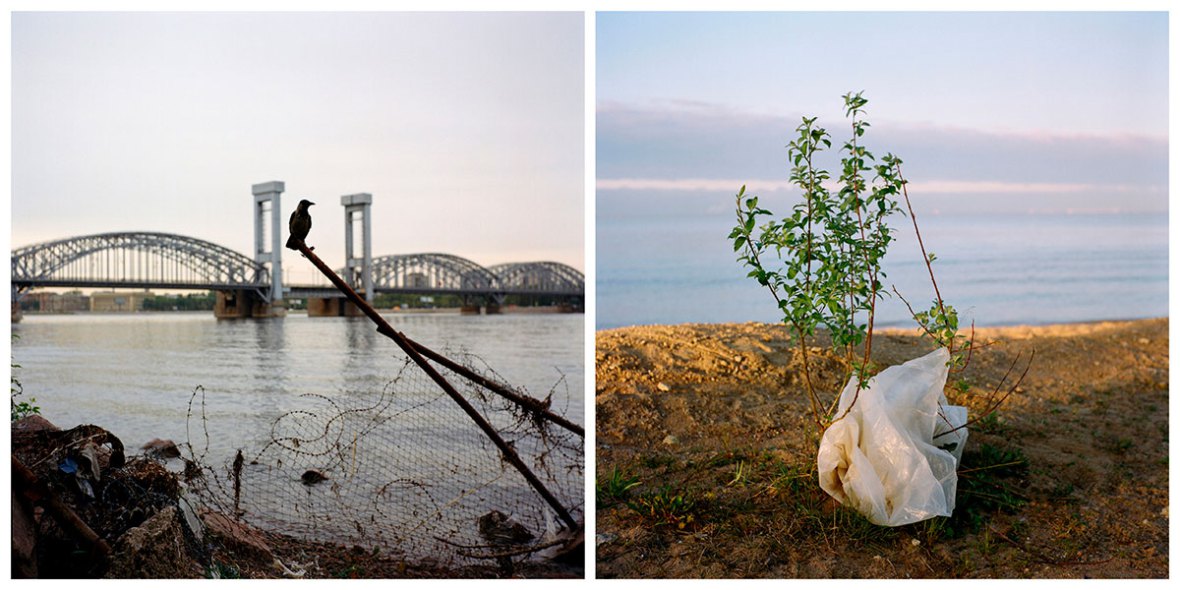
neva-1An incident occurred in the skies over Leningrad on August 21, 1963, resulting in the emergency landing of a Tu-124 passenger plane on the Neva near the Finland Railroad Bridge. The river is around 400 meters wide at this point. A passing steam tugboat towed the plane to the Neva’s right bank. The windshield in the nose of the plane was broken to secure the tow cable. The passengers were evacuated and sent to Moscow.

neva-2Peter the Great was a big fan of the national pastime. During his reign, hockey matches on the ice of the frozen Neva could attract as many as several thousand spectators.
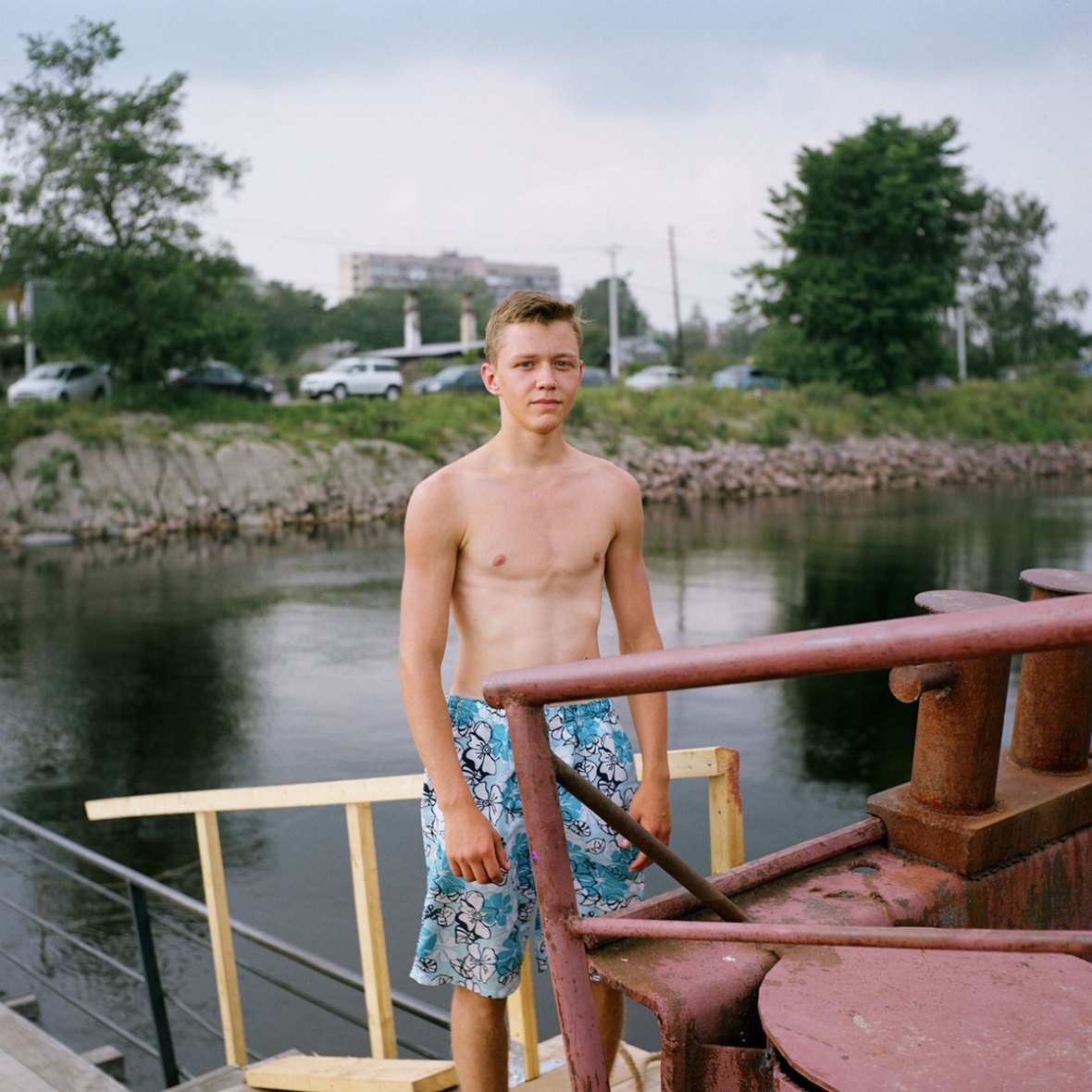
neva-3Shlisselburg. In 1912, the Finnish archaeologist Julius Ailio recorded the following tale in the village of Mikulainen on the shore of Lake Ladoga: “The Neva River used to be tiny. If a tree fell, it would lodge between one bank and the other, and you could cross the river by walking over it. Then fifty or sixty years later, the river widened. Shepherds would toss burning brands across the river to each other to make campfires. But then the river eroded the land at its source and became quite broad.”

neva-4In 1716, by decree of Peter the Great, fishermen from Russia’s northern provinces were settled on the left bank of the Neva between its tributaries, the Murzinka and the Slavyanka, to supply residents of the capital with fish. Originally, the settlement was called just that—the Fishery Settlement [Rybnaya sloboda]. The name was later changed to Fishermen’s Village [Rybatskoye]. The locals still call the ravine in modern Rybatskoye Pike Harbor.

The Visyachka [“The Hanger”] is a ruined pedestrian bridge on a man-made embankment in the backwater of the Nevsky Shipyard in Shlisselburg.

neva-5The Neva smelt [koryushka] has long been considered a symbol of Petersburg. In 1705, Peter the Great issued a decree to support fishermen who caught smelt. According to legend, Peter called the smelt the “tsar fish,” since it could feed the growing population of his new capital city as it was built.
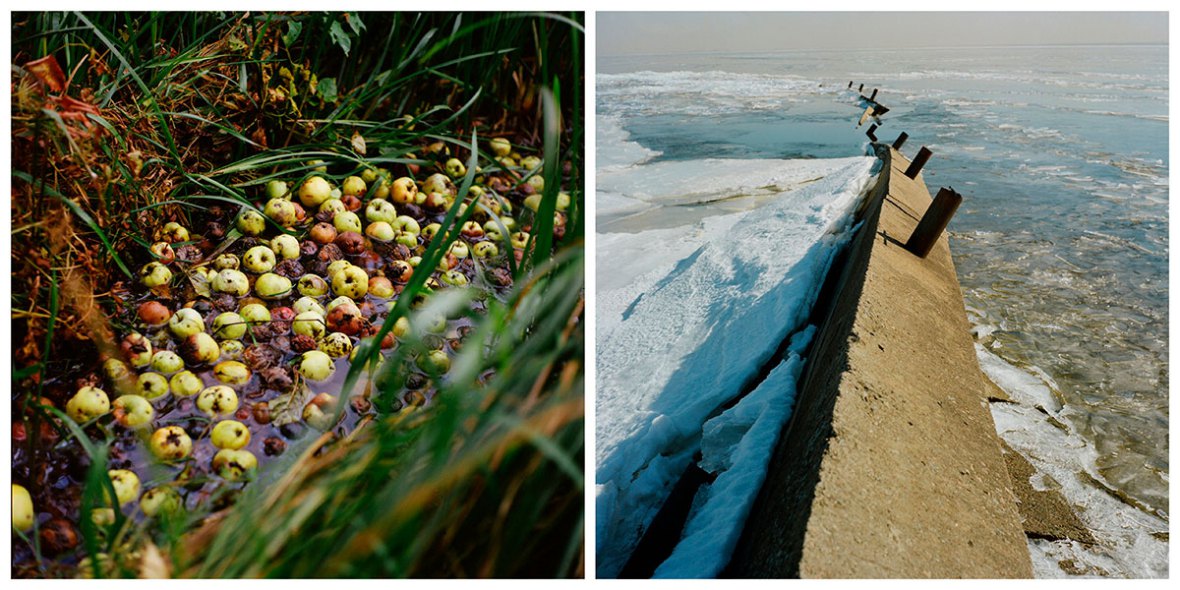
neva-6St. Petersburg ranks among the top per-capita consumers of water in Russia. Every twenty-four hours, the city “drinks” the equivalent of a lake one square kilometer in size and three meters deep. Despite the official ban, industrial waste continues to be poured into the river.
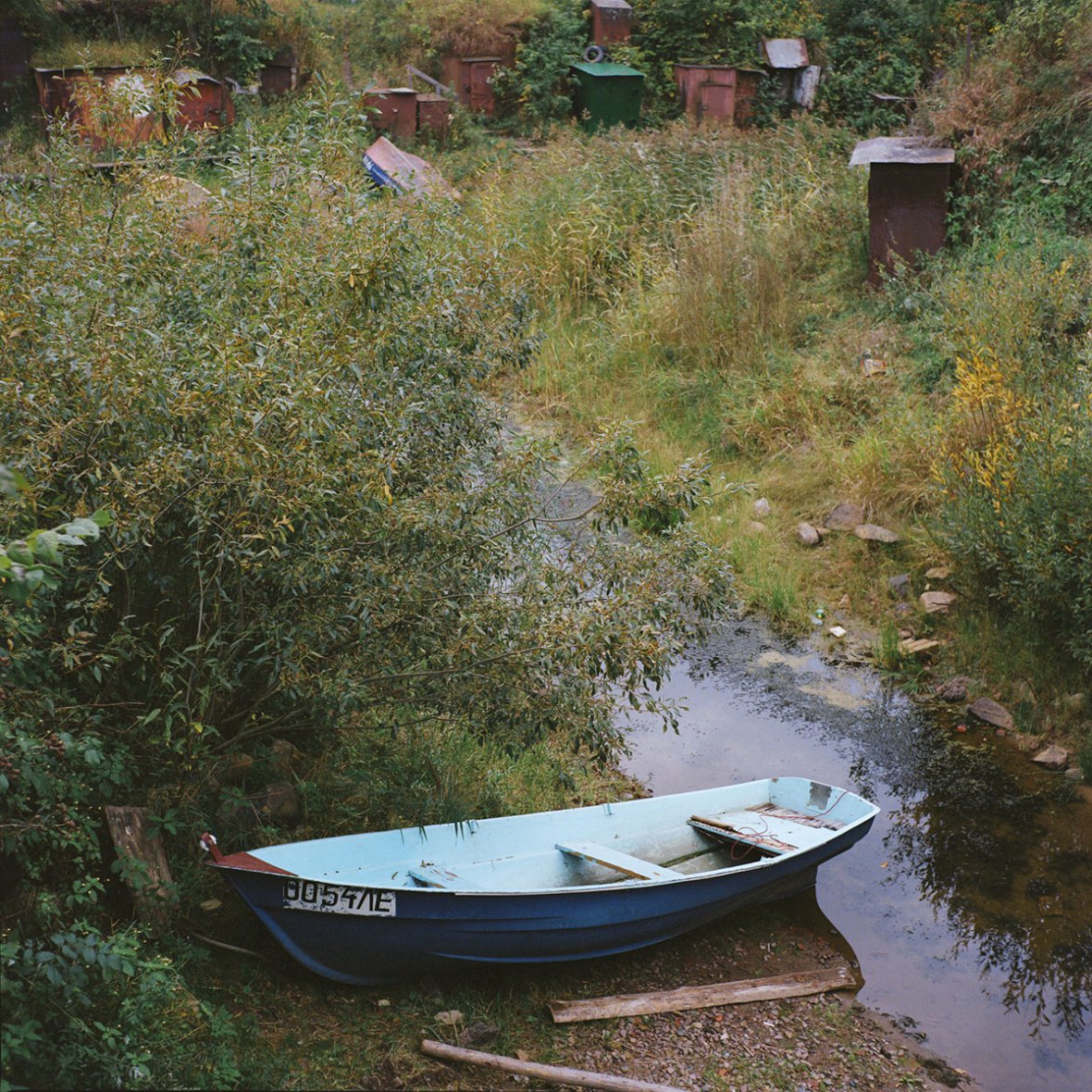
neva-7The origin of the name Neva is not completely clear. Some historians think it comes from the Finnish word neva, which translates as “bog” or “fen.”

Thanks to Ekaterina Vasilyeva for her permission to reproduce excerpts from her project here. You can look at her entire photo essay about the Neva on her website or on Republic. Translated by the Russian Reader


People “Hug” Park in Surgut to Save It from Developers

Surgut Residents “Hug” Park to Protect It from Redevelopment
Activatica
November 18, 2019

Residents of Surgut who oppose construction of a bus station near the Griboyedov Interchange carried out a flash mob in which they tried to “hug” a forest park slated to be cut down to make way for the construction site. Over three hundred people took part in the protest, reports Nakanune.ru. Residents literally formed an makeshift human shield to protect the green zone.

surgut-1

Residents of the 38th, 39th, 40th, and 41st districts joined hands and formed a circle around the forest park, where a bus station is scheduled to be built.

“Surgut residents have protested against construction of the new facility. Many of them are certain it will lead to gridlock on that section of the highway, as well as destroying trees,” said one of the protesters.

On November 11, the Surgut Investment Council approved construction of a new bus station near the Griboyedov Interchange. The investor is Nizhnevartovsk Passenger Transport Company No. 1, which has committed itself to building the new station, investing over 200 million rubles into it.

As Federal Press reports, residents of the neighborhoods near the interchange met with Surgut Deputy Mayor Alexei Zherdiyev on November 15. During the meeting, residents voiced their fears about the new facility. They argued tat the planned construction would make traffic in the area even worse. They also said that the forest slated to be cut down is a place where many of them go to walk and relax. Zherdiyev assured them that, since two roads were now being built in the area, and funds for another three roads were being raised, this would reduce traffic at the existing interchanges. He also announced the creation of the Quantorium Technology Park and reconstruction of a local park. However, he gave no exact or approximate deadlines for the projects.

surgut-2

Mayor Vadim Shuvalov reacted to the protest.

“The flash mob against construction of a bus station near the Griboyedov Interchange has shown me two things. First, the residents of Surgut are strong, tight-knit people who love their city. I deeply respect you for that. Second, we have not talked enough about the project itself, so there has been a lot of speculation and rumors. We are going to be more proactive in informing the populace about plans to develop Surgut’s infrastructure. We are often rightly criticized for the quality of roads and some new decisions. But all changes require thoroughness, dialogue, and sometimes compromise. I invite you to discuss the issue of the bus station together. I have ordered my aides to schedule a meeting with residents,” Shuvalov wrote on social media.

Photos courtesy of Agit Rossiya and Activatica. Translated by the Russian Reader

Shiyes: The Cost of Solidarity

Republic
October 31, 2019

In the Arkhangelsk Region, the security forces have launched an offensive against the camp in Shiyes, where an indefinite protest against construction of a landfill for Moscow’s garbage has been going on for over a year. The Russian National Guard has cordoned off the station, blocked the nearest village, Urdoma, and destroyed one of the posts manned by activists. The railway connection with the station was closed in the summer, and the only way to get to Shiyes is the ferry across the Vychegda River.

On the eve of the siege, the vocalists from the group Arkady Kots, composers of the song “Walls,” which has been adopted as the protest camp’s anthem, traveled to Shiyes to boost their morale.

Directed by Anna Moiseyenko and Alexandra Matveyeva (Moscow, 2019)

______________________________________________________

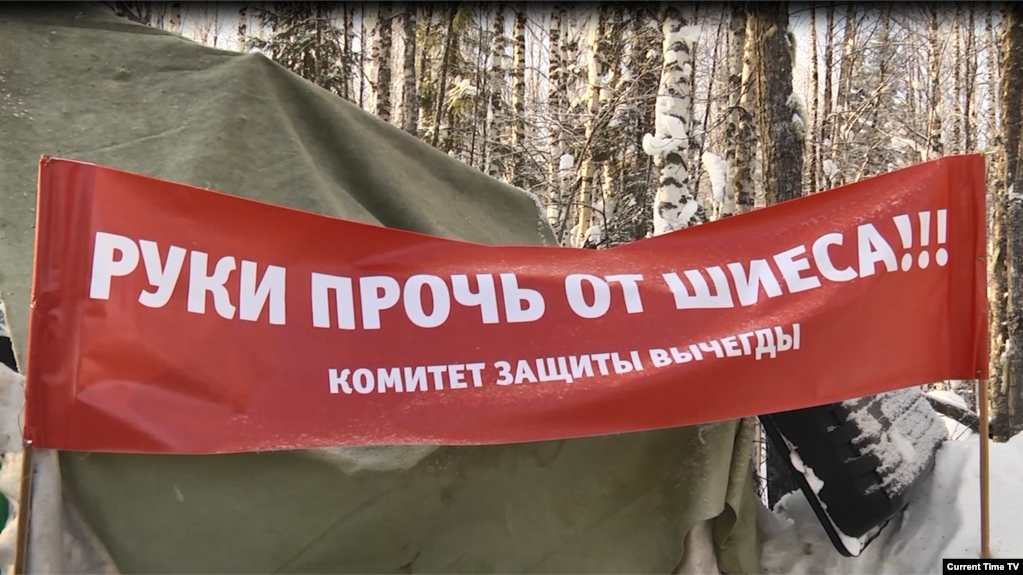
shiyes.pngA banner in the activist camp at Shiyes station: “Hands off Shiyes! Vychegda Defense Committee.” Photo courtesy of Current Time TV and Sever.Realii

Anti-Shiyes Activists in Arkhangelsk Region Laid Off After Several Warnings
Sever.Realii (Radio Svoboda)
November 1, 2019

Employees at the Viled Tourist Information Center in the Arkhangelsk Region have received pink slips after their managers warned them they should not publish posts about Shiyes on social networks and attend rallies against construction of a waste landfill there. Sever.Realii was told about this by Tatyana Regush, who received one such pink slip.

The Viled Center is a branch of the Vilegodsk District Ethnographic Museum. Three people are employed at the center, and Regush officially holds the position of deputy director of the museum. On October 31, the center’s employees received notices they were being laid off. Sever.Realii has copies of the notices.

“They want to eliminate our entire branch: all of us are activists here. I requested a copy of the resolution, issued by the district head, which states that the work of the tourist information center has been deemed ineffective and, in order to optimize costs, our center has been shut down. Our salaries will be transferred to other cultural institutiosn,” Regush explained.

One of the center’s employees resigned shortly before the dismissal notices were sent, while a second employee, Alexander Zhelezko, has also received a pink slip. The district head’s resolution does not specify exactly how the center was inefficient.

Regush attributes the redudancies to her activist stance on the construction of of the waste landfill next to Shiyes station.

“There were warnings. We found out about the problems in Shiyes in late 2018 and began attending protest rallies and speaking at them. I am a lawyer: I would take the microphone and try to provide a legal assessment of what was happening. In May 2019, the district head and the center itself warned me my activism was undesirable since our stance was at odds with the governor’s official position. They told us the government gave us jobs and that as municipal employees we should adhere to the official line. We do not agree with that. The district head warned that the dismissals of activists had already begun,” Regush said.

Regush said she was unlikely to challenge the dismissal and the resolution in court. She has already been offered another job.

We were unable to get a comment from the museum’s management: Olga Ilyina, the museum’s director, was not at work when we contacted them.

Moscow authorities have been building a landfill for waste from Moscow in the village of Shiyes in the Arkhangelsk Region. There will be no recycling or processing at the facility. The residents of the region are opposed to the landfill. They argue it will harm the enviroment and cause an ecological disaster. For more than a year, local residents, environmentalists, and activists have been holding protest actions and rallies.

Translated by the Russian Reader


Neocolonialism

shiyesTo set Russia apart from the pack, Putin is leaning on a unique pitch: that only Russian support can help protect the sovereignty of African countries.

“We see how an array of Western countries are resorting to pressure, intimidation and blackmail of sovereign African governments,” Putin told TASS on Monday in an interview ahead of the summit, adding that Russia was ready to provide help without “political or other conditions.”

“Our country played a significant role in the liberation of the continent, contributing to the struggle of the peoples of Africa against colonialism, racism, and apartheid,” he said. Although ties deteriorated after the collapse of the Soviet Union in 1991, traces remain: the Mozambique flag, for instance, carries the Kalashnikov rifle.
—Evan Gershkovich, “At Russia’s Inaugural Africa Summit, Moscow Sells Sovereignty, Moscow Times, 26 October 2019

________________________________

It’s amazing to read nonsense like this some ten or so years after an unbelievable wave of neo-Nazi terror in Petersburg, Moscow, and other Russian cities that targeted, among others, the country’s African community and African students.

I remember going, back then, to a community event where I was told, by one person after another, that none of them went out in Petersburg after dark except by car or taxi.

This is not to mention the fact that all the African leaders lining up for aid from Russia want to know nothing, apparently, about the Putin regime’s attitude to the Russian people, which differs very little from that of colonizers to the colonized. Just look at what is happening right now in Shiyes, for example. [TRR]

________________________________

OMON Forces Move to Cut Off Shiyes Protesters from Outside World
Paul Goble
Window on Eurasia
October 29, 2019

Staunton, October 25 — In an ominous move, some 30 OMON officers two days ago blocked the railroad station near where the Shiyes anti-trash dump protesters have made their camp as well as the roads leading to and from it, electric power there and in neighboring villages, and Internet connections with the outside world.

The protesters and their supporters are not sure whether this is the first step towards the closing of their camp or simply another feint in that direction designed to keep them nervous and off balance.

But one thing many of them are sure of is that Vladimir Putin is behind the move and that this is yet another case in which he has made much-covered public promises to defer to the population and follow the rule of law only to move in another direction when attention shifts.

Obviously, there is still some communication between the protesters and journalists; but the ring is being tightened. And as the weather gets worse, it will become far more difficult for the protesters to get the supplies and support they need to continue their protest against the largest trash dump in Europe, one not for their own wastes but for those of Moscow.

________________________________

Vera Afanasyeva
Facebook
October 29, 2019

I Am Shiyes! We Are Shiyes!

Imagine that you live in the Arkhangelsk Region. You are strong, independent people, descendants of Russians who were untouched by the Tatar-Mongol yoke and serfdom.

You are not office clerks or anyone’s employees, the more so since there is really nowhere to work. Your native land—its forest and rivers—feeds you. You live off the land and for the land. It is your place in life.

And now the brazen Moscow scumbags who have made billions of rubles from garbage have turned their fat mugs towards your part of the world. After making a bloody mess of the Moscow Region and its neighbors, they have taken a look at your land and licked their chops, deciding to build a landfill there. Your land suits them because it is not so far from Moscow, but it is sparsely populated and invisible from the capital. Your land suits the scumbags.

They have dubbed their future garbage dump, where they intend to transport nearly all the trash from Moscow, an “environmental industrial estate,” but whatever they call it, a garbage dump—a gigantic garbage dump—is still a garbage dump.

The bastards could not care less that the land is yours and gives you life: they have decided to fuck it up, too. They could not care less that it is a buffer zone for sources of drinkable water, that the land is swampy and runoff from the garbage dump will poison the soil, plants, and forests that sustain you and your children, that first the Vychegda River will be polluted and then the Northern Dvina, that previously pristine places will be destroyed.

But the scumbags have run into an unexpected obstacle: you decided to resist. There are not many of you, but you are human beings.

At first, you tried to appeal to the authorities, but you soon realized the scumbags attempting to spoil your land are the authorities.

And so then you simply have tried to keep the scumbags out. You have set up a tent city: you have guarded your land, preventing them from building their landfill. And the station of Shiyes, the place around which these events have unfolded, has become iconic throughout Russia, a place where people have resisted the lawlessness of the authorities.

Honestly, though, it is not just about the garbage dump. The fact of the matter is that you are human beings and you do not want to surrender your land to scumbags. It is a matter of fairness, of justice.

At first, even the local police were on your side, but then the scumbags recruited squads of goons from all over the country to try and handle you. This was what happened during the spring and summer.

But then fall came, and the scumbags realized the time is now. The political storms in Moscow have subsided, winter is on its way, and it will be harder and harder for you to resist.

So the bastards have stepped it up. They have used the Russian National Guard to break your blockade, and they have turned off the lights and the internet in the houses where your children live so the country won’t find about what is happening.

The bastards really want money and if they had their druthers they would kill you and bury you in the northern soil. The only thing holding them back, ever so slightly, is the possible bad publicity.

The bastards have the authorities and the Russian National Guard at their backs. There are only a handful of you.

Can you imagine this?

That is exactly what is happening now in Shiyes, where construction of a landfill has turned into a military special operation, a special operation so important, that martial law, a state of siege, has been imposed in the neighboring village of Urdoma. The special operation has been coordinated by the president’s plenipotentiary representative in the Northwest Federal District, Alexander Gutsan, who recently flew to Syktyvkar. It is so important that Viktor Polonikov, the interior minister of the Republic of Komi, personally visited Shiyes.

This is a real occupation, a war waged against the region’s inhabitants for the sake of huge profits.

The defenders of Shiyes are brave people, but they cannot cope with the Russian National Guard, with the Interior Ministry, with the steamroller of the regime alone.

We should all go to Shiyes and take our stand against the occupiers, but we cannot do this: we are not ready, we are weak.

But we can make it known to the entire country. We can spread the news, and this is also a way of helping, something that is in our power to do.

Tell everyone about what is happening in Shiyes. Write about it: do not be silent!

Today, they are cracking down on the defenders of Shiyes. Tomorrow, they will come for you.

Vera Afanasyeva is a former professor in the philosophy department at Saratov State University and a writer. Thanks to Valery Dymshits for the heads-up. Photo of Shiyes courtesy of Vera Afanasyeva. Translated by the Russian Reader

Yegor Galkin: “You Look Out and See Everything Is Ugly”

“You Look Out and See Everything Is Ugly”: How a Barnaul Resident Took Charge of the City’s Grassroots Urban Activist Group
Alexandra Romantsova
Takie Dela
October 17, 2019

In a series of monologues entitled “Close to the Heart,” Takie Dela hands the microphone to residents of Russia’s regions whose personal involvement and willingness to act are gradually changing their local communities. The star of our second installment is Barnaul resident Yegor Galkin, head of Spire, a local grassroots group.

How do I want my city to look? How can I change the space in which I live? Five years ago, a schoolboy from Barnaul sought answers to these questions, learned about the work of Spire, and became interested in urban planning.

galkinYegor Galkin. Photo courtesy of Mr. Galkin and Takie Dela
Spire, a grassroots group, emerged in 2013 amid the popularization of urban planning in Russia. Its founder, Sergei Ustinov, is a well-known big data expert: he created a nation-wide map of road accidents in Russia. In 2013, the group established its presence on social networks and started doing walks in the city and making photographs. I joined the project in 2014, which was when we launched a map of grassroots proposals in Barnaul. This has been our group’s main focus.

We developed a large interactive map of Barnaul where any resident could leave his or her proposal for beautifying and improving the city. Any user could vote these proposals up or down. Based on the results of the voting, we would send requests to the authorities. We wanted to interact directly with Barnaul city hall and the government of the Altai Territory, but we were ignored. We had over 500 proposals, for which 3,000 votes were cast on our website. Those were huge numbers for Barnaul. After a while, some of the proposals were implemented. This was due to our written requests, but also because some of them were too obvious to ignore.

We still are not in a direct dialogue with officials. Instead, we have learned how to work through the media: they hear us and react. If we have found an irregularity, they try to fix it. For example, the city had a contract for erecting fences, but they were not erected, although they existed on paper. After we wrote about this, the fences went up the next day. I am against fences, but an irregularity is an irregularity.

Our work can be divided into several categories: planning (like the map of grassroots proposals), fighting for green areas, work on the city’s master plan, and daily work by experts, including environmentalists and urban activists. They find irregularities in the city’s improvement and road repair projects, check them against the official paperwork, and publish their findings. This is all done for free: we have no funding. Our desire to change the city and our initiative drive everything we do.

When urbanism first came to Russia,  people didn’t know what it was and how it could improve their lives. When they went to Europe, people sensed things could be different in Russia. We quickly found a common language with people like this. We would tell them what we could do in Barnaul to make life more comfortable, such as introducing dedicated bus and bike lanes and improving public transport.

At first, many people had a hostile reaction to these ideas. They said we needed to expand roads to accommodate more cars. Every group that tackles urban problems is confronted with this reaction. When we started talking about public spaces, however, we found lots of new allies.

Everything always begins with the individual: how would I like to see the city? Personal comfort is important. That was why it captivated me. I began studying the subject, reading a lot and looking at different proposals and projects. Now it is a scholarly interest because I am studying political science. Urban planning and urban reform are impossible without politics. I am curious about the evolution of cities, demographic processes, and gentrification’s impact on urban development. I’m a grassroots urban activist and I want the city to be better.

We have been fighting for Barnaul’s green areas. In 2015, we did our first big project about city parks, which dealt with their current state. While everyone in Moscow knew what was happening in the city’s parks, people in Barnaul didn’t know anything. In 2016, we did the project again, this time in cooperation with a local news website and professional photographers. We made a video using quadcopters. And we spelled out the problem: nobody was taking care of the parks. Some of them had been subjected to deforestation, while others were so badly neglected it was dangerous to go there.

Barnaul has a population of 700,000, and there used to be six city parks. Now there is one official park that is still open. The other parks lost their official status and no one has been managing them. This is a big problem for Barnaul. We are surrounded by old-growth forests, but there are few green spaces in the city itself.

The bulk of the people who subscribe to our group’s social media pages signed on when we raised these issues. People voiced their support and willingness to engage in joint action. Half of Emerald Park was logged, sparking a lively protest over the fact that the city’s green areas were neglected. Whereas there had been no reaction from the authorities in 2015–2016, the issue has finally been raised at the regional level in 2019. Recently, we had a round table at the Altai Territory Legislative Assembly on the topic of green areas in the city.

We raise the hot-button issues in Barnaul. If they are written about, people know about them, and city officials have to react. Our experts are so good that when city hall officials hear their names they freak out. All of the publications posted on our social media pages are read by the prosecutor’s office and the investigative agencies. If there are irregularities, they conduct inquiries.

We have now been trying to establish relations with the district councils. We are getting ready to present our draft project for a park area, a project we did in keeping with all the canons of urban planning. We did surveys of the area in summer, autumn, winter, and spring, as well as research on how people navigate parks. The project for this park will soon be open to feedback from any and all residents of Barnaul. I think it will be interesting and beneficial. I don’t recall that a grassroots undertaking like this has ever been implemented in the regions.

Judging by polls, people want to see quality. The canons of urbanism and notions of proper improvements to amenities can be captured in the phrase “quality infrastructure,” meaning infrastructure that is sound, convenient, comfortable, and safe. People have the same idea: they want to live in a safe and pleasant green space. There is popular demand for quality urban improvements.

An important thought for all grassroots groups is that you need to do what you do and do it well. If you see a problem you need to make sense of it and talk about it. You have to recruit experts and not be afraid of communicating with the authorities, of building a dialogue with regional parliamentarians, city councilors, and district councilors so everyone has a stake in solving the problem. You have to voice your proposals and, most importantly, spark the interest of groups that can impact decision-making. Merchants, authorities, city councilors, political parties: you need to interact with everyone. An urban activist is a person who thrives on interaction and dialogue.

Translated by the Russian Reader

Burning Too

20190824_WOM905.png

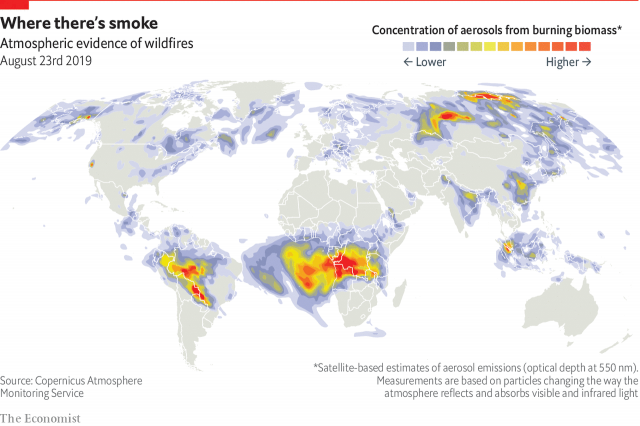
Take a long hard look at this map, especially the upper right-hand corner, and then tell me why Brazilian President Jair Bolsonaro deserves a dressing-down from leaders of some of the world’s most powerful countries, while Russian President Vladimir Putin, guilty of the exact same indifference towards the forest wildfires raging over what, as the map suggests, is a much larger area in Siberia and the Russian Far East, has been criticized only by Greenpeace Russia and rank-and-file Russians living in the line of the fires and the enormous smoke clouds generated by them.

What has Putin ever done to deserve this indulgence?

When you have puzzled that one out, try and explain how four [ahn-TEE-fuh] musicians from Washington, DC, wrote the anthem for the summer of 2019 way back in 1989, that is, exactly thirty years ago, when many of today’s hottest climate changers were not even a gleam in their parents’ eyes.

Anytime but now
Anywhere but here
Anyone but me
I’ve got to think about my own life

Anytime but now
Anywhere but here
Anyone but me
I’ve got to think about my own life

We are consumed by society
We are obsessed with variety
We are all filled that anxiety
World would not survive

We gotta put it out, put it out, we gotta put it out
The sky is burning
We gotta put it out, we gotta put it out, put it out
The water’s burning
We gotta put it out, put it out, put it out
The earth is burning

Outrage
But then they say…

Anytime but now
Anywhere but here
Anyone but me
I’ve got to think about my own life

Anytime but now
Anywhere but here
Anyone but me
I’ve got to think about my own life

The world is not our facility
We have a responsibility
To use our abilities
To keep this place alive

We gotta put it out, put it out, put it out
The sky is burning
We gotta put it out, we gotta put it out, put it out
The water’s burning
We gotta put it out, put it out, we gotta put it out
The earth is burning

Right here
Right now
Do it
Do it
Now
Do it
Now
Do it
Now
Do it

Lyrics courtesy of Genius.com

“Really Frightening”: Trees Dry Up and Toadstools Vanish in Karelia After Explosion near Severodvinsk

“Really Frightening”: Trees Dry Up and Toadstools Vanish in Karelia After Explosion near Severodvinsk
Guberniya Daily
August 22, 2019

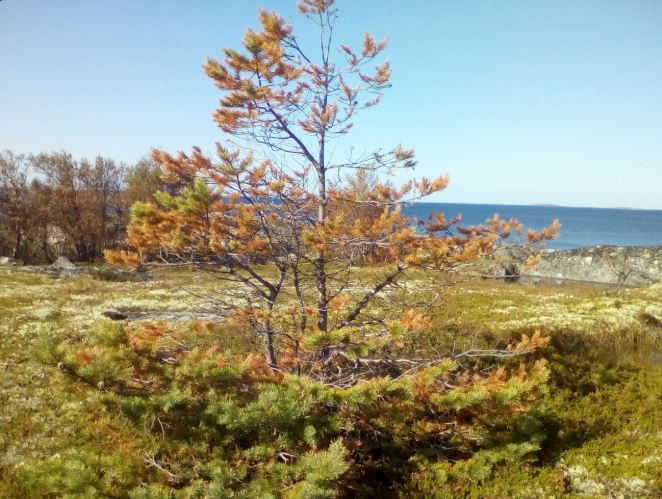
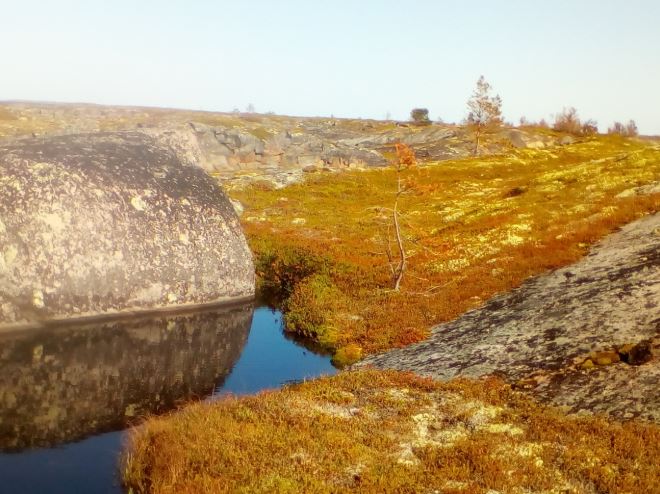
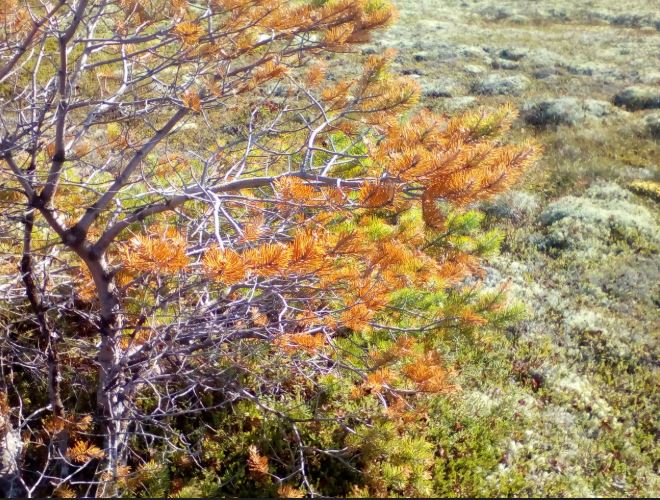
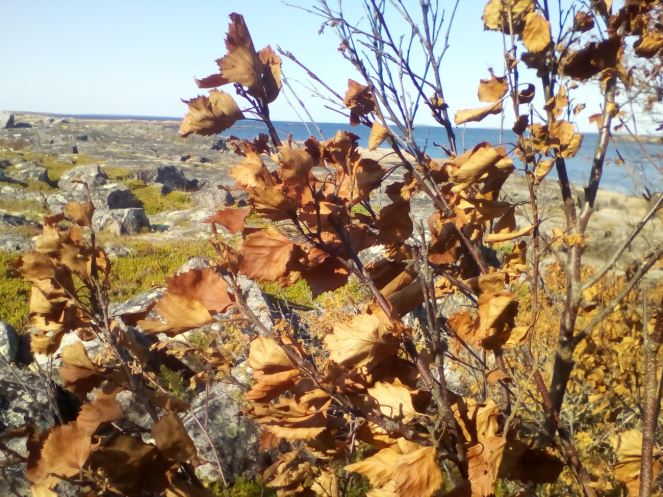
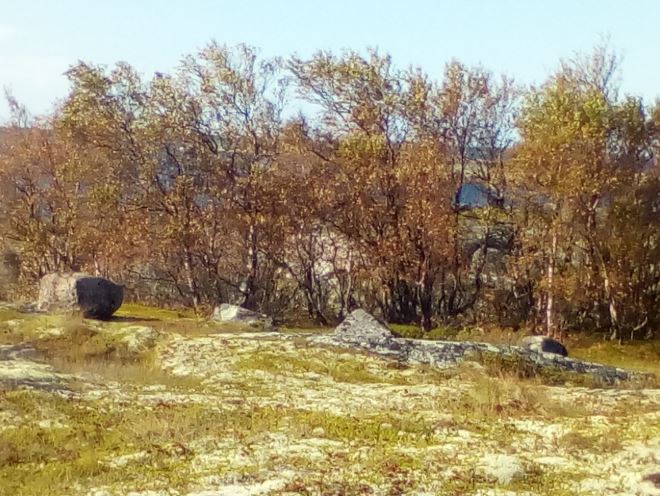
Residents of Karelia’s Kem District have sounded the alarm. Tree in the district have turned yellow and mushrooms have disappeared after the explosion near Severodvinsk, they claim.

“Ten days after [the accident], the vegetation on the islands in the White Sea near the settlement of Rabocheostrovsk took on a very unhealthy appearance. I get the impression the trees, grass, and moss burned flamelessly. Even toadstools and fly agaric, habitues of these locales, have disappeared on the islands. I would like you to clarify whether any tests will be made, what the republic’s government plans to do in general in response to this issue, and how people’s health will be affected,” a user identified as “Irina Kudryashova” wrote in a letter to Karelian Governor Arthur Parfenchikov, which she also posted on the VK wall “City of Kem Public Oversight.“

Kudryashova posted the following photos to back up her claims. She also posted a short video entitled “Yak Island Today August 18, 2019.”

In the same thread, someone identified as “Galina Ivankova” wrote that she was “really frightened.”

“Some men from Belomorsk went out to sea, but when they got to Shuyiretskoye there were warships at anchor there and a yellow cloud overhead. They got turned back: they weren’t allowed to go out into the sea. So welcome to Chernobyl Karelia. Thanks to the mad nuclear scientists,” a person identified as “Oleg Bachanov” wrote in another discussion on the same wall.

“The situation is the same on Yak Island: everything withered and dried in no time. In recent years, especially after 2009, I have noticed that, from the north and the northeast, all the woods and grass on the islands look as if they have been covered in brown paint. There are no berries or mushrooms in these patches,” replied a user identified as “Sandro Avtushenko.”

On August 8, a liquid rocket propulsion system exploded during testing on an offshore platform in the Arkhangelsk Region. Eight Rosatom employees [sic] were hurt; five of them were killed. Fearing radiation, residents of Severodvinsk and Arkhangelsk made a run on iodine in pharmacies.

After the explosion, radiation levels were sixteen times higher than normal in Severodvinsk. Higher levels of background radiation were also recorded in Norway a week after the blast.

Translated by the Russian Reader. NB. The original text was heavily edited to reflect the fact that the claims cited in the article were made by four discrete users on a VK community wall in Kem, Republic of Karelia, not by an indefinitely large number of “residents.”

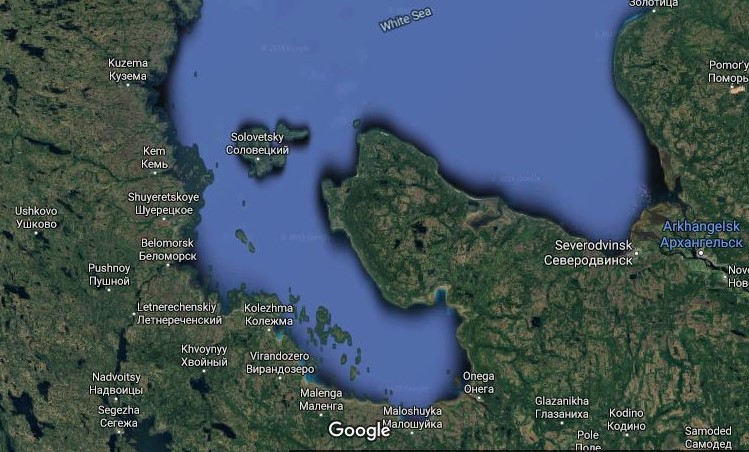
areaThe area of Northwest Russia, encompassing parts of the Republic of Karelia and Arkhangelsk Region, discussed in the article. Image courtesy of Google Maps

______________________________________

Putin Says No Radiation Threat from Recent Explosion, But Mum on Details of Accident
The Associated Press (via CBC News)
Aug 21, 2019

Russian President Vladimir Putin insisted Wednesday that a recent deadly explosion at a military testing site in northwestern Russia hasn’t posed any radiation threat, but he remained coy about the circumstances of the mysterious incident.

Speaking after talks in Helsinki with Finnish President Sauli Niinisto, Putin emphasized that neighboring nations haven’t recorded any spike in radioactivity.

“These are the objective data,” he said. “These things can be tracked.”

The Aug. 8 incident at the Russian navy’s range in Nyonoksa on the White Sea killed two servicemen and five nuclear engineers. It was followed by a brief rise in radiation levels in nearby Severodvinsk, but the authorities insisted the recorded levels didn’t pose any danger to local residents.

Russian officials’ changing and contradictory accounts of the incident drew comparisons to Soviet attempts to cover up the 1986 explosion and fire at the Chernobyl nuclear power plant in Ukraine, the world’s worst nuclear disaster.

The Russian Defense Ministry at first denied any radiation leak in the incident even as the authorities in nearby Severodvinsk reported a brief rise in radiation levels and advised residents to stay indoors and close the windows. Frightened residents rushed to buy iodine, which can help reduce risks from exposure to radiation.

Russia’s state weather and environmental monitoring agency said the peak radiation reading in Severodvinsk on Aug. 8 was 1.78 microsieverts per hour in just one neighborhood, about 16 times the average. Peak readings in other parts of Severodvinsk varied between 0.45 and 1.33 microsieverts.

The announced peak levels were indeed lower than the cosmic radiation that plane passengers are exposed to on longer flights or doses that patients get during some medical scans.

No detail on weapon tested
The Comprehensive Nuclear Test Ban Treaty Organization (CNTBTO) said earlier this week that several Russian radiation monitoring stations went silent shortly after the explosion in Nyonoksa. Lassina Zebro, the organization’s executive secretary, said Tuesday that the two Russian stations reported to be offline were back in operation and are now backfilling the data.

Observers said that several stations coming offline at the same time appeared to reflect a coordinated effort to conceal the radiation data, which could help identify the technology that was being tested at the time of the explosion.

Putin hailed the victims, saying they were doing “very important work for the nation’s security,” but kept mum on what type of weapon they were testing.

Russia’s state nuclear corporation Rosatom said the explosion occurred on an offshore platform during tests of a “nuclear isotope power source” for a rocket engine, a statement that led some experts to conclude that the weapon undergoing tests was the Burevestnik (Storm Petrel), a prospective nuclear-powered cruise missile first mentioned by Putin in 2018 that was code-named Skyfall by NATO.

U.S. President Donald Trump has backed that theory in a tweet, saying that the U.S. is “learning much” from the deadly explosion. In a tweet, he said, “The Russian Skyfall explosion has people worried about the air around the facility, and far beyond. Not good!”

The U.S. worked to develop a nuclear-powered missile in the 1960s under Project Pluto, but abandoned the technology as too unstable and risky.

Monetochka, “Burn Burn Burn”

The stats don’t lie, alas
Surveys and forms
Bad numbers, a hard year
But I sing in vain

I replace fabric with foil
Paste a bandage on my webcam
You can’t swing a cat without hitting
The wall-to-wall government

It’s gray and dressed in designer jeans
An absurdity, a caricature
It’s funny: culture has ended
In a multicultural country

The lights are out, the coffin’s made
And I’m cloud sad
In the land of Yesenin’s poems
Art is finished

(Refrain)
Now there’s only ash on the ground
Dig and search where you like, not a soul around
Burn, my country, burn
Don’t put it out, oh, don’t put it out, don’t put it out

The piano in the city park
Is really quite upset
Someone terrible bangs on it
A blue note blacker than night

A boondocks Banksy roams there
In a black hoodie
The lines he spray-paints on the corners
Are the words to this song

The rap of Moscow parties
And northern suburbs blackens
While in my black robe I pray
And my God hears: amen

God sees the shining cross
But I know it won’t help
For there are few too white spots
On my black skin

(Refrain 2x)
Now there’s only ash on the ground
Dig and search where you like: not a soul around
Burn, my country, burn
Don’t put it, oh, don’t put it out, don’t put it out

_______________________________________

Monetochka
VK
August 9, 2019

PREMIERE!

💿💿💿

Monetochka, “Burn Burn Burn”

News about the forest fires in Russia appears in our news feeds less and less frequently, but the problem has not gone away. Today, August 9, the peak of the forest fires was recorded, and yet firefighters are battling the blazes in only seven percent of the affected areas. We have to deal with his problem not only by taking emergency measures but also by engaging in year-round prevention. Volunteer forest fighters tell children and adults about the fires and help extinguish outbreaks at the early stages. But they lack money for training and doing their jobs.

All the money raised when people listen to this track on streaming services will go to purchase backpack pumps, spray guns, and navigators. It will also cover other vital expenditures in Greenpeace Russia’s campaign to combat fires in natural areas, including amending school textbooks, some of which have been found to give erroneous advice on extinguishing and preventing fires.

From August 16, the new track will be available on all other venues. As soon as we get the first stats on the number of listens, we will start helping out financially. Reports will be posted here and on other social networks.

Let’s make the world better together. 💚

For more details, go to https://pomo.sh/monetochka

monetochka-burning

On August 9, Valentin Tarabrin commented, “These fires are a cover-up for illegal deforestation. Millions of hectares are being cut down. Open Google Map and you will see nothing is left of Siberia. These fires are deliberate arson.”

Image courtesy of Monetochka’s VK wall. Translated by the Russian Reader