Greenpeace Russia: Siberian Wildfires Are Planetary Disaster

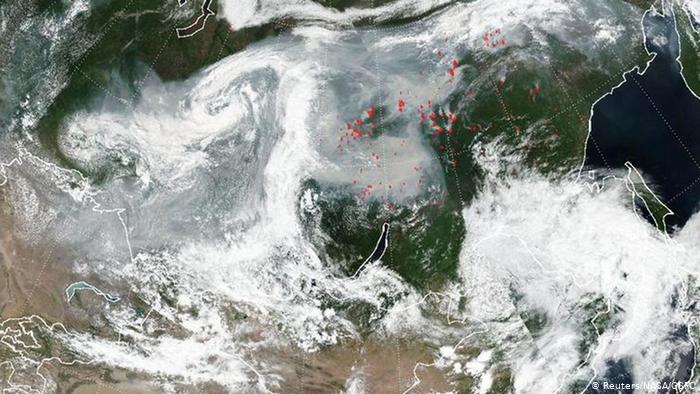
49754589_303A satellite view of the forest fires in Siberia, July 21, 2019. Courtesy of Deutsche Welle

Wildfires in Siberia becoming a planetary-scale disaster
Gismeteo
July 29, 2019

Grigory Kuksin, the head of Greenpeace Russia’s firefighting project, called wildfires in Siberia and the Far East a planetary-scale disaster.

Smoke from fires usually moves east or north, but this time it is moving west. Thus, the smoke has engulfed Siberian cities and has reached the Urals. The smell of burning is reported in the Volga Region and Tatarstan.

The wind that changed its direction is expected to bring the smoke to Kamchatka. It may even reach other continents across the ocean, which means it will become a planetary-scale disaster.

Kuksin believes that the smoke will continue to affect the region for a few more weeks. Heavy rain is needed to extinguish such a large fire, but no precipitation is expected.

The expert believes it necessary to reconsider the area of control and implement special measures to avoid similar situations in the future.

_________________________________________________________

Why There Are So Many Forest Fires in Russia
The scale and aftermath of the disasters are exacerbated by the consumerist mindset of authorities and the lack of resources in a weak economy
Vladimir Ruvinsky
Vedomosti
July 29, 2019

Dense smoke from forest fires has covered cities in Siberia, the Urals, and the Volga region. The fires could have been dealt with at an early stage, but regional authorities avoid fighting fires when they can avoid it due to a lack of money and means.

According to Greenpeace Russia, the fires have encompassed over three million hectares of forest, an area comparable in size to Belgium. The total for the spring and summer of 2019 is eleven million hectares, an area larger than Portugal. During this century, 2003 and 2012 saw worse fire seasons, but Grigory Kuksin of Greenpeace Russia says the records set during those years will probably be beaten this week. Usually, the smoke from the fires drifts towards the sparsely populated east and north. This year, however, the fires have attracted more attention since the smoke has drifted westwards, towards Novosibirsk, Yekaterinburg, Chelyabinsk, and Kazan.

The current fires are largely a consequence of decision-making by Russian authorities. More than 90% are the burning fires are located in so-called monitoring zones, areas where regional authorities may not fight fires if the expenditures on extinguishing exceed the damage they cause. This regulation was adopted in 2015 when Russian federal authorities basically legalized what had been an implicit rule during Soviet times. But the Soviet authorities had, in fact, fought fires in remote areas. Nowadays, regional governors are not officially obliged to fight them. They take advantage of this, especially because they lack money and equipment.

While Russia has lots of woodlands, its economy is too week to fight all forest fires. Kuksin argues that the gigantic monitoring zones could be decreased while increasing prevention measures and using available resources to better effect. Most fires are caused by people: they are mainly sparked when loggers burn residue wood in logging areas.  Such fires could definitely be put out immediately, but local authorities have made a practice of refusing to fight them. They are the major cause of the biggest fires, which have turned into insoluble problems that only the rains can solve.

The way the authorities see things, the anticipated costs of putting out fires in the monitoring zones are always higher than the damage caused by them. The damage caused by forest fires is primarily calculated in terms of the minimum price of timber. This cost can be written off (and if not, there is no damage), i.e., forest fires often cost almost nothing in terms of official damages. However, as Konstantin Kobyakov, an environmentalist at WWF Russia, points outs, Russia loses three times more forest in fires annually (three million hectares) than the forest industry removes (one million hectares), meaning the country already faces a deficit of woodlands that will only keep growing.

Kuksin recalls that gas and oil industry infrastructure, such as pipelines, is located in the monitoring zones, and uncontrolled blazes are approaching hundreds of villages and small towns. Damage assessment does not account for air and water pollution or the real harm caused to people’s health by acrid smoke, which is harder to calculate but does considerably increase mortality. In addition, stable high-pressure systems have formed over the gigantic fire zone in Siberia, triggering abnormally heavy rains along the perimeter. The fires generate a lot of greenhouse gases and soot, which accelerates the melting of arctic ice and climate change, meaning they increase the risk of more fires in the future.

Translated by the Russian Reader

Smog in Siberia, Fires No One Puts Out

fullscreen-1oaq“Help! We’re suffocating.” A message from Achinsk in Krasnoyarsk Territory in Siberia. Courtesy of instagram.com/ksyushenka_shapotkina and Vedomosti

Smog Has Engulfed Cities in the Urals and Siberia
Vedomosti
July 24, 2019

Nearly 2,000,000 hectares of forest are burning in Siberia and the Russian Far East. Almost no attempt is made to extinguish them since most of the fires are burning in remote areas where the cost of fighting the fires exceeds the cost of the damage they can cause [sic].

Translated by the Russian Reader. For the full album of horrifying photos of smoke-engulfed cities in the Urals and Siberia, click this link.

fullscreen-1nuyUst-Ilimsk, Irkutsk Region (Siberia), Russian Federation. Courtesy of instagram.com/anastasiahaimovskaya and Vedomosti

fullscreen-1pgyKrasnoyarsk. Courtesy of instagram.com/nadyapinchuk and Vedomosti


A Holiday in Chernobyl

Watch Kate Brown’s stunning lecture about the real, terrifying aftermath of the disaster at the Chernobyl Nuclear Plant.

Then buy her fabulous, groundbreaking new book Manual for Survival: A Chernobyl Guide to the Future and read it from cover to cover.

Once you have done this, ask yourself what kind of cynical lunatics would take people on holidays to the Chernobyl Exclusion Zone.

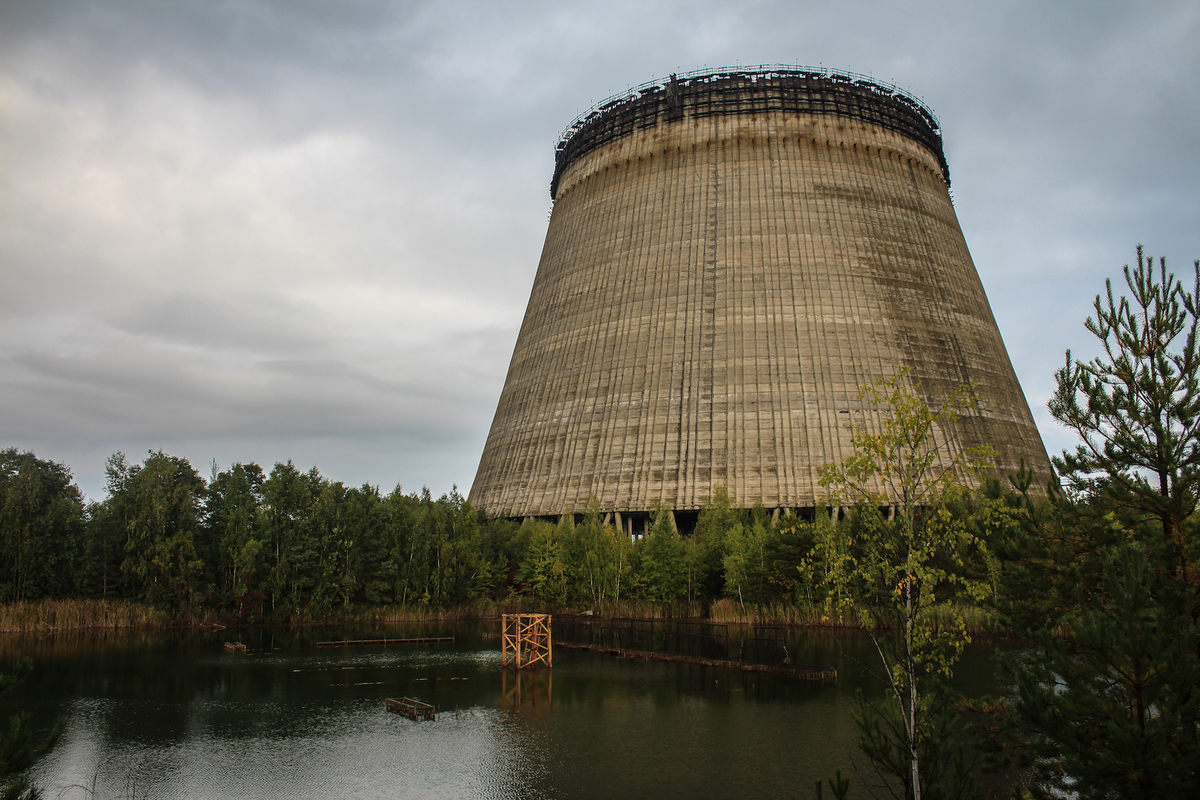
Chernobyl Cooling Tower

Day 5: Chernobyl Nuclear Power Plant
Friday, July 31, 2020

Leaving early from our hotel, we’ll travel by private bus to the Chernobyl Exclusion Zone. We’ll meet our Chernobyl guide, while a documentary film playing on the bus will bring us up to speed on the accident, its causes, and its many repercussions. On our first day in Chernobyl we’ll visit the reactors themselves to witness ground zero of the accident, admire the new containment structure installed in 2016, as well as check out some of the other facilities around the nuclear power plant. Between excursions, we’ll take lunch in the Chernobyl workers’ canteen, surrounded by scientists and engineers currently stationed at the plant. Later, after a long day of exploring, dinner will be served at a restaurant in Chernobyl town. Our accommodation for the night is at a hotel nearby, located inside the Chernobyl Exclusion Zone.

Day 6: The Streets of Pripyat
Saturday, August 1, 2020

At the time of the Chernobyl accident, the workers’ city Pripyat had a population of 49,000 people. It was evacuated soon after the event, and now survives as one of the world’s most famous ghost towns. Today, we’ll get to know this empty city intimately, walking its desolate streets, and visitings its abandoned schools, hospitals, and theaters. We’ll see all of Pripyat’s main landmarks, including the fairground, swimming pools, and also some fabulous street murals. After lunch back at the Chernobyl canteen, we’ll then get to visit one of the Exclusion Zone’s best-kept secrets: the DUGA radar installation, or “Russian Woodpecker,” that rises to a height of 150 meters at the heart of an abandoned Soviet military base. Late in the day we’ll return to the capital for one last night at our Kyiv hotel.

Source: Atlas Obscura. Photo of Chernobyl Cooling Tower by Darmon Richter. Courtesy of Atlas Obscura. Thanks to Louis Proyect for the heads-up on the lecture.

“I Felt Like Going Up to Him and Spitting in His Face”

“I Felt Like Going Up to Him and Spitting in His Face”
Yevgeny Karasyuk
Republic
July 2, 2019

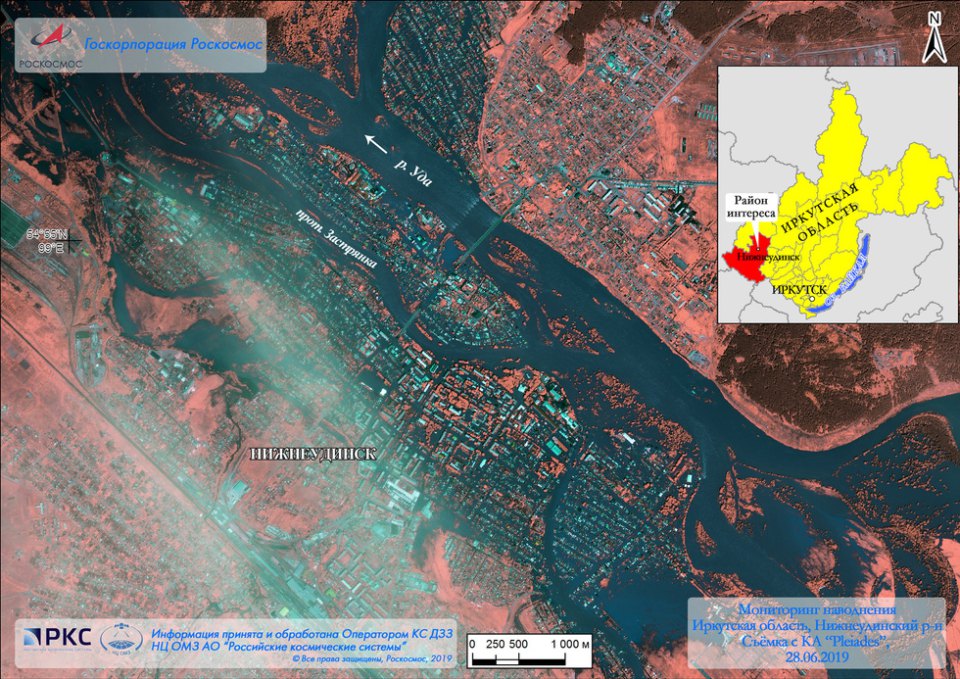
Torrential rains began falling in the western part of the Irkutsk Region early last week. When they were over, there was no doubt the bad weather had caused local rivers to rise, producing a major flood involving human casualties and large-scale damage.

The flood, which affected over ninety towns and destroyed at least a thousand homes, has been declared the most powerful in the region in the one hundred some years since the weather there has been systematically observed and recorded.

The flood put a crimp in President Putin’s schedule, probably even as he was attending the G20 summit in Japan, which wrapped up on Saturday.

He visited the flooded region the same day, but he had no intention of staying there for long. He never left the airport in Bratsk, a city that had also suffered from the flood, but which had not been inundated as disastrously as other cities and towns.

Putin’s visit to Bratsk on his way home to Moscow from Osaka was a logistical opportunity he could not pass up, of course. The Russian regime’s personification has long ago reached the point the populace regards the president as morally responsible for any high-profile disaster anywhere in the country.

Going where disaster has struck is thus a matter of political instinct. The president last showed his trust in it only six months ago in Magnitogorsk. The critics can accuse Putin of arriving at the sites of tragedies after they are over and visiting fake patients with arms demonstratively in slings, but he knows what he is doing.

He still finds the strength to board a plane so that, a few hours later, he can appear, stern-faced, before the cameras and issue orders at emergency meetings of local and federal officials. This is exactly what the president did late at night in Bratsk.

The speed with which Putin arrives at the epicenter of events, like the amount of time he spends there, matches the alacrity with which Russia’s press reports the news.

“Putin instructed the head of the Emergencies Ministry to fly immediately to Kemerovo.”

“Putin was informed about the tragedy in Magnitogorsk immediately.”

“Putin demanded that immediately, as of today, compensation be paid to the victims [i.e., the residents of the affected districts in the Irkutsk Region] and that an action plan for rebuilding housing and doing it as quickly as possible be outlined without delay.”

All the fuss testifies not to the might of the so-called power vertical Putin has fashioned but, on the contrary, to its weakness. It produces nothing remotely resembling independence, flexibility, and responsibility on the part of local authorities, especially when it comes to the safety of ordinary Russians. Putin continues to run our vast country manually, but the outcome of his administration is quite deplorable, as we can see.

irkutsk.jpegA satellite image, provided by Roskosmos, shows the parts of the Irkutsk Region affected by the flooding. Courtesy of Republic

It does not matter a whit where and when the president arrives, and how long he stays there because it happens after the fact. Russian authorities usually do nothing at the most crucial moments. In a country run by the security services [siloviki], a country where there are more experts in security than anywhere else, a country with a whole emergencies ministry, it can easily happen that you would not be warned of impending disaster.

According to the Emergencies Ministry, four out of ten Russians are still not covered by the early warning system. Its absence goes a long way toward explaining the disaster in Krymsk in July 2012 in which entire houses and their sleeping owners were swept away by flood waters in the middle of the night. While Moscow was fiddling around with modernization and digitalization, towns in Krasnodar Territory did not have radio transmitters at their disposal to sound warning signals and inform residents of the approaching flood.

Seven years have passed since the disaster in Krymsk, and what happened there has happened again in Eastern Siberia. Residents of the town of Tulun, in the Irkutsk Region, have claimed they were not warned about the impending flood, and so they did not have time to gather their belongings and flee their homes. Local officials, however, assured Putin everyone had been warned.

“I watched our mayor giving his report to Putin and I felt like going up to him and spitting in his face,” a local woman who could not contain her emotions told journalists.

Officials now say they knew nothing. Irkutsk Region Governor Sergei Levchenko said regional authorities were not informed of the dangerous rise in the levels of water in local rivers, while the Emergencies Ministry has claimed the opposite.

Officials argue nature is capable of catching anyone by surprise, including the Russian state. At Irkutsk State University, scientists said global climate change had caused the flooding. Arctic and subtropical air masses had mixed with humid air from the Pacific Ocean, something quite rare for the region, to produce the atmospheric anomaly that led to the disaster.

In fact, all that is required in such circumstances is that officials pretend they sympathize with the populace in its plight and are ready to help. But the authorities, disinclined by habit from bowing to public pressure, could not make such a sacrifice.

“What do you want me to say? Do you want me to complain? I can complain to you, too,” Alexander Uss, head of Krasnoyarsk Territory, retorted to local residents upset by their governor’s passivity.

Krasnoyarsk Territory was next in the flood’s path after the Irkutsk Region, but the floodwaters have begun to subside.

You can relax. Putin will not be paying you a visit.

Translated by the Russian Reader

Motherlandish

5568220a-c275-4d49-b6df-c8de6ceeee3aDenis Shtroo. Photo courtesy of Daily Storm

Darya Apahonchich
Facebook
March 15, 2019

Climate change demonstrations took place in many cities around the world today.

Schoolchildren and adults took to the streets to demand implementation of the Paris Agreement, which primarily aims to counter global warming.

Maybe you have heard of Greta Thunberg, the Swedish schoolgirl who organized the movement #fridaysforfuture by skipping classes at school every Friday and picketing the Swedish parliament instead.

It makes sense. What is the point of going to school if the future is threatened? Humankind has killed off 70% of wild animals in the past four years. The oceans contain more discarded plastic than fish. And the list goes on.

But what about Russia? In Russia, environmental activist Denis Shtroo has been murdered in Kaluga. He campaigned against the construction of new waste landfills.

Earlier today, an excavator ran over a trailer containing an activist, who, along with other activists, had been trying to stop garbage trucks shipping Moscow’s garbage to Arkhangelsk Region.

I really want there to be a future, but this is what it looks like.

Like no future at all.

Translated by the Russian Reader

The World’s Largest Toxic Landfill

very toxicThe EU Dangerous Substances Directive classifies methyl mercaptan as “very toxic.” Why has the Russian government increased its maximum allowable concentration in the air by sixty times? Image courtesy of Wikipedia

Russia Raises Limits for Airborne Toxic Chemicals Sixtyfold
finanz.ru
February 19, 2019

The Russian Federal Sanitation and Epidemiology Service and national consumer watchdog Rospotrebnadzor have drastically raised the maximum allowable concentrations (MACs) of harmful substances in the air, including formaldehyde, nitrogen dioxide, and methyl mercaptan, a chemical typically emitted by waste landfills.

The current MAC of methyl mercaptan in the air is sixty times higher than it was ten years ago and 660 times higher than it was in 1999, Greenpeace Russia has reported in a press release.

Moreover, the new MAC for methyl mercaptan exceeds the odor threshold by one and a half to three times, meaning the level at which people living near waste landfills can smell the substance.

Greenpeace Russia noted that the MACs of a number of other air pollutants were increased in 2014 and 2015, for example, formaldehyde and nitrogen dioxide.

According to the previous standards, about 50 million Russians lived in cities where formaldehyde concentrations had been exceeded. After the MACs were relaxed, the statistics “improved.”  They now show, allegedly, that fewer cities are at risk, and only 20 million Russians may be affected by increased concentrations of carcinogens.

“However, according to assessments by Russian and international scientists, the risks presented by formaldehyde concentrations under the new, current guidelines correspond neither to the standards adopted by the Russian Federation nor common sense,” writes Greenpeace Russia, noting that phenol, formaldehyde, and methyl mercaptan are poisons. Constantly inhaling them increases toxicity in the body and reduces immunity.

“This is one of the factors contributing to a manifold increase of the incidence of flu and acute respiratory infections over the last twenty years,” Greenpeace Russia claimed  in its press release.

As grounds for its decision to raise the MACs, Rospotrebnadzor refers to complex toxicological, sanitary, and epidemiological studies, as well as an analysis of international practices, but it refused to provide the specific research findings, Greenpeace Russia reported.

The Human Ecology and Environmental Hygiene Research Institute, which reports to Rospotrebnadzor, claimed no such research had been conducted whatsoever, and all it had provided to Rospotrebnadzor were background, reference materials. But even they were not taken into account when the decision was taken to increase the MACs for phenol and formaldehyde.

On February 18, Greenpeace Russia sent an open letter to the relevant committees in State Duma, the Russian Security Council, the Russian Health Ministry, the Russian Natural Resources Ministry, Rospotrebnadzor, and Rosprirodnadzor, the Russian natural resources watchdog. In the letter, Greenpeace Russia pointed out that the unwarranted changes to the sanitary norms jeopardized the implementation of the priority national environment and health projects.

Thanks to Julia Murashova and the Coalition to Defend Petersburg for the heads-up. See my previous entry, “Denis Stark: Welcome to the Clean Country,” on the topic of waste management in Russia. Translated by the Russian Reader

Denis Stark: Welcome to the Clean Country

Welcome to the Clean Country*
Denis Stark
Activatica
February 8, 2019

In an article I wrote six months ago, I argued Russia was at a crossroads and there were two scenarios for the future of waste management there. I also wrote that the window of opportunity was quite narrow and was closing. If Russia chose the road of waste incineration, it would be an irreversible decision, at least for the next thirty to thirty-five years.

The window of opportunity has closed, and the scenario has been chosen. Russia is set to become a country with two hundred waste incineration plants and function as the trash bin of Europe and Asia.

What I am about to say is very unpleasant, and you are likely to put it down to the my pessimism. That is why I should say a few words about myself. I have been doing waste management projects for fifteen years. During the last seven years, although I lived and worked abroad, I would come to Russia on weekends and holidays to clean up trash, organize the separate collection of recyclables, hold conferences, and meet with officials.

I believed so strongly in Russia that when my contract in the United Arab Emirates ended in 2018 and my family decided to take a six-month vacation, we didn’t go to Bali, Goa or Montenegro. We went to Russia, where we made the rounds of conferences, met with officials, talked with activists, and wrote articles.

Until January 14 of this year, I continued to believe we could make a difference. This is hard for me to write after fifteen years of intense work in the waste management sector, after making so many friends and publishing a book. I feel responsible to my friends and my country, to my relatives who live in Russia and cannot leave.

I have always been someone who inspired and organized by arguing that small deeds and grassroots involvement would make a difference. I belied it was true, and I still believe it. But now we must admit we have failed.

408c99ad6241208c31100ddcf7c692fd.jpg

What happened on January 14, anyway? President Putin signed a decree establishing the Russian Environmental Authority [Rossiiskii ekologicheskii operator], a public nonprofit company responsible for developing systems for the treatment of solid waste.

Let’s examine several points in the decree and find out what the dry, incomprehensible legal jargon means. The meaning of decrees must be deduced, since they contain numerous long clauses with nice-sounding words, difficult turns of phrase, and formal language. It is thus difficult to cut to the chase and figure out who and what are implied.

To simplify the task, I have replaced what I regard as superfluous verbiage with ellipses and generated my own reading. I am not a lawyer, and so I make no claim to be right. I could be mistaken. My view could be one-sided, so I would advise you to read the decree, watch the president’s speeches on waste management, and reach your own conclusions.

5cbdd36d7c8e7ab01e4f0972e73203da.jpg

“The company is established with the goal of creating […] waste management systems […] for producing energy.”

I.e., waste incineration plants will be built. I should explain what this means for readers not familiar with the subject. Officials refer to waste incineration as the production of energy from waste or even recycling waste into energy. This language is misleading, papering over the fact that, besides the energy generated from waste, toxic ash and toxic emissions are released into the atmosphere as byproducts.

“It is involved […] in coordinating the work of the federal government, regional executive authorities, and local governments.”

So, the newly established company will tell the federal government, regional governments, and local governments what to do when it comes to waste. The wording is so gentle and deceptive: “involved in coordinating.” I think this means the new authority will them to what to do.

I am especially jarred by the idea of its riding roughshod over local governments. Are you?

“It is involved in drafting and implementing government programs and projects in the field of waste management.”

My guess is that the new company will handle all government waste management projects. The decree does not say this outright, of course, but no other company has this portfolio. So, I imagine that the new company will enjoy a monopoly.

“It drafts proposals for improving legislation […] and is involved in drafting regulations in this area.”

The new company can amend the laws regulating waste management. Other companies do not have this power, but it does. Does this mean no one else would be able to propose amendments to the laws on waste management? Formally, no. In practice, however, I think the new company will either coordinate or sign off on any and all amendments to the relevant laws and regulations.

“It is involved in drawing up […] agreements […] on the transport […] of waste generated in one region of the Russian Federation to other regions of the Russian Federation.”

That is, the new company will handle the logistics of transporting waste between regions.

“It carries out expert analysis of waste management transport routes and locations […] and submits recommendations for adjusting them.”

So, the new company will be deciding on the logistics, technology, and locations of landfills and disposal facilities in Russia’s regions. But what if local communities do not agree with its decisions?

“It analyzes […] whether the procedures of public discussion of proposed locations have been observed.”

The authority decides whether procedures for public oversight have been observed. For example, if a community opposes the proposed location of a landfill or waste incineration plant, the company can rule the procedure for assessing impact was not observed properly and declare the feedback made at public hearings null and void.

“It implements […] international cooperation […] on issues of waste management, and it makes agreements with international organizations.”

What international issues on waste management could there be? Maybe the decree has in mind importing waste from China and Europe, where the requirements for waste disposal have become more stringent, proposals for waste incineration facilities spark protests, and there is no vacant land left for landfills.

The import of foreign waste should be fairly profitable. Where will the money go?

“It invests temporarily available funds […] and engages in other income-generating activities.”

I will not hazard a guess as to where available funds will be invested.

“It drafts federal and regional government support programs for investment projects and analyzes these programs.”

I.e., it decides which projects to invest in and which not to invest in.

“It is involved in concession agreements and agreements on federal and/or municipal public-private partnerships.”

In Europe, waste management concession agreements are made for periods of twenty-five to thirty years, and governments cannot get out of them. What will happen in Russia?

“It provides […] guarantees (sureties) to private investors..”

For example, it could guarantee shipments of waste in a certain amount, as in Sweden, which provided guarantees to waste incineration plants and currently imports waste from other countries to be burned in Sweden, despite the protests of locals. Nothing can be done, however, because the Swedish government gave its word.

“It carries out voluntary certification of the technological processes, equipment, and capital construction sites necessary for implementation of activities in the field of […] waste management.”

Did I read that correctly? Certification is “voluntary” but at the same necessary for working in the waste management field, meaning that the authority sets the conditions for certifying technological processes, equipment, and construction sites, and no one can make a move without this certification.

“It functions as a customer, operator and/or developer of information systems in the field of waste management.”

The company will have its hands on all waste management information systems. It will bear sole responsibility for the accuracy of information about its doings.

“It engages educational and public awareness work in the waste management field and popularizes modern waste management technologies.”

The company will supersede all grassroots campaigns, organizations and movements that have been engaged in raising public awareness when it comes to waste management and recycling. There is not a word in the decree about cooperating with grassroots organizations, supporting them, developing them or even coordinating them. The new company will do all the educating, explaining, and informing, and the technologies it popularizes will be the most modern by definition.

So, what technologies will the company popularize?

d15d61756faf858e73fbf12d6348714b.jpg

Perhaps I am worrying in vain? Maybe the new authority will use its unlimited powers for influencing the executive branch from the federal level to the local, its capacity to make and amend laws, and its functions as investor, educator, and certifying agency to promote separate waste collection, recycling, and waste reduction? These things are also mentioned in the decree, after all, not only producing energy from waste. Maybe the company has been established for these purposes?

President Putin answered my questions on December 20, 2018.

“I understand people who oppose the construction of waste incineration plants. We have to make sure the plants do not scrimp on filters, and everything is top of the line in terms of technological know-how, as in Tokyo, where the plants are located right downtown, but there is no smell and there are no problems, because the right know-how is used. We must build two hundred processing plants by 2024.”

This was much more to the point than what Putin said on June 7, 2018, during his annual “Direct Line” TV program. He was as matter of fact as a politician could be.

The decision has been made: two hundred waste incineration plants must be built in Russia. The know-how will be determined by the Environmental Authority, which will have oversight over its own work and also “educate” people about the outcomes of its work.

The decree establishing the authority has been signed. There is no going back: the regime does not take back what it says. Welcome to a garbage-free country, dear rank-and-file Russians. Get your minds ready for “public awareness” campaigns.

That was my introduction. Now I would like to ask the environmentally aware segment of the Russian grassroots community a question. My question is addressed to those of you who know what dioxins and furans are. It is addressed to those of you who have seen the design specifications for the trash incineration plants approved for construction in the Voskresensk and Naro-Fominsk Districts of Moscow Region, and know the differences between this type of plant and similar plants in, say, Tokyo and Vienna.

For ten years you encouraged people to recycle while it still could have made a difference. When, however, you were ignored, you said, “There is still time.”

You thought the horror story in Moscow Region and the regime’s obvious intentions to build trash incineration plants there would trigger a broad-based backlash from the Russian grassroots. When they ignored the story, you said, “It serves Muscovites right.”

When Moscow’s trash was exported to Yaroslavl and Arkhangelsk Regions, you thought it would be more than people could bear. But it was okay: people grinned and bore it.

At each step of the way, the president’s statements have been more and more definite. Now the party’s over. The time for testing the waters has come to an end. The common people have accepted their lot and the powers that be are segueing into “public outreach” mode.

What are you going to do next?

c8238179bed9f435fa597a3ebd1272c2.jpg“Dumping prohibited. Fine: 5,000 rubles.” 

Arkhangelsk activists organized a nationwide day of protest. The protest rallies were attended by several thousand of the usual suspects from around the country. The protest was ignored, and the regime was confirmed in its convictions.** 

That was the best possible outcome. If the day of protest had drawn huge crowds, the regime would have engaged in provocations and arrested the organizers. There was no way to get positive-minded activists who collect waste paper in their own residential buildings to attend: they have no use for rallies.

It would appear that the days of grassroots public conscious raising are over. I doubt the majority of peaceable environmentalists are willing to go to prison like Pussy Riot.

The few remaining dissenting organizations will be subjected to government inspections and shut down for violating the rules. They will be declared “foreign agents.” Or they will simply stop getting grants. On the internet and TV, their campaigning will be seamlessly replaced by the “outreach work” of the Russian Environmental Authority and loyal bloggers and reporters.

* The article’s title is a reference to the Russian government’s so-called Clean Country project for waste management.

** This pessimistic assessment of the protest campaign’s effect seems to be partly contradicted by a February 3 article in the Moscow Times, according to which 30,000 people came out for the protest in Arkhangelsk alone.

Thanks to Sergey Reshetin for the heads-up. All photos courtesy of Activatica. Translated by the Russian Reader

The Gated Community

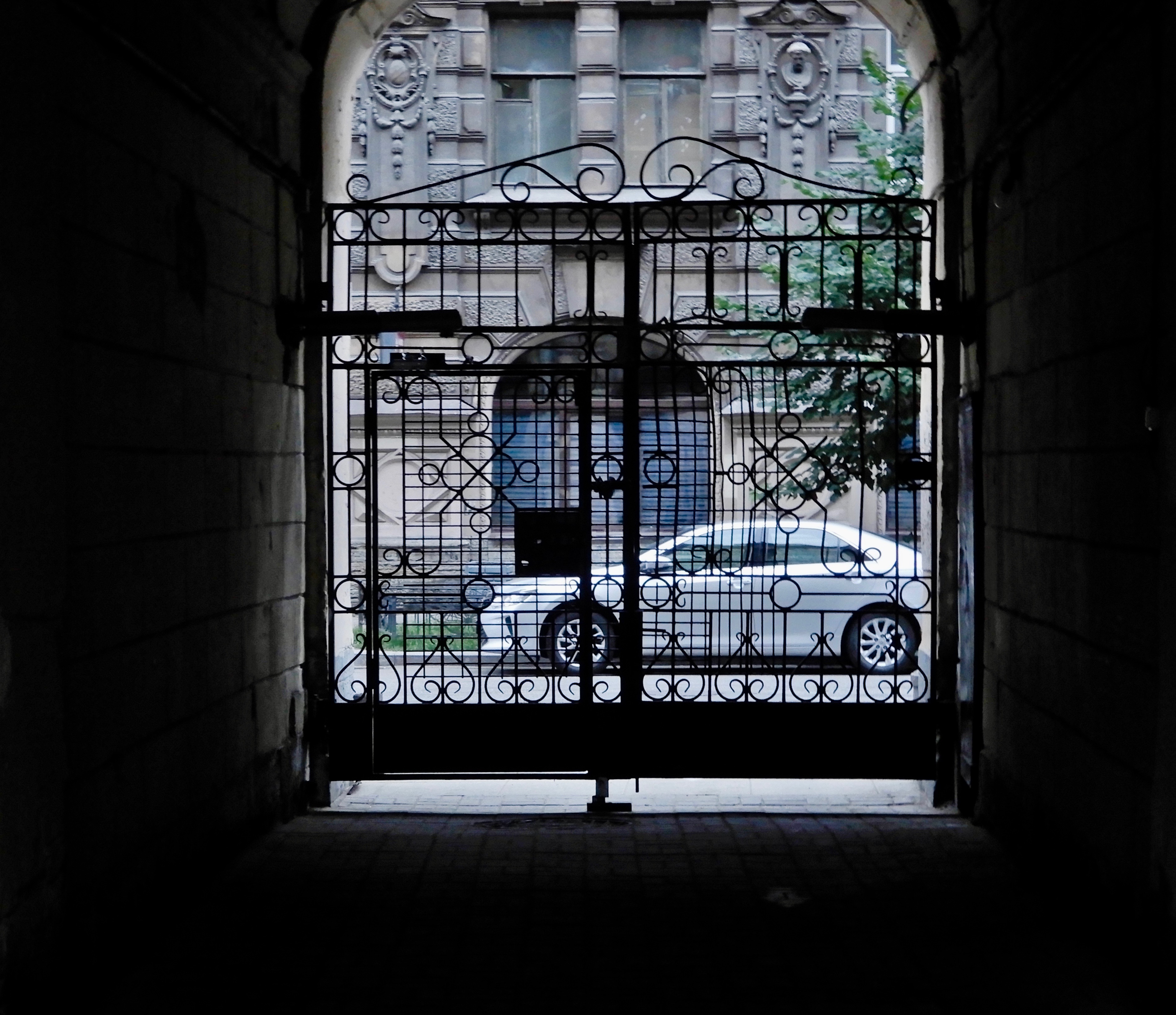
DSCN9429Courtyard gate in Petersburg’s Central District. Photo by the Russian Reader
Behind a Fence
Dmitry Ratnikov
Delovoi Peterburg
September 27, 2018

Remember the golden days when you could walk into any courtyard in central Petersburg and get a taste of the city’s flip side, or simply shorten your way from one alley to another by taking the backstreets? Yes, you would find yourself in the midst of unsightly façades, graffitti, and smells. But these things have not gone away, while navigating the city on foot has been made more complicated by endless gates and intercoms.

After the terrorist siege of the school in Beslan, large numbers of educational institutions suddenly fenced off their grounds, as if the cause of the tragedy had been the absence of a fence. Consequently, the numerous footpaths in the bedroom communities which ordinary folk had used for decades to shorten their way from subway to home, for example, vanished.

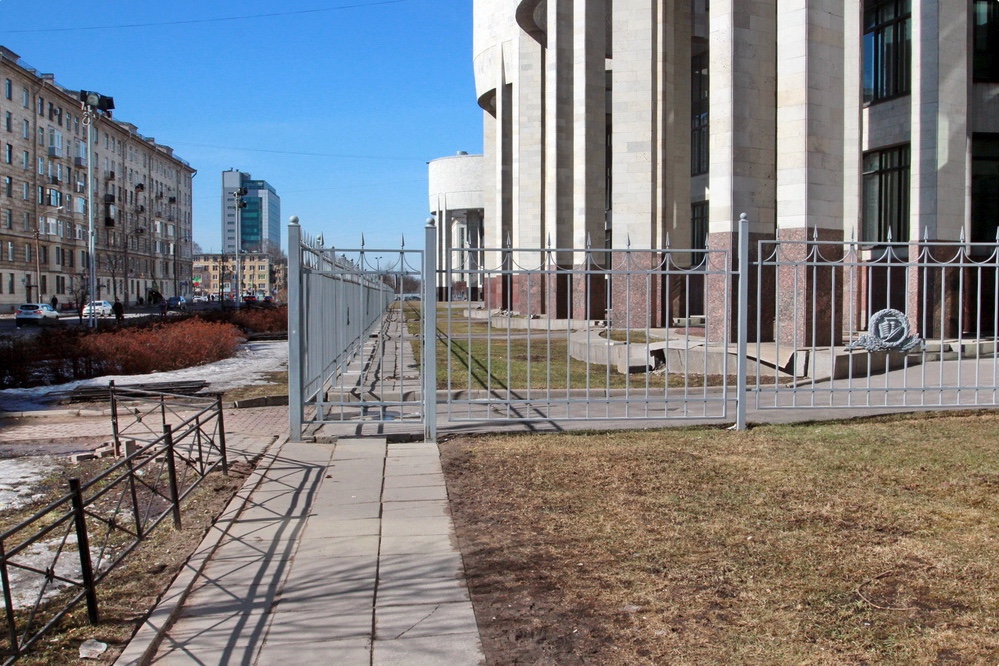
It was not only schools that hid themselves behind bars. Nearly all state institutions did the same thing. The Russian National Library is a vivid example of this. Its old building on Moscow Avenue can be freely approached, while its new building on Warsaw Street is protected by a metal fence that cuts off the library’s paved footpaths. I would urge the library’s director, Alexander Vershinin, to remove the fence. No one is planning to steal your books. It’s stupid.

ratnikov-warsawkaRussian National Library building on Warsaw Street in Petersburg. Photo by Dmitry Ratnikov. Courtesy of Kanoner

Fenced lawns have been proliferating at an incredible rate in the yards and on the streets. The lawns are not protected from wayward drivers, but from planned footpaths. People find it convenient to walk directly from a traffic light to a store, but thanks to thoughtless officials, they have all instantly become potential lawbreakers, because planners designed a path with a ninety-degree angle.

And what do you make of the fences around gardens and parks? One would imagine these are places of public access, but no, entrance is strictly limited. Why is a fence now being erected around the park of the Orlov-Denisov Estate in Kolomyagi? People got along fine without it. Why was the grille around the Upper Garden in Krasnoye Selo restored? Why is the garden outside Vladimir Cathedral nearly always closed to parishioners?

“To keep drunks from staggering around there,” a female attendant at the cathedral once told me.

The argument is absurd. What is the percentage of drunks amongst those who would enjoying sitting on a bench in the cathedral garden? It’s tiny.

gate-2Courtyard gate in Petersburg’s Central District. Photo by the Russian Reader
There are other cases when public green spaces are completely fenced off from the public. You cannot enter Edward Hill Square, for example. The question begs itself. Why did Petersburg Governor Georgy Poltavchenko endow the square with that name when there was an intercom on the gate? You cannot get into the little garden on the corner of Kirillovskaya and Moiseyenko Streets, or the little square at 6 Svechnoy Alley. How do local officials respond to these problems? They either postpone making a decision for years, as happened in Svechnoy Alley, or they make a great show of opening the gate during an official inspection, as happened on Moiseyenko Street.

There are also positive examples, however. The unauthorized DIY fences at 3–5 Troitsky Avenue have recently been dismantled.

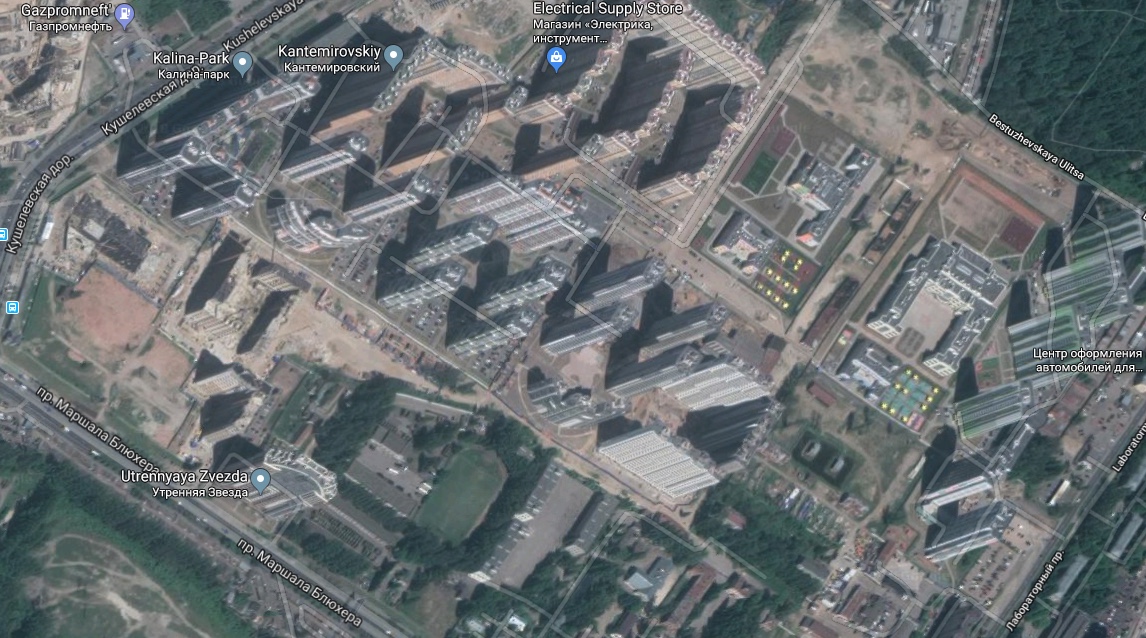
A scandal has, allegedly, erupted in the new, densely populated area between Kushelev Road and Laboratory Avenue. The local property owners association voiced the desire to erect a fence around the perimeter of its grounds, thus cutting off the way to the local school. Ultimately, the locals report, they would have had to take their children more than a kilometer around the fence instead of walking a few hundred meters in a straight line, as they do now. Residents wrote things like “If they put it up, I’ll cut it down at night with an angle grinder” on the local internet forum.  This is not to mention the stupidity of the planned fence. It is no problem to gain access to the courtyard due to the huge numbers of residents going back and forth through the gate every thirty seconds, if not more frequently.

kushelev-laboratoryA satellite view of the new estate between Kushelev Road and Laboratory Avenue, in the north of Petersburg. Courtesy of Google Maps

In southwest Petersburg, a petition is making the rounds to close the entire courtyard of a new residential complex to cars. But what does that mean now that many developers are themselves advertising such monstrous car-free courtyards? You wonder why I have used the word “monstrous”? Because developers should solve the parking problems in their new estates, not the municipal government. If developers build a hundred flats, they should provide a hundred free parking spots. Due to the fact that Seven Suns Development erected a huge “anthill” on Krylenko Street, featuring a “car-free courtyard,” all the lawns and clumps of land in the vicinity have been turned into a single hefty parking lot that has made it difficult to drive down the street to boot. Why should the city permit a commercial firm to generate a problem from scratch that the city will have to solve, for example, by spending public monies on parking barriers?

seven suns krylenkoAn artist’s rendering of the “anthill” on Krylenko Street. Courtesy of Kanoner

And what kind of fences do we build at our summer cottages? Instead of pretty, cozy hedgerows, many of us prefer sheets of corrugated steel without a single break in them.

Given our maniacal, senseless desire to hide from the world around us, what will become of us? Are we headed towards the city-state depicted in Zamyatin’s novel We?

Dmitry Ratnikov is editor of Kanoner, an online newspaper that indefatigably reports on developments in architecture, city planning, and historical preservation in Petersburg. Translated by the Russian Reader

Krasnodar Environmentalist Diana Smirnova Detained by Police in Act of Revenge by Relatives of Kremlin Insider and Russian Latifundist Alexander Tkachov

Diana Smirnova, Defender of the Woodlands in the Lenin’s Farm District of Krasnodar, Detained: Police Crackdown Continues
Ecological Watch on the North Caucasus
August 25, 2018

Diana-Smirnova-2 Diana Smirnova

Last night, in the Lenin’s Farm district of Krasnodar, police raided the home of yet another defender of the district’s forest belt, clear-cut in July of this year at the behest of the Coastal Noncommercial Dacha Association, owned by Nikolai Tkachov and Anastasia Krattli, relatives of former Krasnodar Territory Governor and former Russian Federal Agriculture Minister Alexander Tkachov.

Mastyaeva.previewAnzhelika Mastyayeva, after she allegedly “assaulted” a logger in July 2018.

The police had previously filed trumped-up charges against environmentalist Anzhelika Mastyayeva, claiming she had assaulted a logger. Prior to this, they had detained Mastyayeva without any legal grounds and held her for six hours in the lock-up at a police station.

This time,  the police targeted Diana Smirnova, who had also vigorously defended the forest belt from the Tkachov family’s loggers and had testified at Mastyayeva’s court hearing.

At seven in the evening yesterday, two policemen arrived at Smirnova’s home. One of the officers was beat cop Alexander Sergiyenko, who had cooked up the case against Mastyayeva. The policemen asked Smirnova to come to the station with them for questioning regarding an allegedly unpaid fine. They assured here they would bring her back home in short order. However, Smirnova had no idea about any outstanding fines, since she had not been convicted of any administrative offenses.

Smirnova’s three-year-old daughter cried when her mother was driven away, but this did not stop the policemen.

However, instead of questioning Smirnova about the nonexistent unpaid fine, they took her from the Lenin’s Farm district to Karasunsky District Police Precinct at 205 Stavropol Street in Krasnodar and arrested. Smirnova was jailed overnight in the precinct’s detention facility. She was told she would be jailed until her court hearing.

An EWNC activist was able to phone the front desk of the Karasunsky District Police Precinct at +7 (861) 231-7071. He received confirmation Smirnova had been detained and charged with violating Article 20.25 of the Russian Federal Administrative Offenses Code (“Evasion of an  Administrative Punishment”), although a search of the database of enforcement proceedings showed Smirnova had no outstanding fines.

Andrey Rudomakha, EWNC coordinator, had this to say about the incident.

“The people who run the Coastal Noncommercial Dacha Association are extremely vindictive. It was not enough they did not give a damn about the law, the wishes of local residents, and the deal they made with Krasnodar city hall, and cut down the forest belt. Now they have been harassing people who had the moxie to defend their own environment, since the forest belt that was cut down was the only green area near their homes.

2018-07-13_Lenina-Rubka_DSC03466.preview

“However, judging by the actions taken against Mastyayeva and Smirnova, who were charged with administrative offenses out of the blue by the beat cop Sergiyenko, the police are being used as a tool of revenge. The police used a special trick in their lawless raids on the homes of Mastyayeva and Smirnova. The former was arrested on a Saturday, while the latter was arrested on a Friday evening, times of the week when  it is extremely hard to find defense lawyers. Why arrest a very young woman and mother of a small child late in the evening and jail her overnight in the pretrial holding tank, even if it were true she hadn’t paid a fine? The only point of all this is to intimidate the locals, to discourage them from wanting to defend their rights,” Rudomakha said.

Read more articles on ENWC’s website about the destruction of the woodlands in Lenin’s Farm (in Russian). For more information on the case of Diana Smirnova, call Anzhelika Mastyayeva, member of the Lenin’s Farm residents pressure group,  at  +7 (965) 470-8444, or Police Inspector Alexander Sergiyenko, who detained Diana Smirnova, at +7 (999) 437-3516.

Thanks to Andrey Rudomakha for the heads-up. Photos courtesy of EWNC. Translated by the Russian Reader

______________________________________

This realtor’s video about the charms of Lenin’s Farm makes it clear why sharks like the Tkachov family have sunk their teeth into the neighborhood.