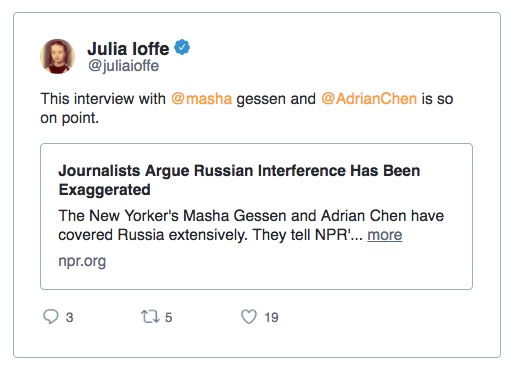
The two principal tasks of professional Russophiles today are 1) maintaining a stony silence on the subject of the Kremlin’s “intervention” in Syria; 2) repeating as often as possible the ludicrous claim that the US has been gripped by “hysterical Russophobia.”
Judging by what I have seen so far, Russophiles have been doing a crackerjack job carrying out their two principal tasks.
That the commission of these tasks puts them firmly on the side of the forces quickly destroying Russia itself is a matter beyond the competence of professional Russophiles, most of whom do not live in Russia. Nor would most of them want to live in Russia if presented with the opportunity. TRR
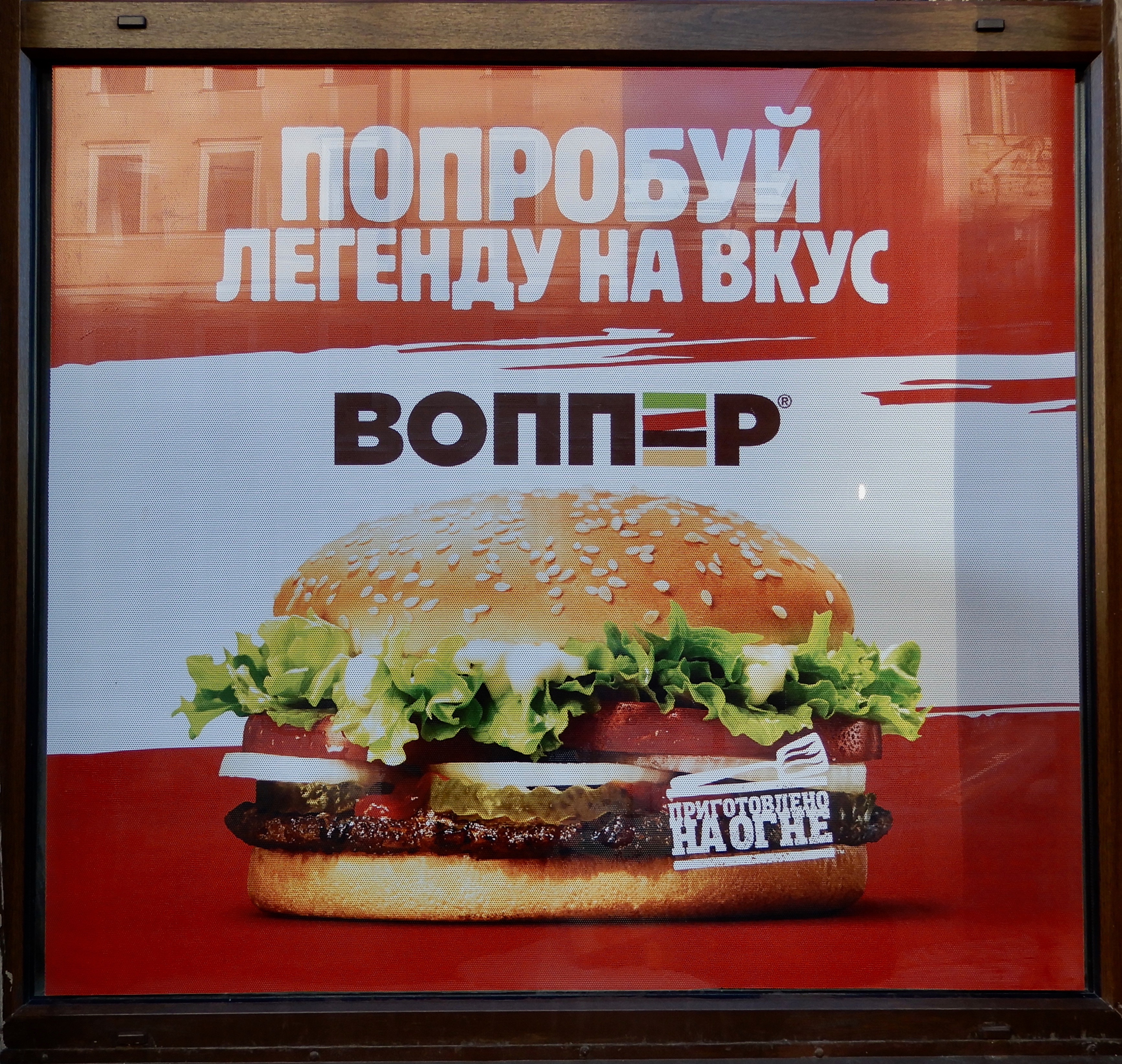
Photo: Taste the Legend. The Whopper. Flame Grilled, 24 February 2018, Furshtatskaya Street, Central Petersburg. Photo by the Russian Reader
I wouldn’t be surprised if, fifteen or twenty years from now, when the dust has long settled in Syria, the names of the dead have been forgotten by the entire world except the people still alive who knew them personally, and Russia has once again become a “newly emergent” democracy with a free press and free elections, an enterprising middle-aged Russian scholar sat down to write the history of our darker, troubled times and, if only in a longish footnote, made the patently false claim that most Russians had been vehemently opposed to the deposed dictator Putin’s barbarous bombings in Syria, and there even had been a broad-based albeit mostly low-key anti-war movement in Russia at the time. TRR
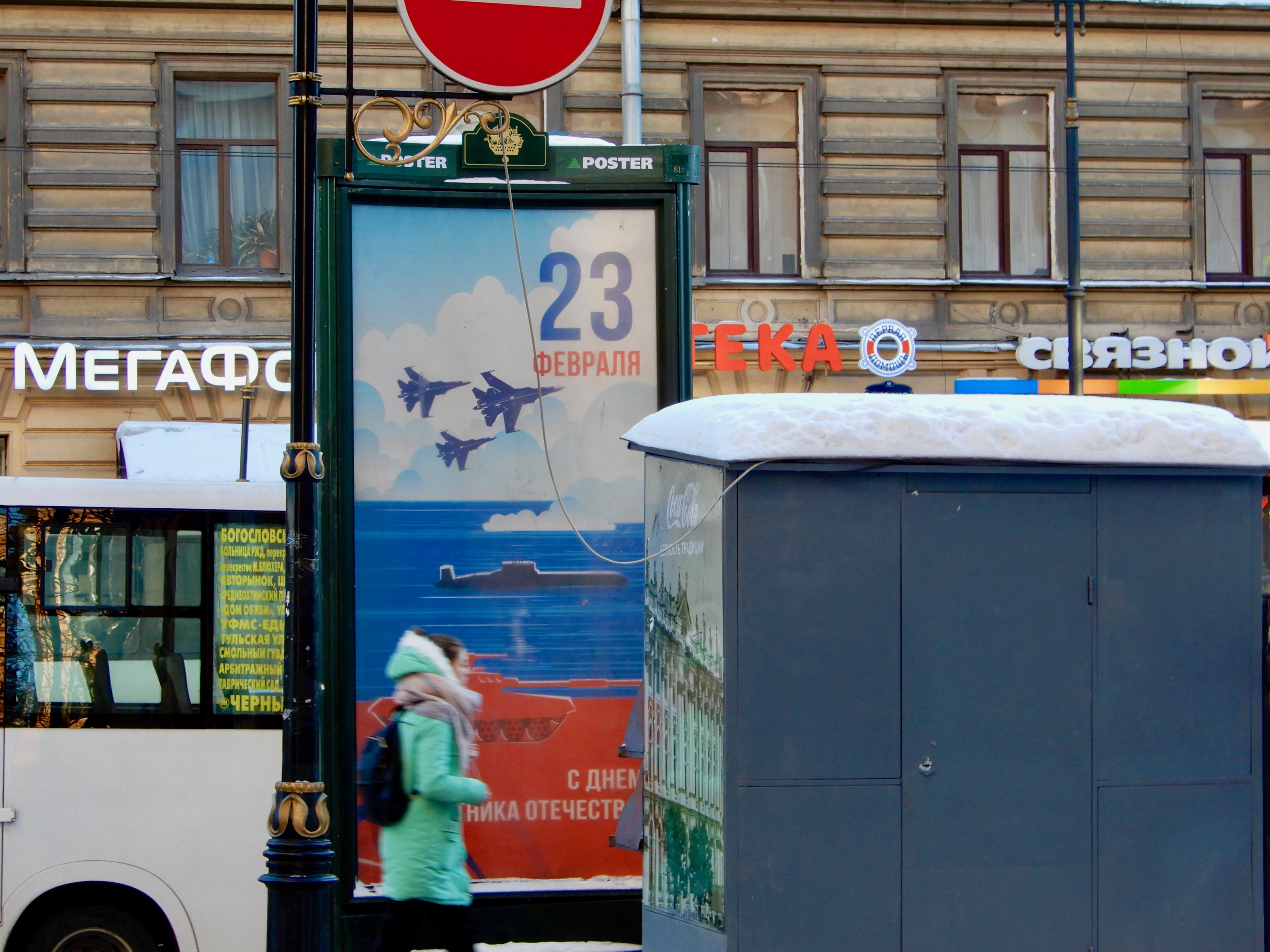
Photo: 23 February. Happy Fatherland Defenders Day! 24 February 2018, Central Petersburg. Photo by the Russian Reader
Lev Schlosberg is a member of the Pskov Regional Assembly and the Yabloko Democratic Party’s national political committee. Photo courtesy of Pskovskaya Guberniya Online
The Veil of Public Opinion: Russian Opinion Polling Has Become Part and Parcel of State Propaganda
Lev Schlosberg Pskovskaya Guberniya Online
1 March 2018
Public opinion polls are constant companions of politics and national election campaigns. In democratic countries, polls are reflections of the public discourse surrounding politicians, ideas, political platforms, and conflicts. They echo public opinion in all its fullness and thus facilitate the public discourse itself regardless of who is involved in it: the authorities, the opposition or society at large. In twenty-first century Russia, political pollsters have a different job. They are tasked with persuading society the regime is terrific and everything (or nearly everything) is going great. During elections, they are supposed to generate the illusion of nationwide support for the authorities.
Polling is a tool of political manipulation in the hands of bureaucrats. Polling data is meant not merely to testify to broad support for the authorities but also to persuade dissidents they are few and far between, to discourage them and sap them of their will.
There is a whole set of techniques behind manipulating public opinion. The findings of public opinion polls, allegedly obtained scientifically, by means of formal research methods, are supposed to convince people of their objectivity and impartiality.
Honest political polling and sociological research is something that goes on in free, democratic societies. When answering questions on a questionnaire or taking part in a group or individual focused interview, a person should be sure she can speak openly and safely, even when she criticizes the authorities.
Fear is the enemy of honest polling. In authoritarian and, especially, totalitarian societies, people are afraid of making critical statements with their names attached to them, whether that entails filling out a standardized questionnaire or answering a question openly and at length. The classic set-up is when the interviewer knocks on someone’s door or comes up to someone on the street and asks, “How would you rate Vladimir Putin’s performance? Do you support him completely, partially or not at all? To ensure the quality of our poll you may get a follow-up telephone call. Please give me your name and telephone number.”
How do you think approximtely 86% of respondents would behave? Well, that is, in fact, how they behave: by giving the “right” answer.” There are many examples of this.
Now put yourself in the shoes of rank-and-file Russians, who are regaled round the clock with tales of Putin’s 86% popularity rating by all manner of mass media: TV, radio, newspaper, the internet. People who do not agree with the authorities but are not experienced in the nitty-gritty of politics will imagine they belong to an obvious, hopeless political minority. They are social outcasts, virtually bereft of kindred spirits.
This is the impression the people behind such political pressure polling want to achieve. A picture of absolute political domination stifles a person’s will and reduces his willingness to voice his stance and take action. This extends to getting involved in politics and voting in elections.
When a person feels insignificantly small, she is made tired and exhausted by the very feeling of her smallness and insignificance. Thoughts of emigrating often occur to people who feel they are in the minority, trapped in a political ghetto.
Political pressure polling is a new means of combating dissent, of attacking the opposition.
VTsIOM recently reported that, according to the findings of an extensive telephone poll (one of the least reliable polling methods), 81% of voters plan to vote in the March 18 Russian presidential election.
Enthusiastic nationwide support is the dream of all dictators. As people who suffer from hypertrophied inferiority complexes, dictators compensate by demanding the entire nation love, adore, and admire them. This popular love must be constantly corroborated by public opinion polls and elections.
Under authoritarian regimes, all authentic democratic institutions are reduced to imitations and desecrations, and public opinion polls are very revealing instances of this. The mirror of society is turned into a fake painted on a blank wall.
Political pressure polling performs another vital function by setting the bar for electoral fraud. If the polls anticipate a voter turnout of 81%, officials at all levels will work to ensure an 81% turnout. If the polls say 70% of Russians support the so-called national leader, officials will encourage election commissions at all levels to ensure he takes home 70% of the popular vote.
A vicious circle is produced. One lies begets another, and the lies generate fear and violence. To top it all off, lies generate aggression. Public opinion research serves as a means of zombifying and corrupting public opinion.
Instead of a portrait of society, we see a caricature of society.
At the same time, the authorities lose society’s feedback. They do not know or understand what people think and want, sending themselves and the entire country into a dead end. In the absence of honest polling, the authorities and society are blinded. God knows where the road could lead if no one can see the road itself and no one understands where the country is headed.
Political pressure polling is a veil that conceals the truth of events from the authorities and from society. This is quite dangerous and can produce tremendous shocks.
Until the last minute, the dictator has no clue what people think about him. Then the moment of disaster dawns. On the eve of his overthow and execution, Nicolae Ceaușescu’s official popularity rating was 95%. It did not protect him, but rather hastened his terrible demise.
Currently, Russian society lacks a reliable map of public opinion, because fear has paralyzed many people, and because when the authorities pimp an honest profession, far from all of the people who practice it remain faithful to its standards. Doing so is difficult and takes great courage.
Enveloped in such darkness, we need to understand a few things.
First, it is impossible to stop the course of history. An unfree society will yield to a free society. Our responsibility is to go in the right direction.
Second, the less the authorities know the truth, the sooner the regime will come to an end. It takes time and patience.
Third, in order to know and understand the truth, it is enough to ask yourself, “What do I think? What do I believe? What are my convictions?” Under no circumstances should you give up on yourself.
The job of free people in today’s Russia is not to lose face.
Ultimately, it will change the face of the entire country.
Thanks to Comrade Preobrazhenskaya for the heads-up. Translated by the Russian Reader
An Anti-American Dictatorship: The Russian Concept of Sovereignty The regime is sovereign, not the people, and only if it does not seek to benefit from cooperating with the US
Grigorii Golosov Republic
November 9, 2017
Vladislav Surkov. Photo courtesy of Dmitry Azarov/Kommersant
Recently, after a long silence, Vladislav Surkov made another public appearance in print. The article itself, entitled “A Crisis of Hypocrisy” and written in a style typical of intellectually pretentious picture magazines, is not very interesting. It is not that Surkov rebukes the west for insincerity. That would be like the pot calling the kettle black. He does claim, however, that the effectiveness of hypocrisy as a means of control has been forfeited in modern democracies. Surkov thus finds himself agreeing with “prophetic comics” and other authoritative sources that a king of the west might appear to forcibly lead the world out of chaos. A good example, perhaps, of how such a king might act is Surkov’s own work in the Donetsk People’s Republic and the Luhansk People’s Republic.
As many of you will remember, until his forced immersion in the affairs of a neighboring country, Surkov laid claim, albeit not very successfully, to the role of the current Russian regime’s ideologue. It was Surkov who back in the day coined the controversial term “sovereign democracy,” which was supposed to be either an alternative to western democracy or a variation on it. In this case, Surkov messed up royally, as was pointed out to him with appropriate severity by his more senior comrades. The point of Russian electoral authoritarianism, like electoral authoritarianism anywhere else, is to feign being a democracy without actually being a democracy. Since everyone realizes there really is true democracy in the west, any juxtaposition is invidious. Russia has democracy, and that is that. It is no worse than other democracies. It is just like them. There is thus no need to qualify it with any adjectives.
Now Surkov, being a person who is, on the one hand, quick on the uptake and, on the other, not averse to particular flights of fancy, has adopted the politically correct stance while creatively elaborating on it in the sense that democracy in the west is on its last legs, even as Russia still cherishes the ideal of people power. Naturally, there is no point in debating the nature of democracy when the issue is put this way, and sovereignty comes to the fore as in Surkov’s original take on the matter. Sovereignty is the central concept of modern Russian ideology.
Sovereignty is now the talk of the talk of the town, the favorite topic not only of the media but even of those people who speak from the highest bully pulpits. The Russian concept of sovereignty includes two axioms that we should examine thoroughly. I should note in advance that neither of these aspects is unique. Each of them is ordinarily found in any logically consistent concept of sovereignty. The whole trick is how they are applied specifically to modern day-to-day circumstances.
The first axiom states that all decisions about power in a given country are taken at a purely national level. The point is incontestable. It suffices to have a look at how acutely the Americans react to any outward attempts to shape their own politics to be convinced that they, too, operate in full accordance with the axiom. The specific nature of the Russian interpretation, however, is nevertheless apparent. To detach it from its basic content we should look at the events in Syria.
The cause of the events was the crisis generated by the extremely brutal, truly barbarous dictatorship established in Syria by the Assad family. Only an intellectually unscrupulous person could publicly state the Assad regime had been the choice of the Syrian people, at least at some point in time. The Assads came to power in a military coup and were elected to the country’s presidency solely on an uncontested basis, under circumstances in which all opposition was quashed. An uprising took place in 2011. The regime survived it, but was unable to crush it completely. A civil war broke out. It is characteristic of modern civil wars in more or less important countries that they involve outside actors.
The last point has been at the heart of the Russian concept of sovereignty. Frightened out of their wits at one time by the specter of “color” revolutions, the Russian authorities, first, regard any regime in any country, except Ukraine, as legitimate, and any attempt to overthrow it, however bloody and tyrannical it may be, as solely the result of outside interference. I would again underscore that outside interference is a perpetual occurrence, but nor does Russia miss its own chance to catch fish in troubled waters. This aspect is always secondary, however. Western political thought has traditionally argued the people’s sovereignty consists, in particular, in its ability to put down tyrannies. Since elections in such circumstances are not a tool for doing this, all that remains is civil disobedience and insurrection. If we approach the matter differently, the notion of sovereignty has been replaced by the notion of the regime’s sovereignty. This is exactly how sovereignty is treated in modern Russian ideology.
Second, the Russian concept of sovereignty consists in the notion that all decisions on foreign policy must be taken at the national level. When expressed in such concise form, the claim is also indisputable. However, when it is applied in Russian public discourse, the claim is more controversial: since most national governments take the interests of the US (or, alternately, the EU) into account when making foreign policy decisions, their sovereignty is limited.
The problem with this interpretation is that it is advantageous to pay attention to the interests of the United States or the European Union, or both. This coincides with the preferences of most governments. They themselves limit their freedom to maneuver when it comes to foreign policy. Take one of Russia’s biggest grievances against the west: Nato’s eastward expansion. It is true that when the Eastern European countries joined Nato, they limited their freedom to operate, but they did this not merely voluntarily, but with colossal enthusiasm. They applied to join Nato and celebrated their joining the alliance as if it were a national holiday. Ask Donald Trump why they wanted to get in. He would tell you what percentage of the alliance’s expenditures are footed by American taxpayers. It is not even worth enlarging on the fact that the new European Union members received certain perks. Actually, back in the old days, even Vladimir Putin was given to saying it would not be a bad idea for Russia to join the western alliances. It follows that he saw the benefits.
For it would be wrong to say no one takes Russia’s interests into account. Even some of the Eastern European countries, which the Russian media arrogantly disparages as satellites of the western powers, occasionally express a dissenting opinion on issues sensitive to Russia, such as sanctions. When they do this, are they limiting their own sovereignty in favor of our country? No, they are just taking care of their own business. The general rule, however, is that most countries regard the interests of the US as more important than Russia’s interests. There are exceptions: Iran, North Korea, Syria, and five or six other countries. By a coincidence that is hardly strange there is not a single democracy amongst them. All of these countries are small or medium sized. It is naive to believe China is one of these countries. China regards the US as more important.
We no longer speak of sovereign democracy. The idea has not vanished, however, but has merely acquired a more appropriate guise as an anti-American dictatorship. It is this guise that has become Russia’s own political pole star. And why not? It is a matter of choice. We should be aware, however, that how you define yourself defines how people treat you, taking this into account when assessing the prospects for improving relations with the rest of the world.
Grigorii Golosov is a professor of political science at the European University in St. Petersburg. Translated by the Russian Reader
“Featured Letter: But There Is Sun in the Countryside! ‘You know how hard life in the countryside can be, especially in the winter when the snow drifts so badly you cannot leave the house. All the more so because I needed to help the young folks when our granddaughter was born. We moved to the city, but we could not live there long. Of course, the stores and the clinic were nearby, and that was convenient, but what was the point? It’s abnormal to breathe exhaust fumes from cars and gaze all winter at a grey, gloomy sky. You cannot open the window because of the noise and soot. And the ailments you get when you are trapped between four walls are not slow in coming. In the countryside, the sun makes an appearance every day, even in the winter, the pure snow glitters, and the air is like a salve. And we get Medicinal Letters regularly, in which there are prescriptions for nearly any ailment. It was a good thing we didn’t sell the house. Our son had to fix it up and insulate it, and now everyone is happy. Our granddaughter comes for frequent visits. We have everything for her: a sled, skies, and skates. The girl is сheerful and kind, and Grandma and Grandpa’s little helper, not something you can say about every city kid. May God bless you and your loved ones with health and happiness. A.E. Vikhrova, Perm.’ Our Readers Know How to Be Healthy.” Cover page of Medicinal Letters 4 (400), February 2018
_________________________
Screenshot from Danish TV series Rita. Courtesy of Netflix
_________________________
“Should you cook with cheap wine or expensive wine?” Source unknown
_________________________
2018 refrigerator magnet tear calendar. Published by Bronze Horseman Publishers (www.mvsadnik.ru) in an edition of 3,000 copies. Rated 0+
_________________________
Screenshot of the imaginary obliteration of Florida by Russian missiles, as broadcast live on RT at 1:24 p.m. MSK, 1 March 2018. Video courtesy of the Daily Star, 1 March 2018
_________________________
“February 23. Fatherland Defenders Day. Dark Chocolate.” Manufacturer unknown. Purchased at Bukvoyed Bookstore in Galeria Shopping Center, 30A Ligovsky Prospect, St. Petersburg, for ₽121 (approx. €1.73) on 23 February 2018
_________________________
“Vasily Yegorovich Tokarev, Arkhangelsk. Right after the army I got a job as a welder. I worked for many years in the tundra on various gas and oil pipelines. The job was hard on the eyes in itself. There were the constant flashes from the welding equipment, and the weather conditions in the north were also extreme. So, I would get conjuctivitis and styes from time to time. My eyes were always red and caked with pus, and nothing could relieve the gritty feeling and smarting. Farsightedness became a problem, and I had to drag glasses with me everywhere. During a routine exam, the doctor diagnosed glaucoma! I went through all the drugs available at the chemist’s, but the payoff was practically nonexistent. That was when I decided to try Okapin drops. At first, I went through a whole course of treatment, but now I only use them sometimes as preventative. The results have been excellent. My eyes are not red and inflamed, I no longer have that feeling of burning and grittiness, and my eyesight has rebounded so that I no longer have any need of glasses or doctors. The pressure in my eyes has dropped to 17 mmHg. I see great both far and up close, I don’t squint, and nothing bothers me!” Excerpted from the front page of the Health Herald [March 2018], an advertising circular disguised as a newspaper.
_________________________
“March 18 is the election of the president of the Russian Federation. You can choose a voting station in advance, including the one assigned to your registered domicile. To do this, before March 12 you must submit—.” Excerpt from an SMS received on my mobile phone at 1:24 p.m. MSK, 3 March 2018.
_________________________
Refrigerator magnet “All Goes Well.” On the reverse side of the magnet, the human being is identified as “The President of the Russian Federation. Vladimir Putin.” The dog is not identified by name.
_________________________
Old Woman Crossing Street on Cold Day in Petersburg, 27 February 2018. Photo by the Russian Reader
Assembled and translated by the Russian Reader. Dedicated to Comrade SG on his birthday
Sevastopol Security Services Search Homes of Leftist Activists Planning Rally Calling for Presidential Election Boycott Mediazona
1 March 2018
Security services showed up at the flat of the Vorobyov family in Sevastopol, members of the VK community group Anarchists of Sevestapol, activist Alyona Vorobyova has reported to OVD Info. According to Vorobyova, she and Artyom Vorobyov were not home when the search took place. Only their seven-year-old child and relatives were at the flat. It is not known which Russian security service conducted the search and in connection with what case.
Another Sevastopol activist told Mediazona a search was also probably underway at the home of anarchist Alexei Shestakovich: a large number of police officers had gathered outside his house. The activist surmised searches could also be underway at the homes of the Anarchists of Sevastopol group’s admin, Alexei Prisyazhnyuk, and leftist activist Igor Panyuta. The two men were currently incommunicado.
Shestakovich, Prisyazhnyuk, and Panyuta had planned today to submit a notification for a protest rally calling for a boycott of the March 18 Russian presidential election. The rally was to be entitled “The Presidency Is a Monarchist Atavism,” said Mediazona‘s source.
Shestakovich announced plans to submit the notification on the Anarchists of Sevastopol VK page.
“The event’s aim is to remind people of their constitutional right not to take part in election, to inform the populace about the rules for conducting a robust boycott, and to have a public discussion of self-government in society,” he wrote.
In addition, the local online news website Krymskie Novosti reported that Republic of Crimea Center “E” and FSB officers carried out a “mopping up of the republic’s anarchist cell.” As the website’s sources reported, searches had been carried out today at the homes of the cell’s leaders and members both in the Republic of Crimea and and the Federal City of Sevastopol.
“According to available information, this group of people planned provocations during the Russian federal presidential election, scheduled for 18 March 2018,” wrote Crimean news website Informer.
Informer claimed the Crimean cell had “kept in touch” with other radical leftist groups operating in Russia. Without identifying its sources, Informer also claimed the Crimean anarchists were financed by persons residing in Ukraine.
Update.OVD Infowrites that masked men armed with machine guns came to the home of Anarchists of Sevastopol admin Alexei Prisyazhnyuk, confiscated his computer equipment, and took him to a police station. Mediazona has also been informed of a police search at the home of activist Ivan Markov.
Translated by the Russian Reader. This article has been lightly edited to eliminate several minor errors regarding local media sources. Thanks to Egor Skovoroda for the heads-up. Photo courtesy of Wikipedia
Then let not winter’s ragged hand deface In thee thy summer, ere thou be distill’d: Make sweet some vial; treasure thou some place With beauty’s treasure, ere it be self-kill’d. That use is not forbidden usury, Which happies those that pay the willing loan; That’s for thyself to breed another thee, Or ten times happier, be it ten for one; Ten times thyself were happier than thou art, If ten of thine ten times refigured thee: Then what could death do, if thou shouldst depart, Leaving thee living in posterity? Be not self-will’d, for thou art much too fair To be death’s conquest and make worms thine heir.
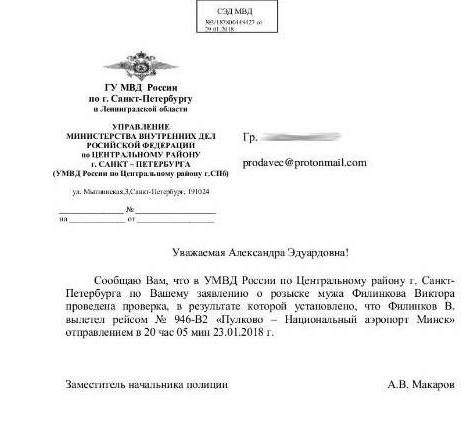
The Petersburg police have sent Alexandra Filinkova, wife of antifascist Viktor Filinkov, who was abducted by the FSB, tortured in their custody, and is now jailed in a Petersburg remand prison, charged with “involvement in a terrorist group,” a letter claiming it conducted a review and determined that on 23 January 2018, when Viktor was in fact abducted by FSB officers from Pulkovo Airport, in reality he safely flew from Pulkovo Airport in Petersburg to National Airport in Minsk, where he was supposed to catch a connecting flight to Kyiv, where Alexandra was waiting for him.
It is sometimes hard to know how to react to the abysmal cynicism of the Russian authorities.
Facebook Closes Account of Zapretno.Info Grani.ru
1 March 2018
Zapretno.info’s logo
Facebook has shut down the page of Forbidden in Russia (Zapretno.info), a project focused on the Russian government’s crackdowns on freedom of speech. As the project’s proprietor informed Grani.ru, its Facebook account was deleted without warning and without explanation. The site’s creator did not disclose his name for security reasons.
Zapretno.info publishes texts, images, and other content that, when published or posted in Russia, has led to the filing of administrative or criminal charges.
Zapretno.info’s website is blocked in Russia and is accessible only through Tor, anonymizers, and VPNs.
Translated by the Russian Reader. Thanks to Comrade Koganzon for the heads-up.
Readers of this website might be interested to learn the mighty Facebook blocked both my Russian Reader account and my personal account for most of the day on Wednesday, February 28. This message briefly flashed on the interface before I lost access to my news feeds:
“If you’re temporarily blocked from sharing posts on Facebook, it may be because you shared too much in a short amount of time, or shared posts that were marked as unwelcome. A few things to keep in mind about your block: Blocks are temporary and can last a few hours or a few days. We can’t lift this block for any reason. To avoid being blocked again, you should avoid sharing many posts or messages in a short amount of time. Otherwise, your account could be permanently disabled. Additionally, you can learn more about what we allow on Facebook and other policies in our Community Standards.”
I was later told by a friend he had heard of numerous cases of anarchists, antifascists, anti-Putinists, and anti-Assadists whose accounts had also been temporarily blocked for up to three days without warning and without explanation.
The only question is whether Facebook has been acting alone or encouraged by anonymous complaints from fascists, Putinists, and Assadists (“shared posts that were marked as unwelcome”).
It would be great if Facebook would issue a statement explaining its policy, especially in the wake of revelations about the signal role played by fake Facebook accounts in the 2016 US presidential debacle. TRR
First, a musical prelude, by the world’s best hip hop group of all time, A Tribe Called Quest.
Check The Rhime
Back in the days on the boulevard of Linden, We used to kick routines and presence was fittin’ It was I the Abstract
And me the five footer I kicks the mad style so step off the frankfurter
Yo, Phife, you remember that routine That we used to make spiffy like Mister Clean?
Um um, a tidbit, um, a smidgen I don’t get the message so you gots to run the pigeon
You on point, Phife? All the time, Tip You on point, Phife? All the time, Tip You on point Phife? All the time, Tip Well, then grab the microphone and let your words rip
Now here’s a funky introduction of how nice I am Tell your mother, tell your father, send a telegram I’m like an Energizer ’cause, you see, I last long My crew is never ever wack because we stand strong Now if you say my style is wack that’s where you’re dead wrong I slayed that body in El Segundo then push it along You’d be a fool to reply that Phife is not the man Cause you know and I know that you know who I am A special shot of peace goes out to all my pals, you see And a middle finger goes for all you punk MC’s Cause I love it when you wack MC’s despise me They get vexed, I roll next, can’t none contest me I’m just a fly MC who’s five foot three and very brave On job remaining, no I’m chaining cause I misbehave I come correct in full effect have all my hoes in check And before I get the butt the jim must be erect You see, my aura’s positive I don’t promote no junk See, I’m far from a bully and I ain’t a punk Extremity in rhythm, yeah that’s what you heard So just clean out your ears and just check the word
Check the rhyme y’all Check it out Check it out Check the rhyme y’all Play tapes y’all Check the rhyme y’all Check the rhyme y’all Check it out Check it out
Back in days on the boulevard of Linden We used to kick routines and the presence was fittin’ It was I the Phifer
And me, the abstract The rhymes were so rumpin’ that the brothers rode the ‘zack
Yo, Tip, you recall when we used to rock Those fly routines on your cousin’s block
Um, let me see, damn I can’t remember I receive the message and you will play the sender
You on point, Tip? All the time, Phife You on point, Tip? Yeah, all the time, Phife You on point, Tip? Yo, all the time, Phife So play the resurrector and give the dead some life
Okay, if knowledge is the key then just show me the lock Got the scrawny legs but I move just like Lou Brock With speed I’m agile plus I’m worth your while One hundred percent intelligent black child My optic presentation sizzles the retina How far must I go to gain respect? Um Well, it’s kind of simple, just remain your own Or you’ll be crazy sad and alone Industry rule number four thousand and eighty Record company people are shady So kids watch your back ’cause I think they smoke crack I don’t doubt it, look at how they act Off to better things like a hip-hop forum Pass me the rock and I’ll storm with the crew and proper. What you say Hammer? Proper. Rap is not pop, if you call it that then stop
NC, y’all check the rhyme y’all SC, y’all check it out y’all Virginia, check the rhyme y’all Check it out, out In London, check the rhyme, y’all
______________________________________________
The Tribe were always on point, although Phife, sadly, died in March 2016.
I am happy to say I saw the group perform at a club in Seattle in 1991 or 1992, and it was the most positive, funkiest show I have ever seen anywhere.
______________________________________________
Meanwhile, the unhappy, far-flung, unfunky human shards of the collapsing new building once known as the Soviet Union are almost never on point, because the ones among them who clearly think they are the smartest, cleverest, and most cosmopolitan have been in semi-permanent national self-defense mode after it transpired the Kremlin tried its flat-out best to intervene in the 2016 US presidential election.
Two cases in point are ace reporters Julia Ioffe and Masha Gessen,* who seem to go back and forth all over the place on the “Russia question,” depending on the venue and the day. Here, they are, today, in full “Russophile” mode.
Here is the interview itself, broadcast earlier today on NPR.
“The bottom line is that Americans elected Trump,” claims Gessen in the interview.*
No, the bottom line is that reporters like Masha Gessen and Julia Ioffe, for whatever reason, want to control the public discourse on Russia in the US, so they have to reach over and over again for the bag of tricks, perfected in their worst incarnations by pseudo-intellectual mags like the New Republic and Atlantic Monthly in the nineties, that counter-intuitive reporting gets you, the reporter, the most attention, even if your counter-intuitive argument is utterly worthless when examined on the merits.
I could see no point whatsoever to NPR’s interview with Ms. Gessen and Mr. Chen, just as I can see no point flapping one’s lips about Russian meddling in the 2016 US presidential election until Robert Mueller’s investigation has been completed.
It is not at all a straighforward question of dual loyalties or having been “flipped,” of course, but the genuine discomfort many Russians and Russian émigrés feel about the dire direction Russia has taken under Vladimir Putin. At the same time, parts of the Russian national and Russian émigré chattering class feel so utterly flummoxed by the way events have been unfolding in the last four or five years that they have gone, almost reflexively, into heavy spin mode while also trying to install themselves, in the west, as the go-to people when it comes to all matters Russian.
It would probably surprise NPR’s listeners to learn that Ms. Gessen, for example, did not exactly “flee” Russia, but chose to leave because she felt her non-traditional family would be safer in the US, where she emigrated with her own birth family when she was fourteen. She had every right and reason to do this, and if I were in her position I might have done the same thing.
It is nonsense, however, to say she “fled” because she was “persecuted” personally. The nonsensicality of this claim would be apparent only to people like me and my Russian reporter friend Sergey, who watched as Ms. Gessen “fled” Russia over the course of two or three years, generating an endless series of interviews and op-ed pieces about her “escape” as she was slowly packing her bags or whatever she was doing during her seemingly endless, slow-motion “flight to freedom.”
When you witness a journalist working so hard to make themselves the story, you start wondering what matters most to them—the truth out there in the world that needs to be investigated and reported or keeping the limelight fixed firmly on themselves.
I also happen to know that Ms. Gessen makes frequent trips to Russia on business. What sort of persecution-and-flight story is this, when you can fly back and forth between your “safe haven” and the “country you fled” at will, whenever you like, with no untoward consequences to your health and safety?
In fact, under Putin’s reign, there have been plenty of Russians who really have been persecuted in the most unambiguous sense of the word and have had to flee the country or face certain imprisonment, for example, Dmitry Buchenkov, the final defendant in the horrendous (and horrendously underreported) Bolotnaya Square case and its accompanying show trials.
Because both Ms. Ioffe and Ms. Gessen are terrific reporters and writers when they want to be, I wish they would spend more time telling us about the real Russia of unsung heroes like Dmitry Buchenkov, Yuri Dmitriev, Valery Brinikh, and the Penza and Petersburg antifascists tortured by the FSB on the fabricated pretense they belonged to a “terrorist” organization, and much less time making what really amounts to a half-assed quasi-defense of a very bad game (the Kremlin’s meddling in the internal affairs of countries the world over), seemingly only just to keep their charming mugs in front of the TV cameras and radio station microphones as much as possible.
Especially in the last instance, Ms. Gessen and Ms. Ioffe could use the mighty media soapboxes they have at their disposal to help eight innocent young men put through hell on earth so the FSB can tighten its grip on Russian grassroots society. But they don’t, probably because they have never even heard of the case, despite being the foremost go-to reporters on Russia in the US. TRR
** After I posted this last night, I thought about what Ms. Gessen’s reaction would be if, during a similar non-obligatory discussion on NPR (whose presenters, almost without exception, have no clue how to interview anyone, because their idea of interviewing involves lobbing slow softballs for their guests to slam out of the park) someone had said, “The bottom line is that Russians voted for Putin.”
It is easy to imagine how she would react, because she writes at length in her latest book, The Future Is History: How Totalitarianism Reclaimed Russia, about the 2011–2012 fair elections movement in Russia, sparked by a widespread (and accurate) perception amongst Russians that the December 2011 parliamentary and regional elections and the March 2012 presidential election had been anything but free and fair, to wit:
Even though the protesters belonged to different age groups, Putin had now been in power long enough that a majority of them had spent all or most of their adult lives in the era of supposed “stability.” Some of them had expected the Putin era to be like the Soviet past they remembered or imagined, the object of national nostalgia. According to these memories, that time was slow, predictable, and essentially unchanging. But in Putin’s era of “stability,” things refused to stay the same. The markets crashed because Putin said or did something. Innocent, randomly chosen people went to prison just because the government had declared a witch hunt against pedophiles. The spectacle of the Putin-Medvedev handoff and the experience of the farcical election served as reminders of how powerless Russian citizens were to affect any aspect of life. The protests were an attempt to renegotiate, to reclaim a little bit of space from the ever-expanding party-state— and it so happened that the party was the one of crooks and thieves. (Gessen, Masha. The Future Is History: How Totalitarianism Reclaimed Russia. Penguin Publishing Group. Kindle Edition, p. 349)
In the world’s third-largest country by population, that translates into 2,868,691 voters whose clearly voiced preference for Mrs. Clinton was utterly negated, as it were. Since Mr. Trump’s Electoral College victory came down to razor-tight wins in a few key districts in a few key states, any extraneous or criminal factor that could have pushed voters in his direction has to be thoroughly investigated. This would have to be the case even had Mr. Trump won the popular vote. Given that the election campaign, the election, and its aftermath have been unprecedented in US history in such a myriad of ways, it stands to reason that Americans would be more than a little curious about what happened and why.
In Russia, where, as some “Russia experts” would say (although I would not say it myself), Mr. Putin is so popular he could win an election without cheating, Ms. Gessen thinks people have every right to protest the machinations of “crooks and thieves.” In her adopted country, the US, however, she thinks people should calm down, shut up, and accept the “bottom line” that they did this to themselves.
I doubt very much that Ms. Gessen, judging by her numerous books and articles on the subjects, would argue that Russians did Putin to themselves, although to someone like me who has been on the ground in Russia during most of his eighteen-year-reign, that does indeed seem partly to be the case.
 Lev Schlosberg is a member of the Pskov Regional Assembly and the Yabloko Democratic Party’s national political committee. Photo courtesy of Pskovskaya Guberniya Online
 Vladislav Surkov. Photo courtesy of Dmitry Azarov/Kommersant
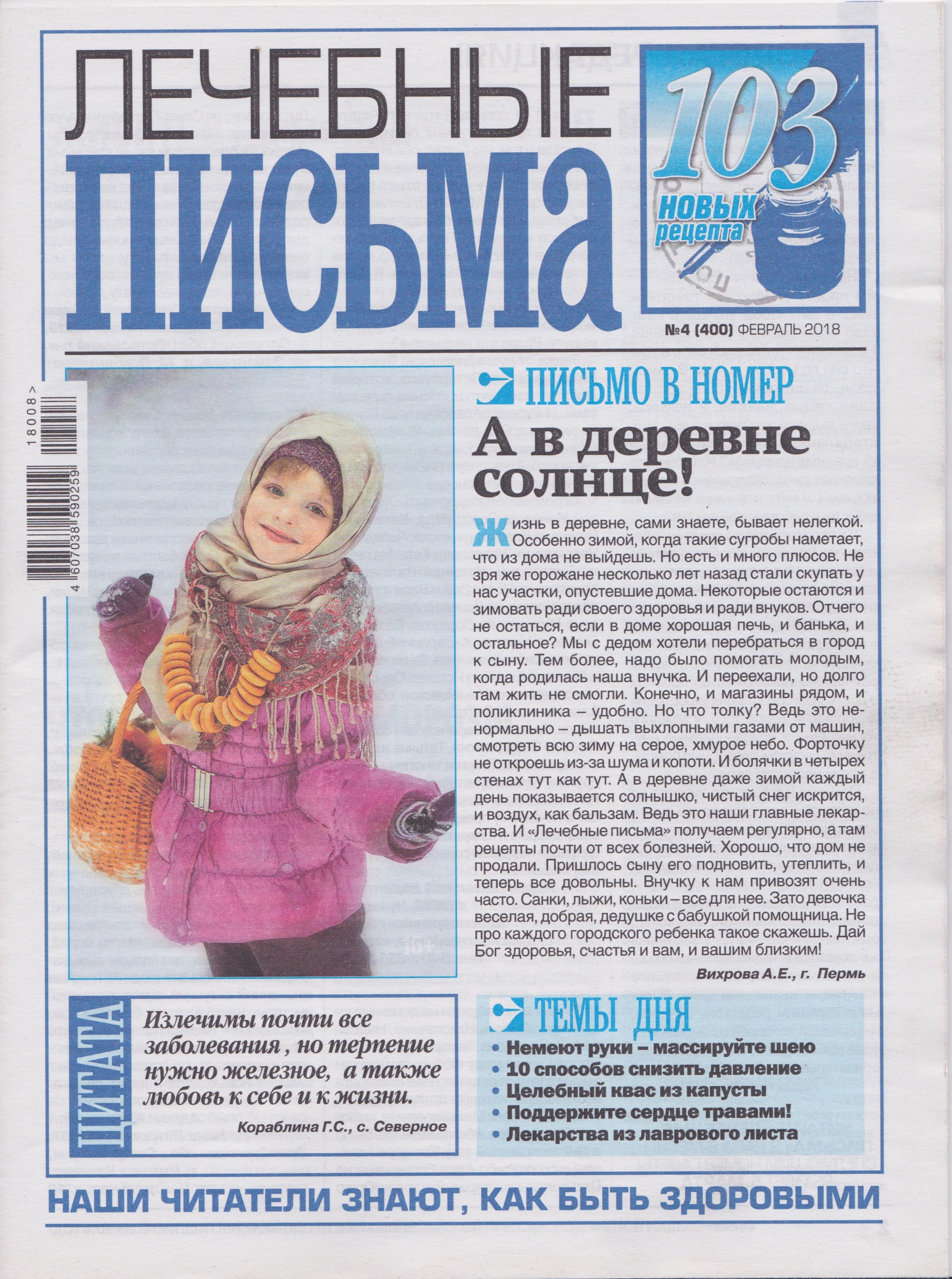 “Featured Letter: But There Is Sun in the Countryside! ‘You know how hard life in the countryside can be, especially in the winter when the snow drifts so badly you cannot leave the house. All the more so because I needed to help the young folks when our granddaughter was born. We moved to the city, but we could not live there long. Of course, the stores and the clinic were nearby, and that was convenient, but what was the point? It’s abnormal to breathe exhaust fumes from cars and gaze all winter at a grey, gloomy sky. You cannot open the window because of the noise and soot. And the ailments you get when you are trapped between four walls are not slow in coming. In the countryside, the sun makes an appearance every day, even in the winter, the pure snow glitters, and the air is like a salve. And we get Medicinal Letters regularly, in which there are prescriptions for nearly any ailment. It was a good thing we didn’t sell the house. Our son had to fix it up and insulate it, and now everyone is happy. Our granddaughter comes for frequent visits. We have everything for her: a sled, skies, and skates. The girl is сheerful and kind, and Grandma and Grandpa’s little helper, not something you can say about every city kid. May God bless you and your loved ones with health and happiness. A.E. Vikhrova, Perm.’ Our Readers Know How to Be Healthy.” Cover page of Medicinal Letters 4 (400), February 2018
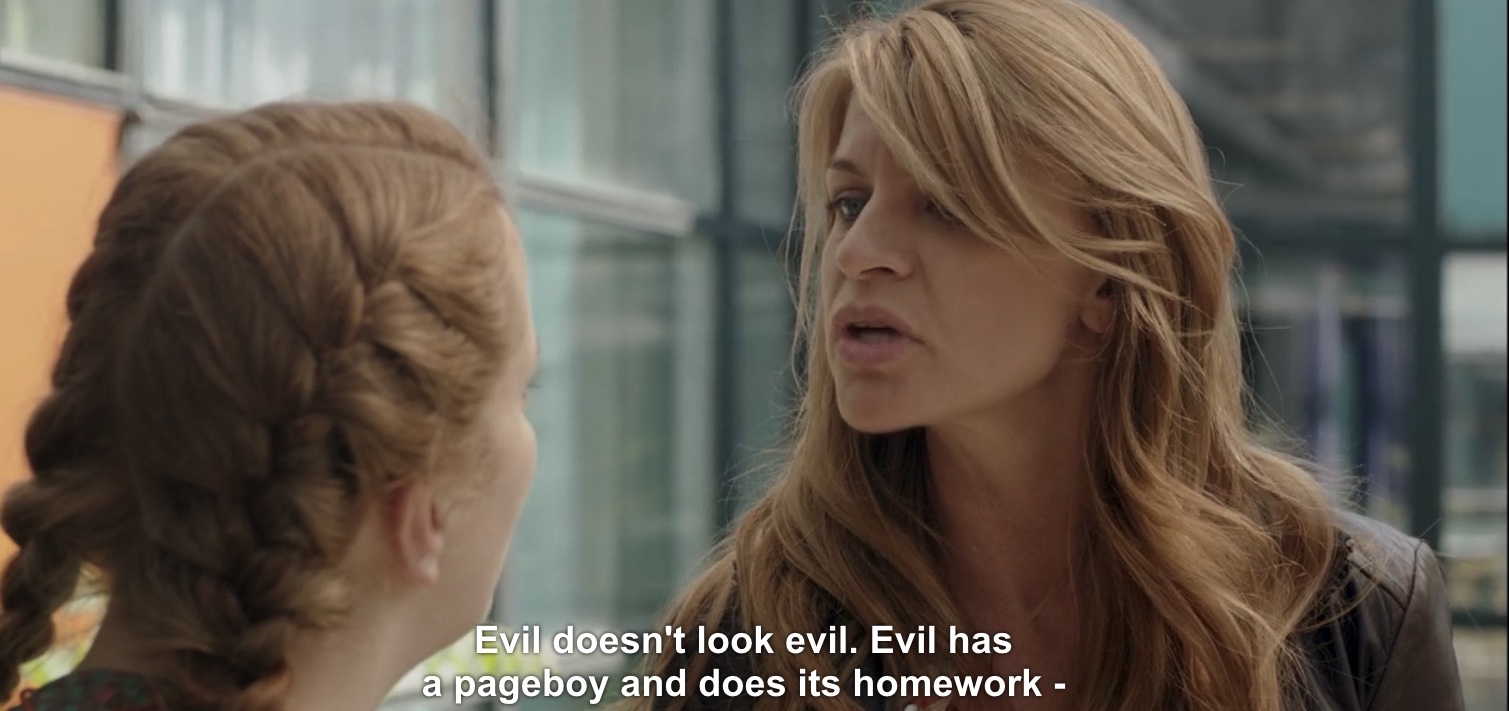 Screenshot from Danish TV series Rita. Courtesy of
 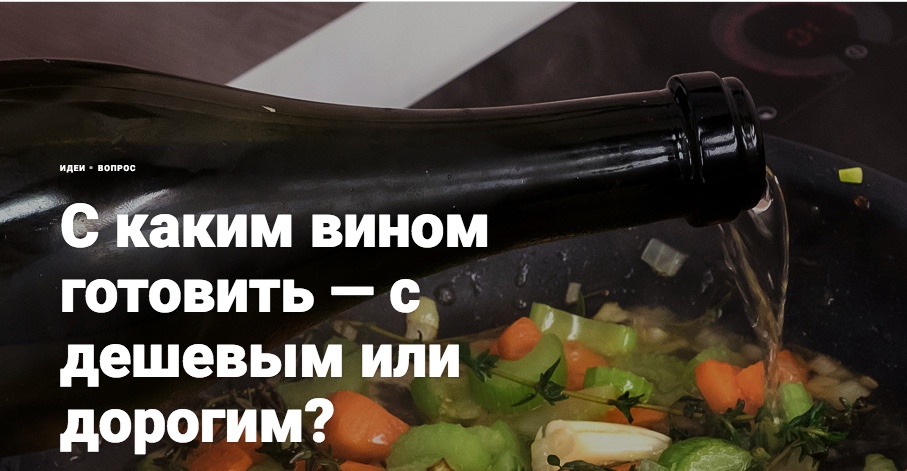 “Should you cook with cheap wine or expensive wine?” Source unknown
 2018 refrigerator magnet tear calendar. Published by Bronze Horseman Publishers (
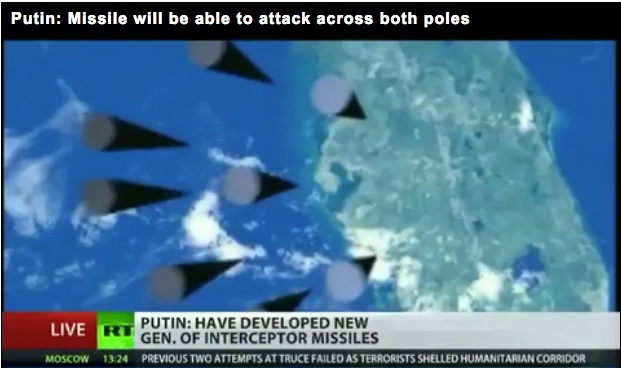 Screenshot of the imaginary obliteration of Florida by Russian missiles, as broadcast live on RT at 1:24 p.m. MSK, 1 March 2018. Video courtesy of the
 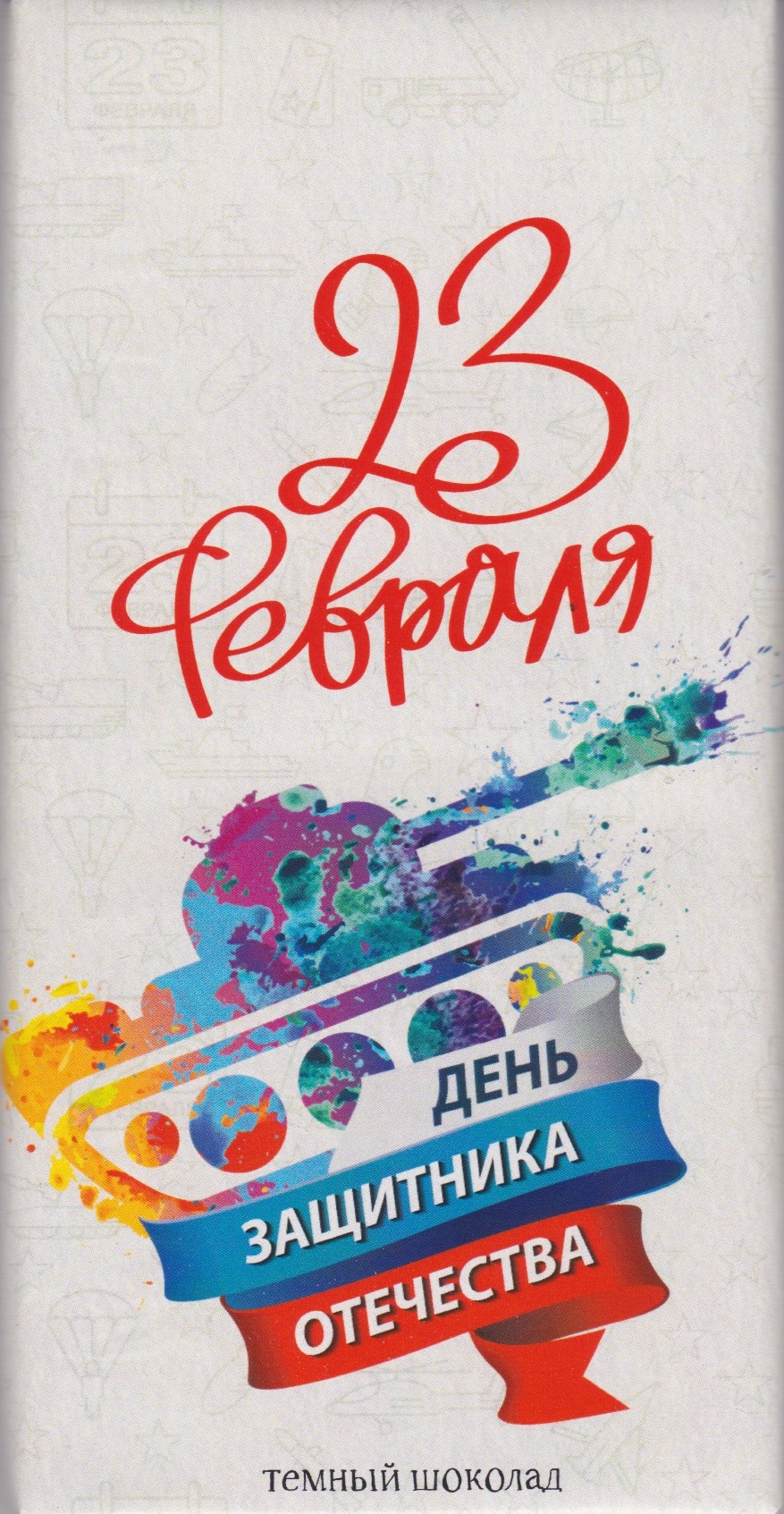 “February 23. Fatherland Defenders Day. Dark Chocolate.” Manufacturer unknown. Purchased at Bukvoyed Bookstore in
 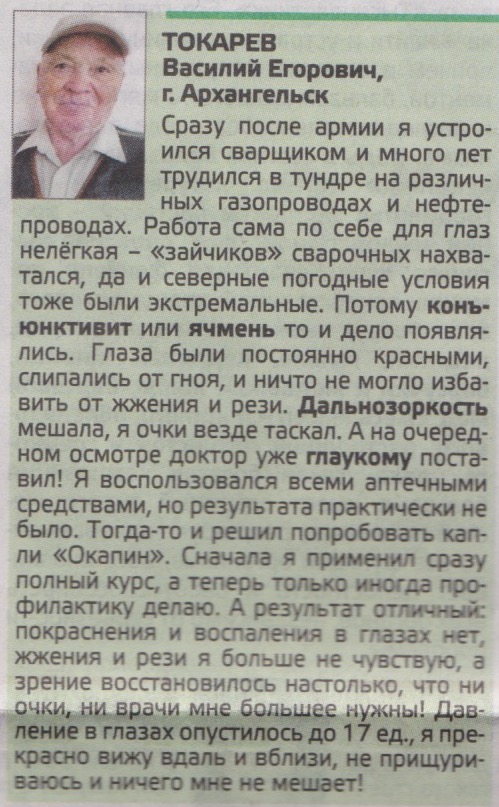 “Vasily Yegorovich Tokarev, Arkhangelsk. Right after the army I got a job as a welder. I worked for many years in the tundra on various gas and oil pipelines. The job was hard on the eyes in itself. There were the constant flashes from the welding equipment, and the weather conditions in the north were also extreme. So, I would get conjuctivitis and styes from time to time. My eyes were always red and caked with pus, and nothing could relieve the gritty feeling and smarting. Farsightedness became a problem, and I had to drag glasses with me everywhere. During a routine exam, the doctor diagnosed glaucoma! I went through all the drugs available at the chemist’s, but the payoff was practically nonexistent. That was when I decided to try Okapin drops. At first, I went through a whole course of treatment, but now I only use them sometimes as preventative. The results have been excellent. My eyes are not red and inflamed, I no longer have that feeling of burning and grittiness, and my eyesight has rebounded so that I no longer have any need of glasses or doctors. The pressure in my eyes has dropped to 17 mmHg. I see great both far and up close, I don’t squint, and nothing bothers me!” Excerpted from the front page of the Health Herald [March 2018], an advertising circular disguised as a newspaper.
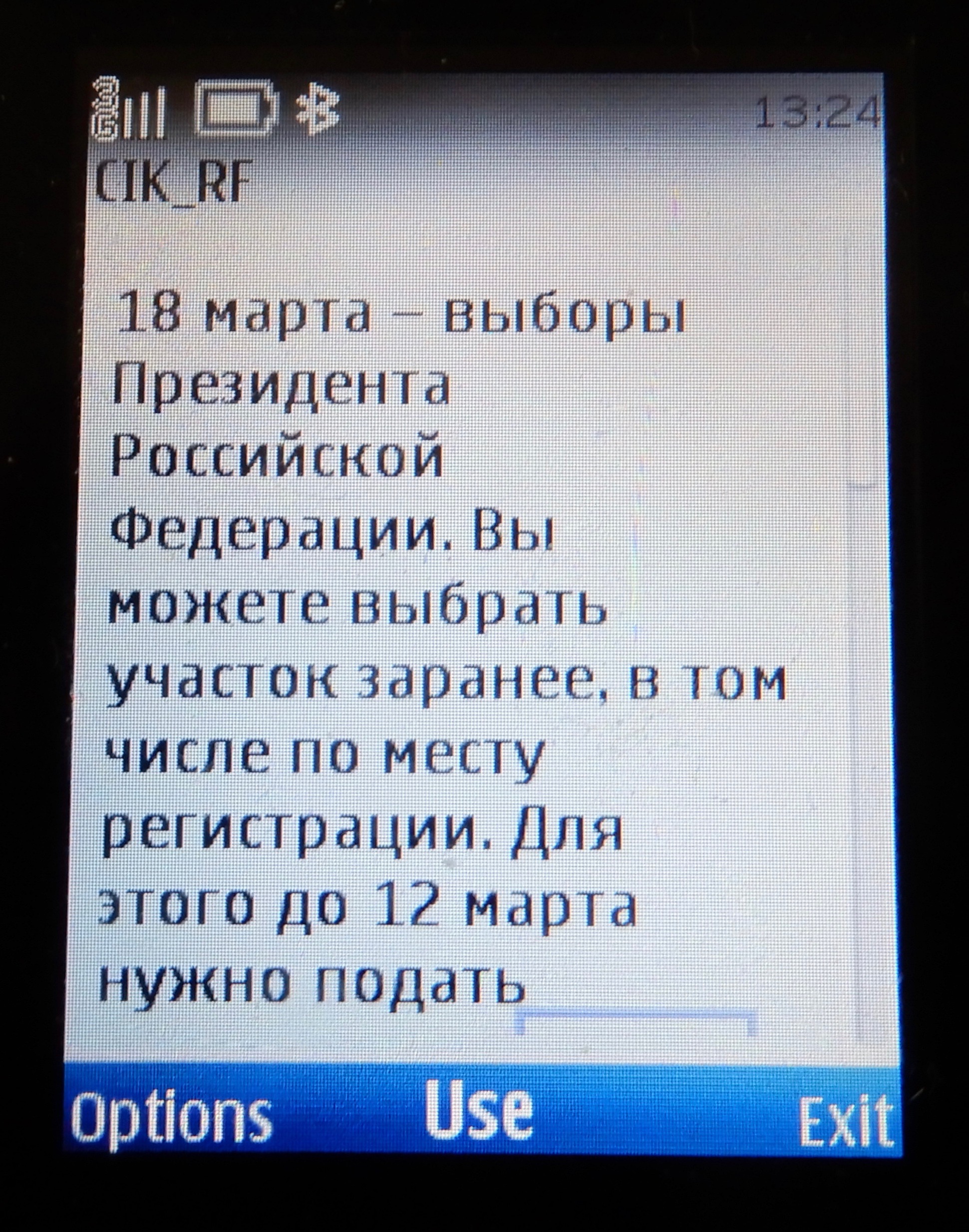 “March 18 is the election of the president of the Russian Federation. You can choose a voting station in advance, including the one assigned to your registered domicile. To do this, before March 12 you must submit—.” Excerpt from an SMS received on my mobile phone at 1:24 p.m. MSK, 3 March 2018.
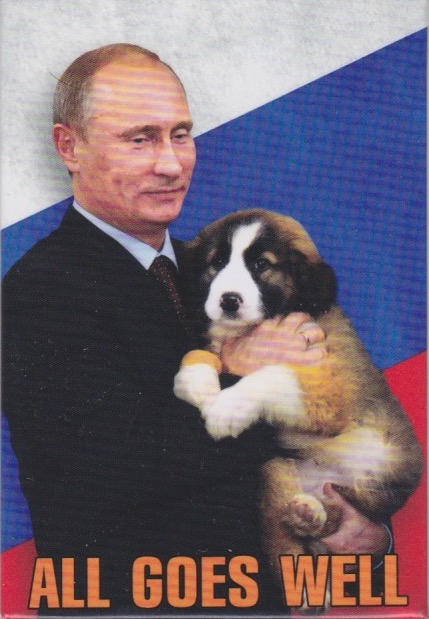 Refrigerator magnet “All Goes Well.” On the reverse side of the magnet, the human being is identified as “The President of the Russian Federation. Vladimir Putin.” The dog is not identified by name.
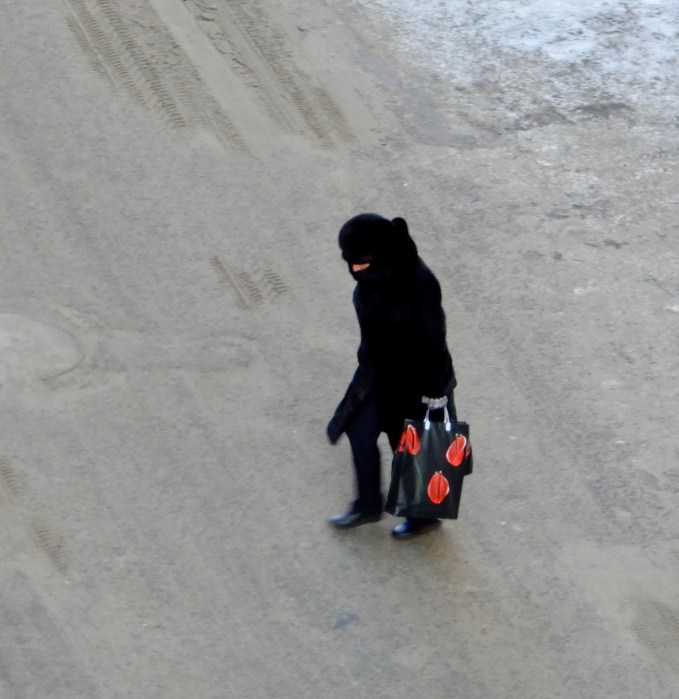 Old Woman Crossing Street on Cold Day in Petersburg, 27 February 2018. Photo by the Russian Reader
 Balaklava Bay, Sevastopol
 Zapretno.info’s logo
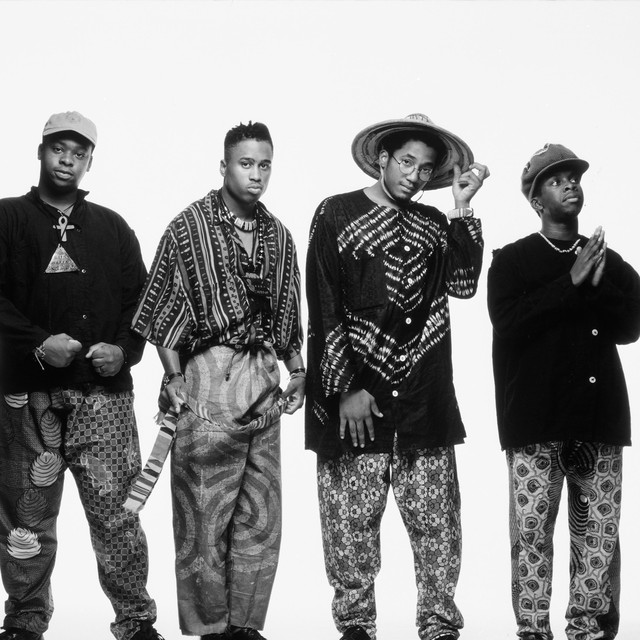 A Tribe Called Quest. Photo courtesy of