Oleg Sentsov

37388658_2052268531474743_764773632051249152_nThe room in the prison infirmary where Oleg Sentsov is kept. 

Anton Naumlyuk
Facebook
July 19, 2019

Oleg Sentsov

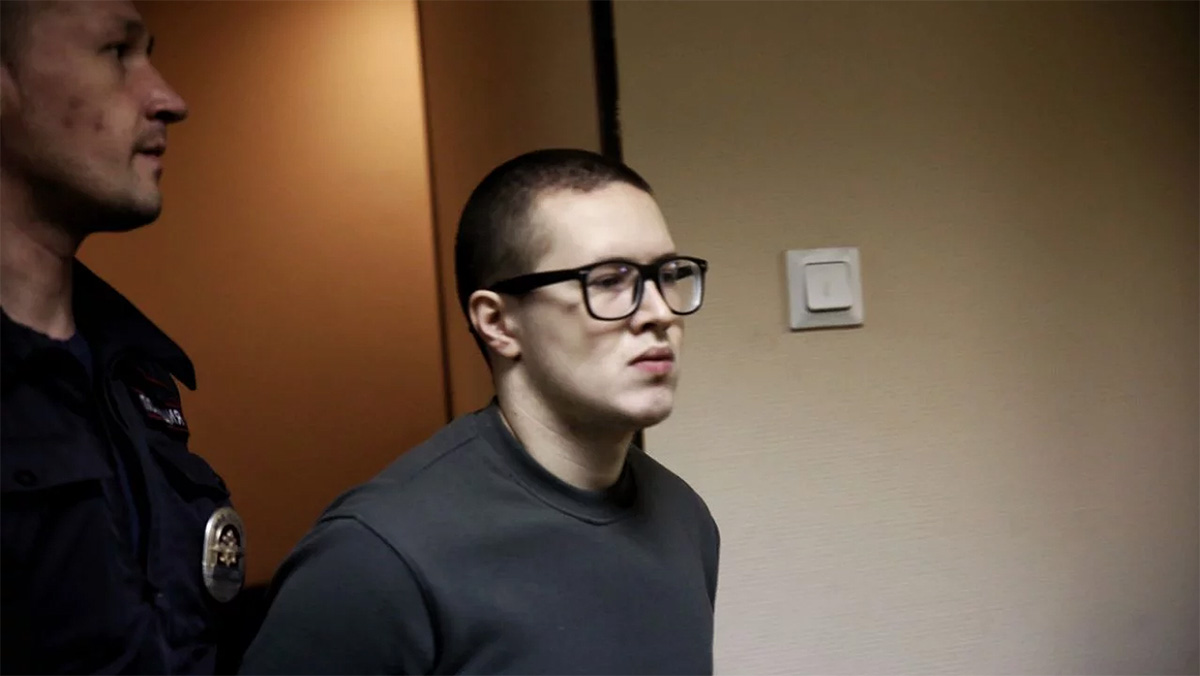
Attorney Dmitry Dinze visited Oleg Sentsov in the Labytnangi penal colony today.

“He looked even worse than last time. He was quite pale. He walked under his own power. Around a week ago, he went through a second health crisis. He got sick. The doctors wanted to hospitalize him and force-feed him as much as possible, to give him IV drips with more nutrients. He refused. He was left in the penal colony on the condition he would ingest the nutrient mix himself under a doctor’s supervision. He takes two spoonfuls a day. He is kept in a room in the prison infirmary. He has no intention of quitting the hunger strike. ‘I’ll hold out as long as I can last,’ he says.”

Sentsov also expressed bewilderment as to why Ukraine and Lyudmila Denisova, human rights ombudsman for the Verkhovna Rada, had ended their vigorious campaign of support for Ukrainian political prisoners.

“Sentsov thinks the Ukrainian side should do more to press for the release of the other political prisoners,” said Dinze.

Sentsov also sent his greetings to Yevgeny Panov (Yevhen Panov), a defendant in the case of the so-called Crimean saboteurs, and to Vladimir Balukh.

Thanks to Askold Kurov and Vladimir Akimenkov for the heads-up. Translated by the Russian Reader


Zoya Svetova: Interview with Petersburg Public Monitoring Commission Members Yana Teplitskaya and Yekaterina Kosarevskaya

The Network Case: “He Was Tortured in the Woods for Six Hours to Force Him to Testify, and Then Some More So He Would Memorize the Right Wording”
Zoya Svetova
MBKh Media
April 20, 2018
Снимок-экрана-2018-04-20-в-11.19.46Viktor Filinkov. Photo by David Frenkel. Courtesy of Mediazona

The Russian Federal Investigative Committee has refused to open a criminal case in connection with a complaint filed by Viktor Filinkov, one of the young antifascists accused in The Network case [aka the Penza-Petersburg “terrorism” case—TRR], who claims that Russian Federal Security Service officers tortured him. Yana Teplitskaya and Yekaterina (“Katya”) Kosarevyskaya, members of the Petersburg Public Monitoring Commission, were the first people Filinkov told he had been tortured. Now they are under police surveillance themselves.

The human rights activists talked to Zoya Svetova about why they decided to join the Petersburg Public Monitoring Commission, what goes on in Petersburg’s remand prisons and penal colonies, and how they have been harassed by reporters from Russian TV channel NTV.

____________________

Yana, Katya, and I talk in a cafe. They have come to Moscow for a day. They have many meetings scheduled, and the young women interrupt each while discussing what they have seen in remand prisons, but mostly they discuss the young men accused in The Network case, which has shaken them. It is not every day people tell you they have been brutally tortured and you see burns on their bodies left by tasers. As for me, this is my first meeting with these young and incredibly mature human rights defenders, who are only twenty-six years old.

Why did you decide to visit prisons and police precincts?

Yana: I wanted to join the Public Monitoring Commission (PMC) as soon was it was established, but you have to be at least twenty-five years old to join, so we didn’t end up on the previous commission. But we helped train other candidates and assisted them in their work. As soon as we turned twenty-five, we submitted our applications.

What do you do for a living?

Yana: I’m a mathematician.

Are you a schoolteacher?

No, I don’t teach. I do research.

Katya: I’m also a mathematician. I work at a school, but I also do research and teach math at a university, probability theory. We met before we studied at university, and then we went to university together. And we both decided to join the PMC.

How did you find out about the PMCs and public oversight?

Katya: I read Anna Karetnikova’s LiveJournal blog, I think. (Anna Karetnikova was a member of the Moscow PMC from 2009 to 2016 — ZS.)

Yana: When we got on the PMC, we already knew what it was, because we had been involved in shaping the PMC’s previous roster. We talked about the PMC to various people and organizations, and got them together.

Katya: And we worked with them when there were large-scale detentions at protest rallies. We found out who could visit detainees in police stations.

Who nominated you to the PMC?

Yana: We lucked out. We were nominated by Azaria, an organization of mothers against narcotics. Azaria is not on the list of “foreign agents” and looks completely innocent. In reality, it is a really cool organization. They are not afraid of anyone, and they really support and help us.

Yana Teplitskaya and Yekaterina Kosarevskaya outside Penal Colony No. 5

Until you found yourselves in the middle of the scandal surrounding The Network case defendants, was your work with the PMC completely routine?

Yana: We were not admitted to police stations seven times in a row, meaning that at some point the police just stopped letting us in to do inspections. The first time they didn’t let us in, they had detained young people coming home from a concert. Policemen stopped them and asked to see their papers. They refused to do that until the police had identified themselves by name and explained why they needed to see their papers. The policemen responded by pepper-spraying and detaining them. We were not let into the police precinct to see them. Subsequently, we were not let into police stations under different pretexts. Ultimately, we were able to overcome the problem. Fifteen Interior Ministry employees were brought to justice for not letting PMC members into police stations. We were not the only ones to file complaints. We posted our reports on the incidents, and our readers filed complains on the basis on this information.

Apparently, one of our readers on the social networks played a role. He filed complaints anywhere he could, and the authorities responded to his complaints, referring to him as “the PMC’s community volunteer.” The police officers who did the audit later told us that he had worn them down and asked us to tell him they would fix everything as long as he stopped complaining. Many other people helped out as well, including Human Rights Council member Andrei Babushkin. We also filed lots of detailed complaints ourselves. We managed to navigate around the problem, and this was a victory, of course, in whose wake our visits to police stations suddenly improved dramatically. The police were now afraid of us. Initially, we had good relations with the Federal Penitentiary Service (FSIN). The FSIN was inclined to cooperate, while the Interior Ministry [i.e., the police] was not. At our very first meeting with them, they told us we had to send notifications when we were planning to visit police stations only by fax, but we were not cool with that, of course. We ourselves had written the rules for how the PMC functioned. Our rules state that our rights as PMC members cannot be infringed. There is nothing in the rules about notifying a police station or remand prison by fax, as had been the case in the first two sittings of the PMC. Back then, only the PMC’s chair could notify penitentiary facilities about commission visits. He could do this only during business hours, because the fax was in his office.

How do you now notify the authorities you are coming to visit their facilities?

Yana: We give them five minutes’ warning. There is no need to notifiy the police ahead of time, whereas the FSIN does need to transfer staff to escort the PMC members around its prisons. We rarely need to catch the FSIN unawares with our visits, while the police often hide detainees from us, and try and take them out of precinct houses via emergency exits. Our latest conflict with them has to do with the fact that they must provide us with records of the people they detain and bring to their stations. They are convinced they do not need to show us these records.

How many people on the Petersburg PMC are on your side?

Katya: Four of the PMC’s twenty-five members.

Yana: It is not that they are all evil monsters. I think we have a fairly good working atmosphere in the commission. For example, there is one lovely lady. She doesn’t always feel well, but she goes out with us on inspections when she can.

When you met the young men accused in The Network case, was it the first time you had dealt with complaints of torture by people in police custody?

Katya: We had usually received really old reports about torture. We would go to a remand prison, where the inmates told us they had been tortured at a police station. There have been many such complaints, around twenty, concerning various police precincts.

What do you do with such reports?

Katya: If the individual is willing, which is not always the case, we publicize them. We try and describe the circumstances on our group page on Facebook, we write down the detainee’s full testimony in an official report, we file a criminal complaint, and send it off. But we don’t have the manpower to keep track of the complaint and file another complaint, about the lack of an official response, when the time comes. We usually try and find lawyers to take over the case, and we always find them.

Yana: So far, we have no criminal cases pending against police officers. On the contrary, the Interior Ministry’s Central District Petersburg office has filed suit against me. They were miffed when I published the story of a woman who claimed she was tortured at the 78th Police Precinct in Petersburg. The woman was pregnant, and police officers abused her. The lawsuit against me claims I published “information that undermines the reputation” or “discredits” the precinct. We published the women’s complaint on the social networks without revealing her last name. The news website Moi Rayon [My Neighborhood] reprinted it. The Interior Ministry mixed everything up, filing suit against me because they thought I’d written the article. In fact, we are involved in lots of lawsuits. We are usually the ones on the attack, and Team 29 helps us out with this.

You won the right to bring recording equipment into a penal colony in court, yes?

Katya: Yes. Recently, Petersburg City Court took the penal colony’s appeal of this ruling under consideration. We have not been let into the penal colony with recording equipment a single time even after the court’s decision came into force. The court ruled that the actions of a specific staff member of the penal colony who had not let us bring recording devices into the colony had been illegal, but this does not mean they have to let us and our equipment into the colony the next time round, although the FSIN’s public stance was originally that they would let us in if we informed them in advance that we planned to bring equipment. But then they changed their minds. We were not allowed to bring recording equipment into the remand prisons from the get-go.

Where are the young men accused in The Network case currently located?

Katya: Six of the accused in The Network case are in Penza, while the other three are in Petersburg and Leningrad Region. Two of them were originally jailed in Remand Prison No. 3 in Petersburg, a place we visit all the time. On March 15, Viktor Filinkov, who was the first person charged in the case to complain of torture, was transferred to a remand prison in Leningrad Region, which is considered a torture chamber. Immediately after he was detained, Filinkov himself was tortured in the wood for six hours, first to force him to testify, and then to make him memorize the right wording. Before his custody hearing, he was told that if he dared to recant his testimony, he would be sent to Remand Prison No. 6 in Gorelovo.

That is the torture chamber remand prison where he is currently in custody?

Yes, he was transferred after he was shown an “optimization” order, although there is room for fifty inmates in Remand Prison No. 3, and there are vacant spots in the cells. Gorelovo, on the other hand, is horribly overcrowded. The cells are meant for one hundred inmates, but there are one hundred and fifty inmates living in them. What kind of “optimization” are we talking about? Yuli Boyarshinov, the third Petersburg man charged in the case, is also being held in Gorelovo.

We cannot visit the remand prison in Gorelovo. The Leningrad Region PMC goes there. When we arrived in Remand Prison No. 3 on March 16, we were suddenly told Filinkov had been transferred to Remand Prison No. 6 in Gorelovo. We asked the Leningrad Region PMC to go out there. They made the trip and told us everything was okay, that Viktor was not being tortured. But they cannot visit him as often as we could.

Do you think he was transferred there so you would be unable to visit him?

That was not the only reason. First, Remand Prison No. 6 is the worst pretrial detention facility in Petersburg and Leningrad Region. Second, he refused to testfiy, so what use was he to the FSB? He had to be sent somewhere where we could not visit him.

Of the men charged in the case, which of them have been tortured, according to your evidence?

Viktor Filinkov and Igor Shishkin, whom we saw, were brutally tortured. Compared to the accounts from Penza, it would appear this was not the worst FSB operatives were capable of. According to testimony given to one of the defense attorneys, one of the accused men in Penza was tortured with electrical shocks for a month. In Penza, the FSB does not even bother to hide what they are doing. The FSB officers show up at the remand prison there, and take their man to another room, where they have a generator and electrical wires set up, and they torture the guy right in a cell in the remand prison. Defense attorney Olga Dinze said there was a secret prison in Moscow where inmates were constantly tortured with electrical shocks for a week. Why? Because they had to be forced to testify.

Have the accused in The Network case testified?

Katya: Yes. Viktor was tortured for six hours, but he agreed to confess after ten minutes. But then he was tortured simply so he would memorize his testimony. It was like animal training.

He told you this in the remand prison?

Yes, he told us, and then he provided a detailed written account of the first forty-eight hours after he was detained. He wrote us a letter and sent it to us by mail. When he was taken to the remand prison, the torture stopped. He had forty taser burns on his body, tiny spots on his thigh and around his groin. And on his chest. We didn’t see his groin area.

Traces of tasers burns on Ilya Kapustin’s body. Photo courtesy of his attorney and Mediazona

How did the staff at Remand Prison No. 3 react to the stories of torture?

Igor Shishkin had taser burns all over his back, buthe burns are listed as “bruises” in the prison’s medical journal.

One staff member forbade Igor from lifting his trousers and showing us the wounds he suffered when tortured. But we documented the injuries anyway. First, we examined Viktor’s taser burns, writing them down by hand, and then we drew pictures for each day, seeing as how the FSB investigators were in no hurry to show up. We documented all the injuries with the remand prison’s physician and warden present.

What was the reaction when you you went public with it?

Yana: Unfortunately, when Igor Shishkin was being tortured, there was not enough public pressure to stop the torture or get into the FSB building and see Igor. After we published our findings, we received support, and lots of it. (Igor Shiskin has not filed a complaint that he was tortured. He claims not to remember how he got the burn marks— ZS.)

How did the other members of the Petersburg PMC react?

The question was whether the PMC would interfere with our work or not. The commission members have not interfered in any way. A month after Shishkin and Filinkov were detained, the Petersburg human rights ombudsman and the chair of the Petersburg PMC visited them in the remand prison and wrote a very carefully worded report that did not gainsay our report. Of course, all traces of their injuries had vanished by that time.

What was the outcome of the Investigative Committee’s review of Filinkov’s torture complaint?

Yana: On Thursday, April 19, it transpired that the investigator refused to file criminal charges. His report says that not all the videos were preserved, the report by PMC members cannot be admitted into evidence, and Viktor was tasered, but only two times in order to prevent him from falling out of the vehicle and “escaping.”

Do you feel that you are being shadowed?

Yana: Yes, I have some notion the police have opened a dossier on us. We have the sense our telephones are tapped and we are being followed. There was a time when the surveillance was demonstrative. It was not a huge inconvenience.

On Friday, NTV will show a film about The Network case. Apparently, you are central characters in this film.

Yana: An NTV crew ambushed me on Sunday, and they ambushed Yekaterina on Saturday.

Katya, the NTV crew ambushed you during a scheduled visit to the Doctor Haass Prison Hospital. NTV asked two questions. Why do you defend terrorists? Why do you defend Ukrainians? Why do think that interested NTV?

Katya: The Ukrainian consul general in Petersburg visited Ukrainian prisoners with me and we wrote about it on Facebook. We visited an inmate in a penal colony who was convicted on drugs charges. He had not been receiving anti-retroviral therapy for a while.

They aren’t political prisoners?

No. Maybe they wanted to make a connection between The Network case and Ukraine? Or maybe they just took a gander at my Facebook page and read that I had spoken to the Ukrainian consul.

They started filming in Penza. There are many parents of the young men accused in the case there, and they have teamed up to defend their children.

An investigator with the Penza FSB summoned one of the mothers to his office and spent two and a half hours persuading her she would help her son out by going on camera and saying the right words, saying the young men were practicing to blow up the Lenin Mausoleum. When she left the FSB building, her husband was waiting for her, but she was put in a vehicle with the NTV crew, and the FSB officer got in with her. They took her to her house and taped the interview there. That was on April 11, I think, and I basically already guessed NTV had begun shooting a film, but I didn’t think I’d be in it.

Yana: They ambushed me at the exit of a house where I don’t spend much time, but where I’m officially registered as living. I had it a bit easier, because they taped Katya after a difficult visit to a hospital. She was tired, but I was rested. Besides, I was ready, because I knew about Katya’s so-called interview. So my time with them was much easier and shorter. The questions were literally the very same ones. There was no individual approach: they could not really tell me and Katya apart, nor could I tell them apart. I accused the young woman questioning me that yesterday she was Maria, and today she was Alexandra, because they looked a lot alike. She show me her ID, but she did not me show me her editorial assignment or tell me the name of the program. I heard the same thing Katya had heard: “You defend terrorists. Ukraine. Right Sector. You prey on the sorrow of parents.”

Yana runs off to catch a train to Petersburg, but Katya and I continue the conversation. I wanted to ask her about Petersburg’s prisons. There is much less known about them than about Moscow’s prisons.

How often do you visit remand prisons?

Katya: I sometimes don’t have the strength. On Saturday, I visited the Doctor Haass Prison Hospital, chatted with NTV, and went to Remand Prison No. 3. Previously, I had visited Remand Prison No. 5, but before that there had been a long break, because it didn’t work out. Sometimes it happens we don’t do any visits for several weeks, but then we do visits. For The Network case we were going to Remand Prison No. 3 on a daily basis. On average, we do around two visits a week.

Tell me about Petersburg’s remand prisons.

We have separate PMCs for Petersburg and Leningrad Region, although the FSIN has one office in charge of the city and the region. The very worst remand prison in Leningrad Region is in Gorelovo, but we are not allowed to visit it.

In Petersburg, there is the renowned remand prison The Crosses on the Arsenal Embankment. It is a historic landmark, and it has been closed. A work-release penal colony from the region was temporarily transferred there. There is talk the local FSIN office will move its headquarters there.

What about The New Crosses?

That remand prison was built to house 4,000 inmates, but something went wrong. Corruption charges have been filed, and so one of the two crosses (wings), designed to hold 2,000 inmates, is the subject of court battles, and it cannot be accessed. There are no inmates there. If it were opened, the inmates from Gorelovo would be transferred there.

The New Crosses remand prison

Are Petersburg’s remand prisons overcrowded?

The Old Crosses was overcrowded. Eight square meters per four inmates, which was two times less space than necessary, but there were always enough beds. There had bunk beds there.

Besides torture, what are the most egregious human rights violations in Petersburg’s remand prisons and penal colonies?

There is a penal colony in which a suspiciously high number of inmates die from cardiac arrest and a suspiciously high number of inmates are a brought injured to hospital and die from their injuries. There is a psychiatric ward in a remand prison that the PMC is not allowed to visit. Complaints about torture and abusive treatment came from the psychiatric ward of The Crosses.

Why are you not allowed into the remand prison’s psychiatric ward?

We are currently fighting a court battle over just this issue. The staff read the law on the provision of psychiatric care, which says individual members of public organizations can enter psychiatric wards only when accompanied by medical personnel. Then they incorrectly read the law on public oversight and decided PMC members are members of public organizations, so we also should be escorted by medical personnel. We get there and are told no medical staff are on duty. We have to wait a while, because they won’t let us in just like that. We are let in only during working hours and only in the company of a physician. We are allowed into the intensive care units only when the attending physician allows it. I appealed our not being admitted to the ward in court. A district court said it was fine we were not being allowed into the ward. Look at the Azaria website, said the judge: Yekaterina Kosarevskya is a member of a public organization. I’ve filed an appeal.

Have you dealt with the case of businessman Valery Pshenichny, who died in Remand Prison No. 4 in Petersburg? Have you heard about his death?

Yana and Roma, the chair of our PMC, went to the prison after the suicide. But they had no contact with the relatives, so it was impossible to do anything. The Investigative Committee had already confiscated the CCTV tapes, which was all the evidence there was, and the only hting Yana and Roma could do was talk with remand prison staff, and try and understand whether the story Pshenichny had committed suicide could be trusted. But they could not understand a thing.

But now, after the article in Novaya Gazeta, which claims that, according to the forensic examination, Pshenichny was murdered and raped, will you conduct a public investigation?

Probably. But it’s not very clear what we can do as PMC members. It is doubtful whether there is any evidence left in the remand prison.

Do you feel any danger due to the fact that you and Yana were the first people to to talk about Filinkov’s torture at the hands of the FSB?

At first, I probably felt danger, because I didn’t know how the FSB would react, and it didn’t know how to react. My nerves were on edge. But now? Everything is a source of danger, probably. NTV has shown its face.

Do you continue to keep track of Filinkov’s plight?

Yes. We continue to file various appeals. I write letters to Viktor, and we visit Igor Shishkin in Remand Prison No. 3.

What is Remand Prison No. 3 like? It probably resembles Lefortvo Remand Prison in Moscow.

It’s a tiny historical building. The warden once boasted of the various famous people who were jailed there. Various wings of the building are under repair all the time. The cells are eight measures square and have bunks for two people. The toilet is separated by a low wooden partition.

Who is jailed there?

There are people accused of treason. One just went to trial in Sevastopol. He lived in Crimea, where he had an interesting job. He was accused of spying for China against Russia, although the evidence in the case relates to 2013, when Crimea was part of Ukraine.

How do prisoners treat you? How do they react to the fact you are so young?

I listen to them carefully, and some PMC members get angry at me that I talk with the prisoners for so long. As for my youth, sometimes it can be an advantage, because certain inmates tell me a lot: a nice young lady has paid them a visit and they feel they can talk with me. So it is not as if these inmates are complaining, they are just having a chat with a nice young woman. When we are able to help them, they say the PMC is a good thing. When we are unable to help them, they complain they turned to us for help and we didn’t help them.

“No, we didn’t,” I say.

It is amazing that both you and Yana are mathematicians, and suddenly you’re inspecting prisons. Why such interest in human rights?

My parents, the books I read. Books about the Decembrists, the Harry Potter books. Grandfather consistently refused to join the Party. But I learned the KGB was a bad thing when I was nine years old, in 2000.

It is the first black hole that has sucked me in. I planned to join the PMC, because I had always been interested (the Peter and Paul Fortress was nearby), but it was one interest among others. I was interested in the rights of migrant workers, in books about social organization. I was certain that, at most, I would spend a third of my free time on the PMC, but then it dragged me in all on its own.

What dragged you in?

Prisons suck me in. It’s bad, of course. I was once driving from the Arsenal Embankment to the Sverdlovskaya Embankment, and I glanced at a building not far from the place where I grew up. I thought I should probably stop my involvement in this nonsense. I should earn money and buy a flat in that building, because it was a beautiful red-brick building, wonderfully designed, with a view of the Neva River. But then I realized that the building merele reminded me of The Crosses.

Thanks to Vladimir Akimenov for the heads-up. Translated by the Russian Reader. If you have not been following the Penza-Petersburg “terrorism” case, the case of the mysterious death in custody of Petersburg businessman Valery Pshenichny, and related cases involving alleged frame-ups and torture by the Russian police and secret services, please have a look at some of the recent articles I have published on these subjects.

Neo-Stalinist Pulp Fiction

28222476.cover_415

SMERSH: Stalin’s Special Forces
Alexander Tamonikov, It’s a Pity We Didn’t Finish Them Off (Eksmo, 2017)

The time is 1946, the place, Lvov. SMERSH Captain Alexei Kravets has been appointed head of the local MGB office. The main job of its operatives is still liquidating gangs of nationalists. Among their ranks is Alexei’s personal enemy, Nestor Babula. Once again, the houses of peaceful Ukrainians and Poles are ablaze, and blood flows. The captain has been planning a decisive operation to destroy the bandits, but the hardened Babula is on the alert. The trap he sets is sprung, and a wounded Kravets is captured by the Banderites. The hour of reckoning has come. The only question is who will get off the first shot.

Source: LitRes

Ayder Muzhdabaev: We Are Not Going to Take a Deep Breath

F321BB93-DD92-4B4D-B358-8B059E399E60_w1023_r1_s
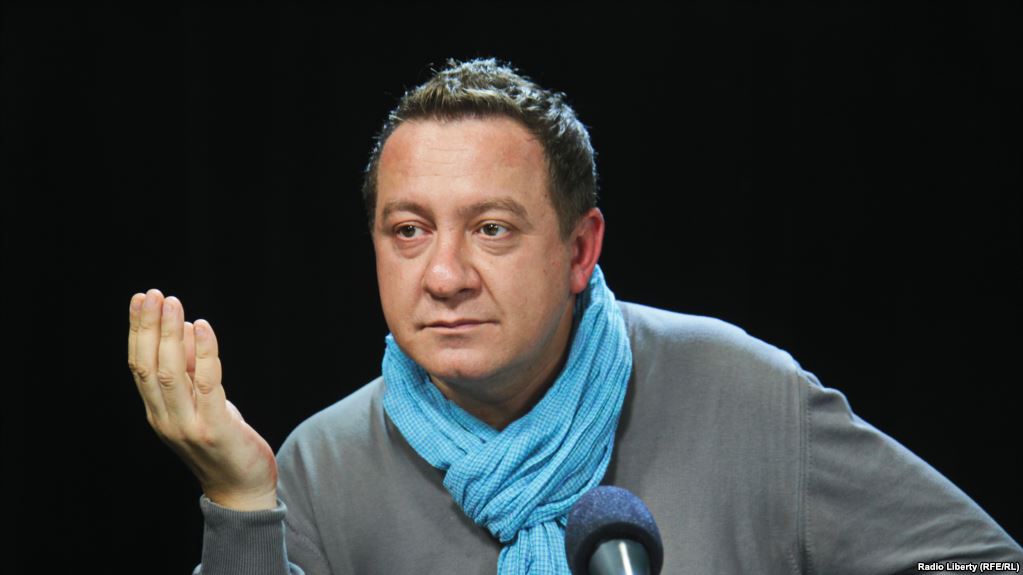
Ayder Muzhdabaev

15 Minutes
Facebook
October 14, 2017

Crimean Tatar Journalist Ayder Muzhdabaev to Russian Rock Musician Andrei Makarevich: “It Hasn’t Passed, It Hasn’t Stopped Hurting, We’re Not Going to Take a Deep Breath”

Before arriving in Ukraine to clean up at the box office yet again, Russian TV presenter and showman Misha Kozyrev advises Ukrainians not to let the war into their hearts. By the way, he will again be arriving in the country real soon. Someone has to tell the “embittered” younger brothers what to think and how to live. We are clueless on our own.

And when Russian musician Andrei Makarevich was asked why he wanted to drag his band Time Machine’s keyboardist Andrei Derzhavin, who signed an open letter to Putin supporting the annexation of Crimea and the war, along with him to Ukraine, he wrote on Facebook it was time to stop discussing events that had happened four years ago. “Learn to take a deep breath,” he wrote. As if everything had passed and stopped hurting. No, it has not passed, and it has not stopped hurting. If someone thinks we have forgotten everything, he or she probably should not come to Ukraine.

If your keyboard player, Mr. Makarevich, still slips into the country under your skirt, so to speak, we will drag him from his dressing room and send him home packing. If you are incapable of understanding such a simple, normal thought, then so be it: we will explain it to you. We have not taken a deep breath, and we are not going to, because we had our homeland stolen from us—or at least part of it. We remember that and we cannot forgive what happened, not only the war and annexation but also the indifference to us.

We are not aquarium fish or serfs who remember nothing and have no right to rage. We do not need any Russians here except those who are wholeheartedly against the Putin Reich, support the return of Crimea and Donbas to Ukraine, and support Ukraine unconditionally, without any provisos. If you are incapable of understanding us, if you lack the humanity to put yourself in our shoes, to feel and share our pain, you had better stay home, in the so-called Russian world.

I hope the so-called Russian world will take it easy on you, Mr. Makarevich. I hope it treats you more gently than it has treated the Ukrainians and Crimean Tatars. Although I do not think it will happen. Life is set up in such a way that right after the Jews were massacred, trouble came for the Germans. But who knows. If you continue to sit still and choose your words carefully, maybe you will be luck personally.

Translated by the Russian Reader. Thanks to Sergey Abashin for the heads-up. Photo courtesy of Radio Europe/Radio Free Liberty

Three Years Later: Suicide by Crimea

Suicide by Crimea
Nikolay Klimenyuk
oDR
March 17, 2017

As long as Russia maintains its grip on the Ukrainian peninsula, significant changes for the better at home are impossible.

In the three years that have passed since the annexation of Crimea, a consensus has taken shape in Russia. Everything having to do with the Ukrainian peninsula is Russia’s internal affair, and far from the most important one.

The “accession” of Crimea has even quite succesfully happened in the heads of the regime’s opponents. In November 2016, while arguing on Facebook with Crimean Tatar journalist Ayder Muzhdabaev, Mikhail Khodorkovsky expressed a stance then supported by many publicly prominent liberals, including activists and intellectuals. Russian society, he argued, wants to deal with other problems. The opposition’s biggest task is regime change, but returning Crimea to Ukrainian jurisdiction by democratic means would be impossible because public opinion would be opposed. Crimea is not mentioned at all in Alexei Navalny’s 2018 presidential campaign platform.

Russian media outlets generally considered “liberal” (these media usually eschew the word “opposition”) havealso swallowed the annexation and most of the rhetoric surrounding it without a peep. TV Rain, RBC (even before its top editors were replaced), and the online Meduza, which operates out of Latvia and is not not subject to Russian laws, have all long routinely called and depicted Crimea as part of Russia. The standard explanation—it is required by Russian law, and insubordination is fraught with penalties—sounds like an excuse. The law does not require that questions about Crimea be included in a quiz on knowledge of Russian cities (which was amended after public criticism) or that reporters term the annexation a “reunification” (Meduza edited the latter term to “absorption.”)

At the same time, Russian reporters usually have no problem demonstratively violating Ukrainian laws (which require them to enter the occupied territory through the checkpoint at Perekop) and flying to Crimea from Russia (as Deutsche Welle reporter Yuri Resheto did), because it’s cheaper, faster, and simpler, and because Ukraine’s rules are cumbersome, inconvenient, and nonbinding.

After that, you can write critical reports on human rights violations in Crimea till the cows come home, but it won’t change what matters. The voluntary observance of inconvenient Ukrainian rules is tantamount to acknowledging Ukraine’s sovereignty over Crimea, and hardly anyone in Russia wants to do that.

In fact, the seizure of Crimea has been the cause of many pressing problems in Russia that have been on the Russian opposition’s agenda. It has laid bare peculiarities of Russian society that existed longer before the attack on Ukraine.

For example, not only did the extent of imperialist moods become clear but also Crimea’s place in how Russians see themselves as a society and a nation. The imperial myth, still alive and well in Russia, was concocted during Catherine the Great’s reign. From the moment they were implemented, Peter the Great’s reforms had provoked a mixed response. They smacked of “sycophancy,” and modeling the country on Holland seemed somehow petty.

Catherine, on the contrary, conceived a great European power, rooted in antiquity, Byzantine’s direct heir, the Third Rome, a Europe larger than Europe itself. Her ambitious Southern Project, which involved defeating Turkey, uniting all the Orthodox countries in a single empire, and installing her grandson the Grand Duke Constantine on the throne in Constantinople, was brought low by political reality. The only one of her great fantasies she made come true was seizing the Crimean Khanate, in 1783.

The conquest was extremely atypical of Russia. A troublesome neighbor was not subjugated. Rather, the annexed lands were completely reimagined and rewritten. The rewriting was attended by the first mass expulsion of the Crimean Tatars. They did not fit at all into the pictures of the radiant past that Grigory Potemkin was painting in reality on the annexed lands. Crimea was resettled with Plato and Aristotle’s Orthodox descendants: Pontic Greeks, Great Russians, and Little Russians (i.e., Ukrainians). Naturally, all these particulars have been forgotten long since. What has not been forgotten is Crimea’s central place in the self-consciousness of a “great European nation,” as manifest, for example, in the absurd, endlessly repeated expression, “Crimea has always been Russian.”

The saying perfectly illustrates the peculiarities of historical memory in Russia. Crimea’s current “Russianness” is the outcome of over two hundred years of the uninterrupted genocide and displacement of the “non-Russian popuation,” which culminated during the Second World War. After the two Soviet deportations of 1941 and 1944 (ethnic Germans, Greeks, Bulgarians, Italians, Armenians, Karaites, and Crimean Tatatrs were deported), losses during battles, and the Nazi extermination of Jews and Crimeans, only a third of Crimea’s pre-war inhabitants were left. It was resettled with people from Russia and Ukraine, especially by military officers and veterans of the Party and the secret services.

Naturally, few people in Russia today regard Crimea as a conquered and ravaged country, in which a full-fledged state existed until relatively recently, an indigenous culture was long maintained, and Russians were never the ethnic majority even during the lifetimes of the present elder generation.

Regarding Crimea as a territory, not a society, and treating Crimeans as an annoying inconvenience, was a habit in Catherine’s times and has survived into the present. The formal excuse for the Russian incursion was the “defense of Crimea’s Russophone population,” and yet the “Crimea is ours” attitude of Russians to the peninsula’s residents has been quite skeptical from the get-go. They imagine the main business of Crimeans is leaching off tourists, and the only thing that attracts them about Russia is high wages.

Moreover, this opinion is common across the entire political spectrum. Sergei Parkhomenko, a liberal journalist and public figure, expressed it in a very telling way.

“If first you take five days to explain to the population of Crimea that if they return to Ukraine’s jurisdiction, their wages and pensions will be increased, and they’ll also be permitted to build even more chicken coops for holidaymakers in the coastal zone, and only then you ask them to vote in a referendum, 95% will vote for going back. […]  These people have proved they could not care less what country they belong to. And if there is anyone for whom I now feel not an ounce of sympathy as I read about how they are being fooled, robbed, milked, and put under the rule of gangsters pretending to be officials and bosses, it is the population of Crimea.”

The massive support of Russians for the annexation has much more serious and immediate consequences than a display of deeply rooted chauvinism. Having signed off on “Crimea is ours,” Russians have deemed their own power above the law and sanctioned its use in violating all laws and treaties for the sake of higher interests or “justice.” The Russian authorities had behaved this same way previously, but now they have obtained the relevant mandate from society. Quite naturally, the crackdown following the seizure of Crimea has been chockablock with spectacular acts of lawlessness.

One such act was the demolition of commercial kiosks and pavilions in Moscow, which happened despite legalized property rights and court rulings. There was nothing accidental about the fact the Moscow authorities justified their actions by citing the law adopted for settling real estate disputes in Crimea. And the twenty-year-sentence handed down to Oleg Sentsov set a new ceiling for verdicts in political trials. Before Crimea, activists would get a dvushechka (two years) for especially vigorous protests. After Crimea, the Russian authorities have been sentencing people for reposts on VK and holding solo pickets.

Actually, any regime that tasks itself with establishing the rule of law in Russia will first have to annul this “mandate to lawlessness.” The Russian opposition’s attitude to Crimea shows the rule of law is not among its priorities at all. Bewitched by the figure of Putin, the opposition does not regard regime change as a product of the rule of law. The fact that it cannot offer a realistic scenario for regime change is not a problem in itself. Russia’s currrent regime does not presuppose a peaceful change of power. Systemic change might happen as it did in the Soviet Union, at the behest of the bigwigs and under the impact of external circumstances: the state of the economy, public sentiment, foreign policy factors.

The opposition’s most serious problem is that it doesn’t have a meaningful outline of what would come next.

If we believe the alternative to Putin is neither Navalny, Khodorkovsky nor anyone else, but a democratic state based on the rule of law, there are two obstacles in our way: Crimea and Chechnya. The opposition has no vision of how to establish control over Chechnya and incorporate it into Russia’s legal system, but it is possible in theory, at least. There is no such possibility with Crimea. It is impossible to hope for international recognition of the peninsula as part of Russia, and if we keep regarding it as part of Russia, it will thus remain a legal anomaly. Moreover, no rule rule of law is even formally possible without observance of international law.

When discussing Crimea, the Russian opposition evinces a notion of democracy that differs little from Putin’s, although it is consonant with the rhetoric of Donald Trump and the European populists: that democracy is rule based on majority support and not burdened by the observance of laws, procedures, and international obligations. Khodorkovsky, for example, considers “democratic procedure” not the restoration of law, but the adoption of a decision on Crimea based on the opinion of the majority, which, allegedly, is against giving Crimea back to Ukraine. Navalny has suggested holding a new, “normal” referendum.

Yet what the majority really thinks, whether there is such a thing as public opinion on any issue and how to measure it, obviously means nothing at all either to Khodorkovsky, Navalny or many other members of the opposition. By the same token, since Putin is supported by the majority of the Russian population, there is nothing for the opposition to do at all. All these contradictions can be eliminated only by unconditionally recognizing both the illegality of Crimea’s annexation and the total impossibility of keeping it in the Russian Federation on any grounds.

With Crimea in tow, Russia has no positive alternative to the current regime. And as long as the Russian opposition is concerned only about regime change and avoids discussing Crimea, the only thing it can offer is a Putinist Russia sans Putin. Whoever ends up in his place, however, the changes won’t be too noticeable.

Nikolay Klimenyuk writes about politics and culture in Germany and Russia. He was an editor at Forbes Russia, Bolshoi Gorod, and other periodicals. He has lived in Berlin since 2014 and writes for Frankfurter Allgemeine Zeitung and other German mass media. Translation and photo by the Russian Reader

Sam Charles Hamad: Trump, The Left, and Russia

The Bronx, February 15, 2016. Photo by the Russian Reader

Sam Charles Hamad
Facebook
July 29, 2016

Some leftists think that Donald Trump will be better in foreign policy terms than Hillary. They’re right. By their standards, by their principles, Trump will be better.

Trump opposes the war in Afghanistan not because he cares one bit about the lives of Afghans, but rather because he cares nothing about the lives of Afghans. If you can’t understand that difference, you’re already lost.

Trump wants to follow Obama’s lead and work closer with Russia, combined with working closer with Assad in Syria—in fact, in his own words, he wants to let Russia and Iran ‘protect’ Syria from what he calls ‘ISIS’, by which he means all the Syrian rebels. He wants to let Assad, Russia and Iran destroy the rebels and ISIS. That’s his actual policy.

Trump would never have lifted one finger to aid Libyans facing extermination from Gaddafi’s air force, saying that things would be ‘100% better off if Gaddafi was still in charge of Libya’.

Trump would recognise Crimea as Russian territory and lift sanctions on Russia, effectively abandoning Ukrainians to the will of the Vladimir Putin.

All of these things are perfectly in line with the principles of much of The Left. The difference is that they dress up their demented, barbarous, counter-revolutionary and conservative isolationism in progressive garb, such as by conjuring always so very abstractly and incoherently the lives of brown people—the entirely fantastical ‘NATO destruction of Libya’, the idea that the main problem in Syria is non-existent ‘western intervention’, etc., etc. They completely ignore the actualities of the lives of these people and they often tacitly or explicitly support the forces that are actually to blame for the monstrous hardships that these people face.

But they, like Trump, care nothing for the lives of Syrians or Libyans—they too want Russia and Iran to be given free reign to ‘protect’ Syria (this is Jeremy Corbyn’s position and very similar to Bernie Sanders, never mind the barrel bomb pacifist Jill Stein).

The truth is that Trump would be good for the barbaric principles of much of the actually existing Left. His conservative isolationism and his support for Russian imperialism is merely bereft of a phoney humanitarian aspect.

My thanks to Mr. Hamad for his kind permission to reprint this essay here. TRR

Mari Davtyan: The Personal Is Political

"I would hug you, but I'm just a text." "It's enough." Central Petersburg, July 8, 2016. Photo by the Russian Reader
“I would hug you, but I’m just a text.” “That’s enough.” Central Petersburg, July 8, 2016. Photo by the Russian Reader

Mari Davtyan
Facebook
July 10, 2016

As expected, the reaction to the online flash mob #янебоюсьсказать #янебоюсьсказати [#IAmNotAfraidToSpeak] has got underway. It has been the classic reaction of a society in which there is an unspoken agreement to hush up violence. But now this approach has suddenly failed.

You can tell one, two, three or ten women they have only themselves to blame or they are all lying, but when thousands of women talk about it, it is much more difficult to hush up the problem. Especially when it is not only “crazy” feminists talking about the problem but ordinary, average women. So other gambits have come into play, for example, “Don’t talk or you will feel bad and ashamed later.” In fact, this painfully familiar gambit in circumstances of sexual violence is something women constantly hear individually.

But why should women feel ashamed? And who should be ashamed after acts of violence? The victim or the assailant? The point of the flash mob is that it is not shameful to suffer violence. It is shameful to rape, abuse, and commit violence. So that argument has been a nonstarter, and women have kept on writing.

Another fine example of illogic and lack of common sense is the argument that everyone who has been writing as part of the flash mob hates men. But let us take a look at what has happened. Thousands of women have written about the violence of men, which means that thousands of men have let themselves be violent toward women in one way or another. Who hates whom in this case? Such “logic” would suggest a completely opposite conclusion.

Then there is the favorite argument in all disputes recently: that Ukrainians and Americans are stirring things up to undermine Russia’s moral foundations. However, I haven’t figured out what to do with the fact that it has been not only Ukrainians and Americans attacking those foundations. The flash mob has spread to almost every part of the former Soviet Union.

Of course, it will not do to deny the obvious any longer. But why is there such a urge to do so? Because once you have said A, you have to say B. If you recognize the problem, you have to recognize all these stories have quite specific “heroes” who let themselves commit violence, meaning we have to turn from victims to assailants and take a hard look at them finally. We will see they are not only “sick” maniacs but often as not are average men. That means many of them will have to take a look at themselves and admit what they have done.

But there is no great urge to admit what they have done, of course.  After all, life before was comfy. There were no dressing-downs and punishments for doing such things, but now suddenly they have to admit that what they did and probably have forgotten long ago is actually a crime. It is always hard to to reject the “privilege” to do as you like.

This means we have to recognize that male socialization encourages violence, justifies violence, and normalizes violence.

So, no matter how unpleasant it is to many people, we will have to have a serious talk about solving the problem legally and politically. (This is an answer to question of what the whole point was.)

But the first step has been taken, and women have successfully defended their right to speak, while a good number of decent men have already taken the second step.

Translated by the Russian Reader

___________________

I Am Not Afraid to Speak: Russian Online Flash Mob Condemns Sexual Violence
Katie Davies and Maria Evdokimova
The Moscow Times
July 8, 2016

Thousands of women in Ukraine, Russia and Belarus have taken to social media to share their experiences of sexual violence in an online flash mob.

Women and girls began posting their stories under the hashtags #янебоюсьсказати and #янебоюсьсказать (“I am not afraid to speak”), following the example of Ukrainian social activist Anastasia Melnichenko.

“I want us— women—to speak today,” Melnichenko wrote in a Facebook post Tuesday detailing her experiences of harassment.

“We do not have to make excuses. We are not to blame. Blame always lies with the rapist.”

For many of the women taking part, it was the first time they had spoken about their ordeals.

“I’m so happy that women are starting to talk about this,” wrote one Facebook user, Anna.

“#IAmNotAfraidToSpeak that one day I went with my dad to visit some friends at their dacha, a decent and beautiful family. The father of my dad’s friend lived there and a few families would gather there to spend the summer weekends together.

“There were three children there—myself, and two other girls, one of whom was his granddaughter—aged around five to six years old. I woke up early in the morning, and that same grandfather was lying next to me, drunk, with his hand in my underwear. I ran from the room and hid. I’ve said nothing to my parents.”

Many of those taking part hope to change perceptions of sexual violence, with many arguing that society still finds the victim at fault. A number of prominent Russian women have also joined the flash mob to tell their stories, including Galina Timchenko, founder of the Meduza news website; singers Victoria Deineko and Anita Tsoi; actress Evelina Bledans; and journalist and business woman Alyona Vladimirskaya.

“Everyone who says, ‘Women bring it on themselves by wearing a short skirt,’ listen to my story,” Vladimirskaya wrote on her Facebook page Thursday.

“I was seven months pregnant. It was summer. A sunny day. I went to the shop by my house; I wasn’t feeling well. I was sick, and I looked it.

“When I came to the entrance of my building, there was a young man behind me. I didn’t think that I needed to be afraid of young men in such a state. He pushed me to the wall, took out a large kitchen knife, pointed it at my stomach and told me to undress.

“I was terrified that he would hurt my unborn child and I took off my blouse. He began to masturbate over my stomach then demanded that I turn around and bend over. I began to vomit. He did not care.

“A neighbor saved me. He came down the stairs and saw this and shouted. It was enough to make the rapist run.”

Others draw attention to abuse taking place within the family. Research by American charity RAINN has found that in cases of sexual violence, 72 percent of adults, and 93 percent of children know the perpetrator.

“I was six years old when my cousin asked me if I’d like to ride on his bike with him,” one Facebook user, Olya, wrote. “I couldn’t ride a bike without training wheels, of course I agreed. We rode to a wooded area, where he took off his shirt, lay on top of me and began masturbating. Then we rode home, and he acted as if nothing had happened.

“I was ten years old when another cousin, probably around 20, made sure there were no other adults in sight, took out his genitals and waved them in front of my face. I ran away from him.

“Both cousins were from a decent, stable family. They did not become criminals or murderers, they live quietly with their wives and raise their children.

“Violence isn’t in the papers or on the television, it is happening to the neighbors we meet on the staircase, our classmates, our close friends, sisters, the girls we sit next to on the metro.

“Everyday violence is the norm in the lives of all women.”

A number of men also hoped to break boundaries by sharing their stories on the issue.

“It was in the beautiful city of Saratov, and I was 12 years old. I was waiting for a trolleybus home, when a man in a gray jacket approached me,” one Facebook user, Andrei, wrote. He said, ‘Help me carry this stuff and I’ll pay you.’ It was hard to say no to an adult.

“We went under the bridge, passed two fences surrounding some shacks. We went another 30 meters. No one was around. The man stopped and unzipped his fly, and asked me to put it in my mouth. What happened next was instinctive—I hit the man with my both hands and ran away. I could not bring myself to leave the house for three days after that.”

Others offered a different perspective.

“When I was 15, I used to hide in the bushes near ponds and masturbate while girls changed their clothes,” a man called Nikolai admitted. “I also tried to get under womens’ skirts in crowded metro trains. I did not recognize it as a bad thing. I can no longer find those girls and ask their forgiveness, so I ask you. Please talk to your children [about this problem], help those in need.”

The flash mob has drawn widespread support from across the Russian Internet, with many hoping to start a larger discussion on the problem of sexual violence in society as a whole.

“This is an unprecedented and momentous event,” Maria Mokhova, a director at the Syostry, or Sisters, crisis center told the Moscow Times. “It is a big step forward for society as a whole to finally get rid of the taboo of talking about sexual abuse.

“I want to thank every one of these strong, beautiful women for their contribution. The flash mob turns all eyes on the problem that must be discussed. Society must support and protect its children and ensure their security.”

Katya Kermlin joined a kickstarter business to create a wearable panic button—formed in the shape of a ring—after she was attacked 16 years ago. She applauded the fact that more men and women were speaking out.

“This is stunning and goes beyond just statistics: every fifth woman … every third case of violence … 45 percent of people experienced harassment. Every time is the first time. Even if it happens several times in your life,” she said.

“Thousands of episodes of sexual abuse. Hundreds of flashbacks involving strangers, co-workers, boyfriends, relatives, family friends, bosses, tutors, doctors. And the mistrust, denial, understatement: you must have misinterpreted it, sweetie; he didn’t mean it; it was just a joke.”

“All this darkness turns out to be much closer than we believe,” said Russian artist Artyom Loskutov to the Afisha Daily website, one of many men sharing his shock with the hashtag. “I really did not expect that so many people I know—women and girls—have been victims of violence and harassment, many from a very young age. It is hard to imagine how anyone can live in silence with this kind of trauma.”

Not all reactions to the flash mob have been positive, and the flash mob continues to attract a backlash on social media and from some commentators.

Talking to the state-owned Vechernyaya Moskva newspaper, psychologist Olga Makhovskaya claimed that the flash mob was caused by desire for “cheap popularity and attention.”

“In this case, they [the flash mob’s participants] need psychologist’s assistance,” Makhovskaya said.

Sociologist Natalya Zorkaya from the Levada Center pollster said that Russian legislation’s vague definition of abuse left men “unable to see the line where their actions start to violate the law.”

“Victims of abuse should speak up and share with others to help them finally leave behind the fear they live with,” Zorkaya said.

UPDATE. Anastasiya Melnychenko, “In Russia and Ukraine, women are still being blamed for being raped, The Guardian, July 12, 2016

How Russia Treats “Compatriots”: The Case of Tatyana Kotlyar

A residence permit on Lermontov Street: why a human rights activist from Obninsk violates the laws of the Russian Federation
Julia Vishnevetskaya
October 3, 2015
Deutsche Welle

Human rights activist Tatyana Kotlyar, who has registered over a thousand immigrants at her home, is on trial in Obninsk. DW got to the bottom of the case.

0,,18759229_403,00
Human rights activist Tatyana Kotlyar

The latest hearing in the case of human rights activist Tatyana Kotlyar, on Friday, October 2, at the Obninsk Magistrate Court, began with a surprise. It transpired that the judge hearing the case had resigned a mere two days earlier.

“I wonder if there is an article in Criminal Code for causing a judge to resign?” joked defense counsel Illarion Vasilyev.

He does not rule out that the resignation was connected to the Kotlyar case. Earlier, 43-year-old Judge Svetlana Baykova sent the case back to the prosecutor’s office because new circumstances had come to light: the list of immigrants the defendant had been accused of having registered in her “rubber” flat had changed. Along with the new circumstances has come a new judge, Dmitry Trifonov. Now everything has to begin again, complains Vasilyev, although, during the previous phase, examination of the witnesses alone lasted two months. Since none of the witnesses was present at the October 2 session, a substantive consideration of the case was postponed until October 12.

The substance of the case
Former Obninsk City Assembly deputy Tatyana Kotlyar does not deny that she has registered over a thousand people in her three-room flat on Lermontov Street. She registered them deliberately and made no secret of the fact, even mentioning it in an open letter to President Putin. Former residents of such different countries as Kazakhstan, Ukraine, Tajikistan, Germany, Israel, and even Brazil are registered in Kotlyar’s flat.

“There were Old Believers from Brazil, who had decided to return to Russia seventy years later,” recounts Kotlyar. “They sold everything  and left. When they showed up on my  doorstep in their old-fashioned caftans, I thought a folk music ensemble had arrived. Now they have received land in rural areas, they have received Russian passports, and they are fine.”

Most of Kotlyar’s wards arrived in Russia under the state program for the resettlement of compatriots. In operation since 2006, the program involves a simplified procedure for obtaining Russian citizenship for people “brought up in the traditions of Russian culture, [and who] speak Russian and do not wish to lose touch with Russia.” Kaluga Region is one of the regions participating in the program. In these regions, new residents of the Russian Federation are supposed to get full support from the state, including assistance finding employment and even relocation expenses.

“But no one warned them that the first thing they would need to do would be to register themselves at their place of residence,” complains Kotlyar. “Without registration [propiska] it is impossible to draw up documents, send children to school, and register for care at a local health clinic.”

“She didn’t take a kopeck from us”
This was the problem faced by Diana Tigranyan, who moved with her family from Yerevan to Obninsk.

“At the Russian consulate in Armenia they promised us mountains of gold! No one said we would need a residence permit,” recounts Tigranyan. “But here it turned that the owners of the flat we rented were afraid to register strangers. There are firms that charge 15,000 rubles a person for this service. But I have a husband, parents, and two children. Where would I get this money?”

0,,18759230_403,00
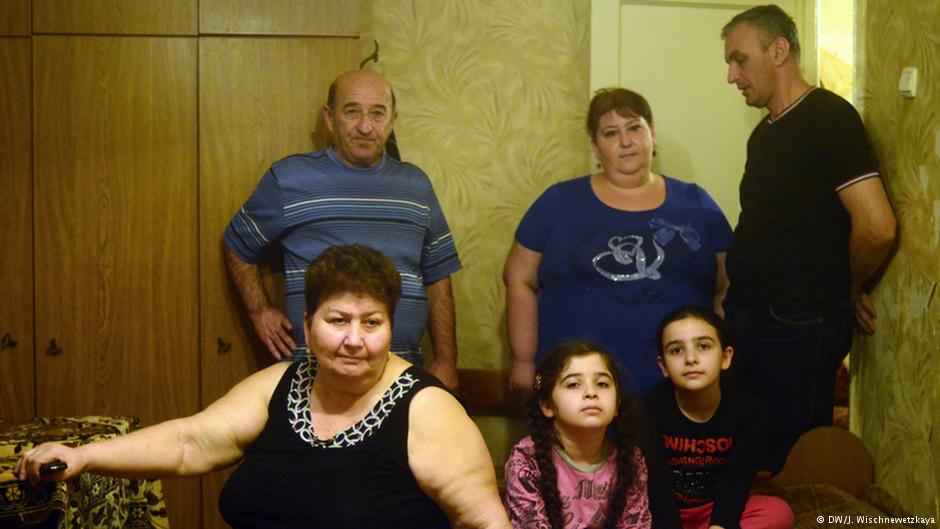
Diana Tigranyan and family

It was not just anyone who advised Tigranyan to turn to Kotlyar, but the Federal Migration Service itself.

“The female employee who was processing my documents said, ‘I cannot help you in any way, but out in the hallway there is a woman. Try approaching her.'”

At first, Tigranyan thought Kotlyar also made money from residence permits.

“I offered her money, and she turned it down. When we told about this in court, no one believed it. But she really is a saint. She didn’t take a kopeck from us.”

Criminal case
Tatyana Kotlyar became an offender on January 1, 2014, when the so-called law on rubber flats came into force. It makes registering a person somewhere other than their place of residence a criminal offense. Criminal charges were filed in March 2014. Kotlyar was charged under Article 322.2 of the Criminal Code (“Fictitious residence registration of foreign citizens in residential accommodation in the Russian Federation”) and Article 322.3 (“Fictitious local registration of a foreign citizen in residential accommodation in the Russian Federation”). Interestingly, on the list of twelve names entered into evidence by the prosecution, there are two people whom Kotlyar has never seen herself.

“Apparently, some woman at the passport office or post office who handles registration knew about my flat and just registered some more people there, for money or as a favor.”

In recent months, Kotlyar has registered several hundred Ukrainian citizens.

“They come to see me every day. They include both refugees from hot spots and men from other regions who are threatened with being drafted into the army in Ukraine. The Russian government has promised to help, but ultimately these people face the same problem as all immigrants.”

Kotlyar is certain that the law on rubber flats violates human rights.

“This did not happen even under Stalin. Then they sentenced people to camps for residing without a passport or residence permit, but at least they didn’t punish the landlord.”

According to Kotlyar, the government is trying to fight the effect rather than the cause.

“Where there is demand, there will always be supply. The problem is not rubber flats, but the very institution of the residence permit. It should be a matter of simple notification, and its presence or absence should in no way affect the provision of civil rights.”

0,,18759231_403,00
Illarion Vasilyev, Tatyana Kotlyar’s defense attorney

She helped solved the crime
Illarion Vasilyev, Kotlyar’s attorney, understands that the human rights activist has deliberately put herself in the way of the new law to draw attention to the problem.

“Yes, it’s her civic stance. She knows she will be held liable, and she has issued a challenge,” says Vasilyev in an interview with DW. “Has she harmed anyone? Yes, she probably has. The service of legalizing compatriots costs a lot of money, and Kotlyar constitutes competition for the firms that make money on this. But the people who are questioned as prosecution witnesses at the trial bow at her feet and say thank you.”

Article 322.2 of the Criminal Code stipulates a fine of 100,000 to 500,000 rubles or imprisonment for up to three years for fictitious registration. The article, however, contains an important proviso.

“A person who commits an offense under this article shall be exempt from criminal liability if he helped solve the crime and if his actions do not constitute another crime.”

According to Vasilyev, no one has helped solve the crime as much as Kotlyar herself has.

Translated by the Russian Reader

Kirill Kalugin: “My Freedom Defends Yours”

On August 2, 2013, Russian Paratroopers Day, Kirill Kalugin, a Petersburg university student, took to the city’s Palace Square alone to protest the country’s new anti-gay laws. He was immediately set upon by reveling paratroopers (or as he himself suggested, by national activists masquerading as paratroopers), an incident captured on video by Petersburg news web site Paper Paper.

Kalugin returned to Palace Square this year on August 2 to protest Russia’s increasing militarism and imperialist misadventures in Ukraine. He was roughly detained by police some fifteen seconds after attempting to unfurl a rainbow flag emblazoned with the slogan, “My freedom defends yours.” Despite the fact that Kalugin held his anniversary protest right next to Manifesta 10’s provocative metallic Xmas tree, his protest has so far gone unremarked by progressive humanity (i.e., the international contemporary arts community) and the foreign press.

The interview below was published in August 2013 on the local Petersburg news web site Rosbalt three weeks after Kalugin’s first protest on Palace Square. Unfortunately, it hasn’t lost any of its timeliness, especially given the total absence of an anti-war movement in Russia and the singularity of Kalugin’s bravery and insight.

__________

Saint Petersburg State University student Kirill Kalugin is half the age of his eminent opponent, Petersburg Legislative Assembly member Vitaly Milonov, although he is also a redhead. But hair color is not the only thing the outspoken homophobe and outspoken gay have in common. Both claim they love their motherland Russia and will never leave it. 

Rosbalt’s Yevgeny Zubarev met with Kalugin in the city center, on Arts Square. It’s a safe place because it is always chockablock with police. There were also lots of police on Palace Square on August 2, [2013], when Kalugin came there alone and unfurled a rainbow flag, but even a platoon of riot police was not immediately able to wrest him away from an agitated crowd dressed in striped shirts for Russian Paratroopers Day.

 — Why did you do it, Kirill? Weren’t you frightened?

— I was frightened. Actually, there were supposed to be four of us out there, but then I ended up going out alone. If there had been several people, the police could have charged us with holding an unauthorized rally, but this way it was a solo picket, which doesn’t require permission. As soon as I unfurled the rainbow flag, men in [traditional Russian paratrooper] striped shirts grabbed me. But I don’t think they were paratroopers: I had seen many of the assailants earlier at anti-LGBT protests. I think they were nationalist activists masquerading as paratroopers. The police pulled me from the crowd and put me in a car, but we couldn’t leave right away: the crowd blocked the car, demanding that the police give me up. The riot police intervened and cleared a path, and I was taken to the 78th police precinct.

kNxhDMBR-650

— What did police charge you with? How were you punished?

— I don’t understand it myself. At first they wouldn’t let me make a phone call. The sergeants behaved rudely, and I couldn’t figure out what my status was, whether I had been detained, arrested or was considered a suspect. Right there at the police station one of the detained paratroopers rushed me: he wanted to beat me up, but the police held him back. Then the brass arrived and everything immediately changed: the police started talking with me politely. It turned out I wasn’t being charged with anything. They even let me file an assault complaint. But how that case has turned out, I don’t know: it has been twenty days, but I have had no word from the police.

— After this incident, Russian Orthodox patriots wrote several petitions to Saint Petersburg State University demanding your expulsion.

— I’m a student in the physics department, specializing in medical physics and bioengineering. It’s a tough department, and there is a lot of studying to do. What matters to the deans is that students take all their exams and tests on time, but they are unconcerned about their private lives. Generally, it is not kosher in the scientific community to tell people how they should behave in the intimate realm. So I’m confident all these petitions are pointless.

— Your family must have seen how you were beaten on Palace Square on the Web or on TV. What was their reaction?

— I was born to an ordinary Russian family in the town of Krasnoturyinsk in the Urals. My father is an officer in the Russian armed forces, my mother, a philologist. After the 2008 crisis, life in our town got really bad and we moved to Petersburg, where I finished high school, enrolled at the university, and began to live separately from my family. It was only then I told my parents I was gay. My parents were upset, especially my father, but they recognized my right to live as I see fit. My brother also said it was my choice. When I went out on Palace Square, they heard about it in the media. They called me and were worried, of course. But I assured them I was not in danger.

— How many times have you been beaten up in Petersburg for being gay?

— Never, except for the incident at Palace Square. My classmates at university and my employers at the restaurant where I work part time as a bartender do not care what I do in bed. Of course, after this incident I could have been recognized on the street and beaten up, but that hasn’t happened yet.

— There are thousands of commentators on the Web who are sure you went out on Palace Square to secure the right to emigrate to the west as a discriminated person.

— I don’t intend to leave Russia. I am sure all these homophobic laws will be repealed sooner or later, and all Russian citizens will be able to live normally regardless of sexual orientation. There were similar laws in Sweden thirty years ago, and gays were persecuted throughout the world the way they now are in Russia. But then the situation changed. I am sure that Russia also has to follow this path, and so I’m not going to leave. But change doesn’t happen by itself—people have to take to the streets and speak out about this problem.

— Why do you act alone? There are lots of public organizations in Russia that support gays. Many of them receive foreign grants. You could get this money to fight for equality and all that, no?

— I don’t want to. I’ve had offers to join various organizations like that, but I don’t want to. I’m not a politician. I just don’t want there to be discrimination against people like me. Besides, it is easier for the state to punish organizations than lone individuals. Organizations are more vulnerable. What are they going to do with an ordinary guy like me?

— When you finish university you’ll find that jobs in your scientific specialty are poorly paid and dead ends. This is another reason, aside from sexual orientation, for going abroad.

— I still won’t leave. I know how things are going with financing for science in Russia, but I don’t want to leave. In the end, there are grants given to scientists for in-demand research. And in fact, Russia is changing for the better; the situation is improving in science, too.

— You have the opportunity to address Rosbalt’s thousands of readers. What would say to all these people?

— I would appeal to people like me. Don’t sit quiet as mice. At least come out. Let your loved ones know that you exist.

 — Why can’t you sit quiet and keep a low profile? Why do you come up with these public protests during which you can be beaten or even killed? After all, there is no practical sense to them.

 — Can I quote Goethe? “He alone deserves liberty and life who daily must win them anew.”

— How old are you?

 — Twenty-one.

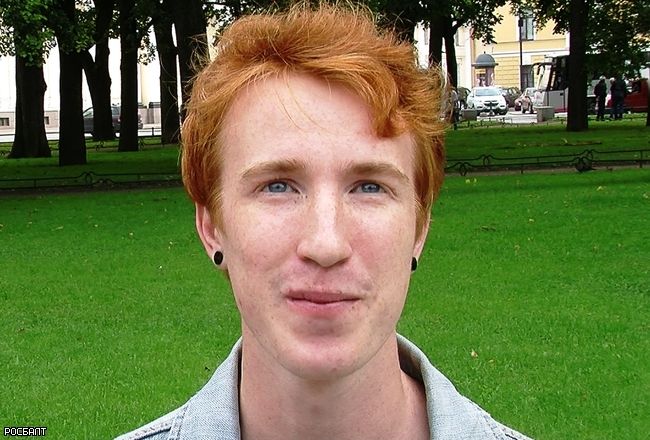
Originally published, in Russian, by Rosbalt on August 22, 2013. Photo courtesy of Rosbalt

__________

Explaining his protest [on August 2, 2014], Kalugin said it was directed against both the lack of civil freedoms and the growing militarism in Russia during the ongoing conflict in Ukraine.

“The suppression of any civil freedoms and the growth of imperial chauvinism in Russia are interconnected, and the issue has one and the same root,” he said.

“As long as there remains at least one group that is seen as ‘second-rate people’ in the country, the rest cannot call themselves free. Even if they enjoy some preferences now, this system can hit them, too, sooner or later.

“All this has grown so much that it has already started spreading into the neighboring states. The same people, who cried ‘Death to gays’ and hailed the laws banning ‘gay propaganda’ and restricting public assemblies, ended up shouting ‘Crimea is ours’ and going to Donetsk and Luhansk.”

Airborne Troops Day in St. Petersburg is known for the large number of airborne veterans gathering in the city center, drinking, swimming in fountains and, at times, getting out of control, with the police usually ignoring any misconduct.

Kalugin said that he chose to stage his protest on that day because he sees the festivities as the “climax of militarism and chauvinism.” He said it was also his reaction to homophobic jokes, where LGBT people were mockingly invited to hold their protests on Airborne Troops Day—the underlying notion being that they would be immediately be beaten by homophobic airborne veterans.

“It’s an old joke from the times when LGBT pride events were held in Moscow, [Moscow’s anti-gay ex-mayor Yury] Luzhkov used to say that he would only agree if it was held on Aug. 2,” Kalugin said.

source: St. Petersburg Times