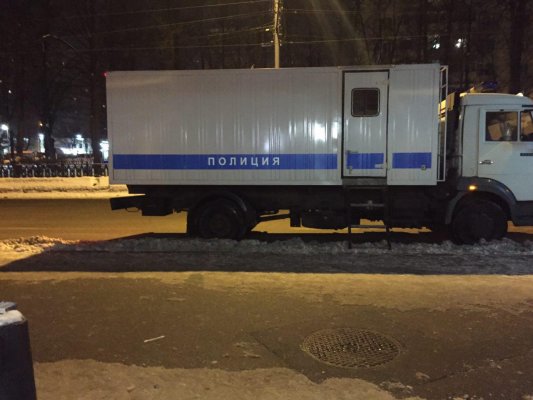
Riot Cops Raid Punk Rock Concert in Barnaul: “Freaks, Not Patriots”

DSCN5200.jpg

Riot Cops Raid Punk Rock Concert in Barnaul
OVD Info
April 28, 2018

Riot cops (OMON) raided a punk rock concert in Barnaul and made everyone in attendance lie face down on the floor, Angelina, who was at the concert, told OVD Info.

According to Angelina, all the concertgoers were searched. The young men were searched especially carefully. The young women were asked whether they were carrying weapons and banned substances. The riot cops gave every concertgoer a piece of paper marked with a number and forced them to say their name and address on camera while holding up their number.

Angelina added the riot cops were very rough with everyone.

The concertgoers were asked whether they were members of subcultures: punks, skinheads or some other group. The riot cops also said the concertgoers were all “freaks, not patriots.”

“There were at least six unidentified men who were telling the riot cops what to do. No one was able to figure out who they were. I remember one of them was named Oleg,” said Angelina.

The concert continued after the riot cops left. One juvenile male was taken to a police station where he signed a statement he had not used any banned substances, after which he was released.

Translation and photo by the Russian Reader

“Are You a Bitch Yet?” FSB Makes New Threats to Framed and Tortured Antifascist Viktor Filinkov

“Are You a Bitch Yet?”: Man Accused in The Network Case Talks about Mores of FSB Officers
OVD Info
April 24, 2018

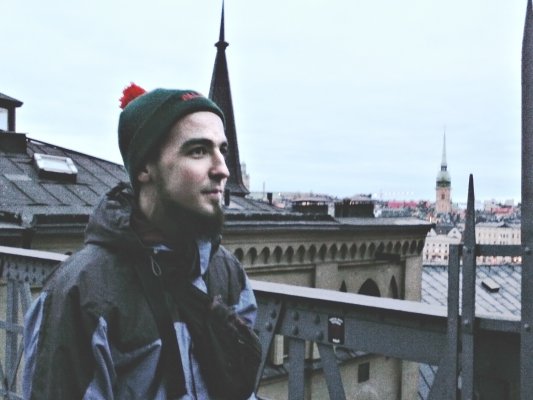
Viktor Filinkov. Photo courtesy of his wife, Alexandra, and OVD Info

On April 20, 2018, the Russian Investigative Committee officially declined to open a criminal case on the basis of a complaint filed by Viktor Filinkov, one of the young men accused in The Network case, who alleged he had been tortured by FSB officers. Moreover, these very same FSB officers are permitted to visit him in remand prison. OVD Info has published, below, the account Filinkov gave to his lawyer of how the secret service officers who tortured him now talk to him.

At around eleven o’clock on April 19, 2018, I was escorted from my cell in the supermax wing of Gorelovo Remand Prison and taken to a holding area before being led out of the prison, where I was handed over to two men, one of whom I recognized as Konstantin Bondarev, a special agent in the St. Petersburg and Leningrad Region Office of the Russian Federal Security Service (FSB). I have known Special Agent Bondarev since January 23, 2018, when he supervised my apprehension at Pulkovo Airport and then, along with other local FSB officers, subjected me to physical and emotional violence for approximately thirty hours while also depriving me of rest, sleep, and food.

When I was escorted out of the holding area, one of the FSB officers meeting me ordered me to put my my hands behind my back, which he handcuffed extremely tightly. I was placed in a silver-colored Škoda. Before putting me in the car, Special Agent Bondarev asked me a question.

“Well, well, Filinkov. Are you a bitch yet?”

“What’s the point of your question?” I asked.

“You’re the point, fuckhead!” Special Agent Bondarev answered aggressively.

He then got behind the wheel of the car. I was put in the backseat. After a while, the car drove through the gates of Remand Prison No. 6. During the entire ride to St. Petersburg, the FSB officers said nothing to me, but I was genuinely afraid that, at any moment, they could drive me to a deserted place and subject me to violence.

We were on the road for about an hour. Finally, I was brought to the local FSB building and taken to the office of Investigator Klimov, where my defense attorney, Vitaly Cherkasov, was waiting for me.

Mr. Cherkasov and I had a one-on-one private conversation during which I informed him I was in a depressed state, since I had been forced to travel for a long time in the same car as Special Agent Bondarev, who had been negative and aggressive towards me, using criminal slang to threaten me with possible rape in Remand Prison No. 6.

In addition, I explained I had recognized Investigator Klimov as one of the officers who on January 24, 2018, after I was brought to the FSB building, had taken part in a prolonged attempt to coerce me mentally into signing a confession. I assume Investigator Klimov could see I had been beaten, and I also needed rest, sleep, water, and food.

It was on this basis that, when Investigator Klimov asked me whether I was willing to testify, I said I would not refuse to testify, but I was currently in a stressful state of mind due to my encounters with Special Agent Bondarev and Investigator Klimov, whom I did not trust, either. Moreover, I had been brought to the FSB building, which is linked in my mind with the torture and bullying I endured there on January 24 and January 25, 2018. For this reason, I told the investigator I could give detailed and thoughtful testimony only in Remand Prison No. 6, where I felt calmer and more secure. I put this explanation in writing in the comments section of the interrogation report.

The investigative procedure was thus completed. Investigator Klimov summoned guards, and two men in plain clothes wearing balaclavas over their heads entered his office. They handcuffed my hands behind my back. They led me out of the room and took me outside, where I was placed in the backseat of the silver-colored Škoda. Special Agent Bondarev was at the wheel.

On the way back to Gorelovo, the officers continued to pepper me with questions.

“Well, bitch, is your asshole raw yet?” Bondarev asked.

Then he said the following.

“Now I’m going to methodically drag you through the mud. Cherkasov is trying to make a name for himself, but you and Agora are all going to rot in prison, and you are to going to do your time in the Arctic Circle, in Murmansk or Karelia. Life taught you a lesson, and it gave you a chance. Do the guys in Remand Prison No. 6 know your lawyer defends LGBT?”

One of the special agents in the car responded, “He didn’t learn his lesson, apparently.”

“It didn’t get through his head, but it will get through his legs,” Bondarev replied.

“It will get through his asshole!” the other special agent added.

They laughed merrily after this remark.

I also remember that one of the special agents said, “You can find a good husband in Gorelovo.”

Bondarev and his colleagues insulted my human dignity, emotionally injured me in a profound way, and put me in a stressful state by saying these and other things. In addition to being humiliated, I finally realized that in the ranks of the local FSB off there are unworthy officers who employ prison notions for their own purposes in their attempts to pressure inmates.

Chatting with me in this vein, the FSB officers took around two hours to drive me back to the remand prison. We got in the car outside the local FSB building around 1:30 p.m. and arrived at Remand Prison No. 6 at 4:00 p.m. I kept track of the time on the clock in the car.*

After talking with the FSB special agents, I returned to my cell in a depressed state, and I was completely sweaty from the nervous atmosphere and heat in the car. My heart ached, I lost my appetite, I refused supper, and my psoriasis acted up due to the stress. When I combed my hair I felt psoriatic plaques on my head.

I take the threats made to me by Bondarev and his colleagues completely seriously. I am afraid for my safety, health, and life itself.

My verbal statement has been recorded faithfully, and I have read it over. I give my permission to publish it in the media.

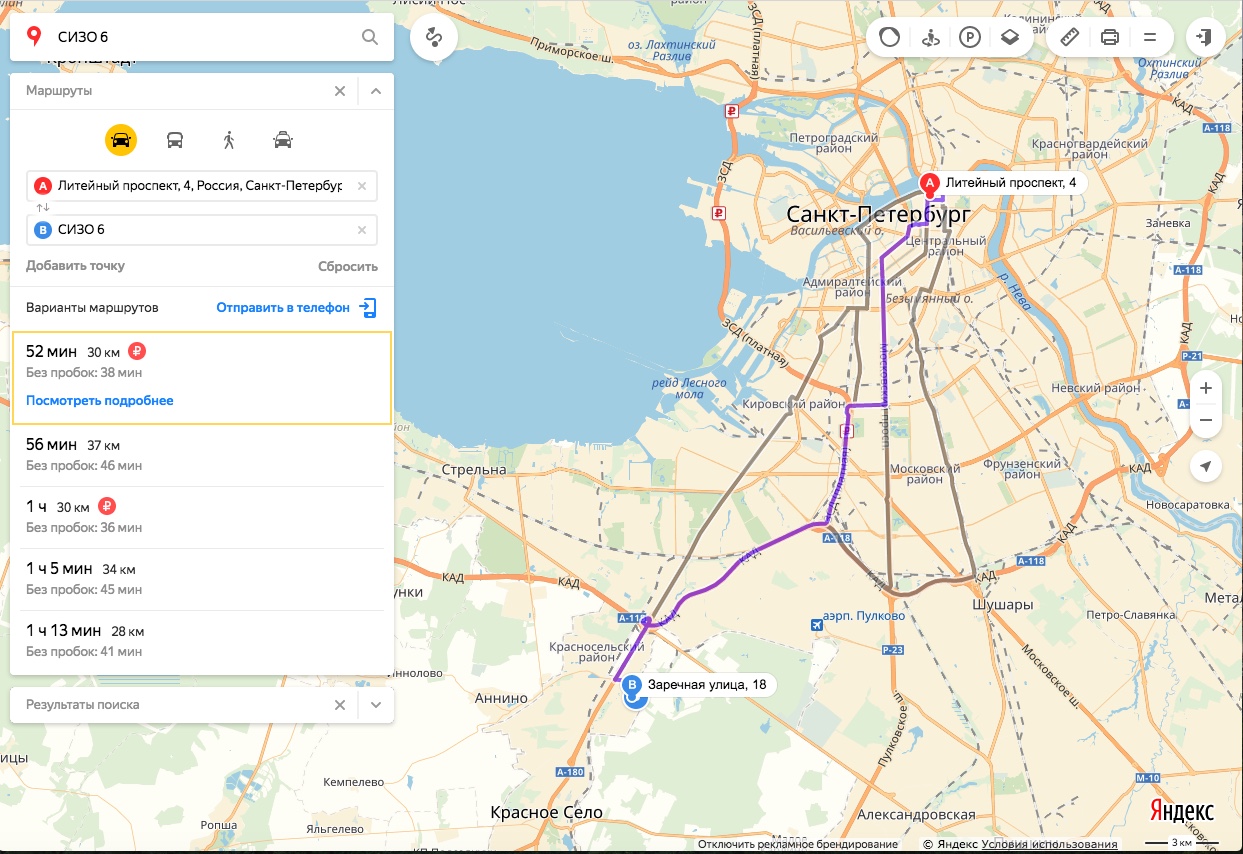
* A directions search on Yandex Maps reveals that the drive from the local FSB building (4 Liteiny Prospect, Petersburg) to Remand Prison No. 6 in Gorelovo should take one hour and thirteen minutes, at most, if there are no traffic jams, and thirty-six minutes, at least, if the traffic is good and the driver takes the optimal route. This would suggest that Special Agent Konstantin Bondarev deliberately drove in circles for a long time in order to bully and threaten Mr. Filinkov. TRR

road to gorelovo

Thanks to George Losev for the heads-up. Translated by the Russian Reader

If you have not been following the Penza-Petersburg “terrorism” case and related cases involving frame-ups, torture, and violent intimidation by the Russian police and secret services, please have a look at some of the recent articles I have published on these subjects.

FSB and NTV Pressure Mother of Man Accused in “Terrorist” Frame-Up

maxresdefaultIn the 1990s, people speculated what the call letters of Russia’s first independent TV station, NTV, actually stood for, but they had no doubt the TV station itself stood for groundbreaking, hardhitting, objective journalism. Since Putin crushed the network as one of his first acts as appointed savior of the Motherland, NTV has been synonymous with yellow journalism and filthy Nazi-like exposés of the regime’s opponents, leading an anonymous folk artist to suggest “NTV” stands for nasilie (“violence”), tupost’ (“stupidity”), and vran’yo (“lies”). Courtesy of YouTube

FSB Investigator and NTV Reporters Pressure Network Case Defendant’s Mother
OVD Info
April 12, 2018

A FSB investigator and NTV reporters have pressured Yelena, mother of Ilya Shakursky, one of the nine young men charged so far in the so-called Network case, as reported in a communique by the Parents Network, a committee of relatives of the young men, who have been accused of involvement in a “terrorist community,” allegedly codenamed The Network.

The FSB investigator summoned Shakursky’s mother and suggested she give an interview to NTV, promising her it would “count towards [her son’s sentence] at the trial.” However, he told her she must tell the reporters Shakursky was, in fact, a member of The Network and under no circumstances mention that her son and the other young male defendants had simply gotten together to play airsoft.

The NTV crew, accompanied by the FSB investigator, came to Yelena’s house and filmed the interview, finishing at eleven in the evening. Yelena told Lev Ponomaryov, leader of the Movement for Human Rights, what happened.

According to Yelena, the NTV reporters were curious not only about Shakursky’s involvement in the alleged organization but also in her own interactions with human rights defenders. They insisted she say on camera that human rights defenders had made promises to her and tried to persuade her to do something.

The Parents Network communique quoted Yelena’s statement.

“I am in such a state. I am constantly in tears. I start to swear, then I calm down. They asked leading questions. I couldn’t get my bearings and give them normal answers. I swore and I cried. I really don’t know what they filmed. They picked my weakest moments.”

Before leaving, the NTV film crew warned they would be telephoning Yelena to clarify certain details. The communique from the Parents Network claimed she planned to demand NTV not broadcast the interview.

Yelena also recounted that the investigator handling Shakursky’s case had been constantly trying to persuade her of her son’s guilt.

“He sits there and says, ‘Your son is guilty, your son is guilty.’ He says all the evidence is against him. I’m so utterly confused. I realize I can’t be friendly with him, because they tortured my son, but on the other hand, I’m afraid, and again I’m under their thumb. I’m afraid he will be sent down for nothing,” she said.

Yelena asked the Parents Network to go public with her story. She also asked that they quote her statement.

“If anything happens to me or Ilya, the people holding my son and pressuring both him and me will be the ones to blame,” she said.

[…]

Thanks to Yana Teplitskaya for the heads-up. Translated by the Russian Reader. You can read more about the Penza-Petersburg “terrorism” case and related developments as posted on this website. 

A New Face in Hell: Yuli Boyarshinov

“We Made It Worse for You, So Talk”: A New Defendant Emerges in The Network Case
OVD Info
April 11, 2018

30173702_10213690256883419_2044878347_1Yuli Boyarshinov, 2015. Photo by Maria Shuter. Courtesy of OVD Info

A new defendant has been added to the case of the so-called Network, Petersburger Yuli Boyarshinov. In the following article, OVD Info reports what it knows about how Mr. Boyarshinov was charged in the case, and about the pressure put on him in the remand prison where he is currently jailed.

Mr. Boyarshinov’s defense attorney Olga Krivonos told OVD Info that he was charged with involvement in The Network on April 11. Ms. Krivonos cannot discuss the particulars of the case, since she was made to sign a nondisclosure agreement concerning the preliminary investigation. Mr. Boyarshinov has been charged with involvement in a terrorist community (Russian Federal Criminal Code Article 205.4 Part 2) and illegal possession of explosives (Russian Federal Criminal Code Article 222.1 Part 1).

27-year-old Yuli Boyarshinov has worked the last several years as an industrial climber. From 2010 to 2015, he was a co-organizer of the Free Fair in Petersburg, events where people donated and took home all kinds of things free of charge. He [CENSORED BY REQUEST OF THE RUSSIAN ANARCHIST CENTRAL COMMITTEE]* volunteered at animal shelters.

yulik.jpgYuli Boyarshinov. Photo courtesy of Mr. Boyarshinov’s friends and OVD Info

Arrest
Mr. Boyarshinov was detained on the evening of January 21, 2018, in Petersburg’s Primorsky District, most likely accidentally. Several local residents told OVD Info that anti-drugs raids occured there frequently and police regularly stopped passersby.

Mr. Boyarshinov recounted that police from the 53rd Precinct struck him in the face and stomach several times: they did not like the fact the young man had refused to talk with him, citing Article 51 of the Russian Constitution, which guarantees an individual’s right not to incriminate himself. The beating ended when another policeman entered the room, was outraged by what was happening, and asked his fellow officers not to “cause mayhem.”

Police found 400 grams of smoke powder, a relatively weak explosive obtained by mixing saltpeter, charcoal, and sulfur, on Mr. Boyarshinov’s person. Smoke powder is now most often employed in the manufacture of fireworks, as well as by hunters and sport shooters who pack their shells manually. Mr. Boyarshinov has a hunting license, but not a firearms permit. Ms. Krivonos could not say why Mr. Boyarshinov needed the smoke powder, since it fell under her nondisclosure agreement.

On January 22, police searched the home the young man shares with his parents. Law enforcement officers confiscated equipment, books, and the anarchist magazine Avtonom.  He was then taken in a police cruiser to St. Elizabeth’s Hospital. Hospital staff did not ask him for either his internal passport or insurance policy. The detainee was given an MRI scan of the brain, and his blood was drawn. Mr. Boyarshinov told his lawyer the physician who administered the MRI scan was quite worried about his condition. After the examination, the young man was transported to the Temporary Detention Center. In conversation with his lawyer, Mr. Boyarshinov suggested he was taken to the hospital first so that it would be impossible to say he had been injured in the Temporary Detention Center. The doctors noted bruises on his face.

On January 23, Primorsky District Court Judge Yelena Tsibizova ordered Mr. Boyarshinov remanded in custody for thirty days. His relatives were not informed of the court hearing. Ms. Krivonos had not yet taken the case, and so Mr. Boyarshinov was represented by a state-appointed attorney. At that point, he had only been charged with illegal possession of explosive substances.

1523224346412_1Yuli Boyarshinov. Photo courtesy of Mr. Boyarshinov’s friends and OVD Info

Pressure in the Remand Prison
After the hearing, Mr. Boyarshinov was incarcerated in Remand Prison No. 1 aka The Crosses Two, where doctors noted his injuries: blows to the stomach and head, and a black eye.

As the young man told his lawyer, his cellmates immediately tried to chat him up.

“I’m also in for Article 222.1. I’ll tell you what’s what,” one cellmate said to him.

The anarchist symbol had been traced on the dusty glass in the cell’s window.

On January 31, Mr. Boyarshinov was visited by two men who gave only their first names, Kostya and Dima. Kostya had been present during the search at Mr. Boyarshinov’s home. When he asked where they were from, Kostya and Dima gave him their work number at the Petersburg office of the Russian Federal Security Service (FSB). The supposed FSB officers listed the names of defendants in the Penza-Petersburg “terrorism” case and many other names, promising Mr. Boyarshinov that if he did not talk to them, “things would get worse” for him. The young man refused to speak with the FSB officers, again invoking his rights under Article 51 of the Russian Constitution.

“You’re making things worse for yourself, and you’ll go to prison,” the security service officers told him.

On February 12, Mr. Boyarshinov was transferred to Remand Prison No. 6 in the village of Gorelovo, Leningrad Region, on the orders of an investigator in the Primorsky District office of the Interior Ministry, allegedly, “for the purpose of conducting investigative procedures.” Ms. Krivonos said that then, after she filed an appeal against the extension of Mr. Boyarshinov’s remand in custody, staff at the Primorsky District Court telephoned her and asked her client’s whereabouts. They were looking for him to fill out papers. Ms. Krinovos argues the transfer to another remand prisoner violated her client’s rights. The Gorelovo Remand Prison is a former medium security correctional labor colony, and the conditions there are considerably worse than in The Crosses Two Remand Prison, which was built to satisfy the requirements of current legislation.

Mr. Boyarshinov told his lawyer he was placed in a cell where there were forty inmates, although it was designed for thirty-five. When he moved into the cell, his cellmates beat him up for no reason. They forced him to clean the cell, and because of this he was not let out for walks outside in the yard.

On February 13, FSB officers again came to talk with Mr. Boyarshinov.

“We made things worse for you. Now talk, or conditions will get even worse.”

Mr. Boyarshinov again refused to speak with them.

photo_2018-02-19_19-27-57.jpgYuli Boyarshinov and defense attorney Olga Krivonos at a custody extension hearing on February 19 in Primorsky District Court. Photo courtesy of Ms. Krivonos and OVD Info

On March 2, the remand prison was inspected by members of the Leningrad Region Public Monitoring Commission (PMC). Mr. Boyarshinov told his lawyer the Leningrad PMC members summoned the inmates one by one to chat with them in the office of a warden, who was present during their conversations.

FSB officers visited Mr. Boyarshinov again immediately after the PMC’s inspection. The very same day, he and another inmate (who had not spoken to the PMC) were transferred to a cell that held approximately 150 inmates: the number of inmates constantly changed. There were only 116 bunks in the cell, which was reserved for men charged with murder, rape, and robbery, and who had served time before. However, the inmates who smoked were not segregated from the nonsmokers. At first, Mr. Boyarshinov had to sleep on the floor.

“During the nearly two months of his incarceration in Gorelovo, no investigative procedures involving Yuli have been carried out. Due to the fact the conditions of my client’s imprisonment in terms of cell assignment and personal safety have been violated, his state of mind has deteriorated considerably,” said Ms. Krivonos.

On March 16, Sergei Shabanov, human rights ombudsman for Leningrad Region, and his staff member Sergei Gavrilovich visited the Gorelovo Remand Prison.

“There were no complaints and statements from the persons held in custody,” reads a report of the visit, posted on the remand prison’s website.

“He has not been tasered, but the conditions in which my client is being held are tantamount to torture,” argued Ms. Krivonos.

She also said that Mr. Boyarshinov has chronic tonsillitis, which has been aggravated by his living conditions.

9ac654e24a7baa41f22dbfeb5e102410Visit by Leningrad Region Human Rights Ombudsman Sergei Shabanov to Gorelovo Remand Prison. Yuli Boyarshinov sits with his back turned to the camera. Photo courtesy of Remand Prison No. 6 website and OVD Info

Petersburg industrial climber Ilya Kapustin was a witness in The Network case. He claimed FSB agents tasered him, after which he left Russia, requesting political asylum in Finland. Kapustin told OVD Info that, during his interrogation, investigators had asked him whether he knew Boyarshinov, when they had last met, and why he had telephoned him on the day he was detained.

“We had a professional relationship. I telephoned him around the time of his arrest to ask him whether he wanted a job shoveling snow off rooftops,” Kapustin explained.

  • Novaya Gazeta writes that the Gorelovo Remand Prison is considered a torture chamber. According to the newspaper, inmates are tortured and raped by order of the wardens. This was the reason Vladimir Malenchuk, former head of the local office of the Russian Federal Penitentiary Service was dismissed, and his deputy, Vyacheslav Tippel, who was involved in the torture, was sentenced to seven years in prison. However, the beatings and abuse of inmates at the remand prison have not stopped.
  • On March 16, antifascist Viktor Filinkov was transferred to Remand Prison No. 6. Mr. Filinkov has been charged with involvement in the terrorist organization The Network (Criminal Code 205.4 Part 2). The FSB claims members of The Network were preparing for the outbreak of unrest in Russia. Mr. Filinkov confessed his guilt, but later claimed he had done so under torture. Members of the Petersburg Public Monitoring Commission noted numerous taser burns on the antifascist’s body. Businessman Igor Shiskin was charged in the same case. He did not complain of torture, but the Petersburg PMC likewise noted injuries on his body. The criminal investigation and arrests in St. Petersburg were sanctioned by a district court in Penza.
  • In October 2017, five young men were arrested in Penza. A sixth man was arrested in Petersburg, transferred to Penza, and also remanded to custody there. All of them have been charged with involvement in a terrorist community. The FSB claims the young men were also involved in The Network, which, allegedly, has cells in Moscow, Petersburg, Penza, and Belarus. The defendants in the terrorism case in Penza have spoken of psychological pressure, torture by electrical shock, being hung upside down, and having weapons planted by FSB officers in their cars and flats.

* There is no “Russian Anarchist Central Committee,” of course, but I was asked—twice—to expunge a perfectly trivial, innocent passage because it supposedly endangered Mr. Boyarshinov’s safety in remand prison. I dared to doubt out loud that the wardens at Gorelovo Remand Prison read my website and much less that they would happen on this passage. The anarchist authoritarian “we” was forced to repeat its peremptory request, referring to the meaningless fact that it was a “common decision.”

This is what you will discover about 99% of Russian “anti-authoritarian” leftists if you spend enough time with them. They do not understand that solidarity is a two-way street. So, God forbid, for example, that any of them would take the time and then have the guts to speak out against the Russian government’s crimes in Syria. But if something untoward happens with any of their own kind, you can be sure they will demand the world’s attention, because, at the end of the day, they are good “white people,” like the good “white people” in Europe and North America, so they imagine they do not deserve to be treated the way the FSB has been treating their antifascist comrades in Penza and Petersburg.

Of course, they should not be treated this way, but nor should anyone else on God’s green earth be treated this way, even if they do not happen to be good “white people.” 

The other thing you discover is that the mindset of most Russian “anti-authoritarian” leftists is completely authoritarian, which is no surprise because Russia has been an authoritarian country for most of its thousand-year history. There has been the odd decade here and there down through the centuries when Russia was not an authoritarian country, and Allah be praised, how sweet it was to live during one of those rare decades, as your humble servant did during the 1990s. 

Now, however, the country has endured nearly two decades of increasingly oppressive authoritarian rule, so it should be no surprise that people who nominally espouse democratic, progressive, “anti-authoritarian” beliefs would revert to authoritarian type when push comes to shove. 

During the ten-plus years I have been translating, editing, and writing this website and its predecessor, Chtodelat News, I have been clubbed over the head, slandered, and bossed around by my putative Russian “anti-authoritarian” leftist allies so many times I have lost count. On the contrary, the number of times I have been thanked for what I do or encouraged and vigorously supported by these selfsame so-called anti-authoritarians has been much less numerous.

They really don’t get it. Until they do, most of their efforts will be doomed to failure. Despite what Putin and his junta have done to Russia and its people, the country and its people are way past the point where they have the time of day for authoritarians of any stripe, whether nationalist, leftist, rightist, centrist, neoliberal, Anglican or Presbyterian. When and if they rise up to overthrow their oppressors, it will be a democratic revolution. Or it simply won’t happen at all. TRR

Translated by the Russian Reader. Thanks to Comrade NN for correcting a typo.

Read more about the insane FSB frame-up of the wholly fictional Network aka the Penza-Petersburg “terrorism” cases, and related current cases involving torture and framing on the part of the security service once chaired by President Vladimir Putin and in which he proudly served as an officer for many years. It is their increasing dominance of politics and the economy that has pushed the world’s largest country to the brink of toxic governance and administrative insanity.

Extremism Inside Out

iznankaIllustration by Adelinaa. Courtesy of OVD Info

Extremism Inside Out
OVD Info
March 29, 2019

Members of the previously unknown New Greatness movement were detained and then remanded in custody in mid March in Moscow, accused of organizing an “extremist community.” OVD Info has examined the case file. Apparently, the movement was led by undercover law enforcement officers.

The Plot
Police searched the homes of members of the opposition New Greatness (Novoye velichiye) movement on March 15 in Moscow, as reported by the Telegram channel Kremlin Washerwoman (here and here).

The grounds for the searches were not reported. As witnesses confirmed, a list containing the names of ten of the movement’s members was confiscated during one of the searches. According to unconfirmed reports, Russian Federal Security Service (FSB) officers were present at the search.

A bit later, a video of the movement’s leader, Ruslan Kostylenkov, confessing his guilt during an interrogation, was posted on the internet.

According to Kostylenkov, the organization’s objectives were “establishing order in the Russian Federation, organizing a tribunal for members of the ruling elite, and abolishing repressive laws and the Constitution.” When asked how the movement’s members intended to accomplish this, Kostylenkov replied they planned to organize rallies and carry out [militant] “actions” [aktsiyi] against law enforcers.

After the searches, Kostylenkov, an underage female, and seven other people were detained and sent to the Russian Investigative Committee’s Western Administrative District office in Moscow.

The next day, March 16, Dorogomilovo District Court in Moscow remanded seven members of New Greatness, including the underage girl, in police custody for two months. Two other members were placed under house arrest. All of them were charged under Article 282.1 Part 1 of the Russian Federal Criminal Code (“organization of an extremist community”). Kostylenkov was among those remanded in police custody.

On March 20, the Moscow News Agency reported that a criminal case had been opened on March 13, that is, two days before the searches and arrests.

Citing a source in law enforcement, Moscow News Agency also claimed that the organization’s objective had been the commission of crimes motivated by political hatred [sic] of the current Russian federal constitutional system. In addition, members of New Greatness had repeatedly organized sessions in Moscow and Moscow Region at which they had received training on how to participate in protest rallies. The agency’s source noted the training sessions involved the use of firearms and explosives.

The members of New Greatness have been charged under Russian Federal Criminal Code Article 282.1 Part 1, i.e., they have been accused of organizing an extremist community.

The Criminal Code defines an “extremist community” as a group of people organized for the planning and commission of “extremist crimes.” People found guilty of organizing an “extremist community” can be sentenced to a maximum of ten years in prison, while people found guilty of being members of the group (as covered by Article 282.1 Part 2) face maximum sentences of six years in prison. The Russian Supreme Court has ruled that criminal liability for violating the law begins at the age of sixteen.

The official commentary to Criminal Code Article 282.1 states that the group in question must be “stable,” meaning the people in the group had got together beforehand in order to plan and commit the crimes. The group must have an organizer and a stable membership, and the actions of the group’s members must be coordinated.

Judging by the case file, the members of New Greatness stand accused of planning to overthrow the government. Apparently, in keeping with the wording of Article 282.1, these actions should be interpreted as “crimes motivated by political hatred.”

The Characters
OVD Info has been able to examine the case file, which we received from the lawyer of one of the accused men. These documents let us take a slightly broader look at the members of New Greatness, their activities, and the roles they were assigned. The case file contains the following information about some of those in police custody and the members who avoided arrest.

Arrested

Maxim Roshchin, a 38-year-old unemployed man from Khimki, Moscow Region. Roshchin was not involved in shooting practice, and knows nothing about any other training sessions.

Pyotr Karamzin, 40 years old. He knows nothing about protest rallies timed to coincide with the presidential election and was not involved in discussing them. Karamzin tried to take part in the first training camp, but the group “got stuck in the snow.” Like all the other members, he gave money to Ruslan D (see below), with whom he once went to a protest rally. When Karamzin realized the rally had not been authorized by the authorities, he left.

Pavel Rebrovsky, a 31-year-old unemployed Muscovite. Rebrovsky was head of the so-called militant actions department. He treated his duties as a joke and ignored them. He did not engage in any serious discussions, since he realized it would be impossible for ten people to overthrow the government. He gave cash to Ruslan D.

Vyacheslav Kryukov, a 19-year-old student in his second year at the Russian State University of Justice. He moved to Moscow from Gelendzhik. He donated money to the group simply out of curiosity. He wanted to listen to discussions of Russian politics, but the meetings were closed to people who did not make donations. Like the other members, he gave money to Russlan D, who, according to Kryukov, also looked for rooms to hold meetings.

Ruslan Kostylenkov aka Ruslan Center, 25 years old, previously convicted of robbery. The group’s leader, as he himself recounts in the interrogation video published by Kremlin Washerwoman.

Not Arrested

The following members of the New Greatness community were interrogated on March 13. The same day witnessed the opening of the criminal case on whose basis nine people were detained and then remanded in custody on March 15. The testimony provided Konstantinov, Rostorguyev, and Kashapov was the basis for the charges filed against all members of the group remanded to custody. Moreover, their testimony has been excised from the case file, as handed over to the defense attorneys of the arrested members. Konstantinov, Rastorguyev, and Kashapov were not arrested themselves.

Alexander Konstantinov aka Ruslan D aka Spaniard (not to be confused with Ruslan “Center” Kostylenkov). Konstantinov’s profile in the interrogation protocol is blank. He admits he was involved in New Greatness “in order to subsquently identify the members,” inspect documents, and gather important information to pass on to law enforcement. Konstantinov identifies himself as head of the financial department. However, as follows from the testimony of other members, as cited above, there was only one member who located and rented rooms for group meetings: Ruslan D aka Konstantinov. According to the group’s leader, Kostylenkov, it was Ruslan D who drafted the group’s charter.

Maxim Rastorguyev is a 29-year-old senior investigator and police captain. He was assigned to inflitrate the group. In his testimony, Rastorguyev said Ruslan D’s involvement in the group was part of a police investigation, a “strategic infiltration.” Along with Ruslan D and Ruslan Center (Kostylenkov), Rastorguyev was involved in organizing an assault squad. Identified as leader of the assault squad, Rastorguyev helped other members of the group make Molotov cocktails.

Rustam Kashapov is a 28-year-old military engineer. According to the testimony of one of the arrested members, it was Kapashov who brought weapons and ammunition to one of the group’s training sessions.

Conclusion

The case file makes it clear that:

  • Three members of New Greatness were interrogated three days before the searches and arrests: Konstantinov, Rastorguyev, and Kashapov.
  • The criminal case was opened after the three men were interrogated.
  • Their testimony is the basis for the charges against other group members.
  • According to the case file, all three men were involved in organizing the group and arranging the training sessions, drafting the charter, collecting dues, and renting space. According to the charges, these actions were, in fact, the grounds for detaining members of the New Greatness movement and remanding them in custody.
  • Konstantin, Rastorguyev, and Kashapov avoided arrest.
  • One of the three men—Rastorguyev—has testified he was assigned to infiltrate the group. The testimony of all three men has almost been entirely excised from the case file that was handed over to the arrested men’s defense lawyers.

Thanks to Comrade NN for the heads-up. Translated by the Russian Reader. It should be obvious by now the Russian security services were tasked with inventing domestic “terrorist” and “extremist” groups from scratch in the run-up to the March 18 presidential election and this summer’s FIFA World Cup, which Russia will host, and then unmasking, apprehending, and prosecuting the fruits of their own sadistic fantasies. To my mind, this should be a huge scoop just waiting for an ace reporter at a big-name western newspaper or magazine if only he or she would take the time to look over the ample Russian press coverage of the Penza-Petersburg “terrorism” case, the strange investigation of the real “terrorist” bombing that occurred in the Petersburg subway in April 2017, and the curious case of the the New Greatness movement, which, as the article above suggests, was conjured into existence by Russian undercover police themselves. The question is why, when this website and other activist websites have been at pains to give “real” reporters one and one and one, they cannot add them up and get three? Or they are simply too afraid of the collective Putin and its wrath to cover these flagrant miscarriages of justice?

All in a Day’s Work

sdy_bxm7qd8Denis Mikhailov. Photo courtesy of the Navalny team’s VK page and OVD Info

Well-known Moscow activist Mark Galperin has been sentenced to two years probation for two videos. The videos, in which Galperin discusses a possible revolution, were deemed calls to extremism. The court forbade the activist frominvolvement in grassroots organizations for three years.

In Crimea, left-wing activist Alexei Shestakovich was transported after a police search with a plastic bag over his head. During the search, he lay on the floor in his underwear and handcuffs. Ultimately, Shestakovich was jailed for ten days.

At the same time, Crimean trade union activist Ivan Markov was detained and then jailed for ten days, but he was released ahead of schedule, as the appellate court overturned the decision to remand him in custody.

Denis Mikhailov was arrested twice for the same “crime.” The coordinator of Alexei Navalny’s presidential election boycott headquarters in Petersburg had just left the special detention center where he had spent thirty days for the January 28 Voters Strike protest rally, when he was detained, taken to court, and jailed for another twenty-five days, once again for the January 28 Voters Strike protest rally. Only in the first case, Mikhailov was tried as an organizer, while the second time he was tried as a participant.

An activist in Yekaterinburg was jailed for fifteen days after he was detained carrying a placard criticizing Putin. The placard was emblazoned with the slogan, “If you want another six years of lies and stealing, vote for Putin.” Sergei Tiunov was accused of a repeat violation of the rules for public events. He has gone on a dry hunger strike.

Source: OVD Info. The Week That Was, No. 45 (email newsletter). Translated by the Russian Reader

“Young People Gathered to Voice a Silent Reproach”: Dmitry Borisov’s Closing Statement in Court

“Young People Gathered to Voice a Silent Reproach”: Dmitry Borisov’s Closing Statement in Court
OVD Info
February 21, 2018

Dmitry Borisov. Photo by Irina Yatsenko. Courtesy of OVD Info

Moscow’s Tverskoy District Court is scheduled to pass sentence on Dmitry Borisov at twelve noon on February 22. Borisov is a defendant in the so-called March 26 Case, involving various “forceful actions,” allegedly taken by protesters against policemen and Russian National Guardsmen on Pushkin Square during a March 26, 2017, rally inspired by Don’t Call Him Dimon, a video exposé posted on YouTube on March 2, 2017, by anti-corruption activist and would-be presidential candidate Alexei Navalny. The video accused Russian prime minister and former president Dmitry Medvedev of wide-ranging corruption. The prosecution has asked the judge to sentence Borisov to three years in prison.

The court heard the defense’s and prosecution’s closing arguments, as well as Borisov’s closing statement on February 20. According to our count, forty-six people came to the hearing to support Borisov, many of them wearing t-shirts emblazoned with his picture. Prosecutor Larisa Sergunyayeva rattled off her closing argument, a printed text that she read out to the court. During her speech, activist Ildar Dadin called her a few rude names. Dadin was removed from the courtroom, but Sergunyayeva did not slow down her rapid-fire delivery.

According to Sergunyayeva, the testimony given by policemen was believable, while the testimony of protesters could not be trusted because they had a stake in the case’s outcome. Borisov’s malicious intent was allegedly proven by the discovery of a chat session on Telegram chat on his elephone in which he had written about planning to go to the rally with friends. Many positive character references were made on Borisov’s behalf, and he had no criminal record, but if the prosecutor has her way, he will spend three years behind bars for violating Article 318 Part 1 of the Russian Criminal Code, which stipulates a maximum punishment of five years in prison.*

Borisov’s attorneys, Ilya Novikov and Nikolai Fomin, spoke for about an hour and a half. They explained Borisov had been standing calmly at the rally when, for no apparent reason, police seized his friend and dragged him to the paddy wagon. Borisov grabbed his friend. The police knocked Borisov to the ground and beat him. Four of them dragged him to the paddy wagon. The lawyers explained the prosecution’s claim Borisov had wrested a leg free from one of the policemen carrying him and kicked him in the helmet was untenable, since the policeman who had testified he had seen this was located somewhere where he could not have seen the incident. They also argued the policemen who were witnesses in the case had perjured themselves when discussing the administrative charges also filed in connection with the events of March 26, 2017. They argued that if Borisov really had kicked the policeman’s helmet, he probably would have broken his visor, because Moscow police are currently outfitted with extremely poor-quality helmets. Finally, the defense pointed out the alleged victim did not immediately file charges. He did so two months later, apparently under pressure from Investigative Committee detectives Alexander Uranov and Rustam Gabdulin, notorious for their involvement in the Bolotnaya Square case. They handled the investigation of the March 26, 2017, case in exactly the same manner.

The defense attorneys predicted the court would hand down the worst sentence possible.

OVD Info has published Dmitry Borisov’s closing statement in court, below. The transcript may contain a few mistakes, because the accused spoke softly.

Dmitry Borisov: Closing Statement in Court
Your honor, the lawyers spoke very professionally, for which I am quite grateful. I did not use violence against police officers, nor did I intend to do so, because, at very least, it would have been senseless to do so. I had been captured by four policemen and was in a vertical position. All I could see was the sky.

I honestly do not understand why for nine months running I have been traveling to interrogations and court hearings not from home, but in trucks in which fifteen people sit in a three meter square cage. After sitting in this cage for seven hours, they faint and have to urinate in bottles, because the truck is parked in the garage of the Moscow City Court.

I also do not understand why I have spent many hours in the so-called assembly cells at the remand prison, that is, halfway between my cell and the trip to court. These cells are sixteen meters square, and fifty men, all of them smoking, are crammed into them. That is more than three persons per square meter. Try and imagine three men smoking in a one square meter space. Try and imagine how they feel. These cells are so filthy many people would not believe such a thing was possible in the capital of our mighty country. I do not want that to sound too sarcastic. I love my country, and that is a partial explanation of why I was in Pushkin Square on March 26. There are people who say you can judge a city by the cleanliness of its toilets. If you saw the toilet in the assembly cell you would think you were in a village on the outskirts of a godforsaken banana republic.

As for the cells in Butyrka Prison, they are scruffy, filthy dungeons with a view, for example, of an unimaginably dirty brick wall. That is the view in my cell. There is no heat. We have a single radiator in our cell, but it does not work. The ventilation consists of nine tiny holes, although the cell houses twenty-eight smokers.

My lawyers have spoken about how the case was politically motivated from the get-go. The actions of the investigators and their assistants were aimed from the very outset at proving my guilt. Although Ilya Novikov has spoken about it, I would like to mention the photograph of eight defendants in the Bolotnaya Square case that proudly hangs above Investigator Uranov’s desk, with the sentences they received written below each defendant in increasing order. If I am not mistaken, the longest sentence was four years. Apparently, Mr. Uranov is especially proud of this picture. I personally witnessed him getting on the internet and searching for news about how he had apprehended “enemies of the people.” He was upset when he discovered his name spelled incorrectly in one article. I cannot remember whether his first name is Alexei or Alexander, but it was written incorrectly in the internet. He was quite adamant on this point.

As for the case itself, my guilt consists only in the fact I tried to prevent my friend from being abducted. In the opinion of some people, he was in the wrong place at the wrong time on March 26 in Pushkin Square. I am convinced it is wrong to grab people in the center of our country’s capital as if they were animals and drag them to a paddy wagon without identifying yourself and explaining the charges, even if you are wearing a security services uniform.

And that day more than a thousand people were detained.

They were detained not for holding an unauthorized rally, but for making a silent reproach. It took me a long time to find the right word to express what happened there. Young people gathered there to voice a silent reproach, to force the authorities to think a little.

We did not gather to engage in bloody revolution, but to remind the authorities it is worth giving things some thought. Otherwise, their actions really will lead to hungry bloody riots. Therefore, I ask you to exonerate me. I am not guilty of anything. I have been in jail for nearly eight and a half months for no reason at all.

*Use of violence that does not endanger human life or health, or threats to use violence against a representative of the authorit[ies], or his relatives, in connection with the discharge [of] his official duties, shall be punishable by a fine in the amount of 200 to 500 minimum wages, or in the amount of the wage or salary, or any other income of the convicted person for a period of two to five months, or by arrest for a term of three to six months, or by deprivation of liberty for a term of up to five years.” Source: The Criminal Code of the Russian Federation

••••••••••

OVD Info reported that on February 22, 2018, the Tverskoy District Court found Dmitry Borisov guilty as charged and sentenced him to one year in a medium-security penal colony.

Translated by the Russian Reader

Dragnet (Yelena Gorban and Alexei Kobaidze)

Suspects in Vandalism Committed Outside of United Russia Office Sent to Temporary Detention Facility
OVD Info
February 14, 2018

Paddy wagon in which Gorban was taken away. Photo by Maxim Pashkov. Courtesy of OVD Info

Yelena Gorban and Alexei Kobaidze, suspects in the vandalism case (Russian Criminal Code Article 214) opened after a protest outside a United Russia party office on January 31, have been sent to Temporary Detention Facility No. 1 (Petrovka) in Moscow, as reported to OVD Info by their defense lawyers, Svetlana Sidorkina and Maxim Pashkov.

Gorban and Kobaidze have been jailed for 48 hours. On February 14, investigators plan to pursue their investigation, perhaps by confronting the detainees. According to the lawyers, Gorban has confessed to violating Article 214 Part 1 (vandalism) of the Criminal Code, while Kobaidze has refused to testify, invoking his right not to incriminate himself under Article 51 of the Russian Constitution.

Police arrived at Gorban’s home early in the morning. They searched the flat she shares with her parents, confiscated all electronic devices, and took the young woman to the Investigation Office of the Interior Ministry’s Moscow Directorate. Gorban has problems with her eyesight, but was not allowed to take contact lenses or eyeglases with here. The activist was delivered to the Investigation Office and interrogated as a witness. Her attorney, Svetlana Sidorkina, was not allowed to see her client for four hours. When Sidorkina was finally allowed to see Gorban, she had had decided to confess her guilt and testify.

The police came for Kobaidze in the evening. He refused to open the door, and the police were unable to enter his flat for a long time. Kobaidze’s neighbor Alexei Markov was apprehended by police and taken to the Novogireevo precinct, because he had returned home and refused to opened the door to the flat with his own key. He was then taken to the police station on the premise that he could be inebriated. After testing Markov, the police took him back to the flat and, after showing him a search warrant, opened the door with his key. After the search, Kobaidze was also taken to the Interior Ministry’s Investigation Department and interrogated as a suspect.

During the interrogations, police officers questioned Gorban and Kobaidze about an unauthorized march by Moscow anarchists on Myasnitskaya Street to protest the torture of anarchists and antifascists in Penza and Petersburg (see below).

Translated by the Russian Reader

••••••••••

I have previously posted the following translations of popular press articles on the Penza-Petersburg “terrorism” case and the FSB-led investigation of the April 2017 bombing in the Petersburg subway, which upon close examination seem eerily like carbon copies of each other.

The Penza “Terrorism” Case

Airsoft: The Penza Terrorism Case
OVD Info
January 29, 2018
5a6f74553c36b
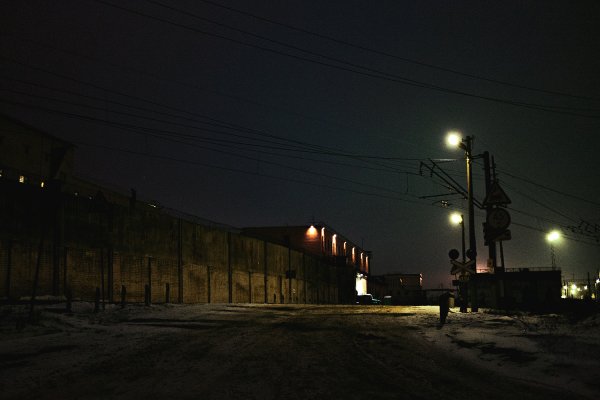
Pretrial Detention Center No. 1 in Penza

On January 23, antifascist Viktor Filinkov disappeared in Petersburg. He was found two days later: the press service of the Petersburg court system related Filinkov had been remanded to police custody after confessing his involvement in a terrorist network whose members “profess[ed] the anarchist ideology.” Members of the Public Monitoring Commission were able to visit him in the pretrial detention center a day later. Filinkov told them he had been tortured.

On January 25, Petersburger Igor Shishkin disappeared after going out to walk the dog. The dog came home with security services officers, who conducted a search of Shiskin’s flat. Petersburg’s Dzerzhinsky District Court remanded Shishkin to police custody on the very same charges that had been imputed to Filinkov. Reporters were not admitted to the courtroom. The investigation and arrests in Petersburg were sanctioned by a municipal district court in Penza.

What is the connection between Penza, Petersburg, and antifascists?

On December 11, 2017, OVD Info published a long report on the manhunt mounted in the wake of the so-called Maltsev Revolution of November 5, 2017. In particular, the report mentioned a criminal investigation of an alleged terrorist network in Penza. We wrote at the time that five people had been charged in the case, and two of them were anarchists. This was not entirely true. Six people have been charged in the case, in fact, and at least some of them are antifascists. One of them, Arman Sagynbayev, lived in Petersburg before his arrest. According to Fontanka.ru, a transcript of Sagynbayev’s interrogation was included in the case file police investigators entered into evidence at Shishkin’s remand hearing.

On October 17 or October 18, 2017, the first suspect in the case, Yegor Zorin, was detained. Antifascist Ilya Shakursky and his friend Vasily Kuksov were detained shortly thereafter. Dmitry Pchelintsev was detained on October 27. Then, in early November, Andrei Chernov was detained in Penza, and Sagynbayev was detained in Petersburg, shipped to Penza, and remanded to the pretrial detention center. According to police investigators, all six men had been members of the terrorist group 5.11 (i.e., November Fifth), who were planning for unrest to kick off in Russia. Five of the men are still imprisoned in the pretrial detention center, while a sixth man has been placed under house arrest. The accused men said they have been tortured while in police custody, enduring psychological coercion, electrical shocks, and being hung upside down, and that FSB officers planted weapons on them.

In airsoft, unlike paintball, there are no ratings, because responsibility for following the rules lies with the players themselves. A player who has been shot is obliged to admit it and immediately don a clearly visible red armband, which denotes he or she has been killed or wounded in the game, and proceed to the place designated as the cemetery or infirmary. Consequently, the point of the game is not winning, but playing fair and having fun. Arguments about whether someone has been killed or not are not kosher, and people who get into rows with each other are sidelined until the game is over.

Players use airsoft guns, which shoot plastic pellets 6 mm or 8 mm in diameter. The projectiles are powered either by compressed air or a gas mixture. Airsoft guns come in four basic models: spring-powered, battery-powered, gas-powered, and hybrid.

“There is no doubt terrorism is a bad thing,” says Vasily Kuksov’s defense attorney Alexander Fedulov. “But you punish the people who are really involved in terrorism, not everyone without exception. I also used to play paintball just to give my head a rest. I also have an airsoft gun at home. You don’t need a permit of any kind for it. I also used to shoot at targets in the park in the evenings. Well, Vasily would go play war. He fired two times from an airshot gun. During the hearing to extend Vasily’s remand to police custody, I gave a twenty-minute speech, but not a word of it ended up in the judge’s ruling. The police investigator read out the prosecution’s appeal: ‘They engaged in the illegal mastery of survival skills in the woods and rendering first aid.’ Where is it written in the Russian legal codes these skills are illegal? And the judge sat there and nodded. ‘They planned to blow up offices of the United Russia party and post offices.’ Rubbish.”

When Kuksov’s wife Yelena came home from work on October 19, she realized Vasily was not there, although he should have been home earlier. She called him on his mobile. The call went through, but her husband did not pick up the phone. A few hours later, Yelena heard someone trying to unlock the door of their flat. When she looked through the peephole, she saw around ten strangers, one of whom was holding her husband by the neck. Vasily could barely stand up. The men claimed they were from the FSB.

Kuksov’s trousers and jacket were torn and blood-stained, and his forehead and nose were badly injured, as if he had been smashed against the pavement. According to Yelena, the search was superficial. The FSB officers then asked Vasily whether he had a car. They took Kuksov and his wife to the car and ordered him to open the door. When he approached the car, Kuksov exclaimed the door lock was broken, to which one of the FSB officers crudely replied, “What do you mean by that?” The men searched the car, allegedly finding a pistol in it. Kuksov, who had been calm until then, screamed the weapon had been planted.

Ilya Shakursky was detained the same day. At first, he was suspected of “organizing” the group, but later the charge against him was reduced to “involvement.” Shakursky had organized lectures and park cleanups as part of environmental campaigns, and animal rights events. He was a fairly prominent figure in the local leftist scene.

A female acquaintance relates how, when they were at school, Shakursky got his classmates together and they went off together to clean up the Moksha River. No one had thought of doing such a thing before, but the idea occurred to Shakursky. A while later, members of the Mokshan city government and policemen came to the school. They organized a special class for the schoolchildren during which they instructed them Ilya was a Nazi, and his peers should stop associating with him. Shakursky and his antifascist friends always laughed when they retold the story.

At the December 14 hearing to extend the accused men’s term in police custody, Shakursky sat in the courtroom, not in the cage with Sagynbayev and Pchelintsev. Perhaps the police investigator did not want Shakursky to speak with the other defendants, although the hearing was for all three of them. Shakursky appeared very depressed, and he sat with his hood pulled over his head. His mother sat next to him, hugging him the whole time. She would ask her son something, and he would give one-word replies. The longest thing he said to his mother was about the New Year: “Mom, be sure to decorate the tree.”

According to Fedulov, Shakursky has confessed. Actually, everyone except Kuksov has confessed. Invoking Article 51 of the Russian Constitution [“No one shall be obliged to give evidence incriminating themselves, a husband or wife or close relatives the range of whom is determined by federal law.”], he refused to answer questions. Some time ago, Shakursky and Pchelintsev were friends. They worked out and played sports together, including airsoft. But they have not seen each other for several months.

Dmitry Pchelintsev writing to his wife:

It is mean to treat people like this. You are suspected and accused of something, but until it is proven, you are not guilty. That is why I am living in such horrible conditions: because it it doubles the punishment for something I did not really do.

Angelina Pchelintseva writing to her husband:

I could not care less about birthdays, New Year, and all the other celebrations, and all the difficulties that happen to me. You are the only thing that matters. If I could, I would be with you and go through all of it. But I know you would be against it, at least, and that it is impossible, at most. I will do everything I can to help you. Just don’t worry about me. Believe me, I will handle things.

Prior to his arrest, Pchelintsev worked as a shooting instructor. He learned his profession while doing his compulsory military service at the Penza Artillery Engineering Institute’s training center.

On October 27, Pchelintsev left home in the early morning to meet his grandmother. His wife, Angelina, was still asleep when her husband returned to the flat in handcuffs, escorted by FSB officers. According to Angelina, during the search, law enforcement officers turned the flat topsy-turvy, ultimately confiscating their personal telephones and other electronic devices, as well as their registered firearms: two hunting rifles and two trauma pistols. They went to look at Pchelintsev’s car. His car had broken down, and he had recently just barely driven it close to their building and parked it. As Pchelintsev recounts, the FSB officers got into the car to search it right when no one was looking at them, and they allegedly found two grenades under the back seat.

“A car without an alarm. You guys are champs,” Pchelintsev said, implying they had planted the grenades in his car.

The same day, Angelina got a call from the FSB. Her husband supposedly wanted her to be present during his interrogation. She was greeted by two secret service agents. According to Angelina, during their conversation, one of them, who was playing with an awl, threatened her husband would be sentenced to life in prison. The FSB officer said someone just needed to be shot in the foot so Pchelintsev stopped refusing to testify by invoking Article 51 of the Constitution.

“The stupidest thing is a terrorist organization that did not commit a single terrorist act and was not planning any,” says Angelina. “Meaning that in court no one can even say they were planning to do such-and-such a thing on such-and-such a day. One cannot say that because they were not planning to do anything at all. All they ever did was learn how to render first aid in field conditions and survive in the woods. Is that illegal?”

After several days in the pretrial detention center, Pchelintsev said he planned to confess his guilt. This shocked his relatives, who were certain of Dmitry’s innocence. To pay the services of an attorney, his relatives borrowed money from a bank: attorney Alexei Agafonov had asked them for an advance of 150,000 rubles [approx. 2,150 euros]. According to Dmitry’s family, despite the high fee, Agafonov was not particularly sensitive to the needs of his client. Aganofov regularly came to the pretrial detention center and showed Pchelintsev where to sign the papers the investigator had brought. As Pchelintsev recounts in his letters, the lawyer would agree to meet with Dmitry on Monday, before the investigator’s arrival, but then show up the same time as the FSB officer, on Tuesday. When Pchelintsev expressed his bewilderment, Agafonov would reply, “Well, I came.”

Dmitry Pchelintsev writing to his wife:

Unfair. Dishonest. Wrong. Pointless. All the roads in my life led only in one direction. You, Grandma, my sister, my parents, and lots of people know I’m a good person. But why does everything happening to me not care a whit about this? Not care about a whole, safe person with his joys and troubles, his thoughts and experiences? What will it bring to me and my relatives except trauma? It doesn’t even make me angry, but it upsets me like nothing. It is not an accident, not a coincidence. It is just someone’s unjust will. An utterly senseless Saturday. I took a shower and shaved off my beard, at least. I don’t want to look like the person they take me for. How am I wrong, Angelina?

Angelina Pchelintseva writing to her husband:

I believe you, as do your entire family and your friends. Everyone is very worried about you and understands what is happening. It is obvious to us. The first month, I tried to understand what a person could have done to be treated this way, but then I gave up looking for meaning. It’s a pitiless steamroller that could not care less about the people it crushes.

Agafonov once met with Angelina and asked her whether husband suffered from “fantasies.” Angelina replied that the situation was probably not very conducive to fantasies. It transpired Dmitry had been telling the lawyer that FSB officers were coming to see him every day and taking him to different cells for interrogations. According to the lawyer, this simply could not be happening in the pretrial detention center, where it was prohibited.

At first, Angelina received no letters from her husband, although later he told her he had written to her practically every day. Later, she found a thick envelope in the mailbox: it was filled to overflowing with all her husband’s letters for a month. It was then she discovered Dmitry had been complaining about Agafonov from the outset. According to Angelina, the fact his own defense attorney did not believe him literally was “finishing off” her husband. Moreover, he was in solitary confinement, isolated as much as possible from everyone, and the lawyer was the only person in whom he could confide.

“Given the relationship between law enforcement and the courts in our city, they will be convicted with a minimal amount of evidence,” argues Alexander Fedulov. “Because this is the first such case in the region, and everyone is interested in it. It is this stick to whack everyone with. ‘What’s with you? Fancy that! They caught some terrorists.’ Who were running round the forest with wooden sticks and pine boughs. Vasily said to me, ‘You know, Alexander, what I was afraid of? That someone would really see me running in the woods playing war. I would have sunk through the ground in shame.’ Changing the constitutional order where? In the village of Shalusheyka? What, they could change the system there with their airsoft guns?”

Once, Angelina received a letter from Dmitry written on a piece of paper torn unevenly from a notebook. It began with a passage about how her husband was reading 800-page books and he loved his wife. But these lines had been crossed out, and at the bottom of the page Dmitry had written in a quite shaky hand, “Don’t write to me, don’t bring me anything, go away as far as possible, don’t ask about me, I’m a goner.” In the same letter, Pchelintsev informed Angelina he was being injected with tranquilizers and given tablets, and it was “worse than death.”

Angelina thought Dmitry was not himself and wrote back to him.

“I took a piece of paper and, my hands shaking, I wrote that everything would be fine. I realized that, although it seemed to us that not so much time had passed, it felt like a much longer time to him. Then his father told Agafonov to take from the advance we had already paid what he considered necessary and give us back the rest. We found a new lawyer.”

After Pchelintsev was formally charged on December 1, he and Angelina were able to see each other and chat. Dmitry said he had asked for a meeting with his wife “to say goodbye.” According to Pchelintsev, he had been tortured every day: he had been hung upside down, and various parts of his body had been hooked up to an electrical current. He was afraid they would kill him and make it look like a suicide. He said his body might not be able to withstand the torture.

“I’m afraid my heart will give out, and I won’t make it out of here alive. This is hell,” he said.

Pchelintsev asked his wife to tell the investigator he had said goodbye to her. Then, perhaps, they would not come and torture him that day.

According to Angelina, she made up her mind beforehand she would not cry in front of the FSB officers, so she kept her cool and tried to cheer up her husband. She tried to persuade him not to despair and wait for the new lawyer to come up with something.

When her husband was led away, the investigator asked Angelina what they had discussed.

“Stop killing Dima,” Angelina replied.

Dmitry Pchelintsev writing to his wife:

I wouldn’t refuse to colonize Mars. Something farther away would be better, so these earthlings could not reach us quickly. I probably don’t need anything in the next care package: no Cheetohs, no Snickers. So don’t come here for the time being. I’ll write if I need anything. Basically, I’m hanging in there. I’m thinking about how we’ll start life over.

Angelina Pchelintseva writing to her husband:

I’ll make arrangements with Elon Musk. We will fly away and never return to this planet. We’ll wait until the ship is built, okay?

Arman Sagynbayev, who was jailed after most of the other accused, has serious health problems and needs constant medical career. During the police custody extension hearing in mid December, he said he constantly felt sick and vomited.

Yegor Zorin and Ilya Shakursky were classmates at Penza State University, where they had studied to be physics teachers. Zorin was the first to be detained, and he was the first to testify. According to relatives of the other accused men, his testimony was “utterly savage.” Zorin rang in the new year in partial freedom: he was released from the pretrial detention center and placed under house arrest.

According to investigators, the so-called November Fifth Group was allegedly established with the aim of planning a revolutionary coup and overthrowing the government using terrorist methods. Other similar groups also allegedly operated in Russia, and they were all part of a single organization with the same goals and methods. Investigators argue the members of November Fifth used conspiratorial methods, and they had a clear division of roles. The group allegedly had a sapper and a signalman, for example. Given this context, according to investigators, the airsoft games were a means of preparing for terrorist attacks.

And yet, currently there is no visible connnection, procedural or actual, between the criminal cases launched in the aftermath of the so-called Maltsev Revolution and the case of the Penza antifascists, except the numbers five and eleven in the name of their so-called terrorist community.

Dmitry Pchelintsev writing to his wife:

The lights are on twenty-four hours a day. If I’m not released because I’m innocent, I’ll be released when I develop Alzheimer’s. The humidity is such I’ll be released when I contract tuberculosis, and it’s so filthy I’ll be released when I contract hepatitis. And I smoke so much I’ll be released when I get cancer. And you all send me too much chocolate, so I’ll be released when I get diabetes. I’m kidding, of course. No one will ever release me.

Translated by the Russian Reader
How “Stability” Has Really Been Achieved in Russia

photo_2018-01-24_22-04-13Viktor Filinkov. Photo courtesy of Filinkov’s wife and OVD Info

Petersburg Anarchist Viktor Filinkov, Arrested in Terrorism Case, Says He Was Tortured
Mediazona
January 26, 2018

Antifascist Viktor Filinkov, arrested for alleged involvement in a terrorist network, has told members of the Public Monitoring Commission (PMC) he was tortured, according to the PMC’s report, which Mediazona has in its possession.

According to the PMC report, injuries “inflicted in the last two or three days” were discovered on Filinkov’s body, including numerous traces of burns from an electric shocker all over his right thigh, a hematoma on his right ankle, and burns from an electric shocker on his thorax.

Filinkov explained he suffered the injuries on January 24 in the car in which he was put by FSB officers after he was detained at Pulkovo Airport in Petersburg. The activist was then taken to the local Interior Ministry headquarters, and from there to a hospital. Filinkov was then driven into woodlands and held in the car for five hours.

FSB officers were seated in the front of the car, according to Filinkov. The middle row of seats was occupied by a man wearing a mask, while Filinkov and another man wearing a mask sat in the back of the vehicle. The injuries were inflicted between seven and eight o’clock in the morning.

According to the PMC’s report, “The FSB officers demanded that Filinkov confess, and having obtained his consent, they forced him to memorize the particular wording [of his confession].”

The masked men said very little, while the FSB officers threatened Filinkov that if he subsequently reneged on the confession, the beating they had given him would be a “light version” of the beating he would get later.

Afterwards, Filinkov signed a statement, addressed to the local Interior Ministry headquarters and the local FSB headquarters, in which he informed them of all the things he had been prompted to say. The FSB officers then demanded he not deny the statement in court, threatening to place him in a pretrial detention center with tuberculosis patients.

The only things the masked men said were “Stop twitching!” and “What you shouting for?”

Filinkov was transferred to another car in the woodlands, a Lada Priora, and taken to the local Interior Ministry headquarters. According to Filinkov, the masked men seemed to know their way around the building, as if they had been there many times. They also discussed the fact they should keep their faces hidden because of the security cameras in the building.

The PMC’s report notes that the men wiped the blood off Filinkov’s face with his own hat and with snow, and traces of bood were left on the hat. The leftist activist was also told that if he behaved badly, the FSB would “get to” his wife “even in Kyiv.”

On January 24, Filinkov’s wife told OVD Info her husband had disappeared on his way to Petersburg’s Pulkovo Airport. The antifascist was scheduled to fly to Kyiv at eight o’clock in the evening on January 23. The last time they communicated that day was three o’clock in the afternoon, when Filinkov texted his wife that he was headed to the airport and would text her again after he arrived there.

On January 25, it transpired that the Dzerzhinsky District Court in Petersburg had remanded Filinkov to police custody for two months on suspicion of involvement in a terrorist network (per Article 205.4 Part 2 of the Russian Criminal Code). According to police investigators, Filinikov and unidentified persons who “supported the anarchist ideology” were branch members of a terrorist network whose purpose was to engage in terrorist activities, propaganda, and justification of terrorism.

Today, the wife of another Petersburg antifascist, Igor Shishkin, reported he was missing. Shishkin went missing after his home was searched and he was taken away by law enforcement officers.

Translated by the Russian Reader