What Johnny Depp Reads (and Recommends You Read)

“Johnny Depp’s choice. You’re probably curious what kinds of books the Hollywood star reads. We’ll tell you in order, taking Lewis Carroll and Roald Dahl off the table.”

This is a screenshot of an email I received yesterday from LitRes, Russia’s top ebook distributor and seller. Aside from Oscar Wilde’s The Picture of Dorian Grey (visible here), Johnny Depp’s alleged “choice” of books, available for purchase on LitRes, includes Joanne Harris’s Chocolat, James Joyce’s Ulysses, Arturo Pérez-Reverte’s The Flanders Panel, and Hunter Thompson’s Fear and Loathing in Las Vegas.

This is the second time since Russia’s brutal, unprovoked invasion of Ukraine began that LitRes has celebrated the alleged literary tastes of a violent Hollywood bully. In April, two weeks after Will Smith’s assault on comedian Chris Rock at the Oscars, LitRes treated its customers (including me: I’ve purchased 109 otherwise inaccessible Russian books from them over the last several years, my account profile tells me) to “Will Smith’s choice.”

It occurred to me at the time, sadly, that if it had not been for the war, Russia’s chattering classes, including many of the currently exiled “anti-war” liberals, would have happily spent the week following Smith’s violent outburst discussing it, just as, before the war, they had been keen to discuss almost anything in the world (especially if it concerned the United States and “the West”) except the dismal political and social circumstances at home in the Motherland. In the recent past, for example, the Russian chatterati chewed over the January 6 coup attempt and the reaction to George Floyd’s murder with supreme relish and satisfaction, often coming to conclusions, however, that would make an observer like me wonder how “liberal” the “liberal” opposition to Putin really was. For example, an acquaintance of mine from Petersburg, a well-known grassroots human rights activist, was so convinced that the anti-police demonstrations in the U.S.were, essentially, little better than the antisemitic pogroms her ancestors had endured in the early twentieth century that she “unfriended” me for arguing, on the contrary, that they were nothing of the sort.

Similarly, one of Russia’s leading opposition political scientists and sociologists, Greg Yudin, who has now risen to some prominence for his courageous public anti-war statements and actions, wrote a longish comment on Facebook on January 7, 2020, that includes the following hilarious assessment of the previous day’s events in Washington:

Nothing terrible happened in Washington. Basically, the protest was peaceful and calm – people entered the building of their own parliament, took selfies, sat in chairs, and dispersed. Capitol Hill will not collapse because men with dogs and ladies in down jackets strolled around it. The people who, apparently, broke windows, sprayed pepper spray, and called for storming television stations, should be investigated. Otherwise, the congressmen had a little scare and had to stay in session until four in the morning. It’s okay, they’ll live through it.

Michelle Goldberg argued in the New York Times yesterday that Johnny Depp’s lawsuit against Amber Heard and his legal team’s demolition of her character in the courtroom and online is emblematic of “a #MeToo backlash,” and part of “a broader misogynist frenzy at work, one characteristic of the deeply reactionary moment we’re living through.”


In Russia, the “misogynist frenzy” has deepened with every year that the Putin regime has remained in power (even to the point of decriminalizing domestic violence), and would-be opposition “liberals” have been involved in this backlash as well. You’d never know it nowadays (and, seemingly, there is no one who would dare to remember it anymore) but the Riga-based Russian liberal news website Meduza ended up on the wrong side of decency in 2018 when its editor-in-chief was accused of sexual harassment. What this otherwise comprehensive article on the scandal by BuzzFeed doesn’t tell you, for obvious reasons, is that the Ivan Kolpakov resigned from the top post at Meduza only to be quietly reappointed to it a short time later, after the dust had settled. He’s still in that post today, and is now an internationally celebrated champion of press freedom, whose website is hard up for cash.

(Excuse me my bitterness at Meduza, but they can never been forgive for this crime against basic solidarity and sound journalism, which has demonstrably led to more suffering for young men convicted of a crime that they didn’t commit and which, even more insanely, no one committed.)

I haven’t seen any discussion yet of Depp v. Heard on liberal Russian social media, but it is being covered in a predictably misogynist way by Russia’s online tabloids, as a quick Google search for the words “Johnny Depp trial” suggests:

Two of these “top stories” have salacious headlines claiming that “Johnny Depp’s attorney Camille Vasquez gets Amber Heard to come clean.”

It’s no wonder, then, that LitRes imagines that its customers will be delighted to show their solidarity with an “unjustly” accused, violently misogynistic bully, who also happens to be a big Hollywood star whose movies they have enjoyed for years, thus making him “svoi” (“one of their own”), just like, paradoxically (given the prevalence of anti-Black racism in Russia), Will Smith. Nor is it any wonder that this celebration of anti-wokeness happens right as the big bad West (the anti-Johnny Depp and anti-Will Smith West) attempts to “cancel” Russia for its violent, unprovoked attack on its “weaker” neighbor.

As Dmitry Volchek argued yesterday in this feuilleton on Radio Svoboda, the threat of “cancellation” animates Russia’s “anti-war” liberals and lefty creatives much more than the silly war itself, much less the war’s victims in Ukraine. |||| TRR

Network Case Defendant Maxim Ivankin Claims He Was Tortured into Memorizing Meduza’s Smear and Repeating It as a “Confession”

Maxim Ivankin in court. Still from a video by 7×7. Image courtesy of Novaya Gazeta

“They put me on a spreader and beat me”: man convicted in Network case confesses to murder after he is subjected to “course of treatment”
Yan Shenkman
Novaya Gazeta
October 5, 2021

Maxim Ivankin, convicted in the Network case, has turned up at Pre-Trial Detention Center No. 1 in Ryazan. During the three weeks when he was officially in transit from Chuvashia to Ryazan, and not accessible to his lawyers, he signed a confession in the so-called Ryazan case, admitting his complicity in the murders of Artyom Dorofeyev and Katya Levchenko. Only a few days later, however, he complained that he had been subjected to physical coercion and retracted his testimony.

Russian Investigative Committee investigators have long been attempting to connect the Ryazan case with the Network case. Here are several facts supporting this hypothesis:

1. The investigation was initially based on the account given by Alexei Poltavets to the news website Meduza. Poltavets claimed that he and Ivankin committed the murders in the spring of 2017. There was no significant corroboration of Poltavets’s account before Ivankin confessed, nor did the authorities particularly look for such evidence. Poltavets himself is currently in hiding in Ukraine. He has not been questioned by the Russian authorities, and so his account is inadmissible in court. However, the investigation did not consider any other explanations for the murders. It is not surprising, then, that Ivankin’s confession is a slightly modified variation on Poltavets’s monologue.

2. In the spring and summer of this year, Investigative Committee investigator A.M. Kosenko made the rounds of the penal colonies where the men convicted in the Network case are serving their sentences. According to some of them, he demanded that they bear false witness against Ivankin. Or, to put it more delicately, Kosenko was gathering evidence against Ivankin. After refusing to speak without a lawyer present, some of the convicted men (for example, Mikhail Kulkov and Ilya Shakursky) were sent to punitive detention cells. For completely other reasons, of course.

3. Ivankin was threatened with violence if he did not cooperate with the investigation, and these threats were also communicated to his wife, Anna.

The day after Ivankin was dispatched to Ryazan, he found himself in Nizhny Novgorod and, a bit later, in Vladimir. If you look on the map you’ll see that neither Nizhny nor Vladimir are on the way from Chuvashia to Ryazan. There is a direct road between them, which lies much farther to the south than the route by which Ivankin was transported.

Judging by the stories of convicts, the penal colonies in Vladimir, in particular, the hospital at Penal Colony No. 3 (aka Motorka), have a reputation as places where where prisoners are taken to be coerced and beaten into testifying. The most famous example is the case of Gor Hovakimyan, who died after being tortured in the hospital at Penal Colony No. 3. Ivankin was taken to this hospital. “I still do not know what my diagnosis is,” he said in a statement to his lawyers.

Vladimir Osechkin, the founder of the project Gulagu.net, recently reported that his organization had more than 1,000 Federal Penitentiary Service videos corroborating that torture takes place in Russian penal colonies, including footage from the Vladimir region.

And now the most important part. Lawyers Svetlana Sidorkina and Konstantin Kartashov visited Ivankin in the Ryazan pre-trial detention center on October 4 and 5. They have given Novaya Gazeta a copy of their official, on-the-record conversation with Ivankin, from which we have excerpted the following passages:

Question: Were you subjected to psychological and physical pressure in the hospital? If yes, what were the circumstances?

Answer: Yes, I was. Immediately, when I was brought to the hospital, I was met by the “reds” (activists from among the inmates)… The inmates began beating me in the back of the head and the kidneys… I will be able to identify the activists… When I was asked to sign a statement, I was put on a spreader for refusing to sign, and I was beaten in this position.

This treatment lasted about nine days. It is difficult to say more precisely: Ivankin himself has doubts. Apparently, he lost track of time.

I told them I was not involved in the murders of Dorofeyev and Levchenko… The field officers said that they were not satisfied with my position, and demanded that I rewrite the handwritten confession written by them, which I was forced to rewrite under the supervision of several activists. The events described in the confession matched the account given by journalists in the media (“Meduza”).

The activists forced me to learn the contents of the confession by heart. Until I had repeated it to them verbatim, I was not allowed to sleep… Investigator Kosenko arrived and wrote up a report that he had received the confession…

I was forced, in writing, to waive the services of my private legal counsel and my right to have my relatives notified… I made the confession out of fear for my life and safety…

My testimony was verified at the crime scene. The whole thing was a farce, because I don’t know what happened. In all the documents I indicated that I had not been coerced [into confessing], but I had to say that, out of fear for my life.

And here is the result: an indictment order. Previously, we should recall, Ivankin was officially a witness in the Ryazan case. If he was treated this way as a witness,  what awaits him as an indicted man?

Under Article 105.2 of the Russian Federal Criminal Code (premeditated murder and conspiracy to murder) Ivankin faces a possible life sentence.

If Russia had the death penalty, Ivankin would be sentenced to death.

I have before me a document from the Federal Penitentiary Service in which what happened to Ivankin is called a “course of treatment.” “Maxim now shudders when he hears the word ‘Vladimir,'” says his lawyer Konstantin Kartashov. Nevertheless, he retracted his confession. But he did say, “If the publicity subsides, I’m finished.”

Translated by the Russian Reader

Moscow Anarchist Azat Miftakhov: Arrested, Tortured and Missing

azatMoscow anarchist Azat Miftakhov at the center of a selfie taken, apparently, by the Center “E” officers who tortured him. Screenshot courtesy of Jenya Kulakova
Jenya Kulakova
Facebook
February 2, 2019

For a day and a half, lawyers have been unable to see Azat Miftakhov, an anarchist and Moscow State University graduate student who was detained yesterday. Yesterday evening, Miftakhov was taken from the Balashikha police station as a defense counselor looked on and taken to parts unknown. Miftakhov was bruised and surrounded by eight cop. It has been twenty-four hours since he was last seen. No one knows his whereabouts, his condition, and the charges against him.

On the other hand, Ren TV and Rossiya 24 have broadcast photos and videos from the Miftakhov’s search and interrogation. In one of them, an investigator mocks Miftakhov, who is handcuffed, when he claims he is afraid of being tortured. The Center “E” officers take a selfie with their prisoner. (I was unable to find any other photo, so that’s why it illustrates this post.)

The folks who were detained along with Miftakhov, but released yesterday, report they were beaten and tortured with electric shocks. The torture was so bad that yesterday Miftakhov “didn’t look like a human being.” He attempted to slash his wrists to keep from being tortured again. Today, lawyer Svetlana Sidorkina heard an investigator in court talking to someone about it.

The authorities did not produce Miftakhov in court today for his own custody hearing.

Like a year ago in Petersburg, torture is happening practically in broad daylight, but we don’t know what to do.  Yesterday, when I left a message on the Moscow police’s hotline, the operator almost laughed at me. Just as Putin claimed [at a recent meeting of the Council for Civil Society and Human Rights] that FSB officers don’t torture people in vehicles, she doubted what I was saying.

“He’s being tortured right in an Interior Ministry building? Right now? Give me a break,” she said to me.

A missing person report on Miftakhov has been filed, and lawyers have been trying since yesterday to get access to him. But what’s the point?

I hope this hell ends for him as soon as possible.

Here are a few links to articles [in Russian] about what has transpired about the searches and arrests in Moscow since yesterday.

Translated by the Russian Reader

The Siege of Leningrad 75 Years Later

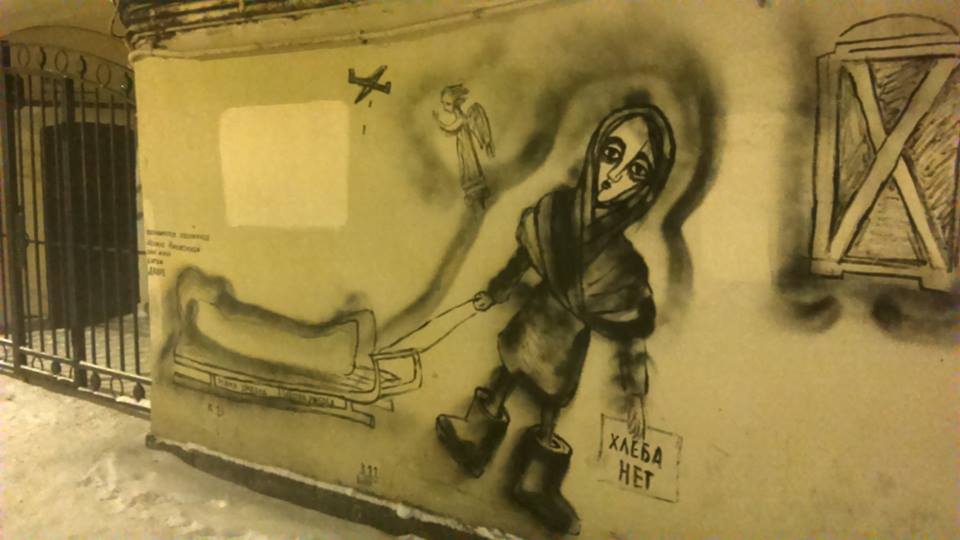
osipova-siege graffiti

The inspiring Petersburg artist and political activist Yelena Osipova has drawn this graffiti to commemorate the 75th anniversary of the lifting of the Siege of Leningrad during the Second World War.

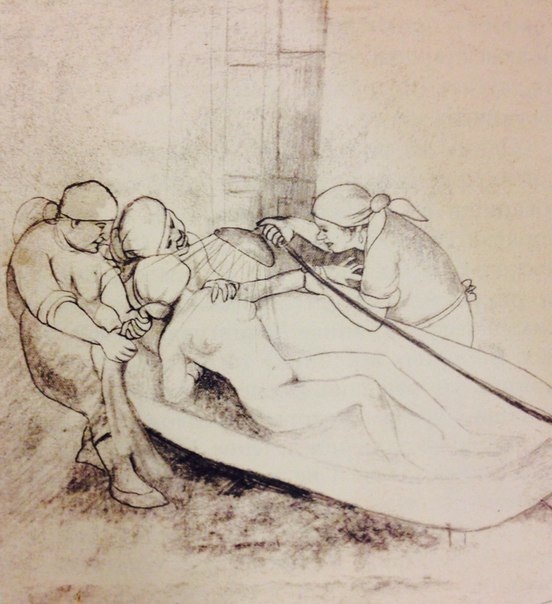
The piece is dedicated to her late friend Lenina Nikitina, another wonderful artist, who lived in the building on whose walls Osipova drew her work.

Nikitina lost her entire family during the Siege, which lasted nearly 900 days, from September 8, 1941 to January 27, 1944.

nikitina-cold bathLenina Nikitina, Cold Bath. Pencil on paper. Courtesy of ArtGuide and the Museum of Nonconformist Art, St. Petersburg
As many as a million civilians are believe to have died during the Siege.

The other evening, an arts program on one of the regional German channels broadcast a segment about Daniil Granin and Ales Adamovich’s Blokadnaya kniga (Book of the Siege), which has recently been translated into German by Helmut Ettinger and Ruprecht Willnow, and published as Blockadebuch: Leningrad 1941–1944.

Blokadnya kniga was translated into English by Clare Burstal and Vladimir Kisselnikov, and published in 2007 as Leningrad under Siege: Firsthand Accounts of the Ordeal.

If you don’t have time to read Blokadnaya kniga or any of the other hundreds of books about the Siege, please watch Jessica Gorter’s stunning 2011 documentary film 900 Days. {TRR}

_________________________________________

The Siege of Leningrad Ended 75 Years Ago Today: Here Are Nine Films and Books about the Siege Worth Watching and Reading
Anton Dolin and Galina Yuzefovich
Meduza
January 27, 2019

[…]

Once There Was a Girl
Viktor Eismont, 1944

Eismont began shooting this unique picture while the Siege was still underway. It premiered a year to the day after the Siege was lifted. The Siege is shown through the eyes of two children, five-year-old Katenka and seven-year-old Nastenka. Natalya Zashchipina, who played Katenka, would go on to star in children’s films such as The Elephant and the Rope and First-Grader in the late 1940s, while Nina Ivanova, who played Nastenka, would star in Spring on Zarechnaya Street in 1956.

Baltic Skies
Vladimir Vengerov, 1960

The best film about wartime Leningrad and Leningrad during the Siege, when Baltic Skies premiered, it outraged Nikolai Chukovsky, whose novel inspired the film and who is credited as the screenwriter. The movies features a star-studded cast, including Pyotr Glevov, Mikhail Ulyanov, Mikhail Kozakov, and Rolan Bykov. The film’s young lovers were played by Oleg Borisov and Liudmila Gurchenko, who would later act in Alexei German’s war films. German considered Vengerov one of his teachers.

We Looked Death in the Face
Naum Birman, 1980

A picture about the founding of the Frontline Youth Ensemble. In one of his final roles, Oleg Dahl played the former choreographer. The film features poems by Olga Bergholz and music by Dmitri Shostakovich.

Blockade
Sergei Loznitsa, 2006

https://mubi.com/films/blockade

A documentary film consisting of footage shot by cameramen during the Siege, it features rare scenes, including the execution of Germans. Loznitsa added a soundtrack to the film, bringing viewers closer to the events.

We Read the Book of the Blockade
Alexander Sokurov, 2009

Less a film and more an impressive project by Sokurov, We Read the Book of the Blockade shows Petersburgers both famous and unknown reading aloud Daniil Granin and Ales Adamovich’s book, a compilation of eyewitness accounts of the Siege. The readers include actors Vladimir Retsepter and Leonid Mozgovoi, and Sokurov himself.

Celebration
Alexei Krasovsky, 2019

[Posted on January 2, 2019, by Alexei Krasovsky. “Attention! This film was made without state financing or grants. The filmmakers paid for its production themselves. Please do not show Celebration without listing the information about how you can donate money to us.  It is the only we can cover the costs of this film and start working on a new one. Thank you.

Sberbank Visa/Mastercard Card (in Russia): 5469 3800 7030 3101 (Aleksei Olegovich Krasovskii)

DonationAlerts (featuring viewer poll): https://www.donationalerts.com/r/alkras

PayPal: https://paypal.me/alkras (alkrasss@gmail.com)

Yandex Money: https://money.yandex.ru/to/410013518953856

Cameraman’s Yandex Money account: money.yandex.ru/to/410013518953856 (Sergei Valentinovich Astakov, cameraman-sa@yandex.ru)

Ehterium address: 0xbA2224ba22f2f4494EF01C6691824A178651d615

Don’t forget to mark your contribution as a “donation” so that we’ll have any easier time making films in the future.

Happy New Year!

Screenwriter and director: Alexei Krasovsky

Cinematographer: Sergei Astakhov

Starring: Alyona Babenko, Yan Tsapnik, Timofei Tribuntsev, Anfisa Chernykh, Pavel Tabakov, and Asya Chistyakov

Executive producer: Yuliya Krishtofovich

Art director: Yevdokia Zamakhina

Sound: Nelly Ivanovna and Anastasia Anosova

Assistant director: Zhanna Boykova

Editing: Vladimir Zimin and Alexei Krasovsky

The song ‘Field, O My Field’ was written by Iosif Kovner in 1937 and first recorded in 1941.”]

Filmmaker Alexei Krasovsky shot this controversial, intimate, tragicomic film at his own expense and uploaded it to YouTube during the New Year holidays. The picture deals with the privileged classes during the Siege and contains transparent illusions to the present. Starring Alyona Babenko, Yan Tsapnik, and Pavel Tabakov.

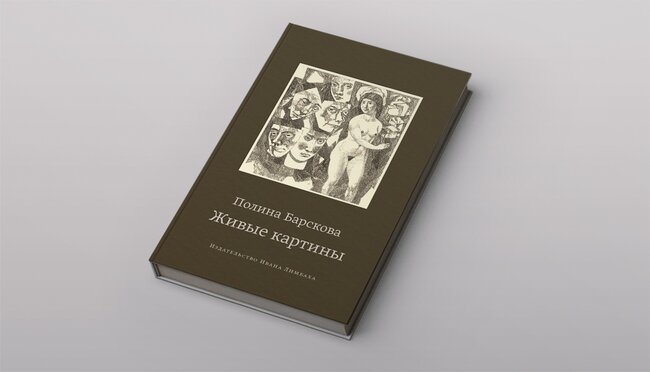
Polina Barskova, Zhivye kartiny [Living pictures], St. Petersburg: Ivan Limbakh, 2014 

Written by poet and academic Polina Barskova, this book is a miscellany of strange, heterogeneous, and genre-bending texts (several stories and essays on the verge of poetry, capped off with a short, semi-absurd play) that interweave the author’s own experiences as a researcher and human being with the real stories of people during the Siege.

Significant historical figures who survived the Siege (poet and literary scholar Dmitry Maximov, writer Vitaly Bianchi, playwright Yevgeny Schwartz) meet on the the pages of Living Pictures with other, unknown shades, such as the art historian Totya and the artist Moses, who made the mistake of falling for each other on the eve of the war, or six-year-old Katya, who plays a gloomy game of  bouts-rimés with her mother, composing a poem about people stricken by hunger-induced dystrophy. The famous, the nameless, Barskova’s other characters, and Barskova, some of whom did not experience the Siege themselves, ring the changes on the book’s main point, as voiced by one of the characters: the Siege was a peculiar civilization with all the qualities of other human communities. This civilization did not disappear without a trace. It has germinated anew in subsequent generations, who continue to feel its icy breath.

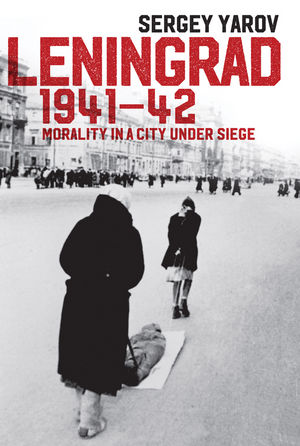
Sergey Yarov, Leningrad 1941–42: Morality in a City under Siege, trans. Arch Tait, Cambridge: Polity Press, 2017

1509507981

“The ethic of sympathy demands the gaze not linger on mournful scenes of human agony,” writes historian Sergey Yarov in his book, seemingly ruthlessly violating this ethic. Instead of charitably averting his gaze from the most horrific aspects of the Siege of Leningrad, Yarov peruses as keenly and closely as possible theft and deception, monstrous, incurable physical deformities and people’s aversion to them, assaults on children (it was easier to take food from them since they were weaker), indifference to the suffering and deaths of other people, willingness to endure any humiliation, the collapse of community, and cannibalism.

As he plunges into the abyss of diaries, memories, and official records, uncovering truly unimaginable things, Yarov nevertheless hits upon an impeccable tone for discussing them, managing to maintain in each episode the perfect balance between scholarly scrupulousness and supreme humaneness.

Olga Lavrentieva, Survilo, St. Petersburg: Boomkniga, 2019 

This graphic novel by the young artist Olga Lavrentieva is a laconic, black-and-white account of the life of her grandmother, Valentina Survilo. Survilo’s happy Leningrad childhood ended in 1937 with her father’s arrest. She was exiled to a village in Bashkiria, where her mother died, before making a long-awaited return to her beloved Leningrad. This was followed by the most important and terrible chapter in her biography, the Siege, which the still very young Survilo endured in a prison hospital, the only place willing to employ the daughter of an “enemy of the people.”

The relentless hunger, cold, bombings and artillery attacks, treachery of friends, and rare, miraculous instances of kindness left a deep wound in Survilo’s heart, causing her to suffer nightmares and be constantly anxious about family members during the relatively prosperous postwar years. Lavrentiev uses the rather typically tragic story of one Leningrad woman as a lens through which she and her readers can look at the history of her hometown and the entire country.

Survilo will be published in March 2019.

Thanks to Giuliano Vivaldi for the heads-up. Translated by the Russian Reader. I have replaced the trailers used in the original article with full-length public-access videos of the films themselves (except for Sergei Loznitsa’s Blockade, which can and should be viewed on MUBI). Please take note of filmmaker Alexei Krasovsky’s appeal for donations. If you watch Celebration, please consider making a donation to him and his crew via Sberbank, PayPal, Yandex Money or Etherium.


Wave Theory, or, Everyone Is Police

FRANCE. Essonne. Near Juvisy-sur-Orge. 1955.Henri Cartier-Bresson, Près de Juvisy-sur-Orge, France, 1955. © Henri Cartier-Bresson/Magnum Photos.
Can you imagine reading an “expert” opinion, like the one I have translated and reproduced, below, published by a political commentator in a more or less democratic country?

I won’t bother arguing about the accuracy of the analysis. It may, in fact, be wildly inaccurate. Actually, if you read it two or three times in a row, you would find that is ridden with glaring contradictions.

For example, it is strange to accuse Alexei Navalny, who was jailed nearly the entire time, of being on the sidelines during the anti-pension reform protests when, in fact, his team’s activists organized protests all over Russia, some of them quite large, and this despite the fact that dozens of them were also treated to so-called preventive arrests by the Putin regime’s legally nihilistic law enforcers.

It is even stranger to argue that Navalny matters so little to the Kremlin now that it has decided it is high time to send him to prison and throw away the key.

I am no great fan of Jeremy Corbyn’s, alas, but I am grateful, nonetheless, that Theresa May and her minions could not even contemplate framing him on trumped-up charges and sending him down for however many years they think would “neutralize” him.

If you do not understand this essential difference between flat-out authoritarian-cum-fascist countries like Putinist Russia and the world’s democracies, most of them in bad shape, like May and Corbyn’s UK, you should probably disqualify yourself from commenting on politics.

Because this is police, not politics, as Jacques Rancière would have put it, even if it is only expressed as a prediction by a think-tankerette-cum-spin doctor who claims to have inside knowledge of what the Kremlin has been contemplating, but for some reason lives in a suburb of Paris. {TRR}

____________________________________________

Tatiana Stanovaya
Facebook
October 2, 2018

The Kremlin is seriously discussing a tangible prison sentence for Alexei Navalny. There are several key arguments that would favor making such a decision.

First, Navalny was sidelined during the anti-pension reform protests. By and large, no one was able to saddle the wave of discontent. The Kremlin thinks it would be better to neutralize Navalny now while it is not too late. It would be harder later.

Second, Navaly’s negative rating [sic] is high. Television has done its job. The expectations are that, if Navalny were sent down, no serious wave [of protest] would rise up. Society would fail to notice it, and liberals hardly worry anyone, while the liberals who are in power would risk losing a lot [if they came to Navalny’s defense].

Third, the Zolotov factor has played its role. The head of the Russian National Guard was so hurt by Navalny’s exposé that he himself has become a source of concern. The Kremlin believes it is better not to rub him the wrong way, since an angry Zolotov is a danger not only to the regime’s alleged enemies but also to the regime itself or, rather, to various spin doctors [sic].

Fourth and finally, while Putin was previously opposed to sending [Navalny] down, fearing it would make Navalny a hero (this, supposedly, was Volodin’s argument), Putin now sees this risk as too trivial compared with other risks, including an abrupt drop in his own rating and the general sense that everything has been set in motion, and he does not have time for Navalny [sic].

If, in the very near future, something does not happen at the grassroots that would interfere with sending [Navalny] down, it is nearly inevitable. And yes, the current domestic policy spin doctors take Navalny much less seriously than their predecessors [sic].

Tatiana Stanovaya is identified on her Facebook page as a “Columnist/Commentator at Moscow Carnegie Center” and “Former [sic] CHEF DU DÉPARTEMENT ANALYTIQUE, CENTRE DES TECHNOLOGIES POLITIQUES” who lives in Juvisy-sur-Orge, France. Thanks to The Real Russia. Today mailer, compiled daily by Meduza, for the heads-up. Kudos to its editor for realizing suddenly that Russian social media are an important source of information, gossip, and fairy tales about Russian politics. The emphases, sics, and italics in the text are mine. Translated by the Russian Reader

Russia Has No Senate or Senators

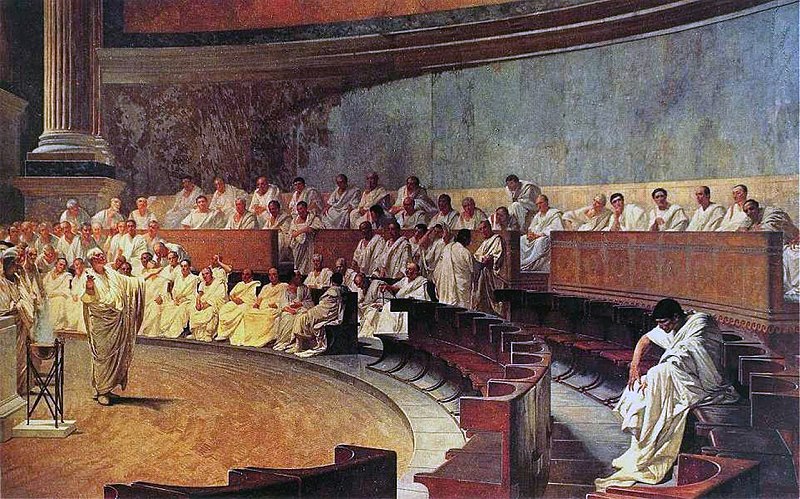
800px-Maccari-CiceroCesare Maccari, Cicero Denounces Catiline, 1889. Fresco. Palazzo Madama, Rome. Image courtesy of Wikimedia Commons
“Russia’s Senate wants a visit from Mark Zuckerberg.”
The Real Russia. Today email newsletter, May 30, 2018

I am not a huge fan of Mark Zuckerberg, but he can easily turn down this invitation, if only because Russia does not have a senate.

It does have something called the Federation Council, which is supposedly the upper house of the Russian parliament, a mostly fictitious organization itself, considering how its MPs are essentially appointed to their seats, not elected by popular vote.

The members of the Federation Council are a group of Putinist lackeys. They are handpicked by the Kremlin to represent Russia’s ninety-some regions. In most cases, however, they have nothing whatsoever to do with those regions, unlike during the rough-and-tumble Yeltsin administration, when each region’s two-person Federation Council consisted of its elected head and an elected representative of its own parliament. As I recall, this was the set-up not because Yeltsin decreed it, but because the regions themselves decided to run their own house of parliament this way, meaning the Federation Council was often a rowdy bunch, opposed to Yeltsin’s proposals and policies, just like the parliament’s lower house, the State Duma, which was so notoriously rowdy it often made the news in other countries. That does not happen anymore.

Nowadays, however, most Federation Council members are either natives or longtime residents of Moscow and Petersburg, both called “capitals” for similarly pompous reason. Like their fellows MPs in the State Duma, Federation Councillors engage in neither vigorous debate nor rebellion, but in rubber-stamping the increasingly odious law bills drafted for them by the Kremlin and various government ministries. They do their jobs as executioners of the remnants of Russian democracy and civil liberty so uncomplainingly and speedily that opposition-minded Russians have taken to calling the parliament the “mad printer.”

Naturally, given their real condition as contemptible yes-men, the Federation Councillors decided it would be more dignified if they fancied themselves “senators” and dubbed their rinky-dink collective sinecure a “senate.”

The funny thing is the non-senators have succeeded in hoodwinking nearly all reporters, even foreign reporters, into adopting this utterly groundless, self-aggrandizing, hokey moniker.

This is hardly surprising, since, in my experience, reporters are gullible creatures. I once persuaded a Russian reporter I was an unemployed Finnish shipbuilding engineer from Turku who had turned his life around by making fresh mango and salt lasses from a cart in downtown Helsinki. She duly reported this non-fact about my fictional alter-ego in her article about the latest edition of International Restaurant Day. The article was duly published in a well-known Petersburg daily, which has since gone defunct. I had just been joking to pass the time of day while making lasses outside in less than clement late-spring weather, but the reporter took me seriously. She even snapped my picture or, rather, the picture of the Finnish ex-shipbuilder from Turku, and it, too, was printed, properly captioned, in her overview of Restaurant Day in Petersburg.

The resident of New Haven, Conn., who edits the daily English newsletter for the online Russian-language news website-in-exile Meduza has bought into the “Russia Senate” con hook, line, and sinker, too. Seemingly indifferent to what really happens in our rapidly re-totalitarianizing country, he has endowed us with a senate on several occasions, in fact. You see, it is the done thing nowadays, whether it is actually true or not.

But I don’t have to buy it, nor does Mark Zuckerberg. And neither should you.

Russia has no senate and, hence, no senators. Anyone who says or writes otherwise is indulging in glibness for reasons that should make you question everything else they write or say. Good reporters write something because it it true or reported to be true. They don’t involve themselves in collective hoaxes, especially, as in this case, in an easily disproved imposture that has gone on for years. // TRR

Does Vladimir Putin Have a Niece?

98d47cab-17d7-40fb-9ed3-2881f9ec9ffc_B
Vera Putina, Vladimir Putin’s niece

On October 31, 2017, New Yorker staff writer Masha Gessen published a short piece about the plea deal between former Trump campaign adviser George Papadopolous and special counsel Robert Mueller, entitled “The Papadopoulos Plea Deal and the Great Blowhard Convergence of the 2016 Election.”

The articles contains the following passage.

“Take the Female Russian National. Papadopoulos, according to the plea agreement, believed her to be Vladimir Putin’s niece. To have a niece, however, the Russian President would have had to have a sibling. All of the available biographies of Putin, both official and unauthorized, agree: the Russian President had two older brothers who died as children, before Vladimir was born. He was an only child. He doesn’t have a niece.”

While it is definitely true Putin doesn’t have a niece in the English sense of the word, it seems he does have a niece in the Russian sense of the word.

Many Russians refer to what English speakers call cousins as their “brothers” and “sisters,” without specifying that these blood relatives are in fact двоюродные братья and сестры, something on the order of “brothers and sisters once removed.”

It took me exactly five seconds of digging on the internet to find out Putin has a двоюродная племянница, meaning the niece of a cousin or a “niece once removed,” so to speak.

In this case, the cousin’s name is Igor Putin, and Igor Putin has a niece named Vera Putina. That makes Vera Putina Vladimir Putin’s двоюродная племянница.

It is entirely conceivable that Vladimir Putin and other Putin family members simply refer to Vera as Vladimir Putin’s племянница or niece.

As Gessen points out toward the end of her article, Papadopolous later learned the Russian woman in question was not Putin’s relative after all.

However, Putin seemingly does have a niece in the broader Russian sense of the term, despite what Gessen has said on the subject.

I can even vouch for Vera Putina’s existence, because I have a close friend who has met her in person on a few occasions.

You can read what Vera Putina does in this article about her and other members of Vladimir Putin’s extended family, published in 2015 by the independent Russian-language news website Meduza. TRR

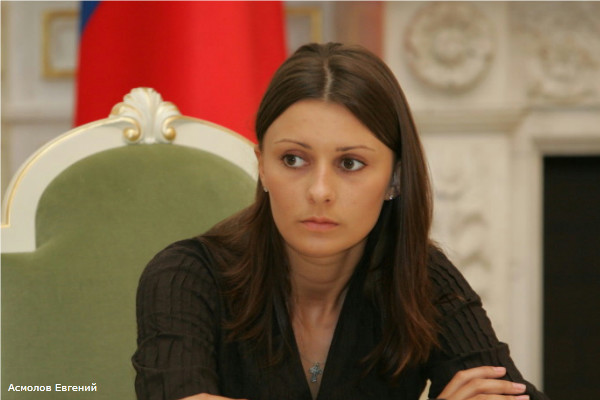
Photo courtesy of Yevgeny Asmolov/Delovoi Peterburg

If You Get the “Context” Right, You Can Turn Black to White (Meduza Reaches a New Low)

If you just get the “context” right, you can turn black into white, night into day.

“Context: The majority of U.S. Mission Russia employees are not Americans, and won’t be expelled: Of 1,200 people employed in 2013 in Mission Russia, 333 were U.S. citizens and 867 were Foreign National Staff, most of whom were probably Russian nationals. Using the 2013 numbers, if the U.S. Mission is forced to let go of 755 people, a majority of them would not be U.S. citizens, and probably would not be expelled from the country.”
The Real Russia. Today, July 31, 2017, 
Meduza′s daily English-language email newsletter

No, but lots of those pesky Russian nationals, perhaps the majority, would be fired from their jobs thanks to Putin’s little presidential campaign stunt. They would be instantly unemployed and, perhaps, unemployable.

Is that cause for rejoicing in Connecticut or wherever the newsletter’s editor really lives?

And what reason could the current Russian government (not the Soviet government, which did such things) have for expelling its own citizens?

Are we already that far along in the re-Stalinization process?

As a friend of mine who works at the Moscow embassy wrote in response to Meduza′s amazingly clueless and insensitive exercise in contextualizing, “I am speechless.” TRR

_________

The Russian Media in Exile

OLYMPUS DIGITAL CAMERA

Meduza likes Pavel Durov and Telegram, but hates Alexei Navalny.

Russia’s regions grow increasingly hostile to Mr. Navalny. Alexey Navalny’s campaign coordinator in Barnaul was stabbed by two men when trying to enter the local city hall building to apply for a demonstration permit. Artem Kosaretsky told reporters that he sewed up the wound himself and didn’t need to be hospitalized. Police have detained the attackers, though security guards at city hall reportedly refused to believe that Kosaretsky had been stabbed, attributing his wound to a scratch or even a mosquito bite. Hours earlier, unknown persons in Barnaul reportedly tried to set fire to Navalny’s local campaign headquarters.

(Source: Meduza’s daily “The Real Russia. Today” e-mail newsletter, June 26, 2017)

How do these incidents, no doubt arranged by the local security forces, prove that “Russia’s regions have grown increasingly hostile” to Navalny?

Everyone needs to make the Supreme Leader happy once in a while, even Russian media “exiled” to Latvia.

P.S. Or is the guy who writes Meduza’s English summaries increasingly hostile to Navalny? I can easily imagine that’s the case. Just as I can easily imagine that he doesn’t live in Russia, Latvia or anywhere in the vicinity. These days, you can just phone it in, so to speak, while living the good life in Albuquerque or Austin.

Photo by the Russian Reader

National Guard and Riot Cops Face Protesting Truckers in Dagestan

“To protest the fact that submachine gunners have blockaded them in Dagestan, the truckers have climbed onto the roofs of their semis.” Twitter post by Echo of Moscow correspondent Arseny Vesnin, posoted at 5:53 p.m. on March 31, 2017. Image courtesy of Meduza

National Guard and Riot Cops Face Protesting Truckers in Dagestan
Andrei Dubrovsky and Yulia Reprintseva
Novaya Gazeta
March 31, 2017

Russian National Guardsmen and riot police (OMON) have surrounded truckers protesting the Plato freight haulage road tolls system in the city of Manas in Dagestan, according to Mikhail Kurbatov, a member of the Association of Russian Carriers (OPR).

Anatoly Shilov, coordinator of the OPR’s St. Petersburg branch, said the troops had surrounded the truck drivers on the morning of March 31, and they have been kettled for several hours. No one has been allowed in or out.

According to an eyewitness, around 600 truck drivers are involved in the protest. Their trucks are stretched along the roadside of the Makhachkala-Baku Highway in Manas.

“About 200 law enforcement officers and riot police arrived on the scene. The troops deployed their vehicles along a one-kilometer stretch of the highway, completely surrounding us. They have blocked our way out, and we have been stuck here for about four hours. The riot are wearing masks with shields, but they have been behaving calmly. There have been no provocations against the truckers,” said the activist.

He added that one of the policemen had suggested to the truckers to peacefully settle the situation.

“We have been promised that lawmakers would come here tomorrow, and that we would talk with them. We will definitely be here until tomorrow,” he said.

Our source also emphasized the fact the trucker drivers had parked strictly on the roadside and were not interfering with traffic on the highway.

Earlier, the OPR announced a nationwide protest by truckers would take place on March 27. Protests were scheduled for at least nine Russian cities, according to the OPR’s website.

Organizers did not cancel the protest despite the fact that on March 24 Prime Minister Dmitry Medvedev signed a decree raising rates under the Plato system only by 25%, whereas earlier the rate was to have been doubled. Thus, as of April 15, the toll for trucks will be 1.91 rubles a kilometer, not 3.06 rubles a kilometer, as had been planned previously.

Translated by the Russian Reader. Thanks to Comrade Alexei for the heads-up. See my previous post in this series on the ongoing struggle of independent Russian truckers to abolish the draconian Plato tolls system.