Ukraine: Resistance and Solidarity

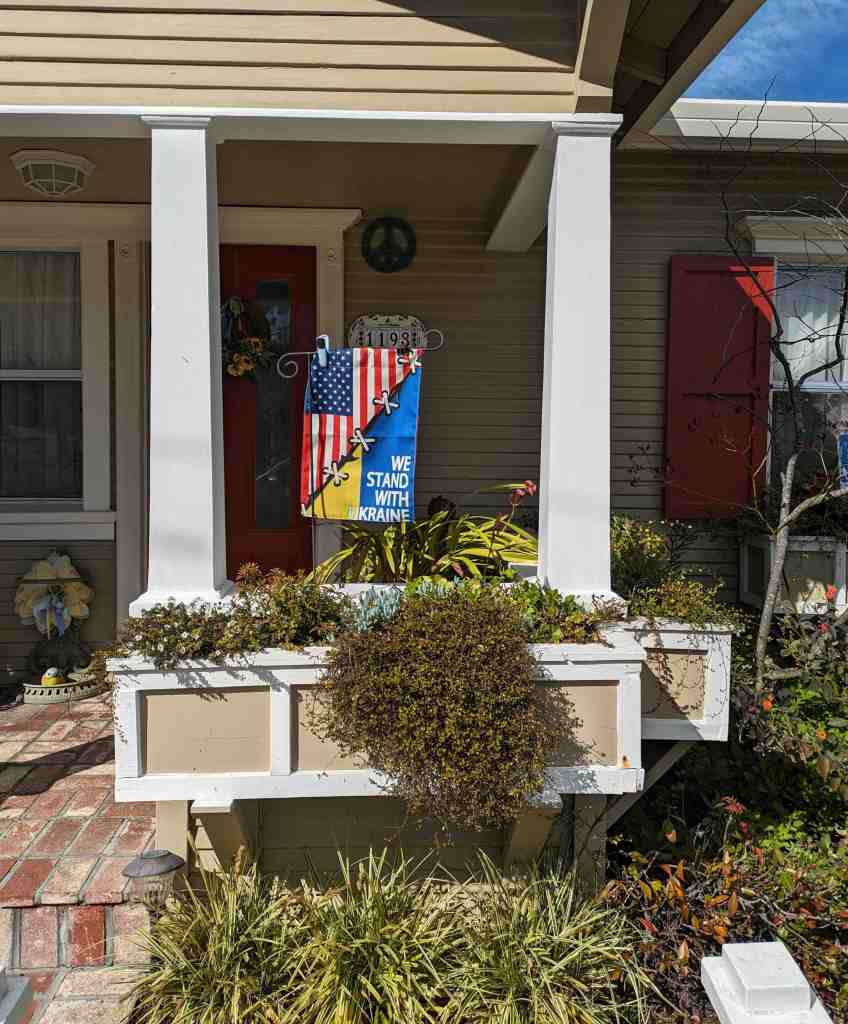
Polk Street, Monterey, California, 20 March 2026. Photo by the Russian Reader

In this week’s bulletin: 

Ukraine union leader interviewed/ Dnipro minersUN defines Russian crimes against humanity/ Militarism and defence of Ukraine/ Sanctions-busters identified/ Russian journalists & propagandists/ Civilians tortured to death/  

News from the territories occupied by Russia:  

29 civilians abducted from Kherson oblast were tortured to death or died from lack of treatment in Russian captivity (Kharkiv Human Rights Protection Group, March 13th)

Russia sentences Crimean to 15 years for sharing information available on Google Maps (Kharkiv Human Rights Protection Group, March 13th)

The Face of Resistance: Crimean Tatar Activist Eskender Suleimanov (Crimea PlatformMarch 13th)

I repeated it like a prayer: ‘Donbas is Ukraine! ’ (Kharkiv Human Rights Protection Group, March 12th)

Russia’s deportation and enforced disappearances of Ukrainian children are crimes against humanity – UN Commission (Kharkiv Human Rights Protection Group, March 12th).  

Ukrainian political prisoner faces new ‘trial’ and life sentence for opposing Russia’s occupation of Crimea (Kharkiv Human Rights Protection Group, March 11th)

Weekly Update on the Situation in Occupied Crimea (Crimea PlatformMarch 10th)

Occupiers are blackmailing the families of prisoners of war by demanding they register Starlink terminals in their names (Kharkiv Human Rights Protection Group, March 10th)

10-year sentence for love of Ukraine against 71-year-old pensioner under Russian occupation (Kharkiv Human Rights Protection Group, March 10th)

Crimean Tatar political prisoner with a malignant brain tumour forced to sign a fake ‘clean bill of health’  (Kharkiv Human Rights Protection Group, March 9th)

Russia sentences 69-year-old Ukrainian pensioner to 11 years for sending money to Ukraine (Kharkiv Human Rights Protection Group, March 9th)

Ukrainian PoW fined for “discrediting” Russian army during 18-year sentence (Mediazona, 3 March)

News from Ukraine:

Train as a Witness  (Tribunal for Putin, March 13th)

Russian Forces Attack Trade Union Office and Bus Carrying Miners in Dnipropetrovsk Region (Confederation of Free Trade Unions of Ukraine, March 11th)

3,000 women march in wartime Kyiv demanding rights the state is rewriting (Euromaidan, March 9th)

“Change is inevitable” and Free Iryna Danylovych: the ZMINA team joined the Women’s March to become the voice of women prisoners held by the Kremlin (Zmina, March 8th)

‘We work to gather coal’: Ukraine’s mines are war’s second frontline (Sianushka writes, March 7th)

Dispatch from Ukraine (Krytyka, March 2026)

‘The part of our work – and truly of my life – which is connected with war is never ending’ (Unison magazine, February 26th)

Saving Putin from justice. Who in Europe is stalling the trial and who is helping Ukraine (European Pravda, February 26th)

War-related news from Russia:

The War on Poverty (Russian Reader, March 14th)

“Join the elite drone forces, and you’ll come home famous!”: Russian universities are luring students into paid military service (The Insider, March 13th)

Lost in translation: How Russia’s new elite hit squad was compromised by an idiotic lapse in tradecraft (The Insider, March 13th)

Polina Yevtushenko: 14 years behind bars for nothing (The Russian Reader, 12 March)

The Insider identifies 6,000 exporters trading with sanctioned Russian firms or defense industry suppliers, 4,000 of them based in China (The Insider, March 11th)

Pro-war bloggers welcome arrest of Sergey Shoigu’s top deputy as Russia’s Defense Ministry purge continues (Meduza, March 9th)

A phantom refinery: How Georgia helps Putin bypass oil sanctions (The Insider, March 9th)

Our Dear Friends in Moscow: from journalists to propagandists (Posle.Media, 4 March)

Analysis and comment:

Sultana Is Right About Zelensky. Now What? (Red Mole, March 13th)

Trump’s US temporarily lifts sanctions on Russian oil (Meduza, 13 March)

European socialism, imperial militarism and defence of Ukraine (People and Nature, March 12th)

Russia’s war: stop trying to delegitimise resistance (People and Nature, March 12th)

The US-Russia-Ukraine negotiations: Architecture of tactical theatre and strategic deception (New Eastern Europe, March 9th)

Interview with Andriy Movchan: “If the Occupation of Ukraine Is an Acceptable Price, What Else Is Acceptable? (Europe Solidaire, March 8th)

Presentation of the Research “Words that Kill: How Russian Propaganda Shapes Mobilization and Combat Motivation” (Lingva Lexa, February 27th)

Putin’s Four Antifascist Myths (Rosa Luxemburg Stiftung, May 2025)

Research of human rights abuses:

UN concludes that forcible transfer of children and enforced disappearances are crimes against humanity (UN Commissioner for Human Rights, 12 March)

International Criminal Justice: Beautiful Myth or Imperfect Reality? (Tribunal for Putin, March 10th)

International solidarity:

“That’s How We Founded the Ukraine Solidarity Campaign”: An Interview with Chris Ford (Commons.com, March 12th)

Art Exhibition on Crimea Opens in Warsaw (Crimea PlatformMarch 11th)

Upcoming events:

Saturday 28 March: Together March in London – Eastern European bloc against the far right, meeting 12:00 midday at Deanery Street, off Park Lane.

Wednesday 15 April, 6.0-7:30 pm. Try Me for Treason: Voices Against Putin’s War – Part of the Think Human Festival 2026  Actors will perform extracts from speeches made from the dock by Russian oppositionists who have been tried for sabotage for actions taken against the Russo-Ukrainian war  Clerici Building, Clerici Learning Studio, Oxford Brookes University, Headington Campus, Oxford.


This bulletin is put together by labour movement activists in solidarity with Ukrainian resistance. To receive it by email each Monday, email us at 2022ukrainesolidarity@gmail.com. More information at https://ukraine-solidarity.org/. We are also on TwitterBlueskyFacebook and Substack, and the bulletin is stored online here.

Source: News from Ukraine Bulletin 187, Ukraine Information Group, 16 March 2026


The second of two linked articles. The first is here: European socialism, imperial militarism and the defence of Ukraine

In the labour movement and civil society organisations in the UK, support for Ukrainian resistance to Russian imperialism is countered by those who argued that Ukraine is only a proxy of western powers.

The underlying idea, that the only “real” imperialism is western – and that resistance to Russian or Chinese imperialism, or their puppets in e.g. Syria or Iran, is therefore illegitimate – has its roots in twentieth-century Stalinism. But it retains its hold, in part, because the western empire’s crimes are so horrific. It is Gaza, and climate change, that angers young people in the UK above all.

This “campism” (division of the world into a US-centred “camp” and other, not-so-bad camps) transmits itself, in part, through activists who seek simple principles on which to build social movements.

It has reared its ugly head again during the US-Israeli war on Iran this month, treating the theocratic, authoritarian regime as the victim rather than the Iranian people caught between that regime and the murderous US-Israeli onslaught.

This article is a plea to avoid such simplicity. It has grown out of an email, written last year to one such activist, who told me I was wrong to support the provision of arms to Ukrainians resisting Russian aggression. I asked him these five questions, and I still hope he will reply.

1. What is the character of Russian imperialism, and what is its relationship to Ukraine?

We often hear, or read, on the “left” that the war in Ukraine is an “inter-imperialist war”. I don’t agree. There’s certainly an inter-imperialist conflict that forms the context, but the actual war is between Russia (an essentially imperialist country) and Ukraine (clearly not an imperialist country). I’ll come back to the character of the war below (question 2). But I think we agree that Russia is essentially imperialist. What sort of imperialism?

For all socialists in the 19th and early 20th centuries, Russia was the most fearsome empire and Ukraine was its oldest, and largest, colony. Throughout the Soviet period, as far as I know, none of the versions of socialism or communism, however exotic, argued that Ukraine and the other 13 non-Russian republics had somehow disappeared or lost their right to self-determination.

As far as extreme Stalinists were concerned, that right was guaranteed by the Soviet constitution and all was fine. There were plenty of arguments about the extent to which the speaking of Ukrainian in Ukraine, Kazakh in Kazakhstan, Azeri in Azerbaijan etc should be implemented. But as far as I’m aware, not even when Stalinist nationalities policy zig-zagged into extreme insanities, did anyone suggest that these were not nations with their own language and culture.

Russia emerged from the Soviet period as a severely weakened empire, or a would-be empire, but still an empire. The large stock of nukes and gigantic army made up for what Russia lacked in terms of its economy.

A large part of Putin’s project is to strengthen the Russian empire. That was what the incredibly brutal wars in Chechnya in the 1990s and early 2000s were about, and a large part of what the Russian intervention in Syria was about. In my view, this is essentially what the war in Ukraine is about too.

What about Ukraine? The friend I was arguing with wrote to me: “we’re not talking about an ‘oppressed people’ in the sense we may talk of resistance in Palestine, we’re talking about an advanced capitalist state’s army, which is supported by NATO powers and in a war with another state’s army, with all the consequences that brings”.

Let’s unpack this. Of course there’s no comparison, in Ukraine or anywhere else, to the long-running history of violent ethnic cleansing in Palestine, let alone the genocide now being carried out. It would be analytically meaningless, and I’d say morally dubious, to try to make a comparison. So let’s not try.

I would not compare Ireland’s situation to Palestine either, but I would say that Ireland – which also has an “advanced capitalist state”, right? – and Ukraine are both examples of countries that have historically been subject, by Britain and Russia respectively, to long-term forms of imperial domination.  

Some people think that in the post-Soviet period, Russian domination of Ukraine has been fading away. I myself thought that in the early 2000s, and how wrong I turned out to be.

Certainly the Ukrainian bourgeoisie tried to carve out for itself an independent economic path (or rather, a path towards closer economic integration with Europe), with some success.  Other republics took distance, economically, from Russia: Azerbaijan towards Turkey, some of the central Asian states towards China. But Ukraine’s aspirations took a crushing blow from the 2008-09 financial crisis. Russia attempted to reassert control through local politicians, but found itself in a cul-de-sac in 2014. The Kremlin then opted for military subversion.

2. What caused the war (which is relevant to how it might be stopped)?

The standard explanation of the 2014 invasion by campists and “realists” is that Putin’s hand was forced by NATO. To my mind (i) that’s a heap of happy horse manure, and (ii) while there was strand of thinking (albeit not consistent or dominant) in the NATO powers that Putin should be more tightly controlled, it is just deceptive to present this as the cause of the invasion. Actually, Yanukovich was forced out by a popular movement – extremely politically heterogenous, but a movement all the same – and Putin felt forced to act.

I remember going to Kyiv literally the day after Yanukovich left. I met a friend. She said: “the Russians are going to invade”. I said: “no they won’t. That would be madness, it would ruin all they have been trying to do with the economy for years”. It was madness, it did ruin Russia’s economic strategy, but they did it anyway.

Why? I was then working at the Oxford Institute for Energy Studies, in which context I had to interact with Russian business people and researchers. I spent several years asking them: why did they think the Kremlin did it? The best answer I got was: “Because they could, given the confusion in Ukraine at that moment. And because if they had not taken the opportunity, they would have had to answer to the military, and to the nationalists, as to why they had not done it.” (A forthcoming book by Alexandra Prokopenko answers a slightly different question, i.e. why didn’t the Russian elite, most of whom saw the war as a disaster, do more in 2022 to stop it.)

What was the social reality of the initial invasion in 2014? What were Russian troops and the Russian-supported forces in Donetsk and Luhansk up to in 2014-21? The “campists” and “realists” have little or nothing to say about this. The answer is that they were terrorising people who disputed their right to set up tinpot dictatorships, jailing trade unionists, putting in place an arbitrary, dictatorial legal system, attempting to stop people speaking or teaching kids the Ukrainian language, and so on.

It’s estimated that as well as wrecking the economy, these bastards managed to reduce the population by half between 2014 and 2018 or so. Many people who were young and able to leave, left.

Surely this was not an inter-imperialist war? And without understanding this, it’s impossible to claim seriously that the conflict post-2022 is an inter-imperialist war. Militarily, it’s a war between Russia and Ukraine, and grew out of the 2014-21 war. No matter how much support is being given to Ukraine by the western powers – and it’s actually pretty small scale by historical standards – this is not a conflict between two imperialist armies.

3. Are there circumstances in which, against a background of inter-imperialist conflict, socialists would take the side of one state against another?

Of course there are – which is another hole, or a crater, more like – in “campist” and “realist” arguments.

Sure, there’s an inter-imperialist conflict going on. But I would say socialists are justified in supporting Ukraine because we stand for nations’ right to self-determination, free of imperialist bullying.

An example of this is Iran, which is surely as much an “advanced capitalist state” as Ukraine, and also surely close geopolitically to Russia and China. Does that mean that as socialists we are indifferent to the attack on Iran by the US and Israel? Of course not. Neither were we indifferent to the attack on Iraq in 2003.

In fact I can think of examples of socialists actually supporting a capitalist, perhaps would-be imperialist, power invading another country. One such is the Indian invasion of Bangladesh in 1971, when Pakistan was threatening to crush the Bangladeshi independence movement militarily. I wrote to an Indian socialist friend to ask about this, and she replied:

I am not sure if it’s correct to refer to India at that time as a “would-be imperialist power”, although it certainly was the dominant power in South Asia. But you are right in thinking that Indian socialists, including the Communist Party of India and the Communist Party of India (Marxist), with the exception of the Maoists, supported the Indian intervention to halt what I would subsequently call a genocidal assault on East Bengal, with an especially horrifying number of rapes. No doubt [the Indian prime minister] Indira Gandhi was being opportunistic, and, as I found later when I visited Bangladesh, workers there had no illusions in her or in India. But the rapes and killings had to be stopped, and she did it.

If we go back to the 1930s and 40s there are numerous examples of socialists supporting the supply of weapons to states, and quasi-state formations, by imperialist countries. Socialists in the UK and across Europe supported the supply of weapons by British and American imperialism to the French resistance, which was led by a bunch of reactionary bourgeois politicians, who after the war led reactionary bourgeois governments. I do not know what Irish socialists thought of the supply of weapons to the IRA by Nazi Germany, but certainly they made no vocal demands that the arms be sent back.

Of course there are political reasons to be cautious about focusing on the supply of weapons, to do with our larger attitude to militarism and our attitude to the state. (I have mentioned these in this related article.)

But let’s again consider Ukraine specifically. In his email, my friend contrasted Palestinians (an “oppressed people”) to Ukrainians (who have “an advanced capitalist state’s army”). What difference does this make?

In my view, the absence of a Palestinian capitalist state with weapons is a key factor that has allowed the genocide to proceed in Gaza. It’s no accident that the Israeli right has spent the last quarter of a century making sure that no steps are taken in the direction of the formation of such a state (the “two state solution”).

If only Palestinians had had that advanced state with an army, that Ukrainians have!

To see what happens to people attacked by Russia without a fully-fledged state and army to protect them, we have only to look to Chechnya, which was subject to a war of mass extermination as a result.

4. Is there a difference between the manner of social control in Russia on one side, and Ukraine, Poland and other eastern European countries on the other? And does this make any difference?

Last year, I picked a polemical argument with people who talk about the war in Ukraine being a confrontation between authoritarianism and democracy, because I think that that folds too easily into the western imperialist powers’ narratives. But the issue of bourgeois democracy is not irrelevant.

In Ukraine, however dire the situation, it is still possible – as we saw, dramatically, with the “anti-corruption” demonstrations last summer – for people to demonstrate, to criticise the government in the media, etc, in other words to exercise the rights of free speech and assembly – with a risk of repression that I suppose is comparable to the UK, i.e. low.

In Russia, this is obviously not the case. We have seen no movements involving street demos since 2022, and the standard punishment for criticising the war on social media is seven or eight years in prison. Numerous people have been killed for opposing the government. Our socialist and anarchist friends and comrades are either in jail, or have left the country, or, if they can not do so, have stopped doing any public political activity or organising.

Does this difference matter? Does it mean that some of the considerations that were discussed in the 1940s – that the axis powers, i.e. not only Germany which was fully Nazi but also fascist Italy and fascist Spain – represented a threat to democracy that was qualitatively different from the threat posed by the British, French and American bourgeoisies? I think it matters, and I think that again has implications for whether socialists favour the Ukrainian side in the war.

5. Can we make clear that we favour the use of weapons by the capitalist state for one thing (defending Ukrainian people) but not another (general rearmament)?

In his email, my friend said he would find it difficult to justifying arms deliveries to working-class Brits who are faced with monstrous spending cuts. We need to discuss this seriously, analytically.

I think it’s obvious that there are some uses of force by the state that we favour, and some we don’t. If we were on a counter-demo against a bunch of fascists outside a hotel being used to house migrants, and were significantly outnumbered, and all that was protecting the hotel was a line of cops, we would not be urging the cops to go away, would we? We would not lambast their defence of the hotel in the same terms that we lambast many other things that police officers do, would we?

Obviously we would hope not to be in that situation, and we would put all the emphasis on mobilising to ensure that the counter-demos were bigger.

But working-class Ukrainians never hoped to be in the situation they are in either.

This argument can easily be extended to examples of military force. I asked some Argentine comrades about the Malvinas war of 1982. Many in the largely-underground labour movement urged the military dictatorship, which had killed, tortured and imprisoned many thousands of their friends and comrades, to divert its resources to fight the armed forces sent by Margaret Thatcher to the islands. One comrade wrote to me that the Argentine Trotskyist organisations

held a critical position, differentiating the Malvinas cause (which they supported) from the military leadership of the military junta, which they considered a genocidal dictatorship that used the war to remain in power.

Sections of the left proposed the nationalisation of British-owned properties, the confiscation of British assets, and the non-payment of the external debt to Great Britain, seeking to make the war “popular” and not directed by the military junta.

The Argentine left maintained a position of national sovereignty over the islands, denouncing the British occupation since 1833. It criticised the dictatorship’s handling of the war, viewing the conflict as a way in which the military junta sought to perpetuate its power. The general approach is sovereigntist and anti-imperialist, differentiating it from the positions of the center-right or liberal sectors.

Were the Argentine socialists right to support the war, and to call for it to be “made popular”, even in the face of a brutal, inhuman dictatorship?  

Why, now, should we not put demands on the racist, anti-working-class, genocide-supporting Starmer government to step up UK arms shipments to Ukraine?

My friend said in his email that he “simply could not face [working class people in dire circumstances], or the people I work with around [climate impacts] and defend the absurd amount of money which has gone to continuing this bloody stalemate”.

I would suggest to him that he could say to his comrades: the state can fund this stuff if it has the will to do so. The state can tax the rich, or whatever. It’s not an either/or. It’s a matter of principle.

Conclusion

The damage done by western “leftists”’ cynical attempts to delegitimise Ukrainian resistance has already been done. At least since 2014, and rising to a crescendo in 2022. Always wrapped up in earnest-sounding, empty words about “anti imperialism”. The damage is not to Ukrainian people – that is done by Russian bombs, and by the gangsters and torturers that the Kremlin has put in charge of Donbas – but rather damage to socialism, damage to its development as a movement.

Simon Pirani, 12 March 2026.

□ A linked article: European socialism, imperial militarism and the defence of Ukraine

□ There are detailed discussions of UK “left” groups’ attitude to Russia’s war on the Red Mole substack, e.g. hereherehere and here.

Source: Simon Pirani, “Russia’s war: stop trying to delegitimise resistance,” People and Nature, 12 March 2026

“A River of Grief”: Six More Crimean Tatars Sentenced to Long Prison Terms by Russian Occupation Regime

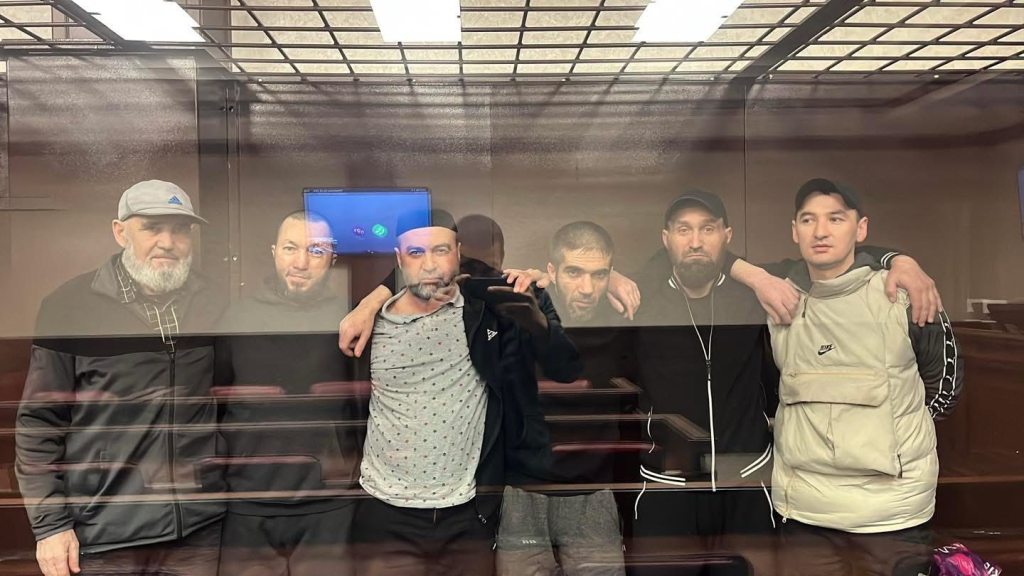
Today, a Russian military court sentenced six Crimean Tatars from the Dzhankoi District to terms in prison ranging from 11 to 14 years.

On the firing range of persecution, this is yet another sentence for Muslims in Crimea. For us, it means yet more broken lives, families separated for many years, and children who have also been sentenced to a life without their fathers. It is a river of grief.

I look at the grey-haired old man on the left of the photo, 69-year-old Khalil Mambetov, and in my mind’s eye I see the political prisoners Azamat Eyupov and Servet Gaziyev, who have already been sent into exile thousands of kilometers away from Crimea to serve their sentences. I look at Mambetov and think about his wife, Tata Lila, who is battling cancer. “We don’t know how to tell her that Agha Khalil has been sentenced to 14 years in prison,” say the wives of the other defendants.

Refat Seidametov, Leman Zekeryaev, Ekrem Krosh, and Osman Abdurazakov were also sentenced to 14 years’ imprisonment, with the first four years to be served in a closed prison and the remainder in a maximum security penal colony.

The court sentenced Aider Asanov to 11 years’ imprisonment, with the first three years to be served in a closed prison and the remainder in a maximum security penal colony, followed by one year’s custodial supervison.

Aider’s mother has a severe form of bronchial asthma. After her son’s arrest, her condition deteriorated further. Leman Zekeryaev’s mother has trouble walking. Ekrem Krosh’s brother Enver is also in the pretrial detention center in Rostov-on-Don, and the Almighty only knows how much pain their mothers are in.

When they will embrace their relatives on the outside, like hundreds of other women in Crimea, is also known to the Almighty alone. But we will continue to do everything in our power. And no matter how difficult it is, no matter how overcome we are by chronic fatigue, we continue to peacefully defend the supreme values of our people’s integrity. Because we cannot become inured to persecution.

Source: Mumine Saliyeva (Facebook), 29 April 2025. Translated by the Russian Reader


Russia’s worst conveyor belt of repression in occupied Crimea has sunk to a new low with six recognized Crimean Tatar political prisoners from Dzhankoi facing sentences of 17 and 17.5 years.  Not only are none of the men accused of any recognizable crime, but even the charges are those virtually copy-pasted from ‘trial’ to ‘trial’ since 2015, with the sole difference lying in the huge sentences demanded in this case against all the men. As well as in the fact that Khalil Mambetov is already 69, making this a near certain death sentence.

The ’trial’ of the six Crimean Tatars is coming to an end at the Southern District Military Court in Rostov-on-Don, with the prosecutor claiming, on 7 April 2025, that the men’s ‘guilt’ had been proven.  He demanded 17.5-year sentences against Khalil Mamebetov (b. 1955) and Refat Seidametov (b. 1969) and 17-year sentences against Osman Abdurazakov (b. 1984); Aider Asanov (b. 1963); Ekrem Krosh (b. 1985); and Leman Zekeryaev (b. 1973).  In each case, the sentence would be for maximum-security (or ‘harsh-regime’) imprisonment, with the prosecutor also seeking a one-year term of (seriously) restricted liberty should they survive the sentence in the appalling conditions of Russian penal institutions.

Lawyer Emil Kurbedinov told Crimean Solidarity that ‘each sentence in these cases is proof of political persecution. And with each sentence, the lawlessness takes on increasingly sophisticated and perverted forms.”   

(From left) Leman Zekeryaev, Ekrem Krosh, Aider Asanov, Khalil Mambetov, Refat Seidametov, and Osman Abdurazakov.
Photo: Crimean Solidarity

Although the sentences demanded are not necessarily those handed down, the fact that such horrifically long terms are demanded in all cases is unprecedented. It is especially worrying given that all of the men are accused of the lesser of two charges used in these conveyor belt trials. 

Russia’s use of its legislation against any Ukrainian citizens on occupied territory is illegal, however these trials are especially cynical since the men are accused solely of unproven involvement in an organization which is legal in Ukraine. The pretext for bulk ‘trials’ of Crimean Tatar and other Ukrainian Muslims is a flawed and suspiciously secretive Russian Supreme Court ruling from 2003 declaring the peaceful, transnational Muslim organization Hizb ut-Tahrir ‘terrorist’. Since 2017, Russia has largely used such ‘trials’ as a means of trying to crush the Crimean Tatar human rights movement with civic journalists and activists, especially from Crimean Solidarity, increasingly targeted.

This was the second wave of such arrests in the Dzhankoi region of Crimea, with the first wave in August 2022 coming the day after a humiliating attack on a Russian military base in Crimea which Russia could not admit, but doubtless wanted to avenge.  The link between these two ‘operations’ seemed clear given that the arrests on 24 January 2023 targeted the brothers of two of the men arrested in August 2022, with Ekrem Krosh the brother of civic activist Enver Krosh, seized in 2022, and Osman Abdurazakov the brother of Edem Bekirov.  It also seemed likely because of the charges. In almost all such ‘trials’, one or more of the defendants is accused of ‘organizing’ a Hizb ut-Tahrir group under Article 205.5 § 1 of Russia’s criminal code.  The others are accused of ‘involvement’ in such a ‘group’ (Article 205.5 § 2).  Why one charge is laid, not the other, often seems arbitrary or about reprisals, but the difference in length of sentence has, up till now, been significant. All six defendants in the second Dzhankoi group are accused only of ‘involvement’, while the sentences demanded are those normally used against purported ‘organizers’. In occupied Crimea, it has become standard for all defendants to face the equally absurd charge of ‘planning to violently seize power’, under Article 278. 

These ‘trials’ are not just a travesty because of the flawed charges.  Essentially no evidence of actual involvement in Hizb ut-Tahrir is required. FSB-loyal ‘experts’ are used to provide ‘assessments’ of illicitly taped conversations about religion, politics, bringing up children, etc., with the supposed ‘experts’ providing the ‘conclusions’ demanded of them. The ‘trials’ also hinge on the so-called ‘testimony’ of anonymous witnesses who may well have never met the defendant.  As reported, there have been absolutely glaring infringements in this case, with the FSB, for example, not even bothering to explain which part of a long conversation which they illicitly taped, proves the men’s ‘guilt’. The description given by one of the ‘secret witnesses’ did not match the photos used for the alleged identification parade. 

Tragically none of this, nor the age of one of the defendants, will make a scrap of difference. The ‘case’ was passed to the court in Rostov in August 2023, and is being heard by a panel of judges, under presiding judge Viacheslav Alekseevich Korsakov, who has already demonstrated his willingness to provide the sentences demanded of him, however unwarranted.

The next hearing is scheduled for 15 April, with the defence beginning the final debate.

Source: Halya Coynash, “Russia seeks effective death sentence against 69-year-old Crimean Tatar political prisoner and horrific sentences against five others,” Human Rights in Ukraine (Kharkiv Human Rights Protection Group), 8 April 2025. The emphasis is in the original.

News from Ukraine Bulletin 127

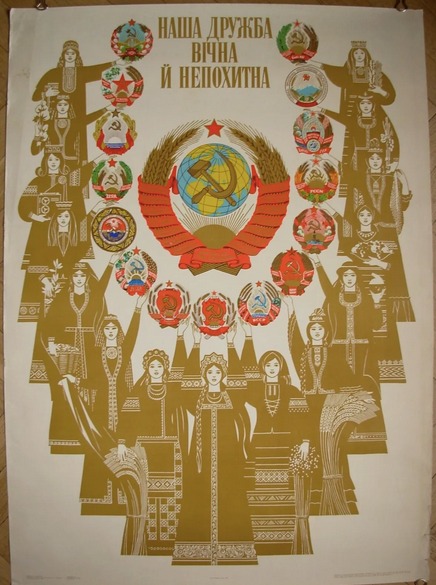
“Our friendship is eternal and unshakable” Ukrainian poster, 1983
Courtesy of Soviet Visuals

In this week’s bulletin: Ukraine labour relations under martial lawDemocracy uprising in the Caucasus/ ‘Swift peace deal’ questioned/ Ukraine: resisting arbitrariness from above/ Russian torture and denial of medical treatment

News from the territories occupied by Russia:  

Russia confirms revenge sentences against savagely tortured Crimean Tatar cousins, seized with Nariman Dzhelyal (Kharkiv Human Rights Protection Group, December 20th)

Abducted Kherson activist sentenced for ‘spying for Ukraine’ while in Russian captivity denied vital medical treatment (Kharkiv Human Rights Protection Group, December 19th)

Russia churns out surreal ‘terrorism’ sentences against Ukrainian POWs for defending Ukraine (Kharkiv Human Rights Protection Group, December 17th)

20-year-old from Mariupol sentenced to 11 years for argument opposing Russia’s war against Ukraine   (Kharkiv Human Rights Protection Group, December 16th)

Human rights defenders: Ukrainian citizens under occupation need support (Zmina, December 13th)

Forced reality (Alter Pravo, October 2024)

Life Under Occupation (Alter Pravo, October 2024) 

The situation at the front:

Battlefield developments: ‘Enter Pyongyang’ (Meduza, 19 December)

News from Ukraine – general:  

Joint appeal of representatives of the coalition “Ukraine. Five in the Morning” and the Initiative “Tribunal for Putin” (Tribunal for Putin, December 21st)

Legal regulation of labour relations in the conditions of martial law in Ukraine (Science Open, December 20th

When a Scalpel Becomes a Kitchen Knife: How Ukrainian Courts Skillfully Distort ECtHR Practice (Kharkiv Human Rights Protection Group, December 18th)

Ukraine: Inadmissible evidence in examinations (Kharkiv Human Rights Protection Group, 18 December)

Do today’s HACC decisions comply with European practice? (Kharkiv Human Rights Protection Group, December 18th)

Can a huge bail replace justice? (Kharkiv Human Rights Protection Group, December 18th)

Impact of War on Education and Neoliberal Reforms  (Ukraine Solidarity Campaign, December 17th)

“We cannot allow this to happen to our children.” Discussion on “No Child of Ukraine Should Be Left Alone with the Experience of War” (Center for Civil Liberties, December 16th)

Groups of Resistance: How Ukrainians Protect Their Interests from ‘Arbitrariness from Above’  (Commons.com, November 27th)

War-related news from Russia:

Russian anarchist jailed for arson commits suicide on first day of sentence (Novaya Gazeta Europe, 20 December)

St Petersburg: The Terror Scam Gig Economy (The Russian Reader, 20 December)

Duma broadens ‘treason’ charges against anybody opposing Russia’s aggression against Ukraine (Kharkiv Human Rights Protection Group, December 18th)

LGBT+ activism in Russia: “Rainbow extremism” (Posle.Media, 18 December)

Legislators equate criticism of Russia’s war against Ukraine with ‘terrorism and extremism’ (Kharkiv Human Rights Protection Group, December 16th)

Analysis and comment:

Uprising for democracy in the Caucasus (Tempest, December 21st) 

Those Demanding a Swift ‘Peace Deal’ for Ukraine Don’t Understand How Complex This War Really Is  (Byline Times, December 19th)

Russian Gas Giant Given Access to Global LNG Summit (DeSmog, December 13th)

Caucasus: Resisting local authoritarianism and multipolar imperialisms (CrimethInc, 11 December)

Research of human rights abuses:

Ukrainian children deported to Russia: ‘The development of Russian identity’ (Meduza, 20 Dec)

Kyrylo Budanov met with human rights defenders (Zmina, December 20th)

The European Parliament demands Russia immediately release ill Crimean political prisoners: resolution, proposed by ZMINA, was adopted (Zmina, December 19th)

Russia ignores the needs of Ukrainian political prisoners for medicines and medical care: ZMINA met with Henry Marsh  (Zmina, December 19th)

Human rights defenders call on parliamentarians not to adopt draft laws No. 11538 and No. 11539 (Zmina, December 19th)

ZMINA at the #IBelong forum: challenges on citizenship during the war (Zmina, December 17th)

Over 16,000 Ukrainian civilians held captive in Russia – Ukraine’s ombudsman (Ukrainska Pravda, December 16th)

Upcoming events:

Saturday 18 January 2025, 12:00 midday. National March for Palestine. Assemble BBC, Portland Place, London. Unite the Struggles, Ukraine Information Group and others will march with our banner, “From Ukraine to Palestine, Occupation is a Crime”. Details of assembly point in the new year on our web site or by email. 

Saturday 15 February 2025 11AM — 4PM, Conference: End the Russian invasion and occupation. National Education Union, Mabledon Place, London, WC1H 9BD. Register here.

This is the last News from Ukraine bulletin for 2022. The next one will appear on Monday 6 January. With best wishes for 2025 to our readers

This bulletin is put together by labour movement activists in solidarity with Ukrainian resistance. To receive it by email each Monday, email us at 2022ukrainesolidarity@gmail.com. To stop the bulletin, reply with the word “STOP” in the subject field. More information at https://ukraine-solidarity.org/. We are also on TwitterBlueskyFacebook and Substack, and the bulletin is stored online here

A Milestone (Nadezhda Buyanova)

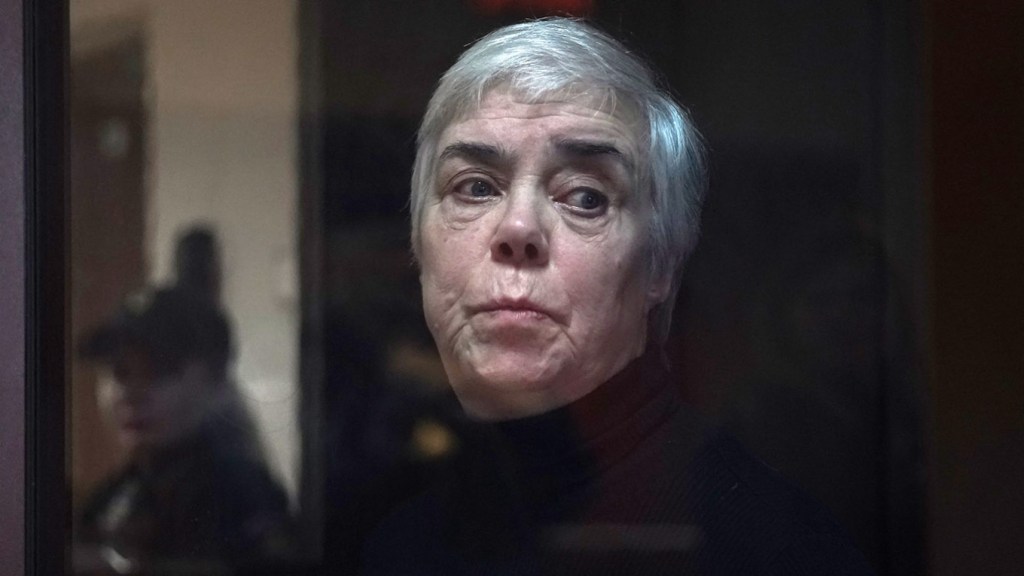
Nadezhda Buyanova. Photo: Tatyana Makeyeva/AFP, via Moscow Times

A pediatrician has been imprisoned on the strength of a denunciation by her patient’s mother. The pediatrician allegedly insulted the boy’s father, who had been killed in the war. There were no witnesses to the conversation, and it seems that the decisive factor in the verdict was the pediatrician’s birthplace — Lviv. Only recently I published the file of the criminal case against my great-uncle, who had allegedly spread rumors about the fall of Soviet regime among children at an orphanage. There, too, the accused’s background was an important point of the accusation: the arrested man’s father had once been a prosperous peasant. It was obvious to the investigators (and this was explicitly stated in the verdict) that the status of “kulak’s son” was in itself proof that the charges were true.

Lo and behold we’re back where we started: a person born in Lviv is guilty of course and must have said what they have been accused of saying.

I don’t know why we should measure things off in terms of milestones on the road to a familiar hell, but this is certainly a milestone.

Source: Natalia Vvedenskaya (Facebook), 13 November 2024. Translated by the Russian Reader


A Moscow court on Tuesday sentenced a pediatrician to five and a half years in prison for criticizing the war in Ukraine during a patient visit earlier this year.

Nadezhda Buyanova, 68, was found guilty of spreading “fake” information on the Russian army under wartime laws used to silence dissent.

“I believe this is absurd,” she said in court Tuesday, moments before Judge Olga Fedina announced her sentence.

Buyanova was arrested in February after the ex-wife of a soldier who was killed in Ukraine, Anastasia Akinshina, said she had criticized Russia’s role in the conflict during an appointment.

Several of Buyanova’s supporters, mostly medical professionals, shouted “Shame on you!” in the court as the sentence was announced.

“We must empathize with one another and love others,” Buyanova said in court. “But there is no paradise on earth, there is no peace on earth.”

She protested her innocence throughout the trial.

“I am a pediatrician. I do not regret a single day,” Buyanova said.

Buyanova was prosecuted despite there being no public evidence that she criticized the war. Akinshina’s seven-year-old son testified against Buyanova in court.

Source: AFP, “Russian Doctor Jailed 5.5 Years for Criticizing War During Patient Visit,” Moscow Times, 12 November 2024


Monday, 18 November, 6 p.m.  “Political prisoners in Russia and the Occupied Territories of Ukraine”. 

Panel discussion with Sergei Davidis (Memorial), Evgeny Zakharov (Kharkhiv Human Rights Protection Group), Bill Bowring (Birkbeck, University of London) and Judith Pallot (Gulag Echoes research project / University of Oxford).

At: Montague Lecture Centre, Graduate Centre, Queen Mary University of London, 327 Mile End Road, London E1 4NS. Also on line, via Zoom.

All welcome. Event organised by the Queen Mary University, London, Centre for Eurasian, Russian and East European Studies. Register on Eventbrite here.

Source: Ukraine Information Group

National Unity Day

Monterey, California, 4 November 2024. Photo: The Russian Reader

I’m worried about the left’s demonization of America’s origins and the future of Western civilization, as many conservatives feel that the basic tenets of society as we’ve known it are under attack.

Source: Scott Jennings, “Opinion: Why I’m voting for Donald Trump,” Los Angeles Times, 1 November 2024


Carolina Performing Arts, “Omar the Opera: Behind the Scenes”

Rhiannon Giddens’ opera Omar was presented at Carolina Performing Arts in February 2023. In this video, take a deep dive into the opera’s creation and hear from cast members about their experiences. To learn more, visit: https://southernfuturescpa.org/projects/omar/ Omar was co-commissioned and co-produced by Spoleto Festival USA and Carolina Performing Arts at the University of North Carolina at Chapel Hill. Additional co-commissioners include LA Opera, Boston Lyric Opera, San Francisco Opera, and Lyric Opera of Chicago.

Source: Carolina Performing Arts (YouTube), 2 October 2023


“Video has come out from Bucks County, Pennsylvania showing a ballot counter destroying ballots for Donald Trump and keeping Kamala Harris’s ballots for counting,” an account called “Dan from Ohio” wrote in the comment section of the far-right website Gateway Pundit. “Why hasn’t this man been arrested?”

But Dan is not from Ohio, and the video he mentioned is fake. He is in fact one of hundreds of inauthentic accounts posting in the unmoderated spaces of right-wing news site comment sections as part of a Russian disinformation campaign. These accounts were discovered by researchers at media watchdog NewsGuard, who shared their findings with WIRED.

“NewsGuard identified 194 users that all target the same articles, push the same pro-Russian talking points and disinformation narratives, while masquerading as disgruntled Western citizens,” the report states. The researchers found these fake accounts posting comments in four pro-Trump US publications: the Gateway Pundit, the New York Post, Breitbart, and Fox News. They were also posting similar comments in the Daily Mail, a UK tabloid, and French website Le Figaro.

“FOX News Digital’s comment sections are monitored continuously in real time by the outside company OpenWeb which services multiple media organizations,” a spokesperson for the company tells WIRED. “Comments made by fake personas and professional trolls are removed as soon as issues are brought to our attention by both OpenWeb and the additional internal oversight mechanisms we have in place.”

Breitbart replied to WIRED’s request for comment in Russian: “Пожалуйста, скажите Newsguard, чтобы они пошли на хуй.” In English, this means “please tell Newsguard to go fuck themselves.”

The Gateway Pundit and the New York Post did not respond to a request for comment from WIRED.

“The actors behind this campaign appear to be exploiting a particularly vulnerable part of the media landscape,” McKenzie Sadeghi, the AI and foreign influence editor at NewsGuard, tells WIRED. “Comment sections designed to foster reader engagement lack robust security measures, allowing bad actors to post freely, change identities, and create the illusion of genuine grassroots campaigns rather than orchestrated propaganda.”

The disinformation narratives being pushed by these accounts are linked to Storm-1516, according to Newsguard. Storm-1516 is a Russian disinformation campaign with a history of posting fake videos to push Kremlin talking points to the West that was also connected to the release of deepfake video falsely claiming to show a whistlelbower making allegations of sexual assault against vice presidential candidate and Minnesota governor Tim Walz. (WIRED first reported that the Walz video was part of a campaign by Storm-1516. A day later, the US government confirmed WIRED’s reporting.)

Links to the video were posted by multiple accounts with names like “Disobedient Truth” and “Private Patriot” in the comment section of outlets like Breitbart and the Gateway Pundit.

“More bad news for the Dems: Breaking: Tim Walz’s former student, Matthew Metro, drops a shocking allegation- claims Walz s*xually assaulted him in 1997 while Walz was his teacher at Mankato West High School,” the comments read.

The links posted in the comments came hours before the video was shared on social media platforms like X, where it racked up millions of views.

After the Bucks County video went viral, researchers quickly traced it back to Storm 1516US intelligence agencies then confirmed Russia was behind the fake video.

Russian influence operations have, in the past, made use of comment sections to boost their narratives, including during their campaign to disrupt the 2016 elections. This is the first time this tactic has been reported as part of Russia’s efforts to disrupt the 2024 presidential election.

“Replying in threads is a tactic that can have an impact with very little investment,” Darren Linvill, codirector at Clemson University’s Media Forensics Hub, tells WIRED. “By inserting disinformation into an unrelated conversation it might be seen, even if the account being used has no followers and was just created yesterday. It also doesn’t matter if the account you are using is caught and shut down because you haven’t lost an investment, you can just create another account five minutes later.”

The fake comments, Newsguard found, are also then used in reports from Russian state-backed media outlets to bolster claims about how Western audiences are responding to a particular incident.

After the Trump assassination attempt in July, Tsargrad TV published an article titled “Biden’s Trace in Trump’s Assassination Attempt. Americans Agree with the Kremlin’s Version: ‘Russians Are Right.’” The article outlined how Americans believe that the Biden administration played a part in the shooting, citing “comments to articles in Western media” as evidence.

NewsGuard’s researchers identified 104 articles in Russian state media that cited comments from Western news outlets as evidence to back up their claims between January and August of this year.

“This tactic allows bad actors to reduce the risk of detection and embed propaganda in a subtle, seemingly organic way, blending it into the casual commentary of supposed everyday Western readers,” Sadeghi said. “The repetition of the same claim across multiple formats and contexts can create a sense of familiarity that may lend the narratives an appearance of credibility.”

The network of accounts has also been used to seed other narratives, including one earlier this month where dozens of comments in the New York Post and Breitbart claimed, without evidence, that Ukrainian president Volodmyr Zelensky had used Western military aid to purchase a car that once belonged to Adolf Hitler.

That claim has been spread by the network of inauthentic websites controlled by former Florida cop John Dougan, who now lives in Moscow and runs a network of pro-Kremlin websites. Dougan’s network of websites have previously shared disinformation narratives from Storm-1516.

Source: David Gilbert, “A Russian Disinfo Campaign Is Using Comment Sections to Seed Pro-Trump Conspiracy Theories,” Wired, 1 November 2024. The emphasis is mine. ||| TRR


Carolina Performing Arts, “Omar the Opera: A Scholar’s Perspective”

Learn about Rhiannon Giddens’s opera Omar from the perspective of North Carolina scholars.

Source: Carolina Performing Arts (YouTube), 8 April 2024


This very disturbing story about Russian grassroots lucre in wartime was published on the front page of yesterday’s print edition of the New York Times. I’m quoting it in full here for the benefit of non-subscribers.

On the other hand, as perhaps only I am in a position to know, there is something disturbing about how certain of the sources for this story boldly claim eyewitness-like knowledge of events in the Russians provinces which they couldn’t possibly have witnessed, while also cashing in on the chaos unleashed by Russia’s vicious war against Ukraine, only from the opposite side of the world.

I’m also troubled that PS Lab, which was founded long before the war, is portrayed here as an outgrowth and brainchild of those selfsame academic entrepreneurs at George Washington University. ||| TRR


Expensive new cars and motorcycles crowd the streets. Apartment prices have more than doubled. And once-strapped residents are suddenly seen wearing fur coats and carrying ostentatiously overflowing grocery bags.

That is how one resident of a small, long-impoverished industrial city in Siberia describes her hometown these days. The explanation for the burst in prosperity lies in the isolated cemetery, with rows of Russian flags marking the new graves of soldiers killed in Ukraine, and also downtown, where a billboard lists the scores of local men who went to fight.

“I was stunned by how many,” said the resident, the wife of a middle-aged firefighter who enlisted last summer without telling her beforehand. “Money from the war has clearly affected our city.”

The Kremlin has been showering cash on men who enlist. It wants to avoid an unpopular draft, while also addressing the lack of men with sufficient patriotic zeal to join up. There are large signing bonuses, fat monthly salaries and what Russians call “coffin money,” a substantial payment to the families of the tens of thousands of soldiers killed in battle.

The money is changing the face of countless Russian backwaters like the Siberian city. “The allure of extremely high salaries and other benefits has been a major factor in attracting voluntary recruits, especially from relatively poor regions,” said a report issued this year by the Bank of Finland’s Institute for Emerging Economies.

By improving the standard of living among Russia’s poor, the payments have spurred support for President Vladimir V. Putin and the war, researchers noted, while also changing the perception of fighters from patriots to “soldiers of fortune.”

The names and hometowns of the people living inside Russia who agreed to discuss these war payments are not being published to avoid possible legal problems for speaking publicly about the conflict.

Russia has stopped publishing various economic statistics, leaving only a patchwork of indicators about the effects of the war payments. Some studies have documented the influx, however.

For example, the Bank of Finland researchers found that the number of bank accounts in Russia’s poorer areas surged over the past year. Nationwide data was too uneven to establish a concrete correlation with signing bonuses and enlistment data, the study said, but general estimates of casualties by region coincided with the areas experiencing high growth in bank depositors.

Also, in recent months, recruitment posters across Russia changed noticeably, replacing patriotic themes with financial offers. State TV and advertisements on social media carried the same messages.

“Pride of Russia,” some ads used to say, naming the soldier pictured, or “Homeland Begins with Family,” showing a soldier silhouetted with a mother and child. There were comparisons to heroic feats during The Great Patriotic War, as World War II is known in Russia.

Now, a ruble sign dominates the posters, which display the large sums on offer for signing a military contract. Payments vary by region.

“The people who wanted to join out of patriotic sentiment have mostly already been recruited and died or were wounded,” said Oleg Jouravlev, one of the founders of PS Lab, a group of mainly sociologists organized under the Russia Program at George Washington University to study attitudes toward the war. “There are not many like that left in Russia.”

On July 31, Mr. Putin issued a decree more than doubling the contract signing bonus from the federal government to 400,000 rubles, or more than $4,000, from 195,000 rubles. At least 47 regional governments followed suit after he encouraged them to match the reward, according to a survey by the independent media outlet iStories, with the average signing bonus nationwide quadrupling in the past eight months.

U.S. officials estimate that Russia is recruiting 25,000 to 30,000 new soldiers a month, roughly equal to the number of dead and wounded. As soon as local governments see interest lagging, they jack up the financial incentives, experts say.

This past month, the frontline Belgorod region broke all records with a signing bonus amounting to more than $30,000, well above the previous leader, Moscow, at about $20,000. The lowest bonuses are around $500.

The larger sums constitute a small fortune in many of the less developed towns and villages of Russia — where the average salary is a few hundred dollars per month — especially when combined with a frontline fighter’s monthly salary starting at 210,000 rubles, or about $2,100.

A study of the payments for Re: Russia, an online platform for political and economic analysis, found that the signing bonus equals roughly the average annual per capita income in Russia, and the monthly salary is three times the average wage. Rural wages are significantly lower than those in big cities.

“The money is a social elevator for those who went to war,” said Ayan, a resident of Buryatia, a Siberian region with a considerable proportion of people living below the poverty line and high levels of personal debt.

Coffin money payments amount to almost $150,000 per family, enough to buy an apartment in all but the most expensive Russian cities. While an apartment is often the main goal, recipients say they buy all kinds of things, including new teeth, breast implants and vacations.

The war payments are especially attractive to impoverished, middle-aged men who see them as their last chance to escape a lifetime of debt, said Ivan Grek, the director of the Russian Program at George Washington University. Beyond that, people getting the money are eating in restaurants, and buying cars, electronics, clothes and property.

Government statistics from early 2024 show a 74 percent growth in ordinary Russians across the country purchasing cars compared with the same time period last year, Mr. Grek noted, while those paying off consumer debts jumped to 21 percent, up from about 9 percent before the war.

“There is the spirit of a party out there,” he said, even if the source of the money limits the euphoria. His program recently sent three researchers to live for a month in small Russian communities to gauge perceptions of the war. “Now they have a car, they can drink and eat, it is a whole new life for them,” he said.

Artem, a soldier who fled Russia, estimated that 60 percent of the men in his unit signed up because they had unpaid loans. “Almost all of them had problems with alcohol and debt,” he said.

Some experts question whether the spiraling payouts are sustainable and expect that the draw, like patriotism, will eventually fade. Overall, war payments to Russian soldiers — whether for signing, injury or death — will amount to at least 7.5 percent of federal spending for the year, according to Re: Russia.

The sister of a dead officer from Makhachkala said that while he was alive he kept telling her that the death payment would take care of her, their mother and his daughter: “‘Buy an apartment,’ he said, and I told him, ‘You are a moron! Don’t even say such things.’”

Despite the shattering grief after his death, the sister said, the money makes it feel as if her brother is watching over them posthumously. “He did everything he wanted for us,” she said.

The money often has a trickledown effect. A resident of North Ossetia said that a couple of years ago his local plumber had applied to emigrate due to the lack of work. But recently, he said, the plumber told him, “I’ve never had so much work in my life,” with war widows buying new apartments or refurbishing old ones.

The firefighter from Siberia, aged 46, had gone heavily into debt over failed foreign exchange trades, according to his son. After losing several fingers in an industrial accident, he had burned through a $25,000 settlement and a considerable chunk of his disability pension. The father sold the family car to raise money, but ultimately the man filed for bankruptcy before enlisting.

A few days after the first interview for this article, the firefighter’s wife, who had not heard from him in a month, received a military report saying that he had been shot in the chest and killed on July 30, just four days after he deployed in Ukraine. Two younger soldiers trying to rescue him also died, but no bodies have been recovered.

“You are signing your death warrant,” his son said of his father’s decision to enlist. “It was a foolish decision to abandon my mother and my sister and cause everyone so much pain. Money is irrelevant in this situation.”

Source: Neil MacFarquhar and Milena Mazaeva, “Russia Showers Cash on Men Enlisting in Ukraine War, Bringing Prosperity to Some Towns,” New York Times, 2 November 2024. The emphasis is mine. ||| TRR


News from Ukraine Bulletin no. 120 (4 November 2024)

DOWNLOAD THE BULLETIN AS A PDF HERE

In this week’s bulletin: An Arab-Ukrainian perspective/ A Lithuanian view on Russian aggression/Evidence of Russian war crimes/ persecution of Crimean Tatars/ forced abductionsmiscarriages of justiceCultural genocide in Kharkiv/ UN report on torture as a war crime.

News from the territories occupied by Russia:  

Reporters without Borders demand Russia ends torment of Crimean Tatar journalist sentenced to 14 years for defending human rights (Kharkiv Human Rights Protection Group, 1 November)

Russian FSB abduct Ukrainian from her mother’s funeral in occupied Crimea (Kharkiv Human Rights Protection Group, 31 October)

Ukrainian POW sentenced to 18 years as Russia mass produces legally nonsensical ‘terrorism trials’ (Kharkiv Human Rights Protection Group, 30 October)

Horrific sentences where any Ukrainian will do in Russian-occupied Crimea (Kharkiv Human Rights Protection Group, 29 October)

Russia secretly buries the bodies of the Ukrainian teenagers it murdered in occupied Berdiansk (Kharkiv Human Rights Protection Group, 28 October)

The situation at the front:

Russia deploys 7,000 North Korean soldiers to areas bordering Ukraine (Ukrainska Pravda, 2 November)

Russia’s cultural genocide in Kharkiv (Ukraine Solidarity Campaign, 29 October)

News from Ukraine – general: 

Over 1,700 children missing due to war in Ukraine – Interior Ministry (Ukrainska Pravda, 29 October)

ZMINA took part in the presentation of the Shadow Report to the European Commission’s report on Ukraine (Zmina, October 29th)

Humanitarian deminers’ union join independent union confederation (Confederation of Free Trade Unions, 28 October)

Absence of extrajudicial procedure hinders access to Ukrainian documents for TOT residents – Alena Lunova (Zmina, 26 October)

Ukraine: Love+War, a Review (Turning Point, 16 October)

War-related news from Russia:

Verkhneuralsk political prison (Solidarity Zone, 2 November)

“For 72 days I was electrocuted, beaten, not allowed to eat or sleep”: how Russian convicts are driven to “meat-grinder assaults” (The Insider, 31 October)

The story of Roman Nasryev and Alexei Nuriev (Solidarity Zone, 31 October)

Special Demographic Operation: how Russian authorities are restricting women’s reproductive rights (Posle.Media, 30 October)

“Human safaris” and havoc on the “home front”: How Russian soldiers kill Ukrainian civilians, fellow Russians — and even each other (The Insider, 30 October)

Analysis and comment:

Serhii Guz: civil society and labour in Ukraine in the third winter of all-out war (Ukraine Information Group, 3 November)

Hanna Perekhoda: ‘Russian political elites are openly promoting a global project’ (Links, 1 November)

In the Shadow of Empires: From a ‘Hezbollah Stronghold’ to ‘Denazified’ Ukraine, the Experience of an Arab-Ukrainian (Turning Point, 30 October)

New Law Raises Religious Freedom Concerns (Human Rights Watch, 30 October)

Lithuania: ‘for us, the fear of being occupied is more real’ (People & Nature, 29 October)

Research of human rights abuses:

Finland to try Russian neo-Nazi Rusich mercenary for war crimes in Ukraine (Kharkiv Human Rights Protection Group, 1 November)

Torture by Russian authorities amounts to crimes against humanity, says UN Commission of Inquiry (UNHCR, 29 October)

Ukrainian POWs tortured for ‘confessions’ to Russia’s war crimes and for show trials (Kharkiv Human Rights Protection Group, October 28th)

International solidarity:

We have completed fundraisers for €7680 (Solidarity Zone, 2 November)

Fundraiser for scary drones (Solidarity Collectives, 30 October)

Upcoming events:

Thursday, 7 November, 19.00. On Zoom. Emergency Forum on the US presidential election with Tanya Vyhovsky (Vermont State Senator), Bohdan Ferens (SD Platform Ukraine) and Alex Sobel MP. Ukraine Solidarity Campaign.Information and registration here.

Monday, 18 November, 18.00. “Political prisoners in Russia and the Occupied Territories of Ukraine”.  Panel discussion with speakers from Memorial, Kharkhiv Human Rights Protection Group and others. Queen Mary University, London, Centre for Eurasian, Russian and East European Studies. This is a hybrid event with in-person and on-line attendance. Register on eventbrite here


This bulletin is put together by labour movement activists in solidarity with Ukrainian resistance. To receive it by email each Monday, email us at 2022ukrainesolidarity@gmail.com. To stop the bulletin, reply with the word “STOP” in the subject field. More information at https://ukraine-solidarity.org/. We are also on XFacebook and Substack, and the bulletin is stored online here.

Source: Ukraine Information Group


John Oliver’s compelling but soberly made case for voting for Kamala Harris was pointed out to me by my fellow exile from fascist Russia, Mark Teeter. ||| TRR


Expo of war materiel captured in SMO opens in Petersburg on National Unity Day; visitors handed volunteer army service recruiting brochures

Visitors to the Russia Is My History Park were shown equipment from the Kharkiv and Sumy fronts, including an American Abrams tank and a Bradley IFV. The city hall media outlet Petersburg Diary reports that the exhibition was organized at the behest of Governor Alexander Beglov.

Beglov himself attended the opening. In his speech, Beglov said that, in the SMO [special military operation], the enemy’s vehicles “burn just like they burned during the Great Patriotic War.”

“Only three of the twenty-two ‘death machines’ [on display] are Ukrainian-made. All the rest were made in America, Canada, Europe and even by our neighbors in Finland, who basically have always lived at our expense,” Fontanka quotes the head of the city as saying.

Fontanka reports that there were so many visitors in the park that it was difficult to get close to the [captured] equipment. Those who came to the expo were handed propaganda booklets about volunteering for the army. Volunteers who are sent to the SMO zone are now promised 2.1 million rubles [approx. 19,500 euros] in a lump sum and 210 thousand rubles [approx. 1,950 euros] monthly.

Source: Rotunda (Telegram), 4 November 2024. Translated by the Russian Reader. The emphasis, above, is Rotunda’s.

News from Ukraine Bulletin 112

Monterey, California, 5 September 2024. Photo by the Russian Reader

In this week’s bulletin: Kursk offensive as seen by Ukrainian servicemen; plus “occupied education” in Kherson and secret Ukrainian schools in occupied territories; plus Basurka (comments by Russians on the war); plus more evidence of Russian war crimes

News from the territories occupied by Russia:  

Telegram’s muddy money (iStories, 6 September)

Russia fabricates insane charges against Ukrainian partisan first seized in Donetsk 8 years ago (Kharkiv Human Rights Protection Group, September 5th)

“It’s getting harder to hide.” Children living under Russian occupation secretly attend Ukrainian schools (Meduza/iStories, 5 September)

Occupied education. How Russia distorts the minds of Ukrainian children in Kherson (Ukrainska Pravda, 4 September)

Russian propagandist and soldiers openly boast of looting homes in occupied Ukraine (Kharkiv Human Rights Protection Group, September 3rd)

Rustem Osmanov: unlawful, barbaric detention conditions (Crimea Human Rights Group, 2 September)

Russian FSB come for 70-year-old mother of imprisoned Crimean Tatar civic journalist Seiran Saliyev (Kharkiv Human Rights Protection Group, September 2nd)

Court in Russia rules that 20-year sentence against Ukrainian POW for defending Mariupol is not long enough (Kharkiv Human Rights Protection Group, September 2nd)

News from the front:

“We will meet the most resistance in Kursk.” The Kursk offensive through the eyes of three Ukrainian servicemen (Ukrainska Pravda, August 27th)

Ukraine’s Kursk offensive blitzed Russia with electronic warfare and drones (Forbes, 9 August)     

News from Ukraine – general:  

What draft laws for the protection of war victims should be adopted during the new session of the Verkhovna Rada – road map (Zmina, September 3rd)

The team of the film “Songs of Slow Burning Earth” organized an event at the Venice Film Festival to support Ukrainians in captivity (Center for Civil Liberties, September 6th)

“Degradation. Torture. Degradation”. A poetical video project in Kyiv talks about Russian captivity (Center for Civil Liberties, September 3rd)

Our friend Taras Bilous has been awarded the Daniel Singer Prize (Solidarity Collectives, September 3rd)

The historical branch of the Russian Orthodox Church in Ukraine on the path to be banned (European Times, August 25th)

War-related news from Russia:

Rouslan Sidiki talks about his torture (Solidarity Zone, 6 September)

“I wanted to fight this horror.” The growing number of Russian teenagers going to prison on sabotage charges (Meduza, 6 September)

Kaliningrad: the situation before the elections (Posle.Media, 6 September)

Sasha Skochilenko: I just happened to be the winner of the ‘Hunger Games’ (The Art Newspaper, September  4th)

Basurka (some comments by Russians on the war) (The Russian Reader, 4 September)

Fundraiser for parcels – supporting prisoners in Russia who took direct action against the war (Solidarity Zone, 3 September)

Research of human rights abuses:

Savage torture and 11-year sentence for opposing Russia’s occupation of Kherson (Kharkiv Human Rights Protection Group, September 6th)

Cultural genocide is hard to prove, says US professor (Tribunal for Putin, September 6th)

Ukraine lodges war crimes probe after Russians shoot unarmed Ukrainian POWs in the back (Kharkiv Human Rights Protection Group, September 4th)

International solidarity:

On 7 September, our banner, “From Ukraine to Palestine, occupation is a crime”, was on the national march for a ceasefire in Gaza, carried by supporters of the Ukraine Information Group and Unite the Struggles (Ukraine Information Group, 8 September).  

Source: Facebook

This bulletin is put together by labour movement activists in solidarity with Ukrainian resistance. To receive it by email each Monday, email us at 2022ukrainesolidarity@gmail.com. To stop the bulletin, reply with the word “STOP” in the subject field. 

More information at https://ukraine-solidarity.org/. We are also on XFacebook and Substack, and the bulletin is stored online here

News from Ukraine Bulletin 101

Monterey, California, 7 June 2024. Photo by the Russian Reader

In this week’s bulletin: Ukraine and Palestine – Public discussion meeting on 11 Juneplus Life Under Occupation report; plus Russian assault on power stationsplus how Swiss peace summit could hurt Ukraine; discussion on Ukrainian punishment of ‘collaborators’plus Solidarity Zone’s support for Russian anti-war protesters.

News from the territories occupied by Russia:  

Kupiansk mayor who betrayed Ukraine injured in assassination attempt (Ukrainska Pravda, 8 June)

In occupied areas, Ukrainians refuse to give up their language (Kharkiv Human Rights Protection Group, 7 June)

Fake ‘trial’ incriminates Russia in abduction and torture of Ukrainian patriot Serhiy Kuris (Kharkiv Human Rights Protection Group, 7 June)

Crimean students’ grades lowered for not writing ‘thank you letters’ to Russian soldiers (Kharkiv Human Rights Protection Group, 4 June)

Occupied territories: Russian citizenship and propaganda (Zmina, 5 June)

‘Hero of Russia’ status for war crimes against Ukrainian civilians in Yahidne and Mariupol (Kharkiv Human Rights Protection Group, 3 June)

Life Under Occupation report (Alternative Human Rights Centre, May 2024)

The situation at the front:  

Weekly Ukraine war summary (The Insider, 8 June)

Overview from the front: Holding out for reinforcements (Meduza, 4 June)

Russian soldiers post video showing mock execution and other torment of Ukrainian PoWs (Kharkiv Human Rights Protection Group, 4 June)

News from Ukraine – general: 

Ukraine recovery could be a lifeline for children (Human Rights Watch, 7 June)

Human rights in Ukraine: punishment of businesses working under occupation: discussion (Zmina, 5 June)

Marianna Checheliuk emaciated and frail, but back in Ukraine after two years of torture in Russian captivity (Kharkiv Human Rights Protection Group, 3 June)

War-related news from Russia:

Support the fundraiser for Ilya Baburin (Solidarity Zone, 7 June)

To Not Die as Slaves: Solidarity Zone’s Mission to Aid Russia’s Radical Anti-War Protesters (The Russian Reader, 2 June)

Analysis and comment:

Oil finances Putin’s war and Trump’s political ambitions (Svitlana Romanko and Oleh Savitsky, Euromaidan press, 8 June)

Georgia: Resisting authoritarianism (Posle Media, 6 June)

Swiss peace summit could end up harming Ukraine (Ukrainska Pravda, 5 June)

Power station bombing redoubles pressure on Ukraine (Foreign Policy in Focus, 5 June)

International solidarity:

Thanks from the front line for a car (Mick Antoniw, twitter, 8 June)

UK General Election 2024: help Ukraine win (Ukraine Solidarity Campaign, 31 May)

Upcoming solidarity events:

Tuesday 11 June, 7.0pm: Discussion meeting: “From Ukraine to Palestine, occupation is a crime” – Tuesday 11 June, 7.00 pm. Marchmont Community Centre, 62 Marchmont Street, London WC1N 1AB, and on line. Register to attend on eventbrite here or register to participate on line here. Organised by the Ukraine Information Group.

This bulletin is put together by labour movement activists in solidarity with Ukrainian resistance. Please subscribe and tell friends. If people email us at 2022ukrainesolidarity@gmail.com, we’ll send them the bulletin direct every Monday. More information at https://ukraine-solidarity.org/We are also on twitterFacebook and Substackand the bulletin is stored on line here. To stop the bulletin, reply with the word “STOP” in the subject field. 

Russian Bus Plunges into River, Killing Passengers

Security camera footage shows a bus in St. Petersburg, Russia, veering across the road and off a bridge into the Moika River. At least three people were killed, with several others in serious condition in hospital.

Source: NBC News, 10 May 2024. Thanks to Marina Varchenko for the heads-up.


“Multipolarity Forum”

While the international far right was busy meeting in Washington, D.C., for the CPAC 2024 conference in late February, on the other side of the world, a grab bag of “anti-Western” groups, including a handful of far-right leaders from Europe, North America, and South America, gathered in the Lomonosov innovation cluster in Moscow for two conferences held in parallel. One was the Multipolarity Forum (Форум многополярности) and the other, the Second Congress of the International Russophile Movement (Второй конгресс Международного движения русофилов, МДР). 

The two meetings, which centered on support for Russia’s invasion of Ukraine, attacking the LGBTQ+ community, opposition to “Western hegemony,” and opposition to the “russophobia” of the West, brought together an odd assortment of leaders. There were representatives from the Global South, National Bolsheviks, acolytes of far right Russian ideologue Alexander Dugin, European neo-fascists, revolutionary leftists, and leaders of various religious denominations. All in all, the gathering included more than 300 representatives from 130 countries.

While Moscow has hosted large conferences attended by significant far-right groups in the past, these two events mark a shift towards official institutional support as high-ranking government officials officially sanctioned the gathering. Present were two members of Putin’s cabinet, Maria Zakharova, the director of the information and press department of the Russian Ministry of Foreign Affairs, and Sergey Lavrov, the Russian foreign minister, who presented opening remarks from Putin. 

Other foreign state officials were invited to the congress as well. They included Darko Mladić, the son of General Ratko Mladić, convicted war criminal for genocide and former general of the Republika Srpska (RS), Zhang Weiwei, an ideologue for the Chinese Communist Party (CCP), Syrian diploma and current ambassador to Russia Bashar Al Jaafari, former Prime Minister of the Slovak Republic Jan Czarnogursky, and South African MP for the African National Congress (ANC) and grandson of Nelson Mandela, Zwelivelile “Mandla” Mandela. Pierre de Gaulle, the grandson of former French President Charles de Gaulle, who has expressed pro-Russian sympathies throughout the war, noted his grandfather’s alleged support for relations with Russia.

“Russophobia,” the “racism” of the West, and the “canceling of Russia” were common themes at the event. Tsargrad TV founder Konstantin Malofeev claimed that the current wave of alleged xenophobia and racism against Russians was comparable to what happened in Nazi Germany. Going further, he underlined that, “we understand that this is the hatred of the globalist elite, not the people.” However, at times, some speakers revealed that the “russophobia” they were referring to was not simply a perceived xenophobia towards Russians, but the West’s insistence that LGBTQ+ people simply not be discriminated against. In fact, one of the three thematic sections for the International Russophile Movement Congress included a section on “traditional values.” In his speech, Alexander Dugin mentioned the following: 

“The West has racistly and imperialistically identified itself with humanity. There was a time when Britain claimed all seas and oceans as its own. Western civilisation declared all of humanity its property — primarily its consciousness. This led to the formation of a unipolar world. In this world, there are only Western values. Only one political system — liberal democracy. Only one economic model — neoliberal capitalism. Only one culture — postmodernism. Only one conception of genders and family — LGBT. Only one version of development — technological perfection up to post-humanism and the complete displacement of humanity by AI and cyborgs.”

Dugin, the leader of the International Eurasian Movement (Международная евразийская движения, MED), and theorist of “Eurasianism,” and the neo-fascist “Fourth Political Theory” which aims to unite far right and far left groups around the world to destabilize Western democracies, was a key speaker at the event. He received widespread attention from conference attendees and Russian propaganda outlets RT, Sputnik, and Tsargrad. Other followers of the “Fourth Political theory” present at the conference included Raphael Machado, leader of the far right Brazilian group Nova Resistência (New Resistance), which the U.S. State Department recently classified as a source of “Pro-Kremlin Disinformation” in Brazil. According to Machado, the conferences, which were first organized in 2023, are the brainchild of he and Dugin, with support from the Thinkers Forum in China and the International Movement of Russophiles. Following the 2023 conferences, Machado was named the Latin American coordinator for the event. During Machado’s trip to Moscow, he met with many of the speakers, including Maria Zakharova, the President of the Eurasian Youth Union (Евразийский союз молодежи) chapter in Russia, Pavel Kiselev, and Leonid Savin, the longtime editor of Dugin’s website Geopolitika.ru.

Another individual with whom Machado had contact while on his trip was a member of the ultranationalist Two-Headed Eagle movement (Всероссийский съезд общества “Двуглавый Орел”), led by Malofeev, and which Machado claims has a formal partnership with Nova Resistência and is currently fighting in Ukraine. The Two-Headed Eagle movement was created by Malofeev in 2017 with the objective of supporting Putin, ridding the country of secularism and returning the Orthodox monarchy to the country, as well as the demolition of Lenin’s mausoleum.

Malofeev, the director of Russian Christian nationalist and conspiracist media platform Tsargrad (Царьград), and wealthy financier of anti-LGBTQ+ causes around the world, who has paid millions of dollars to separatists in the Donbass region of Ukraine, was another star speaker. During his speech, he made the following comments directed at the LGBTQ+ community: 

“I think everyone in this room is well aware that the World Health Organization was created with Rockefeller money, and now its main sponsor is the Bill Gates Foundation. Therefore, transnational corporations and international organizations have long merged and serve the interests of the globalist elite. WHO recently adopted the International Classification of Diseases No. 11 (ICD-11), which excluded perversion from mental disorders and pedophilia ceased to be a disease, but became just a disorder. This is not the imposition of new social norms, but rather it is the abandonment of God and the embodiment of Satanism.”

Formally, the Russian Ministry of Foreign Affairs and the head of the International Movement of Russophiles (MDR) Nikolai Malinov, a former Bulgarian politician who was once accused of spying for Russia and sanctioned by the United States, organized the events. In practice, however, it is understood that Malofeev was the primary financier of the congresses.

Italian far right leader Roberto Fiore, acting as a representative on behalf of his neo-fascist political party Forza Nuova (New Force, FN) and the EU parliamentary far-right coalition Alliance for Peace and Freedom (APF), made up of the Die Heimat (DH)Parti Nationaliste Français (PNF)Democracia Nacional (DN) and other far-right parties, was also an invited attendee of the conferences. Fiore presented a proposal for “a Russian intervention of 50 billion euros to regenerate the agriculture of our territory and consequently its social fabric, eroded by years of capitalism and policies distant from the earth.” This would apparently “allow Italy to gradually move away from the diabolical Western world that is leading our country to the abyss.”

Another attendee was Belgian Kris Roman, a Russian propagandist with ties to both Russian intelligence, and various groups on the international far right. Roman, who considers himself a “reformed racist,” has a history steeped in Nazism and white supremacist politics, which later led him to make connections with the Russian far right in the early 2000s and build bridges with Russians over the years through his organization Euro-Rus. During the event, Roman met with Maria Zakharova. Other far-right attendees included Zmago Jelinčič Plemeniti, the leader of the far right, anti-LGBTQ+, anti-Roma party Slovenska Nacionalna Stranka (Slovenian National Party, SNS), Mitsuhiro Kimura, the leader of the Japanese ultranationalist and anti-American group Issuikai (一水会), and Kemi Seba, a French-Beninese, pro-Russian activist against French colonialism in Africa with a history of holding strongly antisemitic beliefs.

A number of pro-Russian journalists, who frequently speak on air on Russian propaganda channels such as RT and Sputnik, were present for the event. Brazilian journalist for the Asia Times Pepe Escobar, who commonly appears on Russian media channels, was invited to speak alongside Maria Zakharova. Another attendee was conspiracist and Syrian dictator Bashar Assad propagandist Maram Susli, AKA “Syrian Girl,” known for her television appearances on Russia Today (Россия Сегодня, RT) and the American conspiracy outfit Infowars, who has ties to white nationalist identitarian groups in Austria and the US. Other influencers present at the conferences were Peruvian war correspondent and Russian propagandist Carlos Mamani, American MMA fighter and RT host Jeff Monson, and Russian-American television host for Channel One Russia (Первый канал) Dimitri K. Simes. A representative from the far right conspiracist website Counterspin New Zealand was present to cover the event.

A cohort of representatives from religious movements were invited to the conference, including the Archbishop Savva of Zelenograd, the Catholic Cardinal ViganòSheikh Iman Hussein, and Archpriest Tkachev. The Duginist outlet Geopolitika’s summary of the event described their speeches as follows: 

“In the speeches of Cardinal Viganò and Archpriest Tkachev, a verdict was made on the hegemony of Western elites, a condemnation of their diabolical roots and the closed club of Satan worshipers. They openly criticized the hatred of traditional biblical man, dotting the i’s and calling a spade a spade.”

The Portuguese commentator Alexandre Guerreiro, was also present to give a speech on multipolarity. Guerreiro was previously named in a report by Portuguese news outlet Sábado to be a part of the “far-right network spreading Russian propaganda in Portugal,” and has appeared several times on the podcast of Nova Resistência. From Poland, Tomasz Jankowski, previously the general secretary of the pro-Russian Zmiana political party (Change), and the magazine Myśl Polska, made an appearance. CIA veteran Larry Johnson was another popular guest who claimed in his speech that the United States had become a country like the Soviet Union that “restricted free speech, jailed political opponents, and had elderly leaders.”

Finally, testifying to the Red-Brown alliance (between far left, far right, and nationalist groups) that the Russian government has done so much to help foster in recent years, members of the traditional radical left also sent representatives to the conferences. Chief amongst them was Jesus Salazar Velásquez, the Venezuelan ambassador to Russia who voiced his support for “Russia and the country’s fight for a just world without the hegemony of the ‘collective West.’” From the U.S., the pro-Russian communist Haz Al-Din, and the German communist Liane Kilinc, president of the “Peace Bridge – War Victims Aid,” met with other pro-Russian influencers outside of the event. Two attendees coming from Latin America, Elier Ramírez Cañedo, the Deputy director of the Fidel Castro Ruz Center, and the Argentinian sociologist Atilio Boron, were in attendance. Jackson Hinkle the “MAGA Communist” from the United States, was another attendee who met with many of the speakers including Alexander DuginMaria ZakharovaSergey Lavrov, and Kris Roman.

Source: “Russia Hosts Large Far Right Conference Attacking LGBTQ+ Rights, ‘Russophobes,’ and ‘Globalists,'” Global Project Against Hate and Extremism, 5 March 2024


Crimean pensioner Maria Zamyrailo-Levytska has been jailed for five days and fined 35 thousand roubles over ‘liked’ posts on the social network Odnoklassniki, including one containing the Ukrainian trident.  The 64-year-old is one of a huge number of Ukrainian men and women who have been ‘denounced’ by so-called ‘Crimean SMERSH’ vigilantes working closely with the Russian occupation enforcement bodies to hunt down those expressing pro-Ukrainian views or opposition to Russia’s war of aggression against Ukraine. 

Judging by the material shown on the Crimean SMERSH Telegram channel, Zamyrailo-Levytska may well have only ‘liked’ the posts of others, with this on Odnoklassniki meaning that the posts appear on her page also.  All of the posts which Crimean SMERSH and the Russian occupation regime found ‘incriminating’ demonstrate support for Ukraine, as well as gratitude and deep respect for Ukraine’s defenders.

The occupation enforcement bodies came up with two charges.  She was accused of ‘discrediting’ the Russian armed forces, under Article 20.3.3 of Russia’s code of administrative offences.  This was one of four charges hastily added to Russian legislation following the full-scale invasion of Ukraine and it is standardly used in occupied Crimea to prosecute for Ukrainian patriotic songs, the Ukrainian flag or for expressing opposition to the war.  She was, however, also charged under Article 20.3 § 1 because of the Ukrainian Trident on posts.  Although the ‘court press service’ typically reported this as being a conviction for “publicly demonstrating Nazi symbols”, it went on to explain that it was, in fact, because it was considered to be a symbol of the Organization of Ukrainian Nationalists, one of many Ukrainian organizations banned in Russia and in parts of Ukraine while they remain under Russian occupation.   There were, seemingly, two separate ‘hearings’ on 7 May 2024, with both under ‘judge’ Georgy Davidovich Tsertsvadze from the occupation ‘Kirovske district court’.  It is likely that she received the five-day term of imprisonment over the Trident, and the 35-thousand rouble fine over posts claimed to ‘discredit’ the invading country’s armed forces. 

‘Crimean SMERSH’ do not appear to have extracted one of their standard videoed ‘confessions’ which are normally shot in occupation ‘police’ offices.  It is clear from the part of the ‘court’ hearing that Crimean SMERSH, or the latter’s most notorious collaborator Aleksandr Talipov, posted, that Zamyrailo-Levytska was clearly terrorized, and can be seen ‘admitting guilt’ and promising not to do it again. 

The original SMERSH was active in the Soviet Union during World War II and immediately afterwards.  While supposedly created to hunt down those working for the Nazis, it is most notorious for having targeted opponents of the communist regime. The term SMERSH was, apparently, coined by Joseph Stalin as an abbreviation for ‘death to spies’.  As in Stalin’s USSR, the victims of the modern day ‘Crimean SMERSH’ are those who oppose the current occupation regime.  Russia originally used ‘videoed confessions’ as part of its terror in Chechnya, however the Russian human rights monitors OVD.info reported in June 2023 that two thirds of these alleged ‘confessions’ now come from occupied Crimea. 

If, in occupied Crimea, Talipov & Co. carry out their denunciations and use torture or terror to extract ‘confessions’ in obvious, yet not officially stated collaboration with the occupation authorities, that may well be about to change.

In December 2023, Russian Duma deputy Andrei Gurulev, a lieutenant general on the Duma defence committee, announced the creation of SMERSH in occupied parts of Ukraine.  The aim of SMERSH, he claimed, was “to fight saboteurs and spies” and he called for SMERSH to be revived throughout Russia.  While the security service is working all out, he wrote, they could miss something, and claimed that there are internal enemies acting against Russia’s interests “with the help of Western security services”.  Although both Russian-installed Crimean leader Sergei Aksyonov and Yan Gagin from the Russian proxy ‘Donetsk people’s republic’ were cited as having called for such units, this was seemingly the first time that a Russian official said that SMERSH was already functioning in occupied parts of Donetsk, Luhansk, Kherson and Zaporizhzhia oblasts.

Source: Halya Coynash, “64-year-old pensioner jailed in Russian-occupied Crimea for social media posts of a Ukrainian Trident and thanking Ukraine’s defenders,” Human Rights in Ukraine, 10 May 2024


The Russian capture of Avdiivka and its military’s slow subsequent advance this spring has come at the cost of thousands of deaths of its own servicemen, to say nothing of Ukrainian losses. Since the summer of 2022, Russian commanders have repeatedly sent their soldiers on suicidal assaults, essentially using them as cannon fodder. Deprived of proper support, sapped of motivation, denied medical aid, and left with no route of retreat that does not involve the high risk of being shot by their own side, Russian soldiers are dying in droves for every kilometer of uninhabitable territory “liberated” by Kremlin forces.

Survivors of these “meat grinder” assaults supplied The Insider with harrowing accounts. They took cover behind the corpses of their former comrades during shelling. They were tasked with collecting the shredded remains of blown apart bodies. They were trapped in trenches for days with no food, water, ammunition, or hope of evacuation.

[…]

Source: Victoria Ponomareva, “‘Shreds of bodies hung from the branches’: Confessions of ‘meat grinder’ assault veterans,” The Insider, 8 May 2024

News from Ukraine Bulletin 84

Monterey, California, 13 February 2024. Photo by the Russian Reader

News from Ukraine Bulletin 84 (12 February 2024)

A Digest of News from Ukrainian sources

In this week’s bulletin: War, fascisisation and resistance in Russia; two years of war by a Ukrainian feminist; more evidence of Russian torture and secret trials and theft of property.

News from the territories occupied by Russia:  

Russian FSB tortures three Ukrainians for ‘saboteur plot’ arrests in occupied Crimea  (Kharkiv Human Rights Protection Group, February 9th)

Russian propaganda turns the elimination of its officials in occupied Lysychansk into ‘a monstrous attack on a bakery’  (Kharkiv Human Rights Protection Group, February 9th)

‘I live in a modular town and weave nets,’ — a resident of Borodianka (Kharkiv Human Rights Protection Group, February 8th)

Huge mass ‘sentences’ after fake trial of Ukrainian POWs whom Russia accused of its own war crimes (Kharkiv Human Rights Protection Group, February 8th)

Seven years of hell for supporting Ukraine in Russian-controlled ‘Donetsk republic’ (Kharkiv Human Rights Protection Group, February 6th)

Russians plan to teach schoolchildren in temporarily occupied territories to assemble UAVs (Ukrainska Pravda, February 5th)

‘I realised that it’s a kilometre to run through unexploded shells to get to the well…’ — Chronicles of occupied Izium  (Kharkiv Human Rights Protection Group, February 5th)

Russian invaders move to strip Ukrainians forced to flee occupied Berdiansk of their homes (Kharkiv Human Rights Protection Group, February 6th)

Russia has turned Crimea into a huge prison for political prisoners and hostages from Kherson and Zaporizhzhia oblasts  (Kharkiv Human Rights Protection Group, February 5th)

News from Ukraine – general:  

To the President of Ukraine V.O. Zelenskyi, about the change of army command (Kharkiv Human Rights Protection Group, February 9th)

Beyond Greener Grass: Strategies Towards Ukrainian Transnational Cultural Reconstruction  (Cedos, February 9th)

Our people are at home: 207 Ukrainians were returned from captivity (Kharkiv Human Rights Protection Group, February 6th)

The Housing Leadership Lab  (Cedos, February 6th)

“Ukraine is a left-wing, anti-authoritarian project”  (Ukraine Solidarity EU, February 4th)

“Tensions are building in Ukrainian society as a result of neoliberal policies imposed by the government”   (Ukraine Solidarity EU, February 3rd)

2 years of war, a Ukrainian feminist point of view  (Ukraine Solidarity EU, February 1st)

Analysis and comment:

Suspicious secrecy over crash of military transport plane which Russia claims was carrying Ukrainian POWs  (Kharkiv Human Rights Protection Group, February 7th)

Ukrainian Parliament should become more open to the media and the public  (Zmina, February 6th)

International Court of Justice rules that Russia must answer over Ukraine’s Genocide case (Kharkiv Human Rights Protection Group, February 5th)

War, fascization, and resistance: Perspectives on Russian imperialism (Links, January 23rd)

Research of human rights abuses:

Lisne from the air: damage and destruction (Tribunal for Putin, February 9th)

The Butchers of Vovchansk: Suspects named  (Kharkiv Human Rights Protection Group, February 8th)

“Before sharing your own story, it is crucial to hear first the story of those with whom you are talking” — Oleksandra Romantsova (Centre for Civil Liberties, February 8th)

Justice for War Crimes  (Ukraine Solidarity Campaign, February 7th)

War-related news from Russia:

(Hopeless) Nadezhdin. The Kremlin did not allow a loyal “oppositional” and Ukrainophobic candidate to participate in the election  (Opora, February 9th)

Russian election: “Nothing happens in social life without human effort” (Posle Media, 7 February)

Campaign for political prisoner Azat Miftakhov (January 29th)

Upcoming solidarity actions in the UK:

The future of Ukraine.  Thursday 15 February, 2024, 18:30 – 20:00 Location: Europe House, 32 Smith Square, London. 

Saturday 24 February, 2pm. Two years resisting Russia’s invasion. Assemble Marble Arch and march to Trafalgar Square. Called by Support Ukraine / London Euromaidan, supported by Ukraine Solidarity Campaign.

Saturday 24 February, 4.0pm UK time. An online “assembly against the war and its logic”. Organised by Permanent Assembly Against the War.

Thursday 7 March – Evening –  Fundraiser Showing of 20 Days in Mariupol – for medical aid appeal for at Novovlynysnk Central Hospital at The Garden Cinema, London.

==

We are now on Facebook and Substack! Please subscribe and tell friends. Better still, people can email us at 2022ukrainesolidarity@gmail.com, and we’ll send them the bulletin direct every Monday. The full-scale Russian assault on Ukraine is going into its third year: we’ll keep information and analysis coming, for as long as it takes.

This bulletin is put together by labour movement activists in solidarity with Ukrainian resistance. More information at https://ukraine-solidarity.org/. We are also on twitter, and the bulletin is also stored on line here.

News from Ukraine Bulletin 70

Pacific Grove, California, 2 July 2023. Photo by the Russian Reader

News from Ukraine Bulletin 70 (30 October 2023)

A Digest of News from Ukrainian sources

In this week’s bulletin: More evidence of Russian torture; plus UN documentation of Russian rape, torture, indiscriminate bombing of civilians and other war crimes. And much more

News from the territories occupied by Russia:  

Russia drops all pretence in ‘trial’ of Ukrainian hostages imprisoned since 2018 in occupied Donbas  (Kharkiv Human Rights Protection Group, October 27th)

Massive increase in Russian spending on its war against Ukraine and indoctrination on occupied territory  (Kharkiv Human Rights Protection Group, October 27th)

Russia stages new ‘trial’ to increase sentence against 64-year-old Ukrainian imprisoned for affirming that Crimea is Ukraine (Kharkiv Human Rights Protection Group, October 26th)

Zaporizhzhia nuclear plant engineer held and tortured by Russian invaders for over a year  (Kharkiv Human Rights Protection Group,October 25th)

Fake ‘secret witness’ exposed in Russia’s politically timed persecution of Crimean Solidarity journalist and other Crimean Tatars  (Kharkiv Human Rights Protection Group, October 24th)

‘More than 20 bullets were fired into my car’ (Kharkiv Human Rights Protection Group, October 23)

Russia stages illegal raids against Ukrainians as supposed ‘foreigners’ in occupied Ukraine (Kharkiv Human Rights Protection Group,October 24th)

Crimean artist Bohdan Ziza’s 15-year ‘terrorism’ sentence for opposing Russia’s war against Ukraine (Kharkiv Human Rights Protection Group, October 23rd)

News from Ukraine – general:  

Miners’ solidarity mission – Confederation of Free Trade Unions of Ukraine 26 October

Ukraine’s desperate search for war funding hits local budgets (Open Democracy, October 26th)

At least 508 Ukrainian children killed by Russia (Ukrainska Pravda, October 23rd)

Analysis and comment: 

How the Karabakh conflict might impact Moldova, Georgia, Ukraine – The Insider, 18 October

Research of human rights abuses: 

‘I see no path to reconciliation until evil is called evil’  (Kharkiv Human Rights Protection Group, October 27th)

As long as there is any hope, we should look for missing persons  (Tribunal for Putin, October 27th)

The destruction of Cherkaski Tyshky viewed from the air (Tribunal for Putin, October 26th)

Dreams turned to ashes  (Kharkiv Human Rights Protection Group, October 26th)

Life is like a horror movie (Kharkiv Human Rights Protection Group, October 25th)

‘A whole family died in a neighbouring house’ — resident of Sievierodonetsk  (Tribunal for Putin, October 25th)

Center for Civil Liberties took part in the conference “Justice and Accountability – New Ways of Thinking”, dedicated to war crimes in Ukraine and Syria  (Centre for Civil Liberties, October 24th)

‘We were bombed every day’  (Kharkiv Human Rights Protection Group, October 24th)

UN documents Russian rape, torture, indiscriminate bombing of civilians and other war crimes in Ukraine  (Kharkiv Human Rights Protection Group, October 23rd)

ZMINA discusses rescue of Crimean political prisoners in Brussels (Zmina, October20th)

How migration was affected by Russia’s targeted shelling of Kyiv in May 2023 – Opora, 17 October

War-related news from Russia and Belarus:

How residents of southern Siberia show support for a war thousands of miles away – Meduza, 26 October 

International solidarity: upcoming events

Commons Conference – Dialogues of the Peripheries – November 4th-5th

Eating in crisis: food sovereignty, war and environment – November 4th, 10.00. Registration here 

International (in)security: building solidarity in a rupturing world? – November 4th, 13.00. Registration here 

Women during the war: between defense of the country and lack of social security – November 4th, 16.00. Registration here.  

Labour rights in conditions of war and mass migration: how to work under attack?  November 5th, 10.00. Registration here.  

Approved or refused: how the international refugee system has to work? – November 5th, 13.00. Registration here.  

Authoritarian regimes and imperialist aggression – November 5th. Registration here.  

Ukrainian Feminist Kitchen #4

October 30th at 18.00. REGISTRATION HERE 

Art show fundraiser for Ukraine

29th October – 10th November. Details here.

From Ukraine to Palestine, Occupation is a Crime

2nd November, 18.00.  Sponsored by the Ukraine Solidarity Network. Details here.

==

This bulletin is put together by labour movement activists in solidarity with Ukrainian resistance. More information at https://ukraine-solidarity.org/. We are also on Twitter. We aim to circulate information in English that to the best of our knowledge is reliable. Send items for inclusion to 2022ukrainesolidarity@gmail.com. The bulletin is also stored online here

To receive the bulletin regularly, send your email to 2022ukrainesolidarity@gmail.com. To stop it, please reply with the word “STOP” in the subject field.