“You Lose . . . Comrade”

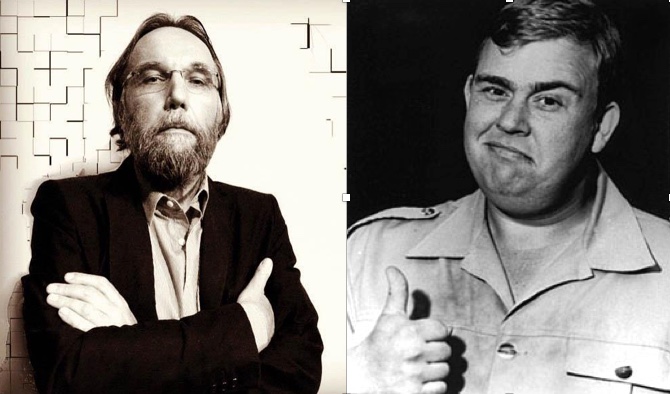
Alexander Dugin and John Candy: Not Separated at Birth

Eurasianist leader and self-confessed fascist Alexander Dugin had something he wanted to say to you about Donald Trump and the US presidential elections.

Dugin and his voiceover artists’ delivery and (unintentional) self-parody reminded me of the Second City Television (SCTV) episode in which the lowly Melonville station’s signal is temporarily blocked and taken over by “CCCP1, Russian Television.”

But that was meant to be funny. And it was also meant to parody not so much the actual Soviet Union (although it did a little of that, too, especially in its prescient “vilification” of “Uzbeks”) as it did North American Cold War attitudes and stereotypes of the Soviet Union.

Now what begun as high farce has returned as . . . I wanted to say tragedy, but it’s really the most vulgar of comedies. It’s definitely not funny anymore, though, whatever the real or imagined connections between the Fascist Pig in the Poke and the Kremlin.

Thanks to Comrade Maximum for the heads-up on the Dugin video. This post was updated on 27 February 2023 because the original video featuring Dugin sounding off about Trump has disappeared from YouTube, alas. ||| TRR

Got It

It’s embarrassing to brag about what a good day I’ve been having when I’m supposed to be all bummed out about the Fascist Pig-Elect’s taking the oath to become the plain old Fascist Pig in the Poke, but it’s true.

I don’t quite get it, but things have been going my way all day.

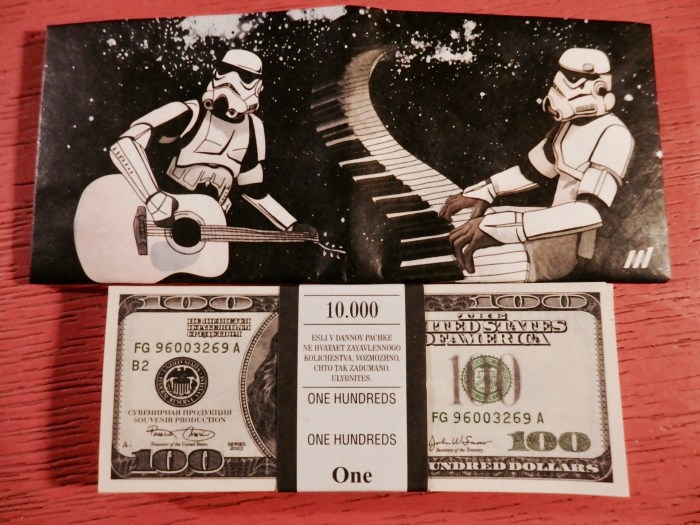
For example, I lucked out while shopping this afternoon at our neighborhood Auchan hypermarket. They were having a sale on $10,000 packs of hundred dollar bills: 67 rubles 39 kopecks a pop!

I guess Auchan knows something the rest of us don’t know about what’s going to happen to the mighty US dollar when the Fascist Pig in the Poke starts implementing his “economic policies.”

So Auchan decided to unload the wads of US cash they had lying round the store while they were still worth something, even if it was only 67.39 rubles.

Good on them, as the Aussies say.

By sheer coincidence, when my true love came home from work she presented me with a new, totally recyclable wallet, made from a synthetic material called Tyvek. It weighs next to nothing, but now I’ll have somewhere to keep my nearly worthless $10,000 safe.

And it’s embossed with images of Imperial stormtroopers!

If you’ve seen the terrific new Star Wars movie, Rogue One, the best Star Wars movie in 39 years, you’ll know it’s a very timely tale about what happens when ordinary people resist an emergent fascist government: they all get killed.

Like I said, it’s been a terrific day. ||| TRR

Wallet courtesy of newwallet.ru

____________

When Red Turns to Brown

PC220022.jpg
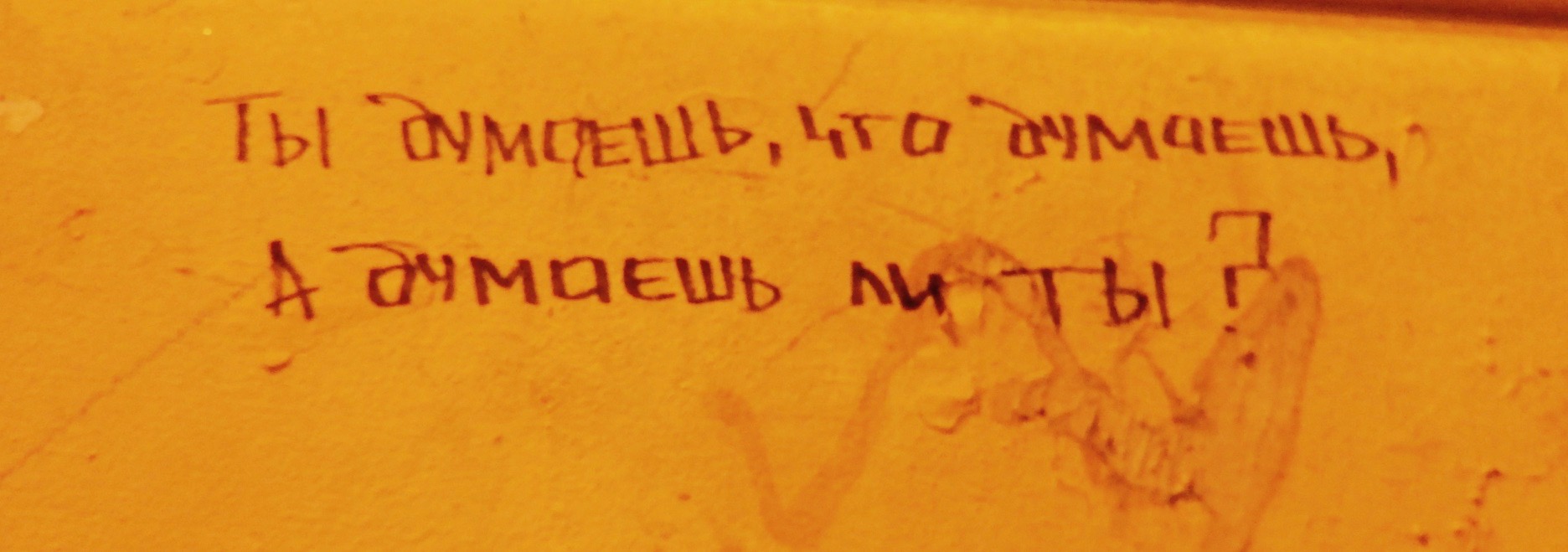
“You think that you’re thinking, but are you really thinking?” Graffiti, Central Petrograd, 22 December 2016. Photo by the Russian Reader

Quotation of the day
“What an interesting situation when Americans are fighting tooth and nail for the Kremlin’s right to destroy their democracy. This is the year when red and brown truly converged.”
Idrees Ahmad

OLYMPUS DIGITAL CAMERA

Back to School Daze: Non-Russian Surnames Spark Racist Social Media Panic

List of “Non-Russian” First Formers in Suburban Moscow Provokes Nationalist Brouhaha
Commentators Divided on Issue of Assimilating Migrant Workers
Moskovsky Komsomolets
September 1, 2016

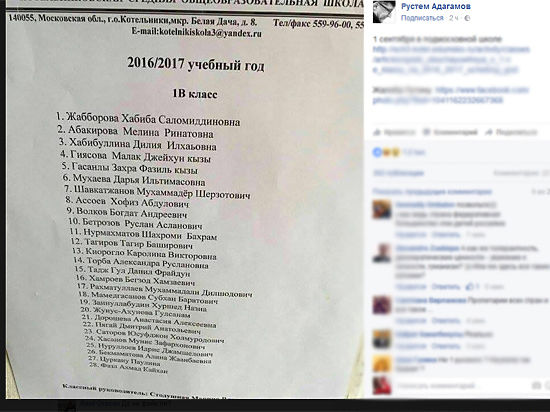
Publication of a list of pupils in a first form class at Kotelniki Comprehensive School No. 3, in suburban Moscow, most of whom have “non-Russian” names and surnames, has set off a row on the web.

Screenshot of facebook.com/adagamov
The photo of the list, as reproduced on facebook.com/adagamov.

The photograph quickly spread among top bloggers and various socio-political discussion groups, garnering a slew of nationalistic comments.

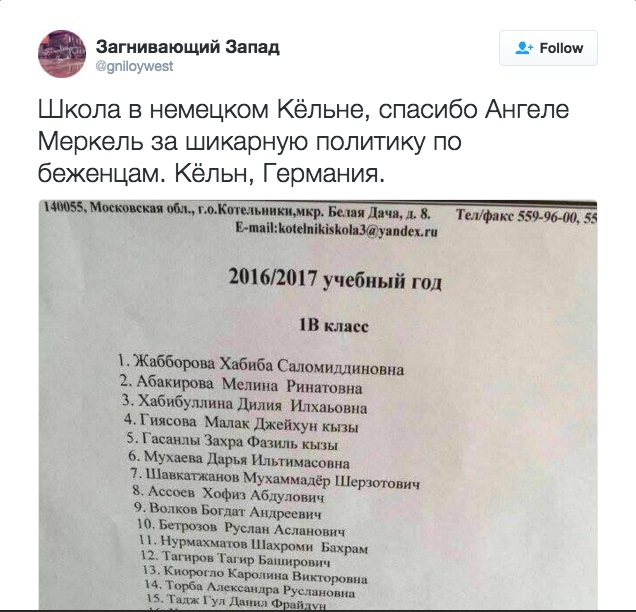
The children’s names, such as Habiba, Medina, Malak, Idris, Yufusjon, Muhammadyor, and Beghod (there are a total of twenty-eight children in the class) goaded users into making nationalist statements.

However, [the Twitter account] Decadent West, for example, which ironically passes off Russian realities as foreign, commented on the photograph as follows: “A school in the German city of Cologne. Thank you, Angela Merkel, for your excellent refugee policy. Cologne, Germany.”

Screenshot of "Decadent West" (Zagnivaiushchii Zapad) Twitter account entry
Screenshot of Twitter account entry on the topic by Zagnivayushchii Zapad (Decadent West)

Nor all user, however, supported the nationalist rhetoric. Thus, Mitya Aleshkovskiy, director of the website Takie Dela, wrote that “people who are outraged children of migrant workers go to school are animals and a real shame to our country and society.”

He reminded his readers that schooling the children of migrant workers was the best means of assimilating them and claimed that Russia was a country where fascism had emerged victorious.

This prompted users to deluge Aleshkovskiy with nationalist comments.

Commenting on the photograph as posted on blogger Rustem Adagamov’s Facebook page, other users noted that Adagamov himself did not sport a “Russian” surname.

In 2013, residents of Kotelniki wrote and distributed a letter, complaining to the president, prosecutor general, and governor of Moscow Region that their town had “turned into a ghetto of illegal migrant workers from Tajikistan, Uzbekistan, Kyrgyzstan, and other CIS countries, as well as Vietnam and China,” due to the fact it was close to the Sadovod Market.

Translated by the Russian Reader

When the Masks Come Off

800px-Red_Guards

Alexander Skobov
Don’t Underestimate the Enemy
Grani.ru
May 14, 2015

Igor Yakovenko has questioned the sanity of those MPs who supported Red Guardist Irina Yarovaya’s latest amendments to the anti-extremism laws. At issue is a ban on travel abroad for people whom the FSB has issued a warning about the inadmissibility of activities that, in the FSB’s opinion, are potentially fraught with terrorism, war, and genocide. Under the current rules for issuing warnings, no formal grounds are needed except the opinion of the agency issuing the warning. Meaning that if it wishes, the FSB can crank out warnings to anyone whose activities the authorities simply do not countenance.

Yakovenko asks, why not let the undesirables leave the country if you cannot stand them? Let them leave and thus reduce the ranks of the so-called fifth column. These measures will not stop an increase in protests, and if protests do kick off, they will only add fuel to the fire. Yakovenko’s conclusion is that the folks on the other side of politics are completely off their rockers. But I would not underestimate the enemy’s intellectual capacities. Yes, they suffer from an acute totalitarian itch to ban and restrict. But they know what they are doing.

In my opinion, Yarovaya’s notorious amendment to ban travel for “warnees” is absolutely rational and quite precisely calculated. It is targeted at the segment of Russian society that,  according to Yakovenko himself, suffers from pathological anemia and dystrophia of the will. These are successful and well-off people who still believe that if they have done nothing unauthorized, they will get off scot-free for their not entirely loyalist public activism. They have become accustomed to the fact that one can be involved in not entirely loyalist but quite respectable and moderate media, cultural, and human rights projects without especially risking one’s own comfort. Our stunted civil society largely rests on such lovers of performing  “small deeds” in their spare time.

And now take a guess at what percentage of these outstanding people would be willing to sacrifice travel abroad for the sake of continuing their outstanding social activism, who would be willing to sacrifice the principal attribute of the post-Soviet lifestyle, without which life would be unthinkable? Anyone like Yarovaya would realize that the majority of them will choose either to give up their activism or leave the country before receiving a warning. To predict these people’s future behavior it suffices to recall Ksenia Sobchak’s recent philosophical musings about the lives of frogs.

And where will all these popular newsmakers find themselves if they are banned from leaving the country for the piquant statements they occasionally permit themselves in public? This is not to mention the fact that many civic initiatives will simply be paralyzed if the people involved in them cannot take numerous business trips and attend various international clambakes.  The current regime is quite consistently pushing for the complete suffocation of not only the independent but even the semi-independent civic organizations that have managed to stay afloat. The period when Putin’s clique had a stake in maintaining a legal oppositional ghetto on the margins of public life, thus imparting a certain seemliness to its own image, has come to an end. In recent years, this image has become so disfigured the Kremlin has lost interest in touching it up. It has realized it no longer has anything to lose.

And so there will no longer be any legal bounds vouchsafing the opposition from crackdowns. Any public organization that violates the informal ban on discussing issues the regime finds touchy will be crushed. All the Kremlin’s recent significant steps, beginning with Moskalkova’s appointment and ending with the latest round of purges of semi-independent media, have been focused on this. In this long series of steps, however, the ability to ban any undesirable from traveling abroad is a symbolic step. It finally undermines the social milieu whose entire life strategy was built on the proposition that however disgusting Putinist authoritarianism was, it was better than Soviet totalitarianism because the freedom to travel abroad existed. That meant one could live with it, adapt to it, and come to terms with it. By obeying certain rules imposed by the regime, one could maintain a minimal amount of freedom.

This slightly dissatisfied milieu has become used to living high on the hog. Our consumptive civil society must come to its natural biological end. It must be replaced by professional revolutionaries who will have no such problems since their activism conforms with the law as interpreted by people who have arrogated to themselves the exclusive right to interpret it. For them, Yarovaya’s fascist laws will be neither more nor less than a profound insult to their moral sensibilities.

Alexander Skobov, a left-liberal writer and activist, is a former Soviet dissident and political prisoner. Translated by the Russian Reader. Thanks to Comrade AM for the heads-up. Image courtesy of Wikipedia

Pyotr Pavlensky: We Live Between Fascism and Anarchy

Pyotr Pavlensky: We Live between Fascism and Anarchy
afoniya.wordpress.com
February 19, 2016
pyotr

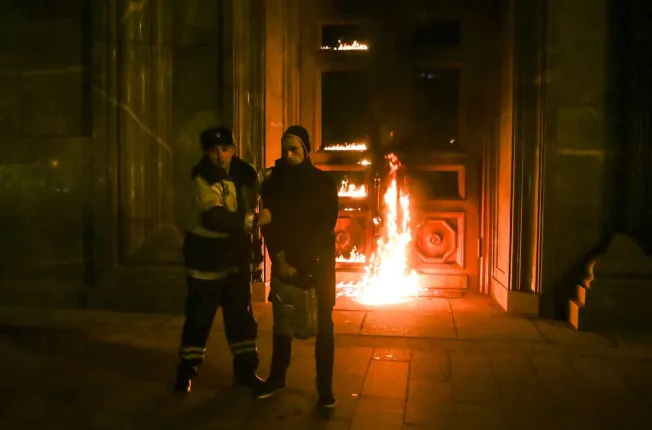
With the news that actionist artist Pyotr Pavlensky was sent to the notorious Serbsky Institute of Psychiatry in a clear case of punitive psychiatry (for more on the case and its context, read Gabriel Levy’s excellent blog post), there is obviously a need to highlight and protest this fact but also a need to listen to Pavlensky’s own ideas and concepts. Here is a small excerpt, published in a Russian online magazine, which will be part of a forthcoming book on the artist in the context of Russian actionism. 

The original interview with Anastasia Belyayeva was posted on the website Snob on February 16, 2016.

—Giuliano Vivaldi

________

It was recently announced the organizers of the Innovation Contemporary Art Prize had disqualified Pyotr Pavlensky’s performance Threat, in which he set fire to the doors of the FSB building in Moscow. This is an excerpt from a forthcoming book, Pyotr Pavlensky in Russian Actionism, which publisher Ilya Danishevsky has kindly allowed Snob to run.

* * * * *

Let’s talk about your audience. I am curious about this. In an interview with a Ukrainian television channel you stated that art should articulate, because it is rather difficult for people themselves to articulate why the state is crushing them. Your mission is to articulate?

A kind of diffusion has been taking place. We all find ourselves in a similar situation politically. Certain controversial things are happening to us, fairly unpleasant things. The issue is what is happening and how. Everyone senses it one way or another. But the problem is articulating what the authorities are doing, for they diffuse everything. A persons reads the news, goes to a shop, goes outside or has to go to work, and he sees that for some reason everything is bad, but this badness is somehow diffused.

You articulate this for your audience?

Well yes, for those who can see and hear it. 

When you articulate, if you want your message to be heard, you have to correct for the stereotypes people have, their cultural code, what they are ready for and what they are not ready for. It seems to me that, as a consequence, the people who need an explanation are simply unable to interpret your message, while those who are able, do not need an explanation. So the outcome is somehow nonsensical.

Those who are able do not need an explanation and those who are unable—

The audience of the national TV channels experience, at most, certain negative emotions when they see your actions. It is unpleasant and repulsive to them. Then they are told why you have done this. And this “unpleasantness and repulsion” get mixed up with the reason you did it.

That is exactly what I work for. These temporary gaps are intentional. The precedent remains, and then something happens, and a person comes back to it. One social network user wrote to me that, at one point, he was very much opposed to everything I did. I wrote something to him in response. And he told me in a letter that in the past he had written a lot against the actions, but then he was faced with certain situations in life. It seems the state apparatus had ground him down somewhere along the way. Now he supported this mode of action and apologized.

[…] 
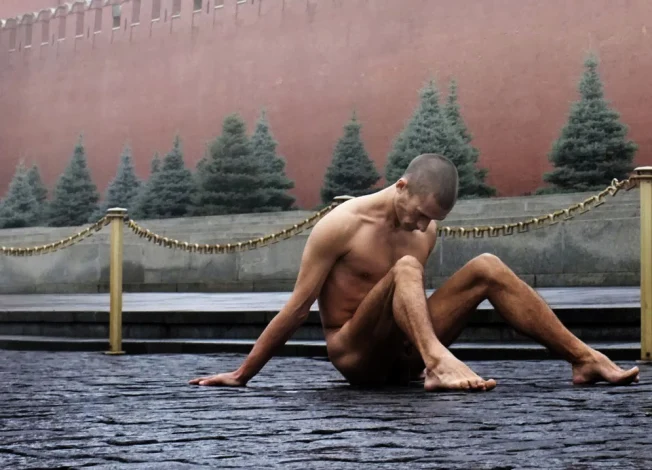
photo_0_1

I have encountered many situations, and I have a rough idea as to how people react to my actions. An excessively emotional response usually can be found in abundance only on the Internet. In real life, when I meet people, I usually see they understand things quite well. Only once in the subway was there an altercation with someone, not even an altercation, but a guy simply went hysterical when he recognized me. A rather young guy recognized me in a subway car. He double-checked my image on the Internet and then began running round the car. We were all riding the subway, the train was moving, and he was running round this car calling on people to rise up against me, to join forces against me. Not a single person supported him. He stuck his phone in people’s faces, but they just brushed him aside as a crazy, hysterical individual. I observed how people reacted. Not having garnered any support, he accused me of humiliating our country, of humiliating him, [Red Square], and so on. It was clear from people’s glances that even if they had recognized me, I didn’t detect any incomprehension towards me or any aggressiveness amongst them. People are rather more understanding than not.

As for that social media user who wrote to you, was it pleasant to get such a reaction?

Of course, he supports some of my ideas.

Is this a rather unique case or does this “I have finally understood you” happen periodically?

Yes, it does happen now and again. There is a whole range of human responses. Sometimes, I feel the force of this whole range of reactions. When I prepare myself for an action, different public reactions flash through my mind at the moments of greatest tension. When you abstract yourself from it somehow, there is understanding to a certain extent. Why can I see this reaction even in my mind? Because we have the same sources: the Internet, maybe television, newspapers, and other things. We all feed on the same sources of information. I confront this range of responses afterwards, after the action has been carried out. Naturally, there are both positive and negative responses.

In the meantime, it remains somewhere in the same—

It will always stay like that, you were starting to say, this issue that some understand, while some do not. The thing is that if I begin to think in these terms so as to make the actions more understandable, and that in this case I need to do them such-and-such a way, it will end up as populism. I will end up trying to please people. That is not my objective.

That is not the objective. The objective is to get your message across in a minimum amount of time, straight away, in clear symbols.

A body wound up in barbed wire, what could be clearer? You understand that here there is no way you could be clearer.

718f

It seems to me there is a kind of clear reaction when people see a man nailing his scrotum on Red Square, and the first unfounded response is that people call you an exhibitionist or homosexual. That is the initial Russian response: he is not right in the head. In Russia, abnormality is associated with homosexuality, and if you are homosexual that means you are a pervert. Regarding such reactions, don’t you think the essential point is somehow diluted?

If you are talking about how the media tries to influence the response, then of course they are endlessly attempting to make the pendulum of reactions swing between regarding it as a criminal act and insanity, and so one can always expect a certain incomprehension. But it is another question how this influence affects people who actually see an action. During Fixation, one woman was constantly asking, “What’s wrong with him? Is he sick?” Of course, it is rather sad that the cult of psychiatry has such power over public consciousness. However, if a genuine conversation about psychiatric norms does start, that is just wonderful. That is a field that needs to be worked through. That is my first point. Second. About this gesture . . . I am not trying so much to invent or concoct something. The gesture of nailing one’s scrotum down is quite rooted in the culture. It is a gesture employed by prisoners.

Why do they make this gesture?

They do it in different situations.

As a protest?

Yes. They take their lack of freedom, the impossibility of movement, to an extreme. Often, there are wooden floors in prisons, and they nail themselves down. How are you going to move them then? A person is already imprisoned, and he has nailed himself to the floor. This is fixation. And you know, when I talk in my text about the way the country has been turned into a prison camp, about a police state, I am not talking about this lightly. November 10 was Police Day. Each year, banners hang everywhere in the city: November tenth, long live our beloved police! All these signs on the surface. I work with these signs because they are part of the culture. It is important where all this is drawn from if one talks about working with contexts. Without this, the gesture of prisoners would remain behind these fences, doors, and yet more fences. With this large number of barriers, information just does not get to us. You cannot even find photographs of this, because no one in the prisons would be prepared take them. Everyone knows this is happening somewhere behind a large number of doors. But here it is happening at the very center. However, if truth be told, a very conditional border was removed. November 10, banners, the memoirs of dissidents and prisoners: these are markers that link everything in a single statement. If this does not exist, then a passerby will start to think: Red Square, naked, I don’t know . . . I could argue that maybe he is a naked exhibitionist . . . I don’t know the degree to which it works. A naked man: why is he naked? A naked man is a man deprived of everything, even his clothes. It is a degree of impoverishment, an indicator of absence.

Of vulnerability?

No, not of vulnerability. That is not part of the message. The naked man is an expression of a condition, stripped, denuded, and deprived of everything. It is, on the other hand, the body as such. It is what can be found under everyone’s clothes. In any case, clothes always mark you, they are clothes of some kind; they build up an identity. While the body is simply the body. All bodies are similar in one way or another.

To what extent are the police part of your actions?

They are a very important part. To a large extent, they do it all themselves, they engineer everything. Everything changes places [during the action].

In the sense that they arrest you?

No, in the sense of how they react to it. It is not my body that turns out to be the victim. Everything is based on the fact that the authority figures are, in fact, victims of the situation, because they find themselves in the most subordinate situation. They have to obey regulations. I am working with subject-object relations. Above all, law enforcement officials are afraid, but they are obliged to exercise their authority.

They are obliged to free you.

To do something or free me.

Does the fact they are the authorities and are obliged to free you a revolution or something else?

They become the objects of the situation. That is, they . . . I think this is an important aspect: the state objectifies people, compels them to subordinate themselves to regulations, to move within the range of the permitted and the impermissible, to stay in this corridor. A person who submits is an object. When an action is carried out, they become objects, objects raised to a certain power perhaps. Besides the fact they are objects in the first place, performing certain functions, they also become art objects. They want to neutralize: their authority obliges them to do it. They are tasked with neutralizing and eliminating events, with mopping up streets or squares. But this compels them to serve an opposing end. They begin to engineer events. They become characters, actors. Everything is based on them. My own action is kept to a minimum. I simply sit there and do nothing. Or I just stand there. 

And if they had not come, would you have still sat on Red Square?

Yes. It is unclear how an event is going to develop until it actually takes place. It is enough to posit a figure of silence, and the situation is then constructed around the silence. Because the police, ambulance crew or just plain people who would attack me or do something else are simply part of the social body. Something happens: rejection is also a kind of interaction. A senselessly airtight situation: I came, I left. Another important fact is that I speak with everyone in the same way. I communicate with journalists, psychiatrists, and police investigators in the same way. There exist definite rules as to how everything is engineered. If one keeps to the rule of the figure of silence and does not react to the authorities, there should be no interaction. I remain static, but when the action phase ends, when the doors have closed, I start talking, and I talk with everyone in the same way. I make no distinction between journalists whom I am going tell all and, for example, a police investigator. I can, of course, mock the investigator as it were, but it is not mockery really. It is me who involves him in the art process. What has become of these dialogues? Who has achieved their goals in this situation, art or the bureaucratic apparatus? And with my cause I . . .

If everything in the country were fine, what would you have done?

I don’t know.

So you could say that the worse the situation is in the country, the more work you will have?

I understand. The situation is what? It is an unrealizable utopia. There will never be such an ideal society and state. It seems to me that there are certain defining things in people’s nature: subject-object relations and the concept of power. These things dominate all others.

You don’t particularly like the concept of power, do you? I take it that, roughly speaking, you believe it cannot be a good thing, something reasonable? Can power be a good thing?

I believe it cannot, because power’s objective is to create a fully predictable individual. Because an unpredictable individual is a dangerous individual. The closer a person gets to the condition of a subject, the more he goes beyond borders. He looks for something new, and this is dangerous for the powers that be, because he becomes ungovernable.

Would you have protested in any country in the world?

Not in the same way. You must understand there are different contexts. I’m not a professional protester.

Protest art?

Political art. I am not involved in protest art. Political art and protest art are far from one and the same thing. Protest art is when you take to the streets with a placard. There is a NO there, and here there is a YES. That would be a generalization. I take it as a premise that political art involves working with mechanisms of control.

Fine. Political art. Would you have done political art anywhere?

I don’t know. If I lived in another country, maybe I wouldn’t have done political art. Given how I think now, I would probably have found something to do. But maybe it would be something formally similar, because different countries and different control systems generate different ways of suppressing the human imagination. 

Is there a model or regime you find ideal? Anarchy perhaps?

Probably anarchy is an ideal model. I am aware its ideal rests on its impracticability. It is unlikely that humankind will decide to sacrifice the benefits of scientific and technological progress to utopian anarchy. Anarchy is liberation from certain paradigms, it is resistance, a rejection of certain impossible rules. Anarchy involves working with the concept of power.

Anarchy is what you find most congenial? Or is it something else?

Yes, I probably find it congenial in some way. There is insurrectionary anarchism, and there are other kinds of anarchism. Anarcho-communism is a contradictory delusion: the dictatorship of equality versus the dictatorship of freedom. Either there is the one or the other. It is difficult to imagine the emergence of punk culture in a dictatorial regime of universal equality.

Would you like to live in a state where anarchy ruled?

There can be no state where anarchy rules.

A city where everything takes shape in this way. There is anarchy, but something takes shape all the same.

Undoubtedly. That is why I say it is anarchy. The individual’s life is spent in permanent struggle for subjectivation and self-assertion, because all possible resources, forces, interests and, ultimately, other people or groups of people work towards objectivation, towards subjugation. Even if a pseudo-anarchist structure was to take shape, groups or structures would still emerge that would turn it all

Systematize it.

Yes, turn it into an ossified mass. And it is better to reject these dogmas before they have managed to become political disenchantment. History persuades us that the lessons of the twentieth century did not prevent the kibbutzim from reconciling the beautiful idea of communal property with the defense of the growing and sacred borders of the state of Israel. This constant self-assertion has to be rejected. It is like a never-ending process.

Is there an ideal model for individual existence? Is it possible the way you see it: that nobody usurps you, and you do not intersect with anyone? 

It’s difficult for me to say. It all depends on the person. A person must overcome the [rules] imposed on him—

Globally.

Globally, there is a movement towards the anarchist model.

Then everything will circle round again?

Without a doubt. There is a certain range or continuum, of course. As in the [Grazhdanskaya Oborona] song: “Everything that is not anarchy is fascism.” We are situated between these two poles. Fascism not in terms of the Italian model or some other model, obviously, but as a kind of generic term. Fascism as absolute diktat, absolute and total control. And there is the other pole: anarchy as a certain absolute freedom. In fact, all the oscillation occurs between them.

And in the middle, between these two extremes, normality rolls along?

I have never thought about what is in the middle. I don’t know what is in between. In between there is dull liberalism with its shoddy political correctness.

I am just trying to understand your goal in this essentially vicious circle. You understand that things will never be wonderful?

What actually changes society and generally produces transformation? Certainly not any political templates or schemes, because working with cultural codes is the most important thing. Semantic precedents influence how a person relates to what happens around him. They are his reflexes, developed vis-à-vis different situations. Which of his associative models are activated, and what kind of situational response does he make? He may give a quick response, or he may, upon reflection, make a decision. This is the field where the struggle takes place. Regimes change, of course. There was the Soviet regime. Before that there was the monarchy, the Russian Empire, and now there is this regime. In any regime, the siloviki [military and security services] are in power. In 1917, there was a revolution, there were changes, and there were significant changes in culture, art, and how people related to each other. Things were in motion for fifteen years, and then there was a reaction. The Bolsheviks suffocated everything, and things were rolled way back.

Do you have an overarching idea about you are doing? Where are you taking all this? What point between fascism and anarchy seems to you the most appropriate?

You undoubtedly need to push everything in the direction of anarchy because

Because something budges at least a little bit?

Even for things to remain as they are, you already need a certain effort. If you make a great effort you can move things a little further. On the other hand, there is a very strong force moving us in the other direction, towards fascism and absolute subjugation. The state apparatus with its huge resources, an entire system of agencies, is working towards this. It is a constant clash. It never stops. For me, the head-on collision takes place on this stretch of road. It is ridiculous to dream those forces that are a hindrance will eventually dissolve and disappear, and we will suddenly find ourselves in anarchy and living under a different model. I think this is a more realistic perspective on things. But speaking theoretically, of course, when you loosen frameworks and push back borders, you really help others, the people who come after you.

Translated by Giuliano Vivaldi and reprinted here with his kind permission. See my previous posts on Pyotr Pavlensky.

Lev Rubinstein: “Rehabilitation” of Nazism

Lev Rubinstein
May 12, 2015
Facebook

Criminal prosecution for “rehabilitation of Nazism,” you say?

Well, it’s a respectable cause. Especially in a normal country, where the main features and properties of Nazism itself have been clearly defined, articulated and, more importantly, grasped by public opinion.

In a country where, on the contrary, the president of another country is referred to as a “black monkey” quite openly and with impunity, in a country where state TV facilely reports that the people of a neighboring country are a historical misunderstanding, and their language a parody, in a country where a classified newspaper ad that reads, “Apartment available for rent to Slavs,” is considered quite normal and natural, this talk about “rehabilitation” is rather strange, because there is nothing in particular to rehabilitate. And if anyone is going to be tried for such a crime, there aren’t enough judges for the job.

The point, of course, is something else.

11182204_864970266884978_1670294015098677080_nVictoria Lomasko, In the Neighborhood. View at the exhibition Post-Soviet Cassandras, Berlin, April 2015

The fact is that their “Nazism” is not Nazism in the conventional sense of the word, but what they themselves define as such or have already defined.

“Everyone” knows that a Nazi regime is now blossoming, for example, in Ukraine. And denying or even questioning this “indisputable fact” amounts, apparently, to rehabilitating Nazism.

Or doubting the divine origins of the main antifascist of all time can easily be identified as Nazism.

And who knows what else. Why give them suggestions? Let them figure it out for themselves.

It’s a shit issue, as certain rude people would say.

__________

Russia vs. Russia: Political Art and Censorship

Victoria Lomasko
April 14, 2015
Facebook

During the last discussion at the Russland vs. Russland. Kulturkonflikte forum, the event’s title finally paid off.

Kristina Leko, an artist and teacher at the Berlin Institute of Art, opened the discussion. The organizers had invited her to comment on the forum and the exhibition of Russian “critical art.”

She wondered how much the objets d’art for Marat Guelman’s Perm project (documented at the forum) had cost, whether the money had come from the city’s budget, and if it had, whether the citizens for whose sake this monumental street art had allegedly been made had agreed with this. Leko noted that she had found it unpleasant to listen to the presentation of the project, during which it was stated that the residents of Perm were “insufficiently educated to understand art.” She also said that after carefully viewing the video documentation for MediaImpact, she could not understand where the audience for this sociopolitical art was. Did Russian “critical” artists even want to communicate with the general public? Leko asked whether it was possible to make “critical art” now without taking Russia’s aggression in Ukraine into account, and whether one could be a “critical artist” while ignoring gender and racial discrimination.

Her talk was suddenly interrupted by artist Alexander Brener, who burst into the circle of panelists and yelled, “All of this is shit! We must talk about what matters most!” Brener was not a forum participant. He had come every day to listen to the speakers and several times had expressed his dissatisfaction, but in much more acceptable form.

Brener had interrupted Leko’s talk and continued to shout about shit, but the panelists interpreted his stunt variously. One group sided with Brener, calling him a great Russian artist. This was a performance, a compliment to the forum’s organizer. The talk had been boring: let Brener have his say, they said. The moderator, sociologist Alexander Bikbov, demanded that Leko be allowed to finish her talk. He was backed up by cultural studies scholar Olga Reznikova, who told Brener that there had been many boring and offensive presentations over the past three days and asked him why he had not felt the urge to shout down a high-profile male who had been talking “shit.” The only Ukrainian participant in the forum, Vasily Cherepanin, director of the Visual Culture Research Center in Kyiv and editor of the Ukrainian edition of the journal Krytyka Polityczna, said he felt sorry for us, since we were accustomed to rudeness and could not tell the difference between it and art. As a manager of an institution, he himself kicks out such “performance artists,” no questions asked.

While this was happening, Leko’s hands were shaking. The German audience was shocked. One of the German participants asked perplexedly, “Why is there no solidarity among Russian artists?”

I am certain that the majority of men in Russia who identify themselves as “leftists” are incapable of uniting with women on an equal footing and dealing with our professional work appropriately, without loutishness. Personally, I have no desire to identify with those “leftists” or liberals who try talking down to me or do the same thing with other women. I had had enough of that at the Feminist Pencil show at MediaImpact.

I said that sexism was one of the causes that prevented people from uniting.

Hearing the word sexism, some of the Russian participants began laughing and making faces. They then pointedly left the room altogether when the topic of gender was picked up by Olga Reznikova, Heinrich Böll Foundation coordinator Nuria Fatykhova, and the German audience.

Vasily Cherepanin raised the next topic. He spoke about the war in Ukraine, stressing it was a war of aggression on Russia’s part. At the same time, many Russian socially and politically engaged artists have preferred to remain apolitical on this matter and not make anti-war statements. One of the Germans asked why the Russians were trying to depoliticize the discussion of sexism and the war in Ukraine. After this question, another third of the Russians dashed from the room, while the artist Brener, who had been sitting quietly in the corner, again broke into the circle of panelists, screaming at Cherepanin, “Fuck off!”

Moderator Alexander Bikbov summarized the discussion by noting that too few “critical” artists had stayed for its final part. As soon as the conversation had turned to the things that mattered most—politics within the art scene and the war in Ukraine—many were not prepared to discuss them.

But then at the farewell dinner, the participants who had left the discussion early continued giggling among themselves about gender and feminism.

____________________

Russia vs. Russia: From Censorship to Self-Censorship
New Russian laws—from a ban on swearing to protections for the feelings of religious believers—have made life difficult for artists. But the main obstacle to freedom of creativity has become self-censorship.
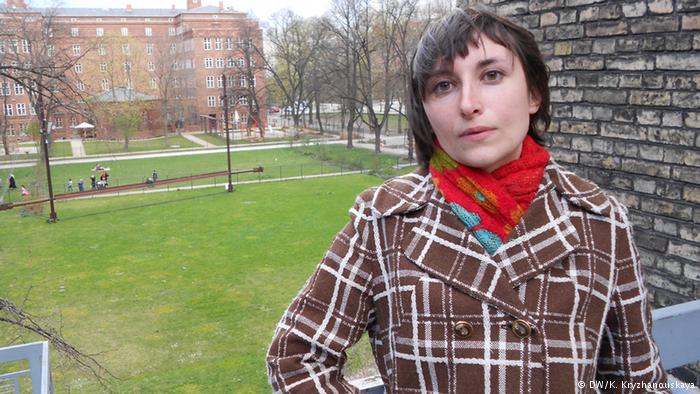
Yekaterina Kryzhanovskaya | Berlin
April 13, 2015
Deutsche Welle

lomasko-courtVictoria Lomasko, Prisoners of May 6, from the Drawing Trials project

For several years, Victoria Lomasko has been doing socially engaged graphic art, producing graphic reportages from court hearings and political rallies, and drawing the real stories of juvenile prisoners, migrant workers, rural teachers, and Orthodox activists. But the Russian woman can now longer speak openly about what concerns her through her drawings: now her black-and-white “comics” could be subject to the articles of the Russian Federal Criminal Code.

“My work Cannibal State, in support of political prisoners, today could be regarded as insulting state symbols. Liberate Russia from Putin clearly rocks the boat; it’s a call for rebellion, for revolution, and this is ‘extremism.’ A work from the Pussy Riot trial, Free the Prisoners! Shame on the Russian Orthodox Church!, featuring Patriarch Kirill, no doubt insults the feelings of believers,” the artist recounts.

Could she now, as she did earlier, freely post her political posters in social networks or show them at exhibitions?

“Hardly. But just two years ago several of them were even published in magazines,” notes Lomasko.

From censorship…

At the forum Russia vs. Russia: Cultural Conflicts, held April 10–12 in Berlin, Lomasko was not the only one bewildered about the prospects of protest art.

“In Russia nowadays you cannot do anything,” states Artyom Loskutov, an artist and organizer of the annual May Day Monstration marches in Novosibirsk.

In 2014, the Monstrators took to the streets of Novosibirsk holding a banner that read, “Hell is ours.” When the Russian media were excitedly talking about the virtues of federalizing Ukraine, Loskutov and his allies announced they would be holding a March for the Federalization of Siberia.

“If people in Russia hear every day that separatism in Ukraine turns out to be a good thing, that cannot slip through the cracks. We have simply hastened the next stage, when separatism will be seen as good for our country as well,” Loskutov emphasizes.

Russian federal media watchdog Roskomnadzor responded by sending fourteen letters to various media, including Ukrainian publications and even the BBC, demanding that they delete even mentions of this protest.

…to self-censorship

According to many forum participants, however, censorship was not the worst that was happening to them today.

“The worst thing that infiltrates our heads is self-censorship. It is impossible to know about the new laws and not to think about the consequences if you make a work about something that really concerns you,” argues Lomasko.

A congress of ultra-rightist nationalists was held in March in Petersburg, completely legally. And yet the media could not publish photographs of congress participants in clothes featuring swastikas because they would be fined for extremism.

“I really want to speak out on this subject. But if I were to draw something, I could be accused of spreading fascist ideas. And if I put it on the Web, everyone who reposts the picture automatically becomes my accomplice,” explains Lomasko.

Consequently, she said, there have been almost no artworks openly criticizing the annexation of Crimea or the war in Ukraine. Doubts about the legitimacy of Moscow’s actions are now also subject to the Criminal Code.  A rare exception is the graffiti piece Broads Will Give Birth to New Ones, in which a pregnant woman holding a Molotov cocktail is depicted with an infant soldier in her belly. But it was produced anonymously by members of the Petersburg group Gandhi.

Monumental propaganda

On the other hand, you can express your joy over the actions of Russian politicians without the sanction of officials. Thus, on the eve of the referendum in Crimea, a monumental graffiti proclaiming “Crimea and Russia: Together Forever” suddenly appeared on the wall of a house in Moscow’s Taganka Square where an officially authorized map of the Tagansky District was supposed have been painted.

“The contractor himself decided that the Crimean agenda was more topical and interesting, and he willfully painted what he did, not the map he had been commissioned to paint,” explains Anna Nistratova, an independent curator, researcher, and artist.

0,,18377432_401,00Victoria Lomasko

Later, such monumental propaganda began to appear all over the country, both as commissioned by the authorities, and at the behest of the population, including activist artists, many of whom also believe, according to Lomasko, “Crimea is ours, Donbass is ours, and Ukraine basically doesn’t exist.”

“In matters of propaganda, orders from the top are not obligatory. Our citizens themselves are capable to taking the initiative,” notes Nistratova.

__________

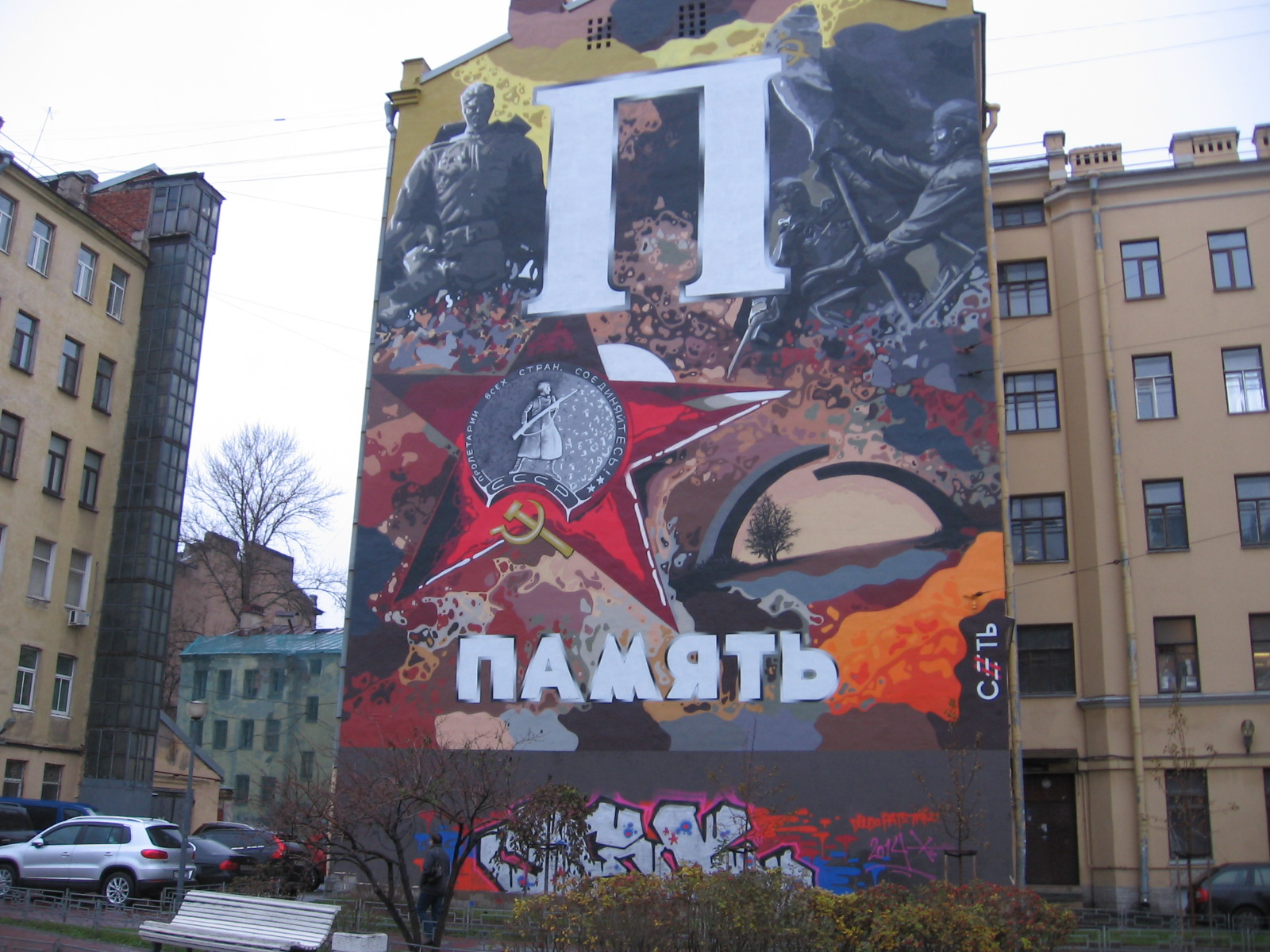
IMG_5964“Memory” (P = Pamiat’), one of a series of “graffiti” murals produced by the pro-Kremlin youth group Set (“Network”) to celebrate Vladimir Putin’s birthday in October 2014. The five murals, which appeared in different cities, each featured a different letter from the president’s surname; each letter was associated, children’s primer-style, with a different “patriotic” virtue (e.g., such as “memory” of the war). This mural was painted on an apartment block on Petersburg’s Obvodny Canal. Photograph by The Russian Reader

__________

Lost status

Nistratov points out that there are very few artists involved in political art in Russia. Besides, neither exhibitions nor the very best artworks nor inscriptions on the streets have any effect on society, in her opinion.

“The artist in Russia today is a strange, marginal subject. His status as an intellectual, as a moral exemplar, which existed earlier, has been completely forfeited,” says Nistratova.

Confusion is, perhaps, the feeling that is prevalent throughout the talks given by the participants of the forum Russia vs. Russia: Cultural Conflicts. By and large, the activist artists have no clear strategies for operating under new conditions.

“The only thing that seems to me worthwhile is maintaining one’s own little environment, a bubble inside the shit. Because if this nightmare ever ends, we have to make sure we are not faced with a scorched, absolutely bare field, bereft of political and social art, activism, and civic consciousness,” argues Lomasko.

♦♦♦♦♦♦♦♦♦♦♦♦♦♦♦♦♦♦♦

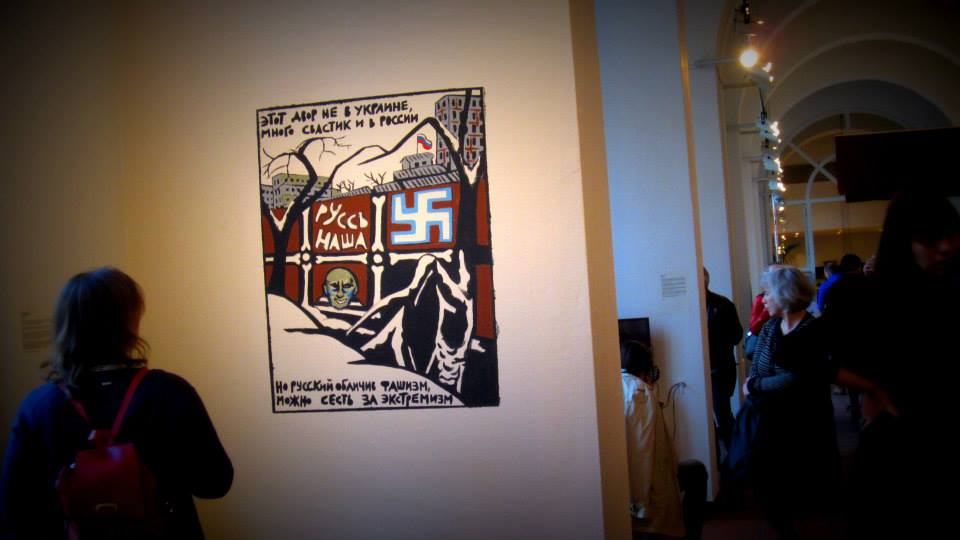
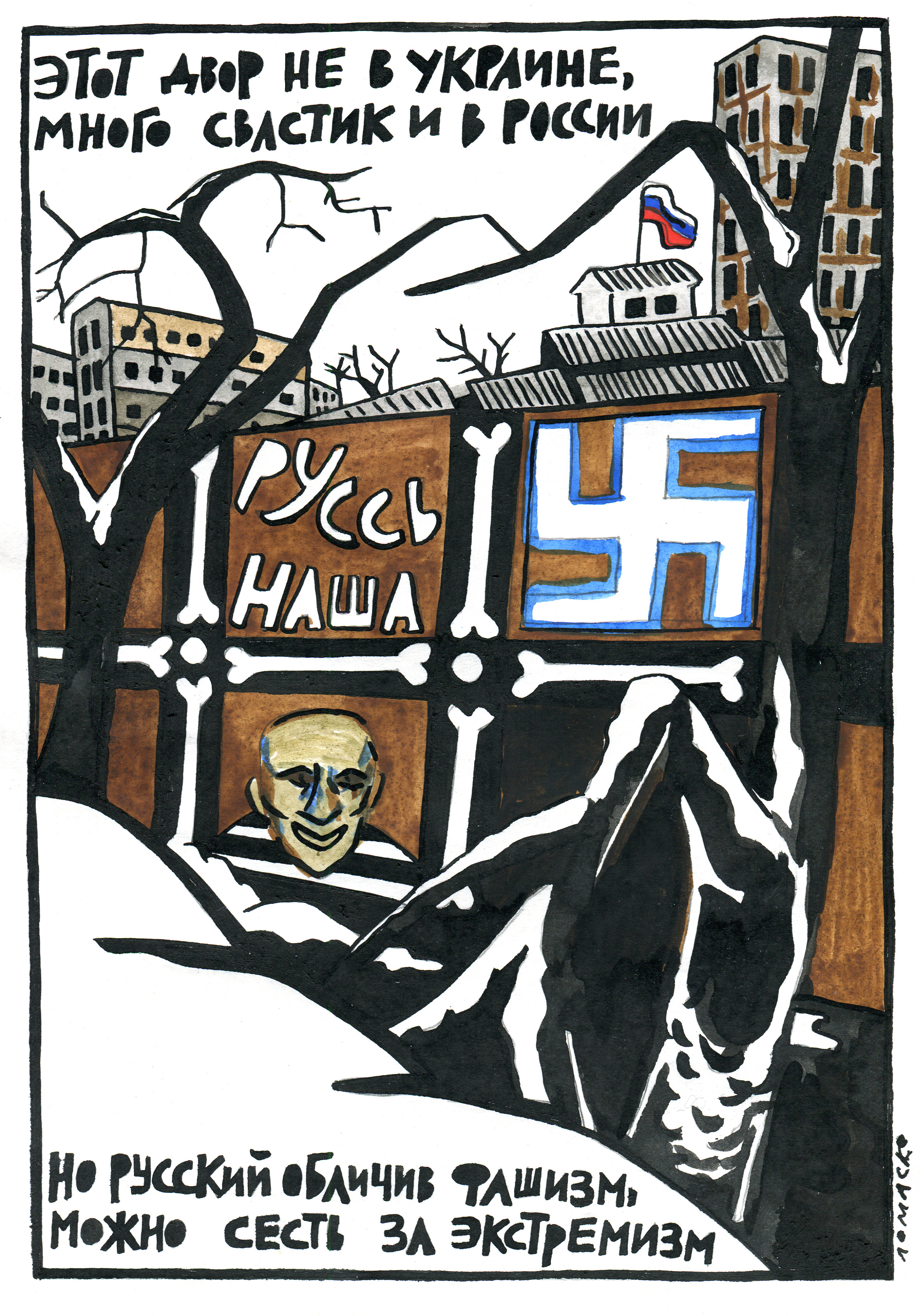
This is a real courtyard in my neighborhood, near a playground. Parents stroll around the yard with their children, discussing the news from “fascist” Ukraine.

Do I have the right to draw and show you this landscape featuring a swastika, a landscape that is fairly typical in Russia? During the recent trial of the Combat Organization of Russian Nationalists (BORN), their lawyer argued that the anti-fascists are just another street gang like the fascists. So why not label any denunciation of fascism “propaganda” of fascism itself?

Nationalists freely held an international congress in Petersburg in March. The only people the police arrested were the anti-fascists who protested the congress. Nationalists can walk around sporting neo-fascist symbols, but the authorities will prosecute publications that dare to publish photos of them. Juvenile prisons are filled with skinheads, but nationalist ideas are fomented on television.

Attn: Center “E”. I am opposed to fascism.

fashizm_colourThis yard is not in Ukraine. There are many swastikas in Russia, too. But if Russian citizens try to expose fascism, they can be charged with “extremism.” Inscription on wall: “Russ [sic] is ours!”

An Apology for Fascism

Editor’s Note. Confused readers might imagine that the following (excerpted) screed from the hilariously named website The Saker (for the ornithologically challenged, the saker is a falcon used in falconry) is an apology for fascism. Actually, they’d be right.

* * * * *

“There are no separate Russia or Ukraine, but one Holy Rus” – Elder Iona of Odessa

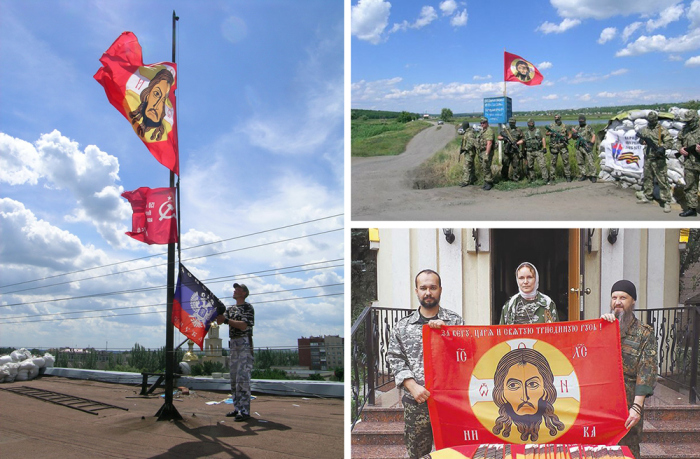
The year 2014 saw an unprecedented surge of patriotism in contemporary Russia, which resulted in popularizing the notion of the Russian World. One reason for increased patriotic sentiment was Crimea’s return to the home port after the overwhelmingly positive vote by its majority-Russian residents in a referendum one year ago. The onset of the liberation war in Donbass from the West-backed Kiev regime was the other. This war truly delineated the stakes for the existence of the Russian World. The latter is not an ethnic, but a civilizational concept that encompasses shared culture, history, and language in the Eurasian space within a traditionalist framework. To a certain extent and despite the obvious ideological differences, the Russian Empire and the USSR embodied the same geopolitical entity. A particularly noteworthy aspect of the ongoing crisis in Donbass is the symbolism—religious and historic—that surpasses the commonly used, but outdated Left-Right political spectrum. In the Russian context, this also means overcoming the Red-White divide of the Communist Revolution. That this war pushed Russians to examine their country’s raison d’être is somewhat remarkable: for two decades its citizens did not have an official ideology, prohibited by the Constitution that is based on Western models. The emergence of a new way of thinking in Russia will become clearer once we refer to the meaning of religious insignia, wars—Russian Civil and Great Patriotic, as well as the question of ideology in the Postmodern world.

mandylion-combined

[…]

In fact, post-Liberal ideology is one of the factors that blinds many Westerners to the realities of the liberation war in Donbass. The current Western model of citizenship is an abstract one: it centers around a set of principles in which individuals are interchangeable—as long as they adopt “European values” or the “American way of life”—instead of the more traditional notions of rootedness in the landscape, cultural and linguistic ties, and ancestral bonds. Thus, those who subscribe to this abstraction have difficulties understanding how belonging to the same people (narod) overrides living in two different states—contemporary Russia and Ukraine—haphazardly formed at the time of the Soviet collapse, and why they seem so attached to their language, culture, religion, history, and land that they are willing to die for them. But even for those Russians that lean toward more traditionalist thought, it took this war—the war that was meant to separate—to ideologically and spiritually unite them with others like them across the border, to begin questioning who they really are, uncertain, but hopeful, forging the idea of the Russian World. Beyond Left and Right, Beyond Red and White.

—Nina Kouprianova, “Beyond Left and Right, Beyond Red and White: Framing the Liberation War in Donbass,” The Saker, March 18, 2015

You would be right in asking, Who the heck is Nina Kouprianova? What does it matter what she thinks? But what this guy thinks does matter and he seems quite on message with Ms. Kouprianova:

Putin also addressed Ukraine’s struggles, saying “extreme nationalism is always harmful and dangerous,” and implied that Ukrainian voters would hold the parliament and the Poroshenko Administration responsible the country’s current mess. “I, for one, have always thought of Russians and Ukrainians as a single people,” he added.

His intentions could not be plainer.

Thanks to Comrade NT for the heads-up on this depressing new website.

“Smash the Kikes and Save Russia!”

Smash the Kikes and Save Russia (2015)
Hard on the heels of migrants and gays, another minority has begun to fear for its safety: Jews. Svetlana Reiter spoke with two women who feel directly threatened
Svetlana Reiter
March 2, 2015
Colta.ru

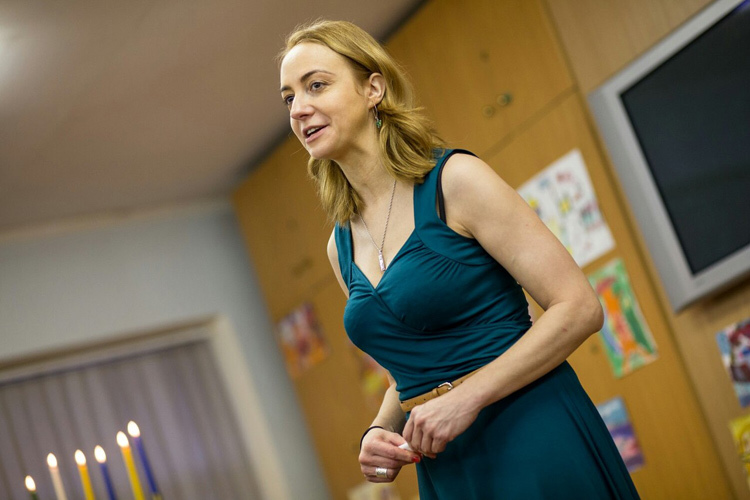
Leokadia Frenkel
Program Coordinator, St. Petersburg Jewish Community Center
I set up a volunteer program to help the children of migrants three years ago, in May. Basically, we teach Russian to children of migrants from Central Asia, primarily from Uzbekistan, but there are children from Kyrgyzstan and a few from Georgia. Twice a week, they have Russian lessons, and every Sunday in the summer we go to a museum, take a trip to Pavlovsk or Peterhof, or just walk around the city. The younger group, preschoolers and first graders, we teach conversational language through games. We teach the older children, who already know how to read and write, Russian as foreign language. There are fourteen children in the younger group, and eight in the older group. I cannot say that they attend constantly. Some get ill, while others leave the country.

I myself am a philologist by training. Previously, I taught Russian language and literature in schools. I am Jewish.

detailed_pictureLeokadia Frenkel

When we opened, practically no one was working with migrant children. There were no classes: it had occurred to no one that something needed to be done with them. Naturally, when we opened, various media visited us to shoot segments and write articles. When I read the comments to these articles, I often felt uneasy: people wrote very harshly about migrants and their children. But I could scarcely have foreseen what has happened now.

I posted an ad for volunteers in Facebook and VKontakte. We cannot take just anyone: we need professional philologists, people able to work with children. We cannot take the average person who just feels sorry for migrants, and real teachers are few and far between. So I am constantly posting ads in social networks: look at what wonderful children we have, come and help us.

Not long ago I posted two more ads. A group on VKontakte calling itself Morality reposted one. I had a look. Morality’s moderator, Mikhail Kuzmin, put together an album containing 161 photos of me and published a post in which he wrote that the kike-liberal public goes to protest rallies and teaches Russian to “black” (chernye) children. This group is absolutely fascistic and anti-Semitic. They are constantly writing that migrants commit the majority of crimes in Russia. That “black” children attend our schools and spoil our children, the migrant children are wild animals who are uneducable. And those are the mildest things they write.

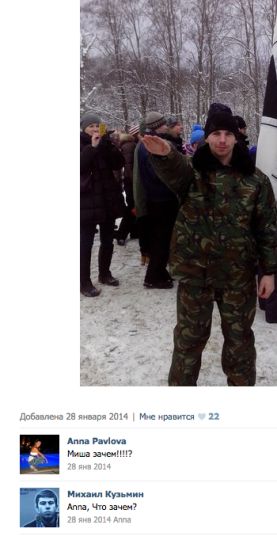
When this community was informed that a Jewish woman was teaching migrants, they were faced with what they understood as pure evil. Three and a half thousand people gladly lashed out at me. Kuzmin posted information about my son and my husband, and published an additional post about my family. He was outraged: how could it happen that kikes were teaching savages?! There is no place for either group in our society. Down with the kike-liberal opposition! Moreover, judging by his photographs, Kuzmin himself goes to LGBT rallies and beats up gay activists. He has an athletic physique: he practices boxing and fisticuffs at Sosnovka Park. In one photo, he is wearing a police uniform and sporting a badge. I don’t know whether he is really a policeman, but the photograph exists, just like snapshots where he is giving the Hitler salute or standing next to Deputy [Vitaly] Milonov [author of Petersburg’s infamous homophobic law].

The worst thing, of course, is that he not only haunts the social networks but that he walks the streets. I complained to the administration of VKontakte. They replied that if I didn’t like this group, I shouldn’t look at their postings, and that they close only those groups that directly threaten someone’s life.

I have said nothing to the migrant children. I am a good teacher; I know how to work with children. Ultimately, my job is to help those who have it worse than I do, not to make their lives even more unbearable. You see, in the schools these children accumulate hatred: teachers don’t like them and classmates fear them. These things give rise to reciprocal aggression.

It is hard to say whether the folks from Morality are threatening my life. If they practice fisticuffs at Sosnovka Park, what prevents them from visiting our Jewish center? Maybe one of their three and a half thousand subscribers will decide to harm me directly. And you know, I am less afraid to read things like “the black-assed bastards are uneducable, ask any teacher” and “the kike lady is out of her mind for black-assed goys” than to read what Kuzmin wrote about my son and my husband. I’m really afraid for my family.

The level of aggression is now completely crazy. Some moron could show up when I am teaching the children. We have no security guard armed with a machine gun at our center. The only thing I can do to protect myself somehow is talk about it publicly.

I always remember that the migrants have it worse off than I do. Their children have no beds. They sleep on the floor, and they are lucky if they have a mattress. And yet they go to school and study as much they can until they leave for home.

I have noticed that if I really come to like a pupil, he or she leaves immediately. Rarely do they study with us longer than two years. There were two lovely girls, half Kyrgyz, half Uzbek. They drew beautifully and sang beautifully. They were here for three years, now they have gone back home. I still correspond with one girl from Uzbekistan, Sitora, who is now seventeen years old. I remember she once told me she had never been to the theater in her life. Not once, can you imagine? But we take the children to the theater when we get free or discounted tickets.

During the winter break, we went to the Kunstkamera. Some Uzbek girls later asked why the Chinese have such strange, narrow eyes. And I told them, “Well, I have a big nose. What’s strange about that? All people are different.”

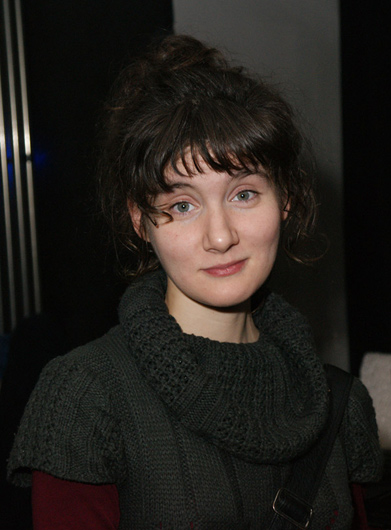
Tamriko Apakidze
Former lecturer at the Petersburg Institute of Jewish Studies
I moved to Germany this fall. I am trained as an Orientalist and religious scholar, and I taught at the Institute of Jewish Studies in Saint Petersburg. I encountered the Morality group quite by accident. A year ago, on March 14, I went to a demonstration at Kazan Cathedral. I had two small placards with me: “Crimea is Ukraine” and “Make love, not war.” Despite the warnings, I took the placards out periodically, not realizing that they turned my actions into a solo picket, especially because there were other people with placards.

fileTamriko Apakidze. Photo by Nikolai Simonovsky

The police nabbed me fairly quickly, at first along with my husband, but he was soon kicked out of the paddy wagon, and I spent four hours in the company of seven rather rude, in my opinion, police officers. It was they who took me to the station.

I had never been to a police station before, so at first I thought it was fun. But when they confiscated my internal passport and did not let me make a phone call, I was not amused. Aside from the rude cops, there was a nondescript young man who was quite polite. He listened courteously and attentively to the questions the police were asking me. He got quite excited when he heard I worked at the Institute of Jewish Studies. He asked what I taught there and whether I had worked there long. Then this guy was released, and I was given an arrest report and told to wait for a summons to court.

I left the police station late at night, believing I had got off very lightly. The next day, acquaintances sent me a link to the group Morality. It turned out that my companion at the cop shop had been Mikhail Kuzmin, the group’s moderator. He had posted his report, where he wrote something to the effect that he had being going to God’s temple to pray, but the police took him for a liberast and arrested him. The report was entitled correspondingly: “Who attends liberast rallies.” My entire biography was there. What surprised me most was that there were details there that he could not have found out from our conversation. He quite obviously had access to other sources.

Naturally, it said there that I worked at the Institute of Jewish Studies but that I pass myself off as a Georgian, although it is not clear who I am. There was this phrase: “The young woman herself is not involved in homopiggery, but she supports homos.” And the best part was an album of photos of me, twenty-five of them: one from the protest rally, and the rest pilfered from Facebook. This was so that the comrades would know their enemy by sight. The album’s crowning touch was a screenshot from the Institute of Jewish Studies website containing my schedule. I felt sick.

I looked at the pictures of Kuzmin himself: he was giving the Nazi salute and wearing a Nazi uniform. My husband wrote, “You shitty Nazi, remove the photographs of my wife immediately.” “I’m not a Nazi, because all Nazis are kikes,” Kuzmin eagerly replied. There was no more discussion with him, but his comrades in the struggle wrote comments under the photographs of me: how many Banderites had fucked me, and stuff like that. I never thought that I would encounter something like this in life. We sent a complaint to the management of VKontakte, but the group was not shut down.

For a while, I was very afraid. Of course, this was not the reason we left for Germany, but when I saw that screenshot of my schedule at the institute, I was quite scared to go to work. I became paranoid that I would be assaulted on the street or that our dog would be poisoned. I suspect that Kuzmin works in tandem with the police. First, I think he was with me at the police station as a provocateur. Second, when I was in the paddy wagon, the cops uttered his surname several times.

We moved to Germany at the end of August. We had been planning to do this for a long time, but had kept delaying and putting it off. After last March, my husband immediately found a job and we left Russia. I haven’t heard anything more about Kuzmin.

The community Morality has been active on the VKontakte social network for a year and a half. At present, the group numbers around four thousand subscribers. The group’s founder and moderator, Mikhail Kuzmin, was born April 12, 1986. He is married, a graduate of the Northwest Branch of the Russian Academy of Justice, and a member of the Petersburg branch of the Great Russia party.

______________________________

VKontakte group close for inciting hatred
Ethnic strife flares up on the social network. Petersburg woman with Jewish surname fears for her life
Polina Khodanovich
March 4, 2015
Metro

Petersburger Leokadia Frenkel, who teaches Russian to migrant children, has been victimized by the social network group Morality and its administrator Mikhail Kuzmin.

Screen Shot 2015-03-03 at 1

Mikhail Kuzmin. Screenshot courtesy of Metro newspaper

“He reposted 161 photographs of me and wrote a text to accompany them entitled ‘The Kike-Liberal Opposition,” Frenkel told Metro. “That Jews were teaching migrants was the ultimate source of indignation for him.”

According to Frenkel, openly threatening comments appeared under photographs of her, and she seriously feared for her life.

“But when my friends complained to VKontakte management, they got evasive replies to the effect that if you don’t like this group, don’t look at it.”

Mikhail Kuzmin himself likes to do the Nazi salute and have his picture taken in Nazi uniform. He invariably refers to Jews as “kikes,” and conducts surveys on topics such as “Should migrants be sterilized?” The group consists of about 3,500 active participants. Unfortunately, we were unable to reach Mikhail Kuzmin for comment.

Screen Shot 2015-03-03 at 2

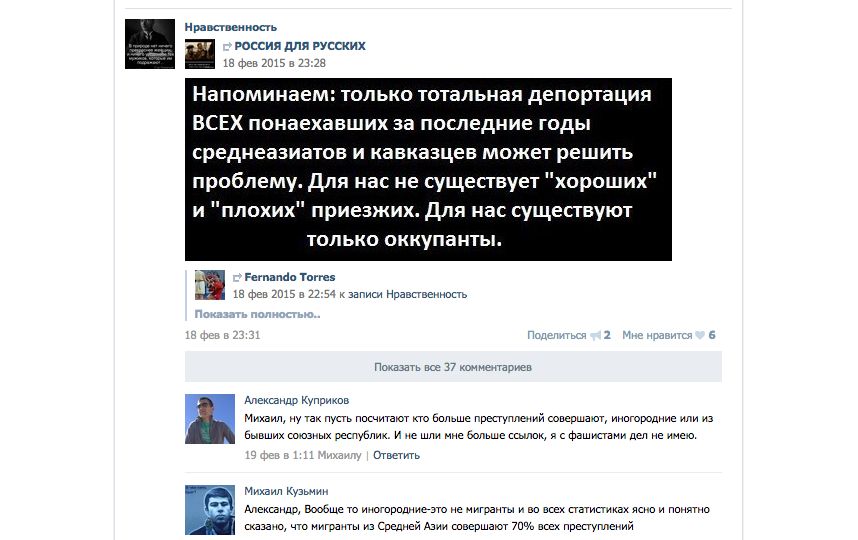
“Morality” group  page on the VKontakte social network. The highlighted passage reads, “Reminder: only the total deportation of ALL the Central Asians and Сaucasians who have overrun the country in recent years can solve the problem. For us there is no such thing as ‘good’ and ‘bad’ immigrants. For us there are only occupiers.” Screenshot courtesy of Metro newspaper

Metro asked the Saint Petersburg office of the Investigative Committee’s Investigative Department to comment on the situation. Sergei Kapitonov, head of their press service, was terse.

“Anything is possible anywhere. I don’t understand what the matter is. I suggest you send an official inquiry addressed to our general and explain what you want to him.”

Roskomnadzor told Metro that they could do nothing themselves.

“The law on extremism in the Internet is administered by the Prosecutor General’s Office,” press secretary Vadim Ampelonsky said. “Only they can send us a request to block the group.”

Ultimately, Metro had no choice but to personally ask VKontakte’s press secretary Georgy Lobushkin to pay close attention to the controversial group Morality. And soon the newspaper received the following reply: “Good day. Our moderators are now checking this group for violations of website rules and Russian federal laws.”

On the evening of March 3, the group was temporarily blocked “for incitement to acts of violence.”

Vera Alperovich, expert on nationalism and xenophobia, SOVA Center for Information and Analysis:

“Any incitement to ethnic violence is covered by Article 282 of the Criminal Code. The activities of this group and its administrator should definitely be investigated. That the Investigative Committee is paying no attention to this group means they are waiting until someone is killed. In addition to a criminal complaint, one could start with a warning, which can facilitate getting the offending content deleted. Aside from the Criminal Code, there are also ethical norms. Such groups should cause a wave of public outrage.”

______________________

The Fall of “Morality”
A neo-Nazi group on VKontakte that has bullied a Jewish woman was closed only after public pressure
Veronika Vorontsova
March 5, 2015
Novye Izvestia

Yesterday, after repeated requests by users, administrators at the social network VKontakte blocked the group Morality. The community had positioned itself as a platform for instilling “Slavic values,” but in fact it contained a lot of material prohibited by law, including neo-Nazi material. The group’s closure had long been sought by a female Saint Petersburg resident against whom group members had organized a genuine hate campaign. For a long while, administrators at the social network had turned a blind eye to her complaints, and she succeeded in having the group blocked only after broad publicity and intervention by the media.

The group Morality, which allegedly promotes “moral education based on historical Slavic values,” has been closed for a month for calls to unlawful actions, VKontakte spokesman Georgy Lobushkin informed Novye Izvestia. If the community’s creators do not remove the illegal content within thirty days, the group will be blocked in perpetuity.

The cause of the group’s closure was the campaign of persecution its members organized two week ago against Leokadia Frenkel, program coordinator at the Saint Petersburg Jewish Community Center, whose activities include teaching migrant children and helping socially adapt.

1425494405051Leokadia Frenkel

It all started when Frenkel placed an ad on the social network recruiting volunteers to work with the children at the center. The call was copied to the Morality group, where it was commented in an abusive and illegal manner. As Frenkel told Novye Izvestia, a genuine campaign of persecution was unleashed in comments to the post: group members insulted her ethnicity, and some threatened her with violence. Later, the group’s moderators made a selection of photographs featuring not only Frankel but also her husband and her son, placing it in open public access.

Frenkel decided to send a written request to VKontakte to close the group. Many of her friends followed suit. They soon received a rejection letter. The social network’s administrators explained there was nothing illegal in the information contained in the community. “If you do not like the group, do not look at their materials. We close only those groups which directly threaten someone’s life.” This was the response from VKontakte management.

This explanation did not hold water, says Frenkel. She notes that VKontakte’s published rules contain a list of actions prohibited by company management. Paragraph “e” disallows the “incitement of racial, religious, and ethnic hatred, as well as the promotion of fascism or racial supremacist ideology.” In the group Morality, which was completely open to the public, one could see many images of swastikas and direct calls for violence. Examining group moderator Mikhail Kuzmin’s personal page, Novye Izvestia also found many images of Nazi symbols. In some photos, he was posed in a Wehrmacht uniform; in others, in front of a Russian imperial tricolor.

Initially, VKontakte administrators really did see nothing illegal about the group, the social network’s press secretary Georgy Lobushkin explained to Novye Izvestia.

“There are many discussion communities where users discuss various issues. We do not block them, even if some comments are outside the scope of the Constitution,” he said in conversation with Novye Izvestia. However, “after a more thorough study of this group, experts nevertheless concluded that it contains incitements to violence.”

Two weeks passed between the time of Frenkel’s complaint and the group’s closure. She believes the reason for a more thorough review of her complaint was several reports in the media and the broad publicity they generated.

Although the group Morality has been closed, Novye Izvestia has found a number of similar communities where Frenkel’s identity and ethnicity continue to be discussed to the hilt.

As Novye Izvestia reported yesterday, early in the week, a court ordered Smolensk journalist Polina Petruseva to pay a fine of 1,000 rubles for “promoting Nazi symbols.” The court case was occasioned by Petruseva’s publishing a photograph of her own building’s backyard during World War Two on her social network page. The photograph shows German soldiers standing in formation next to the flag of the Third Reich. On Tuesday, the Russian Constitutional Court confirmed the ban on displaying any Nazi paraphernalia or symbols.

But law enforcement agencies have not yet responded to the controversy involving Leokadia Frenkel. The police are reluctant to accept such complaints, because there is almost no mechanism for working with such cases, Mikhail Pashkin, chair of the Moscow Police Union’s coordinating council, told Novye Izvestia. According to him, criminal charges are filed in such instances only to make an example of someone, “which is probably what happened in the case of the journalist from Smolensk.”