“Anti-Americanism”

There are eleven Russian words in this poster for the April 29 St. Petersburg Craft Event at Art Play SPb, and twenty-one English words. Photo by the Russian Reader

Oh, how they hate the United States!

My boon companion was just chatting with a neighbor lady, a woman who has lived in our building her whole life and makes the best salt pickles I have ever tasted.

As it happens, our neighbor is friendly with a member of our municipal district council.

If you follow the news from Russia closely, you would know that the beleaguered united opposition, led by Dmitry Gudkov, made significant inroads in Moscow’s municipal district councils during the last elections to these entities. One of the people thus elected, the young, well-known liberal politician Ilya Yashin, has now announced plans to challenge the incumbent, Sergei Sobyanin, during the next Moscow mayoral election.

In reality, municipal district councils are the lowest rung on the political totem poll in Russia. They have very little power and are perpetually too underfunded to do the work they are supposed to do.

However, since Russia’s ruling party, United Russia, is power hungry and paranoid, they try and stack the lowly municipal district councils with their own members.

God knows what could happen otherwise.

The municipal district council member with whom our neighbor is friendly is one such United Russia Party placeholder.

“And she’s a real louse,” my boon companion would add.

The councilwoman recently got back from a trip to the United States. It turns out her daughter and son-in-law have lived there for a long time. They have a big, beautiful house in Silicon Valley.

The councilwoman told all this to our neighbor lady, explaining how much she had enjoyed the trip and how much she liked the United States.

“Why did she have to tell ME this?” the neighbor lady asked my boon companion, “Why couldn’t she have told someone else?”

Remember this little story the next time you see Foreign Minister Lavrov or President Putin or the Russian Ambassador to the United Nations or Russian Foreign Ministry spokeswoman Maria Zakharova huffing and puffing and blowing America’s house down.

Everything they say is meant for domestic consumption only. They don’t really hate the United States. They just need a Big Enemy to occupy the minds of the Russian people, to distract them from their own more serious crimes and misdemeanors.

The con seems to be working so far. // TRR

msmomovladimirskyokrug.jpgOur humble municipal district newspaper, as published by our municipal district council. This is the one of two spots in our municipal where I know one can read it. Maybe there are more, but otherwise the newspaper is not distributed to the municipal districts’s residents, because the less they know about our municipal district’s business, the better, I guess. Photo by the Russian Reader

How to Be a Useful Idiot

DSCN5264

1.  Jump on the “Putin is genuinely popular” bandwagon.

“Putin will eventually leave power, but it is not Washington’s place to facilitate this, nor is it an inherently desirable outcome. No one knows what will follow in Putin’s wake, or who could fill his role after nearly two decades and counting in the Kremlin. And no one doubts that Putin is genuinely popular, although support for him in the capital and among younger educated Russians has slipped.”

Putin is not genuinely popular. As in other pseudo-populist dictatorships and autocracies, the alleged popularity of Russia’s president for life is the product of a thoroughgoing war against all dissenters, dissidents, and free thinkers, and an ever-evolving personality cult, produced by carpet bombing the populace with TV, radio, social media, and print propaganda twenty-four hours a day seven days a week.

The mental carpet bombing is periodically punctuated by two rituals, designed to confer “popular legitimacy” on the rampantly undemocratic regime: massively rigged, unfair “elections,” and plainly hokey and methodologically unreliable “public opinion polls.”

Nor is there any empirical evidence that “young educated Russians” are more critical of Putin than cranky old ladies in Petrozavodsk and Perm. My educated guess would be that, in fact, the opposite is true.

Finally, it is sheer insanity to argue that Putin’s departure is not an “inherently desirable outcome.” Every day Putin is in power is a decisive step backwards in the country’s political and social progress.

Not even the most milquetoast progressive reforms have been possible while Putin and his clique have been in power (i.e., the last eighteen years), and there is every sign that, during his next term, things will go from very bad to incomparably worse.

By the way, why is the writer so certain “Putin will eventually leave power”? If he means Putin is a mere mortal, like the rest of us, and will die sooner or later, this is a factually correct but politically vacuous claim. If the writer means Putin is planning to leave office in the foreseeable future, he must have psychic gifts that most of us do not have. There is no evidence whatsoever Putin is planning to go anywhere in the next twenty years.

But it is easy to engage in free verse exercises like this one when you live and work in Brooklyn. You just make up the facts as you go along, because you will never have to face the consequences of your irresponsible, shambolic analysis.

2. Blame the US government for everything that has gone sour or wrong in Russia, the world’s largest country, a land blessed with natural resources and human resources beyond measure, and thus certainly capable of making its own fortunes and forging its own destiny, which nothing whatsoever prevents from being democratic and progressive except the current regime and its mostly pliable satraps and timeservers. “Genuine popular support” for Putin would vanish in a second if his regime were ever challenged by a strong, broad-based, grassroots democratic movement determined to remove him from office and steer the country towards a different path.

“Putin will eventually leave power, but it is not Washington’s place to facilitate this, nor is it an inherently desirable outcome. No one knows what will follow in Putin’s wake, or who could fill his role after nearly two decades and counting in the Kremlin. And no one doubts that Putin is genuinely popular, although support for him in the capital and among younger educated Russians has slipped.

“The United States should not ignore human-rights abuses in Russia. But principled criticism is only undermined by the perception that civil-society groups in Russia serve as fronts for US intelligence, and Russia has become increasingly hostile to such groups. The next administration should make clear that the United States is not trying to bring Putin down, and that its support for human rights is genuine. It should be wary of directly supporting opposition figures, who are easily tarred as American puppets. And it should lead by example and hold its allies accountable for their human-rights abuses and elite corruption as well.

“Ultimately, the best way the United States can help civil society in Russia is by normalizing relations enough that private civil-society groups from the United States and other countries can more effectively work in tandem with Russian counterparts. It is hard to argue that the US-Russia tensions following the failure of Obama’s reset have done Russian civil society any favors.”

What real evidence is there that civil society groups in Russia serve as “fronts for US intelligence”?

None.

Who has actually been working day and night to generate this “perception”?

The Putin regime and its media propaganda outlets.

Why has “Russia” become “increasingly hostile to such groups”?

Because the Kremlin perceives them as direct threats to its authoritarian rule. It has thus declared them “enemies,” “national traitors,” “foreign agents,” and “undesirables,” and gone to war against them. This blog has published numerous articles detailing this “cold civil war” between Moscow and Russian civil society.

What evidence is there that any US administration has “[tried] to bring Putin down”?

There is no such evidence.

What Russian opposition figures have US administrations “directly supported”?

None.

Aren’t civil society groups “private” by definition?

Yes.

Was Obama’s so-called reset the only or even the primary reason that tensions between the US and Russia increased?

No. Even before Putin went ballistic, invading Crimea, Eastern Ukraine, and Syria, shooting down passenger planes (e.g., Flight MH17) and gunning down opposition leaders right outside the Kremlin (i.e., Boris Nemtsov), his minions were harassing the then-US ambassador to Moscow, Michael McFaul, the co-author of the miserable “reset,” whose purpose was to decrease tensions with Russia, not stoke them. There was no chance of this happening, however, when the Kremlin had long ago made rabid anti-Americanism the centerpiece of its public foreign policy.

Why do I call it “public” foreign policy? Because nearly everyone in the Russian ruling elite has made numerous junkets and trips to the US and other western countries over the years and has lots of personal and business connections to their boon enemies. They have extensive real estate holdings in the west. They educate their children in the west. They park their ill-gotten lucre in the west. In some cases, their families live in the west permanently, while they shuttle between the west and Moscow like some less fortunate people commute between Gary, Indiana, and Chicago.

The Russian elite’s anti-Americanism and anti-westernism, therefore, is a put-on, a hypocritical pose mostly meant for public consumption.

Has the Putin regime done Russian civil society “any favors”?

No, it has done its utmost best to destroy independent Russian civil society and co-opt the remnants it has not killed off. If you want some of the particulars, read what I’ve been posting on this blog for the last six years and, before that, on Chtodelat News, for five years.

Why did the guy who wrote the passage quoted above write what he did?

It is hard to say. The article is a very clever whitewash job for the Putin regime, all of whose high crimes and misdemeanors against the Russian Constitution and the Russian people are passed off as understandable reactions to the alleged predations of the US government against the Putin regime.

Where was this article published?

In The Nation, of course. Who else would print such crypto-Putininst tripe with a straight face?

Why all the needless hyphens, e.g. “civil-society groups,” “human-rights abuse”?

Sheer snobbery, meant to intimate to the magazine’s hapless readers they are dealing with real smart cookies, not tiresome neo-Stalinist windbags.

3. Publish wholly misleading articles about Russia, like the one quoted above. If you cannot manage that (because your readership would notice), publish wholly misleading headlines. They are even more effective than longwinded articles in The Nation, a pro-Putin magazine no one in their right mind has read in the last ten years or so.

People scan headlines, however. It is much easier than reading the fine print.

“US Drastically Reduces Visa Services in Russia after St. Petersburg Consulate’s Closure”

This is exactly the headline Russian Foreign Minister Sergei Lavrov would want to appear in the Moscow Times, because it places the onus for his government action’s and his own actions on the US government.

How could visa services not be drastically reduced if the Russian Foreign Ministry closed the US consulate in Petersburg and gutted the staff at the US embassy in Moscow once again?

But let us by all means imply, because this IS the message the Putinist tyranny wants its own people to hear, that the US did everything on its own as a way of punishing ordinary Russians. Sadly, a fair number of Russians will believe this.

4. Join a so-called leftist group in the west. Most of them behave as if the Comintern still existed and they were taking their orders from the Kremlin.

Most western so-called leftists these days are boring, uneducated morons. The most boring thing about them is their unshakeable reverence for the Soviet Union, a country about which they do not have the slightest clue, and for its woebegone “successor,” the Russian Federation, which has literally nothing in common with the long-dead Soviet Union.

So, they are just as defensive of Putin’s shambolic hypercapitalist despotism as they are of the country that killed off socialism once and for all by going on a murderous rampage in the 1930s.

The really hilarious thing is that most of them manage to maintain these cultish attitudes without ever having set foot in either country and without speaking a word of Russian. Star Wars fans have a more down-to-earth and coherent ideology than the post-Stalinists who pop up to crush you with their Anand Sheela-like rhetorical flourishes (i.e., truckloads of vehement slander and furious personal insults) if you so much as mention as their imaginary Motherland in a slightly untoward light.

I want to live long enough to see the influence of these dead-enders on progressive, anti-capitalist, anti-imperialist politics die off altogether. That would make me really happy, if not genuinely popular, like Vladimir Putin. ||| TRR

Photo by the Russian Reader

Grigorii Golosov: An Anti-American Dictatorship

An Anti-American Dictatorship: The Russian Concept of Sovereignty
The regime is sovereign, not the people, and only if it does not seek to benefit from cooperating with the US
Grigorii Golosov
Republic
November 9, 2017

4f1d12efea4954e40cedcc6cf03e3d2bVladislav Surkov. Photo courtesy of Dmitry Azarov/Kommersant

Recently, after a long silence, Vladislav Surkov made another public appearance in print. The article itself, entitled “A Crisis of Hypocrisy” and written in a style typical of intellectually pretentious picture magazines, is not very interesting. It is not that Surkov rebukes the west for insincerity. That would be like the pot calling the kettle black. He does claim, however, that the effectiveness of hypocrisy as a means of control has been forfeited in modern democracies. Surkov thus finds himself agreeing with “prophetic comics” and other authoritative sources that a king of the west might appear to forcibly lead the world out of chaos. A good example, perhaps, of how such a king might act is Surkov’s own work in the Donetsk People’s Republic and the Luhansk People’s Republic.

As many of you will remember, until his forced immersion in the affairs of a neighboring country, Surkov laid claim, albeit not very successfully, to the role of the current Russian regime’s ideologue. It was Surkov who back in the day coined the controversial term “sovereign democracy,” which was supposed to be either an alternative to western democracy or a variation on it. In this case, Surkov messed up royally, as was pointed out to him with appropriate severity by his more senior comrades. The point of Russian electoral authoritarianism, like electoral authoritarianism anywhere else, is to feign being a democracy without actually being a democracy. Since everyone realizes there really is true democracy in the west, any juxtaposition is invidious. Russia has democracy, and that is that. It is no worse than other democracies. It is just like them. There is thus no need to qualify it with any adjectives.

Now Surkov, being a person who is, on the one hand, quick on the uptake and, on the other, not averse to particular flights of fancy, has adopted the politically correct stance while creatively elaborating on it in the sense that democracy in the west is on its last legs, even as Russia still cherishes the ideal of people power. Naturally, there is no point in debating the nature of democracy when the issue is put this way, and sovereignty comes to the fore as in Surkov’s original take on the matter. Sovereignty is the central concept of modern Russian ideology.

Sovereignty is now the talk of the talk of the town, the favorite topic not only of the media but even of those people who speak from the highest bully pulpits. The Russian concept of sovereignty includes two axioms that we should examine thoroughly. I should note in advance that neither of these aspects is unique. Each of them is ordinarily found in any logically consistent concept of sovereignty. The whole trick is how they are applied specifically to modern day-to-day circumstances.

The first axiom states that all decisions about power in a given country are taken at a purely national level.  The point is incontestable. It suffices to have a look at how acutely the Americans react to any outward attempts to shape their own politics to be convinced that they, too, operate in full accordance with the axiom. The specific nature of the Russian interpretation, however, is nevertheless apparent. To detach it from its basic content we should look at the events in Syria.

The cause of the events was the crisis generated by the extremely brutal, truly barbarous dictatorship established in Syria by the Assad family. Only an intellectually unscrupulous person could publicly state the Assad regime had been the choice of the Syrian people, at least at some point in time. The Assads came to power in a military coup and were elected to the country’s presidency solely on an uncontested basis, under circumstances in which all opposition was quashed. An uprising took place in 2011. The regime survived it, but was unable to crush it completely. A civil war broke out. It is characteristic of modern civil wars in more or less important countries that they involve outside actors.

The last point has been at the heart of the Russian concept of sovereignty. Frightened out of their wits at one time by the specter of “color” revolutions, the Russian authorities, first, regard any regime in any country, except Ukraine, as legitimate, and any attempt to overthrow it, however bloody and tyrannical it may be, as solely the result of outside interference. I would again underscore that outside interference is a perpetual occurrence, but nor does Russia miss its own chance to catch fish in troubled waters. This aspect is always secondary, however. Western political thought has traditionally argued the people’s sovereignty consists, in particular, in its ability to put down tyrannies. Since elections in such circumstances are not a tool for doing this, all that remains is civil disobedience and insurrection. If we approach the matter differently, the notion of sovereignty has been replaced by the notion of the regime’s sovereignty. This is exactly how sovereignty is treated in modern Russian ideology.

Second, the Russian concept of sovereignty consists in the notion that all decisions on foreign policy must be taken at the national level. When expressed in such concise form, the claim is also indisputable. However, when it is applied in Russian public discourse, the claim is more controversial: since most national governments take the interests of the US (or, alternately, the EU) into account when making foreign policy decisions, their sovereignty is limited.

The problem with this interpretation is that it is advantageous to pay attention to the interests of the United States or the European Union, or both. This coincides with the preferences of most governments. They themselves limit their freedom to maneuver when it comes to foreign policy. Take one of Russia’s biggest grievances against the west: Nato’s eastward expansion. It is true that when the Eastern European countries joined Nato, they limited their freedom to operate, but they did this not merely voluntarily, but with colossal enthusiasm. They applied to join Nato and celebrated their joining the alliance as if it were a national holiday. Ask Donald Trump why they wanted to get in. He would tell you what percentage of the alliance’s expenditures are footed by American taxpayers. It is not even worth enlarging on the fact that the new European Union members received certain perks. Actually, back in the old days, even Vladimir Putin was given to saying it would not be a bad idea for Russia to join the western alliances. It follows that he saw the benefits.

For it would be wrong to say no one takes Russia’s interests into account. Even some of the Eastern European countries, which the Russian media arrogantly disparages as satellites of the western powers, occasionally express a dissenting opinion on issues sensitive to Russia, such as sanctions. When they do this, are they limiting their own sovereignty in favor of our country? No, they are just taking care of their own business. The general rule, however, is that most countries regard the interests of the US as more important than Russia’s interests. There are exceptions: Iran, North Korea, Syria, and five or six other countries. By a coincidence that is hardly strange there is not a single democracy amongst them. All of these countries are small or medium sized. It is naive to believe China is one of these countries. China regards the US as more important.

We no longer speak of sovereign democracy. The idea has not vanished, however, but has merely acquired a more appropriate guise as an anti-American dictatorship. It is this guise that has become Russia’s own political pole star. And why not? It is a matter of choice. We should be aware, however, that how you define yourself defines how people treat you, taking this into account when assessing the prospects for improving relations with the rest of the world.

Grigorii Golosov is a professor of political science at the European University in St. Petersburg. Translated by the Russian Reader 

Muddle

DSCN1049
“Our President” desktop calendar. Photo by the Russian Reader

Andrey Kalikh
Facebook
November 21, 2017

The mishmash in people’s heads also comes in a number of flavors. Sometimes, you come across thermonuclear mixtures.

In October, we took a former police investigator who had worked on Petersburg’s major case squad to a round table of European prosecutors in Sofia. The man knows everything about Putin, all the nitty-gritty, all the cases from the early 1990s, the ties with organized crime, the origins of the Ozero Dacha Co-op, and how nearly its entire membership later migrated to the board of Rossiya Bank.

The cop ran the investigation of the Twentieth Trust Corporation, unofficially dubbed the Putin case, until September 2000, meaning when the dude was already president. Subsequently, of course, the case was shut down, and the investigator was put out to pasture.

I can confidently say the former investigator still has the most complete and systematized knowledge of Putin’s background.

In Sofia, however, this same man suddenly went completely off topic and publicly babbled something to the effect Ukraine should have been punished long ago, we will show them all, Russian liberals take orders from the US State Department, and other splendid nonsense.

After the event, I asked him what he had been going on about. He knew perfectly well what a criminal Putin was, but he had apologized for his other crimes.

His response was that in terms of domestics politics Putin was a criminal, but he supported him to the hilt when it came to foreign policy. It was a good thing, he said, Putin was president, and not the investigator himself. Otherwise, something disastrous would have happened to the world long ago, whereas Putin had preserved the peace.

Now that, if I am not mistaken, is a total muddle.

You tell me about a cab driver you once met who watched pro-Putin TV presenters Vladimir Solovyov and Dmitry Kiselyov, but whose favorite politician was Vladimir Ryzhkov, a well-known member of the liberal opposition and former MP.

That is mere child’s play.

Translated by the Russian Reader

Astroturf on Ice

23316596_10155825317583908_4356074932732108074_n
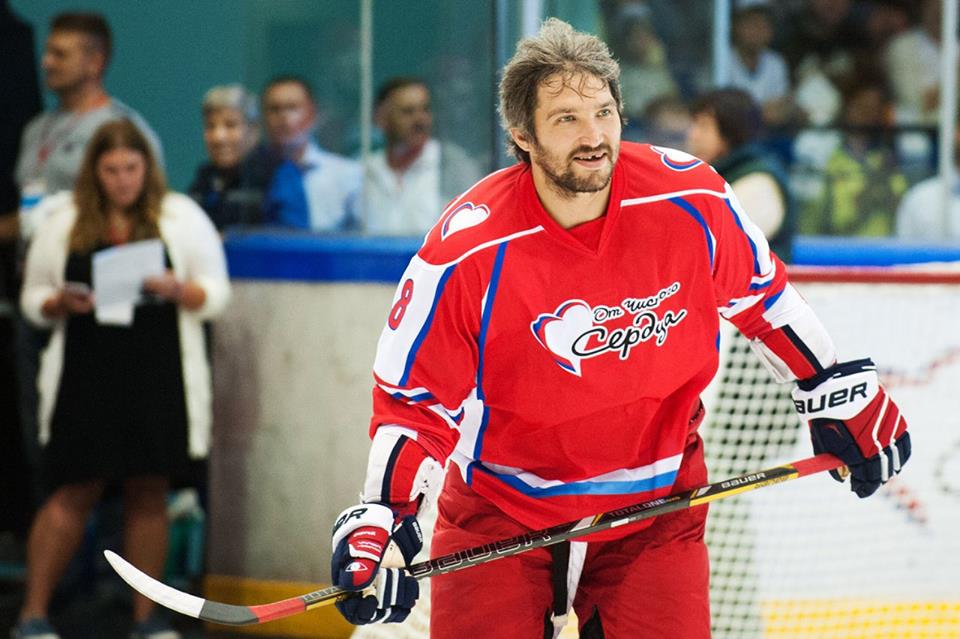
Washington Capitals star player Alexei Ovechkin. Photo courtesy of A. Gordeyev/Vedomosti

Alexander Ovechkin’s Movement Could Be Part of Putin’s Election Campaign 
Svetlana Bocharova
Vedomosti
November 9, 2017

Putin Team, a movement launched last week by Washington Capitals hockey star Alexander Ovechkin, is meant to unite celebrities and could be part of the campaign of Vladimir Putin, who is expected to announce he will run for re-election in 2018. Vedomosti was given this information by a source close to the Kremlin, and it was corroborated by another source. The idea for the movement was not generated by the Kremlin, but nor did Ovechkin come up with the idea himself, our two sources claimed. According to them, the idea was conceived by IMA Consulting (a subsidiary of IMA Group). The Kremlin signed off on the idea after it was launched, one of our sources added.

Ovechkin announced he was establishing Putin Team on November 2.

“I am sure there are many of us who support Vladimir Putin. So let’s unite and show everyone a strong and united Russia!” Ovechkin wrote on Instagram, adding he had never hidden his attitude to the president and had always openly supported him.

Ovechkin’s appeal was supported by NHL Hall of Fame inductee Pavel Bure, Ilya Kovalchuk, a player with the Petersburg side SKA, and the governors of Tula and Moscow regions, Alexei Dyumin (Putin’s ex-aide and a Night Hockey League player) and Andrei Vorobyov. Ovechkin’s announcement has not been followed by any formal actions or explanations. Ovechkin’s agent Gleb Chistyakov told Vedomosti he had nothing to say about the movement for the time being, and he also refused to comment on who had come up with the idea.

When asked by Vedomosti whether it was IMA who had come up with the idea for Putin Team, Vartan Sarkisov, general director of IMA Consulting, said, “It’s not true.”

In August, IMA Consulting won a tender from the Central Election Commission to develop the concept for a campaign raising awareness of the presidential election. IMA will be one of the key players in everything the Kremlin has planned for the election, we were told by our source close to the presidential administration, and Ovechkin’s movement could become part of Putin’s campaign. The idea behind the undertaking is that “celebrities support Putin,” our other source close to the Kremlin told us.

Russian has been no stranger to such organizations. Thus, in December 2007, as Putin’s second term as president came to a close, the Movement for Putin emerged, advocating Putin retain power as the “national leader.” In 2009, a co-leader of For Putin, Pavel Astakhov, was named the national children’s rights ombudsman.

Ovechkin’s movement would mainly be useful to Kremlin as a means of shaking the western stereotype that Russia’s finest people [sic] do not support Putin, but back the opposition, political scientist Yevgeny Minchenko said. According to Minchenko, the emergence in Putin’s camp of a figure popular in the west, such as Ovechkin [sic], would increase the president’s legitimacy in the eyes of the west [sic]. Minchenko has seen with his own eyes how Ovechkin is regarded in Washington, DC, where he has a “quite large fan club.” In Russia, however, the movement will be considerably less effective and will not significantly increase the number of votes Putin wins in the election, argues Minchenko.

Such movements are always needed on the international stage, and not just in the run-up to elections, argues pro-Kremlin political scientist Andrei Kolyadin.

“A person who has found the courage to speak up for a national leader whom some American politicians regard as an incarnation of pure evil, and defend the interests of a country not liked in the US, can cause a wave of similar actions by people forced to hide their respect for Russia.”

The movement is also capable of producing extra votes for Putin in Russia, argues Kolyadin. Very many people regard Ovechkin as an opinion leader [sic], and finding opinion leaders who sincerely support you requires great talent on the part of spin doctors running any politician’s election campaign.

Translated by the Russian Reader

On the Warpath

21616160_10155926858106842_5598854945675305387_n

Andrey Kalikh
Facebook
September 19, 2017

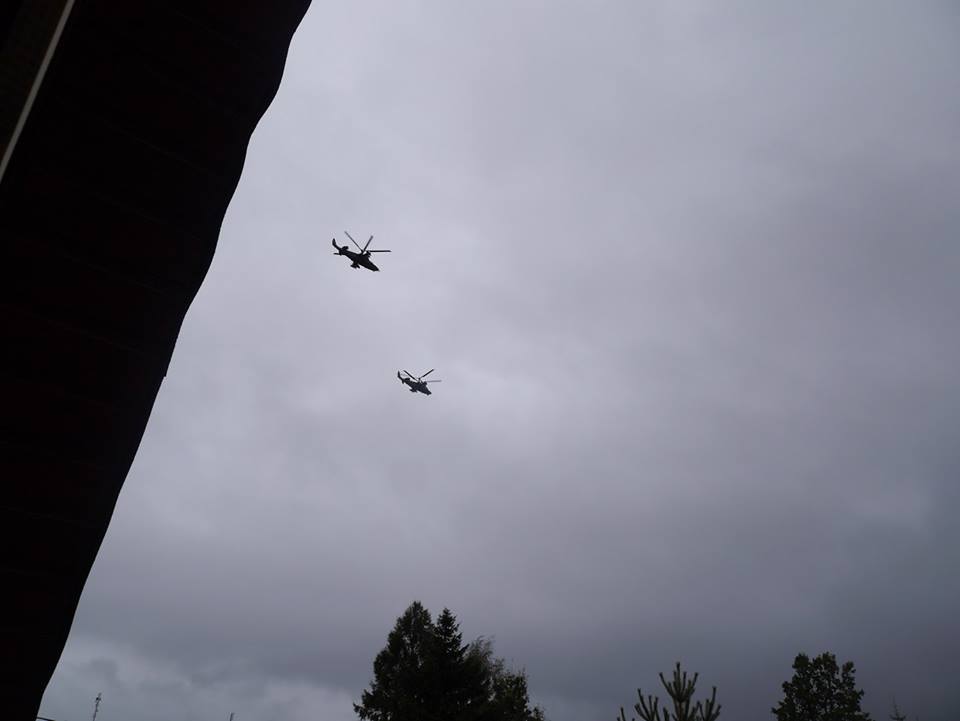
They are f***ed in the head. They are flying in droves over our house. They are launching rockets at random. They are Soviet rockets and they might fall on somebody. The wife urgently wants us to insure the house and wonders whether insurance would cover a chopper crashing in the garden.

Rusty jet engines are now roaring at the long-mothballed airfield in Siversky.

The roar of explosions is audible forty kilometers from the Luga Firing Range.

The apotheosis happened on the afternoon of the fifteenth, when Pavel Antonov and I were having a round table on Skype with European prosecutors. (A little cheeky, of course.) Suddenly, the house shook with a roar, black shadows flashed on the ground, and a multi-gunned monster flew out of the Mshinsk Marshes. Our sons counted twenty-four fully-equipped battle helicopters.

You in the west are quite right to be tense. But hang on. This country will destroy itself. That is how it has always been.

Translated by the Russian Reader. Photos courtesy of the author

21752583_10155926858131842_1066546113740130728_o

Keep Calm and Just Step Sideways

754918613327889
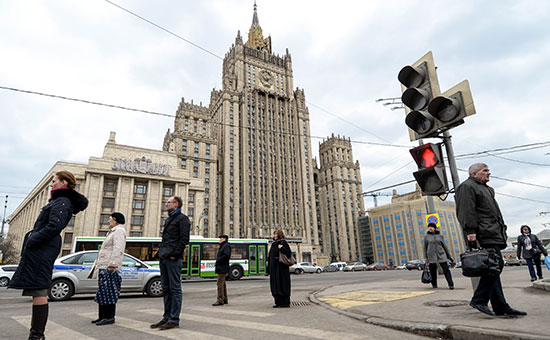
Muscovites are pretenaturally calm and dressed unseasonably warmly as the world hurtless toward senseless nuclear conflagration. Photo courtesy of RBC

I am only sharing this news flash from RBC with you because of the fabulous photo that accompanied it on RBC’s Facebook news feed, and the way it illustrates the article’s point—sideways, as it were.

“‘It is necessary to remain calm,’ the Russian Foreign Ministry said after North Korea tested a hydrogen bomb. The ministry called for a return to dialogue as ‘the only possible way of comprehensively settling the Korean Peninsula’s problems.'”

That sounds great albeit weirdly kumbayaish from folks whose usual idea of a “comprehensive settlement” is invasion and occupation of a peaceful neighboring country, aiding and abetting a bloody Arab tyrant in crushing a popular revolution, sowing racist and Islamophobic mayhem throughout the world via fake news and bots, especially after the meltdown in Charlottesville, messing with elections in other countries, including plans to assassinate one of the candidates, the incumbent PM, ruthlessly and routinely crushing dissent and protest in their own country, and implicitly declaring anti-Americanism the official state ideology not because they thought it would go down well with the rank and file, or because they themselves hate America so much (it doesn’t, and they don’t), but because it was the only way they could think of keeping Putin in the Kremlin for another six years.

Remember, comrades: he’s already been in the Kremlin for eighteen years.

But the photo is terrific. The people in it are not calm. They could not care less about anything.

Or if they do care, they are not going to let on to it whilst walking down the street in the middle of Moscow.

In any case, RBC originally ran this photo in April of this year to accompany an article about how my friends at Mediazona were suing the Foreign Ministry for refusing to reply to its written request for information about contacts between Russian diplomats in the US and members of the Trump presidential campaign.

What goes around comes around, so just step sideways. TRR

_________________________________


The Scare (The Sequel)

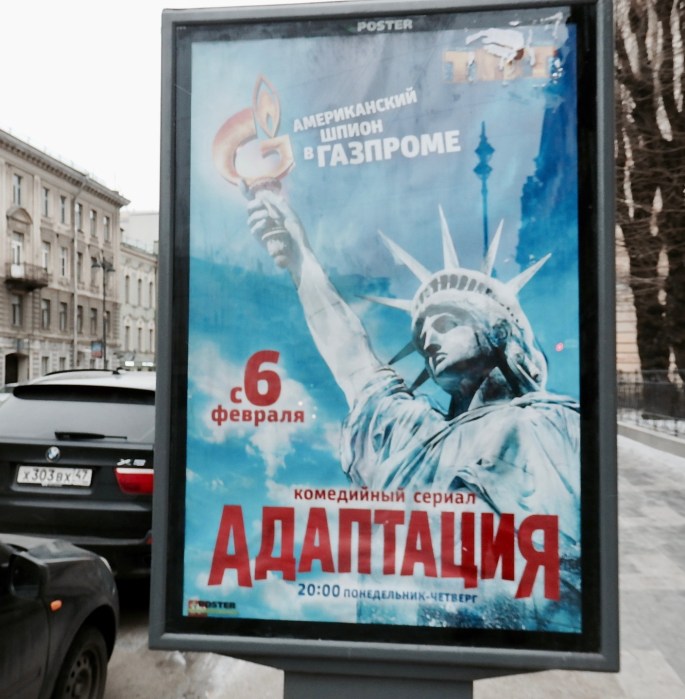
“TNT. An American Spy at Gazprom. From February 6. The comedy serial ‘Adaptation.’ 8 p.m., Mondays through Thursdays.” Central Petersburg, 2 February 2017. Photo by TRR

Why look for a new whipping boy when the dead horse you’ve been beating mock-ferociously for the last seventeen years shows no signs of giving up the ghost? Especially when you can play your profound, self-induced inferiority complexity and sheer intellectual bankruptcy for laughs, as it were.

Yep, no top-down, state-mandated anti-American hysteria round these parts. Just lots of good clean fun.

Meanwhile, back in the unreal world of Russian post-factual reality, it really is always more convenient to blame the mighty Americans for everything, especially total meltdowns within your hopelessly criminalized bureaucracy and security services, who operate like competing mafia gangs. TRR

Fun at the Foreign Ministry

“US diplomats dressed up as women to participate in [protest] rallies in Russia, claims [Russian Foreign Secretary] Sergei Lavrov. He related an incident in which a diplomat, dressed as a women, went into a building’s restroom, where he changed back into a ordinary outfit.”

This has been the daily fare of Russian TV viewers, radio listeners, newspaper readers, and Internet users for the last seventeen years: free-floating, nearly causeless, heavily fictionalized anti-Americanism.

But the left wing of the “Trump Is the Workingman’s Choice” movement only has time for the “red scare” that has been “sweeping” the US for all of two or three months. They have nothing to say about the nameless scare that has been warping minds in Russia for 17 years running.

By the way, this story, almost certainly made up, is an “inadvertent” admission, on Lavrov’s part, that the Kremlin really did intervene in the US presidential elections.

What did I write just yesterday?