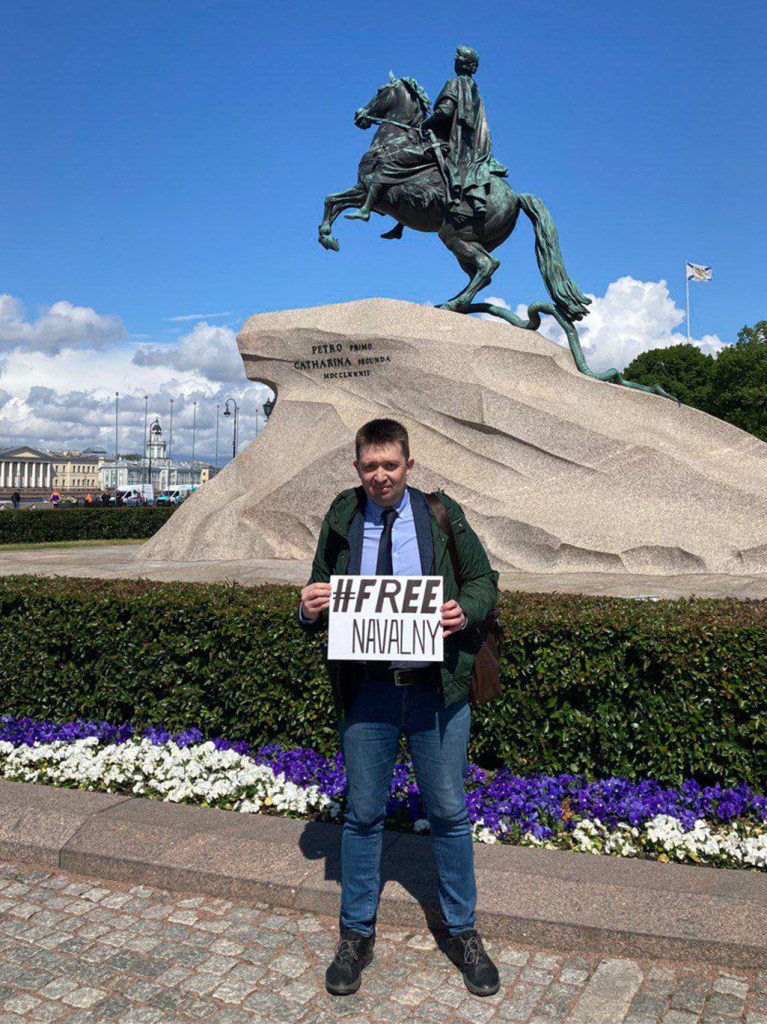
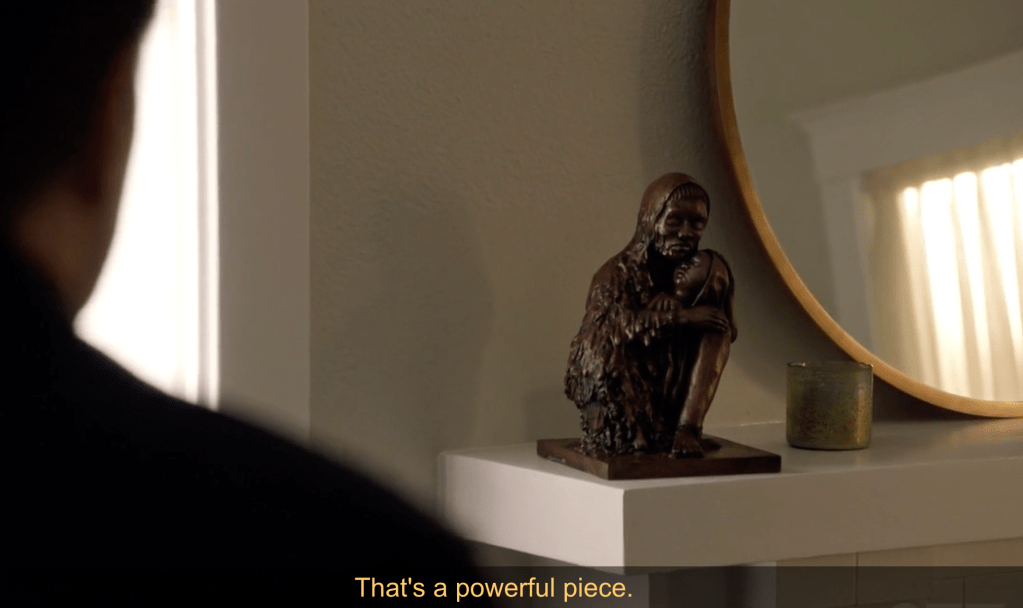
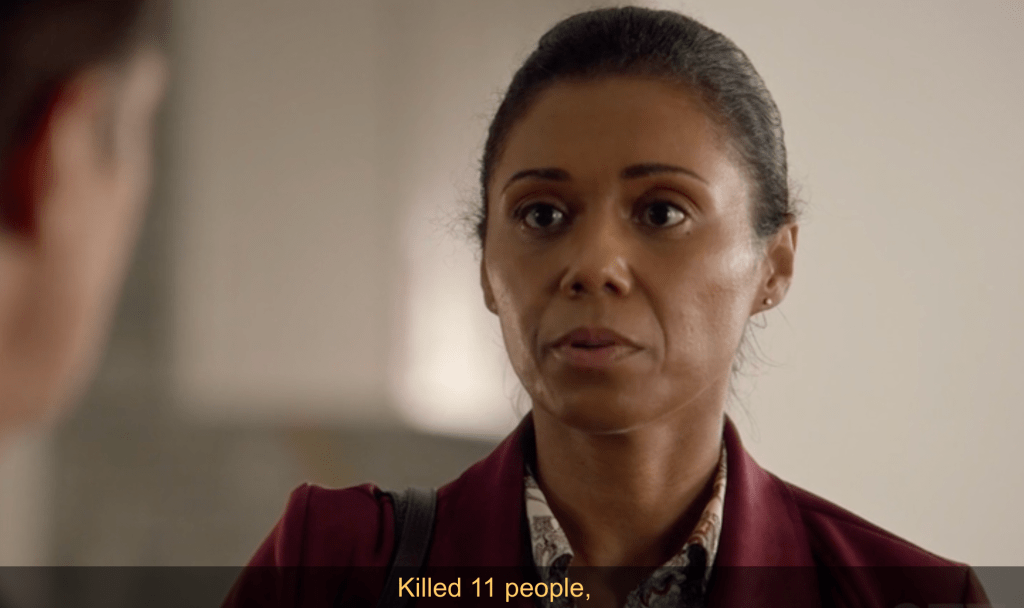
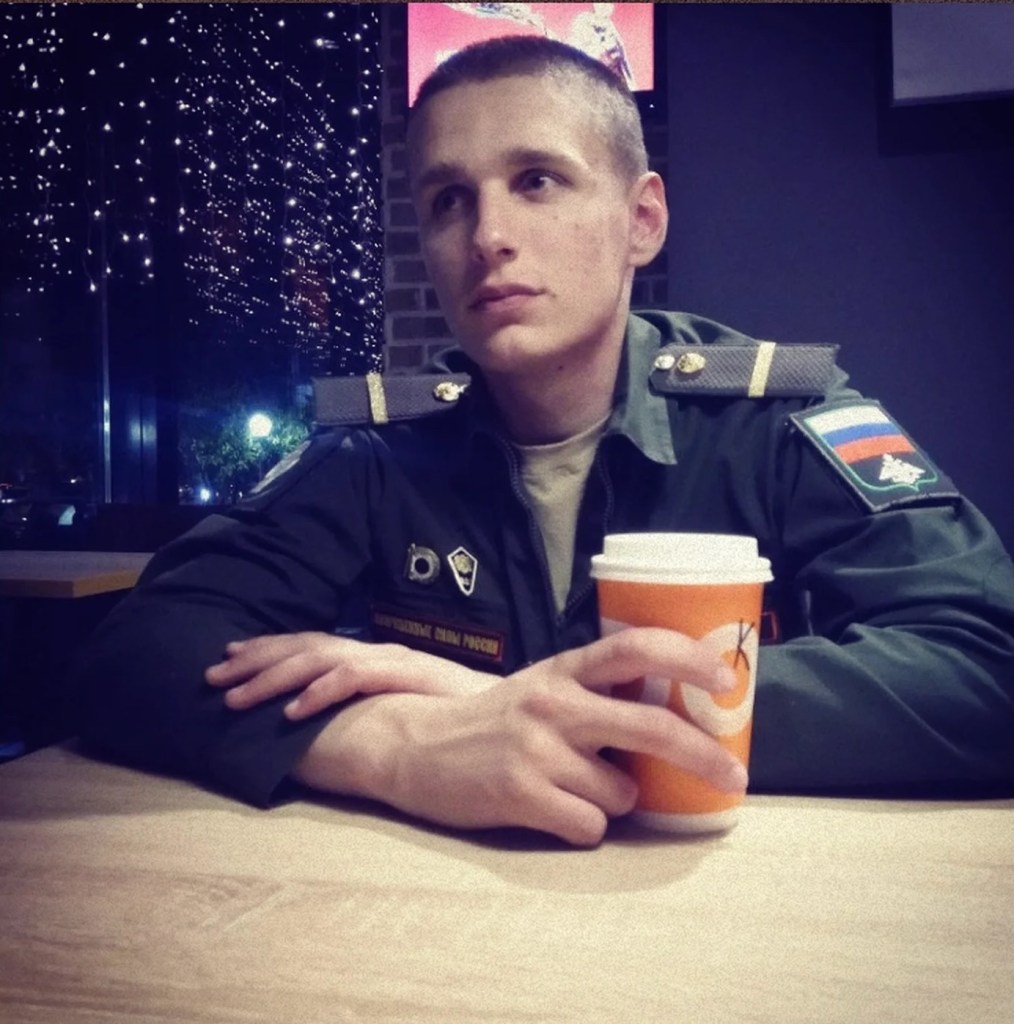
“Yevgeny Zhumabekov, 96 kilograms” is how he introduces himself. Yevgeny is the person who came up with the idea of replacing Last Address plaques that had been torn down with homemade copies and who did this work incognito for almost a year. Now he can identify himself.
Bumaga has detailed the struggle that erupted over the plaques in December 2023. They began to disappear en masse, but copies subsequently appeared in place of the ones that had been torn down. These copies were also removed, after which a plaque appeared on the 14th Line on Vasilyevsky Island bearing the following message: “Plaques [memorializing] people who had been politically repressed in this place were repressed eight times.”
Here you can read Yevgeny’s own account of how the [Stalinist] crackdowns touched his family, what shaped his views, how his wife and children got involved in the fight for historical justice, why the Zhumabekovs had to leave the country, and who continues to install the plaques in their wake.
How the repressions touched Yevgeny’s family
I was born in the Sverdlovsk Region, in the town of Kushva, which has gradually been turning into a village. It’s a depressing place. Two of the industrial enterprises that supported the town have shut down. People have been leaving, while the old people are dying off.
It so happened that my history teacher at school was a good friend of my grandfather’s. He would come to my grandfather’s house, and they would drink hard alcohol together, play chess, and talk a lot. I often visited my grandmother and grandfather and heard these conversations. That’s how I learned that my grandfather came from a family of a person who had been politically repressed.
His parents had come from the Perm Region. My great-grandmother and great-grandfather were completely ordinary peasants. It was forbidden in their house to drink alcohol, [and because they were teetotalers] they harvested large crops. In 1931 or 1932, they were dekulakized and exiled far beyond the Arctic Circle, while their children were sent to orphanages. After a while great-grandmother and great-grandfather managed to escape, but great-grandmother had fallen ill in exile and died soon after returning home, while great-grandfather had to hide out in remote villages all the rest of his life.
I know that my grandfather also had a hard time as a member of a politically repressed family, but he never told me about it, although I tried to find out. It was such a profound trauma for him that he could discuss it only when he got drunk with his sole friend.
How the FSB visited Yevgeny’s workplace
In 2006, I moved to St. Petersburg, where I worked for a time in the car business. I held various positions: sales manager, head of the customer engagement department, manager of a car showroom. Then, before the war, I transferred to a construction company, where I sold real estate.
In 2021, I went to a rally in support of Alexei Navalny after he had returned from Germany. Then there was the protest action with flashlights and others. Not only did I attend these events but I also talked about them with my colleagues at work. I was just sharing my pain, not encouraging them to do anything.
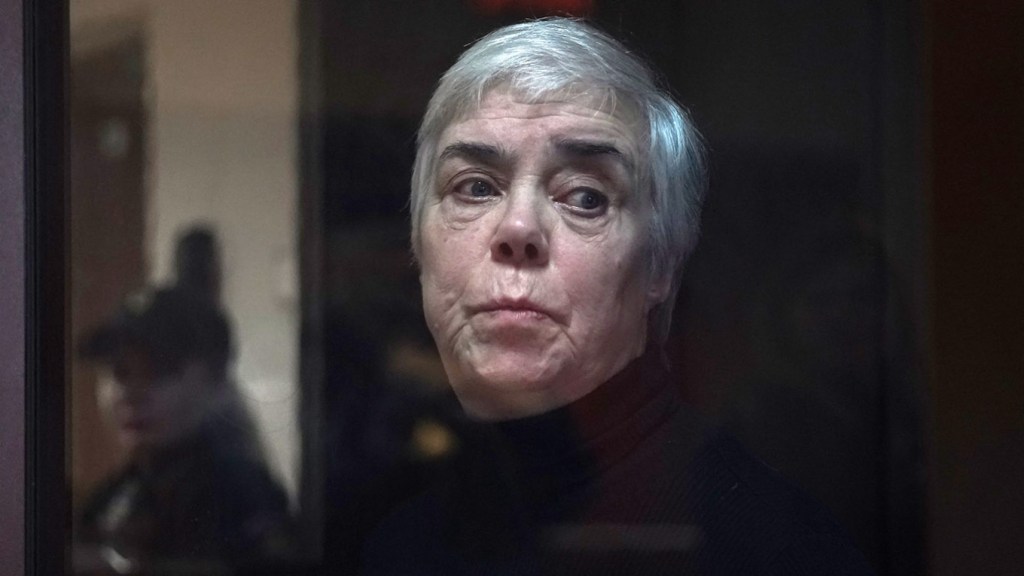
Nadezhda Buyanova. Photo: Tatyana Makeyeva/AFP, via Moscow Times
A pediatrician has been imprisoned on the strength of a denunciation by her patient’s mother. The pediatrician allegedly insulted the boy’s father, who had been killed in the war. There were no witnesses to the conversation, and it seems that the decisive factor in the verdict was the pediatrician’s birthplace — Lviv. Only recently I published the file of the criminal case against my great-uncle, who had allegedly spread rumors about the fall of Soviet regime among children at an orphanage. There, too, the accused’s background was an important point of the accusation: the arrested man’s father had once been a prosperous peasant. It was obvious to the investigators (and this was explicitly stated in the verdict) that the status of “kulak’s son” was in itself proof that the charges were true.
Lo and behold we’re back where we started: a person born in Lviv is guilty of course and must have said what they have been accused of saying.
I don’t know why we should measure things off in terms of milestones on the road to a familiar hell, but this is certainly a milestone.
A Moscow court on Tuesday sentenced a pediatrician to five and a half years in prison for criticizing the war in Ukraine during a patient visit earlier this year.
Nadezhda Buyanova, 68, was found guilty of spreading “fake” information on the Russian army under wartime laws used to silence dissent.
“I believe this is absurd,” she said in court Tuesday, moments before Judge Olga Fedina announced her sentence.
Buyanova was arrested in February after the ex-wife of a soldier who was killed in Ukraine, Anastasia Akinshina, said she had criticized Russia’s role in the conflict during an appointment.
Several of Buyanova’s supporters, mostly medical professionals, shouted “Shame on you!” in the court as the sentence was announced.
“We must empathize with one another and love others,” Buyanova said in court. “But there is no paradise on earth, there is no peace on earth.”
She protested her innocence throughout the trial.
“I am a pediatrician. I do not regret a single day,” Buyanova said.
Buyanova was prosecuted despite there being no public evidence that she criticized the war. Akinshina’s seven-year-old son testified against Buyanova in court.
Monday, 18 November, 6 p.m. “Political prisoners in Russia and the Occupied Territories of Ukraine”.
Panel discussion with Sergei Davidis (Memorial), Evgeny Zakharov (Kharkhiv Human Rights Protection Group), Bill Bowring (Birkbeck, University of London) and Judith Pallot (Gulag Echoes research project / University of Oxford).
At: Montague Lecture Centre, Graduate Centre, Queen Mary University of London, 327 Mile End Road, London E1 4NS. Also on line, via Zoom.
All welcome. Event organised by the Queen Mary University, London, Centre for Eurasian, Russian and East European Studies. Register on Eventbrite here.
The story of Zakhar Zaripov, dying of cancer in prison while serving time for a social media post
Prison medicine is not known for its diligence. It can do little to help seriously ill people and plays on the side of the officials who run penal colonies and pretrial detention centres. The story of Zakhar Zaripov is a case in point. For a year doctors delayed doing analyses and making a diagnosis, even as he was writing things like this to his wife: “I feel bad, it hurts, I can’t eat, I can’t sleep, it’s hard for me to breathe, I’m dying.”
Zaripov is indeed dying: he has stage IV salivary gland cancer. According to the law, the authorities are obliged to release him, but the appeals court hearing on the matter has been postponed for over six months, says Zaripov’s defense lawyer Konstantin Bubon.
Zakhar Zaripov was born and lived in Sovetskaya Gavan, a town in the Khabarovsk Territory. He taught maths at evening schools in penal colonies. He was also fond of science fiction and wrote novels about popadantsy (accidental time travelers). Zaripov also wrote about politics at the LiveJournal account scribble_33. As the teacher himself says, many people had access to the account.
On 2 March 2022, a post was published on scribble_33 suggesting that Ramzan Kadyrov oust Putin and make Chechnya independent. It is not known who wrote it; Zaripov says it wasn’t him. Police investigators, citing indirect testimony by the staff at the penal colony where the teacher worked, decided that it was Zaripov.
The court agreed with the findings of the investigators and sentenced Zaripov to five years in a medium security penal colony. The teacher was arrested when his wife was in the last months of being pregnant with their second child. Zaripov has not seen his youngest daughter yet, as he is imprisoned in Khabarovsk, which is far away and expensive to visit. It is unclear whether he will see her at all.
In September 2023, Zaripov discovered a strange tumour in his mouth. He was able to see a surgeon only two months later. The doctors then began doing analyses and ultrasounds on him, but they failed to diagnose him and kept postponing his treatment. Because of the pain, Zaripov stopped sleeping on his right side, and because the tumor in his mouth has grown so large it hurts when he eats.
In July 2024, Zaripov was diagnosed with stage IV salivary gland cancer. But the final case conference did not meet until September. Prison officials plan to hospitalize Zaripov, but it is known whether he will have time to receive any treatment and whether he will be released home.
Russia’s best troops are now concentrated in another country. Moscow and Putin are completely defenseless. Hold back your troops. Do not send your best men to die in Kiev — send them to take Moscow!
Under current conditions, a limited contingent of a few thousand bayonets would easily take control of government buildings in Russia. You would declare that you have taken power, overthrow a dictator already condemned by the entire world, and stop the war.
This would allow Chechnya to gain independence and avenge all the deaths and humiliation inflicted by the Russian authorities over the past twenty-six years.
This is a perfect historical chance. There may not be another one in your lifetime.
Lenin took Russia with 1,500 men personally devoted to him. You have 40,000 top-notch fighters at your disposal. That’s quite enough.
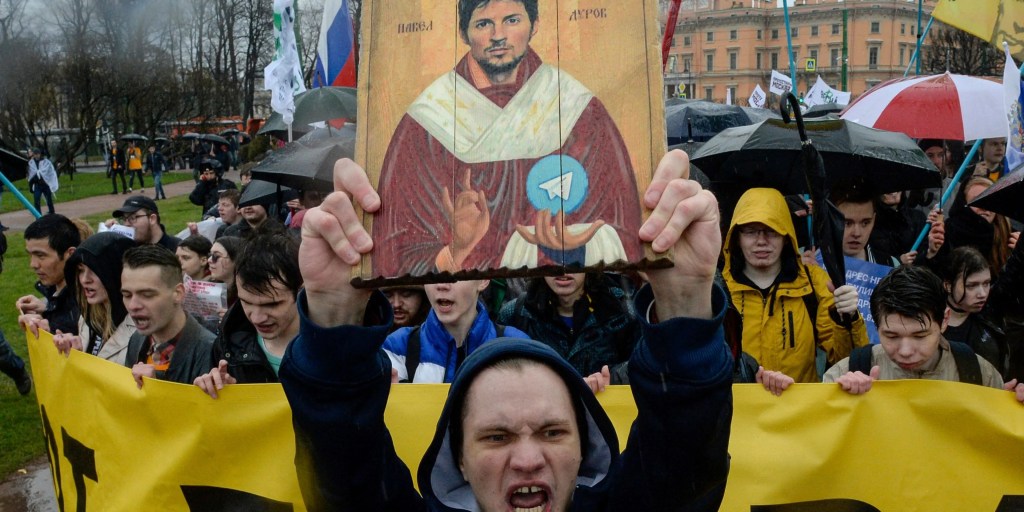
Saint Pavel? A scene from a march protesting the blocking of Telegram, St. Petersburg, 1 May 2018. Photo: Olga Maltseva/AFP, via Important Stories
French Kiss is an enchanting cabaret show in the style of the Moulin Rouge, as performed by the world-famous Bize Lisu Show Ballet.
The ballet dancers have already conquered the whole world with their performances. They have garnered roaring applause at the birthday of the Prince of Monaco and in the Kremlin Palace, at Europe’s oldest theaters in Malta and the largest modern concert halls in China.
The unique hand-sewn costumes, the sensual dances, the expressive vocals and the compère’s unsurpassed humor are all part of the grandiose performance.
Duration: 2 hours (with 1 intermission) Age limit: 18+
Performers: Bize Lisu Show Ballet Vocals – Yana Radion, Maria Mantrova, Anastasia Radion Compère – Denis Groshev
*Seat numbers 200 to 220, at the buffet tables in the second row of the balcony.
“French Kiss, the Show”
The venue The show French Kiss will take place in one of the most entrancing places in St. Petersburg— the cultural space Gaika Space. And it will be held in LUXURY format [sic], in which the audience is able to choose festive board tables for two to four people.
The original menu, featuring delicious appetizers and exquisite drinks from the bar, will help you not only to enjoy the show, but will plunge you into a world of gastronomic discoveries. Our show will make your evening unforgettable!
Secure free parking is provided to guests of the show for the entire duration of the performance.
Source: Bileter.ru. Translated by the Russian Reader
A very cold welcome awaited Pavel Durov in France, but it increasingly seems this is exactly what Durov was aiming for.
Did he come clean? No, it’s just business
Only a week into the discussion of the Pavel Durov case did commentators begin recalling what kind of person he was, and several stories emerged about his life, which, incidentally, has involved support (including financial support), from the “authoritative” Petersburg entrepreneur Mikhail Mirilashvili. Without this support, Durov’s main business venture, the social network VKontakte, might perhaps not have taken off. (Formally, Mikhail’s son, Vyacheslav, was involved in the business, but the money belonged to Mirilashvilipère.) To complete the picture, it should be remembered that Mikhail Mirilashvili “developed” (as they say) Petersburg’s casinos, for licensing of which the then-deputy mayor of St. Petersburg Vladimir Putin was responsible.
Vladimir Putin (left) and Mikhail Mirilashvili (right)
Vkontakte rose and flourished on pirated content, which is still abundant on the network, despite the fierce efforts to combat it. Business journalists relish recalling how Durov fought for Vkontakte—not in the sense of freedom of speech, but in the sense of the value of his stake in the social network—and won, pocketing 400 million dollars.
For an interpretation of Durov’s arrest and persecution by the French authorities, see Baruch Taskin and Aaron Lea’s column. I would like to reiterate that Durov is first and foremost a businessman, and a very cynical one at that. It suffices to recall [the time Durov threw money out of a window] in Petersburg and Durov’s reaction [to the crowd’s reaction and the public and media backlash]. He laughed, before summarizing his mockery in philosophical terms:
“We refuse to accept a world where people can betray their humanity for money. If there are people who agree to do it, their behavior should be severely ostracized.”
We know nothing about Durov’s involvement with the FSB—all our assumptions are based on circumstantial evidence—but the left-wing albeit decent newspaper Liberation has written about his cooperation with the French security services, quoting Durov’s own statements.
Pavel Durov (center) may even benefit from his arrest in France: the court ruling will be an excuse for Telegram’s transition from a media platform to a crypto-business.
Source: Moscow Times Russian Service weekly newsletter, 1 September 2024. All images and captions were included in the original publication. Translated by the Russian Reader
“Pavel Durov launched money from a window (Vesti report)”
Pavel Durov launched paper airplanes with five-thousand ruble bills on board into a crowd on 26 May 2012, which was St. Petersburg City Day. How the crowd lunged for the five-thousand ruble bills can be seen on the footage recorded by the Kazan Cathedral superview webcam. About ten banknotes were thrown, after which the crowd finally became furious and the amusement was stopped.
The webcam is installed on Nevsky Prospekt. The webcam offers a view of the Kazan Cathedral. On the left in the frame is the house of the Singer company. On the days of city holidays, Nevsky Prospekt in this section becomes pedestrian. Live 24/7 we broadcast the life of our metropolis.
Kazan Cathedral (Cathedral of the Kazan Icon of the Mother of God) is one of the largest churches in St. Petersburg. It was built on Nevsky Prospekt in 1801–1811 by architect Andrey Voronikhin in the style of Russian classicism to store a revered list of the miraculous icon of the Mother of God of Kazan. After the Patriotic War of 1812, it acquired the significance of a monument of Russian military glory. In 1813, the commander Mikhail Illarionovich Kutuzov was buried here and the keys to the captured cities and other military trophies were placed.
Source: Taxi Crew (YouTube), accessed 1 September 2024. Happening upon this livestream of Kazan Cathedral and environs, the neighborhood where I lived for my first two years in Petersburg, was oddly reassuring, and so I left it on in the background as I worked on this “collage” of news and views and images. It was only now, as I was finishing the piece, that I realized that Kazan Cathedral itself is a monument to the centuries-long profound misunderstanding, sometimes tawdry, sometimes violent, that goes by the name of “Franco-Russian relations” in polite society. ||| TRR
The FSB has opened a criminal case on charges of “high treason” against artist and former Mediazona publisher Pyotr Verzilov. The details of the case are not yet known, but as part of their investigation, law enforcers raided the homes of a number of artists and activists across Russia. Many of those whom the law enforcers raided are not personally acquainted with Verzilov.
In the early hours of Tuesday morning, people identifying themselves as FSB officers searched the home of Petersburg artist Katrin Nenasheva and her girlfriend Natasha Chetverio. Nenasheva was taken away for questioning, while Chetverio was released, but both had their electronic devices confiscated. The homes of artist Sasha Blot, Party of the Dead activist Kristina Bubentsova, illustrator Vladlena Milkina, and architect Alexandra Kachko were also searched in St. Petersburg.
Law enforcers simultaneously raided the apartments of Verzilov’s mother Yelena, members of the art group Yav, actionist Anastasia Mikhailova (an associate of the artist Pavel Krisevich), and Pussy Riot members Rita Flores, Olga Pakhtusova, and Olga Kuracheva. The latter two were involved in the action “The Policemen Enters the Game”: along with Verzilov, they ran out onto the field of a Moscow stadium during a World Cup match there.
In Moscow, a female acquaintance of the artist Philippenzo (who is now in exile) was taken from her flat. The Yekaterinburg artist Ilya Mozgi and the Ulyanovsk artist Ilya Kholtov were both taken away for questioning after their homes were searched. Nizhny Novgorod artists Artem Filatov and Andrei Olenev were questioned. Samara artist Denis Mustafin’s home was searched. Although he was not at home, his mother’s computer was confiscated.
Some of these have already been released from interrogation (Nenasheva and Kholtov, for example), while others are still being questioned. It is known that most of them have now been designated as “witnesses” in the case against Verzilov. Many of them were asked about their connection to Verzilov: many did not know him personally and had never had much contact with him. Kristina Gorlanova, the former director of the Urals branch of the Pushkin State Museum of Fine Arts, located in Ekaterinburg, whose home was also searched, said that she had “heard nothing” about the “artist” who occasioned the search.
It is still unclear what gave rise to the criminal case. Under new legislation, however, switching to the enemy’s side during a war can be considered “state treason” can be considered as switching to the enemy’s side during a war. In an interview with Yuri Dud last year, Verzilov admitted that he had originally traveled to Ukraine as a documentary filmmaker, but now he was at the front “as a military man.”
“Verzilov: Inside [the] War,” vDud, 5 October 2023. In Russian, with English subtitles
Many of the artists whose homes were raided may never have been involved in Verzilov’s activities, but they themselves have produced works about current events in Russia and Ukraine. We wrote last year about the works of Yav and Philippenzo. Mustafin was fined for flying a a Russian flag inscribed with the phrase “Today is not my day” outside the Ministry of Defense in Moscow on 12 June 2022. Milkina made a public art piece about “people who are scared” on a Petersburg square and T-shirts with the word “Peace” on them.
Petersburg artists find ways to get their messages across even amidst strict censorship. They mount underground apartment exhibitions, “tiny pickets” on city streets, and exhibitions and performances in the woods. It all smacks of the Soviet guerrilla art and actionism from which the international stars of post-Soviet conceptualism later emerged.
Bumaga explores how street art shows have gained popularity in Russia, how guerrilla art has changed in recent decades, and how today’s actionists resemble the organizers of the notorious Bulldozer Exhibition.
Street exhibitions have been around since the 1960s. One of the first such projects was dubbed “the Soviet Woodstock”
Guerrilla street exhibitions in Russia date back to the so-called unofficial art scene of the 1960s and 1970s. Pursuing the idea of coupling art and ideology, the authorities forced undesirable artists out of public art life.
In 1962, Nikita Khrushchev cracked down on the exhibition 30 Years of the Moscow Union of Artists, at the Moscow Manege. The Soviet premier wanted to expel all of its participants from the CPSU and the Union of Artists, although almost none of them were Party or Union members. Artists and connoisseurs reacted to political censorship in the USSR by forming an artistic underground, meaning that the most progressive art was exhibited at apartment exhibitions and in salons.
The 1970s witnessed open confrontation between the art and the world authorities. The most flamboyant members of the artistic underground were the Lianozovo school, who gathered and held exhibitions in a barrack in Moscow’s Lianozovo neighborhood. The leader of the group, Oscar Rabin, organized one of the most infamous guerrilla street exhibitions in the history of Russian art, which later became known as the Bulldozer Exhibition. On 15 September 1974, the artists staged a show of paintings in a vacant lot in Moscow’s Belyayevo Forest. The authorities sicked police on the participants and attendees and destroyed the show with bulldozers.
This crackdown on artistic expression triggered an international uproar, and the Soviet authorities made concessions. Two weeks later, the artists were allowed to hold an officially sanctioned exhibition featuring an expanded list of participants in Moscow’s Izmailovo Park.
This time the police were tolerant towards the artists and their guests: no one was detained. The exhibition lasted for several hours and, thanks to the beautiful weather, it turned into a big picnic. Western journalists dubbed the event “the Soviet Woodstock.”
Soviet unofficial artists continued this tradition, and one art group published 14 volumes documenting their activities
These exhibitions were sanctioned, but the authorities still created a number of organizational obstacles for the artists. For example, only those artists who had a Moscow residence permit were allowed to show their work at the House of Culture. In addition, the authorities made the condition in which the artists worked unbearable: during the mounting of the show, the temperature in the pavilion topped forty degrees Celsius. Thirty-eight works were banned by the censorship commission. It is not known how many works were exhibited, ultimately, but a total of 145 artists participated in the show.
After the scandals provoked by the “unofficial” artists’ public appearances, the authorities began pursuing a policy of legalizing alternative art. In May 1976, the Painting Section of the Graphic Artists Committee was established, primarily to monitor and control the ideologically dangerous underground.
We should keep in mind that we do not have information about every single Soviet-era guerrilla exhibition. Many were held without leaving any trace in contemporary newspapers and other documents.
Collective Actions, a group led by Andrei Monastyrsky, did a huge amount of work in this sense. The artists compiled fourteen volumes documenting their Trips to the Countryside — actions during which various events took place in particular landscapes, including installations, performances, and minimalist interventions in nature. By going outdoors, the artists showed that art could be implicated in the space outside galleries and museums. Another important feature of the performances was the inclusion of viewers in the works: their participation and reactions were part and parcel of the conceptual actions. The way the actions were staged encouraged the spectators to focus on the processes of anticipating and comprehending the happenings. That is, the spectacle itself was an occasion for reflection, a statement meant to spark a dialogue.
In [1977], for example, Collective Actions simply hung a red banner between trees in the woods. The banner read: “I HAVE NO COMPLAINTS AND I LIKE EVERYTHING, ALTHOUGH I’VE NEVER BEEN HERE AND KNOW NOTHING ABOUT THESE PARTS.”
Guerrilla exhibitions are still organized nowadays, many of them dedicated to political prisoners
As a rule, guerrilla exhibitions and actions have a political agenda, so their organizers can be punished quite severely, even by Russian standards.
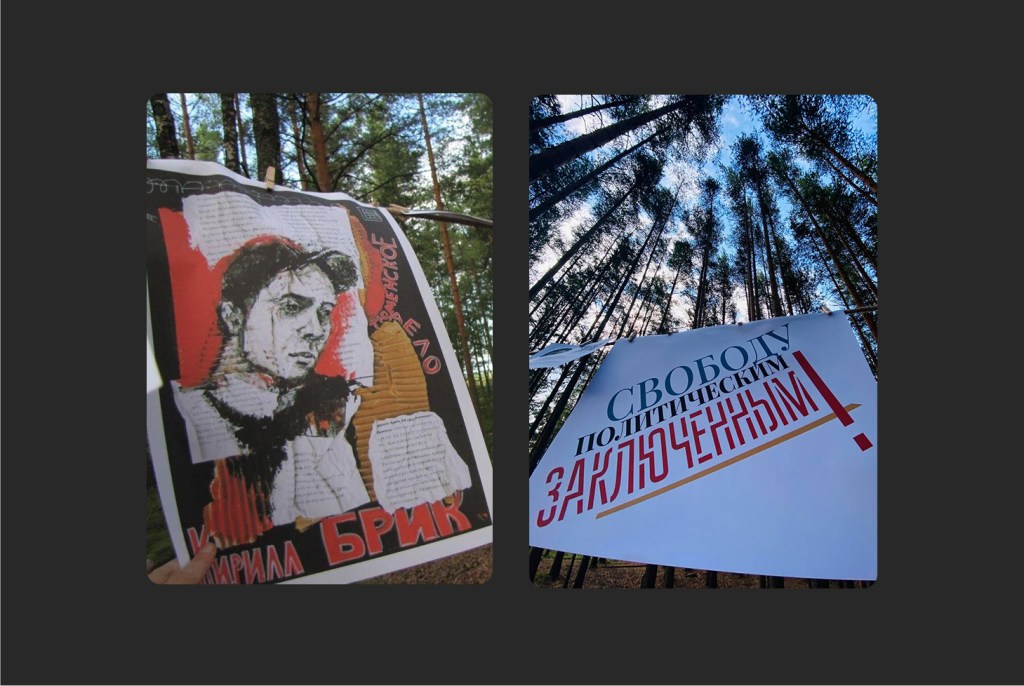
Nevertheless, there is activity in this field. For example, on 5 August 2023, Petersburg activists mounted an open-air exhibition on the Sestroretsk Ecotrail on the Day of Remembrance of the Victims of Sandarmokh [sic], a tract in the forests of Karelia where victims of the Great Terror were shot and buried in mass graves. Fifty works hung in the open air for a record time — almost an entire day.
Placards in support of Tyumen Case defendant Kirill Brik (left) and the release of political prisoners (right) at 2023 guerrilla exhibition in suburban Petersburg. Photos courtesy of 123ru.net via Bumaga
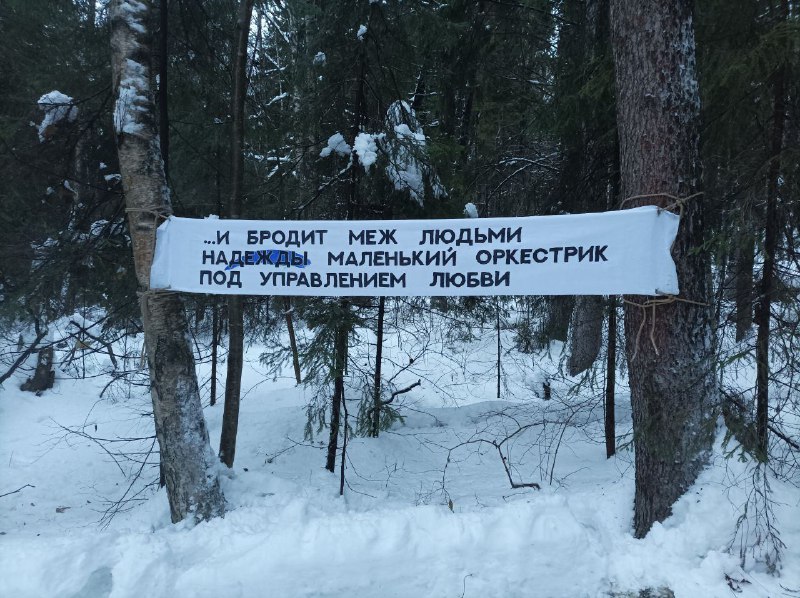
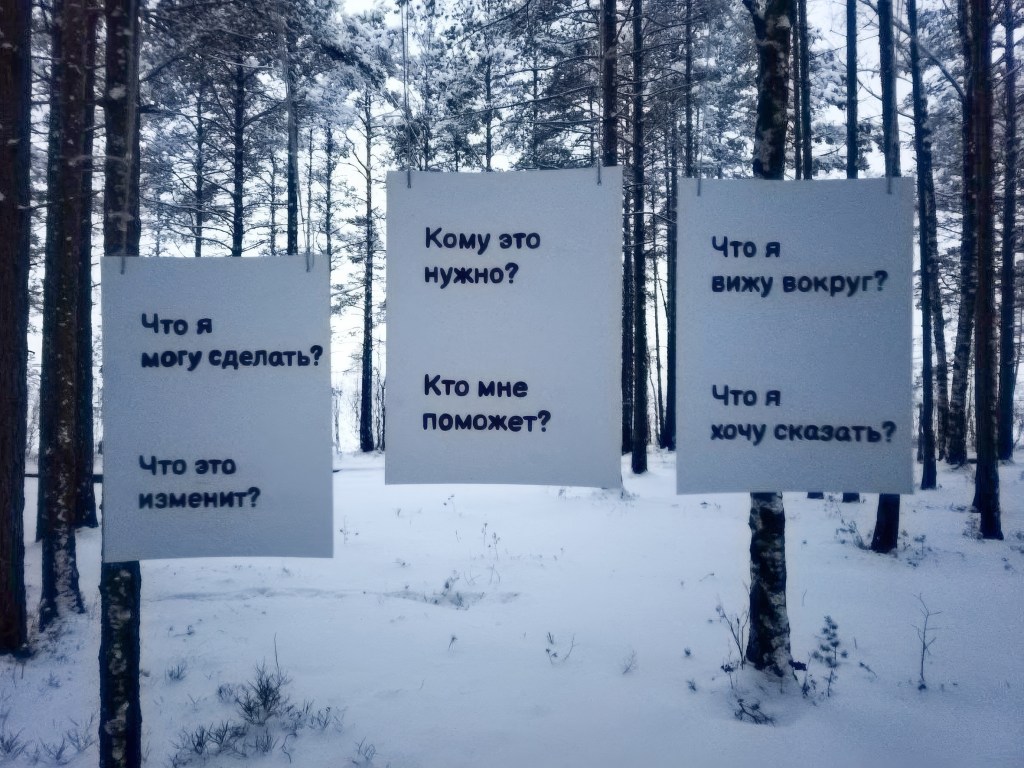
Several placards were also hung in the woods outside Petersburg this winter — for example, on December 10, Human Rights Day, the work I Dissent, Therefore I Am. And in January, an installation featuring a quotation from the Bulat Okudzhava song “Hope’s Little Band” was mounted outside the city.
“…and wandering amongst people / is hope’s little band, / conducted by love.” Photo: Bumaga reader
“What can I do? What would it change? Who would care? Who would help me? What do I see when I look around? What do I mean?” Part of the installation I Dissent, Therefore I Am. Photo: a Bumaga reader
In 2022, Petersburg hosted Carte Blanche, an international guerrilla street art festival. In addition to street works, a stationary exhibition at the abandoned Sailors Palace of Culture on Vindavskaya Street attracted great attention; it featured over twenty artists, including Vladimir Abikh, Maxim Ima, and Slava PTRK. That same autumn, Petersburg hosted the underground exhibition Continuity, dedicated to political prisoners of the past and present, including the victims of the Great Terror and those caught up in the Network Case. Some of the works were made by political prisoners themselves using improvised means and materials while they were incarcerated in pretrial detention centers and penal colonies.
Contemporary street exhibitions continue the Soviet tradition, but the state’s reaction to them has become tougher
Today’s guerrilla exhibitions in many ways are a continuation of the Soviet and post-Soviet tradition. The Bulldozer Exhibition can hardly be called an artistic event also. It was also a political event. It was a challenge to a repressive regime, “the first and most significant collective performance,” as art historian Yevgeny Barabanov wrote.
Since 2022, such exhibitions also have not only aesthetic but also political goals. Although in the Soviet and post-Soviet years, “unofficial” exhibitions, albeit with certain restrictions, could be legitimated [sic], since 2022, the state does not even attempt to compromise with artists.
Moreover, crackdowns against artists who voice alternative opinions have reached a new level. In 1991, the Moscow actionist Anatoly Osmolovsky and his group E.T.I. used their bodies to spell an indecent word for the phallus [khui] on Red Square. After the action, Osmolovsky was detained and threatened with charges of “malicious disorderly conduct.” However, thanks to the petitions submitted to the authorities by his art world colleagues and the Memorial Society, Osmolovsky was soon released.
Nowadays, petitions and statements of support are not enough to get artists acquitted. Sasha Skochilenko was sentenced to seven years in prison on charges of disseminating “fake news” about the Russian army. The young woman replaced price tags at a Perekrestok chain grocery store with anti-war messages.
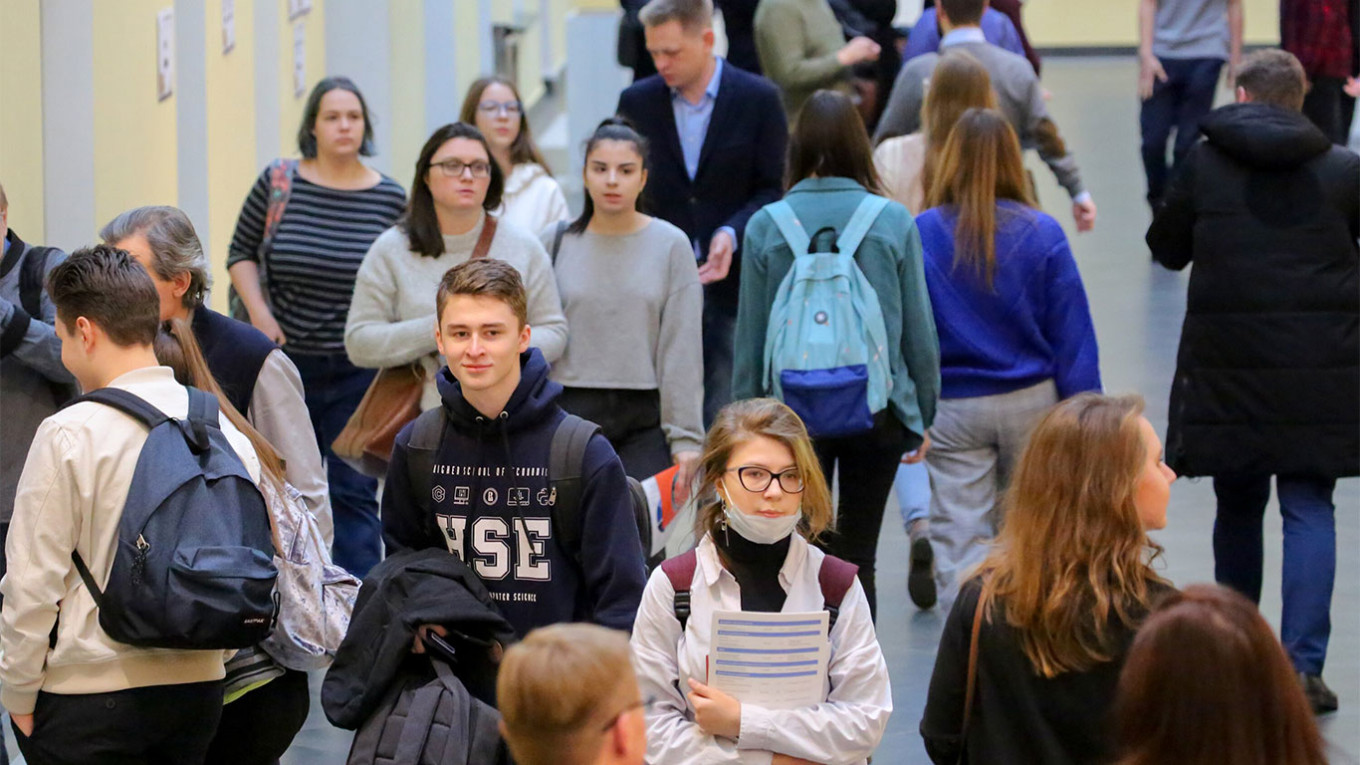
Once regarded as one of Russia’s liberal universities, the Higher School of Economics (HSE) has become a reactionary hellhole in recent years. Photo: Sofia Sandurskaya/Moskva Agency/Moscow Times
The Higher School of Economics (HSE) has forbidden applicants applying to its journalism program from quoting “foreign agents.” Any mention of people with this status or their publications will cause the results of admissions exams or interviews to be annulled, the university’s regulations say.
Applicants are also obliged to comply with the law “On Protecting Children from Information Harmful to their Health and Development.” They are thus not permitted to use materials “promoting” LGBT, “gender reassignment” and “denying family values” in their admissions applications.
A screenshot of the anti-“LGBT” and anti-“foreign agents” clause in HSE’s regulations for the oral interview taken by applicants to its bachelor’s program in journalism.
The application to HSE’s bachelor’s program in journalism involves undergoing a “creative test”: applicants [discuss] a “literary or sociopolitical” topic. The regulations state that the future journalists must demonstrate “an original position and awareness of current events and problems.”
Russian laws do not prohibit using and disseminating materials published by “foreign agents,” and only registered media outlets are obliged to flag individuals and organizations who have been designated as such.
Journalist Renat Davletgildeyev, who once served on HSE’s admissions committee, explained that in years past, applicants were, on the contrary, encouraged to mention the media outlets now designated “foreign agents.”
“I remember when we used to administer these exams at Vyshka [HSE’s nickname in Russian] and would give applicants the maximum score if they quoted the cool journalists and the media outlets who today make up the bulk of ‘foreign agents’ (in other words, the list of honest and cool journalists and media). I feel sorry for my alma mater. But it’s long been clear where things were headed,” he wrote.
[Last week], it transpired that the Higher School of Economics in St. Petersburg had announced that the use of feminitives by students was unacceptable. The leaders of student organizations were warned that the presence of such words even in conversations on social networks would be tantamount to involvement in the “international LGBT movement,” which has been deemed an “extremist” organization by the Russian authorities.
Previously, the HSE fired several lecturers for their anti-war stance, banned the remaining instructors from talking about political topics, and installed surveillance to monitor them, said Igor Lipsits, doctor of economics, who resigned his post at the university. According to him, cameras were installed even in classrooms under the pretext of “quality control,” but in reality they were meant to censor and purge instructors who did not agree with the Kremlin’s policy.
Once upon a time, apologizing on camera was a Chechen and Belarusian practice. Since the outbreak of full-scale war, the Russian authorities have also adopted this method of putting pressure on dissenters, especially in music and pop culture. Here are some examples from the last year.
Quote: “We have to be role models, but ones with the right values. I urge all performers to be responsible. The moment has come to change everything for the better, and I want to have an impact on this.”
Did it help: Yes, Mizulina gave the rapper another chance: he had his a picture taken with her and deleted some of his songs from streaming services. The security forces stopped disrupting his concerts.
Quote: “I spent time in prison. More precisely, I spent five days under arrest in a pretrial detention center. On this occasion, I have to shore up my opinion about the complaints about the pots.* I was wrong: I should not wish harm to my army, because the army is inseparable from the people. And I am an inseparable part of this people.”
Did it help: yes, apparently. Roman Khudyakov (which is the rapper’s real name) has stopped making public appearances, however.
*[In a video recorded on 23 March 2022, Loqiemean is shown baking meat in clay pots and saying that he would like those who bombed an apartment building in Odessa to be cooked in clay pots. On 1 May , Yekaterina Mizulina posted this video on her Telegram channel, captioning it as follows: “But we definitely do not need such concerts in Russia. Let him perform at home in his kitchen.”]
Quote: “I was mistakenly obsessed with false information [voice-over: “Why were you brought here?”] I had a misfire in understanding what was happening.”
Did it help: no. Charlotte has been charged on four criminal counts, including “disseminating fake news about the Russian army” and “discrediting the Russian army.” He’s now under arrest in a pretrial detention center.
Charlotte, “Posh or Not” (2019): “When I see a person, I look into their eyes It doesn’t matter what you look like It’s important what you’re talking about When I don’t see a person, I look up at the sky It doesn’t matter what I look like It’s important what I’m talking about”
For what: for an “almost naked” party, at which the guests were dressed scantily; Vacìo even came wearing only a sock over his penis.
Quotes:
Vacìo: “I want to say that I don’t support LGBT people in any way and didn’t want to make any propaganda about it. I condemn LGBT supporters. I apologize for offending the feelings of other people and for being involved in such a terrible video at such a difficult time for our country.”
Philipp Kirkorov: “I went through the wrong door. Yes, I knew about the event, had received an invitation, promised to come and came, but I didn’t know about the nature of the events that would take place behind that door. And so I left.”
Ksenia Sobchak: “I can tell you for sure for myself, my friends, I definitely did not want to offend anyone. If someone is offended by my appearance, I apologize for it.”
Did it help: We don’t know yet. It seems that the backlash against Ivleeva and her guests is still underway.
MOSCOW, Dec 28 (Reuters) – A rapper who attended a celebrity party with only a sock to hide his modesty has been jailed for 15 days, sponsors of some of Russia’s best known entertainers have torn up their contracts, and President Vladimir Putin is reported to be unamused.
An “almost naked” party at a Moscow nightclub held at a time when Russia is engaged in a war with Ukraine and the authorities are pushing an increasingly conservative social agenda, has provoked an unusually swift and powerful backlash.
A video clip of Putin’s spokesperson listening to an explanation from one of the stars who attended has been circulating online. Baza, a news outlet known for its security services contacts, has reported that troops fighting in Ukraine were among the first to complain after seeing the footage and that photographs of the event reached an unimpressed Putin.
Dmitry Peskov, Putin’s spokesperson, on Wednesday asked reporters to forgive him for not publicly commenting on the burgeoning scandal, saying: “Let you and I be the only ones in the country who aren’t discussing this topic.”
Maria Zakharova, a spokesperson for the Russian Foreign Ministry, said that the event had “stained” those who took part, but that they now had a chance to work on themselves, according to the Ura.ru news outlet.
The fierce backlash from the authorities, pro-Kremlin lawmakers and bloggers, state media, and Orthodox Church groups has been dominating the headlines for days, displacing stories about rising egg prices and allowing people to let off steam by railing against the show-business elite instead.
The party, in Moscow’s Mutabor nightclub, was organised by blogger Anastasia (Nastya) Ivleeva and attended by well-known singers in their underwear or wearing skimpy costumes who have been staples on state TV entertainment programmes for years.
DOUBLE APOLOGY
Ivleeva, who has since become one of Russia’s most recognised names, is seen in one clip showing off an emerald-studded chain around her backside worth 23 million roubles ($251,000) at a time when some Russians are struggling to get by.
She has since issued two public apology videos for the event which spanned Dec. 20–21.
In the second tearful apology, released on Wednesday, Ivleeva said she regretted her actions and deserved everything she got but hoped she could be given “a second chance.”
Nastya Ivleeva’s second social media apology for the “almost naked” party, posted on Wednesday
Her name has since disappeared as one of the public faces of major Russian mobile phone operator MTS, the tax authorities have opened an investigation that carries a potential five-year jail term, and a Moscow court has accepted a lawsuit from a group of individuals demanding she pay out 1 billion roubles ($10.9 million) for “moral suffering.”
If successful, they want the money to go to a state fund that supports Ukraine war veterans.
“To hold such events at a time when our guys are dying in the (Ukrainian) special military operation and many children are losing their fathers is cynical,” said Yekaterina Mizulina, director of Russia’s League for a Safe Internet, a body founded with the authorities’ support.
“Our soldiers on the front line are definitely not fighting for this.”
Many of the party’s famous participants have recorded apologies, including journalist Ksenia Sobchak whose late father Anatoly was once Putin’s friend and boss.
SOCIAL CONSERVATISM
The scandal comes at a time when Putin, who is expected to comfortably win another six-year term at a March election, has doubled down on social conservatism, urging families to have eight or more children, and after Russia’s Supreme Court ruled that LGBT activists should be designated as “extremists.”
Nikolai Vasilyev, a rapper known as Vacio who attended wearing only a sock to cover his penis, was jailed by a Moscow court for 15 days and fined 200,000 roubles ($2,182) for propaganda of “non-traditional sexual relations.”
Other more famous names have had concerts and lucrative state TV airtime cancelled, contracts with sponsors revoked, and, in at least one case, are reportedly being cut out of a new film.
The scandal has angered those who support Russia’s war in Ukraine.
Standing outside the Bolshoi Theatre on Thursday, Nadezhda, one Moscow resident, told Reuters she was outraged and thought those who took part should be punished and not shown on TV anymore.
“If you’re partying at least don’t film it,” she said. “At such a difficult time (for Russia), they should at least be ashamed. Aren’t they ashamed before those who are fighting for us?”
Alexander, another Muscovite, said those who attended had not broken any law and were free to do as they pleased at what was a private event.
But one woman who said her nephew had lost both legs in combat wrote in a post to the League for a Safe Internet that the stars should pay for prosthetic legs for her relative and others to make amends.
“That would be a better apology,” the unidentified woman wrote.
The situation around the “naked party in Moscow,” in the course of which the Russian patriotic crowd has canceled many quite pro-regime figures, quite tellingly illustrates the degradation of Russian society. Previously, there were two realities: the reality of official propaganda, and a parallel reality in which there was “contemporary art,” “kinky parties,” and “Knife magazine.” In exchange for symbolic loyalty to the regime, one could gain comparative individual freedom.
Now that time has come to an end. There will be no individual freedom even for the chosen ones. The only freedom that remains for Russians is the freedom to vote for Putin and the freedom to apologize to Kadyrov.
There is something incredibly funny about the fact that Russian culture, after all its sobbing about imaginary [culture] “cancellation” [on the part of the west], has finally joyfully taken the plunge and canceled itself.
The Justice Ministry has filed a lawsuit with [Russia’s] Supreme Court asking it to declare LGBT an “extremist organization.” The first hearing should take place on November 30. Officials have detected in the activities of the “movement”—even though LGBT is not a community—the “incitement of social and religious discord.”
At the same time, NTV broadcast a story claiming that LGBT individuals are easily recruited by Ukrainian security forces. The program even showed arrested “LGBT activists” who, according to the propagandists, wanted to simultaneously burn down military recruitment offices, send money to the Ukrainian army, and join the Free Russia Legion. There are obvious holes in the story’s veracity, but viewers will be left with a clear conclusion: those who support LGBT individuals are ready to fight against Russia.
Meanwhile Vladimir Putin unexpectedly made a statement in defense of LGBT people. He said that they are also “part of society.” But journalist Farida Rustamova noted that the fight against LGBT might be part of Putin’s re-election campaign.
“Extremist” status provides the state with tons of possibilities for censorship and new court cases. This can be seen through the example of other “extremist organizations” that were essentially invented by the authorities.
For instance, in 2020 the Justice Ministry declaredAUE an “extremist organization.” AUE is a teenage subculture; the acronym stands for “Arestantskii uklad edin” [“Prison order universal”]. No actual organization exists—there’s a bunch of adolescents across the country who are in various ways aesthetically and ethically excited about the life of people adjacent to the criminal world. The name first got wide publicity thanks to an article in Novaya Gazeta.
In any event, now the security forces can launch criminal cases on extremist grounds against people who are already in prison. They say they are establishing “AUE cells” in prison colonies. There are no actual cells—but there is a new way of putting pressure on incarcerated people who have already been disenfranchised.
The Justice Ministry also invented the so-called Columbine terrorist movement. Columbine is the name of an American school where two teenagers killed thirteen people in 1999. Subsequently, “columbine” became the term for all mass shootings in schools. No actual subculture exists. But now you can get sent to prison for twenty years for involvement in the “terrorist organization.” And a journalist can be fined if, when writing about the latest school shooting, they fail to mention that the shooters belong to the “terrorist organization”—even though this must, of course, be proven.
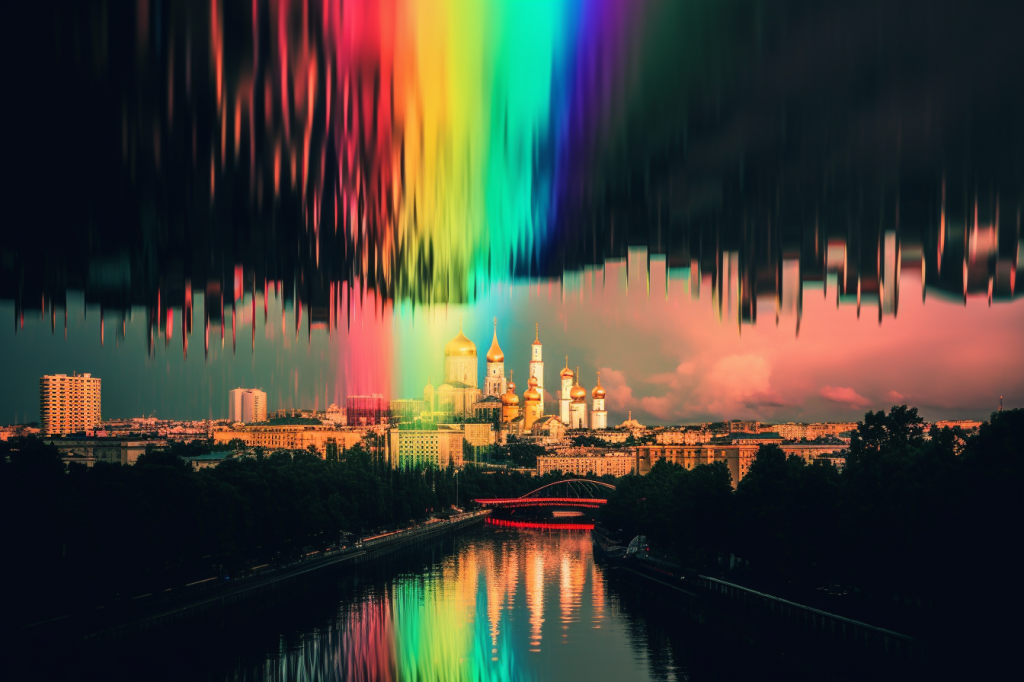
So belonging to an “extremist LGBT movement” that doesn’t actually exist is an excellent lever for putting the squeeze on anyone you like—from LGBT individuals to someone who draws a a picture of a rainbow.
Ksenia Mikhailova, a lawyer for the LGBT group Coming Out, toldAgentstvo News that the new lawsuit completely criminalizes working in organizations that support gay people. For instance, directing a LGBT organization could get you ten years in prison, while working there could get you eight years. Ksenia Prosvirkina, a lawyer at OVD Info, thinks that even old social media posts expressing support for the LGBT community will end up counting as a “continuing violation.”
Prosvirkina notes that symbols like the rainbow could lead to getting fined up to a million rubles or four years of prison. Valeria Vetoshkina, a lawyer for First Department, thinks that in the worst possible scenario, belonging to LGBT might be interpreted by the authorities as involvement in the activities of an extremist organization.
The Justice Ministry lawsuit is far from the first move against LGBT individuals on the Russian government’s part. Over the past year and a half alone, both “LGBT propaganda” of any kind and transgender transitioning have been prohibited.
At a recent report to the UN, Deputy Justice Minister Andrei Loginov said that there is no discrimination against LGBT people in Russia. “The rights of LGBT citizens in Russia are protected by the appropriate statutes.” How this jibes with the lawsuit brought by the ministry where Loginov works is unclear (evidently, not at all).
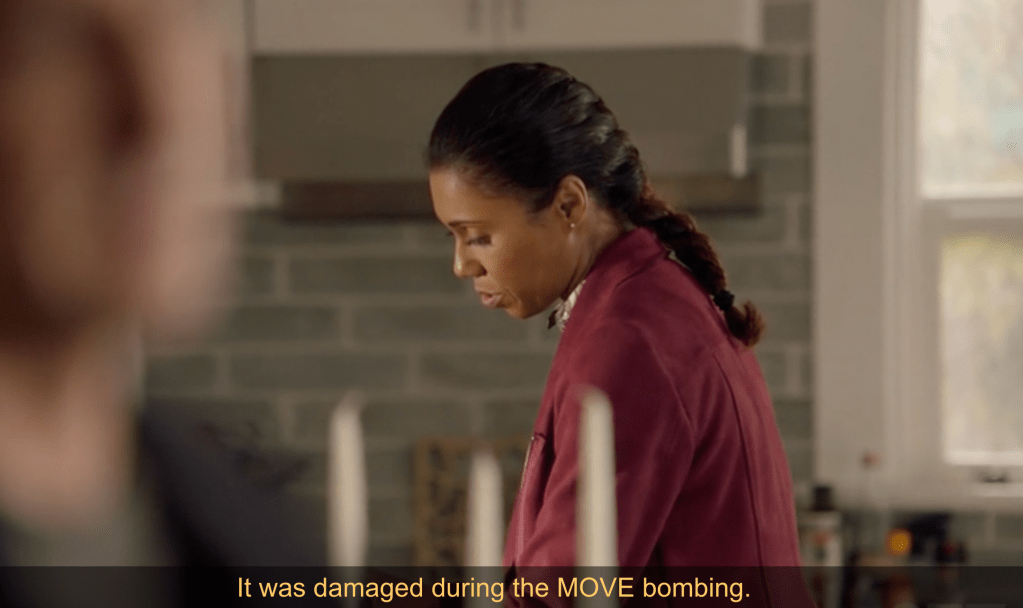
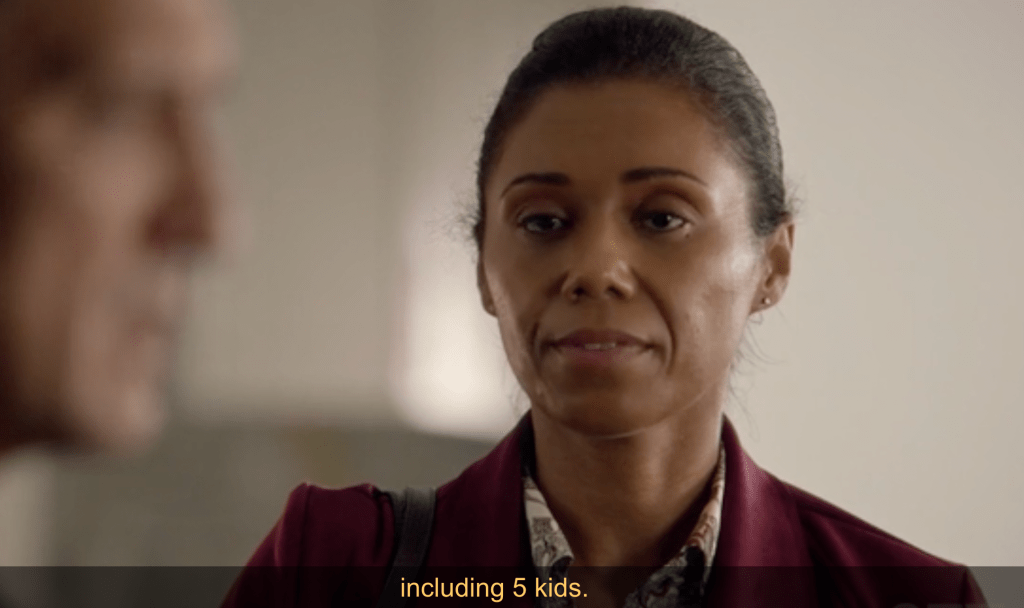
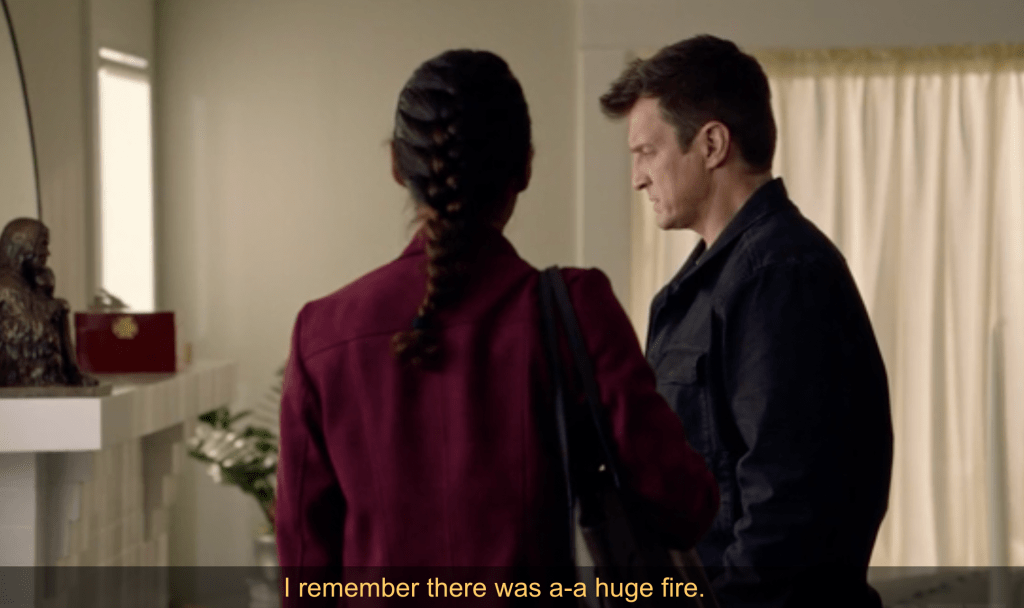
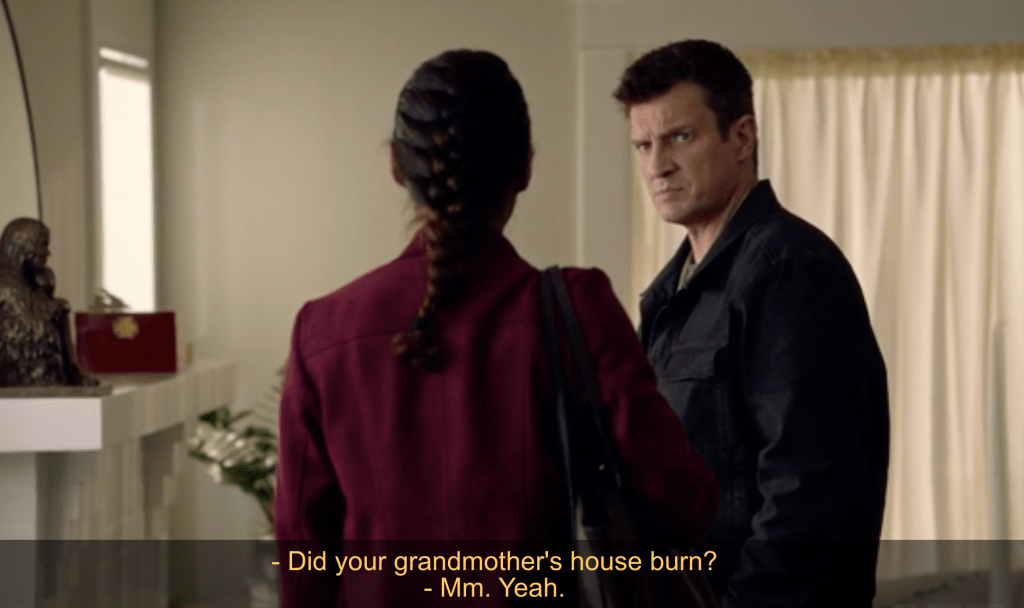
Professor Ryan mentions the events of May 13, 1985. On that day, about 500 police officers arrived at a row house at 6221 Osage Avenue in West Philadelphia to serve arrest warrants against several members of the militant black anarcho-primitivist group MOVE which has been called a terrorist organization by city officials and which had been in conflict with neighbors. After refusing to surrender to police, officers lobbed tear gas into the house and fired more than ten thousand rounds of ammunition in the house with residents returning gunfire. After a long standoff, the police commissioner ordered that the compound be bombed, in part because of fear there was a fortified gun bunker on the roof of the building. Six adults and five children died in the fire that followed.
In the aftermath of the bombing, the police and fire department let fires burn out of control for almost one and a half hours at the order of the Mayor which destroyed sixty-five houses in the neighborhood. Professor Ryan mentions that her grandmother’s house was one of those that was destroyed by these fires.
A commission instituted to investigate the events found that dropping a bomb on an occupied row house was unconscionable. While no one involved was criminally prosecuted, the city was later ordered to pay $1.5 million to the survivors of the bombing and $12.83 million to other residents displaced by the bombing and the fires. In November 2020, the Philadelphia City Council approved a resolution to formally apologize for the MOVE bombing.
Daniil Bazel, candidate for the Zaporizhzhia regional Duma in Russian-occupied eastern Ukraine Social media photo via Important Stories
The Russian authorities plan to hold “elections” in the parts of Ukraine they have annexed—the parts of Kherson and Zaporizhzhia regions held by Russia, and the so-called people’s republics of Donetsk and Luhansk—on September 8–10. The “lawmakers” elected to the parliaments thus formed will appoint the heads of the regions and municipalities. Local residents will play no part in this process.
The “elections” will be held on the basis of party lists, which Important Stories and the Conflict Intelligence Team (CIT) perused together. On those lists we found collaborators, acting members of the Russian State Duma, corrupt officials, and even mobilized men. For example,
One of the candidates is State Duma member Igor Kastyukevich, who is running as United Russia’s number two candidate in the elections in the Kherson region. Kastyukevich has been implicated in the deportation of Ukrainian children to Russia. A year ago, he recounted how he had assisted in moving over fifty children from the Kherson Children’s Home to Crimea.
Roman Batrshin, the appointed head of the Zaporozhzhia regional court, is running for the Zaporizhzhia regional duma. Previously, Batrshin was acting head of the Smolensk court. He became a “local” in the occupied region quite recently.
When our correspondent called Batrshin’s number, the voice on the other end of the line sounded like Batrshin’s. When asked about the elections he said, “It’s not me you’re talking to. He’s not here.”
Among them is Daniil Bazel, a 23-year-old mobilized soldier. In Moscow, he worked in the one of the arms of the Russian National Guard, but is now trying his hand at entering the Zaporizhzhia regional “parliament.”
“I’ve decided to run because I’ve come to like the region a lot,” Bazel told Important Stories. “It has to be developed. I myself am a mobilized soldier. I spent eleven months in Zaporizhzhia and and now I am directly performing tasks related to the service in the Zaporozhzhia region [sic]. I saw it all from the inside and I wanted to help fix everything.”
It is apparent from the candidate lists that the main problem faced by the organizers of the “elections” was finding people willing to run. Thus, 27% of LDPR’s candidates are pensioners and housewives far removed from politics, while such people make up nearly half of the candidates on the CPRF and A Just Russia lists.
LDPR is also running several serial candidates, that is, people who have run in dozens of elections at various levels but who have never once been elected. But there is one federal politician on the LDPR list—party chair Leonid Slutsky, who is running simultaneously in all four occupied regions.
The General Radio Frequency Center, which is subordinate to Roskomnadzor, and the company Crib Room, which develops solutions for locating and analyzing destructive content on the internet, have drafted a white paper entitled “Russia’s Gaming Industry.” The authorities see online gaming communities as a channel for communicating with young people and “a tool for state information influence on society.” According to the paper, the state can use games “to promote political ideas, brands and attitudes among young people,” which may require the development of technological tools for working with gaming communities.
Market participants note that the authorities’ growing interest in the industry creates problems for companies negotiating with foreign studios to launch games in Russia. Foreign companies do not want to deal with excessive regulation and censorship. “The Russian market is already small in global terms, and foreign studios were beginning to restore a cautious interest in it, but [the Russian authorities] are trying to regulate it rigidly, while the economic feasibility of such an approach is not broached by the people behind the initiative,” stresses Vasily Ovchinnikov, CEO of VIDO [the Videogame Industry Development Organization].
Alexander Bakhtin (right) says farewell to his mother after his trial. Photo: SOTA via Mediazona
Today, the Mytishchi City Court sentenced 51-year-old animal rights activist Alexander Bakhtin to six years in a penal colony. He was charged with disseminating “fake news” about the Russian army over three VKontakte (VK) posts written in the spring of 2022—about the possible blockade of Kyiv, about the murders of civilians in Bucha, and about Ukrainian volunteers who risked their lives saving homeless animals during the war. In addition to the time in the penal colony, the court ordered Bakhtin to undergo compulsory outpatient treatment supervised by a psychiatrist. The prosecution’s expert witness claimed that Bakhtin “could not have been fully cognizant of the actual nature and social danger of his actions and control them.” Mediazona publishes excerpts from Bakhtin’s rebuttal of the charges, which he asked to be entered into the case file before the verdict was announced. After reading these notes, readers will be able to assess for themselves the clarity and consistency of the convicted man’s thoughts.
In keeping with the principle of the presumption of innocence, it is not for me to prove that the materials I published are true, but for the prosecution to prove that these materials are “knowingly false.” But it was not proved who exactly committed the [war] crimes, which means it was not ascertained whether my actions constituted a crime.
Censorship is prohibited by the Constitution of the Russian Federation, and this Constitution is directly applicable [to my case]. Human rights can be restricted in the Russian Federation only when a nationwide state of emergency and martial law have been declared. But they have not been declared, which means that publishing materials that challenge the stance of the Defense Ministry is not a punishable offense.
I committed the actions that I am charged with in order to inform and familiarize my readers with an alternative point of view to the one that was then disseminated in the Russian media. At the same time, realizing that Ukraine’s official media are also an interested party in this conflict, I tried mainly to find information on the internet not in the official Ukrainian media, but as directly reported by local residents of Ukraine on their pages in social networks and online forums. My ultimate goal was to make what contribution I could to stopping this war, because, for example, the First Chechen War in 1996 was, as I believe, halted largely due to Russian society’s negative attitude towards it.
If we speak of “hatred and enmity” (as encountered in my posts in the form of harsh epithets directed at the Armed Forces of the Russian Federation), then these epithets do not apply to all [members of] the Armed Forces, but only to those [members] who employed various kinds of violence against civilians in Ukraine, or to those individuals who unleashed this war or called for unleashing it—that is, to war criminals. Perhaps, in terms of “generally accepted” definitions, those negative epithets of mine do apply to all their members, but I do not agree with this interpretation because, as follows from the findings of the forensic psychiatric commission, I am also generally partial to subjectivism, including when employing various definitions. So when I was asked by a psychologist to symbolically depict the concept of “justice,” I drew Putin behind bars. And when the psychologist asked me what that had to with justice, I replied that this was what justice looked liked to me right at that moment.
The severity [of a crime] should be defined by its effects. But can the prosecution prove that my publishing these posts produced any specific effects? For example, that they caused someone to lose their faith in the Armed Forces of the Russian Federation and commit an illegal action? At the time of my arrest, I had a little more than sixty friends on VK, and each criminal episode had about 100 views. There are no victims in the case. I myself stopped publishing these posts around the summer of 2022 precisely because they had no effect. By that time, the overwhelming majority of Russian citizens had already made up their minds about this war. Some of them sincerely supported the Russian authorities, while others supported them for opportunistic reasons (in order not to lose their jobs, etc.). Huge numbers of people were intimidated (including by disproportionate punishments meted out for anti-war stances) and kept quiet. Quite a large number of people emigrated from the Russian Federation altogether, while a huge number of Russians decided that this war did not concern them at all. Thus, not only my posts but also anti-war publications in general were unable to change anything, unfortunately. It was only on the battlefield that matters were decided.
If my posts are so socially dangerous, then why was my VK page not blocked for such a long time?
You can write a letter to Alexander Bakhtin through the Zonatelecom or FSIN-Pismo, or by regular mail to:
Bakhtin Alexander Sergeyevich (born 1971)219 ul. Gorval, SIZO-2Volokalamsk, Moscow Region 143600 Russian Federation
Mediazona thanks Nikita Spivak, a lawyer with OVD Info, for the opportunity to read his client’s manuscript.