Recent Russian Opposition YouTube Blockbusters: “Age of Dissent 2024” & “The Yashins”

Andrei Loshak, “The Age of Dissent 2024” (in Russian, with English subtitles)

The eve of the 2018 presidential election saw the release of Andrei Loshak’s series Age of Dissent, about young supporters of Alexei Navalny who were involved in his election campaign.

The sequel to the series, filmed on the eve of the latest presidential “election,” recounts how the lives of the activists who dreamed together with Navalny of “the wonderful Russia of the future” have changed dramatically in six years. Filming was almost completed when news came Navalny’s death. The movie’s protagonists ask themselves how to live without dreams and hope.

Source: Current Time Doc (YouTube), 3 June 2024. Annotation translated by the Russian Reader
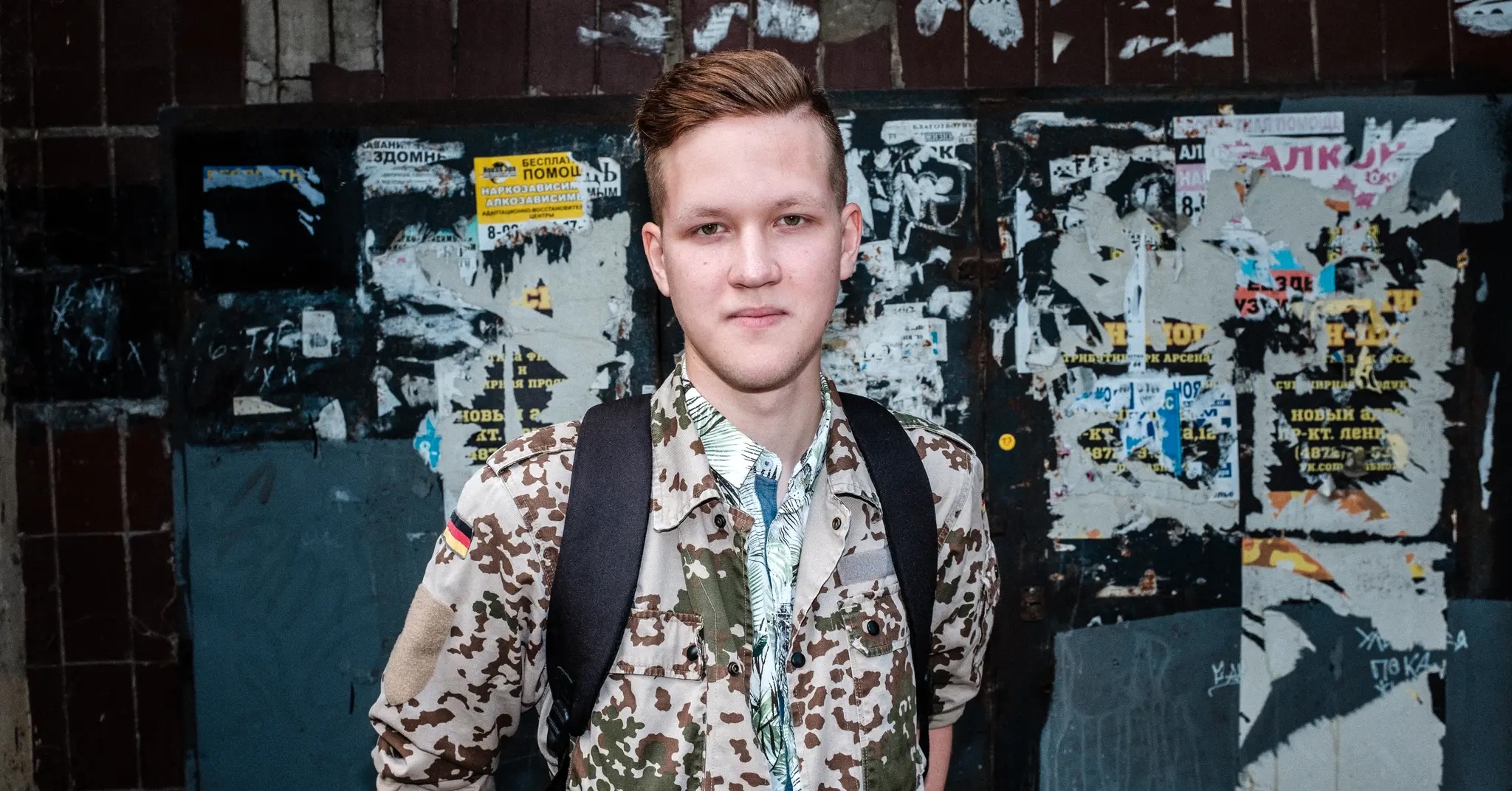

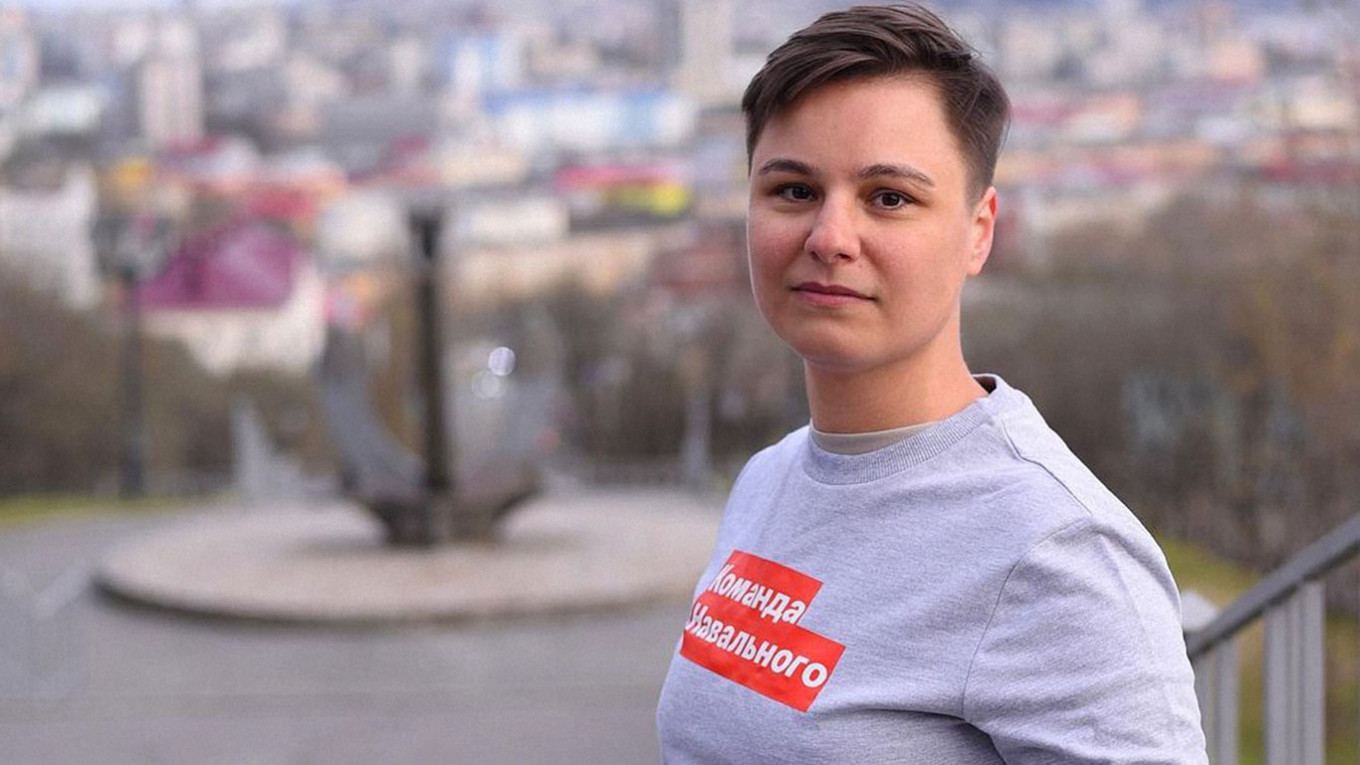
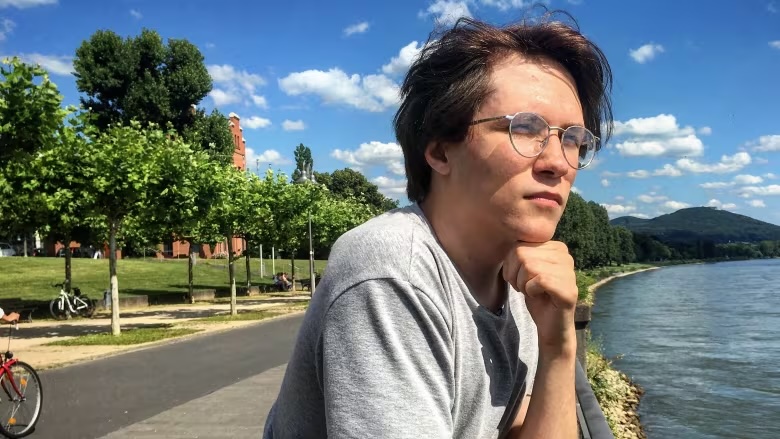
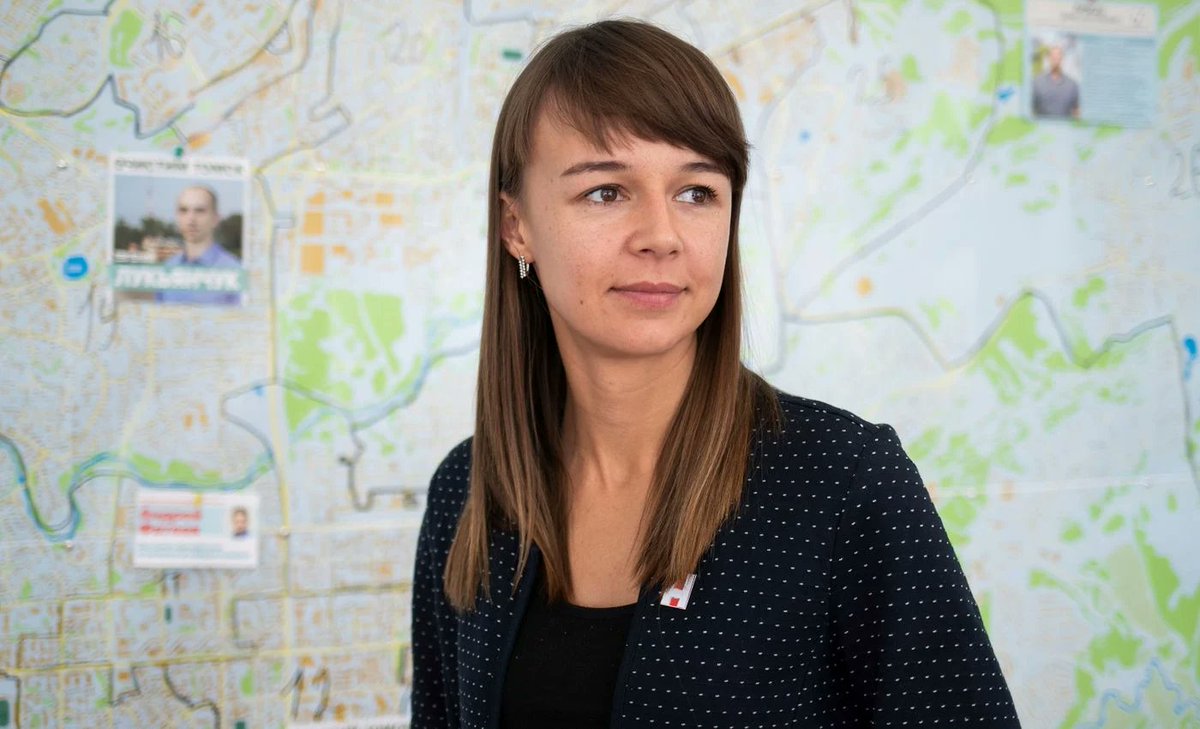
The protagonists of Andrei Loshak’s documentary film Age of Dissent 2024: (clockwise, from upper left corner) Filipp Simpkins, Lilia Chanysheva, Ksenia Fadeeva, Yegor Chernyuk, and Violetta Grudina


On June 3, Current Time hosted the premiere of Russian filmmaker Andrei Loshak’s documentary Age of Dissent 2024. It is a sequel to Age of Dissent, which was filmed on the eve of the 2018 presidential election in Russia and focused on opposition politician Aleksei Navalny and the young supporters who helped him with his unofficial campaign. He was denied registration as a candidate but campaigned as if he was on the ballot.

Fast forward six years, to 2024, and another Russian presidential election, which was held in March and won, again, by Vladimir Putin with what the state said was 87.3 percent of the vote. Loshak’s new film, commissioned by Current Time, RFE/RL’s Russian-language TV and digital network, tells how the lives of the same activists who had dreamed, together with Navalny, of a “beautiful Russia of the future” changed dramatically.

Filming was almost completed when news broke in February of Navalny’s mysterious death in a Russian Arctic prison while serving a 19-year term on charges his supporters and many Western governments considered politically motivated.

On the eve of the film’s premiere, Current Time journalist Ksenia Sokolyanskaya met with Loshak in Tel Aviv.

RFE/RL: Did you think from the very beginning that this story would have some kind of sequel? Or did something happen at a certain moment that made you want to return to these people?

Andrei Loshak: I must say that, probably, this idea was there from the very beginning. After I released the first film, I saw that it kind of took off. People began to tell me that they wondered what would happen to the subjects next. And I thought, yeah, it’s really interesting that it will be a new election cycle six years later.

I had to monitor their fates, so I asked to film some things, although I didn’t know for whom it was to be done or when. But then I realized that they had all left Russia, that their fates had changed very dramatically, and that everything that they had fought for and lived for, all of it was destroyed in these past six years.

Yes, it seemed to me that this was enough to return to them and film what had happened to them. But you have to understand that we finished filming in January and early February [of 2024]. I sat in Tbilisi and thought about what to do with all of this.

What was my idea? To draw attention to Aleksei Navalny, because for me, this was such a serious motivator. There was a moment when he was being transferred to [the Polar Wolf prison in Russia’s Arctic town of] Kharp, and he disappeared, and I was struck by how few people wrote about it. For two weeks, it was not clear whether he was alive or not.

They killed Aleksei on February 16. At that moment, I was simply lost. I didn’t understand what to do with the material.

I think it was important to record the reactions of [the film’s subjects] to the news of that day, before they had time to get used to it. Although, to be honest, I’m still not used to it. It killed me, too.

This is probably the most personal film I’ve made in a long time. Because usually you take the position of an observer and film all sorts of things, but in this film I lived with the subjects — with one dream, one hope — and Aleksei was as important a figure for me as he was for them.

RFE/RL: I read the comments under the teaser for the film, which was posted the other day. People wrote that it was painful to watch, that their hearts were broken. We live in a Russia we don’t want to live in, and Violetta in the film talks about “those traumatized by Russia.”

Loshak: Moreover, a psychotherapist gave them such a diagnosis.

RFE/RL: In the film, a separate theme is the question: How do you live when the main thing you’re living for is taken away? Do you think there is an answer?

Loshak: We are all asking this question now, and few people understand how to overcome all this. This is a recording of this moment, when our homeland rejected us. We found ourselves superfluous and unnecessary there. She needs us, but the circumstances are such that they don’t expect us there, they don’t want us there, they push us out of there.

Hope is such a straw. You still clutch at it. Of course, a few months is not enough time to understand how to live now. I am in this process, and my heroes are in this process of understanding. [In the film,] Oleg says this [phrase] from the point of view of common sense: “We need to stop this, guys.”

RFE/RL: Meaning that political activism is not a profession?

Loshak: Yes. It is possible in some historical cycles, but in others it is impossible. And when you find yourself rejected, uprooted and without a homeland, your plan must change….

That’s why I always look at this whole “opposition movement” with great skepticism. I don’t know who looks at it without skepticism. But on the other hand, I don’t deny it. It’s kind of necessary, because they’re doing the right things, but it’s virtually impossible to influence anything in Russia from [exile]. This must be understood clearly.

This feeling of helplessness with which Violetta says: “What, how, and why?” — the loss of these meanings is very painful. But we always have to say goodbye to something; everything has its own lifespan. And unfortunately, we are now at this point where we need to say goodbye to all this and start something new. The question is: What?

RFE/RL: Do you have faith? In the film people talk a lot about faith, and it ends with Aleksei’s words about the need to believe. Do you have faith that Aleksei’s story can also transform into something that people will watch, and that if they don’t know the story of Jan Palach, they will learn it from your film? (Editor’s Note: On January 16, 1969, 20-year-old university student Jan Palach set himself on fire in Prague to protest the August 1968 invasion of Czechoslovakia by Warsaw Pact troops. He died of his burns three days later.)

Loshak: I’m sure of it. I’m convinced of it. Such sacrifices, heroic deeds of such magnitude, cannot be in vain. I am absolutely sure that this is not a wasted sacrifice and that Aleksei will remain in the history of Russia forever as one of these heroic figures, which, of course, will acquire its own mythology. And in what our grandchildren and great-grandchildren will read about him, we would hardly recognize Aleksei.

There are always few such figures in history. I have never encountered anything like this in my life, such a level of self-sacrifice.

RFE/RL: The scale.

Loshak: Yes, but we also had, of course, our own Jan Palach: [Russian journalist] Irina Slavina, who set herself on fire in Nizhny Novgorod [in 2020], opposite the city police headquarters. (Editor’s Note: Before self-immolating, Slavina wrote on Facebook, “Blame the Russian Federation for my death.” A day earlier, she had written that police had searched her apartment, trying to find evidence linking her with the opposition Open Russia group and confiscated her computers and mobile phone.)

She didn’t do it in vain, either. I’m absolutely sure. Although who remembers her now? This was just a few years ago, before the war [in Ukraine]…. She will also be in this pantheon of heroic people who openly came out against evil.

Of course, Aleksei and what he did, and the way he died — all of this will later inspire people because everyone always needs bright examples, everyone needs these myths. And Aleksei has already become this myth. I can already see how people who never appreciated him during his lifetime — and, in general, I heard little good from them about Navalny — are now writing: “But Navalny would not have said that,” or, “Navalny would not have done that.”

His wings have already grown; he is already soaring over this unfortunate Russia, and he will always soar there from now on. This is actually good because you have to believe in something.

RFE/RL: After Navalny’s death, a discussion appeared in the Russian-speaking, mostly emigrant, community. It seems to me that the impetus was Shura Burtin’s manifesto on Meduza that a “beautiful Russia of the future” will not happen and that hope for some kind of good future is harmful. One of your subjects, Violetta, also talks about how she doesn’t feel joy, that she can’t say she lives, she just exists. Do you think you should actually believe such stories?

Loshak: Believe in what?

RFE/RL: You said Aleksei’s sacrifice was not in vain, but it seems to me that for a large number of people this is not true.

Loshak: That everything is in vain, that evil triumphs over good, and that this has always been the case in Russia? It has always been this way. But it seems to me that everything has its time. Even if we look at the history of Russia, evil has always defeated good, but there have also been moments when good had a chance.

There have always been thaws, rollbacks toward democratization, and liberation from the shackles with which the state always entangles people in Russia. We have always had this chance; we just never took advantage of it.

With Aleksei there was this chance; he gave us this chance throughout his political life, starting in 2017, but this liberal layer of us, so to speak, simply looked at it all with the curiosity of a TV viewer, nothing more.

Then he returned. He returned [to Russia from Germany in January 2021 after being treated for poisoning], realizing that, of course, he would most likely be imprisoned. But he gave us this chance again, and it was as if it was all staged. He returned, his documentary Putin’s Palace was released, which was watched by 100 million people. Then there was a rally, and the usual 20,000 to 40,000 people came out.

We wasted the chances that Navalny gave us.

I really believe that at some point people will understand how important it is to participate in politics, how important it is to be a citizen, and not just to be a resident of this country. One of the subjects in the first part of the documentary in 2017 said to me — I won’t say his name now, because he is in Russia, but he was on the Maidan; by accident, he ended up there — “When 10,000 people come out, it’s nothing. But when 1 million people come out, you can’t do anything about it.”

This is why I endlessly respect Navalny: for the fact that he did everything he could, and more than he could, to give us these chances. And we blew them. And I hope that someday this will become obvious. You see, what is happening to Russia now cannot last forever.

RFE/RL: Why?

Loshak: Because it’s against common sense, it’s against the passage of time. This is an attempt to turn back time, to turn it around….

In general, history is cyclical. Now there is some moment of crisis in which Western civilization finds itself. We see incredible divisions within Western countries. I don’t remember this before. This is also some kind of new sign of the times. But nevertheless, Western societies have gone through many crises, and their strength is that they are democratic, and thanks to this openness they survive them, work through them, and reach a new level.

But Russia is not doing this. Russia is simply driving us into some kind of Middle Ages with its boots. The rhetoric that is heard now is about a “holy war,” about the defense of traditional values. It all comes down to homophobia really. This is the only thing they found as a scarecrow around which they built this whole structure about the “holy war” of the Russian world with Western civilization, which is satanic, because gay people can openly hold each other’s hands and recognizes their marriages. This is complete bulls**t.

For this generation, about which I filmed in 2017, there was no issue of homophobia at all. They had already grown up in this cross-border world of the Internet. They saw that this was normal. This is how all people live, and they are happy.

I subscribe to Russian-language Iranian opposition channels. You’re amazed how much the same is there. It’s just that these grandfathers look more colorful there. Ours are in secular blue jackets, and in Iran there are bearded ones in dressing gowns. But everything is the same. People want to live freely; they want to be happy. It is impossible to be happy when everything is forbidden.

It is impossible to keep these prohibitions all your life because the reverse process is taking place all over the world. People are following the path of gaining more and more freedom, because it is more comfortable to live this way, and at the same time respect the freedom of others….

But at any moment the Russian state can invade your life and tell you how you should behave, how to dress. You have nothing. You owe them everything for some reason, but they don’t owe you anything.

This is such an old patriarchal model of the world order. If you look at all this more broadly, I see it as a rebellion against patriarchy. And what is happening in Russia is the agony of the patriarchy. In Russia, the strong are always right. To the question, “What is strength?” [I answer that] in Russia there is strength in strength. Not in any truth. This is nonsense. What is the truth? The truth was on Aleksei’s side. And where is he? I’m sure [these grandfathers] are becoming decrepit. Time will simply kill them because time is not on their side. And at some point they will simply stop being strong, and then they will be finished.

Arriving at Jan Palach’s grave [in Prague], Oleg tells the story about what happened in 1969. And in 1989, the Velvet Revolution [in Czechoslovakia] began with people coming to his grave. Yes, we had to wait 20 years for this name and this feat to become an impulse and begin to work. But now, it seems to me, time flows faster. I would like to believe that we will not have to wait another 20 years.

RFE/RL: When you invited people to the premiere in Tel Aviv on Facebook, you wrote: “I don’t wish you a pleasant viewing. That would be hypocritical on my part.” As someone who has seen the film twice, I can say it is indeed very difficult to watch. What effect do you, as an auteur, hope for?

Loshak: Due to what happened during the filming — and it was not I who wrote Navalny’s death into the script — I stopped thinking at all about who I was doing it for. It’s just a film that has a lot of my personal pain in it. I did this in order to try to part with this pain. It’s like psychotherapy: You have to work through it and live it in order to move on….

Navalny was important to so many people. This is a figure on a much larger scale than perhaps even we thought. Both importance and value. Still, his presence in Russia, even in prison, in this political landscape was completely incommensurable. We just don’t even understand yet how important. And we will understand gradually more and more. This film is probably for these people.

RFE/RL: You wrote a big post on Facebook about Aleksei and said that you miss him, and that it doesn’t go away. And in the end you say that despondency is a mortal sin, that Russia is a terrible fairy tale with a bad ending. You say that faith is an irrational thing. Do you want to return to Russia?

Loshak: Of course, I want to return to Russia now…. If Putin dies, then, of course, I will return….

Listen, this is our homeland. It’s not that we’re injured. It’s normal to want to live in your homeland with your people. They turned us into some kind of national traitors, although they are the national traitors. But we ourselves even began to get used to it, feeling that we were somehow different, which means we don’t belong there, that this is not our homeland.

But, damnit, this is our homeland, our roots are there, our everything is there. Why shouldn’t we want to go back? It’s normal to want to go back and desire to live in a different country. That is, to want changes in your country, which has simply turned into a fiend of hell, which threatens the whole world with nuclear disaster and is working to split the whole world and plunge it into some kind of abyss of chaos.

What is Western civilization? If we talk about European values, this is democracy, this is human rights, this is freedom — these are normal things. This is the norm. And they declared the norm to be evil. Who are they after that? This is some kind of madness that will end either in a nuclear apocalypse or in the fact that at some point they will simply die, as generally happens in history with villains: At some point, they simply died, and the world sighed freely until a new one was born.

RFE/RL: In an interview, you said you’d like to shoot a film in [the Ukrainian city of] Odesa, which is an important place for you. Did you have in mind a film that is less heavy than the one you have made for Current Time? Something entirely different?

Loshak: I really want to. I am very tired of politics, of Putin — of this creature, this absolutely insignificant bastard, who forces us to follow him all the time. Then we all write about it, film it, and react in horror. We are forced to because we react to abuse, to constant violence against us, because this person mocks us.

I want to film about something more metaphysical. With hope, with faith, with love. There is a lot of love missing.

Source: Ksenia Sokolyanskaya, “‘We Wasted The Chances He Gave Us’: Director Andrei Loshak Talks About His New Navalny Film,” RFE/RL, 4 June 2024. Although this isn’t a perfect translation, I refrained from editing it—except for the title of Loshak’s new film, which was translated flagrantly wrongly in the original text. ||| TRR


Tell Gordeeva: “The Yashins: ‘His Sentence Will End When the Regime Ends'” (in Russian; no subtitles)

In February 2022, opposition politician Ilya Yashin openly spoke out against the war while declaring that he would never leave Russia. In December, he was sentenced to eight and a half years in prison on charges of “discrediting” the army. Yashin has been held in a punishment cell over a month (since 17 May 2024), a visit from his parents was canceled, and nothing is known about the state of his health. We talked to Yashin’s parents about their son, whom they are proud of.

Contents: 00:00 Why do the Yashins not keep their son’s letters at home? 2:45 “A person is jailed for 15 days and until the last minute he doesn’t know whether he’ll be released or not” 7:15 “I’ll be the first to tell you’re wrong” 10:16 “Emigrating means admitting that we lost”11:47 “Gorinov doesn’t have it better because Ilya’s in prison” 13:43 “Who will know whether you gave your consent or not?” 17:36 “I guess I’ll have to be in prison for a while. What’s a little bit?” 21:21 How the clerk at the Tushino district court fell in love with Yashin and quit her job 22:36 Does Ilya Yashin have a fiancee? 25:20 How Yashin’s ex-girlfriends attend his court hearings 27:29 “We don’t communicate with Ksenia Sobchak” 31:27 Why didn’t Yashin become an actor? 33:53 “We accidentally met Lyudmila Navalnaya at the trial” 35:31 How Lyudmila Navalnaya taught Tatyana Yashina to put together prison care packages 36:48 Why do shampoo and toothpaste have to be poured into a plastic bag? 39:08 “His sentence will end when the regime ends” 40:46 “Now nothing good will ever happen” — on Navalny’s death 42:52 “Both my friends are dead” — Yashin’s letter after Navalny’s murder 44:55 “There are people who have it worse than we do” 48:53 Yashin’s health problems 52:49 How did Yashin’s parents meet? 54:58 Who taught Ilya to box and why 56:46 “I did everything to make sure Ilya was a momma’s boy” — Valery Yashin on parenting 1:00:28 “We Spartak fans are indomitable!” 1:02:16 Yashin asked for a wash basin in prison 1:06:01 “Ilya lived in a barracks in the tenth grade” 1:11:09 “He’s serving the longest sentence in the penal colony in Smolensk” 1:13:47 How his son has changed in prison, according to his father 1:14:36 …and according to his mother 1:19:19 “It’s him doing, but I’m the one who’s ashamed” — how Yasha’s mom taught her son to be a good deputy 1:25:00 “He went to his first protest rally in the eleventh grade after school”1:28:08 “Yabloko decided to do a deal with the Kremlin”1:31:24 How did Yashin and Nemtsov become friends? 1:33:48 “Even from prison, Ilya manages to send me flowers for my birthday” 1:34:46 “Mom, I’m in a paddy wagon but I’m okay” 1:36:57 The scariest day in Tatyana Yashina’s life 1:42:52 “I don’t consider Putin my enemy” 1:47:21 “Our son really did something wrong, but your son is paying for everyone” — what relatives of other prisoners say to Yashins 1:58:20 “Absolute strangers made care packages for him” — about the prisoner transport to Izhevsk 2:01:05 How did Yashin end up in the Okrestina detention center in Belarus in 2020? 2:03:48 “If you haven’t raised a person who is smarter than you, you’ve wasted your life” 2:05:34 “This is a marathon, and I have no doubt you’ll make it to the finish line” — a three-day visit with Ilya 2:07:05 “I missed your omelettes the most” 2:08:03 Why does Ilya Yashin’s mom not want him to become president? 2:10:13 “Guys, don’t get upset!”

Source: Tell Gordeeva (YouTube), 17 June 2024. Annotation translated by the Russian Reader
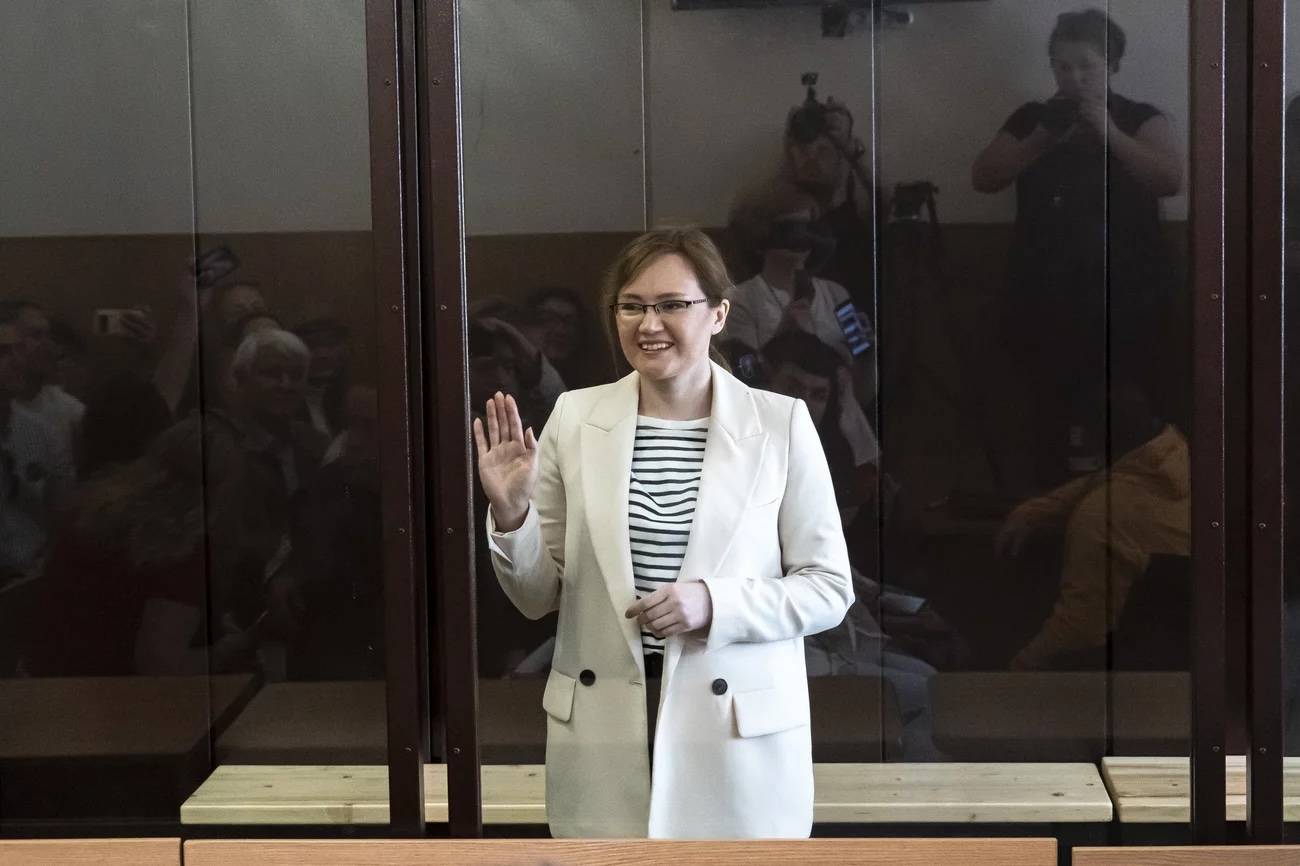

Russian opposition politician Ilya Yashin is currently serving an eight-and-a-half year sentence in prison for spreading “disinformation” about the Russian army after speaking out against the mass murder of civilians in Bucha, Ukraine. Journalist Katerina Gordeeva sat down with his parents, Tatyana and Valery, who still live in Russia, to learn how they’re coping with his incarceration, how they support their son in prison, and what hopes they have for the future. Meduza shares key points from the interview.

On not persuading him to leave Russia

We never pressured him on any issue — neither small ones nor something like this. It’s his life, and he has to make these decisions; we can only help. I always told him, “Ilya, no matter what happens in life, know that you have a strong support system. That doesn’t mean you’ll always be right. And if I think you’re wrong, I’ll be the first to tell you.” The decision [not to leave Russia] came in 2012, after the Bolotnaya Square case. Leaving would mean giving up, admitting that everything was in vain.

He didn’t leave then. And then Boris Nemtsov was killed, and he said, “Now, even more so, I can’t leave. Leaving would mean admitting that we lost. As long as I’m alive, I don’t believe that I’ve lost.” We didn’t try to talk him out of it because I understood how he felt, and I can’t imagine him being abroad now. I think it would have been such an ordeal that what he’s going through now is still much easier.

On an exchange

He himself doesn’t want an exchange. His main argument is: “Even if there are any exchanges, I’m far from being the first in line, and probably I’m the last, because there are people for whom it’s a matter of life and death. Secondly, I’m not ready to be exchanged for a hired killer who will then be free. Thirdly, agreeing to an exchange means leaving the country. I could have left the country right away.” I told him, “Ilya, it’s clear which way everything is going. Maybe if the opportunity arises, you shouldn’t be stubborn and should agree? After all, who will know whether you gave consent [for the exchange] or not?” He said: “I will know. That’s enough.”

On why they themselves stay in Russia

Because our son is here. We use any possible fleeting opportunity to see [him]. If there’s an appeal hearing, and he’ll be there via teleconference, maybe he’ll see us, and we’ll wave to him. And then he’ll see and make a heart. Maybe we’ll be given five minutes to exchange a few words. Letters are one thing, but it’s another when you can see him and understand by his expression, [by the way] he shuffles papers, what state he’s in, what his mood is. That’s why we attend all the court sessions.

On their son’s sentence

I was shocked when the prosecutor requested nine years for Ilya. I thought I’d misunderstood, I had misheard, because it couldn’t be true. Then, after we’d left the courtroom but before the sentence was pronounced, there was a moment when it overwhelmed me a little. But I quickly pulled myself together, and by the time of the sentencing, we took it quite calmly, philosophically: when the regime ends, the term will end. He chose this path, and we’re walking it with him. We are beside him, we are helping, and what will be, will be.

On family life

We never had any secrets. In our family, we made all our decisions collectively, so to speak. Any decisions — important or unimportant — were discussed by the whole family, and we included Ilya in this from a very young age.

On how Ilya has changed in prison

Tatyana: He’s become kinder and less rigid, paradoxical as it may sound. When he was young, he could break off relationships abruptly. Now, he’s more understanding, he doesn’t judge. Some things make him smile wryly — but without judgment.

Valery: He used to have moments where he was very categorical in his judgments. He’d listen, understand, agree, but still stick to his opinion. Now, he’s grown more tolerant. He’s developed [an open-mindedness]; he’s matured and become more resilient.

On people’s support

We were in Smolensk; the court was hearing an appeal on an administrative case for failing to fulfill the so-called duties of a “foreign agent.” And the [train] arrives just on the dot, so we had to take a taxi and rush into the building. When we got there, a journalist who’d arrived earlier called us and said, “They changed the courtroom because there are a lot of people.” And when we walked in, we saw a full hall — Smolensk residents of all ages. […]

And then these people came up to us — there were these guys, a very young man, a student, young women, and a local lawyer. They said, “Come with us, we’ll show you where you can sit, have coffee, eat, and warm up.” It was so touching. Then a charming woman, about our age, maybe a bit younger, came up to us. She said, “I live nearby too, you can always rely on me.” I’ve met a lot of people who say things like, “Hold on, everything will be fine, this will all end.” But no one has ever called my son a traitor or whispered it behind my back.

On the future

During our last visit, which lasted three days and was the first in two years, we could hug and talk about anything. We talked a lot. He said: “What can you do? It’s a marathon.” I told him, “Ilya, I might not make it to the end.” He said: “You’ll make it. I have no doubt.”
Source: “‘He chose this path, and we’re walking it with him’: The parents of imprisoned Russian opposition politician Ilya Yashin on coping with their son’s incarceration,” Meduza, 19 June 2024

Leonid Fyodorov: Mir

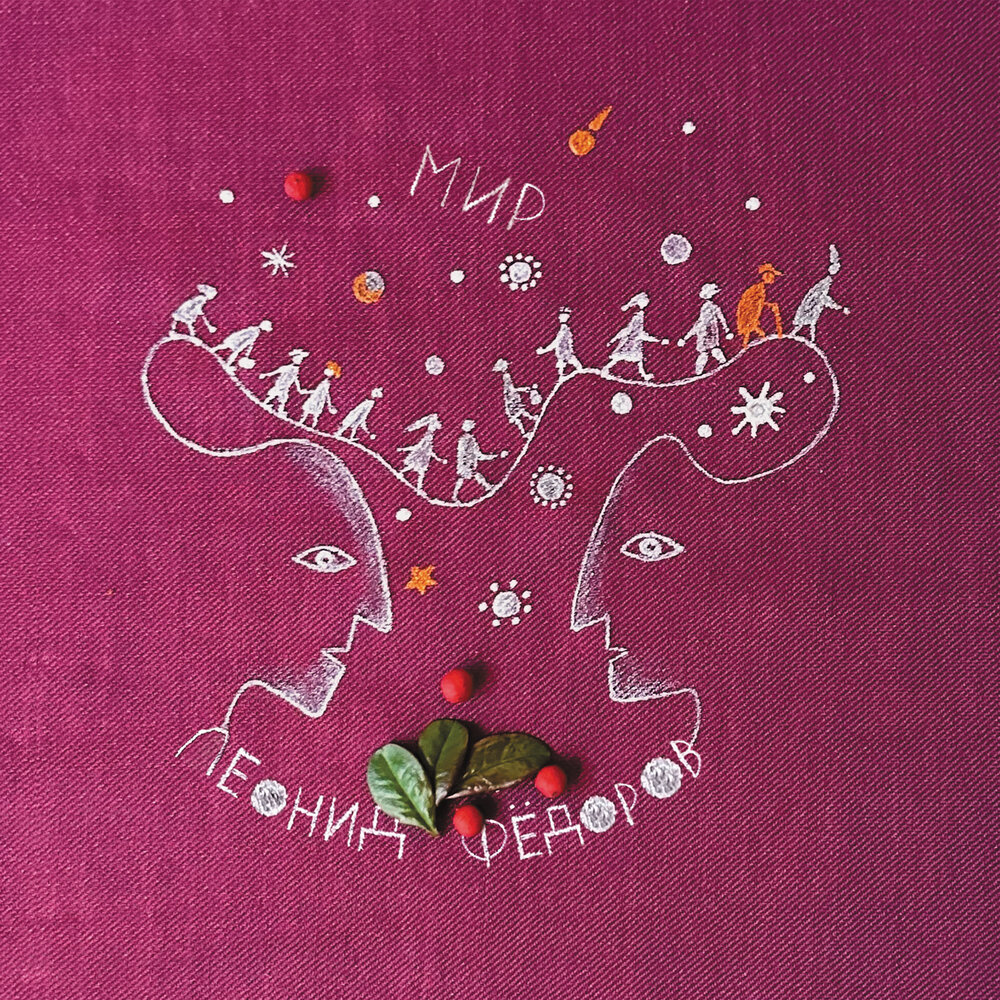
The cover of Leonid Fyodorov’s LP Mir (2024)

I see that I’m quoted on the web all the time in connection with Shaman and other bastards. Yes, I have had to write a lot about them in the line of duty. But it would be a shame if I were to die tomorrow and be remembered for only this. I want to share something more interesting with you, music I’ve been listening to lately. Oddly enough, there’s very little outward political protest in this music.

Leonid Fyodorov has released an album entitled Mir [which means both “peace” and “world” in Russian]. Yes, I do recall that it [peace? world?] is a forbidden word. We understand what Fyodorov’s stance [on the war?] is, although he doesn’t say anything outright, but then again he is not a person who can be measured in terms of his [political] stance — his music is much more interesting. His music is always strange, chockablock with dissonances, avant-garde twists, noises, and sudden pauses. He doesn’t write songs that are not odd.

And this is despite the fact that Fyodorov is an amazing melodist, one of the best in Russia. But he creates melodies of astonishing beauty, sings them in his magical voice, and in the middle of the melodies he inserts unbearable guitar scrapes or something of the sort, as if he wanted to show that he didn’t believe in the very possibility of harmony. I once asked him about it, and he said something like, “It’s the times, I guess. I feel it’s the right thing to do.”

I got so used to it that I was expecting the same thing from every new album. Yes, the album was going to be great, but it was clear in advance exactly how it would be great. Even weirdness can become familiar and predictable.

Suddenly, over the last few years, I see that something has changed. I listen attentively: almost ubiquitously in Fyodorov’s songs there’s a perfectly even, constant rhythm and repetitive bits in the arrangements. In our country, however, even when I was at school, this has been considered a sign of bubblegum pop. There is nothing to it, in point of fact: you turn on a simple drum machine track and out comes fucking “White Roses” or “Svetka Sokolova.” There’s no creativity involved.

But a craftsman of Fyodorov’s stature doesn’t do anything for no reason. If he had wanted to make the rhythm more complicated, he would have made it more complicated. So he has to do it: he’s trying to say something.

I close my eyes and suddenly I see a river flowing. It flows swiftly, swiftly, and birds of prey circle above it. They are shrieking, trying to scare it, but it cannot be stopped. But they are really trying to scare it with all their might, and at times the music is quite scary.

And the lyrics have become different. Fyodorov used to employ lyrics (most often penned by Dmitry Ozersky) like a musical instrument. He had little interest in their meaning: he was mainly interested in how they sounded, how they fit the music. There was a lot of cosmic absurdity, a lot of onomatopoeia and, again, a lot of weirdness. They were lyrics, not poems.

What do we hear now? Almost the entire album consists of perfectly regular couplets with proper rhymes. The lyrics are eminently intelligible and designed to be listened to carefully.

На вопросы есть ответы.
Бедный мальчик, где ты, где ты?
Сам как будто маленький,
Но как будто старенький.
Было грустно, стало пусто.
У меня такое чувство,
Что зачем-то, почему-то
Мы не нравимся кому-то.

[Questions have answers.
Poor little boy, where are you, where are you?
You look like you’re little yourself,
But you look kind of old.
I was sad and now I’m empty.
I have this feeling:
For some reason, for some reason
Somebody doesn’t like us.]

The strange thing is that the music is quite sad, restrained, and expressionless. [Fyodorov] sings as if the jig is up and there’s no point in trying. But the music goes on anyway, and you can’t stop it. Fyodorov’s strange fluidity gives hope for life and peace. You can defeat man, beast, and the state, but you cannot defeat water.

The link to the album is in the first comment.

Source: Yan Shenkman (Facebook), 16 June 2024. Translated by the Russian Reader


The video for “Mir” (“Peace” or “World”), the title track of Auktyon frontman Leonid Fyodorov’s 2024 solo LP

Следите за нами, смотрите за нами,
Идём в путешествие между мирами,
На лестнице странной находится вход,
Чтоб прыгать обманно, ногами вперёд.
Дверь спрятана в мире 134,
Здесь люди похожи на крем на зефире,
Мы здесь никого ни о чём не попросим,
А спрячемся в мире 178.
И тут же ныряем в созвездие Звон,
Здесь звон геликоновый с разных сторон,
И мы принимаемся сразу за дело,
Чтоб громко гремело и звонко звенело.
Приятно орудовать палкой железной —
И звук интересный и опыт полезный.
А в мире 14 дяди и тёти.
Они сразу спросят: «А где вы живёте?
А как вас зовут? А конфетку хотите?
Уходите? Ладно, тогда уходите…
У нас здесь не любят врунов и смутьянов!
Здесь мир тараканов и мир хулиганов!»
Планета 15, и смотрим мы на…
Здесь нет ничего, здесь одна тишина.
На это приятно смотреть и занятно,
Что нет ничего, лишь какие-то пятна.
Есть мир номер 8 и мир номер 3,
Здесь 5 человек заблудились внутри,
У них не осталось ни воли, ни мнений,
И скорбно блуждают в тени отражений.
И плачут во сне, и глаза прикрывают,
Кричат: «Нам противно, таких не бывает»,
Кричат: «Уходите!», и машут руками,
А это они отражаются сами.
Планета 14-76!
Здесь что не придумаешь — всё уже есть.
Приятно девчонкам, приятно мальчишкам,
Здесь весело — очень! Но, тоже, не слишком.
Есть Розовый Штрудель и Мир Голубой.
Где люди бессмысленно спорят с собой.
Они отрицают, что есть и что будет,
И спорят с судьбой. Интересные люди.
На лестнице странной, в созвездии странном,
В краю безымянном, в щели под диваном,
Есть радостный мир, под названием «Где-то»,
Здесь море и солнце, и вечное лето,
А рядом, конечно, находтится «Что-то»,
Здесь только дремота, тоска и зевота,
И петь неохота, и лень веселиться —
Я чувствую: что-то должно приключиться…
Бежим — нас преследует Мир Сорок-дыр!
Он ловит детей — это призрачный мир!
Здесь только часы, и нельзя оставаться,
Здесь можно в себе навсегда потеряться
Здесь всё забываешь, и сны и мечты
И сам не узнаешь, что ты — это ты!
И будешь ходить и дрожать еле-еле…
Успели, наверное… Если успели.
Есть мир Вычислитель и Чёрная Кошка.
Приятно, что каждый из них понарошку.
Есть мир Колесо и созвездие Спящий.
Ужасно, что каждый из них настоящий…
Есть мир Крокодил и вселенная Горе.
Пожалуй, заделаем дырку в заборе.

Follow us, watch us,
We’re going on a journey between worlds.
On a strange staircase the entrance is such
That you leap deceitfully, feet first.
The door is hidden in World 134,
Where the people are like the fluff in a marshmallow.
We won’t ask anyone here for anything,
But we’ll hide in World 178.
And then we dive into the Ringing Constellation:
There’s heliconic ringing from every corner,
And we get right down to business
Loudly rattling, jingling and jangling.
It’s nice to wield a rod of iron —
It’s an interesting sound and a rewarding experience.
There are uncles and aunties in World 14.
They’ll ask you right off the bat, “Where do you live?
And what’s your name? Would you like some candy?
Are you leaving? Okay, then go away…
We don’t like liars and troublemakers here!
It’s a world of cockroaches and a world of bullies!”
Planet 15, and we’re looking at —
There’s nothing here, there’s only silence.
It’s nice to look at and entertaining
That there’s nothing, just spots and specks.
There’s World No. 8 and World No. 3,
There are five people lost inside,
They have no will, no opinions,
And wander mournfully in the shadows of reflections.
They cry in their sleep and cover their eyes,
They shout, “We’re disgusted, such people don’t exist.”
They shout, “Go away!” and wave their hands,
And that’s them reflecting themselves.
Planet 14-76!
Whatever you can think of, they’ve got it all.
It’s nice for the girls, it’s nice for the boys.
It’s a lot of fun! But it’s not too much fun either.
There’s Pink Strudel and Blue World,
Where people argue senselessly with themselves.
They deny what is and what will be,
And argue with fate. Interesting people.
On a strange staircase, in a strange constellation,
In a nameless corner, in a crevice beneath a sofa,
There’s a joyful world called Somewhere,
There’s sea and sunshine and eternal summer.
And next door, of course, there’s Something.
Here, there’s only slumber, languor and yawning:
You don’t feel like singing, you don’t feel like having fun.
I feel something’s going to happen.
Come on, we’re being chased by World Forty-hole!
He catches children, it’s a ghostly world!
There’s only hours and you can’t stay here.
Here you can lose yourself forever.
Here you forget everything, your dreams and your hopes,
And you’ll never know you’re you!
And you’ll walk around shivering.
They must have made it. If they did make it.
There’s the world of the Calculator and the Black Cat.
It’s nice that each of them is made-up.
There’s the world of the Wheel and the Sleeper Constellation.
The terrible thing is that each one is real….
There’s the world of the Crocodile and the universe of Woe.
Let’s patch up the hole in the fence.

Source: Leonid Fyodorov (YouTube), 14 April 2024. Music: Leonid Fyodorov; lyrics: Dmitry Ozersky; video: Lydia and Leonid Fyodorov. Translated by the Russian Reader

The Anti-Anti-War Movement

Ana Tavadze and Dachi Imedadze, members of Georgia’s Shame Movement. Photo: 60 MINUTES

Ana Tavadze: We’re going in with a government that’s completely corrupt, a government that’s pro-Russian, clearly anti-Western, clearly does not really care about what the majority of the population wants and needs.

Ana Tavadze and Dachi Imedadze are members of the Shame Movement – a group with thousands of young followers working towards Georgia’s entry into the European Union.

Ana Tavadze: If Russia wins, it means loss of freedom, loss of everything that we fought for in the past 30 years basically. It’s a fight for values, it’s a fight for where you want to stand in this big fight for democracy.

Dachi Imedadze: As soon as the West in any form, be it the U.S. partnership, be it the European Union, is not represented in this country, Russia will fill the void right away. 

They say the influx of Russians is already changing the face of Georgia.

Ana Tavadze: What are they doing, if we look at it? They’re buying apartments. They’re buying private property. They are opening up businesses. Their actions changed — Georgian economy.

Dachi Imedadze: The Russians are buying apartments here in every 33 minutes. They’re purchasing a piece of land in every 27 minutes. And they’re registering a business in every 26 minutes. So, I think we are on the brink of very dangerous situation here in Georgia.

According to public records, Russians have registered more than 20,000 businesses in Georgia over the last two years. And launched five new Russian-only schools, none of which are licensed by Georgia’s department of education.

Russians have driven rent up nearly 130%, prices for everything from food to cars have gone up 7%. over 100,000 Georgians have left the country because many of them can’t afford to live here anymore.

Sharyn Alfonsi: I’ve heard this described as a quiet invasion.

Dachi Imedadze: Quiet invasion, yeah. There is a risk of the economic diversions. There is a risk of military intervention. And there’s a risk of — Georgia’s statehood being destroyed. 

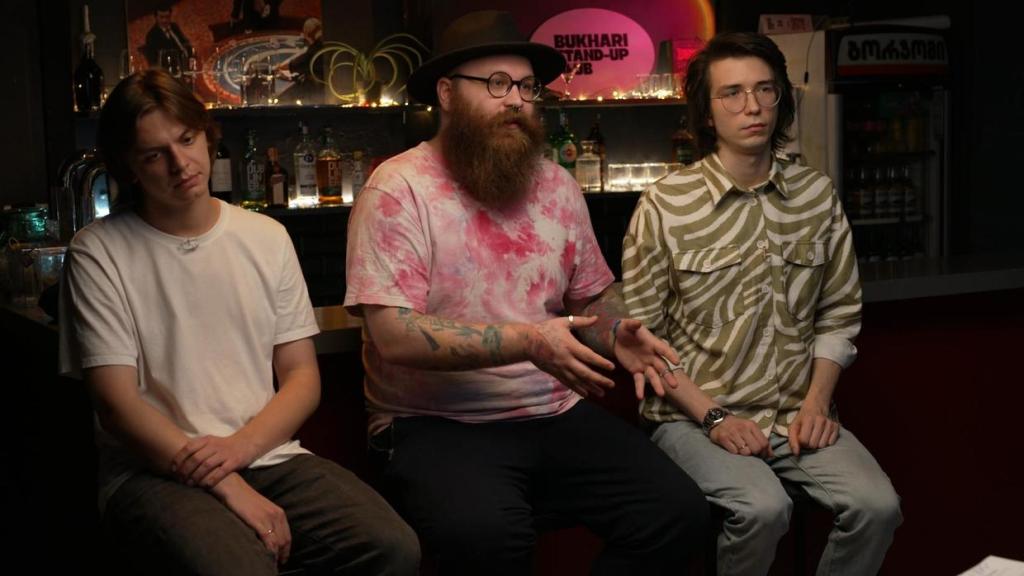
Emmanuil Lisnif, George Smorgulenko and Pavel Bakhadov don’t look like much of a threat.

All Russians in their twenties, they fled their country for fear of being drafted or imprisoned for speaking out against Putin.

George Smorgulenko, Emmanuil Lisnif and Pavel Bakhadov are all Russians living in Georgia. Photo: 60 MINUTES

They now live in Georgia and work at this Russian-owned comedy club in Tbilisi.

Emmanuil Lisnif: I try and said ‘I’m against the war in Russia. I was beaten. and after that going to prison three times.’

Sharyn Alfonsi: So three times you went to jail?

Emmanuil Lisnif: Yes, yes three times.

Pavel Bakhadov: I believe and I know that Russians actually against the war

Sharyn Alfonsi: You think that most Russians are against the war?

Emmanuil Lisnif: Yeah, just scared, really scared.

Sharyn Alfonsi: Have any of you had any aggression towards you because you’re Russian?

Pavel Bakhadov: Actually I have a big writing on the wall. It’s the biggest thing I see from my window, just big ‘Russians go home.’ 

There is no subtlety in spray paint… anti-Russian graffiti blankets the city along with support for Ukraine.

[…]

Source: Sharyn Alfonsi, “Denial of Georgia’s EU membership bid would be ‘a big victory for Russia,’ President Zourabichvili says,” 60 Minutes, updated 9 June 2024. The emphasis, above, is mine. ||| TRR


This text is based on interviews I did as part of the Hidden Opinions public opinion polling project, which I launched in 2022 and continued in 2023 and 2024. I spoke with dissenting Russians — with those who oppose the current regime and its military actions against Ukraine, both those who have stayed in Russia and those who have left the country. My youngest respondent at the time of the [first] survey was sixteen years old, while the oldest was seventy-two years old. These people hail from a wide range of professions and walks of life, but what they have in common is their categorical opposition to the actions of the Russian authorities. In just two years, I have interviewed 154 people for this project, some of whom I have spoken with two or three times.

In 2022, all of my respondents — both those who had left the country and those who stayed — espoused anti-war views and expressed a negative attitude toward the Kremlin’s policies. However, in 2023, about a year and a half after the war’s outbreak, a group amongst my sources in Russia emerged. Small at first, but constantly growing, it consisted of people who had changed their negative attitudes toward the war and/or the government.

This does not mean that such changes are impossible among those Russians who have left the country. Amidst a full-scale war, research based on representative samples is hampered by the fact that the most accessible respondents are those who have agreed to be interviewed as a result of self-selection. This is a significant limitation to the project.

My research is qualitative, not quantitative, meaning that it would be wrong to speak of a particular percentage of anti-war Russians who have become pro-war. I think it is important to study and understand how views are transformed and what triggers them to change. It is the subject of this text.

***

The sociologist and philosopher Zygmunt Bauman, experimenting with means of gauging the conservatism–to–radicalism spectrum, asked his students to do the following exercise. They were shown twenty drawings, the first one depicting a dog, the last one depicting a cat; in between, the dog gradually shed its canine features and turned into the cat. It was vital that the researcher record the moment when the test subjects had doubts about what exactly was depicted in the picture, when they realized that the dog had mutated irreversibly. In a sense, I have been doing something similar, trying to record the moment at which anti-war or anti-Putin views have been transformed into pro-war or pro-government views.

I have observed that such a change in views depends on a number of extrinsic factors, and the more such factors that are combined, the more likely it is that the person’s stance will change. In addition, a great deal is determined by an individual’s (psychological, social, etc.) resources. Finally, inconsistent views play an important role in transformation and adaptation. In recent years, sociologists have increasingly noted that people often pursue mutually exclusive goals simultaneously without noticing the contradictions in their own behavior.

New rationalizations, disillusionment and loneliness

The gradual realization that the war is a long-term affair, combined with Alexei Navalny’s sudden death in a penal colony, has had a considerable impact on those resisting the regime within Russia. One can swim against the current, but it requires a considerable amount of strength, something not everyone possesses. It is difficult to be amongst the minority for years on end, to conceal one’s views and live in fear of being reported to the authorities. Respondents have thus begun reformatting [sic] their attitude to reality, explaining events in a new light and providing new rationalizations.

Failing to receive the expected support from the outside world or the possibility of a dignified workaround, some of my respondents eventually chose non-resistance to the regime, which in some cases has transmogrified into full-fledged loyalty.

I don’t want to go to prison, I don’t want to play the rebel. I just want to live. If they send me to listen to ‘Exorcist TV,’ I’ll go without question. If they tell me to go to a [pro-war] concert, I’ll go. I’m not trying to convince anyone of anything anymore. I’m tired. I can only accept it and live the life I have.”

This stance is not directly bound up with support for the war or the regime. Rather, it indicates fatigue and the lack of strength to resist. If the circumstances shift in a direction more in keeping with their own values, these people will gladly slough off the “burden of adaptation.”

It is worth noting that, over the last year, many of my respondents have stopped following the news and focused on their daily lives. There are respondents who, despite the troubling times, have decided to have children. This is also a way of disconnecting from current events.

Another important factor influencing the change of respondents’ views is the narrowing of their circles of trust. Fearing denunciation, dissenters avoid making new contacts. Afraid of being alone and unwilling to live in fear, uncertainty and/or exile, they then join the majority.

The distance between Russians who have left Russia and those who have stayed in Russia has grown greater with every passing year. In 2022–2023, when I asked my respondents about opposition members who had left Russia, they most often would say nothing or would limit themselves to brief remarks along the lines of “We still watch them on YouTube, but they have less and less sense of what’s happening at home.”

Expressions of resentment and frustration have become more frequent in my interviews in 2024. My sources have said that the opposition often engages in wishful thinking and plays fast and loose with the facts, and that the west does not always act logically and decently.

Consequently, previously opposition-minded people have chosen to abandon painful and exhausting self-reflection in favor of loyalty to the regime. This helps them to get on with their lives, normalizing both the war and the political crackdowns. As one respondent put it, “Since the opposition and the west cannot be trusted, we will make friends with Putin. He is an ogre, but he is our own ogre.”

“Western countries seem to be doing everything to help Putin’s propaganda machine. I was quite surprised when I heard Angela Merkel say that all our negotiations were just a smokescreen: we wanted to let Ukraine catch its breath, and the negotiations were just a deception. That is, the leader of one of the largest countries in Europe openly says: a) we can’t be trusted in any negotiations, and b) we have conspired to deceive you. […] Putin’s propaganda machine skillfully makes use of this. But the point is not that the propaganda machine is using it, it’s that it is reality. As a normal person, a question occurs to me: if they treat us this way, [then] we are their enemies. After such statements, the ‘west’ is regarded as the enemy of Russians, and, accordingly, their enemy — Putin — is our friend.”

Those respondents who have changed their views on the war emphasize that when the west blocked their bank cards and accounts, when they heard what Ukrainians (including their relatives and friends) were saying about Russians and how they called for killing them, they decided that the current regime, whatever it was like, was less hostile to them on balance.

Tired of guilt, shame, disappointment and indignation, they have essentially chosen peace by joining the majority and accepting the existing rules: don’t discuss politics, don’t speak out publicly, swear to the values that the government declares. This choice seems reasonable to them in a situation in which no political activism is possible anyway, and the political crackdown machine is only picking up steam.

This strategy ensured material well-being and career success for some of my respondents. For example, some mid-level specialists in the IT sector received good positions and salaries, while for other people the involvement of their relatives in the war has been a means of social mobility and a source of access to material goods. Still others have benefited from the war by arranging parallel imports, etc.

Another factor contributing to the shift in sentiment from anti-Putin to pro-government has been the radicalization and polarization of society.

“A sharp delineation between ‘black and white’ leads to the opposite outcome. Any attempts to express doubts about the actions of the Ukrainian or western side are automatically regarded both inside and outside [Russia] as pro-Putin behavior, the outcome of brainwashing, etc. The other side appears infallible and beyond criticism.

“If you criticize the west’s actions in any way, you are automatically pigeonholed as a ‘Putinist.’ It makes me feel like saying: if that’s how you treat me, well, to hell with you, chalk me up as a Putin supporter.”

The state of rejection and isolation provokes protests amongst some people: since the west condemns them for staying in Russia, they “will go the full mile and become real orcs.”

The mechanisms by which feelings of rejection are transformed into collective pride have been described by researchers and are not unique to Russia. These feelings reinforce nationalist sentiments and contribute to the strengthening of authoritarian regimes.

Emotional dilemma

Speaking about the change in their views from anti-war to pro-war, my respondents noted that in one way or another they were surrounded by people who had suffered in the war: classmates or school friends who had been drafted to the front or had volunteered for combat, their children, colleagues, and mere acquaintances. Telling them straight to their face that their sacrifices were in vain had become both emotionally more difficult and more dangerous. To maintain relationships and friendships, my sources generally had to listen in silence to their acquaintances’ stories about what they had experienced and seen at the front. And if they were people who mattered to them, it was impossible not to sympathize with them.

We should understand that Russians who initially opposed the war and the regime but remained in Russia feel definitely closer to those who went to the front or delivered humanitarian aid there than to those who have left the country. They are “in the same boat” as their relatives, friends, and colleagues. They feel compassion for them.

“When we were teenagers, all sorts of things happened. If the guys were caught [by the authorities], I would perjure myself and lie in all sorts of ways. Later I could tell them what I actually thought of them, but I wouldn’t abandon them. That’s not the way that blokes do things. Now I realize with my head that they are wrong a hundred times over, but they are my boys, I am on their side. And even if I am against the war, I cannot be against them.”

Propaganda equates anti-war sentiment with betrayal, and it paints people who espouse such views as accomplices of Russia’s enemies, who want to kill as many Russians as possible. This causes a very heavy feeling, my respondents note.

Meanwhile, the state softens such emotional blows by offering loyal citizens new benefits and additional material and social goods, free concerts, and beautiful and comfortable urban environments, demonstrating concern for people in general and for those returning from war in particular. “People-centeredness” has become the buzzword in the PR strategies of many employers and officials throughout Russia.

Russians who are concerned about their neighbors also respond to calls for help front-line soldiers, because amidst war and external isolation it is these people with whom, they say, they “share a common plight.” One of my respondents, overwhelmed by such sentimental feelings, volunteered for the army.

As a religious man, he hoped he would not face the need to kill others, but would be able to help “his boys” without bearing arms, because he “could not stand on the sidelines any longer.” If the need to kill arose, he would desert, my source had decided, explaining that he was emotionally prepared to be beaten up and go to prison.

Another type of people whom I have encountered more and more often are those whom researchers Maria Lipman and Michael Kimmage have characterized as anti-anti-war: these people do not necessarily support the war, but they strongly condemn or resent “unpatriotic” fellow citizens who do not support the Russian army or who even take the side of Ukraine.

Seeing soldiers returning from the front and watching the growing number of Russians killed in combat, my sources now often place the blame not on Putin or the Russian military, but on their compatriots who oppose continuing the war until Russia achieves total victory.

Ressentiment and the “demons” of propaganda

Propaganda has awakened ressentiment in some of my respondents. They have come to believe that this war is really about maintaining Russia’s status as a great power, which its enemies are trying to flout and rob. Such people believe it vital that Russia maintain its status as a victor, and they accept the state-imposed version of Russian history that asserts Russia’s greatness in all periods.

War, as happens under autocracies and dictatorships, is seen as the ultimate manifestation of the nation’s strength and vitality and a guarantee that its culture and traditions will be maintained. In conversations with me, my sources have repeatedly used the phrase “releasing demons,” referring to the fact that the current situation helps their acquaintances and themselves experience a sense of unity and superiority over the rest of the world, a sense of their own righteousness and chosenness.

Some respondents noted that the official rhetoric, concrete and catchy, seemed more acceptable to them than the verbose arguments and meaningless self-reflections of the opposition.

Meanwhile, according to my respondents, the number of anti-war-minded Russians today is decreasing. Since Navalny’s death, I have often heard in interviews that every second or third person in the orbit of my sources has changed their views.

It is difficult to say how strong this trend really is. I would estimate that a third of those who unequivocally opposed the war and the regime when I spoke to them [initially] have changed their views, but of course these numbers are in need of supplemental verification, which is not easy to accomplish today. There are probably also people who have switched their pro-war patriotic views to oppositional ones, but I assume that we hear the voices of these people even less frequently.

Respondents who are in a state of uncertainty and/or in the course of switching their views feel the need for support, at least informational support. They need arguments explaining that anti-war sentiments are not a betrayal and that the current war is destroying Russia, not restoring its greatness. But they also acknowledge that such an argument would hardly convince them under the current circumstances. For now, the only thing they think they can do is to maintain their sanity and adapt to reality in order to live to see better days.

***

The Russian regime has proven to be “smarter” and more adaptive than Russian opposition activists and western democracies thought, but this does not mean there is no point or possibility of supporting by any means possible those who have remained in Russia and are still resisting the regime or straddling the fence. One way or another, positive change in Russia is impossible without their involvement.

Source: Anna Kuleshova, “‘I’m a person with anti-war views, but I suddenly found myself signing up for the front’: how and why Russians have changed their attitude to the war,” Republic, 4 June 2024. The emphasis, above, is the author’s. Translated by the Russian Reader

The Good Russians

Russian liberals think their fellow emigres’ support for Israel makes them model Europeans.
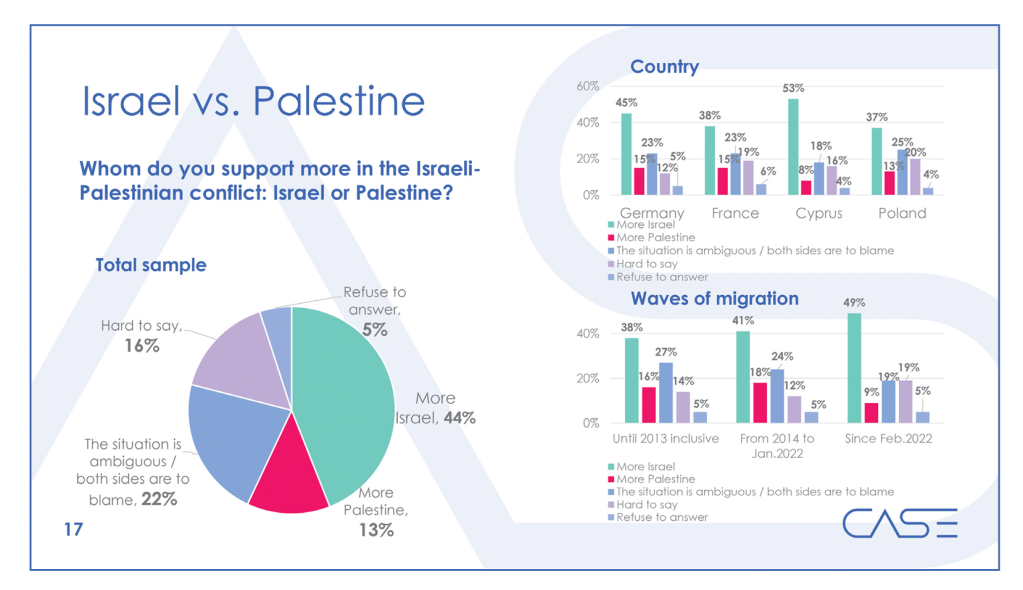
Source: CASE, “Novaia rossiiskaia diaspora: vyzov i shans dlia Evropy,” p. 13

Russian opposition forces will discuss with European officials the possibility of expanding opportunities for immigration from Russia to the EU countries. One of the measures they propose is a “relocatee card”: the bearer of this document would be able to freely obtain a residence permit in one of the EU countries, open a bank account, rent real estate, and get a job. The authors of the idea argue that the outflow of educated and well-off Russians can weaken Russia’s economic health while also “creating serious challenges to the Putin regime.” They argue this in a study on Russian relocatees in the EU, published on Tuesday, 11 June 2024.

The report was prepared by a new think tank, the Center for Analysis and Strategies in Europe (CASE), whose advisory board members from Russia are Dmitry Gudkov, Sergei Aleksashenko, Vladislav Inozemtsev, Andrei Movchan, and Dmitry Nekrasov. The study will be presented in Paris at the French Institute of International Relations (IFRI), which commissioned it. In the coming days, the report will also be presented at the PACE, the German Foreign Ministry, and the Bundestag, Gudkov said.

Portrait of Russian immigrants: good education, high income, anti-war views

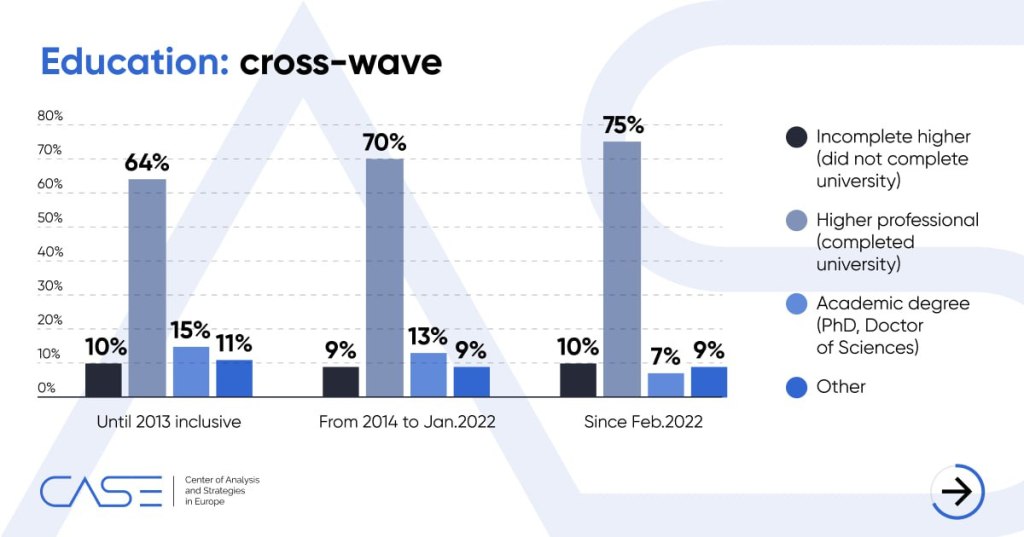
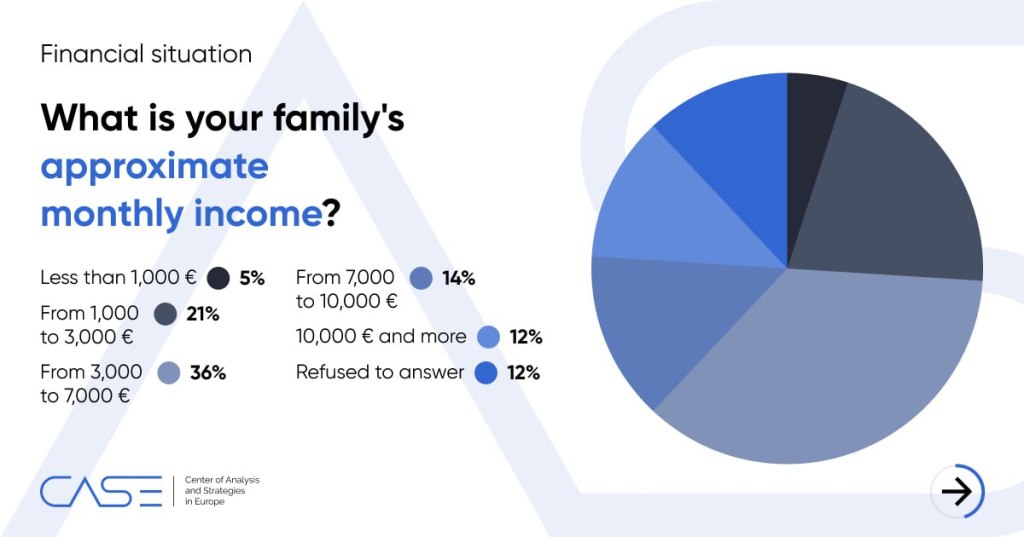
As part of the study, researchers surveyed three and a half thousand Russian nationals residing in France, Germany, Poland, and Cyprus. The results showed that most of those who left Russia after the start of the war in Ukraine — eighty-two percent — have a higher education or an academic degree. Sixty-two percent of those surveyed reported monthly earnings of three thousand euros or more. This category of people, Gudkov said, not only does not require benefits [sic], but also makes a significant contribution to the EU economy.

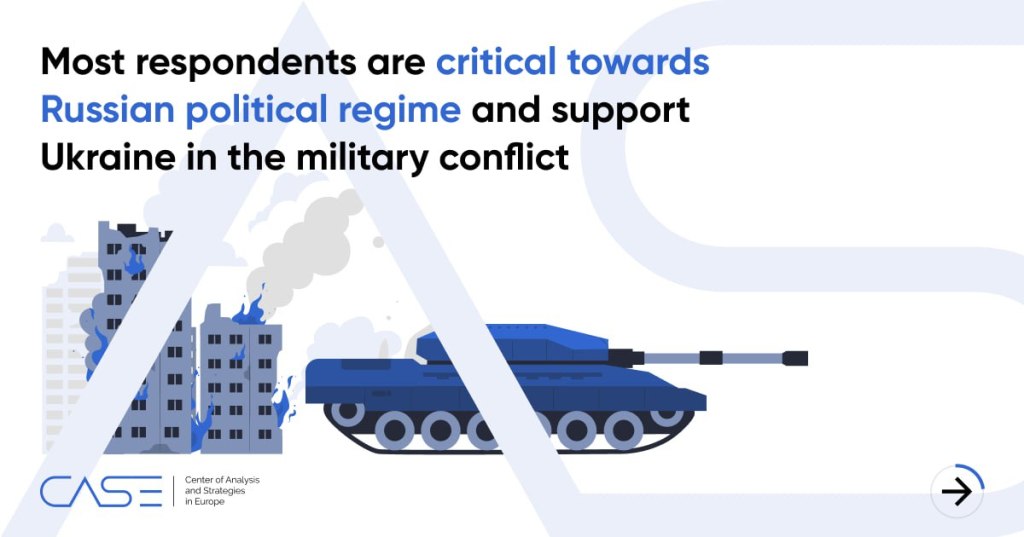
Among Russians who have relocated to the EU in the past two years, the vast majority oppose the policies of Russian President Vladimir Putin (79%) and support Ukraine (64%). Gudkov emphasizes that most relocatees are well-off, educated people with anti-war views.

“It is important that this is the work of European researchers confirming our long-standing argument that new immigrants from Russia hold European [sic] views. They oppose the war, and can rightly be called ‘Russian Europeans’. They are not a threat and represent an economic and social resource for European societies,” Gudkov told DW.

The infographic slideshow précis of CASE’s “study,” as found on Dmitry Gudkov’s Telegram page

Report’s authors propose “relocatee card” for Russians

The study’s authors suggest that the authorities in the EU countries develop legal norms for the large-scale migration of Russian nationals to the EU, Gudkov said. According to him, Russian nationals now face restrictions in some European countries, including, for example, problems with obtaining residence permits and opening accounts in European banks.

The study proposes a new mechanism for attracting “economic migrants” from Russia to the EU: a “relocatee card,” whose holder could easily open a bank account, rent real estate, and get a job in one of the EU countries. The document, as stated in the report, could be valid for a year with the possibility of renewal. During this “trial period,” the cardholder would have to confirm that they are employed or opened their own business, lived three quarters of the time in the country which issued the residence permit, have a higher education, know one of the European languages, and also own a home or rent one in the EU. Moreover, the study proposes providing evidence of the relocatee’s liquid assets in Russia as proof that they have the means to pay for their stay.

“Today, the strategy for undermining Putin’s regime must include a staged ‘bloodletting’: stimulating the outflow from Russia of both skilled professionals and money from Russian businesses not involved in the war,” the report says. The emerging new diaspora from Russia has political potential: it can play an important role in the transformation of Russia in the event of the fall of Putin’s dictatorship, and thus this community would see “a close and understanding ally, not an enemy” in Europe and the west as a whole, the study emphasizes.

The oppositionists believe that the approximately 300,000 Russians who left their homeland after the start of the war in Ukraine but who want to live in the EU would be willing to apply for the program.

The authors paint a portrait of these Russians: “They are not activists or oppositionists, but are driven by a search for options for a professional career, a risk-free place to live and a country in which their children could be raised outside the culture of hatred that is being created in Russia today.”

The authors of the report also suggest issuing “relocatee cards” inside Russia through European embassies, thus shifting the focus away from tourist visas.

“Relocatee card” not the same as “good Russian passport”

Gudkov insists that the current campaigns is aimed at eliminating discrimination against Russian nationals in the EU and has nothing to do with the idea of creating a Worldview ID system — a database of Russians with anti-war views, which social network memes dubbed the “good Russian passport.”

“That idea, which has been perverted, has already lost its relevance,” the politician explained.

The opposition politician also stressed that, in parallel, the study’s authors also propose that European authorities expand the program of issuing humanitarian visas, for which there is now a waiting list.

“But ninety-five percent of those who have left Russia do not need humanitarian visas. They are ready to work, earn money, and pay taxes. They don’t need welfare checks. We are highlighting them and suggesting various options for resettling them in the EU, which may not necessarily involve a relocatee card,” Gudkov concluded.

Otherwise, he argues, some of the relocatees will continue to return to Russia and restore the country’s economy, while another segment could become disillusioned with the west, “which makes no distinction between the Putin regime and people of modern liberal views who have become its hostages.”

Source: Alexei Strelnikov, “A proposal to European Union to simplify intake of immigrants from Russia,” Deutsche Welle, 11 June 2024. Translated by the Russian Reader


The “relocatees” are indeed the very models of modern major generals:

The Russians who have left also differ in their value system from those who decided to stay. They are much less religious, aligning more with the general sentiments of Europeans; they find it much easier to engage in collective, volunteer and non-profit projects; they display significant empathy — including towards Ukrainians who have become victims of Russian aggression — and are more often inclined to respect other ethnic groups and cultures, as well as showing a willingness to learn the languages of their new countries of residence, regardless of how long they intend to stay there.

Source: Dmitry Gudkov, Vladislav Inozemtsev and Dmitry Nekrasov, “The New Russian Diaspora: Europe’s Challenge and Opportunity”, Russie.Eurasie.Reports, No. 47, Ifri, June 2024, p. 17

News from Ukraine Bulletin 101

Monterey, California, 7 June 2024. Photo by the Russian Reader

In this week’s bulletin: Ukraine and Palestine – Public discussion meeting on 11 Juneplus Life Under Occupation report; plus Russian assault on power stationsplus how Swiss peace summit could hurt Ukraine; discussion on Ukrainian punishment of ‘collaborators’plus Solidarity Zone’s support for Russian anti-war protesters.

News from the territories occupied by Russia:  

Kupiansk mayor who betrayed Ukraine injured in assassination attempt (Ukrainska Pravda, 8 June)

In occupied areas, Ukrainians refuse to give up their language (Kharkiv Human Rights Protection Group, 7 June)

Fake ‘trial’ incriminates Russia in abduction and torture of Ukrainian patriot Serhiy Kuris (Kharkiv Human Rights Protection Group, 7 June)

Crimean students’ grades lowered for not writing ‘thank you letters’ to Russian soldiers (Kharkiv Human Rights Protection Group, 4 June)

Occupied territories: Russian citizenship and propaganda (Zmina, 5 June)

‘Hero of Russia’ status for war crimes against Ukrainian civilians in Yahidne and Mariupol (Kharkiv Human Rights Protection Group, 3 June)

Life Under Occupation report (Alternative Human Rights Centre, May 2024)

The situation at the front:  

Weekly Ukraine war summary (The Insider, 8 June)

Overview from the front: Holding out for reinforcements (Meduza, 4 June)

Russian soldiers post video showing mock execution and other torment of Ukrainian PoWs (Kharkiv Human Rights Protection Group, 4 June)

News from Ukraine – general: 

Ukraine recovery could be a lifeline for children (Human Rights Watch, 7 June)

Human rights in Ukraine: punishment of businesses working under occupation: discussion (Zmina, 5 June)

Marianna Checheliuk emaciated and frail, but back in Ukraine after two years of torture in Russian captivity (Kharkiv Human Rights Protection Group, 3 June)

War-related news from Russia:

Support the fundraiser for Ilya Baburin (Solidarity Zone, 7 June)

To Not Die as Slaves: Solidarity Zone’s Mission to Aid Russia’s Radical Anti-War Protesters (The Russian Reader, 2 June)

Analysis and comment:

Oil finances Putin’s war and Trump’s political ambitions (Svitlana Romanko and Oleh Savitsky, Euromaidan press, 8 June)

Georgia: Resisting authoritarianism (Posle Media, 6 June)

Swiss peace summit could end up harming Ukraine (Ukrainska Pravda, 5 June)

Power station bombing redoubles pressure on Ukraine (Foreign Policy in Focus, 5 June)

International solidarity:

Thanks from the front line for a car (Mick Antoniw, twitter, 8 June)

UK General Election 2024: help Ukraine win (Ukraine Solidarity Campaign, 31 May)

Upcoming solidarity events:

Tuesday 11 June, 7.0pm: Discussion meeting: “From Ukraine to Palestine, occupation is a crime” – Tuesday 11 June, 7.00 pm. Marchmont Community Centre, 62 Marchmont Street, London WC1N 1AB, and on line. Register to attend on eventbrite here or register to participate on line here. Organised by the Ukraine Information Group.

This bulletin is put together by labour movement activists in solidarity with Ukrainian resistance. Please subscribe and tell friends. If people email us at 2022ukrainesolidarity@gmail.com, we’ll send them the bulletin direct every Monday. More information at https://ukraine-solidarity.org/We are also on twitterFacebook and Substackand the bulletin is stored on line here. To stop the bulletin, reply with the word “STOP” in the subject field. 

Expat

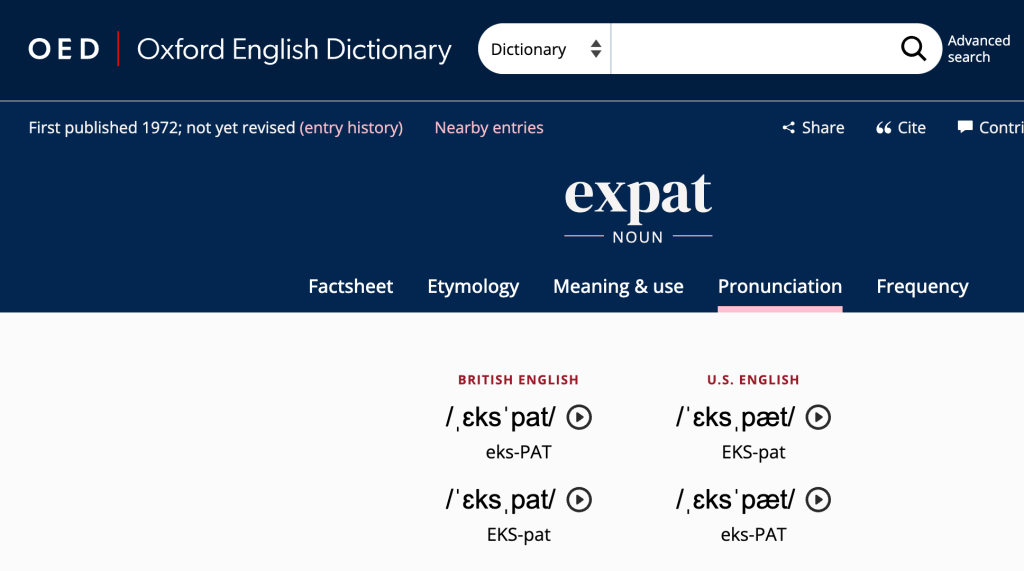
How to pronounce “expat”

How not to pronounce “expat”


How not to be an “expat”

After the Russian invasion of Ukraine last year, hundreds of thousands — perhaps more than a million — people left Russia. Although there is no data on how many of those people were foreigners, certainly many foreign citizens left Russia either at the insistence of their employers or on their own initiative. Many Western embassies advised their citizens to leave immediately, warning of the risks of staying. 

The Moscow Times spoke to five foreigners who stayed. They are all living in various parts of Russia, have been living in Russia for a long time — and have no plans to leave in the near future.

True to his roots

Anselme Fayolle came to Moscow from France in 2008 to study Russian. He had no plans to stay at first, but he has been living here and working as a teacher of French at an international language school ever since. 

Before coming to Russia, he knew more about the U.S.S.R. and only that Russia was the largest country in the world. He was surprised that Russians say what they think. “It can be unpleasant. But I liked this directness,” Anselme said.

Anselme loves to travel around Russia — even by hitchhiking. His favorite places are Lake Baikal and the cities of Vladivostok, Murmansk, Krasnoyarsk, and St. Petersburg. He also likes the Caucasus and Dagestan. “Most Russians like the French, and I’ve never had problems with my nationality,” Anselme told The Moscow Times.

A lot of his friends left Russia in 2022. Anselme is not going to return to France, but he does not exclude the possibility of relocation to other country, including his homeland. But for now he is staying in Russia. He lost some of his French students in 2022, but he has a lot of work again.

“I like France and Russia for different reasons. Russia has certainly influenced me, but I am still French,” Anselme said.

An aspiring Swiss Cossack

Benjamin Forster is from Switzerland. Since 2015 he has been living in Pereslavl-Zalessky, a small town a few hours’ drive from Moscow. He learned about the town from his Russian friends and the book “Taras Bulba” by Nikolai Gogol; now he likes to say he has a Cossack soul.

For 12 years Benjamin has been practicing organic beekeeping, and he continued his business in Pereslavl-Zalessky. “There is a stereotype in Switzerland that Russia is a third-world country, but it is not so,” he said. “My father said that he could sense how much I liked living in Russia, and he was glad. He was not surprised when I decided to stay here.”

Benjamin said that almost nothing changed in his life in 2022, except that visiting home has become more complicated. He used to visit Switzerland once a year, but now without a direct flight it is a long and complicated trip. He has to take a bus from St. Petersburg to Tallinn, and from there fly to Zurich. Another problem has been accessing money. But besides his beekeeping business, he also conducts Russian-language guided tours of his apiary. Since 2022, many Russians have begun to travel around Russia more often, and as a result, there is more demand for his guided tours.

“Russia is my home. I like the culture, mentality, and freedom. Here I have a house and a family. I am not against Switzerland, but I prefer to live here. I always joke that I was just born in the wrong country; the stork got confused and took me to the wrong place,” Benjamin said.

An Englishman with a Russian soul

Craig Ashton is from Great Britain. He studied Russian at the University of Exeter and came to Russia for the first time in 2002 with a group of students. He fell in love with St. Petersburg and wanted to live there.  

At first, his relatives and friends were surprised by his decision, but he explained he had to live in Russia to understand the Russians. His mother and grandmother were especially worried. “In 2022, my mother wanted me to come home, but I decided to stay,” Craig said.

Today he works as a writer, blogger, and a teacher of English. “After Feb.24, I had fewer students, and I was wondering if there would be money for food. I bought a huge amount of bottled water and buckwheat, sat in the apartment and read the news. But now everything is back to the way it was before,” Craig told The Moscow Times.

He adds that he still likes Russians as much as he ever did. In the summer of 2022, he went to Great Britain with his wife to visit his family. After a month they came back. “Russia is the country that adopted me and gave me a job, a family, friends, and adventures. It is my life. I feel I must be here. If I leave when there are hard times, what kind of relationship is that?”

Pro-Kremlin information warrior

Sven Svenson left Germany many years ago. While he was living in Egypt he met a Russian woman, and they came to Russia together. Before that, he had never been to the country, but his grandmother used to say that Russia should be respected because they liberated the Germans from fascism.

In Moscow, he joined the pro-Russian Night Wolves motorcycle club and started to teach German and English at an international language school. After the start of the war, he never considered leaving Russia.

“The Germans are distant from me in spirit. I always say that I am for Russia, and I feel more Russian in spirit,” Sven told The Moscow Times.

He is sure that the Europeans do not know what happened before Feb. 24, 2022 in Ukraine, and said that he is fighting an information war on social networks.

“I make posts to show that the stores are not empty. It is often said that prices have risen in Russia, but I lived in Germany, where everything was expensive. In Russia, almost everyone has an apartment and a dacha, but in Germany, the majority rent housing. In Germany medical care is not free, taxes are high, and as a result, there is very little money left over. I do not talk about Ukraine with my brother, because we have different points of view, but many of my subscribers are beginning to understand the truth. After World War II, Russia promised that it would always defend the world from fascism, and this is what we are doing now,” Sven said.

Life’s work in Russia

David Henderson-Stewart is from the United Kingdom, but he decided to get his first work experience abroad. In 1996 he came to Moscow to work for a French company.

Today he is the managing director of the Raketa Watch Factory. When he visited the factory for the first time, he was captivated by the manufactory and its 300-year history. “In 2022, I didn’t even consider leaving, because the factory is my life’s work,” he told The Moscow Times.

In 2022, sales dropped off in Europe and the U.S., but they have evened out and new markets in the Middle East have opened up. David also hopes to enter the Asian market by next year. “The uniqueness of the factory is that we are limited in production capacity,” he said — meaning there will always be more demand than supply.

He admits that nowadays logistics have become more complicated and expensive, but nothing has changed in his personal life.

“I understand that I have privileges,” David said. “Yes, it’s more difficult and expensive to travel, and my family doesn’t come to see me anymore, but nothing has changed in my life in Moscow. We often go to theater and opera. My family is here, my work is here.”

Source: “5 Expats Who Stayed in Russia Despite the Ukraine War,” Moscow Times, 6 April 2023. The emphasis is mine. ||| TRR


How not to be an “expate”

[…]

Western academics have started attending conferences again on the down-low. Some are even conducting bits of research — and indeed, it is still possible to visit the archives. Most academic institutions forbid their employees from traveling to Russia, but you can still visit as a private citizen. 

One Cambridge academic who has traveled here twice since 2022 told me, “Having Russian contacts is vital, especially now. Russians still have a voice, and we need to hear it.” The academic also encourages PhD students to try and visit because understanding the nuances of Russia and its culture is impossible without spending a certain amount of time here.

Many more of those returning have Russian spouses and families. (This was true of most people I spoke to in the line at the airport in late 2023.) Craig, a Californian, has a young son. His work visa expired after the start of the 2022 invasion, and so he had to leave temporarily. In his own words, the war had a “zero-percent” impact on his decision to return. 

“I missed my family. And things are just fine [here],” he said. “[The war] made certain things harder. There are more rules and visa requirements now, but to be honest my life has hardly changed. If anything, I make more money now than before.”

Raymond, back after a year’s hiatus, agreed. He is more in demand as an English-language teacher now because so many others left soon after Russia invaded Ukraine. But that’s not all he and Craig have in common. “A lot of the new arrivals from the U.K. and America are trying to escape Western problems,” Raymond explained. “The wokeness, the [political correctness], the entitlement.”  

Both he and Craig said they see Russia as a country fighting the “woke epidemic.” They do not see Russia as a savior of “traditional values,” as some claim, but rather as a bulwark against what they perceive as liberal values run amok. Russia, in their view, is not going down the rabbit hole over issues of gender identity, race, and policing language — and is much better for it. 

Of course, gender and sexuality are actually huge talking points. Russia banned the so-called “international LGBT movement” late last year, effectively outlawing all LGBTQ+ rights activism and visibility. Discrimination is rife, and rights have been curtailed, particularly for trans people. Police have raided LGBTQ+ nightclubs and bars and charged their employees with “extremism.”

[…]

Source: “‘Every country has its problems’: Why are Western tourists and expats returning to Russia?” Meduza, 7 June 2024. The emphasis is mine. ||| TRR

When the Soul Can’t Keep Silent

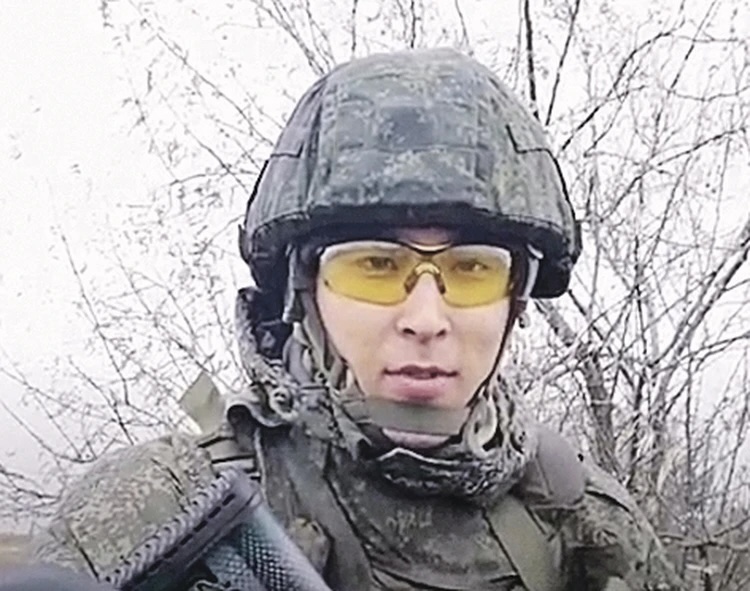
Aydyn Zhamidulov. Photo: Russian Defense Ministry via Kommersant

Kommersant has learned that a military court has begun hearing the criminal case against Senior Lieutenant Aydyn Zhamidulov, a platoon commander in the Airborne Troops, and his subordinate, Private Alexei Dorozhkin. The Russian Investigative Committee alleges that the men kidnapped a young woman who had threatened the officer that she would tell his wife about their relationship and took her to their unit’s temporary deployment point as a Ukrainian spy. There, they stabbed the victim to death and blew up her body in an attempt to conceal their crime. Zhamidulov gained renown for writing patriotic poems during his combat training and was shown reciting them on Telegram channels.

The criminal case against Senior Lieutenant Zhamidulov and Private Dorozhkin was submitted to the Southern District Military Court, sitting in Rostov-on-Don. The men are accused of the kidnapping and brutal murder of a resident of the Luhansk People’s Republic per articles 126.1, 105.2, 30.3, 33.4, and 244.2 of the Russian Criminal Code.

In the file of the case, as investigated by military investigation units at the Russian Investigative Committee, it is reported that Zhamidulov is twenty-eight years old, a native of Kazakhstan, and lived in the Pskov Region. He has a higher education, is married, and was raising two daughters.

In January 2022, Zhamidulov signed a contract with the Defense Ministry and, in the rank of senior lieutenant, served as commander of a parachute platoon in an airborne assault regiment of the famous 76th Airborne Division.

In late 2022, a video was widely circulated in social networks and the media in which Lieutenant Zhamidulov recited a poem of his own about the those involved in the special military operation. At the end of the recital, the officer stated that his family was proud of him and was waiting for him to come home.

Dorozhkin was mobilized on 1 January 2023. Ranked as a private, he served as a senior scout in the Airborne Troops.

According to investigators, at about eight p.m. on 13 January 2023, Zhamidulov and other military men, including Dorozhkin, were drinking hard alcoholic beverages at the Rainbow Cafe in Luhansk. About half an hour later, local resident Valentina Davronova, with whom Zhamidulov had previously been in an intimate relationship, entered the cafe.

A row broke out between the senior lieutenant and the twenty-three-year-old woman. Fearing that Ms. Davronova would report their relationship to his wife, Zhamidulov decided to deal with the young woman, the case file says. He told his subordinates that he would take Ms. Davronova to her current boyfriend.

The young woman was put in the back of a KamAZ truck, and when the truck arrived at the unit, Zhamidulov tied her hands with duct tape. Dorozhkin, who went with them, was ordered by the senior lieutenant to tape Valentina’s eyes, which he did.

To avoid questions from his subordinates and make his actions look legitimate, the investigators note, Zhamidulov told them that Ms. Davronova had served in the Ukrainian army from 2018 to 2021 and had tattoos featuring Ukrainian symbols on her body. He also alleged that she was engaged in intelligence on behalf of the Ukrainian armed forces.

The young woman was taken to a soldier’s bathhouse, where Zhamidulov stabbed her about two dozen times in different parts of her body. At that time, the commander of a reconnaissance platoon combat vehicle, Sergeant Roman Pleshcheyev, entered the bathhouse (his case will be tried separately). Zhamidulov ordered him to finish off the victim. Not wanting to kill her, but fearing negative consequences on the part of the senior lieutenant, Plescheyev stabbed Ms. Davronova with his knife in the area of her left shoulder and right leg.

At 12:20 a.m., Dorozhkin entered the bathhouse, and Zhamidulov instructed him to finish what he had started. Pleshcheyev left the room and Dorozhkin killed the victim by stabbing her in the area of her heart.

Having made sure that the young woman was dead, Zhamidulov ordered his subordinates to take the body outside the temporary deployment point and detonate it with three F-1 grenades so that the deceased could not be identified and the cause of her death could not be determined.

Nevertheless, the crime was solved literally while the trail was still hot. All three defendants were detained and then remanded in custday by a military court.

The case is now in preliminary hearings, and is expected to be considered on the merits this summer. Zhamidulov’s lawyer Natalia Kokhan refused to comment on the case without vetting her answers with her client.

Source: Kristina Fedichkin, “Paratrooper poet accused of murder,” Kommersant, 29 May 2024. Translated by the Russian Reader


[…]

WHEN THE SOUL CAN’T KEEP SILENT

Aydyn Zhamidulov. Photo: Komsomolskaya Pravda

Aydyn Zhamidulov was mobilized from the Orenburg Region. As a civilian he worked as a welder, but now he serves in an Airborne Troops reconnaissance unit. He has a wife, two daughters, and his parents waiting for him at home.

“I was retrained in my specialty. In the short period of mobilization combat training, everything — camouflage, identifying the enemy, working with topographic maps, artillery fire — is very easy to learn,” Zhamidulov said.

All of the things he saw and his interactions with his fellow soldiers inspired Aydyn to write poems. They are plain but honest and poignant, straight from the heart.

Always our ancestors fought evil.
They wrote history with blood, with the pen.
They weren’t afraid to go all the way.
They removed shackles, they united hearts.
Now, our brothers, it’s our turn
To defend our country, our home, and our people.
To do justice, to open their eyes.
The enemy is in deep,
like a needle under the skin.
Let us strike down the puppeteers,
the servants of evil,
Who pull the strings
Of bewildered people,
Of gray-haired mothers
shedding tears
For them, the lives of people
are just a game.
We must put a stop to this
once and for all!

Source: Yulia Reutova, “Victory will be ours! Komsomolka found out what the mobilized are talking about,” Komsomolskaya Pravda, 15 December 2022. Translated by the Russian Reader. Thanks to The Insider for the link.

Reading Recently (Not Necessarily Russian)

Source: “What Ukraine Has Lost,” New York Times, 3 June 2024


Memorial for actor Joachim Gottschalk. When his Jewish wife Meta and son Michael were to be deported, the whole family decided to commit suicide on November 6, 1941. The bronze figure, which was created by Theo Balden in 1967, resembles the actor. It was initially located in a park but had to be moved due to the building of the local Sparkasse in the 1990s. Its new place is a memorial wall in the Joachim-Gottschalk-Straße 35.

Source: “Calau” (Wikipedia)


The Impact of the Gold Rush on Native Americans of California

This inquiry lesson provides primary sources, maps, images, and background history to offer teachers and students insight into a little-known but vitally important aspect of one of the most iconic events in American history—the California gold rush. Students will analyze sources to answer the question: Do American actions against California Native Americans during the gold rush meet the United Nations definition of genocide?

Source: National Museum of the American Indian


The attitude of César Chávez and the UFW towards the undocumented changed over time and can be divided into three periods: 1962 to 1975; 1975 to 1993; and 1993 to the present. A look at these changes reveals much about Chávez, the union, and the times. Frank Bardacke is the author of Trampling Out the Vintage: César Chávez and the Two Souls of the UFW.

Source: Center for Latin American Studies Berkeley (YouTube), 3 August 2012


Whenever an infant heads to nursery, it can feel like an enormous step. Things are changing for everyone. There are all sorts of feelings flying around – relief, sadness, doubt, fear. But what’s going on behind the doors of nurseries and childcare settings in England? India speaks to Joeli Brearley from Pregnant Then Screwed about the current childcare crisis, child development psychotherapist Graham Music about how childcare impacts children, as well as economist Emily Oster on our choices around childcare. India then meets artists Conway and Young who have found a way to make the invisible labour of childcare pay.

Presented by: India Rakusen.
Producer: Georgia Arundell.
Series producer: Ellie Sans.
Executive producer: Suzy Grant.
Commissioning Editor: Rhian Roberts.
Original music composed and performed by The Big Moon.
Mix and Mastering by Charlie Brandon-King.

A Listen Production for Radio 4.

Source: Child, Episode 26: “Nursery,” BBC Radio 4


Childbirth is deadlier in the United States than in any other high-income nation, according to a study released Tuesday by the Commonwealth Fund that underscores the persistence of maternal mortality.

More than 80 percent of pregnancy-related deaths in the United States are preventable, but factors including a shortage of maternity care providers, limited access to after-birth home visits and lack of guaranteed paid parental leave have increased the risk of maternal mortality, especially for Black people, researchers have found.

In 2022, about 22 maternal deaths happened for every 100,000 live births in the United States. For Black people, that number rose sharply to 49.5 deaths per 100,000, according to the report from the Commonwealth Fund, which conducts independent research on health-care issues. Two out of three maternal deaths occur up to 42 days after birth, highlighting the importance of postpartum care, which only some state Medicaid programs and private health insurers cover.

The study compared 14 high-income countries. It used data from the Organization for Economic Co-operation and Development — known as the OECD — which tracks health system metrics across 38 high-income countries, and from the Centers for Disease Control and Prevention Maternal Mortality Review Committees in 36 states.

Although OECD data is widely regarded as the gold standard for international comparisons, the authors note that discrepancies in how countries gather health data may affect the findings.

“We can’t just think of reproductive health at the time of pregnancy because a lot happens after the baby is born. If we’re not supporting women during this crucial time period, we’re never going to solve this problem,” said Munira Z. Gunja, the study’s lead author and a senior researcher at the Commonwealth Fund.

Ten of the countries listed in the report had a death rate of fewer than 10 per 100,000 live births; in 2022, Norway’s maternal death rate was zero.

Laurie C. Zephyrin, senior vice president for advancing health equity at the Commonwealth Fund, said these numbers paint a stark picture of health care in the United States. She called for more focus on community-led investments, including birth centers and health-care teams working with patients in the weeks before and after delivery. She also said health systems should have incentives and accountability involving equitable quality of care, particularly for communities of color.

With 65 percent of maternal deaths occurring after birth, many health experts emphasize the need for not only more prenatal care but an increase in comprehensive postpartum care.

“We want this to be the cultural norm. We want this to be federal policy. We want there to be a big change because we know that we can completely minimize the rate of maternal deaths in this country,” Gunja said.

Health disparities are not unique to the United States. In Australia, Aboriginal people are twice as likely to die of maternal complications compared with other people giving birth, according to the report. Still, experts are hopeful that policy changes and awareness will help bridge the divide and decrease the overall maternal mortality rate in the United States.

The report highlighted the importance of access to midwives, whose work has been described as an important factor in countries with the lowest maternal mortality rates, the report found. Teams involving midwives could deliver 80 percent of essential maternal care and potentially prevent 41 percent of maternal deaths, 39 percent of neonatal deaths and 26 percent of stillbirths, the report said.

Some studies have found that teams led by midwives offer care comparable, or superior, to care provided by obstetrician-gynecologists. In the United States, Canada and South Korea, OB-GYNs outnumber midwives, but in most other high-income nations, midwives are more prevalent.

The United States and Canada face a shortage of midwives and OB/GYNs. Almost 7 million people in the United States live in areas without hospitals or birth centers offering obstetric care or any obstetric providers. The shortage is expected to worsen.

Since Roe v. Wade was overturned in 2022, some states have banned or restricted abortion access, and experts say these restrictions will have a trickle-down effect on health-care access.

“We are setting ourselves up for an absolute reproductive health provider shortage, and contributing to that is this interference into the patient-provider relationship and the restrictions that are being placed on us,” said Tamika C. Auguste, a D.C. OB/GYN and chair of the American College of Obstetricians and Gynecologists Foundation Board who was not involved with the study.

The United States is the only high-income nation without a federally mandated paid parental leave policy and universal health care. Only 13 states and D.C. have paid family and medical leave laws; these policies have been shown to improve health outcomes for pregnant people.

“We are in a dire time in our country, where we’re seeing firsthand the impact of these policy changes at the state level and how they are impacting people’s lives,” Zephyrin said.

In recent years, abortion restrictions have sparked debates and legal battles. State legislatures have been enacting increasingly stringent laws aimed at limiting access to abortion services, such as mandatory waiting periods, ultrasound requirements and bans on certain procedures.

The current wave of abortion restrictions has significantly affected broader health-care services, particularly obstetric care. States that have imposed abortion restrictions often face closure of clinics offering a variety of health-care services, such as cancer screenings, contraceptive services and general reproductive health care. As a result, people in these states encounter greater challenges that exacerbate existing health disparities.

“Women’s health-care providers are being driven out of areas due to the restrictions on practicing full-scope reproductive health care,” Auguste said. “This creates areas where there are no health women’s providers for women.”

Source: Sabrina Malhi, “Childbirth deadlier for Americans, especially Black women, study finds,” Washington Post, 4 June 2024


The factors that led into the creation of their newest album aligns perfectly with the discussions this podcast is about. Just blocks away from the 3rd Police Precinct that burned down during the protests, Twin Cities country-folk band The Gated Community saw many of their recordings lost due a power outage. But being in the center of burning buildings, gunshots, and neighborly concern, Sumanth Gopinath was compelled to write about it. The result: songs about that tumultuous era that culminated in a new album filled with important issues and topics, which fit perfectly with their existing songs and socially conscious perspective as a band. Sitting around one table, I got to hear about the evolution of a band without egos, which is part of what makes The Gated Community so special.

The Gated Community Band Members

  • Sumanth Gopinath (acoustic guitar and vocals)
  • Beth Hartman (vocals and auxiliary percussion)
  • Rosie Harris (vocals and banjo)
  • Nate Knutson (electric guitar and vocals)
  • Cody Johnson (bass guitar and vocals)
  • Paul Hatlelid (drums)

Source: Smouse in the House (podcast), Season 5, Episode 8: “The Gated Community,” 6 June 2024


In his new book, Barons: Money, Power, and the Corruption of America’s Food Industry (Island Press, 2024), Austin Frerick identifies contemporary “barons” in seven different corporations—such as Cargill, Inc., the Driscoll’s and the conglomerate JAB Holding Company—who have taken over food systems and re-shaped communities. Frerick writes in the introduction, “I refer to these people as ‘barons’ to hearken back to Gilded Age robber barons such as John D. Rockefeller and J. P. Morgan because I believe that we are living in a parallel moment when a few titans have the power to shape industries.”

A fellow at the Thurman Arnold Project at Yale University and former Treasury Department official, Frerick has been among the leading experts and researchers in competition policy and antitrust examining food industry consolidation. As co-chair of the Biden campaign’s Agriculture Antitrust Policy Committee, he helped advise several of the leading Democratic presidential candidates on agricultural policy leading up to the 2020 election.

Frerick’s interest in the barons of today’s food-industry is also personal. As a seventh-generation Iowan, Frerick’s interest in antitrust policy began as an undergraduate at Grinnell College where he researched corporate power in Iowa’s slaughterhouse communities.

Barn Raiser spoke with Frerick about how agricultural consolidation has changed the landscape of rural America, and how to bring rural people out from their local Walmart and back onto “Main Street.”

What is it like writing about your home?

It started off as angry and it changed into profound sadness. I think that’s because the origin of the book is in Iowa. “The Hog Barons” chapter is what started this whole thing. This book came about because I published that article in Vox on the hog barons at Iowa Select Farms in Iowa, and I got a book deal from that. I noticed that I changed the tone from when I wrote it as a magazine article and made it into a book chapter. It now reads to me as profoundly sad, like it all kind of fell apart in Iowa. It’s grappling with the Iowa I grew up in and what it’s become, from the anger that’s everywhere to just how industrial the landscape has become.

You wrote that “as farms consolidate, more and more of the wealth leaves rural communities and flows to the Cargills of the world.” You also describe how your hog barons live in a gated community in Des Moines — far from the pollution and working conditions they are creating. A few weeks after your book came out, Jeff and Deb Hansen of Iowa Select Farms, the hog barons you highlight in chapter one, published an op-ed in the Des Moines Register, where they called themselves “stewards of [their] land and communities.” What was your reaction to that op-ed?

They employ their own spokesperson, like someone’s job is to do this for a living, and I just thought it was so poorly written. It reinforced in my head that no one’s ever the villain in their own story. And they’re just delusional. They’re living in a delusional world. They’re just not living in the same world we’re living, and I think the op-ed reflected that. To call themselves stewards of the land with a straight face, it’s just like, no one in Iowa thinks that. That’s an accepted reality at this point.

You hosted a book event in Iowa Falls, where the hog barons are from. What was the reception to your book like there?

Honestly that one shocked me the most. I was actually nervous for that event. I really haven’t been nervous at all during this whole book process. That was the one time I was a little worried for my safety. I turned that tracking thing on my phone so my husband could follow me. It’s a little scary, it’s like you’re going into the heart of the beast. At every book event someone asked me am I worried about my safety, which was, you know, an unnerving question to get all the time. But I had a completely different reaction when I got there. I was shocked. Not only at the turnout—I mean, like 45-50 people—but that there was not one dissenting voice. It was among the most incredible after-talk experiences I’ve had because it felt like a third or half of the room came up and talked to me afterwards, because they all know Jeff and Deb, the hog barons.

They all told me a different story of how Iowa Select Farms bamboozled the community from promises they made and didn’t keep for Des Moines and the intimidation tactics they used to build their empire. Iowa Falls is a beautiful town. It was the epitome of the American Dream for a lot of people and then Jeff and Deb just come in and kind of destroy things to their own personal benefit, and then they hightail it out of there. That’s one thing I kept hearing from people, how they did all this stuff, and then they just left.

In the conclusion of your book, you discuss how “a sense of a distinct regional and local identity” disappears when local businesses disappear. “Unlike the barons, the owners of local businesses live in the communities they serve and are stakeholders in their success. Losing them means losing the glue that binds communities together.” What would need to change for the “Main Street” in rural communities to be revitalized?

This culture of efficiency we live in has stripped us of our community. It views everything as an Excel sheet. There are no coffee beans native to Iowa, you can get coffee anywhere. So much of what you’re buying into is interaction with another human, a sense of being. People bought coffee from my mom because of the human connection and Excel can’t capture that. I was really determined to make that point. Because I saw my mom, who used to work for her own coffee store, and later worked at a corporate Starbucks in Target.

These communities thrive when middle class family farms are around. The biggest way to do that is by putting animals back on the land. These confinements have just destroyed rural communities in every way possible. We also need old fashioned trust busting and antitrust enforcement.

Could you explain how CAFOs are connected to Main Street? How are confinements impacting Main Street?

Denise O’Brien in southwest Iowa really drove home this point to me. She’s a longtime activist, and she talked about how much her street has changed in her lifetime. First of all, one human being can only watch so many cows on pasture—you can’t do robotics for that. Family farms pay local taxes, send their kids to local schools and spend their money locally in town. When that consolidates to one person who owns a big metal shed stuffed full of animals, and the owner of the asset lives in an urban rich community, and then has a low wage worker pop by and take care of things, that’s a very different occupation. It’s the difference between watching a cow on pasture to hauling out dead pig bodies, which is what a lot of that work entails. There’s a whole undercurrent of trauma a lot of these low wage workers experience from basically being surrounded by this incredibly cruel production model that is full of death and destruction.

You write that to change the current system and to “build a more balanced food system” we need to “challenge power directly.” How are you hoping your book will mobilize others to build a more just food system?

That’s my nice Iowa way of rejecting the whole change the food system with your fork mentality that’s been the theory of change the last few decades. To me, it just bifurcated the food system between those that go to the New Pioneer Co-op in Iowa City and those go to Walmart. No one’s ever going to get you a seat at the table. So you have to fight for it.

Source: Nina Elkadi, “The Book That Made the ‘Hog Barons’ Squeal,” Barn Raiser, 6 June 2024


Zhenya Bruno is the pseudonym of a writer who lives in St. Petersburg. 

Source: Zhenya Bruno, “Russian Decency,” New York Review of Books, 20 June 2024


Mariameno Kapa-Kingi, Te Pāti Māori Member of Parliament for Te Tai Tokerau, raised eyebrows recently when she claimed in parliament that the government of had a “mission to exterminate Māori.

Kapa-Kingi was speaking on a proposed change to the processes under which children forcibly removed from their parents by the child welfare agency Oranga Tamariki are placed in foster care.

“The theory of the Minister is that Oranga Tamariki’s governing principles should be colour-blind, which is just another word for white supremacy, because to say we are all one people is really to say we should all be white people,” she explained.

This omnibus post brings together things I've read or listened to recently that made a big impression on me, most of them having nothing to do with Russia. Featuring Joachim Gottschalk, the Native Americans of California,
Mariameno Kapa-Kingi, Te Pāti Māori Member of Parliament for Te Tai Tokerau. Photo: Tania Whyte

Prime Minister Christopher Luxon described the speech as ‘completely out of line’ and ‘unhelpful.’ Opposition leader Chris Hipkins agreed that it was unhelpful, adding  “It’s certainly not language that I agree with.”

Te Pāti Māori co-leaders backed up their MP, however. Rawiri Waititi called it a brilliant speech. “This is how we feel and we will not be told how to feel,” Waititi said. “Many of the policy changes that this Government absolutely makes us feel like there [are] huge extermination processes and policies [aimed at] the very existence of tangata whenua in this country, so it was absolutely the right wording.”

When the facts don’t stack up, you can always appeal to feelings.

Co-leader Debbie Ngarewa-Packer concurred. She could hardly do otherwise, since she herself had used similar language in respect of another of the government’s reforms.  Her own response last November to the incoming government’s move to roll back some recent restrictions on sales of cigarettes was equally immoderate: “There is absolute deliberate intention of this government, as I said, to create systemic genocide,” she said on that occasion.

Te Pāti Māori Co-leaders Rawiri Waititi and Debbie Ngarewa-Packer

The question, however, is not how Rawiri Waititi or anyone else feels about anything, but whether the claim is true. And as everyone who has not completely lost their head knows, such claims are preposterous. Genocide is not just cultural assimilation, but the physical extermination of a people. It is inconceivable without mass violence and ethnic killings.

The closest thing to ethnic violence against Māori on such a scale in New Zealand history was during the land wars of the 19th century.  And even that was not a war of genocide, but a war of dispossession. As soon as the colonial authorities had their hands securely on the land, the fate of the dispossessed Māori became a matter of relative indifference to them.

A repeal of anti-smoking legislation, or of child welfare legislation ­­– ­­­irrespective of one’s attitude to that repeal – does not constitute mass violence. To use such terms to describe what is happening in New Zealand today only debases the language and renders the terms themselves meaningless. And in doing so, it disorients anyone who takes the term for good coin, concealing the true nature of the problem, and disarming anyone who seeks to address it.

What drives Te Pāti Māori to resort to such histrionics and attention-seeking language?

The answer to that question lies in what Te Pāti Māori is. It is an electoral formation and nothing more. It has no existence outside of Parliament and its associated vote-gathering machinery. It is a parliamentary voice without a movement, like a head without a body, and is therefore powerless, despite its presence in parliament, to affect the course of politics in any significant way.

This powerlessness was exposed in the immediate aftermath of last year’s election, when, buoyed by its electoral gains and alarmed by the new government’s right-leaning course, it called for a National Day of Action to coincide with the opening of the new Parliament in early December. The declared kaupapa was to demonstrate the “beginning of a unified Aotearoa approach to the government’s assault on Tangata Whenua and Te Tiriti o Waitangi”. Their hype included the prediction that “The movement that we’re seeing from Māori will make the foreshore and seabed hīkoi look like something extremely small.” This was a reference to the protest of twenty years ago, in which 15,000 Māori and others converged on Parliament, and which triggered the Labour Party’s Māori MPs to quit to form Te Pāti Māori.

Part of the crowd of 15,000 at the Foreshore and Seabed protest at Parliament, 5 May 2004. Photo: Dylan Owen https://natlib.govt.nz/records/23042789

Nothing remotely comparable to this occurred in the December 2023 Day of Action, despite generous support of the action by the liberal news media, which publicised the assembly points in advance. A few hundred marched in Wellington, and groups of a few dozen rallied in various other towns and cities. In the largest working class concentration, Auckland, a handful of car drivers attempted to disrupt traffic on the motorways, with little effect. It was a rather stark revelation of the narrowness of support for Te Pāti Māori, especially among workers.

When its fighting talk in parliament produces zero effect, the party therefore has few options except to open their mouth wider, shout louder, and use more extreme language in order to win the ear of the ruling class. Not just ‘racism’, but ‘white supremacy’ becomes the order of the day.  Not just ‘discrimination’ but ‘extermination’. Not just ‘extermination’, but ‘systemic genocide.’

Don’t be fooled by the truculent posturing and coarseness of tone: these appeals are directed to the rulers, asking “please, listen to us!” They hope to frighten the ruling layers into adjusting their course.

(On his side, Winston Peters of New Zealand First, the counterpart of Te Pāti Māori on the right wing of capitalist politics, uses equally hyperbolic language in his denunciations of Te Pāti Māori, accusing them of “cultural Marxism” and of wanting “anarchy – headed by their Māori elitist cronies turning this country into something akin to apartheid.” Believe me, Winston, nothing could be more alien to Marxism than the politics of feelings!)

But neither the government nor the broader ruling class will listen to Te Pāti Māori.  They defend above all else the dictatorship of profit, and the rate of profit has now fallen to the point where it is incompatible with some of the most basic social rights and needs, such as affordable housing, equitable access to health care, basic infrastructure like water and roads, and more. Their ability to grant even small concessions is strictly limited: on the contrary, their present focus is to restore their profits by making even deeper inroads against our wages and social rights.

And among the things capitalist society today is incapable of delivering is the protection of children from violence. The child welfare ministry Oranga Tamariki has been in a permanent state of turmoil for many years, over the question of uplifting children from their parents. It is no closer to resolving this than it was five years ago, when a shocking Newsroom documentary by reporter Melanie Reid exposed the brutality of child ‘uplifts’.  

On the one hand, Oranga Tamariki is rightly excoriated for the tearing apart of Māori families in circumstances where it is not justified, such as the case documented in the 2019 documentary, causing long-term trauma. On the other hand, it gets criticised – again with full justification, at least in some cases – for failing to protect the lives of children, who suffer violent deaths at the hands of their family members at a high rate in New Zealand.  

Coming under fire from both these opposite directions, the institution lurches from one policy to the opposite, according to the nature of the most recent scandal. At the time of the 2019 documentary, Oranga Tamariki was uplifting hundreds of babies each year, in response to criticism for failing to prevent the violent deaths of babies at the hands of family members. About 70% of these uplifted infants were Māori. (Māori make up about 20% of the population). Oranga Tamariki was under pressure to act pre-emptively in many of these cases, before there was any clear evidence of danger to the child – and therefore these decisions were inevitably based on rumour, prejudice, and racial profiling of Māori as ‘bad parents’.  In many cases, the decision to uplift was taken in secret, without any prior discussion with the family concerned.

An intense public outcry followed the documentary. Protests outside Parliament demanded an end to the unjustified snatching of babies, especially Māori babies, from their parents’ arms. The protests denounced the lasting trauma inflicted on the affected Māori families, and the damage to the social fabric caused by the high rate of children being taken into state care. A petition called Hands off Our Tamariki  (children) gained 17,377 signatures.

Protest at Parliament demands “Hands off Tamariki forever”   Photo: Lynn Grieveson

These protests prompted a switch to the opposite policy. Following multiple inquiries into the functioning of Oranga Tamariki, an amendment to the governing principles of Oranga Tamariki was introduced in 2019, called Section 7AA, which bound the institution to uphold the principles of the Treaty of Waitangi in matters concerning Māori children.  In practice this meant placing uplifted babies with members of their own whānau, or with their wider iwi, wherever possible. Labour Party Minister for Children Kelvin Davis proclaimed “This report will end uplifts as we have known them. While there will always be a need for some children to be taken into care, this should only happen after all avenues with community and whanau have been exhausted.” The rate of uplifts fell steadily, from 963 uplifts in 2018 to 251 in 2022.

This was a small but significant gain for the whole working class. It pushed back state interference in Māori families and strengthened the bonds of solidarity within our class.

The death of another young child at the hands of his family has halted that momentum, and now the pendulum is poised to swing all the way back again. Wellington toddler Ruthless-Empire Wall was beaten to death by family members unknown, just shy of his second birthday, in October 2023 – after the boy’s uncle had alerted Oranga Tamariki to the dangerous environment he was living in, and requested them to place the boy in his care.

Ruthless-Empire Wall. Photo: Ngatanahira Reremoana

Now the government, at the behest of its Act Party component, seeks to restore the policy of wholesale uplifts. Act campaigned on the issue in last year’s election, and repeal of Section 7AA was part of the coalition agreement between the three parties that formed the new government in November 2023. The campaign is headed by Act’s Karen Chhour, the incoming Minister for Children and for the Prevention of Family and Sexual Violence.  Chhour, who is Māori herself and was raised in state care, presented her own petition to repeal Section 7AA, which received more than 13,400 signatures.

Chhour claims that Section 7AA has led to Māori children being removed from safe and loving homes because their caregivers weren’t of Māori descent. “I consider that section 7AA allows the treatment of children and young people as an identity group first, and a person second, it creates a divisive system that has had a negative impact on caregivers. This repeal will make sure that Oranga Tamariki is entirely child-centric and is making decisions that ensure a child’s wellbeing and best interest. Over successive years, Oranga Tamariki has failed our most vulnerable children, and in part that has been because of Section7AA,” she said.

Karen Chhour Photo: Doug Mountain

Chhour presents no evidence to back these assertions, a point noted by the Waitangi Tribunal which entered the debate. If children are actually being torn from existing foster homes where they have already bonded with their caregivers, simply because their caregivers were not of Māori descent, that could be a matter of legitimate concern. But it is incumbent on Chhour to prove that this is in fact happening. Since she does not do so – beyond claiming to have seen it herself – this appears to be a spurious claim.

Nor does she make any attempt to explain why or how adherence to the Treaty of Waitangi should lead to Oranga Tamariki making decisions that are not in the child’s best interest. Her unsupported assertion hints at an unspoken racist explanation: that Māori parents and foster parents are less than competent caregivers. This is a debate with high stakes.

Thus, the issue Mariameno Kapa-Kingi was attempting to address is a real one, and the repeal of Section 7AA should be opposed.  It is the ability to recognise a real problem, combined with the inability to do anything about it, that generates the flailing of arms in Parliament, and the politics of middle class hysteria in general.

Even if the repeal of 7AA is defeated, the social scourge of violence against children can only be expected to worsen in the short term. It is a consequence of, among other things, the divided, weakened state of the working class, which is increasingly being torn apart by the ordinary workings of the capitalist economy, exacerbated by the actions of its government and state.  

Such violence against children is connected with massively increased economic and other pressures on families: the inflation eroding our wages, the growing insecurity of employment, the cuts to social services like health care, including mental health care, the breakdown of attendance at school, and above all, the housing shortage, which hurls ever-wider layers of workers down into the horrors of drug-riddled and gang-infested ‘emergency housing.’

Violence against children is closely connected with the scourge of violence against women, in which New Zealand ranks so shamefully high in the world. It is worth noting that Te Pāti Māori, along with the Labour, National and Green parties, supported legislation that undermined women’s single-sex spaces, including women’s refuges from domestic violence, by requiring them to open their doors to males. They took an active part in the attack which shut down a women’s rally in Auckland in March 2023 by force and violence. This fact alone should nullify their claim to speak in defence of children.  

As long as these social conditions continue, there will continue to be situations in which children have to be removed from their parents’ care in the interests of their own safety. But such removals can also provide an opening for hostile class interests to drive in a wedge that tears apart working class families. This has been done disproportionately, though not exclusively, against Māori, who make up a substantial component of the working class. It is the built-in tendency of intervention by the capitalist state and its agencies like Oranga Tamariki.

It falls to a revived movement of the whole working class to oversee such situations and to ensure that the ties between children and their whānau are maintained as far as possible during their removal, and that they are returned to their parents’ custody as quickly as possible. Strengthening solidarity within the working class, along with raising the social status of women, is the road to ending the violence against children in a more permanent way.

This is not a new problem for the working class worldwide. Farrell Dobbs, a leader of the historic Teamsters Union strikes which organised truck drivers in the US Midwest in the 1930s, once described how these strikes took on the character of the mass social movement. The Teamsters Union Local 574 ‘flying squads’, which had been organised to shut down strike-breaking trucking operations across the city, expanded their operations to intervene when the union got news of unemployed workers being evicted from their homes for non-payment of rent. The arrival of the union flying squad quickly ended the attempts by landlords and their deputy sheriffs to evict the worker.

Farrell Dobbs, (with images from the 1934 strikes behind him)

“In a few instances, the union even adopted children,” Dobbs said.

He explained that at the time it was common for bourgeois charities to identify working-class families that in their view were unable to adequately provide for their children, and the charities would then arrange to have the children adopted out, against the wishes of their parents. The union organisation stepped in to prevent this happening, finding foster parents from among the union ranks to care for the children temporarily, so that they could be returned to their parents at the earliest opportunity. (The talks where Dobbs tells the story of the Minneapolis strikes are available on YouTube, and are very inspiring to listen to in full. Dobbs describes the adoption of children in the third talk, beginning about the 24th minute.)

Children demonstrate in support of their unionist parents

At this point there is little outward sign of such a revived fighting labour movement in New Zealand, so this political course is far from obvious to see.

What is abundantly clear, however, is that Te Pāti Māori, and all those like them who pursue the opposite course – of appealing to the capitalist rulers and relying on their parliamentary apparatus and state institutions –  quickly find themselves in a blind alley.

Source: James Robb, “Te Pāti Māori, Child Welfare, and the Politics of Middle Class Hysteria,” A Worker at Large, 24 May 2024


Errollyn Wallen’s memoir Becoming a Composer is a look into the mind of the composer as well as the life of one. Born in Belize but now based in the far-flung north of Scotland, where she sometimes inhabits a lighthouse, she works at a brisk pace, composing prolifically for orchestra, chamber ensemble, choir, and over twenty operas. Her major public commissions have included music for The Last Night of the Proms, the Paralympic Opening Ceremony, and the Queen’s Diamond Jubilee, and she joins us from her home in the Orkney Islands to talk about Becoming a Composer, and becoming a composer.

Music heard in the show:

Title: Horseplay i. Dark and mysterious
Artist: The Continuum Ensemble/Philip Headlam
Composer: Errollyn Wallen
Album: The Girl In My Alphabet
Label: Avie AV0006

Title: Dervish
Artist: Matthew Sharp (cello), Dominic Harlan (piano)
Composer: Errollyn Wallen
Album: The Girl In My Alphabet
Label: Avie AV0006

Title: Sojourner Truth
Artist: Madeleine Mitchell (violin), Errollyn Wallen (piano)
Composer: Errollyn Wallen
Album: Violin Conversations
Label: Naxos 8574560

Title: Cello Concerto
Artist: Matthew Sharp (cello), Ensemble X, Nicholas Kok
Composer: Errollyn Wallen
Album: Photography
Label: NMC NMCD221

Title: Boom Boom
Artist: Palaver Strings, Nicholas Phan
Composer: Errollyn Wallen
Album: A Change is Gonna Come
Label: Azica Records 71365

The Music Show is made on Gadigal and Gundungurra Country

Source: Andrew Ford, “Becoming a Composer with Errollyn Wallen,” The Music Show, ABC Radio National, 25 May 2024

To Not Die as Slaves: Solidarity Zone’s Mission to Aid Russia’s Radical Anti-War Protesters

Ivan Astashin

Muscovite Ivan Astashin knows firsthand what human rights activism, Russian prisons, and terrorism and arson charges look like. As a young man, he was close to Eduard Limonov’s National Bolsheviks and was arrested as part of the high-profile Autonomous Combat Terrorist Organization (ABTO) case, in which a group of young men were charged with a series of arson and terrorist attacks.

At the turn of the 2000s and 2010s, this story was widely discussed in the media, sparking debates over whether the arson attacks were justified. Astashin was convicted of torching an FSB district office in 2012 and spent over nine years behind bars.

Upon his release, Astashin worked for Andrei Babushkin’s Committee for Civil Rights and was involved in defending the rights of prison inmates. In February 2022, Astashin joined the protests against the invasion of Ukraine and was soon forced to leave Russia.

Astashin is now involved in the campaign Solidarity Zone, which aids Russians who have been arrested for radical anti-war protests.


How did the “Solidarity Zone” come into being?

When full-scale war broke out, large protests took place in many Russian cities, and criminal charges were filed against protesters, both charges of “violence against police officers,” which have been routine at protest rallies (police officers themselves use violence, but they don’t pay for it), and charges that were newish for Russia.

There was Anastasia Levashova, who threw a Molotov cocktail at police officers. There was the case against Anton Zhuchkov and Vladimir Sergeyev: they were detained near Pushkin Square in Moscow on 6 March 2022 on their way to an anti-war rally. A Molotov cocktail was found in Sergeyev’s backpack. The police did not know what they guys were planning, so they were able to accomplish part of what they’d planned. Zhuchkov and Sergeyev had planned to commit suicide publicly at an anti-war rally as a sign of protest—they were so desperate. As they were being detained, they took lethal doses of methadone. The police failed to notice this. They put them in a paddy wagon and beat them up there, but on the way to the station the police realized that their detainees were quite sick and took them to hospital. They were saved in the intensive care unit at the Sklifosovsky Institute.

Zhuchkov and Sergeyev were sent from the intensive care unit to a pretrial detention center after being charged with “attempted disorderly conduct.” According to police investigators, the men had been planning to set fire to empty paddy wagons. When detained, Sergeyev said that they “wanted to torch a couple of paddy wagons,” emphasizing that it was empty vehicles they had intended to target. At first, we wanted to find out the address where we could write to Zhuchkov and Sergeyev at the pretrial detention center, so we asked OVD Info, but we also learned that OVD Info would not defend them, as theirs was not a peaceful protest.

We realized that none of the existing human rights organizations was willing to take on such cases. We decided to take on Zhuchkov and Sergeyev’s case: we published the address to which people could send them letters and found them a lawyer. A little later, the authorities started charging people with arson attacks on military recruitment centers, and so we decided that we should also aid such people. By September 2022, we had launched Solidarity Zone’s social media accounts and expanded our work.

Do I understand correctly that the attitude of OVD Info, Memorial, and other human rights organizations to people engaging in “non-peaceful” anti-war protests has changed? Have their motives become clearer to these human rights organizations?

Yes, their attitude has changed. As I see it, it changed after the military mobilization, when people began setting fire to military recruitment offices en masse in protest. Now it is easier to get announcements of fundraisers for such detainees reposted. But the position of human rights organizations has remained the same.

We had a public discussion with Sergei Davidis, head of Memorial’s Support for Political Prisoners project. He said these people should certainly be supported, that in most cases they have been wrongfully charged with violating Article 205 of the Russian Criminal Code (“terrorism”), but that whereas the criminal code articles on “discrediting” the army and “disseminating fake news” about the army clearly contradict Russian law and international conventions, and people charged with violating these laws can be designated political prisoners without a detailed examination of their cases, then with regard to people who attempt to torch military recruitment centers, Memorial examines the cases in detail and is guided by international criteria. They have designated twenty such people political prisoners, but the number of these cases is many times greater.

All human rights organizations have their own focus. OVD Info deals with cases related to peaceful protest; First Department, with high treason cases; and the Net Freedoms Project, with freedom of expression cases. Our cases do not fit these criteria. Before we started, there was no organization which was willing to support such people.

Is your campaign volunteer-driven? How many people are you assisting now? How do you define the people you support?

We support people who have been arrested for anti-war protests, for radical anti-war actions, although nowadays virtually all anti-war protests are radical. We handle cases where people actually set fire to a military recruitment center or a railroad signal relay box, and cases where they were merely planning to do such things.

Or they weren’t even planning to do such things, but the security services have fabricated a case against them, alleging that they were planning to torch a military recruitment center, as happened to Ivan Kudryashov.

We are currently supporting nineteen political prisoners. In almost all cases we pay their defense lawyers and organize fundraisers to this end, and in many cases we are also involved in arranging for parcels and care packages to be sent to the prisoners and replenishing their personal commissary accounts at their detention facilities. We talk publicly about their cases and similar criminal cases. We did a count in September 2023, and at that time there were around three hundred people in Russia facing criminal charges over radical anti-war protests. There was no further info on half of these people: we could not find out whether they were under arrest or wanted by the police.

We try to cover such cases as much as we can because we are a volunteer organization: we don’t get paid or have permanent funding, although we would certainly like to have such things. We raise money for political prisoners through cryptocurrency and PayPal donations. We also do personal ruble-denominated fundraisers to pay lawyers through the platform Zaodno (“In Cahoots”).

In the first quarter of 2024, we spent 900 thousand rubles (approx. 9,100 euros) paying for care packages and one-off visits by defense lawyers. When lawyers defend our prisoners in court, we organize personal fundraisers. Sometimes we hold events in Europe to raise money, and sometimes other campaigns hold events to raise money for us.

Let’s imagine that a programmer in Tver has been arrested for attempting to set fire to a military recruitment center. His relatives are scared: they are unlikely to want to do business with a volunteer campaign based in Europe. How do you reach out to those accused of anti-war protest?

Actually, we are increasingly being approached by relatives of arrestees as we are becoming famous. We are recommended in various chat rooms dealing with support for political prisoners. Often people contact OVD Info, and they suggest contacting us.

Aftermath of an arson attack on a military recruitment center in Kemerovo

We also search for information on detainees ourselves. If you have at least a first name and a surname, you can find the rest of the information in the public domain. But sometimes you cannot find out which thirty-year-old native of Voronezh has been detained. There are such case, unfortunately. Information can be obtained when a person is added to the list of “terrorists and extremists” via court filing. When a person is in the database, the locale of the pretrial detention center where they are held is identified as well. In many cities there is only one pretrial detention center, so we can dispatch a lawyer there to offer assistance to the arrestee and get their take on the case.

Some argue that publicity is not always beneficial to defendants in political criminal cases given the current conditions. Does Solidarity Zone not take this approach?

Our opinion is that publicity is beneficial in most cases. Despite everything, the security services still don’t like their lawlessness to become public. This still entails inspections, which, although they are formal procedures, are still unpleasant for them.

Publicity is a defense against torture and coercion. Also, you cannot raise money to pay a lawyer if there is no publicity. Without publicity, a person will not receive letters from supporters and well-wishers, but letters are very important. Publicity has practically no effect on the sentence nowadays, neither positively nor negatively.

So the lawyer is the prisoner’s link with the outside world? If a person ends up in this situation, they will still get a brutal sentence of ten, fifteen or twenty years or more, won’t they?

The lawyer is the only person who can visit someone in pretrial detention centers and penal colonies without limits on the number and length of visits. During the investigation phase of a case, relatives usually do not have visitation rights, especially if the individual has not pleaded guilty. So the support of a lawyer is very important.

As time goes on, this is less and less the case, but what the lawyer does can still affect the sentence. If a person has a court-appointed defense lawyer, they often tell them to agree to every deal offered by the prosecution and to sign every paper they ask them to sign, so the sentence will be shorter. Ultimately, however, the investigators and prosecutors add new charges, and the sentence is huge. But if there is a lawyer who really defends their client, they at least make sure that no new charges are filed.

A lawyer can go after the gross violations on the part of the state. Take Ivan Kudryashov: there was no evidence in his case, and so he should have been acquitted. But there are no acquittals in Russia, so he was sentenced to six years for “planning a terrorist act.” This is a short sentence by today’s standards, but his lawyer got it reduced on appeal to four years and ten months.

Although Ilya Baburin was just sentenced to twenty-five years in prison for violating six articles of the Criminal Code. For one incident—planning to torch a military recruitment center—he was charged with violating four different articles, for one and the same thing! And the lawyer could do nothing.

Ilya Baburin in court

There are news stories of phone scammers conning people into torching military enlistment office, of people being offered money on Telegram to torch railway signal relay boxes. Do you handle these cases?

We have been approached about such cases. Those people shouldn’t be in jail, of course. It is doubly cynical that the pensioners who were conned have also been charged with terrorism, although in terrorism cases what matters most is the person’s intent. We have limited resources, however, so we only assist people who take an anti-war stance, which is an important criterion for us.

You also have the criterion that the defendant not testify against anyone else. Whether they pleaded guilty or not doesn’t matter.

What matters is that they didn’t willingly testify against others. Anything can happen under torture.

The number of people who go down the road of torching military recruitment centers and railway relay boxes has not been decreasing, has it? Not all those who oppose the war and Putin have left the country or gone to jail, have they?

On the contrary. Whereas previously we tried to write about all arrests on such charges, we now realize that our small team cannot cover all the arrests because they occur almost daily. Often little is known about the detainees, but the news reports say that the person was on a mission for the Free Russia Legion, meaning that the person has an anti-war stance.

When a person engages in such actions, they seemingly first of all undergo an existential crisis because they live in a quasi-fascist empire that has also attacked its neighbors. Does this person want to do something even though they realize that their life may be in danger?

Yeah, that’s right. In the cases that are well known, the defendants say they wanted to do something, to take radical action by way of protesting.

In 2022, Navalny supporters were often detained for such actions, such as Igor Paskar, who threw a Molotov cocktail at an FSB building, or Vladimir Zolotarev, who set fire to a Russian National Guard building in Komsomolsk-on-Amur. People used to go to protest rallies, but then there were no more protest rallies. Another motive we can observe among such people (Zolotarev and the anarchist Alexei Rozhkov, who set fire to a military recruitment center in March 2022, spoke of it) is that they couldn’t tear themselves away from the news about Ukraine. At some point it was impossible for them to just read all of it: they had to do something as well.

When the military mobilization began, people realized that all of this was not happening somewhere far away, but could affect them. Many people realized that they would go to jail, but they went to commit arson because they thought it was better to go to jail than to go fight a criminal war. Roman Nasryev and Alexei Nuriyev were sentenced to nineteen years each for attempting to set fire to a military registration office in the Chelyabinsk Region. This phrase in Nasryev’s correspondence jumps out: “It’s time to start—or we’ll die as slaves.”

There are now people who are primed for a long-term confrontation with the military machine, for guerrilla actions, and for greater degrees of security. And if you look at the reports of sabotage, not every one leads to the capture of the perpetrators.

It is clear what could have prompted radical action in February 2022. In the autumn of 2022, it was the mobilization. But how can it be that someone tolerated the war for a long time and decides to act only now? Or are these just “guerrillas” who have avoided capture for a long time?

That is a good question, to which I have no answer. We know generally about those detained for radical protests in 2022, but there is still little data even for 2023. We can assume that some people went abroad in 2022, but had to return to Russia because they could not settle down here. Some people may not have resisted in 2022 because they hoped that everything would end quickly, but now they see that nothing ends by itself.

The case of Sergei Okrushko can be cited as an example. He is Ukrainian but has a Russian passport. In 2022, he went to Moldova, whence he wanted to enter Ukraine and work on humanitarian projects. But he was not allowed to enter Ukraine because of his Russian passport. He was forced to return to Russia. He got a job at an oil refinery (as an electrician) and set off an explosion there.

Are you also a wanted man in Russia? What are the charges?

The authorities have not yet responded to inquiries about what the criminal charges are, although my lawyer submitted a request over a month ago.


After this interview was recorded, Moscow’s Cheremushkinsky District Court published information that it had been petitioned to arrest Ivan Astashin in absentia on charges of “condoning terrorism.” Other details of the case are still unknown.

Source: Alexander Leonidovich, “Don’t Die Slaves: How Solidarity Zone Aids Anti-War Militants,” Radio Svoboda, 26 May 2024. Translated by Thomas Campbell. Thanks to Simon Pirani for the heads-up.

(No) Republic

Good morning.

The Russian Justice Ministry has once again designated Republic a “foreign agent.” This happened for the first time in 2021, but at that time a legal entity with which we soon severed ties was placed on the register of foreign agents. Now the publication itself has been put on the register. We are charged with “shaping a negative image of the Russian Federation,” as well as publishing “inaccurate information about the decisions taken by Russian federal officials and the policies they pursue.” I would like to remind you that Republic has always been financed solely by subscriptions, and Justice Ministry’s unjust ruling is a great reason to subscribe (if you are not subscribed already) or to renew your subscription.

And now, as usual on Saturdays, here are links to our latest articles and the best stories of the past week.

[…]

Why did several European states simultaneously recognize the independence of a “Palestinian state”? Because now this looks like an encouragement to the terrorists, a sign that brutal killings can lead to achieving political goals. You’ll find all the details, as well as commentary by an Israeli historian and an Arab human rights activist, in “Profiles of Power.”

[…]

In “Power,” Ivan Davydov attempts to explain the psychology of Russians who have taken a position neither for nor against the war, but are “unopposed” to it. They probably make up the majority, but what explains their stance? A habitual mindset that regards political power as a force of nature, with which nothing can be done and which is better to ride out. “This stance is ethically vulnerable, but it is warranted by the know-how of several generations and supported by the self-preservation instinct,” argues Davydov.

[…]

Dmitry Kolezev, Editor-in-Chief, Republic

P.S. This is my last newsletter as editor-in-chief of Republic. I am leaving the post of my own free will. I announced my resignation a week ago: it has nothing to do with the Justice Ministry’s decision. I thank the authors, editors, and readers of Republic for the three years we have spent together. As they say in such cases, take care of Republic. And take care of yourselves, too.

Source: Republic Saturday newsletter, 1 June 2024. Translated by the Russian Reader, who has (mostly) happily subscribed to Republic for several years running. I will definitely be renewing my subscription later today to show them my support.


A “For Victory!” banner on the facade of the Contemporary, a long-shuttered movie house in Ivanovo, Russia.
Photo: Ivan Davydov/Republic

Since the death of public opinion polling, people who are professionally obliged to speculate about Russian politics and make predictions about the future have been looking for signs literally everywhere, gradually turning from analysts into soothsayers.

For example, a respected opposition political scientist based in Europe recently wrote that “General Popov’s arrest may generate serious friction between society and the authorities.” By the way, this same political scientist has also been trying to gauge the mindset of Russians by counting the poop (excuse me!) and other unpleasant emojis that Russians (presumably) post as comments on the Telegram channels of Russian government officials and pro-regime propagandists.

He is an optimist, of course, confident that the regime is about to collapse. Poop emojis don’t lie!

Another political scientist, a pessimistic lady, on the contrary, gazes at Russia from her distant American vantage point, but does not even condescend to comment—she simply reposts a photo from a certain bookstore where Darya Dugina’s works are displayed on a separate shelf.

And really, what good are words? One glance at the photo is enough to get the whole point, to forget forever about terrible present-day Russia and wave it goodbye.

Nor am I an insider, alas. I’m not endowed with secret knowledge, and it has been a long time since I perused the “real polls” said to be commissioned by the presidential administration and other important agencies. Frankly speaking, I’m not even sure that such studies are still being conducted.

But there are still some advantages to being a participant observer, a person looking at Russia from the inside. In any case, I will risk sharing my own observations.

Has the Russian state been expanding into the cultural realm (since we mentioned bookstores)? Does it seek to reshape culture for propaganda needs? Yes, undoubtedly. It would be foolish to deny the obvious. And it has been invading more and more realms, where, until recently, it seemed one could sit back and wait out the storm. It has finally gone after “bad” books in a big way, it seems. Museums have also been toeing the line. Right now, for example, there are two exhibitions related to the special military operation underway in Moscow: Behind the Lines, a large-scale project at the Russian State Historical Museum, in whose launch [pro-war TV presenter] Vladimir Solovyov personally had a hand; and War Correspondents, at Zaryadye Park, in which the work of today’s TV correspondents is shown as a continuation of the work of journalists during the Second World War, in full compliance with the basic propaganda narratives. Regional museums have not been lagging behind the capital’s museums either.

Although television has indeed reduced the number of programs dealing with the ins and outs of the special military operation, even now they take up most of the airtime on the major channels.

The information warriors have been firing all guns. The only question is their firepower’s effectiveness.

In February and March 2022, the special military operation was undoubtedly the main topic of all conversations, from television studios to kitchens. Emotions were voiced in a variety of ways (and I wouldn’t say that enthusiastic support prevailed in the kitchens and subways), but rather quickly it all shifted to the outskirts of public opinion. There has been a “normalization” (that’s the accepted term, it seems) that has equally outraged both the vocal pacifists and the supporters of an immediate nuclear strike on Washington, the latter, perhaps, even more so. Complaints that no one on the home front cares about the war front are the leitmotif of many posts on the social media channels of the Zeds [Russian pro-war activists].

The zed (since we are on the subject of signs) is also an important sign. Nowadays you can find this letter in ordinary Russian cities, but it is no longer as prolific as it once was. There is, as a rule, one, big, main zed (Z) somewhere on a government building in the city center, but that’s all. And even that one is faded, mounted there long ago and thus overly familiar to the point of invisibility.

There are, of course, the Defense Ministry posters for recruiting contract soldiers. But they seem out of context as it were, speaking as they do about the chance to “join up with people just like you,” solve your financial and social problems, and, ultimately, rake in hefty paychecks. They are outside of time and devoid of specifics, of references to reality. We see a rugged-looking man in soldier’s kit, the Russian tricolor flag, tantalizing numbers….

If we speak, as is fashionable, of the current Russian regime as restorationist, we can argue that the country’s masters have succeeded in restoring only one thing—total depoliticization, the leadership’s fear of any doings that might be unwieldy and thus regarded as political. This was typical of the late-period Soviet Union (and ended overnight, we should note, when Gorbachev loosened the screws a bit). Cities that are like enclaves, people who are like atoms, the plight of the Russian opposition in the twenty-teens, and the isolated (yes, as yet isolated) crackdowns have vividly reminded the doubters what happens to eager beavers.

In this sense, nothing has changed in recent years. Perhaps the intensifying propaganda shows that the authorities have new ideas in this regard, that they have decided to make their words about the nation’s unprecedented unity mean something. It is unclear why, though: the regime will get nothing but problems by politicizing the populace. So far all these efforts have failed, however. The Master and Margarita and 1984, not the works of the Dugin family, are still atop the Russian bestseller lists. Brought to museums by their teachers, schoolchildren yawn and poke at their smartphones, while adults are almost absent. The escalating propaganda makes people neurotic rather than political, but since Soviet times the populace has had a remedy—an effective remedy—for countering this neuroticization.

It’s all the business of the folks in power. As long as it doesn’t directly concern you, don’t make a move, nothing good will come of your flailing. Political power is a force of nature, an element beyond human control, so try to have as little contact with it as possible. When asked whether you are for or against something, answer evasively, “I’m unopposed to it.” Better yet, hang up immediately if pollsters call you. The times are such that they can be even more dangerous than bank fraudsters.

Talking to crooks may make you poorer, but it certainly won’t get you sent to prison.

And neither General Popov’s going to jail nor even the absence of diamonds in the upholstery of his wife’s furniture will generate any friction between society and the authorities. Because there is no society.

This stance is ethically vulnerable, but it is warranted by the know-how of several generations and supported by the self-preservation instinct. This stance poses obvious problems for the future—for any future, both the one cherished by fans of rights and freedoms and the one imagined by armchair slayers of Washington.

But there is no other.

Source: Ivan Davydov, ‘For’ or ‘unopposed’? On the state of Russian society: do Russians want anything in particular?” Republic, 30 May 2024. Translated by the Russian Reader, who has happily translated and published other insightful columns by Mr. Davydov over the years.