Once upon a time, apologizing on camera was a Chechen and Belarusian practice. Since the outbreak of full-scale war, the Russian authorities have also adopted this method of putting pressure on dissenters, especially in music and pop culture. Here are some examples from the last year.
Quote: “We have to be role models, but ones with the right values. I urge all performers to be responsible. The moment has come to change everything for the better, and I want to have an impact on this.”
Did it help: Yes, Mizulina gave the rapper another chance: he had his a picture taken with her and deleted some of his songs from streaming services. The security forces stopped disrupting his concerts.
Quote: “I spent time in prison. More precisely, I spent five days under arrest in a pretrial detention center. On this occasion, I have to shore up my opinion about the complaints about the pots.* I was wrong: I should not wish harm to my army, because the army is inseparable from the people. And I am an inseparable part of this people.”
Did it help: yes, apparently. Roman Khudyakov (which is the rapper’s real name) has stopped making public appearances, however.
*[In a video recorded on 23 March 2022, Loqiemean is shown baking meat in clay pots and saying that he would like those who bombed an apartment building in Odessa to be cooked in clay pots. On 1 May , Yekaterina Mizulina posted this video on her Telegram channel, captioning it as follows: “But we definitely do not need such concerts in Russia. Let him perform at home in his kitchen.”]
Quote: “I was mistakenly obsessed with false information [voice-over: “Why were you brought here?”] I had a misfire in understanding what was happening.”
Did it help: no. Charlotte has been charged on four criminal counts, including “disseminating fake news about the Russian army” and “discrediting the Russian army.” He’s now under arrest in a pretrial detention center.
Charlotte, “Posh or Not” (2019): “When I see a person, I look into their eyes It doesn’t matter what you look like It’s important what you’re talking about When I don’t see a person, I look up at the sky It doesn’t matter what I look like It’s important what I’m talking about”
For what: for an “almost naked” party, at which the guests were dressed scantily; Vacìo even came wearing only a sock over his penis.
Quotes:
Vacìo: “I want to say that I don’t support LGBT people in any way and didn’t want to make any propaganda about it. I condemn LGBT supporters. I apologize for offending the feelings of other people and for being involved in such a terrible video at such a difficult time for our country.”
Philipp Kirkorov: “I went through the wrong door. Yes, I knew about the event, had received an invitation, promised to come and came, but I didn’t know about the nature of the events that would take place behind that door. And so I left.”
Ksenia Sobchak: “I can tell you for sure for myself, my friends, I definitely did not want to offend anyone. If someone is offended by my appearance, I apologize for it.”
Did it help: We don’t know yet. It seems that the backlash against Ivleeva and her guests is still underway.
MOSCOW, Dec 28 (Reuters) – A rapper who attended a celebrity party with only a sock to hide his modesty has been jailed for 15 days, sponsors of some of Russia’s best known entertainers have torn up their contracts, and President Vladimir Putin is reported to be unamused.
An “almost naked” party at a Moscow nightclub held at a time when Russia is engaged in a war with Ukraine and the authorities are pushing an increasingly conservative social agenda, has provoked an unusually swift and powerful backlash.
A video clip of Putin’s spokesperson listening to an explanation from one of the stars who attended has been circulating online. Baza, a news outlet known for its security services contacts, has reported that troops fighting in Ukraine were among the first to complain after seeing the footage and that photographs of the event reached an unimpressed Putin.
Dmitry Peskov, Putin’s spokesperson, on Wednesday asked reporters to forgive him for not publicly commenting on the burgeoning scandal, saying: “Let you and I be the only ones in the country who aren’t discussing this topic.”
Maria Zakharova, a spokesperson for the Russian Foreign Ministry, said that the event had “stained” those who took part, but that they now had a chance to work on themselves, according to the Ura.ru news outlet.
The fierce backlash from the authorities, pro-Kremlin lawmakers and bloggers, state media, and Orthodox Church groups has been dominating the headlines for days, displacing stories about rising egg prices and allowing people to let off steam by railing against the show-business elite instead.
The party, in Moscow’s Mutabor nightclub, was organised by blogger Anastasia (Nastya) Ivleeva and attended by well-known singers in their underwear or wearing skimpy costumes who have been staples on state TV entertainment programmes for years.
DOUBLE APOLOGY
Ivleeva, who has since become one of Russia’s most recognised names, is seen in one clip showing off an emerald-studded chain around her backside worth 23 million roubles ($251,000) at a time when some Russians are struggling to get by.
She has since issued two public apology videos for the event which spanned Dec. 20–21.
In the second tearful apology, released on Wednesday, Ivleeva said she regretted her actions and deserved everything she got but hoped she could be given “a second chance.”
Nastya Ivleeva’s second social media apology for the “almost naked” party, posted on Wednesday
Her name has since disappeared as one of the public faces of major Russian mobile phone operator MTS, the tax authorities have opened an investigation that carries a potential five-year jail term, and a Moscow court has accepted a lawsuit from a group of individuals demanding she pay out 1 billion roubles ($10.9 million) for “moral suffering.”
If successful, they want the money to go to a state fund that supports Ukraine war veterans.
“To hold such events at a time when our guys are dying in the (Ukrainian) special military operation and many children are losing their fathers is cynical,” said Yekaterina Mizulina, director of Russia’s League for a Safe Internet, a body founded with the authorities’ support.
“Our soldiers on the front line are definitely not fighting for this.”
Many of the party’s famous participants have recorded apologies, including journalist Ksenia Sobchak whose late father Anatoly was once Putin’s friend and boss.
SOCIAL CONSERVATISM
The scandal comes at a time when Putin, who is expected to comfortably win another six-year term at a March election, has doubled down on social conservatism, urging families to have eight or more children, and after Russia’s Supreme Court ruled that LGBT activists should be designated as “extremists.”
Nikolai Vasilyev, a rapper known as Vacio who attended wearing only a sock to cover his penis, was jailed by a Moscow court for 15 days and fined 200,000 roubles ($2,182) for propaganda of “non-traditional sexual relations.”
Other more famous names have had concerts and lucrative state TV airtime cancelled, contracts with sponsors revoked, and, in at least one case, are reportedly being cut out of a new film.
The scandal has angered those who support Russia’s war in Ukraine.
Standing outside the Bolshoi Theatre on Thursday, Nadezhda, one Moscow resident, told Reuters she was outraged and thought those who took part should be punished and not shown on TV anymore.
“If you’re partying at least don’t film it,” she said. “At such a difficult time (for Russia), they should at least be ashamed. Aren’t they ashamed before those who are fighting for us?”
Alexander, another Muscovite, said those who attended had not broken any law and were free to do as they pleased at what was a private event.
But one woman who said her nephew had lost both legs in combat wrote in a post to the League for a Safe Internet that the stars should pay for prosthetic legs for her relative and others to make amends.
“That would be a better apology,” the unidentified woman wrote.
The situation around the “naked party in Moscow,” in the course of which the Russian patriotic crowd has canceled many quite pro-regime figures, quite tellingly illustrates the degradation of Russian society. Previously, there were two realities: the reality of official propaganda, and a parallel reality in which there was “contemporary art,” “kinky parties,” and “Knife magazine.” In exchange for symbolic loyalty to the regime, one could gain comparative individual freedom.
Now that time has come to an end. There will be no individual freedom even for the chosen ones. The only freedom that remains for Russians is the freedom to vote for Putin and the freedom to apologize to Kadyrov.
There is something incredibly funny about the fact that Russian culture, after all its sobbing about imaginary [culture] “cancellation” [on the part of the west], has finally joyfully taken the plunge and canceled itself.
The colossal immersive 3D show The Grinch and the New Year Factory
Palma Mansion (18 Pirogov Lane) Dates: 2.01.2024, 3.01.2024, 4.01.2024, 5.01.2024, 7.01.2024 Time: 11:00, 14:00, 17:00 (daily) We recommend arriving 30 minutes before the start of the event.
New Year is a magical time of miracles and fairy tales! StageMagic Agency has produced a colossal immersive 3D show, The Grinch and the New Year’s Factory, that will entertain children of all ages and even adults! The show can be seen only from January 2 to 7 in the old Palma Mansion!
This New Year’s week will be full of magic, and even the walls of the mansion will come to life as if by magic! No, no, we’re not kidding! Thanks to cutting-edge 3D mapping technologies we will create a Petersburg Disneyland in an old mansion featuring enchanting sets, an incredibly colorful light show, and an exciting performance, including musical numbers performed by the city’s best artists!
Little viewers can look forward to becoming full-fledged participants in a exciting journey through Cartoonland and along with their favorite Disney characters saving the New Year from the insidious Grinch, who decided to spoil the children’s holiday and stole all the gifts from the elves’ magic factory! Elsa, Jack Sparrow, a wizard on a real magic carpet, and many more will come to the aid of the good elves! Will the cartoon characters manage to save the New Year? Will goodness prevail? Come and find out at the main New Year’s celebration in Petersburg, The Grinch and the New Year Factory.
Before the show starts, children will enjoy an exciting welcome program including interactive games with their favorite cartoon characters, a TikTok show, a beauty bar, a magician’s show, and even a photo shoot with adorable husky dogs.
But that’s not all! Every child will receive a 3D gift from Santa Claus, and every adult will receive a welcome cocktail from the owner of the mansion!
All categories of children’s tickets entitle them to receive a gift.
RECOMMENDED FOR CHILDREN BETWEEN 4 AND 10 YEARS OLD ADMISSION WITH PARENTS CHILDREN ARE SEATED IN THE FRONT ROWS BY AGE (YOUNGER CHILDREN IN THE FRONT ROWS, OLDER CHILDREN BEHIND THEM, AND PARENTS BEHIND ALL THE CHILDREN)
There is no such thing as too much magic, StageMagic knows that for sure! See you in the fairy tale!
Duration: 1 hour and 20 minutes We recommend bringing a change of shoes.
Source: Bileter.ru. Translated by the Russian Reader
Dima Zitser. Photo courtesy of Deutsche Welle
Dima Zitser, the well-known educator, writer, and presenter of the weekly program Love Cannot Be Educated, gave a lecture in Berlin in mid-December. Before his “pedagogical standup routine,” as he himself dubs his encounters with audiences, Zitser granted an interview to DW. With Russian schools becoming obedient tools of propaganda, the renowned educator increasingly has to explain to worried parents how to protect their children from the monstrous influence of the government’s lies and manipulation. Zitser told DW how to talk to children about the war, how to teach them to resist propaganda, and how to help them adapt to a new country when they have been forced to move.
DW: Russian parents today often do not know how to talk to their children about the war. They want to protect their children from trauma, but prefer to create an information bubble for them and pretend that nothing is happening. How do you feel about this stance?
Dima Zitser: You cannot avoid talking about the war with your child. You’re forbidden not to talk about it! First of all, it’s tantamount to deception: children are always aware of and know much more about the world around them than we would like them to. If Mom doesn’t talk to it, the child will take its questions to everyone else but Mom. It won’t want to traumatize its mom. It will imagine that this is a painful topic for Mom, that it is not the done thing to talk about it in adult society.
Russian children live in a country that has unleashed a bloodbath. Clearly, we must protect children, and we must choose our words carefully when we talk to them about the subject. But we cannot conceal from them the kind of world they live in. Imagine the level of disenchantment that awaits it when a child bumps its head on this reality. There are no secrets that don’t surface in the end. What do we want our child to grow up to be? A person who doesn’t care about the troubles happening in its midst? It is vital for a person to experience emotional strife.
— Sometimes a child has a hard time coping with the war and even feels ashamed because he or she is Russian. What can parents do in such cases?
You have to explain that it has nothing to do with a people or a nation. Tell your child about the history of Germany, say, which went through its own horror. Tell it about Thomas Mann and Bertolt Brecht, about people who found the strength to stand out. It was hard for them, but if they hadn’t done what they did, the German people would have been finished.
My eldest daughter lives in New York. She does a lot of projects, including ones on behalf of Ukrainians. Her son Yasha is nine years old. [Ukrainians] refused to speak Russian with them in one place. So Yasha asked, “If this language is so hated and it has to do with this war, why do we even speak it?” There is no short answer in this case. Your conversation with your child should start with the fact that the feelings and emotions of people from Ukraine who cannot stand to hear Russian are understandable.
A close friend of mine from Kyiv refused to communicated me after the Russian invasion started, even though I’ve never been a Russian citizen. But later I wrote to her in Ukrainian (my mom and dad are from Ukraine), and we had the most painful conversation for an hour and a half. We met in Europe a month and a half after the war started, and she explained to me that she couldn’t bear to hear Russian being spoke. Although my friend understands that Russian-speaking people may have nothing to do with the war, she feels physically sick and her body hurts when she hears Russian.
I think we need to talk about it. This is what is meant by empathy. We try to understand, albeit incompletely, what is going on with other people.
Dima Zitser, ”Freedom from Education” (TEDx Sadovoe Ring, June 2016, Moscow). With English subtitles
— Suppose a child goes to a Russian school where there is aggressive ideological training, where the war is glorified in “Lessons About What Matters.” Is it enough for the family to talk to the child about what is going on?
I take a very rigid stance in this sense. If people who read DW have these things going on at their child’s school, they have to get the child out of there. There is no other option. If we’re talking about a person around six or seven years old, it believes what adults say without a second thought. It has no sense whatsoever that adults could want to harm it. This, by the way, is the basis of many crimes. The impact of school, propaganda, and indoctrination on this person is enormous! There are absolutely horrible studies on this subject in connection with the Second World War and Nazism.
Get the child out of there! In the Russian law on education, there are different forms of education—for example, homeschooling. Right off the bat tomorrow morning, any family can take their child out of school and start homeschooling it. After that, the technical stuff starts. It will be difficult, but did these people assume that they could live during a war and pretend that there was no war? That they could say things to their child at home, and the child would go to its quasi-Nazi school and everything would be fine? It won’t be fine. It’s a war, guys! It’s a matter of saving our loved ones!
We can’t live in a time of war as if it isn’t happening. We have to make decisions. For example, we can form a study group: parents agree amongst themselves, pool their money, and hire a teacher. This is legal, and there is such a trend in Russia.
If a person is fifteen or sixteen years old, it’s no big deal. Well, they will live amidst doublethink, just as we did when we were growing up. True, it did us no good. There is such an argument amongst adults: “We survived after all.” Like hell we survived! We learned to lie, to be mistrustful, to look for a hidden agenda in everything, to expect the worst. I would prefer to live in a world where people are open and frank.
— Suppose a child has been removed from a Russian school, but other sources of aggressive propaganda continue to harass it. Should children be taught to recognize and combat propaganda?
This is like asking whether a person should be taught critical thinking. Yes, of course they should! We should teach them to seek out alternative sources of information and ask follow-up questions. If someone speaks on behalf of the state, one should immediately question what they say. We must teach children that the phrases “everyone knows,” “anyone would say,” and “there is no doubt” are forms of manipulation.
— In addition to children who have remained in the Motherland, there are thousands of children who have left Russia with their parents. The problems faced by emigrants are often discussed, but what happens to the children is forgotten. How should parents behave so that emigration is less painful for their children?
The most common mistake is to try to maintain the routine you had in place before you left the country. Did you study music? You’ll go to music school here too! Were you studying English? You’ll keep learning English! We played chess on Tuesdays? We’ll do the same thing here!
Not even the best parents are immune to this mistake. They instinctively try to maintain stability at such moments, but they are accomplishing just the opposite. The frame of reference has changed! You can’t live in Berlin as if you were still living in Ryazan! People here are different—they speak differently, look different, behave differently. When we try to stop time, we keep the child from growing.
When we keep a child “packed and ready to go,” it has no chance to grow into the country in which it has arrived. What should it do, pretend it’s in Moscow? Not start speaking a new language? Not make new friends? Not go to the German theater? We are suggesting that these years be excised from its life. It’s a grave mistake.
Children are quite protective of adults, often more protective than adults are of them. They understand that Mom has it rough, and Dad has it rough, so I’ll try not to whine. I’m not very good at it—I get prickly and rude—but I try. Adults are really tempted to say, “What do you know about trauma? You’re only nine years old! What we [adults] are going through, now that’s trauma!” But for all its short nine years, it had lived its little life in familiar conditions, from which it was yanked at the snap of someone’s fingers.
You have to find things to keep yourselves afloat. You have to give yourselves the opportunity to learn things, to be interested in things, to like things. There is a beautiful tree here, a comfortable bench here, a nice store here. You have to establish a new routine: going out to eat delicious ice cream after school, inventing new traditions, having new conversations. Yes, it’s going to be hard, and that’s okay. But we’re together, we’re having lots of experiences, we’re recreating our family bonds. If mom (or dad) doesn’t tell the child that she (or he) is having a hard time, then the child is sure that it doesn’t have the right to say that it is having a hard time either. This is an important point! Sometimes, you have to hug each other and cry on each other’s shoulders. This doesn’t lead to neurosis. It’s a way for the child to realize: I’m normal.
Today, everyone at Samokat is talking about only one thing.
Samokat has been notified that we are being evicted from our little home on Monchegorsk Street in Petersburg. While everyone else is busy with pleasant pre-New Year’s chores, we are being kicked out on the street along with our favorite books and holiday plans. We have just one day to move: tomorrow.
First of all, we appeal to the leadership of St. Petersburg and the Committee for City Property Management. And we hope that the cultural capital is not indifferent to the plight of one of the best bookstores in the city by one of the primary independent children’s publishers in Russia.
Just yesterday we shared a Christmas greeting from Natasha, celebrated our publishing house’s anniversary, showed off our cozy annex, and invited you to our New Year’s workshops. Yes, we share all the news with you. Today, unfortunately, there will be no good news.
Samokat’s annex has become a magnet for our dear readers, a place chockablock with warmth and coziness, and we believe that this warmth amounts to much more than four walls (even if they are the four walls dearest to our hearts). Now we need your help very much.
Tomorrow, our little home at Monchegorsk 8B will be open from 9:00 a.m., and we will be giving away all our books at a thirty-percent discount. Now we basically have nowhere to move the books, and any purchases you make will be a huge support to us. Also, if possible, please pick up confirmed internet orders.
We are looking for volunteers to help us get our little home ready to move. There are only two young women taking care of our little home, Natasha and Polina, and we are confident that you will not leave them in the lurch. If you are willing to help, come to Monchegorsk from 1:00 p.m.
We are urgently looking for a suitable storage facility to temporarily store our books, we have somewhere around 250 boxes of books, furniture and equipment.
And of course, we are looking for a new shelter for our books. We need upwards of 25 square meters for retail space and book events, plus a utility room, in the historical/cultural center of Petersburg.
If you have suggestions and options, please write via Telegram at +7 (921) 809-8519, and Natasha and Polina will be in touch.
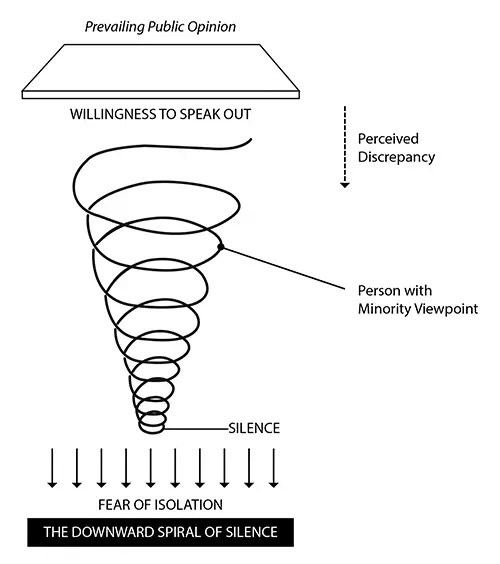
Popular opinion polls show that the majority of Russians support the military action in Ukraine. Researchers, however, continue to argue that society’s support for the war is much lower than these figures suggest. In their new study “Perception of the conflict with Ukraine among Russians: testing the spiral of silence hypothesis,” V.B. Zvonovsky and A.V. Khodykin, drawing on Elisabeth Noelle-Neumann’s “spiral of silence” model, argue that many opponents of the war are not willing to voice their opinion, believing that it is unpopular and fearing social disapproval.
Noelle-Neumann argues that before people with a “limited interest in politics” decide to voice their opinion on a politically significant matter, they assess the risk of being condemned by others. The spiral of silence “twists” as follows: people who are afraid of being isolated due to the unpopularity of their opinion refrain from voicing it → this opinion is thus heard less and less often in society → people thus increasingly think that their own opinion is not popular → they are thus even less likely to be willing to voicing it.
Zvonovsky and Khodykin discovered that the spiral of silence actually does have a great impact on discussion of the Russian-Ukrainian conflict in Russian society. They were able to verify this by doing a nationwide telephone survey (N = 1977) using Noelle-Neumann’s “train test.” The “train test” measures the willingness of “adherents of a particular stance on a socially significant matter to openly voice it by discussing it on a train with a random fellow passenger.” Supporters of the more popular stance, in their opinion, are more likely to openly voice it, believing that they are “in a stronger camp and less at risk of being judged by others.” Sometimes, their opponents are also encouraged to side with the “stronger” position.
Applying the “train test” to the Russian context showed that the topic of the war is highly sensitive both to its supporters and opponents, and that the spiral of silence affects both sides of the discussion. However, its impact on opponents of the war has proved to be much stronger than on its supporters. Thus, people who oppose the special military operation in Ukraine are less willing to discuss the Russian-Ukrainian conflict with those who support it.
Another important finding made by the researchers is the fact that a person’s willingness to speak out about the war is influenced most by the distribution of opinions about it in their immediate circle of acquaintances. So, the more people in the orbit of respondents who had shared a similar opinion with them, the more the respondents were willing to discuss the war, and vice versa. It can be assumed that the need to maintain social ties is stronger for Russians than the need to defend and disseminate their political views, as we noted in our analytical report “The war near and far.” Zvonovsky and Khodykin suggest another explanation, however: the “bad experience” of political discussions, which often end in conflict and frustration, also has an impact, since the opinions of interlocutors are not changed, and the desire to talk about the war with one’s political opponents thus simply disappears.
The last interesting finding of the authors about which we want to tell you is the following. If the environment of the respondents is divided approximately equally (~50% “for” the war and ~50% “against”), then the probability that those oppose the special military operation will discuss it does not decrease—unlike supporters of the war, who are much less likely under the same circumstances to discuss the military operation with strangers of opposite views. Thus, the opponents of the military conflict “have learned to resist the spiral of silence better than their opponents.” This means that if the distribution of opinions in Russia changes, “opponents of the military conflict will have greater opportunities than [their] opponents to promote their own narrative about the Russian-Ukrainian conflict.”
IOWA CITY, Iowa — Anti-Donald Trump Republicans know they are in the middle of a critical moment to stop the former president’s political comeback. But for some, the steep cost of voicing resistance to Trump often renders them silent.
“If you go against Trump, like — you’re over,” said Kyle Clare, 20, a member of the University of Iowa’s College Republicans.
“I don’t talk about Donald Trump a lot because I’m afraid of the backlash,” said Jody Sears, 66, a registered Republican from Grimes, Iowa.
“If you would say something negative about Trump, we had one person that would just go bang for your throat,” said Barbra Spencer, 83, a former Trump voter describing her experience living in senior apartments in Spillville, Iowa.
Trump still enjoys broad popularity in the Republican Party, and that’s driving his polling leads among Republicans in Iowa, New Hampshire and every other state ahead of the 2024 primaries. But he has also used that popularity to enforce unity. And the same impulse that has led Republican officeholders to avoid criticizing Trump because of potential threats to their safety and their jobs is also holding back rank-and-file voters from opposing the former president in public with the full strength of their personal convictions.
NBC News spoke to more than a half-dozen Iowa voters turned off by Trump — but some were anxious about talking on the record out of fear of being shunned by friends or family. One Iowan said they plan on saying they caucused for Trump when asked by members of their community but will actually caucus for Vivek Ramaswamy.
That adds up to signs going unplaced on front lawns, conversations with friends and family about other candidates avoided — and fewer opportunities for opposition to Trump to take hold in different Republican communities.
NBC News first spoke with Clare in a University of Iowa auditorium Aug. 23, the night of the first GOP presidential debate. Fellow College Republicans were reacting to the debate and voicing steadfast support for the GOP candidate who wasn’t on the stage: Trump.
Clare chose to wait until the end of the night, after the rest of his classmates left the auditorium, to share his thoughts.
“I’m just so scared of doing this right now,” he said, fighting back tears. “I want to be able to have my opinions on our politicians, and I want to be able to speak freely about them and people still understand I’m a conservative.”
Clare criticized Trump, particularly for his actions Jan. 6, 2021, saying, “The end of his administration was un-American.” He also said Trump’s supporters are in denial about losing the 2020 election.
“They don’t want to believe he lost the election. It’s hard to swallow. Losing is hard to swallow. But it’s important that when we lose, we recognize that we lost and we think, ‘What can we do better next time to win over Americans?’” Clare said.
Clare was right to expect backlash from speaking out on Trump. After NBC News published the interview with him on a “Meet The Press” social media account, hateful and homophobic comments poured in. Clare said later that a student came up to him at a university event, shoved a phone in his face with the video on it, and asked him why he’s “scared of Trump and not scared of getting AIDS from having gay sex.”
“Say something they disagree with, and they go after your sexuality,” said Clare, who added that he doesn’t regret doing the interview with NBC News. Many of the comments questioned if Clare — who holds a leadership role at the University of Iowa’s College Republican organization, interned for a Republican on Capitol Hill, and is heavily involved in the Johnson County, Iowa, GOP — was truly a Republican.
“I think it shouldn’t be a bad thing for me to say I am conservative and that I think there are other options, and I don’t think that this person is good for our country,” Clare said. But he’s worried those opinions will stunt his own long-term political ambitions.
“If people as powerful and as prominent as members of Congress can be taken down because of their criticisms of one man, what’s stopping that from happening to me?” Clare noted, referring to the Republicans ousted from Congress after voting to impeach Trump.
Trump’s criticism forced several senators and House members into retirement or primary defeat during his first years in office. Later, of the 10 House Republicans who voted to bring impeachment charges against Trump following the Jan. 6 Capitol riot, four retired before facing voters in 2022 and another four lost their next primaries. Only two remain in the House.
In the Senate, three of the seven Republicans who voted to convict Trump have since retired or resigned, and Sen. Mitt Romney of Utah is retiring next year.
Romney recounted to biographer McKay Coppins that Republican members of Congress confided to him they wanted Trump impeached and convicted but would vote against the charges because they were worried about threats to their families.
Former Rep. Liz Cheney of Wyoming, one of the Republicans who lost a 2022 primary after voting to impeach Trump, detailed similar conversations in her new memoir.
Cheney wrote about one colleague that she “absolutely understood his fear” about what would happen if he voted to impeach Trump. But, she continued, “I also thought, ‘Perhaps you need to be in another job.’”
‘It was easier to be quiet about it’
Rank-and-file voters are less prominent and thus less likely to be harassed or threatened, but some of the same worries and experiences remain. Sears, the Republican from Grimes, Iowa, feels Trump doesn’t reflect her values. But that’s an opinion she kept to herself until recently, because of the fear of being cast off by family and friends.
“Family and people I work with are Trump supporters,” said Sears, describing her hesitancy to speak out about her beliefs.
“I think Trump supporters tried to coerce or bully people into also being Trump supporters. And so it was easier to be quiet about it,” she said.
Spencer, a retiree now living in a nursing home in Decorah, Iowa, says Trump supporters at her previous retirement community created a toxic environment that stopped her and her friends from voicing opinions.
“We were afraid of arguments,” she said. “When you live with that many old people, sometimes they have very strange but very firm thoughts and you better think the way they do,” she said, explaining her silence.
Clare, Sears and Spencer are not the only people who feel this way.
And as Cheney and Romney’s stories demonstrate, social ostracization isn’t limited to just voters who speak out against Trump. Former Rep. Denver Riggleman, a Republican who represented a slice of Virginia from 2019 to 2021, says his mother texted him, “I’m sorry you were ever elected,” after he came out against Trump.
“It was so soul-crushing to have a family member choose Donald Trump over you,” Riggleman continued. He said evangelical Trump supporters in his life saw Trump as being blessed by God. “I was going directly against religious beliefs. And that’s a losing battle.”
It’s now been almost six months since a member of Congress endorsed a non-Trump candidate in the 2024 GOP primary, according to NBC News’ endorsement tracking.
The trend has popped up elsewhere on the 2024 campaign trail, too. When Iowa Gov. Kim Reynolds endorsed Ron DeSantis in November, the Florida governor mentioned in an interview with NBC News that he “had people come to me and say they endorsed [Trump] because of the threats and everything like that” during the campaign.
Trump quickly went after Reynolds after news of her DeSantis endorsement broke, posting on social media that it would “be the end of her political career.”
‘Vortex of controversy and vilification’
Charlie Sykes was a conservative radio show host in Wisconsin for more than 20 years before Trump burst onto the political scene. Sykes was skeptical and critical of Trump, eventually confronting him in a heated interview about insults Trump hurled at Texas Sen. Ted Cruz’s wife in 2016. But for Sykes, it began to become clear that there was no room anymore for anti-Trump conservatives on talk radio.
“The audience of conservative talk radio began to think that loyalty was required. They wanted conservative media to be a safe space for them,” Sykes said, describing how his role became untenable.
After leaving radio, Sykes didn’t let up on his Trump criticism, which he says got him booted from a think tank and led him to lose friends and become a self-described political orphan. He says his criticism was met with bullying — and he understands why people who don’t work in the public eye might be hesitant to voice their true feelings about Trump.
“I do understand why people in their normal lives don’t want to be caught up in this vortex of controversy and vilification — why they would step back from all of this,” Sykes said.
Another longtime Wisconsin Republican recently detailed one of the results of that pressure.
Former House Speaker Paul Ryan recently spoke on video at an event for Teneo, a global consulting firm where he serves as vice-chair. Ryan said the impulse to avoid getting on the wrong side of angry Trump supporters pushed former colleagues to vote against impeachment even though they wanted Trump gone — and now he thinks there are many who regret those votes.
“They figured, ‘I’m not gonna take this heat and I’m going to vote against this impeachment because he’s gone anyway,’” Ryan said. “But what’s happened is that he’s been resurrected.”
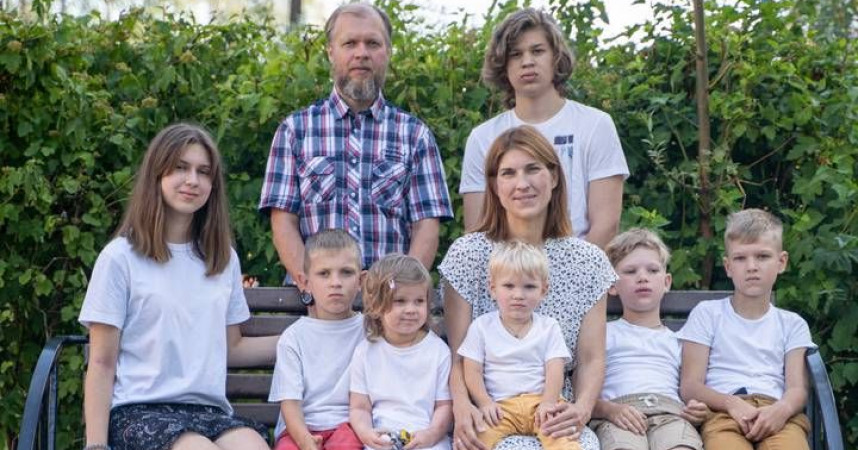
A portrait of the perfect Russian family, per Global Orthodox
State Duma drafting law that would prohibit the promotion of childlessness
The State Duma is drafting a law that would prohibit the “promotion of childlessness,” according to an RIA Novosti interview with Irina Filatova, a member of the Duma’s cross-party working group on the defense of traditional values. The MP emphasized that the draft law does not touch on the personal beliefs of individuals, explaining that it specifically targets destructive propaganda in the information space. In the autumn of 2022, lawmakers in Bashkortostan introduced a similar draft law. The bill’s author described the consciously childless lifestyle as a “foreign ideology” and accused its supporters of causing population decline. They argued that it degraded public institutions and eroded traditional values. At the time, the authorities had decided to investigate why, despite financial subsidies and campaigns to prohibit the “propagation of the childfree ideology,” Russians were unwilling to have children.
[…]
Russians will be taught to resist western influence beginning in kindergarten
The Federation Council’s committee on the defense of state sovereignty held a hearing on countering interference in Russia’s internal affairs “through youth policy.” The senators [sic] came to a unanimous decision about the need to give the younger generation a “vaccination” against foreign influence from an early age. Alexei Chesnakov, the head of the research council at the Center for the Political Climate, proposed creating a “registry of negative phenomena” and incorporating sovereignty protection into “children’s political education programs.”
Today President Zelens’kyi is in Washington to ask Congress for support.
It is right to stand by Ukraine in this war. It is a situation of unusual moral simplicity.
Ukraine was attacked in violation of international law, and is defending itself.
Russian occupiers in Ukraine commit war crimes, which cease only when territory is liberated.
Russian propagandists say the goal [is] the elimination of the Ukrainian nation as such.
And America has done well by supporting Ukraine. It is a situation of unusual strategic gain.
Ukrainians are fulfilling the entire NATO mission by themselves, absorbing and halting a full-scale Russian attack.
Ukrainians are deterring a Chinese offensive in the Pacific by demonstrating how difficult such an operation would be.
Ukrainians are defending the notion of an international order with rules, making war elsewhere less likely.
And there is an important way that doing right and doing well come together.
Ukraine was attacked as a democracy, and is defending itself as a democracy. It is historically unusual for a dictatorship to try to destroy a democracy by force.
That Putin’s Russia is trying to do so reminds us that we are [at] a historical turning point. On one side of the scale are Russia’s ruthlessness and resources. On the other side are Ukrainians’ sacrifice and our support. Their sacrifice will be enough, if our assistance will be enough.
Historians will look back at these two years of war and marvel at how much the Ukrainians did for their allies. I expect they will describe this turning point for what it was, including in its moral dimension.
What I can’t predict is which way matters will turn, since that depends upon us, and what we do in the next few days. We have an unusual chance to do well by doing right. Will we take it?
As is sometimes the case in American politics, a bill that many people are likely not paying a great deal of attention to is likely to have enormous impact on the nation’s future.
That $110.5 billion national security supplemental package was designed to provide additional funding for Ukraine in its war to fight off Russia’s invasion; security assistance to Israel, primarily for missile defense systems; humanitarian assistance to citizens in Gaza and the West Bank, Ukraine, and elsewhere; funding to replenish U.S. weapon stockpiles; assistance to regional partners in the Indo-Pacific; investments in efforts to stop illegal fentanyl from coming into the U.S. and to dismantle international drug cartels; and investment in U.S. Customs and Border Protection to enhance border security and speed up migrant processing.
President Joe Biden asked for the supplemental funding in late October. Such a package is broadly popular among lawmakers of both parties who like that Ukraine is holding back Russian expansion that would threaten countries that make up the North Atlantic Treaty Organization (NATO). If Russia attacks a NATO country, all NATO members, including the U.S., are required to respond.
Since supplying Ukraine with weapons to maintain its fight essentially means sending Ukraine outdated weapons while paying U.S. workers to build new ones, creating jobs largely in Republican-dominated states, and since Ukraine is weakening Russia for about 5% of the U.S. defense budget, it would seem to be a program both parties would want to maintain. Today, even Trump’s former Secretary of State Mike Pompeo said: “If Ukraine loses, the cost to America will be far greater than the aid we have given Ukraine. The least costly way to move forward is to provide Ukraine with the weapons needed to win and end the war.”
But now that former president Trump has made immigration a leading part of his campaign and a Trump loyalist, Mike Johnson (R-LA), is House speaker, Republican extremists are demanding their own immigration policies be added to the package.
Those demands amount to a so-called poison pill for the measure. The House Republicans’ own immigration bill significantly narrows the right to apply for asylum in the U.S.—which is a right recognized in both domestic and international law—and prevents the federal government from permitting blanket asylum in emergency cases, such as for Afghan and Ukrainian refugees. It ends the asylum program that permits people to enter the U.S. with a sponsor, a program that has reduced illegal entry by up to 95%.
It requires the government to build Trump’s wall and allows the seizure of private land to do it.
When the House passed its immigration measure in May 2023, the administration responded that it “strongly supports productive efforts to reform the Nation’s immigration system” but opposed this measure, “which makes elements of our immigration system worse.”
And yet House Republicans are so determined to force the country to accept their extreme anti-immigration policies, they are willing to kill the aid to Ukraine that even their own lawmakers want, leaving that country undersupplied as it goes into the winter.
When he brought the supplemental bill up last week, Senate majority leader Chuck Schumer (D-NY) promised the Republicans that he would let them make whatever immigration amendments they wanted to the bill to be voted on, if only they would let the bill get to the floor. But all Senate Republicans refused, essentially threatening to use the filibuster to keep the measure from the floor until it includes the House Republicans’ demands.
This unwillingness to fund a crucial partner in its fight against Russia has resurrected concerns that the Trump-supporting MAGA Republicans are working not for the United States but for Russian president Vladimir Putin, who badly needs the U.S. to abandon Ukraine in order to help him win his war.
Media outlets in Moscow reinforced this sense when they celebrated the Senate vote, gloating that Ukraine is now in “agony” and that it was “difficult to imagine a bigger humiliation.” One analyst said: “The downfall of Ukraine means the downfall of Biden! Two birds with one stone!” Another: “Well done, Republicans! They’re standing firm! That’s good for us.”
Today, allies of Hungary’s far-right prime minister Viktor Orbán were in Washington, D.C., where they are participating in an effort to derail further military support for Ukraine (an effort that in itself suggests Putin is concerned about how the war is going). Flora Garamvolgyi and David Smith of The Guardian explained that the right-wing Heritage Foundation think tank, which leads Project 2025—the far-right blueprint for a MAGA administration—and which strongly opposes aid to Ukraine, is hosting a two-day event about the war and about “transatlantic culture wars.”
This conference appears explicitly to tie the themes of the far right to an attack on Ukraine aid. Orbán has dismantled democracy in his own country, charging that the equality before the law established in democracies weakens a nation both by allowing immigration and by accepting that women, people of color, and LGBTQ+ people should have the same rights as heterosexual white men, principles that he maintains undermine Christianity. In Hungary, Orbán has cracked down on immigration, LGBTQ+ rights, and women’s rights while gathering power into his own hands.
In the U.S. the Conservative Political Action Conference (CPAC) and its allies—including former Fox News Channel personality Tucker Carlson and Arizona representative Paul Gosar—openly admire Orbán’s Hungary as a model for the U.S. Indeed, some of the anti-LGBTQ+ laws Florida governor Ron DeSantis has pushed through the Florida legislature appear to have been patterned directly on Hungarian laws.
Orbán—a close ally of Russia’s president Vladimir Putin, who embraces the same “illiberal democracy” or “Christian democracy” Orbán does—is currently working to stop the European Union from funding Ukraine. Now Orbán’s allies are openly urging their right-wing counterparts in the U.S. to join him in backing Putin. A diplomatic source close to the Hungarian embassy told Garamvolgyi and Smith: “Orbán is confident that the Ukraine aid will not pass in Congress. That is why he is trying to block assistance from the EU as well.”
Former U.S. ambassador to Russia Michael McFaul today noted that even the delay in funding has hurt the U.S. “Delaying a vote on aid to Ukraine, Israel, and Taiwan will do great damage to America’s reputation as a reliable global leader in a very dangerous world. Delay is a gift to Putin, Xi, and the mullahs in Iran,” he wrote. “The stakes are very high.”
Republican determination to push their own immigration plan seems in part to be an attempt to come up with an issue to compete with abortion as the central concern of the 2024 election. As soon as he took office, Biden asked for funding to increase border security and process asylum seekers, and he has repeatedly said he wants to modernize the immigration system. To pass the national security supplemental appropriation, he has emphasized that he is willing to compromise on immigration, but the Republicans are insisting instead on a policy that echoes Trump’s extreme policies.
Immigration, on which Orbán rose to power, has the potential to outweigh abortion, which is hurting Republicans quite badly.
We’ll see. The story out of Texas, where 31-year-old Kate Cox has been unable to get an abortion despite the fact that the fetus she is carrying has a fatal condition and the pregnancy is endangering her health and her ability to carry another child in the future, illuminates just how dangerous the Republicans’ abortion bans are. Under Texas’s abortion ban, doctors would not perform an abortion, so Cox went to a state court for permission to obtain one.
The state court ruled in Cox’s favor, but Texas attorney general Ken Paxton immediately threatened any doctor who performed the abortion, and appealed to the Texas Supreme Court to block the lower court’s order, saying that allowing Cox to obtain an abortion would irreparably harm the people of Texas. All nine of the justices on the state supreme court are Republicans.
Late Friday night the Texas Supreme Court blocked the lower court’s order, pending review, and today, Cox’s lawyers said she had left the state to obtain urgently needed health care. This evening the Texas Supreme Court ruled against Cox, saying she was not entitled to a medical exception from the state’s abortion ban.
The image of a woman forced by the state to carry a fetus with a fatal condition at the risk of her own health and future fertility until finally she has to flee her state for medical care is one that will not be erased easily.
Meanwhile, Russian opposition leader Alexei Navalny has disappeared. His lawyer says he was told Navalny was “no longer listed” in the files of the prison where he was being held, and Navalny’s associates have not been able to contact him for six days.
Yekaterina Duntsova, who wants to run for president, said the Kremlin should end the conflict in Ukraine, free political prisoners and undertake major reform to halt the slide towards a new era of “barbed wire” division between Russia and the West.
Nearly 32 years since the 1991 fall of the Soviet Union stoked hopes that Russia would blossom into an open democracy, Duntsova, 40, said she was afraid as she spoke to Reuters in Moscow.
In opinion polls, Russians voice support for the Putin regime’s action in Ukraine. And yet, many Russia would like the war to end, and the dynamics of recruiting “contract” soldiers does not demonstrate that a large number of people are ready to rise up “to fight the West in Ukraine.” What are the real sentiments of Russians? What do they think about the war and how do they justify it?
Lev Gudkov, deputy director, research director, Levada Center, “The war and collective identity,” (online)
Andrei Kolesnikov, senior researcher at the Carnegie Russia Eurasia Center in Berlin, “A semi-mobilized society in a hybrid totalitarian regime” (online)
Svetlana Erpyleva, Humboldt Fellow, Research Center for Eastern European Studies at the University of Bremen; researcher, Public Sociology Lab and the Centre for Independent Sociological Research, “Accepting the inevitable: how Russians justify the war in Ukraine”
Source. Annotation translated by the Russian Reader
Viktor Filinkov, convicted in the Petersburg portion of the high-profile Network Case, turned twenty-nine in early November. It was his third birthday in the penal colony, and for the first time he was not given any special “gift” there. Previously, surprises had been waiting for him that were even hard to imagine—for example, a new uniform with a piece of razor inside it. Filinkov has been imprisoned for six years total. During this time, he has seen a lot, including being threatened with dispatch to a war zone, but he quickly put a stop to such “jokes.” Now he is housed in the high-security wing along with other “repeat offenders.” And he constantly files suits against the penal colony. We talked to his girlfriend and public defender Yevgenia Kulakova, who loves him with all her heart and helps defend his rights behind bars.
Source. Excerpt translated by the Russian Reader, who looks forward to the day when he can see his friend and heroine Jenya Kulakova again and meet his hero Viktor Filinkov in person.
Putin noted that visitors from Tajikistan can stay in Russia for an extended period—fifteen days—without registering with the immigration authorities. They can also apply for a work permit that is valid for up to three years.
In addition, Putin announced the expansion of the quota for university students and postgraduates from Tajikistan—from 900 to 1,000 individuals.
The head of the Russian Federation added that the state would allocate 200 million rubles annually from this year for purchasing textbooks for Russian-speaking schools in Tajikistan.
Various regions of Russia have recently imposed restrictions on migrant labor. There have also been proposals to introduce such bans everywhere for visitors from countries where the Russian language is not recognized at the state level. In Tajikistan, Russian is enshrined in the constitution as the language of interethnic communication.
Due to the unstable financial situation, migrant workers have been leaving Russia. Up to a third of Tajik and Uzbek nationals may leave the country.
As of February 24, 2022, Russian President Vladimir Putin declared the beginning of what he dubbed the “special military operation” and the Russian Armed Forces invaded Ukrainian territory. What the Russian authorities assumed would be a swift operation soon became a drawn-out, full-fledged war. Many events occurred over the course of the first year of war, keeping Russians in suspense, forcing them to detach themselves from the situation, giving them hope, and then driving them to despair. When we conducted our first interviews in spring 2022, many thought the war would not last long.
Since then, it has become clear that the war will be with us for a while. The daily life of Russian citizens has been invaded time and again by dramatic events. The Russian retreat from the occupied territories, the annexation of new regions, the bombing of Kiev, the first Crimean Bridge explosion, and the “partial mobilization”— to name just a few. Have these events changed the average Russian’s view of the war, and if so, how? How did residents of the Russian Federation perceive the “special military operation” more than half a year later? These questions are the focus of the report you see before you.
There are several research teams monitoring changes in Russian perceptions of the war through opinion polls (for example, Russian Field and Chronicles). The work they are doing is very important. However, like any research method, surveys have their drawbacks—there are some things they simply will not show. For example, surveys do not always allow us to understand a respondent’s attitude towards sensitive or hot-button topics, as sometimes people have a tendency to hide their true views. But more importantly, for Russians largely removed from the political process, perceptions of such politically-charged issues as the “special military operation,” war, and military conflict do not fit neatly into the standardized set of coherent positions that a survey is capable of capturing. These perceptions may be complex and contradictory, and in this case, in-depth interviews and long conversations with people allow us to better understand the idiosyncrasies of each viewpoint. To our knowledge, we are the only team that systematically monitors Russian perceptions of the war using qualitative (interview) rather than quantitative (survey) methods.
We released our first analytical report in September 2022. You can read it here (in Russian) and here (in English). In it, we presented the results of our qualitative study through interviews conducted over several months after the start of the war, in March, April, and May 2022. Our interviewees held a variety of opinions on the military conflict—there were those who supported the hostilities in one way or another (war supporters), those who condemned military aggression (war opposers), and those who tried to avoid giving any explicit assessment of the situation (undecided). We compared these three groups of respondents with each other: how they perceive the armed conflict, what emotions they associate with it, and how they consume information, assess the victims of the conflict, discuss the situation with loved ones, reflect on the consequences of the war, and so on. We have also published the results of this research in analytical media outlets, a few examples of which can be found here, here, and here, as well as in scientific journals, such as those found here (in Russian) and here.
The paper you are currently reading is the second analytical report we have published and a continuation of this research. It is based on qualitative sociological interviews with Russian citizens conducted in fall 2022, from 7 to 9 months after the outbreak of the war. We wanted to determine how Russian perceptions of the war had changed during this period. This time, we excluded subjects who consistently opposed the war from the sample and decided to focus our study on the specifics of perceptions held by Russian citizens who did not have an unambiguous anti-war stance.
In audio intercepts from the front lines in Ukraine, Russian soldiers speak in shorthand of 200s to mean dead, 300s to mean wounded. The urge to flee has become common enough that they also talk of 500s — people who refuse to fight.
As the war grinds into its second winter, a growing number of Russian soldiers want out, as suggested in secret recordings obtained by The Associated Press of Russian soldiers calling home from the battlefields of the Kharkiv, Luhansk and Donetsk regions in Ukraine.
The calls offer a rare glimpse of the war as it looked through Russian eyes — a point of view that seldom makes its way into Western media, largely because Russia has made it a crime to speak honestly about the conflict in Ukraine. They also show clearly how the war has progressed, from the professional soldiers who initially powered Vladimir Putin’s full-scale invasion to men from all walks of life compelled to serve in grueling conditions.
“There’s no f—— ‘dying the death of the brave’ here,” one soldier told his brother from the front in Ukraine’s Kharkiv region. “You just die like a f—— earthworm.”
The prospect of another wave of mobilization lingers, even as Moscow has been trying to lure people into signing contracts with the military. Russia’s annual autumn conscription draft kicked off in October, pulling in some 130,000 fresh young men. Though Moscow says conscripts won’t be sent to Ukraine, after a year of service they automatically become reservists — prime candidates for mobilization.
Twenty months ago, after Vladimir Putin had launched his full-scale invasion of Ukraine, many high-ranking Russians believed that the end was near. The economy faced disaster, as they saw it, and the Putin regime was on the brink of collapse.
Today, the mood has changed dramatically. Business leaders, officials and ordinary people tell me that the economy has stabilized, defying the Western sanctions that were once expected to have a devastating effect. Putin’s regime, they say, looks more stable than at any other time in the past two years.
Restaurants in Moscow are packed. “The restaurant market is growing, not only in Moscow, but throughout Russia, facilitated by the development of domestic tourism,” said a top Russian restaurateur. “And the quality of food is also changing for the better. Sure, panic struck the industry in early 2022, but it quickly passed.”
Due to Helsinki’s decision to temporarily close the border with Russia, Finnish resident Yevgeny doesn’t know when he will be able to see his father again. He and other Russian-speaking residents of Finland are trying to get through to the authorities to convince them to open at least one border crossing.
Source. Annotation translated by the Russian Reader
Unprecedented dragnets for conscripts have been taking place in Moscow. The capital’s military enlistment offices have launched a large-scale “single-day” conscription campaign, dispatching people with serious illnesses and visitors from other regions to the army. The Russian conscripts have not yet been sent to Ukraine for full-scaled combat. But the number of lawsuits against draft commissions has tripled compared to 2022 and is approaching a thousand cases. The BBC tells how conscription is taking place in the Russian capital, which lawyers describe as lawlessness.
Maria Andreeva, whose husband has been fighting in Ukraine for more than a year, is also waging a battle in Moscow: to get him home.
She is not alone.
A growing movement of Russian women is demanding the return from the front of their husbands, sons and brothers who were mobilised after a decree by President Vladimir Putin in September last year.
Initially, the movement pledged loyalty to what the Kremlin calls its “special military operation” (SVO) but what they regard as the perfunctory response they have received is hardening some of their opinions.
The Udege language is so phonetically rich that linguists have devised several Cyrillic-based alphabets for it in an attempt to capture this wealth. Udege has both an inclusive and exclusive first-person plural pronoun (“we”), and the terms describing spatial relationships have parallel meanings in the home and beyond its confines. The language of the Udege people reflects their idea of the equality of time and space, and the starting point for the speaker is either a river or a hearth. Linguist Elena Perekhvalskaya acquaints us with the Udege language.
Source. Excerpt translated by the Russian Reader, who was told the other day by a prominent Udege civil rights activist that the number of native speakers of Udege is now eleven.
In reality, as the testimony of numerous witnesses shows, the armed conflicts between the Russian state and the subjugated peoples of Siberia demonstrate that Russian colonization differs little from European colonialism in Africa, Asia, and the Americas. The only apparent difference was how the colonizers treated the people they conquered. While the Spanish Conquistadors committed large-scale massacres in their pursuit of gold, the Siberian Cossacks were more interested in extracting lucrative tributes from locals. These tributes, paid in the form of furs collected by the legendary hunters of the conquered peoples, became a major source of wealth for the tsars. The legend that indigenous peoples were such expert hunters they could “shoot a squirrel in the eye” persists to this day.
Irina Gurskaya, a human rights activist and volunteer, arrived in Cologne from Penza a year ago. More precisely, she did not come willingly but fled to Germany on a humanitarian visa. At the age of sixty, the pensioner had to leave her home, fearing for her life. The reason for Irina’s intimidation and harassment by the security forces in Penza was that she had helped Mariupol residents taken to Penza to return to their homeland or leave for safe countries.
We don’t know whether there will be a stalemate on the battlefield moving into 2024, or more dramatic changes in the frontline like we saw in May and November 2022. It remains to be seen whether a more ambitious mobilization campaign will be attempted after the presidential elections in March 2024. It would face the same problems as those I have described here. Utter lack of capacity and resources among the commissariat, informal institutionalized ways of avoiding or undoing the will of the centre to recruit. Massive labour shortages which make industry hostile. A counter-productive administrative system of coercive command. Active and passive agency of the vast majority to avoid the draft. There are various indirect signs that the authorities collectively fear the results of having to implement further mobilization.
The botched first mobilization created an atmosphere of bitterness, fear and hostility to the state’s conduct regarding the war. It would be a mistake to say that mobilization in 2022 broke the social contract between state and people, because there was none to begin with. If the war continues, Russian society will become ‘insurgent’. Not literally, but figuratively, people will become more actively resistant to recruitment to the meatgrinder. No monetary offers, nor spreadsheet autocracy will be effective.
Despite decades under Putin’s rule, it is too simplistic to assert that authoritarianism in Russia has eliminated activism, especially in relation to everyday life. Instead, we must build an awareness of diverse efforts to mobilize citizens to better understand how activism is shaped by and, in turn, shapes the regime.
Varieties of Russian Activism focuses on a broad range of collective actions addressing issues from labor organizing to housing renovation, religion, electoral politics, minority language rights, and urban planning. Contributors draw attention to significant forms of grassroots politics that have not received sufficient attention in scholarship or that deserve fresh examination. The volume shows that Russians find novel ways to redress everyday problems and demand new services. Together, these essays interrogate what kinds of practices can be defined as activism in a fast-changing, politically volatile society.
An engaging collection, Varieties of Russian Activism unites leading scholars in the common aim of approaching the embeddedness of civic activism in the conditions of everyday life, connectedness, and rising society-state expectations.
The Bolshoy Kinel River flows among the forests of the Orenburg Region. Its name derives from the Bulgar word kin, meaning “wide.” When the ancient Bulgars first encountered it, they saw a wide, full-flowing river and decided to settle there. But nowadays the river is gradually disappearing: the banks have shoaled, the bottom is silted up, and the springs that feed it are clogged. And yet, the Bolshoy Kinel is only source of water for several towns. Its tributaries are also drying up. In 2021, the Turkhanovka River, which flows through the entire length of the city of Buguruslan, completely disappeared. It was a tragedy for the townspeople. The local residents joined together and together cleared the river of debris—and the water returned. It transpired that there are many people living in the town who feel a great love for their land. I spoke with them. And, as I gathered their stories, I saw how everyone’s small deeds, like rivulets, combine into one big, important cause—just as the Turkhanovka River flows into the Bolshoy Kinel, the Bolshoy Kinel into the Samara, the Samara into the Volga, and the Volga into the Caspian Sea.
Source. Excerpt translated by the Russian Reader. Photo by Darya Aslanyan for Takie Dela
There’s an idea about how children learn to read that’s held sway in schools for more than a generation — even though it was proven wrong by cognitive scientists decades ago. Teaching methods based on this idea can make it harder for children to learn how to read. In this podcast, host Emily Hanford investigates the influential authors who promote this idea and the company that sells their work. It’s an exposé of how educators came to believe in something that isn’t true and are now reckoning with the consequences — children harmed, money wasted, an education system upended.
Both sides of the author’s family were remarkable. His maternal grandfather, Alfred Wiener, was a prominent German Jew who created the most extensive archives documenting the Holocaust; Alfred’s wife and daughters were deported to a concentration camp. The author’s paternal grandmother was transported to a gulag in Siberia. A tale of survival, eloquently told.
A lyrical excavation of trauma and healing in the midst of early motherhood – the debut work of an endlessly inventive poet whose work ‘fizzes with energy, physicality, and the levitating openness of song’.
It was snowing heavily when Yulia walked across the only open border between Ukraine and Russia last month, carrying her two cats and dragging a large suitcase behind her.
She had left her village on the edge of Russian-occupied Melitopol, a city in Ukraine’s Zaporizhzhia region, more than 24 hours earlier, paying a Russian ‘carrier’ with a minivan around $250 (nearly £200) to take her to the border-crossing in Ukraine’s northern Sumy region.
Walking across the two-kilometre no-man’s land was the final step in a long journey that is not without risk. Just two weeks earlier, a Russian volunteer who was transporting Ukrainians to the Sumy checkpoint was detained and tortured by Russian security personnel.
It was Yulia’s second attempt at the crossing. The first time, in early autumn, she was turned back at the border because she did not have a Russian passport and her name was flagged in a Russian state database as she had been questioned by the security services twice: once for tearing down Russian propaganda posters and then for arguing with a neighbour about life during the Soviet Union.
If you’d like to see any of the Russian-language articles excerpted here translated in full and published on this website, make a donation in any amount to me via PayPal, indicating which article you’d like me to translate, and I’ll make it happen. ||| TRR
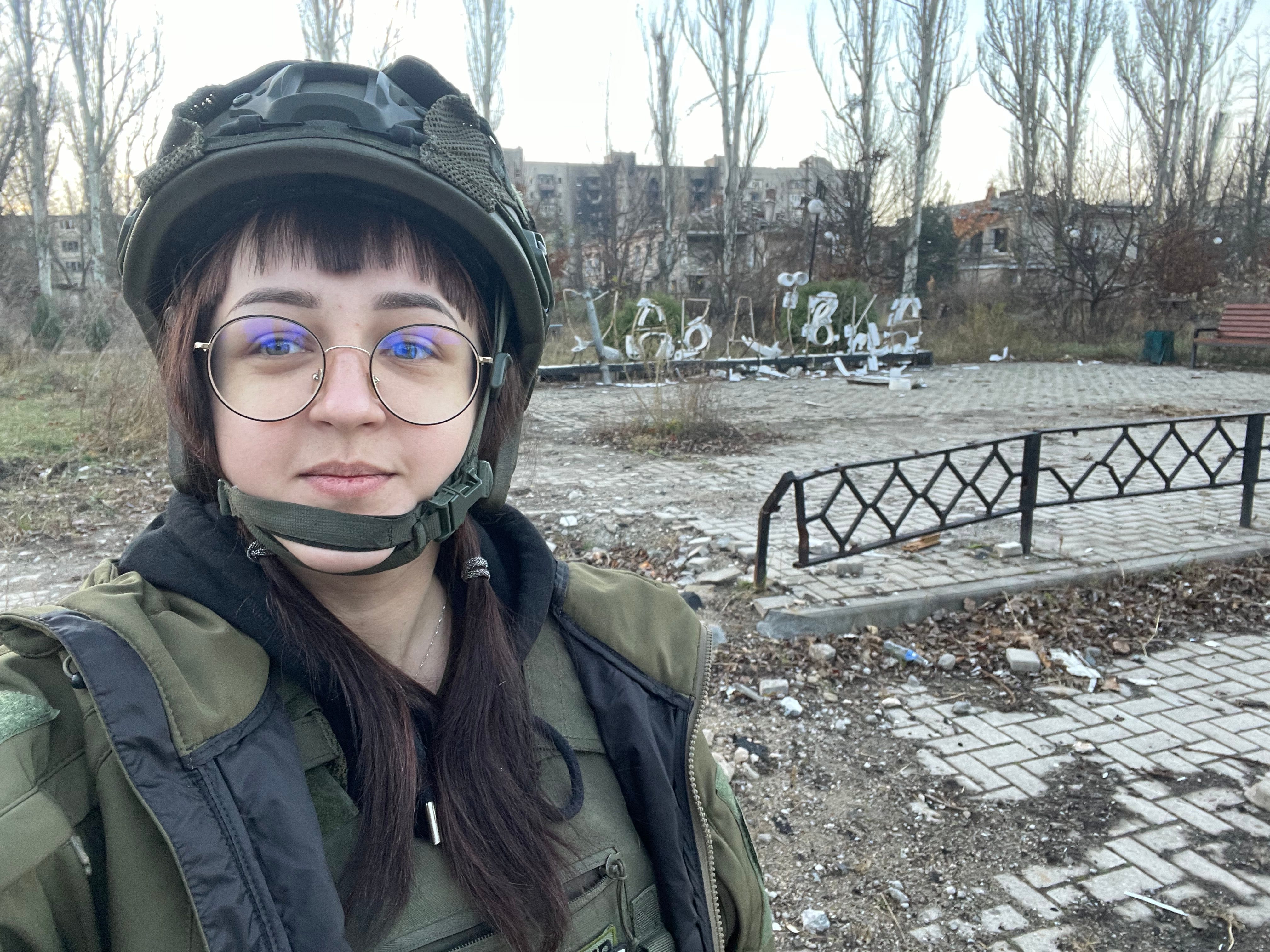
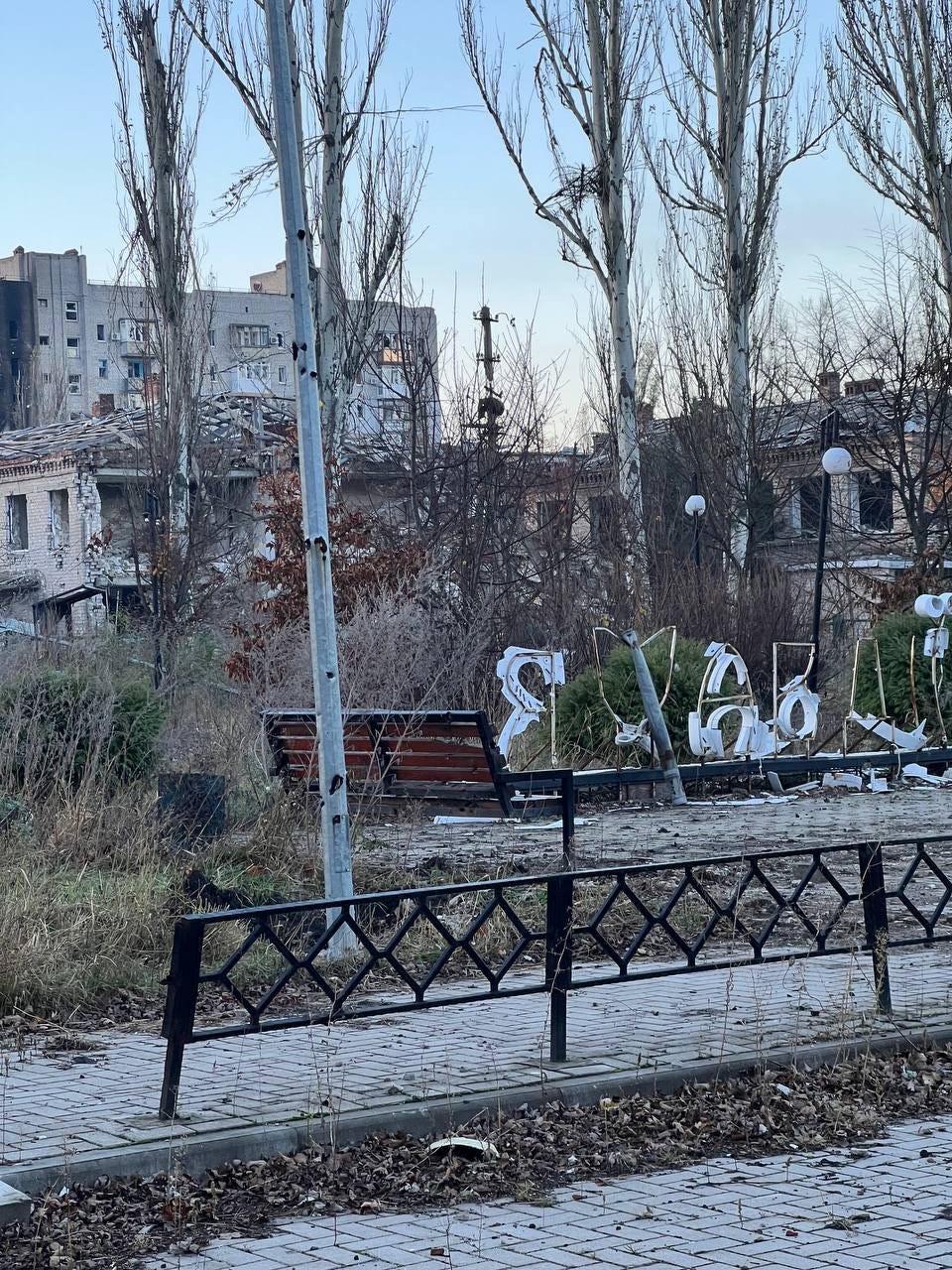
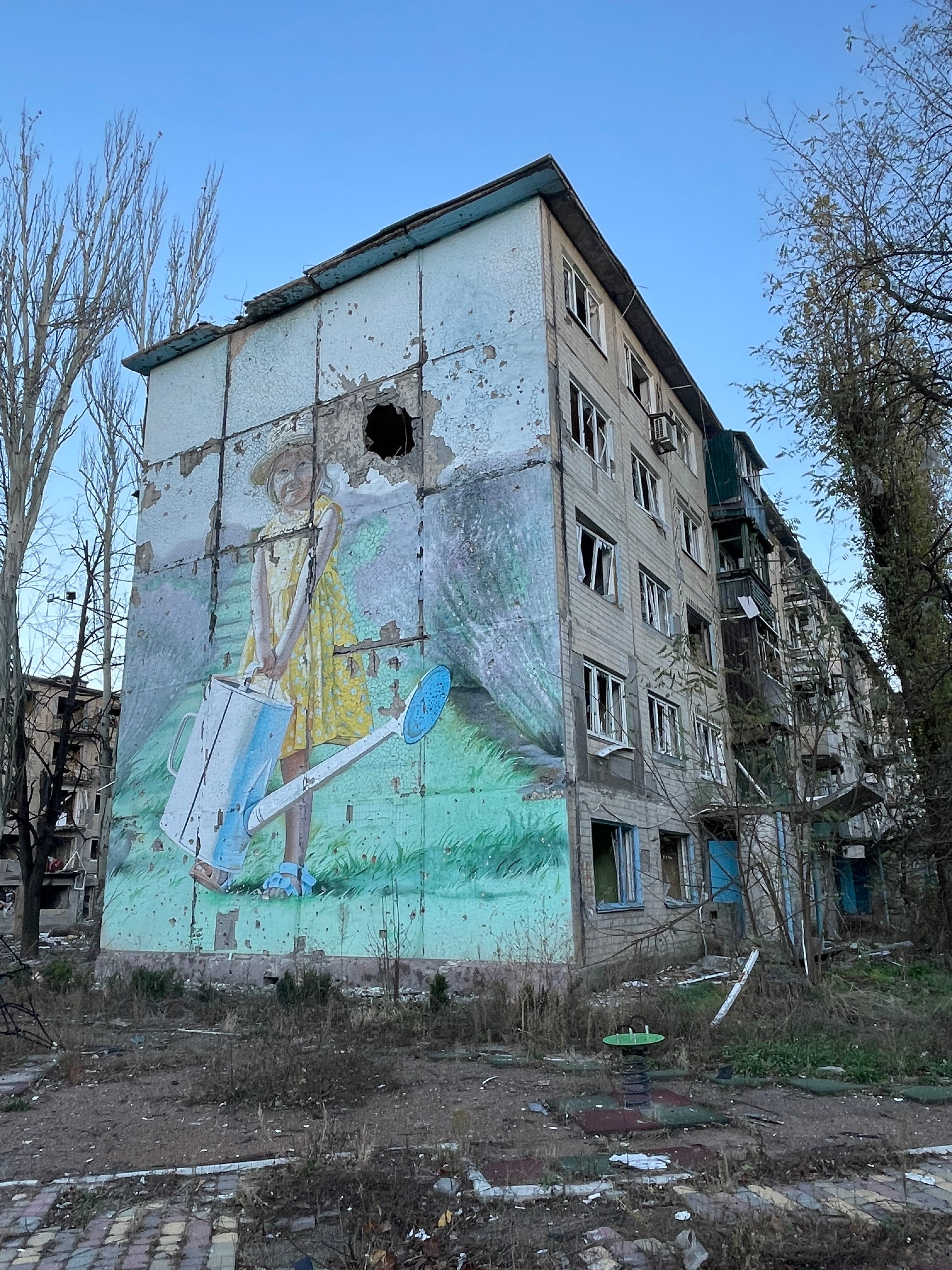
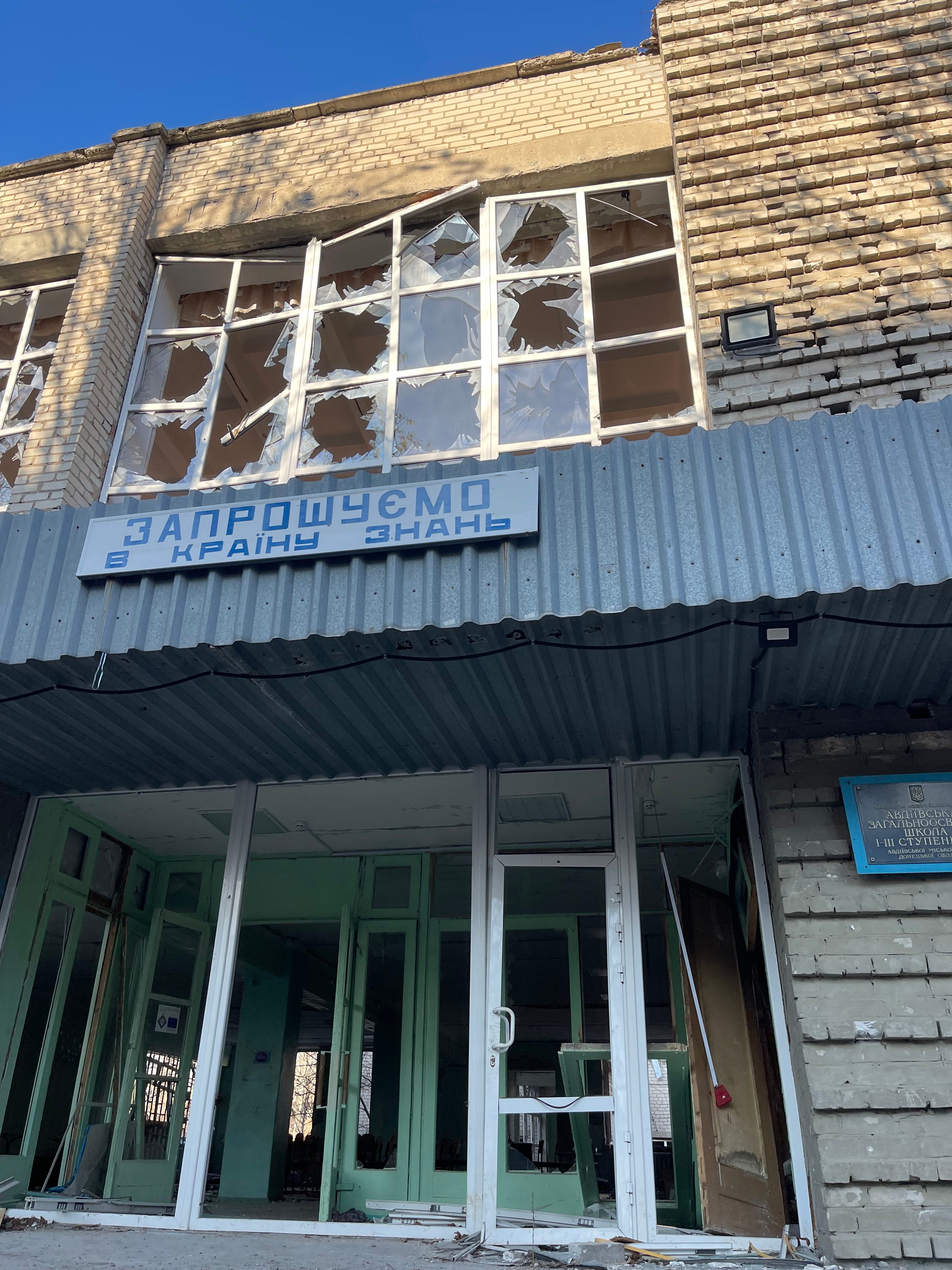
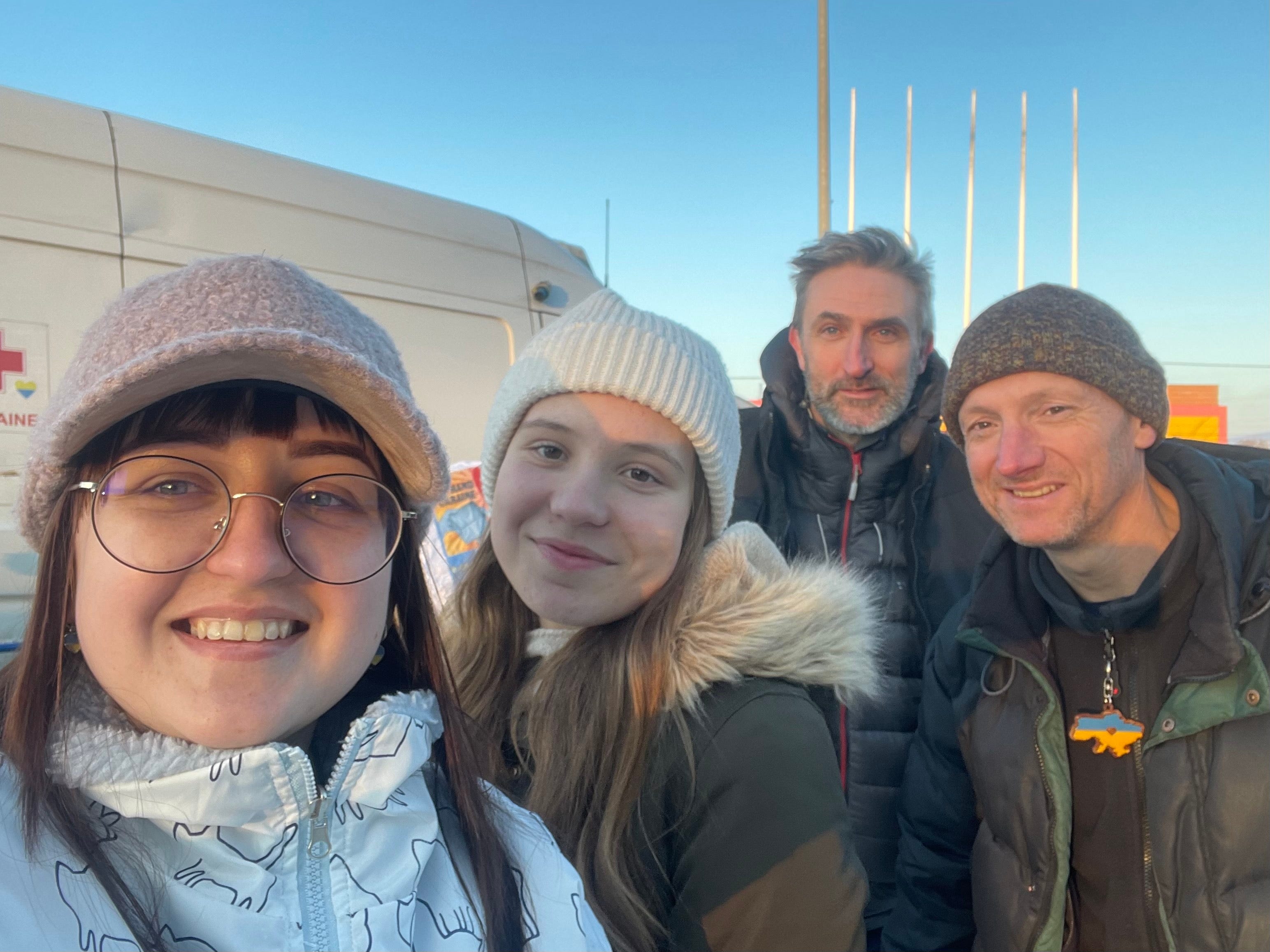
Our team is thrilled to present an incredible interview featuring Yana, a 28-year-old Ukrainian volunteer who has recently returned from Avdiivka. It’s a highly illustrative story showcasing how people, specifically young Ukrainian women, continue to support Ukrainian troops on the most dangerous frontlines. If you’re curious about what’s happening in Avdiivka and wish to hear a firsthand account from a location typically closed off to journalists and the general public, look no further. We found her answers insightful, so don’t miss out!
FI (Frontelligence Insight): Hello! Could you please provide a brief introduction and tell us more about yourself?
Y (Yana): My name is Yana, and I am 28 years old. Before the full-scale invasion, I worked in the construction industry as a manager of construction projects. I dedicated a lot of time to learning English and took additional courses in ArchiCAD and LIRA-SAPR. A significant part of my free time and, in general, my life, was devoted to studying and improving my knowledge in the field of design. However, after February 24, everything changed. All construction projects that were planned for 2022-23 were canceled and frozen. Currently, I am busy in the field related to my economics education.
FI: How and when did the war start for you?
Y: The war began for me in 2014. It was a very challenging period during which I experienced depression. I constantly felt unwell both physically and morally. Of course, this affected the learning process, at times impacting my performance, interaction, and communication with people. I worked with a psychologist. It was a huge blow for me to realize that, 1000 km away from where I was living, studying, and currently residing, the most terrible thing was happening – war. It was surreal for me that while I was performing mundane actions, someone was dying, someone was getting injured, homes were destroyed. It was shocking to see that despite these events, people could calmly attend classes, go to work, cafes, and clubs.
A part of what I loved was forever lost in 2014. It tore me apart to think that while I was attending an accounting class, there were ongoing military actions in the Donbas region. It was also challenging because many people said, “They themselves called for the Russian world,” “They wanted Putin,” “It’s because of them that there’s a war.” These were people who never knew the history of Eastern Ukraine and never understood it.
FI: When and why did you decide to become a volunteer?(In Ukraine, the term “volunteer” refers to individuals engaged in providing military and humanitarian aid to both military personnel and civilians. These volunteers contribute by fundraising, purchasing, and delivering essential goods to military units and civilians on the frontlines.)
Y: It seems that, like many others, it all started for me with weaving camouflage nets. Yes, there were requests for them, and we were told how important it was and how it helps our defenders. It was enough for me as a second-year student at that time. But, as I shared earlier, I found these events deeply painful, and I wanted to do more. I spent my entire scholarship on supporting the Armed Forces of Ukraine (ZSU). It wasn’t about large-scale fundraising; I didn’t inquire about who was buying what and why. We had local volunteers and civic organizations in Chernivtsi (which are still active), and I financially supported them. It was important to me. At that time, intense battles were taking place in Donetsk Airport (DAP), Debaltseve, Ilovaisk, and so on. It was heart-wrenching, and I felt the need to be somehow involved in providing assistance.
Later, my mother and I started preparing homemade treats, and I delivered them to the military hospitals in our city. Every Tuesday, I would enter a random ward to visit the soldiers. There was a period when I consistently donated and supported the army without hesitation. Again, my mother always assisted me—whether it was making Easter bread for the soldiers or baking Christmas cookies to send to the front lines.
When the full-scale invasion began, on February 25th, my father and I filled our car with essential items and headed to the Territorial Defense headquarters in our city. We collected items for units that were being prepared and sent to the East. We were also helping civilians – by evacuating people from Donetsk, Luhansk, Kharkiv, Kyiv oblast, and evacuating animals, transferring them to Europe. Only when I completed my second higher education in May 2022 did we start going on humanitarian missions directly to the frontlines.
FI: What is the essence of volunteering and who are volunteers?
Y: The essence of volunteering is perhaps in selfless work, in ongoing activities aimed not at gaining profit or any other additional benefits. Volunteering is, above all, the opportunity to influence environment, to initiate one’s own projects, and to change the country. When people become volunteers, they not only get a chance to express themselves, get new knowledge and skills, but also strive to make the lives of others better.
I believe that each person who calls themselves a “volunteer” has their own motives that prompted them to engage in this activity. For me, it is primarily patriotism and the fact that my country is at war. Parts of our land are immersed in pain, suffering, and blood. And then, it is about fulfilling the needs of the less fortunate, gaining new experience in working with people, organizing, and conducting various social projects.
Currently, the activities of the majority of volunteers and volunteer organizations in Ukraine are focused on helping the military, supporting refugees, and assisting people affected by the war. Because this is our own, our homeland, and I simply cannot comprehend or accept how one can be indifferent to this movement in such challenging times.
FI: You’ve been to many cities and villages that were destroyed by Russian forces. What impressed you the most during your volunteer trips?
Y: Oh, here one could talk for days and nights because for almost 2 years of trips to the front and near-front cities and villages, there were many different situations and moments when I could cry and scream from pain and despair, when we laughed, probably hysterical laughter, when we said goodbye to life dozens of times and rejoiced because an important evacuation had succeeded, and when we scolded ourselves for arriving late.
I approach each of our trips calmly. For me, it’s like going to work, with one important nuance. I perceive it as work because I go to various locations to work with civilians and the military, to help them.
This time, I’ll share just one incident from our recent trip. We were working specifically along the Mariinka direction, and we entered the village of Maksymilianivka, just 5 km from Mariinka, or more precisely, the stones and ruins left of it. Before the war, 3000 people lived there; now, there are probably around 100. Maybe more, maybe less – it’s hard to count accurately because it’s constantly under shelling, and people hide in their homes, rarely coming out. In Maksymilianivka, they don’t allow entry without an escort; everyone is checked at the checkpoint. And it was the last day of our trip: we traveled to Avdiivka and its surroundings, Bakhmut direction, Vuhledar direction – everywhere destruction, grief, no communication, and here we enter a house in Maksymilianivka, and there’s light. It so impressed me, and I said to my colleague, “Wow, there’s light here, it’s a real miracle!” In the midst of terrible devastation in the village, constant shelling, lack of communication, and internet just 5 km from the front line, we saw light in a house. The thing is, electricians stay there, and despite the constant threat of artillery, MLRS shelling, and Orlan drones, these people work until the last moment and provide light to the people who stay in the village. Our people will probably never cease to amaze me.
FI: Let’s talk about the painful – Avdiivka. Tell me about your personal impressions from the recent visits.
Y: Avdiivka is my personal pain and a wound that has probably been with me all my life. Working and helping in Avdiivka – I mean both the military and civilians – is like living another life. Perhaps, after the war, I will write a book about it because so much has been experienced there. A lot of things that I cannot always talk about, and things that need to be told and shown to those who come after us, so that these things and stories are not forgotten.
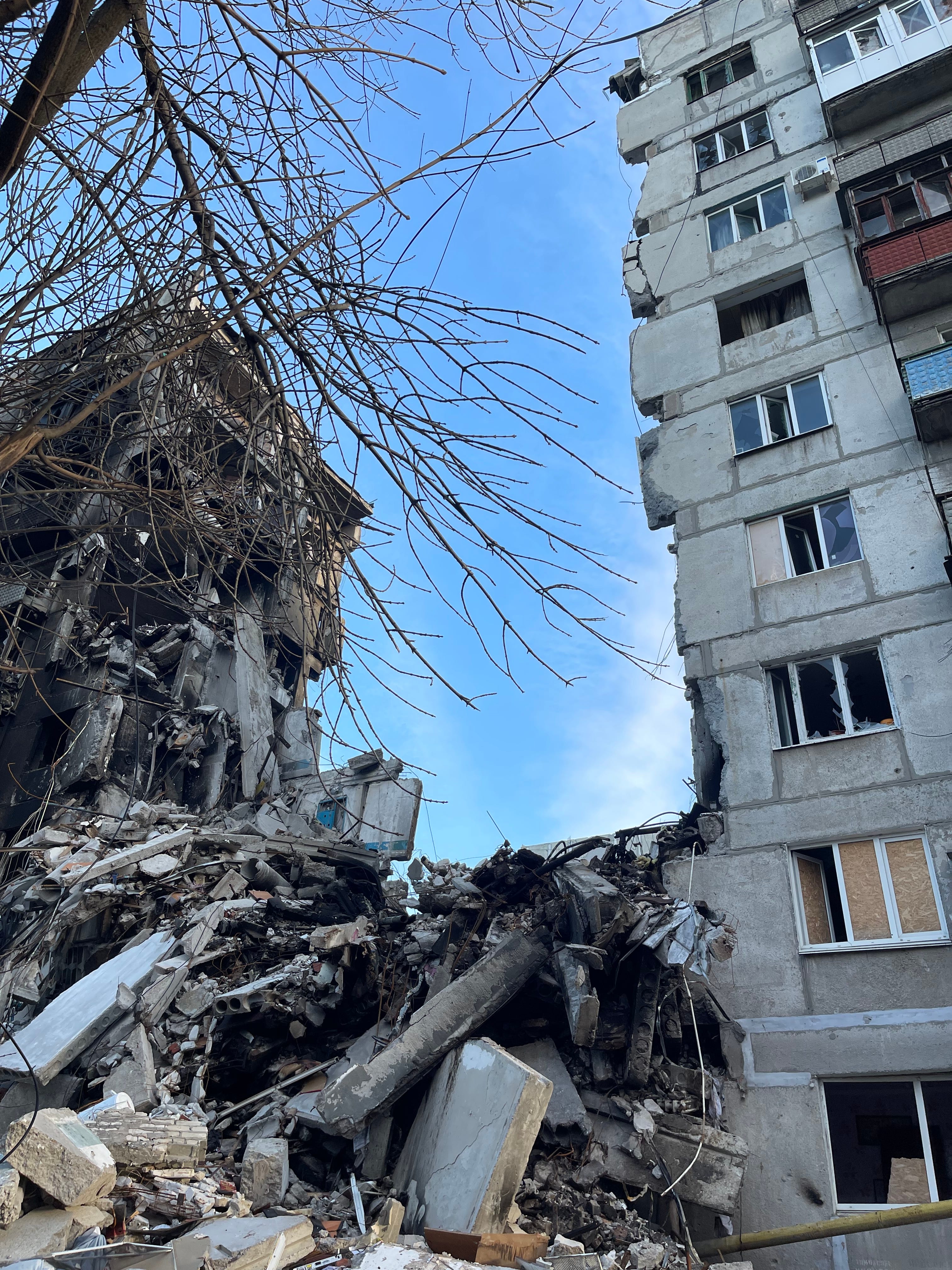
I remember Avdiivka differently, in every season, and, of course, it hurts every time… as if for the first time when, instead of a city, I see piles of rubble and construction debris, and on the way to the city, instead of the outlines of a giant industry, I see clouds of black-black smoke from the next shelling…
I’m not saying it for the last time because I know that we will still work in the Avdiivka direction – and the last time I was there on my birthday.
On November 18, we woke up at 4 in the morning to load humanitarian aid for civilians and equipment for the military, so that by 6:00, a maximum at 6:30 AM, we would already be in the city. Avdiivka now is 22 km of a constantly shelled road. There are sections where enemy UAVs are actively working, so, as we say, we need to “skip” quickly. We entered without headlights, quickly, with open windows in the car to hear enemy UAVs.
The landscape in Avdiivka changes every night. Dozens of air strikes per day turn the city into complete ruins. There are fewer and fewer places for shelter, constant “KABs” (Guided Aerial Bombs), the scariest thing imaginable, when a building collapses like a house of cards before your eyes – I’ve seen that only in apocalyptic movies.
If you work with civilians: humanitarian aid and evacuation – everything needs to be done in the morning and very quickly. After the morning, the Russians fly with Orlans (recon UAV); they observe, and determine where there are groups of people (3 or more), from which building smoke is coming from a home stove, and KABs target it. Just damned scum waging war on absolutely unarmed and defenseless people.
It’s very hard for me when through the window of a burned, black building with broken windows, I see remnants of life – a small intact chandelier that will never shine again, winter clothes on the shelves that no one will ever wear, and neatly arranged books.
But every damn time we enter this city, and at the entrance, Ukrainian flags greet us, it adds strength and motivation to move forward. I want everyone, both here and around the world, to realize the price we pay to see these blue-yellow flags in Avdiivka, and what irreparable losses we suffer. When I see our tired, exhausted soldiers who clearly say, “It’s hard, but we’re fighting,” I understand that we have no right to get tired and stop. I’m ready to sacrifice my health, but I will be sure that I did everything to protect and help the bravest people in our country and our city, Avdiivka.
FI: In your opinion, why is Avdiivka so important for the Russians?
Y: Avdiivka, like a bone in the throat of our enemies, has remained an impregnable fortress. Unfortunately, this fortress is now forced to defend itself. As they say now, “capturing Avdiivka is purely a political goal” for these damn Russians and Putin in particular. They need victories. But a victory over what? Over peaceful people who have been deprived of their homes or because they destroyed the entire city?!
Avdiivka is the gateway to Donetsk. From there, the Armed Forces of Ukraine have the opportunity to control the presence of the enemy in the oblast center, even by preventing them from moving certain vehicles and ammunition around the city. So, of course, they want to push the front line away from Donetsk. Another point, Avdiivka is probably the only defensive area that the Ukrainian Armed Forces have not lost from 2014 to 2022. That is, during the time when there were large and difficult battles for Soledar, Bakhmut, Lysychansk, Severodonetsk, etc., their advances in Avdiivka were insignificant. Only the surrounding settlements from Avdiivka were lost to the Russians, and that was very long and very difficult for them. And another logistical component. I believe and will always believe that Avdiivka is a symbol of resistance. Probably even the Russians understand this, and that’s why they are pushing so hard in this direction. You have to look at the map and understand that Avdiivka is precisely that outpost that, from 2015 to the present, has practically not moved forward or backward. It’s a strong defensive zone that has been fortified.
FI: Do you agree with the opinion that when the Russians cannot quickly surround a city, they systematically destroy it?
Y: Yes, I often think about it… Bakhmut, Popasna, Rubizhne, Severodonetsk, Lysychansk, Svatove, Kremenna, Mariinka, Vuhledar, Mariupol, Avdiivka, Krasnohorivka, Siversk, Soledar, and so on… and these are just the territories of Donetsk and Luhansk that Russia has destroyed, erased below the foundations. Once peaceful, flourishing, industrial or not, these cities may never be rebuilt. And how many villages? It’s impossible to count. Millions of destroyed homes and millions of shattered human lives.
And when they write in their damn publics about the “liberation” of Donbas, I am disgusted with this phrase. Because it is total destruction. In some points of Avdiivka, the destruction is so catastrophic, but it is still being bombed, that I can no longer remember what this city looked like before. Avdiivka is a city where no building is suitable for even a major reconstruction. Also, a key location in Avdiivka was the AKHZ – once the largest coke-chemical plant in Europe, and a city formed around it. If the plant cannot be restored, there will be no more Avdiivka. All the industry of Avdiivka is destroyed, ruined, and brought to a state where it simply can never function again. Probably, this is what they seek – to destroy even the industrial potential of this region so that after the war, it will be simply unusable. These are absolute degenerates, despicable degenerates with nothing sacred, who just, for the sake of entertainment or idiocy induced by imperialist propaganda, destroy everything: schools, hospitals, kindergartens, abandoned warehouse buildings, residential and non-residential buildings.
School in Avdiivka
When there is no success on the battlefield, they show their vile power through terror against civilians and through the total destruction of the city. Take, for example, Popasna – they just destroyed the city and announced that they would not rebuild it, and now they are using it as a military base.
FI: I know that many Ukrainians trust you and constantly try to help. Do you feel foreign aid from ordinary citizens or organizations?
Y: Yes, as strange as it may sound, during this terrible war, there are pleasant moments, such as meeting incredible and strong people or receiving feedback from people. Trust from the community is the best thing anyone can receive. And of course, I am very pleased to receive trust and support from my fellow citizens and from foreigners. Getting help and support from the civilized world is very valuable to us. I always mention and sincerely thank Ukrainians abroad and foreigners in general for supporting the Avdiivka front. Sometimes people, when they see where we are going, how and where we work, say, “I want to help the defenders of Avdiivka!” I repeat, this is very important to me. It is important that the world sees the crimes that the Russians are committing in the once-small industrial city of Avdiivka.
Avdiivka is currently closed to journalists, so it is important to show how the city lives and fights, that there are still civilians here, and that the Russians are committing genocide against them. I am very grateful to everyone who supports our fundraisers for the defenders of Avdiivka, and to those who simply support me with warm words and wishes for success, because now it is more dangerous in Avdiivka than ever.
FI: How can one help the defenders of Avdiivka? Are there any urgent needs that need to be addressed?
Y: Today, once again, I spoke with servicemen from the 110th Separate Mechanized Brigade, who have been firmly defending this direction since March 2022. The primary need is for combat equipment! There is also a shortage of personnel. Additionally, there is a constant need for drones: daytime, nighttime, strike, and FPV drones for installing surveillance cameras on various objects. Maximum unity and concentration of efforts are required. We must show that we are a reliable and worthy support for our defenders on the front lines.
FI: After the war, what would you like to do?
Y: Certainly, I would like to return to my former job in the construction industry. I hope to resume working in the field of design. However, it is very difficult to imagine what life will be like after the war. In any case, I can never go back to my previous life. Our work will continue in one way or another, with a lot of tasks in the de-occupied territories, working with civilians, and humanitarian missions. But yes, along with that, I would still like to engage in design.
FI: What places would you recommend for foreigners to visit in Ukraine?
Y: Currently, this is a very difficult and painful question for me because dozens of places I would recommend to visit to immerse oneself in the culture, better understand the locality, and experience the uniqueness of the region are unfortunately either destroyed, no longer exist, or are in temporary occupation.
Of course, I would like to recommend visiting Donetsk – as we used to call it, the “City of a Million Roses.” Or Soledar, there was something to be surprised about in Soledar: remnants of the ancient Permian Sea, industrial objects, steppe landscapes, vast lakes, and even “Martian landscapes.” And, of course, the salt mines. There, the descent is almost 300 meters deep, where there used to be a salt mining museum, a salt football field, a naturally occurring salt crystal the size of a human, sculptures created by local craftsmen, and a special hall for symphonic concerts. I also really liked the Avdiivka quarry, or as the locals called it, the “Maldives of Avdiivka.” They used to extract quartz sand there. The former industrial zone eventually turned into a local landmark. It had clean and cool water. But many, many other places were destroyed and ruined by the Russians.
So, I would recommend visiting the Carpathian Mountains. Take a walk through the wooded hills and blooming meadows, and definitely climb the highest mountain – Hoverla.
If you enjoyed reading this, please consider supporting our defenders in Avdiivka – you can find more information on Yana’s account, or can directly contact her.
Russian troops are trying, for example, to capture Avdiivka. The bulge in the front line it forms enables the Ukrainians to easily strike at Donetsk, thus complicating logistics for the Russian military.
Both Ukrainian and western media write that the undoubted, albeit small, successes of Russian troops in Ukraine are primarily due to the huge number of soldiers and officers whom the high command dispatches to certain death, apparently, without the slightest pity or doubt. Soviet Marshal Georgy Zhukov was infamous for this terrible “tactic,” which today’s General Staff has adopted as a precept in its own military campaign.
The terrible loss of Russian soldiers and officers bothers no one, however. And Dmitry Medvedev (it is not very clear why he is the one) reports constantly about the new cannon fodder which he has succeeded in herding off to the front.
Is it a lot? No, it is not enough for Vladimir Putin, who has signed a decree ordering the authorities to recruit more cannon fodder, another 170 thousand men.
The dolphins got it good: they can just swim off when their cages are flung open by a powerful storm in Crimea. Russians have nowhere to swim, and nothing to swim for. War and murder shower a lot of money on a Russian man or his widowed family, and the war suddenly gives meaning to his hopeless existence.
Medvedev’s figures make it clear that the mobilization which everyone so feared will most likely not happen. And this means that it will not harm political developments, as it did last year.
But the authorities will not permit the men who were mobilized last year to go home, contrary to their promises.
The grass widows continue to demand the return of their men. They even wrote a manifesto, but all for naught.
Writer Denis Epifantsev suggests that the liberal opposition take advantage of the situation by getting involved and trying to assist both the wives of the mobilized and [pro-war] journalists in pushing their thoughts and arguments to their logical conclusion, thus regarding them as temporary and vital allies in informing the indifferent masses about the regime’s crimes. But no is likely to listen to him.
It takes a massive sum of money to feed, arm, and equip such a mob of men (i.e., the military) who are neither doing useful work nor are being taxed. They already figure in the Russian Federation’s budget for 2024: it is the highest expenditure on the army since the Soviet era.
Political scientist and economist Vladislav Inozemtsev argues that the Russian Federation will be able to weather even such fantastic expenditures for some time, but wonders whether the west will have enough patience to continue supporting Ukraine.
By the way, we must also take into account the embezzlement factor. Rosfinmonitoring head Yuri Chikhanchin reported to Putin that money allocated for defense spending has been cashed out! No surprise, eh?
Russian forces are intensifying attacks on the eastern Ukrainian city of Avdiivka, seeking to encircle Kyiv’s troops there as Moscow’s war in Ukraine grinds on.
The fighting is reminiscent of a battle for another eastern city, Bakhmut, which fell to Russian forces last May after months of brutal urban combat.
Since Moscow launched its renewed offensive around Avdiivka in October, Ukraine’s top general and Western military experts have made downbeat assessments of Ukraine’s ability to break Russian lines.
In Kyiv and Western capitals, there is an acknowledgement that Russia’s full-scale invasion more than 21 months ago, which Moscow calls a “special military operation”, could drag on into a much longer war.
WHAT IS AVDIIVKA?
Avdiivka, which had a pre-war population of around 32,000, has been a frontline city since 2014, when it was briefly occupied by Moscow-backed separatists who seized a swathe of eastern Ukraine in what Kyiv and the West.
Avdiivka, much of it now damaged, is home to Ukraine’s largest coke plant, a Soviet-era facility which before the war was one of Europe’s top producers of the fuel.
The plant, which Moscow says is being used by Ukrainian forces as a base and weapons storage facility, is now the primary focus of Russian attacks.
Located just north of the Russian-occupied city of Donetsk in the industrial Donbas region, Avdiivka hosts deeply entrenched Ukrainian defences.
Today, just 1,500 residents – many sheltering in cellars and basements – are estimated to remain in Avdiivka, where officials say not a single building remains intact.
FIERCE FIGHTING
Ukrainian and Western analysts say Russia’s renewed offensive on Avdiivka, its largest operation since the assault on Bakhmut, is proceeding at an extremely high human cost.
In a Nov. 27 update, British military intelligence said the fighting had contributed to “some of the highest Russian casualty rates of the war so far”.
“Every day there are new fresh forces, regardless of the weather, regardless of anything – of losses,” one member of Ukraine’s 47th Separate Mechanized Brigade told Radio Liberty.
“But no matter what, they keep crawling, literally over the bodies of their own.”
Andrei Gurulyov, a Russian lawmaker and retired military officer, has said the offensive has shown the need for Russian forces to improve their ability to attack.
Russian war bloggers, whom the Kremlin’s media handlers have brought under tighter control, have acknowledged heavy losses on their own side but pointed to significant Ukrainian losses too.
The main war bloggers’ collective account on the Telegram messaging service – “Operation Z: War Correspondents of the Russian Spring” – has given its more than 1.3 million followers detailed accounts of what it says is the steady but hard-won progress of Russian forces in Avdiivka.
It has described how they have been using air strikes with targeting assistance from special forces, artillery, drones, helicopters, tanks and infantry against heavily dug-in Ukrainian troops.
Semyon Pegov, a prominent Russian war blogger who has attended Kremlin meetings with President Vladimir Putin, has described Avdiivka, which Russians call Avdeevka, as “a fortress” with numerous concrete-reinforced bunkers.
Pegov, who has likened the fighting to trench warfare in World War One, said Russian forces took control of Avdiivka’s industrial zone in recent days and that Russian cluster munitions were inflicting “huge losses” on Ukrainian forces.
The Russian defence ministry issues spare but regular updates. Unlike late Wagner mercenary chief Yevgeny Prigozhin, whose forces spearheaded the assault on Bakhmut, it does not offer predictions or set out its aims.
WHAT’S AT STAKE?
Both sides see Avdiivka as key to Russia’s aim of wresting full control of the two eastern provinces of Donetsk and Luhansk – two of the four Ukrainian regions Russia says it has annexed but does not have full control of.
Avdiivka is seen as a gateway to Donetsk city, about 15 km (9 miles) to the south, whose residential areas Russian officials say have been regularly shelled by Ukrainian forces.
Pushing Ukrainian forces out of Avdiivka would be seen as enlarging the amount of territory Russia controls and making Donetsk city safer.
Seizing Avdiivka could boost Russian morale and deal a psychological blow to Ukrainian forces, which have made only incremental gains in a counteroffensive launched in June.
Mykola Bielieskov of the National Institute for Strategic Studies, an official think-tank in Kyiv, said taking Avdiivka would not “decisively” tip the situation in Moscow’s favour but “would make the situation more tenable for occupied Donetsk as a major Russian logistics hub.”
Bielieskov believes the campaign to capture Avdiivka is mostly driven by what he called the Kremlin’s eagerness to “strengthen the hand of Western sceptics” who are calling for a cut in military and financial support for Kyiv, citing the limited impact of billions of dollars in military aid.


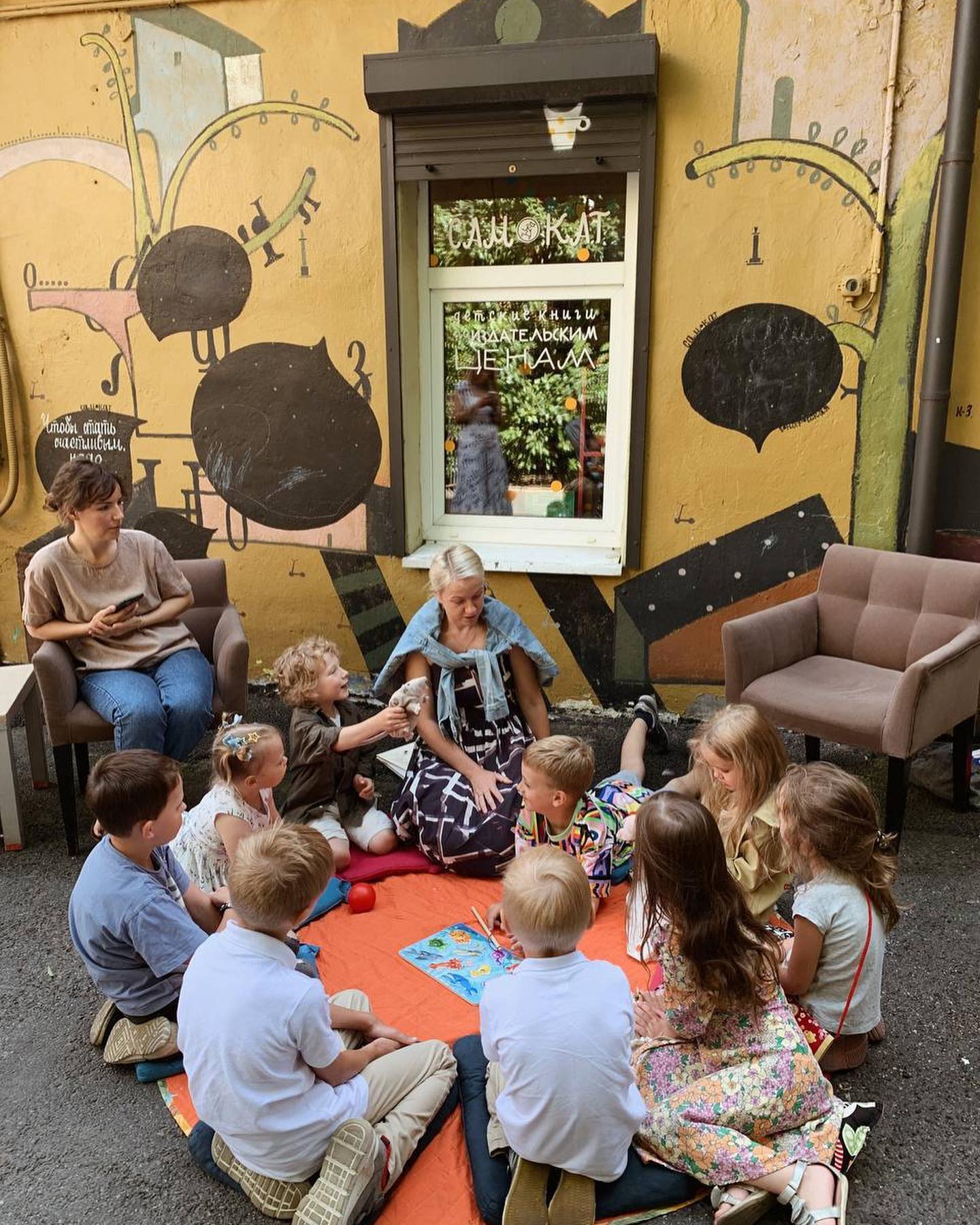
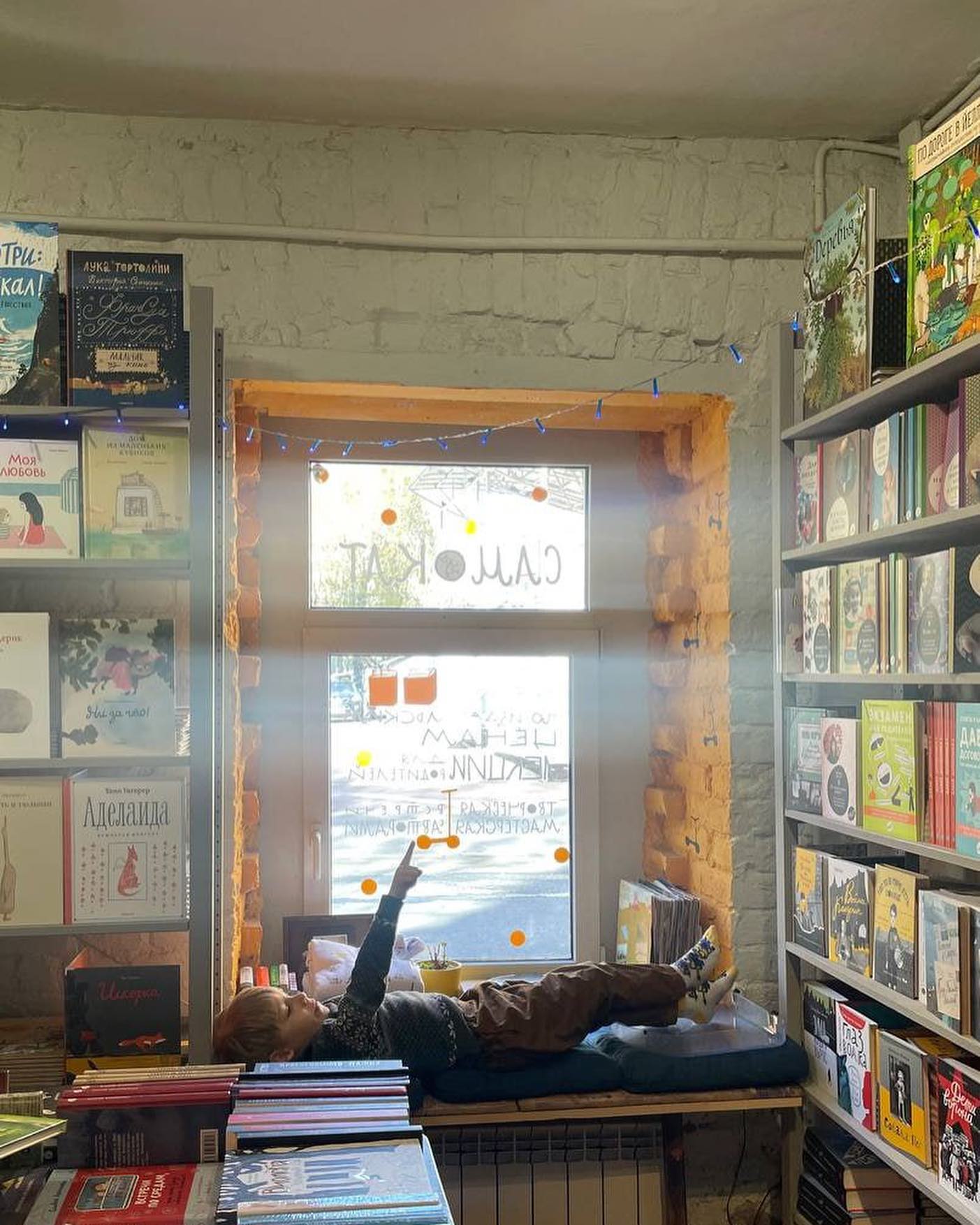
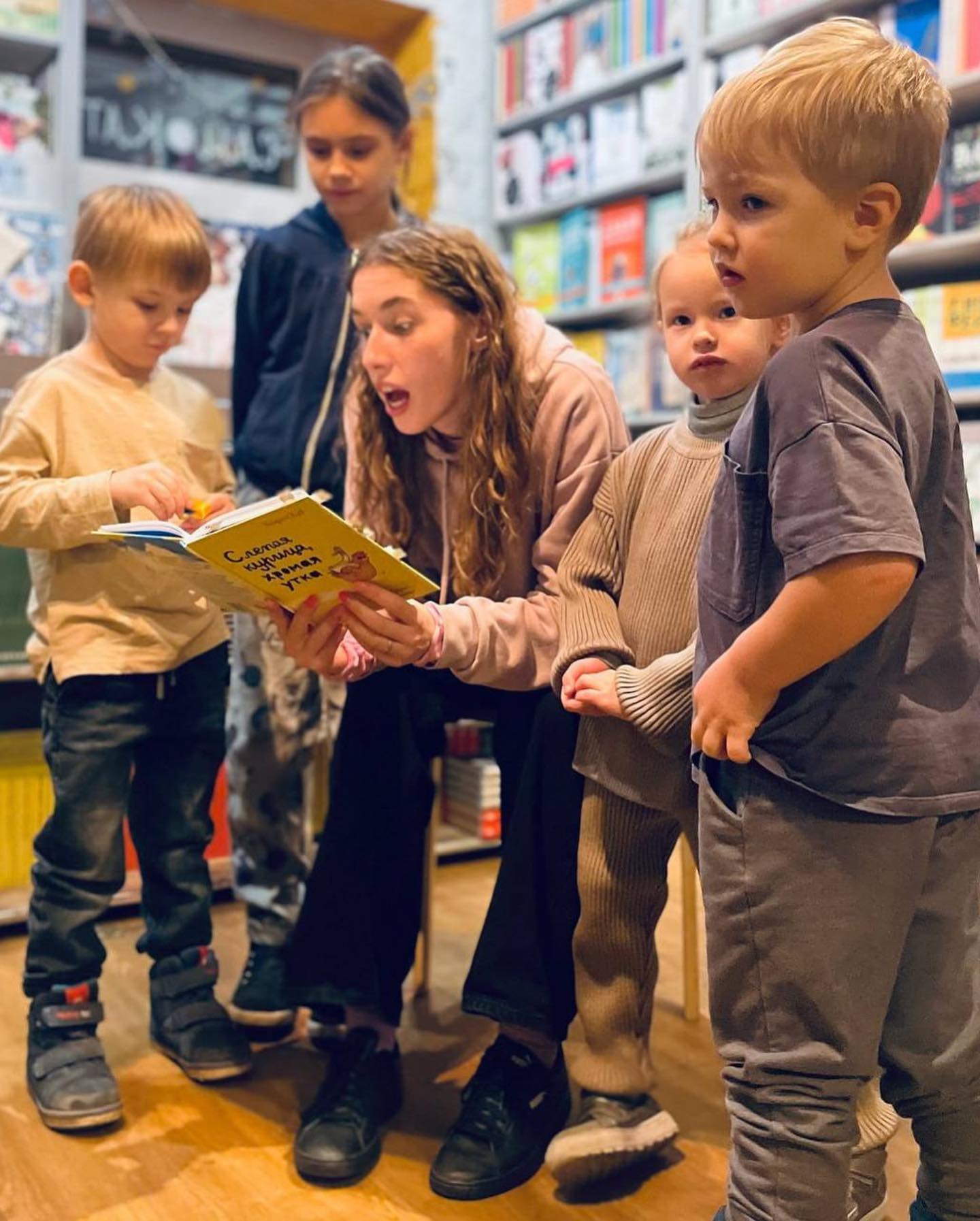
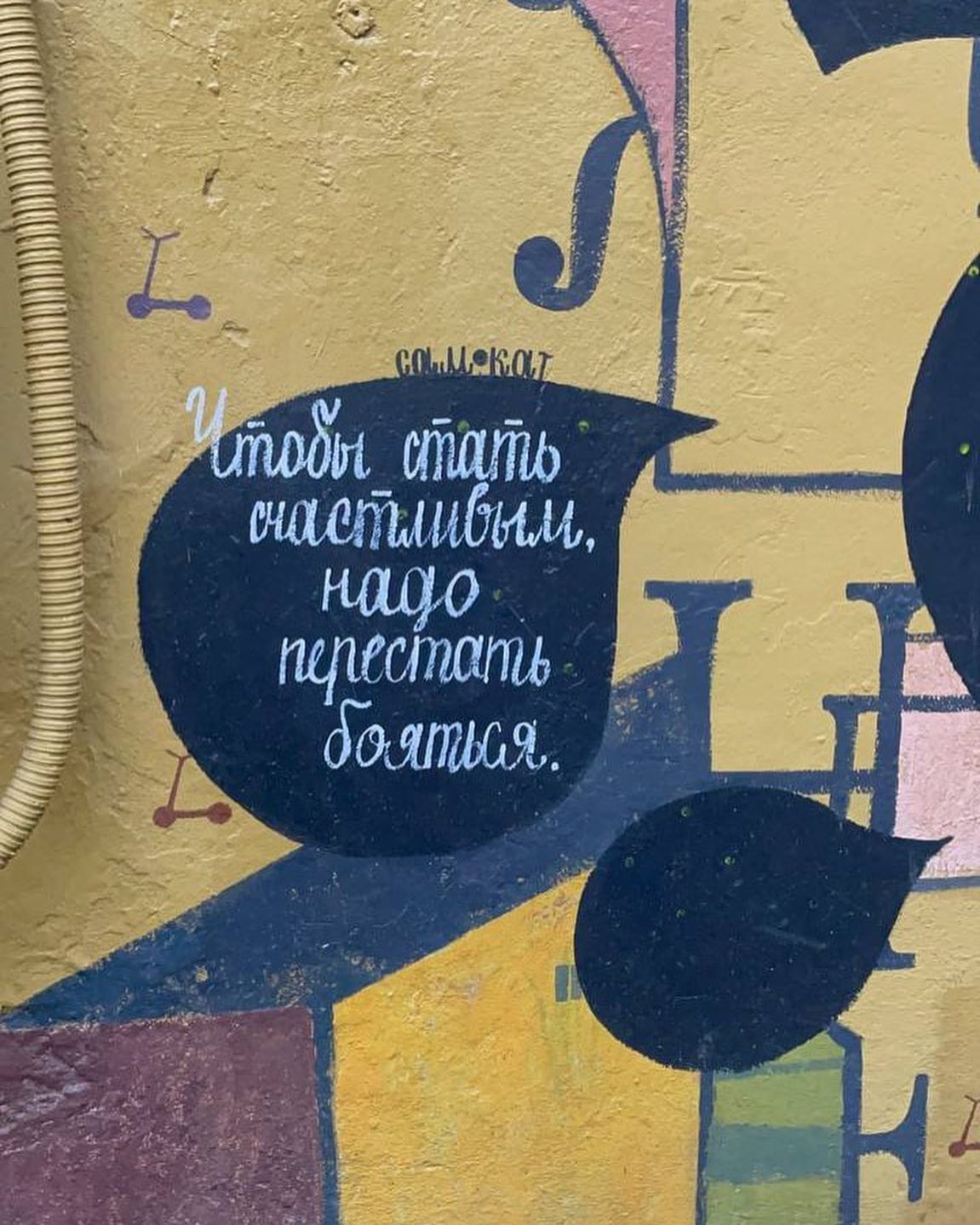
 First of all, we appeal to the leadership of St. Petersburg and the Committee for City Property Management. And we hope that the cultural capital is not indifferent to the plight of one of the best bookstores in the city by one of the primary independent children’s publishers in Russia.
 If you have suggestions and options, please write via Telegram at +7 (921) 809-8519, and Natasha and Polina will be in touch.