Since there is pointedly no Russian anti-war movement to mobilize public opinion and actual people against any military aggression by the Kremlin, it is hard to say how the Kremlin will fare in the polls after the Kerch gambit. Maybe Putin’s wholly ersatz popularity will nominally shoot up a few dozen points as “Russians” “express” “their” “outrage” over Kyiv’s nonexistent military aggression. Maybe, unaccountably, TV viewers will suddenly see through the nonstop war dance that has undoubtedly erupted on all Russian news channels and drop Putin’s rating another few points.
What definitely won’t happen is that millions of Russians will take to the streets to demand the resignation of a would-be president for life whose reign has been marked by military aggression and “patriotic” manipulation of public sentiment since day one.
There were one or two largish protests in Moscow against Putin’s invasion of Ukraine at the very start of that glorious campaign, and that was that. There has never been even a middling protest against Putin’s decisive use of military force against innocent Syrians opposed to the butcher Assad. And on an issue that should have been a cakewalk for the opposition, the so-called pension reform (i.e., raising the retirement age precipitously to save money for military spending), the vast majority of Russians decided to get upset, if they did get upset, in the comfort of their homes, watching the FIFA World Cup on TV, rather than braving the balmy weather that prevailed all over Russia this past summer and showing the government how angry they were.
But popular demonstrations are never just a matter of public sentiment. They are also a matter of political organization. And while nearly all opposition forces in Russia did at least make the attempt to get people into the streets this past summer to oppose the pension reform, they would never risk whatever political capital they had to call for anti-war marches and protest rallies.
Maybe they would be surprised by the turnout if they did call for such protests and put their hearts and souls into organizing them, but that is not going to happen for the simple reason that the unacknowledged, apparently invisible bull in the china shop—Russian imperialism—informs the Russian liberal and leftist “anti-Putinist” views of the world as much it does Putin’s view of the world. {TRR}
Vera Zasulich Street, 46, in Perm, hardly seems a fitting monument to the fearless Russian revolutionary, but the street is, apparently, the only Vera Zasulich Street in Russia. Photo courtesy of perm.vsedomarossii.ru
When You Are Scared, It Is Better to Remain Silent
Ever since the events in Arkhangelsk, I have been waiting for the decent Russian media to publish a sensible portrait-cum-analysis of the new would-be member of the People’s Will, Mikhail Zhlobitsky, who blew himself up at the local FSB office. My wait is over. Novaya Gazeta has published an article about him. It is a vile, shameful article, which I might have expected from anyone else, but not from Novaya Gazeta. Every quotation you can pull from the article, not to mention the conclusion, is a specimen of feeblemindeness compounded by fear.
“Unfortunately, now many people could come to regard [Zhlobitsky] as an icon, a martyr, a hero.”
That “unfortunately” tipped me off to the fact that nothing good lay ahead.
“Perovskaya and Zasulich: their forgotten names still grace street signs marking alleys.* Strictly speaking, nearly every municipality [in Russia] is thus guilty of excusing terrorism. Their ‘heroic deeds’ have never been duly judged. So, they have returned: a second-year student at a vocational college assembles a bomb at home in the evenings from available materials.”
Thanks to Sophia Perovskaya, Vera Zasulich, and people like them, people whom Novaya Gazeta‘s reporter [Tatyana Britskaya] considers reprehensible, Russia overthrew the tsarist autocracy, a realm in which the reporter’s great-grandfathers were whipped for not doffing their hats in the presence of their masters and were dispatched as cannon fodder to distant lands for the Empire’s glory. That was only a small fraction of the woes visited upon the heads of the common folk. The reporter, however, is still sad that streets are named after these heroines and heroes, and she brackets their heroic deeds in quotation marks.
“However, the three Arkhangelsk Chekists [sic] wounded by shrapnel were unlikely to be directly involved in the torture about which Mikhail Zh. wrote [in his farewell message on Telegram].”
This is really a masterpiece. According to the reporter, only a tiny group of FSB officers, a group that exists only in her head, has been involved in torture. All other FSB officers wear white gloves, compose poems, dance at balls, and have preventive discussions with schoolchildren, urging them not to become “extremists.” They also catch drug barons and ISIS fighters, interrogating them solely by looking at them sternly. Apparently, the reporter has forgotten about “repeat interrogations using an electrical memory aid” and the complaints by cops (!) accused of corruption that they were tortured by FSB officers. The reporter must think that Zhlobitsky should have first approached [the three FSB officers he wounded] and asked them, “Do you torture people by any chance? No? Well, okay, then, I’ll go blow up somebody else.”
“Apparently, we never were able to assess or correct mistakes, and now history is taking us back for another go-round. This is facilitated quite readily by the fact that adults notice unhappy, confused children only when the latter perish while activating homemade infernal machines.”
What mistakes is she talking about? She is not condemning the butchers of the NKVD or the enslavement of entire nations, first by Imperial Russia, then by the Soviet empire. No, the “mistakes” were the members of the nobility who were among the organizers of the People’s Will and the members of the Socialist Revolutionary Party, people who died martyrs’ deaths to liberate their own people from bondage.
Because reading it only provokes disgust, there is not pointing in parsing this libel any further. I would only note that the reporter is Novaya Gazeta‘s [Arctic Circle] correspondent, meaning she is a local reporter. This, apparently, is the reason for her condescending, judgmental tone and her attempt to turn a hero into a “confused child.” If you write too bluntly, you have unexploded FSB officers to deal with, as well as their colleagues and relatives. But she has keep working and get comments from the security service when she needs them. So, she will continuing putting a good face on a bad game, denouncing “violence of any kind.” My ass.
It is true what they say: scratch a Russian liberal and, deep down, you will find a statist and conservative. You want to live in a just society, but you think it can be achieved by pickets and petitions. You want the regime to respect you, but you condemn people who force it to respect them. You want freedom, but you are afraid to take it. You condemn the bravest people, thus projecting an image of victims, not fighters. In today’s stinking Russia, ninety-nine percent of you will end up hightailing it abroad. But not everyone has the opportunity, you know?
So, if you are scared, it is better to remain silent than to yap encouragingly at the butchers, who, for a change, suffered for their crimes.
I would like to emphasize I do not consider individual insurgency an acceptable or proper means of political militancy, nor would I advise anyone to engage in it. I believe everyone has the right to live, even a fucking FSB officer. But not everyone can adhere to the same beliefs I do while living amidst a terrorist dictatorship. I understand such people perfectly well, too.
* Translator’s Note. While there are a couple of dozen Sophia Perovskaya Streets extant in post-Soviet Russia, there seems to be only one Vera Zasulich Street—in Perm.
Translated by the Russian Reader. Special thanks to Mikola Dziadok for his kind permission to translate and publish his comments on this website.
What Sentsov Could Die For
Maria Kuvshinova Colta.Ru
May 25, 2018
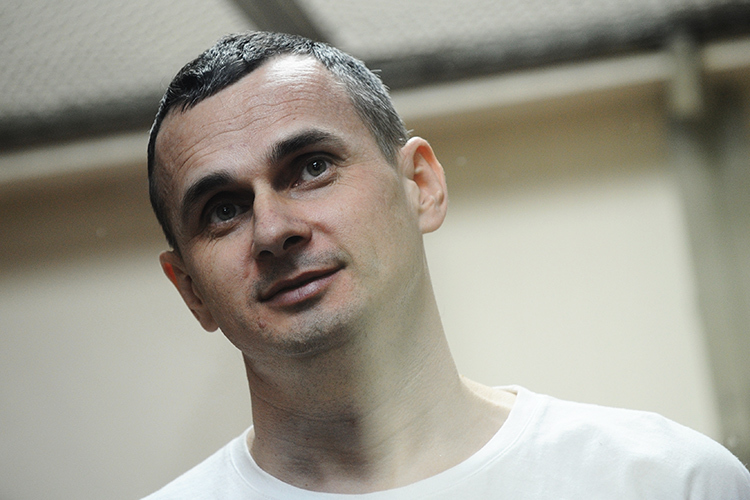
Oleg Sentsov. Photo by Sergei Pivovarov. Courtesy of RIA Novosti and Colta.Ru
On May 14, 2018, Oleg Sentsov went on an indefinite hunger strike in a penal colony located north of the Arctic Circle. His only demand is the release of all Ukrainian political prisoners in Russia. According to Memorial’s list, there are twenty-four such prisoners.
In August 2015, Sentsov was sentenced to twenty years for organizing a terrorist community and planning terrorist attacks. The second defendant in the case, Alexander Kolchenko, was sentenced to ten years in prison. Mediazona has published transcripts of the hearings in their trial. Around three hundred people have read them over the last three years. The transcripts make it plain the only evidence of the alleged terrorist organization’s existence was the testimony of Alexei Chirniy, who was not personally acquainted with Sentsov. It is police footage of Chirniy’s arrest while he was carrying a rucksack containing a fake explosive device that propagandists often pass off as police footage of Sentsov’s arrest.
Before his arrest, Sentsov was an Automaidan activist. In the spring of 2014, he organized peaceful protests against Crimea’s annexation by Russia.
“Yesterday’s ‘suicide bomber auto rally’ took place in Simferopol yesterday, but in quite abridged form,” Sentsov wrote on Facebook on March 12, 2014. “Only eight cars, six reporters with cameras, and twenty-five activists/passengers assembled at the starting point. I would have liked to have seen more. Unfortunately, most of the armchair revolutionaries who were invited were afraid to go. The traffic cops and regular police also showed up at the starting line, insisting we not leave for our own safety. We told them our protest was peaceful. We had no plans of breaking the rules, so we suggested they escort us to keep the peace for everyone’s sake.”
The second defendant, Kolchenko, admitted involvement in the arson of an office that was listed in the case file as belonging to the United Russia Party, but which in April 2014 was an office of Ukraine’s Party of Regions. The arson took place at night. It was meant to cause physical damage while avoiding injuring anyone.
The Russian authorities tried to prove both Sentsov and Kolchenko were linked with Right Sector, a charge that was unsubstantiated in Sentsov’s case and absurd in the latter case due to Kolchenko’s well-known leftist and anarchist convictions. Gennady Afanasyev, the second witness on whose testimony the charges against the two men were based, claimed he had been tortured and coerced into testifying against them.
Sentsov and Kolchenko’s show trial, like the show trials in the Bolotnaya Square Case, were supposed to show that only a handful of terrorists opposed the referendum on Crimea’s annexation and thus intimidate people who planned to resist assimilation. The Russian authorities wanted to stage a quick, one-off event to intimidate and crack down on anti-Russian forces. But two circumstances prevented the repressive apparatus from working smoothly. The first was that the defendants did not make a deal with prosecutors and refused to acknowledge the trial’s legitimacy. The second was that Automaidan activist Oleg Sentsov unexpectedly turned out to be a filmmaker, provoking a series of public reactions ranging from protests by the European Film Academy to questions about whether cultural producers would be capable of blowing up cultural landmarks. Segments of the Russian film community reacted to the situation with cold irritation. According to them, Sentsov was a Ukrainian filmmaker, not a Russian filmmaker, and he was not a major filmmaker. The owner of a computer club in Simferopol, his semi-amateur debut film, Gamer, had been screened at the festivals in Rotterdam and Khanty-Mansiysk, while release of his second picture, Rhino, had been postponed due to Euromaidan.
The Ukrainian intelligentsia have equated Sentsov with other political prisoners of the empire, such as the poet Vasyl Stus, who spent most of his life in Soviet prisons and died in Perm-36 in the autumn of 1985, a week after he had gone on yet another hunger strike. The Ukrainian authorities see Sentsov, a Crimean who was made a Russian national against his will and is thus not eligible for prisoner exchanges, as inconvenient, since he smashes the stereotype of the treacherous peninsula, a part of Ukraine bereft of righteous patriots. Sentsov’s death on the eve of the 2018 FIFA World Cup would be a vexing, extremely annoying nuisance to the Russian authorities.
Sentsov is an annoyance to nearly everyone, but he is a particular annoyance to those people who, while part of the Russian establishment, have openly defended him, although they have tried with all their might to avoid noticing what an inconvenient figure he has been. Although he was not a terrorist when he was arrested, he has become a terrorist of sorts in prison, because his trial and his hunger strike have been a slowly ticking time bomb planted under the entire four-year-long post-Crimean consensus, during which some have been on cloud nine, others have put down stakes, and still others have kept their mouths shut. Yet everyone reports on the success of their new endeavors on Facebook while ignoring warsabroad and torture on the home front. Sentsov represents a rebellion against hybrid reality and utter compromise, a world in which Google Maps tells you Crimea is Russian and Ukrainian depending on your preferences. To what count does “bloodlessly” annexed Crimea belong, if, four years later, a man is willing to die to say he does not recognize the annexation?
The success of Gamer on the film festival circuit, which made Sentsov part of the international film world, and his current address in a prison north of the Arctic Circle beg three questions. What is culture? Who produces culture? What stances do cultural producers take when they produce culture? There are several possible answers. Culture is a tool for reflection, a means for individuals and societies to achieve self-awareness and define themselves. It is not necessarily a matter of high culture. In this case, we could also be talking about pop music, fashion, and rap. (See, for example, the recent documentary film Fonko, which shows how spontaneous music making has gradually been transformed into a political force in post-colonial Africa.) On the contrary, culture can be a means of spending leisure time for people with sufficient income, short work days, and long weekends.
Obviously, the culture produced in Russia today under the patronage of Vladimir Medinsky’s Culture Ministry is not the first type of culture, with the exception of documentary theater and documentary cinema, but the founders of Theater.Doc have both recently died, while Artdocfest has finally been forced to relocate to Riga. The compromised, censored “cultural production” in which all the arts have been engaged has no way of addressing any of the questions currently facing Russia and the world, from shifts in how we view gender and the family (for which you can be charged with the misdemeanor of “promoting homosexualism”) to the relationship between the capitals and regions (for which you can charged with the felony of “calling for separatism”). Crimea is an enormous blank spot in Russian culture. Donbass and the rest of Ukraine, with which Russia still enjoyed vast and all-pervasive ties only five years ago, are blank spots. But cultural producers have to keep on making culture, and it is easier to say no one is interested in painful subjects and shoot a film about the complicated family life of a doctor with a drinking problem and a teetotalling nurse.
When we speak of the second type of culture—culture as leisure—we primarily have in mind Moscow, which is brimming over with premieres, lectures, and exhibitions, and, to a much lesser extent, Russia’s other major cities. So, in a country whose population is approaching 150 million people, there is a single international film festival staged by a local team for its hometown, Pacific Meridian in Vladivostok. All the rest are produced by Moscow’s itinerant three-ring circus on the paternalist model to the delight of enlightened regional governors. It matters not a whit that one of them ordered a brutal assault on a journalist, nor that another was in cahoots with the companies responsible for safety at the Sayano-Shushenskaya Dam, where 75 people perished in 2009. What matters is that the festival movement should go on. There is no room in this model for local cultural progress. There can be no free discussion generated by works of art when everyone is engaged in total self-censorship. After I went to Festival 86 in Slavutych, whose curators have been conceptually reassessing the post-Soviet individual and the post-Soviet space, I found it painful to think about Russian film festivals. This sort of focused conceptualization is impossible in Russia. It is of no interest to anyone.
There are two more possible answers to the question of what culture is. Culture is propaganda. Or, finally, culture is only the marquee on a commercial enterprise profiting at the taxpayer’s expense. It is not a big choice, and the kicker is that by agreeing today to be involved in churning out propaganda, milking taxpayers, supplying optional leisure time activities, producing censored works, and colonizing one’s own countrymen for the sake of money, status, and membership in a professional community, the people involved in these processes automatically stop making sense. It is naïve to think the audience has not noticed this forfeiture. It is no wonder the public has an increasingly hostile reaction to cultural producers and their work.
No one has the guts to exit this vicious circle even in protest at the slow suicide of a colleague convicted on trumped-up charges, because it would not be “practical.” The events of recent months and years, however, should have transported us beyond dread, since everyone without exception is now threatened with being sent down, the innocent and the guilty alike.
Post-Soviet infantilism is total. It affects the so-called intelligentsia no less than the so-called ordinary folk. Infantilism means being unable to empathize, being unable to put yourself in another person’s shoes, even if that person is President Putin, a man with a quite distinct sense of ethics, a man who has been studied backwards and forwards for twenty years. Apparently, the message sent to the creative communities through the arrest of Kirill Serebrennikov was not registered. If you want to be a dissident, start down the hard road of doing jail time for misdemeanor charges, facing insuperable difficulties in renting performance and exhibition spaces, becoming an outsider, and experiencing despair. If you want a big theater in downtown Moscow, play by the rules. Like your average late-Soviet philistine, Putin regarded the creative intelligentsia with respect at the outset of his presidential career. (See, for example, footage from his visit to Mosfilm Studios in 2003.) However, a few years later, he was convinced the creative intelligentsia was a rampantly conformist social group who would never move even a millimeter out of its comfort zone and would make one concession after another. A lack of self-respect always generates disrespect in counterparts.
By signing open letters while remaining inside the system and not backing their words with any actions whatsoever, the cultural figures currently protesting the arrests of colleagues are viewed by the authorities as part of the prison’s gen pop, while people who live outside Moscow see them as accomplices in looting and genocide. No one takes seriously the words of people who lack agency. Agency is acquired only by taking action, including voluntarily turning down benefits for the sake of loftier goals. The acquisition of agency is practical, because it is the only thing that compels other people to pay heed to someone’s words. I will say it again: the acquisition of agency is always practical. At very least, it generates different stances from which to negotiate.
Sentsov has made the choice between sixteen years of slow decay in a penal colony and defiant suicide in order to draw attention not to his own plight, but to the plight of other political prisoners. Regardless of his hunger strike’s outcome, he has generated a new scale for measuring human and professional dignity. It is an personal matter whether we apply the scale or not, but now it is impossible to ignore.
Thanks to Valery Dymshits for the heads-up. Translated by the Russian Reader
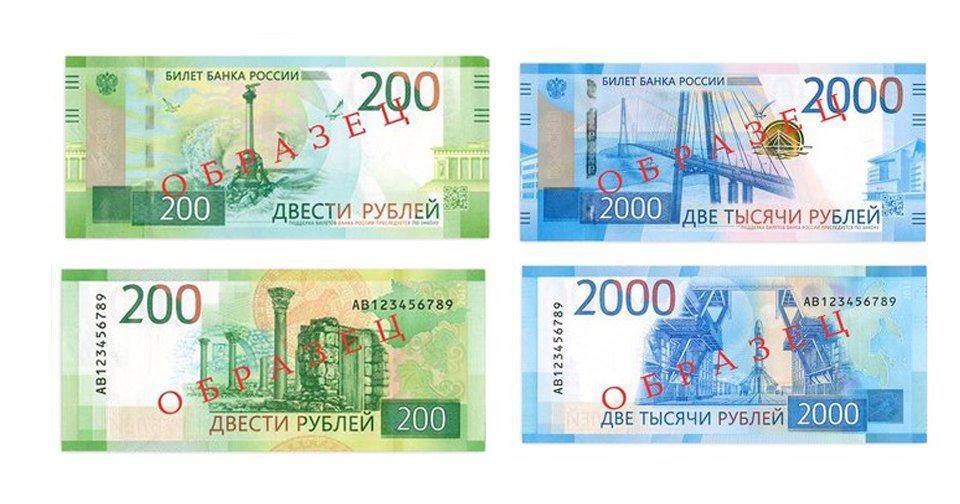
There was an awkward moment when one of the first questions put to the head of the Russian Central Bank at the press conference on the roll-out of two new banknotes was a question about Crimea.
“You’ve put pictures of Crimea on the 200-ruble note. Aren’t you afraid it will affect the ruble’s [value]?”
Elvira Nabiullina had to talk about the gold and foreign currency reserves and “the state’s might,” for that was the mildest way of putting it.
Yes, yes, the reserves are particularly relevant in this instance. The Central Bank has been feverishly buying up gold for good reason: in case of new sanctions.
The rationale followed by the Russian authorities is clear. They have to implicate everyone in their Crimean adventure, whether they have traveled there or not, whether they have attended a pro-Putin rally or not, whether they have voted or not. There will be no getting away from the 200-ruble banknote. However, it is right that the first people who blush over it should be officials—officials who understand the whole thing and do not approve of it, but who have tacitly consented to it by saying nothing.
Shame, however is not smoke. It has not made anyone blind, but has only left their faces slightly reddened.
First, money was removed from people’s wallets to subsidize Crimea (you do remember what funded pensions were spent on, don’t you?), but now little pictures of Crimea have been put back into people’s wallets instead of money. We can roughly describe the entire Russian economy this way. The government takes our money and gives it back to us in the shape of TV presenter and Rossiya Segodnya News Agency director Dmitry Kiselyov, driving across an uncompleted bridge to his Koktebel estate.
Dmitry Gudkov is a former Russian MP who abstained from voting for the resolution approving Putin’s occupation of Crimea in 2014. Translated by the Russian Reader. Thanks to Irina Shevelenko for the heads-up
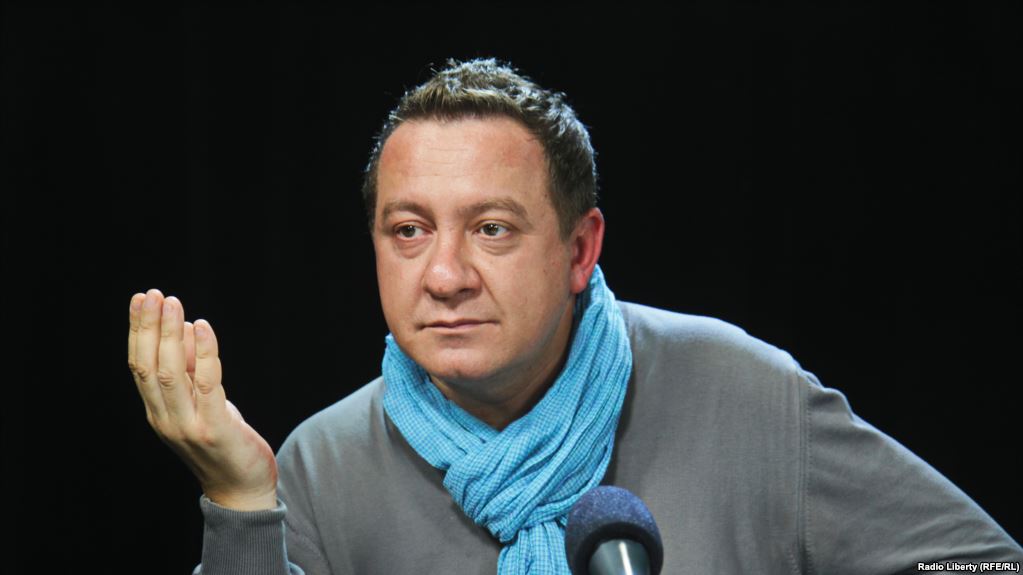
Crimean Tatar Journalist Ayder Muzhdabaev to Russian Rock Musician Andrei Makarevich: “It Hasn’t Passed, It Hasn’t Stopped Hurting, We’re Not Going to Take a Deep Breath”
Before arriving in Ukraine to clean up at the box office yet again, Russian TV presenter and showman Misha Kozyrev advises Ukrainians not to let the war into their hearts. By the way, he will again be arriving in the country real soon. Someone has to tell the “embittered” younger brothers what to think and how to live. We are clueless on our own.
And when Russian musician Andrei Makarevich was asked why he wanted to drag his band Time Machine’s keyboardist Andrei Derzhavin, who signed an open letter to Putin supporting the annexation of Crimea and the war, along with him to Ukraine, he wrote on Facebook it was time to stop discussing events that had happened four years ago. “Learn to take a deep breath,” he wrote. As if everything had passed and stopped hurting. No, it has not passed, and it has not stopped hurting. If someone thinks we have forgotten everything, he or she probably should not come to Ukraine.
If your keyboard player, Mr. Makarevich, still slips into the country under your skirt, so to speak, we will drag him from his dressing room and send him home packing. If you are incapable of understanding such a simple, normal thought, then so be it: we will explain it to you. We have not taken a deep breath, and we are not going to, because we had our homeland stolen from us—or at least part of it. We remember that and we cannot forgive what happened, not only the war and annexation but also the indifference to us.
We are not aquarium fish or serfs who remember nothing and have no right to rage. We do not need any Russians here except those who are wholeheartedly against the Putin Reich, support the return of Crimea and Donbas to Ukraine, and support Ukraine unconditionally, without any provisos. If you are incapable of understanding us, if you lack the humanity to put yourself in our shoes, to feel and share our pain, you had better stay home, in the so-called Russian world.
I hope the so-called Russian world will take it easy on you, Mr. Makarevich. I hope it treats you more gently than it has treated the Ukrainians and Crimean Tatars. Although I do not think it will happen. Life is set up in such a way that right after the Jews were massacred, trouble came for the Germans. But who knows. If you continue to sit still and choose your words carefully, maybe you will be luck personally.
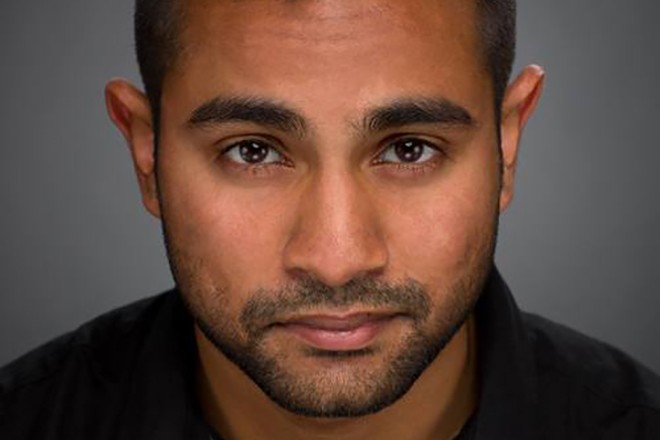
Bhaskar Sunkara (born June 20, 1989) is an American political writer, editor and publisher of Jacobin magazine.
The son of immigrants from Trinidad and Tobago, Sunkara described Jacobin as a radical publication, “largely the product of a younger generation not quite as tied to the Cold War paradigms that sustained the old leftist intellectual milieus like Dissent or New Politics.”
The New York Times interviewed Sunkara in January 2013, commenting on Jacobin’s unexpected success and engagement with mainstream liberalism. In late 2014, he was interviewed by New Left Review on the political orientation and future trajectory of the publication and in March 2016 was featured in a lengthy Vox profile.
Sunkara writes for Vice magazine, Washington Post and The Nation, among other outlets. He has appeared on the PBS Tavis Smiley program, MSNBC’s Up w/ Chris Hayes and the FX show Totally Biased with W. Kamau Bell.
Residents in eastern Ukraine face worst fighting in years in war with Russian-backed separatists
Sabra Ayres Los Angeles Times
February 15, 2017
The news reached Mariupol Mayor Vadim Boychenko via a morning phone call from an assistant: A rocket attack damaged 11 houses on the outskirts of the Ukrainian city.
There were no casualties, but a major concern had become a reality: The escalation of fighting elsewhere in the nation in recent weeks had reached the industrial city, a key component in southeast Ukraine’s struggling economy.
“We’ve gotten used to a peaceful life,” Boychenko said during a recent interview at his office. “I really don’t want to return to the problems we had started to forget.”
Ukraine’s nearly three-year battle against Kremlin-backed separatists in the east erupted into the worst fighting in two years in late January. Exactly why the fighting intensified recently remains unclear, though such encounters have occurred with some frequency during unrest that included Russia’s annexation of Crimea in March 2014.
The small city of Avdiivka, 90 miles north of Mariupol, became the epicenter of the recent violence. The fighting quickly spread along a 300-mile line separating the Ukrainian government-controlled lands and those claimed by separatists in the Donetsk and Luhansk regions.
Mariupol had seen only sporadic fighting over the last two years, primarily in the region’s eastern villages. But as news trickled in about the bombardment of Avdiivka, Mariupol began again hearing the deep rumble of explosions and heavy artillery fire less than 10 miles away.
The fighting halted vital shipments from Avdiivka’s coal processing plant to Mariupol’s massive iron and steel works plants, jeopardizing production at one of the region’s biggest employers.
Many local residents said they feared the renewed violence could quash the growing sense of confidence in Mariupol after nearly two years of relative stability.
One concern in the region is that President Trump and Russian President Vladimir Putin could strike a deal that would lift U.S. sanctions on Russia or force Ukraine to make painful compromises with Moscow. Ukrainian President Petro Poroshenko has urged Western leaders to keep sanctions in place.
“Sanctions are the only way to get Putin to the table,” he said last week in an interview with journalists and academics in Kiev, the capital.
Nationally, there is little faith in the Minsk agreements, a road map to peace brokered in 2014 by European leaders between Ukraine, the Kremlin and the separatist rebel leaders. Poroshenko maintains that Ukraine is committed to its obligations to the agreements.
“Minsk is my plan. Putin accepted it. His signature is there,” he said.
Mariupol has gone through a noticeable transformation since war erupted in eastern Ukraine in the spring of 2014. Once the epitome of a run-down, Soviet industrial port city with two massive metallurgy plants puffing out pollution day and night, Mariupol in the last two years has emerged as a center of civic activism in Ukraine’s southeastern battlefront.
The city was the center of several violent outbreaks in spring 2014, when Ukrainian forces and supporters of the pro-Russian separatist groups fought gun battles in the downtown streets. The charred former police headquarters and city council buildings still stand as reminders. On Jan. 24, 2015, a missile attack hit an eastern region of Mariupol dense with Soviet-era concrete housing blocks, killing at least 30 people.
The previously politically passive, mostly Russian-speaking city created community groups that mobilized to gather whatever money they could to buy medical kits, food, and flak jackets and helmets for Ukraine’s ill-prepared military. The fighting displaced 1.75 million eastern Ukrainians, but locals opened their homes and about 56,000 newcomers settled in Mariupol.
“We don’t call them refugees anymore,” Boychenko said. “They are ‘new Mariupolites’ and have already become part of our city.”
Once-thriving Donetsk is now occupied by rebel forces, so Mariupol, the largest city in the Donetsk region under Ukrainian control, became the de facto cultural hub of the eastern industrial area along the Don River basin, known as the Donbas.
Displaced activists from Donetsk opened an avant-garde theater and creative space that has hosted some of the country’s big names in modern talent.
Small businesses — grocery stores, small restaurants and mom-and-pop shops — whose owners fled the fighting returned, and new cafes have opened. Ukraine’s most popular music group, Okean Elzy, gave a free concert in May attended by more than 30,000 people.
“We’ve been working all year to create a positive mood in the city,” Boychenko said.
Alex Ryabchyn, a deputy in Ukraine’s parliament who was born in Mariupol, said the city is in the early stages of reinvention.
“The population is starting to think of themselves as being the center of southeastern Ukraine. That’s new, “ said Ryabchyn, who was an economics professor in Donetsk State University before fleeing to Kiev after the pro-Russia rebel takeover.
Mariupol faces major challenges, particularly in the economic sphere. Ukraine’s economy has been battered since protests ousted a Moscow-friendly president, Viktor Yanukovich in 2014. The war ripped apart the country’s coal mining and steel processing industry, destroying many plants and severely curtailing production in those that survived.
The aging steel plants need modernization and the economy needs diversification to revitalize the region. Highways linking Mariupol to other cities are so bad that drivers are forced to reroute to avoid the worst sections. Train rides from Kiev to Mariupol, about 500 miles, take 18 hours, and the airport cannot accept commercial flights because of its location near the front lines of fighting.
Mariupol can feel like an isolated peninsula in Ukraine, an image many hoped was changing.
“You can see why [an increase in fighting] is a problem,” Irina Chirkova, 24, a waitress in Mariupol, said as a series of explosions pierced the cold air. “We have a lot of potential here — a big port, an airport and nice beaches. But our infrastructure needs investment, and who is going to invest in us now with this war?”
The Russian authorities do not like remembering and commemorating events that darken and cast doubt on the beatific picture of the country’s past, meaning conquests, mass murders, deportations, and so on. Not only the authorities but also many people who consider themselves intellectuals, thoughtful and knowledgeable people, avert their eyes and turn up their nose when they are reminded of such events. Why stir up problems? they say.
Another argument is that “there” (which usually means “the west”) things were much worse or no better at any rate. That is right, both the fact that memory has often been used to fuel conflict and political rivalry, and that things were no better “there.” But does this mean we should forget history, forget its difficult and controversial chapters, engage in censorship or self-censorship? Would that really help us solve our current problems in the here and now? Would such a simple trick help us feel that we and our history are “righter” than other countries and their histories?
On October 1, 1783, Suvorov defeated rebellious Nogai troops who had refused to abide by the decision to resettle them and their families from the Black Sea region to the Urals. Many of the Nogais who were not killed in battle or hunted down and killed were forced to scatter across the steppes and mountains, to escape to the Ottoman Empire. Thus, one of the most powerful nomadic powers to exist in what is now Russia perished.
Sergey Abashin is British Petroleum Professor of Migration Studies at the European University in Saint Petersburg. His most recent book is Sovetskii kishlak: Mezhdu kolonializmom i modernizatsiei[The Soviet Central Asian village: between colonialism and modernization], Moscow: Novoe literaturnoe obozrenie, 2015. Translated by the Russian Reader
Putin Calls Issue of Crimea’s Ownership Done Deal
Kirill Bulanov RBC
September 3, 2016
The question of Crimea’s ownership is closed, Russian President Vladimir Putin said at the plenary session of the Eastern Economic Forum.
“The people of Crimea made a decision and voted. Historically, it’s a done deal,” he stressed, as quoted by Interfax.
“There is no way of returning to the previous system. None,” added Putin.
Crimea joined Russia on the basis of a referendum [sic] that took place March 16, 2014. More than 95% of those who took part in the plebiscite voted for joining the peninsula to Russia. Ukrainian and western authorities called the move an “annexation,” and the US and European Union introduced sanctions against a number of Russian citizens and Russian companies.
The head of the government made a similar statement at the beginning of the year.
“This issue is closed forever. Crimea is part of Russian territory,” Prime Minister Dmitry Medvedev said in February.
On September 1, the US extended its sanctions list against Russia. The new sanctions affect companies involved in building the Kerch Strait Bridge. In particular, the list now includes construction subcontractor Mostotrest and SGM Most. The list also included seventeen individuals, among them Crimean officials and security officials.
Crimean Bridge, published on YouTube by user Krymskii Most on October 2, 2015. The annotation to the video reads, “They made a video about me. Wow!”
The same day, Russian Foreign Minister Sergei Lavrov called the west’s political position of not recognizing Crimea’s accession to Russia [sic].
“No legal obstacles to recognition of Crimea’s accession, its reunification with the Russian Federation, exist,” he said, speaking to students at MGIMO.
_________
Meeting with students at MGIMO, Russian Foreign Minister Sergei Lavrov discussed the main reasons the West had not accepted Crimea’s accession to Russia.
According to the minister, Europe and the US do not recognize Crimea as belonging to Russia solely for their own benefit and out of a desire to use the situation to their own political ends. Moreover, Ukraine and Kiev’s position on this issue have not interested the West for a long time.
“The West pursued this policy, a policy of containing Russia, long before the events in Ukraine,” said Lavrov.
The diplomat stressed it has long been recognized worldwide the peninsula’s reunification with Russia took place in full accordance with all the canons [sic] of the international world [sic], and in accordance with the wishes of the residents of Crimea themselves. Publicly, however, no one wants to confirm this.
Some leftists think that Donald Trump will be better in foreign policy terms than Hillary. They’re right. By their standards, by their principles, Trump will be better.
Trump opposes the war in Afghanistan not because he cares one bit about the lives of Afghans, but rather because he cares nothing about the lives of Afghans. If you can’t understand that difference, you’re already lost.
Trump wants to follow Obama’s lead and work closer with Russia, combined with working closer with Assad in Syria—in fact, in his own words, he wants to let Russia and Iran ‘protect’ Syria from what he calls ‘ISIS’, by which he means all the Syrian rebels. He wants to let Assad, Russia and Iran destroy the rebels and ISIS. That’s his actual policy.
Trump would never have lifted one finger to aid Libyans facing extermination from Gaddafi’s air force, saying that things would be ‘100% better off if Gaddafi was still in charge of Libya’.
Trump would recognise Crimea as Russian territory and lift sanctions on Russia, effectively abandoning Ukrainians to the will of the Vladimir Putin.
All of these things are perfectly in line with the principles of much of The Left. The difference is that they dress up their demented, barbarous, counter-revolutionary and conservative isolationism in progressive garb, such as by conjuring always so very abstractly and incoherently the lives of brown people—the entirely fantastical ‘NATO destruction of Libya’, the idea that the main problem in Syria is non-existent ‘western intervention’, etc., etc. They completely ignore the actualities of the lives of these people and they often tacitly or explicitly support the forces that are actually to blame for the monstrous hardships that these people face.
But they, like Trump, care nothing for the lives of Syrians or Libyans—they too want Russia and Iran to be given free reign to ‘protect’ Syria (this is Jeremy Corbyn’s position and very similar to Bernie Sanders, never mind the barrel bomb pacifist Jill Stein).
The truth is that Trump would be good for the barbaric principles of much of the actually existing Left. His conservative isolationism and his support for Russian imperialism is merely bereft of a phoney humanitarian aspect.
My thanks to Mr. Hamad for his kind permission to reprint this essay here. TRR
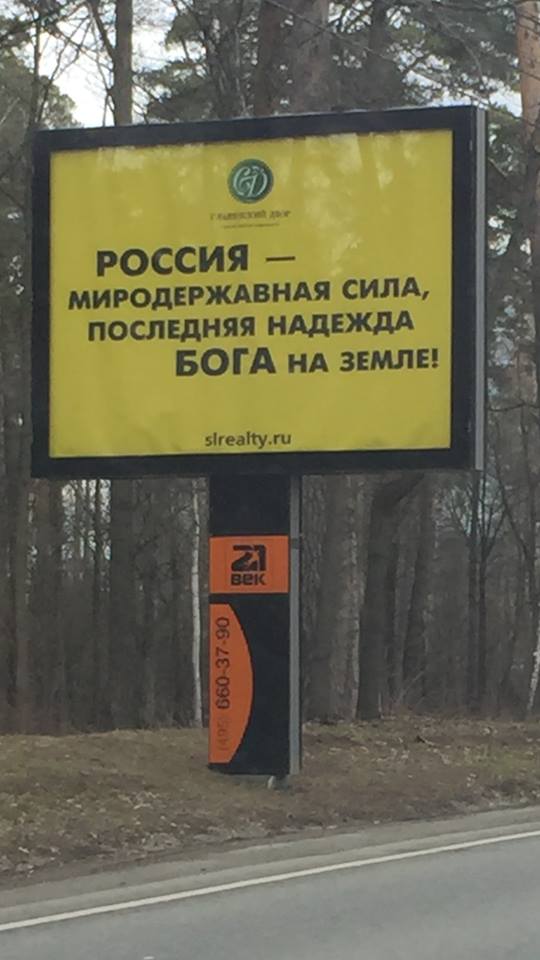
“Russia is an imperial power, and God’s last hope on Earth!” Billboard for Slavic Yard, a self-described elite real estate company. The billboard was photographed by artist Aidan Salakhova on the Rublyovo-Uspenskoye Highway, in suburban Moscow, in April 2016. Thanks to Comrade DP for the heads-up
_________
April 1, 2016 THE DECLINE OF EUROPE AND SLAVIC YARD Irina Volina: The Story of Slavic Yard Real Estate Agency’s Advertising Campaign on the Rublyovo-Uspenskoye Highway (April 2016) slrealty.ru
“The Russians are coming: this is not Hollywood.” The striking, slightly provocative slogan, reminiscent of the movie where Russian sailors come ashore in America, has stuck in the minds of many residents of the prestigious Rublyovo-Uspenskoye Highway.
The person who inspired the unusual advertising campaign is Irina Volina, head of the elite real estate agency Slavic Yard, is the same beautiful woman in the luxurious boyar costume whose photo is featured on the billboard bearing the renowned slogan.
“The Russians are coming: this is not Hollywood.”
Irina Volina has a reputation not only as a successful broker but also as a media figure who openly voices and defends her civic stance. She heads the Russian Heir Foundation for the Promotion of Enlightenment and Education, and she has authored patriotic appeals to the Russian elite. Irina Volina appears at important social events in unique Russian costumes designed by the Valentina Averyanova House of Russian Clothes.
In 2012, when part of the Russian intelligentsia stood at the crossroads, wondering whether to exert themselves to strengthen the state or leave for abroad to wait out the time of political chaos, Slavic Yard reminded [ethnic] Russian people of their civic dignity: to serve Russia. So billboards bearing the slogan “The Russians are coming: this is not Hollywood” appeared on the Rublyovka. Their gentle humor dissolved people’s fears and made it possible to think of a solid civic position.
The same year, as part of an advertising campaign for Slavic Yard, an interview with Irina Volina was published in the magazine StrongMen. The article was entitled “Irina Volina’s Sensible Choice,” and her photo graced the magazine’s cover. In the interview, Irina Volina reminded the Russian social elite of an ancient wisdom: “If you do not take up politics, politics will take you up and then it will be too late to run.” The dictum belongs to Aristotle, who held that politics involved building the state. Irina Volina also stressed that the cause of modern Russia’s problems was the promotion of Russophobia, for the time had come for [ethnic] Russians to occupy their rightful place in the life of the state and society.
The advertising campaign was spectacular and, basically, prophetic. Soon we experienced the feeling of nationwide joy over Crimea’s reunification with Russia. Slavic Yard was the first Russian company to put up billboards in Crimea. “The Russians are coming!” was the slogan on the billboards.
“Happiness is having a home and family in Russia.”
In April 2016, Slavic Yard erected new billboards on the Rublyovo-Uspenskoe Highway. They feature Irina Volina in a spectacular Russian costume sharing new political maxims [with motorists] in the hope that her counsels will go from being edicts [sic] to habitual norms of life.
“Russia is an imperial power, God’s last hope on Earth.”
“Beauty is faith’s sword in the hands of the wise.”
“The seeker of wisdom marches eastward; he who loves vanity runs to the west.”
“Happiness is having a home and family in Russia.”
“I was born and baptized in Russia; I pray for the Russian tsar and God.”
Irina Volina’s latest appeal could not help become the subject of numerous discussions and arguments. Let us try and get to them to the bottom of them, with help from Irina Volina herself.
Irina Volina: “The Decline of Europe and Slavic Yard”
Slavic Yard’s advertising campaign is hardly typical of a real estate agency. It contains none of the usual appeals to buy housing. There is no information about discounts or any reference to commerce at all. Rather, it resembles a social project, for the information is real food for thought. It really forces you to think. Why did you decide to choose this format?
Irina Volina: I should immediately note that Slavic Yard’s advertising campaign was not designed to reach a maximum audience. Our market segment is quite narrow, buyers of elite real estate, and that enables us to go for non-standard solutions. Non-standard solutions are always a plus. Advertising shouldn’t be boring: everyone is tired of appeals to buy things and discounts. Besides, boring ads are ineffective.
I am convinced that always being one step ahead is an important ingredient of success. It makes sense to focus not only on business. You also have to keep track of the political and economic situation in the country, and respond quickly to social change. That’s what we do.
Does the fact that standard advertising no longer works testify to changes that have occurred in the market?
Irina Volina: Definitely. The difference between what the market was in the early 2000s and what it is today is colossal. Alas, not all businessmen are ready to accept this. Many of them prefer to operate according to the old schemes, focusing on consumer marketing and western economic models. But they do not function today in modern Russian society. And there is every reason to believe that very soon these methods will join the category of business atavisms.
What is consumer marketing, in your understanding?
Irina Volina: Simplifying, we can describe it as follows. You invest money, quickly earn more money, invest it again, earn more, buy a little house in Europe—
In recent years, that is how it has been.
Irina Volina: Yes, and what has been happening to the Homeland has been of little interest to those who have been buying up real estate in Europe.
Meaning you think buying real estate in Europe is impractical? Many brokers would not agree with you. Even today they regard purchasing real estate abroad as a good investment.
Irina Volina: Yes, I am convinced it is impractical, and from every point of view. The most sensible thing you can do now is sell your overseas property, if you have it, and invest the money in housing in your native land. I say this not only as a patriot of my country but as an expert. And I emphasize that now there are excellent opportunties for selling foreign real estate. But this will not last long, and a delay in making a decision could be costly. Owners of property in Europe might end up holding the bag.
Extremely favorable conditions for acquiring real estate in Russia are now taking shape. There might not be another such chance. The prices are in flux, and even properties that just yesterday were inaccessible to well-off people are today being put up for sale at an acceptable, reasonable cost.
Tell us more, please, about Slavic Yard’s new slogans? What is the idea behind them?
“Slavic Yard: Beauty is faith’s sword in the hands of the wise.”
As attempts to build kingdoms of universal welfare, perestroika in the USSR and the creation of the European Union have been complete failures. Goethe wrote, “GOD will be forced to destroy everything, to began Creation anew.” “Beauty is faith’s sword in the hands of the wise,” and today we can say the destruction has begun with [Goethe’s] beloved Germany, due to the unification of both its parts, as paradoxical as that sounds. Gorbachev and Yeltsin erected Germany on a shaky pedestal (and that, by the way, is why they did not take reparations from the Germans), which was a step into the abyss.
The twenty-first century rightly belongs to Russia. The axis mundi is located in Russia. Russia is the spiritual tie that binds, an imperial force based not on power but on spiritual discipline, which enables man to prevail on the elements of the world by means other than technology. Thus, “Russia is an imperial power, God’s last hope on Earth.”
“Slavic Yard: Russia is an imperial power, God’s last hope on Earth.”
Marxism and capitalism were finished when scientists realized that technology enslaves rather than liberates man. The fight against infectious diseases has led to the increase of diseases, vascular diseases and others. When it rains, it pours. Russian ideology today is meant to push its slavish, imaginary fascination with the west to the edge of its spirit, but here we must take into account the old theatrical principle: if a gun appears in the first act it will go off in the last. It is the same thing with the large numbers of members of the Russian intelligentsia who have been educated in the west. We should recall that Old Rome abducted the children of vassal kings and held them as hostages. Of course, these children were educated “so it would not be repugnant to be served by savages.” Much later, the nimble English established their own industry for educating the children of foreigners.
Here we should also note the colossal tragedy of current church apparatchiks, who were educated in the west, and whose minds have been tailored to serving the western financial and other aristocracies. By virtue of their customary intellectual bondage, they are incapable of comprehending Europe’s collapse, of comprehending that their king is not only naked but also dead. “The seeker of wisdom marches eastward; he who loves vanity runs to the west.”
“Slavic Yard: The seeker of wisdom marches eastward; he who loves vanity runs to the west.”
“Eastward” means home, while “he who loves vanity” is the person accustomed to providing services. The balance between the spirit and the customary service environment has been lost forever.
Russia is meant to play its own prominent role in the history of the modern world thanks to the spiritual capital that the family of its nations has amassed, but only if it returns to its historical form of governance, monarchy. All the brilliant, God-fearing sons and daughters of our Fatherland will take up their rightful places around the throne.
“I was born and baptized in Russia, and I pray for the Russian tsar and God.”
“The tsar will come when we are able to defend him,” a spiritual man told me. And when I deal with my clients I make a point of asking them whether their sons have served in the Russian Army. So, continuing the tradition of our great forebears, we say, “I was born and baptized in Russia; I pray for the Russian tsar and God.”
As an expert, what forecasts for 2016-2017 would you give to Russian entrepreneurs?
Irina Volina: It is now obvious that the fashion for everything European—lifestyle, housing, education for children of the elite—is passing. Fascination with the west is a thing of the past, and it was not the most glorious past. Let me remind you that it was in past years that Russia exited the political arena, becoming a raw materials appendage for wheeler-dealers who had no sense of honor. Happily, today we can talk about it as something really past. Gradually, the awareness has been dawning that any business in Russia must have a social focus and facilitate the strengthening of our state. You cannot plunder the land forever. Everything has its limit. The past is yielding to the present and future, the period of the New Russian Empire’s Renaissance. It will not be easy, of course. A renaissance is always a time of work. Despite the complexity and length, this period is joyful. It is impossible not to rejoice, feeling the ground beneath one’s feet, watching the construction of a successful, happy future for children, and realizing this future is inextricably bound up with Russia. It has begun in Russia.
Your convictions and your stance are all reflected one way or another in the Slavic Yard advertising campaign? But for whom are the slogans on the billboards intended?
Irina Volina: Perhaps my answer will seem unusual, but they are primarily a sign to Heaven that we Russian entrepreneurs, residents of Rublyovka and elsewhere, are ready to create a Native Land. It is evidence of devotion to our profession and to our state. A sign that we remember who we are.
Our slogans are a message to [ethnic] Russian people, to Russian citizens, to members of the Russian elite. The slogans are reminders that the time of “windows to Europe” has passed, that delight with the European lifestyle has become a thing of the past. It is time to strengthen our families and beautify the state. It is time to settle in our native land by buying homes for our families and children in Russia. And Slavic Yard is ready to help. Happiness is having a home and family in Russia.
Translated by the Island of Misfit Toys. Images courtesy 0f Slavic Yard


 Vera Zasulich Street, 46, in Perm, hardly seems a fitting monument to the fearless Russian revolutionary, but the street is, apparently, the only Vera Zasulich Street in Russia. Photo courtesy of