While Anastasia Shevchenko Was Being Charged with Thought Crimes, Her Daughter Was Dying

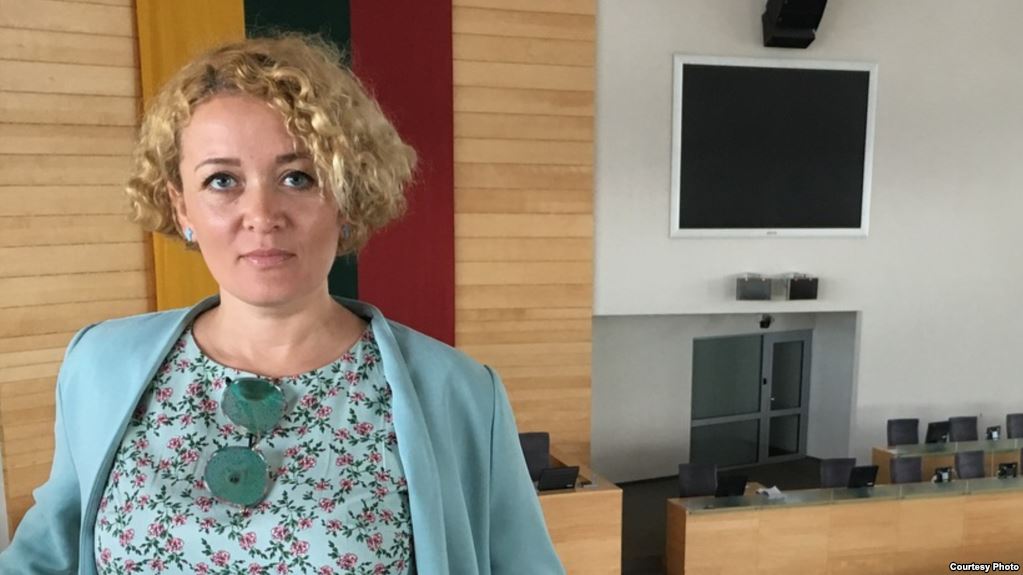
shevchenkoAnastasia Shevchenko

In Rostov-on-Don, an Open Russia activist was charged with a crime. While this happened, her daughter died.

Anastasia Shevchenko was charged with involvement in a undesirable organization. Criminal charges were filed against here because she took part in political debates and promoted a training workshop for municipal council members.

Shevchenko was jailed on January 21, but on January 23 she was placed under house arrest. She raised her three children—7-year-old Misha, 14-year-old Vlada, and 17-year-old Alina—alone.

In court, Shevchenko’s defense lawyer asked that Shevchenko be released on her own recognizance. The lawyer showed the judge a letter verifying that Shevchenko’s oldest daughter had a congenital disease and required attentive care since complications could be deadly, care her mother could not provide if she were under house arrest. Alina was in a care facility for children with disabilities. The judge refused to allow Shevchenko visit her daughter, leaving her under house arrest.

On Wednesday, Alina was taken to hospital from the care facility and placed in the intensive care ward in critical condition. Doctors said she had obstructive bronchitis. Shevchenko heard the news when she was being charged with a crime, when she went from being a “suspect” to being a “defendant.”

She was allowed to visit her daughter only in the evening.

Yesterday, Alina died.

How can you help?

You can help Anastasia Shevchenko’s family by sending money to the Sberbank MC/Visa card of her daughter, Vlada Shevchenko (5469 5200 2558 8500) or her mother, Tamara Gryaznova (6390 0252 9033 8215 30).

Source: OVD Info weekly email newsletter, February 1, 2019. Photo courtesy of Radio SvobodaAnastasia Shevchenko has been declared a prisoner of conscience by Amnesty International. Translated by the Russian Reader 

“If It Were Up to Me, I Would Kill You”

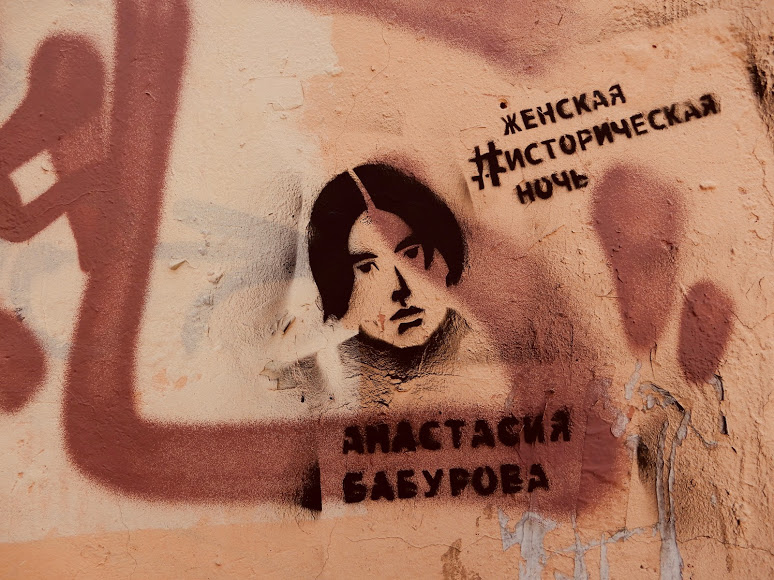
baburova-women's historical night“Anastasia Baburova. #Women’s History Night,” Central Petersburg, May 22, 2018. Photo by the Russian Reader

Marchers Detained at Markelov and Baburova Memorial Event in Moscow
Mediazona
January 19, 2019

Police have detained people attending a march in Moscow marking the tenth anniversary of the murders of human rights lawyer Stanislav Markelov and Novaya Gazeta reporter Anastasia Baburova, Kommersant reporter Alexander Chernykh has reported on his Telegram channel.

According to Chernykh, police have detained journalist Igor Yasin, who was carrying a rainbow-colored flag, and five other people. The reasons for their arrests are unknown. The march has been halted.

OVD Info has reported that four people have been detained. Aside from Yasin, the detainees include Nikolai Kretov, Dmitry Borisenko, and Mikhail Komrakov.

Komrakov told OVD Info that when he was detained, a policeman said to him, “If it were up to me, I would kill you.”

According to Kretov, policemen hit him after he was put in a paddy wagon.

The Markelov and Baburova memorial march began at two o’clock on Tverskaya Boulevard and was scheduled to end with the laying of flowers at the spot where they were murdered on Prechistenka Street.

On January 19, 2009, Nikita Tikhonov, a member of the Russian neo-Nazi organization BORN (Combat Organization of Russian Nationalists), shot and killed Markelov and Baburova in downtown Moscow in broad daylight. Tikhonov and his accomplice Yevgenia Khasis were subsequently convicted and sentenced to life imprisonment and eighteen years in prison, respectively.

Translated by the Russian Reader

Russia Without Putin

1211505Vladimir Putin playing hockey Moscow’s Red Square on December 29, 2018. Photo courtesy of Valery Sharufulin/TASS and RA’s Daily News Blast

Yana Teplitskaya
Facebook
December 27, 2018

Police officers usually realize that, whatever they do, they are breaking the law or disobeying standing orders, and since they are afraid of being found out, they definitely don’t talk to the press. Here we have a different story, which I don’t know how to explain. Petersburg opposition activists are well aware of a police officer from the “Third Department” by the name of Ruslan Sentemov, while other people have not heard of him, likely as not. For some reason, Sentemov operates quite openly, going so far as to give the local news website Fontanka.ru a detailed interview about his work.

I don’t knowwhat happened to Petersburg opposition activist Shakhnaz Shitik at the Yabloko Party’s Petersburg office, but this is what happened at the police precinct, as related by Shakhnaz. It has been corroborated by one police officer, nor has it been refuted by the other officers who were present. According to the shift commander, during the incident, all or nearly all the officers at the 78th Police Precinct were in the duty room and were separated from the incident by a glass door. I also understand that Shakhnaz’s account is borne out by the videotape that civil rights activist Dinar Idrisov and Petersburg city councilman Boris Vishnevsky have seen.

Sentemov and two of his colleagues (their names are also known) used force on Shakhnaz. They pressed her head hard to her chest, causing her agonizing pain. Consequently, in the incident report, according to the social defender, in addition to the injuries she suffered at the Yabloko office, damage to her cervical vertebrae was caused at the police station.

Moreover, the officers grabbed Shakhnaz’s telephone by sticking their hands down her painties. No public witnesses or female police officers were present during this search, nor was an incident report filed. Taken from her but not officially confiscated, her telephone lay in the police department, along with her blouse and other clothing, prior to the Public Monitoring Commission’s visit. During the incident, Shakhnaz was wearing a bra. The blouse was returned to her only at the hospital.

__________________________________________________

Concerning the sadistic tendencies of our police investigators and judges, I would argue this is an allegory, artistic embellishment. Otherwise, what kind of judicial system do we have? These were your words: the judicial system. The system includes the Constitutional Court and the Supreme Court. Are they sadists, too? We should choose our words more carefully. I realize you wanted to rouse us, you wanted to get our attention. You did what you set out to do. Thank you.

The courts and law enforcement agencies are staffed by our fellow Russian citizens. They live in the places we live in. They [were] raised in the same families in which we were raised. They are part of our society. There are probably all kinds of different people everywhere, in all large organizations. If you have a look at the percentage of law enforcement officers convicted of crimes, it has recently increased and increased considerably.

This suggests the work of housecleaning has not stood still. It has intensified and produced certain results. In order to minimize this, however, we do not need repressive actions against the justice or judicial system. We need serious, multi-pronged, multi-faceted work. That is what we have been trying to do on this Council.

Source: Vladimir Putin, Meeting of the Presidential Council for Civil Society and Human Rights, The Kremlin, Moscow, December 11, 2018. Thanks to Yevgenia Litvinova for the heads-up.

__________________________________________________

Open Russia Activist Whom Police Assaulted in October Detained in Lipetsk
OVD Info
December 12, 2018

Alexander Kiselevich, the Open Russia activist assaulted by four police officers in October, has been detained in Lipetsk. He has reported the incident to OVD Info.

Kiselevich was stopped near his home by traffic police. After checking his papers, they asked Kiselevich to follow them to the Izmalkovo District Police Department, where he was charged with breaking Article 19.3 of the Administrative Offenses Code (disobeying a police officer’s lawful orders). The policemen told Kiselevich he would be taken to court from the police station.

In October, on the eve of an election to choose the head of the Izmalkovo District Council, Kiselevich was beaten by police officers before being taken to a psychiatric hospital for a compulsory examination. Kiselevich was thus unable to present himself to the competition committee, and his name was struck from the ballot

Kiselevich was charged with breaking Article 19.3 after the incident in October. The police claimed Kiselevich resisted them when they were forcibly delivering him to the psychiatric hospital.

Kiselevich is a well-known opposition activist in Lipetsk Region. In 2016, he was elected head of the Afanasyevo Village Council, but shortly thereafter the majority of council members voted to dismiss him. Kiselevich was charged with embezzlement (Article 160 of the Russian Federal Criminal Code).

UPDATE. Kiselevich has reported to MBKh Media that a court in Lipetsk has found him guilty of disobeying a policeman’s lawful orders and fined him 500 rubles. Kiselevich plans to appeal the sentence.

Translated by the Russian Reader

The Media’s Russia Obsession?

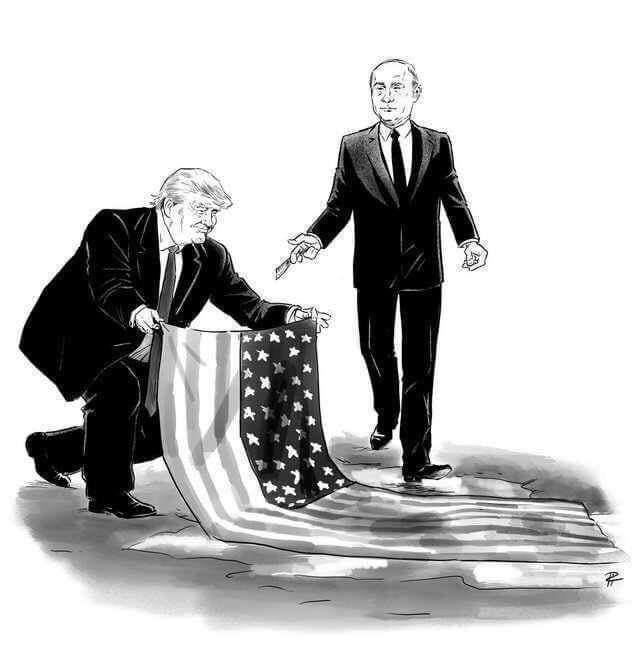
trumputin

Let’s talk about the media’s so-called Russia obsession for a few minutes.

What is meant by this is that the mainstream press have devoted tons of coverage to the substantial allegations that the Kremlin mounted a massive operation, mostly via social media, to influence the outcome of the 2016 US presidential election and, further, that the campaign of the candidate who won the election actively colluded with the Kremlin, among other things, in order to discredit the candidate’s main opponent in the election. The press has also focused a lot on Robert Mueller’s special investigation of these allegations.

Is all of this press coverage sterling? No. Does the press get the story wrong sometimes? Yes.

But this has always been the case with the nominally free press in nominally democratic societies ever since the free press emerged in the eighteenth century in a few countries groping their way towards democracy. It always been biased, prone to mistakes, and otherwise wildly imperfect. And yet it has always been subject to intense scrutiny, at least in my lifetime—and the really infantile desire on the part of certain social and political forces that it be perfect—that is, perfectly biased and ventriloquizing only their viewpoints—although these same forces are rarely so critical of either themselves or other important social institutions.

In this case, the social and political forces that routinely complain about the media’s so-called Russia obsession seem to mean, in fact, that the mainstream press and the press in general should simply stop covering what is surely the story of the century: allegations that the world’s largest country massively intervened in a presidential election in the world’s most powerful country, and that the man who won the election and members of his campaign and transition team were in close contact with agents of the world’s largest country during the campaign and transition.

What kind of press would we have if they completely ignored this story?

We would have a press much like the press in the world’s largest country, which routinely ignores or severely undercovers really big stories—such as the country’s involvement in putting down a popular revolution in a third country whose people have never down anything bad to the people of the world’s largest country—or which engages in outright Goebbels-like propaganda nearly every day, leaving the really important stories to opposition liberal newspapers and online media outlets that are read and accessed by a tiny fraction of the country’s populace.

Finally, the mainstream media have not been obsessed with Russia itself, but with the alleged actions of the Kremlin, Russian secret services, and Russian internet trolls in connection with the 2016 US presidential election. Period.

There is a another Russia, populated by 143 million people, that had nothing whatsoever to do with the story of the century. They did nothing to skew the outcome of the 2016 US presidential election and, in the main, their lives, aspirations, and actions are roundly ignored by the so-called mainstream media in the west and Russia itself. They are roundly ignored by the so-called alternative media, too, for the simple reason that much of the alternative media in the west operate under the delusion that Putin is an “anti-imperialist.” By definitions, Russians who oppose his sagacious rule must be “puppets of the west.”

If all of this weren’t the case, I would have expected that one or more of these “Russia-obsessed” or “anti-Russian-obsessed” newspapers, magazines, TV channels or websites would have picked up and covered, for example, the shocking story of the Penza-Petersburg “terrorism” case aka the Network case, in which eleven young anarchists and antifascists have been accused of involvement in a “terrorist community” dubbed “the Network.”

Most of the accused men have told the same grisly tale of being abducted by FSB-KGB field agents, who took them to remote areas in minivans or to the basements of their headquarters and tortured them for hours, using tasers and bare electrical wires, and severe beatings, attempting to force them to memorize the “confessions” they would later make (or, in some cases, refuse to make) to FSB investigators, who would then petition the courts to send them to remand prisons, where all of them are still imprisoned to this day.

The allegations of torture have been confirmed by Russian civil rights activists and defense attorneys who spoke with some of the men soon after their arrests and, in a few cases, they were also confirmed by physicians who examined the men when their wounds were still fresh.

In any case, a small but growing group of very determined people, including the men’s parents, friends, reporters, human rights activists, and concerned citizens, have been working as hard as they can over the last year to bring the case to the attention of the wider Russian public, force prosecutors to investigate the allegations of torture by FSB officers, and otherwise prove that, as seems to be the case, the FSB conjured the entire tale of the “terrorist community” from whole cloth and then handpicked a dozen or so completely innocent young men to be the fallguys, trying to torture and pummel them into admitting their “guilt” although they were guilty of no crime at all.

You would think the “Russia-obsessed” corporate media would jump on a story like this, but except for one article in the New Yorker, the western corporate media have utterly ignored the story of the Network “terrorists,” despite the efforts of actual alternative media like openDemocracyRussia (oDR) and my own blog, the Russian Reader, to write about it any chance we can and translate Russian coverage of the case, as published in such as liberal, leftist and civil rights media outlets as Mediazona, OVD Info, and Novaya Gazeta.

The campaign to save the Network boys scored a minor victory the other day during a meeting of the Presidential Council for Civil Society and Human Rights, when several members of the council brought up the case and a similar case no less shocking, the New Greatness case, and forced President Putin to talk about them.

A KGB-FSB officer to the core, Putin pretended not to have heard of the cases, which both pivot on allegations of extreme entrapment, torture, and fabrication by other KGB-FSB officers.

Putin hemmed and hawed, lied and prevaricated, feigned that he couldn’t believe what he was hearing, etc., but he did promise to look into the cases and get to the bottom of them.

It’s entirely possible he won’t do that, but it’s just as possible he will make the cases quietly go away to avoid embarrasment.

Who knows.

What I do know, though, is that western mainstream and alternative media, all of them “obsessed” with Putin (but not Russia) in their own way, have shown no interest in this story and thousands of other similar and dissimilar but no less fascinating stories from the real Russia inhabited by most Russians.

There was a slight uptick in their interest in grassroots Russia during the 2011–2012 fair elections protests, but since that movement was roundly defeated, western press coverage has been firmly refocused on the beloved hated figure of the supreme leader, thus once again denying nearly all the other 143 million Russians of agency, their own opinions, and their own lives.

If you’re interested in the Network case and related stories, please check out the coverage on oDR and the Russian Reader. Outside of Russia, practically speaking, there has been no coverage of the case anywhere else, and most things you read on international anarchist and antifascist websites are reprints of the stories we have translated and published.

So, let’s put this canard about the media’s Russia obsession to rest, okay? It’s deeply offensive to ordinary smart Russians, whose numbers are much greater than you would be led to think by the mostly lazy coverage of the country in the western press, and just as offensive to the handful of non-Russians who care deeply about what goes on here. {TRR}

P.S. You can support the Network suspects and their families concretely by donating to a solidarity campaign organized by comrades in London on their behalf. Your support will help to offset their legal costs, organizing humanitarian support for the arrested and offering support to their relatives. The resources gathered have so far been distributed according to the financial circumstances of the respective families and the needs of the arrested. Further financial support is being distributed according to the choices made by those arrested throughout the investigation.

Cartoon courtesy of JA and Union Thugs 

Station to Station

otto 1OVD Info @OvdInfo • 18h ago Petersburg artist Max Otto has designed a map of the city’s subway on which the name of each station is a police station. Translated by the Russian Reader

otto 2Otto has dubbed his rereading of the city’s subway “The Saint Petersburg Cops Maps.” The actual names of the stations have been replaced with the name of the nearest police station. Thus, the three subway stations on Sennaya Ploshchad (Haymarket Square) have all been designated as “Police Precinct No. 2.” Police Precinct No. 2, located at Sadovaya Street, 58, is indeed the closest police station to Sennaya, Spasskaya, and Sennaya Ploshchad subway stations. {TRR}
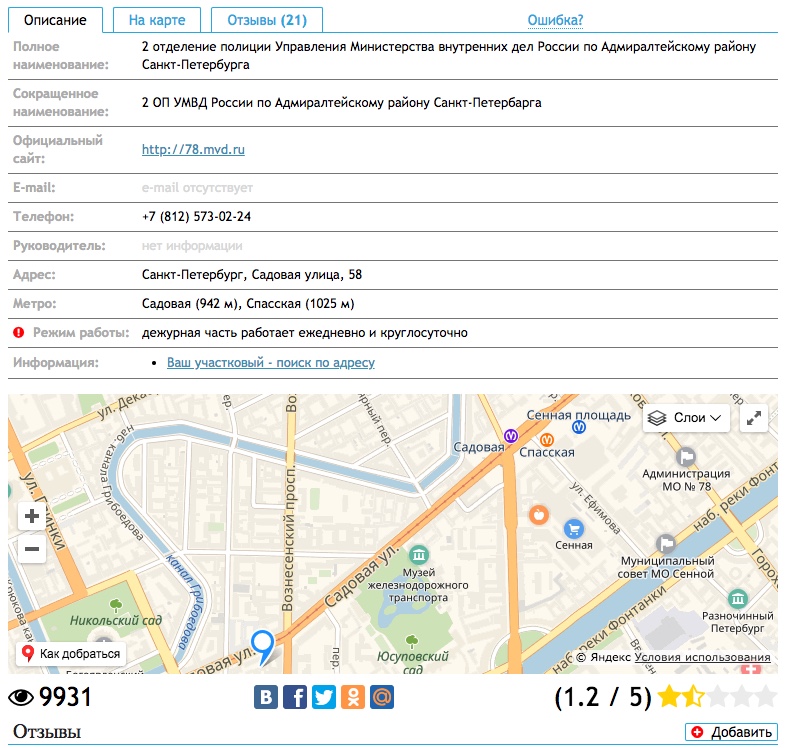
 

op 2Screenshot of Police Precinct No. 2’s info page on the website Aktualnyi Peterburg
Thanks to the fabulous Lika Frenkel for the heads-up.

Vyacheslav Lukichev: Interrogated for 36 Hours and Beaten

DSCN3140

Lawyer: Kaliningrad Anarchist Interrogated for 36 Hours and Beaten
OVD Info
November 8, 2018

Maria Bontsler, defense attorney of Kaliningrad anarchist Vyacheslav Lukichev, who has been charged with public “exoneration” of terrorism on the internet, said her client had been beaten, according to a post published by Valentina Dekhtyarenko, manager of the human rights advocacy program at Open Russia, on her Telegram channel.

Bontsler claimed Lukichev had been beaten by six riot police (OMON) officers. She noted the police officers beat Lukichev in such a way as to leave no traces on the anarchist’s body. According to Bontsler, the beating occured on November 4, immediately after Lukichev was detained, in a room in which Lukichev’s [original,] state-appointed defense attorney was present.

Bontsler also claimed Lukichev had been interrogated for thirty-six hours.

Lukichev, 24, is suspected of publicly exonerating terrorism (a felony under Article 205.2 Part 2 of the Russian Federal Criminal Code) after allegedly publishing a screenshot of the suicide note allegedly left by [17-year-old Mikhail Zhlobitsky].

[Zhlobitsky] has been alleged to have bombed the FSB’s regional office in Arkhangelsk [on October 31], killing himself and injuring three FSB officers.

Several minutes before the blast, a message about the attack was posted on Telegram in the open chat channel Rebel Talk [Rech’ buntovshchika].

The authorities have been investigating the incident as a terrorist attack.

Investigators claim Lukichev published a post on the Telegram channel Prometheus [Prometei] in which he called [Zhlobitsky] a hero.

At a court hearing, Bontsler said the phrase had been taken out of context.

Political activists in Perm, Krasnodar, Arkhangelsk, and Arkhangelsk Region have said police officers came to their homes or they received summons to police stations in the wake of the October 31 attack.

On November 3, the home of Danil Pinzhenin, second secretary of the Sochi municipal Komsomol [Communist Youth League] committee, was searched by police in connection with the incident.

Translated by the Russian Reader. The article has been edited to make it more readable and informative.

This Is Mikhail Gerasimov from Nizhny Novgorod

gerasimovMikhail Gerasimov. Photo courtesy of his personal page on VK and OVD Info
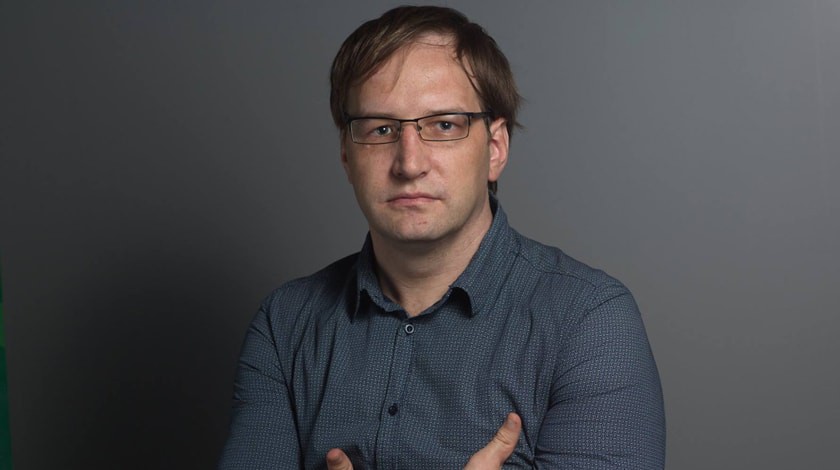
This is Mikhail Gerasimov from Nizhny Novgorod. He is eighteen. Yesterday, FSB officers came to the young man’s house, took him in for questioning, and arrested him.

Mikhail photographed two pages from the investigator’s warrant and sent them to a friend. Mikhail also managed to call the Political Red Cross and tell them the FSB wants to level criminal charges against him for ten posts on social networks, all of them published prior to [sic] December 2016. It was then, according to Mikhail, that he learned about [Alexei] Navalny and changed his views.

One of the two pages of the warrant refers to a forensic examination of an entry from Mikhal’s personal social media page.

The entry opens with the phrase, “Are you tried of this Moskaland?” It ends with the phrase, “There those Rus[expletive deleted] got what was coming.”

The forensic examination concluded the phrase contained an incitement to physically destroy the legal authorities and justified destructive actions that the author [sic] attributed to ISIS: the crash of a Tupolev Tu-154 [Russian Defense Ministry] jetliner [in 2016] and the murder of the Russian Ambassador to Turkey.

A criminal investigation has been opened into whether Gerasimov made public calls for terrorist attacks or justified terrorism on the internet [punishable by up to seven years in prison under Article 205.2 Part 2 of the Russian Federal Criminal Code].

Today at 2:00 p.m., the Moscow District Court in Nizhny Novgorod will decide whether to remand Gerasimov in custody.

Source: OVD Info’s Facebook page. Read their full story here. Translated by the Russian Reader

Out Through the In Door, or, The Victim Is Always the Guilty Party

yevgeny kurakinYevgeny Kurakin. Courtesy of Facebook and Daily Storm
Journalist Yevgeny Kurakin Detained after Release from Special Detention Facility 
Mediazona
September 30, 2018

Journalist Yevgeny Kurakin has been detained in the Moscow Region city of Elektrostal. Kurakin was scheduled to be released from a special detention facility after ten days in jail for an administrative violation, Vera Makarova, who had planned to meet Kurakin when he left the facility, told OVD Info.

According to Makarova, the journalist was scheduled to be released at 5:30 p.m. At 5:30 p.m., five people in plain clothes entered the facility, soon emerging with Kurakin in their custody. They put him in an unmarked car and drove away.

Kurakin managed to tell Makarov that three of the people in plain clothes were police officers, while the other two were official witnesss. The people detaining Kurakin told him they had an order to take him into custody without giving him any of the details. Makarova thought Kurakin may have been taken to the police station in Balishikha.

On September 21, a court in Reutov sentenced Kurakin to ten days in jail after finding him guilty of failure to pay a fine (Administrative Offenses Code 20.25 Part 1), which he had been ordered to pay in June after he was found guilty of violating Administrative Offense Code 6.1.1 (battery).* In addition to the fine, he was then also sentenced to fifteen days in jail. According to Kurakin, he paid the fine immediately.

*“Kurakin was detained on his way to a public meeting with Moscow Region Governor Andrei Vorobyov. Kurakin said the cause of his arrest was an incident that had taken place at the Territorial Electoral Commission during the March 2018 presidential election. According to Kurakin, who was involved in the commission, he discovered “systematic blockage of telephone and internet connection at polling stations in the city in order to hinder election observers.” When Kurakin attempted to switch off a blocking device, a member of the electoral commission at Polling Station No. 2639 assaulted him. The man subsequently filed charges against Kurakin with the police.” Source: Mediazona

Translated by the Russian Reader

Cupcakes

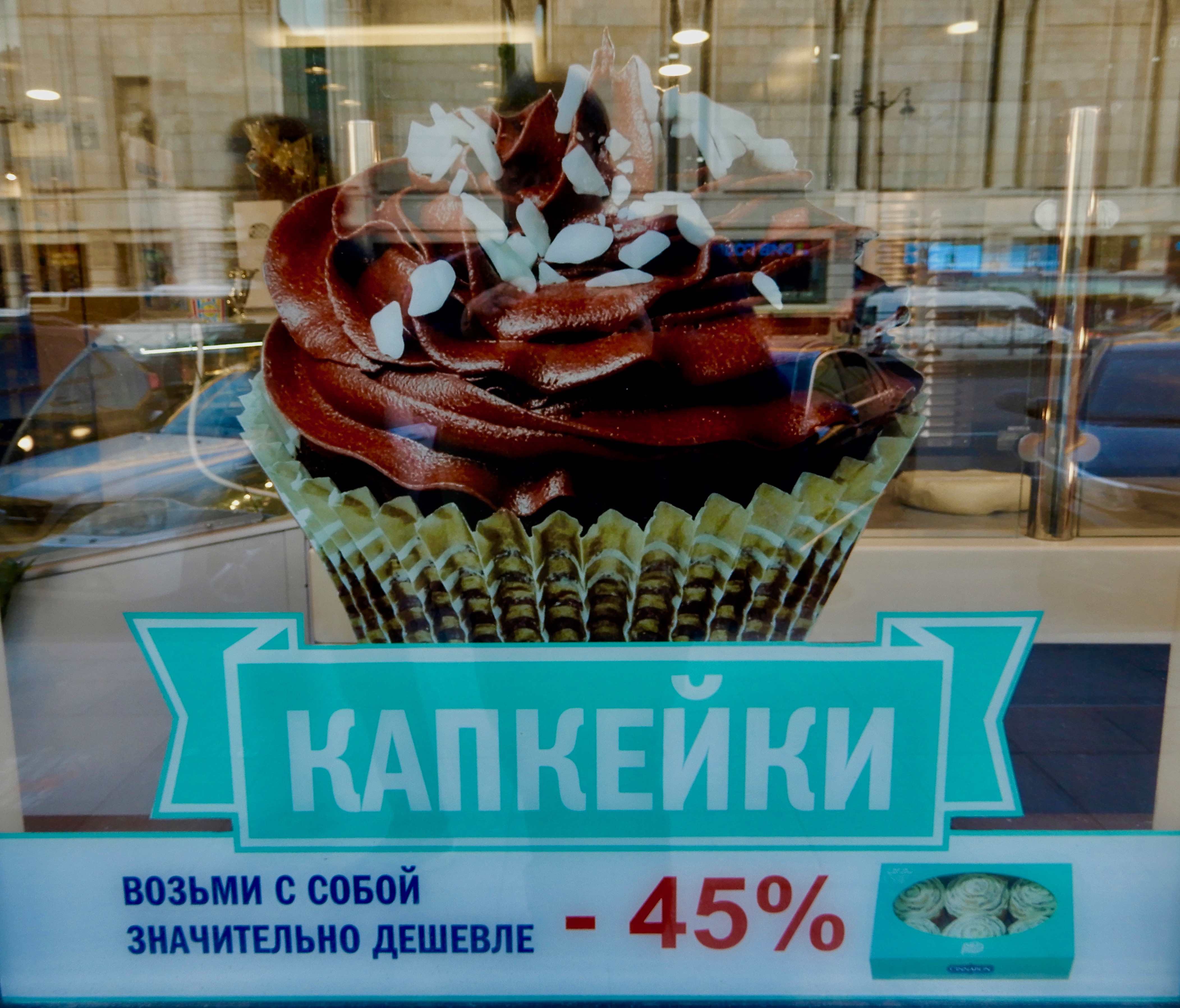
DSCN1728“Cupcakes. Considerably cheaper when you take away. 45% off.”

This post is dedicated to the armchair fascist who recently asked on the readers’ forum of the anti-Semitic, pro-Putin website The Saker whether George Soros financed the Russian Reader.

I will answer the fascist’s oh-so-pertinent question by quoting from the weekly news wrap-up emailed to readers and supporters on Fridays by the folks at OVD Info. I would gather OVD Info is not financed by Soros, either. In fact, I know they are financed by donations from not very well off people like me, people who work for a living and are not financed by anyone but the sweat of their brows.

More than 600 people were detained in Petersburg on September 9. A week later, another unauthorized protest against the pension reform took place in the city. This time, however, only three people were detained during the protest itself. But the police went on a real manhunt for local activist Shakhnaz Shitik. After she photographed a police officer at the protest, the police tried to detain her. They maimed her and sprayed tear gas in her face. Afterwards, Shitik was taken to hospital, but police tried to detain her there as well. Ultimately, her husband was taken to a police precinct, but offiers remained on duty in her hospital ward. Subsequently, Shitik was taken back and forth from the hospital to the precinct several times until she was finally left to spend the night at the precinct. A court ordered her jailed for twenty days, ostensibly for her involvement in a theatrical performance that depicted Putin being chased away by pensioners. In addition, the police made Shitik provide them with a written statement on suspicion she had violated the law against insulting the authorities. A female Center “E” officer who had passed herself off as a reporter at the hospital had taken offense at something Shitik said.

Photo and translation by the Russian Reader. The Russian Reader is a website that covers grassroots politics, social movements, the economy, and independent culture in Russia. It is not financed by anyone nor has it ever solicited donations. All work on the website is done for free, nor do I pay fees for the Russian-language articles I translate into English and publish. Everything that appears on the Russian Reader can be reposted and republished as long as the Russian Reader is indicated clearly as the source and a link back to my original post has been included.

Russia, Great and Beautiful


velikaa-prekrasnaa-rossia_med_hrExhibition view of Vasya Lozhkin, Russia, Great and Beautiful (2010). Photo courtesy of Ekho Moskvy

The Case of the Repost Following a Picket: The Story of an Activist Who Has Sought Asylum in the US
OVD Info
August 28, 2018

Vladimir resident Victoria Lobova was involved in two events in the Don’t Call Him Dimon campaign, and now she has been forced to ask for political asylum in the US. The placard the activist took to the events caught the eye of law enforcement. Lobova faces criminal charges for posting images of it on the social media website VK. OVD Info asked Lobova to tell her own story.

I was involved in an anti-corruption rally on March 26, 2017. I was not punished in any way at the time. Then, on June 12, 2017, the country was swept by a wave of anti-corruption rallies, and I held a solo picket. I was approached by two policemen who asked me to identify myself. I told them my name, and they said I had to go with them. I refused, since I had not violated any laws. They telephoned somebody, asked him what to do, and read him the text of my placard over the phone.

I stood with the placard in downtown Vladimir. The slogan on the placard read, “I’m a young woman. I don’t want to decide anything. I want lace panties, and I want [Prime Minister Dmitry] Medvedev to respond to the country about yachts, vineyards, nonsense, malarkey, and hodgepodge.”

In the evening, I had a visit from the security services, who said I had to report to the police. When I arrived there I was written up for committing an administrative offense: violating the rules for public rallies. I won the court case. Later, in July, a policeman came to my home and said “extremist” matter had been spotted on my VK page.

I had told the police my address and my name during my solo picket. Subsequently, they staked out my social media page. That was how it all kicked off. If I had not carried out a solo picket and mixed with the crowd at the protest rally instead, othing would have come of it. Before I was involved in protest rally, I had a page on VK where I covered political news, but the authorities paid me no mind.

I was cited for a picture that drew a parallel between Putin’s politics and Hitler’s politics. There were Nazi symbols in the photo. Two weeks later, four police officers came and drove me to a temporary detention facility.

I didn’t know till the last minute I would be spending the night there. They took my fingerprints, catalogued the entire contents of my bag, and photographed me. I was told that an ethnic Russian would never publicly display Nazi symbols and that children could have seen them. I replied that the picture had a completely different message. If you read the text, you would easily conclude Nazism was condemned by the authors. I also said that children hardly became Nazis the second they saw a swastika somewhere. Then I was taken to a cell and locked up till morning.

Lozhkin-1Detail of Vasya Lozhkin’s Russia, Great and Beautiful. Russia is shown as surrounded by countries inhabited by “slant-eyed monkeys,” “wogs,” and other peoples identified by equally offensive terms for non-Russian peoples and ethnic groups. Image courtesy of New Chronicle of Current Events

There was a court hearing in the morning. I was sentenced to three days in jail. Then, in January 2018, the FSB filed criminal charges against me under Article 282 of the Russian Criminal Code (“incitement of hatred or enmity”) for Vasya Lozhkin’s picture Russia, Great and Beautiful, which they had also found reposted on my VK page. (In August 2018, a court ruled the picture could not be considered “extremist.”)

The FSB investigator was unable to get me to confess, and the case seemingly died down. But then the police again paid visits to my house. I would not open the door, which they photographed, probably by way of reporting to their superiors. When they left they would first make the rounds of the neighbors. That was when I realized they would not leave me alone and would send me to prison come what may.

I left Russia in May. I just bought tickets and flew away. There are opportunities for obtaining political asylum. In this sense, I think everything will be fine. I have lots of evidence that I was persecuted.

VK handed over all the information needed to the FSB, so my case was no exception to established practice. I continue to use VK, but now I am somewhere safe. I advise people in Russia to be more careful.

Translated by the Russian Reader