The Persecution of Konstantin Kotov

Yan Shenkman
Facebook
August 14, 2019

Today, Kostya Kotov was sent down for two months. It was a temporary remand in custody, but there is a chance he could be charged with the same article in the criminal code as Ildar Dadin, meaning he could be sentenced to prison for up to five years for the sum total of administrative offenses on his record.

Kostya was always sticking up for people. He would go to courthouses and stand holding placards in their defense. If that is a crime, I don’t know what to say.

As Yana Teplitskaya wrote correctly today, the difference between Dadin and Kotov is enormous. Dadin attacked the regime, while Kotov stood up for its victims. Meaning he did what you cannot help doing if you have a shred of conscience left in you.

By coincidence, Dadin was detained today, too.

Kostya is a staunch opponent of violence: I have personally spoken with him about this. He is a calm, intelligent chap and works as a programmer. I cannot even remember him raising his voice to anyone.

And so it transpires he is a criminal and a danger to society.

This is awful, but I wanted to write about something else.

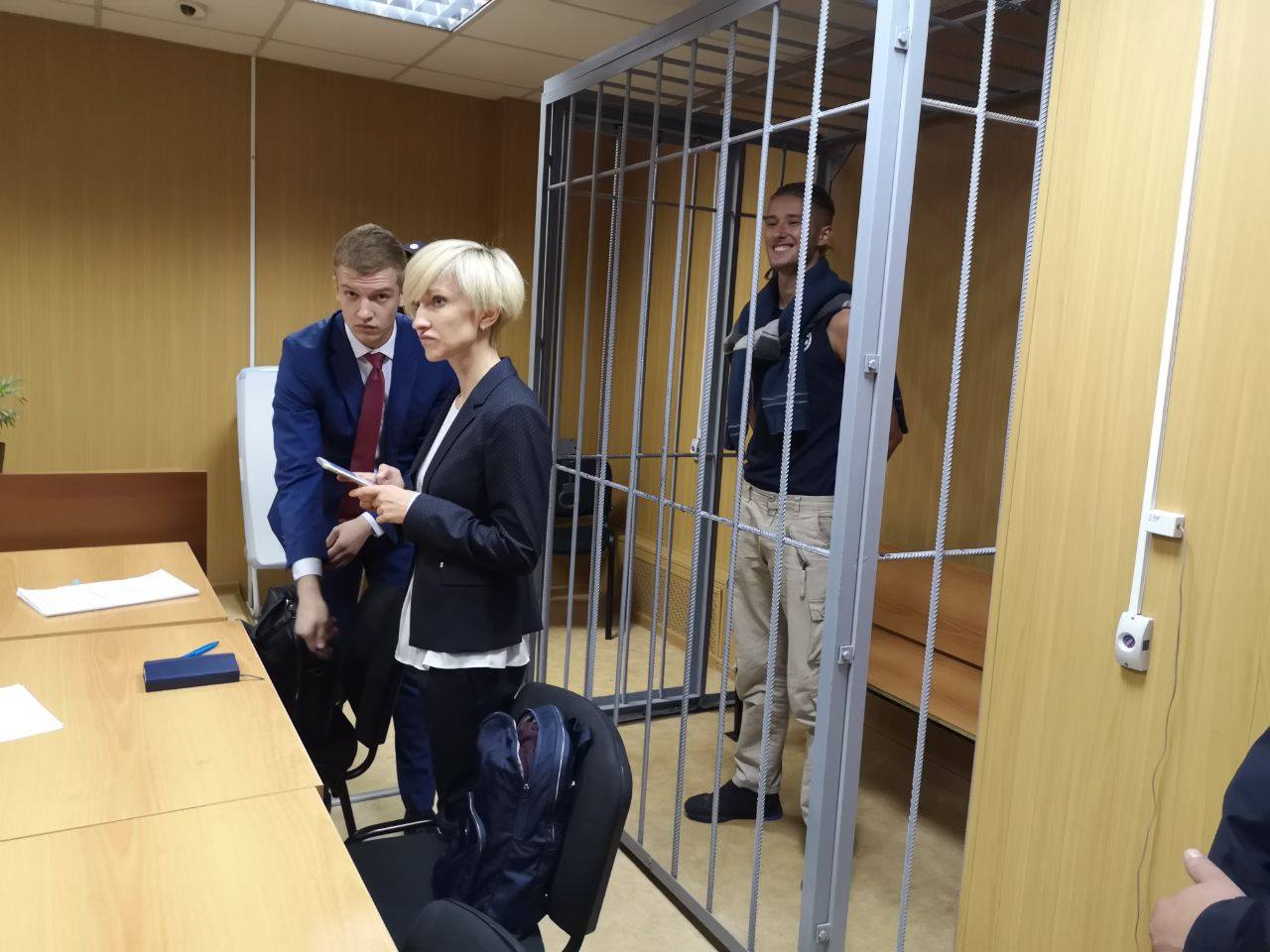
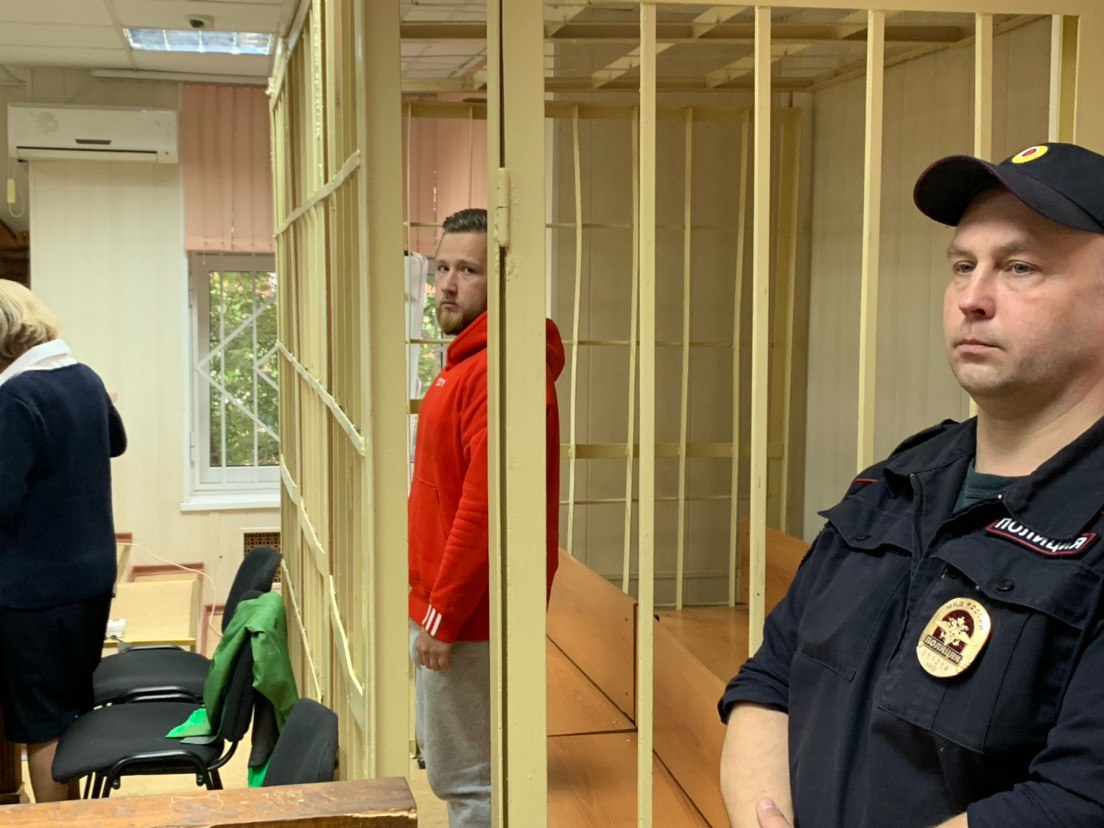
I was at Kotov’s court hearing today. The authorities took a long time getting him to the courthouse. The hearing was slated for ten, but it was around two when he was brought to the courthouse.

I went outside to have a smoke. A film crew from Channel One was hanging out there. Right then, a paddy wagon pulled up and guards led Kostya to the courtroom. I waved at him.

“Konstantin, tell us what you were arrested for?” the female reporter from Channel One yelled from right behind me.

I don’t know what answer she wanted to hear and how she imagined she would hear it. The distance between the vehicle and the entrance to the courthouse was ten meters or so. Kostya was handcuffed and under guard. Did she expect him to stop and explain to her why he had been arrested?

Someone next to me turned to her.

“For nothing,” he said.

Kotov had been taken away. I didn’t manage to finish my cigarette.

kotov-1Konstantin Kotov. Photo by Adik Zubcik. Courtesy of Facebook and Mediazona

“Any Injustice Would Upset the Guy”: The Man Charged under the “Dadin” Article
Anna Kozkina, Dima Shvets, and Elizaveta Pestova
Mediazona
August 13, 2019

On Wednesday, the Presna District Court will decide on custody measures for 34-year-old Konstantin Kotov, a programmer who has been charged under the rarely used Article 212.1 of the Russian Criminal Code, which makes repeated administrative violations at protest rallies a criminal offense. Mediazona tells the story of a man who had the bad luck to get involved in political activism in a period when people who attend any unauthorized public events are rampantly persecuted.

Comrades
It is August 13, the middle of the workday. The weather in Moscow is fine. A fifty-something man stands outside a presidential administration building on Staraya Ploshchad, holding a placard that reads, “Konstantin Kotov is being persecuted under the criminal code for defending political prisoners. Free the defender of freedom.”

The man is Nikolai Rekubratsky, a poet and researcher at the Freshwater Fisheries Institute who lives in Dmitrov. In his spare time, he and several allies run the Facebook Group Sentsov. Exchange. Today and Every Day.

Rekubratsky says members of the group have been holding solo pickets here every weekday since September 6, 2018. Usually, the picketers demand a total exchange of Russian and Ukrainian prisoners of war, but last night their comrade the 34-year-old Moscow programmer Konstantin Kotov was detained and charged with a criminal offense. Kotov was one of the people who came up with the idea for the daily pickets and had been actively involved in them.

_____________________________

caf20691d9cda5e2f430ad4794b128e3Illustration by Mike Ch. Courtesy of Mediazona

Article 212.1. How Many Times Have We Told You?
Article 212.1 (repeated violation of the rules for holding rallies) was added to the Criminal Code in the summer of 2014. In January 2015, for the first time, the Russian Investigative Committee charged three activists with breaking the new law.

_____________________________

“We met about a year ago at pickets in support of Oleg Sentsov, who was on hunger strike at the time in support of other political prisoners. It had a big impact on many people who were strangers to political activism. But Kostya had earlier attended protest marches of some sort. I don’t know exactly which ones,” says Nikolai. “He said he had no clue who Sentsov was, but when his hunger strike kicked off and Kostya read about it on the internet, it made a very strong impression on him and so he began supporting Sentsov.”

Other activists walked up to the entrance to the presidential administration. One young man hands Rekrubratsky his written surety for Kotov: tomorrow, a court will decide on custody measures for him. The people going into the building pay no mind to the picketers.

“Life was such that ever more events and injustices happened, and Kostya could not help reacting to them. He took part in pickets and was repeatedly detained,” Rekrubratsky continues.
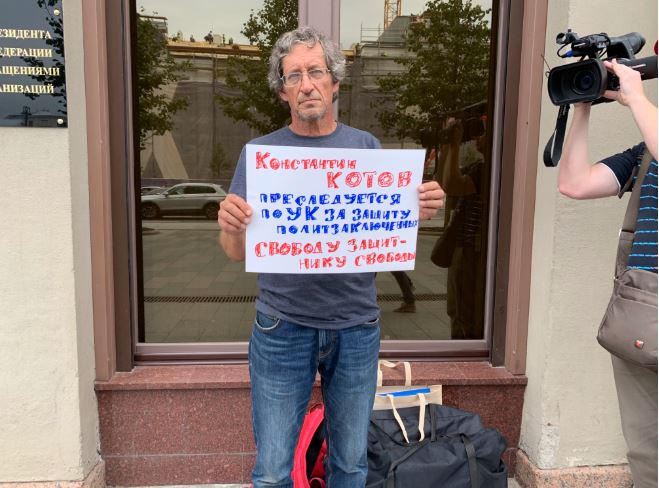
kotov-2Nikolai Rekubratsky. Photo by Dima Shvets. Courtesy of Mediazona

Judging by his Facebook page and the accounts of friends, Kotov supported arrested Open Russia activist Anastasia Shevchenko and Alexei Navalny’s Anti-Corruption Foundation. He ran the Telegram channel #StopFSB, which is dedicated to the defendants in the Penza-Petersburg “terrorism” case and the New Greatness case. He tried to help Moscow State University graduate student Azat Miftakhov. That is, he empathized with the defendants in nearly all the current criminal cases with political overtones.

Kotov’s allies recall other stories as well, for example, how Kotov bought medicine for New Greatness defendant Anna Pavlikova or assembled care packages for the arrested Ukrainian sailors.

Nevertheless, on Facebook, Kotov listed his place of employment as DSSL, a company that produces video surveillance systems and, in particular, facial recognition software.

“Any injustice would upset the guy. He always reacted, going to rallies and standing in pickets. His stance was always extremely peaceful,” recalls activist Anna Babicheva.

“At the Nemtsov memorial march in February, Kostya for some reason gave me his placard, which is very well designed. There are silhouettes of crosses and bombs drawn on it, and the simple slogan, ‘Say No to War.’ It is a big A1-sized placard, and I really enjoy picketing with it. It’s my favorite placard by Kostya,” says Grigory Simakov, a volunteer at the Nemtsov Bridge memorial, a member of the 14% Movement, and a participant in the total prisoner exchange pickets.

It was Kotov’s protest activism that was the reason for the criminal charges filed against him under Russian Criminal Code Article 212.1 (“repeated violation of the rules for holding rallies, marches, and pickets”).

The Case
According to the written order to institute criminal proceedings, the case is based on three occasions on which Kotov was charged with administrative offenses in the last six months, although the document refers not to three but four violations.

The first administrative case had to with calls to take part in the Moscow City Duma elections protest on July 19 on Trubnaya Square, which Kotov posted on Facebook. The Tverskoi District Court in Moscow found him guilty of organizing a public event without notifying the authorities (Article 20.2.2 of the Administrative Offenses Code) and sentenced him to ten days in jail.

Earlier, on June 12, Kotov took part in a march in defense of journalist Ivan Golunov. The Presna District Court fined him 15,000 rubles after finding Kotov guilty of hindering the movement of vehicles and pedestrians (Article 20.2.6.1 of Administrative Offenses Code).

Kotov was detained during a gathering, outside an FSB building on May 13, in support of defendants in the Network and New Greatness cases. In this instance, the Meshchansky District Court found him guilty of repeated violations of the law on rallies (Article 20.2.8 of the Administrative Offenses Code) and jailed him for five days.

On August 10, Kotov again took part in an “unauthorized” protest near Staraya Ploshchad. According to investigators, he chanted the slogans “Let them run,” “Putin is a thief,” “We are the power here,” “Down with Putin,” “All for one, and one for all,” and “Russia will be free.”

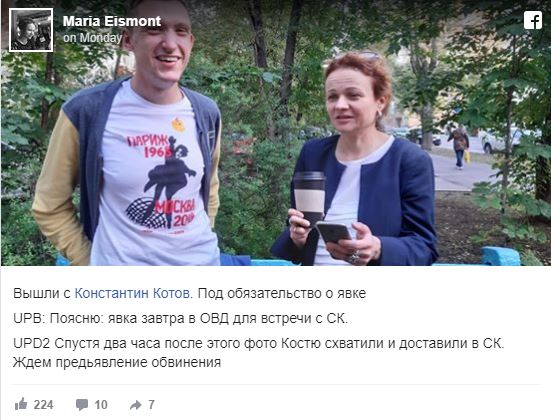
After police dispersed the protest, Kotov spent two days at the Sokolinaya Gora police precinct. On August 12, he was released under an obligation to return to the precinct for a meeting with an Investigative Committee investigator. Several hours later, he was detained again and taken to the Investigative Committee for questioning.
kotov-3

A screenshot from Maria Eismont’s Facebook page showing her and Konstantin Kotov after his release from a Moscow police precinct on August 12 and explaining that Kotov was “grabbed” and delivered to the Investigative Committee two hours after the photo was taken. Courtesy of Mediazona

OVD Info lawyer Maria Eismont described Kotov’s arrest as follows.

“They attacked him from behind. They threw him on the ground and twisted his arms behind his back. Yet, at the same time, they asked, ‘Konstantin, what are your political views?’ When his personal effects were searched at the Investigative Committee, they found a copy of the Criminal Procedures Code, a copy of the Administrative Offenses Code, a booklet entitled Crimea Is Ours, a bag emblazoned with poems by a poet from Lviv, and a placard that read, ‘Let them run.'”

“Then they found his mathematical engineering honors diploma.”

“‘Attaboy!’ said the investigator,” Eismont recounted.

In the late evening, it transpired that charges had been filed against Kotov under the relatively rarely used Article 212.1 of the Russian Criminal Code. After the release of Ildar Dadin, the first person to be charged, convicted, and imprisoned under the new law, it has been used only twice: against Vyacheslav Egorov, leader of the anti-landfill protests in Kolomna, and against Andrei Borovikov, who was involved in the anti-landfill protests in Shies.

Then came a nighttime search of Kotov’s home.

“Morning is arriving, dawn is breaking outside. Investigators put the placard they have found—’Free Ponomaryova,’ ‘Free Nastya Shevchenko,’ ‘Free political prisoners!’—on the living room floor. ‘Kostya, do you have bags to put all of this in?’ ‘I have garbage bags.’ ‘Those will do.’ There is a sewing machine. ‘Is it a Singer?’ ‘No.’ There are more placards. ‘You have a lot of this stuff,’ a field officer notes,” Eismont wrote in her description of the search.

kotov-5

During the search of Konstantin Kotov’s apartment. Courtesy of Maria Eismont

Kotov was formally charged on the morning of August 13.

“Unfortunately, Criminal Code Article 212.1, which had been dubbed a ‘sleeper’ article, has woken up and sprung into action. Moreover, as in the Egorov case, the formal approach to the law has been taken in Kotov’s case, despite the Constitutional Court’s well-known ruling on the matter. This means that if a person has been found by the courts to have violated Article 20.2 of the Administrative Offenses Code three times over six months, the fourth violation is treated as a criminal offense,” says Eismont. “The fact that people involved in ‘unauthorized’ protests cross the street at crosswalks doesn’t matter to anyone. The Constitutional Court ruled that only those protesters who did something dangerous were liable to criminal prosecution and punishment. The system has shown that it regards protesting without permission as a danger to itself and, thus, a crime.”

Translated by the Russian Reader
Alexei Tsvetcoff: The Myth of Moscow’s “Bourgeois Liberal” Protesters

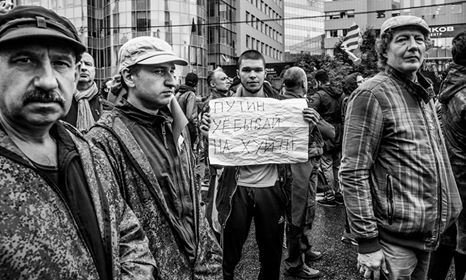
vadim f. lurie-10 august-fuck off-2.jpg“Fuck Off, Putin!” Protesters at the August 10 fair elections rally in Moscow. Photo by Vadim F. Lurie
Alexei Tsvetcoff
Facebook
August 14, 2019

I have to say something about the extremely tenacious, contagious myth that bourgeois liberals are the only people protesting at present. They are strangers to regular folks, so the myth goes, and thus the cops, who come from the common people, take such pleasure in beating them black and blue.

The myth is not borne out by the facts. Among the most malicious “street extremists,” the people who have had criminal charges filed against them, there are an unemployed man, a construction foreman, and several students from a variety of colleges, some of which are not so posh.

There are, of course, also a couple of programmers and a manager in the group of people who have been arrested and charged, meaning it is a cross-section of the Moscow populace, with no class dominating one way or another. If you have been to the protest rallies you will have seen that members of nearly all social groups were in attendance except for oligarchs, officials of the current regime, and the cops, who are on the other side.

When you present this simple empirical evidence to proponents of the “elite protest” myth, they have one last argument, also fallacious, up their sleeves.

Okay, they say, maybe Muscovites of all stripes really have taken to the streets, but their leaders, the people who encouraged them to come out, who led them onto the streets, are definitely bourgeois liberals who are strangers to simple blokes.

There is no evidence of this, either. Among those who spoke at the rallies and somehow represent the protesters, there were people who espouse completely different political views and come from all walks of life. It would be hard to pigeonhole municipal district council member and independent candidate Sergei Tsukasov as a bourgeois and liberal, wouldn’t it? And what about Alexei Polikhovich?  I could go on but I would have to list nearly all the speakers.

To see “liberals” and “agents of the west” in this extremely diverse group of people, who share only one demand (the same rules for everyone: the universal right to nominate candidates for public office, vote for them, and run for public office themselves) you have to be willing to see the world the way the Putinist TV channels paint it.

As for the cops, they retire at a completely different age, earlier than ordinary folks. The current oligarchic regime provides them with apartments and tons of other perks. So, there is no way they could be classified as ordinary people.

They have such great fun waving their billy clubs at any and all dissenters because they have a very specific material interest. The thievish regime need only toss them scraps from its table for them to have an excuse to be really cruel to anyone who threatens the regime’s privileges.

Meaning, simply, that the cops are in on the take. They do a good job of guarding their master, who keeps them well fed. They could not care less who this master is. In this sense, it is completely pointless to reason with them, shame them, and appeal to their conscience.

Returning to the popularity of the myth that it is snobby liberals raising a ruckus on the streets nowadays, I should point that, first, although the myth is at odds with the obvious facts, it is so persistent because it is propped up by two crutches, not one. And, second, it relies on the regime’s ubiquitous propaganda. In this case, the oligarchic regime has no argument but that everyone who opposes it is an enemy of ordinary people.

So, the choir of Solovyovs, Kiselyovs, and hundreds of other agitprop yes men sing this song at a deafening volume, competing with each other in the process, because how loud they sing probably has something to do with how close they will get, in the end, to the feeding trough and, thus, with being able to be as far from the selfsame hoi polloi as they can. There is no way people like them want to get mixed up with the broad popular masses, to sink to their level. They want to keep on living the good life of propagandists with all the foreign real estate, offshore bank accounts, and other perks that working as professional fans of the Motherland entails.

But that was the second reason the myth of anti-populist liberals is so persistent. The first reason is completely different. It is the perfect excuse for the political passivity and political fear experienced by people in our atomized society with its extreme shortage of solidarity and self-respect.

The Russian man in the street says something like this to himself.

Of course, I see what has been going down. I see how the haves have divvied everything up among themselves and where things are going. Why don’t I go out and take my stand against them? Maybe it’s because I’m a bit of a chicken?

But that hurts and I don’t want to think about it. I need another, more flattering argument . . . Right, that’s it.  I don’t go to protest rallies and avoid getting messed up in politics because all the people who do go out and protest are—

(He reaches for a lifesaver in the shape of his TV set’s remote control or a Kremlin-funded website.)

—all liberals and agents of the west. (Thanks for the prompt!) Employees of the US State Department and enemies of the common folk, they want to bring back the nineties. Elections are only a cover.

I am no fool. I would never go anywhere with these people and demand anything. I am smart and discerning, and now I have an alibi for when I look at myself in the mirror. And since I want to stay this way forever, I am going write the treasured mantra on the inside of my door: “Better the devil you know than the devil you don’t.”

Thanks to Sergey Abashin for the heads-up. Photo courtesy of Vadim F. Lurie. Translated by the Russian Reader

P.S. You are probably wondering why a pro-common people myth-buster such as Mr. Tsvetcoff would resort, in the end, to trotting out the sock puppet of the Russian “man in the street” (obyvatel’) who, allegedly, believes everything he sees on Kremlin-controlled Russian TV. This is because, whether liberal, leftist (like Mr. Tsvetcoff), nationalist or none of the above, almost no one in the country’s self-styled opposition has figured out that you oppose a terrifying, destructive, criminal regime like the Putin regime with superior political organization, not with a sense of your own moral and intellectual superiority.

Since the Russian opposition is inordinately fond of protest rallies and marches, you would think it would pull out all the stops to get as many people to them as possible and, thus, scare the hell out of the regime. But if there is anything the Russian opposition hates more than the Putin regime, it is grassroots political organizing, meaning knocking on doors, stopping strangers on the street, buttonholing friends, neighbors, and workmates, and persuading them to do something most of them will not want to do at first: protest publicly against the regime. As nearly no one does the dirty work of getting people to rallies, almost no one goes to them.

Rather than blame themselves for their unwillingness to mobilize people and thus organize a movement that could, eventually, be capable of confronting the regime and perhaps defeating it, the opposition is fond of blaming the unwashed masses and “men in the street” for their passivity and timidity. When opposition liberals play this blame game, they usually target public sector employees, the lumpenproletariat, and residents of Russia’s far-flung hinterlands, who, allegedly, constitute Putin’s electoral base.

I would have thought opposition leftists would know better than to make what amounts to the same argument, but I was wrong. // TRR

When We Were Ten

15220228-number-ten

Leonid Volkov
Facebook
August 10, 2019

I was ten years old but I remember August 1991 well. And I remember how many people asked, after that unique celebration of unity and freedom, what would have happened had the coup emerged victorious.

Russia 2019 is the answer to this question. It is a country in which the coup has emerged victorious, [a country ruled by] a dozen paranoid old men, their hands trembling in fear.

Yes, the new coup has lasted longer than three days, but not much longer. The first chords of Swan Lake have already sounded.

Translated by the Russian Reader. Image courtesy of 123RF

_______________________________________________

A friend of mine asked me the other day what I thought about the new fair elections protests in Moscow. First, I feel solidarity with the protesters. Otherwise, I would not have bothered to translate and edit eleven posts (so far) about the protests and their ugly aftermath.

But I don’t understand the point made by Alexei Navalny’s comrade Leonid Volkov, an otherwise sensible person, in the Facebook post, as quoted above.

I could very well be wrong, and, actually, I do hope I am wrong, but I see very little difference between the mostly lacksadaisical fair elections protests of 2011–2012 and the relatively fierce but tiny fair elections protests of 2019.

The numbers are, in fact, the main problem. Despite the strange argument made by a talking head from the Carnegie Center Moscow, as quoted in the Moscow Times, that fifty thousand is a number of protesters the Russian authorities cannot ignore, there is no question of their ignoring anything. The Putin regime did not ignore the protests of 2011–2012. It waited until Putin had secured a new term as president before cracking down hard on protesters and quickly adopting a whole raft of laws designed to make public protests and dissent much more dangerous.

In 2019, the crackdown has begun almost immediately, but there is no sign the regime will cave and force the Moscow City Elections Commission to reinstate the candidates it barred in July from running in the September elections to the Moscow City Duma, much less collapse altogether.

Since it is the world’s largest country, it seems funny to say it, but Russia is one of the most insular, isolated places on earth. International news is a genre that barely exists in the country’s mainstream or alternative press nor does it usually make much of an impression on the chatocrats who set the tone in Russia’s remarkably hysterical, dispiriting, troll-infested social media.

It also does not help that places mainly or completely populated by what many Russian liberals regard as subhumans almost never figure in the news in Russia at all. Otherwise, political and media activists like Volkov would think twice before seeing the demise of Putin’s twenty-year-old “putsch” in yet another series of relatively minuscule gatherings of righteous Muscovites brandishing clever placards and getting their pictures taken for Instagram.

If there were real international news in the Russian press, the Russian fair elections movement and its would-be leaders and strategists, like Volkov, would think about the recent, incomparably more numerous, and demonstrably more effective protests in Puerto Rico and Hong Kong, for example. When half a million people protest against the powers that be on an island populated by 3.5 million people, the authorities really cannot ignore them, just as Beijing could not pretend all was well in Hong Kong, a city of 7.3 million people, when two million people there took to the streets to protest the former enclave’s shrinking autonomy and the PRC’s attacks on its laws and democratic institutions.

Puerto Rican officials have already seen the writing on the wall and surrendered to the demands of the fierce, fearless, relentless protest movement there. The Hong Kong protest movement faces a much stronger enemy, of course, but I think there is a far greater chance we will witness democracy emerging all over China in our lifetimes than we will see the reemergence of democracy in Russia.

Despite the fact the Russian intelligentsia likes to hypnotize itself with dubious theories about history and regime change—namely, that great historical turnabouts have always been powered by tiny but energetic minorities—real democratic change in Russia will only happen when many more people join a movement that, in fact, exists only as a notion, not as a real grassroots movement.

A real grassroots movement, after all, would be capable of mobilizing considerably more than fifty thousand people in a city of twelve million people.

The second big problem with the Russian protest non-movement is that, like many of the Russians who make usually brief appearances in its ranks, it is wildly impatient. Liberal, educated Russians regard themselves as the most “European” and “western” people on the planet, hindered from realizing their true destiny as saviors and leading lights of the nonexistent west only by a thousand years of unrelenting, savage tyranny, an endless dark stormy night punctuated only here and there by occasional, short-lived bursts of sunlight.

Since they are essentially not practically “Europeans” and “westerners” (unlike most actual Europeans and westerners, who, in their view, have given up the west’s civilizing mission by letting their countries be overrun by Puerto Ricans, Chinese, and Muslims, among other miserables), many Russians think they deserve to live in a democratic country right now without doing most if any of the things other societies do to establish and fortify democracy and the rule of law at home.

The flip side of this blatantly anti-western “westernism” is that droves (or, at least, very large dribbles) of Russians have been leaving or semi-leaving Russia in recent years, knowing nothing can change for the better under Putin and despairing that the post-Putin era will not dawn anytime soon. Like most of the really important things going in Russia, this story has been underreported, although anyone who has hundreds of Russian acquaintances or who lives in one of the handful of cities on earth that liberal Russians consider civilized (Berlin, Paris, and New York, e.g.) will know what I mean.

In yet another “only in Russia” twist, many people in this new wave of émigrés and exiles are not battle-hardened veterans of the amorphous protest non-movement, but the most politically apathetic people you could ever hope to meet.

This is not to say there are not lots of good eggs among them. Likewise, this blog’s mission has been to reiterate constantly the well-missed point that there are other Russians besides Putin and other Russias besides “Putin’s Russia,” whatever that is. But since I am not a politician and, thus, a sophist, like Leonid Volkov and his friend Alexei Navalny (the first, a well-informed commentator whose reflections I have shared on several occasions with my reader; the second, a smart cookie who might also be nearly the only person in the ragtag Russian opposition who really understands politics and has an inkling of how to build grassroots political movements), I am under no obligation to paint a pretty picture of “democracy in Russia” when what is called for is a horrorshow.

Lastly, fifty thousand people protested in downtown Moscow for the right to vote for their own candidates to a Russian regional parliament in a country where all that parliaments, city councils, municipal district councils, and village councils ever do is rubber-stamp the executive branch’s decisions. At exactly the same time, Russian warplanes were trying hard to finish off the last stronghold of a genuinely popular revolution in what they hoped would be the final chapter in a four-year-long military intervention in a majority Muslim country. And yet Putin’s criminal entanglement of his country’s well-equipped armed forces in Syria has been so uninteresting to liberal Russians that they have never protested in numbers greater than three or four at a time, and you can count those times on one hand.

The irony of this non-coincidence will be lost on Leonid Volkov and his comrades in the Russian protest non-movement, a non-movement that imitates the civil disobedience of the Indian independence movement and the US civil rights movement, for example, while blithely ignoring their superior political, strategic, and organizational aspects. Like the overall ignorance among Russians about today’s protest movements and popular revolutions in Syria, Hong Kong, and Puerto Rico, this might be because they were movements led and sustained by people of color. // TRR

Petition: Drop the Criminal Investigation of a “Riot” That Never Happened

petition

Kirill Martynov
Facebook
August 5, 2019

Friends, I rarely sign petitions and I never ask other people to sign them.

Now, however, circumstances are such that we need to get as many of our fellow citizens involved in discussing the political crisis in Moscow. During this crisis, the FSB, the Russian Investigative Committee, and the police have taken direct control of civic life, bordering on a military coup.

So I would ask you to read this petition, sign it, and talk about it on social media.

It says two things.

1. Criminally prosecuting peaceful citizens for their convictions is defined as political terror.

2. Alexander Bastrykin, chair of the Investigative Committee, is asked to put an immediate end to the criminal investigation of the “riot” in Moscow on July 27 due to the fact that no such crime was committed.

To date, eight people have been arrested and remanded in custody in the case of the riot that did not happen. One suspect in the case has vanished. And this is only the beginning.

None of us is so naive as to believe Bastrykin would meet us halfway. No one has any illusions about the man. He regards the people of our country as expendable in maintaining his personal power and the power of his friends. Nevertheless, Bastrykin formally has the authority to stop this train before it reaches full speed.

We must circulate the petition to get as many people as possible to pay attention to what is happening. We also must show the authorities that society is morally, civically, and politically ready to resist.

If hundreds of thousands of us stand up to be counted, no one can say we do not exist, as they said our signatures in support of candidates standing in these elections did not exist.

___________________________

Stop the Criminal Case Against People Who Took Part in the Peaceful Protest on July 27, 2019, in Moscow
Change.org
August 5, 2019

Novaya Gazeta started this petition to Alexander Bastrykin, Chair of the Investigative Committee, and the Investigative Committee

We, citizens of Russia, demand an end to the political terror unleashed against our country’s people by law enforcement agencies.

On July 27, 2019, a peaceful rally in defense of our constitutionally guaranteed voting rights took place in Moscow. In response to the rally, the Russian Investigative Committee has launched a criminal investigation into “rioting.”

According to Article 212 of the Russian Criminal Code, riots involve violence against citizens and public officials, property damage, arson, and mayhem. However, nothing of the sort happened in Moscow on July 27, 2019.

On the contrary, voters demanded that Russia’s laws should be upheld and candidates who had previously been barred should be allowed to stand in the elections to the Moscow City Duma. The “disorderly conduct” cited by investigators cannot be defined as a “riot” either according to the letter of the law or in terms of common sense.

Despite what the Russian Constitution says, people who peacefully defended their rights have now been subjected to criminal prosecution for their beliefs.

Article 29 Part 3 of our country’s basic law states, “No one may be forced to express his views and convictions or to reject them.”

We believe the criminal investigation into rioting is being used to intimidate the people of Russia. It is tantamount to banning our voting rights.

As of August 5, peaceful protesters Sergei Abanichev, Vladislav Barabanov, Yegor Zhukov, Kirill Zhukov, Yevgeny Kovalenko, Daniil Konon, Alexei Minyaylo, Ivan Podkopayev, and Samariddin Radzhabov have been remanded in custody as part of the riot investigation for no reason whatsoever.

None of them has admitted their guilt.

We are aware of the impending arrests of our family members, friends, and colleagues.

We also know the fabricated evidence in the case is based on information extracted from telephones that were illegally confiscated from citizens detained during peaceful protests.

If the Investigative Committee uses its authority to unleash political terror against its own people, it would not go unnoticed. Massive abuse of the law for political ends would have long-term tragic consequences for our country, as evidenced by the history of the twentieth century.

Criminal prosecution cannot be a means of settling scores with political opponents. It will provoke a further escalation of the civil conflict in Russia.

On the basis of Article 24.1.1 of the Russian Federal Criminal Procedure Code, we demand the authorities drop the investigation into the “riot” in Moscow on July 27, 2019, in view of the obvious fact that no crime was committed.

Who We Are
Founded in 1993, Novaya Gazeta is a Russian newspaper known all over the world for its investigations of high-level corruption and special reports from hot spots. We have won a Pulitzer Prize and been nominated for a Nobel Prize. Our staff includes journalists Elena Milashina, Olga Bobrova, Roman Anin, Elena Kostyuchenko, Pavel Kanygin, and Ilya Azar. Yulia Latynina, Dmitry Bykov, Irina Petrovskaya, and Slava Taroshchina are among our regular contributors. In 2018, our editorial staff and friends of our newspaper launched a partnership campaign. To date, 20% of the newspaper’s expenses have been covered by personal donations from over seven thousand of its readers.

Image courtesy of Kirill Martynov and Change.org. Translated by the Russian Reader

Moscow: Where Waving Your Arms Energetically Is a Felony

barabanov.jpgVladislav Barabanov in the dock at the Presna District Court in Moscow earlier today. Photo by Elizaveta Pestova. Courtesy of Yegor Skovoroda and Mediazona
Yegor Skovoroda
Facebook
August 5, 2019

The Presna District Court has remanded three more people in custody as part of the Moscow “riot” case. It became clear during the hearings how they had warranted being charged with involvement in rioting, punishable by up to eight years in prison under Article 212.2 of the Russian Criminal Code.

Daniil Konon, 22, a student at the Bauman School, waved his arms energetically and showed people on the streets where other protesters had gone. (Ren TV has posted a video denunciation of Konon.) Thus, the Investigative Committee argued in court, Konon “coordinated” the riot, a riot that, in fact, never took place.

67517382_2194384337353952_1659775525830262784_oDaniil Konon in the dock at the Presna District Court today. Photo by Anna Kozkina. Courtesy of Yegor Skovoroda and Mediazona
Vladislav Barabanov, 22, an anarchist from Nizhny Novgorod, also, allegedly, “coordinated” the pogrom that wasn’t. However, field agents from Center “E” cited a video in which Barabanov can be seen merely standing in the midst of other demonstrators. He is not even waving his arms.

Sergei Abanichev, 25, is a manager. His girlfriend says he enjoys helping homeless animals. What was his crime? He tossed an empty paper cup from Burger King towards the cops, who were coming at the protesters from all sides. That was it.

67903104_2194384357353950_7558604397521928192_oSergei Abanichev in the dock at the Presna District Court. Photo by Dmitry Shvets. Courtesy of Yegor Skovoroda and Mediazona
I overheard a conversation in the court building. A case investigator exited the courtroom.

“It’s fine. He’ll have to suffer for a month, that’s all,” he said to the mother of one of the men who had been remanded in custody.

“Aren’t you ashamed?” a young woman from the support group asked him.

“What, me? No. Are you?” he replied.

I really do not like high-sounding words like “captives” and “hostages,” but all these people, seized at random by the police, are, in fact, hostages. The security forces took them captive only to frighten all of us.

Don’t be afraid.

Free all political prisoners!

Today, we again covered the hearings simultaneously online, meaning we had several reporters working in the court building, and several working at the office. Covering events online is a lot of work and only your donations and support make it possible. This is going to be a big case, so do not forget to donate to Mediazona.

Yegor Skovoroda is a journalist at Mediazona. Translated by the Russian Reader

Stanislava Novgorodtseva: Portraits of Angry Muscovites

“The Regime Has No Feedback from the Populace”: What Are People Saying Who Support the Candidates Barred from the Moscow City Duma Elections?
Photographer Stanislava Novgorodtseva took photos of angry Muscovites, trying to find out what it was they wanted
July 27, 2019

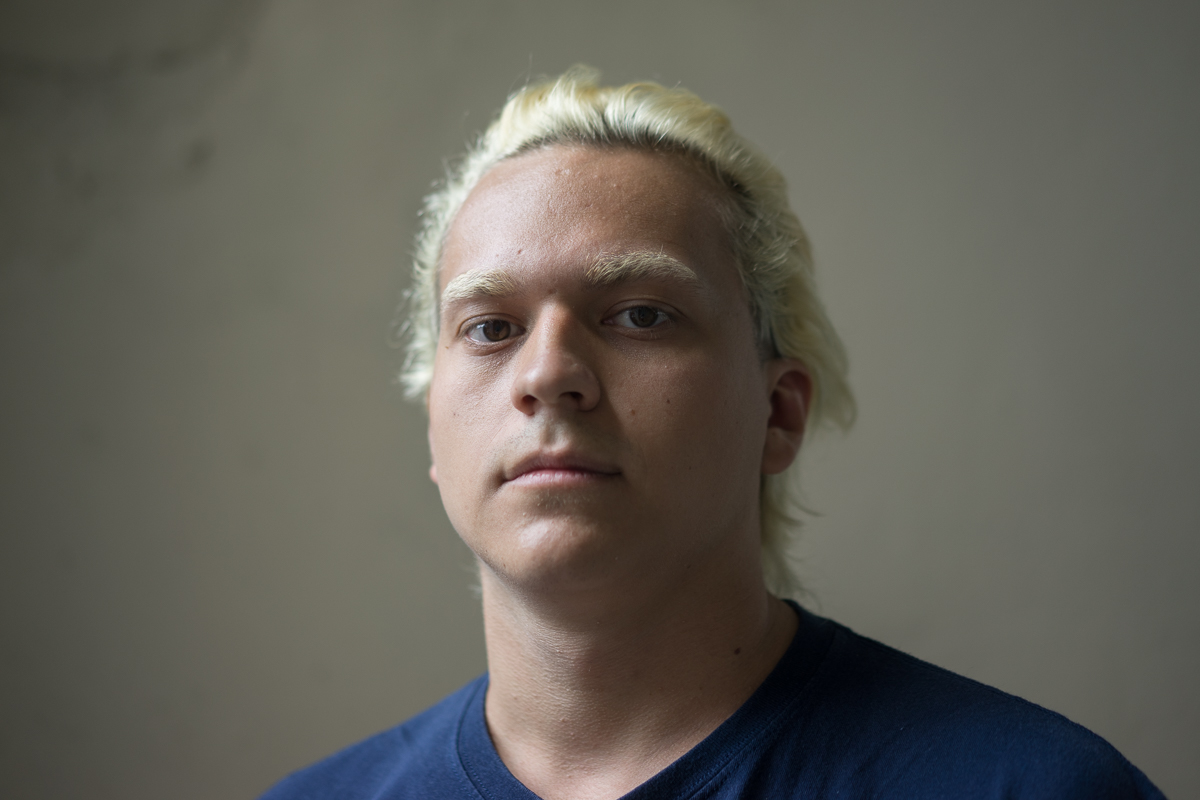
3a28b76117eb6539c85008b98b8c8159Viktor, 21, student and programmer. “Ideally, I would like to see all the candidates who were illegally barred put on the ballot and the Moscow City Duma dissolved, respectively. That would make sense to all of us.”
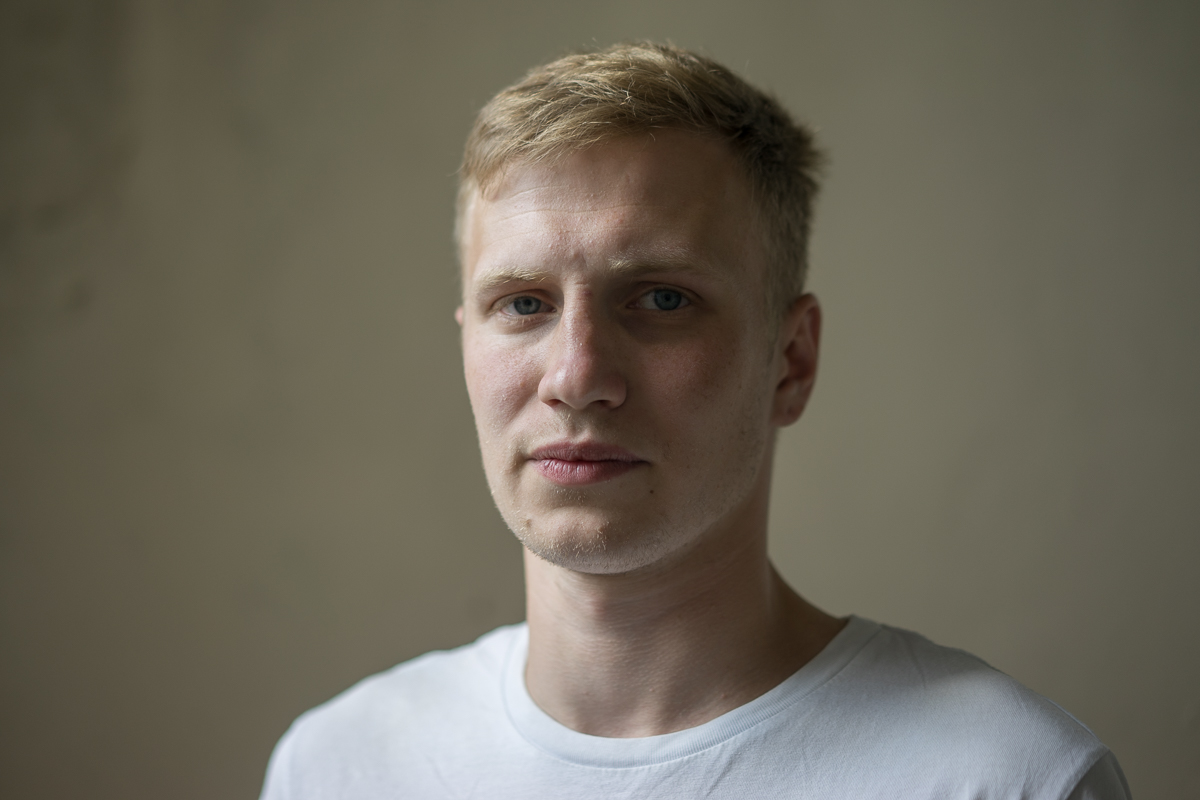
mikhailMikhail, 23, web developer. “I came here to support Ilya Yashin, a candidate in Borough No. 45, which includes the Krasnoselsky and Meshchansky Districts. He is currently detained by the police. My big hope is that at least one election in this country is legitimate.”
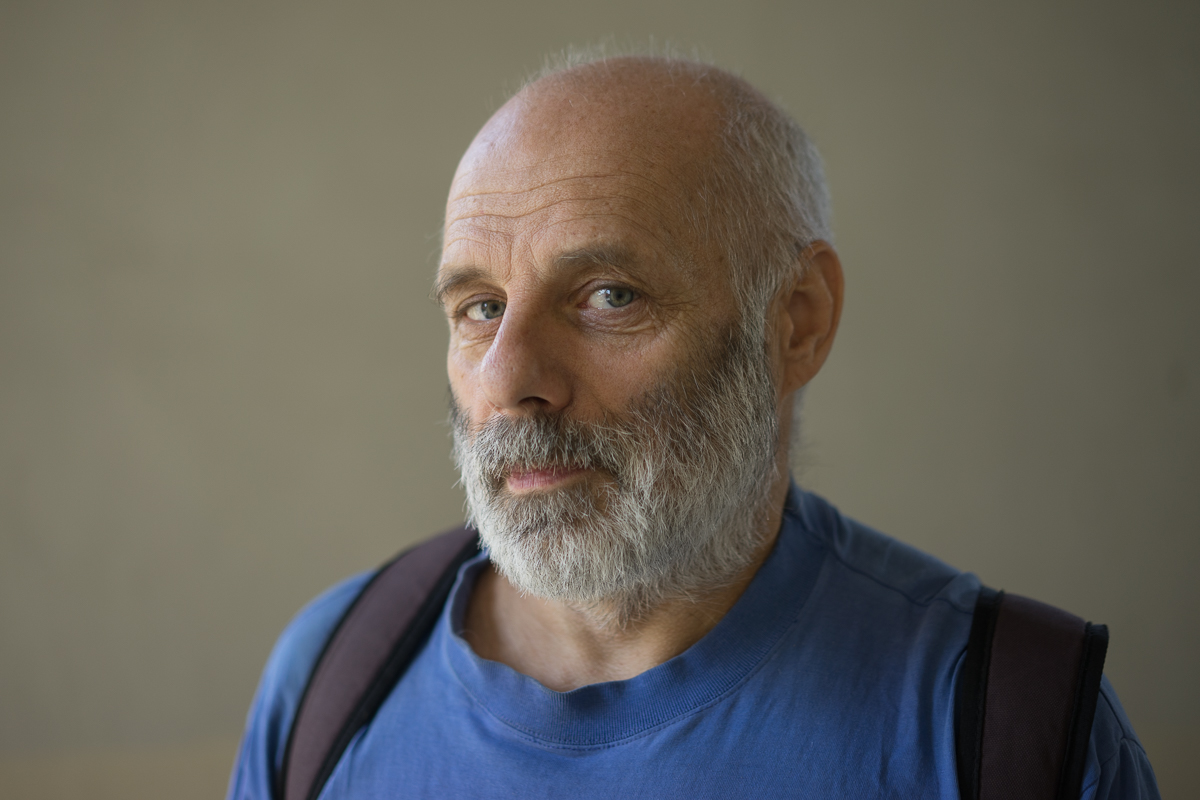
vadimVadim, 61, retired doctor. “I wanted to hear the barred candidates speak and support them, and defend our rights, which have been violated. A criminal offense has been committed and we must get to the bottom of it.”

ilyaIlya, 21, artist. “First of all, I would like to stop the lawlessness directed at the populace, the continuing poverty, arrests, and prison sentences. We need to see justice done and hold fair elections so the so-called government stops pushing us around. Because a country is not a bunch of people but a nation.”
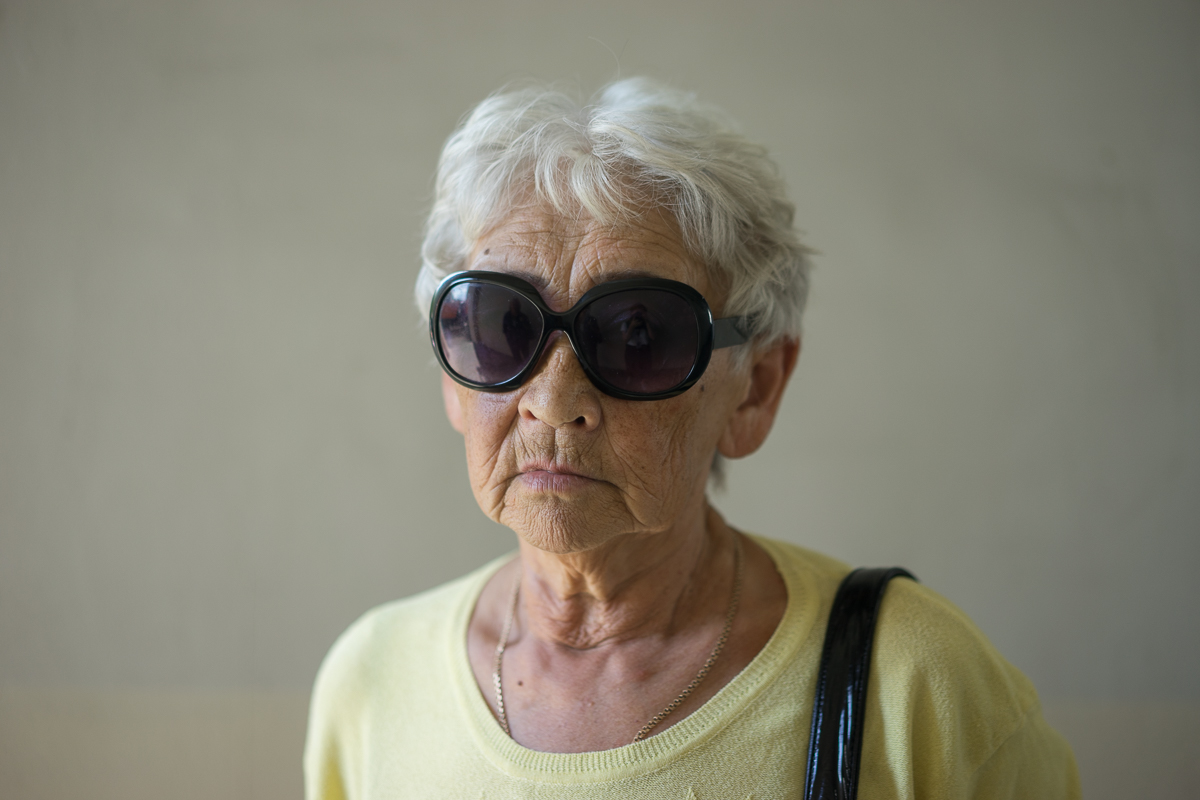
klaraKlara, 75, retired engineer and metallurgist. “We came specially to defend our candidate, Yulia Galyamina. She is a decent person, she lectures at two universities. What were the police’s grounds for searching her home? A huge number of people have supported her, but she has been barred from running.”

marinaMarina, 56, psychology lecturer. “We basically cannot change anything at the moment. We are merely showing them we exist because it is impossible to change anything now. But everything will change after a while. When they see we are here, they take us into account.”
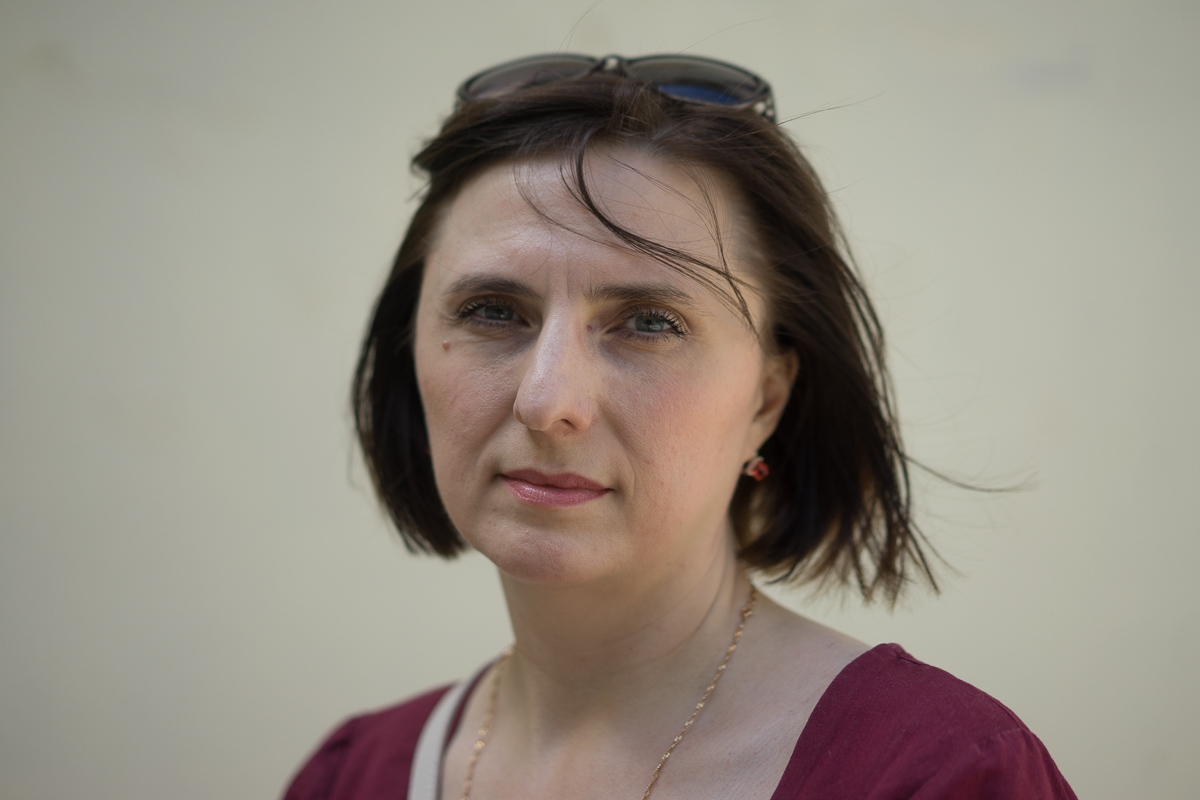
Yulia, 42, chief accountant. “I am here to get the candidates who met the legal requirements onto the ballot. We want to see an end to the manipulations, violations, and planting of drugs on people. We just want the laws to be obeyed. I want to be able to go to court and defend my rights.”
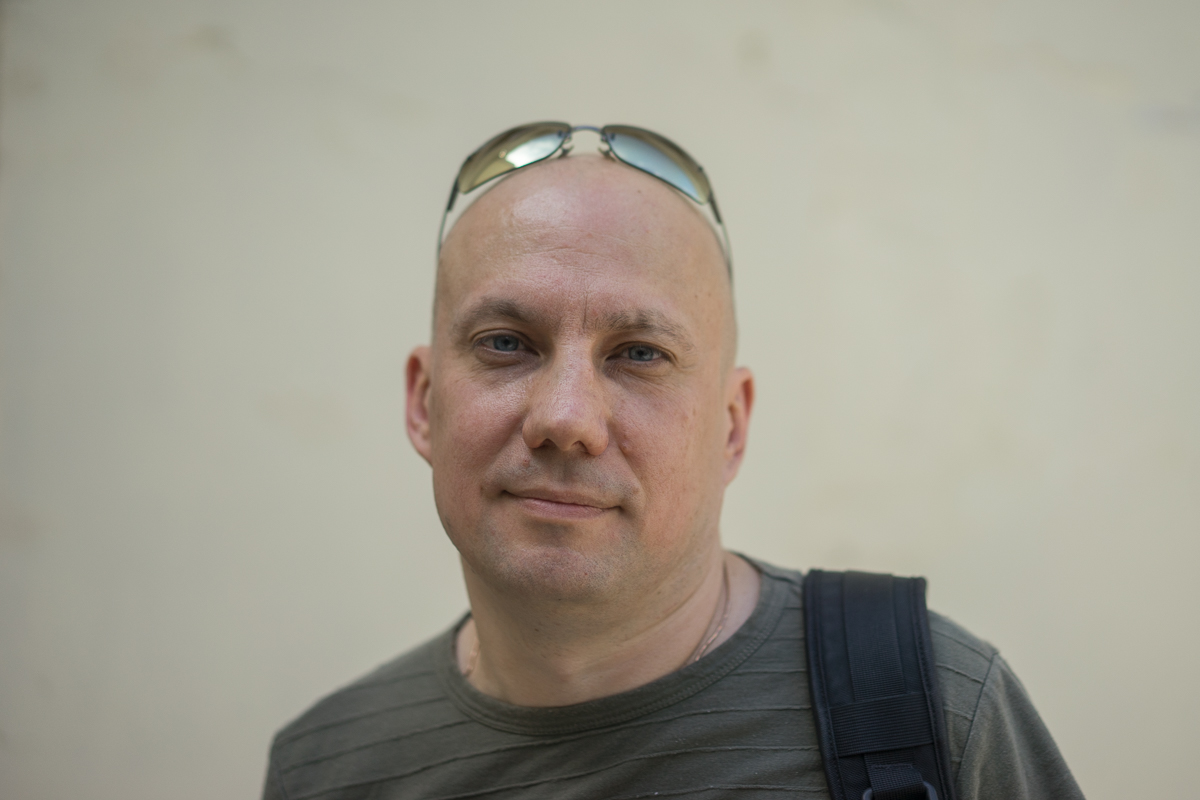
Andrei, 43, technical consultant. “It is the only thing left to us: we cannot do anything else. If we stay at home and ‘strike,’ we could die and no one would care. People have to take to the streets around the world. Otherwise, if you are not seen you are not heard. The prosecutor’s offices, courts, and police do not do their jobs. All the state agencies send formal replies or do not respond at all when you complain to them.”
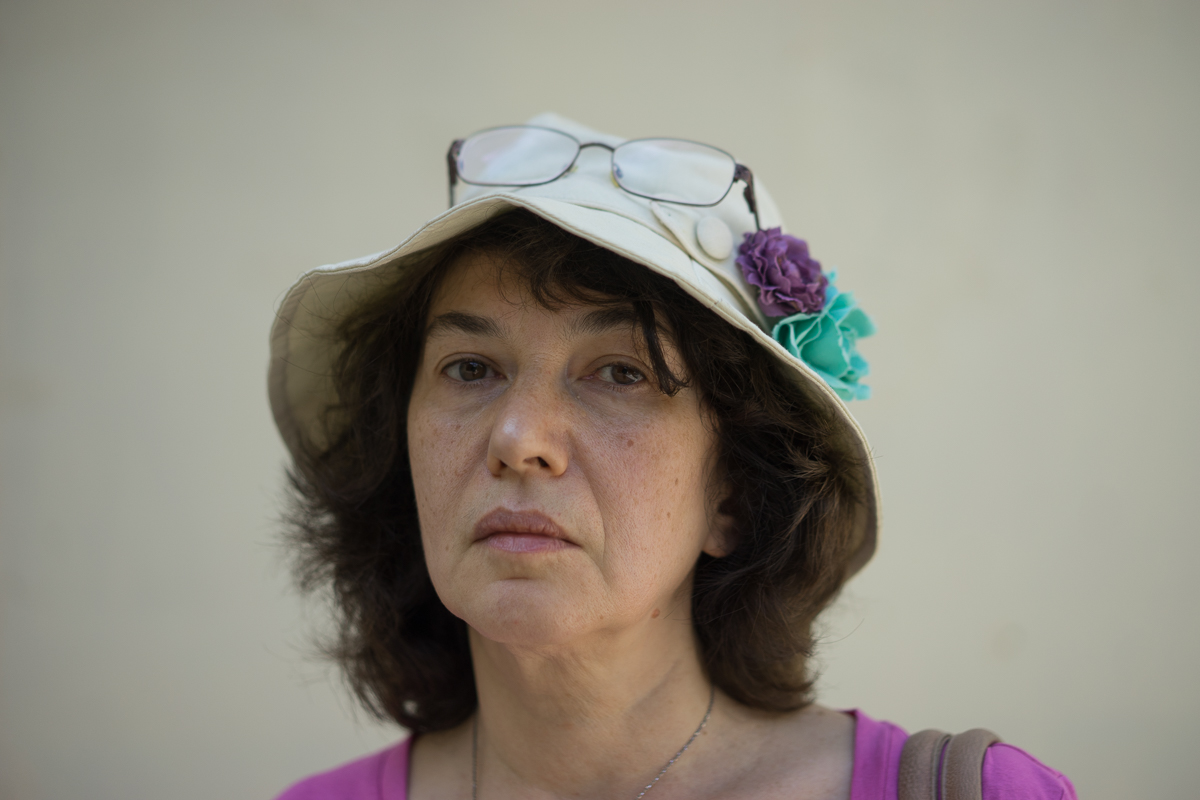
Vera, 56, oil geologist. “We have a problem with infill construction, but our candidate, Elena Rusakova, has been barred from running. We are absolutely certain the signatures [on the petitions supporting Rusakov’s candidacy], are genuine: we signed them ourselves and helped her collect them. We have come to voice our protest.”
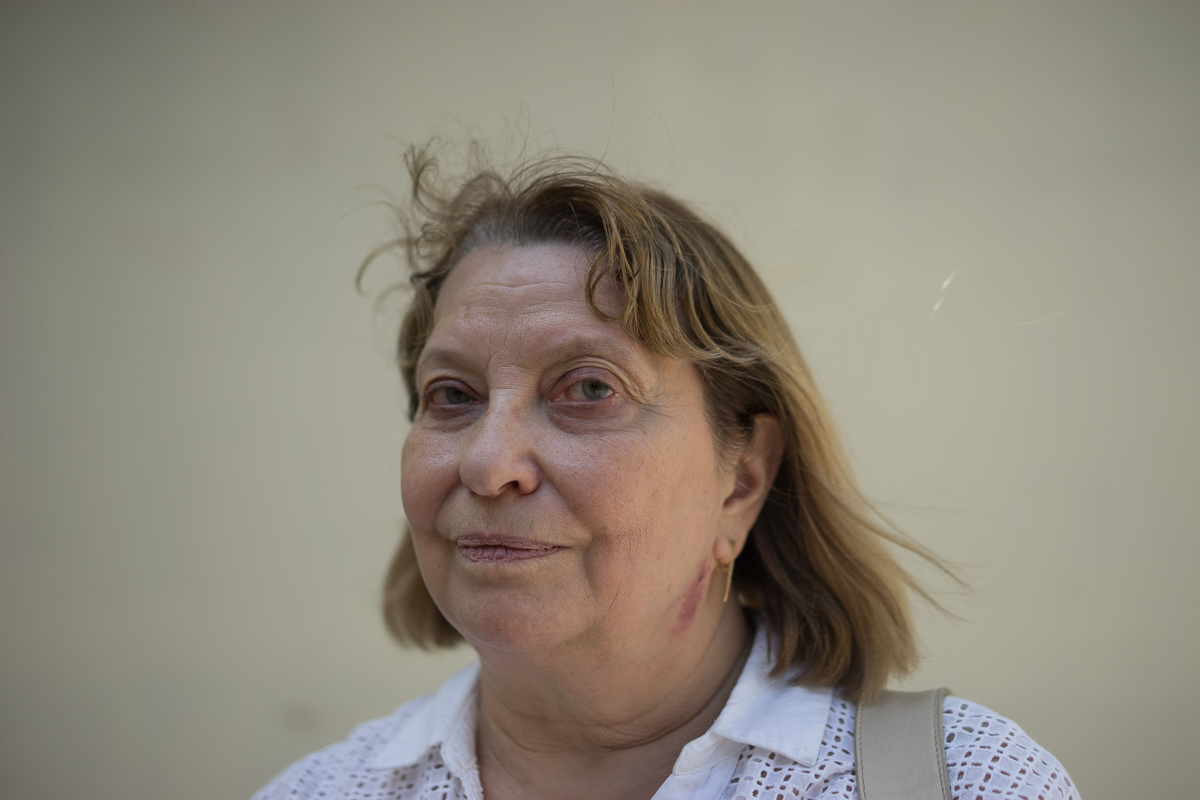
Natalya, 62, manager. “We lived in a nice green neighborhood. I was apolitical, but suddenly we were surrounded by construction sites, fences, sidewalks, and paving stones. They have been expropriating green spaces and cutting down trees. Candidates willing to fight against this are barred from holding political office. My mom is 94 years old. She survived the Siege of Leningrad. She does not leave the house anymore, but she told me I definitely had to come to this rally. Otherwise, she said, my children would live in a police state.”
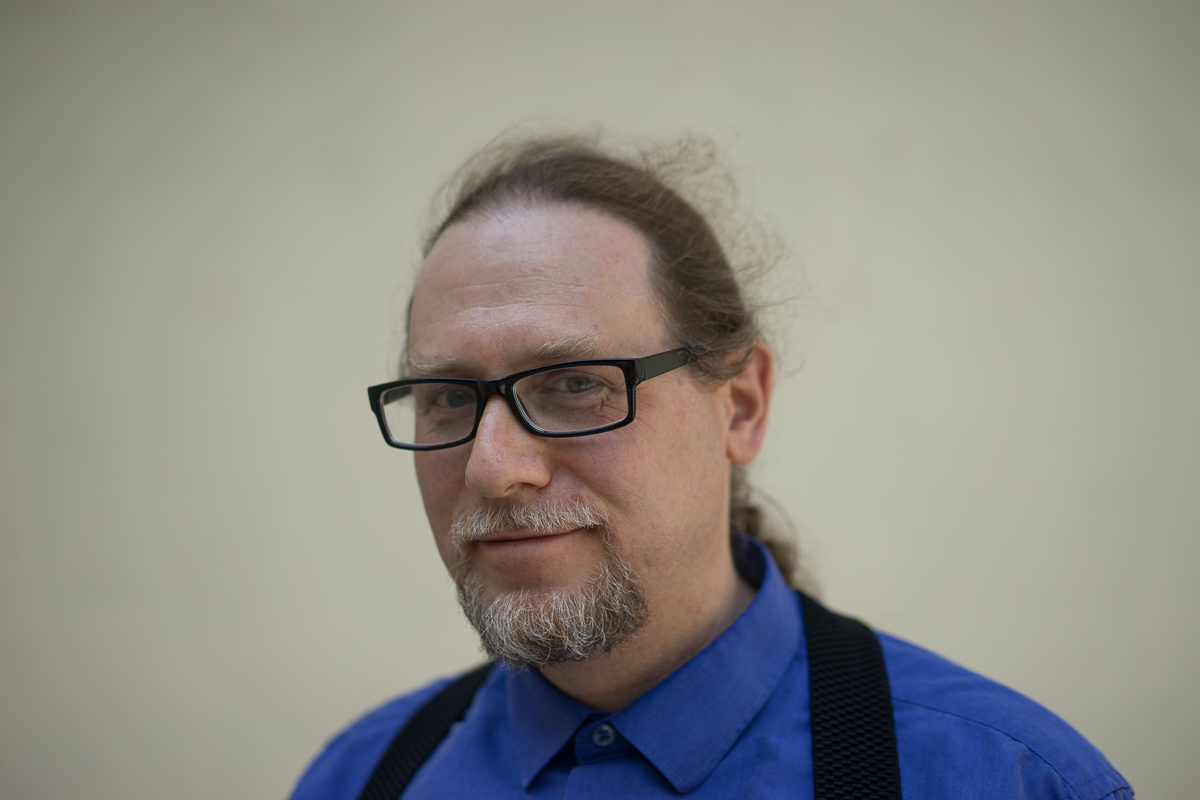
Alexander, 44, activist: “I filed a complaint with the European Court of Human Rights because my building has slated for [Moscow Mayor Sobyanin’s massive residential building] renovation. That is one of the reasons I came. But Sobyanin and his stooges in the Moscow City Duma are bad guys not only because of the renovation program. They have been robbing and disfiguring the city. We came out to show the authorities what we think, although we have been accused of wanting violent regime change. This is not true.”
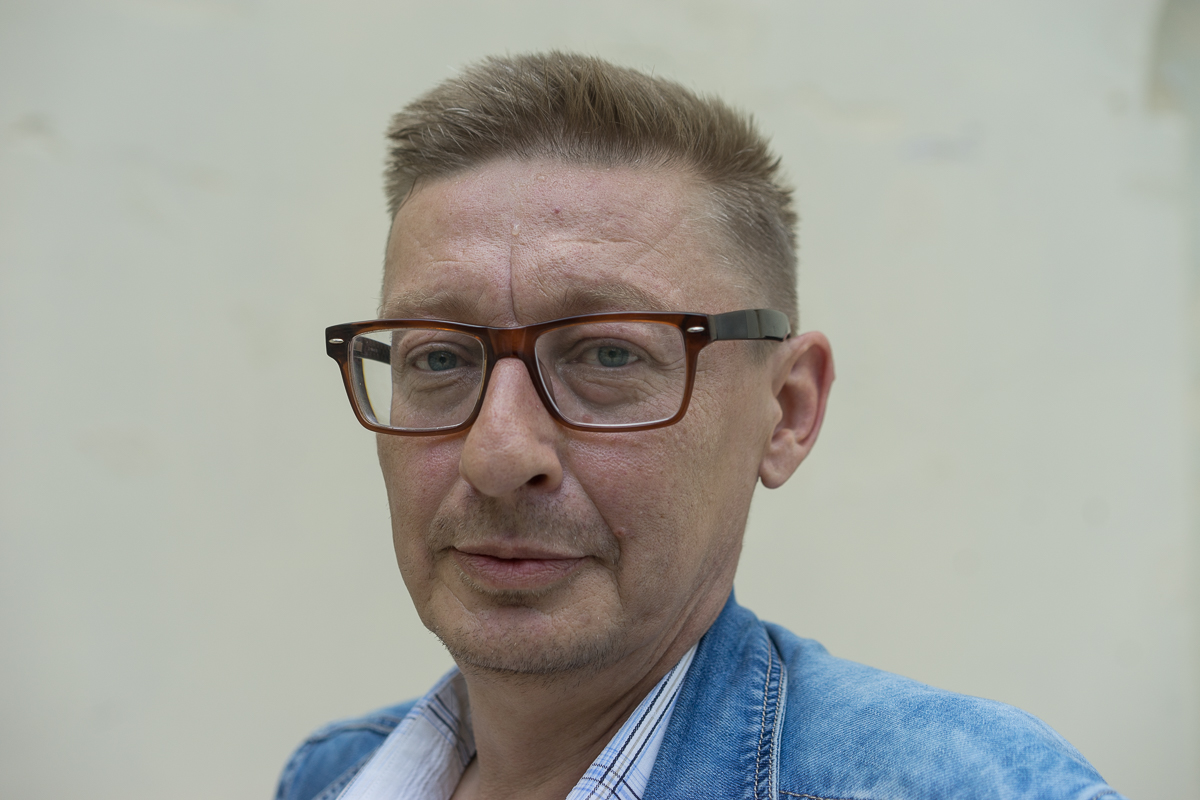
Anatoly, 48, programmer: “I came to the rally as part of a social experiment. I am not much interested in showdowns over who gets on the city council. I have more grudges against the current regime than everyone else here combined, but people are fighting for cosmetic changes. Even if [independent] candidates get on the ballot, I don’t believe improvements will follow. The regime has no feedback from the populace, but I don’t think protest rallies can solve the problem.”

Translated by the Russian Reader

“What Is This, the Gestapo?” University Student Yegor Zhukov Charged with Rioting in Moscow

Higher School of Economics Student Yegor Zhukov Arrested in Riot Investigation
Andrei Karev
Novaya Gazeta
August 2, 2019

Moscow’s Presna District Court has remanded in custody yet another person charged in the riot investigation launched after the July 27 protest rally in Moscow: 21-year-old Yegor Zhukov, a candidate for the Moscow City Duma, video blogger, and student at the Higher School of Economics.

content_______2Yegor Zhukov in court. Photo by Vlad Dokshin. Courtesy of Novaya Gazeta
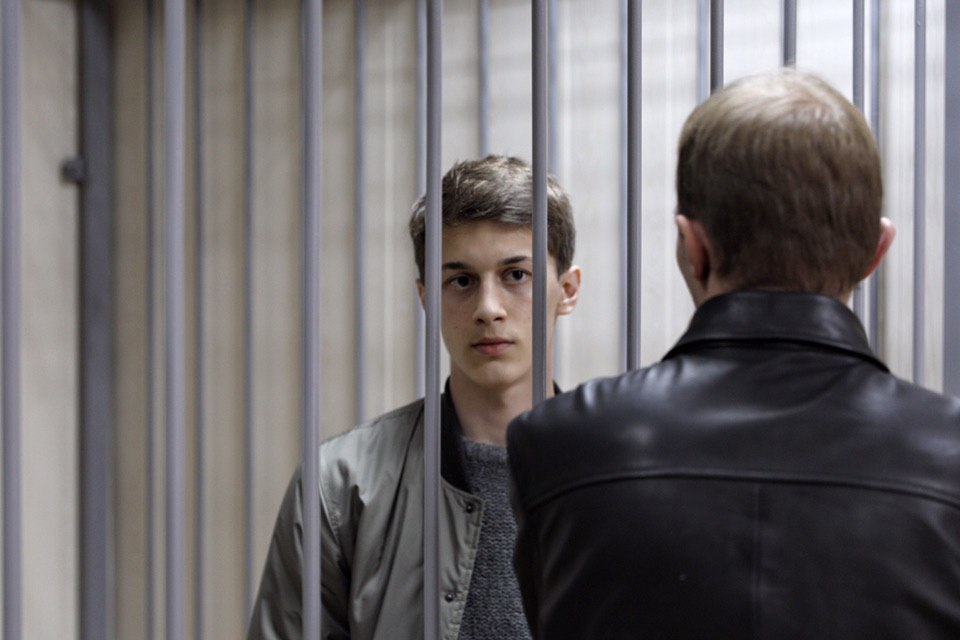
Judge Alexander Avdotyina granted a motion made by the case investigator and remanded Zhukov in custody until September 27.

The hearing began with a motion from Zhukov’s defense lawyer, Daniil Berman. He asked the court to call a recess and give his client a bottle of water.

“He has not had a drop of water since two in the morning and has not slept since yesterday,” Berman claimed.

The judge, however, refused to uphold the motion, explaining that giving Zhukov a bottle of water was against the rules.

“What is this, the Gestapo?” Zhukov’s outraged mother wondered aloud.

Her son has been charged with involvement in rioting, punishable under Article 212.2 of the Russian Criminal Code. Zhukov has completely denied his guilt and refused to give testimony to investigators. According to the case investigator, if Zhukov were at large, he could hinder the investigation, present a flight risk, and pressure witnesses.

He argued that Zhukov’s guilt was borne out by evidence gathered during the investigation.

“Zhukov could destroy evidence in the case and communicate information learned during the investigation to other suspects,” explained the investigator from the Russian Investigative Committee.

The prosecutor seconded the investigator’s arguments.

Zhukov asked the court to impose pretrial restrictions that did not involve imprisoning him.

content_______3Yegor Zhukov in court. Photo by Vlad Dokshin. Courtesy of Novaya Gazeta
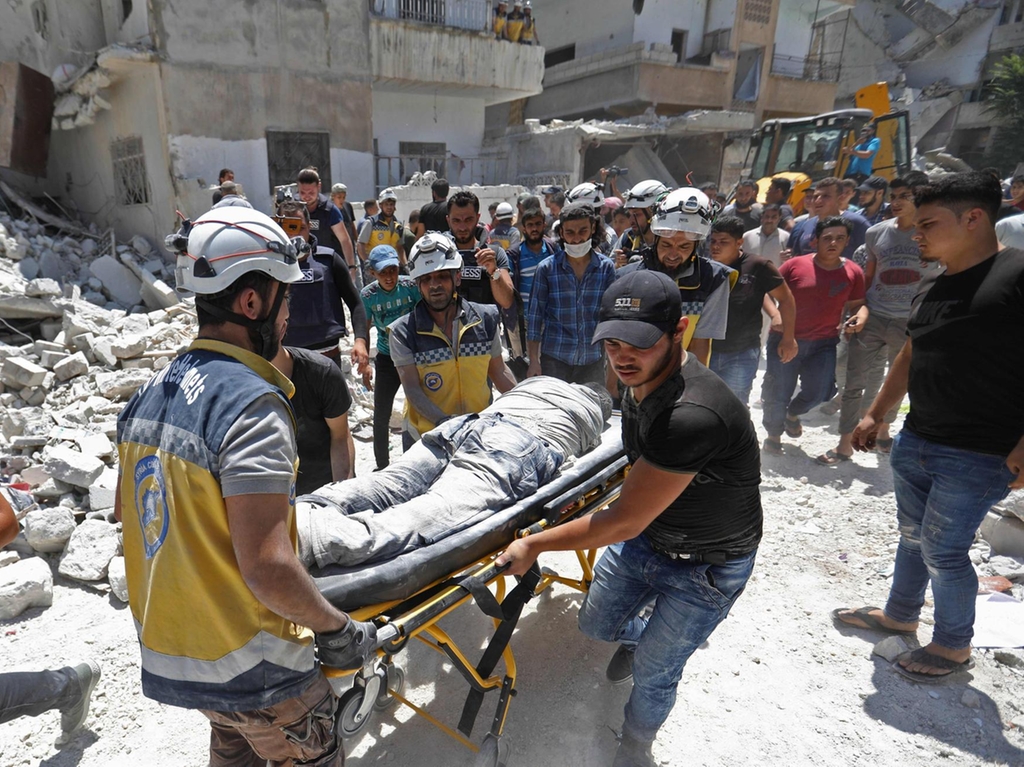
Berman argued there were no grounds for remanding Zhukov in custody. There had been no criminal wrongdoing on Zhukov’s part, and investigators had not presented any specific evidence. Berman motioned the court not to impose pretrial restrictions that would involve isolating his client from society, asking it instead to place Zhukov under house arrest or release him on bail or on his own recognizance.

“There have been lies at each stage of the criminal investigation. It seems as if the case file has been hastily thrown together: it is a collection of commonplaces. What are the charges? What exactly did my client do? The case investigators should at least pretend to be upholding the law. It is outrageous they asked the court to uphold this motion. Why should a student and Muscovite be remanded in custody?” Berman exclaimed.

He added that Zhukov’s parents were willing to post one million rubles [$15,320] in bail.

Earlier, it transpired Valeria Kasamara, vice-rector at the Higher School of Economics and candidate for the Moscow City Duma in Borough No. 45, had agreed to stand surety for Zhukov.

“I request Yegor Zhukov not be remanded in custody. He is my student. He has always been distinguished by his curiosity and high academic performance. I know him personally and can vouch for his good character,” reads the document, posted on Telegram by Pavel Chikov, head of the Agora International Human Rights Group.

Higher School of Economics students, alumni, and faculty have published an open letter demanding the university’s administrators officially voice their support for Zhukov. According to the letter’s authors, the HSE administration should personally make official statements supporting Zhukov, stand surety for him in court, and appeal to all public authorities to explain the grounds for the criminal charges against him.

“The charges against Yegor are charges against the entire university and each member of the university community. The university teaches us to think critically, speak freely, and ask questions. The Higher School of Economics does not have the moral right to turn its back when a member of its community faces three to eight years in prison for speaking freely and asking the right questions,” it says in the letter.

The Investigative Committee has consolidated separate charges of rioting (punishable under Article 212 of the Russian Criminal Code) and violence against police officers (punishable under Article 318 of the Russian Criminal Code) into a single criminal investigation of the “unauthorized” protest rally in Moscow on July 27. According to Chikov, 84 investigators have been assigned to the case.

Earlier on Friday, the court remanded Alexei Minyaylo, Samariddin Radzhabov, Ivan Podkopayev, and Kirill Zhukov in custody. Yevgeny Kovalenko had already been remanded in custody as part of the same investigation.

Thanks to Dmitry Kalugin for the heads-up. Translated by the Russian Reader

Putin’s Spectacles of Strength and Security at Home and Abroad

op31-Russia-in-SyriaRamped-up attacks in northwestern Syria by Damascus and its ally Russia have claimed the lives of hundreds since late April. Photo courtesy of AFP and the National
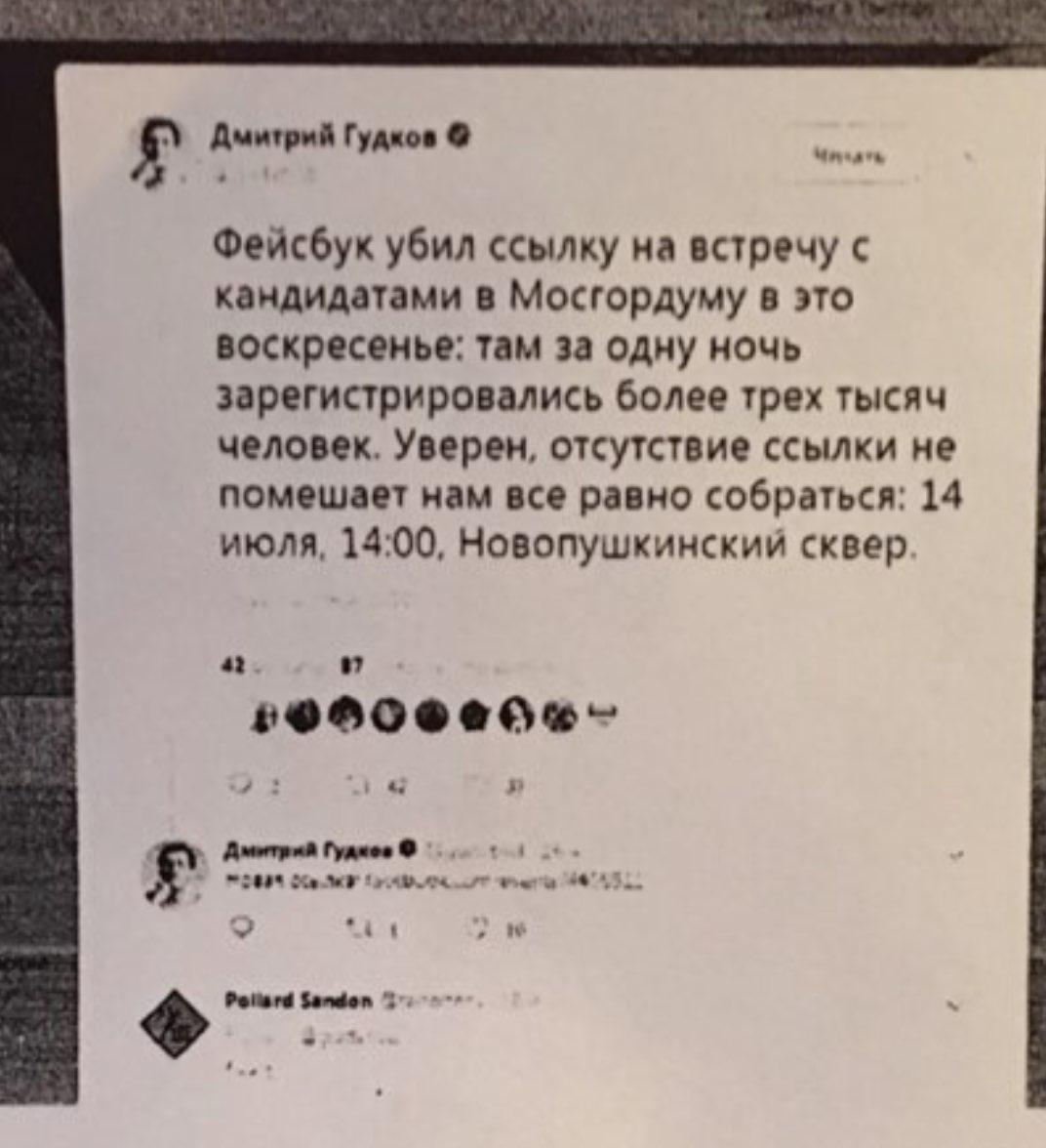
At home and abroad, Russia is using chaos to create spectacles of strength and security
Faisal Al Yafai
The National
July 30, 2019

In two incidents, in the space of one week, the Kremlin has twice sought confrontation where none was needed.

On Tuesday last week, Russia’s fighter jets violated South Korean airspace for several minutes, resulting in a major diplomatic incident as Korean jets fired more than 300 warning shots.

Then, over the weekend in Moscow, thousands of protesters gathered for the second week in a row, sparked by a crude and unnecessary attempt by the municipality to bar independent candidates from the city’s council elections.

Police responded forcefully to the protests, arresting thousands, including Russia’s most high-profile opposition politician, Alexei Navalny, who was imprisoned before being taken to hospital for exposure to an unidentified chemical.

Both situations could have been avoided. Neither were accidents, either. The Kremlin is actively creating confrontations at home and abroad, hoping to find a role in solving the chaos it is sowing.

This was especially clear in the protests.

The spark for the demonstrations came from an unlikely source: a decision by the country’s electoral commission to not allow a series of independent opposition candidates to stand in September’s Moscow city elections. Independent registrations for the elections require several thousand signatures, a usually insurmountable obstacle. But, when two dozen opposition candidates managed it, the electoral commission simply refused to register them.

These elections, it should be noted, are not for the city’s mayoralty, an important position. Instead, they are for seats on the city council, a much smaller prize.

But, even on something that barely matters, the Kremlin is determined to show its power, and show it in a way that demonstrates overt and public contempt for the election process. It is that sense, that Russia’s government is willing to publicly violate the rules, which pushed so many to protest.

That desire to flex the country’s muscles was also on show last week.

In a murky incident, Russian planes flew without warning through airspace where Seoul requires foreign aircraft to provide air identification, and then further violated the country’s air space. South Korean jets tracked the military aircraft and a volley of warning shots were fired.

On the surface, it seems bizarre to provoke South Korea, a country with which Russia has maintained good relations. However, the East China Sea is heavily contested. It was only last month, after all, that Russian and US warships almost collided in the waters below where the incident took place.

Under Vladimir Putin’s two decades of leadership, the role of the Russian state has shrunk. Although he often harks back to the glory days of the Soviet Union, in fact, the Russian state today does substantially less for citizens than its predecessor. Most housing is owned by private companies and landlords.* The idea that the state would provide the “flat, car and dacha” of Soviet lore is long gone.

Instead, Mr. Putin offers security and spectacle. He creates an idea of a world in turmoil, which only his government is able to defend ordinary Russians from, and offers visible displays of the protection he provides.

The intervention in Syria amply demonstrates this. First, the necessity of intervention, of Russia’s forces fighting beyond their country’s borders to stop a threat to the homeland. Second, the spectacle of a train full of tanks and guns looted from the Syrian battlefield touring the length and breadth of Russia, often accompanied by Soviet war songs.

There is no room for subtlety, either. The train departed from Moscow on a military holiday and returned on May 8, Victory Day in Russia, which commemorates the end of the Soviet war against Nazi Germany.

Mr. Putin behaves similarly on a personal level. On the same day as the street protests in Moscow, he was filmed descending in a two-man submarine to the bottom of the Gulf of Finland. In doing so, he projected himself as a strongman politician, able to control the unstable forces of the world by pure brawn and daring.

The Putin state needs these spectacles and this chaos, whether on Russia’s streets or beyond them. They demonstrate to a watching world a Russia that is more than a regional power, one that is a global player, able to cause global incidents from Salisbury through Syria, and on to South Korea. They also demonstrate to the Russian public that only the state can keep them safe.

With a weakened economy, poor relations with the West, and a war in Syria that drags on without end, the Kremlin is setting up clashes to create a place for itself at home and abroad.

Yet there is a danger in manufacturing conflicts because they can easily escalate out of hand. Even small skirmishes have the potential to expand unpredictably.

There was, for example, no guarantee that the South Korean incident would have ended peacefully. One miscalculation by either side in the skies above the Korean Peninsula, and there could have been serious consequences.

Meanwhile, in Moscow, Mr. Navalny has been taken ill and his doctors believe he could have been poisoned. What started as a minor attempt to exclude candidates from a meaningless election has escalated first into the biggest street protests the Russian capital had seen in years, and the world watching to see whether an opposition politician had been brazenly poisoned in custody.

That is the problem with chaos: once unleashed, it is difficult for anyone, even the Russian state, to bring under control.

* This is the only false note in an otherwise powerful, impeccable analysis. Given the extraordinarily high number of Russians who own their own flats and dachas, legacies of the post-perestroika giveaway privatization of the country’s housing stock and the late-Soviet period, respectively, it seems dubious to claim, as Mr. Yafai does here, that landlords and private companies own most of the housing in Russia. Maybe this would prove true if we looked carefully at ownership statistics, but I am nearly certain Mr. Yafai has not done that. // TRR

________________________________________________

UN reports 400,000 Syrians displaced since Idlib offensive started in April
Deutsche Welle
July 26, 2019

The UN says there has been a “dramatic escalation” in violence since Syrian forces started an operation to retake Idlib province. Human rights chief Michelle Bachelet regretted “international indifference.”

More than 400,000 people have been displaced in northwestern Syria since the start of a government offensive to retake the region in late April, the United Nations said Friday.

David Swanson from the UN’s humanitarian coordination office (OCHA) said more than 2,700 people have died during the “dramatic escalation” in violence in Idlib province.

Russia has been helping government forces loyal to President Bashar Assad with airstrikes, despite an international truce.

UN reports persistent pattern against civilians

UN Commissioner for Human Rights Michelle Bachelet criticized “international indifference” at the number of civilians dying in attacks on schools, hospitals, and other civilian targets.

“These are civilian objects, and it seems highly unlikely, given the persistent pattern of such attacks, that they are all being hit by accident,” she said.

The UK-based Syrian Observatory for Human Rights said it had registered 39 attacks on health facilities and at least 50 attacks on schools. More than 740 civilians have been killed in those strikes, it added.

Intentional attacks are war crimes

“Intentional attacks against civilians are war crimes, and those who have ordered them or carried them out are criminally responsible for their actions,” Bachelet said.

Forces loyal to Assad have retaken around two-thirds of Syria’s territory.

The country’s civil war has claimed the lives of more than 370,000 people and displaced millions since it began in 2011.

Hell in a Handbasket

532280048_hell20in20a20handbasket

Leonid Volkov
Facebook
July 30, 2019

Everything has gone to hell in a handbasket.

I cannot recall such a concentration of news.

In the last thirty minutes:

  • The authorities disqualified Sergei Tsukasov in Moscow’s 14th Borough. He won the primaries held there by local activists, collected the necessary number of signatures, and was registered to run as a candidate, apparently because he is not well known to the general public and the mayor’s office did not regard him as dangerous. But after he took part in protest rallies along with the candidates who were barred from running, he was disqualified for the dash he put instead of the phrase “I do not have” in his foreign real estate declaration after a sham candidate filed a complaint against him.
  • On the other hand, the Moscow City Elections Commission, as if it were having a laugh, recommended putting Sergei Mitrokhin back on the ballot in the 43rd Borough, despite the fact we caught red-handed the factory that had been forging signatures for prospective candidates, including Mitrokhin.
  • Mikhail Svetov was detained by police right in the Moscow mayor’s office. He had gone there to negotiate (!) a permit for the August 3 protest rally. The crazed crooks in the mayor’s office invited Svetov to the negotiations themselves, and then they helped detain the libertarian themselves, an inconceivable crime against lawfulness anywhere at any time.

Events are unfolding at incredible speed.

Something big is going to happen.

• • • • • • • • • • • • • • •

gudkov-tweet.jpgScreenshot of the tweet that got ex-MP Dmitry Gudkov thirty (!) days in jail: “Facebook killed the link to the meeting with Moscow City Duma candidates this Sunday: over 3,000 people had signed up overnight. I’m confident a missing link cannot prevent us from gathering all the same: 2:00 p.m., July 14, Novopushkinsky Square.”
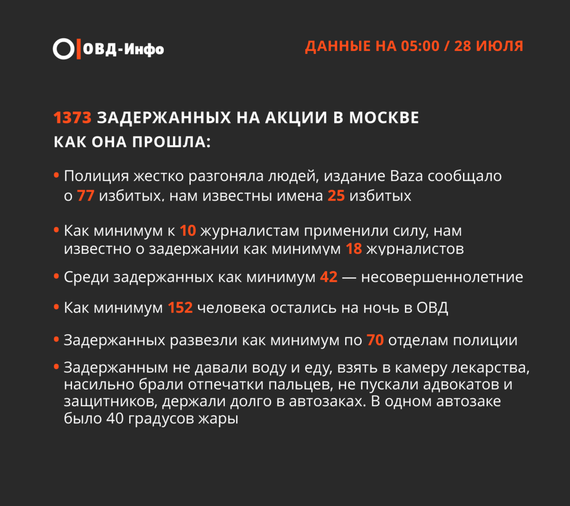
⚡️Tverskoi District Court sentenced Dmitry Gudkov to thirty (30) days in jail for a tweet about the July 14 meet-the-candidates protest event. He was again convicted (under Article 20.2.8 of the Administrative Offenses Code) as the organizer of an “unauthorized” event.

The court dismissed all motions made by Pravozashchita Otkrytki lawyer Oksana Oparenko. She petitioned the court to let her question the police officer who examined Gudkov’s Twitter page and watch the video, shot at campaign headquarters, confirming Gudkov was not at the rally himself.

Source: Pravozashchita Otkrytki, 30 July 2019

Translated by the Russian Reader. Lead image courtesy of The Closet Liberal


The Damage

ovd-damage

As of 5:00 a.m., today, July 28, 2019, OVD Info reported that 1,373 people were detained at yesterday’s protest rally in Moscow in support of the independent candidates whose applications to stand in the September 8 elections to the Moscow City Duma were recently rejected on spurious grounds by the Moscow City Elections Commission, sparking a series of protest rallies and marches, including yesterday’s “unauthorized” rally.

Police violently dispersed yesterday’s protesters. Baza reported that 77 people were badly beaten, while OVD Info compiled a list of 25 people who were badly beaten.

At least 10 journalists were subjected to the use of force by the police, while at least 18 journalists were detained along with protesters.

There were at 42 minors among yesterday’s detainees.

At least 152 detainees were kept in holding at police stations overnight.

The detainees were taken to at least 70 different police precincts for processing.

The detainees were not given water or food. They were not allowed to take medicine with them if they were locked up. They were forcibly fingerprinted. They were not given access to lawyers and social defenders. They were kept in paddy wagons for a long time before being taken into precinct stations: the temperature in one paddy wagon was 40 degrees Celsius.

Source: OVD Info. Thanks to Comrade Koganzon for the heads-up.