You Gotta Fight for Your Right to Party

Involving Teenagers in Unauthorized Protest Rallies Could Cost as Much as One Million Rubles
Experts Say Authorities Won’t Find It Hard to Prove Charges
Olga Churakova
Vedomosti
July 11, 2018
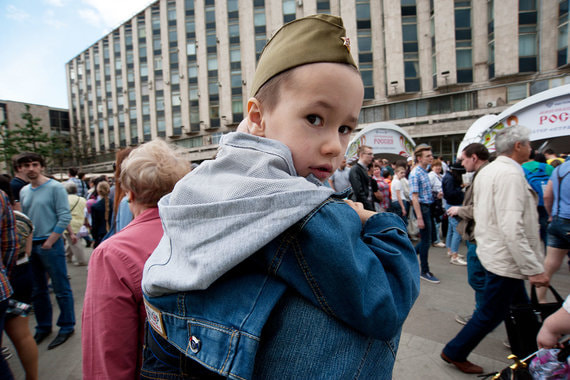
Госдума готовится ввести многотысячные штрафы за вовлечение подростков в несанкционированные митингиThe State Duma plans to introduce hefty finds for involving teenagers in unauthorized protest rallies. Photo by Andrei Gordeyev. Courtesy of Vedomosti

On Tuesday, the State Duma’s Family Affairs Committee gave the go-ahead to a law bill that would introduce penalties for “encouraging” teenagers to attend unauthorized protest rallies. On Monday, the bill was approved by the government’s Legislative Affairs Commission. In its written appraisal of the bill, the Family Affairs Committee recommended clarifying the minimum age at which offenders would be held liable for violations, although the relevant committee reviewing the bill is the Committee on Constitutional Law.

Tabled by Alyona Arshinova, Anatoly Vyborny, and other United Russia MPs, the law would amend the Administrative Violations Code to include penalties of 15 days in jail, 100 hours of community service or a fine of 50,000 rubles for individuals who encourage minors to attend unauthorized protest rallies. Fines for officials would range from 50,000 to 100,000 rubles, while fines for legal entities would range from 250,000 to 500,000 rubles. A repeat violation could send individuals to jail for up to thirty days, while legal entities would be fined as much as one million rubles [approx. €13,800].

“In my experience, there is no such thing as a perfect law bill. As for the current bill, the relevant committee has not yet meet to discuss it,” says Vyborny.

However, Vyborny is certain the amendments are necessary.

“Children cannot resist the negative influence of adults. It matters to them to express themselves, and we hope this bill will deter them from ill-considered actions. Administrative liability will be a deterrent,” he says.

What matters is that young people are not drawn into a culture of legal nihilism, the MP argues. According to Vyborny, the bill does not aim to punish minors, but protest rally organizers. Hence, the age limit is defined in the bill.

OVD Info estimated that ninety-one teenagers were detained on May 5, 2018, in Moscow at an unauthorized protest rally to mark the inauguration of Vladimir Putin as president for the fourth time. According to OVD Info, at least 158 minors were detained nationwide on May 5 at similar protests. OVD Info estimated that a total of 1,600 people were detained that day.

Lawyer Oleg Sukhov says proving protest rally organizers are in violation of the new law would be a piece of cake. Rallies are organized in different ways, including personal contacts and public announcements.

“Our government is planning to deter all means of organizing protest rallies. It realizes this work on the part of the opposition will only intensify over time not only via the web but also through communication with young Russians,” notes Sukhov.

The main point is the government would not have to prove anything, argues Sukhov. Minors will go on attending protest rallies. Whenever they tell police they saw an announcement on the web, the organizers will be charged with violating the law according to a fast-track procedure.

“Clearly, the law will be enforced selectively. It’s a classic manifestation of the so-called mad printer. The terms used in the wording of the bill are not defined at all. For example, what does it mean to ‘encourage’ a teenager to attend a rally? Can teenagers attend rallies? They can. So, how do we figure out whether they attended on their own or were ‘encouraged’? We can’t,” says Navalny’s righthand man Leonid Volkov.

Volkov does not believe the law will be effective since protesters have been paying fines as it is.

“It is no accident this attempt to intimidate young people made the news today, the same day the Investigative Committee released a video about a teenager who goes to prison for reposting [‘extremist’ items] on social media. Of course, this will only produce new Primorsky Partisans,” Volkov concludes.

“Extremism Is a Crime,” a video posted on YouTube on June 25, 2018, by the MultiKit Video Studio. The annotation to the video reads, “A public service video on the dangers of extremism, produced by MultiKit Video Studio for the Russian Investigative Committee’s Altai Territory Office. The video will be shown in schools to prevent such crimes.”

__________________________

__________________________
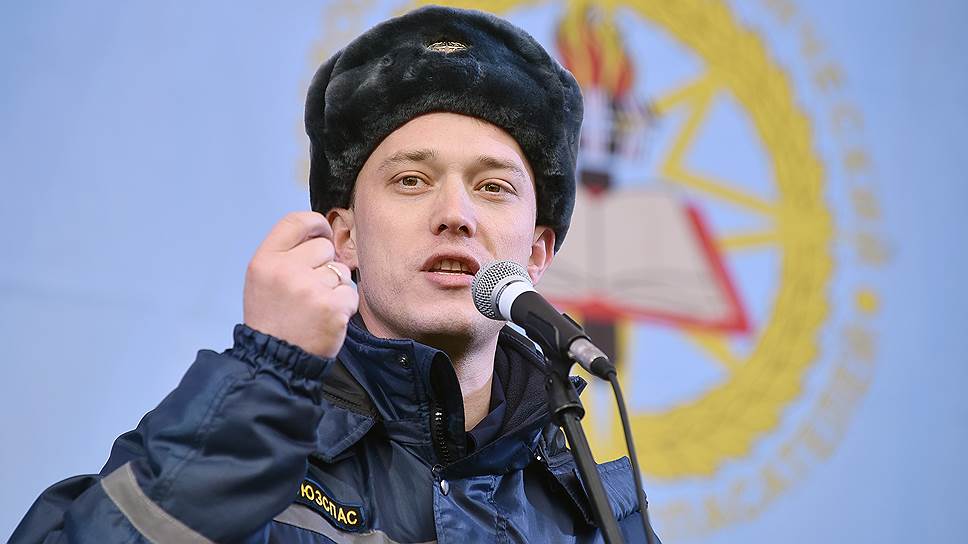
KMO_156800_00022_1_t218_212746.jpgAlexei Avetisov. Photo by Emin Dzhafarov. Courtesy of Kommersant

Youth Policy Finds a Direction
Kremlins Finds a Specialist in Subcultures and Extremism
Sofia Samokhina, Maxim Ivanov and Lada Shamardina
Kommersant
July 11, 2018

Kommersant has learned Alexei Avetisov, member of the Russian Public Chamber and president of the Russian Student Rescue Corps, could join the Office of Public Projects in the Kremlin. Avetisov has been tapped to head the Department for Combating Extremism among Youth. Ksenia Razuvayeva, head of Rospatriotcenter (Russian Center for the Civic and Patriotic Education of Children and Young People) has been named as a candidate for head of the Department of Youth Policy in the Office of Public Projects. Both candidates would still have to be vetted by the Kremlin.

Alexei Avetisov, member of the Russian Public Chamber and president of the Russian Student Rescue Corps, could head the Department for Combating Extremism among Youth in the Kremlin’s Office of Public Projects. Currently, the Office of Public Projects, which is run by Sergei Kiriyenko, the president’s first deputy chief of staff, has no such department. Our sources say Mr. Avetisov would be tasked with overseeing youth subcultures and decriminalizing the youth scene, in particular, by dealing with the popular AUE network of criminal gangs. The Presidential Human Rights Council discussed the issue with Vladimir Putin in December 2016.

Olga Amelchenkova, head of the Victory Volunteers Movement and member of the Russian Public Chamber, told us there were few organizations in Russia involved in volunteering in emergencies, and Mr. Avetisov was one of the few people who had constantly brought up the subject in the Public Chamber.

An acquaintance of Mr. Avetisov’s said his Russian Student Rescue Corps had brought many universities together. The organization took part in the first Taurida Camp held after the annexation of Crimea in 2014, an event attended by MPs and high-ranking officials. From 2015 to 2017, Mr. Avetisov was director of Territory of Meanings on the Klyazma, a youth education form, sponsored by Rosmolodezh (Russian Agency for Youth Affairs). His main job at the forum was providing technical support for the camp.

On June 6, Znak.com, citing its own sources, reported law enforcement agences were investigating Territory of Meanings on the Klyazma and, in this connection, “questions for the forum’s ex-director Alexei Avetisov could arise.” The website indicated companies allegedly affiliated with Mr. Avetisov had for several years been awarded “lucrative” contracts for constructing venues at the forum. The firms in question had no experience implementing government contracts. Currently, some of the companies have either gone out of business or are dormant, wrote the website.

Timur Prokopenko, deputy chief of staff in charge of the Office of Domestic Policy in the Kremlin, had been in charge of youth forums in recent years. He also handleded youth policy in his capacity as head of the Office of Domestic Policy. However, on June 14, a presidential decree turned youth policy over to the Office of Public Projects.
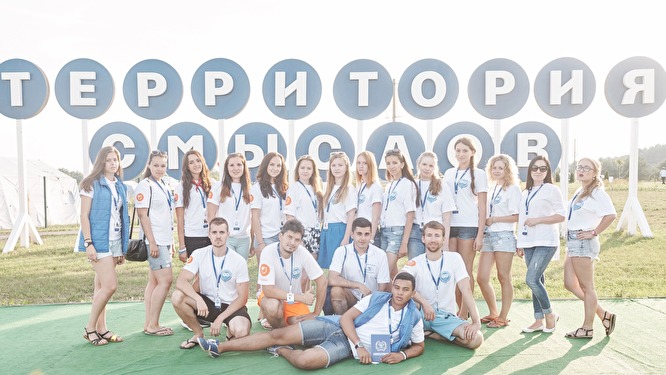
znakcom-2039402-666x375Territory of Meanings staffers. Photo from the camp’s VK page. Courtesy of Znak.com

Gazeta.Ru has reported that Rospatriotcenter head Ksenia Razuvayeva could take charge of the Office of Public Project’s Department of Youth Policy. Before taking over the running of Rospatriotcenter, Ms. Razuvayeva ran the Moscow branch of the Russian Volunteers Union and collaborated with the Young Guard of United Russia (MGER), which Mr. Prokopenko ran from 2010 to 2012. Ms. Razuvayeva would not confirm to us that she was moving to the Office of Public Projects Earlier, a source of ours in the Kremlin said she might not make it through the vetting process. Another of our sources noted a possible conflict of interests was at play. Ms. Razuvayeva also told us it was the first time she had heard about Mr. Avetisov’s moving to the Office of Public Projects.

“The vast majority of Young Guardsmen and other pro-regime activists brought up through the ranks in the past decades are supremely focused on their careers. The system simply spits out anyone else,” political scientist Abbas Gallyamov told us.

According to Gallyamov, “Changing colors for the new boss and refusing to have anything to do with people they worshipped only the day before are quite ordinary for this crowd.”

“Therefore, it does not matter whose people they were considered yesterday. They will be loyal to any boss, just because he or she is the boss,” Gallyamov added.

Translated by the Russian Reader
Goodbye to All That?

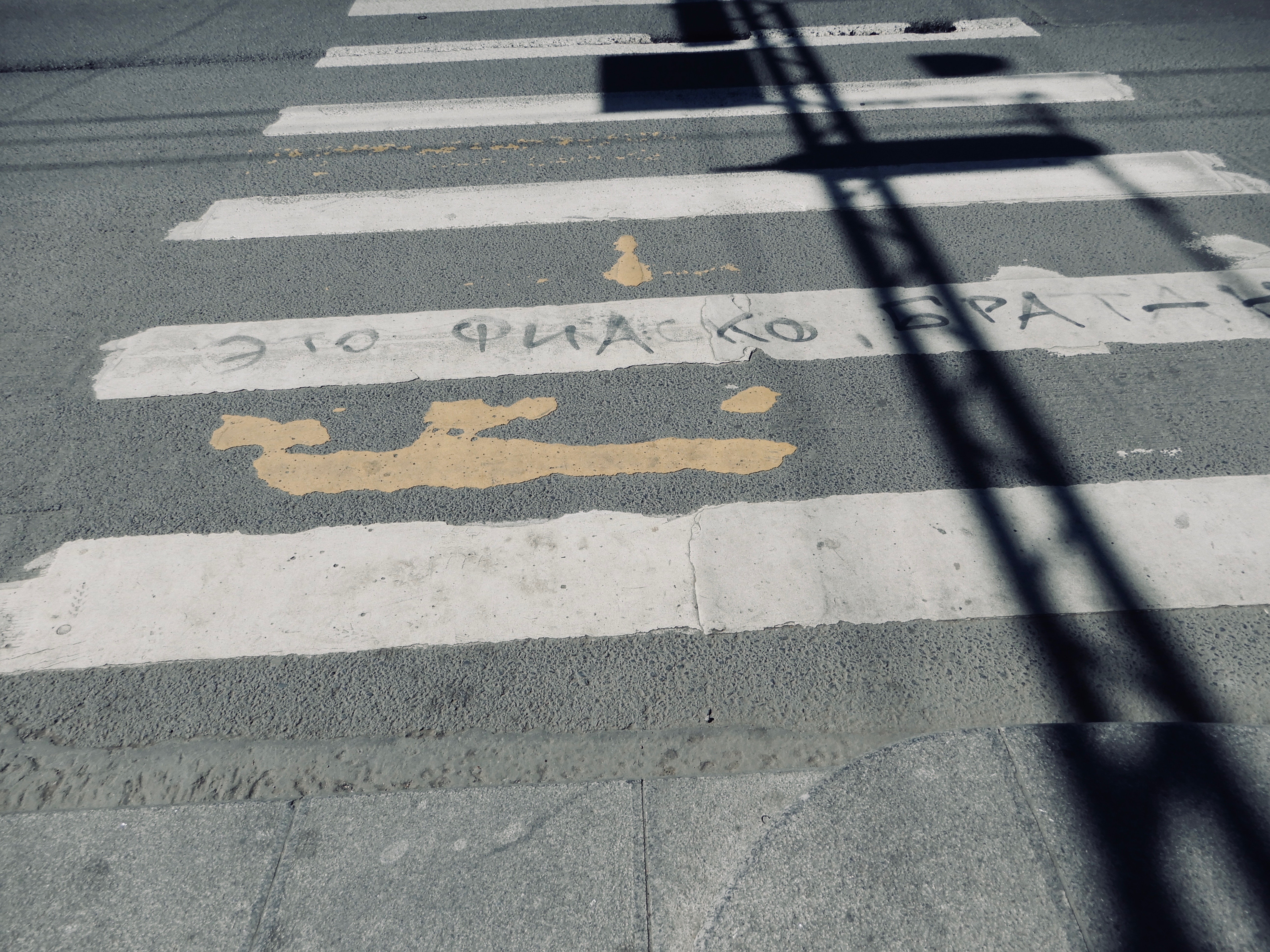
DSCN6820.jpg“It’s a fiasco, bro.” Photo by the Russian Reader
Here are two statistics that exemplify Putin’s glorious 19-year reign better than any other two statistics.

Since 1998, the European Court of Human Rights (EHCR) has claimed nearly €2 billion in compensation from Russia.

The greater part of this total was paid out to victims of torture and claimants whom the court deemed had been denied the right to a fair trial, the right to liberty, and the right to protection against unreasonable search and seizure.

During this period, the EHCR registered 148,700 complaints against the Russia authorities, reports RBC.

In March of this year, sources told RIA Novosti the relevant Russian ministries were studying the possibility of the denouncing the European Convention on Human Rights, which had established the ECHR. // TRR

Varya Mikhaylova: Legal Nihilism

varya-morningDawn outside the October District Court, on Pochtamskaya Street in Petersburg’s Admiralty District. The Central Post Office is visible in the background. Photo by Varya Mikhaylova


Varya Mikhaylova
Facebook
May 7, 2018

I greeted the morning of the day Vladimir Putin started his new term as president in a way that was more than symbolic. At five in the morning, as the first rays of the sun were peaking over the horizon, I left the October District Court, where for the past thirteen hours I had defended people detained during the He’s No Tsar to Us protest rally in Petersburg.

I was afraid to go to court, because what happened in March could easily have happened again. The police had then tried to detain the activists who had come to support their friends right in the courtroom. But by Sunday afternoon this excuse seemed utter rubbish, and I rushed to the October District Court.

Friends of the detainees stood outside the courthouse with bags of food and things. They were not allowed into the courthouse, and the bailiffs refused to take their care packages and give them to the detainees. It was a miracle that me and another human rights activist, Maria Malysheva, were let into the courthouse. By current standards, that was a cause for joy.

There were five detainees in the courthouse. Some of them had been consciously involved in the protest rally and made no bones about it, while the others had come along for the ride, had come to gawk or had just been in the wrong place at the wrong time.

One of my future defendants was an amazing mathematics teacher who, at that point, had not eaten or drunk water for twenty-six hours. After we arrived, we tearfully persuaded the bailiffs to at least send in the food and water brought by the people waiting outside.

A policeman in the courthouse refused to give one young woman her telephone. He sat next to her holding the phone in a cellophane packet and was very proud of his perserverance. After I called the police HQ hotline, however, he handed over the phone to the detainee while looking down at the floor.

After four hours of waiting, we went into the first hearing at 7:15 p.m., while the final hearing commenced at four in the morning. We made around fourteen motions total during the hearings, and all of them were rejected except motions to admit a social defender to the hearings and view a video. Our motions to summon a prosecutor, witnesses, and public officials, request access to a video, enter evidence into the record, and transfer a hearing to another jurisdiction were all turned down. The last motion led to a particularly funny exchange with the judge.

“Defender, why do you think the case should be transferred to another jurisdiction?”

“Your honor, the alleged violation came to light in the area covered by the 78th Police Precinct, and the case should be heard by the Kuibyshev District Court.”

“Why do you say that? It came to light in the 1st Police Precinct.”

(In other cases, it would be the 77th Police Precinct, the 34th Police Precinct, and so on.)

“So, it turns out my defendant was detained and delivered to police custody, but only subsequently, at the police station, did the violation come to light?”

“It turns out that was what happened.”

Neither the judge nor her female clerk concealed their contempt for the protest rally in the slightest.

“You, an educated person, a professor, what induced you to go there?”

“If I had been in your shoes, I would have left as soon as I saw what was happening.”

“Schoolchildren with time on their hands.”

“You should have thought about the possibility of jail time, your job, and your pupils when you were going to the protest, not now, when you ask me not to pass this sentence.”

And so on, and so forth.

The video that was introduced into evidence in every case deserves special attention. It was very long (over an hour), but it contained no footage either of the rally’s beginning, in the Alexander Garden, or its finale, when the police detained protesters. Two of my defendants, who insisted they had not taken part in the march, were not in the video. Another of my defendants was in the video, and the video corroborated exactly what he said during the hearing: that he was involved in the march, but he had not chanted any slogans and was not carrying a placard. So, the video was on our side in absolutely every case, but this did not ruffle the court at all, because the principal mantra that all judges repeat in such cases is, “There are no grounds for not trusting the testimony of the police officers.”

The police are a separate conversation. They have learned to do a better job of compiling the case files than in 2012, but they still make a royal mess of it. Therefore, in the case files of the people I defended, there was no mention of a single witness to the alleged administrative violations or a single official attesting search witness [i.e., a “poniatoi,” as required under Russian law], although all of them had their personal effects confiscated. But the most enchanting episode had to with my defendant Yulya, whose case was heard last, from 3:00 a.m. to 5:00 a.m. I will write a separate post about it now.

The outcomes of the court hearings in which I served as a social defender were as follows. My defendant who was in the march, but did not chant any slogans, was sentenced to a fine of 15,000 rubles [approx. 200 euros] and three days in jail. The two random bystanders were each sentenced to a fine of 10,000 rubles and three days in jail. In the courtroom next door, a female protester who was heavily involved in the rally was sentenced to four days in jail and fine of 10,000 rubles, while another innocent bystander was slapped with two days in jail and a fine of 10,000 rubles.

We plan to appeal all the verdicts, of course.

I gather that the point of these court hearings against people who are involved in protest rallies is not to intimidate everyone, but to inculcate total legal nihilism in each and every one of us. People who deliberately go to a rally, waving flags and bearing placards, are sentenced to four days in jail and 10,000-ruble fines, while random passersby receive the same sentences or worse. Human right defenders who attempt to give detainees blank court appeal forms are slapped with fines of 170,000 rubles [approx. 2,250 euros] and fifteen days in jail.

***

Recently, I was asked how activists could establish links with human right defenders who would stand for them at hearings. My reply was that life in 2018 is such that activists and human rights defenders are quite often one and the same people.

These were the first hearings in which I defended detainees on my own, so feel free to congratulate me.

Translated by the Russian Reader

Immigrant Song

OLYMPUS DIGITAL CAMERA
You can learn more about the “real,” “nuanced” Russia by gazing into this shop window than you can by reading all the crypto-Putinist “Russian experts” in the world. Central Petersburg, September 19, 2017. Photo by the Russian Reader

In 2014, the well-known Russian journalist and editor Leonid Bershidsky emigrated to Germany. In an short article, published at the time on the website 72.Ru, Bershidsky explained he was not a political emigrant. Rather, he was leaving Russia because he saw no more point in launching big media projects in Russia, since the country no longer had major media performing what he regarded as the media’s main function, “defending the weak from the powerful.”

It is hard to disagree with his sentiments.

So what has Mr. Bershidsky been up too lately, in his principled exile?

He has been publishing op-ed columns on the Bloomberg website hotly defending a “weak” Russia from a “powerful” west.

In a column published in September, Bershidsky had the chutzpah and stupidity to claim Russia was an emerging global agriculture superpower because “climate warming” was making it possible to relaunch farming in areas of the country that had been given up for lost in earlier decades because the climate there was too cold, while exponentially increasing yields in areas that have long served as Russia’s grain belt.

He wrote this during the official 2017 Environmental Year in Russia, which I was made aware of only the other day, when I saw a billboard, advertising a new production at the the Young Spectators Theater, that was, somehow, part of this mostly invisible Environmental Year’s slate of events.

P9190104.jpg
“2017, Year of the Environment in Russia. Premiere! September 7, 8, 28, 29. ‘The Face of the Earth. A Play about the Planet.'” Fontanka River Embankment, Petersburg, September 19, 2017. Photo by the Russian Reader.

I guess Mr. Bershidsky’s “climate warming is good for Russia” column was another event in a calendar chockablock with consciousness-raising of the same obscurantist variety.

You do know that Russia’s economy is massively dependent on selling gas and oil, and that it is nearly the last country in the world that, officially or unofficially, is going to make any effort to tackle climate change? Whatever treaties, protocols or agreements Russia has ostensibly signed, the country’s message to its own population is that climate change is either a hoax or will be wildly beneficial to Russia, even as it destroys or submerges whole other countries.

Mr. Bershidsky’s latest op-ed on the Bloomberg website sees him hopping on the old “anti-Russophobia” train, the immediate occasion being the creation of something calling itself the Committee to Investigate Russia, which somehow involves Rob Reiner and Morgan Freeman, two beloved figures in American culture whom Mr. Bershidsky immediately derides as second-rank hacks, when, in fact, the latter is a terrific actor loved by literally every American, even by white supremacists, I suspect, while the former is not primarily an “actor,” as the ignorant Bershidsky claims, but a mostly former actor, the co-star of what many regard as the best, most politically charged situation comedy of all time, All in the Family. After he left the show, Reiner launched a directing career that has included such stellar films as Stand by Me and This Is Spinal Tap. Neither Mr. Morgan nor Mr. Reiner has ever struck me as an idiot, which is what Mr. Bershidsky immediately wants his readers to imagine.

This is not to dismiss Mr. Bershidsky’s reasonable point that the committee sounds hokey and pointless, and has no real “Russia experts” among the members of its advisory board.

The real “Russian experts” are both in short supply, he argues, and roundly ignored. To make his point, he cites “America’s Russia Blind Spot,” a blog post written by Samuel Greene, author of a book entitled Moscow in Movement: Power and Opposition in Putin’s Russia.

Mr. Greene does indeed echo many of Bershidsky’s complaints about the US and the west not seeking advice from real Russian experts and avoiding listening to the voices of real Russians.

But he begins his remarks with a proviso, a proviso that Bershidsky pointedly avoids making.

“There is no serious dispute about whether Russia tried to influence the American election: It did. And the British ‘Brexit’ referendum. And the French election. And the upcoming German vote. There is also no doubt about the role Russia is playing in eastern Ukraine, or in the world more broadly. Russia is a challenge, and we are right to worry about the fact that we don’t have an answer.”

Bershidsky, on the contrary, is loath to admit the anti-Russia hysteria that bothers him so much was provoked by real actions and decisions undertaken by the people currently running the country of his birth.

That is the real problem with so-called expertise on Russia. Half if not more of the west’s card-carrying “Russian experts” are incredibly quick to absolve “Putin’s Russia” (when can we ditch that phrase? Putin doesn’t own Russia, his ambitions and those of his Ozero Dacha Co-op buddies to the contrary) of all its crimes against its own people and its new drive to regain supah powah status on the cheap, by fucking with everyone’s elections, flooding the airwaves and internets with fake news and anti-immigrant hysteria in different shapes and sizes, and worst of all, serving its own population a steady diet of anti-Americanism, anti-westernism, xenophobia, and racism, especially on its national TV channels, for nearly the whole of Putin’s eighteen-year reign.

Think of Stephen Cohen, a “Russia expert” of high standing, who has been stalwartly defending every creepy, aggressive move the Kremlin has made over the past several years.

And there are whole battalions of other credentialed and self-made “Russia experts” out there like Stephen Cohen, more or less toeing the Kremlin’s line.

As for listening to the voices of the Russian people, that sounds like a great idea, but a) most so-called Russian experts don’t live in Russia itself and thus have little opportunity to listen to real Russian voices; and b) many Russian voices have either been badly singed by the relentless propaganda they have been subjected to in recent years or their voices have literally been drowned out by the din of that propaganda.

There is also the troubling tendency that many so-called Russian experts, when they want to evoke the “voices of the Russian people,” take the absolutely discredited shortcut of citing Russian public opinion polls, as carried out by the country’s three leading pollsters—FOM, VTsIOM, and the especially insidious Levada Center, which has a liberal, “dissident” street cred it does not deserve, painting its conclusions about “ordinary Russians” and what they think in the darkest terms possible, seeing them as benighted, dangerous creatures, akin to the zombies on The Walking Dead.

Why do the “Russia experts” they take these shortcuts? Because they don’t live in Russia and actually have no clue what real Russians really think.

One way to find out what some very different Russians think would be to read this website, which has been mostly devoted to translating the voices of people who have really been involved, usually at the grassroots, in dealing with their country’s problems or thinking through them in an eloquent way, a way not tainted by the thought patterns the powerful Putinist propaganda machine has been keen to implant in the minds of Russians too weak or too compromised by their stations in life to think for themselves.

There are lots of such people in Russia, unfortunately, including the men and women who serve the country’s bloated bureaucracy, law enforcement agencies, and secret services. Such people are several times more numerous under the current “liberal capitalist democracy” than they were under the Soviets or the tsars.

I have no doubt that, among these millions of officials, there are a good number of intelligent, decent people capable of thinking for themselves. Many of them are, I assume, not terribly happy with the road the Kremlin has led the country down and the roles they have been made to play in this deliberate degradation.

For example, would you like to be a district court judge who has to wait for a phone call from “upstairs” before rendering verdicts in high-profile cases? But this is what happens on a daily basis in the country’s judicial system.

In fact, if you listen to the voices of Russians who actually try and tell their stories—via Facebook and other social media, as well as the remaining online and print outlets where good journalism is practiced at least some of the time—and you listen to lots of these voices over an extended period of time (for example, I have been writing and translating this website and, before that, Chtodelat News, for the last ten years) and take to heart what they are actually saying, your hair will stand on end.

You will also be filled with intense admiration for the activists, researchers, and journalists who care about their country and have the courage to tell these stories.

You will not, however, come to the sanguine conclusion suggested by the last paragraph of Mr. Bershidsky’s latest op-ed.

“But Russia will still be there when this phase is over—resentful and hungry for Western praise, defiant and confused, thuggish and loftily intellectual, muscular and aggressive and weakened by graft and incompetence. Someday, the pieces will need to be picked up, and only people capable of taking in the nuance will be able to do it. These people have been ‘investigating Russia’ all along. It’s just that a less thorough and more politicized ‘investigation’ is temporarily supplanting their work.”

First of all, I am not sure Russia will still be there when this phase (of what?) is over, nor is Andrey Kalikh, whose alarming Facebook post from what have amounted to the frontlines of the Zapad 2017 War Games I posted yesterday.

Second, Russia’s problems are not the problems of a troubled teenager, as Mr. Bershidsky implies, but of a country ruled by an boundlessly greedy, ambitious tyranny that has had to test-run various sham ideologies (including homophobia, anti-Americanism, Russian Orthodoxy, xenophobia, migrantophobia, rampant state capitalism, etc.) in order to justify its continuing and, apparently, perpetual rule.

As Mr. Kalikh wrote on this website yesterday, this makes the current regime extremely dangerous primarily to Russians themselves. His argument has been borne out by the increasingly intense “cold civil war” the regime has waged not only against outright dissidents and oppositionists like Alexei Navalny, Anna Politkovskaya, and Boris Nemtsov, to name only a few people, but against otherwise ordinary Russians who have posted the “wrong” things on Facebook or VK (a Russian ripoff of Facebook more popular with the non-snobby crowd and activists who want to be in touch with them more than with the proletariat haters, but, unfortunately, a social network that is, apparently, absolutely transparent to the Russian security agencies) or, much worse, have banded together to solve their own problems, problems caused, as often as not, by their own local authorities or national government, which has not introduced “stability” after the chaotic years of Yeltsin’s rule, but has instead instituted “legal nihilism” (ex-President Dmitry Medvedev’s phrase) as its fundamental principle of bad governance.

If you deny all these basic facts about Russia today and, to boot, you don’t listen to the voices of active, thoughtful Russians, unfiltered by sham opinion polls, and finally, if you are not on the ground in Russia itself or have not spent oodles of time here talking to oodles of people and getting mixed up in oodles of different situations, I am afraid your Russian expertise is just a species of sophistry.

“Nuance,” after all, is a weasel word. Anyone with any feeling for English knows that.

Why was it that Mr. Bershidsky had to leave Russia only to land a job at Bloomberg supplying us with “nuanced” apologies for the current Russian regime? I really would like an answer to that question. TRR

UPDATE. RT has helpfully outed Mr. Bershidsky as a crypto-Putinist in a ridiculous hatchet job entitled “Russophobia: RT rates the top 10 Kremlin critics & their hilarious hate campaigns,” published on its website yesterday, September 28. In the piece, which seems to have been written by an alcoholic on a bender, RT praised Mr. Bershidsky for his criticism of their number ten “Russophobe” Molly McKew: “Perhaps the considerably more respected analyst Leonid Bershidsky said it best when he called her arguments against Moscow ‘simplistic and misguided.'” My advice to RT would be to refrain from mentioning the Kremlin’s “secret” assets in the west in such a flagrant way.

UPDATE, October 12, 2017. Andreas Umland has brought my attention to more evidence that Leonid Bershidsky’s “exile in the west” was really a clever subterfuge for implanting a crypto-Putinist Russian journalist in a major western news agency. Mr. Bershidsky’s latest contribution to the art of the op-ed, “Why Catalonia Will Fail Where Crimea Succeeded” (October 4, 2017) is beyond the pale. Diane Francis turns the piece to chopped liver on the Atlantic Council’s website.

Their Day in Court

photo_2017-06-13_18-21-56
Detained protesters at a police precinct in Petersburg. Photo copyright Andrey Kalikh and courtesy of the Aid to Detainees Group in Petersburg and Fontanka.ru

This is not the first time (nor probably the last time) that activist Varya Mikkhaylova has been featured on this website.  Below, she and Andrey Kalikh describe their experiences in police custody and court after being detained by riot police along with 656 other protesters during an anti-corruption rally held on the Field of Mars in Petersburg on June 12, Russia Day. TRR

_____________________________________

Varya Mikhaylova
Facebook
June 14, 2017

Almost everyone in our precinct has had their court hearing and been convicted. Nearly everyone who tried to file appeals and not plead guilty was given the maximum sentence: up to fourteen days in jail + fines of 10,000 rubles and greater. Those who plead guilty and make no attempt to defend themselves get off easier: one of them got three days in jail. The only person in our precinct who got off without a jail term was the husband of a pregnant woman.

In this regard, everyone’s mood is dominated by legal nihilism. They have been chewing out the human rights activists, who they say have only made things worse. Apparently, that is the real objective of all these hearings.

By the by, there are truly random people among the detainees in our precinct, but they are more aggressive towards people like me than to the authorities. They give the protesters and human rights activists hell, and ask why we’re dissatisfied. (After thirty hours in police custody, there in other word for this than Stockholm syndrome.) [One person who commented on the original post, in Russian, suggested that these “random people” were, in fact, police provocateurs and spies. Planting them in the cells of political prisoners and dissidents had been a common practice under the Soviets—TRR.]

One of these random detainees is a lawyer. He came down on everyone harder than anyone else, saying we should withdraw our appeals and refuse legal assistance. What irony: he has a master’s degree in law.

Before they are sent to the detention center, the police forcibly take everyone’s fingerprints, although this is against the law.

We are in a decent precinct. The conditions are terribly unsanitary and crowded, but the staff treat us like human beings. They let us charge our telephones, let us have smoke breakes, and sometimes even take us to the can, where there is an actual toilet, not a stinky hole in the floor. On the other hand, among themselves they talk about how everyone who protested on the Field of Mars did it because they had been promised 5,000 rubles.

Yesterday, we spent the night in the cells. There were sixteen bodies and six beds, but we had mattresses, pillows, and bed linens even. Today, non-political prisoners were brought to the cells. (When one of them refused to remove his crucifix, four officers threw him on the floor, cuffed him, and forcibly removed the crucifix. Another of these prisoners is obviously in a bad way. He beats the walls, scratches the window until he bleeds, and screams. He wet himself in his cell, but no one has any intention of taking him to hospital.) So we spend the night sitting in the corridor.

Me and one other young man have still not been taken to court for our hearings.

_____________________________________

Andrey Kalikh
Facebook
Saint Petersburg, Russia
June 14, 2017

St. Petersburg’s Frunzensky District Court is the apotheosis of evil. The hearings began at eleven p.m. One, apparently very angry judge is handling the cases. Everyone is being sentenced to ten to fifteen days in jail, plus they are fined ten thousand to fifteen thousand rubles. We fearfully await the sentence he will give our friend the father with four children.

People are kept on the bus before the hearings. They are exhausted, the conditions are tortuous, and something has to be done about this court. It is monstrous.

UPDATE. Our dad with four children emerged from the courthouse at two in the morning. He had been fined 10,700 rubles [approx. 167 euros]. He said that of the 106 people who had been sentenced at that point, only six had got off with fines. Everyone else had been sentenced to five to fifteen days in jail, plus had been fined ten thousand to fifteen thousand rubles.

Translated by the Russian Reader. Thanks to Comrade SK and Andrey Kalikh for the heads-up