Textbook Wars: Moscow’s Former Colonies Strike Back

Researchers at INION RAN analyzed depictions of Russia in the history textbooks of CIS and Middle Eastern countries. They found that these textbooks in post-Soviet countries mostly portray Russia as a colonial power.

Photo: Valery Matytsin/TASS, via RBC

The Institute of Scientific Information for Social Sciences of the Russian Academy of Sciences (INION RAN) has drafted a study edited by Vladimir Avatkov, head of the Institute’s Middle and Post-Soviet East Department, on how Russia is depicted in history textbooks in the countries of the Middle and post-Soviet East, as well as in China.

Most of these textbooks portray Russia as a colonial state which has oppressed the peoples in the annexed territories and damaged their culture, Razil Guzayerov, one of the co-authors of the study and a junior researcher in INION’s Middle and Post-Soviet East Department, told RBC. He noted, however, that often much less attention is paid to Russia’s contribution to the growth of these countries.

According to the authors of the study, “the promotion of false and distorted events in history textbooks shapes a negative attitude towards Russia, and in the future may become the basis for the growth of xenophobia and Russophobia.”

What RAN researchers read about Russia in CIS textbooks

“Colonial politics” in Kazakhstan

According to INION’s analysis, the authors of Kazakh textbooks for eighth graders view the Russian Empire as a country which sought to use Kazakhstan as a platform for its military and economic interests. They note that the Russian Empire’s policy of “military and colonial expansion” was the key element of its relations with the hinterlands. It aimed at establishing control over the new territories, exploiting their resources, and managing their populations.

In a textbook for colleges and universities, the authors criticize the policies of the Soviet regime. They pay special attention to the famine of 1921 in Kazakhstan, brought on by crop failure and drought. The authors note that the prodrazverstka, which by late 1920 had extended to all agricultural products, was regarded by the local population as robbery, leading to growing discontent. The famine, the textbook authors point out, seriously impacted the population of Kazakhstan, triggering mass hunger riots and deaths. According to their data, the population of the region decreased by more than two million people compared to 1914.

In a history textbook for tenth graders, the Russian Empire’s policy towards Kazakhstan is described by the author [sic] with terms like “territorial expansion,” “protectorate,” and “colonial politics.” The textbook characterizes the policy of the Russian Empire in Kazakhstan as “aggressive and ineffective,” citing as an example Prime Minister Pyotr Stolypin’s resettlement policy, which, according to the authors [sic], led to social conflicts and popular uprisings.

“Invasion” of Azerbaijan with the aid of ”traitorous forces”

The establishment of Soviet power in Azerbaijan is referenced in that country’s textbooks as a “military invasion,” which was carried out with the support of “traitorous forces.” Uprisings against the Soviet regime and its “exploitative policy” are described in detail. The authors emphasize that the Azerbaijan SSR was established not by the Azerbaijani people but by Soviet Russia, and that the entire Soviet system was “aimed at satisfying Russia’s interests and ensuring its hegemony.”

“History textbooks for general education institutions in Azerbaijan imagine Russia as a colonial empire. The entire history of Russia is covered as the seizure and occupation of lands with subsequent exploitation of the local population. It is important to note that such anti-colonial discourse is especially exacerbated in new textbooks,” the authors of the collection [sic] write. “The current period of relations between Russia and Azerbaijan is presented in more neutral tones, although Moscow is occasionally accused of supporting Armenia and creating the Karabakh issue.”

Russia is identified in textbooks as the cause of the Karabakh conflict and other negative events in the nineteenth and twentieth centuries. Thus, the ninth-grade textbook The Hstory of Victory describes the coming to power of the “pro-Armenian” General Secretary Mikhail Gorbachev, under whom “the separatists ratcheted up their activities.” The authors of the textbook explain the success of “Armenian separatists” in terms of Moscow’s active support.

The INION researchers also note that the authors of some textbooks seek to introduce a divide between the central and local authorities in the Soviet Union. Thus, in these textbooks, life in the Azerbaijan SSR runs its normal course: while the local government carries out industrialization and raises the standard of living, the central government creates misfortunes for the republic.

The authors of the study detect a tendency towards a strengthening anti-colonial discourse around the Russian Empire and the Soviet Union, a negativization [sic] of the entire historical period which “will eventually cause Azerbaijani youth to reject our countries’ common past.”

“Identity damage” and despotism in Uzbekistan

In a basic history textbook for students at the Academy of the Uzbekistan Interior Ministry, the authors describe the annexation of Central Asia as a violent conquest. They also “refute the opinion of historians that the policies of Tsarist Russia in colonized Turkestan had progressive consequences.” The authors challenge arguments about the construction of railroads, telegraphs, and industrial enterprises in Central Asia.

The textbook argues that any imperialist state “attempts to justify its wars of conquest by various propaganda myths, such as that it brings progress and civilization to the conquered peoples and liberates them from despotism, and they voluntarily join the metropole.” The Russian Empire in this context appears to be just such an “imperialist” state.

The textbook offers a harshly negative characterization of the period when Central Asia was part of the Russian Empire and the Soviet Union. With a few exceptions, such as education, the textbook’s main thrust is that Russia damaged both Uzbekistan’s national identity and its economic prospects.

Eradicating the Basmachi and transiting to a settled way of life in textbooks in Kyrgyzstan and Tajikistan

According to INION’s analysis, textbooks in Kyrgyzstan and Tajikistan describe Russia’s influence more positively. Textbooks in Kyrgyzstan thus indicate that relations between Russia and Kyrgyz tribes evolved in different ways at different times — from moderately hostile attitudes to petitions by the Kyrgyz to join the Russian Empire. The authors positively assess Kyrgyzstan’s accession to the USSR, which enabled the Kyrgyz to grow their economy, education system, and industry, and marked the final transition to a settled way of life.

The Soviet period is generally not regarded and, most importantly, not depicted in a negative way by [the country’s] scholars, the researchers point out.

Tajik history textbooks positively assess the actions of Soviet Russia during the civil war in the country [sic]. They point out that Soviet troops were the main force protecting the local populace. The textbooks also note Russia’s contribution to the growth of science in Tajikistan.

In general, Tajik historians assess positively the rise of the Communists to power in Russia, which subsequently led to the attainment of independent statehood by the Tajik nation. And yet, Russia during the Tsarist period is assessed negatively as an imperialist power. Soviet policy is evaluated positively for “eradicating the Basmachi,” and for contributing to Tajikistan’s agriculture, industrialization, culture, and education. Although “individual problematic points” are also noted, they are described as inevitable parts of a complex historical process.

What RAN researchers read about Russia in Israeli and Iranian textbooks

Israeli textbooks describe the Russian Empire and the Soviet Union as anti-Semitic states, while many positive aspects of bilateral relations between Israel and the USSR, especially during the Jewish state’s emergence, are ignored, according to INION.

Russian policy in Iran is often associated with interference in the country’s internal affairs and support for regimes favorable to the empire. Iranian historians present Russia as an aggressor implementing a policy of “expansion” into territories formerly belonging to Persia. The authors also draw attention to the consequences of the Russo-Persian Wars for the mindset of the Iranian people. They see these wars as emblematic of colonial domination and loss of sovereignty.

A textbook for eleventh graders ambiguously assesses the founding of the Tudeh Party of Iran, whose purpose, according to the authors, was anti-government agitation and the forcible secession of Southern Azerbaijan and the country’s northern regions. The textbook notes that the party, which was supported by the Soviet Union, was a factor of destabilization in Iranian society, causing tension and threatening civil war.

Moscow’s provision of arms, military specialists and technical support to the Iraqi army, including Soviet military equipment and missiles, is seen as a factor that complicated the Iran-Iraq conflict and caused great harm to Iran.

According to Murad Sadygzade, president of the Center for Middle East Studies and guest lecturer at the Higher School of Economics, such descriptions of events in history textbooks are not distortions of events, but their interpretation from the position of the losing countries.

“In fact, there were three bordering empires — the Russian, Persian and Ottoman empires — which divided territories between them. Textbooks in these countries describe the events from their own point of view. Of course, they may present Russia as a conqueror. But we can say that this is their position as the losing party. This does not mean that these countries have a drastically negative attitude toward Russia and its people,” Sadygzade says.

Sadygzade argues that Russophobia in the countries of the post-Soviet space and the Middle East is not promoted through [the writing and teaching of] history. Rather, “there are only some figures who try to present it in such a way so as to drive a wedge between countries.”

Diplomatic disputes over textbooks

In August, the Russian Foreign Ministry criticized an Armenian history textbook for the eighth grade, saying that it “depicted events in the South Caucasus during the late eighteenth and early nineteenth centuries in a distorted manner.”

The Foreign Ministry detected an attempt to revise the outcome of the Russo-Persian War of 1826-1828. “The Treaty of Turkmenchay is labeled as nothing other than the ‘annexation’ of Eastern Armenia. Such a framing is capable of causing consternation for any historian,” the ministry said. It noted that the treaty, which ended the Russo-Persian War of 1826–1828, has so far been regarded as having “colossal significance for the future restoration of Armenian statehood.” Moscow viewed this interpretation as “another shameless attempt” to rewrite the common history “in the best traditions of Western propaganda and political engineering.”

As a result, the authors promised to make changes to this chapter of their textbook.

On September 26, Konstantin Zatulin, first deputy head of the State Duma Committee on CIS Affairs, Eurasian Integration and Relations with Compatriots Abroad, voiced concern about the way Russian history was portrayed in foreign textbooks. “I am certainly concerned, as we all are, about the interpretations that are permitted everywhere and anywhere outside of Russia, when it is depicted in a different way than we would like in the national versions of the history of the newly independent states,” he said during a discussion of a draft law on an agreement that would establish an international educational center for gifted children in Tajikistan. According to Zatulin, the Education Ministry and the Foreign Ministry were obliged to respond to all “unfriendly phenomena” in neighboring countries.

RBC sent a request to the Foreign Ministry and Rossotrudnichestvo to provide their own assessments of INION’s finding.

Source: Margarita Grosheva, “RAN researchers describe ‘negative images’ of Russia in CIS textbooks,” RBC, 28 September 2024. Translated by the Russian Reader

This Iranian Life

Photo: Sergei Yermokhin/Delovoi Peterburg

Petersburg is getting ready to welcome groups of visa-free travelers from Iran. It could increase the tourist flow to the city by as much as eight percent.

The Economic Development Ministry reported that Russia has completed the procedure of exchanging lists of tourist organizations with China and Iran for the early launch of bilateral intergovernmental agreements on visa-free group tourist trips. In preparation for this, the St. Petersburg Tourism Development Committee and representatives of the hospitality industry held a series of “Welcome to St. Petersburg!” field presentations in the largest cities of the Islamic Republic of Iran—Tehran, Isfahan, and Shiraz. The events were attended by over 250 professionals from the country’s tourism industry.

“The people of Iran love to travel. The interest of the citizens of this country in Petersburg has been growing noticeably lately. The field events, realized as part of the national project ‘Tourism and the Hospitality Industry,’ provide Petersburg tourism industry professionals with a unique opportunity to establish new contacts with Iranian colleagues and, of course, increase interest in our city,” says Sergei Korneyev, chair of the St. Petersburg Tourism Development Committee Sergey Korneev.

On May 26, St. Petersburg welcomed the first passenger flight from Tehran, operated by Meraj Airlines, and on June 1, a direct flight from Iranian capital to St. Petersburg was made by Russia’s Nordwind Airlines. “Previously, when there were direct flights from Iran only to Moscow, trips were planned to the two cities at once. Now that direct flights have been established, tourists from Iran will be able to go straight to Petersburg and its suburbs,” says Yana Kozhevnikova, a partners and agencies specialist at tour operator Bon Tour.

Next year, Petersburg is planning to send a cultural and business mission to its Iranian sister city of Isfahan. Hossein Nasr, head of the Isfahan Association of Tour Operators, spoke of the need for vigorous development of tourism between the two cities. “Events where new connections can be established are very important to us. Representatives of the relevant companies in our city held constructive talks with their Petersburg colleagues, and this is a good foundation for strengthening relations and mutually increasing the tourist flow in the future,” he said.

Dmitry Tyurin, head of the commercial department at the international transfer ordering service I’way, argues that cooperation in the field of tourism between Iran and Petersburg opens up significant prospects for both sides. “This cooperation will bring many benefits both to the city and to business. An increase in the number of tourists will lead to an increase in the load on infrastructure facilities, thus contributing to the growth of profits and the development of the city’s economy. And the variety of needs and preferences among Iranian tourists will generate new opportunities for entrepreneurs involved in the hotel business, restaurants, souvenir shops, and travel agencies. In addition, the development of cooperation with Iran can contribute to the strengthening of diplomatic and cultural ties between the countries. The influx of Iranian tourists will enable local residents and entrepreneurs to better understand Iranian culture,” he says.

According to political scientist Inna Litvinenko, the willingness of Iranian tour operators to send tourists to Petersburg points to large-scale prospects for developing the tourism sector and related sectors of the city’s economy.

“First of all, it will affect the hotel and restaurant business, airlines, and tourist agencies. The growing interest in visiting Petersburg is explained by the Northern Capital’s rich historical legacy, its geographical location, and the concentration of business flows. Visa-free agreements with Iran will increase the tourist flow by 5–8%, and the word-of-mouth effect on neighboring Islamic states will also kick in, making it possible to achieve a 12–15% increase in tourists by the end of 2024. Another obvious plus will be the influx of investments into actively developing industries—construction, the hotel and restaurant business, and the service sector,” predicts Litvinenko.

Source: Elizaveta Sumriakova, “Eastern tilt: visa-free agreement with Iran will increase tourist flow to Petersburg,” Delovoi Peterburg, 24 July 2023. Translated by the Russian Reader


I was just flying from Leningrad to Istanbul, and the coach of an Iranian football team was seated next to me. I had this feeling like I was in the movie Cabaret. On the other hand, if I had said to him, ‘Well, how’s it going with the ayatollahs?’ he could have said to me, ‘And how’s it going with Putin?’ He got up in the middle of the flight and handed out our poor northern apples to his players while I drank white wine. We caught each other’s eye and smiled at each other. For the last hour, he studied English on his phone using an Iranian app. The good guys will beat the bad guys.

Source: Nikolay Konoshenok (Facebook), 24 July 2023. Translated by the Russian Reader


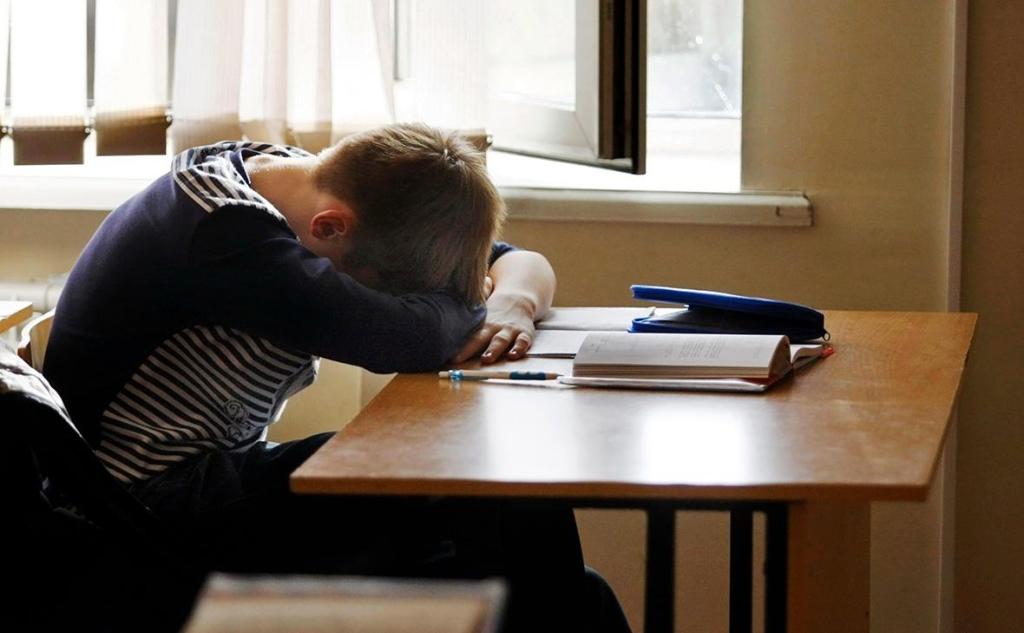
The Russian state is keen to foster loyal young people. We have already recounted how the authorities have clamped down on liberal universities and brought them to heel, rewritten school history textbooks, and shut down independent educational projects. But this is just the tip of the iceberg.

Today, the website Protocol and the YouTube channel RZVRT claimed that college students in Tatarstan’s Alabuga Special Economic Zone have been made to assemble [Iranian] kamikaze drones. They face expulsion and a fine of 1.5 million rubles if they refuse to do it. Students also have to play paintball, and the losers are forced to dig trenches and are “executed” with paintball guns. Two cases of suicide have already been reported. In addition, the college management tricks female students from African countries into doing the dirtiest menial labor.

“‘Alabuga: producing death with the hands of death.’ The second part of Protocol and RZVRT’s joint investigation of Alabuga. We talk about how students are forced to dig trenches and assemble Iranian Shahed drones, about how students from African countries were lured into applying to the college through Tinder, and about how the leadership of the special economic zone treats students.” Protocol (YouTube), 24 July 2023 (in Russian)

This is not the only such case. The authorities in Russia have recently been inspired by the idea of free child labor, including for the needs of the army fighting in Ukraine.

Thus, on July 20, the State Duma immediately passed in its second and third readings a bill on “community service” for schoolchildren. Children will now have to clean classrooms, plant trees at school, and help in the library on a “voluntary-compulsory” basis. Permission from parents will no longer be required for this. Commenting on the new law, State Duma Speaker Vyacheslav Volodin said that “only through labor can one cultivate an attitude to many issues that [the child] will later need to solve. The child will grow up different. Harmony will come.”

“Community service” goes hand in hand with the militarization of schools. During “basic training” lessons, children will learn how to pilot drones. “Today’s army is not only the Kalashnikov assault rifle, but also advanced unmanned vehicles,” said Federation Council member Artyom Sheinin.

From September 1, military training will be introduced for pupils in grades ten and eleven. Among other things, children will practice military greetings, drilling, handling small arms, combat actions, and first aid during hostilities.

And the name of subject itself, “Fundamentals of Security and Vital Activity,” in which schoolchildren study the basics of military affairs, has been changed by the State Duma to “Fundamentals of Security and Protection of the Motherland.”

There are also serious changes to the history curriculum. In September, high school students will get new textbooks featuring chapters about the “special military operation.” They will be told that:

  • Kiev “secretly colluded with NATO.”
  • Peace in Crimea was preserved by the “polite people”, that is, by the unidentified Russian soldiers who seized the peninsula in March 2014.
  • It was the West’s fault that new “Minsk agreements” were not signed.
  • Ukraine wanted to get its hands on nuclear weapons.
  • The war, which was the Kremlin’s only option, has “consolidated society.”
  • There is a “fake news industry” in the world that allegedly lies about the Russian army’s actions in Ukraine.

Schoolchildren will also be made to read excerpts from Putin’s speeches and look at a map of Russia that includes the occupied territories in Ukraine.

The refusal of State Duma deputies to raise the lower limit of the draft age from 18 to 21 is part and parcel of the same series of initiatives for turning schoolchildren into propagandized soldiers. Deputies claims that there are a lot of young people who want to go to serve right after leaving school. Meanwhile, universities are raising tuition fees, effectively introducing income barriers to higher education.

Children must learn in advance how to shoot, assemble deadly drones, pilot them, and love the Motherland. The Russian state doesn’t seem to need anything else from them.

Source: “Children are forced to march in formation, assemble drones, and study Putin’s speeches,” I Don’t Get It newsletter (Mediazona), 24 July 2023. Translated by the Russian Reader

Spikery, or, How to Give Aid and Comfort to Fascist War Criminals While Making Lots of Money

It’s funny the things you find in your email inbox in the morning. This morning, as usual, I found mailers from many of the Russian and English-language online newspapers I read, including Petersburg’s humble but always revealing business daily Delovoi Peterburg.

Today’s big news was that police had searched the head office of Bukvoyed, one of Russia’s largest bookstore chains.

Founded in 2000, Bukvoyed (“Bookworm”) has 140 stores around the country.

A source at Bukvoyed told Delovoi Peterburg the search had nothing to do with the company per se but with one of its business partners.

If you have been monitoring the fortunes of Russian business under the Putinist tyranny, a crony state-capitalist regime, run by “former” KGB officers as if it was the Soprano mob, only a million times nastier, you would know it has not been easy to do business of any kind in Russia during the last twenty years. The country’s current prime minister and ex-president, Dmitry Medvedev, once famously said the regime’s vast police and security apparatus, known collectively as the siloviki, needed to stop “nightmaring” (koshmarit) business.

He also famously said, when he was president, that his country was plagued by “legal nihilism.”

Although he was right on both counts, Medvedev did nothing about it. Since the brief, supposedly more “liberal” period when he was freer to speak his mind because, technically, he was the most powerful man in Russia, the nightmaring of business (and nearly everyone else who makes themselves a target by doing anything more ambitious than hiding their light in a bushel) has only got worse, and legal nihilism, along with anti-Americanism, homophobia, xenophobia, and neo-imperialism, has become even more entrenched as part of the Kremlin’s unwritten ideology and, thus, a guidepost for how Russia’s police, security agencies, prosecutors, and judges deal with “criminals.” 

As Denis Sokolov recently argued in Republic, the siloviki have established a system of “police feudalism” in Russia under which the FSB, the Russian Investigative Committee, the Interior Ministry, the Russian Prosecutor General’s Office, the Russian National Guard, the tax police, and other state security agencies have divided the country into fiefs, bits of “turf” where they are almost entirely free to shake down, rob, nightmare, and legally nihilize whomever and whatever they want under a set of unwritten rules outsiders can only guess at.

After reading about Bukvoyed’s legal-nihilistic woes, then, I was startled by the banner ad I found at the bottom of the page.

mooks“Synergy Global Forum, October 4–5, 2019, Gazprom Arena, Saint Petersburg. Arnold Schwarzenegger. Grant Cardone. Michael Porter. Randi Zuckerberg. Ichak Adize.” Ad courtesy of Delovoi Peterburg
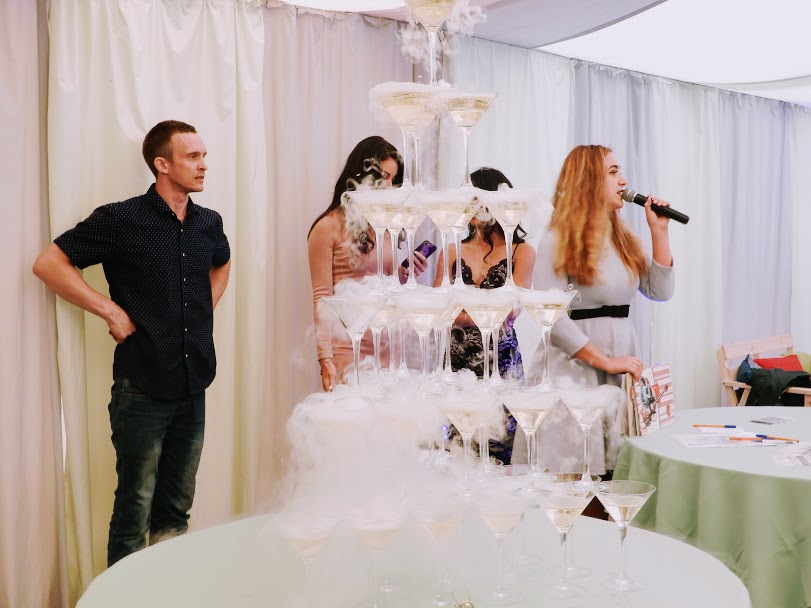
Referred to, hilariously, as “spikery” (“speakers”) on the Russian version of the Synergy Global Forum’s website, these five greater and lesser lights of global capitalism have been, no doubt, promised or paid extraordinarily hefty fees to keynote this hootenanny in the belly of the crony state-capitalist beast.

Formerly known as the Zenit Arena (after the city’s Russian premier league football team, FC Zenit, owned by state-controlled Gazprom), even the venue itself, the Gazprom Arena, is a monument to the mammoth crookedness, thuggery, violence, and corruption replicated all over the world’s biggest country every day for the last twenty years by the Kremlin’s minions.

But you would never know that by reading the cheery boilerplate on the Synergy Global Forum’s website.

Gazprom Arena is the most visited indoor stadium in Eastern Europe, second only to the famous Wembley in London. The main feature of the project — a sliding roof, which allows you to carry out activities in a comfortable environment at any time of the year and in all weather conditions. Large capacity, modern technical equipment, and two-tier parking make Gazprom Arena one of the best venues for major festivals, exhibitions, and business conferences.

More important, however, is the ostensible point of all this spikery, other than making lots of money for everyone involved.

Synergy Global Forum has been held since 2015. The first Forum gathered 6,000 participants and became the largest business event in the country. Two years later, we broke this record and entered Guinness World Records — 25,000 entrepreneurs and top managers participated at SGF in Olympiyskiy in 2017. This year we set a new big goal — to gather 50,000 participants from all over the world at SGF 2019 in St. Petersburg. Synergy Global Forum not only gives you an applied knowledge, but also motivates and inspires to global achievements, gives the belief that any ambitious goal is achievable. What goals do you set for yourself?

Aside from being one big [sic], this sampling of spikery reveals that the apocryphal gospel of Dale Carnegie and other “good capitalist” snake oil salesmen is alive and well and making waves in a place like Russia, where it could not be more out of place.

I don’t mean that Russia and Russians are “culturally” or “civilizationally” incompatible with self-improvement, the power of positive thinking, and other tenets of American capitalist self-hypnosis. If you had spent most of your adult life in Russia, as I have, you would know the opposite is the case.

Unfortunately. Because what Russia needs more than anything right now is not more navel-gazing and better business practices, but regime change and the rule of law. Since I’m a democratic socialist, not a Marxist-Leninist, and, I hope, a realist, these things cannot come about other than through a revolution in which Russia’s aspiring middle classes, at whom snake-oil festivals like the Synergy Global Forum are targeted, join forces with the grassroots, who have been nightmared and legally nihilized in their own way under Putin.

One of the first things a new bourgeois-proletariat Russian coalition government would have to do, aside from prosecuting and imprisoning tens of thousands of siloviki and banning them from politics and the civil service for life, would be to disentangle the country from its current incredibly destructive armed and unarmed interventions in conflicts in other countries, starting with Ukraine and Syria.

What does the Synergy Global Forum and its sponsor, Synergy Business School have to do with such seemingly distant and terribly messy international politics? Well, this:

The school has branches in 26 Russian cities, as well as a unique campus in Dubai, which is home base for an international MBA program for students from the UAE, Yemen, Saudi Arabia, and Iran.

So, in fact, Synergy Business School is in the business of equipping people from some of the world’s most powerful and aggressive theocratic, monarchist, and crony state-capitalist tyrannies with MBAs while claiming its core values are “openness to newness, commitment to development, and intelligence.”

You can say I’m a dreamer but I am nearly sure SBS’s core values are completely at odds with the neo-imperialism, neo-colonialism, militarism, hostility to civil and human rights, and fascism of the current regimes in Russia, Saudi Arabia, and Iran.

I write this not because I believe in building a “better” capitalism (I don’t), but because I am nearly sure one party to this mass chicanery, including the invited spikery, does believe it is possible to do just that and thus “peacefully” transform these countries into slightly quirky versions of Australia and Canada. (For the record, I don’t for a minute believe these supposedly democratic countries have no problems of their own with human rights, etc.)

That is not going to happen if only because, at another level, carefully hidden from the incurious eyes of the people who go to such events, their real purpose is to whitewash these regimes, make them more attractive to foreign investors, and expand their international networks of shills and useful idiots.

I learned this valuable lesson about Putinist Russia by carefully following the amazing career of Vladimir Yakunin, another “former” KGB officer and fellow Ozero Dacha Co-op member who could write a textbook about how to co-opt distinguished foreign academics, decision-makers, and journalists into, mostly unwittingly, toeing the Putinist line.

It comes down to this. Why are Arnold Schwarznegger, Randi Zuckerberg, and their fellow 2019 Synergy Global Forum spikery so willing to help whitewash a gang of fascist war criminals who are also at war with their own people?

Since there is no good answer to this question, they should be arrested upon their return from the forum and charged with colluding with hostile foreign powers.

If you don’t understand what I mean by “fascist war criminals,” please read the article below. // TRR

______________________________________________________

Russia and Assad are butchering Syrian civilians again. No one seems to mind
Terry Glavin
National Post
July 24, 2019

Maybe it’s because of the guilty anti-interventionist conscience of the world’s comfortable liberal democracies, or because it’s now an article of respectable faith in the NATO capitals that Syrian lives simply aren’t worth the bother. Maybe it’s just that we’ve all become so accustomed to reports of slaughter and barbarism in Syria that it barely warrants public attention at all.

Whatever the reason, or excuse, Russian foreign minister Sergei Lavrov is finally having his way in the Syrian governorate of Idlib, and the world barely notices.

It’s been nearly a year since Lavrov expressed his desire that the “abscess” of Syrian resistance in Idlib, a sprawling province that borders Turkey in Syria’s northwest, be “liquidated.” It’s been nearly a month since 11 humanitarian organizations came together with the United Nations Office for Humanitarian Affairs to warn that “Idlib is on the brink of a humanitarian nightmare unlike anything we have seen this century.”

We’ve reached that brink now. Just this week, 66 civilians have been killed and more than 100 non-combatants wounded, the UN reports, in a series of bombing runs carried out across Idlib. The worst massacre was an airstrike Monday on a public market in the village of Maarat al-Numan. At least 39 people were killed, among them eight women and five children.

Since the Syrian dictator Bashar Al-Assad’s barrel bombers and Russia’s fighter-bombers began their recent offensive in Idlib on April 29, the Syrian Observatory for Human Rights has tallied 2,641 casualties. The UN counts 400 civilian deaths, but there is no accurate count of the dead and injured in Syria anymore. The wounded lie dying in the rubble of bombed buildings. At least 25 hospitals and clinics in Idlib have been destroyed since April 29, bringing the number of health centers deliberately targeted since 2011 to about 570. More than 800 health workers have been killed.

Three years ago, when the UN and monitoring agencies stopped counting, the Syrian dead were numbered at 500,000. In the face of these most recent war crimes and atrocities, the UN’s humanitarian affairs office has been reduced to begging Assad and Lavrov to ease up to allow humanitarian aid into Idlib’s besieged districts, and pleading with Russia and Turkey to uphold the terms of a year-old memorandum of understanding that was supposed to demilitarize Idlib. Fat chance of that.

The Kremlin-Ankara pact arose from negotiations that began in the months following the 2016 fall of Aleppo, where thousands of Syrian civilians were slaughtered by Vladimir Putin’s air force in the course of the Kremlin’s commitment to Assad to help bomb the Syrian resistance into submission. Joining with Russia and Iran, Turkish strongman Recip Erdoğan entered into a series of talks in Astana, Kazakhstan, that eventually led to an agreement to establish Idlib as a jointly-patrolled “deconfliction zone.”

A series of these de-escalation agreements have each in their turn become death traps. In Homs, in Ghouta, in Quneitra, the pattern has repeated itself. Weakened by starvation sieges, and bloodied by Russian fighter jets, Assad’s barrel bombs, ground assaults by Iran’s Hezbollah units and multiple chemical attacks — sarin, chlorine, napalm — Syria’s various and fractious resistance outfits have surrendered several cities and towns on the promise of safe passage with their families to one or another de-escalation area. Convoys of buses carry them across the countryside. They settle in, and then they come under attack again.

Until April 29, Idlib was the last of these demilitarized zones, and by then the population had doubled to three million people. Among Idlib’s recent arrivals were civilians fleeing the Syrian carnage who had not been able to join the six million Syrians who have managed to escape the country altogether. But the newcomers also include members of various armed opposition groups, and the Assad regime has deftly manipulated its “de-escalation” and safe-passage arrangements to pit those groups against one another.

More than a dozen safe-passage agreements struck prior to the Kremlin-Ankara arrangement amount to what democratic opposition leaders have called ethnic cleansing and “compulsory deportation.” Most of the opposition groups that submitted to them have ended up in Idlib. Among them: Islamic State fighters from Yarmouk, and the jihadist fronts Ahrar al-Sham and Jaish al-Fatah from districts around Aleppo and Damascus.

What this has meant for Idlib is that the mainline opposition in the Turkish-backed and formerly American-supported Syrian Interim Government has been losing its hold on the governorate, and its democratically elected local councils have come under increasing pressure from the Hay’at Tahrir al-Sham jihadist coalition. And now that Assad’s Syrian Arab Army has been moving in from the south, and Russian and regime bombs are falling from the skies, tens of thousands of civilians are on the move again.

More than 300,000 people are on the roads, most of them headed towards Turkey, but Turkey has already taken in half of Syria’s six million refugees and the Turkish border is now closed to them. More than 1,000 Turkish troops are patrolling Idlib’s northern countryside as part of the Astana accord, and they won’t let the Syrian civilians pass. Humanitarian groups report that hundreds of Syrian refugees have been picked up in Istanbul in recent weeks and deported back to Syria.

“Yet again innocent civilians are paying the price for the political failure to stop the violence and do what is demanded under international law — to protect all civilians,” is the way UN Humanitarian Coordinator Mark Lowcock puts it. “Our worst fears are materializing.”

No help is coming from Europe. The European Union has made its peace with Ankara — Erdoğan prevents Syrian refugees from sneaking into Greece or Bulgaria or setting out in leaky rafts into the Mediterranean, and Europe looks the other way while Erdoğan deports Syrian refugees back to the slaughterhouse of Idlib.

Neither is any help coming from the United States, where the Kremlin-friendly Trump administration is balking at the idea of imposing sanctions on Turkey for buying into Russia’s S-400 missile system, and is otherwise continuing the Obama administration’s policy of thinking about mass murderer Assad as somebody else’s problem.

And then there’s Canada, where we’re all supposed to congratulate ourselves for having high-graded the best and brightest Syrians from the UN’s refugee camps, and we expect the Syrian refugees we’ve taken in to be grateful and to forgive us all for standing around and gawping while their country was turned into blood, fire, and rubble.

Whatever our reasons, or excuses, Idlib is being liquidated, a humanitarian nightmare is unfolding in Syria again, and hardly anybody notices.

Grigorii Golosov: The Year 2020

DSCN6650Living it up with Russia’s shrinking “middle class.” Sulphur Island, St. Petersburg, 19 May 2018.  Photo by the Russian Reader
Grigorii Golosov
Facebook
February 5, 2019

Many people have been citing a 2008 article in Rossiiskaya gazeta.

“By 2020, Russians will be earning an average of $2,700 a month, a family of three will have no less than 100 square meters of living space, and the middle class will constitute over half of the population.”

This is a paraphrase of the “Social and Economic Development Strategy to 2020,” drafted at the time by the Russian Economic Development Ministry.

The article goes on.

“Experts have already dubbed the strategy a ‘breakthrough scenario’ that will see Russia establishing itself as a leading world power by 2020.”

The Economic Development Ministry was wrong, of course, but the experts were right. Russia has already established itself as a world power, albeit in roughly the same sense as North Korea and Iran. It has gone even farther. Iran and North Korea, at least, are not in everyone’s face all the time, while Russia butts in everywhere nowadays.

We should look for the root of the Economic Development Ministry’s mistake in the machinations of Russia’s enemies, of course, although the reason Russia has so many enemies is to be sought in the circumstances that also explain its promotion to the same league as North Korea and Iran.

That is the intriguing dialectic at work here.

Translated by the Russian Reader

Persian Rugs

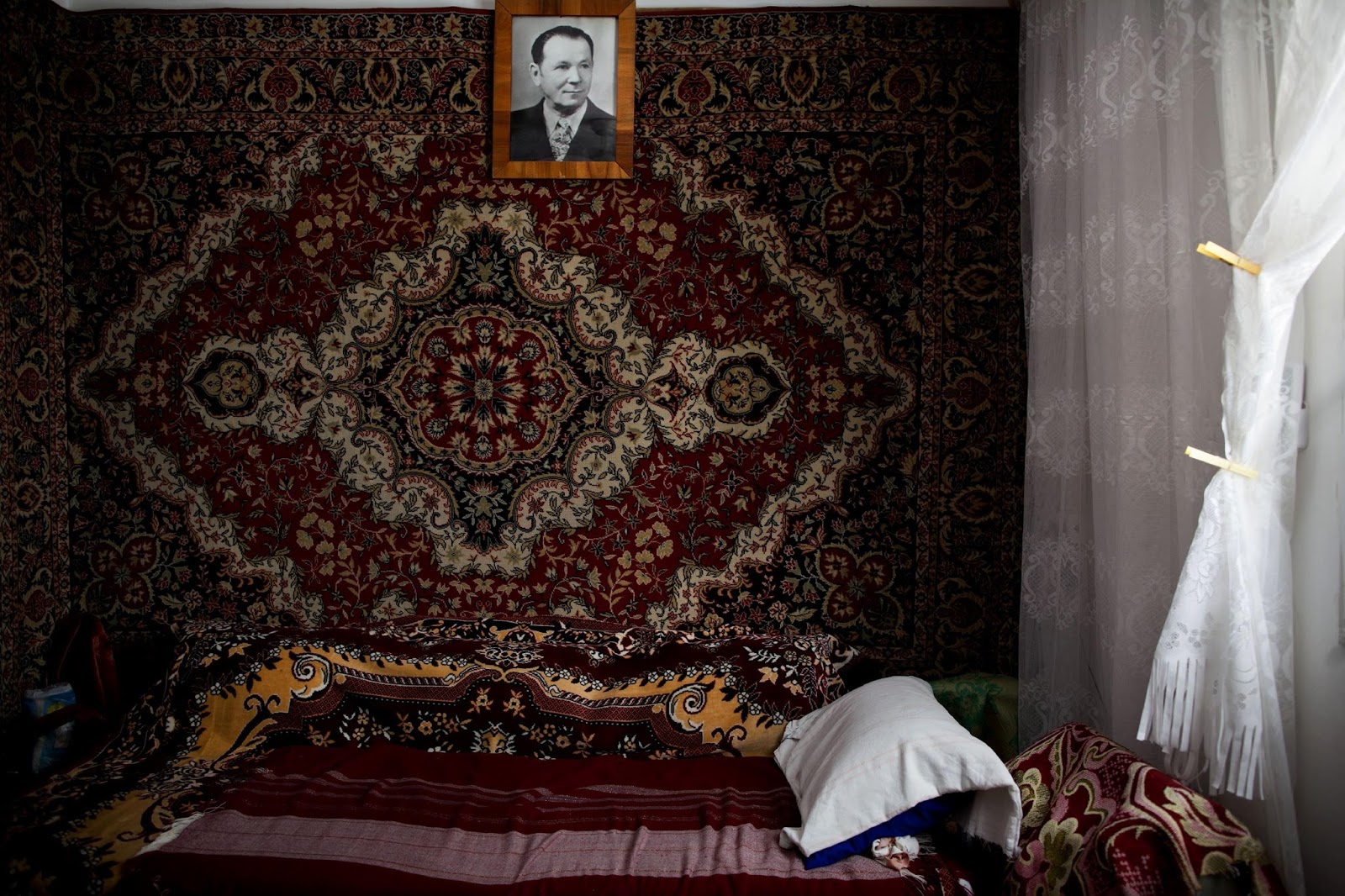
russian_carpet_on_the_wall

Antrr Ra
Facebook
January 2, 2018

For several days, Iranians have been openly protesting the corrupt system in their country. They have been protesting not only in the capital Tehran but also in at least fifty other cities. They had been promised more freedom and openness in terms of how the country’s budget is spent, and prices for food have been skyrocketing.

In Russia, the authorities have not promised anyone anything for a long time, and people have been staying at home, looking forward to the upcoming presidential elections.

Translated by the Russian Reader. Thanks to Anatrr Ra for their kind permission to reproduce their remarks on my website. Photo courtesy of correctlydesign.com