Evgeny Shtorn: How the FSB Tried to Recruit Me

“I Had a Night to Say Goodbye to My Whole Life”
Sociologist Evgeny Shtorn Left Russia Because the FSB Tried to Recruit Him
Elena Racheva
Novaya Gazeta
January 20, 2018

On January 5, sociologist Evgeny Shtorn, an employee at the Centre for Independent Sociological Research (CISR) in St. Petersburg, left Russia for Ireland. In December, his application for Russian citizenship was rejected, and immediately afterwards he was summoned to the Russian Federal Security Service (FSB), according to Shtorn, where he was interrogated about CISR’s financing and the foreign organizations it collaborates with. (Since 2015, the CISR has been classified as a “foreign agent.”) According to CISR director Viktor Voronkov, Shtorn is at least the fourth CISR employee whom the FSB has attempted to recruit.

Shtorn was born in the Kazakh Soviet Socialist Republic, but in 2000 he left the country to study in Petersburg. In 2004, he was granted Russian citizenship at a Russian consulate in Kazakhstan. He lived for eight years on his Russian passport, but in 2011 he was told by authorities the passport had been issued groundlessly, and he was not a Russian citizen.

Shtorn’s Kazakhstani citizenship had been annulled long before, but he found himself a stateless person after living in Russia for eleven years. The only paper the authorities would issue him was a residence permit for a stateless person, which allowed him to live and work in Russia. After five years, one can apply for Russian citizenship on this basis. This was what Shtorn did in July 2017, after passing the obligatory Russian language exam, assembling a whole dossier of paperwork, and standing in endless queues.

During this time, Shtorn, who is thirty-five, enrolled in the Higher School of Economics MA program and continued working as manager for development at CISR, one of the oldest and most respected independent sociological research institutes in Russia.

“I went to the local Federal Migration Service (FMS) office in late November to pick up my passport,” Shtorn recounts. “I was told my citizenship application had been rejected because I had provided false information about myself. The FMS had decided I did not lived at my registered address, because they had come checking in the afternoon, when I was not home, and I had not listed all the addresses where I had lived in Russia, although in the application I filled out there was a footnote saying I was not obliged to list all of them.”

The rejection meant Shtorn could resubmit his application for citizenship only in a year. Two weeks after his application was rejected, Shtorn was telephoned by a person who identified himself as an FMS employee. He said he was handling Shtorn’s application and asked him to stop by their office.

On December 7, Shtorn went to the FMS office that handles the registration of statelesss persons.

“I was met by a person my age. We went up to the second floor and walked into an office with no plaque on the door,” Shtorn recounts. “I caught sight of a picture of Andropov on the wall, an old-fashioned, insipid, Soviet-era portrait. I immediately understood everything.”

The man showed Shtorn a FSB officer’s ID. Shtorn did not remember his rank, but he did memorize his name and surname, but he is afraid of identifying him publicly.

“He quickly got down to business,” recalls Shtorn. “He said when the FSB reviewed my application, they were quite surprised I worked for a ‘foreign agent’ and at the Higher School of Economics, although I am actually a student there. He asked me what I did at CISR. He was polite, but his vocabulary was bizarre. ‘Who is your patron?’ he asked. I explained we did not have patrons, that researchers operate differently. There are things a person wants to research, and he or she tries to research them. To have something to say, I told him about Max Weber, and the difference between quantitative and qualitative sociology.”
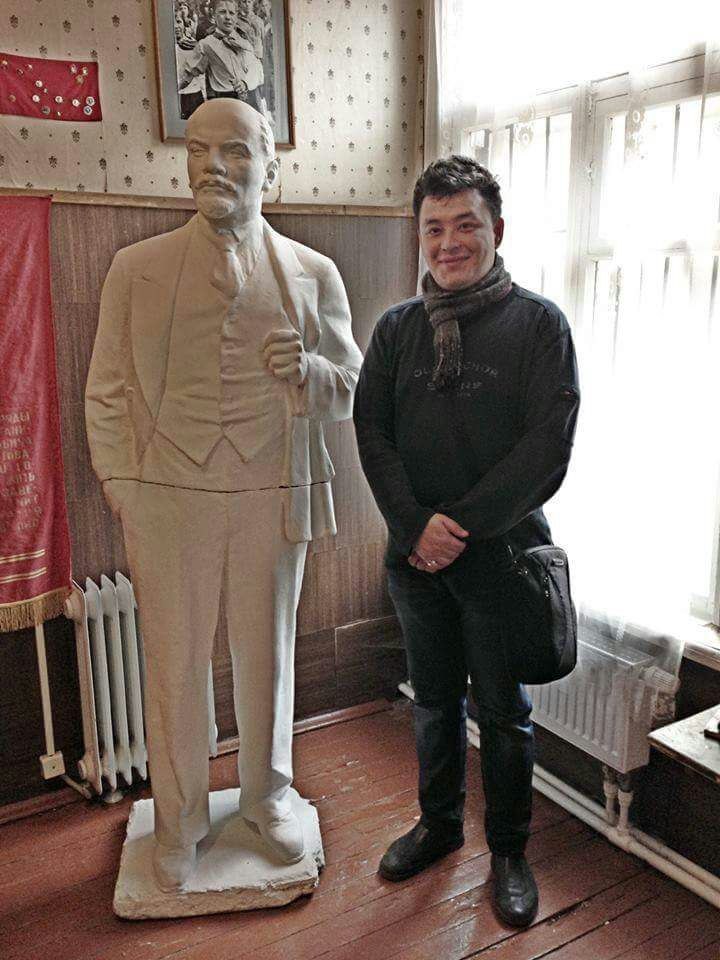
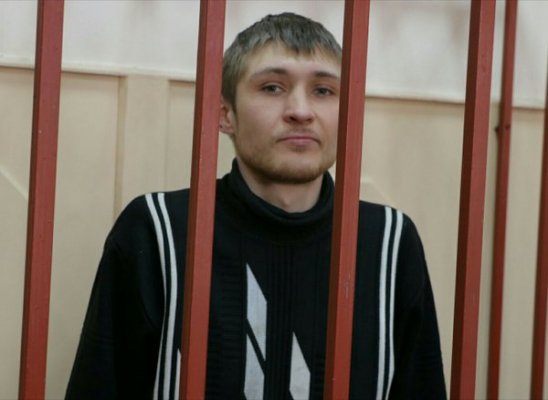
Evgeny Shtorn. Photo from his personal archives

Then, according to Shtorn, the FSB officer asked him where the “foreign agent” got its money and what western foundations CISR worked with.

“I said, ‘What, do foreign agents have money? The American foundations you declared undesirables are gone, and we have big problems with financing.’

“‘So people transport cash from abroad, right?’ he asked.

“I explained I didn’t have a passport, I hadn’t been abroad for many years, and I didn’t have access to those realms, but I didn’t think anyone was transporting cash in their underwear. Then he asked whether I had met with foreign intelligence officers as part of my job.”

According to Shtorn, the FSB officer was well informed about the work of Shtorn, CISR, and related organizations. He knew about academic conferences and listed the surnames of foreign foundation directors, asking whether Shtorn was acquainted with them. He asked what Shtorn was researching at the Higher School of Economics, although he clearly knew Shtorn was researching hate crimes against LGBT. He asked what foreign languages Shtorn spoke.

“Is English your working language?” he asked.

According to Shtorn, the FSB officer was not aggressive, but twice during their ninety-minute conversation he quoted the articles in the Russian Criminal Code covering espionage and treason, commenting they applied to everyone who flirted with foreign special services and foreign organizations.

In the middle of the conversation, the FSB officer asked him whether he had read Zbigniew Brzezinski’s book The Grand Chessboard.

“He said that, way back in the nineties, Brzezinki had written Ukraine would go over to the US in 2012, and this was what had happened. He advised me to read the book.

“At the end of the conversation, he said, ‘How unlucky you were with your citizenship application.’ He explained he was unable to help me in any way. ‘Many believe we are an all-seeing eye, but it’s not like that at all. We also have a tough time obtaining information.’

“He insisted I tell no one about our conversation. When I was getting ready to leave, he said, ‘If I call you again, you won’t be scared? Because some people get scared and change their telephone numbers.’ I said, ‘Of course not. You’re a polite person. What do I have be afraid of?’

“‘And you are such an interesting person, and educated. It’s interesting to chat with you. Thank you for your time,’ he said.

“We left the office, and that was when I caught sight of a bust of Felix Dzerzhinsky behind the coat rack, a life-sized bust.

“‘And here is Felix,’ the FSB officer said.

“I left.”

The FSB officer telephoned Shtorn the very next day. According to him, the FSB officer suggested meeting for coffee.

“I realized that was that. They were going to try and recruit me,” says Shtorn.

He believes if he had refused to work for the FSB, as a stateless person he would have been sent to the Temporary Detention Center for Migrants.

“I felt paranoid,” says Shtorn. “I imagined the FSB had access to all my channels of communication, that they could see all my emails. They realized I had nowhere to go, that without papers I was caged. I realized I had to make a run for it, so I turned to Team 29, LGBT Network, and Civic Control. I got a lot of help from human rights activist Jennifer Gaspar. In 2014, she was also invited to have a chat with the FSB, who stripped her of her residence permit and expelled her from Russia. Jennifer put me in touch with Front Line Defenders, who asked the German, Lithuanian, French, and US governments to issue me a visa. They all turned us down, saying they could not put a visa in a residence permit.”

On the evening of December 21, Front Line Defenders informed Shtorn Ireland was willing to issue him a visa. The next morning he had to fly to Moscow, apply for the visa at the Irish Embassy, and fly to Ireland without any hope of ever returning to Russia.

“I had a night to say goodbye to my whole life,” recalls Shtorn. “It felt like I was standing on the edge of an abyss and jumped off.”

In Moscow, it transpired that, due to the short working day, the Irish consular officials would not have time to draw up his visa, and he flew back to Petersburg. He obtained the visa only on January 4. The next day, he tried to board a Lufthansa flight to Dublin, but the airline refused to let him board the plane. The German Federal Police had informed the airline it would refuse to let a person with a residence permit enter the transit zone. It was clear Shtorn would not be allowed to fly via any of the EU countries. The next flight from Domodedovo Airport to Dublin had a stopover in Moldova.

“I went to the check-in counter,” recounts Shtorn. “The folks there were reasonable. They realized a person with an Irish visa would not want to stay in Chișinău. I bought a ticket. There was 45 minutes until boarding, and the whole time I sat waiting for them to come for me. When the plane took off, I started shaking.”

Shtorn is now in Dublin on a three-month short-term visa.

“Thanks to Front Line Defenders I have a place to live and money for food,” he says. “I don’t know what will happen next. I cannot go back to Russia. If my situation was bad, now I have made it worse. Initially, I wanted to keep mum, but I decided I had to warn the employees of other NGOs. When the law on ‘foreign agents’ was enacted, it stated the penalties did not apply to people who worked for such organizations. My story shows this is not the case.”

•••••
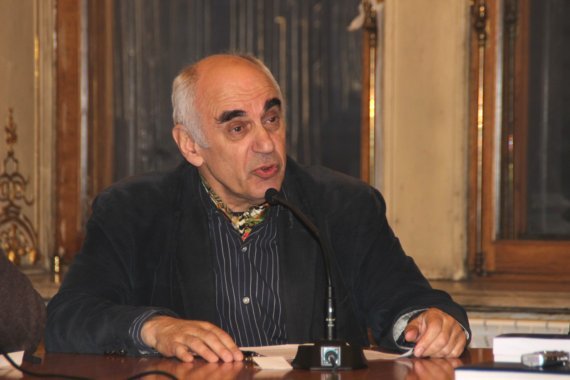
Фото: «Новая газета»

Viktor Voronkov, director, Centre for Independent Social Research (CISR), Petersburg 

Of course, the FSB is interested in CISR. Four of our employees have approached me and said, “They’re trying to recruit me. What should I do?” I think they have tried to recruit nearly everyone at CISR. Some have told me, others have turned them down and not told me, and still others, perhaps, did not turn them down. In conversation with the people they were trying to recruit, FSB officers have mentioned numerous facts they could have learned only from our employees.

It is normal. I know the practice well from the Soviet Union. When they tried to recruit me in 1981, they also asked questions that came out of left field. “Maybe you could describe your critical view of things at the institute? Maybe we could work together? You want to help the Motherland, don’t you?” They always associate themselves with the Motherland. They offered me help traveling abroad via the Soviet-East German Friendship Society. They blackmailed me.

I met with them three or four times. One time, a KGB officer tried to take me into a cubbyhole under the stairs at the institute to work me over. He looked in there, said, “Excuse me,” and closed the door. Another officer was already working someone over in the cubbyhole.

You can get rid of them. They have the right to recruit, and we have the right to turn them down. When they tried to recruit a pal of mine, he simply opened the door of his officer and shouted, “Get the hell outta here!” The KGB guy left. But I do not advise anyone to start talking with them. You cannot win against them. Nowadays, I advise my employees to give FSB guys the bum’s rush.

They tried to blackmail our other employees over trifles, but they were not as vulnerable as Evgeny was. I told him him to pay no mind to the blackmail, but it was not worth taking risks in his position. When a person is guided by fear, it is better to give into that fear.

I think we have to talk about such stories publicly. We could do a flash mob hashtagged #HowTheyTriedToRecruitMe. If there is no public oversight of the KGB, it means the KGB oversees society.

I realize this story could affect CISR, but we have been taking different measures to soften the blow. CISR is currently split. The majority of our employees argues we should disband the center and establish a new one. The minority argues we should not surrender. I have taken the most radical position. Everyone wants to find the means to survive. I want to show there is way to fight we can fight to the end. I hope to their end, not ours.

Translated by the Russian Reader
Petersburg Enviromental Rights Center Bellona Declared “Foreign Agent”

OLYMPUS DIGITAL CAMERA

Petersburg Environmental Center Bellona Declared Foreign Agent 
Interfax
January 16, 2017

On Monday, the Russian Federal Justice Ministry placed the Petersburg enviromental organization Bellona on its list of “foreign agents,” according to the ministry’s website.

“The fact that the organization bears the hallmarks of a non-profit organization, performing the functions of a foreign agent, was established during an unscheduled site inspection carried out by the Justice Ministry’s St. Petersburg office,” read the message on the website.

In March 2015, the Justice Ministry placed the non-profit public environmental organization Bellona Murmansk on the list of “foreign agents.” Six months later, the organization closed.

The non-profit public organization Bellona was formed in 1986. Its central office is in Oslo. Two branches of the environmental organization operated in Russia, in Murmansk and St. Petersburg.

Translation and photo by the Russian Reader; the emphasis is mine

___________

Environmental Rights Center Bellona called a ‘foreign agent’ by Russian government
Charles Digges
Bellona
January 16, 2017

In a troubling development for international ecological groups that deal with questions of Russia’s Cold War nuclear legacy, Moscow’s Justice Ministry on Monday named the Environmental Rights Center Bellona as a “foreign agent.”

ERC Bellona, founded by Alexander Nikitin in 1998, became the 158th organization tarred with the foreign agent label since the restrictive 2012 Law on NGOs came into effect.

Nikitin said the group had been undergoing a so-called unplanned check since before the New Year, and had been told it would receive written notification about its status from the Justice Ministry by December 25.

But that date came and went with no notice. Nikitin first learned of the new designation Monday, when Russia’s state newswire TASS began reporting on the organization’s designation as a foreign agent.

bodytextimage_nikitin4833.JPG

ERC Bellona Chairman Alexander Nikitin (Photo: Bellona)

Nikitin was undeterred by the news.

“We expected this decision,” said Nikitin. But he also said it would not impede the organization’s mission.

“This means that we will continue working,” Nikitin said.

“We won’t throw aside our very important work over such small change,” he said. “All of our projects remain, all of our people will remain, and we will find ways to continue our work.”

The group has long had a turbulent relationship with officialdom. When it was founded, Nikitin was on trial for supposedly revealing state secrets in a Bellona report on the decrepit state of Russia’s northern nuclear fleet.

In 2000, Nikitin was fully acquitted by the Russian Supreme Court and became the only individual to ever be cleared of treason charges leveled by Russian or Soviet security services.

The report he and Bellona wrote then became a guidepost document for western governments that wanted to invest in helping Russia secure its Cold War legacy of decommissioned nuclear submarines and military nuclear waste, programs that continue successfully to this day.

ERC Bellona has helped target more than $3 billion worth of international funding to dismantle 200 derelict submarines and other floating nuclear hazards in the Arctic region, like the Lepse nuclear service ship.

The group has also been instrumental in decades-long joint efforts between Norway and Russia to clean up the notorious submarine maintenance base at Andreyeva Bay.

Bellona’s efforts were jeopardized in 2012 when the Russian government passed its NGO law stipulating that non-profits operating in whole or in part on foreign funding must register themselves as “foreign agents” with the Justice Ministry if they engage in broadly defined “political activity.”

The Ministry in 2014 was given broad powers to name foreign agents on its own.

The law has shuttered more than a third of NGOs in the country, one of which was Bellona’s oldest Russian office, Bellona Murmansk.

That group decided to disband itself rather than undertake considerable legal costs to have its name removed from the foreign agent registry.

The decision by the Justice Ministry to list ERC Bellona as a foreign agent dashes considerable recent hopes that the government might cease targeting environmental groups with the foreign agent label.

The Justice Ministry’s report said ERC Bellona was engaged in political activity for “publishing, including via contemporary informational technologies, opinions on decisions taken by the government and policies that it has adopted,” apparently a reference to Bellona’s Russian website, Bellona.ru.

The Justice Ministry also accused ERC Bellona of attempting to “form socio-political opinions and convictions.”

Nikitin has long said ERC Bellona has nothing to do with any kind of political activity. But amendments to the NGO law last year impossibly broadened the notion of political activity.

Those amendments, which were signed into law by President Vladimir Putin in June, “maximally restricted” what NGOs could do, said Nikitin.

Among the more exotic interpretations of what political activity is are the popular practice of sending open letters to Russian politicians at any level of government; participating in gatherings or demonstrations; criticizing laws passed by any level of government; using websites to air opinions about any decision made by the government, and any attempts to influence the drafting of legislation.

The police department in St. Petersburg had recently launched a campaign of demanding financial information from the city’s 158 nonprofits that accept some amount of funding from foreign sources.

The Scare

scary-2

In Putin’s Russia, the US has been the go-to scapegoat for years now for everything that goes wrong in the country, from crashes in the Moscow subway to, in this recent case, the fact that 15,000 people have signed an online petition calling for the mayor of Tomsk, a major Siberian city, to resign.

Let me repeat that. The shameless scapegoating of the US, usually in the demonic guise of the “Gosdep,” the US State Department, has been going on at all levels of Russian government, mainstream media, and society for many, many years.

It’s actually been going on in certain circles since the mid 1990s. I remember once watching a “documentary” on the local cable access channel back then outlining the CIA’s alleged plan to turn Russian youth onto hard drugs.

Putin, more pointedly, blamed the mighty Gosdep and Hillary Clinton personally for engineering the popular uprising against his regime during the elections of 2011–2012, although there was zero evidence this was the case.

So why haven’t we heard much of anything about this long-running, utterly baseless “red-white-and-blue scare” or “permanent scare”? (I don’t know what else to call it. If you have a better suggestion, let me know).

The scare has claimed lots of real victims, including dozens of Russian NGOs, most of them doing invaluable, irreplaceable work for their own people, not for the Gosdep, on shoestring budgets in terrible conditions, who have been branded “foreign agents” by the Russian Justice Ministry. Many of them have been forced to close up shop or go into exile because they weren’t able to deal with the heavy fines, court hearings, and endless inspections.

But we now have a US president-elect who took literally every opportunity he could during the campaign to gush over Putin and his “strong” leadership. Yet this fact alone—Trump’s flagrant, overt support for a war criminal, crook, and tyrant who has crushed civil society and political opposition in his own country—didn’t automatically disqualify Trump from consideration for the highest office in the land.

Let’s pretend that all the recent skullduggery around Trump isn’t true in the slightest. Would it make any difference?

Trump said time and again that Putin was his idol. Let’s take him at his word and oppose him, among the thousand other reasons we should oppose him, for that huge, steaming, glaring, stinking chunk of very bad, very telling judgment and, more important, not show him the slighest sympathy for the “hard” time he has recently been getting from the press, the White House, the intelligence community, and so on.

He deserves as good as he dishes outs, and what he has been dishing out for the last two years is pure, destructive fascist evil. That will remain true whether the Kremlin hacked anything or slapped together some kompromat on him or it didn’t do anything of the sort.

Trump doesn’t deserve a fair deal for the simple reason that he doesn’t want a fair deal for so many of his fellow Americans and lots of other people, starting with the Mexicans. Let’s treat him like the enemy he is instead of inadvertently defending him and Putinist tyranny to boot by conjuring up equally nonexistent “CIA coups” and God knows what else. TRR

________

How Hybrid Warfare Really Works

helena-ro%cc%88nka%cc%88-perhosia

This is how hybrid war really works.

Whenever the US and EU make a (usually milquetoast) move the Kremlin doesn’t like, the Kremlin responds by punishing its own citizens, either collectively or individually, through measures like the counter-sanctions against produce imports (involving the massive confiscation and destruction of perfectly good food in a country where the populace spends 80% of its income on essentials) or the “foreign agents” law, which the wildly misnamed Russian Justice Ministry has been implementing with sheer abandon the last couple of years, doing palpable damage to Russian civil society and social research in the process.

The latest victim in this war of attrition or “cold civil war” against what should be the Kremlin’s home team but which it treats as its sworn enemies is Moscow’s estimable SOVA Center. If the SOVA Center had not existed all these years, we would know 500% less about homegrown racism, discrimination, neo-Nazism, and the Russia state’s quirky battle against “extremism” than we actually do know thanks to the terrific research, monitoring, and analysis carried out by the SOVA Center.

But all the clueless blowhards currently having fun mocking and sending up the so-called red scare gripping, allegedly, the US and Europe, know nothing (or pretend to know nothing) about how the Putin regime has been chewing up the scenery at home for years, leaving an institutional and organizational void in its wake, and the grassroots pushback against this academic, cultural, and political scorched earth campaign. They could not care less about the “white” menace (if we’re getting our political colors right) that was unleashed years ago when Putin took over the country, and they are way too lazy to investigate the myriad of ways the Kremlin has been exercising its imperialist hard and soft power for years right out in the open.

So does it matter whether the Kremlin responded immediately or not to the expulsion of its diplomats? No, it doesn’t. It “gets back” at the Great Satan every single day by relentlessly pounding Russia itself into an unpalatable meat patty.

Now that’s “smart.”

Thanks to Comrade SH for the inspiration and Comrade GV for the heads-up. Drawing by Helena Rönkä, as published on the website of Verkauden Lehti newspaper on June 12, 2015.

Agents of H.A.R.V.A.R.D.

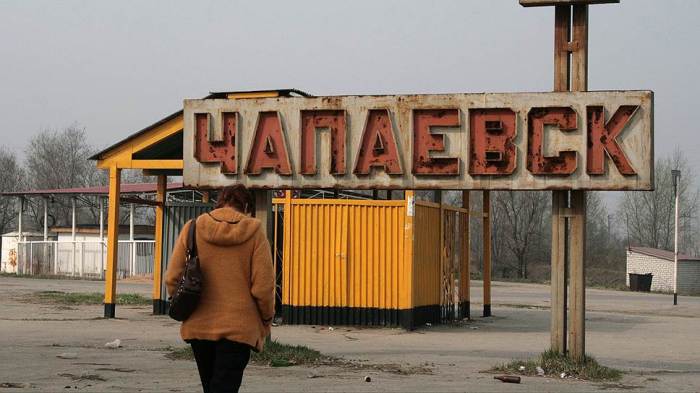
Chapayevsk. Photo courtesy of Yevgeny Bochkaryov/Kommersant

Harvard Agents Association
The Justice Ministry Has Fined an NGO for Medical Research
Alexander Chernykh
Kommersant
December 21, 2016

The Chapayevsk Medical Workers Association, an NGO in the Samara Region, has appealed the Justice Ministry’s decision identifying it as a “foreign agent.” The organization was cited for grants it has been receiving from Harvard for over twelve years to study the health of people who live in enivornmental disaster areas. The Justice Ministry additionally cited the work of its doctors in preventing HIV as “contrary to Russian national interests.” The association is on the verge of closure, despite the unprecedented support it has received from town officials, physicians, and the Russian Academy of Sciences.

The Chapayevsk Medical Workers Association was established in 1999.

“Chapayevsk produced pesticides for many years, which led to increased levels of dioxins,” says Oleg Sergeyev, head of the association and a Ph.D. in medicine. “Increased mortality was recorded in the town. The local hospitals were not coping due to a lack of funds and equipment. So the town’s doctors united into an NGO to try and solve the problem.”

Located 45 kilometers from Samara, the town, whose population is 73,000, was founded in 1909 as a settlement built round an explosives factory. In 1926, a chemical weapons factory went into operation, later converted into a fertilizer plant. In 1999, the State Ecology Committee declared the town an “environmental emergency area.” Chapayevsk received a total of 1.742 billion rubles in federal subsidies, and its status as an environmental emergency area was rescinded in 2005. In 2008, the mayor of Chapayevsk officially proposed resettling the city.

In 2003, the association launched a long-term research study, entitled “Dioxins, Pubertal Growth, and the Development of Boys,” in cooperation with the Harvard School of Public Health and the Russian Academy of Sciences.

“With the consent of their parents, we selected 516 boys between the ages of eight and nine, and have been carefully tracking their health every year since then. Now they are young men between the ages of 19 and 22,” says Oleg Sergeyev. “We have seen how the dioxins and pesticides have impacted the growth, development, and especially the reproductive health of the men.”

The researched has been funded by the National Institutes of Health in the US. In 2003, the NIH made a long-term research grant to the project, and in 2010, it extended the grant for another six years.

“During this period, we received 65.2 million rubles,” says Mr. Sergeyev. “34.2 million was spent on the salaries of seventeen staff members, 21.4 million rubles, on equipment and supplies, and 9.6 million rubles, on social benefit payments.”

The association’s second focus has been HIV prevention.

“In the late 1990s, Chapayevsk ranked third in the region in the spread of HIV,” says Mr. Sergeyev. “This was due to injecting drug use. The drugs were easily accessible here.”

Physicans hit the streets to engage in harm reduction work, which has involved them in meeting with drug users, handing out brochures and free condoms, persuading people to get tested for HIV, collecting used syringes, and supplying clean syringes. Harm reduction programs in Chapayevsky have covered around 800 people annually (a little over one percent of the population). According to doctors, this is around a third of the town’s injecting drug users.

In 2014, the Justice Ministry’s regional office audited the association twice, concluding the NGO was not engaged in political activity. In October 2016, these very same officials changed their opinion and demanded the association be added to the list of “foreign agents.” The Justice Ministry’s Samara office failed to respond promptly to our request for information, but Kommersant has obtained a copy of the audit report. Officials deemed it a violation that Oleg Sergeyev sits on the Samara Regional Duma’s NGO Council and has been involved in the hearings of two committees, on physical education and healthy lifestyles, and on providing social services to the populace. In 2013, one commission recommended that regional MPs ban cigarette ads at public transport stops and in shops. In 2015, it recommended that regional MPs add the phrase “citizens are responsible for maintaining their own health” to the law “On Basic Public Healthcare.” The auditors construed this as “political activity financed by foreigners.”

The association’s work in preventing HIV has also not escaped the auditors’ attention. The Justice Ministry dubbed the needle exchange and the distribution of condoms by physicians the “inculcation of practices contrary to Russian national interests.” In the wake of the audit, the officials asked the court to rule the association a “foreign agent.” The court granted the request, additionally fining the NGO 300,000 rubles and Oleg Sergeyev 50,000 rubles for not registering themselves voluntarily.

“I don’t know where to get the money,” says Mr. Sergeyev.

According to him, no grantmaking organization permits the payment of fines out funds allocated for scientific research.

“It’s a matter of scientific reputation,” say Mr. Sergeyev. “If they had labeled us an ‘organization receiving foreign funding,’ then for God’s sake we would have enrolled ourselves in such a registry. But we have been accused of working for another country, although we have always acted in the interests of our town.”

The organization filed an appeal last week. As candidates for “foreign agent” status, the physicians have received unprecedented support from researchers at the Institute of Genetics and the Institute of Forecasting of the Russian Academy of Sciences, as well as from the town’s chief narcologist.

Chapayevsk’s Mayor Dmitry Blynsky also wrote an official letter to the Justice Ministry. (He resigned in November 2016, but signed the letter while still in office.) According to Blynsky, the NGO’s collaboration with Harvard “has been of great benefit to the town.”

“The medical and lab equipment that has been procured has been used to treat the populace of Chapayevsk. In view of Chapayevsk’s subsidized budget, another important aspect of attracting foreign financing has been the creation of jobs for medical professionals,” wrote Blynsky.

According to the ex-mayor, the outcomes of the NGO’s long-term research studies have been used to develop public programs for the town’s social and environmental rehabilitation.

Translated by the Russian Reader. Thanks to Tamara Koganzon for the heads-up

Living Levada Loca

Komar & Melamid, Russia's Most Wanted Painting, 1995. Image courtesy of Dia Art Foundation
Komar & Melamid, Russia’s Most Wanted Painting, 1995. Image courtesy of Dia Art Foundation

The Picture Is Going to Get Prettier
Greg Yudin
Vedomosti
September 6, 2016

The latest attack on the Levada Center (this past Monday, the organization was labeled a “foreign agent”) provoked a justified outcry from people in various parts of the ideological spectrum, from the center’s friends competitors, and opponents. The formal basis of the attack was the insane law that punishes people and organizations for something that should be rewarded. If Russia wants to be strong in academic research, then here were researchers who collaborated with serious foreign partners. (The University of Wisconsin, with whom the Levada Center had been working, has traditionally been a powerhouse in sociology.) Worse, the law construes “political activity” as something unsavory right at a time when Russia really needs to awaken an interest in politics, and any NGO willing to study the dynamics of political life in Russia deserves all the encouragement it can get.

The Russian Ministry of Justice can paralyze the operations of one of the country’s three major public opinion polling factories one and half weeks before national and regional parliamentary elections on September 18. In this case, the elections will be held with a newly configured polling industry, which has not changed for a long time. Putting our emotions aside, however, the assault on the Levada Center seems unexpected. For the past decade, the organization has objectively worked to maintain the current regime’s legitimacy.

The public opinion research field, a field once populated by many players, was purged by the Kremlin ten years ago, leaving only three companies standing. Two of them, FOM (Public Opinion Foundation) and VTsIOM (Russian Public Opinion Research Center) are substantially affiliated with the Kremlin, since they are wholly dependent on the commissions they regularly receive from the presidential administration and other government agencies. The Levada Center, on the contrary, has been financed independently of the Kremlin, and the liberal views of its senior staff have put the company almost in political opposition to the current regime. Yet the outcomes of the Levada Center’s polls have rarely diverged from the data published by its colleagues and competitors. The numbers adduced by all three pollsters have usually generated a sense of broad or overwhelming support for everything the authorities do, however aggressive and irrational it sometimes might appear.

Praise from the enemy is worth twice as much, especially if it is voiced publicly. Vladimir Putin has confessed on several occasions that polls mean a lot to them, and when the Levada Center records public support for him, this is proof the support is undeniable. Look, even our opponents are forced to admit the people are behind us, the regime’s supporters say time and again. These same people sincerely believe research results depend on who pays for the research.

Research studies, however, are much more complicated, and the results of Levada Center’s polls have had nothing to do with the political stance of its executives. Instead, they are stipulated by the way polls are conducted. In daily life, Russians show little interest in politics, so if you deluge them with a wave of news reports about some issue of little importance to them, such as relations with Turkey, and then ask them the next day whether we should be afraid of Turkey, they will respond in good faith based on the information they got the day before. With few exceptions, the Levada Center has humbly tackled the political agenda set by television, and asked the same questions as the other pollsters, questions focused on this agenda, predictably garnering nearly the same outcomes as the other pollsters. However, the center’s alleged oppositional status made the answers more important for the authorities and, at the same time, indirectly increased the credibility of the other companies. The depressive antidemocratic discourse about the stupid, aggressive common people with which the middle classes have been spooking each other nationwide has largely been the product of the Levada Center’s poll numbers, even if the outcome was unintentional.

You need a good reason to shoot the goose that has been laying golden eggs. What compelled the authorities to break off a piece of the rigging propping up its legitimacy? I should explain right off the bat how the Levada Center does actually differ from the other two major Russian pollsters. The difference has nothing to do with honesty or professionalism. The myth that one group of sociologists does honest work, while the two others fake the numbers is not even worth discussing seriously, and yet they all get the same results.

What matters much more is the fact that the Levada Center does not get commissions from the Kremlin. The Kremlin cannot tell it what questions to ask and what results to make public. We should not forget the poll results reported in the Russian media are only the poll results the client has allowed them to publish. The client can impose a temporary or permanent veto on publication of the results. The media’s picture of public opinion thus passes through two powerful filters nowadays. First, the client imposes on the polling organizations the subjects for which he is willing to pay, and then he decides what information he would like to make available to the public. The Kremlin can easily ban publishing results that shatter the image of monolithic public support for its decisions, and it has often done this.  It has no such power over the Levada Center, although in recent times it has not needed it, since the company has not produced polling data that would put the Kremlin in a vulnerable position.

Polling data has been long the main fodder from which Russians shape their notions about the balance of power at election time and decide how to vote. The numbers act like a tranquilizer, persuading voters not to waste time and energy by getting involved in elections whose outcome is clear in any case. Simultaneously, they send a signal up and down the power vertical about how much “slack” needs to be made up at the local voting precincts. The main thing is not diverge to too radically from the polls. If the Kremlin has had to break with this way of doing things on the eve of the elections, it means the independent player had become too dangerous. The mirror reflected something that forced the Kremlin to throw a stone at it.

If the Levada Center is forced to suspend operations, the credibility of poll numbers will drop, and the client will increase pressure on the remaining players. We will have to treat the polling numbers we see before and after the elections with a bigger grain of salt. If before, the public was shown only the pretty half of the picture, while the ugly was hidden from it, now it will see even less of the picture.

Greg Yudin is a research fellow and lecturer at the Higher School of Economics in Moscow. Translated by the Russian Reader

In No Mood for Songs and Dialogues (OVD Info)

In No Mood for Songs and Dialogues
OVD Info
July 2, 2016

Hello. We continue to raise money for the work of our monitoring group. Watch the following video, in which Artyom Loskutov, co-founder of the annual Monstrations, talks about what champs we are.

You can donate money to us by heading to this page.

Last week, Moscow courts left two suspects in the Bolotnaya Square case, Dmitry Buchenkov and Maxim Panfilov, in police custody, along with Petersburg architect Sergei Akhmetov, accused of tearing epaulettes from a policeman’s uniform during a gathering in support of Alexei Navalny and Pyotr Ofitserov. Curiously, police investigators have been unable to produce convincing evidence that Buchenkov and Akhmetov were actually at the scene of the crimes of which they have been accused.

Maxim Panfilov. Courtesy of OVD Info

Other Criminal Prosecutions

No less predictable was the rejection of Oleg Navalny’s petition for parole, especially considering the fact that, a week before his court hearing, he received three reprimands for poor conduct at the penal colony where he has been imprisoned.

Totally unpredictable, however, was the return to Moscow of Ildar Dadin, sentenced to two and a half years in a prison colony for “repeated violations” at public protests.  Dadin had been held for over two months in a Petersburg remand prison, and it was anticipated that sooner or later he would be transferred to a penal colony. For some reason, however, this has not happened.

News came of the first criminal charges filed for “willful refusal” to obey the law on “foreign agents.” Charges were filed against Valentina Cherevatenko, chair of Women of the Don Foundation.

Valentina Cherevatenko. Courtesy of Frontline Defenders
Valentina Cherevatenko. Courtesy of Front Line Defenders

Shapi Biyakiyev, a Petersburg trucker involved in the recent nationwide protests by truckers against the new Plato toll system, was charged with using violence against a police officer.

The week would not be complete without news of more “extremism” cases. Yuri Yekishev, a support of Colonel Vladimir Kvachkov, was arrested. He has been accused of having incited hatred with a video recording. Perm resident Vladimir Luzgin was found guilty of rehabilitating Nazism and fined 200,000 rubles for reposting an article about collaboration between “communists and Nazis” during WWII. But the case of Stavropol resident Viktor Krasnov, accused of offending the feelings of religious believers, has been suspended, because the court has expressed its doubts as to the legitimacy of the forensic examination of Krasnov’s statements, taken out of context from an online discussion.

Detentions

In Hurzuf, Crimea, residents upset that a local beach had been transferred to the Artek Young Pioneers Camp were detained by police.  Meanwhile, in Moscow, tempers flared around construction of the so-called Northeast Chord highway. First, a cyclist was detained for protesting the felling of trees in Kuskovo Park, and then people opposed to the felling of trees on Krasny Kazanets Street in Veshnyaki were detained.

“Murder of 200-Year-Old Oak in Kuskovo Park,” posted July 2, 2016, by Ecowalker First

Moscow police also detained people in a hunger strike organized by the Moscow Queue Waiters [i.e., ocheredniki, people on a waiting list for affordable housing—TRR] twice in a single day outside the constituent reception offices of the ruling United Russia party. When the detainees were released from a police station after the first detention, they went back to the reception offices and were rearrested. But Makhachkala outdid everyone: around eighty believers were detained after Friday prayers outside a Salafist mosque.  Meanwhile, Dagestan public figure and parliamentary candidate Rasul Ismailov was detained in Khasavyurt.

Cellist Semyon Lashkin, detained last week while busking in Moscow, was fined 10,000 rubles for “deliberately creating a crowd and preventing pedestrian movement.”

Other Forms of Persecution

An unnamed 23-year-old resident of Salekhard was sentenced to five days in jail for posting “extremist” music, presumably songs by Krovostok and Kolovrat, on a social network.

Daniil Alexandrov, a freelance correspondent for online newspaper Meduza, was ticketed for working without accreditation in Karelia, where he gone to cover the story of the children who died on Lake Syamozero.

FSB agents raided the Mayakovsky Library in Petersburg in connection with the fact that it served as the venue for Dialogues, monthly public discussions of political topics. The project’s founder, Nikolai Solodnikov, resigned his post at the library, which will no longer host the events.

In Krasnodar, people involved in solo pickets against the policies of current Mayor Vladimir Yevlanov and in support of Communist Party MP Sergei Obukhov were assaulted, while in Kemerovo, local opposition activist Stanislav Kaliniсhenko was detained, taken to a police station, and, allegedly, beaten up by police.

Opposition activist Stanislav Kalinichenko after his alleged beating by police in Kemerovo. Courtesy of his blog

Karelian village council member Vladimir Zavarkin, sentenced to a fine for calling for a referendum to decide whether the republic should secede from Russia, was stripped of his mandate.

Read

Two plus two does not always make four: how Russian courts calculate prison terms in criminal cases and jail terms in administrative cases.

Translated by the Russian Reader
The Closing of the Russian Mind: Four Snapshots

Here are four reasons why, despite my affection for Kirill Medvedev’s work, I found his recent appeal to the “intelligentsia,” the “youth,” and all other Russians of good will a little odd. He should be honest enough to know he is appealing to what is, increasingly, thin air. Fifteen years of Putinism have decimated “public discourse” and intellectual life in Russia, and now it seems the regime wants to finish the once-mighty Russian mind off once and for all.

Which is not to say that the pro-Putin “euphoria” described in the first two snapshots is not a stage-managed affair to a huge degree, as obliquely suggested by the fourth snapshot.

1.
According to a survey published this week by the respected independent pollster Levada Centre, 82% of Russians believe MH17 was brought down by either a Ukrainian army fighter plane or missile. Just 3% thought the insurgents were to blame. Given these kind of figures, the prospect of Putin facing a backlash of public anger over suspected weapons supplies to separatist gunmen is virtually zero. Ironically, Putin probably faces more danger from Russians disappointed by his failure to provide more assistance to the rebels. “Many people feel cheated by his refusal to use military force [in east Ukraine],” Alexander Dugin, an ultranationalist thinker whose ideas are reported to have influenced recent Kremlin policy, told me recently.

Western officials may be hoping economic sanctions will force Russians to rethink their support for Putin, but in reality such measures will achieve little more than an entrenchment of a growing fortress mentality. State media’s routine and increasingly vitriolic attacks on the west’s “decadent” morals mean Russians are likely to accept any economic and social hardships brought about by US and European sanctions. Tellingly, in another Levada Centre poll this week, 61% of Russians said they were unconcerned by the threat of sanctions, while 58% were similarly unfazed by the looming possibility of political isolation over the Kremlin’s stance on Ukraine.

These head-in-the-sand attitudes are bolstered by what the director of Levada Centre, Lev Gudkov, calls a “patriotic and chauvinistic euphoria”rooted in the almost bloodless annexation of Crimea in March, which was popular among Russians across the political spectrum. It’s alsoworth noting that many “ordinary” Russians are uninterested in politics and have only scant knowledge of the issues at hand.

source: The Guardian

2.
MOSCOW, July 31 (RIA Novosti) – Life satisfaction and social optimism indices in Russia skyrocketed, reaching all-time highs despite political challenges according to polls conducted by the Russian Public Opinion Research Center (VCIOM).

“Within the last three months, indices of social well-being have shown unprecedented growth, stabilizing at extremely high levels. In June the satisfaction index reached its all-time high of 79 points and the indices of financial self-assessment and social optimism, now at 76 and 77 points respectively, have also risen and stabilized at new highs,” says the poll.

The economic sanctions imposed by the US and EU over the crisis in Ukraine seem to have little effect on Russians. According to the polls, Russians are now far less concerned with the future of their country than they were last year.

The number of Russians who have not ruled out the possibility of a war with neighboring countries is now 23 percent of the population, up from just 10 percent last year. However, the number of those concerned about a Western military threat has held steady at 13 percent for the past eight years.

The VCIOM opinion poll was conducted in 2014, interviewing 1,600 respondents in 130 communities in 42 regions of Russia. Data are weighted by gender, age, education, working status and type of settlement. The polls have margins of error of no more than 3.4%.

source: RIA Novosti

3.
It’s bad news for Russian bloggers, then, that starting today, anyone who attracts more than 3,000 daily readers to his blog is considered a de facto journalist and must register. (In a largely symbolic gesture, LiveJournal has already stopped reporting blog subscribers beyond the 2,500 mark.) Registration entails turning over your personal details to the government—including, of course, your name, meaning anonymous blogging is now illegal for many. (By the way, the law applies to any blog written in Russian for Russians; a post you write from a Brooklyn cafe could face censorship from Moscow.) Bloggers will also be held liable for any alleged misinformation they publish, even in comments written by somebody else. And, insult to injury, bloggers aren’t even allowed to use profanity; a single naughty word would put them in violation of the law. Failure to comply results in a $280 to $1,400 fine as well as a ban on your blog.

The new legislation represents a rather obvious attempt by the Russian government to shut down all criticism of the Kremlin, particularly from the left. The government has already granted itself the authority to shut down any website and used this power to crush popular left-leaning news sites. With this next step, the Kremlin clearly hopes to scare the smaller fish into complying with the official party line. And Russia’s insane Internet crackdown won’t stop with blogs: Starting in 2016, all websites that store data on Russian citizens will have to move their servers to Russian soil—a blatant attempt to assert control over social networks and search engines.

source: Slate.com

orthofascists

4.
The application of [the new law on compulsory registration of NGOs receiving foreign funding as “foreign agents”] against scientific institutions, in fact, constitutes a professional ban on sociologists. Sociology that does not affect public opinion (directly or indirectly) is nonsense. Sociology that does not raise sensitive issues or suggest original answers that run counter to public opinion is intellectually bankrupt. Sociology that does not affect management decisions is as defective as governance that does not use the opportunities of independent social research. Sociology that is deprived of critical analysis of different “policies” loses connections with social science and turns into political technology. Sociology that does not succeed in the competitiveinternational research grant market is devoid of incentives for growth and is doomed to extinction.

In the modern world, any science that exists in isolation from the global context loses its ability to develop. All attempts to control global processes of scientific exchange only lead to the bureaucratization of science, the flourishing of pseudoscientific theories, and talented and open-minded scholars leaving the country. The persecution of independent researchers and research organizations puts an end to the development of a full-fledged scientific community and leads to the degradation of the humanities in Russia, which will ultimately result in a deficit of ideas and strategies for the future of our country.

The law on “foreign agents” is not the only sign of the long-standing crisis of the Russian administrative and political system. It is embedded in a series of decisions that aim to expand state control over various aspects of society and their submission to the bureaucratic logic of the “vertical” power. We can see this in the introduction of censorship and persecution of disloyal media, financial and administrative pressure on public (and especially human rights) organizations, the sterilization of historical memory (pressure on the “Memorial” and ”Perm 36”), criminal and administrative persecution for political reasons and independent (not controlled by the state) activism, dismissal of leading high school teachers for being disloyal touniversity superiors and many other cases. Self-censorship is booming in this society, for which survival has become the main motivation for its members. Overt or non-obvious subjection of one’s own activity to the goals of the “vertical” power is turning into the most effective model of behavior.

It is obvious for us that an independent social science is crucial for a society whose interests are not limited to maintaining stability and “unity” at any costs. An authoritarian state does not need reflection that a professional independent research can provide. It is satisfied with VCIOM polls and various ratings that allow the maintenance of “vertical” tension and promotion of “patriotism”. Such a regime will inevitably degrade and become obsolete, but during its heyday it manages to destroy much of what came before it and exists in spite of it.

We believe that the lack of interest towards the professional opinion of independent sociological community, which often oppose bureaucratic perspectives, points to the incompetence of the Russian administration. The pressure exerted on NGOs and non-governmental scientific centers indicates that the political administration of our country no longer needs feedback and has no interest in the actual state of affairs in Russia. This means it condemns our country to the harsh effects of unreasoned political and economic decisions.

source: Centre for Independent Social Research