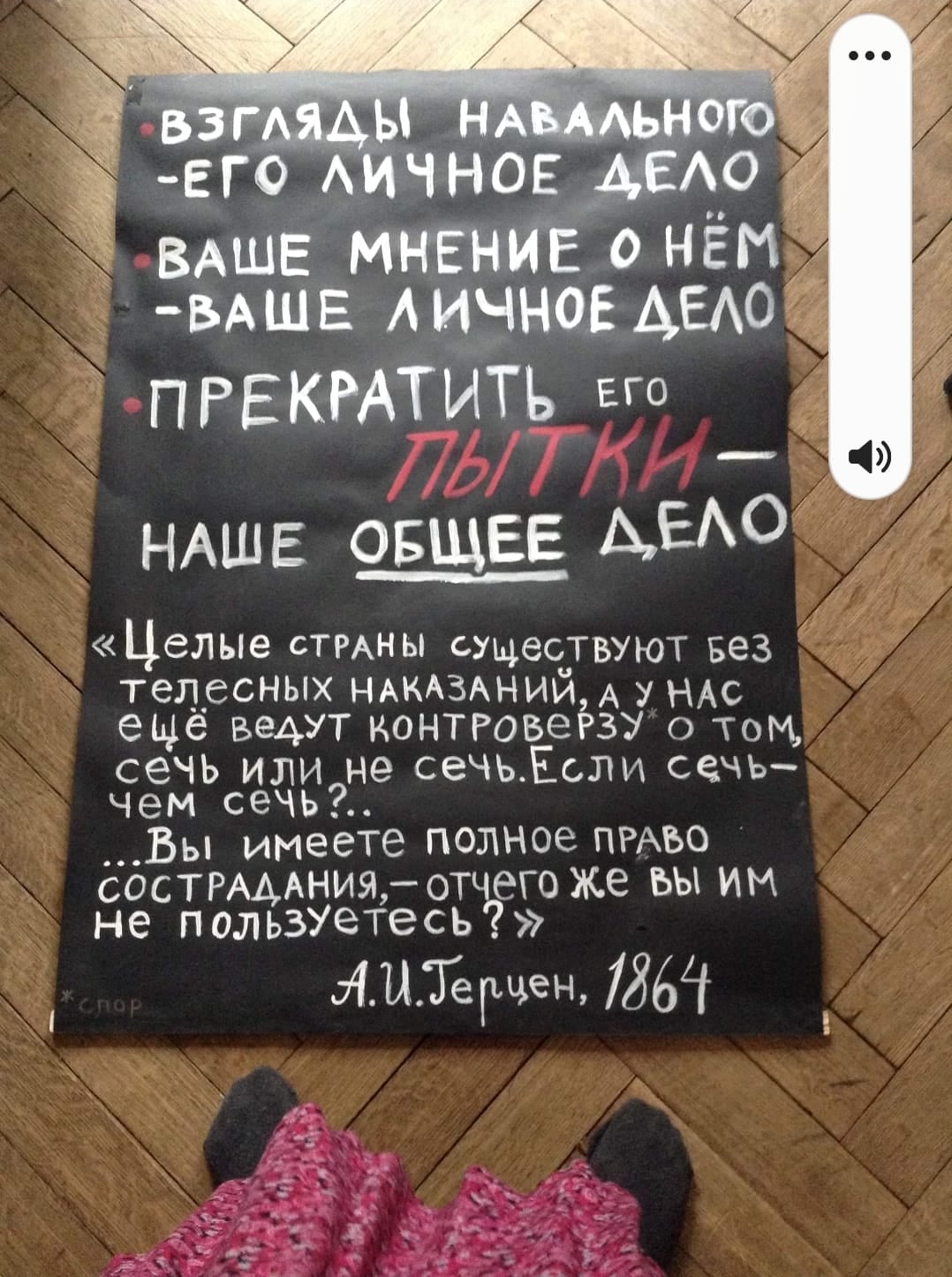
Grassroots activist Anna Margolis has been detained near the FSB building on Lubyanka Square in Moscow. In her solo picket, she called for an end to the persecution and torture of [Alexei] Navalny.
Margolis has been taken to the police department in the Meshchansky District.
“Navalny’s views are his business. Your opinion of him is your business. Stopping his torture is our common cause! ‘There are countries in which corporeal punishment has been abolished whereas in our country the question of a whether a man should be flogged or not is still a matter of dispute. […] You would be perfectly justified in showing your compassion for the victims, then why don’t you?’ A[lexander] Herzen, [‘Letters to an Opponent’], 1864.”
Thanks to Elena Zaharova for the heads-up. Translated by the Russian Reader
The Federal Penitentiary Service (FSIN), or in Russian, the Gulag, is designed so that an inmate cannot save his own life other than by directly endangering his own life.
Alexey Navalny’s hunger strike has the simplest, most natural demand: to be seen by a doctor. It’s not about politics, or even about justice, but about seeing a doctor.
When scoundrels from different “media” and “public monitoring commissions” say that a doctor is an unnecessary luxury for an inmate, they dig a hole for themselves. Because Arashukov and Spiegel are the two latest prime examples.
“The witnesses in my case were electrocuted!” former Senator Arashukov shouts.
“I’m a goner,” former Senator Spiegel whispers.
But their words will not change anything, because they were silent when they were free.
And also because we are silent. Navalny’s hunger strike, even with its media presence, is a desperate step. In response, there has been a resounding silence. But Alexander Shestun has been on hunger strike for a week. Have you heard about it?
Did you want to hear about it?
The sadism of the upper classes and the indifference of the lower classes.
Silence on both sides in response to the demand to “free everyone.”
They will, in fact, come for everyone. No one is an exception.
Translated by the Russian Reader
Moscow Has Some Truly Disturbing Reasons for Backing Myanmar Junta, El Murid Says Window on Eurasia (Paul Goble)
April 2, 2021
The Putin regime’s cooperation with the most vicious and inhumane regimes on earth is usually explained either by its desire to gain allies among those the West because of its principles have made outcasts or by its interest in selling weapons to those who can’t get them easily elsewhere, Anatoly Nesmiyan says.
Those interests can’t be ignored, of course, the Russian commentator who blogs under the screen name El Murid says, but tragically, there are some additional reasons that are even more fateful and disturbing, all of which involve Moscow’s interest in studying the repressive techniques others use for adoption in Russia.
The Putin regime’s proclivity for cooperating with the worst regimes on earth has just been highlighted by its decision to send a deputy defense minister to attend a parade in Myanmar on the occasion of the anniversary of that country’s military, a parade all other countries chose to boycott because of the Myanmar military’s repression.
These other countries acted on principle, Nesmiyan says; but “the Russian regime doesn’t have principles and in support of its interests, it will cooperate with any cannibal.” And despite what many think, these interests are not just military sales or geopolitical competition. They involve learning from others the most effective means of repression.
Having increasingly turned to the use of force against its own people, the Putin regime “with deep interest studies the advanced experience of its partners in such questions.” Putin himself admitted as much about Syria which he describes as “a testing ground;” one that is first and foremost about the destruction of the civilian population.
The army of Myanmar has shown again and again that it is ready, willing and able to kill that country’s population in the name of keeping the generals in power, and that alone makes it particularly interesting for the Russian defense ministry and its bosses in the Kremlin, Nesmiyan says.
In addition, and adding to its attractiveness as an object lesson for Moscow, the commentator continues, the Myanmar military has been involved in the brutal suppression of ethnic and religious minorities, a challenge that the Russian siloviki also faces; and it has had to come up with a way to field a force in an ethnically diverse country, another Russian challenge.
The military in Myanmar “in fact is a military corporation of the ethnic majority,” something that has led ethnic minorities to form their own force structures, a prospect Moscow fears but, in the future, may not be able to prevent. And thus, the way the dominant army manages is of no small interest to Myanmar’s Moscow backers.
When the Night Lanterns Sway: It’s Useless to Try and Beat the State on Its Own “Legal Turf”
Alexander Skobov Kasparov.ru
February 13, 2021
On February 9, Leonid Volkov, head of Navalny’s network of local teams, announced a flash mob for February 14, Valentine’s Day: residents of large cities should go into their courtyards at 8 p.m. and turn on their mobile phone flashlights. This is an attempt to adopt Belarusian know-how [see the article, below]. The idea is that residents of the same yard who are sympathetic to the protest movement but don’t know each other can get acquainted and create a grassroots network for rapid notification and mobilization.
Putin’s occupation army has reacted hysterically to the undertaking. A yahoo from the Assembly for Approving the Cutie Pie Slutsky’s Sexual Harassment (colloquially known as the State Skank) compared the flashlights in the courtyards with the signals of saboteurs guiding German bombers to their targets. The Investigative Committee, the Interior Ministry, and the Prosecutor General’s Office declared it a call for “mass rioting” and threatened potential flash mob participants with criminal charges. Roskomnadzor has been chasing down internet media officially operating in Russian Federation and forcing them to delete reports about the planned event.
The point here is not a “shutdown of law in Russia,” which, according to Vladimir Pastukhov, occurred after Navalny’s return. A completely anti-legal, multi-level system for cracking down on street activism has long been erected in Russia. It consists of three elements: 1) laws aimed at restricting the right to public expression of opinion; 2) a dishonest and broad interpretation of these laws by the police and the courts; 3) and pure lawlessness, as when the police engage directly in frame-ups and fakery, and the obedient courts pretend not to see it.
Those who tried to defend the Article 31 of the Russian Constitution [“Citizens of the Russian Federation shall have the right to gather peacefully, without weapons, and to hold meetings, rallies, demonstrations, marches and pickets”] focused mainly on the third element and sluggishly butted heads with the authorities over the second element, while almost ignoring the first element. Meanwhile, it was all about the first element. The second and third elements were just an appendix to it.
The Code of Administrative Offenses contains an article that punishes involvement in unauthorized events. The shapes and features of this involvement are not described. They are listed in Federal Law No. 54 (“On Mass Events”). In particular, it says that at a mass public event, participants express their attitude to current socio-political problems by chanting slogans and holding up placards.
For many years, opposition activists have been looking for an “unauthorized” way to publicly voice their opinions that would not get them detained. For a long time, they unsuccessfully tried to prove in the courts that if they did not chant slogans and did not hold up placards, there was no protest rally as such. However, the list of ways of participating in a rally, as enumerated in Federal Law No. 54, is not exhaustive. That is, any way of voicing one’s stance is considered an indication of having participated in a public event. That is, expression of a position as such is considered “participation.”
The phrase “expressed [his/her] attitude to current socio-political problems” is often found in police reports on the arrest of people involved in unauthorized public events. The phrase sounds crazy and comical when it comes to legally justifying arresting people and charging them with administrative offenses. It was not invented by the police goons, however. It was borrowed from the definition of a protest rally contained in Federal Law No. 54.
In fact, this coinage, found in police reports and “court” rulings, expresses the collective unconscious of the bureaucratic police regime—its dream, its loftiest ideal. Ordinary citizens should not publicly voice their opinions on current socio-political issues. It is better for them not to have such opinions at all. Voicing opinions is the prerogative of the authorities.
Hence, the very fact that an ordinary citizen voices their socio-political position is considered an anomaly, a deviation from the norm, a violation of public order. And when you start arguing with the authorities at the police station or in “court,” asking them what socially dangerous or simply harmful actions were committed by a citizen who was detained for publicly expressing their position by attending an outdoor rally, they sincerely don’t understand what you are talking about. It is clear to them that publicly voicing a position itself is a socially harmful action if ever there was one.
Since (they say) the greatest geopolitical catastrophe happened, and we are now forced to temporarily recognize a citizen’s right to voice their position at least formally, we’ll load your opportunity to exercise this right with so many conditions that you’ll rue the day you tried to do it. And they really have been doing just this—purposefully, consistently, for the entire length of Putin’s rule.
The lawless authorities refuse to authorize opposition rallies at central and iconic locations under completely far-fetched and false pretexts, and our “managed” injustice system almost always takes the side of the authorities. On the other hand, the “legislators” in the State Skank seek to block any chance people have to publicly voice their stance without prior approval. As soon as the opposition finds a new way of protesting, enabling it to circumvent previously imposed bans, a new amendment or a new law immediately follows, sealing this loophole as well.
It is useless to try to win against the state on its own “legal turf” as long as it has the will and power to shut society up. The state’s will can be opposed only by society’s will not to obey anti-legal prohibitions. The point of unauthorized public events is that they demonstratively violate prohibitions on “unauthorized” expressions of one’s opinion.
I have already had occasion to write that prohibiting people from publicly expressing their attitude to current socio-political issues without permission is an important part of the system for manipulating the admission of players to the “political market.” The entire social and political system that has taken shape in Russia is based on this system of manipulation. In order to reliably guarantee citizens their constitutional right to freely express their attitude to socio-political issues peacefully and unarmed, we have to replace the entire socio-political system.
Translated by the Russian Reader
When the Night Lanterns Sing
When the night lanterns swing,
And it’s dangerous for you to walk the dark streets,
I’m coming from the pub,
I’m not expecting anyone,
I can’t love anyone anymore.
The girls kissed my feet like they were crazy,
A widow and I drank through my father’s house.
And my cheeky laugh
Was always a success,
And my youth has cracked like a nut!
I sit on a bunk like a king at a birthday party,
And I dream of getting a drab ration.
I look out the window like an owl:
Now I don’t care!
I’m ready to put out my torch before anyone else.
When the night lanterns swing,
And the black cat runs down the street like the devil,
I’m coming from the pub,
I’m not expecting anyone,
I’ve broken my lifetime record forever!
Lyrics by Gleb Gorbovsky. Source: a-pesni. Performance by Beseder and Lyonchik. Translated by the Russian Reader
A protest in Minsk. Photo: Valery Sharifulin/TASS. Courtesy of MBKh Media
Belarusian Courtyard Protests Model for Latest Navalny Tactic Window on Eurasia
February 13, 2021
Staunton, February 11 — The Navalny organization’s decision to shift at least for a time from mass public protests to smaller but perhaps even more numerous demonstrations in the courtyards of Russian apartment blocks is not a unique Russian innovation. Instead, it has its roots in what Belarusian protesters have been doing since last fall.
In Belarusian cities, MBKh journalist Arina Kochemarova says, this shift has led to the emergence of whole areas devoted to protests and to the first flowering of what many people there hope will result in the formation of local self-administration, yet another way they hope to undermine Alyaksandr Lukashenka’s regime.
In these Belarusian courtyards, she points out, places that people have christened “squares of change,” people fly the white-red-white Belarusian flag, organize concerns and flash mobs, and in many cases get to know their neighbors better than they ever have in the past, something that by itself promotes solidarity against the government.
Yegor Martinovich, editor of Belarusian Nasha Niva newspaper, says that Belarusians made the shift because of the rising tide of repression and arrests of those taking part in major demonstrations. Fewer people are taking part in the courtyard protests, but at the same time, he suggests, courtyard meetings are forming a sense of solidarity for the future.
Courtyard protests are not only harder for the authorities to counter, but they also can take a variety of formats ranging from flash mobs to the emergence of genuinely independent community organization. “Civil society has begun to flourish everywhere which in general is a good thing. People have begun to unite,” the editor says.
The biggest problem with this shift, Martinovich says, is that the media pays a great deal more attention to one big demonstration than it does to many smaller ones, even if the smaller ones collectively include more people and have a greater impact. Moreover, Lukashenka is learning how to react, cutting off utilities where there are white-red-white flags.
Now, this Belarusian tactic is coming to Russia, intensifying fears among the authorities that the Navalny movement could develop the way in which the Belarusian one has. Russian officials have already made clear that they will crack down hard early on lest the shift from the streets to the courtyards takes off.
Security forces officers were sent to the home of [Anastasia Proskurina], a Novosibirsk research institute employee who had told Putin [on February 8] about the low salaries she and her colleagues received to find out who had “coached” her.
[Natalia Yolgina], a schoolteacher who teaches in the class attended by the Sevastopol governor’s son complained about her salary: she was fired and questioned by “anti-extremism” police.
The ridiculous desire of officials and members of parliament to smash the “flashlight protests” on February 14 obscures much more important processes underway in the country.
After federal authorities outright declared Navalny a foreign spy and, without hesitation, tried him for thought crimes, local authorities were given carte blanche to search for spies throughout the country.
If you think that your salary is low and you dare to state your unfounded suspicions in public, then it is quite obvious that you work for NATO. Basically, any problem in the country is directly explained by foreign interference and requires intervention of the competent authorities. For example, if, from your point of view, there is a pothole in the road near your house, then this is cause for a GRU operation to unmask you.
This is the most ambitious project for ultra-politicizing garden-variety discontent in Russia’s modern history. Now it won’t be possible even to sneeze without provoking suspicious of “foreign interference” and triggering an expensive criminal investigation.
They say that similar things happen in Turkmenistan and North Korea, where if you wipe your butt with a piece of newspaper containing an image of the great leader, you are declared a traitor to the state, despite the fact that there is no toilet paper at all, just as there are no newspapers not emblazoned with the great leader’s face.
For now, however, it seems to me that we will end up halfway to Ashgabat. It is impossible to bamboozle a large country utterly and at length. If a small salary makes you a foreign spy, then all the “spies” should become friends.
Translated by the Russian Reader
Russian Media Ordered To Delete Reports On Planned ‘Flashlight’ Protest RFE/RL Russian Service
February 12, 2021
MOSCOW — Russia’s federal media regulator has ordered media outlets, including RFE/RL’s Russian Service and Current Time TV, to delete all reports about a planned mobile-phone “flashlight” protest against the jailing of Russian opposition politician Aleksei Navalny.
The official order from Roskomnadzor was received by media groups on February 12. It says Russian authorities consider any reporting about the planned flashlight protest to be a call for people to take part in an unsanctioned public demonstration and mass disorder.
Roskomnadzor’s order also was sent to online newspapers Meduza and Open Media, and the TV-2 news agency in the Siberian city of Tomsk.
Navalny’s team in Tomsk said they also were warned by the city prosecutor’s office on February 12 that they could be held liable for staging an unsanctioned protest.
Navalny’s team has called on people across Russia to switch on their mobile-phone flashlights for 15 minutes beginning at 8 p.m. on February 14 — shining the light into the sky from courtyards and posting pictures of the protest on social media.
Leonid Volkov, director of Navalny’s network of teams across Russia, announced the change of tactics on February 9 in response to police crackdowns against mass street demonstrations that have led to tens of thousands of arrests across Russia.
The “flashlight” protest is a tactic similar to what demonstrators have been doing in neighboring Belarus following brutal police crackdowns targeting rallies against authoritarian ruler Alyaksandr Lukashenka.
Volkov says it is a nonviolent way for Russians to show the extent of outrage across the country over Navalny’s treatment without subjecting themselves to arrests and police abuse.
The 44-year-old Navalny, a staunch critic of Russian President Vladimir Putin, was arrested on January 17 after returning to Russia from Germany where he had been treated for a nerve-agent poisoning he says was ordered by Putin. The Kremlin denies it had any role in the poison attack against Navalny.
Navalny’s detention sparked outrage across the country and much of the West, with tens of thousands of Russians taking part in street rallies on January 23 and 31.
Police cracked down harshly on the demonstrations, putting many of Navalny’s political allies behind bars and detaining thousands more — sometimes violently — as they gathered on the streets.
A Russian court on February 2 ruled Navalny was guilty of violating the terms of his suspended sentence relating to an embezzlement case that he has called politically motivated.
The court converted the sentence to 3 1/2 years in prison. Given credit for time already spent in detention, the court said Navalny must serve another 2 years and 8 months behind bars.
That prompted fresh street protests across the country. But Volkov called for a pause in street rallies until the spring — saying weekly demonstrations would only result in more mass arrests.
Authorities have criticized Volkov’s call for flashlight protests.
Kremlin-friendly political observer Aleksei Martynov accused Navalny’s team of stealing the idea from commemorations of Soviet war veterans.
A random interlocutor told me about their friend, a Russian National Guardsman. Last Saturday, he worked the protests in St. Petersburg from 9 am to 10 pm without a single lunch break. After the elections in Belarus, his unit was taken to Pskov, where they removed all their insignia: if necessary, they could be shipped to Belarus to beat up the protesters. For a week, two hundred of them lived in a school, sleeping on mattresses tossed on the floor: “It was great way to get covid! But nobody gives a shit.”
They weren’t exported to Belarus, so they went home. The friend makes 40 grand a month. [40,000 rubles is approximately 435 euros at the current exchange rate.] “Do you think he loves Putin? No. But he took out a mortgage, and he has to pay it back.”
I wonder: do they really do what they do for forty thousand rubles a month and humiliating “working conditions”? Or do they do it out of conviction?
But they are now being forcibly vaccinated, and so the friend is thinking about quitting. Not because he has to harass peaceful fellow citizens, mind you.
All day I was planning to write about the awful things that the regime has done, but every time it seemed that they couldn’t do more and go lower, it turned out that no, they could, and then some. So, now I will summarize what were probably the most egregious things that happened during the day to remind you once again that we are not dealing with “police,” “judges,” and “prosecutors,” but with people (?) who are ready to commit any crime in order to preserve their power, salaries, and AMP license plates.
In Tver, the security forces came for the deputy coordinator of Navalny’s local HQ, Pavel Kuzmin. When he refused to come out, they cut off his electricity and internet, and then grabbed his fiancee. He surrendered.
In Yakutsk, the security forces came for Sergei Tikhy and Viktoria Postnikova, a couple who support the shaman [Alexander] Gabyshev and have a large family. The security forces shined a laser in their windows (apparently they had the family in their sights), and it seems that they still have not left.
In Moscow, the security forces came for the editor-in-chief of Mediazona Sergei Smirnov when he was out walking with his young child. Now he is in the holding cage at the Tverskaya police precinct, a place I know well. He is accused of participating in the demonstration on January 23, although at the time he was at home coordinating his website’s news coverage of the event.
In Nizhny Novgorod, the security forces came to the special detention center to visit the coordinator of Navalny’s local HQ, Roman Tregubov. They threatened him into reading on camera a text renouncing the protests (which he has now disavowed). I should explain that Roman had every reason to take the threats seriously: Nizhny, which is only three and a half hours from Moscow by train, is known for the insane torture that the local “anti-extremism” police practice. They made one guy sit naked on an anthill, and then for a long time publicly mocked him on “anonymous Telegram channels.”
The security forces in Nizhny also came for my friend Mikhail Iosilevich, who had already been charged with two felonies for cooperating with Open Russia and for not informing the authorities about his dual citizenship. Terrible crimes! Today, a court changed his pre-trial restrictions and remanded him in custody to a pre-trial detention center, and in this case too they hastened to mockingly report this fact on an “anonymous Telegram channel.”
It was after her apartment was searched as part of the case against Ioselevich that Irina Slavina set herself on fire and died.
This story is very personal to me. I know Ioselevich and knew Slavina, and I like visiting Nizhny. Mikhail was always willing to help me and local activists, and he had fun founding the local branch of the Flying Spaghetti Monster Church. But only cops—angry, offended, and embittered—can “have fun” in Russia nowadays.
I used to appeal to the reason of the “other side,” but now I understand that it’s like admonishing a mad wolf to go vegetarian. It’s useless. The conversation is over, and the wolf, no longer a man, has pounced.
Image courtesy of Wikipedia. Translated by the Russian Reader
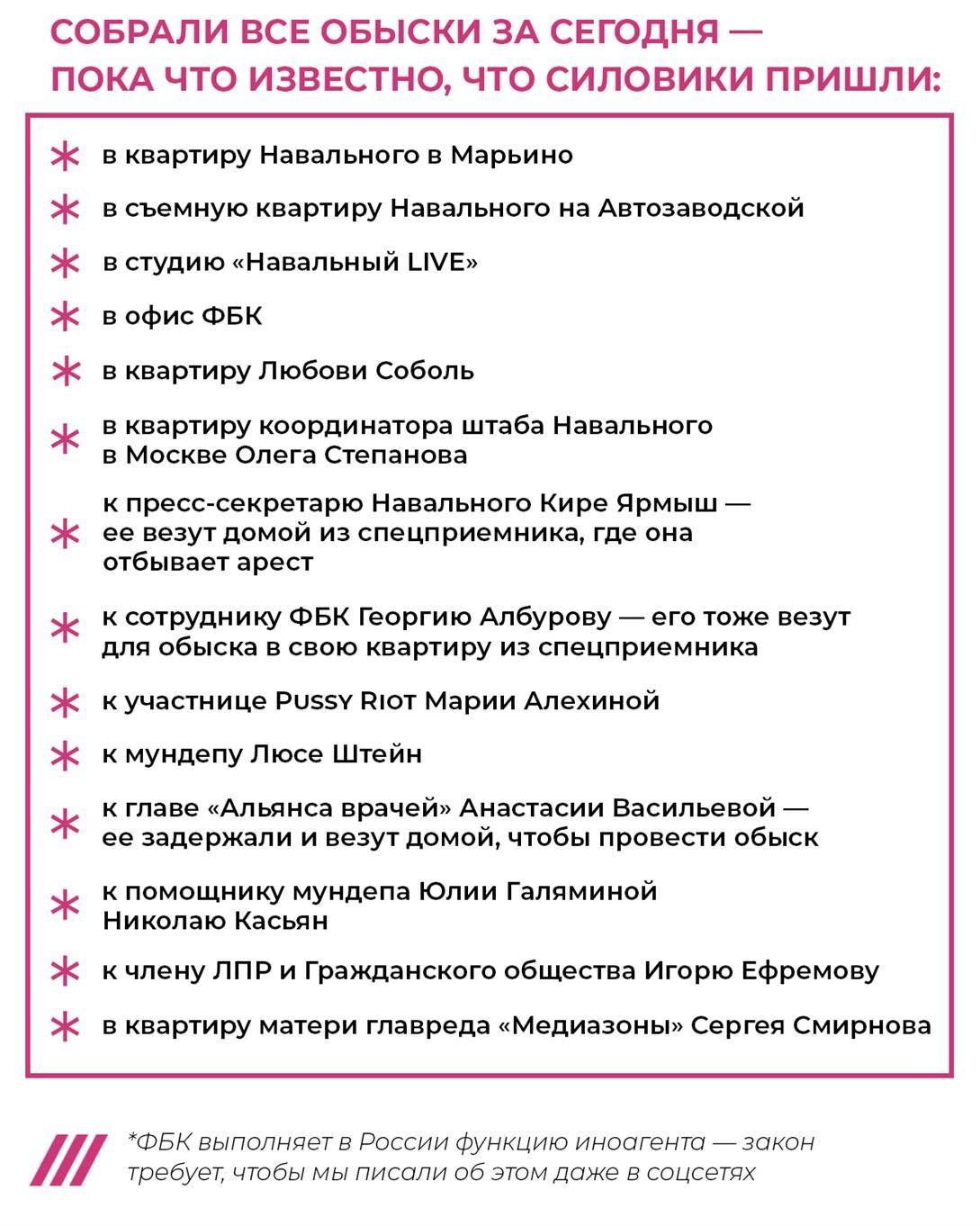
TV Rain has made the following list of people and places in Moscow raided and searched today (January 27, 2020) by the Putinist security forces. Thanks to Darya Apahonchich for the heads-up. \\ TRR
We made a list of all police searches today. As of now, we know that the security services have raided the following:
Navalny’s apartment in the Maryino district of Moscow
An apartment rented by Navalny near the Avtozavodskaya subway station
The Navalny LIVE studio
The Anti-Corruption Foundation’s offices
Lyubov Sobol’s apartment
Moscow Navalny HQ coordinator Oleg Stepanov
The apartment of Navalny’s press secretary Kira Yarmysh, who has been transported home from a special detention center for the search
The apartment of Anti-Corruption Foundation employee Georgy Alburov, who has also been transported home from a special detention center for the search
The apartment of Pussy Riot member Maria Alyokhina
The apartment of municipal district councilor Lusya Stein
The apartment of Anastasia Vasilyeva, head of the Alliance of Doctors: she has been detained and taken there for the search
The apartment of Nikolai Kasyan, aide to municipal district councilor Yulia Galyamina
The apartment of Yegor Yefremov, a member of the Libertarian Party of Russia (LPR) and Civil Society
The apartment of the mother of Sergei Smirnov, editor-in-chief of Mediazona
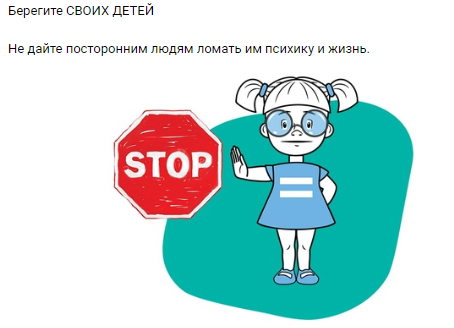
“Protect your children. Don’t let strangers wreck their minds and their lives.” Screenshot of a social media post by the Udelnaya Library of the Vyborg District Centralized Library System in Petersburg. Courtesy of dp.ru
“Protect your children”: Smolny launches mass posting before rally Delovoi Peterburg
January 21, 2021
On January 21, the social network pages of Petersburg’s district administrations, as well as of municipal schools, libraries, and educational organization, published the same message, appealing to parents not to let their children attend the rally urging the release of politician Alexei Navalny.
“Protect your children from being dragged into destructive actions that can lead to psychological problems in the future, but also to unpredictable consequences in their lives today,” the text of the mass posting says. It stresses that the upcoming rally is a “blatant provocation.”
A search for the phrase “protect your children from being dragged into destructive actions” yielded around a hundred hits on the social media pages of municipal organizations. At the time of writing, the post had been published on the VK pages of the Kolpino and Vyborg districts, as well as the press services of the Shuvalovo-Ozerki, Posadsky, Kronverk, and Sampsonievsky municipal districts, and dozens of schools.
Earlier today, First Deputy Interior Minister Alexander Gorovoy said that the Russian Interior Ministry has “all legal grounds” to charge with misdemeanors those who “in person, on the internet, [or] by sending written appeals” call on people to attend the rally [sic]. The Prosecutor General’s Office ordered the blocking of websites containing posts with calls to attend the [rallies].
Alexey Navalny recently published a large-scale investigation dealing with the construction of a grand residence on the Black Sea. The Anti-Corruption Fund (FBK) founder claims that the palace was built for Vladimir Putin. Navalny and his FBK team have called on their supporters to come out to protest on January 23. He has been supported by bloggers on Instagram and TikTok who have over a million followers.
________________________
Alexei Navalny, Putin’s Palace: The Story of the World’s Largest Bribe, January 19, 2021. [There were over 51 million views as of 1:00 a.m. Moscow time, January 22, 2021]
The printed text of the investigation, including all relevant documents, is here: https://palace.navalny.com/
Navalny recorded this video before his return to Russia, but we immediately agreed that we would release it after he returned: Alexei did not want the protagonist of this investigation—Vladimir Putin—to think that we were afraid of him and that we were telling his biggest secret from abroad.
Today, you will see something that is considered impossible to see up close. Along with us, you will go where no one is allowed. We will go for a visit to Putin’s house. With our own eyes, we will see that, in his craving for luxury and wealth, Putin has completely lost his mind. We will find out whose money has financed this luxury and how it was done. And we will learn how, over the past fifteen years, the biggest bribe in history was paid and the most expensive palace in the world was built.
Alexey was detained at the airport [in Moscow], where he arrived after five months of medical treatment in Germany. He went to Germany after Putin tried to kill him. On January 18, Navalny was illegally arrested and placed in a pre-trial detention center.
Alexei has always fought for our rights, and now we have to fight for his. Vladimir Putin must answer for all his crimes.
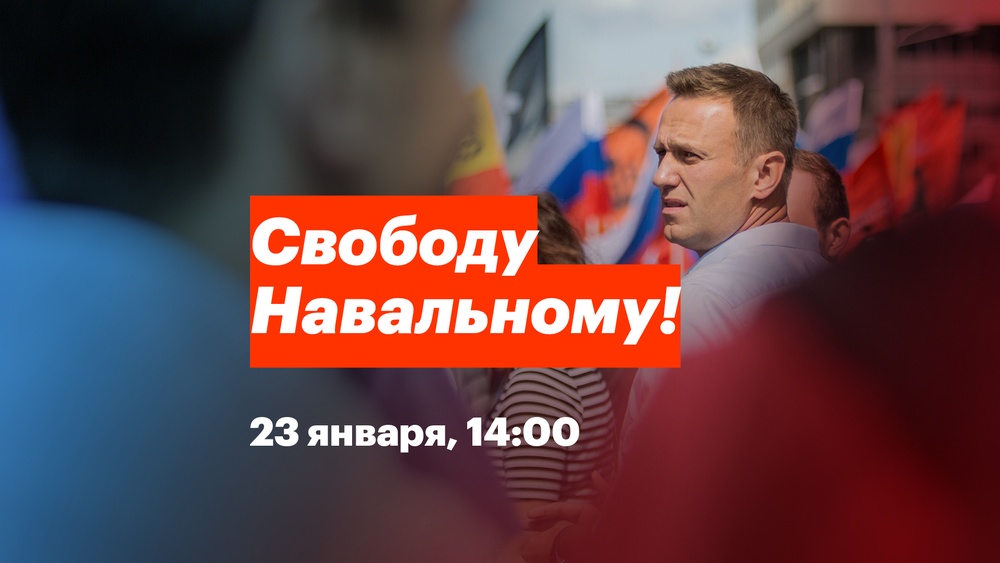
At 2:00 p.m. on January 23, go to the central streets of your cities. Don’t stand on the sidelines.
Here is a link to information about the rallies in different cities (this post will be updated): https://navalny.com/p/6454/
Translated by the Russian Reader
“Free Navalny! 2:00 p.m., January 23.” Image courtesy of navalny.com
I had a poor year shooting photographs: there were few events in [Petersburg], and I missed some important stories due to my arm being broken. But in the end, it seems that the photos still piled up.
January 19, 2020. Activists of the Vesna Movement say goodbye to the Russia Constitution near the Constitutional Court in Petersburg.
January 31, 2020. Authorities analyze the debris after the Sport and Concert Complex (SKK) in Petersburg collapses.
On October 7, protests took place in various cities in honor [sic] of President Vladimir Putin’s birthday. Police reacted differently in each case.
📍 In Moscow, members of Pussy Riot held an anti-homophobic protest by hanging rainbow flags on various government buildings. Police detained a journalist during the protest, and two participants later that evening. They were charged the rules for holding a public event. Today, police continued visiting the homes of the activists.
Left Bloc activists left bottles of PVA glue and swimming fins outside the office of the presidential administration. [This was an allusion to the Russian prison slang expression “to glue the fins” (skleit’ lasty), meaning “to die.”] Police detained a journalist who wanted to see how officials reacted to the installation. He was charged with violating the rules for holding a public event and has his electronic devices confiscated.
📍 In Kurgan, supporters of Alexei Navalny held solo pickets, wishing the president a speedy retirement. Afterwards, Center “E” officers attempted to enter the local Navalny headquarters, but were not allowed to enter.
📍 In Novokuibyshevsk (Samara Region), opposition activists picketed on the city’s central square. Police officers took them to the police station, where they questioned them, scolded them for violating social distancing rules, and released them without charge.
📍 In Petersburg, several people in Putin masks staged a protest outside Gostiny Dvor. Six people were detained and taken to three different police stations. They were charged with violating the self-isolation regime.
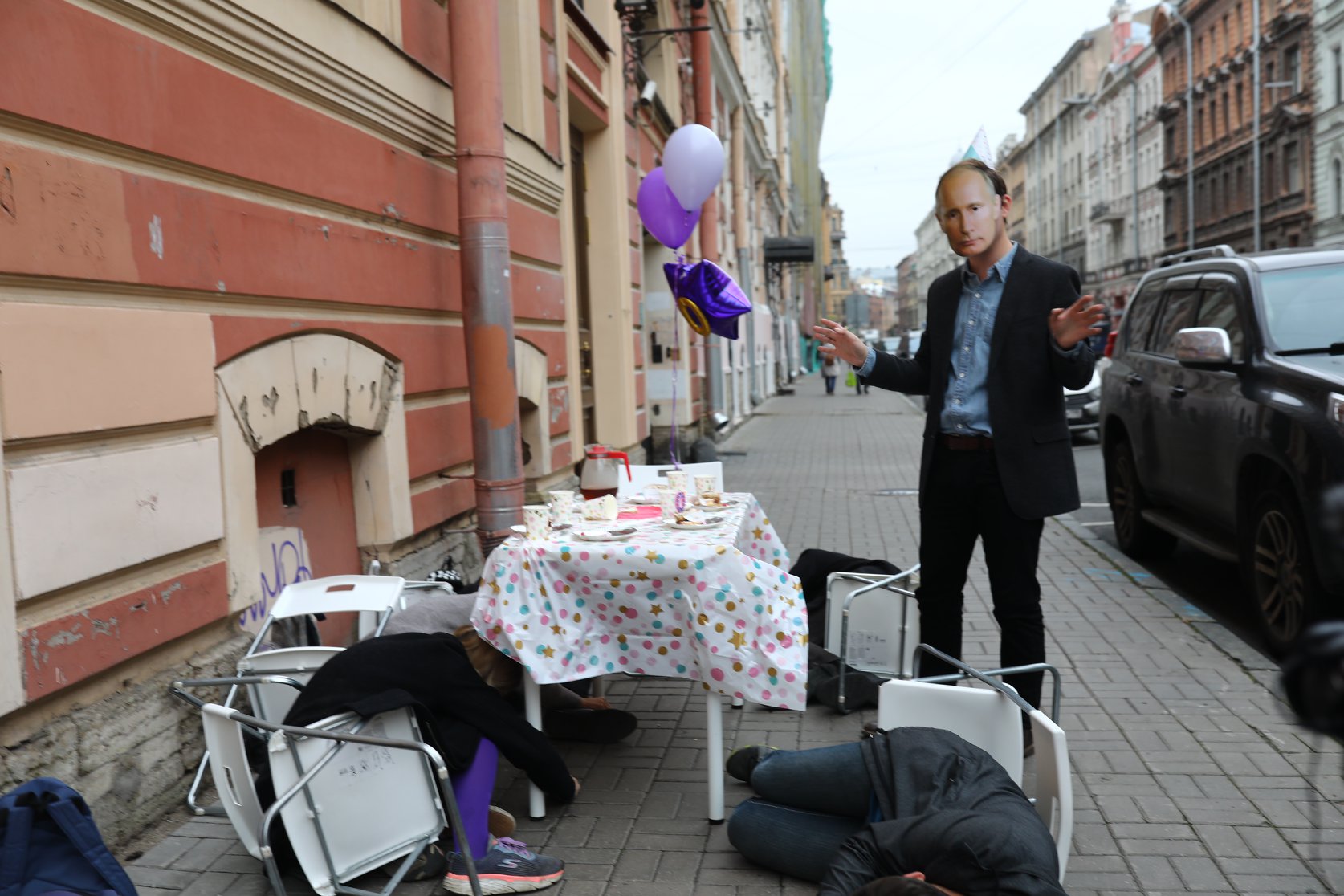
Activists of the Vesna Movement arranged a birthday spread outside the house where Vladimir Putin lived as a young man. After drinking tea, they pretended to be dead. The police are looking for the people involved in the protest at their actual and registered places of residence.
Photos by David Frenkel. Courtesy of OVD Info and Vesna. Translated by the Russian Reader
Irina Slavina, editor-in-chief of the online publication Koza Press, set herself on fire near the Interior Ministry headquarters in Nizhny Novgorod [on October 2]. Before that, she wrote [the following] post on her Facebook page: “I ask you to blame the Russian Federation for my death.”
Slavina died on the spot.
Slavina’s alleged suicide note on Facebook
Yesterday, Slavina’s home was searched as part of the Open Russia case. According to the journalist, all of her electronic devices confiscated.
Passersby and Interior Ministry tried to extinguish Slavina. According to eyewitnesses, the flame blazed up very quickly and they were unable to save [her].
*****
This video is not for the faint of heart: it show the self-immolation of Koza Press editor-in-chief Irina Slavina in Nizhny Novgorod. From the very beginning, a bystander tried to help her, but [Slavina] pushed him away.
*****
In the spring of 2019, [Slavina], for example, was fined 20,000 rubles for an “unauthorized” protest march, and in the autumn, a record 70,000 rubles for “disrespecting the authorities.” This summer, the journalist was investigated on suspicion of “disseminating false information” because of a news item [she published] about the coronavirus, and this time she was threatened with a fine of 500,000 rubles [approx. 5,500 euros], which [Slavina] regarded as “financial murder.”
____________________________
Thanks to Alexander Chernykh for the heads-up. Photograph and video courtesy of Baza. Translated by the Russian Reader. The most recent article published on the Koza Press website was posted yesterday (October 1) at 8:27 p.m. local time. It may have some bearing on Ms. Slavina’s death.
Politically Motivated Criminal Investigation Launched Against Businessman in Nizhny Novgorod Koza Press
October 1, 2020
The investigative directorate of the Russian Investigative Committee’s Nizhny Novgorod regional office has launched a politically motivated criminal investigation against entrepreneur Mikhail Iosilevich, who has been charged with violating Article 284.1 of the criminal code (“activity in the Russian Federation on behalf of a foreign or international non-governmental organization that has been ruled an undesirable organization in the Russian Federation”). A copy of the document confirming this fact has been made available to Koza Press.
In particular, Mr. Iosilevich is accused of the fact that, on September 2 and 3, lectures for election observers from the Yabloko Party were held in his premises (That Very Place, on Gorky Street), lectures that were twice disrupted by the police. According to investigators, activists from the Open Russia movement organized the lectures. Previously, That Very Place was a venue for discussions of current political problems in Russia, for which Mr. Iosilevich was twice charged with and convicted of administrative offenses.
As part of the criminal case against Mr. Iosilevich, the homes of several Nizhny Novgorod residents—Alexei Sadomovsky, deputy chair of the Yabloko Party’s Nizhny Novgorod regional branch; Dmitry Silivonchik, former coordinator of Alexei Navalny’s headquarters in Nizhny Novgorod; Roman Tregubov, current coordinator of Alexey Navalny’s Nizhny Novgorod headquarters; civic activists Yuri Shaiposhnikov and Mikhail Borodin; and Koza Press founder and editor-in-chief Irina Murakhtayeva (Slavina)—have been searched by law enforcement officers, who, among other things, confiscated electronic devices, personal belongings, documents, and notebooks containing notes.


 A protest in Minsk. Photo: Valery Sharifulin/TASS. Courtesy of
  Blue dogs have been spotted on the road near the city of Dzerzhinsk. Photo: Twitter/
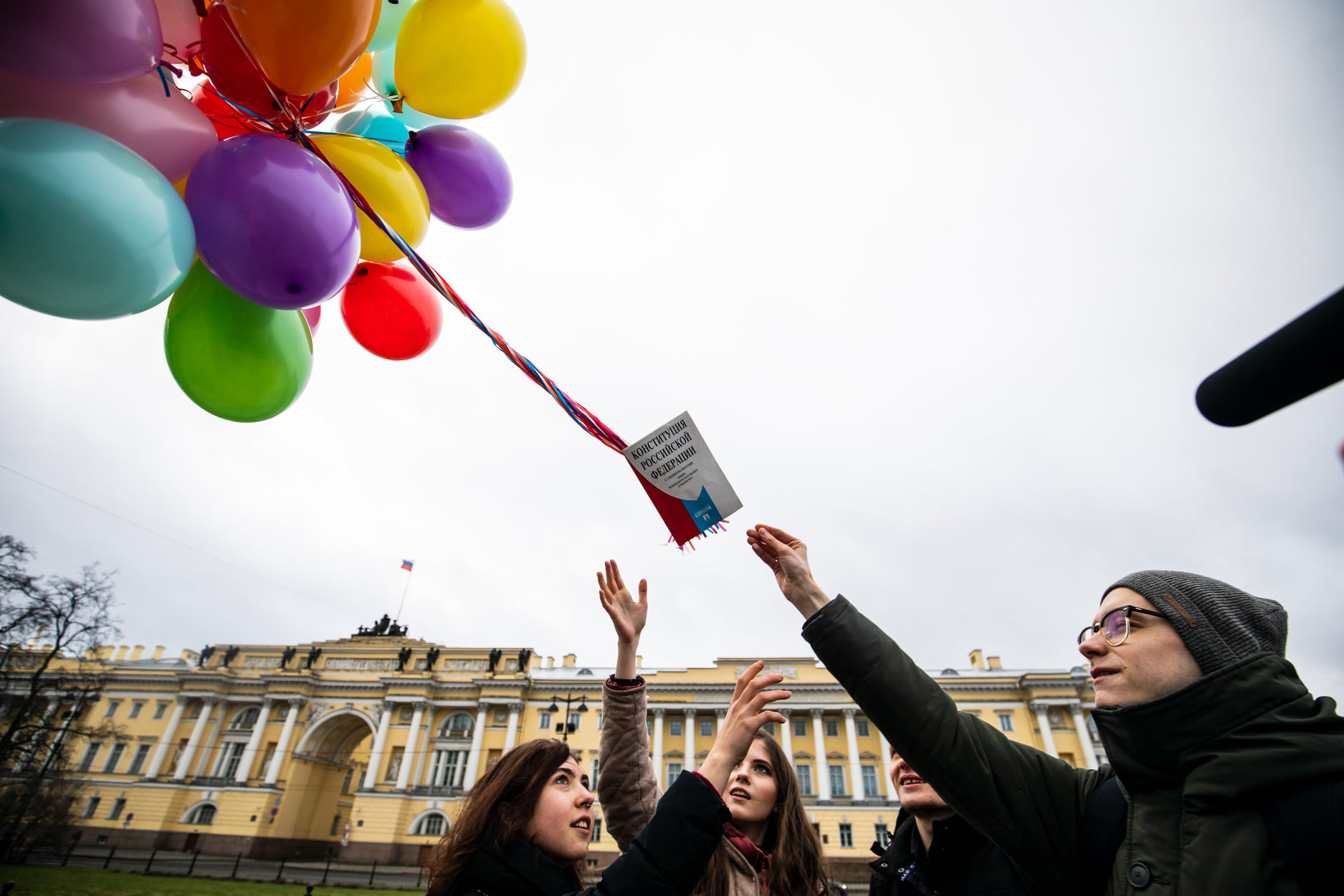 January 19, 2020. Activists of the Vesna Movement say goodbye to the Russia Constitution near the Constitutional Court in Petersburg.
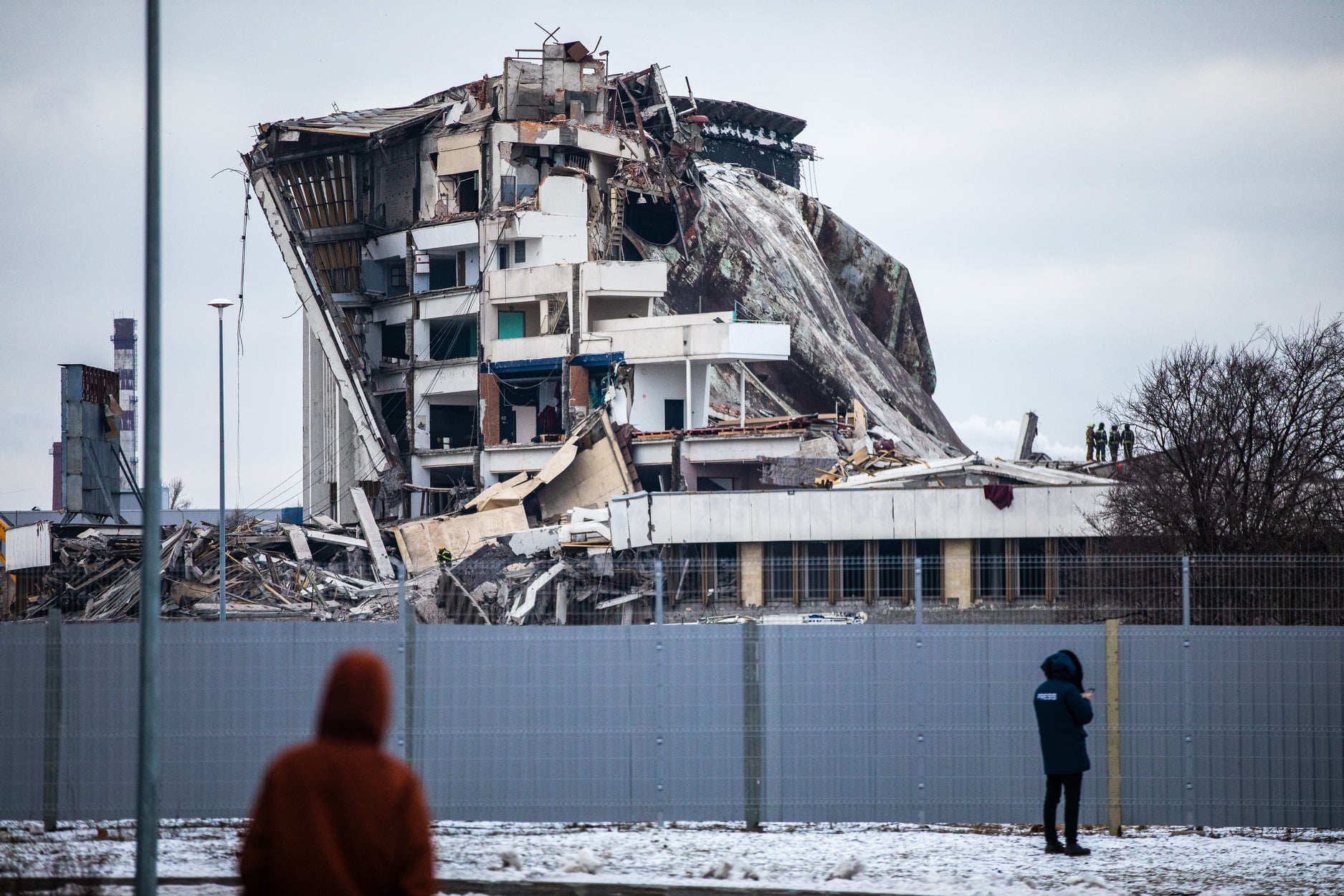 January 31, 2020. Authorities analyze the debris after the Sport and Concert Complex (SKK) in Petersburg
 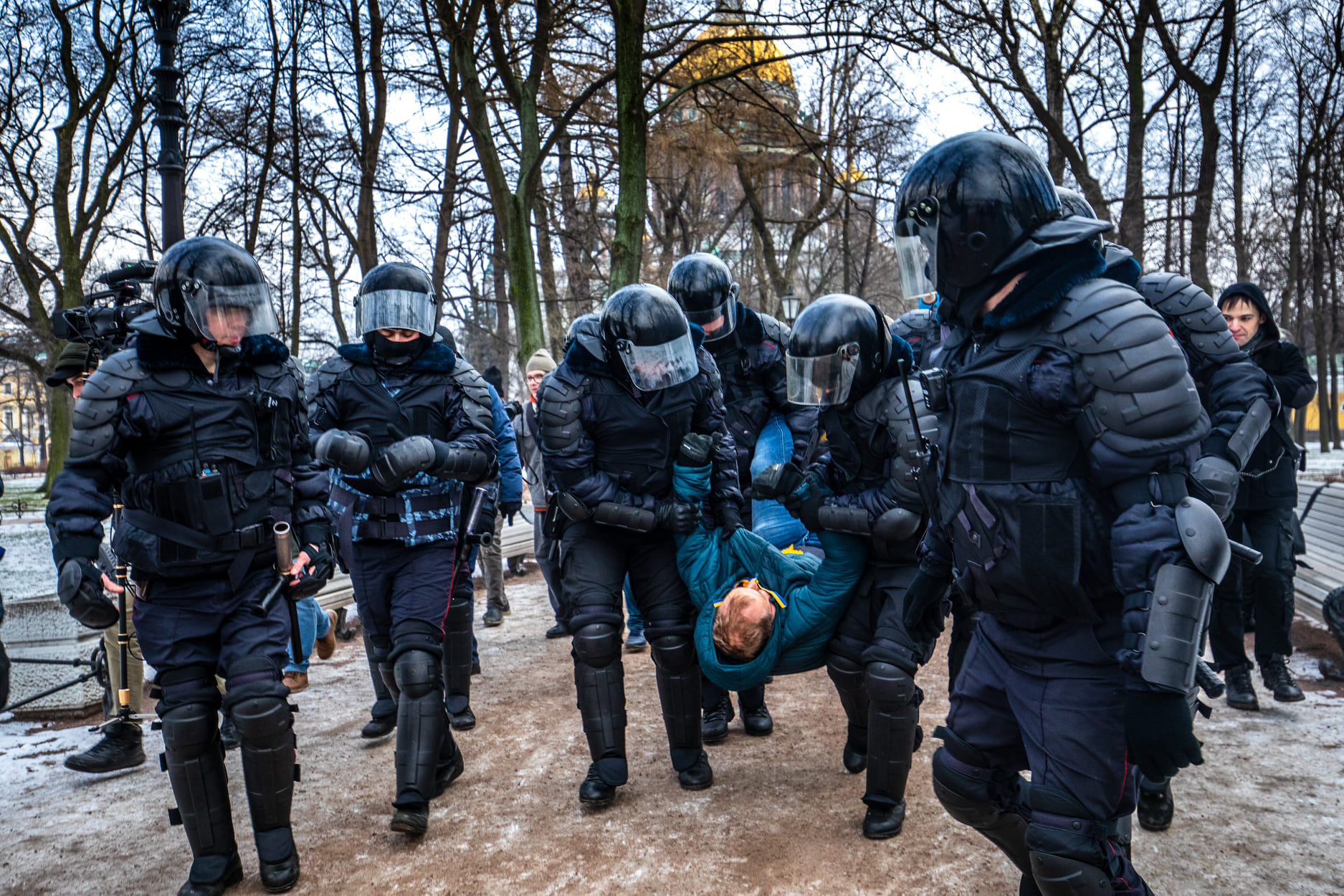 February 1, 2020. Police detain a man for a picketing against proposed
 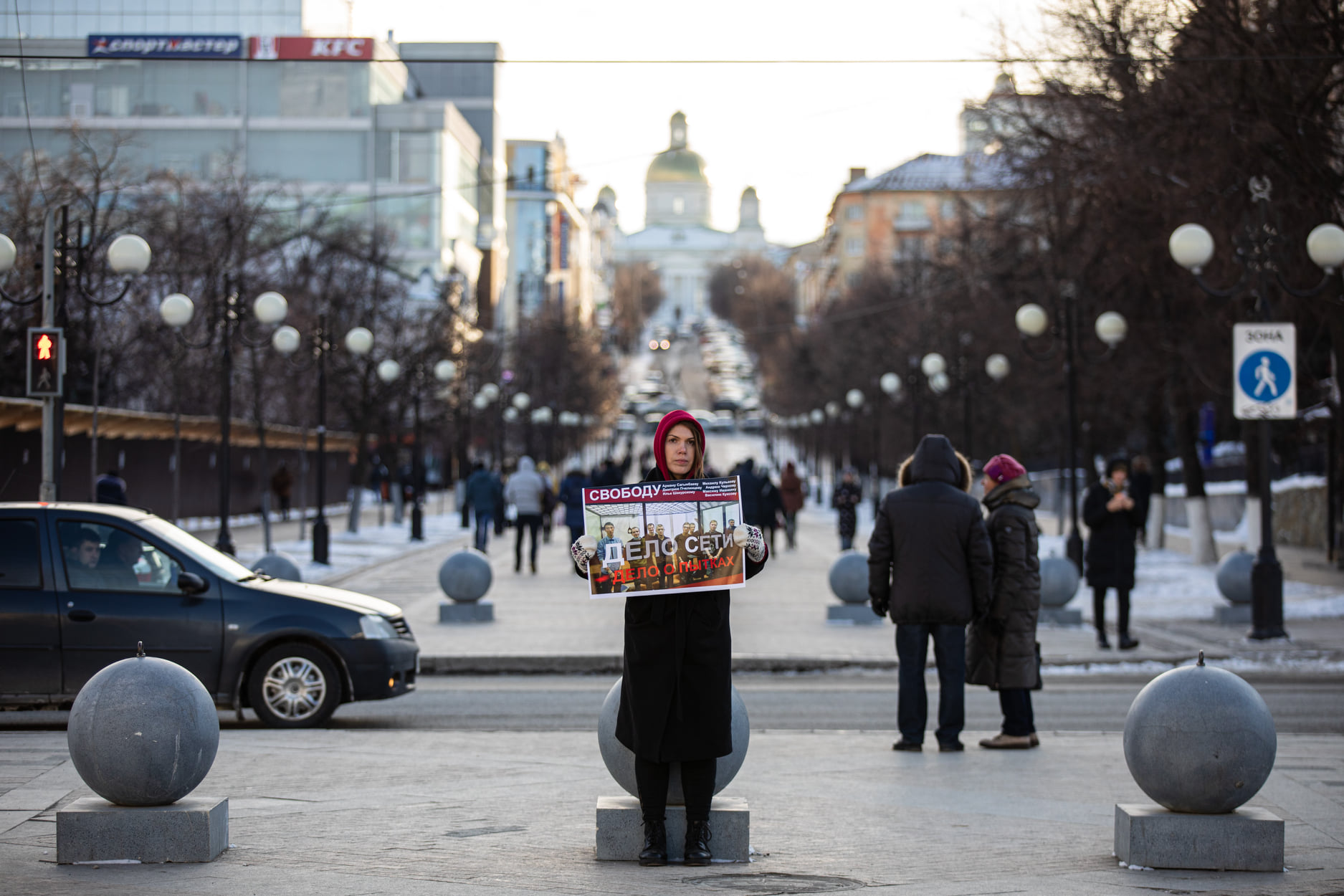 February 9, 2020. A solo picket in Penza before the verdict in the Network Case was announced.
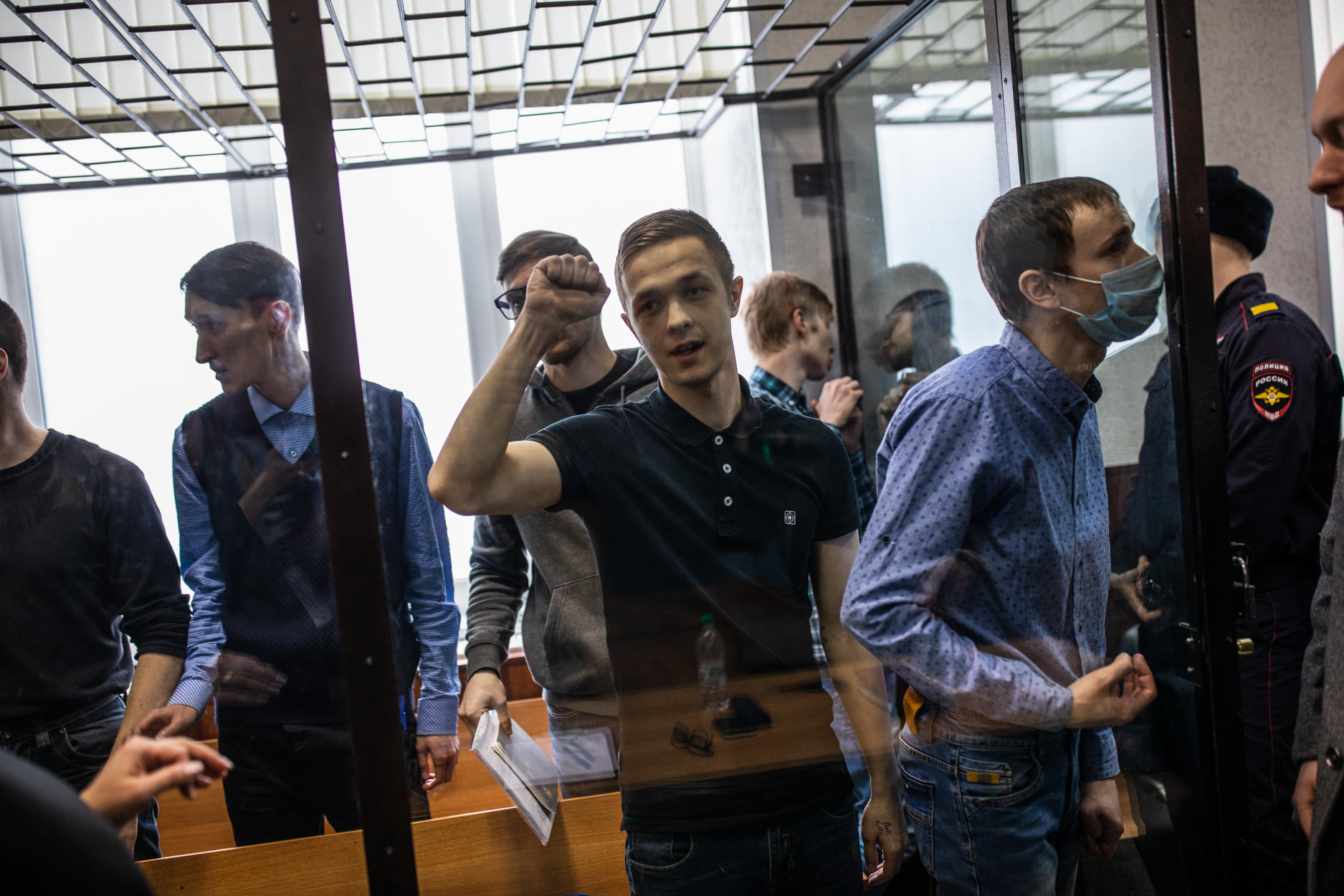 February 10, 2020. Defendants in the Network Case after the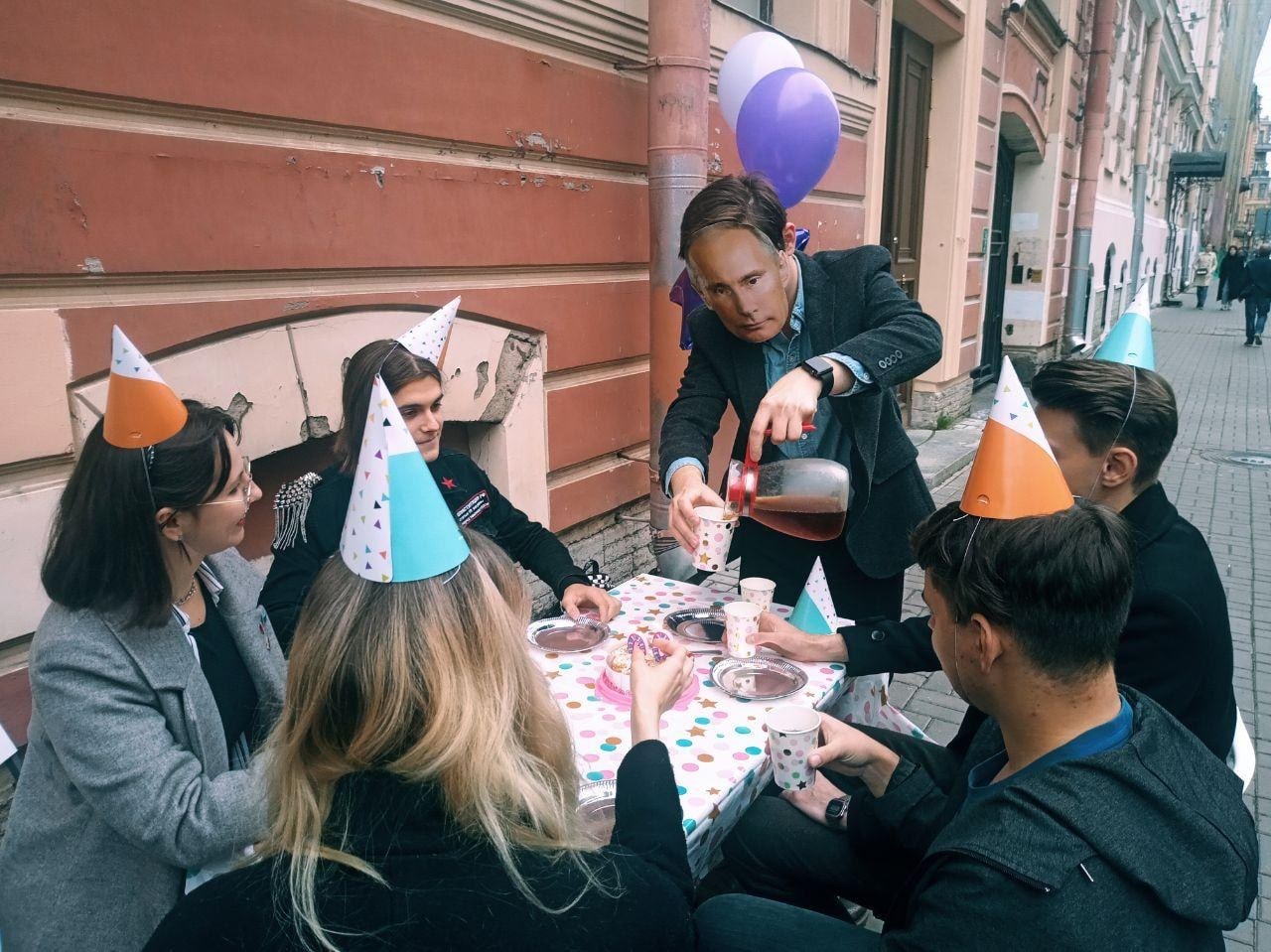
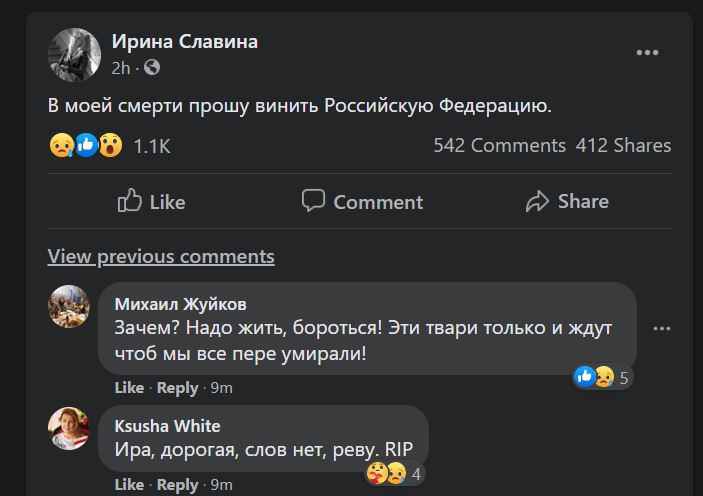 Slavina’s alleged suicide note on Facebook