“Hunger, Thirst, Sexual Attraction, Etc.”: Russia’s Federal Archives

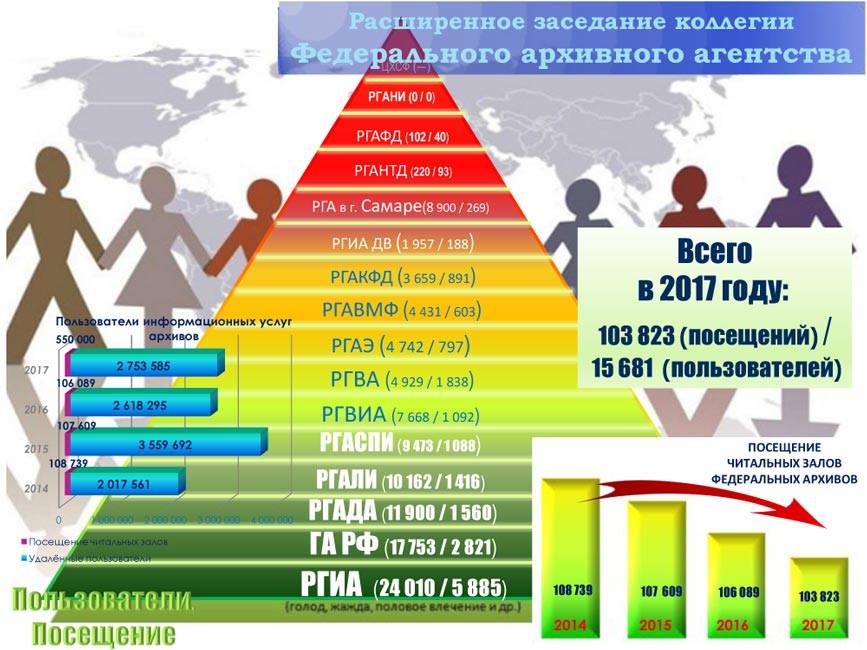
“[Title] Russia Federal Archival Agency (Rosarkhiv), Extended Meeting. || [Upper right] 2017 Totals: 103, 823 visits / 15,681 [remote] users || [Center left] Users of information services in the archives (violet=reading room visits; turquoise=remote users): 2014 – 108,739 visits and 2,017,561 remote users; 2015 – 108,739 visitors and 3,559,692 remote users; 2016 – 106,080 visits and 2,618,295 remote users; 2017 – 550,000 [sic] visits and 2,753,585 remote users. || [Bottom right] Visits to federal archive reading rooms: 2014 – 108,739 visits; 2015 – 107,609; 2016 – 106,089; 2017 – 103,823. || [Pyramid, from bottom rung to peak ] Users / Visits. 1. (hunger, thirst, sexual attraction, etc.); 2. RGIA (Russian State Historical Archive, Petersburg): 24,010 / 5,885; 3. GARF (State Archive of the Russian Federation, Moscow): 17,753 / 2,821; 4. RGADA (Russian State Archive of Ancient Documents, Moscow): 11,900 / 1,560; 5. RGALI (Russian State Archive of Literature and Art, Moscow): 10,162 / 1,416; 6. RGASPI (Russian State Archive of Socio-Political History, Moscow): 9,473 / 1,088; 7. RGVIA (Russian State Military History Archive, Moscow): 7,688 / 1,092; 8. RGVA (Russian State Military Archive, Moscow): 4,929 / 1,838; 9. RGAE (Russian State Archive of the Economy, Moscow): 4,742 / 797; 10. RGAVMF (Russian State Archive of the Navy, Petersburg): 4,431 / 603; 11. RGAKFD (Russian State Film and Photo Archive, Krasnogorsk, Moscow Region): 3,659 / 891; 12. RGIA DV (Russian State Historical Archive of the Far East, Vladivostok): 1,957 / 188; 13. Russian State Archive in Samara: 8,900 / 269; 14. RGANTD (Russian State Archive for Scientific-Technical Documentation, Mosow): 220 / 93; 15. RGAFD (Russian State Archive of Sound Recordings, Moscow): 102 / 40; 16. RGANI (Russian State Archive of Contemporary History, Moscow): 0 / 0; 17. TsKhSF (Insurance Fund Storage Center, Yalutorovsk, Tyumen Region): —.”

Kirill Belousov
Facebook
March 23, 2018

“Hunger, thirst, sexual attraction, etc.”

This strange slide is posted on the Russian Federal Archive Agency’s official website in a section [containing the text of a report delivered by the agency’s director, A.N. Artizov, to an extended intra-agency meeting on March 20, 2018].

The bottom rung of the pyramid contains the words in the headline of my post, while the upper rungs contain information about the number of people accessing and visiting Russia’s federal archives. The people who made the slide were probably in a hurry and did not tidy up the pyramid before publishing it.

My attention was drawn to the fact that the number of visits to the reading rooms of federal archives has dropped considerably, from 108,700 visits, in 2014, to 103,800 visits, in 2017.

Source: http://archives.ru/reporting/report-artizov-2018-kollegia.shtml

#Rosarkhiv #RussianArchives

Thanks to Alexei Kouprianov for the heads-up. Translated by the Russian Reader

Russia’s Working Poor

Employed and Poor
Andrei Bespalov
Takie Dela
December 13, 2017

According to official statistics, at least ten million Russians work hard all their lives but cannot escape poverty. 

Russia has no clear criteria for poverty. The concept is absent from Russian legislation. There are poor people throughout the world, but not in Russia. We vaguely define them as “low income,” meaning people whose income is below the subsistence level. Each region of Russia has its own subsistence level. For example, for a person of working age to make it for a month in Omsk Region, he or she needs at least 9,683 rubles [approx. 140 euros]. In Moscow, the minimum income is twice as high: 18,472 rubles [approx. 267 euros]. If your income is lower than the officially approved subsistence level, you are living below the poverty line. True, this in no way mean you cannot be paid less this same minimum for your work. You can indeed be paid less: if your monthly wage exceeds the minimum wage at least by one kopeck. Currently, the minimum monthly wage in Russia is 7,800 rubles [approx. 113 euros].

Story No. 1: Olga
We imagine you have go looking for poor people far from Moscow, and the farther you get from Moscow, the more flagrant poverty you will encounter. It is not true. There are large numbers of people living below the poverty line in the capital. I should emphasize that, in this case, we are talking Russian nationals, not about migrant workers from the former Soviet republics.

Take Olga. She works in a lab at Moscow Medical University. In her fifteen years there, she has risen from senior lab assistant to head of the lab. Olga’s monthly salary is 12,000 rubles [approx. 173 euros], and it is her entire income.
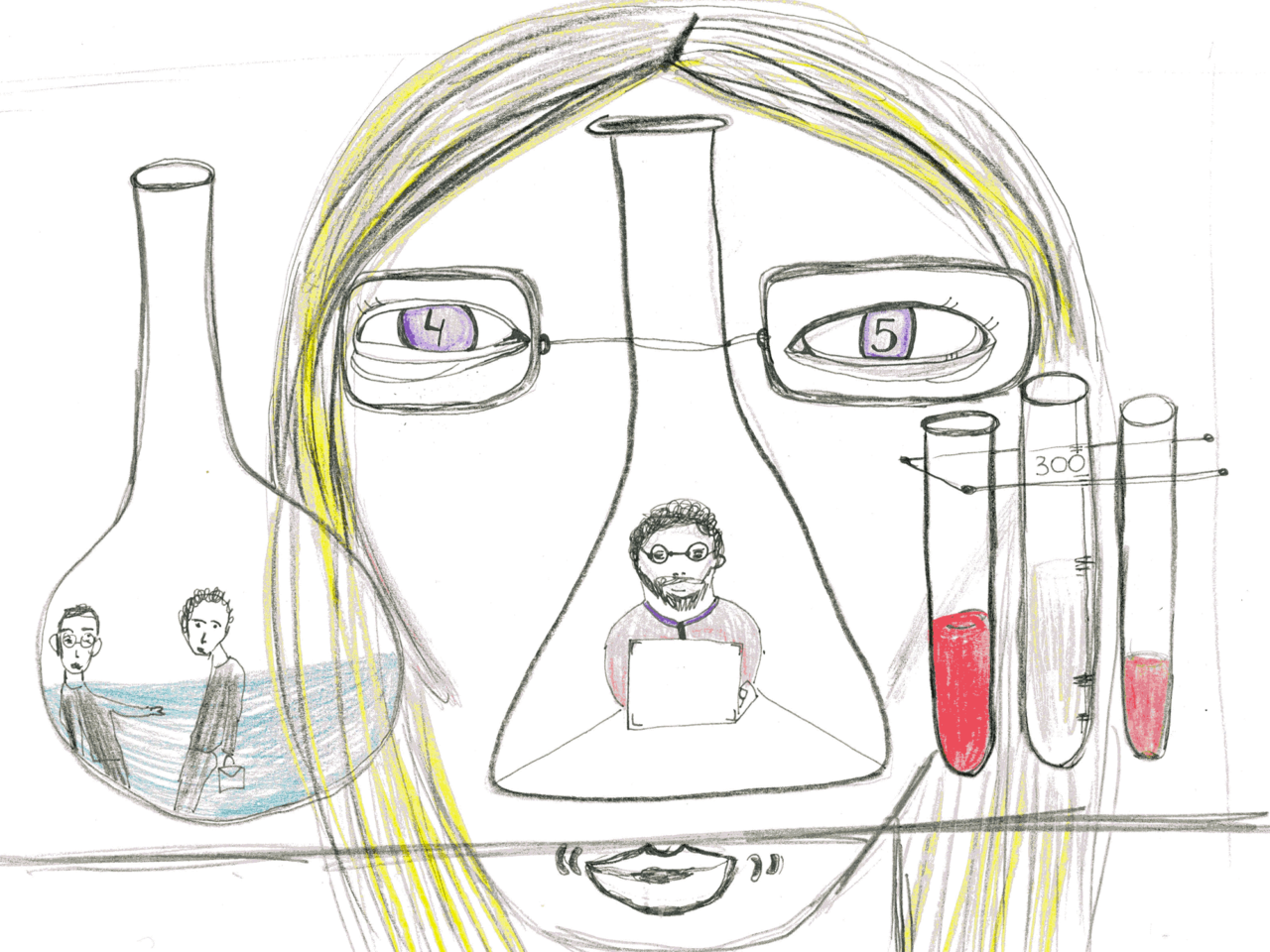
True, she gets the occasional bonus, but they come “a little more often than once in a lifetime.” Ordinary lab employees are paid 11,000 rubles a month [approx. 159 euros]. Such salaries are hardly a rarity in Moscow.

Olga was educated as a programmer. She graduated from Bauman Technical University, but she has not worked as a programmer for a long time. She believes she cannot catch up and has lost her qualifications. Olga worked as a programmer before her children were born. Her family had enough money for everything, and besides, she had the opportunity to earn money part-time. When her maternal leave was up, she was unable to go back to her old job: her department has been disbanded. She was able get the job in the lab at Moscow Medical. Olga likes everything about the job—her colleagues respect her, and her work team gets along well with each other—except the salary. Management occasionally permits her to work from home. This is good for Olga: she does not have to spend money on commuting. (Olga lives in Moscow Region, not in the city.) This comes to around 300 rubles [approx. 4 euros] a day for the trip to the city and back on the commuter train and a round trip on the subway to the university.

When her children were small, Olga did not try and find better-paid work, and when they were older, she tried, but was turned down everywhere she applied. To her surprise, she realized no one wanted to hire a woman in her forties.

“First, you can’t find work because of the children, who are constantly ill, and then you can’t find work due to your age. Although what age are talking about? I’m forty-five!”

Olga had wound up in the category of people with no prospects. The only place she could get a job was a school. Olga worked there for several years before quitting. She had never been offered a full-time position, and her monthly salary of 6,000 rubles [approx. 87 rubles] was only enough to pay for her commute.

“I don’t want to leave these folks. It’s easy working with professors. They are quite cultured, decent people. It would be a pity to quit the job. I feel I’ve become a highly qualified specialist over the last fifteen years,” said Olga.

If it were not for her husband, a programmer, she would have a hard time feeding them and their two children. The family of four’s overall income is above the subsistence level, if only by a little. It comes to around 80,000 rubles [approx. 1,155 euros] a month. (The per capita subsistence level in Moscow is 18,472 rubles, meaning Olga and her family make around 7,000 rubles more in total than the subsistence level.) It was their good fortunate both her sons were admitted to university as full scholarship students. Olga and her husband would definitely not have been able to pay their tuition.

Olga’s family took out loans to improve their living conditions. They started out in a room in a communal flat and, after several steps, moved into their own two-room flat. However, they had to rent housing for three years, since construction of their apartment building had been postponed. Renting meant additional expenses. Subsequently, Olga had to take oout a loan to fix up the flat in order to move in as quickly as possible. That was five years ago. Of the original loan of 500,000 rubles, they still have 300,000 rubles [approx. 4,300 euros] to pay off. The monthly minimum payment is 20,000 rubles [approx. 290 euros].

In her free time, Olga tries to earn extra money by knitting. She says she is very good at it. But she is unable to supplement her salary by more than 4,000 or 5,000 rubles a month, and this happens extremely irregularly. Olga says a master knitter would have to work all month without taking a break to earn that kind of money. Everyone likes the things Olga knits, but people are willing to buy them if they do not cost more than mass-produced Chinese goods, that is, they are willing to pay the price of the yarn. Olga is not ready to give up her job at the university.

It’s Unique
The poverty experienced by employed people harms the economy and hinders its growth. This was the conclusion reached by the Russian Government’s Analytical Center in a report published in October 2017.

“The poverty of workers generates a number of negative economic and social consequences, affecting productivity and quality of work, shortages of personnel in the production sector, especially manual laborers, the health of the population, and educational opportunities,” wrote the report’s authors.

Olga Golodets, deputy prime minister for social affairs, has spoken of the fact that the working poor have no stake in increasing productivity. Judging by a number of recent speeches, the authorities are aware that grassroots poverty threatens the country. Golodets called poverty among the working populace a unique phenomenon in the social sector. A uniquely negative phenomenon, naturally.

Story No. 2: Nadezhda
Nadezhda works as a history teacher at a technical school in Barnaul. She has been teaching for twenty-seven years, and her monthly salary is 12,000 rubles [approx. 170 euros]. Nadezhda has been named Teacher of the Year several times. The regional education and science ministry awarded her a certificate of merit for “supreme professionalism and many years of conscientious work.”

Nadezhda works with a cohort of students that includes many orphans and adolescents with disabilities: the visually impaired, the hard of hearing, and the deaf and dumb. It happens that her class load is as much as eight lessons a day.

Nadezha and her eleven-year-old son share a room in the technical school’s dormitory. Nadezhda has been on the waiting list to improve her living conditions for fifteen years.

“Last year, I was ninety-fourth on the list. This year, I’m ninety-first. At this rate, I can expect to get a flat in thirty years or so,” she said.

Nadezhda thought long and hard about applying for a mortgage, but she decided against it, although the bank had approved a loan of one million rubles [approx. 14,500 euros]. But what income would she have used to pay back the loan, when the monthly payment would have been 21,000 rubles?

In Altai Territory, where Barnaul is located, 12,000 rubles is above the subsistence minimum, which has been set at 10,002 rubles for the able-bodied population. In addition, the state pays Nadezhda’s son a monthly survivor’s pension of 8,300 rubles after the death of his father. Officials cite this as grounds for rejecting her request that her son should receive additional social benefits. The family’s monthly budget is 20,000 rubles, so they should be living high on the hog from the official viewpoint, apparently.
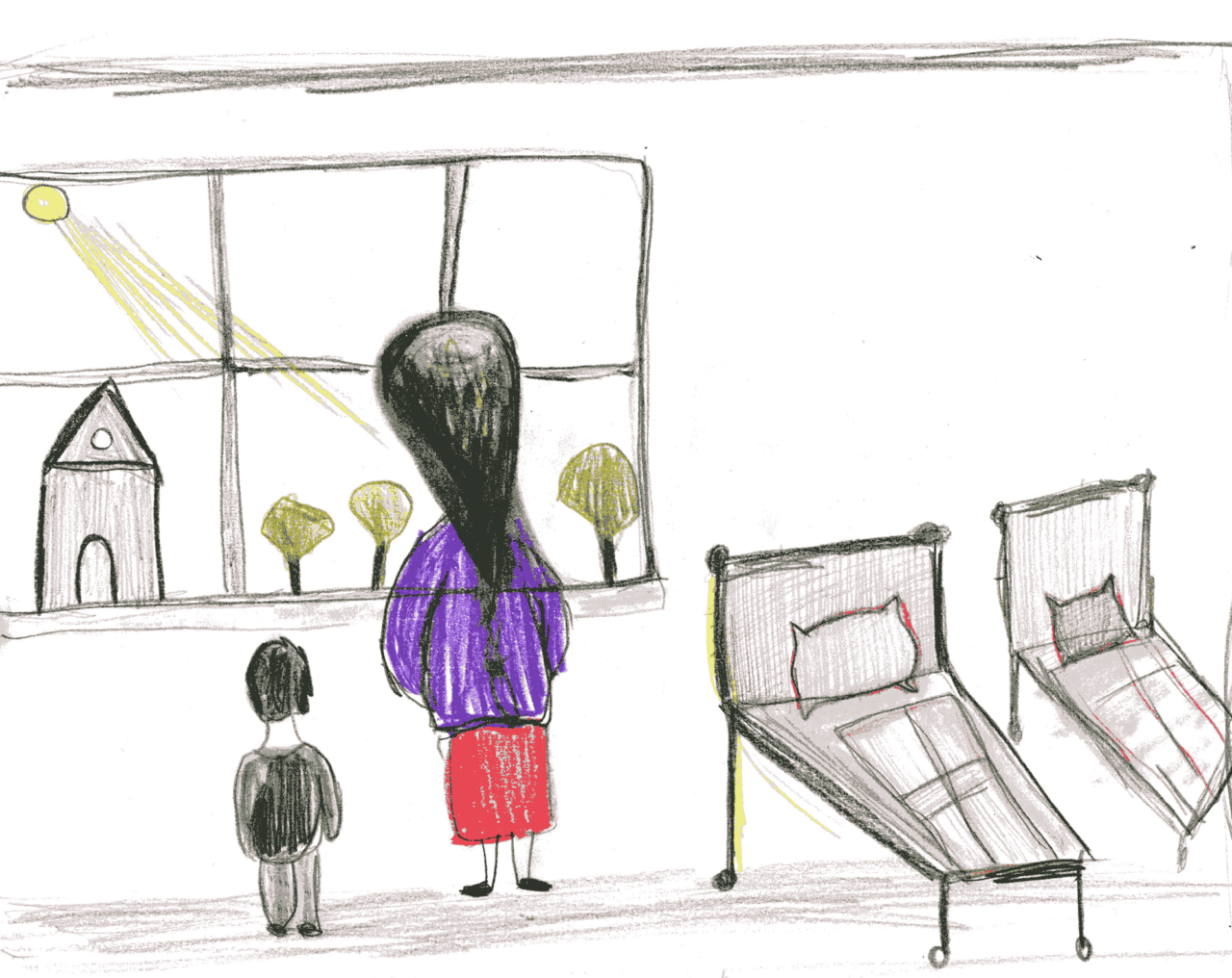
In 2013, Nadezhda suffered a severe concussion involving partial loss of hearing and eyesight. She was struck by a student high on drugs, she said. She spent over two months in the hospital. Ever since then, she has had to take pills that run her 3,000 rubles a month.

“Working with classes in which there are many orphans is not easy at all. They demand your constant, undivided attention. When I say ‘demand,’ I mean ‘demand,’ and they get that attention. But then conflicts arise with the parents of other children: the class doesn’t consist entirely of orphans. They say I don’t give their kids enough attention.”

Over the course of her life, Nadezhda has never been able to earn enough money to buy a standard 600 square meter dacha plot. Thanks to her former father-in-law, however, she grows vegetables on his plot.
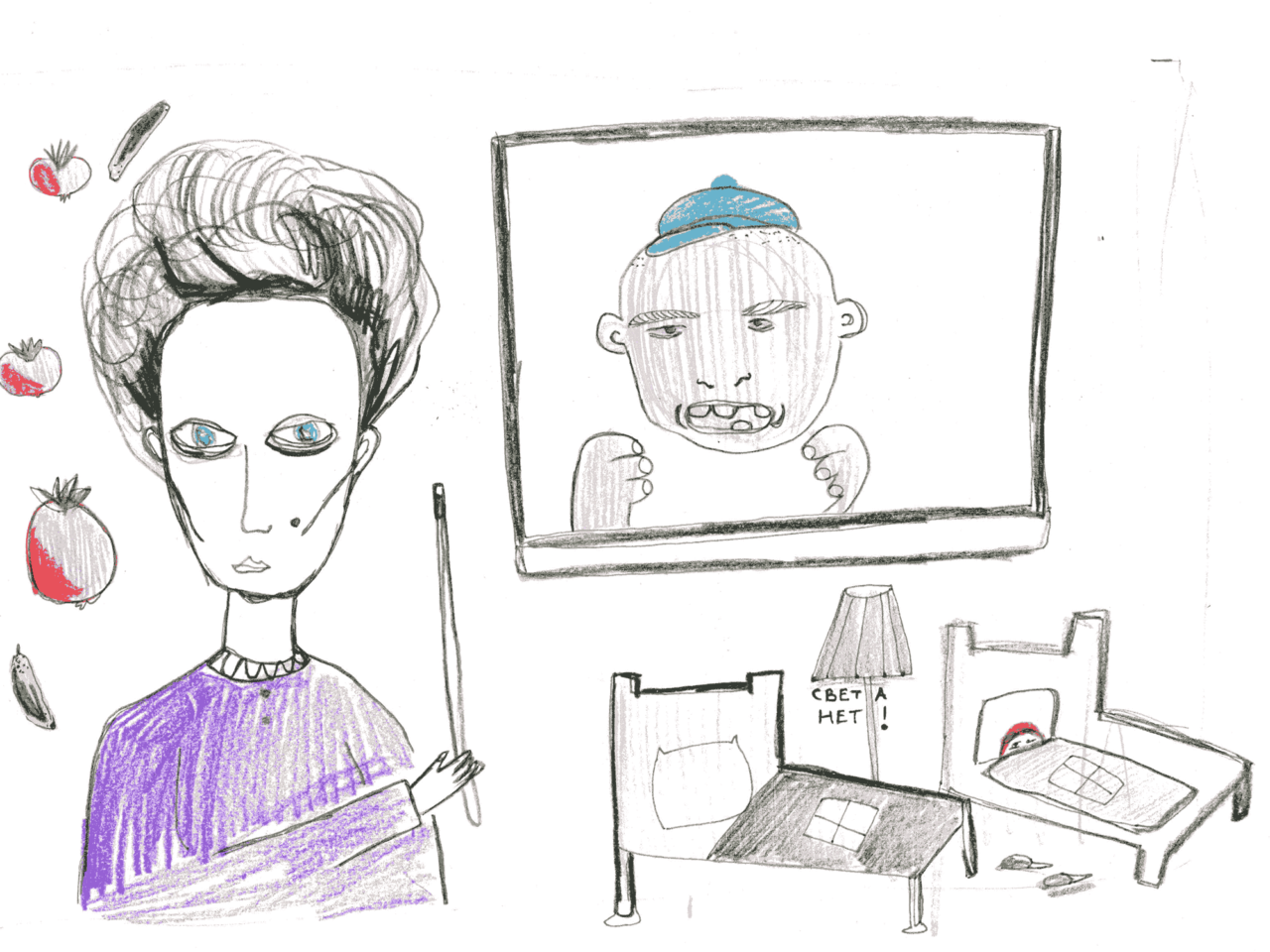
“I hear the call to be a patriot from every radio, TV set, and kitchen appliance. What are you going on about, guys? I have been humiliated my entire life, paid crumbs for a difficult, responsible job. I’m hit on the head by students, and they go unpunished. I’m told to quit if it doesn’t suit me: no one is holding me back. They tell me they will find a way to evict me from the dormitory, although they are unlikely to succeed as long as my son is a minor. I’m a teacher of the highest category, with a certificate of merit from the education ministry. Our family income exceeds the minimum subsistence income by 700 rubles, meaning that officially we are not poor. Thank you very much, it makes life so much easier.”

A Trend
Since 2005, the poverty level in Russia has decreased threefold, note the authors of the study. At the same time, they write, “We cannot recognize as normal circumstances in which over ten million employed people have incomes that do not allow them to provide decent living conditions not only for themselves, but for their families.”

The researchers at the Russian Government’s Analytical Center have noticed a trend in recent years. There have been more people working in needy families, but “this has not vouchsafed their exit from poverty.”

Story No. 3: Igor
Igor Kurlyandsky, a PhD in history and senior researcher at the Institute of Russian History of the Russian Academy of Sciences, cannot be categorized as belonging to the working poor. His monthly salary exceeds the minimum subsistence income for someone living and working in Moscow by 600 rubles. His monthly after-tax income is 19,300 rubles [approx. 279 euros]. There are freelance jobs, of course, but they are irregular and do not change Igor’s circumstances for the better.
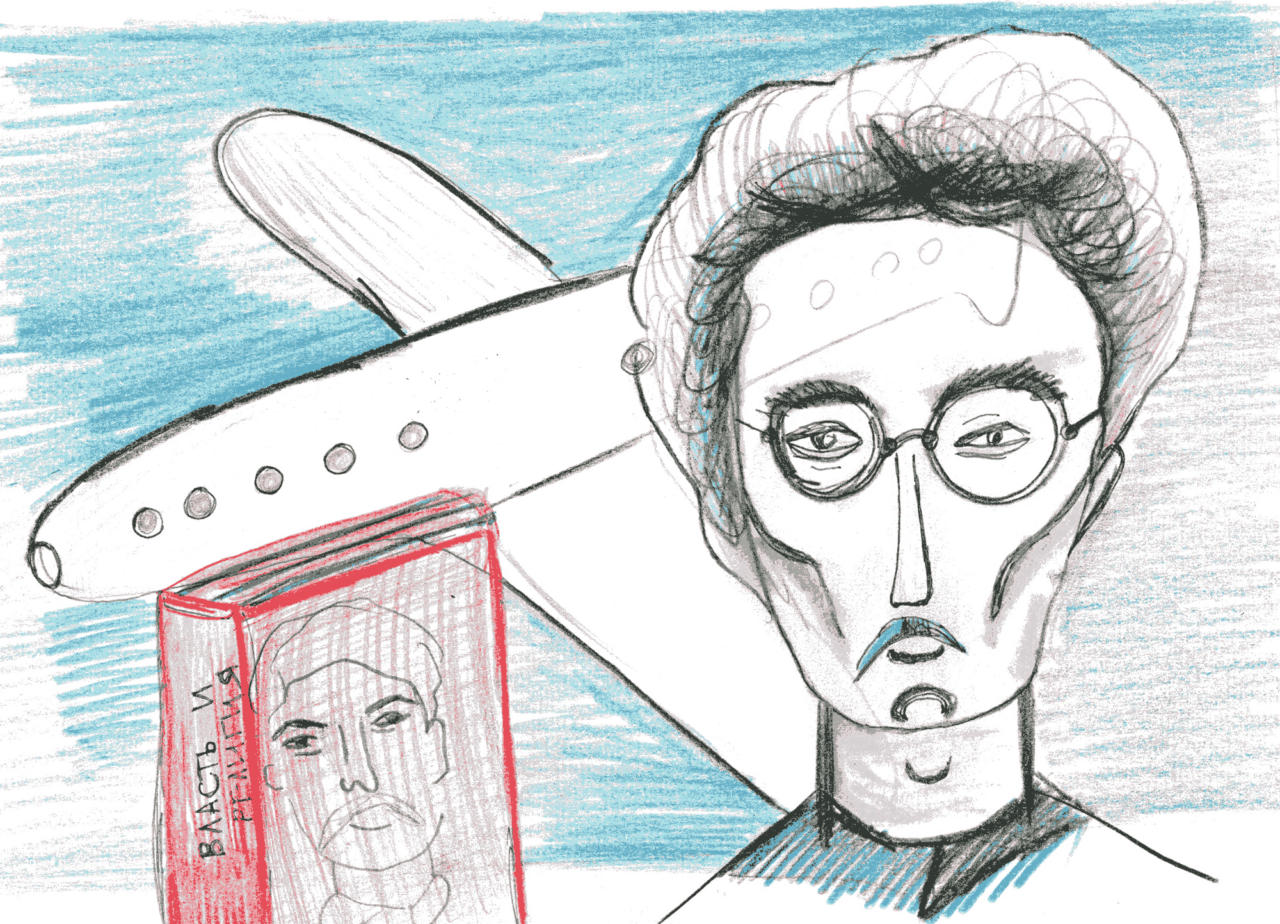
“Generally, the salaries at the institute are pitiful. Doctors of Science and senior employees are not paid much more than I am, three or four thousand rubles more,” Kurlyandsky said.

FANO (Federal Agency for Scientific Organizations) is supposed to pay quarterly bonuses based on performance indices, for example, academic publications. But this year, according to Kurlyandsky, FANO has not paid out any of these bonuses, and it has canceled old bonuses as well.

“It’s wrong to demand that scholars publish frequently. They might work for a year in the archives, collecting material for future academic articles. Or they might take several years to write a book. I worked for four years on a book about the relationship between the regime and religion during the Stalin era. I will not be paid a fee for the book. I might get a salary bonus for it from FANO. But whatever it is, if you divided it by four years, it would amount to kopecks. The institute has nothing to do with selling books. Authors earn nothing except complimentary copies.”

According to Kurlyandsky, the Institute of Russian History, one of the principal historical research institutions in Russia, with many wonderful scholars on its staff, is itself a beggar.

“It literally has no money for anything. The state hardly finances it. Of course, for many years, its fellows can travel for business only at the expense of host institutions.”

“If memory serves me, the last time researchers got a raise was around fifteen years ago. Life becomes more expensive, but our salaries stay the same. Over this period there were several spikes in inflation, but our salaries were not indexed. I have to skimp on lots of things,” Kurlyandsky confessed.

Where Are There More Poor People?
If you look at the situation by sector, the majority of the working poor are employed in housing services and utilities, education, culture and sports, agriculture, forestry, and a number of other sectors. The sectors with the fewest working poor are the resource extraction industries, finance, public administration, the military-industrial complex, and social security administration.
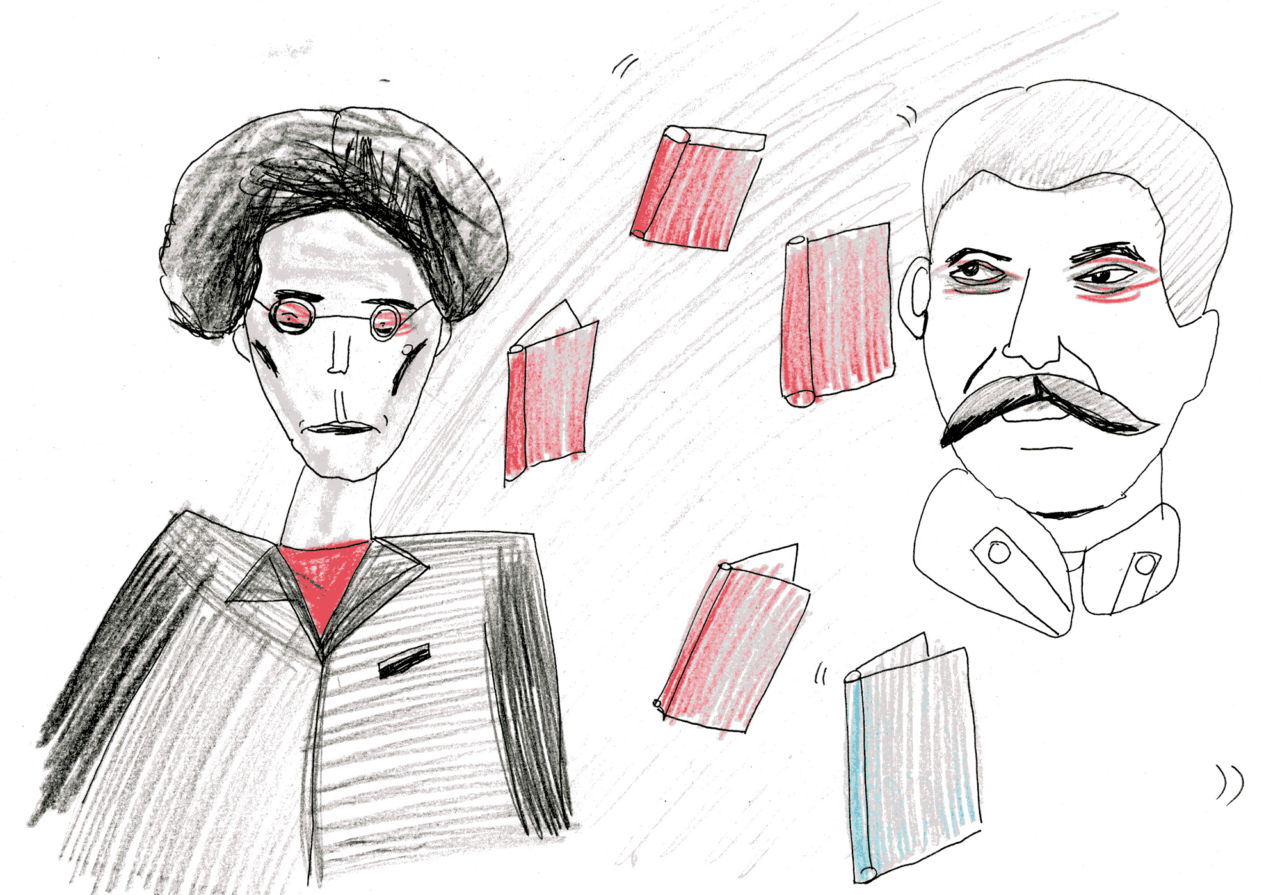
Generally, the statistics say that, since 2005, the number of working poor has decreased from eight million to two million, and the percentage of poor people from 24.4% to 7.3%, and this has occurred mainly due to the private sector, not the public sector.

Story No. 4: Svetlana
Forty-four years old, Svetlana works as a senior librarian. She arrived at the library immediately after graduating from a teacher’s college. Twenty years on the job, Svetlana has a huge amount of experience and a monthly salary of 8,300 rubles [approx. 120 euros].

“When I was a student, I imagine my future job as a perfect idyll: silence, lamps glowing on the tables, people reading, and me bringing enlightenment to the masses. It’s funny to remember it. I didn’t think about the money then, of course, but nowadays it’s the thought with which I wake up and go to sleep. My husband teaches at a university and makes a little over 14,000 rubles [approx. 200 rubles] a month. We have two sons in school. My dad is quite unwell, and my husband’s mom and dad are also quite ill. So we earn our 23,000 rubles a month and divide it among seven people. Among seven people, because my dad and my husband’s parents have pitiful pensions, public pensions, despite the fact they worked in factories for thirty years. It’s my perennial puzzle. What should we buy? Medicine for the elderly? Shoes for the kids? Pay off part of the debt we owe on the residential maintenance bill? Buy decent trousers for my husband? I haven’t given myself a thought for a long while. Honestly, I wear blouses and skirts for ten years or so before replacing them. I can’t recall the last time I bought cosmetics.

“Earlier, we bore our poverty more easily, maybe because we were younger. So what there was nothing to eat with evening tea? Who cared that we dressed modestly? It was a style of sorts. We tried to make sure the children had better shoes and clothes.

“The most terrible thing right now is not that we are paid kopecks. My husband used to believe we would struggle through, that we would work off our debt. But then he burnt out. He forces himself to go to work. The children are perpetually dissatisfied, and our parents are always ill. Only I don’t pretend it’s okay, that everyone lives like this. I have caught myself sizing up how people are dressed on public transport, and at the store I look into their baskets. What fruits, meat, and wines they buy! We are always eating buckwheat groats with bits of chicken and meatless soups. I hate the dacha, but it really does put food on our table.
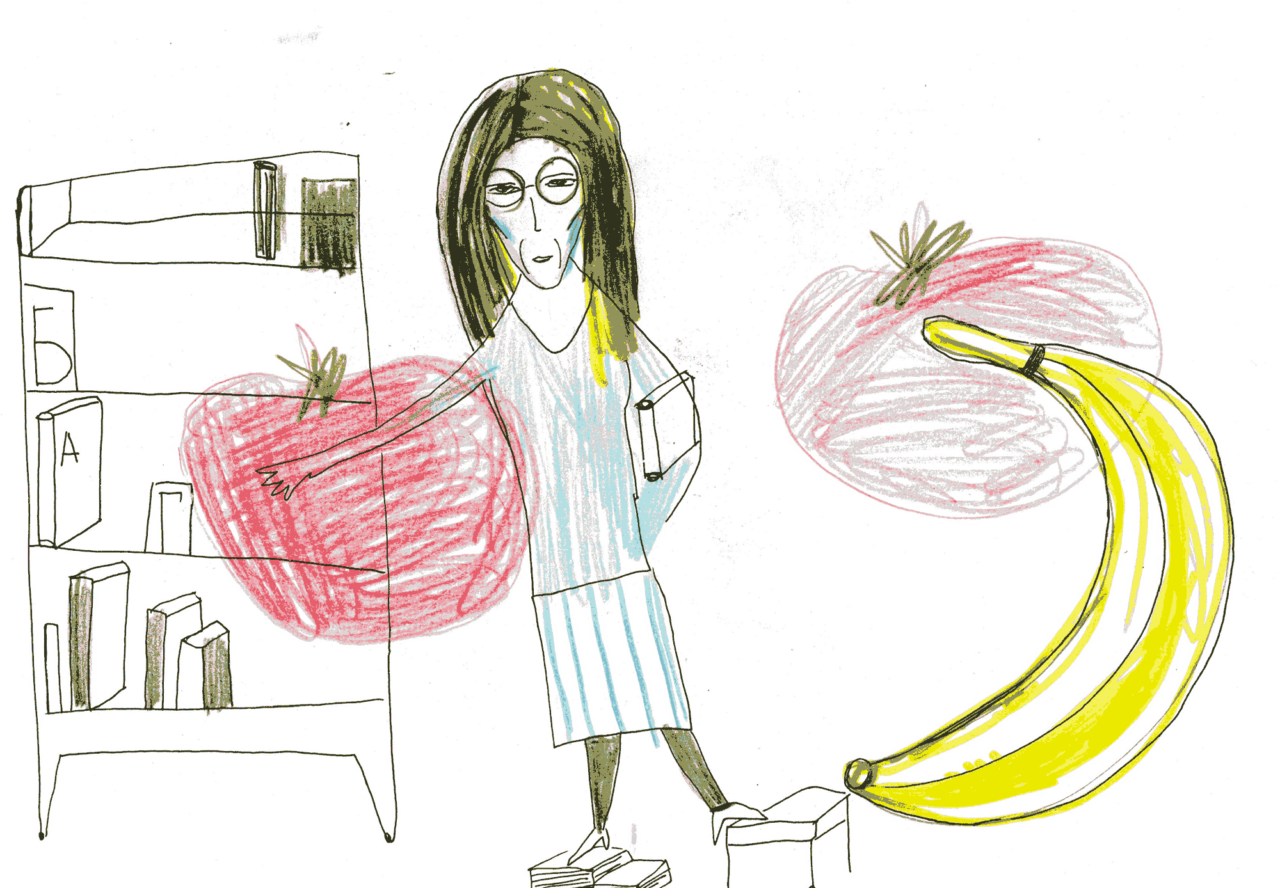
“I have no prospects. I won’t live long enough to be promoted to head librarian, because our head librarian is my age. I lack the strength for side jobs. My real job is not easy: there is lots of scribbling involved. Plus, we divvied up the jobs of the cleaning woman and  janitors, so we either mop the floor or chop ice on the pavement. I crawl home barely alive. Frankly, I don’t see how my life could change, and I’m used to it. What worries me is my sons’ future. I’m horrified when I think that soon they will be applying to university. What if they don’t get full scholarships? We definitely don’t have the money to pay for their educations. So it turns out we have doomed our boys to the same poverty.”

It’s Shameful to Admit
Nearly everyone with whom I spoke when writing this article asked me not to use their real names and places of work. They all made the same argument. First, it is shameful to admit you work for mere kopecks. Second, their bosses would be unhappy and punish them for “disclosing information discrediting the organization.” Many of my interviewees actually had signed such non-disclosure agreements, entitled “Code of Ethics,” at work.

All illustrations courtesy of the artist, Natalia Gulay, and Takie Dela. Translated by the Russian Reader

________________________________

Labor ministry: about 13% of Russian population live below poverty line
TASS
December 28, 2017

The number of citizens with incomes below the minimum cost of living is around 20 million people, according to the Russian labor minister

The incomes of about 13% of Russia’s population are lower than the minimum cost of living, Labor Minister Maxim Topilin said in an interview with Rossiya 24 TV channel.

“According to current estimates, the number of citizens with incomes below the minimum cost of living is still around 20 million people, which is 13–13.5% of the country’s total population,” Topilin said.

He noted this is “at least an unpleasant indicator.” The minister attributed this figure to price increases in the last two years and, as a result, the growth of the subsistence minimum.

Topilin stressed the government has already taken the first steps to reducing the number of people with incomes below the subsistence minimum. He recalled that under a law that was adopted recently and would come into effect on January 1, 2018, the minimum wage would rise to 85% of the minimum subsistence level, and to 100% on January 2019.

“For the first time in the history of the Russian Federation, we have managed to bring the minimum monthly wage to the minimum subsistence level,” Topilin said.

NB. This article was lightly edited to make it more readable—TRR.
Cotton in Volgograd: An Immigrant’s Story

The White Gold Immigrant
Alexandra Dontsova
Takie Dela
December 5, 2017

Oybek Kimsanbayev’s life is like a Hollywood film: a brilliant scientific career, crushing failure, departure from his native country, work on a construction site, and his first experiments with cotton in Russia.

A heated discussion was underway at Volgograd State Agricultural University. Local and university officials were telling a visiting deputy agriculture minister about the local curiosity: cotton. Imagine, they told the deputy minister, it grows here, and the quality is even excellent. They dreamed aloud how it would be grown on an industrial scale. All that was needed was state support and processing complexes.

While the officials were singing cotton’s praises to the deputy minister from Moscow, a man with a haggard face stood in the doorway of the conference hall. He nervously bit his lips, alternating his gaze between the floor and the audience. Oybek Kimsanbayev heads a group of scientists who have developed varieties of cotton capable of growing in the Volgograd Region’s climate. The region is recognized as the northernmost point in the world where it is possible to grow cotton. Although he was the most important person in the room, Kimsanbayev was not on the list of speakers.

Oybek Kimsanbayev waiting to be interviewed. Photo by Alina Desyatnichenko for Takie Dela
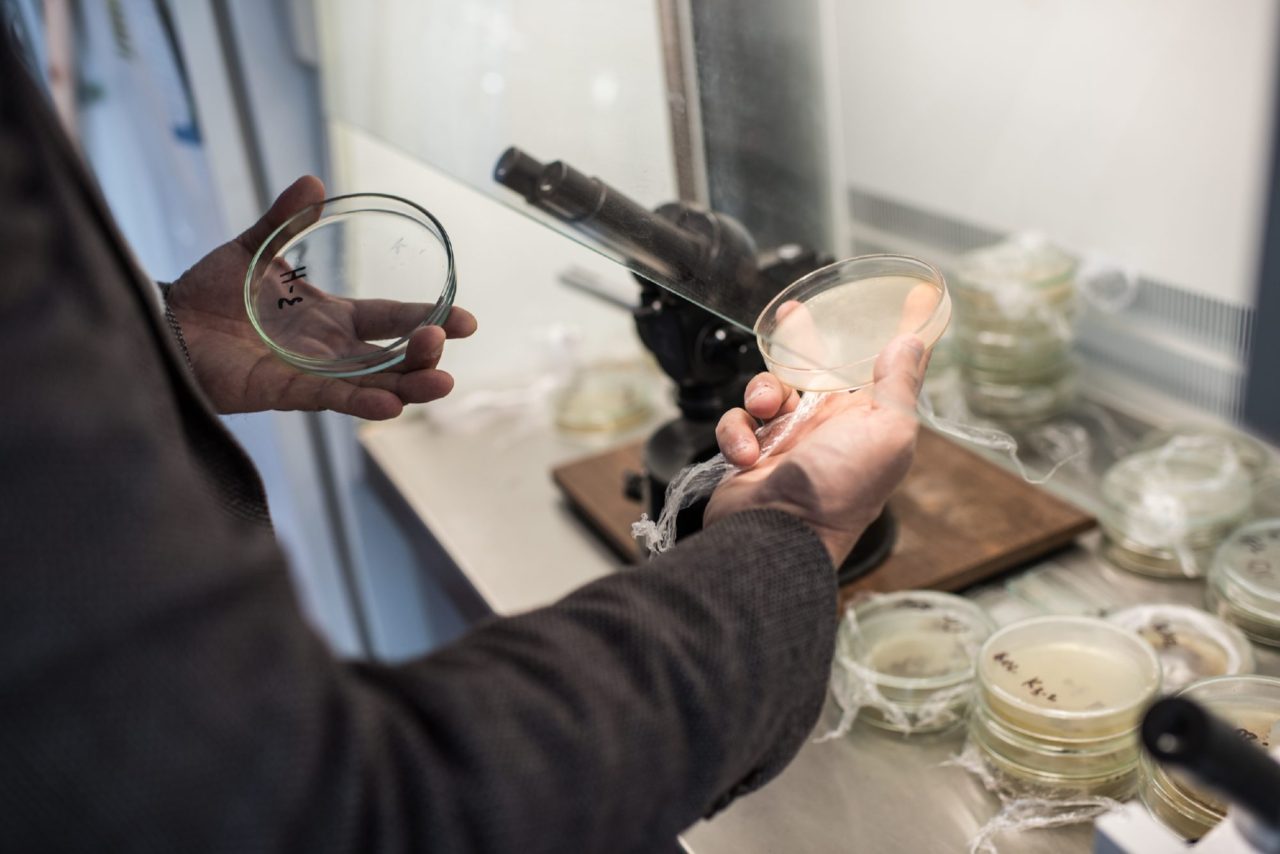
Everyone except the man who had made the conversation possible talked about cotton and the prospects of its cultivation in Russia. (Given a skillful approach, Russian cotton might challenge the US and China’s hold on the market.) However, at some point, the university’s rector realized the discussion lacked something and gestured for Kimsanbayev to come and sit down at the round table at a place that had happily been  vacated.

Construction and Cotton

Kimsanbayev tells journalists nearly the same story when asked why he started researching cotton in Russia, adding that he is very grateful. Were it not for reporters, few people would know of his work, and he scarcely would have been able to get the ear of the authorities.

“In 2006, a cooperation agreement was concluded between Taskhent State Agricultural University and Volgograd State Agricultural University. Researchers launched projects on alternative crop production, meaning cultivatings crops that have not usually been grown in a particular area. One lab worked on reviving cotton growing in Russia. The outcome was a project for generating ultra-early ripening, high-quality varieties with a high fiber yield,” Kimsanbayev says at one go.

“And the non-official story? Why did you start researching cotton in Volgograd?”

We are sitting in small cafe in the Hotel Volgograd. It is pouring rain outside. Opposite our table is a group of foreigners. Judging the by patches on their blazers, they are FIFA officials, who have arrived in the city to monitor construction of the city’sstadium for the 2018 World Cup.

Kimsanbayev is forty-three years old. Aside from Tashkent Agricultural University, he has a degree from the University of Seoul, taught at Columbia University, ran a lab, worked for the president of Uzbekistan in the early noughties, and at the age of thirty-five became the youngest doctor of agricultural sciences in his country. He has published hundreds of scientific papers, and he has developed and co-developed some two dozen varieties of cotton. Until 2012, he led an international project for creating ultra-early ripening cotton varieties.

Kimsanbayev shows the work his lab does. Photo by Alina Desyatnichenko for Takie Dela
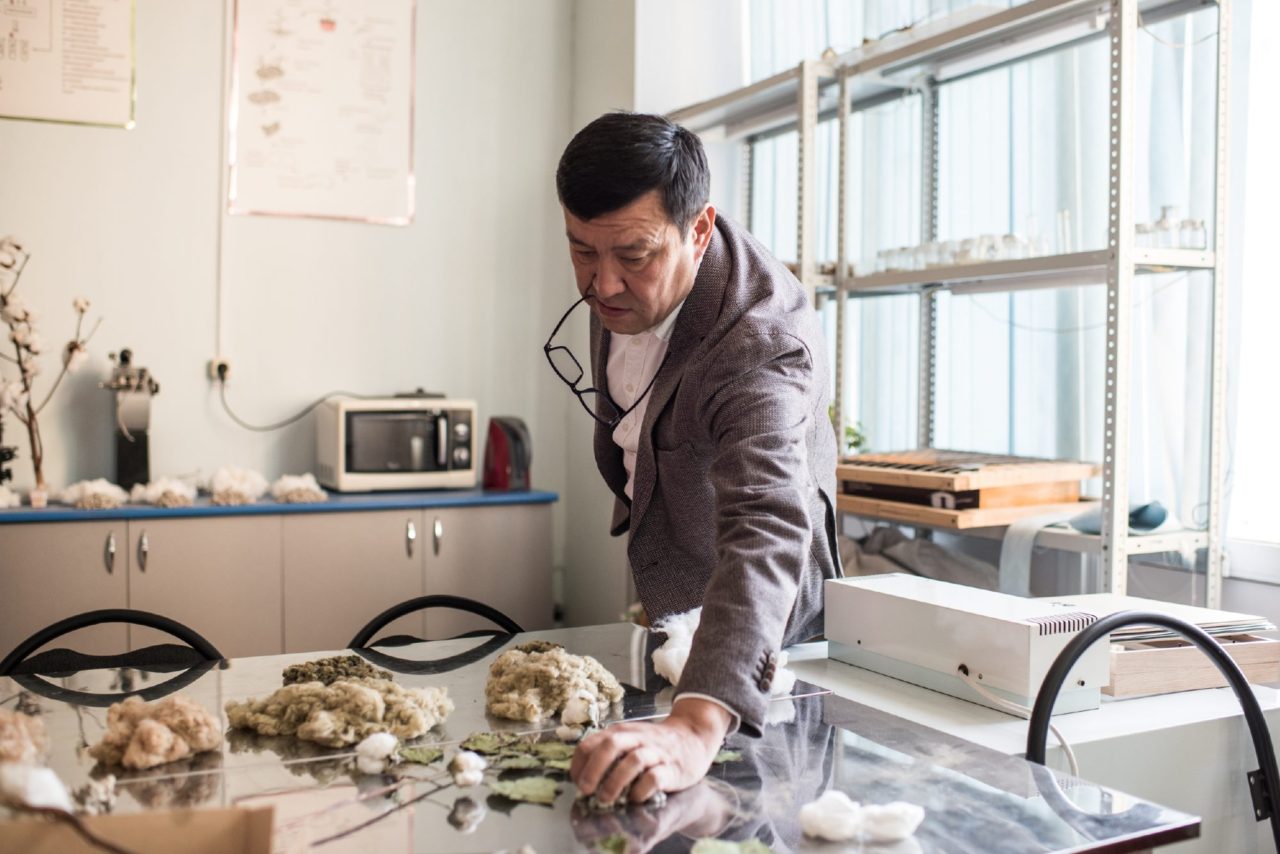
It was at this high point that Kimsanbayev’s life, chockablock with prospects and ambitious plans, fell apart overnight. Due to a mistake he discusses reluctantly, he was forced to leave Uzbekistan.

“Yeah, I have a big mouth. I was working with a Russian university. We had established a distance-learning platform for Uzbek children. But not everyone liked what we were doing. So it happened I lost my job and could not find another one.”

Professor Kimsanbayev was forced to go to Russia to work as an ordinary migrant worker. An acquaintance in Volgograd hired him to work for his company, to “make some moves,” as Kimsanbayev puts it.

“The helter-skelter was not my thing, and I went and got a job at a construction site. I was an ordinary unskilled laborer, along with other men from my country. I don’t see anything shameful about working with my hands. If I have to, I’ll wash floors. Or work on building the stadium.”

Chance brought Kimsanbayev together with good people who took him to Volgograd State Agricultural University. After a long interview with the rector and after he supplied the university with his academic credentials, Kimsanbayev was appointed a lecturer in the agricultural technology department. Realizing the worth of their new faculty member, the university rented a flat for him. He was given the chance to do what he does best: experiment with cotton.

Not Just Cotton Wool

The first year, Kimsanbayev planted only 25 acres. The professor did everything himself in a field the size of four typical dacha plots. He sowed it, plowed it, watered it, and did battle with weeds and pests. Many people doubted the seeds would sprout.

“I brought an international collection of cotton seeds to Volgograd: 97 varieties from all the cotton-producing countries, from Latin America, the US, China, India, and so on. I selected 25 varieties, which sprouted in the local climate. I narrowed these down to three varieties. That is how we arrived at an ultra-early ripening cotton in Volgograd, a variety that matures between April and September.”

The following year, the experimental cotton field had grown to eight hectares. To help him with the work, Kimsanbayev hired Uzbek agronomists and encouraged the university’s students to join them. The outcome: not only did the cotton seeds sprout, but the field turned into a white carpet in due time.

“As they say, I woke up famous one day. Reporters and local officials came to see me in the field. Now everyone believed Volgograd cotton was a reality. However, we are faced with other problems. We have to convince farmers it is worth growing cotton, that the crop is economically profitable: the price of one kilo of raw cotton is equal to the price of thirty kilos of wheat. In addition, we need specialist agronomists. So, basically, I promote cotton and, of course, train students. I don’t work alone. Several scientists, including Igor Podkovyrov and Taisiya Konotopskaya, have been working on cultivating new varieties with me and training specialists.”

Kimsanbayev now heads the university’s Center for Applied Genetics, Selective Breeding, and Cotton Seed Production. In total, 109 hectares were planted with cotton this year.

Oybek Kimsanbayev in the lab. Photo by Alina Desyatnichenko for Takie Dela
Kimsanbayev says that Allah loves him. Otherwise, he would not have sent him so many trials and so many people, willing to help him just like that, without asking anything in return.

“There have been deplorable circumstances when my life was not worth a penny. Yet people helped him. But there are things I really regret. I once behaved disgracefully and therefore moved away from my family. So the burden of guilt would not drag me down, I simply shoved off to Russia, frankly. That is why I have worked so hard, so that, down the line, my family—my dad, my brother, my wife and our three children—would be proud of me. That is my own real goal in the work I do.”

“What did you do that was disgraceful?”

“I don’t want to talk about it.”

“When was the last time you were in Tashkent?”

“I constantly have meetings and business trips. My schedule is crazy. I just got back from Astrakhan, where the region’s governor and I discussed a plan for sowing 200 hectares of cotton in the spring. I haven’t been home for four months.”

Kimsanbayev suddenly falls silent. The expression on his face changes noticeably when the conversation turns to family and children. His eldest daughter and son are seventeen and sixteen, respectively, while his youngest son is five.

“I miss them, of course. I’m really afraid of losing my family due to my work.”

“Why don’t you move them to Volgograd?”

“Where would I put them? In a rented flat on a monthly salary of 27,000 rubles [approx. 390 euros]? Listen, your questions are making me depressed, and it’s raining outside as it  is.”

Later, Kimsanbayev confesses he bought tickets for home right after our interview.

Potatoes on Mars

The cotton harvest is nearing completion in the university’s experimental field. The agronomist Bahadir or, as he introduces himself, Boris, specially recruited from Tashkent for the experiment outside Volgograd, shows me how to pick cotton. It is fairly straightforward. You pull the fiber from the boll. If it gives, you keep pulling until you have all the white cotton in your hand.

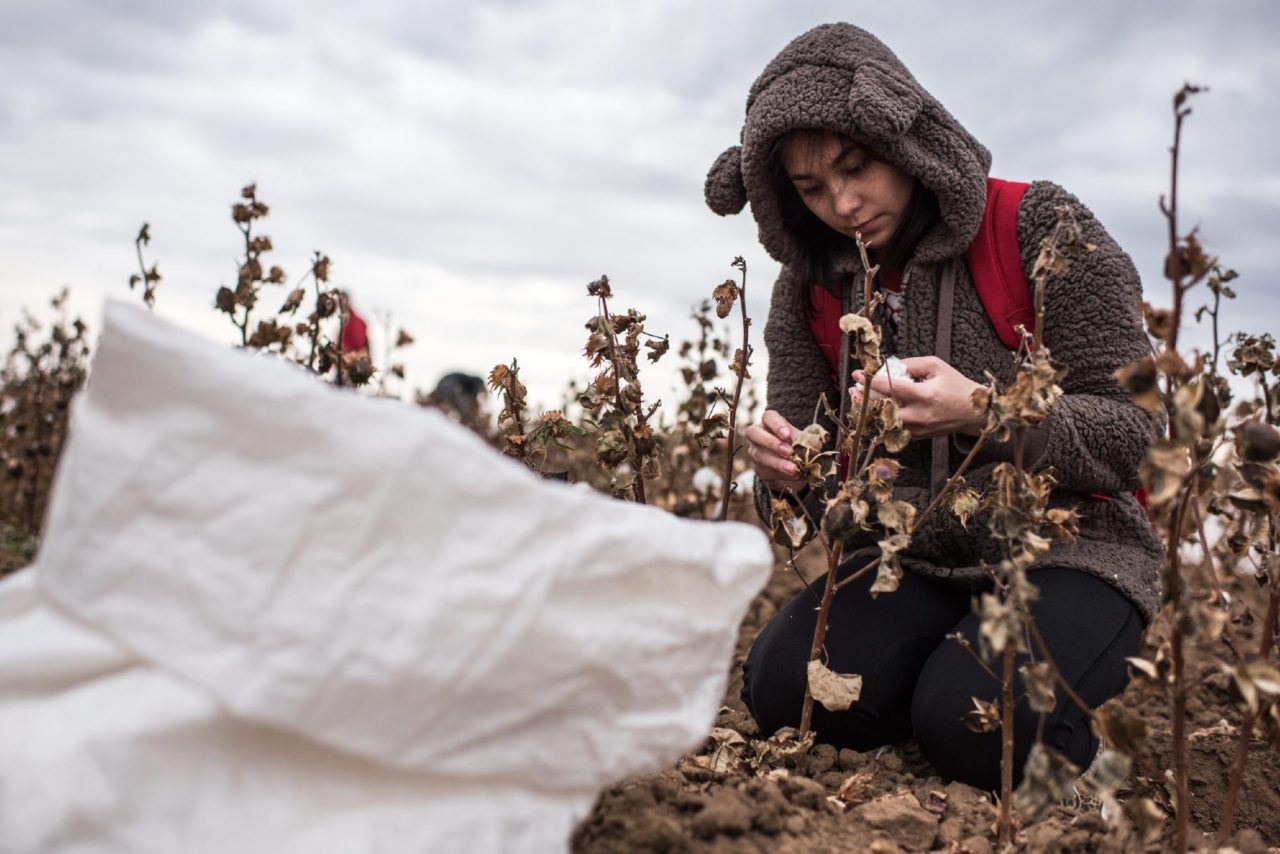
University students help pick the cotton. The white caps from the cotton plants are quickly deposited into sacks. Soft as a cat’s paw, the fiber is pleasant to the touch. The softness is a small reward for one’s efforts. Pulling the cotton from the boll without being pricked is nearly impossible.

A student from Volgograd State Agricultural University picks cotton. Photo by Alina Desyatnichenko for Takie Dela

There are several unusual rows on the edge of the large field. The cotton there is not white, but dirty yellow and brownish green. It transpires that this year the Volgograd researchers bred a special variety of colored cotton. Someone joked the military ordered green cotton for sewing its uniforms.

Since Oybek Kimsanbayev joined its faculty, Volgograd State Agricultural University became the only university in Russia where cotton scientists are trained.

“Do you know how I enticed students into studying cotton? I said they would be rare specialists, and they would especially in demand abroad. But I hope, nonetheless, that Russian farmers realize the crop is quite profitable economically. This year, for example, there was overproduction of wheat in southern Russia. Farmers cannot sell the grain at a good price, while there is simply nowhere to store such yields. Consequently, they are making a loss. And this isn’t the first year we’ve seen this scenario. So, farmers need to switch to other crops, including non-traditional crops. Cotton could be one of those crops.”

“Where else in Russia could cotton be grown?”

“Currently, Volgograd Region is the northernmost area in the world where cotton is planted. The crop could be planted farther south, in Astrakhan, Kalmykia, Stavropol, and Krasnodar. Just imagine, in Volgograd Region, in one of the districts along the Volga River there are one and a half million hectares of cropland lying fallow. If you sow all that land with cotton, and the yield from one hectare is around one ton, Russia could reshape the world cotton market. It would simply crash it. Russia would not be dependent on imported cotton, which is especially vital given ongoing western sanctions and Uzbekistan’s refusal to export raw cotton to Russia. The really funny thing is that cotton was once grown in these parts. However, the technology was lost over the last decades. So now we folks at the university are once again developing techniques for cultivating cotton and breeding new varieties.”

The harvested cotton is loaded into a trailer for the journey to the warehouse. Photo by Alina Desyatnichenko for Takie Dela
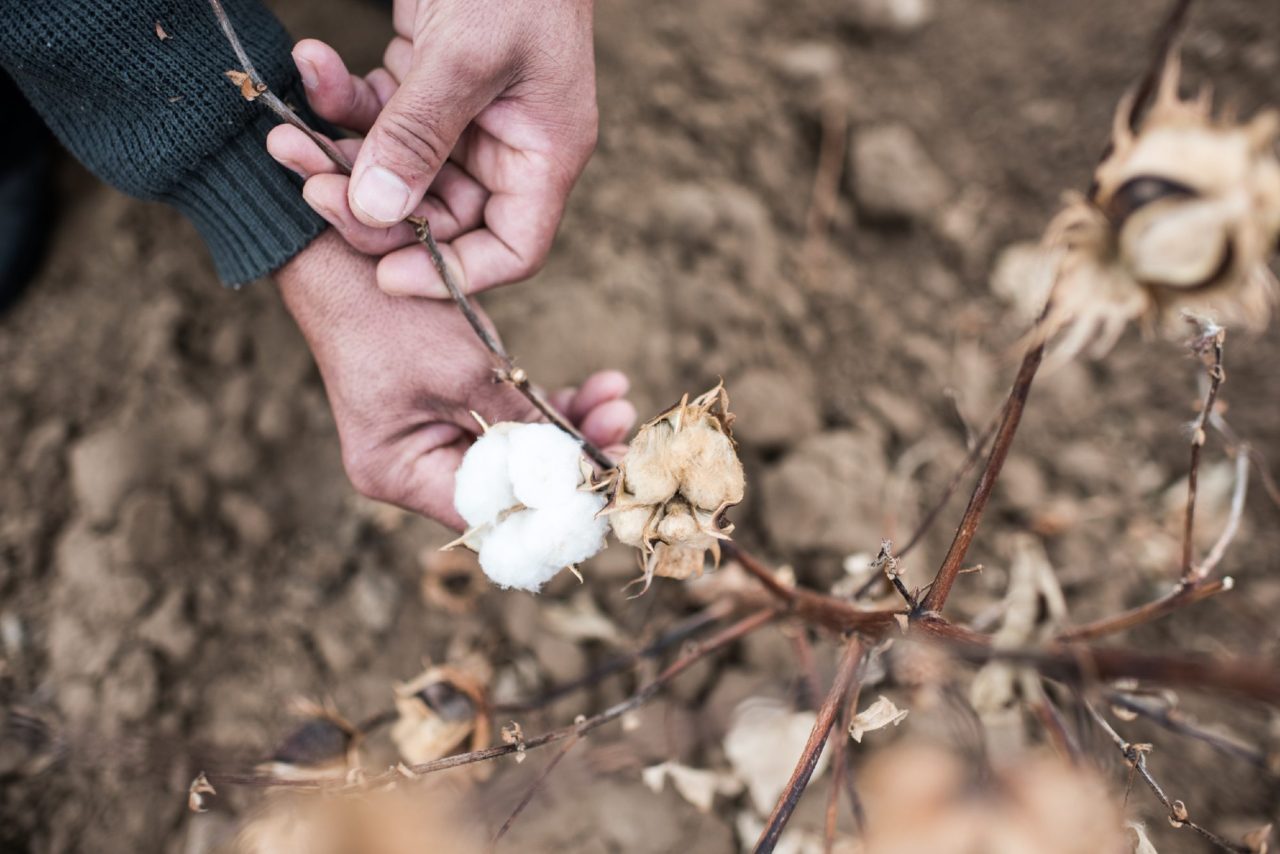
The cotton from the experimental field is of very high quality. Its quality has impressed the local textile mill and a Moldovan company, almost the only full-cycle plant in the CIS where raw cotton is processed and fabric produced. It is they who are hurrying the researchers in Volgograd to breed varieties that would yield 3,000 kilos a hectare.

“Next year, six times more cropland will be sown with cotton seed in Volgograd Region alone: 630 hectares. Plus there will be 200 hectares in Astrakhan Region. We are negotiating with Kalmykia. We provide scientific support to all the farmers. Recently, at an ag expo in Moscow, I spoked with your agriculture minister, Alexander Tkachov. He told me a program for supporting cotton growing in Russia was in the works. I think the availability of state support would ultimately convince farmers to take up cotton.”

“Do industrialists try and recruit you? The salaries are definitely higher in industry than at a regional university.”

“I’ve had offers. But I turned them down. I would have to work as an agronomist or seed cultivator whose job would be to increase gross crop yields. I don’t find that interesting. I’m a scientist. I’ve created a variety, I’ve let it go to work, and I’ve set myself a new goal.”

“Do you have a new goal?”

“I do. Roughly speaking, our project aims to study alternative crop production. Meaning that we cultivate crops in places where they usually don’t grow. Have you seen the movie The Martian, in which an astronaut grows potatoes? They took the idea from reality. Thirty years ago, the Soviet cosmonaut Vladimir Dzhanibekov was the first person to grow cotton in outer space. My objective is to cultivate varieties of different crops that would adapt to all natural conditions, so that no amount of frost could damage them. I have proven this is possible. However grandiloquent it might sound, the job of farmers is to feed the world. If plants can yield crops under any conditions, imagine how that would change a country’s economy.”

The agronomist Bahadir shows off Volgograd’s know-how: colored cotton. Photo by Alina Desyatnichenko for Takie Dela

Cotton is the only crop that has several sets of genetic chromosomes. That is why it is perfect for different experiments.

“How do they relate to your work and success in Uzbekistan? Are they kicking themselves for letting such a valuable employee go?”

“I don’t know whether they’re kicking themselves. But I have been offered a prestigious job and a high post. I’m not ready to go back yet.”

Translated by the Russian Reader

There Are No Condoms in Russia

360521

Developing a Moral Immunity to HIV
The Education and Science Ministry doesn’t want young people to talk about condoms
Anna Makeyeva and Valeriya Mishina
Kommersant
November 3, 2017

As Kommersant has learned, a scandal has erupted in the Education and Science Ministry over an online HIV prevention lesson for high school and university students. The people responsible for the internet project have refused to fulfill demands by officials to vet answers to users’ questions in advance, as well as their recommendations to “talk about morality in order to get away from slippery topics” and avoid such words as “condom.” It is still unclear how the lesson, scheduled for December 1, will be taught.

The Nationwide Internet HIV Prevention Lesson, timed to coincide with World AIDS Day on December 1, has been held by order of the Education and Science Ministry since 2015. On the eve of the lesson in 2016, Education and Science Minister Olga Vasilyeva noted that the issue of countering the spread of the HIV infection among children and adolescents, given the complicated epidemiological circumstances, had long been a focus of the Education and Science Ministry, and occupied a vital place in a set of measures for preserving and strengthening the health of children and young people.

“The use of such innovative methods as open internet lessons at preventive events in educational institutions will help us cope more effectively with the existing problem,” Izvestia quoted the ministry’s stated position in 2015.

On November 2, a working meeting in preparation for the upcoming internet lesson was chaired by Larisa Falkovskaya, deputy director of the department for state policy on children’s rights at the Education and Science Ministry.

“For the first time in my life, a meeting at the Education and Science Ministry ended in scandal because of my fault. I refused to write the answers for those taking part in the online HIV prevention lesson,” said Sergei Bulanov, who is in charge of organizing the online lesson and heads the Center for Modern Education Technologies, a group of non-profit organizations engaged in educational and related projects.

According to Bulanov, the officials at the meeting deemed use of the word “condom” “unacceptable,” and consequently the meeting was adjourned.

Project organizers suggested to officials they give up the practice of using prepared answers in the video lesson and discuss issues of prevention in a playful way, for example, by arranging a rap battle between student teams from two regions.

“But we were told to talk about morality in order to get away from slippery topics,” complained Bulanov, adding, “The topic is ratherly widely represented in the school curriculum, but currently the Education Ministry has adopted a surprising stance, based on substituting HIV prevention, which is mostly a matter of personal hygiene, with lessons in moral values.”

Besides, Bulanov argues it is incorrect to equate the risk of infection only with antisocial behavior.

“Thirty percent of HIV-infected women were infected by the only sexual partner they ever had. Can we reproach them for antisocial behavior? HIV-positive teenagers who have been infected from birth did not lead an antisocial lifestyle.”

Vadim Pokrovsky, head of the Federal AIDS Center, argues the view it is better not talk to children about sex currently prevails in Russia.

“It is one of the reasons HIV has spread so widely in Russia,” he said.

According to Pokrovsky, twenty percent of young women are already having sex by the age of fifteen. He added that in Germany, for example, sex education is an obligatory subject in schools. Last year, only 3,500 cases of infection were registered there, while over 100,000 cases of infection were registered in the Russian Federation.

“We see two fundamentally [different] approaches and two different outcomes,” Pokrovsky concluded.

The Education and Science Ministry declined to comment on the situation when approached by Kommersant. The Russian Federal Health Ministry learned about the conflict from Kommersant. The ministry said the online HIV prevention lesson was an undertaking of the Education and Science Ministry.

“They did not come to us with this or consult with us,” our sources at the Health Ministry said.

Sergei Bulanov assured Kommersant preparations for the open HIV prevention lesson for young people would be continued.

“We will keep on working, focusing more on recommendations from specialists at the Health Ministry and Rospotrebnadzor [the Russian federal consumer watchdog] than on the client [i.e., the Education and Science Ministry].

The internet lesson will take place on December 1, 2017.

Translated by the Russian Reader. Photo courtesy of Pravda.ru

“A Great City Deserves a Great Library”: Petersburg Professors Defend the Publichka

Literary scholar Dmitry Kalugin picketing the entrance to the Russian National Library (“Publichka”), February 9, 2017, Petersburg. Photo courtesy of Serafim Romanova/Novaya Gazeta

Professors Stand Up for Librarians
Serafim Romanov
Novaya Gazeta Sankt-Peterburg
February 9, 2017

“Have you heard they want to merge the Russian National Library with the Lenin Library in Moscow?” Boris Kolonitsky, a senior researcher at the St. Petersburg Institute of History (Russian Academy of Sciences) asked passerby.

On February 9, a “professors’ picket” took place outside the Russian National Library’s main building on Ostrovsky Square. Lecturers from the European University, the Higher School of Economics, and other institutions rallied to preserve the so-called Publichka and defend its former head bibliographer Tatyana Shumilova [who was summarily dismissed from her post last week for speaking publicly about the negative consequences of the merger.]

Most bystanders heard about these developments for the first time. But after a short briefing, passersby agreed it would be wrong to merge one of the country’s most important academic and cultural institutions.

“It is not so much the library, St. Isaac’s or anything else that causes people to protest, as it is the fact that no one reckons with them,” Viktor Voronkov, director of the Centre for Independent Social Reseach, explained to Novaya Gazeta. “Why is everything being centralized? To make it was easier to control. The entire country is being formed up into a [power] vertical, and it is the same way in every field.”

“It matters that people from the outside, people who don’t work at the library but understand its value, speak out,” said journalist Daniil Kotsiubinsky, who organized the rally.

“The people who came here today are not random, but one of a kind. Petersburgers should listen to them.”

As the rally was drawing to a close, the overall enthusiasm was disturbed by a police officer.

“We’ve got a solo picket here,” the guardian of order reported on his cell phone, asking the picketers to show him their papers.

“It’s an A4-sized placard,” the policeman reported. “What does it say? ‘A great city deserves a great library.'”

Historian Boris Kolonitsky shows the group’s placard to a policeman. February 9, 2017, Petersburg. Photo courtesy of Serafim Romanov/Novaya Gazeta

Translated by the Russian Reader

Civilization Won’t Be Destroyed by Extraterrestrials: On the Possible Merger of Russia’s Two Largest Libraries

Tatyana Shumilova. Photo courtesy of Rosbalt

Civilization Won’t Be Destroyed by Extraterrestrials
The consequences of merging Russia’s two largest libraries would be disastrous, argues the Russian National Library’s Tatyana Shumilova
Alexander Kalinin
Rosbalt
February 1, 2017

The idea of merging Russia’s two biggest libraries was proposed to culture minister Vladimir Medinsky by their directors, Vladimir Gnezdilov (the Russian State Library in Moscow, aka the Leninka) and Alexander Visly (the Russian National Library in Petersburg, aka the Publichka). The proposal has hardly garnered universal approval. The country’s leading authorities on librarianship have sent a letter to President Putin asking him to stop the merger from going ahead. They have been supported by Russian philologists and historians.

Tatyana Shumilova, chief bibliographer in the Russian National Library’s information and bibliography department, spoke to Rosbalt about how staff there have related to the possible merger with the Russian State Library, and whether the issue has been broached with them.

What are the possible consequences of merging the country’s two biggest libraries?

Our library would simply cease to exist in its current shape. Many people have made much of the fact that the RNL’s executive director Alexander Visly has said the changes would not give rise to a new legal entity. Of course, they wouldn’t. One legal entity would remain: the RSL. So everyone realizes it’s not a merger that is at issue, but a takeover.

So we could equate the words “merger” and “destruction” in this case?

Yes, definitely. A merger would be tantamount to the death of our library here in Petersburg. After the RNL became a branch or appendage of the RSL, our work with readers would cease to be funded. We would not be able to provide them with the full scope of services. Plus, we would have to switch to the RSL’s system, and that would be undesirable. We are told the catalogues in both libraries are structured on the same principle. That is not true. There is a big difference between them. It would be quite complicated to restructure the system. The different approaches to librarianship should be preserved.

Moscow has the administrative resources. The government is located in the capital, as is the Culture Ministry. Moscow and Moscow Region are the home of the RSL, the Russian Institute for Scientific and Technical Information (VINITI), the Russian National Public Library for Science and Technology, the State Historic Public Library of Russia, and the Russian State Library for Foreign Literature (aka the Inostranka). And, until recently, the Institute of Scientific Information on Social Sciences of the Russian Academy of Sciences (INION RAN) was running at full steam. But the Northwest Federal Region has only two major libraries, the RNL and the Library of the Russian Academy of Sciences (aka the BAN). After a merger, there would be one.

I understand that, after the merger, publishers would not have to send an obligatory copy of their books to the RNL. Only Moscow would get new books?

That is one of the cost-saving measures. Allegedly, money would not have to be spent on two sets of obligatory copies. It would be enough to have one hard copy and a digital copy. But the outcome would be that Petersburg would simply stop receiving most new books. It’s a rather cynical cost-cutting measure that would affect only our library, not the RSL, which was founded much later than the RNL. And all because it’s located in Moscow. No one says it outright, but it’s clear anyway.

But the RNL would still get a digital copy.

I really don’t understand the idea of sending a digital copy instead of a hard copy. We have a huge number of readers who for medical reasons cannot and should not use a computer. Why should we deprive them of hard copies? It’s simply indecent. Besides, we know what natural disasters electronic resources are prone to. A blackout, a power surge in the network, a server failure, and everything is lost. A library should not be dependent only on one type of resource.

People who take far-reaching, momentous decisions like to base them by alluding to the know-how of other libraries and even other countries. But nowhere do national libraries receive only digital copies of printed matter. You can probably merge libraries in Denmark, but the Russian Federation is a different country, a much larger country with a much larger population. Although the name would stay the same, the RNL would in fact cease being a national library. We already have municipal and neighborhood libraries in Petersburg. People come to us as a last resort, when there is nowhere else to go.

Nor is anyone probably really aware that digital copies relate not only to books but to magazines and newspapers as well.

Apparently, the shots are being called by people who don’t read and don’t go to libraries. Just how did the culture minister write his dissertations and books? By using the Internet? Or did someone else do it for him?

Where did the idea to merge the libraries come from?

Rumors about the merger have been circulating for a long time. They are all we have to go on, for no one has said anything officially. It’s still too early to draw any conclusions from the available facts. Now no one denies that merger talks are underway. Earlier, apparently, they were too busy to reveal this, or maybe they were ashamed or embarrassed. But now they’re not ashamed anymore.

After the Soviet Union collapsed, Vladimir Zaitsev, the then-director of the Publichka, was worried about the library’s potential plight. That was when the name Russian National Library was coined. Lots of people didn’t like it, but Zaitsev thought it would give us stability and protect us from attacks. As we see now, it didn’t work for long. The opportunity to save millions of rubles has now been identified as grounds for merging the libraries. Indeed, you could probably calculate the worth of the books and the real estate by eye. But how do you evaluate the intangible assets? How many people have been educated here? How many people, from university students to scholars, have grown up here? They wrote their dissertations and books here. If you write a research paper based on more than two sources, you are going to need a library. This is serious work.

It is believed the RNL’s current director Alexander Visly was sent to Petersburg on a “temporary assignment” in order to merge the two libraries. Do you agree?

Officials rarely condescend to explaining the reasons for their actions directly. They believe they should not be accountable to the taxpaypers. No one has announced anything to us officially. But talk of a possible merger started after Anton Likhomanov left the director’s post at the RNL in early 2016. Visly wasn’t the only person tipped for the vacancy, after all. The director of the Lermontov Interdistrict Centralized Library System, in Petersburg, and the director of the National Library of the Republic of Karelia were identified as possible candidates.

Several months passed between Likhomanov’s departure and Visly’s arrival. We don’t know what was discussed during that time. Apparently, there was some kind of horse trading underway. According to the rumors in Moscow, Visly really didn’t want to move to Petersburg, but he was nevertheless talked into going in order to perform certain functions. The fact that an executive director has not yet been appointed at the RSL, and they only have an acting director, causes one to reflect grimly on the subject.

Indeed, Visly has not taken an interest in day-to-day affairs in Petersburg. He is busy with construction, renovating the Lenin Reading Room, and he has visited the cataloguing and acquisition departments. By the way, officials have been saying the functions of these departments overlap at the RNL and RSL. So he hasn’t been dealing with the library as a whole, although he is the executive director and should be responsible for everything that happens in the RNL. Apparently, this circumstance has been agreed upon with someone. No one would reproach him for it.

Has the issue of the possible merger been discussed with RNL staff?

There have been no meetings on the topic with the workforce, and none are planned. No one keeps us in the loop. There are no general staff meetings.  There is the practice of informational meetings, to which the heads of the departments and units are invited. My comrades once expressed a desire to take part in one such meeting, but they were simply booted out. Staff members only talk about the merger amongst themselves.

What do they say?

Very little that is positive. Everyone fears for his or her future. But what can rank-and-file library staffers do? Some signed the letter supporting the library, while others didn’t. Some have signed a petition. What else can we do?  We need large-scale outside support, but how do we get it? People know very little about the merger of the libraries, after all. Even if they wanted  to  find out about the consequences of the mergers, where would they look? Yandex News. And what would they find there? News about fires, missing schoolchildren, pedestrians run over by cars, and people falling from tall buildings. There is almost no news about culture.

And how do we explain to university lecturers, university students, and schoolchildren what could happen to the library? How do we convince them that the problem concerns them, too? Even university students come to us for textbooks, because the university libraries are shortchanged when it comes to new acquisitions of books. But our customers, people to whom provide information, include the St. Petersburg Legislative Assembly, the Investigative Committee, the FSB, the Interior Ministry, and other organizations. So it turns out they could not care less, either. Or they naively believe nothing will change. Maybe they don’t understand the consequences?

Have you thought about organizing a protest rally?

Few library staffers would attend such a rally. Everyone is scared redundancies will kick off, and his or her department will be eliminated. There is the chance of winding up on the streets. There are people working here who went through the hungry 1990s on miserly wages. At least they were paid regularly. Director Vladimir Zaitsev, who constantly traveled to Moscow and literally sat in the minister’s waiting room, deserves the credit for that.

So a lot of people would not attend a rally. No one wants to lose their job. Take a look, for example, at how many people came out to defend St. Isaac’s Cathedral. A lot fewer than could have come out.

People today are surrounded by informational noise. They hear about Crimea, Ukraine, and America. Old ladies at bus stops don’t discuss cultural issues, but US Presidents Obama and Trump. Everyone in Russia is totally confused.

What consequences would the merger have for readers? For example, one of the plusses that has been mentioned is that people with RNL cards would be able to use the RSL in Moscow.

Initially, readers would have no sense of any change. They just wouldn’t understand anything. After all, we would continue to acquire some new books. Qualitative negative changes build up unnoticed. They’re not visible immediately. In Germany in 1933, not everyone realized immediately what exactly was happening, either.

Aside from the issue of conservation and security, replacing hard copies with digital copies would cause yet another exodus of readers, especially elderly people, who often don’t like or cannot read e-books. Indeed, many young readers, when you suggest they use a digital source, reply, “I don’t need your Internet. I came here to read books.” Reducing the numbers of live readers to a minimum would probably lead to the next step: closing the library altogether. “Why keep you open?” officials would say, “Nobody visits your library.”

As for a single library card for the two libraries, there wouldn’t be much advantage to it. RNL readers can easily get a card for the Leninka, and Leninka readers can easily get a card for the RNL. It’s a snap: you just need your internal passport. You don’t even have to bring a photograph to the registration desk anymore.

So is there any way out of the situation, or is the RNL’s takoever inevitable?

I don’t want to accept the fact it could happen. But RNL staff are hardly in a position to do anything. They have almost no influence on the situation. Respected people, prominent scholars and cultural figures, have to speak out, people with whom the authorities have to reckon. As it is, only Arkady Sokolov and Valery Leonov, out of the entire Petersburg library community, have spoken out on the topic. None of the museums or universities have openly supported us. It is sad.

I don’t think the city could solve the problem by talking the library under its wing. That would only delay its death. The city could not fund the RNL properly. I don’t know what other options we have for saving the library. We have let the moment passs when we could have looked for sponsors to support us financially.

What do RSL employees think of the merger?

They are silent because the merger wouldn’t affect them. They would continue to function as before and do the same things they did earlier, such as acquiring the obligatory copies, hard copies and digital copies, of everything published in Russia. The negative consequences would only affect us, meaning the Russian National Library.

The most concise definition of culture is this: culture is the transmission of tradition. Breakdowns in the production, concentration, and reclamation of the national heritage (a process in which libraries are an inalienable and quite important component) have led to the collapse of civilizations throughout history. Then people go looking for the extraterrestrials who flew in and destroyed everything. The perpetrators are actually much closer.

Translated by the Russian Reader. Thanks to Comrade VZ for the heads-up

UPDATE. Sadly but predictably, the Russian National Library has now decided to dismiss Tatyana Shumilova from her job there for granting this frank interview to Rosbalt, although ostensibly, as follows from the letter below, dated 3 February 2017 and signed by E.V. Tikhonova, acting director of the RNL, she is threatened with dismissal for, allegedly, being absent from work for four hours and thirteen minutes on 30 January 2017. Thanks to Comrade VA for this information and the scan of the letter. TRR

16388258_1765605920131726_5540994598165898435_n

UPDATE 2. Today, February 7, there have been corroborated reports that Tatyana Shumilova has been summarily dismissed from her job at the Russian National Library in Petersburg. TRR

A Certifiable Genius

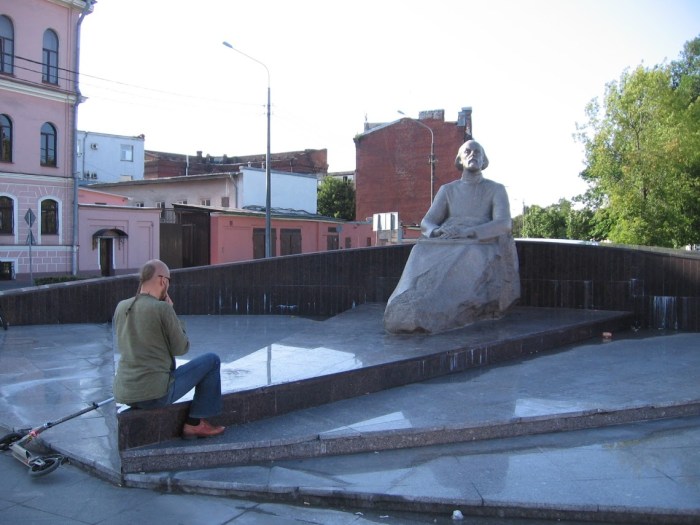
Monument to Konstantin Tsiolkovsky, Petersburg, July 18, 2015

The pioneering Russian rocket scientist Konstantin Tsiolkovsky was, undoubtedly, a certifiable genius.

The amount of carbon dioxide in the atmosphere is quite small (0.03%), which does not facilitate crop yields. Its quantity could be increased 30 times (to one percent) with great benefit to plants and no harm whatsoever to man. The gas is not poisonous, and an abundance of it in the atmosphere would only hinder its secretion from the lungs. One percent would cause almost no hindrance, even if we are talking about human lungs.
—Konstantin Tsiolkovsky, “The Future of the Earth and Mankind” (Kaluga, 1928)

Photo and translation by the Russian Reader

Petersburg Enviromental Rights Center Bellona Declared “Foreign Agent”

OLYMPUS DIGITAL CAMERA

Petersburg Environmental Center Bellona Declared Foreign Agent 
Interfax
January 16, 2017

On Monday, the Russian Federal Justice Ministry placed the Petersburg enviromental organization Bellona on its list of “foreign agents,” according to the ministry’s website.

“The fact that the organization bears the hallmarks of a non-profit organization, performing the functions of a foreign agent, was established during an unscheduled site inspection carried out by the Justice Ministry’s St. Petersburg office,” read the message on the website.

In March 2015, the Justice Ministry placed the non-profit public environmental organization Bellona Murmansk on the list of “foreign agents.” Six months later, the organization closed.

The non-profit public organization Bellona was formed in 1986. Its central office is in Oslo. Two branches of the environmental organization operated in Russia, in Murmansk and St. Petersburg.

Translation and photo by the Russian Reader; the emphasis is mine

___________

Environmental Rights Center Bellona called a ‘foreign agent’ by Russian government
Charles Digges
Bellona
January 16, 2017

In a troubling development for international ecological groups that deal with questions of Russia’s Cold War nuclear legacy, Moscow’s Justice Ministry on Monday named the Environmental Rights Center Bellona as a “foreign agent.”

ERC Bellona, founded by Alexander Nikitin in 1998, became the 158th organization tarred with the foreign agent label since the restrictive 2012 Law on NGOs came into effect.

Nikitin said the group had been undergoing a so-called unplanned check since before the New Year, and had been told it would receive written notification about its status from the Justice Ministry by December 25.

But that date came and went with no notice. Nikitin first learned of the new designation Monday, when Russia’s state newswire TASS began reporting on the organization’s designation as a foreign agent.

bodytextimage_nikitin4833.JPG

ERC Bellona Chairman Alexander Nikitin (Photo: Bellona)

Nikitin was undeterred by the news.

“We expected this decision,” said Nikitin. But he also said it would not impede the organization’s mission.

“This means that we will continue working,” Nikitin said.

“We won’t throw aside our very important work over such small change,” he said. “All of our projects remain, all of our people will remain, and we will find ways to continue our work.”

The group has long had a turbulent relationship with officialdom. When it was founded, Nikitin was on trial for supposedly revealing state secrets in a Bellona report on the decrepit state of Russia’s northern nuclear fleet.

In 2000, Nikitin was fully acquitted by the Russian Supreme Court and became the only individual to ever be cleared of treason charges leveled by Russian or Soviet security services.

The report he and Bellona wrote then became a guidepost document for western governments that wanted to invest in helping Russia secure its Cold War legacy of decommissioned nuclear submarines and military nuclear waste, programs that continue successfully to this day.

ERC Bellona has helped target more than $3 billion worth of international funding to dismantle 200 derelict submarines and other floating nuclear hazards in the Arctic region, like the Lepse nuclear service ship.

The group has also been instrumental in decades-long joint efforts between Norway and Russia to clean up the notorious submarine maintenance base at Andreyeva Bay.

Bellona’s efforts were jeopardized in 2012 when the Russian government passed its NGO law stipulating that non-profits operating in whole or in part on foreign funding must register themselves as “foreign agents” with the Justice Ministry if they engage in broadly defined “political activity.”

The Ministry in 2014 was given broad powers to name foreign agents on its own.

The law has shuttered more than a third of NGOs in the country, one of which was Bellona’s oldest Russian office, Bellona Murmansk.

That group decided to disband itself rather than undertake considerable legal costs to have its name removed from the foreign agent registry.

The decision by the Justice Ministry to list ERC Bellona as a foreign agent dashes considerable recent hopes that the government might cease targeting environmental groups with the foreign agent label.

The Justice Ministry’s report said ERC Bellona was engaged in political activity for “publishing, including via contemporary informational technologies, opinions on decisions taken by the government and policies that it has adopted,” apparently a reference to Bellona’s Russian website, Bellona.ru.

The Justice Ministry also accused ERC Bellona of attempting to “form socio-political opinions and convictions.”

Nikitin has long said ERC Bellona has nothing to do with any kind of political activity. But amendments to the NGO law last year impossibly broadened the notion of political activity.

Those amendments, which were signed into law by President Vladimir Putin in June, “maximally restricted” what NGOs could do, said Nikitin.

Among the more exotic interpretations of what political activity is are the popular practice of sending open letters to Russian politicians at any level of government; participating in gatherings or demonstrations; criticizing laws passed by any level of government; using websites to air opinions about any decision made by the government, and any attempts to influence the drafting of legislation.

The police department in St. Petersburg had recently launched a campaign of demanding financial information from the city’s 158 nonprofits that accept some amount of funding from foreign sources.

A Word from Our Sponsor

And now, a word from our sponsor, the common cause.

english-girls

Constructing life, however, is undoubtedly tantamount to producing culture. The life that man constructs consciously is, in fact, culture. Culture is the totality of man’s advances in transfiguring the world. Culture is the world, altered by man according to his mind’s ideals.

But culture, in this case, includes not only theoretical and symbolic endeavors, as encapsulated in science and art. A significant and essential part of culture are those modes of work that really change the world around us, not merely in thought and imagination. They include economics, production, agriculture, engineering, medicine, eugenics, practical biology, education, and so on. Indeed, an overview of all the current research and trends makes plain that culture’s contents are revealed as the things people actually to change reality using these means. Culture is not only pure science and pure art, but definitely consists in applying them to production, the mining and processing industry, labor, and technology. Hence, we can say that culture’s ultimate meaning and goal are actually to improve and transform the world through nature’s rational management.

The new culture of the future involves nothing other than identifying this universal culture, revealing it as the work of transfiguring the world.

It follows that the first task, which precedes all construction and organization, is expanding the common notion of culture and including in it the modes of human endeavor that have previously been regarded as outside its scope. In other words, what must vanish are the current disjunction between culture and life, and the consequent separation of theoretical and symbolic work, which generates expressions of knowledge and ideal patterns, from work that really, by means of action, changes our environment.

To this end, we must first clearly understand the source of this pernicious disjunction. Its roots undoubtedly lie in the ancient division of the world into the supernatural world, accessible only to the mind and imagination, and the earthly, material world where human action takes place.

Due to the limitations of his outlook and the feebleness of his power over nature, man was unable to effect a real, comprehensive transformation of the environment, and so he marked off a special field of endeavor where he found it relatively easier to enact the kingdom of his reason and his moral and aesthetic ideals. This was the realm of pure knowledge and the similar realm of pure art. Here, in a special world generated by the mind and imagination, man produced the ideas and images he wanted while passively contemplating external reality and acting on it only in his own inner world by enriching his intellect and furthering his aesthetic powers. In this segregated realm, he scored victories over unreasoning, vicious nature, but what these successes lacked was the fact they led to no changes in real life except for producing generations of especially sophisticated, accomplished people who were quite remote from the mass of humanity, who continued to languish in the grip of a life that was impoverished, meaningless, and misshapen. Thus did passive contemplation and abstract philosophizing evolve. They were joined by pure science and pure art. Scientists have engaged in pure theory, forgetting their work makes sense only insofar as it really transfigures the world, and that they, accordingly, are not a self-sufficient corporation, but merely a committee of sorts, designated by humanity for a particular goal: drafting a project for the world’s transfiguration. For their part, artists have surrendered to the symbolism of images and forgotten they only make sense insofar as they are linked to reality, and that art’s purpose is to provide people with an ideal of a better world and assist in actually converting the present into such a future. Consequently, culture has become detached from life and enclosed in the narrow confines of pure creativity, remote from reality.

The outcome of the disjunction between symbolic and theoretical endeavors and real cultural work has been equally detrimental to both. Without thought, action is meaningless; thought without movement is ineffective; while knowledge, since it is applied to nothing, degenerates into abstract intellectualizing; science that has no practical end ultimately turns into an exposition of methods that have no purpose; and art that produces only dead likenesses turns into a harmful amusement. On the other hand, lawmaking and economics, as endeavors that change the material world; medicine and eugenics, which change the nature of living beings; and education, which changes their mental nature, are likewise bereft of a particular purpose and come to serve private and individual interests instead of pursuing the task of transfiguring the world.

The outcome is humanity’s atomization into a number of warring centers. Culture is no longer produced as the common cause of human efforts, while the latter develop, each in its own field, as self-contained strivings. Hence the birth of the destructive particularism we find at the heart of cultural liberalism, which was proclaimed during the Renaissance and has evolved into modern cultural chaos. In this state, the common conscious action of people, instead of blazing a course for itself through history as a single, powerful stream, has trickled away into a thousand rivulets, which have mostly ended up as standing puddles of fetid water. Each man lives only for his selfish purposes. A number of dead ends arise, discrete lives fenced off from the rest. An idol in the guise of personal prejudice or passion is erected in each such dead end. Mutual bloody war erupts in the name of the idols, tearing humanity apart with strife. However, at the same time, people are united by irrational factors, but this unity is usually based on narrow-mindedness and passivity, and crumbles when it encounters consciousness, even in its primary selfish, individual form.

These phenomena have caused the crisis now experienced by European culture. It is clear it cannot stay in a state of modern individual atomization, and just as clear that the way to past attempts at unification, based on extinguishing consciousness, is forbidden to it due to its hypertrophied modern evolution. The only way left is to produce a culture in which consciousness would not be removed from life but would projectively manage it, moreover, manage it not in the sense of separating people from each other, but, on the contrary, in the sense of uniting them as completely as possible on the basis of a common cause.

That was an excerpt from Valerian Muravyov, “A Universal Productive Mathematics” (1923), in Boris Groys, ed., Russkii kozmism (Moscow: Ad Marginem Press,  2015), 180–184

Translated by the Russian Reader

Agents of H.A.R.V.A.R.D.

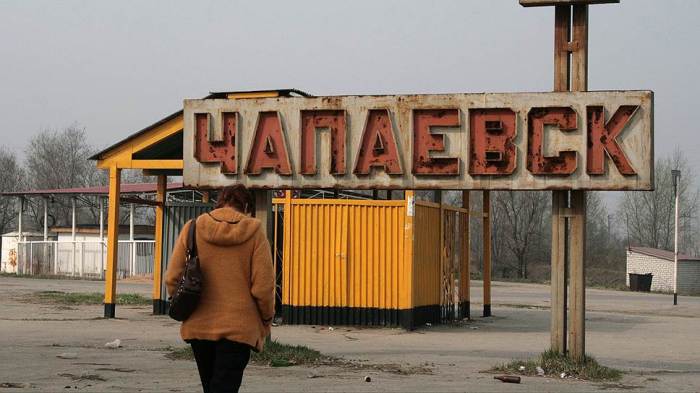
Chapayevsk. Photo courtesy of Yevgeny Bochkaryov/Kommersant

Harvard Agents Association
The Justice Ministry Has Fined an NGO for Medical Research
Alexander Chernykh
Kommersant
December 21, 2016

The Chapayevsk Medical Workers Association, an NGO in the Samara Region, has appealed the Justice Ministry’s decision identifying it as a “foreign agent.” The organization was cited for grants it has been receiving from Harvard for over twelve years to study the health of people who live in enivornmental disaster areas. The Justice Ministry additionally cited the work of its doctors in preventing HIV as “contrary to Russian national interests.” The association is on the verge of closure, despite the unprecedented support it has received from town officials, physicians, and the Russian Academy of Sciences.

The Chapayevsk Medical Workers Association was established in 1999.

“Chapayevsk produced pesticides for many years, which led to increased levels of dioxins,” says Oleg Sergeyev, head of the association and a Ph.D. in medicine. “Increased mortality was recorded in the town. The local hospitals were not coping due to a lack of funds and equipment. So the town’s doctors united into an NGO to try and solve the problem.”

Located 45 kilometers from Samara, the town, whose population is 73,000, was founded in 1909 as a settlement built round an explosives factory. In 1926, a chemical weapons factory went into operation, later converted into a fertilizer plant. In 1999, the State Ecology Committee declared the town an “environmental emergency area.” Chapayevsk received a total of 1.742 billion rubles in federal subsidies, and its status as an environmental emergency area was rescinded in 2005. In 2008, the mayor of Chapayevsk officially proposed resettling the city.

In 2003, the association launched a long-term research study, entitled “Dioxins, Pubertal Growth, and the Development of Boys,” in cooperation with the Harvard School of Public Health and the Russian Academy of Sciences.

“With the consent of their parents, we selected 516 boys between the ages of eight and nine, and have been carefully tracking their health every year since then. Now they are young men between the ages of 19 and 22,” says Oleg Sergeyev. “We have seen how the dioxins and pesticides have impacted the growth, development, and especially the reproductive health of the men.”

The researched has been funded by the National Institutes of Health in the US. In 2003, the NIH made a long-term research grant to the project, and in 2010, it extended the grant for another six years.

“During this period, we received 65.2 million rubles,” says Mr. Sergeyev. “34.2 million was spent on the salaries of seventeen staff members, 21.4 million rubles, on equipment and supplies, and 9.6 million rubles, on social benefit payments.”

The association’s second focus has been HIV prevention.

“In the late 1990s, Chapayevsk ranked third in the region in the spread of HIV,” says Mr. Sergeyev. “This was due to injecting drug use. The drugs were easily accessible here.”

Physicans hit the streets to engage in harm reduction work, which has involved them in meeting with drug users, handing out brochures and free condoms, persuading people to get tested for HIV, collecting used syringes, and supplying clean syringes. Harm reduction programs in Chapayevsky have covered around 800 people annually (a little over one percent of the population). According to doctors, this is around a third of the town’s injecting drug users.

In 2014, the Justice Ministry’s regional office audited the association twice, concluding the NGO was not engaged in political activity. In October 2016, these very same officials changed their opinion and demanded the association be added to the list of “foreign agents.” The Justice Ministry’s Samara office failed to respond promptly to our request for information, but Kommersant has obtained a copy of the audit report. Officials deemed it a violation that Oleg Sergeyev sits on the Samara Regional Duma’s NGO Council and has been involved in the hearings of two committees, on physical education and healthy lifestyles, and on providing social services to the populace. In 2013, one commission recommended that regional MPs ban cigarette ads at public transport stops and in shops. In 2015, it recommended that regional MPs add the phrase “citizens are responsible for maintaining their own health” to the law “On Basic Public Healthcare.” The auditors construed this as “political activity financed by foreigners.”

The association’s work in preventing HIV has also not escaped the auditors’ attention. The Justice Ministry dubbed the needle exchange and the distribution of condoms by physicians the “inculcation of practices contrary to Russian national interests.” In the wake of the audit, the officials asked the court to rule the association a “foreign agent.” The court granted the request, additionally fining the NGO 300,000 rubles and Oleg Sergeyev 50,000 rubles for not registering themselves voluntarily.

“I don’t know where to get the money,” says Mr. Sergeyev.

According to him, no grantmaking organization permits the payment of fines out funds allocated for scientific research.

“It’s a matter of scientific reputation,” say Mr. Sergeyev. “If they had labeled us an ‘organization receiving foreign funding,’ then for God’s sake we would have enrolled ourselves in such a registry. But we have been accused of working for another country, although we have always acted in the interests of our town.”

The organization filed an appeal last week. As candidates for “foreign agent” status, the physicians have received unprecedented support from researchers at the Institute of Genetics and the Institute of Forecasting of the Russian Academy of Sciences, as well as from the town’s chief narcologist.

Chapayevsk’s Mayor Dmitry Blynsky also wrote an official letter to the Justice Ministry. (He resigned in November 2016, but signed the letter while still in office.) According to Blynsky, the NGO’s collaboration with Harvard “has been of great benefit to the town.”

“The medical and lab equipment that has been procured has been used to treat the populace of Chapayevsk. In view of Chapayevsk’s subsidized budget, another important aspect of attracting foreign financing has been the creation of jobs for medical professionals,” wrote Blynsky.

According to the ex-mayor, the outcomes of the NGO’s long-term research studies have been used to develop public programs for the town’s social and environmental rehabilitation.

Translated by the Russian Reader. Thanks to Tamara Koganzon for the heads-up