This bulletin is put together by labour movement activists in solidarity with Ukrainian resistance. More information at https://ukraine-solidarity.org/. We are also on Twitter. Our aim is to circulate information in English that to the best of our knowledge is reliable. If you have something you think we should include, please send it to 2022ukrainesolidarity@gmail.com.
To receive the bulletin regularly, send your email to 2022ukrainesolidarity@gmail.com. To stop it, please reply with the word “STOP” in the subject field.
The State Duma has been drafting a ban on transgender transition in Russia since spring. Despite the fact that experts and doctors opposed it, the MPs have now passed the law in its second reading.
The original bill already prohibited all “medical interventions” for transgender transition and changing gender markers in passports and other documents. But the MPs also proposed new restrictions.
Now, according to the draft law, if one spouse changes their gender marker, their marriage will be annulled. In addition, those who have transitioned to another gender will be banned from serving as guardians and adopting children. Depriving them of parental rights is not on the table yet, but the Russian authorities have taken children from trans people in some cases in the past.
Moreover, MPs would ban not only “medical intervention” in the form of surgery, but also hormone therapy.
Finally, the Duma reworded the law on vital records. Previously, it was possible to amend a passport using a sex-change certificate issued by doctors. Official documents can now be amended if the individual provides a medical report “on the correspondence of [their] sexual characteristics with the characteristics of a particular sex.”
Although the bill has not yet been adopted into law, it is already causing trouble for transgender people. Robert Lebedev, a transgender man, toldBumaga, citing his own acquaintances, that civil registry offices in Moscow had been delaying issuing new documents to transgender people for longer than the month prescribed due to an “order from above.” And yet, the draft law does not even prescribe penalties for doctors or civil servants who violate the ban on assisting a person with transgender transition and gender marker change.
The bill’s co-sponsor, Pyotr Tolstoy, argues that “the western transgender industry is trying to infiltrate our country,” and Russia’s “cultural and family values” must be preserved.
Even before the adoption of the law, transgender people faced endless humiliation and persecution. The new law will give the security forces a free hand and effectively outlaw an entire group of citizens.
On this dark day, when we find ourselves at rock bottom, I want to scream with rage and impotence. While voicing emotions is vital, I’m also trying to find a foothold—in myself, in others, in my own experience….
I have nothing but a profound belief that this night of total obscurantism, injustice, and hatred will end one day, and hopefully sooner rather than later. I am overwhelmed with feelings of love and admiration for the trans activists to whom life has introduced me during my ten-plus years in activism. I didn’t always say these feelings out loud.
We started working hand in hand when I didn’t know a single open trans person in my own circle yet. Gradually, I was surrounded by more and more trans people, who did a lot of cool, useful and, sometimes, fantastic things.
I befriend trans people and even became romantically involved with them. Over the years, trans initiatives and trans people have truly accomplished a great deal. It’s no exaggeration to say that they have become the vanguard of the Russian LGBT+ movement.
I learned about the difficulties they face and about ways to help them. I still appreciate the patience, tact, determination, and dignity with which I was corrected when I made mistakes myself, or when mistakes were made in the communities I moderated.
Things became visible that I, a cisgender person, simply had not noticed before: sniggering and transphobic “jokes” at passport control at the airport, misgendering, violence, rejection at home, discrimination at work, sexual exploitation, increased risk of suicide, etc. Interacting with trans people also helped me to understand the narrowness of the binary gender framework and my own gender nonconformity, despite the fact that I consider myself a man.
Further immersion in the topic, collaborations, and a desire to contribute in this area led to the creation of the project Transformation on trans people in the Russian prison system. At the same time, we tried not to speak for trans people. Instead, we delivered their own stories about their prison experience and commentary by experts, among whom there were also trans people. We plan to continue, realizing that it is a long-term job, although the new law will make this work more complicated, apparently.
Again and again I listen to the song “We Shall Overcome,” the anthem of the movement for the rights of African Americans. In new, difficult circumstances, the importance of mutual support, assistance, unification, and finding non-standard channels increases.
I believe in the power of the LGBT+ community’s solidarity in the face of difficulties. Fear and feeling powerlessness are understandable emotions. But it’s important to move on and fight the consequences [of this law].
The song ends with these words:
We are not afraid,
We are not afraid,
We are not afraid today.
For deep in my heart
I do believe:
We shall overcome someday!
The photo, above, from his personal archive, shows the author during the campaign against transphobic legislation in St. Petersburg, with a view of Trinity Bridge in the background.
A man sporting a “Made in the USSR” tattoo, Liteiny Prospect, Petersburg, May 1, 2023. Photo by Vadim F. Lurie, reproduced here with his kind permission
Victory Day is a memorable holiday for every citizen of St. Petersburg! During the celebration of the Great Victory, each of us remembers the heroic deeds of our grandfathers. In keeping with a long-established tradition, many musicians dedicate their concerts to this important date.
On May 15, the Lensovet Palace of Culture will host “Echo of Victory,” a soulful solo musical performance by Dmitry Pevtsov and the Pevtsov Orchestra.
Dmitry Pevtsov, “Echo of Victory,” 15 May, Lensovet Palace of Culture
“Echo of Victory” is a new themed concert in which poems and songs of the war years and the best songs of Soviet and modern composers will be performed. The program will feature such songs as “Airplanes First of All,” “From Dawn to Dawn,” and, of course, everyone’s favorite song, which has become a symbol of the celebration of May 9—”Victory Day”!
We invite everyone to the “Echo of Victory” concert on May 15 at the Lensovet Palace of Culture. Let’s remember the great songs of that heroic time and once again feel proud of our great nation!
Directed by Denis Isakov
Duration 1 hour 40 minutes (without intermission)
Source: Bileter.ru. Translated by the Russian Reader
The Russian authorities and Russian propagandists have been competing with each other to recreate something outwardly similar to the Soviet system in our country. The message to Russian society is simple: we are different, we have a different path, don’t look anywhere else, this is our destiny — to be unlike everyone in the world. And yet there are more and more traits of our country’s yesterday in its tomorrow.
For some reason, the speakers at the Knowledge educational forum, starting with Prime Minister Mikhail Mishustin, called directly for Russia’s self-isolation. Mishustin demanded that we achieve independence from foreign designs in the information sphere. The word “independence” has been increasingly used to mean isolation and breaking ties.
Deputies in the State Duma have proposed re-establishing the mandatory three-year “repayment through job placement” for university graduates, and prohibiting those who have not served in the army from working in the civil service.
With Ella Pamfilova, head of the Russian Central Elections Commission, on hand as a friendly observer, Uzbekistan held a referendum on April 30 to decide whether to adopt a new constitution that would grant the current president, Shavkat Mirziyoyev, the right to de facto lifelong rule by lengthening presidential terms from five to seven years and nullifying Mirziyoyev’s previous terms. The ballot, which involved digital technologies, produced a turnout of 84.54%, and according to preliminary data, 90.21% of voters said yes to the amendments, which would change two-thirds of the Constitution, while 9.35% of voters voted no, and 0.49% of the ballots were disqualified. Although democratic procedures were seemingly followed, Uzbekistan is moving away from democracy.
Something makes us see Pamfilova’s visit to Uzbekistan not only as a trip “to strengthen friendship and cooperation,” but also as a completely practical exchange of know-how in organizing such referendums. Only by adopting a new constitution can the first and second chapters of the current Russian Constitution be amended, and it is the second chapter that enshrines civil rights and freedoms, we should recall.
Alexander Bastrykin, the prominent human rights activist and chair of the Russian Investigative Committee, has proposed adopting a new Russian constitution that would enshrine a state ideology, completely eliminate international law’s precendence over domestic law, and re-envision human rights as an institution alien and hostile to Russia, as something encroaching on its sovereignty. Uzbekistan’s know-how in voting on a new constitution will come in handy for the Russian Central Election Commission.
At seven o’clock this evening live on Citizen TV, we will talk about why, exactly, the Russian authorities are so enthusiastic about Soviet political practice and the Soviet style, and where such intentions can lead our country.
Russian President Vladimir Putin agreed with the need [for Russia] to develop its own communication protocols instead of foreign TCP/IP to ensure the country’s technological sovereignty and independence.
On Thursday, the head of state held an event at the Rudnevo Industrial Park during which the specifics of the development of domestic unmanned aerial systems were discussed. In this context, Alexander Selyutin, board chair of the Technojet group, spoke about the “Internet from Russia” project.
After listening to the proposals, Putin turned to his aide Maxim Oreshkin.
“Maxim Stanislavovich, talk to your colleagues, then report back to me separately, we need to help. This is obligatory, because if you have advanced proposals, your own, of course, we need to do everything to support them. It means technological sovereignty, and better competitiveness, and independence. […] We will definitely help,” the president said.
Those wishing to take part in a virtual LDPR rally at the monument to Vladimir Zhirinovsky created in Minecraft have overloaded the server. The number of applications exceeded twelve thousand, LDPR’s press service informed us.
As Andrei Svintsov, a member of the LDPR faction [in the State Duma], noted, this is only the first such event. The Liberal Democrats plan to continue using [Minecraft] and other gaming platforms to communicate with voters and attract new supporters, becoming in fact “Russia’s first digital party.”
The MP also recalled that experts continue to work on the “Cyber Zhirinovsky” political algorithm, which was previously announced by the party’s current leader Leonid Slutsky.
In late April, Judge Yevgenia Nikolayeva closed a court hearing at which it was decided how much time to give Alexei Navalny to examine the 196 volumes of the latest criminal case against him. According to the police investigator, this was necessary in order to protect investigatory privilege.
Over the past five years, judges in Russia have increasingly closed court hearings to observers, journalists, and even relatives of defendants. Because of this, defense lawyers cannot inform the public about what happens in these proceedings. Mediazona reviewed the judicial statistics and discovered that, in 2022, judges ruled 25,587 times to hear cases in closed chambers. This was almost twice as often as in 2018, when judges decided 13,172 times to hear cases without outsiders present.
The Constitution actually guarantees that your case should be heard in open court, but there are exceptions. The principal exceptions are cases involving state secrets (which is why all treason and espionage trials are closed), cases against defendants under sixteen years of age, and cases involving sexual offenses. The statistics for all such cases have not changed much in recent years.
But there is one more exception — a trial can be closed to “ensure the safety” of the people involved in the proceedings and their loved ones. This extremely vague wording allows judges to close any court hearing. Judges make vigorous use of it, especially when hearing high-profile cases.
Here’s another example. In September, the Moscow City Court closed the hearing of an appeal against the verdict in the “fake news” trial of municipal district council deputy Alexei Gorinov, who had been sentenced to seven years in prison for an argument over a children’s drawing contest in which he had said that children were dying in the war in Ukraine The judge alleged that the court had received threats, and said that the hearing would have to be closed for the safety of the parties to the proceedings.
Russian judges may be following the lead of their Belarusian colleagues, who have learned how to conduct political trials without outside scrutiny. They cite covid regulations, or fill the gallery with persons unknown, or don’t let anyone except the relatives of the defendants in the courtroom. Russian courts have begun to use many of these methods. And the Belarusian courts can declare a hearing closed without explaining the reasons at all.
The authorities do not want people to know about political trials, to monitor these trials, or to support the accused. That is why, on the contrary, it is important for society today to talk about political prisoners and help them.
A Russian version of the song by the French left-wing chansonnier Georges Moustaki. Translation: Kirill Medvedev. Guitar: Oleg Zhuravlev. Video: Nikolay Oleynikov
Don’t ask what her name is, she’s Beloved and tender, but fickle Very spunky, she’ll wake up and go forward To a new life that shines and sings
Bullied and branded Tortured and executed Well, how much can she suffer! And she rises up and strikes, And spends many, many years in prison, Yes, we betrayed her But we only love her more and more And so we want to follow her Right to the end
What her name is, don’t ask, my friend, She’s just a mayflower and a wild fruit She sprouts anywhere, like grass Her path will take her wherever she wishes
Don’t ask what her name is, she’s Sometimes beloved, sometimes persecuted, but faithful This girl that everyone is waiting for Permanent revolution is her name
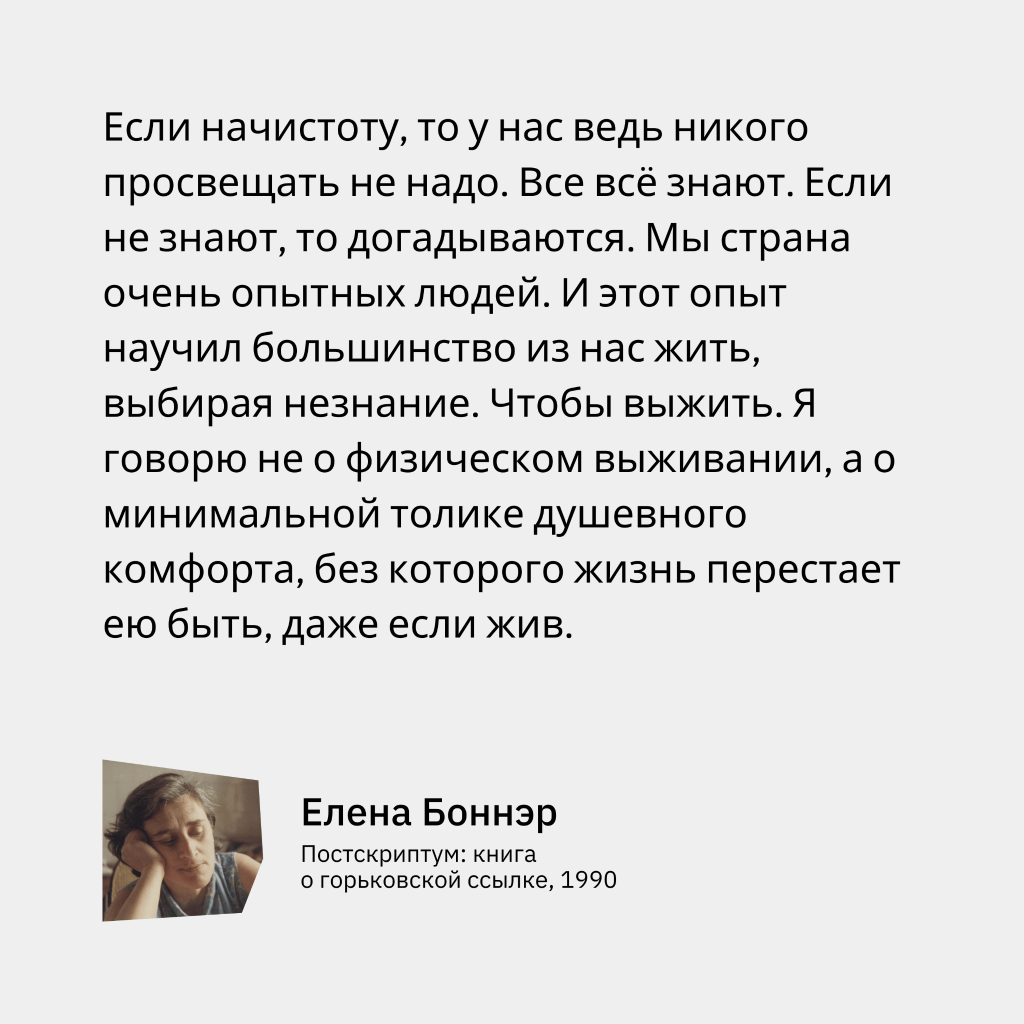
“To be honest, we don’t need to educate anyone. Everyone knows everything. If they don’t know, they have a hunch. We are a country of very experienced people, and this experience has taught most of us to live by choosing ignorance — in order to survive. I’m not talking about physical survival, but about the minimum amount of mental comfort without which life ceases to be life, even if one is alive.” ||| Yelena Bonner, Postscript: A Book about the Exile in Gorky (Moscow: Interbruk, 1990), p. 247
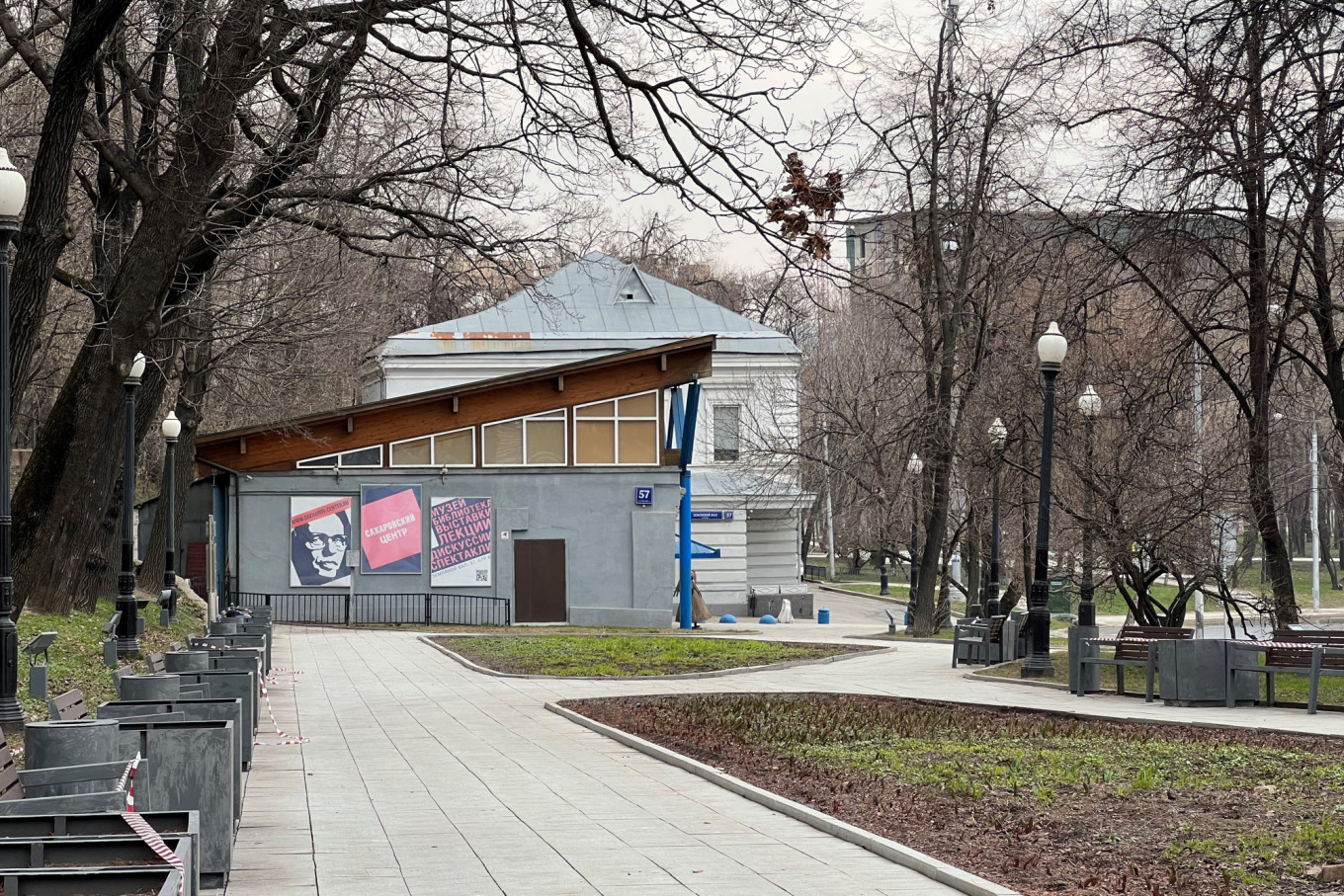
Very soon — this Sunday — our current exhibition will wrap up, and the Sakharov Center will close its doors.
THIS MATERIAL (INFORMATION) WAS PRODUCED AND/OR DISTRIBUTED BY A FOREIGN AGENT, THE SAKHAROV CENTER, OR CONCERNS THE ACTIVITIES OF A FOREIGN AGENT, THE SAKHAROV CENTER. 18+
Coincidentally, our final exhibition is dedicated to Yelena Georgiyevna Bonner, who founded the center. Eviction, of course, does not mean at all that we are ceasing operations. This year we expect to launch a website in honor of Yelena Georgiyevna, produce a podcast, and do a lot more. And yet, it is clear that an important period in the center’s history is coming to an end.
The headquarters of Russian human rights group the Sakharov Center, a rare island of free debate in the Russian capital, will close its doors to the public this weekend in response to an eviction order from local authorities as Russia’s wartime drive to suppress dissent shows no sign of ending.
Opened in 1996 to honor the memory of Soviet dissident and Nobel Peace Prize winner Andrei Sakharov, the center has been an iconic location for talks, exhibitions, funerals and discussions about human rights.
“Without these two buildings, we are no longer a public center,” said Vyacheslav Bakhmin, a veteran human rights activist and the chairman of the board of the Sakharov Center.
“It makes any activity extremely difficult.”
The eviction comes as the few human rights groups still operating inside Russia face intensifying state pressure in the wake of the Kremlin’s decision to invade Ukraine.
The country’s oldest human rights organization, the Moscow Helsinki Group, was closed down by a court order in January, while eight top members of shuttered rights group Memorial, which was jointly awarded the 2022 Nobel Prize last year, were targeted in police raids last month.
The Sakharov’s Center’s final exhibition at its headquarters on the banks of the Yauza River in downtown Moscow was devoted to Yelena Bonner, the wife of Andrei Sakharov and a major Soviet dissident in her own right.
“We did not plan this symbolism, it just happened this way — they started closing us down on the eve of Bonner’s centenary,” curator Natalia Samover told The Moscow Times.
“This center is filled with her name,” she said, standing amid the exhibition that included some of Bonner’s photos and video interviews as well as her desk, notebooks and letters opposing Russia’s 1990s war in the North Caucasus republic of Chechnya.
Bonner was involved in founding the Moscow Helsinki Group in the 1970s and worked tirelessly to raise Sakharov’s profile when he was exiled to Gorky (now Nizhny Novgorod) by the Soviet authorities.
The Sakharov Center. Photo by The Moscow Times
Following Sakharov’s death in 1989, Bonner established the Sakharov Center — gifted rent-free by the Moscow authorities — and opened the Sakharov archives to the public.
On a recent visit by a Moscow Times reporter to the Bonner exhibition, there were a handful of visitors.
“The center is definitely a significant place — it’s important to have different points of view as well as places where these different points of view can be discussed,” said Artemy, an IT specialist, who decided to visit because he knew that the center was due to close.
“I think that everyone can be represented in the public field,” said another visitor, Stanislav, who admitted that he wasn’t aware of “the history of the center.”
The closure of the Bonner exhibition — titled “Life Was Typical, Tragic and Wonderful” — marks the end of the Sakharov Center’s long tradition of public engagement.
Employees earlier this month dismantled the center’s permanent exhibition on the legacy of Sakharov and victims of Soviet-era repression and its final public event — dedicated to Bonner — will take place Sunday evening.
According to the eviction notice, the center must be fully vacated by April 28.
Formally, the authorities’ decision to deprive the Sakharov Center of its Moscow home was a result of the organization’s designation as a “foreign agent” in 2014 — Russian law forbids “foreign agent” organizations from receiving any state support.
But the Sakharov Center has said it believes the order was really motivated by the Kremlin’s desire to destroy “independent organizations that defend the public interest.”
For the moment, the Sakharov Center does not have any new premises lined up and is planning to continue its activities online.
In addition, it is undergoing an unscheduled inspection by the Justice Ministry this month, board chairman Bakhmin told The Moscow Times.
“The results will make it clear whether and how we can continue,” Bakhmin said.
The eviction is just the latest example of official pressure on the Sakharov Center.
Russia’s Prosecutor General’s Office declared the Andrei Sakharov Foundation — a group opened by Bonner in the U.S. — as an “undesirable” organization in January, a designation that means any association with the group could result in criminal charges in Russia.
That means the Russia-based Sakharov Center now avoids any cooperation with its U.S. counterpart.
The current state of human rights in Russia is “unprecedented,” according to Tatiana Lokshina, a Europe and Central Asia expert at Human Rights Watch, which was forced to close its own Moscow office last year.
“While Russia is fighting against Ukraine, it is also fighting against any critical actors within the country. This is a real war with dissenting opinions,” she told The Moscow Times.
Over the years, the Sakharov Center, which describes itself as “a place uniting thousands of Russian citizens who are not indifferent to the fate of the country,” has hosted a number of landmark events — including the unofficial lying-in-state for Soviet dissident Valeria Novodvorskaya and murdered Kremlin critic Boris Nemtsov.
Despite the loss of a physical presence in central Moscow, Bakhmin remains optimistic that the Sakharov Center will survive and the current crackdown will be reversed.
“The situation [in Russia] will change again — the reality we live in right now has no future,” Bakhmin told The Moscow Times.
Today, coming out of the front door of my building, I saw the following tableau. A neighbor from the third floor, who is somewhere between thirty-five and forty, was, on the contrary, coming in the front door. Judging by the bag he was carrying, he had just been grocery shopping. He doffed his baseball cap, clamped it under his arm, and crossed himself three times as he looked at the mailboxes. Then he peered into his own mailbox and let out a sigh of relief. His draft notice had not yet arrived, apparently. To be honest, it took a while for the meaning of his maneuvers to dawn on me. Of course, I pretended that I hadn’t noticed any of it.
On Wednesday, April 12, Samara journalist Sergei Podsytnik posted on the website Change.org a petition calling for the repeal of amendments paving the way for the introduction of electronic military draft notices, as passed the previous day by the State Duma and the Federation Council.
“These amendments violate our rights. A citizen cannot be stripped of their rights without a trial, but now this right has been given to the staff of military enlistment offices,” the petition says. Podsytnik draws attention to the fact that the public services portal Gosuslugi, through which it is planned to serve draft notices to Russians, has a number of vulnerabilities. In addition, not all residents of the country have access to their accounts on the portal, and almost thirty percent of Russians over thirty are not active internet users.
According to the amendments as adopted, if a conscript did not receive a paper summons and did not log into his Gosuslugi account, the summons will still be considered delivered within seven days after it was entered into the register of draft notices. He will then be banned from leaving the country. After twenty days, new bans will come into effect: those who failed to report to a military enlistment office will not be able to work as individual entrepreneurs, manage real estate, drive a car, or take out loans.
“To deprive people of the ability to sell real estate, drive a car, or travel abroad at the request of a person with no specialized legal education is an outrage against our rights and freedoms,” the petition says. At the time this story went to press, the petition had been signed by more than thirty thousand people, and their number was growing rapidly. For the amendments to go into effect, they must be signed by Vladimir Putin and published.
The legislative changes mean that once a Russian citizen has received a military summons online, they will be automatically forbidden from leaving the country, and therefore avoiding the call-up.
If they fail to appear at a draft office within 20 days, they will face a range of restrictions, including a ban on using their own vehicle, selling property or receiving a loan. They also face a fine of between 500 and 3,000 rubles (£5 to £29).
The head of Russia’s parliamentary committee on defence claimed that these measures will only come into force during the next conscription campaign.
The new system also anticipates a unified database where personal data about Russian reserve personnel can be collated by a range of government institutions, such as the tax service, law enforcement, the pension fund and medical facilities.
Such a database will make it “practically impossible” for reservists to avoid being called up, anti-conscription lawyer Alexey Tabalov told independent Russian media outlet Verstka, because military registration offices will have more detailed information about an individual’s home and work address.
This changes the advice he has been giving people who want to avoid mobilisation, Tabalov says.
Whereas he previously recommended that people avoid receiving the physical summons document, that “recommendation has lost all meaning” now, he said. “If you don’t want to serve, don’t go to the military registration office, but you’ll still face restrictive measures,” Tabalov said.
Andrei Kartopolov, head of the State Duma defense committee, spelled out tough penalties for those who do not respond to electronic summonses, including potential bans on driving, registering a company, working as a self-employed individual, obtaining credit or loans, selling apartments, buying property or securing social benefits. These penalties could apply to the thousands of men who are already outside the country.
The electronic summons will be issued via a government services portal, Gosuslugi, used for all manner of state payments and services including taxes, passports, housing services, social benefits, transport documents, medical appointments, employee insurance and countless other matters.
Under the law, personal data of conscripts including identity documents, personal tax numbers, driver’s license details, phone numbers and other information will be transferred by Gosuslugi to military enlistment offices. Universities, business employers, hospitals and clinics, government ministries, law enforcement agencies, the electoral commission and the tax authority are also required to transmit data to the military.
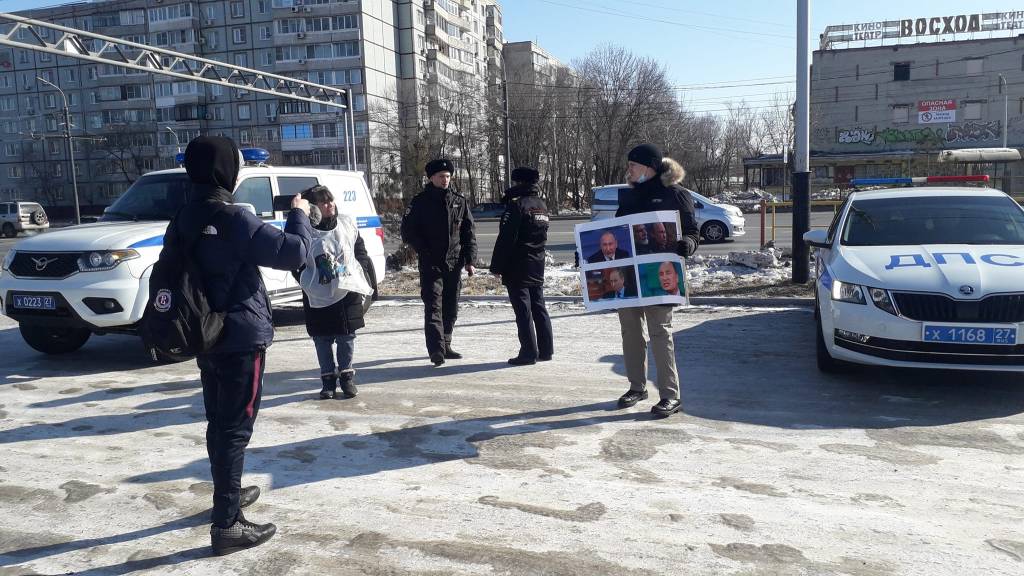
On February 23, Nikolai Zodchii was detained by police in Khabarovsk for appearing in public with these images of Vladimir Putin, which had originally appeared in broadcasts on state-run Channel One. Thanks to the indomitable VB for the snapshot and the heads-up, and for his personal fortitude in dismal circumstances. ||| TRR
When contacted by the media, the Kommunalnik health resort, located in the Omsk Region, refused to comment on reports of the death of a female Russian national during a speed pancake-eating contest.
Earlier, it was reported that a female contestant at a speed pancake-eating competition in the Omsk Region had choked to death. Currently, the exact cause of death is unknown, but the contestant’s death has been confirmed by law enforcement agencies. The 38-year-old female Russian national [rossiyanka] died before the ambulance arrived.
The celebration at which the pancake-eating competition took place was held at the Kommunalnik health resort in the Omsk Region on Saturday, February 25.
A spokesperson for the health resort refused to comment on reports of the death of the female Russian national and the absence of an ambulance team at the competition site.
In December 2022, it was reported that a 61-year-old resident of the Moscow Region had died after choking on a pancake.
Russians had been warned against overeating pancakes during Shrovetide. According to specialist Boris Mendelevich, overeating pancakes cooked with large amounts of oil is harmful to the body. In addition, heavy food can cause complications in the gastrointestinal tract.
Russia must ensure its security and maintain strategic stability.
President Vladimir Putin said this in an interview for the program “Moscow. Kremlin. Putin” on the TV channel Rossiya 1.
Source: Oleg Zubritsky, “Putin talks about the need to preserve the country and its security,” Kartoteka, 26 February 2023. Translated by TRR. Believe it or not, that was the entire article, which earned its author a well-deserved byline. See the last patch in this crazy quilt, below, for more detail about what Putin said.
Riot police officers in St. Petersburg detained 131 teenagers over a mass brawl that occurred in the Galereya shopping center, the media reports.
The publication [sic], citing police sources, indicated that the PMC Redan teenage subculture was involved in the incident.
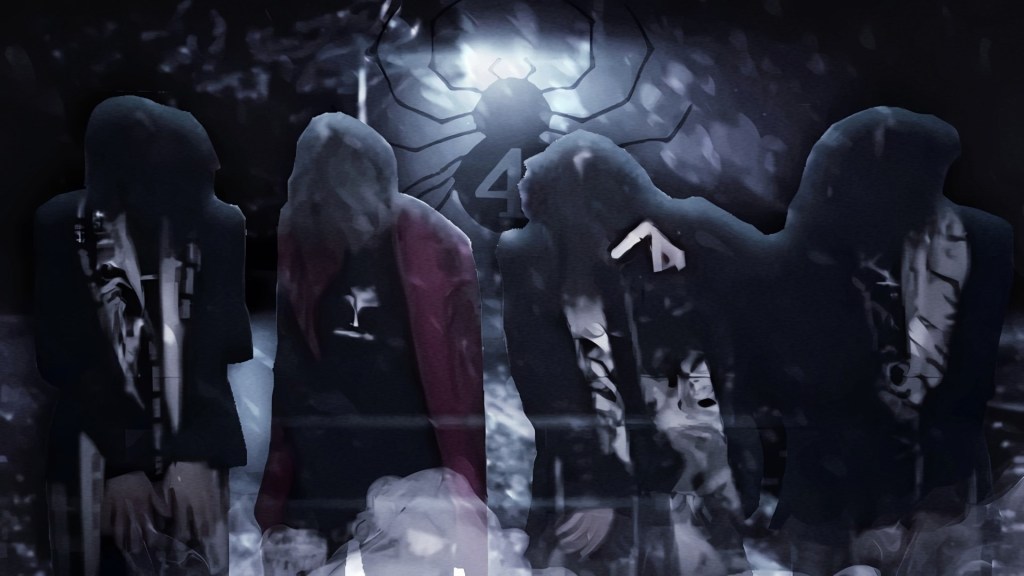
It is reported that other minors attacked a teenager in clothes embossed with a spider, which is the symbol of PMC Redan. One teenager was injured during the brawl.
Riot police arrived at the scene and detained 131 individuals. The Galereya shopping center was closed for entry, and shoppers were released only after police checked them.
Earlier, it was reported that Novosibirsk law enforcement officers had staged a dragnet to detain teenagers devotees of the PMC Redan subculture. The raid took place in the eponymous [sic] Galereya shopping center.
According to the head of the Safe Internet League, PMC Redan (as well as anime in general) is a “depressive-aggressive subculture,” and animeshniks themselves espouse violence and are willing to use it.
Such subcultures emerge, [Ekaterina] Mizulina argues, because teenagers have too much free time, as well as due to the manipulations of irresponsible bloggers and provocateurs who are encouraged by foreign states to engage in them.
In this regard, Mizulina suggests that “it is interesting to package the right meanings for children,” ideologically attack “all these spiders”, and also introduce control over social networks and the media — namely, to prohibit the coverage of “such topics.”
“No one has done more to popularize this local phenomenon than the media and social networks. […] Redan cells are growing like mushrooms after rain from Vladivostok to Kaliningrad,” Mizulina writes.
At the same time, it has been the state-run media that has written most about the activities of the so-called PMC Redan. Before them, information about teenage animeshniks strolling through shopping malls in telltale clothes appeared mainly on local community social media pages.
Source: Alexei Paramonov, “Ekaterina Mizulina urges media ban on PMC Redan,” Kartoteka, 26 February 2023. Translated by TRR. Fontanka.ru published this long, strange tirade-cum-report about the clash between riot police and teenagers at the Galereya shopping center in Petersburg (which is a stone’s throw from our house), on the one hand, and between “redans” and “ofniks,” on the other. If you donate one hundred dollars to this website, I’ll translate and publish that article here, although it left me hardly less befuddled about what happened in my old neighborhood this past weekend than before I’d read it.
The Cheryomushkinsky Court of Moscow placed house arrest on the leader of the Redan youth group
The Cheryomushkinsky Court of Moscow sent one of the leaders of the youth informal group “PMC Redan” under house arrest, reports TASS.
He is accused of attacking a teenager in the metropolitan metro – under part 2 of article 213 of the Russian Criminal Code (Hooliganism with the use of weapons or objects used as weapons), the court noted. The maximum penalty is imprisonment for up to seven years.
According to the agency, initially the investigators demanded that the accused be sent to a pre-trial detention center, but the court did not agree with this. Earlier, the Cheryomushkinsky court sent three more accomplices to the crime under house arrest.
On February 23, a teenager who was a member of the PMC Redan was beaten at the Lubyanka metro station. Teenagers wear long dark hair and spider badges on their clothes. They were inspired by the Genea Redan gang from the Hunter x Hunter manga. The symbol of this group is a spider with the number four. It is specified that young people oppose football fans, natives from the Caucasus and migrants.
Russian President Vladimir Putin has acknowledged the possibility of Russia facing a breakup in the future, with its population to be divided into separate nations, the country’s news agency TASS reported on Feb. 26.
Putin’s interview with Rossiya 1 TV channel marks the first time that the Russian dictator has publicly commented on the potential disintegration of Russia.
According to him, “if the West manages to make the Russian Federation collapse and to assume control of its fragments,” the Russian people may not survive as a nation.
“If we go down this path (of Russia’s collapse — ed.), I think that the fate of many peoples of Russia, and first of all, of course, the Russian people, may change drastically,” Putin said.
“I even doubt that such an ethnic group as the Russian people will survive as it is today, with some Muscovites, Uralian and others remaining instead.”
In addition, the Russian president claimed that “these plans are set out on paper.”
“But it’s all there, it’s all written, it’s all on a piece of paper,” Putin said.
“Well, now that their attempts to reshape the world exclusively for themselves after the collapse of the USSR have led to this situation, well, of course, we’ll have to respond to this.”
“They have one goal of liquidating the former Soviet Union and its main part, the Russian Federation. And later, [after liquidating Russia] they will probably admit us to the so-called family of civilized peoples, but only by parts, each part separately,” he said.
Ukraine’s National Security and Defense Council Secretary Oleksiy Danilov earlier said that the West has not yet made a final decision on what to do with Russia and does not understand how the full-scale war unleashed by Russia against Ukraine should end. However, the world should prepare for the collapse of Russia.
Previously, Ukrainian Defense Minister Oleksii Reznikov said that after the war is over, Russia will disintegrate into separate statelets, while Ukraine will retain its sovereignty and independence.
This bulletin is put together by labour movement activists in solidarity with Ukrainian resistance. More information at https://ukraine-solidarity.org/. We are also on Twitter. Our aim is to circulate information in English that to the best of our knowledge is reliable. If you have something you think we should include, please send it to 2022ukrainesolidarity@gmail.com.
To receive the bulletin regularly, send your email to 2022ukrainesolidarity@gmail.com. To stop it, please reply with the word “STOP” in the subject field.
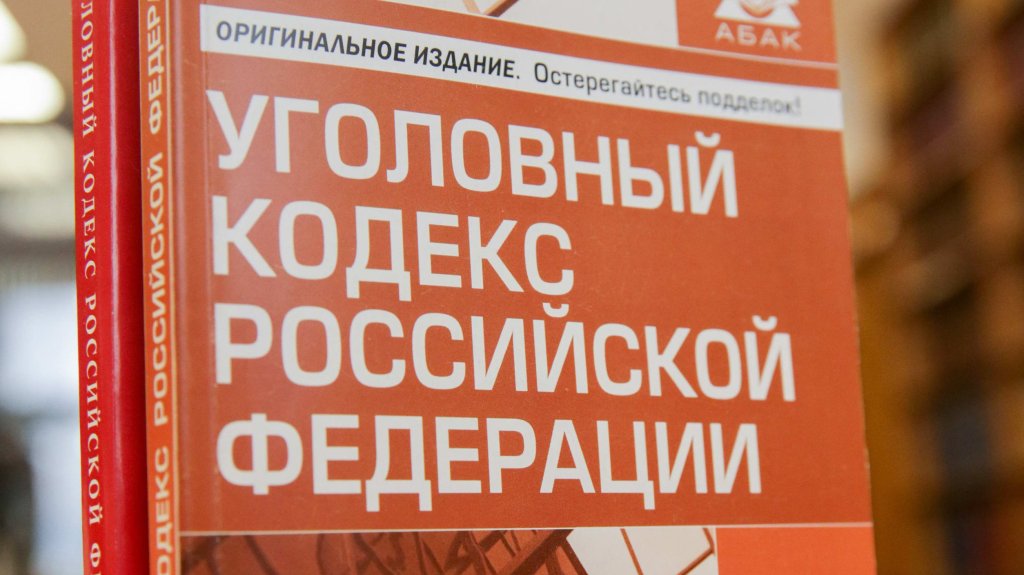
The Russian Federal Criminal Code: “Original edition: Beware of fakes!” Image courtesy of the Russian State Duma’s website
The State Duma adopted in their third and final reading amendments to the Criminal Code that stipulate life sentences for “subversive activities,” reports the lower house’s website.
There was already an article in the Criminal Code that outlawed sabotage. It stipulated a life sentence only if someone was killed as a result (per Article 281.3).
The deputies decided to add three new articles (281.1, 281.2 and 281.3) to the Criminal Code. They have introduced such crimes as “creating a subversive community” and being involved in such a community, “facilitating subversive activities” and “training” to commit sabotage, and “promoting” and “condoning” sabotage.
As punishment, prison terms of eight to twenty years or life sentences are stipulated in all cases, except for aiding and abetting sabotage.
As in the case of the other articles in the Criminal Code dealing with terrorism and extremism, exemption from criminal liability is stipulated if an individual informs the authorities or “otherwise contributes” to the prevention of sabotage and “subversive activities.”
The deputies also included “promoting,” “condoning,” or “supporting” sabotage in the list of aggravating circumstances in the commission of other crimes (per Article 63 of the Criminal Code).
Other bills in this raft of legislation would allow the authorities to place people suspected or accused of violating the new articles on Rosfinmonitoring’s financial watch list and block their bank accounts, as well as enable the authorities to block websites containing instructions for “making ammunition for firearms.”
The set of four bills was introduced on December 8 by a group of more than 380 deputies. [There are 450 seats in the State Duma.] The first reading was held on December 14, and the text of the bills had not been amended as of the second reading on December 20.
Source: “State Duma passes law on life sentences for ‘facilitating’ sabotage,” Mediazona, 21 December 2022. Translated by TRR
I can’t stand it, I know you planned it I’m gonna set it straight, this Watergate I can’t stand rocking when I’m in here ‘Cause your crystal ball ain’t so crystal clear So while you sit back and wonder why I got this fucking thorn in my side Oh my God, it’s a mirage I’m tellin’ y’all, it’s a sabotage
So, so, so, so listen up ’cause you can’t say nothin’ You’ll shut me down with a push of your button? But you, I’m out and I’m gone I’ll tell you now, I keep it on and on
‘Cause what you see you might not get And we can bet, so don’t you get souped yet You’re scheming on a thing that’s a mirage I’m trying to tell you now, it’s sabotage
Why
Our backs are now against the wall? Listen all y’all, it’s a sabotage Listen all y’all, it’s a sabotage Listen all y’all, it’s a sabotage Listen all y’all, it’s a sabotage
I can’t stand it, I know you planned it I’m gonna set it straight, this Watergate Lord, I can’t stand rockin’ when I’m in this place Because I feel disgrace because you’re all in my face But make no mistakes and switch up my channel I’m Buddy Rich when I fly off the handle What could it be? It’s a mirage You’re scheming on a thing, that’s sabotage
Source: Musixmatch. Song written by Michael Louis Diamond, Adam Nathaniel Yauch and Adam Horovitz
This bulletin is put together by labour movement activists in solidarity with Ukrainian resistance. More information at https://ukraine-solidarity.org/. We are also on Twitter. Our aim is to circulate information in English that to the best of our knowledge is reliable. If you have something you think we should include, please send it to 2022ukrainesolidarity@gmail.com.
To receive the bulletin regularly, send your email to 2022ukrainesolidarity@gmail.com. To stop it, please reply with the word “STOP” in the subject field.
This bulletin is put together by labour movement activists in solidarity with Ukrainian resistance. More information at https://ukraine-solidarity.org/. We are also on Twitter. Our aim is to circulate information in English that to the best of our knowledge is reliable. If you have something you think we should include, please send it to 2022ukrainesolidarity@gmail.com. To receive the bulletin regularly, send your email to 2022ukrainesolidarity@gmail.com.