This Deadly Love

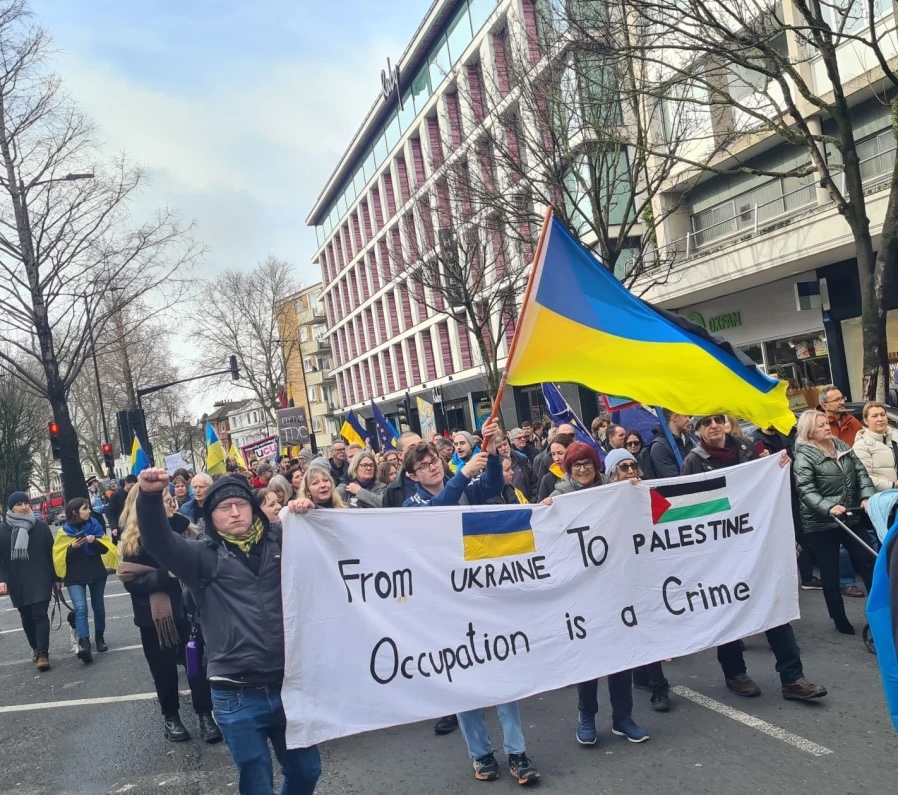
Source: Arkadiy Kurta (Facebook), 25 February 2025. Mr. Kurta posted this photo among a set of photos he took at yesterday’s pro-Ukrainian demonstration in Berlin on the Facebook public group Street Photography.


— I read about your wedding to Yana last year. Tell me, are you happy?

— Yes. But happy in what sense? I don’t feel like I’m in a happy period in my life as a human being. But I’m very happy with Yana. We didn’t even plan to get married: we just had to get married for the paperwork. We are now traveling a lot between countries and applying for visas, and it’s much easier to explain why Yana has to travel with me and I with her by showing them a marriage certificate than by telling them a long story about how we’re from Russia, where gay marriage doesn’t exist. Anyway, we got married, and it as if nothing has changed in our lives: we love each other just as much, and we have the same joint budget.

But the morning after the wedding, I woke up and looked at Jana and realized that she really drives me crazy.

And then Yana woke up and started looking at me funny. Basically, we went around for a week looking daggers at each other, and then we went to psychotherapists, each to her own, and found out that, despite the fact that getting married was a purely formal act to us, it meant a lot to our subconscious minds. That’s why all kinds of shit had started to come out of our heads, which had been building up there all our lives, as it transpired.

For example, after we got married, Yana suddenly moved from the category of “my lady love” to the category of “my family.” I have completely different requirements for my family. Yana looked at me and thought, “I never wanted to get married. Marriage is a trap, it’s the worst thing that can happen.” Because of her family history, she had come to the opinion that there was basically nothing worse than marriage. When we realized what was coming out of us, we just talked to each other and calmed down. Everything fell into place. Now my therapist says we should definitely learn to fight because it’s a good way to find a new common ground, to talk about things, to release emotions. We just haven’t fought yet.

— How many years have you been together?

— Three years. We’ve argued, we’ve been pissed at each other sometimes, but we’ve never really fought. My therapist says this is potentially the weakest point in our marriage, because people in real families should fight and yell at each other periodically. I agree with her. My sister and I or my mom and I sometimes yell at each other so hard that glass shatters. So now we’re learning how to fight.

— Don’t you think that the very fact that you were able to get married is a privilege for people from Russia?

— Of course I do. There is a huge number of people living in Russia who are no less deserving than me and who cannot get married because of their orientation. Of course, it’s very unfair. I’m aware of that, and I’m very grateful to the people who have given their lives, among other things, to make it possible for me to have a same-sex marriage in the United States and for that marriage to be recognized around the world by countries which agree on the simple fact that all people are equal and all people have the right to a family.

— You don’t feel guilty about that?

— No, because I remember that my goal hasn’t changed.

My goal is to get married on Red Square.

I believe that it will happen sooner or later. Every person should have the right to a family, every person should have the right to call their loved one a relative. This, by the way, should not necessarily be bound up with sexual orientation or gender identity. I think a lot about single women or men for whom the most important person in their life is a male or female friend with whom they would like to share a household, bequeath property to them, and identify them as their nearest and dearest. That is, the very mechanism of civil partnerships would be useful not only for LGBT people.

— In interviews you gave long ago, you said that people in Russia generally didn’t care who you slept with. Has propaganda succeeded in turning LGBTQ+ people into enemies?

— I’m not in Russia at the moment, so I can’t see what is happening there now. But I am glad that for every snitch and provocateur who goes to a gay club to turn people in to the cops, there are hundreds of people who know that their friends, brothers and sisters, and coworkers are not hetero- or cisgender people, and yet do not go to the authorities and snitch on them. But of course this is a very difficult time, because, pardon the expression, all sorts of scum who derive power and joy from the fact that they can take away another person’s life feel quite free and easy in Russia now, because a group of people with whom they can do as they pleased has been pointed out to them, and the state will only pat them on the heads for doing it.

Source: Konstantin Shavlovsky, “‘It hurts, hurts, hurts to love now’: a long conversation with Elena Kostyuchenko,” Republic, 12 January 2025. Excerpted and translated by the Russian Reader.
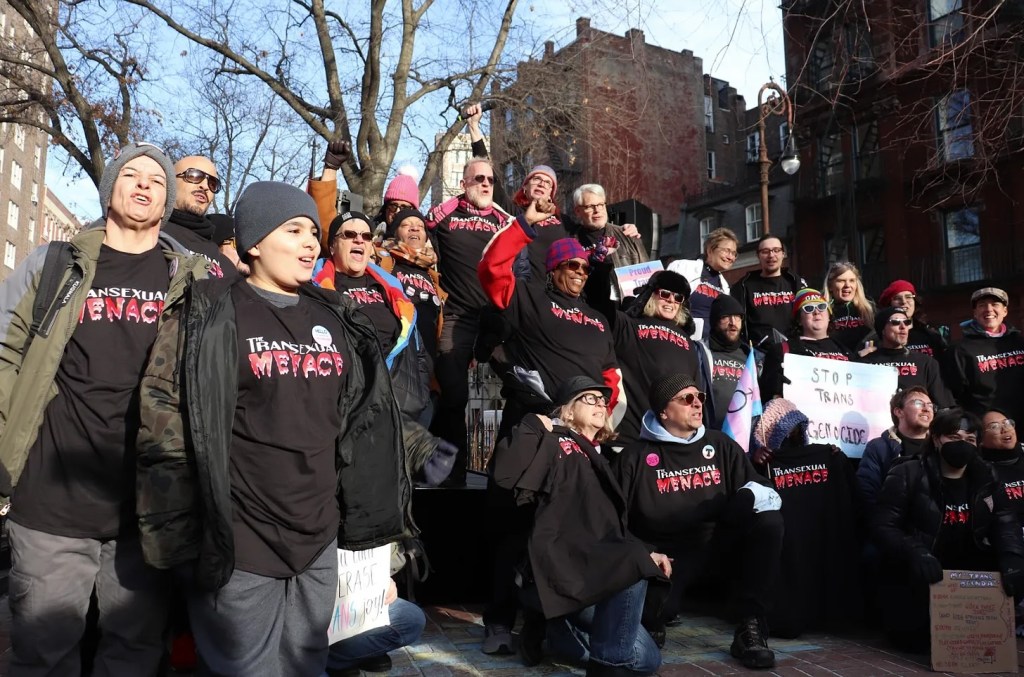

Protestors at Christopher Street Park pose for a photo. Photo: S. Baum/Erin in the Morning

This weekend at Stonewall, trans pasts and trans futures collided. The crowd of over 300 people at Christopher Street Park cheered on as the two kids took the stage, all smiles as they were wrapped in the pink, white and blue. They were led by Denise Norris, co-founder of The Transexual Menace, a direct action group which began organizing against trans exclusion in 1993.

In 1969, the Stonewall uprising spilled out from the iconic gay bar and into the streets — including that same park, a small patch of pavement and grass across the road. Many see this as the birthplace of the LGBTQ liberation movement as we know it today.

Now, a new generation has joined the fight.

“Even in our middle school, which supposedly accepts everyone, we face hate from many of our classmates,” one of the kids told the crowd.

They passed the mic to their friend. “They’re saying, ‘Oh, this school is progressive. And we don’t stand up for hate, and homophobia, and transphobia,’” the other youngster added. “Well, maybe they should do something about it.”

Donald Trump’s second term as president has wrought an unprecedented wave of anti-trans vitriol. The administration has effectively sought to ban trans and intersex people — or likely anyone suspected of being trans or intersex —from joining the militaryusing the correct bathroomsplaying on sports teamsaccessing life-saving medical care, and acquiring state IDs that acknowledge their existence, to name just a few of the provisions’ effects. Trans youth, especially, have been targeted. Meanwhile, politicians and pundits have condemned transness as “toxic,” a “virus” and “a fad”.

But Saturday’s rally was living proof of trans histories, resilience and joy. One protestor held a sign reading: “We are older than your laws and we will outlive them. There are queer and trans kids, adults and elders in the future.”

People gathered at Christopher Street Park in New York City to protest the Trump Administration’s repression of trans people on Feb. 22, 2025. Photo: S. Baum/Erin in the Morning

The area in and around Stonewall, including the park, was incorporated into the National Parks Service in 2016 as a historical monument of the West Village enclave where trans, queer and gender nonconforming youth made their home for decades. But after Trump’s return to office, even the NPS webpage for Stonewall saw the word “transgender” removed.

“Before the 1960s, almost everything about living openly as a lesbian, gay, bisexual (LGB) person was illegal,” the new website now reads, the “T” conspicuously missing. “The Stonewall Uprising on June 28, 1969 is a milestone in the quest for LGB civil rights.”

Norris spoke about organizing the event within her own intergenerationally trans family, including her nephew, Garrett. Now in his twenties, Garrett is working with his aunt to cultivate a national network, encouraging trans people and their allies everywhere to take autonomous action.

“If you don’t want to be transgressive, if you’re not here to make the systemic change that we need in this society so trans people have space to be equal — not merely acceptable — you might as well be the ‘transgender happy friends,’” Norris told Erin in the Morning at the rally. “The battle is not about if we are going to be passable or acceptable to the oppressor. It doesn’t matter if you’re ‘passing,’ they’re still going to come for you.”

The Transexual Menace, whose blood-stained logo is a campy, tongue-in-cheek nod to “The Rocky Horror Picture Show,” cut its teeth mobilizing against trans exclusion from queer spaces and causes in the 1990s. Where some gay and lesbian organizations sought to align themselves with more white, heteronormative, upper class sensibilities, the Transexual Menaces — “Stone Butch Blues” author Leslie Feinberg among them — refused to center respectability politics in their actions, Norris said.

At the rally, speakers showcased a tour de force of trans life spanning generations. Dr. Carla Smith, CEO of The NYC LGBT Community Center, told the crowd how she brought along her wife and grandchild. Jay Walker, a founding member of groups like the Reclaim Pride Coalition and Gays Against Guns, led the protestors in chants. Bernie Wagenblast, the much-beloved voice of New York City subways, was also spotted among the masses.

Angelica Torres, an actress and activist on the board of directors for The Stonewall Inn Gives Back Initiative, spoke passionately about trans histories, referencing the mass slaughter of gender nonconforming people by world powers like colonial Spain and Nazi Germany.

“We’re criminalizing trans people for existing and decriminalizing those that commit actual crimes, like Donald Trump and his 1,500 insurrectionists,” Toress said in her speech.

She could be heard from outside the metal gates of Christopher Street Park, which are adorned with archival images of trans and gender nonconforming youth — smiling, hugging, protesting. It was these street queens and butches of color that are said to have “thrown the first brick at Stonewall,” a common phrase used to characterize the much-mythologized riots. Protestors left bricks beneath the photographs in their honor.

Source: S. Baum, “‘We Will Outlive Them’: At Stonewall, Resistance Flares,” Erin in the Morning, 24 February 2025. The Russian Reader has been a proud subscriber of Erin in the Morning for over a year and encourages his readers to subscribe to it as well in this time of peril and resistance.
Three Years Later: Standing with Ukraine Against International Fascism

How bad can it get? When we strip away US president Donald Trump’s insults and temper fits, what can he actually do?

First, he can withdraw US military aid to Ukraine – which he has been talking about doing since long before the US presidential election. If the European states got their act together, which is possible, the effects of this would be constrained.

At the “Russian troops out” march in London, 22 February 2025

US diplomats have reportedly threatened to block Ukraine’s access to the Starlink communication system on which its drones rely, potentially giving asymmetrical advantage to Russia.

Second, Trump can cancel sanctions. The latter would bring him into conflict with the Countering America’s Adversaries Through Sanctions Act of 2017, which was specifically designed to compel the president to lift sanctions only with Congress approval. Of course Trump could play fast and loose with the law, which he has done and is doing in other respects, and/or Congress could go along with him.

The cancellation of sanctions would be bad. But let’s not lose sight of the fact that the sanctions were never very effective, in large part because previous US governments, under both Trump and Biden, sought to limit their effect on the oil market and the world economy.

Third, Trump can shift narratives. I broadly agree with people who say we should judge Trump and his cohorts by their actions, not by the constant stream of often incoherent words. Yes, but. Nazi salutes normalise Nazism; speculation about expelling the Palestinian population from Gaza normalises ethnic cleansing; and slandering the Ukrainian president as a “dictator” who started the war in his country reinforces Russian propaganda.

On the third anniversary of Russia’s all-out invasion – and the eleventh year of its military attack on Ukraine, and the long chains of suffering it has caused – these are real dangers. It’s not clear how they will play out.

Continue reading “Three Years Later: Standing with Ukraine Against International Fascism”

Ruslan Siddiqi: “You Could Call Me a Partisan”

A Russian and Italian citizen, an electrician from [the Russian city of] Ryazan, an industrial tourist, a bike traveller, an anarchist and a partisan — all this can be said about 36-year-old Ruslan Siddiqi. In the summer of 2023, he dispatched four drones with explosives to attack the Diaghilev military airfield near Ryazan, and in the autumn, he decided to act “from the ground” — damaging railway lines with two bombs and derailing 19 freight train wagons. Siddiqi is currently awaiting trial in a Moscow pretrial detention centre, with the prospect of a life sentence hanging over him. In these letters to Mediazona, he explained why he decided to “take up explosives”, how a fox spoiled his first sabotage, and how torture by field telephones (known as “tapiki” in slang) differs from torture by tasers. (The security forces used both against him.)

The letters were published by Mediazona in Russian, and translated by Giuliano Vivaldi. Please copy and repost.

Attacking a military airfield: “I took four drones with explosives to the field on a bicycle”

The hum of the Tupolev Tu-22 and Tu-95 aircraft outside my window coincided with the strikes on Ukraine, and this determined my choice of target: Diaghilev military airfield, just ten kilometres from home. I lived with my 80-year-old grandmother and understood how hard it was for the elderly and sick without heat and light in winter. As I filled a tub with hot water, I thought about those deprived of basic amenities a thousand kilometres away, because of someone’s geopolitical ambitions. Yet at the same time they talk about “fraternal nations” and say that “Russia is not at war with civilians”.

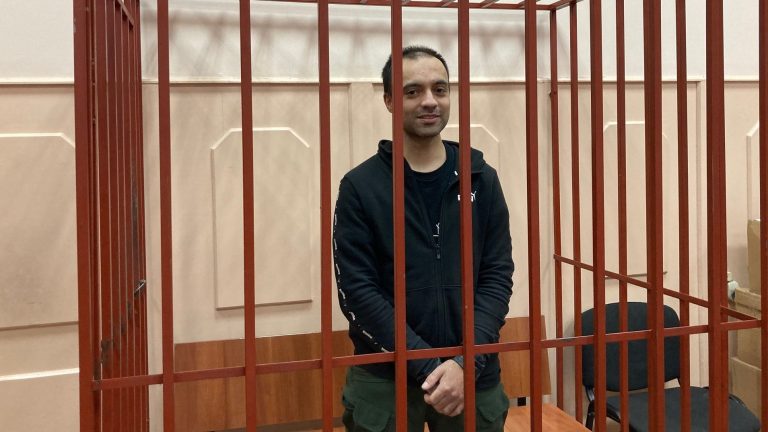
Ruslan Siddiqi in court. Photo: Solidarity Zone
Continue reading “Ruslan Siddiqi: “You Could Call Me a Partisan””

Thairie Ritchie: A Santa Cruz Story

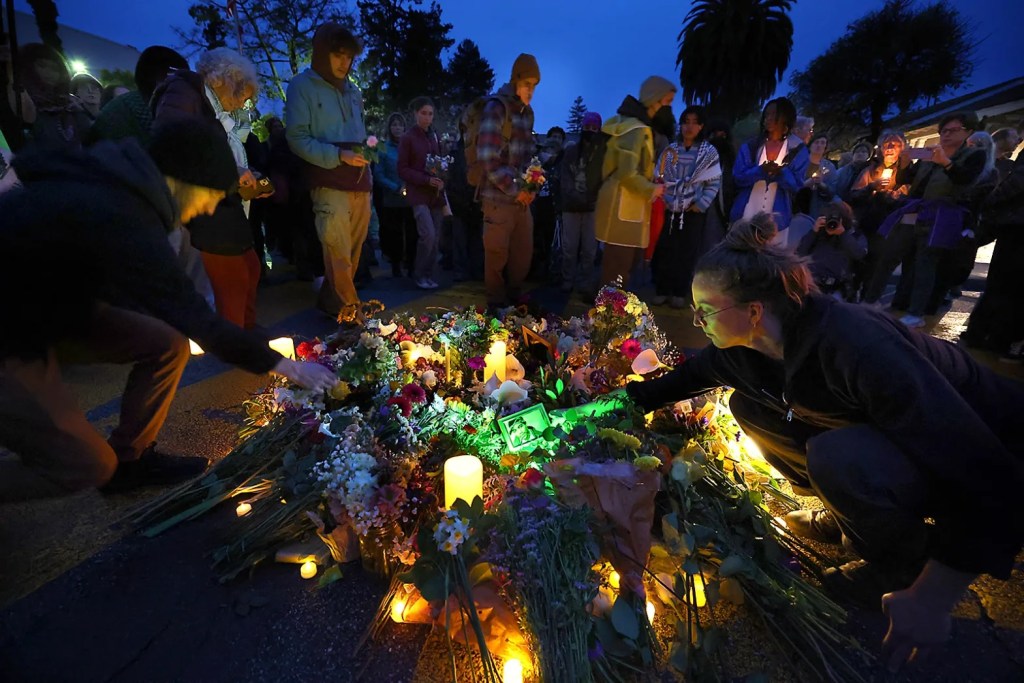
Hundreds of community members add flowers, candles and photographs on Sunday to an altar for healing for local civil rights activist Thairie Ritchie at the Black Lives Matter mural in front of Santa Cruz City Hall. Ritchie tried to self-immolate at the site on Jan. 20 just hours after President Donald Trump took his oath of office and the local Martin Luther King Jr. Day march brought hundreds of people past the mural. Ritchie was treated on scene and then airlifted to an out-of-area burn center where he is now being treated. Photo: Shmuel Thaler/Santa Cruz Sentinel

A light, misty rain fell over Santa Cruz Sunday afternoon as hundreds gathered in the downtown area to honor the life and pray for the recovery of a prominent local activist who set himself on fire in front of City Hall less than two weeks prior.

Thairie Ritchie, a well known Santa Cruz community organizer, reportedly self-immolated Jan. 20 atop the Black Lives Matter mural on Center Street in downtown Santa Cruz, only a few yards from the city’s power center. According to police scanner recordings from that day, first responders around the 5 p.m. hour were at the corner of Locust and Center streets in response to a “male who set himself on fire.” The response was triggered only a few hours after the annual Martin Luther King Jr. Day march had finished inside the neighboring Civic Auditorium and President Donald Trump had taken his oath of office for the second time in Washington.

Ritchie’s family, friends and acquaintances quietly poured into the open-air patio of Bike Church Santa Cruz on Sunday, the second day of Black History Month, with many carrying flowers as they embraced one another with tears in their eyes. The smell of incense and burning sage was carried by the crisp winter air as the sun set behind a gray curtain of clouds that covered the more than 300 people that had assembled to collectively process the incident.

Inside space had been cleared to set up a vigil for Ritchie, 29, with photos, candles and seating along with cookies and other snacks. Pens and paper were passed around for visitors to write private notes that many hope he will soon read as his recovery begins.

Ayo Banjo, a friend of Ritchie and the designated media contact for the event, said that Ritchie was awake Sunday and recovering in an intensive care unit. He said “a lot” of Ritchie’s body was covered in burns but declined to share a percentage, adding that the recovery process is estimated to take about six months.

“He (Ritchie) means a lot to us because he was all about community and everybody here from all different walks of life, all different races, all different genders, all different places, come together because we celebrate his representation,” said Banjo. “He is the example of what I think makes America, America. The ability to bring everyone together around issues that are beyond us and bigger than us. And I think that message has to be communicated.”

Continue reading “Thairie Ritchie: A Santa Cruz Story”

Alexander Skobov: Closing Statement at Trial

Alexander Skobov’s closing statement at trial:

I was brought up in the Soviet Union to believe that when a malicious, cruel aggressor attacks civilians, you have to take up arms and go do battle with him, and that if you cannot bear arms, you help the people who are doing battle and call on others to do the same.

All my work as a political commentator has been about calling on people to go do battle with the aggressor which has attacked Ukraine, to assist Ukraine with weapons and ammunition.

No one had attacked or threatened Russia.

It was Putin’s Nazi regime which attacked Ukraine, only because of the megalomania of the regime’s ringleaders, because of their inhuman thirst for power over all they survey.

Murdering hundreds of thousands of people is their way of bolstering their self-esteem. They are degenerates, scum, and Nazi riffraff.

The guilt of Putin’s Nazi dictatorship in plotting, unleashing, and waging a war of aggression is obvious and does not need to be proven. We also do not need to prove our right to offer armed resistance to this aggression on the battlefield and in the aggressor’s rear. It would be laughable to expect this right to be acknowledged by a regime which tosses people in prison for morally condemning its aggression out loud. All legal means of protesting Putinist Russia’s aggression have been eliminated.

My calls to resist the aggressor’s regime with armed force have caused me to be charged with terrorism.* I won’t deign to argue with the aggressor’s officials even if they claim my actions constitute pedophilia. Russia’s courts have long ago shown themselves to be appendages of the Nazi tyranny and seeking justice from them is pointless. I will never stand up before these people, who are the lackeys of murderers and scoundrels.

I see no point in arguing with puppets of the dictatorship about how conscientiously they execute their own laws. In any case, these laws are the laws of a totalitarian state and their aim is to stifle dissent. I do not recognize these laws and I will not obey them.

I also have no intention of appealing any rulings made by or actions taken by representatives of the Nazi regime.

The Putinist dictatorship may murder me, but it cannot force me to stop fighting against it. Wherever I find myself, I will keep calling on honest Russians to join the Ukrainian Armed Forces. I will keep calling for airstrikes on military facilities deep in Russian territory. I will keep calling on the civilized world to inflict a strategic defeat on Nazi Russia. I will keep trying to prove that the new Hitler’s regime must be routed militarily.

Putin is the new Hitler, a vampire driven insane by impunity and drunk on blood. I shall never grow tired of saying, “Crush the viper!”

Death to the murder, tyrant and scoundrel Putin!

Death to the Russian fascist invaders!

Glory to Ukraine!


[Grani.Ru:] Thanks to Alexander Valeryevich’s dedicated wife Olga Shcheglova (pictured above). Thanks to SotaVision for filming at the Petersburg military court (Skobov is participating in the trial via video link from Syktyvkar). Thanks to those who didn’t unsubscribe from Grani.Ru after it closed. It’s as if Skobov timed his brave deed to coincide with the final moral collapse of numerous media brands. And yet he will be heard by a handful of his contemporaries. But he has already gone down in history.

* Skobov has been charged with “publicly calling for terrorism,” “publicly condoning terrorism or promoting terrorism using the mass media, including the internet” and “organizing a terrorist community and participating in it.” If Skobov is convicted on these charges, he faces a maximum penalty of ten to fifteen years in prison and fines of up to one million rubles (approx. 9,500 euros) — TRR.

Source: Grani.Ru (Facebook), 15 January 2025. Translated by Thomas Campbell (aka the Russian Reader)

“I Can’t Stifle My Feelings”: Petersburg Translator Elena Abramova Faces Criminal Charges over Two Antiwar Pickets

Elena Abramova. Photo courtesy of RFE/RL

A court in St. Petersburg has begun hearing the case against translator Elena Abramova, who has been charged with repeatedly “discrediting” the Russian army because she engaged in public protests brandishing placards that called for the release of Alexei Navalny and all other political prisoners, and an end to Russia’s war against Ukraine. Because of the criminal case against her, Abramova is no longer permanently employed, although she has stayed in Russia.

Elena Abramova was born and raised in Magadan. Her parents met as students at a teachers institute. Her mom worked as an insurance agent, and her dad, Arnold Yeryomenko, was a Russian language and literature teacher. In the late 1980s, Yeryomenko was imprisoned for two and a half years over his manuscript “October Vanquished,” which detailed “his thoughts on the regime, the Soviet government, and the Soviet legacy.” The family does not have the text of the manuscript: although Abramova’s mother asked the FSB for a copy, she was told that the document had been lost.

“I don’t know for sure whether Dad planned to publish his manuscript officially, or if he was hoping [to publish it] in samizdat. But he definitely talked about it, and someone in his entourage was aware of its contents. That someone was probably an informant, which is how the KGB found out about the manuscript. Informers probably think they are doing something useful in this way, so they inform on people,” Abramova says.

Yeryomenko spoke at protest rallies and led a pro-democracy movement in Magadan, which “held meetings with supporters, but was not involved in electoral politics.” He was asked to run for office but declined.

“I don’t think Dad had any political ambitions. Power never appealed to him. He had his job, which he enjoyed, he spent time with his family, and he read a lot — we had a very extensive library. In short, he had other interests,” says Abramova. “My father’s principled position was that the individual human being had supreme worth. There should be no pressure [on the individual], no compulsion to [hold particular] views or [adhere to] any particular ideology. He always advocated for de-ideologizing society, for the possibility to freely voice one’s thoughts, to speak out freely, to freely participate in peaceful political campaigns. This is what we lack now.”

Yeryomenko’s political activism peaked in the mid-1980s, after he was released from prison, and waned in the 1990s.

“My family welcomed the fall of the Soviet Union,” says Abramova. “I had to wear a Young Pioneer tie for a year, and I remember how we constantly made up excuses to avoid wearing it: that it was supposedly in the laundry, or something else was the matter. When it was all over, I remember the feeling of relief that now I wouldn’t have to do it: there was something contrived about it. I thought that now we would be able to live in peace, without these tokens of the Soviet regime. It seems to me that after the collapse of the Soviet Union, when that short period of freedom dawned, many people just relaxed. It was such a contrast with the past that everyone wanted to get on with their own lives finally, to enjoy the advantages that became available after the regime changed.”

Abramova says that her own views, on the one hand, come from her family, although she was not particularly interested in politics before Russia’s invasion of Ukraine. Her father died in 2008, and five years later she left her job at a large gold mining company and moved to St. Petersburg, where she got a job as a translator. She was buried in her own cares, including working and raising a child.

“I lived my life. Now I look back and recall that my interest in politics emerged not so long ago, and it was provoked by the outbreak of hostilities to a large extent. Before that, I was aware of certain events, of course, and I had opinions on certain issues. I was simply shocked when I heard that [the war in Ukraine] had beguin. At that moment, I was not up to speed at all, I didn’t folloow in detail what was going on. When I saw [the President’s televised] address [announcing the war], I didn’t even realize what was happening. I couldn’t believe that such a thing was even possible, and it took me several days to just to get my head around it. I read news feeds like crazy and watched YouTube. It was a complete surprise, I didn’t think it would happen. The catastrophe is that people are being killed every day,” Abramova says.

Abramova held her first protest picket in late 2022. At the time, she was not only reading news about the hostilities in Ukraine but also following the political trials [in Russia].

“Ilya Yashin was sentenced on December 9. I decided that I had to protest publicly. Although it would be a purely symbolic gesture, I had to do it because I was ashamed. I was ashamed that my country had been plunged into such chaos and darkness. I didn’t know when it would end, and it was clear that this solo picket wouldn’t change anything, but it was a public statement I had to make, which I had to make against all the odds, despite the restrictions. I was a bit scared: I had no prior experience of solo pickets. I had gone to rallies in support of Navalny, and after [Boris] Nemtsov was murdered. But I had not been to the protest rallies that were held at the very outset [of the war]. I was not subscribed to any [social media] communities and didn’t know where they were held, who had made arrangements with whom, or where to go. But this time I decided that I had to go out,” says Abramova.

Abramova’s first picket lasted for only five minutes, although the site — the square outside the Mariinsky Palace — was not very crowded.

“[I stood for] five minutes, maybe a little longer. I soon noticed law enforcement officers approaching me — slowly, demonstratively slowly, as it seemed to me. They detained me quite politely, they weren’t rude. But there was one man in civilian clothes, in a tracksuit, who was also at the police station later, and he asked the most questions. While I was standing there, I saw someone from the opposite side of the street taking a picture of me. Some people walked by and said “thank you” — it was a young couple, I think. Others pretended not to notice. My placard that time out read “No War.” A couple of months later, in February [2023], a court hearing took place, at which I was fined 30,000 rubles [approx. 380 euros at the time],” Abramova recalls.

Abramova was sentenced to another fine for taking part in a protest rally against the military mobilization, and in late April 2023 she held another solo picket outside Gostiny Dvor. She was able to stand there for a few seconds before she was detained. She held her third picket on [June 4], the birthday of politician Alexei Navalny.

Elena Abramova

“I took up my position on the Field of Mars, were there were no police officers at all. Later, I went to Gostiny Dvor, where I was detained immediately. An arrest sheet was drawn up for the second picket, but the case did not go to court. After I left the station, they telephoned me and asked me to come in for ‘additional testimony.’ They probably realized this was already my second arrest. But it was not listed in the arrest sheet, and so I declined to go in. After my third picket I was taken to the same station, and this time the police pulled my rap sheet and opened a criminal case against me,” says Abramova.

Several men in balaclavas, an investigator, and Center “E” officers (officers from the Interior Ministry’s “anti-extremism” unit) soon came to search Abramova’s home.

“I said I had to get dressed, and they said I literally had five seconds to do it. I began to get dressed, but they were banging on the [front] door and practically breaking it down. My child was asleep, so I woke him up, told him not to worry, and explained there was going to be a search. When they were already inside the apartment they behaved themselves, but they confiscated my phone and didn’t even let me call work to warn them I wouldn’t be coming,” says Abramova.

During the investigation, it came to light that the criminal case against Abramova had been launched illegally. Since she is a voting member of an election commission, a criminal case can only be initiated through a special procedure, which had been violated. Formally, then, the case against Abramova was launched twice: first in the summer of 2023, and again in May 2024.

The criminal case against Abramova is currently being heard in court. According to Russian law, for two antiwar pickets she faces a huge fine, forced labor, or up to five years in a penal colony. Abramova attends the court hearings and has no intention of leaving Russia.

“I don’t see any use for myself abroad. I had difficulties finding work in St. Petersburg, especially after the criminal case was opened and I was fired, back in September of last year. I missed a day of work because of the search, and I was immediately asked to turn in my resignation. It was a commercial firm, and the management was probably afraid of scrutiny from law enforcement. But still, I can’t imagine what I would do if I weren’t in Russia. I think that there may come a time when people will need to be here, but the people who need to be here won’t be here. And then, even if I leave, I can’t stifle my feelings. I also feel my share of the guilt for what is happening — for my indifference and lack of involvement. And the pain over the fact that my country unleashed a war against a neighboring country would still remain. I would still have to live with it. Changing locations wouldn’t affect this much,” says Abramova.

Source: “‘I can’t stifle my feelings’: criminal charges for two antiwar pickets,” Radio Svoboda, 1 January 2024 (originally published by Okno). Translated by Thomas Campbell

News from Ukraine Bulletin 127

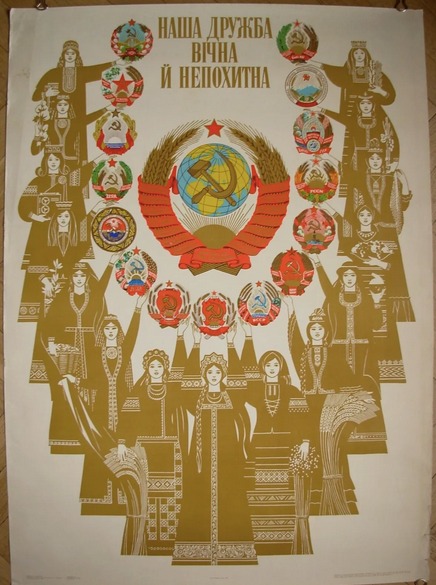
“Our friendship is eternal and unshakable” Ukrainian poster, 1983
Courtesy of Soviet Visuals

In this week’s bulletin: Ukraine labour relations under martial lawDemocracy uprising in the Caucasus/ ‘Swift peace deal’ questioned/ Ukraine: resisting arbitrariness from above/ Russian torture and denial of medical treatment

News from the territories occupied by Russia:  

Russia confirms revenge sentences against savagely tortured Crimean Tatar cousins, seized with Nariman Dzhelyal (Kharkiv Human Rights Protection Group, December 20th)

Abducted Kherson activist sentenced for ‘spying for Ukraine’ while in Russian captivity denied vital medical treatment (Kharkiv Human Rights Protection Group, December 19th)

Russia churns out surreal ‘terrorism’ sentences against Ukrainian POWs for defending Ukraine (Kharkiv Human Rights Protection Group, December 17th)

20-year-old from Mariupol sentenced to 11 years for argument opposing Russia’s war against Ukraine   (Kharkiv Human Rights Protection Group, December 16th)

Human rights defenders: Ukrainian citizens under occupation need support (Zmina, December 13th)

Forced reality (Alter Pravo, October 2024)

Life Under Occupation (Alter Pravo, October 2024) 

The situation at the front:

Battlefield developments: ‘Enter Pyongyang’ (Meduza, 19 December)

News from Ukraine – general:  

Joint appeal of representatives of the coalition “Ukraine. Five in the Morning” and the Initiative “Tribunal for Putin” (Tribunal for Putin, December 21st)

Legal regulation of labour relations in the conditions of martial law in Ukraine (Science Open, December 20th

When a Scalpel Becomes a Kitchen Knife: How Ukrainian Courts Skillfully Distort ECtHR Practice (Kharkiv Human Rights Protection Group, December 18th)

Ukraine: Inadmissible evidence in examinations (Kharkiv Human Rights Protection Group, 18 December)

Do today’s HACC decisions comply with European practice? (Kharkiv Human Rights Protection Group, December 18th)

Can a huge bail replace justice? (Kharkiv Human Rights Protection Group, December 18th)

Impact of War on Education and Neoliberal Reforms  (Ukraine Solidarity Campaign, December 17th)

“We cannot allow this to happen to our children.” Discussion on “No Child of Ukraine Should Be Left Alone with the Experience of War” (Center for Civil Liberties, December 16th)

Groups of Resistance: How Ukrainians Protect Their Interests from ‘Arbitrariness from Above’  (Commons.com, November 27th)

War-related news from Russia:

Russian anarchist jailed for arson commits suicide on first day of sentence (Novaya Gazeta Europe, 20 December)

St Petersburg: The Terror Scam Gig Economy (The Russian Reader, 20 December)

Duma broadens ‘treason’ charges against anybody opposing Russia’s aggression against Ukraine (Kharkiv Human Rights Protection Group, December 18th)

LGBT+ activism in Russia: “Rainbow extremism” (Posle.Media, 18 December)

Legislators equate criticism of Russia’s war against Ukraine with ‘terrorism and extremism’ (Kharkiv Human Rights Protection Group, December 16th)

Analysis and comment:

Uprising for democracy in the Caucasus (Tempest, December 21st) 

Those Demanding a Swift ‘Peace Deal’ for Ukraine Don’t Understand How Complex This War Really Is  (Byline Times, December 19th)

Russian Gas Giant Given Access to Global LNG Summit (DeSmog, December 13th)

Caucasus: Resisting local authoritarianism and multipolar imperialisms (CrimethInc, 11 December)

Research of human rights abuses:

Ukrainian children deported to Russia: ‘The development of Russian identity’ (Meduza, 20 Dec)

Kyrylo Budanov met with human rights defenders (Zmina, December 20th)

The European Parliament demands Russia immediately release ill Crimean political prisoners: resolution, proposed by ZMINA, was adopted (Zmina, December 19th)

Russia ignores the needs of Ukrainian political prisoners for medicines and medical care: ZMINA met with Henry Marsh  (Zmina, December 19th)

Human rights defenders call on parliamentarians not to adopt draft laws No. 11538 and No. 11539 (Zmina, December 19th)

ZMINA at the #IBelong forum: challenges on citizenship during the war (Zmina, December 17th)

Over 16,000 Ukrainian civilians held captive in Russia – Ukraine’s ombudsman (Ukrainska Pravda, December 16th)

Upcoming events:

Saturday 18 January 2025, 12:00 midday. National March for Palestine. Assemble BBC, Portland Place, London. Unite the Struggles, Ukraine Information Group and others will march with our banner, “From Ukraine to Palestine, Occupation is a Crime”. Details of assembly point in the new year on our web site or by email. 

Saturday 15 February 2025 11AM — 4PM, Conference: End the Russian invasion and occupation. National Education Union, Mabledon Place, London, WC1H 9BD. Register here.

This is the last News from Ukraine bulletin for 2022. The next one will appear on Monday 6 January. With best wishes for 2025 to our readers

This bulletin is put together by labour movement activists in solidarity with Ukrainian resistance. To receive it by email each Monday, email us at 2022ukrainesolidarity@gmail.com. To stop the bulletin, reply with the word “STOP” in the subject field. More information at https://ukraine-solidarity.org/. We are also on TwitterBlueskyFacebook and Substack, and the bulletin is stored online here

Hronop: Nobody But You

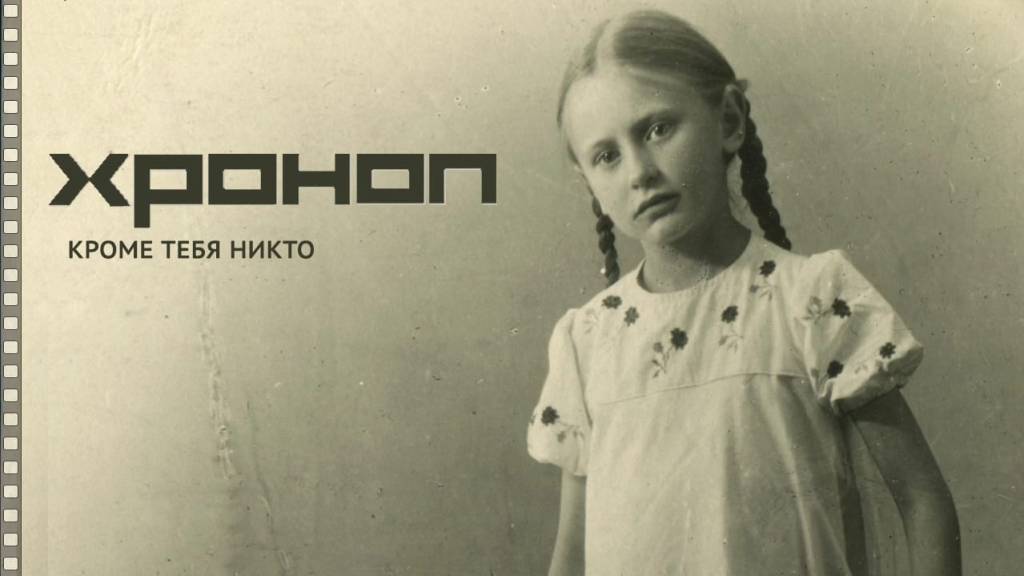
Hronop, “Nobody But You”

Here is Hronop‘s amazing music video “Nobody But You.” I had never heard such anti-war songs before. When Vadim, Hronop’s frontman, sent me the link, I didn’t even open it at first, to be honest, because I thought I already knew what it would be like. Vadim is an extraordinary musician and a complicated poet. I thought the song would be something tricky, in 13/7 time, with lyrics for fans of Borges.

It’s pointless, I thought. People are being killed, and we need something else.

But I opened the link. And there…

…was a sweet, flowing melody, intimate vocals, a flute playing, old family photos…. It’s a prayer to Mama is what it is.

“I’m glad you didn’t see it… Nobody but you can save the tattered world… Mom, shoot down the rocket… The enemy is innumerable, but you’re alone in the sky.”

Vadim has taken an angle which, in my opinion, no one had taken before. I didn’t ask him what the story behind the song was, but it was obviously a real story, since you don’t write songs like that just for the heck of it.

It doesn’t matter. What matters is that it’s touching and disturbing.

Source: Yan Shenkman (Facebook), 21 December 2024. Translated by the Russian Reader


Hronop, “Nobody But You” (2024)

Mama blue runs through the sky
Amid the Airbuses and flocks of ducks
As if she wants to catch the last tram
Mama blue is in tears of amber
And beneath her lie minefields
Kulikovo Field and Borodino
But her blood is like holy wine to me
Mama, your temple was burnt down by our rocket
I’m glad you didn’t see it
I’m now thirteen years older than you were
Nobody but you can save this tattered world
Mama blue, the sun between your legs
Mama blue, a stocking that’s slipped
Everything is runninbg through the sky, there’s no peace in my soul
Like Brienne of Tarth, like the Sugar Plum Fairy
Mama, shoot down the rocket that’s going round and round
Mama, shoot down the rocket with a wave of your hand
There’s a voice in the left heart and silence in the right.
The enemy is innumerable, but you’re alone in the sky

Vadim Demidov – voice, acoustic guitar, song
Andrei Malykh – flute
Alex Repyev – guitar, bass, keyboards, drums, backing vocals, recording, mixing, producing, video editing


Facebook: / 518596074824295
Instagram: / vadim_hronop

Source: Hronop (YouTube), 13 December 2024. Annotation translated by the Russian Reader

Alexander Skobov: Behind Bars in the USSR and Putin’s Russia

The number of Russians who find themselves behind bars for opposing the authorities who launched the war with Ukraine grows by the day. There are hundreds of political prisoners in the country. We try to remind our readers about these people every chance we get. Today, Mediazona’s David Frenkel tells the story of Alexander Skobov, 67, a historian from St Petersburg, a defendant in the last criminal case against ‘anti-Soviet agitation and propaganda’ in Soviet history, a convinced Marxist, and a veteran of the dissident movement, who after decades has found himself on a very familiar path: searches, arrest, psychiatric ward, jail.

Alexander Skobov is one of the most experienced political prisoners in Russia. In the 1970s and 1980s, he was twice sent to a psychiatric hospital for compulsory treatment: the first time as an editor of samizdat, the second time for slogans in favour of political prisoners, which Skobov wrote on the walls of Leningrad houses.

Almost half a century later, in April 2024, the authorities came after him again. Skobov was accused of ‘justifying terrorism’ because of his post about the explosion on the Crimean Bridge and sent to a pre-trial detention centre. In protest, he refused to take his glasses and medication with him. Later, an article on participation in a ‘terrorist community’ was added to the charge, and Skobov was transferred from St Petersburg to Syktyvkar.

“We were left alone for a long time. The reasoning being: we’ll die out on our own. Or we’ll leave and live out the rest of our lives off the once acquired (quite deservedly) political and moral capital. The blow came to other people, most of them much younger,” he wrote from the pre-trial detention centre.

Skobov maintains an active correspondence in pre-trial detention. He discusses philosophical and political topics, his letters are even published in historical journals. Write to Alexander, argue with him, disagree with him, I’m sure it would be valuable to him. The only thing is that his wife asks that the letters to him be written in 18-point Sans Serif font. Skobov can’t even see his own texts well: he first drafts them on the back of used sheets of paper and then blindly transfers the texts to the reply form.

Address:

167028, г. Сыктывкар, поселок Верхний Чов, д. 99 , ФКУ СИЗО-1 УФСИН России по Республике Коми. Скобову Александру Валерьевичу 1957 года рождения

Please write letters in Russian, otherwise the prison censors won’t let them through. You can send letters online via a special services called PrisonMail.

You can also write in English, using the websites Letters Across Borders and Lifeline, two projects by OVD Info, a media outlet and human rights defense group.

Source: Mediazona, 29 November 2024. I lightly edited the text, above, for clarity’s sake. Featured image courtesy of the Moscow Times. ||| TRR

How Russia’s Kangaroo Courts Have Become the Country’s De Facto Op-Ed Pages

Lawyer Dmitry Talantov has been sentenced to seven years in a penal colony on charges of disseminating “fake news” about the Russian army and inciting hatred in connection with several social media posts about the war. Talantov had been on the defense team of journalist Ivan Safronov, who was sentenced to twenty-two years in a penal colony for high treason. Talantov had also served for many years as the head of the Udmurtia bar association, so it is likely that both the judge who sentenced Talantov and the prosecutor who petitioned the judge to sentence the respected 64-year-old defense lawyer to twelve years in prison knew him personally.

Talantov delivered a memorable closing statement today in court.

In Russia, where censorship has gutted the remaining independent media outlets, and all protests are nipped in the bud, trials have paradoxically become the best venue for free speech, so it is no wonder that an entire book of closing statements has been published. Here are several examples of closing statements by Russian political prisoners.

Dmitry Talantov, sentenced to seven years’ imprisonment for antiwar social media posts:

Brodsky once said that “prison is a lack of space counterbalanced by a surplus of time.” I didn’t completely understand this phrase. I didn’t get it. I’m certain that none of you totally understands it, because it is the surplus of time which is frightening about this situation, not the lack of space. It is the time during which you suffer, and the time that tries to kill you. Every minute tries to kill you, and every minute in there [in prison] is equal to an hour.

[…]

People often ask for forgiveness during their closing statement. I also want to ask for it. I’m saying this to my wife. Forgive me, Olga. I love you. If this is overdoing it emotionally, then I’ll put it this way. Olya, if you’re ever sent to prison for twelve years for some reason, I’ll wait for you to get out. Take it easy.

Sasha Skochilenko, the Petersburg artist and musician sentenced to seven years’ imprisonment for posting antiwar price tags in a supermarket and released as part of a prisoner swap in August 2024:

Despite being behind bars, I am freer than you. I can make my own decisions, say what I think, quit my job if I’m forced to do something I don’t want to. I have no enemies, I’m not afraid of being penniless or even homeless. I’m not scared of not making a brilliant career, appearing ridiculous, vulnerable, or strange. I’m not afraid to be different from others. Perhaps that’s why my state is so afraid of me and others like me and keeps me caged like a dangerous animal.

Alexei Gorinov, the Moscow municipal district council member who was initially sentenced to seven years in prison for “disseminating fake news” during an argument about whether it was appropriate to hold celebrations for children during a war, and who is now on trial a second time for allegedly “condoning terrorism” in conversations with cellmates:

I was also a municipal council member during the August 1991 coup. I stood with other defenders outside the Russian Supreme Soviet, the so-called White House. We were defending our freedom, our right to live freely and, thus, to speak freely, voice our thoughts, gather information, and share it. If they had told me then that thirty years later I would be tried by a criminal court for my words, for my opinion, I wouldn’t have believed them.

Nadezhda Buyanova, a pediatrician, was sentenced to five and a half years in prison for “disseminating fake news,” after she was denounced by the widow of an army officer killed in Ukraine: the doctor had allegedly said to the woman’s seven-year-old son that his father had been a “legitimate target”:

If there used to were doctors and patients, nowadays there are providers and clients. That’s what we were told at the planning meetings: “Humiliate yourself. And us.” We medics can be slandered, we can be insulted, we can be called every name in the book. We can’t defend ourselves, our explanations are not heard by our superiors, and conflicts are not resolved.

There was no interrogation and the child had nothing to say. “At the end of the appointment, he walked out of the office.” You cannot believe such a tale. You cannot lie like that: it’s a disgrace. How can you accuse a person without evidence, on the basis of a false accusation? Where is the logic? Where is the justice? Earlier, in ancient times, there were wise men. They would have said: “Well, what do you expect from a person without proof?”

Roman Ivanov, a journalist for RusNews, was sentenced to seven years in prison for three social media posts. During his closing statement in court, he knelt down to apologize to Ukrainians:

What can we do in this situation? I honestly don’t even know anymore. But I want to ask for forgiveness from all the citizens of Ukraine, to whom our country has brought grief, whom our country has robbed of their relatives, their loved ones, and their friends, who will never come back.

And [I ask for forgiveness] not for the whole country, but for me personally, for Roman Viktorovich Ivanov, a citizen of the Russian Federation. I would like to get down on my knees before the relatives of the people who were murdered in Bucha, although I don’t know who murdered them. But they are the consequences of what our country has become.

The politician Alexei Navalny was repeatedly tried on trumped-up charges before he was murdered in a penal colony on 16 February 2024. Perhaps it was Navalny, during his endless trials, who revived the closing statement in court as a literary genre. Here is an excerpt from his speech at his trial for “extremism” in July 2023:

In order for a new person to come into the world, two people must agree in advance that they will make some sacrifices. This new person will have to be born in agony, and then they will have to spend sleepless nights with him. Then they will have to get a dog for that new person. Then walk that dog. Likewise, in order for a new, free, rich country to be born, it has to have parents. Those who want it. Those who expect it and are willing to make some sacrifices for its birth, knowing that it will be worth it. This doesn’t mean that everyone has to go to prison. It’s more of a lottery, and that ticket was drawn by me. But everyone has to make some kind of sacrifice, make some kind of effort.

Source: “How Closing Statements in Court Have Become the Main Source of Opinion Journalism in Warring Russia,” WTF? daily newsletter (Mediazona), 28 November 2024. Translated by the Russian Reader


Former Moscow politician Alexei Gorinov, the first known Russian to be imprisoned for denouncing the invasion of Ukraine, was sentenced to three more years on Friday on charges of “justifying terrorism” that he says he was framed for.

Ahead of his sentencing, he read the following statement to the court and the press:

Imprisoned Kremlin critic Alexei Gorinov, sits in a cage of the courtroom as his second trial for criticizing Russia’s actions in Ukraine swiftly nears its conclusion in Vladimir, Russia, Friday, Nov. 29, 2024. Photo: Dmitry Serebryakov/AP

“All my life I have been an opponent of aggression, violence and war, and devoted myself exclusively to peaceful activities: science, teaching, education, governance and public activities as a deputy, human rights activist, member of election commissions and controller of the electoral process. I never thought that I would live to see such a level of degradation of my country’s political system and its foreign policy, when ordinary citizens who favor peace and are against war, who number in the thousands, would be accused of slandering the Armed Forces and justifying terrorism, and would be put on trial.

“The third year of the war is coming to an end. The third year of casualties and destruction on European territory, of deprivation and suffering of millions of people on a level unprecedented since World War II. We cannot remain silent about this.

“Back in late April, our former defense minister announced the losses of the Ukrainian side in the armed conflict – 500,000 people. Think about this number! And what losses have been suffered by Russia, which, according to official information, is constantly successfully advancing along the entire front? We still do not know. And who will be responsible for this? What is all this for?

“Our authorities and those who support them in their militaristic aspirations wanted this war so much — and now it has come to our land. 

“I would like to ask them: has our life become better? Is this how you understand the well-being and security of our country and its population? Or did you not envision these developments in your calculations? 

“But for now we have to answer not to those who organized the war, continue to kill, propagandize the war and engage in mercenarism. Rather, we ordinary citizens of Russia, who raise our voices against war and for peace, have to answer, paying with our freedom and, for some, with our lives.

“I belong to the outgoing generation of people whose parents took part in World War II or survived it with all its hardships. The generation that has already passed away entrusted us with preserving peace with all our might as the most precious thing on Earth for all its inhabitants. But we have neglected these principles and devalued our memory of these people and the victims of that war.

“My guilt is that I, as a citizen of my country, allowed this war to happen and failed to stop it. And I ask you to note this in the verdict. But I would like my guilt and responsibility to be shared with me by the organizers, participants and supporters of the war, as well as the persecutors of those who advocate peace. 

“I continue to live with the hope that someday it will be so. In the meantime, I ask the people of Ukraine and my fellow citizens affected by the war to forgive me.

“Within the framework of the case in which I was accused and tried for my opinion that we need to seek an end to the war, I have expressed my attitude fully to this abominable human endeavor. I can only say that violence and aggression breed nothing but reciprocal violence. This is the true cause of our troubles, our suffering, our senseless sacrifices, the destruction of civilian and industrial infrastructure and our homes.

“Let us stop this bloody, needless slaughter — neither for us nor the inhabitants of Ukraine. Isn’t it time to leave our neighbors alone and deal with our own snowballing domestic problems? Long ago we proved to the world how brave, resilient and peace-loving we are. So, maybe enough is enough?

“Lev Nikolaevich Tolstoy — from a letter to his son (1904): ‘For me, the madness and criminality of war is so clear that I can see nothing in it except for this madness and criminality.’

“I too join and subscribe to these words of our great compatriot. 

“You can join too!”

SOTAVision reported that Judge Vladimirov interrupted Gorinov when he started to talk about losses in the war in Ukraine and called a 15-minute break so Gorinov could “think over his speech again.”

Source: “Alexei Gorinov’s Last Word in Court: ‘Let’s Stop This Bloody, Needless Massacre,’” Moscow Times, 29 November 2024